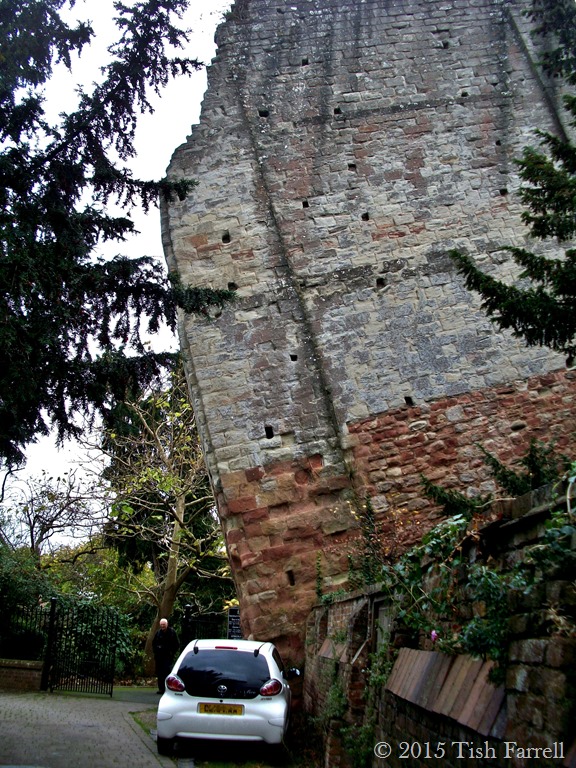
The Leaning Tower of…er…Bridgnorth?

100_6830

100_6829

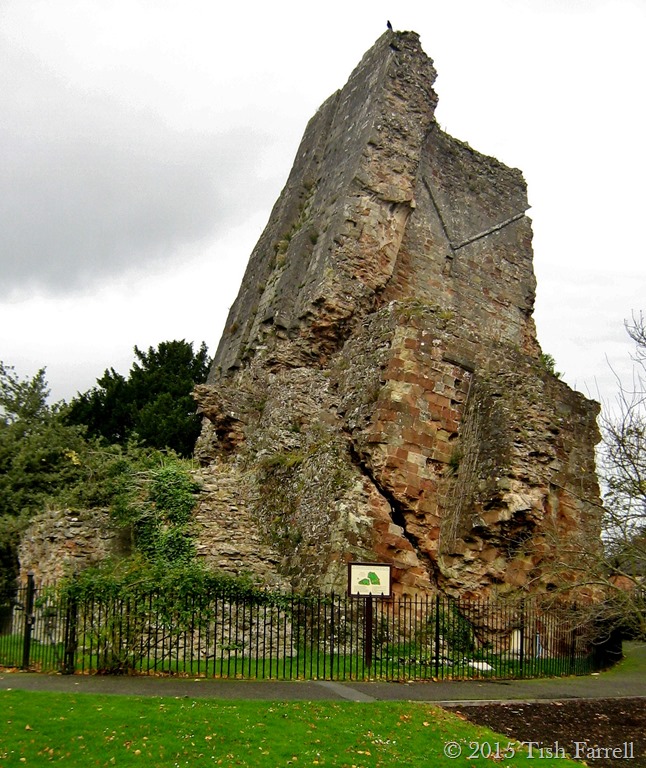
At 15 degrees this castle has ‘more lean’ than the leaning Tower of Pisa, although all that remains of this 900-year-old Norman castle is this blown up tower. It is now now a feature in the sedate Castle Gardens  in Bridgnorth, Shropshire, my nearest market town.

The ruins have been in this state since Britain’s Civil War in the 1640s, when Oliver Cromwell’s Parliamentarian forces laid siege to this key Royalist stronghold. The Royalists meanwhile had set fire to the town before retreating into the castle. The fire then reached the Roundheads’ gunpowder store just outside the castle wall. This duly exploded, and the upshot of all the firing and blasting was that the Royalists surrendered, and Oliver Cromwell ordered the complete destruction of the castle. As you can see, the tower defeated the demolition gang, and so there it stands, apparently defying gravity for the last 368 years.

IMG_1870

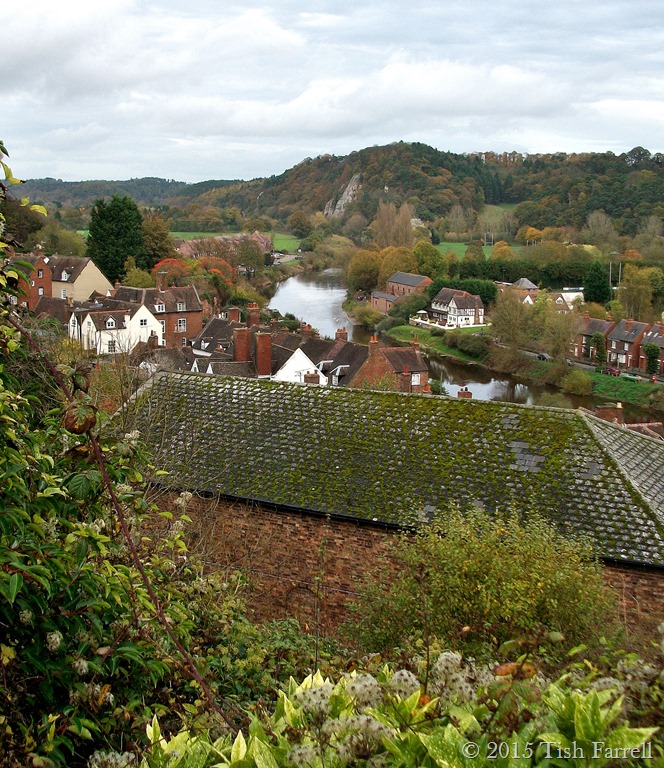
Below is the view over the River Severn that you  might once have had from the castle keep. When Charles I first visited the place, he is reputed to have pronounced it “the finest view in all my Kingdom.” Sadly for him, he did not live too much longer to enjoy either the view or the kingdom.

100_6848

copyright 2015 Tish Farrell


This week at Paula’s Thursday’s Special, she is inviting us to share Traces of the Past. She has a truly impressive castle to show us, one that was being built at much the same time as the Bridgnorth stronghold.

The Night Guards, Downtown Harare

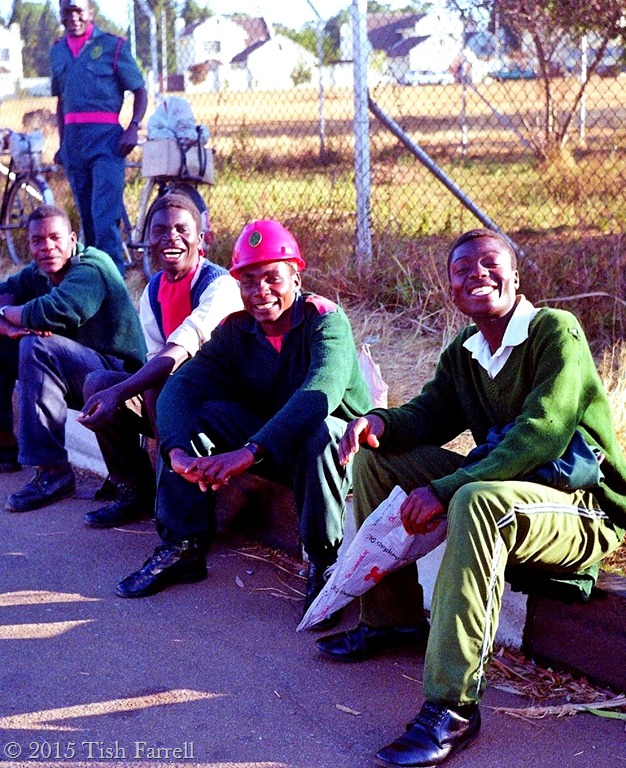
Harare night guards waiting to go on duty

A big thanks to Yvette who is Paula’s guest over at Thursday’s Special for giving me the chance to post this photo again. Her challenge is street portraits, and this is one of my favourites, taken on a brief trip to Harare in Zimbabwe.

We were living in Zambia at the time, and had driven down to Harare to meet friends who were flying in from the UK  to spend two weeks with us in Zim and Zam. At the time, life was a bit tense in Zambia. The first year of multi-party democracy had already yielded one attempted coup. Destabilisation by stirring up a crime wave was part of the strategy. The national football team had been killed in an air crash and left the country devastated (see link * below for this story). There was cholera in the townships and members of the unpaid Zairian army were coming down to Lusaka on looting sprees. It was thus a relief to find ourselves in a city where the atmosphere felt so open after Lusaka. This was in 1993 I might add. I know Zimbabwe’s seen some bad times since, and Zambia’s fortunes have greatly improved. Things can change so rapidly on the African continent.

But it’s the spontaneity of the security guards’ reaction that I love. I’d just crossed the road from the post office, and they were about to start the night shift and waiting for a lift.  Smiling faces like these are what I remember most from our eight years spent living in Zambia and Kenya.

copyright 2015 Tish Farrell


Related:

Letters from Lusaka part 1

Letters from Lusaka part 2

Once in Zambia: in memoriam*


Street Portraits Lost in Translation

Reflected glory? Putting myself in the picture

P1000801 P1000806 - Copy Well it had to be done, didn’t it – that selfie. Besides which, my hat matched the reflected paintings. Anyway, this is the wonderful work of  Jacob Chandler Shropshire Artist and Sculptor, and it’s on show at Jenny Gunning’s  gallery, Ironbridge Fine Arts and Framing Limited.

Jenny has recently moved into these new premises, one of the nineteenth century warehouses on the banks of the River Severn in Ironbridge, home of the world’s first cast iron bridge (see previous post). It’s actually on the site of another world wonder, the Merrythought Teddy Bear Factory, the family-run business that since the 1930s has been making the best bears ever. But that story will have to wait.

For now please enjoy Jacob Chandler’s Layers of the Mind complete with passing strange woman in a hat. Also, if you can, visit Jenny’s gallery. Not only does it show the work of local artists, but Jenny and her father, David Gunning are both famous print makers. You can see their latest work there, and buy one of David Gunning’s bespoke printing presses.

This week at Lost in Translation Paula’s Thursday’s Special challenge is reflection.


#JacobChandler  #JennyGunning  #DavidGunning

Flamingos in the Mist ~ Dawn on Lake Elmenteita

IMG

The light changes every second across the lake. From dawn till dusk there is always something to watch at Elmenteita in Kenya’s Great Rift. There are over 400 species of birds to spot for one thing – among them the endangered white pelican that breeds there. The main stars, though, are the surely the huge flocks of flamingos, both lesser and greater varieties, that turn swathes of the lake to rose-petal  pink. Even a passing glimpse  from the nearby  Rift highway  is enough to catch the breath. A pink lake – how can that be?

This story continues at: On watch at Elmenteita – the lake that blows away

Over at Paula’s Lost in Translation the challenge for this Thursday’s Special is ‘multitude’

Out in the Midday Sun: Running Ostrich and Ngong Hills

197

This week over at Paula’s  Thursday’s Special she is inviting us to break rules with our photo taking. This shot of a camera-shy, and thus fleeing male ostrich was taken in Nairobi National Park. I expect when I started to focus on him, he was facing the other way; after all, who wants a snap of an ostrich bum. (I should say that ostriches, so G tells me, are the only birds with external genitalia, and believe me they are surprisingly impressive when glimpsed, though thankfully not visible here).

Also one of the main rules of photography in Africa, particularly when  you are close to the Equator, was simply not to bother trying during the middle of the day. All colour tends to leach away; there may be a heat haze and also dust in the air; and the landscape maddeningly flattens out and stops looking magnificent.

But that is all very well. What else can you do when you find yourself in a Kenyan game park is in the middle of the day. It’s the kind of thing mad dogs and English persons do. Photos had to be taken, and of course later discarded.

The thing I like about this photo, being hooked on Karen Blixen’s Out of Africa, and the ‘I had a farm in Africa, at the foot of the Ngong Hills’ line, was that while I was concentrating on the ostrich, I inadvertently captured the Ngong Hills in distant blue profile. Though largely static, earth tremors apart, they were also hard to photograph. Here, though, I caught them, and you can well appreciate how they got their name, derived from a Maasai word meaning  fist. See those four clenched knuckles.

Otherwise, nothing much is in focus here except perhaps for big bird’s blousy white feathers. All sense of movement is truncated, ‘frozen’ in time under the fierce tropic sun. I still like the photo though.


copyright 2015 Tish Farrell

Night-time on Broadway ~ look out, the music’s escaped…

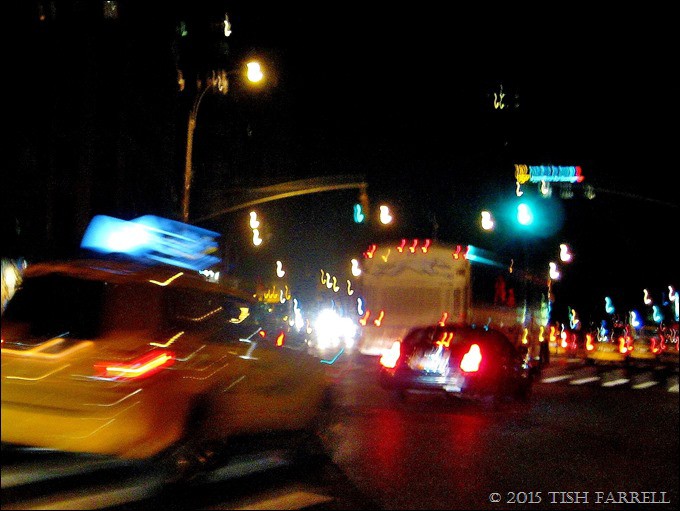
This week artist, Suzanne Miller, is Paula’s guest at Thursday’s Special, and she has challenged us to think and look at our photographs in a more abstract way. This photo was taken after a trip to the New York Ballet at the Lincoln Centre. I’m rather fond of ballet, and had been very much looking forward to the show, but after the first forty minutes, I was so bored I succumbed to rather more than forty winks. It was far more exciting out on Broadway.

To see Paula’s and others’ response to ‘abstract’ go to her post at Thursday’s Special


DES RES ~ Nouveau Roman Anyone?

100_3730

I think I may have mentioned somewhere on this blog that, a few miles up the road from Wenlock, we have the remains of Wroxeter Roman City aka Viroconium aka Uriconium. In its day it was one of the largest urban settlements in Europe (AD 47 – AD 650). Most of it still lies under farm fields within the broad sweep of the River Severn, although the outlines of houses and roads have been eerily revealed in aerial photos and  LADAR surveys.

For centuries, too, farmers at their  ploughs have turned up marvellous Roman artefacts. Even now, if you walk the fields after harvest you can easily spot the polished terracotta shards of fine Samian pottery among the wheat stubble. Archaeological excavations have been on-going for decades. I dug there myself aeons ago, as an undergraduate archaeology student who needed to rack up some fieldwork  experience. The exposed remains are now in the care of English Heritage, and many of the finds are on display in the site’s small museum. More of the collection has been recently re-displayed at the county’s new Shrewsbury Museum.

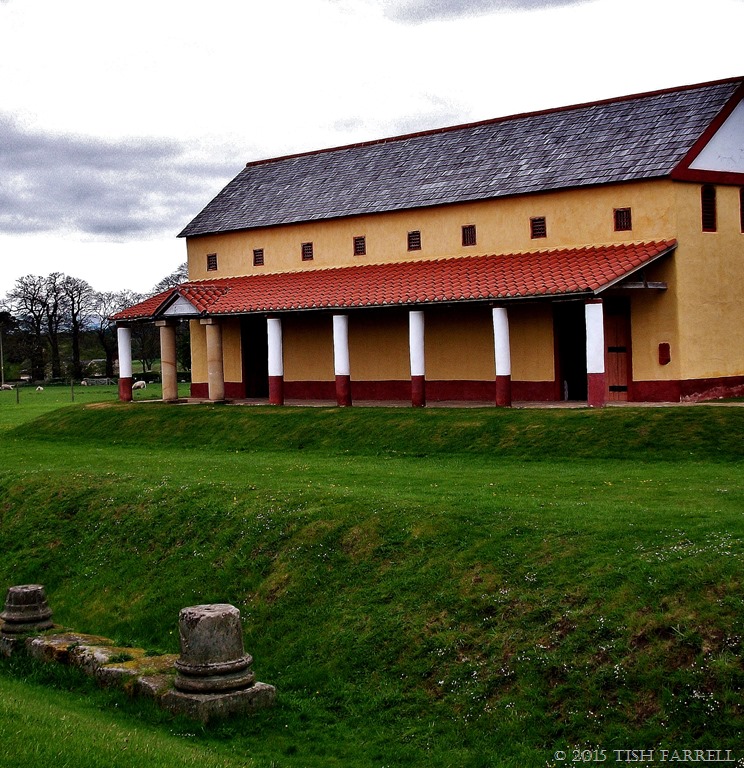
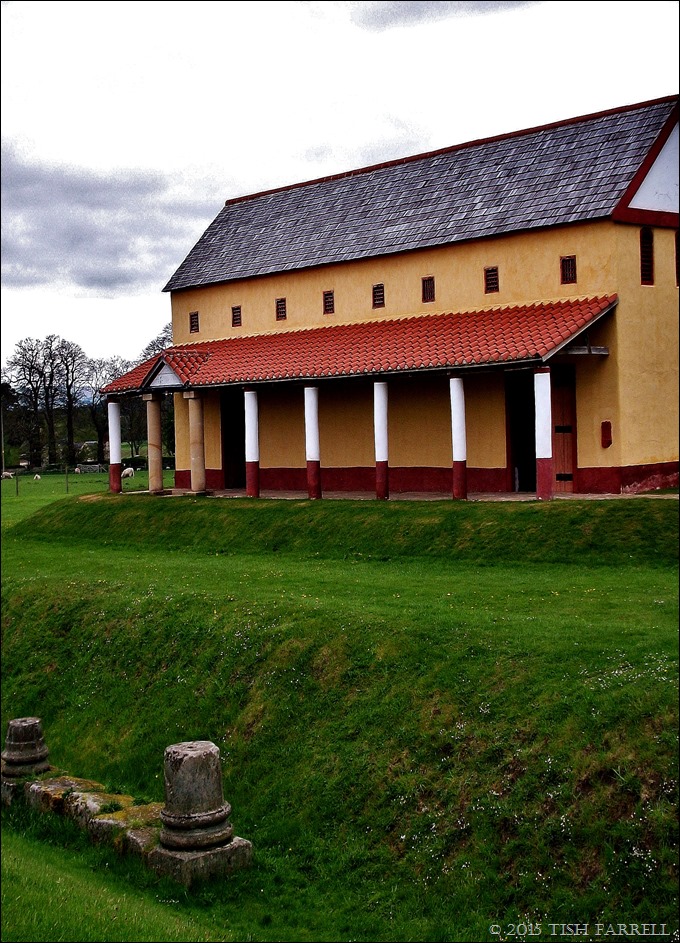
But now we come to the Roman Villa in the photo – this ‘desirable town residence’. Its appearance here was prompted by Jo’s ‘restoration’ challenge. Strictly speaking, this is not so much a restoration as a  reconstruction. Although on the other hand, you could say that its builders did attempt to use only Roman construction methods – thus ensuring the restoration of long-lost skills. They did, however, have to apply for present day planning permission before they could start work.

And the whole project came about as part of a TV series on UK’s Channel 4 – Rome wasn’t built in a day. You can have virtual tour of the villa HERE

*

Of the original city, there is not a great deal to see, although the remaining high-standing basilica wall is pretty impressive, and did feature rather splendidly in Simon Schama’s epic A History of Britain TV series. You can see the first episode in which it and the surrounding remains feature at 40 minutes in:

Simon Schama’s A History of Britain


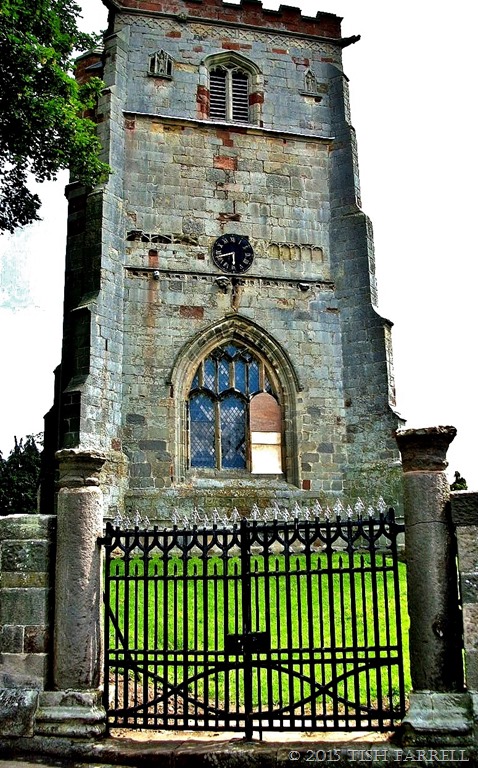
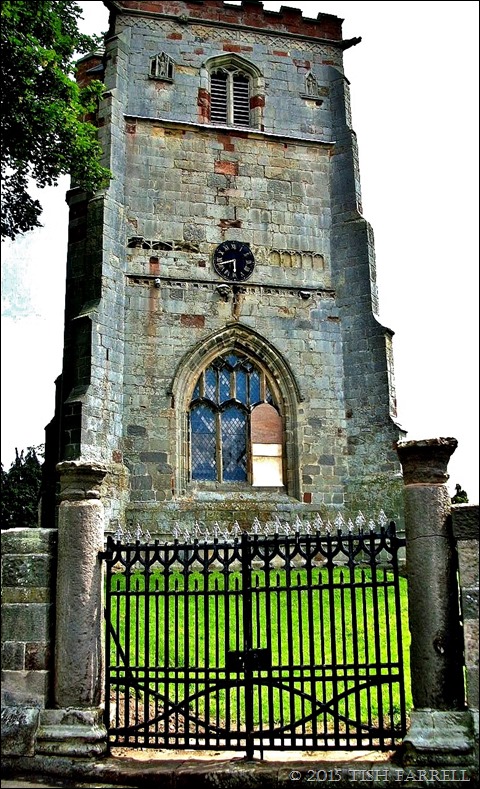
One of the reasons why the physical remains of this large and long-lived city are so few is because the building stone was recycled through the ages. If you walk down the lane to Wroxeter Church you will find that Roman pillars have been used to make the gateposts. Doubtless much more of the Roman stonework found its way into the body of the original Anglo-Saxon, later Gothic church. The church is redundant now, and looking rather sad.
100_5808

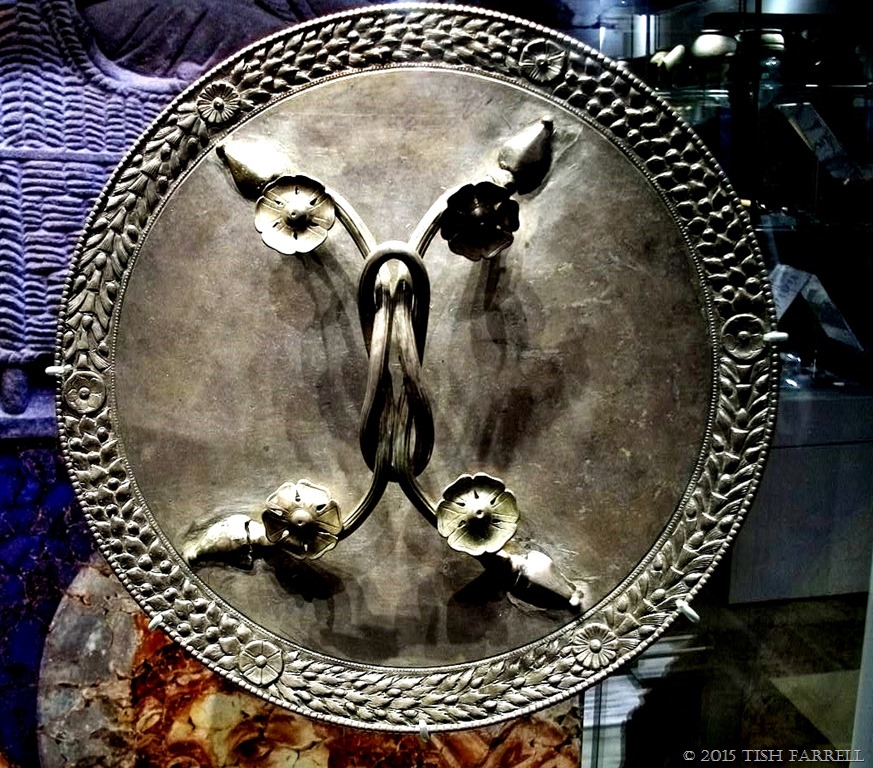
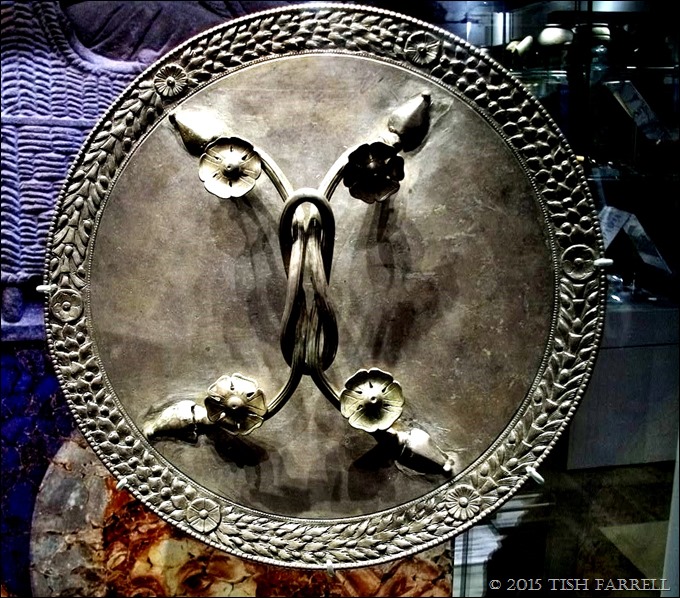
And finally, I can’t leave you without showing off some more Roman treasures that may be found in Shrewsbury Museum’s Roman gallery. The finest object of all is a polished silver mirror, made in the Rhineland but found in Wroxeter forum’s courtyard. It dates from the AD 2oos. Its convex design, and the weight of the silver suggests it would have been held by a slave or servant so ‘my lady’ could admire her latest hair-do. Enjoy!
100_5426

Back of a convex silver mirror, circa 3rd century AD, Shrewsbury Museum.

*
100_5423

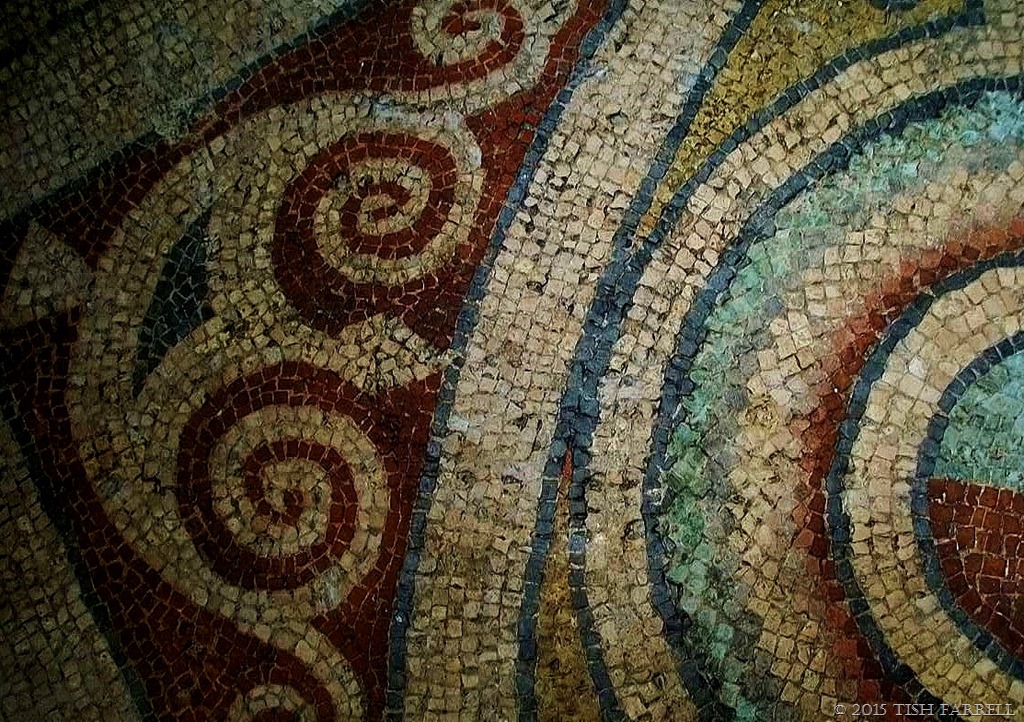
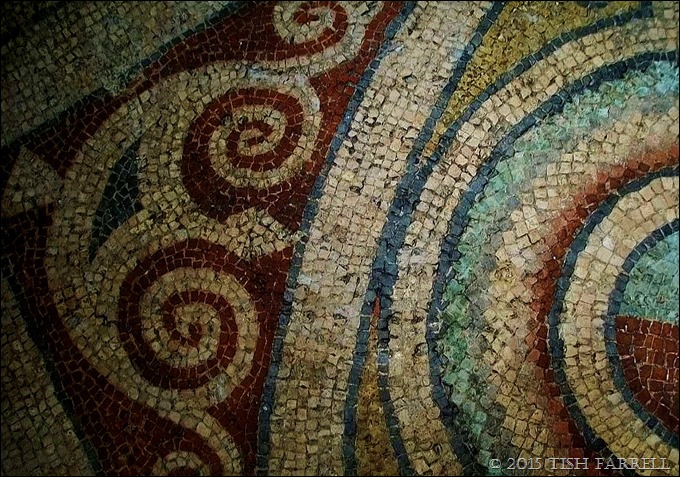
Restored section of Roman mosaic floor from Whitley Grange Roman Villa, near Shrewsbury.

*
100_5424

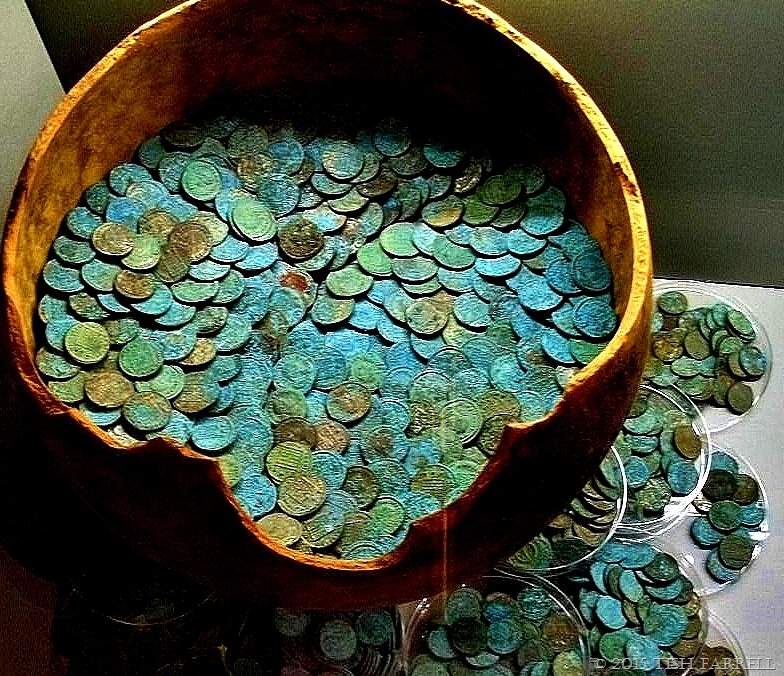
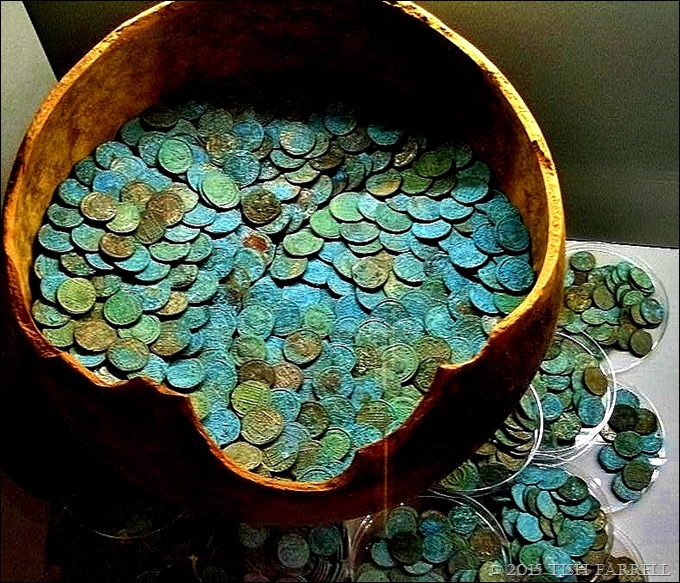
The Shrewsbury Hoard: over 9,000 coins dating from 280 AD to the following century. The coins were wrapped in cloth bags and buried in a big storage jar.

*

copyright 2015 Tish Farrell


For more restored pieces go to: Jo’s guest challenge ‘restoration’. Also check in at Paula’s response at Lost in Translation Thursday’s Special

Stripes and High Rises: Diversity

park 11

You could say that Nairobi’s game park begins where the city stops. It is the only city in the world with a natural, unenclosed wildlife reserve on its peripheries: wilderness and urban sprawl side by side. There  is of course an electric fence along the urban perimeter to divide  man from beast, but the city is always pressing against the boundary. To the south the park is open to the Athi and Kapiti Plains to allow migrating herbivores such as wildebeest (there are a couple in the background) to come and go. These grasslands are important feeding grounds in the wet season, and so it is essential for the health and wildlife diversity of the park that the southern corridor remains open.  When we left Nairobi in 2000 there were fears that  it  would soon be closed by encroaching farmers, and community initiatives were being devised to avoid this.

By African game park standards the park is very small, 117 square kilometres, but it supports a breath-taking array of animals – lions, cheetahs, leopards, rhino, all the antelopes, and a host of small game. Only elephants are absent. The birdlife is equally diverse with over 500 species. And despite the proximity of the city, there still are wild places where the  high rises cannot be seen on the skyline. 

There is also another kind of diversity in this photo: the zebra’s stripes. Every individual has its own livery. Once when we were on a game drive on a private ranch in Zambia, our very tipsy guide was insistent that we grasp this fact. “Every zebra’s butticles have different markings,” he declaimed, “so their offspring know how to recognise their mamas.” I have been grateful ever since for that gift of the word  ‘butticle’.

copyright 2015 Tish Farrell

Lost in Translation: Diversity

Wind-blown: Thursday’s Special

172

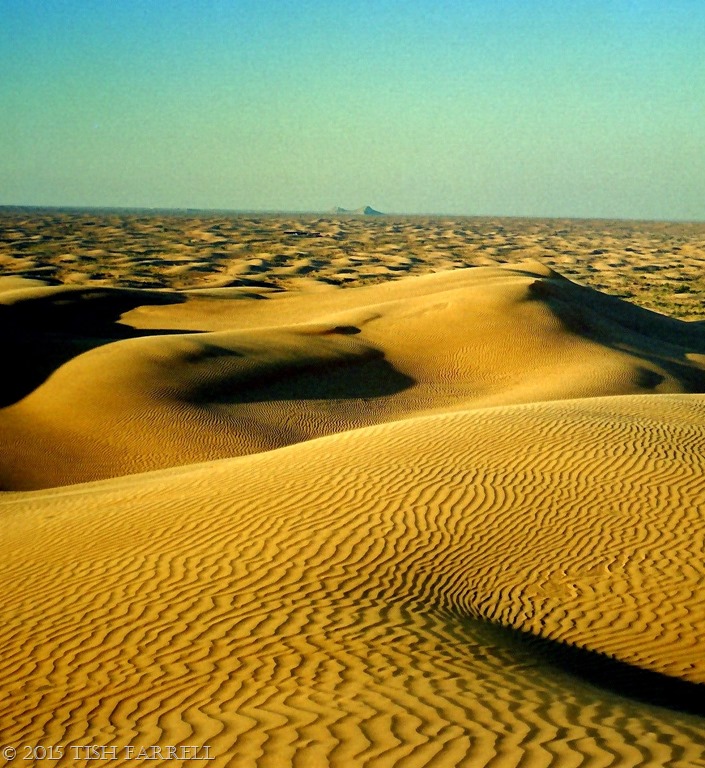
I have always loved the desert. One sits down on a desert sand dune, sees nothing, hears nothing. Yet through the silence something throbs, and gleams…
Antoine de Saint-Exupéry, The Little Prince


We lived in Kenya during the late Moi years, the last days of the one-party state. By then the President was feeling under threat from external pressure to democratise, and whenever the President felt threatened, the crime rate rocketed – white collar crime that is, AK47 operations such as car-jacking that especially targeted expatriate aid workers, and organised by people whose elitist way of life was also at stake. There were episodes of ethnic clashes thrown in for good measure, stirred up in the same quarter. A German forestry consultant was murdered on his front doorstep for complaining about some bigwig chopping down Mount Kenya’s forests to grow hash.


In some ways it was fascinating to observe the bloody devices by which some people cling to power – and by fascinating I mean in the way you might stand frozen, staring into the headlights of an oncoming car. It was stressful then, and especially as election time approached, and so one year we decided we’d had enough, and needed a break. We went to Dubai. While we were there we spent a night out in the desert. You will appreciate the bliss we felt, standing alone in all that emptiness, seeing for miles, and with not one thing on the horizon to trigger our internal security scanners. A landscape arranged by the wind, timeless and mysterious, and with a welcome absence of humans.

© 2015 Tish Farrell

Paula’s Thursday’s Special: Arranged

Gallery

Guest Challenge: Knowing your place (colour photo challenge)

This week I’m also over at Paula’s blog, Lost in Translation. She kindly asked me to post a guest photo challenge ‘Knowing My Place’. It’s all about finding some cunning new angle that tells you something fresh about a place you think you know very well. To find out more read on, and to see Paula’s own amazing photo response go HERE:

Paula's avatarLost in Translation

tish

 Tish Farrell:

Music: Vaughan Williams On Wenlock Edge song cycle inspired by A E Housman’s A Shropshire Lad

January can be a lowering month – at least in the North. We are expected to burst, sparkling new, into the New Year, when we might feel more jaded than go-ahead. Hopefully this photo prompt will have you seeing things in a new light.
I’ve called it ‘Knowing My Place’, and you can interpret it in any way that strikes you. ‘My Place’ will be somewhere that you think you know inside out: your home town or street, the journey to work, your office, kitchen, garden or desk; your state of mind, or work in progress. Now search it with the camera’s eye. Sleuth out an angle that starts to tell you something new about it.
When I first thought of the prompt I was thinking about my home town, Much…

View original post 289 more words