I’m not sure that we’ll ever quite get over leaving Kenya, though it was never our homeland and, by 2000, when we left, our business there was done. But we had lived in Nairobi for seven years, seen many changes as Kenya moved uneasily from one-party rule towards multi-partyism: one externally imposed and alien structure to be replaced by another alien structure, this for a nation of many diverse communities that for centuries had each their own forms of traditional law and order, far closer, I might argue, to any form of democracy that the nations of the technocratic North might think they have invented or progressed towards.
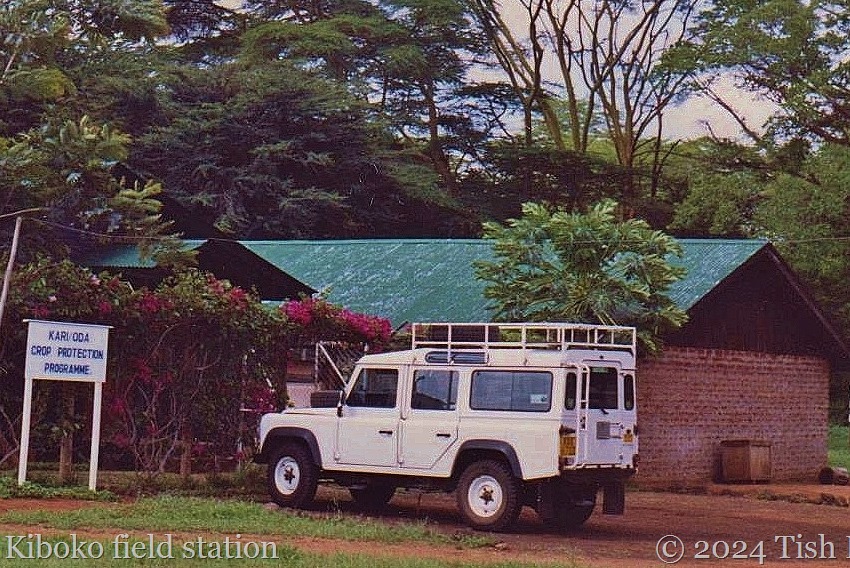
And the reason we were there at all was because Graham (as plant pathologist and food storage specialist) was working on a British Government funded crop protection project, working alongside Kenyan scientists and subsistence farmers in a bid to build in-the-field resilience against crop pests and diseases.
The project base was at the Kenya Agricultural Research Institute (KARI) in Nairobi, but in the early days we did much travelling on the Mombasa highway, going back and forth between the capital and KARI’s Kiboko field station in Ukambani. Sometimes we drove the full 300 odd miles to Mombasa, sometimes less far to the Taita Hills. Mostly, though, it was the hundred mile trip that took us from the Nairobi plains at nearly 6,000 feet, down to the semi-arid lowland just north of Makindu and the Tsavo National Parks.

*
Ukambani, homeland of Akamba farmers and cattle keepers, is red earth, thorn-scrub country. You start to see mighty baobabs growing here too. They rise up in a natural parkland setting that you feel you must have imagined. Giant hornbills stalk around the verges. The farther vistas, heat-hazy towards the Yatta Plateau, may be dotted red from the shukas of Maasai as they fan out with their herds across the sparse grassland. You may also spot antelope and giraffe here too. For in Kenya it is said there is more wild game outside the huge national parks than inside them. Sometimes the great trucks that plied the highway back then would collide with a giraffe, thereby providing an unexpected meat meal for nearby farming families.

Mombasa highway at Kiboko looking north – Nairobi-bound
*
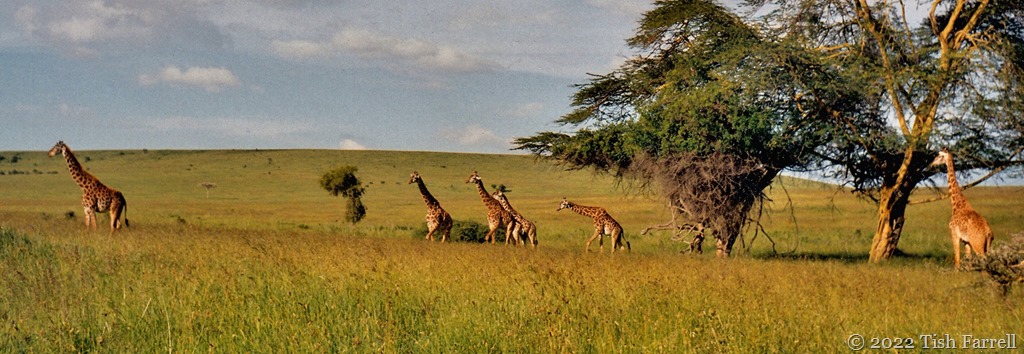
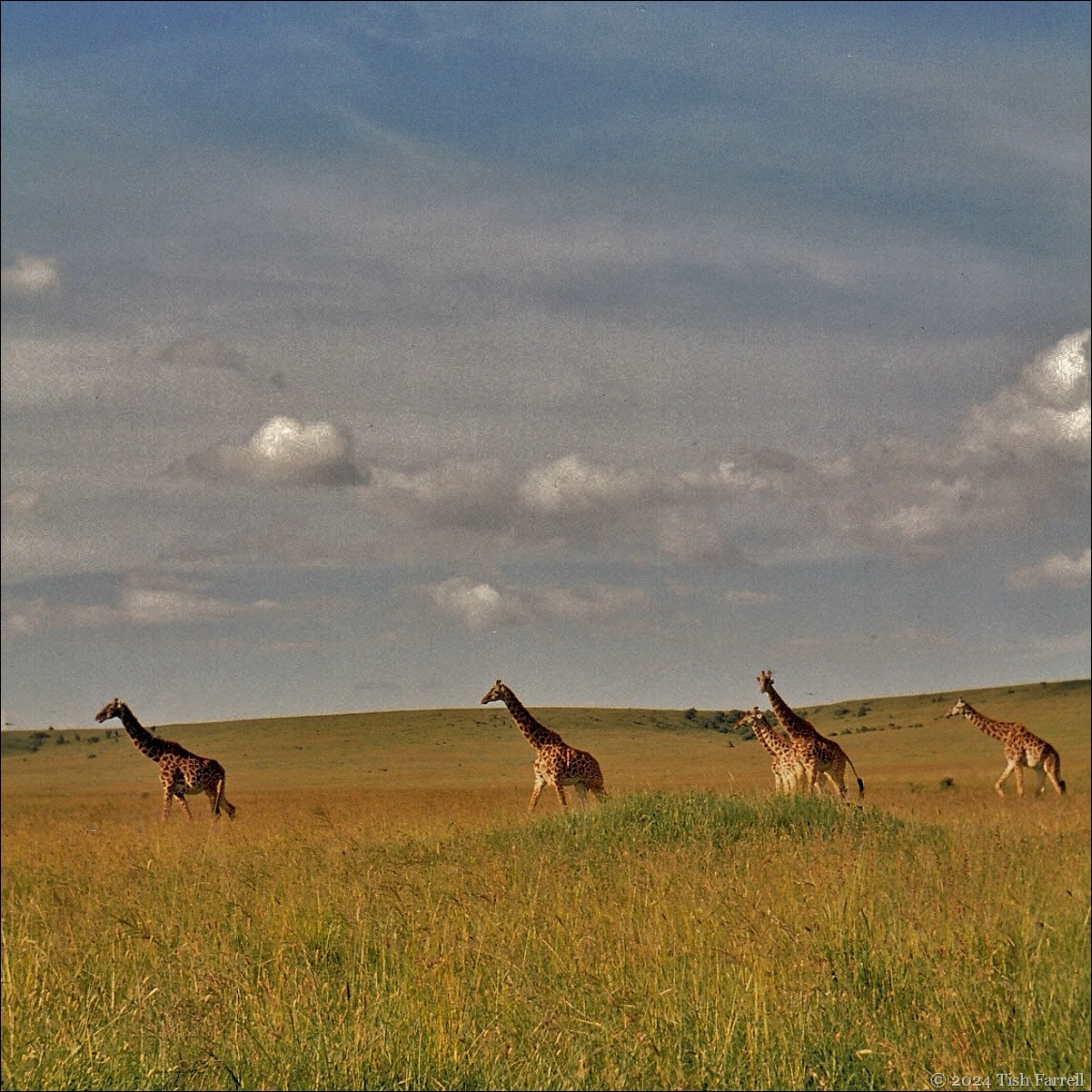
The giraffe in the header photo were spotted on the Kapiti Plains, south of Nairobi. We used to see ostrich, impala and gazelle on the roadside here too. But the sight of several giraffe moving across the plains, the peculiar gait that has them stepping in some shared slow rhythm all their own stopped the heart.
We were so very lucky to see such sights. Even now there’s a catch in my breath.
*
#SquaresRenew