Red For Danger?

19

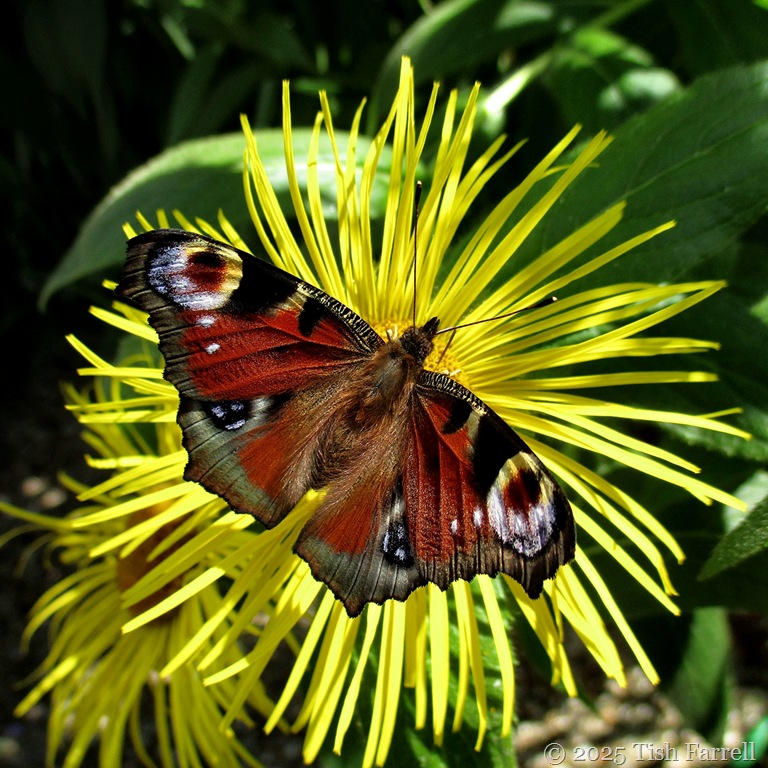
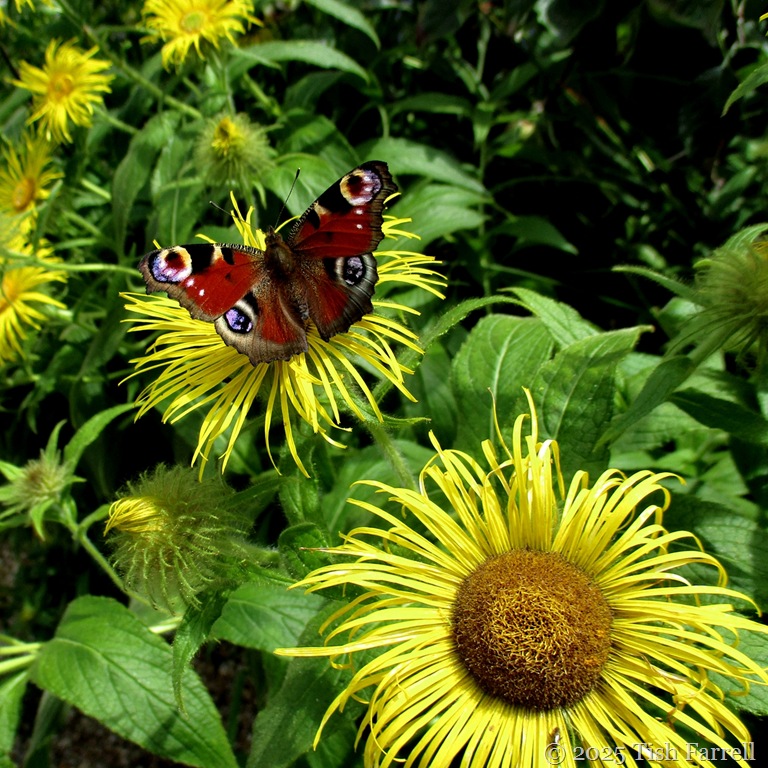
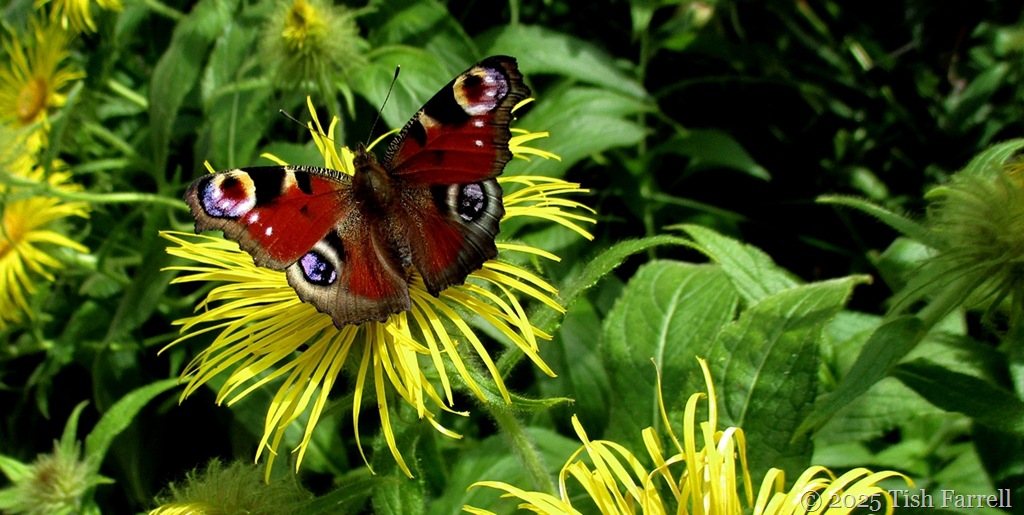
Actually, it’s probably the eyespots that see off birds that might prey on the peacock butterfly (Aglais io). But then the deep rusty red does show them off so well.

The peacock is said to be one of our commonest UK butterflies, although I’ve only seen one so far this year, and that was in our bedroom. I was more concerned with helping it escape than snapping it. These photos, then, are from our previous garden where they would often come in high summer to feed on Doronicum, aka Leopard’s Bane.

18

*

But how beautifully it has composed itself. And so it seems a fitting tribute to Becky who, for a whole month, has kept us so well amused with our respective photo archives.

THANK YOU, BECKY, QUEEN OF SQUARES


18 header


#SimplyRed Day 31

Turning Red

IMG_8360ed

Yesterday surely was a red letter day – at least on the gardening front.

We had rain.

We did.

Enough to soak the top inch of soil. This I discovered in late afternoon when I went to dig up some Rooster potatoes whose leafy tops had been cut off some weeks ago.  I was surprised the rain hadn’t penetrated more deeply. We’d had a few heavy downpours during the day, along with gentle summer showers in between. It just goes to show how much rain is needed to nurture crops and all growing things. In fact, the soil under the potatoes had baked into an ashy crust, reminiscent of Bishop’s Castle’s very particular brand of lime mortar that holds our house together, the crust only penetrable with a hefty thrust of the garden fork.

But for all that quibbling, the garden does look relieved, some plants almost perky. This includes the runner beans which had been too overheated to make any beans. Now, with the cooler temperatures, they are abuzz with bees and (hopefully) making up for lost time.

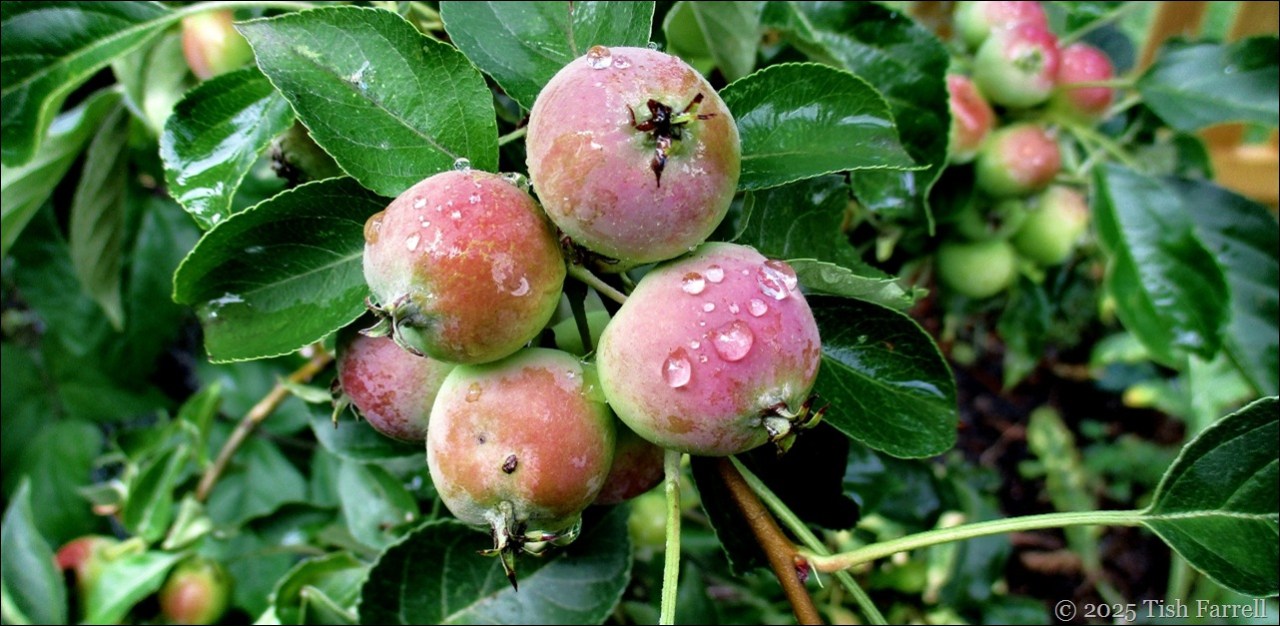
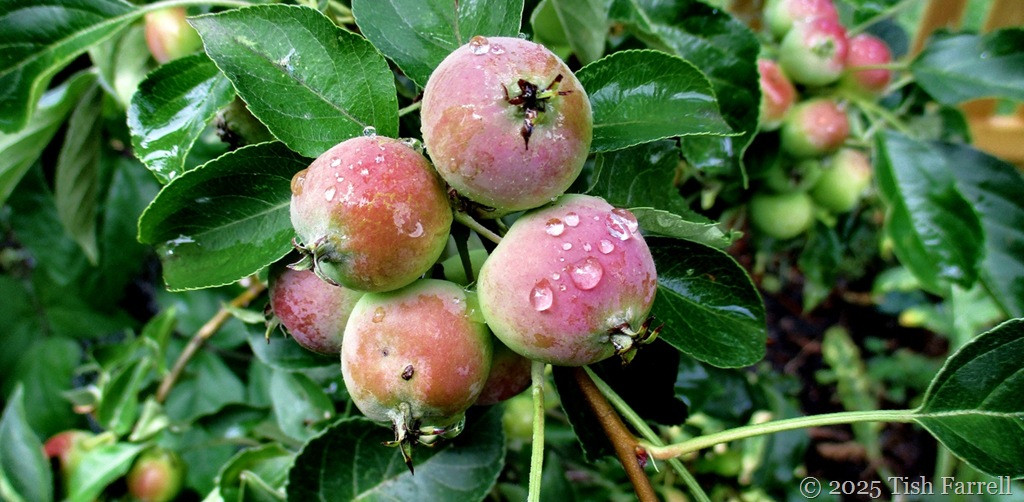
And in the bottom of the garden, our little crab apple is looking especially grateful. It was planted last October and, as a new young tree, has been struggling during the long dry spell. Buckets of tap water really don’t quite do the job, although obviously better than nothing. But the tree has survived and has a mass of little apples which are growing in redness by the day.  I’m trying to recall the variety. I especially wanted a tree that was good for jelly, so it may well be Jelly King. Or if not that, Red Sentinel. It will become more obvious in a few weeks time when the apples gain their full colours. Happy thoughts of jelly making, though not of rushing too fast into autumn.

IMG_8360 header


#SimplyRed Day 30

Heavenly Harvest

IMG_8275sq

A week or so ago we were on one of our periodic walks to the Builders’ Merchants. It sits on the edge of town, part of a small industrial enclave whose  buildings are screened from adjacent roads by a section of dense mixed woodland.

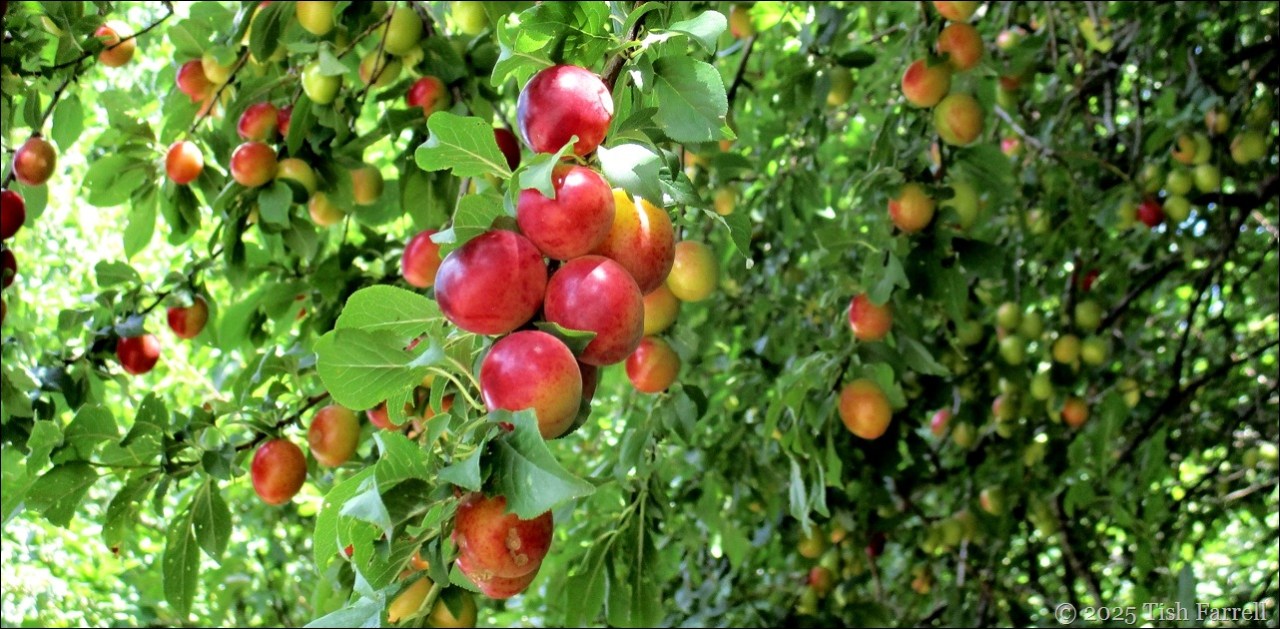
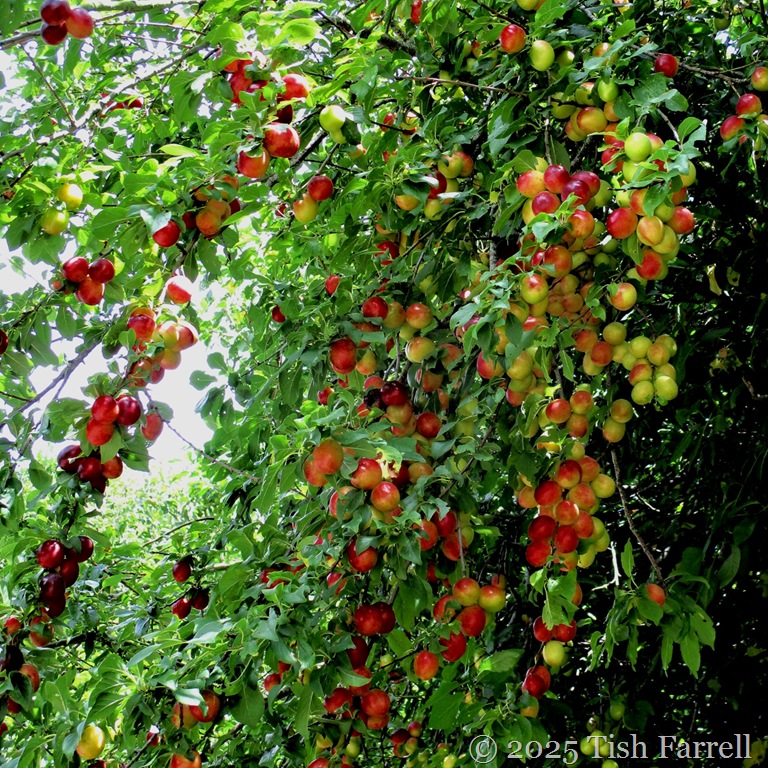
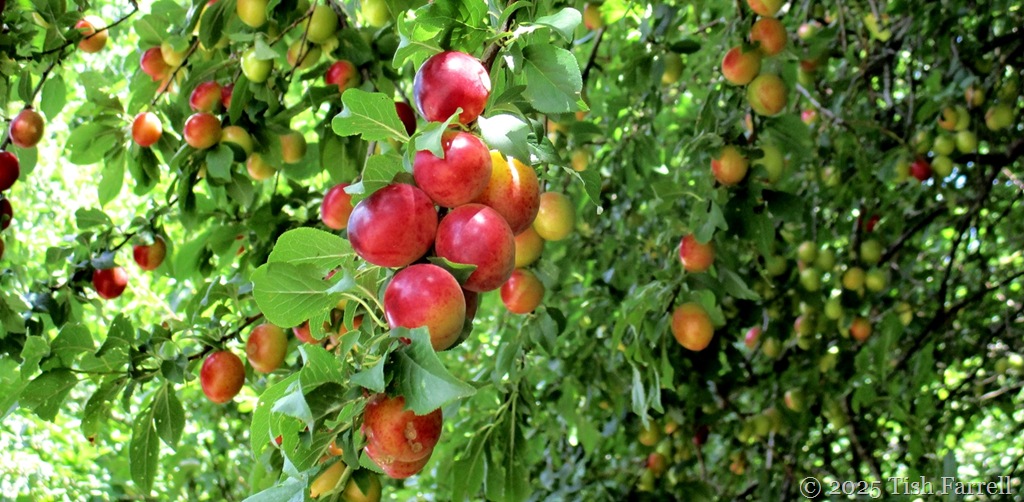
And this is what we found along the fence-line – a close-set row of cherry plum trees, laden with fruit.

The Cherry plum (Prunus cerasifera) is native to Europe and Asia and grown in the UK as an ornamental due to its early flowering. It is also used in hedging. (Which makes me wonder if this row is a hedge gone feral. There are a few of those in Bishop’s Castle and we should know.) Better still, the fruit, ripening between mid-July and September, is edible. I tried a couple of windfalls, fallen on the verge. Sun-warmed and juicy. Delicious.

Now, I can’t think why I haven’t been back to gather some more – before the wasps beat me to it.

IMG_8277 header

#SimplyRed Day 28

Ladybirds In My Borders, Bees In My Bergamot

ladybirds sq

I’m back in the garden today. The old Africa album is taking a break. Although actually, thinking about days long past in Kenya has been a happy diversion from fidgeting about the lack of rain. Yet another month now with hardly enough to fill a watering can. But at least the days are much cooler and today quite overcast. In the meantime, the weather forecasting bods keep teasing and teasing, saying there will be rain two days hence, and then when we get there, ne’er a drop. Even my computer’s been joining in the game – a little message popping up saying ‘rainy days’ ahead. I now understand that ‘ahead’ is the operative word. And, of course, this being England, we can be fairly sure that one day we will receive a proper soaking.

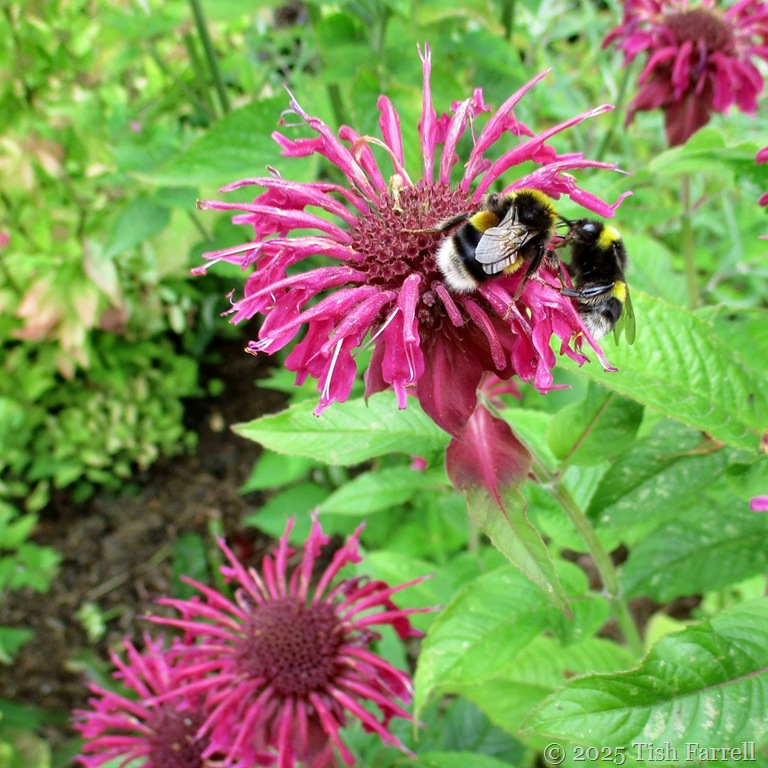
Anyway, it’s not all bad news on the gardening front, so long as I keep up the regular watering. In fact the bergamot has scarcely needed any attention. For weeks now it has been a riot of bright purple heads. The leaves smell wonderful too, crushed between soily fingers. And as for the white tailed bumbles which, on closer inspection, are probably garden bumbles – talk about bee-lines. These days whole tribes of them are foraging among the curiously structured flowers.

IMG_8303sq

*

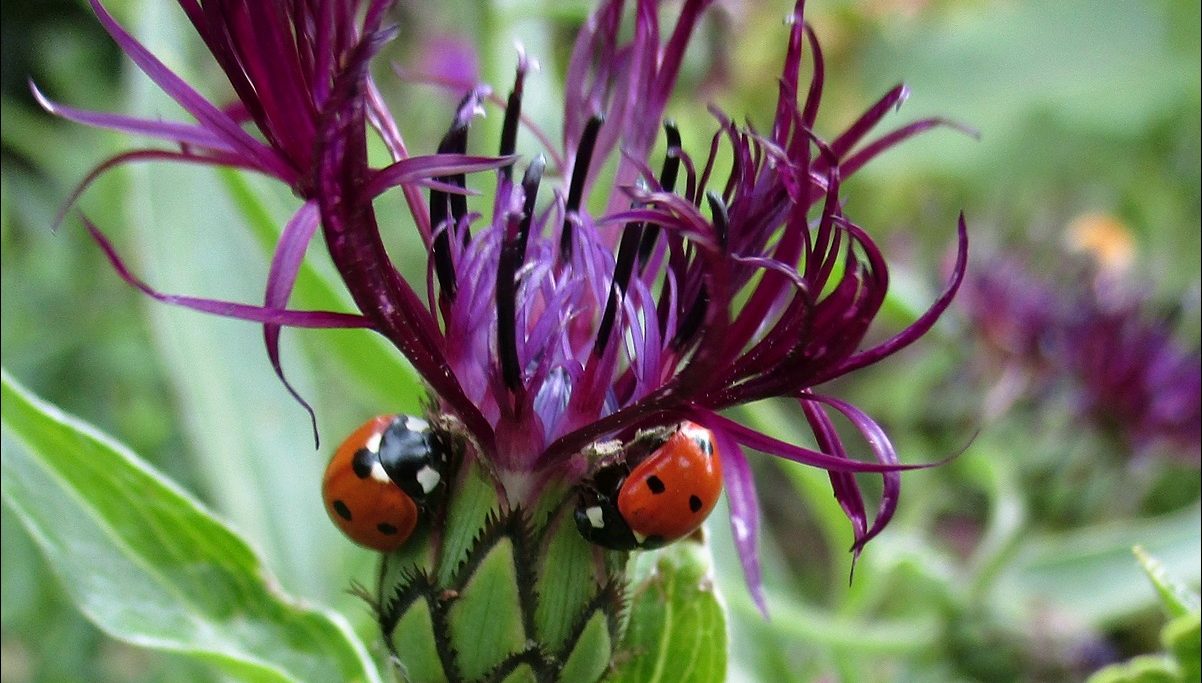
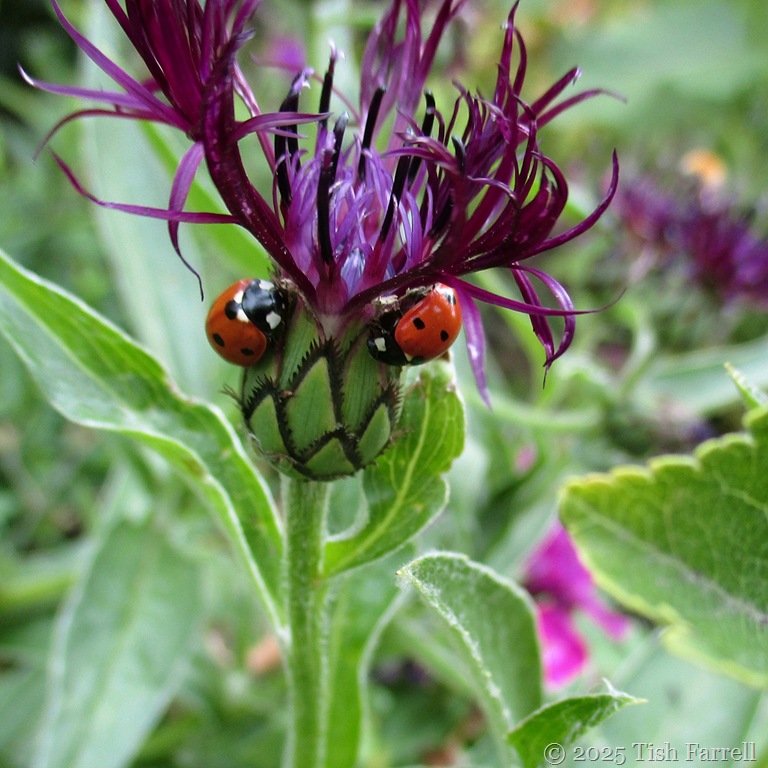
I’m also very pleased to see a number of ladybirds in the garden, most numerously in the perennial cornflower (Centaurea). I’m puzzled as to why they are there, since I can’t see any aphid infestation, only ants. Unless they both ladybirds and ants preying on something too small for me to see.

Also spotted in the Centaurea are Common Carder bees, seen here with an incoming hoverfly:

IMG_8309sq

*

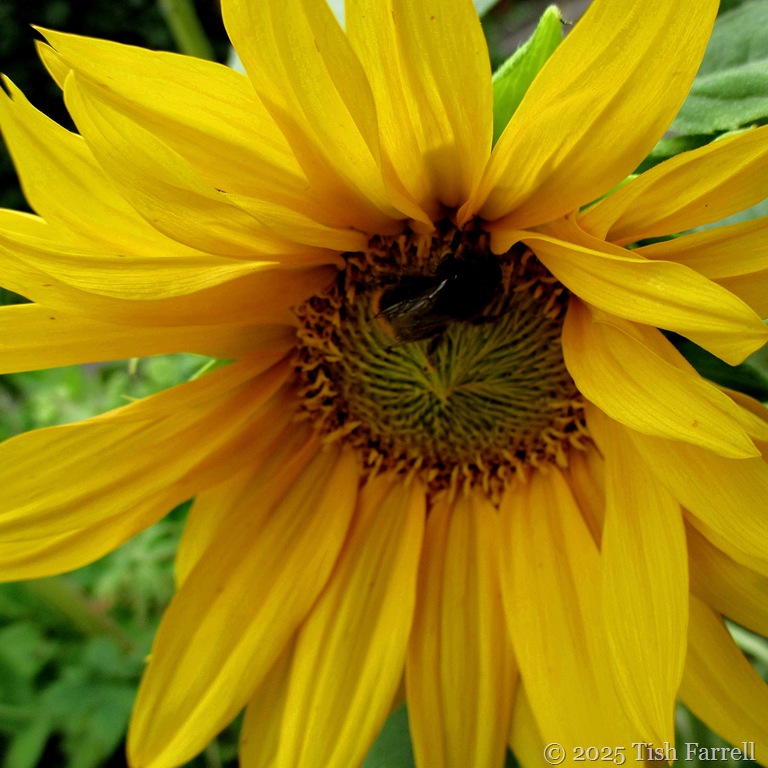
And in the neighbouring Sunspot sunflower a Red-tailed bumble bee:

IMG_8333sq

IMG_8334 sq

*

However, I am not so pleased this morning, to discover flea beetles on my Kabuki broccoli seedlings, planted out only two days ago. These tiny brassica-infesting bugs create a ‘scatter-shot’ appearance to all the leaves. Time to round up a few ladybirds and put them to work then. I’ve just read that they like flea beetles…


#SimplyRed Day 27

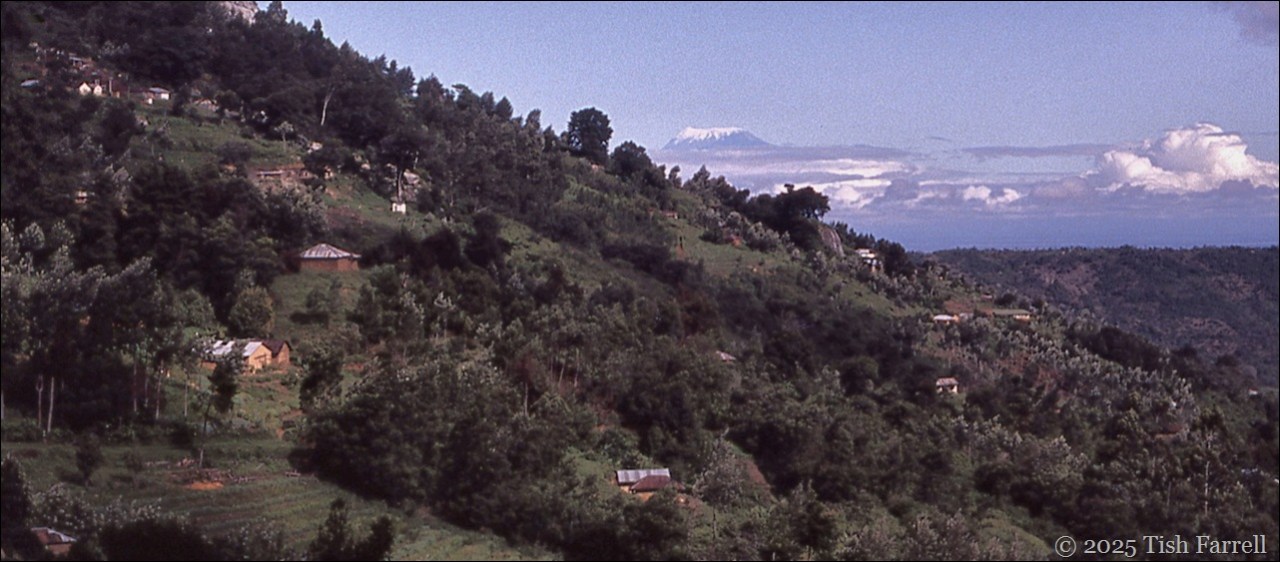
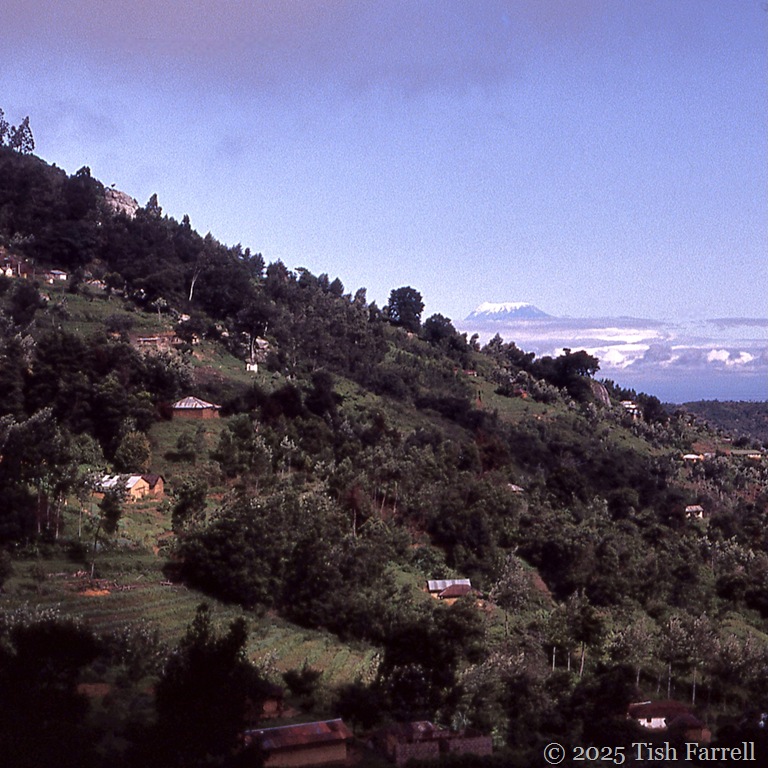
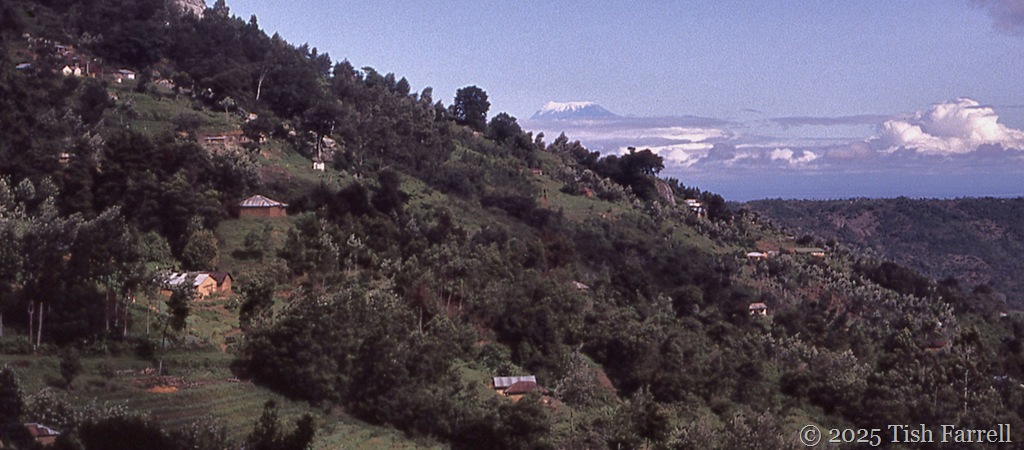
A Red Letter Day ~ Glimpsing Kilimanjaro

kilimanjaro sq

We were up in the Taita Hills. It was the final phase of the Larger Grain Borer (LGB)project (see previous post). Graham was checking on the on-farm release of predator beetles,  Teretriosoma nigrescens  (TN). There were high hopes that TN would be a viable control for LGB, a voracious (and imported) pest in grain stores. (In the project’s trial stores you could actually hear the gathered tiny entities grinding through maize cobs, one of Kenya’s essential food crops being turned to dust).

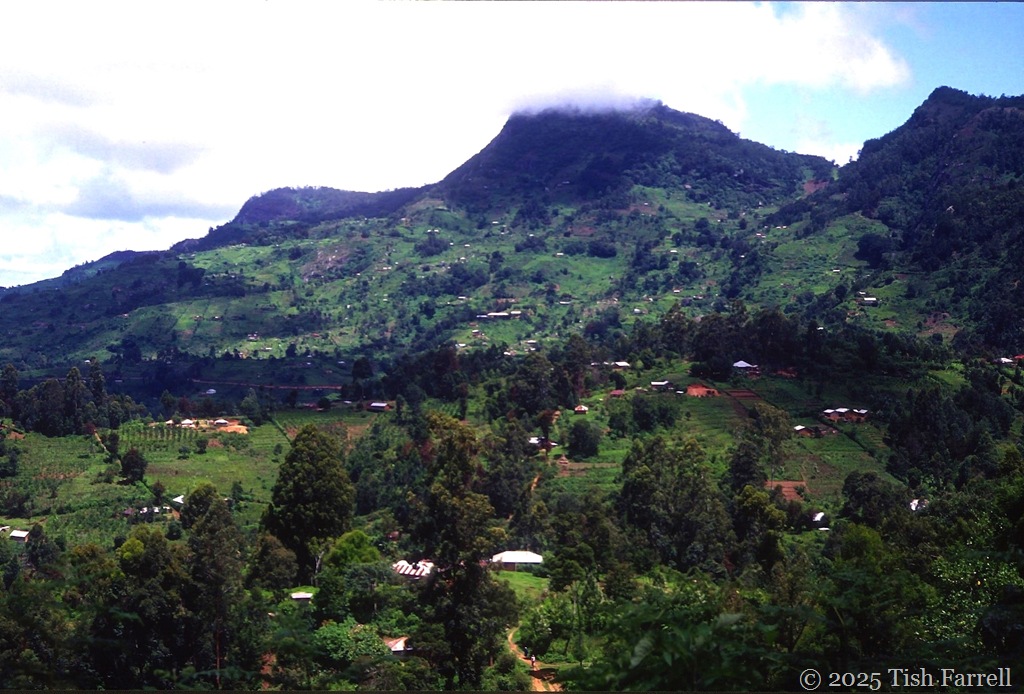
I was along for the ride. And what a ride it was up from the hot plains: hairpin bends and a rapid climb through 1500 metres, verges bursting with wild flowers – black-eyed Susan, wild hibiscus, morning glory, goats grazing, hillside farms steeply terraced, the scattered plots of maize and banana, the cooling presence of cypress forest. Everywhere along the road people walking, transporting something; jerrycans of cooking oil, sacks of maize flour, women hauling firewood, bundles of sugar cane, mamas with infants.

Scan-130520-0003 - Copy

The Taita Hills comprise three massifs formed during the Precambrian era – i.e. between 650 and 500 million years ago. The peaks range from 700 m to 2,208 meters above sea level, and are covered with remnant cloud forest, which also has very ancient origins. The land is mineral rich and highly fertile. The flora and fauna include species endemic only to these hills, butterflies and orchids among them.

It is a landscape that scarcely fits the usual visions people may have of Kenya. And on top of that, if you choose your spot, there can be moments there when Kilimanjaro (just over the border in Tanzania) deigns to show itself. It is a capricious mountain, coming and going in a matter of seconds, dissolving impossibly into a blue and cloudless sky. It changes size too. Some days it can appear huge, shimmering in the sky with all the substance of a giant soap bubble; other times, as in the photo, it is more discreet. But however one sees it, it changes the day. The nervous system fizzes from head to toe: we’ve seen the mountain! We have!

Kilimanjaro header

#SimplyRed Day 26

Red In Tooth And Claw?

Taita lions sq

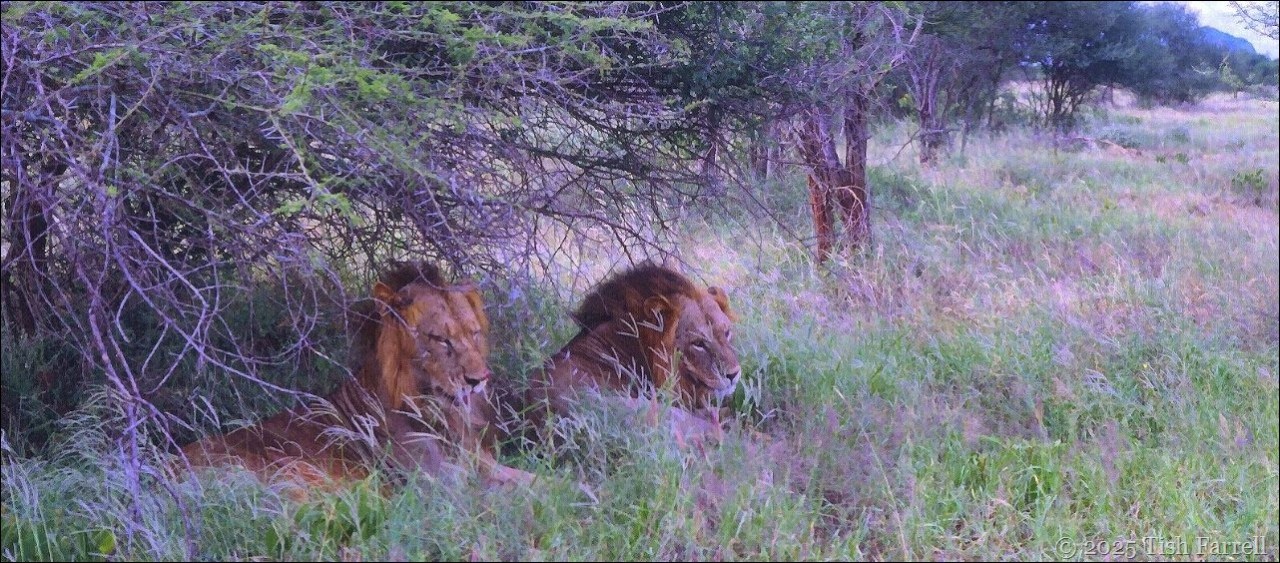
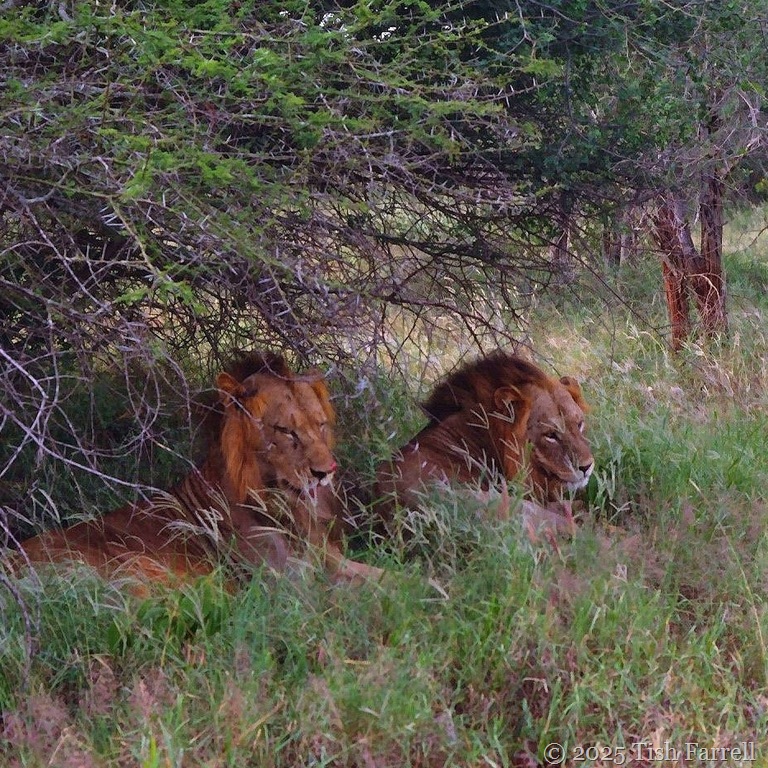
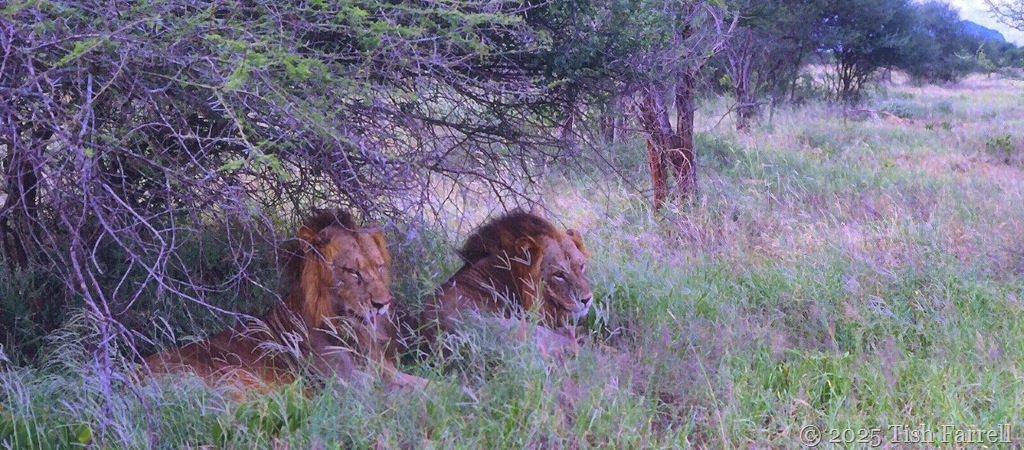
Well, it had to be done, didn’t it – that particular ‘red’ title for Becky’s month of #SimplyRed squares, and this despite the apparent lack of ‘red’ in the photo. But then, if you look very carefully, the dozing lion does appear to have a bloody nose.

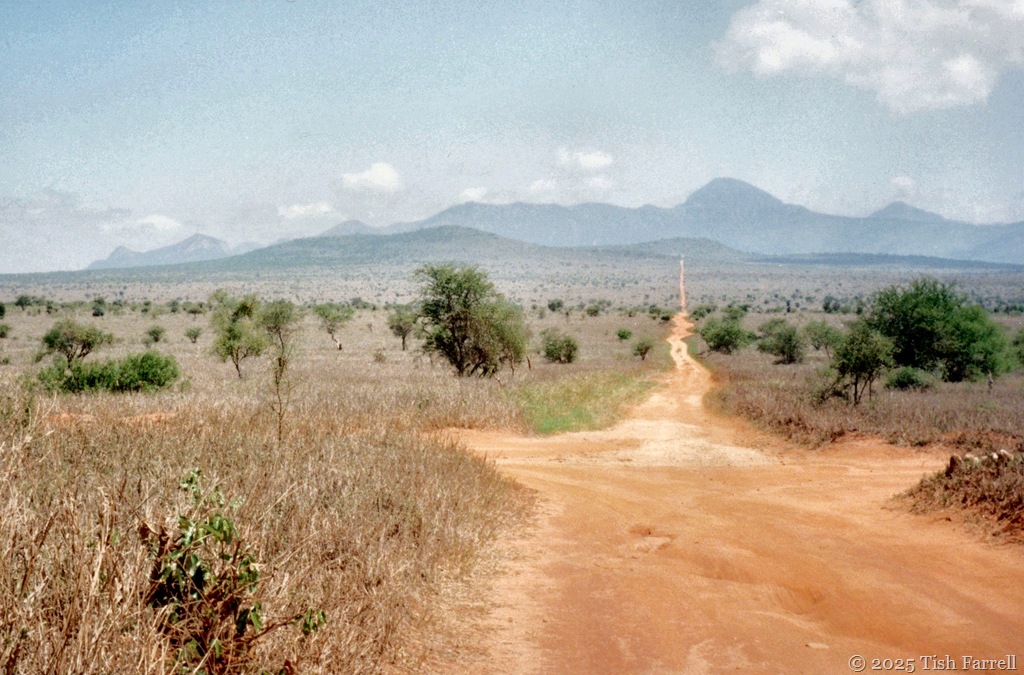
Of course I’ve posted this photo a few times before. It’s probably one of my best ‘caught moments’ from the old Africa album. We were staying at the Taita Hilton in May 1992. Our other bolt-hole, when Graham was working in the Taita Hills, was the very basic Danish Guesthouse in upland Wundanyi, but on this occasion a room wasn’t available. Oh dear. That meant five days of wall to wall luxury down in the bush country, although that said, I loved the simplicity of the guesthouse too. The Taita hill country is anyway very beautiful.

And the reason we were there at all, Graham was supervising the release of predator beetle Teretriosoma nigrescens (TN for short) at sixteen highland farms. There were high hopes that it would begin to control the spread of larger grain borer (LGB), locally known as dumuzi, which had been introduced to the continent around the 1980s in cargoes of food aid maize sourced in LGB’s native South America. (For those who want the scientific details there’s a short abstract here of a related project in  West Africa. It gives the gist of the experiment.)

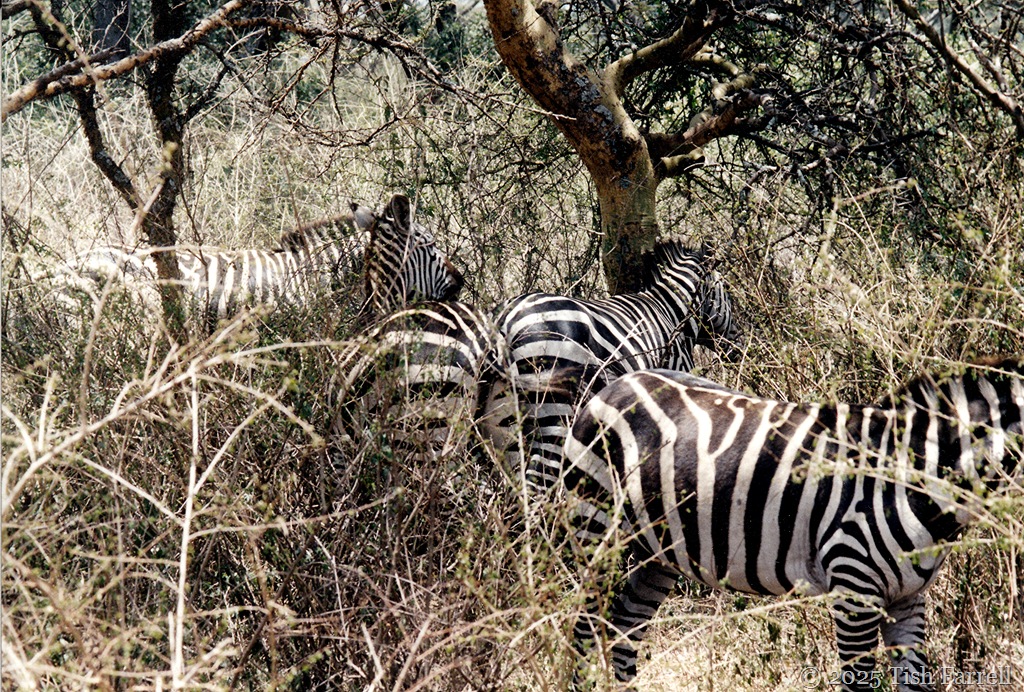
Our stay coincided with a weekend, so on Sunday afternoon we thought we’d take a drive around the hotel’s small game reserve. It was the start of the dry season and a time in Kenya when skies are often overcast, the light lacklustre. We bounced along the dirt tracks scanning every tussock of brown grass for big cats. That day at the hotel there had been talk of lion sightings. We felt hopeful, but instead, we spotted zebra, hartebeest and waterbuck, all grazing peacefully.

IMG_0013

We were giving up on the quest when a park truck pulled up in front of our land rover. I thought the ranger wanted to check our tickets, but he only wanted a chat. When he discovered that we hadn’t seen the lions, he told us to follow him, and zoomed off track and into the bush. We trundled behind. Soon he had us lined up by a thorn bush. There, beside my car door was a slumbering lioness. She opened her eyes to check me out and then went back to sleep. (Lions sleep around 23 hours a day). The ranger then pressed on to the next bush, and there were the two males. I leaned out of the car window and simply took the photograph – just like that. It’s still hard to believe. I think I was there.

Taita Hills reserve

copyright 2025 Tish Farrell


#SimplyRed Day 23

Taita lions header

On The Road To Taveta ~ The Taita Hilton*

Taita Hilton sq

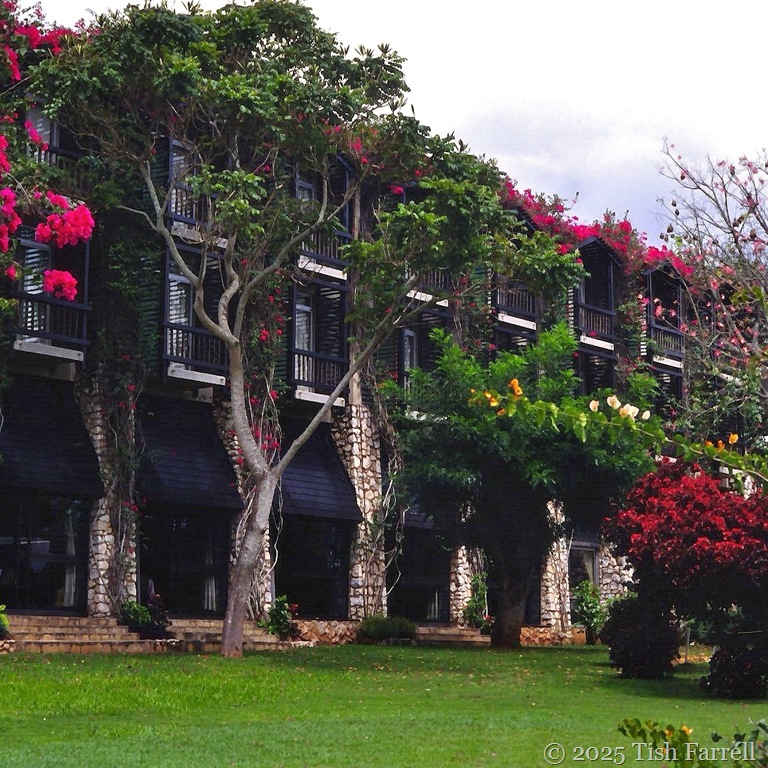
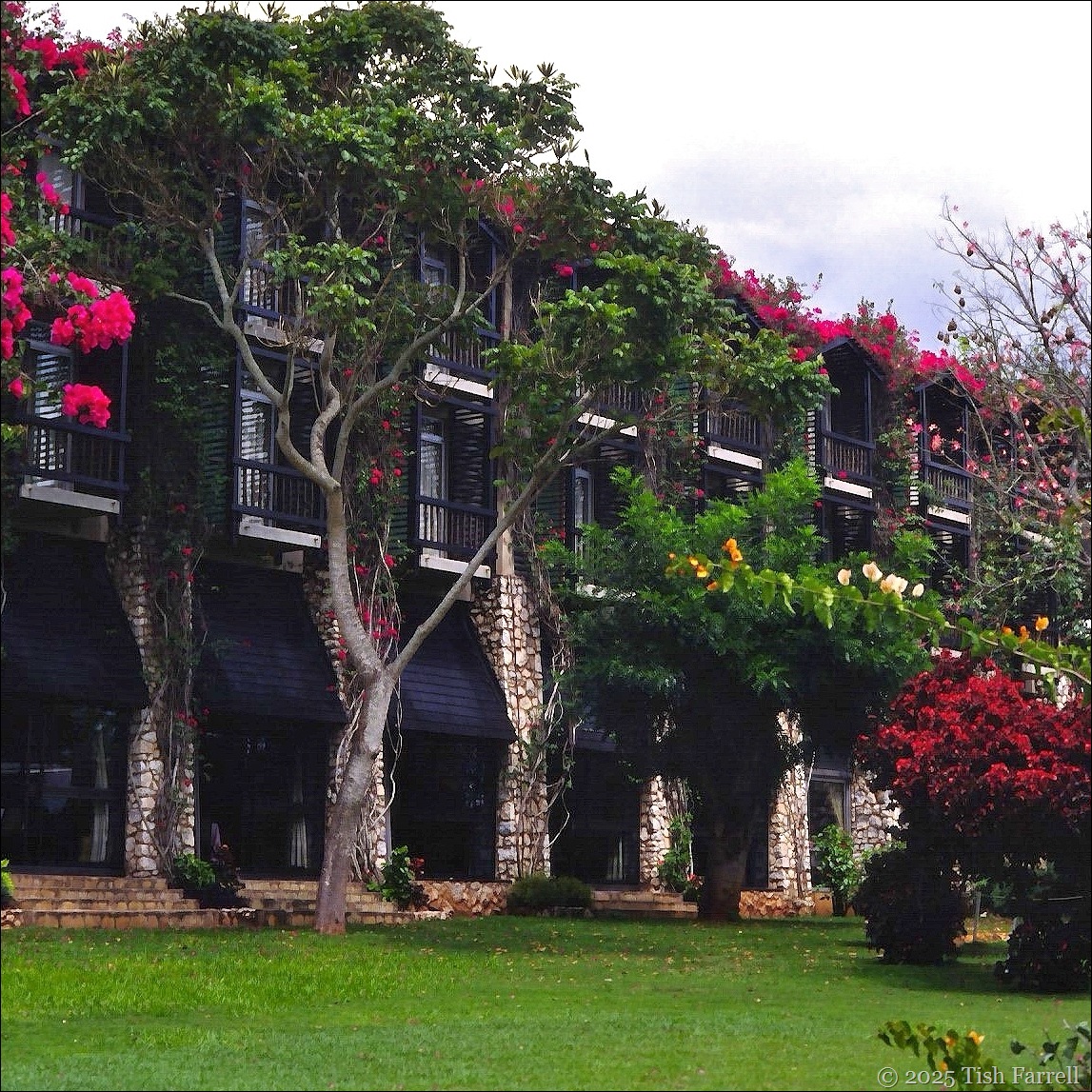
Caught in some dreamworld – it was often how it seemed that first year in Kenya. And nowhere verged more on the surreal than the Taita Hills Hilton*. A 5-star hotel in the bush. There it lies beside the road and rail to Taveta and the Tanzanian border. It is the territory of William Boyd’s  First World War novel An Ice-Cream War, of a failing sisal plantation and border skirmishes between German Count Von Lettow Vorbeck’s Tanganyikan askaris and Kenyan British forces backed by coerced young Africans of the Carrier Corps.

And it is the place we often stayed when Graham was overseeing field work experiments up in the Taita Hills. After breakfast he would drive up the mountain to Mgange to speak with farmers and check on the Larger Grain Borer’s voracious appetite for stored maize…

230_thumb[6]

*

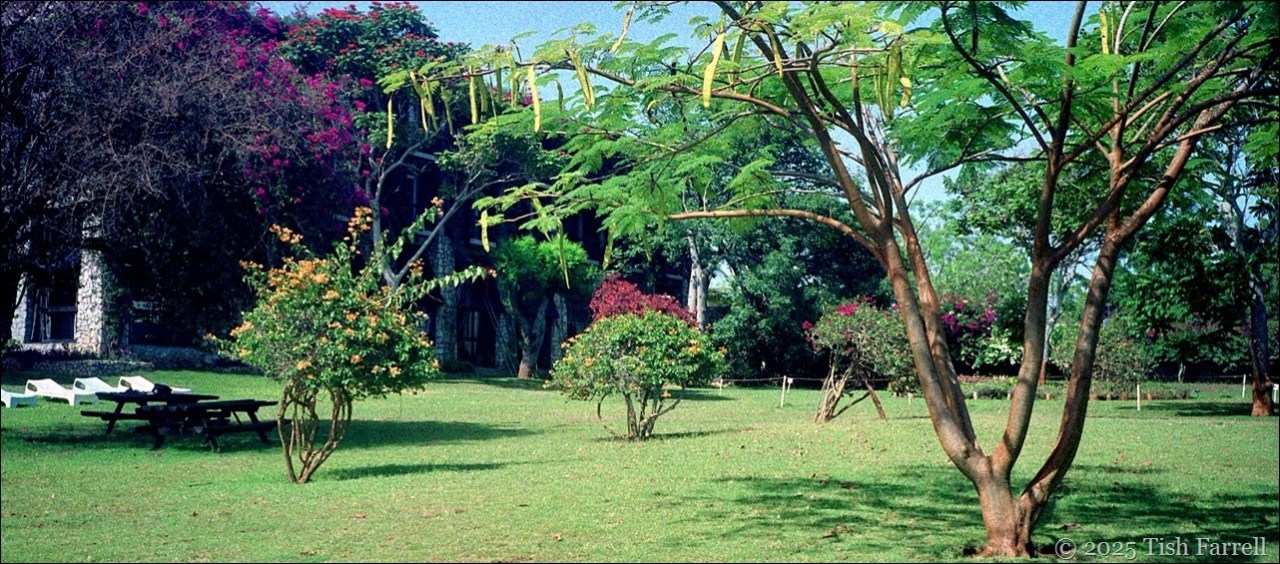
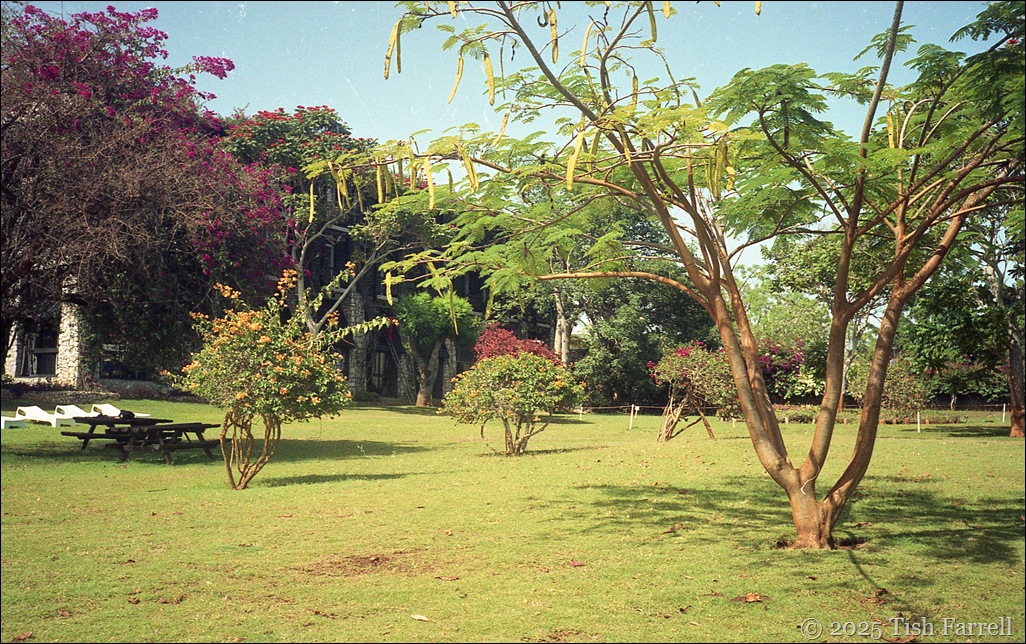
…and I would start my day, reading or writing beside the hotel pool. The pool was shaped like a teardrop, shaded on its southerly edge by flame trees. A thick hedge protected the garden from the adjacent wildlife reserve, the land there a failed sisal plantation run back to wilderness.

I’d look out there for hours, watching impala or zebra, sometimes giraffe nibbling the thorn trees, their slow passage through the brush; the soundscape a fizz of insects, swelling ever louder as the day warmed, the non-stop call of ring-necked doves, both strains somehow fusing into the heat haze that shimmered over the bush country. You can see how it might drive you mad. Meanwhile, inside the garden, a hosepipe hissed and swished, watering the lawn, where clouds of black butterflies with azure flashes came to sip.
img005

*

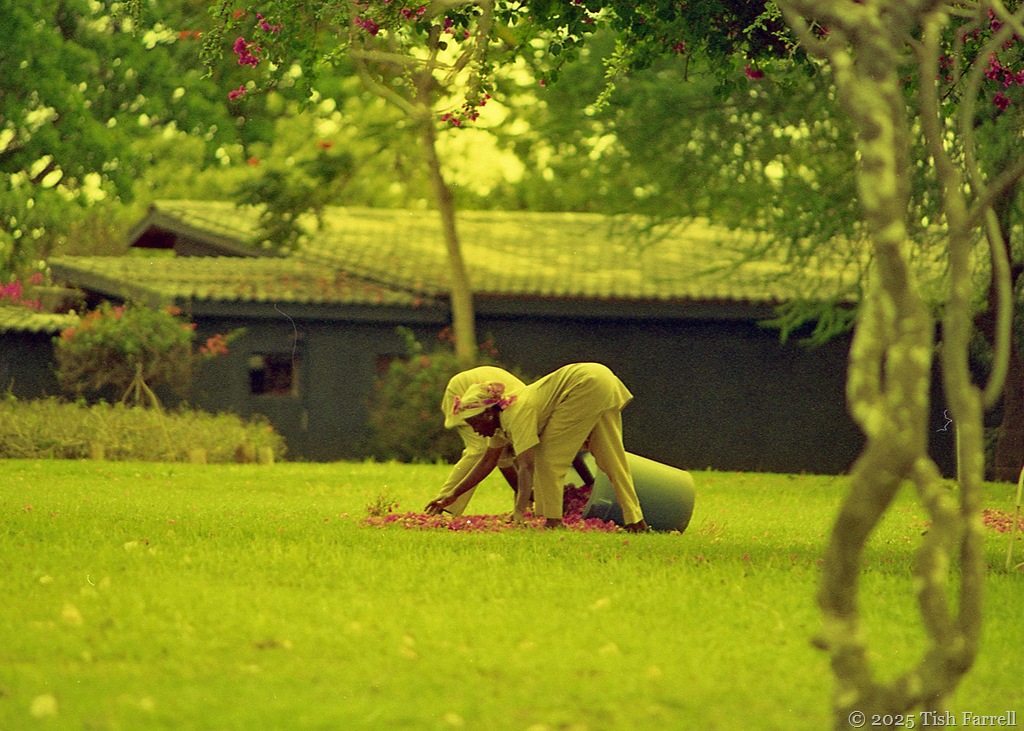
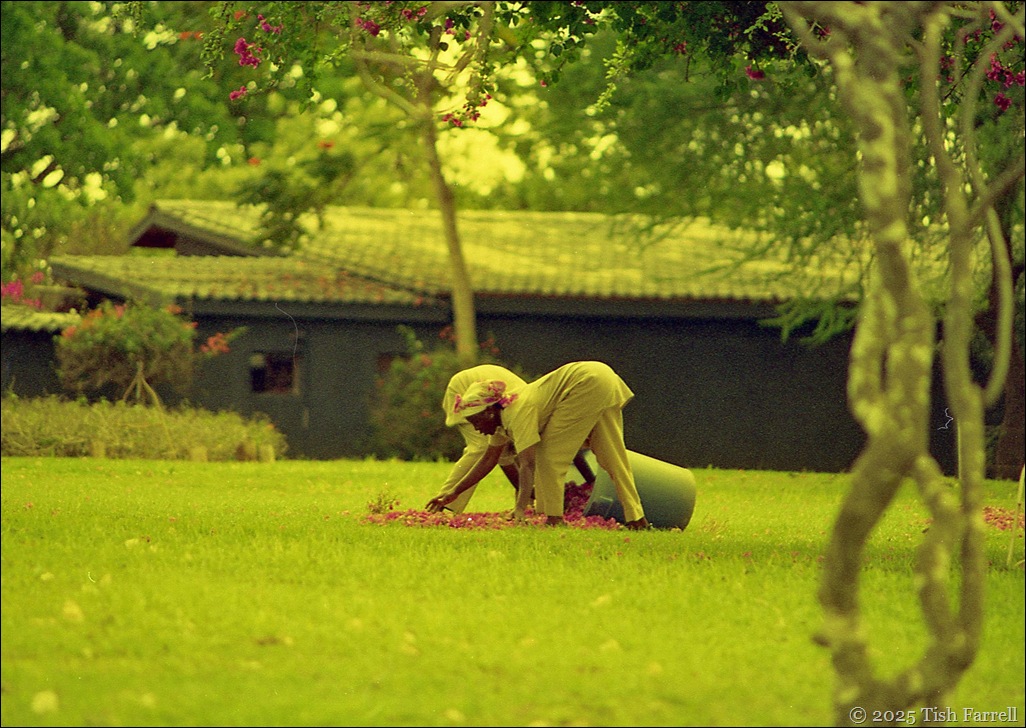
The hotel was usually very quiet in the mornings. The staff went about their daily chores, tidying, sweeping, making ready for the next arrivals. I often saw them in the garden quietly picking hibiscus flowers to put in the rooms or to decorate the dining tables.
gardening non-stop

Garden tidying – a never ending job

*
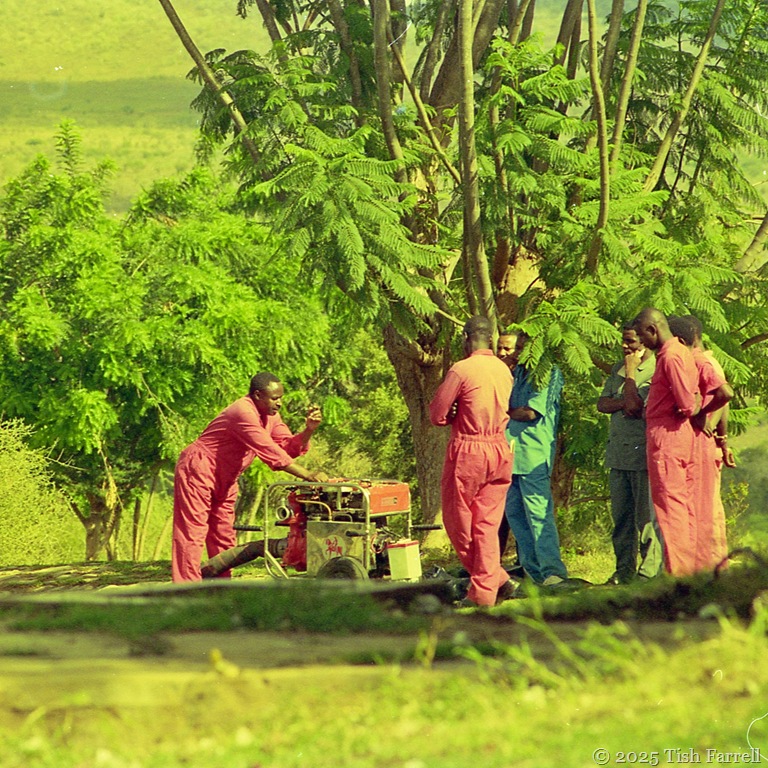
Taita Hills men in red

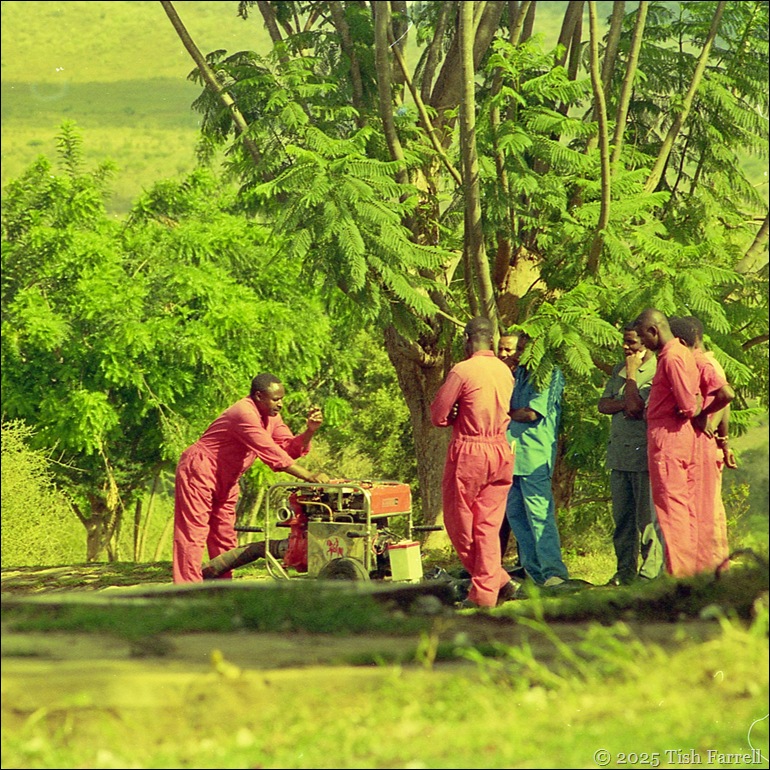
The maintenance men

*

Around noon, fleets of safari vans, up from Mombasa, or down from Amboseli, would start arriving, their occupants spilling out, mostly young folk clothed in skimpy beach wear. They would be welcomed into the great hall with gentle decorum, glasses of chilled fruit juice set out on flower decked trays, but the tide of newcomers could never be quite contained – the rush to the bar, the scramble to join the lunch queue in the baronial dining room. Those tourists who did check in, usually only stayed one night and were off after breakfast. And so we became the centre of enthusiastic attention from the hotel staff. We stayed longer; five days on one occasion. ‘That’s almost a week,’ one waiter told us approvingly; we were doing them and the place proud.

Taita Hilton - safari vans come and go_thumb[5]

*

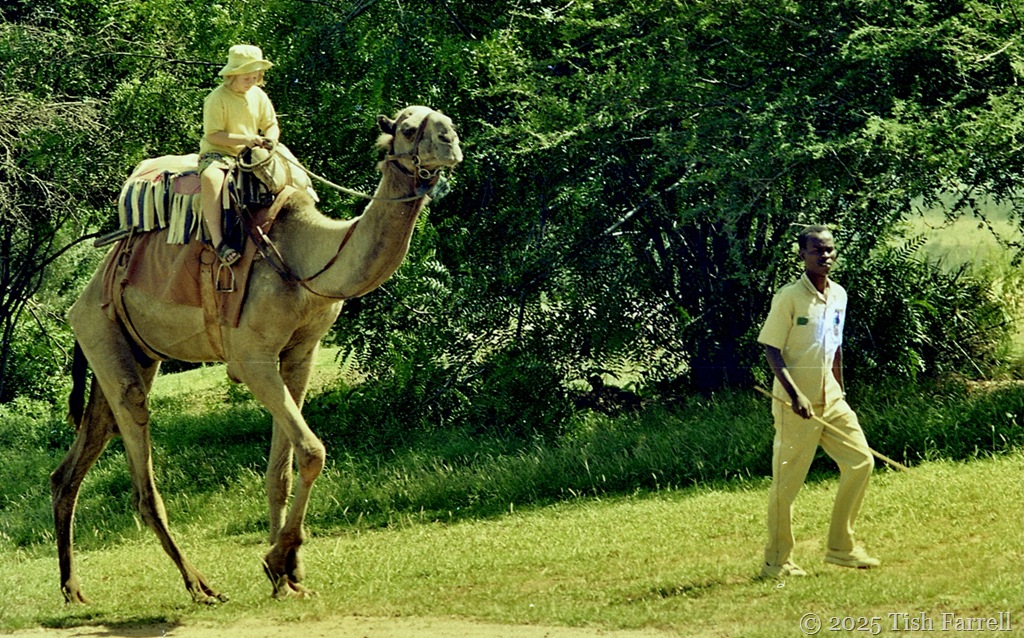
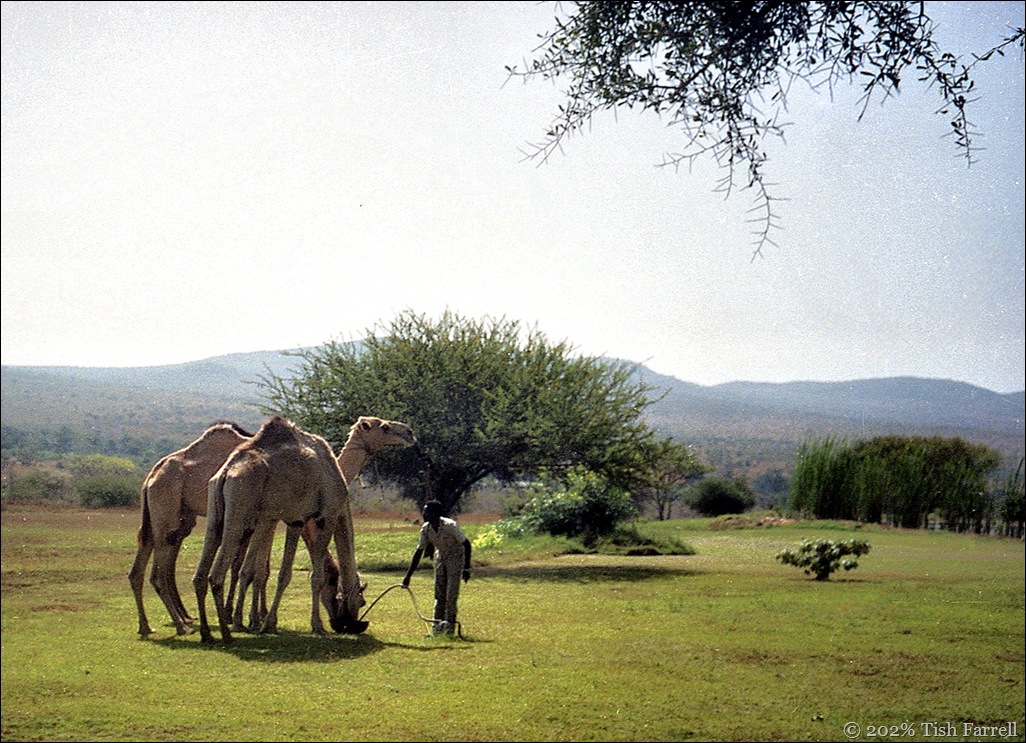
In the garden, somewhat oddly, were a trio of camels, kept for those moments when a tourist might have a burning ambition to ride one. They didn’t go far, just to the end of garden and along the edge of the reserve. Once on a family visit, our seven year old niece, Sarah, surprised us all by being very sure that she wanted a ride. Such savoir faire on the dromedary front. Here she is with Robert the camel fundi. Ah, how time passes. She’s now a chemical engineer working in fusion technology.
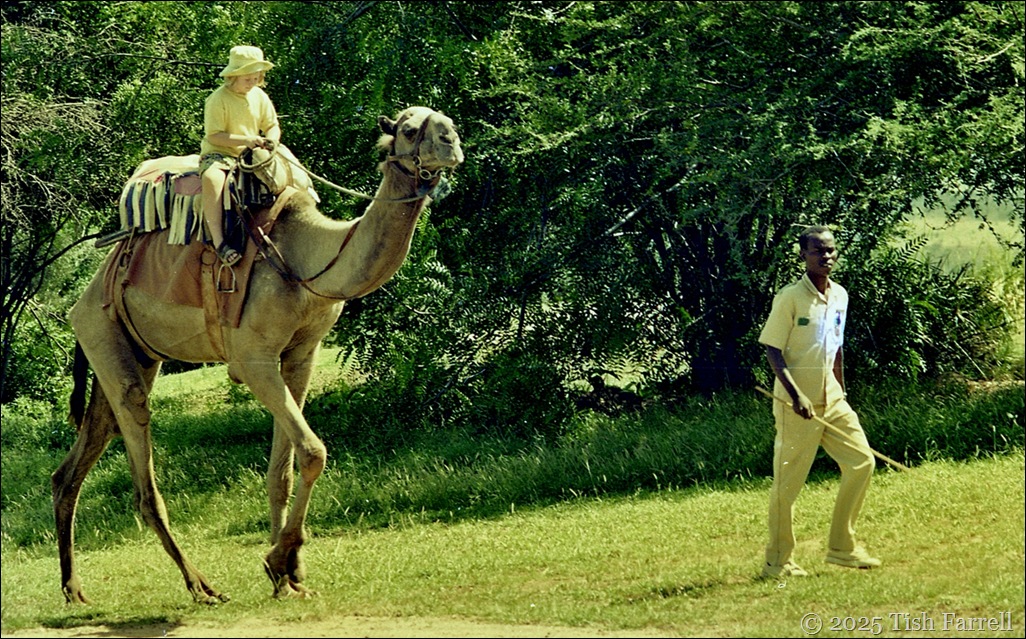
Robert and Sarah

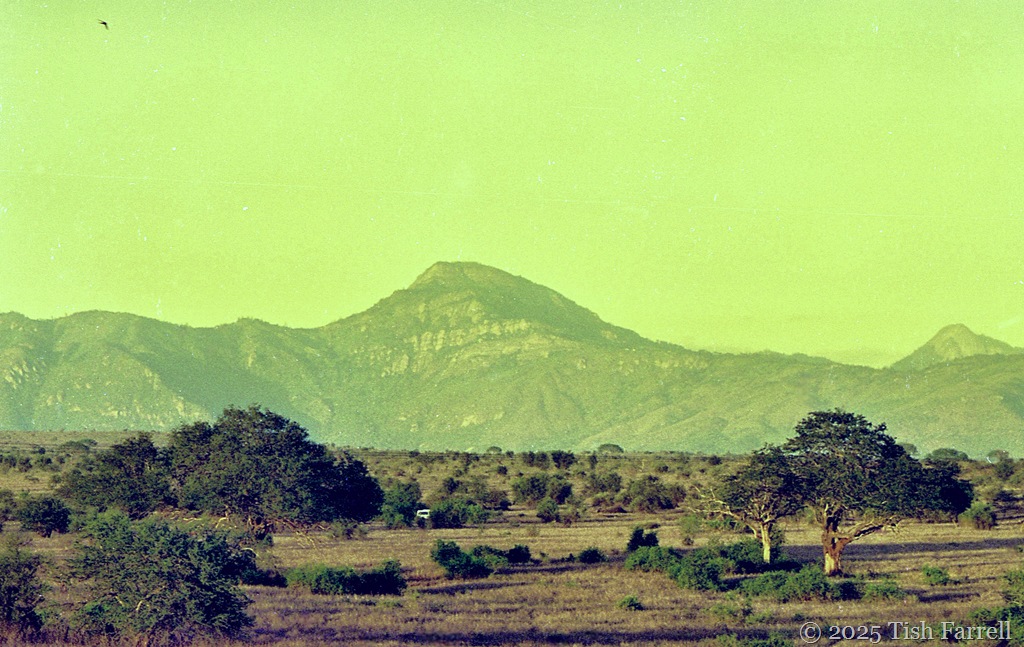
camels and bush country

Taita Hills garden and the reserve beyond

*

In my wanderings about the place, I discovered I could climb up to the hotel roof. Sometimes, towards sundown, if Graham hadn’t returned from the mountain, I’d go up there and lean on the parapet, looking out for the Land Rover on the Taveta road. All around swifts and swallows swooped and swirled and, briefly, I’d think of the Shropshire home I’d left, and that soon these small birds would be leaving for their English summer.

And once when I was up there at twilight, the day fading fast, and no sign of headlights on the road, I saw shadow elephants crossing the railway line. At that moment Africa felt very very large. Unfathomable. Another dreaming interlude.
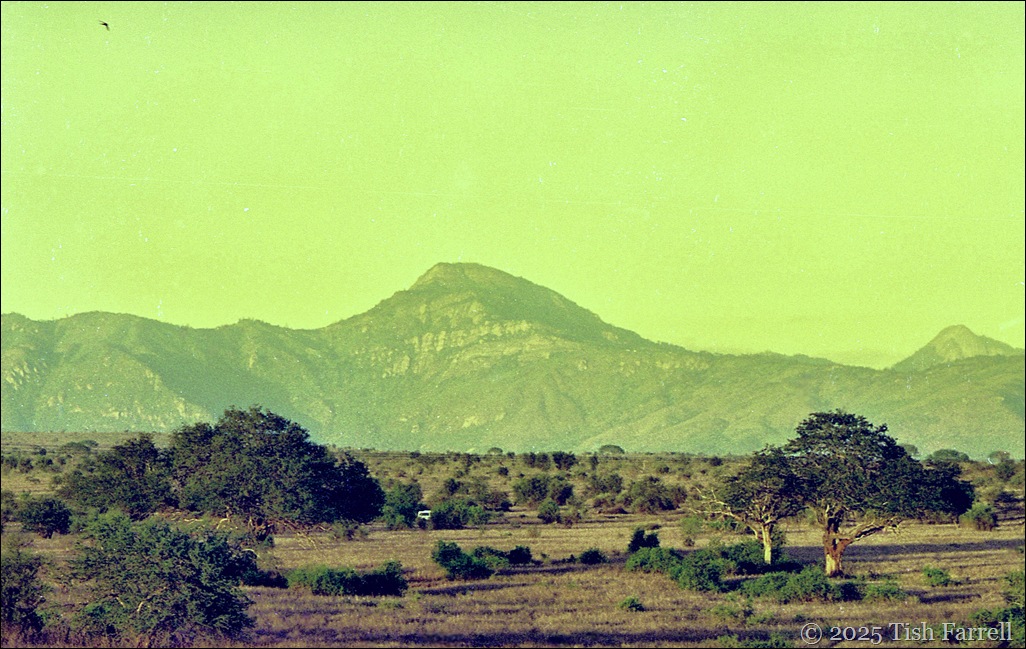
Rooftop view

*now the Taita Hills Sarfari Resort & Spa

#SimplyRed Day 20


Taita Hilton - header _thumb[5]

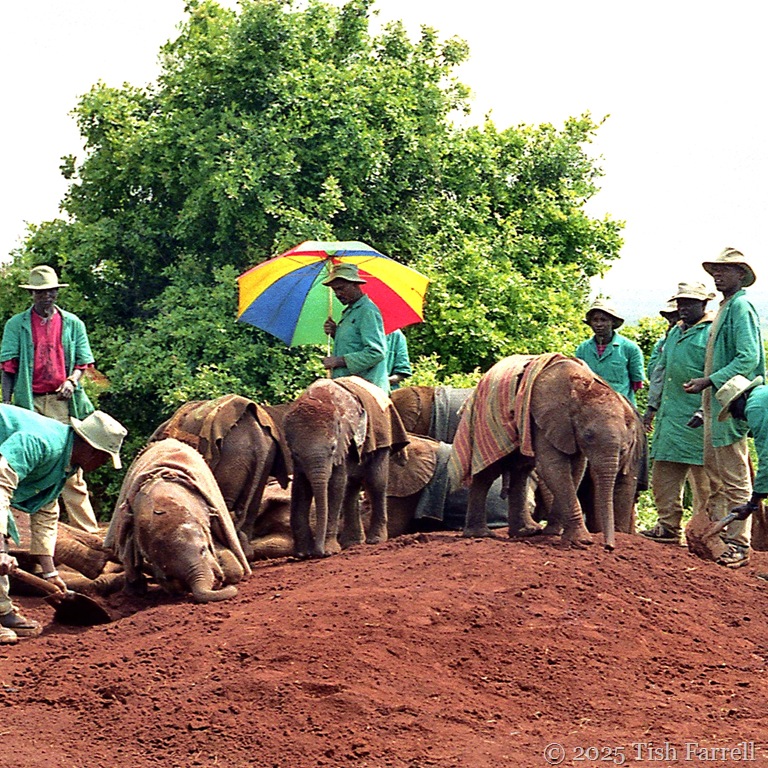
The Nairobi Elephant Orphans

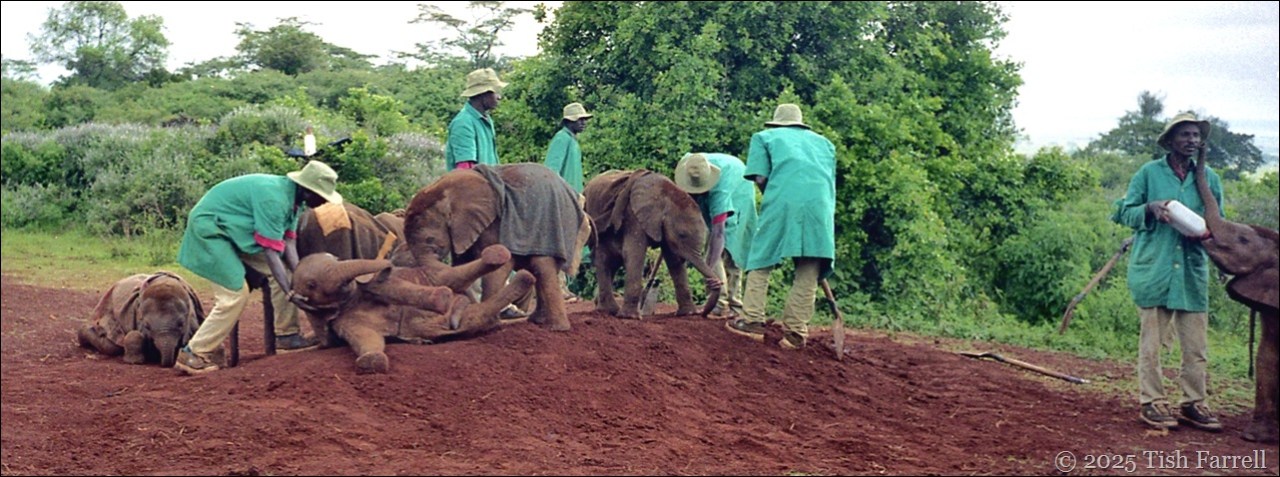
ele 3

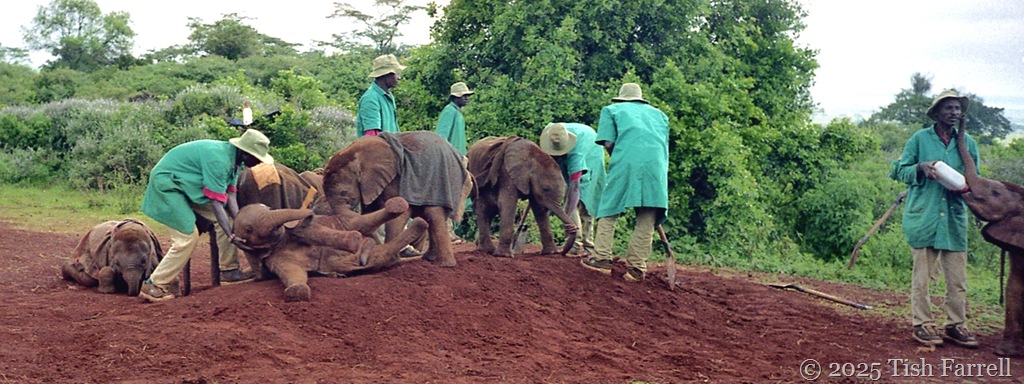
Undoubtedly an ‘aaaah’ moment, but don’t be misled. Nairobi’s elephant orphanage is not about elephant pets. It’s about rearing orphaned infants so they can be returned to the wild. This is a painstaking process, using techniques derived from years of experience by Daphne Sheldrick. She established the orphanage in 1977 in memory of her husband, David Sheldrick. He was the founding warden of Tsavo East National Park (see previous post), appointed to the task of creating the park out of the Taru Desert thornscrub in 1948. For the next 25 years he, with Daphne alongside, laboured there to create access to the 5,000 square miles of wilderness reserve that visitors can enjoy today.

img983sq

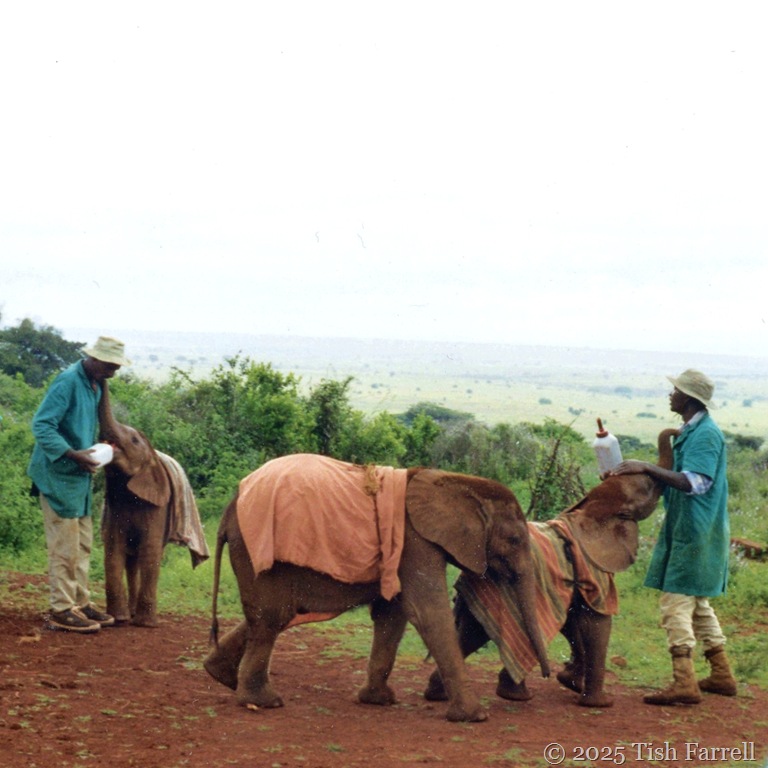
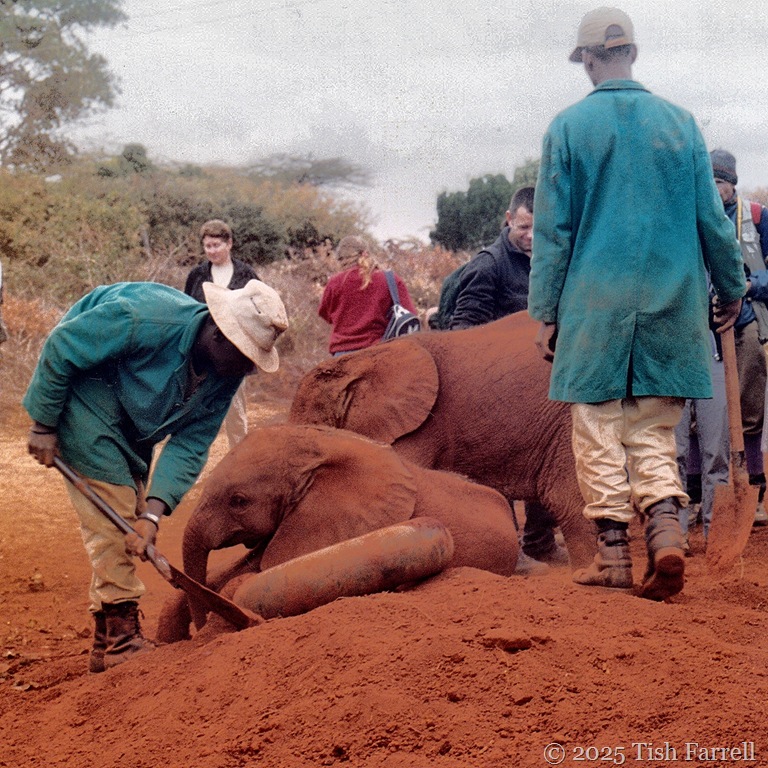
Part of the Sheldricks’ day to day living at Tsavo involved rescuing orphaned and injured animals. There were losses as well as successes but this work sowed the seeds of the orphanage to come. Daphne had learned that elephant infants die without constant emotional support. She also struggled to make an appropriate milk formula. Finally she evolved the system that provided each infant with its own keeper who, as surrogate mother, would be with it at all times, including sleeping with it.

ele 4 better

Once the infants begin to thrive and grow, they are taken out for walks in nearby Nairobi National Park to begin their bush education. Later, when they grow too big for the orphanage, they are transferred to Tsavo East to continue their education. So far over 300 elephants have been returned to the wild.

Daphne died in 2018 and the enterprise, which extends to conservation initiatives beyond the orphanage, is now run as the Sheldrick Wildlife Trust by her daughter Angela Sheldrick. The website is well worth browsing.

*

But for the process of raising an infant and re-establishing it in the wild go HERE

For more about the pioneering work of David Sheldrick go HERE.

#SimplyRed Day 18


ele orphanage header

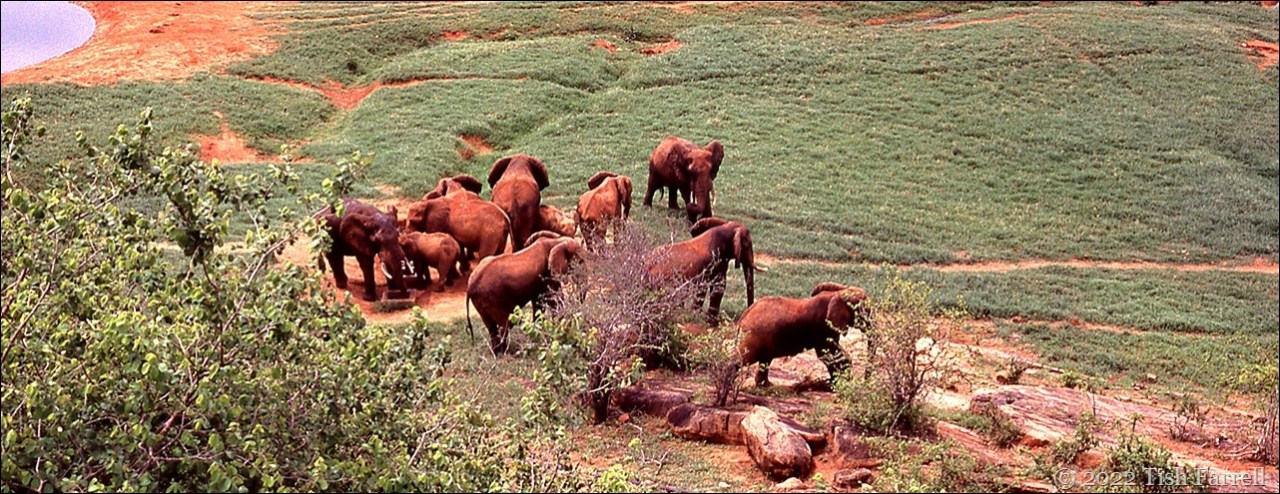
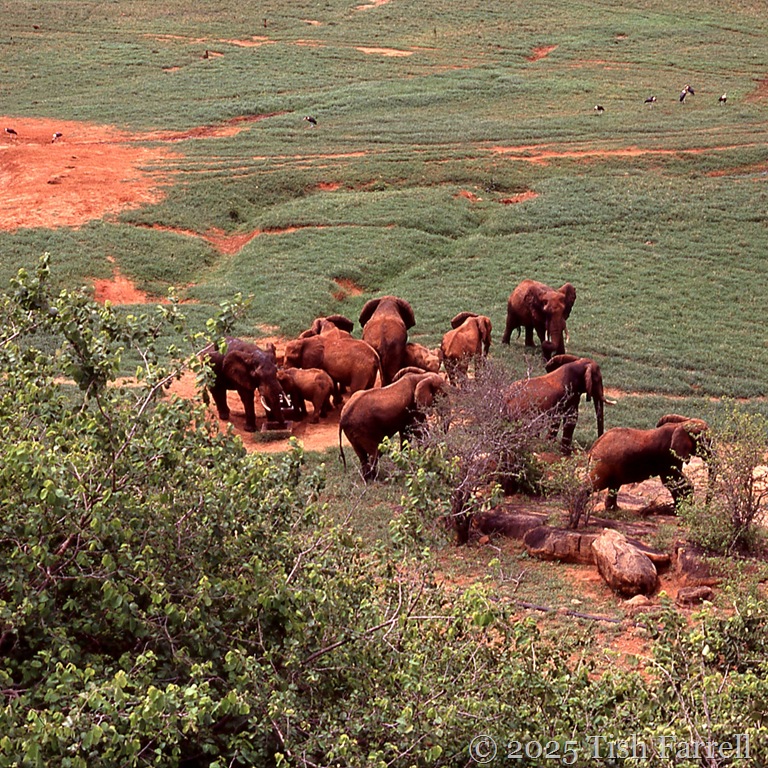
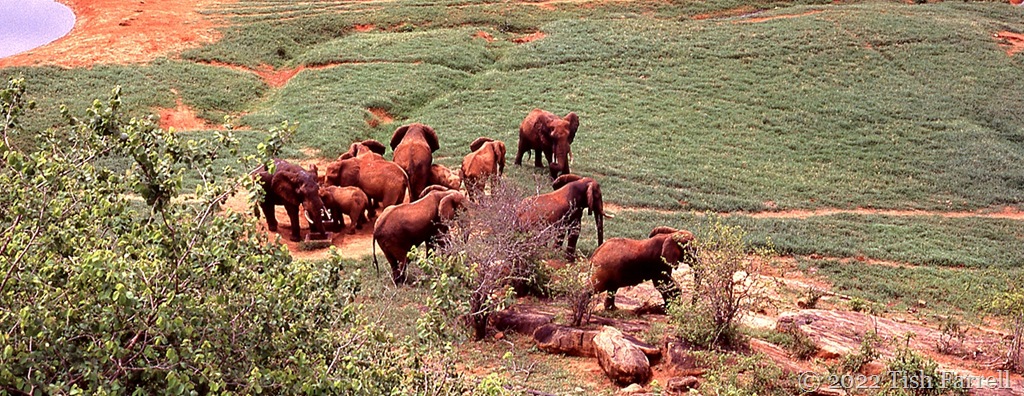
“The Red Elephants Of Tsavo East”…

img519sq

… so called because of their habit of dousing themselves with Tsavo’s iron-rich soil.

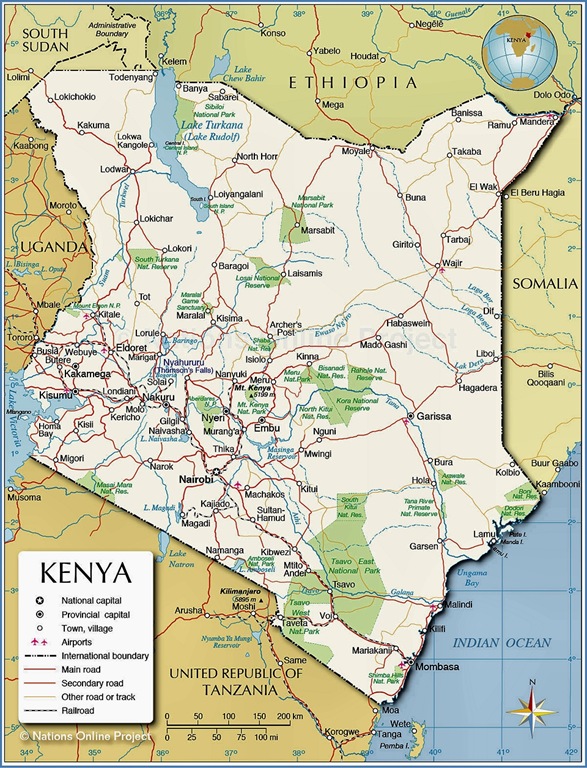
Tsavo East is one the largest parks in the world, covering 5,000 square miles. Together with its neighbour, Tsavo West, on the other side of the Nairobi-Mombasa highway, this adds up to nearly 9,000 square miles of designated wildlife reserve.

The map gives little clue of Tsavo East’s vast wilderness. The solid drawn lines of the designated parks suggest containment, but this is not the case. While areas near human settlement maybe fenced, elsewhere the boundaries are largely permeable. In 1994 the then director of Kenya Wildlife Service, Dr. David Western, famously stated that there was more wildlife outside the parks than in them. He also believed in protecting the free movement of animals, and especially in the one small park whose access was increasingly under threat from human settlement, i.e. Nairobi’s city park. This is still an ongoing issue, the one-time corridor from the southerly plains all but closed.

kenya_map best

The business of maintaining wildlife areas is fraught with problems. Elephants may invade farms and destroy a season’s food crops in a few moments. In times of drought, starving farmers may resort to age-old habits of hunting game for food. It is also a fact that elephants can kill people if they feel threatened. Lions and buffalo and crocodiles kill people too. Then there is ivory poaching, small-scale and big-crime funded. The latter comes with highly armed gangs with automatic weapons. So it’s hats off to wildlife rangers who try to do their best by all concerned, and may risk their own lives in the process.

I don’t seem to have many photos from our stay in Tsavo East. I remember the weather was mostly gloomy and driving along dirt tracks for hours without seeing a thing. But the photos at this site are well worth a look.

img519header 2


#SimplyRed Day 17

Once On Mombasa Beach

img059sq

Our first stint in Kenya was meant to be for three months. It stretched to nine, a long time to be away from home when none of it had been planned. On our return to the UK in September ‘92 we weren’t sure what would happen next. But come November we were flying off to Lusaka, Zambia, on another short-term contract.

This time Graham was seconded to the EU Delegation to take charge of the Commission’s food aid distribution. Zambia had been suffering a prolonged drought, but as it happened, and fortunately too, our arrival coincided with a return of good planting rains; food aid was only needed to bridge the gap until harvest time. And so once again, like strange migrating birds, we left Africa in September. And once again, two months later, we were heading back again, to Kenya on yet another short-term contract, this time to close down the Larger Grain Borer project based at the Kiboko research station. This was the project Graham had been attached to as a consultant in 1992. (See previous post).

A year later, we were still in Kenya, one contract having evolved into another. In December ‘94 Graham, as head of the UK crop protection project, had to chair a three-day agriculture conference in Mombasa. I went too and, as I had the use of a rather good camera,  I spent my days sitting under a palm tree in the hotel garden, looking out on a slice of Indian Ocean, sometimes taking photos of the passing beach traffic.

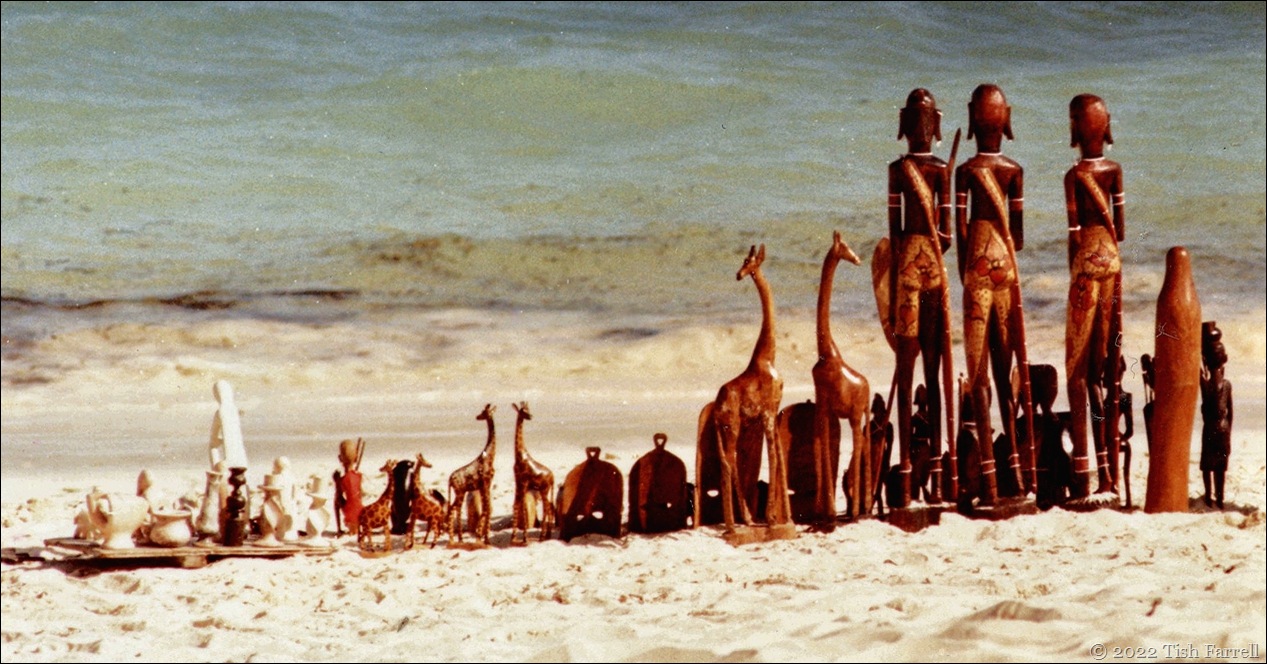
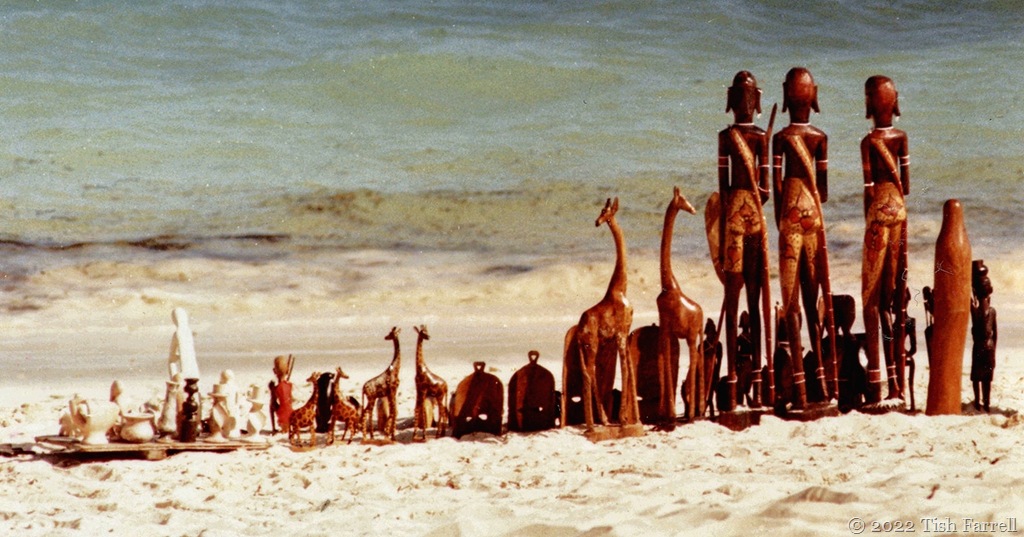
Hotel beachfronts around the world are places where business is done. Mombasa beach is no different and young Kenyan traders are smart, quick to cater to all tourist wants. The Akamba wood carvings and makeshift stalls of kanga wraps are among the more innocent lines of merchandise, although often the means of making contact and enabling further transactions.

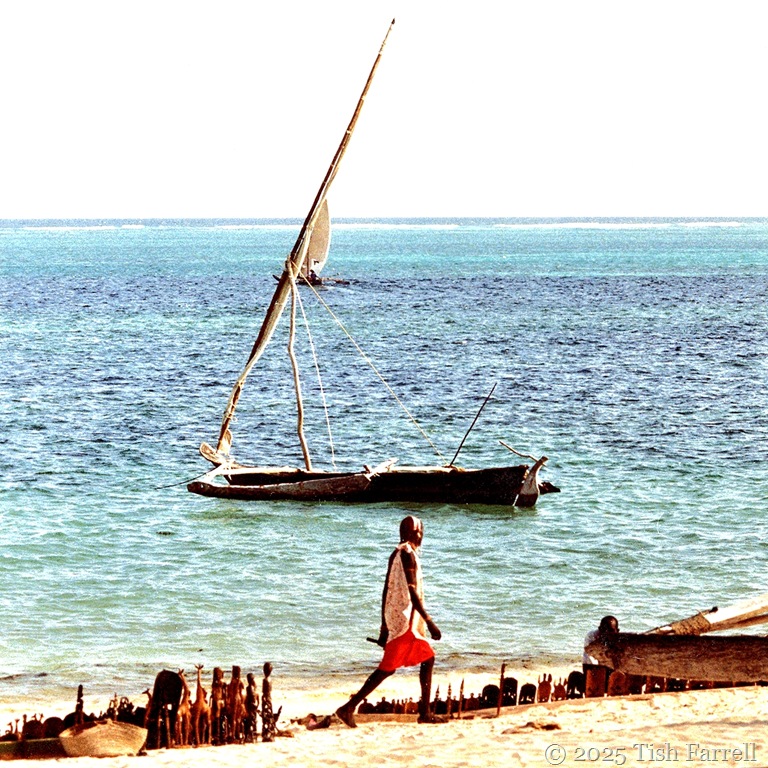
Needless to say the deemed exoticism of Maasai morani (young men of the warrior age set) can hold a particular appeal to visiting women of a certain age. So much so, enterprising lads of other upcountry communities might don the gear and pass themselves off as Maasai, or so a Kenyan friend told me.

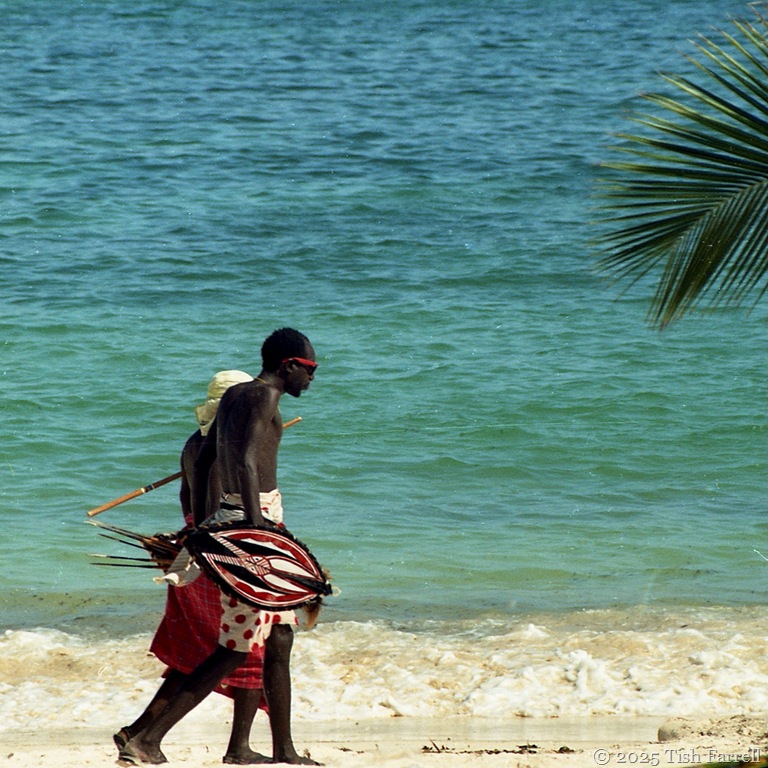
That said, I’d bet that the young man in the header is Maasai, that lilting stride and spare frame. He could be a member of one of the traditional dance troupes employed by the big hotels. These next guys, though, look more like beach-wise traders with their made-for-tourists weaponry. Very cool sunspecs and matching kanga wrap though:

Mombasa beach traders

img049 header


#SimplyRed Day 16