Red In Tooth And Claw?

Taita lions sq

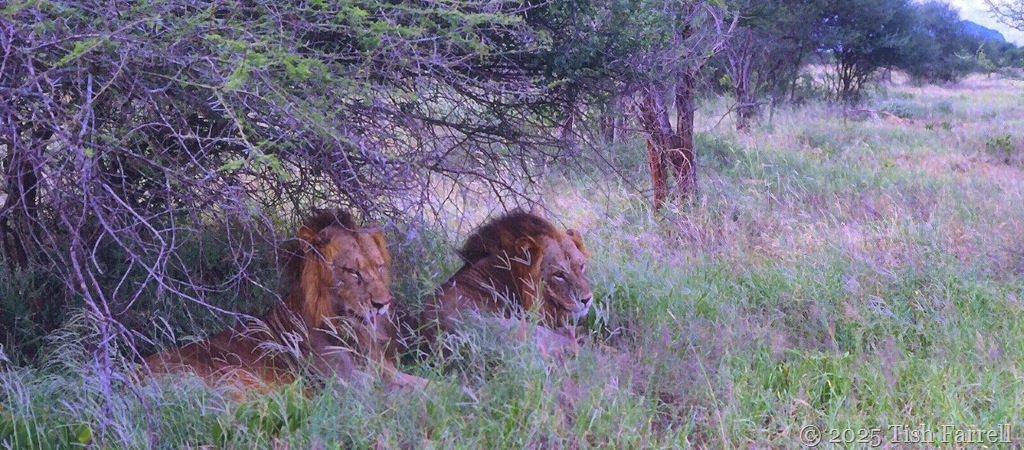
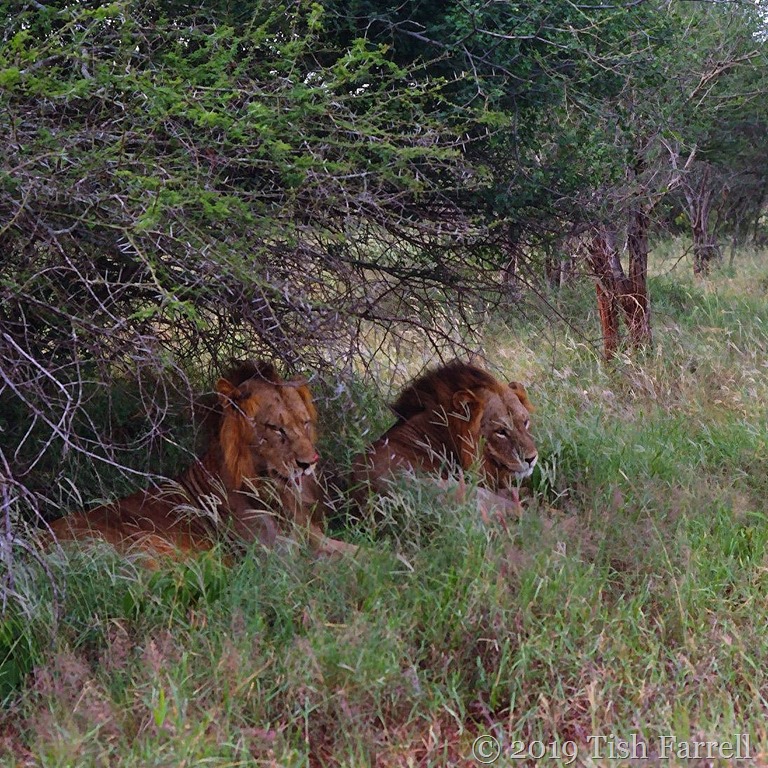
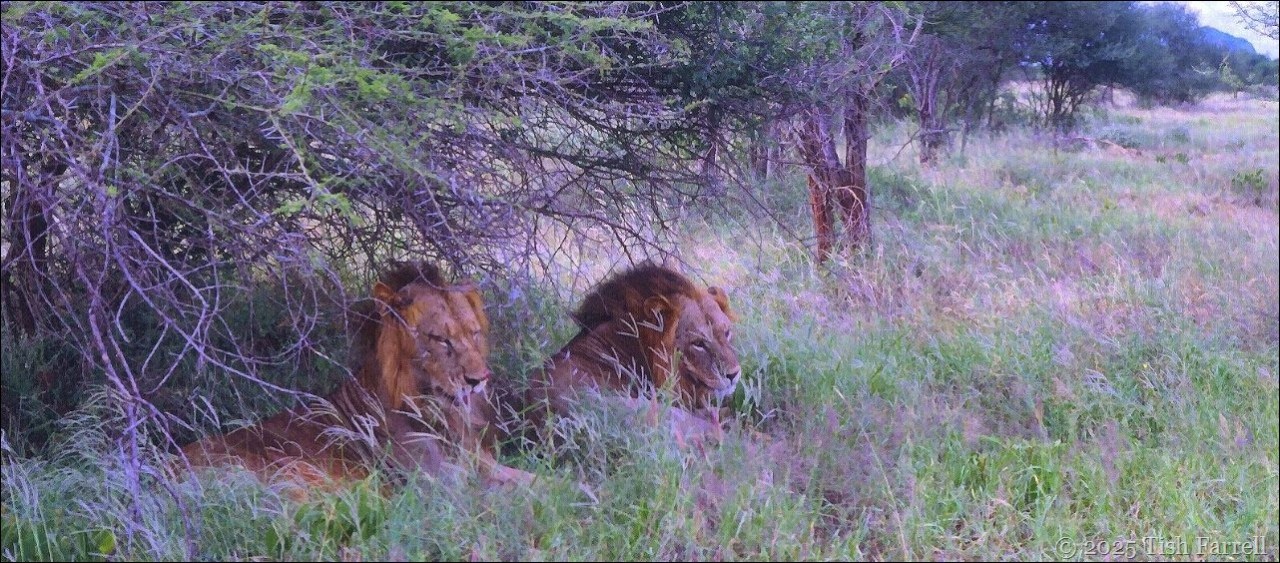
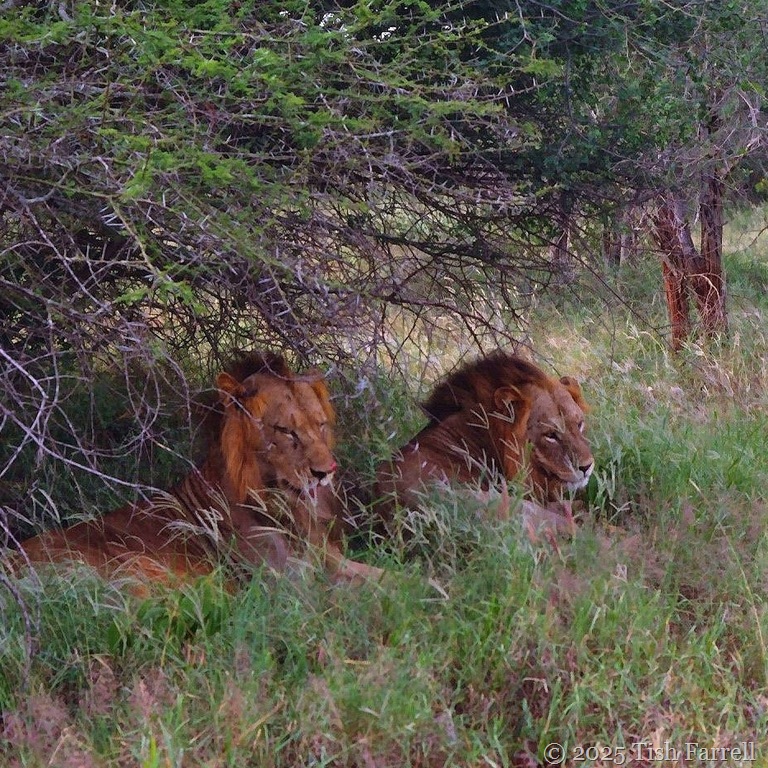
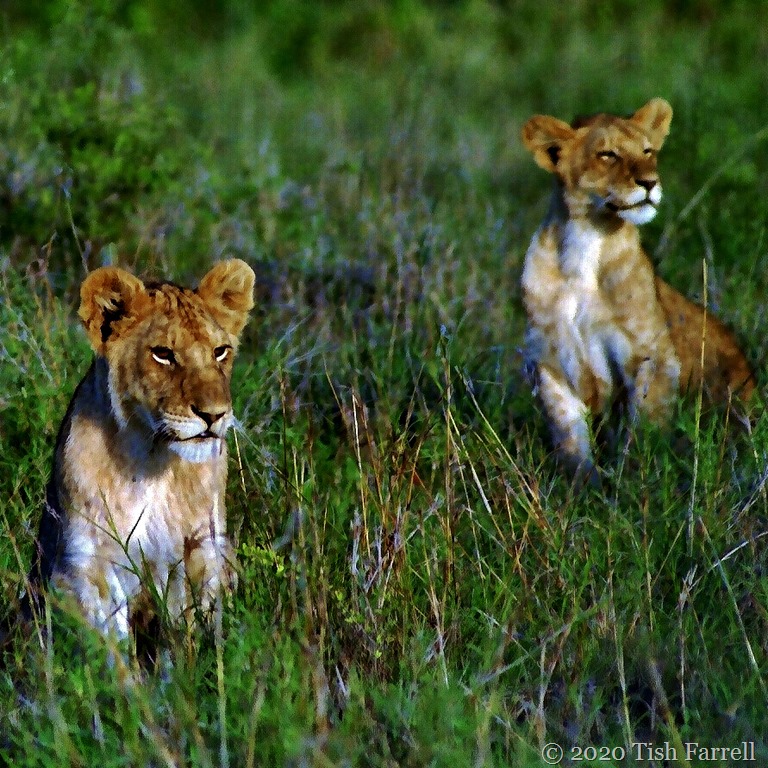
Well, it had to be done, didn’t it – that particular ‘red’ title for Becky’s month of #SimplyRed squares, and this despite the apparent lack of ‘red’ in the photo. But then, if you look very carefully, the dozing lion does appear to have a bloody nose.

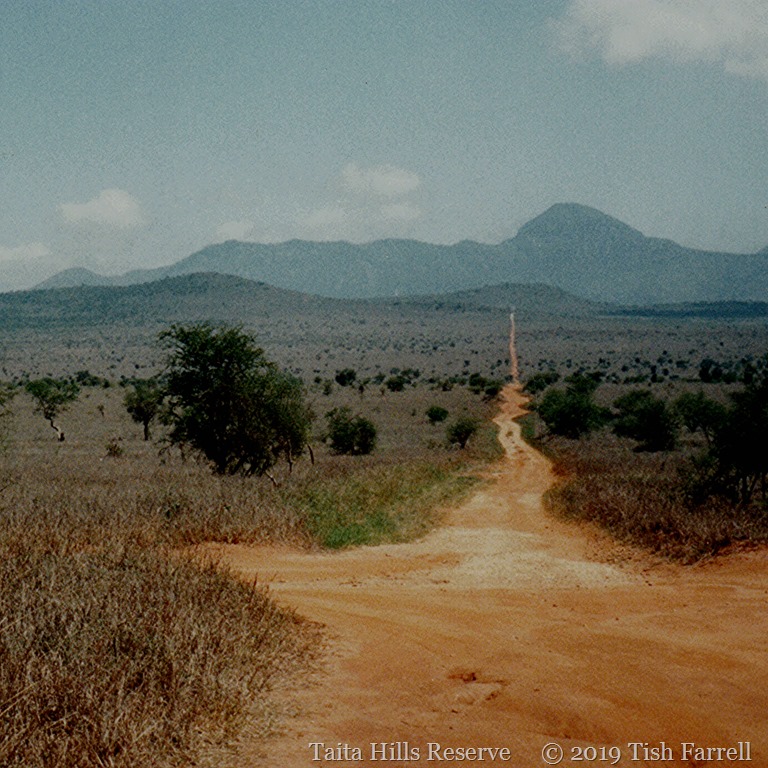
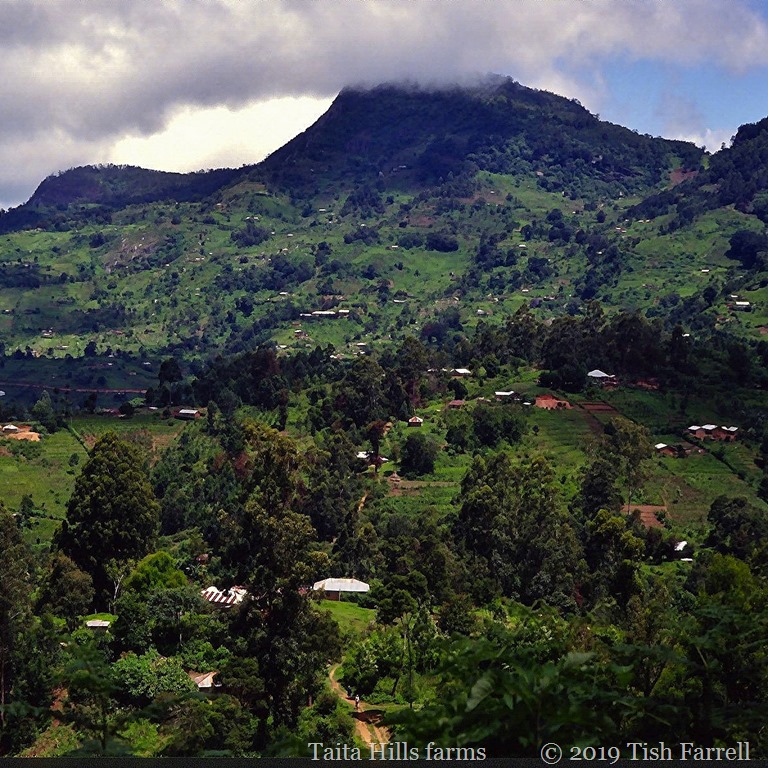
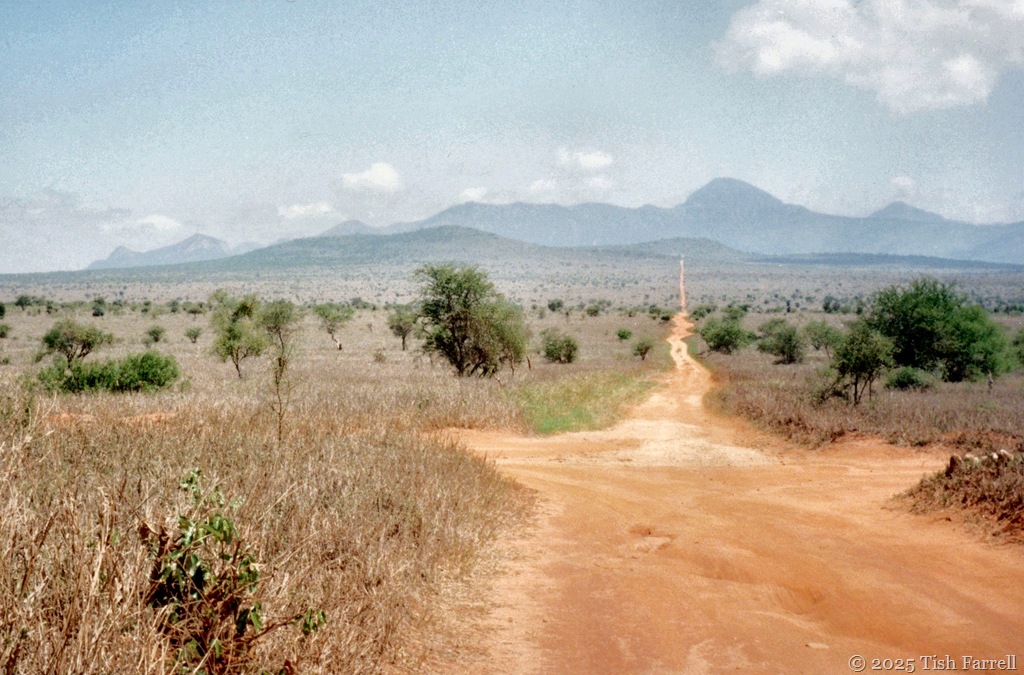
Of course I’ve posted this photo a few times before. It’s probably one of my best ‘caught moments’ from the old Africa album. We were staying at the Taita Hilton in May 1992. Our other bolt-hole, when Graham was working in the Taita Hills, was the very basic Danish Guesthouse in upland Wundanyi, but on this occasion a room wasn’t available. Oh dear. That meant five days of wall to wall luxury down in the bush country, although that said, I loved the simplicity of the guesthouse too. The Taita hill country is anyway very beautiful.

And the reason we were there at all, Graham was supervising the release of predator beetle Teretriosoma nigrescens (TN for short) at sixteen highland farms. There were high hopes that it would begin to control the spread of larger grain borer (LGB), locally known as dumuzi, which had been introduced to the continent around the 1980s in cargoes of food aid maize sourced in LGB’s native South America. (For those who want the scientific details there’s a short abstract here of a related project in  West Africa. It gives the gist of the experiment.)

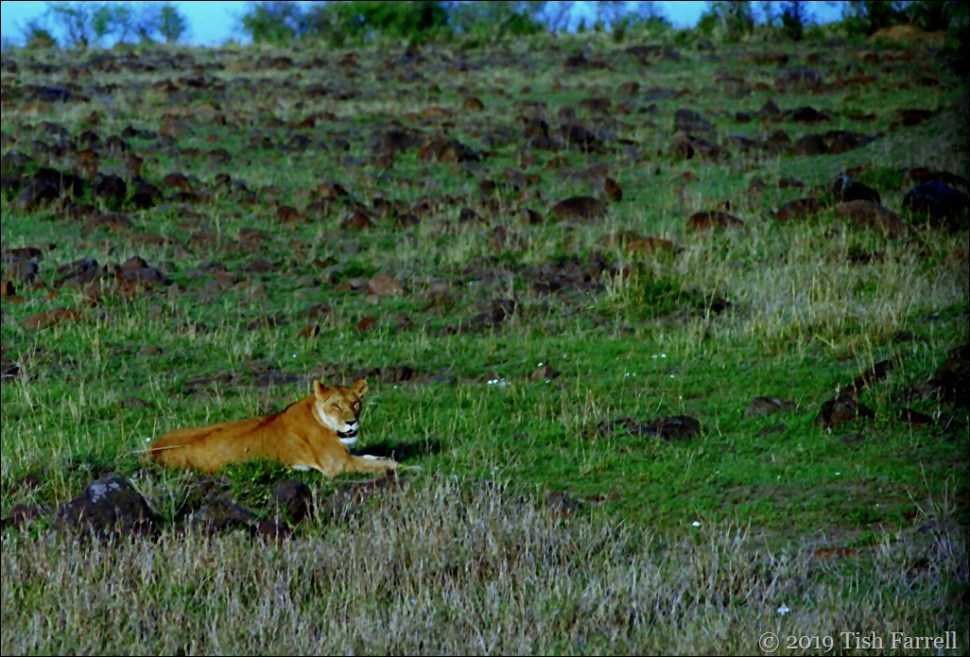
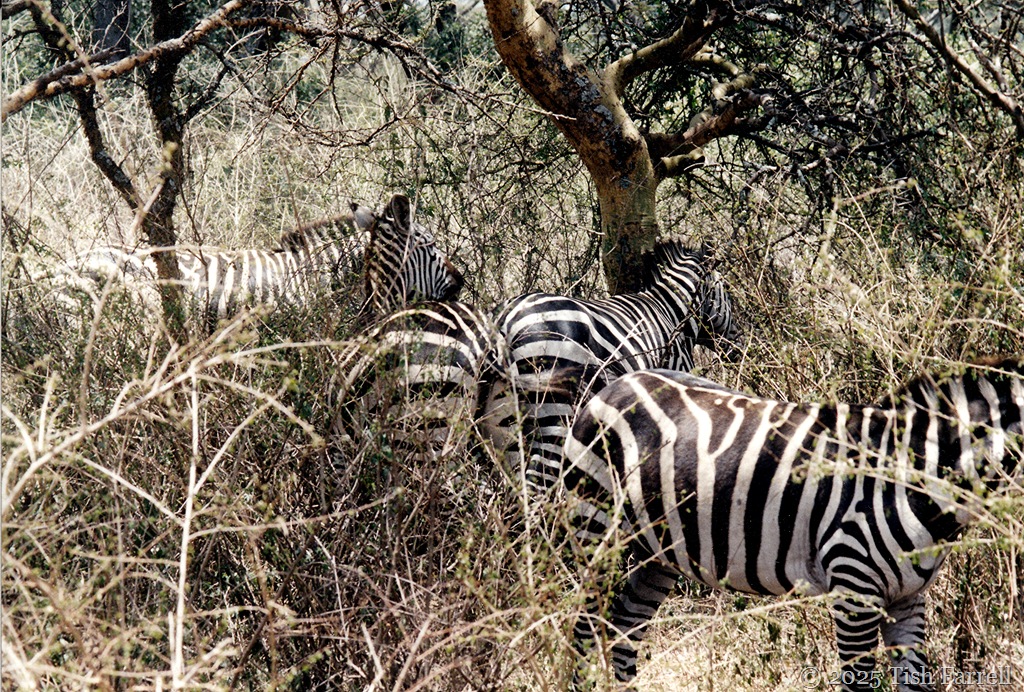
Our stay coincided with a weekend, so on Sunday afternoon we thought we’d take a drive around the hotel’s small game reserve. It was the start of the dry season and a time in Kenya when skies are often overcast, the light lacklustre. We bounced along the dirt tracks scanning every tussock of brown grass for big cats. That day at the hotel there had been talk of lion sightings. We felt hopeful, but instead, we spotted zebra, hartebeest and waterbuck, all grazing peacefully.
IMG_0013

We were giving up on the quest when a park truck pulled up in front of our land rover. I thought the ranger wanted to check our tickets, but he only wanted a chat. When he discovered that we hadn’t seen the lions, he told us to follow him, and zoomed off track and into the bush. We trundled behind. Soon he had us lined up by a thorn bush. There, beside my car door was a slumbering lioness. She opened her eyes to check me out and then went back to sleep. (Lions sleep around 23 hours a day). The ranger then pressed on to the next bush, and there were the two males. I leaned out of the car window and simply took the photograph – just like that. It’s still hard to believe. I think I was there.
Taita Hills reserve

copyright 2025 Tish Farrell
 

#SimplyRed Day 23

Taita lions header

Once heard…

Marsh Pride male 1 ed

*

…never quite forgotten.

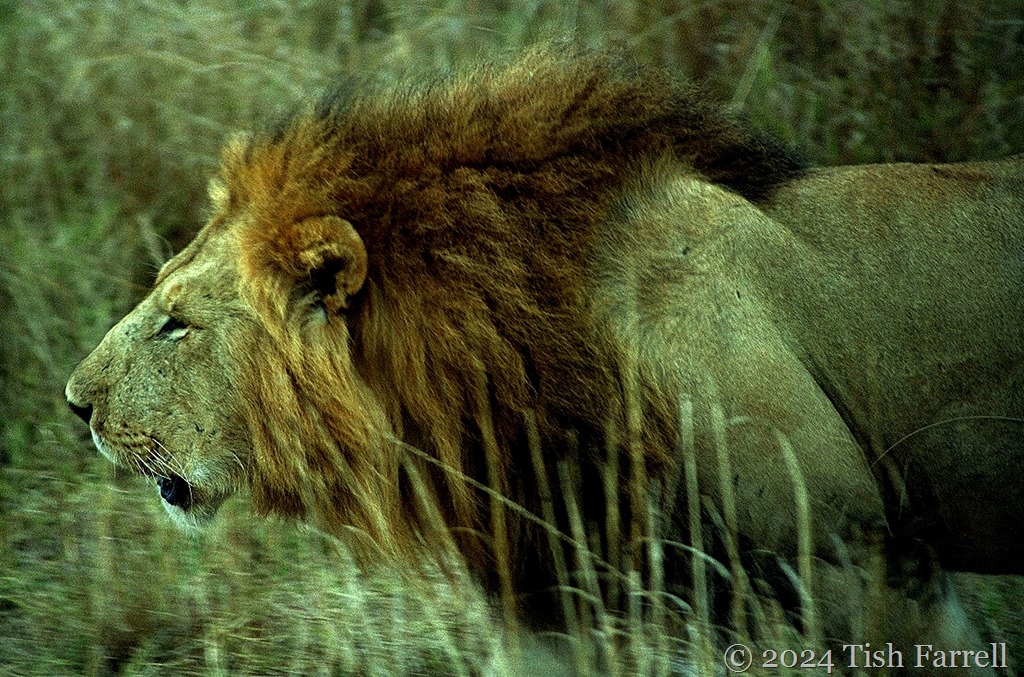
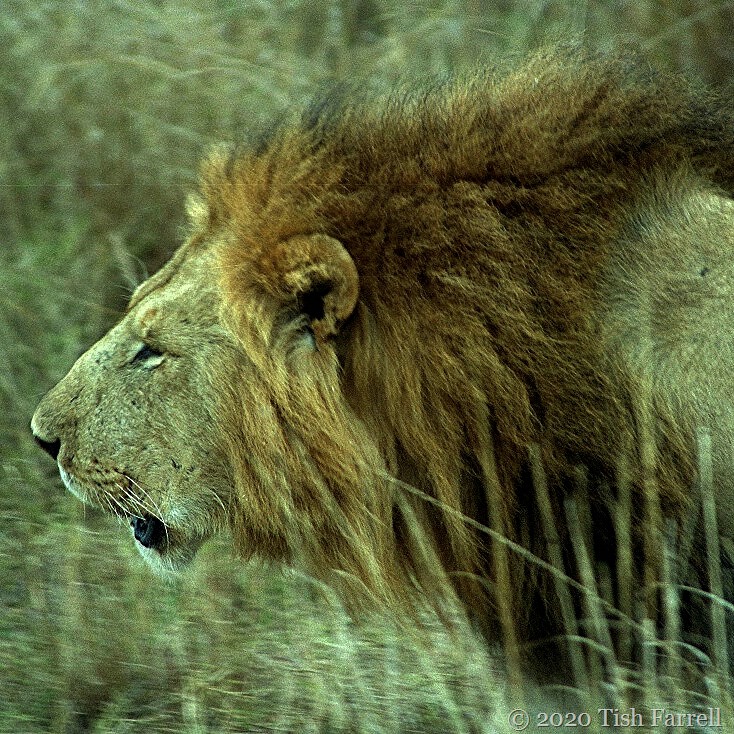
Thrilling and chilling both: a wild lion, in broad daylight, proclaiming his eminence. And not a full-throated Metro-Goldwyn-Mayer lion-roar (there’s no big show of fearsome canines); more a weaponized grunt that carries across the Mara grassland and rebounds against my sternum. And then in my skull.

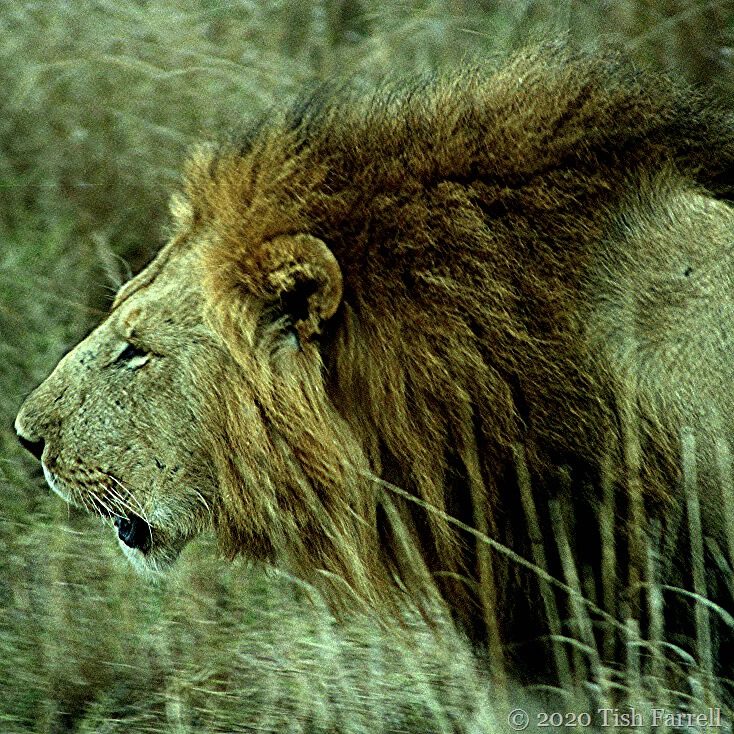
It takes some moments to re-ground, and assure the nervous system we’re not in danger.  We’re sitting in a big safari truck. The lion does not even look at us, nor appear to register our presence.  We pass by slowly. He parades. Our guide tells us he is the senior male of the Marsh Pride, a group of lions made famous on British TV during the 1990s, when wildlife photographer, Jonathan Scott, documented their movements. This lion, we’re told, is calling to the junior male. Meanwhile the pride’s three lionesses are busy devouring the kill, a hartebeast. They don’t see us either.

But still that resonating roar.

Throwing the voice is part of a male lion’s M.O. A spot of leonine ventriloquy if you like. To make themselves sound bigger and deadlier, they may also choose a dried up river bed for some night-time roaring. The dirt bank of a donga provides a  ‘sounding board’ to amplify the roar which may carry for several miles. Obviously the aim is to let other males know exactly what they’re up against should they dare to infringe territorial bounds.

We drive away, feeling somehow changed. Very small perhaps. It’s August 1999, the last of our seven years living in Kenya. When we return to England for good, what will we make of such days? Did they really happen? Sometimes it’s hard to be sure.

marsh pride senior male

*

To hear that lion call for yourself, there’s a brief clip here:

https://www.youtube.com/watch?v=1e0_4dwF9A4

Lens-Artists: Sound   Donna at Wind Kisses choses sound for this week’s theme – however you care to interpret it. Please pay her a visit.

Feeling Kinda Growly

sq Marsh Pride male 1

We found ourselves driving through the midst of the Mara’s Marsh Pride at high noon, its members surprisingly active given the usual lion habit of spending the day lying around. They had made a kill, an antelope of some kind, and the ‘under-lions’ were still eating: one very elderly male and three females – while the dominant male prowled the perimeter, exchanging grunt-like roars with another male who was lying in the grass. They seemed quite unconcerned as we stopped to watch, no interruption to the grunt exchange caught here in the photo. Rather puts one in one’s place in the animal scheme of things.


KindaSquare #24

Mother Kind

sq Scan-140726-0006 (9)

After a couple of weeks’ safari-ing down the ancestral line, it’s back to the old Africa album today.

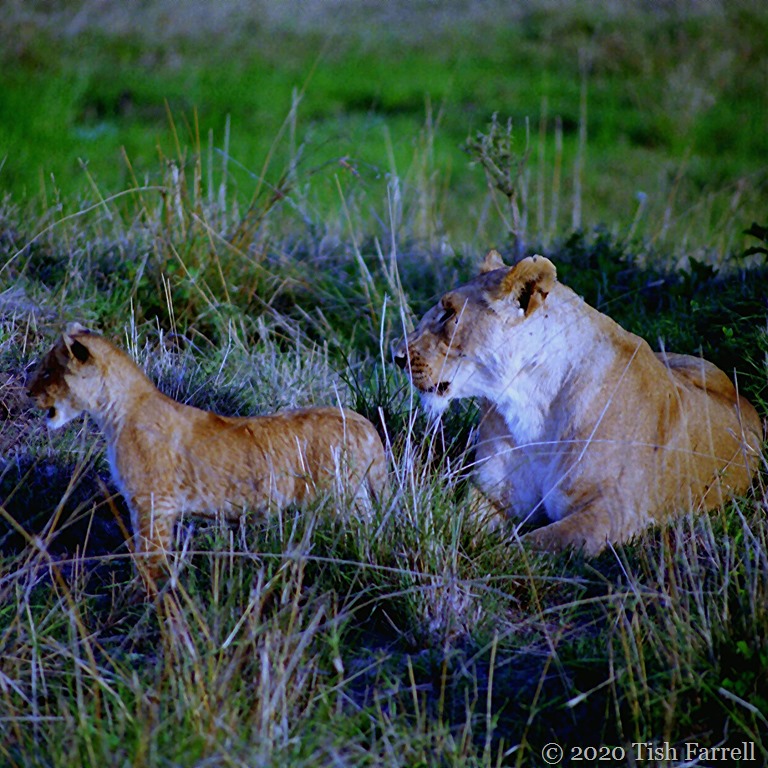
Lions are the only truly social members of the cat family. Even so, pride living can be fraught with dangers. Mothers may be very protective of their cubs and charge any human who walks into their territory, but humans are not the main threat. Whenever a band of young males ousts a pride’s more elderly males, they usually kill any young cubs. The selfish gene is in action here, to say nothing of the biological imperative to reproduce. Without their cubs, the females quickly come into oestrus so the newcomers may sire cubs of their own, offspring in whom they are prepared to invest their protective and hunting capacities.

Unlike male lions, female lions tend to live out their lives in the pride they were born into, along with several female relatives. As soon as their male cubs reach two or three years old they are expelled from the pride to pursue a nomadic existence until they can take over another pride of unrelated lions.

The pride thus comprises kindred males unrelated to kindred females and they are highly territorial. Males scent mark, rubbing their manes on bushes and spraying them with urine and anal gland secretions. All pride members scratch trees depositing scent from glands between their toes. Male lions also choose locations where their roars may be amplified, against riverbanks for instance, making them sound larger and fiercer. There is nothing quite like a night-time roar for chilling the blood.

Hunting usually takes place at night, but also at dusk and dawn. The rest of the day, for up to 20 hours, they simply rest. Marshy areas with plenty of shade are popular lion resorts. They have astonishing capacities to ‘disappear’ themselves .

Scan-140731-0033


KindaSquare #19

Two Of A Kind

Mara 8

Gloomy Shropshire skies today had me rifling through the Farrells’ old Africa album, though it has to be said that Kenya, too, does a good line in gloom, cold and wetness at certain seasons. Anyway, the sun is shining in this particular shot, taken in the Maasai Mara long ago,  and these ‘likely lads’ of the leonine kind (or maybe a lad and lass) are anyway sure to raise a smile.

KindaSquare #2

Top Cat

Marsh Pride male 1 - Copy (2)sq

It’s back again to the old Africa album for today’s ‘square top’. This photo was taken on our August dry season trip to the Maasai Mara: one of the senior lions of the Marsh Pride (often featured in BBC wildlife films). He is busy calling to his brother,  the growl-cum-rumble-cum-roar passing back and forth between them; sounds to make the neck hairs tingle. For their part they turned not a single hair nor gave any sign that they registered our presence as our Land Rover passed close by. Humans, what humans?

P.S. Anyone remember the Top Cat cartoons?

Square Tops #3

Lions Among Thorns

201

This photo documents my first real-life encounter with lions. We were on a Saturday afternoon drive in Southern Kenya when some game rangers flagged us down and asked us if we’d seen the lions. They then headed off into the bush in their truck and we followed – in a Peugeot 304 saloon.

I’d only been in Africa a few days, a camp follower in the Team Leader’s Team (aka Graham’s Outfit). He was there working, as in serious crop protection entomologist, hot on the trail of larger grain borers (LGB), an alien species of wood-boring beetles imported into Africa on American food aid in the 1980s. The pest’s original home is in Mexico where it had grown a taste for maize, a proclivity it brought with it to Africa where it causes havoc in grain stores up and down the continent. The greatest incidence seems to be along the line of rail, doubtless due to beetle escapes from goods wagons hauling grain upcountry from East African ports.

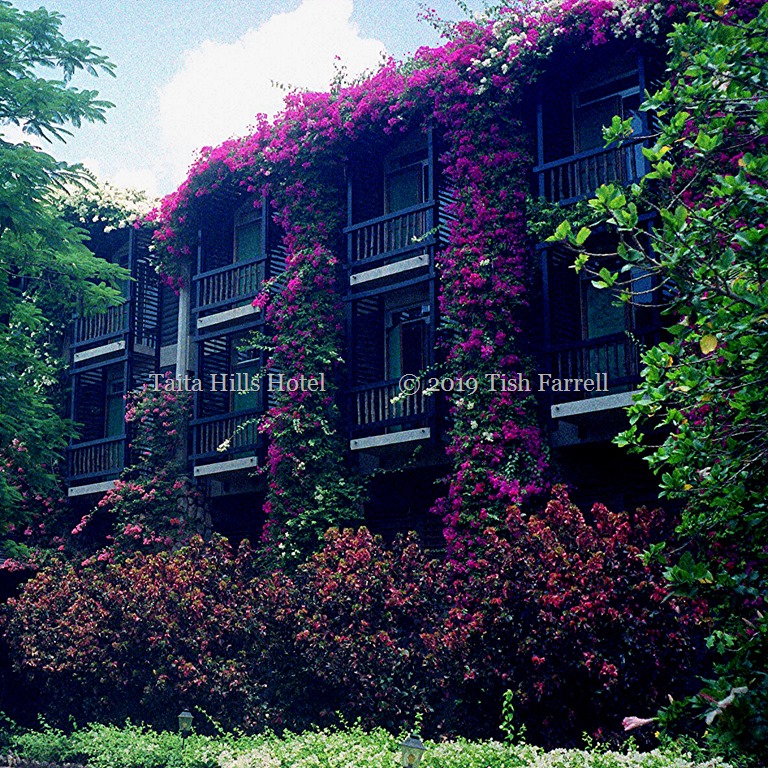
Anyway, the Team Leader had business up in the Taita Hills, interviewing smallholder farmers to gauge how far these nasty dudus had spread. It is beautiful country on the way to Taveta in Tanzania – and the setting for much of William Boyd’s An Ice-Cream War and thus once the front line in the First World War guerrilla conflict between the forces of British East Africa (later Kenya Colony) and German East Africa (Tanganyika). And being rather remote, there was nowhere handy to stay apart from the 5 star Taita Hills Hilton.  Oh dear, the trials and tribulations of exotic travel. The lovely Kenyan manager even forced a suite upon us (well stocked fridge, Air Con, swish bathroom and all).

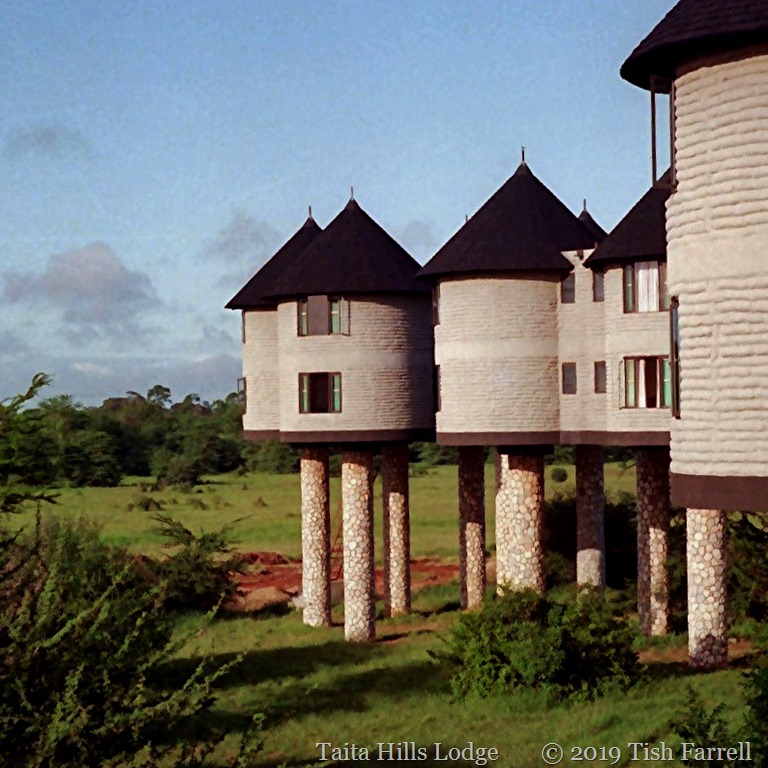
The hotel also has its own game reserve, formerly a colonial sisal plantation run back to bush. To the south lie the plains of the Serengeti grasslands, to the north the vast expanse of the Tsavo game reserves. It is thus a wildlife gem, and you can stay there too, in an extraordinary stilted creation inspired by the traditional homesteads of the local Taita people, though rather oddly constructed using congealed cement sacks which instead reminded us of sand-bagged gun emplacements and so presumably with an intentional nod to the ‘Ice-Cream War’.

Scan-130510-0024

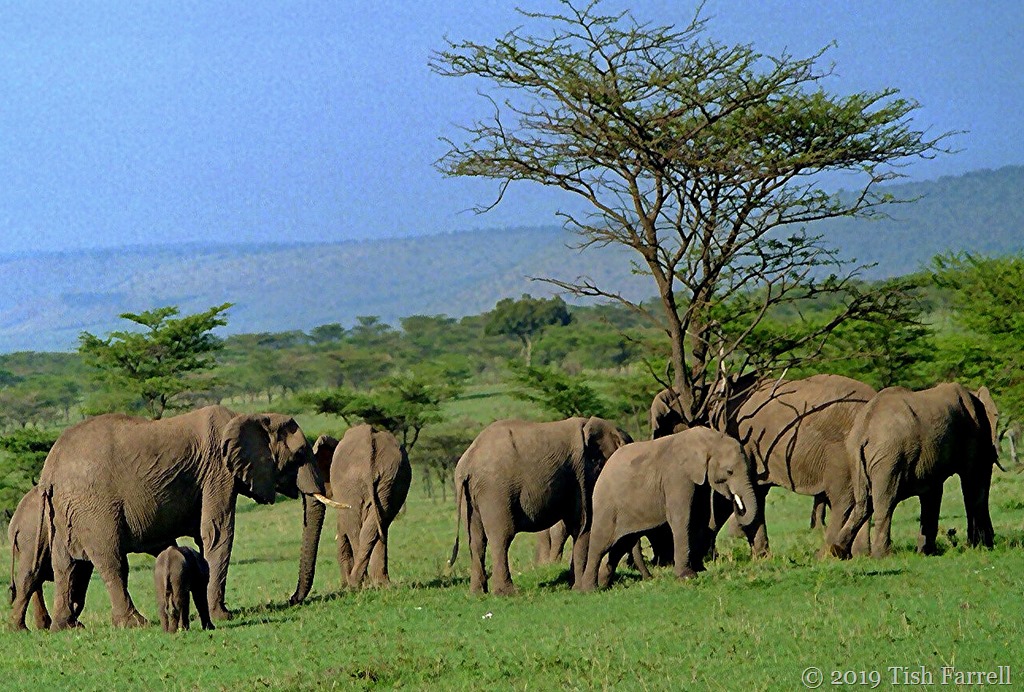
Not a thing of beauty then, but providing magnificent viewing of the wildlife, especially elephants which, in our time, would come in the night to drink at the ornamental pool within the lodge’s basement bar – a whole herd only a few feet away. At dawn you can walk along the raised walkways between the rooms and watch Kilimanjaro make its brief morning appearance, floating high above the horizon like a magic carpet mountain. The next time you’d look it would be gone – poof! Only a clear blue sky.

taita reserve

Taita Hilton - safari vans come and go

230

IMG_0006

Spiky Squares #7

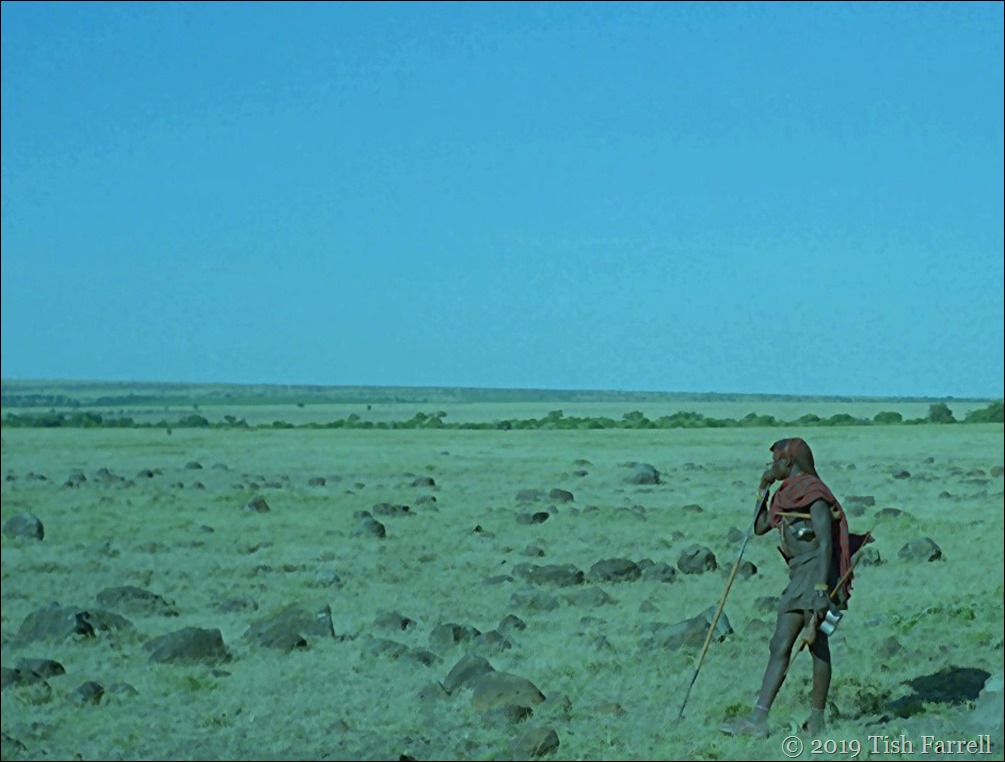
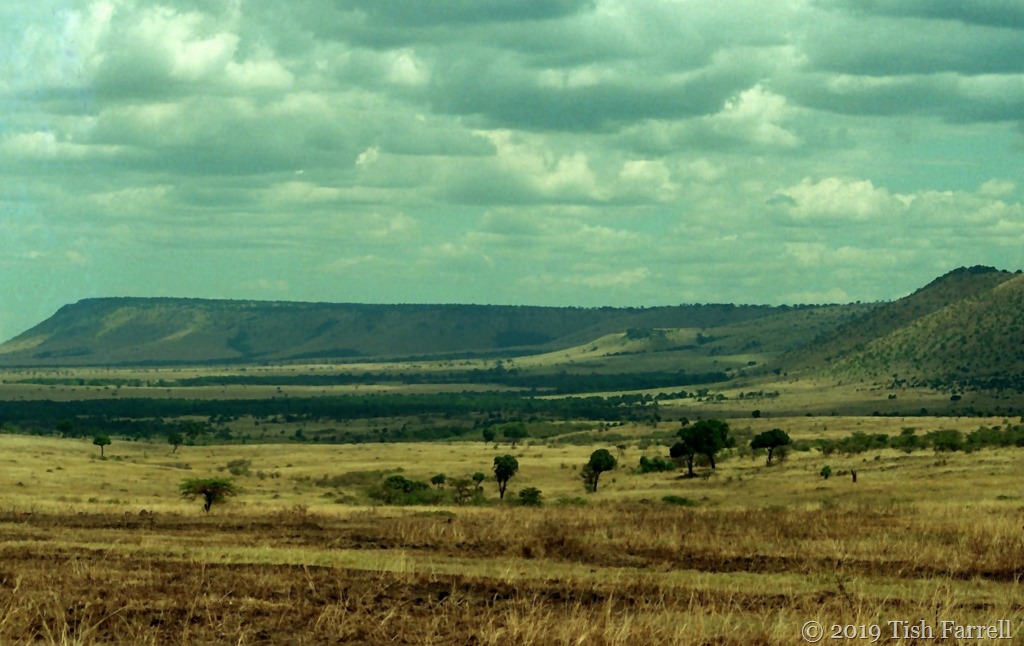
Maasai Mara Landscape ~ A Warrior’s View

Scan-140726-0014 (2)

Scan-131109-0032

Scan-131114-0001

Scan-140731-0030 (2)

I’ve written about the Maasai Mara in other posts. Here’s an excerpt from a piece that was long-listed in the Brandt Travel Guide competition ages ago:

Dances with warriors

Night on the Mara River – darkness wraps round, close as a Maasai’s blanket.  It is cold, too, on the river’s bend. We press closer the campfire, our white faces soon roasting red. No one speaks. There’s too much to listen for. A hyena whoops across the water?  It sounds close. It sounds unearthly, sending shock waves through vulnerable bones – mine, conjuring packs of predators, out there, circling our ring of light. And even as I think it the Maasai are on us.  Six warriors, spears in hand and naked to the waist.  Their leader tosses his ostrich-feather head-dress that looks like a lion’s mane.  He is fearless.  He is lion.

Then the singing starts, a nasal falsetto that resonates through time and space – the winds’ whine through Mara grasses.  The Maasai girls trip lightly into the firelight, their wraps like flames – yellow, red; close-cropped heads hung with beads; chins jutting forward as the crescent necklets – tiny beads so patiently strung – rise and fall on skinny chests.  The moran start to leap – higher, faster.

Their dance fires the blood as it was once meant to in the days when the young morani proved their courage by killing a lion; but we see the collecting box left discreetly in the grass.  These kids are from the nearby settlements, but before I unravel the question of exploitation – theirs or ours – the dancers pounce, dragging us into a conga, pastoralist-style.  I let the Maasai girl take my hand.  She’s about fourteen years old and she is boss. After all, this is her land – the big skies and the rippling oat grass, and our small camp in the outer reserve remains there only on her clansmen’s say-so.  The hand that grips mine is small and hard.

So I follow her, graceless in the rhythms I cannot fathom, wend with the snake of dancers on and round the camp. The dancers know we’re squeamish and should not be put at risk, so we stray no further than the firelight’s edge, never crossing the bounds of the vast out there.

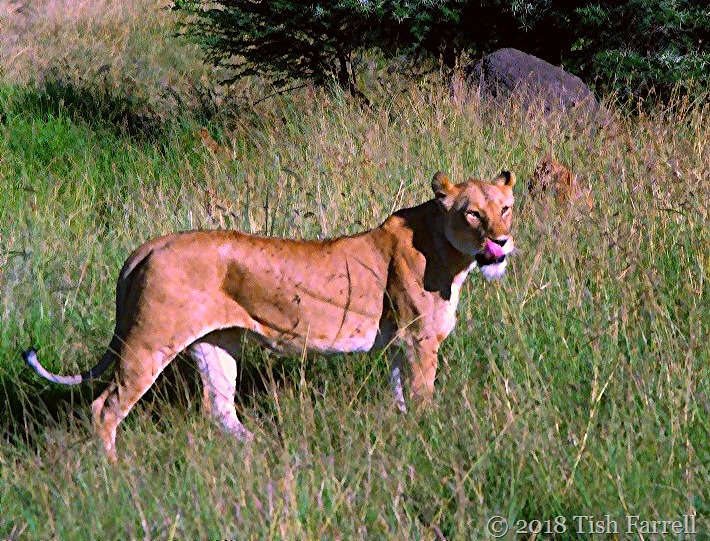
And of course, being on safari, and staying at a luxury, tented camp, we have been taken to visit the vast out there. We went earlier that day and naturally, being tender wazungu, we ventured only in daylight, with the rising sun at our back, and we went, not on foot, but in the Land Rover whose solid sides we were sure would protect us from too much closeness with the wilderness.

copyright 2019 Tish Farrell
Continues HERE


Lens-Artists: Landscapes


Lions ~ Now You See them, Now You Don’t

375

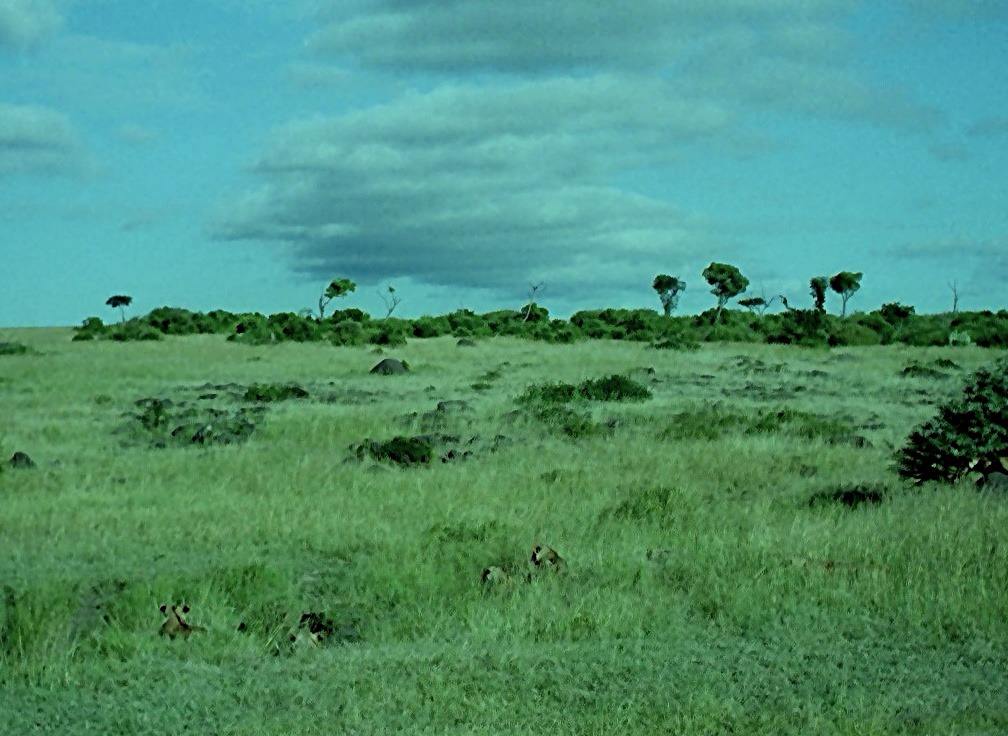
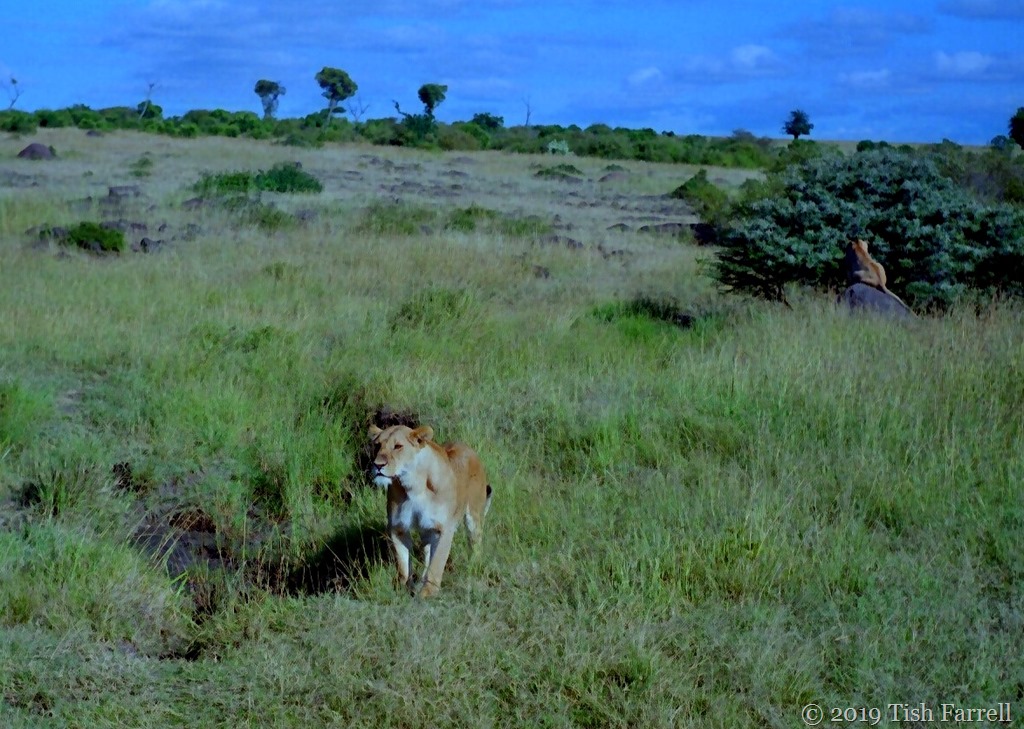
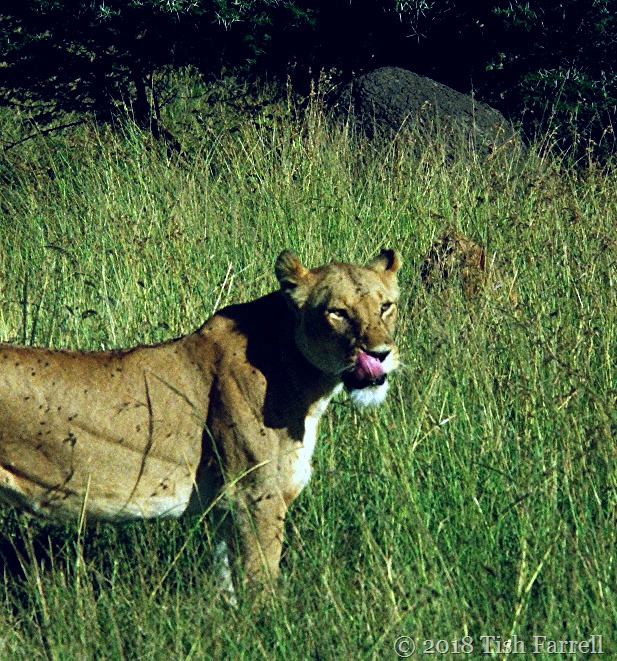
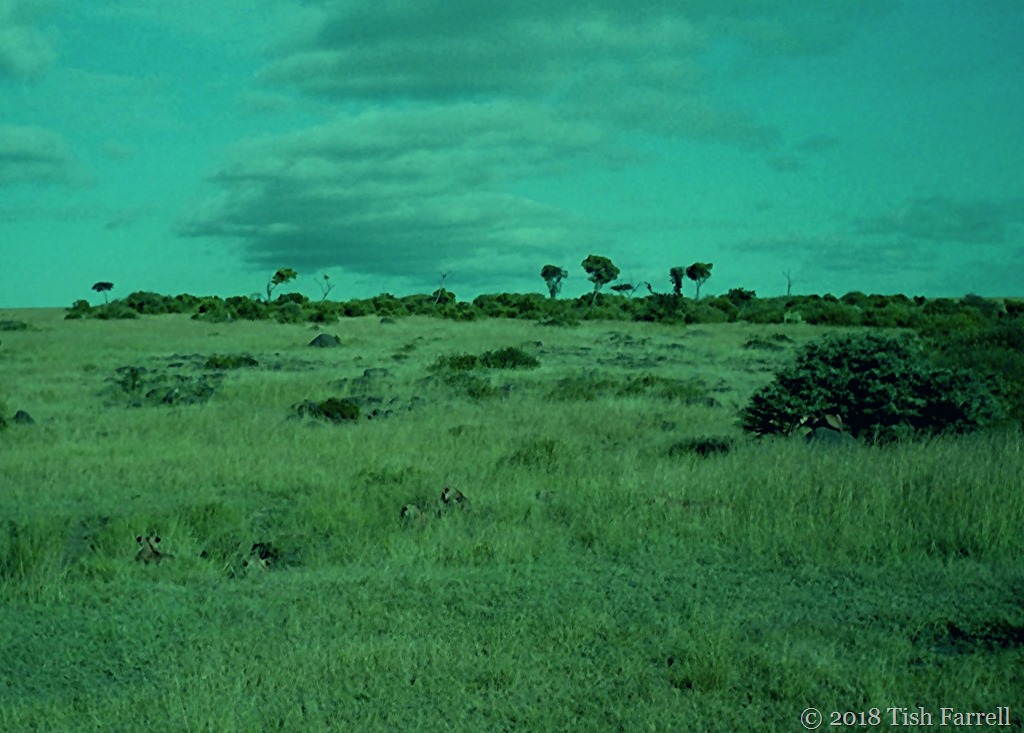
Lions are the past-masters when it comes to both standing out and blending in – this week’s photo challenge from Ann-Christine at Lens-Artists, which sent me rifling through the old Africa Album for some good examples. These were all taken in Kenya’s Maasai Mara back in another lifetime. The header shot shows both leonine proclivities – the art of showing off and of disappearing in foot-high oat grass. I think there are at least three lions in this shot. In the following close up you can see one of them – just right of the lioness’s left ear. Probably a male.Mara lioness 2 (2)

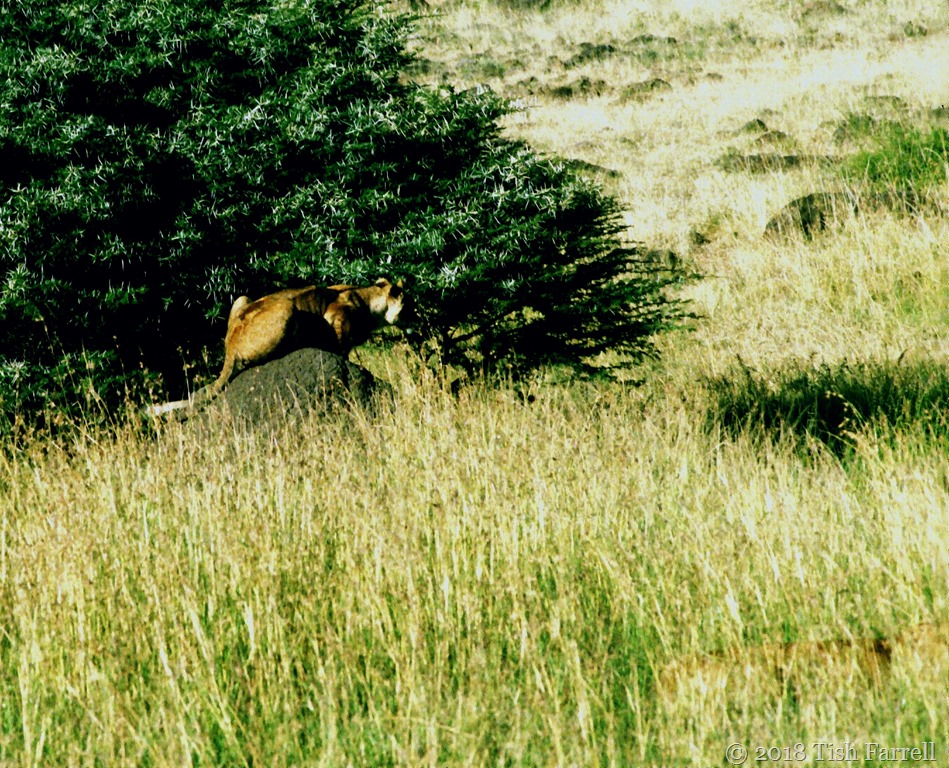
But what about this next shot – can you spot the second lion? Course you can, now you know what to look for:

Scan-130520-0019

*

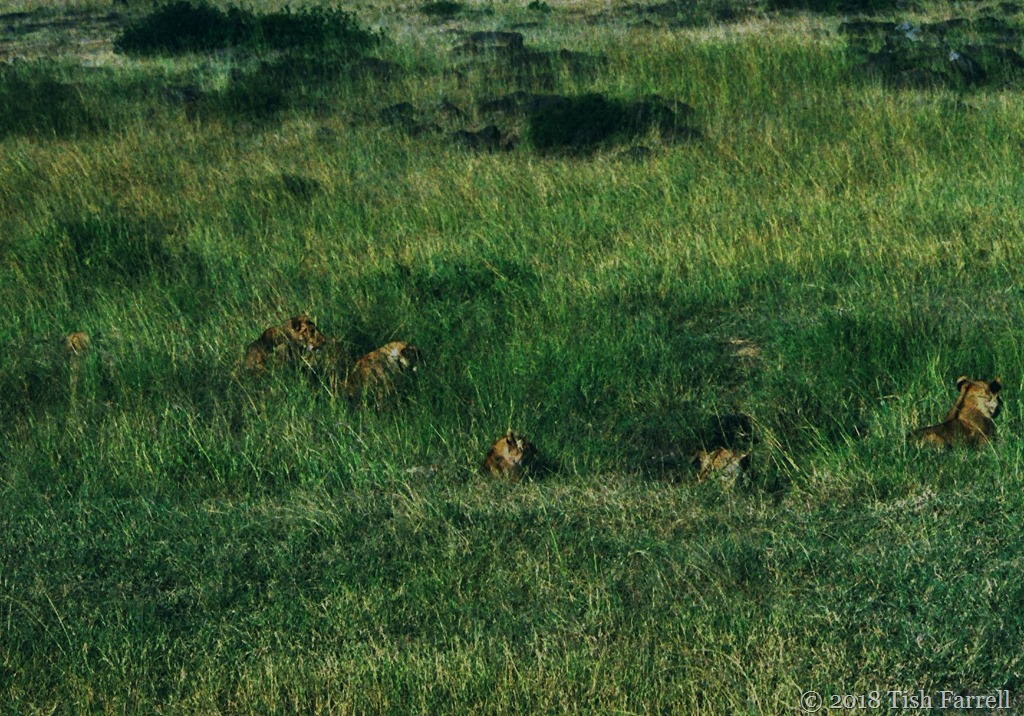
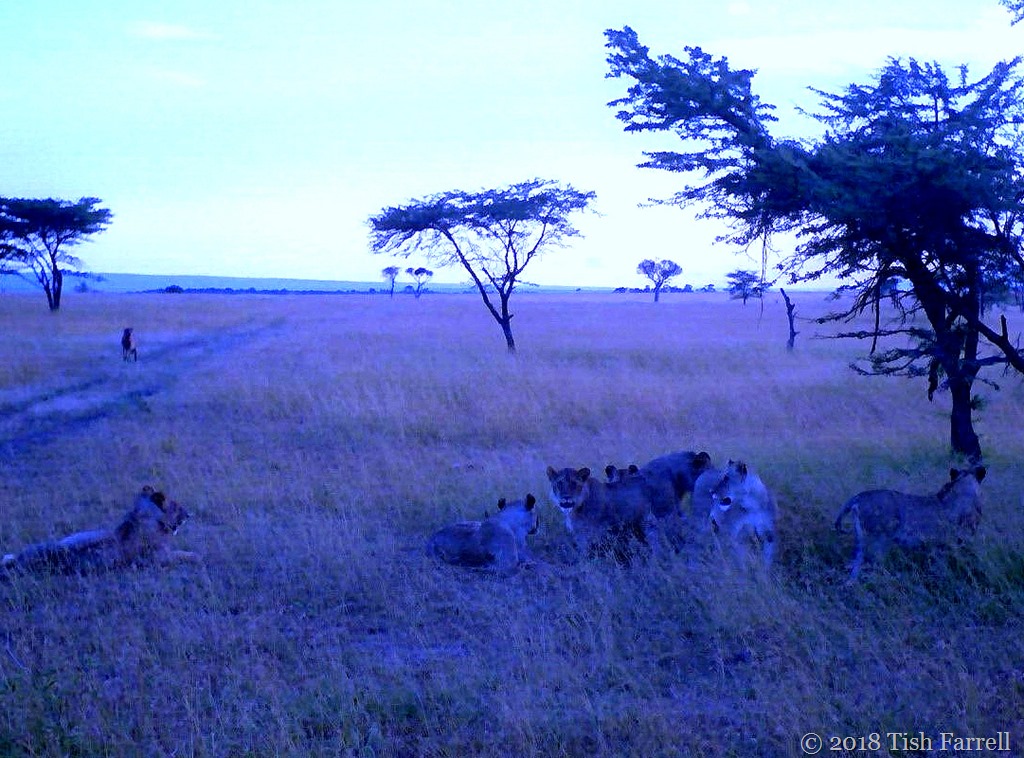
And here’s a different kind of concealment – the whole pride in a gully; their concentrated gaze suggesting thoughts of dinner and where they might find it.

Scan-130520-0011

Scan-140731-0033

Lens-Artists: Blending in or standing out