Always Up For A Spot Of Breakfast: Superb Starling

scan-140503-0036

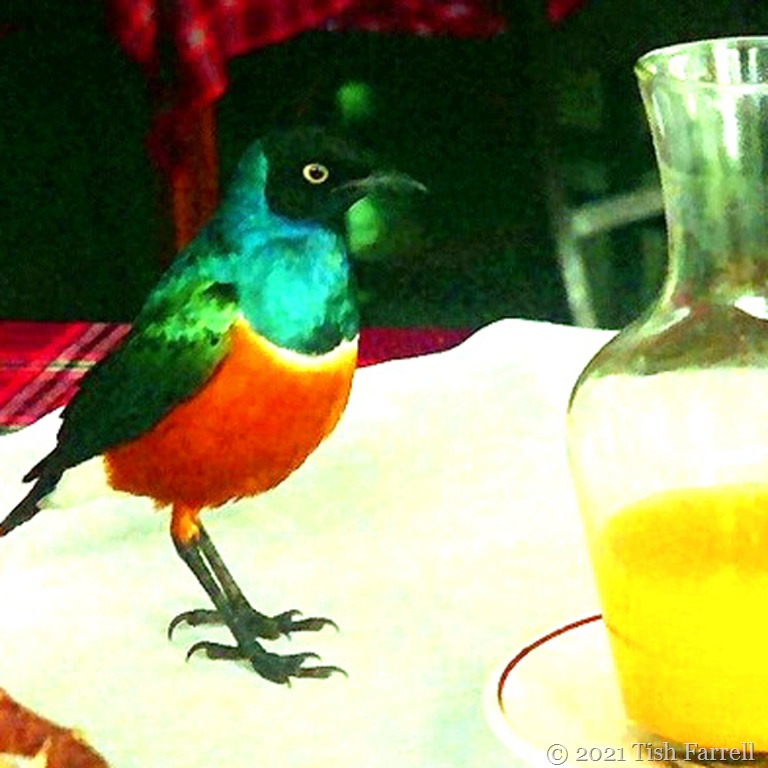
A surreal image – over-exposed so you can see the colours of this Superb Starling, one of Kenya’s commonest birds. But surreal in other ways too. Did we really eat breakfast on the shores of Lake Elmenteita and share it with such birds. (See previous post). On fine days the tables were set out under the fever trees. The soundtrack: incessant chatter of Speke’s weavers from their thorn tree colony by the camp kitchen, fluting call of the black headed oriel, squabbling of babblers, warbling of robin chats, distant grunting of flamingos out on the lake.

IMG1_0004

Under the fever trees. Can you spot the superb starlings?

*

IMG1_0003

Delamere Camp reception and dining room

*

7

The ‘Sleeping Warrior’ an exploded volcanic cone on the western lake shore, Eburru hills beyond.

*

Kenya is of course a serious bird watcher’s paradise. The capital Nairobi boasts a species list of 600 plus. And if I were there now, even if equipped with only the digital zoom of a modest ‘point and shoot’, this blog would be bursting with wonderful bird photos. An irritating thought. For most of the time we lived in Kenya I had only a little Olympus-trip – which was great on landscapes and immobile subjects, but otherwise limited when it came to wildlife photography. Here are my better efforts from Elmenteita: a black headed oriel, glossy starling,  grey heron with egrets, Speke’s weaver, Abdim’s stork and greater flamingos.

Square Up #4

Exemplars Of The Stripy Kind

sq Grevy's zebra 2 - Copy (2)

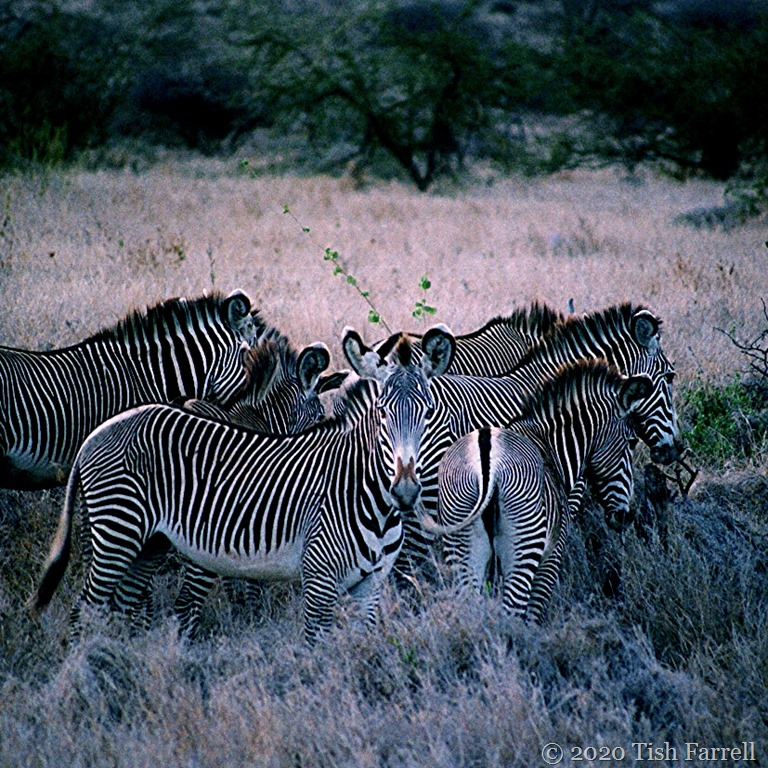
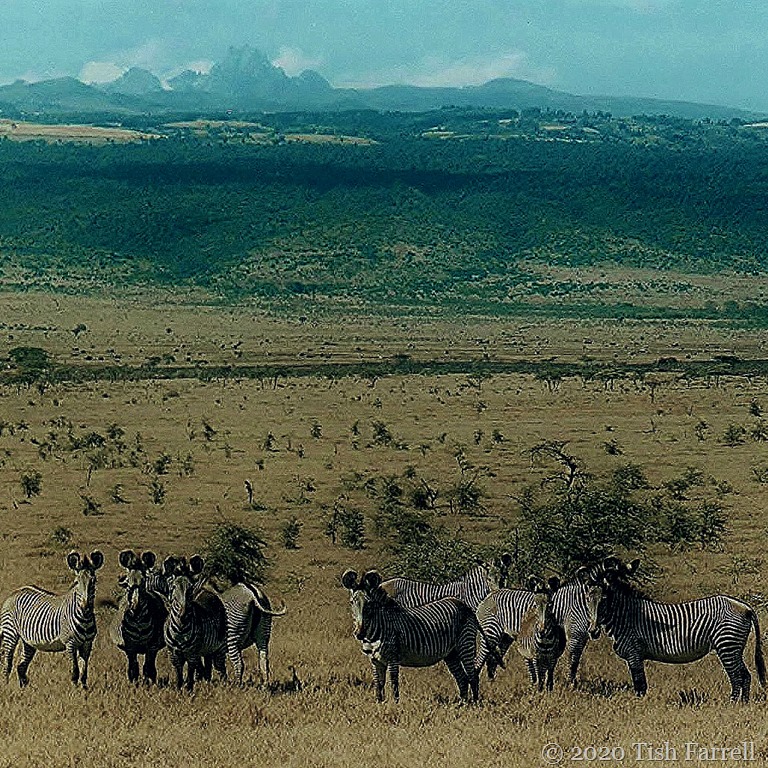
The light was almost gone when we came upon this gathering of Grevy’s zebras. They are the largest and most northerly members of the zebra family, distinguished by their large round ears, close-set stripes, and plain white undercarriages. They inhabit the dry savannah and bush of northern Kenya and southern Ethiopia.

When we spotted them again there was too much light – full on midday sun. But you can see the tip of Mount Kenya in the background. Astonishing to know it is 17,000 feet tall and that this is all you see of it from Lewa Downs.

002sq

KindaSquare #23

So Hard To Like Hyena-Kind, But…

sq Scan-140826-0027jpeg

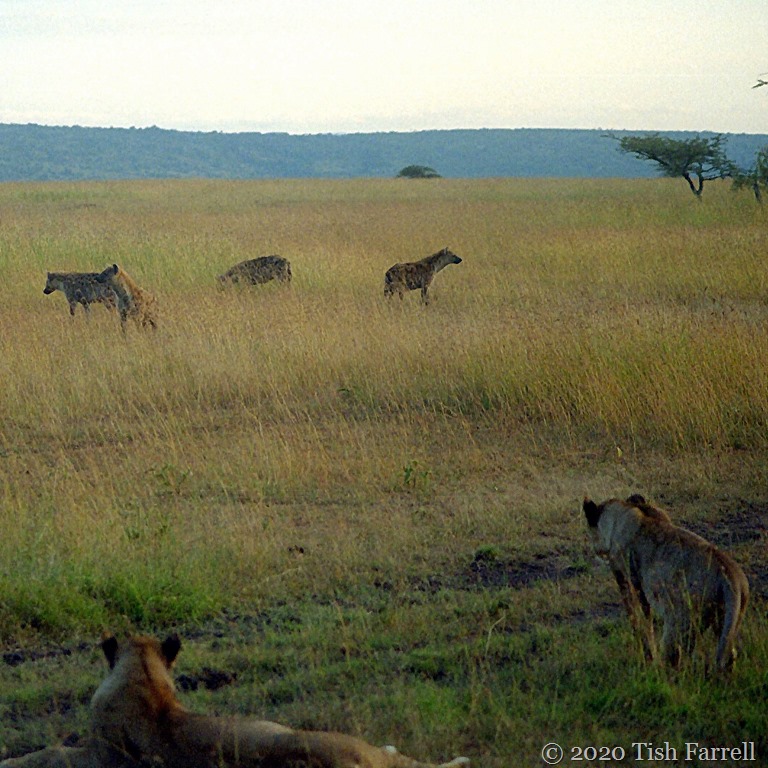
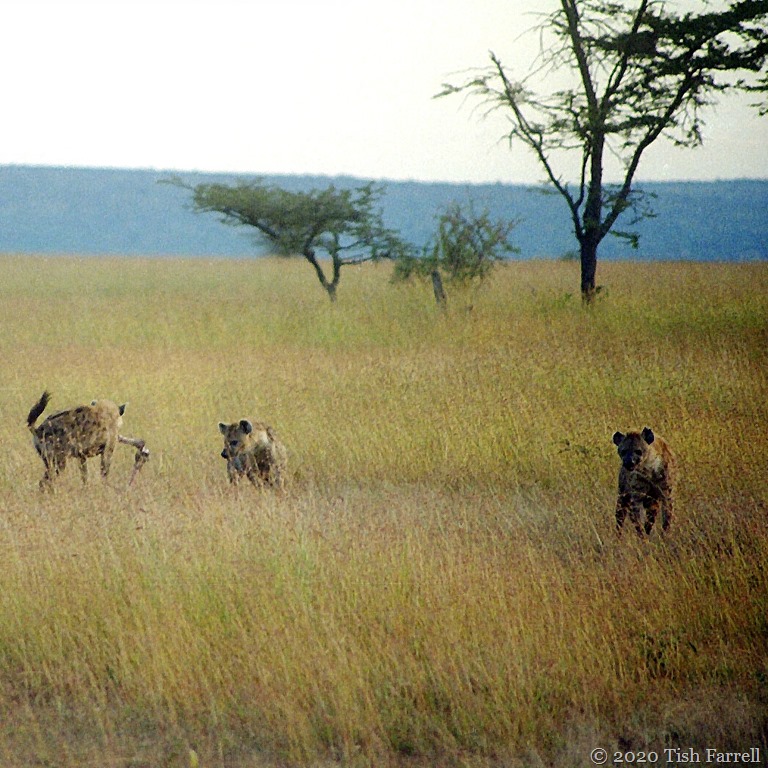
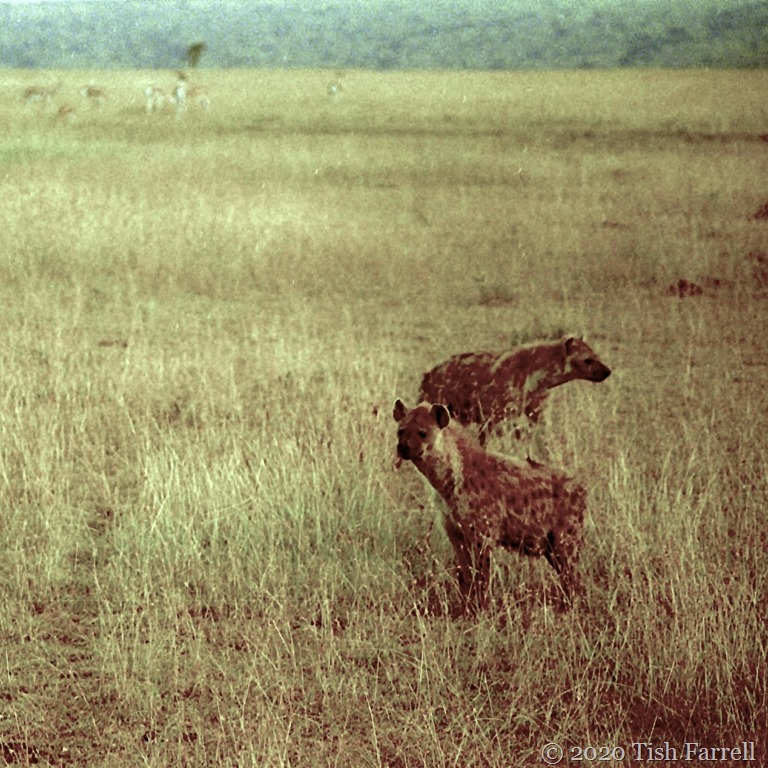
…they are interesting animals, though you certainly would not want to meet one at close quarters. That they are purely scavengers is a myth. They are powerful killers too, and don’t mind the odd human. The spotted hyenas in the photo (taken early one Mara morning) are the largest of the three hyena species, and come with the strongest bone-grinding jaws of any land predator. They live in clans of 5 – 30 individuals and recognise one another by scent.

sq Scan-140826-0026jpeg

Further interesting features include the facts that females are larger than males. They remain in their natal clan for life, are dominant over the males while the largest, most aggressive of them rules over all hunting and territorial defence tactics. The dominant female’s sons outrank all other clan members, and remain in the clan longer than their male age-mates. In the end, though, all the males born from clan females eventually leave to live in nomadic male groups until they can join a new unrelated clan, though this only happens after a trial period wherein they must demonstrate appropriate submissiveness to the new female boss.

sq Scan-140826-0005jpeg

They look ungainly creatures, so low-slung-short-legged in the rear, but this shambling appearance is deceptive too. They can break into a gallop, and sustain speeds of up to 30 miles per hour (48 kph) over distances of  a mile and more. They will chase down adult wildebeest and zebra until the prey is exhausted, and then duly disembowel them. Many pounds and kilos of meat will be gobbled at one go, and every bone crushed and consumed to extract the marrow. I remember once in Zambia, on a pre-dawn drive seeing a hyena so well fed, it could barely drag its stomach home to its den. I’ve read too, that these contents will be turned around within 24 hours, giant meat-grinder style, and the end product droppings quite white from all the processed bone.

Hm. I’m not winning over friends for hyenas, am I?  Still, they do clear up the place when in scavenging mode, as they are in these photos, though the lions were not keen to share their leftovers. But then hyenas, along with other predators, doubtless also help to keep herd animals healthy by recycling the weakest members, and the pursuit itself, predators on the hooves of herbivores, may have a key role to play in the maintaining  the Serengeti-Mara eco-systems.

These grasslands of 10,000 square miles support a million and a half wildebeest, which every year, along with large herds of zebra, migrate between wet- and dry-season pastures. Zimbabwean ecologist, Alan Savory, contends that a key role of predators is to keep herbivores bunched and moving, and that this in turn ensures the continuous sustenance and recovery of the grasslands that in turn support the herds. A virtuous circle then.

So: hyenas do have their place in the natural order of things. All the same, I think I’ll end this post with a photo of the lions who were most determined not to share even though they had  clearly had a very good breakfast:

sq Scan-140826-0008jpeg - Copy


KindaSquare #21

Two Of A Kind #2

Scan-130520-0002

I might be on a bit of roll with this ‘two by two’ from the old Africa album, though as yet I haven’t come up with an ark to house the featured pairs.  Actually it’s now raining so hard in Shropshire (and for days to come if the forecast is anything to go by), it may well be prudent to come up with one.

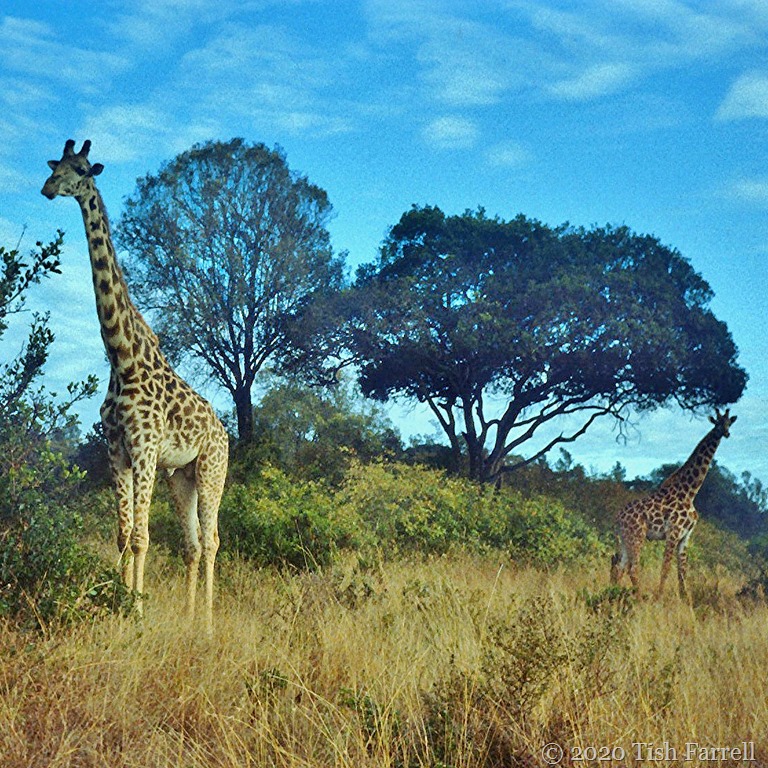
Anyway, here we have a pair of Maasai giraffes in a dreamy, somewhere-in-Tsavo setting. Please imagine the subtle spicy-sweet scents of dry bush country. There will be a soundscape too – high-whining crickets and the kroo-kroo-ing of ring necked doves.

KindaSquare #3

Top Tembo Mama ~ Among Lewa’s Elephants And Other Animals

Scan-130608-0001 - Copy

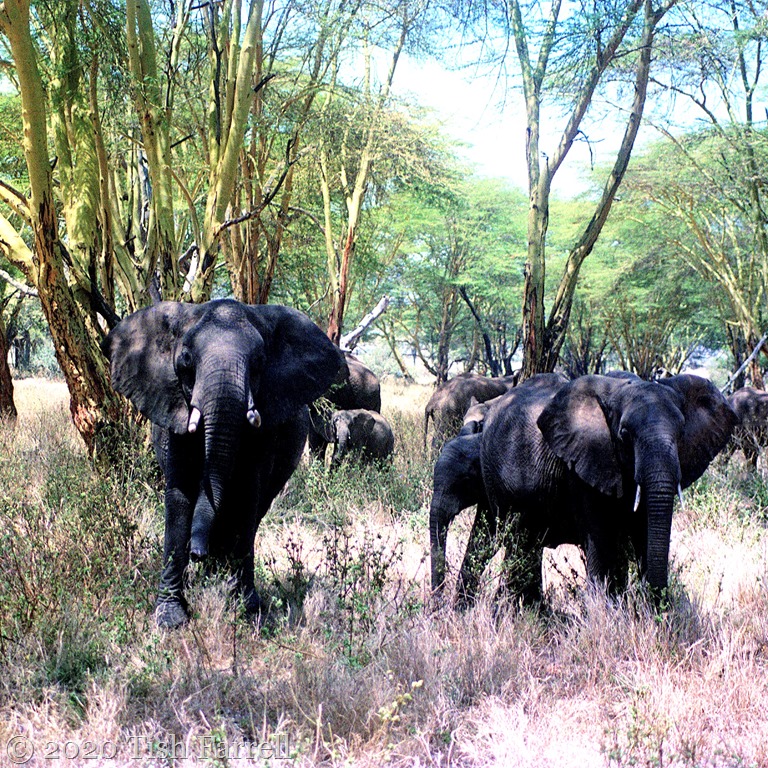
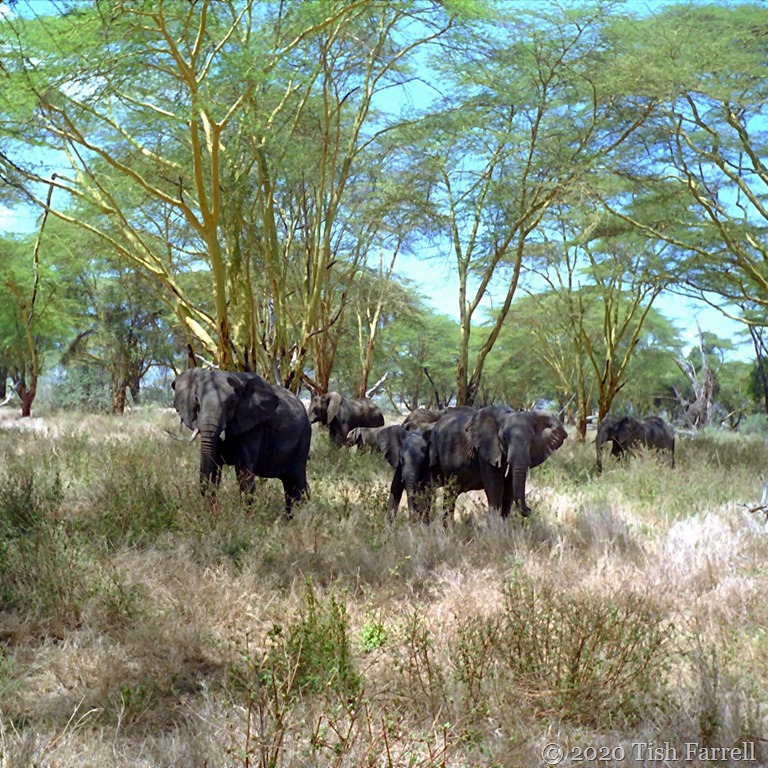
The elephant on the left is the matriarch of this little family group of six adult females and three infants. She is giving us the once over before concluding we are no threat to her charges. In elephant world, the matriarch rules; she is the keeper of the family knowledge; the guide and decision maker. She will also kill any creature that is deemed a threat.

Following on from yesterday’s post on Lewa Downs Conservancy, here are some notes from that trip. We’re out on a morning drive with Kevin our expert guide:

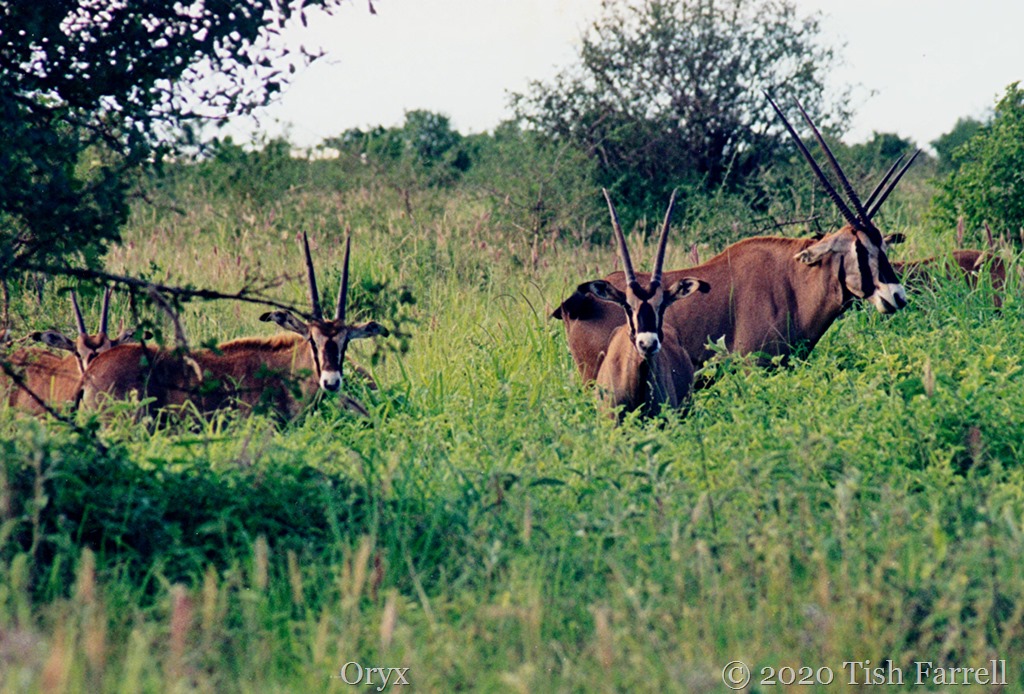
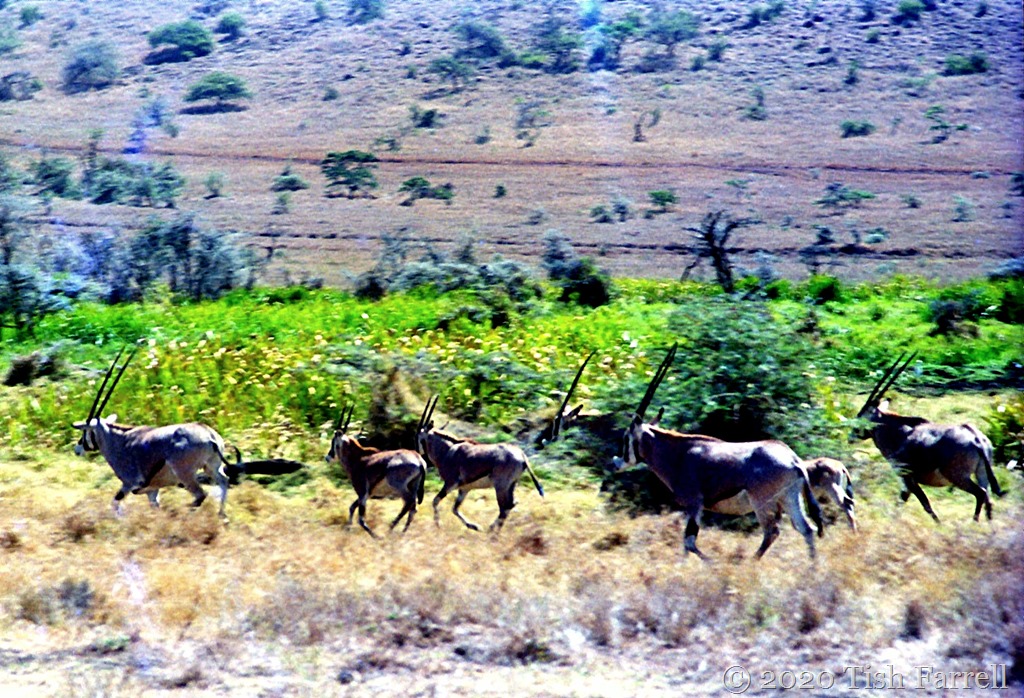
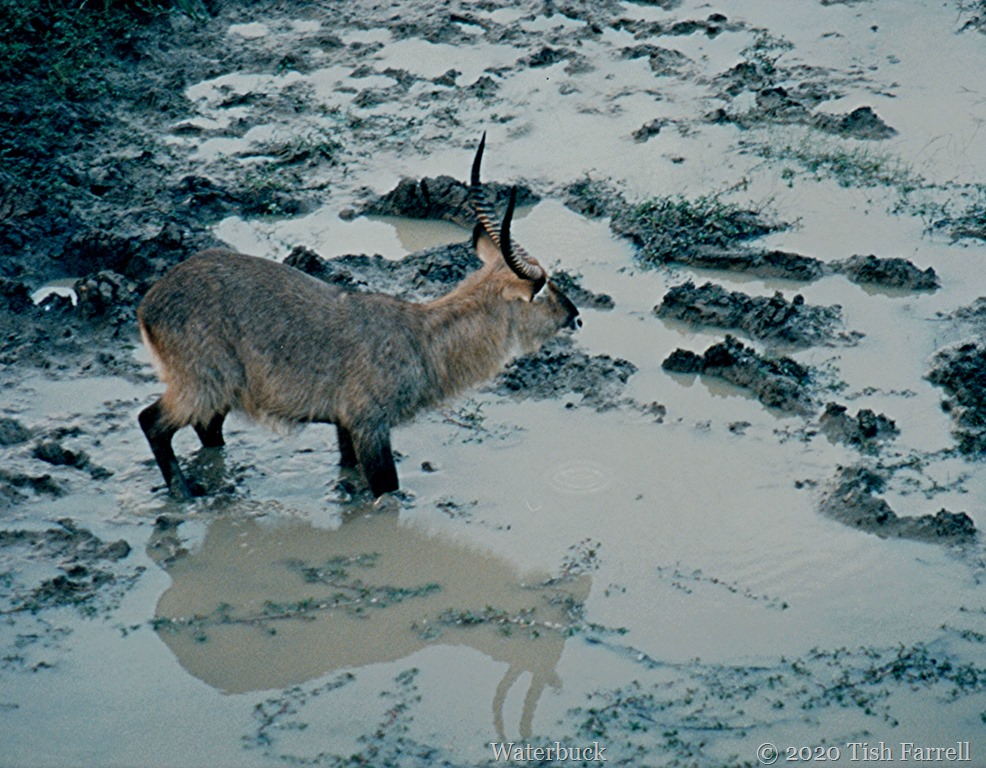
By now it’s late morning and we’re down by the swamp. The waterbuck stare out at us, and as we follow the track that skirts the reed bed we come upon a herd of oryx. They’re very shy though and won’t stay.

oryx

Scan-130608-0047

Kevin drives on towards a clump of fever trees, now following elephant prints along the track, and as we reach the acacias there is a lone old bull, large as life and very close.  Too close? When it comes to elephants the warning signs to look out  for are ears spread and trunk up and to the side. But we’re not bothering him. He views us serenely through long lashes, shakes his battle torn ears, ambles alongside the truck for a while then wanders off.

Scan-130608-0045

Graham meanwhile spots a group of elephant across the swamp and Kevin sets off for a better view. For a while we park on the track, torn between watching brilliant carmine bee eaters in one direction and the little herd in the other. The elephants are about fifty yards away in the fever trees, and I think that’s close enough, but no, Kevin is eyeing up the lie of the land, picking out a line of solid ground. Soon we are parked with swamp on our right and elephants on our left.

At first the matriarch adopts an intimidating stance, but then changes her mind. Our presence in no way interrupts tree browsing and bottom scratching, and no attempt is made to shield the youngest calf from our view. We watch for ten minutes or so, listening to the taptapping of a nearby woodpecker, the call of hadada ibis, spot a vervet monkey watching us watching the elephants. Then Kevin decides it’s time to leave them in peace. As we pull away over the rough ground we’re left with the musky, goaty, muddy smell of elephant in our nostrils.

Scan-130608-0004

Scan-131109-0001

Square Tops #21

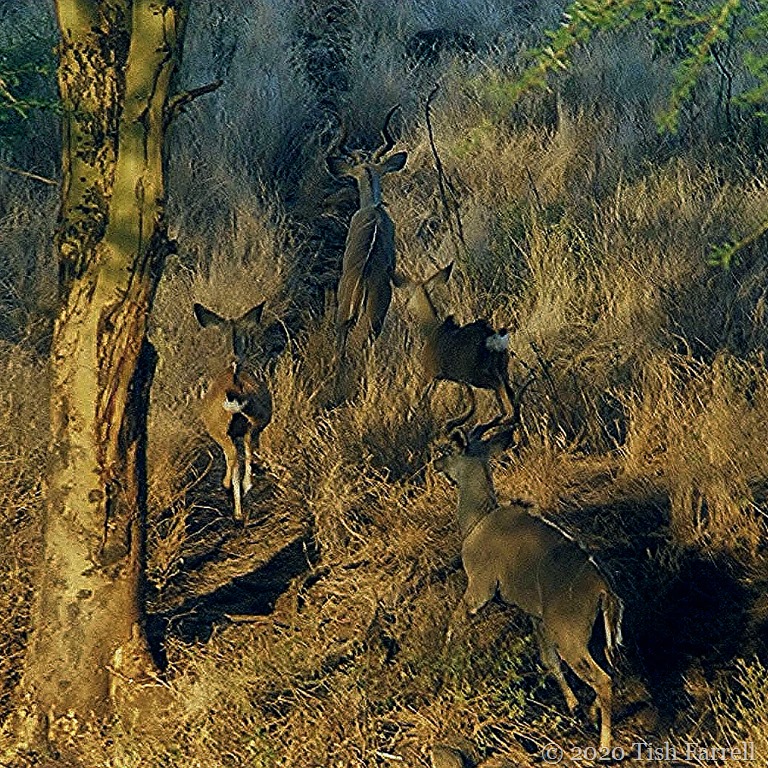
Kudu Family Heading For The Top Of The Trail

003

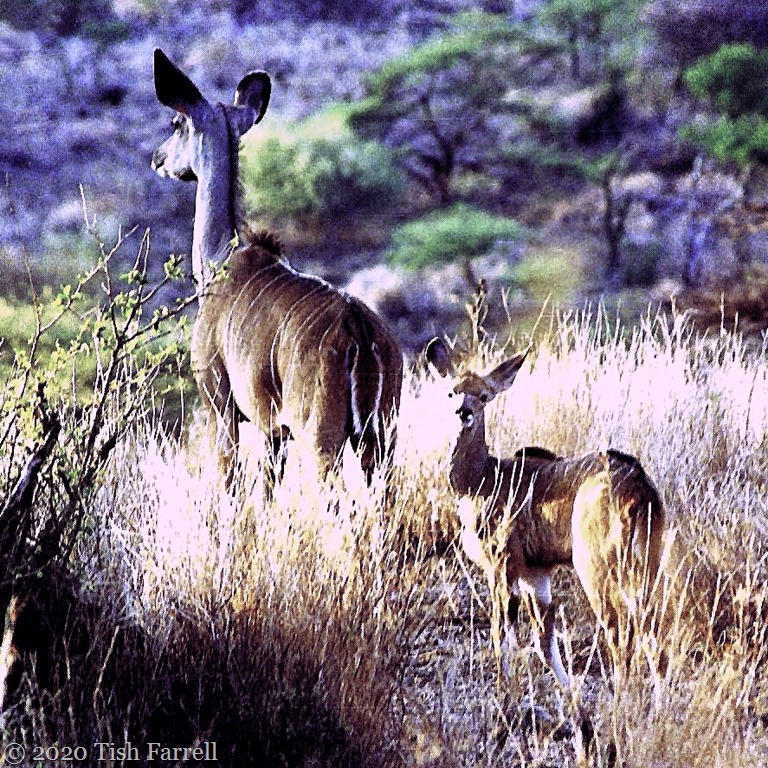
This sunset view of retreating greater kudu was taken at Lewa Downs, a private nature conservancy on the northern foothills of Mount Kenya near Isiolo. The reserve is 62,000 acres, and was once a colonial cattle ranch. The descendants of the original settler family still own the land, but now their focus is on wildlife conservation, upscale tourism, improving the lot of local communities and helping to protect surviving members of Kenya’s black rhino population.

When we visited years ago we stayed in  the small Lerai tented camp run by the same outfit whose camps we stayed in at Mara River and Elmenteita, i.e. fairly low key by comparison with Kenya’s super luxury safari ‘camps’, and aimed more at visitors with dedicated interests in wildlife, particularly ornithologists and professional wildlife photographers.

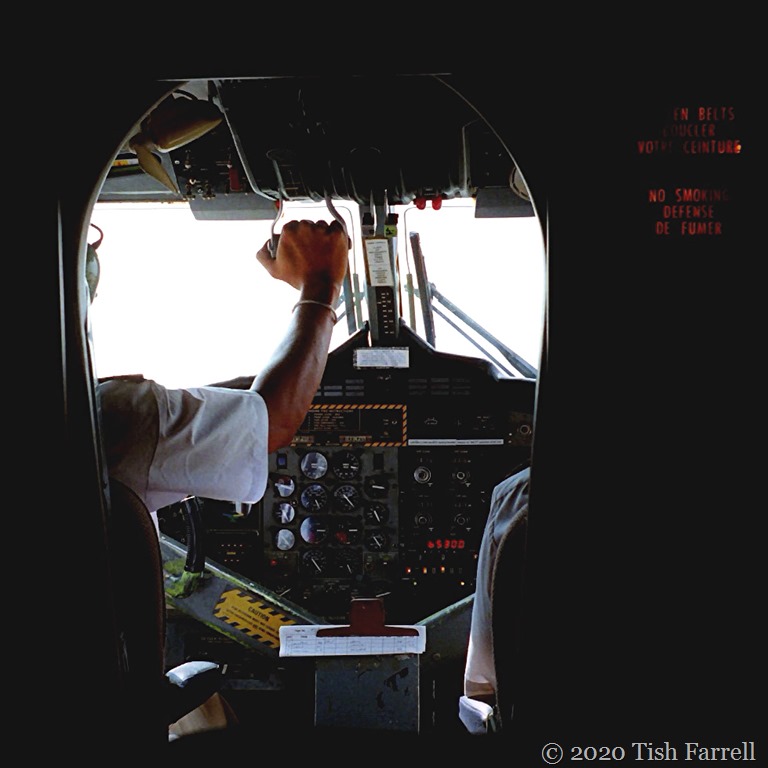
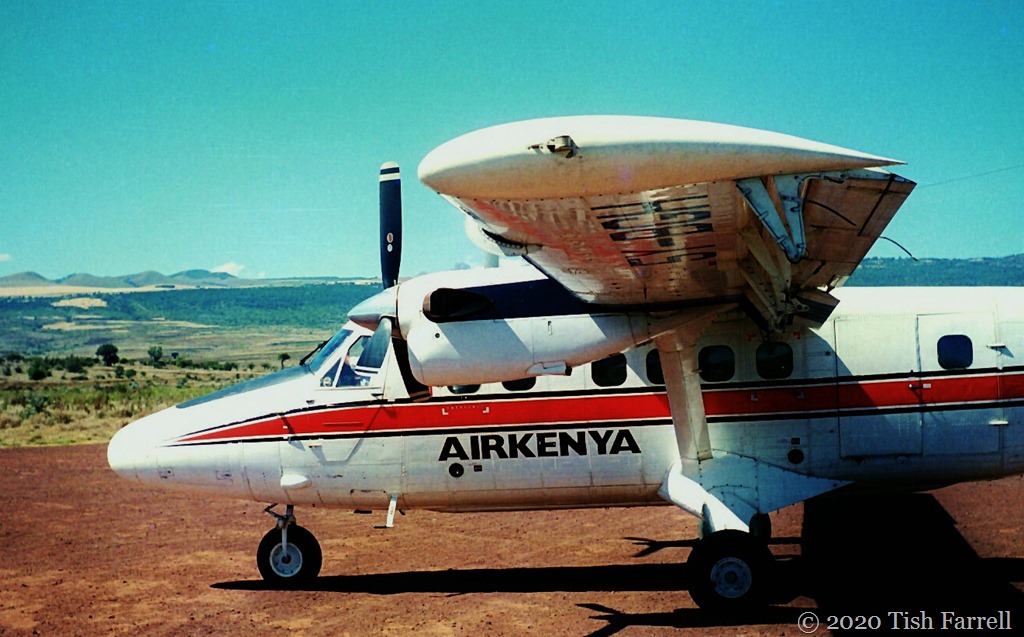
We flew up there in a Kenya Airways Twin Otter 20-seater plane. (Kenya’s internal aerial bus service is brilliant). There were only two others aboard and, after running through the safety procedures, the co-pilot leaned out of the cockpit with a bowl of boiled sweets and a cheery ‘pass it back!’ The next moment we were sprinting off the tarmac at Nairobi’s Wilson airport and banking over the nearby national park where small groups of wildebeest were gathered along city perimeter fence. So even before the safari is properly begun there’s a little wildlife spotting to do.

Scan-130608-0052

Next we whipped up the Great Rift, the old volcano Longonot in the valley bottom, the smallholdings, tea and coffee farms of Limuru up on the eastern escarpment. And in no time we were over Nyandarua, the Aberdares Range, and looking the dark snow-streaked spires of Mount Kenya in the eye. In fact in the same amount of time it had taken us that morning to get through Nairobi’s traffic jams to the airport we had covered the couple of hundred kilometres to Lewa.

lewa i

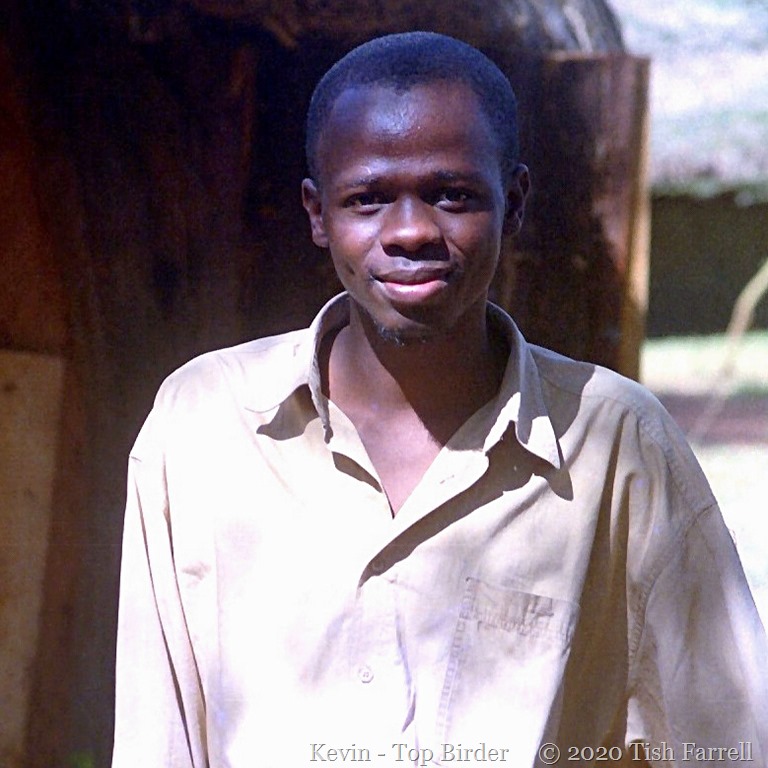
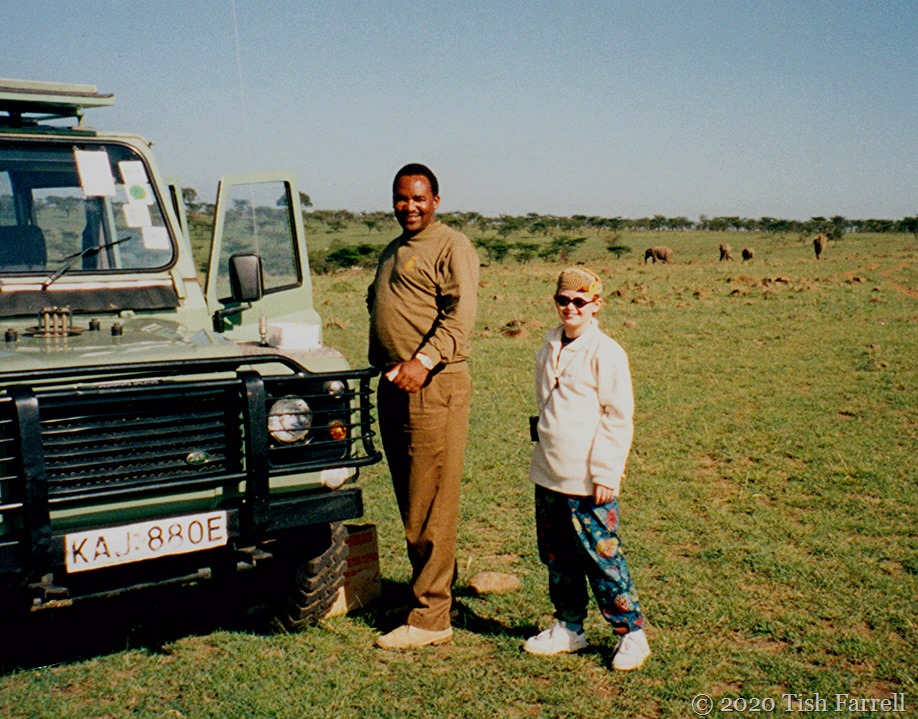
Soon we were flying low over the marsh buzzing zebra before putting down on the dirt landing strip whose only permanent structures then were a windsock and a thatched hut. Our transport, an open green safari truck, sped towards us in a cloud of pink dust. Kevin, our guide for the two-day stay, greeted us with a big grin. We found out later that his family were originally from Tanzania, his people the Chagga who live on the slopes of Kilimanjaro, and are renowned for their capacity for running up the mountain. Kevin also turned out to be a very passionate ornithologist, especially interested in the European migrants that were just then visiting Lewa. A bit of an irony I thought: a case of the reversed ‘exotic’ when he became, to my mind, rather over absorbed by the presence of a migrant tufted duck. That’s not what we came to see! Here’s some more of what we did see:

Scan-130608-0039

Scan-130608-0012

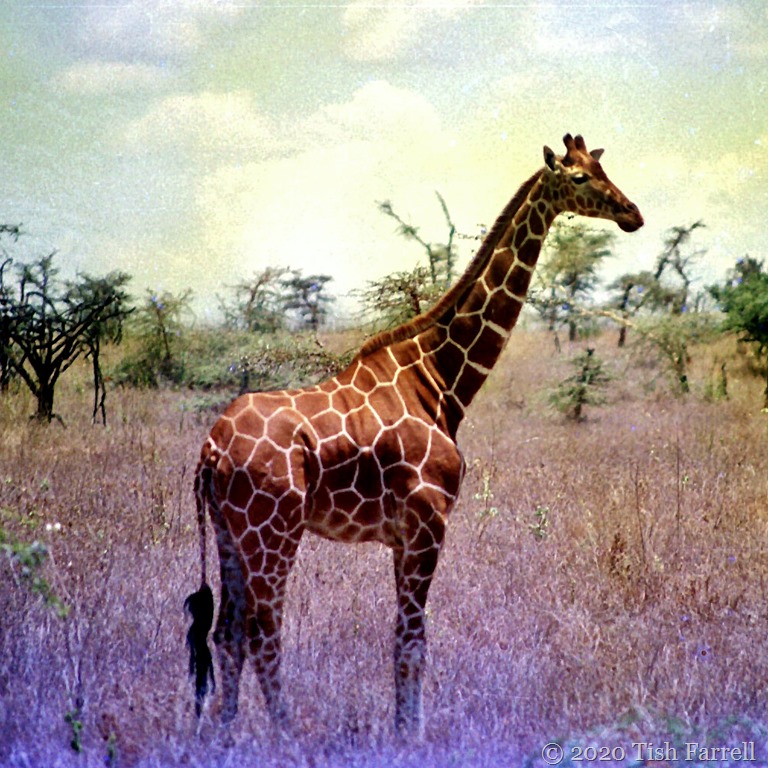
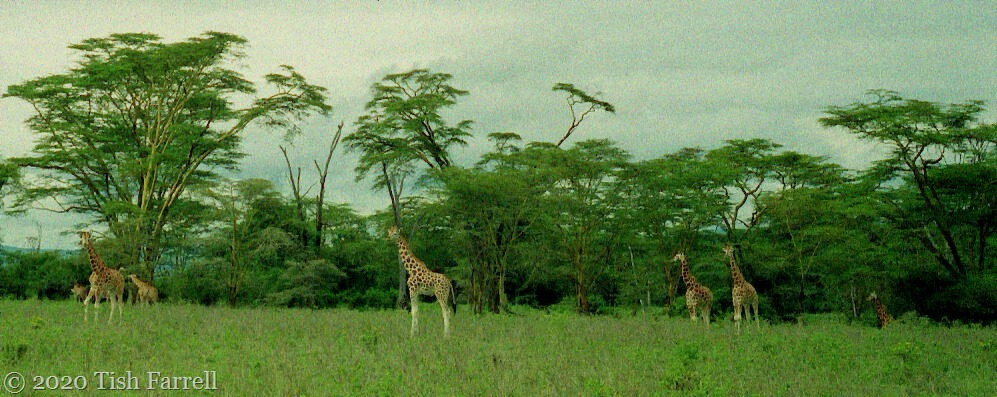
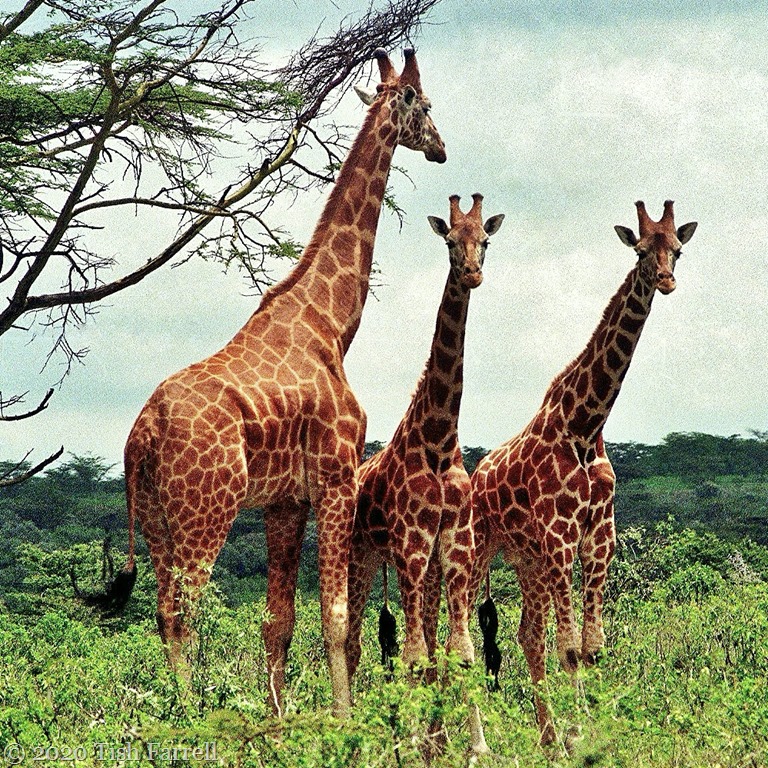
A reticulated giraffe, one of the three main giraffe races in Kenya. It is mostly found in the northern districts.  This photo’s for Brian at Equinoxio. (The weird colour flashes are due to poor film processing at the time).

Our guide:

Scan-130608-0023

Scan-130608-0056

Square Tops #20

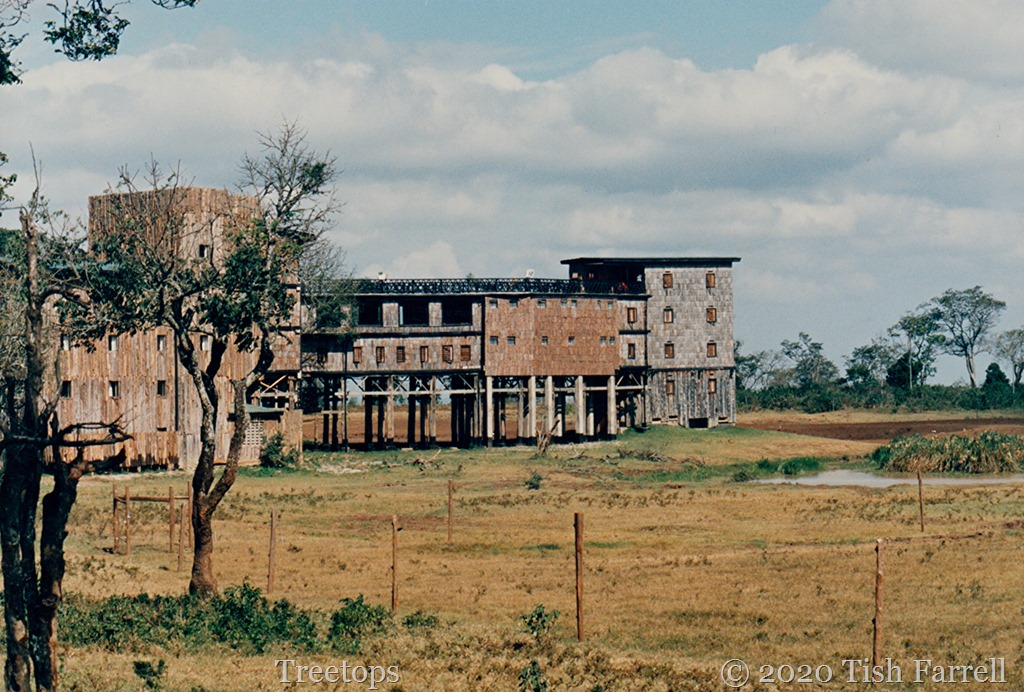
Kenya’s Treetops Hotel

Treetopssq

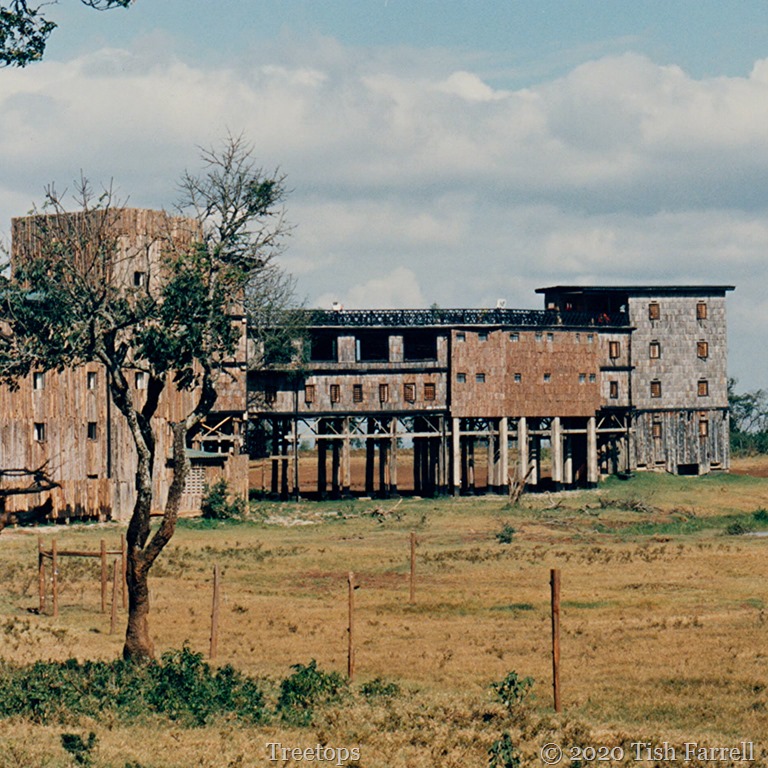
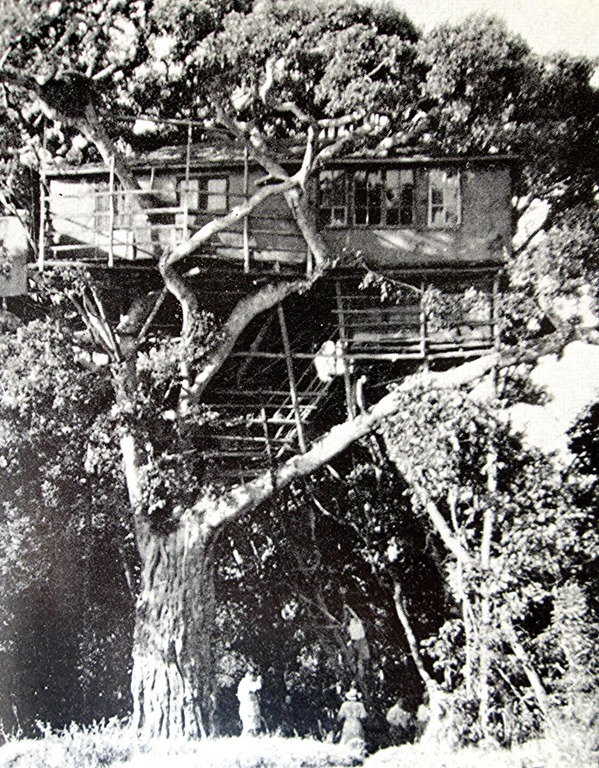
Mention of Treetops in Kenya’s Aberdare National Park inevitably brings up residue of British colonialism, and in particular the extraordinary connection with the UK’s present monarch. The original Treetops was little more than a 1930s bungalow-affair, a rickety contrivance lodged in the branches of an ancient mugumo tree, a species of wild fig which happened to be very sacred to the local Kikuyu people.  Princess Elizabeth spent the night there in February 1952 and, as the well trammelled narrative goes: she went up the tree as a princess and came down a queen, although it was only later in the day that she was informed that her father, George VI had died.

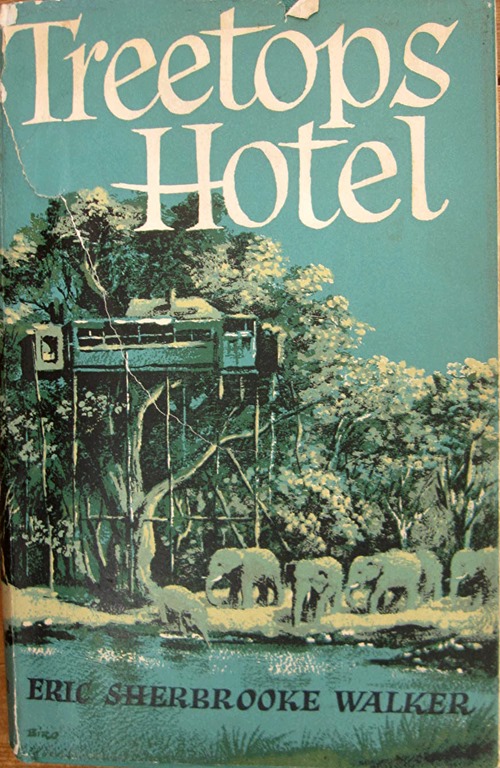
Here’s the original Treetops where the royal party stayed, taken from the book by its builder, Eric Sherbrooke Walker, Treetops Hotel.

IMG_8871

IMG_8873

The Sherbrooke Walkers, like most of the early settlers in British East Africa, were of the officer-gentry-aristocracy class. Eric Sherbrooke Walker had served in the Royal Flying Corps during World War 1, followed by a stint in military intelligence with the White Armies in Russia during the Bolshevik uprising wherein he earned the Military Cross and other honours. After the war, during America’s prohibition era, he took up rum running off the West Indies and made enough money to marry Lady Bettie, daughter of the Earl of Denbigh. They then set off on an adventurous trip across East Africa, which soon left them short of money and in turn led to the notion of setting up their own country house hotel.

011

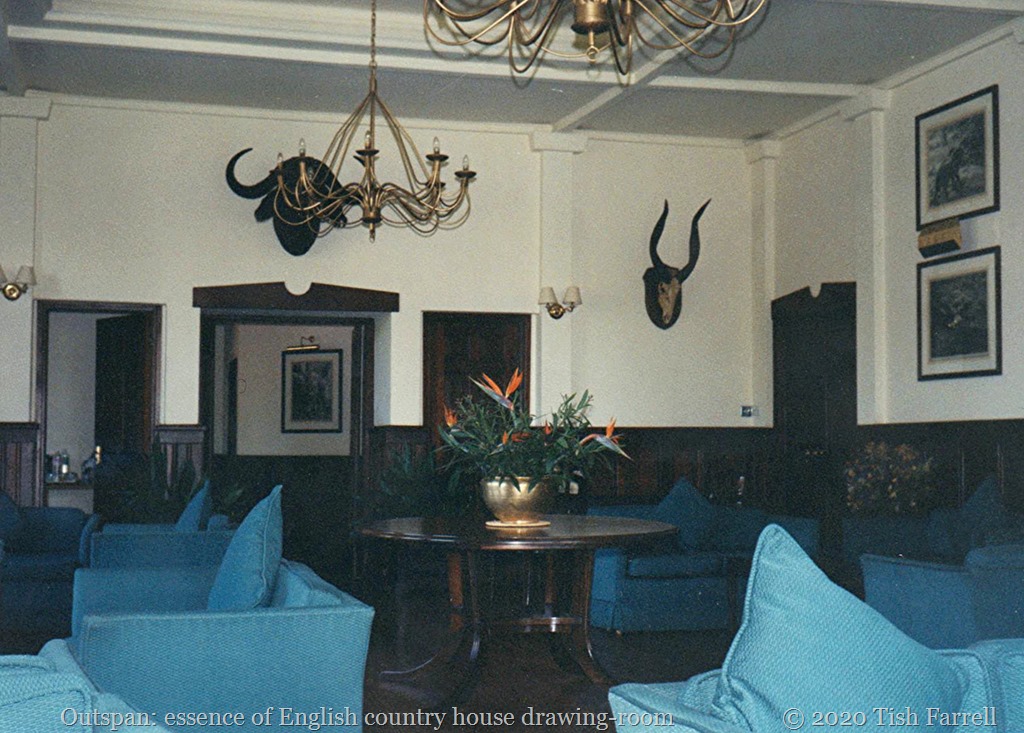
In 1926 they pitched up in Nyeri in the forested highlands of Kenya’s Central Province, bought 70 acres from the colonial government, and set about creating the genteel Outspan Hotel. By the end of 1927 they had built ten rooms and opened for business for the New Year of 1928.  The big attraction to their settler guests, who though well-heeled usually had very primitive facilities on their African farms, were rooms that came with private bathrooms and running water. So began a successful enterprise of country inn-keeping in the English manner but with views of snow-capped Mount Kenya and the Aberdare range thrown in.

The 1920s was the era of the grand East African shooting safaris when the likes of Bror Blixen, Denys Finch Hatton and John Hunter acted as Great White Hunters for extravagant entourages of European (especially British) royalty and Indian maharajas. But by the 1930s, many safari goers had begun to turn their attention from trophy hunting to big game photography – an activity greatly promoted by American adventurers and film makers, Martin and Osa Johnson.

And it was this new craze that prompted the Sherbrooke Walkers to create Treetops. Small parties of guests could spend the night in the top of the mugumo tree and watch elephants, rhino and forest hogs lit up by a spotlight, do more early morning game watching over tea and biscuits before being transported back to the Outspan for hot baths and breakfast. As a unique combination of eccentric British-gentry-rustic with elephants thrown in it could not fail. As more and more visitors wanted to stay there, so rooms were added, and more props put in to hold up the tree branches.

And then in 1954 the original Treetops was burned down. This was during the so called Mau Mau uprising when it apparently became a target for the Land and Freedom Army. Later the place was rebuilt and added to over the years. The header version dates from September 1996, the fourth iteration under the ownership of Block Hotels. When we went I had been spending previous week alone at the Outspan, which still served as ‘base camp’ for Treetops,  while Graham was at a seminar at the nearby Aberdares Country Club. He then joined me for the trip to Treetops.

010

In a letter to my aunt written shortly afterwards I told her that were among a party of 99 – (Israelis, Koreans, an international museums outing, and 40 retired Americans from the Friendship Club) all of us being ferried into the Aberdare National Park in a bus, and then deposited in the bush so we could walk the last few hundred yards to Treetops – ‘a rustic fortress between two waterholes’ was how I described it back then. Before we set off Dishon, the ranger who met us pointed out the well timbered refuges along the path, to be resorted to in case of charging buffalo or elephant. He was also carrying a rifle.

Treetops

IMG

But there were no alarming encounters. In fact we saw no sign of any big game while were there, only the red billed hornbill that sat on the tree outside the dining room, baboons, buck and warthogs.

treetops_0001cr

The rooms were tiny, more like cubby holes, and the building was very noisy. Many of the elderly women guests were up all night. When I could not sleep around 2 a.m. I got up and found them, of all things, putting on their make-up in the ladies’ communal washroom. When the  actual ‘wake up’ call came at 6.30 a.m. the place was surrounded by an Aberdares fog. And so it seemed that whatever romance there might once had been was quite lost. The best bit was driving out of the park through the Kikuyu smallholdings. Out of the stands of maize came files of school children in coral coloured sweaters and jade green dresses and shorts, trotting off early to the local primary school.

Treetops_0001 Nyeri farms

I gather from looking at the current website that Treetops is under new management and the number of rooms much reduced in order to provide en suite bathrooms. It all looks very luxurious, but somehow also misses the point, the batty English tree-house charm of the original. Though whether that was ever at all an appropriate installation in the African highlands is another question.


Square Tops #9

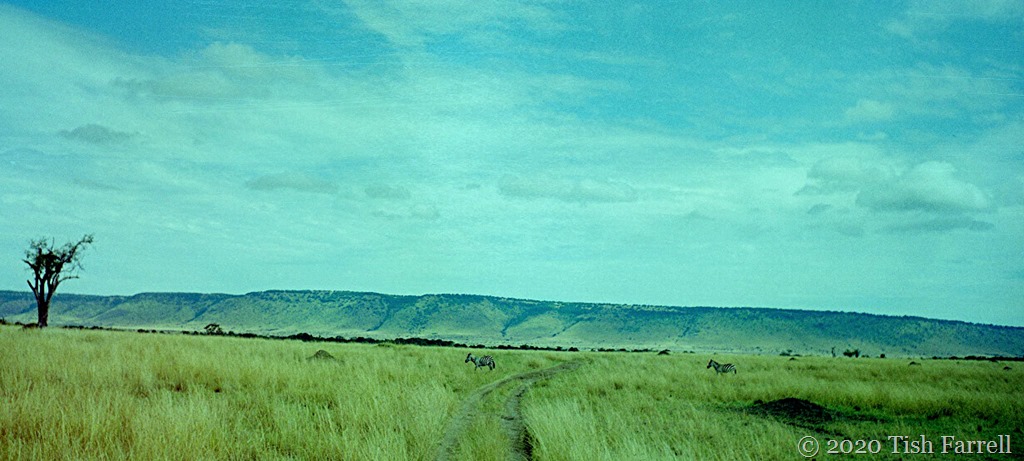
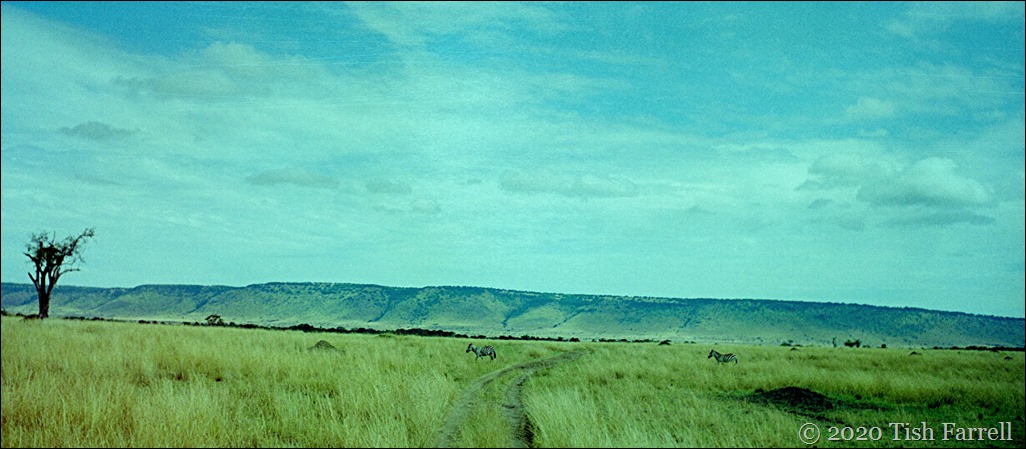
More From The Mara ~ Near And Far Beneath The Oloololo Escarpment

Soit Olololo Escarpment

When we lived in Kenya we made three trips to the Maasai Mara, staying not at one of the luxury hotels inside the national park reserve, but at the small Mara River Camp. The camp’s landlords were the Maasai themselves, the Koiyaki Lemek Wildlife Trust, whose clan elders jointly owned three hundred square miles of plains grazing – albeit a tiny pocket of the Maasai people’s original rangeland i.e. the entire run of East Africa’s Great Rift Valley. Such jointly owned remnant land holdings are known as group ranches, though they not ranches as Europeans understand the term. Here clan members and their families live, tending their herds while also claiming daily game viewing revenue from the foreign visitors staying at the camp.

And in case anyone thinks staying outside the national park might be second best, it wasn’t. In fact there was so much wildlife to see everywhere, there was no need to go into the park proper. Die hard conservationists like to contend that wildlife and humans don’t mix, that humans have a detrimental effect on habitat. This attitude has caused, and will continue to cause extreme hardship to the world’s remaining traditional communities, people who actually know very well how to care for their own natural resources.

But back to our first game drive beneath the Oloololo Escarpment.

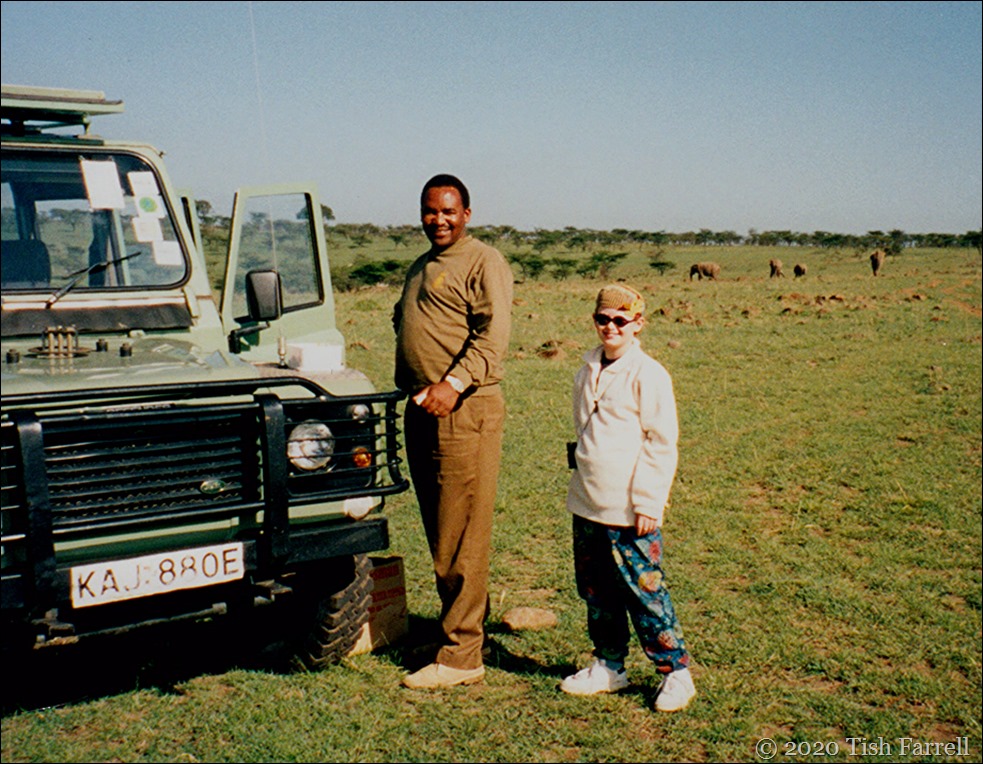
We set out from camp at 3.30 p.m. in a re-purposed Land Rover: six seats in the back, one per window and three viewing hatches cut in the roof. Daniel Mahinda, our driver-guide, was keen to please us. When he asked what interested us most Graham said ‘grasses’. A surprising answer in ‘big game’ territory. He had recently finished his doctoral thesis on smut disease in Napier grass, an important local fodder crop, but I suspected he was being a touch facetious. I had stopped him from taking a nap, saying he could not sleep through Africa. And he had grudgingly agreed. But, looking back, I should have left him in our riverbank tent – to be serenaded by grunting hippos. The crop protection project he was running in Nairobi  was often very stressful, and for all kinds of reasons that could never be foreseen. Probably the last thing he needed was to be bumped around in the back of a Land Rover.
dec 1999

Daniel (on a later December trip) with our niece, Sarah and distant elephants

*

Anyway, Daniel took Graham at his word. Grasses it would  be.  This is what I wrote back then:

As we drive up the rocky valley out of camp there are several stops while Daniel picks us some red oat grass (characteristic of the Mara plains), pyramid grass, Maasai love grass and Bamboo grass. Then we stop to taste the leaves of the muthiga tree (the Kenya greenheart) which are very bitter, and Daniel says the tree’s twigs make good toothbrushes and the bark has medicinal properties – good for sore throats and toothache.

We look at the white tissue paper flowers that hug the ground and the tall sunbird plants (Leonotis leonotis) and the invasive thorn apple (Datura stromonium) and then Daniel picks us a pink flowering spike and says it is called devil’s whip. We also look at the clouds of white butterflies that are clustering round the thorn tree blossom. Then we forget about plants for a while and consider the sooty chat (a small bird that is a Mara speciality) and watch a huge breeding herd of impala. Then we drive along the meanders of the Mara River looking at baboons.

Daniel says there are about fifty in the troop with three alpha-males, and adds that they’re not averse to tackling a Thomson’s gazelle. We see those too. Then there is a grove of muthiga trees with every trunk bearing a series of scars (old and new) from where, over the years, small pieces of bark have been removed to make dawa (medicine). The Maasai are usually far from clinics, and so rely greatly on herbal remedies both for themselves and their cattle.

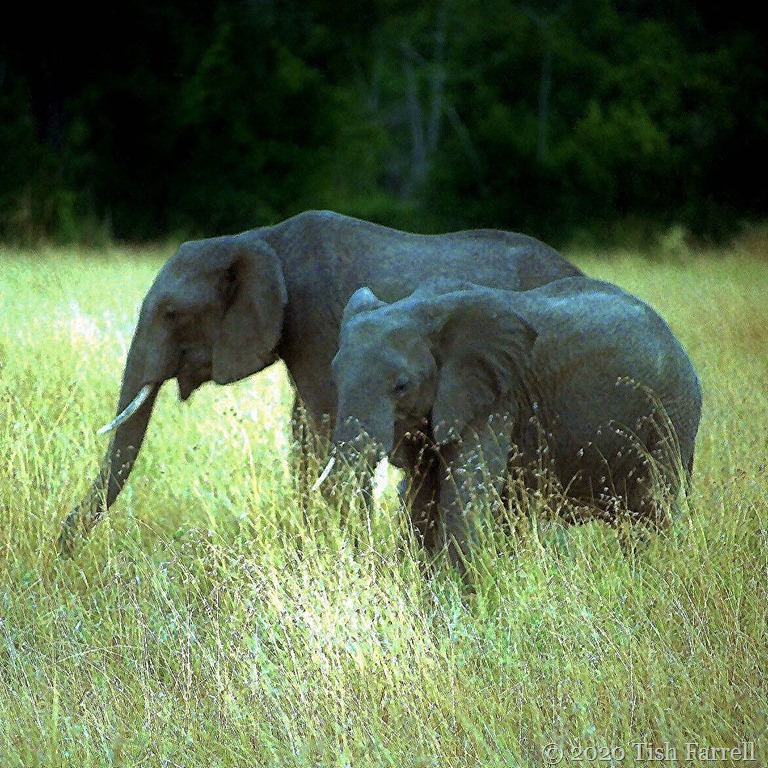
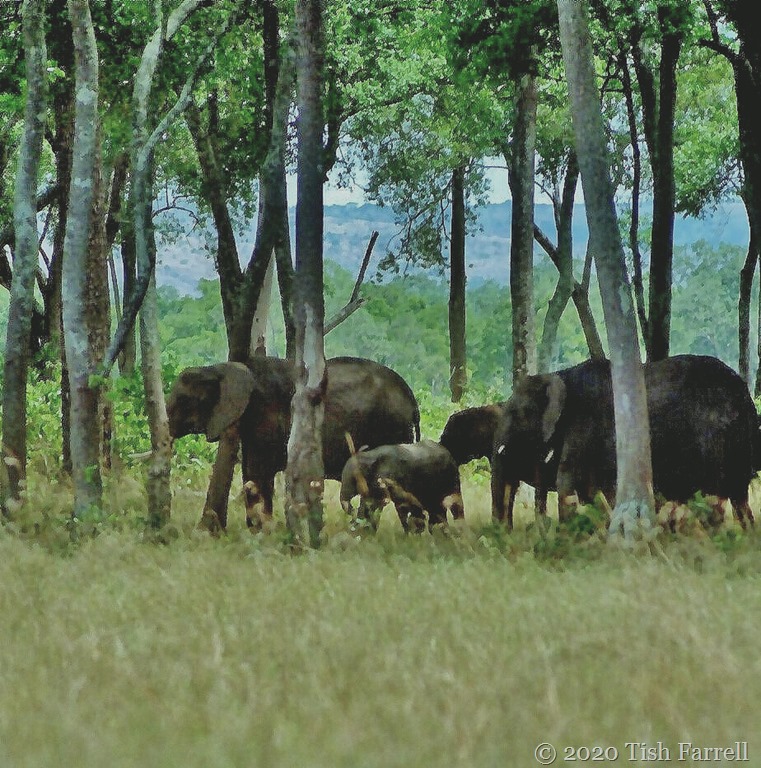
Soon after this we see elephants – first two males, one who shakes his big head aggressively as we draw near. We pause briefly for photos before driving across the marsh to see a family group whose matriarchs and young don’t mind us watching them for a while.
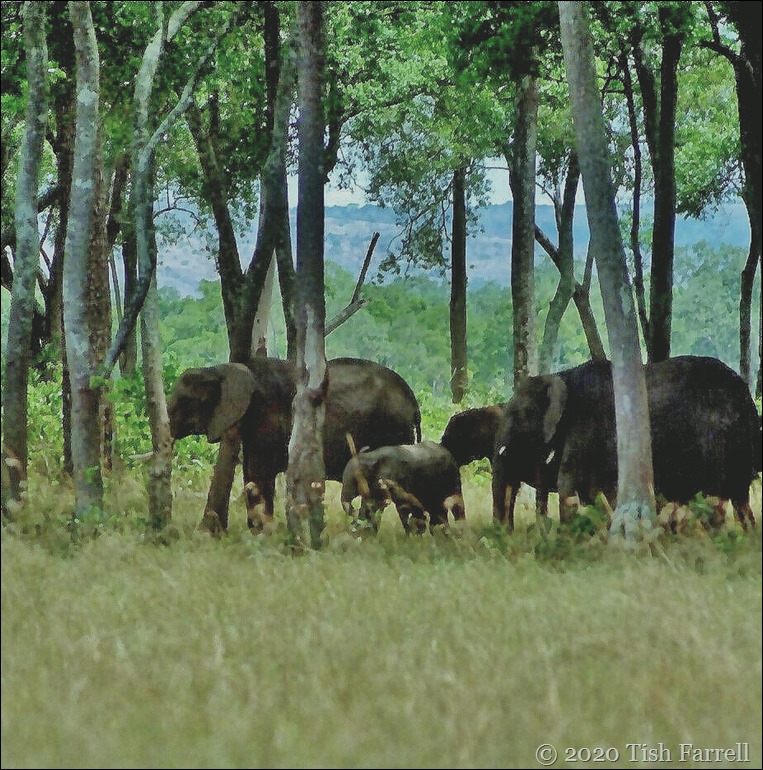
Scan-140726-0020Among the muthiga trees

*


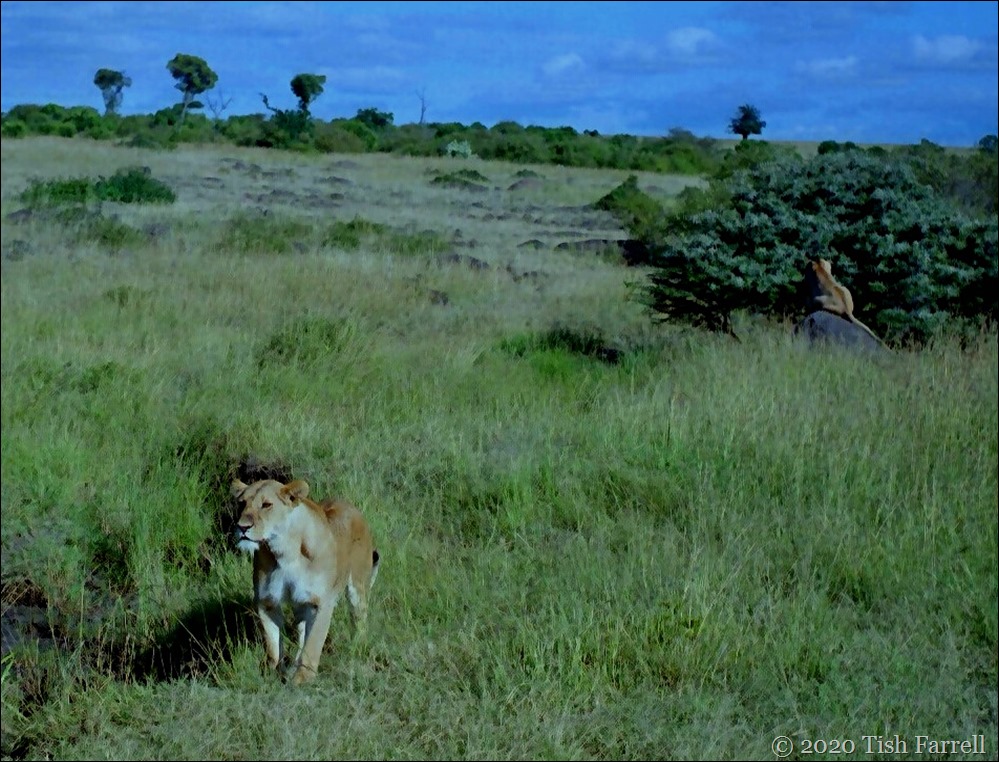
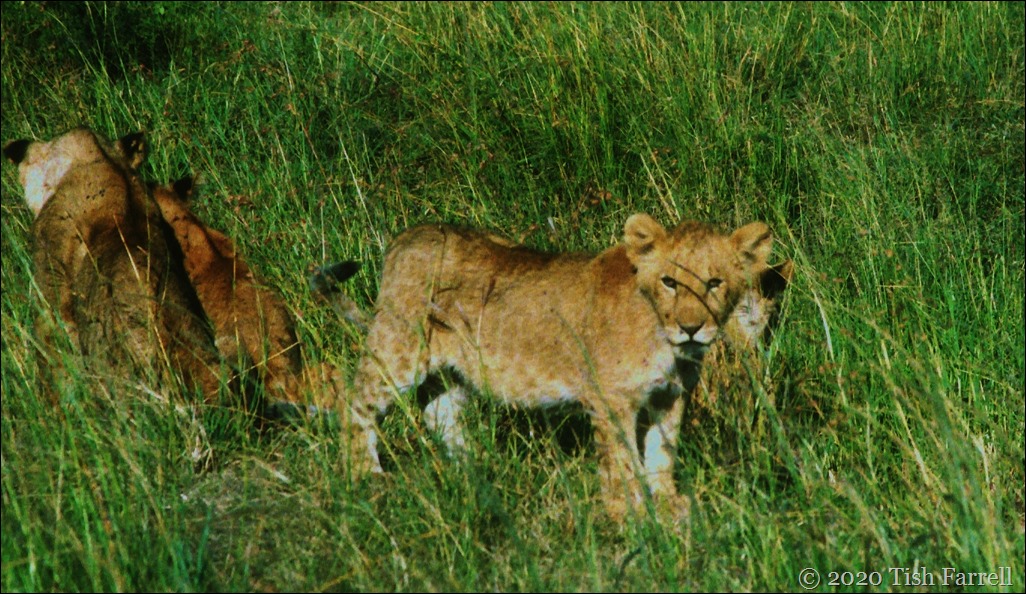
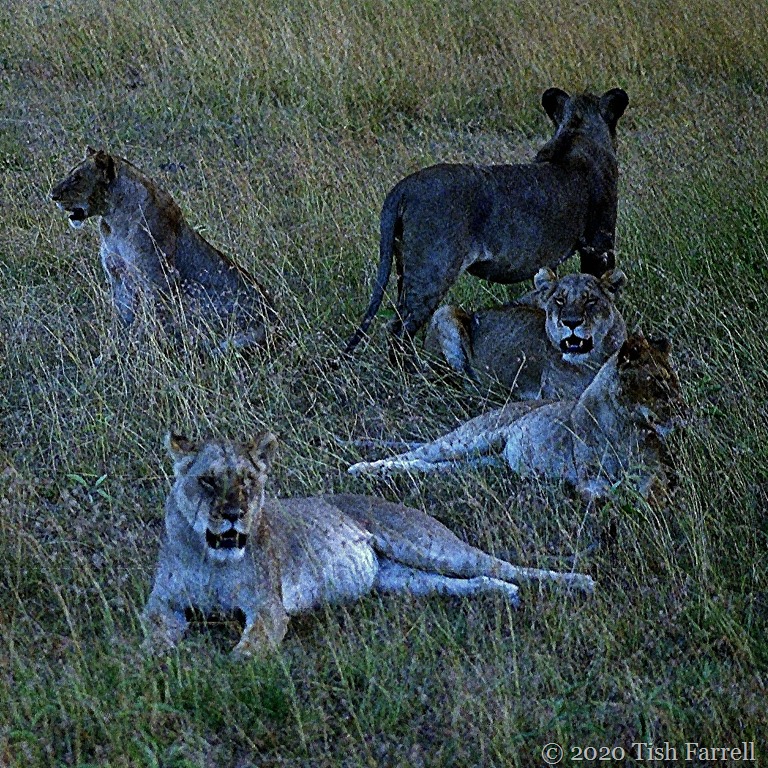
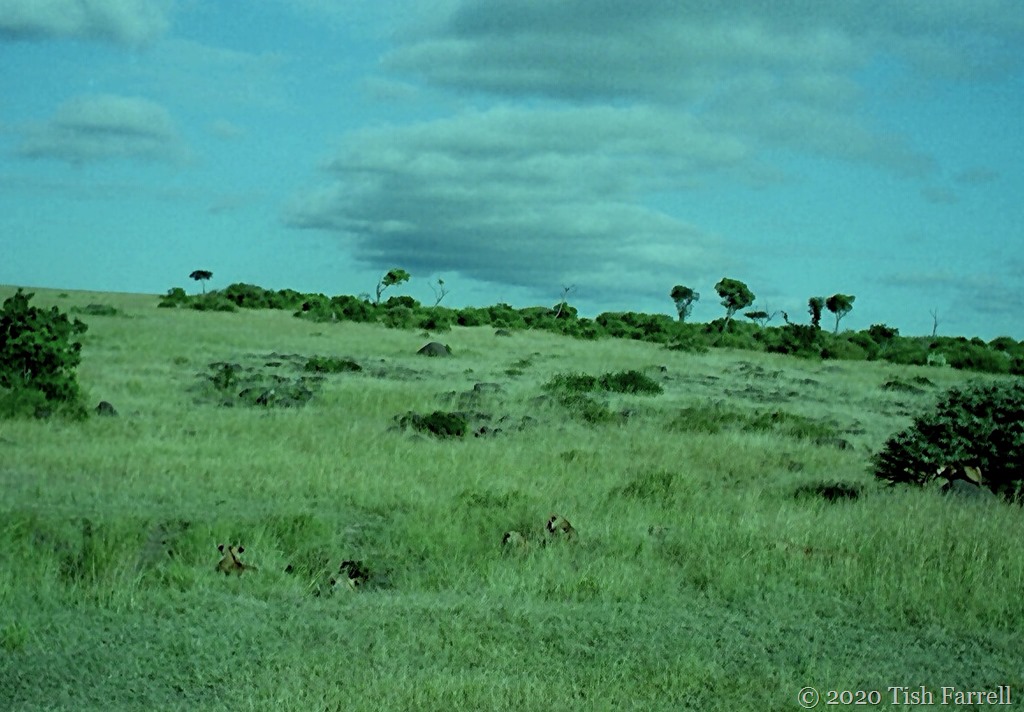
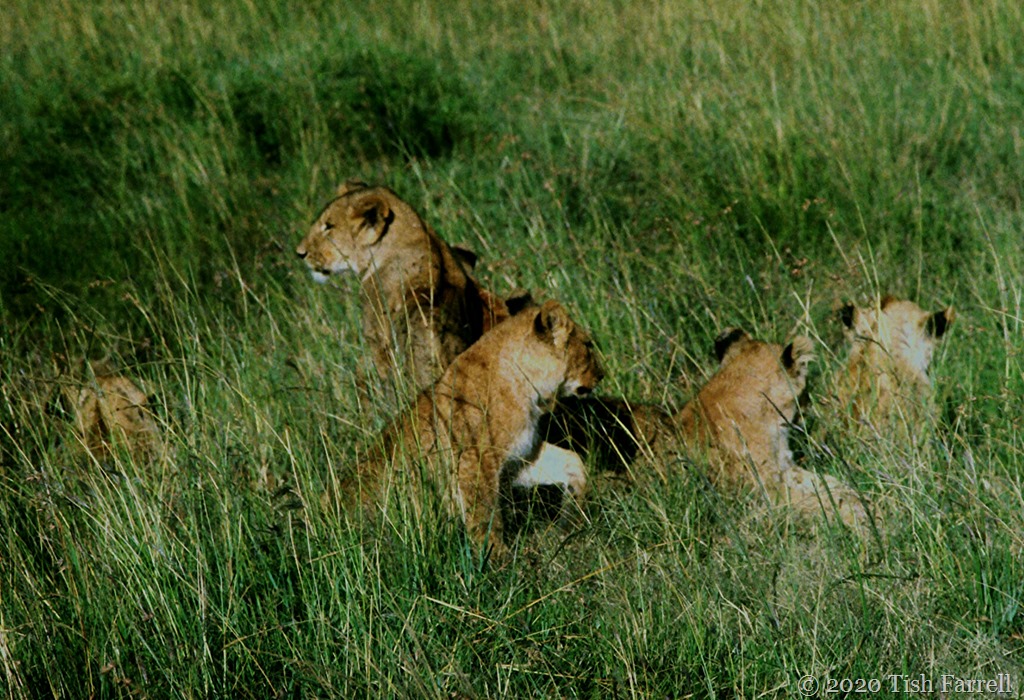
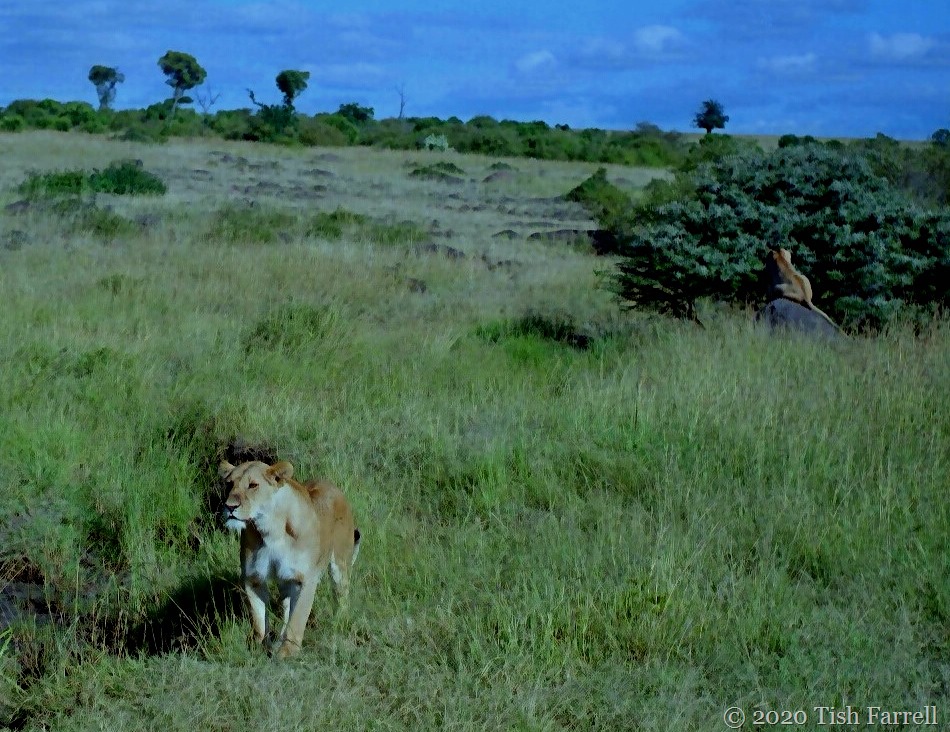
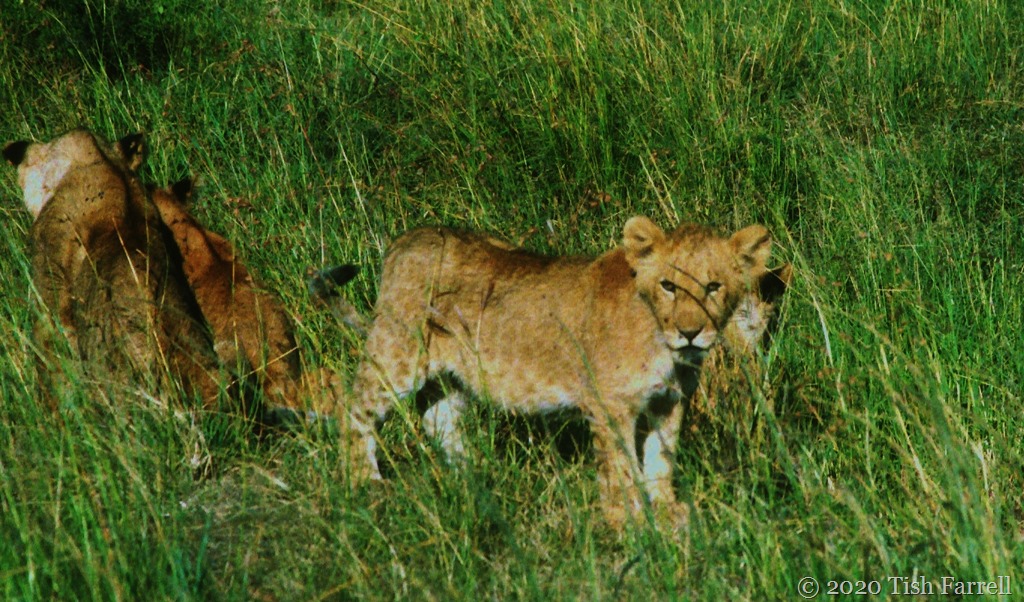
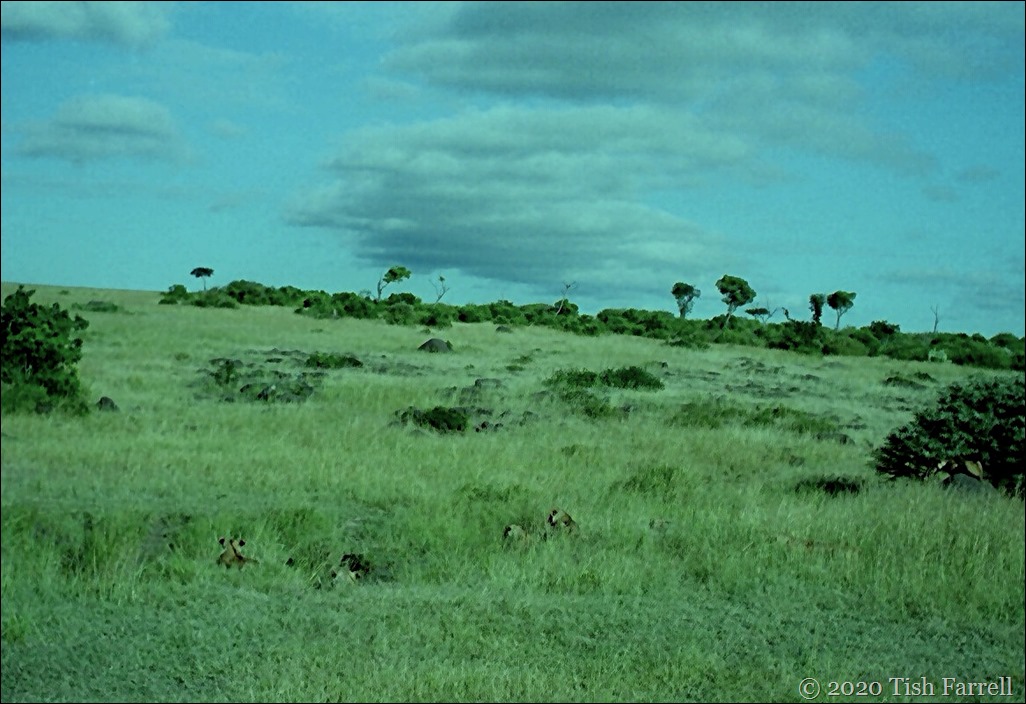
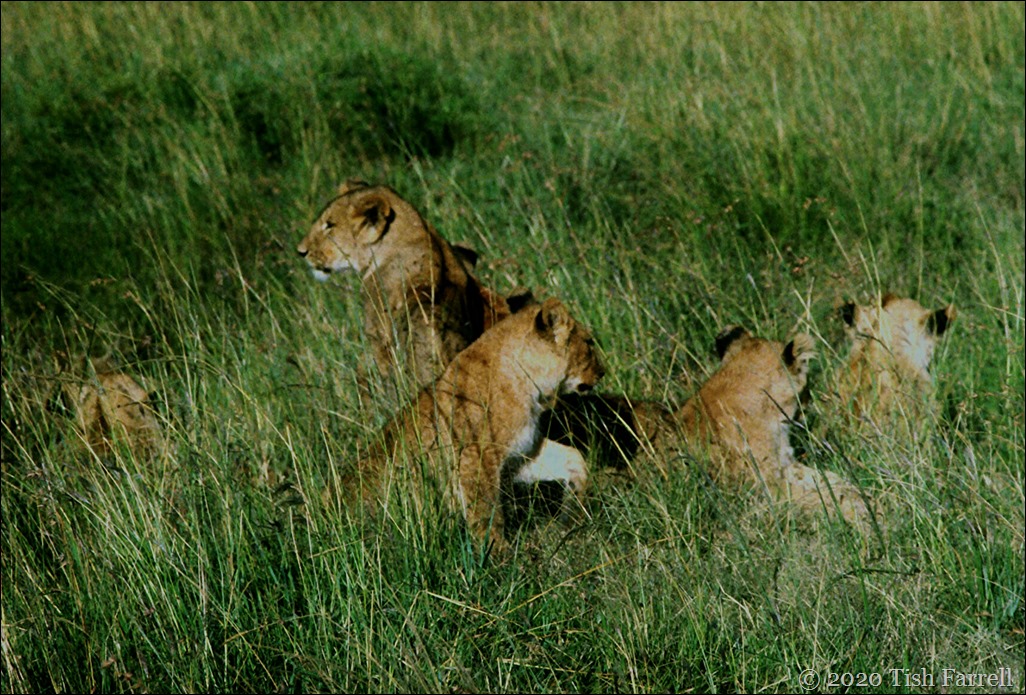
By now it is late afternoon and Daniel has been doing a lot of talking in Swahili on his  truck radio. He sets off with purpose across the open grassland. After a while we see two stationary safari trucks on the horizon. We bump over tussocky ground towards them and pull up beside a swampy bank, and there they are – simba. Cubs and lionesses idling in the grass. The drivers confer over their radios, and once agreed that no hunting is in progress we move in closer. At first Daniel pushes along a grassy peninsula away from the pride and we wonder why, for all we can see is grass. But he knows where he’s going. And when a young adult lion raises his big head, I am stunned. Anyone on foot would scan this meadow-like terrain and not have one inkling that the lions were there. When the head goes down, he is gone: lost from view in twelve inches of grass.
Scan-140731-0033

Scan-130520-0020

Scan-140731-0030 (2)

Scan-130520-0010

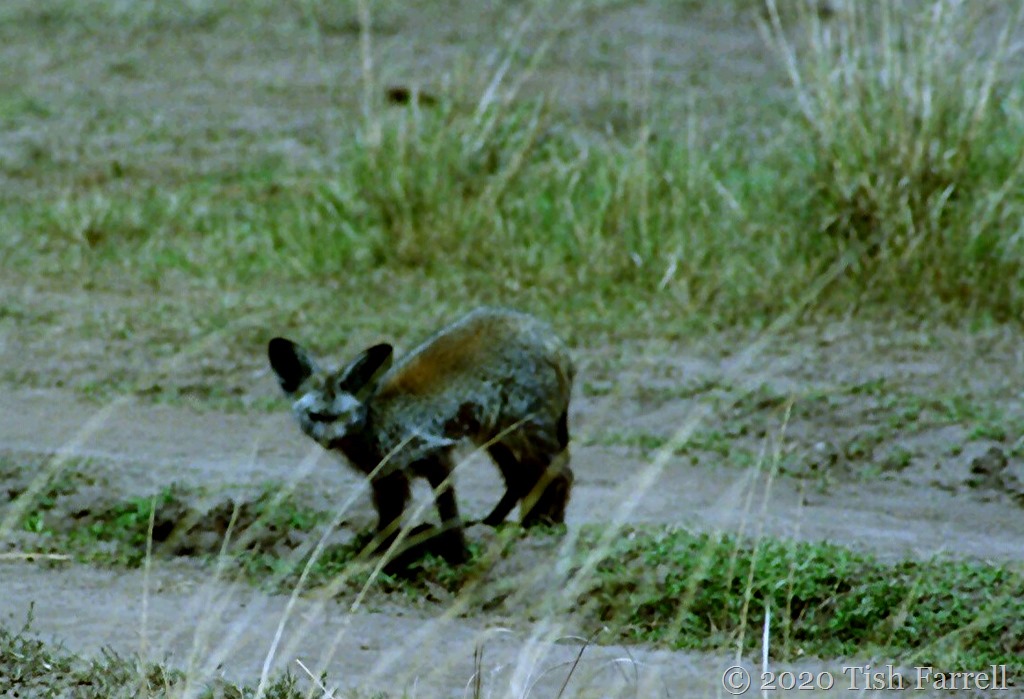
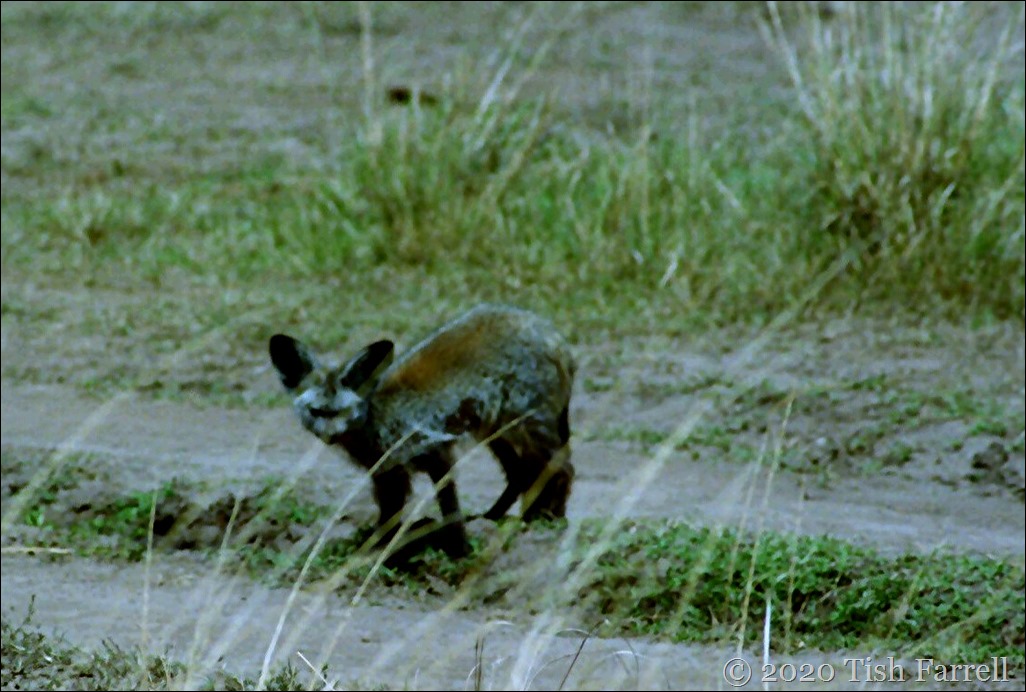
Daniel tells us there are six cubs, survivors from a litter of ten, the other four having died because the hunting has been poor; but, he adds, the wildebeest migration is about to start and these six now look likely to survive. We watch eleven big and small lions till the light fades to grainy grey and then leave them in peace. On the track not far from the camp we see a pair of bat-eared foxes – ‘Very rare,’ says Daniel. They eye us anxiously before trotting away into the grass.
Scan-140726-0025 (2)

copyright 2020 Tish Farrell

Lens-Artists: Distance  This week Tina sets the challenge. One of the safari guide’s key skills is knowing when it’s best to keep a distance and especially when it comes to elephants and lone buffalo.