Feeling Blustered: Six On Saturday

IMG_9149

1. Storm-struck

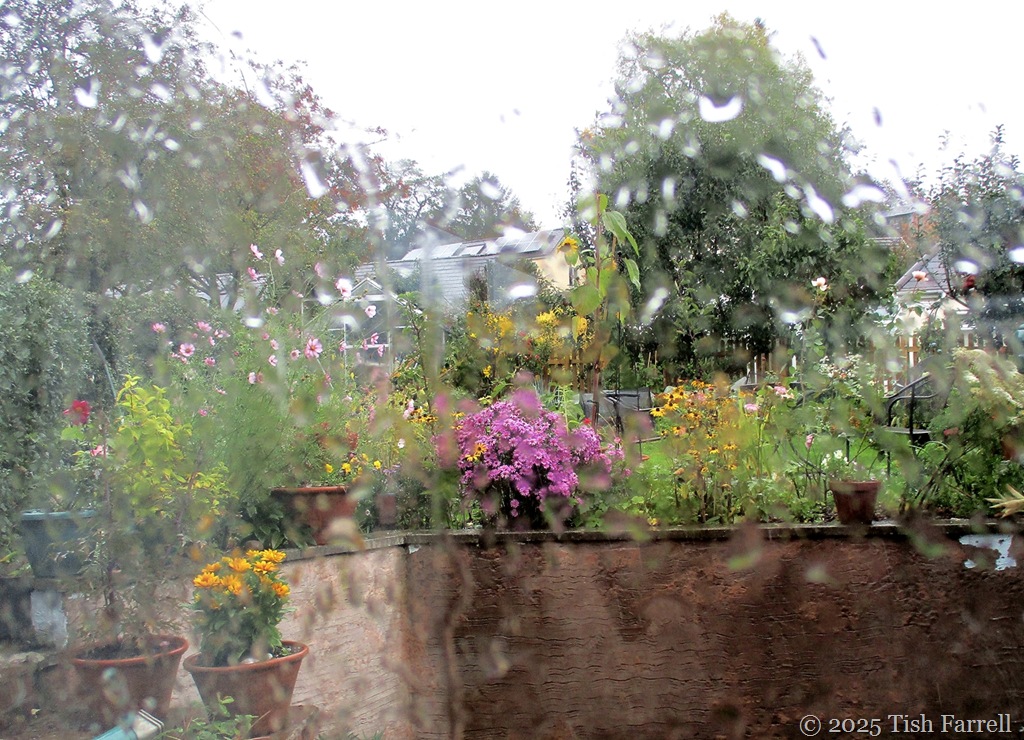
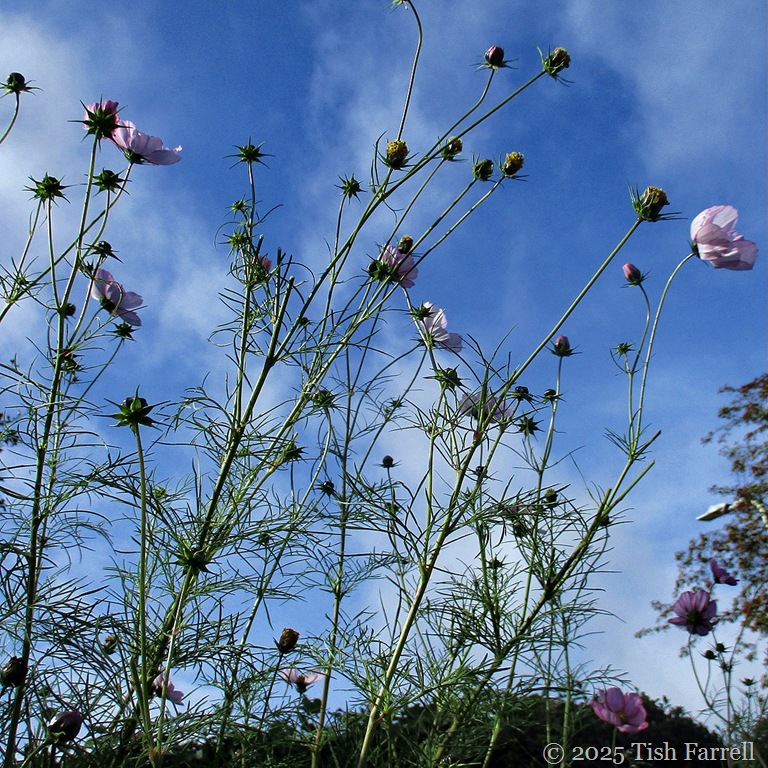
This morning at breakfast time – with a high wind whooshing about the place and rain lashing the kitchen doors, the garden definitely looked a no-go area. I could see three dozen bean canes splayed like pick-up-sticks across the top path by the greenhouse. Drat and double drat. When I dismantled the runner bean rows a week or so ago, I had forgotten to tether them securely to the hedge. I could also see the cosmos at the top of the steps being tossed about. Since late September and the onset of rainy days, it has been flowering magnificently. Now it was having its petals blown off. More curses. And I could see that the Selinum (farthest right at the wall top) which is still flowering as well as seeding, was now rearranged at a 45 degree angle.

Not a happy gardener.
IMG_9160

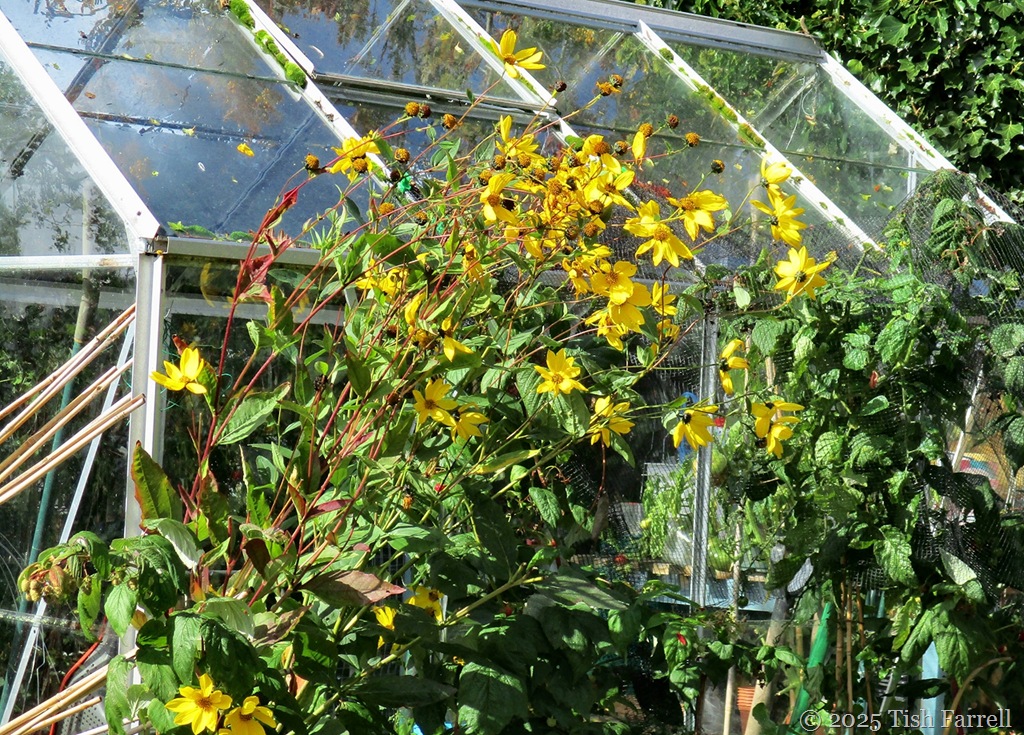
Cosmos unclothed; Helianthus blown away.
IMG_9180

And then, quite suddenly, towards midday, the rain stopped and the sun came out, although we still have a mighty blow, with now-and-then gusts that lift you off your feet.

I did a quick tour of the garden, but there was not much to be done mid-gale, apart from attempting a bit of support for the Selinum.

2: Apples

apples

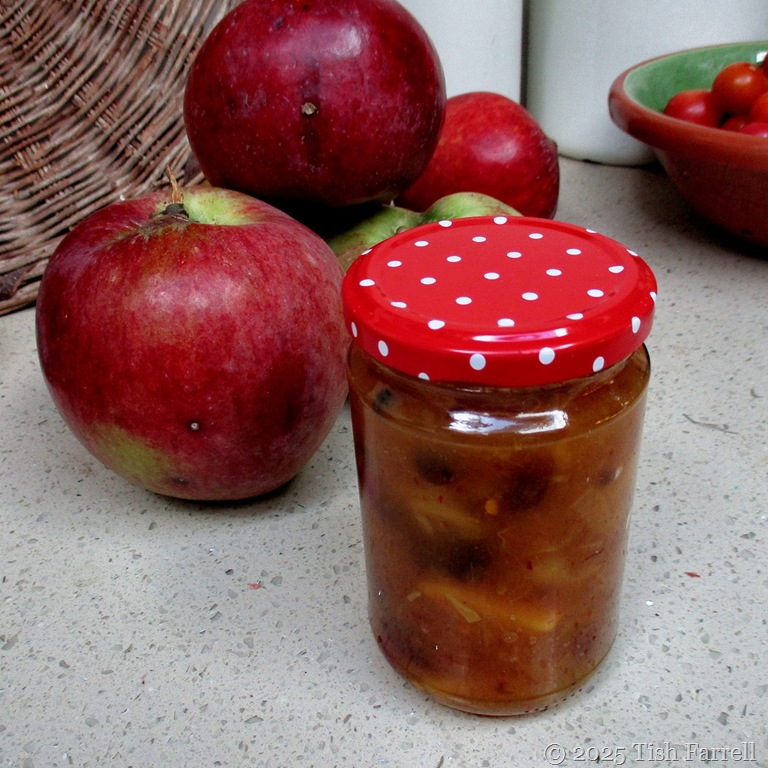
With the wind, I was expecting another heavy crop of windfalls. But when I went out to check the damage, I was pleased to see that most of our remaining apples are still clinging sturdily to their stalks. Which is good news as I already had a stack of windfalls in the kitchen. And there’s only so much apple sauce we can eat, and all the neighbours are overwhelmed with apples too and putting them out at their gates for anyone to take. However, I recently discovered an easy apple chilli chutney recipe, and so, as gardening was out, this was what happened next.
IMG_9192

*

3. In love with Michaelmas daisies

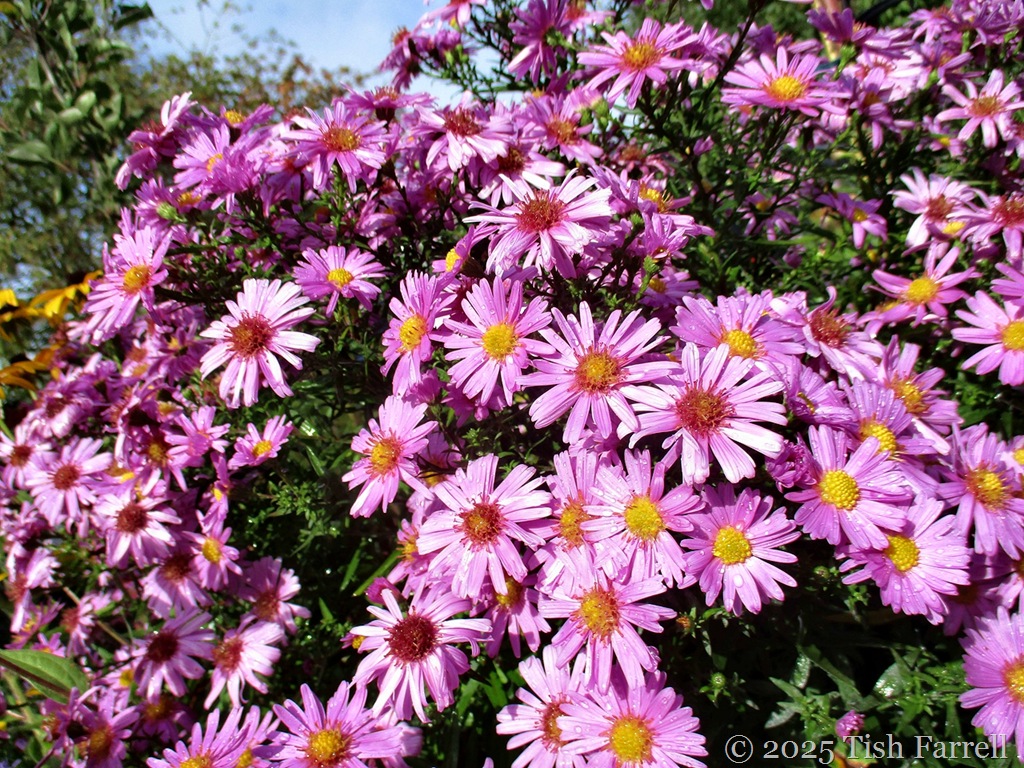
I’m not expecting the late flowering flowers to survive the wind, but that won’t include the Michaelmas daisies (Symphyotrichums/Asters whatever they’re called these days).  I took this photo with the wind still blowing. Only a couple of small side stems damaged.
IMG_9158

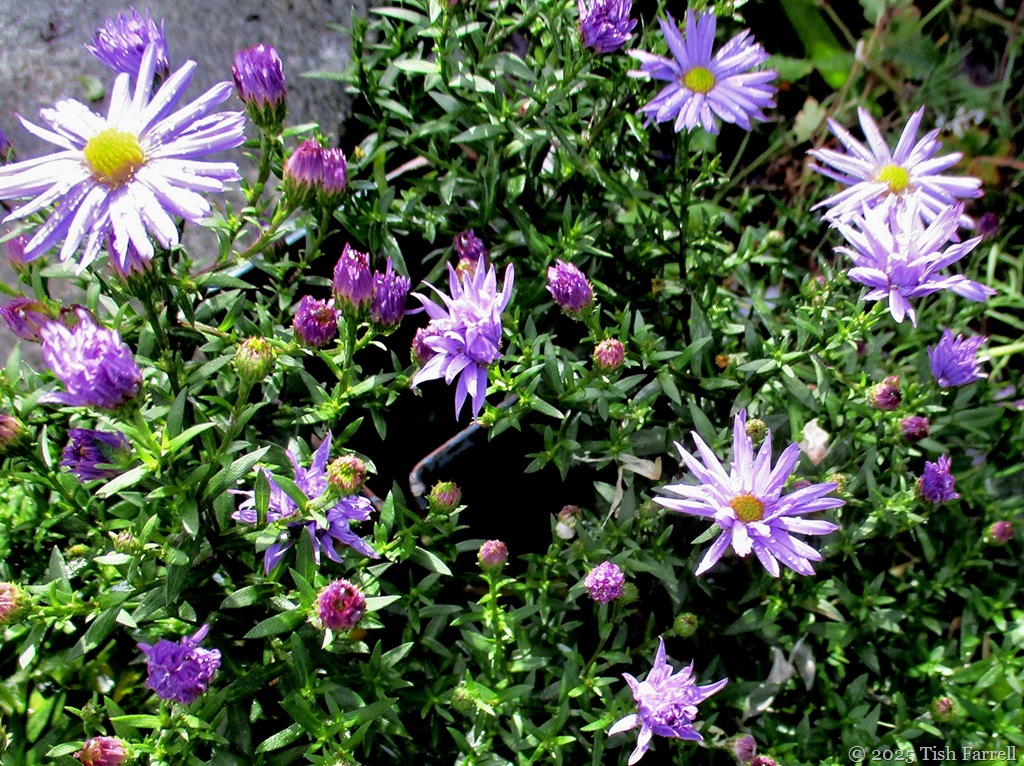
Its neighbour, a compact little variety (I think it could be Purple Dome) has only just decided to flower:
IMG_9167

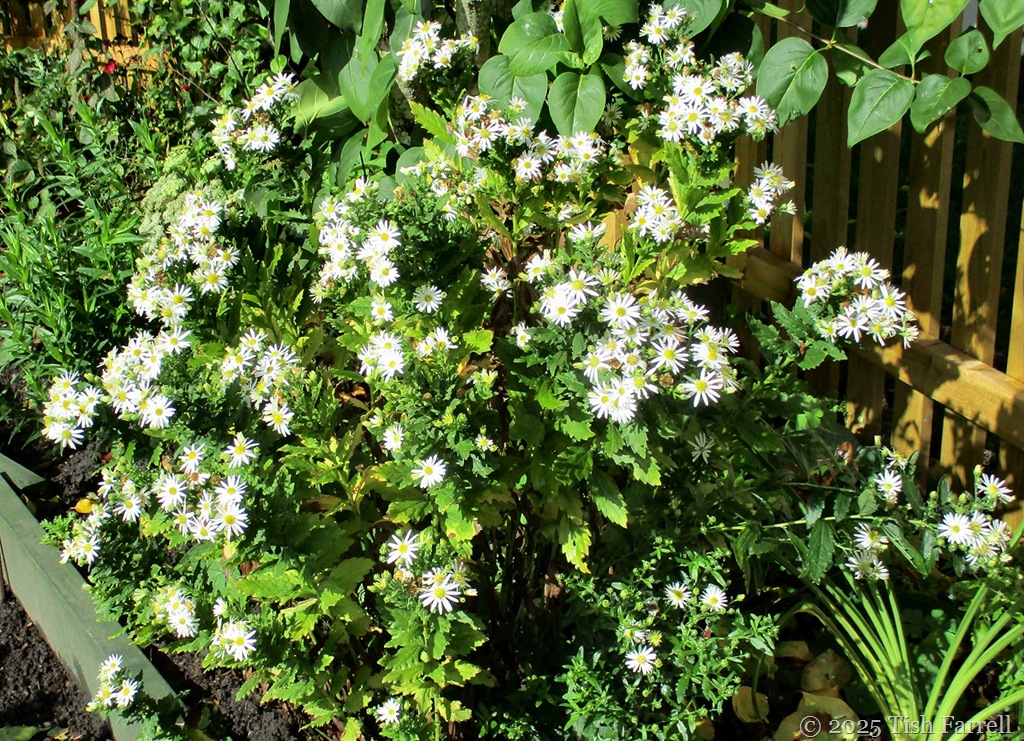
And at the bottom of the garden this tall white bushy version, White Ladies maybe, and…
IMG_9176

…Aster x frikatii Monch have been flowering since the hot days of summer:

Aster × frikartii Mönch

*

4. Great Dixter Nursery

And so like Jim, I’ve been doing some plant buying. I have recently discovered that Great Dixter House and Gardens has an online plant shop. They sell some very lovely plants (1 and 2 litre sizes) at very reasonable prices. That’s where I found Patrinia as featured in an earlier SoS. And it’s where I also found ‘Symphyotrichum Les Moutiers’ which is now planted in my front garden. We’ll have to wait nearly a year before we see it in action though. Do give the link a quick look.

5. Ongoing edibles

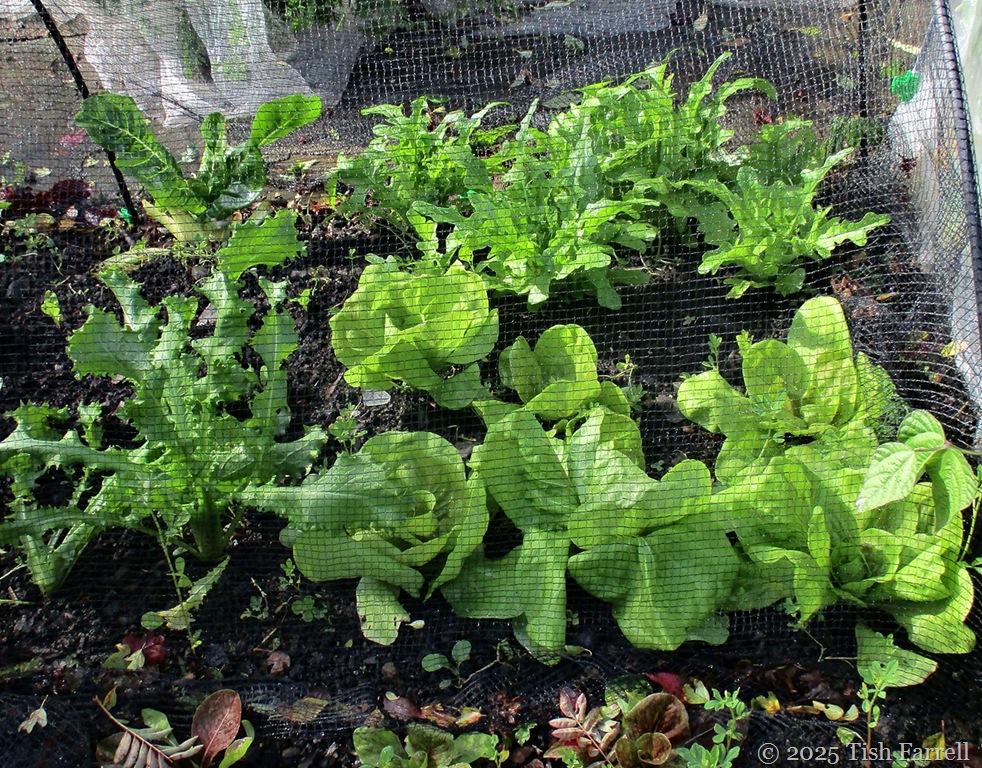
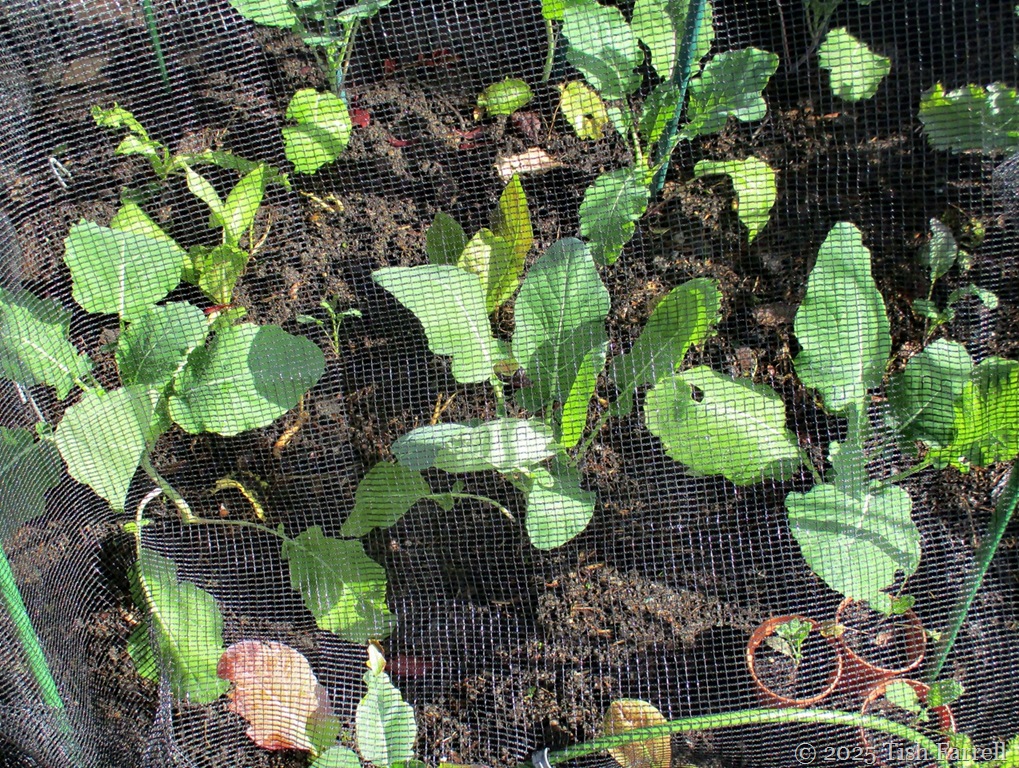
The salad stuff hasn’t been troubled by the unruly weather. The radicchio and endive, rocket, land cress, and Moroccan Cress lettuce are presently thriving, though everything has to be netted against pigeons.
IMG_9185

We also have some Swiss chard, beetroot, parsnips and leeks, and a new bed of winter greens (planted out on the runner and borlotti bean bed) is looking quite good. And there are still a few climbing borlotti beans to pick in the side-garden wall bed.
IMG_9187

*

6. A happy face

IMG_9164

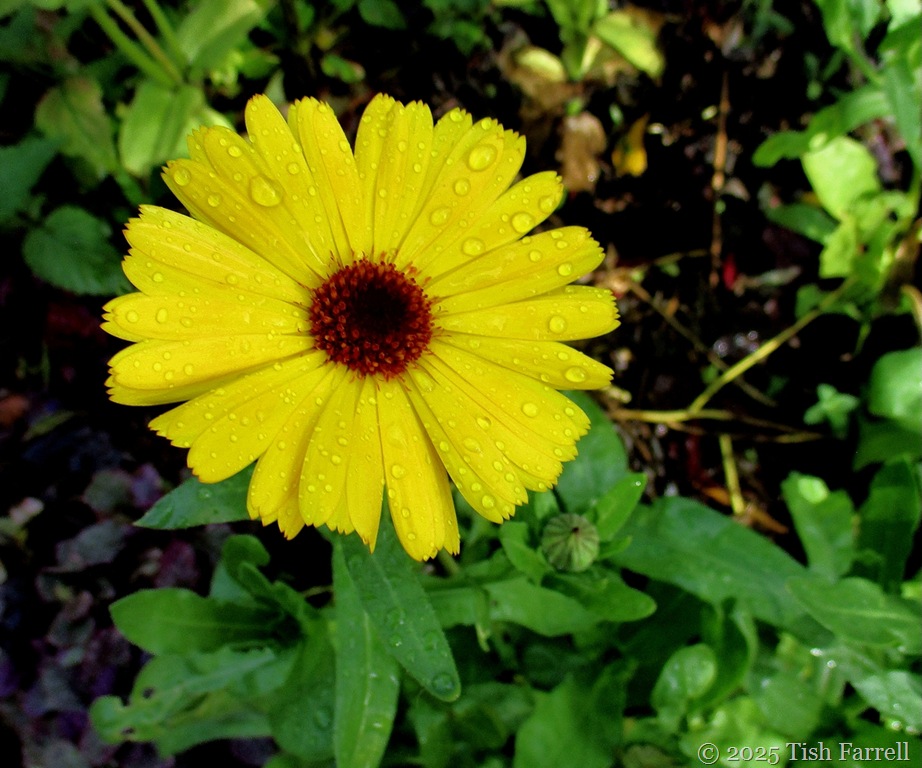
Now as I’m writing this, the rain is back and the wind is still blowing. So I’m finishing off with another garden stalwart. I was so pleased to find this marigold looking so fresh-faced as I went round the garden late-morning. Of course, we eat these too. Perhaps I shouldn’t mention that though.

Happy gardening folks – whatever your weather. Even on distinctly unpromising days, there’s usually something in the garden to be glad about.

copyright 2025 Tish Farrell

Six On Saturday  Please catch up with Jim at Garden Ruminations.
header

Season Of Mist and All Round Wetness ~ Six on Saturday

viola magnifico 2

Here in Bishop’s Castle the rainy weather continues as we head towards the autumn equinox. Just now it’s pouring steadily, threatening to dampen spirits for today’s Michaelmas Fair. This is always a hugely jolly affair of stalls, parades, Chinese dragons, steam engines, vintage vehicles and street performances – assorted bands, Morris dancers, a jester from Chester, the singing farmer, to name but a few of the events. And then the whole thing is rounded off mid-evening with a magical lantern procession through the town (the lanterns made by children). All very much dependent of weatherly cooperation. But then I’m sure, this being the Castle, everyone will make the best of it, brollies and waterproofs at the ready.

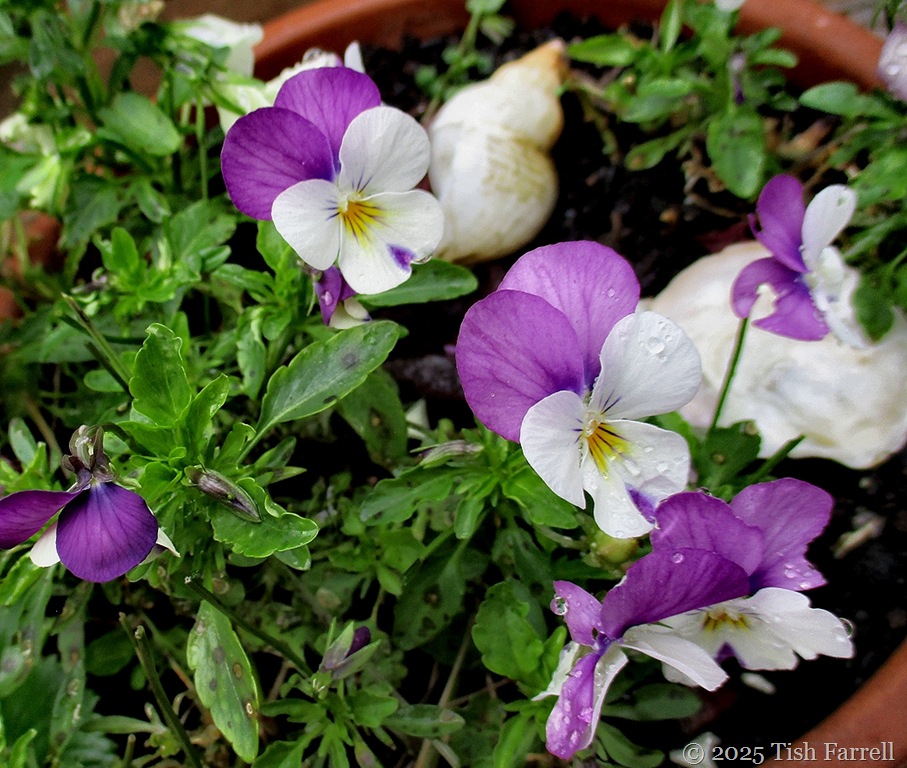
Definitely not a day for gardening though. Also as the season winds down, it’s hard not a feel a touch dispirited by the ongoing sogginess. The few roses on their second flowering don’t like it much either. But come hell or high water, to say nothing of last winter’s three solid weeks of snow and frost, the little pansies, viola magnifico [1] above still soldier on. This plant has been flowering continuously for twelve months.

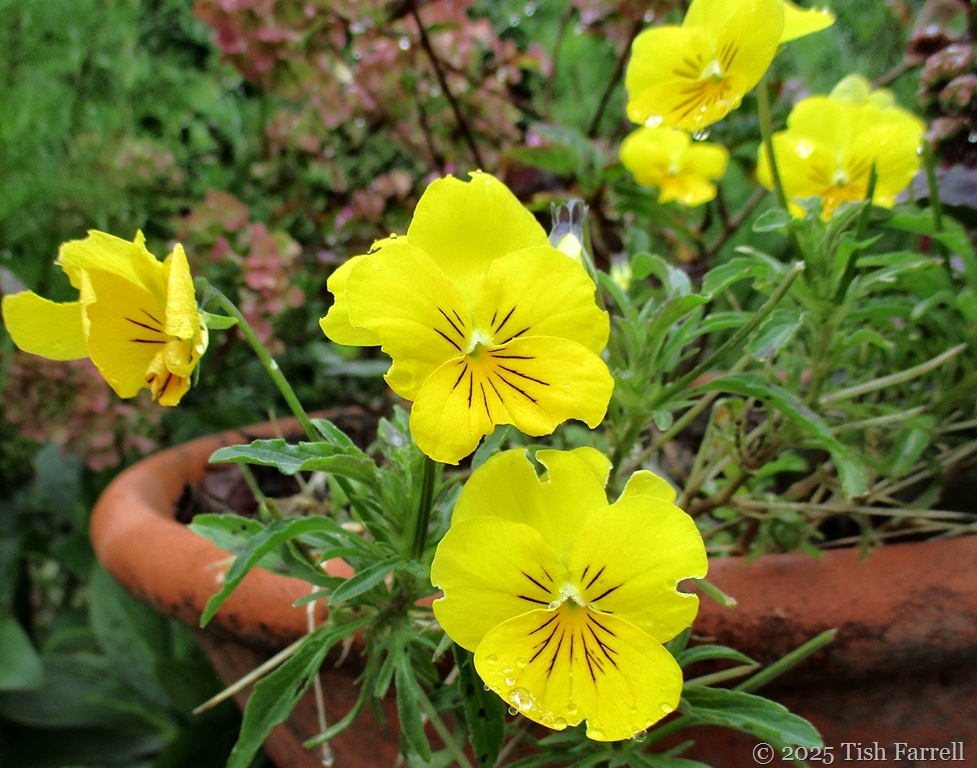
And talking of pansies, what is it that nibbles the yellow ones? And is it the same thing that bites off the buds from my only lupin whenever it tries to flower?

*

yellow viola

*

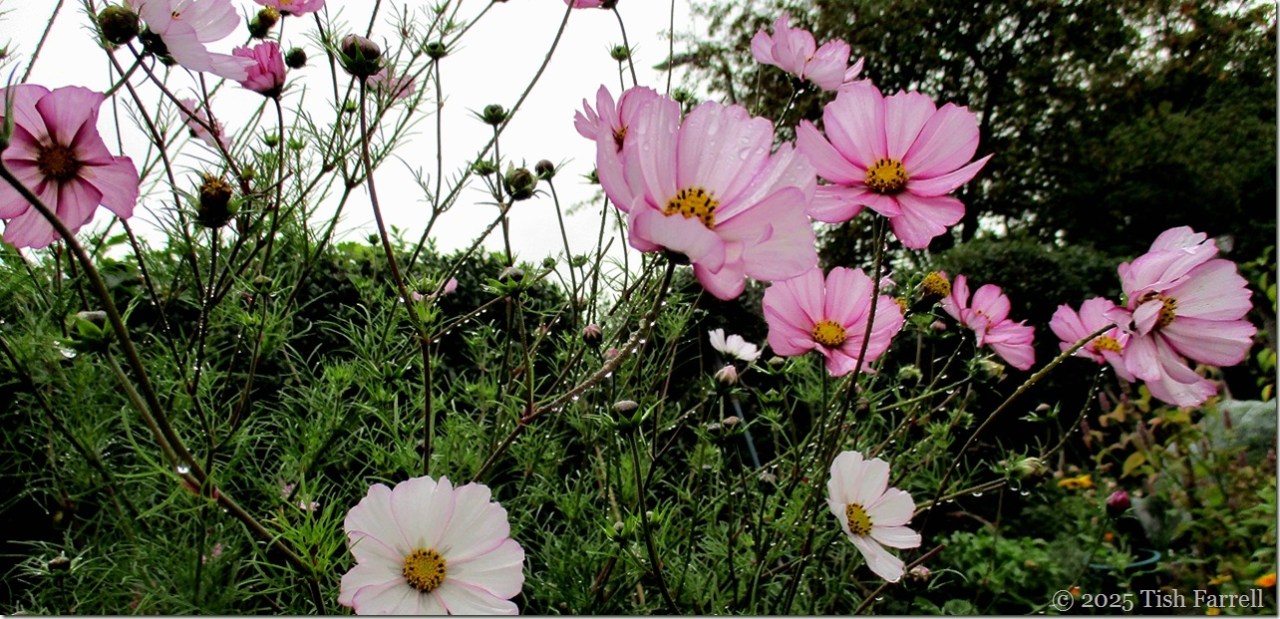
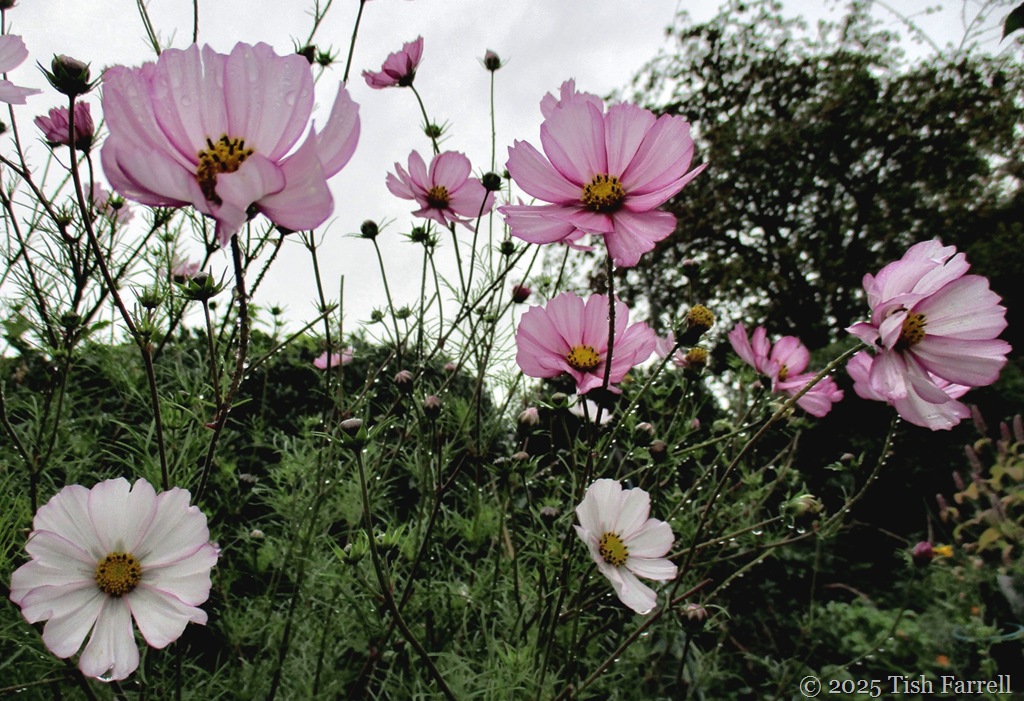
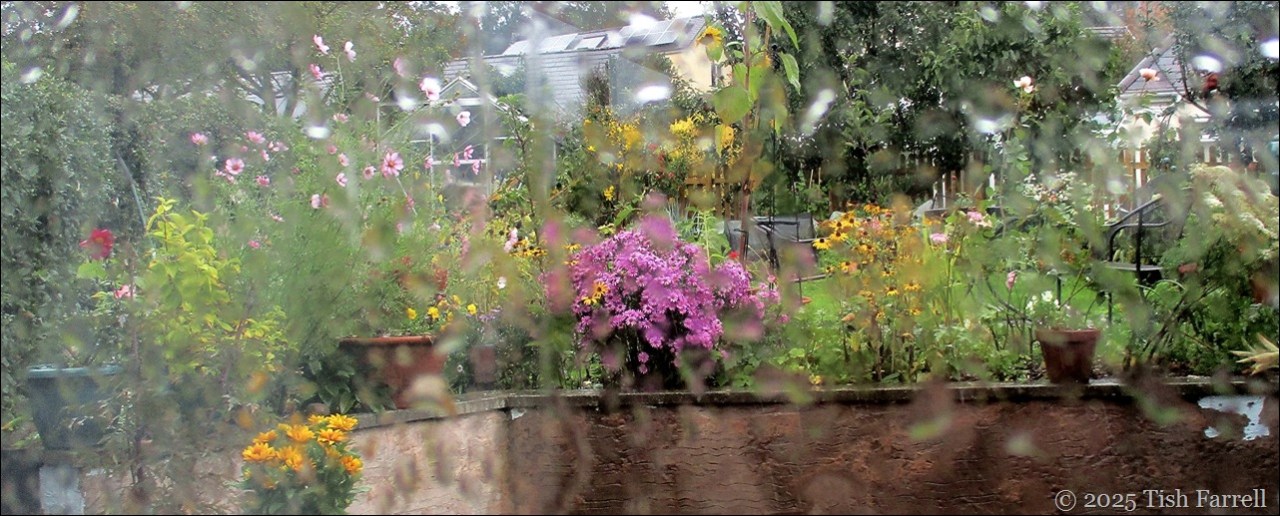
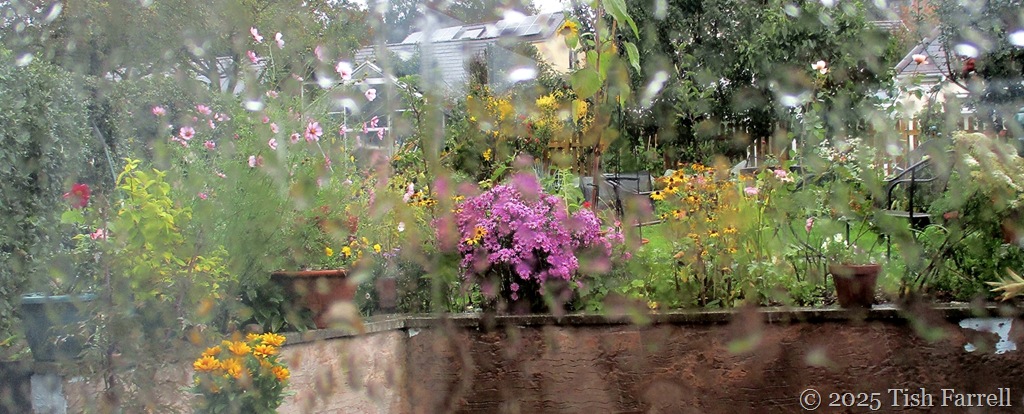
The Cosmos [2]doesn’t mind the weather either. In fact it seems to be having a new lease of life, and I’m enjoying the drifty looks of it, its stems hanging in raindrops.

Cosmos

*

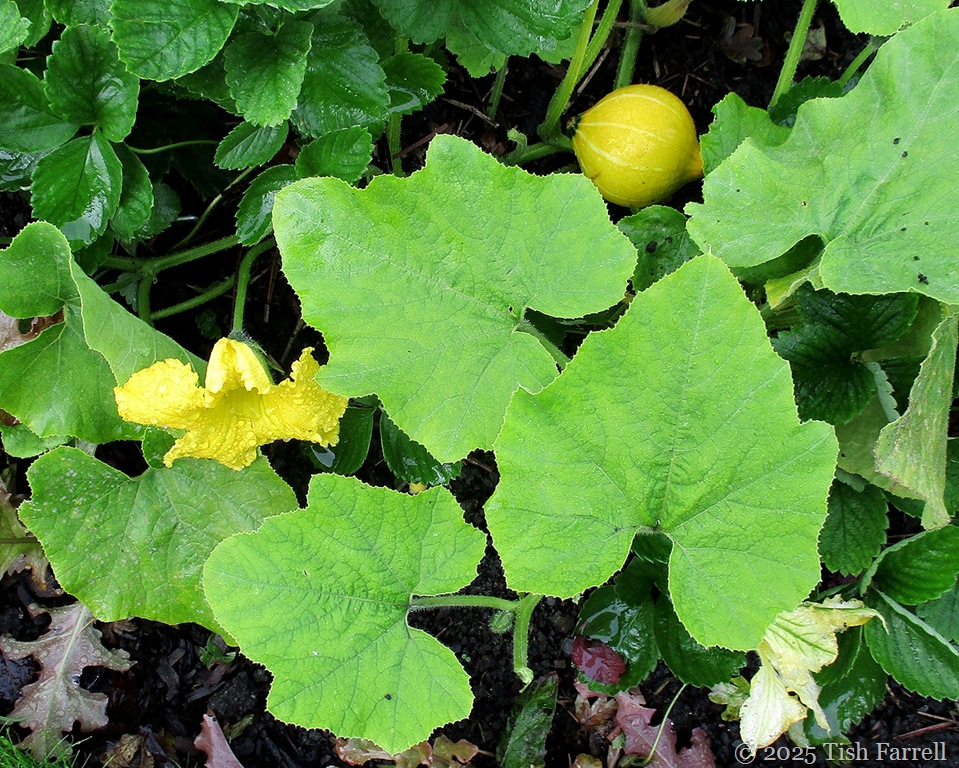
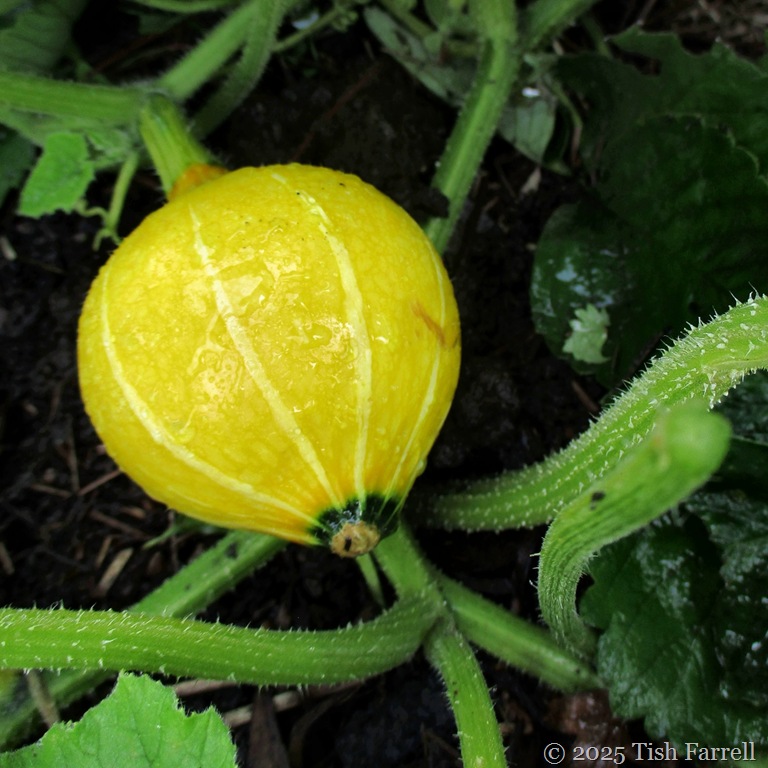
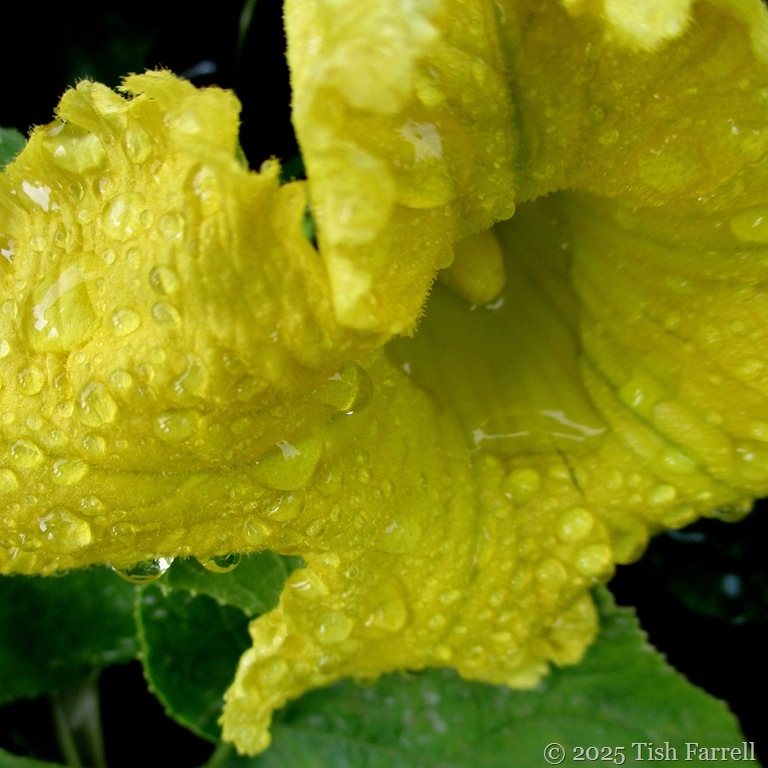
The Japanese ‘Uchiki Kuri’ squash [3] plants  weren’t as productive as I’d expected, and I had high hopes of some later planted plants. They’ve produced a couple of tiny ones, and I’ve nipped off extraneous shoots, but I think it’s probably too late for them now.

Japanese Squash 2

Japanese squash 3

japanese squash

*

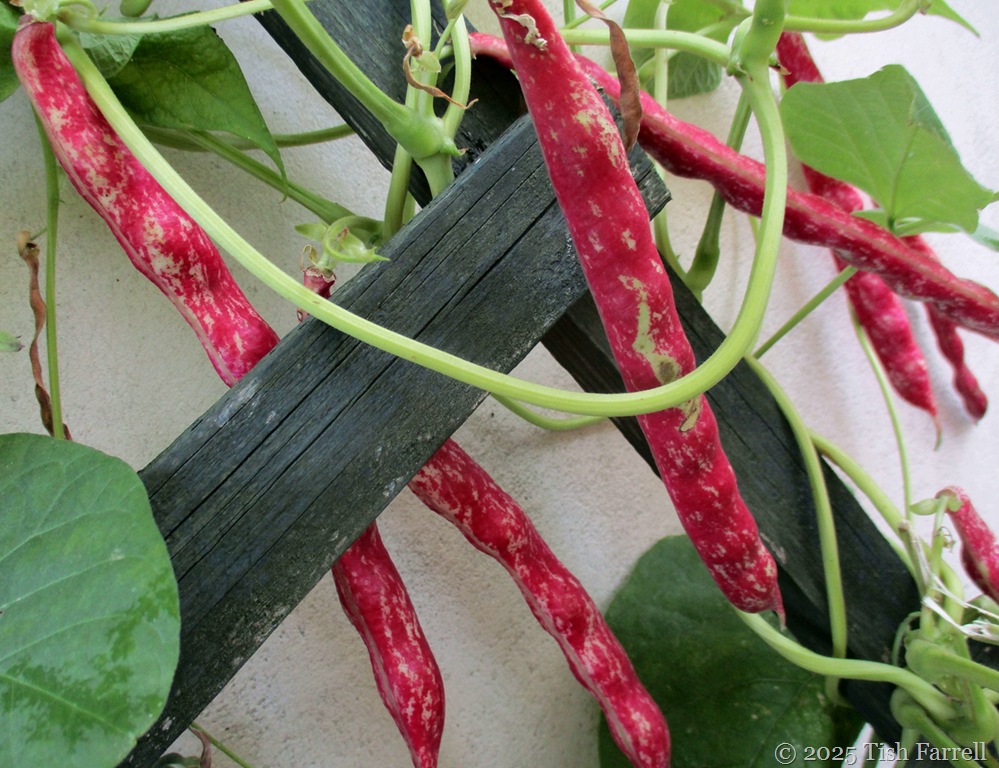
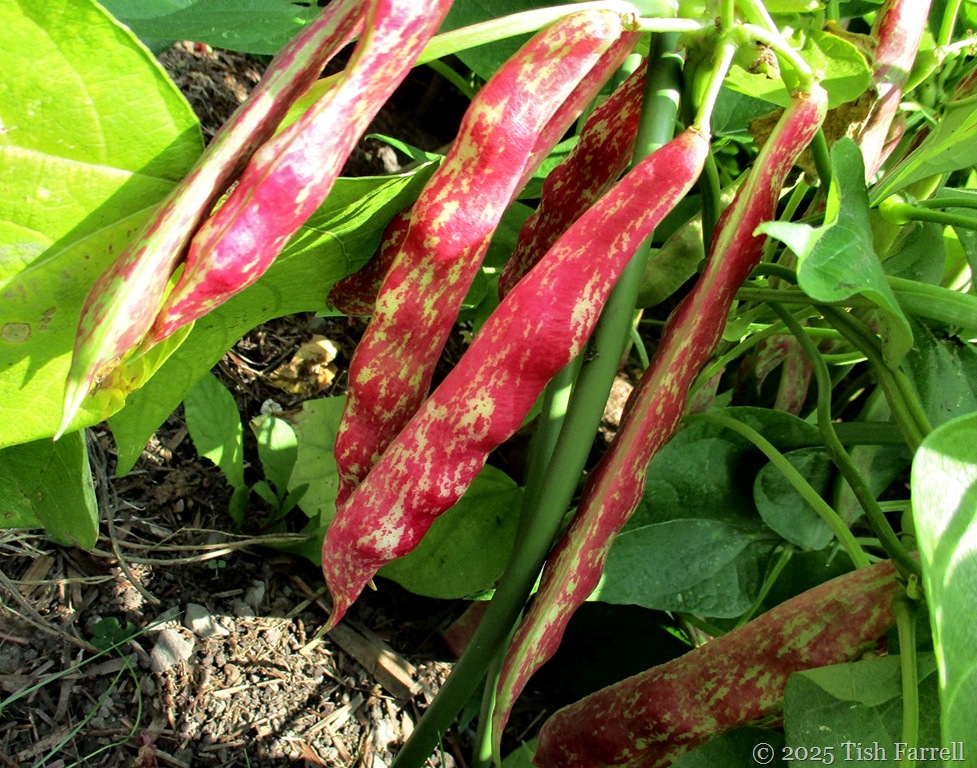
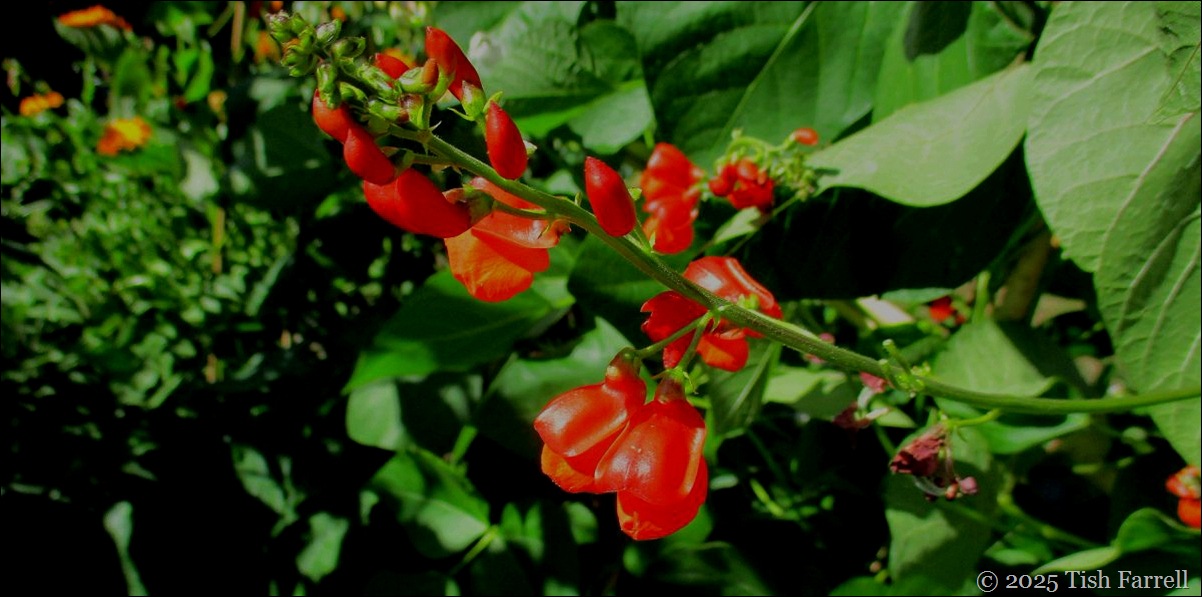
The borlotti bean crop [4] is looking more promising. I picked all the dwarf variety some weeks ago, but the climbing ones are just beginning to dry in their pods. I love them for their looks alone, though they’re pretty good in the pot too.

borlotti

*

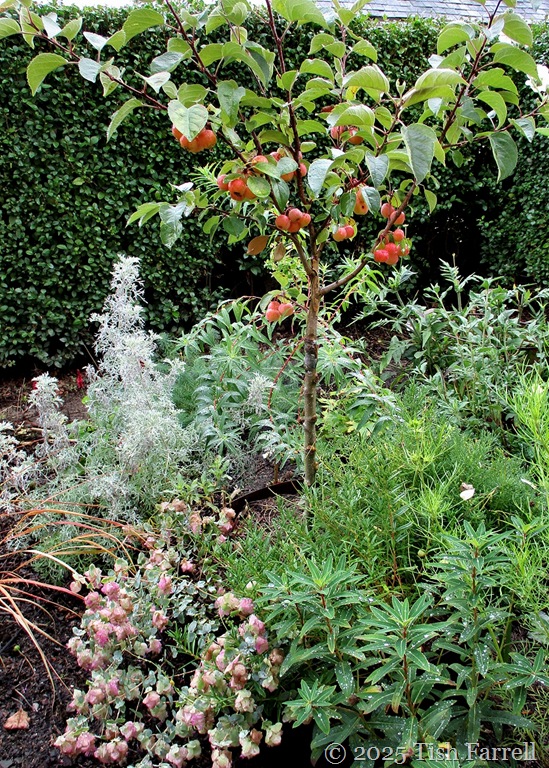
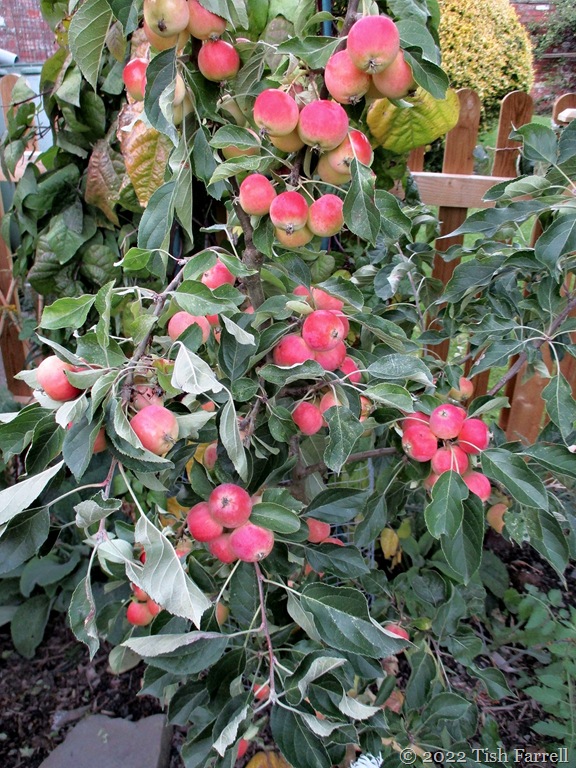
Despite my weather whingeing, the garden is still looking colourful. The rudbeckia and Michaelmas daisies certainly brighten the place up. There are also still some sunflowers at the bottom of the garden, and my two very small crab apples trees [5], Evereste and Jelly King are looking their vibrant best.

 Evereste

This miniature Evereste is in a corten steel raised bed, along with some origano Kent Beauty, and Santolina. Silvery Artemesia Powis Castle behind.

*

Jelly king

Jelly King is lighting up the furthest corner of the garden. I’m not sure I want to sacrifice the apples to making jelly (perverse I know, considering this is why I chose it). They look so lovely, and in fact, now I have found sources of wild apples (see previous post) I think I will leave them, first for us to look at, and later for the blackbirds.

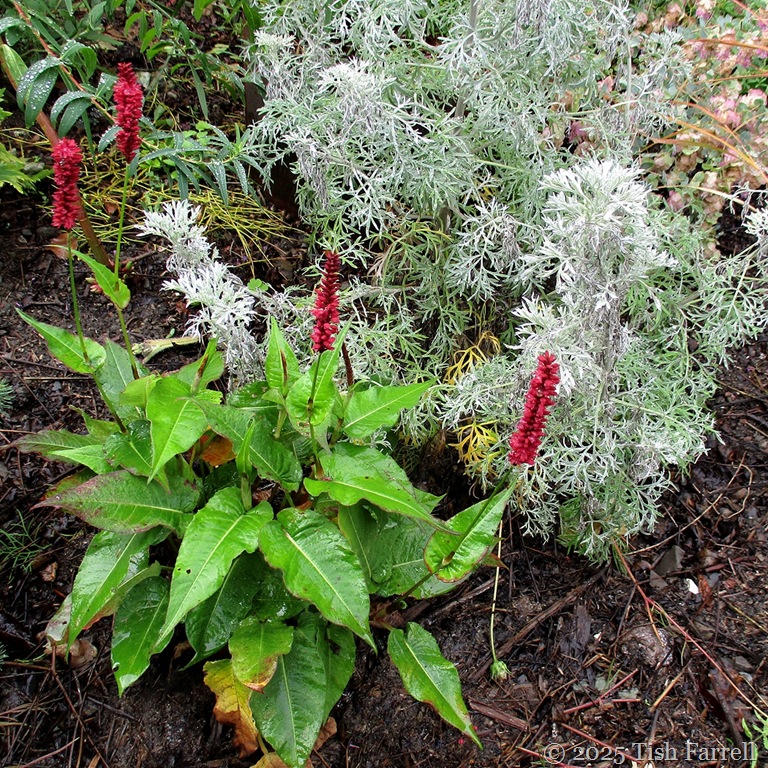
Finally, here’s one of my newish garden plants that has been so glad of the rain, Persicaria Blackfield [6], red bistort. It really struggled all through the summer, despite my hand watering. But then with the first of the recent showers, it perked up and began to flower. It’s interesting that the drought seemed to have had a miniaturising effect on the whole plant, as if it was making itself small to save itself. I’m hoping it will settle in now and come into its own.

Persicaria Blackfield

*

Six on Saturday Please visit host Jim at Garden Ruminations. He’s been very busy despite the weather.
Strains Of Autumn

apples

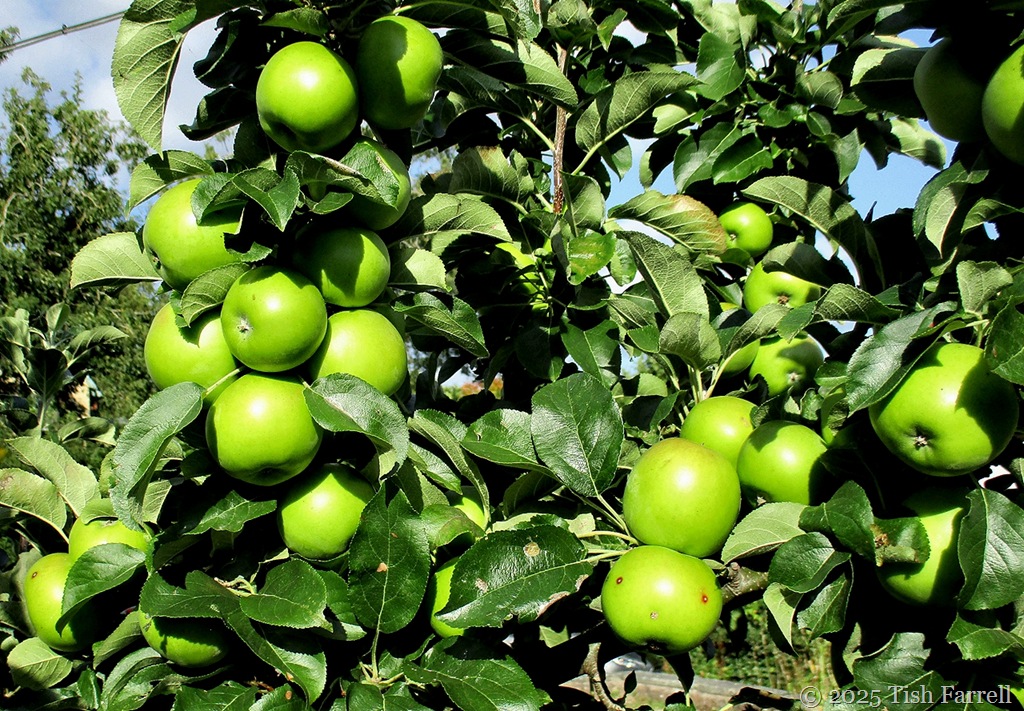
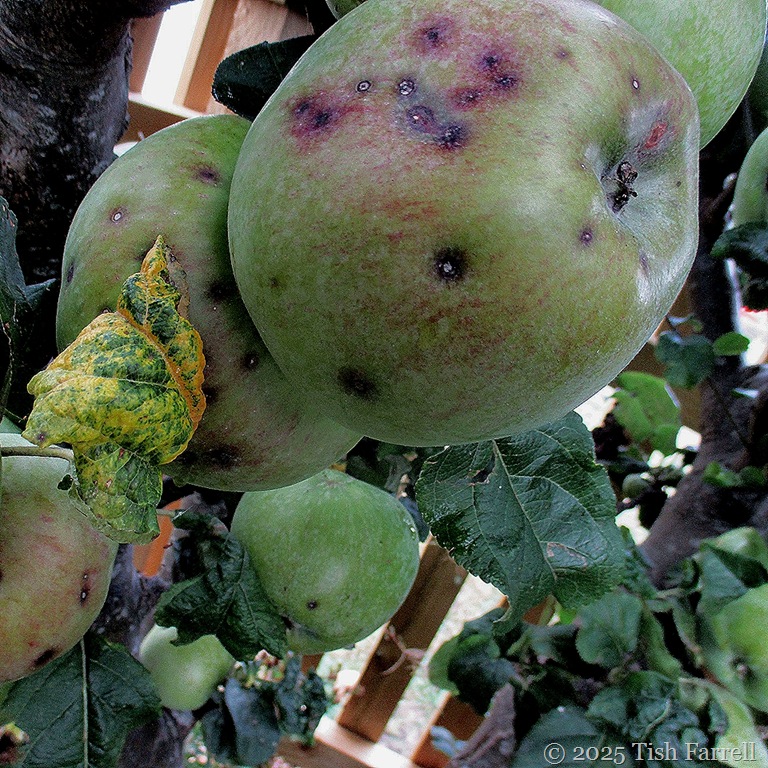
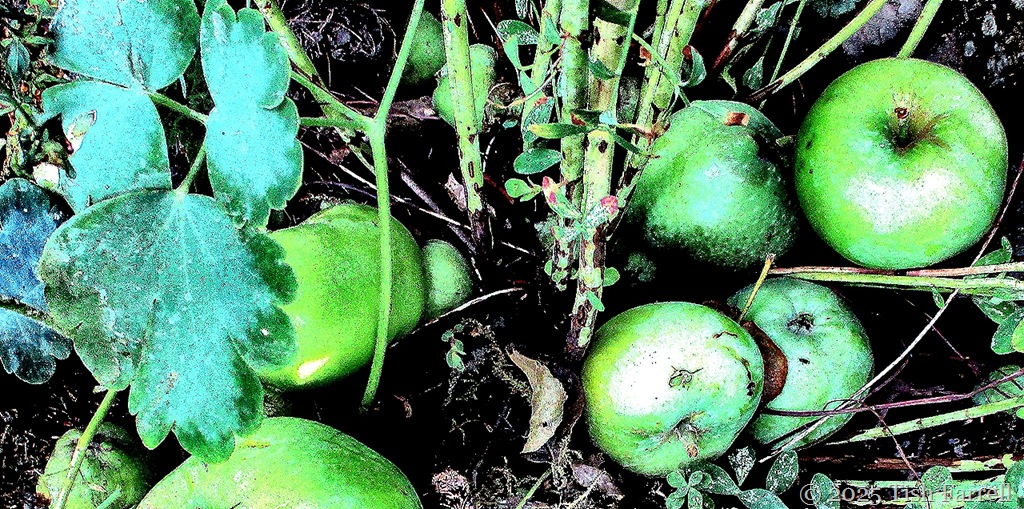
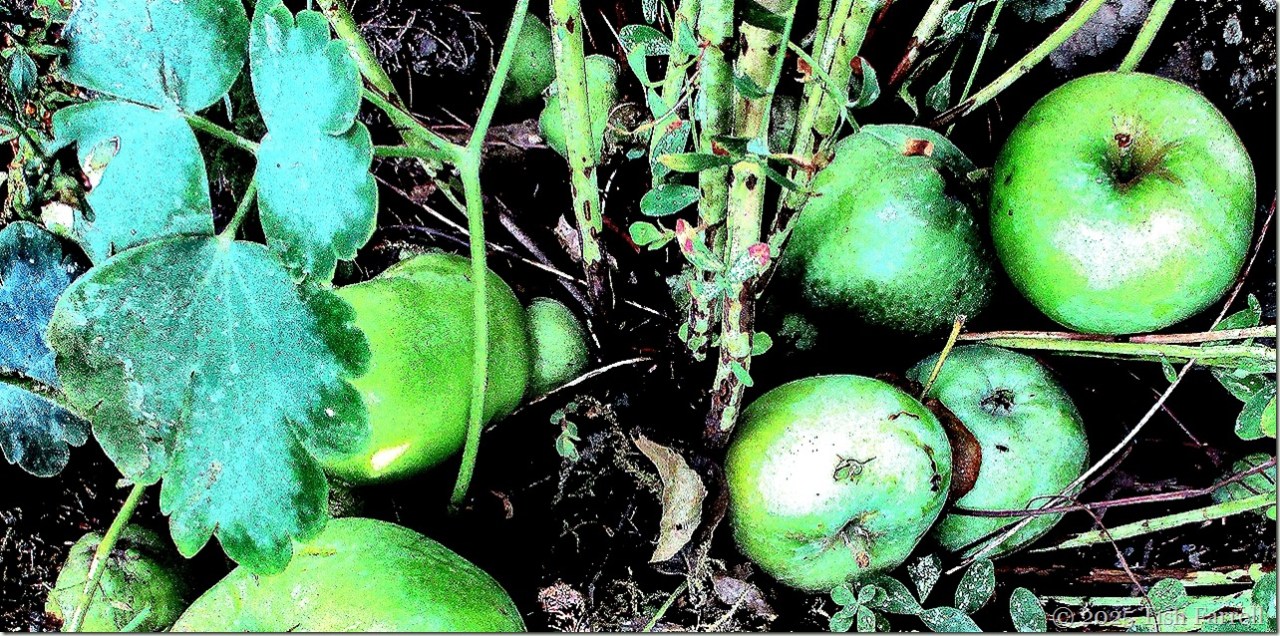
Around the garden peripheries there’s the heady scent of fermenting fruit. This year the apple (1) crop is phenomenal. Our three old trees are crammed with fruit, even though we’ve tried to thin them out. The apples are not ripe yet, but in the last few weeks many have been falling off. They are now rotting happily, giving the plants along the garden fence a rather solid (vaguely alcoholic) mulching. Of course the blackbirds and the wasps have been eating some of them. Many, too, were damaged, diseased or infested before the fall. We have yet to get to grips with what ails the two cooking apple trees. The Crispin eaters in the photo above seem fairly healthy, although they have been dropping a lot of unripe fruit. But the cookers look like this:

IMG_8812

*

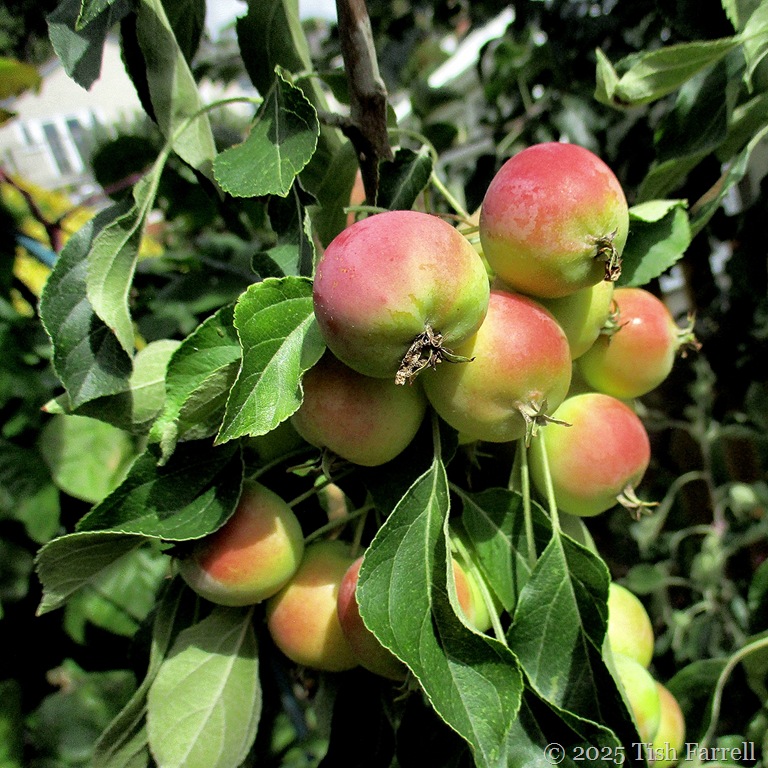
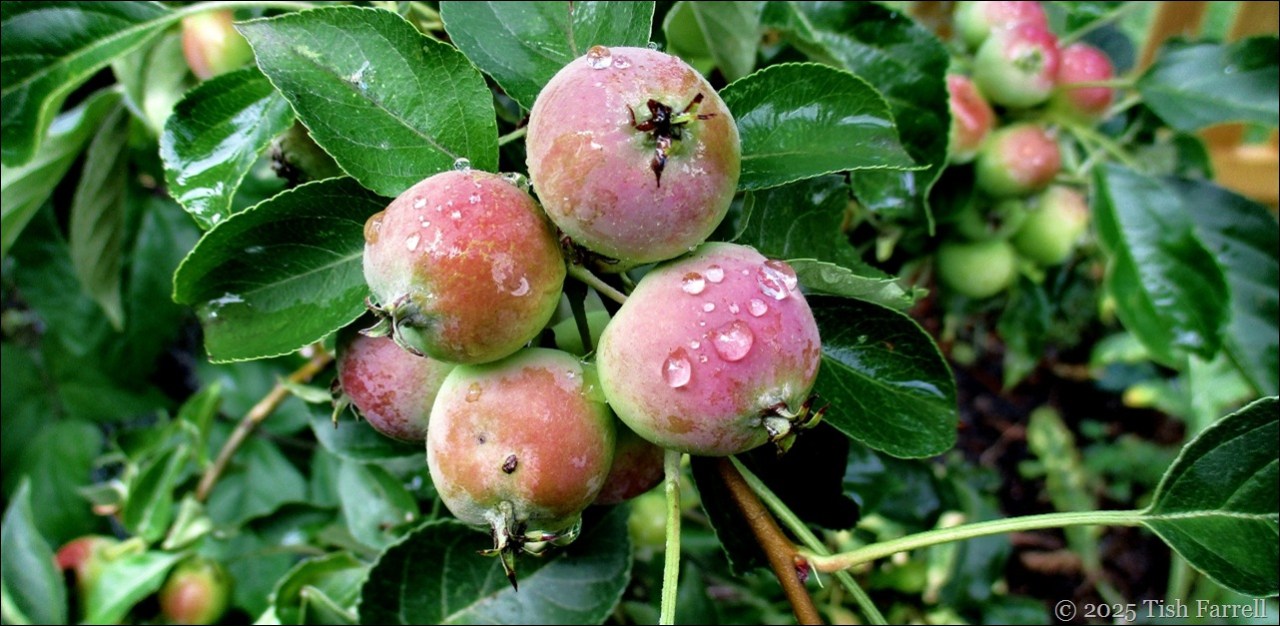
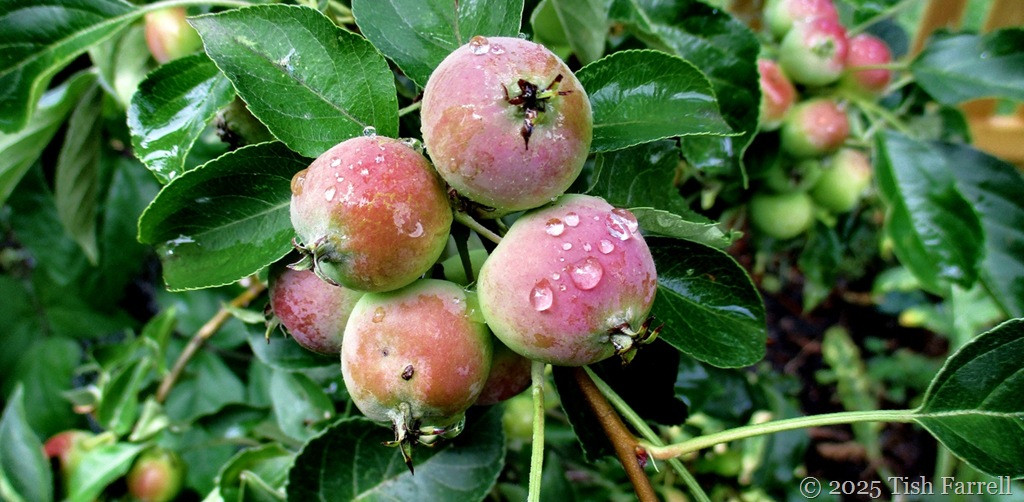
By contrast,  the crab apples are taking on a rosy glow. The little tree at the top of the garden is now much happier since we’ve had some rain and cooler temperatures. The many weeks of drought certainly stressed it:

crab apple

*

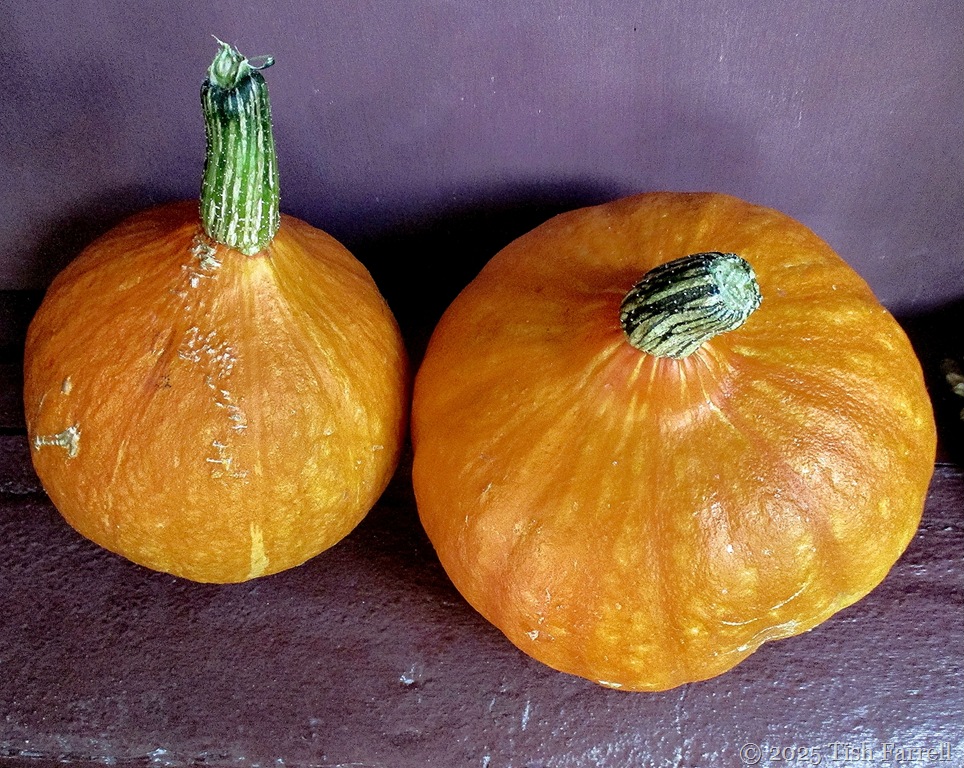
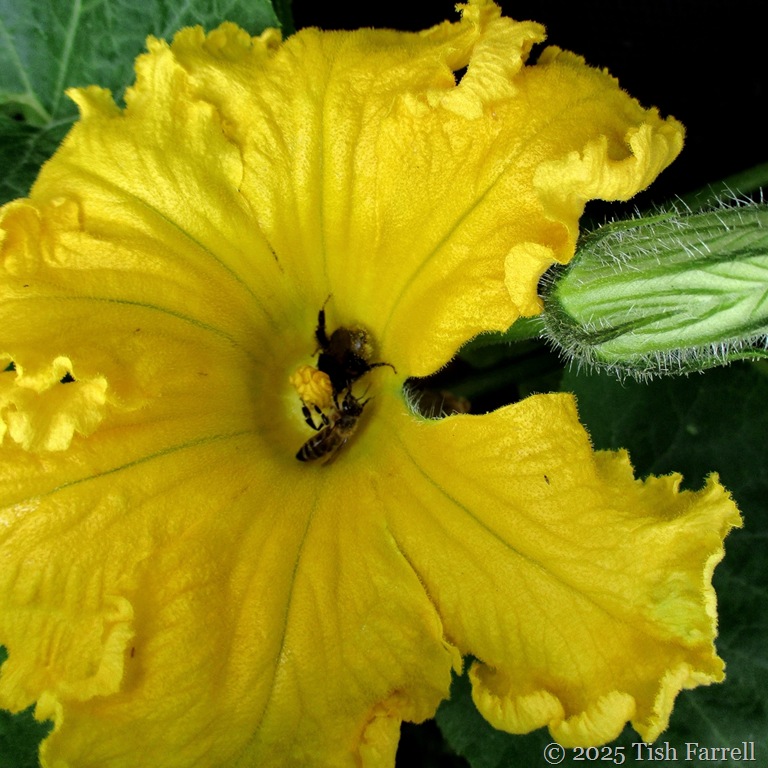
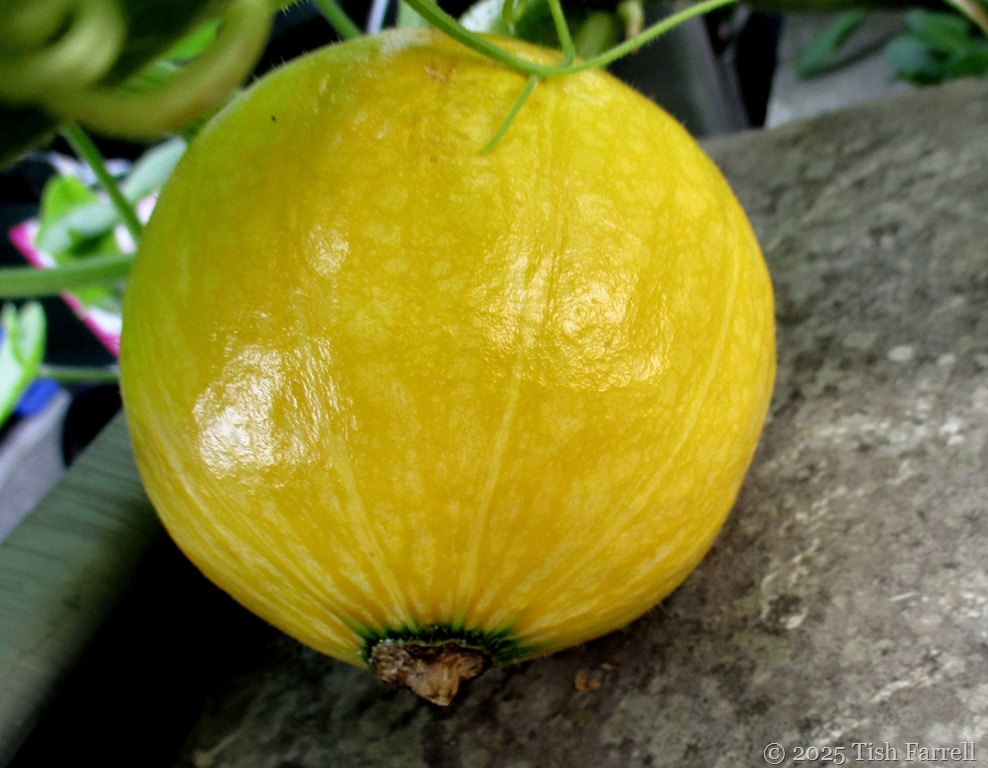
I’ve now harvested my two Uchiki kuri squashes (2), one from each plant on the side wall border. I was hoping for more (3-5 per plant were promised on the packet) but after a flying start and much vigorous growth (and feeding), the plants suddenly seemed to give up; three small squashes turned brown and died. I have two more plants (planted out later in the top garden) still looking hopeful, with a tiny squash each, but I notice there are now only male flowers being produced. These, on the other hand, are very lovely, smell delicious and are a magnet for bee-life (see previous post of bees on the razzle). Anyway here we have the outcome of all that bee foraging:

uchiki

*

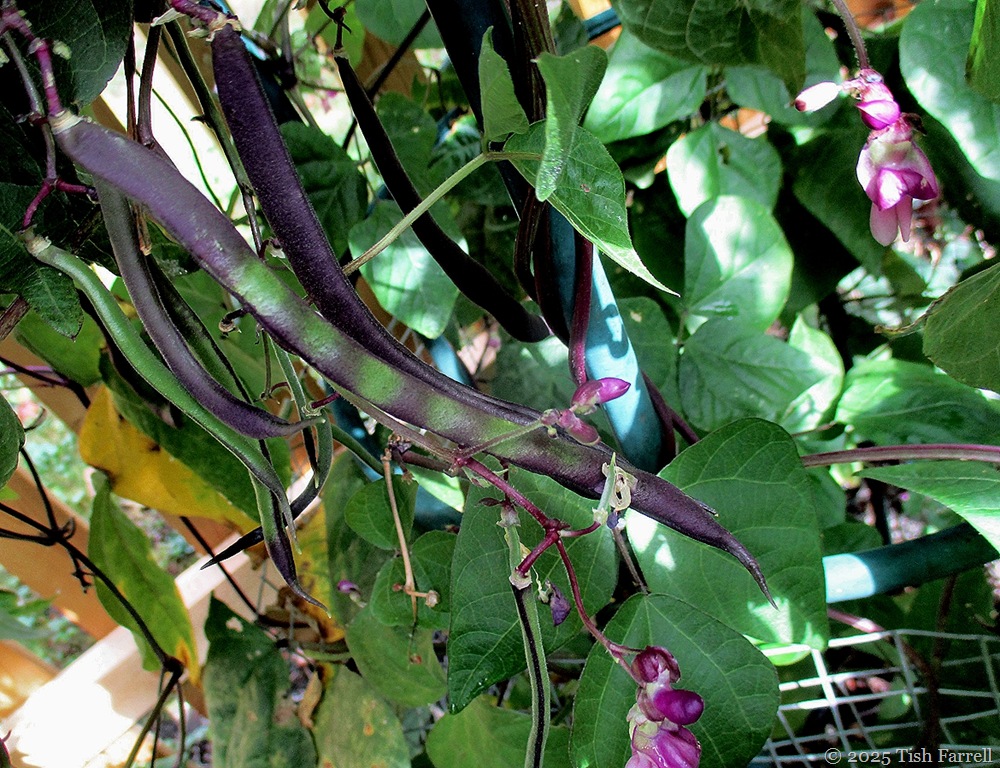
The bean (3) harvest has been somewhat sporadic too, although on two occasions  I’ve had sufficient spare runner beans to make several pots of runner bean chutney – always welcome in the winter months with jacket spuds. Since this week’s rains, the plants look as if they are rallying and there’s more blossom along the pole tops. There are also signs of a further crop of Violette climbing French beans. They’ve been coming and going all summer, producing in usable quantities, but it’s meant no gluts to pass on to neighbours as happened last year.

violette beans

*

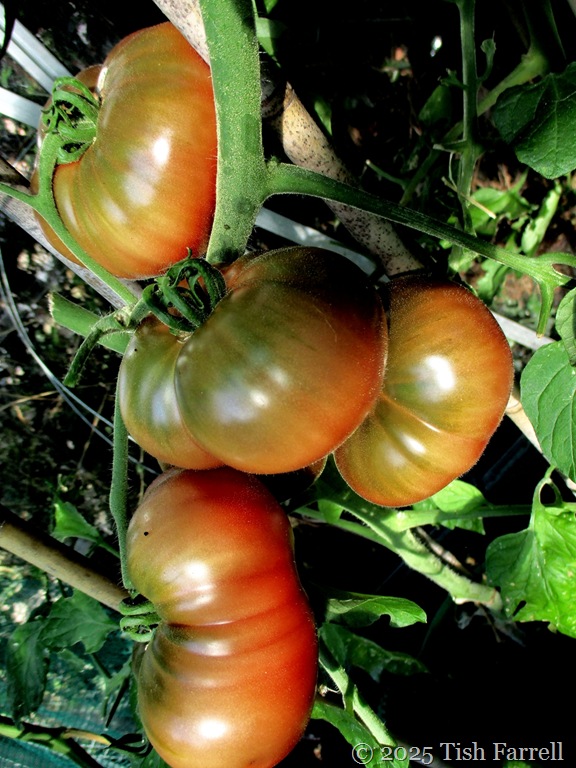
Also just ripening are my Cherokee tomatoes (4). They’re an heirloom variety I’ve not grown before, and I was a bit wary of giving up extra Sun Gold space in my small greenhouse. They started to form fruits and fatten early in the summer, and I wondered if they would ever ripen. The one plant I put in the garden by the runner beans has been leading the way.

cherokee tomatoes

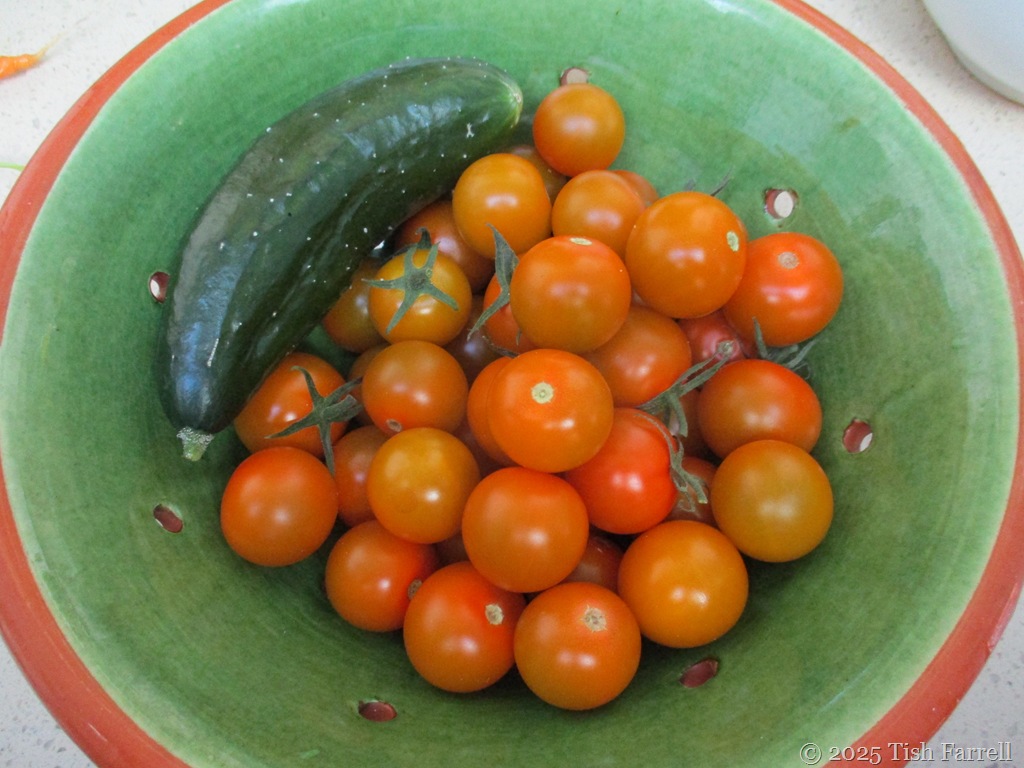
Meanwhile the Sun Gold cherry tomatoes have been producing a few handfuls every day, though look to be fizzling out in the greenhouse. Surprisingly, two rather ropey plants put outside fairly late, are now doing quite well. One growing up a Polka raspberry cane, and the other keeping close company with the big cooking apple tree.

IMG_8589

*

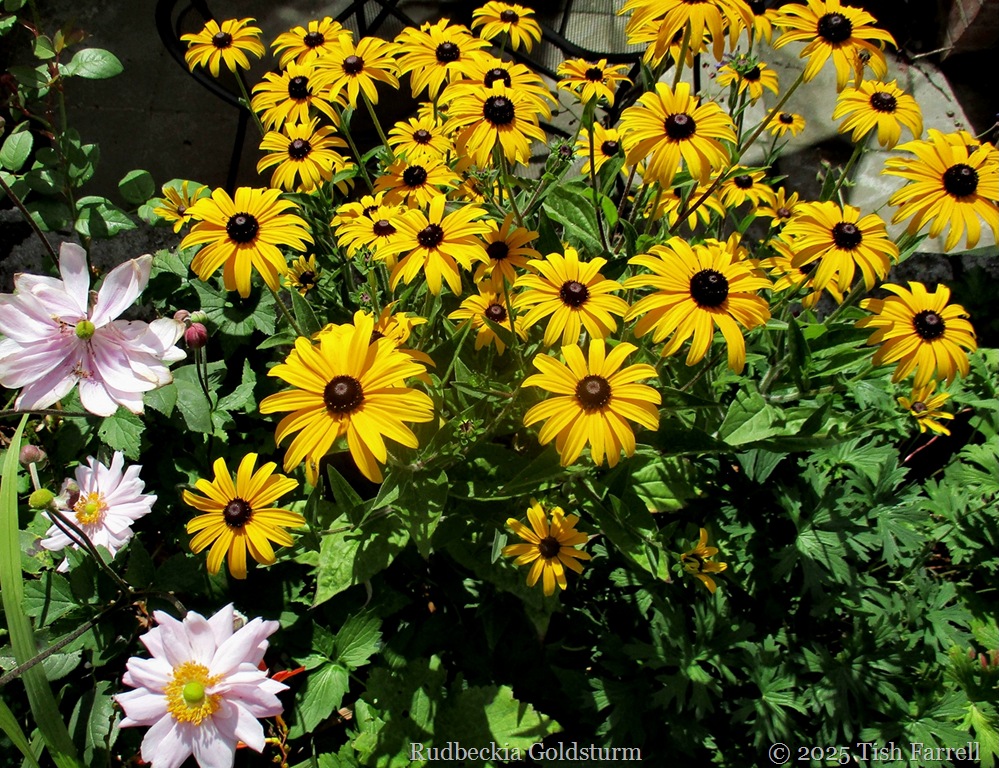
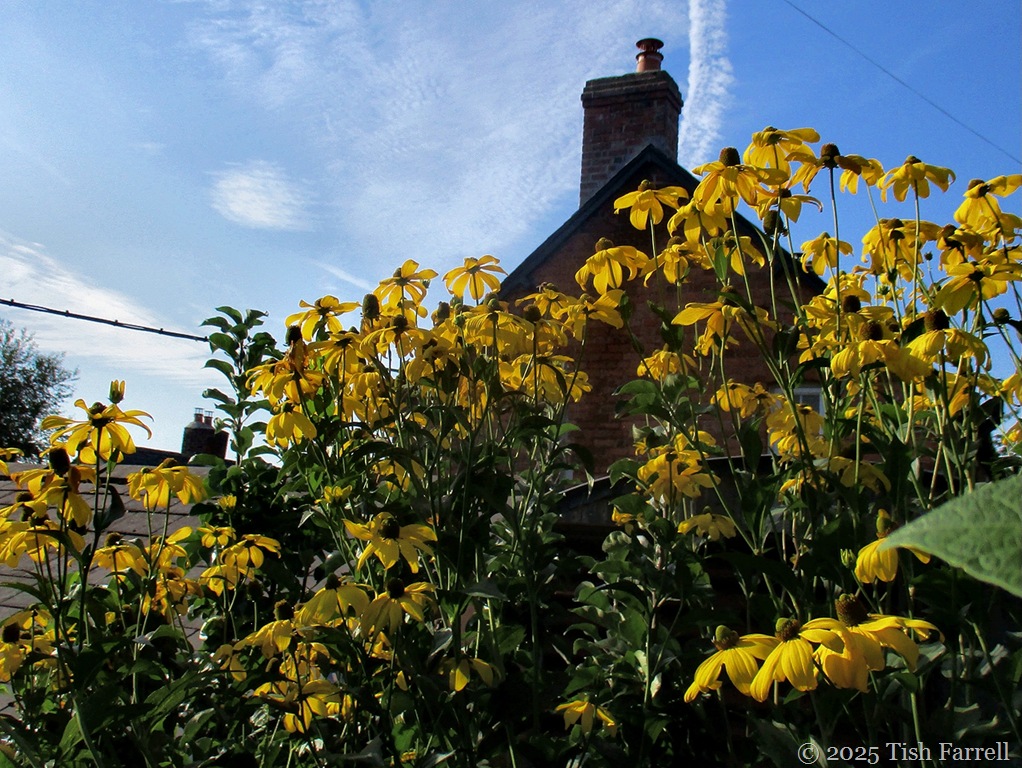
And now is the time for the late summer flowers. The rudbeckia (5) are presently the stars of the borders, especially the Goldsturm which is a mass of flowers. I bought the original plant (since split into several more) at the Bishop’s Castle Michaelmas Fair, the month after we moved into The Gables two years ago.

rudbeckia

Then there’s the super-tall Rudbeckia lacinata Herbstone by the hot compost bin. It’s been going strong for several weeks now and looks to be about eight feet tall. I think the rotten apple mulch plus residue escaping the hot bin might be spurring it on.

rudbeckia lacinata herbstone

*

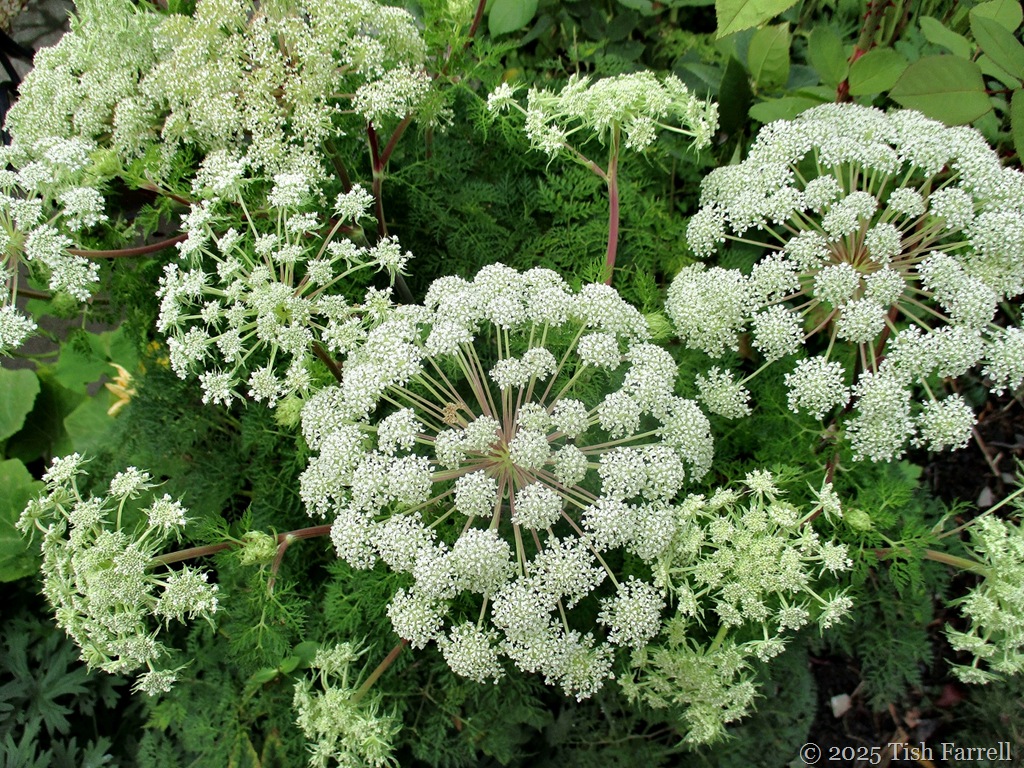
Finally, a plant I brought from our Wenlock garden – Selinum (6). I’m glad I did, although I was worried that it wasn’t thriving.  It’s just coming into full flower after a summer show of ferny leaves that looked pretty droopy most of the time. It’s related to wild cow parsley (Queen Anne’s Lace) that flowers in late spring-early summer. But unlike her, puts on a welcome spread for insect-life in late season. I love its structural beauty, the filigree looks.

selinum

Six on Saturday Jim at Garden Ruminations is our host. Please go and see what he’s been up to.


apples header

Bees, Bugs, Blooms and Borlotti

bees squash

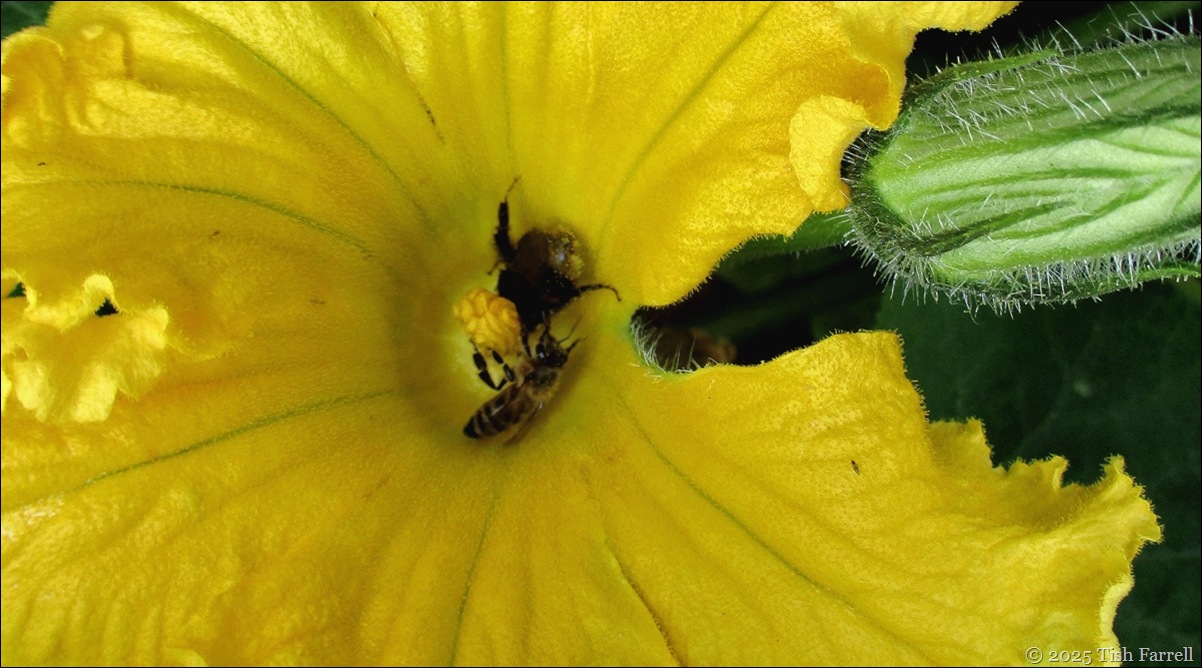
[1]  Earlier in the summer I grew some uchiki kuri squashes from seed and planted a couple on the boundary wall. This is is the wall that had a ‘flower’ bed in the middle of it and was originally choked with Rose of Sharon shrubs, Spanish bluebells and ash trees. I wasn’t expecting too much of it once I’d cleared it, but it seemed like a useful space that could not be wasted. Much to my surprise the squashes have taken off like magic beanstalks. Even had to stop them heading off for the top of the town.

The leaves are huge and the flowers are wonderful. Bumbles, honey bees, beetles and hoverflies think so too. They are currently getting drunk, shoving their way into the male flowers, and drilling down into the nectar below the stamens. In the process they are bathed in pollen. They can’t seem to get enough nectar and don’t care how many of them squash in there, or if they are different species.

And this is what they have made.

squash

So far it’s about a hand’s width across. There’s a slightly larger one behind the oil tank, and a couple of smaller ones besides. Thank you bugs and bees. Some of you seem to be sitting around the garden with hangovers.

*

IMG_8437

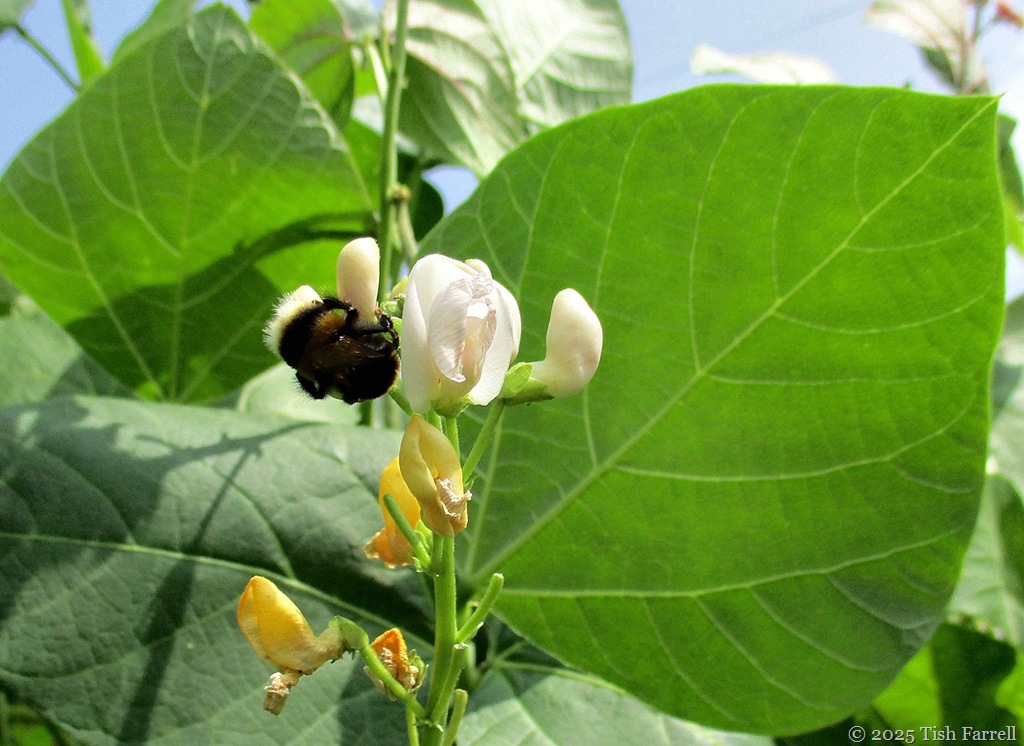
[2] The runner bean plants are still looking good and there is a mass of blossom, but so far they have been slow to set and the cropping sporadic. Too hot for them it seems. We’ve still had very little rain, apart from a good cloudburst on Thursday which added a few watering cans full to the water butt. And it certainly refreshed the garden, but did not last long enough to really penetrate the soil. The days have been much cooler though, and today there are signs of more beans coming. The bees have certainly been doing their best here too.

bumble and beans

*

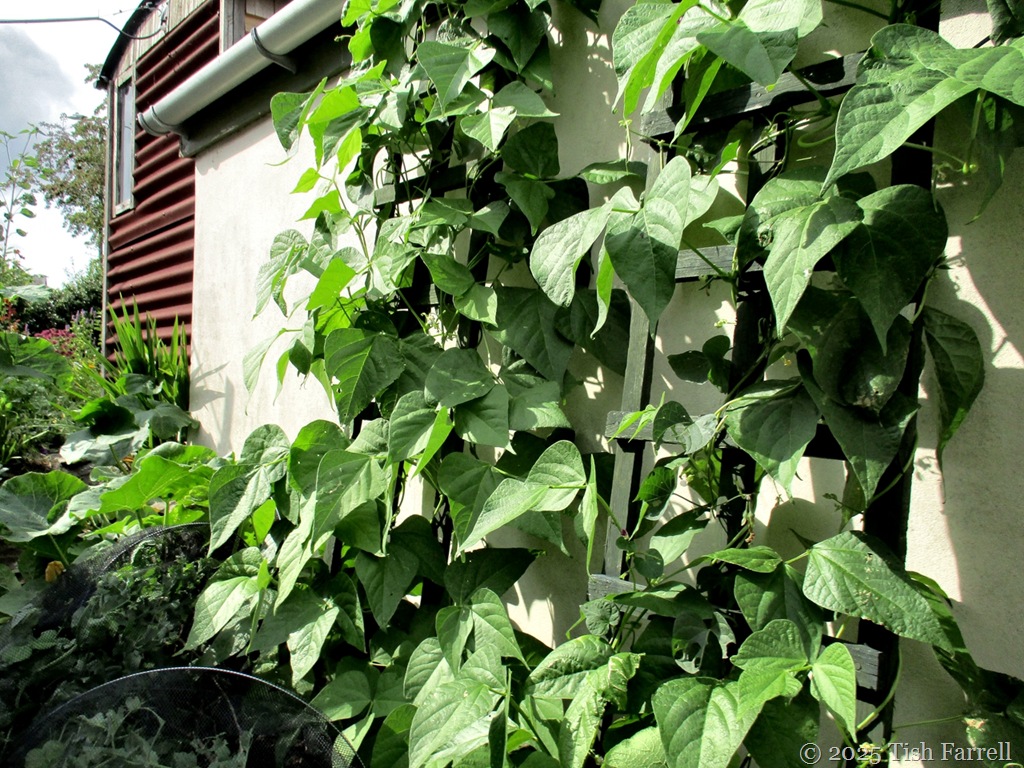
[3]  When I had my allotment I used to grow big rows or wigwams of climbing borlotti beans. Here at The Gables I haven’t the space. Instead, I have half a dozen plants growing up an obelisk in the front garden, and also a few more plants growing up some trellis beside the neighbour’s garage wall in the aforementioned border bed i.e. between the squashes. The beans are just beginning to set, but have a long way to go yet.

Meanwhile, in the bed in front of the runners, I have a short row of dwarf borlotti beans grown from seed. This was the first time I’ve grown them, and goodness, much like the squashes they zoomed off almost as soon as I’d planted them out. Already there are clusters of fattening pods. I love them for their colours as well as for cooking. So fingers crossed for a reasonable crop and no bean-boring bugs.

borlotti

IMG_8519

These are the climbing borlotti beans growing up some recycled trellis, and propped against next door’s garage, glimpse of squash plant to the rear. Some peas under the mesh in front are presently being nibbled. Graham, wearing his plant pathologist’s hat, tells me it is pea weevil. We entertain all bugs here – the good, the bad and the weevils.

*

[4]  It’s been a struggle stopping the herbaceous borders from flagging. In the front garden we left all the privet hedge cuttings on the flower beds to provide a bit of protection. I had mulched a number of plants earlier in the summer, but the blackbirds have kept moving it everywhere but under the plants.Most annoying.

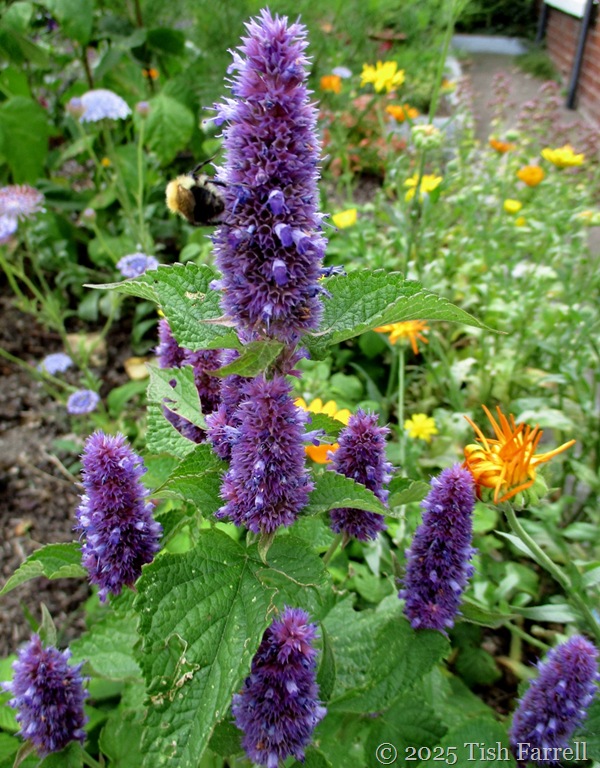
Still, things have survived, and now the late summer flowers are coming to the fore, and especially the Agastache, which I grew from seed last year. It’s another plant frequented by insects, including the cabbage white butterflies. I love its mauvy purple spikes, and the aniseed scent of its leaves.

IMG_8524

bumble agastache

*

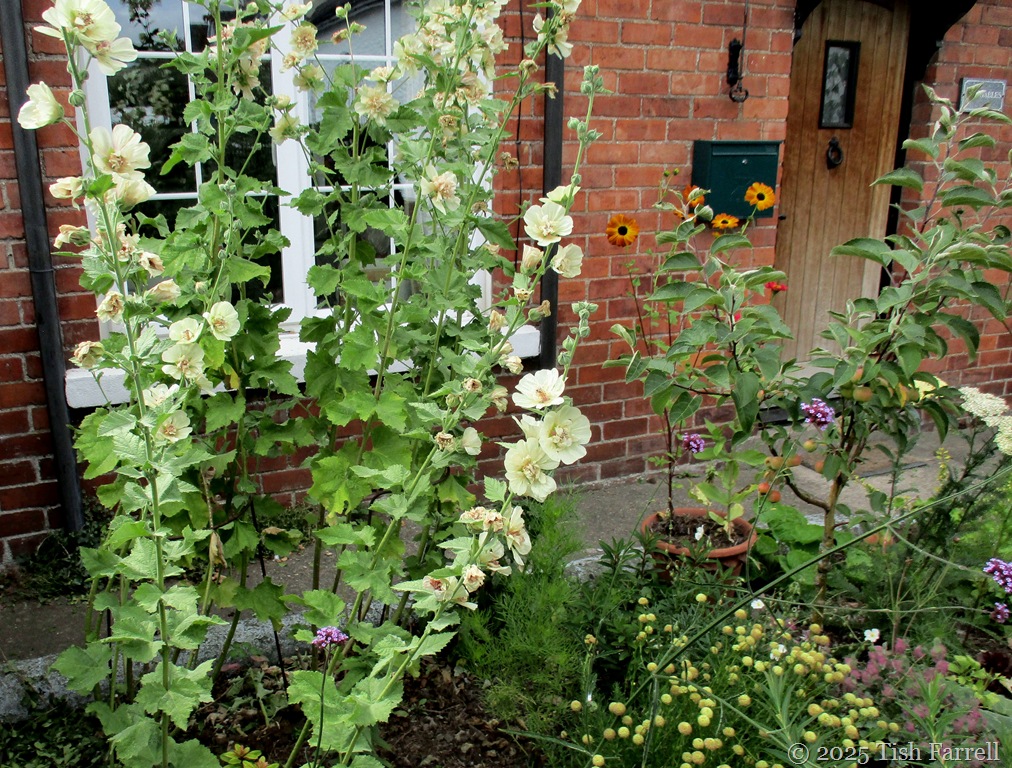
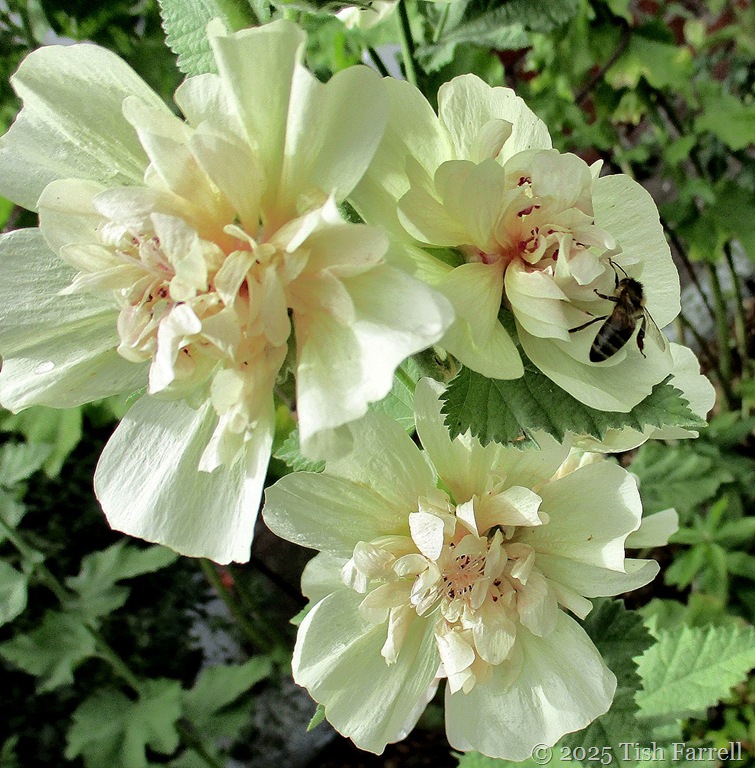
[5]  When I was thinking how to plant the front garden, I was much beguiled by Alcathaea ‘Parkallee’. I’d spotted it in a garden catalogue and was attracted by the fact that, as a crossbred hollyhock and mallow, it was immune from rust that frequently attacks hollyhocks. It also looked very pretty and so was among the first plants I bought for new garden.

It’s been flowering beautifully, despite the drought, but it does grow very tall, and thus has a tendency to flop over. I’ve found that cutting off the top few feet to put in a vase doesn’t seem to detract from the overall display. They anyway last very well as cut flowers too. Probably because they’re actually getting some water!

Alcathaea1

Alcathaea and bee

*

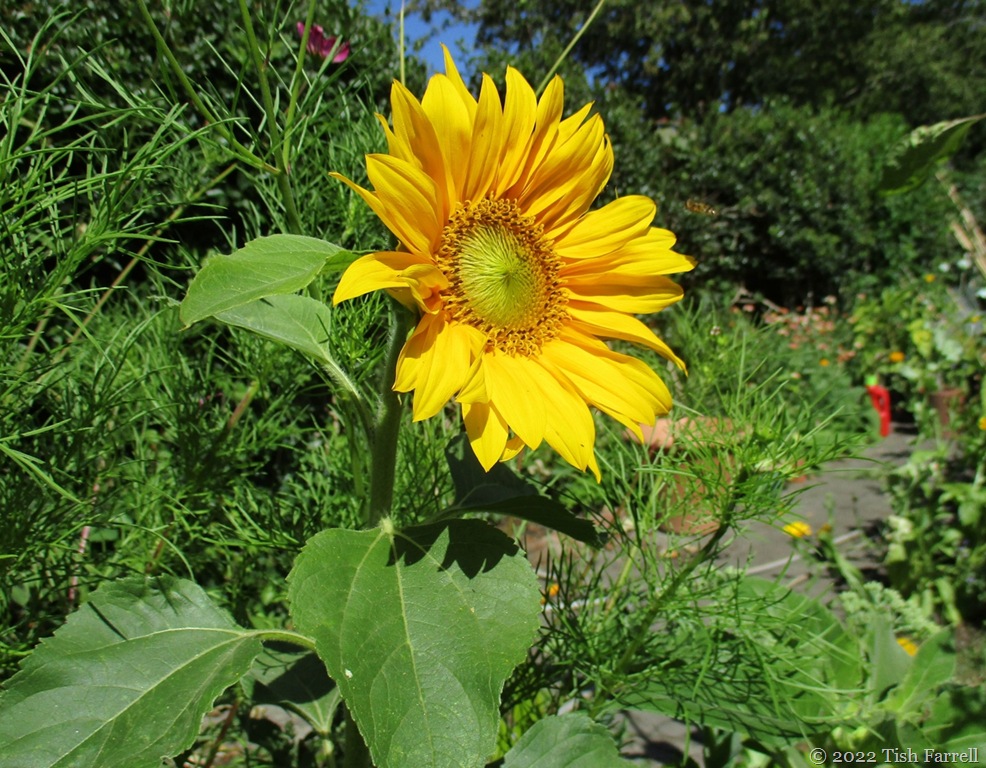
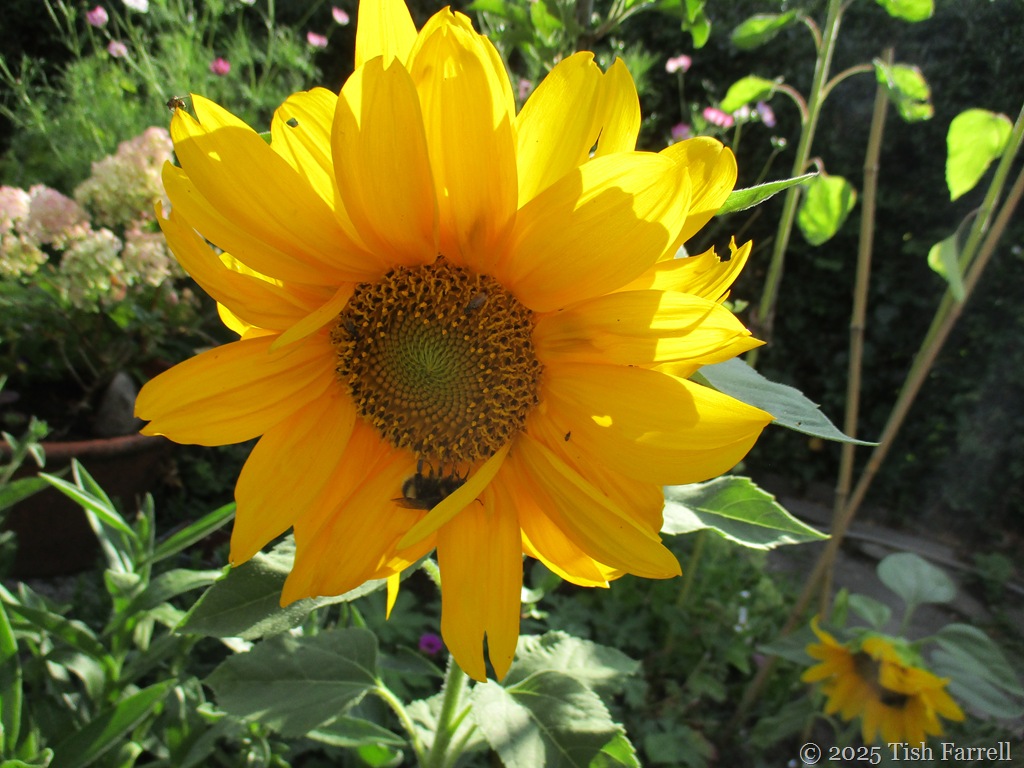
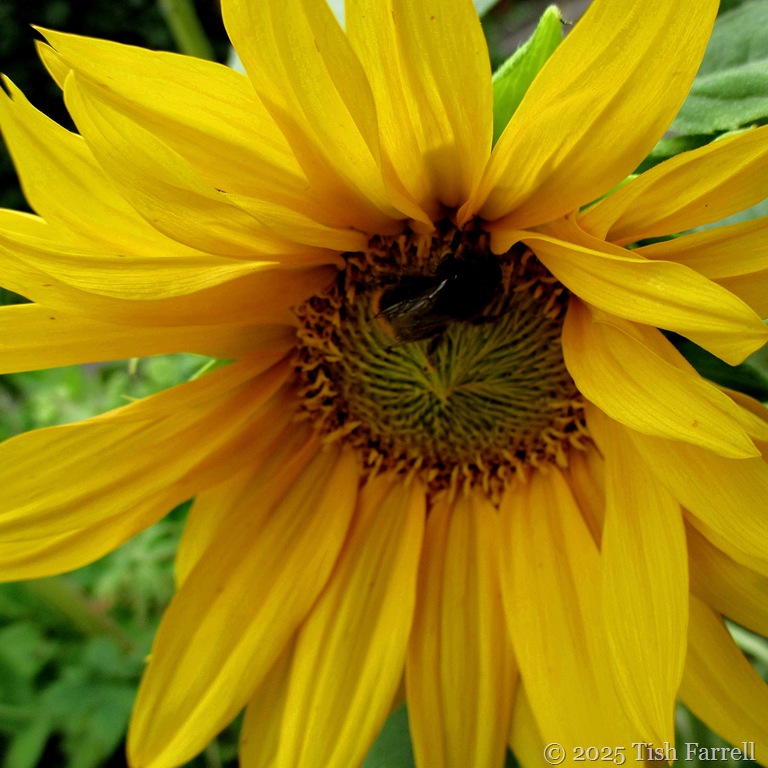
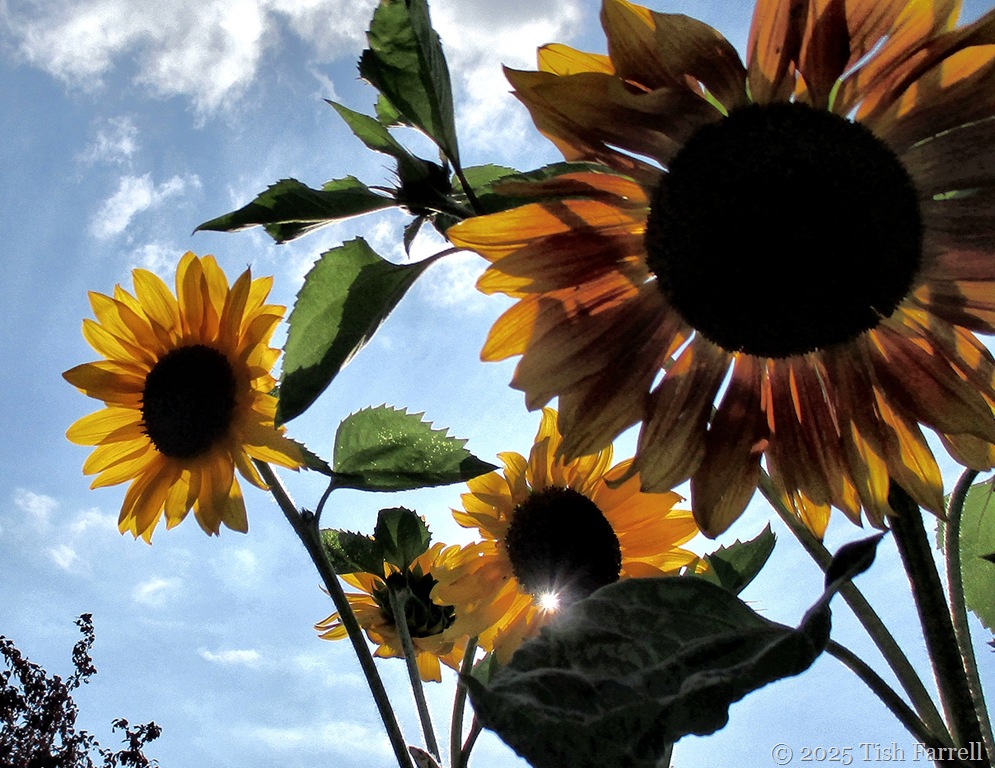
[6] And now it’s also time for sunflowers. I’ve grown all sorts, including the short Sunspot and some giant ones. Early summer plantings were zapped by some nasty bug and I had to cut off the main stems. Most annoying. Except now we have whole bushes of small-headed but long stemmed sun flowers which is actually very pleasing. You can see some orangey ones in the pot in the first Alcathaea photo.

 sun in sunflowers

The long…

…the tall

sunspot sunflower

…and the short Sunspot:

IMG_8432

*

It’s hard not to smile back at a sunflower Smile

Six on Saturday  Join host Jim at Garden Ruminations: lots of lovely plants and planting schemes.


Turning Red

IMG_8360ed

Yesterday surely was a red letter day – at least on the gardening front.

We had rain.

We did.

Enough to soak the top inch of soil. This I discovered in late afternoon when I went to dig up some Rooster potatoes whose leafy tops had been cut off some weeks ago.  I was surprised the rain hadn’t penetrated more deeply. We’d had a few heavy downpours during the day, along with gentle summer showers in between. It just goes to show how much rain is needed to nurture crops and all growing things. In fact, the soil under the potatoes had baked into an ashy crust, reminiscent of Bishop’s Castle’s very particular brand of lime mortar that holds our house together, the crust only penetrable with a hefty thrust of the garden fork.

But for all that quibbling, the garden does look relieved, some plants almost perky. This includes the runner beans which had been too overheated to make any beans. Now, with the cooler temperatures, they are abuzz with bees and (hopefully) making up for lost time.

And in the bottom of the garden, our little crab apple is looking especially grateful. It was planted last October and, as a new young tree, has been struggling during the long dry spell. Buckets of tap water really don’t quite do the job, although obviously better than nothing. But the tree has survived and has a mass of little apples which are growing in redness by the day.  I’m trying to recall the variety. I especially wanted a tree that was good for jelly, so it may well be Jelly King. Or if not that, Red Sentinel. It will become more obvious in a few weeks time when the apples gain their full colours. Happy thoughts of jelly making, though not of rushing too fast into autumn.

IMG_8360 header


#SimplyRed Day 30

Ladybirds In My Borders, Bees In My Bergamot

ladybirds sq

I’m back in the garden today. The old Africa album is taking a break. Although actually, thinking about days long past in Kenya has been a happy diversion from fidgeting about the lack of rain. Yet another month now with hardly enough to fill a watering can. But at least the days are much cooler and today quite overcast. In the meantime, the weather forecasting bods keep teasing and teasing, saying there will be rain two days hence, and then when we get there, ne’er a drop. Even my computer’s been joining in the game – a little message popping up saying ‘rainy days’ ahead. I now understand that ‘ahead’ is the operative word. And, of course, this being England, we can be fairly sure that one day we will receive a proper soaking.

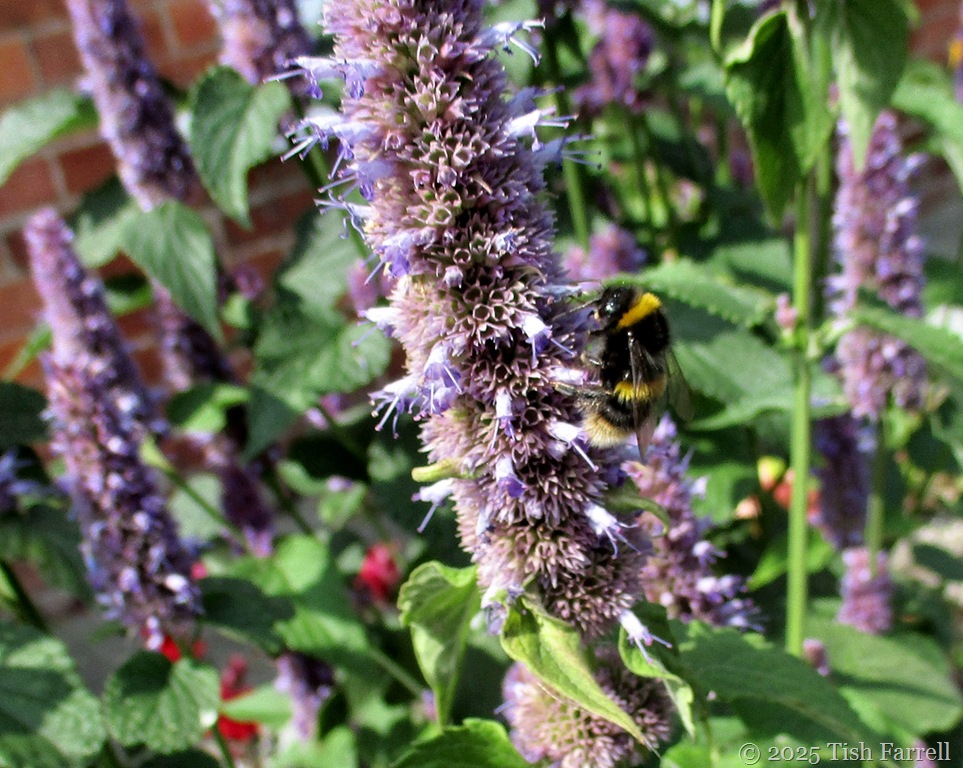
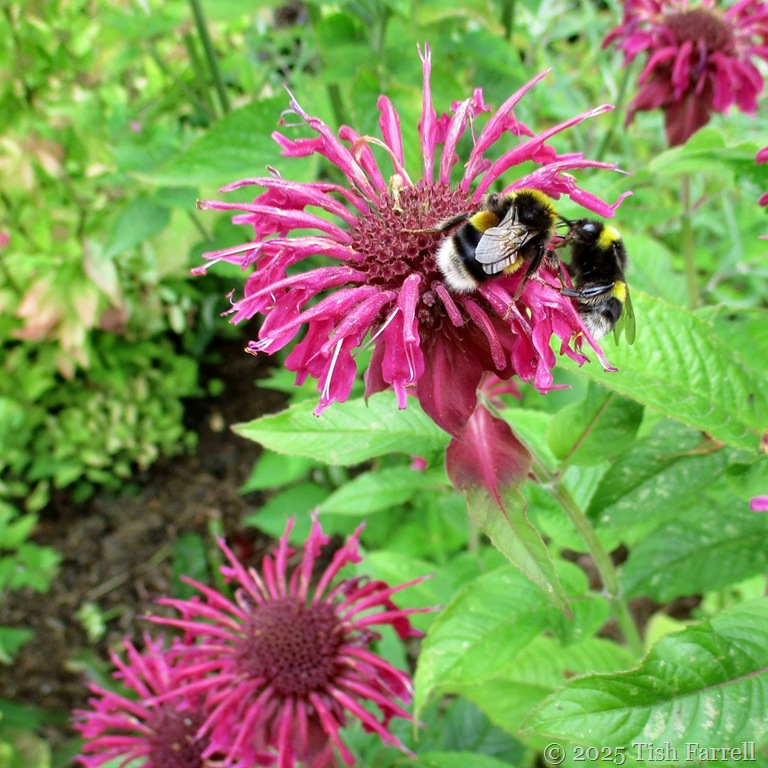
Anyway, it’s not all bad news on the gardening front, so long as I keep up the regular watering. In fact the bergamot has scarcely needed any attention. For weeks now it has been a riot of bright purple heads. The leaves smell wonderful too, crushed between soily fingers. And as for the white tailed bumbles which, on closer inspection, are probably garden bumbles – talk about bee-lines. These days whole tribes of them are foraging among the curiously structured flowers.

IMG_8303sq

*

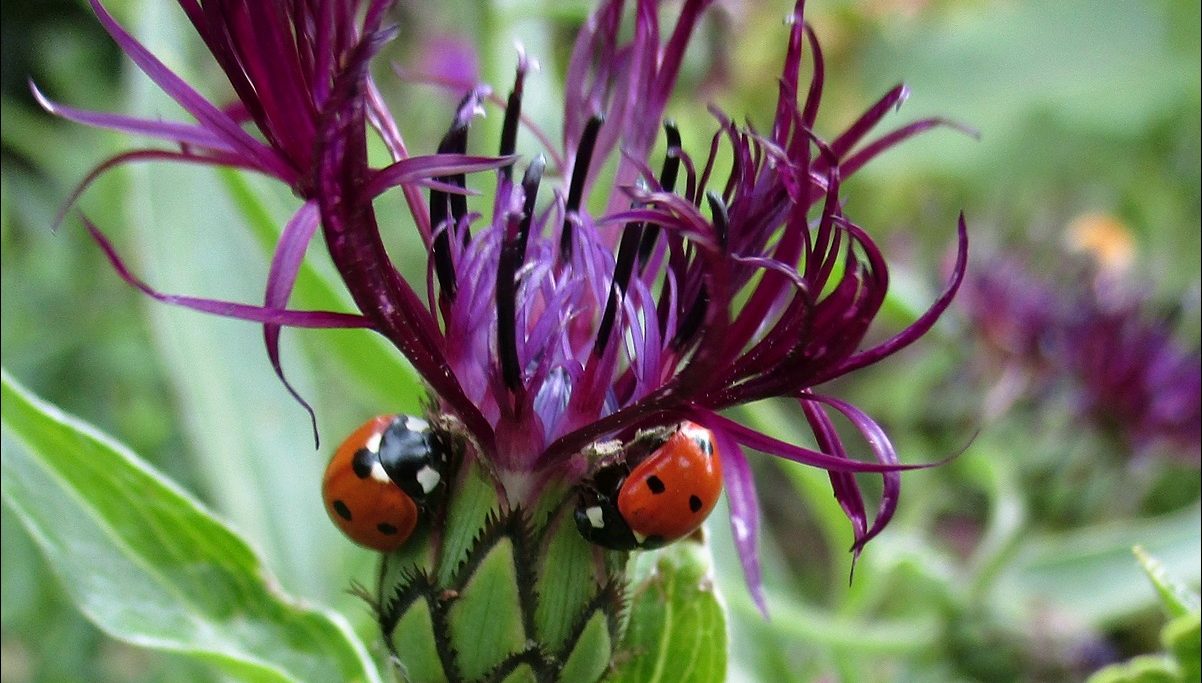
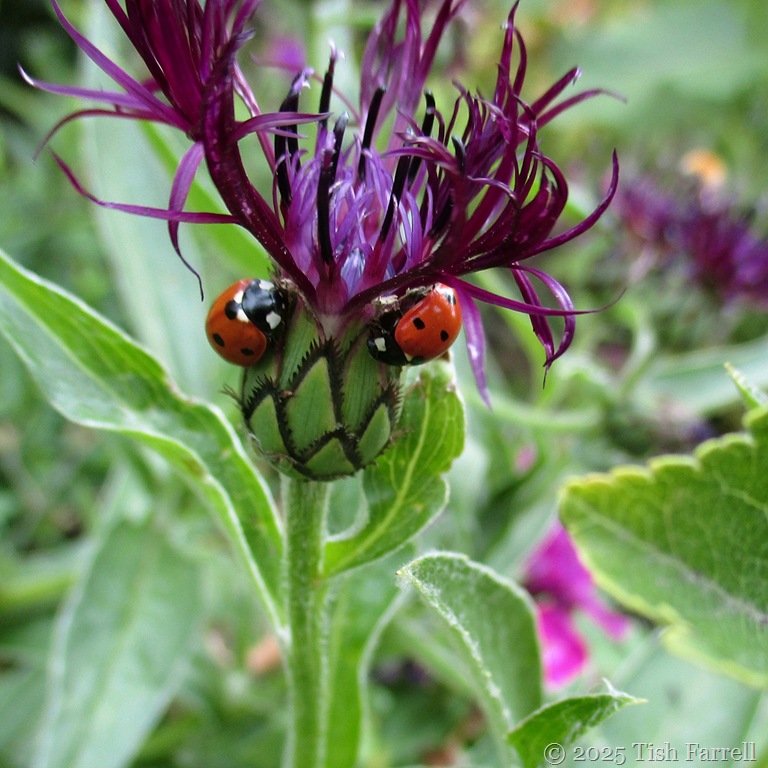
I’m also very pleased to see a number of ladybirds in the garden, most numerously in the perennial cornflower (Centaurea). I’m puzzled as to why they are there, since I can’t see any aphid infestation, only ants. Unless they both ladybirds and ants preying on something too small for me to see.

Also spotted in the Centaurea are Common Carder bees, seen here with an incoming hoverfly:

IMG_8309sq

*

And in the neighbouring Sunspot sunflower a Red-tailed bumble bee:

IMG_8333sq

IMG_8334 sq

*

However, I am not so pleased this morning, to discover flea beetles on my Kabuki broccoli seedlings, planted out only two days ago. These tiny brassica-infesting bugs create a ‘scatter-shot’ appearance to all the leaves. Time to round up a few ladybirds and put them to work then. I’ve just read that they like flea beetles…


#SimplyRed Day 27

Six On Saturday ~ Still Waiting For Rain

IMG_8163

The evening garden

*

This gardener is beginning to panic. After weeks of rainlessness, we’re now having a spike in temperatures – the peak today  at 29 or 30 degrees, depending which weather forecast you consult. Thereafter, hopefully, we should feel a decline of several degrees, with finally a  promise of rain next week. 

But then we’ve had these promises several times over the last three months, with only one good downpour that yielded 8 watering cans’ worth from the shed water butt. And that was ages ago.

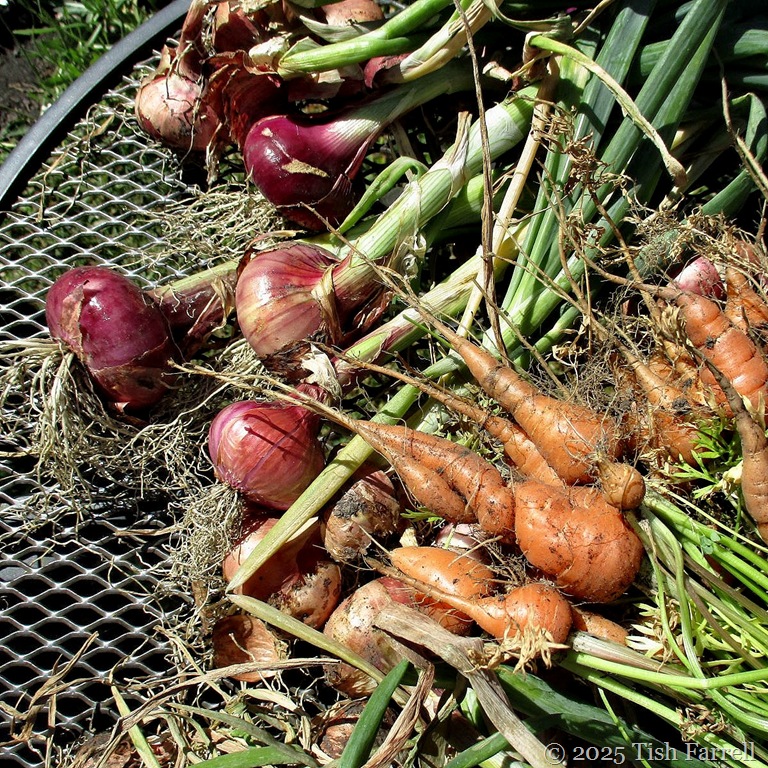
1. Hand watering is all very well, but it really only keeps plants ticking over. Or in the case of my onions and first sown carrots doesn’t. I pulled them up yesterday. They had simply stopped growing.

sos 2

*

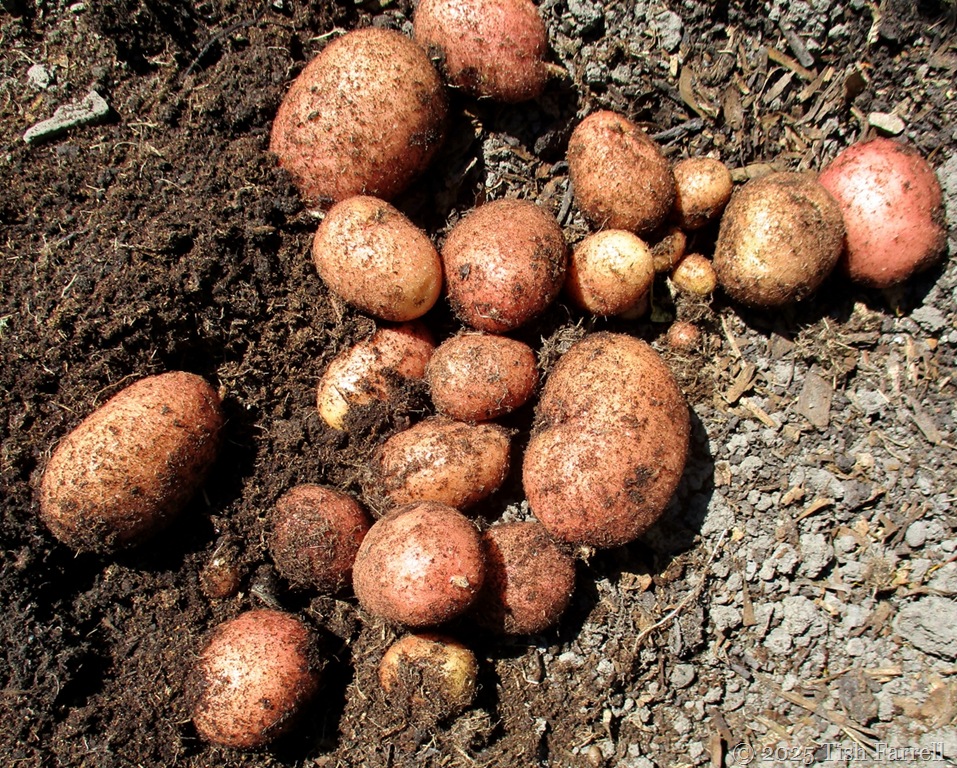
2. Also my single seed potato in a bucket had had enough by yesterday. This was one I couldn’t fit into my planting row, so I thought I’d trial it in a container. Stopping it from drying out was of course an issue. And the bucket  itself was making it very hot. All the same, when I emptied it, I was quite impressed with this little haul.

sos 4

The Rooster spuds in the ground are still holding their own for now, so I’m hoping for a reasonable harvest. We’ve eaten most of the Belle de Fontenay, and I’ve popped in a few peas where she’s left some space.

*

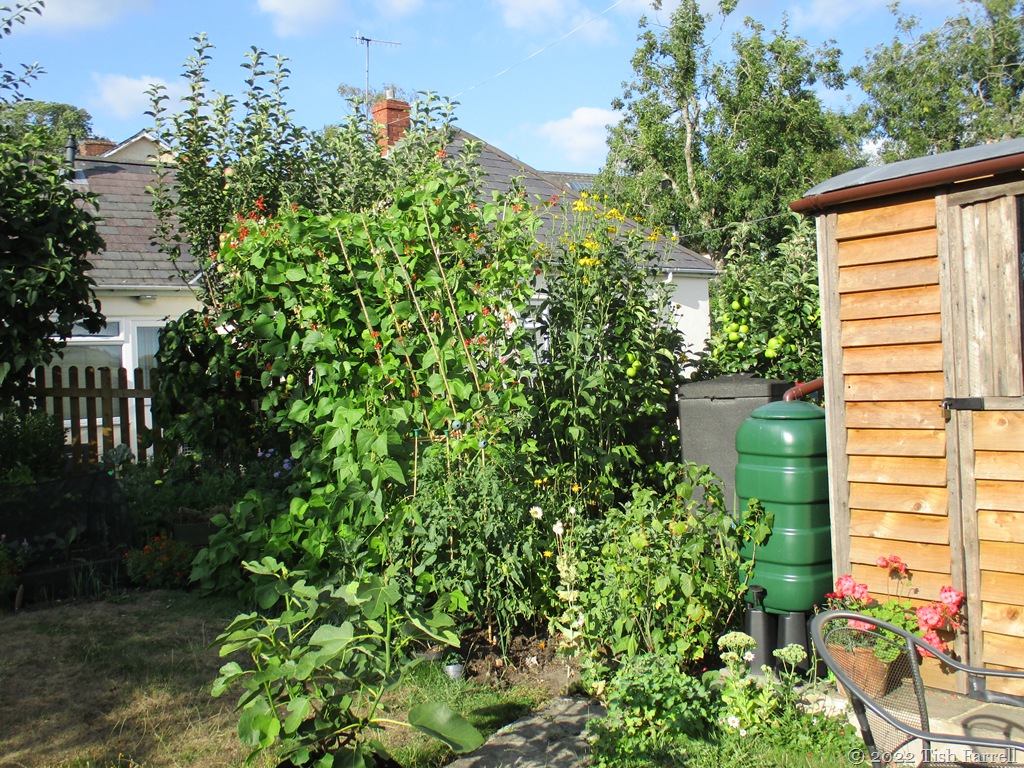
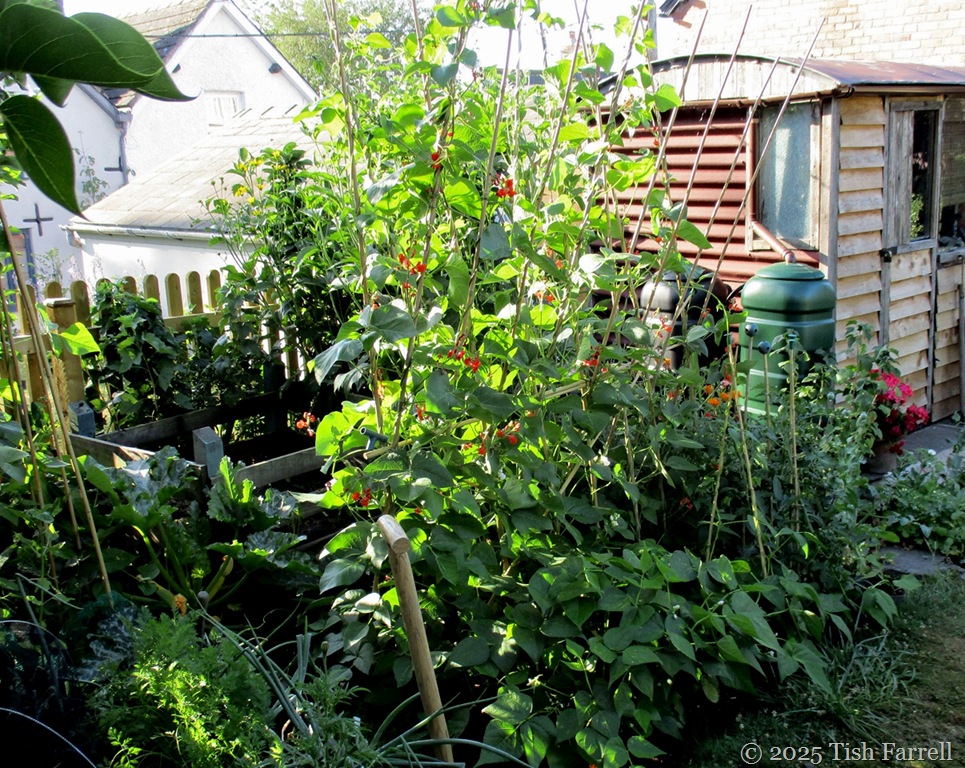
3.  In the bean corner things are looking fairly hopeful. Beans respond well to mulching, and anyway make some of their own shade. I’d also prepared a compost filled trench for the runners in the winter. The dwarf borlotti beans, planted out in front, are also sheltering the runners’ roots. They don’t seem to mind being hot and are already forming pods. A slight error in labelling has resulted in some of the dwarf borlotti in the row requiring sticks, which is annoying. I have the taller variety growing up some trellis against next door’s garage – i.e. in the once horridly hypericum infested wall-bed on our boundary.IMG_8213

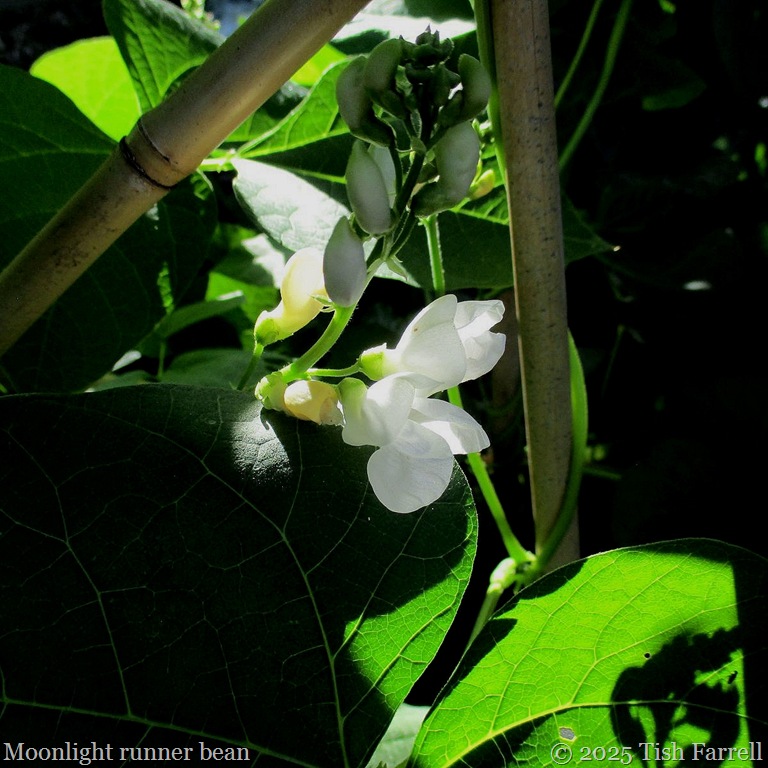
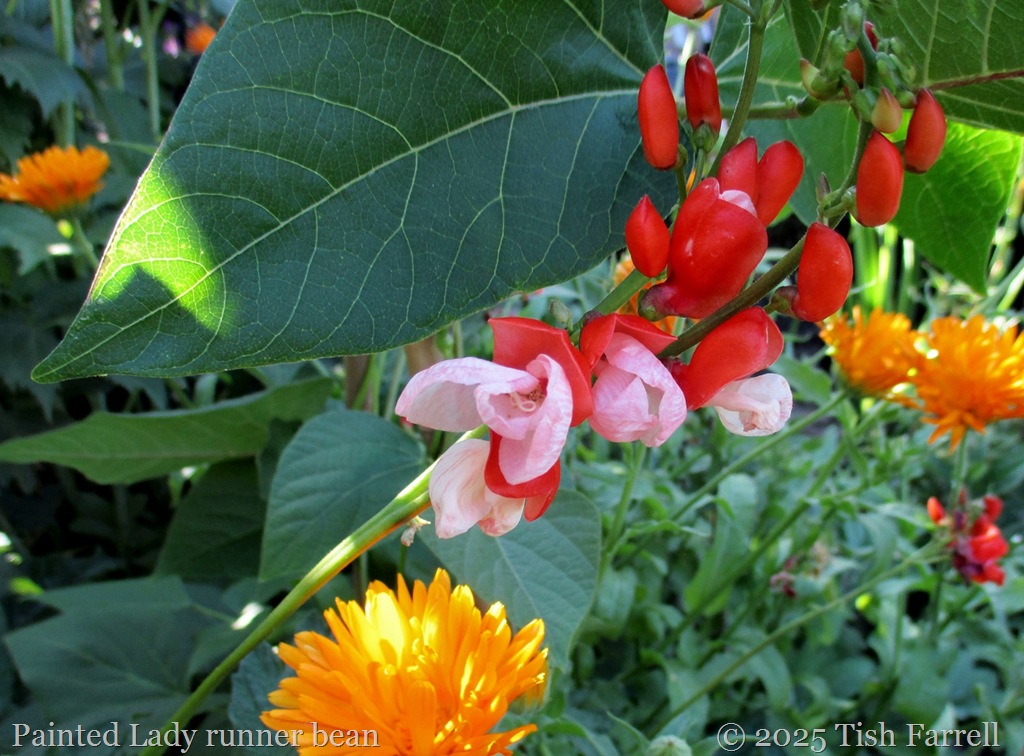
This year I have a real mix of runner bean varieties. For some reason I had problems getting any of my seeds to germinate well, new and not so new packets alike. I ended up re-sowing, and putting in a few Scarlet Emperor seedlings bought from the butcher’s to be going on with. My small row thus also has some white Moonlight, red Lady Di and one Painted Lady which has very pretty white and red flowers although they’re looking pink at the moment.

sos5

IMG_8227

*

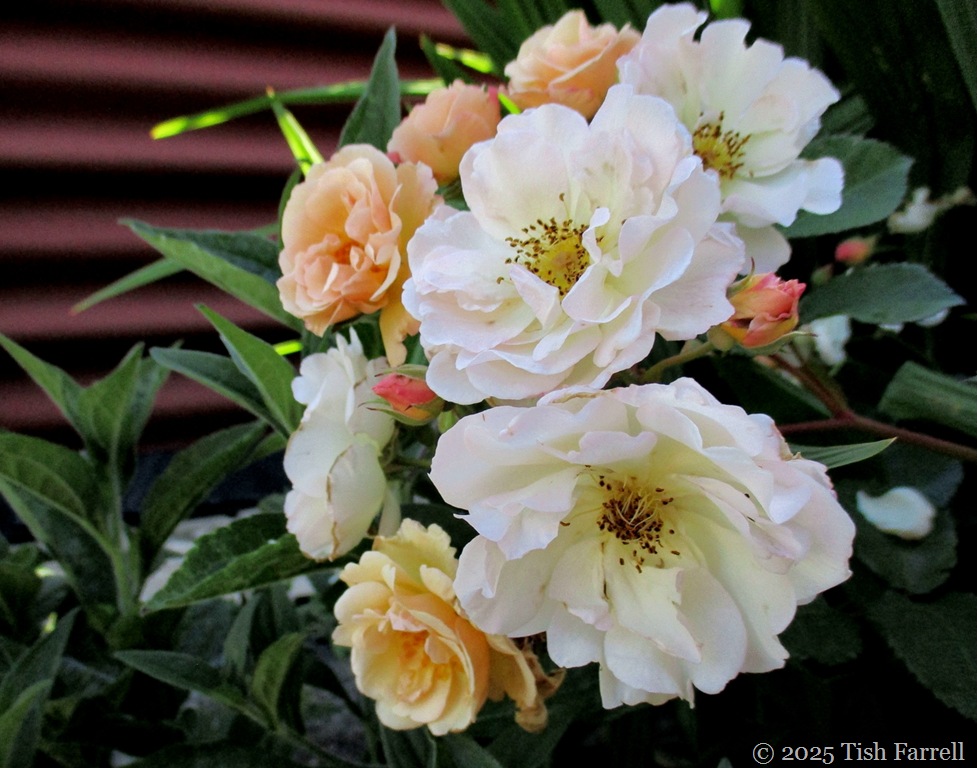
4. In the nonedible quarters, Penelope rose is still blooming hard, although the other roses have given up flowering now. I love her. She is like a wild rose, but with added flounces. And she smells delicious.

IMG_8171sos

*

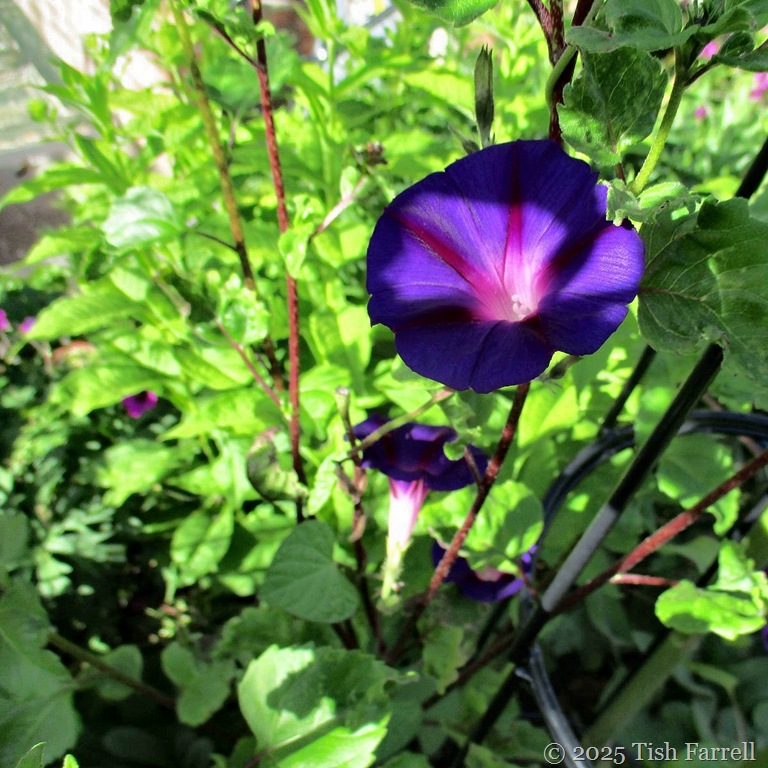
5. Also my favourite Morning Glories have begun to live up to their name and are putting on an early-day show. I’ve planted them out everywhere where there’s something to climb up, amongst the beans and sunflowers, up the trellis disguising the oil tank. Hopefully, if it does rain next week, they will really get going, and hopefully, too, keep flowering until the first frost as they did last year.

sos12

*

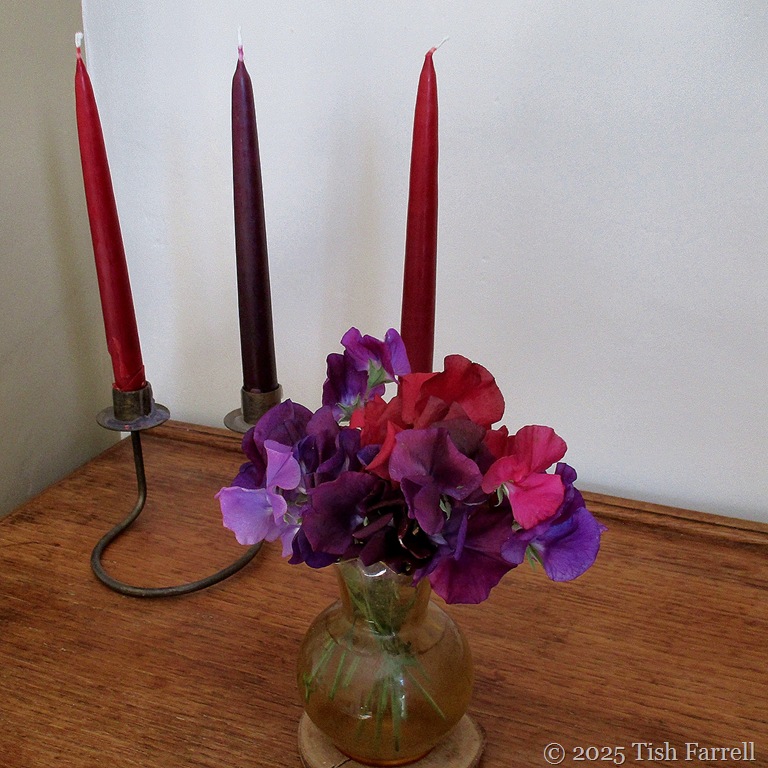
6. And another success has been the sweet peas. Although the ones in the front garden are now beginning to fry round the edges, this despite the watering and mulching. Also, given my non-orderly manner of cultivation – randomly up an obelisk and a trellis, they have grown rather short stems. My dear Pa would have been aghast. He used to grow his in regimented tall-cane rows, with set watering intervals to ensure evenly spaced blooms along each dead straight stem. Then he would lovingly count them, five and six big flower heads, usually. And then he would snip a bunch of the best and take them off to his latest lady friend. Mother rarely got a look in when it came to sweet peas.

I’ve tried taking a photo of ours outside, but they don’t look their best. So here’s one of the several small vases we have about the house. Wall-to-wall sweet pea scent,  a soothing antidote to moments of over-heatedness.

IMG_8152

Six On Saturday Please visit our host Jim. Lots of interesting plants in his garden today.

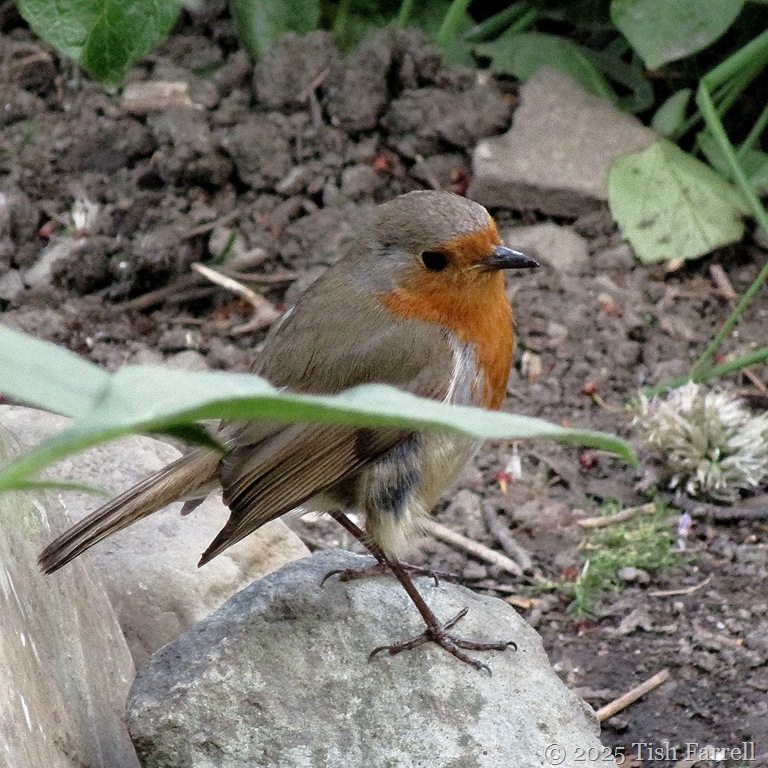
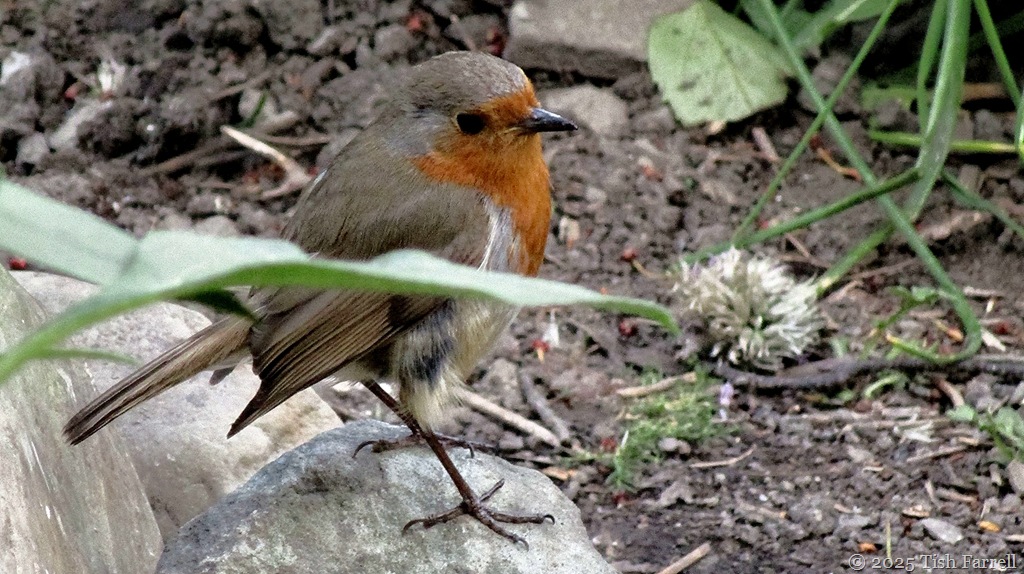
My Garden Supervisor: Robin Not So Red

IMG_7727 robin

Perhaps it’s the time of year, the courtship fine feathers and family raising done, but this robin’s breast looks to me more orange than red. I think it may be moulting time too. Some days when it pops into the garden, it looks as if it’s got out of its nest on the wrong side – feathers every which way. But then sloppy personal grooming doesn’t stop it from giving me hard looks, scrutinizing every gardening move in case worms and grubs are in the offing.

These days it is not so insistent and no longer perches on the nearest pot and cheeps until I make some attempt to provide. Not so many mouths to feed. So now, when it sees I’m only dead-heading or watering, it soon vanishes. Clearly it has other calls to make about the town.

IMG_7727 robin header


#SimplyRed Day 2  Today on July Squares, Becky pays tribute to Cee whose inspiring photo challenges brought so many of us together. She is very much missed.

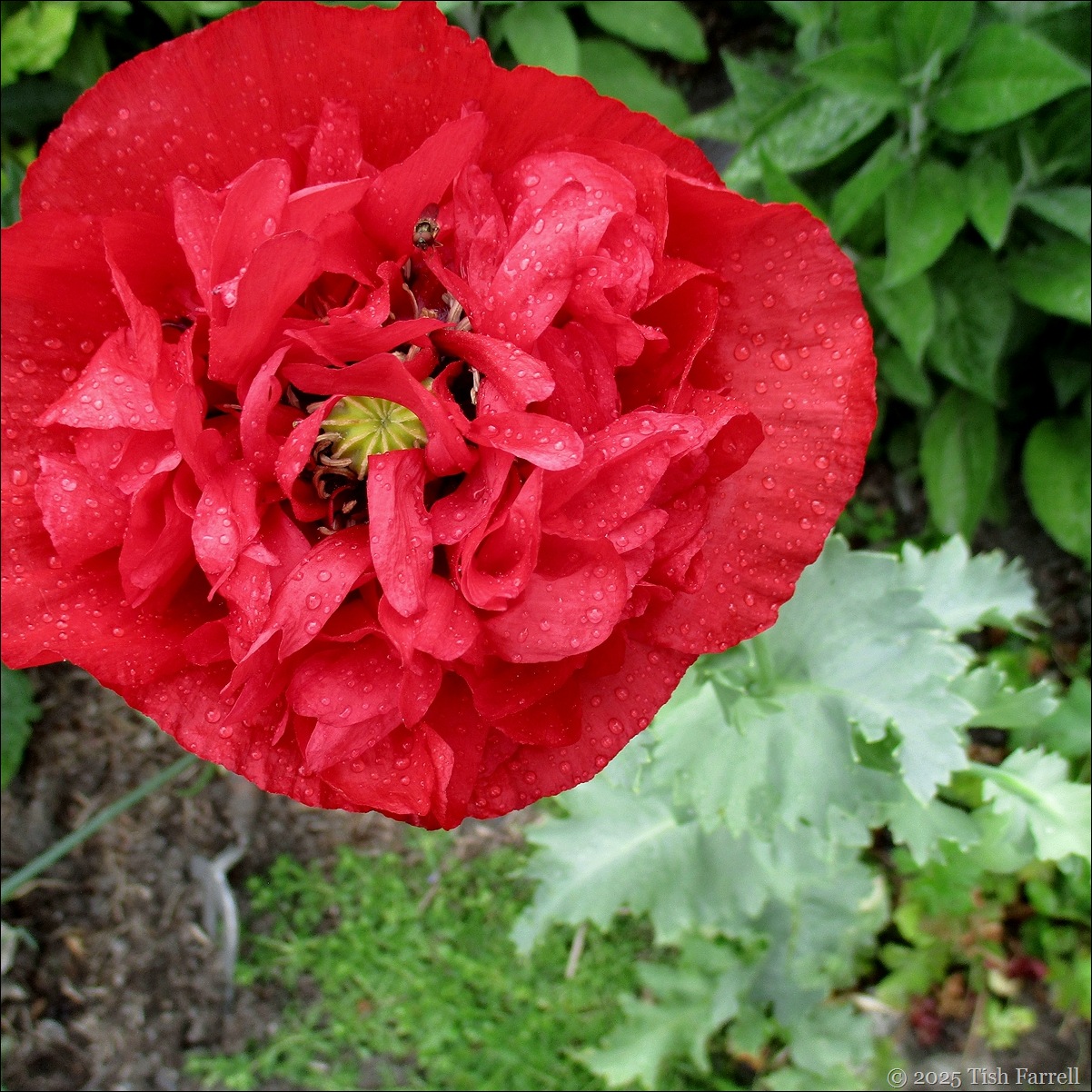
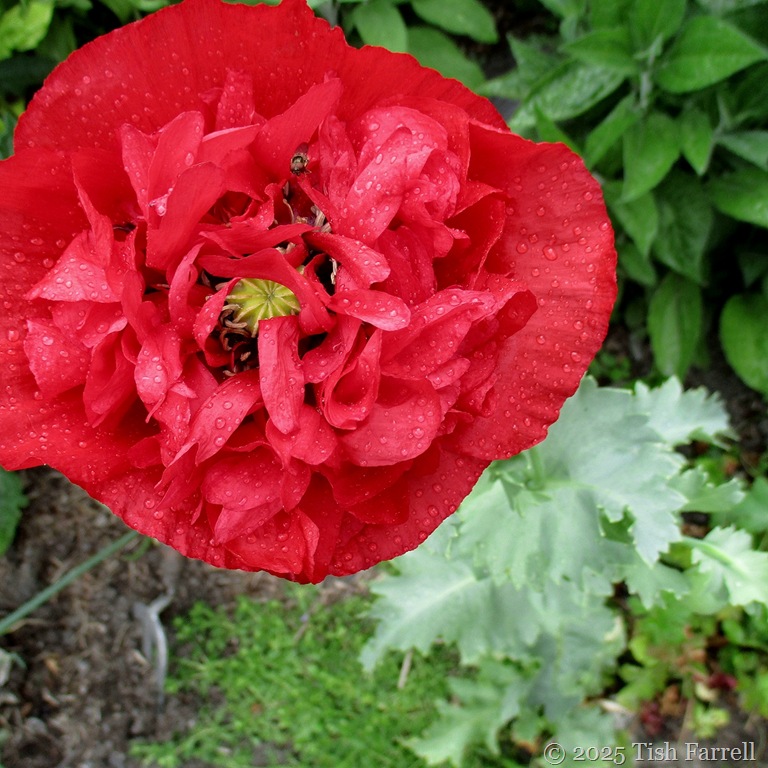
A Surprising Red Arrival

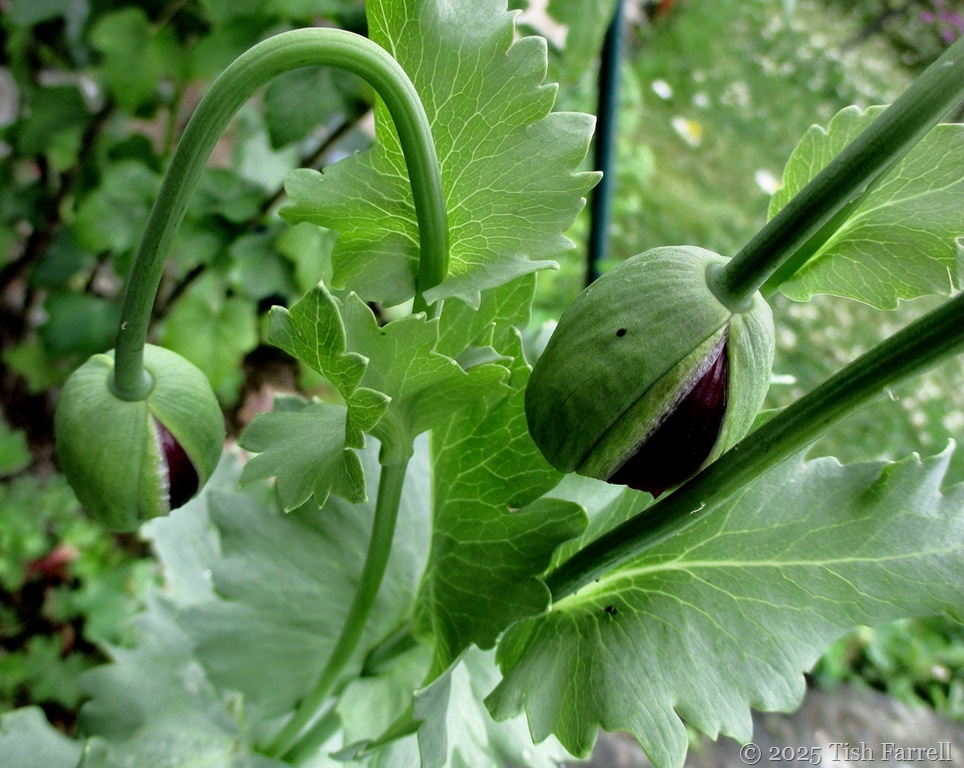
IMG_8014 poppy

This opium poppy sprouted up suddenly between the blackcurrant bush and the compost bin, and this week it began to flower, just in time for Becky’s month of squares. Red is the theme, and square the format for the header photo.

The bees have fun with all the frills, burrowing in and out to gather pollen. I notice, too, there are more poppy plants coming on outside Graham’s shed so we’re in for a show from these showy volunteers.

When the buds first break, they are almost black, giving a glimpse of the dark underskirts first. Later, when the flower opens, they are only visible if you stand on your head.

IMG_8018 poppy buds

#SimplyRed   Day One –  Join Becky for her month of squares: painting July red, but in a good way.

The Changing Seasons: June 2025

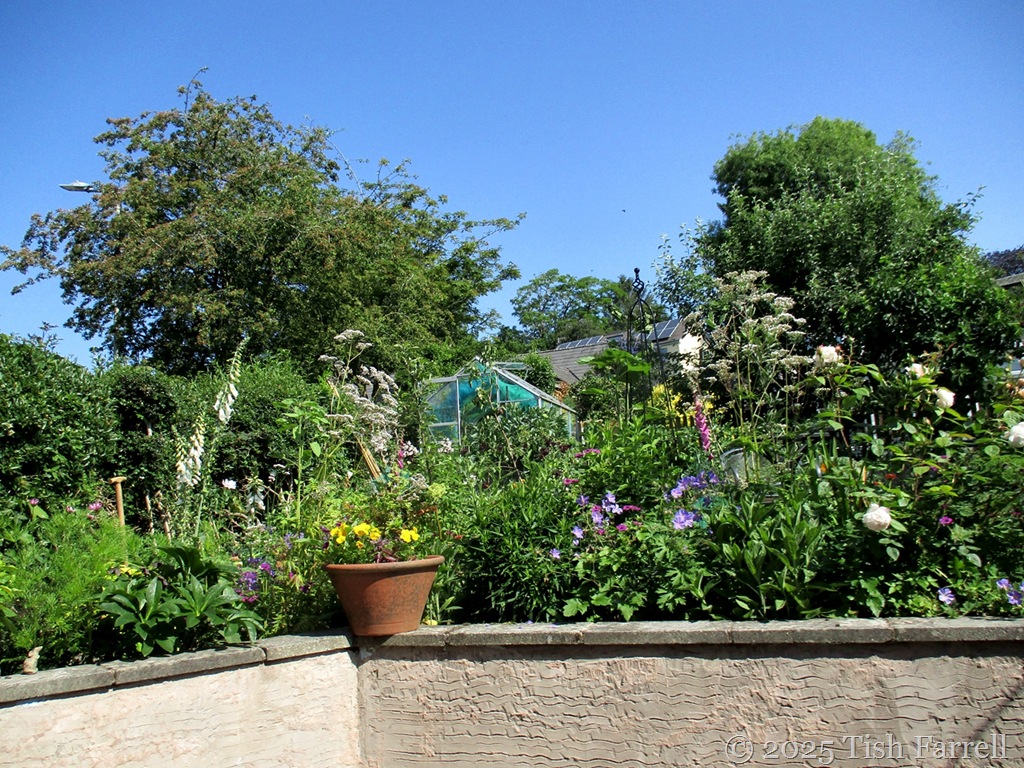
IMG_7887 wall border

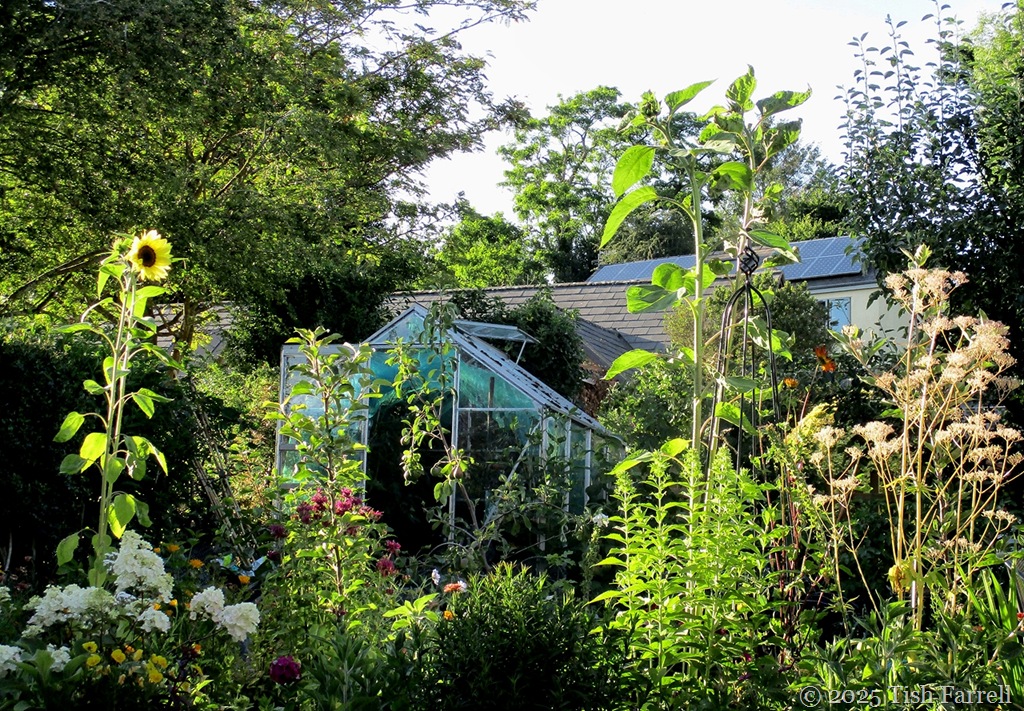
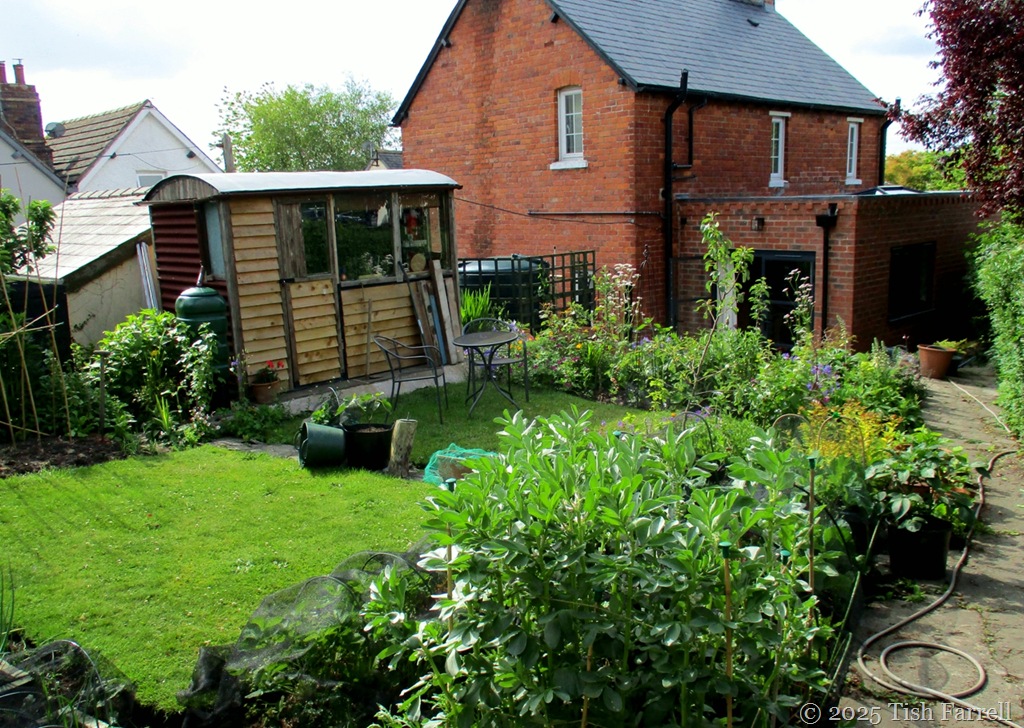
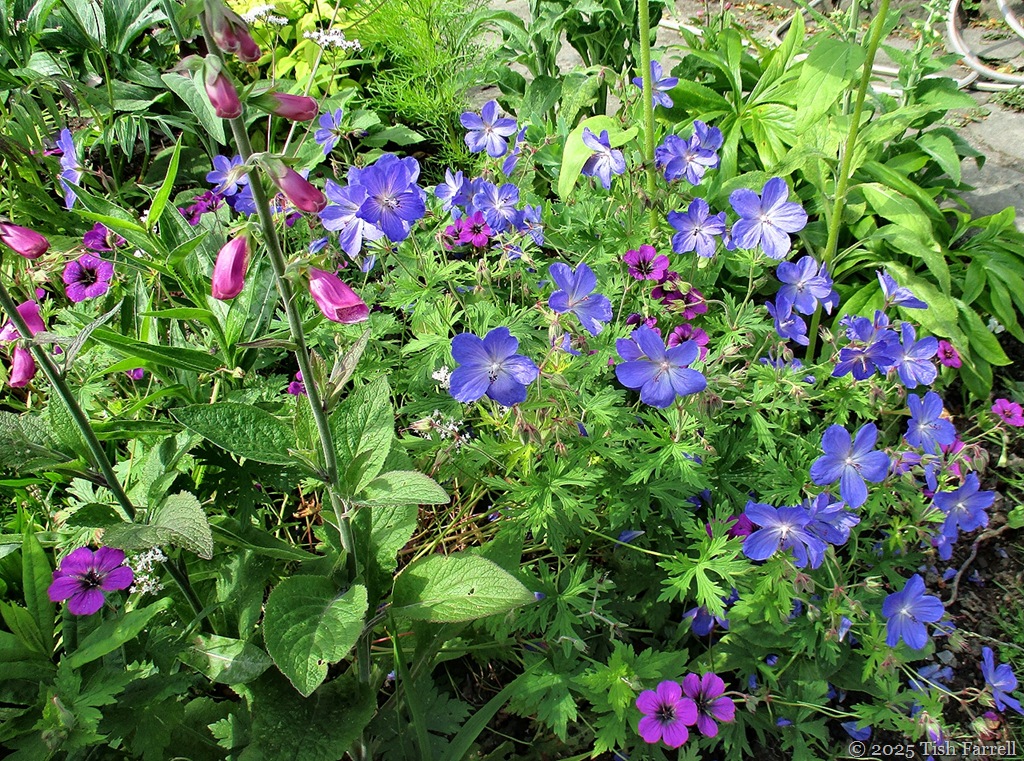
My last post perhaps gave the impression that there’s little room for flowers in our small garden; that all my attention has been on growing stuff to eat. But not so. June has been wonderfully floriferous, especially in the border atop the terrace wall. And beneath it, while the geraniums, centaurea, foxgloves, valerian and St. Cecilia rose came to full bloom, Graham sat on a chair, suitably hatted, and methodically chipped off the failed and peeling plaster. Our builder, Alan, says he’ll come and re-do it in autumn. And while he’s here sort out the old back garden steps. The house improvements continue.

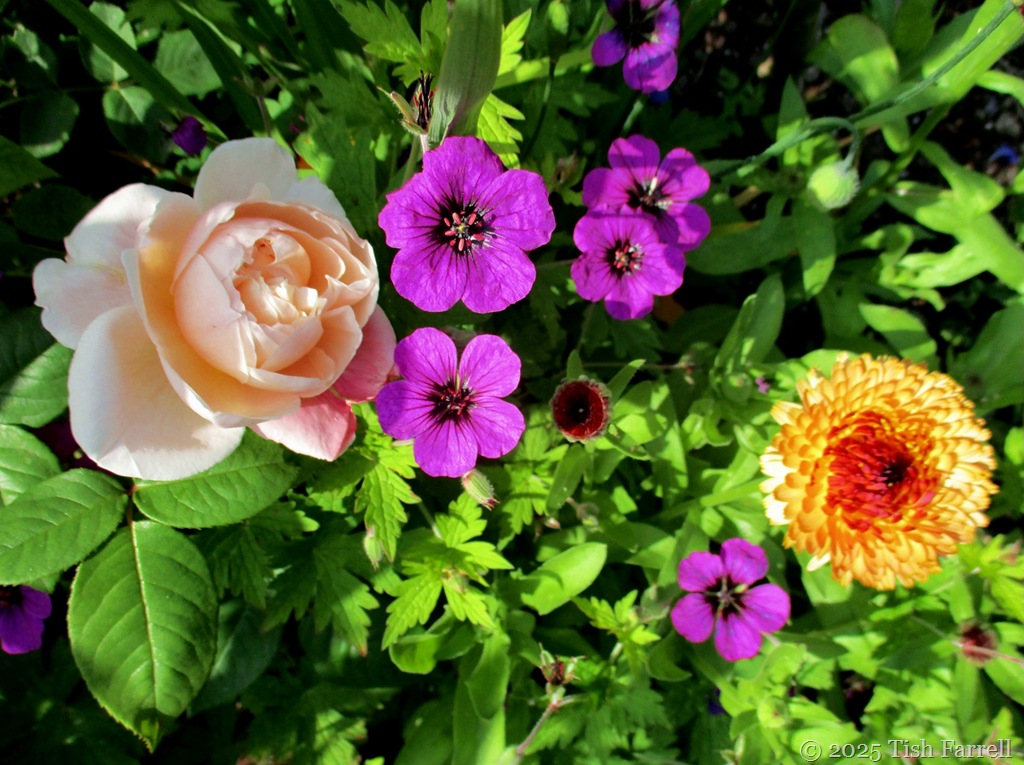
IMG_7792 wall border

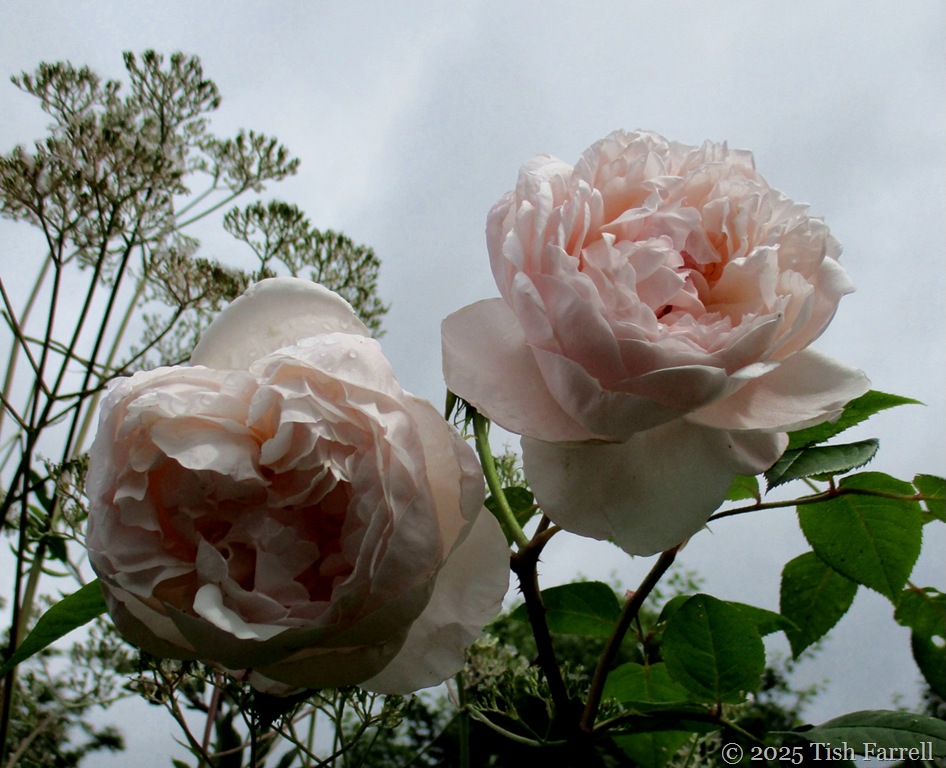
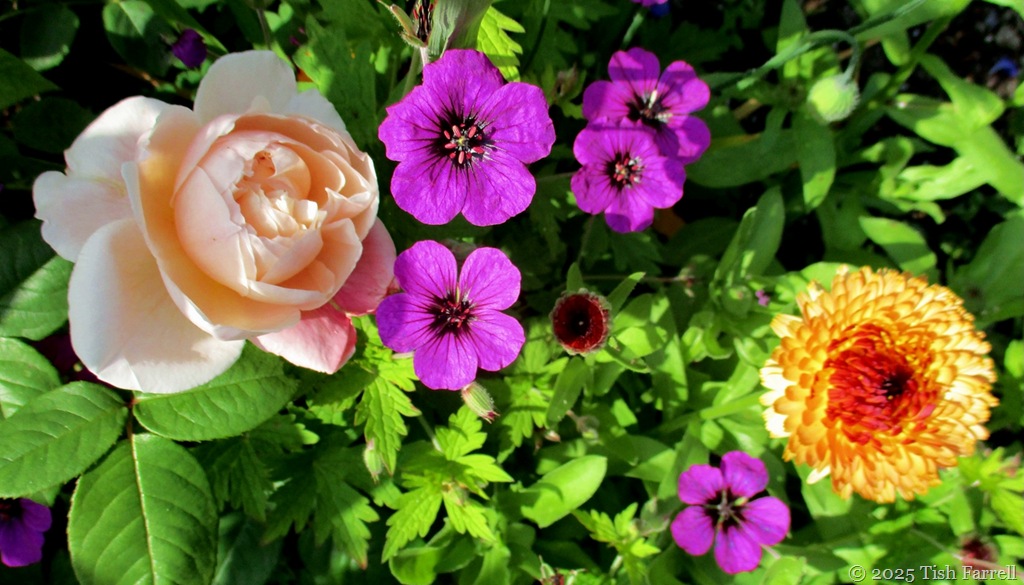
St. Cecilia rose, Ann Thomson geranium, Sherbet Fizz pot marigold

*

Looking from the top of the garden towards the kitchen door, the border runs between the far end of shed and the right hand path. It also includes two miniature apple trees planted  back in the autumn. The rose, St. Cecilia, was languishing there when we moved in nearly two years ago, but she’s had a good feed and a hard prune, and this June has been flowering wonderfully. She may be a tad wishy-washy colour-wise, but she has an exquisitely delicate scent.

IMG_7715 back garden

IMG_7950 st cecilia

IMG_7797 wall border 2

Self-sown foxgloves among the geraniums at the path end of the border

*

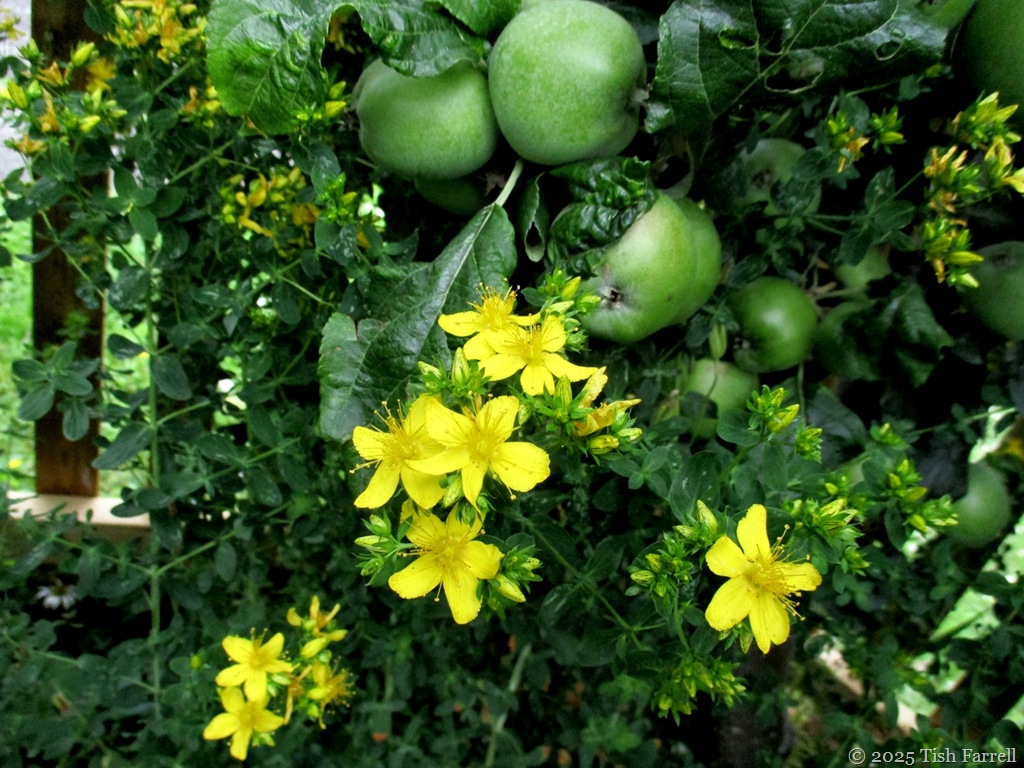
The garden peripheries have also bloomed over the last couple of weeks, surprising given our near total lack of rain for many weeks. In the northerly corner the medicinal herb, St. John’s Wort is now soaring into the apple tree. I grew it from seed donated by a supporter of the Bishop’s Castle Seed Bank. The seed packets sit in a tray at the Town Hall and are free, although donations are welcomed.

IMG_8037 st john's wort

*

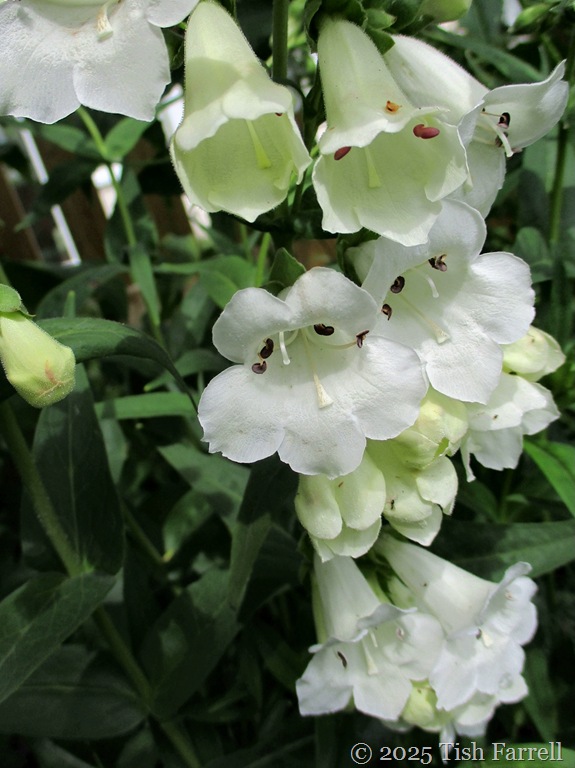
Also blooming for the first time is this dreamy perennial foxglove. It has a tendency to flop somewhat in warmer temperatures, and has been struggling in the dry soil under the big apple tree. Mulching with hot-bin compost helped. And some hand watering of course.

IMG_7777 perennial foxglove

*

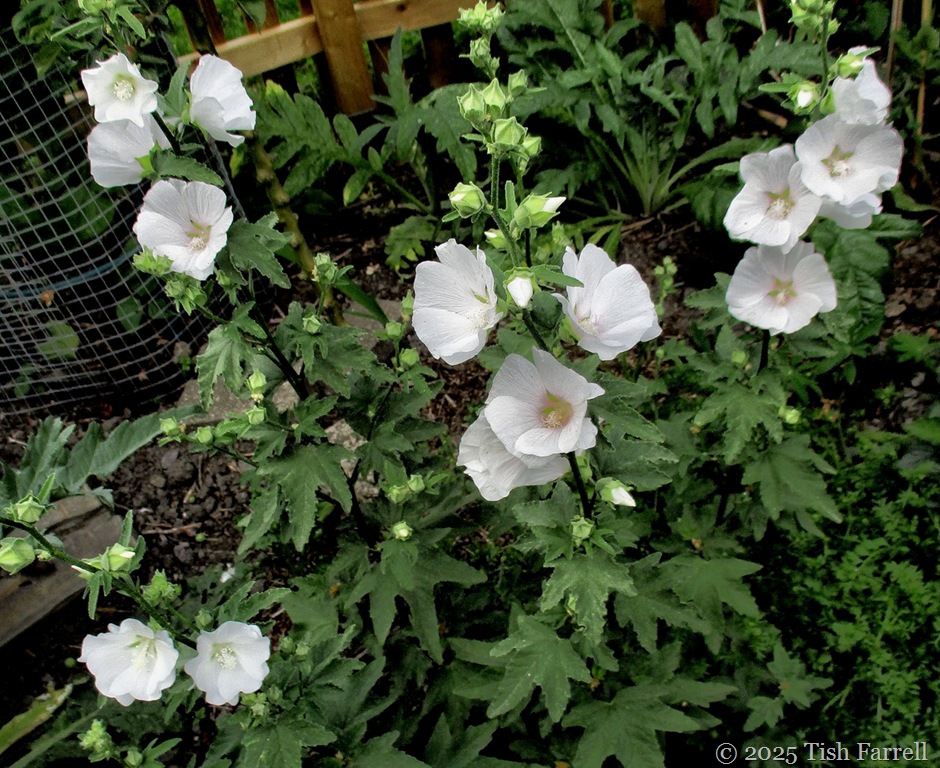
And another cool looking plant that’s just started to flower. A white mallow. She’s been in several spots around the garden, but is now in the rear westerly corner, behind the Rooster potatoes and in front of a very nice miniature crab apple tree. The moves seem to have left her unscathed:IMG_8011 Mallow

*

At the front of the house we have two biggish square beds, created after removing ugly paving (recycled into shed base and new back garden steps), but they are very much a work in progress. In the southerly one, I have some currently very small shrubs growing on, a couple of escallonias and a cistus, and in the meantime there’s a mix of herbaceous perennials and annuals, cosmos and zinnias, filling the spaces.

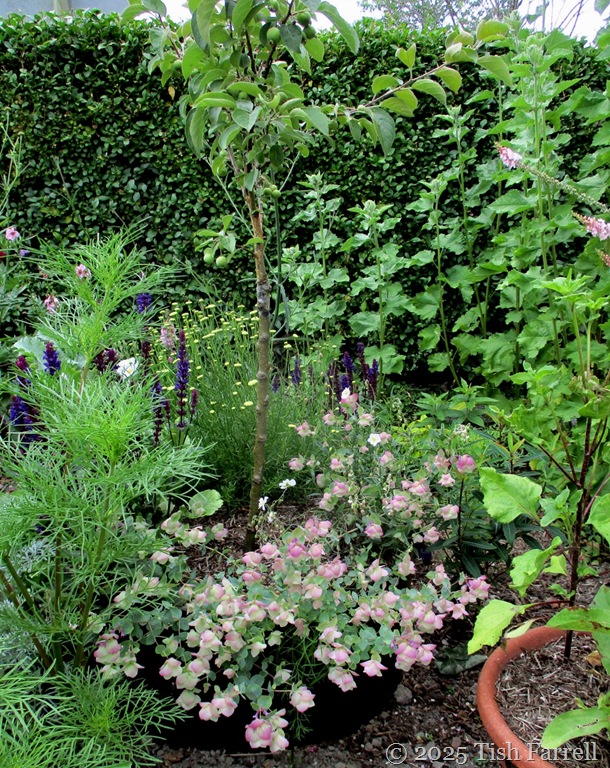
I was missing my Evereste crab apple tree, and managed to find a miniature one. It’s planted in a small circular raised bed of corten steel which I’m expecting to rust. Around it are some assorted small plants, including a white rock rose and Santolini rosmarinifolia, which are evergreen, Salvia Salavatore, and a trailing plant, Oregano Kent Beauty (centre front). This last was a wonderful plant discovery courtesy of Jude at Cornwall in Colours. I’d never seen it before I saw it on her blog. It really seems to like our garden, so thank you, Jude.

IMG_8047 front garden

In the background right, not yet flowering, are three alcalthaea – a cross between mallow and hollyhocks. They are apparently short-lived perennials, but we’ll see. Last year they grew very tall and had to be curtailed, but their peachy pale flowers were very pretty.

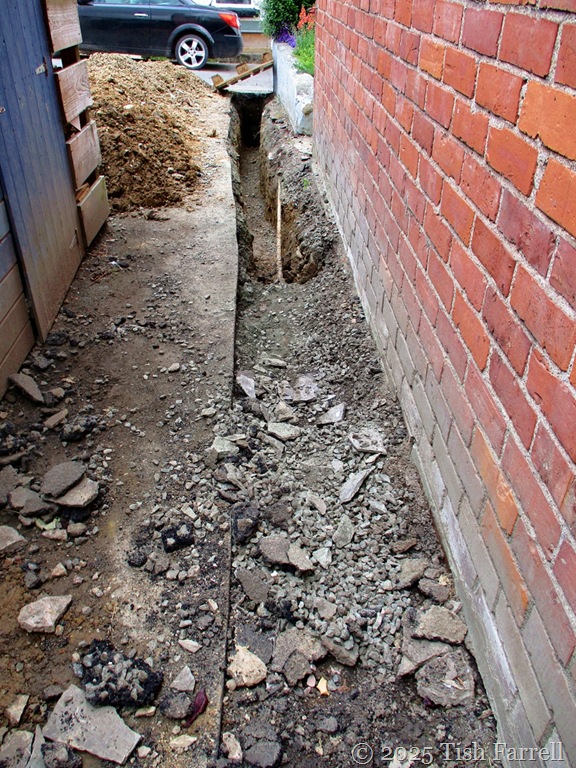
Plants apart, the main activity in June was having our drive dug up by Justin, Bishop’s Castle’s professional excavator sans pareil.  He mostly had to use a pick, this because the exact location of our water main pipe was uncertain. And this was happening because we wanted our rusted hundred year old, cast iron water pipe replaced with a plastic one. To say this was one heavy duty task is an understatement. Order is restored, but the drive now needs to be resurfaced.

IMG_7729 water pipe

*

Out beyond the garden gate:

A week last Sunday in Bishop’s Castle we had midsummer celebrations in the form of a gathering of Morris dancing troupes, local and further flung. They started on Sunday morning with rousing performances and much drumming at the next door care home, after which they streamed up the road past the house to continue performing at the top of the town. Later when we tried to drive out of the town by our usual route, we found the road ahead full of dancers and musicians, and were advised that they might be there for some time and so would we mind making a detour. We didn’t. It was all good fun and surely makes a change from having multiple local roads closed for cable laying.

IMG_7916 midsummer morris

*

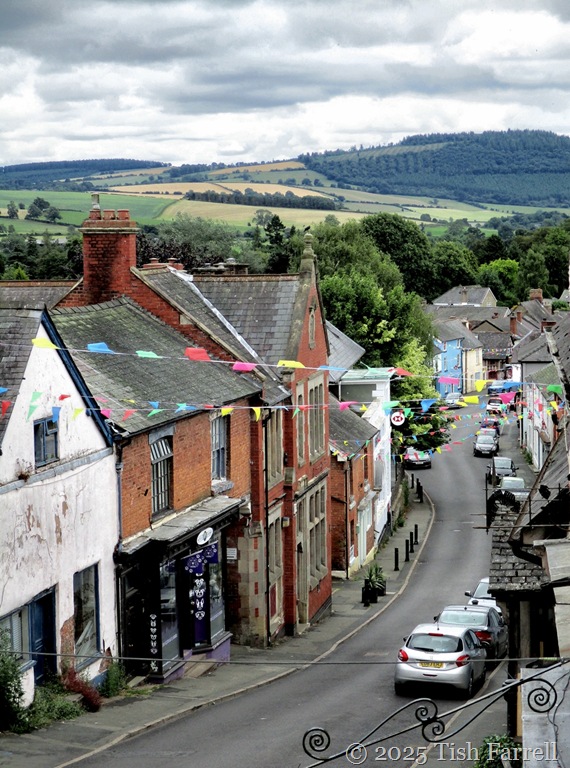
And yesterday (Sunday)  we treated ourselves to another local institution – climbing to the top of the town to visit the House on Crutches Museum. (I forgot to take a photo of the outside so click on the link to see it). We hadn’t been for two years, but it’s a wonderfully quirky collection, revealing many aspects of Bishop’s Castle history, in particular how it featured on  the ancient drovers’ route out of Wales, a way of life and of making a living that survived some 800 years. At the top of the rickety stairs that we both managed to fall up, I stopped to take this view down the High Street: a sleepy Sunday in Bishop’s Castle.

IMG_8065 Biahop's Castle high street

*

Today as I write this, on the last day of June, we are having our hottest day so far this year, apparently 29 degrees C (84 degrees F) at 3 pm this afternoon at Shropshire’s weather station in Shawbury. Now at 6 pm it’s 26 degrees in the house, but there’s a pleasant breeze in the garden, as there has been all day. Tomorrow, temperatures begin to fall, and in fact by next Sunday it will be 12 – 15 degrees C, this according to YR the Norwegian Met Office, which is pretty good on UK weather. And this may also mark the beginning of rain. At last!  Yesterday, we had a few sprinkles and the plants all stood up tall, as if expecting a good drench. They were duly teased.

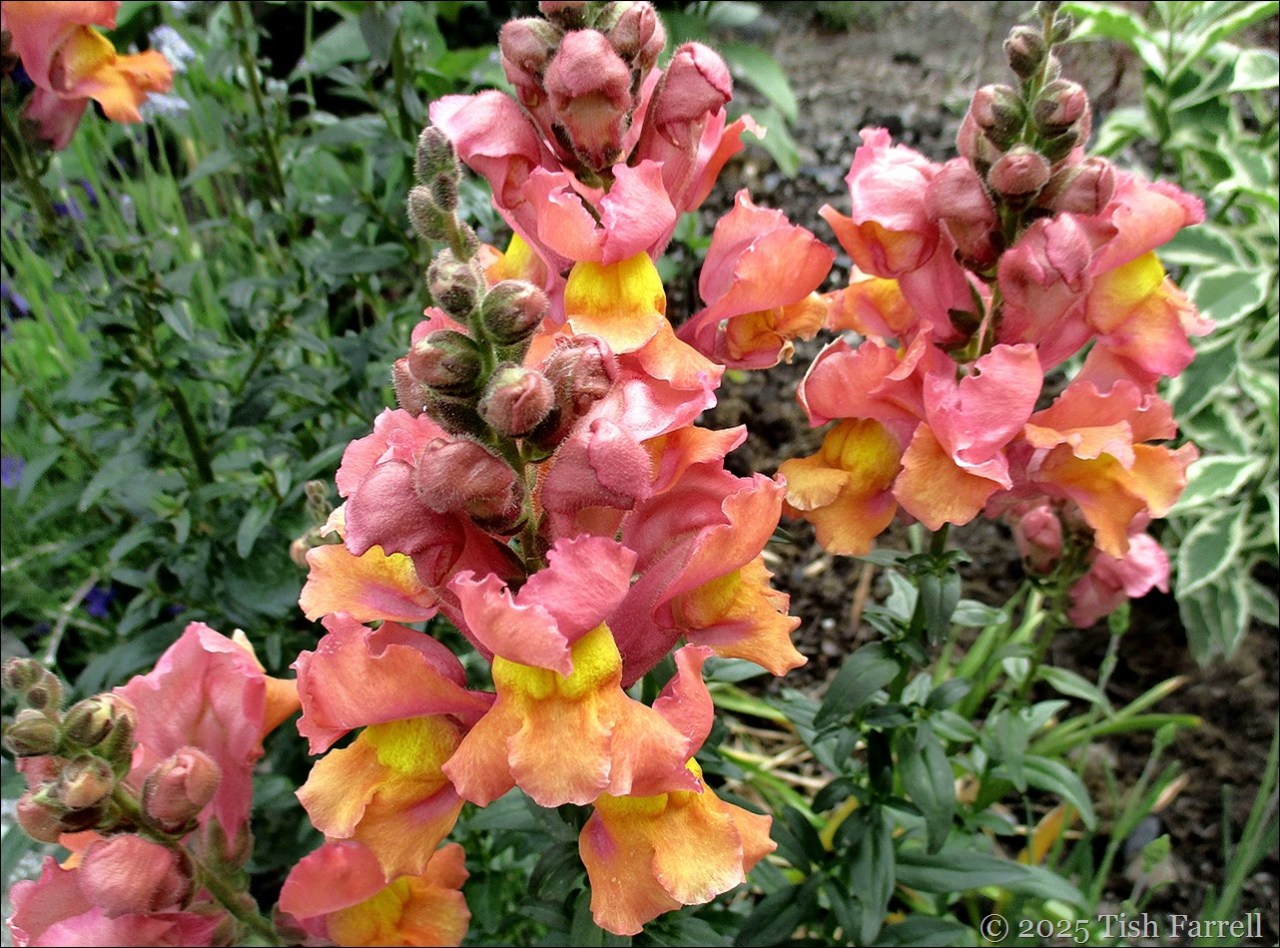
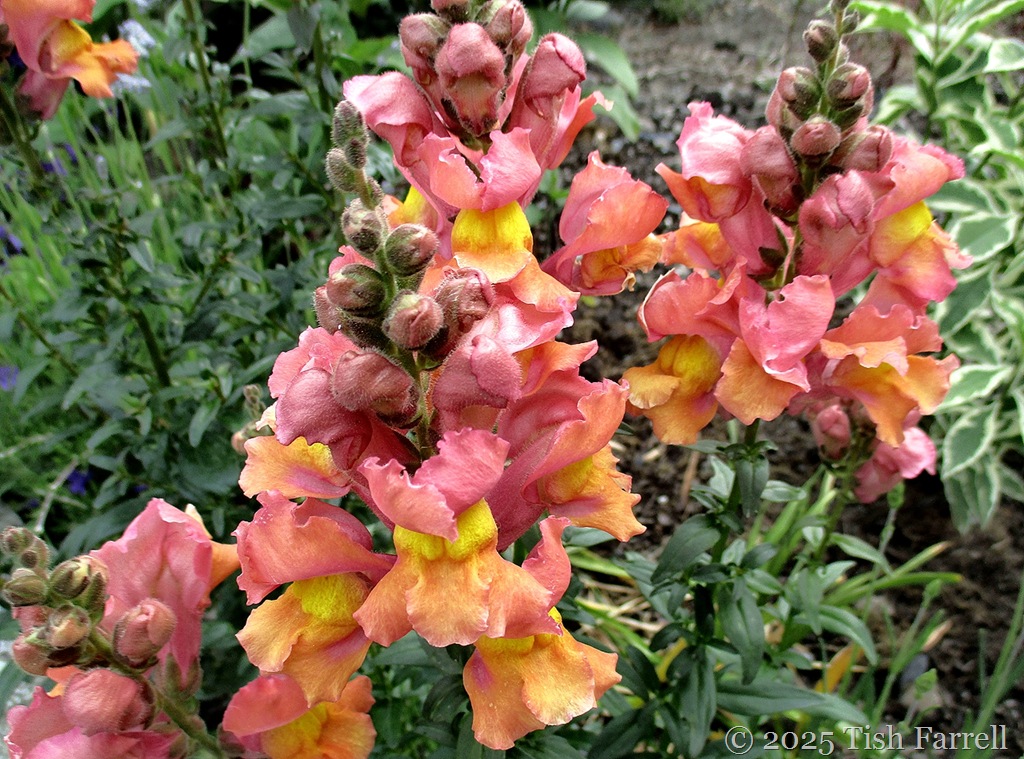
IMG_7757 snapdragon

And so I’ll round this up with a shot of the snapdragons that have flowered heroically all through June, and with not a drop of water from me. They are pretty much over now and making lots of seed. I think I’ll give them their heads. Next June I could have a whole bed of snapdragons. How wonderful would that be.
*

The Changing Seasons is hosted monthly by Brian at bushboys world and Ju-Lyn at Touring My Backyard. Please pay them a visit.


IMG_7792 wall border header