Six On Saturday ~ Produce!

IMG_7953 back garden

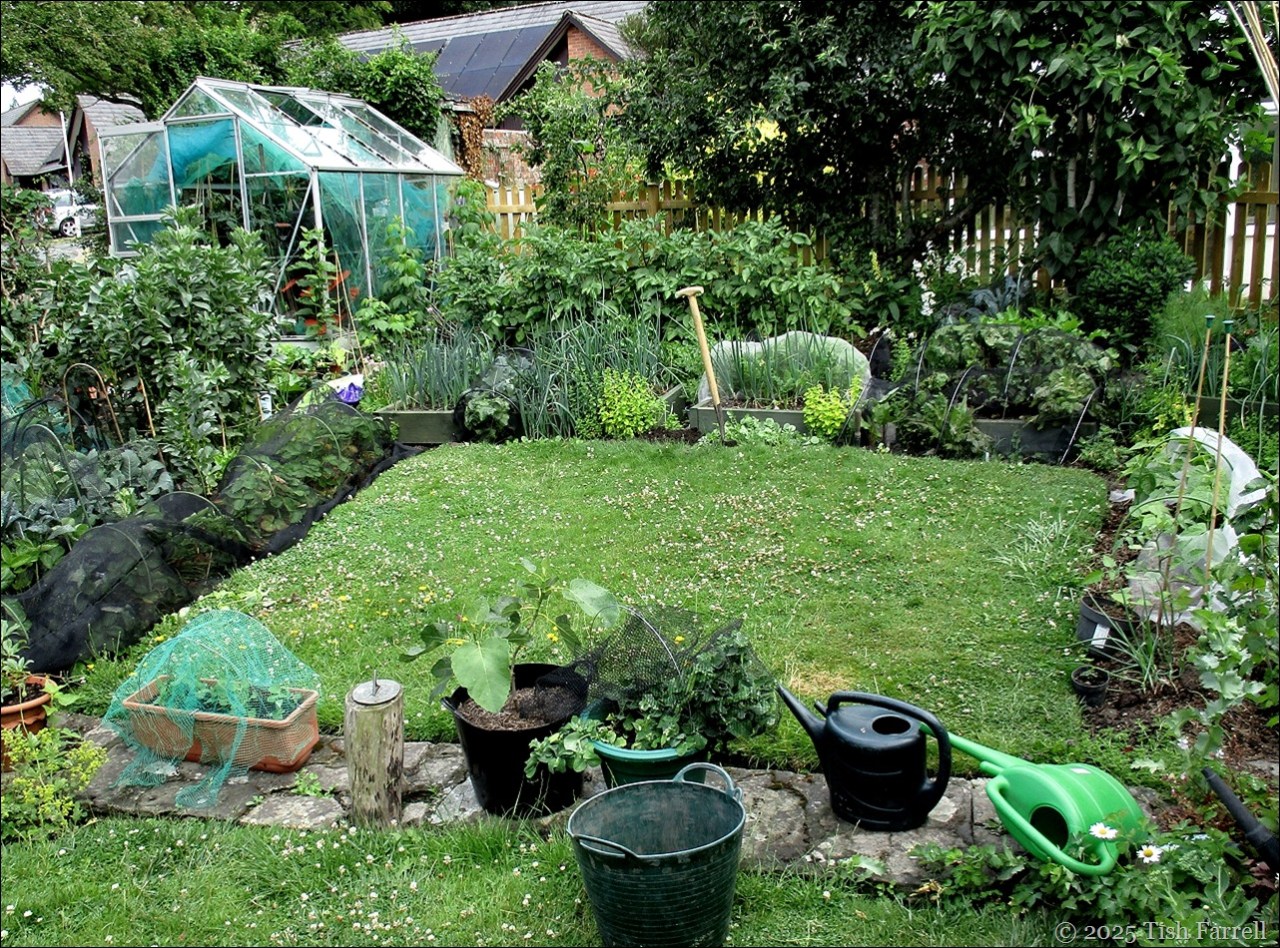
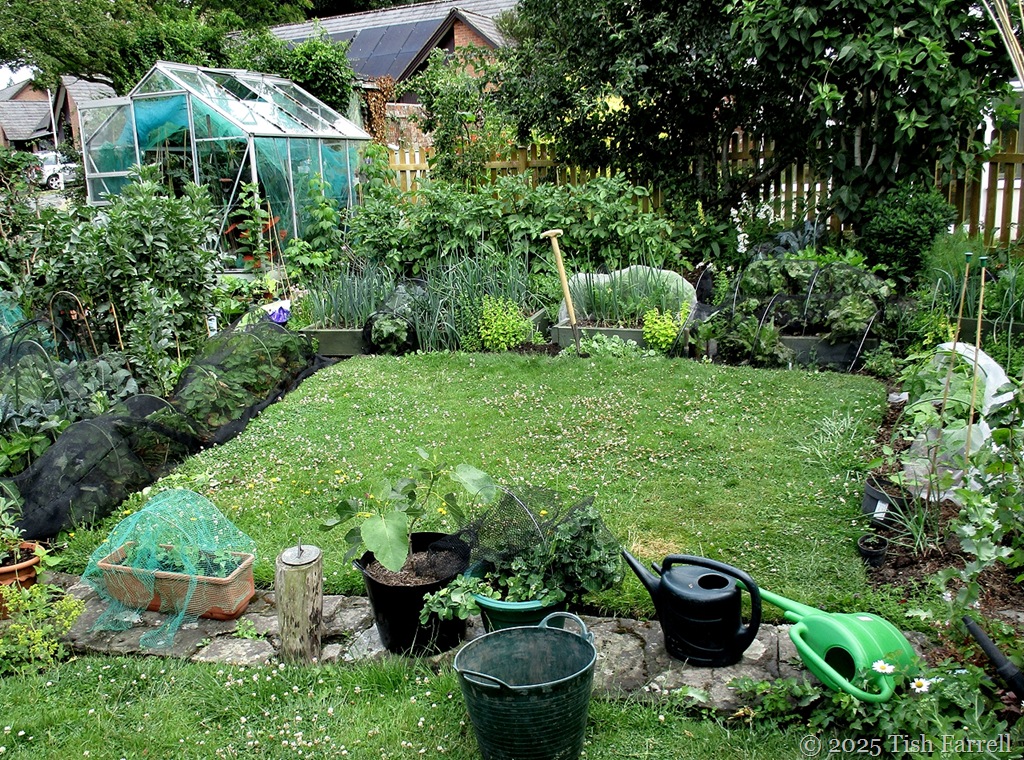
As you can see, the ‘upstairs’ garden behind our house is really rather modest. And here, currently, and probably for the foreseeable future, chaos reigns; this courtesy of a gardener who still thinks her growing spaces comprise two seventy by 15 foot allotment plots  plus the home garden with its adjacent stretch of ‘guerrilla gardened’ field over the back fence. Heigh ho! Those were the days when we lived beside Wenlock Edge.
IMG_7954 back garden 2

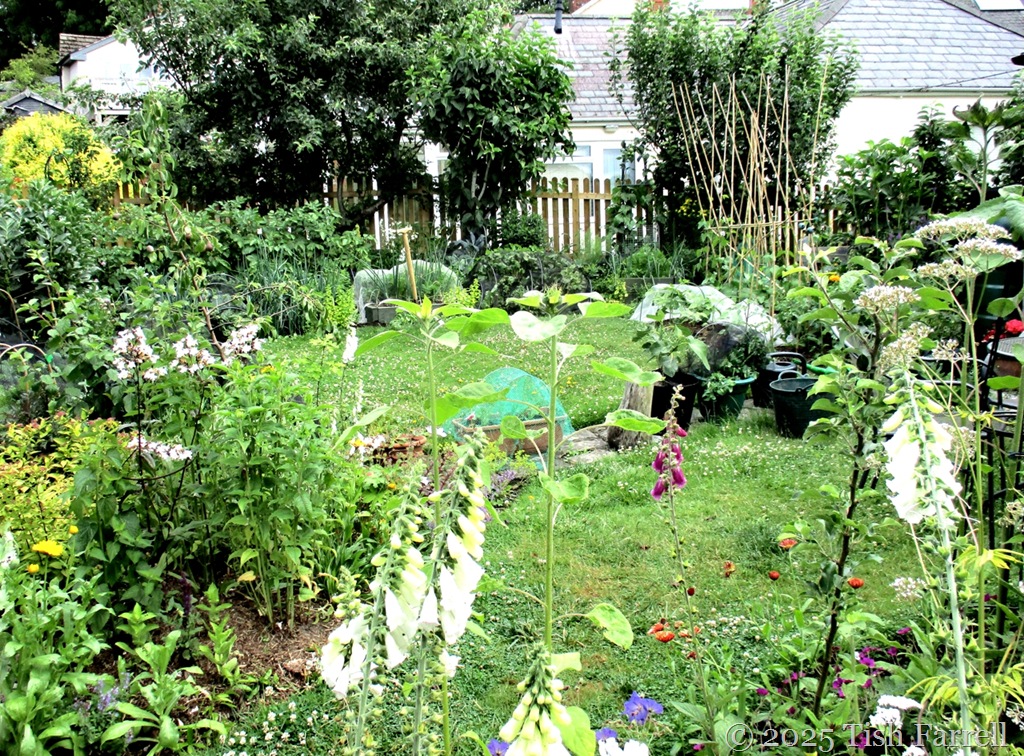
Now, mostly settled in our new home, I do know I must cut my cultivating cloth according to the physical means of production. (The lawns, though, do seem to keep shrinking). Also this year there’s been the matter of watering through the mostly rainless months of spring and early summer. This has been quite hard work. (I know mulching is much of the answer, but my hot compost bin can only yield so much stuff, and so far it’s spread rather too thinly). And then there are birds and cats and insects to contend with which means everything edible has to be netted, which is not very attractive. So, as I say, chaos presently reigns, but with a few organised segments in between.

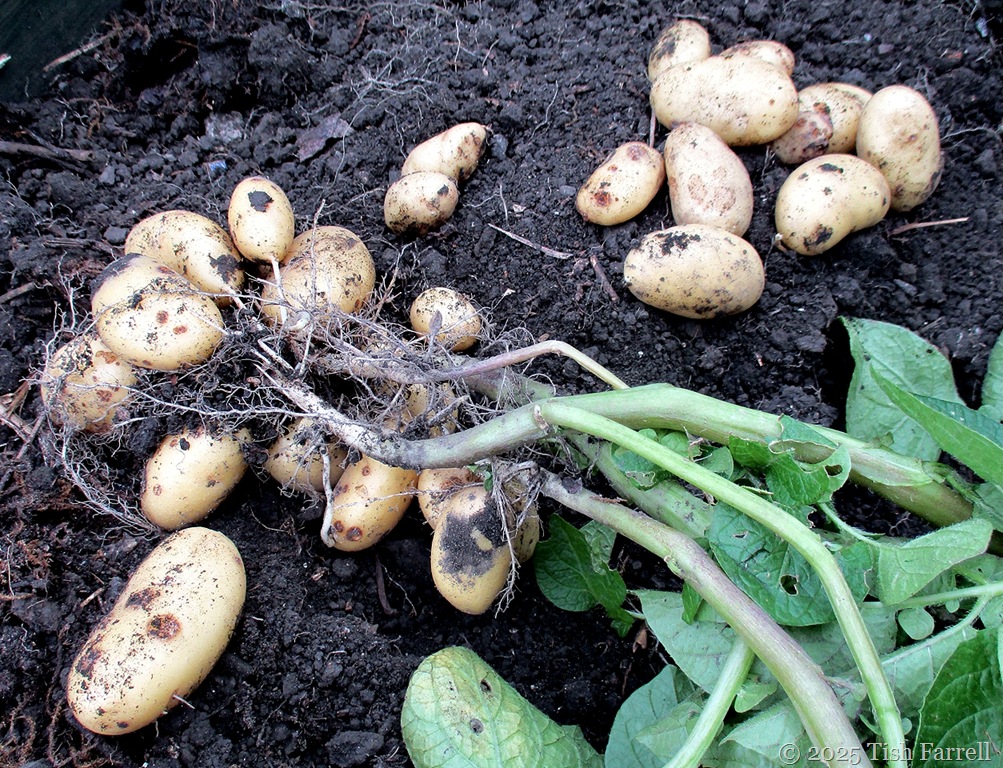
1.) The first of these to produce excitement in the Farrell household are the two short rows of potatoes. They were planted at the end of March, ten in each row. Even with little rain, and not much watering, the Belle de Fontenay have produced some lovely salad potatoes. (They’re also a main crop variety if left longer, but that’s unlikely to happen).
IMG_7943 belle de fontenay 2

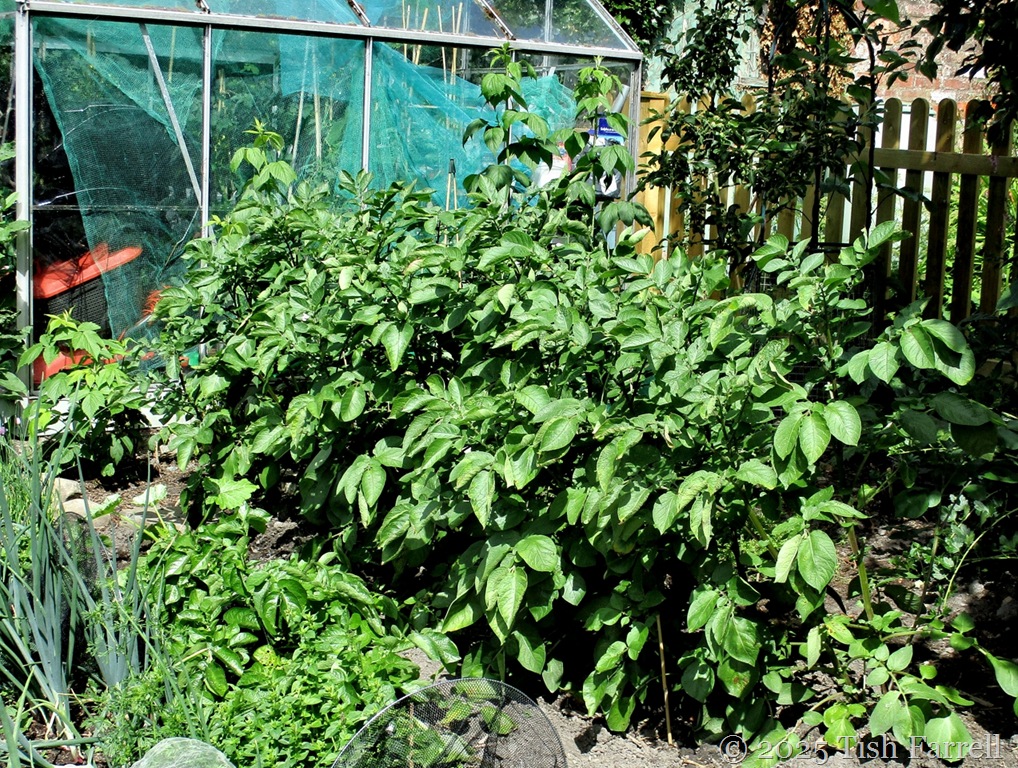
Behind them is a row of Rooster red spuds, also main crop. The plants have grown astonishingly tall, given the weather, while the Belle de Fontenay have flopped flat in front of them. I think the Rooster must have commandeered the downward flow of any available groundwater from the hill above.
IMG_7971 rooster potatoes

*

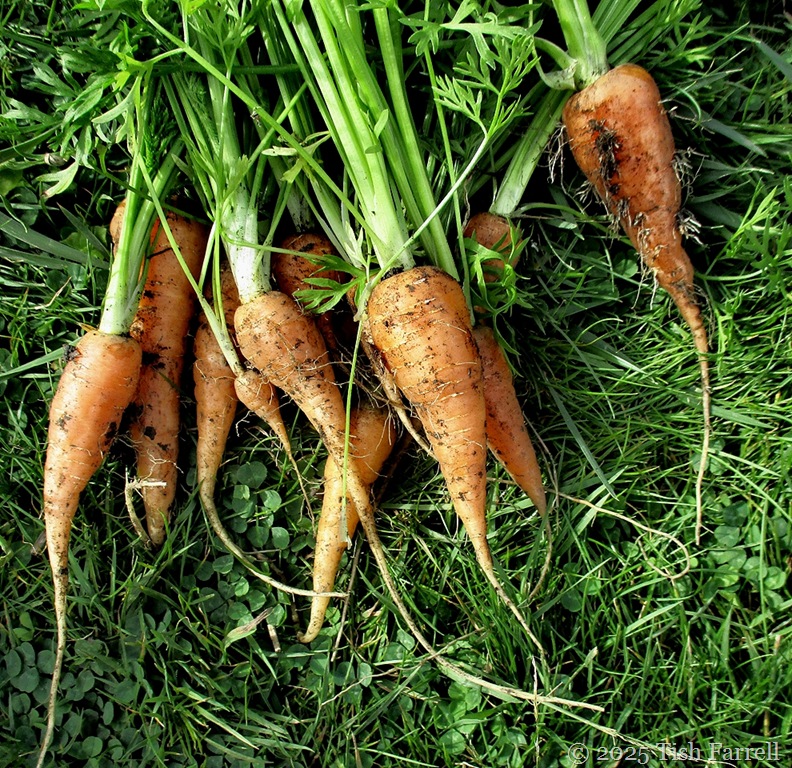
2.) The next excitement this week was a bunch of carrots, and not a single sign of carrot root fly in any of them. I have attempted to protect the rows by growing them in a raised bed, between onions and covered with some fine mesh. Last year all my carrots were root-flied.
IMG_7964 carrots

*

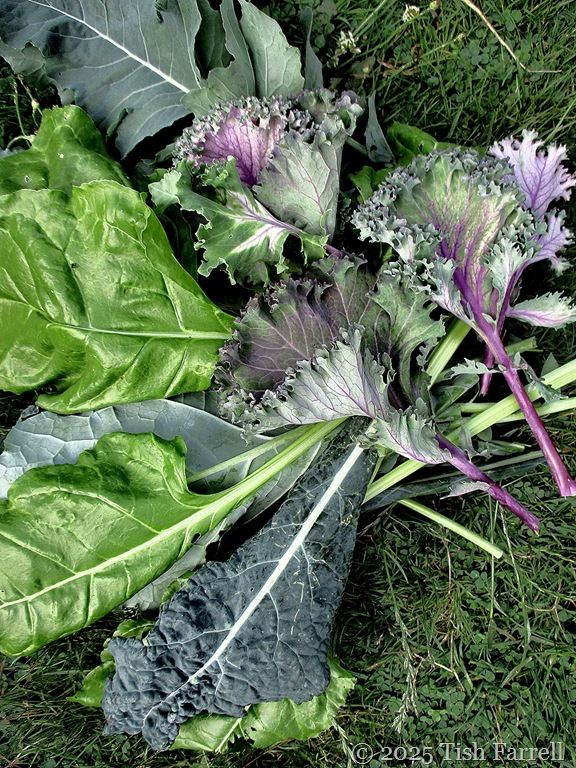
3.) We eat a lot of greens, and this year I’ve grown some different varieties of kale, including, pink frilly, Tuscan, and a crossed Tuscan and Daubenton’s perennial kale, the seed produced by a forest gardener on eBay. (There’s also some Swiss chard in the bunch below.) I know kale isn’t to everyone’s taste, and I’ve yet to try this, but I recently learned you can roast it till crispy. This involves ripping up the washed and dried leaves (without the stalks), tossing the pieces in oil, spreading them on a baking sheet and cooking for 15-20 minutes in a fairly hot oven. Sesame seeds and favourite spices along with sea salt and black may be added.
IMG_7965 greens

*

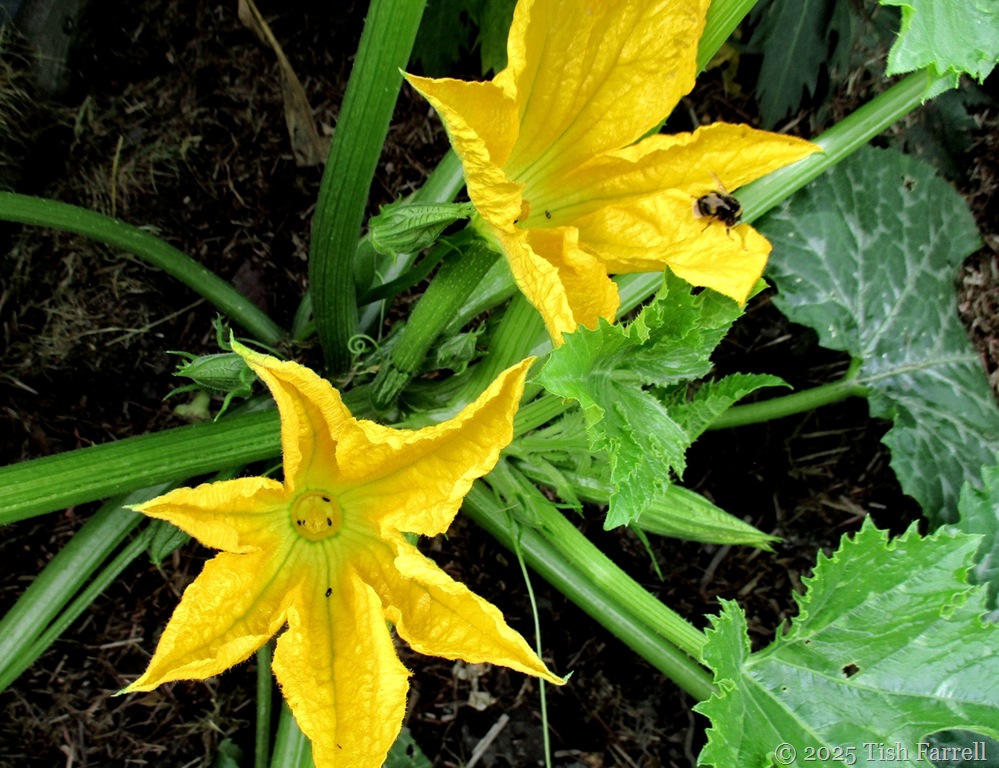
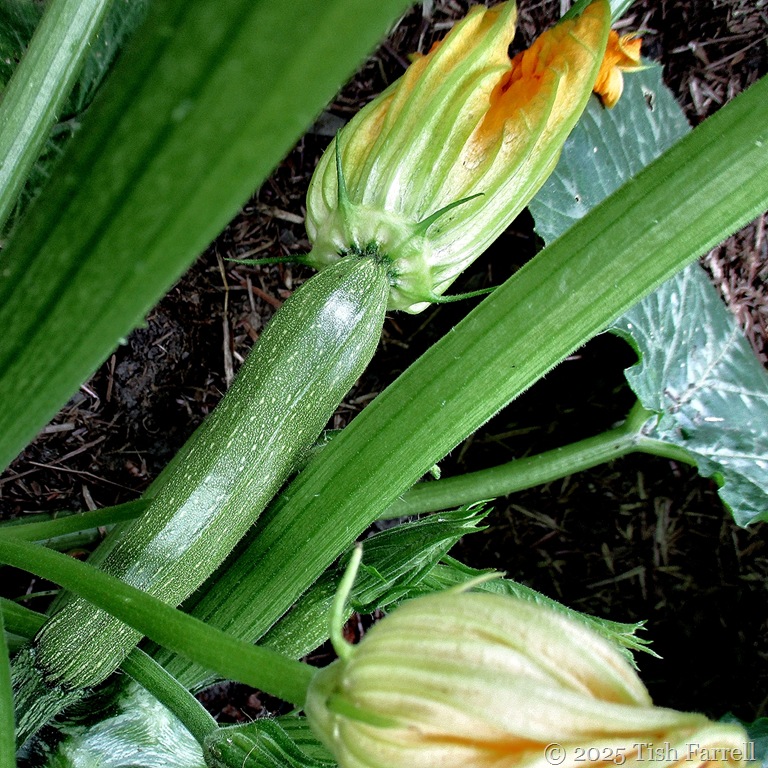
4.) Yesterday we ate our first homegrown courgette (zucchini), and very nice it was too, sliced and lightly browned in the fat from cooked lardons and then added to a salad.IMG_7999 courgette 2
IMG_7982 courgettes

I put the plant in beside the compost bin, a position that clearly is suiting it. I have some yellow courgettes coming on nearby.

*

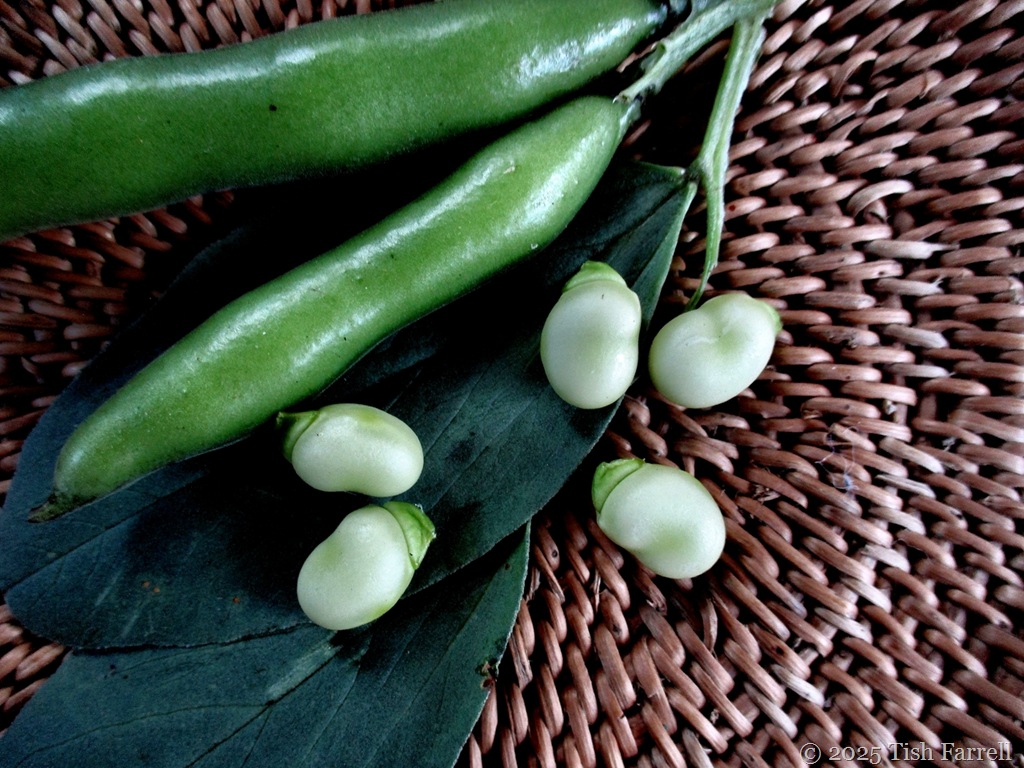
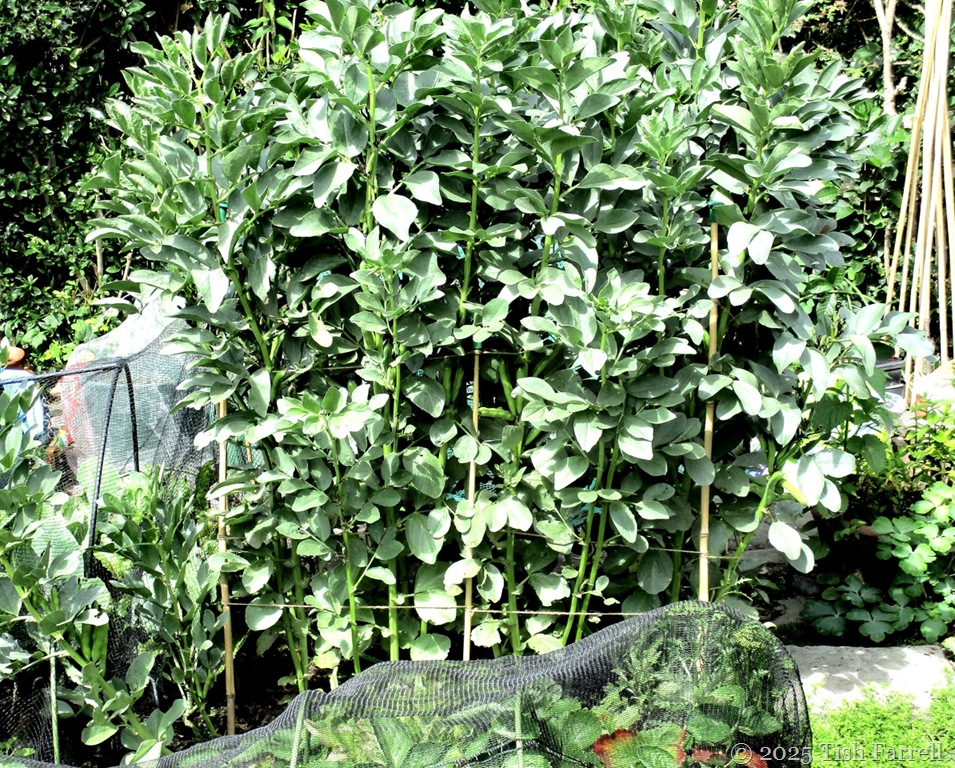
5.) Also in last night’s salad were the first of the field beans. These are a variety of broad (fava) bean, grown mostly in the UK as animal feed or as a green manure, ploughed back in the soil before producing beans. This, I feel, is a lost opportunity. The plants grow four or five feet and taller, while the beans themselves are little bigger than peas. But then the plants are prolific, and so ideal if you haven’t a large enough space to grow their bigger cousins. My field bean plot is around a square metre/yard.

They have anyway, become something of a summer staple in the Farrell household. Picked at the right moment they are deliciously tender and can work as a rather good imitation of guacamole. If they get over-ripe and a bit floury, they make excellent soup and refried beans. The downside is they are fiddly to pod. But then the mass of little pods is good fodder for the hot compost bin, as is all the vegetation (chopped up) when the plants are done.

IMG_7977 field beans 2

IMG_7975 field beans 3

IMG_7992 field beans

*

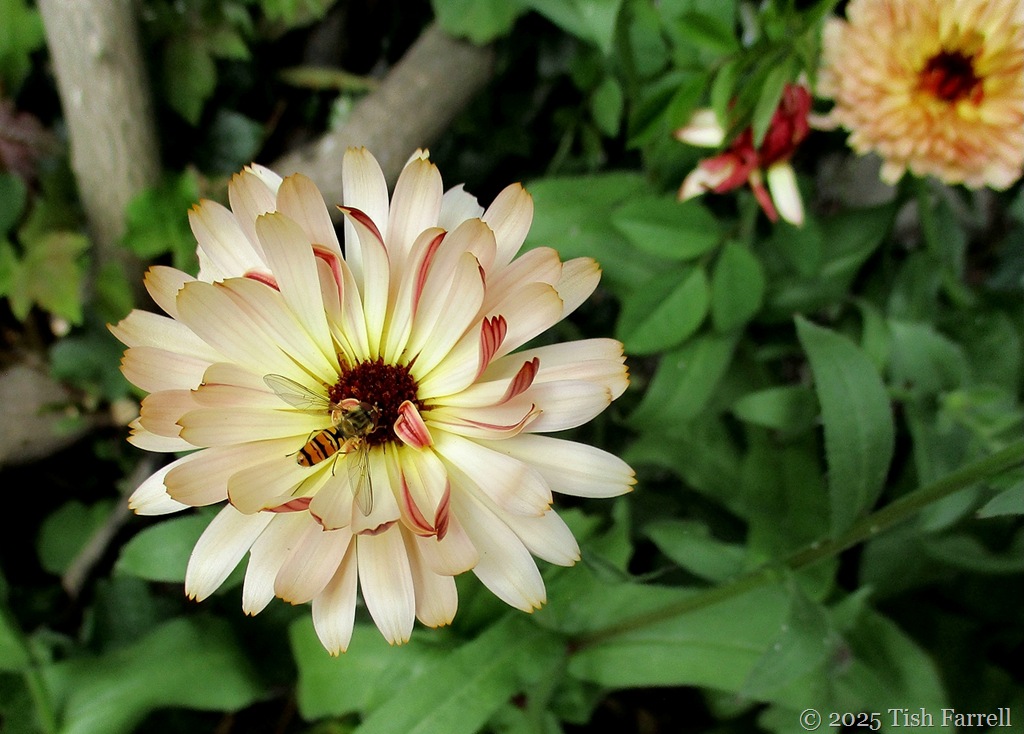
6.) Last but not least on the garden foraging front are the marigolds (Calendula officionalis). I use them in herbal tea. They contain all sorts of therapeutic properties, known and made use of for a couple of thousand years. But mostly I add the petals to salads, taking care not to include any passing hoverfly. This particular variety is called Sherbet Fizz. We also have lots of self-seeded bright orange and yellow ones from last year’s crop. I love them all. They have to be one of the most heartening of flowers. Simply to gaze on them lifts the spirits.
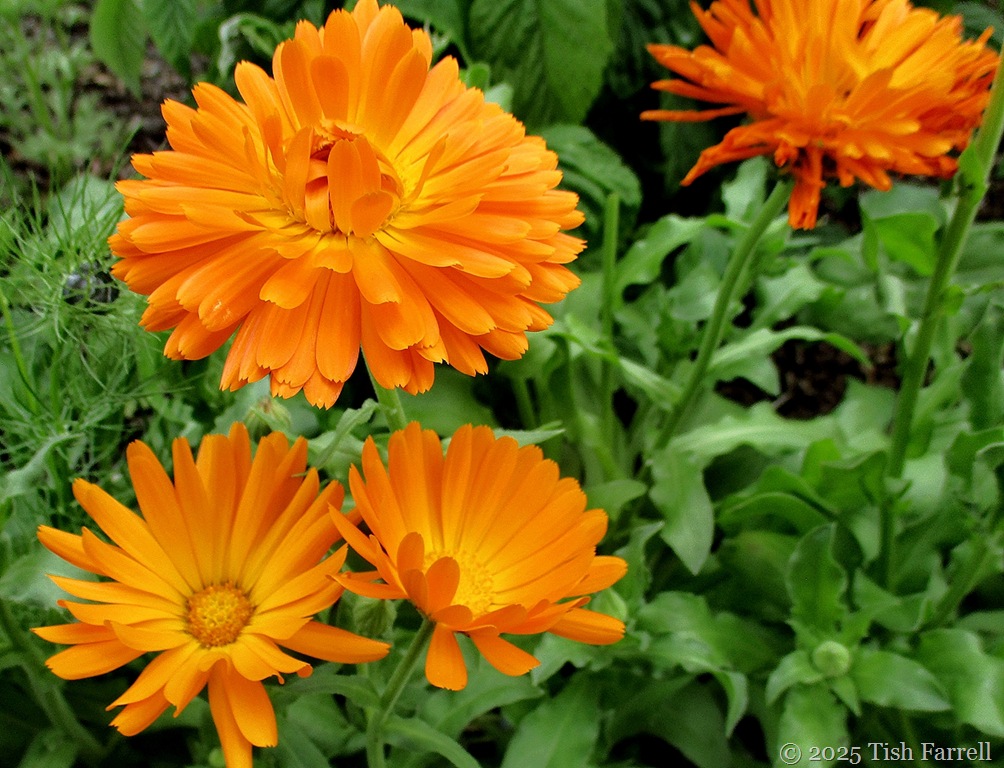
IMG_8007 marigold sherbet fizz

IMG_7961 marigolds

Six on Saturday: Please call on Jim. There’s always lots to look at and discover in his Cornish garden.
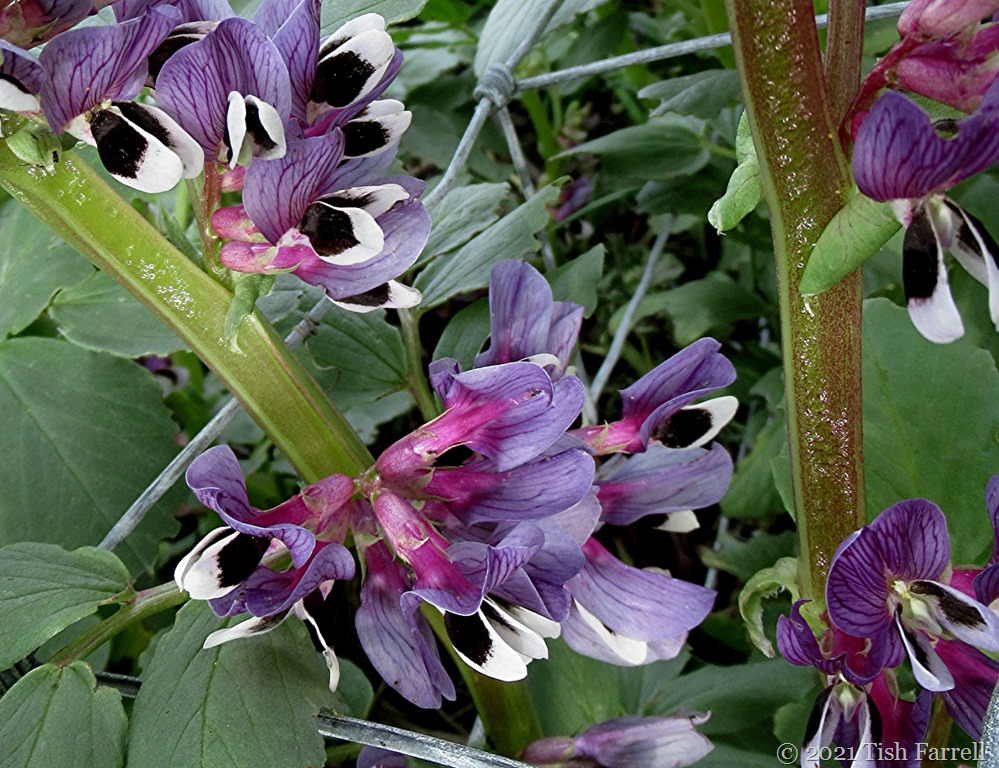
Purple on the plot: bean flowers

IMG_3462

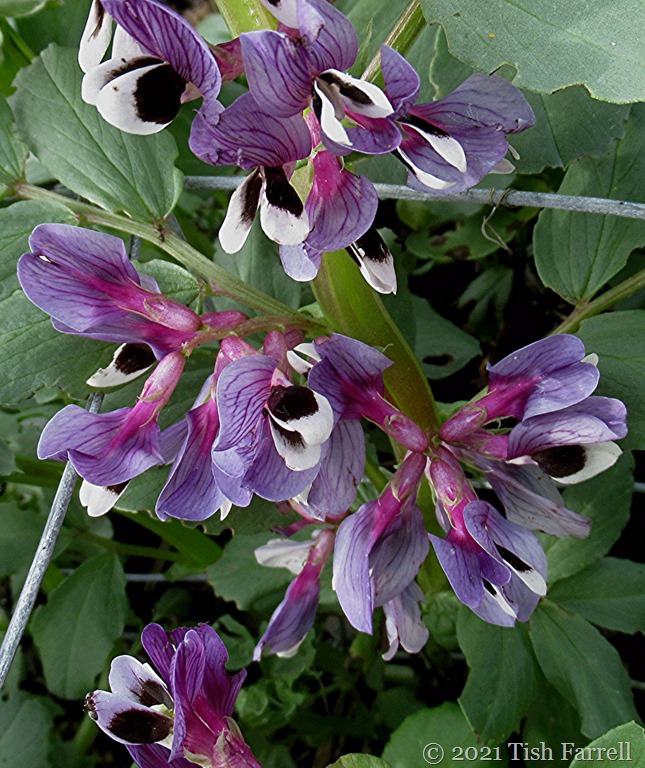
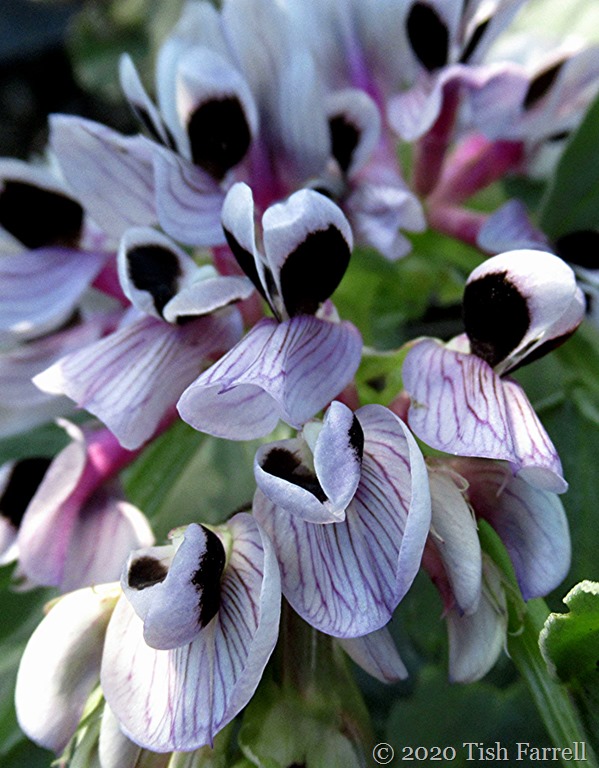
Aren’t they amazing! I was astonished this week when I saw the colour of this year’s field bean blossom. They’ve never turned out like this before.

The beans were sown back in October and the plants were around six inches (15cm) tall when winter struck. I was surprised how well they survived the recurring frosts.

Once they start flowering, they often put on a growth spur which means staking may soon be required. One year they grew nearly as tall as me. But in any event, by early summer each plant will produce a mass of small pods with miniature broad (fava) beans inside.

They are usually grown by farmers for animal feed. They also make good winter cover to protect the soil, dug in the following season as green manure. This is done before flowering. Which means NO BEANS. Which would be a shame. They are delicious (if you like broad beans) and make a very tasty version of humus. Also good for the Tex-Mex refried beans approach. But for now we can just admire the extraordinary flowers. I’m only sorry I can’t pass on their wonderful scent.

IMG_3465

Life in Colour: Purple

Six Word Saturday

Magic Bean Flowers!

IMG_7640

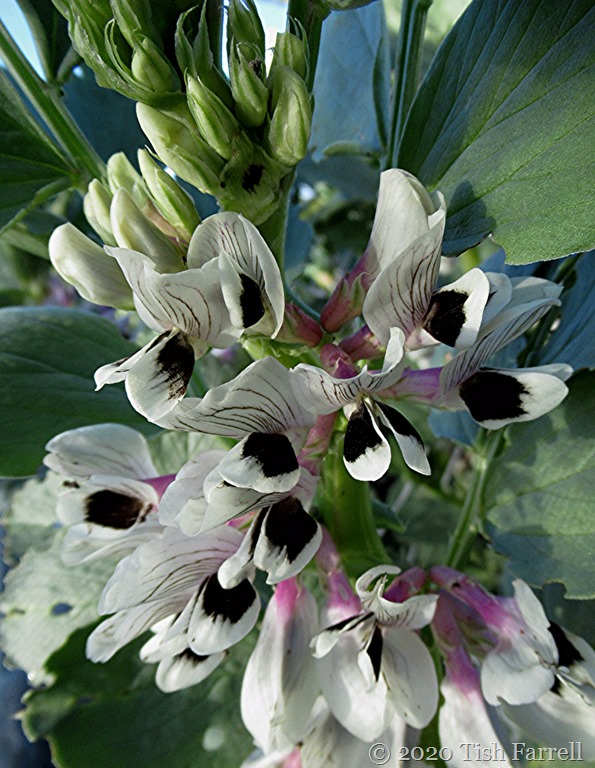
Well they have to be don’t they – magic that is – sporting such snazzy attire. These are the flowers of Field Beans Vicia faba, the same species as Broad Beans. They are usually grown in the UK as animal fodder or a green manure – the latter being sown in autumn and then dug in prior to flowering in the spring. This seems a huge waste to me. The beans produced are less than half the size of their bigger culinary cousins, but the plants are prolific with bundles of pods per stem. In fact (as with Broad Beans) you can harvest the young pods and steam them whole. If you leave the pods on the stem too long the beans can become a bit floury, but then they are excellent for soup. The young beans (Field or Broad) also make their own tasty version of guacamole (I have tried it out on foodie chums who thought it delicious), though it’s a bit fiddly as you need to steam the beans and then remove their outer pale shell before blitzing the green innards with olive oil, garlic, lime and herbs. There’s a recipe HERE.

IMG_7641

Bees of course love bean flowers however they come. And of course for us humans they have the most alluring fragrance. When I was taking this photo I also noticed the flowers lower down the stem had already been pollinated and were forming tiny pods. So the bean feast will not be long in coming. In the meantime you can also lightly steam the plants’ growing tips as a green vegetable. It’s anyway advisable to pinch them off about now to discourage blackfly assaults, so they may as well be added to the supper menu. Magic all round then.

And here are some with purple striped petals:

IMG_7638

Never Mind Jack And The Beanstalk

IMG_5172

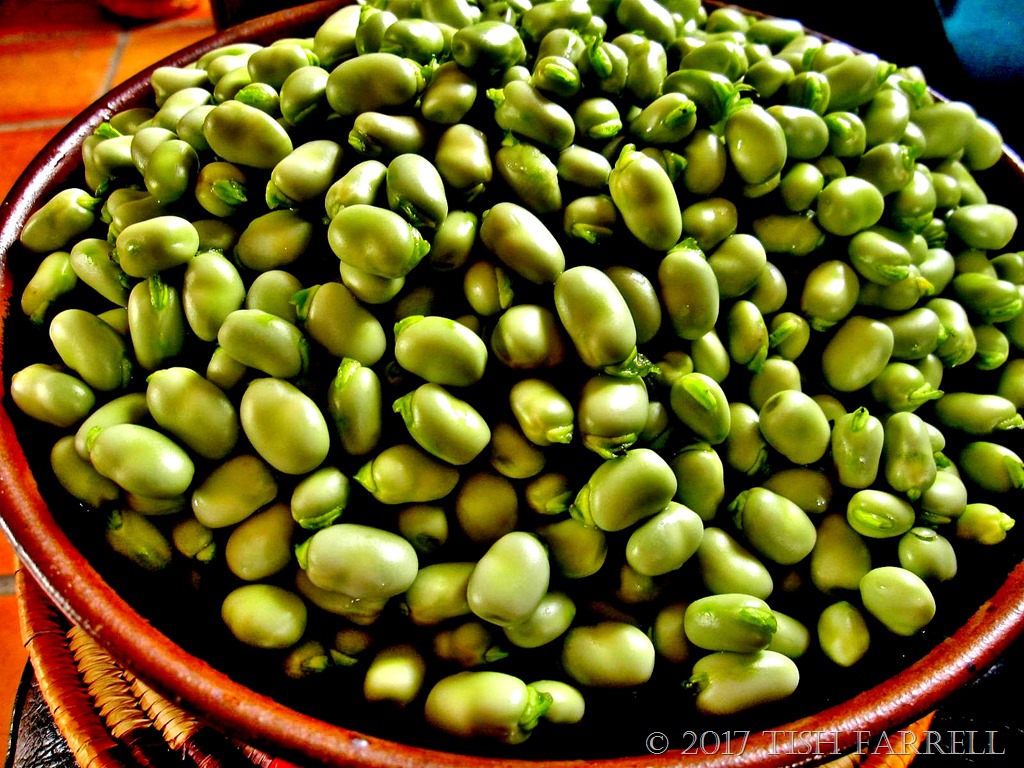
See what I grew from a handful of bean seeds – four pounds of shelled Field Beans from one square metre of raised bed (excuse the mixed metrification). For those of you who do not care for Broad Beans, these are their much smaller, juicier cousins, although they are all known as Vicia faba, faba or fava beans.

They are one of the oldest Old World vegetables, their remains found on ancient Neolithic settlements in the Near East, where their cultivation probably originated some 8,000 years ago. From there they spread across Western Europe and North Africa. Today, of course, they are perhaps best known as a staple of Egyptian cooking, the dried and rehydrated beans forming the basis of falafel.

I use them to make soup, or refried beans or a bean version of guacamole which is surprisingly convincing. Otherwise we just eat them steamed with melted butter and chopped parsley, or add them to a green salad with a vinaigrette dressing .

In the UK this small-beaned cultivar is usually grown as a green manure, or as animal fodder. As green manure it is good for breaking up heavy, clay soils. The seed is sown in autumn (September to November). The plants will germinate quite quickly, and are left to over-winter. In spring, once they have shot up to about half a metre or 2 feet, and before it flowers, you are supposed to dig them in. By then the roots will be quite deep, and they also have the added benefit of fixing nitrogen. A good follow-on crop would be cabbages or broccoli, or any brassicas.

I prefer to grow mine to eat. Not only that, they have wonderful flowers that waft their scent over the allotment in late spring and get the bees very excited. The plants require no attention. Slugs don’t care for them. I grow them in blocks which tends to make them self-supporting, so I don’t add string supports as you need to for broad beans. I don’t feed them or even water them, not even in our increasingly arid springs. I do, however, pick off all their growing tips at the end of May to discourage black fly invasions.

100_5619

Growing Field Beans to eat seems to me like a win-win-win situation. They feed me and He Who Is Presently Building A Shed; they feed the bees; they feed the soil. They also freeze well, and there will be enough to dry to sow in autumn for next year’s crop. And then there’s all the top growth to add to the compost heaps. You  may perhaps have noticed the bean weevil damage on the leaves. It is one of many endemic pests at the allotment, but their nibbling doesn’t seem to affect the crop. So now please conjure the sweet, subtle fragrance of bean flowers. There is no scent quite like it. Aaaaah…magic beans!

Copyright 2017 Tish Farrell

Six Word Saturday

Please pop over to Debbie’s place at Travel With Intent. She’s currently hosting 6WS