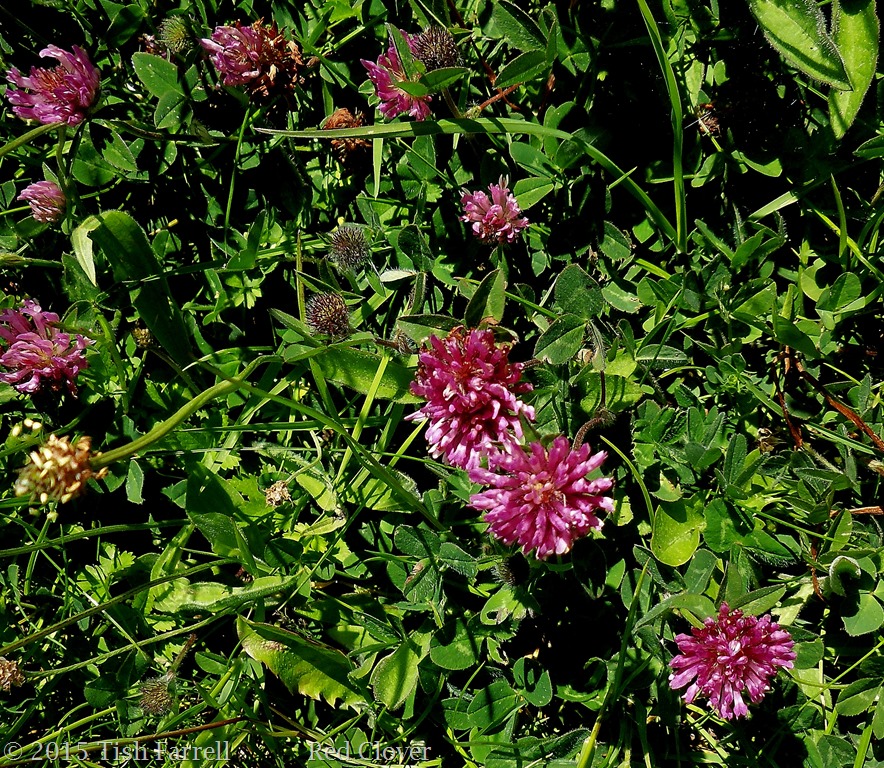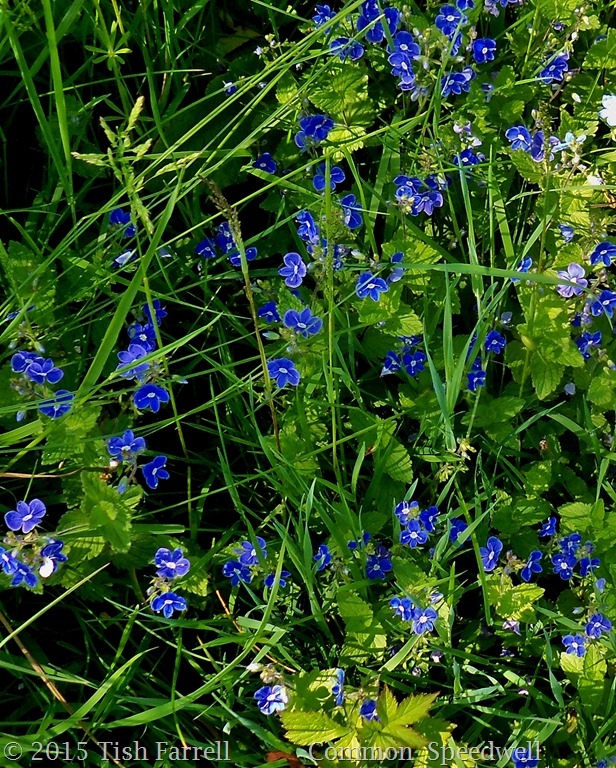
Getting down and dirty in a Shropshire meadow

100_5683

So much goes on beneath our feet, and beneath our gaze. For instance, if you want to find out what is going on in an English meadow, then you need to get down and in amongst it. There’s a whole other world down there, or maybe a thousand tiny universes. On the other hand, finding a meadow in the first place could well be a challenge. They have been dwindling since the 1920s. Mechanisation – bigger machines and bigger fields – plus a continuous drenching of agrichemicals has done for most of them. (One local landowner once told me he had to give his brussels sprout crop 14 separate dressings of pesticide).

Of course we have to be fed, but I often wonder if mass-production monoculture is the only way. I also wonder if there are perhaps still unrecognised consequences of us so radically down-sizing our natural biodiversity, and that what currently seems advanced, scientifically devised, and wealth-creating might in the end prove ill-conceived and ultimately impoverishing. But then perhaps we do not think it matters to lose potentially useful medicinal plants, or rich habitats that support a host of insects and other life forms, or to fail to rear our stock on the best and most varied herbage, both for their good and for ours.

In  Much Wenlock we are lucky to still have several limestone meadows; fortunate too that they have been officially designated Sites of Special Scientific Interest, which gives them some protection. They do need to be managed however. A meadow does not just keep itself. My father used to talk of being roped in as a lad to help with mowing the hay in his village. He said the menfolk would walk in step, spread out across the field, each swinging his scythe with an easy, even rhythm.

These days how many people know how to use a scythe without cutting themselves off at the ankles? Our surviving meadows thus require the seasonal addition of grazing animals to keep them in some sort of order, usually after the summer wild flowers are over. And of course, in the past, the hay from a wildflower meadow would have provided farm animals with a wealth of mineral nutrients and vitamins, dietary additions that humans, too, would have benefitted from, particularly in the milk they drank.

Even back in Shakespeare’s time, the consquences of mismanaged land were well understood. The following passage from Henry V  Act V Scene II is thus much cited by meadow management proponents:

The even mead that erst brought sweetly forth
The freckled cowslip, burnet and green clover
Wanting the scythe, all uncorrected, rank
Conceives by idleness, and nothing teems
But hateful docks, rough thistles, keksies, burs,
Losing both beauty and utility.

In fact the whole of Burgundy’s speech in this scene is a condemnation of bad agricultural practices – “husbandry doth lie on heaps, corrupting in its own fertility.”

All of which is to say, wherever we live in the world, we would do well to pay attention to the ground beneath our feet and to what is going on there. Our long-term health, the health of every living thing, depends on the quality of the soil. Right now most of it needs some concentrated TLC.

My home county of Shropshire is one of England’s biggest agricultural counties, with many large gentry-owned estates of ten thousand acres and more. And so, apart from the upland sheep grazing of the hill country, most farming here is highly mechanised. Of the few exceptions that still practice traditional mixed farming, Pimhill Farm is one of the most noteworthy. It has been managed organically by the Mayall family since 1949 – wheat, oats and dairy – so it proves it can be done. Their oat products are fantastic. Even their humble, savoury oatmeal biscuits taste out of this world, and porridge made from their oats is unbelievably creamy (no milk needed). You can read the Pimhill story by following the link.

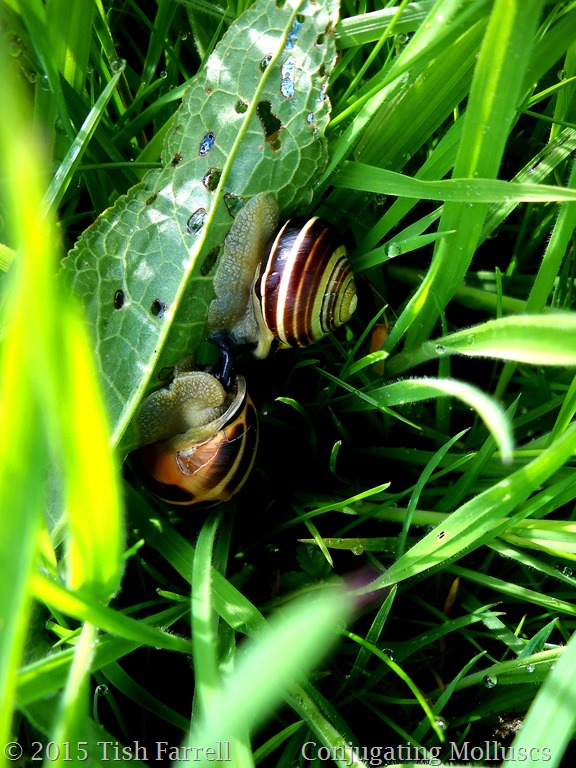
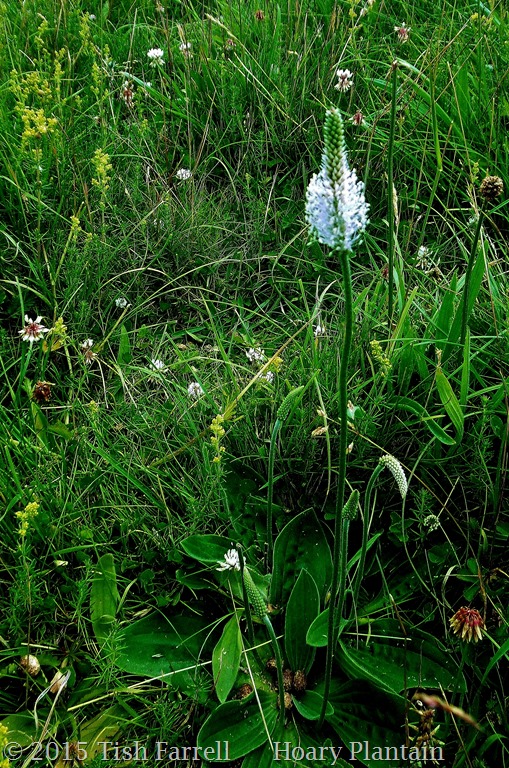
And now I’m putting my soap box away in order to get down in the dirt in my local meadow on Windmill Hill. Please also imagine the sweet and subtle scents of grasses, thyme and Lady’s Bedstraw that may only be fully savoured by lying down with them. First, though, look out for the snails:
100_5451

P1010617

100_5651

100_5460

100_5985

100_5950

copyright 2015 Tish Farrell

Beneath Your Feet

#PimhillFarm #organicfarming

Bumbles in my borders

P1010778

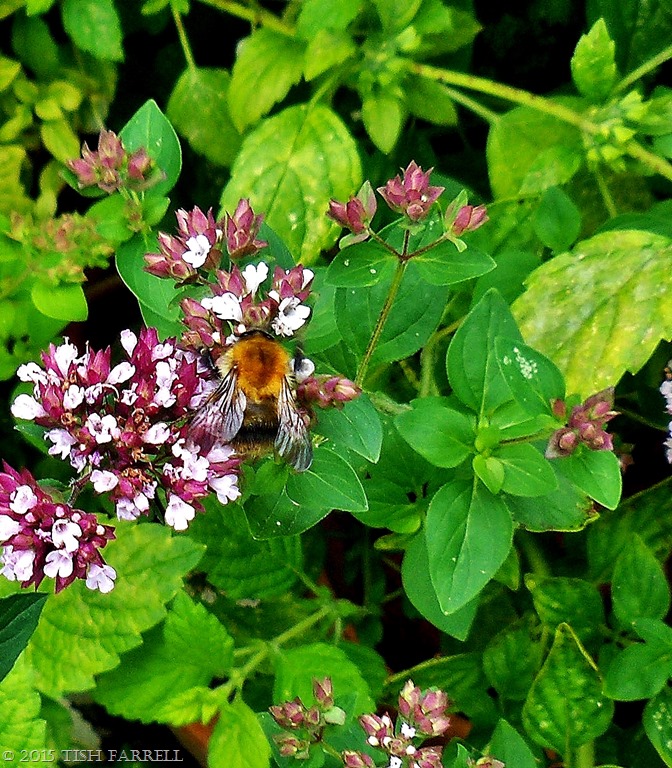
A couple of summers ago we took out a length of hedge between our back garden and the field. It was a thicket of alien snowberry and overgrown ash tree seedlings, and a nightmare to cut. Now we have a simple fence, a rampant herb and wildflower garden that grows itself, and a view.  We also have masses of bees.

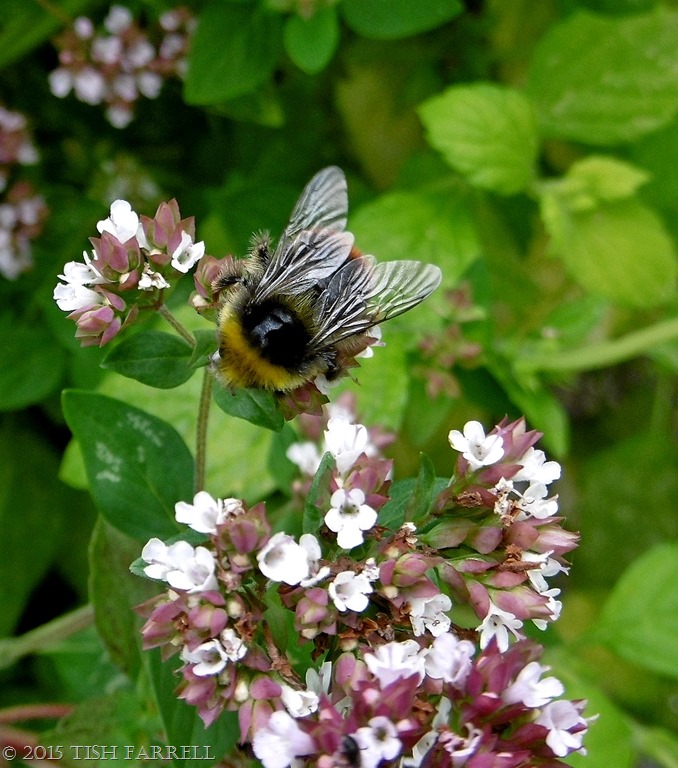
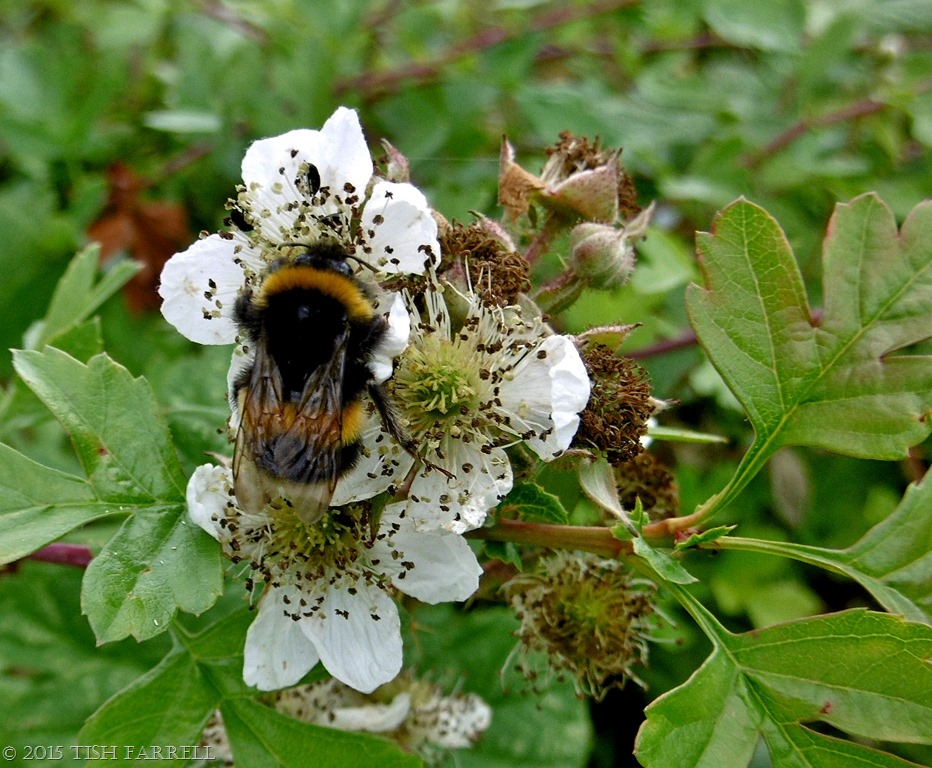
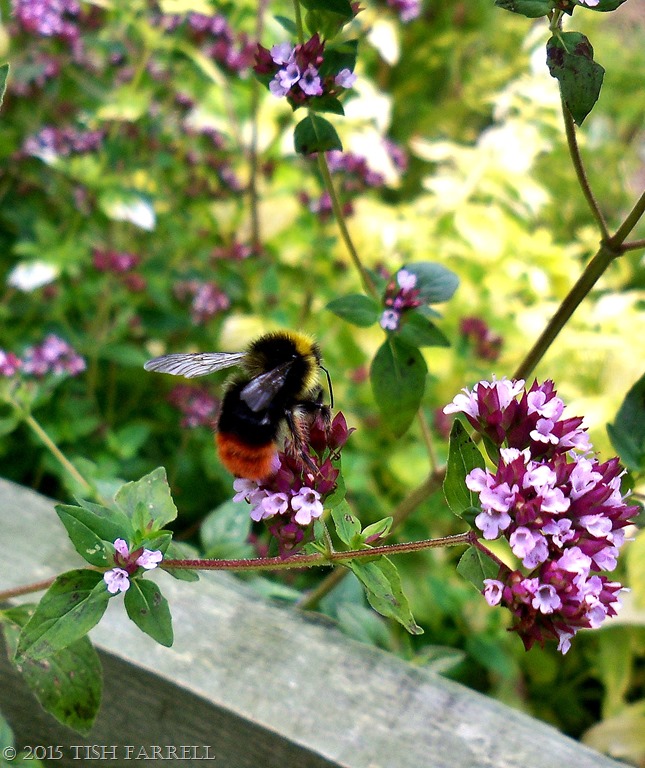
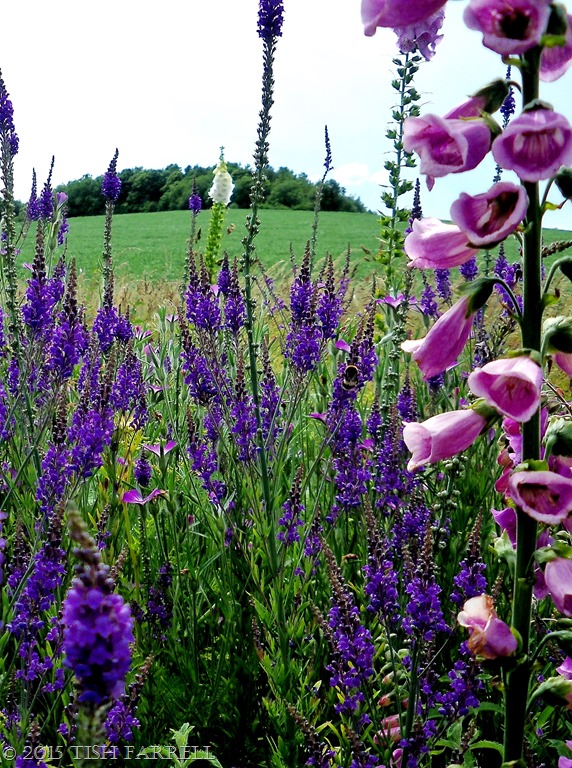
Back in the spring they foraged on the columbines; later on the spires of self-seeded purple toadflax and foxgloves. Now they are gorging on oregano and bramble blossom. I spotted at least three varieties of bumble bee this afternoon, but apart from the red-tailed bumble below, I’m having problems identifying them. For those of you who wish to try, there is an excellent identification page with a video at bumblebeeconservation.org

P1010768

100_6468

100_6453

100_6050

copyright 2015 Tish Farrell

Close Up

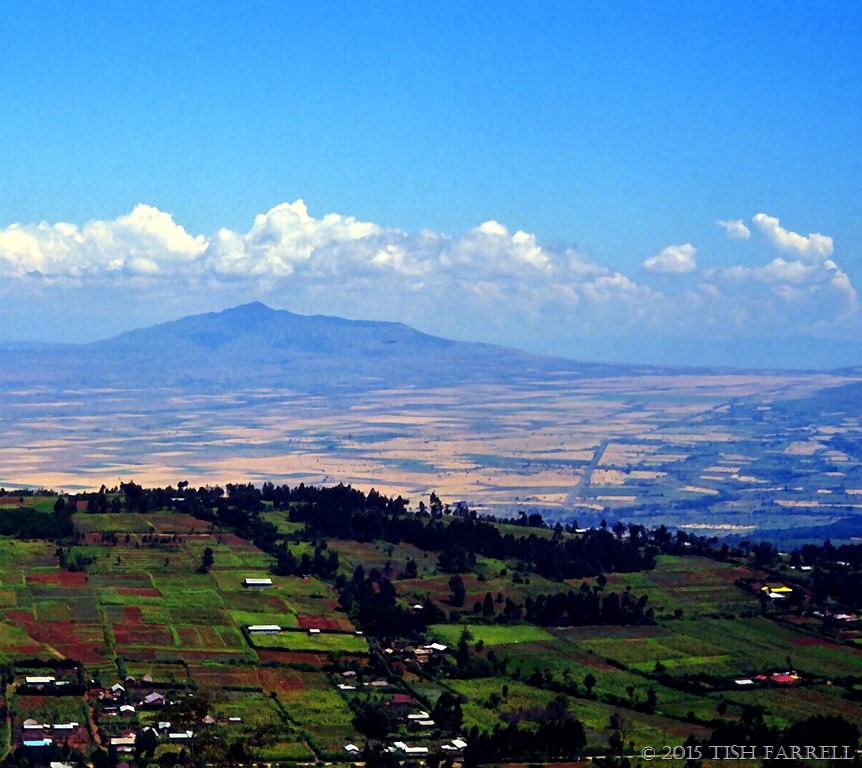
Great Rift ~ Beneath The Skin, Our Common Humanity

Scan-140809-0001


RIFT

Not homeland,

but sourceland;

scored in genetic code;

branded in bone:

thorn trees’ jasmine scent,

red pepper dust on the tongue,

sifted on skin,

while beneath our feet

obsidian’s glint,

shards of the earth’s dark heart;

the Rift,

riven,

wide

open

copyright 2015 Tish Farrell

Symbol

Timbuktu: doorway to the past

Scan-130703-0005 (7)

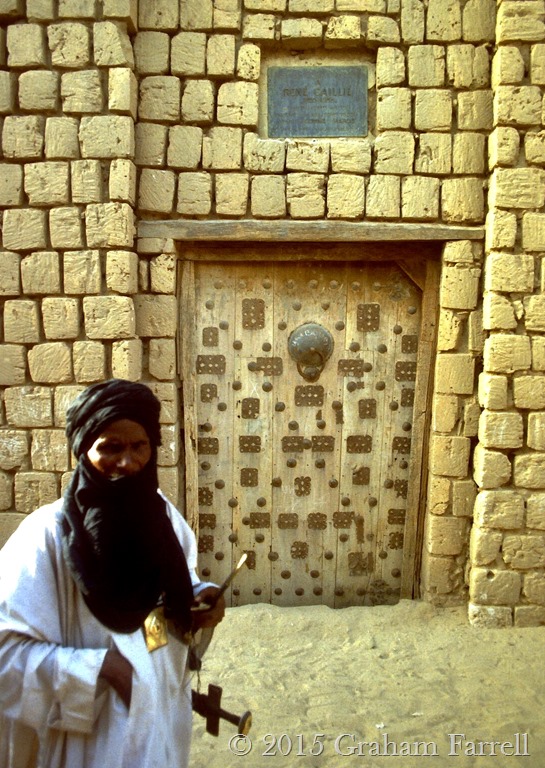
I haven’t snaffled any of Graham’s photos for a while, but as doors go, both of itself and where it is located, and the fact that a Tuareg pastoralist happened to step into the frame, I thought this was one well worth posting.  It was taken on G’s Africa overland trip during a stopover in Timbuktu.

The plaque above the door marks the fact that French explorer René Caillié once stayed in this house.  The stay was brief, two weeks in April/May 1827, but he had apparently spent many months in preparation, staying with the Moors in Mauretania, learning Arabic, and converting to Islam so he could pass himself off as an Arab. His objective was to win a 10,000-franc reward offered by the Société de Géographie in Paris, and to do this he had to be the first European to see and return alive from Timbuktu. That he lived to tell the tale is recounted in his work Description de la ville de Temboctou. The rest of his life,  however, was sadly foreshortened by tuberculosis. He died in his homeland of Western France at the age of thirty eight.

Timbuktu of course has a long and illustrious history. From 1325 AD it became part of the immensely rich  and highly cultivated Malian Empire under the rule, Musa Keita I, also known as Mansa Musa (c. 1280 – c. 1337). He was probably the richest man who has ever lived, and it was he who developed the town, bringing in architects from Andalusia in Spain, and from  Cairo to build his grand palace and the great Djinguereber Mosque. He also had built in the town the University of Sankore, which attracted scholars from across Africa and Middle East. He brought in lawyers, mathematicians and astronomers to staff it, and so began the growth of the magnificent libraries of Timbuktu, and the town as a centre of learning and commerce.

Since that time, thousands of manuscripts had been gathered and cared for by individual Timbuktu families, and treasured as priceless family heirlooms. It is reckoned there are some 300,000 works held in such private family collections. They include not only theological texts, but works on geography and astronomy. Most are in Arabic script, but some are written in African languages of the region.

There was also in Timbuktu until recently, a state-of-the-art conservation library funded by the South African Thabo Mbeki Foundation. This held many thousands of manuscripts, and when Islamist terrorists invaded the town and torched the centre in 2013, it was feared that these works of international importance had been destroyed. However, the people of Timbuktu had seen the destroyers coming and, desperate to save their heritage, had been smuggling the works to safety in cars, carts and canoes, often hidden under crates of vegetables. It was a daring mission, and you can read  more of their brave endeavour in the BBC story HERE.

And so this brings me back to the title of this piece: doorway to the past, and to the question I feel bound to ask myself: Just how much of the history of the African continent has either been destroyed – wilfully by invaders, including slavers and European colonists, or lost through the relentless shifting of the Sahara’s sands, and other forms of climate change. The stories we mostly hear out of Africa are of conflict, corruption and poverty. Stories that celebrate the creativity, durability, ingenuity, culture and wisdom  of African peoples are not news. Perhaps we should remind ourselves that most of us in Europe were living in mud huts through the centuries when the great African kingdoms were thriving. Perhaps we should remember, too, that civilizations come and go, and our own Western Civilization is not immune from departure.

copyright 2015 Tish Farrell

Door

Bee-ing Bee-Minded

100_6630

An old meaning of the word vivid is lively and vigorous. And what can be more lively and vigorous than foraging bees? They and their produce are life-enhancing too, and in elemental ways. Their importance in the human life-cycle, for one, is marked in an old Shropshire custom of ‘telling the bees’ when someone dies. So it is my belief that we can’t think too much, or too often about bees. Not only do nearly three quarters of our food crops depend on them for pollination, but the natural environment needs them too – those plants and trees whose flowers are also pollinated by them.

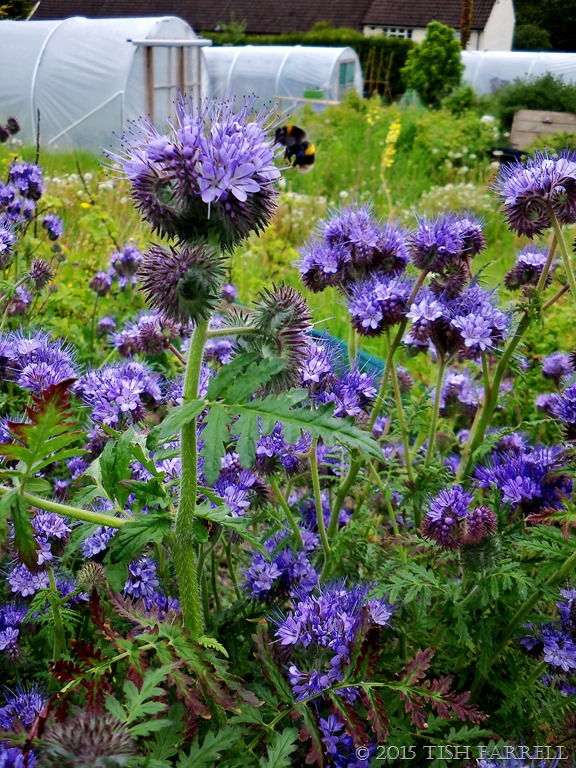
Up at the allotment we are very lucky. We seem to have plenty of bees, and many varieties too, but then most of the allotment gardeners rarely use pesticides apart from the odd slug pellet. Yesterday when I was there, my raspberry patch was thrumming with bee-hum. It was mesmeric. They also love my neighbours’ phaecelia which is grown as a green manure. Pete and Kate decided to leave theirs standing just for the bees. The flowers are beautiful anyway.

100_5529

My field beans are another favourite. Again these beans, a relation of the broad bean, are usually grown to dig in before flowering and fruiting. But courtesy of the bees, I leave mine to produce masses of pea pod sized pods. The beans are small, and more delicious versions of broad beans. So thank you, bees. Also the bean blossom has a blissful scent. It’s a win-win-win situation.

100_5619

The debate over whether neonicotinoid pesticides are responsible for the massive bee deaths across the globe wrangles on. You can follow some of the arguments in the two BBC Science reports at the links below. One recent startling discovery by a study at Newcastle University, is that bees are attracted to the pesticides. They seem to like the nicotine in much the same way humans do. Researchers have yet to discover if bees also get hooked on the stuff.

So why do we need pesticides? The actual fact is that any large-scale, mono-crop production will attract, in huge numbers, the pests that use that crop for their food and reproductive cycle. Monoculture environments also lack the kind of predator insect diversity, that would, in a naturally diverse ecosystem, keep such crop pests under control.

So the demand for pesticides is created, and the drive for profit, and for the production of cheap food keeps us locked into pesticide dependence. It’s not hard to see why we seem stuck with this system. The economics of unpicking it look impossible to broach.

Here’s another thought though. Mono-crop systems are also vulnerable to new pests whose advent is ever more likely, either through accidental imports, or by climate-shift trans-located pests that may have no natural predators in their new-found homeland.

I have personal experience of what happens when dependence on one particular crop meets an alien pest. In the 1980s the Central American Larger Grain Borer beetle was introduced into Africa in a consignment of food aid maize, and once there, spread up the continent like wildfire, chomping the contents of village grain stores to dust. (And being faced with such a pest, who would knowingly want to put insecticide directly onto their food before eating it?).  This infestation is what took us to Africa in 1992 where Graham was working on a project to introduce a natural predator to check the LGB spread. (See Carnations, crooks and colobus at Lake Naivasha, and Letters from Lusaka part I ).

The consequences of this particular dudu’s arrival  were compounded by the fact that, since colonial times, maize had become a staple in many African countries (European settlers doled it out as rations in part payment to their African labour), so largely replacing the local cultivation of a wide range of native, more nutritious small-grain crops. Maize is also a hungry, water-demanding plant that can easily fail if there is insufficient rain. And, if repeatedly grown on the same ground, it will soon deplete fragile volcanic soils and contribute to erosion. This happened on Kenya’s native reserves during the World War 2 when Western Province farmers were encouraged to grow maize for export to Europe to support the war effort. They grew bumper harvests, but the land suffered, and probably has never recovered.

So we see in just one example the kind of vicious downward spiral of impoverishment that can result when humans think they know better, and don’t consider the consequences of tinkering with an existing system.

In fact when we left Kenya in 2000, German agricultural aid workers were advising rural farmers to go back to cottage garden farming methods, mixing different crops up together to fool the pests, and so avoid the need to buy expensive pesticides. i.e. advocating precisely what Bantu farmers had been doing for a couple of thousand years before colonial agricultural officers told them that inter-cropping was bad practice, and that they  needed to adopt European cash-crop methods in order to grow export-worthy produce.
All of which is to say, we all of us need biodiversity for our well being, if not for our survival. With climate change, we cannot afford to limit options in food production by remaining in thrall to the reductionist models perpetuated by factory farming, supermarket buying power, genetic engineering that reduces native crop diversity, and by the pesticide hegemony in general. At the very least we need the bees. Anything that threatens them, threatens to seriously limit our good food choices. The health of humanity and the planet’s ecosystems depends on them.

As consumers we have buying power. It is perhaps the one real power we do have, otherwise corporations would not spend so much money trying to persuade us to buy their goods. If we are able, we can support small local producers who do not use pesticides. We can say no to genetically modified crops that have caused their producers to give up, or lose their native crop varieties. We can grow bee-friendly plants, and if we can afford to, buy only organically cultivated produce. We can grow as much of our own food as possible. It’s amazing what can be grown in containers if garden space is in short supply, and sprouted seeds can be  grown in the kitchen all year round. So let’s keep our bees vigorous and lively, in whatever way we can.

100_4200

copyright 2015 Tish Farrell


Bees get a buzz from pesticides

Widespread impacts of neonicotinoids ‘impossible to deny’
Vivid

To And From the Allotment: Seeing Things In Black & White

Last week Cee at Cee’s Photography challenged us to go out and take some new black & white photos. This happened to coincide with my notion of doing a series of  ‘to and from the allotment’ posts, since at some point in the day you will see me trailing through the field on the back route path to my vegetable plot. And then the Daily Post’s ‘on the way’ prompt seemed to fit as well.

Given that everywhere is now bursting with sap-filled greenness, and we’ve waited a long time to see it, it is perhaps perverse to snap it in black & white. On the other hand, doesn’t it make you see things with a fresh eye? These photos were all taken in the early evening, when the sky over Wenlock Edge is always interesting, and the allotment gardens take on an abandoned and mysterious air. Even the plant life looks other-worldly. See what you think.

*

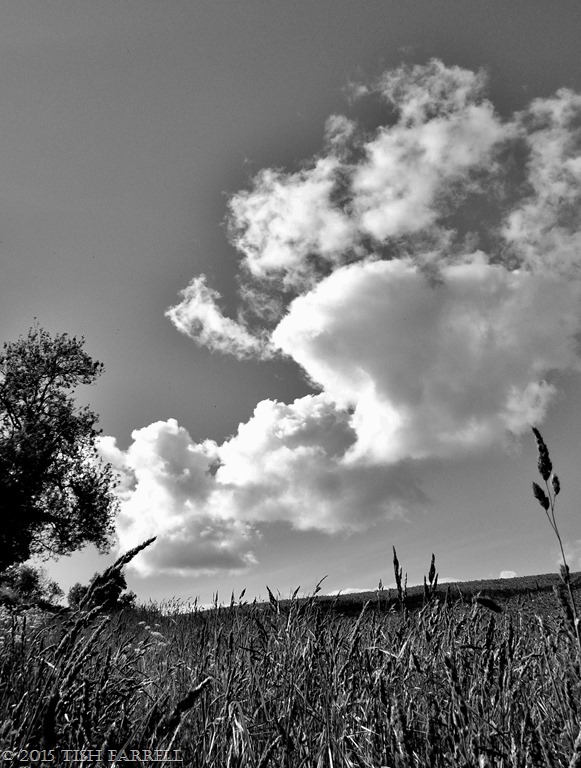
The bean field…

P1010481


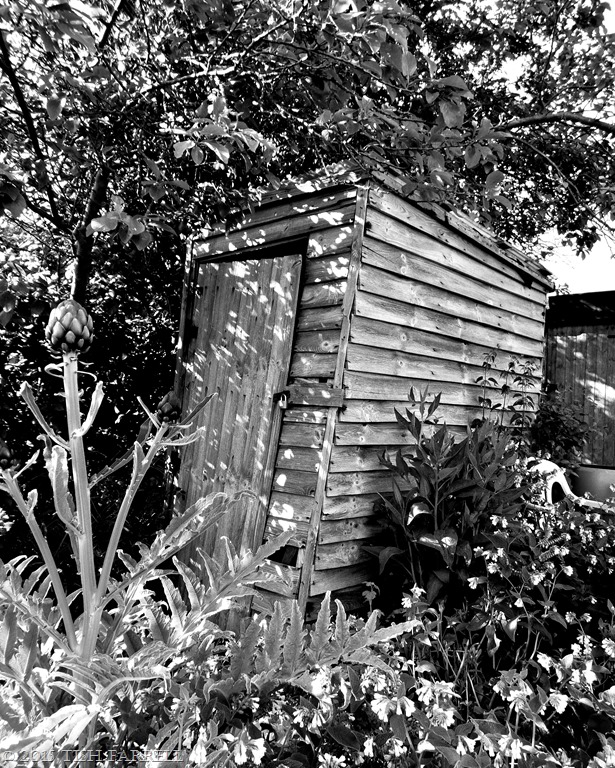
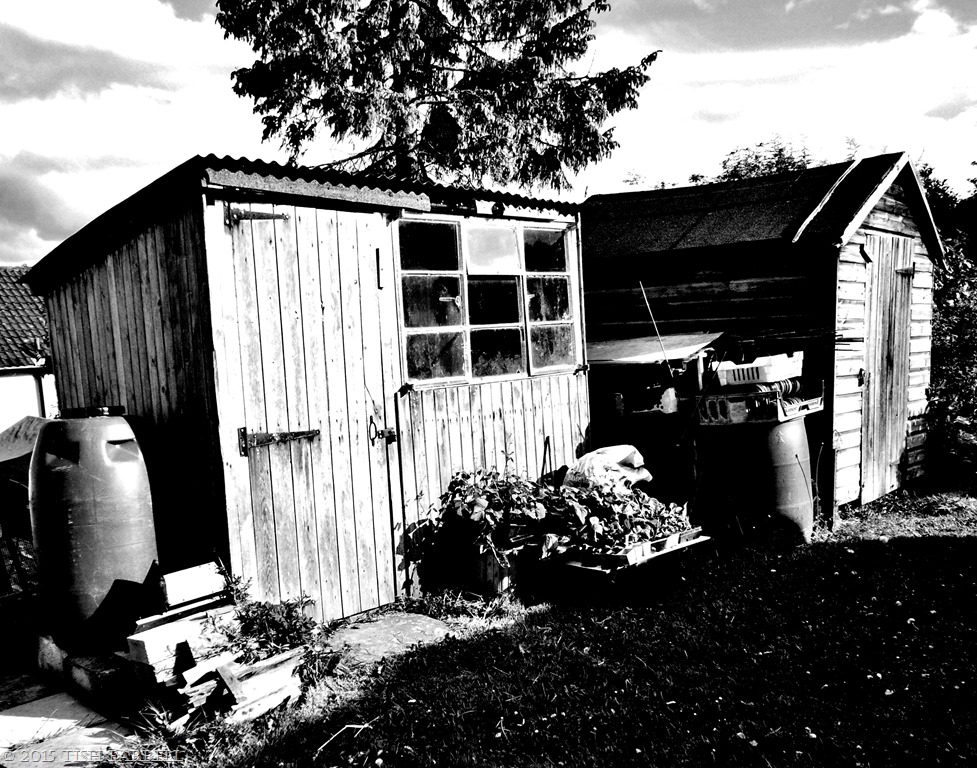
My old shed under the greengage tree with sunbeams and artichoke…

P1010485


Dandelion clock by the shed…

P1010464


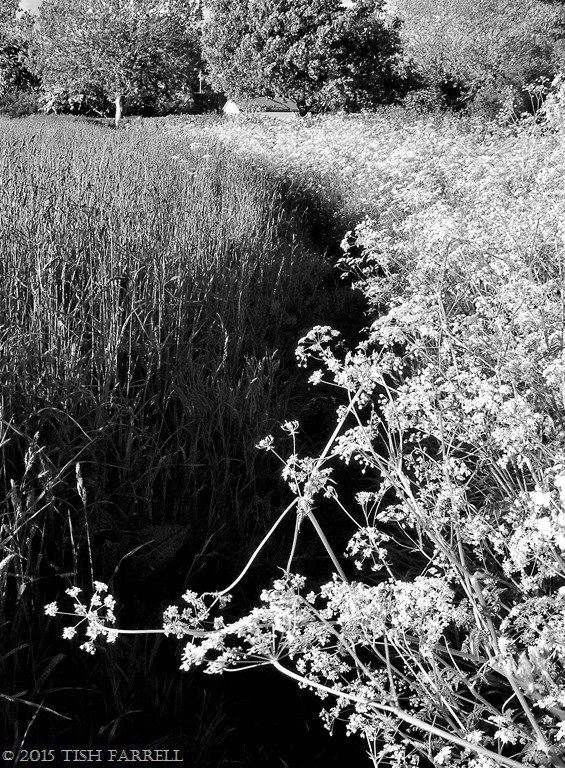
Wreath of barbed wire and Queen Anne’s Lace…

100_5606


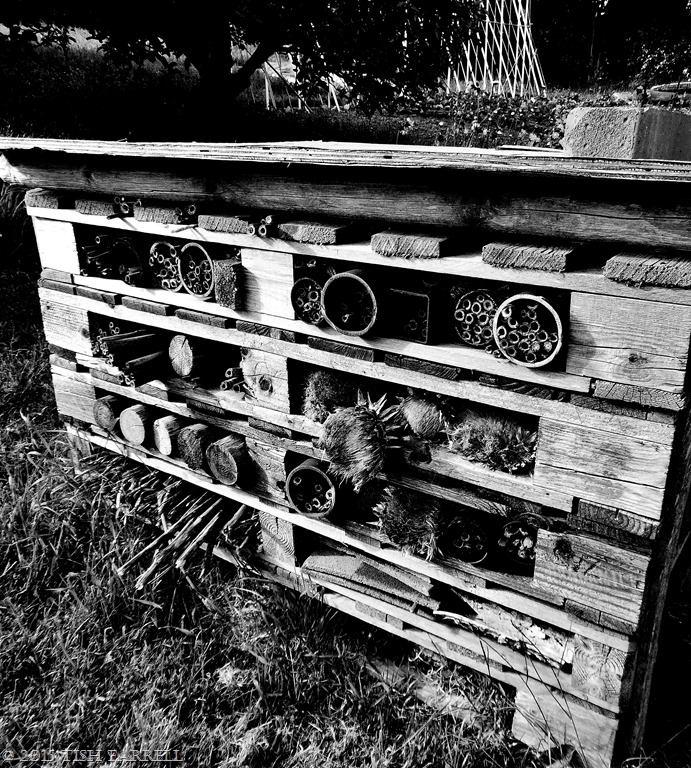
Phoebe’s insect motel for overwintering bees and bugs…

P1010505


Shed with a view…

P1010501


Welsh onion flowers and globe artichokes…

P1010497


Sheds and allotments go together…

P1010506


The path home by a sea of Queen Anne’s Lace…

100_5622
Cee’s Black & White Photo Challenge

On the Way

Sun Setting Over Wenlock Edge ~ Or Did The Earth Move?

P1000591

From my house I often watch the late-day sun slip behind the Edge. But which of us is moving: me, or the sun? It’s the sort of displacement-activity question I ask myself when I should be doing something more constructive. It also makes me think about the Edge, the fact that something so apparently static is, of itself, an embodiment of movement; a geological exemplar of extreme process and change.

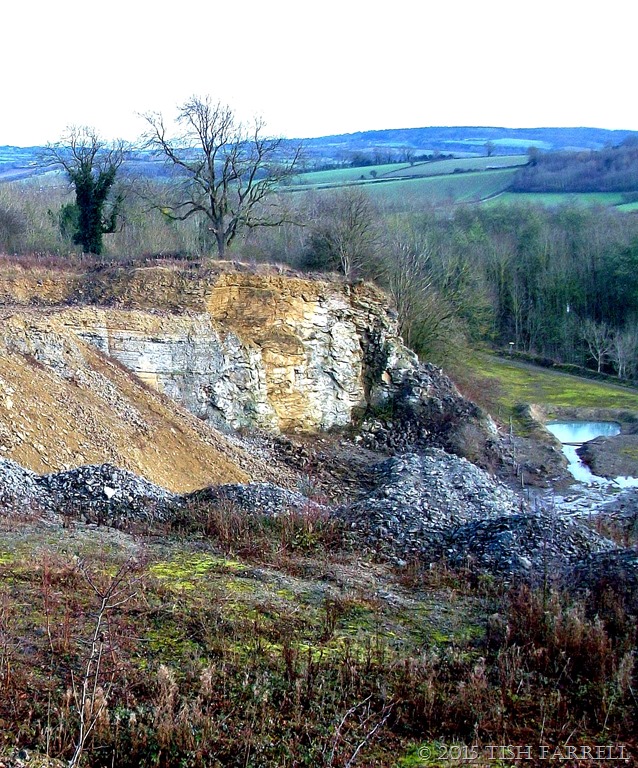
The limestone ridge on whose foothills we Wenlockians dwell, is 425 million years old. It runs for some twenty miles while rising up to three hundred feet above the land.  And so it goes without saying that a structure of this size cannot help but evoke a sense of monumental immobility.

How can it  move?

Yet move it has, and move it does, although these days not on quite the colossal scale of the Silurian Age when it was formed.  Its constituent parts, the sea-creature fossils that have fascinated the world’s geologists enough to earn them their own Wenlock Epoch, clearly indicate that our Edge is neither where it was, nor what it was in the aeons before fish were invented.

In fact during the Silurian era, and some 200 hundred million years before one cosmic hint of a Stegosaurus or Diplodocus was abroad, the strata that would become Wenlock Edge were quietly forming. Layers of dead and decomposing corals, sponges, sea lilies and molluscs were building up beneath a shallow tropical sea, and in a location somewhere off present-day East Africa and well south of the Equator.

Today, however, this former sea bed is an up-tilted escarpment, a steeply wooded ridgeway of ash, birch, hazel and oak trees. It bisects a temperate, rural Shropshire in the middle of England, which as most people know, is and often feels hugely north of the Equator. The power of tectonic shift and uplift is thus truly marvellous.

For the last couple of millennia, though, it has been humans who have been responsible for the Edge’s biggest movement. They have hacked, drilled, and blasted out the limestone with dogged persistence. At first the spoil would have been carried away on packhorses, then on carts, and finally by train and truck to wherever it was needed. Chunks of fossil sea bed hauled off to build grand monastic houses, feudal mansions, churches and cottages; limestone mortar to make them weather-tight; limestone to burn to make quick-lime for fertilizer; crushed limestone to pour into the top of massive blast furnaces, and so draw the impurities from smelting iron.

100_7035

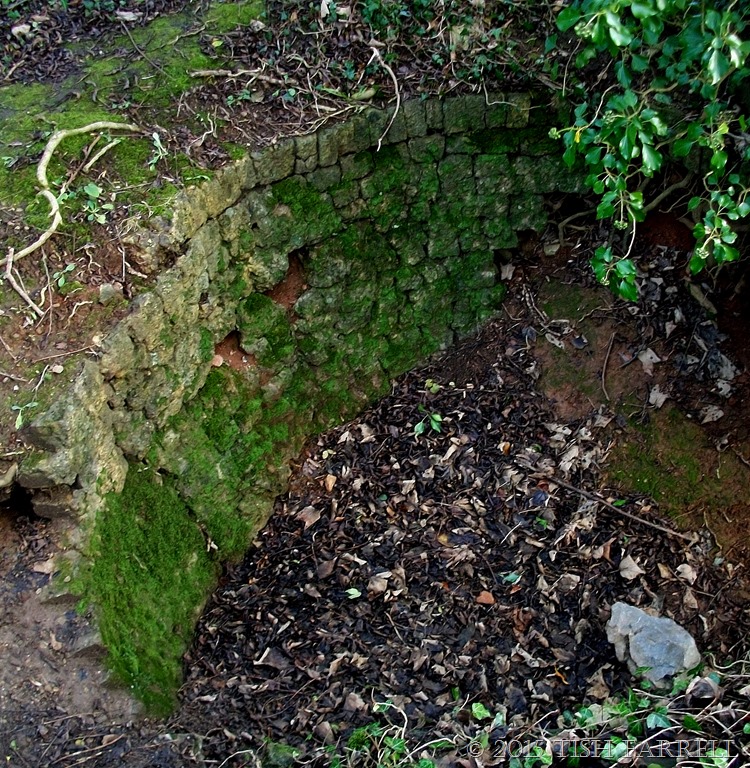
One of the many old lime burning kilns on Wenlock Edge

*

In such ways did Wenlock’s broadcast and reconstituted Edge come to play its part in Britain’s Agricultural and Industrial Revolutions. Yet way before this, in the late 600s AD of Saxon times, it probably also gave us our curious sounding name. In those days it was the habit to paint the early Christian religious houses with lime-wash so they glowed luminously white against surrounding terrain.  It was also around this time that Milburga, daughter of a Mercian king, became abbess of a dual monastic house of monks and nuns that stood where the town’s parish church now stands .  Gwen/Wen means white, and Loc/Lock means chapel or religious house. So there you have it – Wenlock – the place of the white church.

In more recent times, aggregates for highway construction have been the Edge-product of choice, and supplies are still outstanding in one of the quarries. At intervals convoys of motorway construction trucks come rattling through the town to fill up – and all this so more and more traffic can rush about the place.

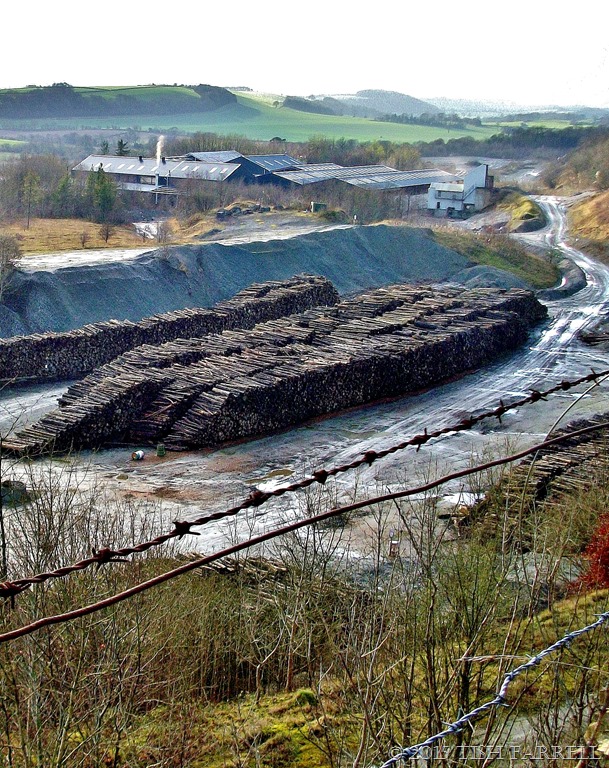
The mopping up of the aggregates marks the end of quarrying,  although the quarries themselves have now been occupied by other industries  – garden fencing  and woodchip fuel producers, paint and packaging companies – all taking advantage of the huge spaces left behind by the evacuated limestone.

100_7059

100_7071

Yet where the old workings and exploded cliff faces have been left to themselves, there are signs that the vegetation is reasserting itself, slowly extending the habitat for the Edge residents: deer, badgers, hares, weasels and mice.

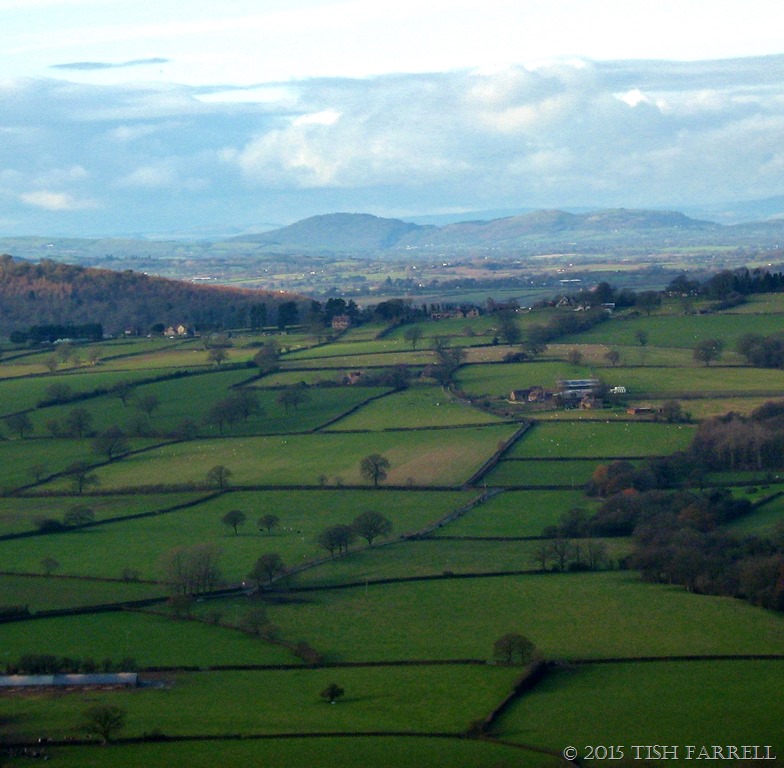
I find the old quarries fascinating in a  morbid, Edgar Allan Poe-ish kind of way. Ravens like to nest there for one thing, which adds to their brooding allure. However, if you turn your back on the quarries, and look the other way, through breaks in the tree cover, you will see broad sweeps of Shropshire’s hills and farmland. And this, for most people, is the main reason why the twenty-mile-long vantage point is one of the county’s great treasures. The National Trust who own a long stretch of the wooded slopes, and manage the woods and paths, want to ensure it remains that way – a valued public resource.

IMG_1911

This  view looks towards the Welsh borders and, in the past, would have been gazed on by writers such as Thomas Hardy and Henry James, and by Africa’s darkest explorer, Henry Morton Stanley, all of whom were, at various times, guests of the Milnes-Gaskells, Much Wenlock’s erstwhile gentry who lived in the Prior’s House at Wenlock Abbey. The Milnes-Gaskells were good hosts and tour guides and made sure that their visitors always took in the best views.

On reflection, though, I’d say that this particular fieldscape would have looked very different a good century ago – smaller fields, many more hedges and trees back then. Much bigger trees too, for all the huge oaks were culled by the late nineteenth century, and those of us alive today have never seen their like other than in old photos, where their magnificence has been felled and stacked up, ready to serve some apparently pressing human purpose.

Life for ordinary people would have been tough too – with many more labourers working the land, horses pulling ploughs, vistas of scenic rusticity that did not fool Thomas Hardy for one moment. He is said to have been mightily appalled by the impoverished state of Wenlock’s workers.

P1000594

And so back to the setting sun/moving earth where this post began. The Edge then, is still in motion, although mostly in ways not much noticed by us. The limestone scarps are degrading. Rock becoming soil and mixing with the leaf mould to create new niches and microclimates, the old lime kilns, moss and ivy coated, weathering into the earth, the quarry scars and debris gradually being colonised by trees and plants.

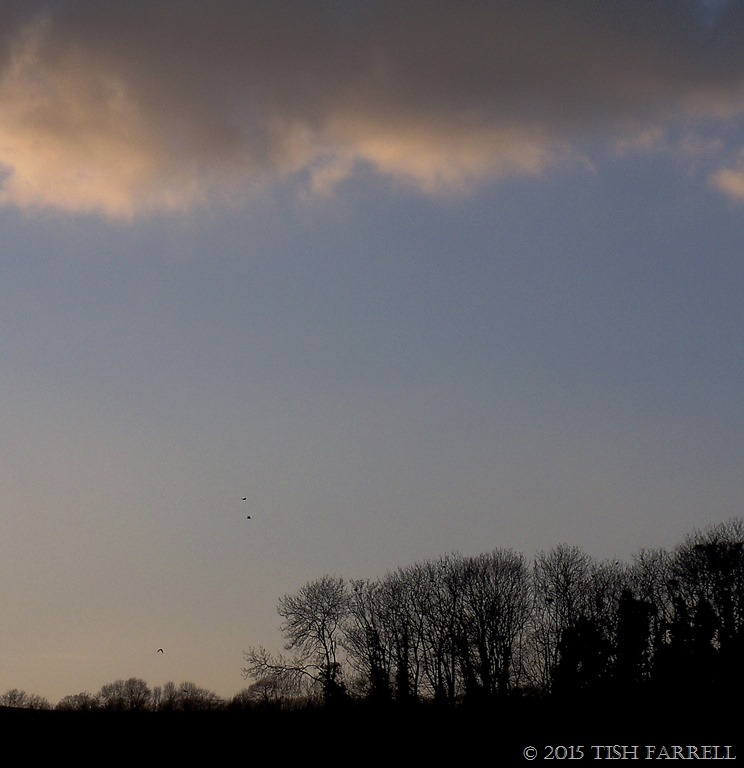
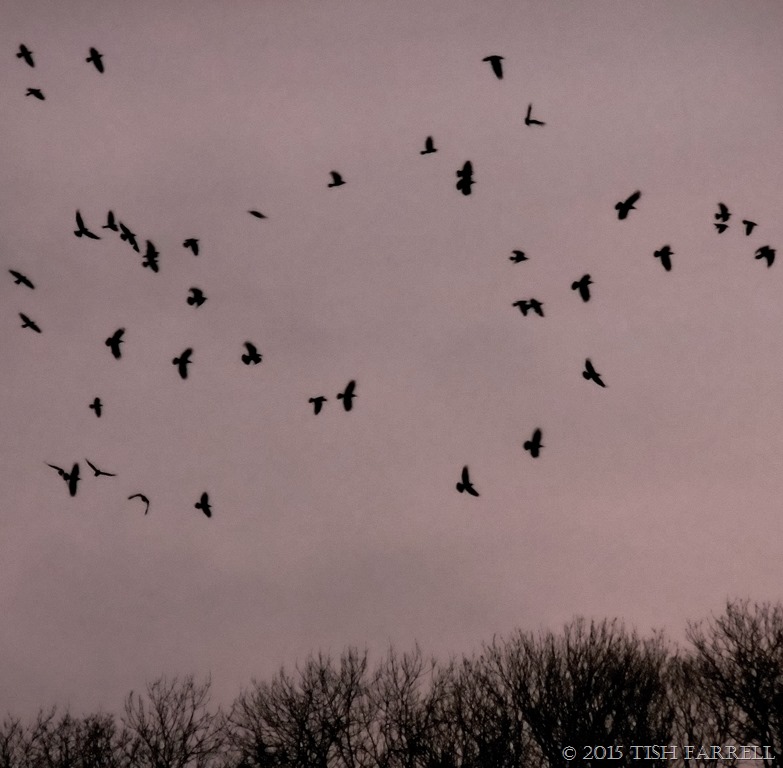
Then there are the kinds of movement that I observe day after day behind our house: the march of clouds, weather; the change of light, dawn , dusk, the stars, the seasons, the rooks and jackdaws going out, and coming home. Everything shifting, transforming, recycling as the earth rotates around the sun. I find that thought – the revolving planet and the endless motion of its life forms – very joy-making. It is good to stand still and watch, and especially as the sun sets, or the earth moves.

100_5072

P1000341

Rooks and jackdaws coming home


copyright 2015 Tish Farrell

Jennifer Nichole Wells: sun

Motion

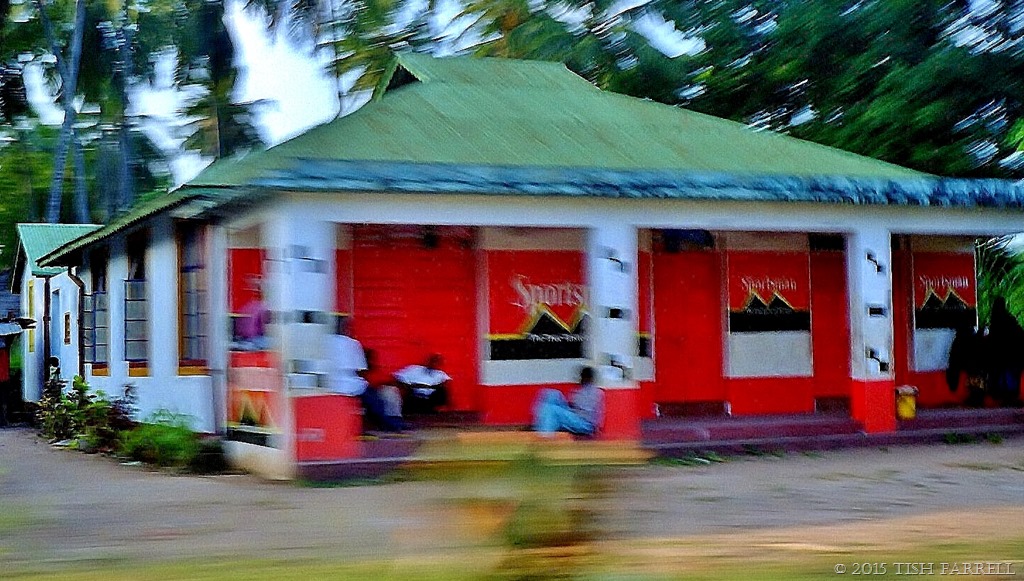
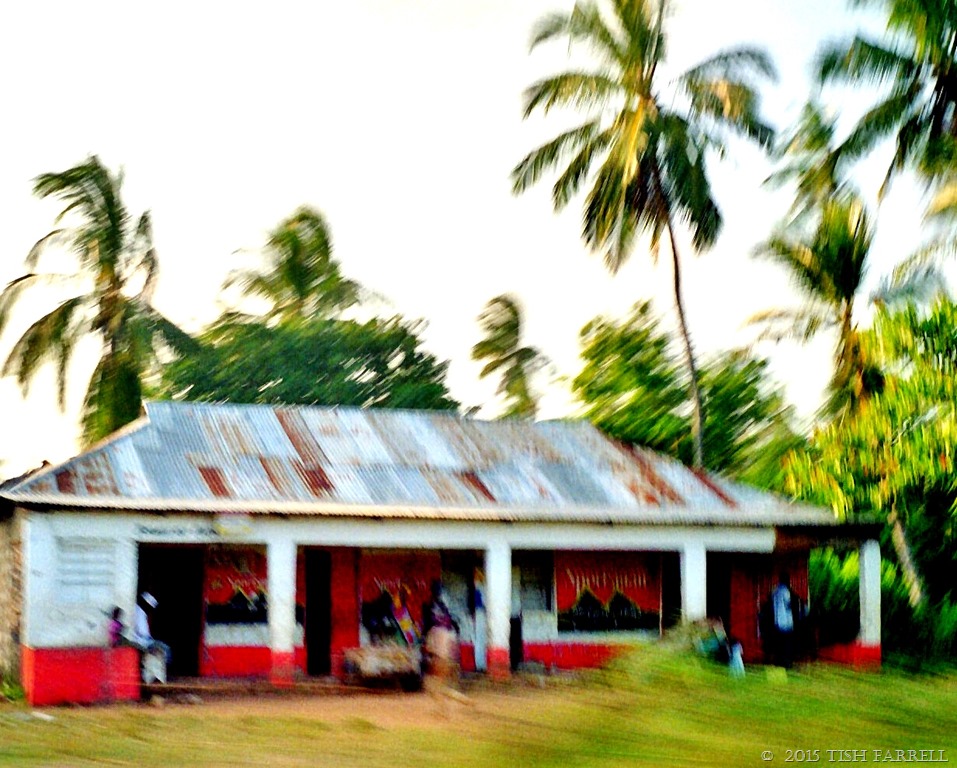
A little blurred on the road to Lunga Lunga

Scan-130603-0018

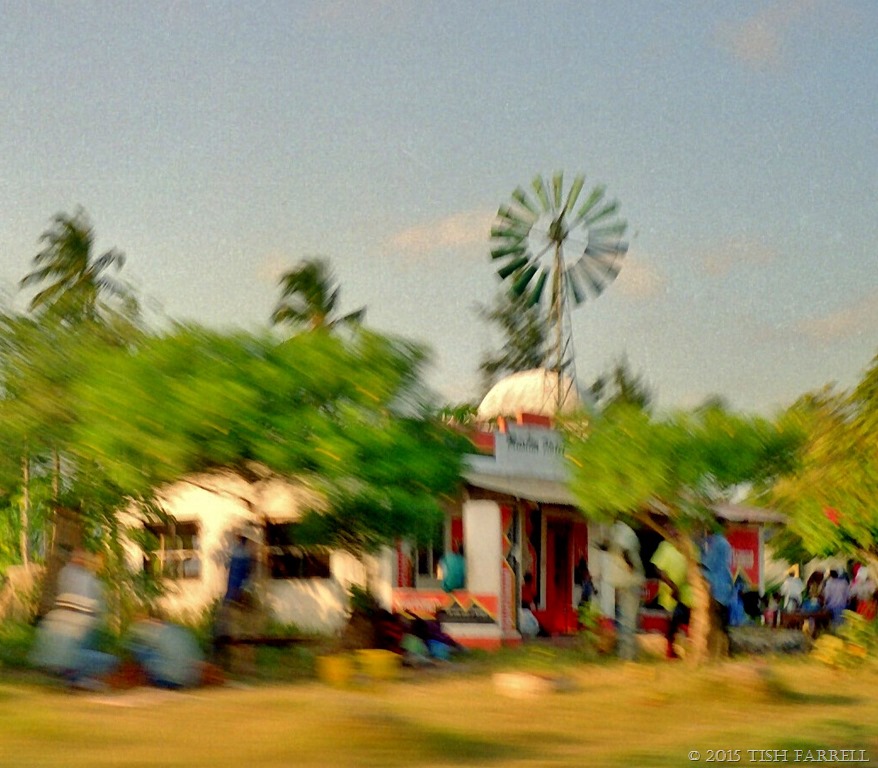
And blurred is often how we felt after driving down the Nairobi-Mombasa highway to Tiwi on Mombasa’s south coast. We used to spend Christmas down there. It was a three hundred mile trip, descending from the air-conditioned high plains of Nairobi to the  wet-hot steaminess of the coastal strip.  On a good day it would take around five hours. Other times we’d break the journey, staying at Tsavo Inn or Taita Hills. Sometimes the road was hardly there at all, washed out by December rains.  You never knew until you got there. The final leg of the trip also always involved the infamous Likoni Ferry  that carries traffic from Mombasa Island to the southern mainland.

To catch it, you first had to drive through Mombasa, negotiating mad matatu drivers and throngs of push-cart guys, shunting impossibly huge loads of cooking oil, coconuts, pineapples, coca cola. Then came the broiling wait for the ferry. If you timed it badly, the traffic tailed back into town.  Being tetchy Brits who do not bear overheatedness well, we did not welcome being sitting ducks for all the street traders, despite the fact that roasted cashew nuts were a favourite. Grumpy old us.

But then, when we found ourselves close enough to the head of queue to see the in-coming ferry, it was all change. Suddenly the excitement hit. This place was Africa with bells and whistles, and in every sense. All of life swarmed by as the ferry spilled out its trucks, multi-coloured matatus and crowds and crowds of humanity. The burst of colours under the tropic sun set the brain afire – the women in their vibrant kanga wraps, men in kanzus and embroidered kofia caps, the youth sporting the rich world’s recycled tee-shirts with every imaginable corporate slogan draped from skinny shoulders.

There was always a frisson of anxiety as we boarded. Would we make it to the other side? After all, the ferry had been known to cut loose and drift off towards the Indian Ocean. But no. It never happened to us.

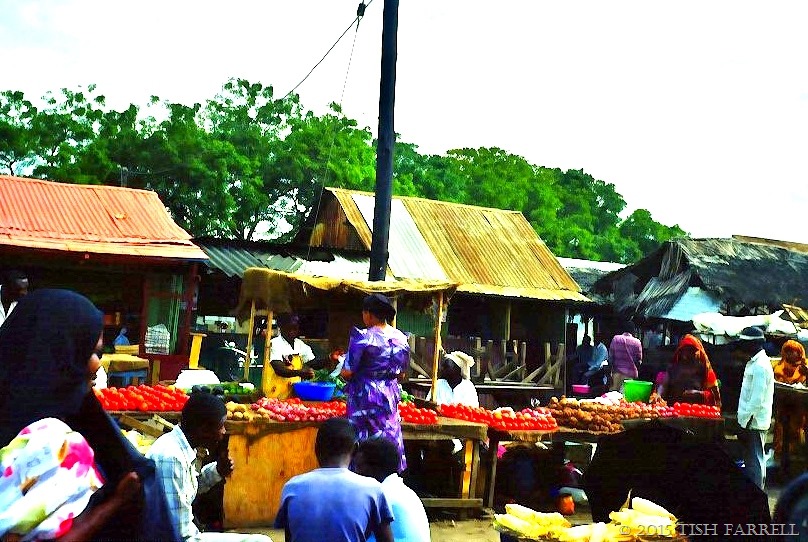
Even so, the final glide up the mainland slipway always seemed a minor miracle. We’re here! And here was Likoni market – throbbing with rhumba rhythms, and hooting-whistling matatu crews. Ramshackle stalls line the road – hoteli, hair salons, tailors’, fruit and veg sellers, Chinese multi-coloured enamel ware and plastics. There are smells of steaming market waste, hot mandazi donuts, joss sticks, cheap perfume, diesel and dust.

351

The foot passengers poured around us. We crawled through the melee. Until – at  last – the open road – the long straight causeway that runs south through Kwale District to  Lunga Lunga, the last town in Kenya before the Tanzanian border.

This road is lined with coconut plantations, the palms all leaning with the sea breeze.  Cattle graze beneath baobabs and kapok trees. There are guest houses, and small-holdings, schools and tiny mosques. The homes have corrugated iron or palm thatch makuti roofs. The walls are coral rag or wattle and daub. Verandahs feature. There are more trading centres, curio carvers, furniture makers, general stores, charcoal sellers, second hand clothes, kangas flying in the breeze like flags.

Scan-130603-0022

Scan-130603-0021

We never went as far as Lunga Lunga. Tiwi was far enough. To arrive at Maweni, the little beach village perched above the Indian Ocean, to immerse in clear waters, and finally unblur with bottle of Tusker beer – bliss.

dawn on Tiwi with dugout - Copy


copyright 2015 Tish Farrell

Blur

In my garden change happens

100_5703

The showy petals of Patty’s Plum oriental poppy give way to the tight buds of  Black Elder (Sambucus nigra). And so it is that one thing leads to another. And although the prospect of change often worries us, there can be great beauty in transience. There is excitement too, if we allow it: of a ‘what will happen next?’

copyright 2015 Tish Farrell

Ephemeral