We can see you…

100_6855

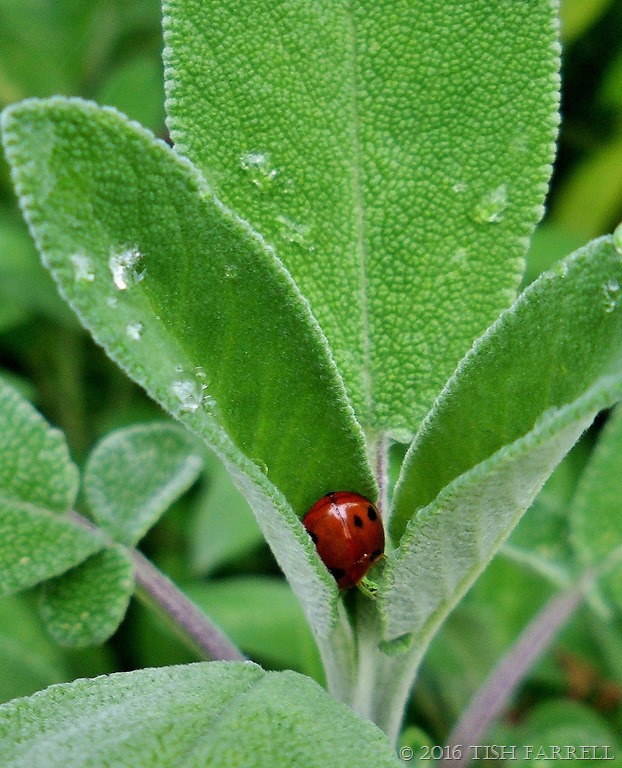
Ladybirds, as gardeners know, are good bugs to have amongst the fruit and veg. They eat aphids. Yay!

And they need to get gobbling now. For despite my recent whingeing about cold wind and lack of spring weather, the greenfly are already with us. And there’s a reason – our warmer winters.

We may have had endless rain, bad floods and storms this year in the UK, but we have not had the hard ground frosts that help to check slug and aphid populations; nor have had for several years. Back in early February when I was pruning the autumn raspberry bed up at the allotment, I was also finding ladybirds out and about.  They are supposed to be hibernating (overwintering) between October and March, so hopefully they were finding something to eat and hadn’t simply been fooled into waking up too soon by the unusually warm February temperatures.

The ladybird in the photo is nestling in my garden sage bed, spotted last summer. And for those of you who wish to find out more about ladybirds (Coccinellidae) there is a brilliant website at UK Ladybird Survey. And if you live in the UK, they want to have details of sightings.


#7-daynaturephotochallenge  #day 2

With thanks to Anna at Una Vista Di San Fermo who nominated me.


Related:  Warning: Reptile Alert #day 1

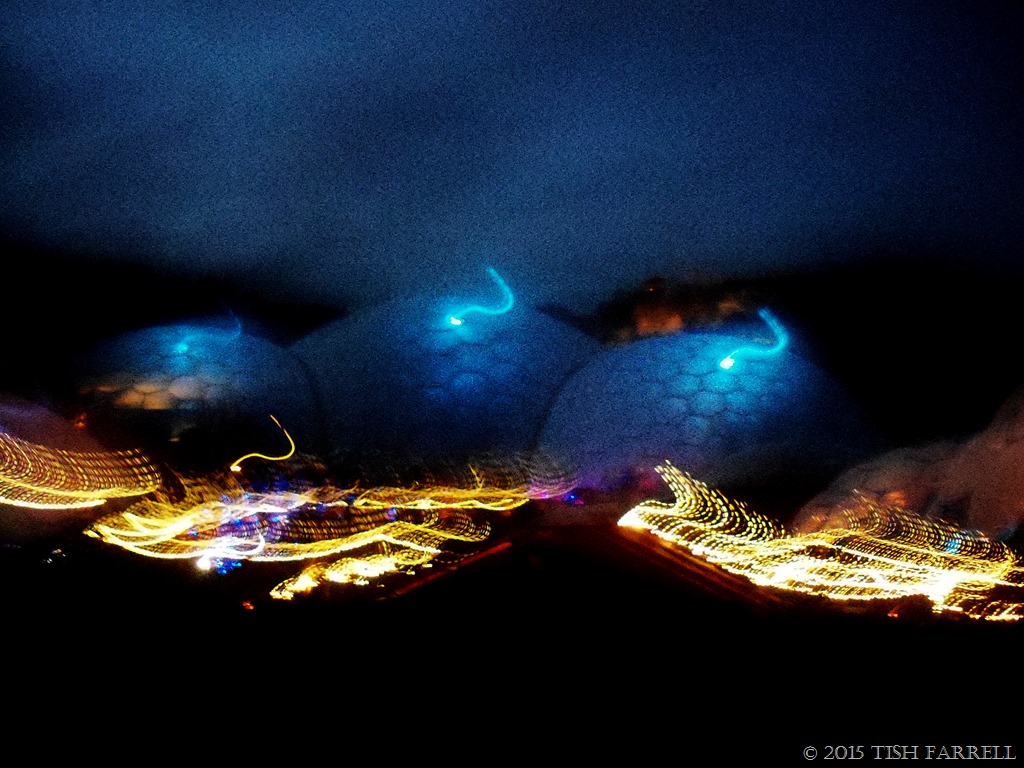
On Sunday we went to Eden and this is what it looks like…

100_8377

At least this is what the Eden biomes look like in December twilight, and courtesy of some dodgy photography. I think the effect suits it – this bold and inspirational project to wake us up to the knowledge of our total dependence on plant life. For one thing – without trees we couldn’t breathe very well. It’s interesting that we’ve become so divorced from natural-world-reality that we do not  instantly remember this, and from time to time (or even continuously) need it pointed out to us.

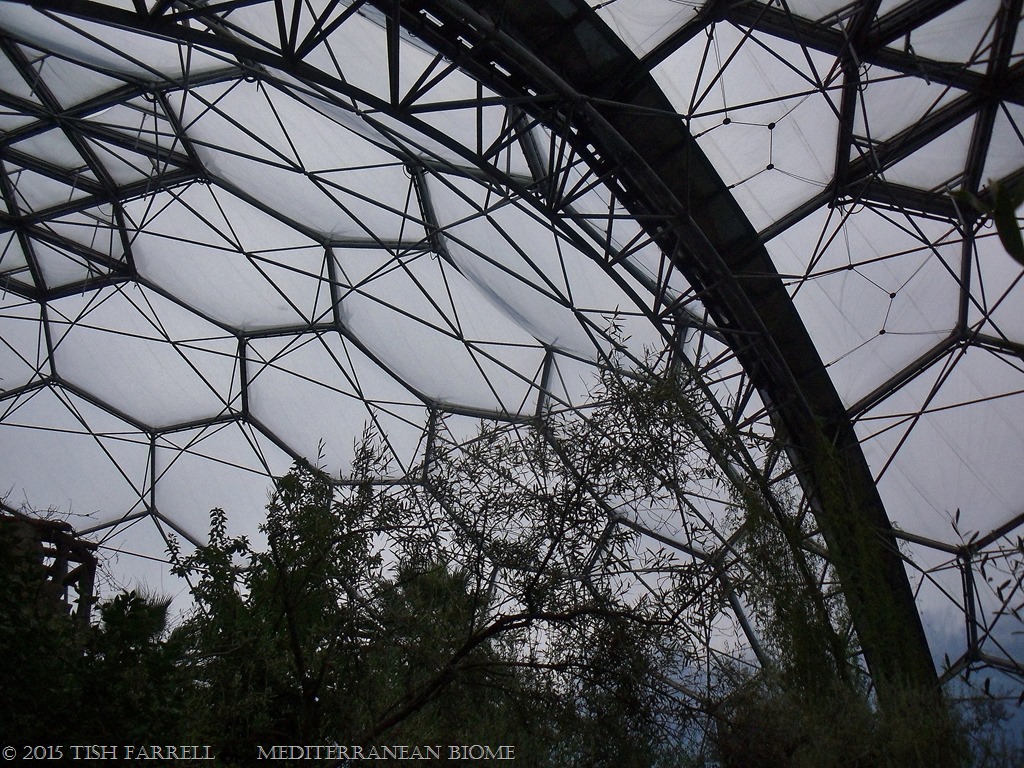
There’s more about the project in an earlier post: Making Eden: new patterns for living? And at the Eden Story you can see how a disused Cornish china clay pit was transformed into this world-famous educational visitor attraction that teaches us how to regenerate and nurture the Eden we have on earth. More power to their purpose.

100_8349

One thing leading to another on Windmill Hill: everything is connected

P1010943

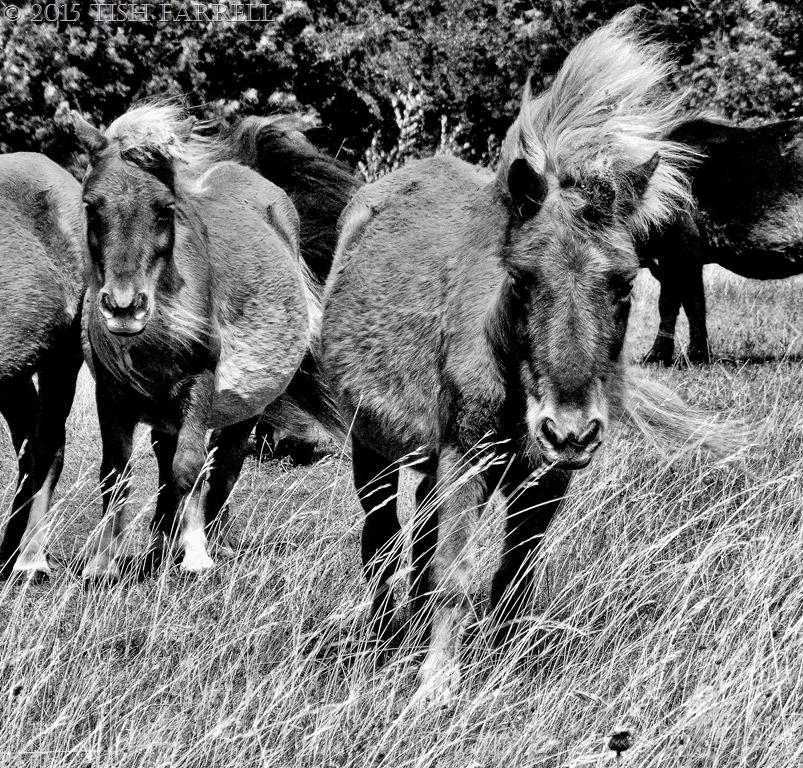
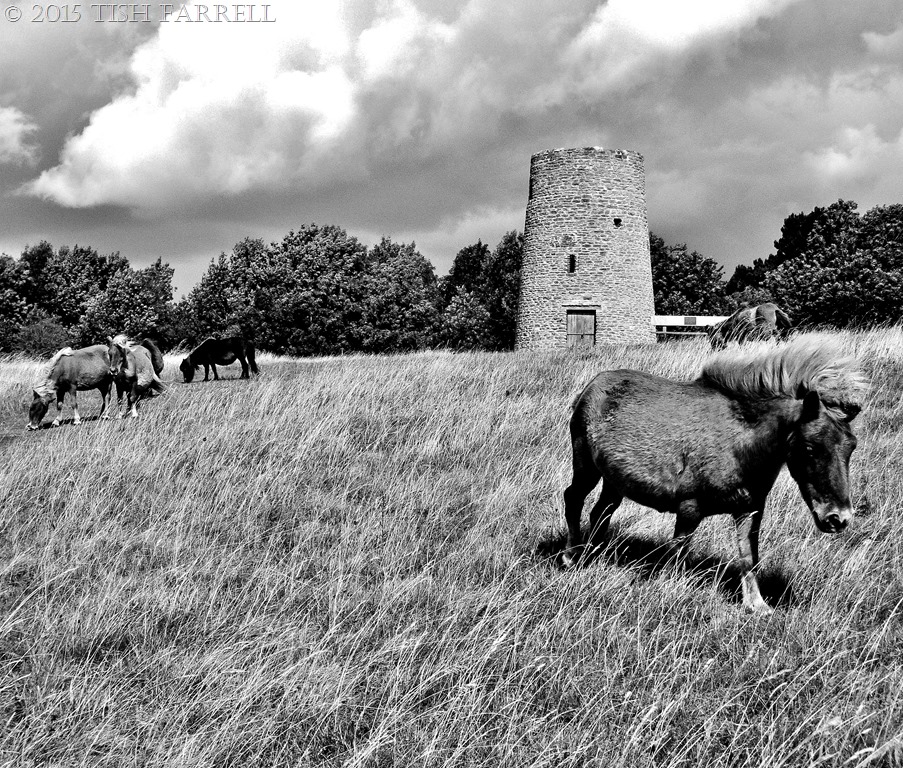
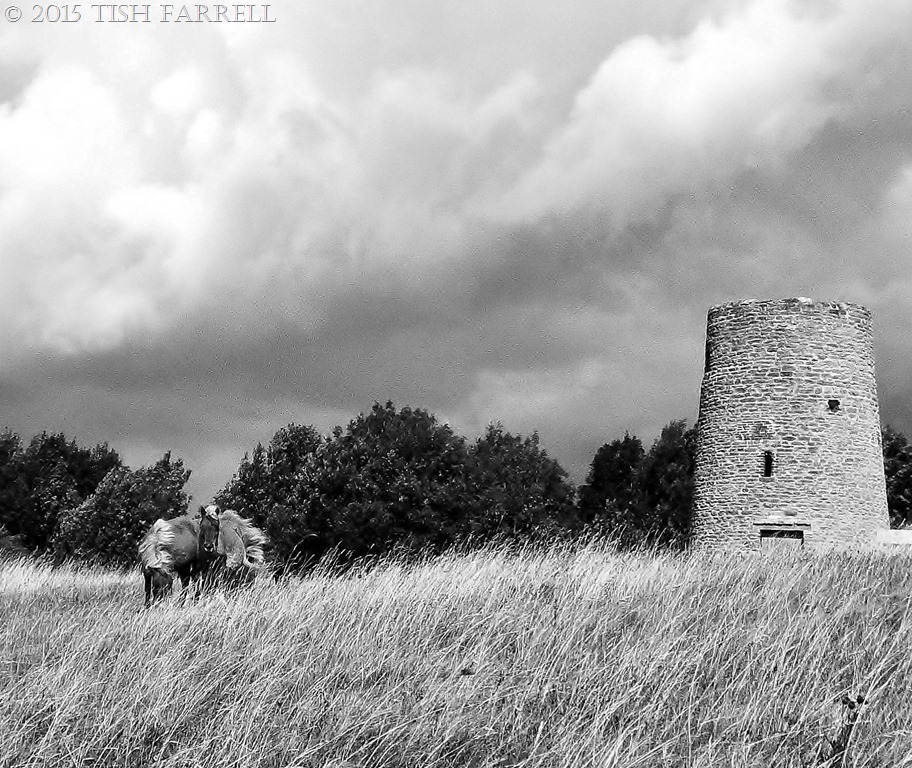
We’re barely into September and already autumn is here in Shropshire. It must be so, because the little horses are back on Windmill Hill. They will spend the next few months grazing off the dying summer grasses and wild flowers. They look very windswept, but the punk-mane-effect is mainly down to thickets of cleavers (goose grass) seeds in their top knots.

P1010945

P1010942

Looking across the hill there’s hardly a sign of the June-July flowering – all those buttery clouds of Lady’s Bedstraw quite gone. Not a trace of the orchids either. Only the dark and brittle seed heads of knapweed that always strike a note of dreariness. The weather doesn’t help either. For weeks it has been rain between showers.

Nor was I encouraged by the BBC radio science programme I heard yesterday. I caught it in the midst of recompiling a glut of runner beans into chutney (beans at least like rain). The guest climate experts were soon informing us that the El Nino effect they promised us all in 2014 did not come to much. In fact, they opined, (and they sounded quite definite about it too) we still have it very much to look forward to – the worst El Nino effect hitherto experienced, they said. For some reason the Pacific Ocean keeps heating up. And this means disrupted weather patterns worldwide, and for Europe, an even wetter winter than usual.

MORE RAIN? I wish we in Shropshire could email some of it to those lands whose dramatically changing climates mean that they now receive little or none. Mongolia is one place suffering massive desertification. Likewise, the countries of Africa’s Sahel that border the Sahara. In both regions, and many others besides, human actions, poverty and climate shift combine in a vicious downward spiral that results in increasing degradation of land and water sources. This, apart from war, is one of the main drivers of human migration. It’s all connected, despite what the climate change naysayers may wish to believe.

All of which is to tell myself to count my blessings.  I am free to wander where I like without fear of being terrorized by extremists. I have all the food I need and more. I enjoy every comfort. I have the luxury to meander along Shropshire byways, talking to little horses, musing on the meaning life, the universe and everything, while across the globe desperate others risk all to find somewhere they can live a decent life with their families. Some people, we hear, do not want to share their land with refugees. It is assumed that they will be nothing but a drain on resources. Yet who knows what gifts in talent and skills these homeless souls might be bringing us? Also, not sharing may cost us more than we could ever imagine. In some societies the truest measure of civilisation is the gift of hospitality. Perhaps we need to think about this with a little more application. At least, I know I do.

P1010956

copyright 2015 Tish Farrell

Connected

Bees in the Sneeze Weeds

100_6723

The season of mists and mellow fruitfulness has arrived in Much Wenlock on the coattails of spring, missing out summer altogether.  Perhaps we’ll have it at Christmas instead, the barbeque months that, back in March, the tabloids were screaming we were in for, along with prolonged drought and associated mayhem that would, shock-horror, stop people from watering their lawns, or hosing down their Range Rovers. Mind you, these are the sorts of rags that would have us believing it is raining migrants. (That would be people so desperate that they risk all to run away from home).

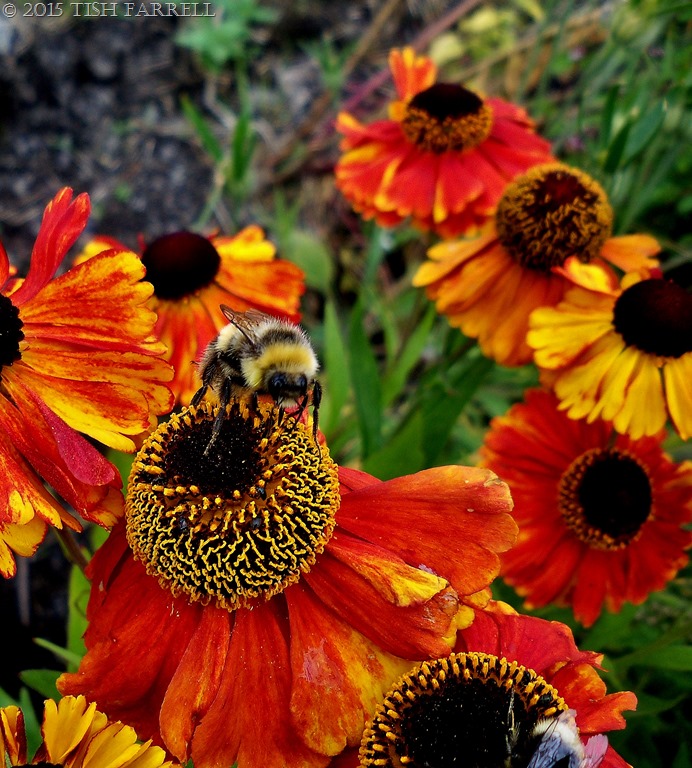
Anyway, whatever’s going on with the climate, the upshot is that much of the garden and the allotment has a very ‘left-over’ look, which is why I almost want to dash out in the garden and hug the sneeze weeds – bees notwithstanding – for being so vivaciously red and yellow as too much autumn dullness descends.

How can a plant so glorious be real? All the flowers in the photos, in all their wonderful variation, are growing on a single plant. And, as you can see, the bumble bees are gorging themselves. There are also some very tiny emerald beetles in amongst the pollen. Sneeze weed, by the way, is a country name for Helenium, which is a far more gracious name for such a generous plant, although one rarely used in the Farrell household.

100_6724

And it’s thanks to the bees and other precious pollinators that we are at least having fruitfulness, if not  harvest-hot weather. Up at the allotment apples are already weighing down the trees. They look like jewels:

100_6546

100_6681

Even the ornamental crab apples look good enough to eat raw. They’ll make brilliant jelly after a touch of frost, which hopefully won’t happen yet.

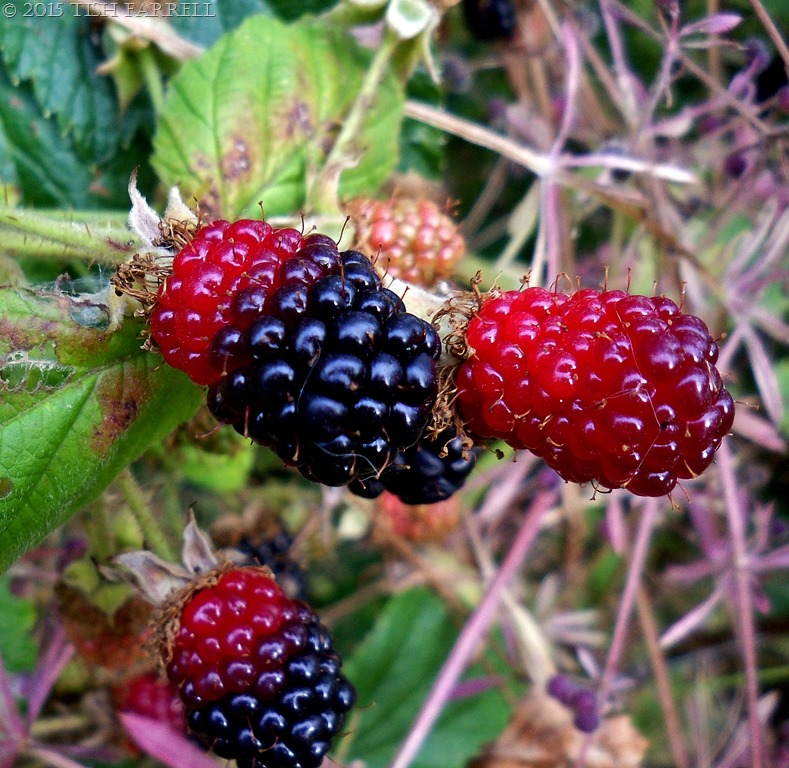
Then there are the brambles:

100_6682

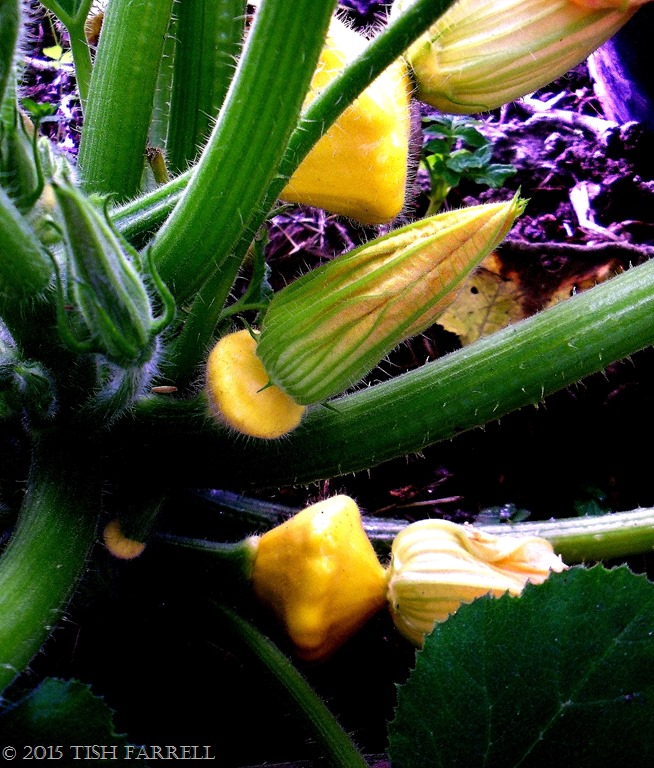
And the little yellow squashes that look like flying saucers:

100_6738

And the runner beans have started to crop (this photo was taken a week or so ago). The sweet peas on the end of the row are there to attract pollinators:

100_6503

Of course, when it comes to weather, we Brits are never happier than when we’re grumbling about it: too hot, too windy, too wet, too dry.  But then even if someone did steal summer, we still have so much to be thankful for. Feeling mellow, however, may not be an appropriate response these days. There may well be some hard lessons to learn when it comes to adapting to an increasingly erratic world climate, and not only for ourselves, but for the people who find their own lands are no longer habitable. We should not be surprised if they risk all to make for the lands of plenty.

copyright 2015 Tish Farrell

Mellow  is the theme over at Ailsa’s Where’s My Backpack

Obsessive Compulsive Compost Disorder and why you should have it, or at least help someone who does (and that would be me)

100_4954

I truly cannot help it. I gather anything and everything that will go into my allotment compost bins. This includes not only our vegetable waste, but other people’s. My neighbours along Sheinton Street may indeed wonder how it is that the garden mowings and clippings that they throw over their back hedges can disappear so fast. I don’t really want to go round to their front doors and discuss it with them on the basis that my perceived eccentricity quotient in the town is already quite high enough. But they clearly don’t want the stuff, and they leave it in such handy piles beside the field path. I simply scoop them up on my way to the vegetable plot.

Compost foraging, however, does have its small hazards. It can, for instance, involve a close encounter with a slow worm – a copper and black snakish looking reptile that is actually a limbless lizard. They are quite harmless, but I still leap back in alarm when I touch one unexpectedly. I ought to know by now. They love warm piles of things to bask in during the day. They are to be treasured too, since they eat slugs. And yes I know that in the cycle of things slugs have their good points, and probably are useful in compost heaps, but I am utterly prejudiced against them, and admire anything that disposes of them. Toads are thus also heroes, though sadly in rather short supply.

P1010390

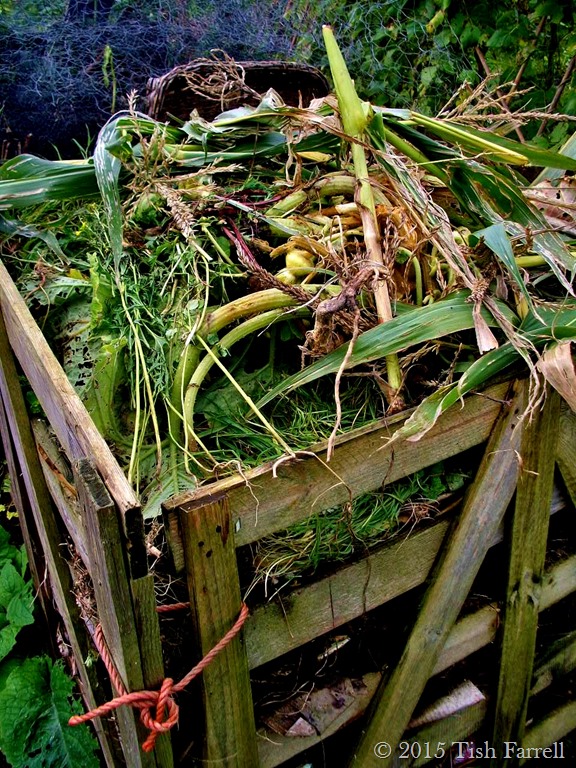
The manner of composting as formerly done by me, and displayed in the first photo is not to be emulated. A dedicated composter, and I am now trying to do this, chops big stems and stalks into short lengths to speed up the rotting down process.  It is also good have mixed layers e.g. brown, dry matter such as scrunched up pieces of brown corrugated cardboard, paper, wood shavings, leaves and small twigs. The aim is about 50:50 brown to green matter. This allows air into the mix, and so prevents a sour and smelly squidge.

Grass  mowings and animal manure will heat things up, and also aid decomposition. The heat kills any weed seedlings.  Other additives in my compost include tea bags, egg shells, vegetable parings, allotment weeds, turves from ground clearing, wood ash, hoover contents, and brown paper carriers. Every now and then I also add a layer of comfrey since it also a good compost activator.

*

IMG_1138

Comfrey is a good compost activator. It also makes an excellent plant food, keeps the bees happy, and helps mend human bones and inflamed tissues. The leaves can be made into tea or added to soup. The flowering tops contain vitamin B12 (source: Herbal Therapy for Women by Elisabeth Brooke MNIMH). Can you spot the bumble bee in the top photo? (Just testing).

100_5359

*

Ideally, the contents of the compost bin should be turned over during the growing season to aerate them, but if this is too daunting a task, and if there’s space, then three or four bins are the answer. The rotting down process will be slower, but when full, the first one is  simply left for a couple of years while the others are being filled. It’s also common practice to put a piece of old carpet over the top to help things along. My largest bin is made of four wooden pallets tied together.  It is easy to open once full, and the contents can be tipped out and turned over.

And why am I so keen on compost? Well, apart from the obvious that it feeds and improves the soil, it is also useful as a mulch, and MULCHING is my current theory on how to deal with  our increasingly ERRATIC WEATHER systems. The only problem is you need masses of it.

But applying a good deep layer around plants and between rows of crops, not only nurtures the plants, it gives them some protection in heavy rain, and stops the soil drying out in times of drought. To retain moisture it should thus be applied after watering/rain, and it will then reduce the amount of watering needed in the future. Strong, healthy, UNSTRESSED plants mean less pests and diseases. A sturdy cabbage will even withstand some slug damage.  For added protection, cover the lot with enviromesh.

My objectives for composting, however, are small potatoes compared with the goals of The Global Compost Project. Scientists involved with this brilliant initiative believe composting can mend the mess we’ve made of the planet, AND help reduce climate change. Here’s what they have to say:

“It also turns out that one easy, natural human invention is very important to boosting photosynthesis and cleaning up the mess we created.  It is Composting!

Fertilizer feeds plants nitrogen and compost feeds soil carbon.

According to Lawrence Berkeley National Laboratory and Marin Carbon Project, by spreading just 1/2 inch (1 cm) of compost on grazed rangelands, soil naturally starts to sequester more carbon out of the air via renewed photosynthesis at the rate of 1 ton per acre per year for up to 30 years.  This study was performed jointly by both organizations over a 7-year period, which clearly demonstrated proof of concept.

The results are delighting water conservationists, microbiologists, and climate change scientists around the world.  Compost replenishes the soil carbon  to balanced levels.  It is as if the eco-systems are rebooted, and within one year native grasses and wildlife rebound.  The carbon intake,  forage capacity, and water retention all fall into normal rhythms.”

For more about The Global Compost Project go HERE. And HERE for info on domestic composting from the Royal Horticultural Society.

*

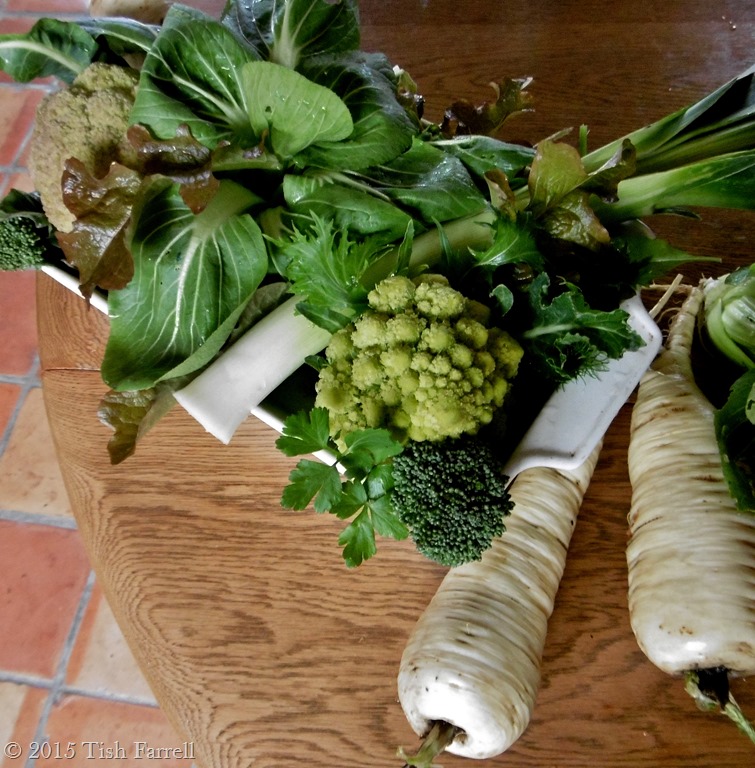
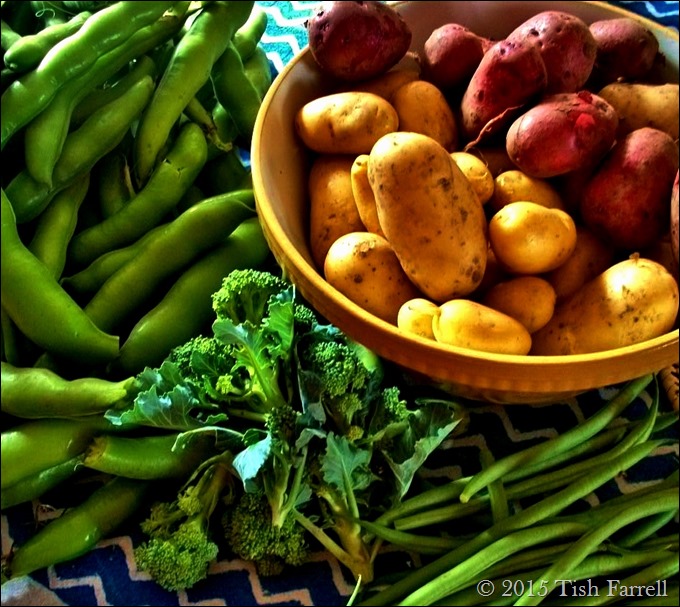
And now excuse me while I go off to do some more compost foraging. Perhaps, after all, I should be enlisting my neighbours’ help. They might chuck me more stuff over their hedges instead of putting it in their recycling bins. But either way, recycling is good. So: Obsessive Compulsive Composting anyone? Just to encourage you, and to show off, here’s some of my last year’s summer and winter produce:
100_4197

P1000281

copyright 2015 Tish Farrell

Autumn weather in June? What’s going on?

IMG_1709

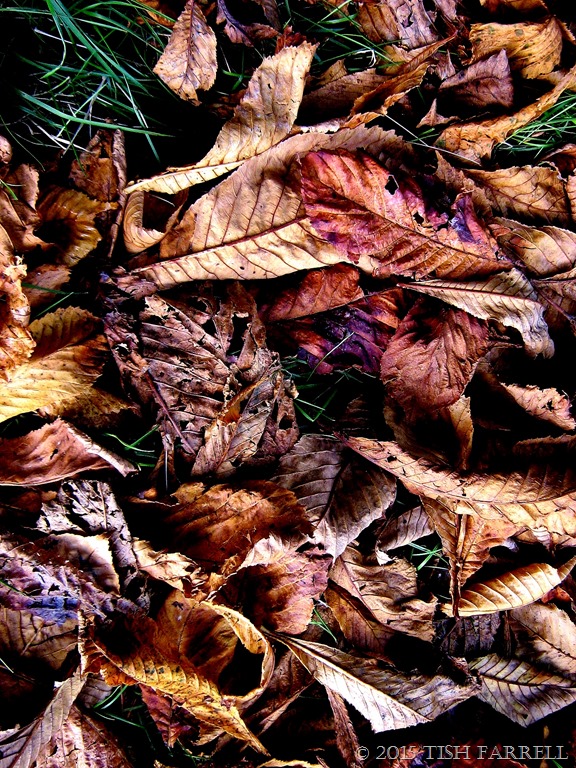
For those like me, who live in the northern hemisphere, it might seem a touch perverse to post a photo of autumn leaves just as summer is expected. But then, of course, so many fellow bloggers south of the equator are heading into winter, so this is for you. Seasons greetings and all that.

Besides which, here in the UK most of us have been having autumn, if not downright winter weather for weeks now. June arrived with Met Office warnings of gales, plus torrential downpours. As I write,  the sky is filling again with fat rain clouds…

Enough already. Feelings of dryness are definitely required at Sheinton Street. I anyway love the spicy scent of autumn leaves, and especially crispy sweet chestnut ones, which these mostly are.

There is something mesmerizing about that sundried smell that opens up pathways to the past: forgotten houses, empty rooms, sun bleached floorboards, old cupboards and drawers exhaling remnant whiffs of their former contents, the sweet odour of decay. It’s all most beguiling, and hard to know if these are shreds of a remembered past, or some parallel universe barely glimpsed. Shall we take a ‘leaf’ from Alice Through the Looking Glass, and step through…?

Perhaps another day. The leaves are Welsh ones by the way. There were caught last year on a gloriously dry September afternoon, as we walked in a dream on the Dol Idris Path below the great  mountain of Cader Idris.  You can read about that walk here.

But now for the soundtrack to the photo, a song that I’ve loved since my first years on the planet Autumn Leaves/ Les feuilles mortes  sung here by the one and only Yves Montand. Oh, the tristesse:

http://www.youtube.com/watch?v=kLlBOmDpn1s

https://www.youtube.com/watch?v=nRJn0hnIyyc

Related: Now that summer’s done, we take the Dol Idris Path…

Jennifer Nichole Wells OWPC: dry   Go here for some more dry posts

A Long Road from Makindu

010

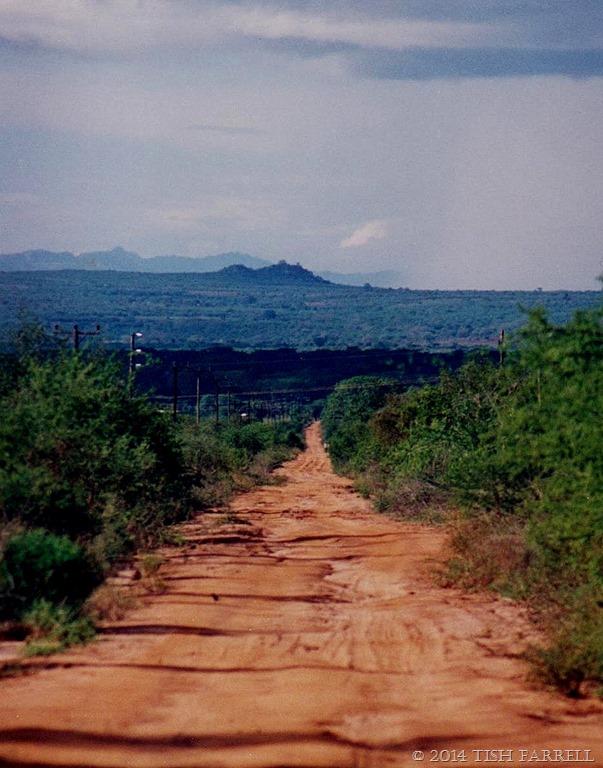
This long dirt road leads from Kenya’s Nairobi-Mombasa Highway to the National Range Research Station at Kiboko, about 100 miles south of Nairobi. The Range Station is a colonial relic, which (if I remember correctly) took over the land of a failed white settler sisal plantation. In more recent times, Kenyan scientists, both at the Range Station and the nearby Kenya Agricultural Research Institute field station, have been continuing the work begun there by British agricultural officers in the early 20th century. The emphasis, as then, has been on trialling crop varieties and developing livestock husbandry techniques to improve the lot of the people who live in this drought-prone region  – the Maasai pastoralists to the west, and the Akamba agro-pastoralists to the east and north.

The Range Station has been monitoring rainfall patterns for over 90 years. When it does rain, it occurs in two seasons – the long rains from March to May, and the short rains from October to December. But the fact is Kenya’s climate is  becoming drier, and it is  marginal regions such as these that are hardest hit. In the ‘90s when we were living in Kenya and Graham was regularly working in this area, it hardly seemed to rain at all. One Christmas I remember driving past roadside stands of maize that were blowing away to dust.

In pre-colonial times, and for several hundred years before the British arrived in East Africa, the indigenous peoples had their own methods of dealing with disaster: they simply moved somewhere else. This was usually to other quarters in their large clan territories, or to places where they extended kinship ties. They would then stay with better off relatives until the hazard had passed. Those who had been ‘taken in’ would be expected to reciprocate should the need arise. This was how things worked. It was pragmatic, and flexible. The migrants would then return to their own homes when they could.

The colonising British,  indoctrinated as they were with feudal-capitalist notions of land ownership, could not cope with such fluid community practices. Once the colonial administration had begun to encourage large-scale farming by European settlers, they felt obliged to establish fixed boundaries around tribal territories so that native land could not be sold to, or settled by the European incomers. It was seen as protecting “native interests.” The only problem was these officially designated boundaries did not take into account local emergency refuge strategies, or indeed many other traditional coping measures that involved moving somewhere else.

Today, and this is perhaps surprising to many outsiders, much of Kenya’s rural population still lives on ancestral land within these former tribal reserves. With little hope of acquiring new land, people’s clan and family holdings have been sub-divided, fathers to sons, down the generations,  often leaving the ground depleted, eroded, and/or wholly insufficient to support family needs.

This in turn has created a situation of migrant labour, where village men travel to the city to work. They rent a room in one of the slums, and live away from home for most of the year while their wives remain in their homeland, cultivating the farm plot as best they can, and rearing the children. The social issues that arise from this kind of fragmented family living do not need to be spelled out.

Now, on top of everything else, there are the effects of climate change to deal with, both globally and locally created. Competition for fertile land and water sources is critical in many places. In this context, then, the British system of land ownership remains one of the toxic legacies of colonialism.  At independence Crown Land became State Land, and so nothing much changed in the title deed/ownership department, apart from much grabbing of state-owned land by officials. It is hard to know how to unpick it all. We have all heard about Robert Mugabe’s attempts to do so in Zimbabwe.

As for the ordinary small holder farmer, they might not be physically confined to their reserves as they were under British rule, but if their land there can no longer support their families, then there is little choice but to trek up the highway to Nairobi and join the swelling millions of slum dwellers who eke out a living there.

However you look at it, this is a long, hard road .

001_thumb[1]

The Nairobi-Mombasa Highway, Makindu District, in the 1990s, looking north towards Nairobi. It has been much improved since our day, but plans to turn this  major trans-African route into a dual carriageway appear to have stalled.

copyright 2014 Tish Farrell


You can read more about what we were doing in Kenya here:

Looking for Smut on Kenya’s Highland Farms


For more long and winding roads travel over to Ed’s place at Sunday Stills.

Floating not flooding: Adeyemi’s ‘Ark-ademy’


Makokos-Floating-School-NLE-2[1]

Photos © 2014 NLÉ

Makoko_approach-960x550[1]

And what is this extraordinary structure?

Why, a floating school of course. It is also a prototype building created by Nigerian-born architect, Kunle Adeyemi  and his Amsterdam-based company NLÉ. Adeyemi has more plans too, ones that will relieve the dire conditions for the 100,000 people who currently live in this, Nigeria’s Makoko slum. The fishing settlement in Lagos Lagoon has been there since the 18th century. To cope with changing tidal levels, the shanties are built on stilts, rising from the lagoon mud; the main way to get around is by boat. There is zero sanitation, and consequently much disease. Life expectancy is reckoned to be less than 40 years.

For the past two centuries Makoko slum dwellers have adapted to tidal changes, but now climate change, with rising sea levels and increasingly extreme weather events, is putting them at grave risk.

Recently the Nigerian authorities have addressed their plight by demolishing many of the stilt-built dwellings, making the inhabitants homeless. There will be re-development  naturally – not for the poor who have long lived there, but to replace their community with flashy lagoon-view high rises. Makoko as it stands is deemed a blot that must be erased. It is an interesting approach to social deprivation: to make it worse.

_61618156_a1zaixbb[1]

*

See instead Adeyemi’s vision:

NLEs-floating-school-casts-anchor-in-Lagos-Lagoon_dezeen_14[1]

Now doesn’t this make your heart sing? Homes to live for.

And here is where it begins:

ml_schoolatSea_Makoko_d2_600[1]

Diagram courtesy of NLÉ.


Makoko floating school, then, is literally the flagship of NLÉ’s proposed waterborne city. The structure was designed and built in collaboration with the Makoko Waterfront Community and with input from Dutch naval architect, Erik Wassen. It is movable, and capable of dealing with storm surges and flooding. The triangular frame which is mounted on 256 floating plastic barrels makes it very stable and with a capacity to keep 100 people safe in storm conditions. PV cells on the apex generate solar power, and there are facilities to recycle organic waste and harvest rainwater. Most importantly of all, it was built using the techniques and skills of local craftspeople. It is a building that fits with people’s view of themselves. And it is beautiful.


Makoko-Floating-School-5-606x400[1]

Photo © 2014 NLÉ

The school has three levels with a capacity for 60 -100 pupils. The 1st level is an open play area for breaks and assembly. Out of school hours this space may be used by the community. Level 2 is an enclosed space for 2-4 classrooms, and Level 3 has a partially enclosed workshop space.

The only fly in the ointment of NLÉ’s scheme for Makoko’s regeneration is the fact that Nigerian authorities say the floating school is an illegal structure, and should not be there. NLÉ are currently in negotiation with Lagos state government and are said to be optimistic that no immediate action will be taken.

I for one hope that this African solution to an African problem will be seen for what it is – an amazingly wonderful, life-giving, life-enhancing scheme of which Nigeria should be heartily proud. The floating school addresses both present need and future uncertainty, and in ways that its community can reproduce and embrace. It has inherent sustainability. It is a pattern to build on, adapt, develop, replicate, but on an individual human scale that everyone can understand. And as time goes on, we may all have need to tap into some of NLÉ’s ingenuity if we wish to continue living well and safely on our home planet. Town Planning that gladdens my heart and gives me hope, and believe me, that does not often happen.

text copyright 2014 Tish Farrell


Further info:

Kunlé Adeyemi Founder NLÉ

Kunlé-Adeyemi_1c_Photo-by-Reze-Bonna-293x400[1]

The Architectural Review Jan 2014

http://www.nleworks.com/case/makoko-floating-school/


Flickr Comments F – archive