Never Mind Jack And The Beanstalk

IMG_5172

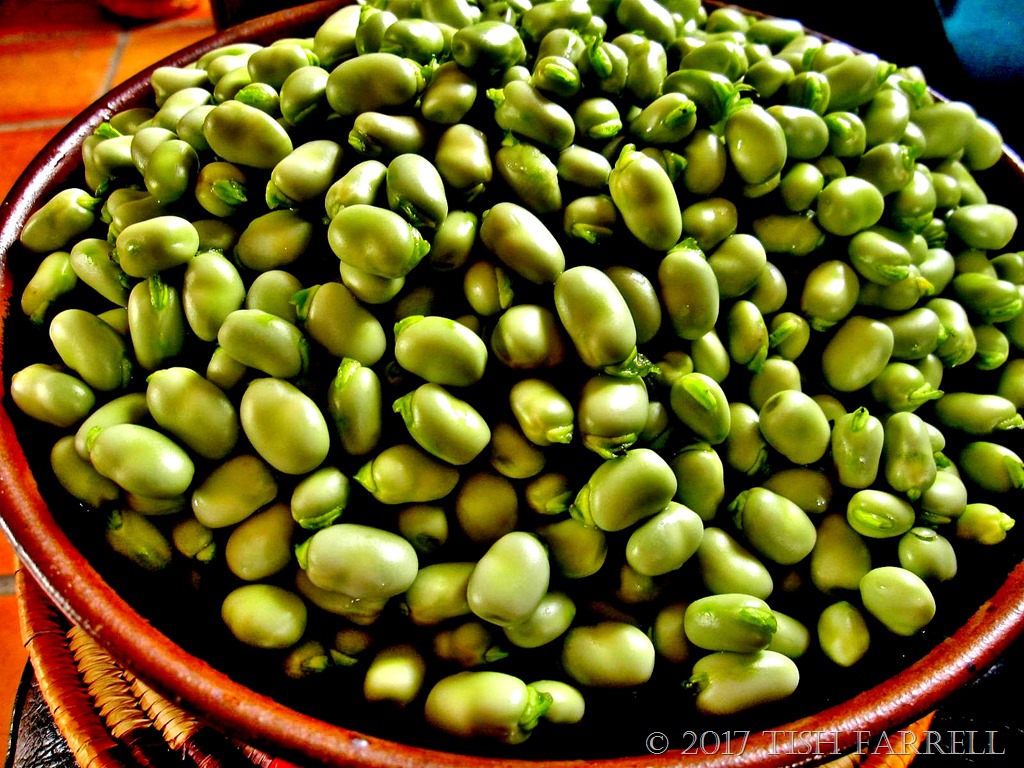
See what I grew from a handful of bean seeds – four pounds of shelled Field Beans from one square metre of raised bed (excuse the mixed metrification). For those of you who do not care for Broad Beans, these are their much smaller, juicier cousins, although they are all known as Vicia faba, faba or fava beans.

They are one of the oldest Old World vegetables, their remains found on ancient Neolithic settlements in the Near East, where their cultivation probably originated some 8,000 years ago. From there they spread across Western Europe and North Africa. Today, of course, they are perhaps best known as a staple of Egyptian cooking, the dried and rehydrated beans forming the basis of falafel.

I use them to make soup, or refried beans or a bean version of guacamole which is surprisingly convincing. Otherwise we just eat them steamed with melted butter and chopped parsley, or add them to a green salad with a vinaigrette dressing .

In the UK this small-beaned cultivar is usually grown as a green manure, or as animal fodder. As green manure it is good for breaking up heavy, clay soils. The seed is sown in autumn (September to November). The plants will germinate quite quickly, and are left to over-winter. In spring, once they have shot up to about half a metre or 2 feet, and before it flowers, you are supposed to dig them in. By then the roots will be quite deep, and they also have the added benefit of fixing nitrogen. A good follow-on crop would be cabbages or broccoli, or any brassicas.

I prefer to grow mine to eat. Not only that, they have wonderful flowers that waft their scent over the allotment in late spring and get the bees very excited. The plants require no attention. Slugs don’t care for them. I grow them in blocks which tends to make them self-supporting, so I don’t add string supports as you need to for broad beans. I don’t feed them or even water them, not even in our increasingly arid springs. I do, however, pick off all their growing tips at the end of May to discourage black fly invasions.

100_5619

Growing Field Beans to eat seems to me like a win-win-win situation. They feed me and He Who Is Presently Building A Shed; they feed the bees; they feed the soil. They also freeze well, and there will be enough to dry to sow in autumn for next year’s crop. And then there’s all the top growth to add to the compost heaps. You  may perhaps have noticed the bean weevil damage on the leaves. It is one of many endemic pests at the allotment, but their nibbling doesn’t seem to affect the crop. So now please conjure the sweet, subtle fragrance of bean flowers. There is no scent quite like it. Aaaaah…magic beans!

Copyright 2017 Tish Farrell

Six Word Saturday

Please pop over to Debbie’s place at Travel With Intent. She’s currently hosting 6WS

Traces Of The Past ~ And Who Do You Think Lived In This Little House?

P1060173

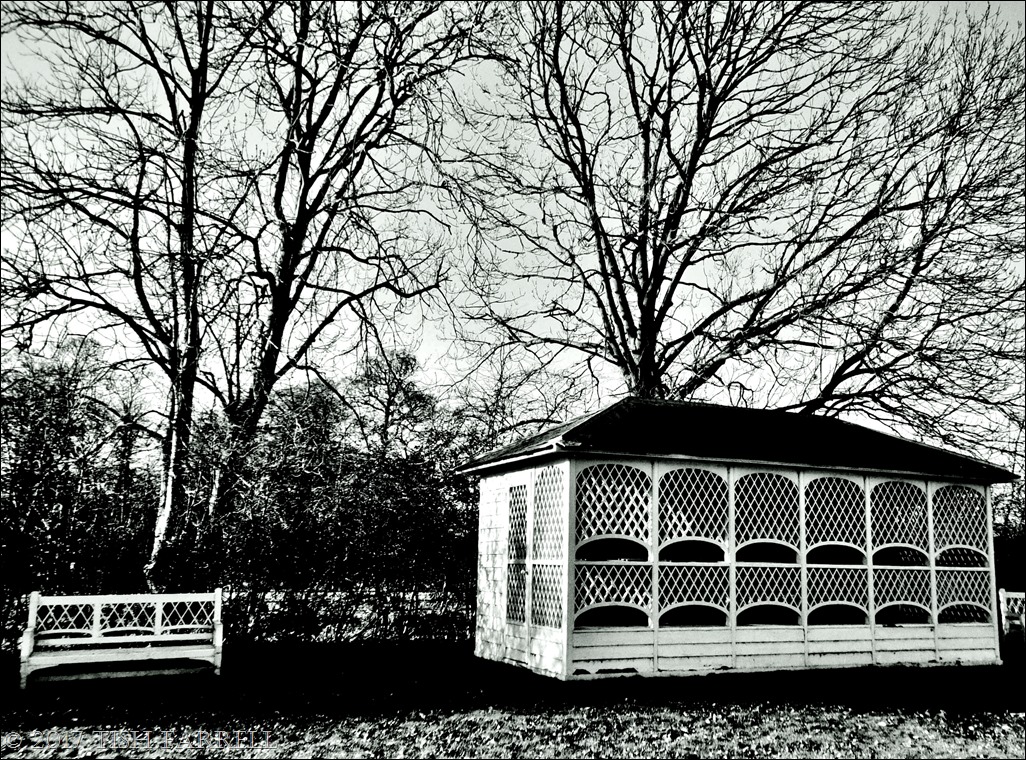
Well, I’d never seen one of these before.  There it was outside the walled garden at Attingham Park, one of Shropshire’s grandest historic houses.  Closer inspection and the spotting of an information panel inside one of the half-moon ‘windows’ yielded the knowledge that it was in fact the bees knees in accommodation – a grand house commissioned specially for the Second Duke of Berwick’s bees.

The house was originally sited in the Duke’s extensive orchards to encourage the pollination of the fruit trees. Behind each opening there would have been a traditional hive or skep – an upturned, domed basket made from coils of straw. This apian ‘des res’ apparently dates from the early 1800s and is only one of two known Regency examples in the country. The great landscape designer Humphry Repton and architect John Nash were both employed at Attingham around this time, and so either one could be responsible for the design.

The hall and park are in the care of the National Trust, and it is currently one of their most visited properties – over 400,000 visitors last year and growing. Millions have been spent on the house, and the next huge project is the recreation of Lord Berwick’s pleasure grounds. Nor have the bees been forgotten. There are a quarter of a million honey bees in the Park, and the Trust has recently established a large, new apiary in the Deer Park. There is also a National Observation Hive in the orchard where you can watch the bees coming and going. Attingham honey may be going on sale soon. So a big cheer to the National Trust for championing the bee cause, this in the face of determined eradication of the species by the Big Unfriendly Pesticide Giants. We’ll all be very sorry if bees become ‘a thing of the past’.

P1060179

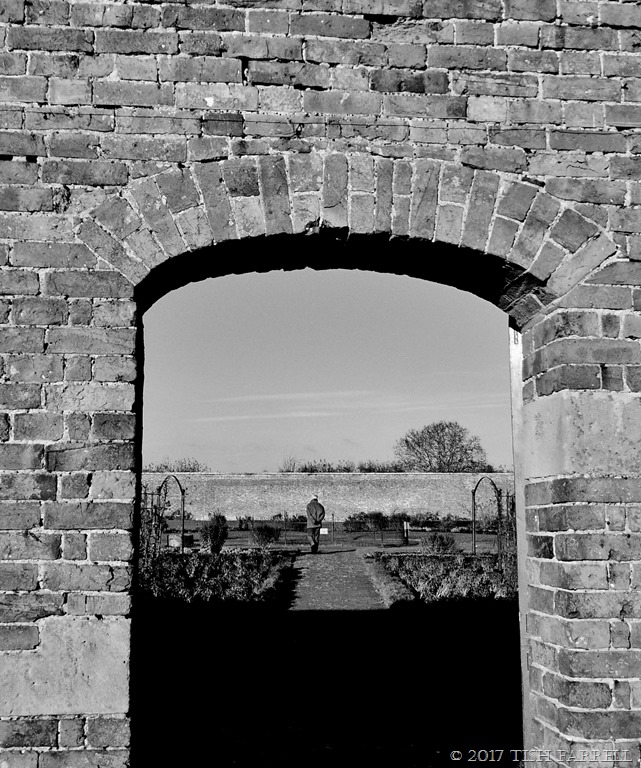
The walled garden in winter: a restoration project in progress. You can just glimpse the orchard beyond the far wall.

Black & White Sunday: Traces of the Past Now visit Paula for her fine entry.

Operation Floral Sat Nav ~ Bee Makes Bee-Line For Foxglove

IMG_1716

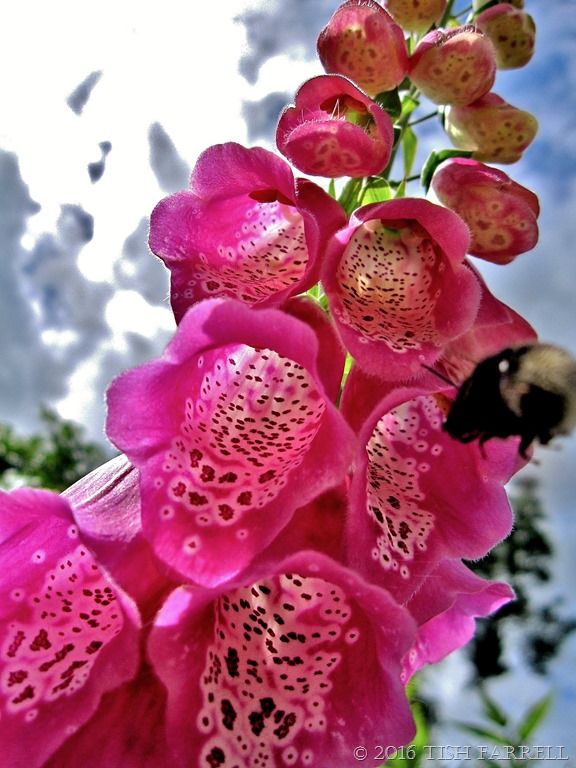
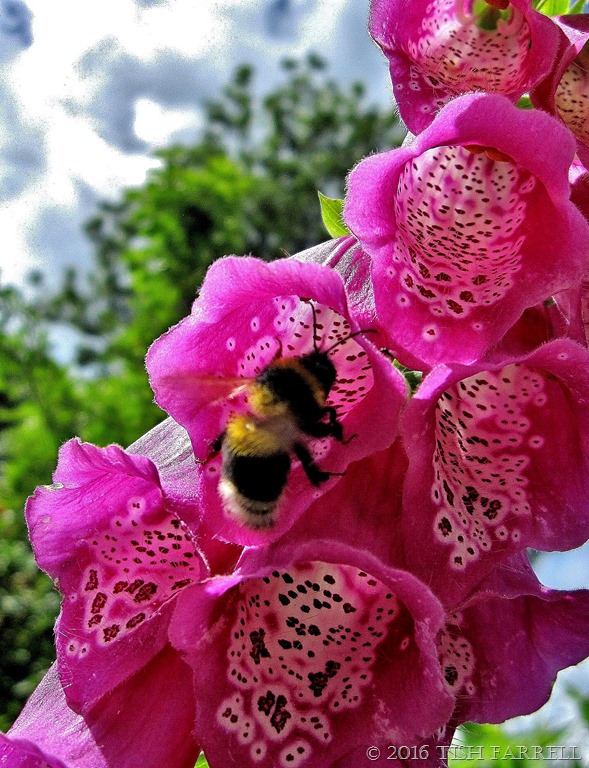
Yesterday at the Farrell establishment we had bees in poppies. Today it’s bees in the foxgloves, and thank you to Lynn at Word Shamble for mentioning bees and foxgloves in the comments. This reminded  me I’d taken these snaps earlier in the month just before the foxgloves went over. I was trying out my new second-hand Canon Ixus 870 – and oh, the nippy little macro setting – I’m in love with it!

Also please drop in at Lynn’s blog to read a wicked piece of flash fiction: it definitely has a sting in the tale/tail.

Now for more shots of bees. Also just look at the foxglove’s come-hither devices  – no ‘Sat Nav Map Error’ here; but an intricate systems of dots and splodges guiding in any would-be pollinator to get pollinating.  It looks like every little ‘glove’ has its own touch-pad access code:

IMG_1715

IMG_1704


Cee’s Flower of the Day

Daily Post Weekly Photo Challenge: Details

And It Was A Right Bees’ Breakfast This Morning Over My Garden Fence…


IMG_2265

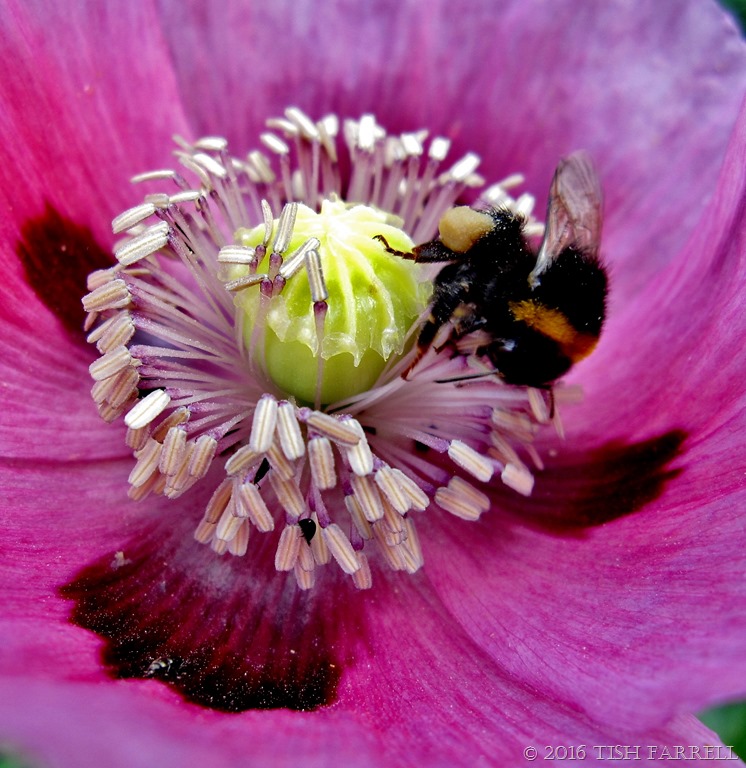
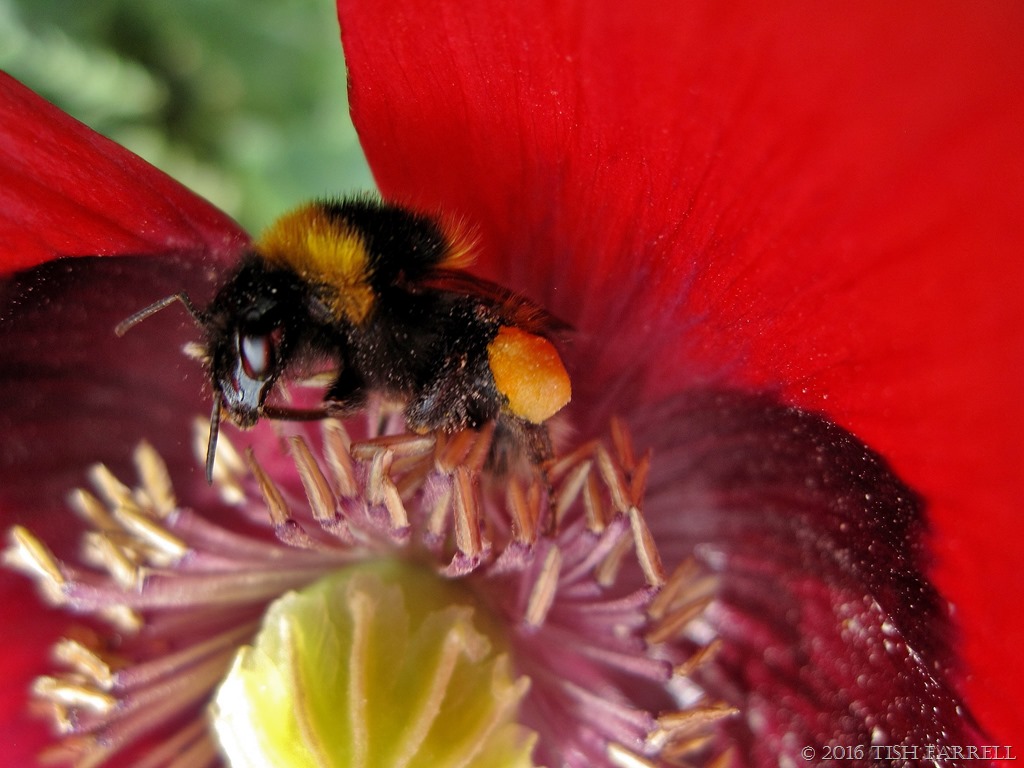
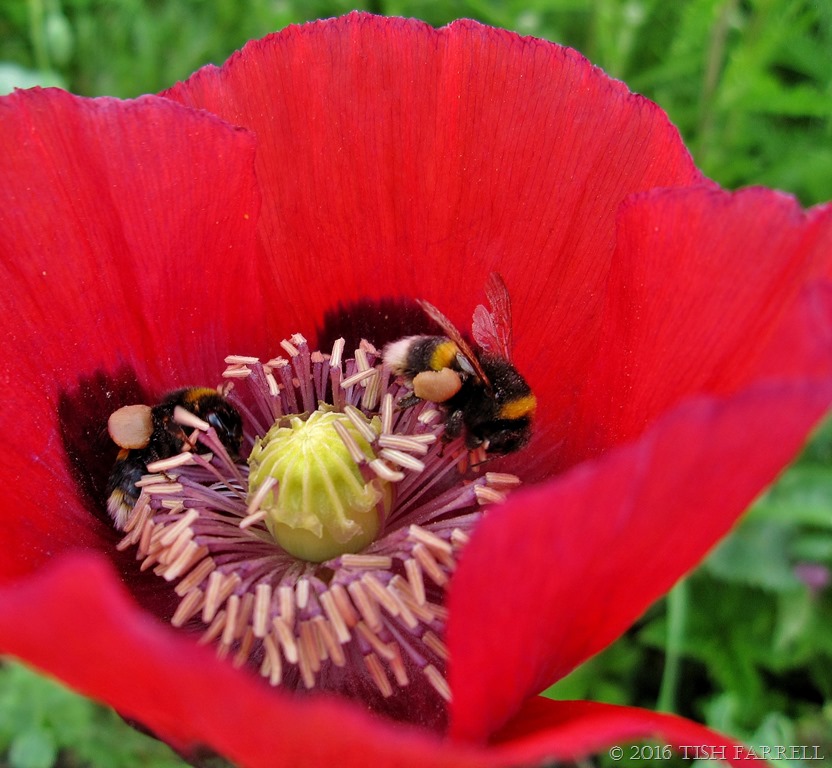
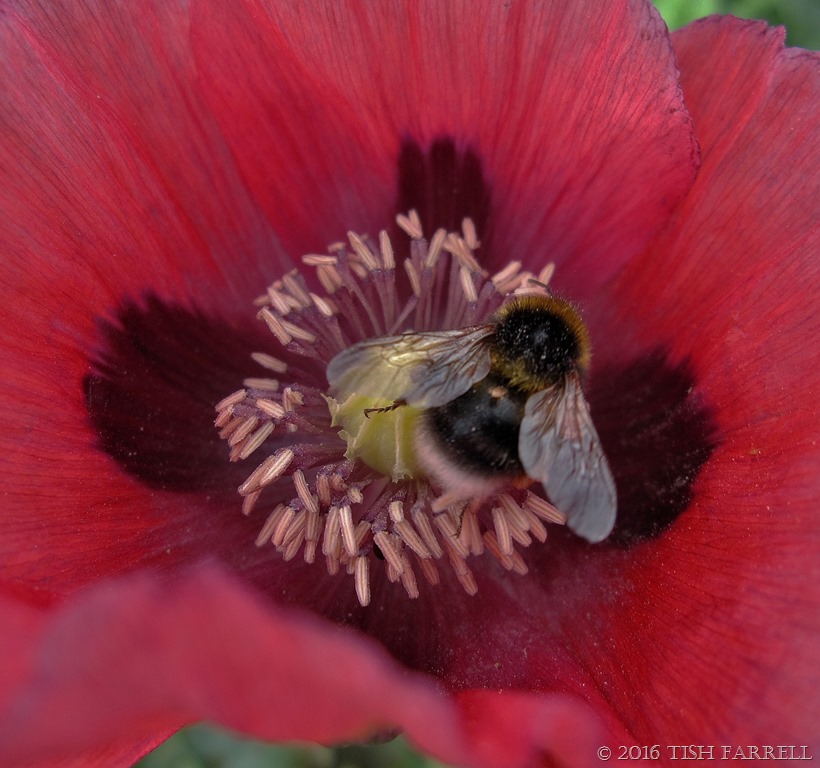
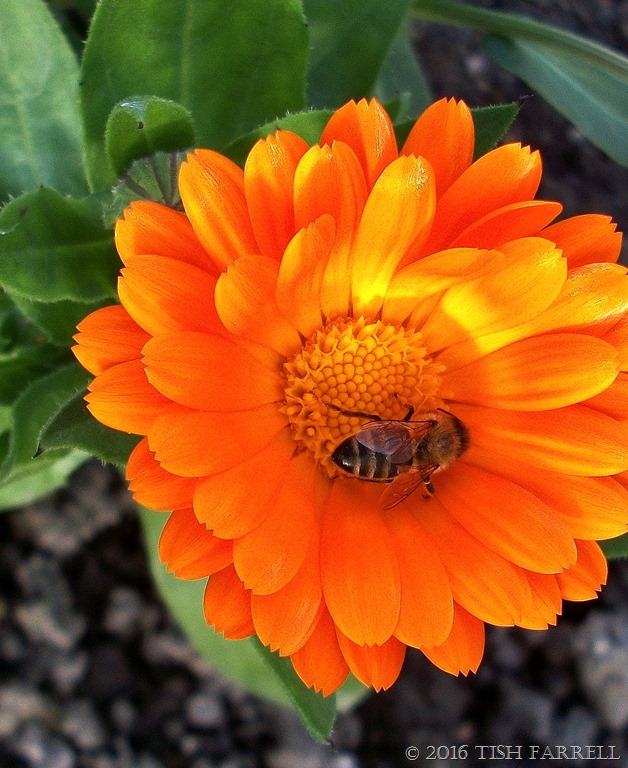
It was every bee for itself over in the poppy patch behind the garden sheds this morning: the apian equivalent of a supermarket trolley dash. Honey bees, little brown bumbles, dinky stripy bumbles, blooming big scary bumbles and white-tailed bumbles diving in for the poppy nectar while the air all round filled with happy bee hum.  Some were feeding with such speed and voracity that their baggage compartments were definitely approaching the overloaded mark. Now and then they would take a feeding break on the poppy’s crown while they dusted themselves down and redistributed the pollen cargo.

IMG_2252

The gathering technique is also fascinating. They dive into the base of the flower and speed round beneath the stamens, feeding on the nectar while every part of them hoovers up pollen from the anthers. Even with the biggest bumbles, once they get into their stride, all you can see are the stamens ruffling round like curtain pelmet tassels in a stiff breeze. Whoosh, and it’s on to the next feeding station.

IMG_2282

IMG_2310

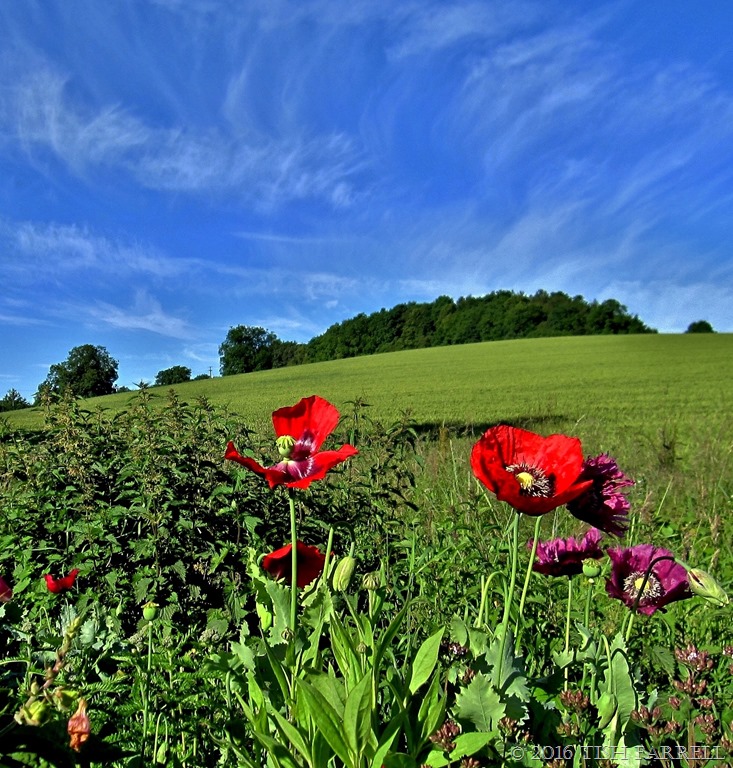
I probably don’t need to say it again to those who follow this blog, but then no chance should be wasted. The wellbeing of our planet, and of humanity, and of the continued production of much of our food depends on protecting and nurturing bee populations any way we can. Masses are being killed off by pesticides and habitat loss. So loud applause for the opium poppies that came of their own accord to our boundary fence, and are doing their bit for bee world. Rah! Rah! Hurrah, poppies!

IMG_2360

IMG_2361

IMG_1828


Daily Post Weekly Photo Challenge: Details

Bumble Bee Bliss & A Change In The Weather

IMG_2157

April and it’s all change. On Saturday I was whinging about the snow that had invaded our early morning landscape. By Sunday we were sitting coatless on Benthall Hall’s tea room terrace, and consuming carrot cake and hot chocolate with the sun on our faces. It was February when were last there, and grey and stormy, with no possibility of sitting outside. Now we were in danger of overheating with a nice grey hen pootling around our feet, and the air filled with bee-hum. Later, when we ambled around the gardens, we came upon these newly opened rhododendron flowers and a very happy bumble bee. To say it was gorging itself is an understatement. Up to its armpits in pollen it was. Food at last. Bzzzzzzz.

*

Check in at Cee’s Flower of the Day for  more floral displays.

Bee In My Bean Blossom

100_5619

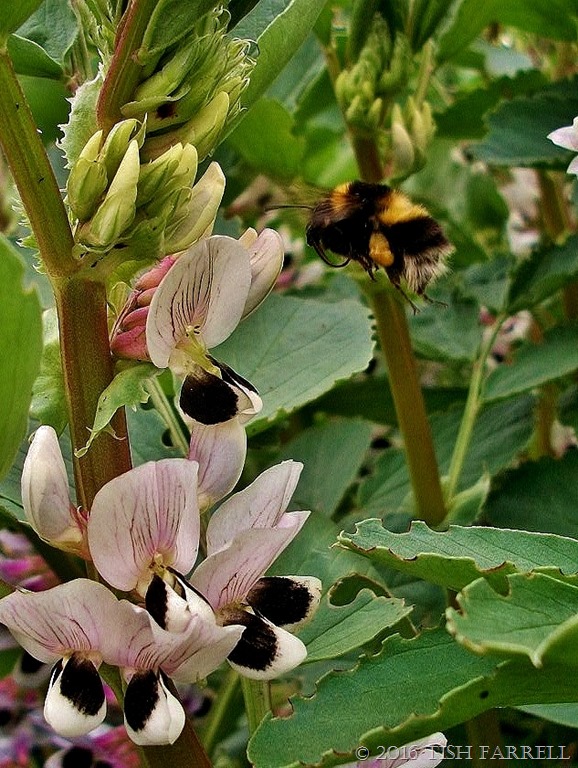
In April at The Earth Laughs In Flowers, Jude wants to see our garden macros. This is also the Day 5 of the 7-day nature photo challenge. So here we have a bumble bee heading for my field bean flowers. I don’t blame it. They smell divine on a still, spring day.

This photo was taken up on my allotment, probably last year. At the moment the current crop of field beans, sown in September-October and overwintered, is only a hand’s width tall, but they’re looking quite healthy. Once they get going, they will grow as tall as I am, and need some support. The photo also shows bean weevil damage on the leaves. This is one of the drawbacks of allotment gardening. Pests like this become endemic. On the whole, though, the beans seem to carry on regardless.

Field beans are related to the broad bean (aka fava or faba) and they look much the same, but are less than half the size. Mostly they are grown in the UK as a green manure, the plants dug in before flowering. I grow them to eat. They make great re-fried beans, soup and a bean version of guacamole, which is astonishingly good.

My crop was so productive last year, I was able to eat and freeze them, and save masses of seed to dry and sow for this year’s crop. It’s the first time I’ve done this, so it will be interesting to see how they turn out.  In consequence, I probably have grown too many. But once I see how the plants are faring, I shall sacrifice some of them. I mean to chop them down and leave them to rot on the soil surface, rather than digging them in. This will let the worms do the work, and keep the soil covered until I want to cultivate it.

I am beginning to see that digging is a very bad thing to do the earth. It wrecks the surface soil structure every time you do it, and so compromises fertility. Instead, the No Dig method relies on covering the soil surface with organic matter/compost every year, and then planting through it. The only problem is you need masses of compost. It also helps if you do your planting in raised beds. This way you do not walk on the soil, and can keep building up the fertility. Raised beds are easier to manage, and mulching the plants should massively cut down on the weeding, and the need to feed, or to water during dry spells.

Since last autumn I have been doing heavy labour on the new allotment plot that came with my polytunnel. (I hadn’t taken this into account when I got all excited about inheriting the tunnel from allotmenteers who were off to new territory.) The ground all round was heaving with dandelions and buttercups. And since this was before I discovered the no dig approach, I admit to using the quick and dirty method (though NOT weed killer) and slicing off the top layer of weeds, and dumping it in compost bins to rot down for a few years. The ground zero method of gardening.

I then commissioned He Who Does Not  Garden But Lives In My House to construct and install on my plot several raised beds made out of recycled builders’ yard pallets. A couple went into action straight away, and were planted up in October with over-wintering onion sets. The others I have been filling up over the past few weeks. So far the onions are looking healthy and a few weeks ago I sprinkled organic hen manure pellets over their beds, an alternative to sulphate of ammonia, which I didn’t have to hand.

By now you will be beginning to grasp the lengths that this writer will go to in order not to sit in front of her computer and cultivate the master work. So far I have shifted around 30 barrow-loads of an old garden rubbish heap that has apparently been in the corner of the allotment for the last forty years, and until recently was covered in brambles and nettles. Strangely too, it was my idea to recycle it.

Off course when I say heap, I really mean small mountain. It’s full of bonfires past, rodent nests, and decomposed leaves from the nearby ash tree, as well as nearly half a century of weeds and waste. There’s also broken glass, bits of plastic fertilizer bags, and all sorts of unidentifiable metal items that gardeners of yore thought could be disposed of in such a manner. As I sift through the heap, I think how good it is that I’m putting the field practice of my long ago archaeology degree course to some sort of use.

In fact I have been keeping an eye out for old coins, remembering that a few years ago I uncovered a 1725 halfpenny right outside my shed door. It helps to keep me amused during the boring process of extracting unwanted detritus and plant roots.

100_6630

I’ve also filled myself with a big enthusiasm infusion by deciding to dedicate one of the raised beds to growing flowering annuals to attract more bees. I shall also use it to grow on perennials (verbascum, heleniums, echinops) and biennial foxgloves that I’ve just germinated on the kitchen window sill. The thought of a raised bed bursting with summer flowers is so heartening. Doubtless you will see the results as time goes on.

But for now that’s enough talk about gardening. The sun is shining, and the weather forecast tells us we have a brief window of opportunity before the rain returns, so I’m off to the allotment with my pea and beetroot seedlings. I  may even sow some parsnips. Happy Sunday one and all.


#7-daynaturephotochallenge

The Bees’ Knees In Vibrancy

100_3915

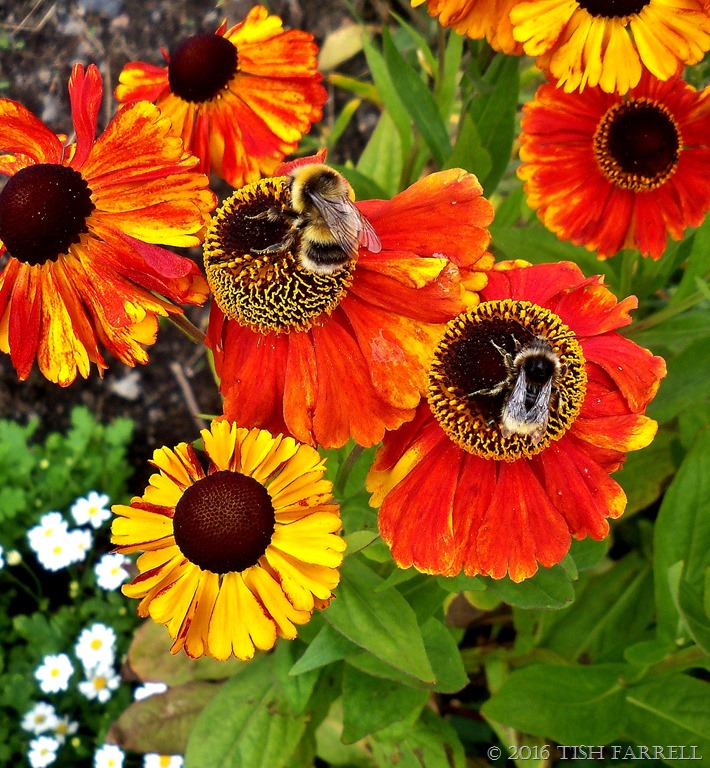
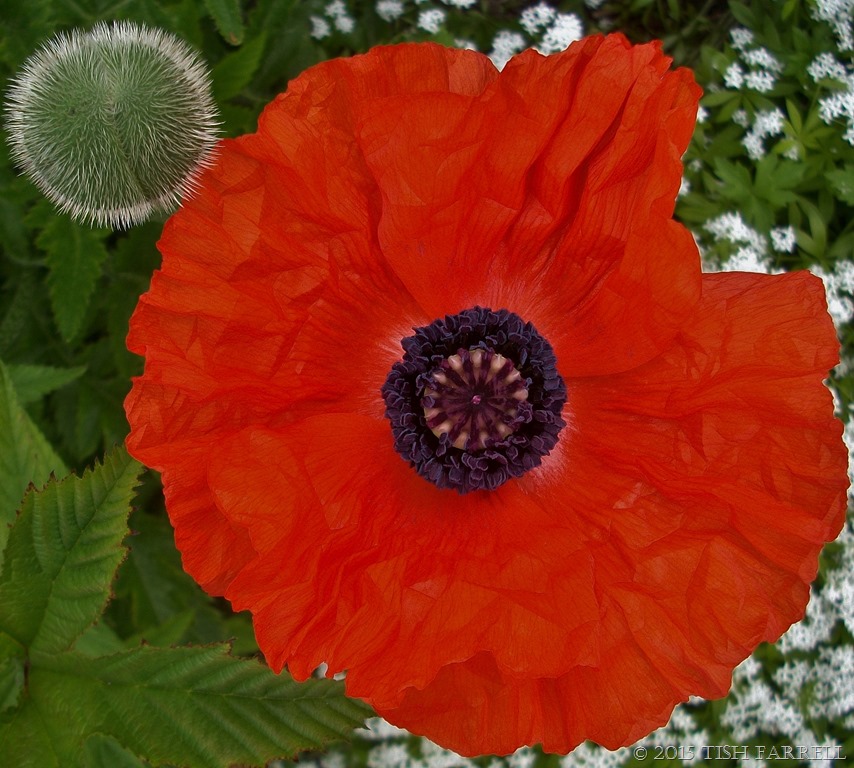
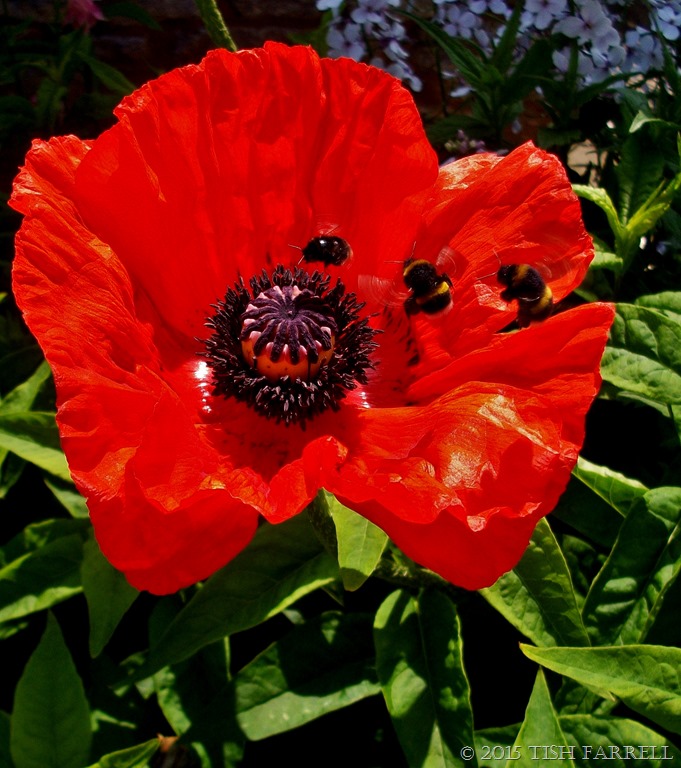
This is one my favourite photos. If you look hard you can even see the bees’ wings vibrating. And yes, for those who come here often, I know I’ve posted it a few times before. But isn’t it joyous – hot red, buzzing bees, sunshine.

And how about bees in the sneeze weeds (aka Heleniums)

100_6719

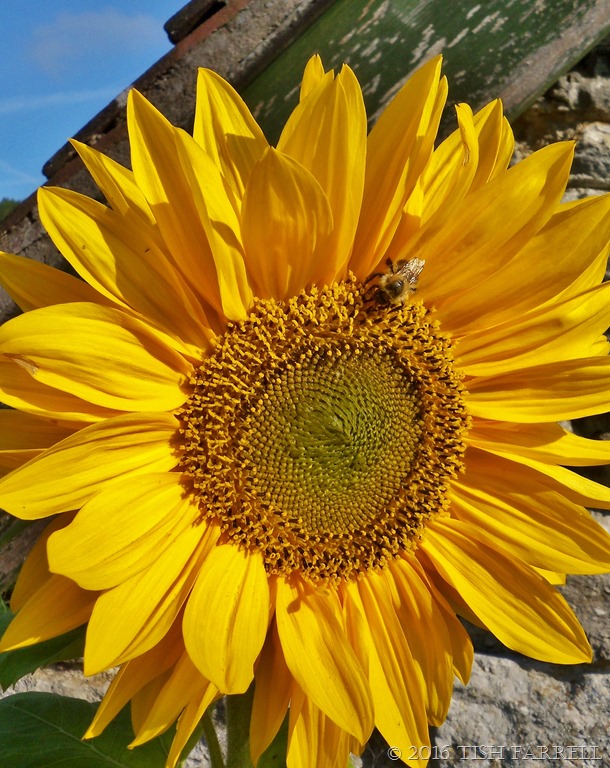
Or the bee on this sunflower that was growing last summer in a pot by the shed:

100_7053

All of which is to say we need to keep thinking about bees. We cannot do without them. They pollinate many of the plants that provide us with essential foods.  In the northern hemisphere new seeds are coming into the shops, so we can all think about sowing some bee-friendly flowers. You don’t need a garden. A pot of oregano will please them, and make you happy too when you’re making spaghetti sauce.

P1010778

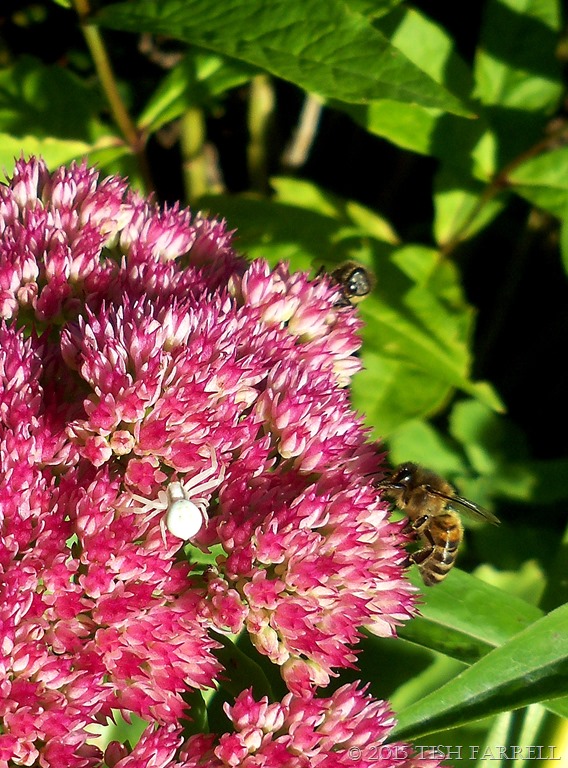
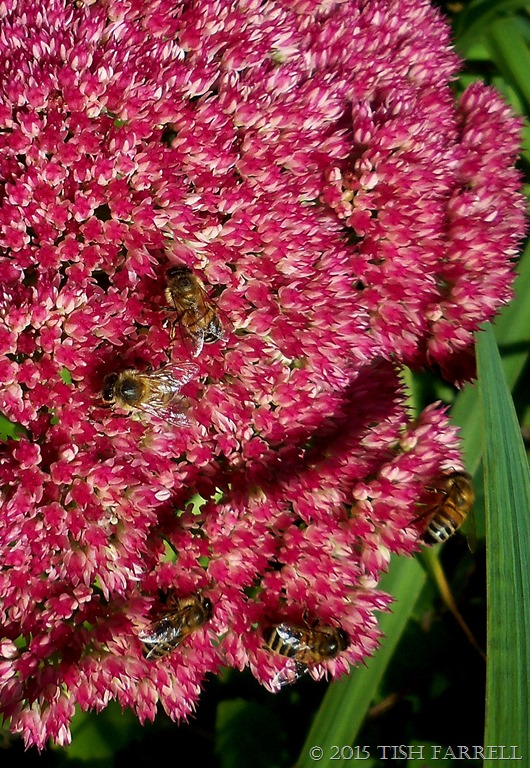
And then sedums will provide a valuable late summer nectar boost for honey bees. There are many varieties of this plant – large and small. They don’t need much attention and will grow in containers too:

100_7435

If you want to find out which plants are bee friendly, there are many bee sites on the web. But for local first-hand information ask your local beekeepers society. There will be one. Meanwhile the Royal Horticultural Society provides some useful guidance if you want to give your life and bee-life lots more buzz.

IN 2016 THINK BEES

Happy Wednesday Wherever You Are

Vibrant

Autumn in my garden

100_7438

This little crab spider is for Ark at A Tale Unfolds. He regularly shares with us the fascinating wildlife in his Johannesburg garden. He’s rather keen on spiders. The one on my sedum (Misumena vatia)  is, if internet photos are anything to go by, capable of taking on a big, fat bumble bee. The bees here are being a tad regardless I feel, so keen are they to guzzle nectar.

100_7440

In fact sedums are bee heaven at this time of year, so everyone who can, do grow them. There’s a huge range to choose from. The bees are doubtless stoking up energy for the winter ahead. I also forgot to mention that the crab spider can, in a limited way, change colour to match the flowers it is hunting on, though it usually frequents yellow and white ones.

100_7435

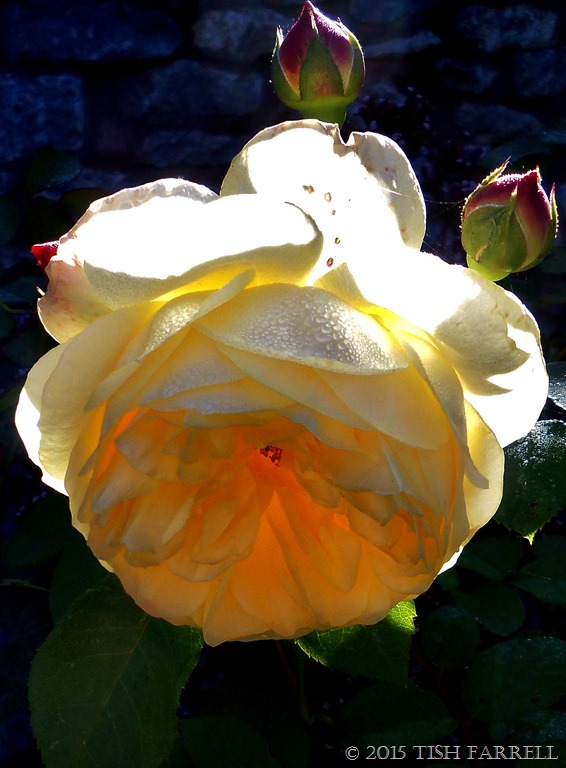
In my September in my garden post I mentioned that the rose at the top of the steps, Teasing Georgia, had come into bud for a second flourish. At the time  the weather promised to be so dismal, I wondered if she’d get a chance to bloom without the flowers being rained off. Well, the sun came back and Georgia came out in all her golden flounces:

100_7493

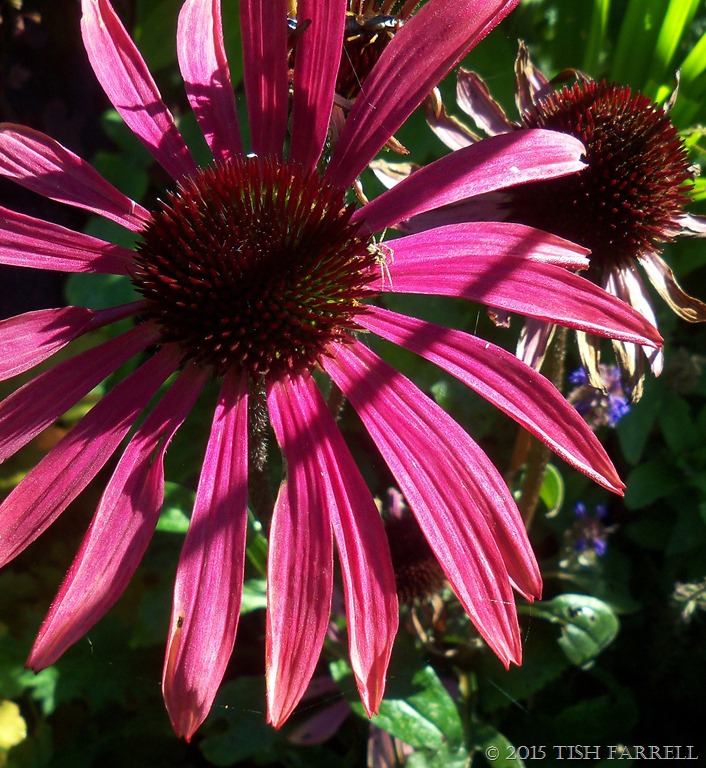
And here’s another tiny spider, identity unknown, sneaking in the echinacea (centre right):

100_7510

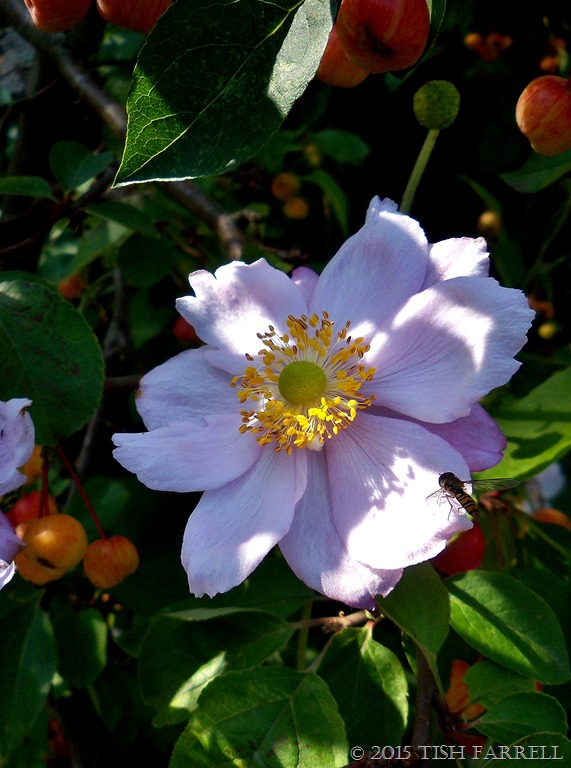
And finally, a sun-dappled Japanese Anemone with a hover fly:

100_7536

I’m linking to this Cee’s flower of the day

Please visit her blog for a daily floral fix.


Bee-ing Bee-Minded

100_6630

An old meaning of the word vivid is lively and vigorous. And what can be more lively and vigorous than foraging bees? They and their produce are life-enhancing too, and in elemental ways. Their importance in the human life-cycle, for one, is marked in an old Shropshire custom of ‘telling the bees’ when someone dies. So it is my belief that we can’t think too much, or too often about bees. Not only do nearly three quarters of our food crops depend on them for pollination, but the natural environment needs them too – those plants and trees whose flowers are also pollinated by them.

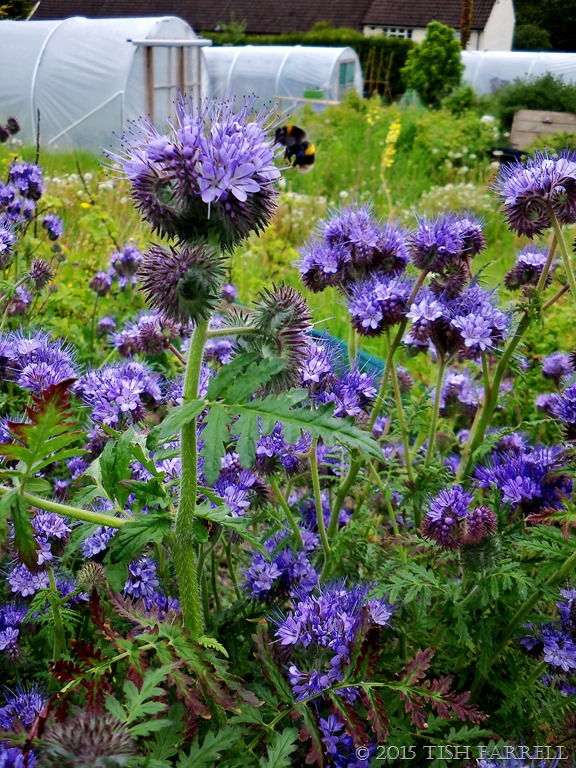
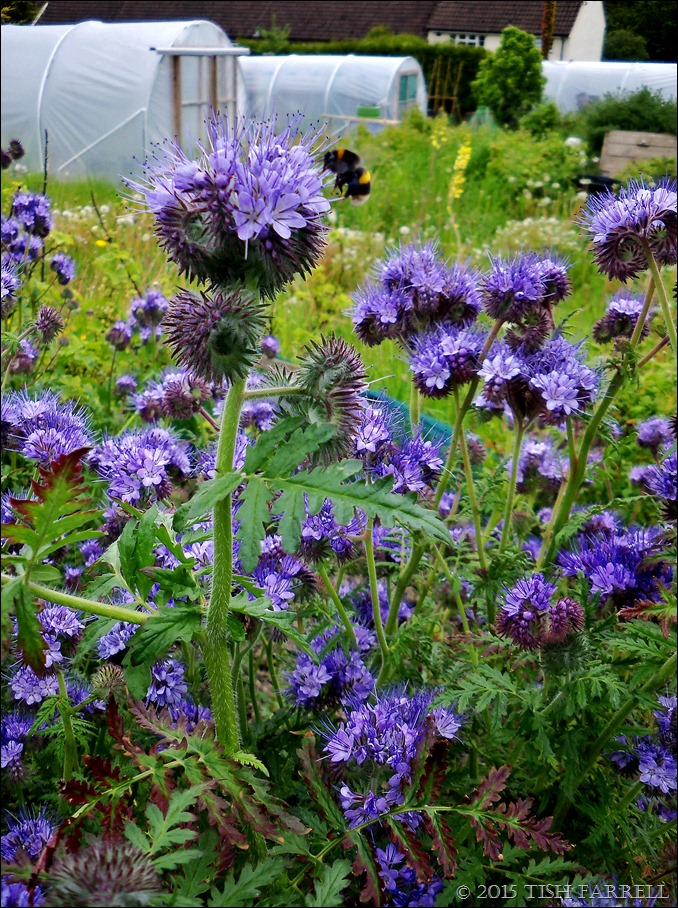
Up at the allotment we are very lucky. We seem to have plenty of bees, and many varieties too, but then most of the allotment gardeners rarely use pesticides apart from the odd slug pellet. Yesterday when I was there, my raspberry patch was thrumming with bee-hum. It was mesmeric. They also love my neighbours’ phaecelia which is grown as a green manure. Pete and Kate decided to leave theirs standing just for the bees. The flowers are beautiful anyway.
100_5529

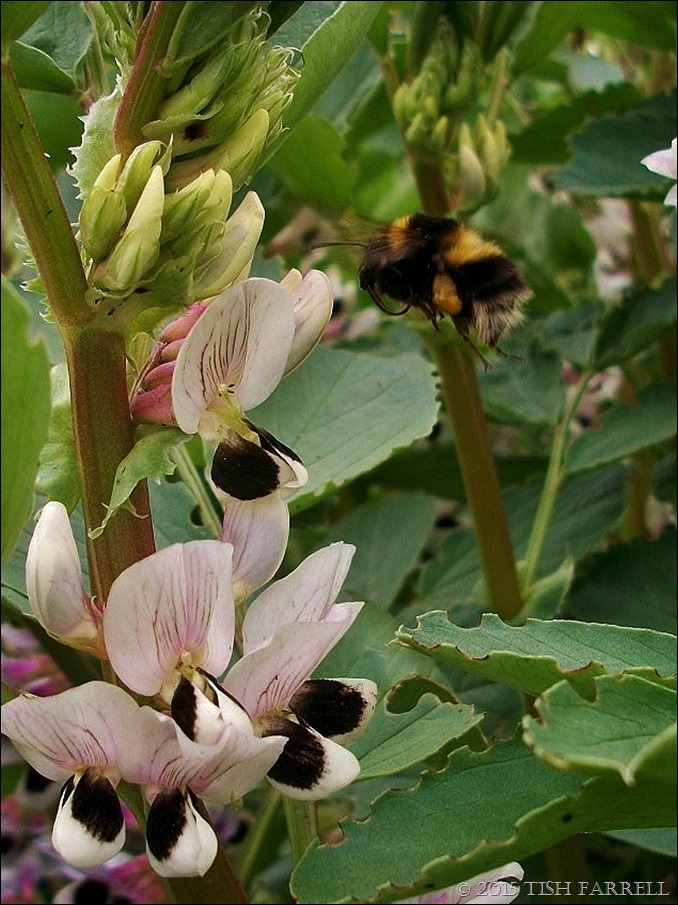
My field beans are another favourite. Again these beans, a relation of the broad bean, are usually grown to dig in before flowering and fruiting. But courtesy of the bees, I leave mine to produce masses of pea pod sized pods. The beans are small, and more delicious versions of broad beans. So thank you, bees. Also the bean blossom has a blissful scent. It’s a win-win-win situation.
100_5619

The debate over whether neonicotinoid pesticides are responsible for the massive bee deaths across the globe wrangles on. You can follow some of the arguments in the two BBC Science reports at the links below. One recent startling discovery by a study at Newcastle University, is that bees are attracted to the pesticides. They seem to like the nicotine in much the same way humans do. Researchers have yet to discover if bees also get hooked on the stuff.

So why do we need pesticides? The actual fact is that any large-scale, mono-crop production will attract, in huge numbers, the pests that use that crop for their food and reproductive cycle. Monoculture environments also lack the kind of predator insect diversity, that would, in a naturally diverse ecosystem, keep such crop pests under control.

So the demand for pesticides is created, and the drive for profit, and for the production of cheap food keeps us locked into pesticide dependence. It’s not hard to see why we seem stuck with this system. The economics of unpicking it look impossible to broach.

Here’s another thought though. Mono-crop systems are also vulnerable to new pests whose advent is ever more likely, either through accidental imports, or by climate-shift trans-located pests that may have no natural predators in their new-found homeland.

I have personal experience of what happens when dependence on one particular crop meets an alien pest. In the 1980s the Central American Larger Grain Borer beetle was introduced into Africa in a consignment of food aid maize, and once there, spread up the continent like wildfire, chomping the contents of village grain stores to dust. (And being faced with such a pest, who would knowingly want to put insecticide directly onto their food before eating it?).  This infestation is what took us to Africa in 1992 where Graham was working on a project to introduce a natural predator to check the LGB spread. (See Carnations, crooks and colobus at Lake Naivasha, and Letters from Lusaka part I ).

The consequences of this particular dudu’s arrival  were compounded by the fact that, since colonial times, maize had become a staple in many African countries (European settlers doled it out as rations in part payment to their African labour), so largely replacing the local cultivation of a wide range of native, more nutritious small-grain crops. Maize is also a hungry, water-demanding plant that can easily fail if there is insufficient rain. And, if repeatedly grown on the same ground, it will soon deplete fragile volcanic soils and contribute to erosion. This happened on Kenya’s native reserves during the World War 2 when Western Province farmers were encouraged to grow maize for export to Europe to support the war effort. They grew bumper harvests, but the land suffered, and probably has never recovered.

So we see in just one example the kind of vicious downward spiral of impoverishment that can result when humans think they know better, and don’t consider the consequences of tinkering with an existing system.

In fact when we left Kenya in 2000, German agricultural aid workers were advising rural farmers to go back to cottage garden farming methods, mixing different crops up together to fool the pests, and so avoid the need to buy expensive pesticides. i.e. advocating precisely what Bantu farmers had been doing for a couple of thousand years before colonial agricultural officers told them that inter-cropping was bad practice, and that they  needed to adopt European cash-crop methods in order to grow export-worthy produce.

All of which is to say, we all of us need biodiversity for our well being, if not for our survival. With climate change, we cannot afford to limit options in food production by remaining in thrall to the reductionist models perpetuated by factory farming, supermarket buying power, genetic engineering that reduces native crop diversity, and by the pesticide hegemony in general. At the very least we need the bees. Anything that threatens them, threatens to seriously limit our good food choices. The health of humanity and the planet’s ecosystems depends on them.

As consumers we have buying power. It is perhaps the one real power we do have, otherwise corporations would not spend so much money trying to persuade us to buy their goods. If we are able, we can support small local producers who do not use pesticides. We can say no to genetically modified crops that have caused their producers to give up, or lose their native crop varieties. We can grow bee-friendly plants, and if we can afford to, buy only organically cultivated produce. We can grow as much of our own food as possible. It’s amazing what can be grown in containers if garden space is in short supply, and sprouted seeds can be  grown in the kitchen all year round. So let’s keep our bees vigorous and lively, in whatever way we can.

100_4200

copyright 2015 Tish Farrell


Bees get a buzz from pesticides

Widespread impacts of neonicotinoids ‘impossible to deny’
Vivid