‘The Little Church In The Sea’

IMG_4178

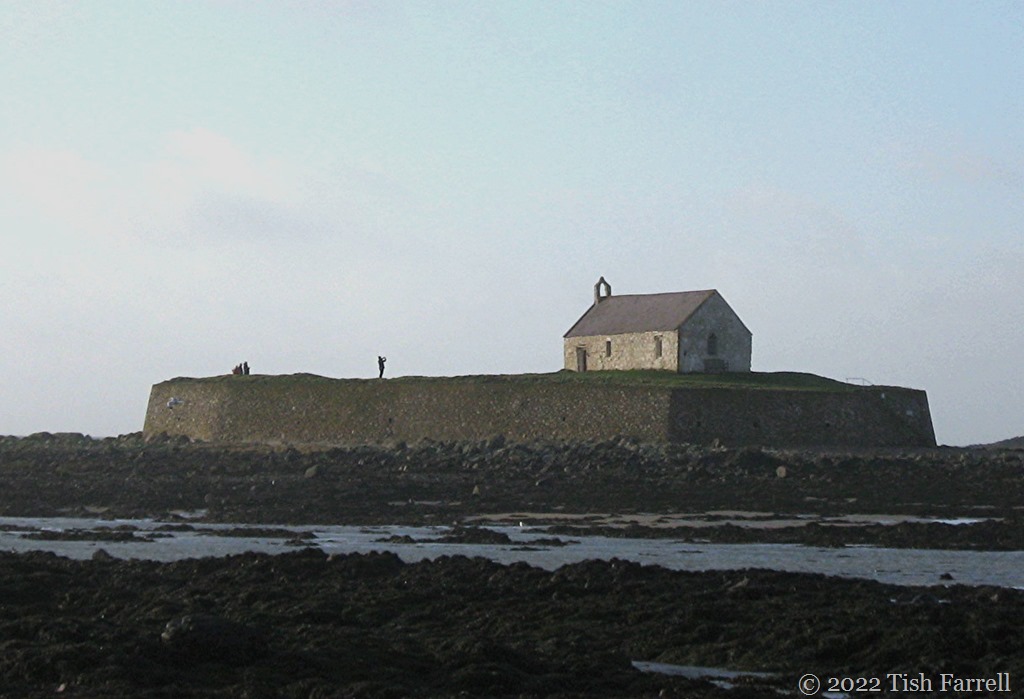
Or in Welsh: Eglwys bach y môr. Dating from the 12th century, it survives the sea storms only with the help of some robust 19th century defences. Erosion has reduced the peninsula on which it was originally built to a tidal island known as Cribinau. You can find it along the Coastal Path just north of Aberffraw (Anglesey).

The church itself is dedicated to the Irish Saint Cwyfan (Kevin) who lived in the 6th century. Whether he ever visited Anglesey is not known, but the island, once the stronghold of the Celtic Druids until the Roman invasion, was certainly a favoured retreat for early Christian hermit-saints.

You can walk across to the island at low tide and the church is still used for weddings and christenings. Come a bright summer’s day, it would be hard to imagine a more momentous setting for such important family rites.

IMG_4168

Six Word Saturday

Lens-Artists: double dipping

Where A Giantess Emptied Her Apron Full Of Stones

IMG_3344

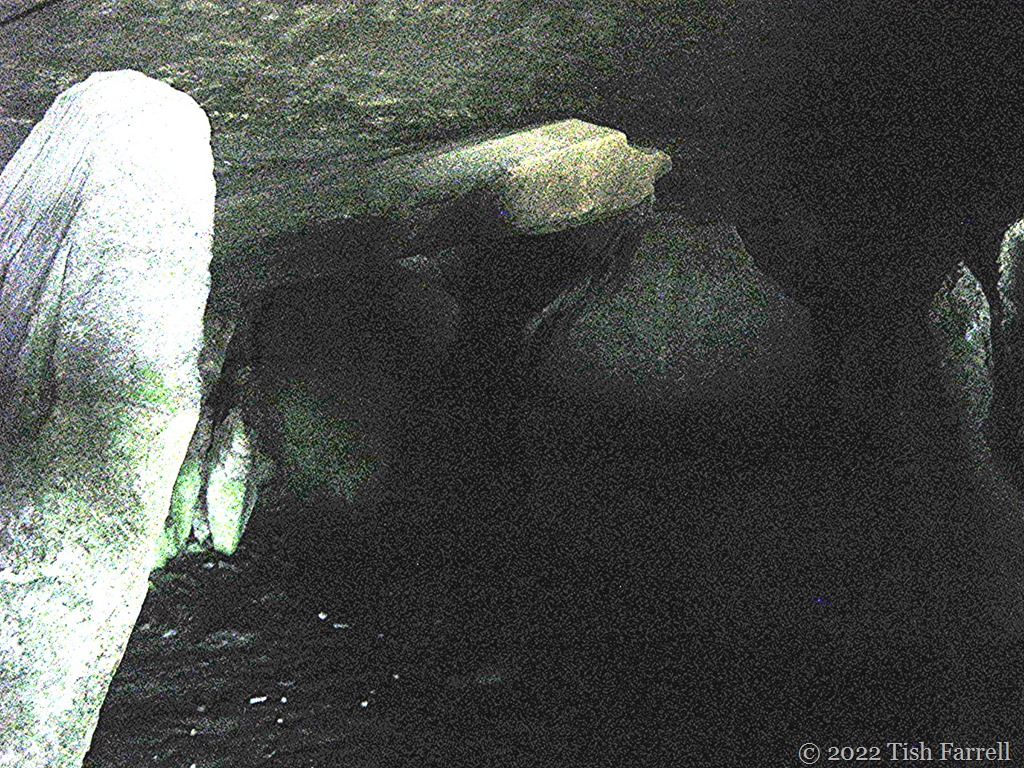
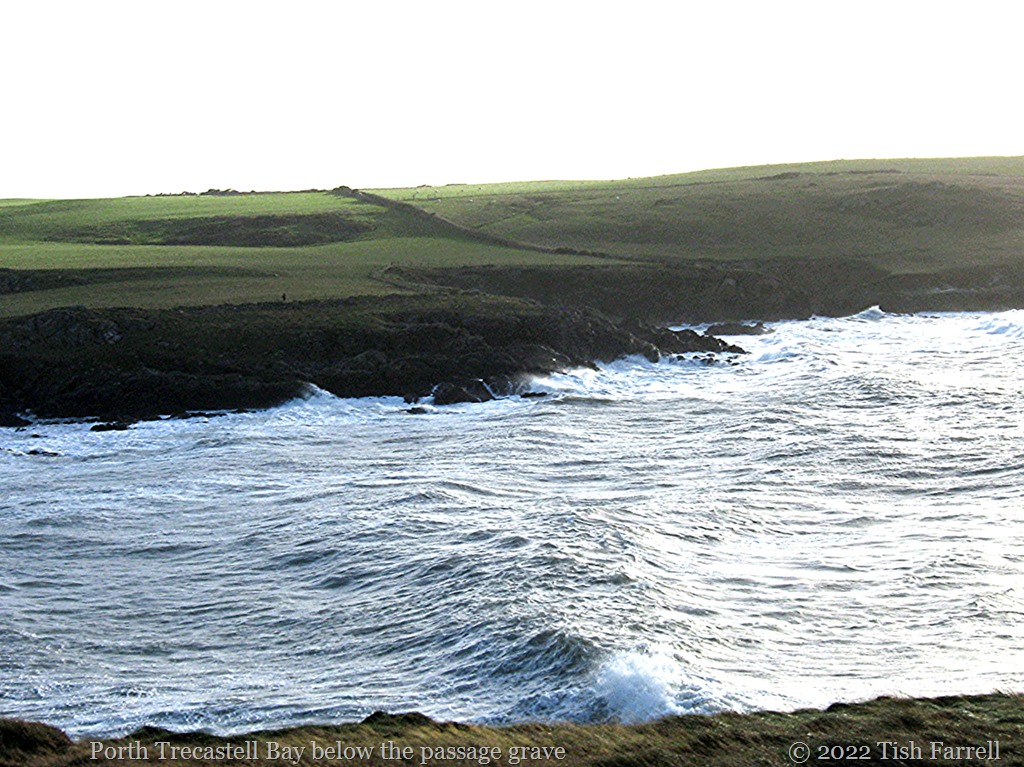
It sits on the westerly headland above Anglesey’s  Porth Trecastell Bay, a Neolithic passage grave known as Barclodiad y Gawres (the ‘Giantess’s Apronful’). It was built around 5,000 years ago by local farming people whose only tools were made of stone and wood and bone. It comprises a stone passageway more than twenty feet long, and in the centre a once high-domed chamber with apses, cruciform in plan, the whole covered with a mound of turves. Over the millennia the superstructure weathered and, as happened with most prehistoric remains, many of the stones were robbed and repurposed, doubtless still lodging in field walls, gateways, barns and farmsteads.

But recycling episodes apart, archaeologists excavating in the 1950s were able to discover much about the original monument. Their findings in turn informed the reconstruction of both the mound and tomb entrance that visitors see today. You can also go inside, but only so far. An iron gate has been installed to protect the main chamber, the key to it only available in summer from the Spar shop in nearby Llanfaelog.

Not to be thwarted, I took this photo through the bars.

IMG_4197

*

Bone of frog and shrew and hare and grass snake…

So what did the archaeologists find? First there were the cremated remains of two young males. Then there was the central chamber hearth and within it the bony parts of wrasse (a marine fish), eel, frog, toad, shrew, grass snake, mouse and hare, the lot covered in a layer of limpet shells and pebbles. A potent brew however you look at it. Then there are the carved stones, designs pecked away with a stone chisel: chevrons, spirals and zigzags in a style seen in other Neolithic passage graves across the Celtic Sea in Ireland, or further afield in Brittany and Portugal. Clearly the Neolithic settlers on Anglesey came from voyaging stock.

And then there was the pollen grain evidence discovered beneath the mound. This suggested that far from the largely tree-less landscape we see today, the coastal terrain, when the tomb was built, was well wooded. And so we have a glimpse of another phenomenon: how prehistoric farming folk set about changing the landscape, often dramatically so.

Today, much of Anglesey comprises un-treed arable fields and sheep pasture. The boundary trees and hedges that do survive are blasted into submission by sea-gales, as were we last week when we struggled along the cliff to pay homage to the ancestors.

IMG_4192

IMG_4201

IMG_4183

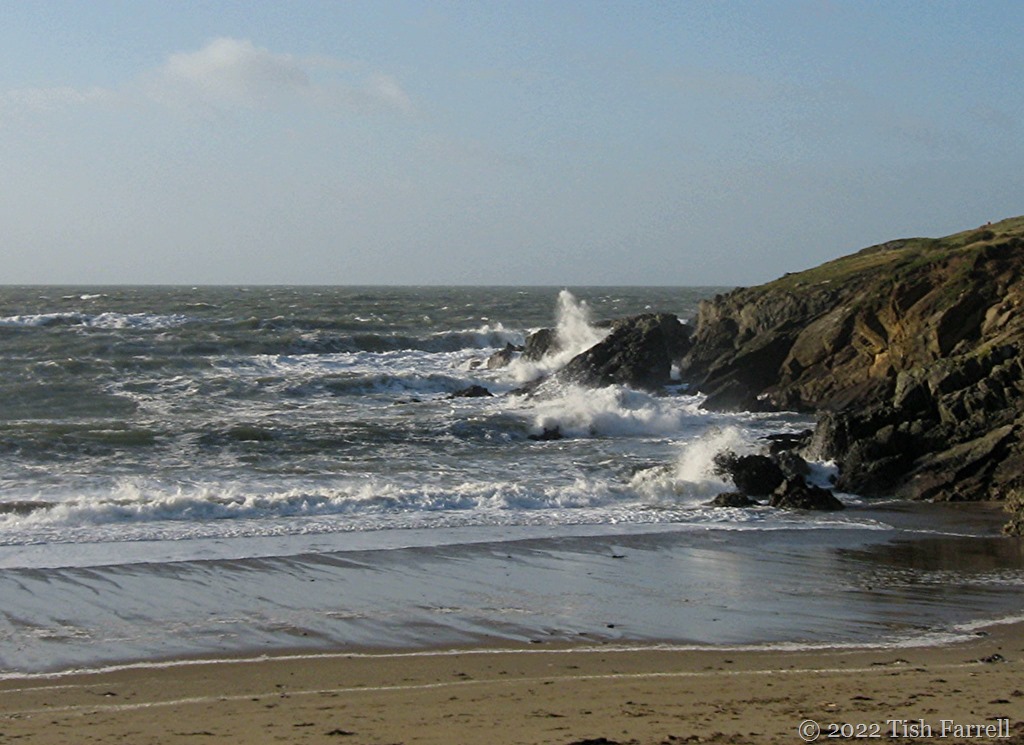
P.S. Incidental info: Porth Trecastell beach is also known as Cable Bay. In 1902 it was here that one of the island’s Atlantic telegraphic cables was laid, connecting to Ireland in the first instance, and thence to the United States. Needless to say, the connection has long  been abandoned. The other cable ran from Porth Crugmor and aeons ago as a child, I remember being taken to see it by my parents. They seemed so sure I would find the visit edifying, excited themselves by this piece of historic submarine communication. I only recall the rusting hawser affair running out along the beach and finding its determined westward progression into the sea and beneath the waves very disturbing.

For more photos outside and inside the tomb: http://www.megalithics.com/wales/barclody/barcmp.htm

January Light And The Ever-Changing Earth

IMG_4289

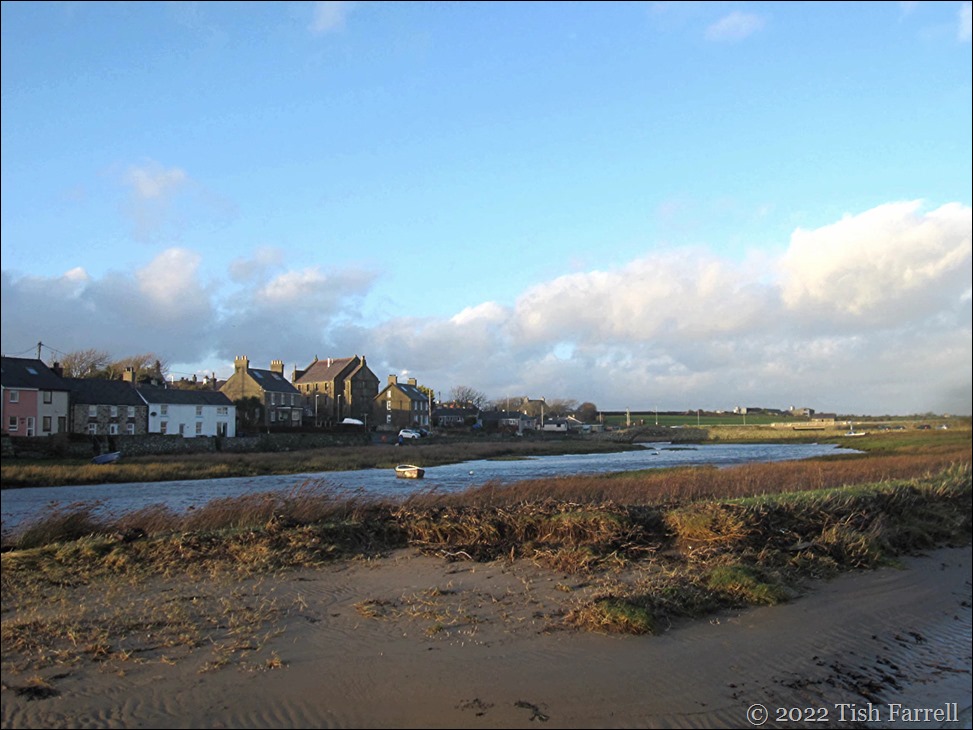
We have just returned from a week away in the tiny coastal village of Aberffraw on the North Wales island of Anglesey. It was two years since we were last on Ynys Môn, the island’s Welsh name, and we had all missed it. It is a special place, not least because it is a land rich in ancient remains. In the past, too, it was rich in other ways – at times its wealth of farm produce making it the bread basket of Britain.

From the time the Romans left Britain to the early Middle Ages when England’s Edward I set about hammering the Welsh by means of obsessive-compulsive-castle-building, Aberffraw was a major seat of Welsh power. For eight centuries (from AD 450 to AD 1282) it was here that the kings of Gwynedd held their royal court and ruled North Wales. They saw off Viking raiders and Norman interlopers. They had their glory days under Llywelyn ap Iorwerth (AD 1173 – 1240), who was recognised as ruler of all Wales. This period of prosperity appears to have coincided with the Medieval warm period, a time of clement weather and of good harvests. This was all to change in the next century (1314-1317) when a period of prolonged winters and high-storm weather began, and brought with it the Great Famine.

IMG_4157

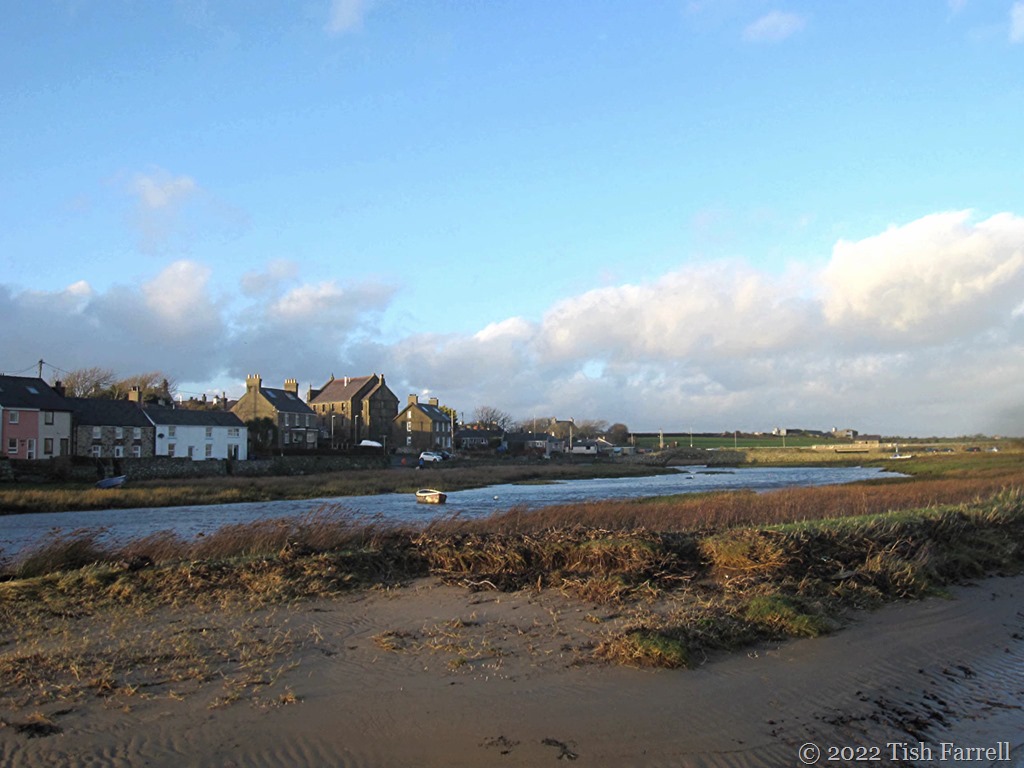
It’s a stark lesson – how fortunes rise and fall and entire communities, landscapes and weather patterns transform, the cycles of change we humans often find hard to accept or credit. When Edward invaded Anglesey, he dismantled the palace at Aberffraw and repurposed the stone and timber in his own strongholds. And then in 1331 came ‘the great storm’ that blew up monumental quantities of sand that covered the inland fields and began the silting of the River Ffraw, which action reduced the once vibrant port to a backwater. Gone was the busy fishing harbour. Gone the trade with the great sailing ships that once put in there to take on local produce.

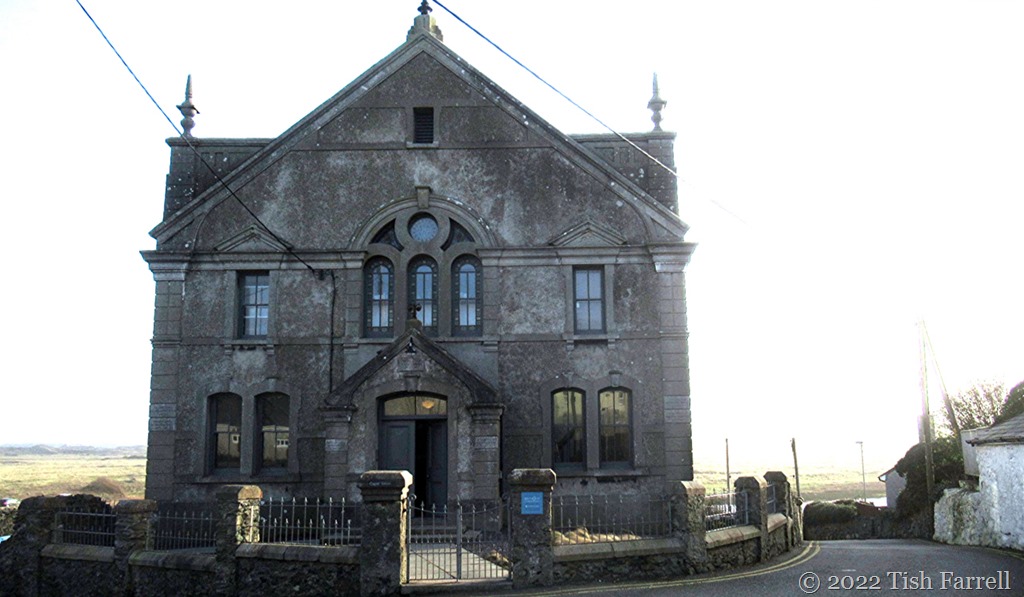
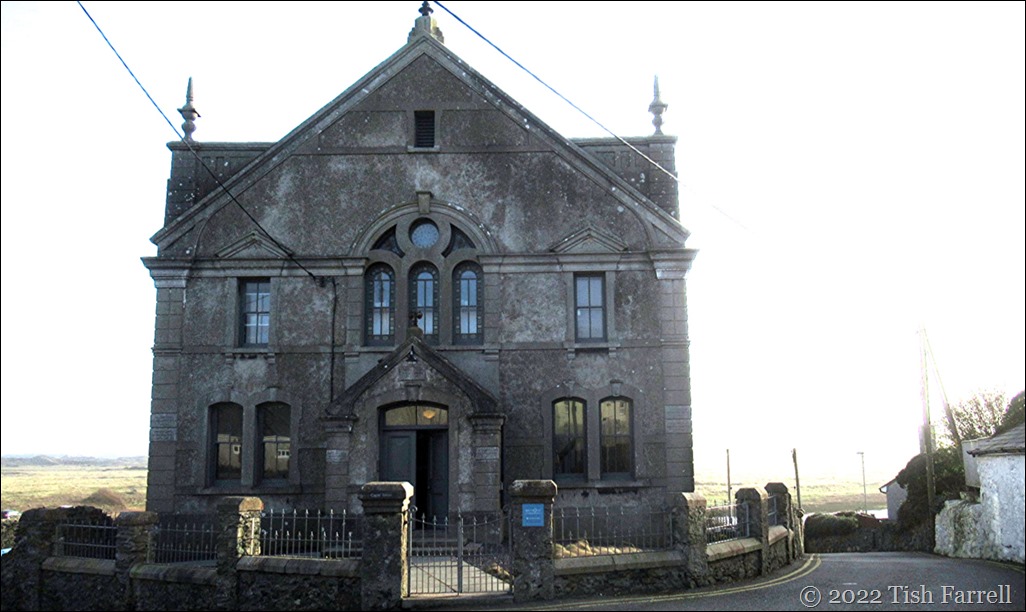
In 1949 Aberffraw was reckoned amongst the poorest places in Wales. Today there are just over 600 residents; less than three quarters of whom are native Welsh speakers. Many of the old cottages are holiday lets. (We six stayed in the upper floor of a converted Methodist chapel). There is one small shop cum post office. And now, under new management by covid and staff shortage, the once popular pub is shut indefinitely, or so the notice in its front window told us.

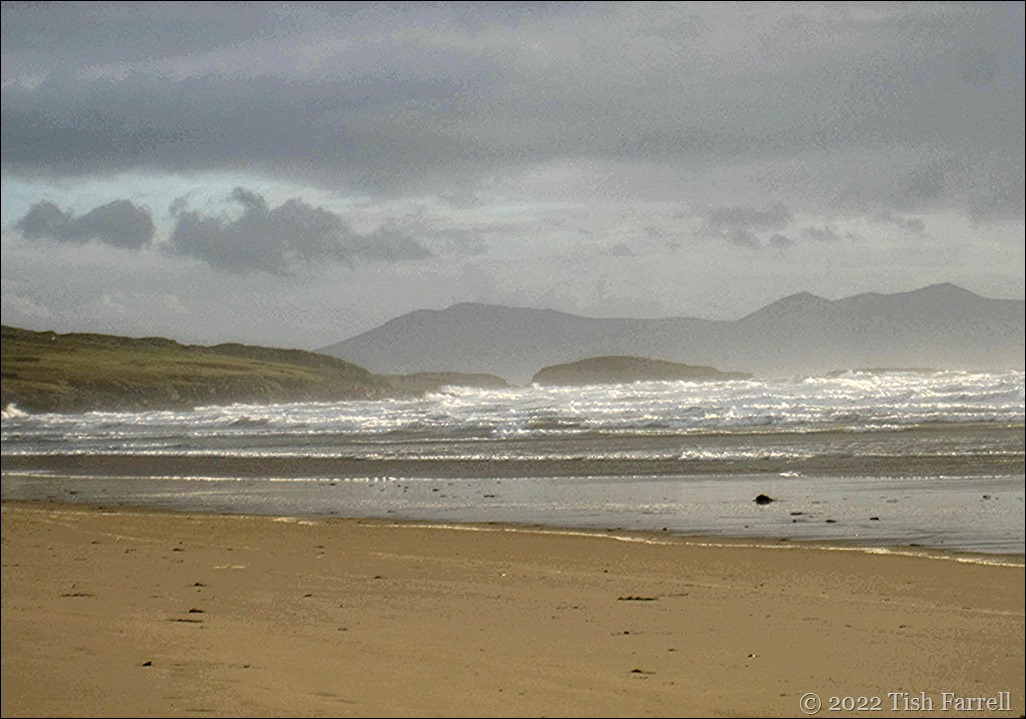
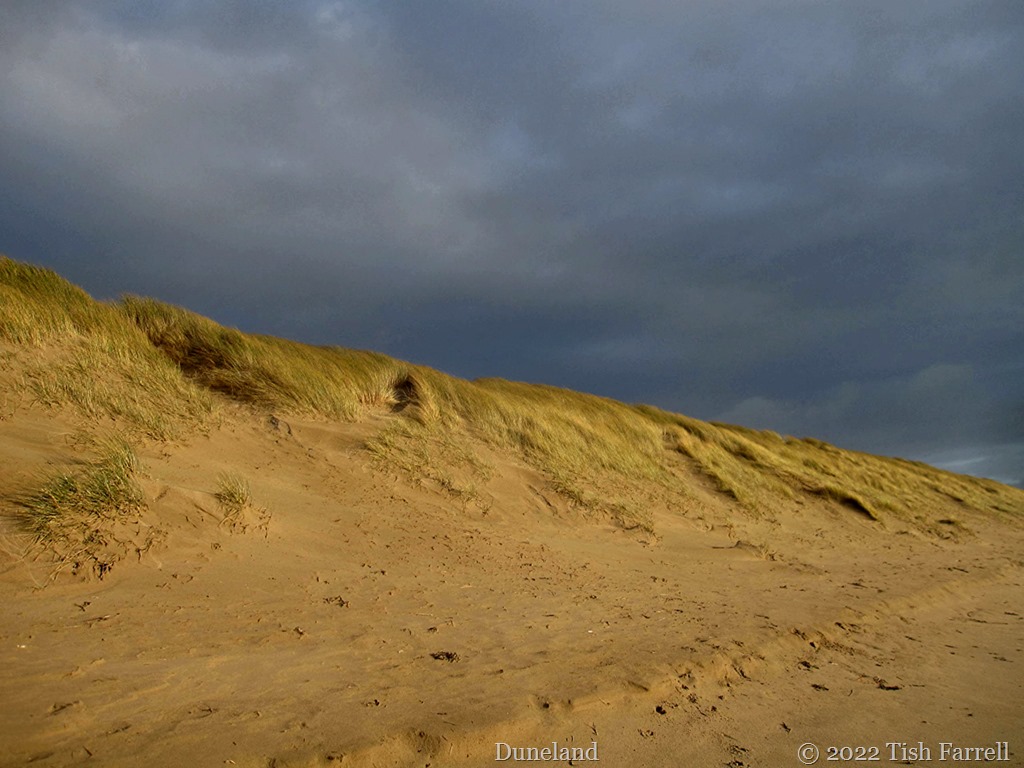
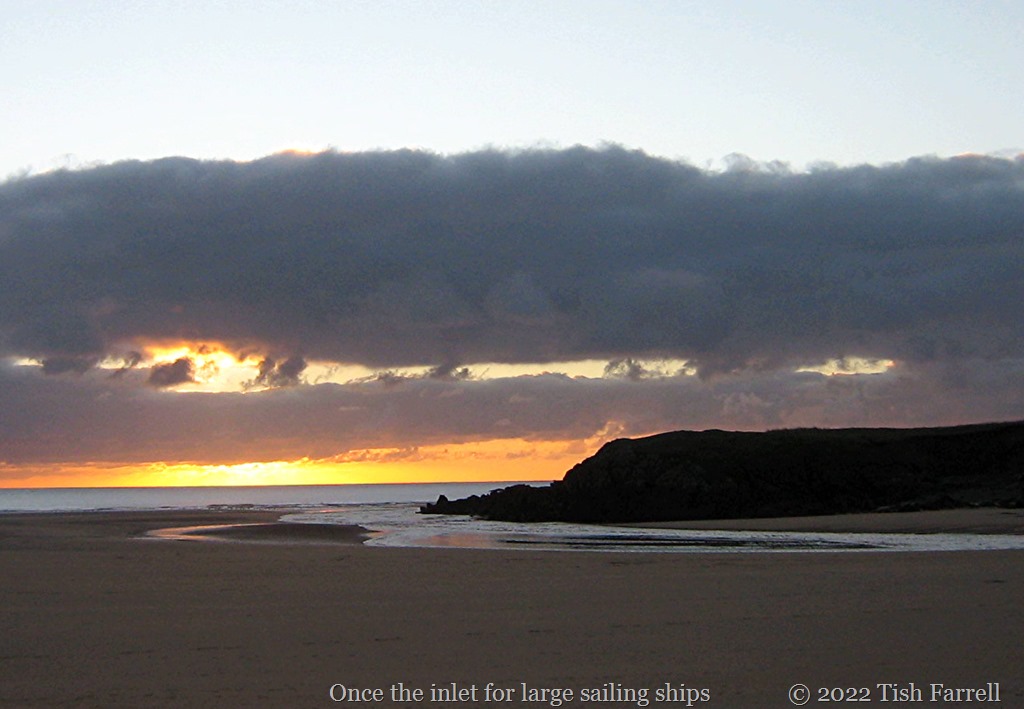
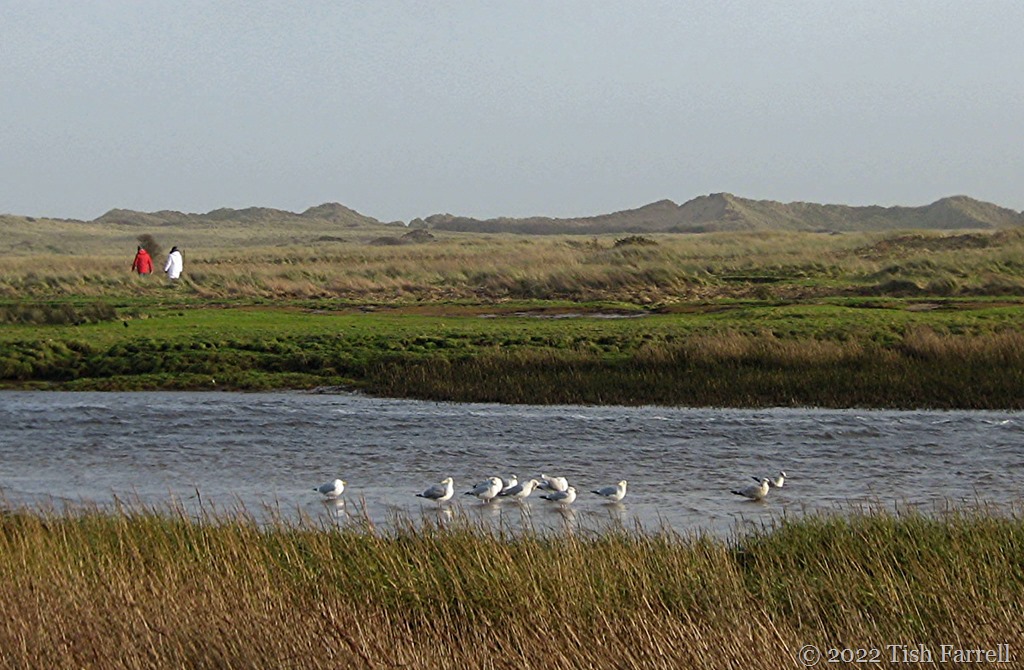
Yet despite the signs of economic shrinkage,  Aberffraw is still a place of magnificent resort. Every day we were there, and in the face of blistering gales, families, lovers and dog walkers trekked along the little estuary and across the rolling duneland to the beach that centuries of silting have created. And oh, the wonder. Oh, the ravens buffeting on the tempest; the roar of surf; bristling marram grass, that light; that misty mainland spine of Snowdonia across the Menai Strait.

And oh, the wind that knifed through every poorly padded body part…

But never mind the shivers. Here are some of the holiday snaps:

IMG_4282

IMG_9300

IMG_9295

IMG_4297

IMG_9308

IMG_4131

IMG_4224

*

The centuries of sand invasion have also had creative effects. The dunes themselves are now sites of special scientific interest, harbouring uncommon plants and birds. Also the inland streams dammed up behind the dunes have created pools and lakes and areas of marshland rich in wildlife of all kinds, especially birds native and migrant.  It was of course far too cold and windy for birdwatching, but we did see large airborne flocks of starlings and common plovers, both absent or declining species in parts of the UK.

IMG_4212

Lake Maelog, site of special scientific interest  behind the dunes at Rhosneigr, just north of Aberffraw.

*

IMG_9241

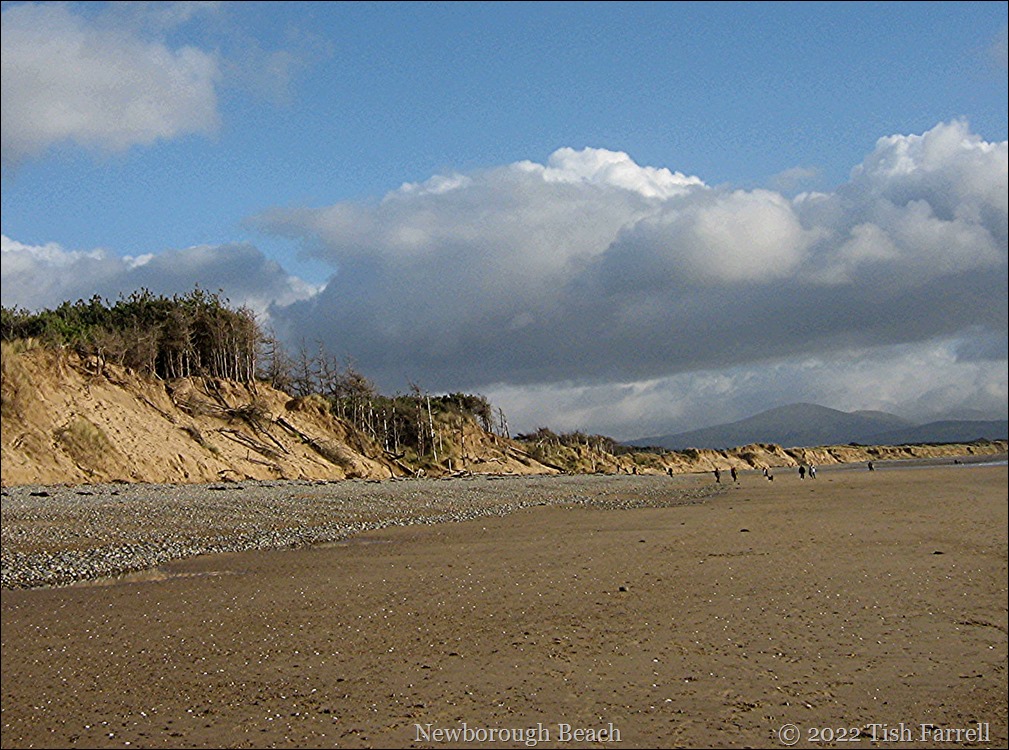
We also saw some hefty signs of coastal erosion. Something of an environmental irony, I thought to myself: the sea taking back what waves and wind had begun depositing there some 800 years ago.
IMG_4230

*

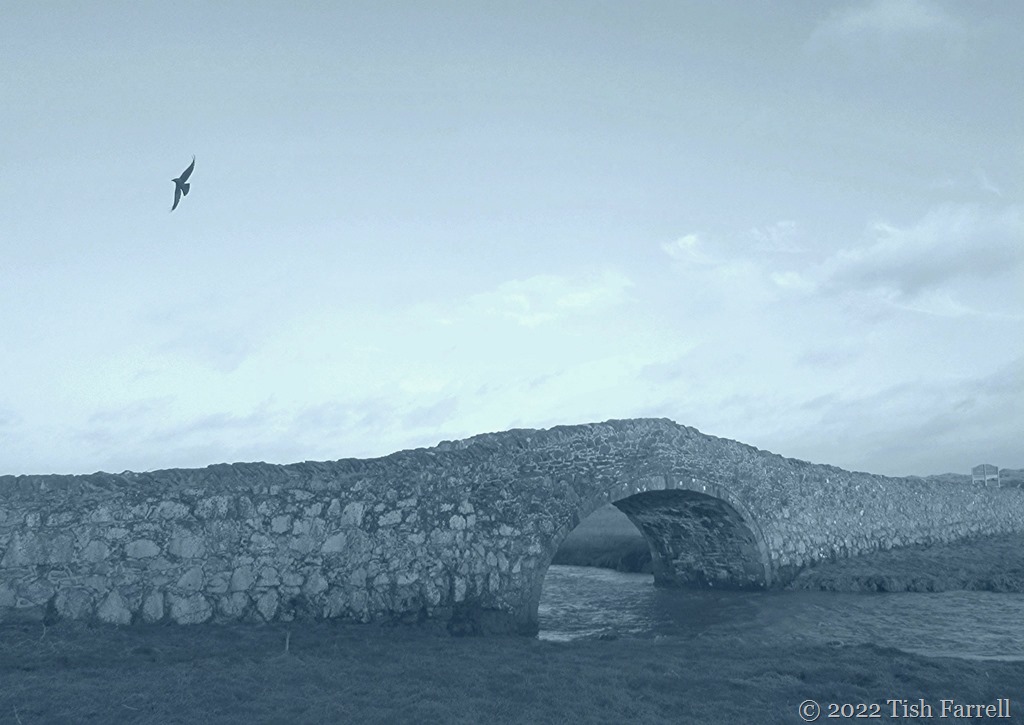
But now for a peaceful scene: the seventeenth century packhorse bridge across the estuary at Aberffraw.

IMG_4128

And just above the bridge, the chapel where we stayed:
IMG_3264

Christmas Past On Ynys Mon

P1000056 - cropped

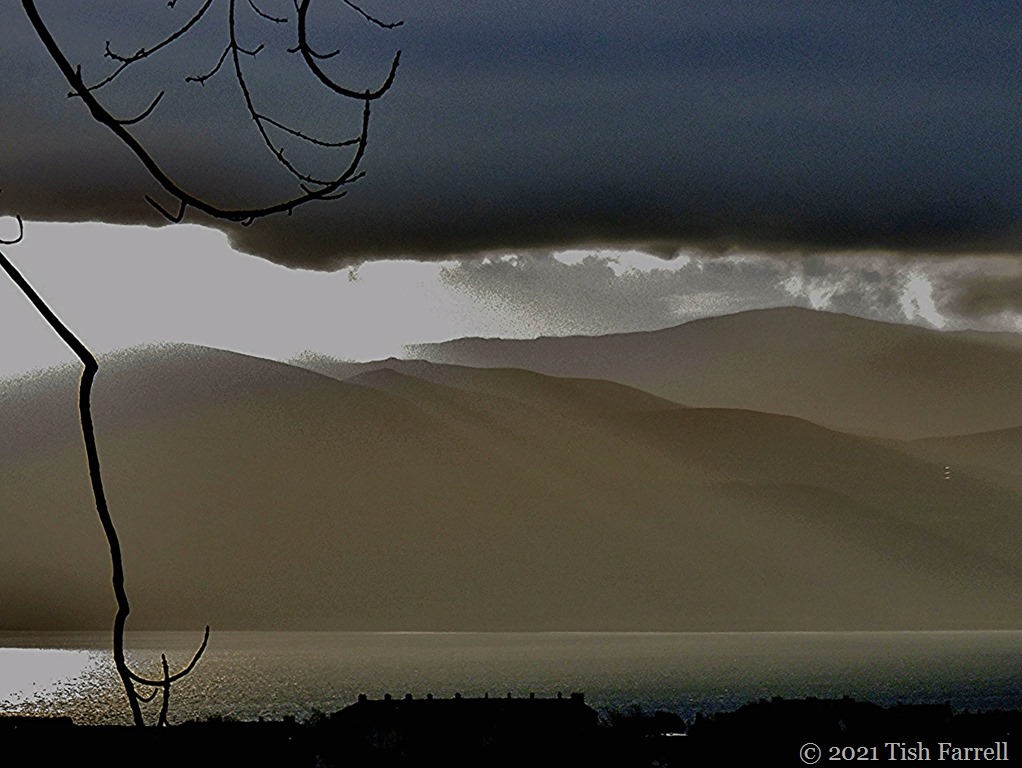
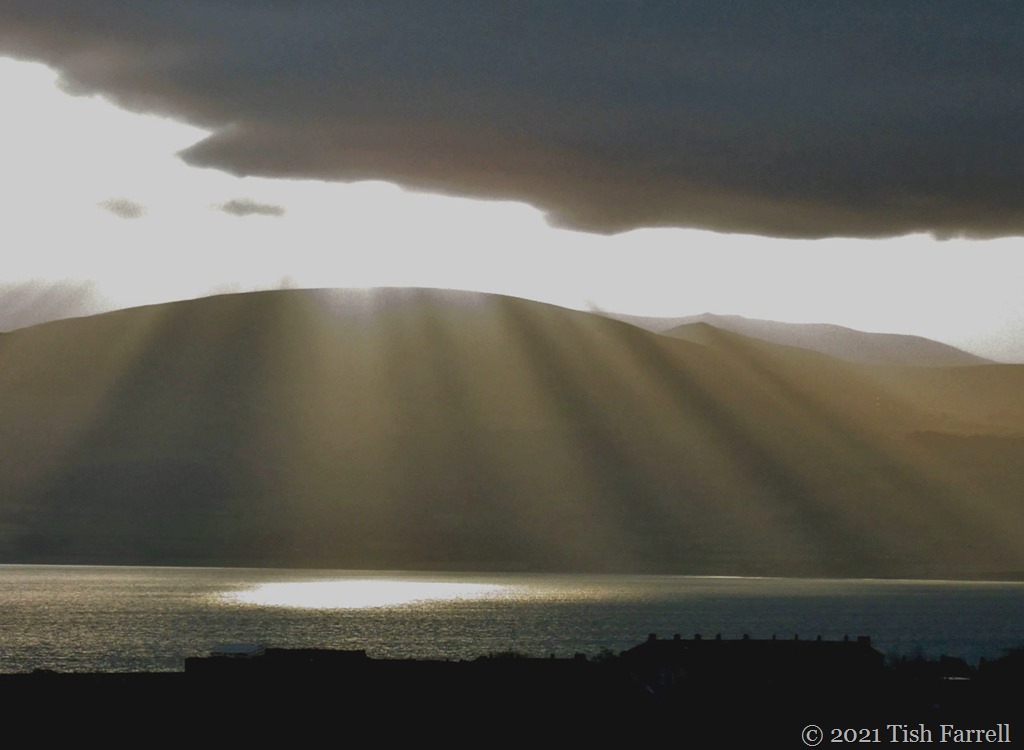
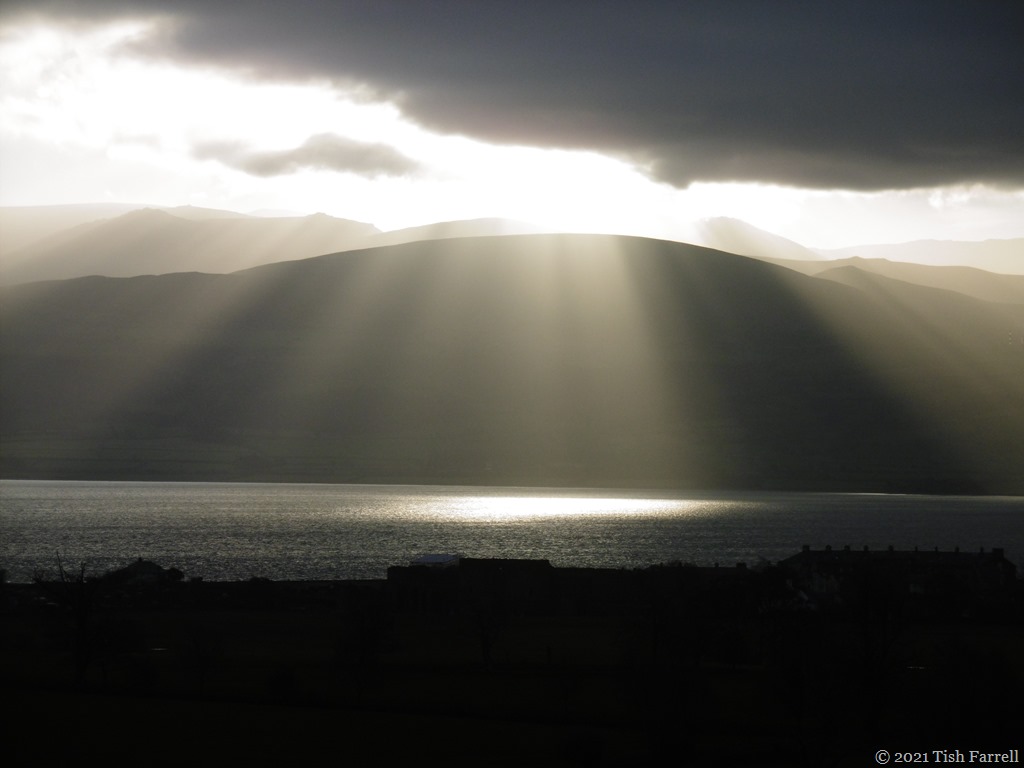
That this first  photo worked at all is something of a mystery. There was hardly any light (as you can see) and I was using my very basic Kodak EasyShare digital camera. But then it was Christmas Day and we were staying on the Welsh island of Anglesey (Ynys Mon) with its millennia of mystical associations – druids, saints and seers. When I took the shot I was standing above the little town of Beaumaris looking towards the Welsh mainland and the foothills of Snowdonia. The Menai Strait lies between, obscured by trees. It is a zone of extraordinary light-through-cloud displays.

Here are some early morning shots taken further along the Strait, rooftops of Beaumaris in the bottom edge foreground:
P1060514

P1060524

Life in Colour: Black/Grey
Catching the Light ~ Menai Strait In Winter

P1060525

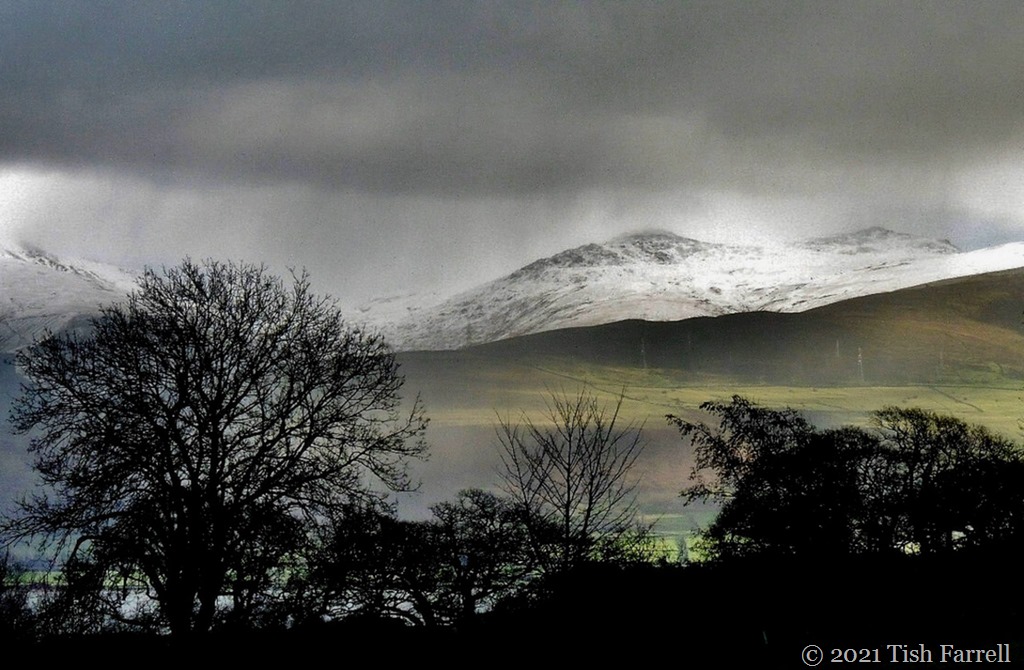
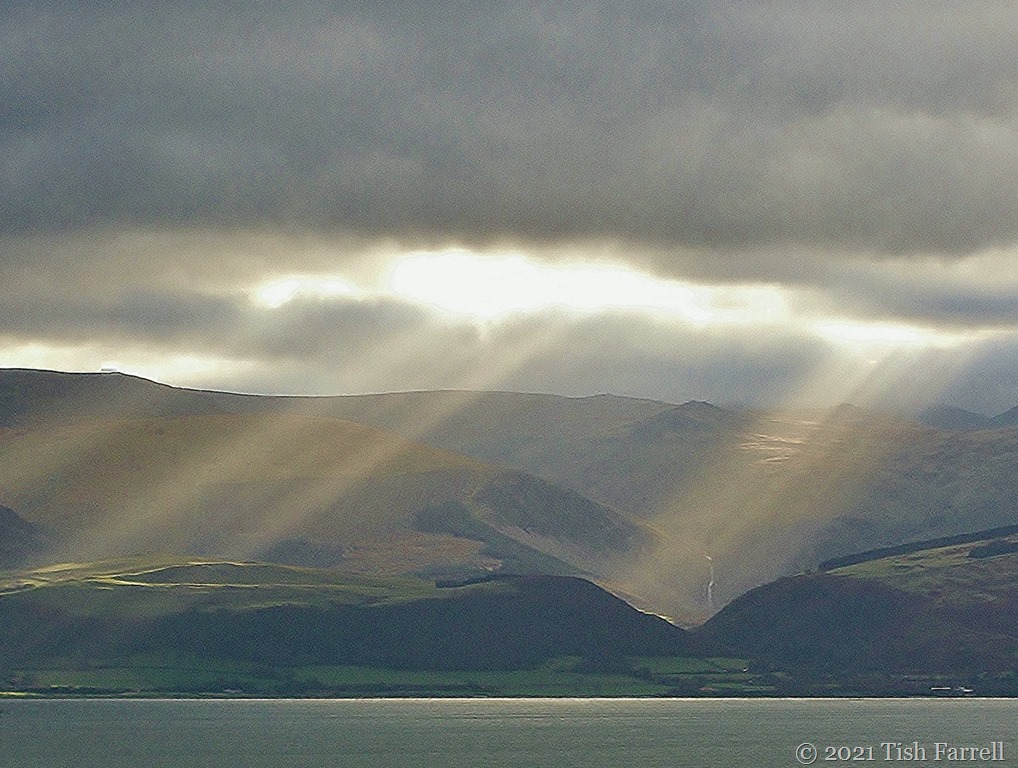
This week Amy at Lens-Artists has set us a fine task – the pursuit of natural light. It’s one of the aspects of photography that fascinates me most; especially when it’s in short supply. Anyway, I instantly thought of the strange light effects that happen across the Menai Strait between the North Wales coast and the island of Anglesey, caught here during various December sojourns on the island. All the views are looking towards the Welsh mainland and Snowdonia.

004

013

100_5196 - Copy


Lens-Artists: Natural Light

Strait Views On A Winter’s Day

IMG_6271cr

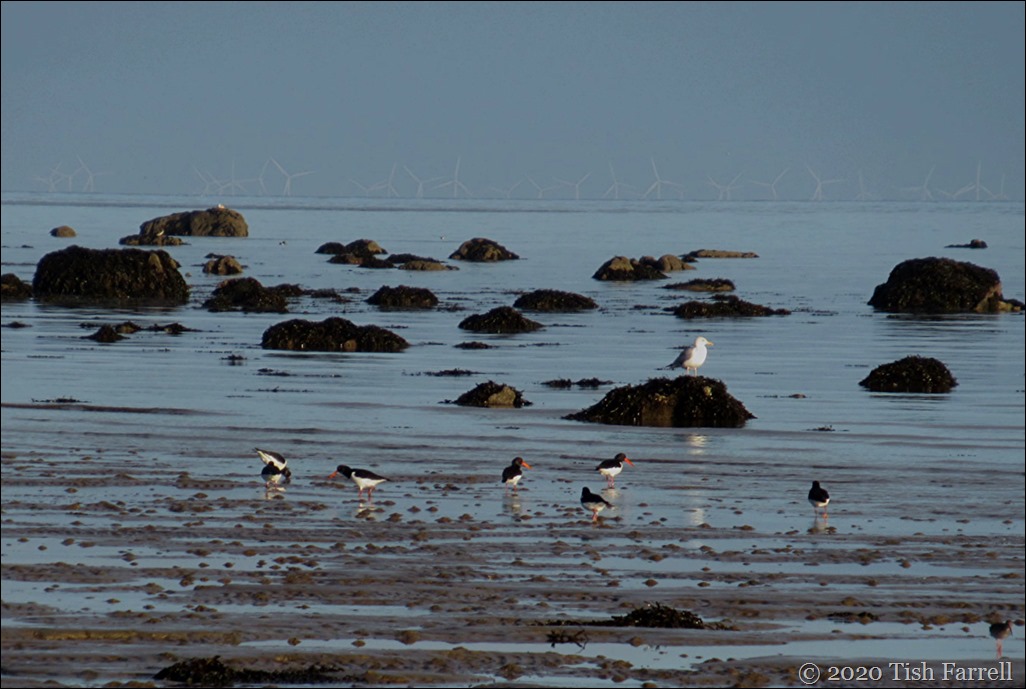
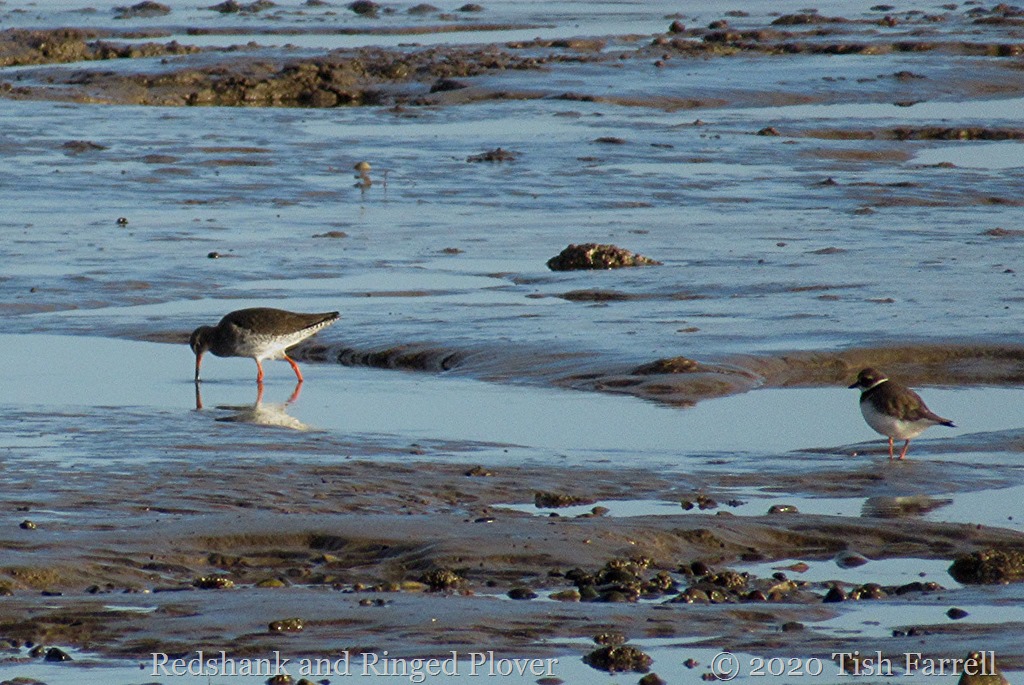
Look to the horizon, out beyond the oyster catchers and the black-backed gull, and you will see a line of ghostly windmills caught mid-arabesque against the sky. This is the Menai Strait between Anglesey and the North Wales mainland, caught on a December morning last year. We often spend Christmas on the island, though not this year for obvious reasons. And we have often had December days like this – perfect sunshine stillness and warm enough to abandon the winter coat. No wonder the windmills look frozen in space. Not a breath of air to stir them. Only the calls of gulls and waders.

IMG_6265cr

IMG_6210sq

IMG_6202

Our Eyes Open Lisa’s bird weekly challenge is birds near/on water or snow

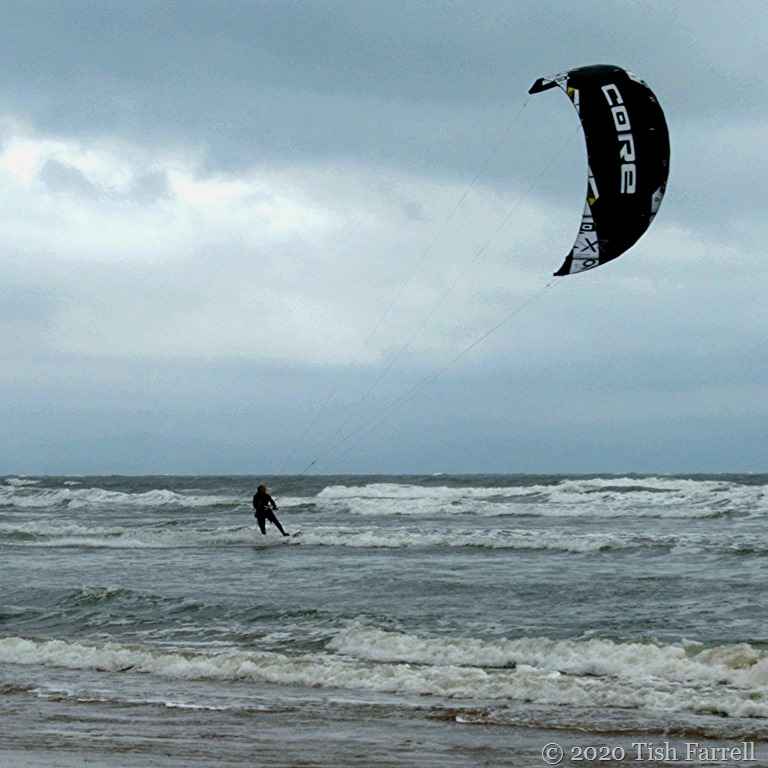
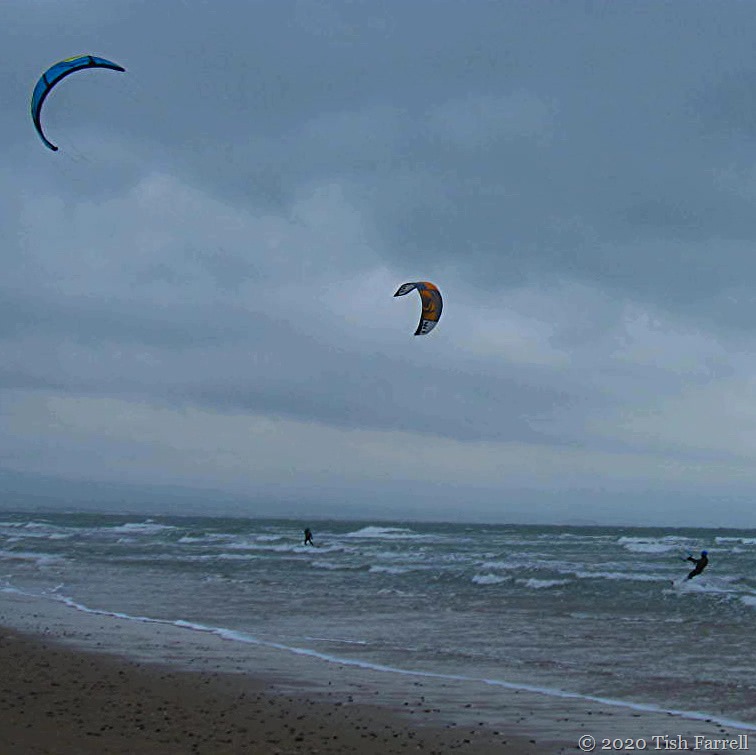
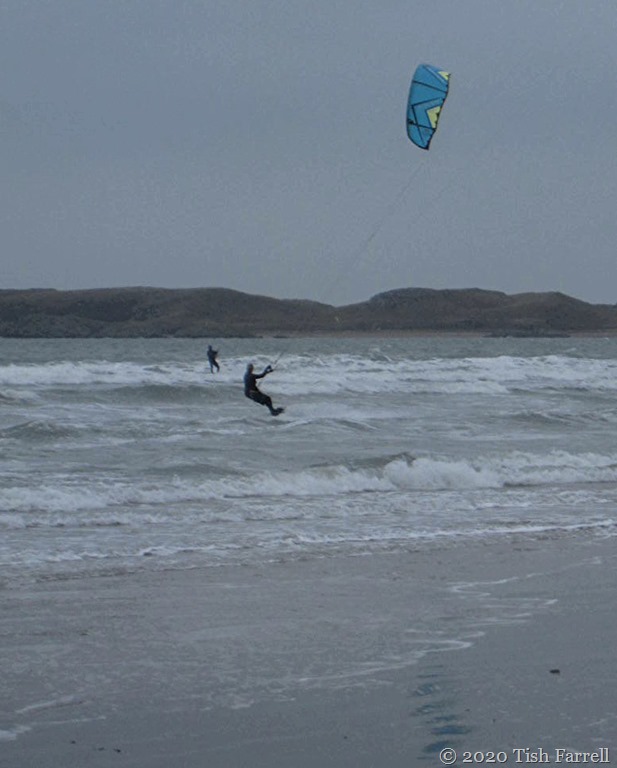
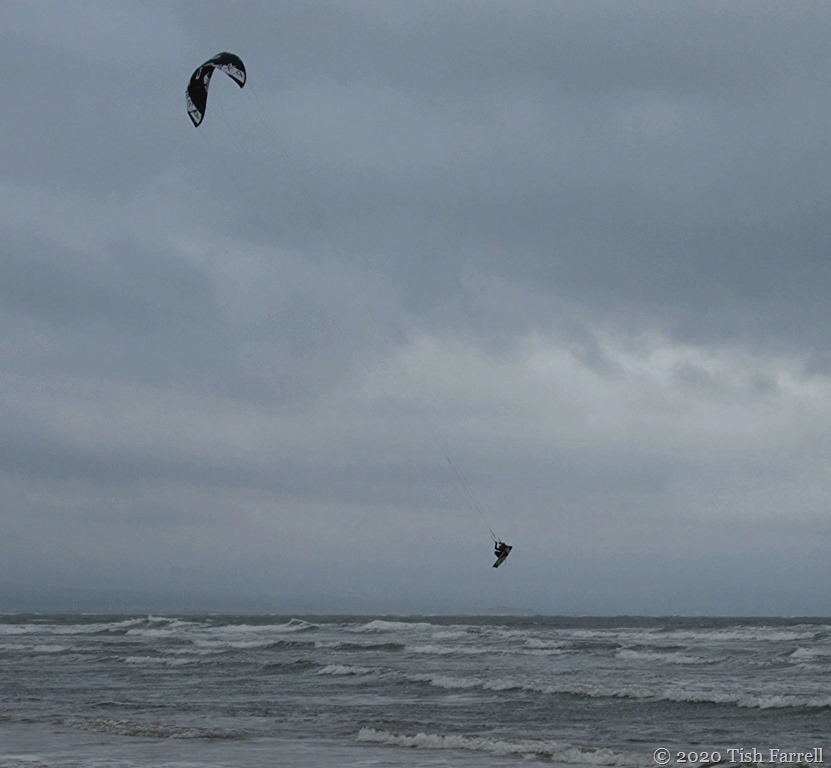
Low-Light Kiteboarding ~ A Different Kind Of ‘Photo Challenge’

IMG_6416sq

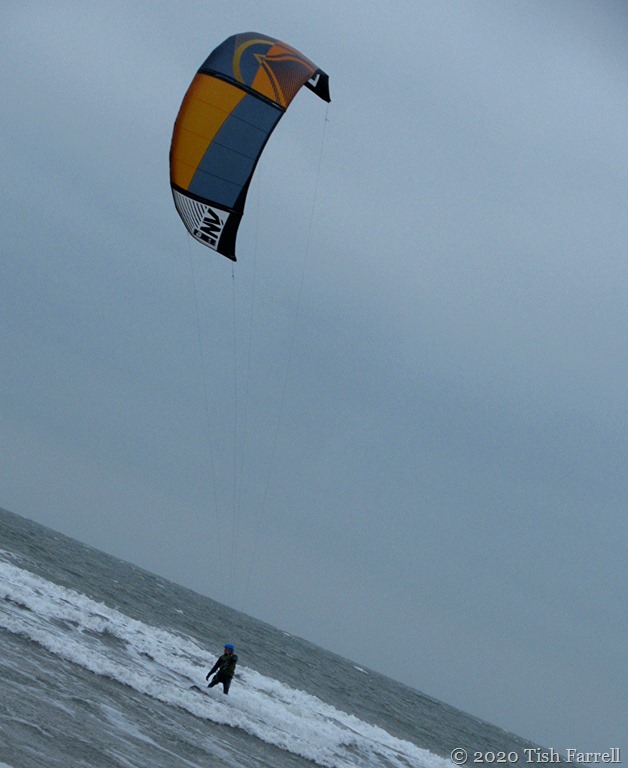
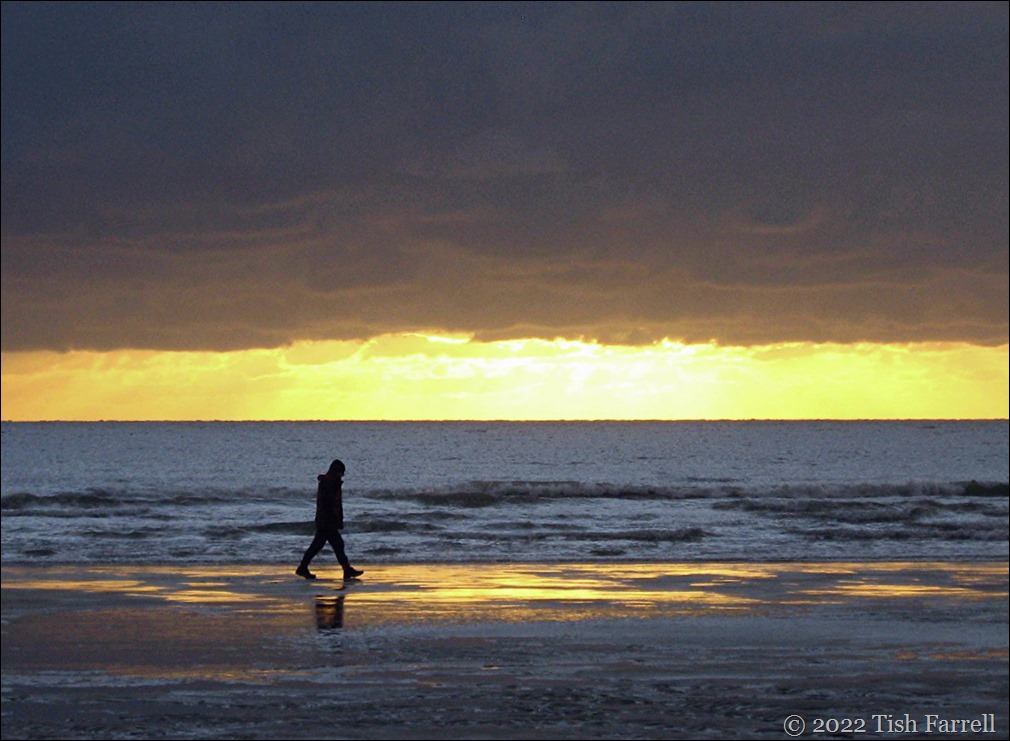
The last Sunday of 2019 and a piercing wind is blowing on Anglesey’s Newborough Beach – the sort that knifes through all clothing defences and finds every millimetre of exposed flesh. Brrrr. By lunchtime it is growing dark too, or perhaps day never quite dawned properly. It’s anyway a big change after the entrancing blue of Christmas Day. But we are not put off: Newborough Beach is a favourite winter walk so we trundle through the high dunes to the shore, as ever joining a mass of promenading families and dogs, and face the elements. The wind takes our breath away.

But down above the tide-line there is much activity – lines laid out and out across the sand as paragliding wings are prepared by dive-suited individuals. Much clicking on of harnesses, clapping on of helmets and multi-coloured kite-fluttering. And then they are off, skimming the bay at astonishing speeds, now and then shooting high above the surf – aerial ski-jumping. It is exhilarating to behold – or it is when one can focus through eyes filled with wind-tears. But then that’s one of the things we love about this beach – you just  never know what you will see there.

On the other hand I’m rather wondering at the reactions of legendary St. Dwynwen, she whose religious retreat this place was in early Saxon times. Or maybe her spirit is out there embracing it, flying with the wings – engaging in extreme sports, closer to the heavens.

IMG_8791

IMG_8773

sq

IMG_6368


January Light #6