Once heard…

Marsh Pride male 1 ed

*

…never quite forgotten.

Thrilling and chilling both: a wild lion, in broad daylight, proclaiming his eminence. And not a full-throated Metro-Goldwyn-Mayer lion-roar (there’s no big show of fearsome canines); more a weaponized grunt that carries across the Mara grassland and rebounds against my sternum. And then in my skull.

It takes some moments to re-ground, and assure the nervous system we’re not in danger.  We’re sitting in a big safari truck. The lion does not even look at us, nor appear to register our presence.  We pass by slowly. He parades. Our guide tells us he is the senior male of the Marsh Pride, a group of lions made famous on British TV during the 1990s, when wildlife photographer, Jonathan Scott, documented their movements. This lion, we’re told, is calling to the junior male. Meanwhile the pride’s three lionesses are busy devouring the kill, a hartebeast. They don’t see us either.

But still that resonating roar.

Throwing the voice is part of a male lion’s M.O. A spot of leonine ventriloquy if you like. To make themselves sound bigger and deadlier, they may also choose a dried up river bed for some night-time roaring. The dirt bank of a donga provides a  ‘sounding board’ to amplify the roar which may carry for several miles. Obviously the aim is to let other males know exactly what they’re up against should they dare to infringe territorial bounds.

We drive away, feeling somehow changed. Very small perhaps. It’s August 1999, the last of our seven years living in Kenya. When we return to England for good, what will we make of such days? Did they really happen? Sometimes it’s hard to be sure.

marsh pride senior male

*

To hear that lion call for yourself, there’s a brief clip here:

https://www.youtube.com/watch?v=1e0_4dwF9A4

Lens-Artists: Sound   Donna at Wind Kisses choses sound for this week’s theme – however you care to interpret it. Please pay her a visit.

The Weather In The Garden

IMG_4585

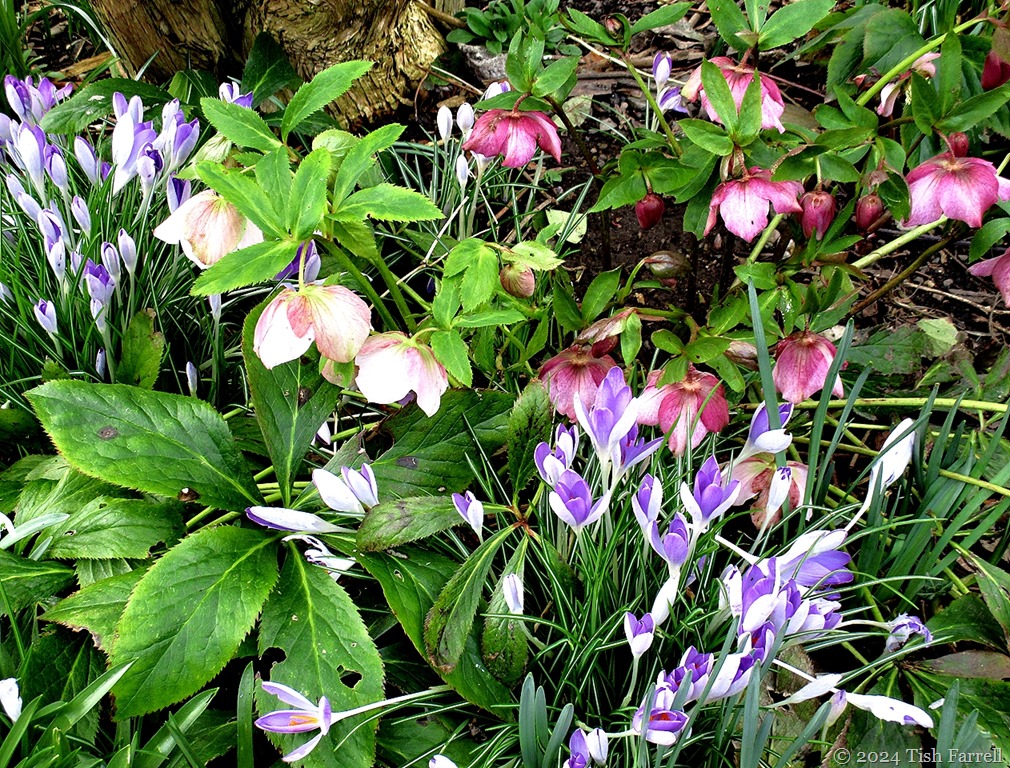
So far this week at The Gables we’ve had frost, biting wind, and yesterday an all-day deluge with wall to wall gloom. But today, St. Valentine’s, the rain has held off. In fact it’s been almost warm, with a glimmering of sunshine, and up in the top garden this clump of seedling crocus was in full fanfare.

IMG_4590

*

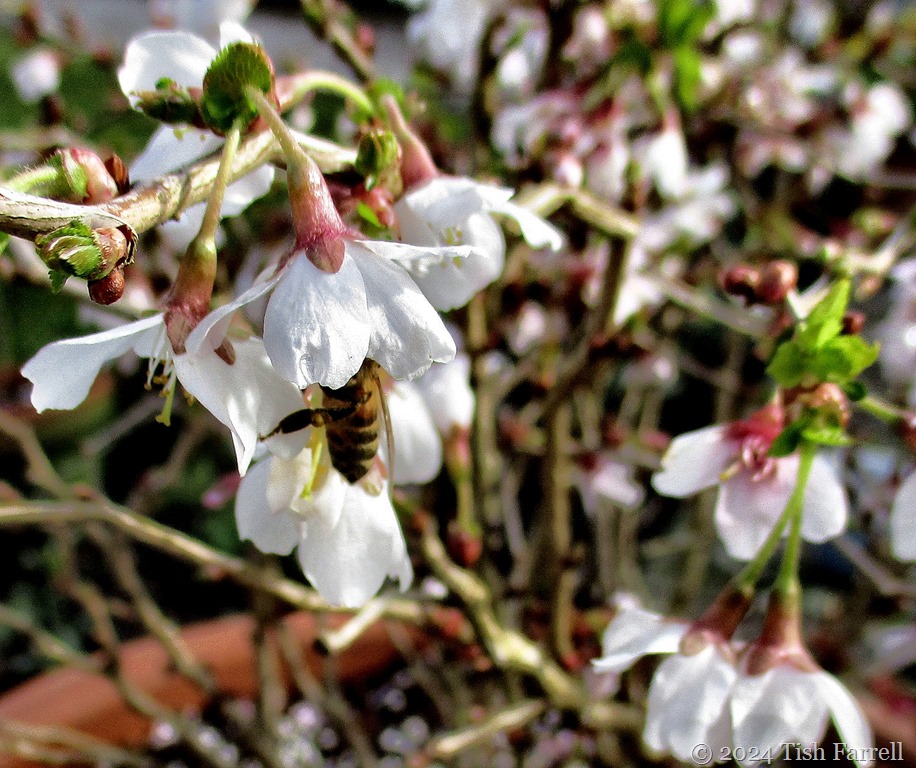
And not only that,  Mr. Whippy, the ice-cream man, was back in town. Jangling rendition of O Sole Mio up and down streets. And then while I was snapping the crocus, along buzzed a honey bee, the first I’ve seen and heard this year.

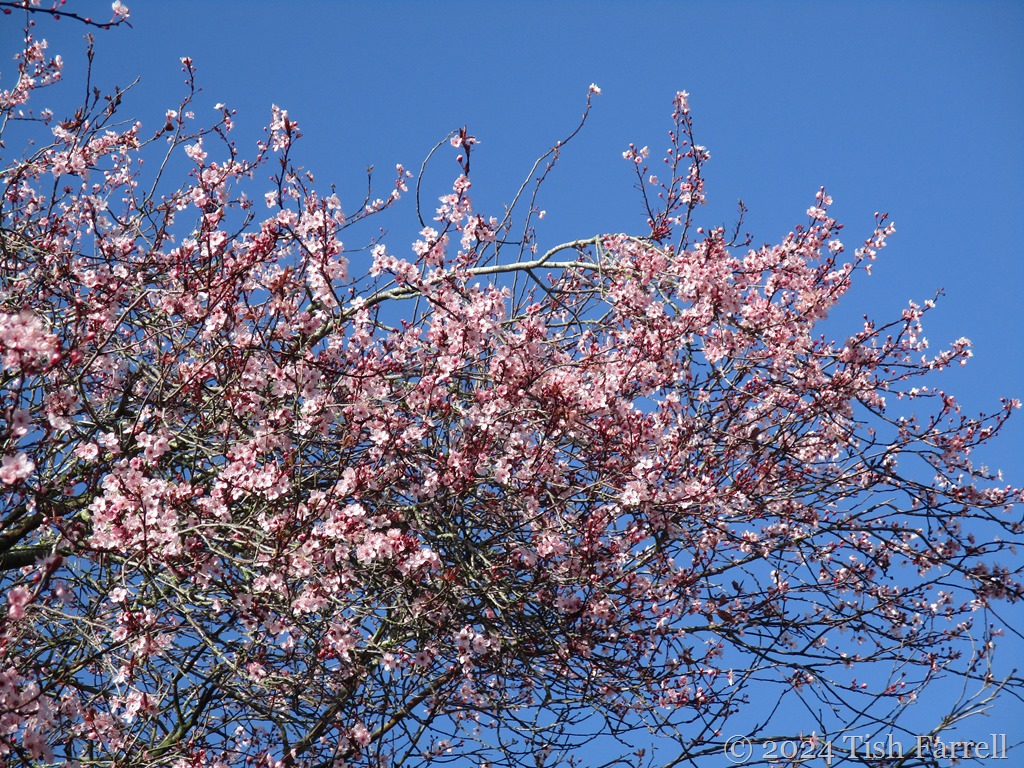
Anyone would think it was spring.

But then February can be a tricksy month in England, ambushing us with a day of sudden warmth, only to whip up more icy blasts just when we’ve been daft enough to cast off our thickest winter woolly.

So: best not to count one’s spring chickens too soon.

This bee, though, is definitely seizing the moment, making the most of fine weather, and a rich pollen harvest. (Note the gathering sac on the rear leg; full pollen facial thrown in). What’s not to love.

IMG_4624ed

IMG_4605ed2

IMG_4622ed

Happy Valentine’s Day!

Lens-Artists: Weather This week Anne at Slow Shutter Speed  has us weather watching. Plenty to inspire us in her lively photo essay.
How Did My Garden Glow…

IMG_8709

There’s more than a hint of nostalgia in my choice of photos here. With the turn of the year and the first hints of spring, I am thinking about gardening; and more especially, of gardens left behind and the things I used to grow there.

IMG_3706

100_4929

IMG_6237

P1020262cr

*

The new home garden, though small, has potential as they say, but much like the house, every part of it needs attention. We’ve had the hedges cut into shape and the apple trees  pruned. The greenhouse is all but mended, and the slab for Graham’s shed is laid and ready for his latest creation. But the biggest challenge is reining in the overall infestations of ground elder, ivy, Spanish bluebells and a devilish creeping shrub with red tubular flowers that seems intent on taking over the place.

Basically, when it comes to fresh planting, we’re pretty much at ground zero, with an awful lot of ground to shift. And while it is feasible, with serial determination, to clear areas of the invaders, it will likely take a few seasons to do so. All of which means holding back on plans for any permanent planting, at least on the herbaceous and shrub front. I am resisting using weed killer.

The invaders’ persistence is not such an issue when it comes to making vegetable plots. They can be cleared and weeded every year at the end of the growing season, and again in spring. In fact it has crossed my mind to grow this year’s potatoes in the front garden where we’ve lifted a load of unsightly paving. I’ve also thought of using that space for a mixture of annual flowers, beans and greens, i.e. cottage garden style. I probably will do that. After all, you can grow climbing beans up sunflowers. They like to cohabit. And it seemed to work at the Broseley rental house where I made a quick-fix garden last year.

In the meantime, I’m thinking of starting some perennials off in pots. I know we will miss the allotment raspberries, so I’m trying a small bush variety called Yummy . It will apparently grow well in containers, at least in the short term. I’ve also rescued a few of the previous occupants’ plants from the infested beds, and ‘quarantined’ them in pots too, thus capturing any remnant ground elder which can be carefully unpicked during re-potting or planting out.

But then I’m truly missing our Evereste crab apple tree from the Sheinton Street garden. It’s a very slow grower, so if I do give in to buying a replacement, it might well manage in a big pot for a while.

IMG_2123ed

*

So: onwards and upwards. I’ve come to the conclusion it is my lot in life, much like generations of my Hampshire gardener ancestors, to wield a spade, endlessly making new gardens wherever I end up living. You  may expect some of the results to crop  up here. For now, some very pleasing ‘borrowed landscape’ from back in the autumn – the rowan tree over the hedge by the greenhouse. A wonderful birds’ pantry.

IMG_3951

Lens-Artists: warm colours  This week Egidio wants to see warm colours in our photos. Please see his blog post for some wonderful warmth and inspiration.

DSCF0053

A Spot Of Kite-Flying In Bishops Castle

red kite

Now that we’ve moved our dining table to its winter position – i.e. from the conservatory at the back of the house to the front sitting room window – we can eat breakfast while watching a red kite scanning the town. It comes most days, drifting over the High Street, circling high above nearby gardens.  With a wing span of around six feet (180 cm) it is one of Britain’s largest birds of prey (i.e. bigger than a buzzard and easily distinguished from that particular raptor by the forked tail.)

A few years ago the species was believed to be near extinction. In the early 20th century the birds were targeted by gamekeepers who thought they were eating their pheasants. Not so, it seems. The birds’ main menu comprises carrion and worms and sometimes small mammals. In fact, back in Tudor times, kites also frequented towns in large numbers, filling an essential function as street refuse cleaners.

When we lived in Kenya, their cousins, the black kites, performed similar duties. Less welcome, we discovered there, was the cousins’ tendency to ‘gate-crash’ Nairobi’s ambassadorial garden parties. They had learned to spot the distracted guest, one with wine glass and plate politely poised and as they hung on the words of some ministerial bigwig. In the birds swooped, snatching up the undefended sailfish canape or piri piri chicken wing. Whoosh and away.

That scene jogs another black kite memory. An indelible brain cell recording. One used to roost in our front garden on Mbabane Road. It would perch in the jacaranda tree and mew all night long. A mournful cry.

red kite

But back to the red kite. Here in Shropshire and Wales, and some illegal shooting incidents apart, they are mostly thriving. This thanks to a re-introduction programme late last century which helped boost remnant populations. And while of course we are more than happy to see them, we can only hope they do not recover the habits of their distant ancestors.

The Wildlife Trusts website explains (also see a nice video clip of a kite in flight):

Red kites were common in Shakespearean London, where they fed on scraps in the streets and collected rags or stole hung-out washing for nest-building materials. Shakespeare even referred to this habit in ‘The Winter’s Tale’ when he wrote: ‘When the kite builds, look to lesser linen’. The nest of a red kite is an untidy affair, often built on top of an old crow’s nest. It is lined with sheep’s wool and decorated with all kinds of objects like paper, plastic and cloth.

I will let you know how my washing fares when drying weather resumes.

2023 Began Beside The Sea

IMG_2372ed

When last year began we were on the island of Anglesey in North Wales – gathering with family for a belated Christmas celebration. It was good to soak up some blue tranquillity. At the time, we were fretting over the sale of our cottage, plus trying to find a bolt-hole to rent while we looked for a new home to buy. All unnerving in all sorts of ways; nothing straight forward.

winter beach

*

Finding a house to rent proved almost as hair-raising as selling the cottage (Huge demand, few available properties). Only by the skin of our teeth did we secure a place in time for moving day in early March. And then it snowed – for two days, an unexpected blanketing that closed most of the roads. Snow – of all things. The Farrells had not factored that in. Still, a day later than planned, and by devious routes, the removal lads came through. We were re-homed.

Then more unforeseen happenings.

IMG_2716ed

View from one of Broseley’s many country paths: bright and cold in March

*

By the time we moved to Broseley (East Shropshire), we had already set our house-buying sights on Bishops Castle or points well south-west of the county. For one thing, we wanted to be nearer to my sister, and I’d anyway dismissed Broseley as a final destination. I’d known it from an earlier chapter in my life and always thought it a plain and unalluring town.

Just shows what I know. I didn’t expect to fall in love with the place. It began with finding a maypole at the end of our street; and from it a sweepingly magnificent view above the Ironbridge Gorge. And it began with finding beguiling footpaths that meandered in and out of town and took us to some wild, wild places that seemed slipped out of time. And most of all it began when I discovered the network of thoroughfares and alleyways that belonged to Broseley’s ancient industrial past, the wonderfully named jitties, that to my mind suggested jetties, or things that jutted like prows of ships. Exploring them on our cool summer days felt like voyaging – through time, space, the imagination.

Go HERE for the jitties posts.

IMG_3105

Here is one of many favourite finds: some historic re-purposing of discarded artefacts in an old wall on Gough’s Jitty. It’s been built from saggars. These earthenware boxes were once used for the packing of clay pipes, then stacked in a bottle kiln for firing. There were several factories in the town from the 17th century onwards. They exported their wares around the world. In fact clay pipes were often referred to as ‘Broseleys’.

*

IMG_2703ed

Ding Dong steps 2

Apparently the spot for some illicit fist-fighting back in the day.

*

IMG_3415

Lodge Lane became a favourite walk. Once there would have been the heavy rumble of trucks hauling coal from Broseley’s mines, an area still called the Fiery Fields due to the old coal pits’ erstwhile tendency for spontaneous combustion.

*

IMG_3314

Broseley sits above the Severn Gorge, directly across the river from Ironbridge and Coalbrookdale, so-called birthplace of the Industrial Revolution. The town evolved from an early 17th century squatter community of immigrant miners. Coal, clay, ironstone and limestone were plentiful. There was timber for construction and for the making of charcoal for fuelling furnaces and forges. And there was the river for transport down to Bristol. The wealth of local resources attracted the likes of ironmaster-pioneer, John ‘Iron Mad’ Wilkinson, who lived here from 1757 in a very fine mansion opposite the parish church.

I loved these views of multi-period, multi-layered habitation.

And likewise across the River Severn on the opposite side of the Gorge:

IMG_3333

Broseley’s neighbours – Ironbridge and the Iron Bridge (1779)

IMG_3015ed

*

I suppose if the little house in Bishops Castle hadn’t cropped up, we might well have stayed in Broseley. The folks were so friendly there.  As it is, it’s good to think of our brief sojourn, even with the little pang of loss. Strange, how things turn out.

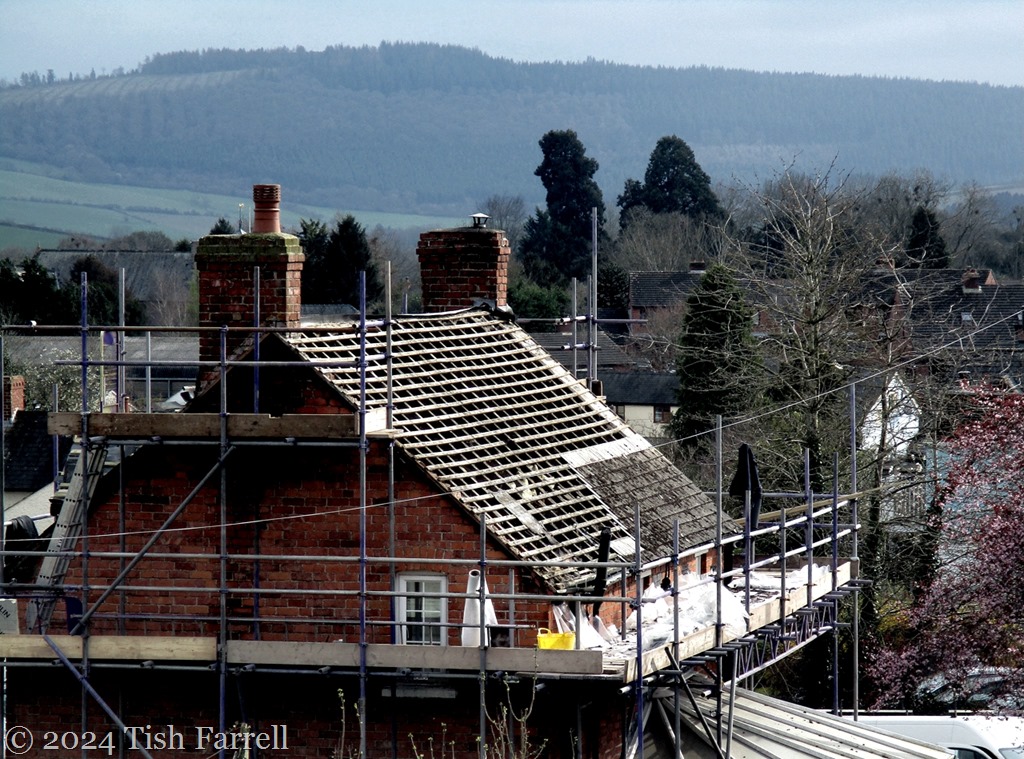
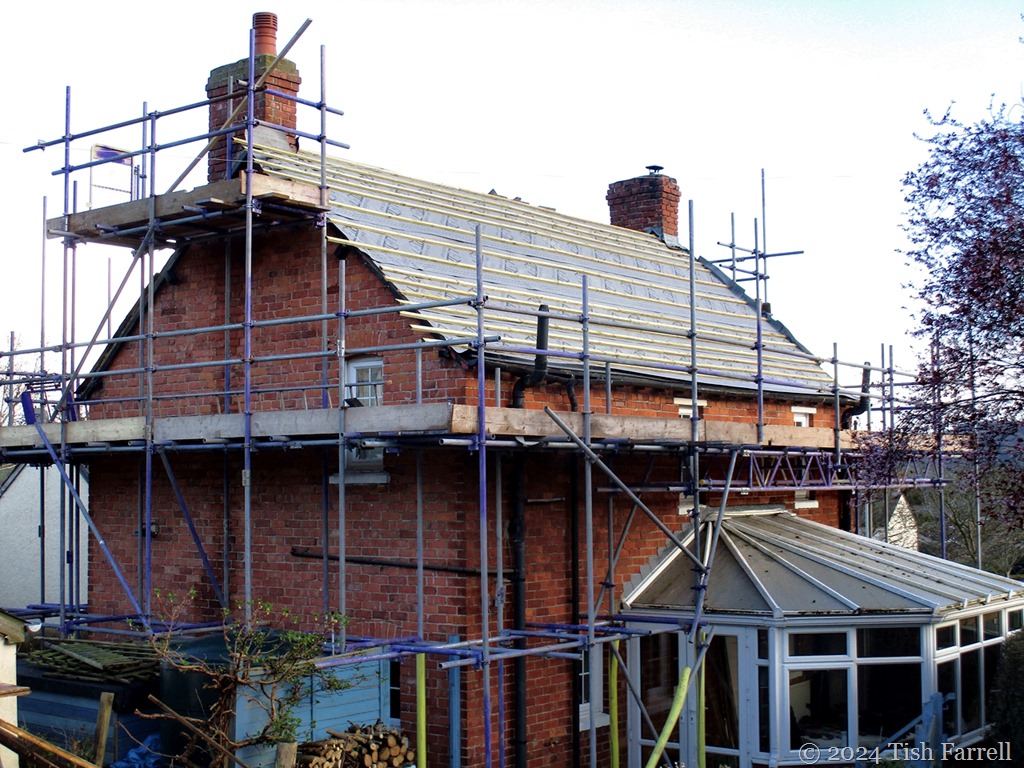
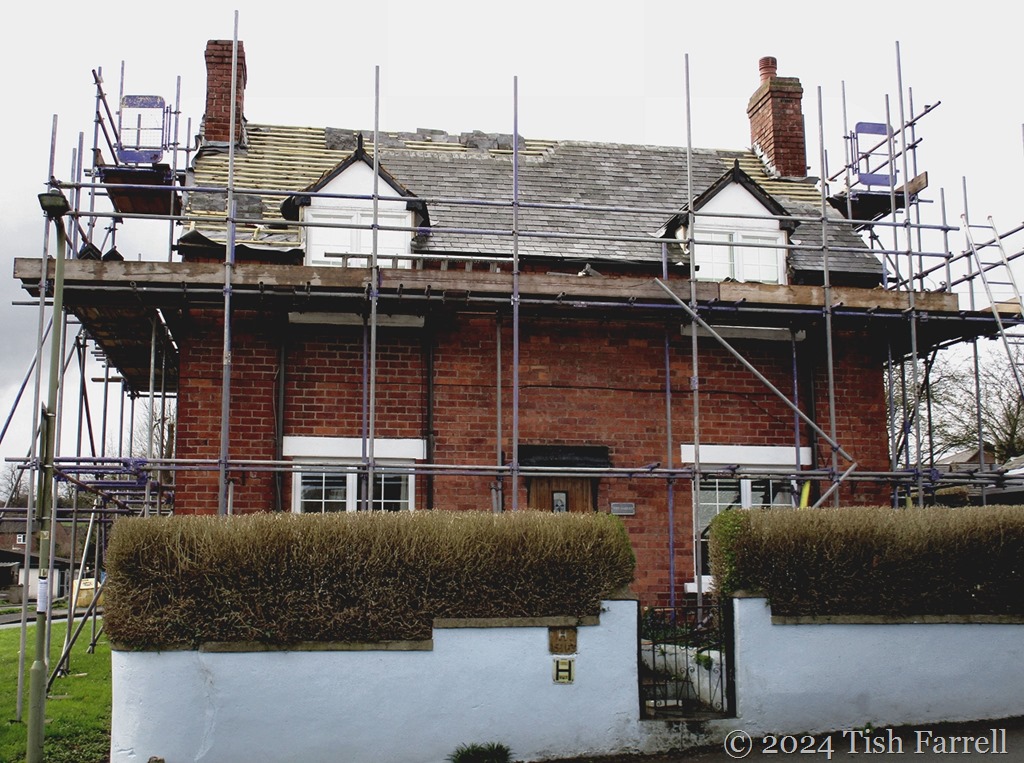
But now we’re here in an ancient agricultural town, where the folks are also very friendly. Clearly there’s many a tale to unravel here, or will be, once we’ve sorted out the house. This may take a while. For one thing, come spring there’s a new extension in the offing: this to remove an old conservatory and transform the space into a bright new kitchen with doors onto the garden. Apart from this, every room needs some serious attention, plus two chimneys to rebuild, and maybe the roof to replace. And then there’s the garden…

So all is in flux and not a little confused. But even so, with the turn in the year, it’s beginning to feel like home.

IMG_3641

IMG_3693cr

Lens-Artists: Favourite photos of 2023

Stepping Over The Past On Dover’s Hill

Dover's Hill

Of course in Britain we’re always doing it – traversing the surface of a many-layered past; below our feet decades, centuries, even millennia of stratified remains of human endeavour. A city like London, for instance, rears magnificently from Roman foundations that lie metres below the present living surface.

Mostly, though, we don’t consider what we may be walking over; not unless it’s very obvious. And the very obvious here is the rig and furrow of an ancient field system, discovered on a December walk on Dover’s Hill, near Chipping Campden in the Cotswolds.

The tell-tale ridges and furrows of this form of cultivation could date from as early as the post-Roman period, but were particularly a feature of early medieval open field systems – the feudal days of incomer Norman landlords, their serfs and villeins working long, unbounded strips of land using teams of oxen to pull a plough.

And it was the manner of ploughing that created the corrugated mounds and ditches. The plough-share was right-sided. It only went one way, and the ox team stretched way ahead of the plough. At the end of the field-strip was a headland on which the team was turned so it could plough down the further side of the ridge.

It probably worked very well for growing. The mounded strip was well turned; the ever increasing depth of soil drained well too, ideal for cereal crops, while the furrows could be used to grow moisture-loving plants such as peas. And of course this was in times before there were field fences or hedges, the land open to the entire community with access to communal pasture. But by Tudor times, this began to change in earnest, as land owners sought better returns by rearing wool sheep, thus enclosing former fields, and increasingly denying their tenant villagers age-old rights of access to commons and wastes on which the family economy depended.

It makes me ponder. The stories the landscape can tell us, if we stop and look.

There’s more about Cotswold rig and furrow HERE.

December In The Cotswolds

chipping campden

Dull day in the Cotswolds. The sort of day you will the sky gods to switch on the lights.  But then I spotted this wonderful tree. It lit up the street and the ochre tones of old Cotswold stone. I’ve no idea what it is. (I should have done a close-up of the berries). Notions anyone? Jude? Laura?

IMG_4324

For logistical reasons that ever confound family gatherings at Christmas, we celebrated ours a week earlier than most people, staying in a cottage near Broadway. The weather was mostly dank and dismal, but there was the odd bright interval, and the splashes of red, festive and otherwise, brightened up the street scenes.

IMG_4326

IMG_4344

IMG_4330

IMG_4468

*

Happy New Year Everyone

CFFC: Red

“Clunton and Clunbury,Clungunford and Clun…

IMG_4257ed

*

…are the quietest places under the sun.”    A E Housman  A Shropshire Lad

*

Except there was no sun on Tuesday when we went to Clun, only rain clouds, bloated, iron grey, hanging in shrouds across the hills and pine woods; the lanes streaming with run-off from two days’ deluge; field hedges newly farmer-sheared to thorny starkness, the herbaceous version of a convict cut.

It did not matter. We were on an outing after several days indoors.

IMG_4260

Clun is the next large village along the A488 between Bishop’s Castle and Knighton on the Welsh border. These days it is home to around 700 souls, and with or without sun, it is always quiet there, except perhaps during the Green Man Festival in May when I gather things may become a touch excitable. Once, though, it was a nexus, standing on the ancient drovers’ route out of Wales. You can picture it now, can’t you, the herds of  cattle and sheep being driven on well worn paths to faraway markets in the Midlands and London; passing through many a town, the taverns en route places where news and other goods were exchanged.  This then is essentially a Saxon landscape, later knocked somewhat into shape by the invading Normans, but all rooted in five millennia of farming life going back to the Neolithic period.

The packhorse bridge in the header photo is not that old however. It dates from the 1300s, leaving us with only 8 centuries of passing traffic to contemplate. But you do have to keep your wits about you when you cross, dodging the occasional speedy van-man, making sure you’re tucked into a niche before standing and gazing at the River Clun. In fact there is a local saying that could be said to confirm the necessity for alertness: “whoever crosses Clun Bridge comes back sharper than he went”.  On the other hand, it may refer to long ago times when the crossing formed the link between Saxon Clun on one side of the valley, and the newfangled Clun of Norman interlopers on the other.

IMG_4259

*

There was a purpose to our visit on such a gloomy day. I recalled there was an ironmongers there – an all but disappeared facility on Britain’s high streets. Brasso was needed – a good old fashioned metal polish, and also dubbin for keeping the rain out of our boots.

IMG_4271ed

And we found them both immediately when we opened the door and stepped back in time in Mr. Britten’s magic emporium. It proved to be the hardware enthusiast’s equivalent of Willy Wonka’s chocolate factory, including the glimpse of snug ‘Dickensian’ office beside the counter.

There might be no sun outside, but there was everything under it inside. On top of that, Mr. Britten proved the most engaging proprietor, a true gentleman. He told us he was happy to sell us two screws if that’s all we needed. We didn’t, but we appreciated the gesture, and said we’d be back when we did.

After that we mooched about on the High Street, were greeted as we went by passing locals, and also some nice dogs, found a good bottle of wine and sticky pastries in the Spar supermarket plus more welcoming encounters. And then headed for home. By midday it was almost twilight.

IMG_4267

*

So no, it really did not matter that it was such a dank and gloomy day. Human and canine warmth sufficed; another grand trip out and only a few miles from home.

IMG_4282

The ruined keep of the Norman castle looking especially lugubrious. We will return for a sunnier exploration.

Ancestral spaces

P1080417cr

Offerton Moor viewed from Callow Farm, Highlow, Derbyshire

*

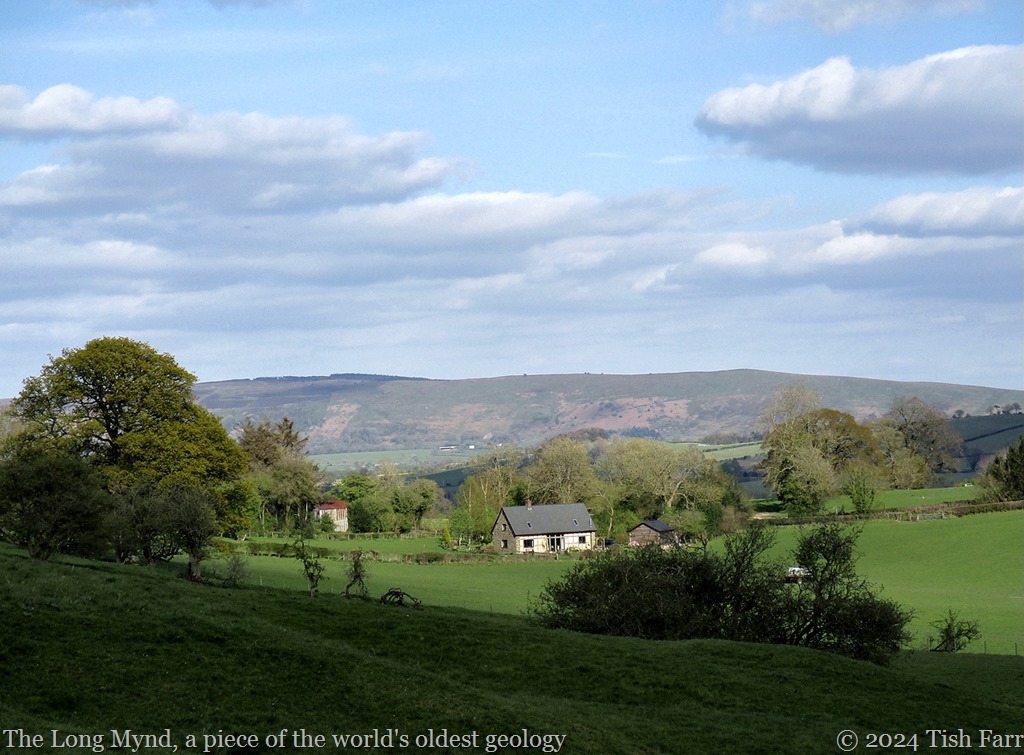
I’ve been posting views of South Shropshire lately, the green and wooded hill country of my home county. It is a terrain that, on the whole, seems more amiable than rugged, although in bad winter weather the tops of Stiperstones and Long Mynd  will ever prove challenging.

But today, on another hoar-frosted day in Bishops Castle, I’m thinking of the Derbyshire Peak District where my maternal Fox family ancestors farmed over many generations. What a tough life they must have led, running sheep on the high moors, struggling to raise essential oat crops in more sheltered enclaves, raising a few cattle to provide milk to make cheese and butter: the cheese a staple with ale and oatcakes, the butter to sell at market.

The header photo is the view from the former farmyard of Callow Farm, last occupied by 3x great grandfather George Brayley Fox in 1892.

Most of the High Peak farmers (even if they were yeomen owning some land and property) were also tenants of large estate owners – the Dukes of Rutland and Devonshire as well as lesser lords of manors. The farms provided food and shelter, but Derbyshire farmers were opportunists too. For centuries they mixed farming with other trades, butchery, hat making, grindstone making for milling and the Sheffield cutlery trade, weaving, haulage, and most dangerously of all, but potentially lucrative, lead mining; this last usually carried out in winter months when there was little farm work.

These next views are of Stanage Edge. This gritstone escarpment lies across the valley from Callow Farm. This is where millstones were once cut and hauled to nearby Sheffield. I know there were farmer Foxes who went in for this arduous trade, but none, as far as I know, in my immediate family tree.

P1000999ed

*

P1080864ed

*

This next photo is of Scraper Low Farm also known as Scraper Low Hall. It stands above Hathersage, and for a short time was the home of my 2x great aunt, Sophia Lister nee Fox who married Mr. Lister the silversmith while still attached to hill farmer, John Brocklehurst who himself had bigamously married a young next-door widow. You can read the story at the link.

When we first came upon Scraper Low, I was astonished that the Listers would choose to move to such a lonely place after living in a Sheffield city centre flat, to say nothing of taking on a farm in their sixties. But then when I walked up the long approach lane, I realised that whenever Sophia walked this way from her extraordinary castellated porch house, she would have been able to scan across the Derwent Valley and spot Callow Farm where she was born in 1814, the place where her brothers George and William still lived.

But then was she engaging in family feeling, or cocking a snook at the relatives now that she could pretend she’d finally made something of herself?

P1080976ed

*

This is the view from Scraper Low: Hathersage Moor – Higger Tor, Carl Wark hillfort and Burbage Rocks. It’s a landscape that already looks bleak in September. Imagine it in winter:

P1090030ed

P1080997ed

*

And finally back to Callow Farm, a more benign scene of the fields below the house, once worked by four generations of Foxes: George, Robert, George and William.

P1080325ed

*

And an early morning flight trail across the valley. Not the sort of phenomenon the ancestors would have spotted, nor dreamed of seeing.

P1080444ed

Lens-Artists: Empty Spaces  Over this past week Patti has asked to show her empty spaces, however we chose to interpret the theme.

November Gold At Our Iron Age Hillfort

IMG_4250ed

Yesterday we woke to the first hard frost of the year. When I looked out of the bathroom window to the top of the town, there was a cascade of white cottage roofs instead of the usual grey slate. And all glistening too…

Because best of all, there was also sun. SUN by god – and the weather people’s promise it would stay all day. What a gift. After weeks of rain between gloom and deluge, plus a stint of accompanying coughs and sneezes, I knew we should go out and make the most of it in one of Shropshire’s most majestic spots.

To Bury Ditches, says I. We can take a packed lunch. And so we did.

It’s only a five minute drive from our house, but up a very steep hill. For us unseasoned walkers, it’s too far to go on foot. The hillfort lies in Forestry Commission land, which means there is a car park, but the path to it rises further still above ‘monolithic’ stands of conifer, lit up here and there by the odd bright oak, or the orange haze of wintering larch.

IMG_4202ed

*

The morning sun had melted much of the frost, though it lingered in the verge shadows and in the valley bottoms. The air was absolutely still. So still, and so utterly silent, it seemed the world had stopped. It was a fine moment to come upon an ancestor, albeit one, turned to wood. What kind of magic was this?

IMG_4204ed

*

When we reached the hillfort, I tried to capture some idea of how it looks on the landscape, the scale of the ramparts – huge but nonetheless much diminished after 2,000 years of weathering. But it’s always impossible – the light not right, the site too overgrown, the earthworks ill-defined. And then there is the problem of  the enclosed ground: all quite featureless; a great expanse of rough pasture, with nothing to fix on, or frame.

Here’s an artist’s reconstruction of the site, then a couple of my rampart shots.

IMG_4210

IMG_4208

IMG_4215ed

*

For some better hillfort views than I could manage, please have a look at Virtual Shropshire’s page on Bury Ditches.

And so what are we left with? A sense of place, of space, the commanding views, the resonating mystery of who exactly built these monumental structures over 2 millennia ago. They are found across the uplands of Great Britain and yet we know so little about them. Some of course have been excavated and yield signs of village settlement inside (Castell Henllys). Some also revealed evidence of siege (e.g. Maiden Castle). Others seemed to have been simply places of refuge in times of war. Or perhaps also gathering places for festivals and markets. But the big disadvantage of hilltop refuges is they usually lack easy access to fresh water.

One thing we can say: these places were hugely important to the ruling hierarchies of the Iron Age people who built them. Imagine the man and woman hours involved, digging into bedrock with bone and antler picks and mattocks (for at this time iron, a scarce and valuable commodity, was reserved for the making of prestige weaponry not tools), heaving loads of earth in precipitous locations where horses and carts could scarcely serve the purpose. Yet…And yet…when freshly excavated in limestone country, or better still on chalk, the ramparts of these forts would have looked marvellous, glistening white on the skyline; visible for miles.

So if I couldn’t quite bring you a hillfort, here are the vistas we enjoyed, looking out, this after perching in a heather clump to eat our packed lunch. Herewith  Shropshire and the Welsh borderland:

IMG_4211ed

IMG_4213

IMG_4232ed

*

By 2 o’clock the sun’s warmth was gone, the remnant frost creeping back, fingering parts not properly wrapped up. We were glad to stride back to the car. A five minute drive home and we were by the log fire with a cup of tea. Such a little journey and yet we had been transported to another world and time. Passports not needed. Only willing hearts and minds and a small car.

IMG_4240ed

IMG_4243ed