Sunset On Desert Sands ~ And Escaping From Kenya

233

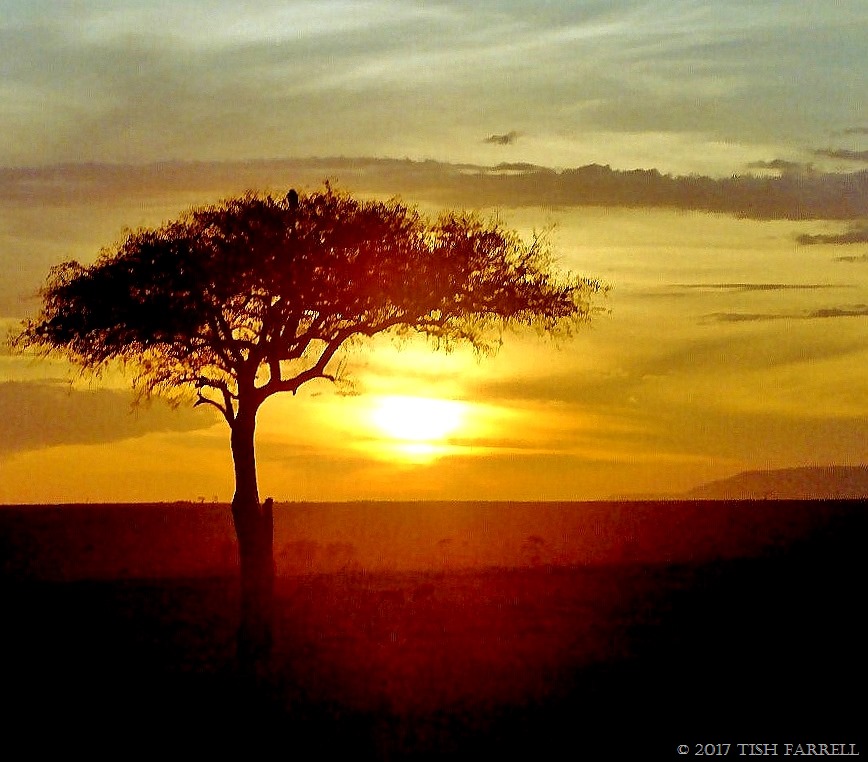
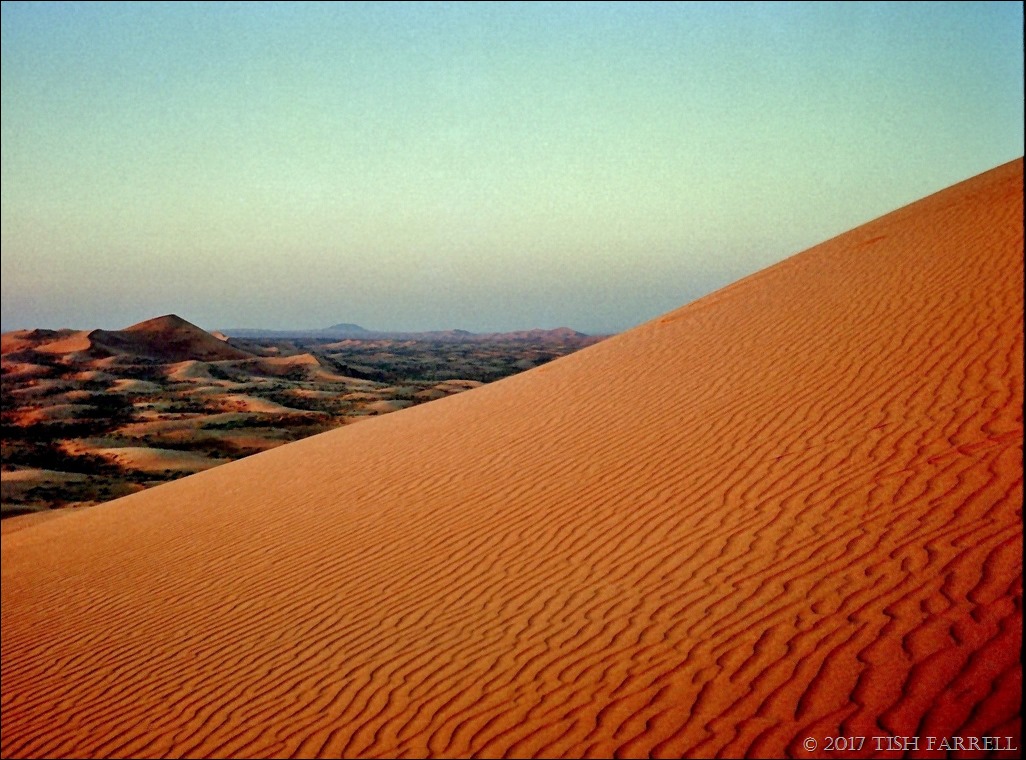
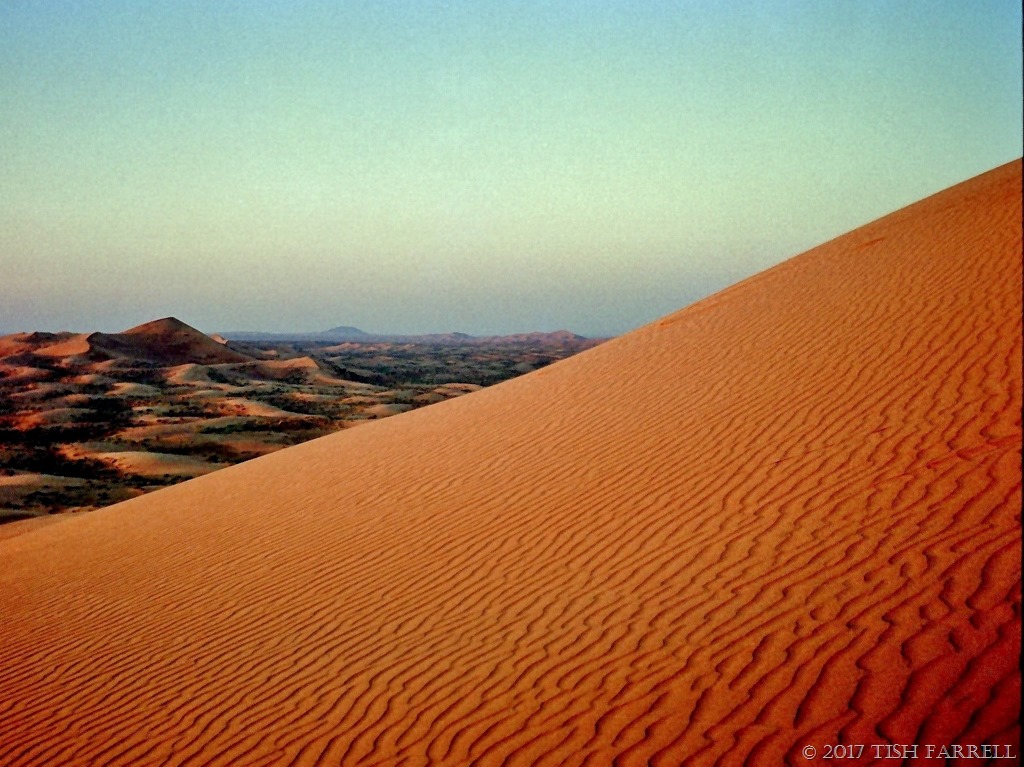
It is a kind of alchemy. As the sun sets, and its glow flows out across the desert, the dunes that in the full light of day had been dun coloured, inert, dull even, transform into waves of molten copper.
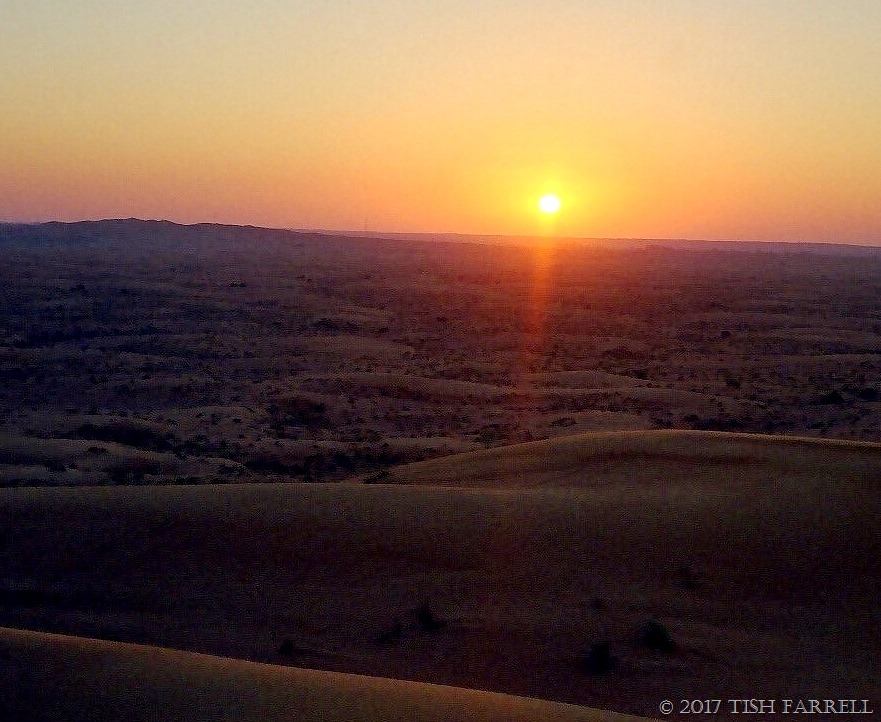
235

To drive into the desert in late afternoon was blissful. The emptiness. And more emptiness. AND NO PEOPLE. We had come to Dubai for a break from Nairobi living. Sometimes life there could become too nerve-fraying. During the Moi era, security was always an issue in Kenya. Whenever the political temperature heated up – which was often during the 1990s’ donor push for multi-party democracy – so the crime wave spiked. It was mostly white collar crime too – run by crooked lawyers, senior officials and cops – all people who should know better.

Car-jacking was a speciality, and the diplomatic and aid community were particular targets with their newly imported 4 x 4s that were shipped in with each fresh posting. So it was that High Commission cocktail party talk mostly involved expats’ tales of having their vehicles stolen in hair-raising scenarios, usually by men with AK47s who had followed them into their driveways as they were returning home. Then there were the stories from Graham’s Kenyan colleagues. If they were driving project vehicles they would be car-jacked AND taken hostage for hours on end. We never did understand why car-jackers did this – driving around the city for hours until they finally decided to dump the unfortunate hostage in some god-forsaken wasteland.

Then there were aggravations such as coming home from a four-day seminar to find the house without electricity and the freezer dripping into the hall. In our absence some officious meter reader had been let into the property to read the meter. He misidentified our house number and claimed we had not paid our electricity bill. He then went off with our house fuses, and it  took a week of hideous argy bargy with closed-minded officialdom to have the power restored.

They claimed they had never heard of a meter man taking the fuses with him. Usually, they said, he would simply hide them somewhere handy, to be reinstated once the bill had been paid. In the meantime, nothing in our house worked since everything was electric. And all the security devices which the High Commission insisted we had, pretty much useless.

We have paid our bill, we kept saying to the electricity men. We have the receipt. These were the wrong words. Kitu kidogo were the right words. A little something. But as we didn’t play, we had to wait. Eventually a couple of very pleasant engineers took pity on us, and called in to see what was going on. After remonstrating at the lack of fuses as if this was our fault, they decided to make some new ones, standing on the kitchen stoop by the fuse box, winding wire round spools while admiring my crop of Tuscan kale, a variety they had never seen before but were much taken with. It was nice to have the lights back on. Playing scrabble by candle-light might seem vaguely romantic, but it wasn’t really, not after the first night.

And on top of the power-out dilemma, the weather had been vile – an El Nino special of weeks of endless torrential rain – people drowned, homes and whole villages washed away, impassable roads, the place unnaturally cold and grey and impossibly WET. It made us realise that we had very little to complain of. At least we had a roof over our head, and it only leaked a bit in the sitting-room corner.

But then the long wet spell next promoted an outbreak of ‘Nairobi Fly’ or Nairobi Eye – a rove beetle that causes extremely painful skin conditions if you happen to brush it away with too much enthusiasm, and then use the same hand when touching some area of bare flesh. For a time the whole city seemed under siege from this nasty little bug, the press burbling with horror stories of men whose private parts had become horribly inflamed due to some inadvertent contact. (Er, hem).

So it was good to fly away. It was good to spend a night in the desert even if our Tanzanian guide did lie in the back of the 4 x 4 with the door open and snore all night. It was good to get up at dawn to a bright, crisp day and walk alone through the dunes, and to see for miles and miles, without a soul in sight, only the distant blue spine of Oman’s El Hajar Mountains. It made the spirits soar, all that aloneness, as if you could face anything, though a month there might have truly done the trick.
13

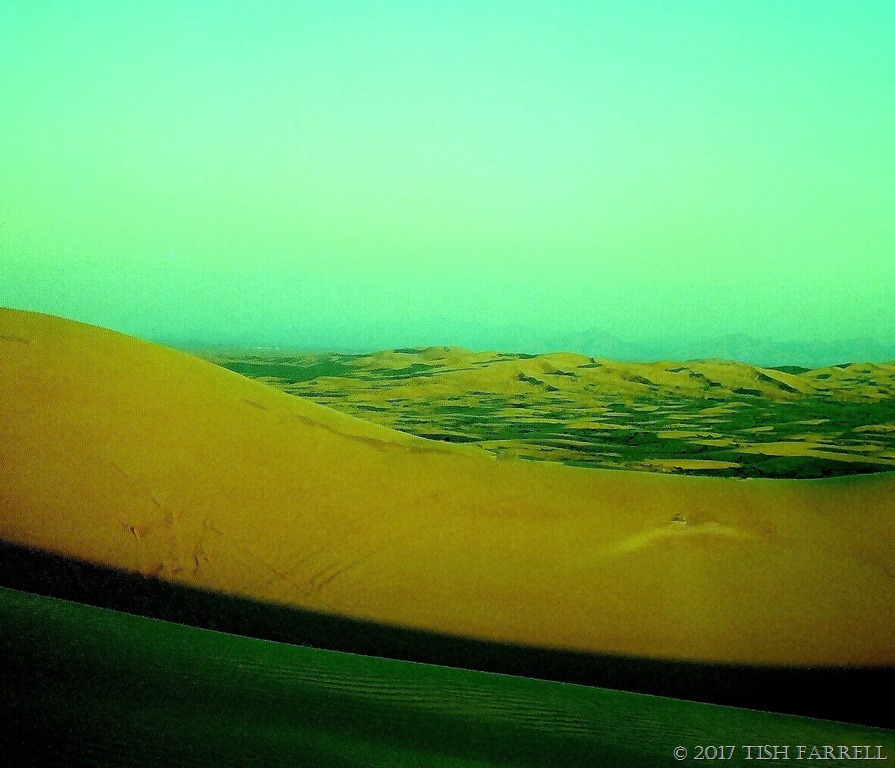
P.S. In case you are wondering, the green areas in the last photo are plots of alfalfa – high octane fodder for Dubai’s racing camels which are also reared in the desert on small camel farms.

copyright 2017 Tish Farrell

Daily Post Photo Challenge: Atop
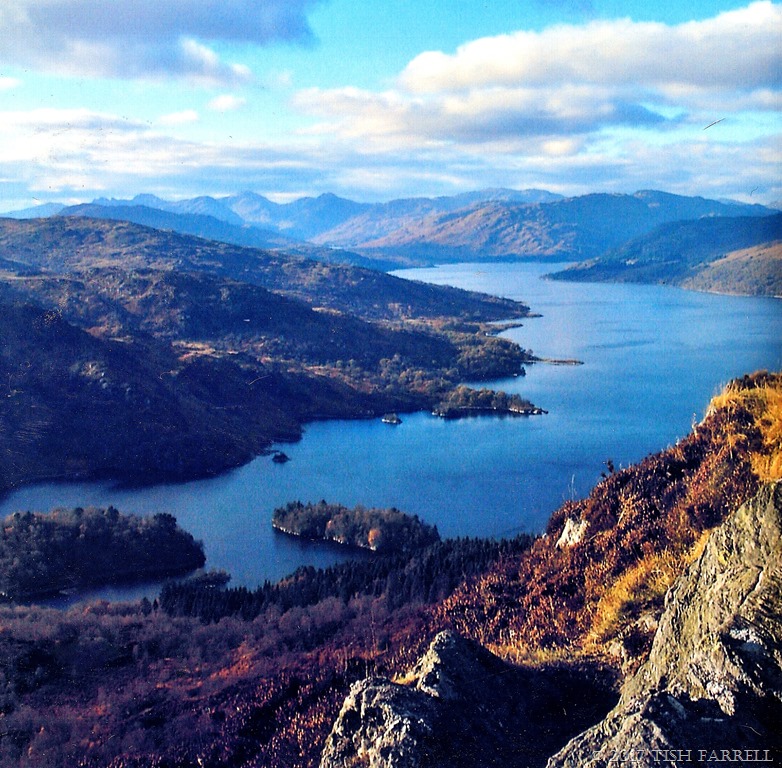
Sunday Solution to Saturday Guess The Place ~ It’s The Trossachs!

IMG_0001

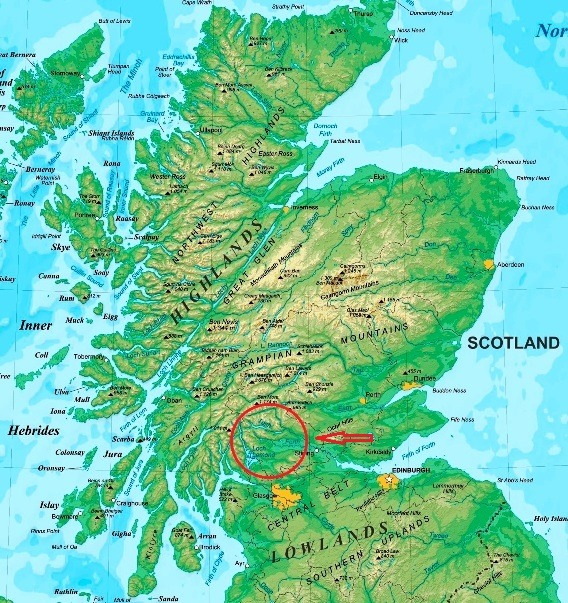
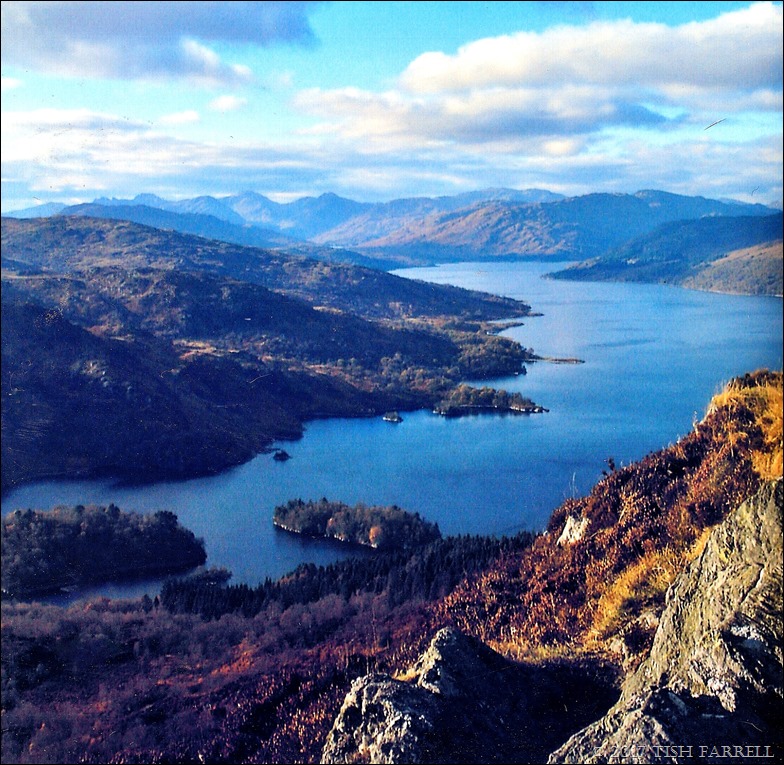
And more specifically it is a view of Loch Katrine taken from the summit of a ‘small mountain’ Ben A’an. So Jo was closest guesser with Loch Lomond, which is the next big loch westwards – she is definitely a woman who knows her landscapes. But thanks to all for playing along with yesterday’s photo quiz. And since I’m guessing that many of you have no idea where The Trossachs National Park is, here’s a map. The area is basically north of Glasgow and west of Stirling, and so not even in the Scottish Highlands despite all the beguiling peaks in the photo.

Scotland map

Map: Eric Gabba (Sting)/Wikipedia CC-BY-SA 4.0

For more about The Trossachs from a local, see this article by Bill Kasman.

Thursdays Special ~ Great Zimbabwe Re-Scanned

Great Zimbabawe

I was very pleased that this Thursday’s Special from Paula is another Traces of the Past challenge. I spent yesterday afternoon attempting to scan these photos of Great Zimbabwe. I’ve shown other versions of these images before – scanned from negatives, but either I or the scanner was on the blink, and I wasn’t very happy with the results. Then the scanner broke altogether (it was a whizzo Nikon one too), and that was that.

So yesterday I had a go with some of the original prints on the flat-bed scanner, which then led to a lot of dust-speck removing  – very tedious.

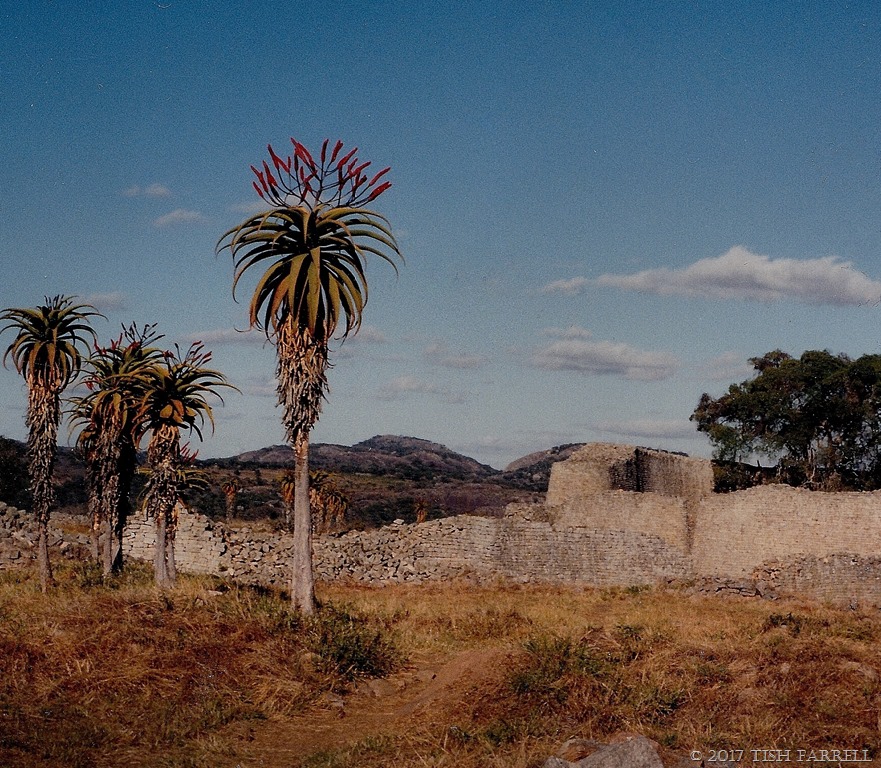
This is the best I’ve been able to do. The first shot shows the Great Enclosure, and the top of the mysterious stone tower within. The sci-fi plants on the left are giant aloes.

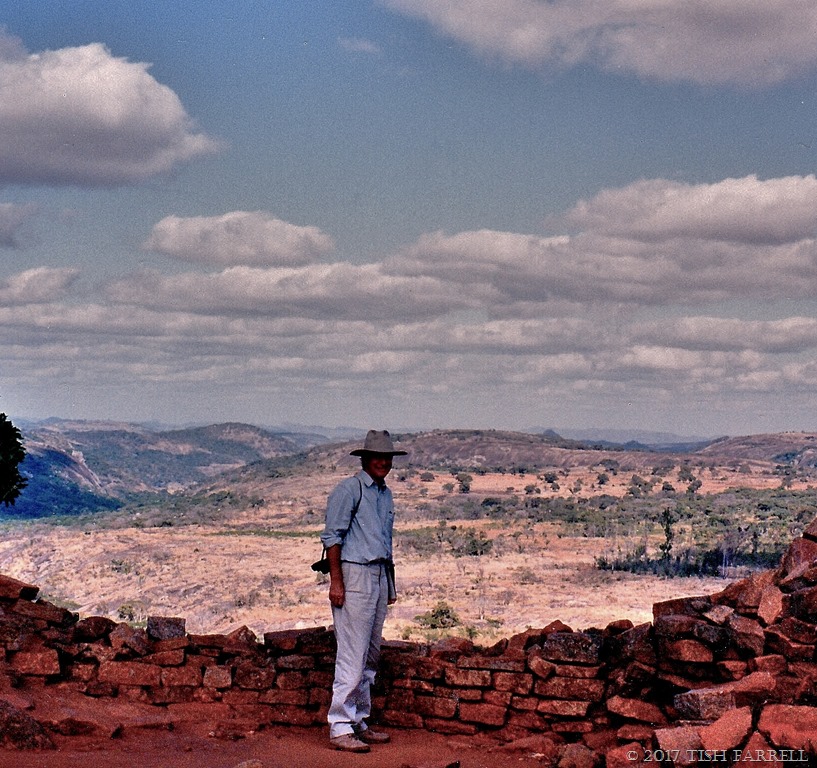
This next shot is taken from the Hill site, where archaeologists have discovered gold and other metal working enclaves.

4_0003

It gives a good sense of the surrounding terrain, although in the heyday of Great Zimbabwe, the environs may well have been a good deal more lush. The citizens’ domestic economy revolved around cattle herding, and indeed, one of the theories for the city’s demise in the C15th is over-grazing. But I’m sure there was more to it than that.

Great Zimbabwe was part of an extensive trade network throughout the period equivalent to Europe’s early Middle Ages. Its  merchants trekked in caravans to the Mozambique coast, taking gold and ivory to trade with Arab dhow merchants of the Swahili seaboard cities. It is very possible, then, that the gold floating around Europe and the Middle East in Crusader times came from Great Zimbabwe. In other words, it was not the remote settlement it may seem today; it was strongly connected to the Old World’s wheeler-dealer networks. Nor was it the only great African city state in southern Africa. So much of the continent’s human history remains to be discovered and told; historian Basil Davidson made a good start, though most of his works may be out of print now. And it was Peter Garlake who wrote the classic work on Great Zimbabwe (1973).

I only wish I’d taken more photos while I was there. We were being distracted by a travelling companion who was intent on not noticing that we were visiting one of the world’s most fascinating archaeological sites. Ah well. Anyway, looking at these photos now, it all looks very dreamlike, and that’s how it felt at the time.

 3

But I’ll leave you with a few hard facts. Great Zimbabwe was built and lived in by Shona people between 1000 and 1500. The enclosure walls, though often monumental, were seemingly never defensive. The entrances are simply open, undefended spaces. The stone came from the nearby granite hills, and was cut and laid without mortar. The walls vary from 4 to 17 feet in width with some reaching over 30 feet in height. It is, in short, a very amazing place, and I have written other posts with more of the history.

But oh, wouldn’t it be wonderful if these walls could speak and tell us their stories!

Thursday’s Special

Thursdays Special ~ A Commanding Presence

IMG_0026

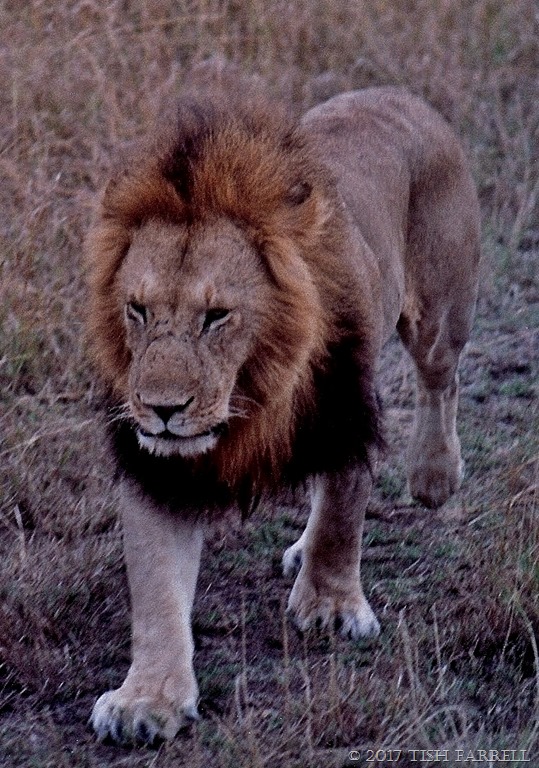
It’s not easy taking a photo of a moving lion, and for all sorts of reasons – not least, the excitement. This is another shot of one of the members of the Maasai Mara’s celebrity Marsh Pride. I think that confident stride definitely says ‘I’m in charge here’. And just look at the size of those front paws! Scarily impressive even in this somewhat aged photo.

We visited the Maasai Mara only three times while we were living in Kenya, but every trip there delivered many breath-taking moments. We were lucky too. Kenyan wildlife guides are among the world’s best – so generous in the sharing of their knowledge – whether of grasses and dung beetles or leopards and rock pythons.

Scan-140726-0004

Desert Date  and the Oloololo Escarpment ~ indelible memory Mara-style

*

This week at Lost in Translation, Paula’s  March Pick A Word includes five word prompts: commanding, coarse, gibbous, incremental, indelible. Please see her interpretations and be inspired.

Interesting The Things Your Stats Tell You

Tish Great Zimbabwe (2)

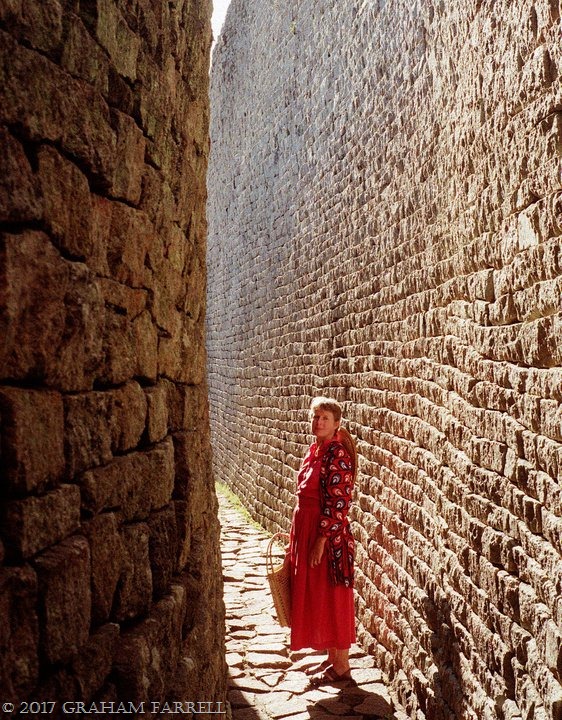
Actually this is probably just an excuse to post yet again this very old photo of me at Great Zimbabwe. We were living in Lusaka, Zambia at the time, Graham on a year’s attachment to the European Delegation, in charge of food aid distribution. You can read that story at the link.

Towards the end of this posting we drove down to Zimbabwe, and spent a couple of weeks touring around. Back in the 1990s it was a fabulous country to visit. We simply followed our noses, and drove on near empty, but well-kept roads, one of which brought us at last to Great Zimbabwe. We pretty much had the place to ourselves too. It was astonishing.

Anyway my stats of the last few days suggest to me that somewhere in the U.S. a bunch of students has been given a Great Zimbabwe assignment. I know this because they’re all opening a post I wrote 3 years and 2 blog themes ago: Abandoned: Great Zimbabwe. This happens periodically, although sometimes it’s Zimbabwean students searching for material on why the place was abandoned. It’s one of my perennial posts – not so much viral as chronic. Every year the traffic has doubled. Last year 1,311 people dropped in there.

But nothing gets as much traffic as my post on Karen Blixen and Denys Finch Hatton. Caught Inside A Kikuyu Garden. This was also written three years ago, and so far has clocked up 12,715 views. Of course I have no way of knowing if all these people have actually read the piece, but I find it intriguing. I also sometimes wonder what would happen if I had a ‘Karen and Denys’ blog, and didn’t bother to post anything else. Funny old activity – blogging.

Giraffes And Other Animals ~ Graceful In Their Own Unique Way

200

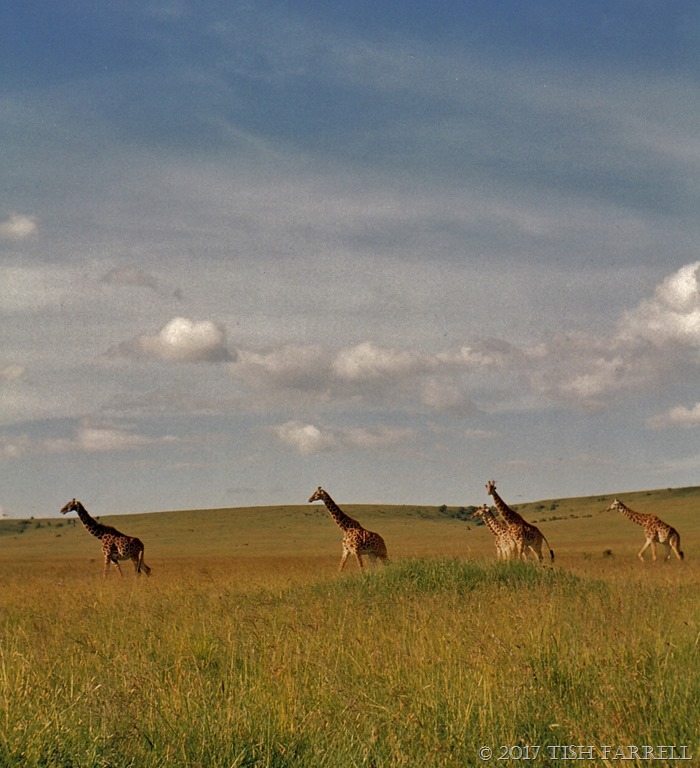
This week’s Daily Post photo prompt induced a ‘long ago when we lived in Africa’ moment, and thus a nostalgic trawl through the old photo files. It was giraffes I first thought of. They may seem an ungainly composite of various creatures, but to see them moving across the plains is a sight that cannot be forgotten. They lilt in time to some inner rhythm of their own. This is more apparent when you see several moving together. And you wonder what is this giraffe music, beyond your hearing, that they stride forth to with such synchronicity?

IMG_0027

Some of the plains’ song you can hear of course – the wheesh of dry grasses, the ceaseless koo-kroo-ing of collared doves, the crickets’ whine. And as you scan the bush country, looking for any signs of wildlife, these are the sounds that fill your head. The sun is hot on your scalp, the light too bright, and the spicy scent of thorn trees too rich for the over-sensitive. But just when you think all the game has gone and there’s nothing more to see, magic happens:

Scan-130429-0031

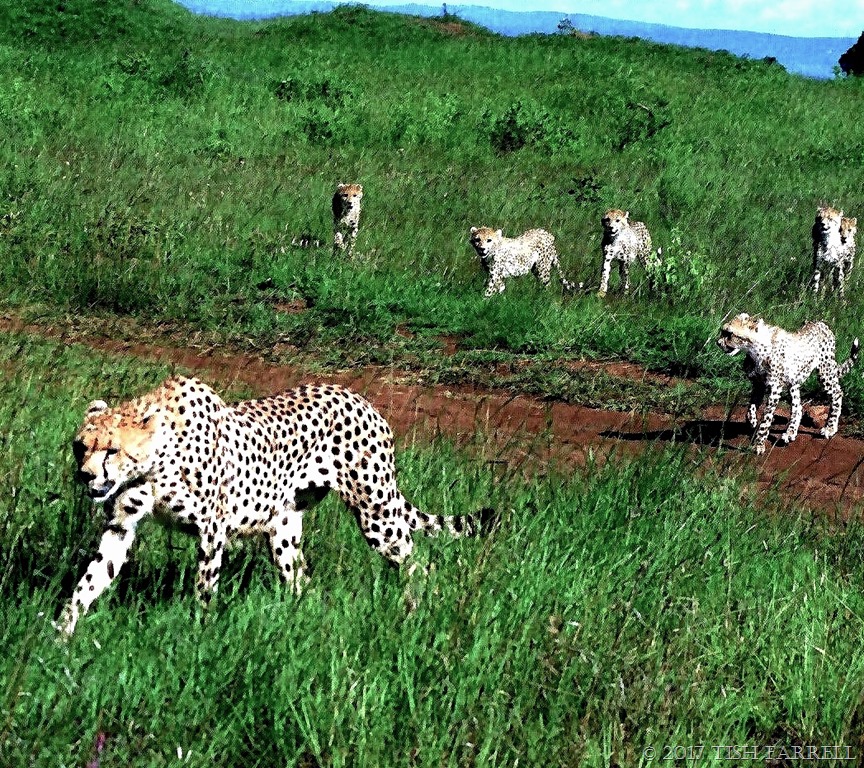
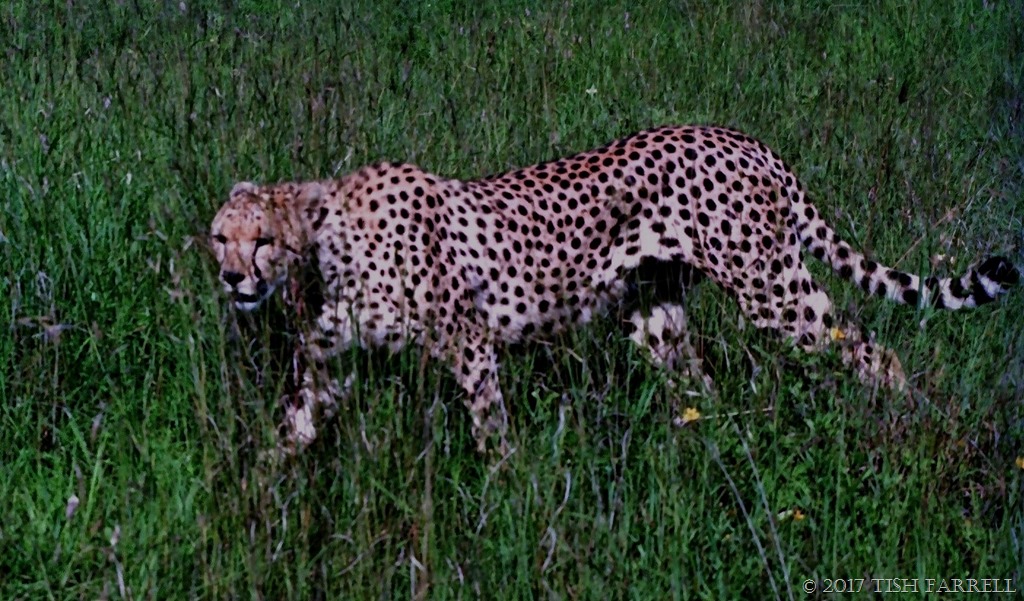
This cheetah mother with six half-grown cubs, walked out of the undergrowth beside the park track. When we stopped the car to watch she didn’t so much as blink at us. It seemed we were the least of her problems. She was trying to make the cubs stay in one place while she went off to hunt. But they were not having it.

IMG

No sooner had mama parked them and moved out sight, than one (there always has to be one) goaded the obedient ones out of the cover that had sheltered them until they all decided to follow.

IMG_0003

In the end, mama gave it up as a bad job, and gathered the offspring and disappeared into the bush. It is a mystery how she had ever managed to rear so many teenage cubs.

These photos, sadly ageing, were all taken in Nairobi National Park, a gem of a park that borders the city. It covers only 46 square miles, but when we lived In Nairobi during the 1990s the wildlife corridor to the south was still open, allowing for seasonal migration. Today there are all kinds of pressures from one of the fastest growing conurbations in Africa – the need for farm land and for better transport links. It’s a thorny issue however you look at it – wildlife versus humans: probably no happy solution; gracefulness seems not to be a natural human trait.

Scan-130429-0032

copyright 2017 Tish Farrell


Daily Post Photo Challenge Graceful

Moving Pictures ~ Wales Through The Windscreen

P1060737 (2)

P1060737

P1060737 - Copy (2)

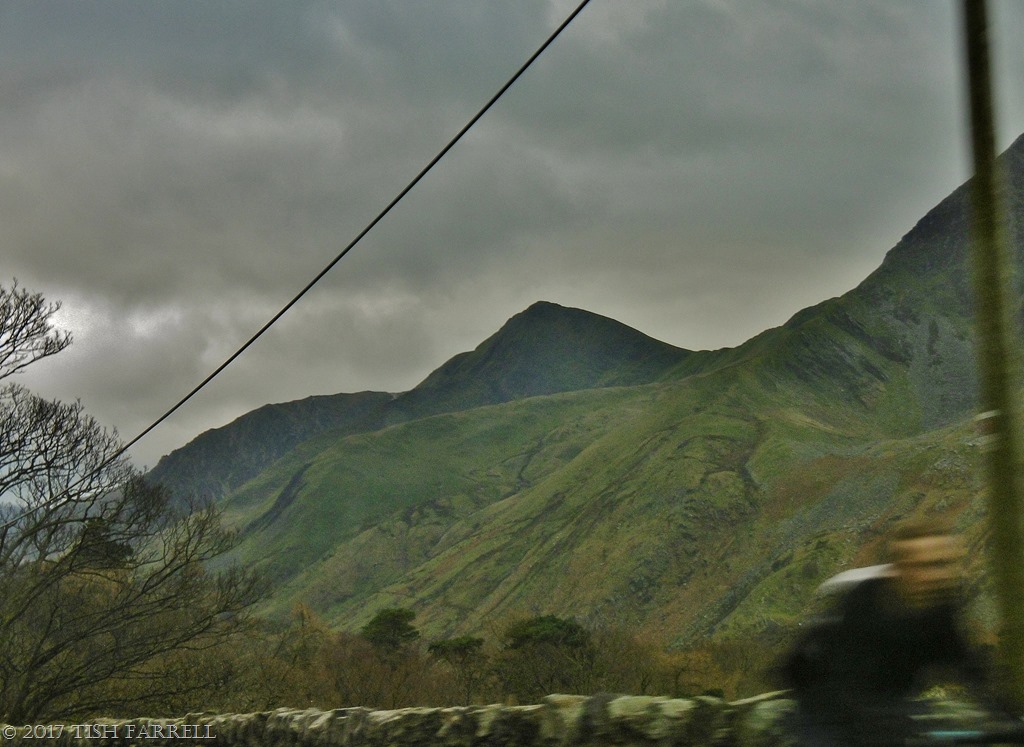
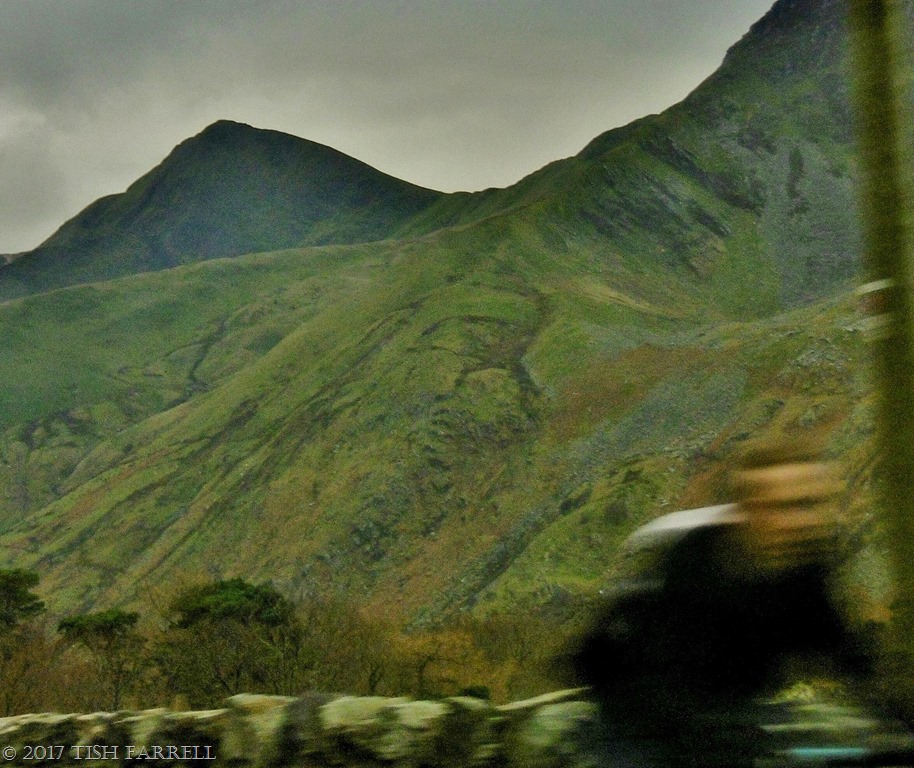
Nowhere does brooding gloom like Wales on a wet winter’s day. This happenstance shot was taken on New Year’s Eve as we were motoring home from Anglesey. I’d propped my camera briefly on the car dashboard as we’d headed through the mountain pass to Capel Curig. Then randomly pressed the shutter and so caught the cyclist.

This week at Lost in Translation Paula asks us to show her ‘unfocused’. She kindly says she doesn’t mind ‘happy accidents’, so here is mine.

Early Morning On Menai Strait

P1060515

I like the notion that everything is moving in this apparently static image: time, tide, clouds, shadows, light, the ash tree, me. And maybe even the mountains across the water.


Photo snapped in Dynamic Monochrome setting. For a very finely composed rendition of the theme ‘passage’ visit Paula at:

Black & White Sunday: Passage

A Sea Full Of Sky

P1060448

What a blessed scene. We could scarcely believe our eyes – a sea so still, so blue, and sky to match; the Great Orme slumbering on the horizon, and all this happening just last week on the Menai Strait, North Wales.

I love winter beaches whatever the weather, but this vista seemed to awaken a whole new plane of perception. I could see why the Celtic Druids made Ynys Mon their stronghold. You never do know what the light will do next. It is transporting.

The little boy and his dad seem caught up in the magic too. So it’s a good thing that the Great Orme is slumbering; for this Viking name for the limestone headland means sea serpent, and we don’t need him abroad disturbing the tranquillity.

It’s an odd thing, though, about that particular promontory. The weather along the Strait may be foul, but more often than not, there’s a beam of sunlight slanting down on the Great Orme. Perhaps it is all part of an enchantment that keeps the mighty serpent dormant. Sleep on, Great Worm. Dream and dream between sky and sea.

P1060459 - Copy (2)


Thursday’s Special  This week Paula has given us five words to fire up our New Year imaginations. I’m using two of them here – the sea permeated with sky colours, and the limpid waters of Menai Strait. Follow the link to find out more and to see Paula’s fine photos.