Year’s End At The Castle: The Changing Seasons

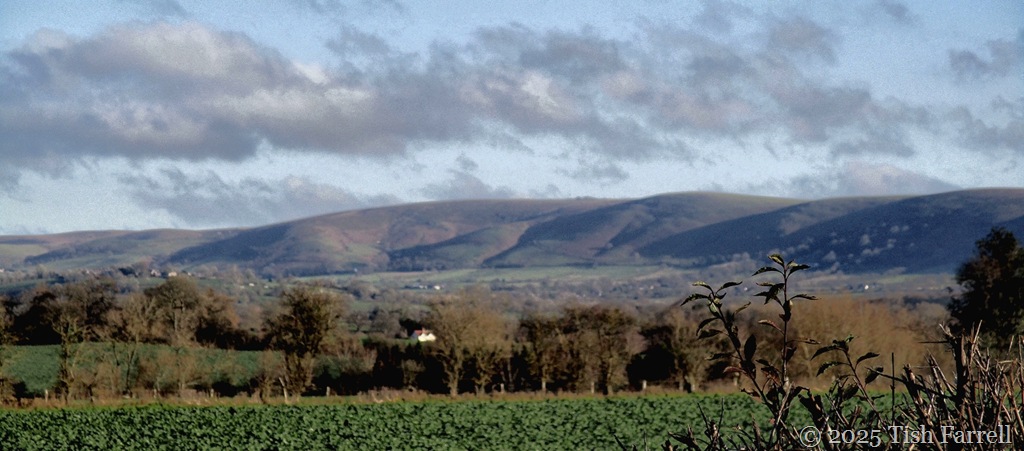
Christmas Day Long Mynd west

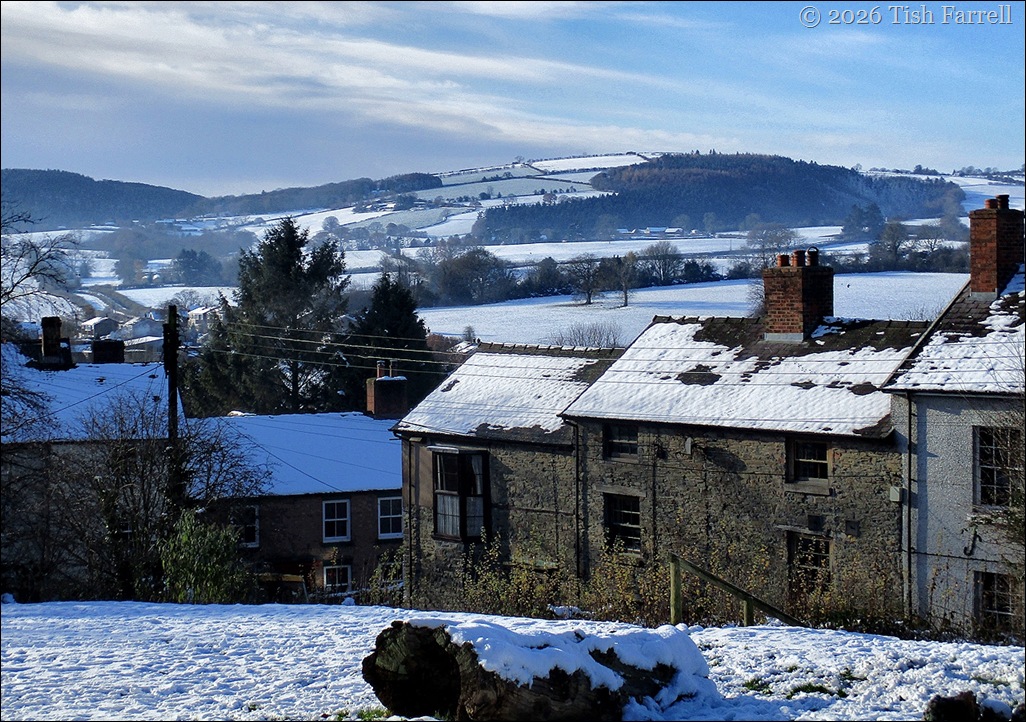
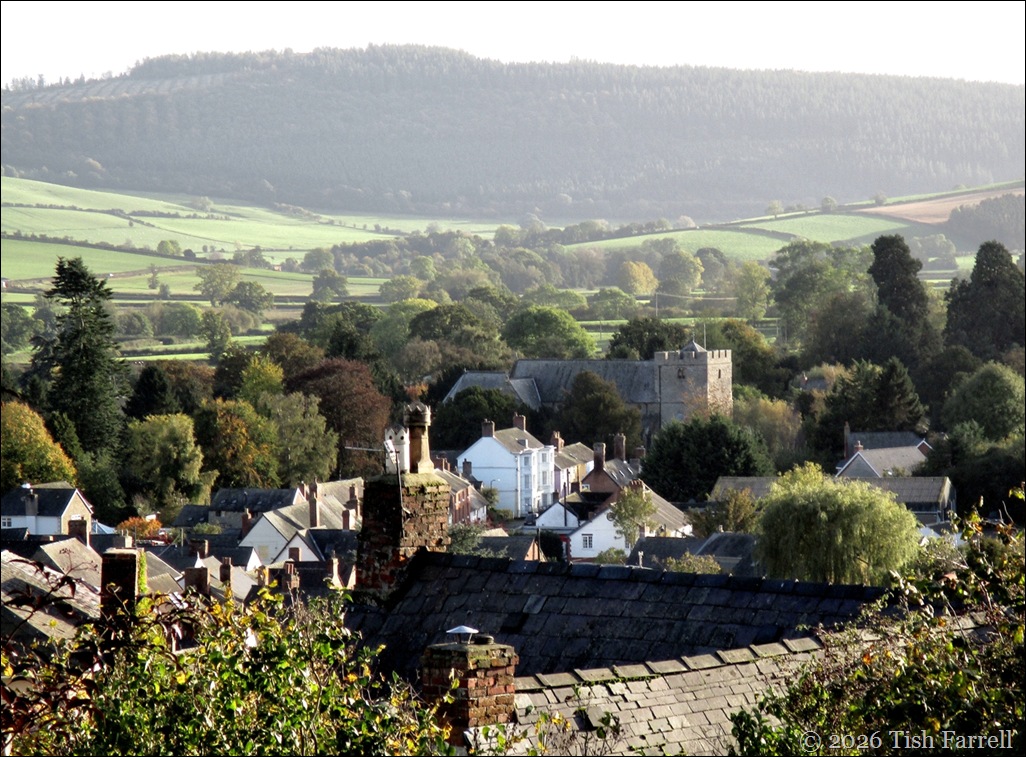
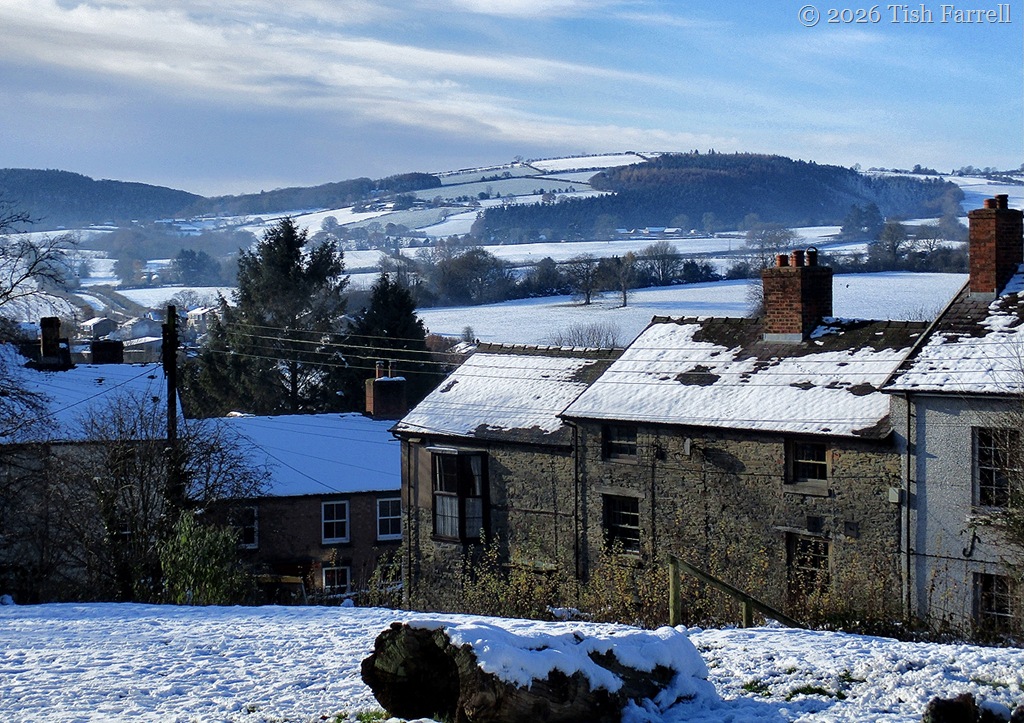
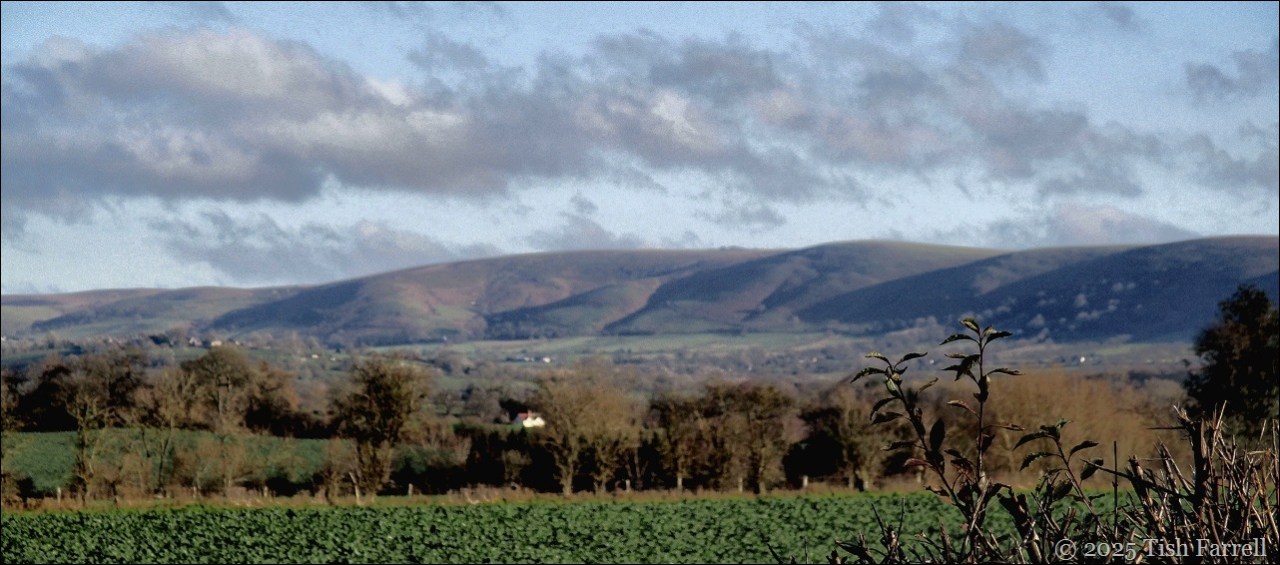
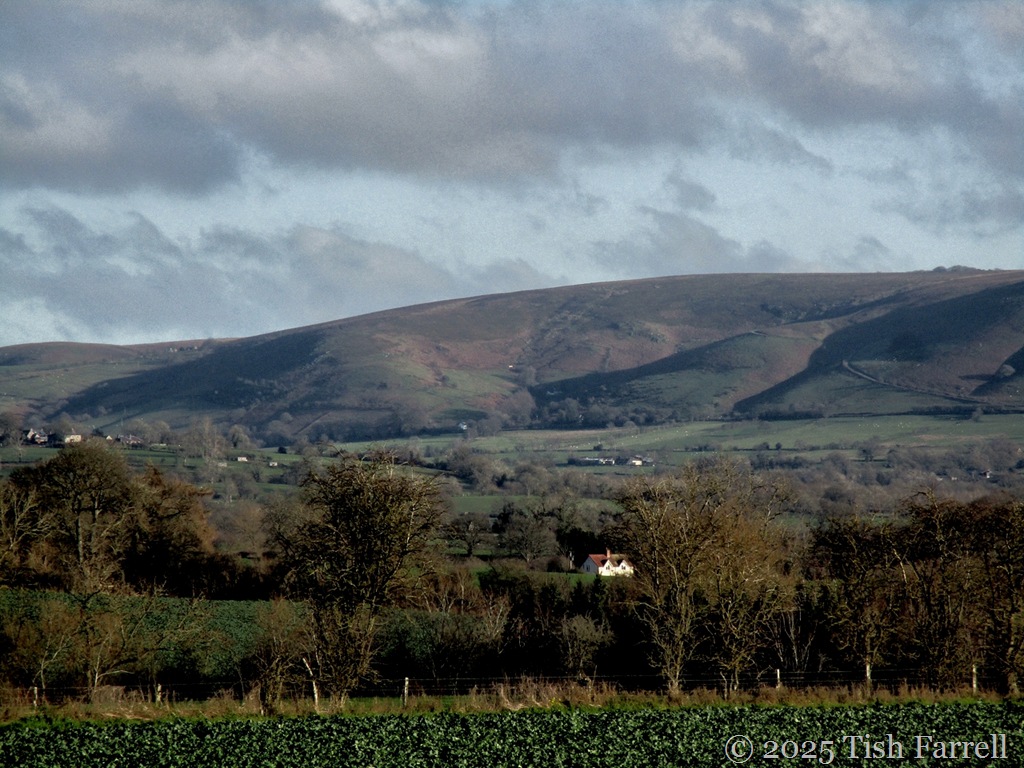
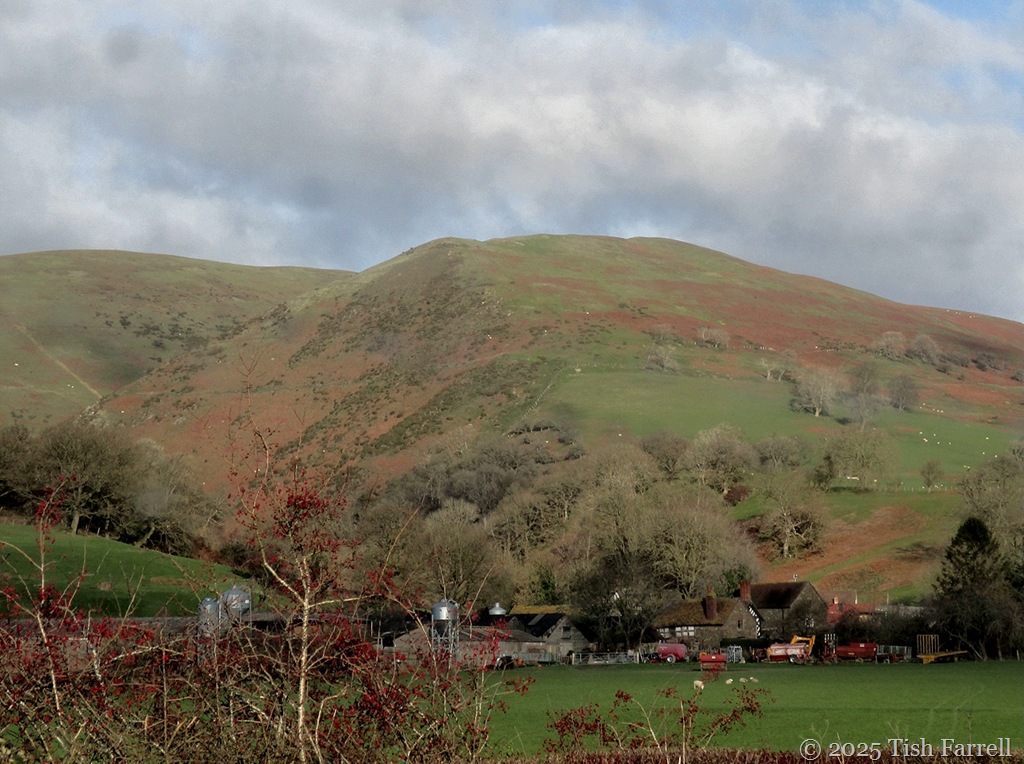
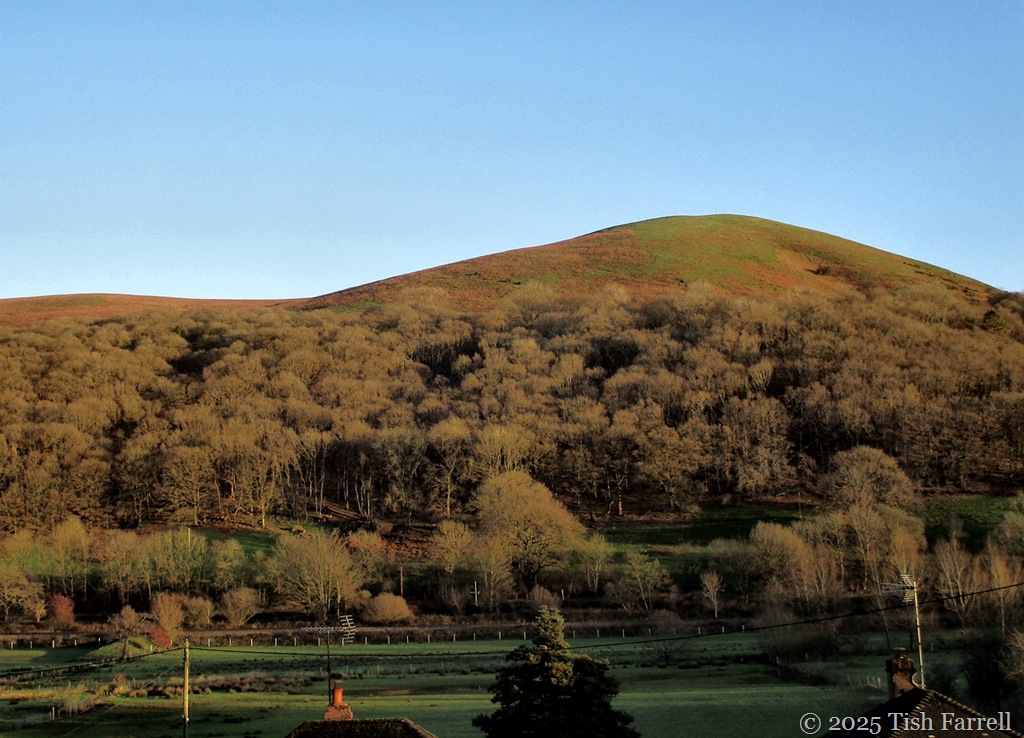
Here’s how our world looked on Christmas morning we drove from our side of the Long Mynd to a family gathering on the other side. Above, the westerly face, a sinuous small portion. Then below, some easterly features.  It’s a very long hill.

Christmas Day Long Mynd east

*

My sister’s home is perched on its foothills near Church Stretton. She looks out on Ragleth Hill: the backdrop to the day’s festivities, the deepening glow in ice-cold air while, indoors, lunch simmered and roasted and the wood stove crackled. Much laughter and chatter; the chink of wine glasses; rustle of wrapping paper. It was the finest Christmas Day, the sun alone a gift after the weather people’s threat of snow and earlier weeks of heavy rain.

IMG_9668ed

*

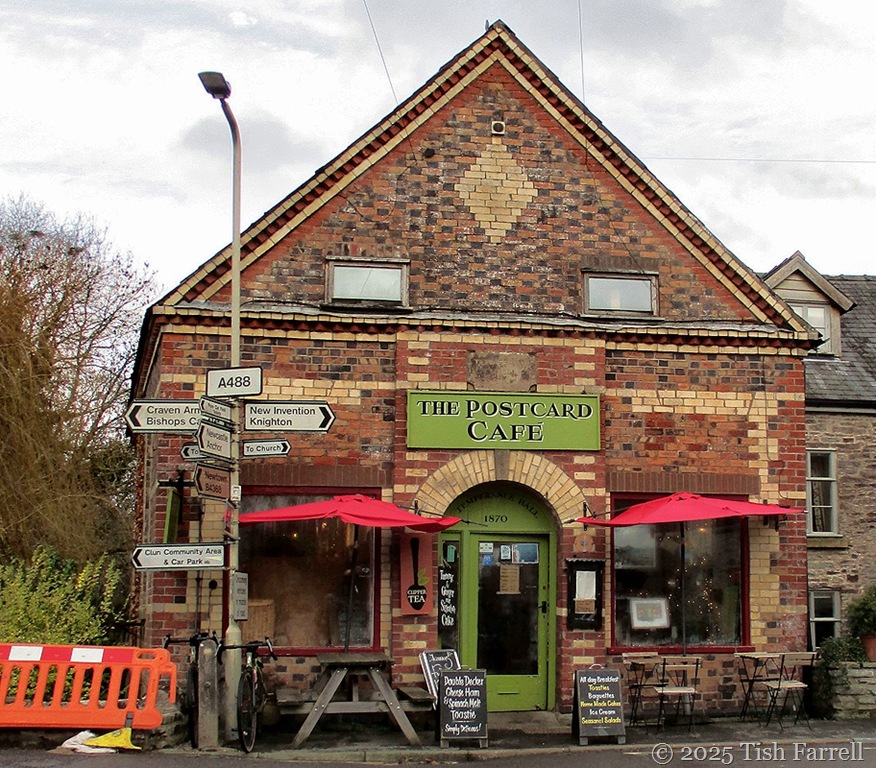
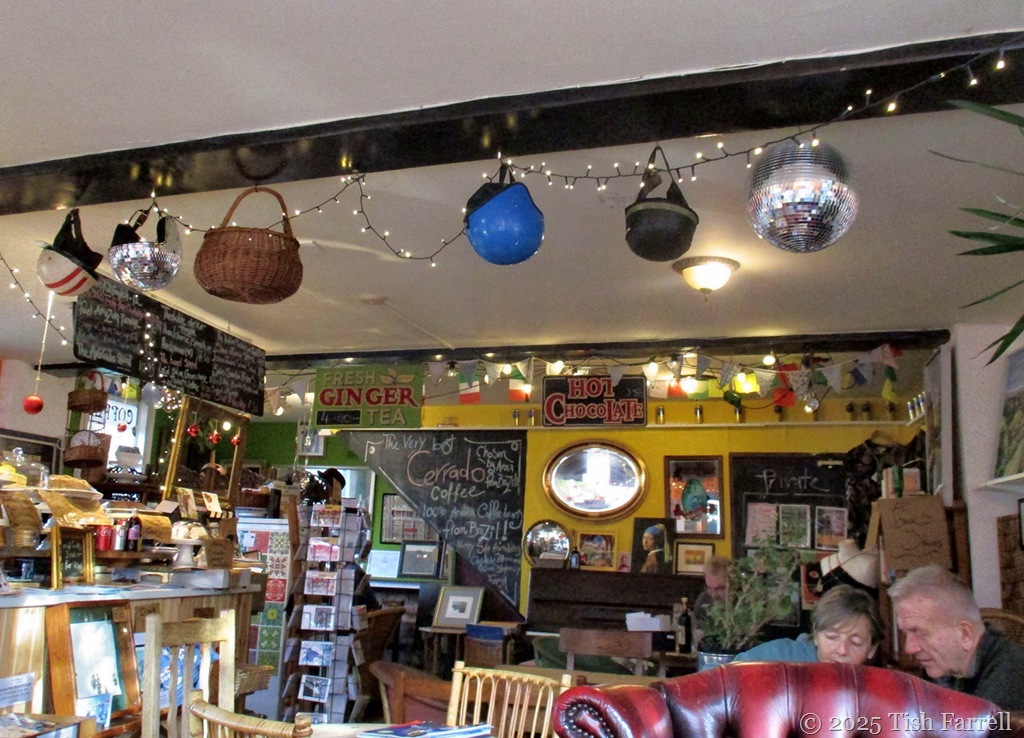
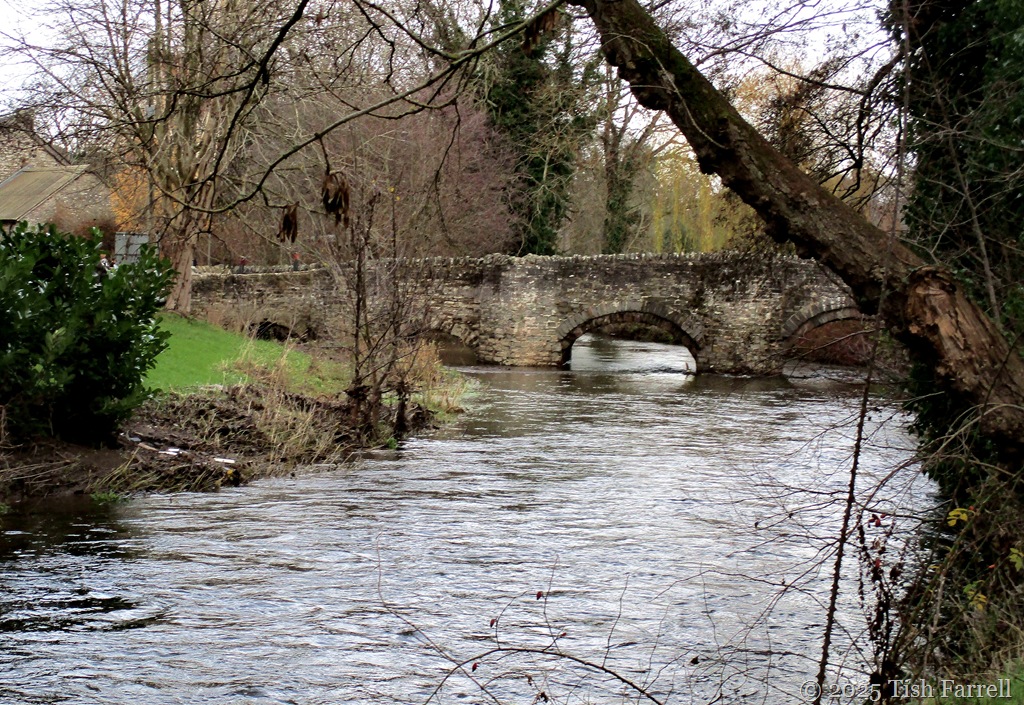
Backtracking to mid-December and in the midst of gloomy wetness, we took ourselves off to next door Clun. Well water-proofed and wandering the lanes, we ended up at the Postcard Cafe beside the old Clun bridge. It seemed a good spot to lift the spirits:

IMG_9623ed

Years ago it was a quirky little tea-room that also had trays of old postcards for sale. Now it’s bright and cosy resort,  playing cool jazz and serving Brazilian coffee along with slices of the cook’s signature cardamom and ginger cake, and much else besides.

IMG_9618ed

Meanwhile outside, the Clun River was threatening to leave its bed. It’s often guilty of serious flooding along the valley. Not so back in the summer, when the cafe’s clientele would spread themselves out at tables and chairs set out along the river bank, while the cafe’s staff would trot across the road with trays of cake and coffee, dodging the odd passing car. It was a pleasing reminder of warmer, drier days with no rain at all. (Though I do remember complaining about that!)

IMG_9622ed

*

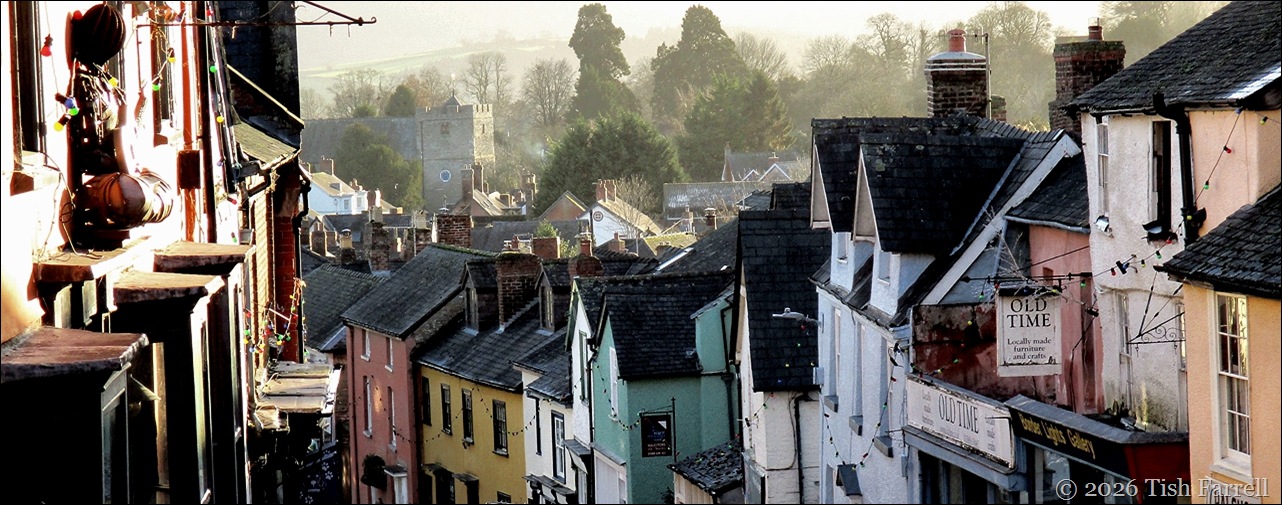
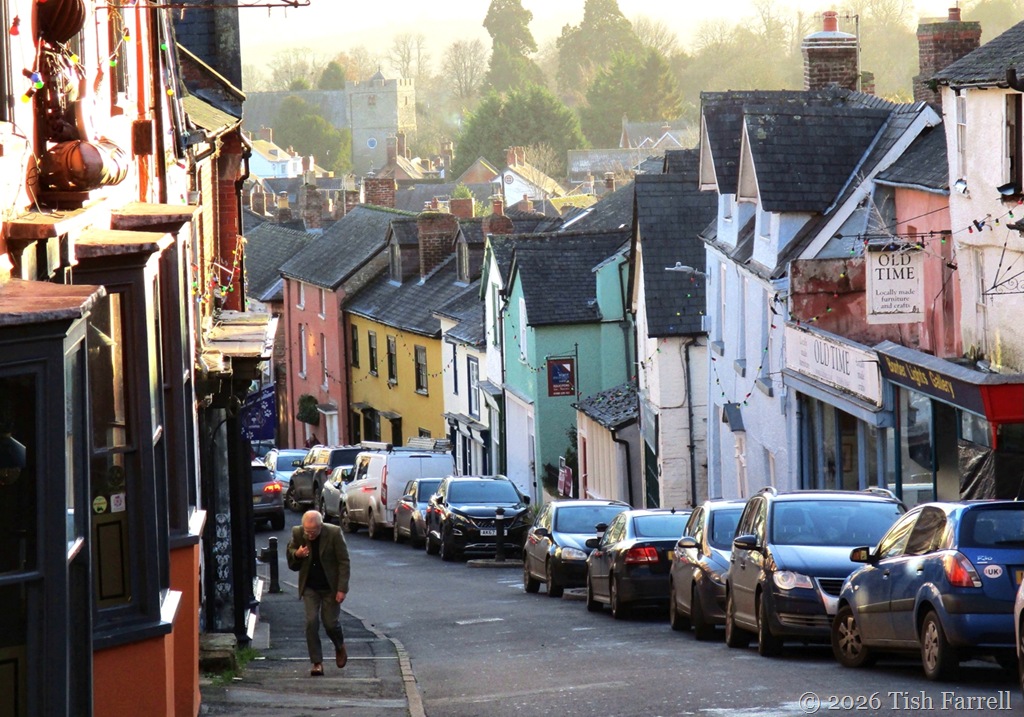
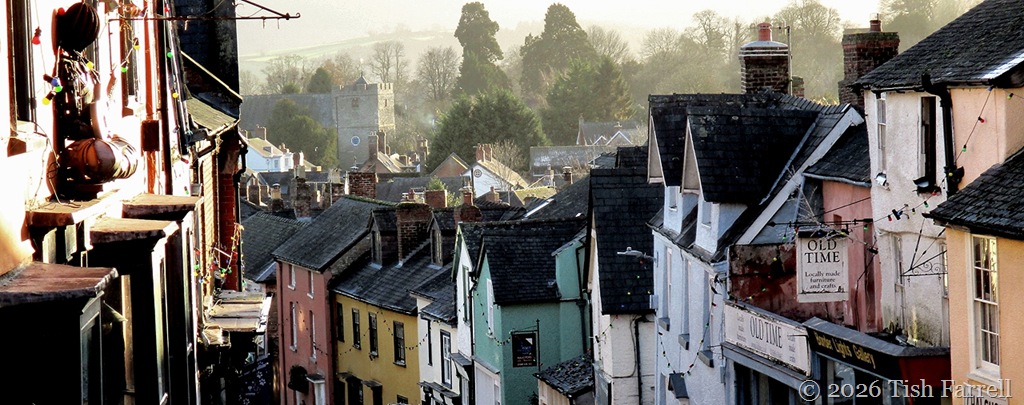
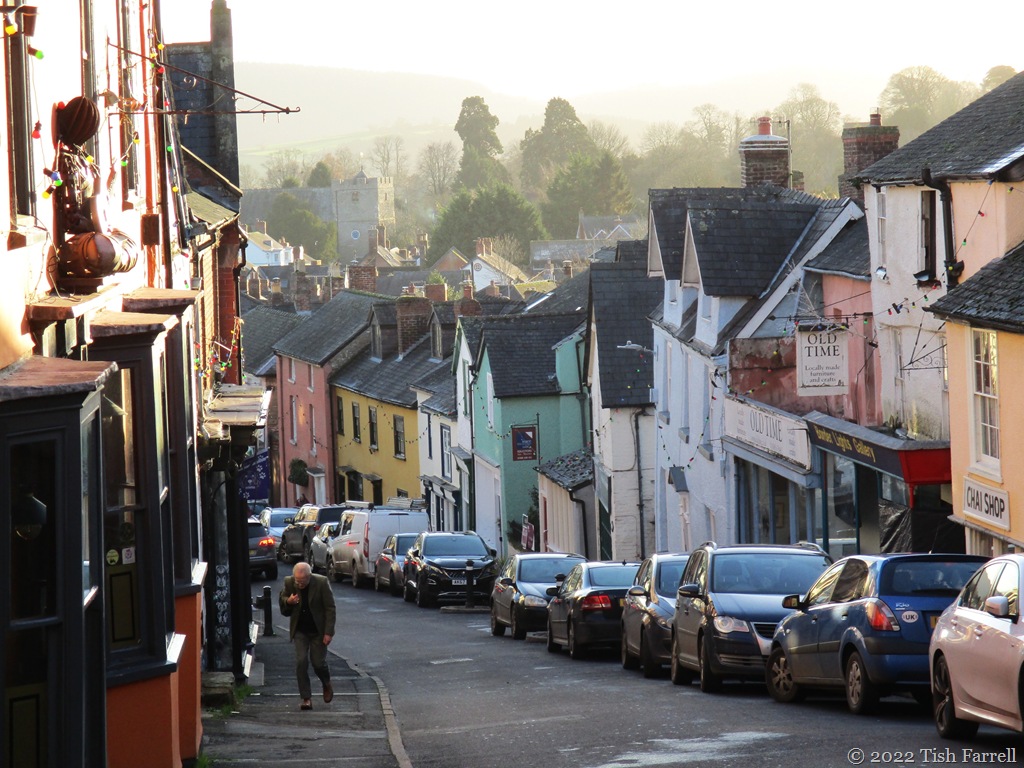
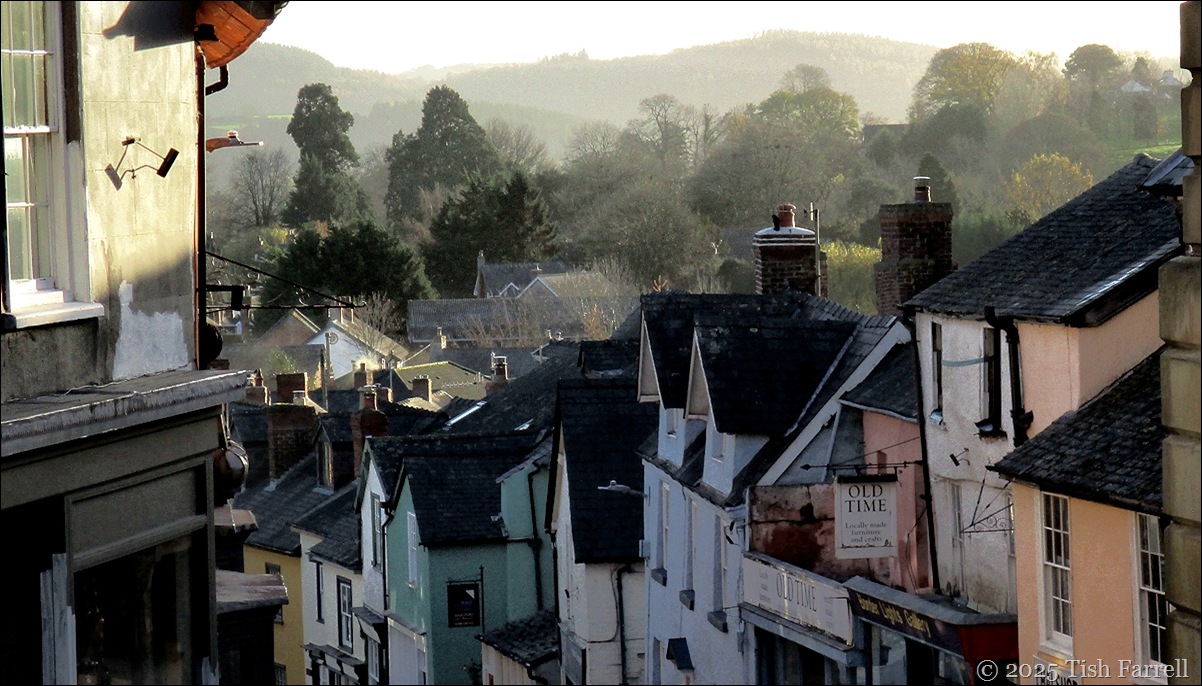
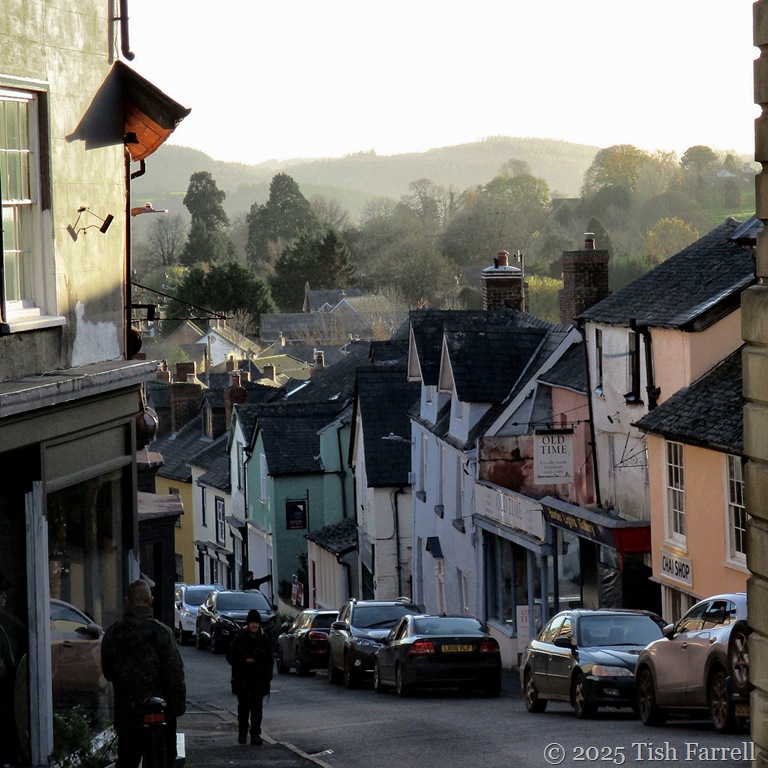
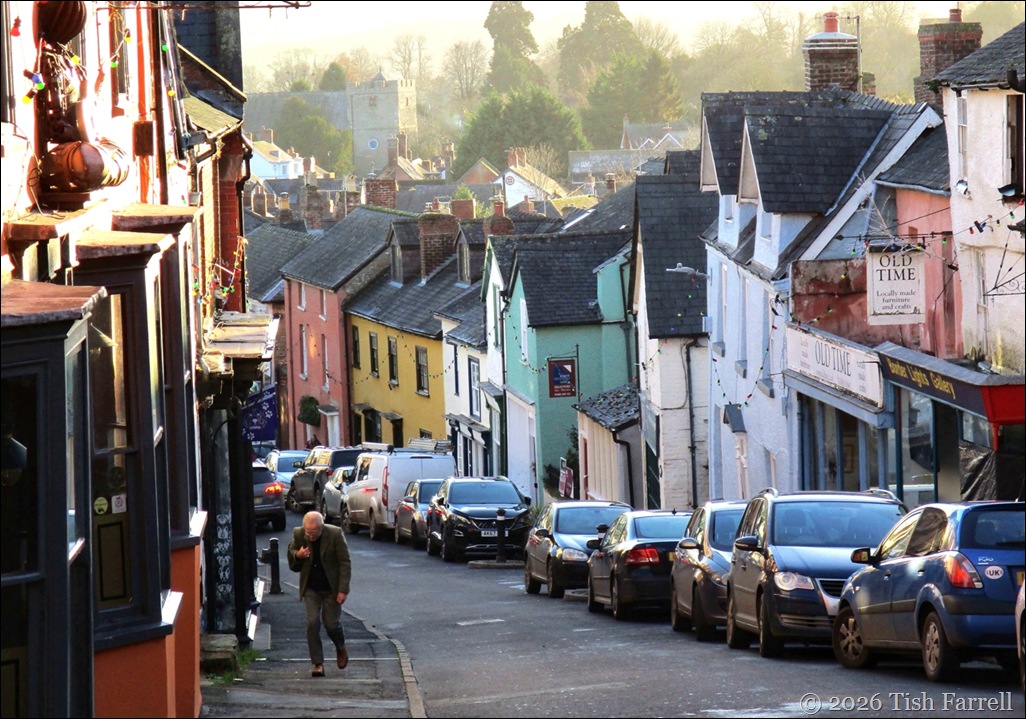
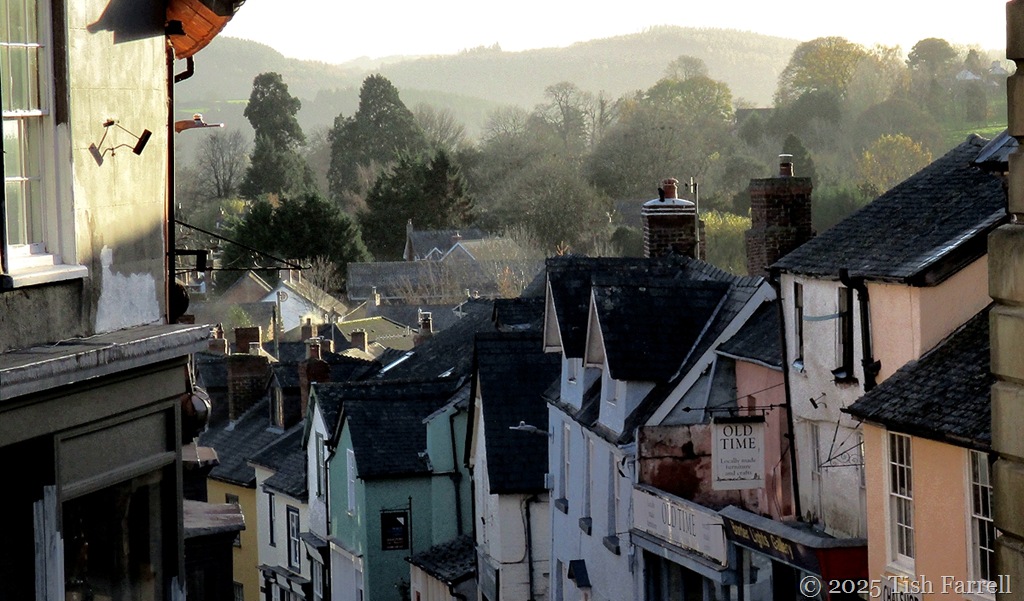
But enough of rain. Back to Bishop’s Castle, and another cold and sunny day on the High Street. Please note: this street will feature later, though not quite so emptily.

High St, Bishop's Castle, Dec 25

*

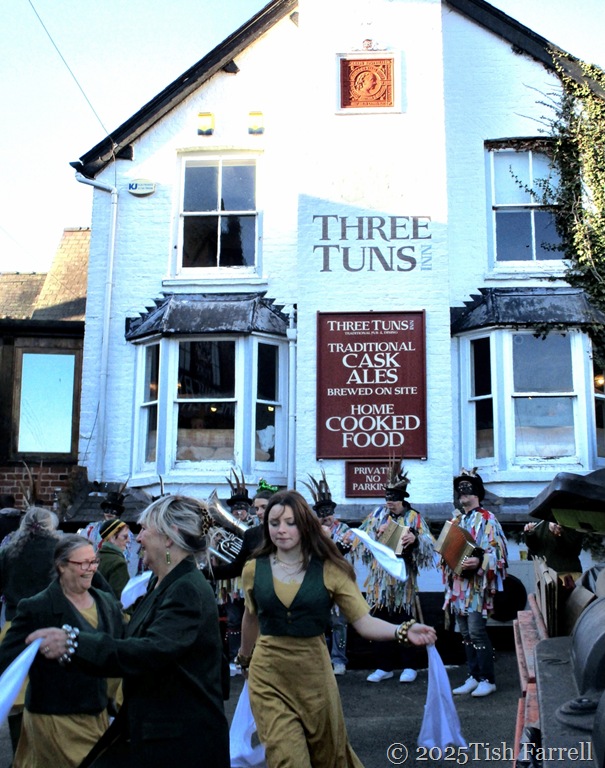
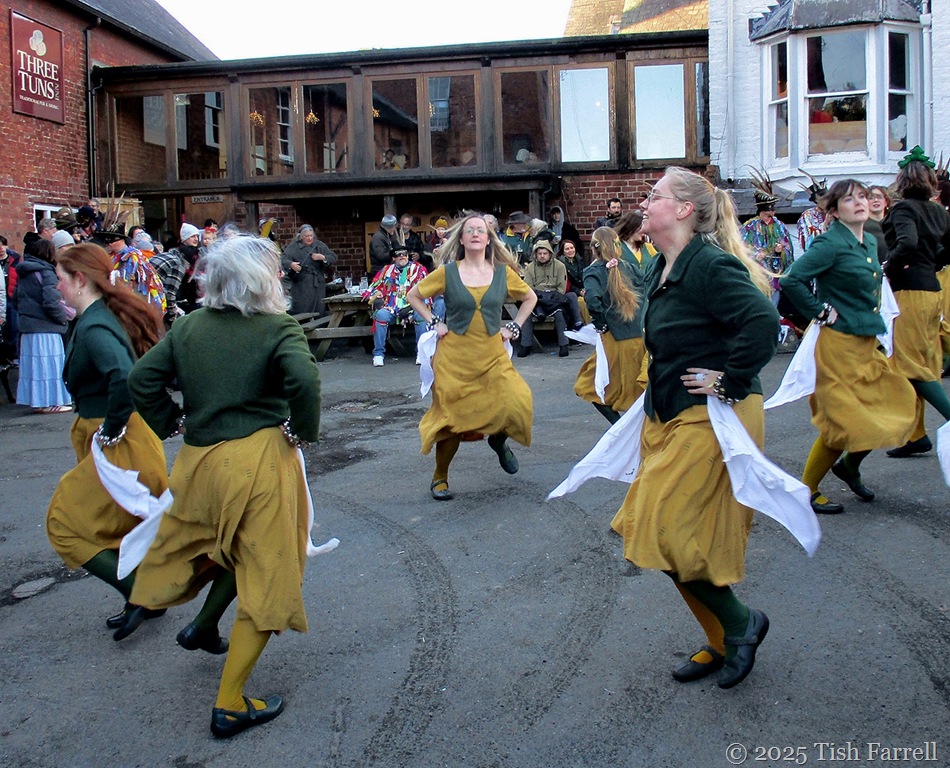
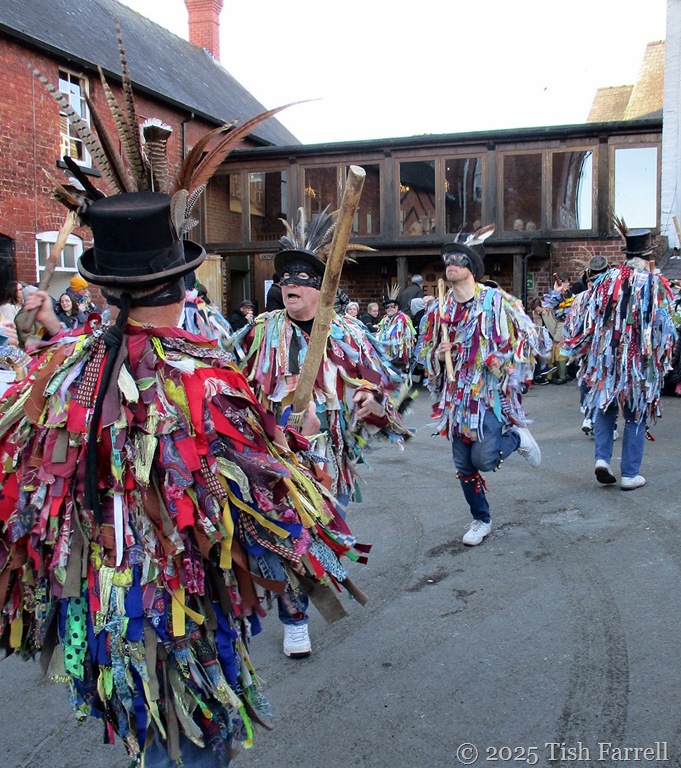
And so to Boxing Day and a lively gathering at the town’s ancient pub and brewery, The Three Tuns. It was a freezing cold morning so a big round of applause for Martha Rhoden’s Tuppenny Dish dancers and the Shropshire Bedlams morris men…

Tupenny Dish

IMG_9677ed

Bedlams 1

*

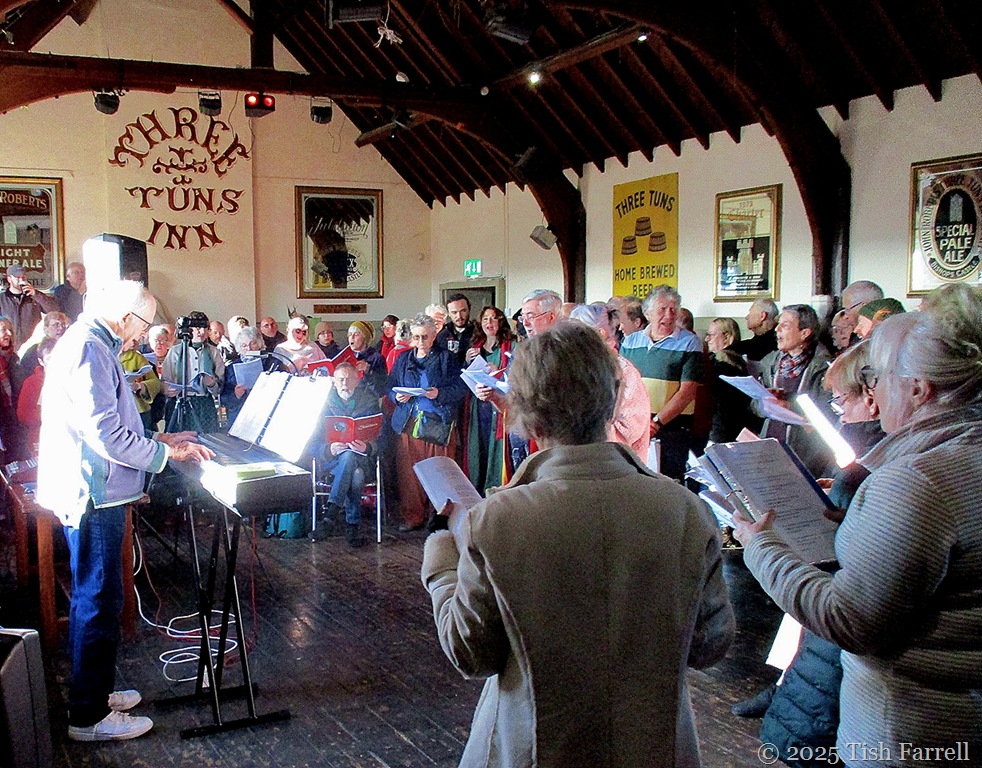
Later there was a performance of Castle Carols, by folks of Bishop’s Castle and the Clun Valley singing their hearts out. Choirmaster, local accordion-squeeze box magician, John Kirkpatrick, had schooled them well in ancient and traditional versions of English carols. He’s also the power behind the traditional dance teams.

Castle Carols

*

This well reveals the Bishop’s Castle conundrum. The town so often wears a dreamy, not-much-happening face, but looks can deceive. I was thus sorry I’d missed a sighting of the local rugby club’s now annual charity fundraiser – the Boxing Day Boxer Run – wherein the brave run a circuit of the town, starting at the King’s Head pub, and wearing only their underpants. A chum told us he’d spotted twenty one of them charging up the very steep High Street. They raised over £500 this year.  I’ll leave you with that image, then, as I wish all who come here a very

Happy New Year

and some cheery singing from Castle Carols:

The Changing Seasons: December 2025   Ju-Lyn at Touring My Backyard and Brian at Bushboys World are our very good hosts for posts of the month just gone. Many thanks, both.

Long Mynd header

Six On Saturday: In The December Garden

IMG_9640sos

Now as the year ends, the garden is wet, wet, wet. Wet as in waterlogged, sodden, soggy and all round slithery. But yesterday we had sun. It seemed like a heavenly blessing after days of gloom and serial downpours. And suddenly, instead of finding the garden depressing, I started to notice the plants that were not only doing their best, but in their own way, putting on a show.

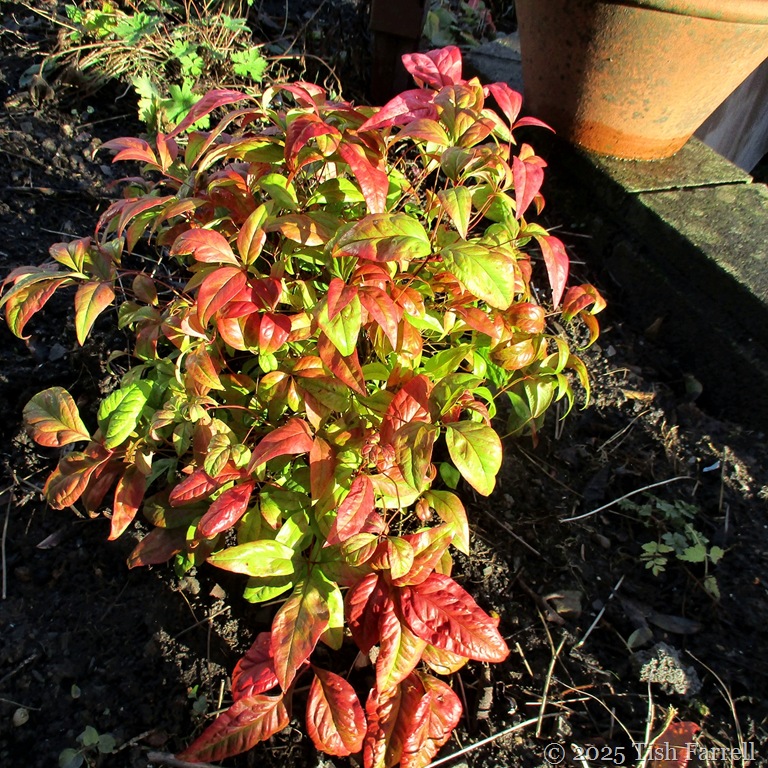
1) Top of the list is Nandina domestica, otherwise known as Heavenly Bamboo. It’s not a bamboo and so does not have bamboo’s bad infesting habit. The variety here is Fire Power. It’s compact, dome-like in habit, evergreen, and will grow around 18 inches tall with a two feet spread. It likes full sun, but otherwise is undemanding. It also seems unfazed by hard frost (we had several weeks of freezing weather last year). But what colours! It turns more red with the cold weather.

IMG_9629sos

*

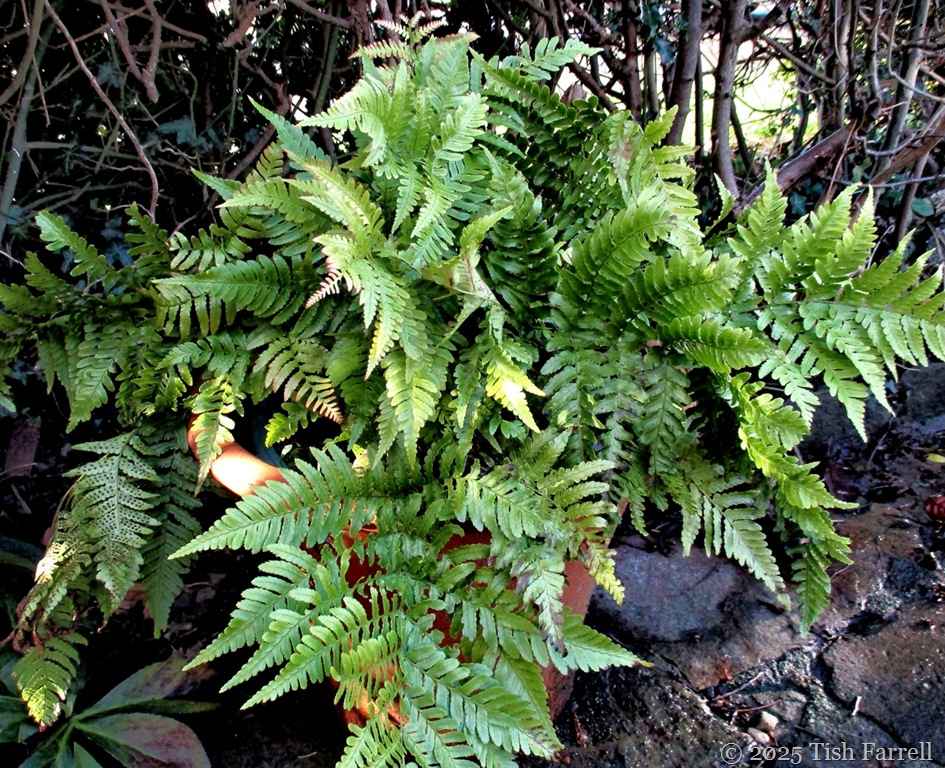
Number 2) is a plant that has made a good recovery after a very unpromising start. It’s a Japanese Shield Fern I bought on-line back in the spring. After ten days being lost and tossed about by the delivery company, it arrived in very sorry state, much mangled and desiccated. Now it seems very happy in its pot, making new fronds even..

IMG_9628sos

*

3) The prize for steadfast out-of-season flowering goes to the Phlox paniculata Adessa in the front garden. This is a young plant, bought in the summer. I was not expecting it to flower until next year, but come November, spires of small white flowers appeared, and they’re still going, subtly scented too.

IMG_9641sos

*

4)  Also in the front garden is a tiny self-grown viola. It’s seeded from the pot of violas my sister gave me over a year ago. Such stalwart, exquisite little plants.

IMG_9639sos

*

5) Another surprise is the number of foxglove plants in the garden, all self-sown. They have been growing huge during the recent wet and mostly mild weather, having recovered from a spell of heavy frosting in November. Happy thoughts of summer then.

IMG_9634sos

*

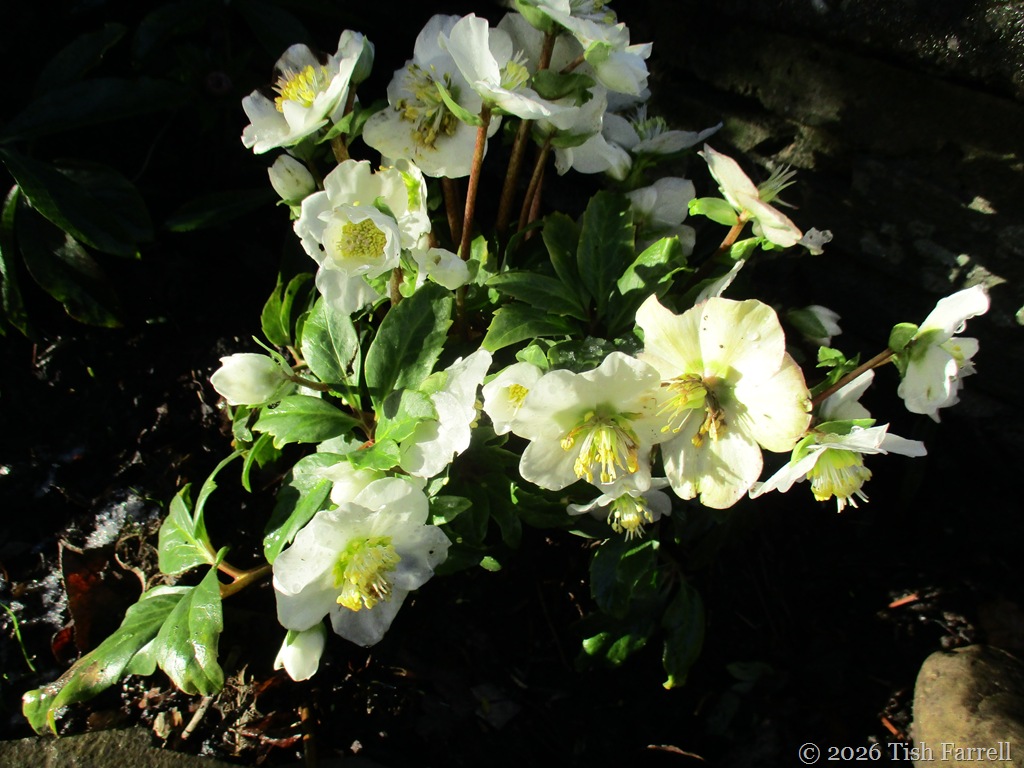
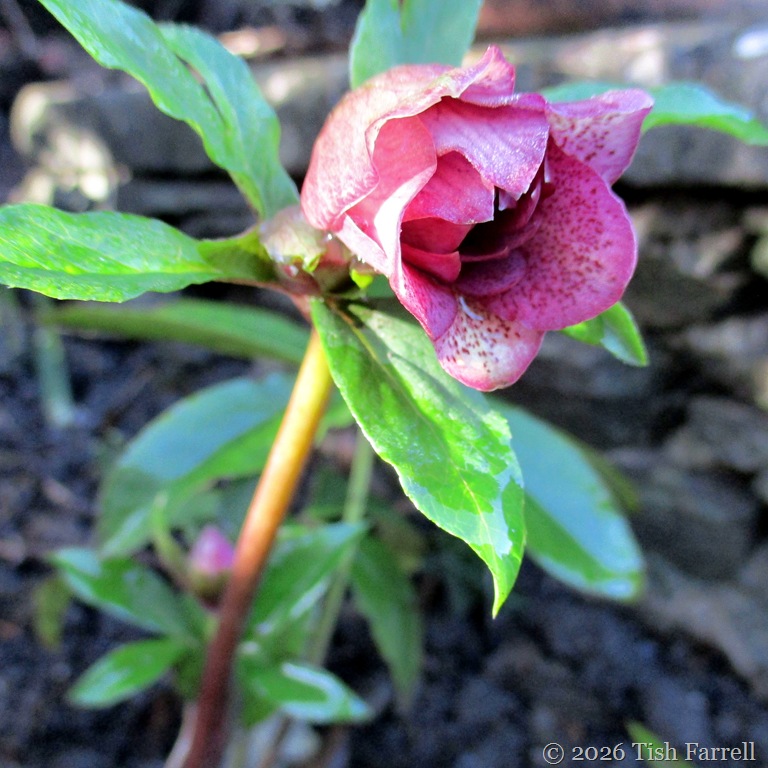
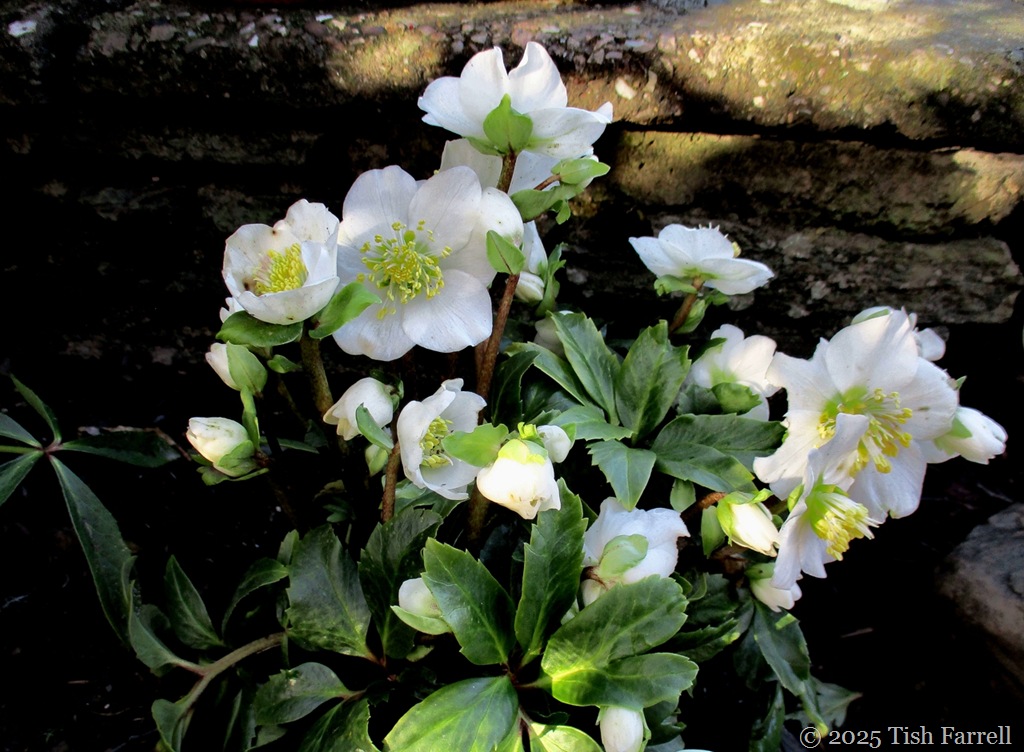
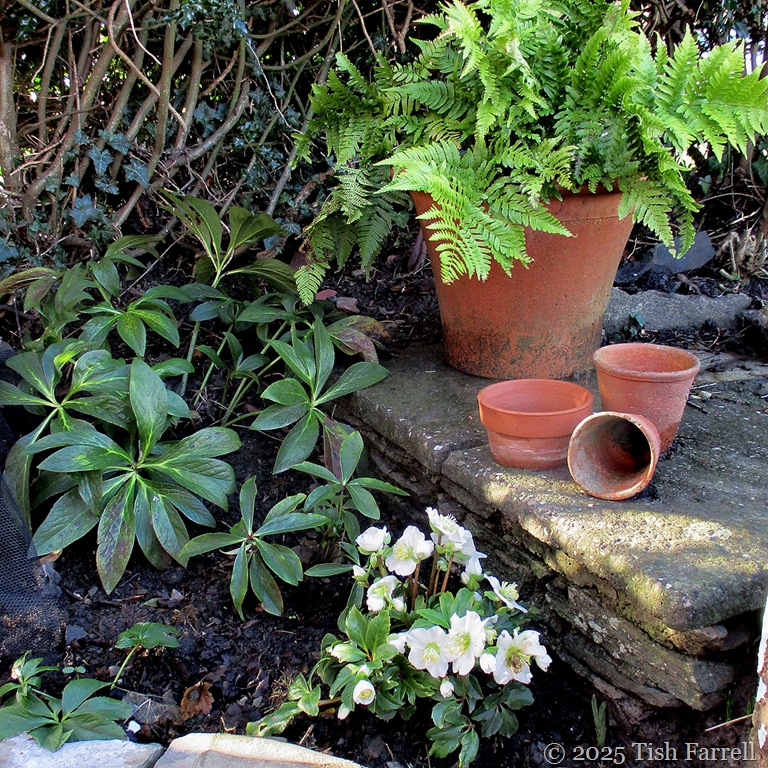
6) Finally, and spot on for a December debut is hellebore Christmas Carol. It was a gift last year, since divided and planted out both in a pot and in the new back steps bed. It’s been so cheering on dull days, though, annoyingly, some beastie is biting holes in its petals. Last year it flowered from months and months.

IMG_9651sos

IMG_9649sos

*

Happy gardening everyone –

whether planning or planting, depending on your hemisphere

Six on Saturday  And thanks and Happy Christmas to host Jim. He has shown us so many fascinating plants, to say nothing of guiding us around his stunning planting schemes.

IMG_9640 sos header

Shadows of Summer Past at Wildegoose Nursery

wildegoose 1

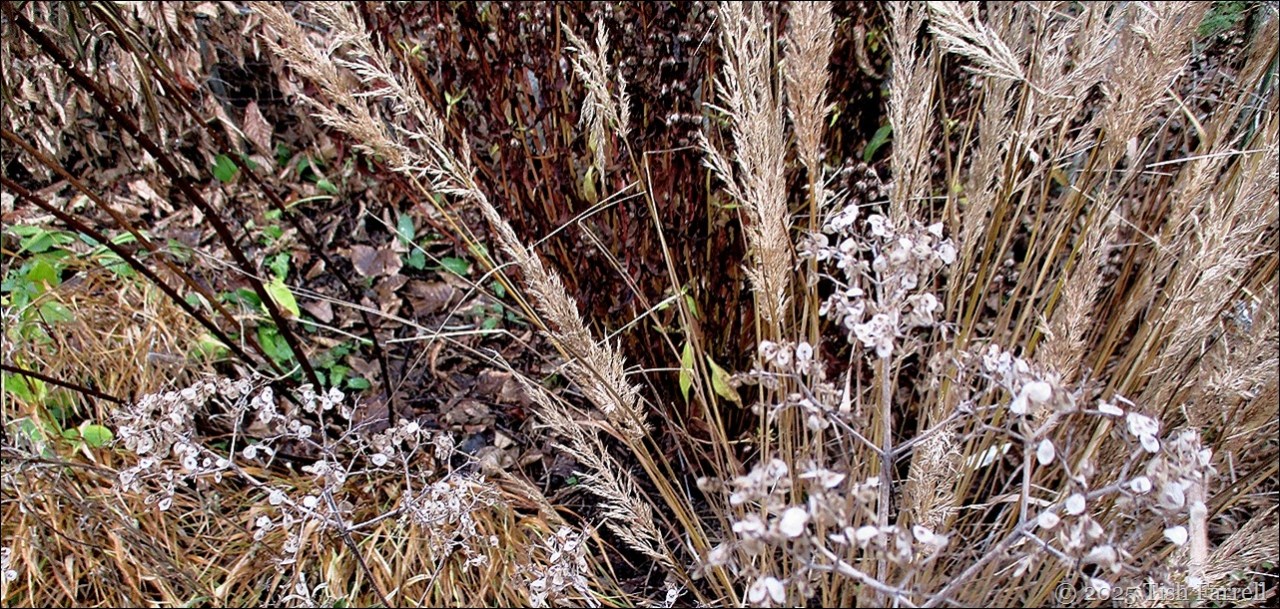
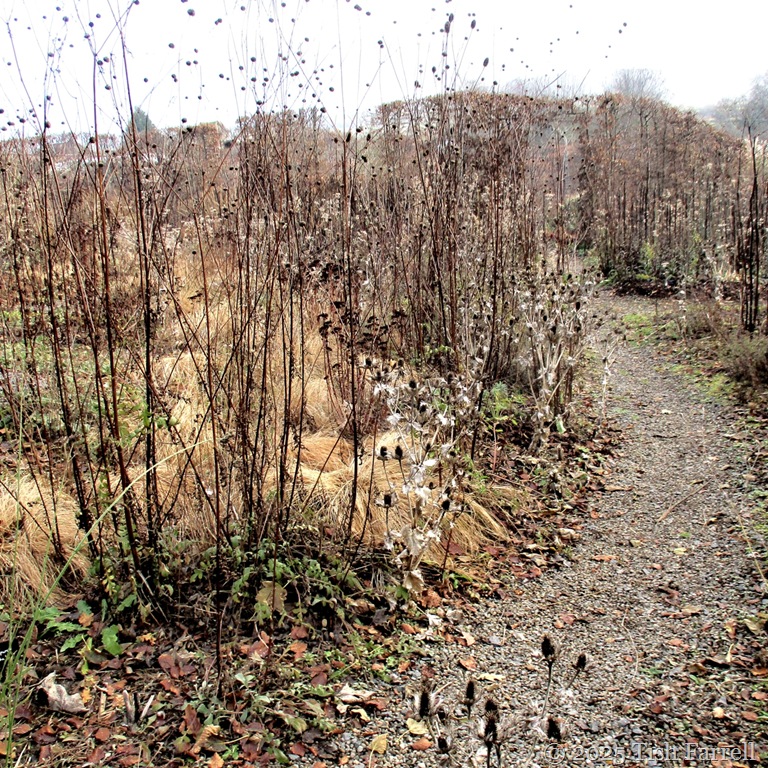
Wildegoose Nursery in the Corve Valley has been hosting a special winter opening this week (Thursday – Sunday) – giving us a chance to see the walled garden in its late season colours. Not the brightest of days yesterday, and with rain on the air.

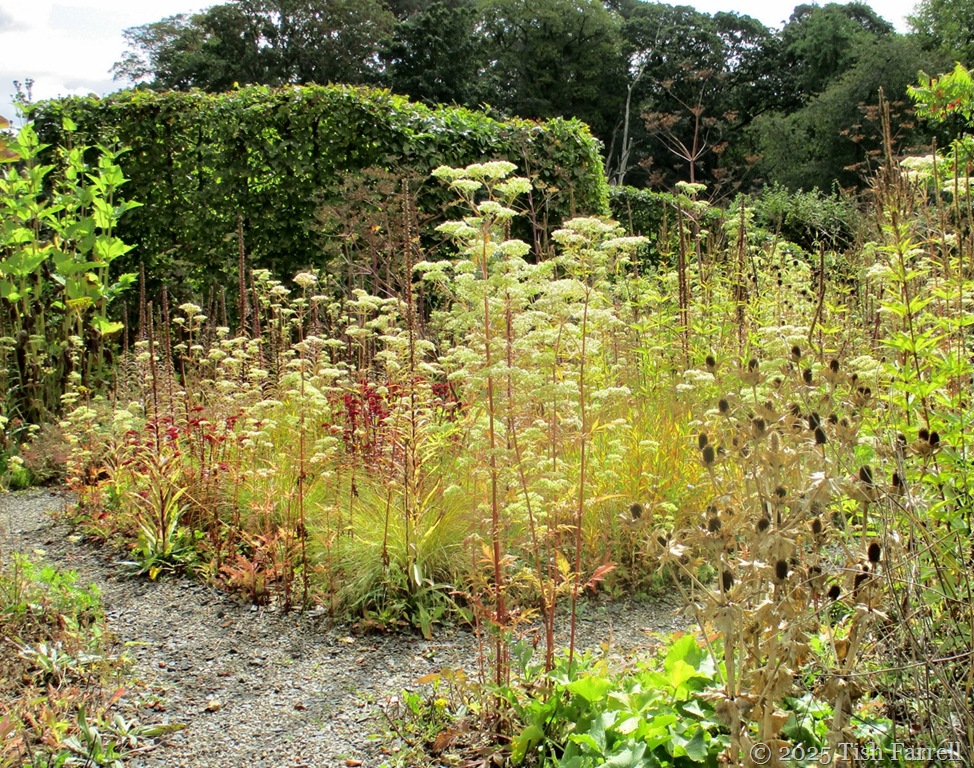
Here’s a reminder of how it looked when we visited in September, this after weeks without rain:

Wildegoose 1

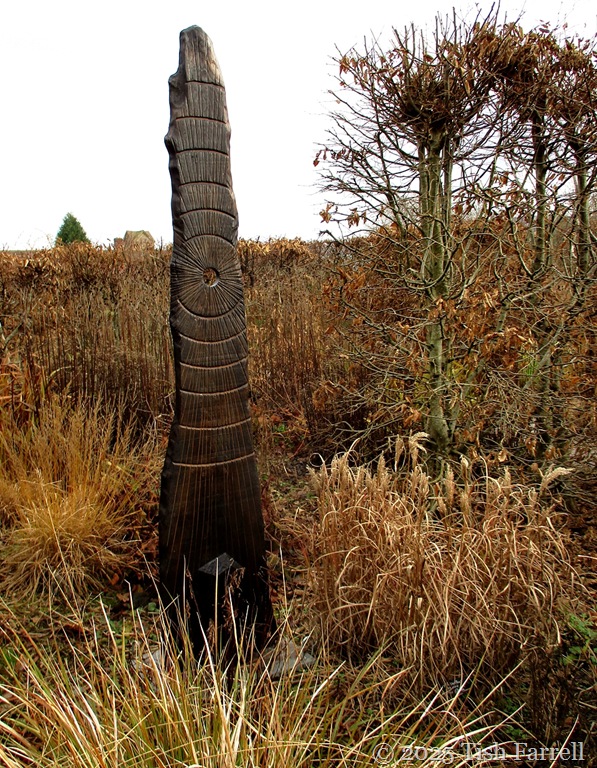
Art 4a

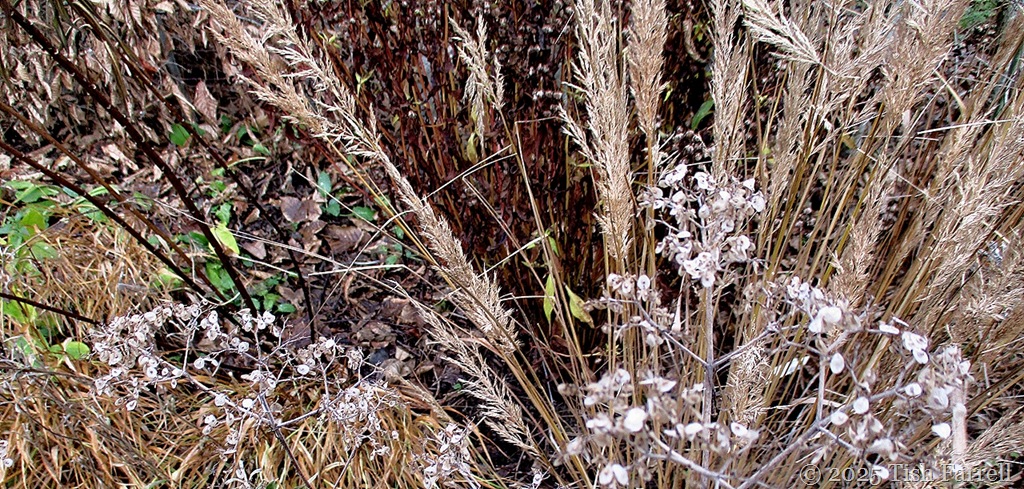
Then and now…

wildegoose 6

wildegoose 4

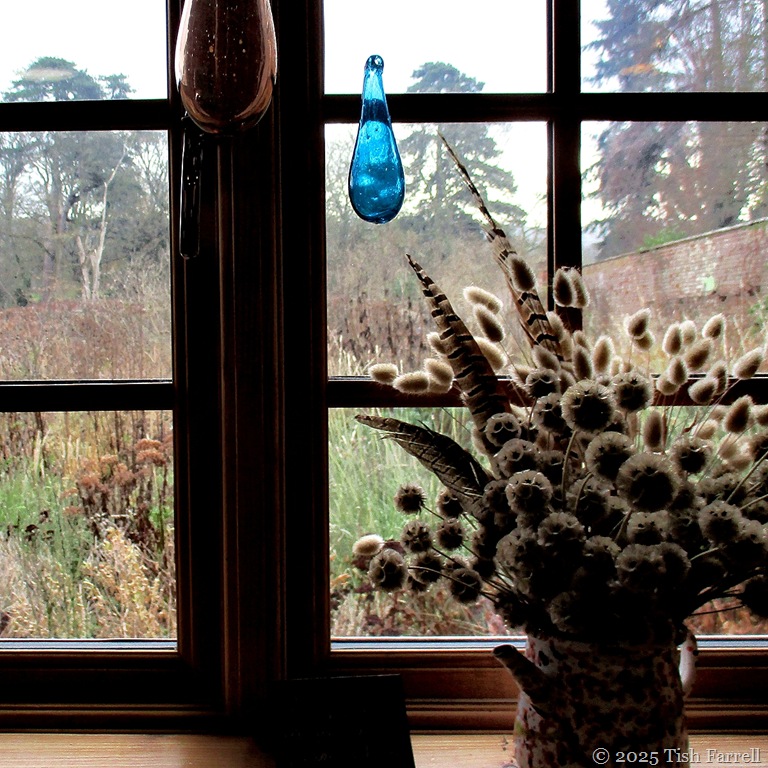
From the tea room window

November Shadows #29

wildegoose header

Sun And Shadow At The Top Of The Town

top3

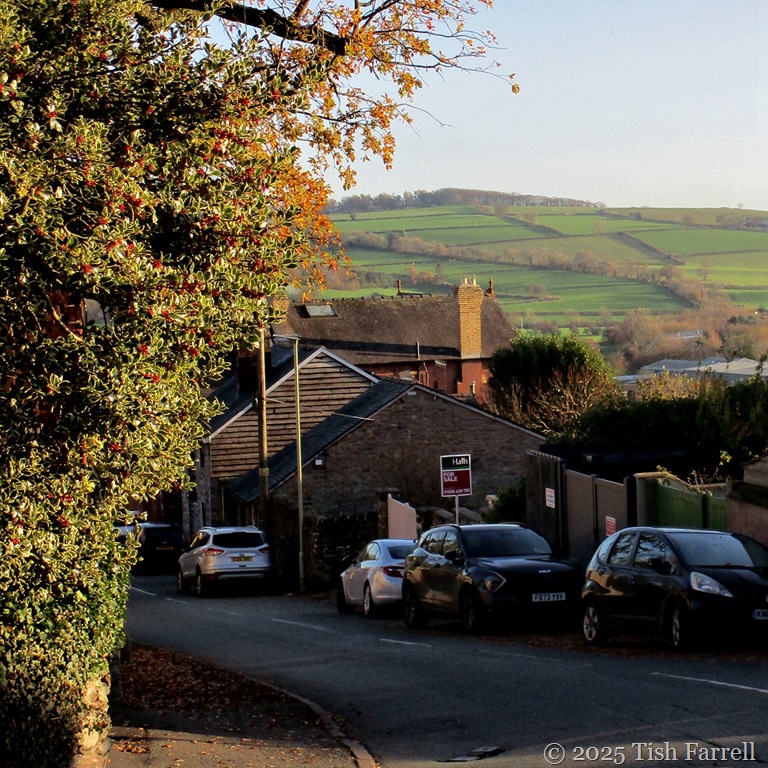
Yesterday we had sun. We did! And a fine afternoon it was for a short tramp up and round the town.

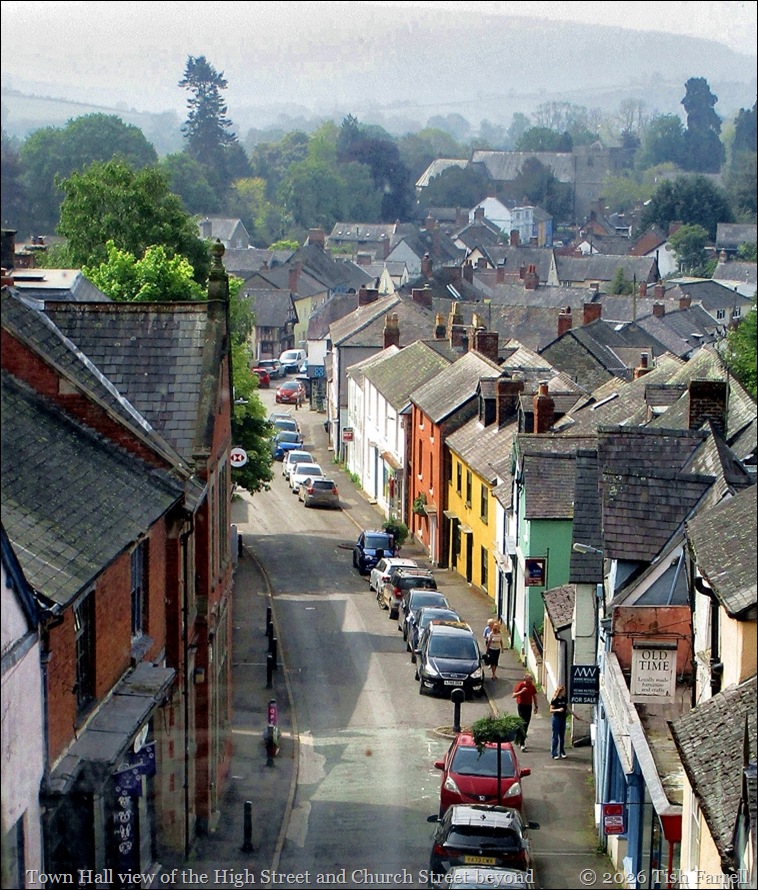
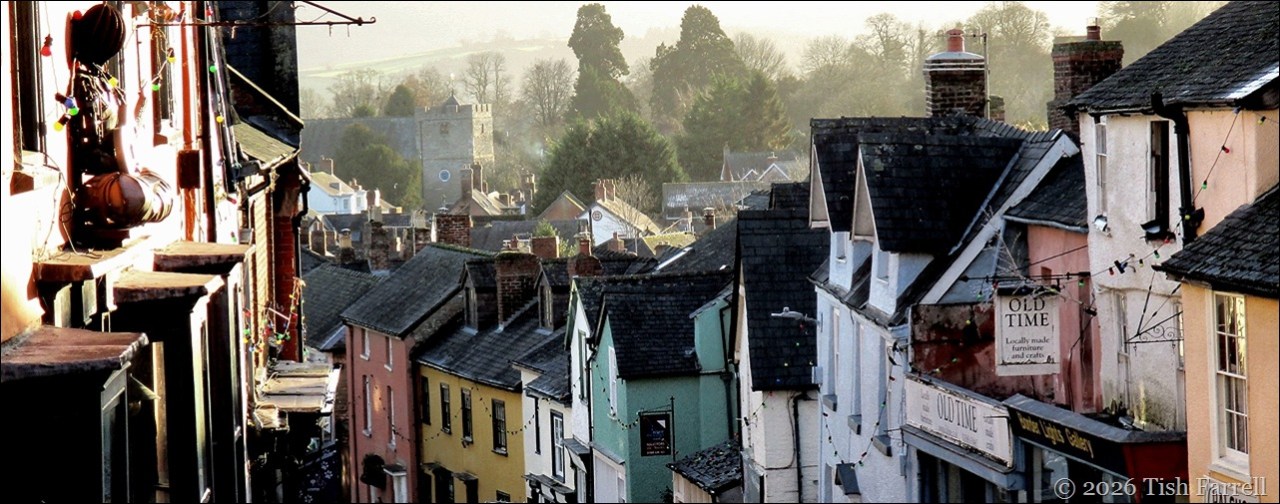
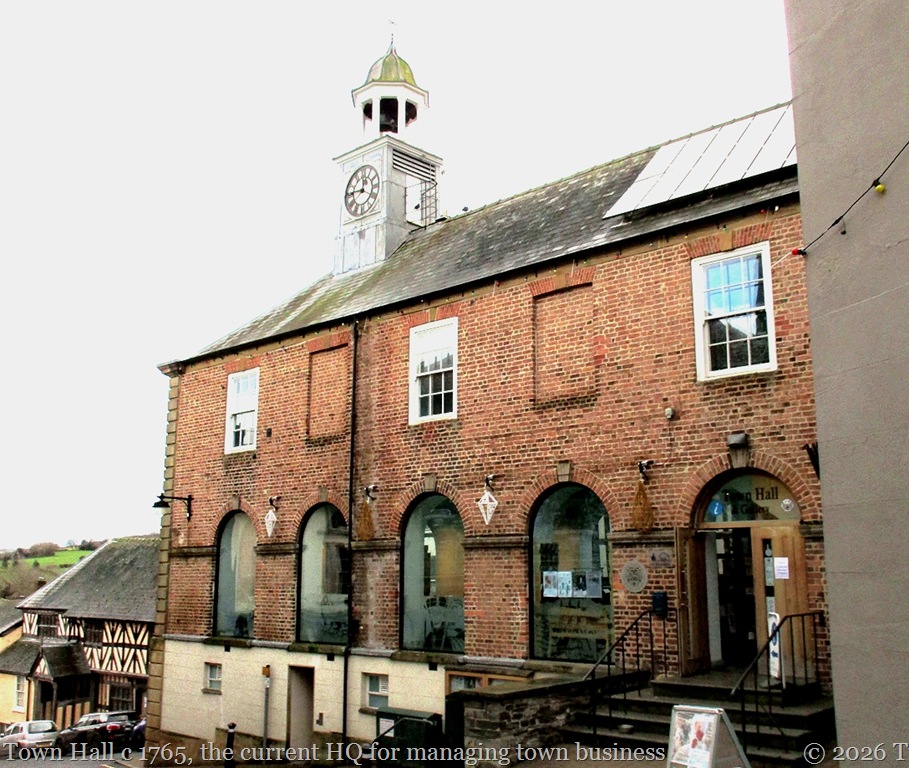
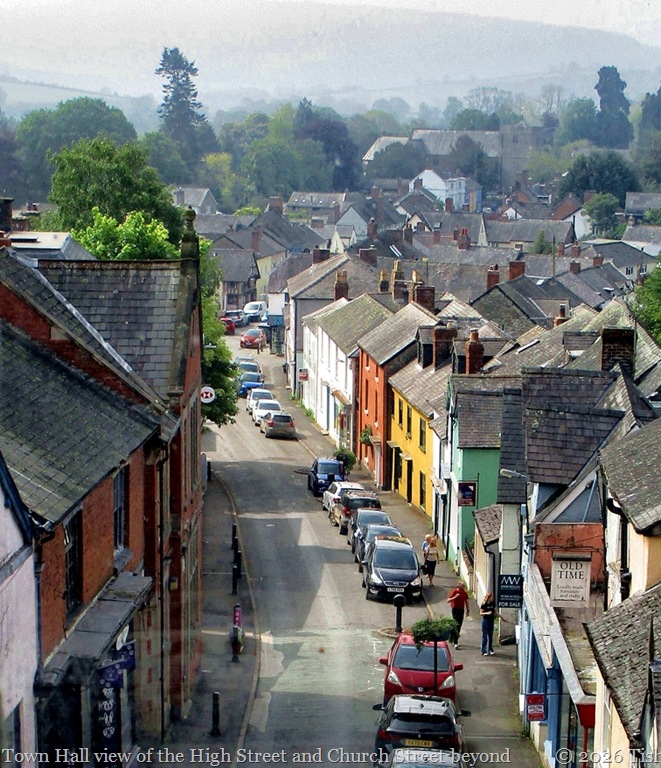
As you can see, Bishop’s Castle is on a steep hill. The header view shows the High Street below the Town Hall. We’re around half way up the hill.

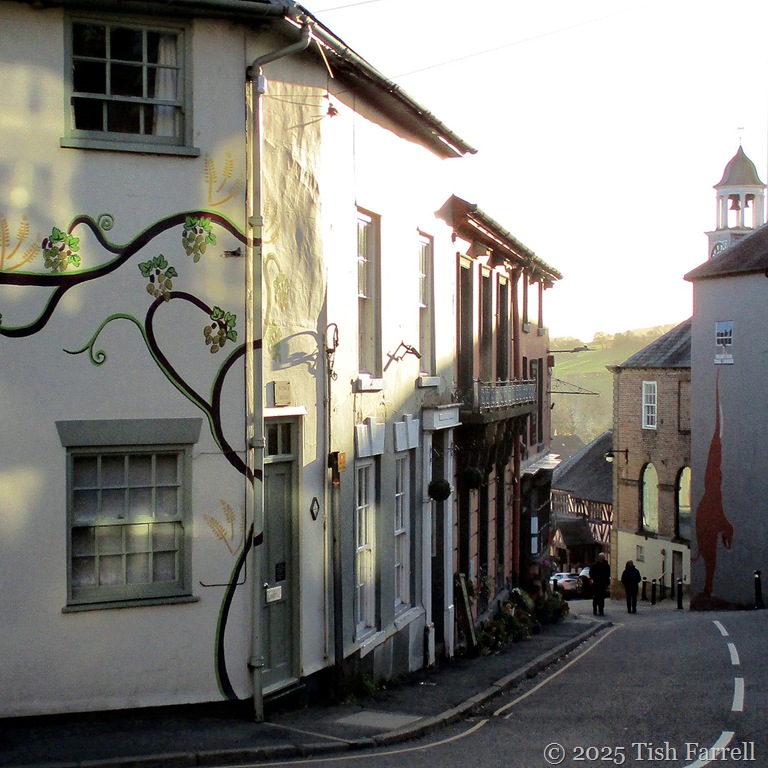
Now I’m walking you backwards, past the Town Hall, past Bamber’s elephant mural into the Market Square, and crossing Salop Street.

top4

*

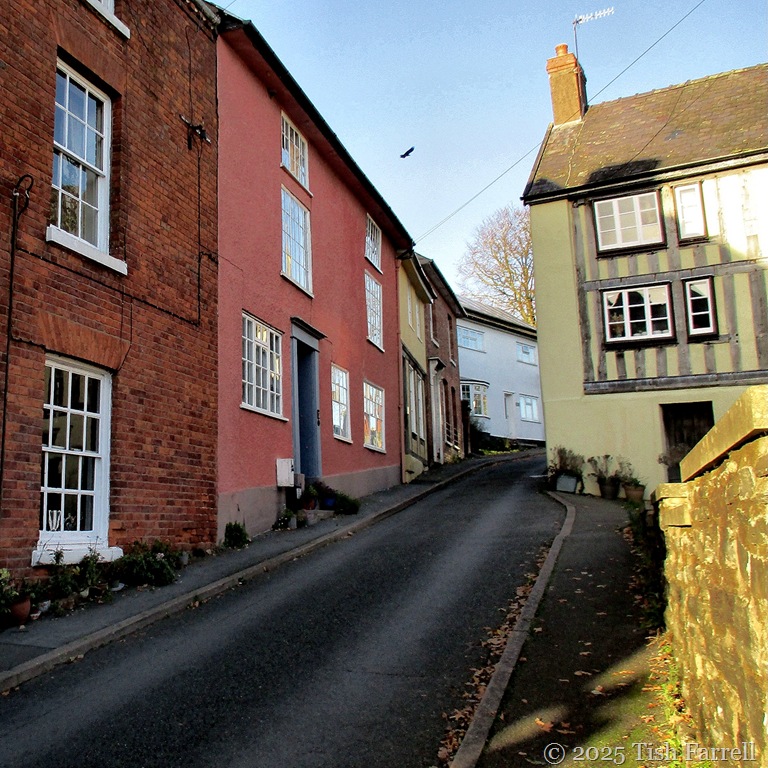
And now I’m turning  you right around to look up Bull Street:

top5

And we’re still not at the top.

Bull Street leads to Bull Lane. If we look right and downhill, there’s a fine view of farm fields, doubtless winter wheat and oil seed rape.

top 6

But we’re not going down, but left and up to the crossroads where Bull Lane meets Castle Street, Wintles Lane and Montgomery Road.

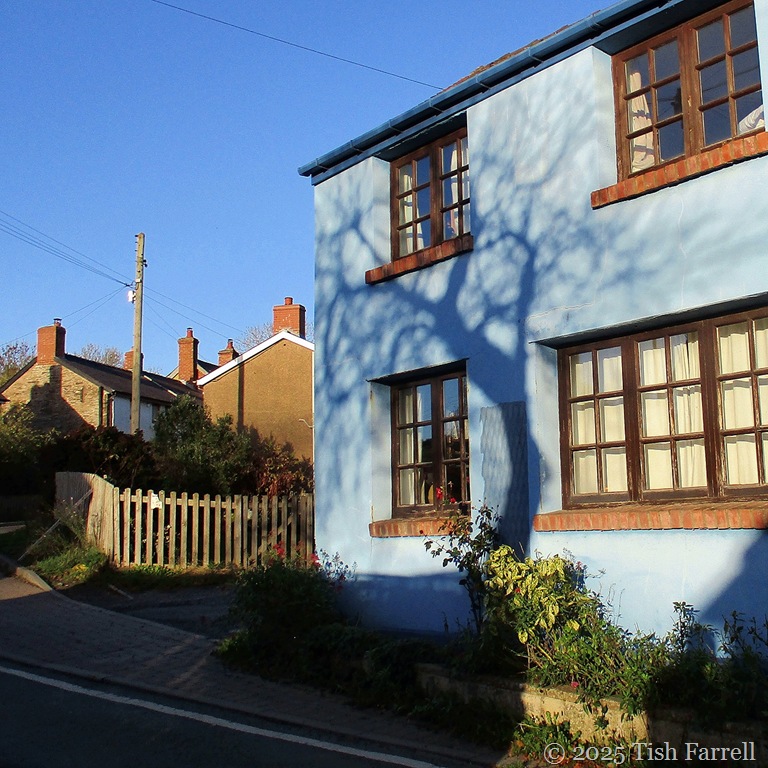
Now we’re at the top of the town, by the blue house that is growing a fine shadow tree:

top8

*

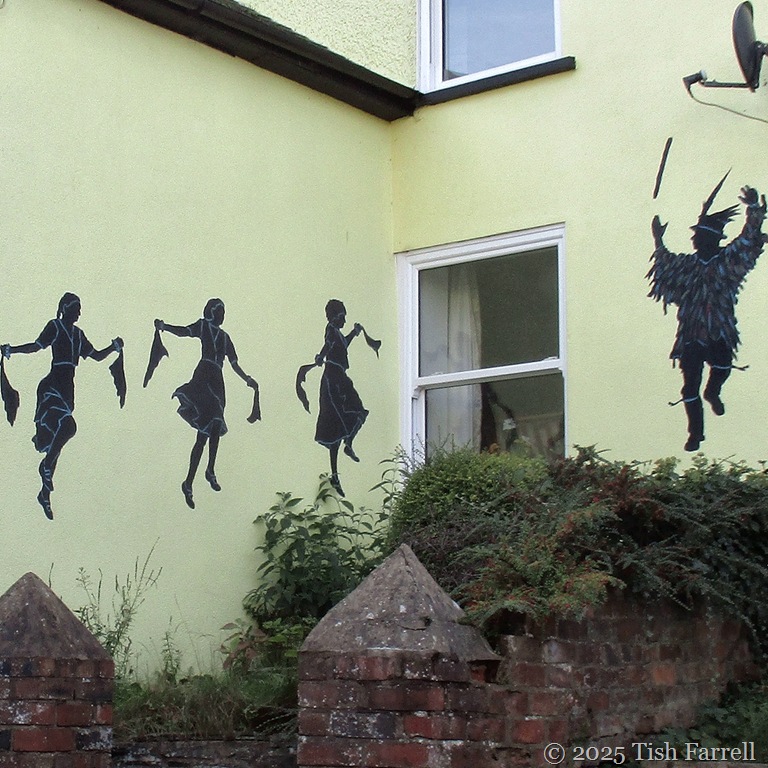
And in the shade, on the house wall opposite, a tribute to our two local Morris dance teams, the Shropshire Bedlams and Martha Rhoden’s Tuppenny Dish

top9

*

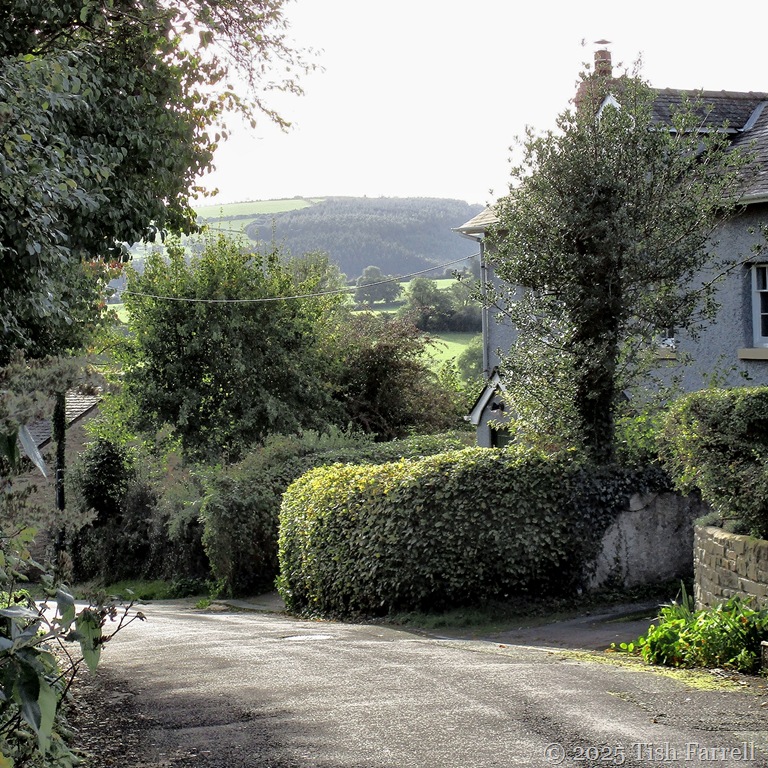
At the crossroads it’s decision time – to go left and back into town via Castle Street (where there is no castle, only some ground it once sat on and some more good views):

top10 castle st

*

Or cross the road into Wintles Lane:

top 11 wintles lane

*

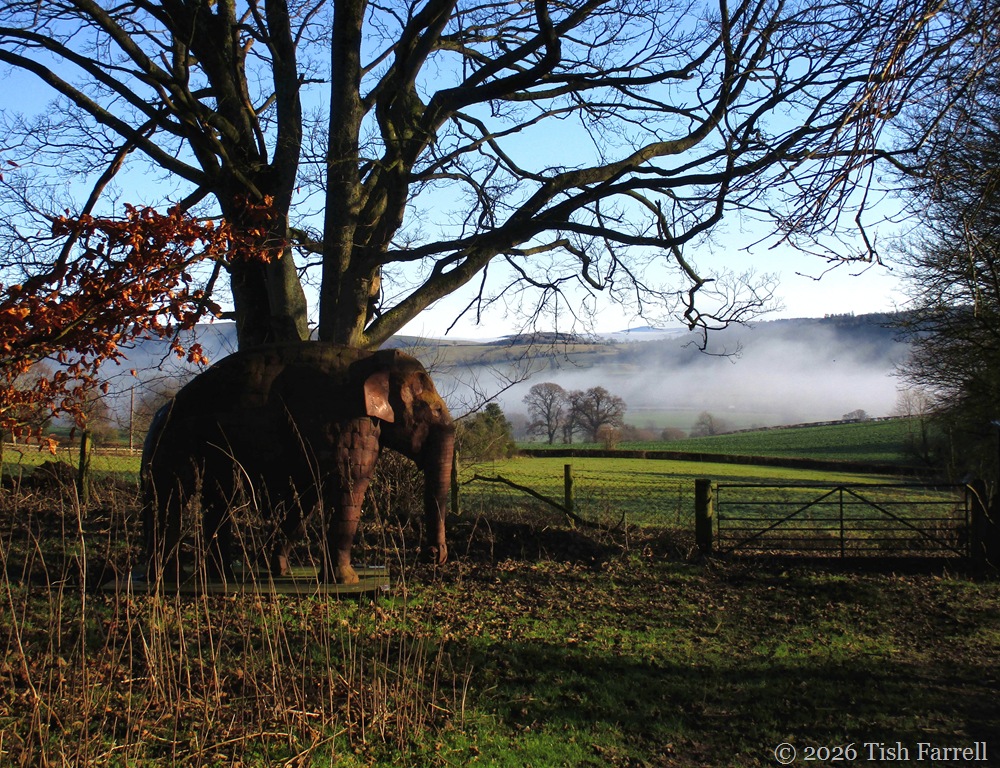
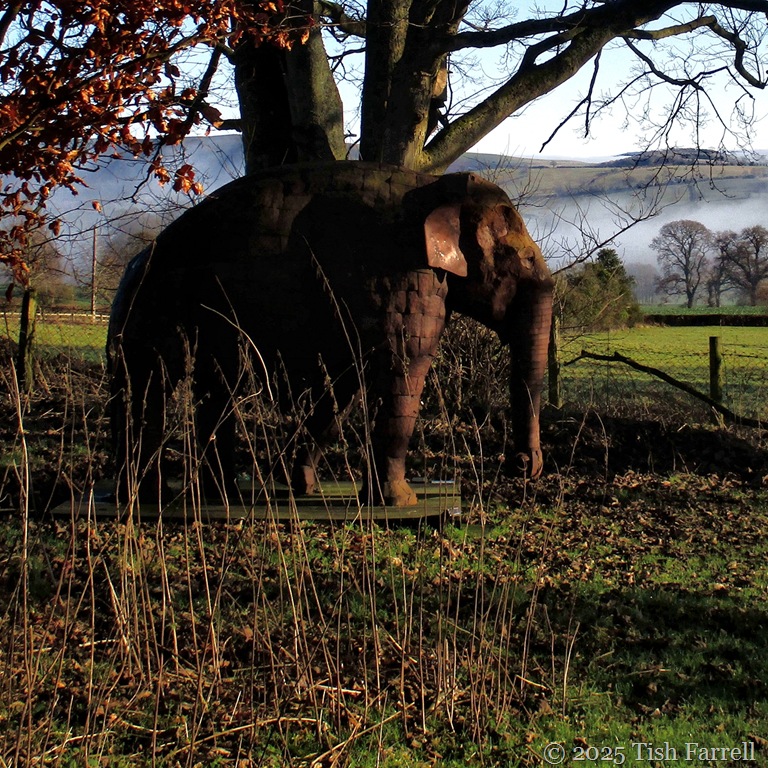
If you want to see the elephant sculpture, then you need to take the Wintles Lane option and follow the footpaths on the right. And climb another hill:

top12

top 13 wintles hill

Elephant

It’s also worth clambering up here for the view of the Long Mynd.

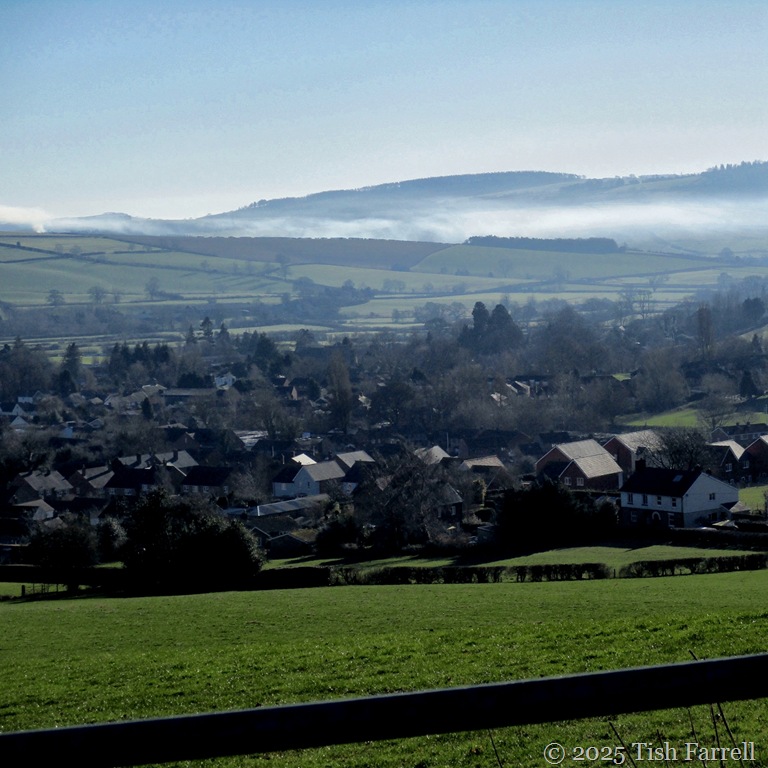
And from here, too,  you can turn about and look down on the town. A fine spot on Planet Earth:

IMG_6729sq

November Shadows #18

top3 header

Six On Saturday: Showing Their Colours

Evereste

Back at the end of October the garden was alive with drifts of cosmos, Michaelmas daisies and rudbeckia. And then the downpours began, plus some big winds. The cosmos is still hanging on, but the Michaelmas daisies are no more and rudbeckia down to the final few stems.

1) The rose trio, though, is hanging on, still doing their bit. Cornelia by the greenhouse is looking a little rain battered, but still very pretty. St. Cecilia on the terrace wall has been flowering sporadically for some weeks. But her neighbour, Penelope, has only started flowering this week, beautiful, but unexpected…IMG_9404

IMG_9373

Penelope

*

2) There have been other surprise openings this week, including the newly planted young Hesperanthus Wilfred H. Bryant…

Hesperanthus

Other curious (unseasonal?) discoveries this week include buds and flowers on two Vanilla Ice sunflower plants which I grew from seed in the spring. They’re multi-headed plants with medium,  in sunflower terms, sized flowers. Heaven knows why they’ve waited till November.

3) In the still going strong since the summer category, Salvia Amistad wins first prize. Actually, this is the best its looked since it was planted in the spring…

IMG_9425

4) And in the front garden, a new favourite Crocosmia Harlequin, as seen this morning. Isn’t this a lovely plant…

Harlequin

*

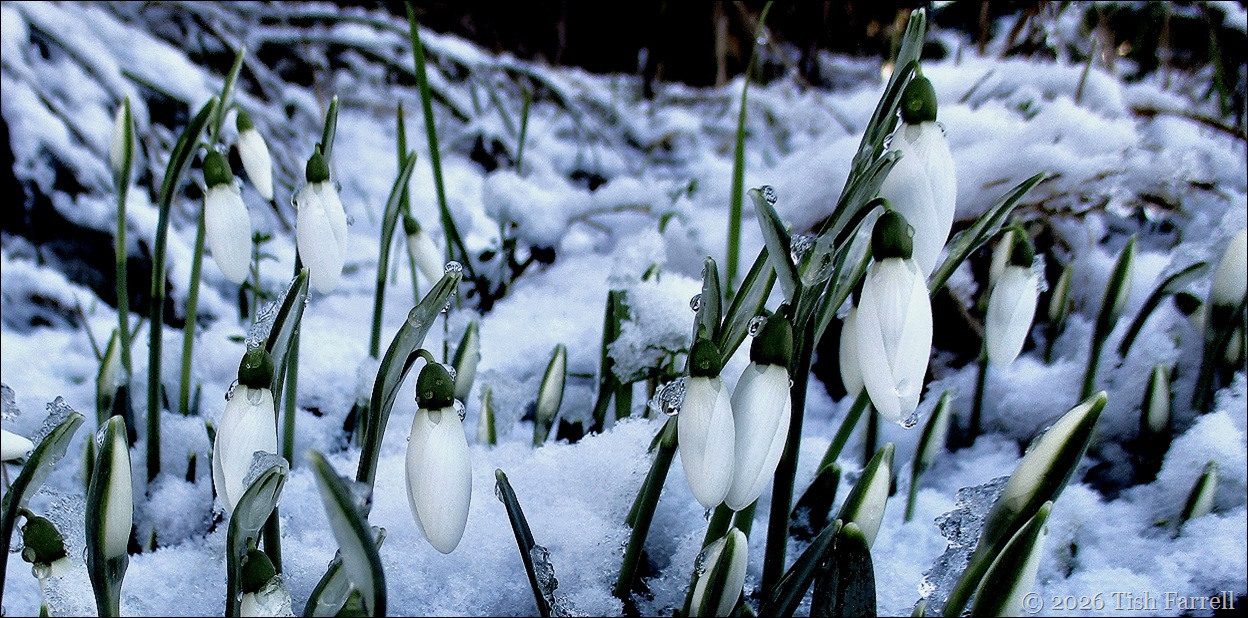
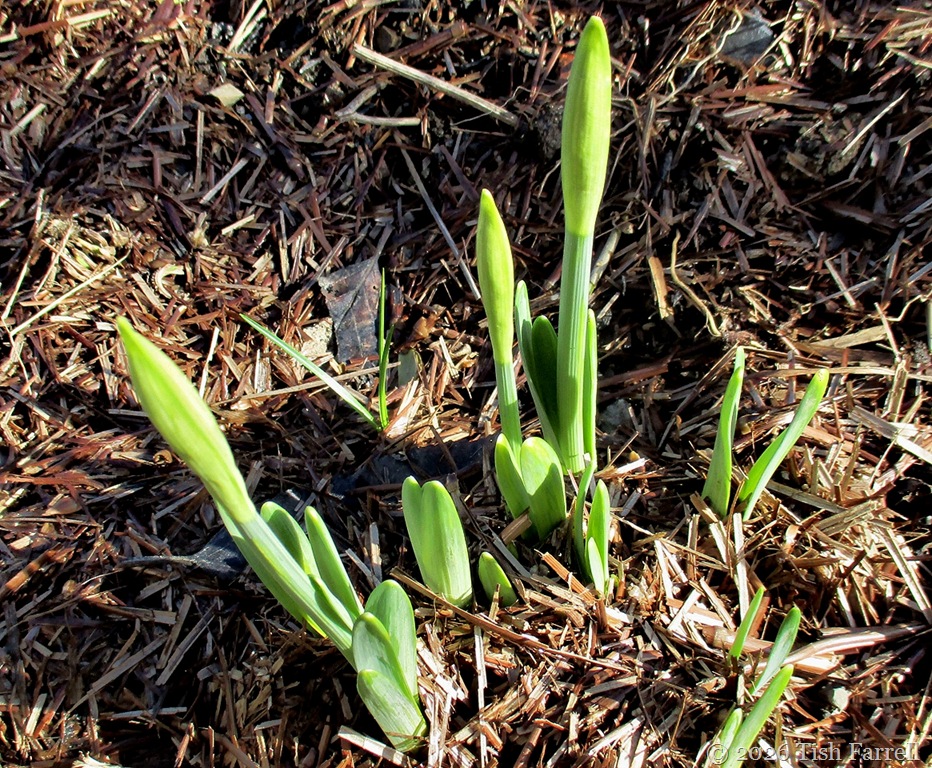
5) In between torrential rain and misty drizzle, garden tidying, and the usual plant shifting has begun. Our builder and son also came and removed an annoying (literally) stumbling block outside the back door. Last year we had the garden steps reconfigured, but the job wasn’t quite finished and the old bottom steps survived the exercise, were a real eye-sore and general all-round nuisance. But now transformation. They have been demolished and a brand new, semi-shade bed created. I’ve planted it up with assorted hellebores, (Christmas Carol in the right hand corner just in bud), dwarf daffodils, snowdrops under the hedge, pulmonaria Blue Ensign and Diana Clare (silvery leaves), and in the far left, a neat fern, Polystichum setiferum congestum. As the leaves go from the hedge end behind the house, it will get more light. A spring garden then.

new bed

*

6) Last but not least, when it comes to providing long-lasting colour and cheerfulness, to say nothing of eventually feeding the birds, it has to be the crab apple trees: a miniature Evereste in the front garden (header photo) which we can see from the sitting room, and Jelly King at the bottom of the garden, but visible from the kitchen. Even on the gloomiest days, they do their best to glow. Today, though, we have wall to wall sunshine and Wedgewood Blue sky, so here they are looking their brightest…

Jelly King

Evereste header


Six on Saturday Please call in on our host, Jim. He still has some fabulous plants still flowering in his garden

Hopton Castle, Shropshire

Hopton Castle

I’m quoting some text from an earlier post:

“Here we have the remains of Hopton Castle, an enigmatic ruin in the Shropshire borderland, eleven miles northwest of of Ludlow. It is called a castle, but it might be better described as an upscale medieval tower-house. That it survives at all, in this accessible state, is down to the creative efforts of the Hopton Castle Preservation Trust whose members toiled for 11 years to raise funds to consolidate the main structure, and then spent a further five years overseeing the work.

Hopton interior

The ruin is full of puzzles. The preservation work revealed hints of 11th, 12th, 13th, and 14th century construction, but with no clear evidence for the date of the main surviving structure. It’s been suggested that the Hopton family, who owned it between the 11th and 15th centuries, at some stage deliberately set out to create a faux antique country residence much as the Victorians did with their  mock Tudor ‘cottages’. In other words, the Hoptons went in for some creative intervention of their own.

One theory is that it was a hunting lodge. The interior work of all  three floors appears to have been very grand, and definitely of ‘lordly’ quality.

Hopton village

Restored entrance

*

Hopton interior 2

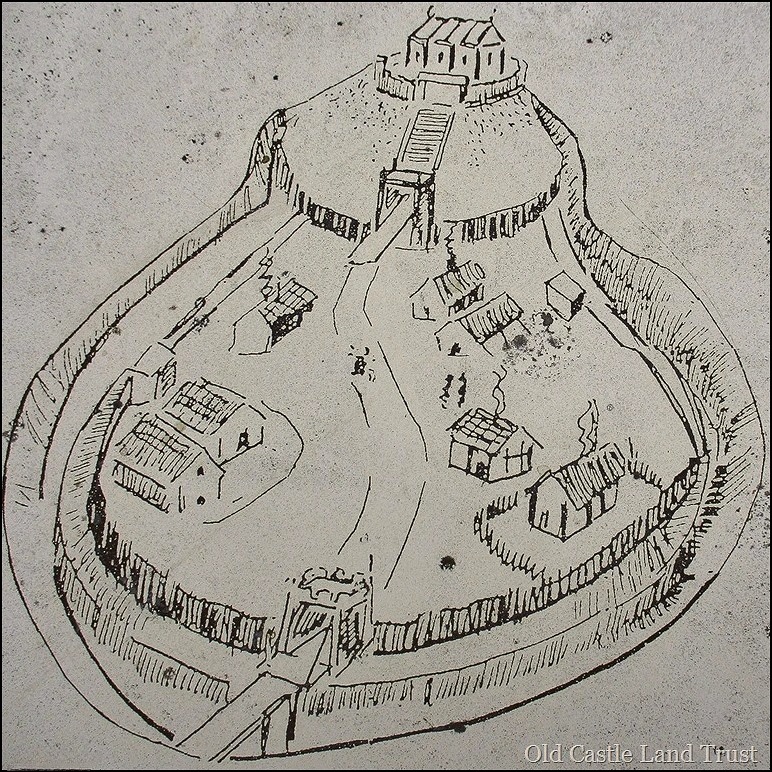
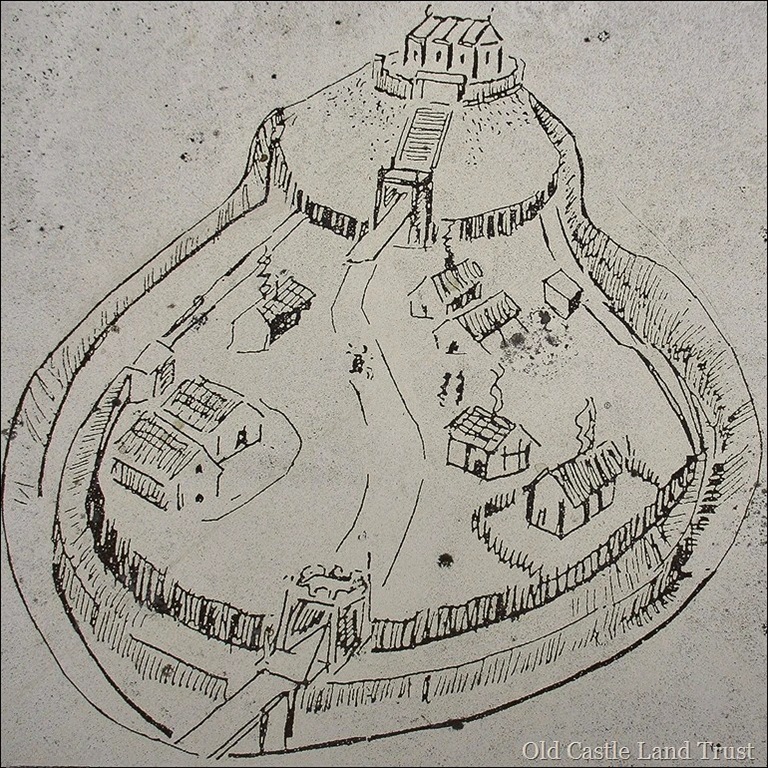
Also, the tower was clearly not intended as a defensive structure. As you can see from the first photo, any besieger could simply walk up to the front door. Yet the building it replaced, the first ‘castle’ on the mound was indeed a functioning fortification – a motte and bailey castle typical of the Normans’ early conquest of Britain after 1066. Made of timber, they could be constructed swiftly, and as the need arose, later re-built and expanded into domineering stone fortresses.

But this did not happen at Hopton. The stone walls that replaced the 11th century motte and bailey appear to have been built of poor quality stone, unsuited to withstanding a siege. Meanwhile, the interior fittings and design suggest considerable expense.

So it’s a pretend castle then?”

Hopton 3

You can read more about this (pictorial reconstruction included) at my earlier post: Creative Intervention Rescues A Ruin

*

This week at Leanne Cole’s Monochrome Madness the guest host is Sarah from Travel With Me. Sarah’s theme is RUINS.

Hopton Header

A Bronze Age Circle And Some Mystic Brume

Mitchells Fold and brume

It’s a year or so since we last visited Mitchell’s Fold stone circle. I’m not sure why it’s taken so long to go back there. It’s only six miles from home and such a fine spot, sitting high on Stapeley Hill, with the Stiperstones to the east, Corndon Hill to the south and Wales rolling out in the west. Somehow we had let the summer go by when a sundowner visit would have been perfect for capturing light, communing with ancestors and gazing out on those wide Welsh vistas.

As it was, we waited until late September. And so last Friday, and well before coffee time, in hopes of some good light, we set off. The sky was clear, the sun brilliant and the air autumnally crisp. As we drove out of Bishop’s Castle, I conjured the landscape photos I would take up on the hill; those views into Wales…

path to Mitchells Fold

Except when we set off on foot up the Stapeley Hill track I soon saw I wouldn’t. Westerly vistas were off.

The uplands might be bathed in sunshine, but the low lying reaches had been invaded by rivers of mist, also known in literary circles as brume. We watched as this mysterious atmospheric phenomenon flowed by, whiffling up hillside clefts and gullies, some of its manifestations distinctly pink. At closer quarters you could see through it as if looking through gauze.

Brume

*

Seen in monochrome setting, there’s almost the sense of spray, as in breakers crashing against a rocky cliff-face…

Brume monochrome

Of course this all added a frisson to the mystery of ancient stones.

I’ve written about them several times, including in a much older post Witch-catching in the Shropshire Wilds which mentions the myth associated with the place. But very little is known of them other than there were once 30 or so standing (now only 15 and some of them are recumbent.) And that they were sourced locally and hauled in place over 3,000 years ago. We can guess, too, that this was a place of great significance to local people (temple or gathering place?) for we know, too, that nearby hills (Corndon, the Stiperstones) have on their flanks many remains of Bronze Age burial cairns. There is also a lone standing stone and a supposed robbed burial cairn not far from the circle.

A landscape, then, of many meanings; the kind of meanings where sacred and profane coalesce, the subtleties of whose interconnectedness we offspring of industrial culture often fail to grasp, confusing the sacred with dogma. 

Brume 2

Around the stones, there are traces of more recent human doings. You can see them in the photos: the remnant ridges and furrows of a mediaeval field system. And also running through the middle of the circle, the ruts made by carts and, in particular, the stage coaches that are said to have run this way between our county town of Shrewsbury and Aberystwyth in mid-Wales. Can you imagine?

In a way, I find this last historical glimpse more exciting than the stones. Just think how it would be, racketing around in a draughty coach, being hauled over this bleak hill on a grey winter’s day, some real fog closing in and looking out on these standing stones…it could be a scene from Jane Eyre.

Mitchells Fold coach route

Mitchells Fold coach road

*

For now I’ll leave you with some more non-wintery views:

Mitchells Fold and Corndon Hill

Stiperstones

towards Bishop's Castle

*

Copyright 2025 Tish Farrell
Brume header


For Love Of Patrinia ~ Six On Saturday

Wildegoose 1

These first few photos aren’t from my garden (if only), but here to illustrate gardener’s lust [1] ~ that moment when a new plant begins to root itself in the psyche, aka mental compost, until you know that you simply have to have it.

Well, that’s what happened last week when we went to visit the walled garden of Wildegoose Nursery here in Shropshire. (See previous 2 posts). It was a hazy day, but everywhere the garden was alight with the frothy, apple green seedheads of Patrinia monandra/aff punctiflora [2] a tall and gracious plant, and one quite new to me. (And yes, it does seed itself everywhere, but I was told unwanted stems pull up easily). 

At Wildegoose it sets off not only the reds and bronzes of late summer sedums, Eupatorium, and Heleniums, but also the fading stems of Verbena, Sea Holly, Echinacea and Hydrangea:

Patrinia 4

Patrinia 3

It’s a perennial, clump forming (50cm wide), hardy plant, with spreads of tiny yellow flowers from July to September. The seedheads, though, can last well into the winter. The plant was first collected in China by the Gothenburg Botanic Garden, or so the Beth Chatto site tells me.

And the reason I was looking there, was because it was only later when we arrived home, and I was scanning through the photos that I suddenly saw how lovely Patrinia might look in our so much smaller garden. And I knew Wildegoose was about to close for the winter, and that we were unlikely to get there before it did…And so to postal sources, although of course the plant, if ordered now, will naturally come pruned of those lovely seedheads…(Oh, the self-inflicted anguish of the besotted and too impatient gardener!)
*

Meanwhile, back at The Gables we’ve been having a week of thunderous downpours with intermittent spells of warm September sunshine; April showers on steroids. The lawn is quite rejuvenated, although I hate to tell it, now it isn’t rock hard, I’m going to dig more of it up to make a new strawberry bed. (Psst. Don’t tell Graham).
So yes, we are heartily glad of the rain, even if it comes like swift deliveries from Niagara Falls. The Helianthus [3] by the greenhouse is certainly having a new lease of life. It’s lighting up one of the shadier parts of the garden, an unexpected full-on display when it’s already been flowering for weeks.

helianthus

helianthus 2

*

In the border along the terrace wall, the Michaelmas Daisy [4] is at last beginning to flower. It’s been a mass of buds all summer, but was obviously saving itself for more autumnal days. It should be splendid in a week or so, and especially if the Rudbeckia keeps going.
michaelmas daisy

back garden

*

Further along the border, between the Japanese Anemones and Selinum, St. Cecilia rose [5] has been spurred into a second flowering. We inherited her with the garden. She was in a poorly state, but though the flowers, when fully open, are rather wan and saintly, and thus none too remarkable, I decided to nurture her. She anyway smells quite nice, and is appealing when the buds are seasonally dewdropped and seen beside the presently seeding heads of  Selinum.

St Cecilia and Selinum

St. Cecilia 2

*

And finally the Morning Glory [6] growing on the trellis by the oil tank looks to be enjoying the cooler, wetter days. I’m surprised it’s still going after the torrential downpours, the flowers lasting longer through the day too.

morning glory

Happy gardening, folks, whatever your hemisphere.

Six on Saturday Please visit Jim in Cornwall for his week’s garden news.

‘Drawn from the Earth’ ~ Art In The Garden At Wildegoose Nursery

large female bust 2

In the last post I said I’d show some of the artworks from Mary Elliot’s ‘Drawn from the Earth’ exhibition, hosted last week by Wildegoose Nursery.  The setting is a series of garden ‘rooms’ created in an old and magnificent walled garden. The late summer plants and grasses made an otherworldly backdrop for Sharon Griffin’s ceramic figures.

large female bust

Her work is haunting. To come upon her pieces, as if by chance, in a garden that is slipping into autumn, gives them added drama; a life almost. There’s a sense of ‘old gods’ invoked; forgotten stories being retold.

Or in her own words:

I make work which explores the universal human condition…clay allows me the freedom for pure expression; a re-connectivity with the land and ancestral storytelling…

art 4

faun with shadow ears

Faun with a shadow face and deer ears

*

Flow

Not so blind that I can't see Sharon Griffin

‘Not so blind that I can’t see’

*

small figure

And on the plants for sale table: ‘The Gardener’

*

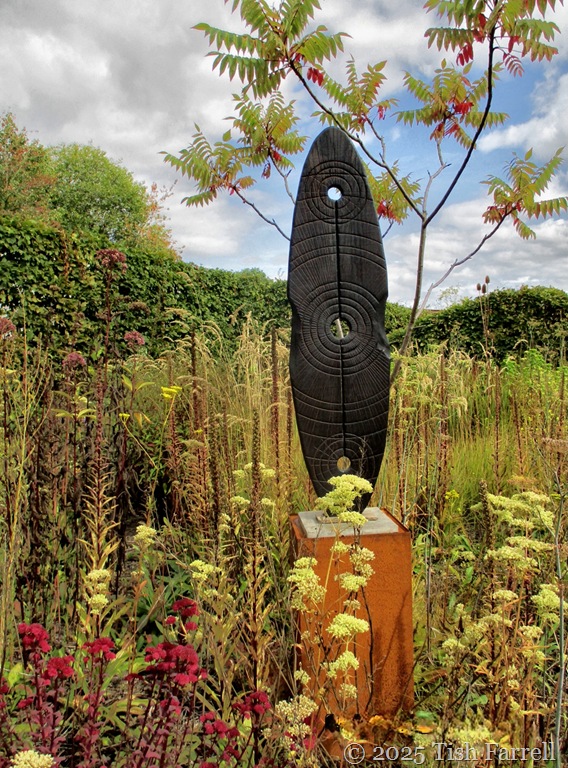
I only came upon this one work by sculptor, Glen Farrelly.  It’s called ‘Formation’. I perhaps find it more personally appealing than the Sharon Griffin works. i.e. in the sense I could see myself living with it. I loved its setting amongst the pale green Patrinia seedheads and red sedum, the spires of dying flower stems and grasses.

Art 4a

*

And finally some more views of the gardens – plants making their own end-of-season artworks.

echinacea and ice plant

hydrangea and actaea

Wildegoose 1

wildegoose 2

*

Mary Elliot’s drawings and paintings can be seen HERE.

header 2