
Landscape
Thursday’s Special: Manscape to Landscape

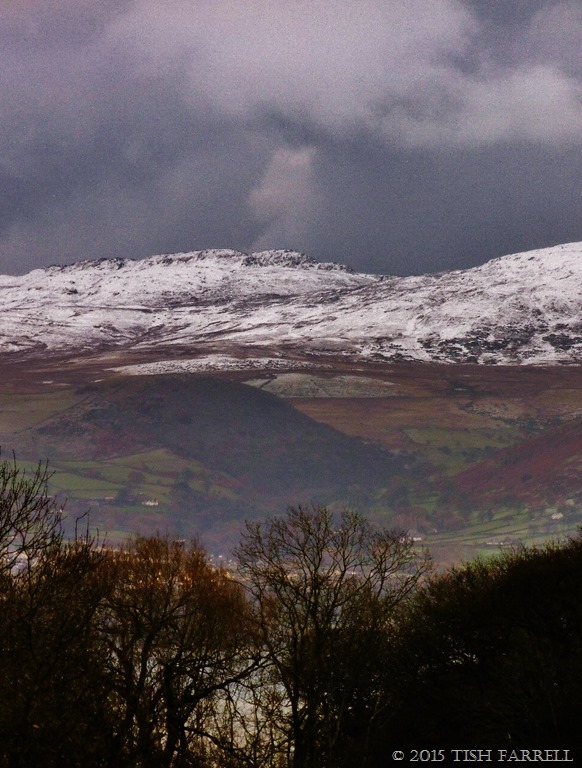
This shot was taken a couple of weeks ago from the ruins of a gold mine crushing mill at Cefn Coch, Dolymelynllyn. During the 1860s there was a gold rush involving the working of several mines around Dolgellau, on the southern edge of the Snowdonia National Park in Wales. It is a dramatic landscape, a hard place to toil, cracking open the earth in hopes of riches. The remains of the industrial buildings stand starkly against the hillsides, the moorland vegetation gradually reclaiming the stonework.
copyright 2014 Tish Farrell
Now hike over to Paula’s blog for more splendid landscapes: Lost in Translation’s Thursday’s Special
Thursday’s Special: looking at the sky over Wenlock Edge
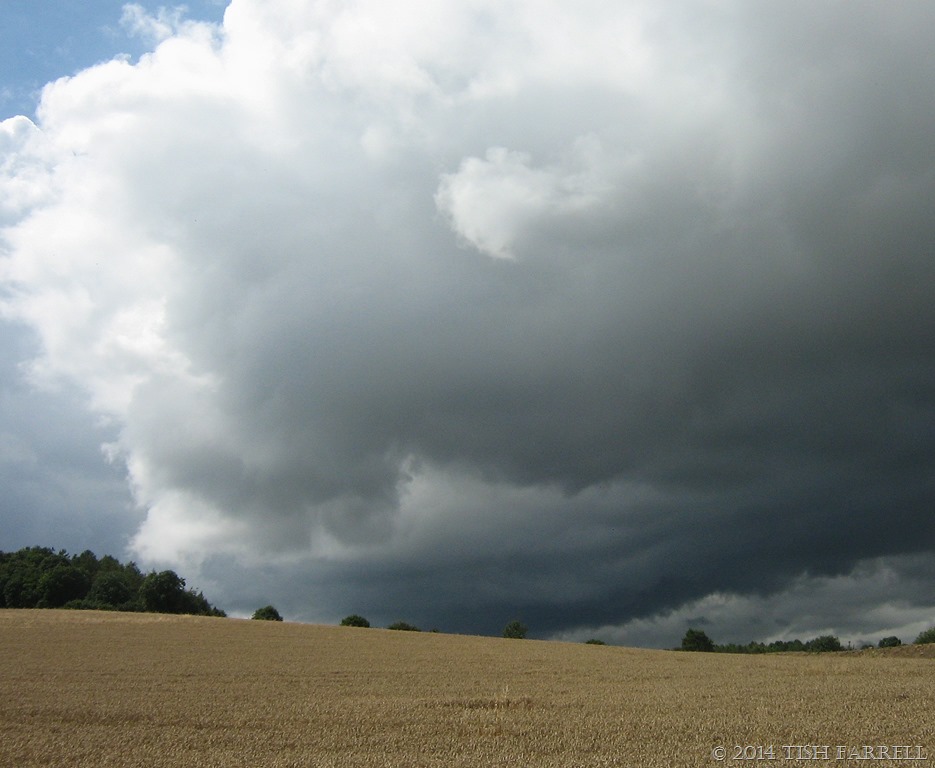
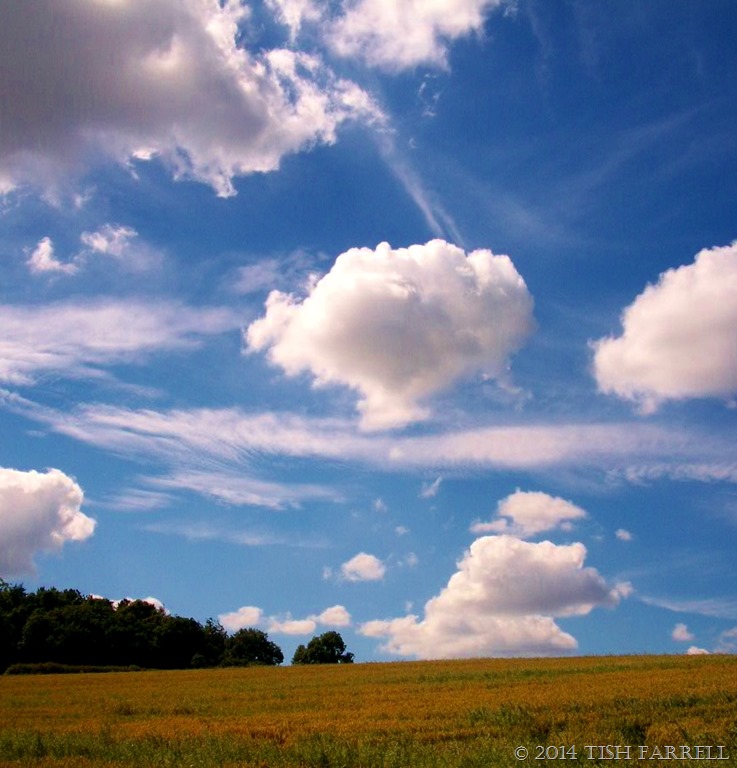
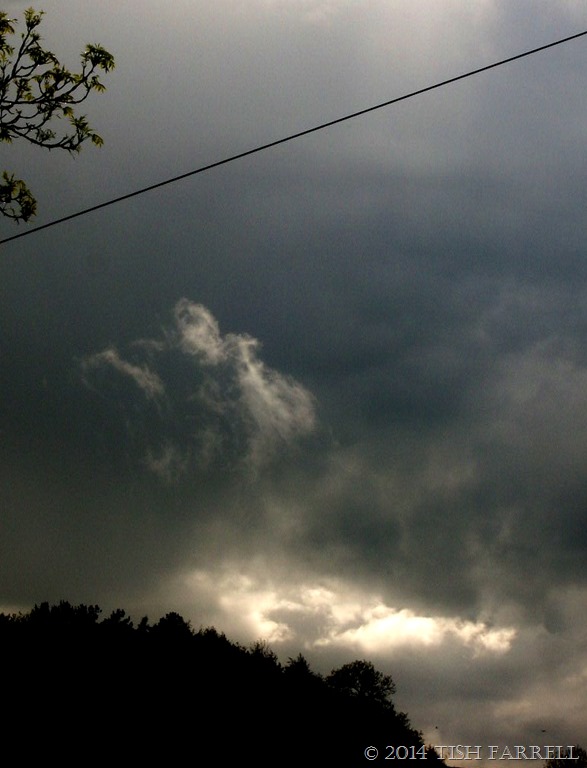
Is it just me, or are our skies growing more interesting in terms of light and cloud formation? I know I spend more time these days looking upwards. Behind our house on Sheinton Street the farmland rises in a series of scarps till it reaches the tree line on Wenlock Edge. Thereafter the ground falls away through hanging woodland. It is quite a drop and means we view the weather higher up somehow, always beyond a series of false horizons. The light and cloud change every minute of the day. You can lose hours simply watching.
This week Paula suggests we post portraits of one kind or another. Here, then, are some sky portraits taken over Townsend Field and Wilmore Hill. You may imagine, too, the frequent exchange that takes place between G and me as we move about the house and garden: I say. Have you seen the sky?
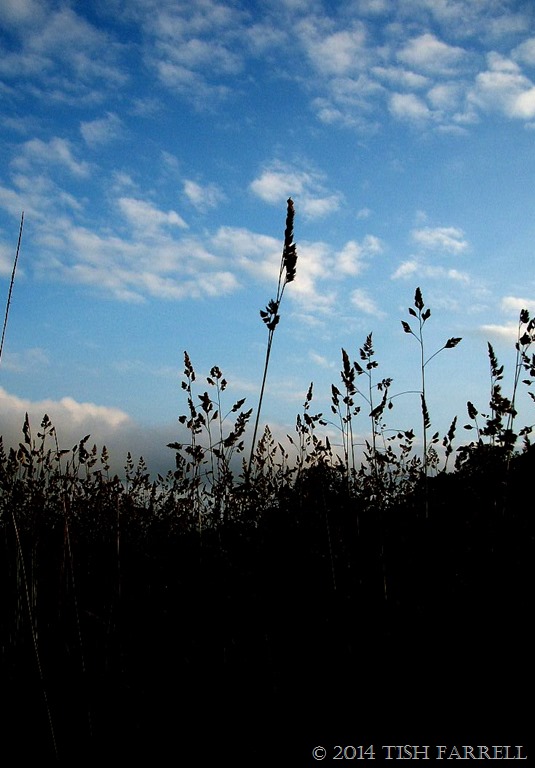
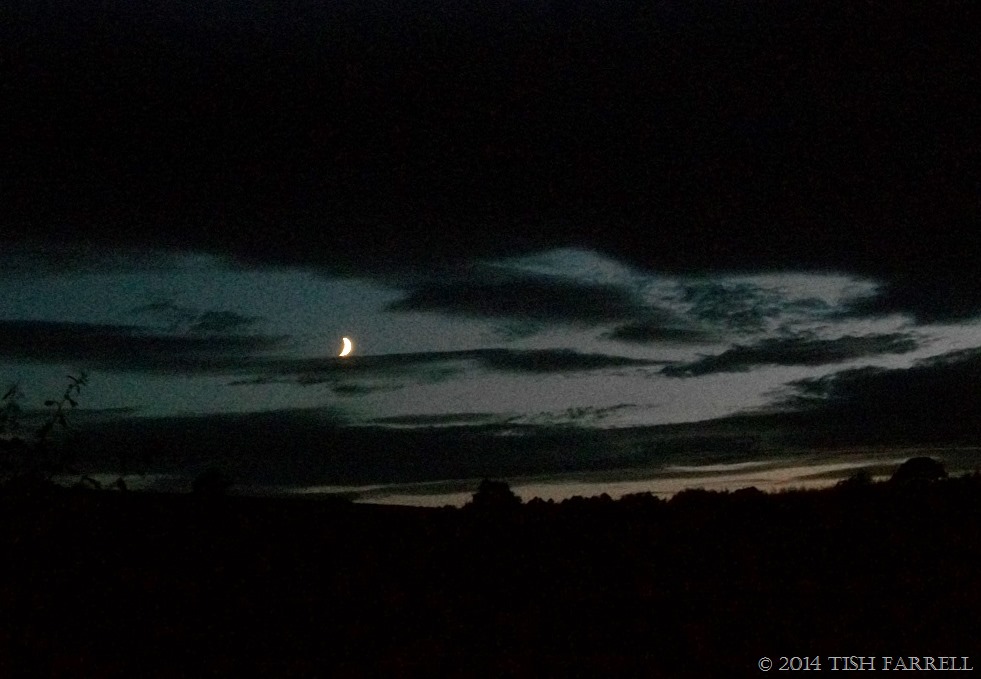
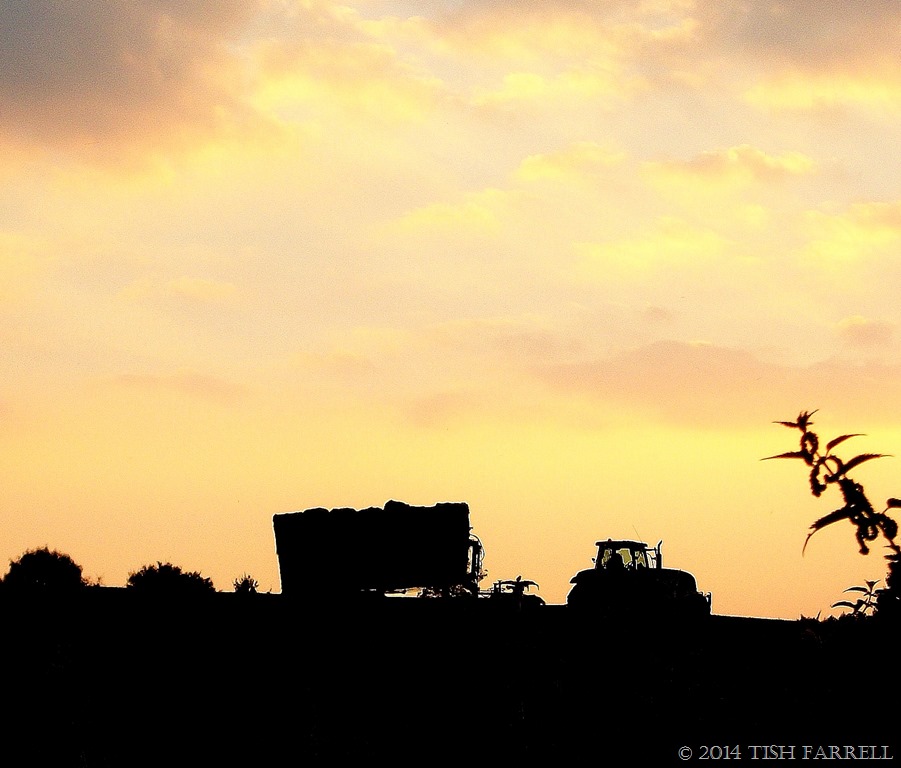
Lost in Translation Thursday’s Special
#WenlockEdge
“Wheat…fields of wheat…” Musings on the path to the allotment
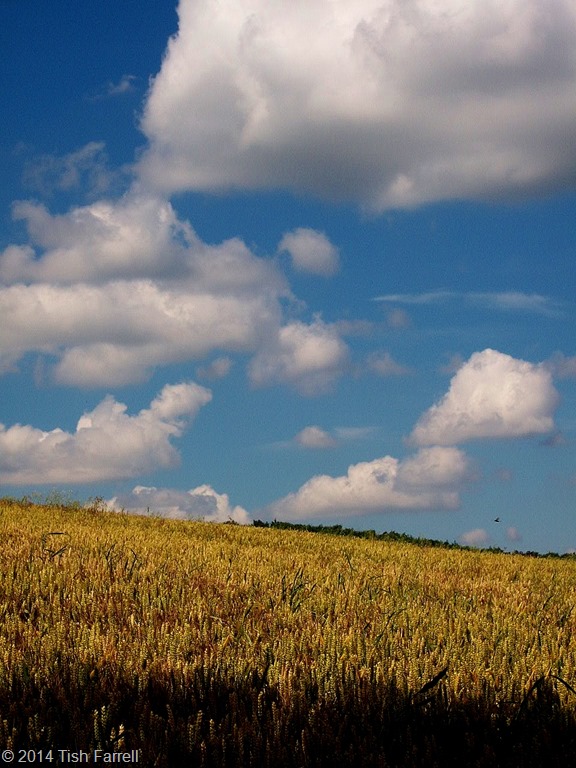
Okay, who knows which film this quote comes from? As an extra clue I give you the line in ‘full’: “Wheat… lots of wheat… fields of wheat… a tremendous amount of wheat…”
For some reason I cannot explain, this particular exhortation is rather popular in the Farrell household. The Team Leader is wont to deliver it at unexpected intervals and with some vigour. This habit even predates the time when we actually came to live beside a field that often has wheat growing in it. So here is it. The field behind our house. And while I admit it might overstep the bounds of propriety to share my washing with the world, here is another view of the wheat field from our garden. I also think the flower shadows on the sheet rather fine: housework turned artwork?
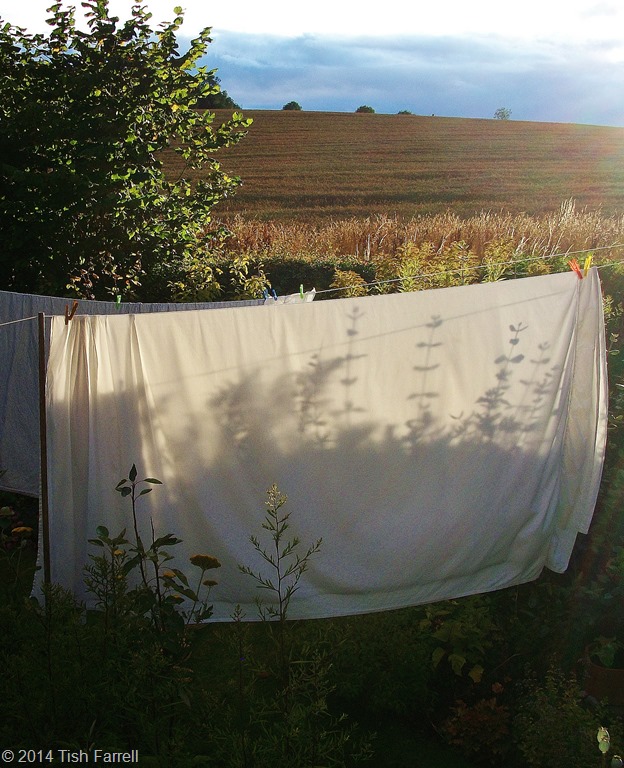
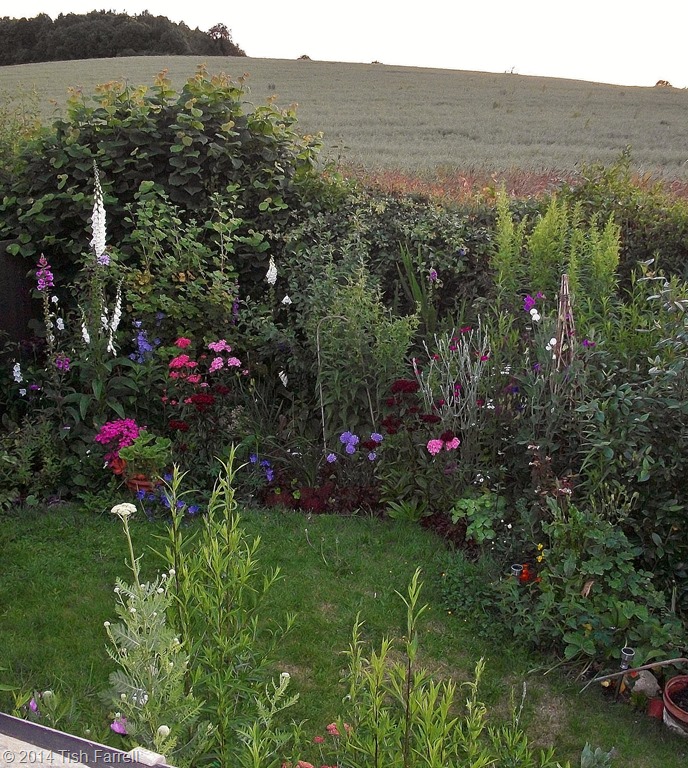
I have written in earlier posts how our house lies on the edge of Wenlock Edge, a twenty-mile scarp formed from the upthrust bed of a tropical sea – the Silurian Sea in fact. This geological formation is a breath-taking 400 million years old – a place once inhabited by trilobites, and molluscs, and sponges and corals, although it should be made clear that when these creatures lived, the shallow sea in question was not in the northern hemisphere. No indeed. In its tropical heyday Shropshire lay off equatorial East Africa. We are thus, for all our rustic appearance, a well-travelled county. We also have lots of geology of international importance, but which I cannot begin to describe because the terminology and chronological expanses confound even me, a prehistorian. The Shropshire Geological Society have a good site HERE should you wish to know more.

The reason I’m showing you the wheat field is because my path to the allotment runs along the edge of it. I walk back and forth at least once a day. And so when I’m not writing blog posts or fiddling with my novel, this is one of the places where I’m likely to be. There is always something that catches my eye – thistles, the light, clouds, buzzards, the rooks and jackdaws, a neighbour’s three white ducks that regularly escape from their pen to eat slugs along the path, cats on the prowl, pretending I can’t see them.
Even the wheat is quite interesting. It amazes me how it manages to force its way up through a cloddy layer of grey clay that bakes to concrete after a few days with no rain. This soil, too, is a product of a geological event – a deluge of volcanic ash from aeons ago and that has now broken down into bentonite clay. It is the same soil in the allotment. Soft fruits seem to thrive on it. Everything else is a challenge. Wheat, though, has apparently been grown along the slopes above the town for generations, hence the name The Wheatlands for some of our now built-upon areas.
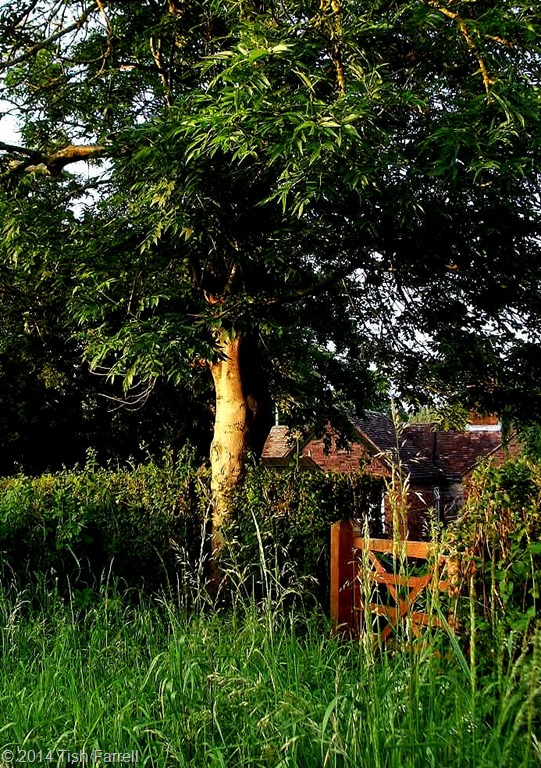
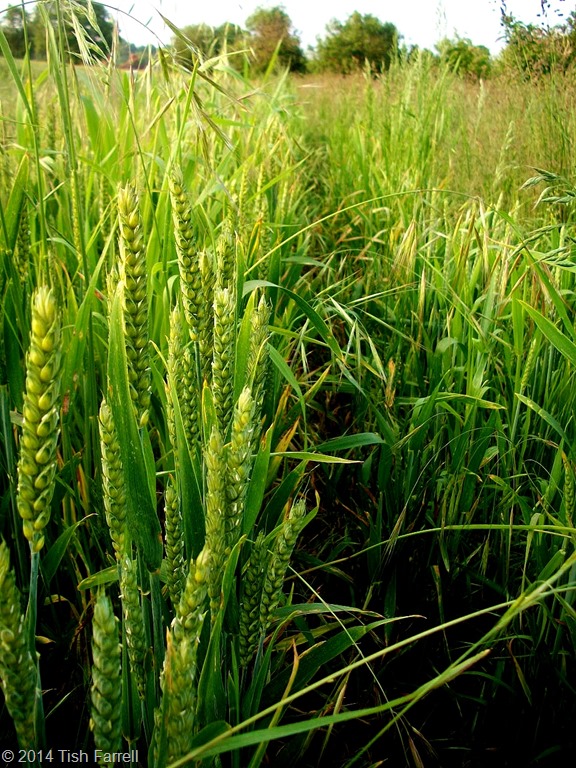
And talking of building, a couple of years ago when the Local Authority called for landowners to put forward development land, our local landowner proposed this and most of the fields on the Edge side of the town, including the allotments too, gardens that have been there since the 1940s. Development on this scale is something that most town residents fervently hope will not happen. We have already been threatened with up to 500 houses over the next 11 years. This in a town with antiquated drainage, severe traffic congestion, few jobs, poor public transport, and inflated house prices, and one that has seen several new developments of upmarket houses in the last few years. More crucially, the town sits in a bowl below the Edge and has recently been designated a rapid response flood risk area by the Environment Agency.
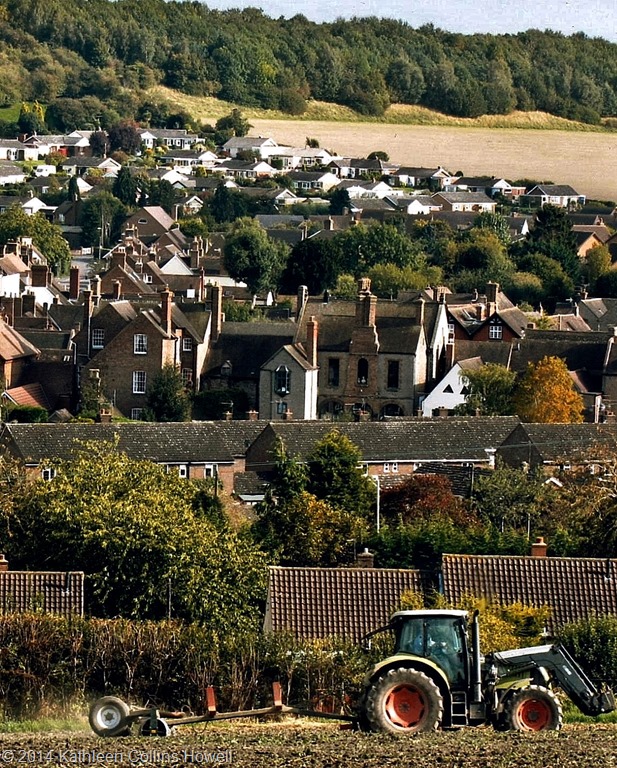
More tarmac, roofs and roads that speed up run off from the hills above our homes are the last thing we need. Some of the newest developments in the town are themselves subject to flooding.
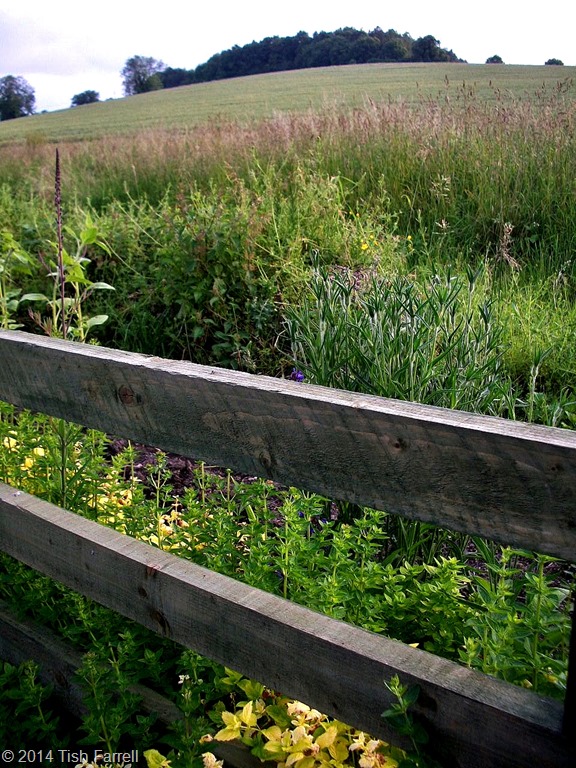

All right, I admit it. The landscape behind our house is perhaps not particularly noteworthy of itself, but the light and sky above it are. The uptilted scarp of Wenlock Edge forms a false horizon, so there is always much weather to watch. It changes every second. One day we saw a fire rainbow which we gather is quite rare.
Ironically, it it perhaps because this view from our house is ever under threat, that makes us look at it and appreciate it all the more. But it makes me angry too. I am not opposed to development, but it should be well planned, and enhance the locality, not cause problems for other people’s homes. There appears to be no mechanism in English planning that can ensure the provision of good quality housing at prices people can afford. Density seems to be the only planning criterion, not homes with green spaces around them, and places for community orchards and gardens, footpaths and cycle tracks and areas where people of all ages can play. All things that boost wellbeing. You would wonder why it is so hard to do.
It is true that Much Wenlock people have recently voted to have the Local Authority accept their Neighbourhood Plan, a community compiled document that reflects our aspirations and plans for the foreseeable future. Our Conservative Party MP, Philip Dunne, tells us the Plan will deliver localism to our door, that is, we will have a say in the kind and scale of development that is proposed for our town and parish, development that will protect landscapes, open spaces and heritage while improving the quality of life for everyone. Whether it will, or not remains to be seen, particularly under a government whose recently sacked Secretary for the Environment apparently allowed for the destruction of ancient woodland as long as developers replanted elsewhere. Bio-diversity anyone?
Which I suppose brings me back to the quote; “Wheat…fields of wheat…” You can’t get more of a monoculture than that. Hey ho. So many things to unpick. Think I’ll trundle up the path to the allotment and pick raspberries.
copyright 2014 Tish Farrell
Related:
Old Stones of Wenlock: repurposing the Silurian Sea
In Much Wenlock an Inspector Calls

P.S. The quote is from Woody Allen’s Love and Death
Uluru on top of the world: one view, several perspectives
“Then the earth itself rose up to mourn the bloodshed—this rising up in grief is Uluru.”
Norbert C Brockman Encyclopedia of Sacred Places
*
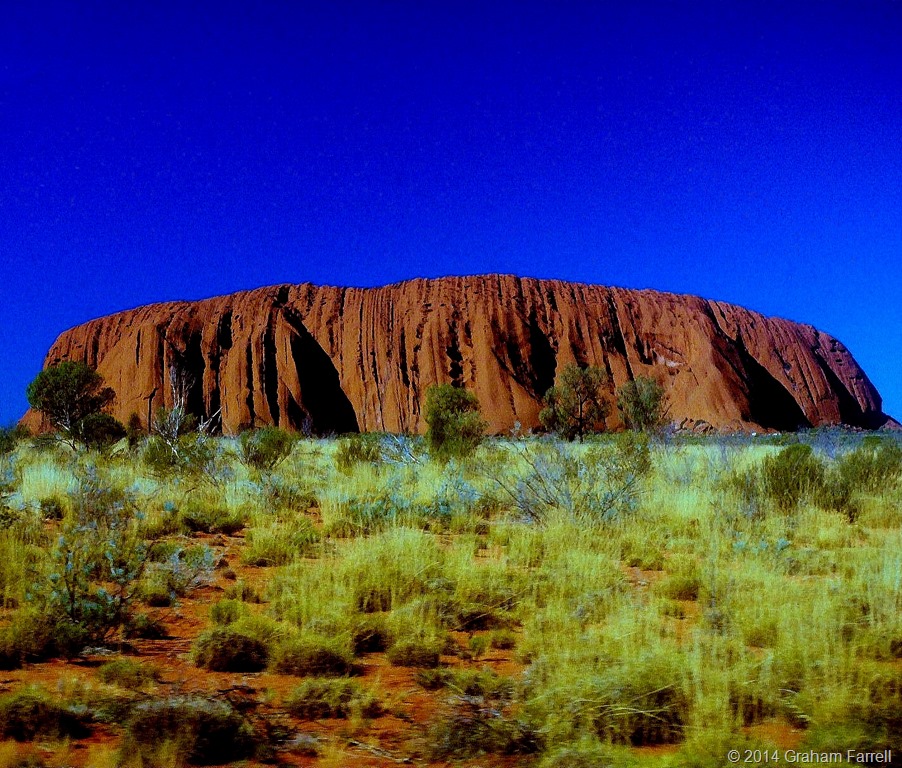
This striking eruption of earthly sorrow is only one of the stories that the Anangu people of Australia’s Northern Territory tell about the origin of Uluru (also known as Ayers Rock). Uluru is a sacred place in their tribal land. It is now part of the Uluru-Kata Tjuta National Park, which since 1985 has been jointly managed by the Australian Government and the Anangu people. In Brockman’s version of the origin story he says that back in the time of ancestral spirits, two tribes were invited to a feast. But on the way, the guests became captivated by a group of Sleepy Lizard Women and lingered at a waterhole where Uluru now stands. The party hosts took umbrage at their guests’ nonappearance and, feeling insulted, sang evil into the mud they were moulding until it sprang to life as the dingo. Next, a terrible battle broke out and all the tribal leaders were killed. The spilling of their blood caused Uluru to rise up.
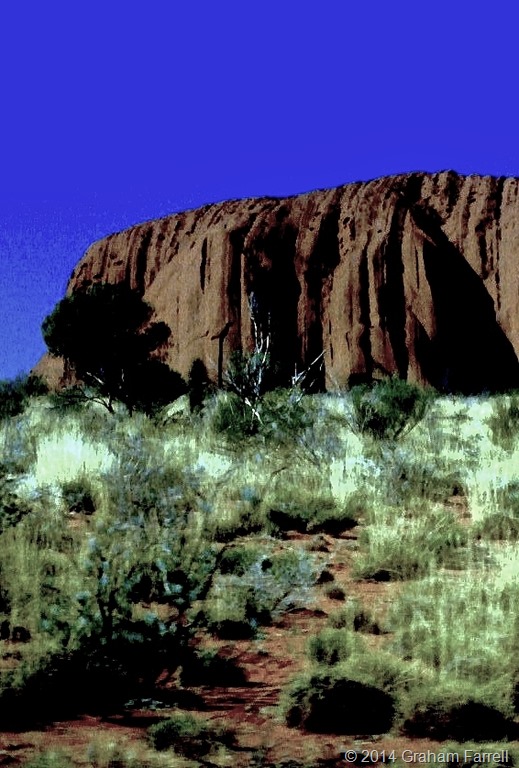
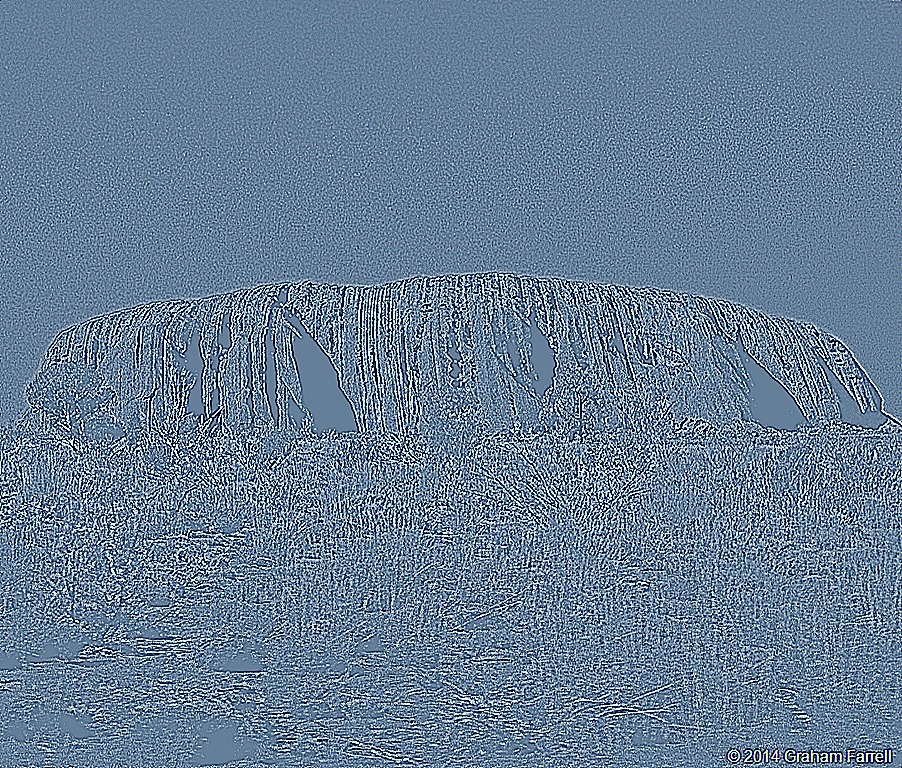
Geologists will of course give another explanation. They will say that Uluru is an inselberg, literally an island mountain, a sandstone dome that is the sole remnant after the slow erosion of a mountain range. Tourist guides will tell you that it is Australia’s most famous natural landmark, that it rises over 300 metres above the flat desert scrub, that the tough trek to the top is 1.6 km, and the walk around the base over 9 kilometres.
As I write these facts and figures, I feel myself becoming irritated. Surely they are not the point. I begin to see a little of why the Anangu people do not want people scrabbling all over the place. Come there, by all means, they say. But do not climb. Watch and listen. This is the place where several songlines intersect, and where many sacred ceremonies are performed. It is filled with great meaning and resonance.
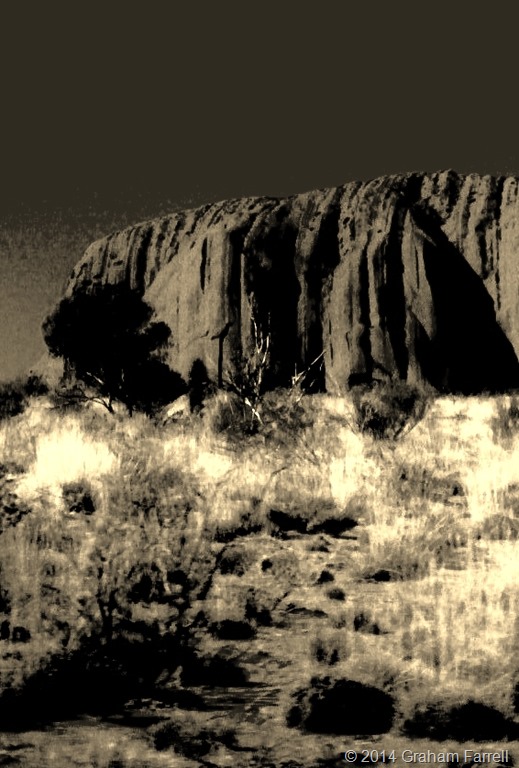
Genetic studies have shown that Australia’s indigenous people arrived in that land some 50,000 years ago. In all that vast expanse of time, and until the arrival of Europeans, their cultural view was presumably uninterrupted. They lived a hunter-gathering life well fitted to a demanding environment. There were people living around Uluru 10,000 years ago. What to European newcomers appeared utterly undeveloped and primitive, was rich in metaphor and codes of conduct. And if I have rightly understood what the Anangu people say (see the links below), then physical reality, metaphor, and time itself are meshed as one. Past, present and future are all part of the becoming that began with the first ancestral spirits.

In the beginning, then, the earth was flat and featureless. Next came the spirit ancestors who took the forms of people and animals. In their wanderings across the surface of the world, they instigated acts of both creation and destruction. These brought into being the physical landscapes we see today. They are journeys of becoming, iwara or songlines, and through them was engendered the law, tjukurpa (chook-orr-pa). These are ethical pathways, ways of being and doing that honour the interconnectedness of all things; the relationships between plants, animals, humans and the land itself. The law is remembered and passed on by elders to the rightful inheritors through song, art, stories and ceremonies.
One can see, then, why the Anangu people might feel that the word ‘dreamtime’ does not do justice to the meaning of tjukurpa (law). To the European mind the term suggests something fey and otherworldly. Yet in the physical sense Anangu law is absolutely worldly; it is about showing responsibility towards the land and all living things; honouring existence. This, I would suggest, is the kind of moral geography that we ‘Rich-Worlders’ could do well to acquire—and PDQ? Our trail of destruction across the planet speaks for itself. Our presumption of being ‘on top’ in the civilization stakes is more than a little flawed. We forgot a few hundred years ago to leave only our footprints.
For more about Anangu culture go HERE and HERE and HERE
copyright 2014 Tish Farrell
Of Monumental Mysteries
“The past is a foreign country: they do things differently there.” L P Hartley The Go-Between
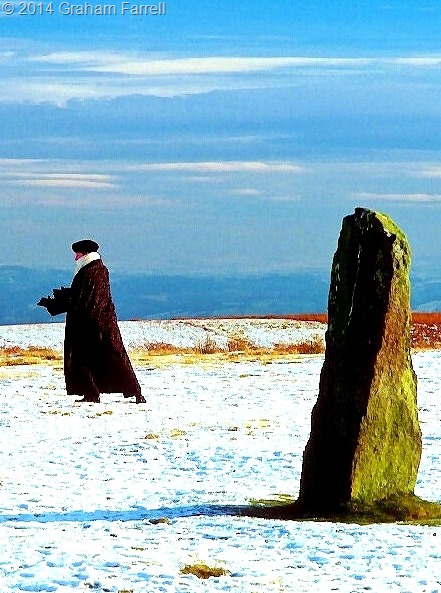
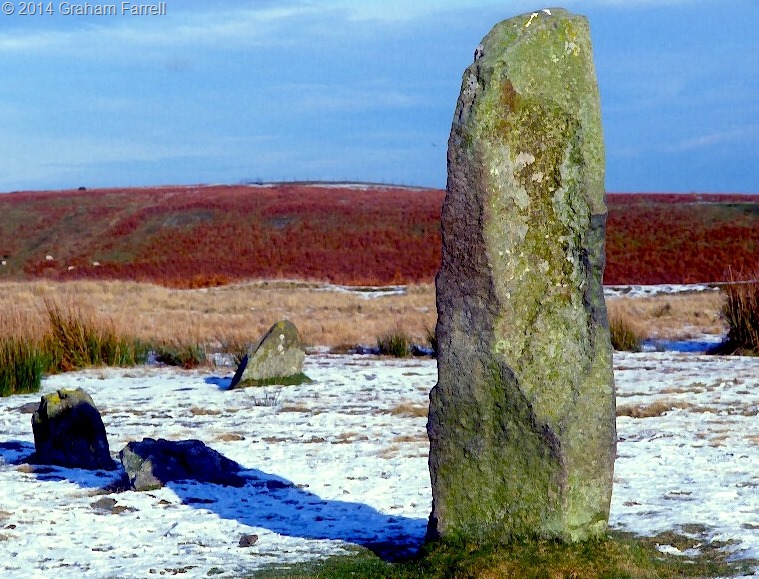
So what’s the mystery here? No, not that strange woman in a Welsh felted hat doing tai chi. (Actually, I think I may be in the process of ‘grasping the sparrow’s tail’ Yang-style long form. I’ve rather forgotten). I remember, though, the icy winter’s day, and the absolute stillness, and the hazy blue views of Wales over the border from my Shropshire homeland, and the feeling that this circle of ancient stones was a special place; that it stirred in me the sense that doing tai chi here would be a good thing.
I have written before about Mitchell’s Fold Bronze Age stone circle, and you can find the witchy legend associated with it HERE. Historically speaking, little is known about the stones beyond the fact that they were raised some 4,000 years ago. The surviving fifteen stones form a rough circle, although there may have once been as many as thirty. The tallest survivor is said to have originally been one of a pair, and so formed some kind of gateway or threshold at the circle’s edge.
These henges are, on the whole, unfathomable. There is no knowing how the people, who toiled to build them, made use of them, or what their precise significance was in their daily lives. The elevated location of Mitchell’s Fold, with its sweeping vistas, suggests to us a sacred function. There are also possibilities that the stones’ particular alignment served as some kind of calendar, marking solar and lunar events. And, for more prosaic purposes, in a world without maps and SatNav, prominently sited megaliths may also have provided travellers with landmarks to keep them on course through the upland wilds. The Bronze Age was, after all, a time of intinerant smiths and artisans who covered great distances to trade their goods and services.
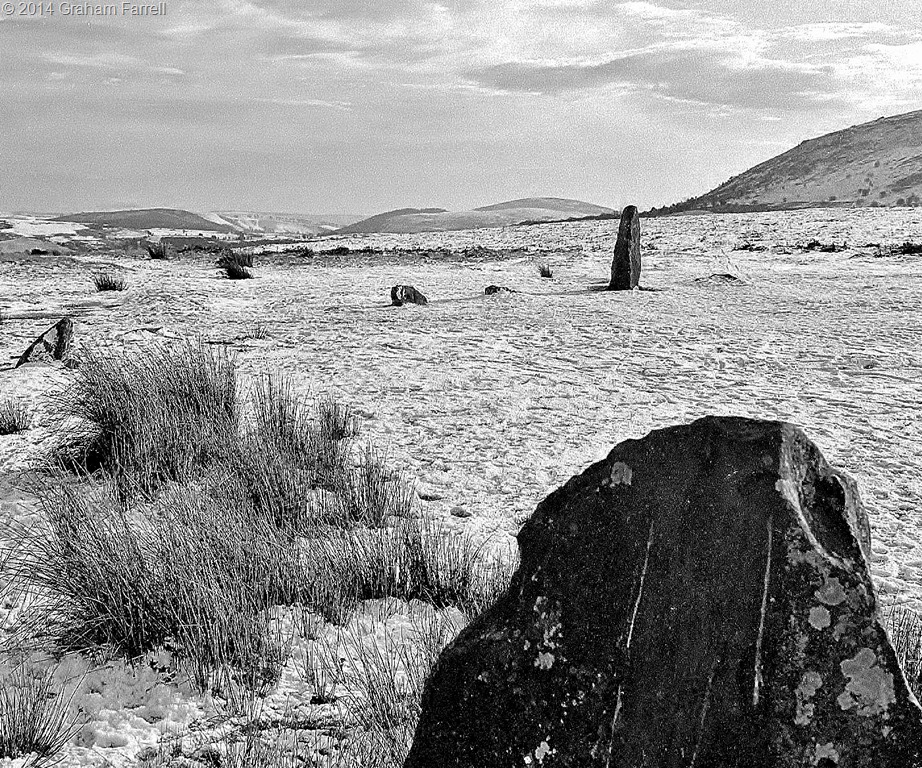
This is borne out by the fact that not far from Mitchell’s Fold, just over the Welsh border in Powys, is the Cwm Mawr Bronze Age axe factory. The distinctive looking axe-hammers that were made here have been found across Wales and England, their discovery demonstrating an extensive trading network. Nor is this henge an isolated monument in the immediate landscape. There are numerous cairns and two further stone circles nearby. This seemingly remote place, then, was very busy some four millennia ago.
As a Prehistory undergraduate, also in times long past, I spent three years in Sheffield University lecture theatres looking at images of barrows, chambered tombs, henges, hillforts, cist burials, urn cremations and other ancestral relics. This being the era of slide projection, the photographs were often shown upside down and back to front; it became a standing (or otherwise) joke, looking at remains from an inverted position. The fact is though, however you looked at them, their intrinsic meaning could not be divined. All that might be said is that these mysterious constructions were of immense importance to our forebears. We know this because of the great effort involved in their making; these were people who, by our standards, had very limited technology.
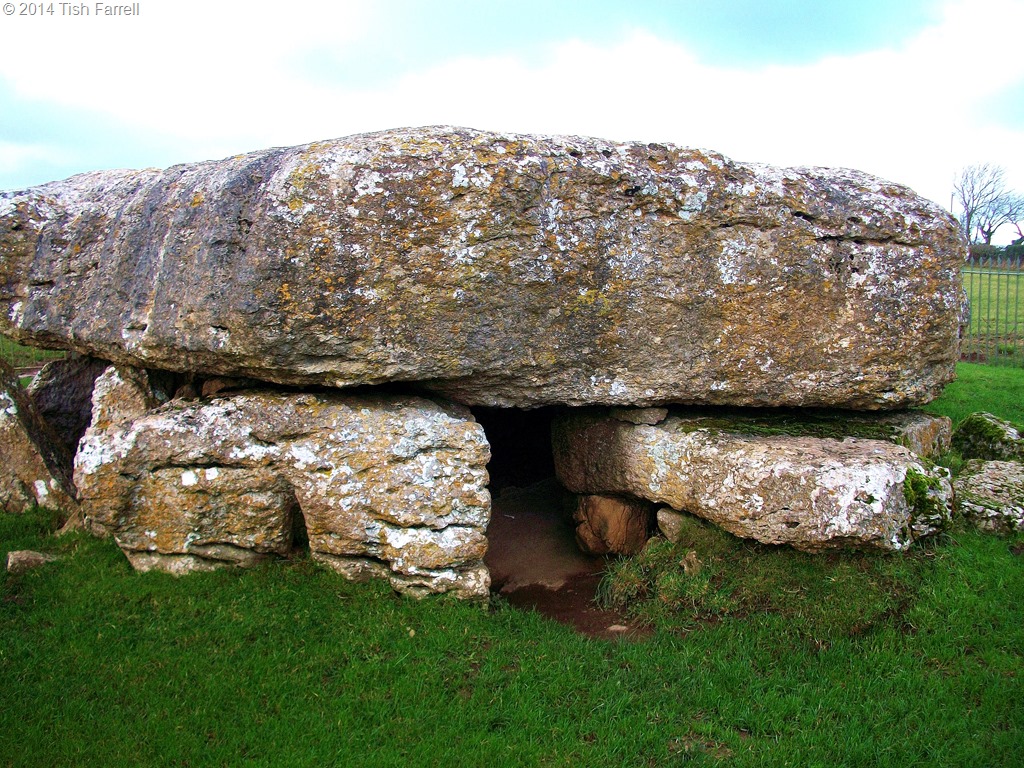
And so here is another example of megalithic mystery. This is the late Stone Age (Neolithic) Lligwy burial chamber on Anglesey in Wales. Excavation in 1908-9 uncovered the remains of 15-30 people, along with pottery that provided the dating evidence. It is estimated that the capstone weights 25 tonnes. This is truly mind-boggling. How did people without cranes lift this monstrosity onto the supporting stones? How many people did it take? Wasn’t the population in prehistory supposed to be small?
Of course experimental archaeology has demonstrated that much may be achieved with the cunning use of tree trunk rollers and various simple pulley devices combined with muscle power. But even so, the Lligwy burial chamber is surely a triumph of human will over an absence of hydraulic lifting gear. In this era people had only stone tools.
So yes, the past is a foreign country, and people did do things differently there, and in ways we cannot possibly know. And if I learned anything from three years of studying Prehistory and Archaeology it was not to judge people by their limited toolkit. These people were as intelligent as we are, maybe more so, since there was a greater need to apply it at all times.
Our current understanding of these monuments may be fragmentary, wrong-headed even, but shouldn’t this be all the more reason to keep these ancient places safe? At this present time in England our heritage is daily under threat from a government that wishes to build its way out of recession. Worse still, current laws allow developers to take local authorities to judicial review if their planning applications are refused.
To avoid incurring huge costs to the public in legal representation, local authorities are now being pushed to grant planning permission in close proximity to unique monuments. At present, in Shropshire, the setting of 2 major sites is under threat: Old Oswestry Iron Age hillfort, and the post-Roman Offa’s Dyke. Why this is happening is of course absolutely no mystery at all. The past has cachet. It is a highly sellable ‘commodity’. Let’s sell it off, why don’t we?
© 2014 Tish Farrell
Related:
Valuing the Past: How much for Old Oswestry Hillfort?
Open to Offa’s: yet another piece of Shropshire’s heritage at risk in The Heritage Journal along with many other excellent articles
Weekly Photo Challenge: Monument
FRIZZ’S TAGGED ‘O’ GO HERE FOR MORE ‘O’ STORIES
Looking inside ‘The House of Belonging’: remembering artist Sheilagh Jevons
The following is the account of a conversation I had with Sheilagh in 2014, a year before her death. She is sadly missed.
*
I thought it was time I welcomed good friend and artist, Sheilagh Jevons, to this blog. She lives a few miles from me along Wenlock Edge, in the little village of Easthope. There, and in her studio not far away, she creates arresting work that explores the sense of belonging that people have with landscape. From time to time she and I have involving conversations about the creative process – the stumbling blocks, the sources of inspiration, the way we work (or in my case, don’t work).
A few weeks ago she came round for coffee. I wanted to ask her about a painting I had seen in her studio. I had thought it striking and mysterious, and wanted to know what she meant by it. Besides which, it is hard to resist the opportunity to grill an artist when you have one captured inside your house.
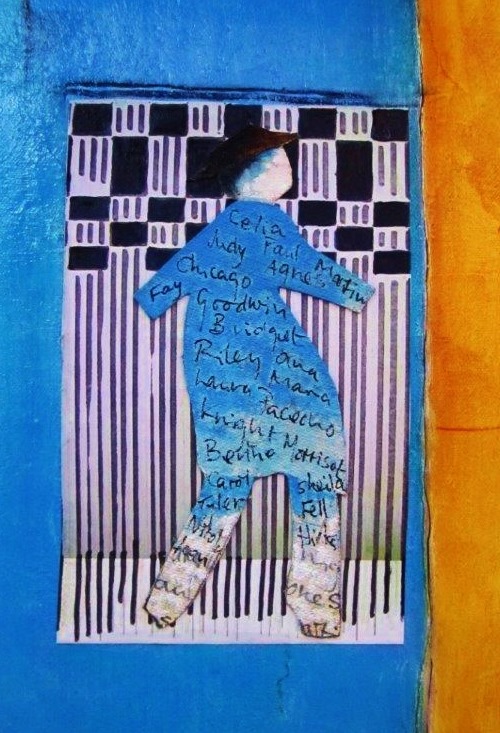
The header image is a small detail from a work called The House of Belonging. This figure has appeared in Sheilagh’s other works and represents women artists. Some of their names are written on the smock, artists perhaps not well known to the general public. Here she pays homage to their work, but also alludes to the fact that, overall, very little work by women artists is to be found in museums. The writing of names and of repeated key-words and equations is characteristic of many of Sheilagh’s pieces. It was one of the things I was going to ask her about. But first, the painting.
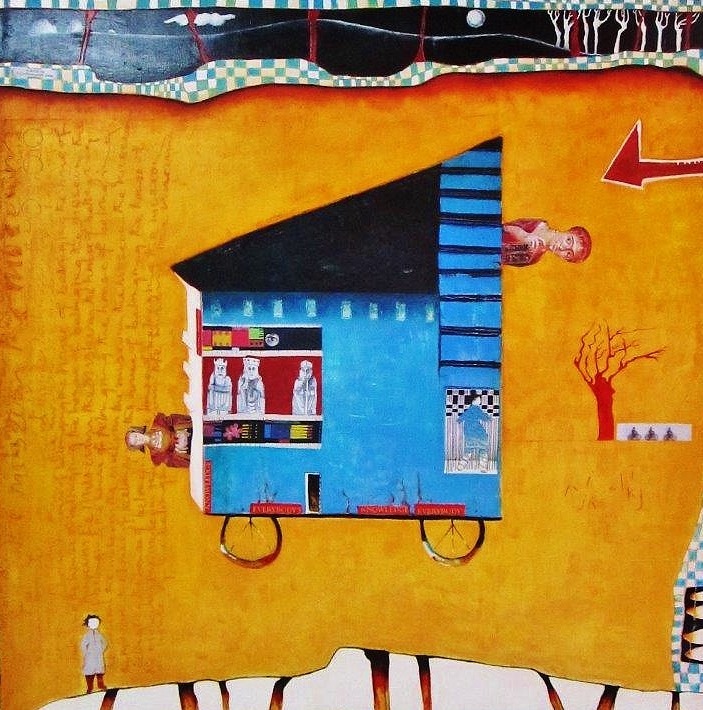
It is a large canvas, some 4 feet (120cm) square. The next photo gives a better sense of scale. Here it is hanging in Sheilagh’s studio:
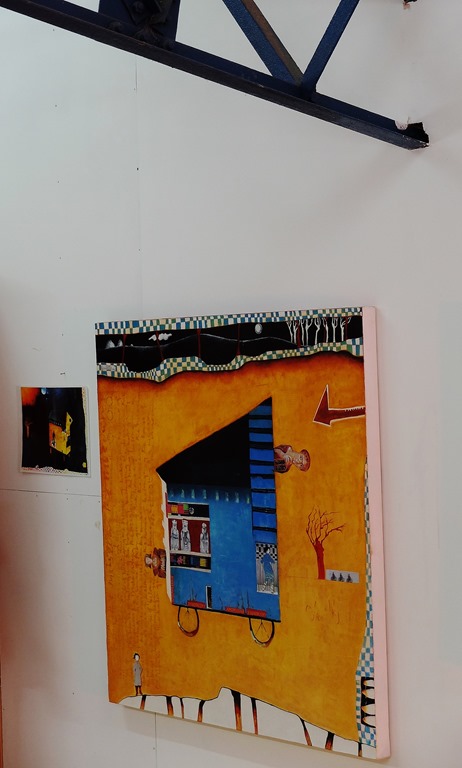
I asked Sheilagh how the work began. She told me that some years ago the idea of belonging had become very important to her. As she says on her website:
Our ‘sense of belonging’ ripples out from our homes to our village, street, town, county, region and country and help to shape our identity…
Key, then, to her work is a sense of connection to land and how that relationship defines us. This in turn has physical expression in community repositories, the places where we keep artefacts, our history, the knowledge of ancestors – all the familiar things we recognise and which tell us something of who we are. In other words, the museum, or as Sheilagh describes it: the house of belonging. The script running down the left-hand margin of the painting in fact repeats over and over the words ‘the museum’, ‘the house of belonging’. The repetition reflects the strong political stance of Sheilagh’s work.
To me this is ‘the writing on the wall’, a statement of collective ownership; The House of Belonging staking a claim. Its contents are manifestations of how humans have interacted with their landscape and the place they call home. Sheilagh also says that adding text creates a certain texture; that the sense of a hand moving across the work creates a connection with her, its maker. The wheeled blue structure, then, is the House of Belonging. The words written inside say ‘everybody’s knowledge’. This is written twice so there can be no mistake. It feels like something to stand up for, a rallying call.
It is also important, Sheilagh says, that the House can move across the landscape to where the people are, rather than the other way round; this makes it more egalitarian. Inside the House are images and artefacts, symbols of creativity. Some of them are stereotypical of ‘heritage’ and therefore instantly recognisable. For instance, the chess pieces (centre left in the painting) are derived from the Scottish Isle of Lewis Chess Set in the British Museum. The set dates from AD 1150-1200 and suggests Norse influence or origins.

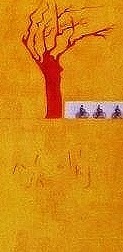
Sheilagh copied and simplified the images from a sales catalogue that specialises in heritage reproductions. The placing of the queen in the central position is also significant. She says she feels bound to redress an imbalance: the fact that in most of our media women only occupy centre stage when they are being commodified in some way. And then there is the mathematical equation painted in red beneath the red tree, centre right of the painting.  The presence of equations in Sheilagh’s works adds a further layer meaning for her, and although she doesn’t think it necessary to explain them, she is always very pleased when people recognise them. This particular one refers to mathematical research by American academics in the 1920s called The Geometry of Paths. The appearance of equations in Sheilagh’s paintings also has more personal origins. She tells me she started to include them some years ago – after she had been helping her daughter revise for her Maths and Physics A’ level exams. It is another connection. There are many more signifiers in the work: motifs that have links and resonance with Sheilagh’s other works. The red tree above the equation is a symbol of timelessness, indicating ‘forever’ in human terms.
  The red arrow in the top right creates a sense of energy and direction; a ‘look what’s here’ sign. There is the sense of a force field, drawing people to the House of Belonging.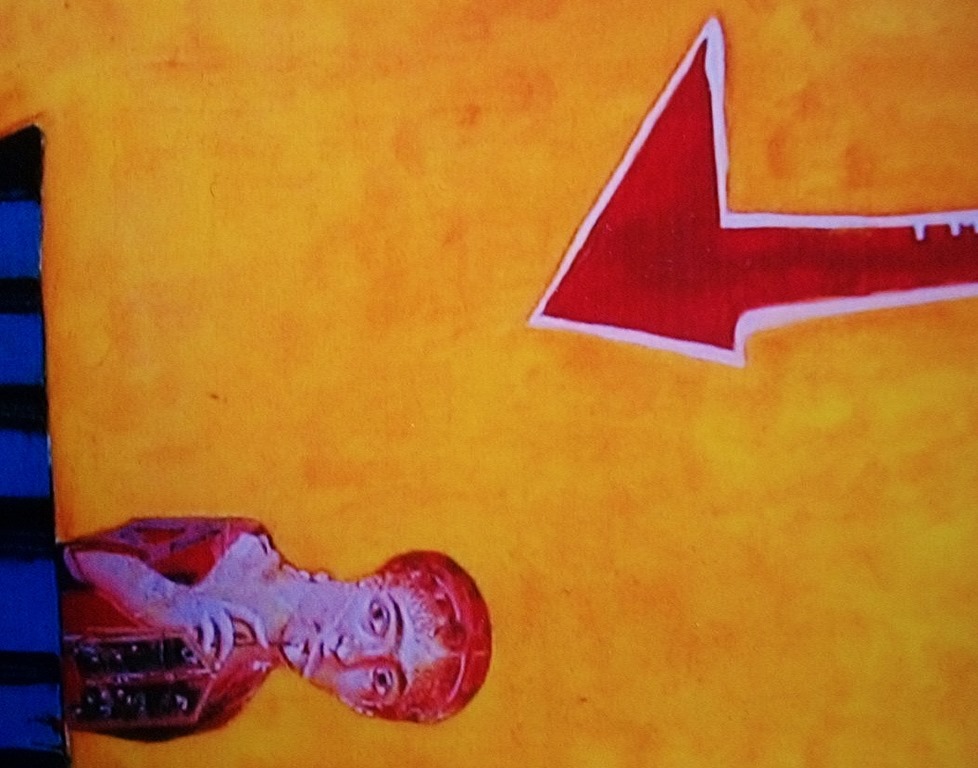
Finally, we talked about the overall composition. Sheilagh says that she began the work some years ago after she noticed that a small building denoting ‘museum’ often appeared in her landscapes. This time she wanted it to have it as the main subject, and to make it both an enticing and a mysterious place. At this point she also created the friezes at the top and bottom of the picture, these in order to suggest other layers of reality behind the surface painting. The top frieze is the wider, timeless landscape of which the museum is also symbol. The bottom frieze is deliberately ambiguous and suggestive; it invites the viewer to consider what might lie behind.
And having created the work’s essential structure, the painting was then abandoned. It was only some fifteen months later, when Sheilagh, looking for a large canvas to start another work, returned to it. She was fully intending to paint over it, but when she looked at it again she suddenly knew how to proceed and completed the work very swiftly. She says it probably is not quite finished, and suspects that something may still need to be added. In the meantime she has been occupied with a large body of work relating to Scotland.
*
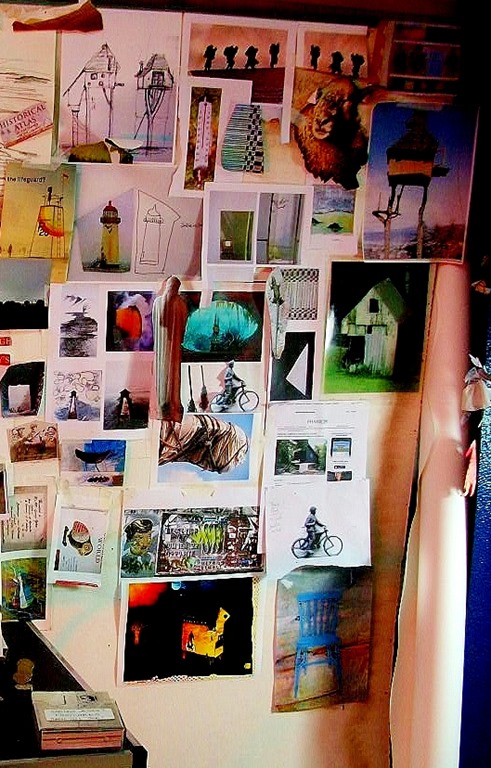
Notes and reference materials from Sheilagh Jevon’s studio
© 2014 Tish Farrell
