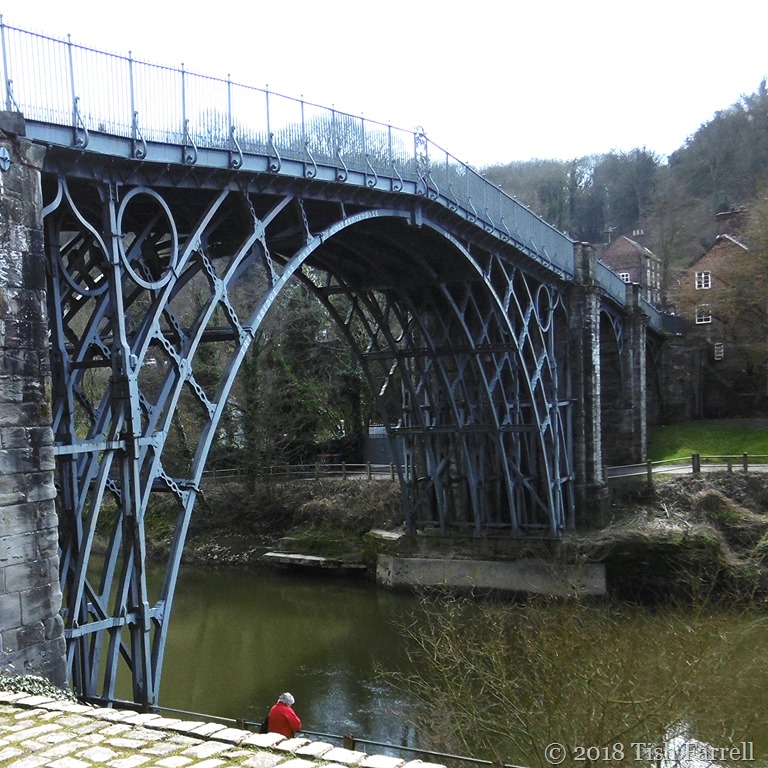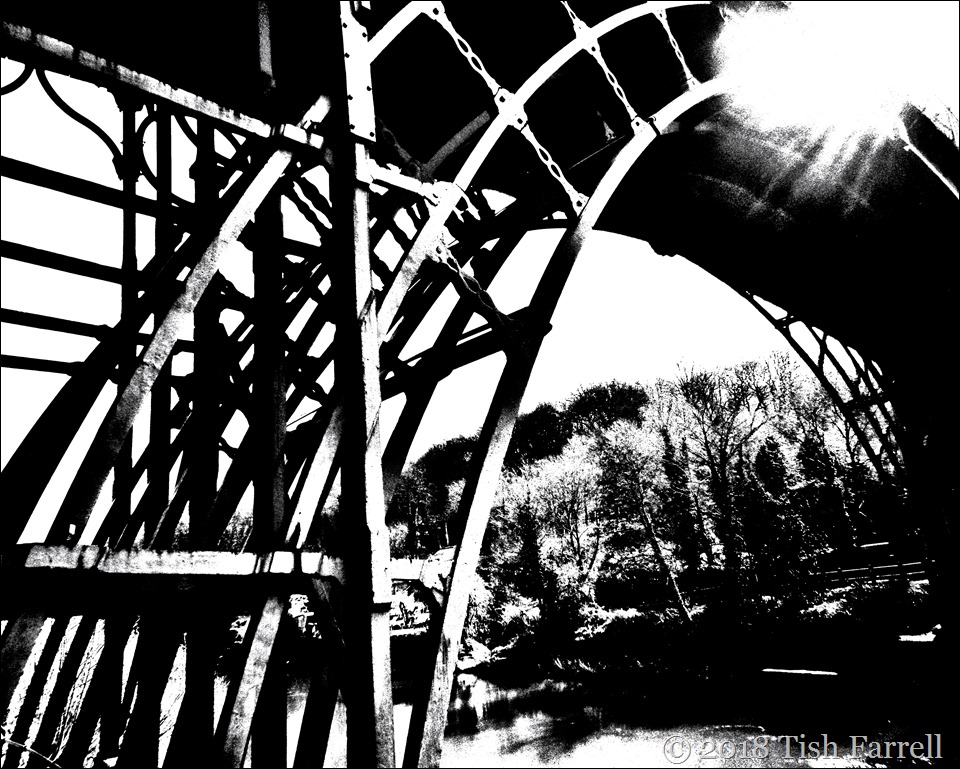
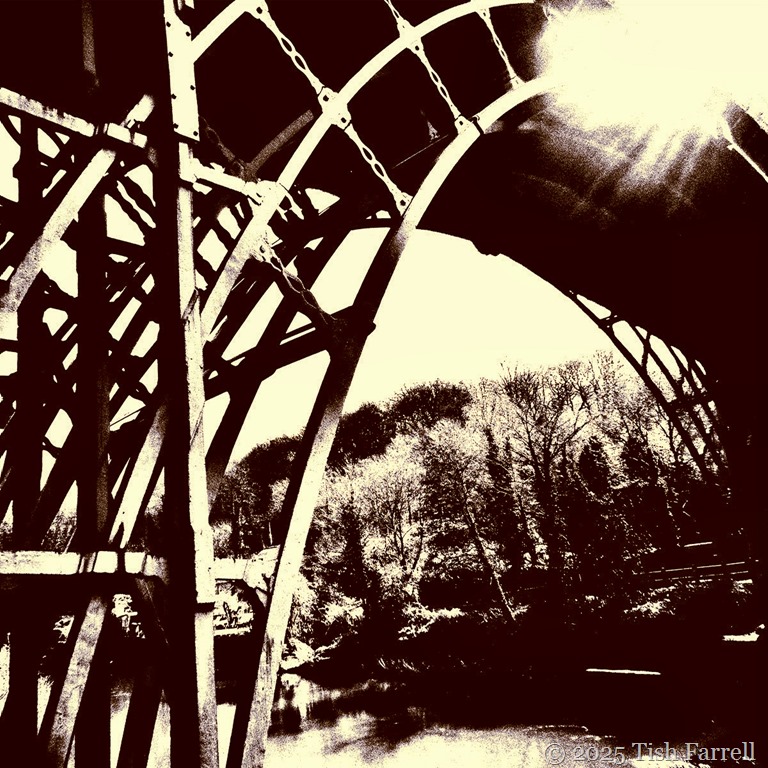
Geometrically Inventive: The World’s First Cast Iron Bridge 1779

Iron Bridge 4

*

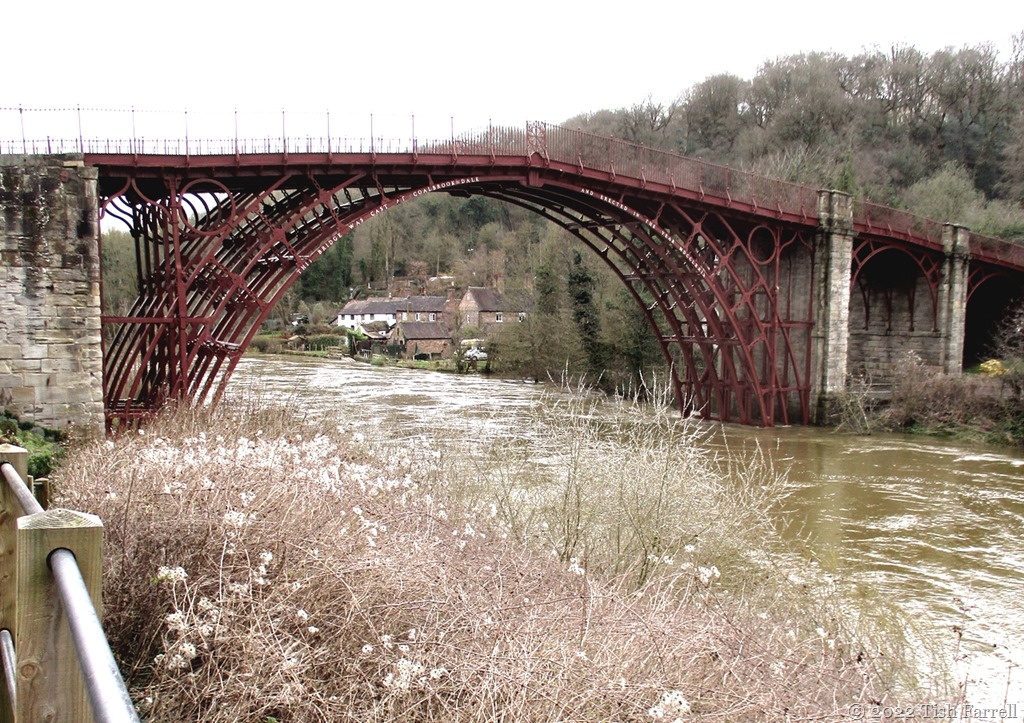
I rather miss having the Iron Bridge on our doorstep. It’s now a good hour’s drive across the county from our house in Bishop’s Castle.  We used to like wandering along the Wharfage beyond the bridge, gazing up at the hanging woodland along Benthall Edge. It’s a great place for promenading, or at least it is when the River Severn is safely in its bed.
IMG_2614ed

River Severn on the rise

*

The Iron Bridge, though, has withstood the most tremendous deluges, including the great flood of 1795 that took out most of the old stone bridges from Shrewsbury to Worcester. It was a show of resilience that proved to anyone who had doubted the capacities of large cast iron structures, that its builder, Abraham Darby III, had been right all along: cast iron was the material of choice for the industrial age.

Nor did its adoption take long. Soon it would be used to build the frames of factories; seen as a boon for the owners of textile mills whose combustible raw materials made them prone to ruinous conflagration. The several-storeyed iron-framed buildings that ensued were forerunners for the skyscrapers of the modern age.
P1000842ed

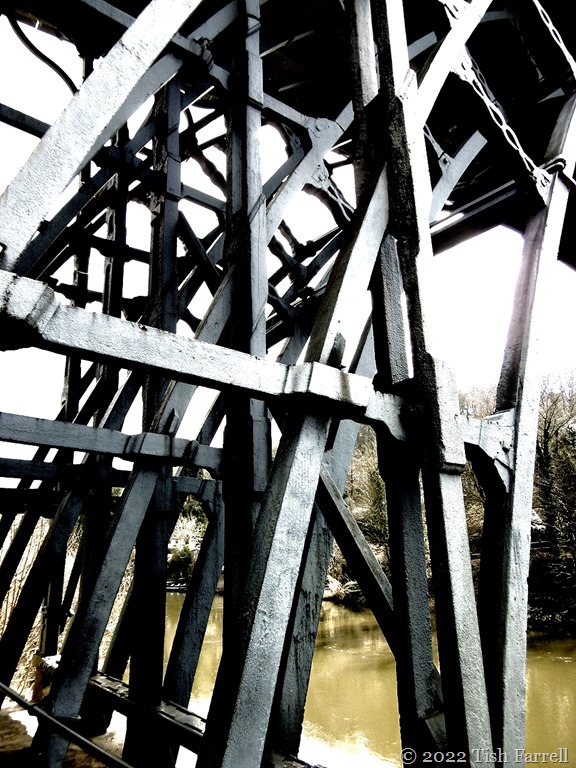
On closer inspection, though, Abraham Darby’s ‘world wonder’ innovation came with more than a hint of sticking to the tried and trusted. After all, the man was an ironmaster, from a dynasty of ironmasters, and thus a pragmatist, and while the use of cast iron for so big a project was breaking new ground, the hundred foot span was achieved by the jointing of over 1,700 castings, some weighing over 5 tons, and using centuries’ old woodworking techniques of dovetail, mortise and tenon joints.

Besides, there was something else he was wanting to prove: that a bridge with a single arch could be made to span a waterway, busy with large sailing barges. To achieve this meant another significant breakthrough: the Severn trows could pass beneath without the nuisance of lowering their masts.  It was all good for publicity.
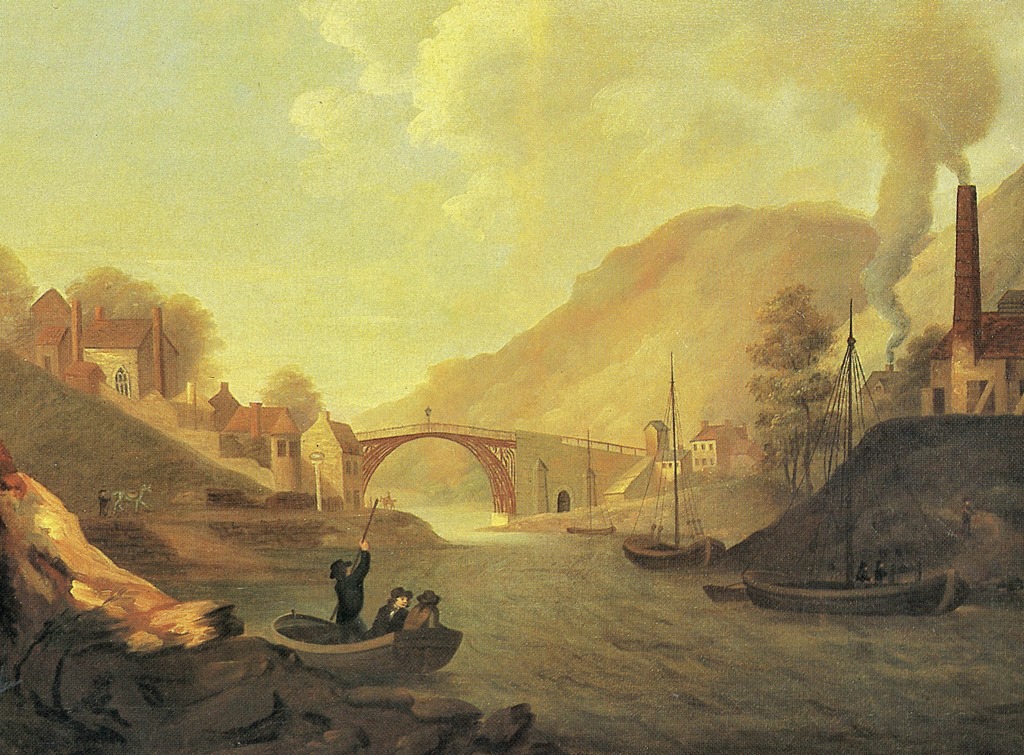
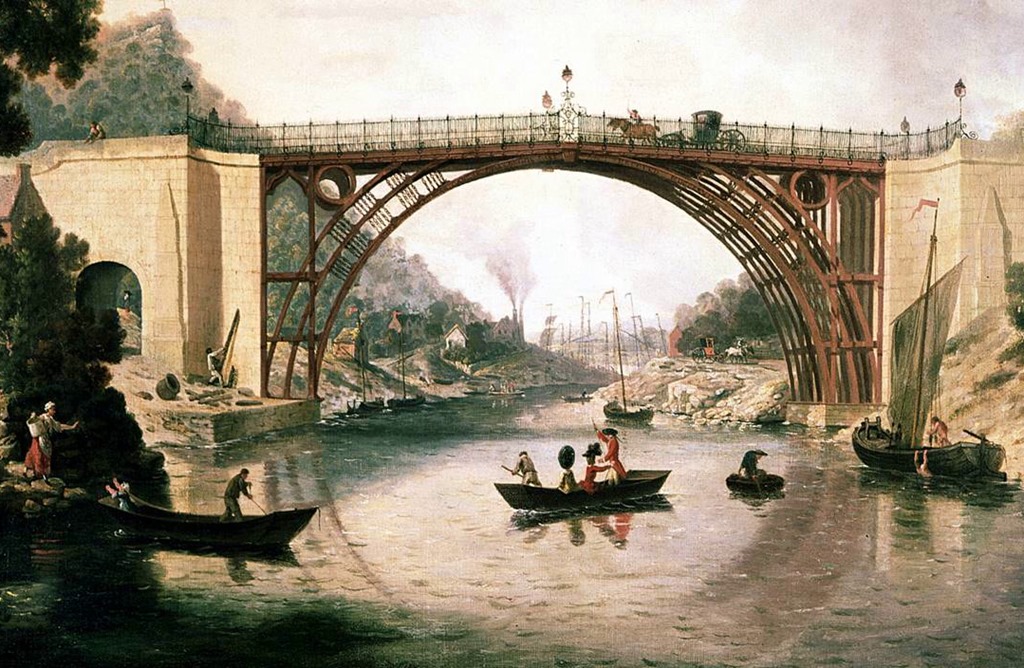
Iron Bridge The cast iron bridge near Coalbrookdale View of William Williams 1780

‘The Cast Iron Bridge near Coalbrookdale’  by William Williams 1780

*

The bridge and the foundries, furnaces and forges of Coalbrookdale became the tourist venue of the age. Engineers, ironmasters, industrial spies and scores of artists flocked to wonder at what many likened to a vision of hell. The William Williams image above was painted a year before the official opening of the bridge to the general public. You can see three trows moored along the right hand river bank.

*

IMG_3492ed

And of course, as a World Heritage site, the Iron Bridge is still a huge tourist attraction, seen here spanning a quiet and sluggish summer river.
GeometricJanuary Day 11

Another Jaunt Down The Jitties

IMG_3103header

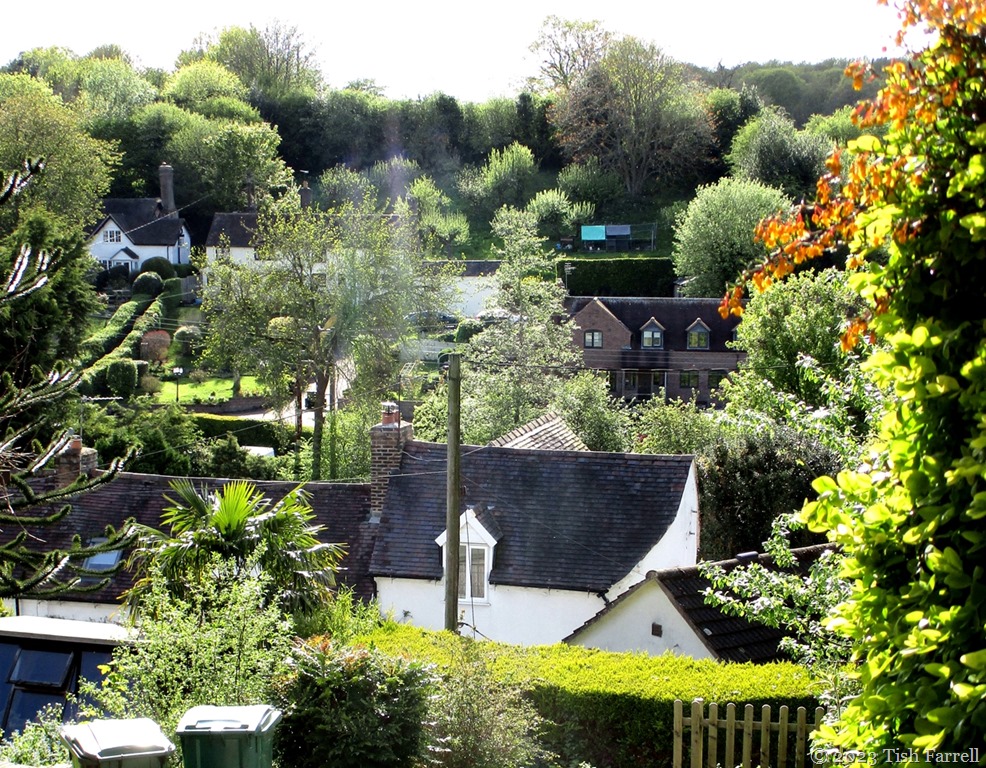
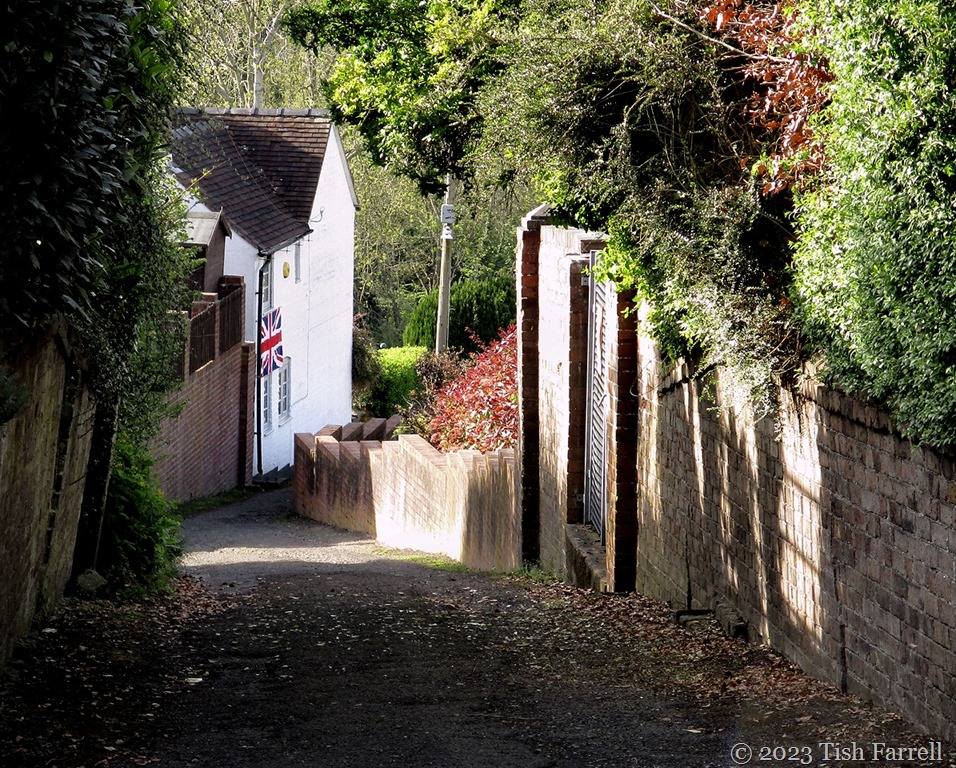
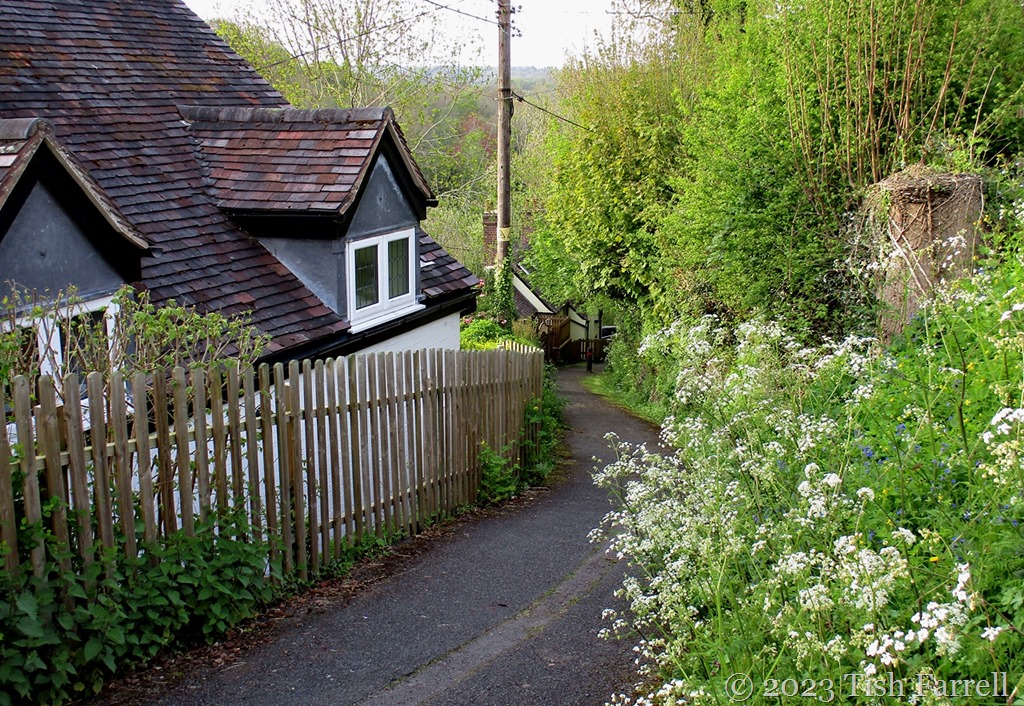
For those who missed my earlier post, the Broseley jitties comprise a hillside maze of passages and pathways that served the ancient mining community of Broseley Wood. Today they wend between erstwhile squatter cottages, now restored and extended to make highly desirable homes with terraced gardens and magnificent views across Benthall Woods and the Severn Gorge.

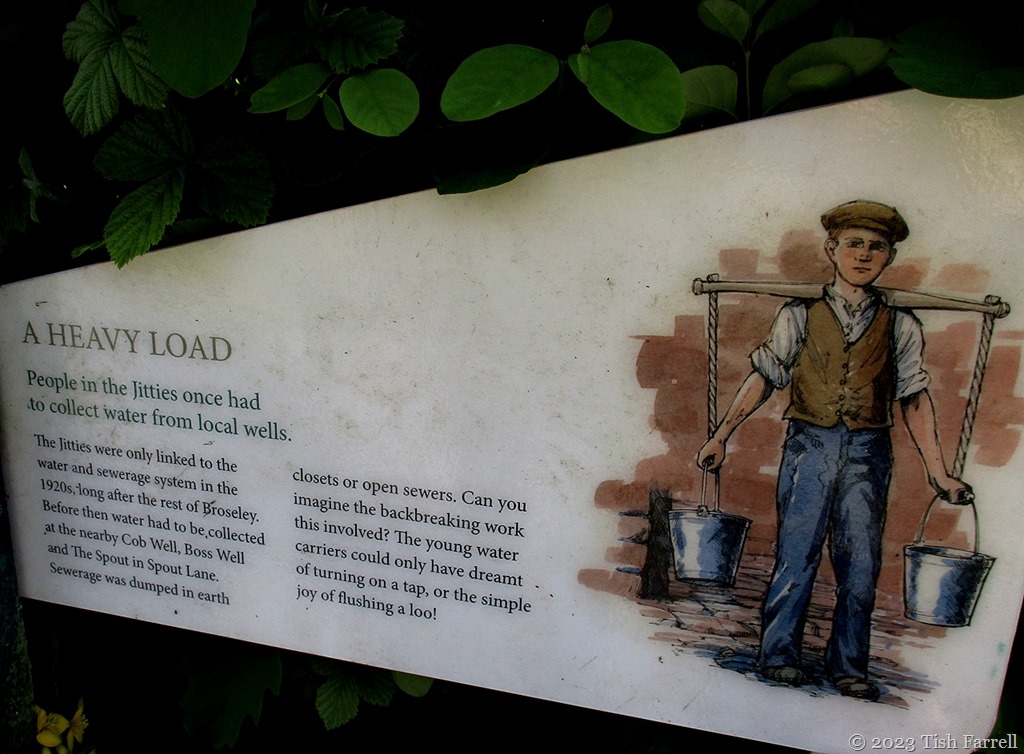
In the early evening sunshine, the place feels idyllic, but back in the seventeenth, eighteenth and early nineteenth centuries this hotchpotch of dwellings built on the wastes around coal, iron and clay pits would have been more shanty town than orderly village. For one thing think taverns on every corner to quench the thirst of hard labouring folk. And for another think no sanitation.

IMG_3146

*

There are seventeen jitties, most of them cross-paths between more substantial lanes and each named after individuals, wells or particular landmarks associated with them. We began this particular exploration at Crews Park Jitty, hiving off Woodlands Road not far from the town May Pole.

IMG_3177

*

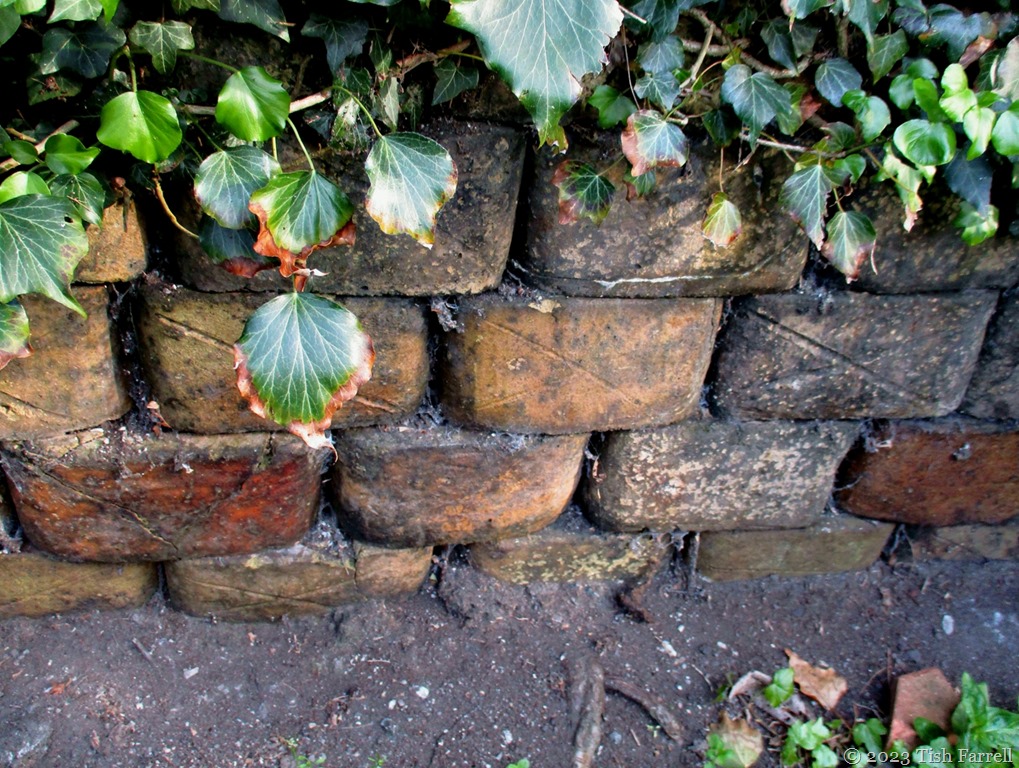
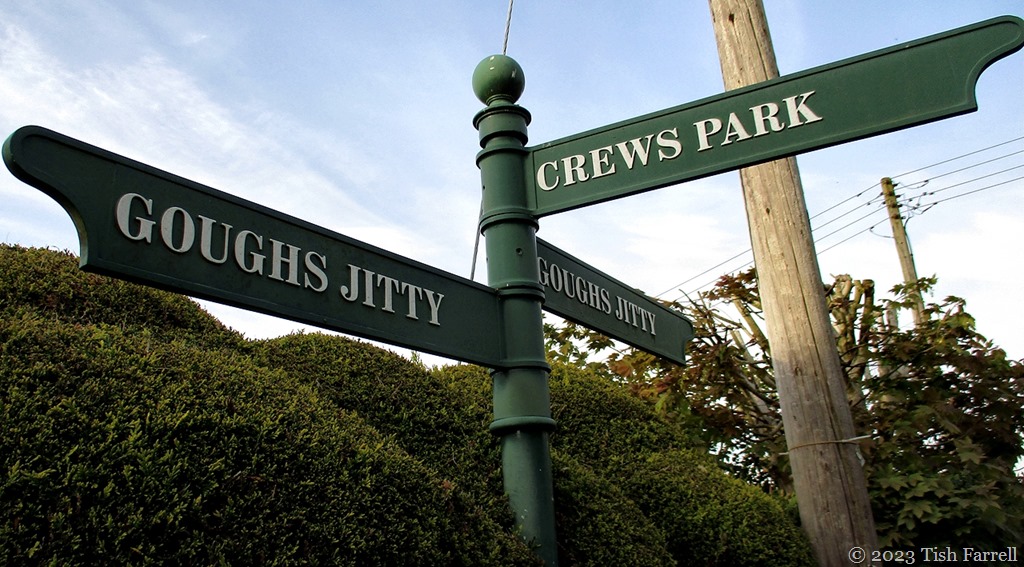
At the foot of this hill is Gough’s Jitty, that runs crosswise, left and right to Crew’s Park. We turned left and soon came upon the very noteworthy retaining wall built entirely of saggars. These are fireclay boxes, the remnants from one of Broseley’s clay tobacco pipe factories.

IMG_3105

Adaptive re-use: the pipe factory saggars make a fine wall.

There were three Broseley factories in the 19th century, although pipe-making had begun in the area by at least the seventeenth century. The pipes were exported across the world and often referred to as ‘broseleys’. During firing, and to protect them from ash damage, the pipes were packed inside saggars, which were then stacked up inside the bottle kilns.

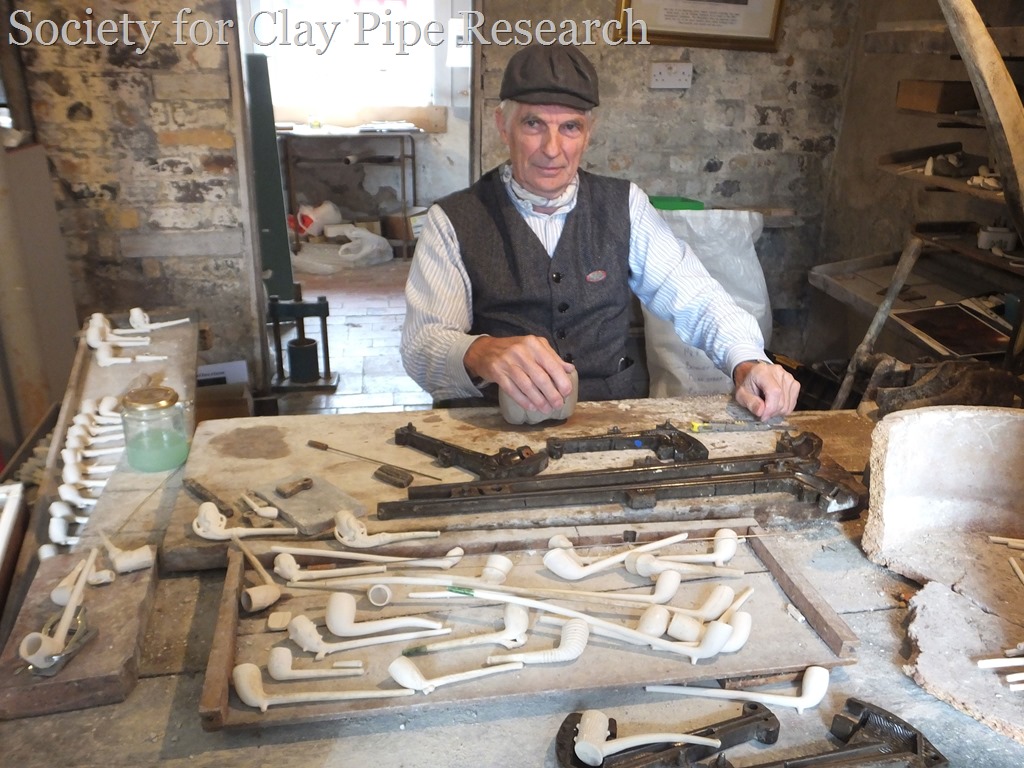
And by way of a further digression, talking of clay pipe factories, here’s a glimpse inside Broseley’s last surviving pipe works, operated by the Southorn family until the 1950s and now owned by Ironbridge Gorge Museum Trust:

Pipe-maker Rex Key demonstrating his skills at Broseley Pipe Works Museum.

*

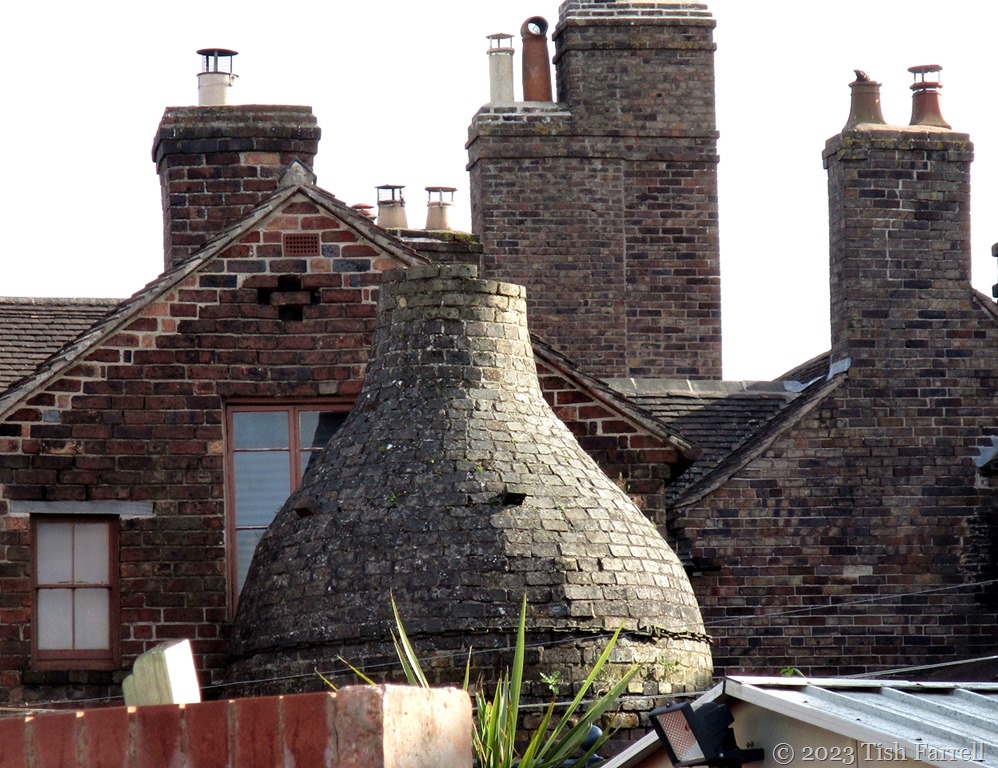
The museum is closed at present, but you can glimpse the top of the King Street bottle kiln from the end of our road.

IMG_3184ed

*

See also an intriguing article from the 1950s that talks about the Southorn family and their Broseley pipe works: https://www.broseley.org.uk/cutting/kings%20head.PDF

*

But back to the jitties.

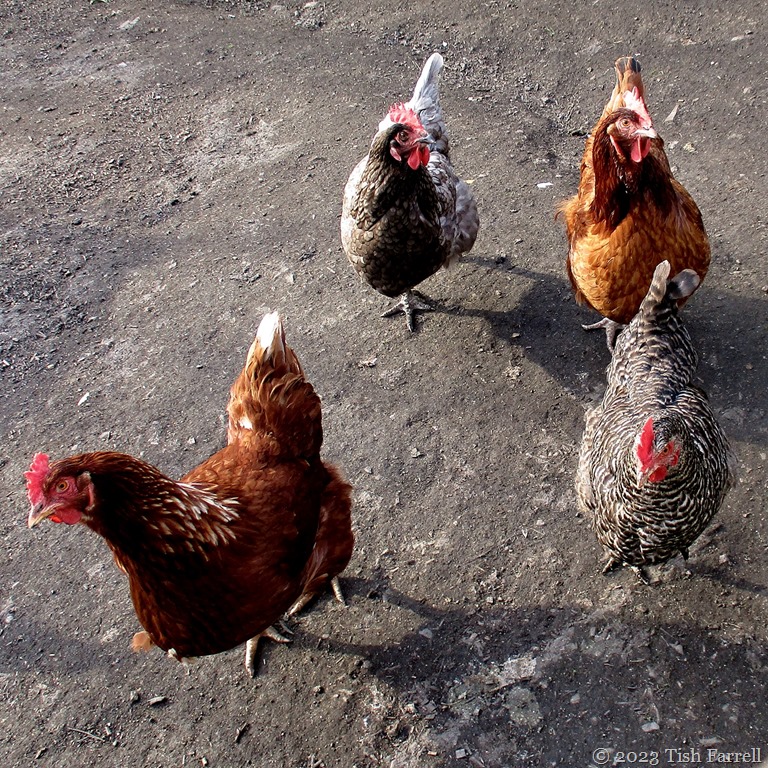
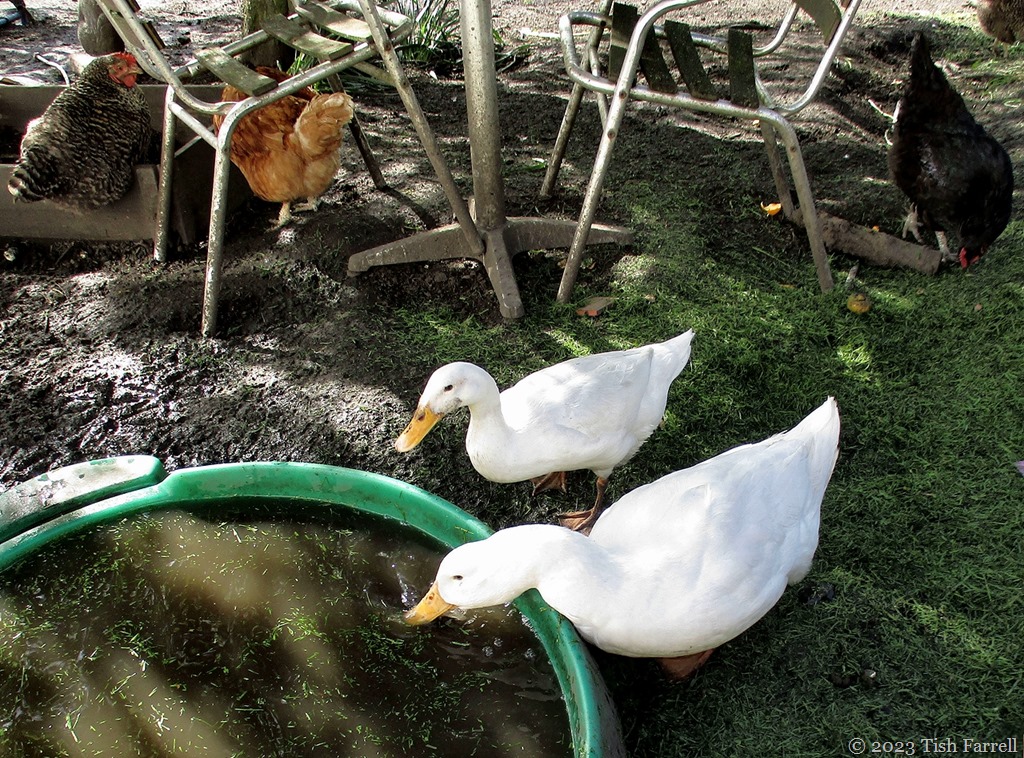
As I said, Gough’s Jitty runs crosswise from Crews Park, and following the south westerly end along the saggar wall you soon collide with Mission Jitty heading north east. Near the intersection there’s a delightful ‘farmyard’ filled with fun activities: swings, coops, rails and ponds, for ducks and hens. You can buy the eggs too (honesty box provided). The hens came hotfoot to the fence when they saw me:

IMG_3114

IMG_3152

*

At this point we left the jitties and stepped out on to Quarry Road which then presented us with a choice, downwards towards Ironbridge:

 IMG_3116

Or upwards towards home…

IMG_3118

*

…passing the cottage that was once the Broseley Wood post office:

IMG_3119

*

And a new jitty sign:

IMG_3120
*
This will have to be explored another day, although I’ve since discovered this path leads down to Bridge Road where in the 1930s and 40s the Wolfsons, a Jewish family ran a pottery works making plain plates and dishes. A branch of the family also set up another works nearby where they made china petals for Woolworths, and also painted porcelain dolls’ faces, all of which meant useful employment for local women who could work from home. The family apparently paid good wages and were well respected, although it is said their faith kept them socially aloof.
*
And next the sign to Ferny Bank, which again must wait for another day:
IMG_3132
*
And so onwards up Quarry Road, views up and views down across the valley to Benthall:
IMG_3133
IMG_3149
IMG_3136
IMG_3144
IMG_3146
IMG_3135
*
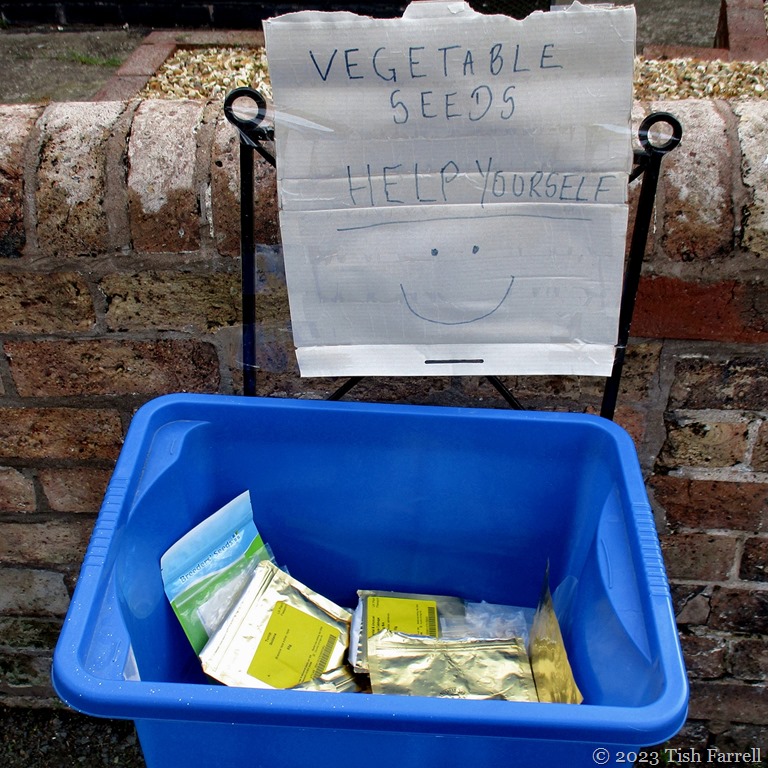
And of course this was an offer I could not refuse. In fact we have learned that this is very much a Broseley custom. Residents put out on their doorsteps still useful items they’ve finished with, but others might like. We passed a microwave on a wall the other day. Also a large etched glass vase outside another house.
*
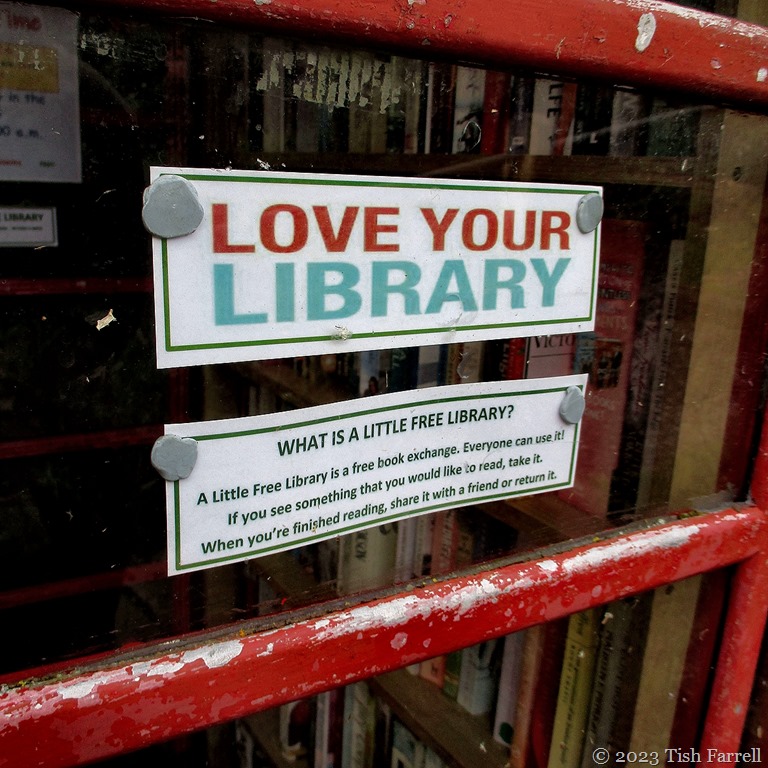
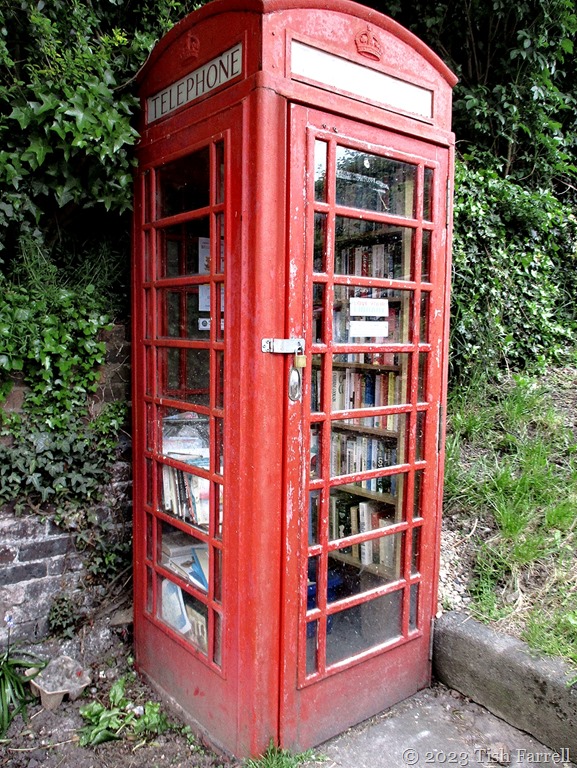
Then comes the star find of this particular jitty jaunt. At the junction of Quarry Road and King Street is a telephone box. And inside the telephone box is…
IMG_3138
IMG_3140
It closes in the evening, but is open earlier in the day. I think we might be making one or two donations to this particular institution.
And just in case you looked at the link about the Southorn family which included a 1950s photo of the King’s Head inn on King street – here’s the link again https://www.broseley.org.uk/cutting/kings%20head.PDF
This is the King’s Head today; an inn no more:
IMG_3182
*
Finally, a salutary reminder of how things were:
IMG_3167

Wheels Within Wheels: Or How To Make A Lot Of Hot Air

IMG_0802

In another life I worked at the Ironbridge Gorge Museum Trust (IGMT). This was back in the days of government funded job-creation projects when these were the only means of beginning a museum career. I did various jobs – education officer, archaeology project supervisor, head cook at the New Inn at the Blists Hill Victorian Village. Fund-raising catering events also featured. I once devised lunch for a thousand Commonwealth University Vice Chancellors, and served apple pie in the Blists Hill  Squatter Cottage to a bunch of bemused Italian Industrial Archaeologists. Then there was the party for the class of Welsh school children in the depths of the Tar Tunnel whither provisions were wheeled in on an old mine truck and we all had to wear hard hats with miner’s lamps, and the poor kids had to tuck into the party food before the dark, dank atmosphere of the tunnel turned the crisps and sausage rolls to mush.

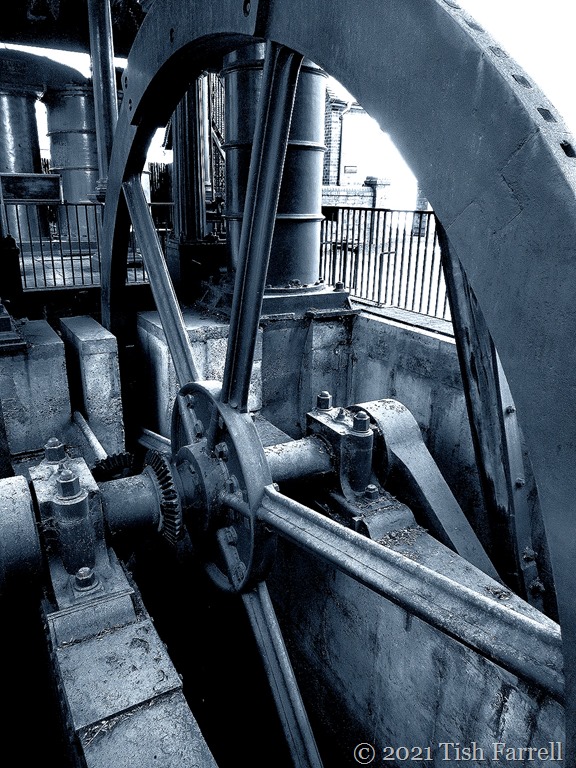
But I digress. This is supposed to be about wheels and a (vaguely) technical explanation of the header photo is called for.

So: back in the early days of IGMT, as in the late 1960s, the putative museum had among its patrons venerable local industrialists, men who were worried that Shropshire’s  industrial heritage would be lost in the van of Dawley (later Telford) New Town development. They had the notion of saving particular technological exemplars and exhibiting them, sculpture park fashion, on one of the Ironbridge Gorge’s abandoned industrial sites. Blists Hill seemed ideal because it was anyway rich in original 18th and 19 century industrial remains: blast furnaces, adits, canal, brickworks, steam-winding engine, and the fabulous inclined plane, (tar tunnel beneath) – all still waiting to be conserved and/or restored.

One of the first ‘exhibits’ to be relocated there was David and Sampson, a huge steam powered air blowing machine that from 1851 to 1900 had been deployed to stoke up the heat in four blast furnaces at the nearby Lilleshall Company.

IMG_0801

Unfortunately I don’t have a photo of the two massive beams (obscured here by the protective superstructure) but you can see what they look like at this link. Both beam engines were harnessed to and regulated by a single large flywheel., each connected to a steam cylinder (beside the wheel) and a big air tub (to the rear). Between them, the engines pushed out 12,500 cubic feet of air per minute. As in WHOOSH!

These days, it’s hard to imagine that East Shropshire was once a centre of industry – i.e. from early mediaeval monastic days to the 1960s. The Lilleshall Company that originally commissioned the beam engines from Murdock, Aitken and Co, Glasgow – was active in iron and steel production, coal mining, engineering and brick making over some 150 years, and belongs to the latter phase of Shropshire’s industrial history. (There is more about Murdock, Aitken and Co plus some old photos of beam engines HERE.)

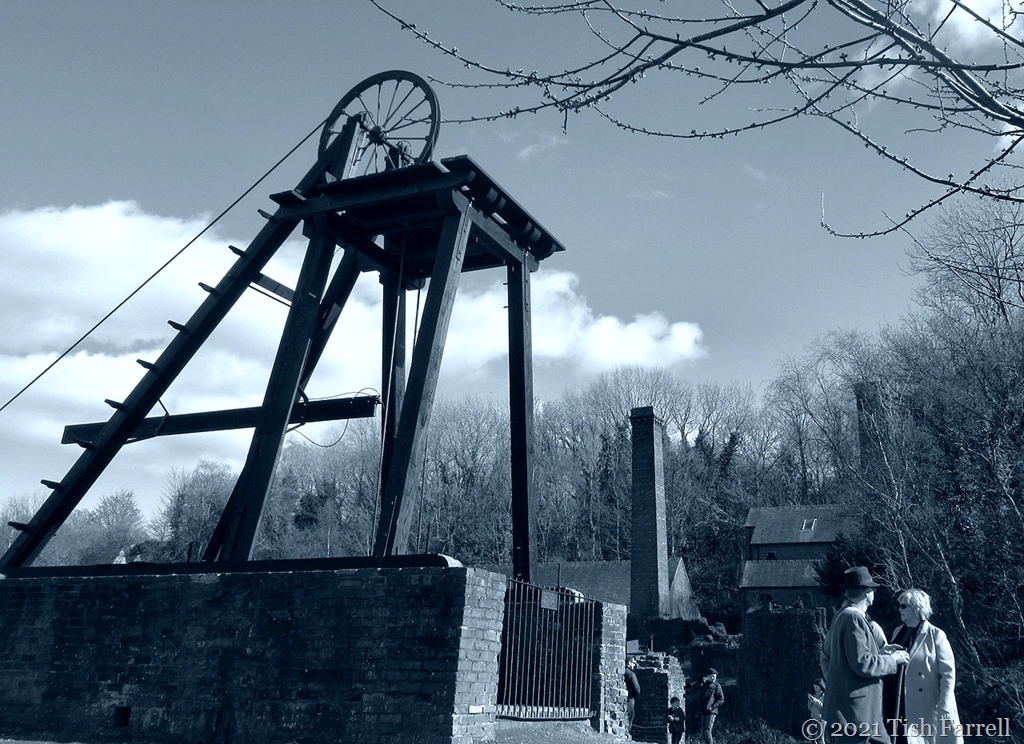
And while we’re at Blists Hill and looking at wheels, here’s the restored pit head of an original 19th century mine, also operated by a very fine (still working) steam engine. The local mines very conveniently produced fire clay, iron ore and coal – just what the industrial entrepreneur ordered.

IMG_0819bw

Blists Hill pit head, and 19th century brickworks ruins behind.

Cee’s Black & White Photo Challenge: wheels

In The Red ~ Iron Bridge Makeover

IMG_1727cr

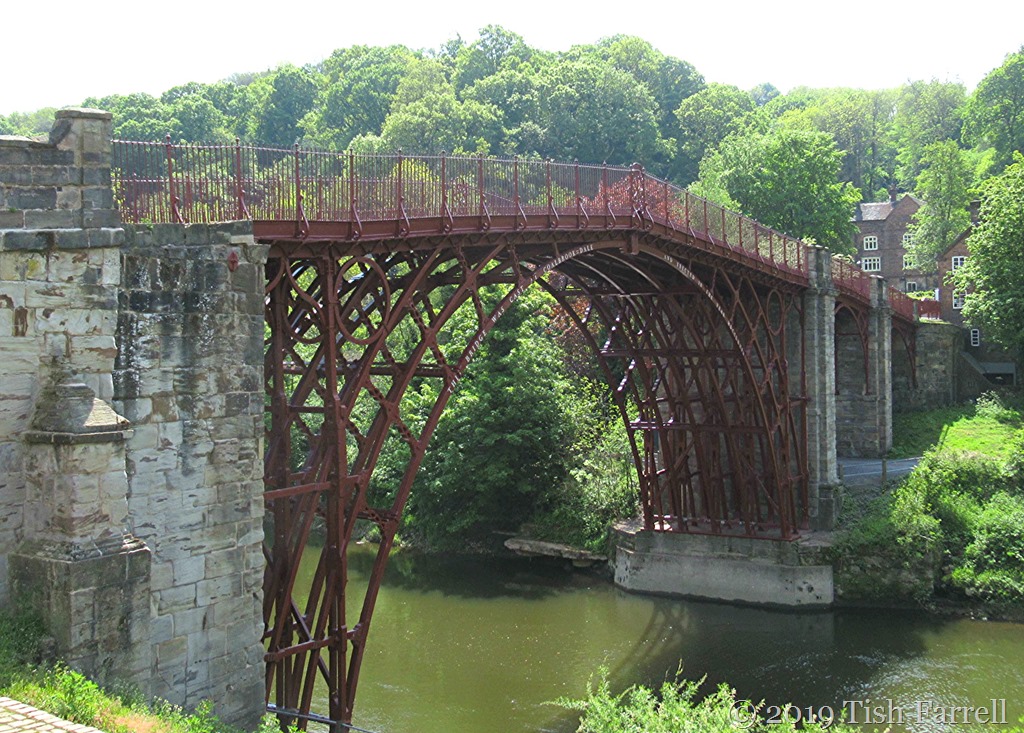
For much of last year this 240-year-old bridge was under wraps while English Heritage engineers carried out major repairs on the iron work. And it was during this process that the original paint colour of the world’s first cast iron bridge was discovered – a rusty red. This seems to have struck many as surprising, probably because in the living memory of most Shropshire folk, the bridge has either been lugubrious black (as I remember it in the 1960s) or battleship grey – its most recent shade before the overhaul.

P1000843

*

And this is how it looked last week bathed in May sunshine. A much more jaunty effort.

IMG_1711

That the bridge was originally this colour, or as near as can be recreated, was documented at the time. While Abraham Darby III was having it built (between 1779 and its official opening in 1781) he commissioned some promotional artwork from William Williams. He wanted to show the wide world what marvels could be created using cast iron.

Iron Bridge

William Williams c 1780 Cast Iron Bridge near Coalbrookdale  Ironbridge Gorge Museum Trust

*

Needless to say, as with all propaganda, inconvenient truths have been elided from the view, and we have instead notions of paradisal punting and extreme millinery rather than the filthy outpourings of riverside ironworks and coke burning furnaces that were actually in the vicinity. (And don’t forget the ear-splitting soundscape of clanging steam hammers and the general clamour of the wharves and boat-building yards).

In fact if you want an image of where man-made global warming began or a metaphor of how some of us prefer to deny responsibility for the damage caused by our industrial excesses, then this painting could well serve the purpose. Beguiling, isn’t it?

Standing on the freshly caparisoned bridge today and looking at a river empty of the the fleets of trading barges that once plied these waters from early monastic times and into the 19th century, the lush hanging woodland of the Severn Gorge all around, it is hard to believe that the Industrial Revolution had its roots here; that the innovations in iron making and casting made by the Darby dynasty and John (Iron Mad) Wilkinson sparked the multiplier effect of technological invention (from the soul-sapping iron-framed textile factories of the north to the transport systems of Stephenson and Brunel) and so on around the world; and that now, after all the excitement and technical derring-do and ingenuity we’re left to contemplate the mess that industrialisation has made of the planet.

However, on a warm afternoon in May, with the little town of Ironbridge quietly hosting the season’s first sightseers, it seems altogether like too much irony (cast, rolled, puddled or wrought). We’ll just enjoy the views then.

IMG_1713

IMG_1714

IMG_1715

copyright 2019 Tish Farrell

Six Word Saturday Pop over to Debbie’s to see her wonderful naked man.

All Man-Made At Derbyshire’s Middleton Top

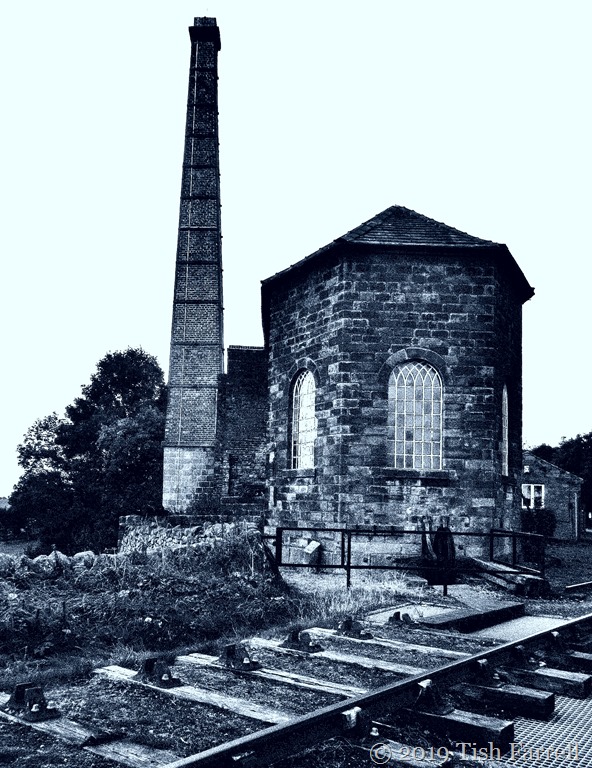
It was a gloomy September afternoon when we visited these relics of the Cromford and High Peak Railway just outside Wirksworth in Derbyshire. It is a truly remarkable piece of early railway engineering. The challenge was to make a viable transport route over the High Peak in Derbyshire to Manchester: Derbyshire coal and finished manufactured goods to go to the city, raw cotton for the East Midlands textile factories to come the other way. The line of rail was surveyed by Josias Jessop in the late 1820s, and his solution to surmounting the seemingly impossible limestone uplands involved the construction of 9 inclined planes (5 up and 4 down).

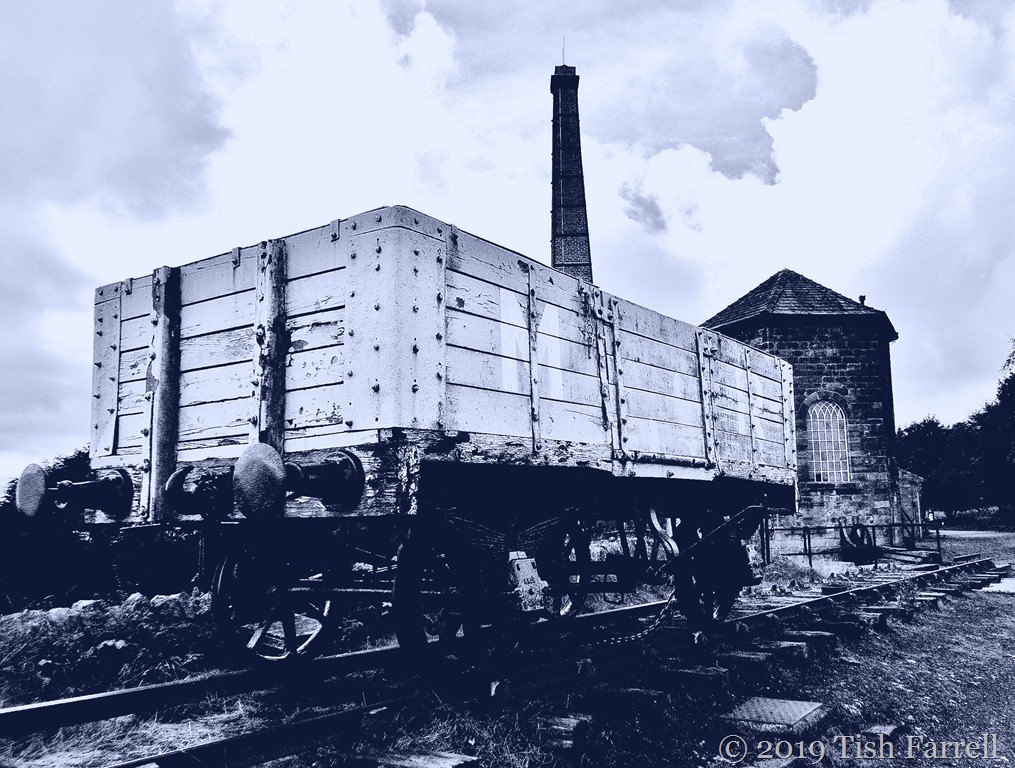
The 33 miles of line was the first long distance railway to be built anywhere. It also preceded the introduction of steam locomotives, which had not quite been invented in 1825 when the original Act of Parliament was drafted, though the Act did make provision for their presumed arrival. Instead, stationary steam engines, housed in august ecclesiastical looking buildings like the one seen here, provided the power to haul the goods wagons up and down the inclined planes. On the flat stretches, and until the arrival of the expected steam locomotives, horses and donkeys pulled the wagons. In 1831 it took two days to travel from one end of the line to the other.

The steepest stretch was up to Middleton Top from Cromford Canal. Within the short distance of 5 miles the railway had to climb over 1,200 feet, requiring five inclined planes with stationary steam engines to do the job. The Middleton Top engine house (below) still has its fully operational Butterley beam engine, which is shown off from time to time during open days, but not on the day when we were there. (Sorry, engine enthusiasts – no hiss of steam or magic whiffs of burning coke and hot grease).

Middleton Top steam engine house

*

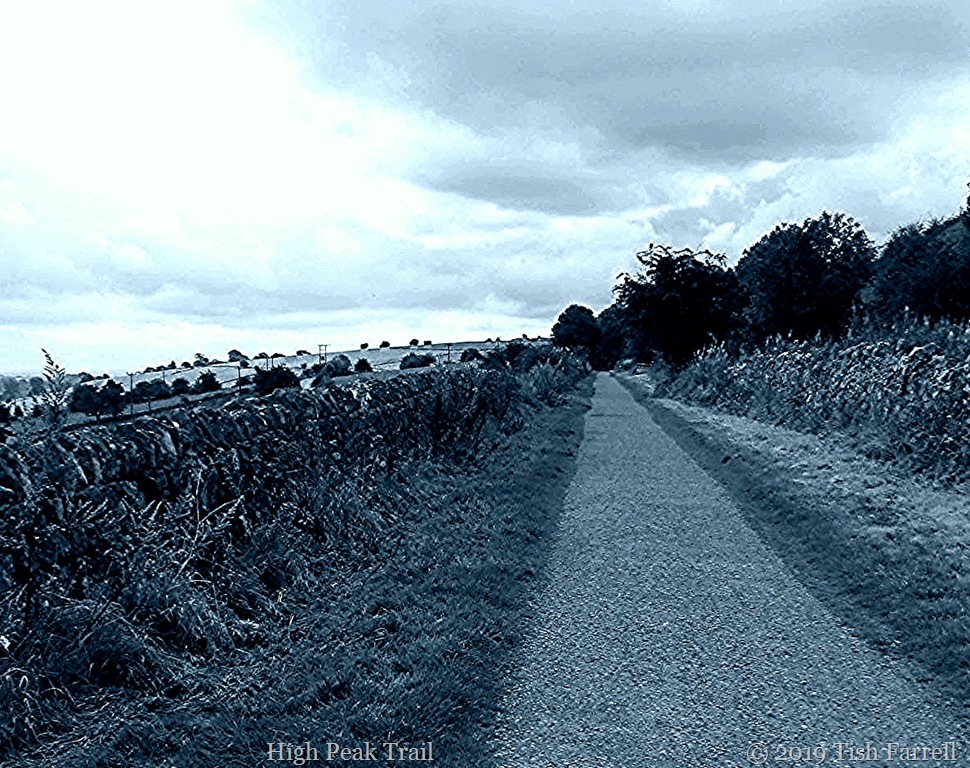
These days most of the line has gone and the old track bed provides 17 miles of fine walking and cycling on the High Peak Trail which in turn joins up with other walking routes that cover 120 miles of the magnificent Peak District. The men who toiled on this line, or in the quarries and mines whose produce it carried, or the women and children who worked in the textile factories served by it, would not have believed this transformation – from the mass-production-imperative of the Industrial Revolution that gave workers little respite from their heavy labours or work-induced diseases, to a mass health and leisure facility for the citizens of several nearby conurbations. No smoke or chemical fumes or mine dust or cotton lint to inhale day in and day out, just the wide open country and the time and space to breathe and simply be. Freedoms and landscapes to treasure then.

*

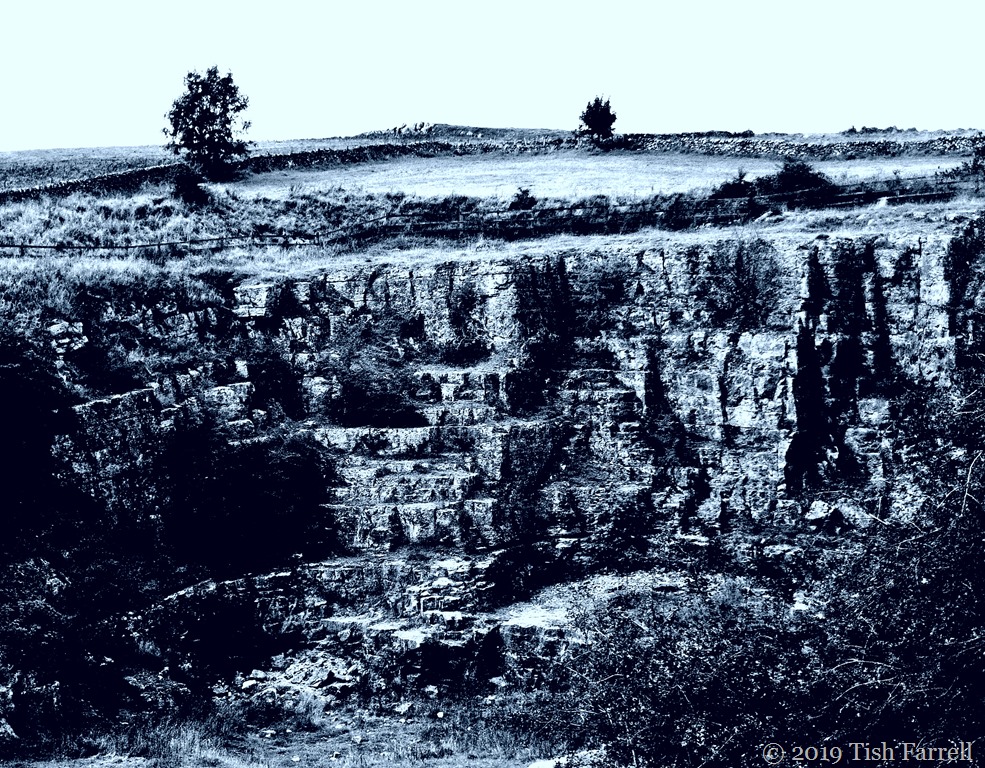
P1050679 Middleton Top quarry

Redhill limestone quarry at Middleton Top, opened in the early 1900s to take advantage of the nearby Cromford and High Peak Railway.

*

P1050675

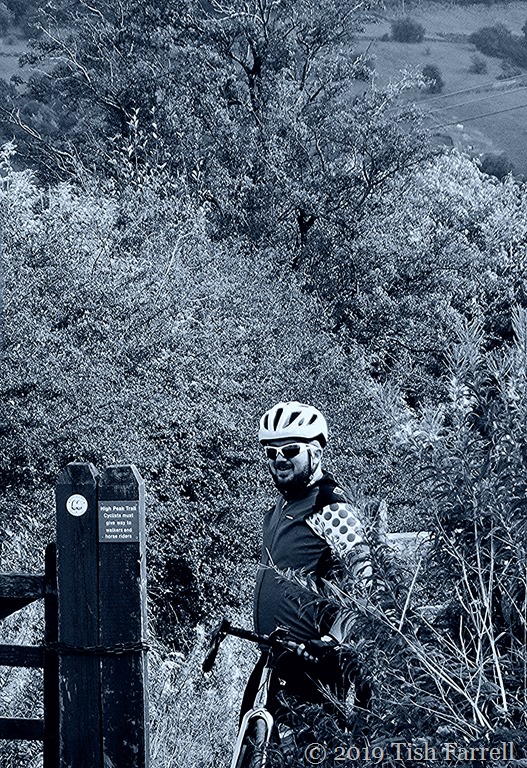
This happy chap has just wheeled his bike up 700 metres of the very steep Middleton Incline, and presumably the inclines before it. The trackway varies in steepness between 1 in 8 and 1 in 14. In its working days, there were up and down rails side by side, the trucks raised and lowered on heavy steel cables.

IMG_3452

IMG_3453

Cee’s Black & White Challenge things made by humans

Six Word Saturday


New Works For Old ~ From Foundry To Teddy Bear Factory And More Besides

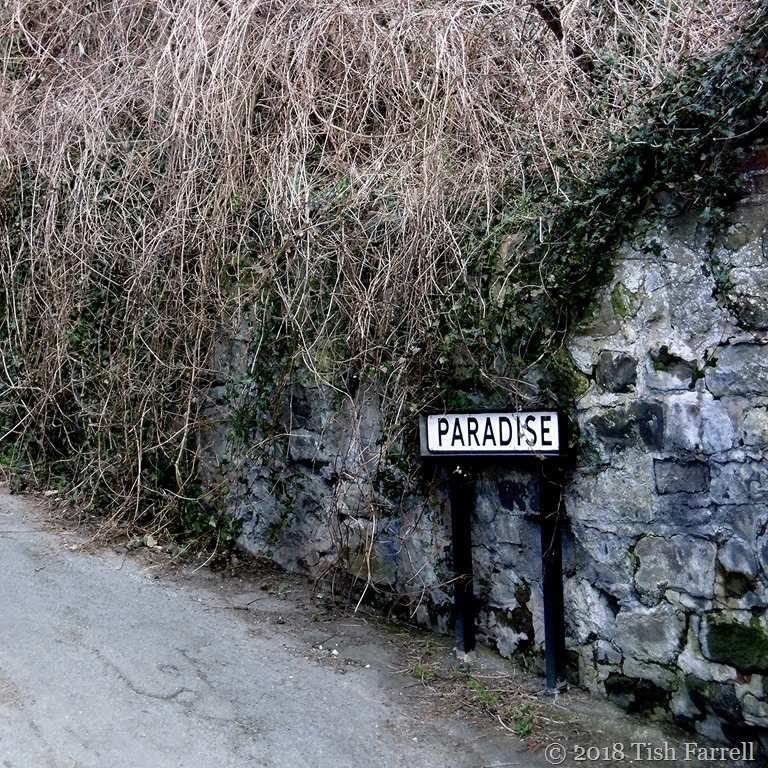
We’re standing on a riverbank just upstream from the Iron Bridge, at the foot of the Coal Brook that once powered the furnaces of the Coalbrookdale Company (the place where coke-fuelled iron casting was invented in 1709), and across the road from a little lane surprisingly called Paradise, which long ago was my daily route to work. As retail parks go, then, this site of re-purposed industrial workshops, it is pretty unusual.

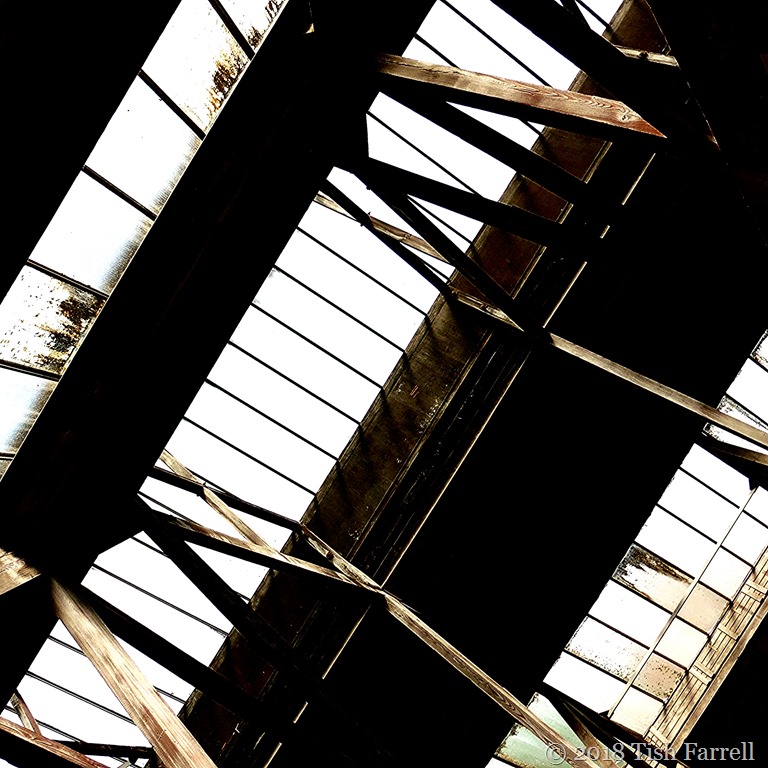
The roof-lit buildings once belonged to the Severn Foundry. They were built in 1901  when Alfred Darby II, last of the dynasty of Coalbrookdale ironmasters, was company chairman. By this time the business was contracting – that is to say, it was moving away from heavy industry to more domestic production, and operating only within the Coalbrookdale Valley. Even so, in 1900 the company still employed 1,100 men, a huge workforce for a small semi-rural community.

The reasons for the new foundry, built on the site of an old timber yard, seem rather remarkable now. Demand for its products came from unexpected quarters in faraway London.  From the late C19th the then new London County Council had begun clearing the city’s slum dwellings and putting up council houses – this in response to the passing of the Housing of the Working Classes Act of 1890. Requirements for improved living standards included cast-iron fireplaces and gas cookers, both of which were produced by the Coalbrookdale Company.

Iron founding is of course a dangerous, if highly skilled trade. The pouring of red hot molten metal from handheld crucibles into moulds provided plenty of scope for industrial accidents.  The workforce undoubtedly benefited from the better lighting conditions of these roof-lit premises. Although not for long. The London County Council contract was short-lived, and the foundry closed in 1917. Thereafter, the former industrial prosperity of Severn Gorge and the Shropshire Coalfield went into rapid decline, and the foundry buildings were left empty…

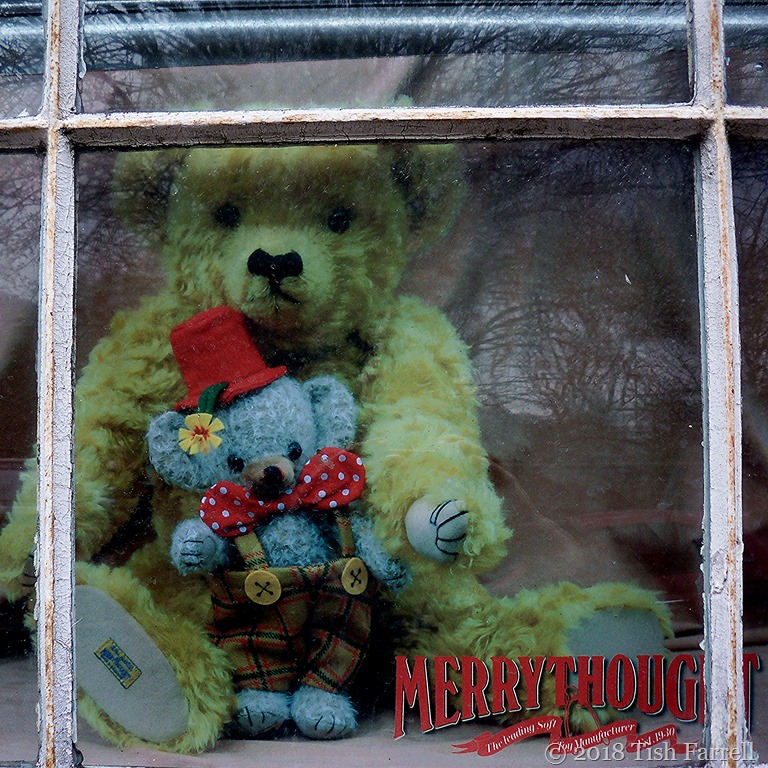
…until 1930 when, in another odd twist, along came Merrythought – a small family business producing high quality soft toys and handmade mohair teddies. They took over the foundry buildings and, also benefiting from the well-lit workshops, went into production. By 1940 they were employing 200 workers, mostly women. And yes, those noses and paws are all hand-stitched with, it is said, much pursing of lips by fastidious craftswomen who liked to get the job done without inflicting too much pain to their creations.

100_5082

And the firm is still going – into the fourth generation, and run by the two elder daughters of the previous chairman, Oliver Holmes, a man with great flair and drive, who sadly died before his time. The company is Britain’s last surviving teddy bear maker. It has had to fight to hold its own against competition from cheap soft toy producers and now specialises in limited edition bears, which it also sells in the Teddy Bear Shop just round the corner from the factory. The shop was the brainchild of my sister – back in the 1980s when she was running the Ironbridge Gorge Museums’ shops and did a deal with Oliver, who until that time only traded through the famous London toy store Hamleys.

P1000822

Recently, after Oliver Holmes’ death, Merrythought developed the former foundry site, providing new retail spaces in all the buildings not needed for teddy bear production. So now we have a fine little art gallery specialising in prints and print-making equipment, an antiques centre with riverside cafe, a bespoke kitchen fitters, and a small Co-Op store. Oh yes, and the Teddy Bear Shop just around the corner, with Guardsman Bear outside the door, overseeing Paradise.

P1000823

copyright 2018 Tish Farrell

Roof Squares 13

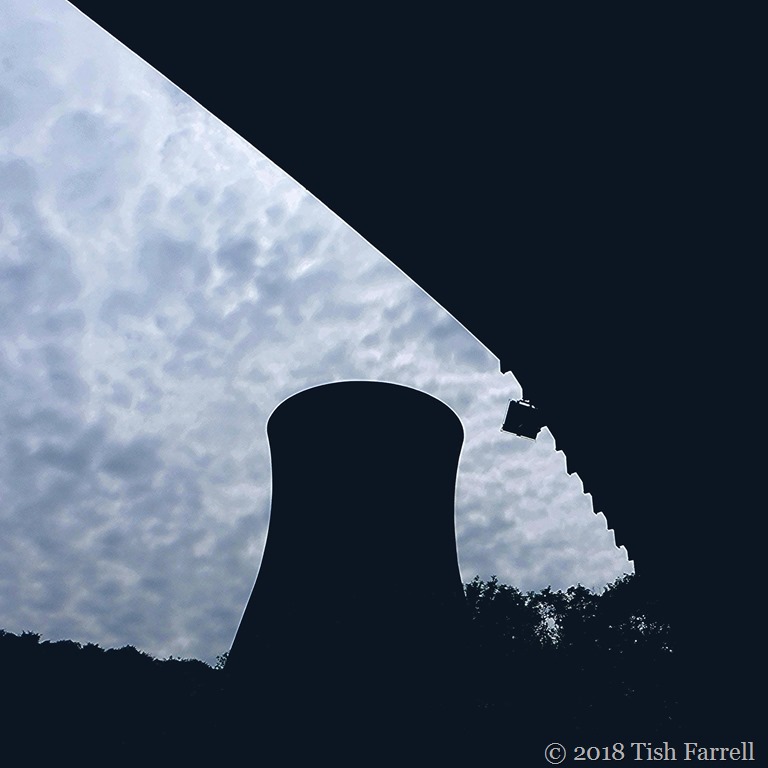
Ironbridge Cooling Tower As Seen From Under Another Severn Bridge

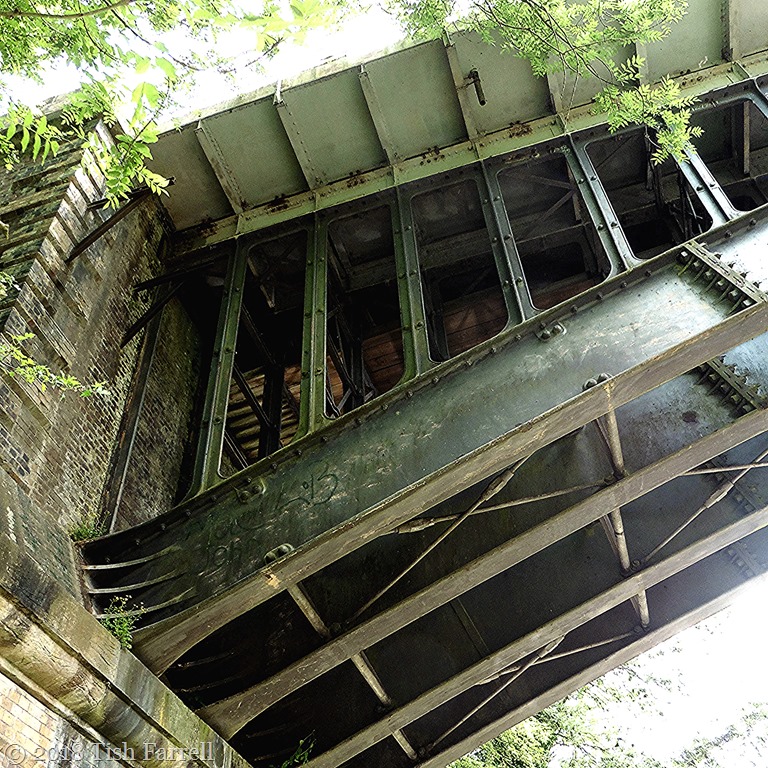
I’m standing under the Albert Edward Bridge to take this photo. It was built in 1863 and opened the following year, named for Queen Victoria’s eldest long before he became the totally notorious  King Edward VII.

You might also say the Albert Edward Bridge is the ugly great great grandchild of Darby’s Iron Bridge just downstream; and the end of the line too – in all senses. It is the last large cast iron railway bridge to be built in the UK, and originally carried the Severn Junction Railway across the river to meet up with the Severn Valley Railway (one of England’s loveliest lines decimated by Mr. Beeching in the 1960s). In more recent times it was used to carry coal to the power station.

It may not be as striking as its ground-breaking elder (and it certainly proved very hard to photograph) but it has much in common with Darby’s bridge. Designed by Sir John Fowler, the single 200 foot span comprises 4 cast iron ribs, each of 9 parts bolted together. The moulds for the spans were prepared nearby at the Darby family’s Coalbrookdale Company ironworks. The steel deck that you can see in the photo was installed in 1933, replacing the original timber and wrought iron deck.

P1060645sq

Now that the power station has run out of steam, one wonders what will become of Albert Edward. Fortunately it is a Grade II listed building  so it will be preserved. At least one hopes it will.  Also the local Telford Steam Railway enthusiasts have their sights set on it to extend their rather limited rail track, and since there is presently a 5mph speed limit on the bridge due to its age, one can conjure a slow and splendid steam-train trundle across the Gorge to Buildwas – poop-poop!

P1060643sq

Roof Squares 12 Not quite a roof, I know, but I was standing under it for the header shot. Please pop over to Becky’s for a plethora of rooftops.

Many Reflections On The Iron Bridge

P1060572

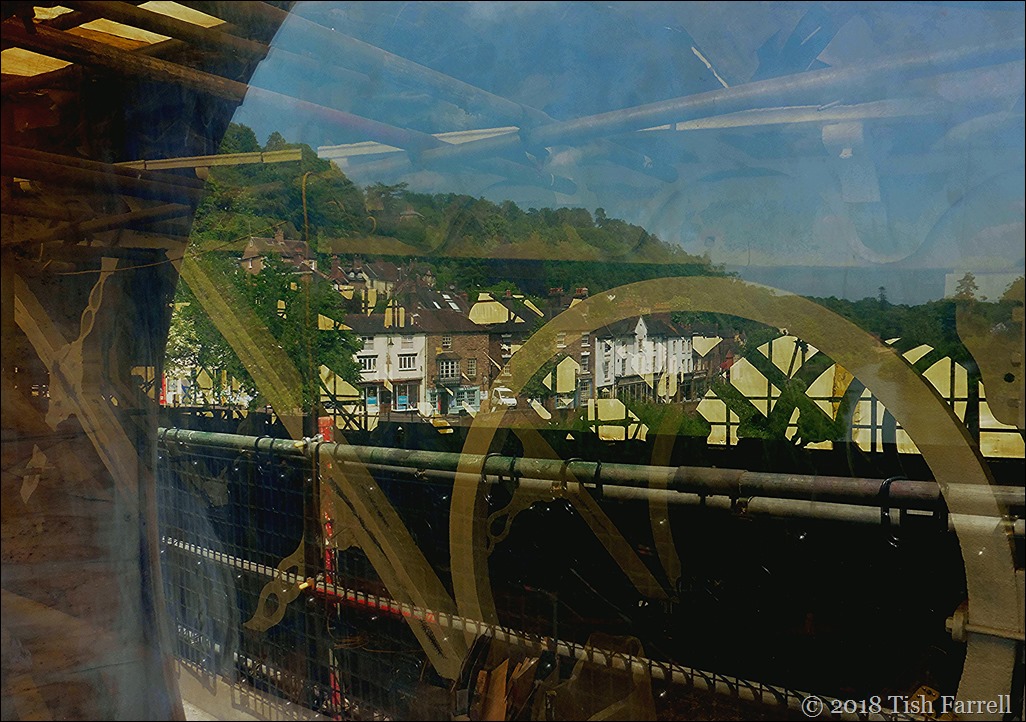
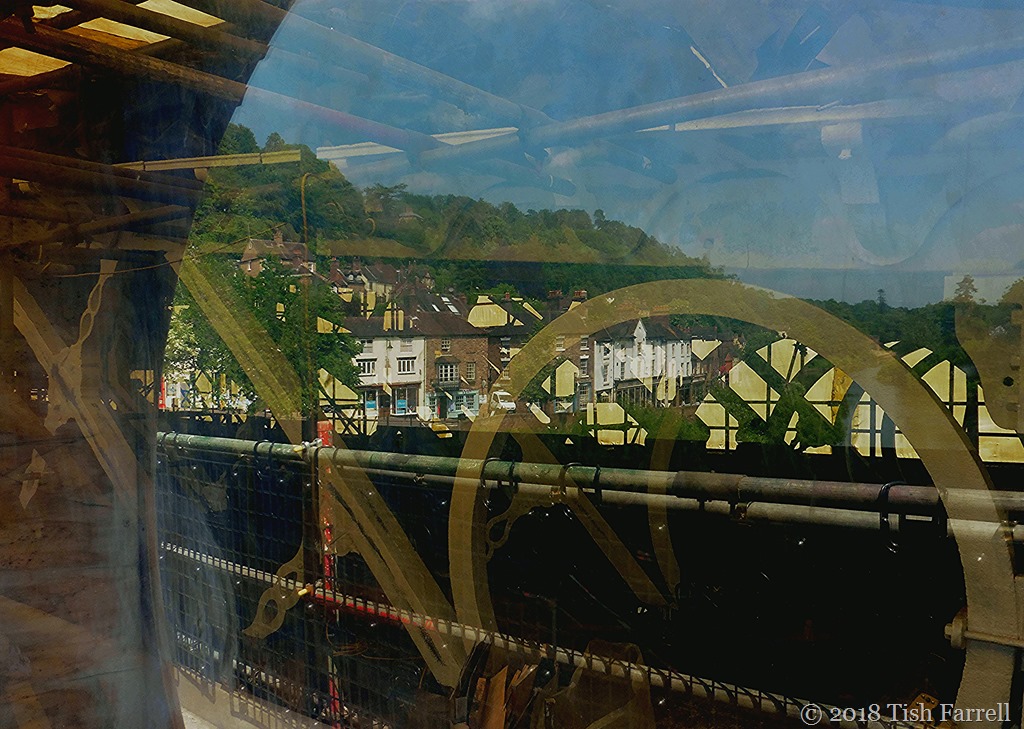
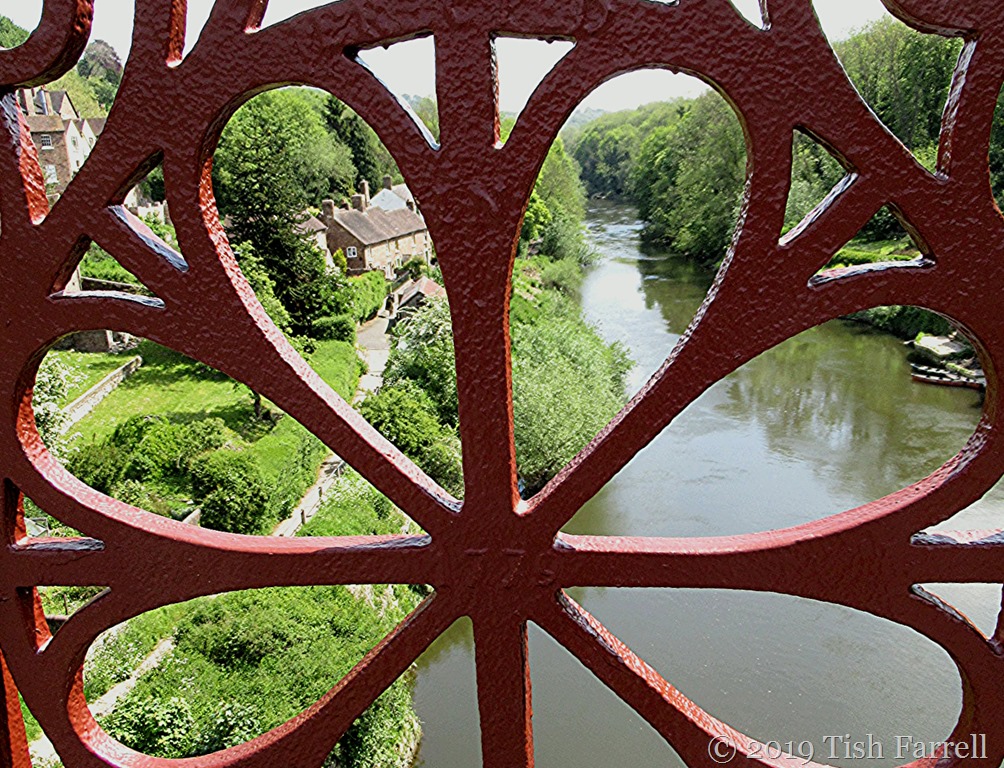
Last week we were in Ironbridge inspecting the restoration works on the C18th cast iron bridge that gave the town its name. People come from all over the world to see the bridge, so to find most of it shrouded in plastic would doubtless be a big disappointment. English Heritage, the conservation body whose engineers are carrying out the repairs over the next few months, thoughtfully decided to make a spectacle of their operations. Just beneath the main span they have constructed a walkway with perspex covered viewing portholes along its length. Now visitors have once-in-a-lifetime access to view the structural parts at close quarters.

And while doing this I happened to notice that, at certain angles, the portholes and their surrounds created multiple reflections. Suddenly the town appeared meshed in the dove-tailed struts and roundels of the bridge supports. It seemed fitting somehow – the town within the bridge that gave rise to it; a glimpse of the Gorge whose lucky combination of natural resources: iron ore, coal, fire clay, limestone, made the construction of the world’s first cast iron bridge in this location possible: the now quiet resort place that some call the crucible of Britain’s Industrial Revolution, a once horrifying hell-hole of pounding steam hammers, sulphurous fumes, and streams of white-hot iron.

Thursday’s Special: reflective

copyright 2018 Tish Farrell

P.S. Click on the English Heritage link above for more about the restoration project and a very good short video.

Rooftops Galore In The Severn Gorge ~ Even The World’s First Cast Iron Bridge Has One

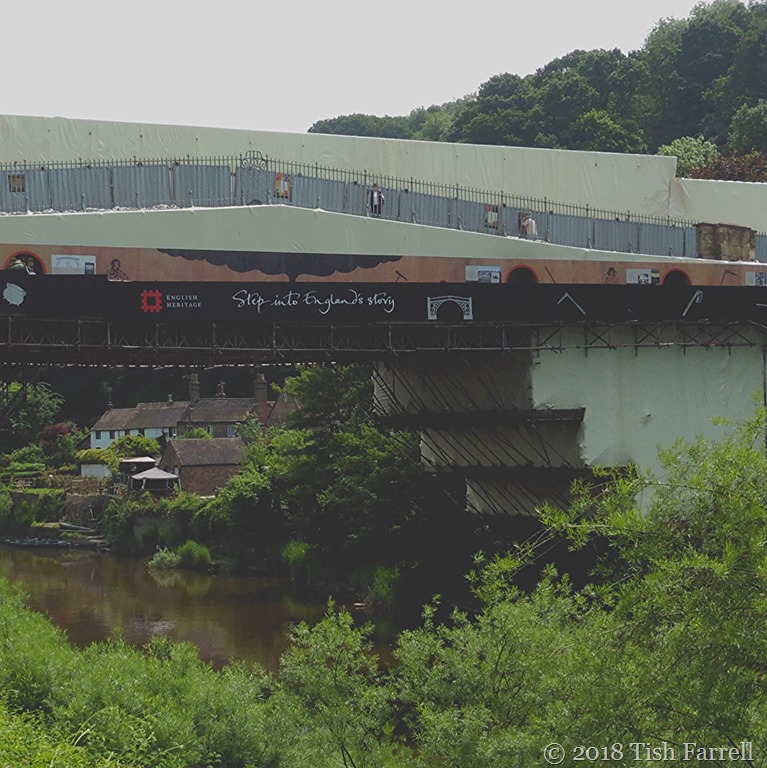
Yesterday we treated ourselves to a Big Day Out, and on our own doorstep. We went to Ironbridge – all of five miles from the Farrell domain. We wanted to see what English Heritage was up to with Abraham Darby III’s monumental bridge – the high-tech PR stunt of 1779 in which a Coalbrookdale ironmaster set out to demonstrate that cast iron was the building material of the future.

He built a single arch bridge at the site of a notoriously dangerous ferry crossing, over a river prone to massive flooding while also accommodating the passage (without de-masting) of the large sailing barges (trows) that plied the Severn from Worcester.  All the numerous other Severn bridges required the trows to lower their masts. Doubtless this novel feature alone would have made the new bridge the talk of the river.
P1060556sq

P1060590sq

*

Here’s a pre-wrapped winter view, glimpse of the toll house on the far right (since the Iron Bridge was always intended to make money too):

P1000831sq

Interestingly though, and here’s where the new ‘roof’ comes in, while Darby’s construction was daring in its vision and materials, its design has distinctly retro features – the  cast iron components were fabricated and assembled according to tried and tested carpentry methods with lots of dove-tail joints. On top of that, there has been much ground movement, general wear and tear and even structural shrinkage, so now the bridge is in serious need of restoration. While the work is underway, much of the bridge is shrouded in plastic. A walkway has been constructed along the north side of the bridge with viewing windows created at various points  so visitors can view the underbelly of the bridge at close quarters and see the restoration work in progress. It is one stunning enterprise.
P1060562

There may well be some controversy ahead though. Once the work is done, the bridge will be repainted – in its original colour on the opening day of 1781: a reddish-brown research has shown. For decades the bridge has been black or slate grey. Reddish-brown will be a real turn-up for the Severn Gorge location and doubtless a shock to some people’s systems. I can’t wait to see it – completion date is set for November just in time for a pleasing backdrop of autumn leaves.

P1060582

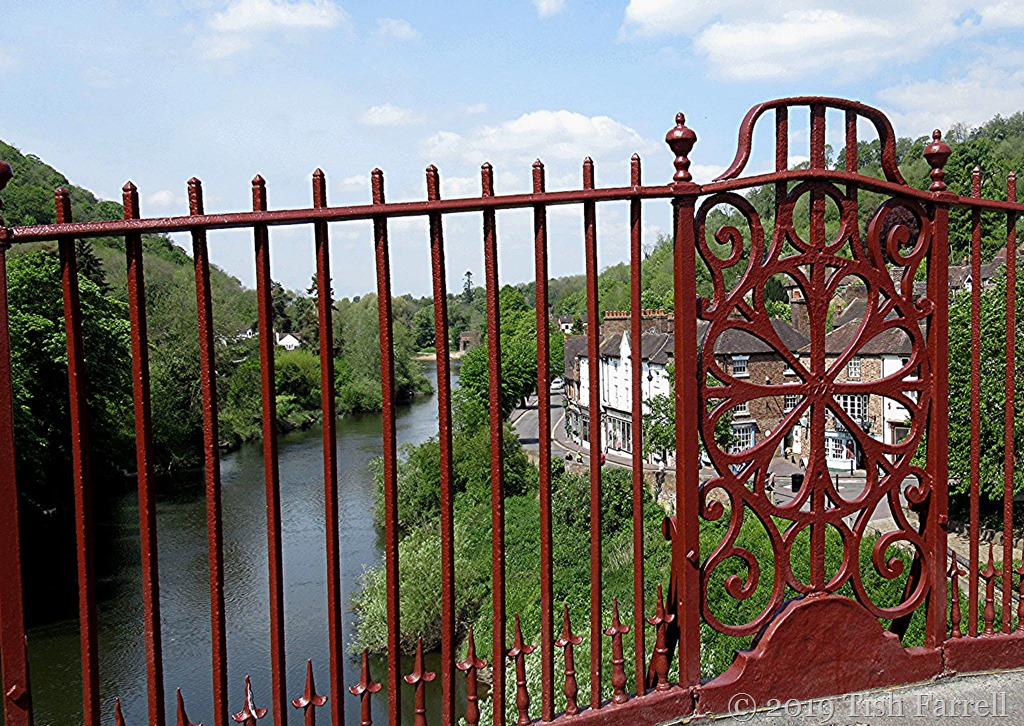
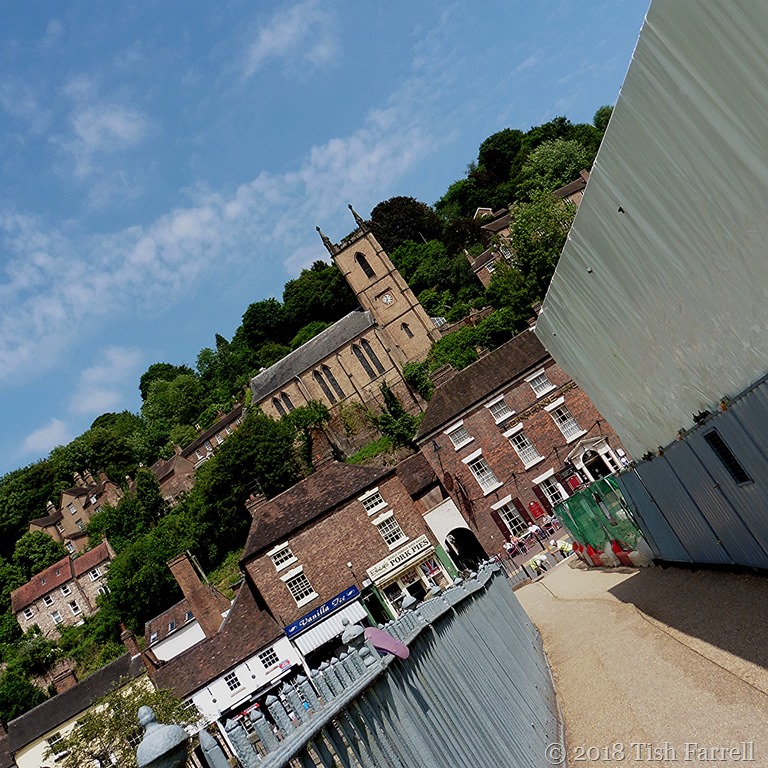
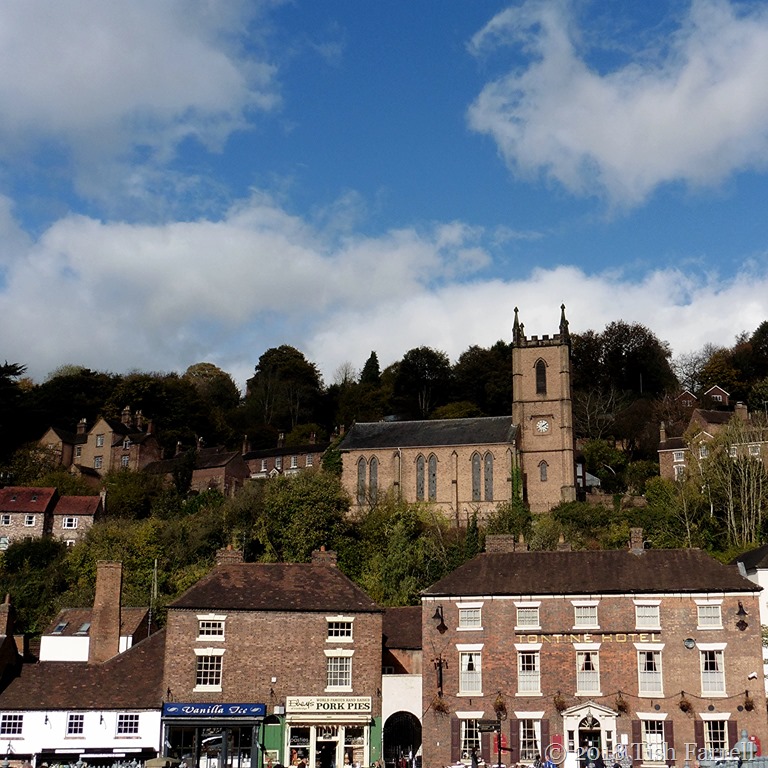
Here’s a view of the Wharfage from the Iron Bridge. The town of Ironbridge owes its existence to the bridge, which attracted tourists right from its opening in 1781. In 1784 the handsome Tontine Hotel was built overlooking bridge, and today is still a popular place to stay. The Severn Gorge is now a World Heritage Site.

P1020855sq

For more about the restoration project including a brilliant short video see:

English Heritage Saving The Iron Bridge


Roof Squares 8  Please pop over the Becky’s to join in the June Roof Extravaganza