Obsessive Compulsive Compost Disorder and why you should have it, or at least help someone who does (and that would be me)

100_4954

I truly cannot help it. I gather anything and everything that will go into my allotment compost bins. This includes not only our vegetable waste, but other people’s. My neighbours along Sheinton Street may indeed wonder how it is that the garden mowings and clippings that they throw over their back hedges can disappear so fast. I don’t really want to go round to their front doors and discuss it with them on the basis that my perceived eccentricity quotient in the town is already quite high enough. But they clearly don’t want the stuff, and they leave it in such handy piles beside the field path. I simply scoop them up on my way to the vegetable plot.

Compost foraging, however, does have its small hazards. It can, for instance, involve a close encounter with a slow worm – a copper and black snakish looking reptile that is actually a limbless lizard. They are quite harmless, but I still leap back in alarm when I touch one unexpectedly. I ought to know by now. They love warm piles of things to bask in during the day. They are to be treasured too, since they eat slugs. And yes I know that in the cycle of things slugs have their good points, and probably are useful in compost heaps, but I am utterly prejudiced against them, and admire anything that disposes of them. Toads are thus also heroes, though sadly in rather short supply.

P1010390

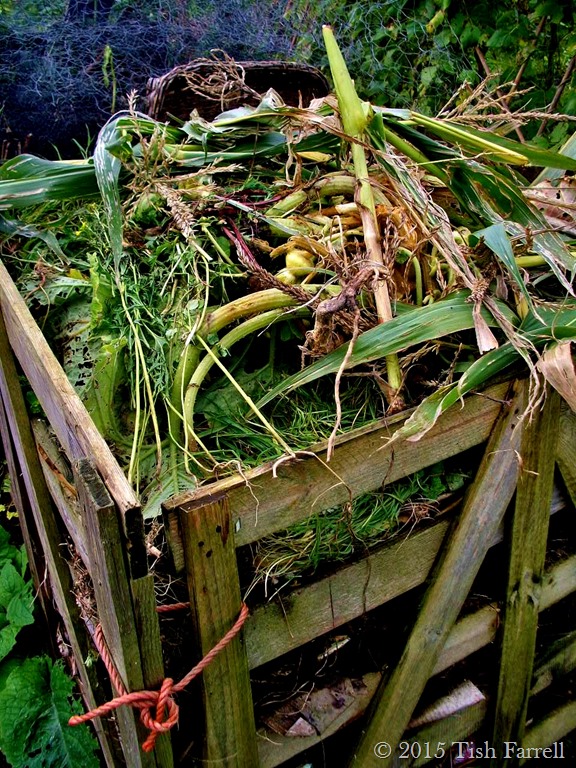
The manner of composting as formerly done by me, and displayed in the first photo is not to be emulated. A dedicated composter, and I am now trying to do this, chops big stems and stalks into short lengths to speed up the rotting down process.  It is also good have mixed layers e.g. brown, dry matter such as scrunched up pieces of brown corrugated cardboard, paper, wood shavings, leaves and small twigs. The aim is about 50:50 brown to green matter. This allows air into the mix, and so prevents a sour and smelly squidge.

Grass  mowings and animal manure will heat things up, and also aid decomposition. The heat kills any weed seedlings.  Other additives in my compost include tea bags, egg shells, vegetable parings, allotment weeds, turves from ground clearing, wood ash, hoover contents, and brown paper carriers. Every now and then I also add a layer of comfrey since it also a good compost activator.

*

IMG_1138

Comfrey is a good compost activator. It also makes an excellent plant food, keeps the bees happy, and helps mend human bones and inflamed tissues. The leaves can be made into tea or added to soup. The flowering tops contain vitamin B12 (source: Herbal Therapy for Women by Elisabeth Brooke MNIMH). Can you spot the bumble bee in the top photo? (Just testing).

100_5359

*

Ideally, the contents of the compost bin should be turned over during the growing season to aerate them, but if this is too daunting a task, and if there’s space, then three or four bins are the answer. The rotting down process will be slower, but when full, the first one is  simply left for a couple of years while the others are being filled. It’s also common practice to put a piece of old carpet over the top to help things along. My largest bin is made of four wooden pallets tied together.  It is easy to open once full, and the contents can be tipped out and turned over.

And why am I so keen on compost? Well, apart from the obvious that it feeds and improves the soil, it is also useful as a mulch, and MULCHING is my current theory on how to deal with  our increasingly ERRATIC WEATHER systems. The only problem is you need masses of it.

But applying a good deep layer around plants and between rows of crops, not only nurtures the plants, it gives them some protection in heavy rain, and stops the soil drying out in times of drought. To retain moisture it should thus be applied after watering/rain, and it will then reduce the amount of watering needed in the future. Strong, healthy, UNSTRESSED plants mean less pests and diseases. A sturdy cabbage will even withstand some slug damage.  For added protection, cover the lot with enviromesh.

My objectives for composting, however, are small potatoes compared with the goals of The Global Compost Project. Scientists involved with this brilliant initiative believe composting can mend the mess we’ve made of the planet, AND help reduce climate change. Here’s what they have to say:

“It also turns out that one easy, natural human invention is very important to boosting photosynthesis and cleaning up the mess we created.  It is Composting!

Fertilizer feeds plants nitrogen and compost feeds soil carbon.

According to Lawrence Berkeley National Laboratory and Marin Carbon Project, by spreading just 1/2 inch (1 cm) of compost on grazed rangelands, soil naturally starts to sequester more carbon out of the air via renewed photosynthesis at the rate of 1 ton per acre per year for up to 30 years.  This study was performed jointly by both organizations over a 7-year period, which clearly demonstrated proof of concept.

The results are delighting water conservationists, microbiologists, and climate change scientists around the world.  Compost replenishes the soil carbon  to balanced levels.  It is as if the eco-systems are rebooted, and within one year native grasses and wildlife rebound.  The carbon intake,  forage capacity, and water retention all fall into normal rhythms.”

For more about The Global Compost Project go HERE. And HERE for info on domestic composting from the Royal Horticultural Society.

*

And now excuse me while I go off to do some more compost foraging. Perhaps, after all, I should be enlisting my neighbours’ help. They might chuck me more stuff over their hedges instead of putting it in their recycling bins. But either way, recycling is good. So: Obsessive Compulsive Composting anyone? Just to encourage you, and to show off, here’s some of my last year’s summer and winter produce:

100_4197

P1000281

copyright 2015 Tish Farrell

5 Photos 5 Stories: Hidden Wenlock #4

100_7003 - Copy

As I’ve been writing these pieces about the less obviously seen quarters of my home town, I’ve been aware that there is a danger of casting all in a glow of antique glamour.

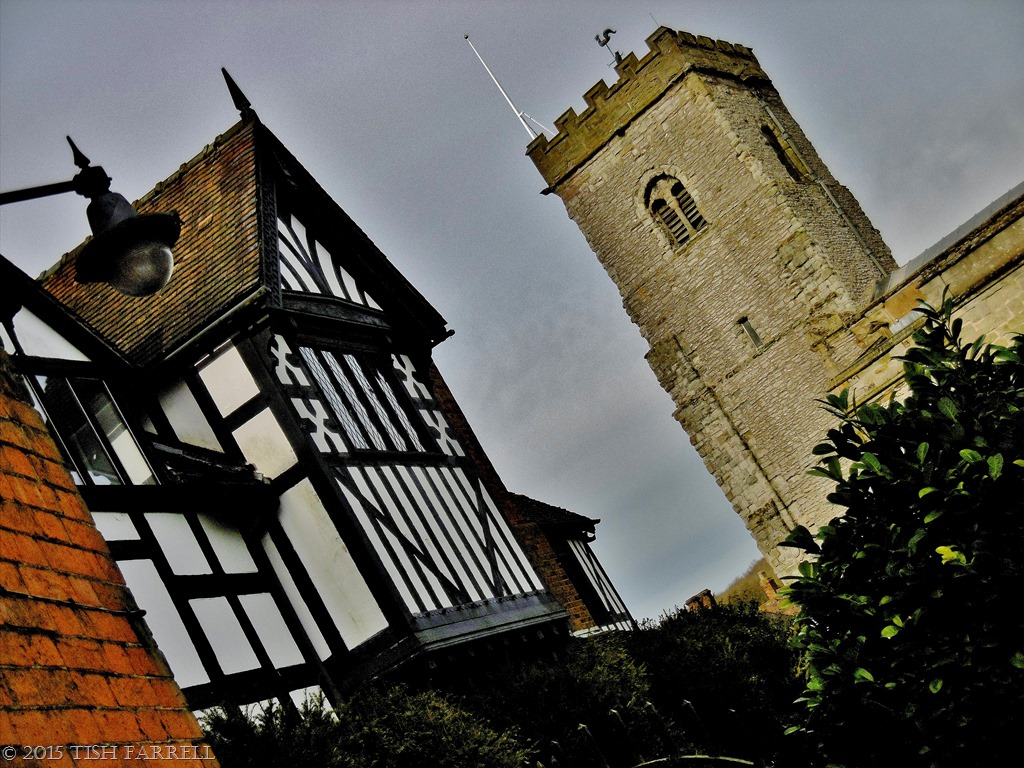
It’s true that these days Much Wenlock is a very attractive place to visit. For a small town, the range of architecture (representing as it does a thousand years of continuous human habitation), is fascinating. There are grand medieval mansions, and  small stone cottages, and many quirky vernacular details. The magnificent timbered Guild Hall glimpsed below, and dating from 1540, is still the town’s council chamber, and with seats that feel like the rock of ages to those of us who have sat through many a council meeting.

P1000406

But this is all very well. For centuries, life for the labouring people of Wenlock must have been pretty grim, and one of the grimmest places to work must surely have been in the town’s many quarries, known locally as ‘the Rocks’, which I think says it all.

I’ve explained elsewhere how the town sits beneath the twenty-mile limestone scarp of Wenlock Edge, an up-thrust fossilised, tropical seabed. I’ve written, too, of how the limestone has been exploited for centuries, and at least since Roman times. Milburga’s Saxon monastery, parts of which survive beneath the parish church, was built of local stone, as was the grand Norman priory that superseded it. Later, after the Dissolution, much of the stone was re-purposed in many of the town’s buildings, and often used to clad earlier  timber-framed buildings. So it is that many of the town’s oldest surviving dwellings, including a medieval hall or two, are quite hidden from view behind much later stone facades.

100_5025

Other key uses for the quarried limestone were as a flux in the growing iron industry (i.e. from at least the late 17th century) and for lime burning to make fertiliser and building mortar.

For centuries quarrying would have been a manual task with heavy hammers, rammer bars, stone rakes and barrows as the quarrymen’s main tools. The use of black powder explosives, and then gelignite for blasting, was a much more recent practice, and not without its own serious hazards.

Lime-burners also had their kilns near the quarries, but operations were seasonal, and lime-burners did not appear to make much of a living despite the demand for their products.

The quarry featured in this post is Shadwell or Shady Well Quarry. It lies directly behind Windmill Hill, and is the nearest one to our house.

100_6671

P1000654

Workings here seem to have begun only in 1849 when Francis and John Yates of Ironbridge took a 14-year lease of a new quarry in Windmill Hill field, later called Shadwell Rock. They expected to dig 9,000 tons a year ( Glyn Williams Much Wenlock’s Limestone Quarries). In the 1860s the arrival of the railway plus the provision of a dedicated siding, saw Shadwell develop into an industrial operation. The South Wales & Cannock Chase Coal & Coke Company took over the lease, and in 1873 despatched 22,500 tons of iron fluxing stone to the Black Country in England’s industrial Midlands.

The quarry continued to be worked until 1996. Since then it has been left amid growing desolation. A few years ago there were plans to open a diving school with fifty cabins in the woods below the windmiill, but nothing came of it. The water has a strange blue-green hue which makes me think of Andrei Tarkovsky’s film Solaris. The pool is said to be over 70 feet deep and, from time to time, daft young men who have had too much cider, film themselves diving off one of the cliffs. There have been a few near misses survival-wise.

But at least some life forms have been making good use of the cliff faces. Since the blasting stopped peregrine falcons have begun to nest here. The same is apparently true for the other abandoned quarries along the Edge. There are ravens there too, although not yet at Shadwell. Perhaps they will come. It’s a pleasing thought: a case of positive re-purposing.

copyright 2015 Tish Farrell


Related:

Sun setting over Wenlock Edge: Or did the earth move?

Old stones of Wenlock: repurposing the Silurian Sea


5 Photos 5 Stories Challenge

Pauline at Memories Are Made of This nominated me to take up this challenge. The idea is to  “post a photo each day for five consecutive days and attach a story to the photo. It can be fiction or non-fiction, a poem or a short paragraph, and each day nominate another blogger for the challenge”.

So today I would like to nominate Hanne T Fisker. She takes stunning photographs. Her blog is called Simplicity of Being, but her compositions brim with textural drama, and the light-and-shade complexities of the natural world. Please take a look at her work.

Clouds over Kenya

IMG_0024

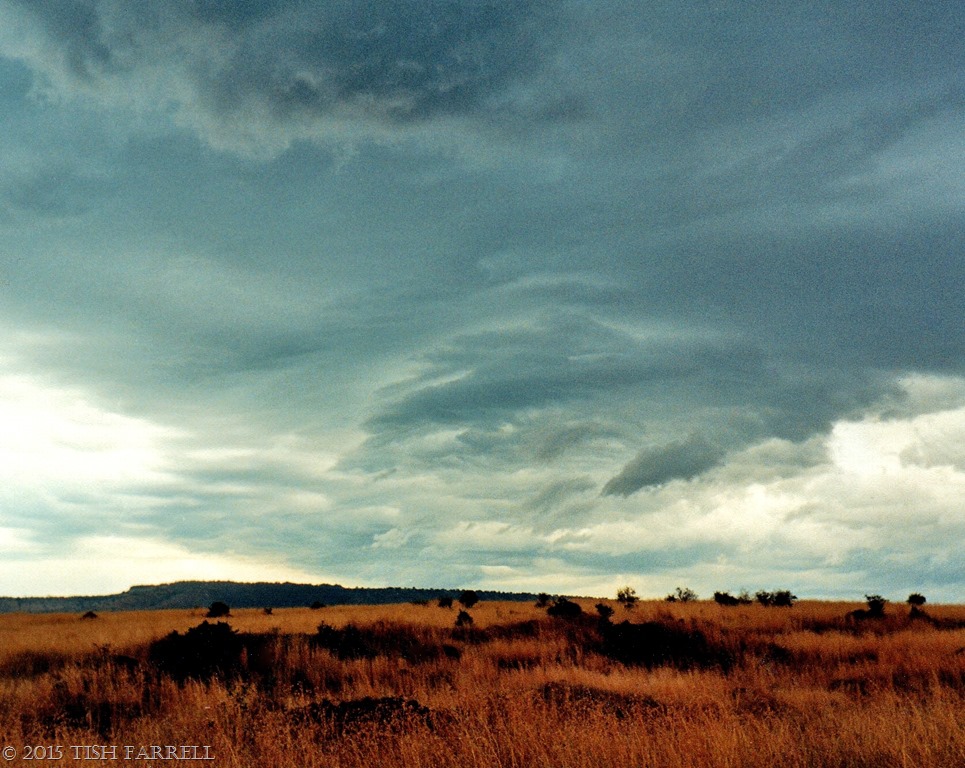
This probably is not the kind of scene most people associate with Africa. It looks more like a stretch of bleak English moorland in December. Anyway Kenya it is, and it was taken one August in a Maasai group ranch conservancy, bordering the Maasai Mara National Park.

May to September is East Africa’s winter, and the skies are often overcast and leaden. The nights, and even the days can be chilly. Kenya, anyway, covers many of the world’s climatic zones either horizontally or vertically – from the hot and arid Northern District, bordering Ethiopia and Somalia, to the alpine heights of Mount Kenya with its glacial peaks. There are also the airy, and rarely too hot, highland plains around Nairobi, and the steamy humidity of the Mombasa coastal strip to the south.

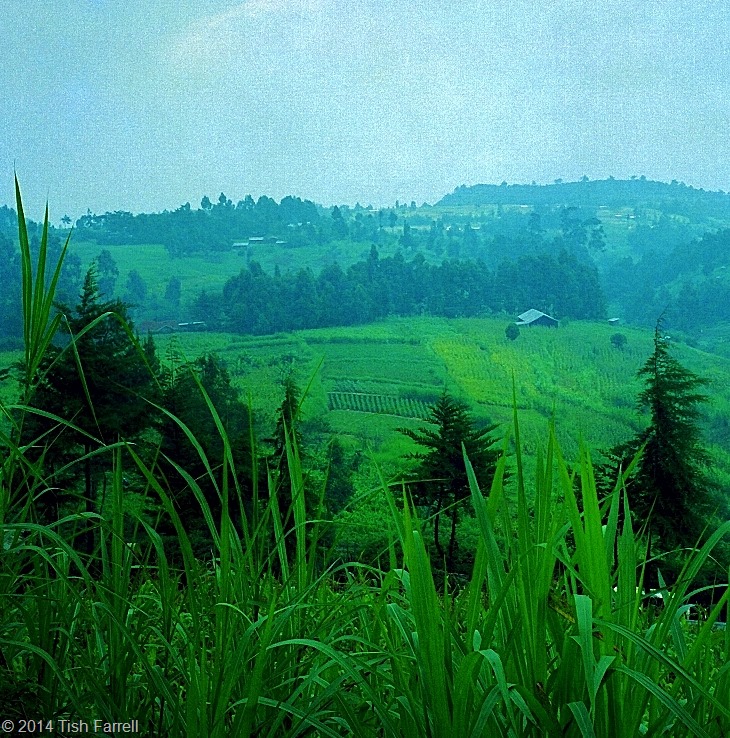
Much of the nation’s weather is determined by the cycle of Indian Ocean monsoon winds. These, unless disrupted by El Nino effects, bring two seasons of rain – the long rains in March to May, and the short rains in November-December. In between, many areas receive little or no rain. Western Kenya, however, receives more regular rainfall courtesy of Lake Victoria Nyanza which makes its own weather.  Meanwhile in the fertile Central Highlands above Nairobi, altitude and forest combine to make June and July the season of heavy mists. It’s all a bit dreary, but the mist does have its uses – for instance, ripening the maize crops for the August harvest.

napier grass on the Rift

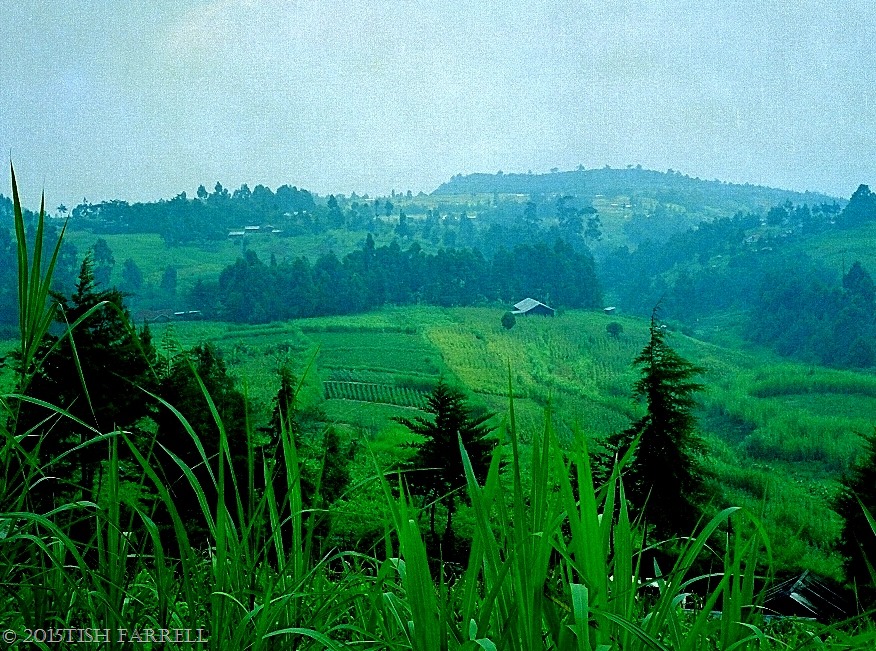
Smallholder farms and July mists in the Kikuyu highlands, north of Nairobi

*

In the late 1990s Team Farrell was often out and about in the Kikuyu highlands, visiting smallholder farms. And the reason we were doing this in the fog season was because the Team Leader, aka Graham, was – besides running an agricultural crop protection project on behalf of Her Majesty’s Government – gathering data for his doctoral thesis on smut. If you want to know more about our smut forays (of the plant variety that is) your can find out more HERE.

Rift lane after July downpour

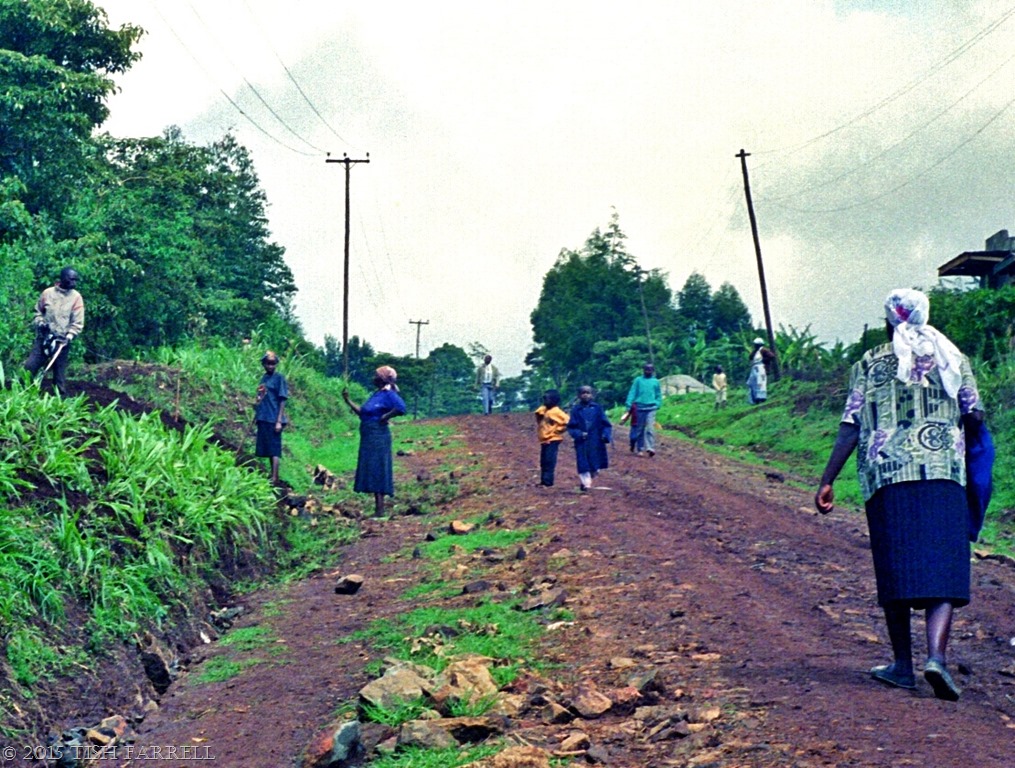
Rural road after an unseasonal July downpour. Poor communications embed poverty, making it hard for farmers to get produce to market before it spoils.

*

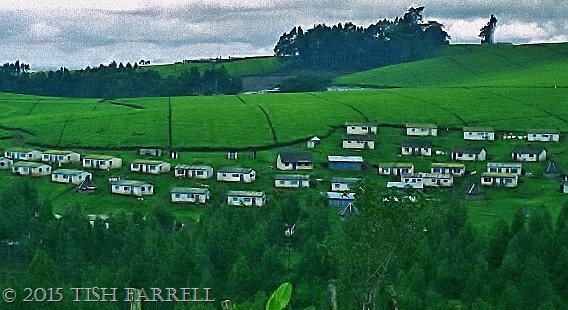
tea fields and workers' houses

Lowering skies over Limuru’s tea gardens with tea pickers’ housing.

*

Kikuyu farmstead 1

Kikuyu farmhouse.

*

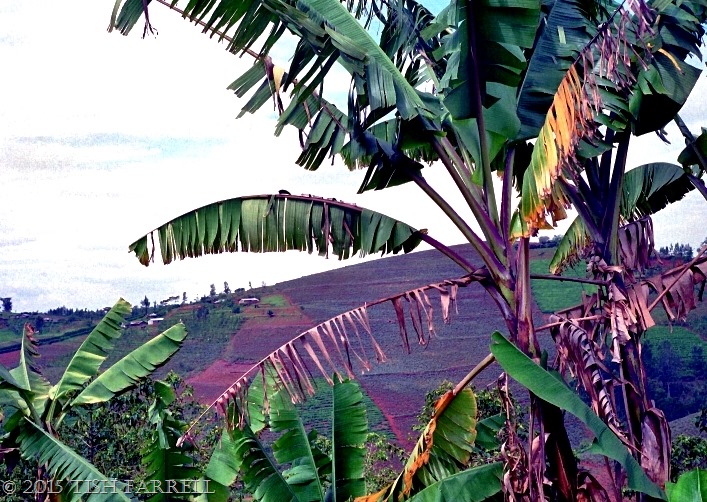
banana trees 2

Wintery fields in Muranga where the Del Monte pineapples grow.

*

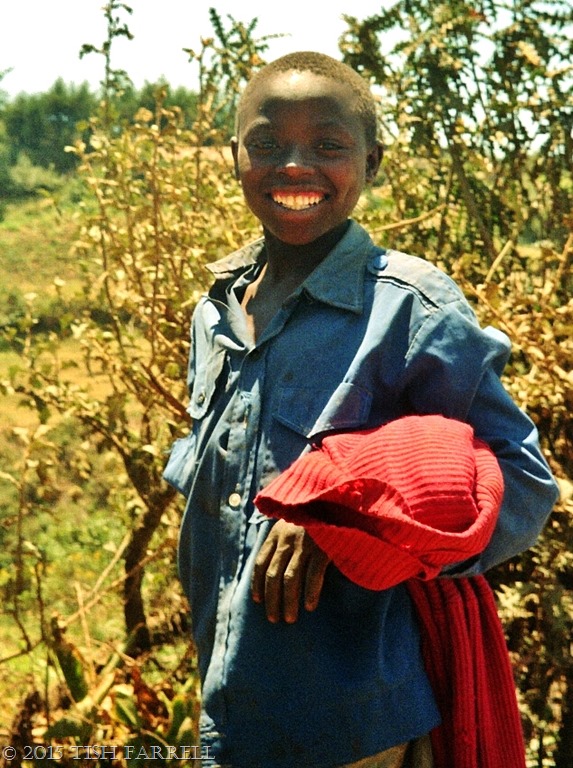
And just sometimes, even on the gloomiest Kenyan winter’s day, the sun breaks through the clouds:

Kikuyu child 3


Jennifer Nichole Wells OWPC: cloudy     Go here for more bloggers’ cloudy offerings.

Let’s Hear It For The Bees ~ Three Big Cheers

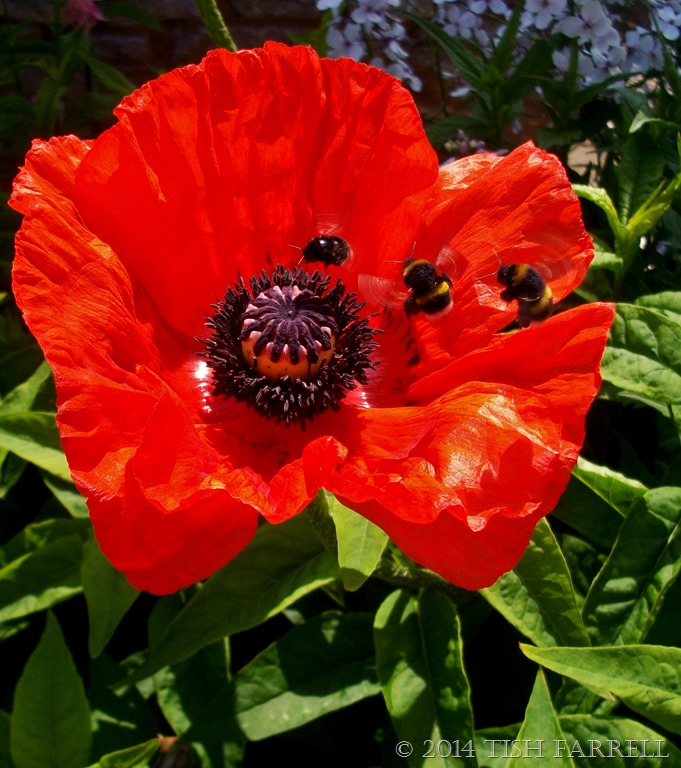
100_3915

There are different kinds of achievement in this shot. The first is that I managed to capture it at all, teetering in a flower bed with my Kodak Easyshare. The sun was full on too so I could not see the camera screen. But by far the biggest achievement is the presence of three bumble bees all at once.

All over the world bee numbers have been declining. Swarms in the US have been especially hit. Over the last few decades many factors have played a part, including habitat erosion, lack of quality forage and disease. But in 2006 honey bee keepers began to report dramatic losses. It involved the deaths of whole hives and has been dubbed colony collapse disorder.

Environmentalists believe the cause to be the neonicotinoids in the new generation of pesticides. They want them banned until unbiased research proves otherwise. It is a sobering thought that without bees to pollinate fruit and vegetables, the US would be left with only three staples that do not require insect pollination: wheat, rice and corn.

To find out more, please visit Dear Kitty. Some Blog.  She has posted a good video that covers this topic. In the meantime, everyone needs to think about what they can do to encourage bees, including growing some bee-friendly plants. We also need to be prepared to pay a little more for organic produce, or to do what we can to grow our own food, WITHOUT chemicals.

This would be a real achievement – not only good for bees, but for us, the soil, and other wildlife besides.

copyright 2014 Tish Farrell


Vulcanicity ~ Welcome to the hot zone

Scan-130716-0008 (9)

I have long had a fearful fascination with volcanoes – probably ever since, as a young child in the 1950s, I saw a newsreel item of Mount Etna erupting. It seemed like a living nightmare. I remember especially the unstoppable flows of boiling lava that rolled over everything in their path.  Even in places where it had cooled I seem to remember people who walked on it found their shoes smouldering. It was perhaps my first apprehension of the fact that the earth could do things that mankind was incapable dealing with. I remember having a dream afterwards where the ground beneath my feet kept cracking open into ever widening fissures: my first anxiety dream perhaps.

With this in mind, you will understand how very deeply impressed I was when I first set eyes on Africa’s Great Rift Valley.

File:Great Rift Valley NASA.jpg

NASA non-copyright image

*

Here, on the surface of the earth, we have a 4,000 mile chain of connected fissures that extends from Lebanon in the Middle East to Mozambique in south east Africa. It comprises the Jordan Rift Valley, Red Sea Rift and the East African Rift, which itself divides into eastern and western arms with Lake Victoria Nyanza in between. The entire system has been described as a world wonder, the biggest rupture in the planet’s land surface, and the only geological feature that can be seen clearly from the moon. The East African Rift of course includes the great ice-topped volcanoes of Kilimanjaro and Mount Kenya that are mere remnants of their formerly gargantuan fiery selves.

So however you look at it, moon- or otherwise, the Great Rift is definitely a case of EXTREME geology. All that seismic shunt and shift. And it is still happening and at this very moment. One day the Horn of Africa and littoral East Africa will be an island.

*

The East African Rift is thought to have begun to pull apart around 40 million years ago. Scientists surmise that the environmental changes associated with fissuring may have had a significant impact on the evolution of humankind. So far, very many of the earliest fossils of (potential) human ancestors have been found in the Rift – Olduvai Gorge, and in the vicinity of Lakes Baringo, Turkana and Omo. On the other hand, this could simply be a reflection of the  decades of systematic searching in these areas, instigated largely by the Leakey dynasty of palaeontologists. But whether a good case of careful looking or not, I’m still prepared to believe that humans could have evolved here.

*

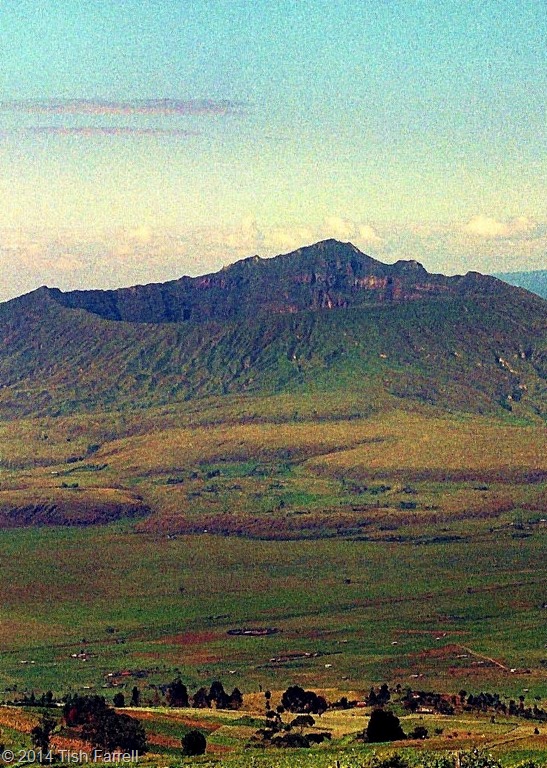
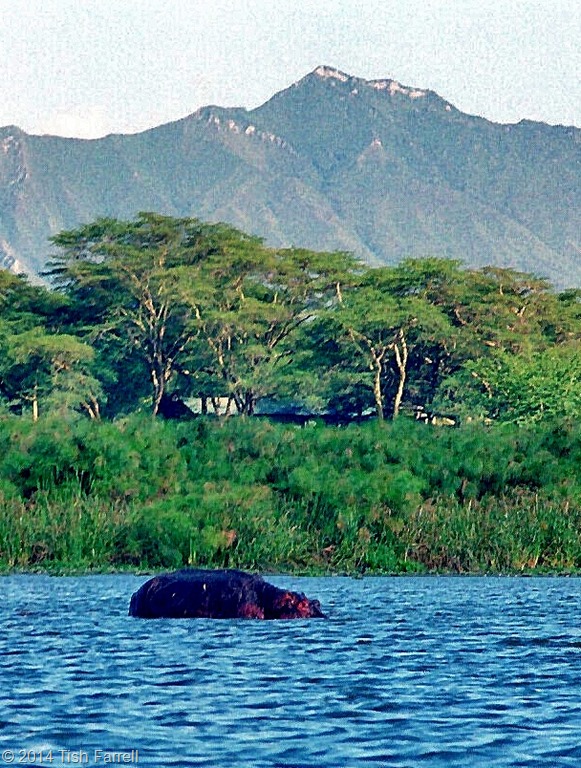
The photograph at the start of this post is of the old volcano, Longonot. It lies in the Rift between Nairobi and Naivasha in Kenya. In the next shot you can see it from Lake Naivasha (hippo added for purposes of scale Smile). Part of this lake is also formed within a submerged crater.

Scan-130716-0010 (2)

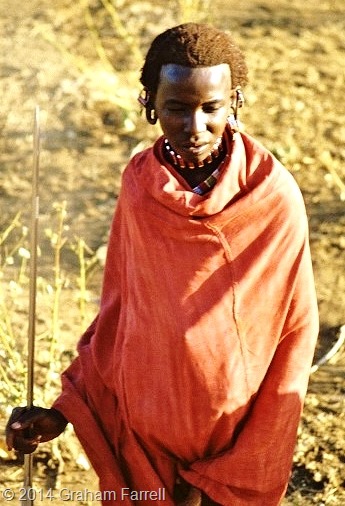
One key side effects of volcanic activity is highly fertile soil. In Kenya and Tanzania the Rift Valley floor supports the Serengeti grasslands that in turn are home to millions of herbivores, their following of big cat predators, and the whole wonderful species-rich eco-system. These plains also have long been the grazing grounds of the best known nomadic pastoralists on the planet, the Maasai.

2 Masai1

Before the British invaded East Africa in the late nineteenth century (intent on setting up the Imperial British East Africa Company) and concluded that any land not occupied by people at that point in time was EMPTY and thus FREELY AVAILABLE, the Maasai ranged over vast tracts of the Rift grassland system. It is believed that their ancestors moved out from the Horn of Africa about four thousand years ago. 

This means that the Maasai lived a life that suited them and apparently with little cost to the environment for 4,000 years before the British came along and herded them into a reserve where the land is least fertile and watered for human purposes, and otherwise known as the Maasai Mara. Europeans then set about destroying the plains’ wildlife on a breathtakingly ugly scale. The invaders, or their activities also became vectors for deadly disease – rinderpest that decimated native cattle, and smallpox and syphilis that took their toll on the human populations.

Rift Valley from Escarpment

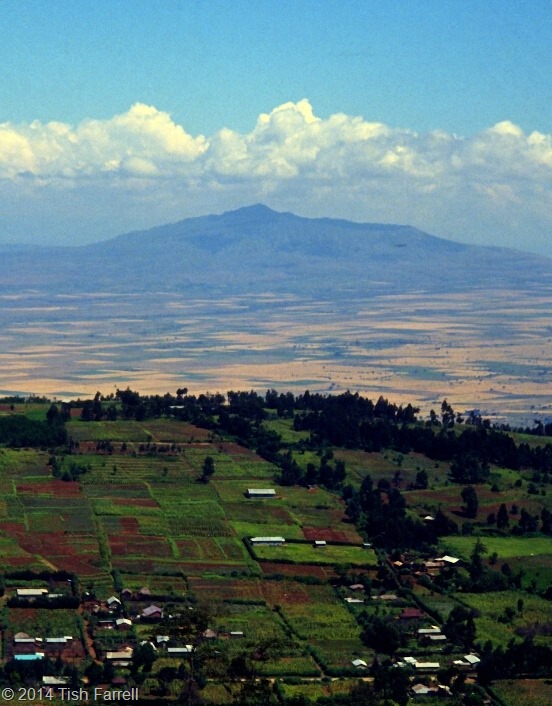
Smallholder farms at Escarpment just north of Nairobi. Mount Longonot beyond.

*

Once the British had staked their claim in British East Africa, the Bantu farming communities that inhabited the higher hillside zones of Kenya were also enclosed in Reserves. The occupants could only leave to work for Europeans. The justification for creating reserves with designated boundaries (and they were quite large areas) was to protect tribal land holdings from the incoming white settlers.

African farmers, being the successful cultivators they had been for several millennia, were naturally inhabiting the best and most covetable land. So in this sense, the British administration had a point. The early settlers were British aristocrats like Lord Delamere and  the sons of the Earl of Enniskillen, and thus the kind of men who expected to own vast acreages and begin farming/ranching on an industrial/landed gentry scale.

Meanwhile from 1896-1902, and as a result of military paranoia of epic proportions, the British had built a very expensive 600-mile railway  from Mombasa to Lake Victoria. It was called the Lunatic Line even at the time of its building. But as the strategic objective receded in importance during the early 20th century, so the Colonial Office needed settlers – well-heeled, gentlemen of means who would grow produce for export and so help pay for the railway.

colonyinmakingor00cranuoft_0023[1]

First page of Lord Cranworth’s A Colony in the Making: Or Sport and Profit in British East Africa, Macmillan 1912. A guidebook and general sales pitch to attract gentleman settlers. (Out of copyright).

*

Thus, in the wake of the adventure-aristocrats came retired military men, among them individuals who were variously set on nation-building, knocking the natives into shape and, in the process, getting rich from flax, ostrich feathers and coffee. The country’s fine shooting and fishing were definite lures, and made much of in the publicity brochures sent out from British East Africa. Other attractions included the notion of plentiful cheap farm labour and house servants, and thus the preservation of social status that was already well on the wane for the middle classes back in Blighty.

napier grass on the Rift

But now we come to the rub. Or in fact two rubs. Firstly, when the monsoon winds are blowing in the right direction, Kenya has the most benign climate imaginable,  providing two rainy seasons, and thus two and sometimes three growing seasons for some crops. The elevated plateau of Central Province in particular, and its Aberdares highlands are rarely too hot. The beauty of the great forests suggested Scotland or Wales rather than Africa to the newcomers. They set about building mini-baronial lodges and laying out English lawns and rose beds.

But then comes the other rub. The soil. As I’ve said, volcanic soils are very fertile, but they are also very fragile. Wholesale clearance of trees and bush will quickly create desert. The late, great Kenyan environmentalist, Wangari Maathai, has maintained that felling deeply rooting forest trees ultimately leads to desertification for a whole range of reasons. 

The forests not only attract rain but the trees shelter, stabilize and feed the soil (many tropical species fix nitrogen). Most importantly, she pointed out, the deep roots open up underground aquifers to water the land.

Traditional farmers of course made gardens within the forest rather than large fields. They cleared trees certainly, but they did not clear all trees. Some had sacred meaning, like the wild fig, and were protected. Others were valued for cropping purposes – for animal fodder, medicine, bee forage etc.

When the old colonials set out for Africa on a cash-cropping spree, full of the notions that they knew best how to farm, they singularly failed to understand that indigenous peoples, far from being ‘undeveloped’, had very good reasons for doing things the way they did them. Their objectives were more about living well than getting rich.

Pre-colonial accounts by explorers and missionaries show that the Bantu peoples were very successful farmers. They planned their planting to take into account the possible vagaries of climate. For instance, drought resistant millet might be the mainstay crop, and cultivated on the  drier soils in their territory. Squashes and beans would be grown near stream beds, and water-hungry maize would be the risk crop,  planted on a river bank on the off chance that seasonal floods would be small enough not to wash the crop away, but good enough to provide a bonus to the annual harvest.

Kikuyu farmer and sugar cane

The other important contingency depended on kinship and clan ties. As the Bantu communities moved out across the African continent over many centuries, pioneering into new territories as population growth or failing soil fertility dictated, networks of clan relationships became extended over quite large territories. If drought, disease or invaders struck, people would take their possessions and seek refuge with distant relatives until the threat had passed.

Pastoralists like the Maasai also relied on being able to move over large distances to secure grazing for their herds in times of drought. But once people were confined to reserves, bound by European constructs of land ownership, they could not move. Land in the Native Reserves where people farmed thus became overcrowded, degraded and overgrazed. Under colonial rule Africans were not allowed to acquire fresh land. This was one of the chief reasons for the uprising in 1950s Kenya when the Land and Freedom Army (dubbed Mau Mau) went to war against British rule.

Then there were the colonial agriculture officers trying to dictate the way the people on the Reserves grew their crops, pressing for mono-culture rather than the traditional way of mixing crops which helps to fool insect pests and utilizes advantages of companion planting.

As we left Kenya in 2000 I was interested to learn that some European agricultural aid project was actually advocating that smallholder farmers (which means most Kenyans) should use ‘kitchen-garden’ planting techniques to reduce crop pest damage and/or the need for pesticides. It had only taken a hundred years for outsiders to teach Africans what they had known all along, but doubtless been told to forget in the interim because their methods were considered primitive.

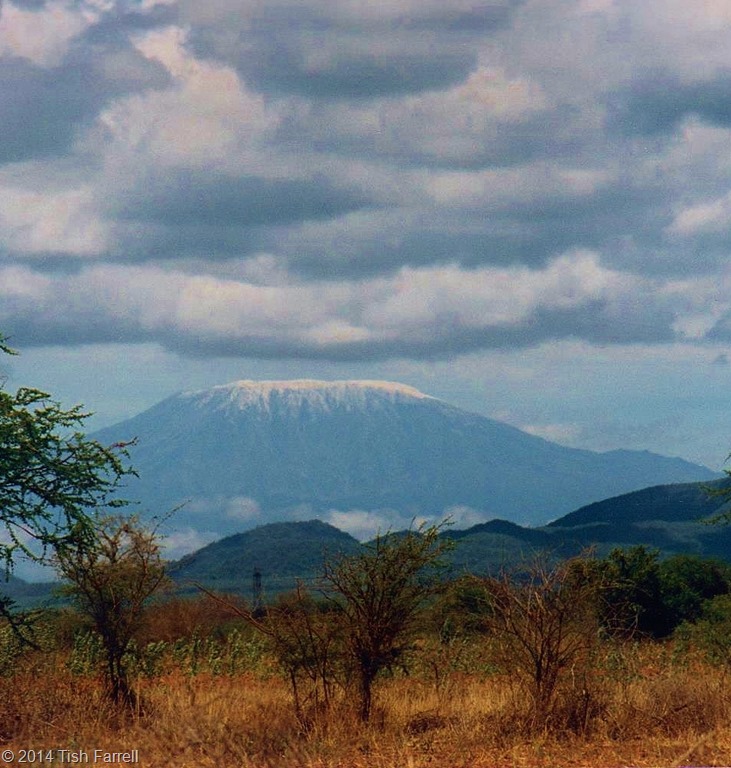
Sometimes the hypocrisy of rich world tinkering is enough to make this particular writer’s blood boil up in seismic fury.  Time to cool down with a view of snow-topped Kilimanjaro. Who’d have thought it: ice on a volcano. When in the 1840s German explorers and missionaries, Johann Ludwig Krapf and Johannes Rebmann, out exploring from their Mombasa mission, claimed to have seen snow-capped mountains at the Equator, no one back home believed them. Thought they were barking. There’s a lot, we outside Africa do not know about this vast, extraordinary continent even though its nations provide us with so many of our essential raw materials, fairly and otherwise; mostly otherwise…

002 (2)

copyright 2014 Tish Farrell


Flickr Comments Tagged ‘V’

Lust to rust: is it a sign?


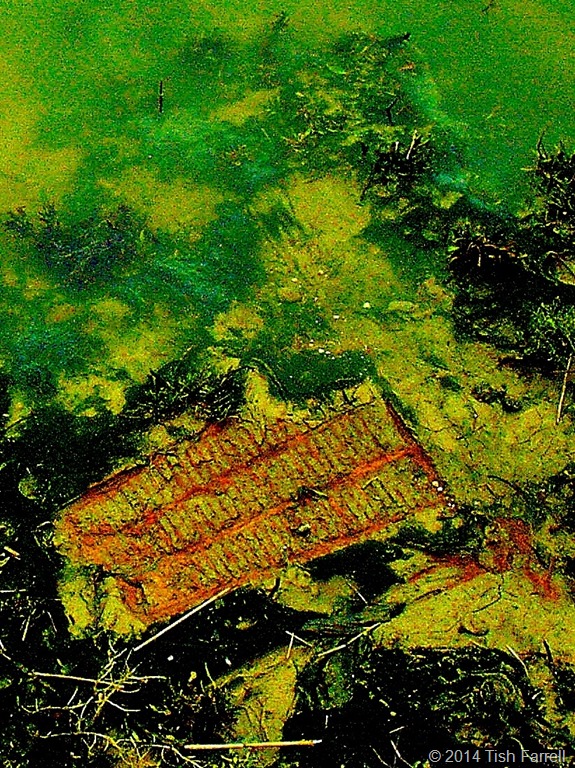
KIF_0130

Is it a portent, a glimpse of the future  where the ubiquitous mall/consumer-outoftown-outlet is no more. Gone. No more shops. For here we have a ‘fossilized’ supermarket trolley, aka shopping cart, its erstwhile frame decomposed in a muddy creek beside a Strood retail park. These sorry remains were caught in a happenstance moment – after shopping of course – and just as the tidal River Medway was on the ebb. Poor old trolley. No more two-for-one thrill; no more down-the-aisles rush to load up the sugar-laden cargo. And so, ex-trolley, may Mammon bless your squeaky, little wheels – now sadly dissolved in Kentish coastal effluent…

copyright 2014 Tish Farrell

Cee’s Odd Ball Challenge

Daily Post Photo Challenge: Split-second story

On watch at Elmenteita–the lake that blows away

003 - Copy

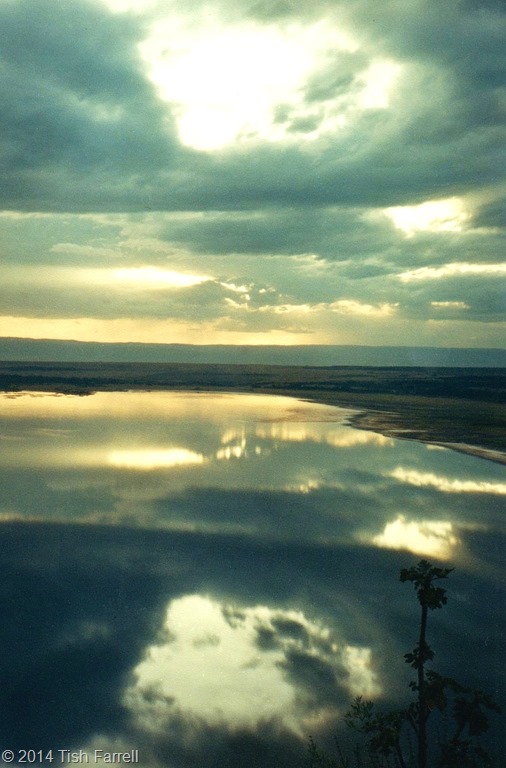
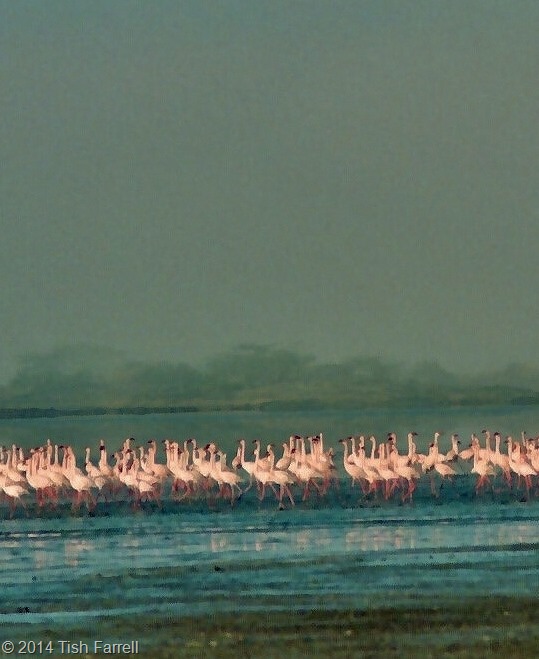
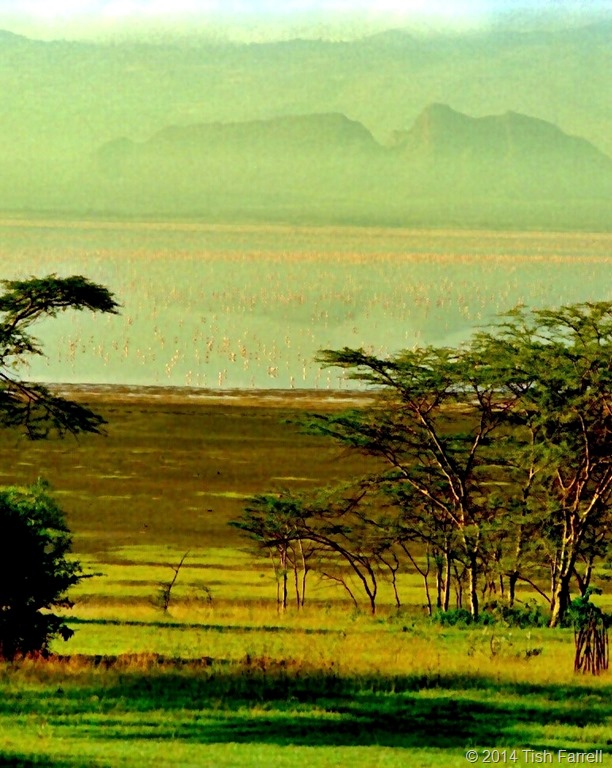
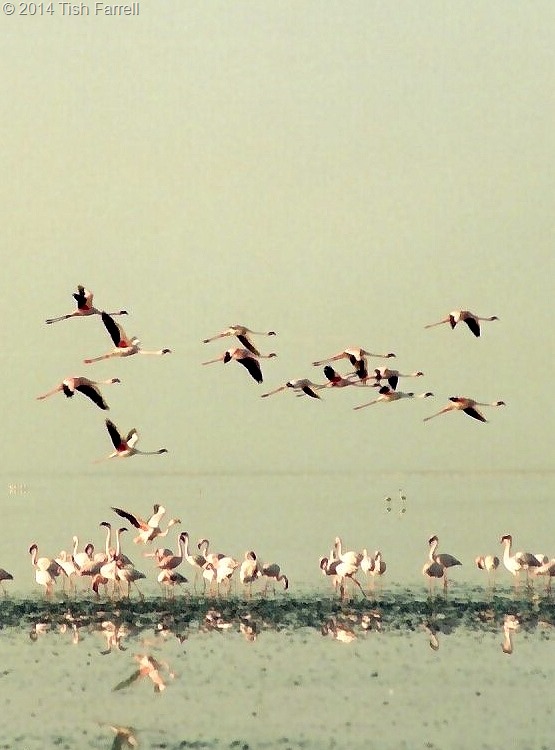
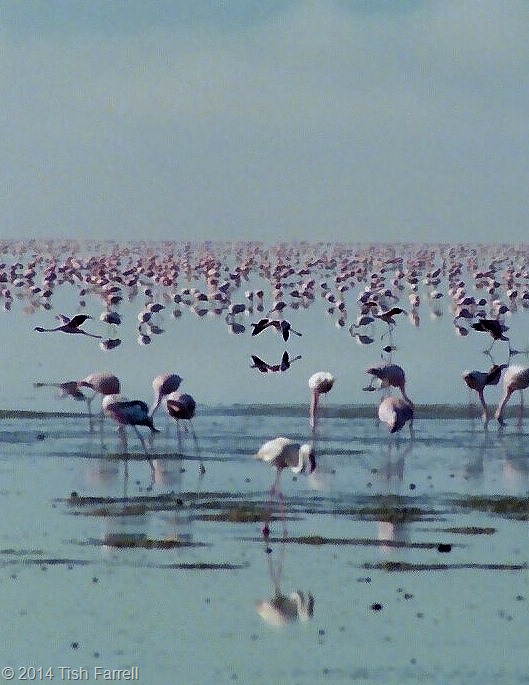
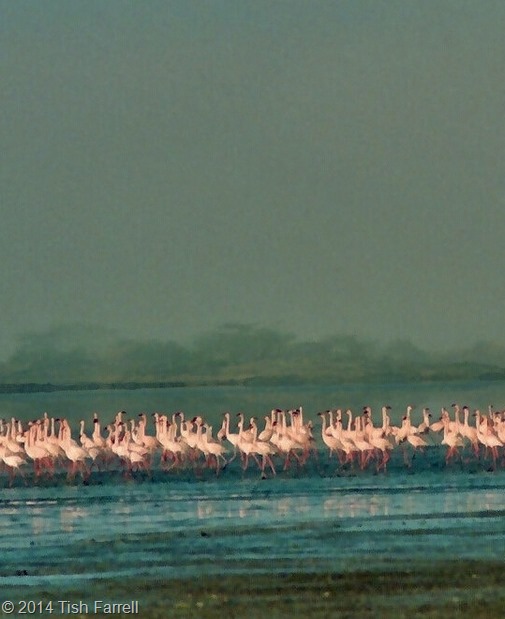
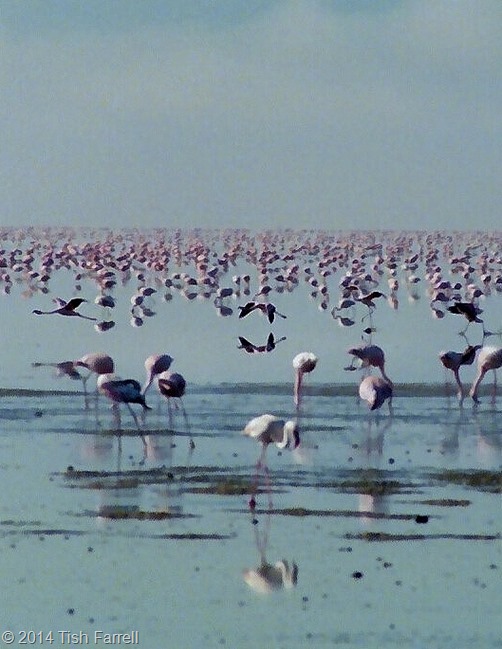
The light changes every second across the lake. From dawn till dusk there is always something to watch at Elmenteita in Kenya’s Great Rift. There are over 400 species of birds to spot for one thing – among them the endangered white pelican that breeds there. The main stars, though, are the surely the huge flocks of flamingos, both lesser and greater varieties, that turn swathes of the lake to rose-petal  pink. Even a passing glimpse  from the nearby  Rift highway  is enough to catch the breath. A pink lake – how can that be?
Scan-140503-0002

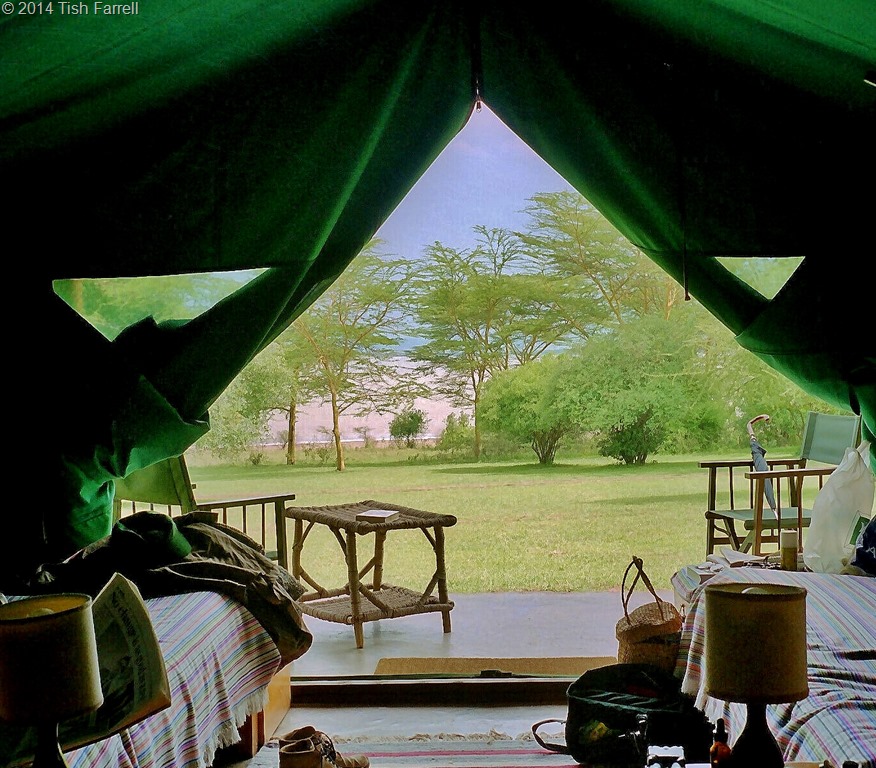
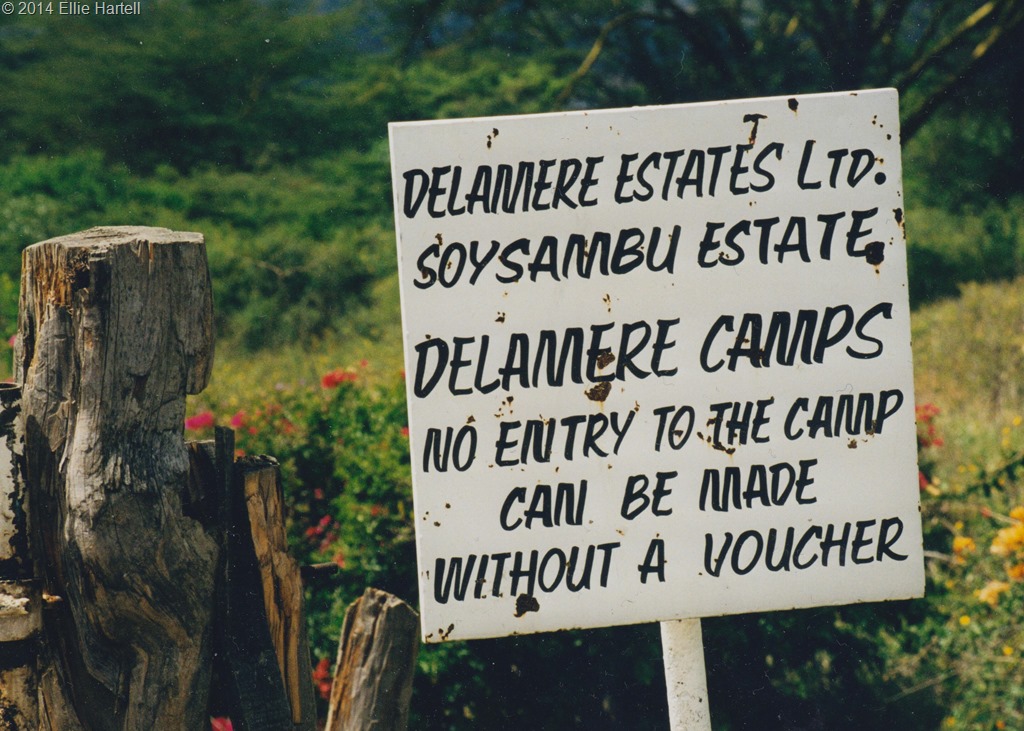
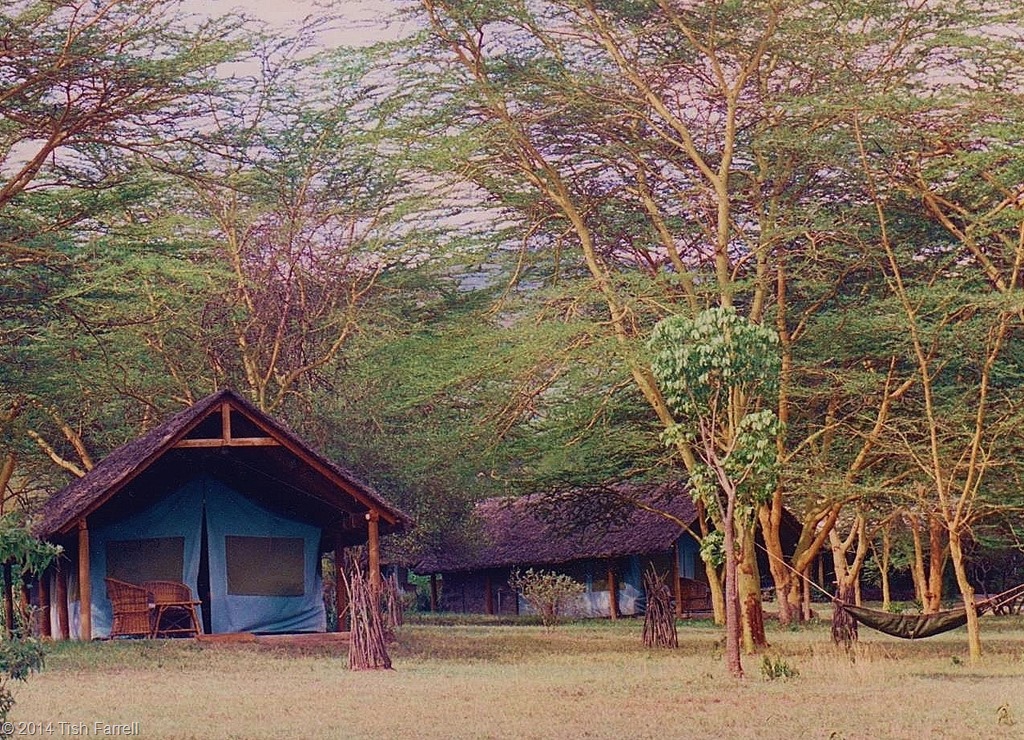
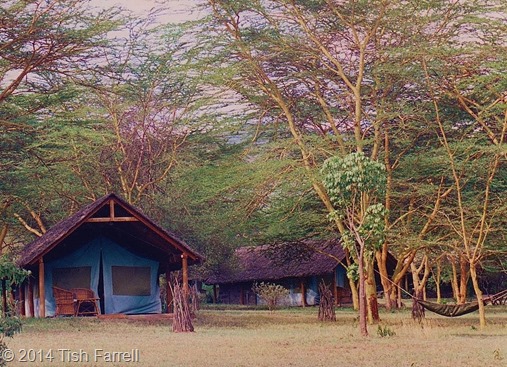
We came here often while we lived in Nairobi, staying at Delamere tented camp on the lake shore – a quirky, step-back-in-time establishment within its own nature reserve. The camp, itself was wholly unobtrusive -16 large tents, each sheltered by a thatched canopy and set out beneath fever trees that, here and there, hosted a sturdy canvas hammock.

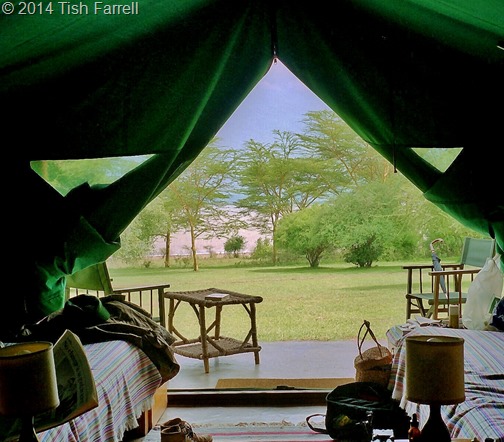
The tents were functional – two wood-framed beds, simple cupboards, rattan chairs all locally made. They came, too, with a plain little bathroom attached out back – running water, flush loo and shower – all facilities that would still be an unobtain-able luxury to millions of Kenyans. Inevitably, knowing this added to the discomforting ‘them and us’  awareness that accompanied us pretty much everywhere. 
005

For us wazungu, then, Delamere Camp was an idyllic spot. I once spent a week here by myself while G was at a conference. There were no other guests for most of that time, external and internal tourism having been hit both by El Nino rains that had caused weeks of havoc, and by widely reported bouts of pre-election violence.  Manager, Godfrey Mwirigi, treated me as if I were his personal house guest.

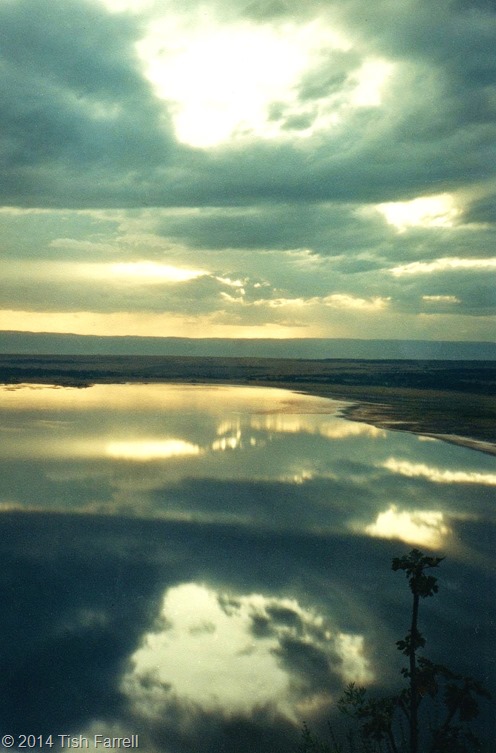
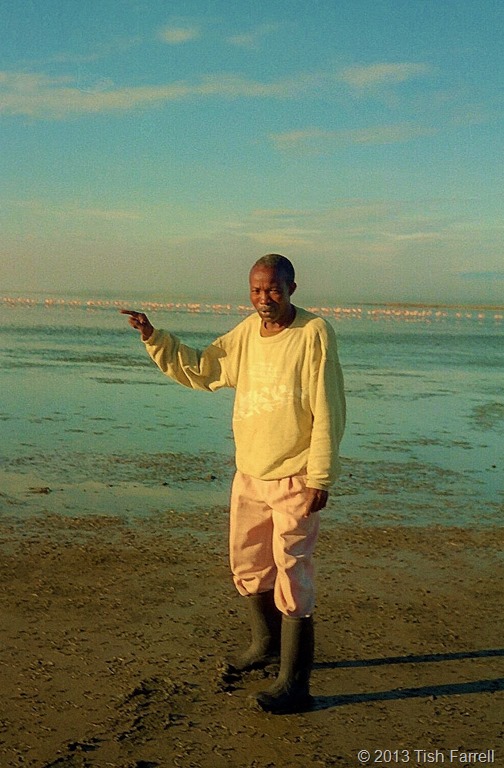
I thus spent my days and nights being driven around Soysambu nature reserve in a safari truck with zoologist, Michael Kahiga as my expert guide, or taken on early morning bird walks through  the bush, or on late afternoon hikes up through the sage-scented leleshwa brush to Sogonoi cliff-top to watch the sun set over the lake with a glass of wine in my hand. This, the daily late afternoon pilgrimage to the sun-downer cliff, was a pleasing piece of  hospitality thought up by  Paul Kabochi, the camp’s ethno-botanist. I have written about him in an earlier post, but here he is again on the lake shore at dawn.
Scan-130602-0001

On this solitary sojourn I was sorry to find that he was away setting up another camp. He is a man whose great fund of knowledge is sadly missed, and I would have been glad to have had another chance to speak with him.  Instead, I talked to Godfrey about tourism. He kindly ate his meals with me so that I did not have to  sit in the dining room alone.

Between times, hot water bottles and extra blankets appeared like magic in my bed, or indeed in the truck for the evening game drives. (Nights in the Rift can feel frosty). And all the time I watched and watched until my brain ached with sensory overload.
Scan-140502-0013

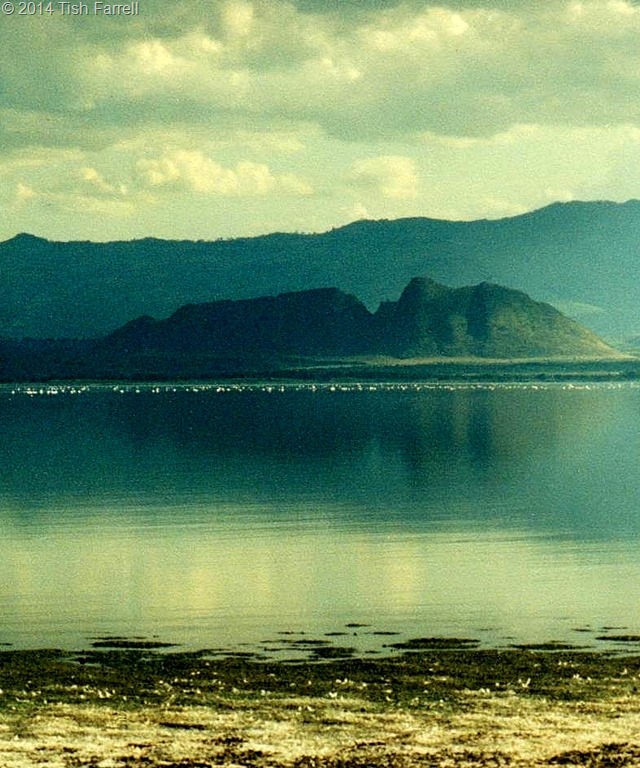
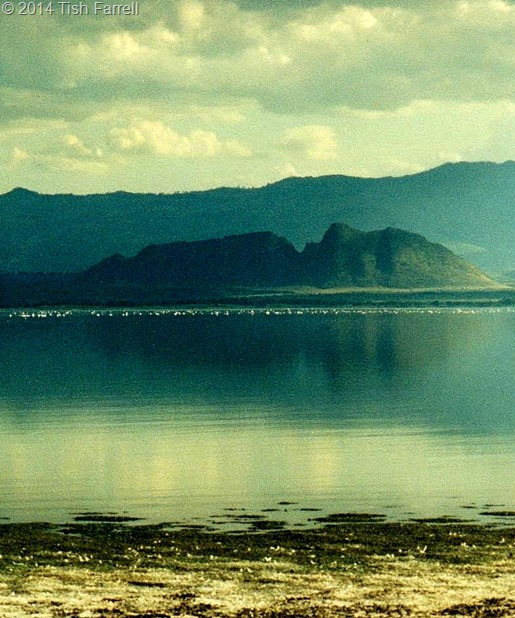
The camp overlooked the lake and the remnant volcanic cone that has long been known by the Maasai as the Elngiragata Olmorani, the Sleeping Warrior.  During colonial times it acquired a further name – Lord Delamere’s Nose, this apparently in tribute to the impressive dynastic proboscis of the third baron Delamere who, in the early 1900s, and as one of the first pioneer colonists, acquired  19 hectares (46,000 acres) of shore-land around the  the east, north and west of the lake.

His brother-in-law, Galbraith Cole, son of the Earl of Enniskillen, farmed the southerly shores at Kekopey. He was a man who was later exiled from British East Africa because he shot dead one of his labourers for stealing a favourite sheep. He later sneaked back to Kekopey disguised as a Somali, and his mother, Countess of Enniskillen successfully pleaded his cause. At the age of 48, and looking out over the lake, he shot himself, unable to bear the constant pain of his rheumatoid arthritis.
001

The descendants of these early settlers still live and retain most of their lands (including estates at nearby Lake Naivasha). In fact the only way to gain access to Elmenteita is to book into one of the exclusive safari lodges that now stand on the land that belongs to these old colonial families. This sense of British aristocratic exclusivity inevitably strikes a sour note. Doubtless these landowners will say they are custodians and that, without their dutiful care, the place would be wrecked by ramshackle trading operations and squatters, and the wildlife decimated.
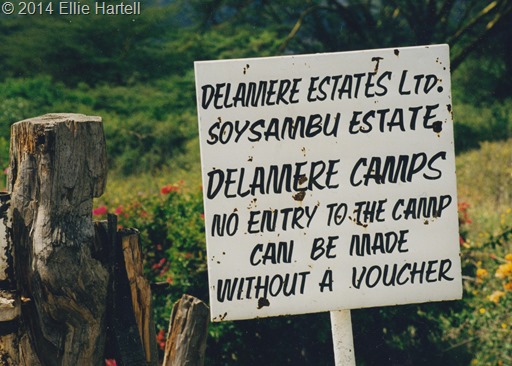
001

Even in my home town in Shropshire we are still ruled by such feudal argument. ‘Keep Out’ signs exclude the people of Much Wenlock from the ancient Priory parkland that is  now owned by one family. In Great Britain we take for granted (or are even unaware of) the power of the self-appointed, self-aggrandizing elite who own most of our countries’ lands.  I imagine, though, that many people would be surprised to know that super-squiredom is also alive and well  in East Africa.
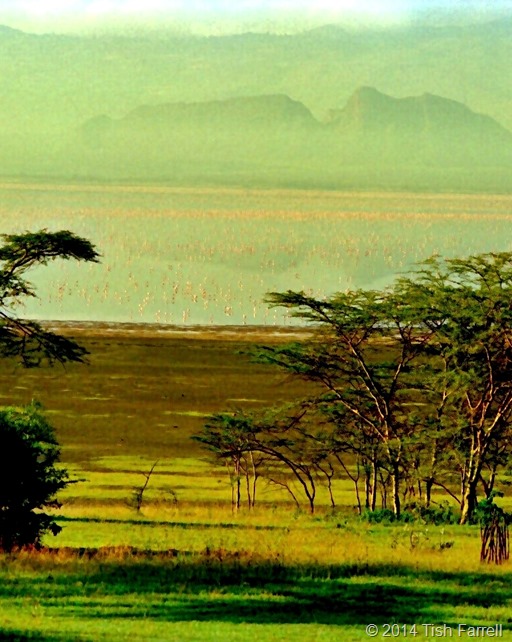
Scan-140502-0023

Before the British annexed East Africa in the 1890s, and all the (deemed) unoccupied territory became the property of the British Crown, and the locals obliged to stay forever  on the land where the British happened to find them,  land usage and territorial ownership was a much more fluid affair. For instance, up in the Rift highlands, and going back hundreds of years, the Kikuyu farmers had negotiated the legal acquisition of new land with the indigenous Okiek hunters, whom the Kikuyu judged to be the land’s original owners. Over the centuries this process of colonisation caused an occupational creep: as land became exhausted or overcrowded, so clan scions left their fathers’ homesteads and sought out fresh territories for their own families to cultivate. It is a similar story over much of the continent as the Bantu agriculturalists sought fresh ground.

As the boundaries of  allotted farm and pastureland nudged further into the Rift, so there was competition and conflict with the pastoral Maasai. The herders anyway believed themselves masters of the Rift, shifting up and down it as need for fresh grazing and water dictated. The farming communities with whom they traded and inter-married also at times presented an alluring target. This was inspired by the cattle herders’ belief that Enkai, the creator, had bequeathed all the cattle on earth to the Maasai. For young warriors intent on proving their courage and amassing cattle to augment family honour, armed cattle raids on their farming neighbours were a matter of necessity.

It is interesting, then, that colonial aristocrats such as Delamere, who established large stock ranches in the Rift, were inordinately admiring of the Maasai, seeing them as nature’s aristocrats. It is also tempting to put this down to a congruence of world vision: recognition of a mutual case of droit du seigneur? In fact in those early days, Delamere was the only white man for whom the Maasai would deign to work, although this did not stop them from making off with large numbers of his sheep and cattle.
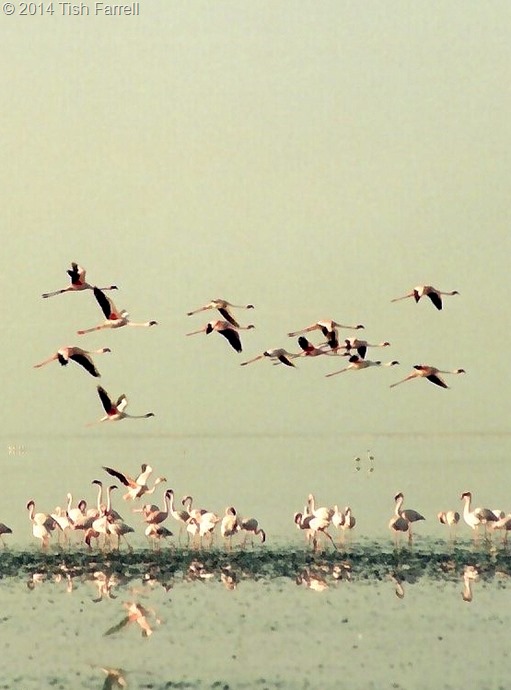
Scan-140502-0067

That the Rift was once Maasai territory is indicated by the many place names – Naivasha, Nakuru included – that are European renderings of Maa originals. Elmenteita derives from  ol muteita,  meaning  “place of dust” and, from time to time, this shallow soda lake does turn to dust.  At the best of times it is only around 1 metre deep. It shrinks and expands depending on the rains. But when not blowing away to dust, it extends over some 19-22 square kilometres.

The alkaline waters are rich in the crustacea and larvae that the greater flamingos feed on, and in the blue-green algae that the lesser flamingos syphon up through the top of their bills. The former have white plumage with a pink wash; the latter are more the colour of strawberry ice cream. Both honk, and grunt and mutter in a continuously shifting mass. All night you can hear them as you lie awake in your tent.
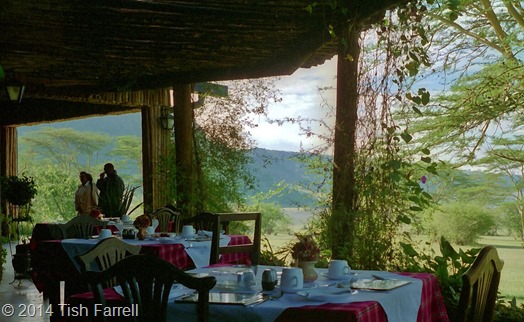
Scan-140503-0058

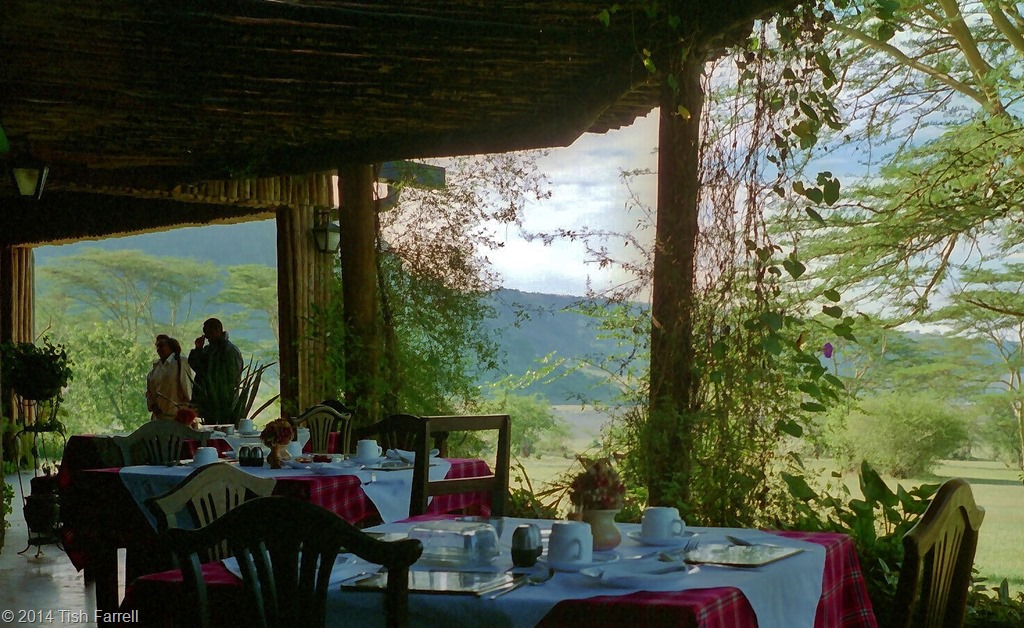
A view to dine for: Losogonoi Escarpment and the lake shore

*

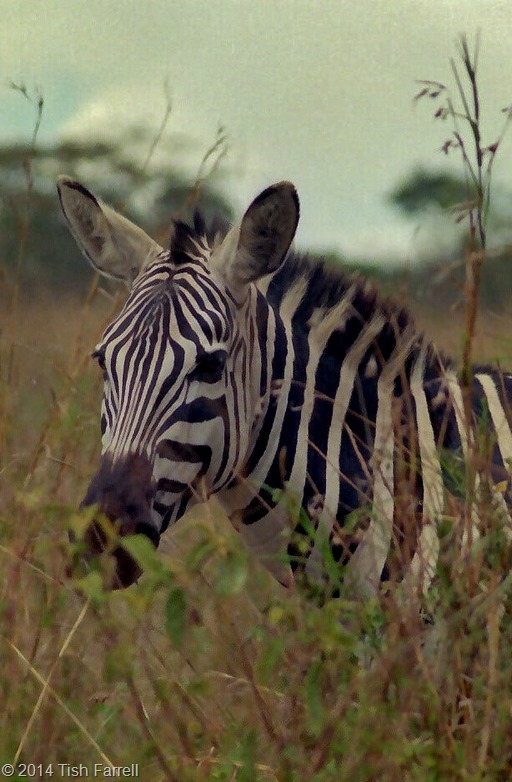
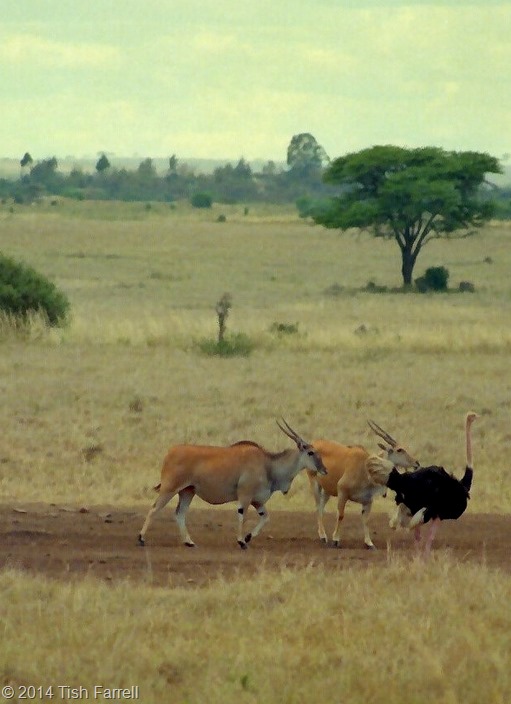
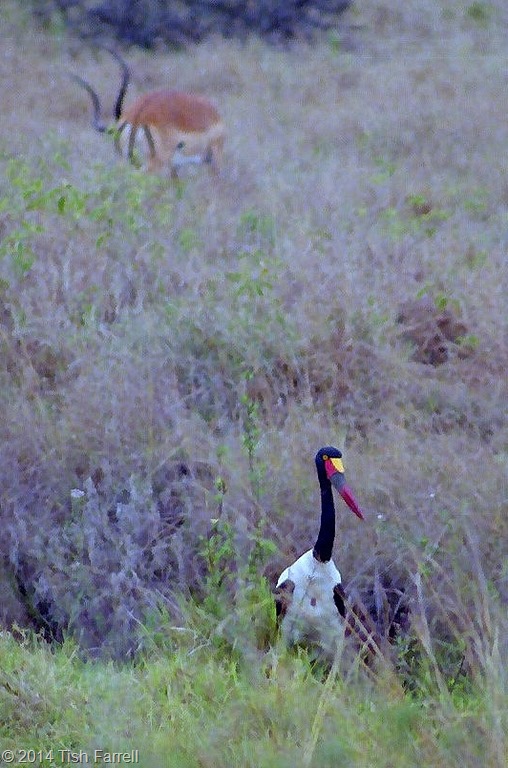
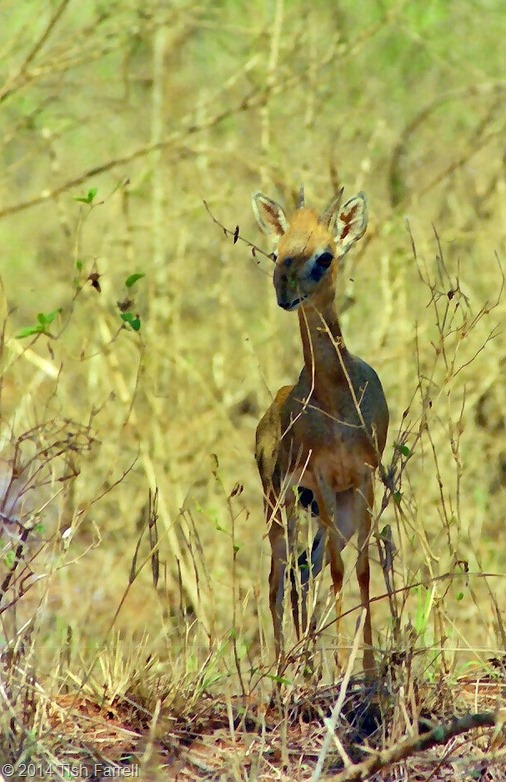
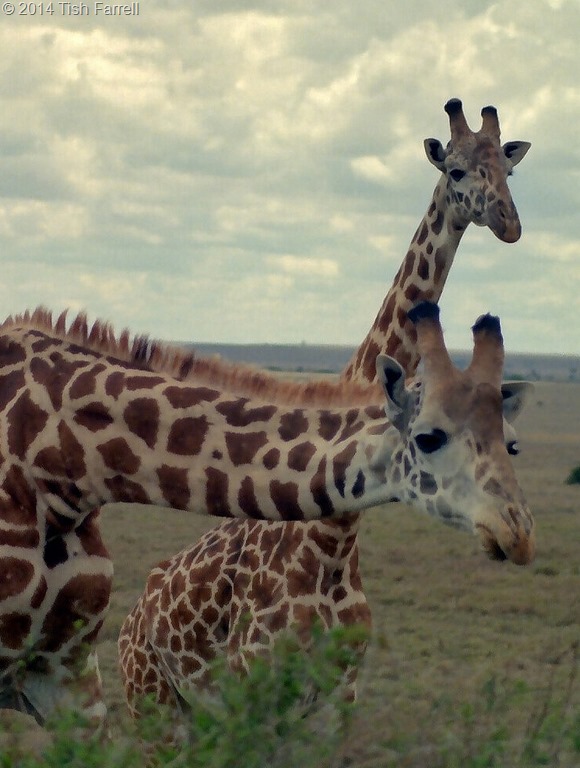
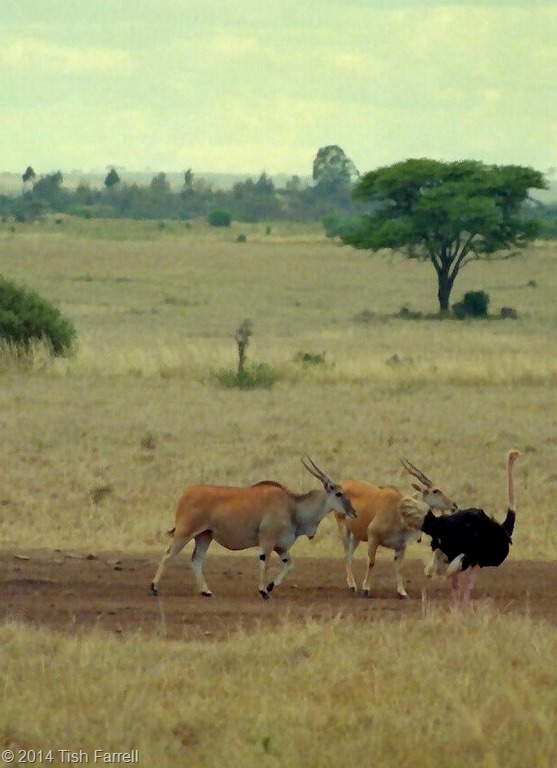
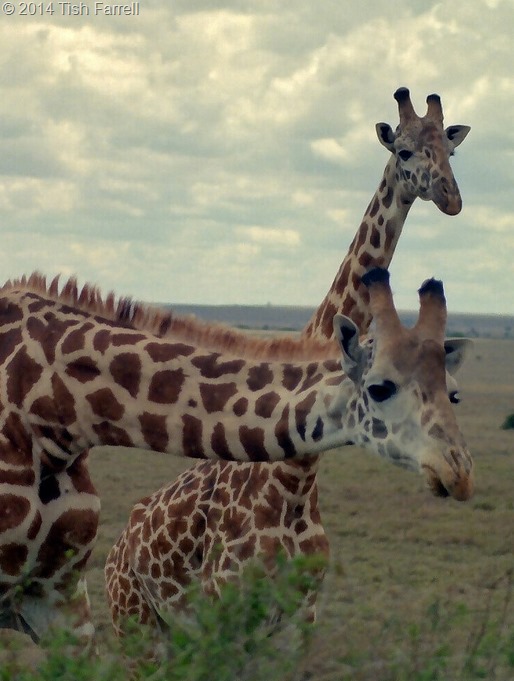
But it is not only the bird life that make this place so special. The traditional ‘big five’ may be lacking in this part of the Rift, but it is still home to Rothschild giraffe, eland, buffalo, zebra, ostrich, impala, gazelle and a host of smaller game – aardvark, zorilla, porcupine, African wildcat. Since our time in Kenya much has changed at Soysambu. In 2007 the private Delamere Estate began operating as a not-for-profit conservation organi-zation called Soysambu Conservancy.

Delamere Camp has long gone. In its place is a new enterprise, the very expensive Serena Elmenteita Luxury Camp, a sort of out-of-Africa manifestation with bells on, the kind of set-up that intrudes a different kind of exclusivity on this piece of Kenya. But then of course there’s always the usual argument: that the provision of luxury on this scale does at least provide many, many jobs for Kenyans. Across the lake, however, something of the original Delamere Camp ethos has been re-created at the Sleeping Warrior Eco Lodge and Tented Camp – all within the Soysambu Conservancy.

In fact things have not been going well with the Delamere family. The sheer mention of the name has been enough to evoke great fury among many Kenyans. In 2005 and again in 2006, Thomas Cholmondeley, sole heir of the 5th Baron and Soysambu’s manager, admitted to shooting dead an African. The first case involved a plain clothes officer working for the Kenya Wildlife Service, apparently on the Soysambu farm to investigate a poaching incident. Cholmondeley says he thought the man was robbing his staff. Action against him was dropped.

In the second case, he caught a group of poachers with a dead impala, and said he was shooting at their dog when he fatally wounded one of the men. Later he claimed it was his friend, Carl Tundo, who had shot the poacher, and that he was covering for him. The whole sorry story was featured in the BBC Storyville film Last White Man Standing. Later the charge of murder was changed to manslaughter, and in any event Cholmondeley spent 3 years in Kamiti Maximum Security Prison, Kenya’s toughest jail. To many, though, it was thought to be far too lenient a sentence. The high profile media coverage also  reminded  millions of landless Kenyans that certain individuals had in their sole possession unimaginably vast estates. The old skeletons of racism and colonial oppression came rattling out of the cupboard to fuel the general furore, as the poacher’s widow asked for justice.

And so what in the end are we left with – a beautiful place enmeshed in tales of human intrigue, slaughter and misadventure.

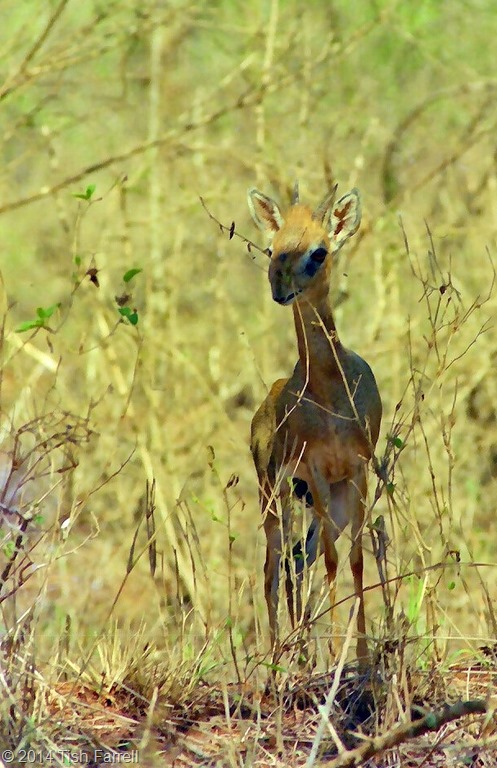
I know I was lucky to spend so much time there when I did, and to see it through the eyes of the Kenyan naturalists who were my guides. I hope that many of them still work there – for Serena or Soysambu. They taught me how to watch out in that landscape: to recognize tracks of genet cat and mongoose, to poke through the little piles of dik dik droppings that marked this tiny antelope’s territory, to identify a black-breasted apalis or shy tchagra, to listen for the calls of the red-fronted tinkerbird, to know that an infusion of bark from the muthiga or Kenya Greenheart tree is good for toothache and stomach upsets, and most especially not to fall into aardvark holes as I was walking through the thornscrub.

Finally then, a few glimpses of Soysambu’s beautiful creatures.
Scan-140502-0042

Scan-140504-0002

Scan-140504-0003

Scan-140504-0004

Scan-140504-0005

Scan-140504-0009

Scan-140503-0036

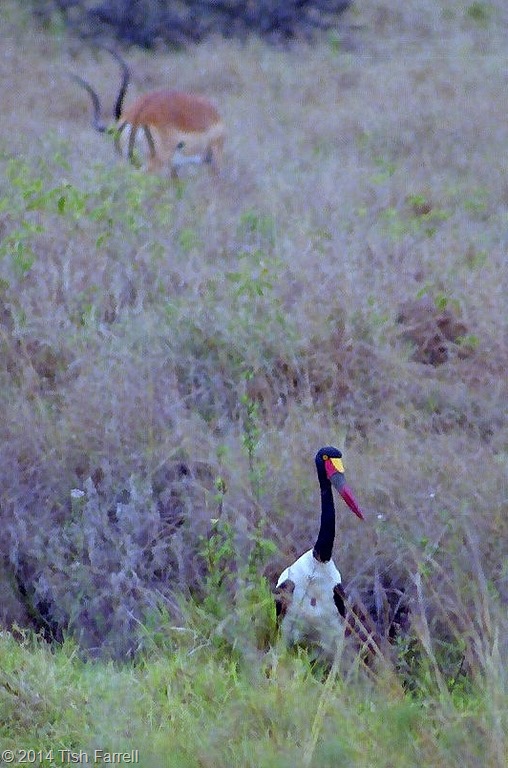
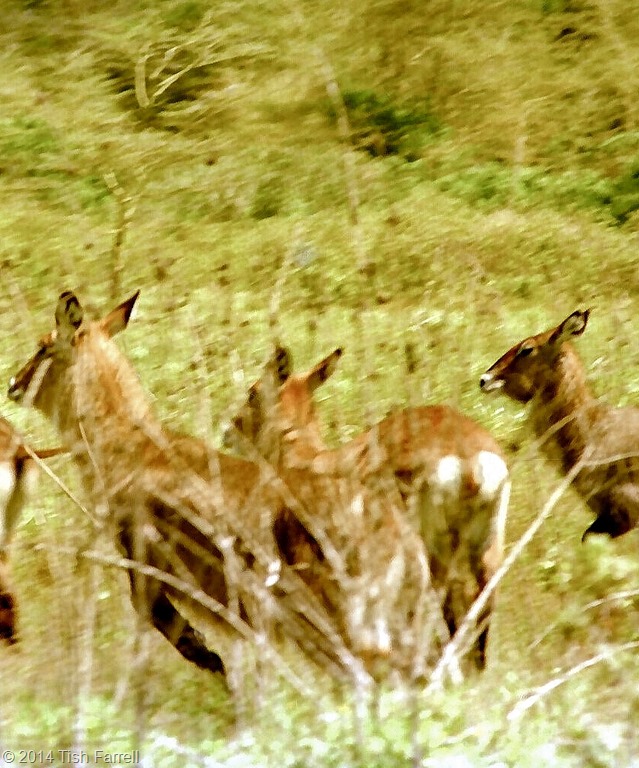
Photos from bottom up:

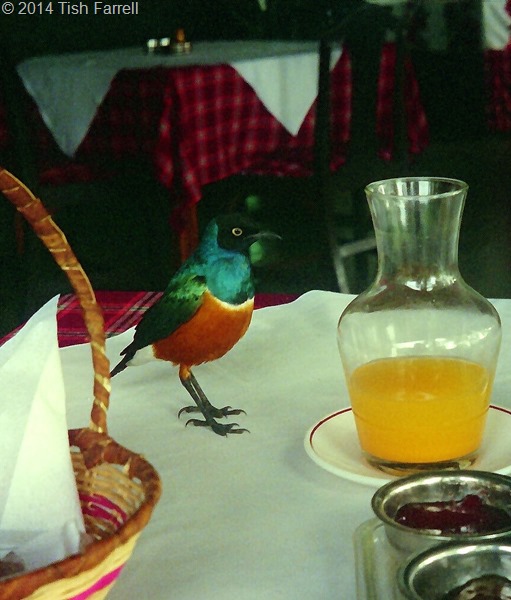
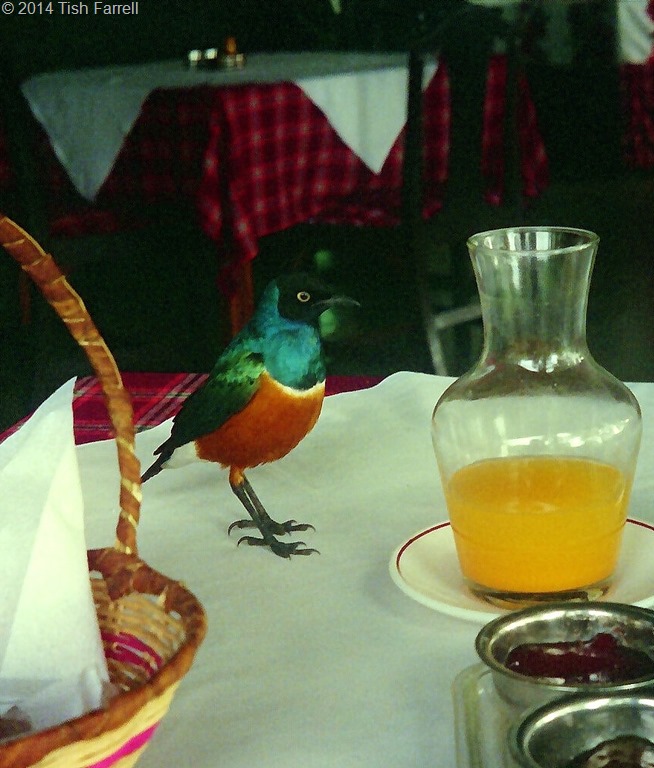
Superb starling comes to breakfast

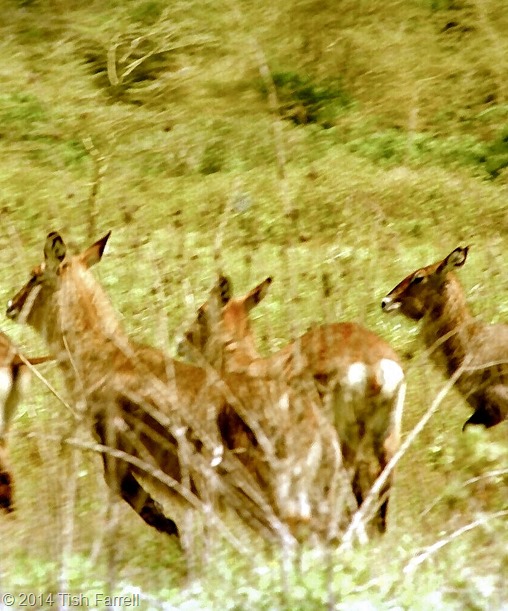
Waterbuck females

Dik Dik (one of the smallest antelopes, slightly larger than a hare)

Saddlebill stork, impala in the background

Eland (the largest of Africa’s antelope) and ostrich

Burchell’s zebra

Rothschild giraffe
Scan-140502-0046

© 2014 Tish Farrell

A Word A Week Challenge for more stories

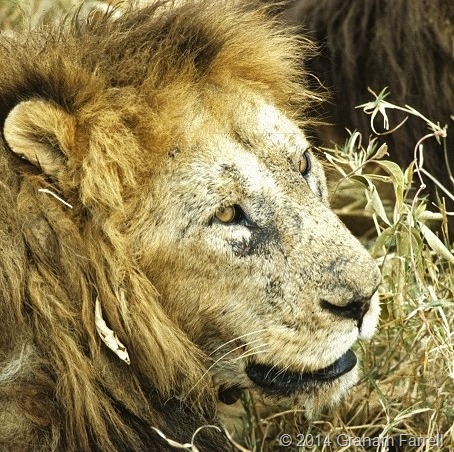
Panthera leo: top predator, or would that be us? Happy Earth Day!


lion_Ngorongoro_178

“The earth is the mother of all that moves, and is the common bond between the generations that have been, are , and are to come.”   

Kikuyu ethic

Happy Earth Day

Frizz’s tagged ‘P’ challenge

#earthday


Making Eden: new patterns for living?

003.jpg

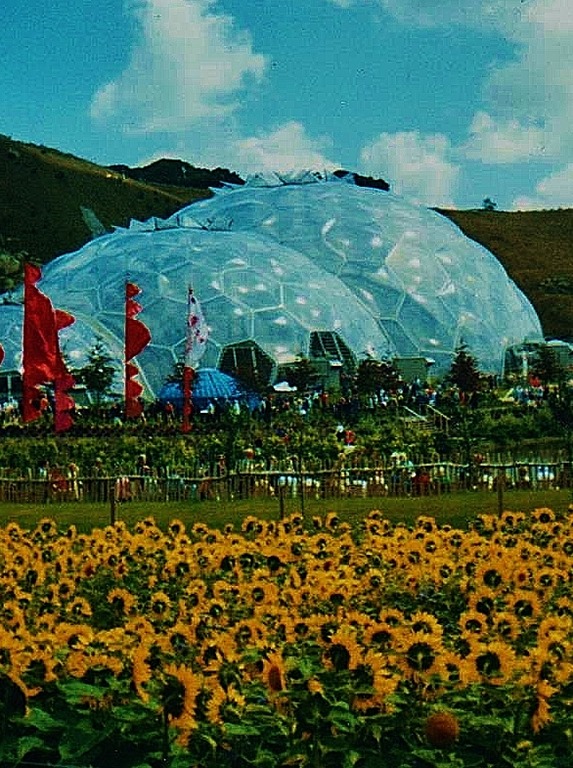
Is this how you picture the Garden of Paradise: that mythic, perfect place from which shame caused humankind to be forever banished? Probably not.

Personally, I do not have time for dogma founded on guilt, but I do have time for the Eden Project, one of Britain’s most ambitious Millennium schemes that in the year 2000 saw an abandoned Cornish china clay quarry transformed into a world-famous visitor attraction and charity. 

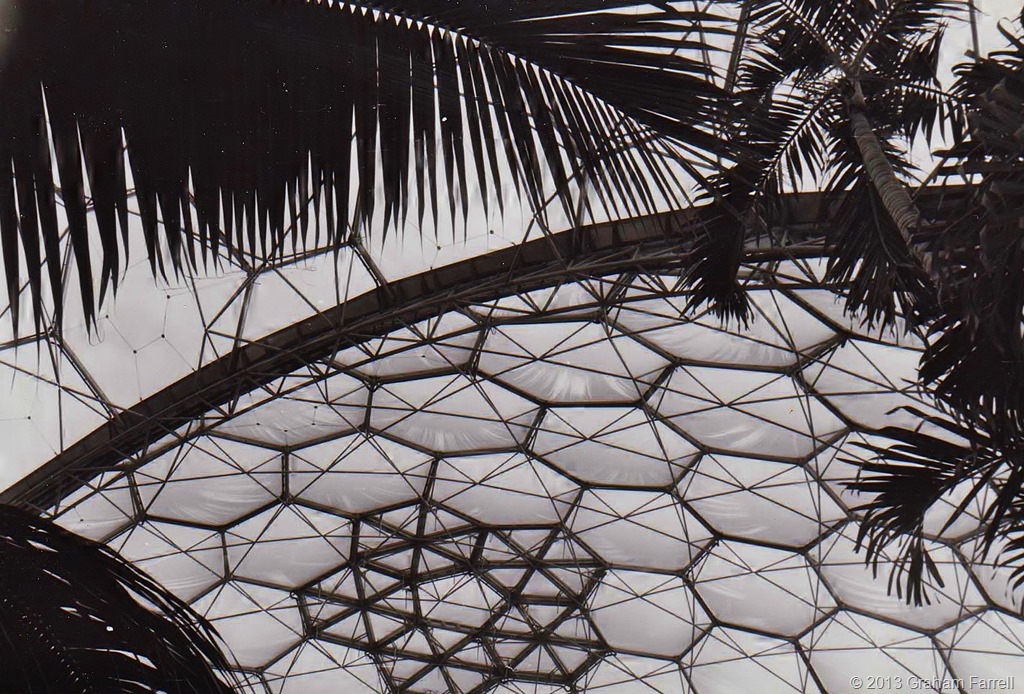
The photo above, raided once more from the Team Leader’s files, was taken that year inside the Rainforest Biome. This extraordinary Sci-Fi structure is  apparently twice as high as Big Ben, and planted with more than 1,000 species. In this  audacious new world, pests and diseases are managed with an array of biological controls, including bugs that eat other bugs, birds and lizards. It is an on-going experiment in life management.

The man behind Eden in all senses is Tim Smit, Netherlands-born, British entrepreneur. He conceived the idea while working on the restoration of the Lost Gardens of Heligan also in Cornwall. Both these enterprises have not only enthused and informed millions of visitors from all over the planet, but injected millions of pounds into Cornwall’s struggling economy. Like an infinity of interlinked hexagons, it has been having a multiplier effect.

File:Tim Smit (6509919409).jpg

Eden’s creator, Tim Smit. Photo: Creative Commons (source Tim Smit)

*

And what is Eden Project saying to us?


plants give us our food, fuel, materials and medicines”

“plants are part of a wider ecosystem that provides our water and air”

“the natural world can be beautiful, relaxing and inspiring”

001.jpg*

AND THAT:

“In a changing world, we need imagination and enterprise; we need to foster our skills and talents; we need communities to get engaged in inventing new, more sustainable ways of living together.”

*

As a belief system to live by, I can accept all of these propositions. Now see the video of some Eden’s ideals in action: