False Horizons On The Way To The Allotment: A Not So Bucolic Picture?

P1080719

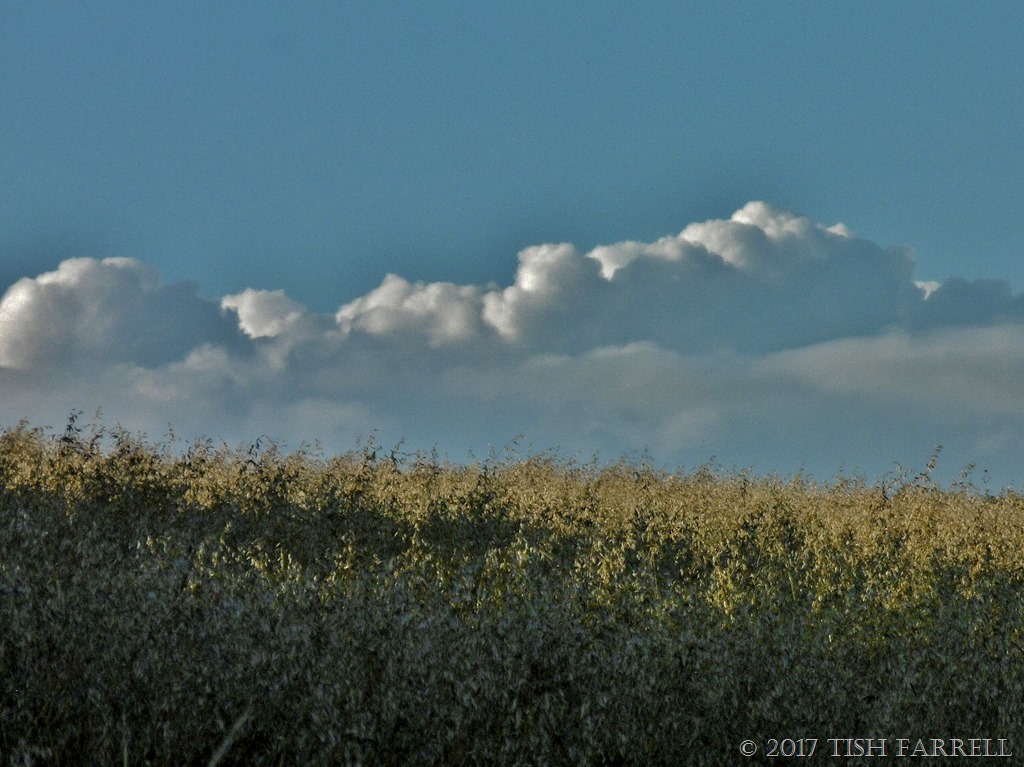
I usually have a camera with me when I go gardening. The field path from our house to the allotment provides many diversions; opportunities to stand and stare. And also there’s often something to snap around my plot. I took this photo just over a week ago. Even then the wheat looked more than ready to harvest. But it was infested with wild oats, hence the feathery ‘horizon’ seen here above the wheat.

Earlier this week,  while I was picking runner beans, I heard the roar of an approaching tractor, and looked up to see the farmer on his mega vehicle, massive spraying rig in action. He was dosing the fields behind and beside the allotment.

Then the breeze got up.

“Roundup,” muttered my allotment neighbour crossly, he who also happens to be an agricultural consultant of many years standing. “Just look how it’s drifting.” It was definitely coming our way. We don’t use weed killer so we had a mutual humph. What else could we do?

Roundup is the most widely sold weed killer in the world. It’s  main active ingredient is glyphosate, but it is also combined with a number of apparently inert adjuvants. These are substances that are added to accelerate,  prolong or enhance the action of the main ingredient.  Adjuvants are also added to vaccines for similar reasons, but that’s another story.

Here’s what Britain’s Soil Association has to say about Montsanto’s glyphosate. If you follow this link, and feel so minded, you can find out more and sign the petition to get it banned. And just to spur you on:

…glyphosate can follow the grain into our food. Tests by the Defra* Committee on Pesticide Residues in Food (PRiF) found that almost two thirds of wholemeal bread sampled contained glyphosate.

* Defra is the UK Government Department for Environment, Food & Rural Affairs

As to actual health risk, the World Health Organisation seems to be at odds with itself as to whether glyphosate is more of danger through external exposure or as residues in our food. Even so, I find it alarming that according to The Guardian, urine samples taken from 48 Members of the European Parliament showed that

all had glyphosate traces in their bodies, with the average concentration being 1.7 micrograms a litre, 17 times above the limit for drinking water.

But whatever its full effects prove to be, I’m with the The Green Party’s MEP for the south-west of England when she says:

With ongoing controversy over the health risks of glyphosate, we can be quite sure it has no place in the human body. We hold concerns for its impact on biodiversity, with evidence of glyphosate having detrimental impacts on the honey bee, monarch butterfly, skylark and earthworm populations, and posing a threat to the quality of our soil.

Molly Scott Cato MEP

Well why would I, or anyone want to eat weed killer?

How Many Hoverflies In An Opium Poppy?

IMG_5464

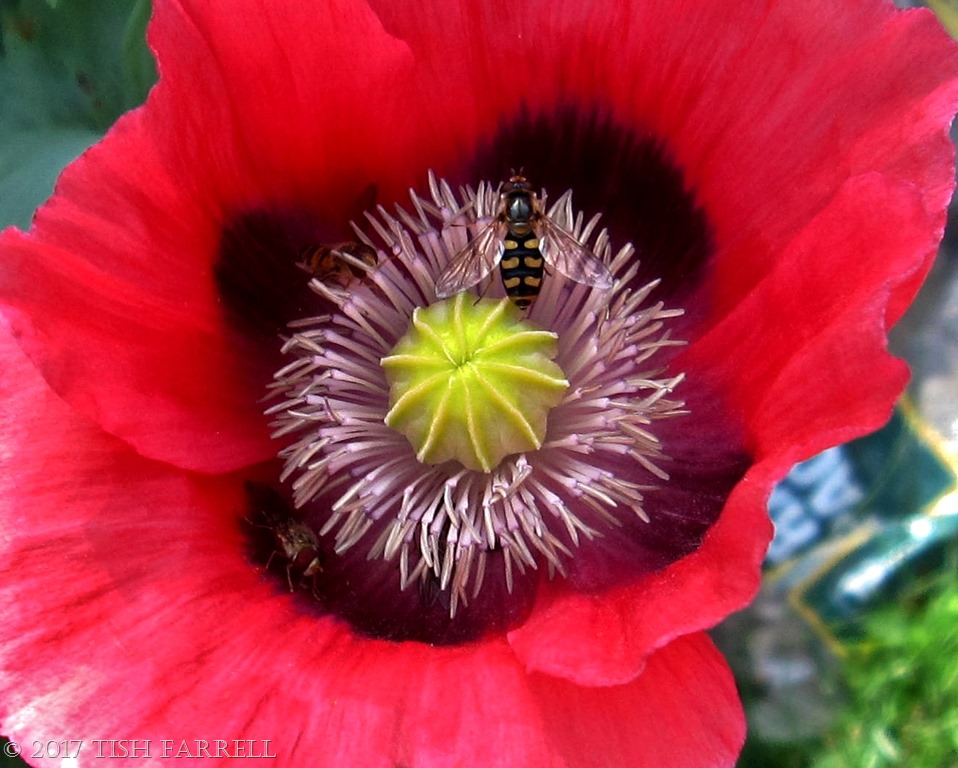
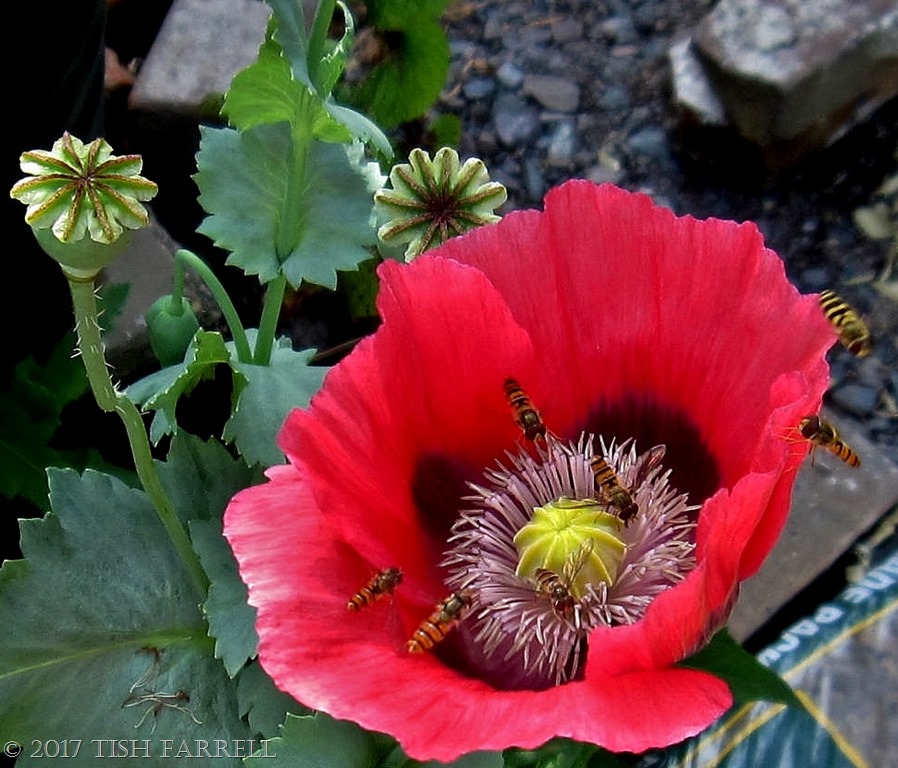
No, it’s not a joke question, but there’s clearly a lot of satisfaction going on in these photos. So many hoverflies, and different kinds too. Also photographer satisfaction – in that I managed to capture them so I could show you. Then there’s gardener satisfaction too – always something new to discover out in the garden, with or without camera. The only problem is I’m sure Ark is going to ask if I know what species they are.  Nope, I don’t,  but here’s the place to find out, which further adds to my satisfaction, because I can now provide this very fascinating link – at least as far as hoverfly lovers are concerned.

IMG_5465

IMG_5466

Daily Post: Satisfaction

Butterflies In The Buddleia, Bees In The Teasels And All’s Well At The Allotment

IMG_5571

IMG_5418

IMG_5437

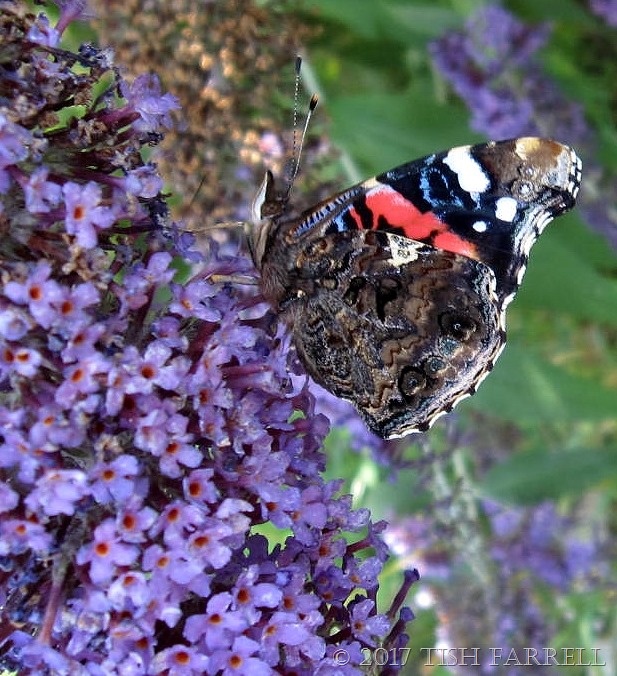
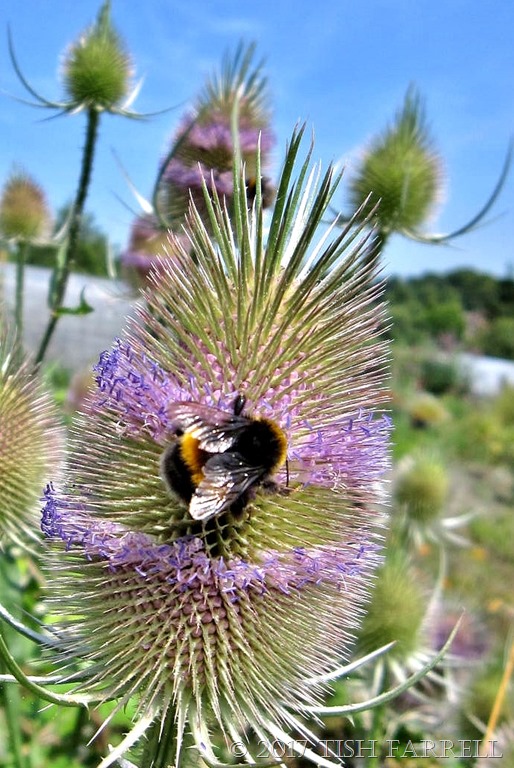
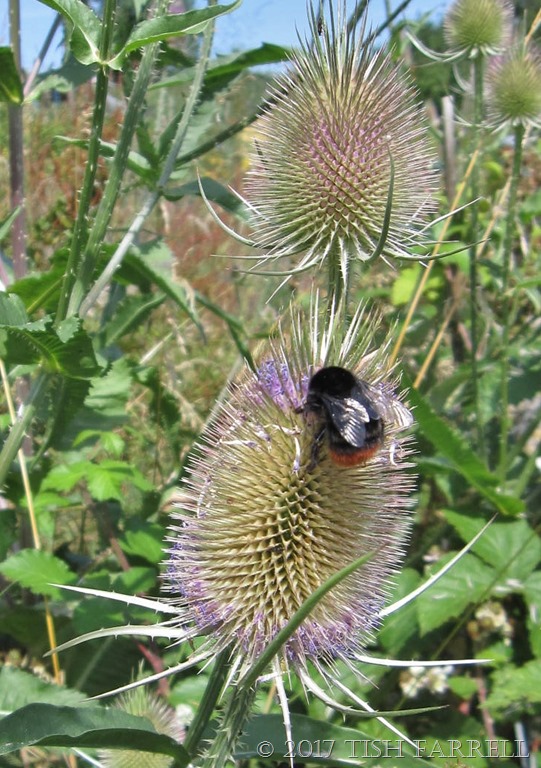
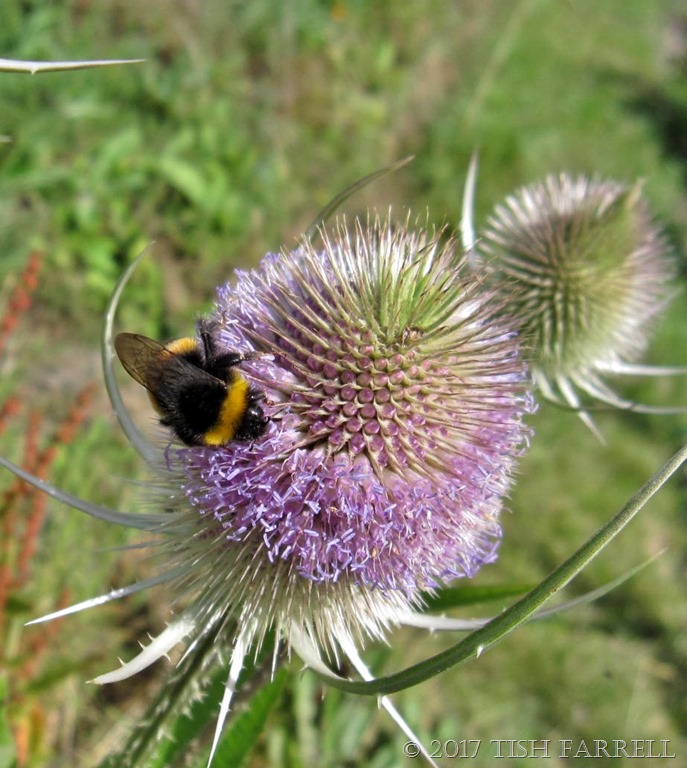
Over the past few days the butterflies have been feasting on the allotment buddleia bushes. From top down we have: Red Admiral, Comma, and Small Tortoiseshell. In the teasels we have assorted bumbles:

IMG_5552

IMG_5545

IMG_5395

This morning when I arrived at the plot, there were insects everywhere. It was also very hot, so I was glad to take a break from sieving compost and wander round, capturing some of the busy foragers. Having had a nice little play with my Canon Ixus, I then went back to work. I harvested my onions, hung them in the sun to dry, watered the polytunnel jungle, fought the tomato vegetation into submission, discovered a neat little cauliflower out in the raised beds, picked French beans, courgettes, plucked a few beetroot to make borsch and a lettuce for our neighbours, sowed some golden beetroot, carrots and Florence fennel, then staggered home across the field whither I arrived a very dishevelled and grubby person. Back at the homestead, he who is building a shed in the back garden had erected the fourth wall to his edifice, or at least the framework for same. And having laboured all morning and well beyond lunchtime, we then retreated to the cool of the kitchen for a restoring cup of tea. And there you have it, Monday chez Farrell – overheated but happy.


Am linking this to Jo’s Monday Walk which (as ever) is totally fabulous this week. Please trot over there for a longer walk than mine to the allotment, and also for some very lovely candlelit scenes around the streets of Lagoa.

Cloud Shadows Over The Great Rift

IMG_0008

I have just come home from the allotment with very wet knees ( the grass on the field path has suddenly shot up half a metre). It is a gloomy, drizzling evening here in Shropshire, and has been raining now for two days. This is very good of course. We’ve hardly had any rain since mid-May, and it’s a big relief not to have to water the vegetable plots. The veggies are very happy too – all upstanding  and glistening in the rain. The only thing is I think we have water-resistant soil. When I went to sow some Florence fennel, the surface compost was damp enough, but an inch down the soil was dry as desert sand.

More rain required then.

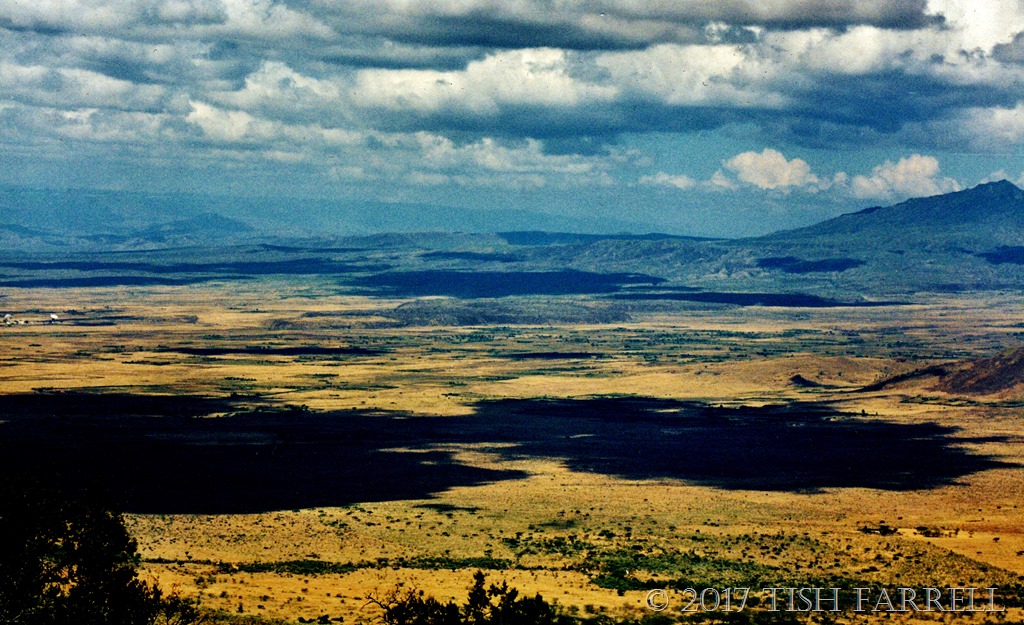
The advent of rain is of course a critical factor in the growing of smallholder crops over in Kenya where this photograph was taken during the July dry season. Very few rural farmers have ready access to piped water, reservoirs and water courses, and so irrigation systems are thus not feasible unless you are a very rich big landowner.   The monsoon seasons on the Indian Ocean are responsible for the country’s rainfall. It comes in two seasons: the short planting rains roughly October to December and the long rains in April-May. And so the clouds you see here, may be bringing shade, but they are not bringing rain.

And even in season, this is increasingly the case as Kenya’s forests dwindle. Without its tree-covered uplands, which invite the clouds to drop their moisture, the future will bring only increasing desertification. Or else when it does rain, there will be more flash flooding and landslides to carry off the fertile top soil.  Climate change, then, has both local and global origins, and we all need to think about this, and the part we may play,  wherever we live on the  planet.

copyright 2017 Tish Farrell


Thursday’s Special: over  Please visit Paula to see her totally stunning photo.

Thursdays Special ~ The Arboreal Position And Why We Can’t Live Without Trees

P1060049

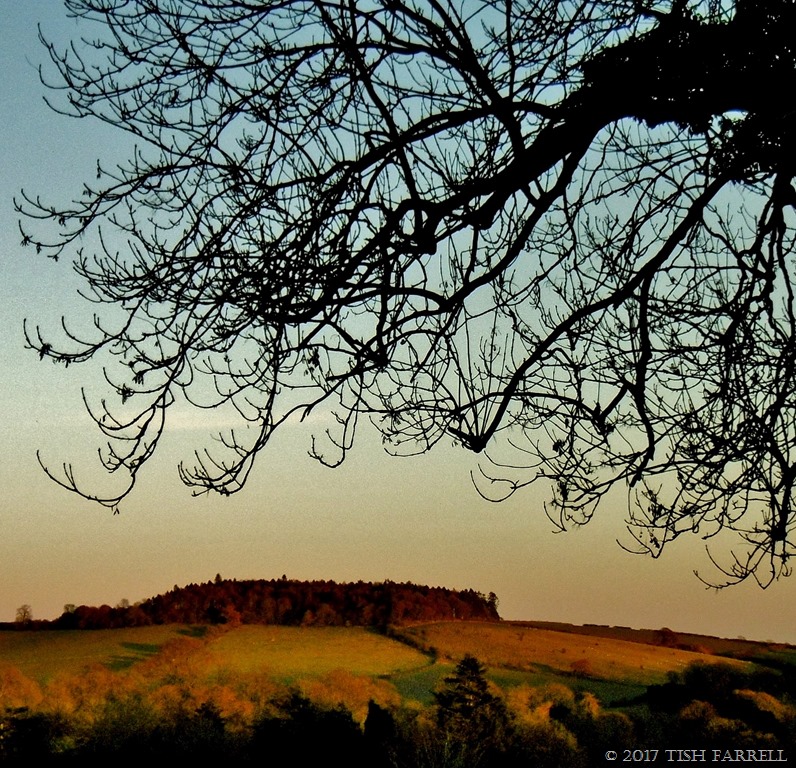
These late day views overlooking Wenlock were taken back in December. Many of the trees, especially the oaks, beeches and field maples, had hung on to their leaves, which in turn were gathering in, and reflecting the winter sun. Looking at these photos now makes me appreciate how well treed we are in our hollow beneath Wenlock Edge, this despite two thousand years of farming.

But then you simply cannot have too many. Our shamanic ancestors were wise in their conception of the world tree at the heart of all existence: trees are essential to our survival. Without them we would have a lot of problems breathing. According to science writer Luis Villazon at the BBC’s Science Focus each of us requires around 740 kilos of oxygen per year, which amounts to 7 or 8 trees’ worth.

But that’s not all. As well as providing us with the air we breathe, trees also stabilize, create and replenish soils. They support biodiversity. They affect the climate including rainfall patterns, and their destruction rapidly leads to desertification and soil erosion. They provide us with many useful products, and in the future we may come to rely on them as a source of essential and cheap medications to which everyone can have ready access.

In the light of all these arboreal gifts, going out and hugging a tree now seems an eminently sane thing to do. In fact I recommend it. At the very least, it will lift the spirits. The tree might like it too.

P1060044


Please visit Paula for her February Pick A Word and be inspired. There is a choice of five prompts, each of which she illustrates superbly: radiating, alimentary, frontal, arboreal, remote.

copyright 2017 Tish Farrell

Power Lines: But Who Has The Power?

P1030628

P1030649

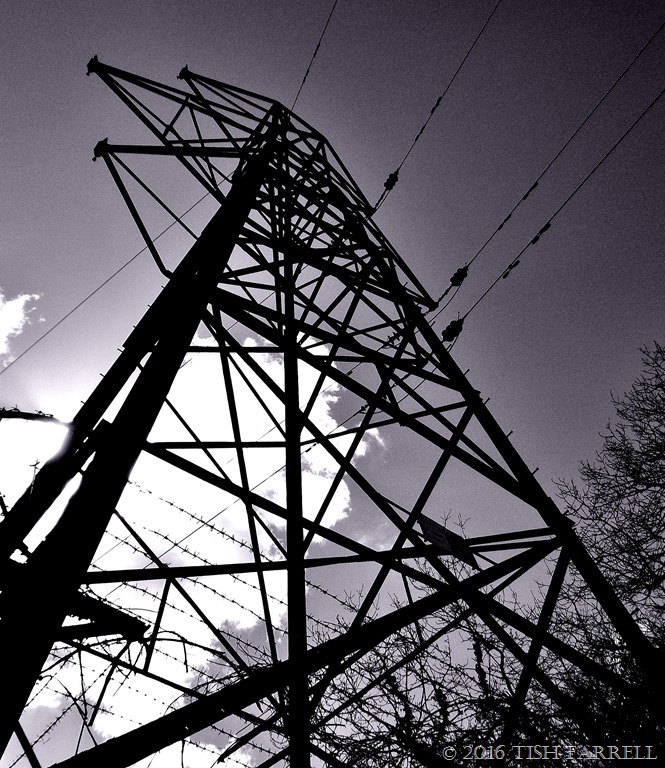
I suppose we English take the presence of electricity pylons for granted. They march across our countryside enabling us to make toast and boil the kettle, watch TV and keep the packs of supermarket frozen peas frozen,  to heat our homes and charge the appliances we think we can’t live without – cell phones, tablets, laptops, cameras.

It makes me wonder though – how much power we actually need, and just when we might get around to deploying clean, renewable energy sources. Next stop fracking.

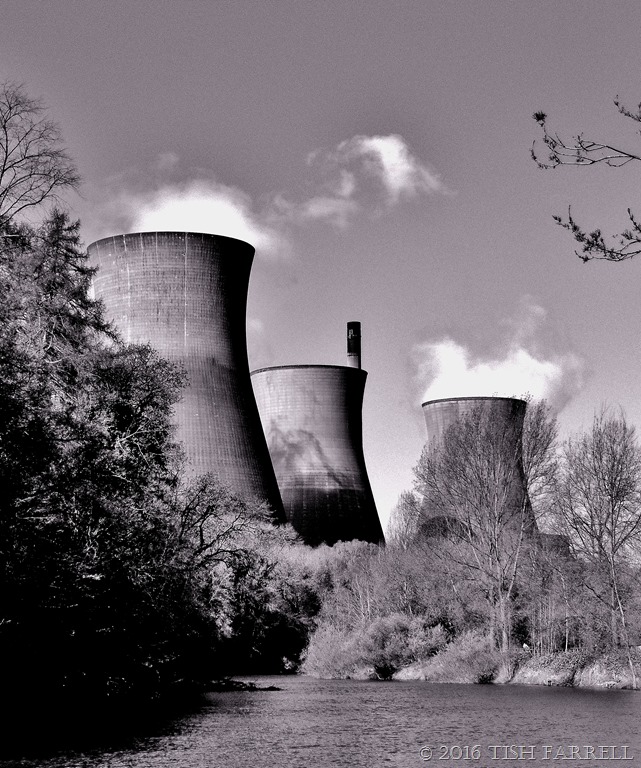
These particular pylons dominate the fields around Benthall Hall above the Severn Gorge, and until last year transmitted energy generated at the now decommissioned Ironbridge Power Station.  I’m not sure how our lights stay on these days, or who to ask about it – which to me suggests a worrying situation.

We regard the provision of electricity as our natural right, while at the same time rarely considering how little personal power we have in how it is produced and delivered. We probably don’t know who owns it – this absolutely essential resource. The same applies to that other absolute necessity – the clean water that pours from our taps. So I’m also wondering if we haven’t surrendered too much power – blithely assuming that the corporate owners (whoever and wherever in the world they are) will always act in our best interest and give us what we need?

P1010072


This week at Black & White Sunday Paula asks us to show her ‘towering’.

And It Was A Right Bees’ Breakfast This Morning Over My Garden Fence…


IMG_2265

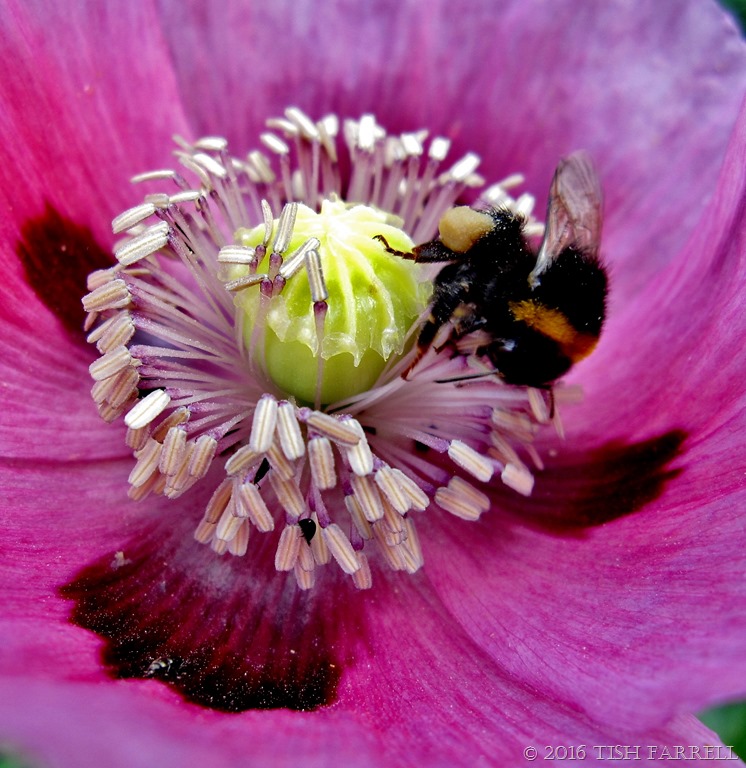
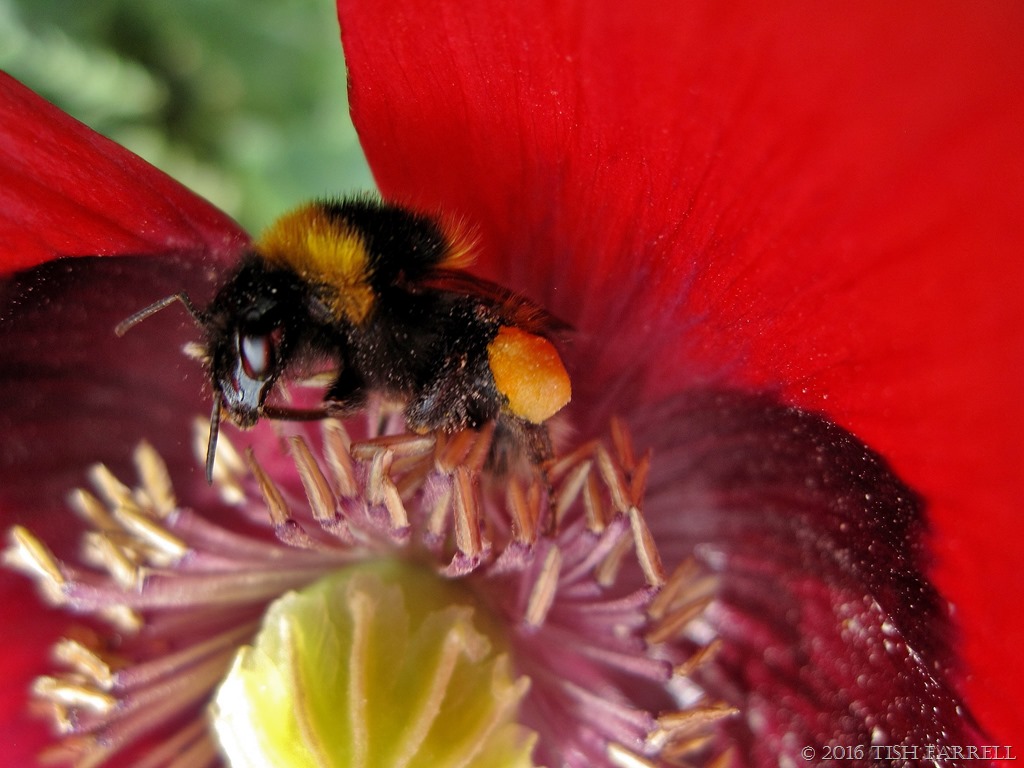
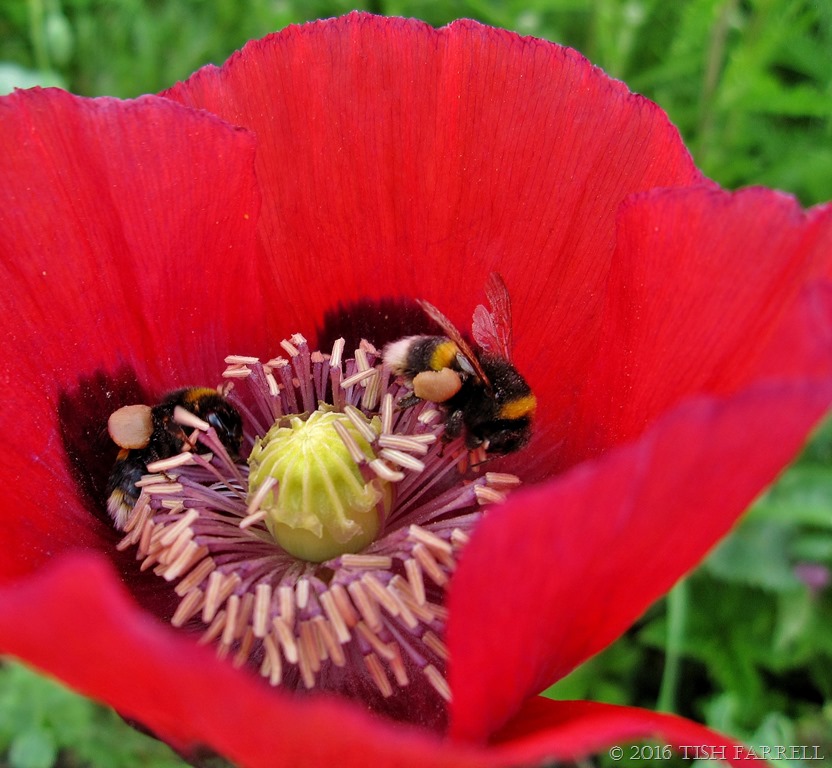
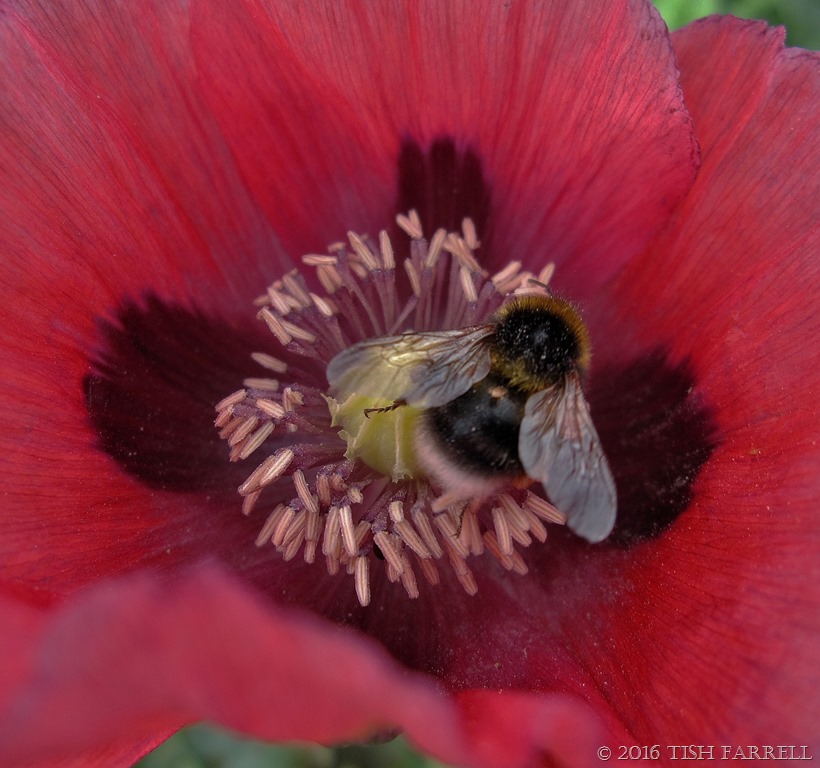
It was every bee for itself over in the poppy patch behind the garden sheds this morning: the apian equivalent of a supermarket trolley dash. Honey bees, little brown bumbles, dinky stripy bumbles, blooming big scary bumbles and white-tailed bumbles diving in for the poppy nectar while the air all round filled with happy bee hum.  Some were feeding with such speed and voracity that their baggage compartments were definitely approaching the overloaded mark. Now and then they would take a feeding break on the poppy’s crown while they dusted themselves down and redistributed the pollen cargo.

IMG_2252

The gathering technique is also fascinating. They dive into the base of the flower and speed round beneath the stamens, feeding on the nectar while every part of them hoovers up pollen from the anthers. Even with the biggest bumbles, once they get into their stride, all you can see are the stamens ruffling round like curtain pelmet tassels in a stiff breeze. Whoosh, and it’s on to the next feeding station.

IMG_2282

IMG_2310

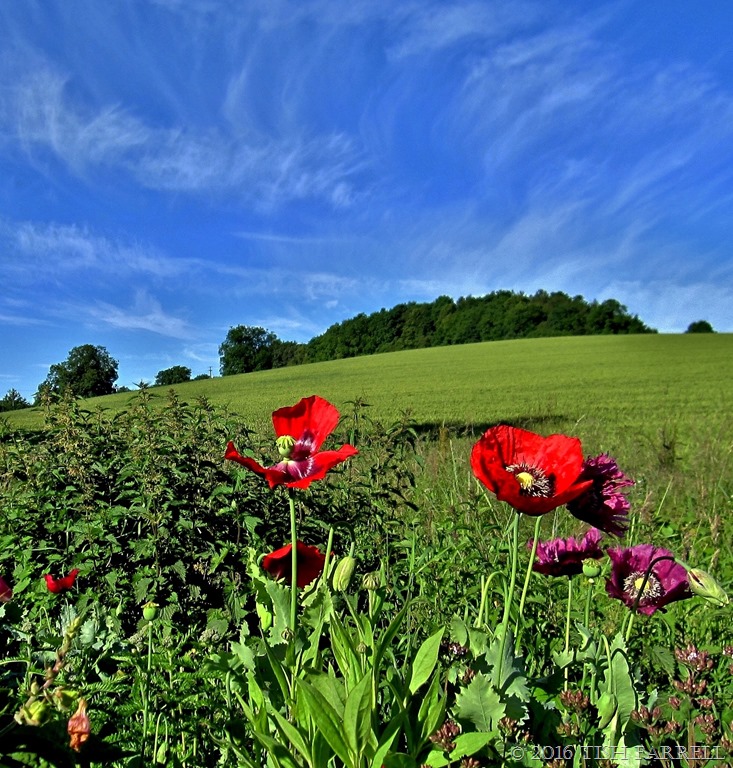
I probably don’t need to say it again to those who follow this blog, but then no chance should be wasted. The wellbeing of our planet, and of humanity, and of the continued production of much of our food depends on protecting and nurturing bee populations any way we can. Masses are being killed off by pesticides and habitat loss. So loud applause for the opium poppies that came of their own accord to our boundary fence, and are doing their bit for bee world. Rah! Rah! Hurrah, poppies!

IMG_2360

IMG_2361

IMG_1828


Daily Post Weekly Photo Challenge: Details

Scattered Leaf And Light At Croft Castle ~ Spring Happening

P1030871

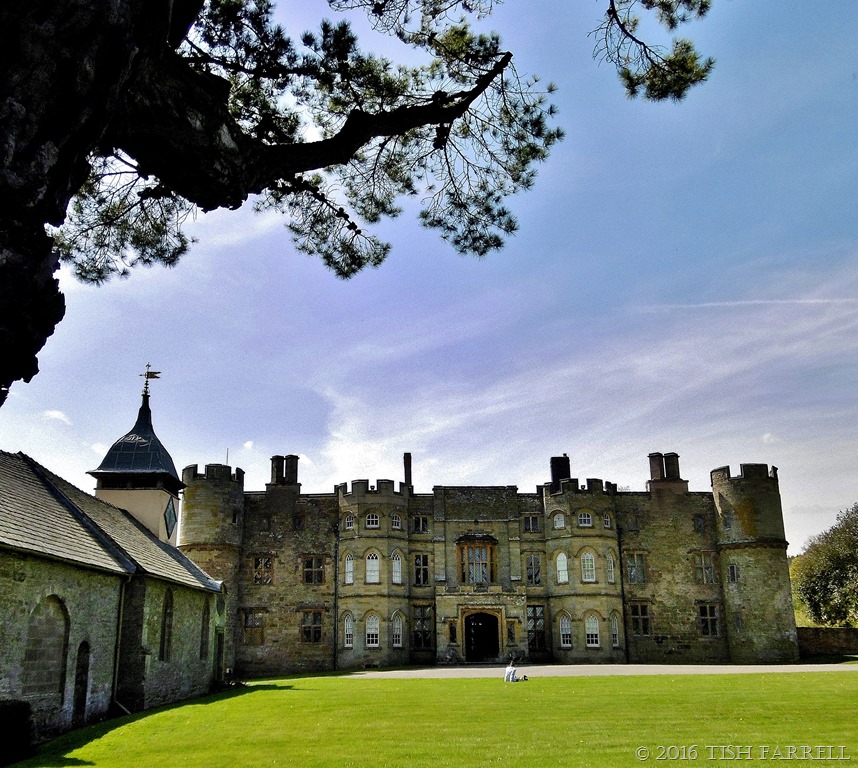
Yesterday our Thursday outing took intrepid Farrell Safaris over the Shropshire border and into Hereford. Our destination was Croft Castle in the wonderfully named village of Yarpole. The house is a castellated fifteenth to eighteenth century fantasy with magnificent turrets (only for show) –the whole set in glorious parkland of veteran trees. The present house replaced an 11th century castle, and the Croft family who occupied it then, continued to preside over this corner of England for nearly a thousand years. All is now in the care of the National Trust. And if anyone reading this intends to visit, then take a good tree book. And also your walking shoes as there are several long walks including one to the Iron Age hillfort of Croft Ambrey.

I’ll post more about Croft another time. For now I’m trying to keep on theme with Paula’s Thursday’s Special. This week it is ‘scattered’ so please pop over there for more renditions.

Now for a scattering of tulips in the walled garden:

P1030917

And oh well, I know you really wanted to see the Castle, so here it is framed by the branches of a very ancient conifer. There’s some good cloud-scatter too.

P1030889

Happy Earth Day From The Shropshire Hills, Some Of The World’s Oldest Rock Formations

P1030457

Not so much Monarch of the Glen as Sheep on the Long Mynd,  a hill so old that it has some Pre-Cambrian geology named after it. I’m talking here of Longmyndian shales, siltstones and sandstones (sedimentary rocks) that were laid down in shallow seas at a time when this part of the earth was moving up the planet from Antarctica.  This would be around 560-550 million years ago.

The Long Mynd (mynd means mountain in Welsh) lives up to its name too. It is a very long plateau with steep valleys, and was formed by a very big CRASH when sea levels fell and the seabed deposits collided with a plate of volcanic hills to the east. The result was the folding, tilting and compressing of the Longmyndian shales, siltstones and mudstones along the Church Stretton Fault. This was around 550-400 million years ago.

The Longmynd then continued to be knocked into the shape we see today by the following Ice Ages when glaciers shunted around its flanks, making it an island amongst frigid wastes. When the ice finally began to retreat around 30,000 years ago, rain and melting snow fed streams that cut steep valleys or ‘batches’ into the Mynd’s sides.

Isn’t geology wonderful when you forget about the hard words, the mind-boggling quantities of time, and just admire the consequences?

P1030462

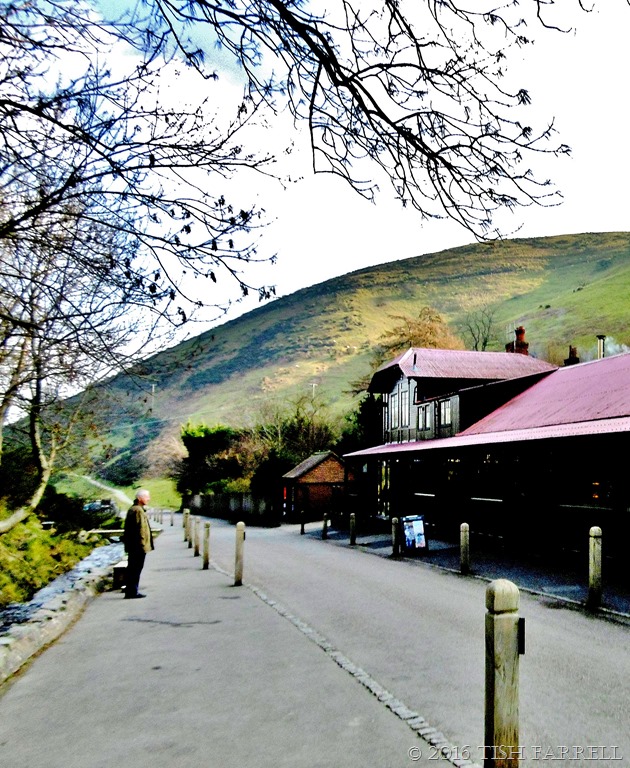
One of the Mynd’s best known features is Carding Mill Valley where these photos were taken. Since Victorian times it has been one of Shropshire’s most popular countryside resorts. Generations of Salopians (Shropshire folk) will have fond childhood memories of spending Bank Holiday Mondays picnicking there, feeding egg sandwiches to the sheep, getting soaked in the stream, and going home with green bottoms from sliding down the hillsides.

Today both valley and Long Mynd are in the guardianship of the National Trust that not only manages the landscape, but provides very excellent homemade refreshments in the Edwardian Pavilion tea-room  that’s coming up next.  If, while you are looking at that, you also scan towards the top of the hill, directly above the pavilion’s main roof, you might just discern the verge of a very hair-raising single-track road that takes you over the top of the Long Mynd to the small village of Rattlinghope, known locally as Ratchup. I have a grim memory of driving down there in a car with dodgy brakes, and only intermittent passing places beside precipitous drops.

P1030473

Unlike the geology, the landscape you see in the shots is not natural, but man-made. The valleys would once have been wooded. Archaeological finds from c 3,500-2000 BC indicate that Late Stone Age (Neolithic) people were travelling along the open top of the Long Mynd ridgeway, an ancient trade route between Cumbria in the north, Wales to the west, and Cornwall in the south-west. Earlier Mesolithic hunter-gatherers came this way too. But the main clearance probably took place during the Bronze Age (c.2,000-1,000 BC). These people farmed in the Shropshire Hills and buried their dead in cairns and burial mounds all along the ridgeway.

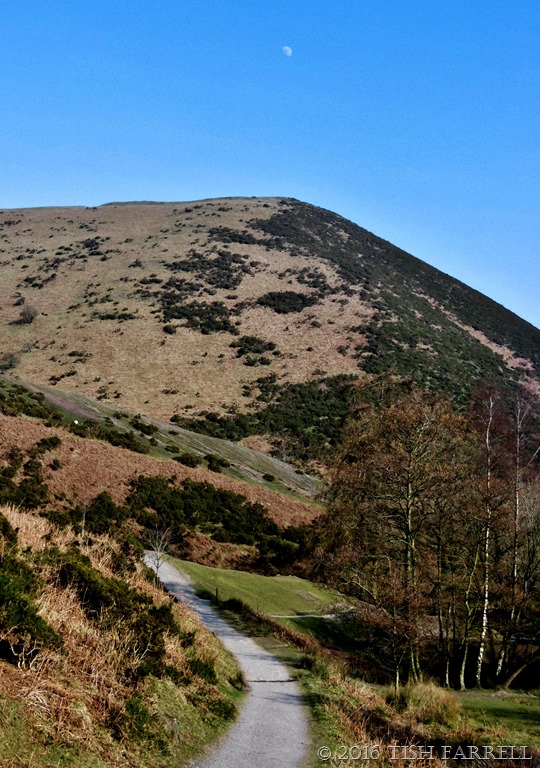
In the next photo you can just see the green ramparts of the Iron Age hillfort Bodbury Rings. It is lying right along the hilltop skyline towards the summit, and ending directly under the moon. This was a summer herding camp of the Cornovii people, and dates from around 400 BC.

P1030444

We may not know very much about the past peoples who lived and died in this landscape, but they did leave behind clues that showed us that they honoured it in significantly sacred ways. That would be a good thing to remember on this Earth Day. Much of the world is in dire need of loving care. We are lucky in Shropshire to have so many people, and charitable bodies who do take care of the place for everyone’s pleasure and inspiration.

copyright 2016 Tish Farrell

 *

Earth  Daily Post Prompt

I’m also linking this to Jo’s Monday Walk for when she’s regularly back with us. I think she would like this walk up Carding Mill Valley.

#ShropshireHillsAONB  #NationalTrustShropshire  #CardingMillValley

Bumble Bee Bliss & A Change In The Weather

IMG_2157

April and it’s all change. On Saturday I was whinging about the snow that had invaded our early morning landscape. By Sunday we were sitting coatless on Benthall Hall’s tea room terrace, and consuming carrot cake and hot chocolate with the sun on our faces. It was February when were last there, and grey and stormy, with no possibility of sitting outside. Now we were in danger of overheating with a nice grey hen pootling around our feet, and the air filled with bee-hum. Later, when we ambled around the gardens, we came upon these newly opened rhododendron flowers and a very happy bumble bee. To say it was gorging itself is an understatement. Up to its armpits in pollen it was. Food at last. Bzzzzzzz.

*

Check in at Cee’s Flower of the Day for  more floral displays.