My Garden Supervisor: Robin Not So Red

IMG_7727 robin

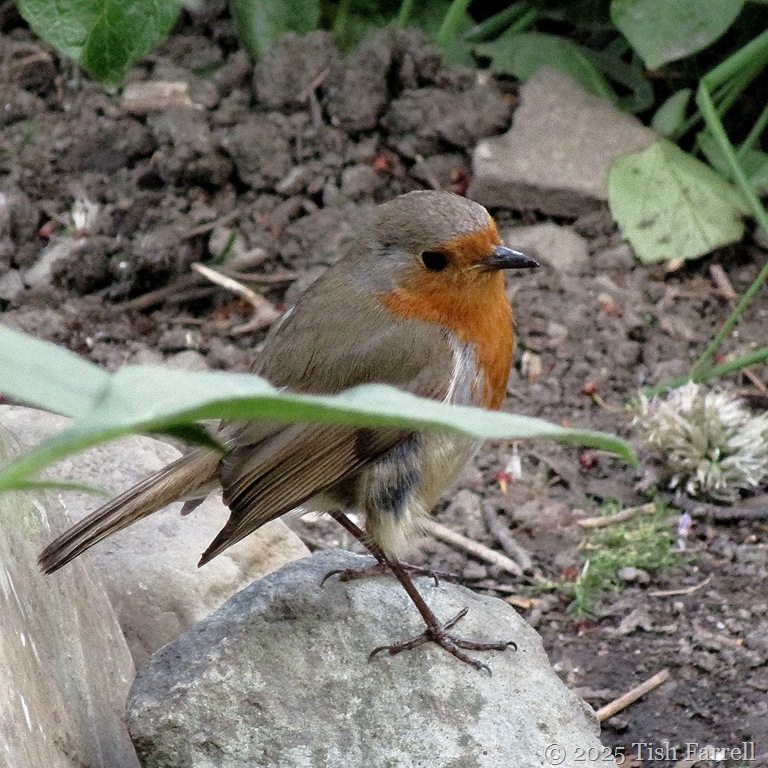
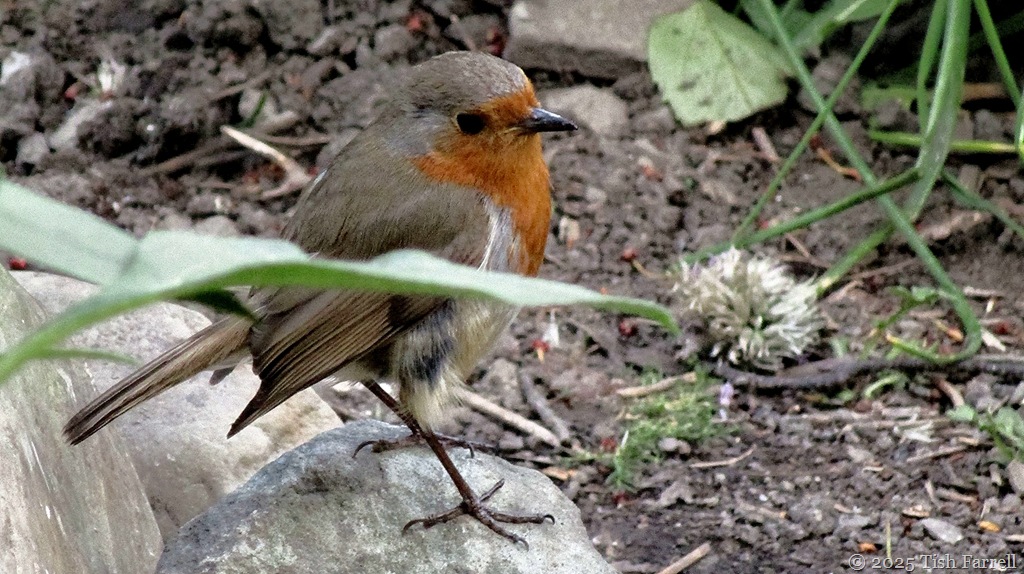
Perhaps it’s the time of year, the courtship fine feathers and family raising done, but this robin’s breast looks to me more orange than red. I think it may be moulting time too. Some days when it pops into the garden, it looks as if it’s got out of its nest on the wrong side – feathers every which way. But then sloppy personal grooming doesn’t stop it from giving me hard looks, scrutinizing every gardening move in case worms and grubs are in the offing.

These days it is not so insistent and no longer perches on the nearest pot and cheeps until I make some attempt to provide. Not so many mouths to feed. So now, when it sees I’m only dead-heading or watering, it soon vanishes. Clearly it has other calls to make about the town.

IMG_7727 robin header


#SimplyRed Day 2  Today on July Squares, Becky pays tribute to Cee whose inspiring photo challenges brought so many of us together. She is very much missed.

A Spot Of Kite-Flying In Bishops Castle

red kite

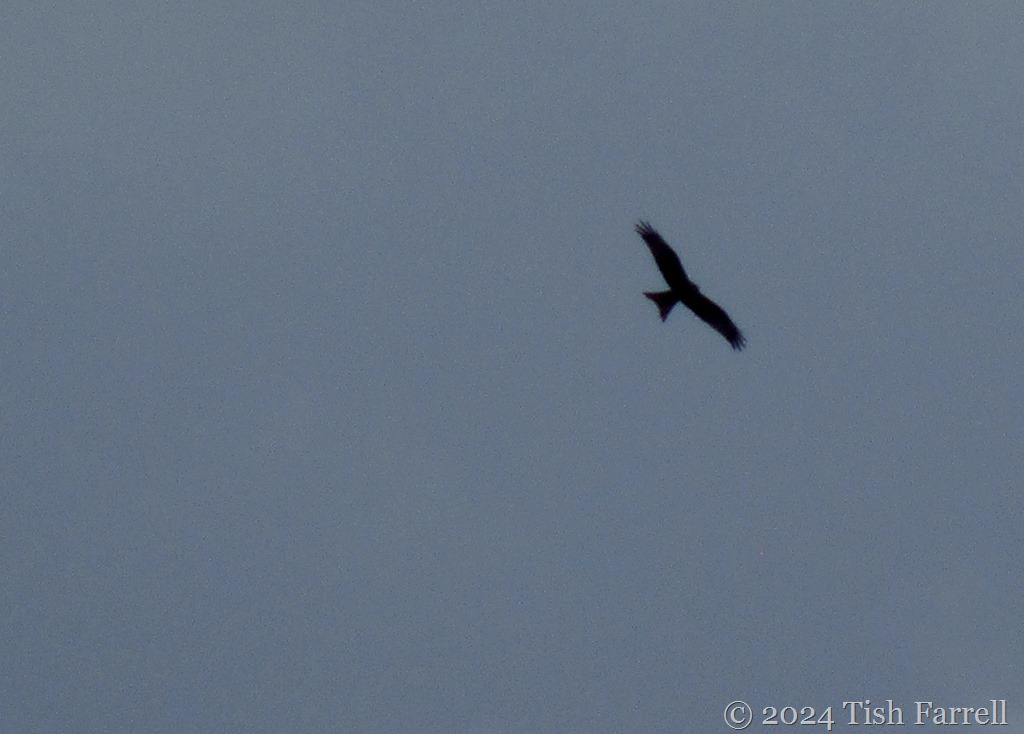
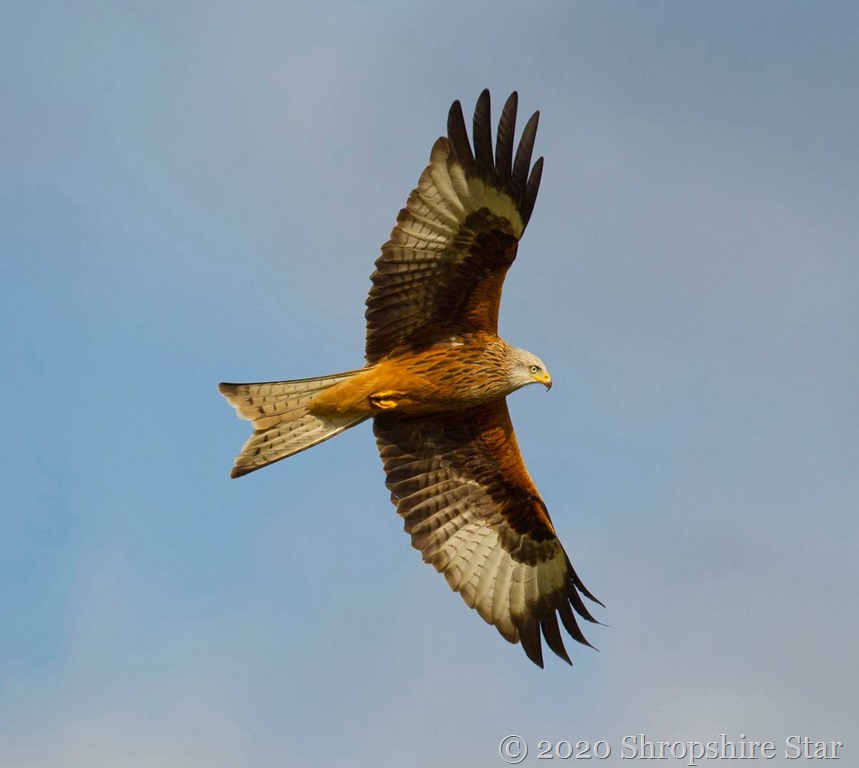
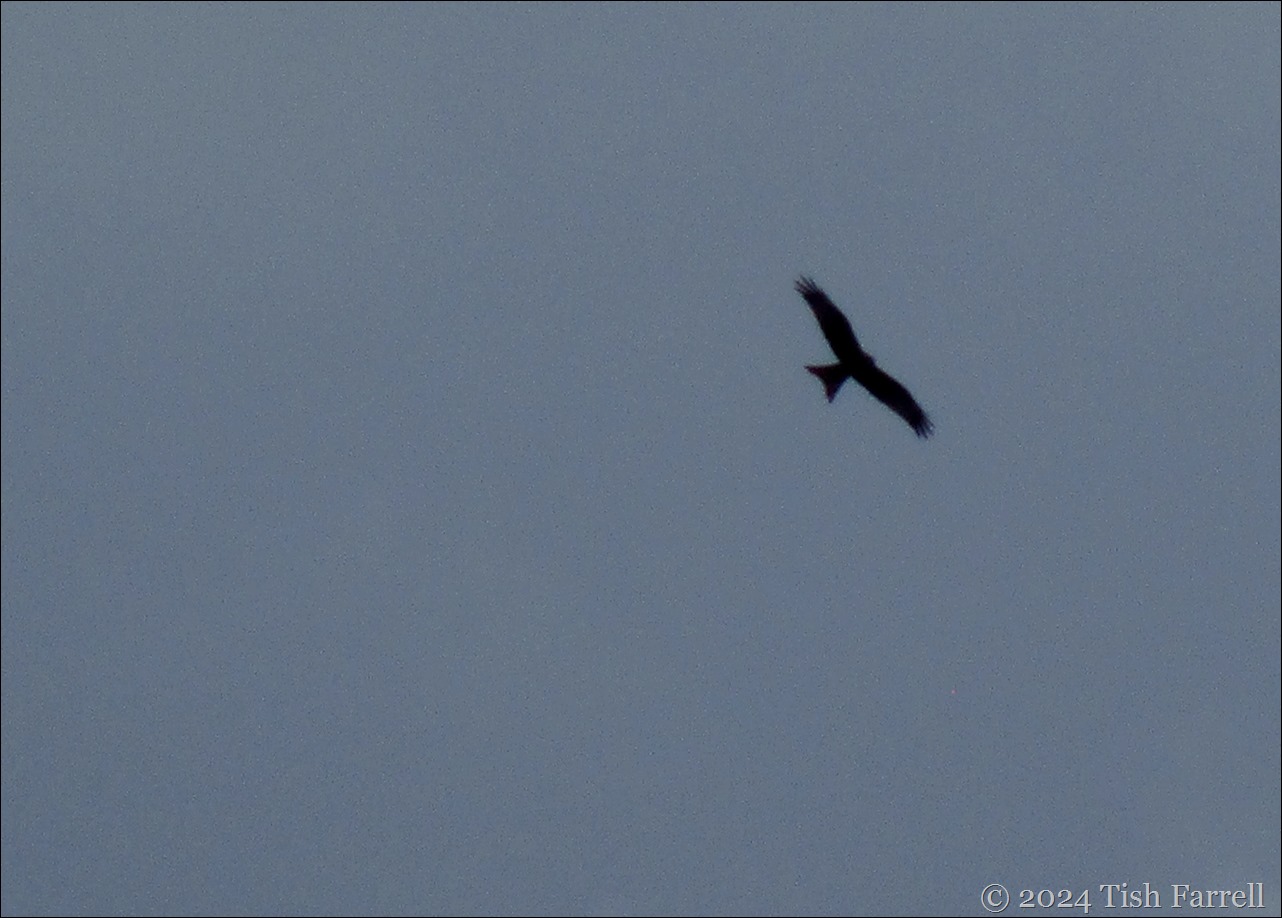
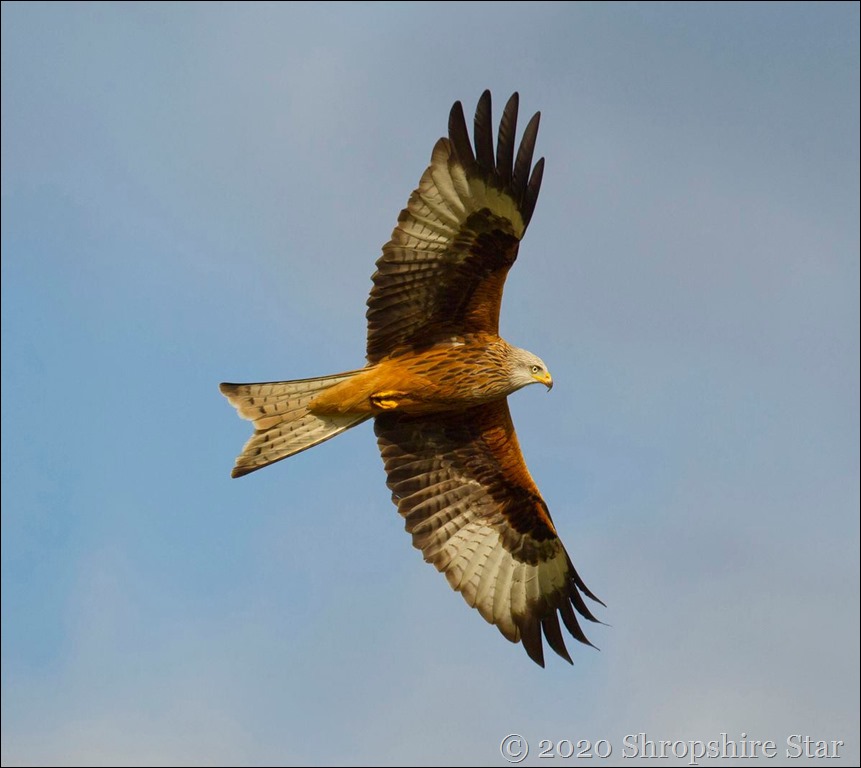
Now that we’ve moved our dining table to its winter position – i.e. from the conservatory at the back of the house to the front sitting room window – we can eat breakfast while watching a red kite scanning the town. It comes most days, drifting over the High Street, circling high above nearby gardens.  With a wing span of around six feet (180 cm) it is one of Britain’s largest birds of prey (i.e. bigger than a buzzard and easily distinguished from that particular raptor by the forked tail.)

A few years ago the species was believed to be near extinction. In the early 20th century the birds were targeted by gamekeepers who thought they were eating their pheasants. Not so, it seems. The birds’ main menu comprises carrion and worms and sometimes small mammals. In fact, back in Tudor times, kites also frequented towns in large numbers, filling an essential function as street refuse cleaners.

When we lived in Kenya, their cousins, the black kites, performed similar duties. Less welcome, we discovered there, was the cousins’ tendency to ‘gate-crash’ Nairobi’s ambassadorial garden parties. They had learned to spot the distracted guest, one with wine glass and plate politely poised and as they hung on the words of some ministerial bigwig. In the birds swooped, snatching up the undefended sailfish canape or piri piri chicken wing. Whoosh and away.

That scene jogs another black kite memory. An indelible brain cell recording. One used to roost in our front garden on Mbabane Road. It would perch in the jacaranda tree and mew all night long. A mournful cry.
red kite

But back to the red kite. Here in Shropshire and Wales, and some illegal shooting incidents apart, they are mostly thriving. This thanks to a re-introduction programme late last century which helped boost remnant populations. And while of course we are more than happy to see them, we can only hope they do not recover the habits of their distant ancestors.

The Wildlife Trusts website explains (also see a nice video clip of a kite in flight):

Red kites were common in Shakespearean London, where they fed on scraps in the streets and collected rags or stole hung-out washing for nest-building materials. Shakespeare even referred to this habit in ‘The Winter’s Tale’ when he wrote: ‘When the kite builds, look to lesser linen’. The nest of a red kite is an untidy affair, often built on top of an old crow’s nest. It is lined with sheep’s wool and decorated with all kinds of objects like paper, plastic and cloth.

I will let you know how my washing fares when drying weather resumes.

A Spot Of Bird Watching

townsend meadow cropped

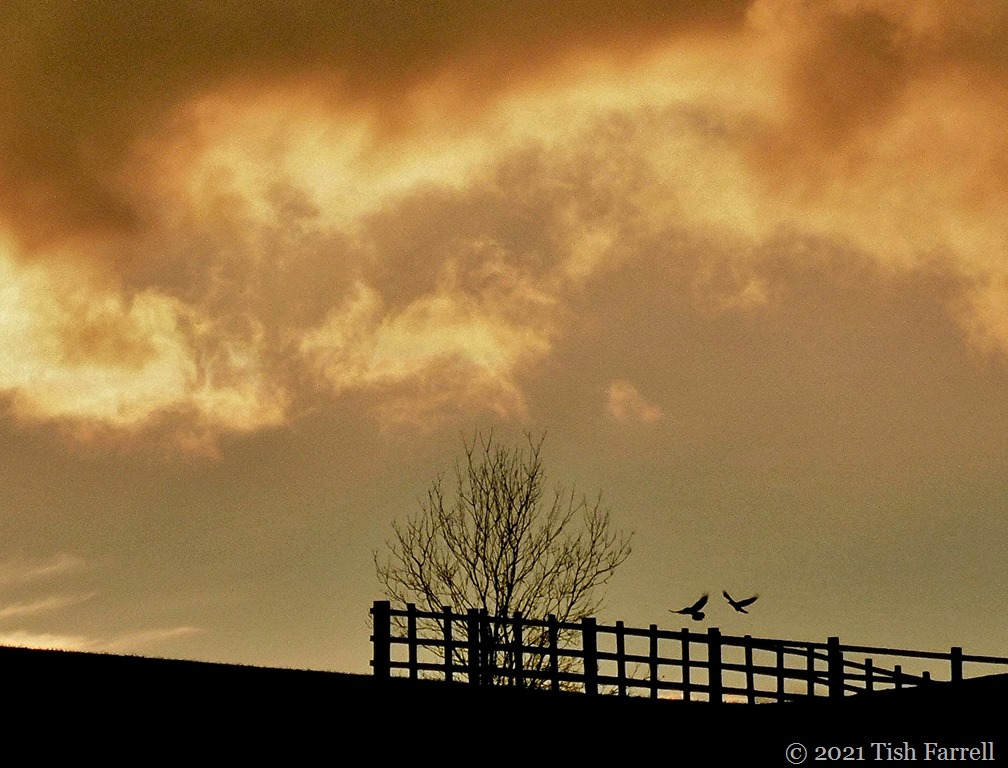
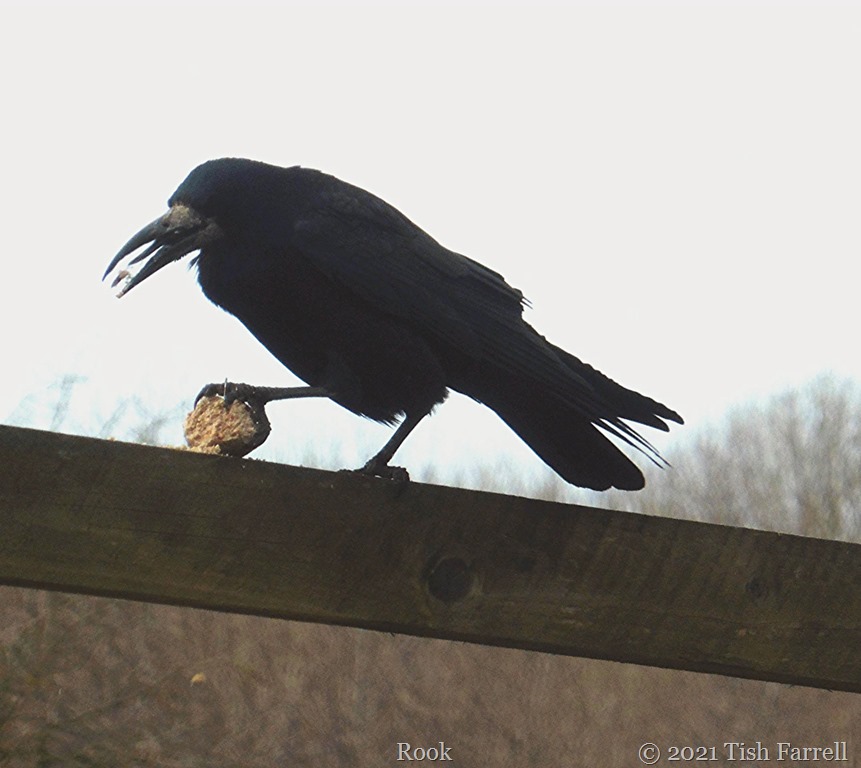
In the previous post Chasing the light over Townsend Meadow  my header photo featured my ‘stand-on-bed-while-using-open-rooflight-as-tripod’ school of photography. I now confess to using the same method to spy on my local corvids. I think the pair flitting above the field fence may be carrion crows. It’s hard to tell at this distance, but we do have a couple who come daily to forage in Townsend Meadow. It is part of their territory that includes the Linden Field across the road. Also each year they come with an offspring. They call to each other across the field. I note a strain of lament in it.

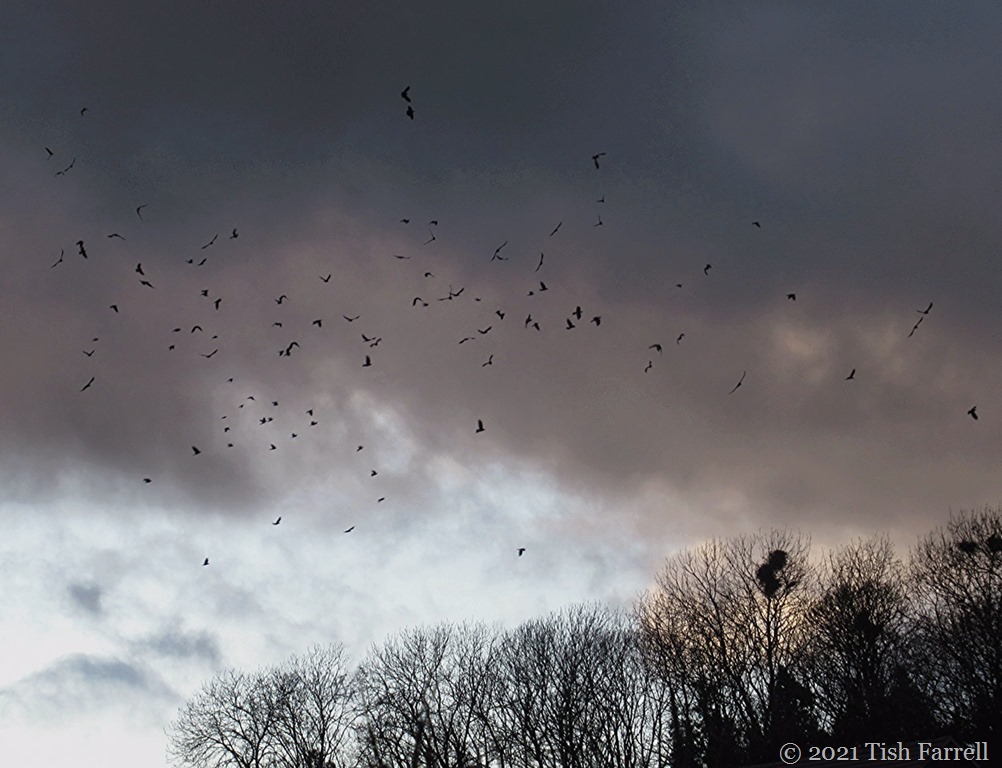
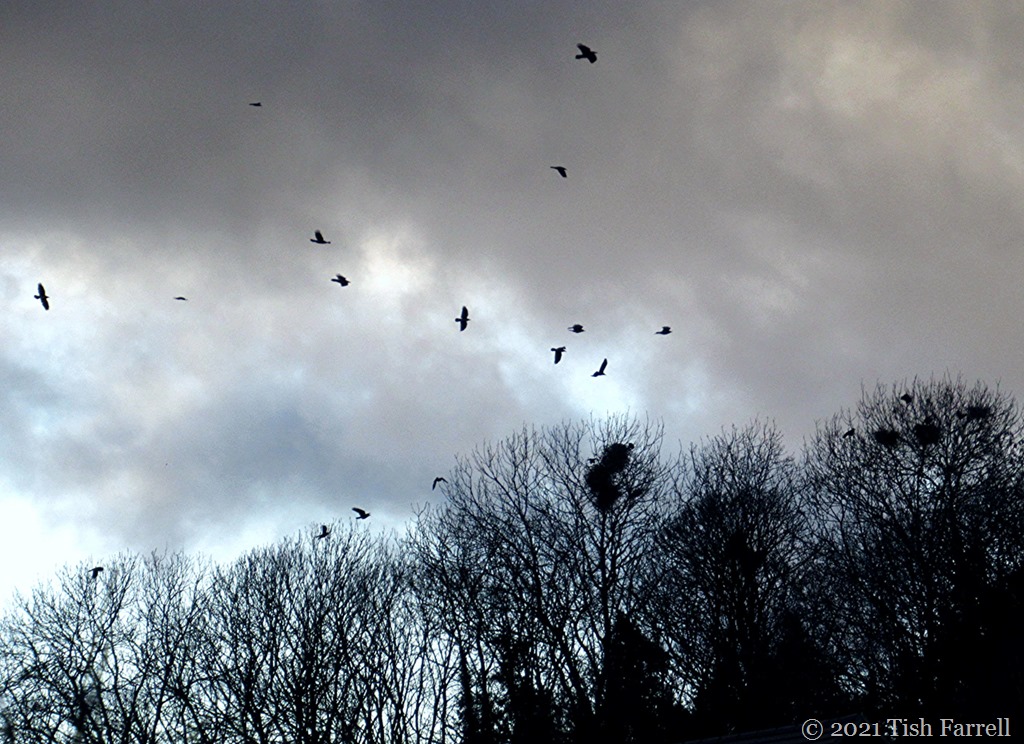
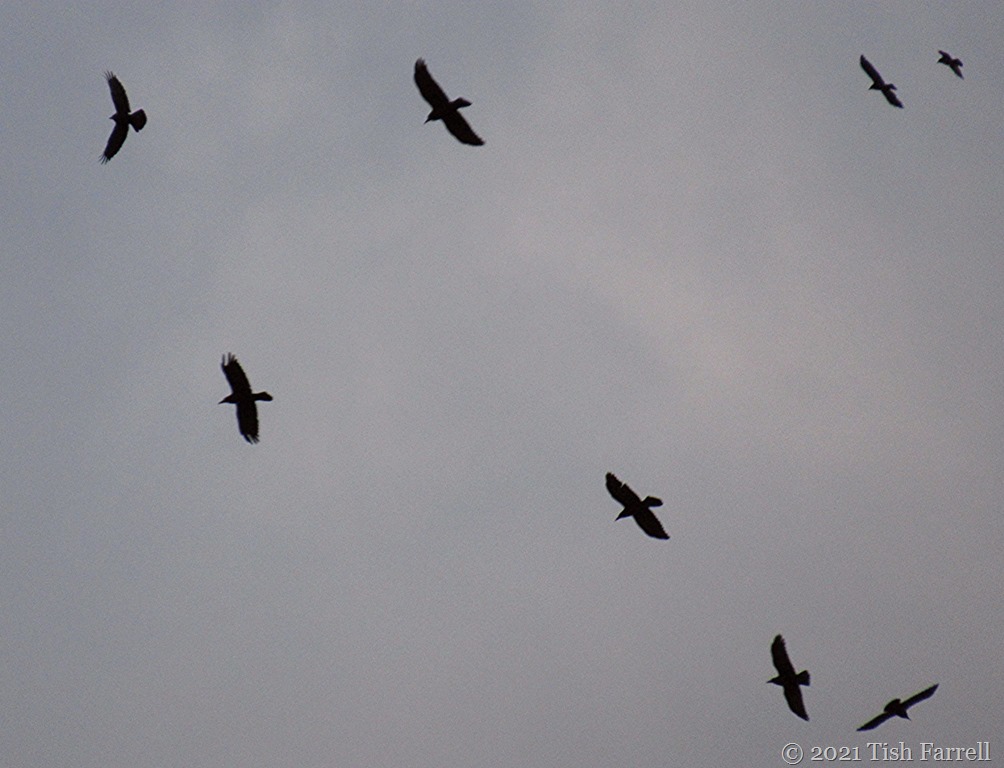
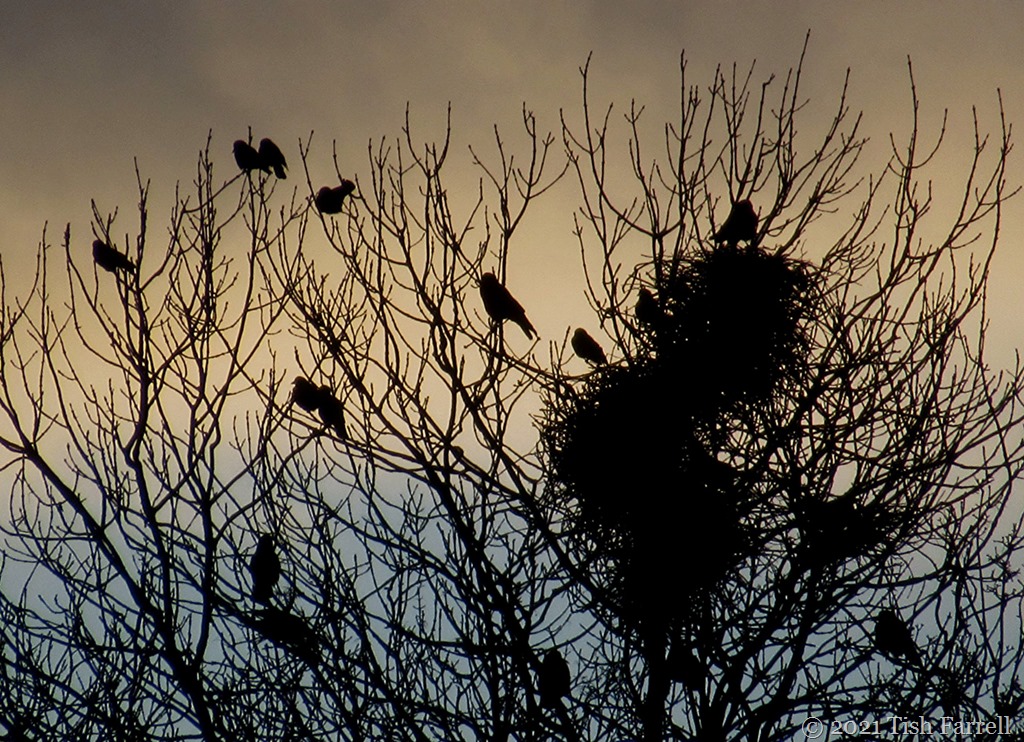
But back to spying. If, with my stand-camera-on-open-window method,  I then turn the lens 45 degrees to the right I can then cover activities in the rookery in the wood beside Sytche Lane. The lane borders the field boundary, and the wood borders the lane and is an unkempt sort of place inaccessible to us ordinary Wenlock folk. Both rooks and jackdaws congregate here, and in large numbers. At dusk, and particularly in autumn, they put on breath-taking balletic performances, swooping and swirling for many minutes over the meadow. If you happen to be out there when they start (sometimes my return from the allotment coincides with the opening passes of the corvid air show) it can be exhilaratingly eerie, and especially when a cohort, several dozen strong, whisks by my shoulder. There’s a rush of air. Wheeeeesh. Then gone before you register quite what happened.

You can get a gist of this phenomenon from my short video at the end of the post.

IMG_0632

IMG_0637

IMG_0635

 IMG_0658

IMG_0652

Related: Rooks Dancing in the New Moon

Life in Colour: black/grey


Jackdaw Jack With An Eye For The Bright

IMG_2697sq

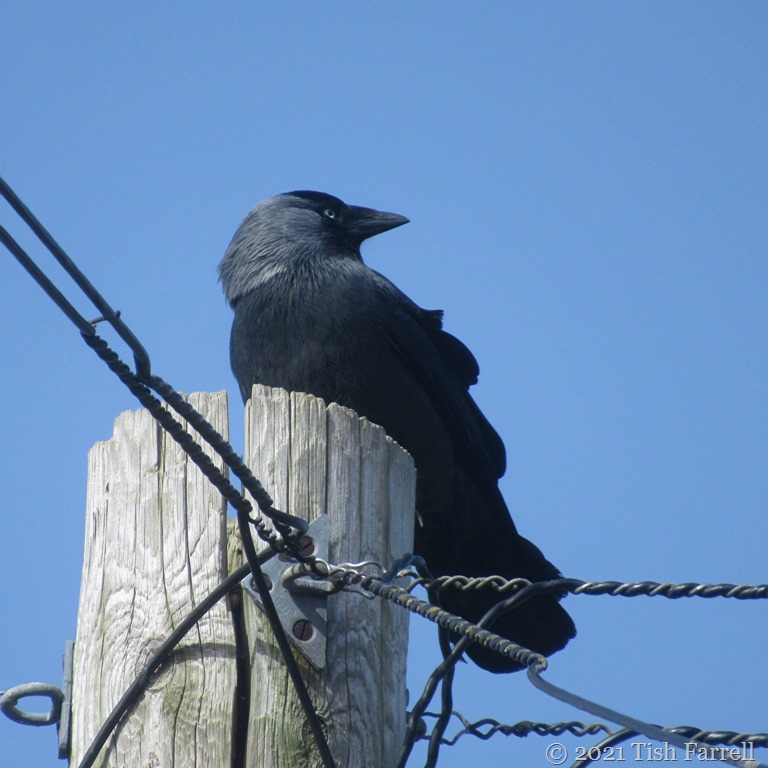
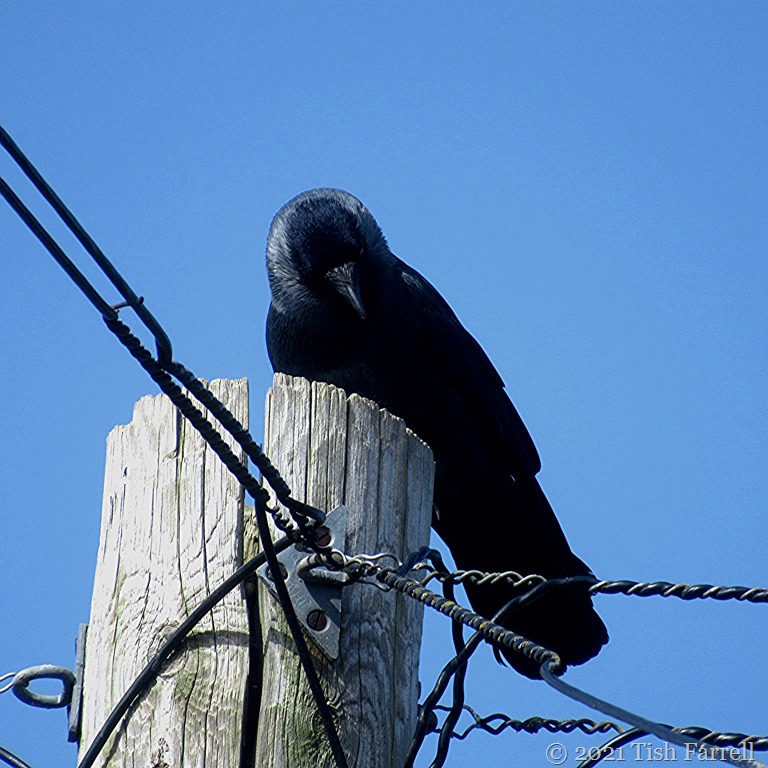
The telegraph pole over our garden wall provides a handy look-out for jackdaw-kind. These, the smallest of Britain’s crow family, are renowned, like magpies, for their thieving ways and proclivities for bling. But they are companionable birds. They mate for life, and form large flocks. They also gather with rooks and starlings, joining in their aerial sundowner displays.

The common name derives from their call: tchak-tchak, but they have many other apt descriptors including ‘chimney-sweep bird’. Anyone who has ever had to remove a jackdaws’ nest in their chimney will never forget the astounding deluge of soot and sticks and bird detritus. So if you have an unguarded chimney be warned. They do like the pots to nest in; also holes in trees and nooks in castle ruins.

I’m wondering what this one is thinking about. It looks like a bird with a plan.

IMG_2698sq

Bird Weekly #42  Lisa at Our Eyes Open wants to see what we’ve seen bird-wise in the past fortnight

Bright Square #13

Pose Perfect

img_8433

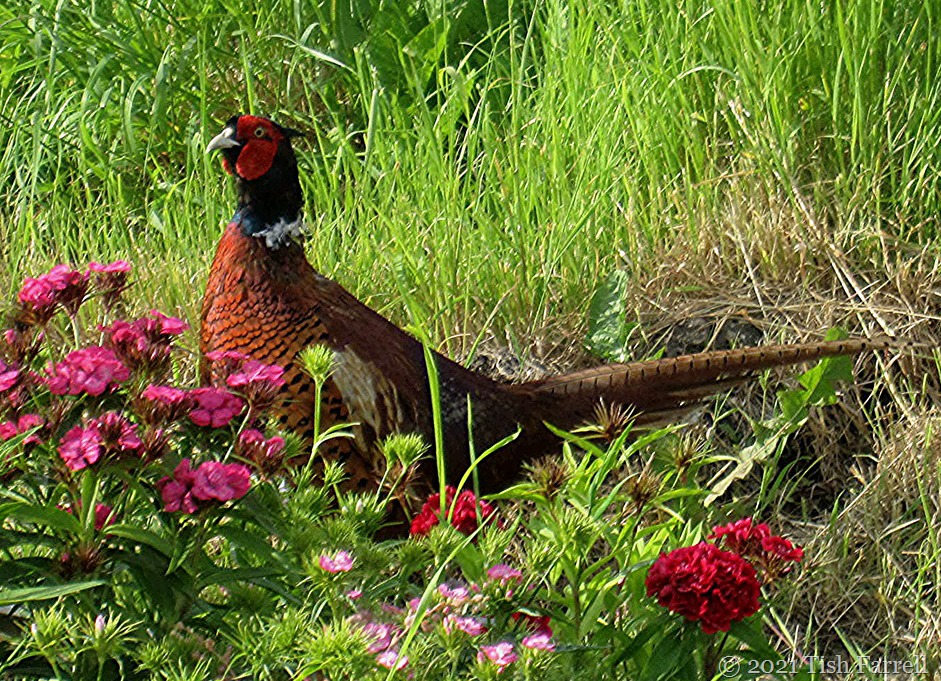
This week Lisa at Our Eyes Open  asks to see photos of birds we love. To be honest pheasants are  not a favourite, though their plumage is certainly magnificent. What I love about this pheasant is that he stopped to pose by the Sweet William. It shows him off so very nicely, don’t you think. After that I wasn’t too keen on him, and reverted to grumpy gardener mode. The photo was taken near my allotment plot and I didn’t need him nibbling and pecking among my veggies.

Bird Weekly

Upstart Partridge

IMG_7211sq

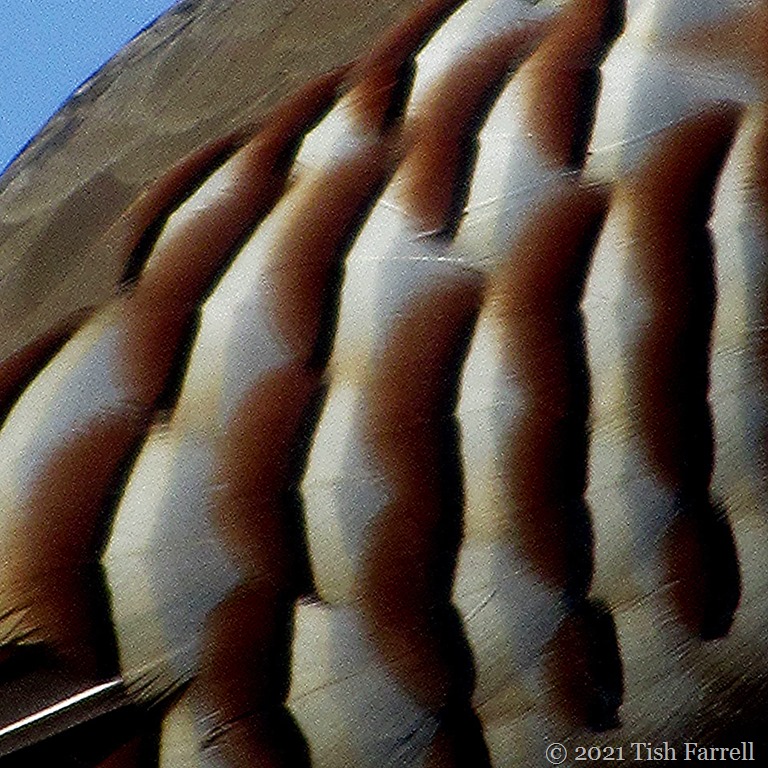
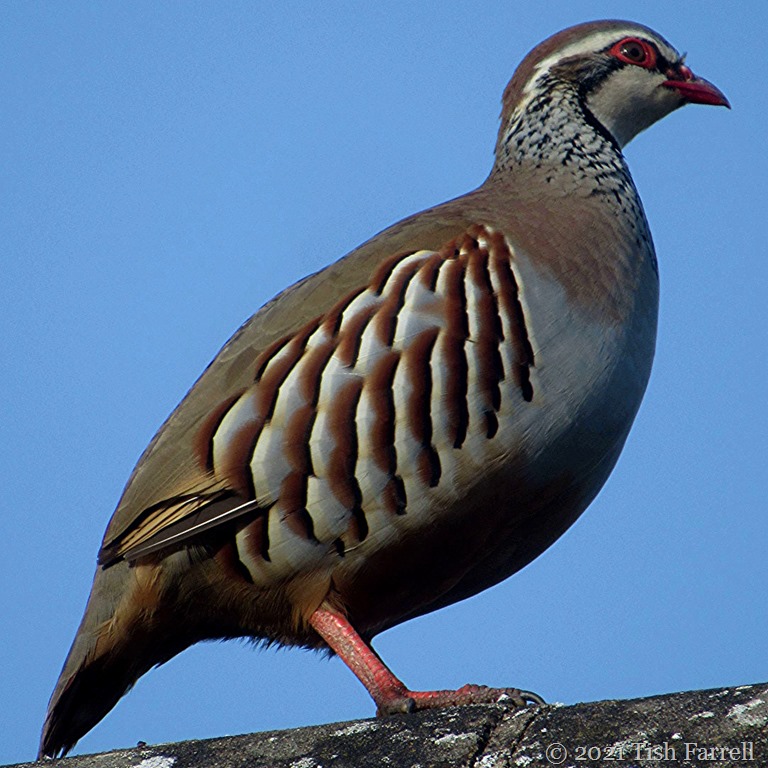
One of the extraordinary things that happened last March, along with advent-lockdown, was the appearance of this red-legged partridge on top of the old privy roof. Well! Never had this kind of thing happened in the garden before. In my experience partridges are rather covert birds. You’re lucky to have a fleeting glimpse if you happen to startle one along a farm-field  hedgerow. This one, however, stood in full view for ages. Not only that, it began to further advertise its presence with some very loud and rasping calls. It was all rather thrilling. Who knew that partridge plumage was so very magnificent. I certainly didn’t.

Square Up #29

Bird Weekly: Lisa calls for brown feathered varieties

Life in Colour: Brown