A Very Big Baobab

023

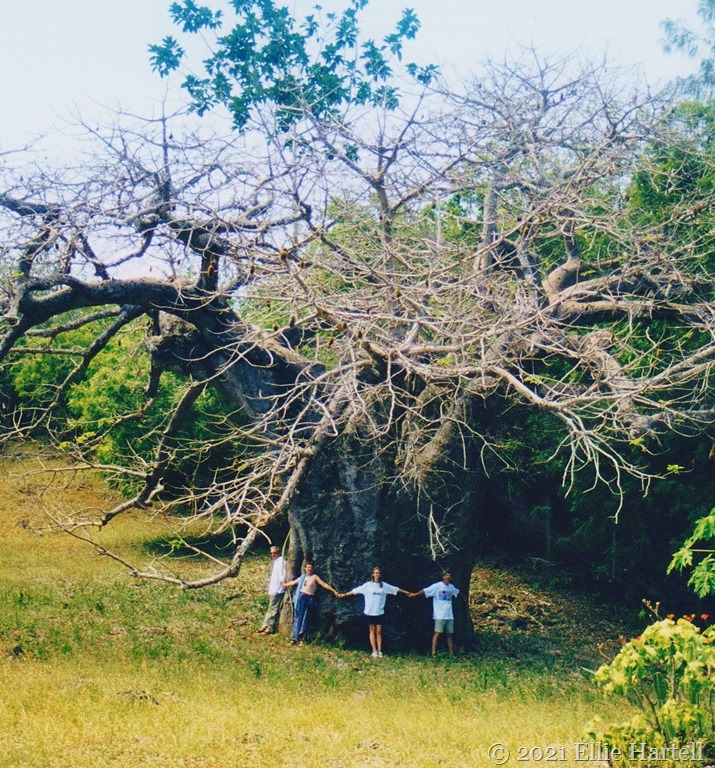
A Christmas holiday with chums down on the South Mombasa coast, and one very sturdy baobab, Adansonia digitata. It’s a tree with many surprising properties: a drought tolerant soft wood that is also fire resistant. It may also live for up to 3,000 years and grow an astonishing 25 metres in girth. The fibrous bark stores water and provides emergency dry season fodder for elephants and elands. Humans also work the fibre to make ropes, twine for basket making and cloth.

Baobabs are leafless for most of the year, which doubtless gave rise to the many traditional tales of an upside-down tree with its roots in the air (planted by creator, or the devil, or hyenas who are always getting things badly wrong). When they do happen, the leaves are large and finger-like and villagers harvest them as vegetables. In the flowering season the branches hang in fleshy cream flowers that only open at night, smell somewhat foetid and are pollinated by bats and bushbabies. The resulting fruits – large woody capsules – contain seeds that are eaten by wild and domestic grazers alike, while the white, cream of tartar like pulp that surrounds them is a good source of vitamin C and used in juices and beer-making.

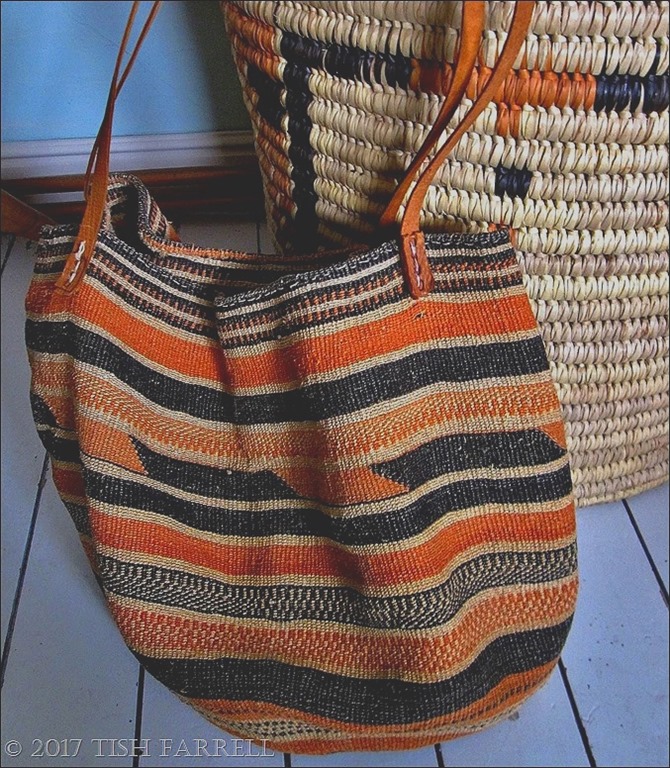
One of my best African treasures is a Kenyan kiondo  bag made in the traditional way from baobab fibre. These days the baskets are more commonly woven from sisal cord. Either way you can see how they are made at an earlier post HERE.
img_3923_thumb

Tree Square #20

Trees For Everything On Zanzibar

zanzibar 7

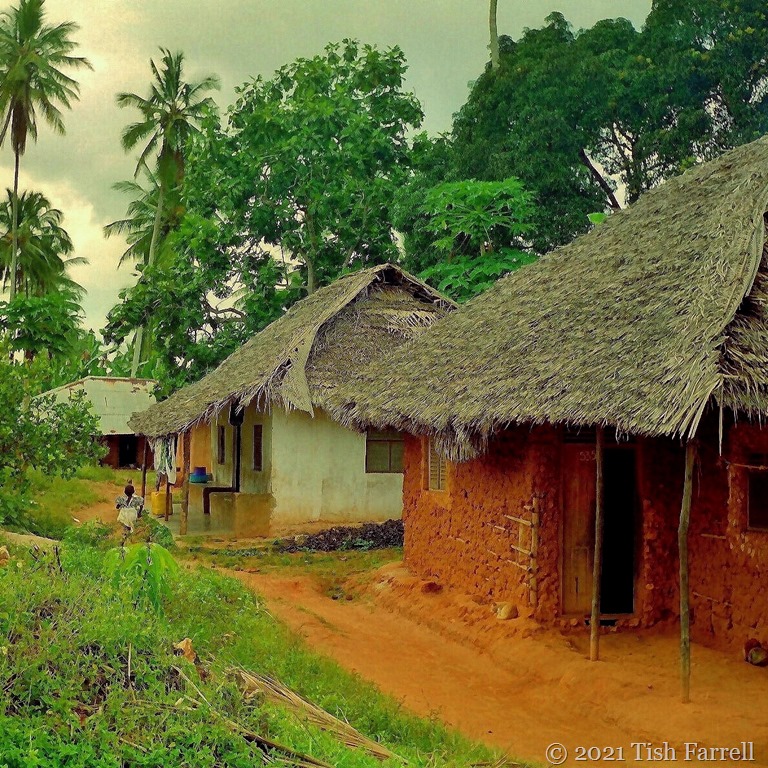
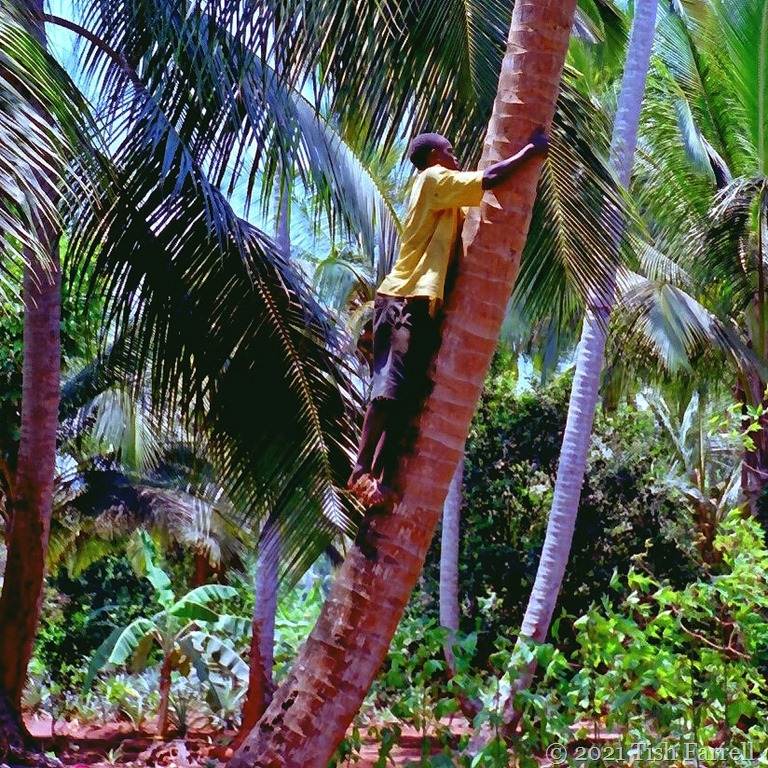
While I’m in East Africa arboreal mode, I remembered Zanzibar could not be beaten for its array of fabulous trees – from giant mangos and jackfruits to its plantations of spice-bearing nutmeg, cinnamon and cloves trees. On the family farms there are papaya, orange, banana and coconut groves, not only sources of family food, but also crops for market. And the leaves of the coconut palms can be turned into all kinds of useful recyclable household essentials – roof thatch, baskets, screens and sleeping mats.

Scan-130429-0074

The Coconut Harvester

*

Island guide, Hari, doing a deal at the farmhouse door.

Scan-130429-0014

*

Roadside spice farm stall:

Scan-130429-0008

*

Jackfruit tree:

zanzibar6

*

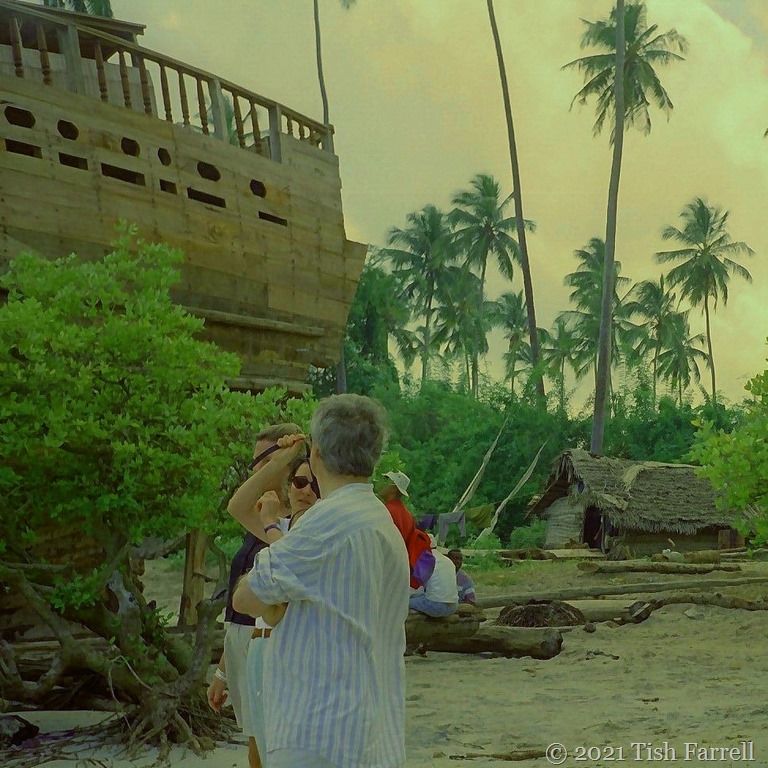
Maruhubi boat builders’ beach with an ocean going dhow under construction:

zanzibar

*

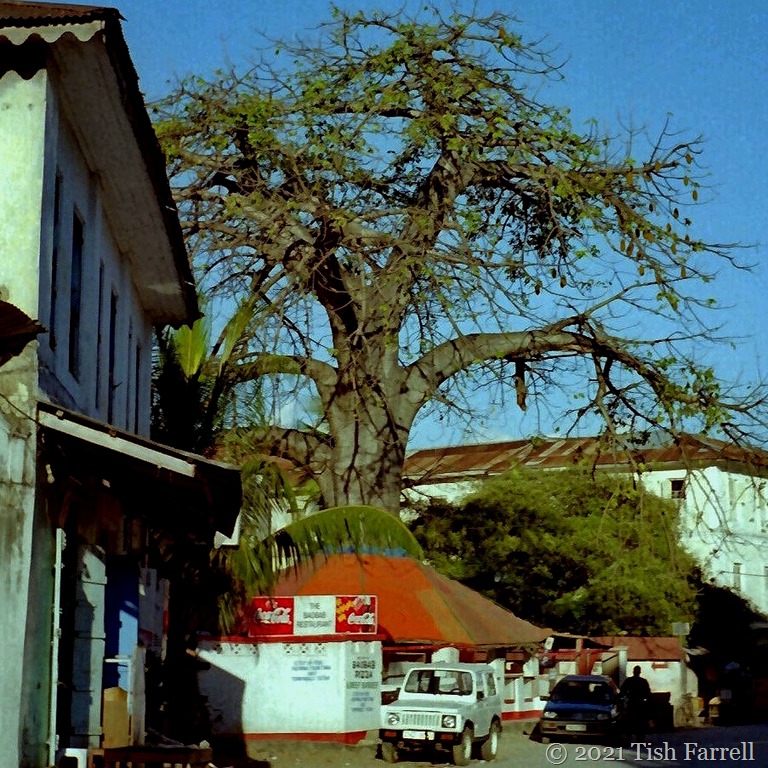
And then there are the baobabs. This one coming up is a little unusual – apart from being in leaf which only happens now and then, it’s providing the structural wherewithal for a Stone Town pizza joint:

zanzibar 4

Tree Square #10

Where Trees Grow On water

Mzee Lali sq

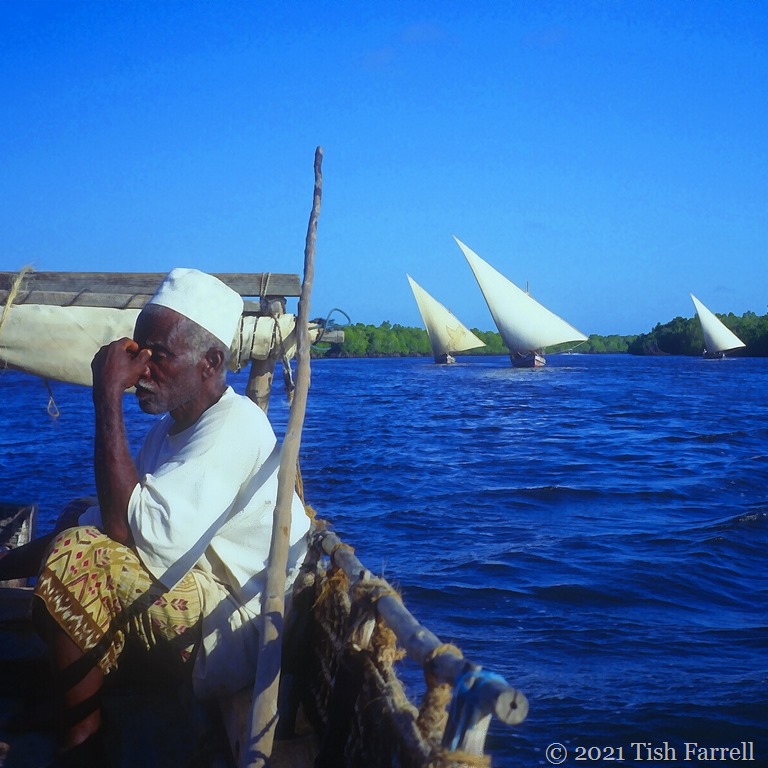
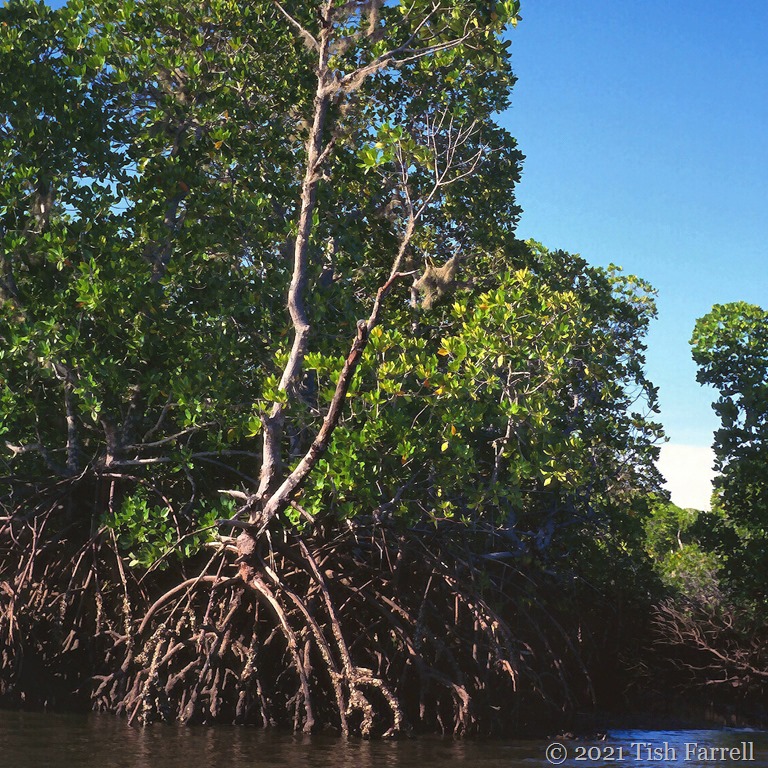
In my last post I mentioned the exposed Silurian seabed in our local quarry was once located somewhere off East Africa. And Jude at Travel Words said she wished she was somewhere off East Africa – to escape our recent rain-pouring summerless weather. Which then had my mind whizzing back to our years in Kenya, and in particular to a trip to Lamu Island, and a December day spent sailing by the mangrove forest of Manda Strait, drifting and dreaming aboard a traditional dhow.

194

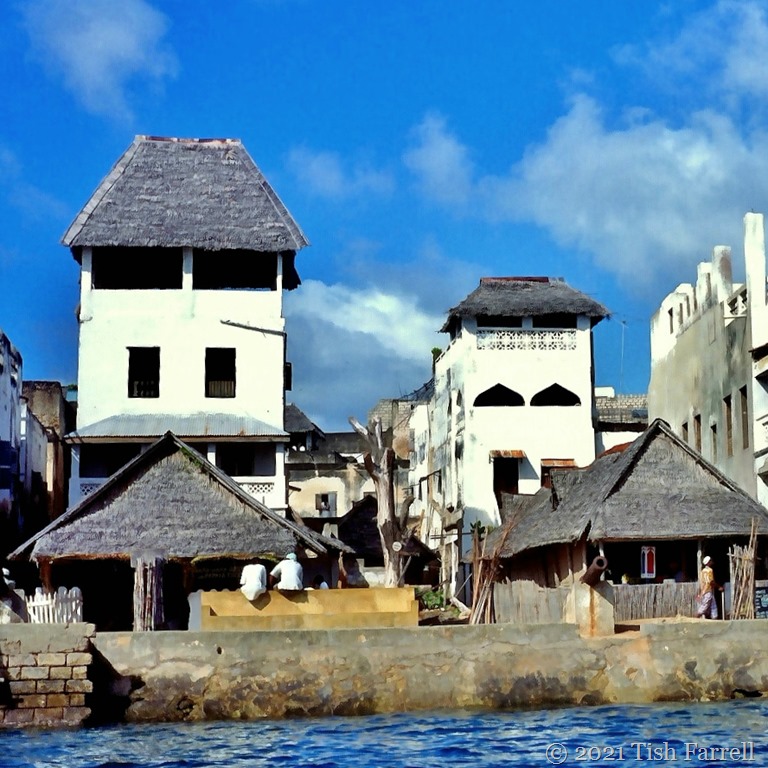
The timber from these curious trees has long been an absolute necessity for the Swahili seafaring people of the East African coast. They built their dhows from mangrove planks and harvested the pole wood (boriti) for house construction, both at home and for export to places as far away as Yemen and Iran. The traditional Swahili merchant’s house was build of coral rag, excavated from old reefs, with the roof raised on boriti poles. The oldest surviving houses in Lamu Town date from the 18th century, but the Swahili City states of the East African seaboard – from  Somalia to Mozambique – date back to the 8-9th centuries – a fusion of Arab and African cultures.

Scan-140802-0011sq

SqLamu

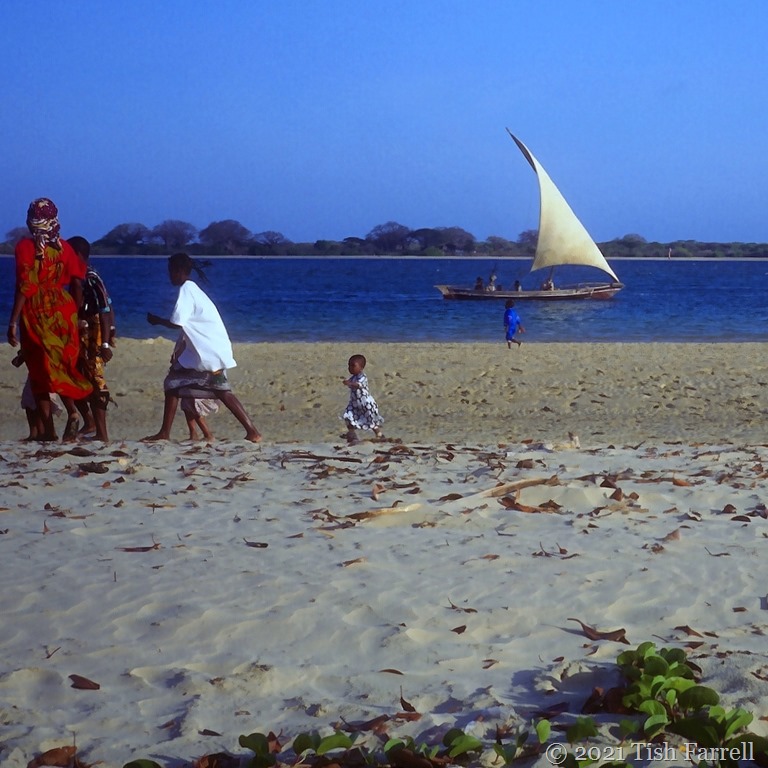
Christmas Day on Shela Beach. Distant baobabs across the strait.

Lens-Artists: on the water This week the challenge is hosted by John at photobyjohnbo.

Tree Square #8 Becky wants to see trees in square format.

Life in Colour: blue is Jude’s colour of choice at Travel Words.

A pair of bright sparks

P1080014

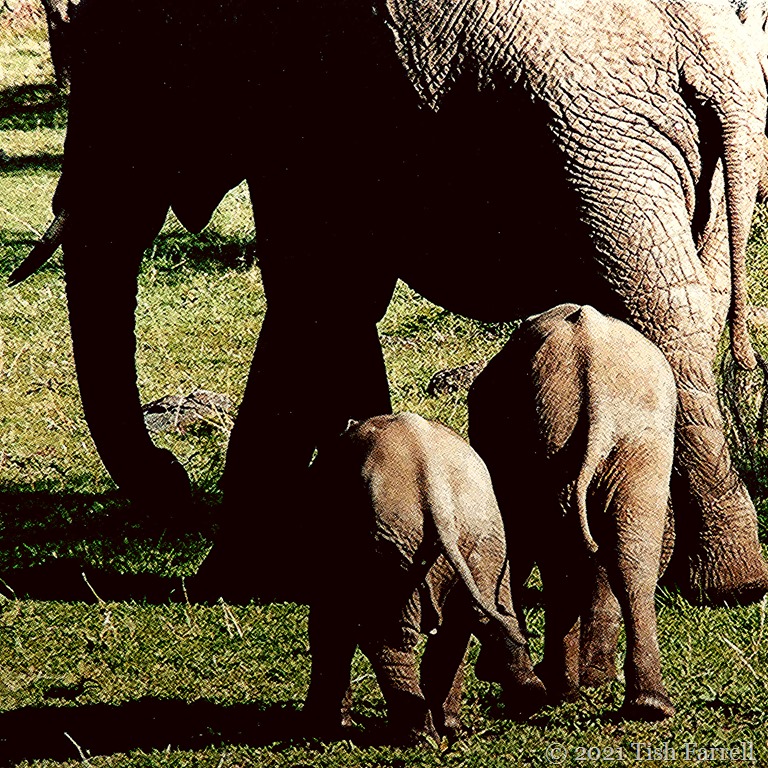
No apologies for showing this yet again. But the biting April wind here in Shropshire has driven back to the ‘old Africa album’ for a bit of warmth. And anyway, what can be more brightening than the sight of elephant babes. This photo was taken early one morning, on our last trip to the Maasai Mara. Happy times. Eight years in Africa gone in a flash.

Bright Square #22

Vintage Views: The International Nairobi Agricultural Show

Agri show 1995cr2

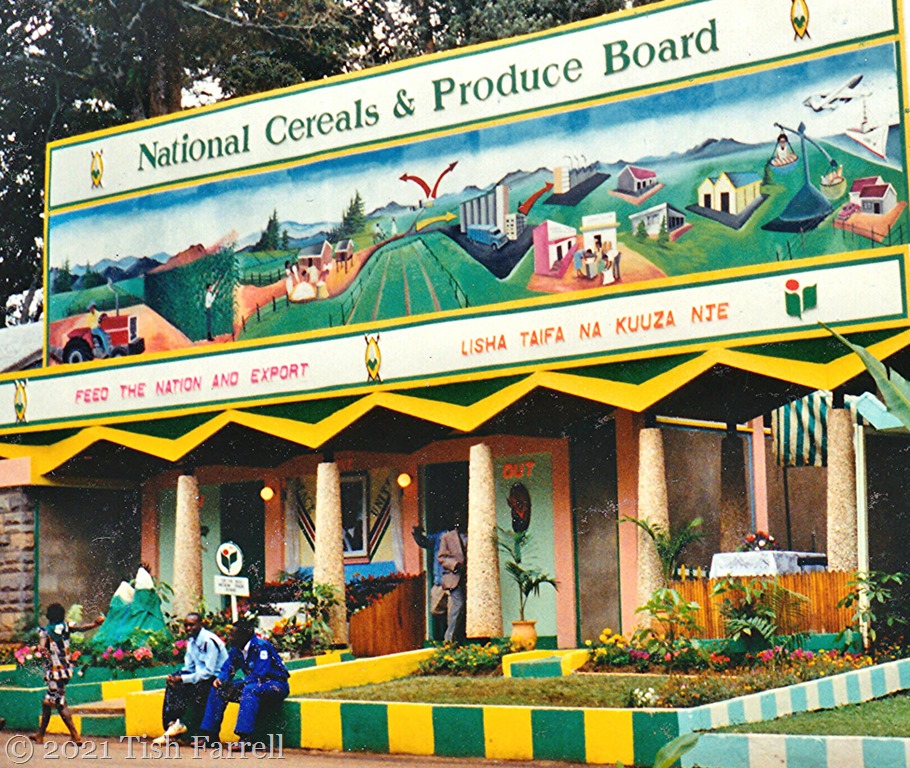
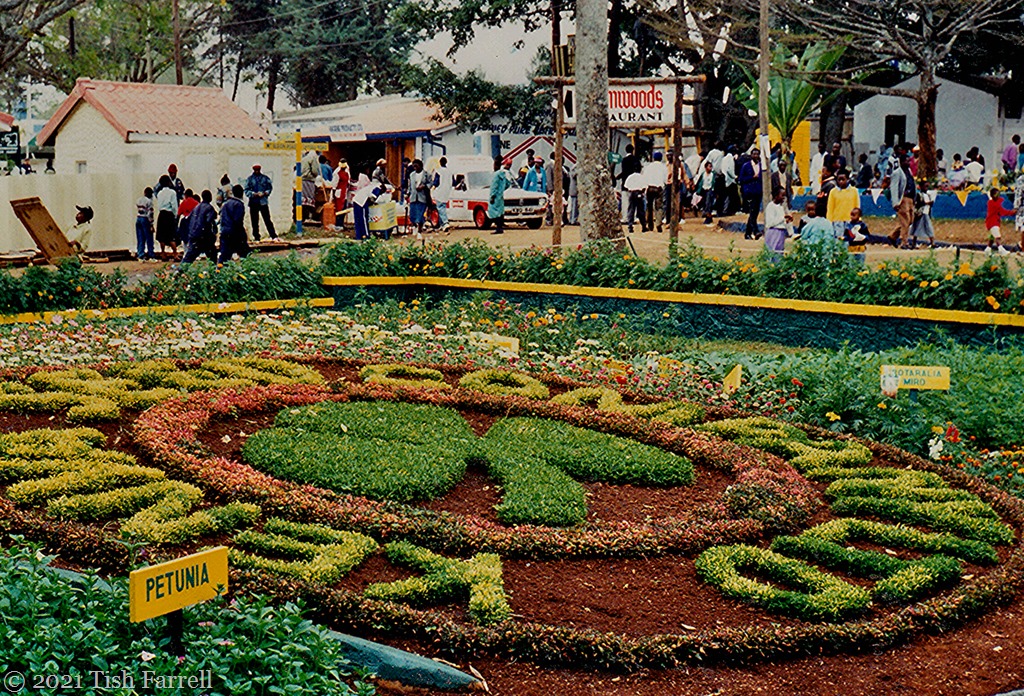
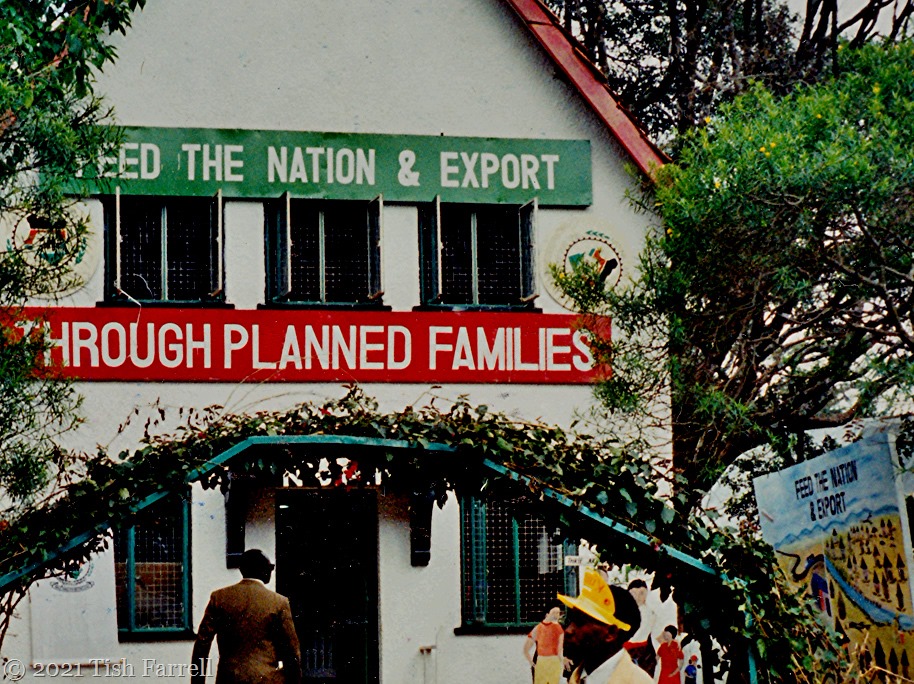
The agricultural show can most probably be counted as one of the more useful left-overs from the colonial occupation of African nations. Back in 1995 when these photos were taken I remember being struck by a rural farmer’s glowing comment in a newspaper interview. He said he had to travel a great distance to attend the Nairobi show every year, but it was worth it. The exhibition stands were his university, he said.

I could believe it. The amount of expert advice available at every turn was indeed impressive, and I speak as someone brought up on agricultural shows: my father was a grain merchant for a farmers’ cooperative and my memories of the various company stands were weighted rather more towards alcohol delivery than education.

Agri show 1995 c_0007

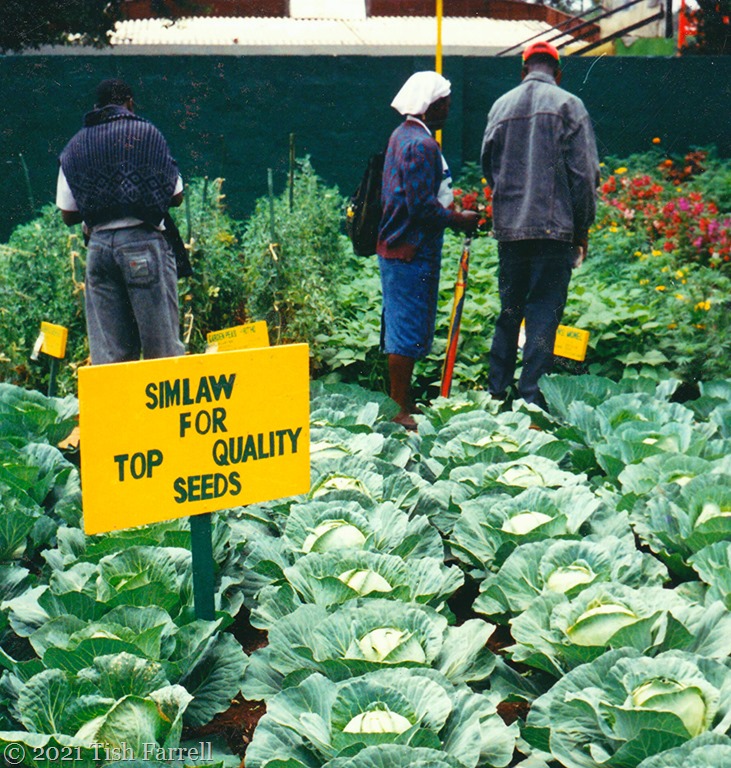
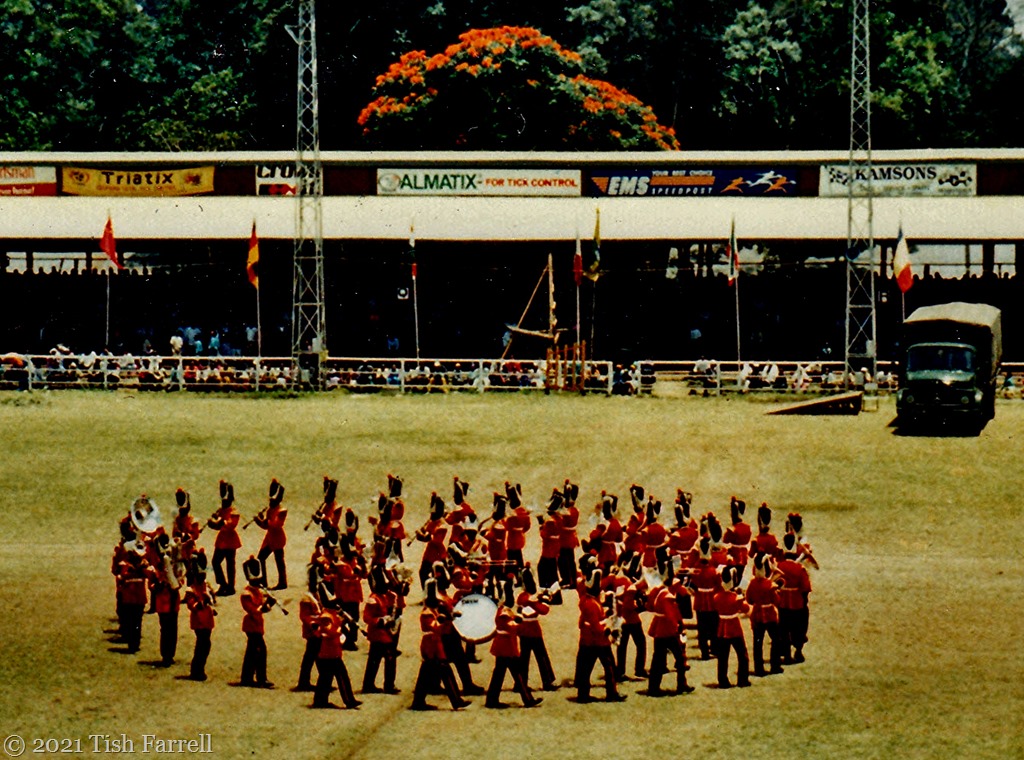
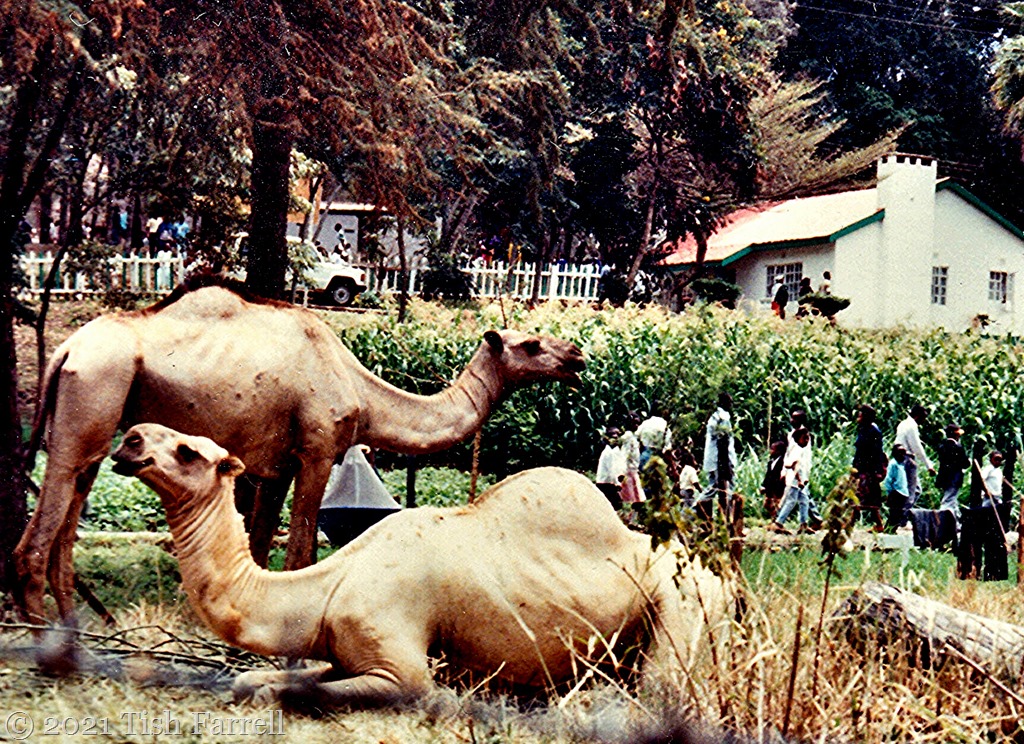
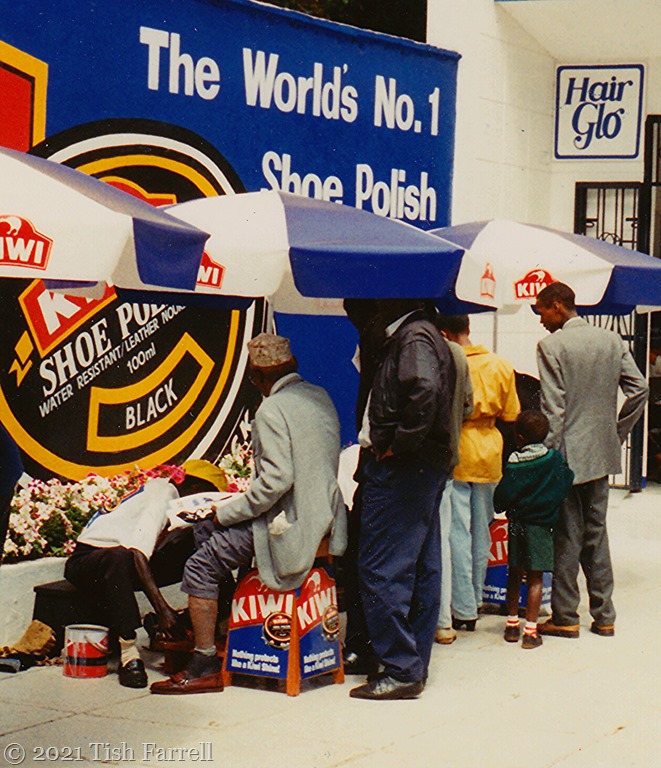
Of course the Nairobi show is also about selling and public relations, but I remember being particularly diverted by the National Archives stand which was showing 1950s newsreel footage of Land and Army so-called Mau Mau uprising; also by the Kenya Automobile Association’s  novel pitch to drum up membership; and by the glorious conformity of the cabbage display put on by a seed company. And of course there was all manner of entertainment to be had: shopping, snacks, a helter skelter, close encounters with camels, ripping performance from the military band: all the fun of the fair in fact. And you could get your shoes cleaned with the ‘world’s  no.1 shoe polish’, then have a swish new hair do in the next-door salon.

Agri show 1995 c_0015

Agri show 1995 c_0013 - Copy cr

Agri show 1995 c_0003cr

Agri show 1995 a

Agri show 1995 c_0010 cr

Agri show 1995 c_0008

Agri show 1995 c_0013

Agri show 1995 cr

Life in Colour: Yellow   This month Jude at Travel Words is asking us to think about yellow. Please pay her a visit.

Giddy Up, You Slow Coach Camels!

races_0004 - Copy (4)sq

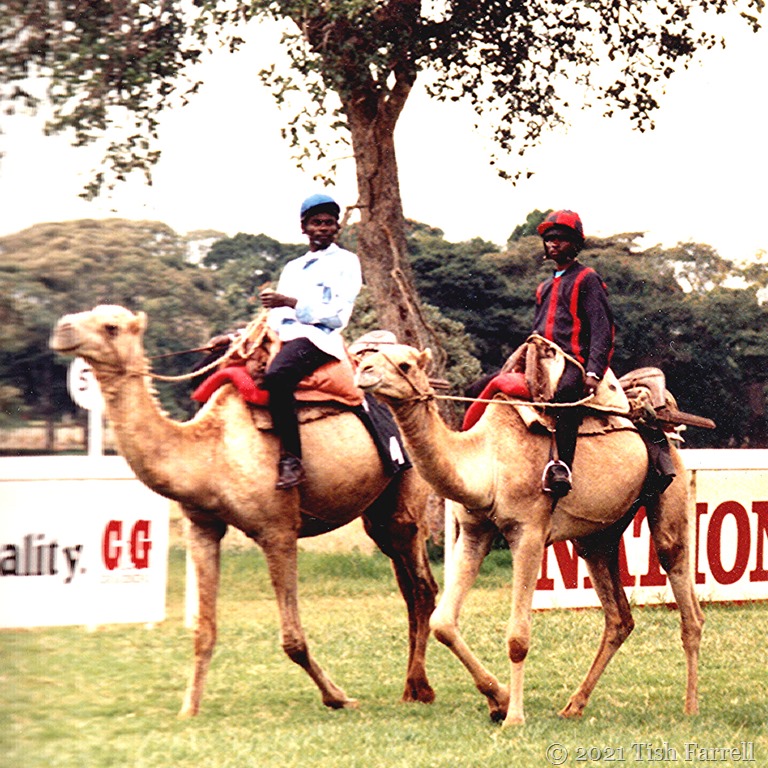
It was meant to be a diverting event between the horse racing at Nairobi’s Ngong Racecourse. Officers from Kenya’s Police Anti-Stock Theft Unit were demonstrating their mounted expertise by racing their camels. The camel units usually operate far away in the arid zones of the Northern District, patrolling the border with Somalia, so perhaps the genteel and leafy ambiance of the Jockey Club enclave did not enthuse the camels.They certainly took much urging to leave the starting line and then, having started, there was little inclination to finish. An underwhelming contest then, though it added to the many and varied goings on of a Nairobi racing weekend.

The Ngong races are a hangover (pun retrospectively intended) from British colonial settler days when, for a week around Christmas, farmers left their lonely farms and ranches and gathered in town to let their hair down. For many it was a drunken spree, at least if you are to believe Evelyn Waugh’s 1931 account in Remote People. I’ve quoted from it before but it’s worth a second go:

I found myself involved in a luncheon party. We went on together to the Races. Someone gave me a cardboard disc to wear in my button-hole; someone else, called Raymond, introduced me to a bookie and told me which horses to back. None of them won…

Someone took me to a marquee where we drank champagne. When I wanted to pay for a round the barman gave me a little piece of paper to sign and a cigar.

We went back to Muthaiga and drank champagne out of a silver cup which someone had won.

Someone said, ‘You mustn’t think Kenya is always like this.

*

I see from the internet there has been plenty of racing at the Ngong Racecourse during January. These days it is a well ordered multi-cultural affair. I’ve also just had a quick trawl through the Kenya Jockey Club’s Facebook photos but found no sign of camels. Obviously lacking in appropriate competitive attitude.


Square Up #30

Six Word Saturday

Lions Resting Up

201sq

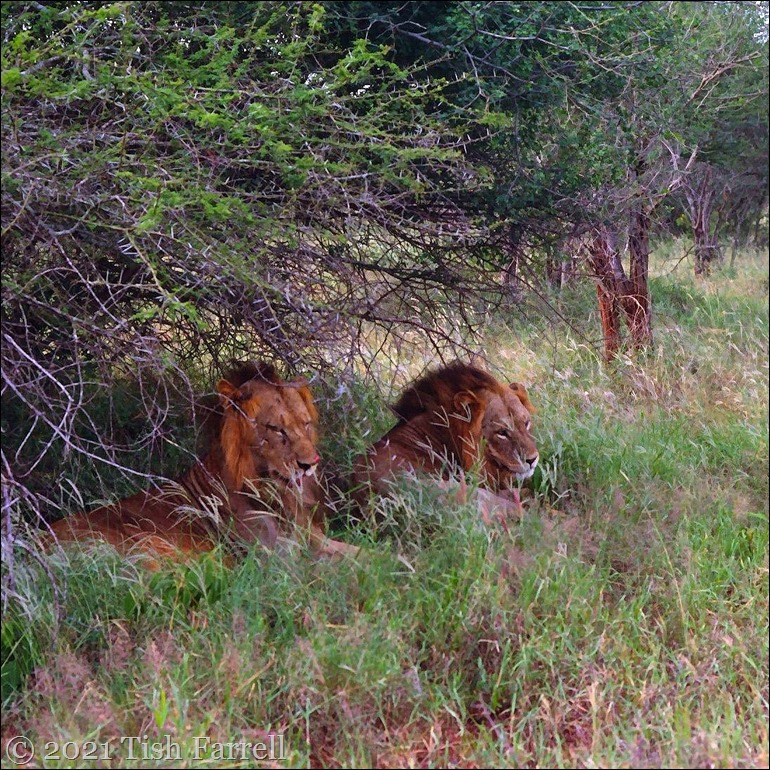
This photo records my first close encounter with lion-kind. I still find it hard to believe I was there.  I’d not long arrived in Kenya, not so much tourist as camp-follower to Graham who was out there on a short-term consultancy. He had recently returned from Mexico where he’d been studying the habits of the Larger Grain Borer (LGB), a tiny maize-devouring beetle which had been imported into Africa from the Americas in a cargo of food aid. The alien beastie had by the 1990s spread across the continent along the lines of rail and road and was busy infesting grain stores in Taita near the Tanzanian border and also in Ukambani in southern Kenya.

Graham was there to provide technical support to a British funded project that was planning to introduce a predator-specific beetle to control the LGB spread. For several months we had no home base. Instead there was an endless back and forth along the Mombasa highway between Nairobi and the coast, Graham spending two or three days at a time at research sites in Kiboko, Taita Hills and Mombasa. I went along for the ride.

At the coast we stayed in beach cottages. At Taita there was a rest house in the hills, but when it was booked up, we stayed at the extraordinary Taita Hills Hilton, a four-star safari lodge in the middle of nowhere. It came with its own private small game reserve, a former colonial sisal plantation run back to bush. (For anyone who’s read William Boyd’s An Ice cream War  this was the territory – between the Mombasa railway and the Taveta border).

Taita Hilton pool terrace

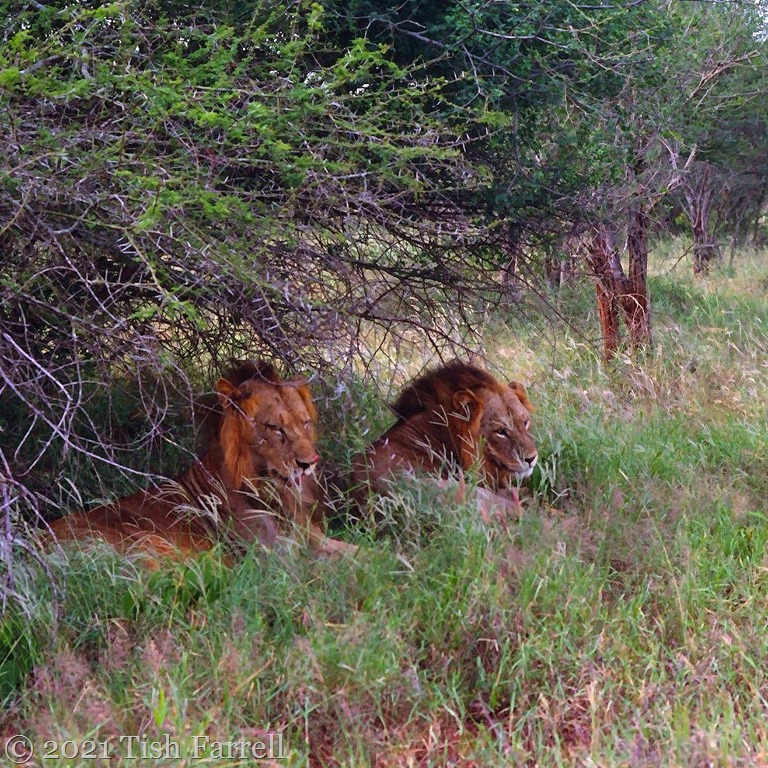
And so, one Saturday afternoon when Graham had finished working, we took ourselves for a game viewing drive around the Taita reserve. Left to our own devices we would not have seen the lions. But some rangers on patrol stopped us. ‘Have you seen the lions,’ they said. No? ‘Come. Follow us.’ They hived off into the bush in their sturdy truck. We followed (carefully) in the works’ Peugeot 307 saloon (!) And there they were, two lions under a thorn bush. Who’d have thought it!

Square Up #17

Elephant Totos Playing Up

001 (2) sq

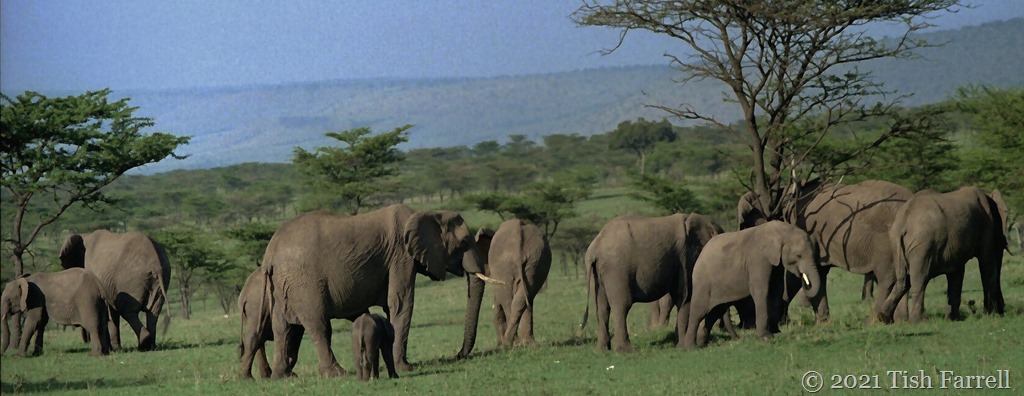
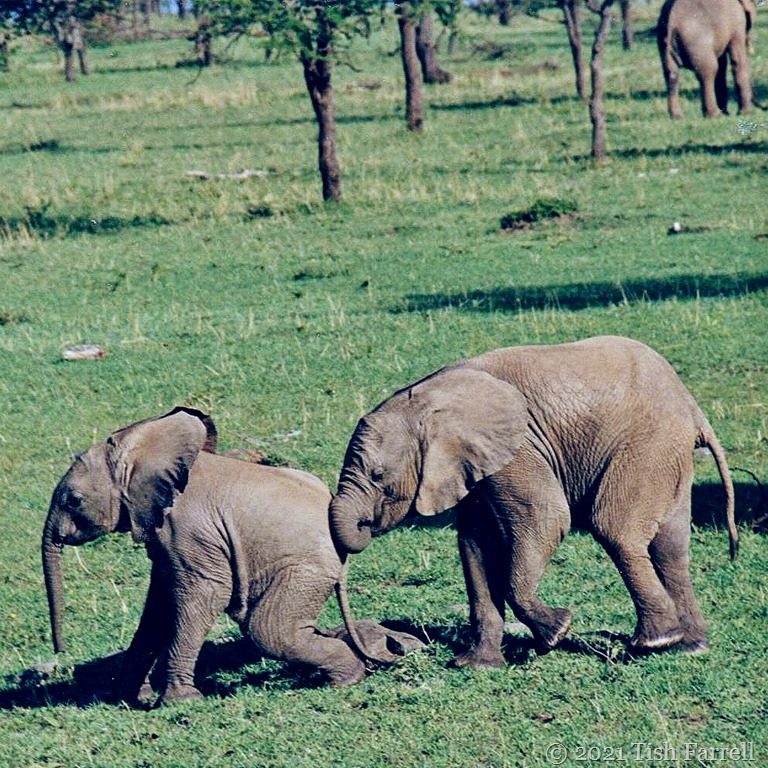
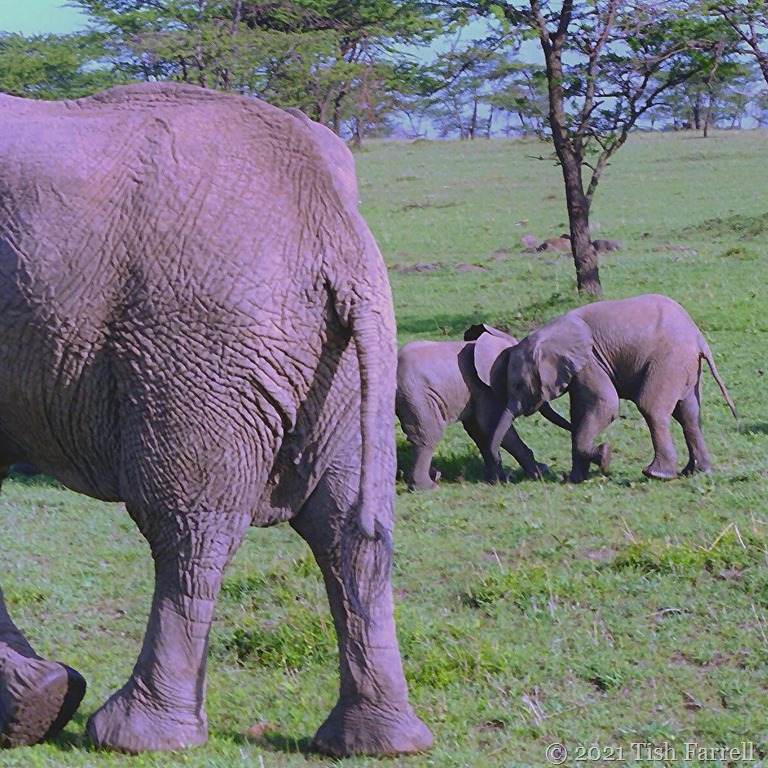
These photos are from our last trip to the Maasai Mara before we left Kenya – this after nearly eight years as ‘displaced persons’. It was late December and our family from the UK had come out to join us in millennium celebrations. Everywhere there was talk of the ‘dreaded bug’ – mass panic of how on the stroke of midnight New Year’s Eve 1999 all world intercommunications and computer functions would be scuppered. At such times one definitely knew there was more common sense to found among animal kind than with humanity.

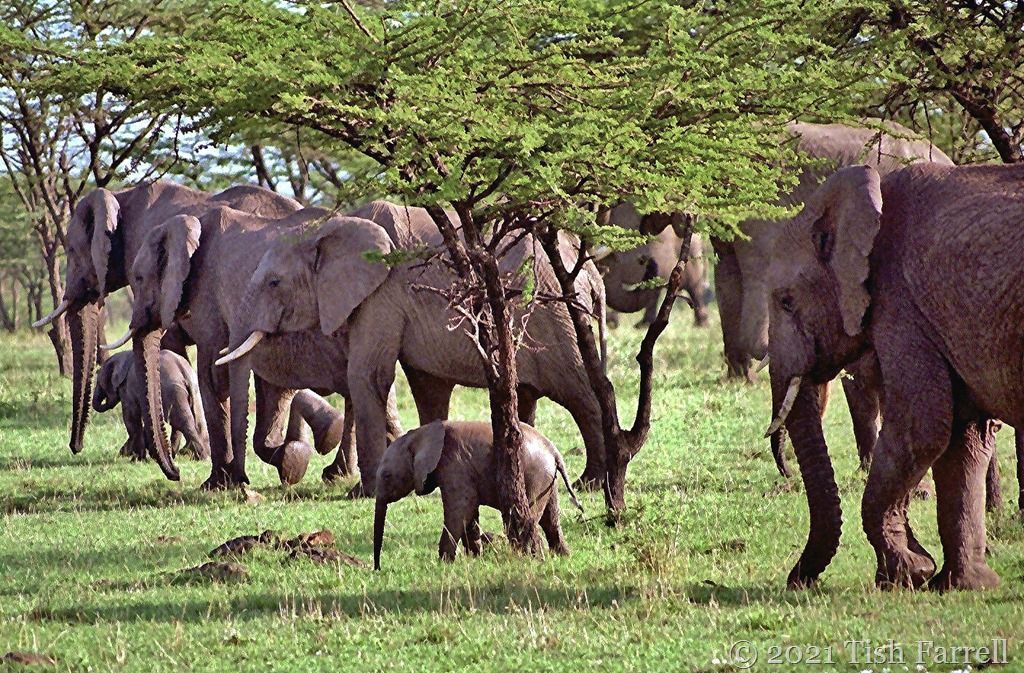
We had left camp on an early morning game drive. Dan our driver-guide had brought a picnic breakfast of mammoth proportions and it was he who decided to stop the truck and break into the hard boiled eggs and pastries just as a large herd of elephants was passing by.  They came so softly, footfalls ever muffled by the large cushions of fat that elephants have in their heels. You could smell them though – the musky, muddy smell that is like nothing else. The adults seemed to be moving as one, a measured ambling pace with no deviation. Only the children weren’t quite coming to heel.

sq

For most of the year female elephants and young live in small matriarchal groups while the adult males pursue a separate existence in their own loose-knit herds. But come the rainy season, all these small groups may gather into a single large herd as they set out looking for fresh vegetation.

They couldn’t have cared less about us; gave not one sign that they had even registered our presence. Later, as it was going dark and we were returning to camp, we met the herd again. Dan stopped the truck and the herd moved around us, close enough to touch. They moved like shadow-ships through the Mara twilight. At such moments you tend to find that you’ve forgotten to breathe.

Scan-130510-0019


Square Up #14

Gave Up Flying, Took Up Running

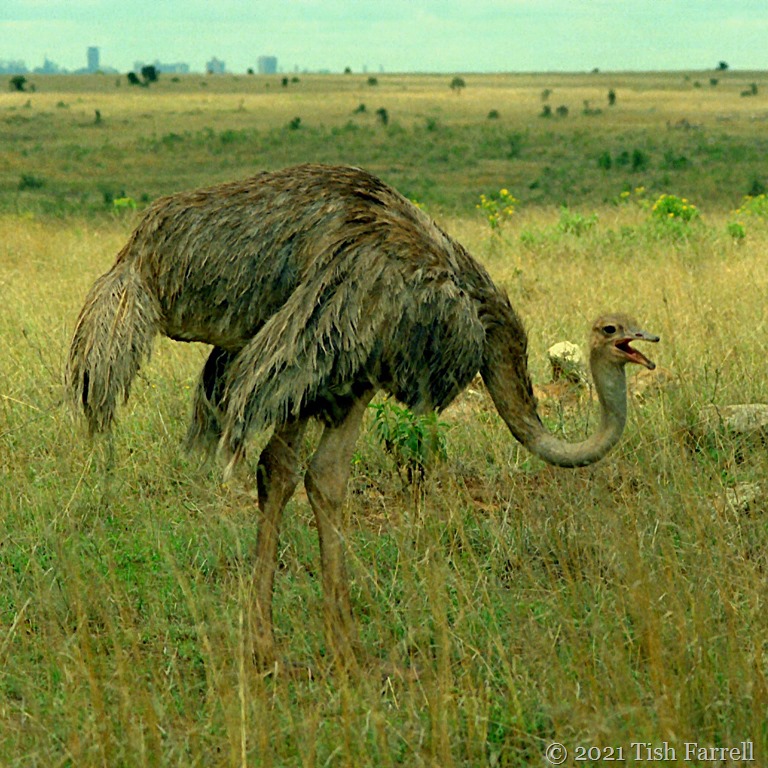
ostrich sq

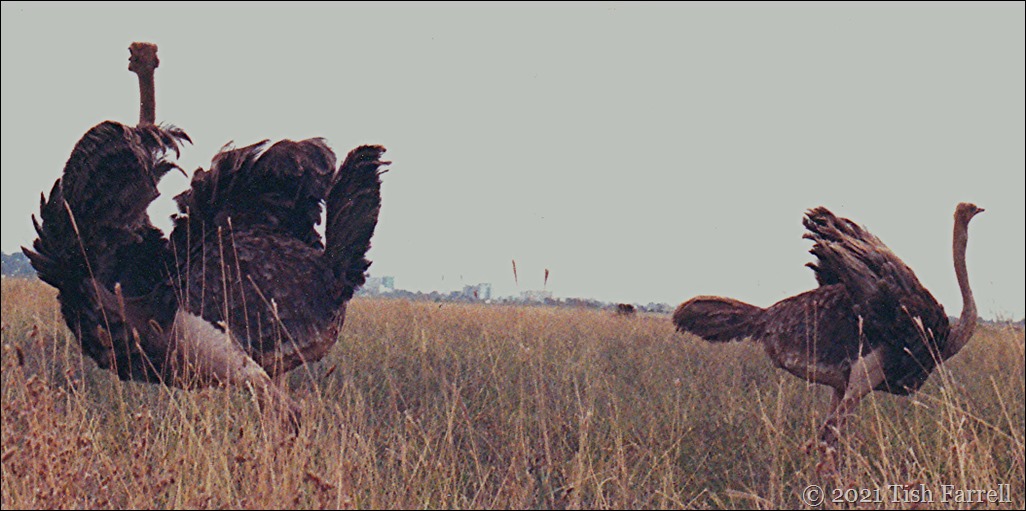
You can see the city high rises in the top left behind the hen ostrich. She is standing in Nairobi National Park (some 40 square miles) which nudges up against the perimeter of Kenya’s capital, including the industrial zone and the main airport highway. In our time, the park still had an open wildlife corridor to the south, though even then there were problems of settlement encroachment. These days too, there is another kind of incursion – in the form of a super-duper elevated Chinese railway that cuts across the park on tall concrete pillars. This line replaces the old Uganda railway built right across Kenya by the British administration between 1895-1901, also known in its day as the Lunatic Line.

The colonial railway cost British taxpayers a lot of money, and was built entirely to satisfy UK strategic interests (i.e. not at all for the benefit of local populations). In order to recoup the cost, settlement by British gentlemen and especially members the ‘officer class’ was actively encouraged. It was envisaged they would engage in large-scale ranching and planting along the line of rail and produce valuable cash crops for export.

In the early 1900s the chaps who came out to British East Africa all had notions of making big fortunes. One of those notions involved ostrich farming, or rather ostrich feather farming, since those airy plumes were just then in high demand for ladies’ hats. These same chaps also knew that some other chaps down in South Africa had made it rich from feather production.

Unfortunately the  ostriches of British East did not prove especially accommodating within what turned out to be a very small window of opportunity. One way to set up business was to collect eggs from the wild (a single nest might have twenty or more eggs) and then incubate and rear the chicks. But then robbing a nest could be hazardous; ostrich parents are fierce guardians, taking it in turns to protect their offspring. (N.B. a kick from an ostrich can break a man-leg).

Early settler Lord Delamere thought to speed up operations by recruiting a cohort of mounted Somalis to organise an ostrich drive across the open plains of his Rift Valley estate, thereby separating flocks of part-reared chicks from the hens and driving them towards the farm dairy where farmhands, stationed behind thorn trees, had been charged to grab any passing chick and imprison them. It did not go well. Even ostrich chicks can wrestle.

And then the captured adult cock bird proved most unbiddable, even with a sock over his head (an approach that was supposed to calm him down). He was last seen sprinting across the plains, still be-socked, having broken from his pen. And by the time all this had been gone through, the bottom had dropped out of the hat feather market because some idiot had invented the motor car wherein ladies’ plumed headgear proved most unsuitable and was apt to blow clean away.

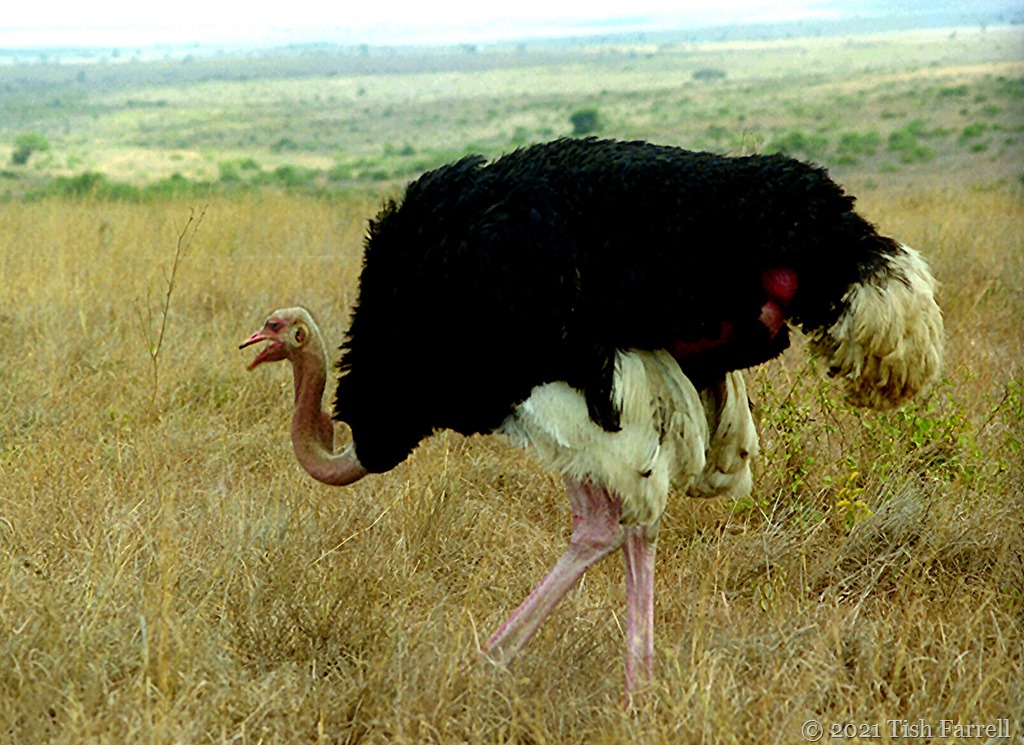
All of which is a bit of a deviation from the point I intended to make. Ostriches may not fly, but they can certainly run: over 40 mph (70kph). The fastest birds on the planet. Just look at those legs in the next photo. They also come with huge, clawed feet attached.

park 21


Square Up #13

Always Up For A Spot Of Breakfast: Superb Starling

scan-140503-0036

A surreal image – over-exposed so you can see the colours of this Superb Starling, one of Kenya’s commonest birds. But surreal in other ways too. Did we really eat breakfast on the shores of Lake Elmenteita and share it with such birds. (See previous post). On fine days the tables were set out under the fever trees. The soundtrack: incessant chatter of Speke’s weavers from their thorn tree colony by the camp kitchen, fluting call of the black headed oriel, squabbling of babblers, warbling of robin chats, distant grunting of flamingos out on the lake.

IMG1_0004

Under the fever trees. Can you spot the superb starlings?

*

IMG1_0003

Delamere Camp reception and dining room

*

7

The ‘Sleeping Warrior’ an exploded volcanic cone on the western lake shore, Eburru hills beyond.

*

Kenya is of course a serious bird watcher’s paradise. The capital Nairobi boasts a species list of 600 plus. And if I were there now, even if equipped with only the digital zoom of a modest ‘point and shoot’, this blog would be bursting with wonderful bird photos. An irritating thought. For most of the time we lived in Kenya I had only a little Olympus-trip – which was great on landscapes and immobile subjects, but otherwise limited when it came to wildlife photography. Here are my better efforts from Elmenteita: a black headed oriel, glossy starling,  grey heron with egrets, Speke’s weaver, Abdim’s stork and greater flamingos.

Square Up #4