Tales From The Lake Shore ~ Of Hot Springs, Cold El Nino Rains And A Leopard

img20241001_19513812ed

Elmenteita December 1997

*

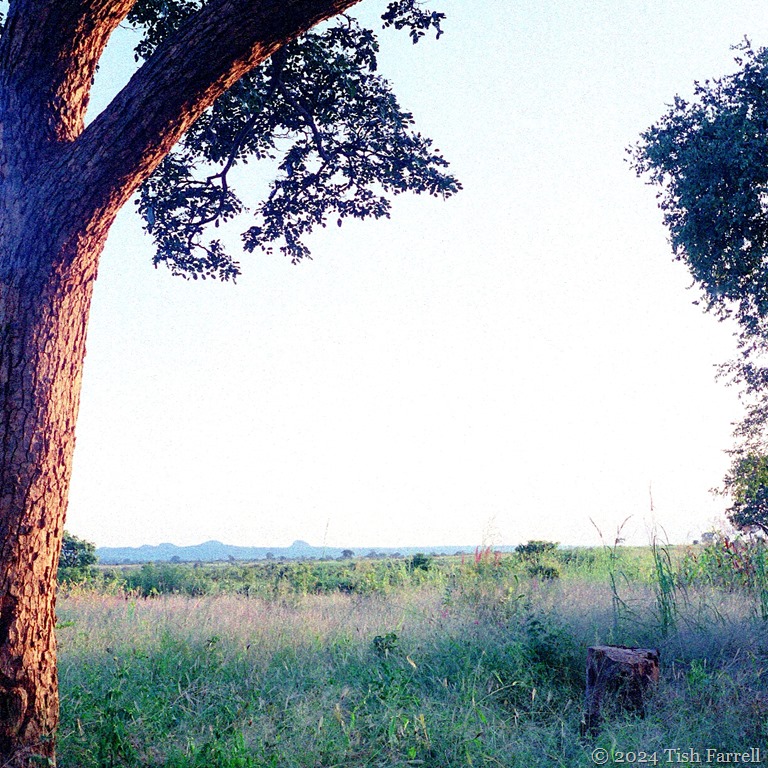
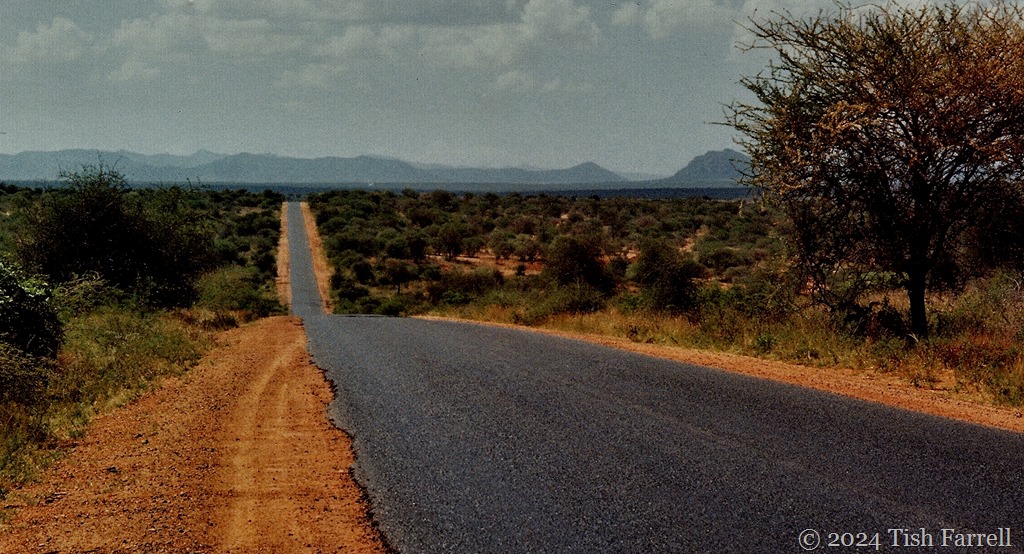
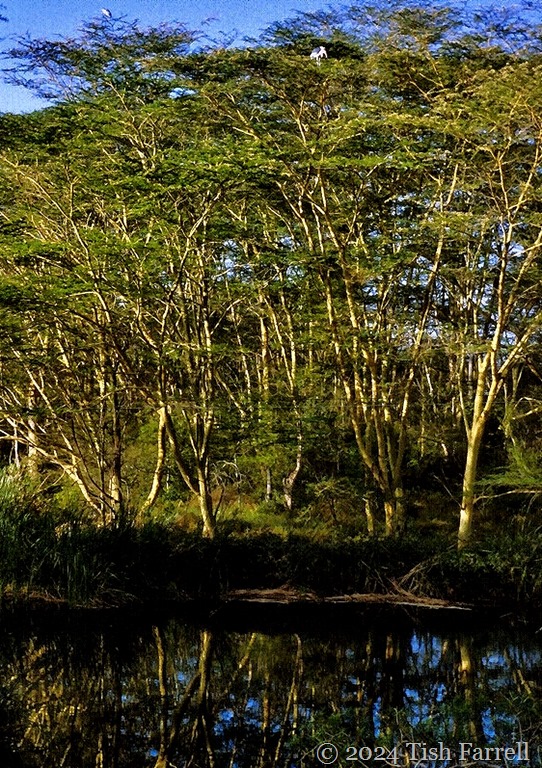
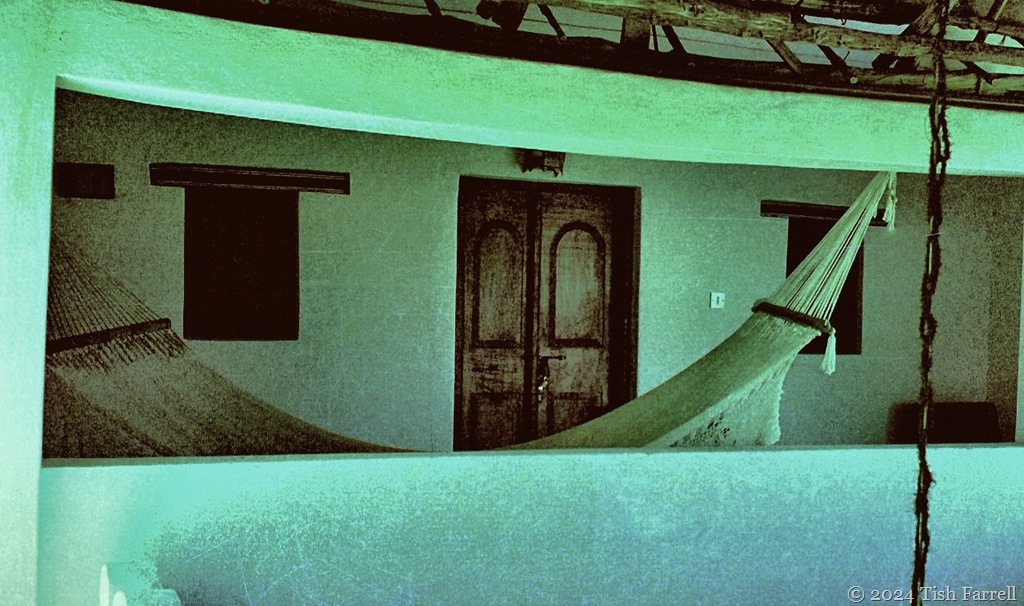
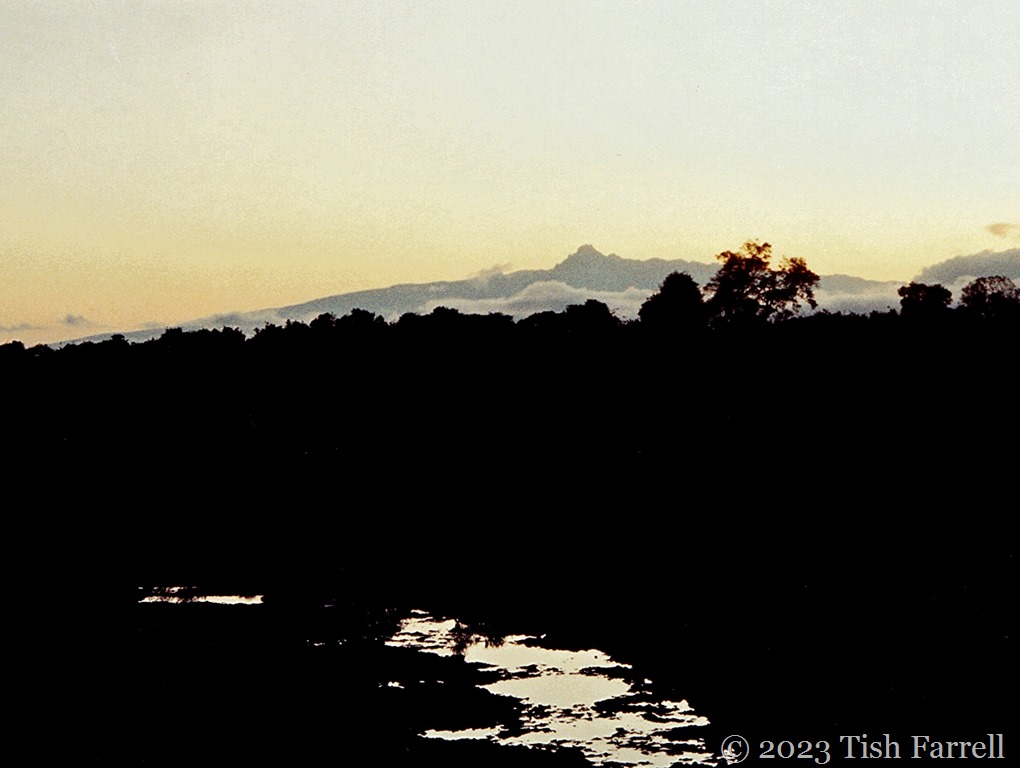
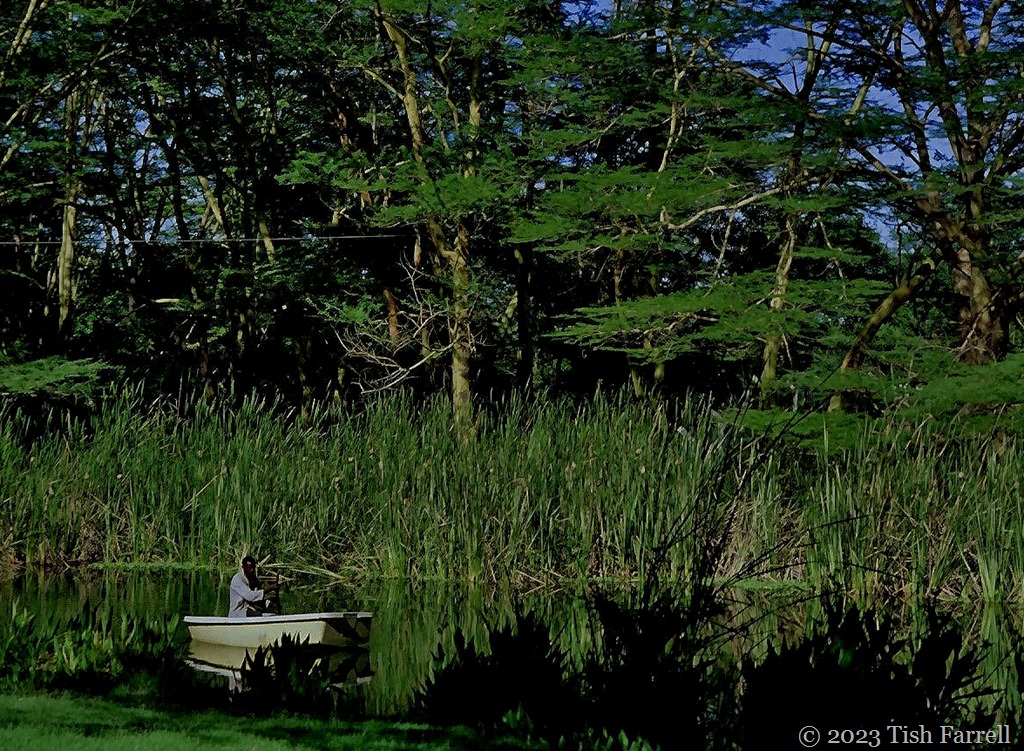
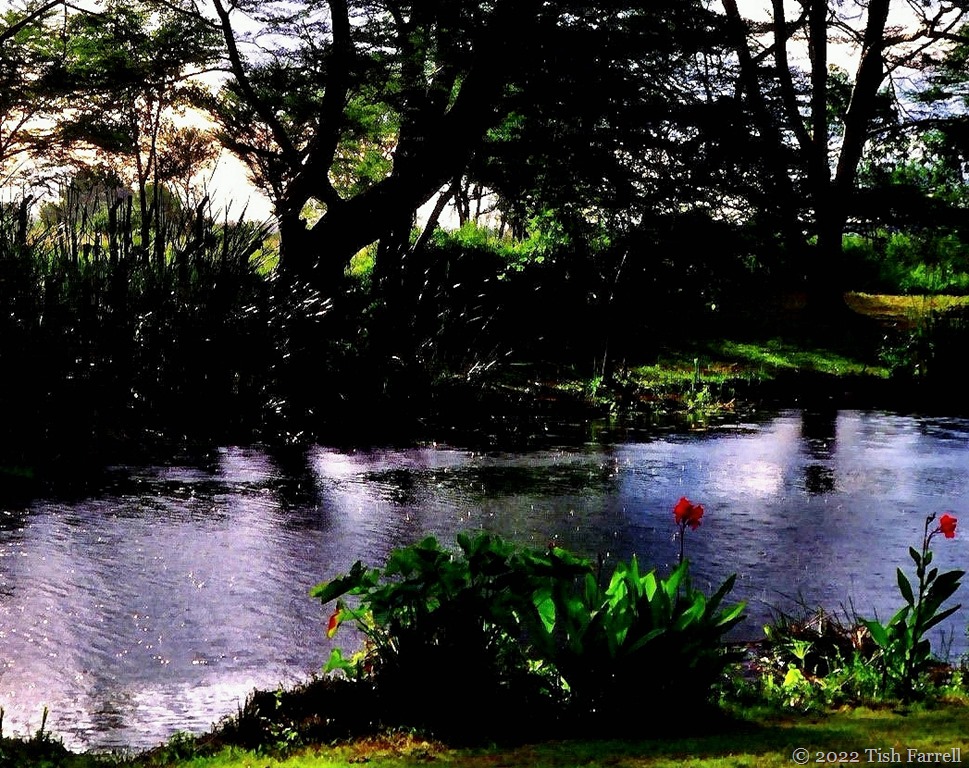
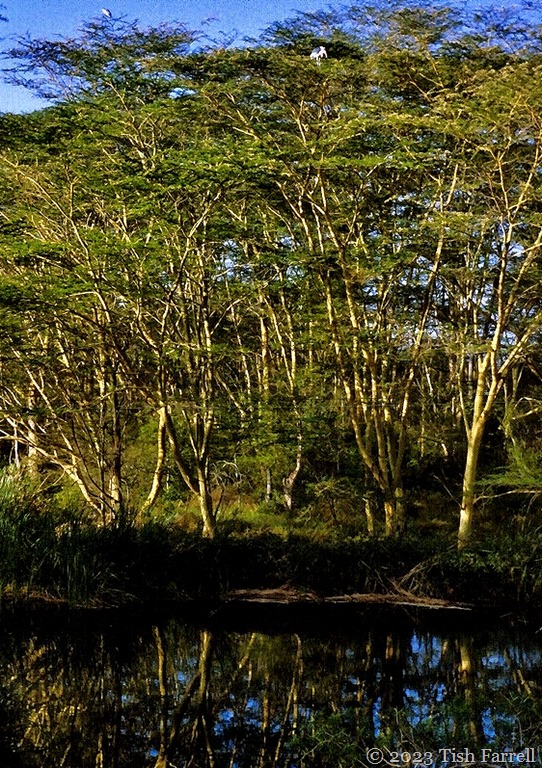
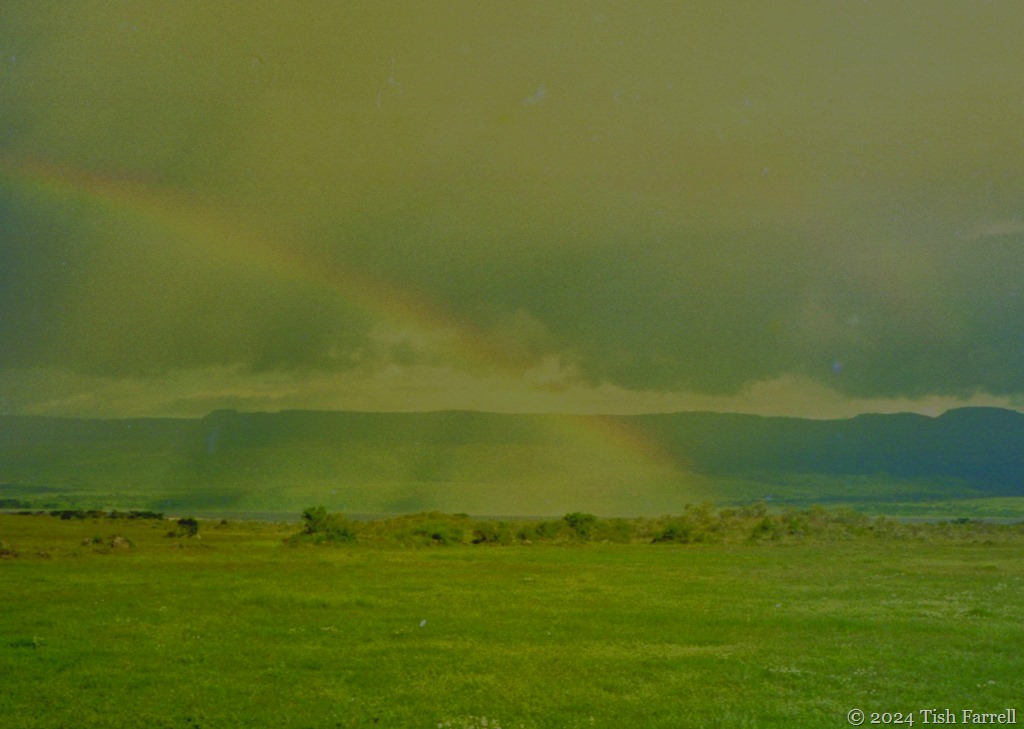
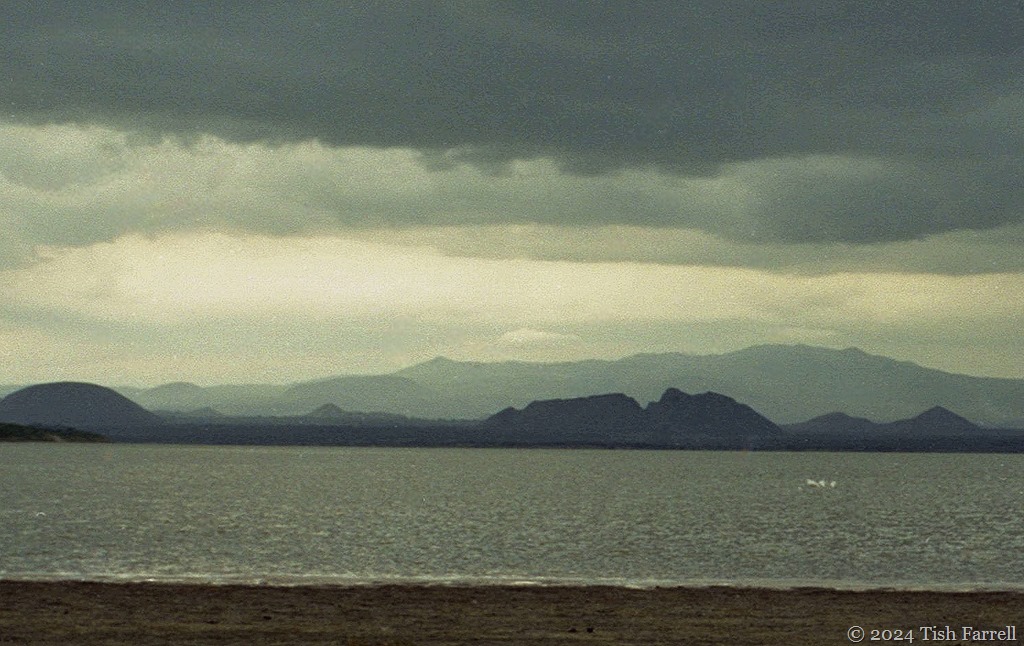
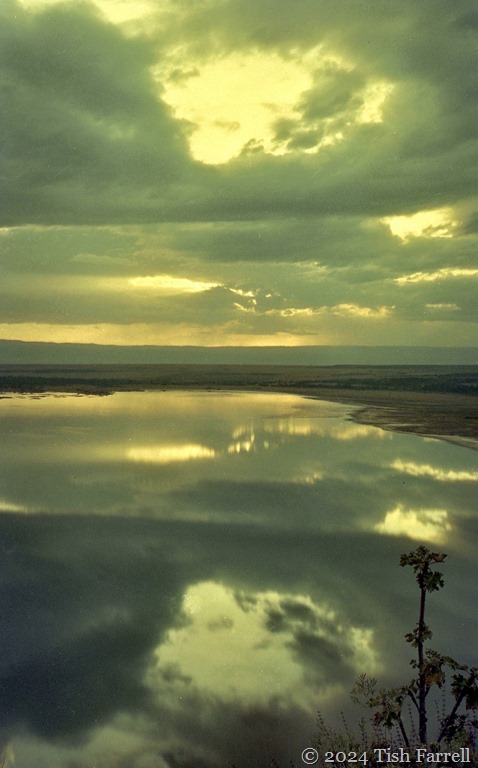
I’m having camera problems when I take this first photo, but in its way, it speaks of the times. It is early December 1997, our sixth year in Africa. There have been recent months of crazy weather with Kenya awash from El Niño floods and devastating downpours. When the rain rolls into the Great Rift, a lugubrious twilight descends, lowering in all senses. It feels cold too, and especially for a month that is usually hot; the equatorial summer in fact. Normally, too, October to December is the time of the short rains, the season for seed sowing. But instead of hopeful cultivation, there are reports of whole hillsides, entire farmsteads, being swept clean away.

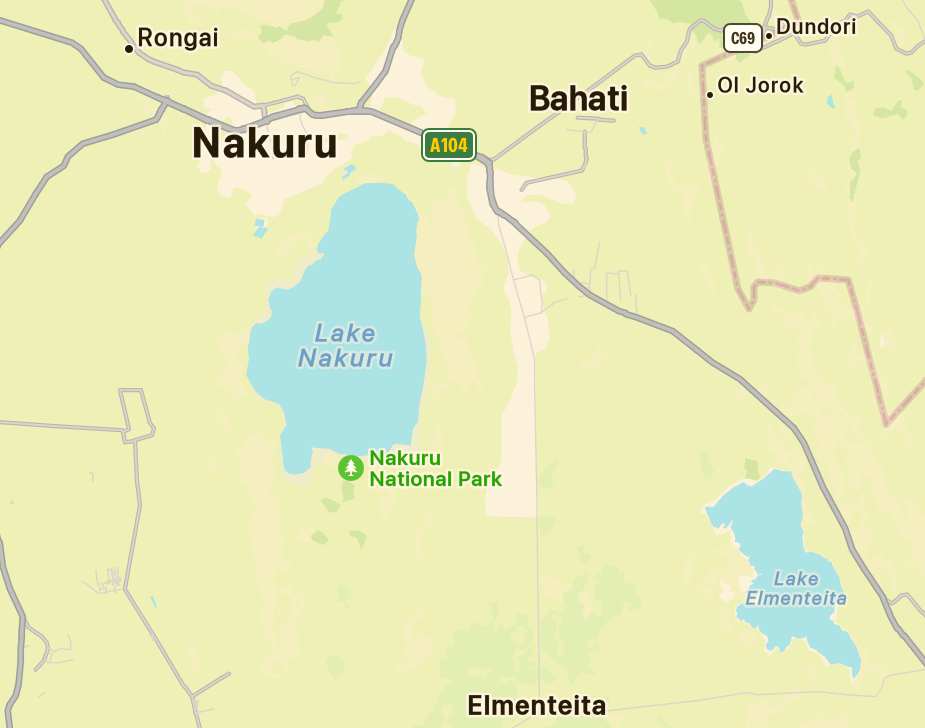
The day I take this photo I’m with a Kenyan ecologist, Michael, a quietly spoken young man whose community belongs to the Central Province highlands. He has driven me out from Delamere Camp for a day’s excursion across the westerly reaches of Lake Elmenteita. We don’t have rain, but the light is poor and the landscape, at times, looks as dreary as an English November. We are heading south to an area of the lake known for its hot springs. But that story comes later.

*map
*

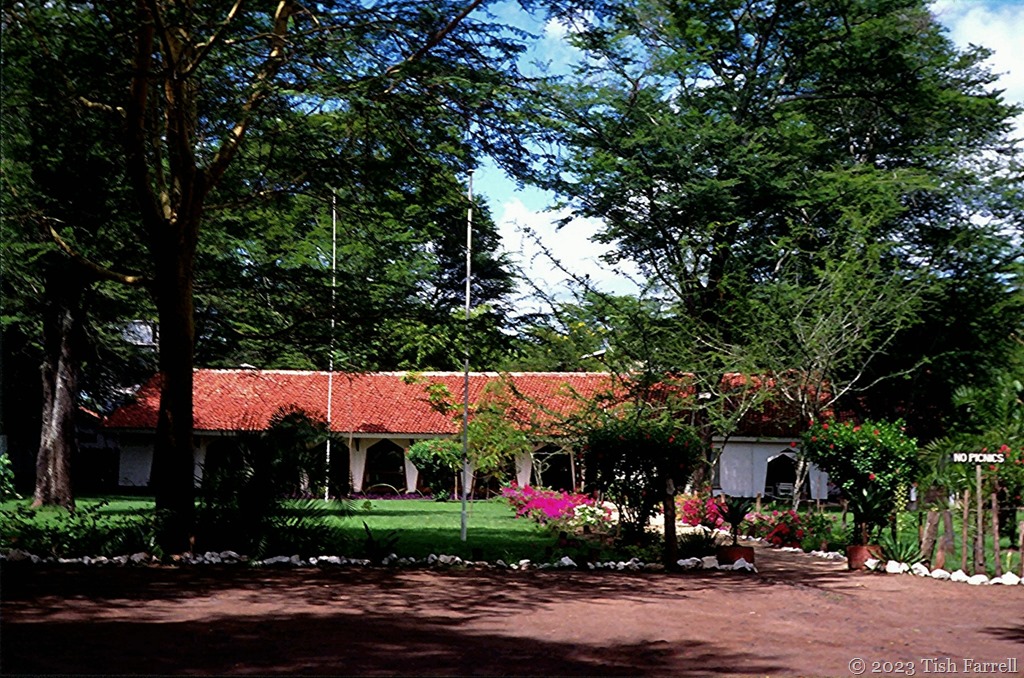
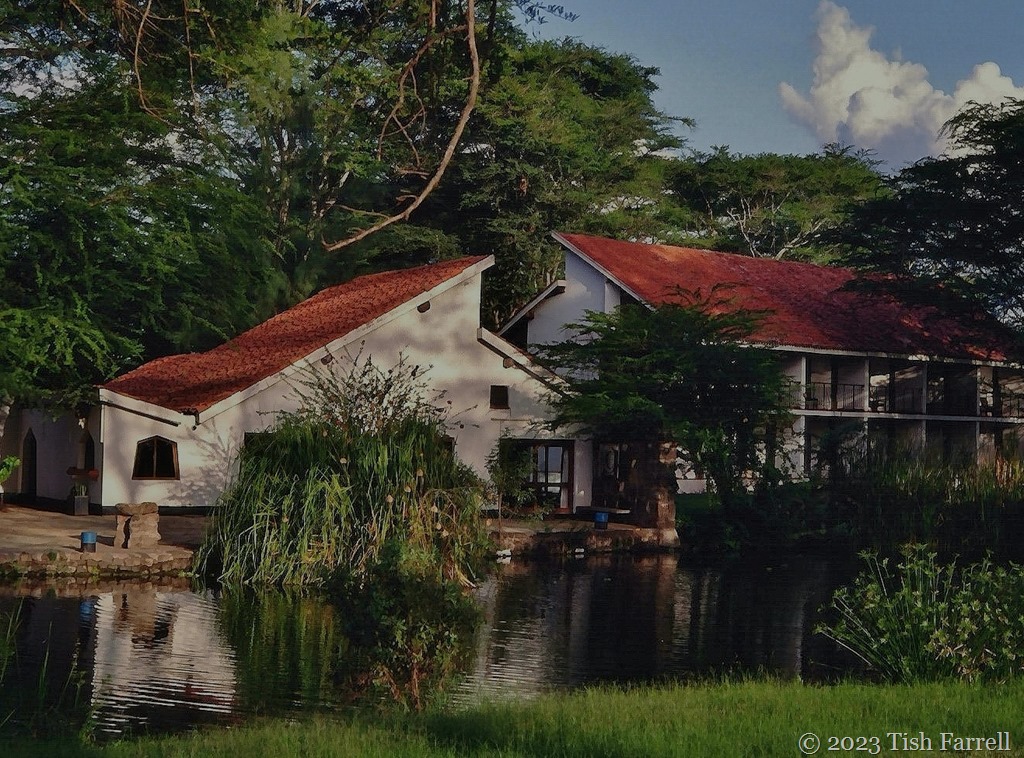
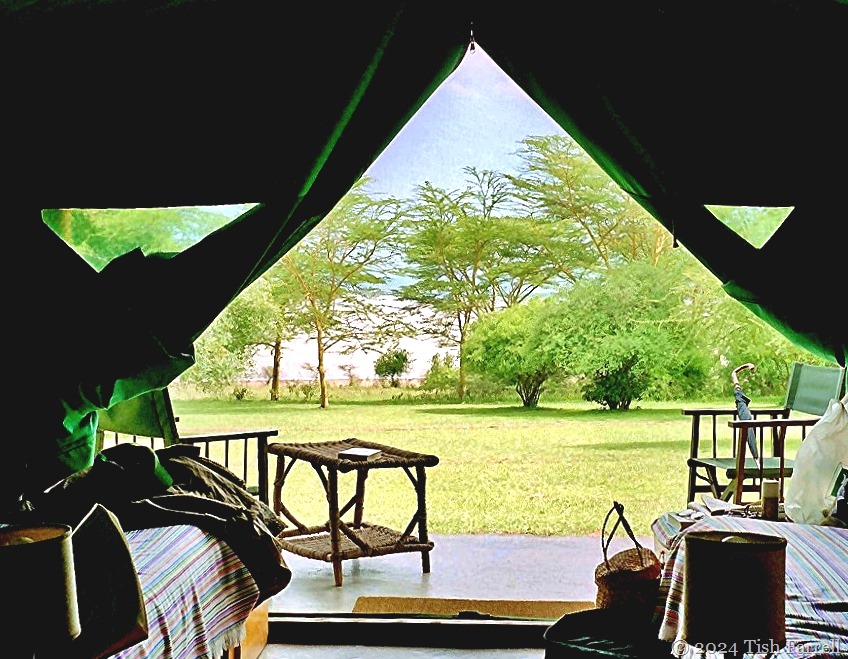
And the reason this trip is happening is because my other half is some twenty miles further north up the Rift Valley, attending a three-day Crop Protection workshop at Lake Nakuru. And since he must drive past Elmenteita to get there, he’d had the kind thought to book me into the Soysambu Delamere Camp; once the workshop was done he would join me there for a couple more nights.
scan-140502-0013

*

When I am dropped off on a Sunday afternoon, I find the camp sorely lacking in visitors. The bad weather, plus political tensions in the run up to the general election, including riots and a killing spree down at the coast back in August, are keeping tourists away. The only other guests are an English couple who have won the Kenya trip in a charity raffle. They are well-heeled, with connections in publishing and arms dealing, but know nothing of Kenya’s current political unrest. Having flown to the tropics out of a wintery England, they are put out to find they should have packed sweaters, raincoats and sturdier shoes.
img20241004_11430944ed

View from Soysambu Delamere Camp: rain in the Rift and the Sleeping Warrior, a volcanic plug also known as Lord Delamere’s Nose.

*
img185 Godfrey Mwirigi

*

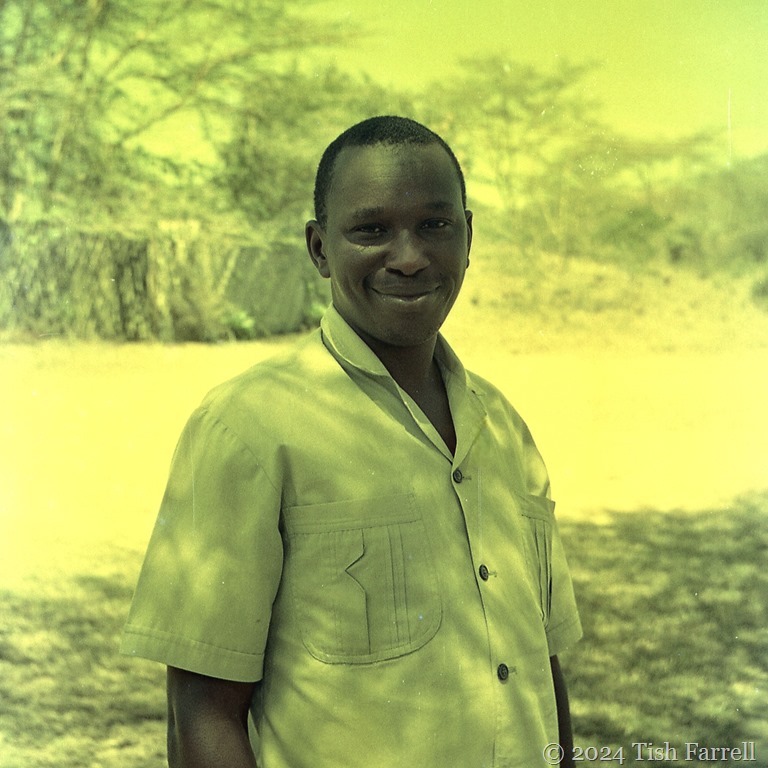
I find myself in the care of Godfrey Mwirigi, the camp manager.  He quietly ensures I do not eat alone, and joins me at every meal. Like the best party host he also presides over the clifftop sun-downer that happens each day at around 5.30. It is part of the camp ritual, guests are driven up through the sage scented leleshwa scrub to a high terrace above the lake. There they are met by the catering team presiding over a full bar and trays of tasty hot canapes. There is no stinting even though there are only three of us to please.

It is more than a touch surreal, both of itself and the Great Rift setting. Below us, the Sleeping Warrior sinks into blackness, while the lake slips through many shades of washed out pink and grey, and the day drops swiftly behind the Mau Escarpment. It is both beautiful and unsettling, one of those many times in Africa when I ask myself: where am I exactly?
img343 sundowner ed

*

Come nightfall and it’s time for a game drive around the reserve. The truck is roofed but open sided. We’re given blankets to fend off the chill. The air is dank, and the lakeside tracks perilous even with 4 wheel-drive. Now and then, disagreeable swarms of tiny hard-cased beetles fly in our faces. But then discomfort dissolves as the night theatre begins. While Michael drives, Dominic, another expert guide, rakes the trackside vegetation with the spotlight.

Eyes glow in the dark: eland, Africa’s largest antelope that can leap its own height over farm fences; buffalo, the most vengeful of all the big game; impala; waterbuck and, then among the fever trees and sheltered by underbrush, a shy steinbok. Out on the flood plains, spring hares, curious jumping rodents, bounce in every direction, creating their own mad light show before our spot-lamp. We come upon a genet cat and an African wildcat out on their night prowl. Then mongooses, a zorilla, porcupine parents with tiny porcupine twins in their new quill coats. And then Michael stops the truck and slowly reverses as Dominic scans along a grassy ridge.

The damp vegetation glistens, and in the halo of light a face looks back at us. A large leopard face. We’ve clearly disturbed him, lying in the grass, the intrusion prompting him to lift his head to check us out. For several moments he simply regards us. I’ve no idea if he can make us out behind the spotlight, but I have a sense of amber eyes looking deep inside my head: a non-consensual injection of leopardness; it does change me.

Finally, he blinks and lies back in the grass. The audience is over.

*
img20241003_19453803 weaver birds and nests

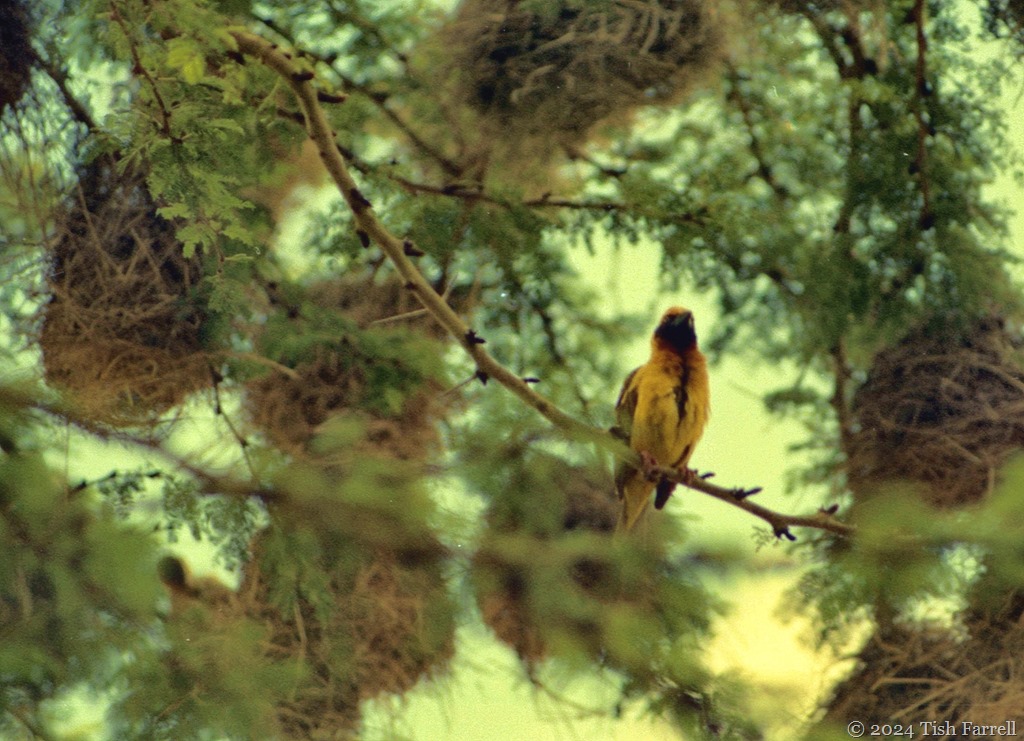
Masked weaver and nests

*

By day, the camp runs other activities. If you opt for the early morning bird walk, a tray of tea and biscuits is brought to your tent at 5.30. At six you set off with Dominic or Michael for an hour or two’s ramble around the camp perimeter. You can find yourself walking among impala and waterbuck while your guide runs off the names of all the birds that may be heard calling from trees and bushes.

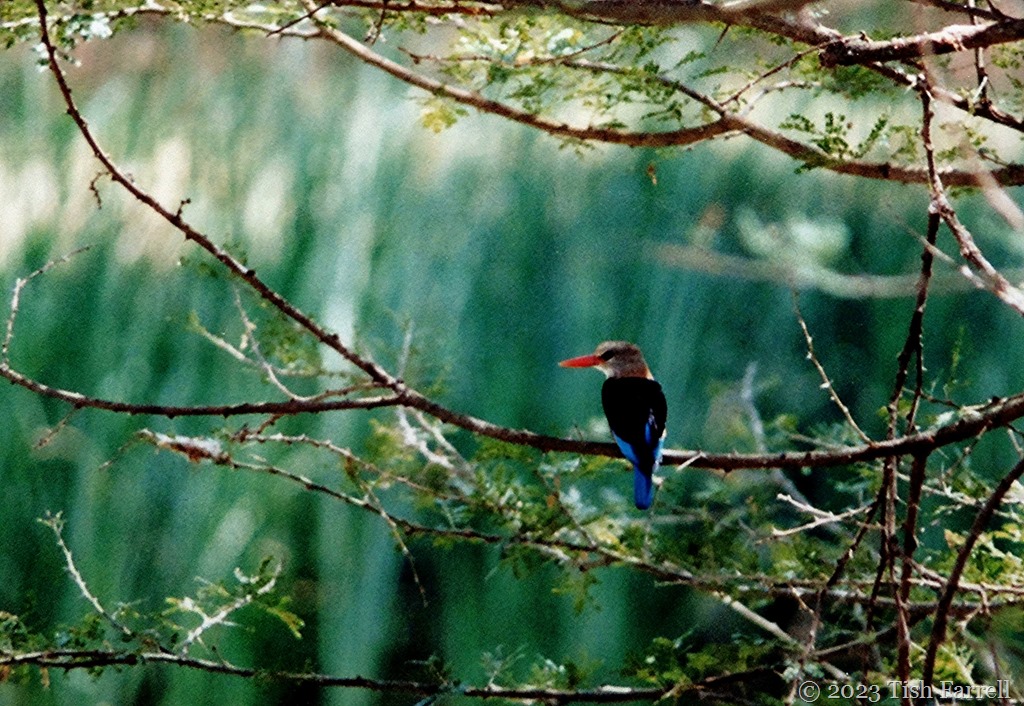
If a bird reveals itself, you are told where to look for it, and the characteristics that define it. A morning walk thus can yield grey back fiscal shrikes, rattling cisticolas, Ruppell’s starlings (in brilliant violet and turquoise), the shy tchagra, a scarlet chested sunbird, and blue-naped mousebirds. You might also spot fish eagles or hear a golden oriel call or the song of an olive thrush or a robin chat whose repertoire makes me think of an English blackbird. There are 400 species to choose from here.

Later, after breakfast, there is usually a two-hour game drive, but on my third morning there is only me to be entertained. Godfrey says he has arranged for Michael to take me on a longer drive to the hot springs. We can take a picnic lunch.

*

As we set off along the estate’s perimeter road, Michael gives me the background on the Delamere Estate. He tells me there are 10,000 beef cattle on the Soysambu ranch, which adjoins the reserve. The name Soysambu is a Maasai word meaning mottled rock. He tells me, too, that the reserve was set up  by Lord Delamere in 1990 as a means of protecting the lake shore from developers.

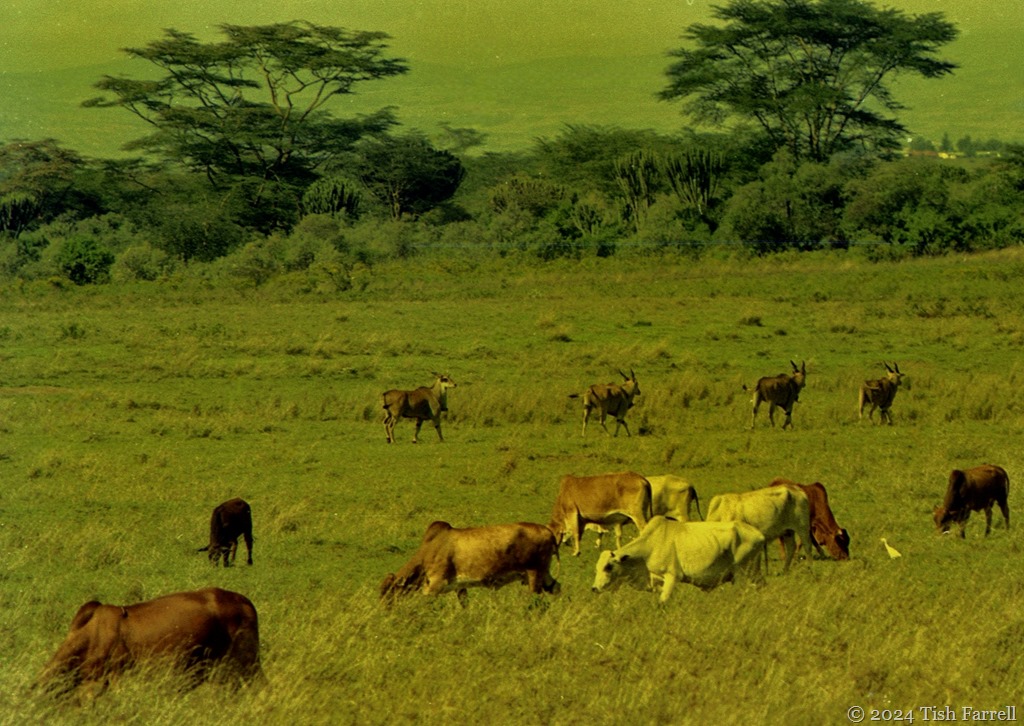
The estate had also included land on the East Rift escarpment behind the camp, but this had been sold off cheaply, and was now settled by some 15,000 people, each family farming 5 acre plots. Most of Delamere’s 200 employees have smallholdings there. But this has caused problems. Game that once lived in the former wilderness has now moved onto the ranch. And so his lordship’s cross-bred cattle also share their pasture with 600 eland, 300 buffalo and 200 zebra. It is literally a bone of contention among big landowners, that they are not allowed to cull the game for food.
img20241008_12180805 eland and cattle 2

Eland graze with Lord Delamere’s cattle

*

Michael also spots wildlife as he drives: a secretary bird, an augur buzzard, hoopoe, wheatear, Grant’s and Thomson’s gazelle, open-billed storks. There are zebra, giraffe and ostriches. The pink haze of flamingos across the water.

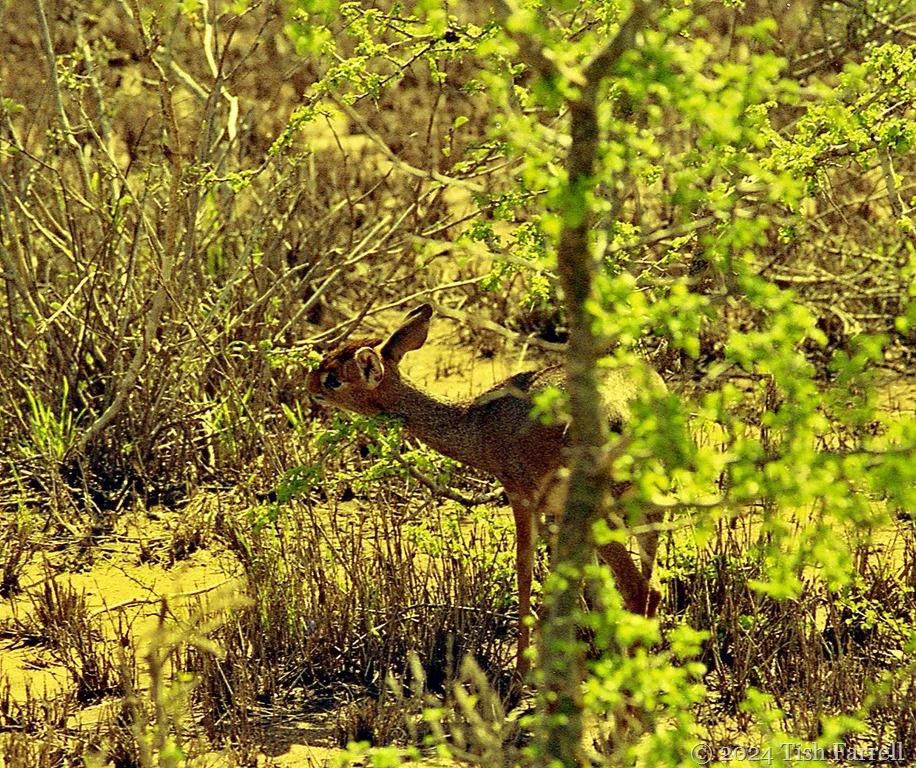
As we head out behind the lake, it looks as if we’ll be lucky with the weather. No rain, but very overcast. In a moment of brightness, as we rattle through thorn scrub, Michael spots a Kirk’s dikdik and I remember he has told me on an early morning walk how these tiny antelopes are fiercely territorial. They create middens where they go to defecate and urinate. While visiting, they scratch up the dung heap so their hooves can deposit their scent and reinforce the boundaries of their domain. It sounds a touch grubby for a creature so daintily pretty, but then that’s my problem.
img014dikdik

Kirk’s dikdik – not much bigger than a hare

*

We drive past the Sleeping Warrior. The skeins of power lines running by take me by surprise. Electricity is often in short supply. That year there are daily three hour cuts in Nairobi, and most rural areas anyway have little or no access to the grid. Michael tells me the lines import electricity from Uganda.
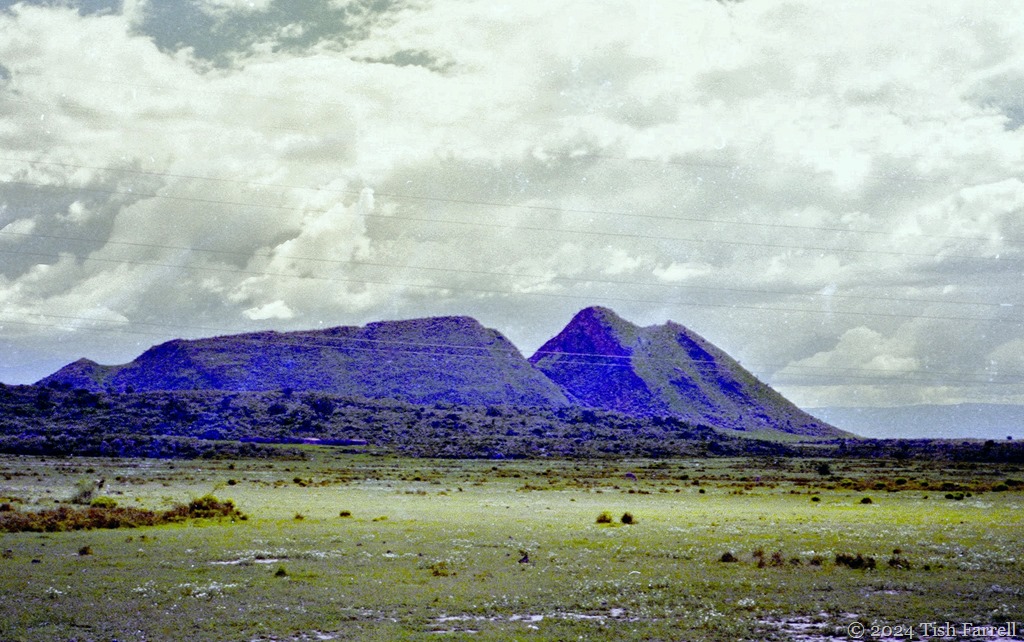
img20241001_19534122 lord delamere's nose 97

*

Then suddenly, as if fallen in a time slip, we are among the Maasai. I have noticed a settlement, an ‘enkang with its mud domed dwellings. Now an elder in red kilt and blanket passes by us with a herd of goats. There is no obvious exchange. I see the dark bare legs, ebony hewn; not a pinch of flesh.

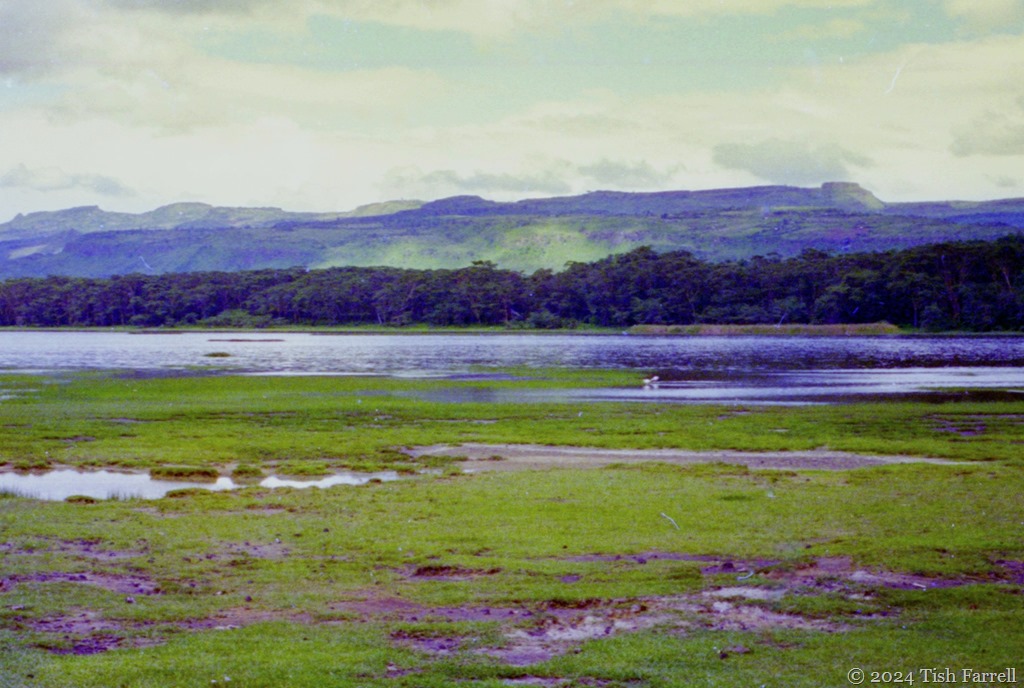
When we roll up at the hot springs on the southern lake edge, Maasai women are finishing up their washing in the hot water. Children, fully clad, are whooping and wallowing in the shallows. All soon retreat as if they have never been. When I look back I see the elder standing on a ridge with his goats, the red shuka against a stormy sky. I do not attempt to photograph any of this.  This is not my place.
img20241001_19542210ed

The Eastern Rift from the hot springs in Lake Elmenteita

*

We sit under thorn trees and chat over the packed lunch. At some point the subject of Princess Diana’s death back in August crops up. I say am touched at how sorrowful Kenyans were, how they queued to sign the condolence book at the British High Commission, and how Graham’s colleagues at the research institute came to his office to offer their condolences. Michael tells me that his wife’s prized possession was a  video of the royal wedding, although the only place they could play it was at the pub in their home village. You can guess the name of our daughter, he says.

I ask him where he worked before joined the team at Delamere Camp. He tells me that soon after he graduated with a degree in wildlife management, he was posted, as deputy wildlife district officer, to the remote quarter of mainland Lamu, in north-east Kenya. Somali cross-border bandit country, in other words. There, his job was to coordinate anti-elephant poaching operations, using local police or military, whoever he could rope in, sometimes using helicopters. He said that whenever he went into the bush, he never knew if he was coming back. The gangs were often 20-30 men strong, and with an official policy of shoot to kill, the stakes were high.

I am shocked as I listen to this account, told with such detachment: that an ecologist should be expected to do this kind of work. But Michael simply says he is finding Elmenteita much more to his liking, and especially as his wife and family are not far away. In the quiet understatement, I sense a man who has seen too much.

I feel uncomfortable too – some people don’t know they are born, do they, with all their sheltered good fortune. That would be me of course. Though I am learning. Kenya’s gracious people never stop teaching me. They teach me even now as I retrace my steps down the years.

*
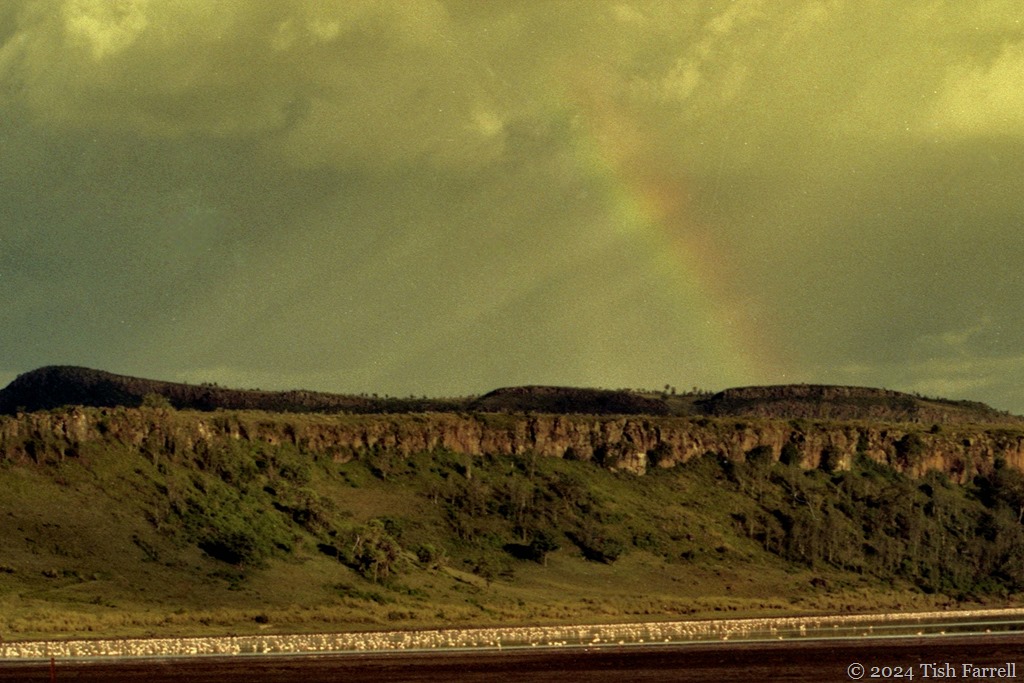
img20241004_11051850 east escarpment near camp

copyright 2024 Tish Farrell
Letters From Lusaka #5 ~ The Road To Petauke And The Man With The Yellow Maize

Eastern Provinceed

In 1992-1993, during the first years of Zambia’s multi-party democracy, we were posted to Lusaka, Zambia’s capital. Graham was charged with organising the distribution of European Union food aid to drought-stricken Zambians. (Part 1 is HERE and part 2 HERE and part 3 HERE and part 4 HERE)

zambia-political-map

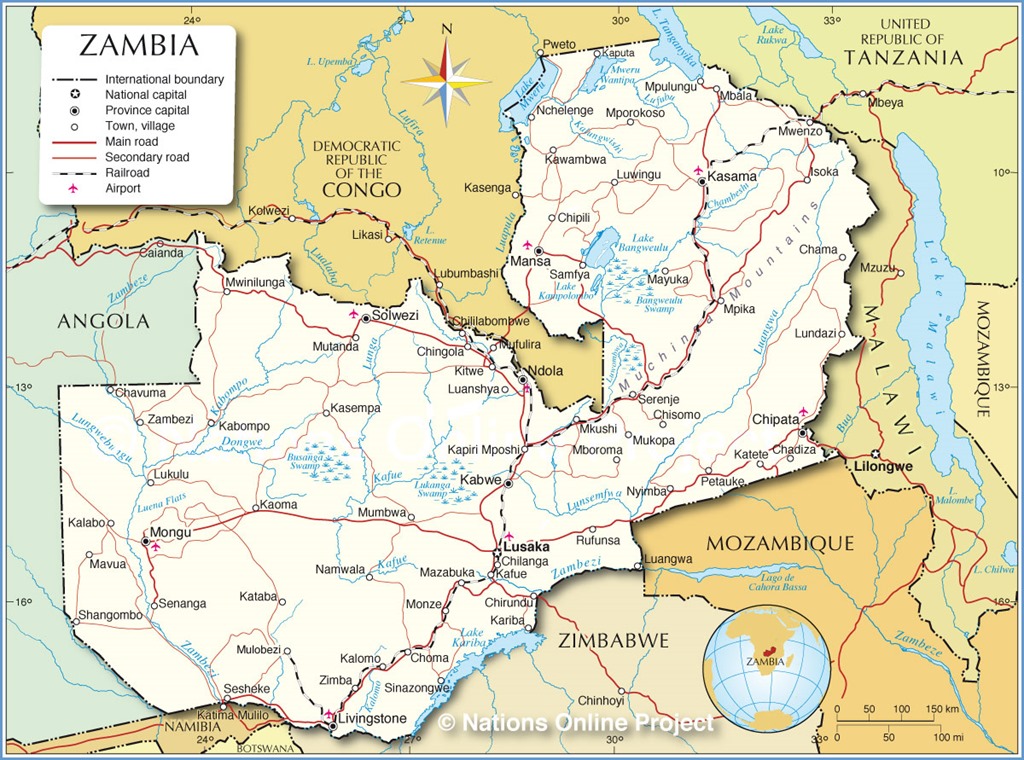
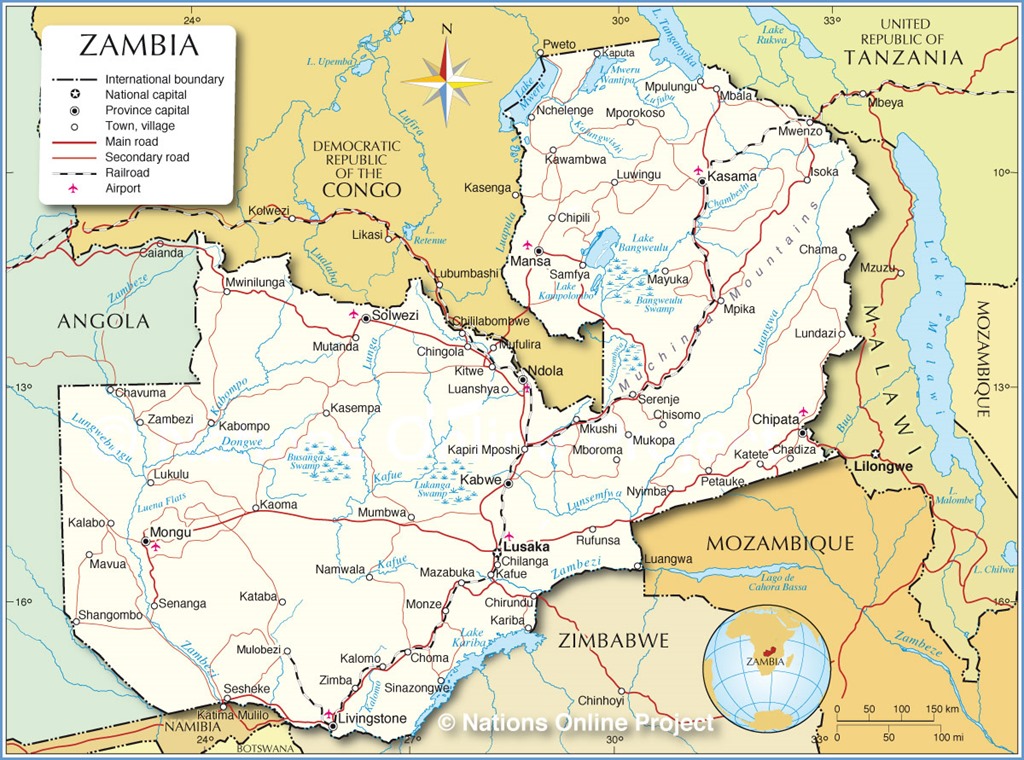
Early in April 1993 Graham has another upcountry mission, this time to check on the arrival of maize at the Ukwimi refugee settlement area near Petauke, Eastern Province. The initiative, in an area north of the Mozambique border, is managed by the Lutheran World Federation, an organisation overseeing some 25,000 refugees in 73 villages spread over 300 square kilometres, an area that also includes several indigenous Zambian communities.

The incomers are village farming folk who have fled the civil war in their own country. Many among them share both language and cultural traditions with Eastern Province Zambians (i.e. communities historically divided by colonial map makers). At Ukwimi they are settled on parcels of land and given every assistance to become self-sufficient. In April 1993, with peace negotiated between Frelimo and Renamo forces, most recent cross-border arrivals in Ukwimi have been driven there by hunger.

*

It’s a 400 kilometre drive to Ukwimi HQ*, and another Monday morning appointment. We set out on Sunday at midday, leaving Lusaka on the Great East Road. The sky is overcast and it’s rather cool.  As we pass by large dairy farms, among them Waterfall Farm owned by mining conglomerate Lonrho, the sight of green fields with Friesian cattle tells the brain we’ve somehow been flipped to Cheshire in the English Midlands.

But no. Now there are here-and-there banana thickets, palm trees with swollen boles and dishmop tops. And now we’re in bush country and the road stretching out. And now there are no other vehicles, but there are people, and we soon find that Zambians have many uses for highways beyond driving on them. We begin to see many people carrying palm fronds. It is Palm Sunday and the devout are walking down the middle of the road. And why not choose a smooth path.

Young lads sit on the road edge, leaning back, hands on the tarmac. They simply seem to sit and sit.

At Changwe there is a roadside trading centre with a few stores and a smart hacienda style bar and restaurant. We pass a bicycle race there.

At one point we bowl over a crest in the road and come on a big church gathering, filling both carriageways. People are singing and drumming. The crowd parts like magic and with great good humour, they wave us through.

*

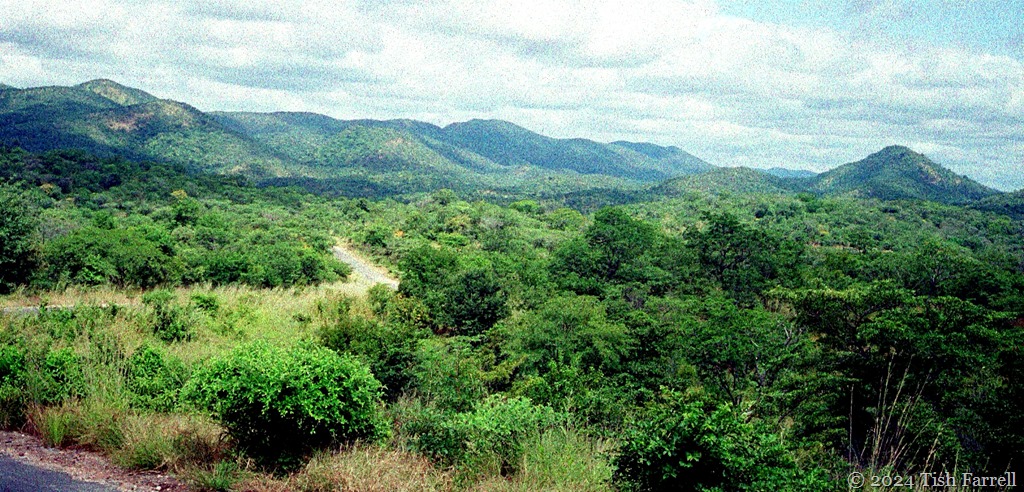
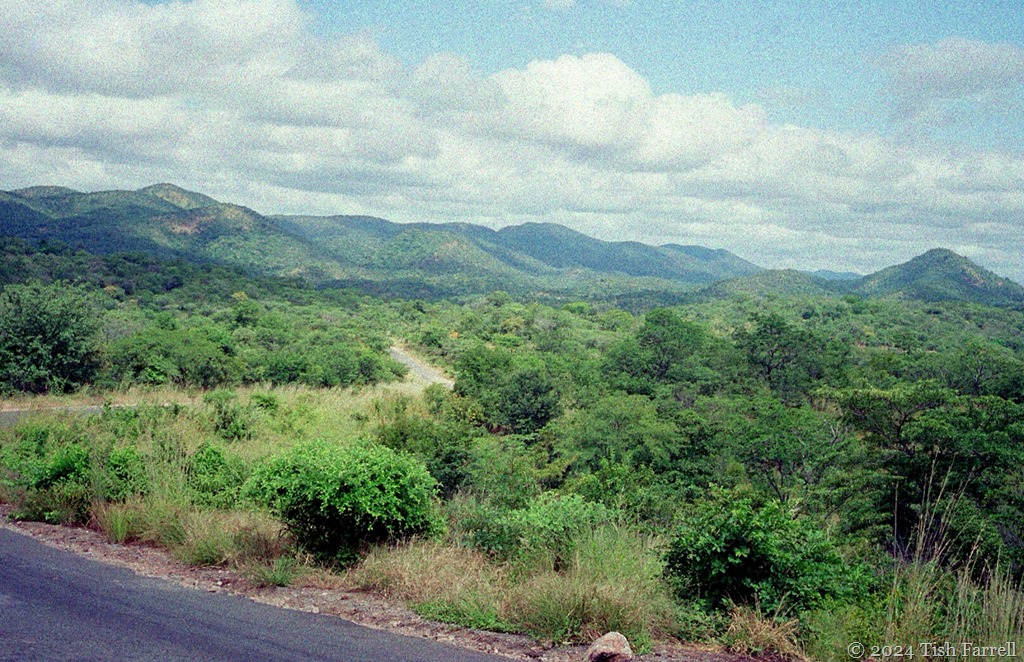
Bush country flanks the asphalt, tall grasses on either hand and beyond them glimpses of shaggy thatched roofs, clusters of dwellings under thorn trees, small plots of maize. In places where the bush meets the tarmac there are hand-painted signs announcing the presence of bus stops, the gates to small farms: Mulenga, Mulaliki, Mulawzi; to the local medicine man.

We are travelling along a low ridge, to the south the land falls away in lightly wooded plains; to the north is a spine of blue hills. There are road-side stalls selling pumpkins and squashes of all shapes and sizes. There are wigwams of sugarcane, neat cords of firewood, sacks of charcoal. A woman walks by with a large zinc bath on her head. As she stops to adjust the load, a wave slooshes over the edge. The sight takes my breath away. I feel my spine contract.

And still there are few other moving vehicles along the road although we see many stranded broken ones.

Now the countryside is more hilly and densely wooded. There are roadside flowers, deep yellow daisies, pale yellow hibiscus, and a plant that looks like broom (also yellow). The villages have little thatched gazebos on the top of knolls with seats so you can look out to the blue hills. Meanwhile, the road that was good is not so good. There are big potholes, and to add to the driving confusion, some are filled with red dirt and others not. Where the road cuts through rock, it is carmine red and glinting with quartz.

Eastern Province Luangwa Valley 2 ed

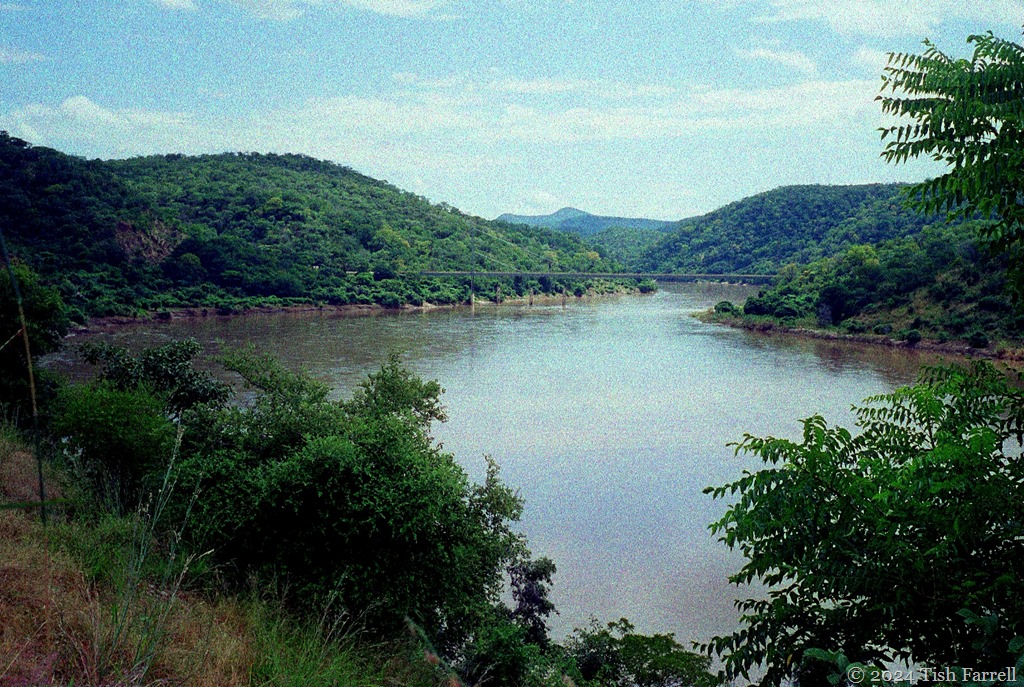
We cross the broad expanse of the Luangwa River between wooded gorges. There is a suspension bridge opened in 1968 by former President Kenneth Kaunda. It looks sturdy enough, but a sign instructs drivers that only one vehicle at a time may cross, speed limit 10 kph. And so we cross.

About 50 km from Petauke we drive through a small village and fail to stop at the police check point. There is no one manning it. But ahead a khaki figure dashes from a roadside hut and waves us back. My heart sinks. We’ve had some uncomfortable moments at Kenyan checkpoints. But the young officer is charming. He apologises for not being in the road where we would have seen him. He had been growing too hot standing there, he says. We can see his point, but he still wants to see some I.D.

As Graham fumbles with his brief case, trying to find something that might serve, he says he works for the European Union. Ah, says the policeman, the man with the yellow maize. Some of your trucks have already gone through.

Graham says he is going to Petauke to check on their arrival. The officer smiles broadly and asks Graham for his name, salutes me with a “Madame” and bids us farewell, all without need of paperwork.

Further on at the turn for Petauke there is another road block. This time we are questioned by a young man who is clearly not a policeman. He tells us he is acting on his brother’s behalf.  “Just to be friendly”, he says, “my brother needs to know who you are.” He is happy with Graham’s business card, finally retrieved from the brief case.

Now the roadside shopping opportunities include furniture, items parked in splendid isolation in the bush – a bed,  a dining table, a row of Adirondack chairs.

Most striking of all is a lone Welsh dresser – the full deal, cupboards below, shelves above. There it stands, surrounded by elephant grass, challenging me, like one of the White Queen’s six impossible things before breakfast. And I wonder from what colonial or mission original was this piece so faithfully copied? And who does its maker think will buy it, here on the road to Petauke where so few people with the means to transport it seem to pass?

I’m still wondering when we check into the Nyika Motel and are shown to our bungalow. The bedroom walls are turquoise with orange paintwork, the chandelier green with most of its drops missing, curtains blue, the bedspread blue and black nylon, dark green cloths on the coffee table and sideboard – a colour scheme to jangle the nerves. But it does not matter. The place is scrupulously clean, with plenty of hot water, although we have to improvise a bath plug.

By now, the late day sky has seen off its gloom. There are magnificent cumulus cloud formations against the blue. We sit on the doorstep and watch the sun go down over the bush country, strange rocky outcrops to the south. There are rufous swallows, drongos, mousebirds, the bubbling call of the water bottle bird. The crickets tune up. There is lightning, wind in the thorn trees. I’m so glad to be there.

Eastern Province sq

Copyright 2024 Tish Farrell

*Ukwimi HQ is now a Trades Training Centre for Zambians, the refugee centre no longer needed.

Eastern Province heaader

Letters From Lusaka #2: of roving armies, the cholera season and making a new home

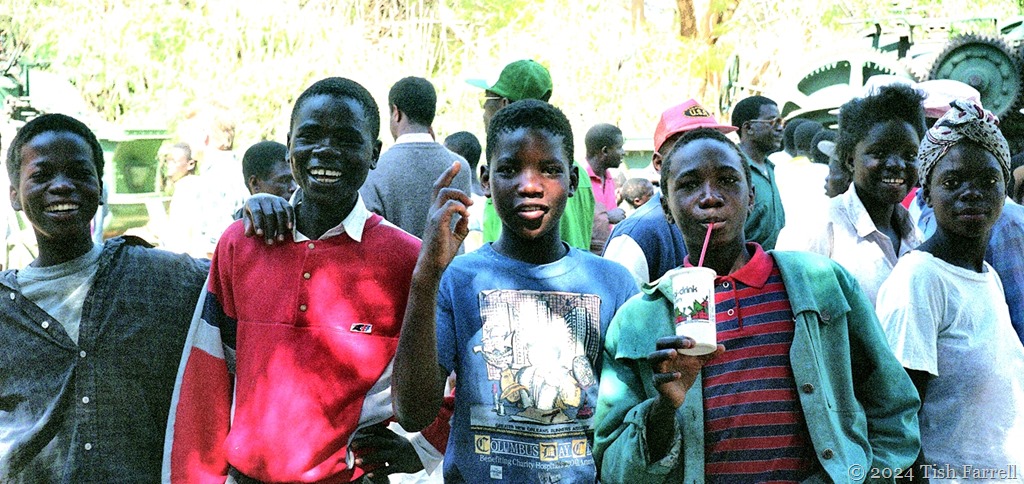
Lusaka agricultural show - kids ed

In 1992-1993, during the first years of Zambia’s multi-party democracy, we were posted to Lusaka, Zambia’s capital. Graham was charged with organising the distribution of European Union food aid to drought-stricken Zambians. (Part 1 is HERE)

002

*

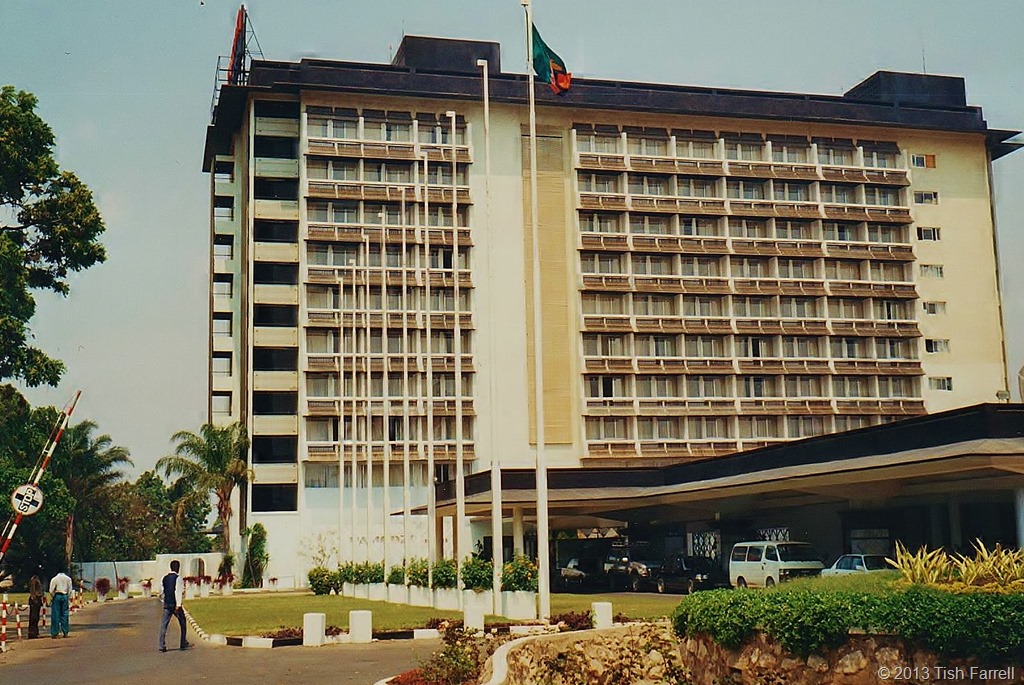
While we are still ‘living’ at the Pomodzi Hotel, and Graham is away at the European Union Delegation, getting to grips with his mission while walking a tightrope of diplomatic protocol, I do the unthinkable as far as white locals are concerned. I walk out of the hotel grounds and down a couple of avenues to the Ridgeway Hotel. One of Graham’s  Natural Resources Institute colleagues, a regular visitor to Lusaka, has told me the place has a good gift shop, and that there may be a chance of finding some local books.

I set off on the basis that as I am not travelling by car, I will not be car-jacked. I am not. The gift shop is wonderful, brimming with Zambian craftwork. I buy a beautiful Tonga basket and a small olive-wood elephant for luck. I have it still on my Bishop’s Castle mantelpiece.

IMG_7545

*

I’m disappointed to find no books at The Ridgeway, but I do find a map: a Lusaka street map one side, Zambia on the other. At last we can properly see where we have landed. I study the country’s boundaries, trying to make sense of the colonial cobbling that created a nation whose North Province lies to the east of its Central Province. (The British were here in erstwhile Northern Rhodesia for the copper).

zambia-political-map

*

The country nestles in the heart of southern Africa between eight countries. In outline it resembles a foetal chick curled on its back within a protecting shell. In reality, though, I soon learn that Zambia has no such protection. It simply has too many borders and not enough military personnel. In 1993 there are only some 300, 000 taxpayers in a population of eight million, which is not enough to pay for more soldiers. The north-west border with Democratic Republic of Congo is lethally porous. Members of then President Mobutu’s own unpaid armed forces regularly drive into Zambia’s Copper Belt and conduct armed pillaging campaigns against innocent drivers and householders. Sometimes they come as far south as Lusaka.

*

We are told that when driving at night, we must never stop at red traffic lights (locally called robots), since this is the moment that car-jackers will choose to pounce. Over in Eastern Province the threat comes from the conflict in Mozambique as RENAMO guerrillas cross the border to shoot up Zambian buses and steal food. In Western Province UNITA fighters from Angola’s war terrorize Zambian villagers. Famine, then, is only one cause of death; there are many others, and the mineral resources that Cecil Rhodes sought so hard to control through his dark-hearted dealings with local chiefs are high on the list.

Then there is malaria and tuberculosis, and as the rains bucket down through December, the cholera season begins. Overflowing septic tanks and pit latrines are polluting the city’s boreholes. At first, oblivious of such dangers, we eat out at downtown restaurants. We are down in Livingstone, near the Zimbabwe border, Graham checking out the contents of grain stores, when I am stricken with amoebic dysentery. Again it is the Delegation secretary who comes to the rescue and directs us to the mining companies’ private clinic, downtown on Cairo Road. The diagnostic facilities there are impressive, the British-born doctor patronizing. But after a three-day course of very large pills, I recover. I am lucky. Of course I am.

Sable Road - compound pool

Six or so houses share the gardens, including a very small pool.

*

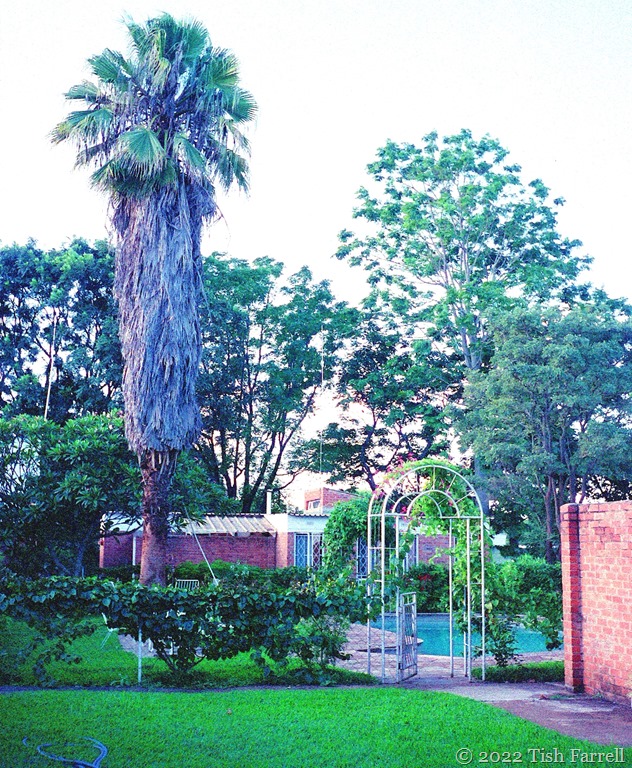
After a fortnight’s dispiriting search for a bolt-hole away from the Pomodzi, viewing sprawling premises we can’t afford, the Delegation Secretary suggests a vacant house on a small compound in Kabulonga. It is small, red brick, single storey with a sheet iron roof that, during the rains, resounds as if someone is firing bullets into a host of upturned buckets. The kitchen and bathroom are 1950s basic, but the spacious living room has French doors opening onto a tiny high-walled garden. There is a big avocado tree in the corner where African sparrows come twittering in to roost in late afternoon. Above the perimeter wall, when it is not raining, arcs the blue Zambian sky. To the rear, the kitchen gives onto a walled back yard and a patch of grass. There are two bedrooms, and a tiny study. Outside the front door is a communal garden and terrace – garden seats set by a small swimming pool, a tall palm that rustles endlessly in the high plateau breezes, a sweet scented frangipani tree. No house overlooks any other and there are shady walk ways in between each property.

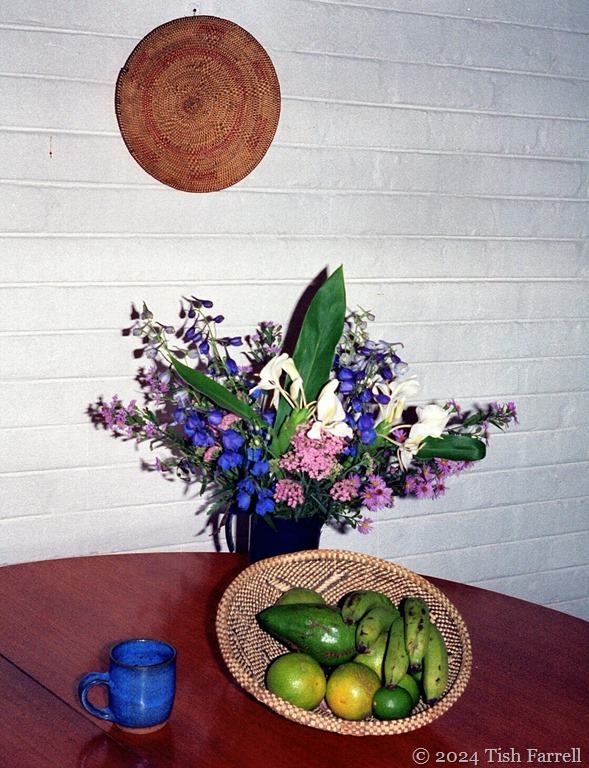
Zambian produce - still life

Produce including delphiniums and ginger lilies from the local co-operative on Sable Road

*

The gardens are tended by a gentle young man called Stephen Nyangu. His name suggests erstwhile connections with the Nyanja royal clan. But Stephen’s situation is a far cry from tribal pre-eminence. He sweeps, mows, weeds, plants, prunes and waters six days a week, from seven in the morning to five in the afternoon. Then he cycles the couple of miles to his compound home in Leopard’s Hill Road where he lives with his wife and four children. The gardens he cares for bloom strangely under sub-tropical skies with tea roses, violets, pansies, Sweet William and Madonna lilies. He also washes all the cars and hefts all the dustbins to the big compound gate to be emptied once a week. For this he earns twelve thousand kwacha a month, about eighteen pounds. He has no leave beyond national holidays, and after work he runs a cigarette stall.

Stephen Nyangu the compound gardener 4

Stephen Nyangu works day and night to keep his family.

*

On my first day in our new home, it is Stephen who knocks on my door.

“Good morning, madam. My name is Stephen. If there is anything you want me to do, I am just out there.” He gestures in the general vicinity of the pool. “Call me.”

He is the only person on the compound who bothers to introduce himself. In ten months we scarcely see any of the other tenants beyond the Sikh couple who live next door. They nod to us. They have two much pampered, miniature Pomeranians and a  maid called Isa. Isa looks a good-hearted soul and she works in several of the other households on the compound once she has done her daily tasks for the Sikhs. These include much furious chopping at seven a.m. Perhaps she is chopping for the Pomeranians. When she is left in charge of them for three months while their owners go on leave, she grows so fed up with their insistent yapping that one day she yells SHUT UP. And so shocked are the indulged little canines, that they do just that. I want to hug Isa.

I further decide that my house is scarcely big enough to justify even a once-a-week cleaner, this despite the constant slick of red dust that blows in every day. I thus do my own housework.

Our compound is in Kabulonga, the heart of the diplomatic quarter. Our next door neighbour is the Egyptian Embassy. At night the guards fire off rifles. We never do know what is going on there, and sometimes it sounds like a siege. Our compound is one of the least fortified on the road. The iron gate has open railings instead of sheet metal armour plating, and our day guard, Sammy, always leaves it unlocked  anyway during the day, while he plays draughts with a neighbouring house-guard. He’s a bit  nonplussed by my habit of going out on foot, and at first dashes from his game to open the gate as if I were a passing vehicle. We soon come to a silent arrangement whereby we greet each other, I open the gate for myself and he keeps on with his game.

There is a sense of excited liberation as I step out onto Sable Road. I never meet another European walking here on this lovely tree-shaded avenue.

Sable Road in the dry season ed

Sable Road in the dry season.

To be continued

copyright 2024 Tish Farrell
Cooling Off In Kiboko

Kiboko ed sundowner rain 2

Every time there was that gasp of relief, as if we’d not been breathing for the last hundred miles. Ahead, through the heat haze, appeared the stand of fig and fever trees, rising tall and green above the dry bush country. After two hours of truck fumes, heat and dust and no shred of shade since leaving home in Nairobi, it seemed like an oasis.

It could be a mirage of course. But no. Next the scene would solidify and we’d see the Akamba wood carvers’ stalls set out under the trees. And then, thanks be, we’d be turning off the Mombasa highway, bumping along the dirt track, that was scarcely more bumpy than the road, and into the cool sanctuary of Hunter’s Lodge.

Kiboko ed 3

*

Kiboko ed header Mombasa highway north of Kiboko

And this is what we had left behind – the highway looking north towards Nairobi, caught here in a rare truck-free moment. There is currently talk of this route being replaced by a 300-mile multi-lane, super highway-toll road to be built under the auspices of the US government. Some Kenyans are sceptical of its ever happening.

*

The trip to Kiboko and Hunter’s Lodge was one we made every other week during our first year in Kenya. Graham had been seconded to the Kenya Agricultural Research Institute to work on the eradication of the Larger Grain Borer, a voracious pest of stored grain, introduced to the continent on consignments of food aid. The project had its base at Kiboko field station, which, most conveniently, was behind the garden at Hunter’s Lodge.

There’s more back story here: Once in Africa: everyday moments at Hunter’s Lodge…until the crocodile

Kiboko ed sundowner

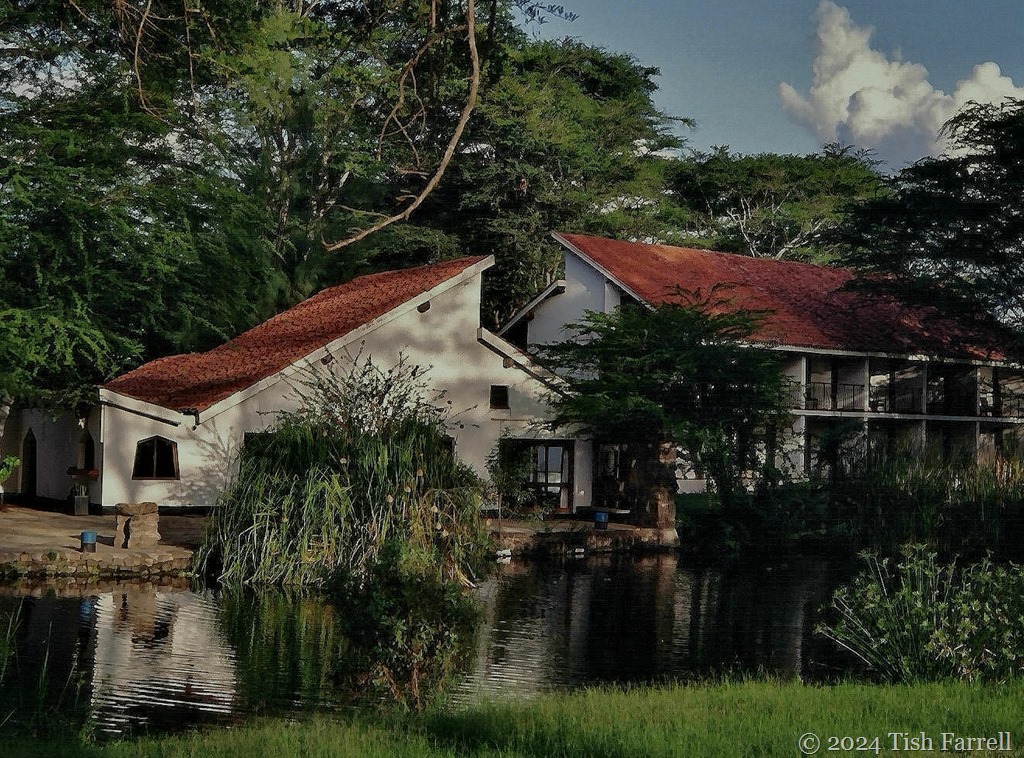
The Lodge was built in the 1960s as the retirement home of big game hunter, the blunt-speaking, no-nonsense Scotsman, John Hunter. He belongs to the era of grand shooting safaris for maharajas and European nobility. (Out of Africa Bror Blixen and Denys Finch Hatton were colleagues and friends). He also spent much of his shooting career working for the colonial game department, tracking down ivory poachers while ridding the lowland bush country around Kiboko of ‘troublesome’ rhino and elephants. The former were terrorising the Akamba farmers, the latter destroying the sisal and orange farms of British settlers. He chose this spot for his home because he remembered it as an elephants’ waterhole, where he had enjoyed much time simply watching them. He seemingly saw no irony in the fact that he’d helped eradicate the local population.

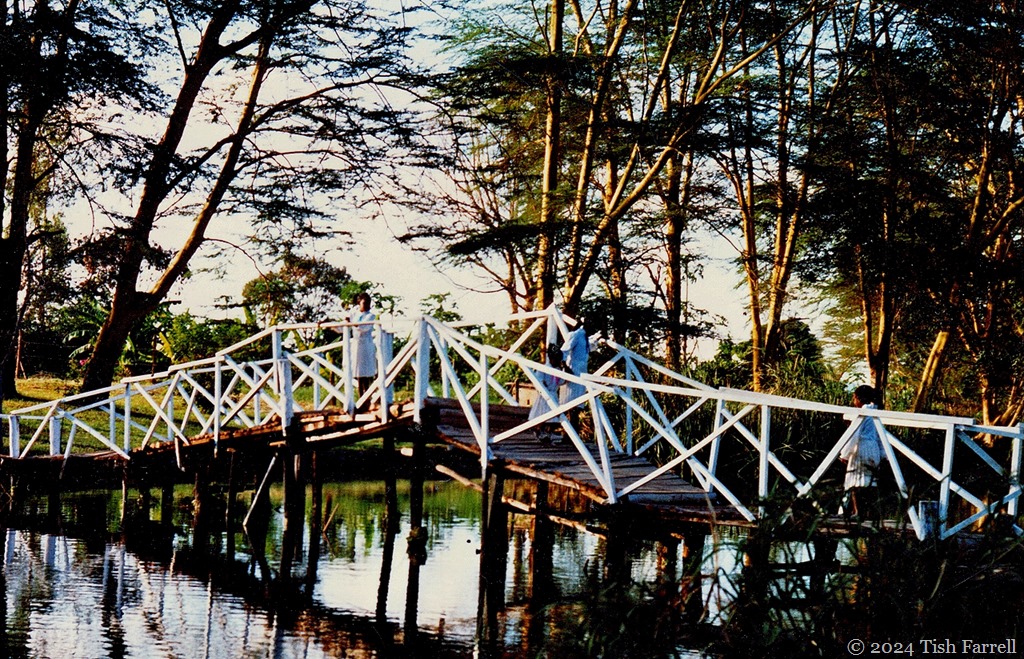
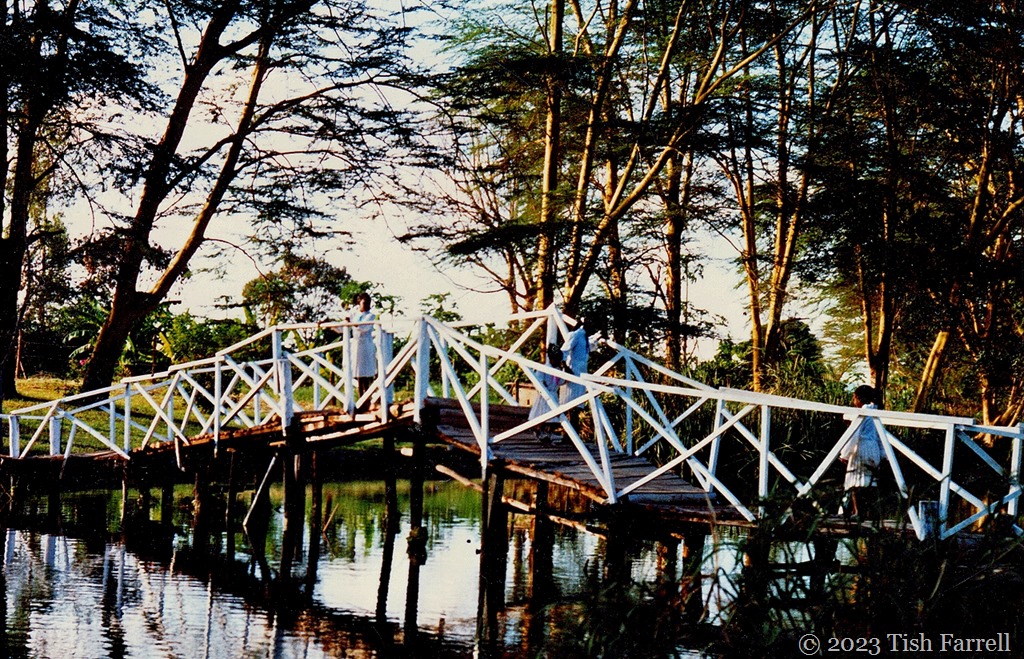
The waterhole, which was fed by a rare local water source, the Kiboko River, was remodelled into a garden lake, and traversed (in our day at least) by an extraordinary bridge that led to the vegetable shamba.

Kiboko ed pool

Kiboko ed garden bridge

There was said to a leopard living at the top of the lake, though I never saw or heard it. We did hear bush babies screaming at night, and also watched the nightly firefly show over the water. It was also a fabulous place for birds: over two hundred species including many varieties of kingfishers, weaver birds, herons and storks.  Sadly, I had only my small Olympus – trip camera, so there are few bird photos. The very distant marabou storks in the next photo’s tree tops are actually huge in real life.

Kiboko ed fever trees

Kiboko ed dining room

kenya_map best

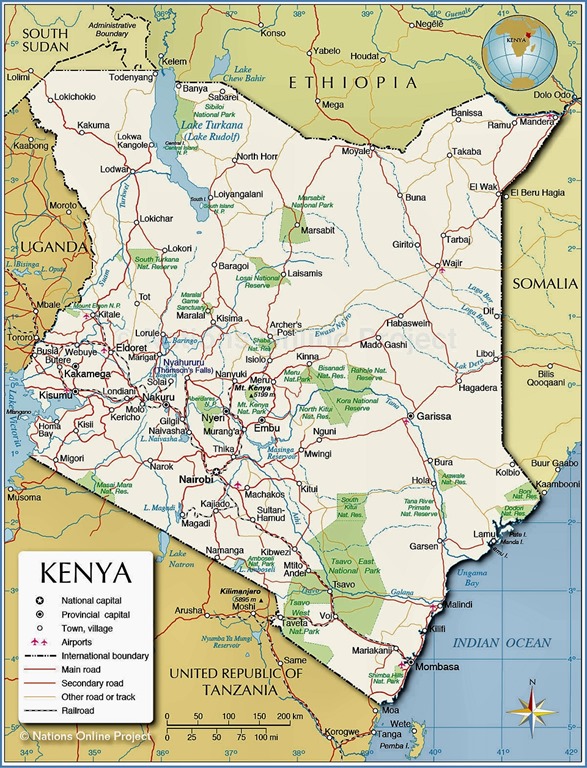
Kiboko isn’t marked on the map. It’s a centimetre above the border with Tanzania, due north of Kilimanjaro, roughly midway between Sultan Hamud and Kibwezi. The area east of the highway north of Tsavo East Park is Ukambani, traditional territory of Akamba farmers and herders. To the west is Maasai land, though you will of course see Maasai herders along the road, at the trading centres, and spot the red flash of their shukas as they drive their herds across the bush country north-east of Kiboko.

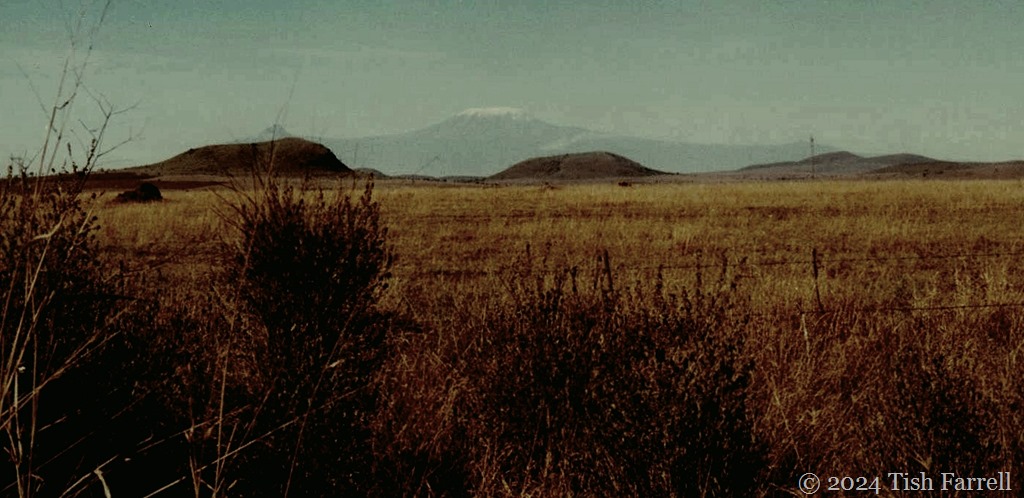
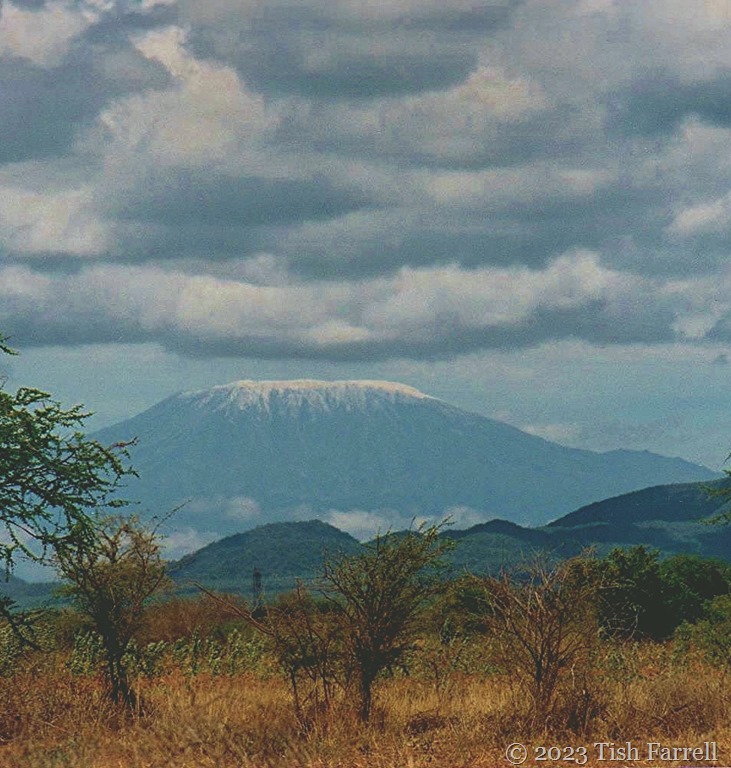
Sometimes along the road you may also catch a glimpse of Kilimanjaro, on those odd occasions when the mountain chooses to show itself. As you can see, lowland Ukambani is a sear land of thorn scrub and savannah. It hardly rained at all in the times we visited. The header photo was one of those rare moments.

Kiboko ed Kilimanjaro header

*

Lens-Artists: Cool Colours  John at Journeys with Johnbo sets this week’s theme and says he is open to any or all interpretations.

Dreaming Places ~ From Shropshire To Lamu And All In A Day

balcony 2

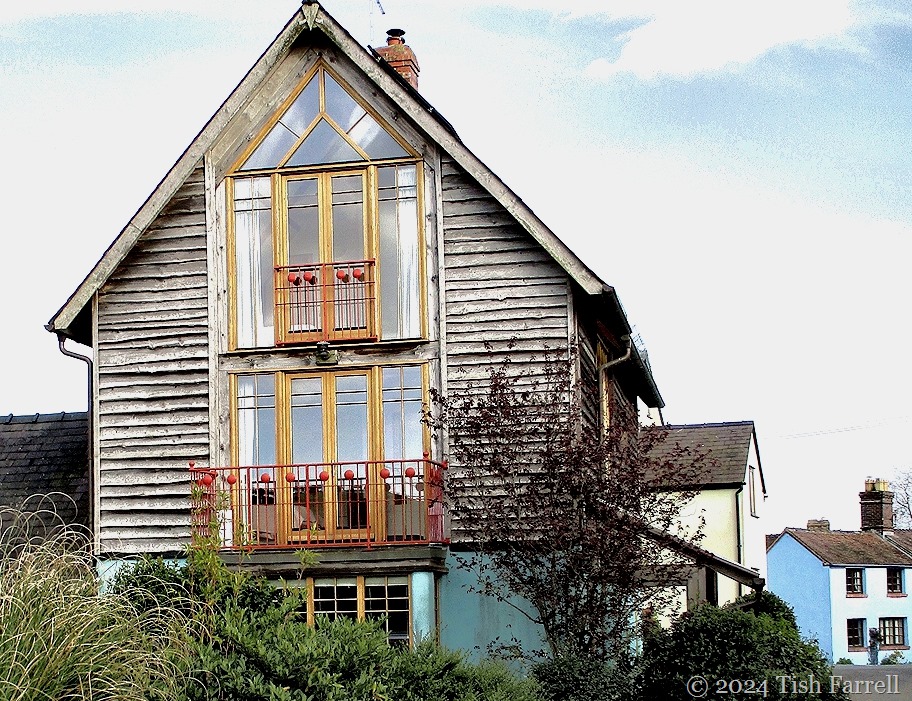
One of Bishop’s Castle’s pioneering eco-homes

*

Today, as July winds down, we have a summer’s day. Only the third in a month of coolness and cloud. Sunlight floods the house front. Warmth even. No trace of the wind that has dogged us for much of the year. Stillness then. The soundscape, resonant, a part-song of church bells, bee hum and pigeon chorale.

There’s a sense of bliss.

And where does my mind go?

Why, off to Kenya’s Indian Ocean island of Lamu – a trip made decades ago and at Christmas too.

balcony

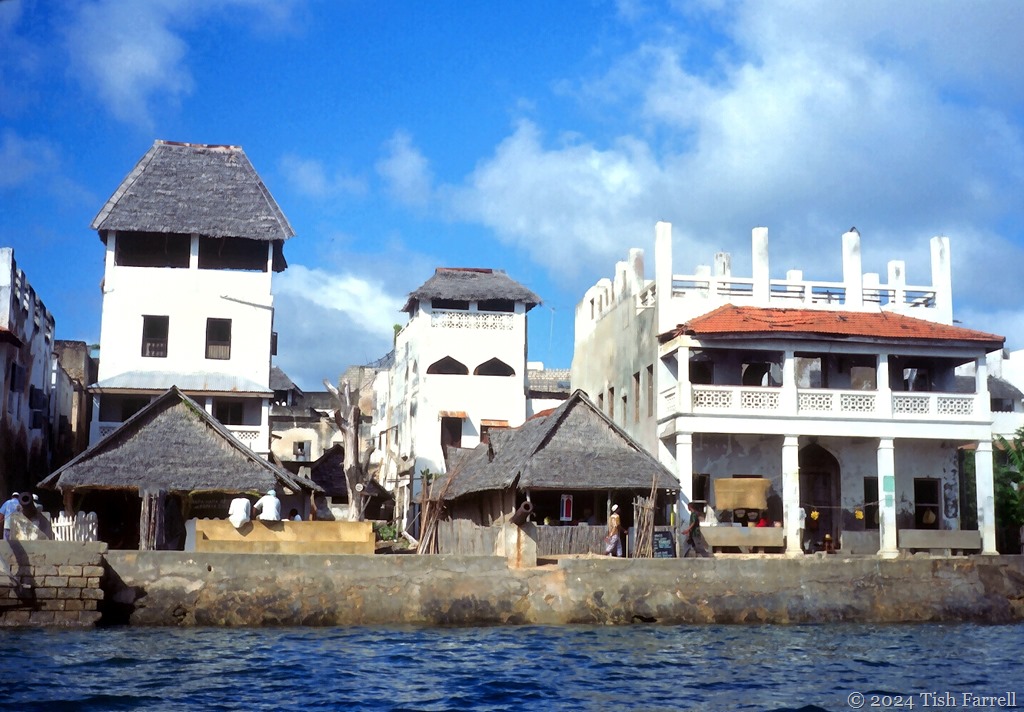
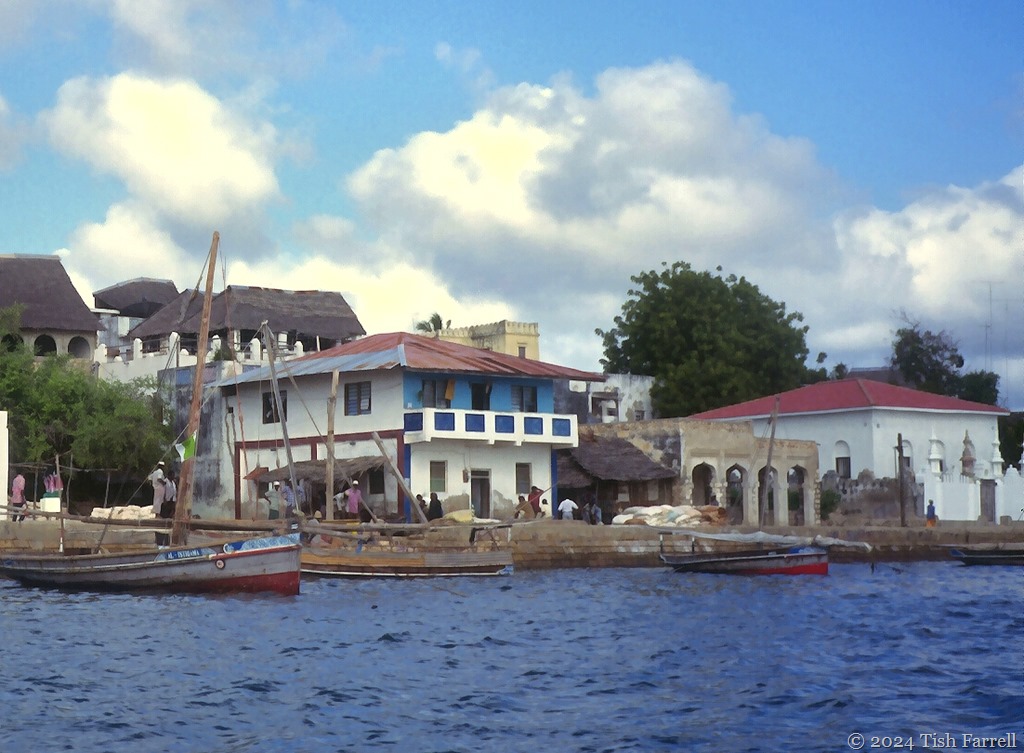
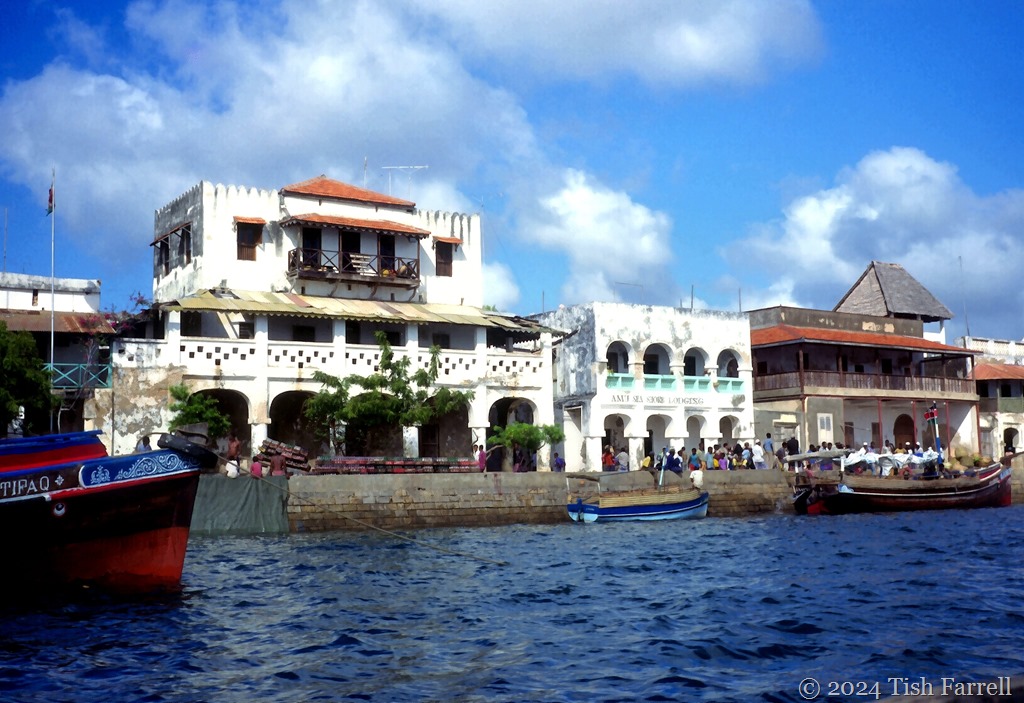
The harbour at Lamu’s Stone Town

*

Perhaps our recent spell of autumn-in-summer weather is seasonally disorienting me, although in mitigation, December in Lamu is the hot season, their summer; though rather hotter and steamier than ours.
But in the full-on Shropshire sunshine, the mind plays tricks. Meanders. Perhaps there’s another trigger to this farflung mental safari.

I soon spot it. Back in the days of the Lamu trip we lived in Nairobi, on one of Lavington’s tree-lined avenues of Jacarandas and flame trees and clipped grass frontages. (Strangely, I discovered later, I have ancestors named Lavington).

At nearly 6,000 feet, the climate there is mostly benign – a subtropical highland climate. In June and July the temperatures might drop as low as 48F (9C), and in December to March reach the upper 70s and low 80s F. The finest days there always had us thinking of perfect English summers (big skies and heat-hazy lawns), the sort from village fetes and school sports days.

Summers back then seemed, well, more summery.

And then amid my mind’s eye ramble arrives the Lens-Artists’ theme for the week: balconies. And so, by winding paths, I come to Lamu.

balcony 4

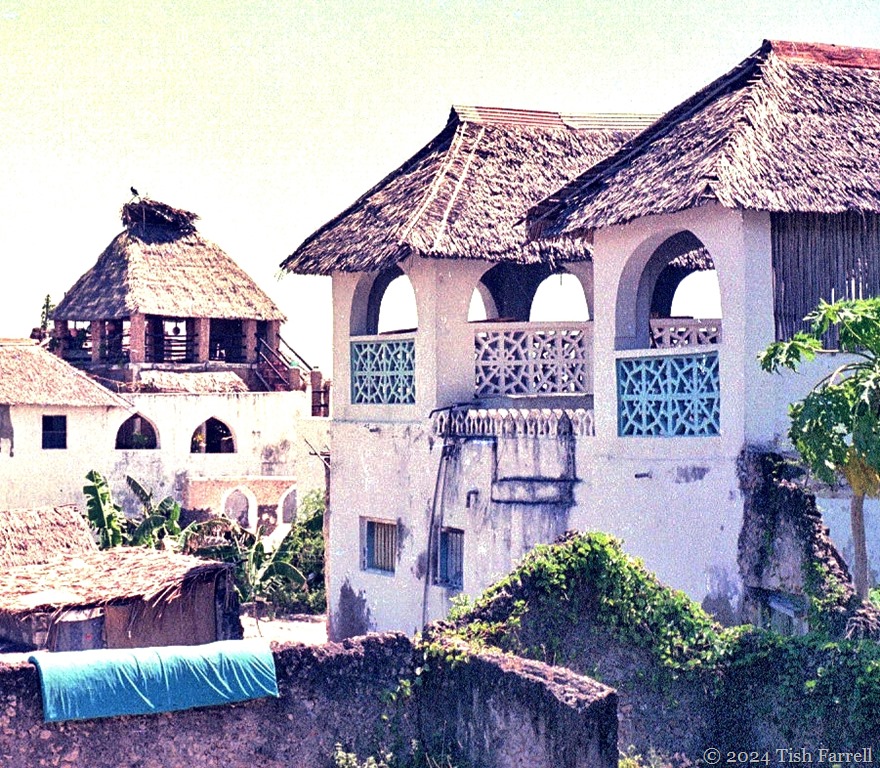
Stone Town – it is now a World Heritage Site. The surviving 18th century merchants’ homes, finely built of coral rag, are evidence of a once thriving city state, one of several Swahili towns and cities along the East African seaboard, stretching from Somalia to Mozambique. These settlements have origins back in the 8th and 9th centuries – the people who lived in them, their language, their culture born (literally) from a thousand and more years’ congress between Arab traders and indigenous African communities.

balcony 3a

The goods once traded out – ivory, leopard skins, tortoise shell, gold, mangrove poles (boriti) and slaves. The goods traded in – silks, porcelain, fine carved treasure chests, brass ware, jewellery and dates. In short this is Sinbad territory (Sendibada in KiSwahili stories). He doubtless plied the seas off East Africa; out from the Persian Gulf, the monsoon kaskazi bearing him south; and, after many hair-raising encounters, the kusi winds blowing him home again to Basra.

I’ve written more about this at Quayside Lamu. And about the Swahili HERE.

But now for more balconies. Those perfect places for dreaming. For today, bathed in unaccustomed warmth, I surely am dreaming.

balcony 2

balcony 5

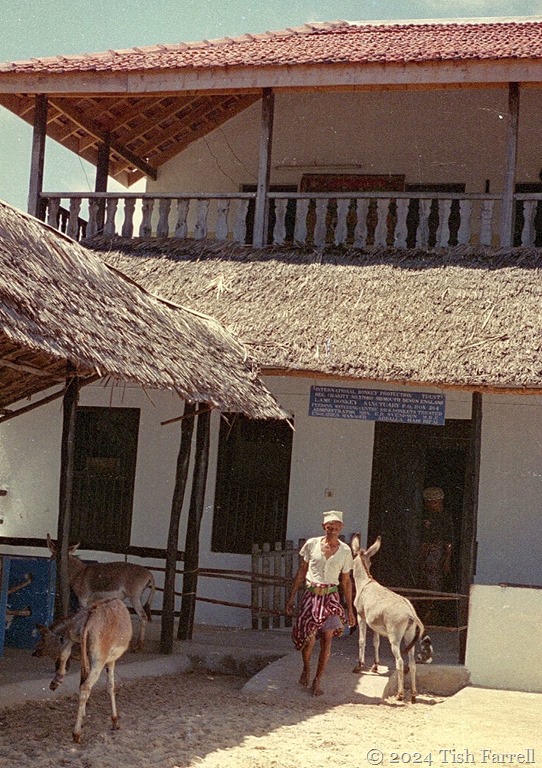
Lamu donkey sanctuary. Donkeys are a key mode of transport on the island

*

balcony 7

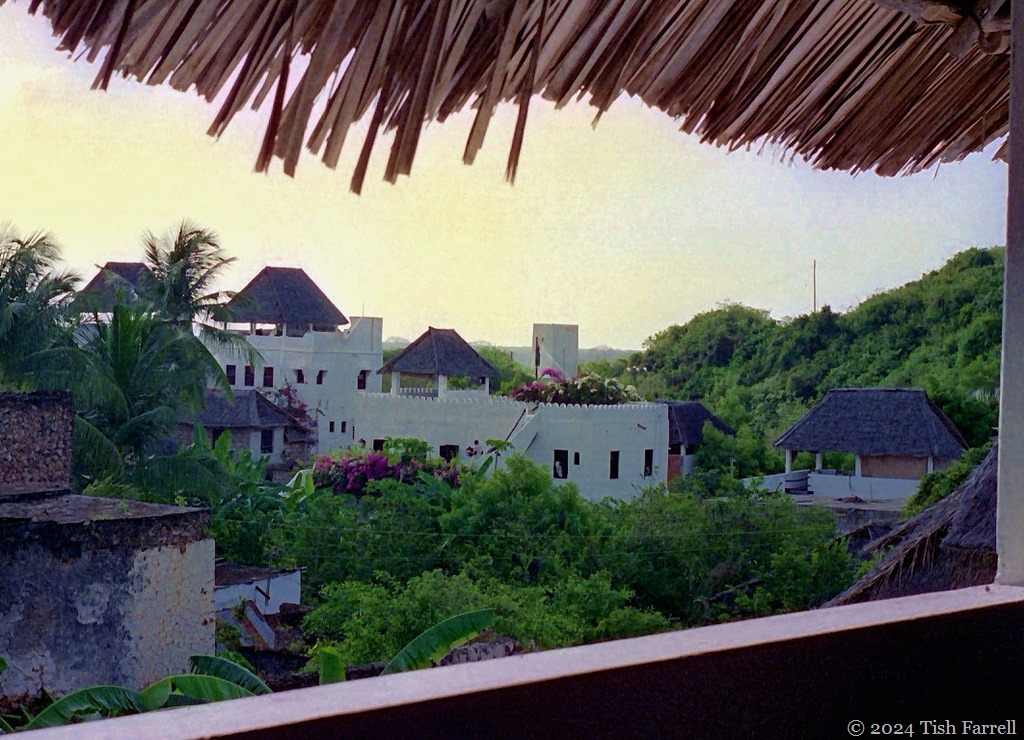
Sundowner look-out over Shela village, Lamu

*

balcony 6

Lens-Artists: Balconies This week PR at Flights of the Soul sets the theme. Follow the link for a fine gallery of balconies.

Once heard…

Marsh Pride male 1 ed

*

…never quite forgotten.

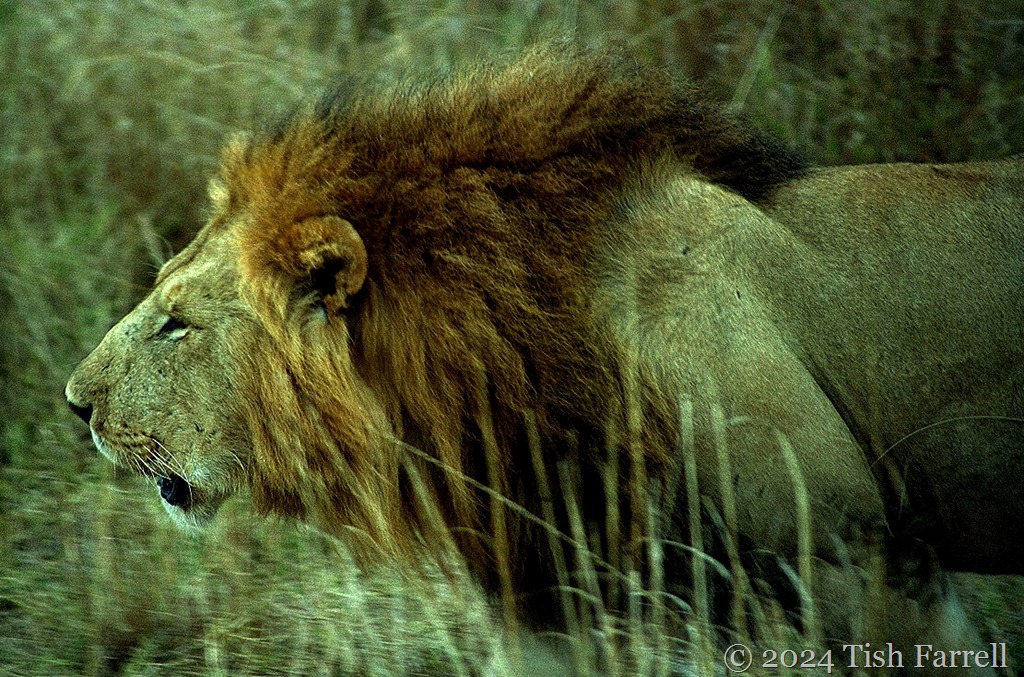
Thrilling and chilling both: a wild lion, in broad daylight, proclaiming his eminence. And not a full-throated Metro-Goldwyn-Mayer lion-roar (there’s no big show of fearsome canines); more a weaponized grunt that carries across the Mara grassland and rebounds against my sternum. And then in my skull.

It takes some moments to re-ground, and assure the nervous system we’re not in danger.  We’re sitting in a big safari truck. The lion does not even look at us, nor appear to register our presence.  We pass by slowly. He parades. Our guide tells us he is the senior male of the Marsh Pride, a group of lions made famous on British TV during the 1990s, when wildlife photographer, Jonathan Scott, documented their movements. This lion, we’re told, is calling to the junior male. Meanwhile the pride’s three lionesses are busy devouring the kill, a hartebeast. They don’t see us either.

But still that resonating roar.

Throwing the voice is part of a male lion’s M.O. A spot of leonine ventriloquy if you like. To make themselves sound bigger and deadlier, they may also choose a dried up river bed for some night-time roaring. The dirt bank of a donga provides a  ‘sounding board’ to amplify the roar which may carry for several miles. Obviously the aim is to let other males know exactly what they’re up against should they dare to infringe territorial bounds.
We drive away, feeling somehow changed. Very small perhaps. It’s August 1999, the last of our seven years living in Kenya. When we return to England for good, what will we make of such days? Did they really happen? Sometimes it’s hard to be sure.

marsh pride senior male

*

To hear that lion call for yourself, there’s a brief clip here:

https://www.youtube.com/watch?v=1e0_4dwF9A4

Lens-Artists: Sound   Donna at Wind Kisses choses sound for this week’s theme – however you care to interpret it. Please pay her a visit.

When Creator Comes Visiting…

Mt Kenya

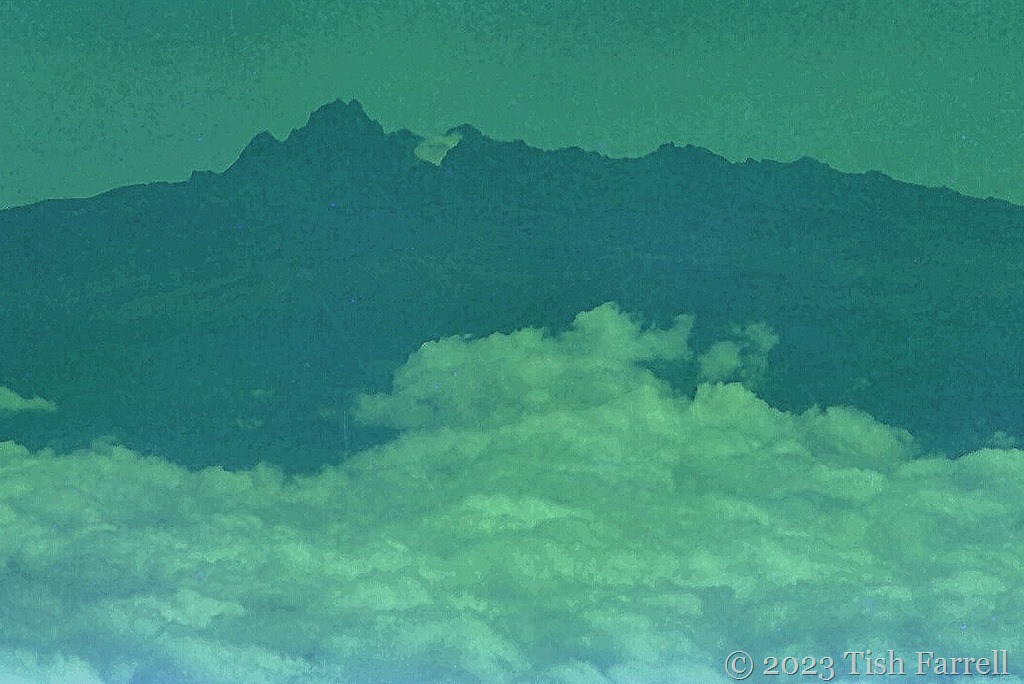
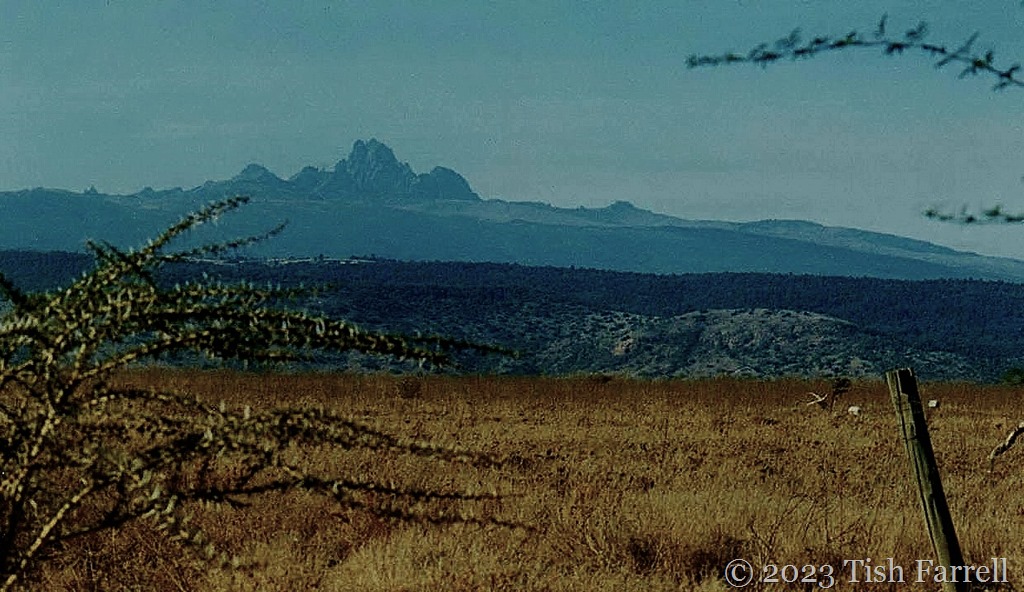
…this is one of his domains – the craggy summit of Kere-Nyaga, Mountain of Brightness, better known outside East Africa as Mount Kenya.

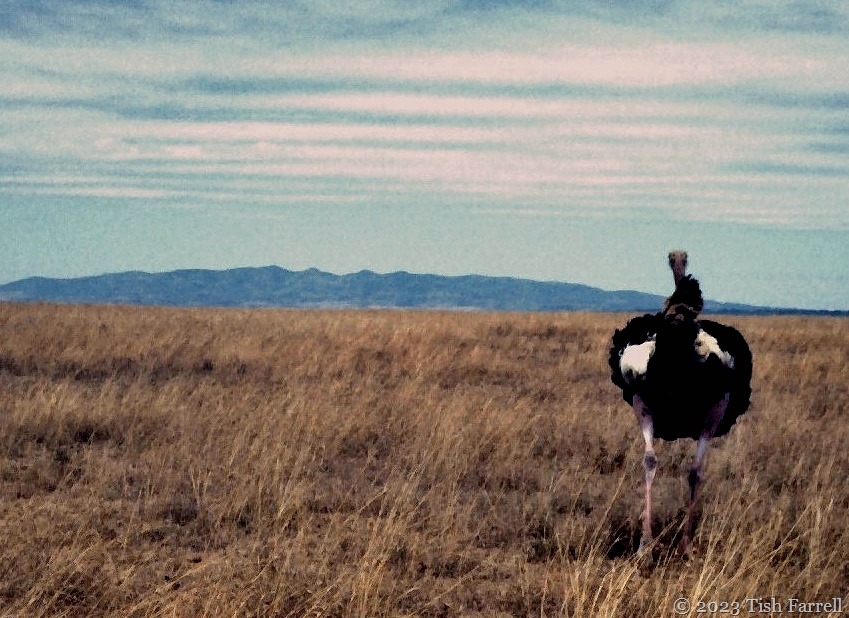
And the supreme being concerned is Ngai, maker of earth, the cosmos and everything. And it was to Ngai that the Kikuyu farmers of Mount Kenya’s southerly foothills once offered their sacrifices and prayers. Although they only did this in times of great crisis, since it was generally held that Creator was a remote figure, little concerned with human affairs. When his help was sought, he was addressed as Mwene-Nyaga, possessor of brightness (Jomo Kenyatta, Facing Mount Kenya 1938). Nyaga also has figurative connotations, meaning ostrich, but in this context suggestive of the white plumes of the male ostrich, a visual analogy for the glaciated zones among the dark mountain peaks.

You’ll see the thinking in this next photo:

ostrich and Ngong hills best

This shot of a retreating male ostrich also captures a distant view of the Ngong Hills, another landmark of spiritual significance, not least in recent times to Out of Africa  writer Karen Blixen and her lover Denys Finch Hatton whose burial place it is. For that story see Caught inside a Kikuyu garden.

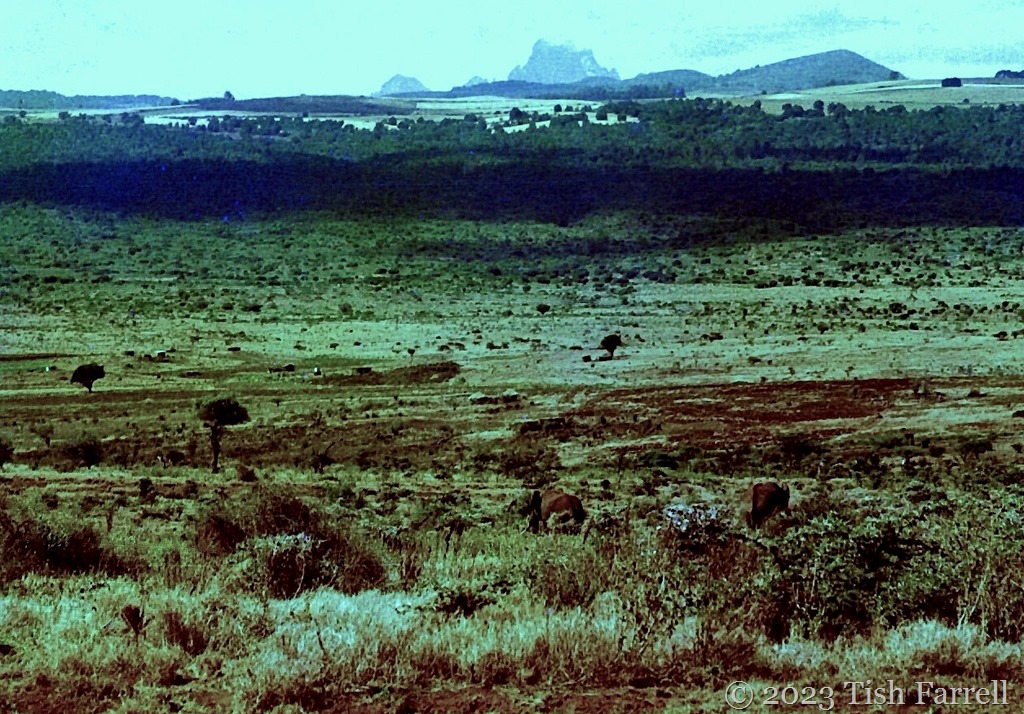
I’m sorry I don’t have more and better photos of Mount Kenya. The ones I do have are a little odd, as if the mountain meant to tease by showing off parts of itself at times and in places where it was not expected to be. I remember spotting it early one morning as I stood in the garden of the Outspan Hotel in Nyeri, the jagged summit floating gauzily above the horizon.

For several moments I was fixed to the spot. By the time I thought of taking a photograph it was gone – only empty sky in the place where it was, and a visceral sense of loss. Kilimanjaro just over the border in Tanzania, plays the same trick. Both mountains spend much of their time being mysteriously invisible. Yet there are travellers’ tales that claim occasions when, looking north and south, both mountains appeared simultaneously. Just imagine!

002 (2) ed

*

And now for the Mount Kenya photos I do have. The first one was taken from a small plane on our way to Lewa Downs:

Mt Kenya from plane

Grevy's Zebra and Mt Kenya

Mount Kenya and elephants

This photo was taken beside the Lewa Downs air strip. At the time, it was the two elephants, just visible in the foreground, that caught my eye. It was only when I was scanning the image that I noticed the odd geographical juxtaposition of Mount Kenya’s summit. What are its lofty peaks doing just there, and so sneakily? They are over 17,000 feet high.

*

Kenya Aberdares

And finally a sunset view of Mount Kenya from the neighbouring Aberdares National Park. The Aberdare Range is also one of Creator’s dwelling places when he is checking out earthly doings. Its Kikuyu name is Nyandarua, which I believe means place of the crumpled hide – another interesting metaphor. Here’s an aerial view:

Scan-130608-0051

These vivid names for spiritual landscapes remind me that in traditional pre-literate societies, the natural world provided humans with unlimited scope for pondering, creating and observing. Its diverse parts were sources of inspiration and expression, things to think by, a resource for metaphor, analogy, riddles, song, dance and story telling as means for making sense of existence.

Particular mountains, trees, rocks, lakes, chosen as places to make sacrifices or pray to Creator, are gateways to congress with the divine, and so may be taken as sacred in the same way a church is sacred space for a Christian. More broadly, though, all land may be seen as sacred since it was made and given to humans by Creator.

And in this sense, then, there is no divide between spiritual and physical; all states exist in the same plane, which is interesting, if somewhat difficult for some of us to think about. We might call it respect. We might even call it love.

*

Lens-Artists: Spiritual Sites   Tina sets this week’s fascinating theme. Please take a look at her inspriting post.

In An Equatorial Light

Kiboko ed sundowner

In another life-time I ran away to Africa and fell in love with light. I must have noticed light before, but I do not remember this kind of rapture. There’s the land too: the visceral, eviscerating redness of the earth. It strikes the eye, fires every neuron in the cerebral cortex, then jabs you in the solar plexus. The hue of life and death then; no wonder traditional peoples make so much use of this pigment. There were times when I felt I could eat it.

The place I ran from is very near the town of Broseley where we have recently come to live. There’s an odd sense of ‘full circle’ and a musing of: should I be worried about this unexpected retracing of steps; is there a reason I’m back here; some unfinished business to be dealt with now that I’m ‘older and wiser’? Etc. etc. I decide this line of thinking is a distraction, although it has me looking back through thirty years.

The place I ran (or rather flew) to was Nairobi, Kenya and so to a nine month stint of roaming up and down the Mombasa highway, accompanying a plant pathologist who worked both at the Kenya Agricultural Research Institute (KARI) in the city and at the Kiboko field station, a KARI outpost, a hundred miles south in Ukambani, homeland of the Akamba people.

Kiboko ed Mombasa highway north of Kiboko

Mombasa highway, looking north from Kiboko

*

Said plant pathologist, aka Graham, was working on a British government funded project to eradicate a maize-gobbling beetle known as LGB, the larger grain borer. (Everything you need to know about the science is at this link).

The pest had no known predators in Africa, having been introduced from South/Central America in consignments of US food aid in 1980s. And so finding itself free to infest the granaries of people who subsisted on grains, and on maize in particular, it quickly established itself across the southern and eastern continent, then in West Africa, travelling along major railway routes.

The aim of the project was to breed up stocks of a (safely) introduced predator beetle as a biological control and then release it in LGB infected areas. Meanwhile, the habits and destructive capacity of LGB were being monitored in various store experiments at Kiboko and at the coast near Mombasa.

Kiboko ed 3a

On days when Graham was working at Kiboko, we stayed at Hunter’s Lodge. In our time it was an eccentric hostelry that seemed to survive for the benefit of its staff; there were rarely other guests there. Once it had been the home of John Hunter, Great White Hunter and doyen of the colonial grand safari era, friend of Baron Bror Blixen and Denys Finch Hatton, guide to sultans and European princes.

He had chosen the spot to build the house near the Kiboko River, at a place where elephant once came to drink at sundown. He also made a pool by diverting the river, and so created a marvellous haven for birdlife (some 3-400 species recorded there). I spent hours watching night herons, grey herons, weavers, pied, giant, brown headed kingfishers, ibis, white eyes, and storks. I took few photos: it was beyond my Olympus Trip’s capacity.

There are no elephant photos here either. They no longer came, nor would be welcome. Anyway, Hunter did a thorough job of official game clearance in Ukambani, where the colonial authorities deemed elephants a nuisance to settler farmers’ plantations. The nearest herds these days are an hour’s drive south in the vast national parks, Tsavo East and Tsavo West.

Kiboko ed pool

Kiboko ed kingfisher

Kiboko ed garden bridge

The bridge led to the hotel’s fruit and vegetable shamba

*

Kiboko ed sundowner rain 2

Rain and sunshine together: ‘a monkey’s wedding’

*

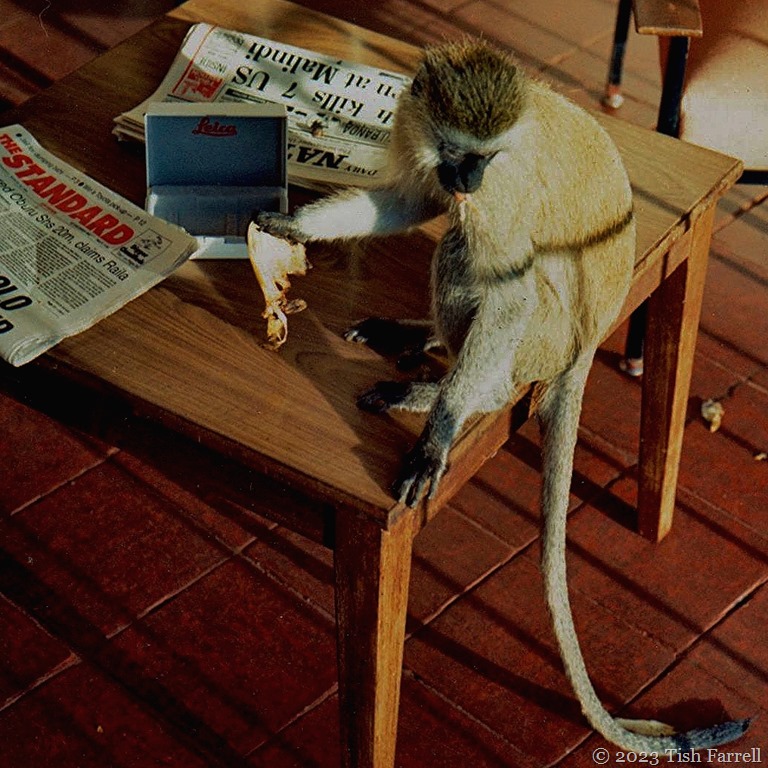
And speaking of monkeys, the garden was home to a troop of vervets, who soon learned we had a stash of food in our room. They were quick to relieve us of anything they could grab:

Kiboko ed vervet raid

*

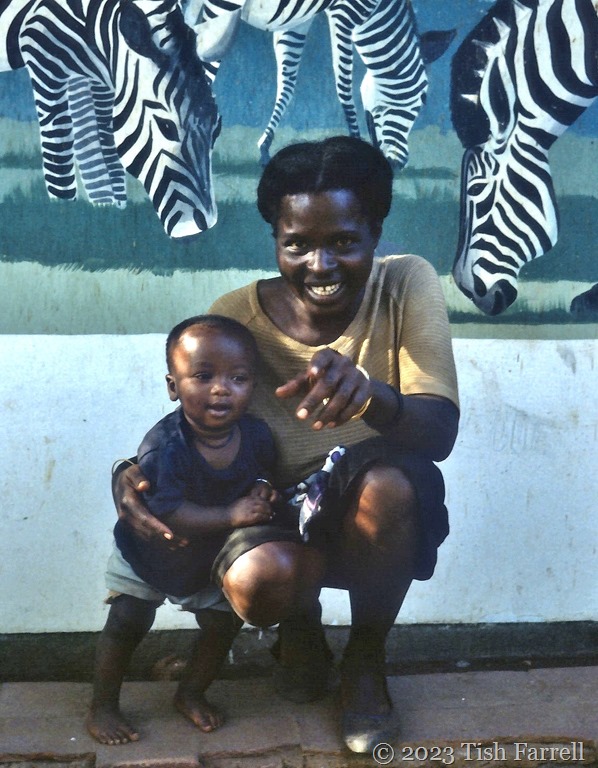
While I was staying at Hunter’s Lodge I met Esther, a young Akamba woman who had a stall selling wood carvings out on the highway. She also dealt in second-hand clothes and, an astute business woman, soon had me exchanging some of mine for her carvings. I think she had the best of the deal. I was useless at bargaining. She also had a notion that I would like to take a photo of her with young son Thomas. She knew exactly where she would pose, and took me along to the nearby petrol station where there was a cafe with a zebra mural. So please meet Esther and Thomas:

Kiboko ed Esther and Thomas

*

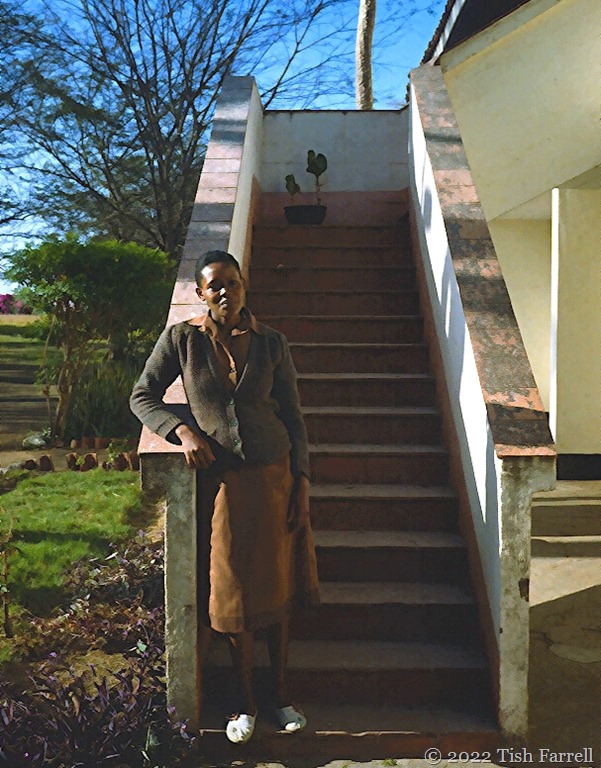
And here’s lovely Joyce who, on our return to Kenya a year later, used to keep our room tidy:

Kiboko ed Joyce

*

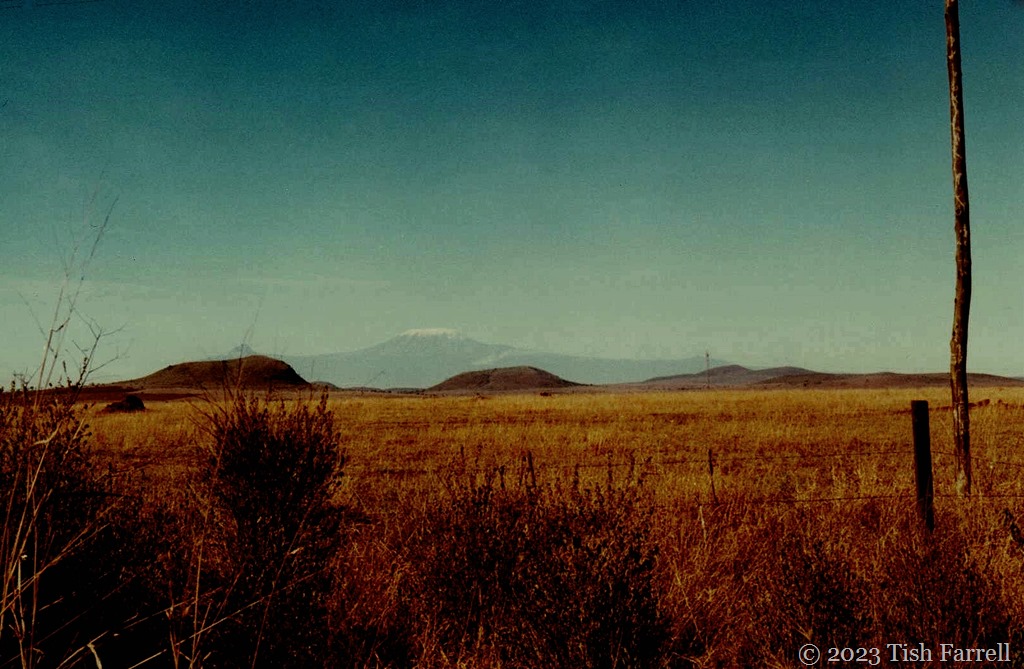
There were times, usually in the early morning, when we were leaving Kiboko that we’d catch sight of Kilimanjaro. There it rose on the horizon like a mirage. In seconds it would be gone, like a snuffed flame but without the tell-tale drift of smoke.  You’d be left wondering if you dreamed it.

Kiboko ed Kilimanjaro

*

Kiboko ed fever trees

I fell in love with fever trees too, the graceful acacias that, incidentally, have no disease-bearing capacity, although the watery places where they live may well do so. The bark and foliage has a warm spicy scent that is unforgettable, and as for their looks in sundowner light, well, what is there to say…

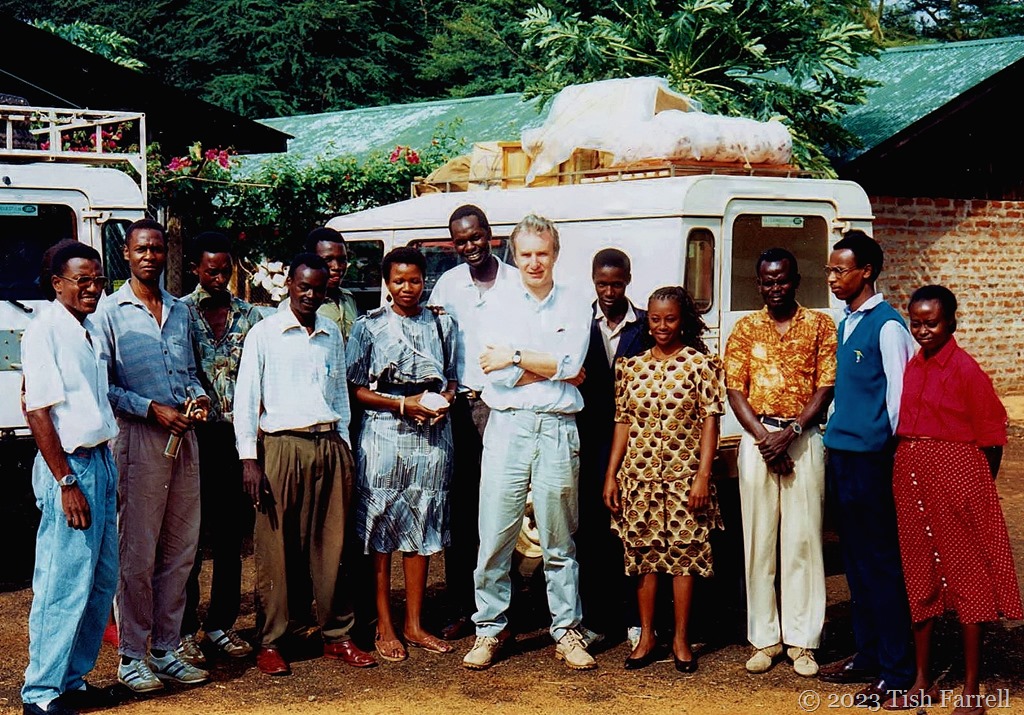
When, at the end of our nomadic nine months, we went to live in Zambia (a very fresh-airy state) I truly missed the scent of fever trees. I couldn’t believe our luck when Graham was posted back to Kenya. It was then he had the rather dismal job of winding up the LGB project at the Kiboko field station. He threw a long, loud party for the lab staff at Hunter’s Lodge, and the next day everyone lined up to have their photo taken.

Kiboko ed last day of project

Most had other jobs to go to and were heading back to Nairobi and beyond. Only Paddy, then a young researcher, remained to carry on monitoring LGB movements and checking the insect traps on the nearby Range Station. He lived on the station in a remote staff house, up a long, long dirt road. These days he is Doctor of Agricultural Entomology at a research institute in Nairobi:

015

Kiboko ed 4 range station road

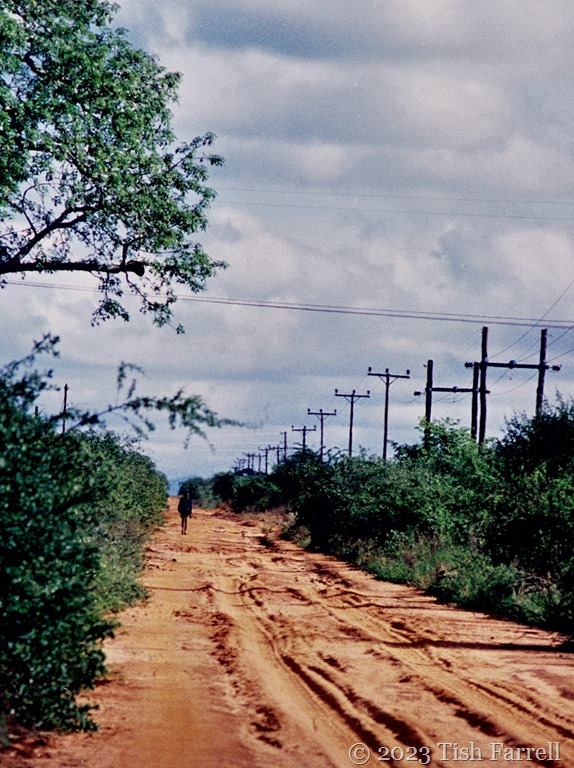
The road to the Range Station. I think this land was once a colonial (failed) sisal plantation. We heard that the thorny wilderness it had later become was the haunt of buffalo, an animal you definitely do not want to meet at close quarters.

*

After our return to Kenya in late 1993, we stayed on a further six years. This time Graham was involved with on-farm crop protection experiments, engaging the smallholder farmers in the process. As for LGB eradication, it seems attempts to use a biological control  have not been especially successful, although the predator has naturalized and does have some limited effect on LGB numbers. Scrupulous cleaning of granaries between harvests plus chemical applications, e.g. dusting the stored crop with a pyrethroid insecticide does work, but otherwise it can be a sorry tale for subsistence farmers, who may not be able to afford the stuff. In the worst infestations up to 40% of stored grain can be lost, and up to 80% of dried cassava, a staple crop in West Africa.

So: some dark clouds on these horizons. It’s a lot to mull over. All these years on, I’m still trying to process it.

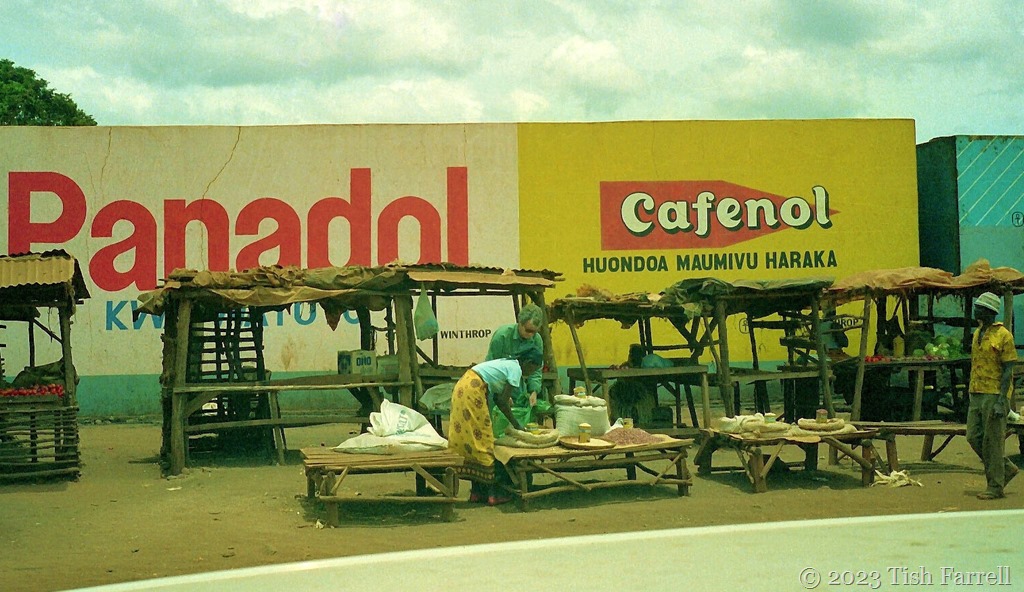
Kiboko ed Emali market

Graham at Emali market, buying maize for the Kiboko grain store experiments.

*

Lens-Artists: Glowing moments  Siobhan at Bend Branches blog asks us to show her our best moments.

Trio Of Photo-Favourites From ‘The Old Africa Album’

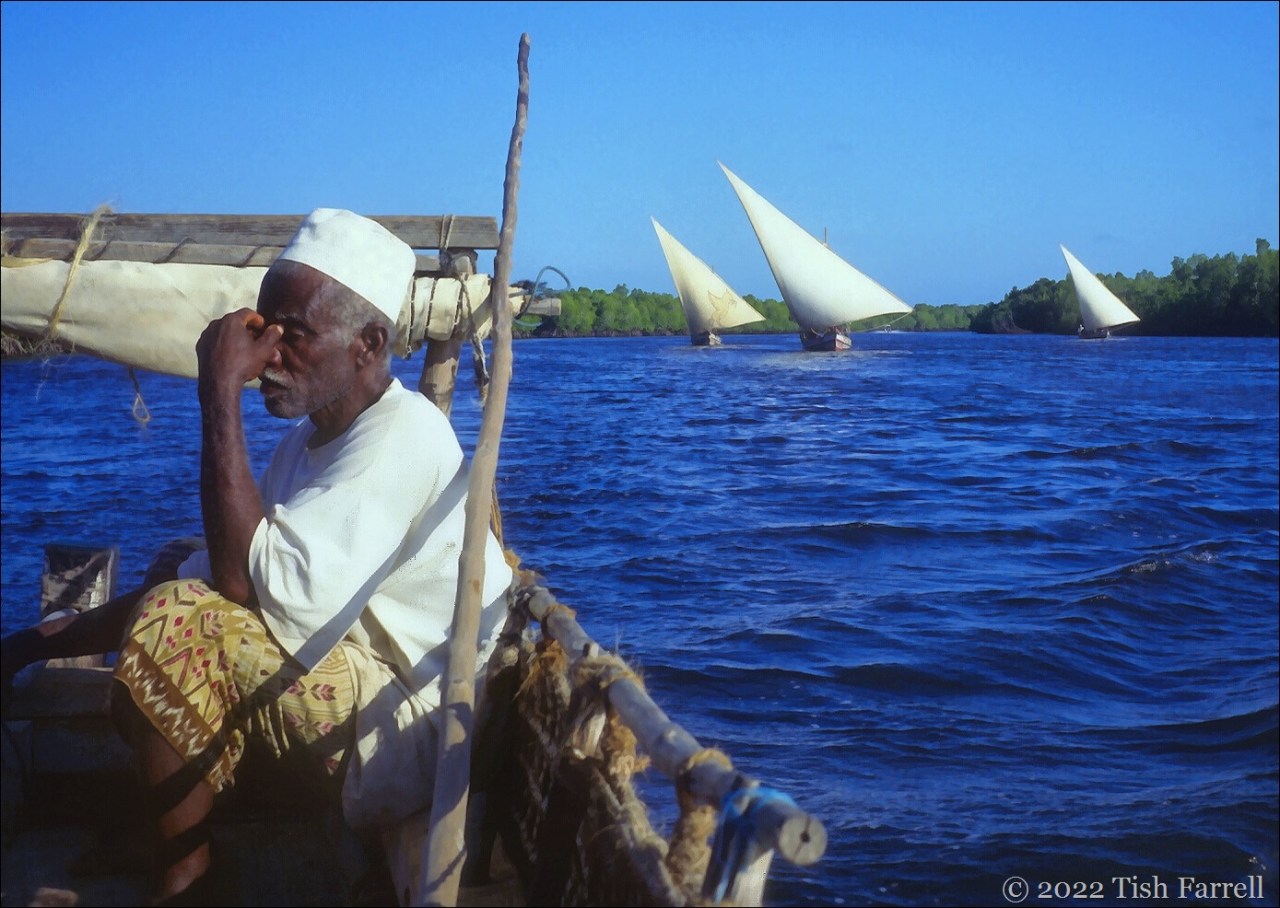
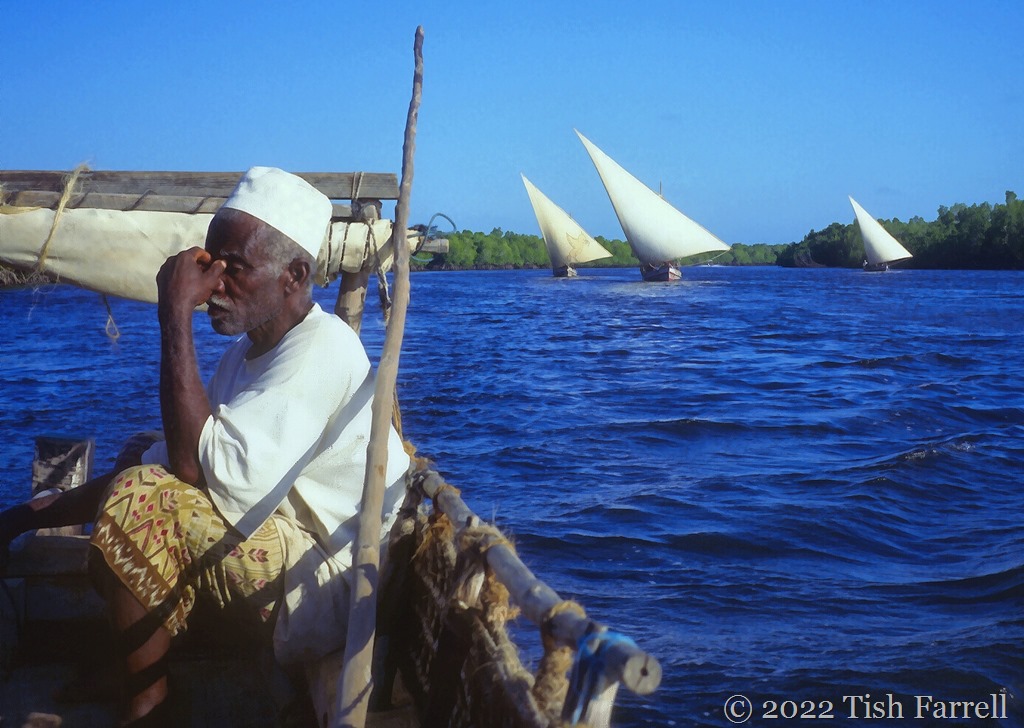
Mzee Lali

This first photo of Mzee Lali having a nap, with three full-sail Lamu dhows  in our wake  has to be my absolute favourite photograph. It was sheer chance that a) the scene composed itself so beautifully, b) I was alert enough to snap it and c) my Olympus-trip was not on the wrong setting.

It was Boxing Day and we had been out cruising the Manda Strait for several hours. In the morning some of our small party went in for a spot of snorkelling out on the reef. Next, using baited lines, we caught a few little fish which Lali and his nephew Athman scaled and cleaned. At noon when we were moored off Manda Island, Lali waded ashore and knelt down on the beach to pray. Then lunch was prepared, the fish grilled on a portable charcoal (jiko) stove and served up with freshly chopped coleslaw. Delicious.

In the afternoon we meandered back along the strait between the mangrove forests, waiting for the wind to pick up. We passed a large dhow taxi, utterly becalmed, engine stalled. It was brimful with laughing, chattering passengers, all hopeful  that some time or other they would finally reach Lamu mainland to visit their relations.

*

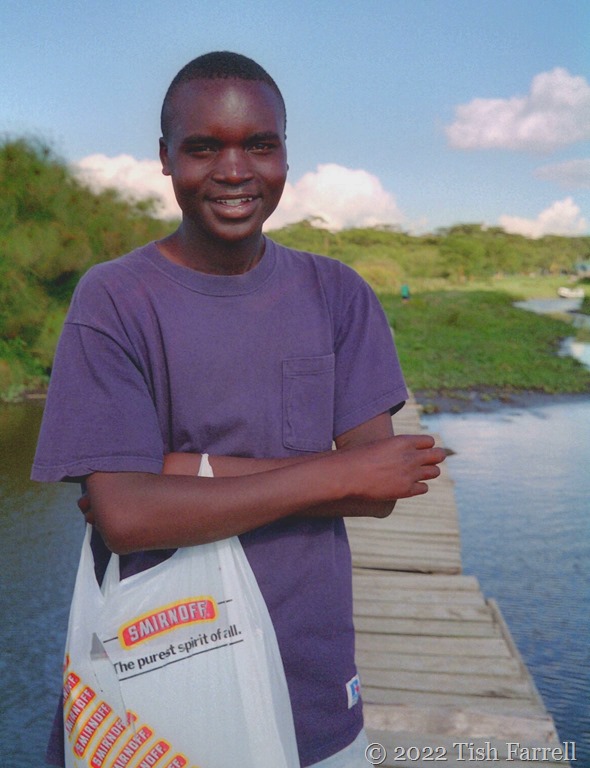
Robert Omondi ed

This photo was taken a few years later. It’s a favourite because it was a chance meeting that pretty much sums up all that is so powerfully positive about young Kenyans. We were staying at Safariland Lodge on  the shores of Lake Naivasha. Graham was hosting a conference of international crop pest scientists, and I was spending the days wandering around the place, bird watching. One afternoon I met Robert Omondi on the hotel mooring. He sold me one of the hand written booklets he had made, its topic the ecology of Lake Naivasha and the water sources that fed into it. He was visiting all the hotels and lodges along the lake, selling copies where he could, and so raising funds for his next term’s school fees.

*

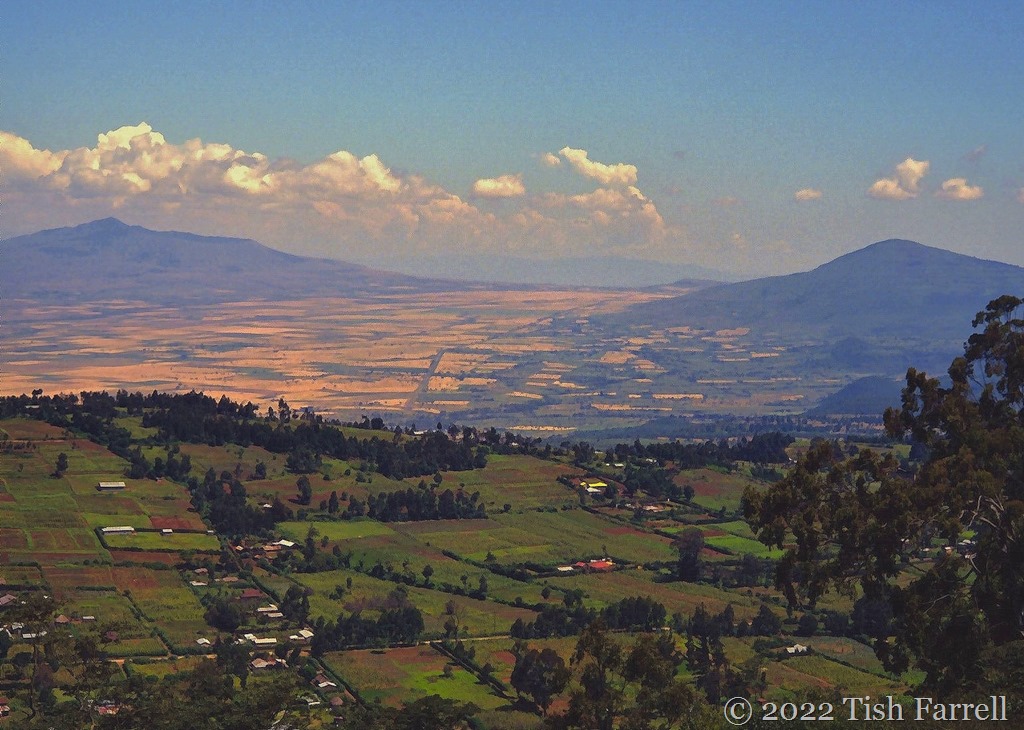
And finally a photo to prove to myself I was actually there, although even at the time I took it, it was hard to believe. Besides which, the Great Rift Valley is almost impossible to photograph and give any true sense of scale or depth. If there isn’t a heat haze, there is often a fog. I was standing somewhere north of Nairobi, on the east escarpment highway which runs up to 9,000 feet above sea level. Below, in the foreground, is Escarpment location, a community of smallholder farmers. The bright green of the plots suggests it must be the main growing season after good rains. In the Rift bottom are the wheat and barley fields of larger-scale farmers, the crater of defunct volcano, Longonot on the left. The low road to Lake Naivasha runs north beneath it along the valley floor.

Escarpment

Lens-Artists: picking favourites This week Sarah at Travel With Me  invites us to choose three favourite photos (not necessarily absolute favourites). Please go and see her three stunning choices.

Roadside Creations

Harare soapstone carver mono

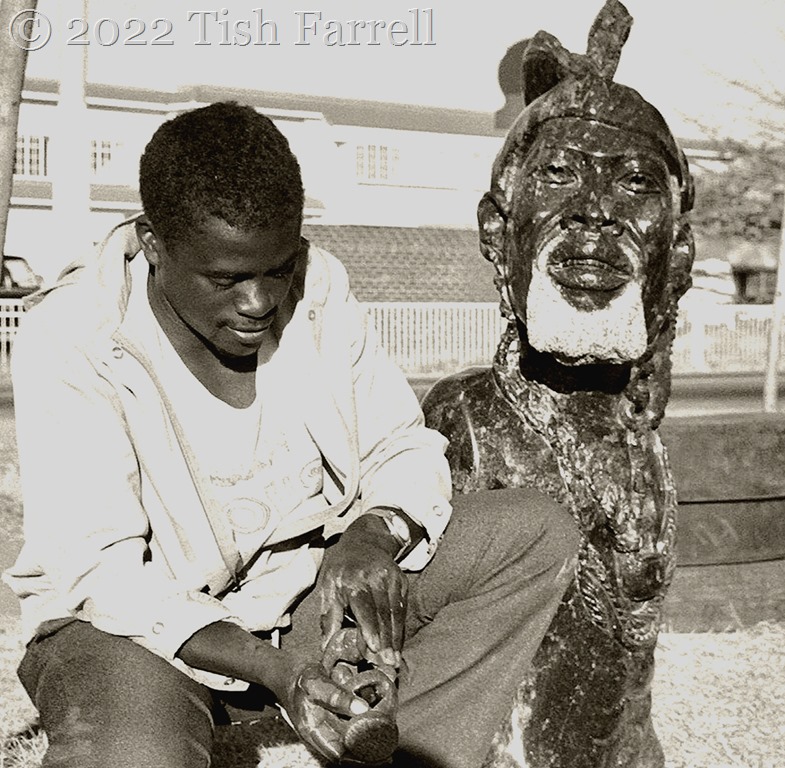
It’s back to the old Africa album for Cee’s ‘made by humans’ theme because it was while I was thinking what to post, that I suddenly remembered here was something I really missed from our years living in Kenya and Zambia: the roadside artists and artisans who, day in and day out, made some truly wonderful creations.  In fact we did most of our best shopping on the pavement – from the decorative to the solidly functional.

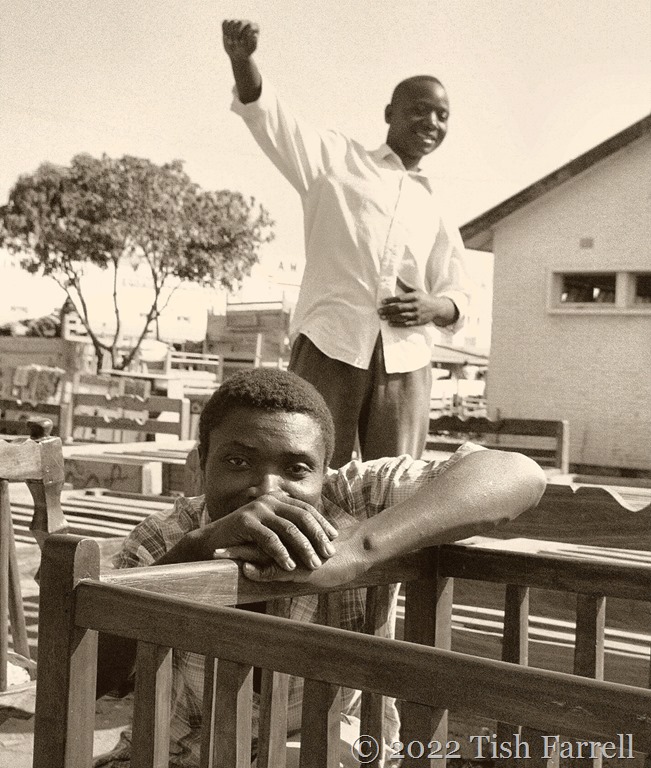
The header photo is a young soapstone sculptor in downtown Harare, taken during a road trip to Zimbabwe from Zambia. Meanwhile in Lusaka, here are the furniture makers who made beds of every kind, including ours, from repurposed air freight cases:

Kamwala roadside furniture market mono

*

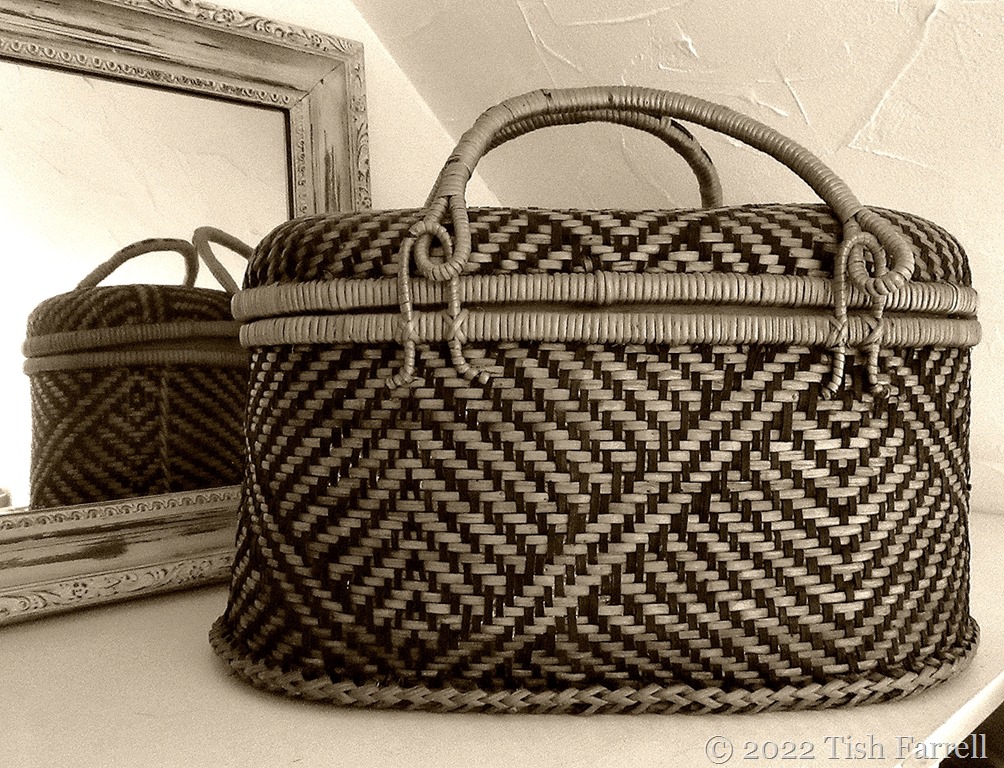
And while I’m here,  a more recent shot of one of my favourite baskets, made by the Tonga women of Zambia’s Southern Province. I use it for storing sewing and knitting bits and bobs.

mono

Cee’s Black & White Photo Challenge: Human-made