The Tsavo Big Game Show: it’s a dangerous pursuit

lone elephant at twilight

Night comes swiftly in the African bush but never quietly. As the sun drops behind the Chyulu Hills, so the pipe and whirr of frog and bug ratchet up a few decibels. It is like a million high tension wires being pinged and twanged. If you listen with both ears it can drive you mad. Likewise, if you allow yourself to succumb to the night’s sticky heat and the hypnotic scents of thorn flowers, then do not be surprised when the sudden scream of a tree hyrax stops your heart.

But we are not going mad. And our hearts are just fine. We think we have cracked this Africa lark. Well sprayed with insect-repellent, all accessible parts covered as can be, anti-malarials ingested, it seems safe to sit out on our veranda at Kilaguni Lodge  and do some night-time big game watching. 

Below our room is a barren stretch of red volcanic earth, and a water-hole lit up by two search lights. The illuminated circle that the lights create is like a stage set. It seems we are seated in a mysterious wildlife theatre waiting for the cast to appear.

The contrast is disturbing. By day, this self-same set is furnace red, littered with volcanic spoil; it is the haunt of the cadaverous-looking marabou storks and the occasional zebra. By night, all is softer, surreal. You feel you might dissolve through the light into perpetual darkness; for out there the night goes on forever, doesn’t it?

And so we go on gazing at the scene. It takes some time to realize that small groups of impala are emerging from the gloom. Their stillness is mesmerizing. Perhaps they are not there at all.

And then…

And then…

The impala are wary. You can almost see the charge of anxiety ripple through the herd. We hold our breath and stare into the dark behind the lights.

And then we see them – black hulks gliding through the thorn trees. Elephants. They have come so silently, walking always on tiptoes, their heels cushions of fat to muffle their footfalls. Slowly they move in from the bush. Even in the dimness beyond the pool, their hides glow red, irradiated by the igneous dirt they have blown over themselves.

In the wings the elephants pause. It is hard to say how many are there. After a few moments two peel away and the rest of the group retreats again into darkness. Two large matriarchs now head for the pool. At the water’s edge they part, and in matched strides stake out the water-hole from opposite directions. There’s an angry trumpeting when an impala fails to withdraw fast enough, and only when the entire bank is clear do the elephants go down and drink. But they have hardly taken a couple of gulps when they move back and take up guard duty, one at each end of the mud bank.

We are transfixed. We cannot fathom the plot, but note that, despite the elephants’ aggressive stance, there has been a concerted gracefulness to their routine. It crosses my mind that the great choreographer, Balanchine, once made a ballet for elephants. Now we see they have dances of their own.

And so we wait.

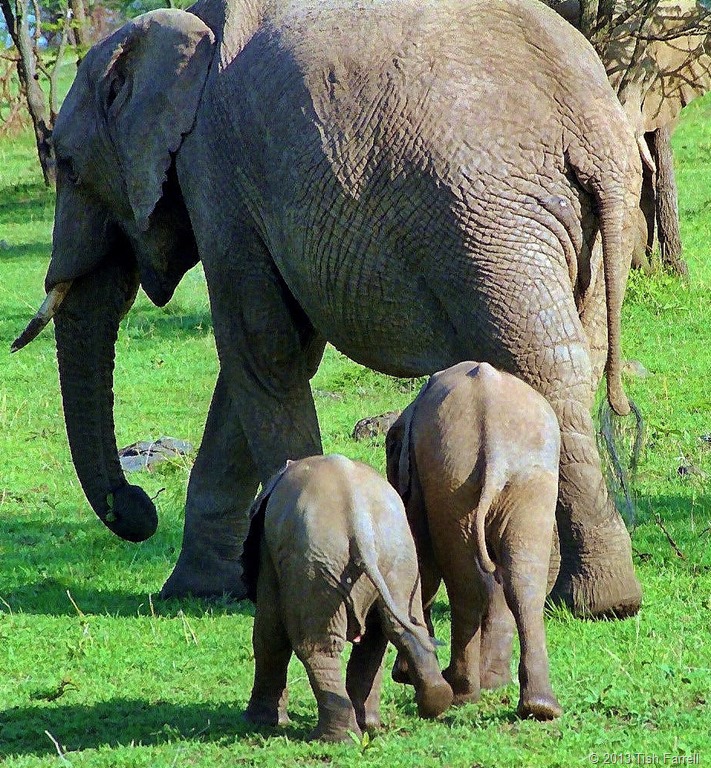
Slowly the rest of the group reappears, moving as one in the tightest huddle. As they enter the spotlight we understand. Tucked safely between the legs of four large cows are three infants. Like precious celebrities surrounded by an escort of heavies, the youngsters are guided to the water. There, with tiny trunks they cannot quite control, they drink their fill. The whole thing takes only a few minutes. Then, with this life-and-death task accomplished, the sentinels re-join the group, and the small herd leaves as silently as it came, melting into the backdrop.

So: this drama is over; the stage empty. After the thrill there is anti-climax, a strange sense of banishment; depression even. We go to bed, suddenly overcome by the heat and with too many insects on the brain.

Inside, though, the room is hotter still; windows shut fast against malarial mosquitoes. Even so, and despite the rock-like pillows, we sleep for a time. At midnight it is the menacing whine of a mosquito that rouses us to a bleary-eyed seek and destroy mission. At 2 a.m. we are awake again as two waterbuck lock in high-snorting combat below our veranda.

G. huddles back in bed. I press my nose to the window. It’s at times like this that Africa looms largest, that you know you are out of your element. Night stretches ahead like a herculean trial. I stare once more at pale stage in the bush. The impala have drifted back to the pool again, but they barely move. It is like watching a Samuel Becket play where nothing much happens.

And yet…

Suddenly the antelope are on full alert – rigid stance, ears pricked, noses twitching. I stare and stare. At last I spot movement, a sinuous shape pressing through the low scrub. The impala rise on hoof-tips, torn between staying and fleeing, and then the lioness steps out from the grass and pads down to the water.

The impala draw back, still unsure of the big cat’s agenda. The lioness parades around the waterhole, but does not drink. Instead she finds a clump of grass and lies down, head up, still as stone, commanding the pool  – a heraldic lion couchant. Now it is clear. None of the animals can drink. The tension is visible. This is a new kind of drama: feline power play.

But I cannot wait for the denouement. Worn out, I return to my hard pillow and tangled sheet.

The next time I wake it is light enough to know that I can abandon all efforts to sleep. It’s a huge relief. While G. slumbers on, I step out into cool of the veranda. In the dawn light I see that last night’s set has mystically expanded into a vast new backdrop. Now the Chyulu Hills rise above the dry plains, a vision of impossible greenness that belies the violence of their birth. For these hills are new, erupting around the time Sir Francis Drake was bowling off Plymouth Hoe and ignoring news of the advancing Armada. It’s hard to believe.

But this is not all. To the west, the snow-capped crown of Kilimanjaro breaks free of the earth and floats high on a wreath of pink clouds. It makes me want to hoot with laughter. Who does this Africa think she is? Does she really expect me to be taken in by  all her absurd illusions? Poof! The mountain snuffs out and leaves only sky. (Is this possible?) And I, like the victim of some worming parasite, know I am becoming infected. All our defences are useless. This land is creeping under my skin and invading all my senses. More likely than not I will never be the same again.

© 2014 Tish Farrell
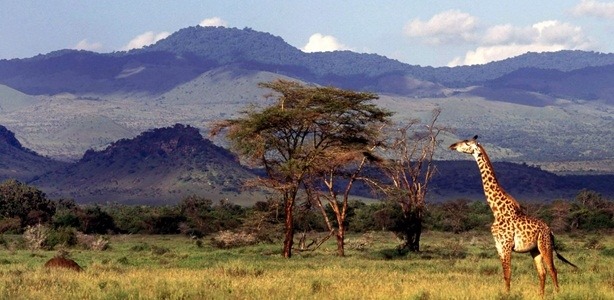
Kenya; Chyulu Hills; Campi ya Kanzi - Giraffe in the Chyulu Hills

Chyulu Hills. Photo: Abercrombie & Kent

Daily Post Prompt: write here, write now


Anthology Baobab: African Story Tree


“Knowledge is like a baobab tree; one person’s arms cannot encompass it.”

Ghanaian proverb

South Luangwa - mighty poachers' baobab 2

This baobab in Zambia’s South Luangwa was used as a poachers’ look-out

*

At the moment I’m working on a short story that includes a large and very ancient Adansonia digitata – in other words, a mighty baobab tree. These extraordinary trees have a way of finding their way into my stories (Mantrap, A Hare Who Would Not Be King amongst others). In fact, with so many legends about them, baobabs are nothing if not arboreal storybooks.

They are also like no other tree I can think of, although they are related to kapok trees. They grow in the hot lowlands of Africa and Madagascar and also in Vietnam and Australia. Their capacity to store vast quantities of water in their trunks has earned them the name Tree of Life.  A single tree can hold up to 4,500 litres /1,189 gallons.

In my story, however, the baobab has no such mundane function. It is a place of ritual – a spirit home on the Swahili coast, for here, as in other parts of Africa, it is believed that baobabs harbour the souls of the dead. And that is all I am revealing of my story  except to say that it also involves murder, unquiet spirits and unrequited love.

*

As for the trees, in real life they have a mass of practical, medicinal and nutritional uses – for humans and wildlife alike. It all begins with the pollination of these oddly striking flowers.

image

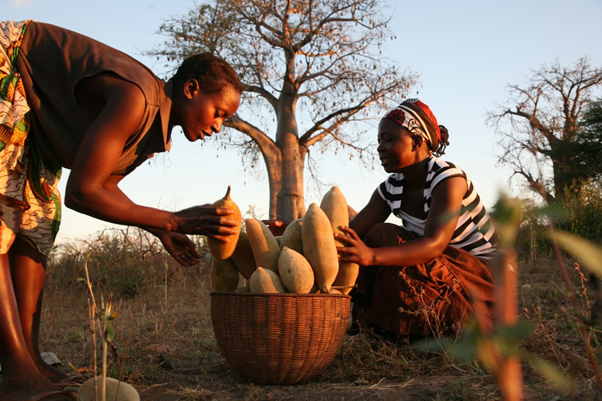
For nine months of the year, the baobab has no foliage. When the leaves come they are eaten like spinach by humans and browsed by both domestic and wild animals. The flowers, too, are short-lived. The bloom first at night, their pungent smelling nectar attracting bush babies and fruit bats which then pollinate the flowers. Bees also feed on the nectar, and farmers often hang their barrel beehives up in the branches of a baobab. Photo: Tuli Lodge, Botswana

image

The resulting woody capsules enclose many seeds within an edible pulp. Both seeds and pulp are high in potassium, calcium and magnesium and are ideal foods for pregnant and breast-feeding women. The pulp is also rich in vitamin C, thiamine and antioxidants. Being high in pectin, it is useful for jam making and creating refreshing drinks. The seeds produce a fine oil that is used by the cosmetics industry. They can also be ground to make a coffee substitute. And so with all these attributes, the baobab has been classified as a superfood. Its many by-products are now sold worldwide. Photo: http://www.ifood.tv/blog/the-latest-superfood-from-africa-baobab
*

image

http://www.ifood.tv/blog/the-latest-superfood-from-africa-baobab

*

image

The growing world-wide demand for the baobab’s phyto-nutrients mean that seed harvesting has become a valuable source of income for many African families. This is one man’s story:

“My name is Andrew Mbaimbai and I am 63 years old. I live in Mtimbuka, a village in southern Malawi, with my wife, four daughters and eight grandchildren. In 2005, I heard that a new company was buying baobab and I knew this was a good opportunity for me.

“I collect and process baobab in my spare time because I also have a job as a cook. After gathering the fruit, I go to the processing centre, crack the shells and separate the fruit powder from the seeds. Then I sell it.

“I use the money to pay for my grandchildren’s school fees and to buy clothes for my family. Sometimes if a family member falls ill, I use the money to pay hospital bills. Without the money from selling baobab, I would not be able to meet all my family’s needs.”

http://baobabsuperfruit.com/andrew-mbaimbai/

As a consequence of ethically managed initiatives like the Eden Project’s programme in Malawi you will now find many baobab-derived products on line and in your local health food shops. Here is one of them. It can be added to anything and everything, creating, apparently, a  zesty flavour.
Baobab Fruit Powder Pouch

The Eden Project’s baobab powder.

*

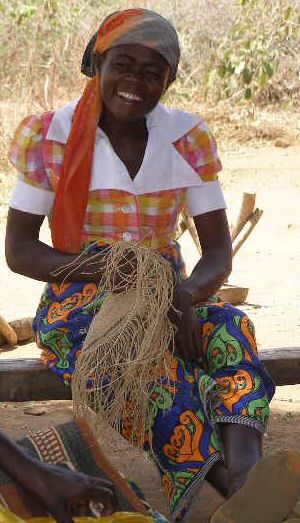
Then there are the baobab bark products. The trunk of the baobab is very fibrous and can be processed into cloth, twine and ropes. Kenyan women are famous for their kiondo bags which they make both from baobab and (increasingly) sisal string. You will see women walking along the road weaving these lovely baskets, and I can attest that they last for decades. I have at least four. In time the leather handles might need replacing,  but the baskets endure, becoming more beautiful as their pigment dyes fade.

image

Photos: africablogs

image

A Kenyan kiondo woven from baobab fibre.

*

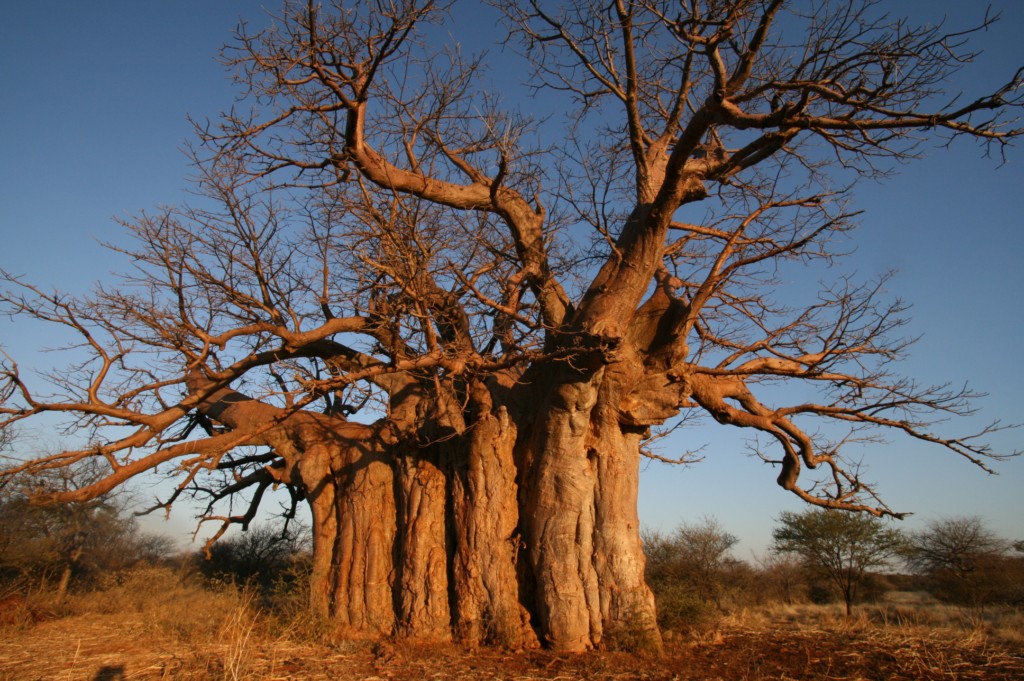
Baobabs can of course grow to massive proportions  and into the oddest shapes. They may be thousands of years old.

The Legend of the Upside-down Tree

Photo: Eco Products

With age, many become hollow, creating large spaces within that are variously used as barns, churches, places to give birth, and for the burial of griots as in West Africa. In Botswana one was once used as a jail, the adjoining trunks for male and female prisoners.

image

Kasane, Botswana, now has a new prison but the architect ensured that the original one was preserved: http://www.ofm.co.za/article/67788/Voices
Big Baobab

Sunland Baobab

*

At Sunland Farm, Limpopo, South Africa, this baobab is used as a bar and wine cellar. It is believed to be the largest example in the world. It is 47 metres around (154 feet) and has a carbon date of around 6,000 years.  Below  are four of us trying to surround a much younger Kenyan baobab. This one is at Maweni on Tiwi Beach, South Mombasa.
023

*

And now for some of those baobab legends I mentioned. There are many variations of these tales throughout Africa.
I

When Creator was busy creating the world, the animals came to him and asked if they could help him finish his work. Creator was doubtful and said there were only the trees left to make. But the animals persisted, so Creator handed out specific seed types to each animal species, and they went away and planted them. Finally, only the baobab seeds remained, and these Creator handed to the hyenas. The outcome, of course, was to be expected, given the stupidity of hyenas. They planted the seeds upside down, and that is why the baobab always looks as if it has its roots in the air.

II

Long, long ago the very first baobab sprouted up beside a small lake. When it saw the other trees with their tall, smooth trunks and bright flowers and large leaves, it thought how beautiful they were. Then one day, when the lake surface was smooth as glass, the baobab caught sight of itself, and oh, what a shock. Its flowers were so pale, and its leaves so small. But worst of all, it was appallingly fat, and its skin looked like the wrinkling hide of an old elephant.

The baobab cried out to Creator, complaining of its lot. Creator in turn was huffy. Many things had been made that were not quite perfect, he said. He retreated behind a cloud. But the baobab did not stop whining and whingeing. Finally, Creator grew so cross that he leaned out of the sky, and yanking the baobab from the ground, replanted the tree upside down. And so ever since, the baobab has lived on in silence, unable to see its reflection in the lake, but making up for its transgression by doing many good deeds for humankind.

*

And if these baobab tales have not quite cheered you up, here are some clips from the life-enhancing Orchestra Baobab. This band from Senegal has had two lives, one back in the ‘70s, and now the current reprise which includes many of the original line-up, among them the Togolese guitarist, Barthélémy Attisso, who in the interim went away to become a lawyer. If you get the chance to see them live, go for  it.

© 2014 Tish Farrell

Frizztext’s ‘A’ Challenge

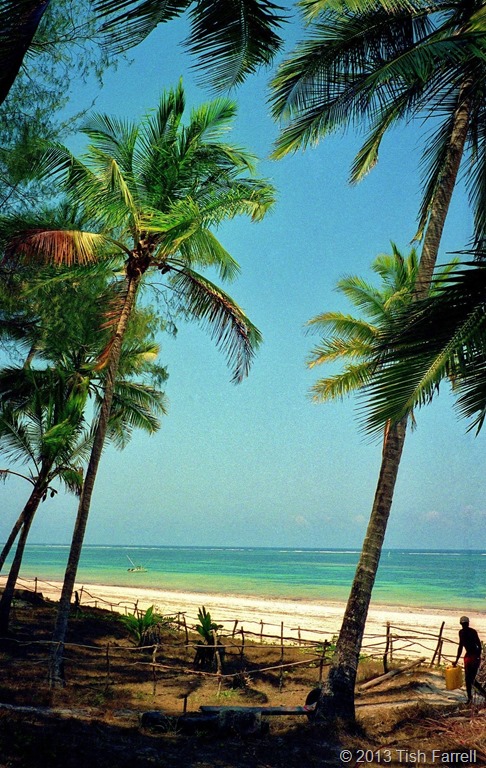
Wind in the palms on Kenya’s coral shores

Scan-130603-0061

Tiwi Beach, South Mombasa

*

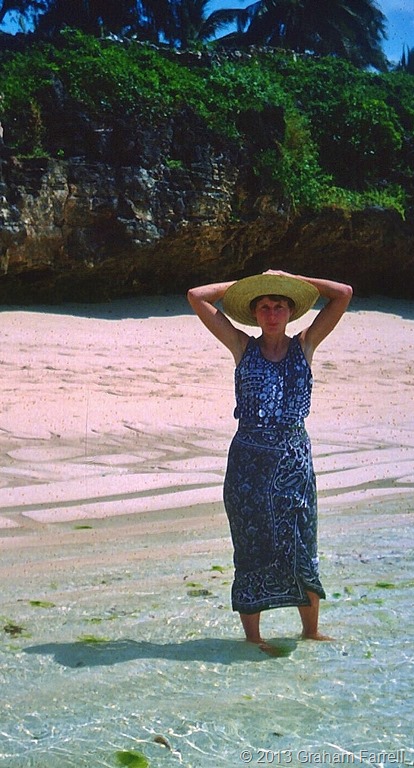
These leaning coconut palms and the photo of me holding on to my hat remind me that there is nearly always a breeze on Tiwi Beach. You need it too. In the hot season, around December to February, it makes the sticky tropical humidity bearable. It also keeps malarial mosquitoes at bay.

Scan-130520-0018

Don’t let go! Me, at Capricho Cove, too many years ago

*

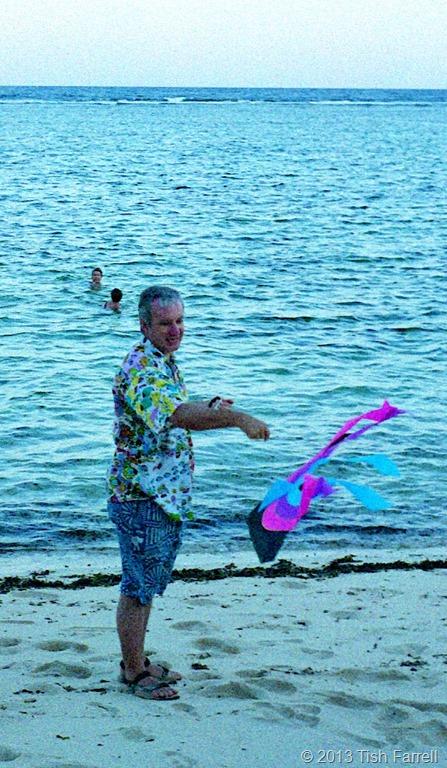
But the tropical breeze is not so good for kite launching. The team leader never did get his kite airborne.; the wind endlessly beating it into the sand. No matter. I think we decided that kite flying was probably too active an activity, even at the day’s end. Much better to crack open a Tusker beer, one almost chilled in

Graham tries to fly his kite

Graham not flying his kite at Maweni Cove.

*

the beach cottage’s rackety  refrigerator.

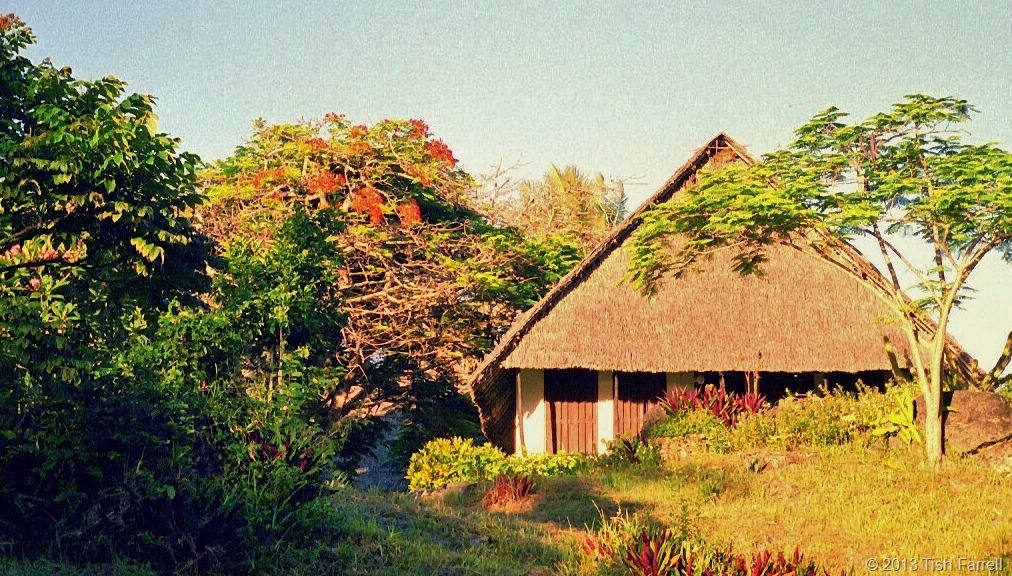
Maweni cottage at sunset

Maweni Cottages built in the Swahili style.

*

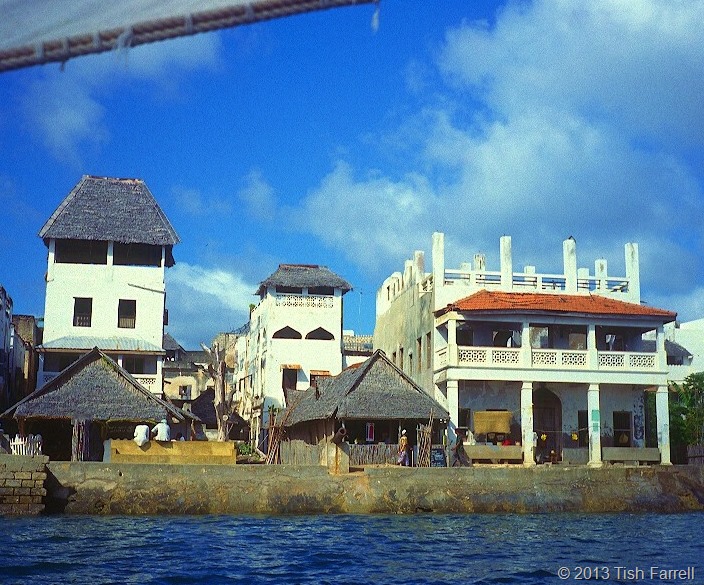
In the holiday season, and especially at Christmas, these beach villages tend to be the haunt of expatriates (especially aid workers), and mixed race families who do not always receive the best of treatment in Kenya’s fancy beach hotels. The cottages are designed to keep out too much sun and let in maximum draught: coral rag walls, high makuti  thatch, glassless windows and shutters with moveable slats. This is of course a European take on indigenous Swahili architecture.

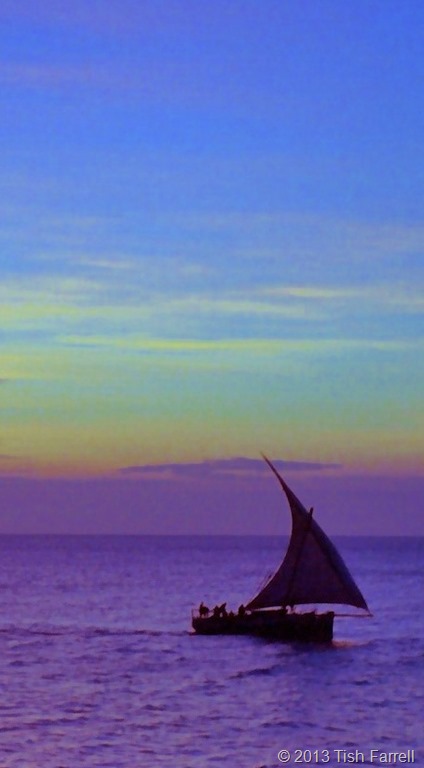
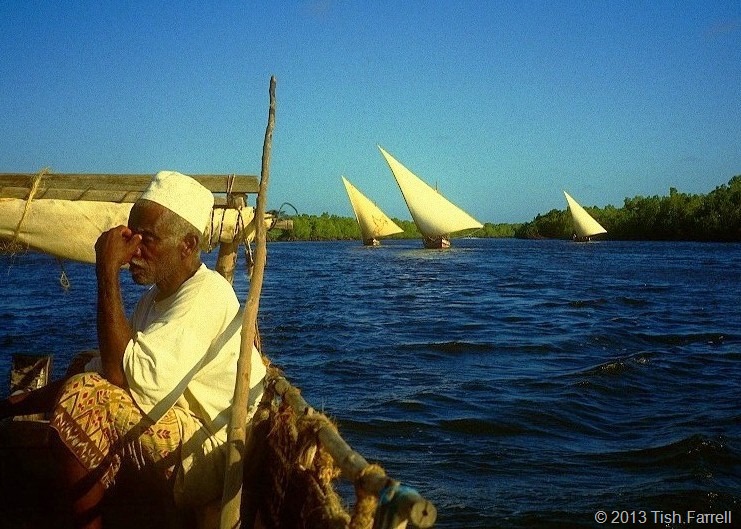
I have written in another post about Swahili culture and how it might be said to have been shaped by the monsoon winds: the north-easterly Kaskazi that for centuries brought Arab merchant ships down the coast of Africa; the south easterly Kusi that blew them away again after a windless sojourn during which sailing dhows were beached and repaired and liaisons with African communities forged.

From this age-old congress between Arab seafarers and Bantu farmer-traders, came a blending and melding of body, mind and spirit that evolved into the urban coastal people whom we know as the Swahili. Their language, KiSwahili, is also a fusion: of Arabic and Bantu vernaculars, and as such, presents a fascinating exemplar of multicultural integration that has forged a distinct identity of its own. That’s something to ponder on, isn’t it: how different races can create together; how it took the monsoon wind to bring them together?

Salamu (Greetings)

Scan-130429-0098

A Word A Week Photo Challenge: Wind: go here for more wind stories and see the ones below:

http://irenewaters19.com/2013/12/19/a-word-a-week-wind/

http://hamburgundmeehr.wordpress.com/2013/12/18/a-word-a-week-photograph-challenge-wind/

http://geophiliac.wordpress.com/2013/12/18/a-word-a-week-photography-challenge-wind/

http://bambangpriantono.wordpress.com/2013/12/18/a-word-a-week-photograph-challenge-wind-angin-the-wind-blown-flag/

http://schelleycassidy.wordpress.com/2013/12/17/a-word-a-week-challenge-wind/

http://mang0people.wordpress.com/2013/12/17/a-word-a-week-photograph-challenge-wind/

http://emiliopasquale.wordpress.com/2013/12/16/a-word-a-week-photograph-challenge-wind/

http://sillarit.wordpress.com/2013/12/16/a-word-a-week-photograph-challenge-wind/

Related:

Weekly Photo Challenge: Culture (The Swahili)

Travel Theme: Beaches (Mombasa)

Christmas on Lamu: views of a Swahili Community

Scan-130428-0010

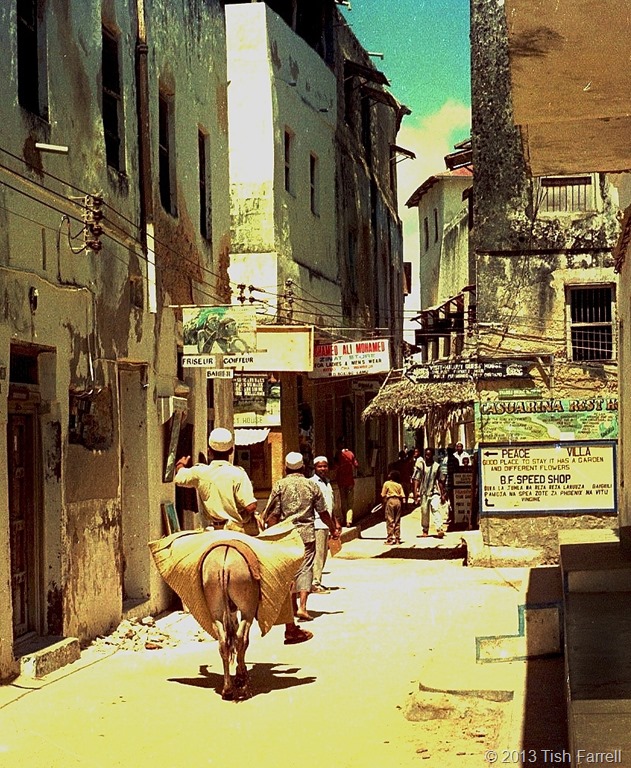
Main street, Stone Town, Lamu. No cars only donkey transport.

*

I learned a great deal about community when I was living in Kenya where it meant not only an affirmation of cultural identity, but also an expression of hospitality; the call to an absolute stranger of  “karibu,” “come on in!”

And so it proved to be one Christmas, when we spent a few days on the Indian Ocean island of Lamu. I suppose, in amongst the excitement of organising our flight there from Nairobi, I had wondered what it might be like to spend a Christian festival within a strongly Muslim community. Or perhaps I had gone there expecting simply to forget it. I know I had thought about clothing, packing only things that would not cause offence by too much inappropriate exposure.

Scan-130426-0012

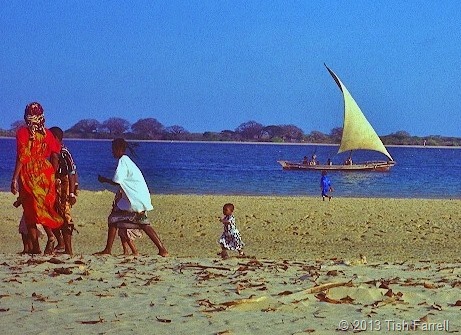
Christmas Day on Shela Beach, Lamu

*

But I had not expected to feel so  ‘gathered in’. From the moment we were picked up from the tiny Manda Island air field, and taken by dhow taxi to the Island Hotel in Shela Village we were quietly embraced by the locals.

Sensation was anyway heightened: it had just stopped raining as we stepped ashore and followed our guide up damp sandy paths. The sense of unobtrusive acceptance somehow fused with the scent of jasmine, the touch of steaming coral walls of deserted gardens and tumbled village houses, the warm salt breezes. 

Scan-130429-0029

At five a.m. on Christmas Day we woke to the call to prayer at the local mosque.  Allahu akbar  filled our room, and unavoidably so when the roof was only a thin layer of palm thatch and three of the walls were open to the elements. It seemed a transforming moment somehow. I lay in the little Lamu bed, and listened to the village stirring to life around us, hee-hawing donkeys, the clatter of kitchen pots and pans, radios quietly playing. It seemed a community well set in its ways, and for many generations. Yet later, when we set out to walk along the long strand to Stone Town, we were greeted from every side by smiling locals. “Happy Christmas!” they cried. “Happy Christmas!”

Scan-130426-0010

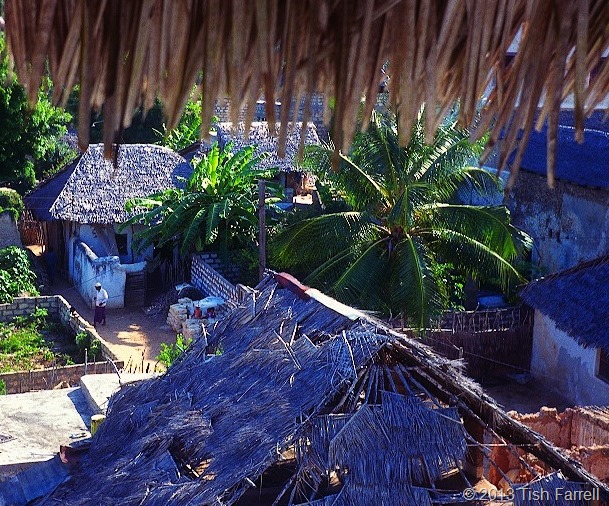
View from ‘the pent-house suite’, the Island Hotel, Shela

*

Scan-130426-0004

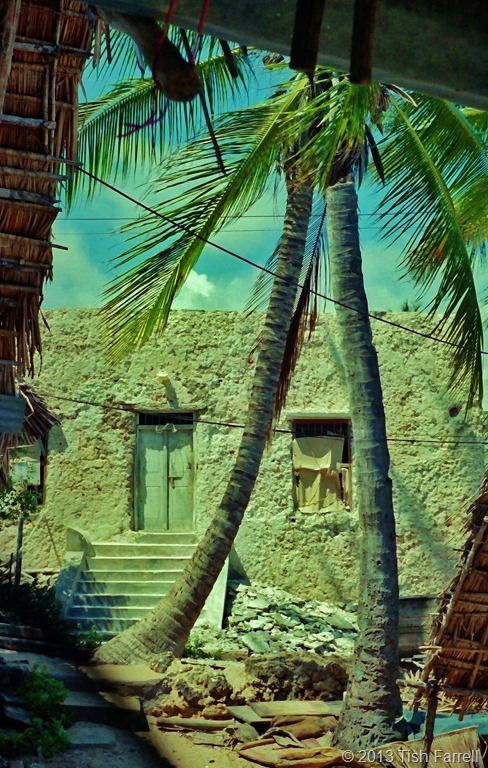
Stone Town, Lamu, now a World Heritage site

*

Scan-130428-0063

Christmas Day afternoon: a time for strolling, snoozing, chatting.

*

Scan-130426-0019.jpg

We went sailing with Uncle Lali: I see three ships…

Weekly Photo Challenge: Community

Daily Prompt: Memories of holidays past

Related:

Sleep (Lamu Dreaming)

Culture: the Swahili

© 2013 Tish Farrell


Elecommunication: so many connections

Scan-131109-0009.jpg

Elephants: “The animal which surpasses all others in wit and mind.” Aristotle

*

Do you remember when you first discovered there were such things as elephants? And didn’t childish intuition tell you at once that these animals were among the world’s most wonderful creatures?

Over the last few decades scientists have proved that they are in fact wonderful – and in all sorts of ways, not least their ability to communicate over large distances. Then there is their highly developed matriarchal society. They are also one of the most intelligent species on earth. They are good at problem solving. There are many cases of their altruistic acts. For instance they have been known to help wounded humans in the bush, even going so far as placing exposed individuals in the shade, and then keeping guard over them against predators.

But proof apart, it is probably anyway beyond most people’s comprehension that some forms of humanity see elephants purely as a resource – killing them for ivory, or a trophy head to brag about to their shooting chums.

Scan-131109-0004.jpg

The word elephant, I’ve just read somewhere on Google, comes from the Greek word elephas meaning ivory, so already we have a clue as to the literate world’s  (one hesitates to use the word ‘civilized’ here)  once primary relationship with elephants. But then this is not the only kind of man-elephant relationship. The killing of elephants is not always about the pursuit of luxury goods. Indigenous African peoples, such as the small-statured Mbuti hunters of the the Congo forests, have long hunted elephant for food, and also possibly scavenged dead ones. One beast, killed once in a while would keep a hunting band going for many days as well as providing large amounts of meat to trade with farming neighbours for other goods.

The fact that there have always been hunters like the Mbuti who will tackle an elephant, makes them in turn desirable allies and trading partners to less brave outsiders who crave only the ivory. In East Africa, from at least the start of the first millennium AD, Arab dhow merchants relied on locals like the Akamba people to bring ivory to the coast to trade. In the nineteenth century the Swahili slavers set off into the interior to grab for themselves a combination haul of humans and ivory, the poor human captives being forced, while they still lived, to carry the elephant tusks hundreds of miles back to the coast.

There are far older stories too.  The tomb biography of Prince Harkhuf of Elephantine records that four thousand years ago this Ancient Egyptian general headed at least four major expeditions into the African interior. One objective was to test the waters for a take-over of the neighbouring Kingdom of Nubia. But there were also valuable resources to garner: ivory, leopard skins, ebony, precious stones. One expedition went beyond the Mountains of the Moon, the Rwenzori Mountains on the borders of Uganda and Eastern Congo, and so into the territory of Mbuti hunters.

The tomb account includes a letter from Harkhuf’s Pharaoh, Pepi II Neferkare  who, on becoming Egypt’s ruler at the age of six, longed for nothing more than his own pygmy,  he “who danceth like the god”. The letter contains strict instructions as to the pygmy’s care, and especially on the voyage back down the Nile so that he does not fall in the river. Anyone who has read Colin Turnbull’s The Forest People, will know that the Mbuti are renowned for their performances of complex polyphonic singing and energetic dancing conducted in praise of their Forest Creator. Neferkare’s letter would suggest that the Mbuti were already well known to the Egyptians thousands of miles away, and the primary source of this relationship was mostly likely to have been the Mbuti’s provision of forest produce including ivory.

Scan-131109-0022.jpg

But the biggest assault on elephant-kind has all to do with the arrival of the gun. A major killing spree began in the late 1800s in the Congo – then a private fiefdom of Leopold II of Belgium (think Joseph Conrad’s Heart of Darkness and the Congo River stations set up especially to export ivory and wild rubber from the forest hinterland). In East Africa the slaughter began at a similar time under British colonial rule – first British and European aristocrats out to make their fortunes, then by hunters,like John Hunter,  employed by the colonial administration to protect settler plantations from elephant damage. The ivory hunters of course always sought out the animals with the biggest tusks. So much so, that when the likes of Denys Finch Hatton and aviator, Beryl Markham began scouting for ivory from the air, the big bulls of Tsavo were reputed to hide their tusks in the undergrowth whenever they heard a plane.

What was taking place, then, was a most unnatural selection. The biggest and best elephants had the biggest and best ivory. The gene pool of present day elephants has thus been ravaged by a century of mass killing. After the colonial era, the armies of civil war conflicts across the continent, continued the job started by colonial sportsmen and administrators. After the Idi Amin regime in Uganda when much wildlife was decimated, the tusks of the elephant population that gradually re-established itself were either puny or did not develop at all. And an elephant needs his tusks – not least for rearranging the landscape (clearing trees to favour grass growth) and mining for water sources and essential mineral salts.

And why did this killing begin? Because humans thought that ivory re-fashioned into billiard balls, piano keys, and objets d’art was more valuable than embedded in living, breathing elephants. Some people still think this.

001 (3)

But back to the elephants and those extraordinary things that scientists have been discovering about them. For one thing, the infra-sound throat rumbles that vibrate through the earth can convey information to other elephants at least six miles away. It would appear, too, that they can pick up seismic movements over far greater distances than this. Researchers have observed that when it started thundering in Angola, thus signalling the start of the rains and fresh browse in that quarter, elephants one hundred miles away in Etosha National Park, Namibia, set off there. Apparently the tips of trunks, toes and heels are especially sensitive to vibration. Working Asiatic elephants have also been known to detect tsunamis and make for higher ground, thus saving any humans who happened to be riding on them at the time.

When it comes to communicating amongst the immediate herd or with potential predators, elephants have a whole range of calls and gestures, depending on the circumstances. These include ear-splitting screams and trumpeting, rumbles and grunts, crying and barking, head shaking and ear-flapping, trunk slapping, dust-kicking, throwing missiles, ear spreading, standing tall, and making mock and real charges.

Scan-131109-0021

While their eyesight is not acute, and especially in bright light conditions, they have a keen sense of smell. An elephant will  thus continuously read its environment and, using the tip of its trunk like an antenna, decode all manner of messages by scanning urine, faeces, saliva, and the secretions from their fellows’ temporal glands (found on the side of the head mid way between the  eye and ear). Also, when it comes to acts of aggression from humans, elephants will remember these and continue to identify such aggressors by their smell.

And that’s the other marvellous thing. Elephants do remember. For much of the year the males and females live separately usually only congregating for mating purposes. The females roam in small family groups led by an old matriarch. Within that matriarch’s head is a lifetime’s accumulated wisdom that she uses to manage her daughters, granddaughters and their offspring, and so keep them healthy and safe. Elephants left bereft of their elders through culling or poaching, are known to flounder and panic without the old ones’ guidance. 

Scan-131109-0032

010 (2)

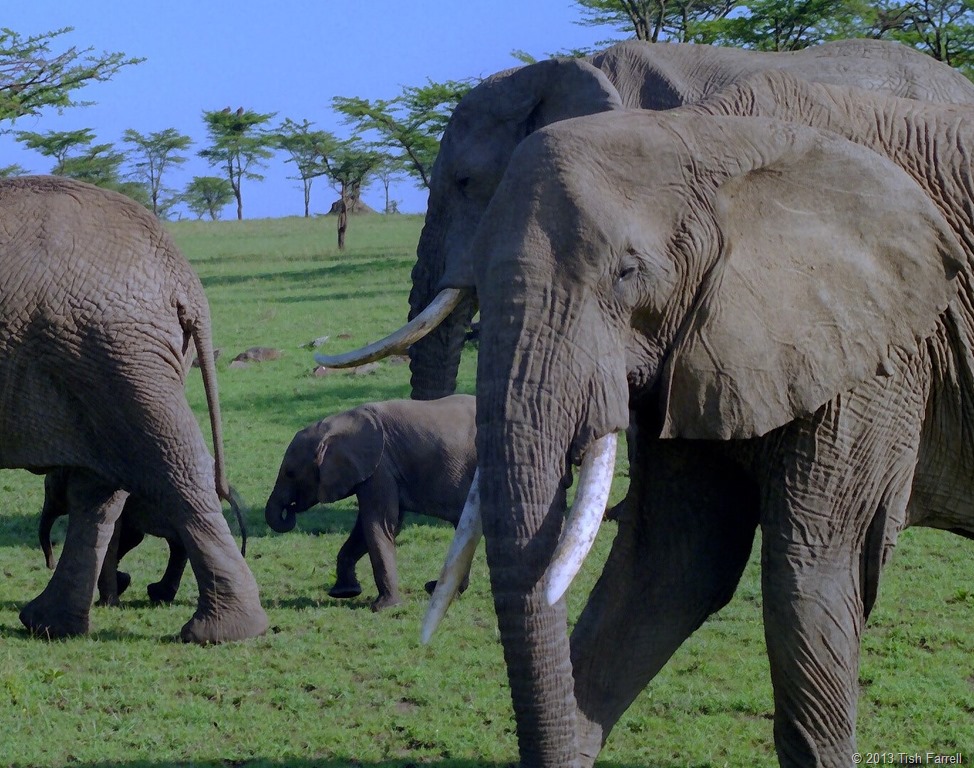
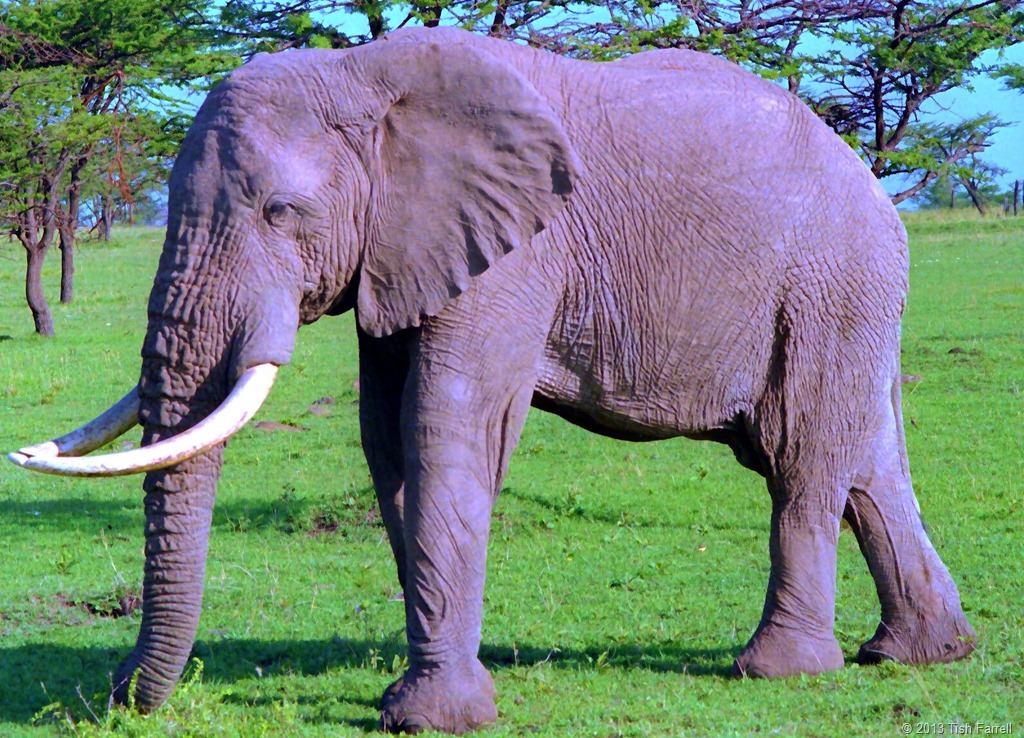
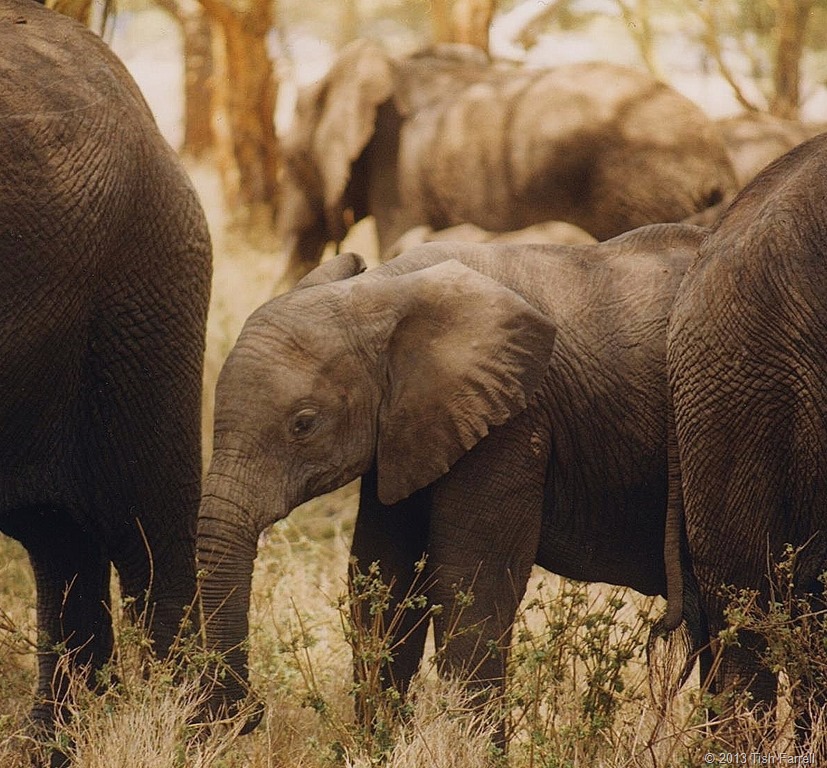
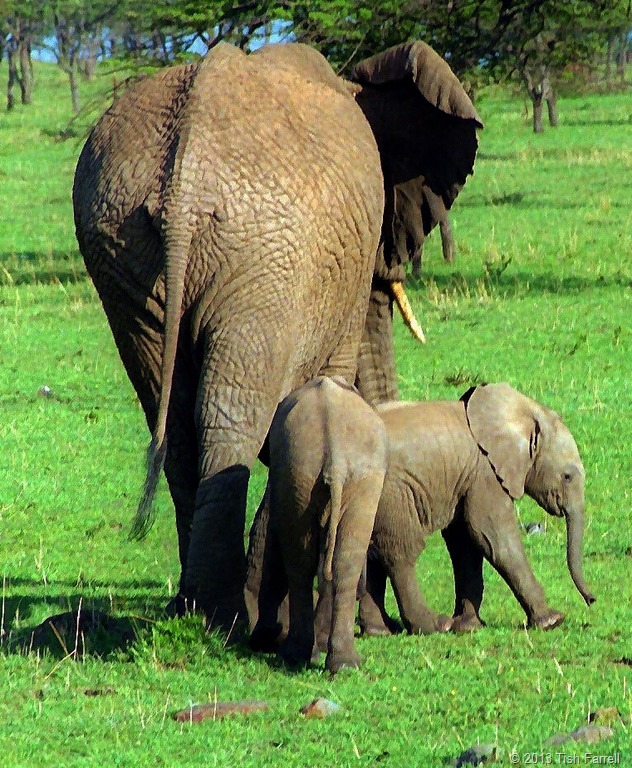
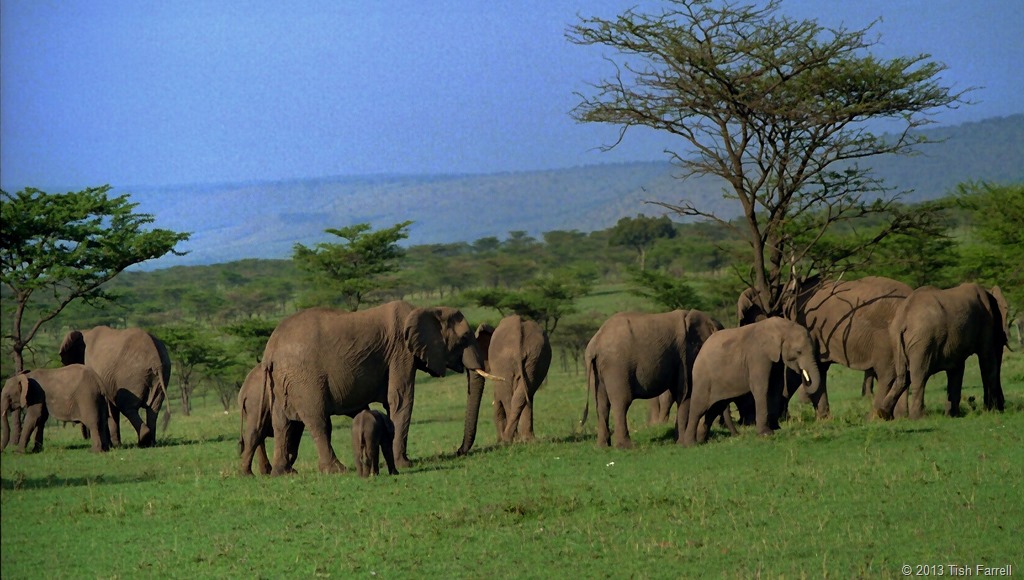
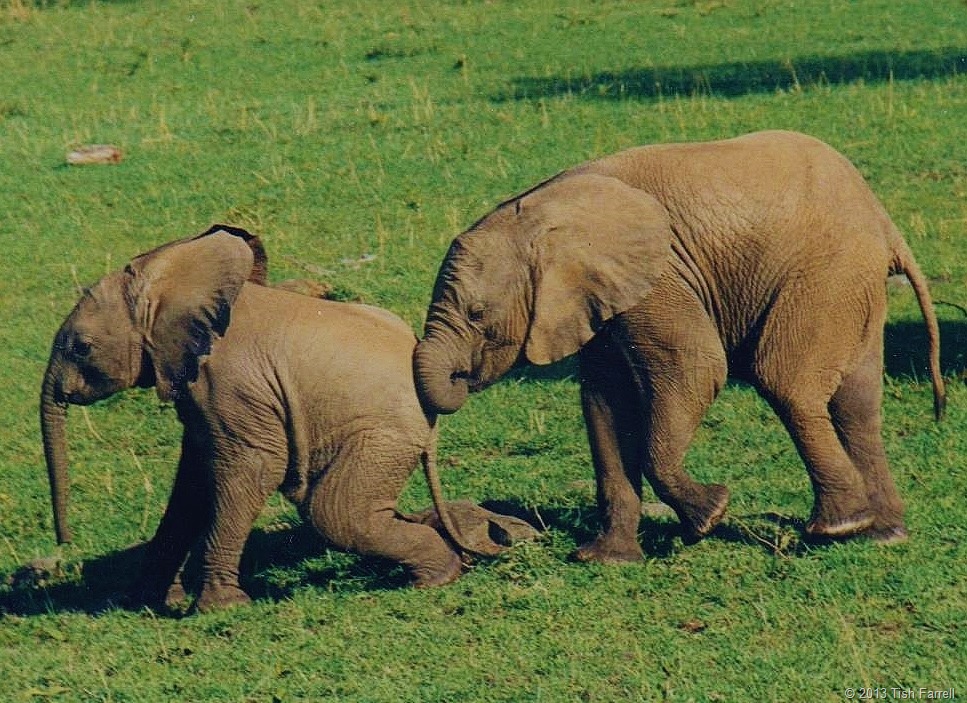
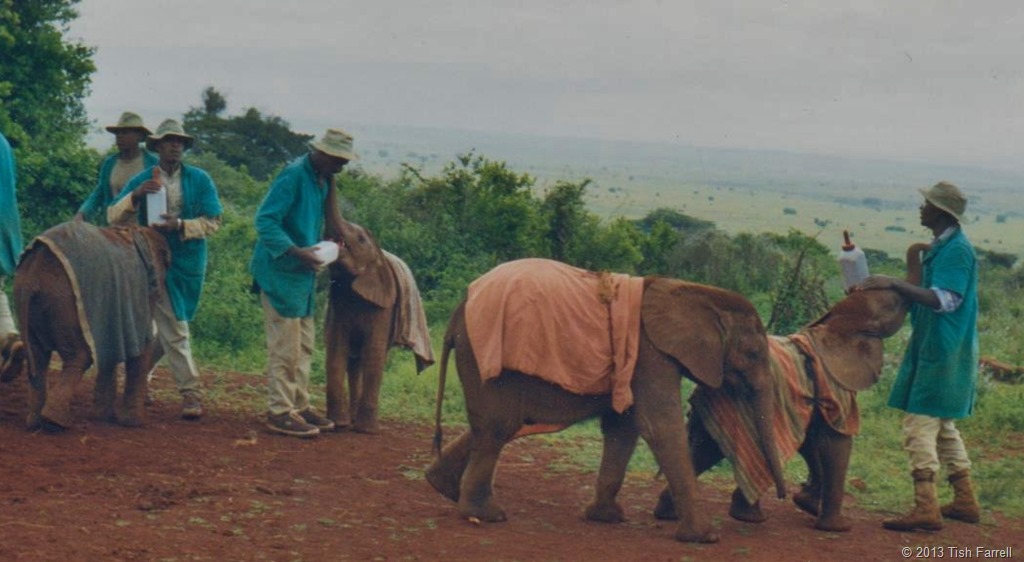
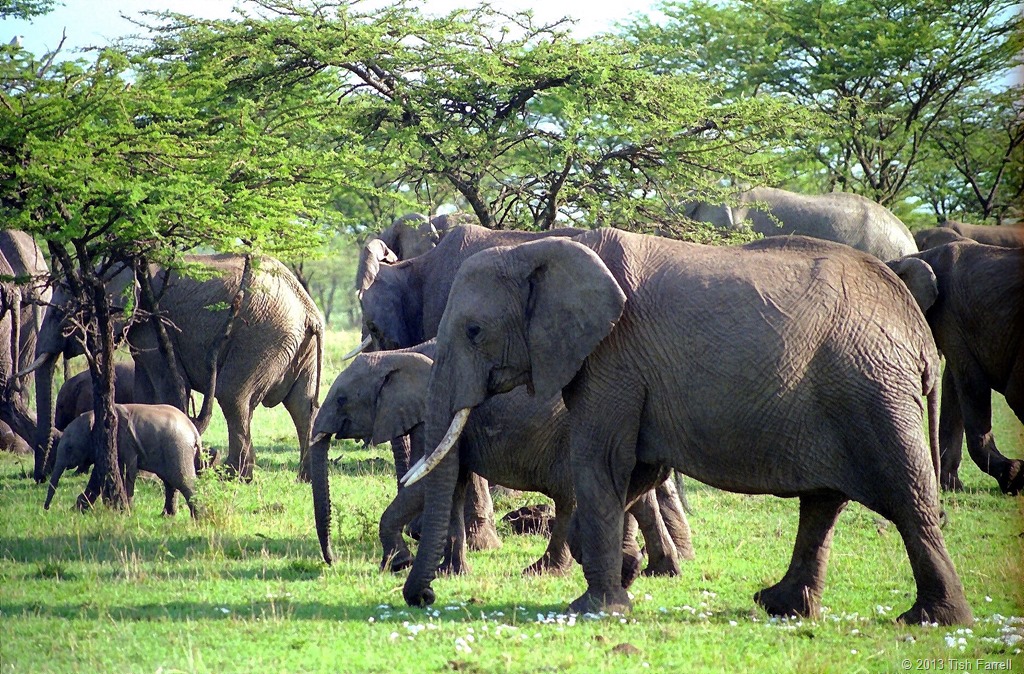
As you can see from some of these photos, mostly taken outside the national park  in Kenya’s Maasai Mara, elephants are not only highly sociable, but also very tactile. They spend much time wiggling against each other and touching each other with their trunks. Even older elephants like to play, and there are a whole range of gestures that they use to invite general romping. As the work of Daphne Sheldrick has shown at her Nairobi elephant orphanage, an orphaned elephant will die, not so much because it is short of food, although the right infant milk formula is very important, but because it does not have a continuous show of affection and reassurance from family members.

Sheldrick has learned how to provide for this vital need by assigning a human keeper-parent to every baby; duties, apart from feeding and playing, include spending the night with their charges. When the time comes to repatriate adolescent elephants to the wild, the lack of matriarchal knowledge creates a considerable challenge to making a viable transition. This was well shown in the BBC series The Elephant Diaries.

018

The Elephant Orphanage, Nairobi

*

More sobering to learn is the fact that elephants, not only have a similar life-span to us, but they also do understand death. In the past, conservationists have found to their cost that elephants are utterly traumatized by witnessing culling events. Where elephants have been wounded by poachers, their comrades will stay beside them and try to lift them or feed them grass. Once an elephant has died, the herd may remain with the corpse of several days. The young ones have been seen to cry. The survivors will then cover the dead one with branches, leaves and grass. During colonial times, a Kenyan district officer once confiscated a poachers’ stash of ivory, only to find that in the night, the local elephants broke into the store and carried off the tusks.

There is, though, another side of the elephant-man story, and especially where they compete for the same territory. In a single night’s  foraging, elephants can wipe out a whole season’s crops in a farmer’s smallholding, and that means starvation for the family concerned. They will also kill humans if they consider themselves provoked. Bulls in must are quickly irritated and are especially dangerous at such times, as are mothers with small calves.  In poor communities poaching ivory can become an attractive proposition where local bigwigs and foreign buyers seem to be offering them a small fortune to do so. The only way to protect both elephants and would-be local poachers is to give communities reasons to protect elephants. That means a fair cut of tourist dollars to provide for schools and clinics and a a better standard of living all round.

There are many thousands of elephants still roaming African, but they are always under threat. Most nations’ wildlife parks are under-resourced when it comes to vehicles, equipment and manpower. Much protection of wildlife is in fact done by owners of private game reserves in conjunction with local communities.  In the meantime, we need to thank those African rangers, men and women, who daily risk their lives for often little pay, to protect their countries’ wildlife from human rapine. They are indeed true heroes.  We might also stop to ponder on whether some of the resource grabbers funding the poachers  might not have closer connections to our own lives than we care to admit.

Ailsa’s Travel Theme: connections

© 2013 Tish Farrell

For more about ivory poaching:

Dear Kitty. Some blog Ivory trade legal in the USA

Scan-131114-0004

For more about elephants in general: Elephant Voices

Related posts:

Elephants, E-books and Enticing Reluctant Readers  #amwriting

Paul Kabochi, Path-finder, Pharmacist 1942-2003


Scan-130602-0001


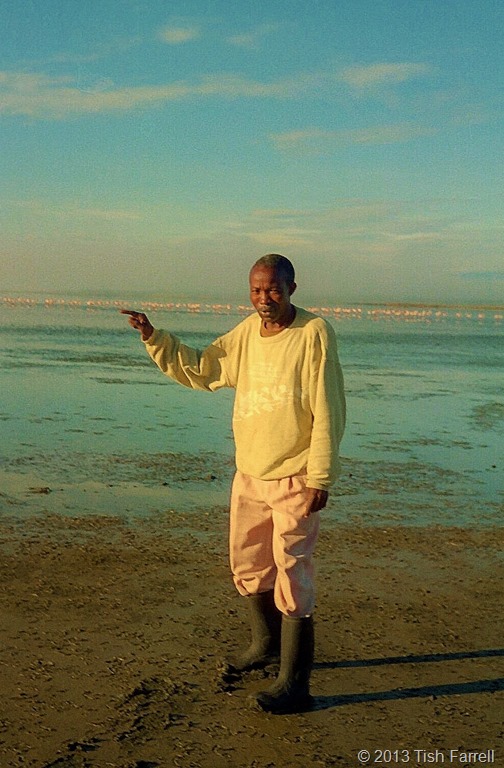
It was dawn on the muddy shores of Lake Elmenteita in Kenya’s Rift Valley, and I was walking alone, listening to the endless grunting of flamingos as they grazed the algae-rich water. Suddenly a safari truck swung out onto the mud flats. A Japanese tourist jumped out and began taking photographs of the distant flamingos. His driver and guide Paul Kabochi, also got out, moving more softly as was his way. He  came over to me while his guest went on shooting. “Hello,” he said. “What are you doing here?”

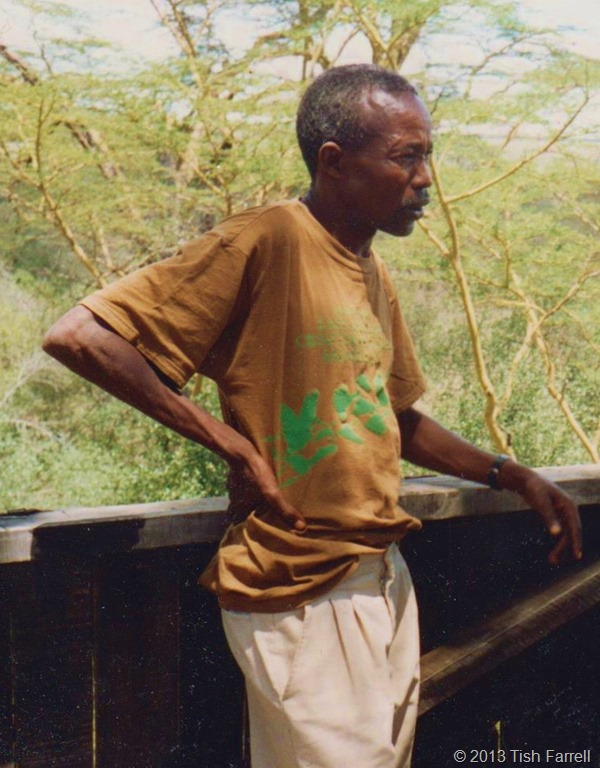
It wasn’t a question that expected an answer; it was just Paul being Paul, the wry smile, and the glittering eyes that missed nothing. On several visits to Elmenteita’s Delamere Camp he had taken me out on dawn walks, and he had been our guide on night drives around the Soysambu estate.  And so, as I had my camera with me, I asked him to pose by the lake, which he was more than pleased to do.

Paul Githinji Kabochi was a man I am lucky to have met, and I mourn his tragic loss in what was, for him, the strangest of accidents. He was a true path-finder, and not only for the likes of me, a traveller, wanting to experience the African bush with someone who knew it intimately, but also for august naturalists such as David Attenborough.  Paul had been one of the expert guides during the making of The Life of Mammals, and his special knowledge was often called upon by the BBC’s outpost in Nairobi.

I first met him on the afternoon ethnobotany walk run by Delamere Camp to keep guests amused until the night drive around Lord Delamere’s private estate (now Soysambu Conservancy). That day, on the walk, we did not get beyond the camp grounds. There were too many plants that required our attention.

Paul knew about the medicinal properties of both indigenous and introduced plant species. I remember him telling me to pick some lavender from the bush outside the camp dining room when I told him I had a headache; this after ascertaining whether it was “a headache of the stomach, or of the weather.” He told me to make tea with it. On other occasions he also explained how he treated skin cancers with a mixture of, among other things, baked sodom apple (Solanum family) and avocado. Then there was the little blue flowered Wandering Jew (Commelina) that was especially good for clearing adolescent acne. He also once told me that he had successfully treated a typhoid outbreak in the locality with decoctions of (I think) fever tree bark.  He meant to write a book, imparting all he knew, but when I last met him he was struggling with finding ways to fund the venture.

When he was not acting as guide for Delamere Camps, he had his own clinic in Rumuruti, and was also called on from time to time to consult at the prestigious Nairobi Hospital.

001

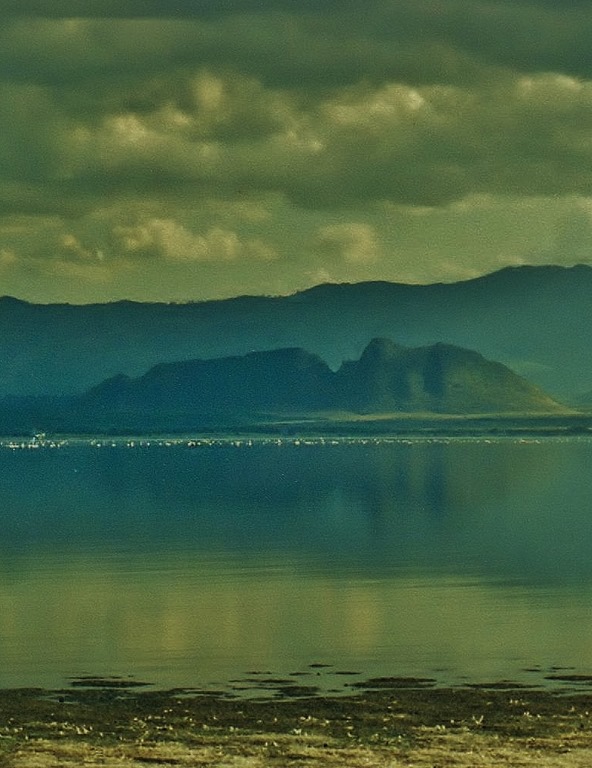
Lake Elmenteita looking towards the exploded volcanic crater known as The Sleeping Warrior. Large numbers of flamingos come to feed here, but it is more important as a breeding ground for white pelicans. Like many of the Rift lakes, the water is exceedingly alkaline. This particular lake is also very shallow, being only around 1 metre deep. At times it has been known to disappear altogether, leaving a dusty basin. The name comes from the Maasai ol muteita meaning dust place.

005

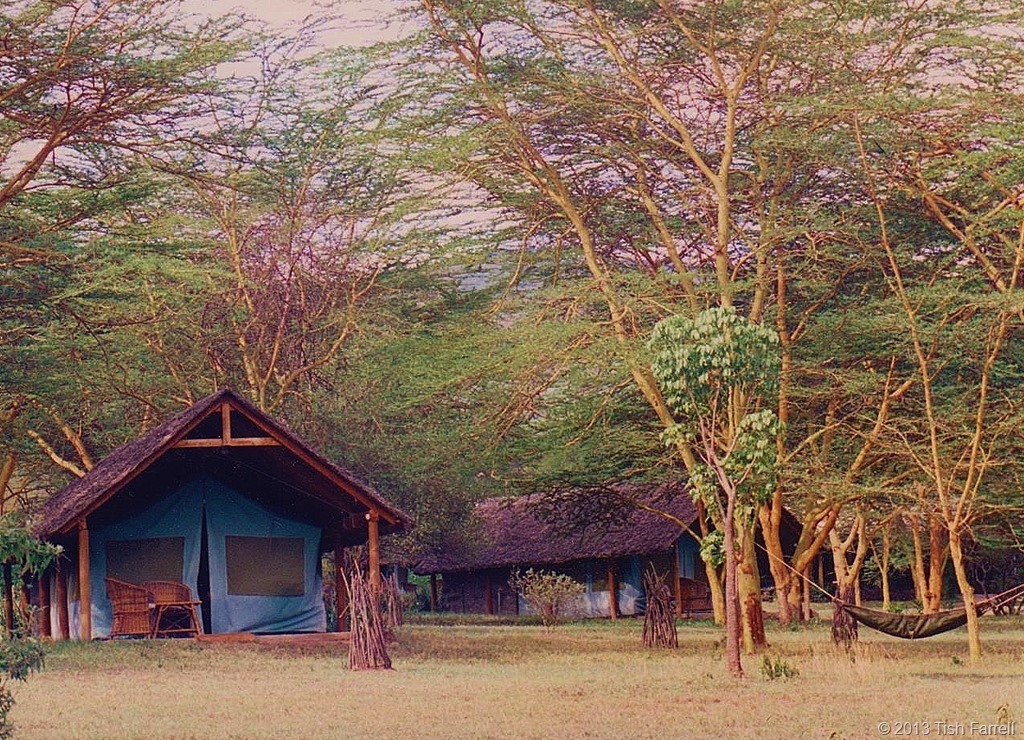
There were around twenty ‘thatched-roof’ tents – all with bathrooms. On cool evenings we would return from the night drive to find hot water bottles in our beds.

001 (2)

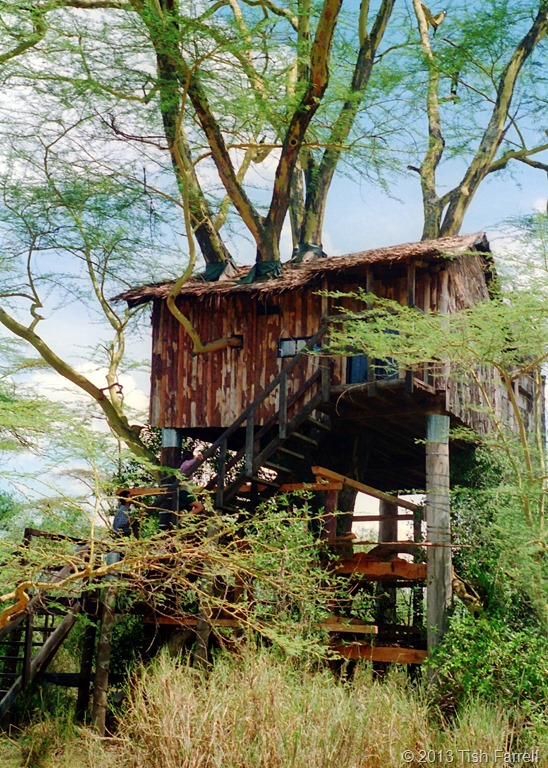
Paul was responsible for many of  the features that made staying at the Elmenteita camp so special. One of them was the tree house he built in a fever tree, and on whose roof terrace he is standing in the photo above. Small numbers of guests could spend the night there in the hopes of spotting the leopard that came to drink at  a nearby water hole. We stayed there once, but saw no leopard. Instead we were kept awake by chattering tree squirrels who spent all night raiding the sugar bowl which we had carelessly left uncovered. The night drive out there, though, had been fun. We had seen both a zorilla and an aardvark. And in the morning the camp staff drove up with a full hot breakfast, so we could dine on the roof amongst the bird call.

Scan-130601-0007

Paul said he came from the Ndorobo community, or Ogiek, a small, but remnant population of hunter-gatherers, who traditionally lived by honey gathering and hunting. These slight-framed people were possibly among the indigenous inhabitants of East Africa before the arrival of the Bantu farmers and Maasai pastoralists. Many became assimilated with the newcomers, adopting their languages, but there are still groups living in the forests of the Mau Escarpment, where they struggle to have their rights acknowledged by the Kenyan Government. Top on their list of priorities is preserving their forest domain, now constantly under threat from agriculture.

Before he became a guide, Paul worked for many years as an animal trapper for the National Museums of Kenya, capturing animals for museum study and display. He told me that he and his party had once been set on by bandits while he was trapping up in remote and arid Turkana. The works Land Rover was stolen at gunpoint and they were left to die. He survived on that occasion, but blamed the loss of many teeth on the days of near starvation in the wilderness.

In the years before he died, Paul was working down at Taita Ranch near the border with Tanzania. There he liaised with film crews and scientific expeditions of all kinds, giving them the benefit of his wisdom and wit. It was on the 8th February 2003, while he was out alone, and on foot, tracking dwarf mongoose, that he was surprised by a lone elephant and killed. It was some years after the event that I heard what had happened, and oddly, too, from a friend of a friend in rural Shropshire, someone whose sister lived in Kenya and whom I met while she was briefly over in England on a visit. It was a strange way to discover this sad news. Even now, I find it hard to believe that someone as smart and wily as Paul Kabochi could have been caught unawares by an elephant. They have such a strong smell for one thing, and he was not a man to take anything for granted.

Many academic research papers have been dedicated to him, but I notice, as time passes, internet  references to Paul Kabochi grow fewer. This makes me wonder, too, about the loss of all his pharmacological knowledge. I know he had children, but did he pass it on? In 2000 German documentary film maker Ralf Breier made a short film about Paul. Its English title is ‘Animal Magician’. Now that’s a film I would like to see.

003 - Copy

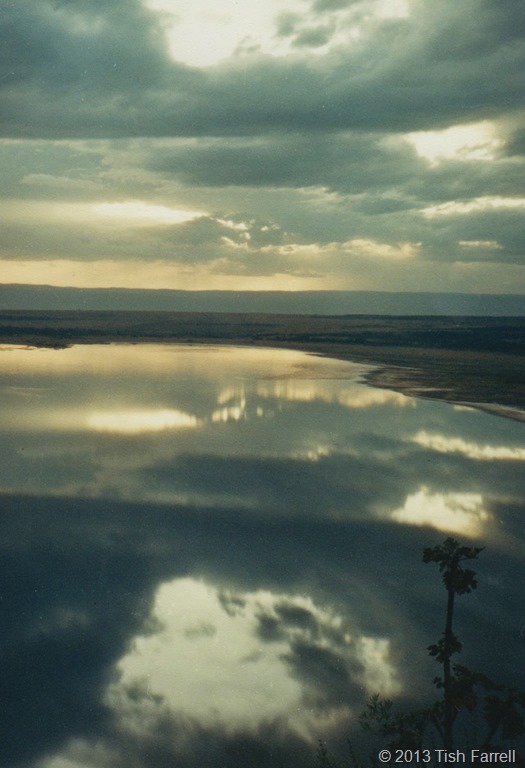
The photo above was taken from the Sundowner Look-out, above Lake Elmenteita.This was another of Paul’s ideas: that in late afternoon guests would either walk or be driven up to the cliff top behind Delamere Camp. There they would be given a few roast ‘bitings’ of game meat and a beer or soft drink, and sit on tree-stump seats and watch the sun go down. We have sat up there and viewed this scene with some of our dearest friends. Now I  look at the photo and think of Paul Kabochi. It is hard to think that he is not still treading softly along Africa’s wilderness trails. 

© 2013 Tish Farrell


P.S. Delamere Camp is no more. Much of the former Delamere estate at Soysambu is now part of the Soysambu Conservancy. The soda lakes of Elmenteita and nearby Nakuru are now World Heritage Sites.


Nakuru is the next lake up the Rift from Elmenteita.


The Smoke that Thunders

Scan-130703-0003

We inhabitants of Great Britain, that one-time source and bastion of Empire, somehow take it for granted that other people’s geography should be named after our explorers, our lords and our monarchs. It was part and parcel of the colonizing process, this laying claim to territory, the ‘making it ours’ rather than theirs, the indigenous inhabitants’. Also, much as a head-hunter gains spiritual power by consuming the brains of his enemy, so explorers, lords and monarchs accrued grandeur by bestowing their names on natural-world-wonders. It was one way of acquiring grand-scale permanence over frail bodily transience. Some might say it was a form of megalomania.

All of which is to say that the photo above shows one of the most famous examples of colonial misappropriation – the great southern African cataracts of Victoria Falls. They were ‘discovered’ by missionary, David Livingstone, in November 1855. This was in the days before the British map-makers had staked out the colonial territories of Northern and Southern Rhodesia, (named after the mineral-hungry Cecil Rhodes), and now known (respectively) as Zambia and Zimbabwe.

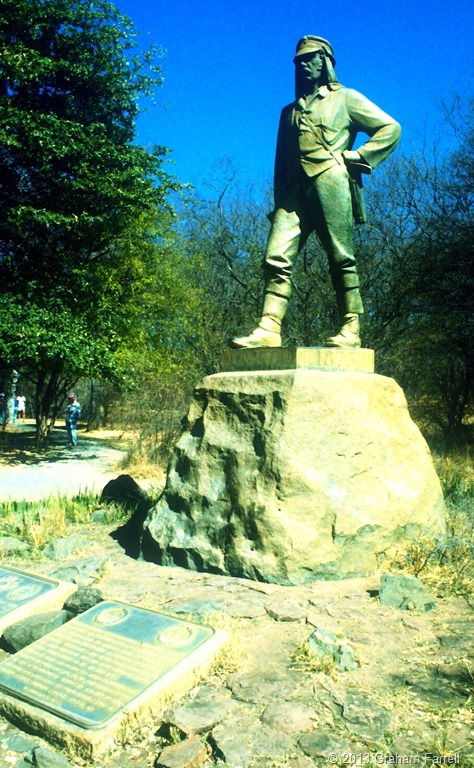
Livingstone is thought to be the first European to set eyes on the falls, and his presence is commemorated both in the name of Livingstone Island, just above the falls, and in the town of Livingstone on the Zambian side of the cataracts.

Scan-130703-0004

 Livingstone Monument

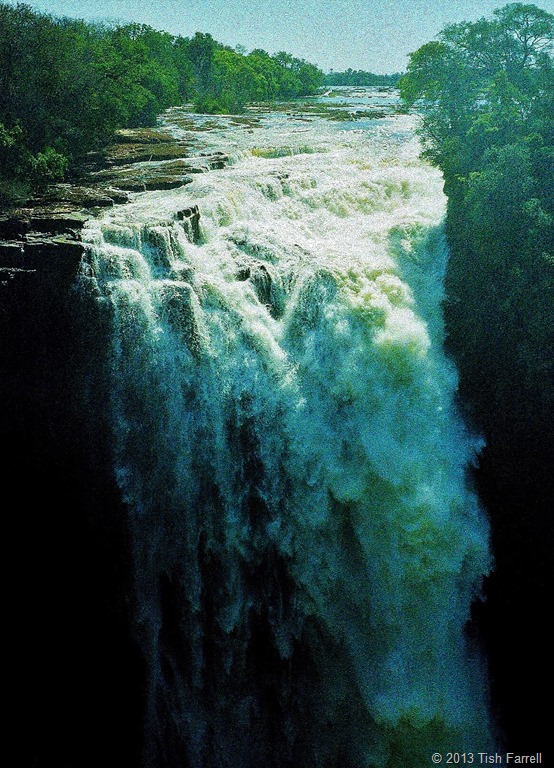
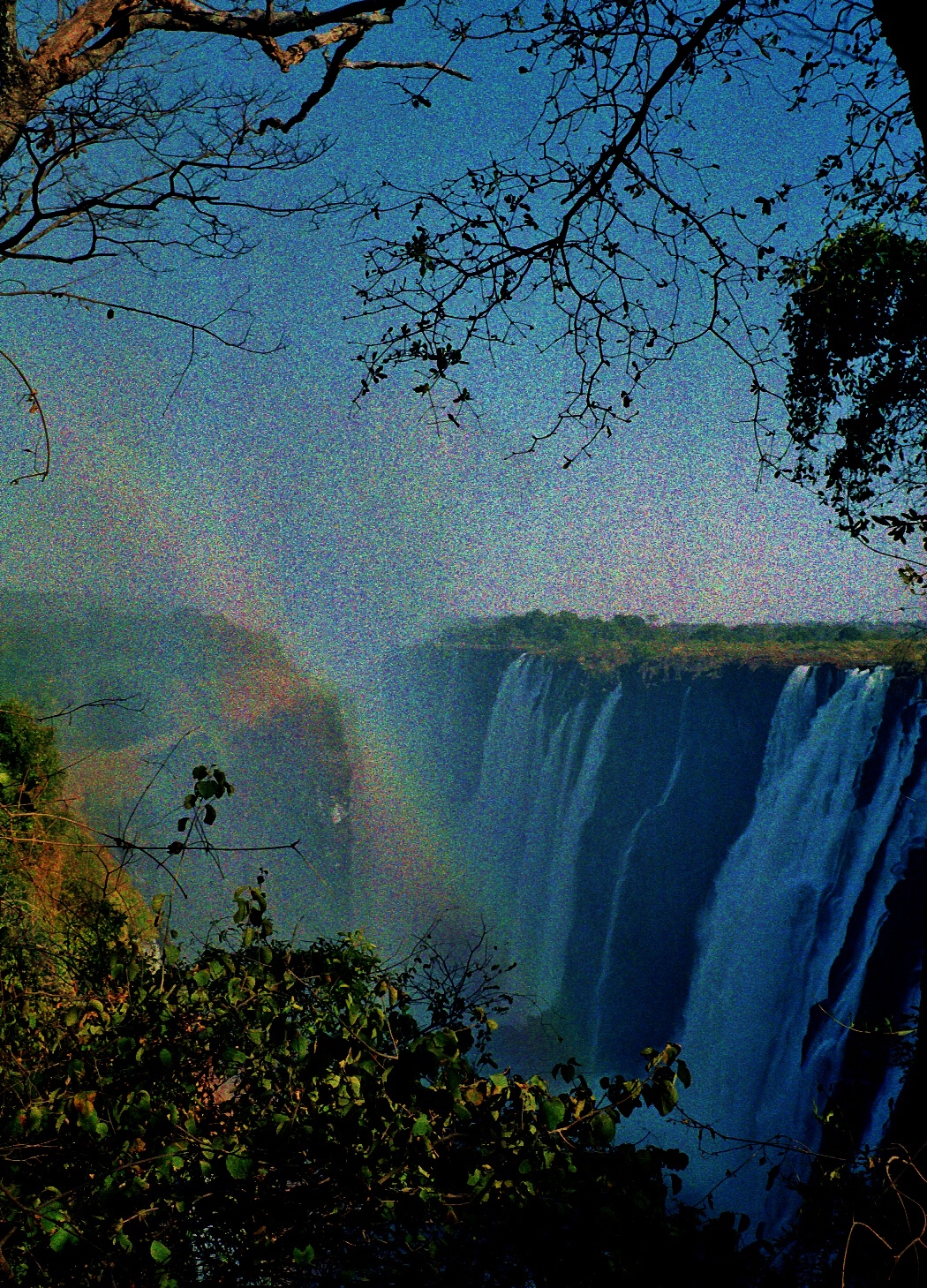
But the fact remains that when Livingstone arrived this, the largest falling curtain of water in the world, already had at least one very fine name. The rainbow spray from the toppling cascades rises like smoke that can be seen for miles, and the Zambezi, as it drops through 110 metres, simply roars. And so it is fittingly known by the indigenous Tonga people as Mosi-oa-Tunya, the smoke that thunders.  Also fittingly, and by way of restitution, this is also the name that UNESCO puts first in its World Heritage Site citation for the falls.

Victoria Falls and Zambezi

The falls from the Zimbabwe side at Victoria Falls town. The spray is a challenge to the the photographer.

*

The photo below shows the falls from the Zambian side. The rains had been poor when the shot was taken, and much of the water from the Zambian side of the Zambezi is anyway abstracted for industrial purposes. It is hard to convey the scale, but it shows well how the Zambezi has cut through the basalt plateau over which it flows. Over the last hundred thousand years the river has repeatedly carved out new gorges, wearing down cracks of softer sandstone within the basalt and creating a zigzag of massive fissures. The current falls go over the eighth gorge, but there are already signs that the ninth is beginning to form.

I have the foolhardy distinction of almost hang-gliding off the falls’ knife-edge courtesy my kanga-wrap, just then being used as an umbrella. G had business in Livingstone and we were staying in a hotel near the river, or I should say near the absence of river. I saw people walking across the waterless river bed towards the Zimbabwe side of the falls, and one Sunday afternoon, urged G. to set off on an outing. In no time we had a young Zambian boy offering to be our guide. He led us through a maze of huge boulders and oily stagnant pools. At one point I noticed fresh elephant droppings and fully expected the massive stones to transform into pachyderms, since that’s the sort of thing elephants do. All around the sky was turning from brilliant blue to a steely grey. I forgot about elephants and thought of flash-floods instead. I was beginning to wish we had not come.

Zambia's Victoria Falls looking along knife-edge to Zimbabwe's falls

But the boy pressed on, heading we later discovered for Livingstone Island. He had promised to show us the best place to view the falls. And so we followed. And then came the deluge. In seconds we were soaked to the skin by very cold, hard rain. When I looked back across the river, our hotel seemed very far away, and the empty river bed so very wide. We ran after the boy into the trees on Livingstone Island, and there we huddled under the dripping vegetation. Time passed. And more time passed. We grew colder and wetter.

Finally, when there was no sign of the rain letting up, G. asked the boy how far was this viewpoint. Oh, not very far, he told us. We followed him out into the driving rain. And sure enough, in a few paces, there we were on the knife edge. I held my kanga high above my head, fly-sheet style, in a bid to fend off the downpour. But as I craned over the precipice, the wind gusted and I felt the threatening lift as it filled the kanga…

After that there could only be a swift retreat. Shaken by my close shave with the abyss, I turned for the distant shore and tried to run. But the rocks were slippery, and every boulder looked like an elephant, and the more it rained the more I glanced upstream for that wall of rushing water. By now our guide had disappeared. I don’t think we had even given him a tip, and that was even more worrying. To leave without his kwacha? What did he know that we did not?

Of course it was all panic and no substance. After a hot shower and a bottle of Mosi back at the hotel, it seemed like a great adventure, though we did wonder if Livingstone Island was in Zambia or in Zimbabwe, and if, in the rainstorm, we had become illegal immigrants into Zimbabwe. Of course we hadn’t, but it added a little more spice to the story.

Scan-130703-0007 (2)

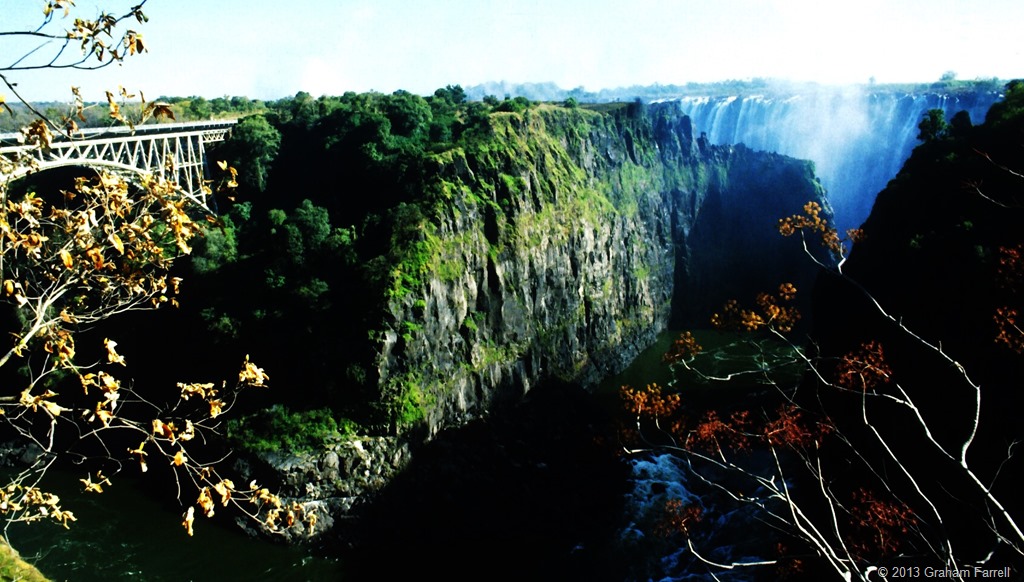
Victoria Falls - Cecil Rhodes' railway bridge

The Victoria Falls bridge, built in 1905 in a bid towards fulfilling Cecil Rhodes’ dream of the Cape to Cairo railway line. He insisted it was built where the falls’ spray would fall on passing trains.

Victoria Falls - Zambian side with rainbow

Related:

UNESCO World Heritage Site

Sun, Steel and Spray: A History of the Building of the Victoria Falls Bridge by Peter Roberts

Where’s My Backpack Ailsa’s Travel Theme: Height

More takes on height:

http://suejudd.com/2013/10/04/weekly-travel-theme-height/

http://cosytravels.wordpress.com/2013/10/04/travel-theme-height/

http://laavventura.wordpress.com/2013/10/04/travel-theme-height/

http://bastet1952.wordpress.com/2013/10/04/travel-theme-high/

http://sustainabilitea.wordpress.com/2013/10/04/travel-theme-height/

© 2013 Tish Farrell

Grouchy Hippo, Laid-out Lions

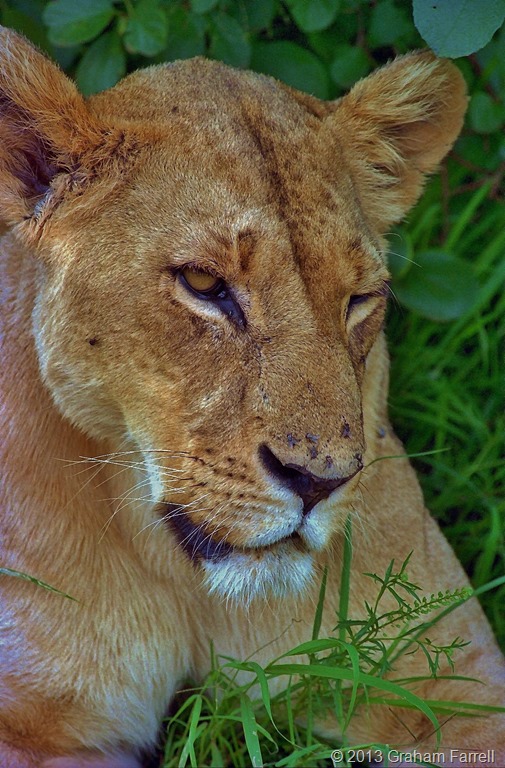
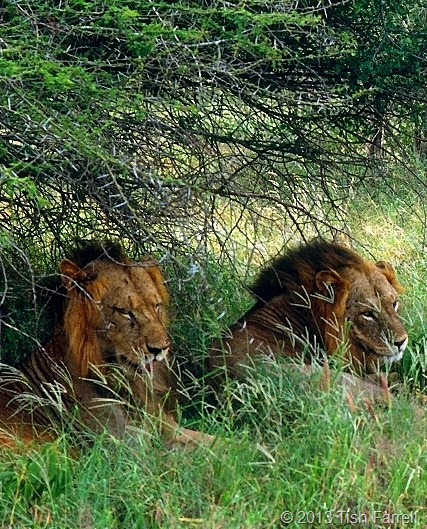
It always seemed astonishing to me that, should you be lucky enough to locate them, you can simply drive up to dozing lions and take their photographs. Even if you sit doing this for half an hour or more, they will barely deign to register your presence. These big cat shots were all taken in Kenya, but it was while we were living in Zambia, and visiting South Luangwa, that our young South African guide briefed us on the proper protocol when encountering lions.

Scan-130429-0024


lions in the Taita reserve 1992

At the time we were driving around a Luangwa salt pan where we had come upon a pride of lions lying about in the thorn scrub. The guide told us that as long as  our profiles remained within the frame of the vehicle (in this case an open-topped safari truck) the lions would not give two hoots about us. To them we would appear to be part of the truck and from which they perceived no particular threat.

South Luangwa - out on the salt pan lion hunting

Out on the Luangwa salt pan, me in the back seat. The lions had been spotted earlier before the sun came up.

South Luangwa - spot the lions 1

Not a good photo, but the light was poor and I had only my Olympus trip.

*

However, I was scarcely reassured by this newly acquired knowledge of how-not-to-upset-a-lion when the next day, at 5 a.m., the same guide took us on a hike through the bush. It is all so very different on foot. For one thing, it can be hard to see  far ahead, what with all the tall grasses and potato bushes. The guide, though, seemed perfectly relaxed. He had already led us to within thirty paces of a browsing elephant, and assured us that it was entirely peaceable since its ears were not out, nor its trunk thrust to the side in charge mode. He had explained, too, how elephants move silently, in effect walking on tiptoes, the backs of their feet cushions of fat. For a time I kept looking behind me. It had never occurred to me before that something as large as an elephant could sneak up on me.

Our guide then spotted a herd of buffalo. This pleased him because he said that in Luangwa lions preyed on buffalo and the big cats were thus never far behind. And so keeping a careful watch on which way the wind was blowing our scent, he and our accompanying park ranger, White, set out to find some. This involved much careful manoeuvring, first around a small group of  passing elephants, and then around the buffalo herd.

Clearly, being on foot, the keeping-one’s-profile-inside-the-vehicle strategy would be quite useless. We had no vehicle. Instead we were told to stake out likely trees to scramble up. I eyed the leadwood and sausage trees doubtfully. A few decades had passed since I had done any tree-climbing. I did not think I could do it – not even to escape a charging  lion or buffalo.

Later I was to read a white settler tale of how if you were ‘treed’ by buffalo, they would lick any appendage you had not managed to haul high enough into the branches, and go on licking until your flesh was abraded to the bone. I’m glad I did not know that then. I already knew that buffalo were probably the most dangerous beasts in Africa, and it did not do to cross them- ever.

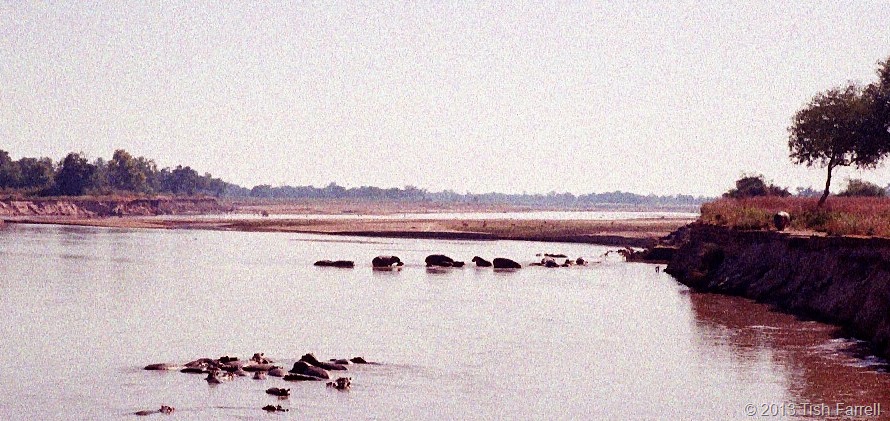
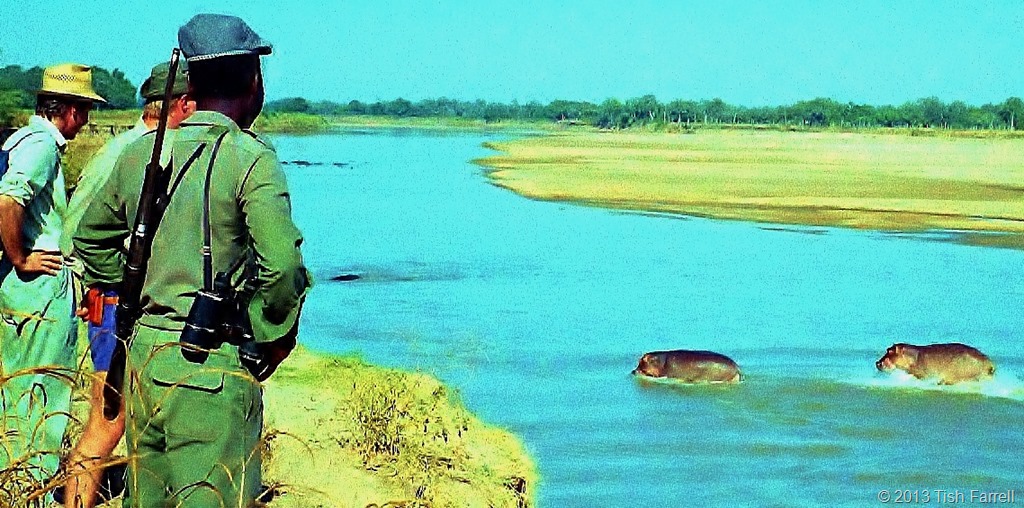
In the end we did not find lion. I was both disappointed and relieved. By then we had been out walking for several hours, and had only stopped for a tea break. The late morning sun burned down overhead, and we headed back to camp along the Luangwa River, me thinking mostly of breakfast. The members of our small party chatted amiably, enjoying the shimmering meanders of the river. We might have been walking in a city park for all the care we were taking. It was lucky, then, that we had White, the park ranger with us. It was he who drew our guide’s attention to the big bull hippo further along the track. The great beast was attempting to negotiate a shelving river bank, and having some difficulty. Several times he slithered half way down, but could not bring himself to take the final plunge.

The guide said it was most unusual to see a hippo out of the river so late in the day. They liked to be back in the river before sun-up, this after the night spent foraging for grass. He was clearly upset, but we were still some way off, so we stood and watched. Some of us were even laughing at the hippo’s dilemma. The bank was simply too steep. His huge bulk gleamed an angry red under the sun.

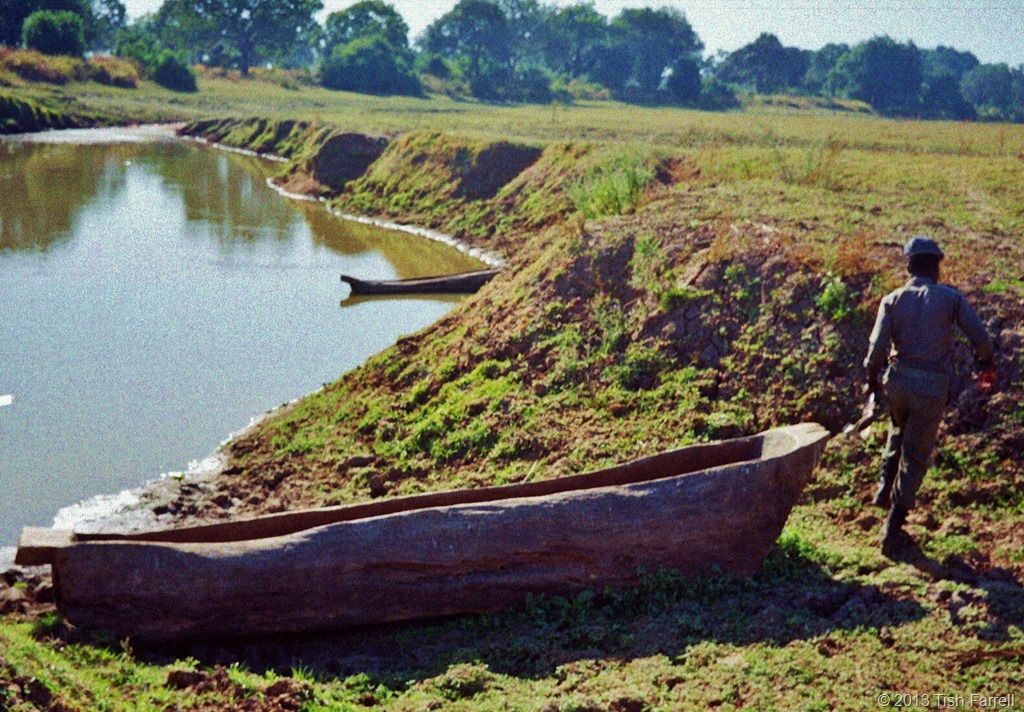
Then someone must have laughed too loudly, for suddenly the bull gave up trying to slide into the river. With a bellow he swung towards us and came charging down the path. While White took up a position behind a thorn bush, the guide urged us to move several hundred yards back along the path, across an old lagoon to where a fisherman’s big dug-out had been beached. We were to stand behind the dug-out until he came for us.

We did not need to be told twice. The boat looked reassuringly substantial, although it reminded me of the guide’s earlier tea break tale. We had stopped at a fisherman’s old campsite, and it was there that he told us how a fisherman had recently been mangled to death by a hippo. As we reached the dug-out I vaguely wondered if this boat had belonged to the poor man.

Meanwhile the ranger and the guide, held their position behind the thorn bush, and began to clap very loudly.

For too many seconds the bull came on. The ranger had his rifle at the ready. The guide kept clapping. Then at the last moment, the hippo ran out of steam and veered off into the undergrowth. There were sighs of relief all round.  When the guide came to round us up, he informed us that White had been more than ready to, as he put it,  part the bull from his brains, but they were nonetheless glad that this had not been necessary. Apart from being scared, the incident made me uncomfortable. I saw then that safari-going had its responsibilities, and was not simply an exciting jaunt. If White had been forced to shoot the hippo it would have been because we were intruding at a moment when the bull saw himself at great disadvantage. Who could blame him for charging?

South Luangwa - hippos and bull on the bank 2 wider view

The hippo when first sighted. You can just spot him under the tree on the right. Thereafter, I was running not snapping.

*

South Luangwa - traditional fishermen's dug-outs on a lagoon

The dug-out refuge point, and White leading us back to the path, the hippo now vanished from sight.

*

South Luangwa - dawn walk and hippos

Watching more peaceful hippo near our camp.

*

Back in camp it was of course a case of ‘travellers’ tales’.  We could sit around over a late breakfast, talking of all the things we had seen that morning, and especially of our near miss with one very angry hippo. At such times, and as so often happened in Zambia, life did not seem altogether real.

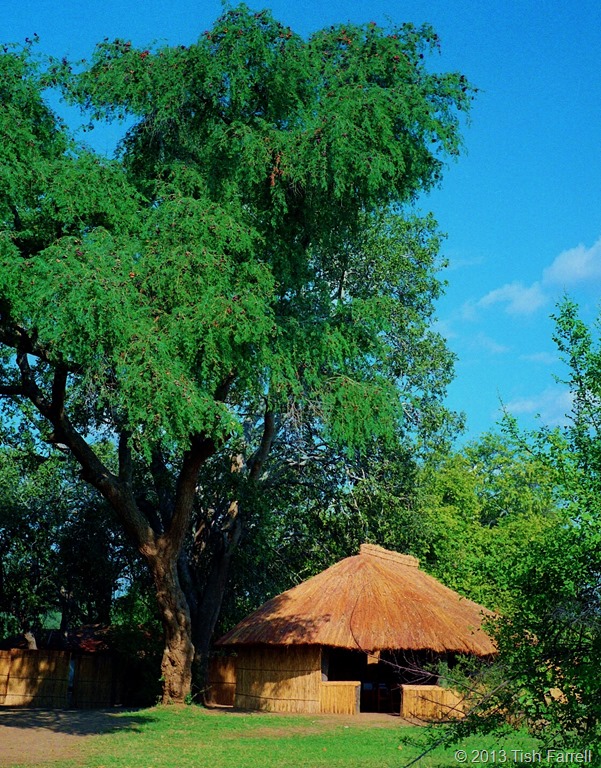
South Luangwa - Tenatena camp dining room under a rain tree

The dining room at Tena Tena camp, beside the river and under a rain tree


© 2013 Tish Farrell

No way back from Africa: the road to Hunter’s Lodge

010

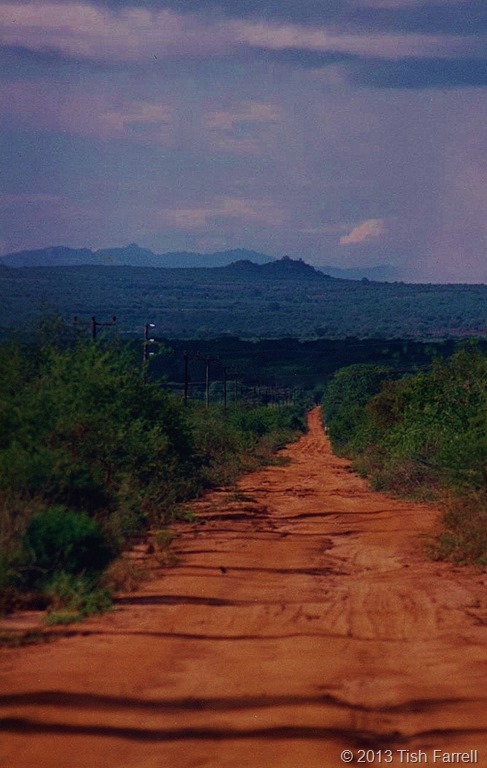
The road from the Range Station to Kiboko

*

I can pretty much bank on it. Once you have been in Africa you will never be the same. Nowhere else will you feel so alive, or so in love, or so entranced or indeed, afraid. In the physical sense, your blood and guts may well bear traces of the diseases and parasites you encounter there for years to come. Certainly the psyche will be forever afflicted by acute withdrawal symptoms, the loss of sensation, the no-longer-state of being always in the present – the only way to live back there.

In elemental ways too, standing, for instance, in East Africa’s Rift Valley, you could well find yourself confronting your genetic heritage for the very first time: the dazzling revelation that this is the land where your ancestors stood up on their apes’ hind legs and marched onwards to the age of technological development that we like to call civilization. It is the moment that you understand that you and this landmass are intimately connected through every pore, cell and bone.

And the reason I can say this, daring such unbridled presumption, is because it happened to me, and to G, and to all who know us and visited us there. Africa gets under your skin and, to quote a dear old friend “up your nose and into your soul.”

003

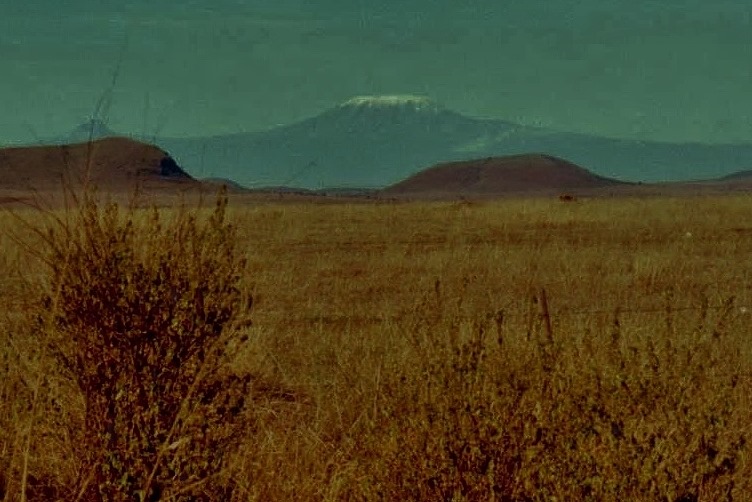
Kilimanjaro caught from the Mombasa highway just south of Kiboko

*

For me the journey into Africa began, with auspicious timing, on the 14th February 1992. This was the day I ran away – to Kenya to be precise, leaving home, possessions, accountant spouse and several labradors in order to travel with a roving entomologist who had no home, no possessions – neither in Africa nor in England. He had recently been in Mexico researching the habits of the Larger Grain Borer (LGB), a small maize-eating beetle that ravages stored crops. Before this he had worked for two years in Tabora, Tanzania, as a volunteer Agricultural Extension worker, also advising farmers about LGB. (See earlier post On Kenya’s Farms)

In the 1980s this pest had arrived  in Africa (where it has no known natural predators), introduced on consignments of food aid from the Americas. In 1992, then, G was on a new LGB mission: to monitor the beetle’s spread from Mombasa on the Indian Ocean coast to Nairobi in the Kenya’s central highlands. For the next nine months we would lead a nomadic life, travelling up and down the Mombasa highway, which back then was little more than a ribbon of ragged tarmac running through the bush.

The road was fraught with dangers – from gargantuan potholes to car-jackers lurking in the thorn scrub. There were also successions of stranded trucks left where you least expected them, and the possibility of some belligerent buffalo insisting on a standoff in the middle of the highway; and then there were policemen flagging us down for lifts, or to give us speeding tickets when we had not been speeding.

sundowner

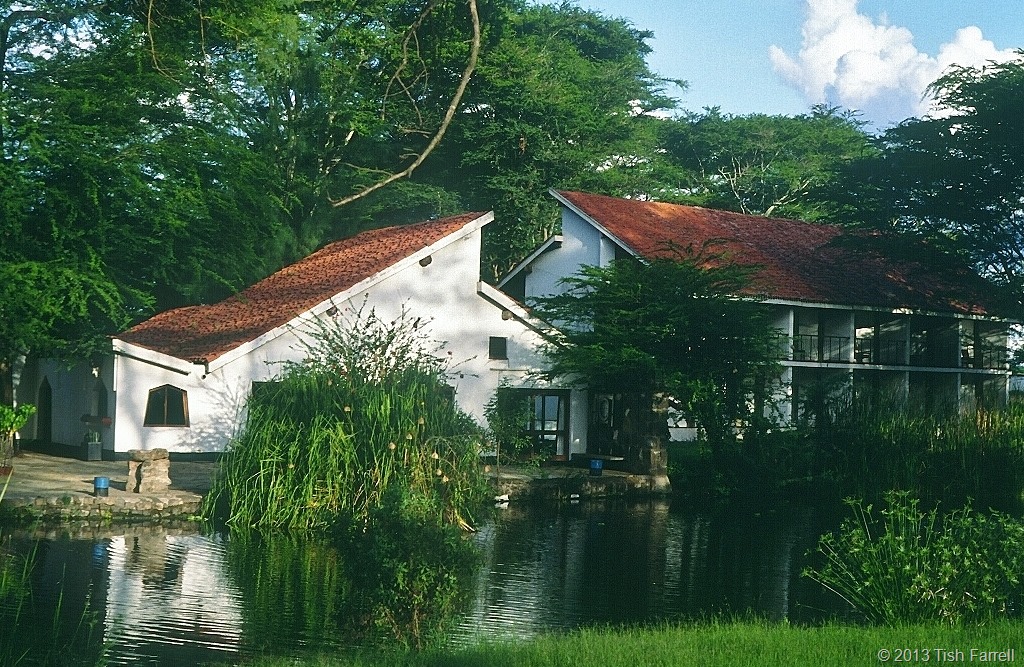
Hunter’s Lodge, Kiboko

*

During these nine months we stayed in roadside hotels, safari lodges, beach cottages, a Danish development workers’ guesthouse, and, best of all, at Hunter’s Lodge where we were usually to be found for three or four days each week. This one-time home and small hotel was begun by Great White Hunter, John Hunter, at a small place called Kiboko, some hundred miles south of Nairobi. The place had once been a regular resort for expatriates taking a weekend break from the capital, or a convenient overnight stop en route for Mombasa beach. This was in the days when the road was still an un-metalled cart track, and it took all day to get there (needless to say, covered head to toe in red plains’ dust). The coast was a further 200 mile-drive, including the long stretch of desolate Taru thorn scrub south of Voi.

Kiboko, then, was in every way an oasis. John Hunter had long had his eye on the location before he moved there in his retirement in 1958. He had arrived in British East Africa in 1908 in the wake of the first European settlers, and made a career of clearing unwanted game: first lions from the Uganda railway that ran nearby and later, on behalf of the colonial game department, elephant from settler farms, and marauding hyena from the African native reserves.

He also ran private safaris for counts and maharajas, and therefore rubbed shoulders with the likes of Karen Blixen’s white hunter husband, Bror Blixen, and her lover, Denys Finch Hatton (Out of Africa). In his time, Hunter was personally responsible for despatching over 1,400 elephants, and nearly as many rhinoceros. Local myth had it that Hunter gave up repairing the hotel sign which a vengeful rhino was intent on flattening. Besides, in those days, everyone who was anyone knew where Hunter’s Lodge was.

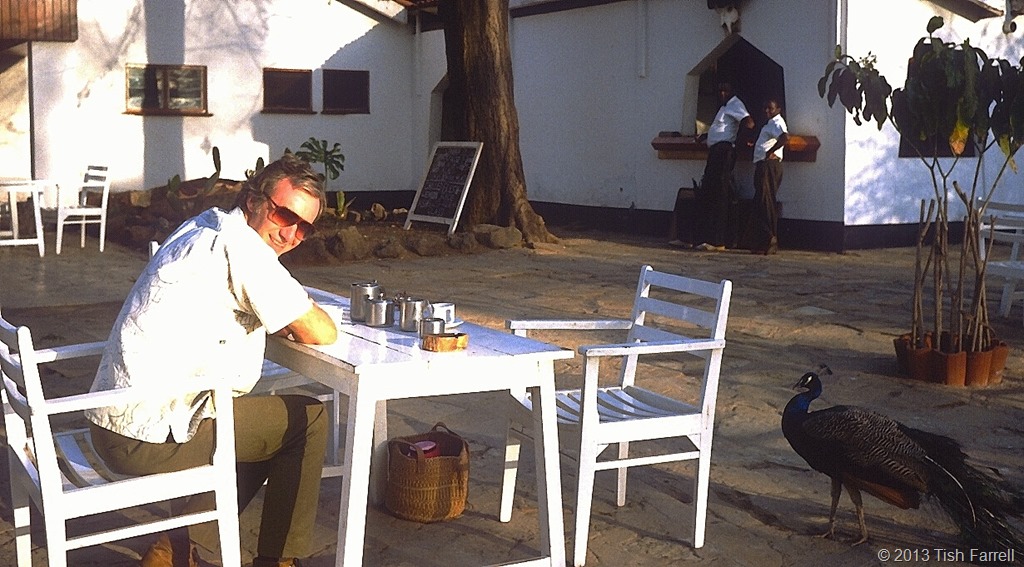
Graham and peacock 1992

Afternoon tea with the sugar-stealing peacock

*

The reason Hunter chose Kiboko to settle was because it had fresh water: a volcanic spring, and the only one for miles around. In the old days he had often watched elephant coming there at sundown to drink. He, however, set about damming the stream to make a small lake, this surrounded by a grove of graceful fever trees and wild figs. Given the general aridity of the surrounding bush country, it truly is a beautiful place, a resort not only for human travellers, but for some three hundred species of bird. When we were there, there was also talk that a leopard haunted the upper reaches of the pool, but we never saw it: only baboons and vervet monkeys, a bushbaby and a monitor lizard.

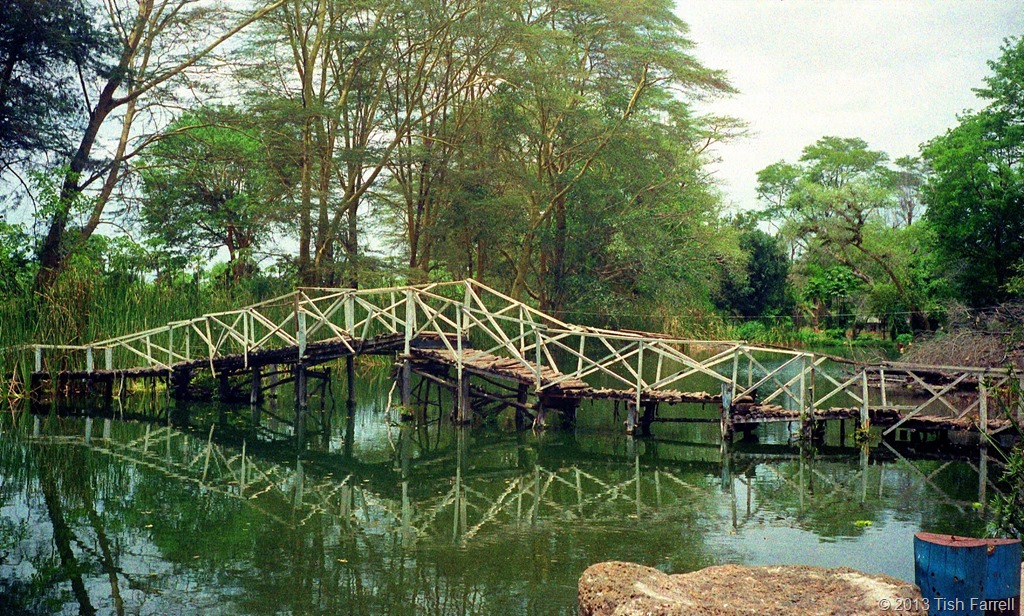
The bridge

The bridge to the vegetable shamba

*

And the reason that we often stayed there was because the Kenya Agricultural Research Institute had a small research station and laboratory just behind the lodge. On starting his job, Graham was gravely entrusted with a key to the back garden gate, so that at 7.30 am he could walk to work, and then walk back again for lunch at noon. The lab employed a dozen technicians, all working on the LGB project.

002

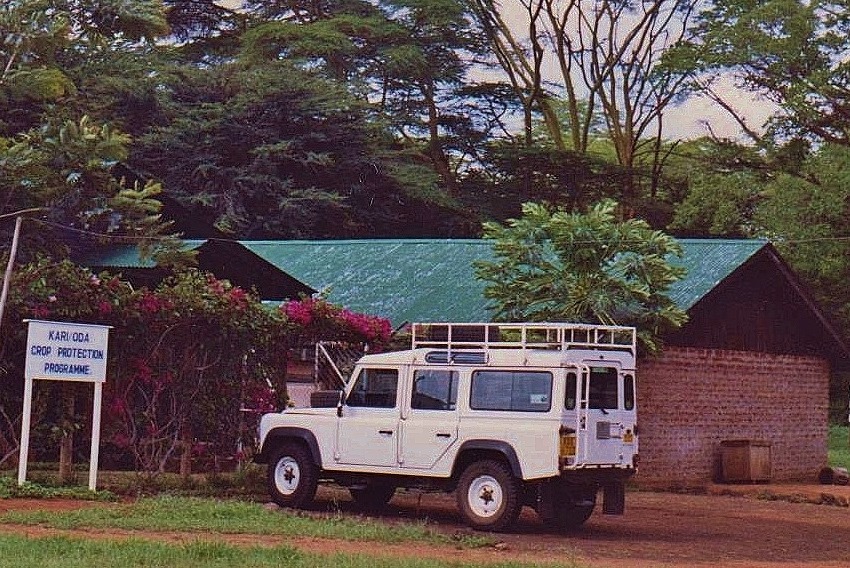
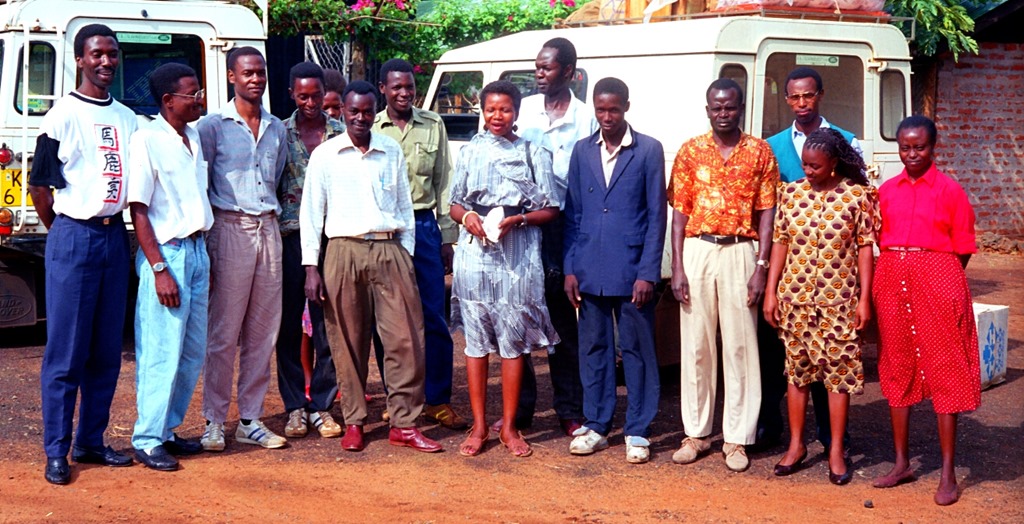
Graham's team at Kiboko Lab - the last day

Kiboko lab and staff

*

In 1992 Hunter’s Lodge rarely had many overnight guests. Sometimes G’s boss would be stay; sometimes a travelling salesman; sometimes an aid worker or two. Once, an Intermediate Technology N.G.O held a two-day seminar there. Once, a large group of Nairobi Asians came for a weekend party. The main trade, however, comprised passing travellers who dropped in throughout the day for snacks and drinks. These were served by smart bow-tied waiters on the bar terrace where you would be stalked by a bedraggled peacock, which sorely depressed since its mate had been swallowed by a python, sought pleasure in raiding the sugar bowl whenever it had the chance. It was a sad old bird.

The menu was limited: cheese sandwiches, steak and chips and omelettes. But the cook did prepare an amazing fresh lemon juice made from the lodge garden’s own lemons. It was sour enough to curl your teeth, but extraordinarily sweet too. We also soon took to carrying a plastic tea strainer around with us – to sieve the skin out of the milk, both from the breakfast wheatie flakes, and before we poured it into our tea.

The milk was brought daily by Maasai women and their donkies, and boiled within an inch of its life. Even so, it still tasted of the ash-scrubbed gourds that it was delivered in. This milk, coupled with the sulphurous water from the spring, made afternoon tea a daily strange experience. Only the lack of other things to do when G came home from work at five o’clock made us persist with it. Going for tea on the terrace was, after all, an outing – a different experience from the lunch and supper outing to exactly the same spot, or to the breakfast outing which was to the lodge dining room with its strange ogival doorways.

Scan-130520-0010_thumb.jpg

Looking toward the Lodge dining room

*

The best pursuit of the day, so long as there had been a calor gas delivery, was at sundown  to resort to the shower in our room. The shower fittings went under the manufacturer’s name of Steamy Steamy. After a dusty drive up or down the Mombasa highway, a good Steamy Steamy was the only thing we could think of.

Then by seven when it was quite dark, and we were duly steamed and dressed, the next treat would be to sit on our veranda and wait for the firefly display up and down the garden lake. This was followed by a trip to the bar and a couple of Tusker beers. If John, the young Maasai barman, was on duty, then we were in for some good conversation. He had opinions on everything. The local Akamba waiters would stand about and gaze at him in awe, whether he was talking to us or to them. He told us he owned 150 cattle, and had two wives. He had not wanted to marry a second time, he explained, but his parents had urged him because his mother had kidney disease and needed more household help. He had accepted the situation philosophically.

Once, John offered to take me on the back of his bicycle into the bush to his family’s ‘enkang and to see a female circumcision ceremony. I wished I’d had the guts to accept. He told me his home was only two hours away, as if I would manage the ride over bush tracks quite easily, me who had never ever balanced myself on a bicycle parcel rack.

005

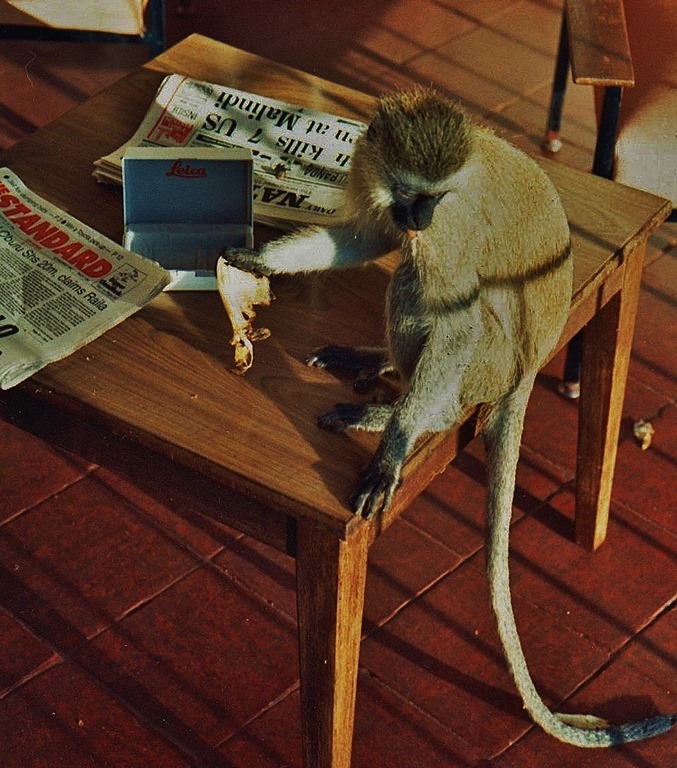
Caught red-handed, a vervet raider eating our bananas

*

While G was at work, I wrote letters and read. But mostly I watched. I soon realized that the Lodge was run, not for guests, but for the benefit of its staff. Their daily routine of cleaning and tending went on whether or not there were any guests. The garden staff wore brown overalls. They mowed the lawn, and worked in the vegetable shamba across the lake. Around ten in the morning a bell rang and everyone disappeared for a tea-break. The manager wore a smart khaki Kaunda suit, and marched hither and thither, but to no apparent purpose.

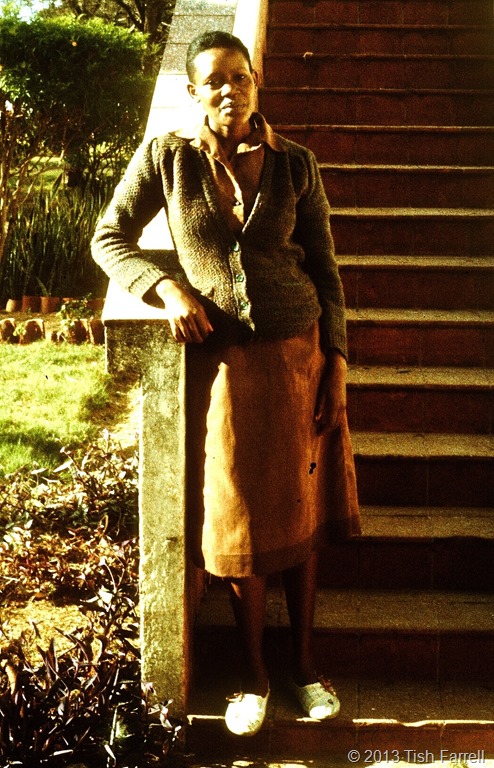
Then there was Joyce, the chambermaid. Her husband worked down at Kibwezi and was a forestry officer. She lived with her two little boys in the staff bandas at the bottom of the garden. On her days off she went home to the family farm. She told me that I should learn Ki-Swahili since it was very easy. I agreed, but only learned a smattering. The hello, how are you: jambo, habari yako?

Between the gentle staff activity, there was only the wildlife to observe, vervet monkeys planning raids on our room, pied kingfishers diving, yellow weavers endlessly weaving, herons clattering their bills in the thorn tree heronry, marabou storks lurking like spectres on the lawn, hadada ibis winking out grubs with their curvy bills. And over all, the high-tension whine of crickets that could drive you mad when you were not feeling well.

Joyce our chambermaid

Joyce

*

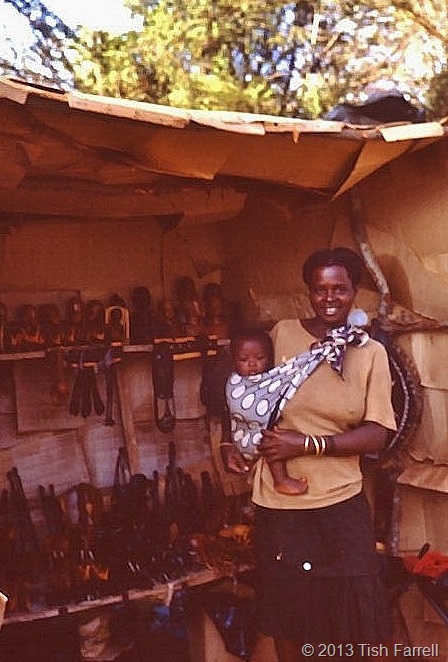
One of the features of Kiboko, I soon discovered, was the wood carvers’ stalls opposite the Lodge. Sometimes I took my clothes down to Esther who ran such a stall, and traded them for Akamba carvings. She struck a hard deal, and I was a simpleton when it came to haggling. G was nonetheless impressed since it lightened the contents of my two bags.

Scan-130429-0155 (3)

Esther at her stall with son, Tom

*

And so it was that Hunter’s Lodge became a home of sorts. Whichever way we approached it on the Mombasa highway, my eyes would fix on the green grove of fever trees, and my spirits would lift as we turned off the road. There was Steamy Steamy to look forward to, the smoky taste of the tea, Reuben the breakfast waiter who always asked us if we were having eggs though we never did. Only later did we discover that we had paid for a full breakfast in with our room rate. There was the birdlife to watch, and the sleepy routine of the hotel staff to keep tabs on; there were the steaks that our weak teeth found impossible to process, the fireflies and the vervets, and there were the brief African sunsets as the light turned through lavender and orange to black, black night. There was irony too, for it was of course the metalled road that turned Hunter’s Lodge from oasis to backwater, making the coast accessible in a single day: an unintended consequence of progress. 

I remember the long nights I lay awake, listening to the whine of insects, the drone of trucks on the Mombasa highway, the hoot of the train on Uganda railway. We are in Africa, I would tell myself. And even when I was there, so very much present in every sense, it still seemed like a dream. Perhaps this land was the original Garden of Eden. When we left it, we took our self-regarding selves to material greatness. Maybe the price for this knowledge was the loss of wisdom. Even now, so many years on, I still travel the road to Kiboko, at least in spirit,  and ponder this conundrum. The great safari continues…

013

Letter from Kathleen Collins Howell, illustrator and best friend

Daily Prompt: on the road

© 2013 Tish Farrell

Kevin, Kudu and Kirinyaga


006

004

003

005

002

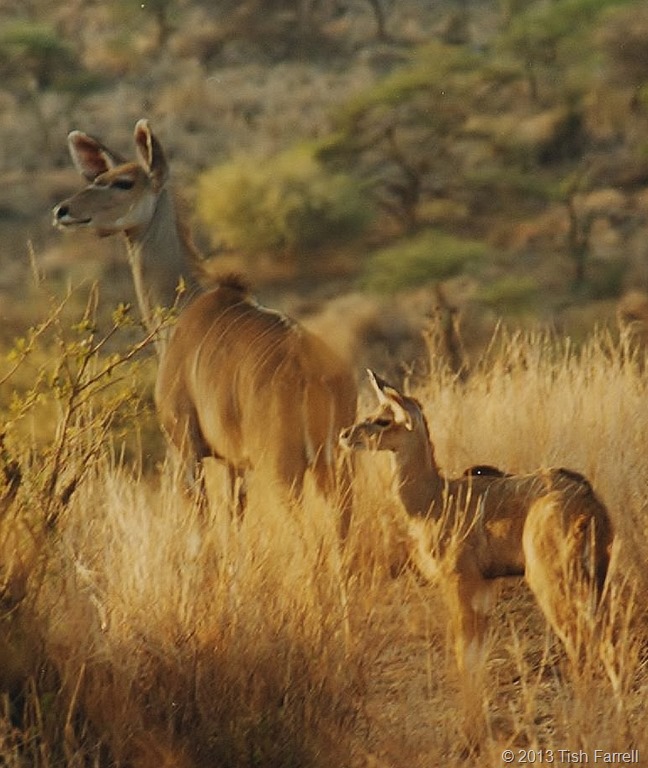
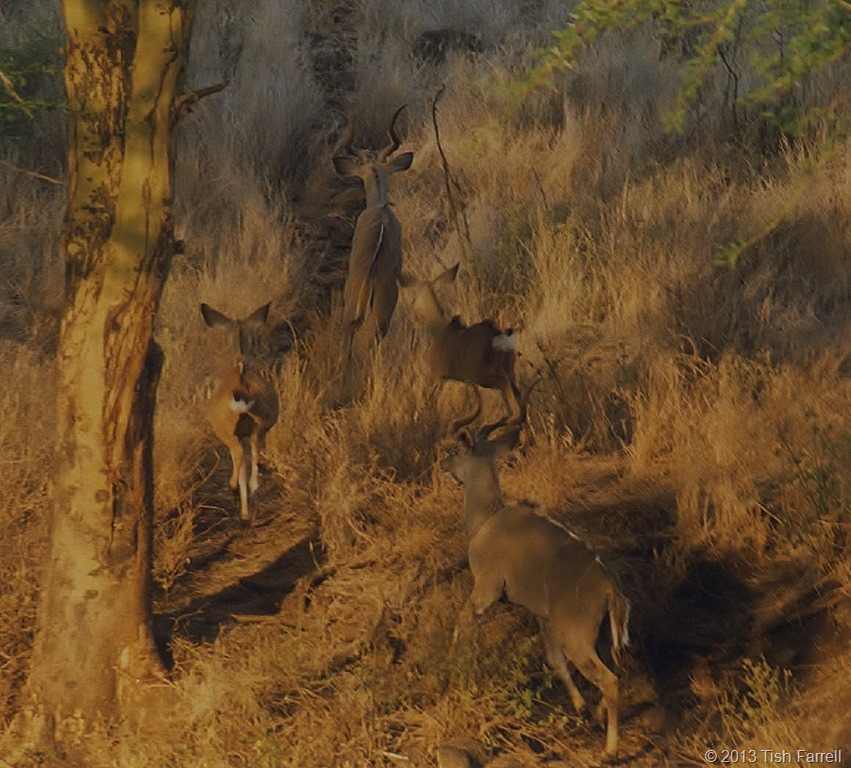
Kevin was the talented young naturalist who was our guide and driver when we visited the Lewa Conservancy Trust, north of Mount Kenya, many years ago. At sundown it was he who spotted the kudu in deep cover long before they emerged from the brush for us to see them. Wildlife photos tend to give you the wrong idea of what game spotting is really like. Often the sightings are frustratingly vague and fleeting. The second kudu shot is not really in focus but then it shows how it was – beautiful creatures melting silently into the bush.

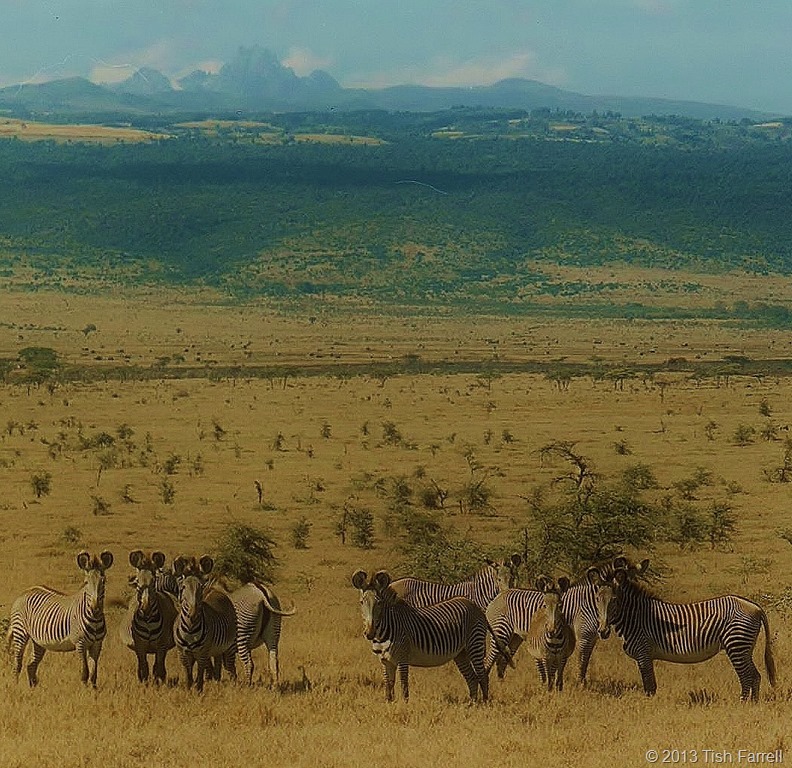
In the final photo you can see Grevy’s Zebra, a special focus of the conservation effort at Lewa. Kevin said he called them Micky Mouse because of their rounded ears. Their stripes are much finer than the common Burchell’s zebra.

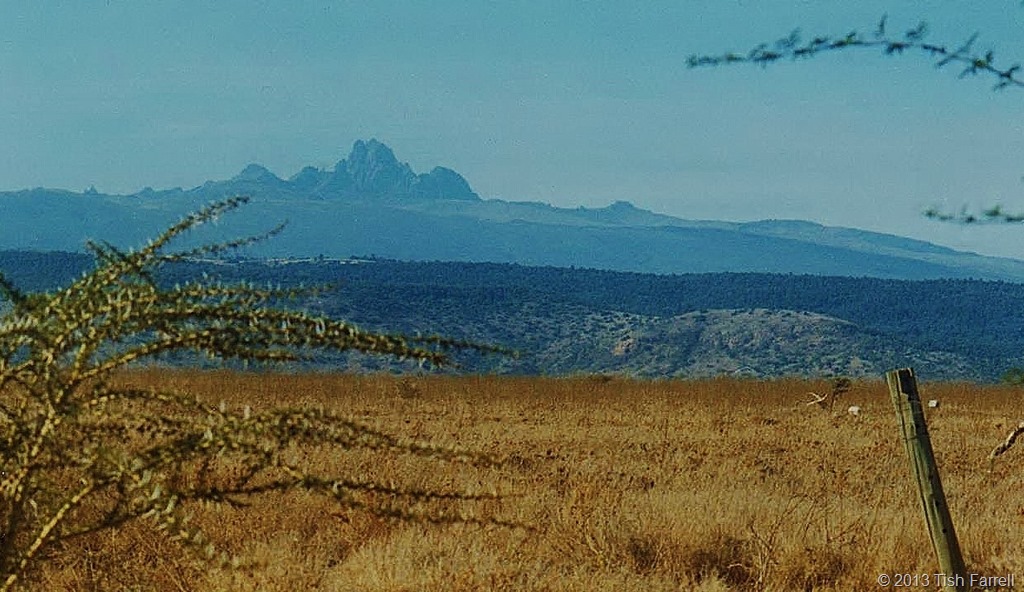
In the far distance are the misty spires of Mount Kenya, which  local people also know as Kirinyaga. The mountain top is one of the dwelling places of Ngai, the Creator of All, and has been considered a sacred place  for centuries – long before missionaries set foot in East Africa and tried to teach them about one God.

Lewa was once a colonial cattle farm, but now it is a private conservation enterprise working alongside local communities to improve the quality of life for humans and animals alike. In consequence, they have an impressive anti-poaching record. See the video below and take heart in the fact that conservation in Africa can also be a success story.


 http://flickrcomments.wordpress.com/2013/09/10/k-challenge/