Shadow Time

Eyam Church sundial 1775 sq

This magnificent sundial clock hangs on the wall of Eyam parish church in Derbyshire. It is extraordinarily intricate; something of a world-view 18th century style. It was installed in 1775 by a vicar with illustrious, wide-reaching connections, although the face itself was carved by local stonemason William Shore.

Eyam is probably best known as ‘the plague village’, the isolated High Peak community that chose to isolate itself completely during the 1665-1666 outbreak of the Black Death. A more recent discovery concerning the village is that the DNA analysis of living descendants of survivors shows a marker which indicates immunity to the disease. Amazing to think this can be detected.

Back in the 17th century, Eyam’s inhabitants made their living mostly from farming and lead-mining. The two pursuits went together, the mining carried out in the winter months in open-cast field seams called rakes. I have ancestral connections here. One Robert Fox, yeoman farmer and lead miner, who looks to have arrived in the area post-plague, married second wife Margaret Mower at Eyam church on the 4th June 1682.  They are probably 6th great grandparents, but at the very least 6th great uncle and aunt. There are also much earlier Bennet ancestors around Eyam. They intersect with Foxes in the 19th century, that link arriving via 4th great grandfather, hatter, farmer, lead miner and property owner, Robert Jackson. He married Hannah Eyre at Eyam in August 1826. They would have known this clock.
And about that clock. You have to wonder how far Eyam villagers would have been impressed to know the time difference between their spot on the globe and Calicut, Mecca, or Quebec. The single shadow also marks the solstice and equinox days and, for good measure, the months of zodiac are included too. All these intricate details apparently suggest to clock sundial specialists that the designer was the eminent Derby scientist and clockmaker John Whitehurst FRS.

Besides a time marking facility, the clock includes some thought-provoking inscriptions. On  the supporting corbels is says: Ut Umbra – Sic Vita  –  life is but a shadow. And across the top:  Induce Animum Sapientem  – cultivate a wise spirit.
This last should be a rallying call for our times. For all our, wizkiddery, wise minds seem sorely lacking. This 250 year old clock might be just the device for cultivating a little capacity for critical thinking. It certainly tests mine.

P1050540 header

November Shadows #12

Monochrome Madness: clocks and timepieces This week Margaret at From Pyrenees to Pennines is setting the theme at Leanne’s Monochrome Madness

Six On Saturday: Showing Their Colours

Evereste

Back at the end of October the garden was alive with drifts of cosmos, Michaelmas daisies and rudbeckia. And then the downpours began, plus some big winds. The cosmos is still hanging on, but the Michaelmas daisies are no more and rudbeckia down to the final few stems.

1) The rose trio, though, is hanging on, still doing their bit. Cornelia by the greenhouse is looking a little rain battered, but still very pretty. St. Cecilia on the terrace wall has been flowering sporadically for some weeks. But her neighbour, Penelope, has only started flowering this week, beautiful, but unexpected…IMG_9404

IMG_9373

Penelope

*

2) There have been other surprise openings this week, including the newly planted young Hesperanthus Wilfred H. Bryant…

Hesperanthus

Other curious (unseasonal?) discoveries this week include buds and flowers on two Vanilla Ice sunflower plants which I grew from seed in the spring. They’re multi-headed plants with medium,  in sunflower terms, sized flowers. Heaven knows why they’ve waited till November.

3) In the still going strong since the summer category, Salvia Amistad wins first prize. Actually, this is the best its looked since it was planted in the spring…

IMG_9425

4) And in the front garden, a new favourite Crocosmia Harlequin, as seen this morning. Isn’t this a lovely plant…

Harlequin

*

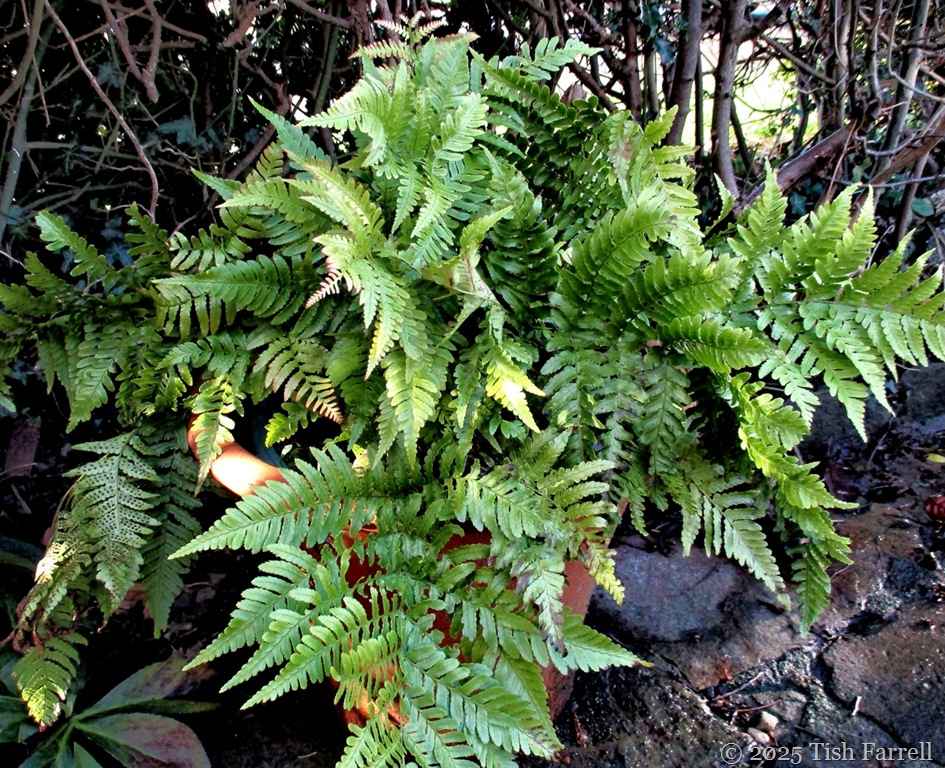
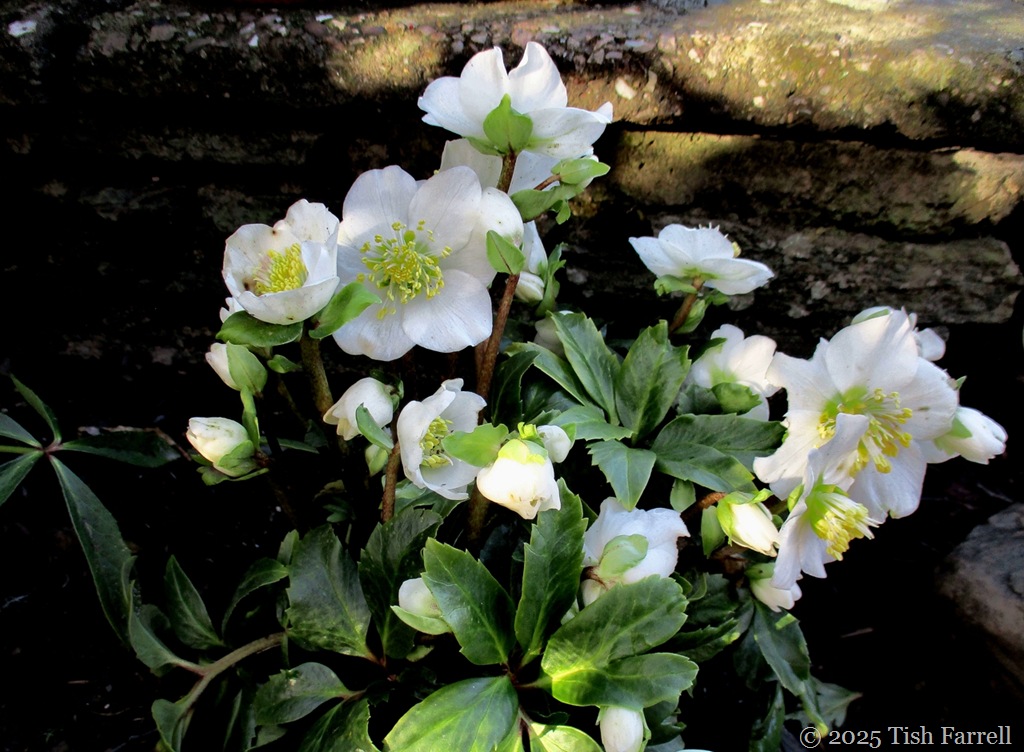
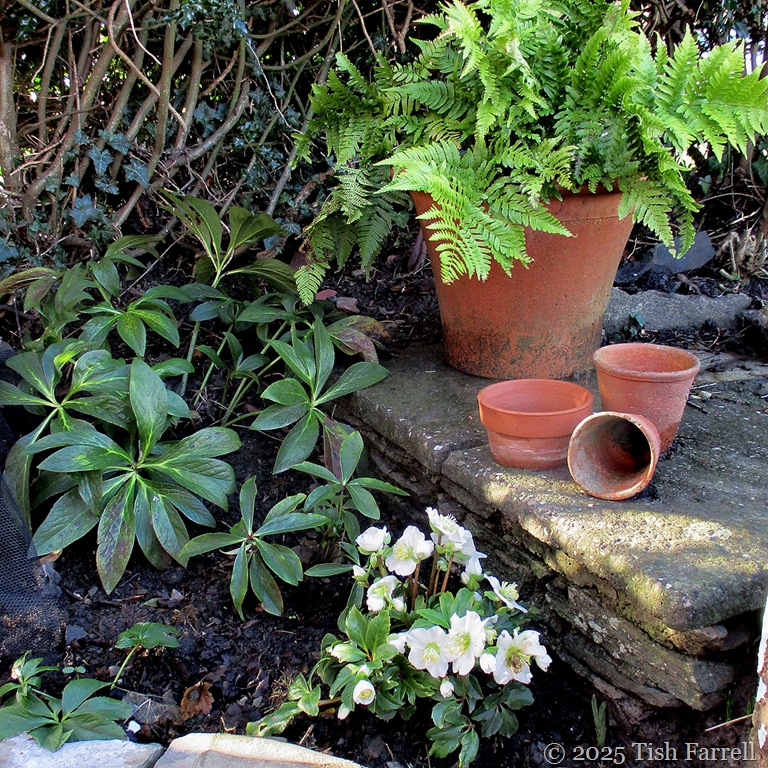
5) In between torrential rain and misty drizzle, garden tidying, and the usual plant shifting has begun. Our builder and son also came and removed an annoying (literally) stumbling block outside the back door. Last year we had the garden steps reconfigured, but the job wasn’t quite finished and the old bottom steps survived the exercise, were a real eye-sore and general all-round nuisance. But now transformation. They have been demolished and a brand new, semi-shade bed created. I’ve planted it up with assorted hellebores, (Christmas Carol in the right hand corner just in bud), dwarf daffodils, snowdrops under the hedge, pulmonaria Blue Ensign and Diana Clare (silvery leaves), and in the far left, a neat fern, Polystichum setiferum congestum. As the leaves go from the hedge end behind the house, it will get more light. A spring garden then.

new bed

*

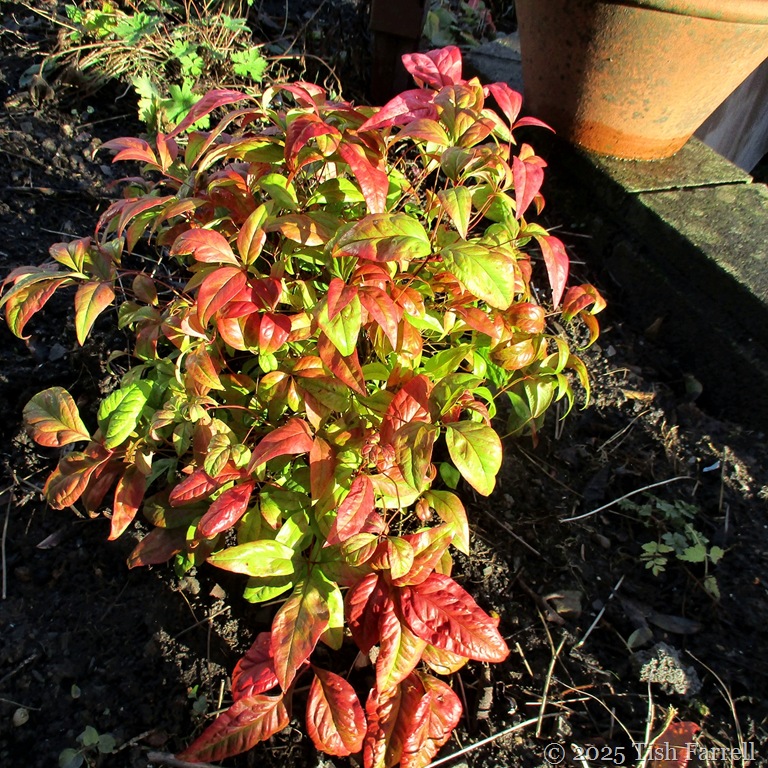
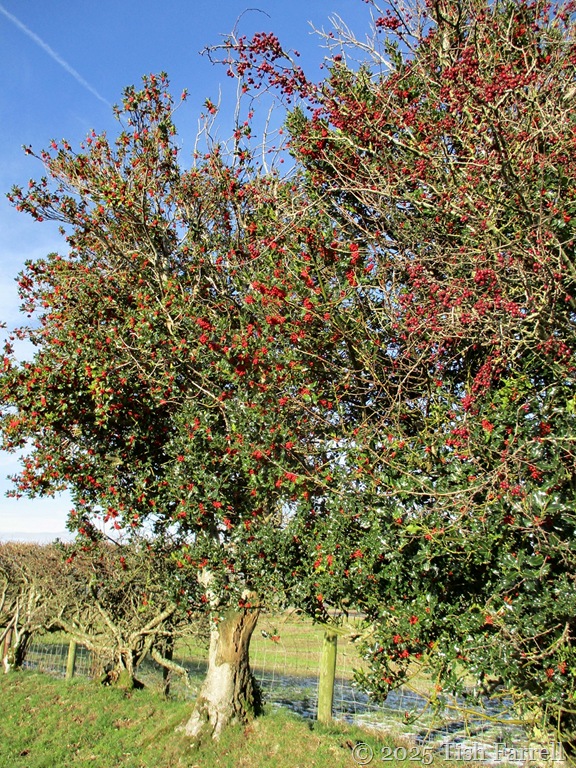
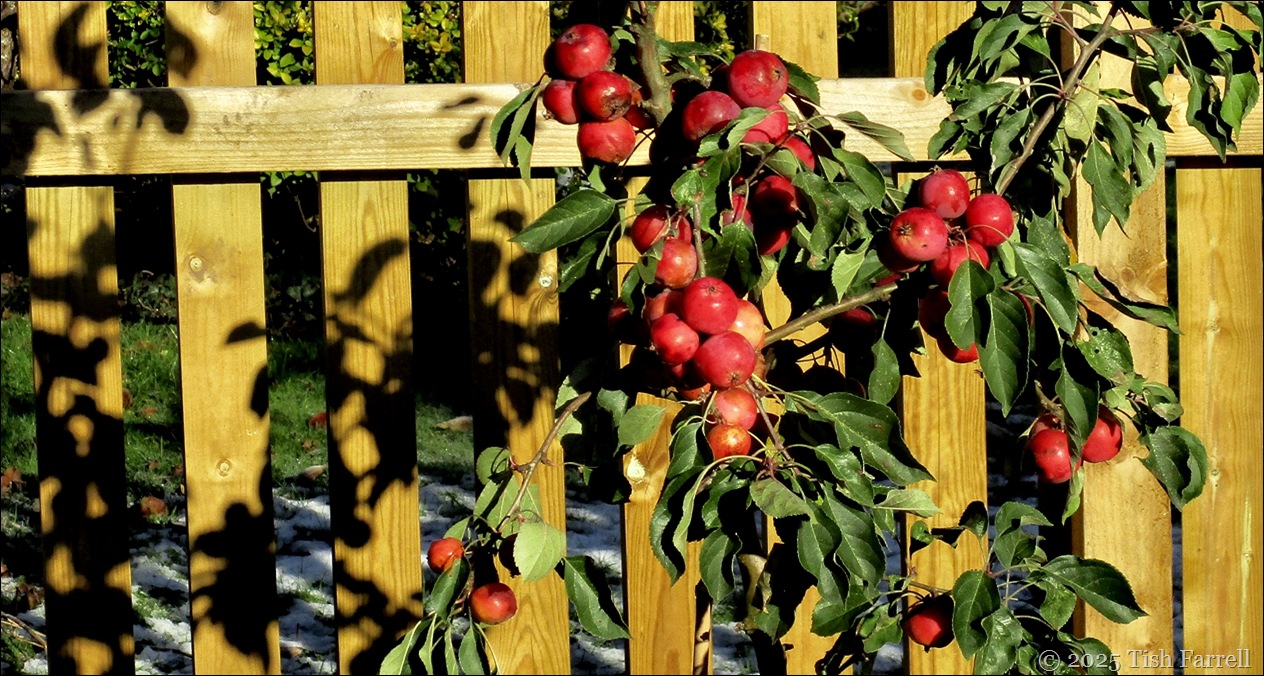
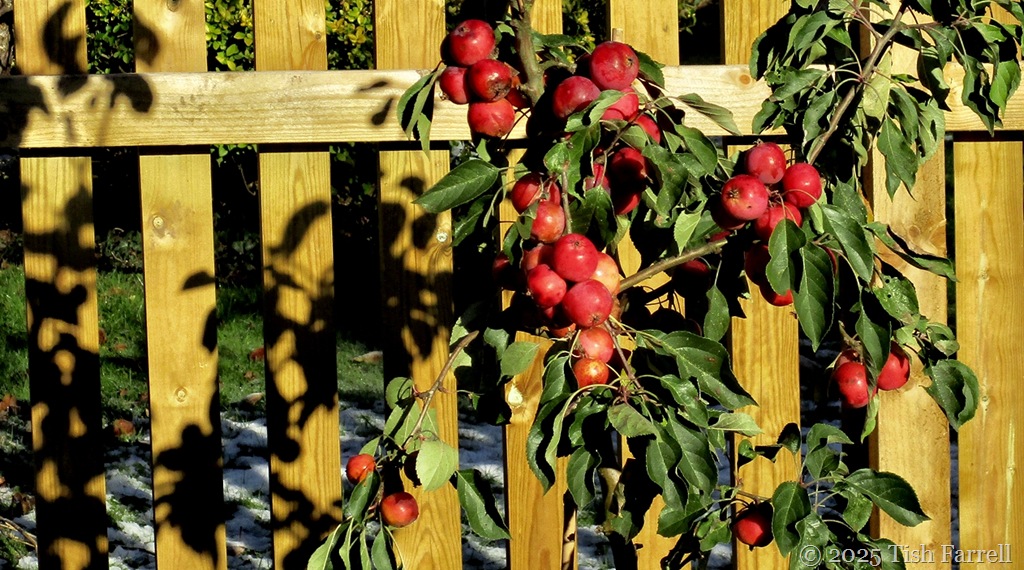
6) Last but not least, when it comes to providing long-lasting colour and cheerfulness, to say nothing of eventually feeding the birds, it has to be the crab apple trees: a miniature Evereste in the front garden (header photo) which we can see from the sitting room, and Jelly King at the bottom of the garden, but visible from the kitchen. Even on the gloomiest days, they do their best to glow. Today, though, we have wall to wall sunshine and Wedgewood Blue sky, so here they are looking their brightest…

Jelly King

Evereste header


Six on Saturday Please call in on our host, Jim. He still has some fabulous plants still flowering in his garden

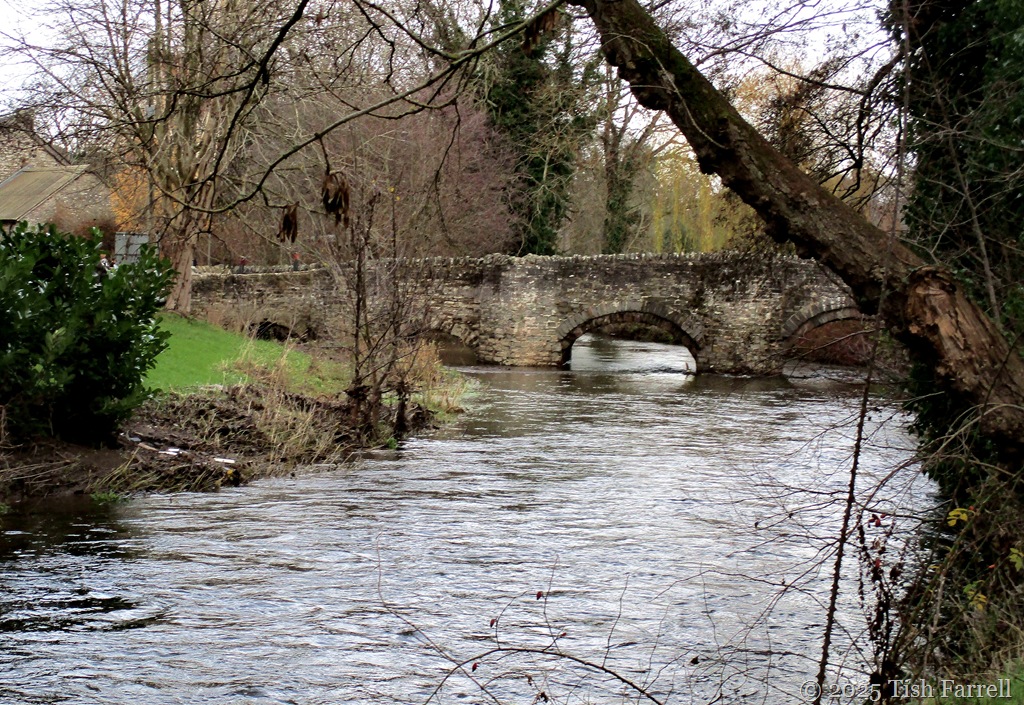
Antique Shadows at Dinham Bridge

bridge 2

A bridge for Cee who loved bridges and featured them in some fabulous monochrome shots. Like so many others, I loved taking part in her regular Black & White photo challenge.

*

Dinham Bridge over the River Teme in the Shropshire market town of Ludlow was built in the early 1800s. The castle above it had its origins nearly 800 years earlier, soon after the Norman invasion of 1066. It was one of the first stone-built castles under the new regime, sited there to keep the Welsh at bay. Over succeeding centuries it was expanded to the fortress scale whose remains we see today. As with all castles, there were doubtless many shadowy doings, conspiracies and counter-conspiracies within its walls; but its towers caught here in autumn sunshine almost have fairytale looks; so many stories those stones could tell.

*

November Shadows #7 Today Becky pays tribute to Cee who meant so much to so many. There are further blogger tributes at links below.

Remembering Cee 7th November  Marsha Ingrao at Always Write and Dan Antion at No Facilities are hosting a day to remember Cee; Cee who inspired us with her weekly photo challenges, and was so generous with her knowledge. She embraced so many of us and is sorely missed in the blogging community she so steadfastly embraced and encouraged.

bridge 2 header

Caught In Time…

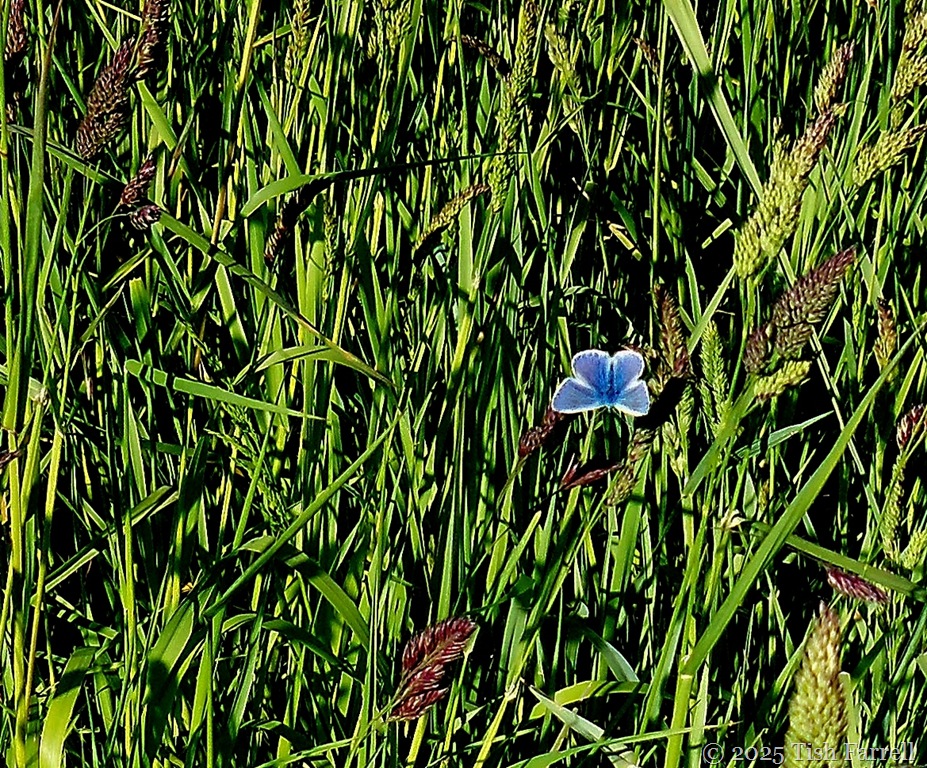
ephemeral common blue

The butterfly counts not months but moments, and has time enough.

Rabindranath Tagore

This tiny British butterfly is a male Common Blue. It’s about an inch across. And while it might be among our most common UK butterflies, having one pose like this is a rare occurrence. They’re usually pretty skittish, so you only catch a glint, a flitting chink of summer sky, and then they’re gone. This was a chance encounter on a summer’s evening.

*

IMG_0441

Expectations are like clouds – beautiful from afar, yet vanishing when you reach for them                                                                                                   Monika Ajay Kaul

*

P1070087  (2)

The light does not stay…  Tennessee Williams

There’s that moment as the sun disappears when there’s just enough light to take a photo.

*

IMG_2928cr

So passeth, in the passing of the day, of mortall life the leafe, the bud, the flowre

Edmund Spencer

The glory of a Morning Glory is so brief, half a day at most. And you need to be up early to catch the best of it. I’m not sure how long the runner bean flowers last, perhaps a couple of days before they’re fertilised and begin to transform into beans. I must pay more attention next summer.

*

windfall ed

mutation of weathers
and seasons,
a windfall composing
                                    the floor it rots into        

Seamus Heaney North

frosted apples bettter

*

dandelion clock

The wind shall blow them none knows whither

Ralph Waldo Emerson

Foolhardy or deeply ironic: a dandelion clock for a timepiece? But then it always was such fun, huffing and puffing, seeing how far those little parachutes would fly. A sure way to annoy a gardener.

*

Leaves 3 ed

Leaves are the verbs that conjugate the seasons

Gretel Ehrlich The Solace of Open Spaces

*

Two seasons on Much Wenlock’s Linden Walk. Watching the leaves come and go through the year is another kind of time-keeping. The quiet sort.

leaves ed

*

Lens-Artists: Ephemeral This week Tina sets the theme. Call in to see her thoughtful and inspiring post.

In Light And Shadow ~ Lakeside Reflections

Mellington Hall 9

These are the last photos from our Friday day out to Mellington Hall, caught in a brief burst of sunshine. The far glimpse of two swans across the lake had magic in it – a gentle scene for All Hallows’ Eve.

Mellington Lake 11


November Shadows Day 4 Becky has the most fabulous shadows on show today. She’s flying high in a mass aerial display.


All Hallows’ Eve ~ Light And Shadow At Mellington Hall

Mellington Lake 3

On Friday we were out for a family lunch just over the border in Wales: destination Mellington Hall. It is only a few miles from Bishop’s Castle, an impressive Gothic pile built in the 1870s by Derbyshire ironmaster, Philip Wright, and now run as a country house hotel and holiday park.

Mellington Hall 5

“Built by iron, saved by eggs and rabbits.”

This is how the current owners describe the hall’s more recent history.

They then explain how the present enterprise derives from some creative family entrepreneurship over sixty years ago:

The establishment of the Holiday Park in the 1960s and the survival of the Hall are inextricably linked: the Hall was in a terrible state when Mr Jack Evans, the grandfather of the present owner, bought the Hall and parkland in 1959.

Jack built his business on collecting rabbits, other game and eggs from the nearby farms and selling the produce to shops and markets in the Midlands. Coincidentally, Jack’s wife Margaret had been in service at the Hall as a young girl but by the 1950s the Hall was almost certainly going to be demolished.

Prompted by business contacts in the Midlands looking for a rural bolt-hole, Jack created the Holiday Park in the 1960s to generate revenue which would pay for the restoration and upkeep of the hall and thus save it from demolition.

What a project.  And the restoration work is still ongoing.

You can see some photos of the Hall in its Victorian heyday HERE.

Mellington Hall 4

The grounds were originally landscaped by Joseph Paxton, but there has been further planting of specimen trees by Jack Evans. Work also still continues in the park, including the upkeep and creation of woodland paths, one of which links to the 177 mile Offa’s Dyke path, constructed along the England-Wales border in the late 700s CE by the Saxon king of Mercia.

Mellinton 7

Friday, though, was not a day for big walks, or even short ones. Too many fierce squalls to contend with. But between two showers, and armed with brollies, we did manage a brief stroll to lake where a sudden burst of sunlight yielded the header photo.

On the drive home, sun and rain together created a huge double rainbow over the Camlad Valley, casting brilliant prisms across the foothills of Todleth, Roundton and Corndon Hills, but not quite caught here as we sped along.

Mellington Hall 6

*

November Shadows  This month Becky invites us to post square-format photos on a shadowy theme, however we care to interpret it. You can join in as and when.


Musings On Time Past ~ What Do We Make Of It?

pentre ifan

Remains of Pentre Ifan chambered tomb, Newport, Pembrokeshire c. 3,500 BCE

*

We humans have problems with time: too much of it; not enough; the wrong kind for a planned action or pronouncement; then there’s ever that tale of elders who forget what they had for breakfast, but recall in minute detail events of decades past.

We try to pin it down of course, have long done so with all manner of devices. Most likely the late ‘Stone Age’ people who constructed Pentre Ifan above, had contrived the means to keep track of it. For instance, the placement of so-called standing stones, the particular configuration of megalithic circles, the siting of tomb entrances, whence to observe the movement of stars, the angle of the sun, and so know where they stood in relation to the earth’s perceived cycles. A time to plant; to make a journey; to hunt; to trade; mark seasons for rites and festivals.

Mitchells Fold

Mitchell’s Fold Bronze Age stone circle, Shropshire-Powys border

*

We don’t know who these prehistoric (pre-literate) people were. There is no apparent connection between us and them. How do we even begin to grasp what five and half thousand years actually means. Most of us, unless we spring from some dynastic household that records family pedigrees down the centuries, or derive from some close knit community where little has changed for generations, cannot name our four pairs of great grandparents without the help of genealogy.com. We certainly have no true idea of how they lived day to day, unless they kindly left us their diaries; and even then…

As L.P. Hartley says in the opening of his novel The Go-Between: ‘The past is a foreign country; they do things differently there.’ And for most of us, too, our generations of ancestors left no mark, but were ever caught up in ‘big people’s’ histories; the machinations of church and state.

*

There are anyway far bigger pasts than our human one. Here in my home county of Shropshire, in the borderland known as the Welsh Marches we have  some of the planet’s oldest parts. Seven hundred million years old, in fact.

Set against such a monumentally unimaginable timescale, the history of humanity, including that of our primate ancestors, is not even a magnified dot on the horizon.

This is what Peter Toghill has to say about the Marches geology:

The beautiful landscape of the Welsh Marches
is underlain by a rock sequence representing ten of
the twelve recognised periods of geological time…
This remarkable variety, covering 700
million years of Earth history, has resulted from
the interplay of… (1) erosion and
faulting which have produced a very complex
outcrop pattern; (2) southern Britain’s position near
to plate boundaries through most of late
Precambrian and Phanerozoic time; and, most
importantly, (3) the incredible 12,000 km, 500
million year, journey of southern Britain across the
Earth’s surface from the southern hemisphere to
the northern, caused by plate tectonic processes
.

An introduction to 700 million years of earth history in Shropshire and Herefordshire

*

P1030691

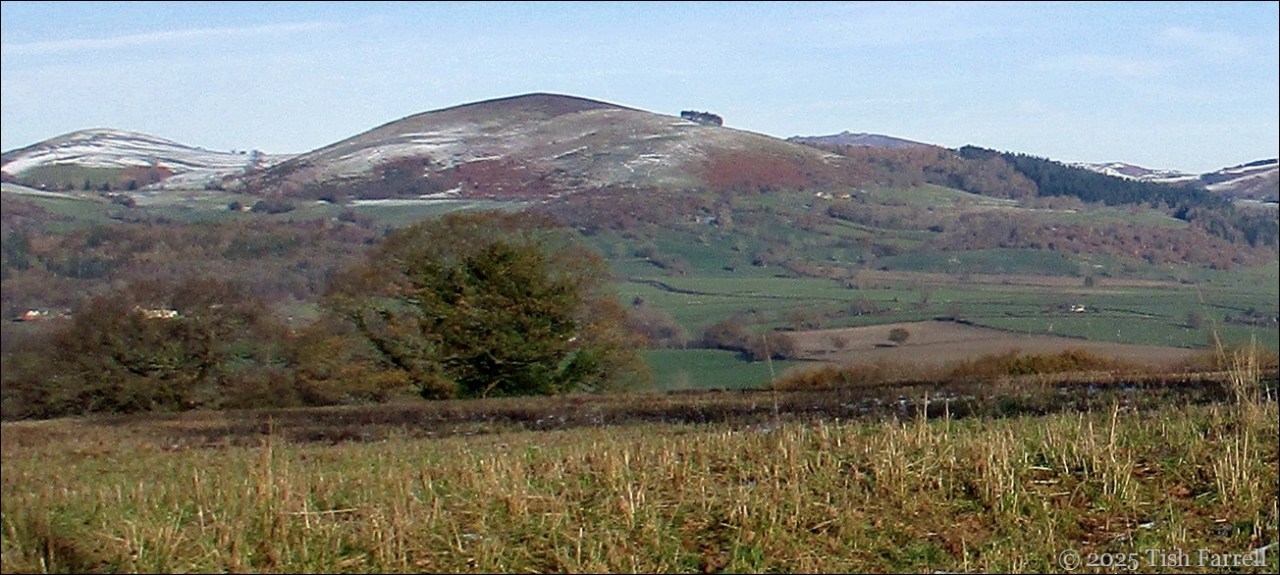
This distant view of the Stiperstones from Mitchell’s Fold stone circle, shows two of the Ice Age tors along the five mile summit, (Manstone the highest point on the left). This hill was probably formed from the laying down of quartzite sand when the whole of Southern England lay in the southern hemisphere, somewhere near the Comoros Islands in the Indian Ocean. That was around 500 million years ago, about the time when it began to move north. The tors themselves were exposed far more recently, by the repeated freezing and melting of glaciers that nudged up against them during the last Ice Age (115,000 to 12,000 years ago).

*

Stiperstones shaped by ice sheets freezing and melting

P1080553cr

Makes me think we humans sometimes think too much of ourselves and what we think we have achieved. Maybe the planet has the edge on us by a few hundred million years. It’s certainly done some momentous shunting and shifting.

Lens-Artists: Ancient

After The Storm ~ Six On Saturday

Cornelia rose

This time last week, the wind was racketing around the garden, threatening to uproot and mash the herbaceous plants. But in the end, damage was minimal. In fact some plants have been thriving since.

And especially

1) Cornelia rose

She’d been in a big pot by the greenhouse all summer. And as she was new, I’d been concerned about keeping her suitably watered during the long summer drought. She did flower a little back then, but not for long. But since the storm, and removal into a bigger, bottomless pot, she has sent out elegant arching stems laden with buds and blooms. She’s a hybrid musk, and the flowers, though small like wild roses, smell delicious. I’m hoping she will eventually fill the gap between the hedge and the greenhouse.

2) Cosmos bigger and better

The gale might have blown their frocks off, not to mention nearly scooting them out of the ground, but the Cosmos plants on the terrace wall have come back bigger and better, and are covered in new buds. I’ve been filling vases with them.

cosmos

Cosmos 2

*

3) Tree tomatoes?

Nor did the big wind deter tomato production in the cooking apple tree.  Daft, I know.

sungold

This plant was one of my rejects, a pot-bound Sungold seedling that had hung around on the garden path long after I’d potted up the main plants in early June. Eventually, I stuck it the ground , and generally forgot about it, though I did provide it with a supporting stick. Some time later I discovered that it had climbed way up into the apple tree, and so chopped off its top growth. And again ignored it. Then it began fruiting and has been doing so for many weeks – just a few tomatoes at a time. They’re delicious too.

Here it is – you can just see a strand of green fruit hanging down to the right of Jelly King crab apples, green obelisk behind.

apple tree

*

4) The Kabuki calabrese gets the prize this week for making me smile a lot. I always find it exciting when my brassicas start to sprout. And this particular plant has survived remarkably unscathed after the summer attack of flea beetles which make holes in everything of the brassica family. The flower head isn’t exactly big enough for two. Well, not yet. Watching brief activated.

Kabuki broccoli

*

5) Grumble of the week

Well, there always has to be something. Now I’m wondering what on earth is making holes in my Swiss Chard (mature and seedling versions) and also the Perennial Spinach. I thought I’d finally protected all the edible greens from all comers with a covering of fine black netting. All summer I’d managed to fend off butterflies from the caulis and purple sprouting. And kept the pigeons at bay. But now I have holey leaves. He who is a sometime plant pathologist posits caterpillars, but I can see no obvious sign of them. Suggestions, anyone?

spinach pest

Swiss Chard

*

6) Sunbathing

And not to end with a fit of gardening disgruntlement, since the storm we’ve been having some wonderful sunny spells, warm enough to make one put autumn woollies straight back in the cupboard. Even the ladybirds have been sunning themselves. I’ve been finding them all around the garden, including some very tiny ones.

ladybird

And that’s it from our Shropshire garden. Happy gardening, folks.

Please call in on our host Jim at Garden Ruminations.

Six On Saturday

Cornelia rose header

Feeling Blustered: Six On Saturday

IMG_9149

1. Storm-struck

This morning at breakfast time – with a high wind whooshing about the place and rain lashing the kitchen doors, the garden definitely looked a no-go area. I could see three dozen bean canes splayed like pick-up-sticks across the top path by the greenhouse. Drat and double drat. When I dismantled the runner bean rows a week or so ago, I had forgotten to tether them securely to the hedge. I could also see the cosmos at the top of the steps being tossed about. Since late September and the onset of rainy days, it has been flowering magnificently. Now it was having its petals blown off. More curses. And I could see that the Selinum (farthest right at the wall top) which is still flowering as well as seeding, was now rearranged at a 45 degree angle.

Not a happy gardener.

IMG_9160

Cosmos unclothed; Helianthus blown away.

IMG_9180

And then, quite suddenly, towards midday, the rain stopped and the sun came out, although we still have a mighty blow, with now-and-then gusts that lift you off your feet.

I did a quick tour of the garden, but there was not much to be done mid-gale, apart from attempting a bit of support for the Selinum.

2: Apples

apples

With the wind, I was expecting another heavy crop of windfalls. But when I went out to check the damage, I was pleased to see that most of our remaining apples are still clinging sturdily to their stalks. Which is good news as I already had a stack of windfalls in the kitchen. And there’s only so much apple sauce we can eat, and all the neighbours are overwhelmed with apples too and putting them out at their gates for anyone to take. However, I recently discovered an easy apple chilli chutney recipe, and so, as gardening was out, this was what happened next.

IMG_9192

*

3. In love with Michaelmas daisies

I’m not expecting the late flowering flowers to survive the wind, but that won’t include the Michaelmas daisies (Symphyotrichums/Asters whatever they’re called these days).  I took this photo with the wind still blowing. Only a couple of small side stems damaged.

IMG_9158

Its neighbour, a compact little variety (I think it could be Purple Dome) has only just decided to flower:

IMG_9167

And at the bottom of the garden this tall white bushy version, White Ladies maybe, and…

IMG_9176

…Aster x frikatii Monch have been flowering since the hot days of summer:

Aster × frikartii Mönch

*

4. Great Dixter Nursery

And so like Jim, I’ve been doing some plant buying. I have recently discovered that Great Dixter House and Gardens has an online plant shop. They sell some very lovely plants (1 and 2 litre sizes) at very reasonable prices. That’s where I found Patrinia as featured in an earlier SoS. And it’s where I also found ‘Symphyotrichum Les Moutiers’ which is now planted in my front garden. We’ll have to wait nearly a year before we see it in action though. Do give the link a quick look.

5. Ongoing edibles

The salad stuff hasn’t been troubled by the unruly weather. The radicchio and endive, rocket, land cress, and Moroccan Cress lettuce are presently thriving, though everything has to be netted against pigeons.

IMG_9185

We also have some Swiss chard, beetroot, parsnips and leeks, and a new bed of winter greens (planted out on the runner and borlotti bean bed) is looking quite good. And there are still a few climbing borlotti beans to pick in the side-garden wall bed.

IMG_9187

*

6. A happy face

IMG_9164

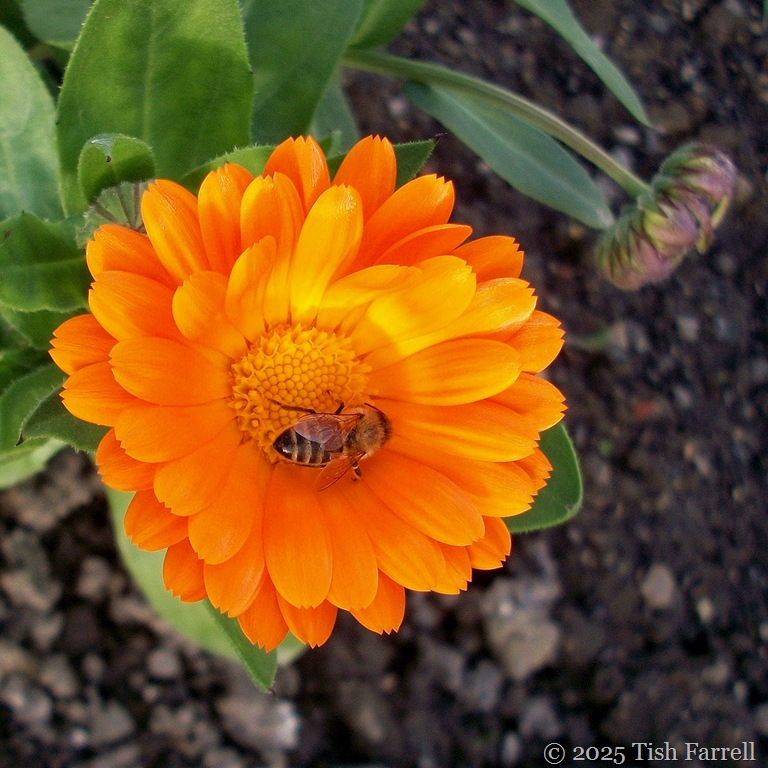
Now as I’m writing this, the rain is back and the wind is still blowing. So I’m finishing off with another garden stalwart. I was so pleased to find this marigold looking so fresh-faced as I went round the garden late-morning. Of course, we eat these too. Perhaps I shouldn’t mention that though.

Happy gardening folks – whatever your weather. Even on distinctly unpromising days, there’s usually something in the garden to be glad about.

copyright 2025 Tish Farrell

Six On Saturday  Please catch up with Jim at Garden Ruminations.

header