Bright Fields on Llyn: windows in time, mind and space and other stories from Cymru

 The-bright-field-cropped_thumb9.jpg

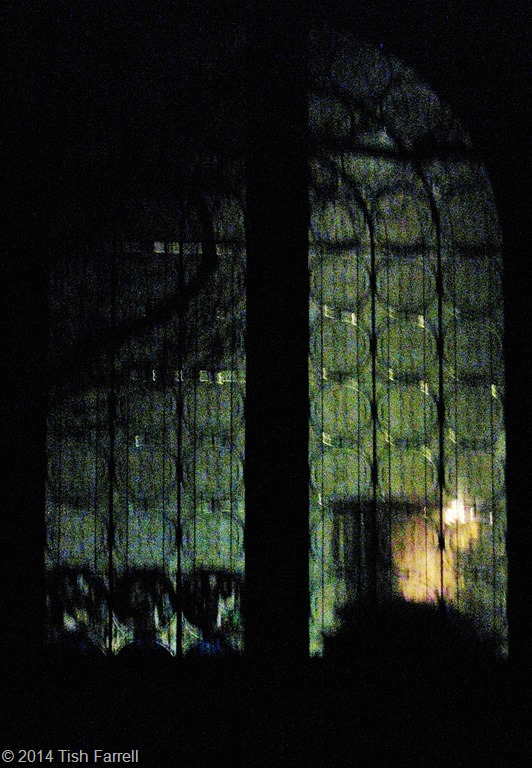
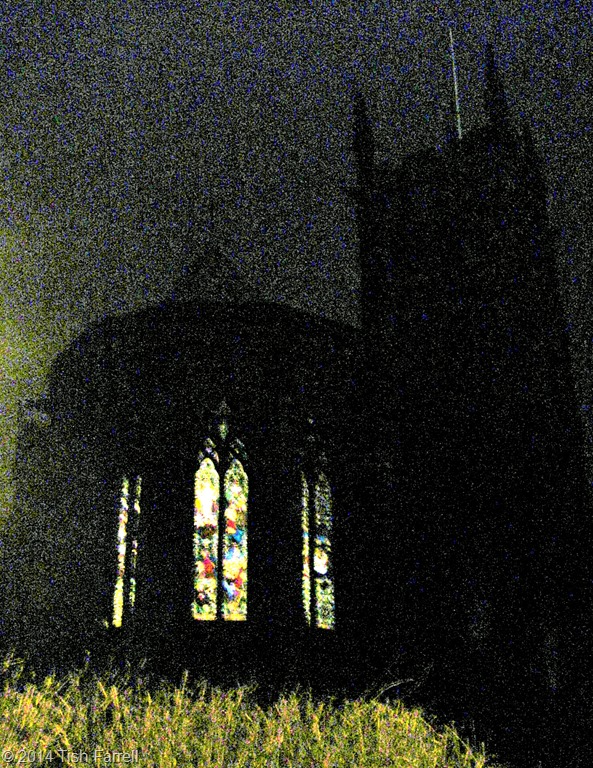
Oh all right, I confess. My take on the WP photo challenge is a little tangential. Also I have combined it with Ailsa’s travel theme ‘illuminated’ and Frizztext’s ‘B’ challenge (links below). But for me, photographs are windows in their own right, focusing the eye, mind and sensibility. The ones in this post seem to reveal a glimpse of something that require my special attention. And while some shots do in fact include actual windows, most are about those tiny ah-ha moments: the event, image, artefact that opened a window in my mind, whether a crack, or a full-blown throw-back-the-shutters moment.

And so it was stormy September, and the holiday-season well and truly over when Nosy Writer and the Team Leader headed to Wales for a few days. G. had a brand new camera to learn. I, as ever, was happy to snap whatever caught my eye.

We stayed in an odd, but well-meant  B & B in Llanbedrog, and set off each day to explore North Wales’ Llŷn Peninsula. The weather was deeply discouraging. Wales has much wet weather, and, with it, an oppositely equal lack of indoor places to visit, especially out of season. The first day it rained so hard there was no choice but to head for the nearest large town in hopes of finding something to do under cover.  We drove up the coast to Caernarfon,and once there sat  in a car park for an hour while the rain teemed down on the windscreen. Finally, it eased off enough to venture out. By then, the ludicrousness of coming on holiday to sit in a Welsh car park watching supermarket deliveries was beginning to grate.

100_4474

Swathed in raingear we trailed around an impressive but dreary Caernarfon Castle, the remnant expression of Edward I of England’s systematic oppression of the Welsh people. In 1283 he extended a small Norman motte and bailey castle into a massive fortress – all the better to assert English rule over the Welsh and their princes. In design it is said to recall the walls of Constantinople, seat of Roman imperial power, thus invoking memories of more ancient times when the Romans also subdued the Welsh. These earlier invaders built the nearby fort of Segontium and, like the castle, it commanded the Menai Straits and the island of  Ynys Môn (Anglesey) beyond.

Segontium was built in AD77 by the Roman governor of Britain, Gnaeus Julius Agricola, in preparation for the capture Anglesey (see Island of Old Ghosts). Over a thousand years later the castle was built as one in a circle of mighty fortresses to control the people of North Wales. In 1284 Edward’s heir,  later Edward II, was born there, and thus proclaimed the first English Prince of Wales. Though English born and bred, I find this hard to swallow.

And so I think I would have found Caernarfon Castle depressing even in broad sunshine – too much death and domination. The best part of the day was definitely lunch in one of the town’s meandering back-streets. At the bistro Blas they welcomed us in from another downpour, and kindly allowed us to drip on their carpet while feeding us delicious food. Not only that, it was so soothingly lavender, both inside and out.

100_4493

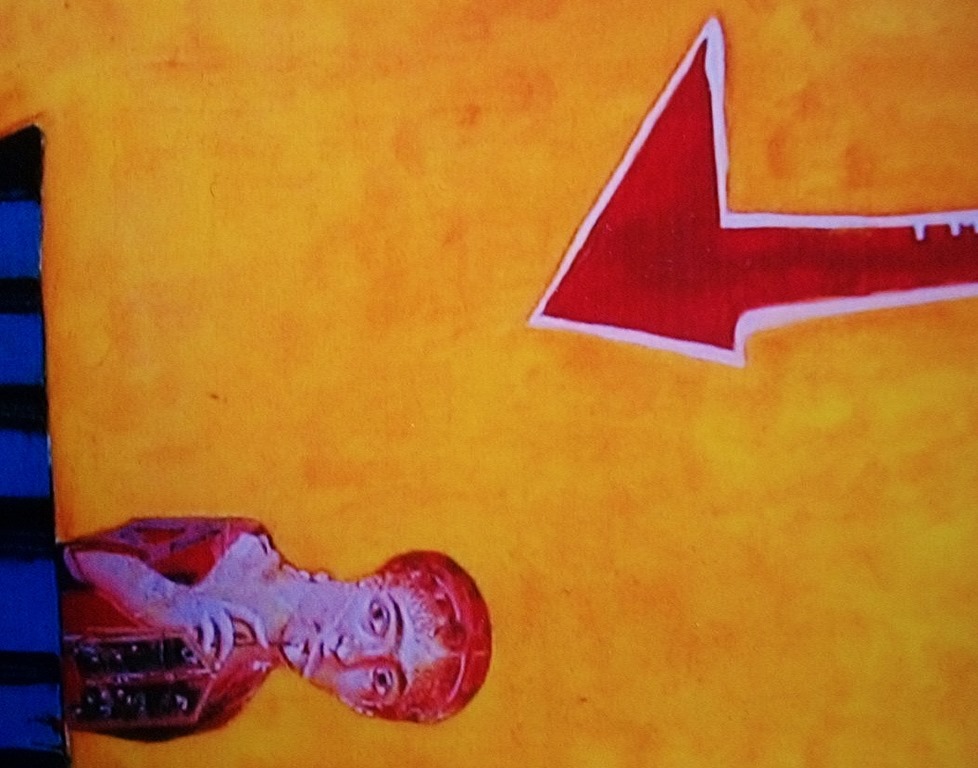
It was the next day, with the rain abating and the sea roiling over the Cricieth breakwater (beneath another Edward I castle) that we spotted the bright field in the first photo. G. thought it was a good opportunity to start getting to grips with his Fujicamera. I snapped the sea.

IMG_0620

But seeing that bright field, so astonishingly luminous against the grey sky, reminded me of the poem of the same name, written by the great Welsh poet-priest R.S.Thomas. This craggy, slab of a man was as redoubtable as one of Edward Longshanks’ castles.

In fact he might have been hewn  from the bed-rock of his native Wales. And like all such formations he had his fissures, faults and flaws. Many thought him morose, cantankerous, and rife with ambiguity and contradiction. For one thing, he abhorred the Anglicisation of Wales, yet he wrote in English despite being a Welsh speaker. In 1996 he was nominated for the Nobel Prize for Literature, but  lost out to Seamus Heaney. 

As a priest he was kindly and sympathetic to the hardships of his parishioners, although this would not stop him from hectoring them from the pulpit, urging them to foreswear any yearning for consumer durables such as refrigerators and washing machines. He could also be judgemental and, as a fierce Welsh Nationalist and political activist, withering about the failure of the Welsh to resist being swamped by Englishness.

Thomas’s poetry, then, can be both trenchant and transcendent. While I do not subscribe to his religion, I honour the spirit of his words. His poems are among those I love most. Here it is then:

The Bright Field

*

I have seen the sun break through

to illuminate a small field

for a while, and gone my way

and forgotten it. But that was the pearl

of great price, the one field that had

the treasure in it. I realize now

that I must give all that I have

to possess it. Life is not hurrying

*

on to a receding future, nor hankering after

an imagined past. It is the turning

aside like Moses to the miracle

of the lit bush, to a brightness

that seemed as transitory as your youth

once, but it is the eternity that awaits you.

R.S. Thomas

*

On our final day it was with R.S. Thomas in mind, and with a little sun at last, we drove down the narrow lanes of the Llŷn Peninsula  to Aberdaron where the poet served as a parish priest between 1967-78.

The ancient church of St. Hywyn’s stands right beside the sea. Since the Middle Ages, pilgrims have come there on their way to Bardsey Island, Ynis Enlli, Island of 20,000 Saints. Inside the church are two ancient grave stones belonging to Christian priests of the late 5th/early 6th century. There is also a welcome there: a bookshop full of R.S. Thomas’s poetry books; even a poem to take away. There are also piles of sea pebbles, shells for contemplating your journey, a kneeler that has been stitched with the single word cariad, beloved.

100_4798

100_4782

100_4779

100_4791

100_4797

And beside the knave the clear glass window that needs no further embellishment looks out on the sea and islands of Gwylan Fawr and Gwylan Fach. And outside in the sea wind is the graveyard whose stones seem to cluster like a meeting of villagers in their own bright field. And so it is, as we ponder on all these things that our creedless souls, one atheist, one agnostic, know that we too are on a pilgrimage – to seek out the things that truly matter.

holiday 130

RS Thomas

R.S. Thomas 1913-2000 Photo: BBC Cymru Wales Walesart

See this brief biography of the poet, made in 1996 when it was thought he would win the Nobel Prize for Literature.

Related: Warrior Wind-Singer of Llŷn

© 2014 Tish Farrell

Flikr Comments Tagged ‘B’

Weekly Photo Challenge: Windows 

Ailsa’s travel theme: illuminated

Anthology Baobab: African Story Tree


“Knowledge is like a baobab tree; one person’s arms cannot encompass it.”

Ghanaian proverb

South Luangwa - mighty poachers' baobab 2

This baobab in Zambia’s South Luangwa was used as a poachers’ look-out

*

At the moment I’m working on a short story that includes a large and very ancient Adansonia digitata – in other words, a mighty baobab tree. These extraordinary trees have a way of finding their way into my stories (Mantrap, A Hare Who Would Not Be King amongst others). In fact, with so many legends about them, baobabs are nothing if not arboreal storybooks.

They are also like no other tree I can think of, although they are related to kapok trees. They grow in the hot lowlands of Africa and Madagascar and also in Vietnam and Australia. Their capacity to store vast quantities of water in their trunks has earned them the name Tree of Life.  A single tree can hold up to 4,500 litres /1,189 gallons.

In my story, however, the baobab has no such mundane function. It is a place of ritual – a spirit home on the Swahili coast, for here, as in other parts of Africa, it is believed that baobabs harbour the souls of the dead. And that is all I am revealing of my story  except to say that it also involves murder, unquiet spirits and unrequited love.

*

As for the trees, in real life they have a mass of practical, medicinal and nutritional uses – for humans and wildlife alike. It all begins with the pollination of these oddly striking flowers.

image

For nine months of the year, the baobab has no foliage. When the leaves come they are eaten like spinach by humans and browsed by both domestic and wild animals. The flowers, too, are short-lived. The bloom first at night, their pungent smelling nectar attracting bush babies and fruit bats which then pollinate the flowers. Bees also feed on the nectar, and farmers often hang their barrel beehives up in the branches of a baobab. Photo: Tuli Lodge, Botswana

image

The resulting woody capsules enclose many seeds within an edible pulp. Both seeds and pulp are high in potassium, calcium and magnesium and are ideal foods for pregnant and breast-feeding women. The pulp is also rich in vitamin C, thiamine and antioxidants. Being high in pectin, it is useful for jam making and creating refreshing drinks. The seeds produce a fine oil that is used by the cosmetics industry. They can also be ground to make a coffee substitute. And so with all these attributes, the baobab has been classified as a superfood. Its many by-products are now sold worldwide. Photo: http://www.ifood.tv/blog/the-latest-superfood-from-africa-baobab

*

image

http://www.ifood.tv/blog/the-latest-superfood-from-africa-baobab

*

image

The growing world-wide demand for the baobab’s phyto-nutrients mean that seed harvesting has become a valuable source of income for many African families. This is one man’s story:

“My name is Andrew Mbaimbai and I am 63 years old. I live in Mtimbuka, a village in southern Malawi, with my wife, four daughters and eight grandchildren. In 2005, I heard that a new company was buying baobab and I knew this was a good opportunity for me.

“I collect and process baobab in my spare time because I also have a job as a cook. After gathering the fruit, I go to the processing centre, crack the shells and separate the fruit powder from the seeds. Then I sell it.

“I use the money to pay for my grandchildren’s school fees and to buy clothes for my family. Sometimes if a family member falls ill, I use the money to pay hospital bills. Without the money from selling baobab, I would not be able to meet all my family’s needs.”

http://baobabsuperfruit.com/andrew-mbaimbai/

As a consequence of ethically managed initiatives like the Eden Project’s programme in Malawi you will now find many baobab-derived products on line and in your local health food shops. Here is one of them. It can be added to anything and everything, creating, apparently, a  zesty flavour.

Baobab Fruit Powder Pouch

The Eden Project’s baobab powder.

*

Then there are the baobab bark products. The trunk of the baobab is very fibrous and can be processed into cloth, twine and ropes. Kenyan women are famous for their kiondo bags which they make both from baobab and (increasingly) sisal string. You will see women walking along the road weaving these lovely baskets, and I can attest that they last for decades. I have at least four. In time the leather handles might need replacing,  but the baskets endure, becoming more beautiful as their pigment dyes fade.

image

Photos: africablogs

image

A Kenyan kiondo woven from baobab fibre.

*

Baobabs can of course grow to massive proportions  and into the oddest shapes. They may be thousands of years old.

The Legend of the Upside-down Tree

Photo: Eco Products

With age, many become hollow, creating large spaces within that are variously used as barns, churches, places to give birth, and for the burial of griots as in West Africa. In Botswana one was once used as a jail, the adjoining trunks for male and female prisoners.

image

Kasane, Botswana, now has a new prison but the architect ensured that the original one was preserved: http://www.ofm.co.za/article/67788/Voices

Big Baobab

Sunland Baobab

*

At Sunland Farm, Limpopo, South Africa, this baobab is used as a bar and wine cellar. It is believed to be the largest example in the world. It is 47 metres around (154 feet) and has a carbon date of around 6,000 years.  Below  are four of us trying to surround a much younger Kenyan baobab. This one is at Maweni on Tiwi Beach, South Mombasa.

023

*

And now for some of those baobab legends I mentioned. There are many variations of these tales throughout Africa.

I

When Creator was busy creating the world, the animals came to him and asked if they could help him finish his work. Creator was doubtful and said there were only the trees left to make. But the animals persisted, so Creator handed out specific seed types to each animal species, and they went away and planted them. Finally, only the baobab seeds remained, and these Creator handed to the hyenas. The outcome, of course, was to be expected, given the stupidity of hyenas. They planted the seeds upside down, and that is why the baobab always looks as if it has its roots in the air.

II

Long, long ago the very first baobab sprouted up beside a small lake. When it saw the other trees with their tall, smooth trunks and bright flowers and large leaves, it thought how beautiful they were. Then one day, when the lake surface was smooth as glass, the baobab caught sight of itself, and oh, what a shock. Its flowers were so pale, and its leaves so small. But worst of all, it was appallingly fat, and its skin looked like the wrinkling hide of an old elephant.

The baobab cried out to Creator, complaining of its lot. Creator in turn was huffy. Many things had been made that were not quite perfect, he said. He retreated behind a cloud. But the baobab did not stop whining and whingeing. Finally, Creator grew so cross that he leaned out of the sky, and yanking the baobab from the ground, replanted the tree upside down. And so ever since, the baobab has lived on in silence, unable to see its reflection in the lake, but making up for its transgression by doing many good deeds for humankind.

*

And if these baobab tales have not quite cheered you up, here are some clips from the life-enhancing Orchestra Baobab. This band from Senegal has had two lives, one back in the ‘70s, and now the current reprise which includes many of the original line-up, among them the Togolese guitarist, Barthélémy Attisso, who in the interim went away to become a lawyer. If you get the chance to see them live, go for  it.

© 2014 Tish Farrell

Frizztext’s ‘A’ Challenge

Onwards and upwards…the big New Year ‘do-over’

IMG_0453 - Copy

“Encompassed by a world of tangible, visible things – animals, plants, and stars –  mankind has from time immemorial perceived that deep within these beings and things dwells something powerful, yet indescribable, that gives them life.”

Cosmic view of the Fulani people of West Africa

*

I took this photo last spring, in March when we were plunged into a sudden and unexpected winter. In seemed  that the tulips were burning their way through the snow – biological imperative incarnate: come hell or high water, these tulips will BECOME.

In some ways, though, I find the image  disturbing, especially the bud just breaking through the snow, and the dark little shadow at the centre top where another seems to be welling just beneath the surface like a bruise. Is the earth bleeding?

Of course, in no time my mind flies to that wintery scene with the good queen, Snow White’s mother. There she sits with her embroidery at the castle window. There she pricks her finger as she sews, the blood drops falling on the snowy whiteness. And there she makes the pledge that calls into being a beautiful child, but in the process brings about her own end.

The queen pricks her finger. Snow White illustrated by Charles Santore 1997

*

And so by degrees I start thinking of the creative process, that is to say, my creative process or seeming lack of same. And while I am sure that many creative people (which is all of us) will be facing the New Year with renewed vigour and hopefulness at the journey ahead, there are others of us who remain intent on endlessly hunting round the same old  circles that take us nowhere. We are of course woozle hunting and A.A. Milne sums up the entire predicament perfectly.

*

  ‘One fine winter’s day when Piglet was brushing away the snow in front of his house, he happened to look up, and there was Winnie-the-Pooh. Pooh was walking round and round in a circle, thinking of something else, and when Piglet called to him, he just went on walking.


      “Hallo!” said Piglet, “what are you doing?”
“Hunting,” said Pooh.
“Hunting what?”
“Tracking something,” said Winnie-the-Pooh very mysteriously.
“Tracking what?” said Piglet, coming closer
“That’s just what I ask myself. I ask myself, What?”
“What do you think you’ll answer?”
“I shall have to wait until I catch up with it,” said Winnie-the-Pooh.”

 Winnie-the-Pooh 1926, A A Milne, illustrated by E H Shepard

*

Next then comes the question of how, creatively speaking, does one get off the treadmill of woozle hunting (which can of course become perversely absorbing despite the fruitlessness of the quest) and lift off into the stratosphere with the high-octane thrust of tulips breaking bounds?

Perhaps to begin to answer this, it is first important to know that human creativity has its cycles in much the same way as the natural world, or indeed tulips. In her audio compilation The Creative Fire, poet, storyteller and Jungian psycho-analyst, Clarissa Pinkola Estés puts it this way:

“Creativity goes through many different cycles: of birth, rising energy, reaching a zenith, declining, further entropy, death, incubation, quickening, rebirth…”

She then elaborates on this process by retelling two versions of the Persephone story , the Greek myth that, among other things, explains the origins of winter and spring.

In other words, a period of dying down, gathering in resources, dormancy, are all essential before strong new growth can occur. The tulips, after all, had some nine months of dying down and re-growing their bulbs.

CPE  has other words of wisdom too:

“The main struggle that people have with creativity is that they stop themselves from doing what comes naturally.”

And:

“We all cover miles and miles of territory looking for the starting line when it’s inside of our minds the entire time.”

She also deals with the deep-rooted fear that most of us have: that our creative impulse/spirit/inspiration has died or deserted us. She likens it to la chispa, the hearth ember that seems quite dead until you breathe upon it, fanning the flames so that once more it bursts into a blazing fire. If we feel stifled and blocked she suggests that the causes are probably fear, the lies  that people have told us about our creativity, and the fact that we have paid way too much attention to our internal critic.

“The creative function,” she concludes, “ is the centre of the soul and the psyche; it can never be destroyed.”

So there we have it. Less woozle hunting, and more blowing on dead wood. Also listen to your internal wisdom, then make like a tulip. Who knows what it will lead it.

Or as the Nigerian writer Chinua Achebe said:

 “Art is man’s constant effort to create for himself a different order of reality from that which is given to him.”

There are no rules and regulations on the number of times that we must re-do a piece of work before we have made it to our liking. The only rule is to give yourself a break, then go to it.

*

Wishing you all a happy and floriferous 2014

*

Weekly photo challenge: beginning: go here for more Daily Post beginnings

© 2014 Tish Farrell

The birds: who, where, when?

100_2835

Evelyn Mary Ashford 1923-2013

*

Some time-travelling is definitely called for  to unravel the context of this photo. It was scanned from a tiny loose snap found inside in my Aunt Evelyn’s photo album. Frustratingly, there were no accompanying details. I am sure, though, that it is Evelyn. Also the girlish pose would suggest late teenage years. Since she lived in Cranleigh, Surrey, and nowhere near the sea, and as I’m assuming that working people did not go on holiday during war-time, my guess is that this photo was taken sometime before the summer of 1939.  There is no clue either as to location, or who the photographer might have been. There is only this frozen moment in time as Evelyn throws bread to the gulls, the paper it was wrapped  in pressed by the breeze across her knee.

Evelyn died this autumn at almost 90 and a half. She lived a good and creative life despite many set-backs. Somehow this striking shot of her amongst the wheeling birds captures much of her spirit.

For  more of Evelyn’s story see earlier posts:

Grand girl, great prospects…?

The Many Faces of Evelyn Mary Ashford

Eve trig 1

© 2013 Tish Farrell

For more birds:

Ailsa’s Travel Theme Birds

MAX510’S BLOG

Zebra Designs and Destinations

Figments of a DuTchess

vackrare.com

Postcards from home and away…

Edge of the Forest

Wind in the palms on Kenya’s coral shores

Scan-130603-0061

Tiwi Beach, South Mombasa

*

These leaning coconut palms and the photo of me holding on to my hat remind me that there is nearly always a breeze on Tiwi Beach. You need it too. In the hot season, around December to February, it makes the sticky tropical humidity bearable. It also keeps malarial mosquitoes at bay.

Scan-130520-0018

Don’t let go! Me, at Capricho Cove, too many years ago

*

But the tropical breeze is not so good for kite launching. The team leader never did get his kite airborne.; the wind endlessly beating it into the sand. No matter. I think we decided that kite flying was probably too active an activity, even at the day’s end. Much better to crack open a Tusker beer, one almost chilled in

Graham tries to fly his kite

Graham not flying his kite at Maweni Cove.

*

the beach cottage’s rackety  refrigerator.

Maweni cottage at sunset

Maweni Cottages built in the Swahili style.

*

In the holiday season, and especially at Christmas, these beach villages tend to be the haunt of expatriates (especially aid workers), and mixed race families who do not always receive the best of treatment in Kenya’s fancy beach hotels. The cottages are designed to keep out too much sun and let in maximum draught: coral rag walls, high makuti  thatch, glassless windows and shutters with moveable slats. This is of course a European take on indigenous Swahili architecture.

I have written in another post about Swahili culture and how it might be said to have been shaped by the monsoon winds: the north-easterly Kaskazi that for centuries brought Arab merchant ships down the coast of Africa; the south easterly Kusi that blew them away again after a windless sojourn during which sailing dhows were beached and repaired and liaisons with African communities forged.

From this age-old congress between Arab seafarers and Bantu farmer-traders, came a blending and melding of body, mind and spirit that evolved into the urban coastal people whom we know as the Swahili. Their language, KiSwahili, is also a fusion: of Arabic and Bantu vernaculars, and as such, presents a fascinating exemplar of multicultural integration that has forged a distinct identity of its own. That’s something to ponder on, isn’t it: how different races can create together; how it took the monsoon wind to bring them together?

Salamu (Greetings)

Scan-130429-0098

A Word A Week Photo Challenge: Wind: go here for more wind stories and see the ones below:

http://irenewaters19.com/2013/12/19/a-word-a-week-wind/

http://hamburgundmeehr.wordpress.com/2013/12/18/a-word-a-week-photograph-challenge-wind/

http://geophiliac.wordpress.com/2013/12/18/a-word-a-week-photography-challenge-wind/

http://bambangpriantono.wordpress.com/2013/12/18/a-word-a-week-photograph-challenge-wind-angin-the-wind-blown-flag/

http://schelleycassidy.wordpress.com/2013/12/17/a-word-a-week-challenge-wind/

http://mang0people.wordpress.com/2013/12/17/a-word-a-week-photograph-challenge-wind/

http://emiliopasquale.wordpress.com/2013/12/16/a-word-a-week-photograph-challenge-wind/

http://sillarit.wordpress.com/2013/12/16/a-word-a-week-photograph-challenge-wind/

Related:

Weekly Photo Challenge: Culture (The Swahili)

Travel Theme: Beaches (Mombasa)

Yum Kaax to the rescue? Or how to hook reluctant readers…


Z Boston Harvard 11

Yum Kax (Yoom Kosh) the Mayan Corn God

Peabody Museum, Harvard University

*

I may have mentioned once or three times that I write ‘quick-read’ fiction for  young teens who are not too keen on reading. For those of us who cannot imagine ever being without a book, it is often hard to understand why some people struggle to ever pick one up.


The thickness can deter some doubtful readers. Pages dense with text also intimidate.  Ransom Publishing  thus produce slim readers with plenty of white space on the page.  More importantly, perhaps, for teen readers, they are now also published in various e-book formats including Amazon Kindle, and e-pub and pdf versions at Hive.


The stories in the Shades 2.0 series are aimed at twelve-year-olds with a reading age of 9-10 years. They are around six thousand words in length, i.e. short story sized. But, to create interest and momentum, they are divided into  several chapters  (with cliff hangers), and then spread  unthreateningly over 64 pages.  The aim is to build reading muscles by creating works that are small in scale but big enough in content; mini novels if  you like: do-able and hopefully un-put-downable.

*

Shades covers for REPRO Batch 3_Layout 1

*

The stories in the series cover many challenging themes and in all genres – from the trials of an apprentice apothecary escaping London during the Black Death of  1665  (Plague  by David Orme) to Jill Atkins’ Cry, Baby which tells what happens when schoolgirl, Charlie, finds she is pregnant. 


And where does Yum Kaax come in? Well he features  in my story Stone Robbers, putting in a surprising appearance when Rico, the angry young hero of the tale, stumbles into a robber trench in an ancient Mayan city. But that’s all I’m saying, except to add that the part he plays in the story was  inspired by the real and accidental discovery of a magnificent Mayan mural at San Bartolo, Guatemala back in 2001.

Stone Robbers, then, is both an adventure and a quest.  Rico has a score to settle with an old adversary, Enzo. Then he discovers that antiquities thieves have been looting the ruined city near his home. Between Enzo and the stone robbers, lies yet another conflict: Rico’s fury at his Mayan heritage, this in a Guatemala where Mayan people are still second-class citizens. Suddenly it all seems too much to handle, and then the Corn God puts in an appearance…

*

Available on Amazon Kindle and on Amazon in book format.

Shades covers for REPRO Batch 2_Layout 1

Also in the Shades 2.0 Series  Mantrap – a story about elephant poaching set in Zambia.


For more about Ransom and Shades 2.o series

Banner


See more bloggers’  YYY-stories at Frizz’s YYY-challenge 

Christmas on Lamu: views of a Swahili Community

Scan-130428-0010

Main street, Stone Town, Lamu. No cars only donkey transport.

*

I learned a great deal about community when I was living in Kenya where it meant not only an affirmation of cultural identity, but also an expression of hospitality; the call to an absolute stranger of  “karibu,” “come on in!”

And so it proved to be one Christmas, when we spent a few days on the Indian Ocean island of Lamu. I suppose, in amongst the excitement of organising our flight there from Nairobi, I had wondered what it might be like to spend a Christian festival within a strongly Muslim community. Or perhaps I had gone there expecting simply to forget it. I know I had thought about clothing, packing only things that would not cause offence by too much inappropriate exposure.

Scan-130426-0012

Christmas Day on Shela Beach, Lamu

*

But I had not expected to feel so  ‘gathered in’. From the moment we were picked up from the tiny Manda Island air field, and taken by dhow taxi to the Island Hotel in Shela Village we were quietly embraced by the locals.

Sensation was anyway heightened: it had just stopped raining as we stepped ashore and followed our guide up damp sandy paths. The sense of unobtrusive acceptance somehow fused with the scent of jasmine, the touch of steaming coral walls of deserted gardens and tumbled village houses, the warm salt breezes. 

Scan-130429-0029

At five a.m. on Christmas Day we woke to the call to prayer at the local mosque.  Allahu akbar  filled our room, and unavoidably so when the roof was only a thin layer of palm thatch and three of the walls were open to the elements. It seemed a transforming moment somehow. I lay in the little Lamu bed, and listened to the village stirring to life around us, hee-hawing donkeys, the clatter of kitchen pots and pans, radios quietly playing. It seemed a community well set in its ways, and for many generations. Yet later, when we set out to walk along the long strand to Stone Town, we were greeted from every side by smiling locals. “Happy Christmas!” they cried. “Happy Christmas!”

Scan-130426-0010

View from ‘the pent-house suite’, the Island Hotel, Shela

*

Scan-130426-0004

Stone Town, Lamu, now a World Heritage site

*

Scan-130428-0063

Christmas Day afternoon: a time for strolling, snoozing, chatting.

*

Scan-130426-0019.jpg

We went sailing with Uncle Lali: I see three ships…

Weekly Photo Challenge: Community

Daily Prompt: Memories of holidays past

Related:

Sleep (Lamu Dreaming)

Culture: the Swahili

© 2013 Tish Farrell


Xmas Greetings!

The heart of our home is our kitchen, and here it is last Christmas before the prosecco was opened and the cook had gone awry – i.e. postered not plastered. It is also  my Christmas card to all fellow bloggers and followers. It’s been wonderful getting to know you. I’ve learned so much, and enjoyed everyone’s splendid photos, insights and viewpoints. Thank you, too, for all your viewings of my blog and the many encouraging and heart-felt comments.

So here’s wishing you joy at the year’s end, and fine prospects for the year ahead, wherever you are on this wonderful planet.

Onwards and upwards, one and all. Keep sharing and caring on this our virtuous version of the world-wide web…

Tish x

______

Frizz’s X-Challenge: more Xs here and below

The Official Blog of Gathering Books: X for Xeric

Beyond the Brush: Xamining Xamples of the XXX Rating

Travel with Intent: X is for…Xenomania


Warrior Wind-Singer of Llyn


holiday 027


It is said that the Iron Man of Mynydd Tir y Cwmwd sings in the wind. I can believe it too: bold laments of long ago battles, a proud Celtic warrior fending off invading Roman governors and power-hungry English kings. Sadly, the cause was lost on both fronts, although at least these days Cymru,* Wales, has its own Welsh Parliament, and Cymraeg, the Welsh language, is nurtured, learned in schools and spoken widely with great pride. And so it should be. It is one of the world’s wonderful languages, the words formed from the rush of sea on rocks, the wind whistling down from the heights of Yr Wyddfa** (Snowdon, Wales’ highest mountain). Under past times of English domination much was done to stamp out the Welsh culture altogether. It is what invaders do – belittle, ban, override  heartfelt expressions of a conquered people’s culture.

{*roughly pronounced Kumree and Ur Oithva}

100_4536

Llyn Coast Path, Mynydd Tir y Cwmwd

*

Recently I have been writing much about preserving and respecting heritage (Valuing the Past…and also Is the Past past saving in The Heritage Journal) but I recognise, too, that nothing stays the same – at least not in the physical world. The Iron Man is a case in point.


The first man standing was a carved ship’s figurehead placed there in 1911 by Cardiff entrepreneur, Solomon Andrews.  Andrews had bought the nearby grand house of Plas Glyn-y-Weddw some twenty years earlier and turned it into a public art gallery, the first of its kind in Wales. Today the house is the home of the wonderful Oriel Gallery, run by a trust, and the place where Welsh creativity is celebrated.

holiday 026

Oriel Plas Glyn-y-Weddw from Llyn Coastal Path

*

The ship’s figurehead did not fare so well. In 1980, after it had been set on fire by vandals, local artist, Simon Van de Put replaced it with a figure of an ancient warrior made from recycled sheet steel. As had been envisaged, the warrior , exposed to the sea winds, weathered away until only his boots remained. But in 2002 reinforcements arrived, delivered to the headland by a helicopter and winch.

Today this new Iron Man surveys Cardigan Bay with the kind of stance that says  he means to stay. In fact I’m not altogether certain that he might not also be a woman. This warrior, then, is the work of local craftsmen Berwyn Jones and Huw Jones.

To me the rope-like ironwork  suggests sinew and muscle. It is thus simultaneously  symbolic of both decay and regeneration; a rare act to pull off.  The tilt of the head is dignified, but wistful too. I would like to feel I have the courage to stand up behind this guardian.

I am not Welsh of course. As far as I can tell my ancestors were Anglo Saxons and Normans. But if we do not celebrate the best of our culture, our own and other peoples’, then think how much is lost – all those things that make us  truly well nourished humans – the poem, the saga, the dance, the metaphor, the hymn, the riddle, the rune, the touching words, the art – all that makes us recollect and care, confers insight and wisdom, gives us heart and good heartedness. For now though I take joy in the knowledge that when the wind blows across Mynydd Tir y Cwmwd (The Headland), even though I am not there to hear it, the iron warrior sings.

100_4534

The cliff top path to the Iron Warrior


© 2013 Tish Farrell

Related:

For more on Oriel Plas Gwyn-y-Weddw

http://www.oriel.org.uk/

http://www.oriel.org.uk/en/home/lost-woodland/69-winllan-history


Frizztext’s WWW Challenge

And also: Ailsa’s Travel Theme: Sky

Valuing the past: how much for Old Oswestry Hill Fort?

nxeHdjNTMMiNFPH-556x313-noPad1_thumb.jpg

SIGN HERE: Change.org petition against developing land below the hill fort

*

Last Sunday it made the national press – the campaign to stop housing development beside Old Oswestry Hill Fort. You can read The Guardian/Observer article HERE.

Recently I wrote about the Great War poet, Wilfred Owen. Oswestry is his birthplace, and I mentioned that the garden of his former home has planning approval for several upscale houses. All of which leads me to ask, who values heritage the more – the developers trying to cash in on its cachet  and so add mega-K to their price tags; or the rest of us, who too often ignore, or take for granted threats to the historic fabric of our towns and countryside? Or who only find out after the event when it’s too late to speak up? Of course, some of us may not care at all: what has the past ever done for me?

In Oswestry, however, they are rallying to the cause of their hill fort, and they have every reason to. It is one of the best preserved examples in Europe, built around 3,000 years ago. On its south side is another important monument – a section of the 40-mile long Wat’s Dyke, probably dating from the early post-Roman period.

Unusually, too, for a hill fort, Old Oswestry is very accessible, being close to the town; it is an important local amenity and landmark and currently in the care of English Heritage. This government funded body does appear to be objecting to at least some of the development plans, but not strongly enough in some people’s opinions. EH will apparently be meeting the developers to discuss matters in December.

Photo from: The Heritage Trust Old Oswestry Hill Fort Under Threat

*

The photo above shows (along the top edge) how close the town is to the fort. The farm complex in the upper left-hand corner, nearest the hill fort, is one of the sites allocated for upmarket housing. Hill Fort Close, Multivallate Avenue anyone?

Below is the view from the other direction, showing the proposed developments. These sites (in pink) are outside the town’s present development boundary. Usually there can be no development outside a development boundary, unless a good case can be made for an exception site for affordable houses. On such sites, houses must remain affordable in perpetuity and are thus normally managed by a housing association or social landlord. So, you may well ask, how come the environs of this hill fort are suddenly under threat, and not from affordable, but from upscale market housing?

Os28

*

SAMDev – who’s heard of it?

In Shropshire we have a thing called SAMDev (a nasty-sounding acronym standing for site allocation and management development). Shropshire is one of Britain’s largest counties, mostly rural and agricultural, but with light industry and retail zones on the edges of market towns like Oswestry. SAMDev is a response to National Planning Policy which enshrines the concept of presumption in favour of sustainable development. Spot the weasel word here.

Oswestry Map

For the last two years Shropshire Council has been ‘consulting’ (theoretically with the communities concerned) on areas of land outside existing development boundaries and identifying locations for housing and employment growth up to 2026. The final plan will be produced by the end of this year and it will be available for public scrutiny before going to an independent assessor.

As part of this process, land owners and developers have been invited to put forward their own development proposals. In other words, SAMDev is rather like a county-wide preliminary planning application. Developers are thus in negotiation with Council planning officers throughout this process. This usually happens anyway with any large development proposal.

This means that when a formal application is finally submitted, it is likely to be passed by the Planning Committee with little argument. The Planning Committee is made up of councillors, people who may have little understanding of planning matters. They rely on the reports presented to them by planning officers. It is the officers who are compiling the SAMDev document.

Although this entire process is available for public scrutiny (all draft plans including individual communities’ Place Plans are on Shropshire Council’s website)  I think it’s safe to assume that most people in Shropshire don’t know that SAMDev has been happening. They might have been invited to consult, but somehow they did not understand the invitation, or the implications of not responding. Most people have thus not participated in the consultation process.

The biggest problem is that most normal people do not understand the kind of words that planning  people use. I may be cynical, but is this not deliberate? What is clear is that inexplicable quantities of houses have been allocated for big and small towns throughout the county. SAMDev, through its provision of specific sites for specific purposes, is the means by which they will be realised.
*

A case close to home – Much Wenlock

In my small town of Much Wenlock the local landowner has offered up farmland along the southern and western boundaries of the town. This has enabled Shropshire Council’s Core Strategy to make an astonishing allocation of up to 500 new houses in the next 13 years – this in a flood-prone, poorly drained town of 2,700 people, where employment opportunities are poor, and the mediaeval road system is not fit for purpose, either for traffic or for parking. In other words, the town is already full, and its ancient centre cannot be changed, short of flattening it.

001 (3)

Shropshire Council’s Core Strategy states that Much Wenlock needs up to 500 new houses in the next 13 years, increasing the town’s footprint by another 50%. The town sits in a bowl with a river running through it. The development in the foreground is one of the newer ones. Its drains were apparently connected to the old town sewer instead of to the separate system for which it had approval. New developments like this have hidden costs for existing communities. This particular problem has not been rectified six years on from the 2007 flood that damaged up to 90 homes.

*

Development = Sustainable Growth?

The ensuing development fest that will be enabled once SAMDev is passed is seen as a means to stimulate growth. The argument seems to be that communities will die if they do not grow in huge tranches. But this is only a point of view, not an absolute truth. There are other models for sustainability, perhaps more meaningful ones. Besides, every community has its particular characteristics that might suggest other narratives; strategies that enable them to grow without necessarily expanding all over the landscape. Of course it is always easier, and presumably cheaper, to build over new ground than it is to reclaim old buildings and clean up brown field sites within existing settlements.  Perhaps this is the reason why Councils do not take over unoccupied homes in towns, even though they have the powers to do so?

*

Trading on the past

In places like Much Wenlock house prices are high because, to quote estate agents and developers, “everyone wants to live here”. People want the best of both worlds, a high-spec modern house with multiple en suites, but in close proximity to gentrified antiquity where people live in homes that be cannot double-glazed because of listed building regulations. The new-home dwellers perceive acquired value by association with the past, and are prepared to pay for it. The kind of properties envisaged for the upscaled farmyard site near Oswestry hill fort will doubtless command a premium for similarly nebulous reasons.

001 (2)

Much Wenlock – view towards the town centre, a ‘60s development on the far hillside.

*

In this way, then, developers trade on something that does not belong to them – the historic setting that is cared for and maintained by other people. Buyers buy into the connection, distracted by the ‘look of the thing’. It’s all rather Emperor’s New Clothes-ish. But then if student debt can now be sold on by banks as a commodity, perhaps heritage detraction can also be a tradable commodity. Communities should exact compensation directly from those developers whose poorly designed housing schemes erode the quality of their environment, whether visually or through added strain on existing infrastructure. (In places like Shropshire effective infrastructure provision does not precede any new housing development; nor, if Much Wenlock is anything to go by, does it follow it.) And I’m not talking here about the modest Community Infrastructure Levy (CIL) that developers must pay to communities to build the small but useful things like playgrounds and car parks that councils no longer provide. But something far more substantial.

*

How much for this ancient monument?

So what value do we set on a hill fort? Is it worth twenty million pounds say? Fifty? More? Perhaps august academic institutions around the world might invest in shares in our monuments for their scholarly worth, and provide us with the means to buy off developers, or at least keep them at a respectable and respectful distance.

And I am only half-joking here. It would not be so bad if developers in this country built wonderful, good quality eco-houses in versions to suit everyone’s financial capacity, but mostly they don’t. And in the case of Much Wenlock the cost of large new developments around the town has been high – homes flooded from backed up drains and flash-flood run-off.

*

Standing up for heritage

But where does this leave Old Oswestry and all those  who are campaigning against developing the nearby farmland?

Since the Guardian article, support has been gathering from across the country and beyond. You can follow the campaign at Old Oswestry Hill Fort on Facebook. But the problem is that there are only so many arguments  you can make against unwanted development, and they have to comply with planning law and the Local Authority’s Core Strategy. They include loss of amenity value, visual impact, access, safety and sustainability.

At present, planning laws and high property prices give all the power to developers. If planning authorities cannot base refusal on the strongest case, then developers will opt for a judicial review to get their way. This costs local authorities a lot of money, and so us a lot of money.  Developers’ planning consultants write letters to planning officers threatening legal action. You will find such letters in Council files. This is one reason why authorities cave in without a fight.

The heritage consultant’s impact report on the proposed development near Old Oswestry concentrates on view, THE VIEW of the development from the hill fort, and of the development looking towards the hill fort. The impact is considered to be negligible, but this again is a point of view. Housing developments also come with multiple cars, parking issues, garbage storage areas, satellite dishes, and people living their lives as they  might expect to do in their own homes. There is also the future to consider. The Trojan Horse concept is a familiar one in development: approval of one development in due course setting a precedent for the next one alongside.

*

So why protect our past?

One would hope that the land around the hill fort would remain as farmland; that the farm could be sold as a farm. Or it  might make a good visitor centre for the hill fort, using existing buildings. In reality there is no need to build anything at all in the vicinity of the hill fort. Better that Shropshire Council use its powers to take control of unoccupied dwellings in the town rather than sanction intrusion into the setting of a historic monument of  national importance.

After all, why would anyone think that this was a good idea? These ancient places are resorts, and in all kinds of ways. They feed our imaginations and spirits; for children they grow understanding of other times, and other ways of living: all things that in the end make us wiser human beings. And isn’t this the kind of development we really need? People development? And before we carry on building all over the planet, shouldn’t we stop to consider what we already have, and see if some creative re-purposing cannot shape un-used buildings and derelict sites for our future growth requirements? Or is this approach too much to ask of our elected representatives and public servants?

Copyright 2013 Tish Farrell

nxeHdjNTMMiNFPH-556x313-noPad1.jpg

SIGN HERE: Change.org petition against developing land below the hill fort

*

Find out about protecting your heritage at Civic Voice and Council for Protection of Rural England and join your local CIVIC SOCIETY

*

Related:

Petition to Shropshire Council at Change.org

Oswestry 21 Community Voices

Oswestry Eye

The Essential Oswestry Visitor Guide

Old Oswestry Hill Fort on Facebook

English Heritage Old Oswestry

The Heritage Journal Oswestry Hill Fort Under Attack

The Heritage Journal Old Oswestry Hill Fort: a campaigner asks – “why aren’t EH entirely on the side of the Public?”

The Heritage Journal Old Oswestry Hill Fort Safe?

The Heritage Journal Oswestry Hillfort “top level talks”: will those who care for it stand firm?

The Heritage Journal Oswestry Hill Fort: is it a forgone bad conclusion?

@ShropCouncil on Twitter

@EnglishHeritage on Twitter