
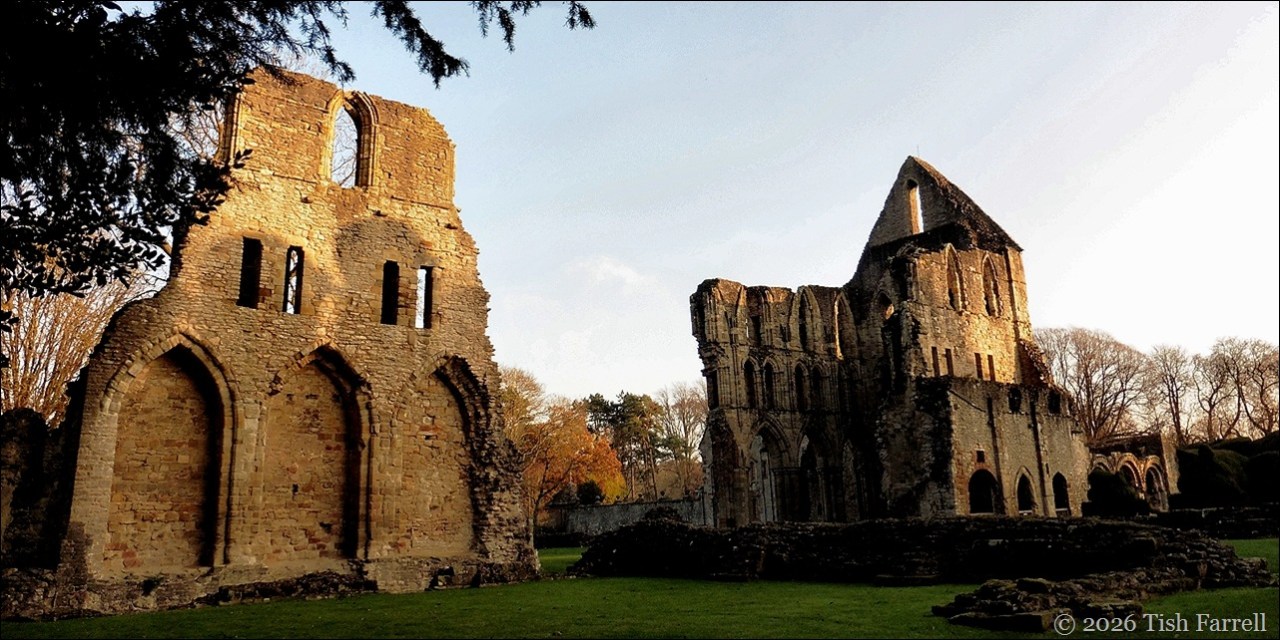
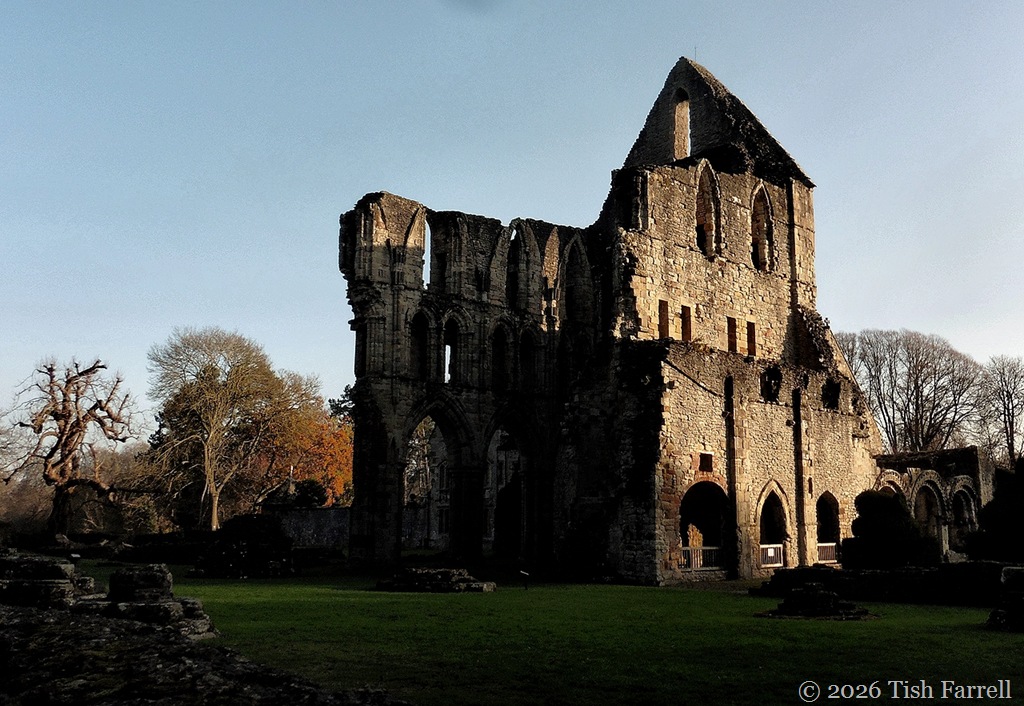
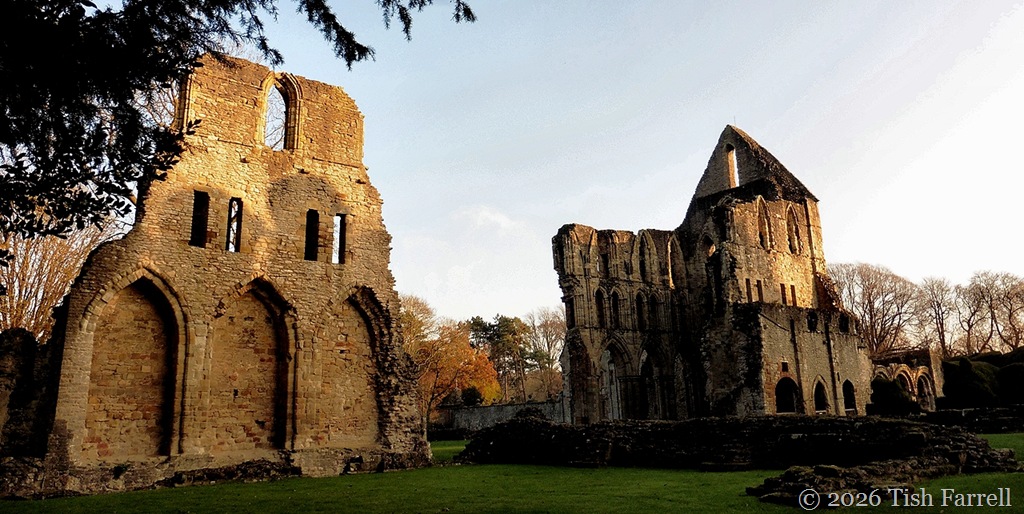
In its time, the Cluniac Priory at Much Wenlock, Shropshire, did much overshadowing. For one thing it was physically one of the largest ecclesiastical houses in medieval Europe. For another, its Prior ruled over both its resident French monks and the lay populace of peasant farmers and artisans who lived and worked beyond its walls. Then in 1540 came the Dissolution of the monasteries. By order of Thomas Cromwell, Henry VIII’s fixer, roofs were stripped of their protecting (highly valuable) lead, and the place, no longer watertight, literally, if slowly, began to dissolve.
Before the end though, the Priory was often a spot for some very shady dealings, forging currency not the least of them.
There’s more about the history in earlier posts Centred at Wenlock Priory and 5 Stories 5 Photos: Hidden Wenlock #2 All of which had me thinking about shadows and recalling the early autumn afternoon when I went to the Priory specifically to capture the ruins in some high-contrast light conditions. I’d taken many photos there in the past, but in the middle of the day. The end products were, without exception, pretty underwhelming.
And so for John’s Lens-Artists’ challenge I thought I’d show a series of different shadowed shots from that late-day autumn visit. I was using a point and shoot Panasonic Lumix including the dynamic monochrome setting for the sepia and black and white shots.
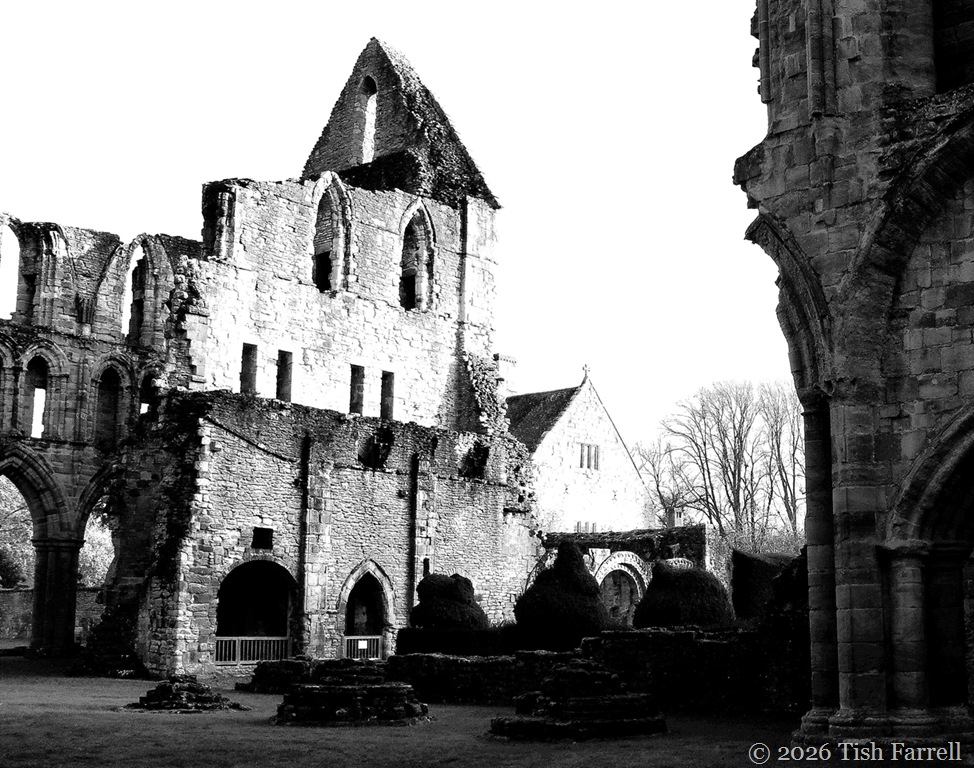
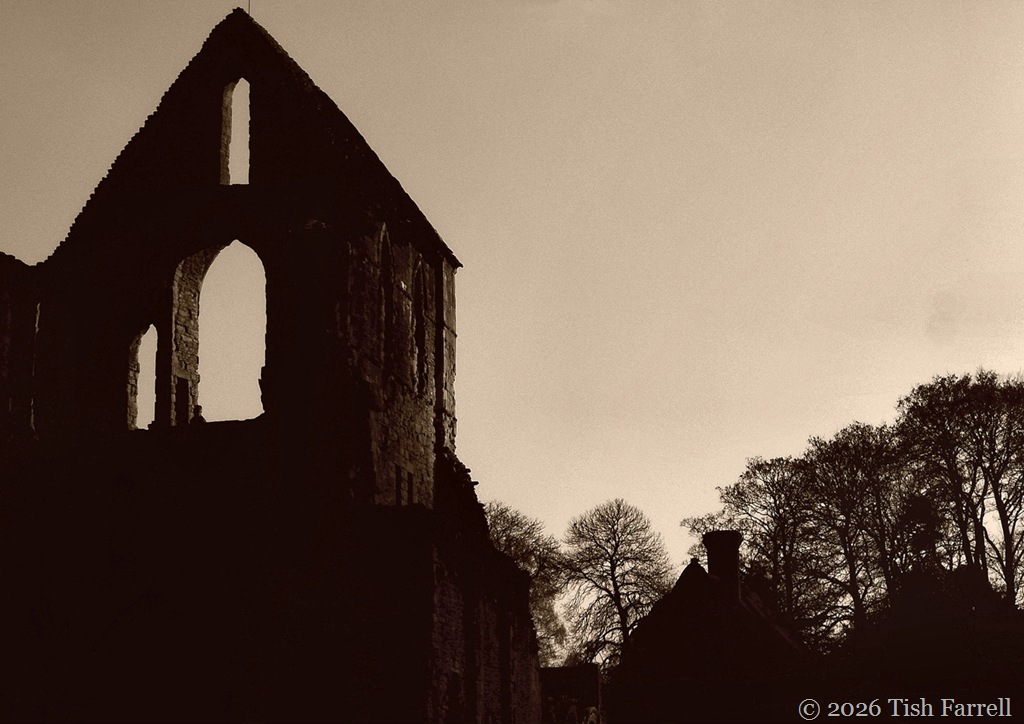
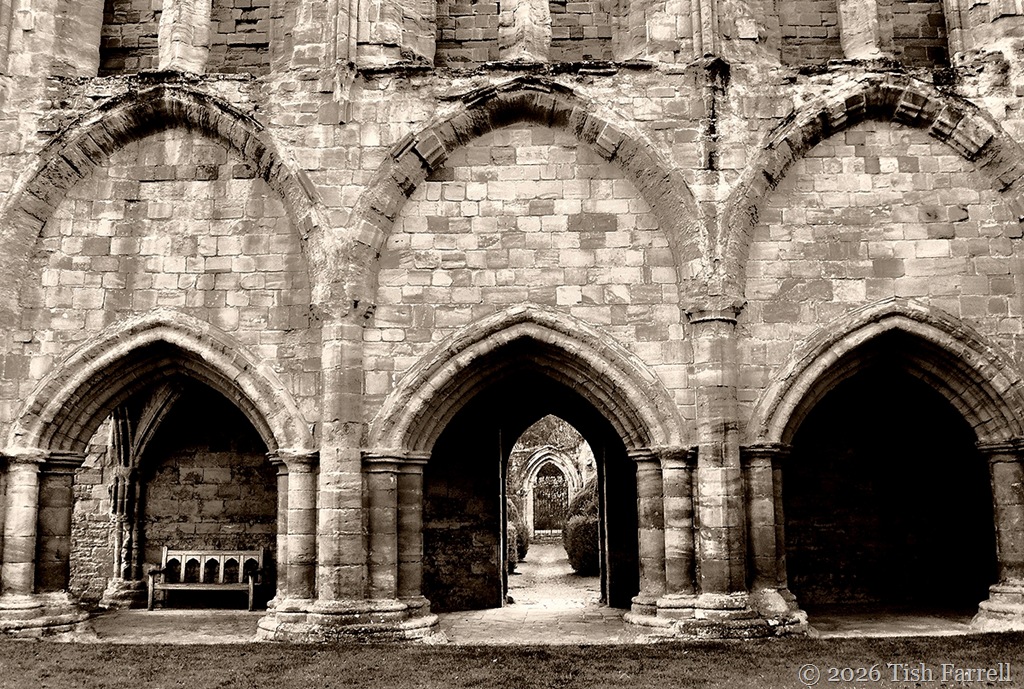
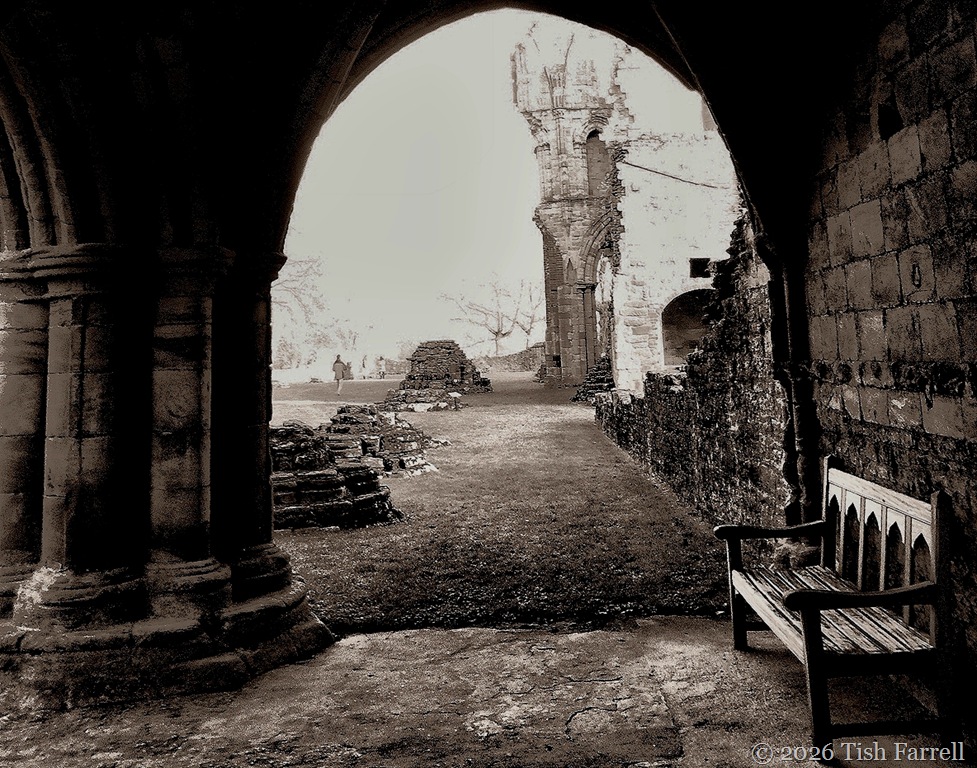
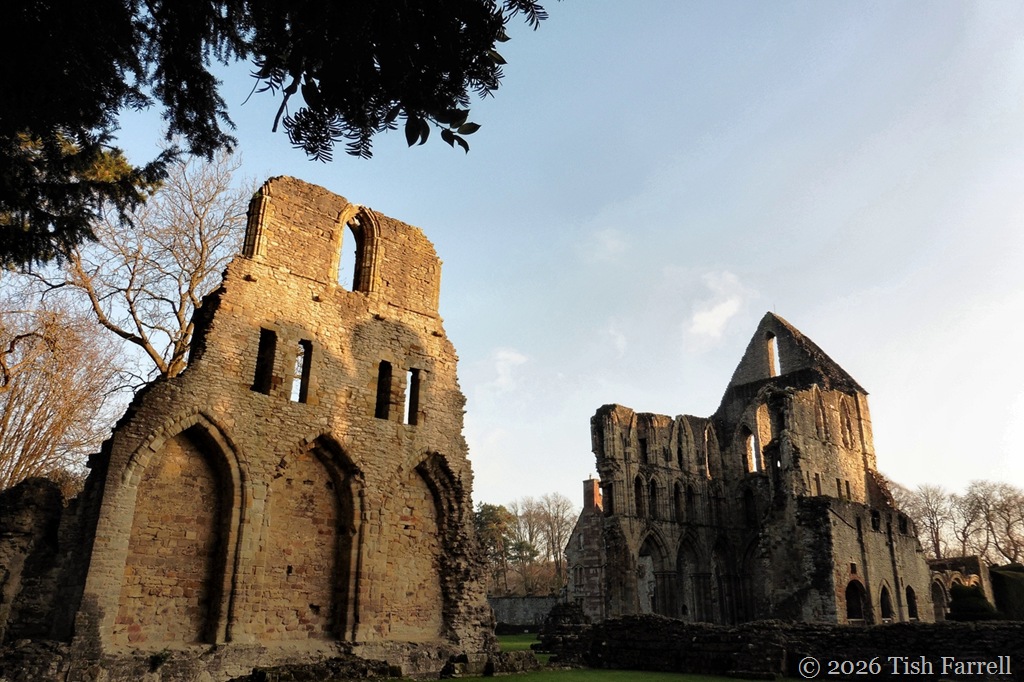
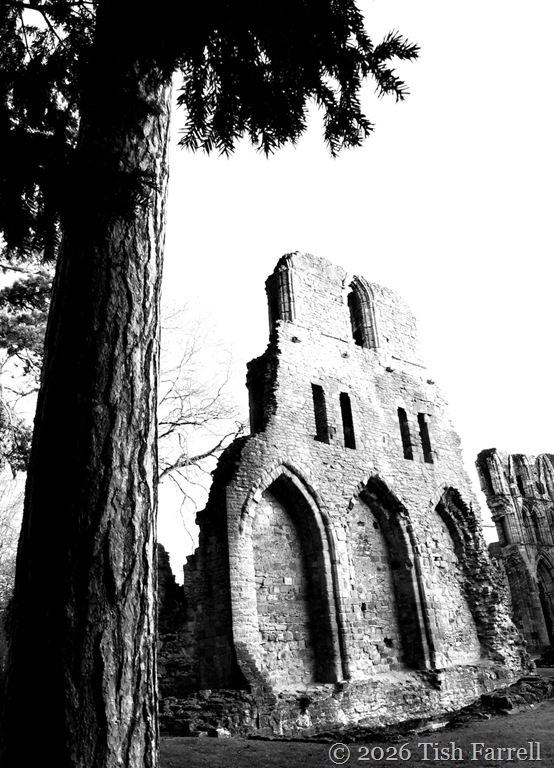
copyright 2026 Tish Farrell
Lens-Artists: Shadowed This week John sets the theme and explores different approaches in his post.
*

Good old Dynamic Mono done you proud! Though I like the colour shots too. So the monks were imported from France? Well, well. Still, they were a silent order I think, so it hardly mattered.
Thanks, Margaret. And yes imported monks. I’m not sure how silent they were. There was apparently a real row amongst the brethren when the prior sold the monastic wool on the futures market i.e. produce from several years ahead.
ExACTly the same thing happened at Fountains Abbey. Those monks weren’t as canny as they thought.
I like the way you’ve linked the idea of overshadowing to the literal appearance of the shadows in your images. The sepia ones work especially well for such an old, ruined structure.
Many thanks, Sarah. I like the sepia shots too.
Echoing Sarah’s comment. And, I really enjoy a bit of a history lesson in reading people’s responses. Nice work, Tish!
Cheers, John. Thanks again for the challenge.
Awesome post Tish! You gave us a great bit of history along with your great photos. I liked that you processed them in color, black and white and sepia. The black and whites are my favorites. They add drama and go along with the historic story.
I like the black & white versions too. Thanks, Anne.
Glorious late afternoon light you captured in these images. The entire gallery is beautiful. Thanks for the historical account, too.
Many thanks for all those kind words, Egídio.
A lovely visit back to Shropshire. Beautifully photographed.
Many thanks, Jude.
Oh how I’d love a chance to photograph Shropshire Tish! It looks so magical. My favorite image is the one that is fully shadowed (shadowed priory sepia). Terrific choice for the week.
So pleased you liked this, Tina.
A magical setting, Tish. I can hear it, calling to me xx
Aah. Calling it was. I was especially thinking of you yesterday. We were lunching at the Green Dragon in Little Stretton where we took you and Mick.
How funny! In a nice way. It’a a while ago now, Tish xx
Must’ve been quite palatial in its day. 🙂
From descriptions it sounds to have been quite some edifice, dominating the valley.
Lovely mood here, and the shadows definitely have a huge part creating it. First one is my favourite.
Many thanks, Sofia.
Imported French monks now? Then all dissolved in 1540? There are so many details in every European country’s history… Fascinating…
And the Prior speculating on wool? wasn’t that against Church rules? (High or Low?)
The priory was extensively remodelled once England was under Norman rule. The monks came from the mother house at Cluny. Originally the priory was a Saxon foundation – 7th century, a dual house of monks and nuns and presided over by St. Milburga, daughter of one of the Mercian kings. All his 3 daughters and also his wife ruled over different monastic houses. An intriguing political strategy, including control of land and resources, and the peasants!
As to later speculation on the futures market, I’m thinking monastic houses were our first corporations. There was another monastery just down the road from Wenlock Priory, It controlled access to the River Severn, In the 12th century its prior was once fined for having 12 barges blocking the river downstream at Bridgnorth.
Greed is eternal, ‘innit’? Sigh…
Thanks for the details, Tish.
They threw the baby out with the bath water when such as these were destroyed – the ruins retain their sense of importance though and the #5 photo is outstanding
Yes, the ruins still have traces of grandeur. It’s hard to imagine it complete though – i.e. something like Canterbury cathedral in a small and hidden valley. It would have been astonishing to come upon.
Gorgeous photos ! I love all the details in the monochrome images, incredible!
Many thanks, Pamela.
Wonderful images of that old Cluniac priory! I love the textures in the header photo
Thanks, Sue. The light was just so good when I took these photos.
It certainly was, a great image
Your photos are truly gorgeous.
Thanks, Jennie.
You’re welcome.
The magnificence of a different time. Thank you for sharing this wistful recollection.
‘The magnificence of a different time’. That’s a great description, Ju-Lyn.