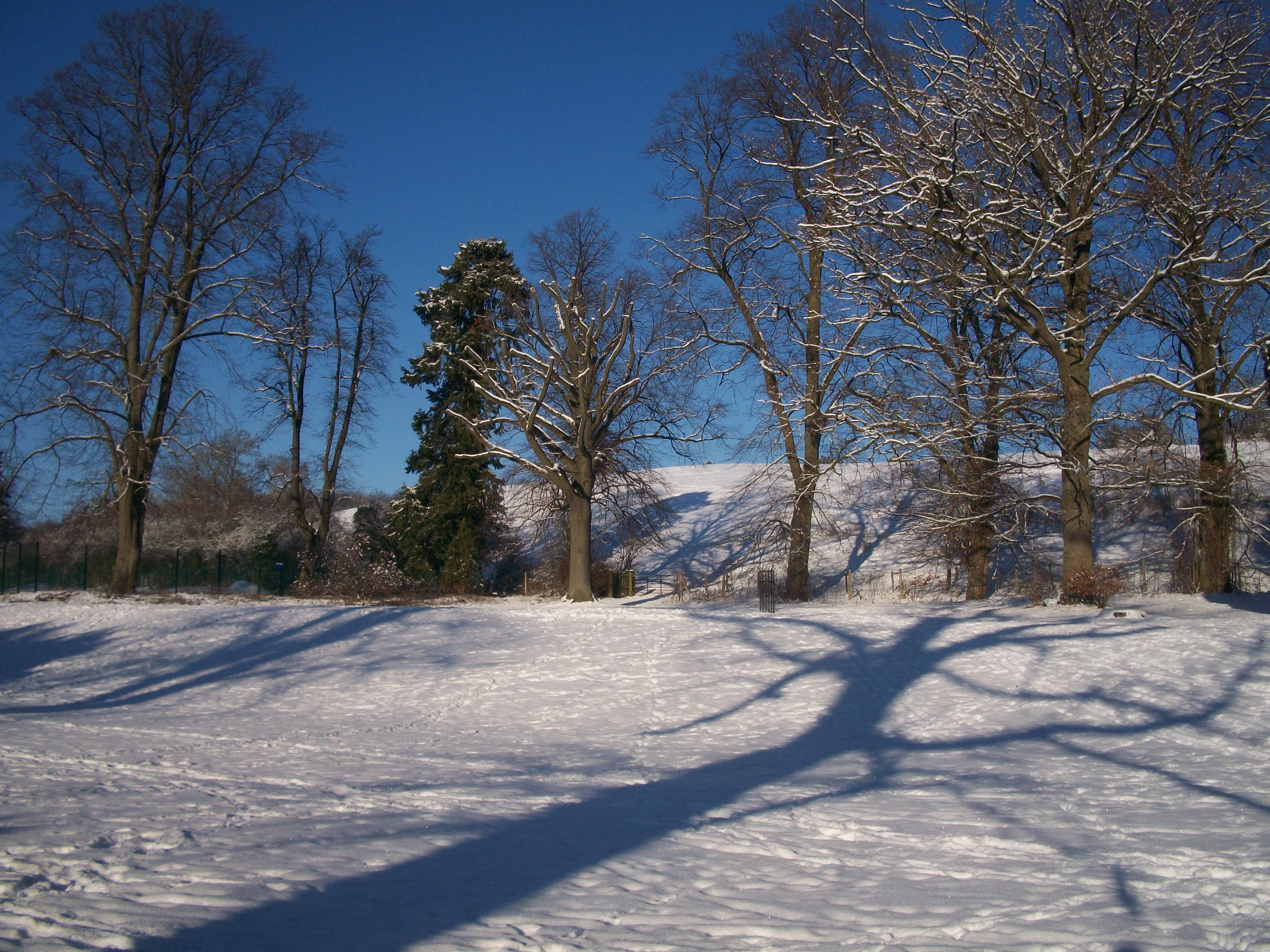
Thursday’s Special: looking at the sky over Wenlock Edge

IMG_1390 (2)

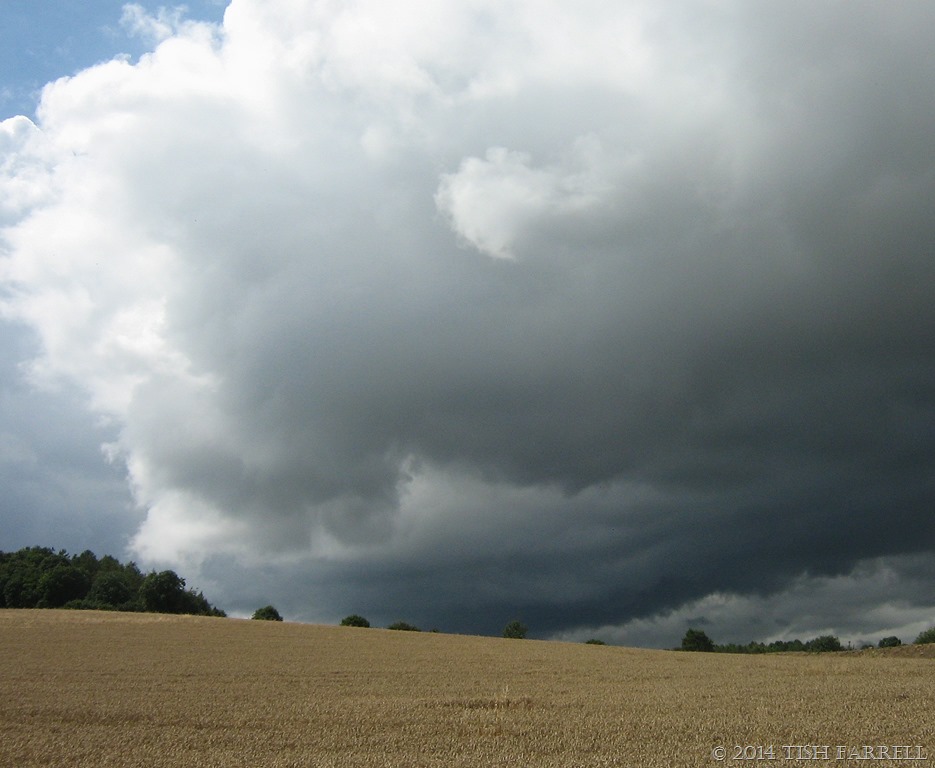
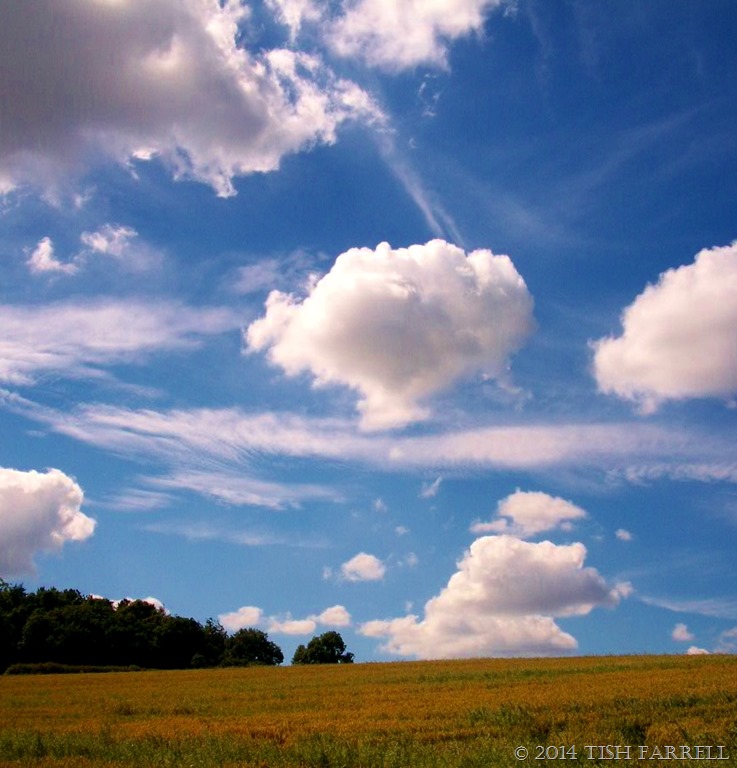
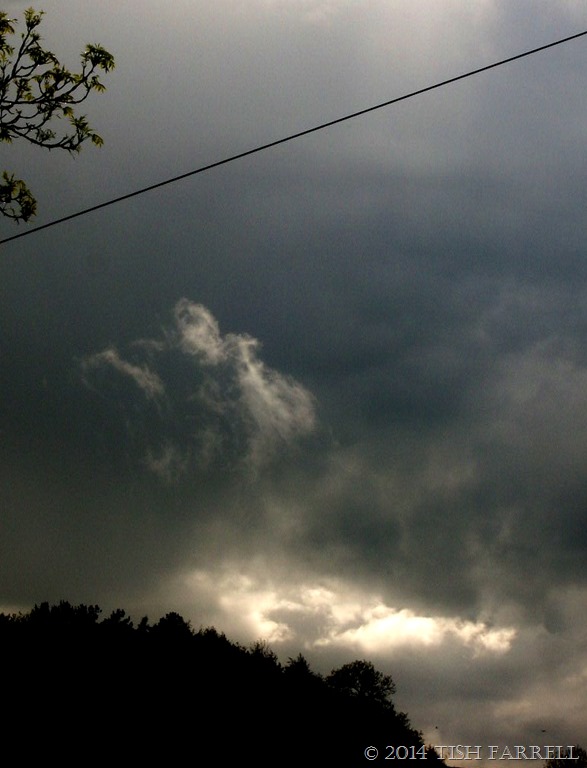
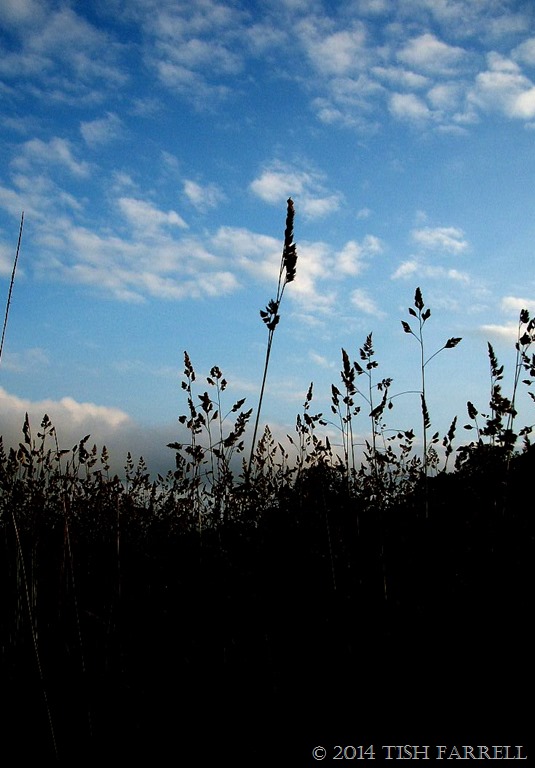
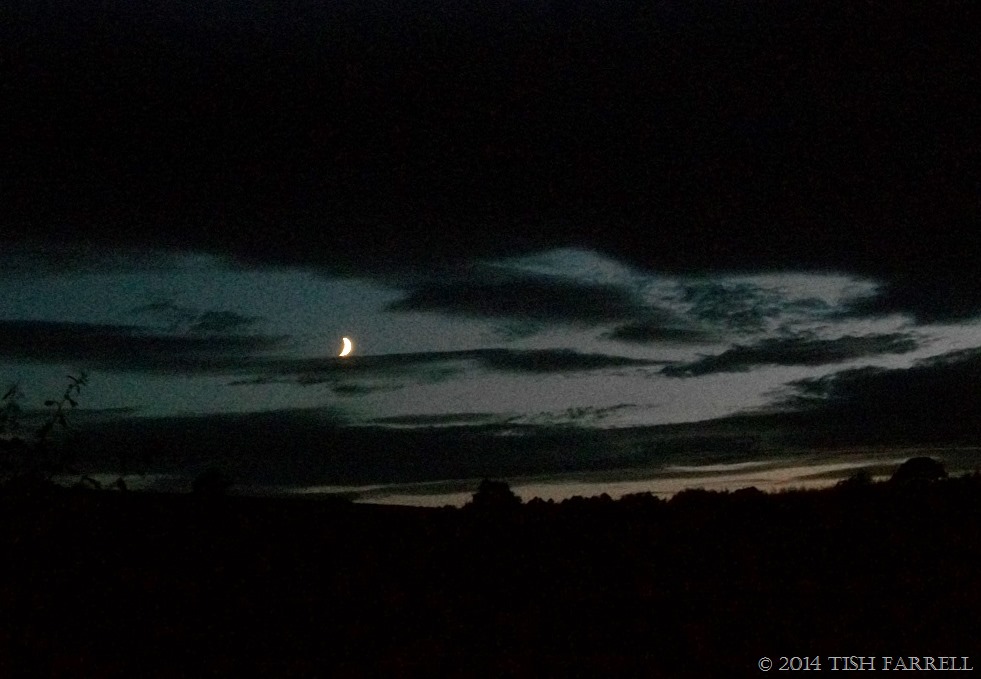
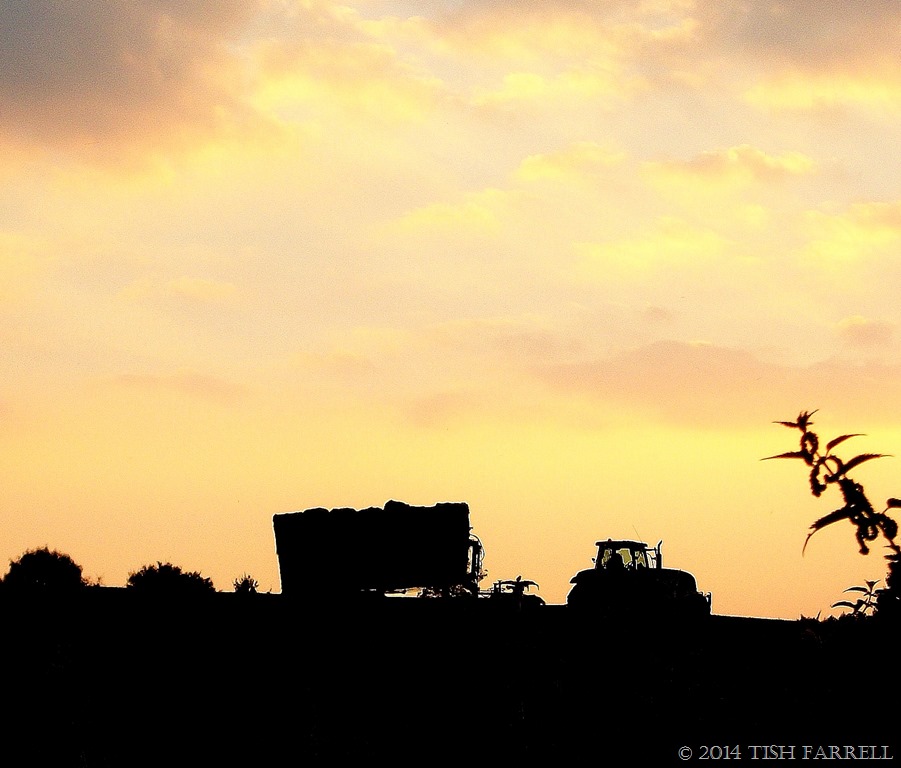
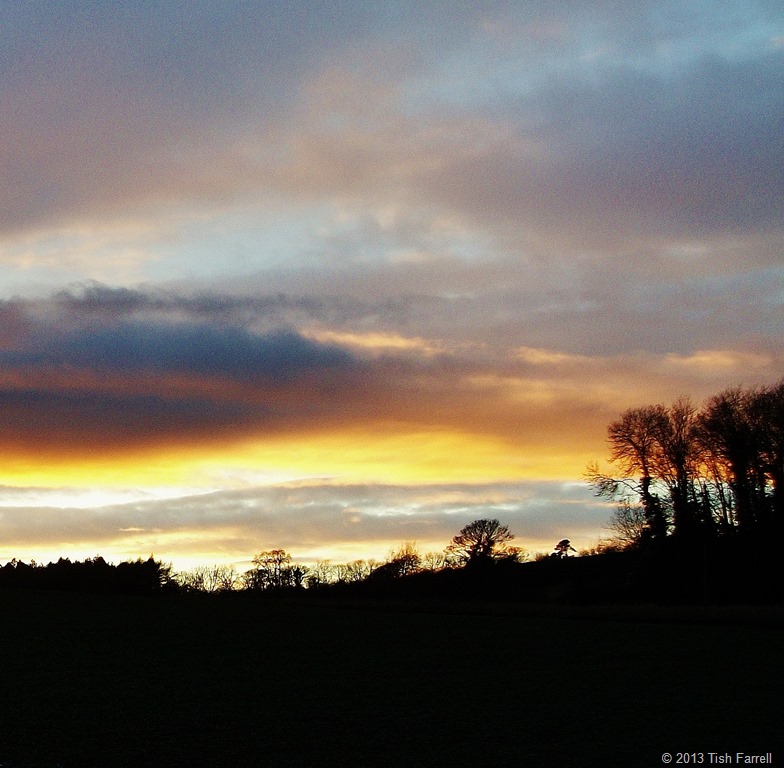
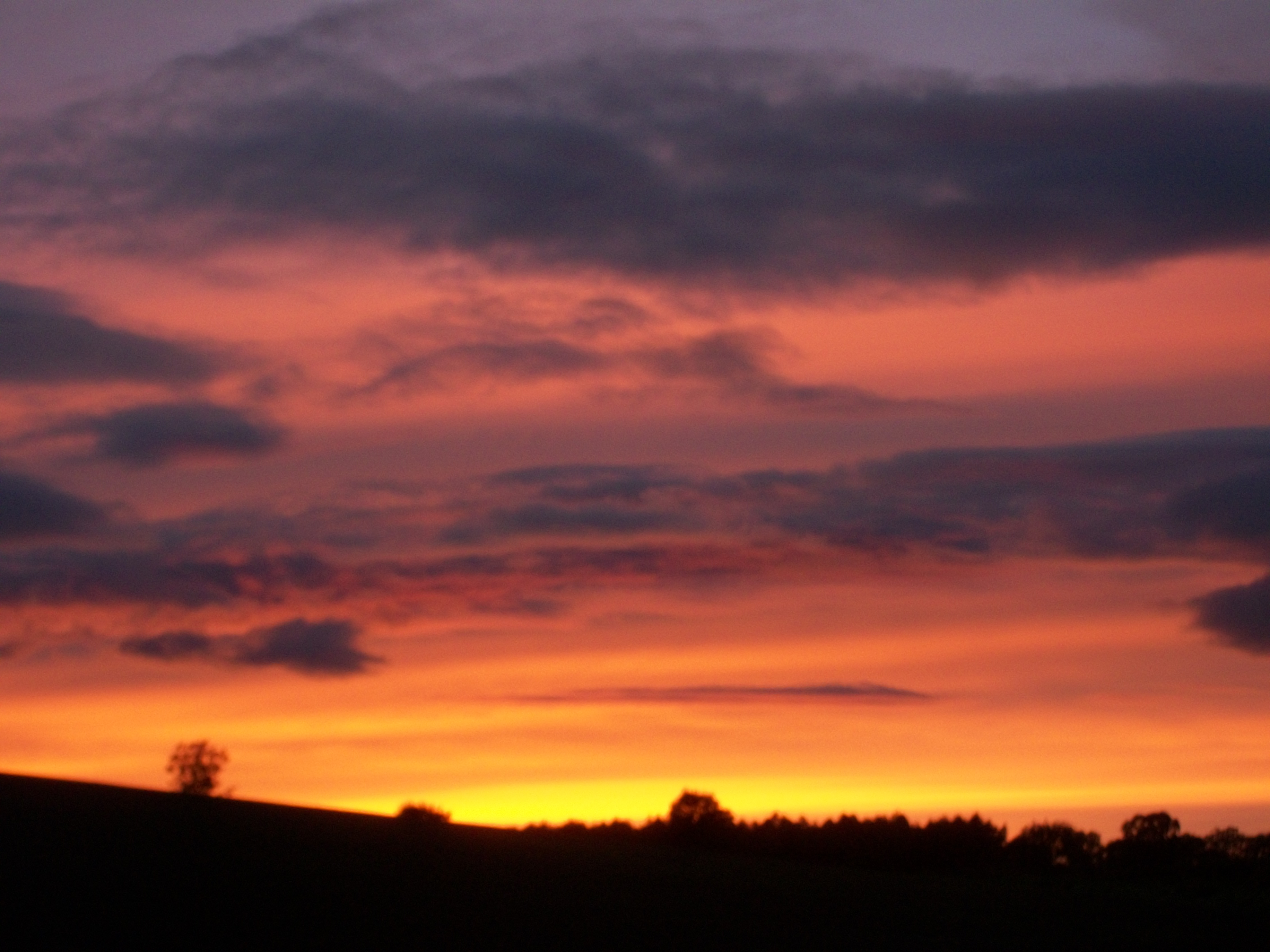
Is it just me, or are our skies growing more interesting in terms of light and cloud formation? I know I spend more time these days looking upwards. Behind our house on Sheinton Street the farmland rises in a series of scarps till it reaches the tree line on Wenlock Edge. Thereafter the ground falls away through hanging woodland. It is quite a drop and means we view the weather higher up somehow, always beyond a series of false horizons. The light and cloud change every minute of the day. You can lose hours simply watching.

This week Paula suggests we post portraits of one kind or another. Here, then, are some sky portraits taken over Townsend Field and Wilmore Hill. You may imagine, too, the frequent exchange that takes place between G and me as we move about the house and garden: I say. Have you seen the sky?

100_5995

100_5659

100_5845

100_5872

100_6382

Lost in Translation Thursday’s Special

#WenlockEdge

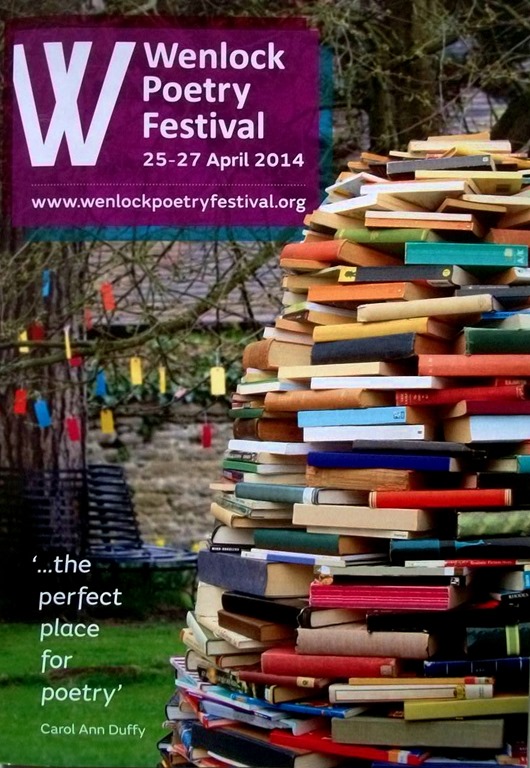
Much lettered at Much Wenlock’s Poetry Festival


100_5560

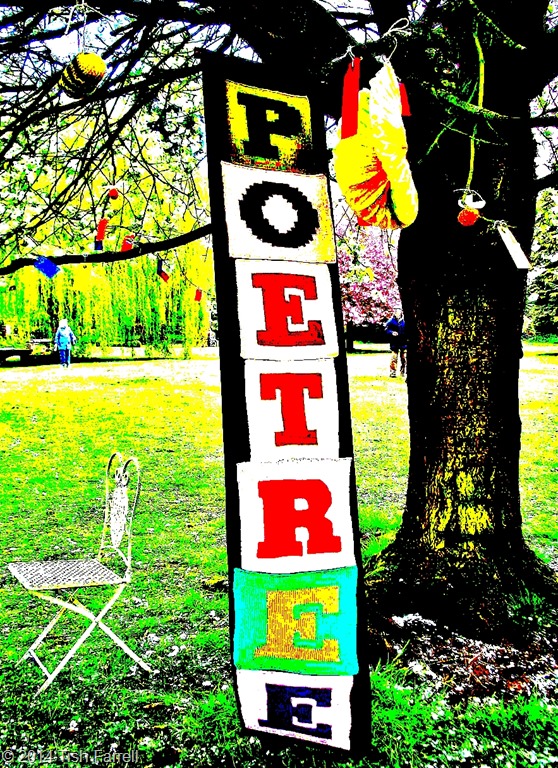
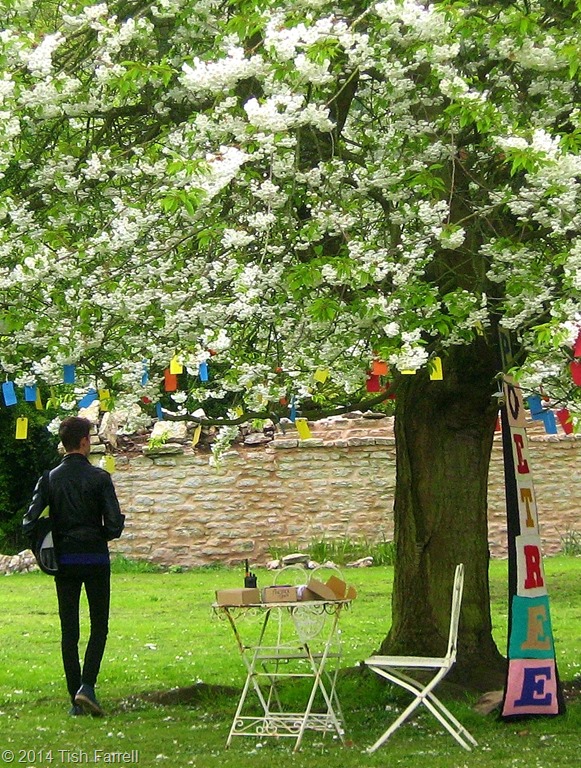
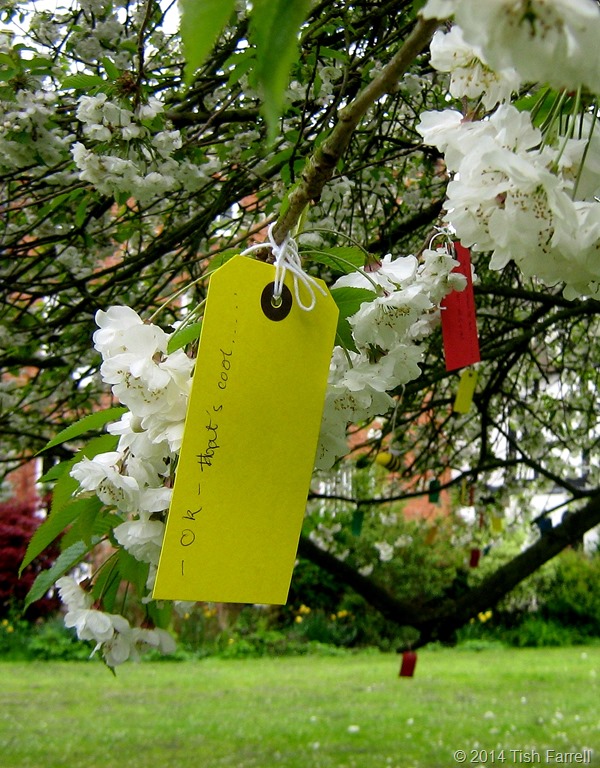
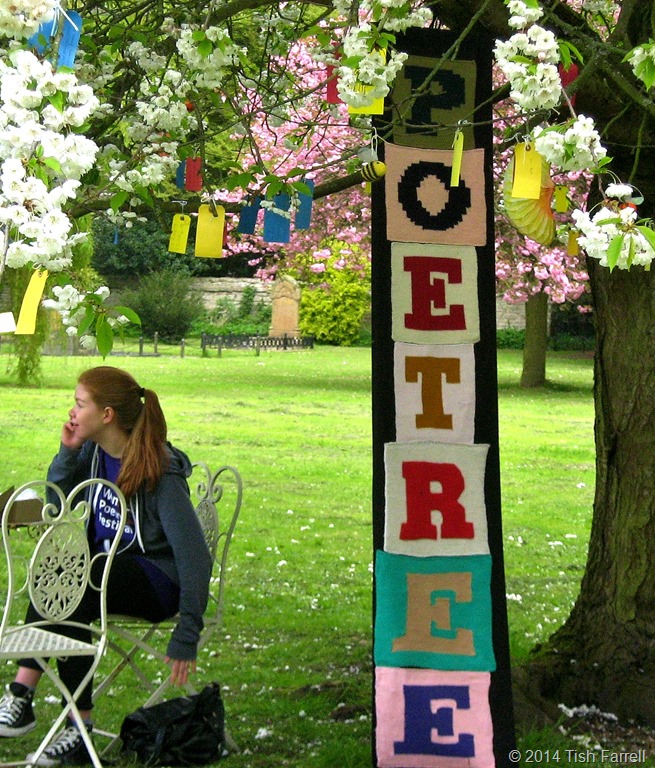
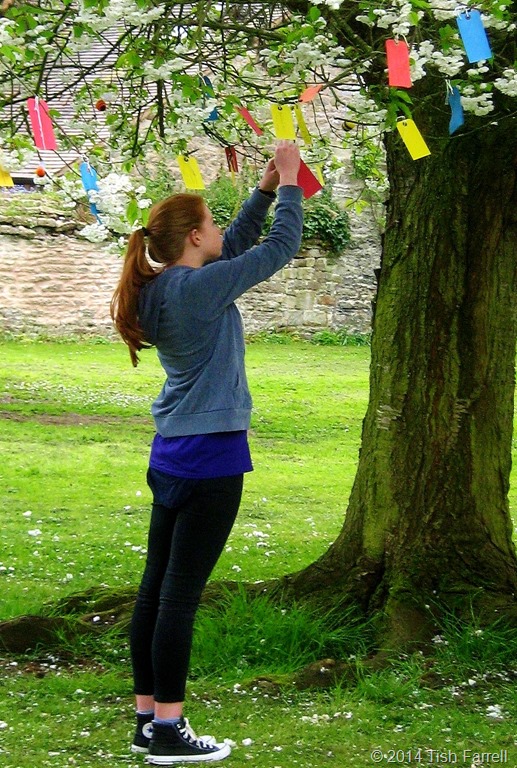
These letters are knitted (I think I was responsible for the red ‘E’) and here they are adorning the cherry tree on the Church Green. This is the Wenlock Poetry Festival’s ‘Poetree’ (artistic licence rendered photo-wise) and, during this now annual April event,  everyone may compose, or write verses from their favourite poem on a luggage tag and hang it on the tree for others to read.

This year the tree has joined in the general creativity by bursting into bloom. In previous years it has been quite bare.

IMG_1050

IMG_1038

IMG_1116

IMG_1105

IMG_1032

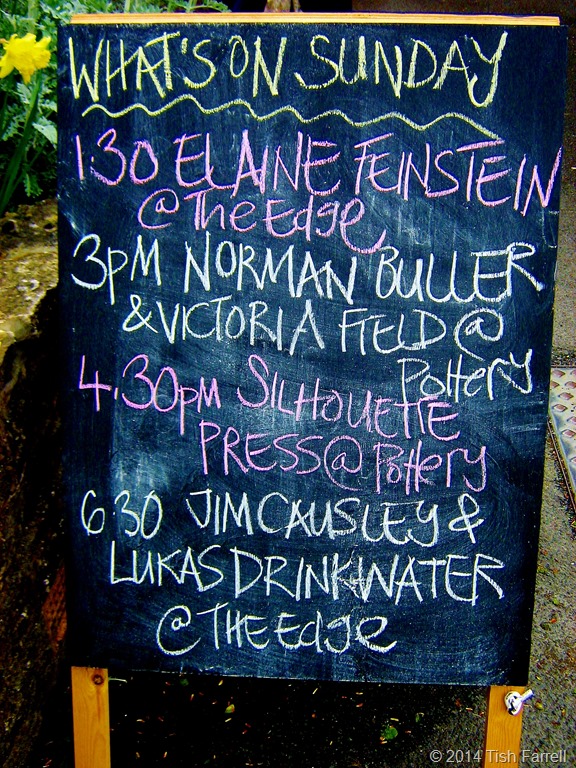
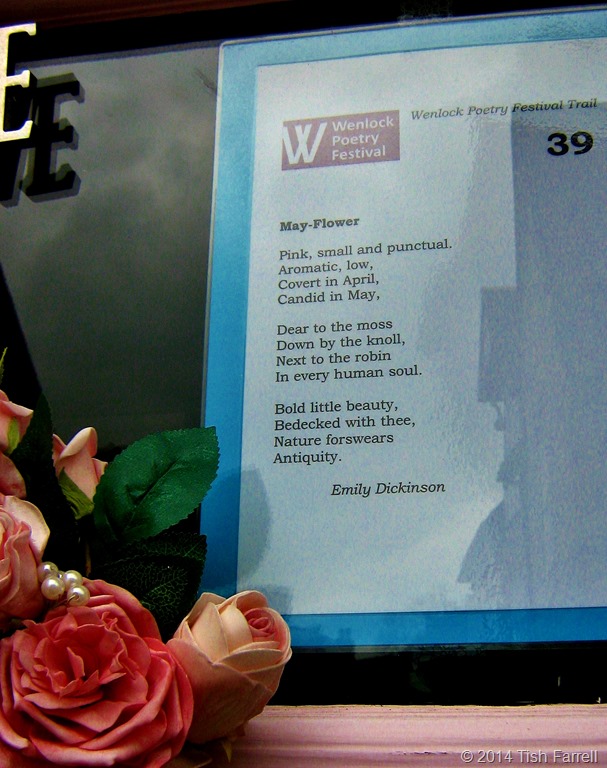
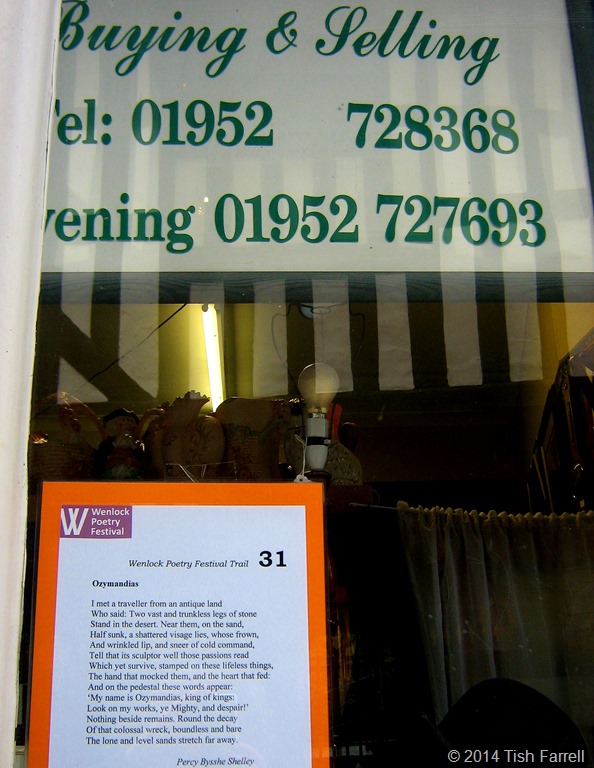
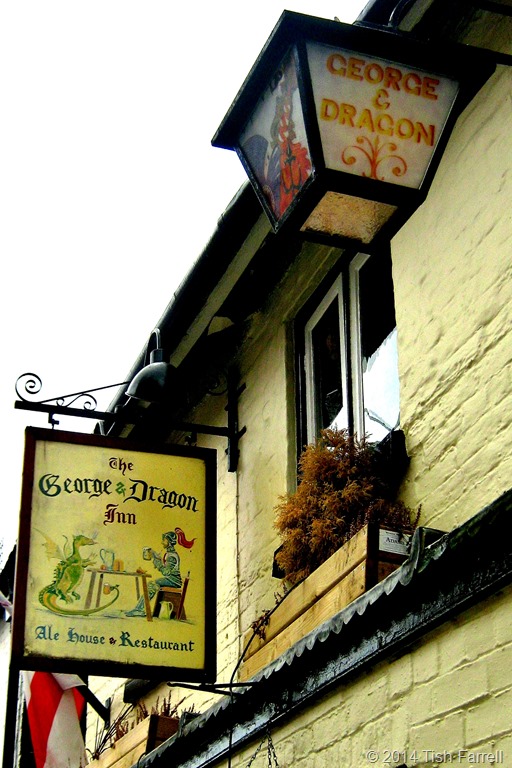
The festival embraces the entire town, using venues at Wenlock Pottery, Methodist Church, the George and Dragon Pub, Tea on the Square Cafe, and The Edge Arts Centre. Besides the three-day programme of readings, talks and workshops with top British poets, there are verses to be found all over the place. Nearly all the shop windows host one, and they include works by local amateurs as well as the more famous.

IMG_1026

IMG_1100

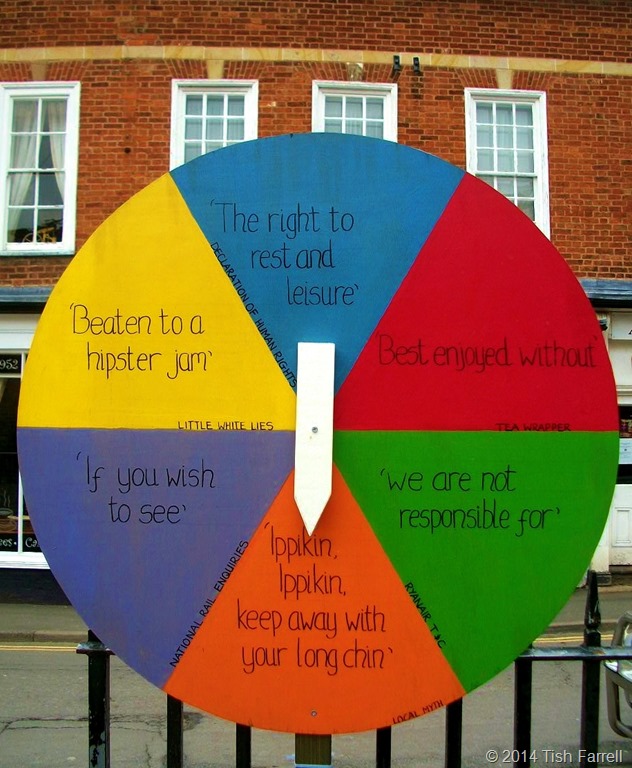
And then there are the ten Dada Poetry Orienteering spinners (including 2 mystery ones) sited about the town. They comprise phrases culled from printed matter – from the Declaration of Human Rights to a tea wrapper. Visit some or all and, with random spins of the pointer, create an on-the-spot composition.

100_5594

And when inspiration needs a further boost, then there are refreshments on hand, not only at the Poetry Café in the Priory Hall, but at the town’s ancient inns, and traditional tea rooms.

IMG_1080

IMG_1058

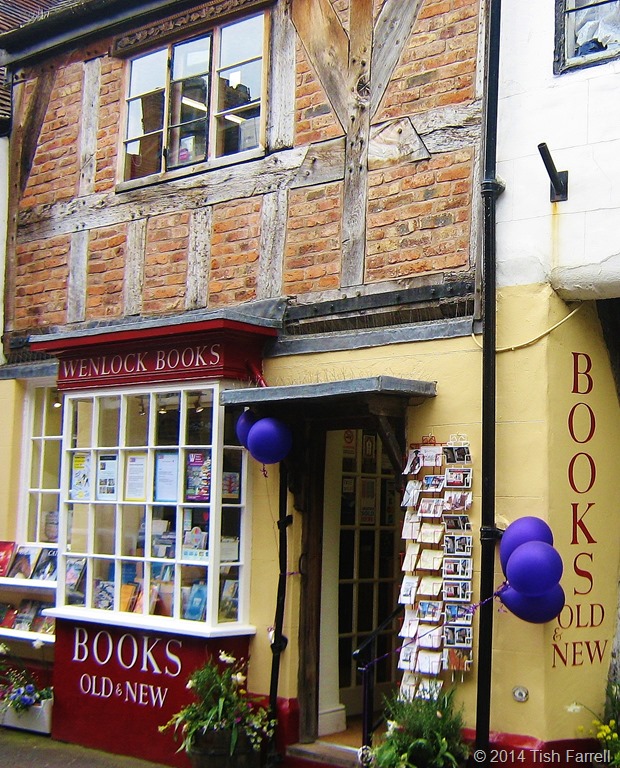
And here we come to the heart of the festival, the town’s famously much loved independent book shop, Wenlock Books. Its owner, Anna Dreda, has been the primary driving force behind the festival, enticing, Carol Ann Duffy, Britain’s Poet Laureate, to be the festival’s founding patron. The festival is now in its fifth year, and involves the efforts of many dedicated volunteers who put in many months of work to ensure its continuing success.

And so for a small town of less than 3,000 people, we are astonishingly well-lettered, and much of this is down to Anna, who throughout the year (and quite apart from the poetry festival) lures young and old into her lovely shop to take part in reading groups, listen to stories being read, or chat with authors. Coffee and biscuits are ever on offer, and sometimes even a Tea and Toast Breakfast. Last year, too, Anna was invited to meet the Queen during a celebration of British contemporary poetry.

IMG_1054

Anna Dreda.

Anna Dreda of Wenlock Books

*

Sadly, you have just missed this year’s festival, but now that you’ve glimpsed a little of what’s on offer in Much Wenlock, check out the festival website below and make a date for next April. But before you leave, a few more views of lettered Wenlock:

IMG_1069

IMG_1071

100_5579

IMG_1079

100_5606

See you at the sixth Wenlock Poetry Festival 2015


Related:

Wenlock Poetry Festival

Wenlock Books


Go to Daily Post Weekly Photo Challenge for more LETTERS

Looking inside ‘The House of Belonging’: remembering artist Sheilagh Jevons

House of Belonging detail i

The following is the account of a conversation I had with Sheilagh in 2014, a year before her death. She is sadly missed.

*

I thought it was time I welcomed good friend and artist, Sheilagh Jevons, to this blog. She lives a few miles from me along Wenlock Edge, in the little village of Easthope. There, and in her studio not far away, she creates arresting work that explores the sense of belonging that people have with landscape. From time to time she and I have involving conversations about the creative process – the stumbling blocks, the sources of inspiration, the way we work (or in my case, don’t work).

A few weeks ago she came round for coffee. I wanted to ask her about a painting I had seen in her studio. I had thought it striking and mysterious, and wanted to know what she meant by it. Besides which, it is hard to resist the opportunity to grill an artist when you have one captured inside your house.

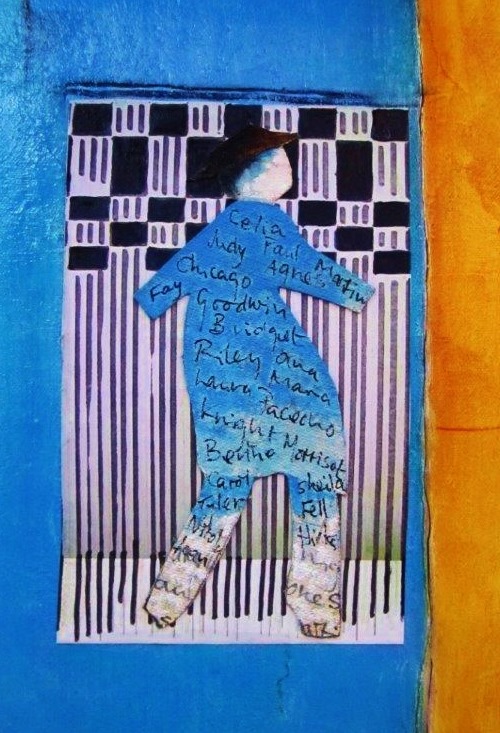
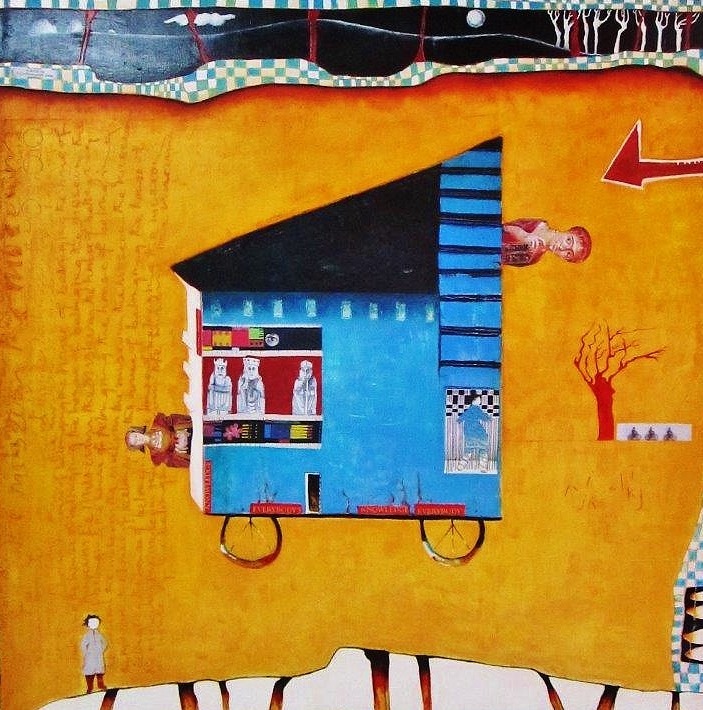
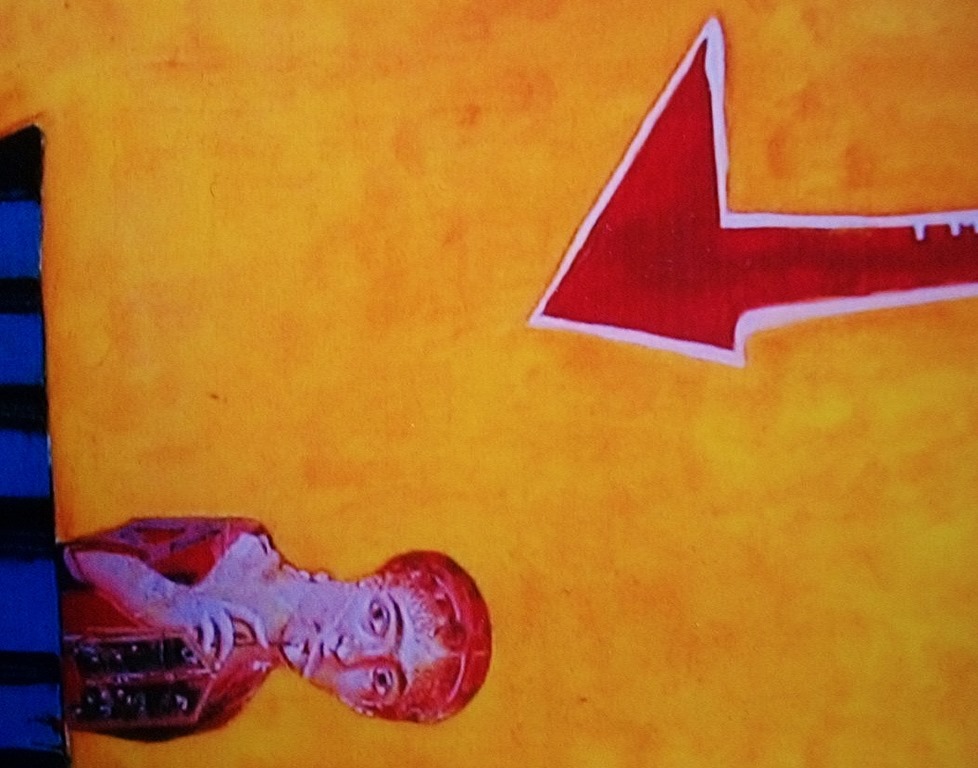
The header image is a small detail from a work called The House of Belonging. This figure has appeared in Sheilagh’s other works and represents women artists. Some of their names are written on the smock, artists perhaps not well known to the general public. Here she pays homage to their work, but also alludes to the fact that, overall, very little work by women artists is to be found in museums. The writing of names and of repeated key-words and equations is characteristic of many of Sheilagh’s pieces. It was one of the things I was going to ask her about. But first, the painting.

House of Belonging ii

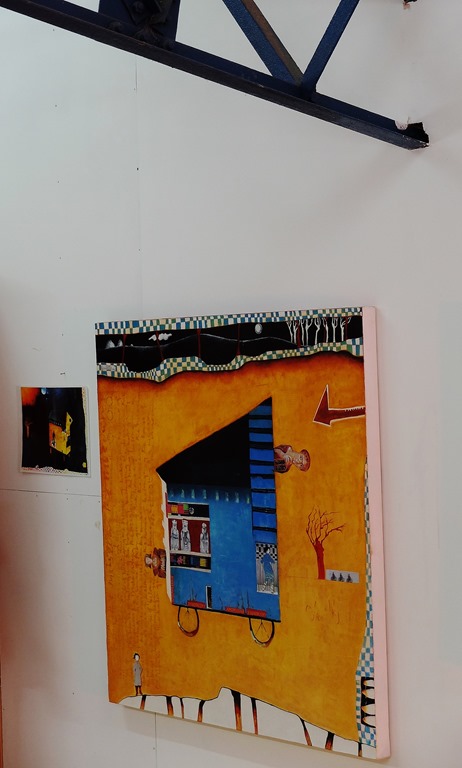
It is a large canvas, some 4 feet (120cm) square. The next photo gives a better sense of scale. Here it is hanging in Sheilagh’s studio:

Shelagh 003

I asked Sheilagh how the work began. She told me that some years ago the idea of belonging had become very important to her. As she says on her website:

Our ‘sense of belonging’ ripples out from our homes to our village, street, town, county, region and country and help to shape our identity…

Key, then, to her work is a sense of connection to land and how that relationship defines us. This in turn has physical expression in community repositories, the places where we keep artefacts, our history, the knowledge of ancestors – all the familiar things we recognise and which tell us something of who we are. In other words, the museum, or as Sheilagh describes it: the house of belonging. The script running down the left-hand margin of the painting in fact repeats over and over the words ‘the museum’, the house of belonging’. The repetition reflects the strong political stance of Sheilagh’s work.

To me this is ‘the writing on the wall’, a statement of collective ownership; The House of Belonging staking a claim. Its contents are manifestations of how humans have interacted with their landscape and the place they call home. Sheilagh also says that adding text creates a certain texture; that the sense of a hand moving across the work creates a connection with her, its maker. The wheeled blue structure, then, is the House of Belonging. The words written inside say ‘everybody’s knowledge’. This is written twice so there can be no mistake. It feels like something to stand up for, a rallying call.

It is also important, Sheilagh says, that the House can move across the landscape to where the people are, rather than the other way round; this makes it more egalitarian. Inside the House are images and artefacts, symbols of creativity. Some of them are stereotypical of ‘heritage’ and therefore instantly recognisable. For instance, the chess pieces (centre left in the painting) are derived from the Scottish Isle of Lewis Chess Set in the British Museum. The set dates from AD 1150-1200 and suggests Norse influence or origins.

House of Belonging Detail ii

Sheilagh copied and simplified the images from a sales catalogue that specialises in heritage reproductions. The placing of the queen in the central position is also significant. She says she feels bound to redress an imbalance: the fact that in most of our media women only occupy centre stage when they are being commodified in some way. And then there is the mathematical equation painted in red beneath the red tree, centre right of the painting. 100_5291 The presence of equations in Sheilagh’s works adds a further layer meaning for her, and although she doesn’t think it necessary to explain them, she is always very pleased when people recognise them. This particular one refers to mathematical research by American academics in the 1920s called The Geometry of Paths. The appearance of equations in Sheilagh’s paintings also has more personal origins. She tells me she started to include them some years ago – after she had been helping her daughter revise for her Maths and Physics A’ level exams. It is another connection. There are many more signifiers in the work: motifs that have links and resonance with Sheilagh’s other works. The red tree above the equation is a symbol of timelessness, indicating ‘forever’ in human terms.  House of Belonging ii - Copy The red arrow in the top right creates a sense of energy and direction; a ‘look what’s here’ sign. There is the sense of a force field, drawing people to the House of Belonging. 100_5294

Finally, we talked about the overall composition. Sheilagh says that she began the work some years ago after she noticed that a small building denoting ‘museum’ often appeared in her landscapes. This time she wanted it to have it as the main subject, and to make it both an enticing and a mysterious place. At this point she also created the friezes at the top and bottom of the picture, these in order to suggest other layers of reality behind the surface painting. The top frieze is the wider, timeless landscape of which the museum is also symbol. The bottom frieze is deliberately ambiguous and suggestive; it invites the viewer to consider what might lie behind.

House of Belonging ii And having created the work’s essential structure, the painting was then abandoned. It was only some fifteen months later, when Sheilagh, looking for a large canvas to start another work, returned to it. She was fully intending to paint over it, but when she looked at it again she suddenly knew how to proceed and completed the work very swiftly. She says it probably is not quite finished, and suspects that something may still need to be added. In the meantime she has been occupied with a large body of work relating to Scotland.

*100_5111 100_5110

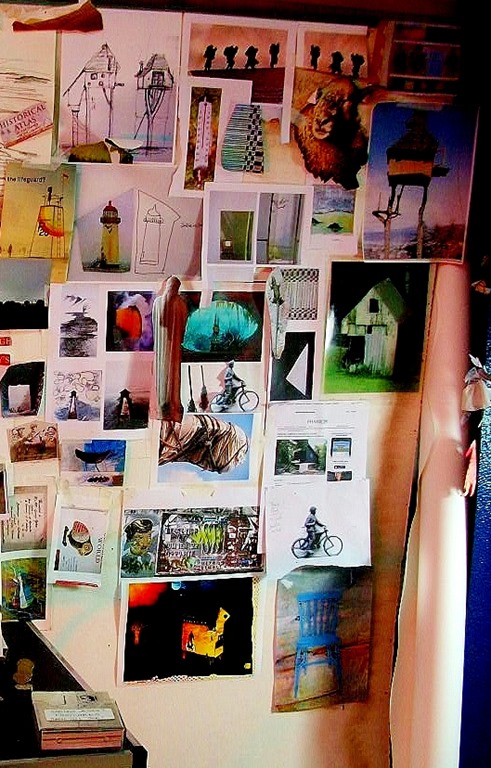
Notes and reference materials from Sheilagh Jevon’s studio

© 2014 Tish Farrell

Songs from an Inland Sea: “On Wenlock Edge”

This week’s Word Press writing challenge, with its musical theme, has set off a whole host of notions. In fact this may just be the post where all the strands of my  ‘writer on the edge’ blog come together. This, though, is only a proposition and by no means a promise.  One thing I can promise:  there is some very fine music at the end. And for those of you who do not know the  English composers Ralph Vaughan Williams (1872-1958)  and George Butterworth (1885-1916), then please consider this an early solstice gift. And if by chance you do not care for it, or indeed anyway, by all means pass it on.

So to return to the notions.  Those of you who  have read my past posts will probably know that I live on the edge of  Wenlock Edge, a twenty-mile limestone scarp that bisects the county of Shropshire from the River Severn above the Ironbridge Gorge, to Craven Arms on the borderland with Wales. Aeons ago this now wooded, much quarried ridge was once a shallow tropical sea lying somewhere off East Africa. Today, and especially now through bare wintery trees, you can look out from its summit and scan a great panorama – the farm fields, villages and hills of Shropshire.

*

As I’ve said in other posts, there is a lot of history in this place – over 400 million years’ worth. Too much to embrace. But in the recent past (geologically speaking), you might have looked out from the easterly end of the Edge onto the smog-laden valley of Coalbrookdale as the Quaker ironmasters stoked their blast furnaces and helped fuel an industrial revolution. Travel back a further 1500 years and to the north you would have gazed on the impressive public buildings and sprawling settlement of the Roman city of Viroconium. Or in earlier times still you might have witnessed the building of the great Iron Age hill forts on the Wrekin and in Mogg Forest, or perhaps glimpsed some Bronze Age smiths plying the ancient ridge-top trackway en route for Wales.

*

The Edge, then, is full of spirits, and  it is not surprising that it has long inspired artists, writers and composers. And so we come to the music, or rather, we come first to the work that inspired the music – A E Housman’s A Shropshire Lad.  This collection of sixty three poems has been described as a gift for composers. The poems are written in the style of traditional ballads. And if at first they seem too obvious in their rhyme and rhythm, then look again. These are songs of loss and fleetingness – lost youth, lost love, the soldier’s death. That they are set against some scene of suggested rural perfection only heightens their poignancy. The work, too, somehow anticipated the bleak waste of the Great War, and so it was that, when the time came,  A Shropshire Lad went with many a soldier into the trenches.

Housman’s  sense of melancholy and loss stem from his own life: his mother died when he was twelve, his brother Herbert was killed serving in the Boer War, and his deep love for another man was unrequited. Nor did his work A Shropshire Lad have a very good start. Although it has remained in print since publication in 1896, in the beginning Housman could not find a publisher and had to pay to have the first five hundred copies printed. At first, too, there was a lukewarm reception. But within a few years, and much to the writer’s surprise,  its popularity suddenly grew. This in part was due to the fact that several composers seized on some of the poems and set them to music.

In 1909 came Vaughan Williams’ song cycle On Wenlock Edge. The work’s title is taken from the opening line of poem XXXI: On Wenlock Edge the wood’s in trouble. You can hear the storm-driven trees in the opening of the first video clip where English tenor, Ian Bostridge goes on to talk about his recording of the work with Bernard Haitink.  You also see him in rehearsal singing one of the most moving poems. It is written in the voice of a ghostly young ploughman returning home to see how his girl is faring. Here are the first two stanzas.

XXVII

“Is my team ploughing,

That I was used to drive

And hear the harness jingle

When I was man alive?”

*

Ay, the horses trample,

The harness jingles now;

No change though you lie under

The land you used to plough.

*

The entire Vaughan Williams song cycle sung by Anthony Rolfe Johnson is performed in the third video below. Other composers inspired by the poems include Samuel Barber and Ivor Gurney (The Western Playland and Ludlow and Teme). I could not find clips of these works but I did find George Butterworth, who was a friend of Vaughan Williams. He set eleven of the poems to music including Is my team ploughing. He also composed the orchestral rhapsody A Shropshire Lad. It is yearning, elegiac piece, performed in the second video and accompanied by Shropshire scenes. Butterworth himself was killed on the Somme in 1916, his composer’s career barely begun.

So,  you may ask, how does this all fit with ‘Tish Farrell – writer on the edge’? Well I suppose it comes down to this. As a fiction writer, or indeed a blogger, my focus is ever on the evocation of place (both through time and space) and how it resonates through the lives of the people and events I write about. And so I love the fact that the place where I live and have known most of my life has inspired so much creative work. And, indeed, continues to do so. In fact, I’m planning to feature more of it on this blog – the artists of the Edge. I am, anyway, fascinated by the process by which, in wonderful synergy, one person’s work inspires another’s creative response, thus building into a  body of cross-referencing works. See what good things we can make when we listen in good faith to each other.

Wenlock Edge of course has its own music. I hear it most when I’m working on my allotment – the windrush in the woods, the mewing buzzards, the calls of rooks and jackdaws, and through it the chiming of the church clock. I screen out the traffic sounds of course. So here we have it: the rural idyll that never was, the music of Vaughan Williams and George Butterworth evoking the peculiarly human need to long for something we cannot have, and finally Housman’s  own words from poem XL:

   Into my heart an air that kills
From yon far country blows:
What are those blue remembered hills,
What spires, what farms are those?

That is the land of lost content,
I see it shining plain,
The happy highways where I went
And cannot come again.

*

And now, courtesy of Gutenberg Press, here is your copy of  A E Housman’s A Shropshire Lad.

100_2138

Frizz’s S-Challenge

Weekly Writing Challenge: Moved by Music

© 2013 Tish Farrell


Old Stones of Wenlock: repurposing the Silurian Sea

100_5030

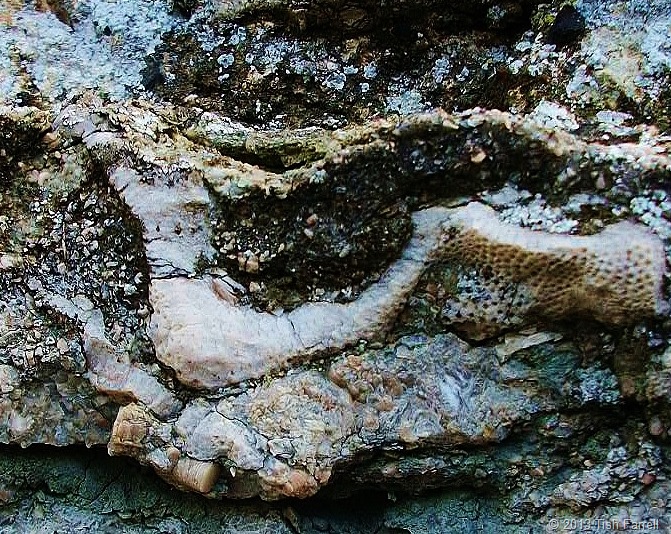
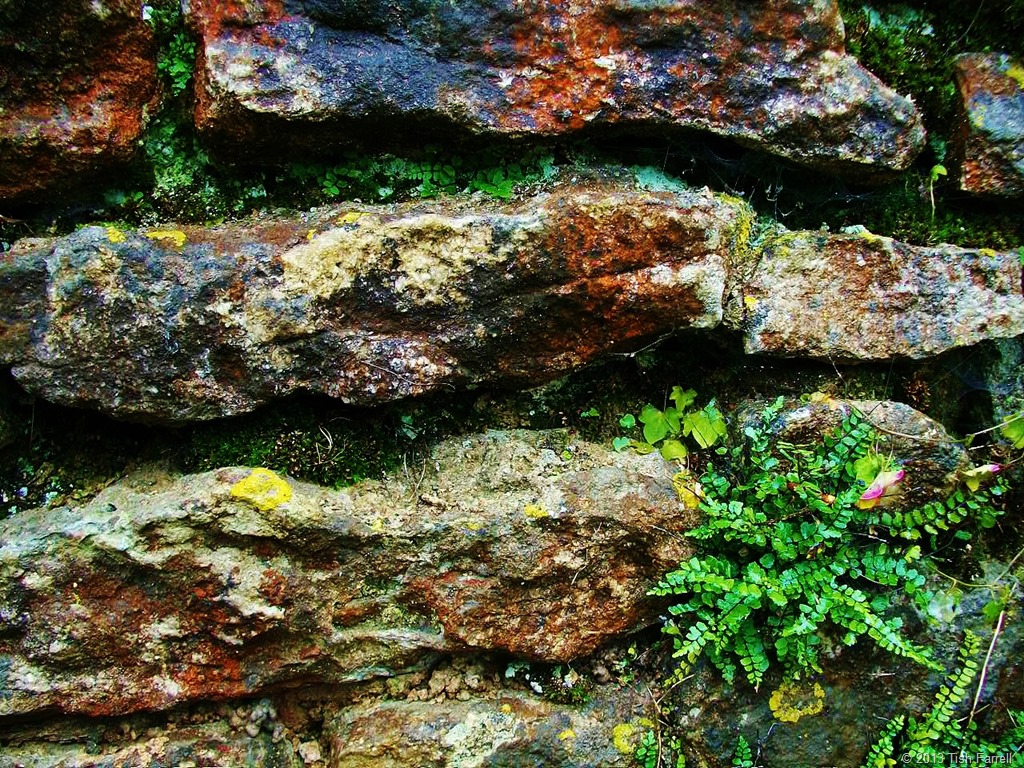
I like the idea that I, like many in and around Much Wenlock, live inside blocks of repurposed, and well-travelled seafloor – the compressed and decomposing shells, sponges, bony fish, sea scorpions, trilobites and corals of  the Silurian Sea. It is also intriguing to know that some 400 million years ago, this shallow tropical ocean was part of a land mass that lay off East Africa, somewhere near the Comoros Islands. We even have our own geological epoch – The Wenlock that lasted from 428 to 423 million years ago. And yes, I know, it is hard to fathom – this mind-boggling vastness of geological time, the tectonic shunt and shift across the globe to create the continents we all now recognise.

100_5019

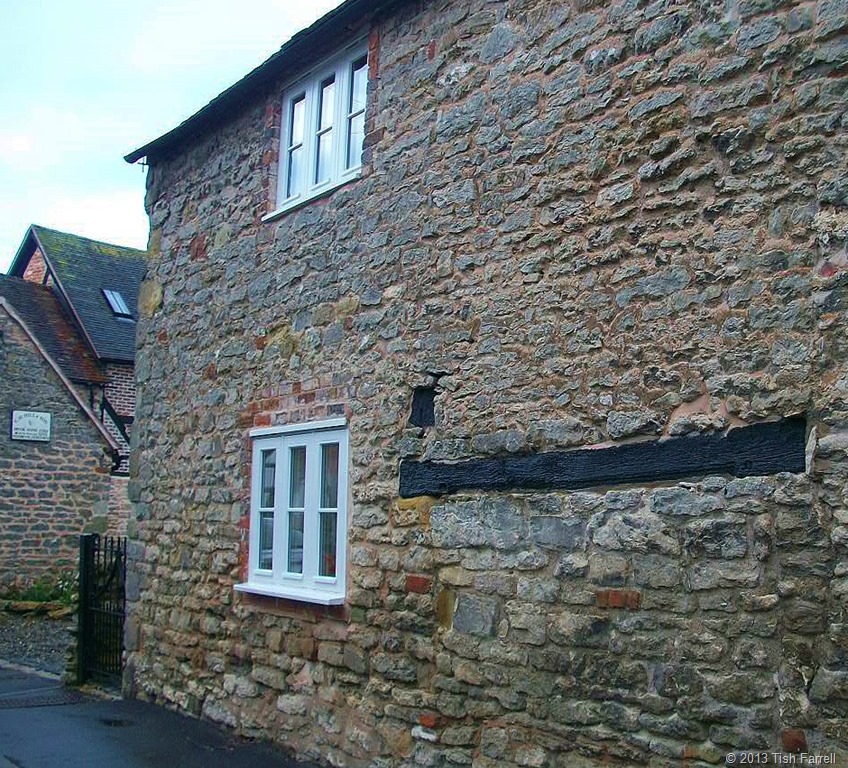
My own view of the world, I find, is firmly fixed, and distinctly two-dimensional, being the usual flat configuration found in an atlas. And of course, when I consult the world map I can surely see that Much Wenlock is definitely in the northern hemisphere, in England’s Midlands to be exact, nudging towards Wales. Yet the proof that this was not always so, is all around me – in the stones of church, priory, and the many barns and cottages, even in my chimney breast – this place, this ground beneath the wooded ridgeback of Wenlock Edge, where the stone was quarried, WAS ONCE IN THE TROPICS. And since I once lived in the tropics myself, I like to think that returning to Shropshire has brought me back to the place where I was in Africa, but in a different time zone – a bit like a Time Lord, a Doctor Who without a Tardis.

100_3478

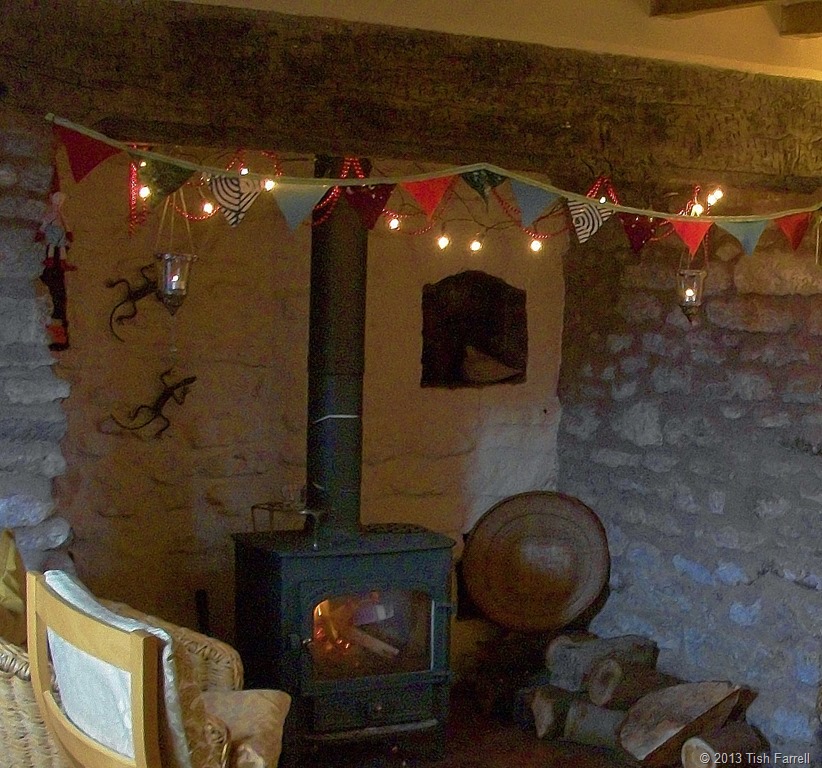
The Farrell Silurian fireplace built c 1830

*

But back to the stones. The circular sections you can see in the first photo  are the remains of crinoids or sea lilies. These were animals, echinoderms, not plants, and looked something like this:

From McGraw-Hill Science and Technology Encyclopedia; Articulata

*

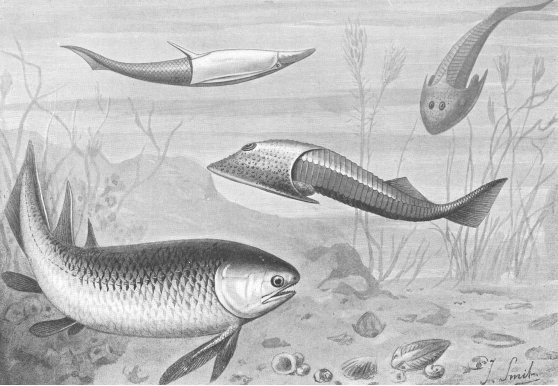
Bony fish also made their first appearance during the Silurian:

File:Silurianfishes ntm 1905 smit 1929.gif

Artist’s impression of Silurian Fish (creative commons copyright expired) from  Nebula to Man by Joseph Smit 1905

*

And the landscape may have looked like this, although was apparently entirely inhospitable above water, with roaring winds and hot flying dust, and no signs of life.

Silurian Sea reconstruction by Richard Bizley: http://www.bizleyart.com/

*

And here is bed of the Silurian Sea today, the upthrust levels that form the fifteen-mile wooded ridge of Wenlock Edge. Its geology is of international importance. (For more on Wenlock Edge, see its Facebook page here.)

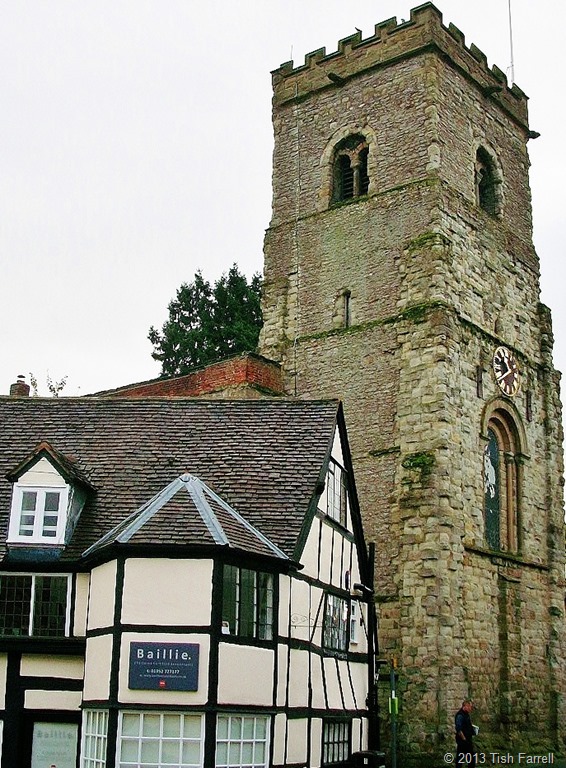
The Edge has been quarried for centuries, but the quarries lie mostly empty now, waiting to be repurposed themselves. In the town our earliest surviving stone buildings date from monastic times. (In Much Wenlock An Inspector Calls.) But old buildings have always been recycled into new buildings, and you can see signs of this as you walk along the streets nearest the priory ruins.

100_5011

100_4998

100_5013.jpg

100_4965

100_4966

100_4993

100_4964

100_4992

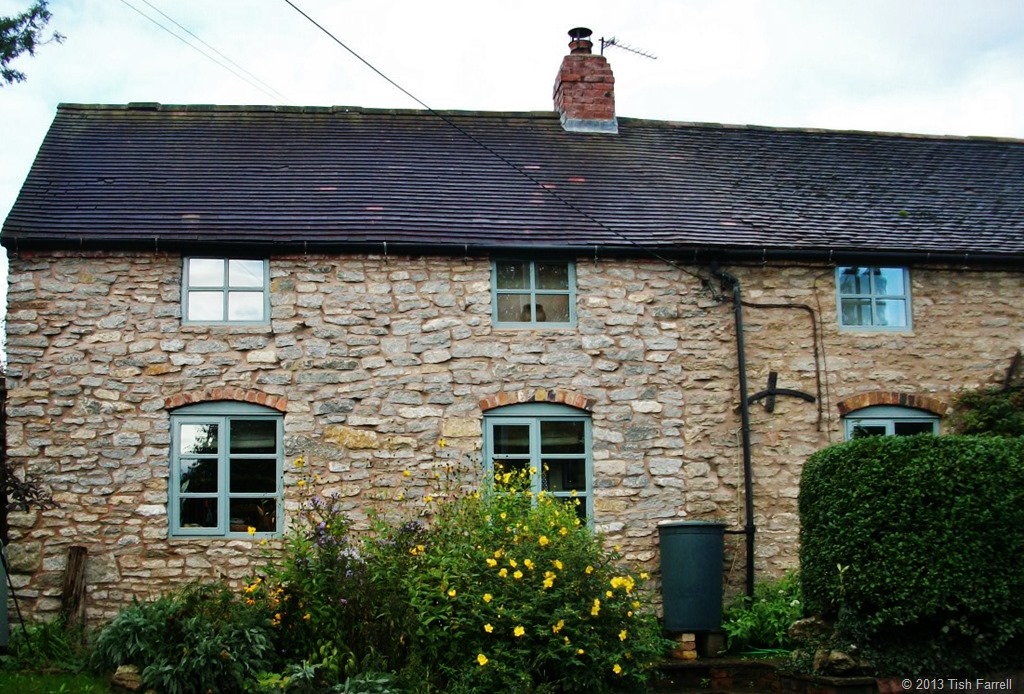
And finally  (below) is the Farrell establishment – a blend of old and new construction. Hopefully the inhabitants are not yet as fossilized as their surrounding walls, although clearly it is only a matter of time.

100_4959

Travel theme: stone

© 2013 Tish Farrell

…of wolf farts, windmills and the Wenlock Olympics

It has to be said that wolf farts are pretty hard to find, even with expert guidance. And yet I had been led to believe (and by the Guardian no less) that if I visited a certain, well-known location near me, I would most surely discover them. And so, on a sunny winter’s day last week, when I set out on the curious quest, I was not anticipating difficulty. Far from it. The ground was dry underfoot and visibility good and I had been well primed by Paul Evans’ Wenlock Edge column (Guardian 10 January 2012) which not only gave me full details of said quarry, but also included a very good photo for accurate identification. The piece seemed unequivocal too. Wolf farts were to be found on Windmill Hill, and in January too. What prospect could be more beguiling for the writer-prevaricator, and especially in the after-Christmas lull when not much is happening in the natural history line? So I pulled on boots and woollies and set out in search of them. It’s amazing how many ways there are to avoid writing the novel.

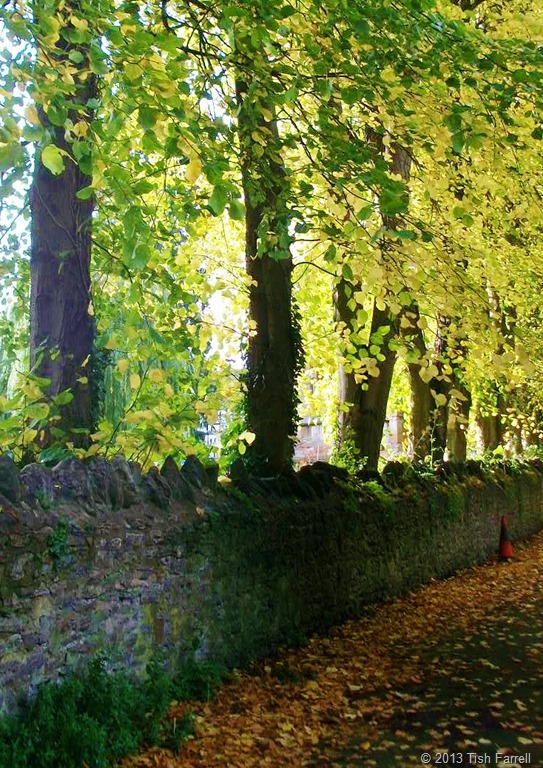
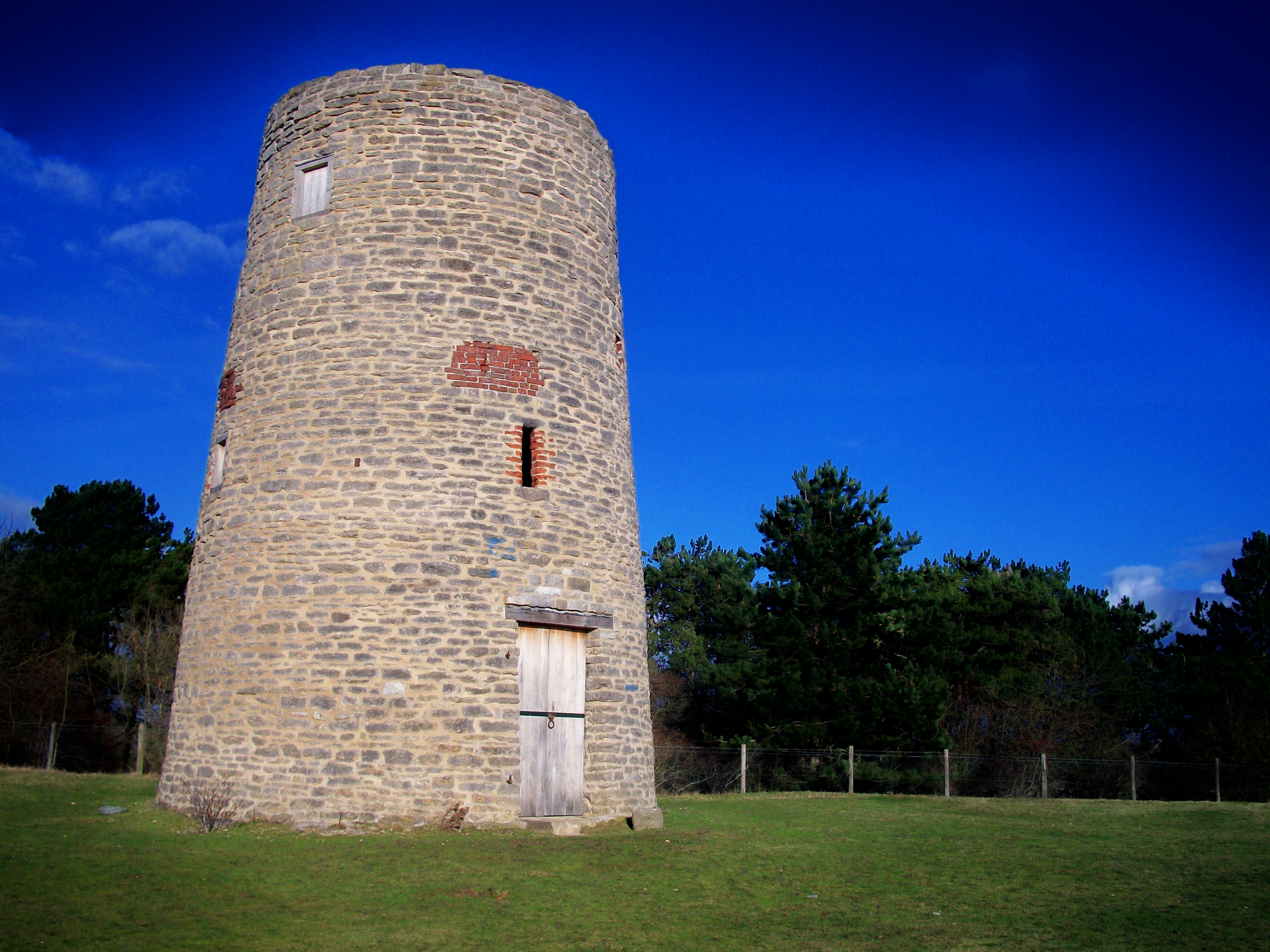
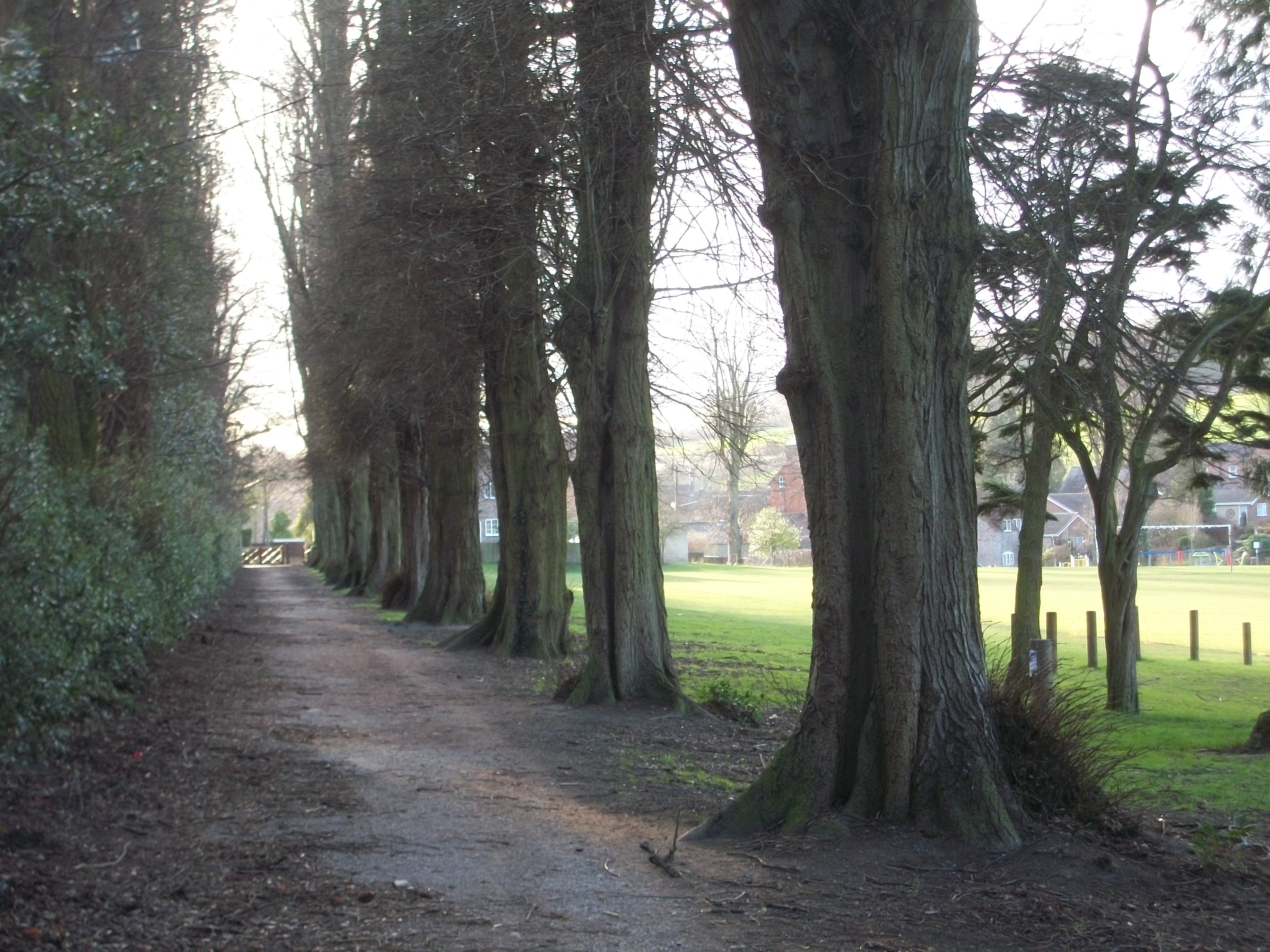
Finding Windmill Hill is the easy part of the enterprise. The old stone tower on its summit makes it a striking local landmark, though something of a mystery since there is no record of how this tower looked when complete and few clues as to what kind of windmill it once was. The limestone ridge on which it stands, with the disused Shadwell Quarry at its back, is a five-minute walk from my house. You can reach it either by striding across the Linden Field beside the new William Penny Brookes School, or you can follow the path beneath the towering limes of the Linden Walk. The trees form a cool sweet-scented arch of greenery in summer and Doctor Brookes, a trained herbalist and therefore well versed in the calming properties of lime flowers, planted them there over one hundred years ago. According to tree experts the limes could last another hundred and fifty years, although they wag their fingers at local cricket enthusiasts who, in season, drive over the roots while parking their cars for a good view of Sunday cricket on the Linden Field. The case of trees versus cars is guaranteed to raise tempers in the town.

The Linden Field once belonged to the Gaskell family, the town’s local worthies who lived in the Abbey beside the ruined Wenlock Priory, but in 1935 it was bequeathed to the people of Much Wenlock for their enjoyment and recreation. That the townspeople have problems hanging on to their rights as beneficiaries is another source of local irritation. But then the most important fact about the field is that it is the site of the Wenlock Olympian Games. These were begun in 1850 by the town’s doctor, William Penny Brookes, in a bid to improve everyone’s health and wellbeing, and later provided Baron Pierre de Coubertin with the model for the modern Olympic Movement. People argue about this too, but at the top of the field is the oak tree planted in 1890 to commemorate the Baron’s reconnaissance visit to the town to see the games for himself. Today, visitors who come to the field say there is nothing to see in the Linden Field. But then that’s history for you; invisible for the most part. However, should the see-nothings feel like returning between 12-15 July 2012 they will find the 126th Wenlock Olympian Games in full swing, with a wide range of serious athletic contests to be watched and enjoyed.

The old Penny Brookes games also included all the familiar events – pentathlon, archery, football, hurdles and long jump (called the running long leap), but there were also bicycle races on penny farthings and tilting at the ring, a mediaeval jousting sport wherein a galloping horseman speared a ring with his lance. Prizes were lavish with olive wreaths to crown the victors and Dr. Brookes himself designed and paid for the gold and silver medals. Then there were also the fun events – blindfold wheelbarrow racing, climbing the greasy pole and chasing the piglet. Something for everyone in fact and not a hint of a risk assessment. As might be expected, the games were hugely popular and spectators and competitors came from far afield, many arriving by train, since the line ran conveniently beside the field. And for those who wanted the best possible view of the games, then Windmill Hill provided the perfect spectator vantage point.

Which brings me back to the wolf farts. Not forgotten, but by the time I’ve hiked up the steep hill to the windmill, I’m a little out of breath and thinking I need to get into training, perhaps with some piglet chasing?  I begin to comb the limestone meadow that was cropped in autumn by a fleet of russet-coated Shetland ponies. This is where the wolf farts are supposed to be. Somewhere. It’s not a very big hill after all, and I can walk across the top in less than two minutes. I scour the northerly slope first, rooting among the weathered pony droppings and coarse vegetation from which, in late spring, will sprout spotted purple orchids, and later, agrimony, harebells and knapweed.

I decide that Paul Evans has been pulling my leg, but anyway work my way back in a southerly direction. And this is what I’m looking for:

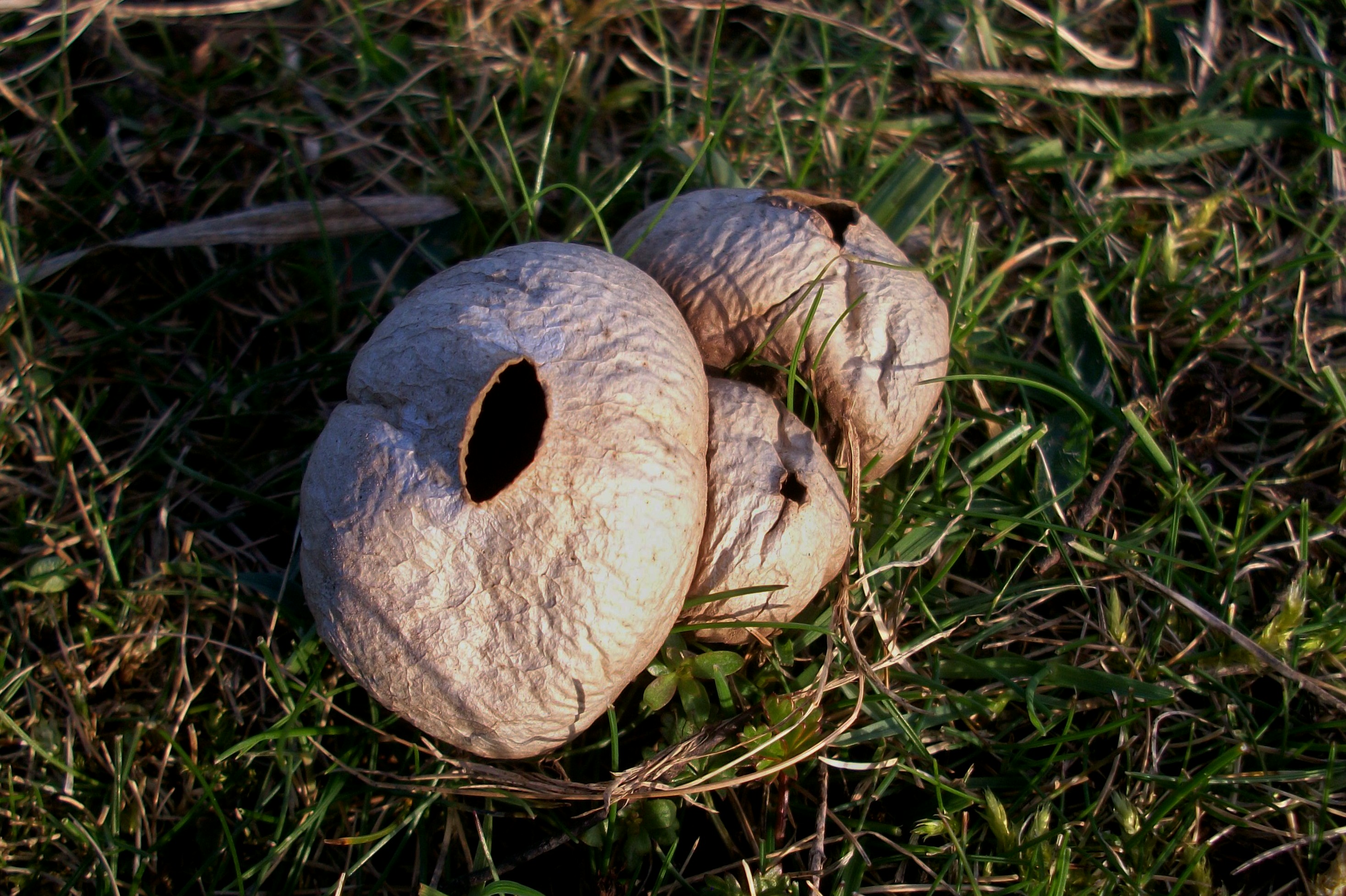
the common puffball, Lycoperdon (from the Greek lycos wolf and perdomai to break wind). It has other names too, including the devil’s snuffbox. And finally I get my eye in. I had been seeking something altogether too substantial, imagining the white, marshmallow-like fruiting bodies of autumn. In fact the first one I find is quite tiny, paper-thin and bone coloured, the size of my fingernail. Then there are others – cigar coloured, a couple of centimetres across and yes, very like Shetland pony droppings. They are empty husks now, barely clinging to the thin soil, their spores spent, leaving tiny orifices like shocked little mouths. Then I find one still containing some spores and squeeze the sides. Out puffs the brown-black dust, as fine as photocopier ink. Later I read that inhaling too many spores can lead to lycoperdonosis, a life-threatening respiratory condition caused by the spores lodging in the lungs.  Won’t do that then. Won’t breathe them in. And that seems all there is to be said and done concerning wolf farts. Quest done, I lose interest, stand up and survey the old quarry behind the windmill. There’s a deep pool of unearthly blue water, apparently some seventy feet deep, and the surrounding land is going to be developed with holiday chalets and a dive centre. It’s then, as I’m looking for signs of building work, that I see large segments of the quarry have been staked out with low green plastic fencing. Later I discover this is newt fencing. Why it is there is another story, one that I don’t entirely believe – something to do with separating opposing amphibian gangs and newt fights. Oh come on! At this rate I’ll never get back to the novel. It’s far too exciting outside.

Copyright 2012 Tish Farrell

Paul Evans @ www.guardian.co.uk/environment/thenortherner/2012/jan/10/country-diary-wenlock-edge/

Wenlock Olympian Society @ http://www.wenlock-olympian-society.org.uk/

…of Silurian Shores

Overlooking Townsend Meadow: on the edge of Wenlock Edge

All is peripheral in the place where I live – my house beside the path beside the field whose name on the 1847 tithe map, Townsend Meadow, marks the old town boundary of Much Wenlock. The town, itself, is very ancient and it has long outgrown the town’s-end frontier along the Sytche Brook. It also lies below its own impressive periphery – the long limestone scarp of Wenlock Edge.

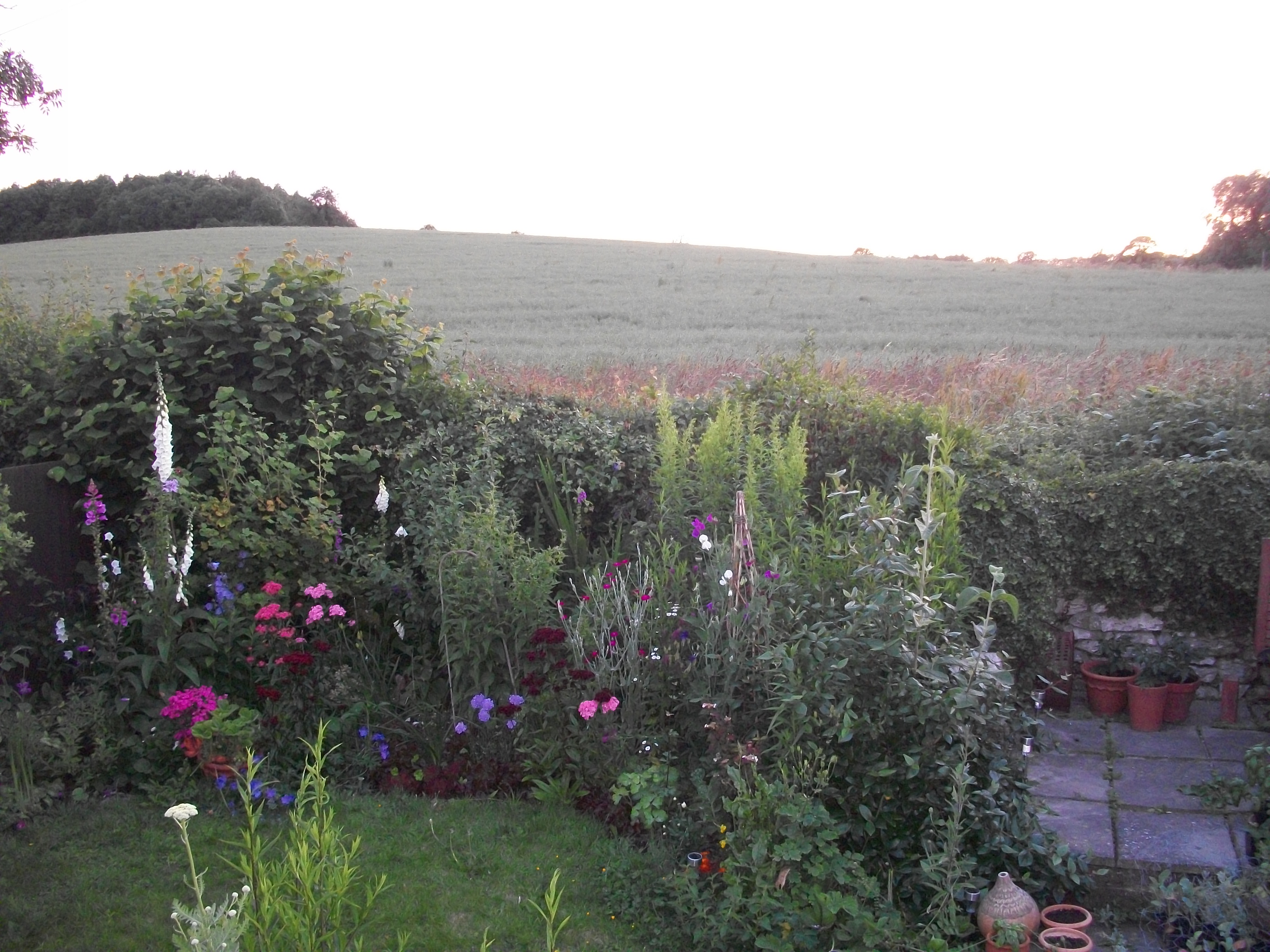
I cannot quite see the Edge from my house, but I see the big sky above it, the dramatic false horizon that the Edge creates and thus the endless movement of weather along it. Hours can be wasted sky watching: the breezy march of clouds across the roof lights, the flush of hundreds of rooks from Sytche Lane wood at dawn and at dusk, peppering the skyscape.

Sky over Wenlock Edge

In fact most inhabitants of the town cannot quite see the Edge. This is something of a paradox given that its massive limestone presence has shaped Much Wenlock in so many ways, and not only in the fabric of its many stone cottages. You need to be outside the town to get a proper glimpse of it and, even then, it is hard to get the full measure of it. Nevertheless, as landmarks go, it will not fail to make an impression however you come at it: whether wending up the hairpin bends from Shrewsbury; or taking the road over the top from Wenlock to Church Stretton and the Shropshire Hills beyond, or yet meandering down below it along the narrow lanes through Kenley, Hughley, Church Preen and Longville. From the lowland, the Edge’s steep north-west slopes look so heavily wooded that they bristle up like a giant hog’s back. For some fifteen miles this dark spine stretches, bearing down on the scattered hamlets and farm fields. It is unavoidably mysterious.
Driving along the Edge on Christmas Day

The south-east slopes, by contrast, have a more domesticated feel, and something of an industrial air, having been dug into for centuries. The road that cuts along the top passes beside vast quarries (now mostly hidden by hedges and woodland and visible only to walkers). These quarries yielded limestone for building and for the iron works of Coalbrookdale where it was used as a flux in smelting, and for burning in lime-kilns to make fertiliser. In more recent times most of the stone went for road building. But now quarrying has stopped and Much Wenlock’s houses no longer shudder in a pall of white dust as they once did whenever the quarrymen were blasting; nor do the streets vibrate with the endless rattle of passing stone trucks.

There are other sources of disturbance of course – over-sized farm vehicles and garden fencing lorries. They pass by on the other side of my house, which sitting as it does on the A4169 is not so scenic, although it is interesting in other ways. For instance when I’m standing in the kitchen eating toast, I might look up to meet the serially startled gazes of a tour bus party as their coach nudges them past our windows, brushing hard through our privet hedge in order to wheedle a way past another HGV. It is the only way to do it on a road too narrow for two large vehicles to pass. We locals amuse ourselves by taking photos of the trucks and buses that several times a day get jammed outside our homes while officers at Shropshire Council shrug helplessly, quite unable to say what their predecessors were thinking of when they upgraded a bottle-neck lane into an ‘A’ road. There’s nothing to be done, they say. One day a European mega-truck will drive down from nearby Telford and block the road forever.
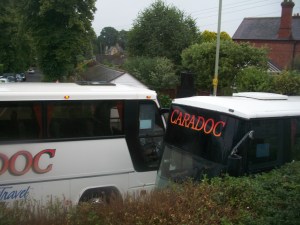
Coaches getting stuck on Much Wenlock’s narrow streets

But for all the present day shove and shunt, there is still a sense of romance about the town and Wenlock Edge. Spirits from the past make their presence felt in all sorts of ways. Housman set the Edge in verse; Vaughan Williams rendered it in song; the explorer, Stanley, sat upon it, his dark heart brooding on his time in Africa as he surveyed the more benign Shropshire landscape below. Even Henry James and Thomas Hardy came visiting, (James several times and said to have worked on Turn of the Screw while staying in the old Prior’s House that adjoins the Priory ruins).

Last but certainly not least, Shropshire writer-poet, Mary Webb spent her adolescent years living upon the Edge at The Grange and was well known about the town. When, in the 1950s, her novel, Gone to Earth, was turned into a film by Michael Powell and Emeric Pressburger, some of the scenes were shot in and around Much Wenlock. In fact I’m told by my neighbour that one of the film’s extras used to live in our house and was also the town’s projectionist. Perhaps he even showed Gone to Earth in the little cinema that is now the museum, thrilled to bits as the scenes flickered on the screen: seeing himself and other townspeople alongside Hollywood’s Jennifer Jones.

Wenlock Edge, of course, has much older stories than this to tell. Back in the Silurian Age, some 430 million years ago, it was a tropic seabed, and in rare moments when my mind can even begin to consider such vast temporal constructs, I imagine my house on the shore of the Silurian Sea. (A Solaris moment perhaps). Of course back then the ground on which my house stands was not even in the Northern Hemisphere. Back then the earth’s landmasses were still on the move, shifting up the globe from the South Pole. The English Midlands and Welsh borderlands that I think I know so well thus lay south of the Equator; 15 degrees south in what is now the Indian Ocean, where they were part of the micro-continent of Eastern Avalonia that in turn bordered the Iapetus Ocean. And so while Shropshire lay somewhere off Mozambique, the world warmed and the Ordovician ice caps melted and the low-lying lands filled to become the Silurian Sea. I also like to imagine, that after living in East Africa for seven years, returning to settle in Much Wenlock is like coming back to the place where I was; for I miss Africa very much. Also it gives a new connotation on the phrase ‘world travel.’

Wenlock Edge, then, is a fossil hunter’s treasure place and, as such, is the most famous Silurian site in the world. In its seaside days, warm, shallow waters were home to sea lilies, corals, multi-radiate starfish, trilobites, gastropods, brachiopods and fish. Indeed, somewhere over my garden hedge, there may have been some reef lagoon that hosted ammonites, squid and, horrifically, water scorpions five feet long. In fact, my house is composed of these Silurian deposits, dug from those vast quarries along the Edge. I thus inhabit a re-shaped fossil seabed. There are crinoid stems and corals in the chimney-breast, and all belonging to an age before the birth of amphibians or dinosaurs, or before there were mammals and birds in the world.

While I can easily picture my house on a flat, gravelly shore and a teeming shallow sea beyond, it is hard to conjure the great absence of earth-life. We might easily begin to think that the terrestrial world would be a painfully quiet and very still place, although this, I gather, would be a grave misconception. The land may have been lacking in life forms but there was instead a perpetual wind. And because the paucity of land life meant there was little with which to bind the earth’s surface, the Silurian seashore would have been a dreadful place of roaring sandstorms and lashing gravel.

Today, the farmland that surrounds the town is lush and homely. It has sheep and cattle, arable crops and pasture, woods and thickets, the old quarries and sundry ruins, remnant green lanes and farm cottages. There are deer and rabbits, foxes and rodents and also, as far as the town’s allotment owners are concerned, far too many birds. That said, though, it is good to hoe and dig to the mewing of buzzards.
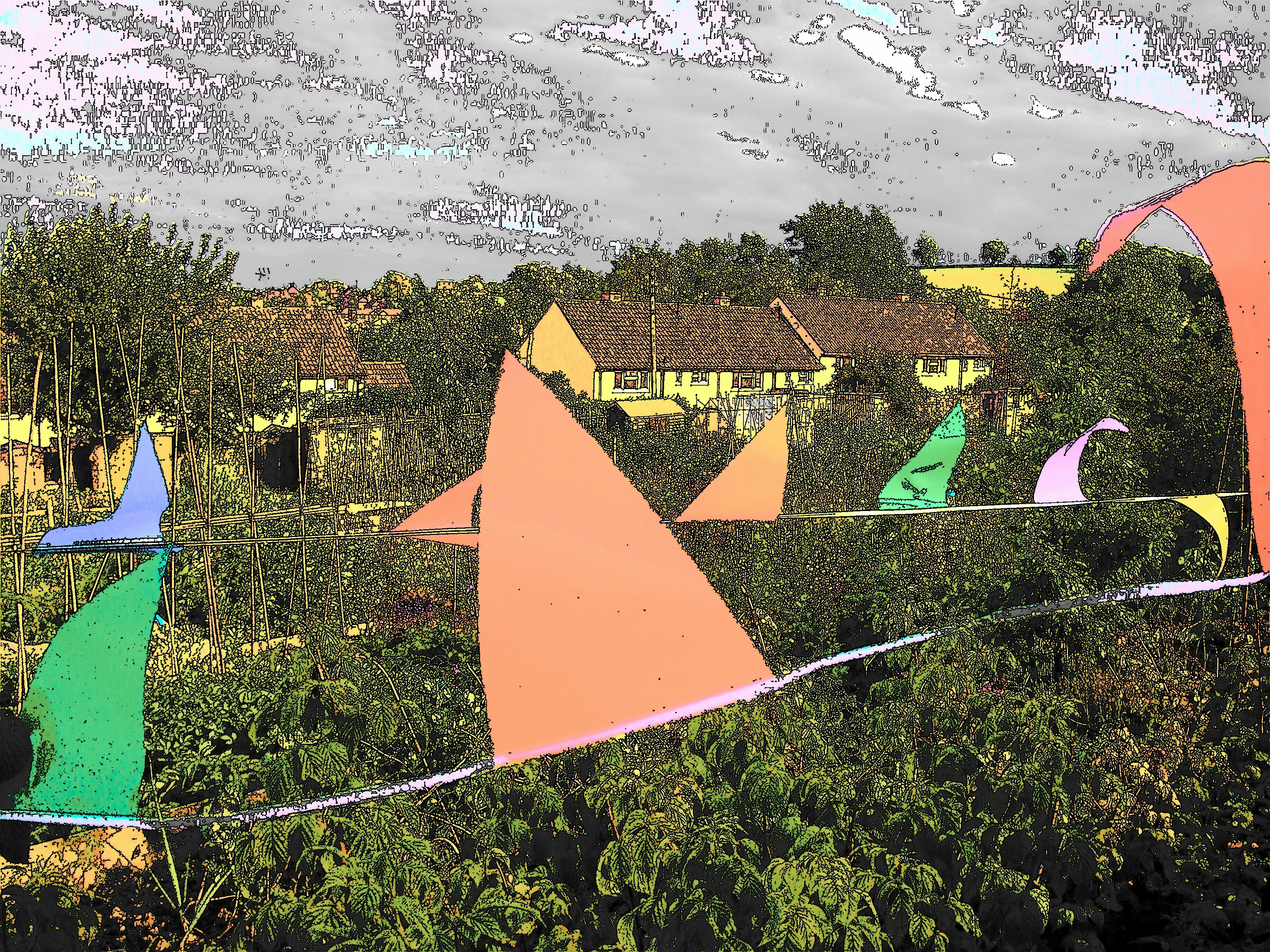
Bird-scaring bunting at the allotment

Most of the land within the town boundary, and this includes Townsend Meadow, is still feudally owned and tenanted and, within these little bounds of landowner imposition has grown a small market centre that has been continuously lived and worked in for the last thousand years.

But then that is only the historical record.* Archaeological investigations show that humans settled this valley by the Edge from at least the Bronze Age. These first Wenlockians were probably early Celts, and as venerators of water, were doubtless attracted to the many springs that rise below the limestone escarpment. The Celts were also skilled metal workers and Wenlock Edge would have provided a natural, upland byway for itinerant smiths and metal traders going to and from the mineral-rich hills of Wales. Certainly Bronze Age hoards have been found in and around the nearby River Severn which, through many ages, was one of the country’s busiest inland trade routes.

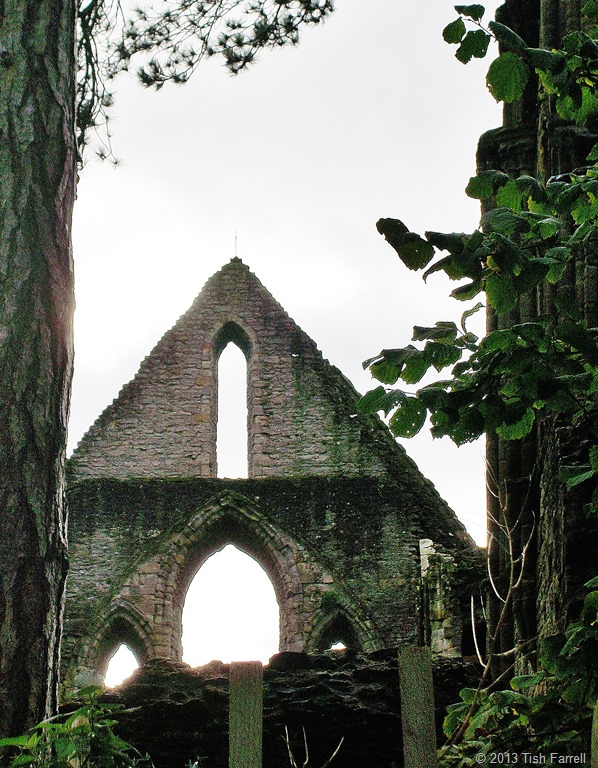
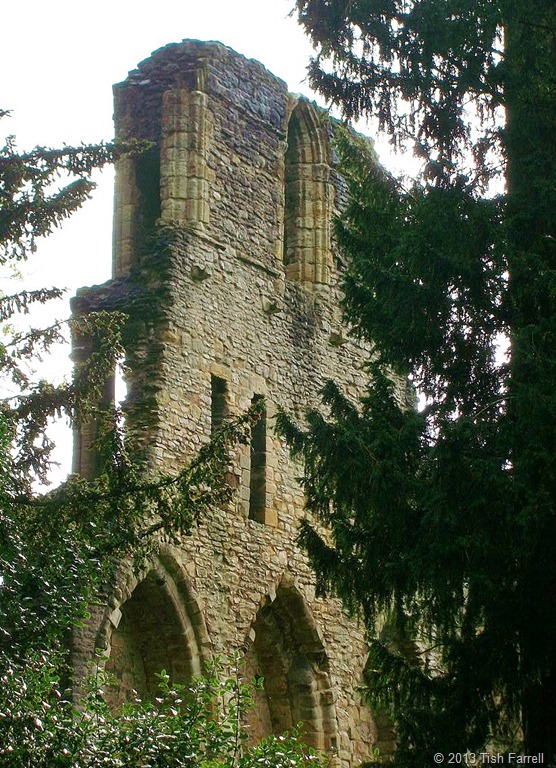
After the Celts came Roman and Saxon settlers, Viking and Norman invaders, and the town not only still has substantial ruins of an eleventh century Benedictine Priory, but many of the present houses and cottages are built from stone plundered from the monastery after its dissolution in 1540. The medieval Prior’s House, however, largely survived this recycling. It adjoins the Priory ruins, from where it may be glimpsed, and has been restored as a breathtakingly beautiful private house.

The common theme, then, that runs throughout Much Wenlock’s settlement history is the belief in sacred water. The town has many holy wells. Excavations of the Priory that sits beside a brook that runs off the Edge yielded not only the carving of a Celtic deity but also a substantial Romano-British residence that seems to have its own Christian chapel. In Saxon times, around 670 A D, Merewald, King of Mercia, founded an abbey there, and his daughter, Milburga, after training at Chelles, near Paris, became the foundation’s second abbess. She is also our saint and the heroine of a local legend that tells how she escaped an assault on her honour by a rapacious suitor. She is known, too, for striking holy springs from the ground and for her miracles of healing. The water from her well near Barrow Street was reputed to cure eye diseases.
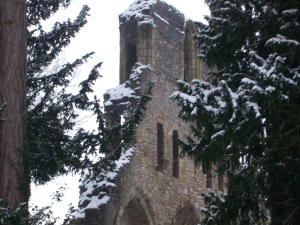
Much Wenlock Priory ruins

The Benedictine Priory that succeeded the Saxon Abbey in 1079 was part and parcel of the Norman master plan to control all aspects of Saxon life. Much Wenlock’s age-old reputation for holiness guaranteed that the Norman earl, Roger de Montgomery, would choose the town for a big demonstration of power and piety. It was he who invested so heavily in the priory that was to become one of the most imposing religious houses in Europe. And to ensure the new priory’s prosperity as a lucrative place for pilgrimage, St.Milburga’s reputation for miracles was duly annexed to the cause and a new shrine to her established.

Today, most of the pilgrims to Much Wenlock are tourists, stopping off briefly en route for Wales. But this coming year we are expecting many more visitors, as news of Much Wenlock’s further claim to fame spreads around the world. For it was here in 1850 that the town’s physician and apothecary, Dr William Penny Brookes (1809-1895) founded the Wenlock Olympian games that were to become the inspirational force behind the modern Olympic movement. It was he who in 1890 (six years before the 1896 Athens modern Olympics) passed on to a young Baron Pierre de Coubertin not only a wealth of experience gained from running the town’s annual games, but also his passionate belief that exercise wrought moral, physical and intellectual improvements in all who took part.

The Linden Field, Much Wenlock: birthplace of the modern Olympic Games

The Linden Field where the Wenlock Olympian Games were held amid crowds of up to 10,000 spectators is still there and is now a public park, bequeathed by a former feudal worthy for the pleasure and recreation of the people of Much Wenlock. Since it is only a step from my house, I sometimes toy with idea of running down the avenue of lime trees that Dr. Brookes planted there one hundred and fifty years ago. Perhaps such active activity would improve my mind. Perhaps it would spur on the story-telling process. Perhaps I would escape the peripheries and finally get some work done…finish a new edition of my one-time award winning African novella, Jessicah the Mountain Slayer, finally create some new tales from my backed-up story-making stock. Or perhaps, like the Silurian seabed, I will simply go on accreting: stuff and more stuff, piles of notes and scribble and memory sticks slowly compacting, although hopefully not enfolding anything as alarming as a fossilised giant water scorpion. That is a worrying thought.

© Tish Farrell 2011
www.tishfarrell.co.uk

* for many historical details I am indebted to Vivien Bellamy. See her book A History of Much Wenlock, Shropshire Books, 2001