It’s in the stones: messages from alien ancestors?

P1020749

P1020750

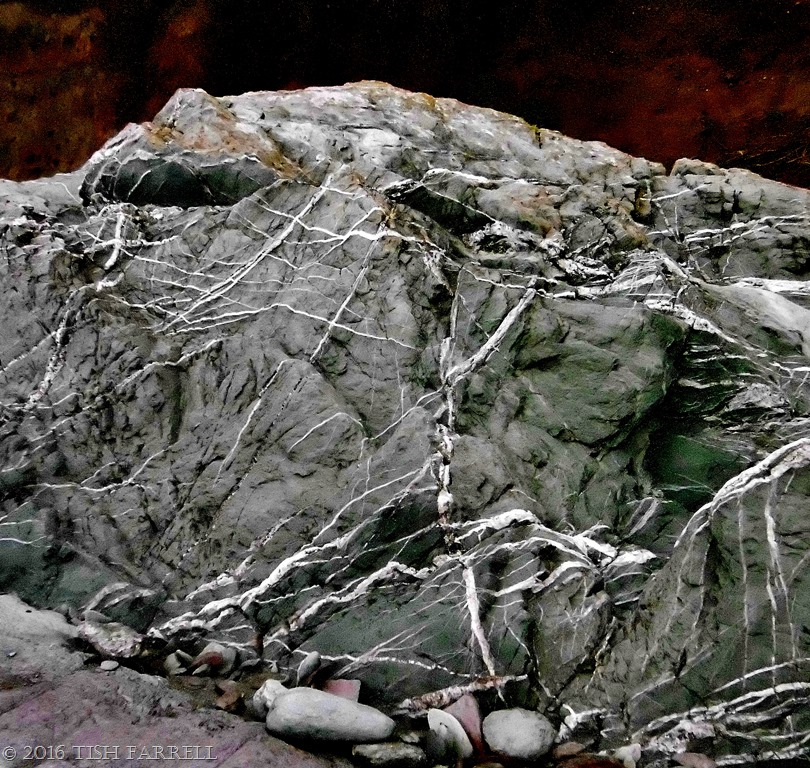
I discovered these rocks on Seaton Beach when were down in Cornwall at Christmas. My attempts to find some sensible information about the geology have so far proved fruitless. So I’m just going with my initial interpretation – that here we have a mythic precursor to runic script left by some race of Northern Giants.

But what are they telling us? Have they left us instructions on how to find a parallel universe? Or could these be warnings to mankind to take better care of the earth? Or maybe they are the crossings-out of an infant Northern Giant learning to write. Can anyone out there crack the code before the rising sea levels claim them?

*

This my response to Meg’s ‘calligraphy’ challenge. She is Paula’s guest at this week’s Thursday’s Special.

In A Glass Darkly: Traces of the Past

P1030291

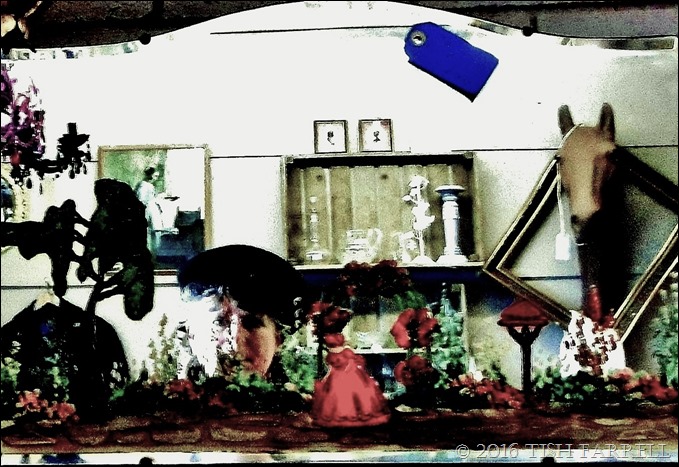
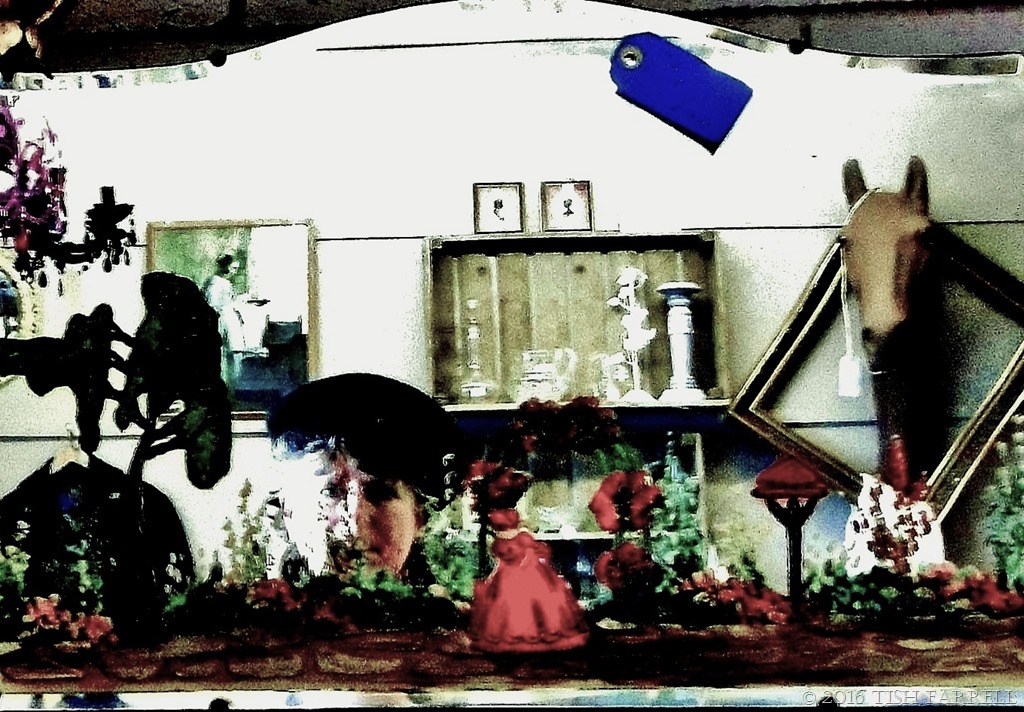
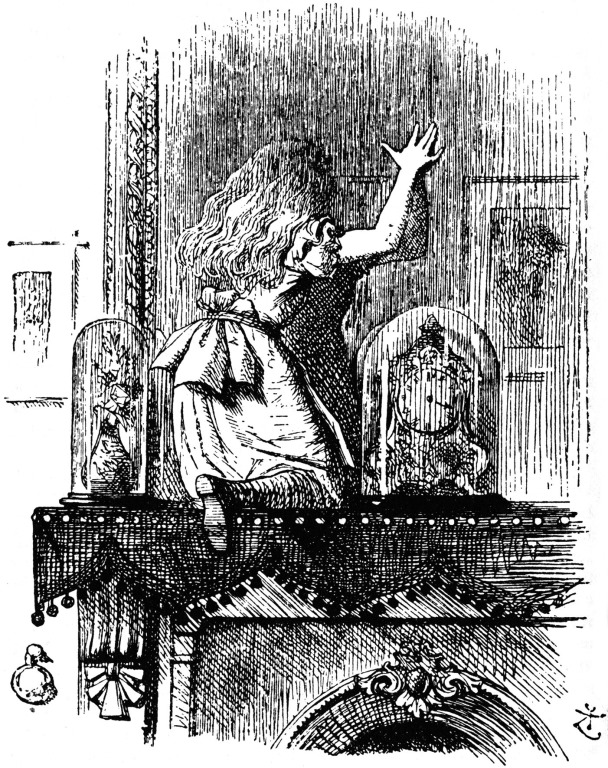
As a child I was fascinated by Lewis Carroll’s Alice Through The Looking Glass.  I would stare into my full length bedroom mirror for ages and ages and wonder if it really might be possible – somehow – to access that other world behind the glass. Unlike Alice, I wouldn’t even have to climb on to the drawing room mantelpiece, which to my mind looked distinctly hazardous and was likely to attract unwelcome attention from mother.

John Tenniel’s illustrations were anyway profoundly disturbing, yet ever drew me to plumb their bottomless depths. All of which is the excuse of the very much older me to spend Monday morning playing with my camera in Bridgnorth Antiques Centre.

See! Just like Alice, I’ve finally arrived in Looking Glass Land. All it took was my magic little Lumix digital. But sorry, folks, I can’t hang around. Must catch up with the White Knight  or I might never make it out again.

Alice through the looking glass

Sir John Tenniel illustrator 1820-1914 ~ Alice Through The Looking Glass by Lewis Carroll


N.B.

In A Glass Darkly  is a collection of strange tales featuring demons, dopplegangers and even a lesbian vampire published by Irish writer, Sheridan Le Fanu in 1872. The vampire story apparently greatly influenced Bram Stoker in his writing of Dracula. I haven’t read these works, but I think they might be worth tracking down.


Please visit Paula at Lost in Translation for more Traces of the Past.

Thursday’s Special: Organized Noise

100_8271

This week Paula’s guest at Lost in Translation is Tobias  M. Schiel. He has set us a challenging challenge entitled Organized Noise. I think I have the gist of it – and this is my take on what he says (so if I’ve got it all upside down and backwards, Tobias, please tell me) – that you can use the camera’s eye to frame everyday  ‘stuff’ and ‘clutter’ that of themselves do not have aesthetic appeal. In other words, the photograph itself endows the scene with creative interest and possibility through framing, focus and cropping. It thus exposes something intrinsically or extrinsically fascinating in a context that we might otherwise screen out as uninteresting or unworthy of particular notice. As Tobias says, this is more likely to work in the abstract.

So I’m  not sure that this photo of a stricken pine on Cornwall’s Seaton beach quite fits the bill. But I’m posting it because the scene as a whole caught my attention. The tree had been blown off the cliff.  The way it was lying suggested to me a crash-landed dragon, the peeled trunk in the foreground its snout and eye.  But with a more abstract eye, the main thing that struck me about this pile of beach debris was the vivid range of colours – materials natural and unnatural.

Maybe this next shot is a better example? – a close up of some of Seaton’s amazing geology:

100_8281

In his explanation, Tobias says that this approach is used in musical composition, but as a writer I can see that this photographic version is also a visual analog for what the best creative writing does: that is, it takes a scene, or a detail of it, something that others might miss altogether were it not for the affecting way in which the writer chooses to delineate it, often mixing heightened reality with metaphorical abstraction.

Thanks to Paula and Tobias for hosting this fascinating challenge.

copyright 2016 Tish Farrell

Creative Intervention Rescues A Ruin

P1010246

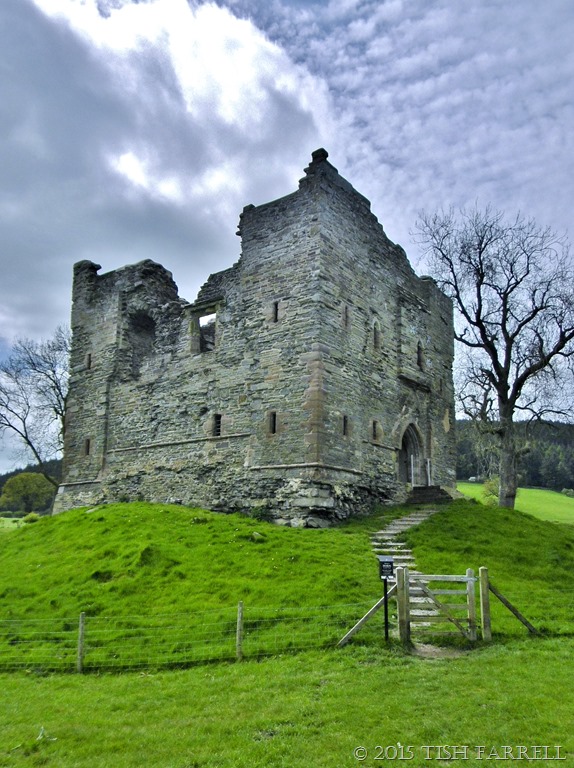
Here we have the remains of Hopton Castle, an enigmatic ruin in the Shropshire borderland, eleven miles northwest of of Ludlow. It is called a castle, but it might be better described as an upscale medieval tower-house. That it survives at all, in this accessible state, is down to the creative efforts of the Hopton Castle Preservation Trust whose members toiled for 11 years to raise funds to consolidate the main structure, and then spent a further five years overseeing the work.

The ruin is full of puzzles. The preservation work revealed hints of 11th, 12th, 13th, and 14th century construction, but with no clear evidence for the date of the main surviving structure. It’s been suggested that the Hopton family, who owned it between the 11th and 15th centuries, at some stage deliberately set out to create a faux antique country residence much as the Victorians did with their  mock Tudor ‘cottages’. In other words, the Hoptons went in for some creative intervention of their own.

One theory is that it was a hunting lodge. The interior work of all  three floors appears to have been very grand, and definitely of ‘lordly’ quality.

P1010211

photo: Hopton Castle Preservation Trust

*

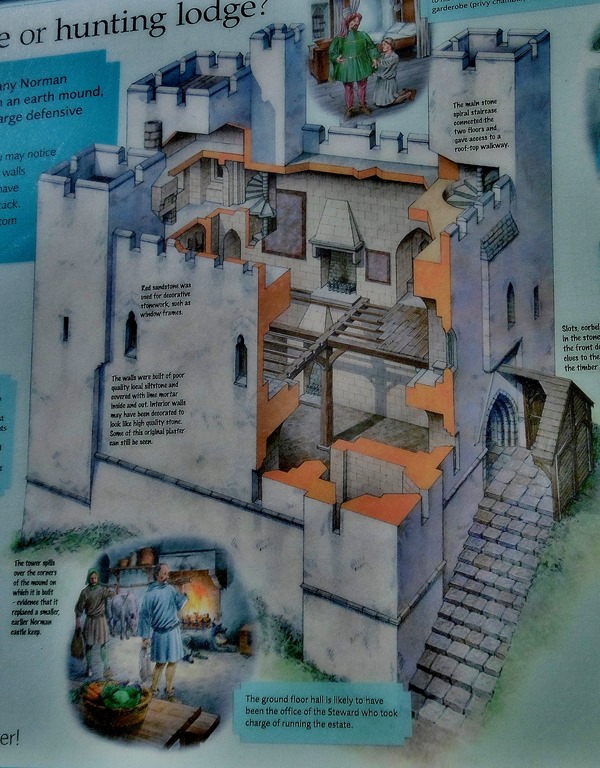
Also, the tower was clearly not intended as a defensive structure. As you can see from the photo and the reconstruction, any besieger could simply walk up to the front door. Yet the building it replaced, the first ‘castle’ on the mound was indeed a functioning fortification – a motte and bailey castle typical of the Normans’ early conquest of Britain after 1066. Made of timber, they could be constructed swiftly, and as the need arose, later re-built and expanded into domineering stone fortresses.

But this did not happen at Hopton. The stone walls that replaced the 11th century motte and bailey appear to have been built of poor quality stone, unsuited to withstanding a siege. Meanwhile, the interior fittings and design suggest considerable expense.

So it’s a pretend castle then? A place for Sir Walter Hopton, Sheriff of Shropshire and Staffordshire, to display his wealth and status while entertaining well chosen guests for a spot of deer hunting?

P1010230

Perhaps some of the answers lie in Shropshire Council’s five miles of archives that include shelves and shelves of unread medieval documents. In which case, they are likely to stay hidden. Probably forever. The on going local authority cuts mean there is little chance that the necessary scholarly research will ever be done. The archivist was one of the first people to be dispensed with, and for years before the cuts the archives were always under-resourced.

But if we don’t know much about the castle’s medieval history, we do know quite a lot about the bloody siege of Hopton in 1644, wherein Royalist forces attacked the staunch Parliamentarian Wallop family, who then owned the castle. It’s a swashbuckling tale, and you can read more about it HERE.  Some years ago Time Team carried out an excavation in an attempt to verify the circumstances of the battle. You can find the full episode on YouTube:  https://www.youtube.com/watch?v=MIiYOgmO-Cs


copyright 2015 Tish Farrell


Inside Much Wenlock’s Council Chamber: can the past cost too much?

100_6652

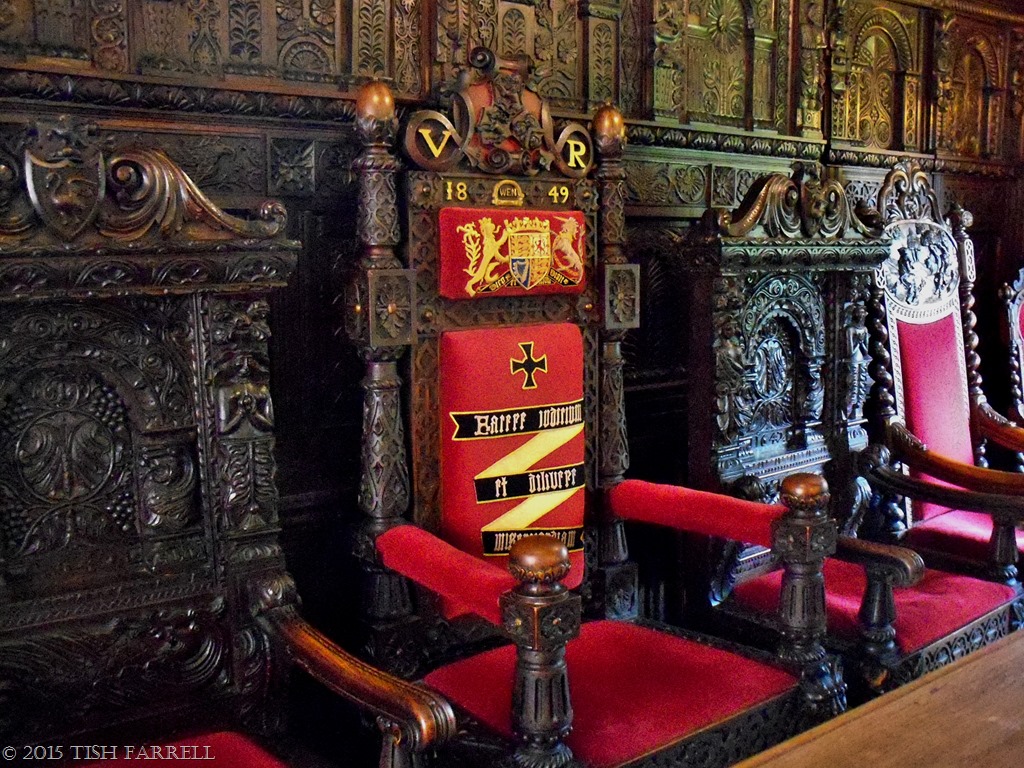
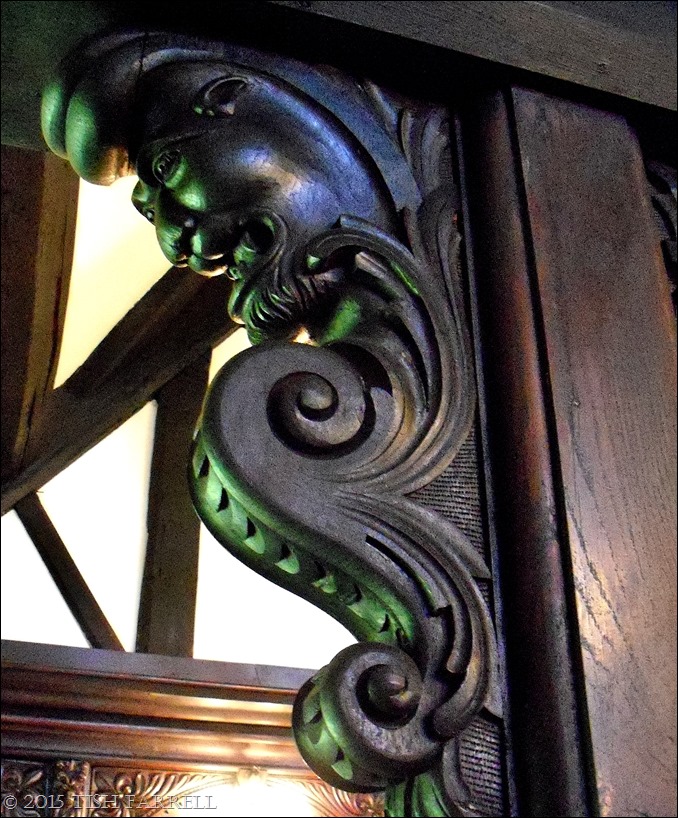
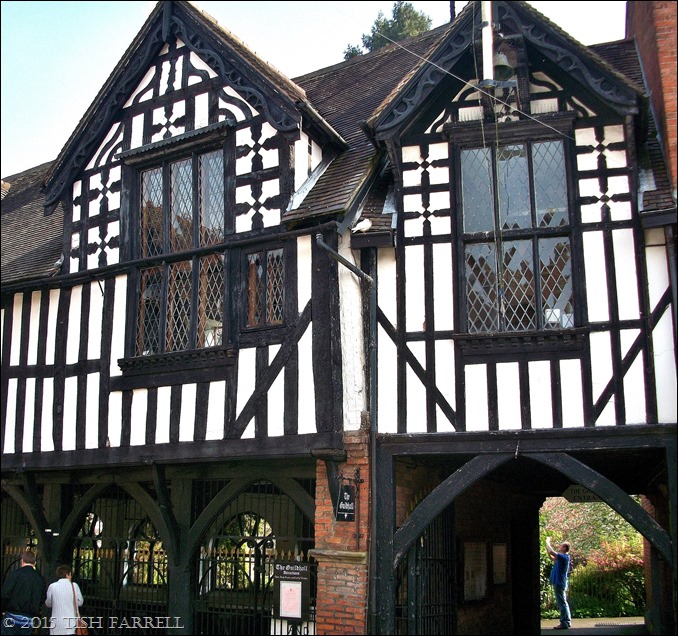
This is not the sort of chap you expect to find at a town council meeting (lion or devil, I’m not sure which) but then Much Wenlock’s council chamber is no ordinary place. It was built in 1577 as an extension on the 1540 civil courtroom. The two chambers on the upper floor of the Guildhall thus became the judicial and administrative centre for the 70 square miles that had once been ruled by the Prior of Wenlock. Underneath was the town lock-up, and an open space for a corn market.  Behind is the churchyard, and next door, Holy Trinity parish church. The hub of the town then.
100_5540 - Copy

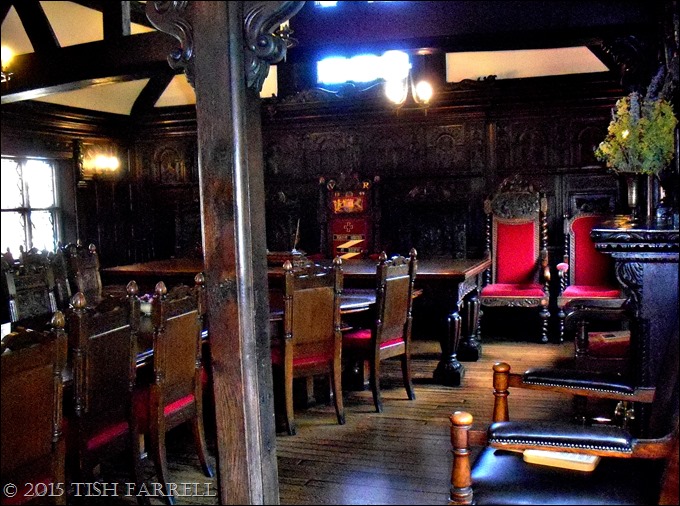
But perhaps the most surprising thing about the council chamber is that it is still in use today, although anyone sitting through a council meeting may well be left with distinctly unfavourable impressions of the past, and physically too: the seating is a torture on both knees and nether regions. I guess it was designed to keep everyone awake.

I’m afraid these upcoming interior shots look a bit woolly because of the spotlighting. On the other hand, they perhaps convey some sense of the antique residue that pervades the place.
100_6640

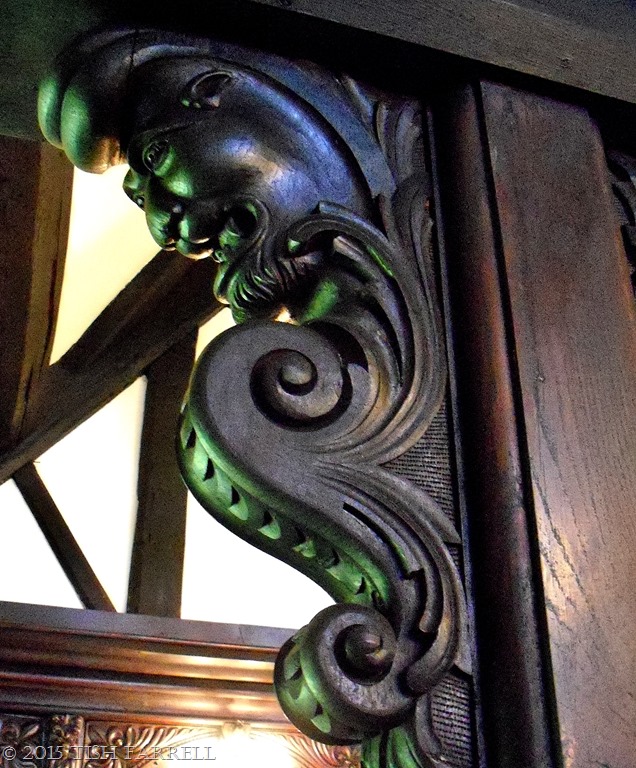
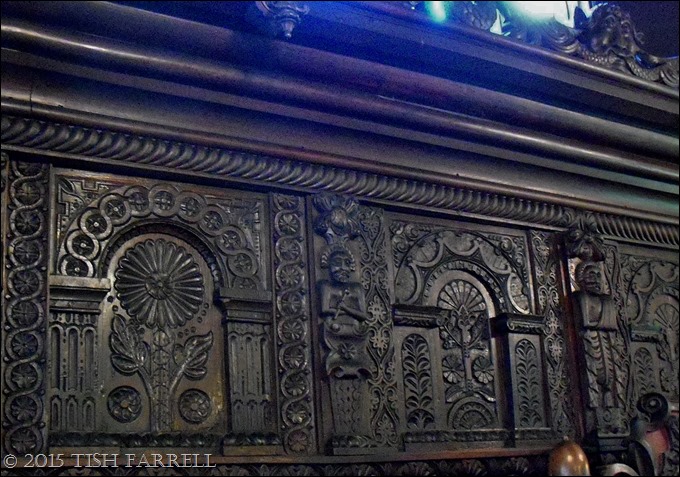
The panelling around the walls is 17th century, and was bought from elsewhere and installed in Victorian times by the town’s doctor and benefactor, William Penny Brookes, he who invented the modern Olympic Games (a fact I may have mentioned a few times.). The mayoral and officers’ chairs are especially awe-striking, and the said august personages truly do need to have on all their robes , wigs and paraphernalia if not to get lost inside them. These days this usually only happens on Mayor Making Day, once every four years.
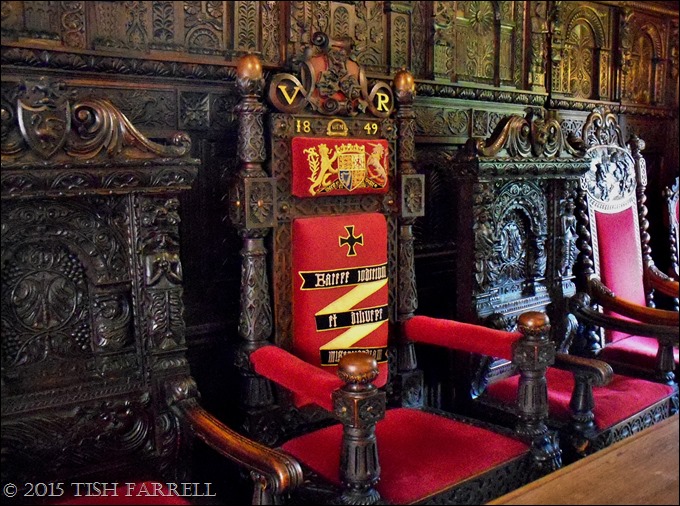
100_6646


100_6645

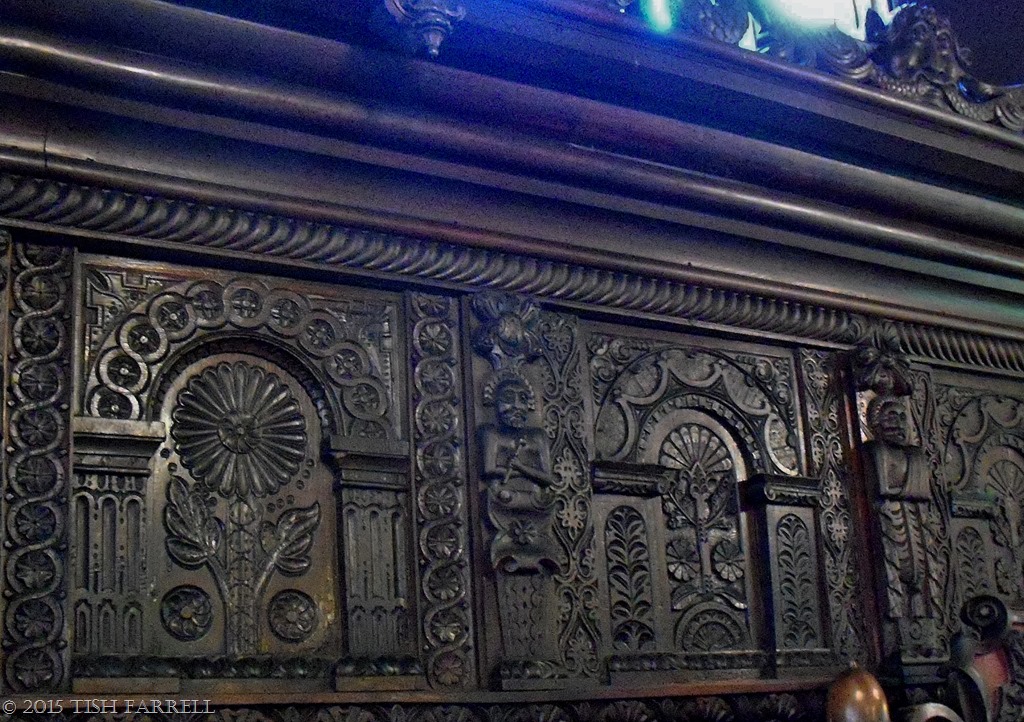
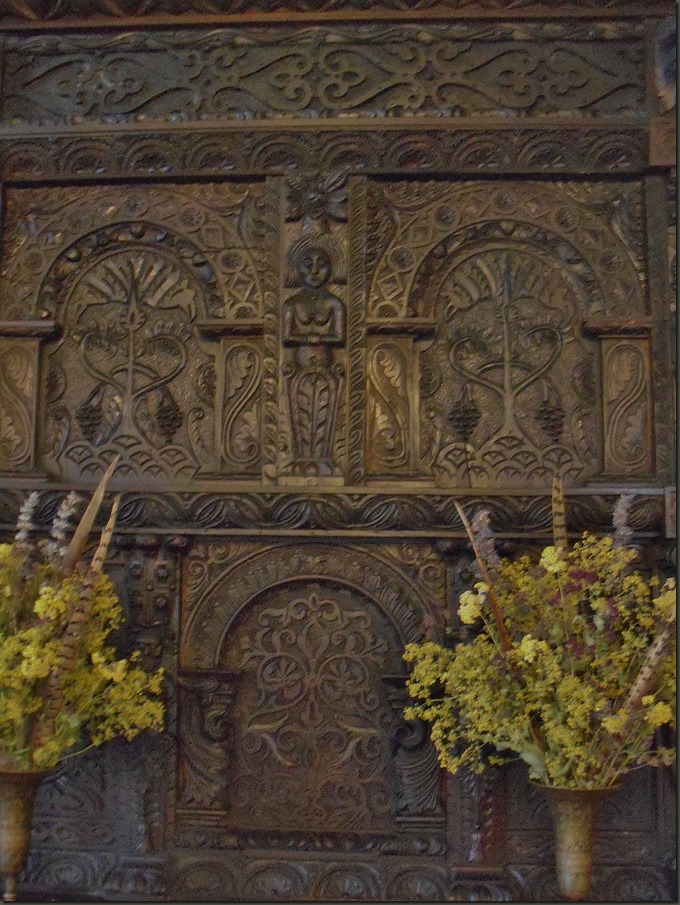
Here’s a closer view of the panelling behind the officers’ chairs. (There’s another scary entity up in the top right hand corner). Then coming up is the panel above the fireplace. Something to do with the Garden of Eden perhaps:
100_6650

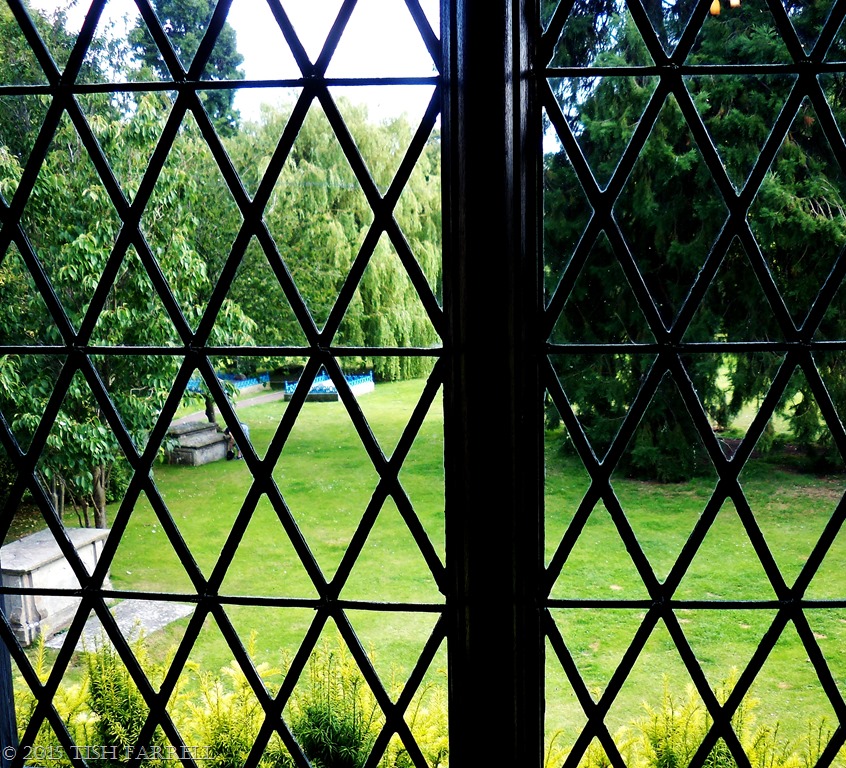
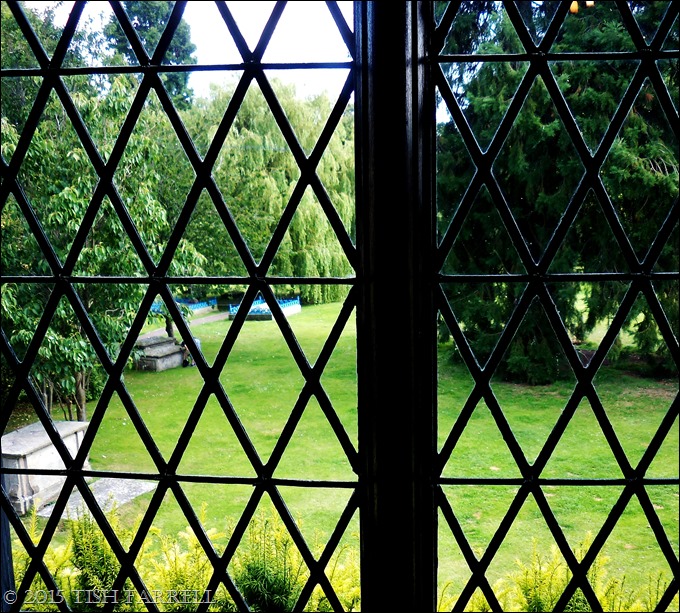
And now for a glimpse of the Church Green, along with the grave of William Penny Brookes. The blue painted surround is comprised of Olympian victors’ garlands. The Green is the venue for all the town’s fairs.
100_6649

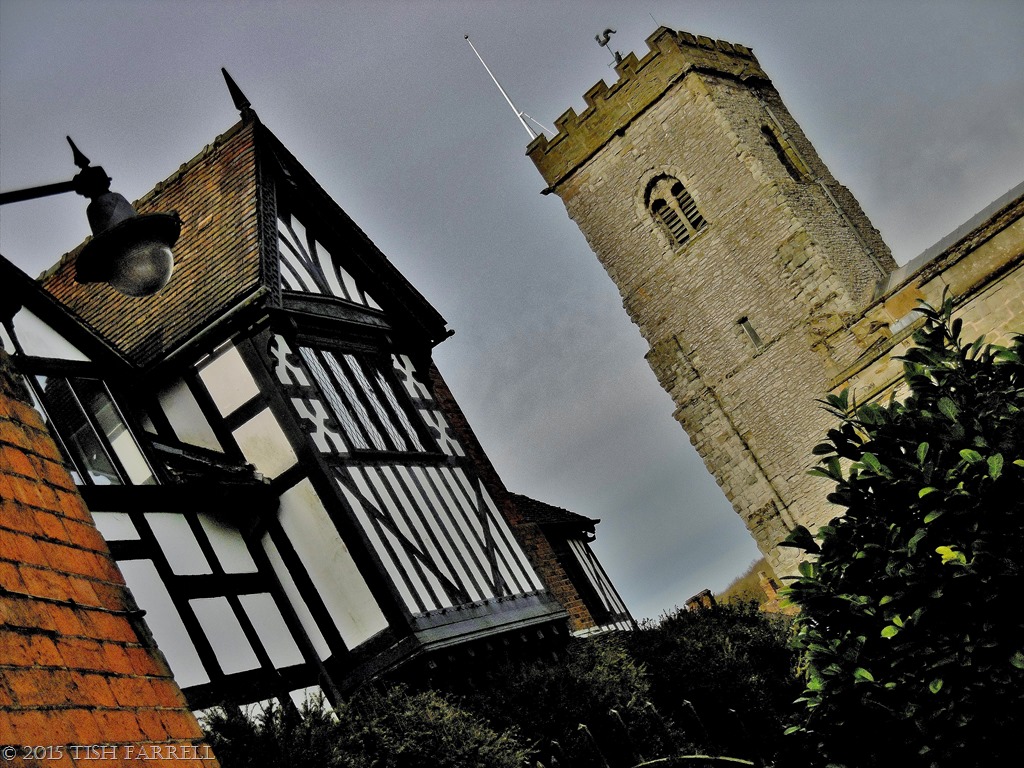
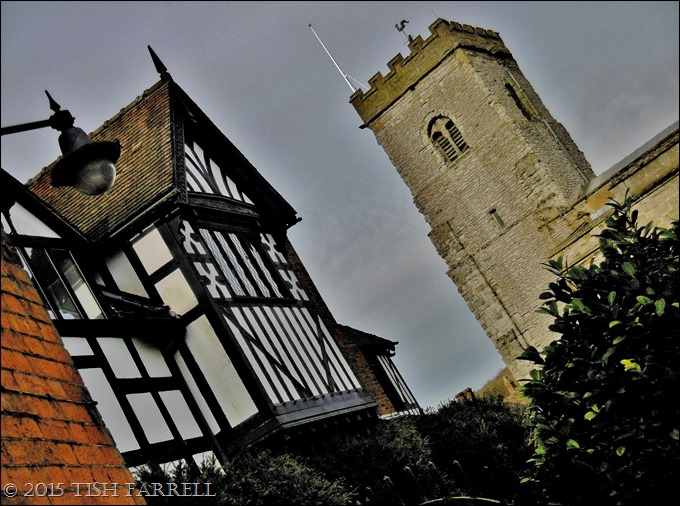
This next shot is taken from the Green. It’s hard to capture both the Guildhall and the church at one go:
P1000406

Of course the question that has doubtless surfaced in many of your minds is does the antiquated setting of the council chamber affect the quality of the thinking that goes on in there, and likewise the kind of decisions arrived at?

A few years ago I would have said that it certainly did. Some of the councillors back then had served for fifty years. These days, though, we have some very hardworking representatives. They are not paid either, since the once impressive Borough of Wenlock with its two members of parliament is no more, and the current town council has no more status than a parish council. But paid or not, our councillors still have some pretty big headaches to wrestle with, one of them being the continued upkeep of the Guildhall, including the roof over their own chamber.

It is perhaps a good example of the past becoming a public burden. Doubtless it is an amazing relic, and full of history, but it is no longer functional in modern terms. For one thing, there is no access for anyone with disabilities, or for the elderly who simply might have difficulty mounting the handrail-less stairs. As a listed building, the cost of installing some kind of lift would be astronomical, even if it were actually feasible. This situation immediately excludes quite a segment of the town from the democratic process. The uncomfortable seats probably do for the rest.

As to who foots the bill for running costs, then it is ultimately us, the council tax payers of Much Wenlock. If we did not pay to keep it going,  it’s hard to know what anyone else would do with such a building. So here we have it – listed, listing, leaking energy, and generally not fit for purpose.

Attempts to raise some revenue by charging a  modest fee to visit the old court room and council  chamber did not work. Few people wanted to pay to go in. Now the court room is a small museum and art gallery, and entrance is free.

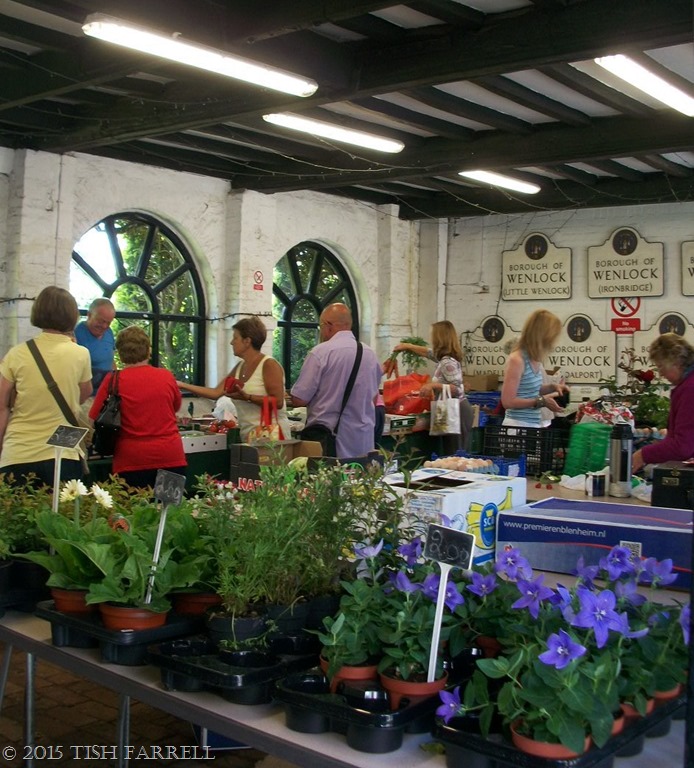
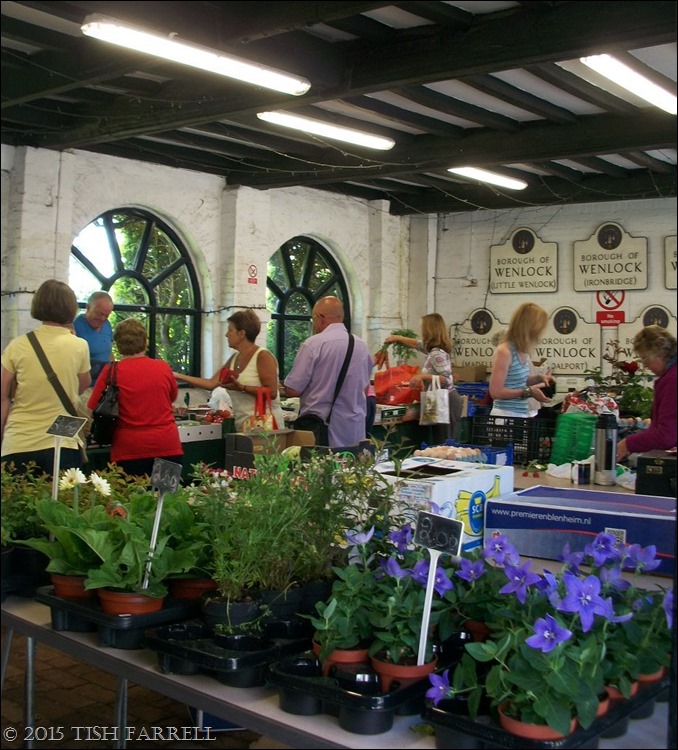
All of which leaves us with an impossible, but fascinating building, and one that probably no one in Wenlock would wish to be without. It gives the town its identity, and so maybe, at the end of the day, it’s only right that its citizens continue to support it, whatever way they can. At least the old corn market is still well used, and much for the purpose it was originally intended.
100_6020 (2)

copyright 2015 Tish Farrell


This week at Thursday’s Special, Paula is inviting us to post traces of the past. Please visit her blog to find out what she and others have come up with.

Moon competing with street lights

100_6514

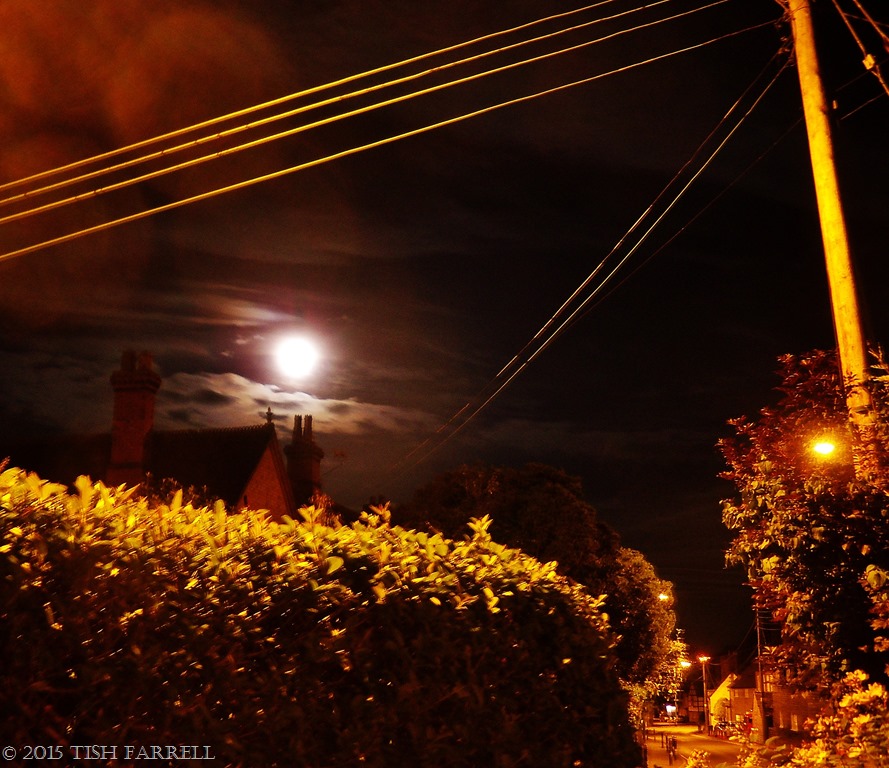
There’s  all sorts of flare going on in this photo, not least around the moon. The pink smoke, and golden hedge effects are courtesy of a tall street light out of shot top left. I was trying to capture a blue moon. I even used a tripod. I’m not sure where the light on the right came from as there isn’t an actual street lamp on that side of the road. Anyway, if you peer hard you can look down the curve of Sheinton Street towards the town centre. It looks a bit like a film set. In fact isn’t that Mary Poppins coming along the road? Chim-chiminee, chim-chi…

Thursday’s Special: Flare

Please visit Paula at Lost in Translation for more flare


Walking through time on Lincoln’s Steep Hill

100_3935

Steep Hill in Lincoln has seen a lot of history its time. The invading Romans built the first road around AD 48 to link their legionary fort of Lindum Colonia on the top of the hill with the riverside Iron Age settlement at bottom. After the Romans came marauding Vikings, who then gave up pillage for commerce, and so turned Lincoln into a thriving trading centre. Next in 1066 came the invading Normans. All have left traces of themselves around the city.

Today, Steep Hill ranks among the most scenic streets in Britain. It now links the city’s historic Cathedral Quarter in Bailgate, with the bustling shopping centre down by the river.

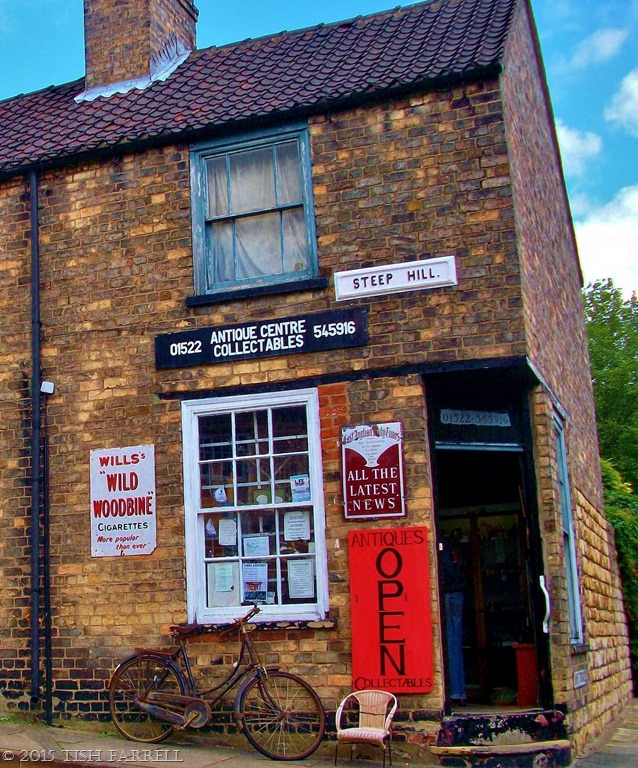
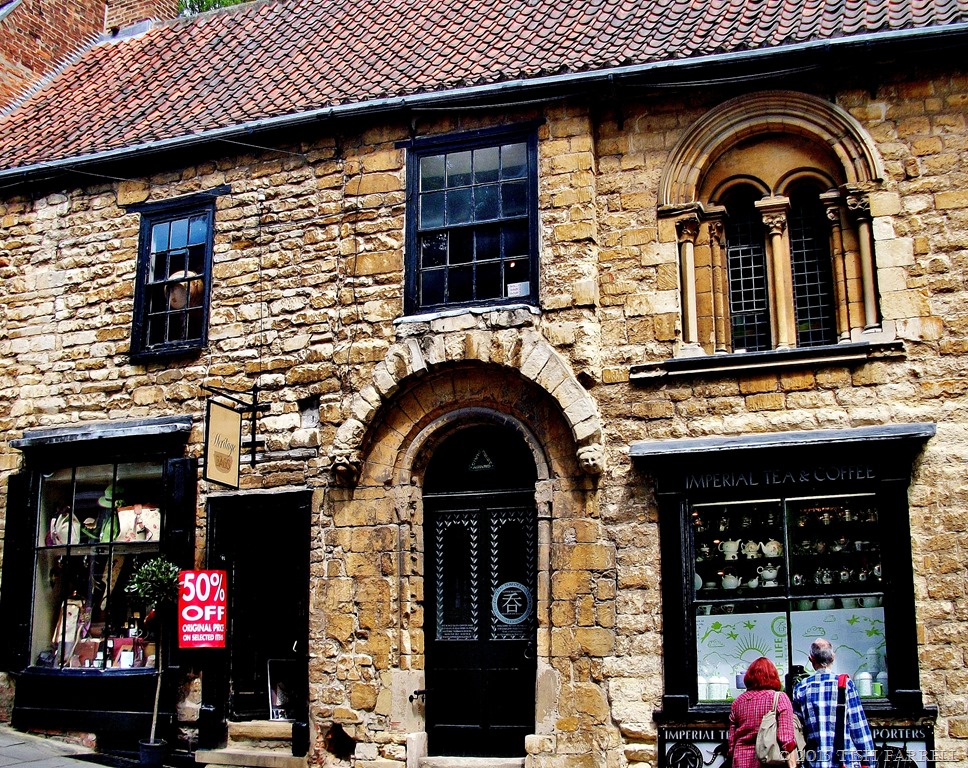
But a word of warning. You definitely need to take plenty of time to walk up it. In the lower reaches it rises seven feet for every one foot (just over 2 metres for every 0.6 metres). In fact I was so concerned about staying alive on the ascent, I forgot to take any photos until I stopped for a breather outside this curio shop (above). The building itself is unremarkable, probably nineteenth century, but it struck me that it has many things of its own to say about the passing of time. I like the worn steps and the old bicycle. I also imagine that it might once have been a corner shop where you popped in for your milk and bread and a packet of tea.

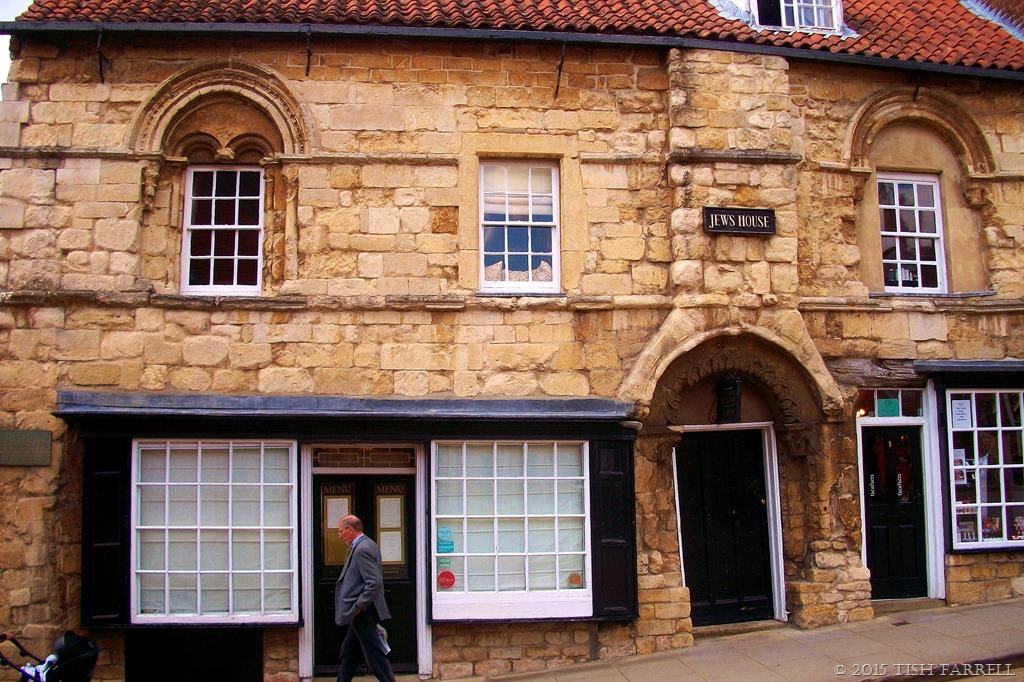
Heading on, though, you come upon these astonishing old sandstone buildings. The Jews House is 12th century, and dates from the time when the city had a strong Jewish community. But like many others in medieval England they fell foul of bigotry and false accusations, and the entire community was expelled in 1290. The Norman House below it is also 12th century, and said to be one of the oldest surviving domestic buildings in Britain.

100_3938

100_3931

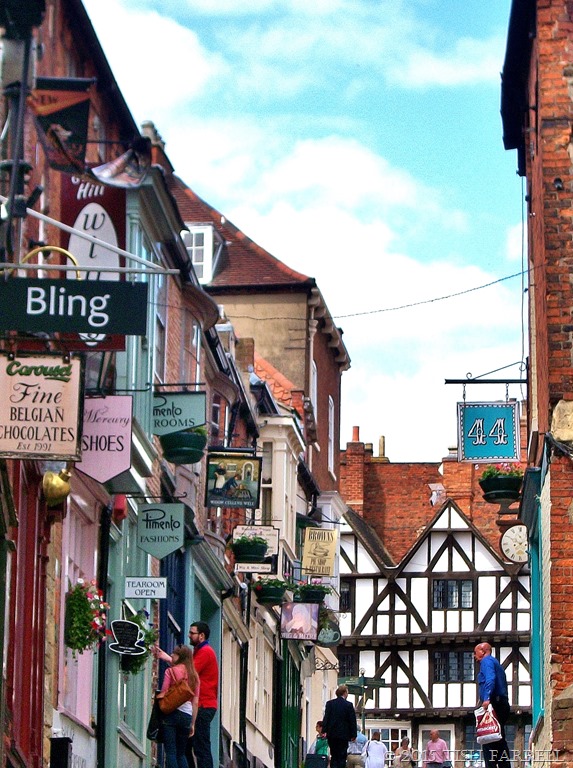
And it’s at this point we reach the part of the street that is seriously concerned with a preoccupation of our own time – shopping:

100_3932

At the top of the hill is Castle Square. The castle was built by the Normans on the site of the Roman fort, but it was under wraps and being restored when were there so I couldn’t photograph it. Ahead, though, you can see the fine timbered 16th century building that was once a Tudor merchant’s home, and is now the Tourist Information Centre.

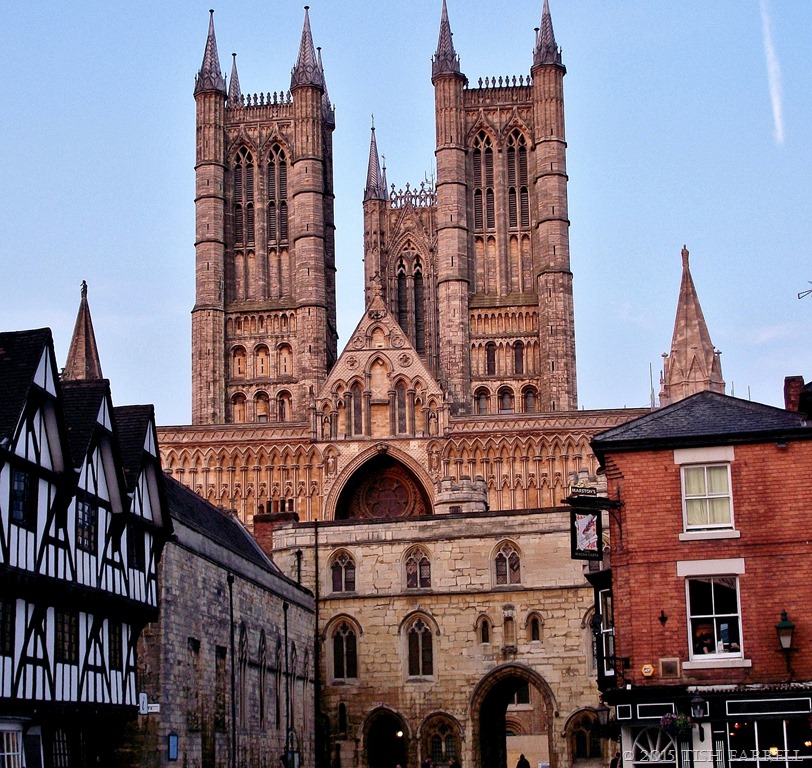
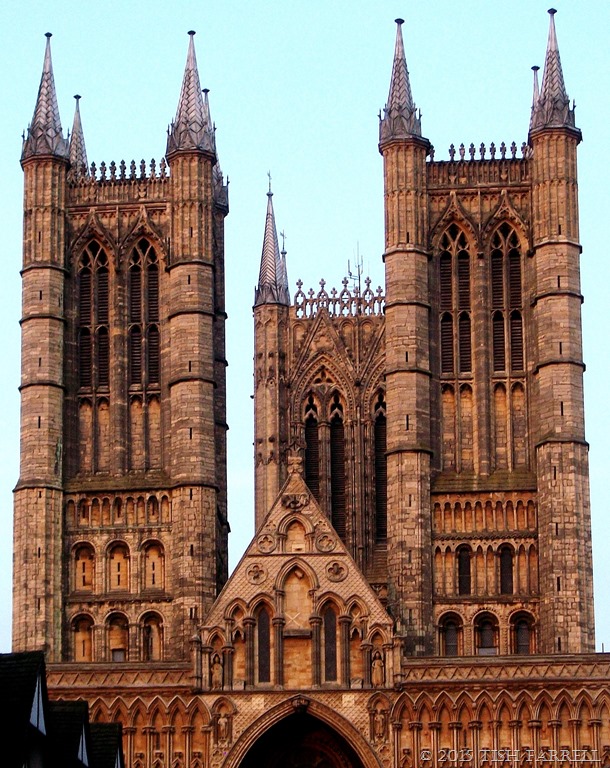
And finally, coming up is the building we’ve been struggling up the hill to see – Lincoln Cathedral in all its splendour. Work began on it in 1088, and continued through several phases over the following centuries. The towers, for instance, were raised and improved upon during the early 1300s. All in all a breath-taking feat of architectural engineering, to say nothing of standing the test of time. It is Britain’s third largest cathedral:

100_3975

And so if any of you are thinking of visiting the UK, Lincoln is definitely a must. It is a city to wander around, layers and layers of time revealed at every turn. There are museums and galleries and even a surviving town windmill. Pleasingly, too, the cathedral towers now provide nesting sites for peregrine falcons. As you walk around the precincts their mournful calls echo off the leaded roofs. These sounds, too, give one a wistful sense of times past.

100_3976


Today Paula’s guest, Debbie Smyth, at Thursday’s Special is asking us to think about time. Please visit Debbie and Paula for their own interpretations of the theme.

Bee In My Bonnets, Granny’s That Is

P1010543

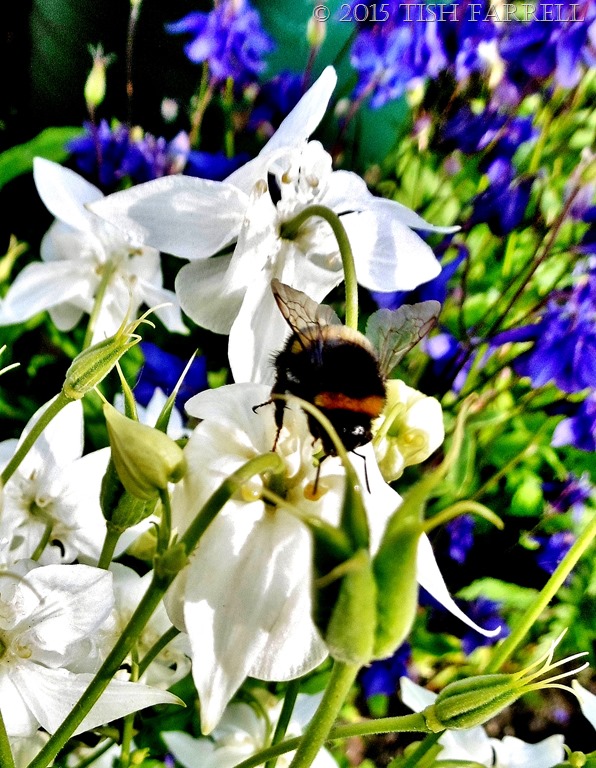
Today over at Lost in Translation, Paula’s Thursday’s Special theme is minuscule, which is a word I often have problems spelling because it comes in two versions, and that then leads me to make up  my own. Anyway, I instantly thought of  pollen grains, which made me think of bees, and of the small busy world of pollen gathering that goes on all spring and summer, mostly unnoticed by us humans. And so since I believe we cannot think of bees too much or too often, given the valuable work they do for us, here’s another bee snap.

I am also grateful to Pauline at Memories Are Made of This, who in today’s post also has bees on her mind, for reminding me a few a weeks ago in one of her comments that Granny’s Bonnets is another name for columbines or  aquilegias. So there you have it – bumble bee in my Granny’s Bonnets, but not in my actual bonnet, although my other half would often beg to differ on that statement.

copyright 2015 Tish Farrell

Thursday’s Special: Minuscule

Thursday’s Special: gold Inside

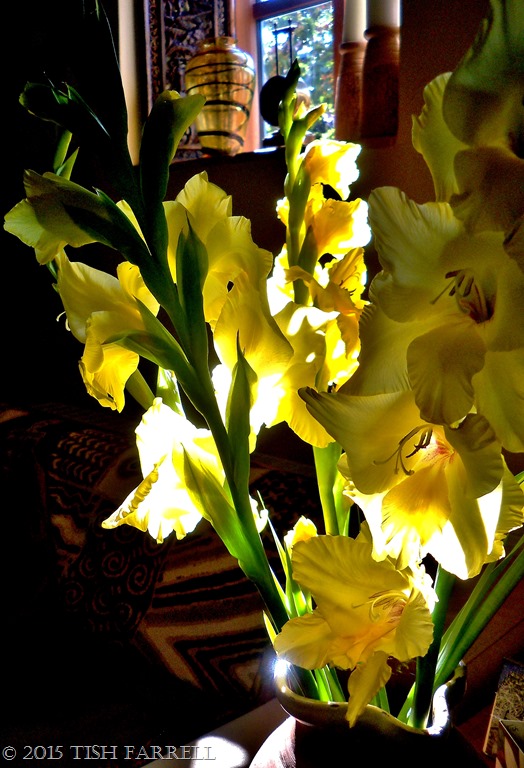
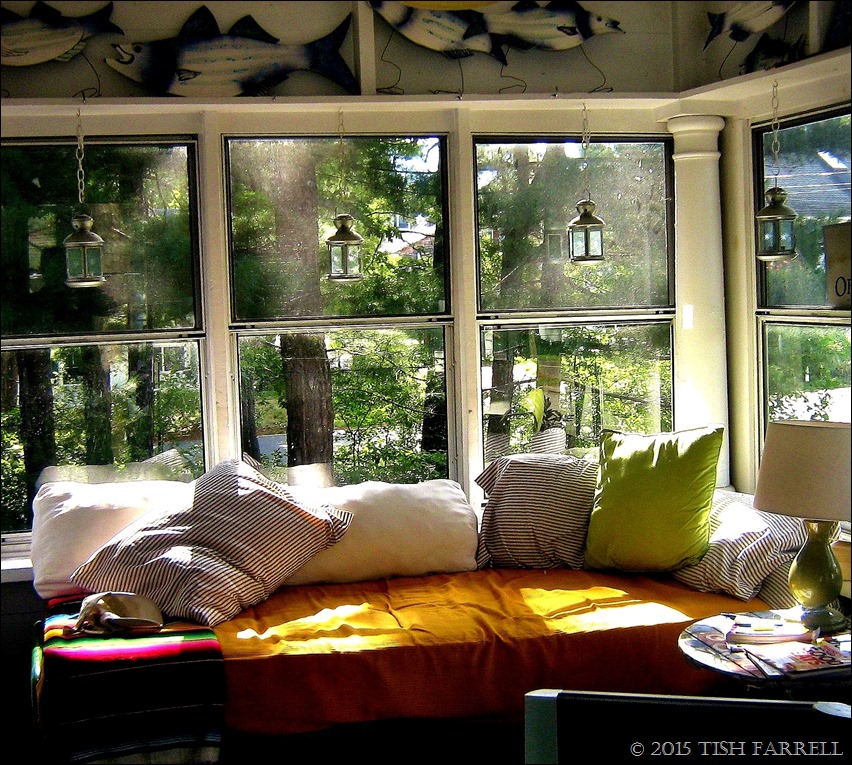
In the afternoons, Cousin Jan’s cottage by the sea in Southern Maine fills with September sunshine. Everything about the place is golden: scent of old timbers, sand in the floor boards, the sun bleached covers of the cushions. The play of light makes me think of Proust’s À la recherche du temps perdu  or Colette’s Le blé en herbe. You want to curl up like a cat, absorb the warmth through every pore, and dream. The cottage has just the places to do this too. You can slumber, lulled by the breeze in the garden pines and the neighbours’ wind chimes. Later, as the day’s warmth fades, you can blow the dreaming away, walking briskly along the beach that stretches for miles, the Atlantic rolling in at your feet.

copyright 2015 Tish Farrell

Thursday’s Special: Gold Inside

This week at Lost in Translation, Paula has invited guest blogger, Ron, to share his insights on interior photography. Follow the link to see his wonderful work. And then go here to see Paula’s and other bloggers’ responses to the challenge.