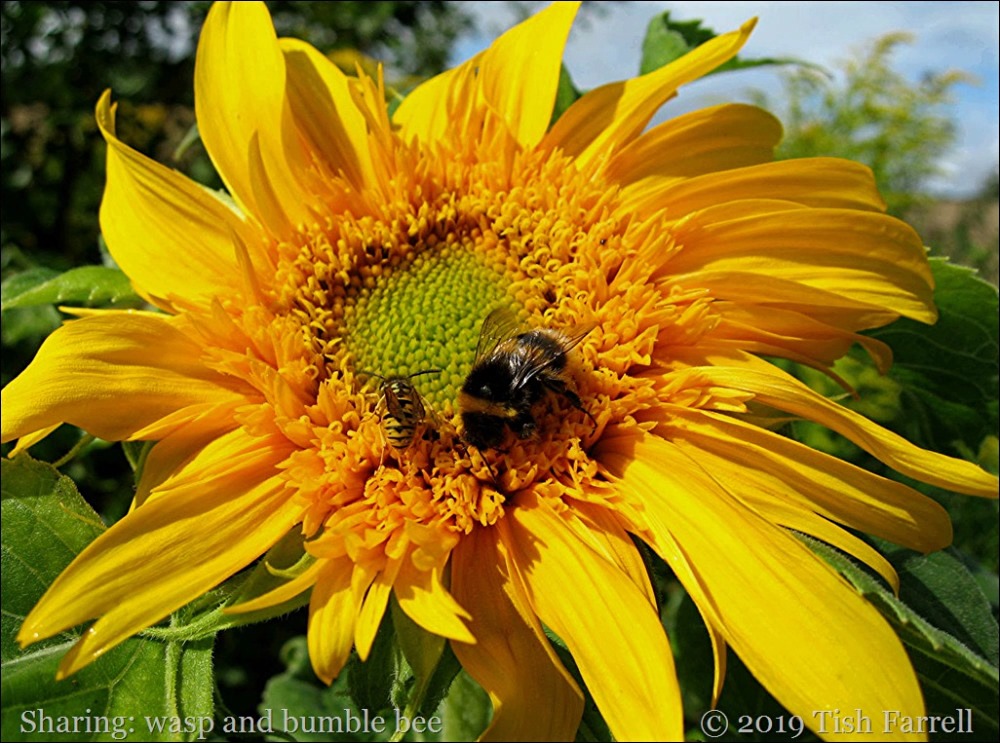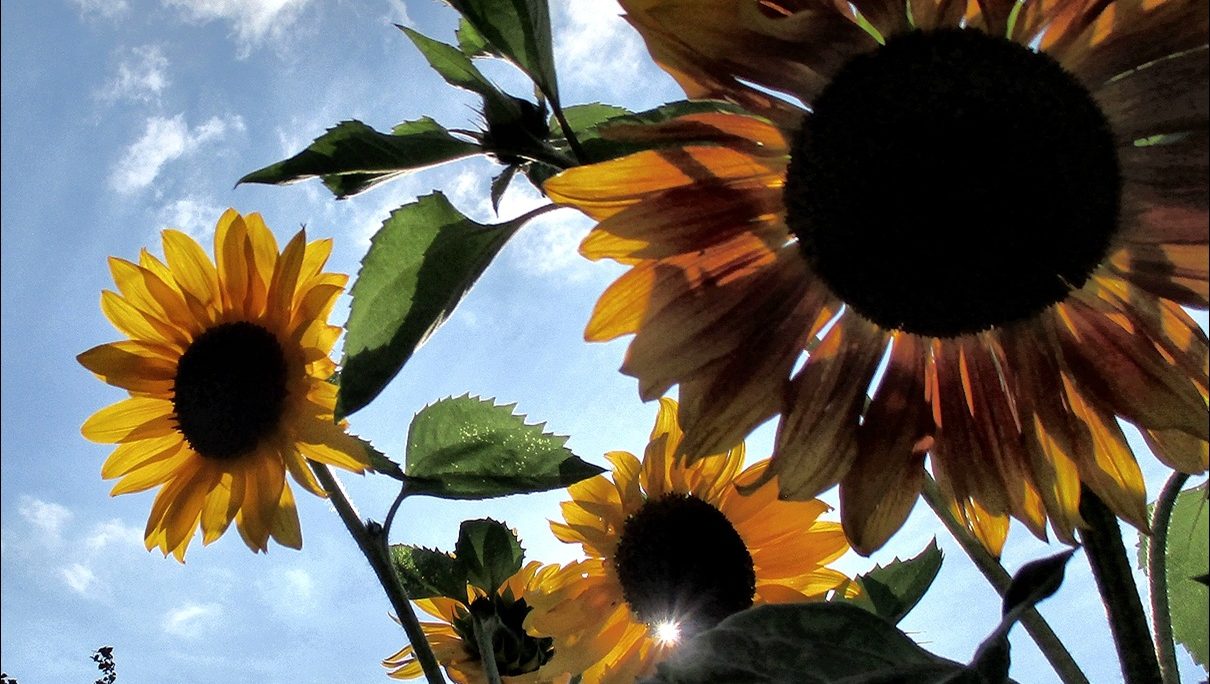
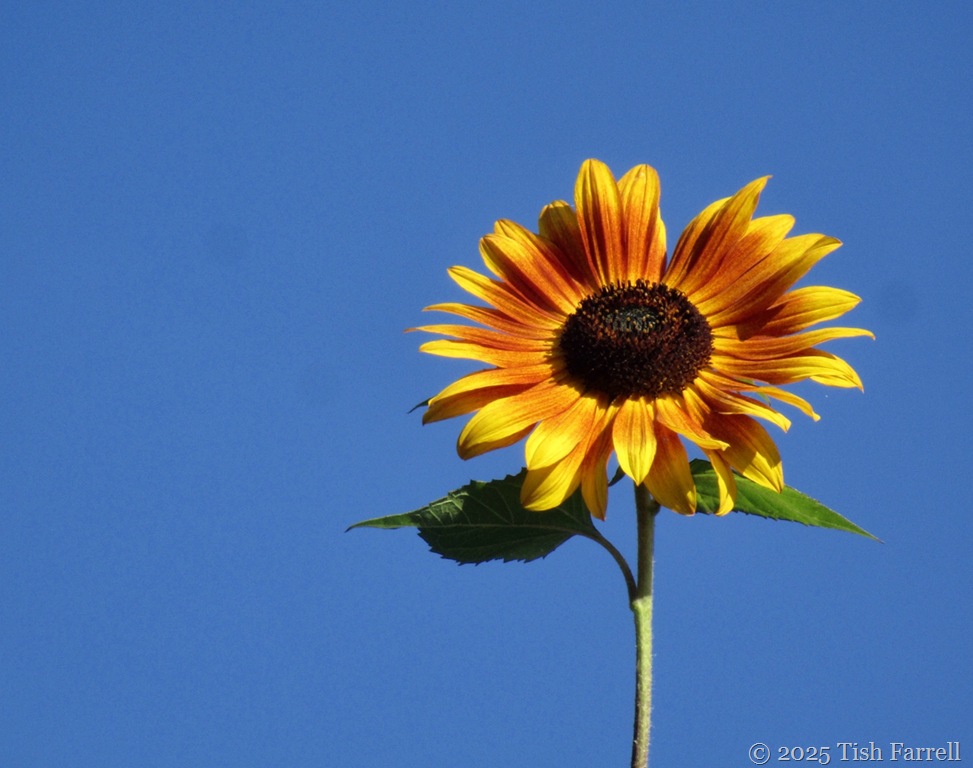
The garden looked shell-shocked after this week’s deluge. Rain at last! But rather too much at one go. “It never rains but what it pours…” etc etc. Anyway, the giant sunflowers [1] held their own and are still putting on a show. Then there were the almost immediate signs of revival by the lawn which had been dusty brown all summer. This reminded me of our Kenya days when our lawn of tough Kikuyu grass was reduced to looking like old sacking during the long dry season. But come the short rains and up would spring masses of green shoots, an instantaneous green sward.
The rain stirred the caryopteris [2] into flowering. It is supposed to be late, but this year seemed particularly so. As a shrub, its structure is rather underwhelming. The small silver-grey leaves and lax stem tendencies make it look rather like some unkempt garden escape on waste ground. Or maybe it was just the way I pruned it. The instructions said give it a good cut back. Or then again, maybe it is simply the effect of a long, dry summer. This variety is Heavenly Blue. And if the overall look isn’t too exciting, the sapphire sprays are gorgeous, and bee-life loves them.
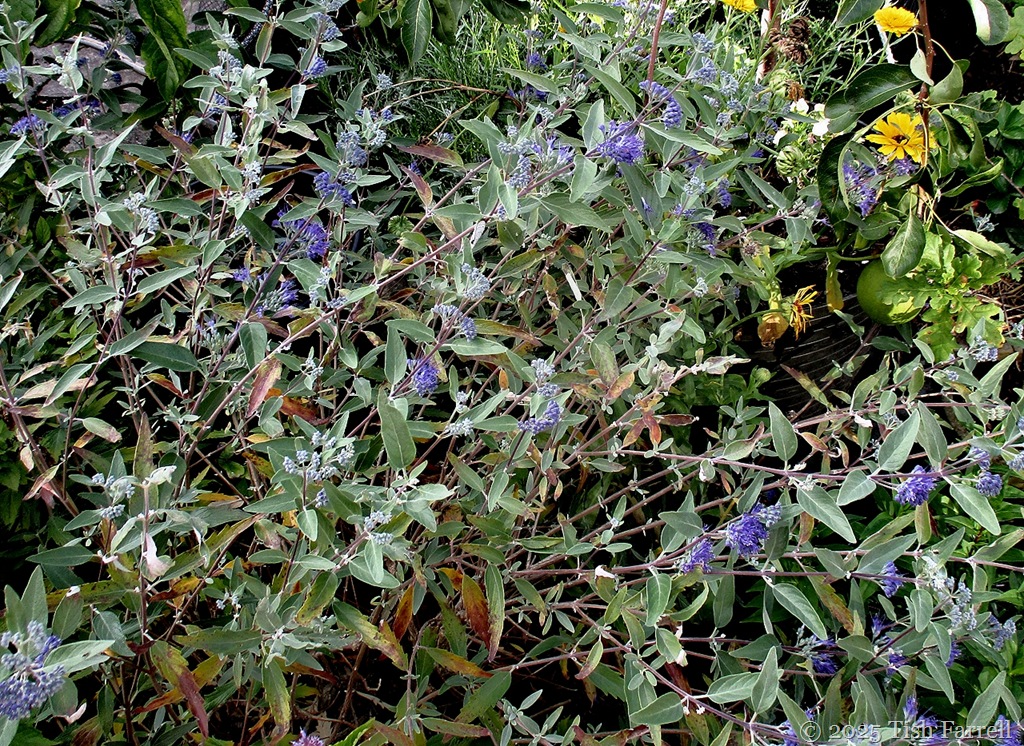
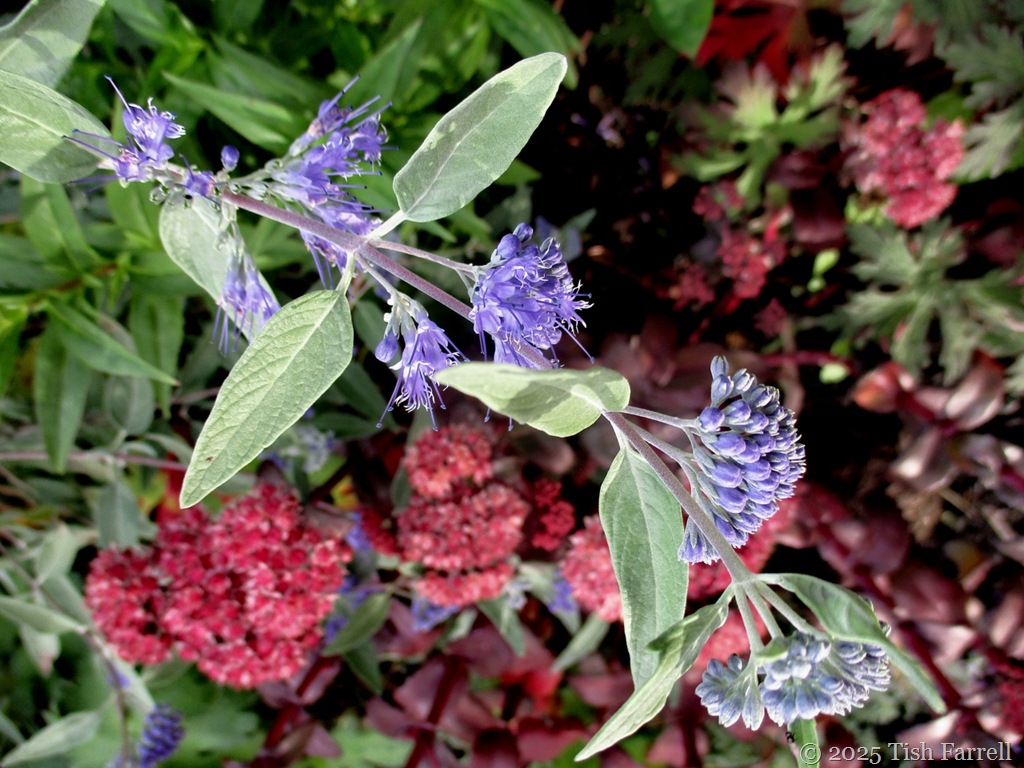
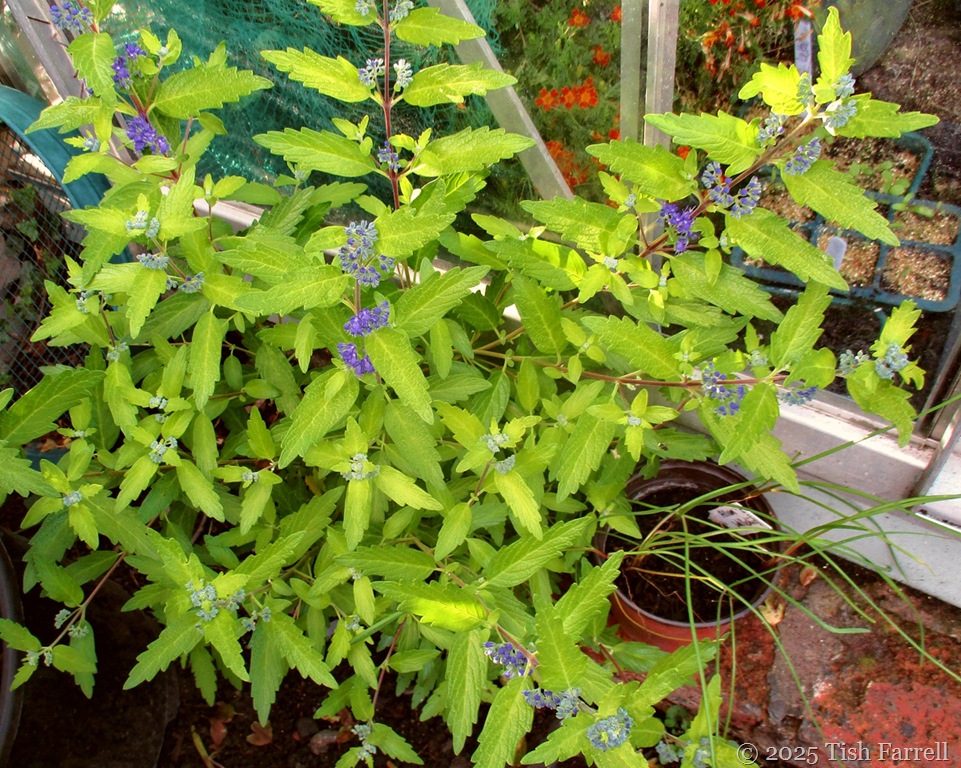
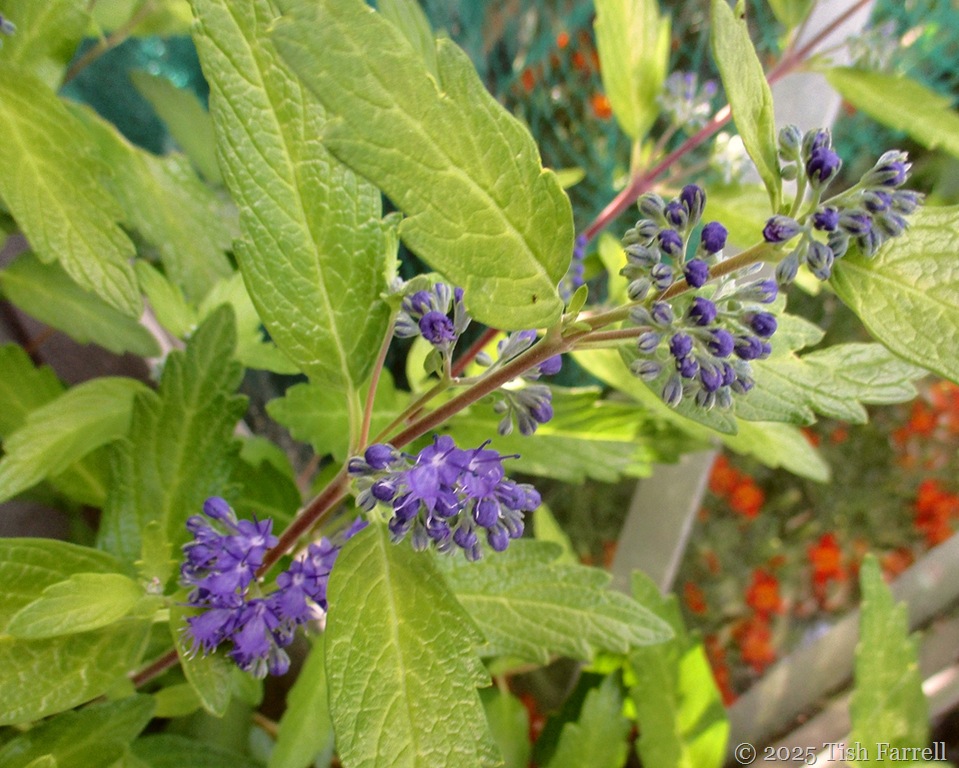
I have some other young caryopteris shrubs by the greenhouse. These have yellowish leaves and are a variety called Gold Crest. At the moment, their shape is rather more appealing. Also the contrast colours of flowers and foliage is pleasing.
*
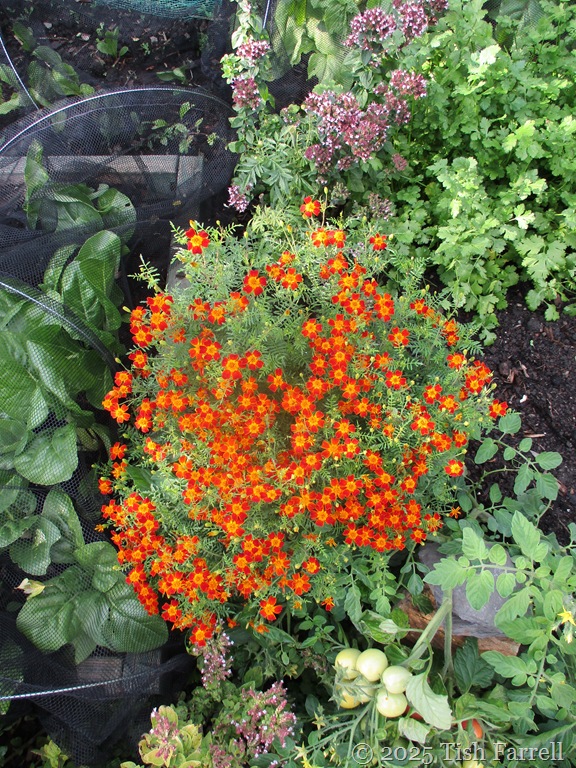
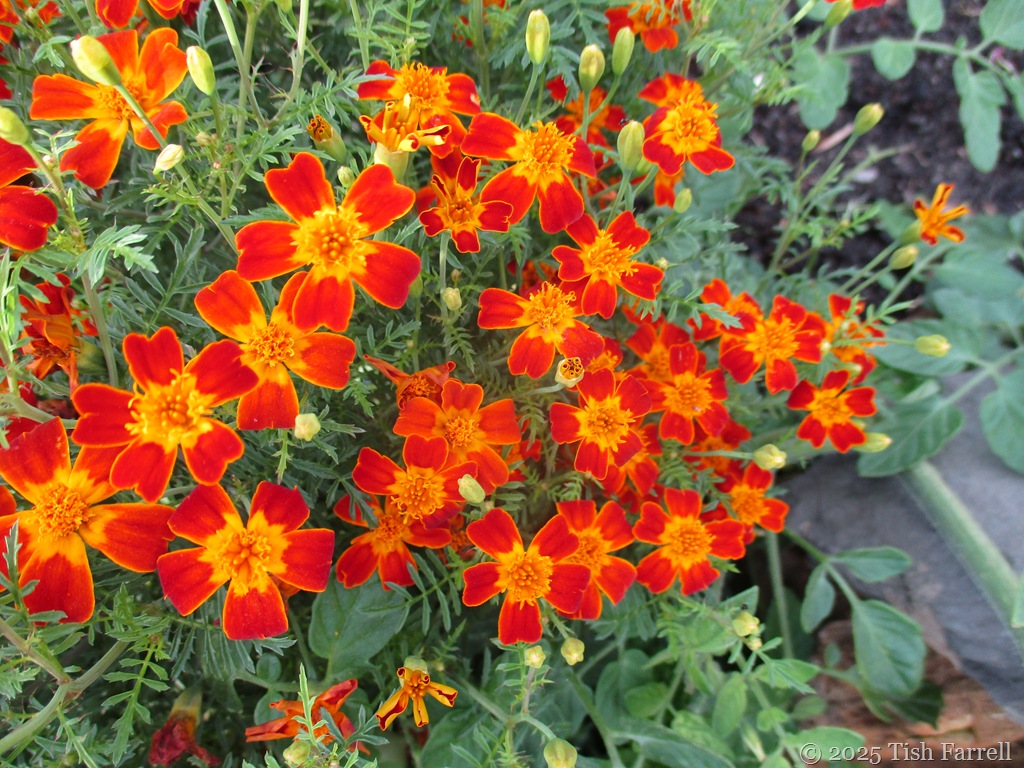
The French Marigolds [3] have also appreciated a good dousing. Grown from seed this spring, Red Gem has been flowering all summer. She’s supposed to deter white fly, so I planted her out in the greenhouse amongst the tomatoes, and also between the raised beds where I have a rather late performing Tumbling Tom cherry tomato. The individual flowers are tiny but it’s still a good show.
*
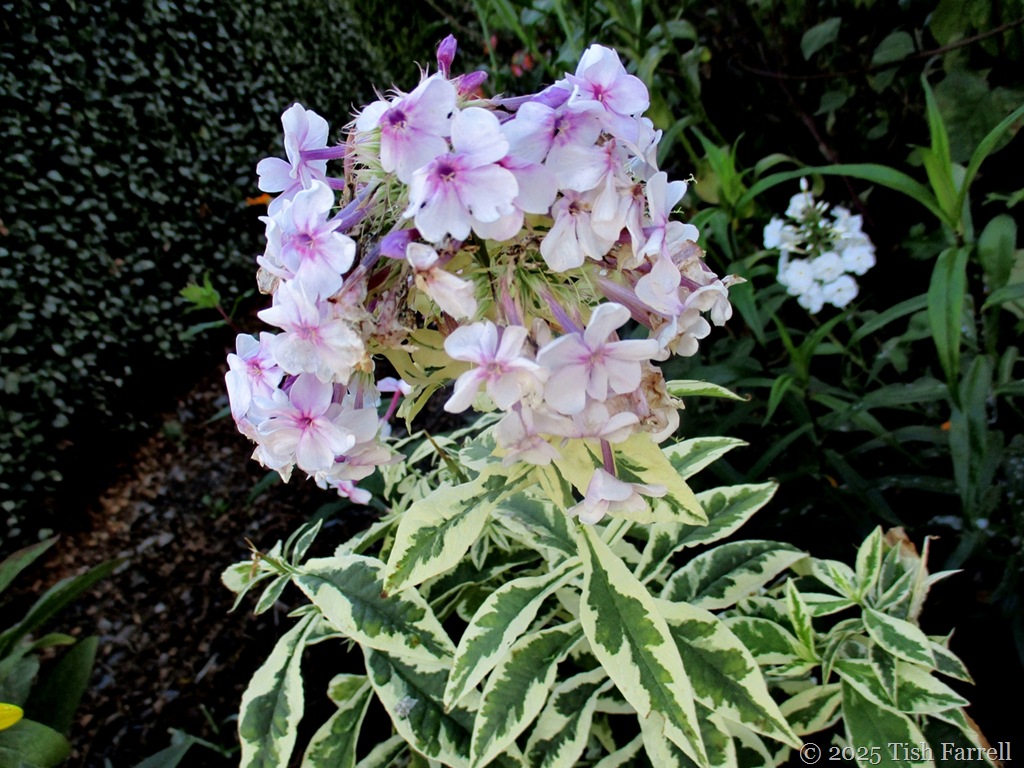
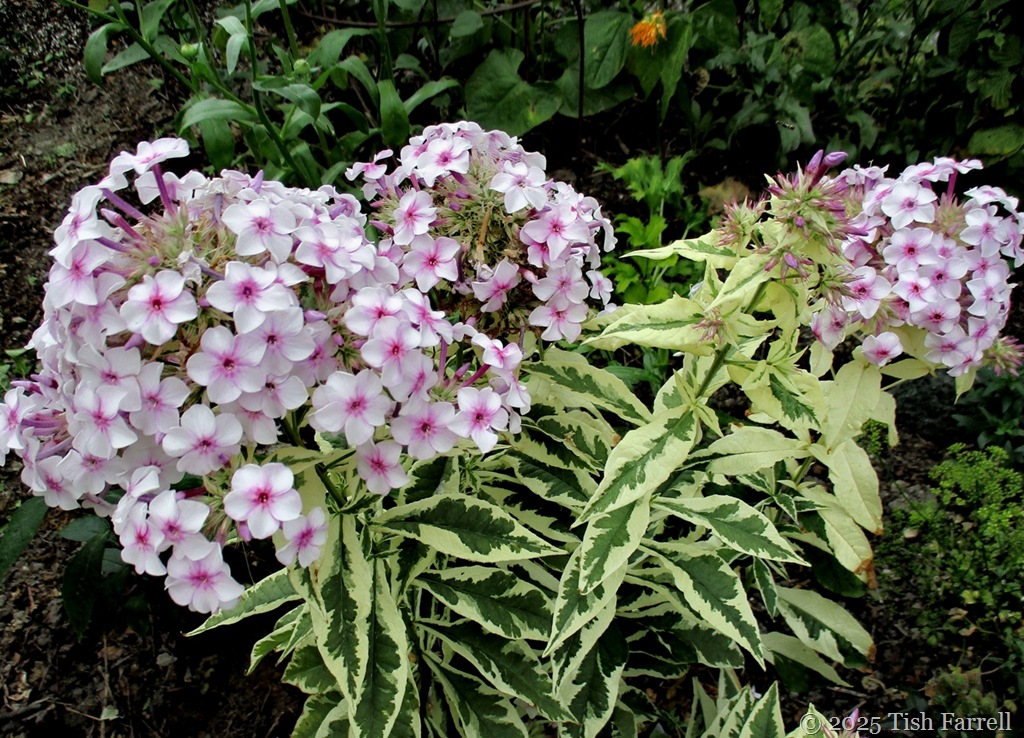
Another plant that’s done well until this week is one of my new favourites: phlox Norah Leigh [4]. I should have featured her when she was in full bloom. But she still has a few flowers, and although I’m generally unkeen about pink, I find the contrast with the variegated foliage very attractive. I’m becoming a bit of a phlox fanatic.
Here she is after the heavy rainstorms:
And here she is a week of so ago, before the rain: a stalwart show considering the dry weather, and that I only bought her as smallish specimen back in the early summer :
*
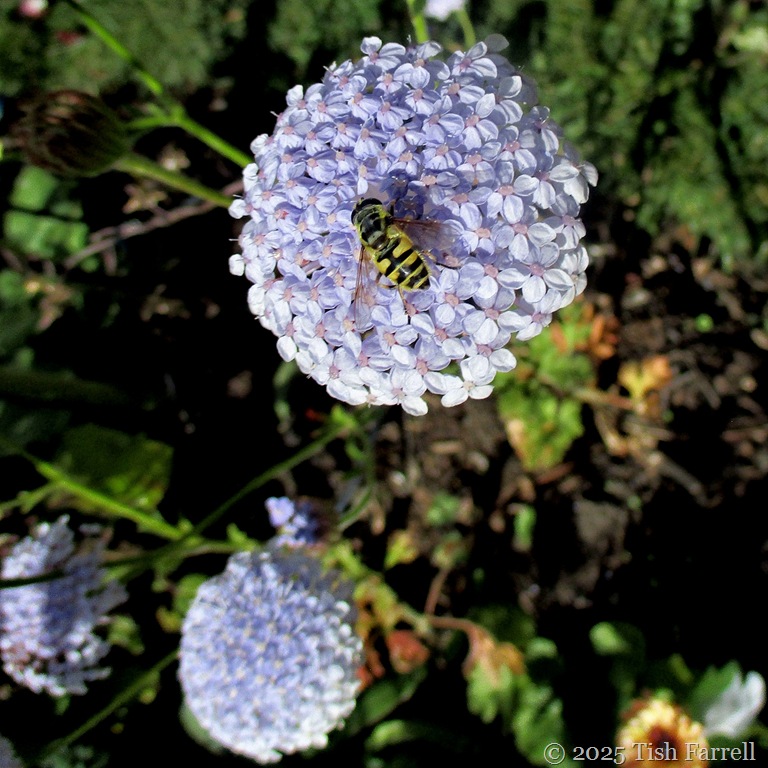
Some of the seed grown Madonna Lace Didiscus [5] are still going too. Also much loved by insects. When the flowers fade they transform into little silvery sputniks – quite magical on a dewy September morning.
*
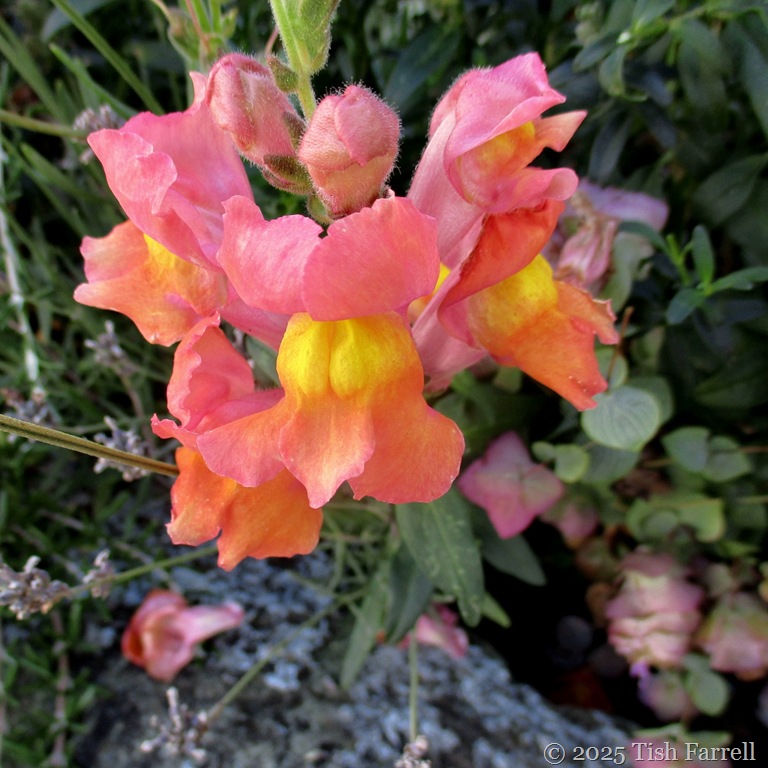
But the prize for the longest flowering flower this year goes to the self-sown and -grown snapdragons [6]. They’re on their third blooming round at least, and the plants are now growing quite shrubby with masses of seed heads among the latest flowers. The original volunteers have made some new plants in the course of the summer and these are also flowering now. And there’s me thinking that our front garden soil, which is full of old paving mortar and mashed roof tiles is somehow problematical. Norah Lea and the snapdragons are clearly loving it.
*
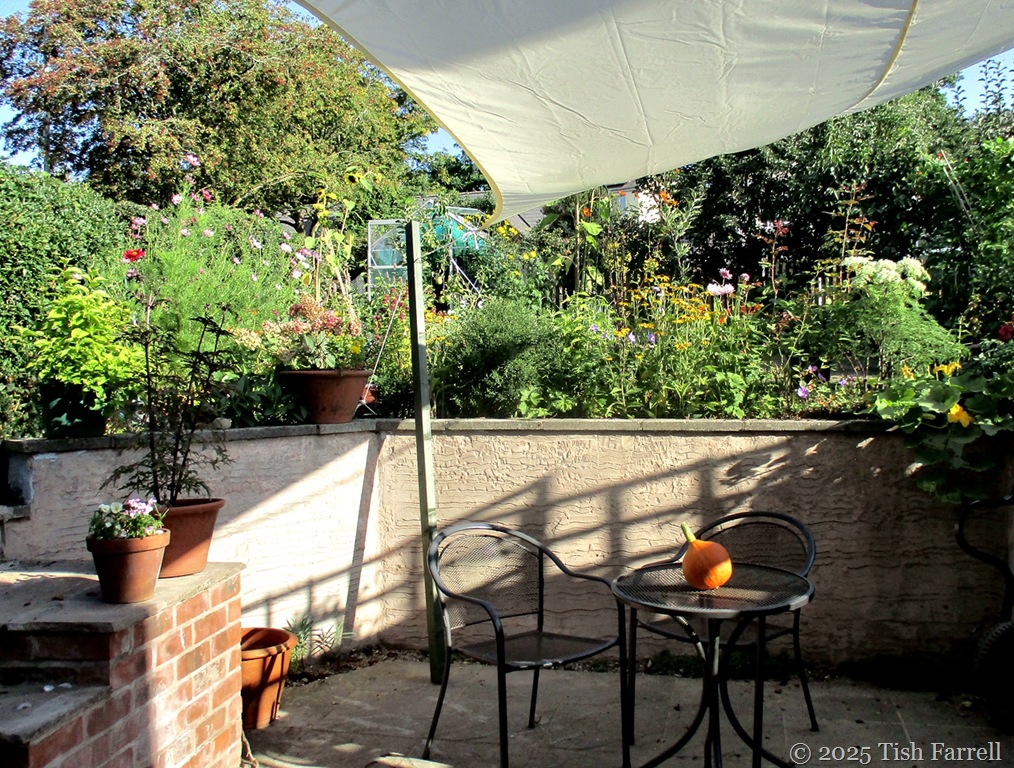
Late summer in the back garden. He who-builds-sheds’ wing shade is obscuring the sunflower view from the kitchen door, though we have been glad of it. Here’s what it’s hiding:

Six on Saturday Please call in on Jim and see what he’s been up to in the garden and at the allotment.