Copper elephants, copper land

221

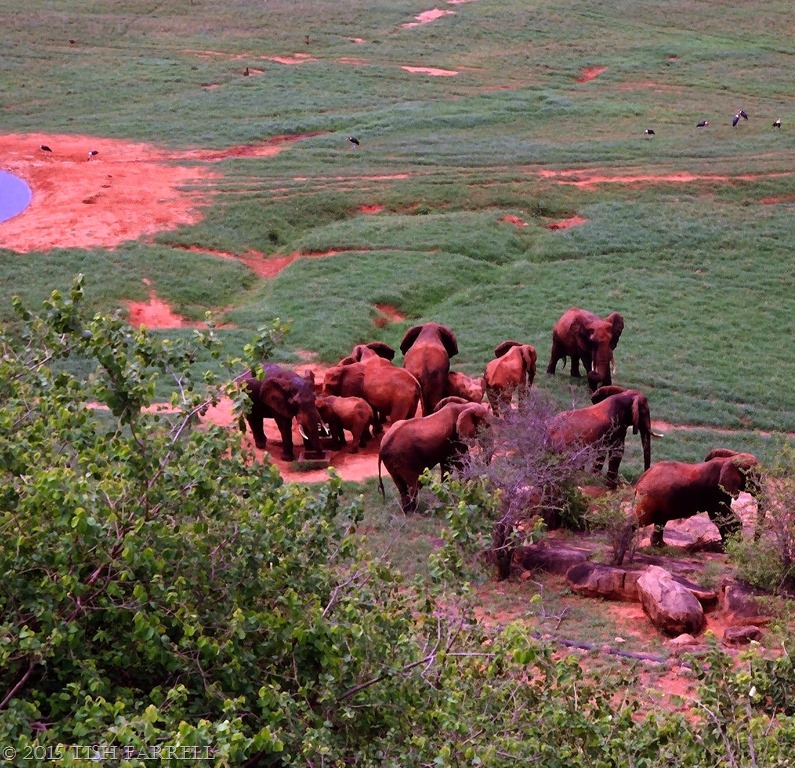
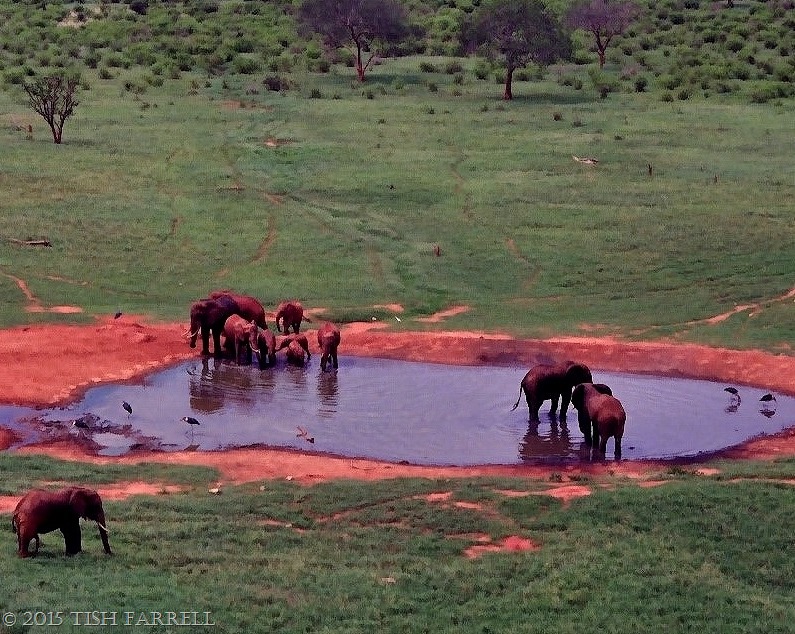
It’s a case of red elephants, then, in Kenya’s Tsavo East National Park. These red Tsavo soils are famous for their brilliance. They smell of red pepper too. But for the elephants it’s more about keeping their skins in good condition. Talk about glowing complexions.

222


For more of my Africa stories and more copper landscapes please see the backlist at:  https://tishfarrell.com/category/africa/


Jennifer Nichole Wells One Word Photo Challenge: copper

The Poetree at Much Wenlock’s Poetry Festival

IMG_1116

 the perfect place for poetry

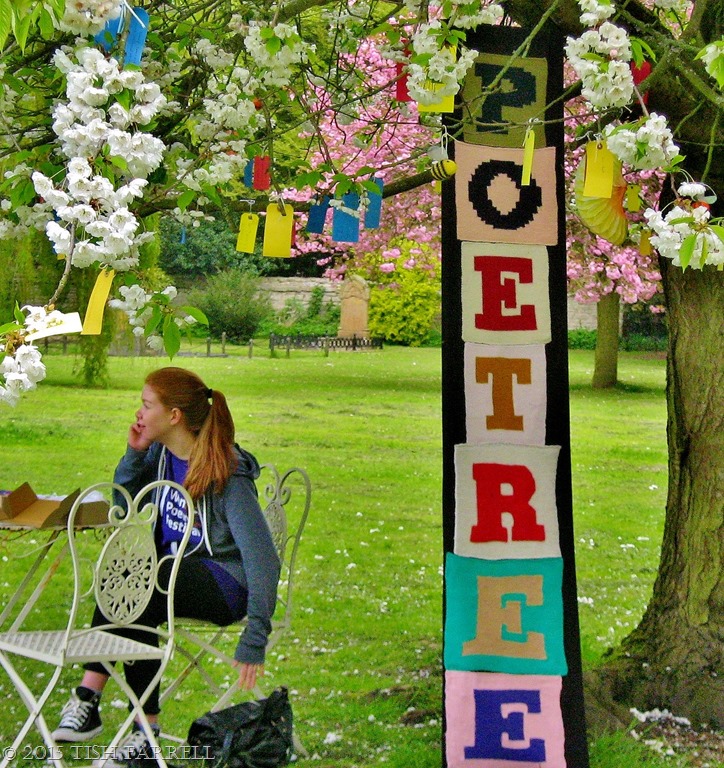
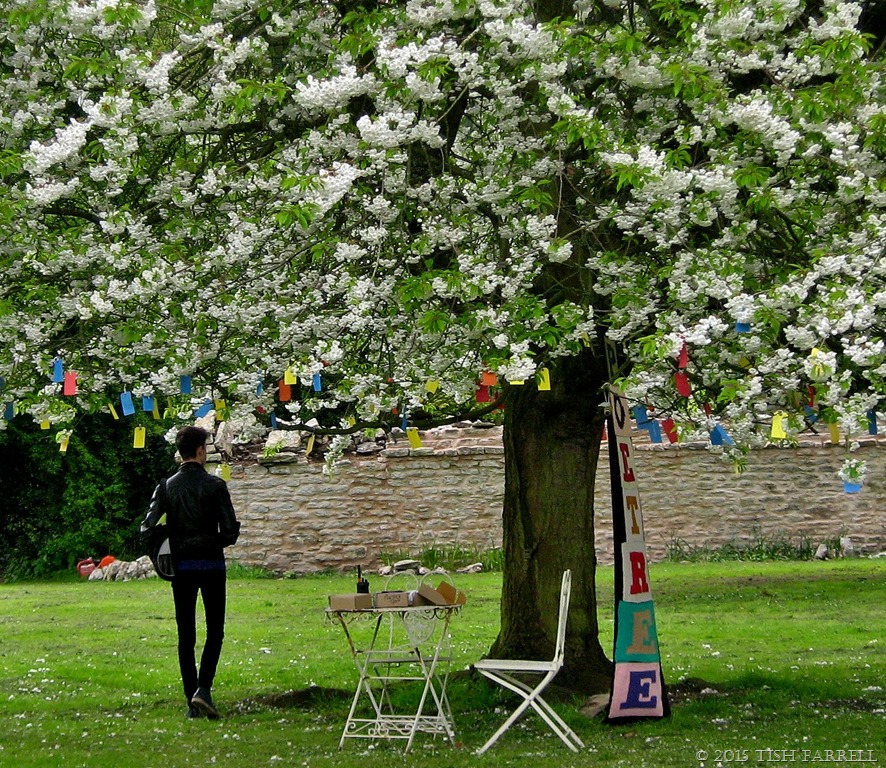
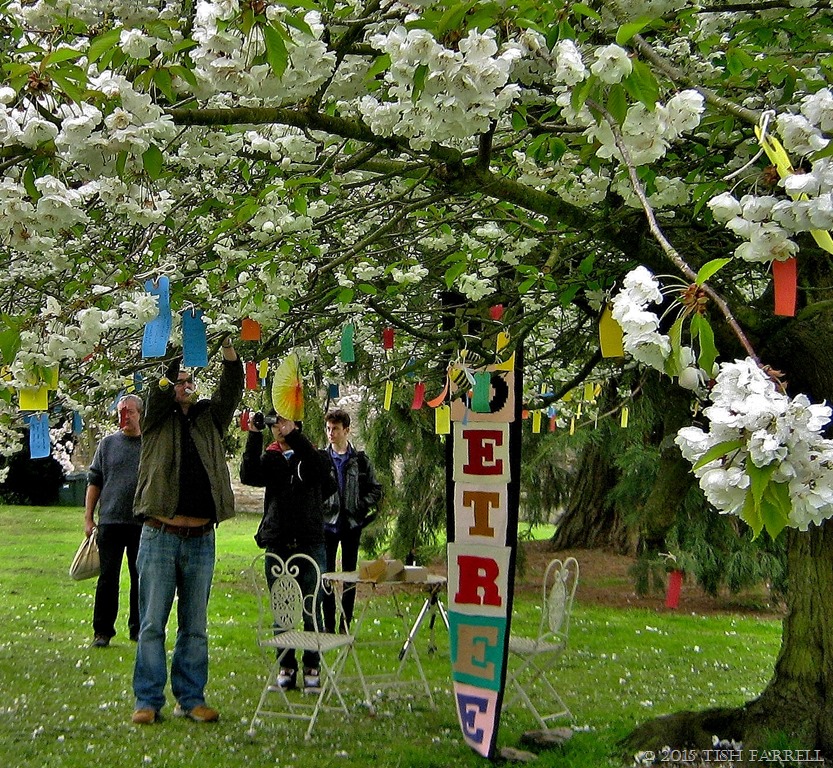
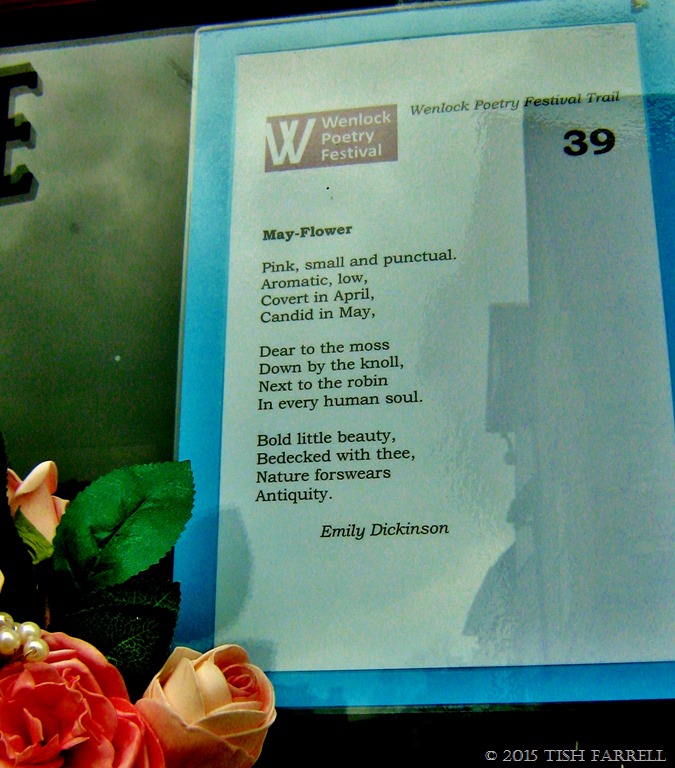
And that would be Much Wenlock, or so says Carol Ann Duffy, Britain’s Poet Laureate, and the festival’s founding patron. Not only that, Wenlock’s Poetry Festival is one of the best of its kind in the UK. Now into its sixth year, it was the creation of Anna Dreda, owner of the town’s lovely Wenlock Books, and in a few weeks’ time our streets will be teeming with poets and poetry lovers. For three whole days there will be events of all kinds and for all ages and tastes. There poems in shop windows, poetry breakfasts, and readings of their work by some of the best British poets of our time. This year there will be a closing gala event with Dame Carol Ann Duffy, Imtiaz Dharker, Jean Atkin & Little Machine. One of the side-show attractions is always the Poetree on the Church Green. Every year people can break briefly into verse and hang their words on the tree for others to read. Last year the tree was so happy it reciprocated by bursting into bloom. What more can one ask for? IMG_1050 IMG_1042 You can find out more about events at this year’s Much Wenlock Poetry Festival   It takes place all over the town on Friday 24th to Sunday 26th April 2015. And now here’s a poem I found while out window shopping at last year’s festival: IMG_1026 Jennifer Nichole Wells One Word Photo Challenge: shamrock   #WenlockPoetryFestival

Kind of Mauve not Blue at Plas yn Rhiw

100_4853

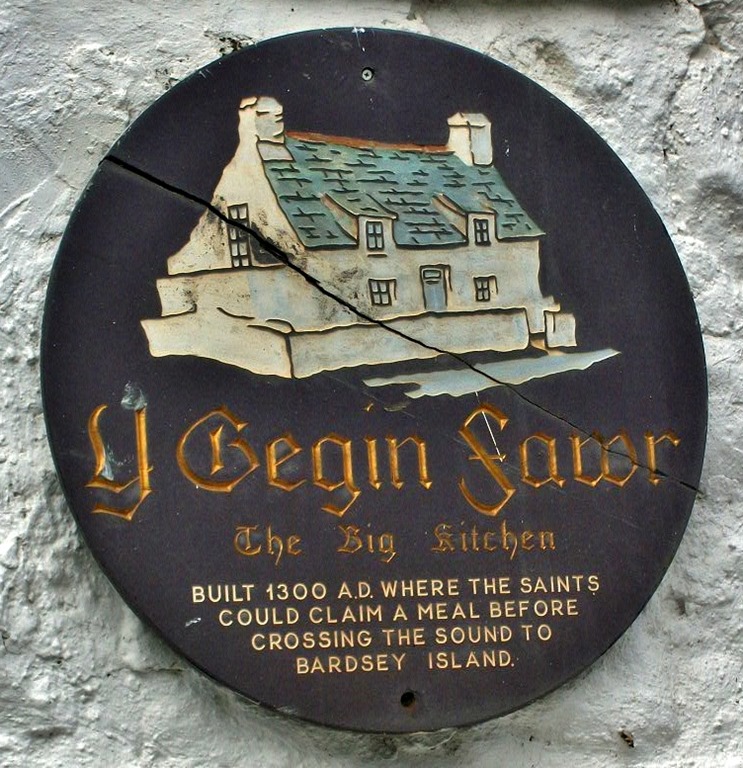
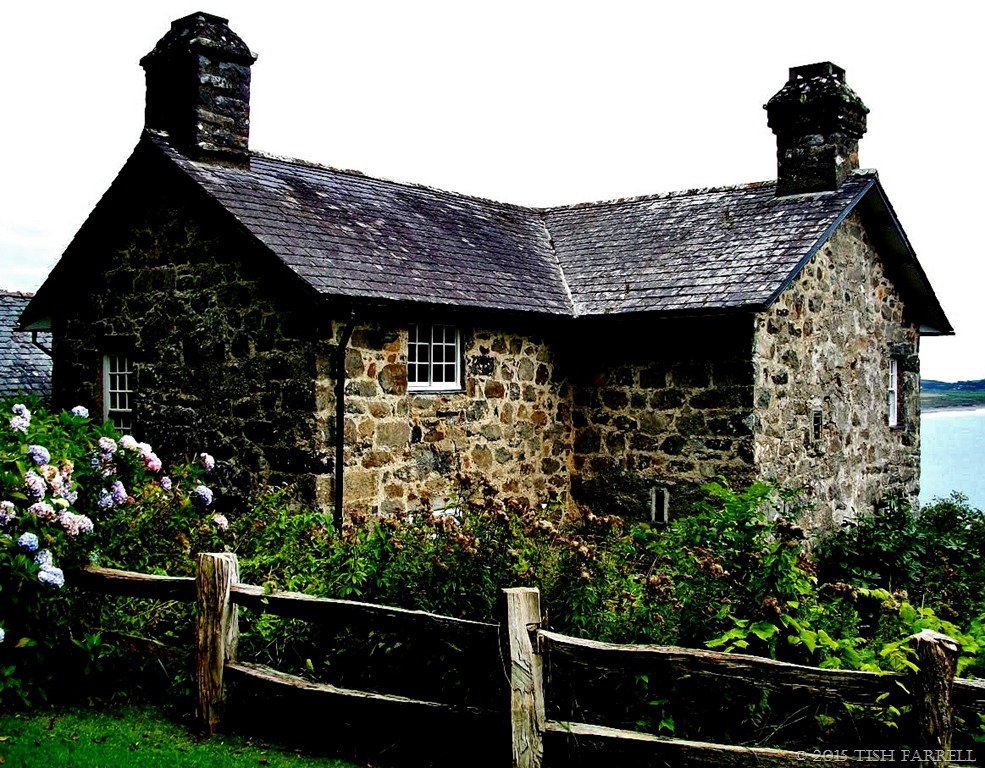
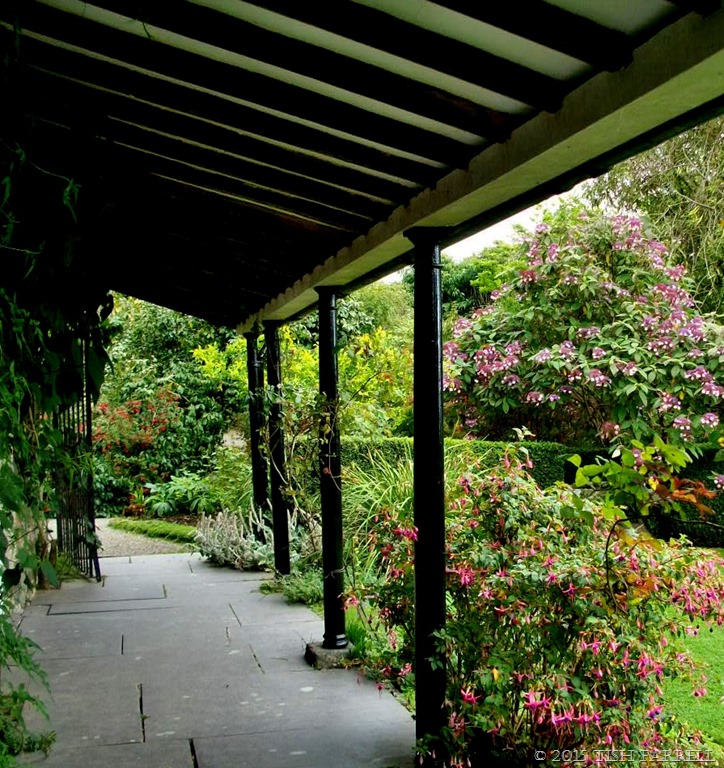
Looking back, it was a mauve sort of a day, the day we went to visit the old Welsh farmhouse of Plas yn Rhiw on the Llyn Peninsula. The sea in the bay below the house was peaceful, and the air still and dreamy. If you listened hard you  might hear echoes of the past along this ancient pilgrims’ path to Bardsey Island, the place the Welsh call Island of Currents. It was late September, and Wales was very much in end-of-season mode with many places closed; or if they were open, then looking as if they wished they were closed. It’s often like that in Wales. Even the stalwart National Trust, that now has care of Plas yn Rhiw, was slow to open up. We had to go away and come back. In fact that was a bit of good luck. Further down the peninsula in Aberdaron we were taken by surprise at Y Gegin Fawr, The Big Kitchen cafe, where the owner was enthusiastically hospitable.

IMG_0690

It turned out that she was keen to uphold  a 700 year-old tradition of feeding pilgrims. We had some very excellent hot chocolate there, not something the saints would have recognised. Or if they had, and if they had seen Graham’s mug overtopping with whipped cream, they would surely have pronounced it a sin of the flesh, and to be eschewed at all costs.

100_4805

Back at Plas yn Rhiw we stepped into another time-warp.

100_4858

100_4822

Here, the seventeenth century farmhouse had been lovingly restored from ruin by the three Keating sisters, who at the urging of friend and architect, Clough Williams-Ellis (he of Portmeirion fame) scraped up the funds to buy the place in 1938. They lived there until they died, filling the house with personal treasures. When you wander from room to room, there is a feeling of benign, if eccentric spirits. They don’t seem to mind us peering at their books and nick-nacks…

 copyright 2015 Tish Farrell

For more of this story:

Gazing into Hell’s Mouth at Plas yn Rhiw


Jennifer Nichole Wells One Word Photo Challenge: Mauve

One of my treasures ~ introducing Kapp 1890-1978

P1000577

I stumbled on this print almost literally. It was years ago and I was treading warily around a rackety riverside warehouse in Shrewsbury. The place called itself an Antiques Centre, and as I climbed the stairs to the ‘showroom’ the chances of sudden building collapse loomed large. Having reached the first floor, I remember creeping around on tiptoe, trying not to challenge the timbers. So it was, in mid negotiation with  uneven floor boards, my hand reached down to an old picture frame. It was propped against a cardboard box underneath a table. When I turned it round, there it was – a caricature of The Rt. Hon. Viscount Cave, signed by Kapp.

I’d never heard of either the subject or the artist, but who cared. It was love at first sight – the colours, the ‘cut-out’ two-dimensional form,  that two-thirds frowning, pasty face of the viscount.  The whole thing made me smile, inside and out. Best of all, the price tag said £2.50. What luck – to find something so pleasing for such a paltry sum.

My tracking down of information about the work and its creator has continued off and on ever since. I discovered first (and long before the days of Google) that my ‘print’ is an offset lithograph, and one of a series called Ten Great Lawyers  created in 1924 for The Law Journal. I also learned that Edmond Xavier Kapp was an artist, and caricaturist of note, born in London in 1890, and a Cambridge graduate.

I came across him again when reading poet, Edmund Blunden’s World War 1 memoir Undertones of War. Kapp, already well known for his drawings and short stories before the war, was serving on the Western Front, a 2nd Lieutenant, in the Royal Sussex Regiment. He provided some of Blunden’s lighter moments in the trenches. Blunden himself was only twenty years old at the time of their encounters, and newly arrived at the Front:

Second in command, Edmond Xavier Kapp appeared, ready with scribbles and charcoal drawings not unworthy of his reputation as a satirical artist…[He] was a lively hand to have in a dugout; his probably imaginary autobiography, peeping out at intervals and enriched by other versions, was also a diversion; but one day he was called away to an interview with the Colonel, and soon he disappeared into the irrelevant air of GHQ, far beyond the stars.

Kapp was twenty-four when he enlisted and, until his promotion to Intelligence and the rank of Captain on General Haig’s Staff, had withstood three nightmare years in the trenches. In Time Will Tell: Memoirs  his first wife Yvonne Kapp says that he witnessed the wipe out of his own platoon twice over, and never was able to lay the ghosts of lost comrades.

That he survived at all is remarkable. Because he spoke German fluently, he was sent out alone to occupy a dug-out in No Man’s Land, the objective being to interrogate German prisoners as they were brought in. On one occasion, in the bloody chaos of shifting lines, Command forgot he was out there. Under constant bombardment and gas attacks, he survived for several weeks on tins of bully beef. When he was finally rescued he was deaf and half blind, and almost dead, and thereafter spent several months in hospital. Later, he apparently relished his senior officers’ less than whole-hearted commendation of his military service: “his zeal sometimes outruns his discretion.”

In the light of all he must have endured, and in what he described so sparely as those “five long dreadful years”, it is astonishing that he went on to serve as Official War Artist in the World War Two. Between the wars he produced many drawings of well known personalities, both for periodicals and exhibitions. He also ventured into oil painting after working with American artist, Maurice Sterne. Then in the 1930s he deployed his lithographic skills to produce portraits of the twenty five members of The League of Nations, and this led to his meeting and friendship with Picasso who sat for him in 1938.

Kapp himself disliked being called a caricaturist . He considered himself to be a “character-portraitist”, producing works of psychological rather then satirical intent (Chris Beetles Gallery ). And perhaps, now  that I look again at The Hon. Viscount Cave, this is the quality I most admire. After all, the stuffy old gent is rendered with such gentle humour. It speaks, I think, of the artist’s humanity, and of a good, and kindly eye.

copyright 2015 Tish Farrell

Post inspired by Jennifer Nichole Wells One Word Photo Challenge: Melon

Follow the link for more bloggers’ responses.

Pondering on what makes us human: that would be shopping, then?

96_thumb[19]

So what does make us human? What differentiates us from our closest relatives the great apes? These were some of the questions posed to us as students of Prehistory & Archaeology way back in the 1970s. Naturally, the philosophical framework of a course with such a title is going to be artefact-driven. Archaeologists deal in physical remains. Prehistory means there is no written record. Mostly all we are left with are bones, stones, post-holes, hearths, bits of wood (if we’re lucky), stains in the soil, and that prehistorian’s joy of joys – the rubbish pit and/or midden.

(After all, there is nothing so fascinating as poking through other people’s garbage – as long as it doesn’t smell too much. Just think what future archaeologists will make of our landfill sites, and what their contents will say about us. See WALL.E  the movie for starters.)

But back to that ‘what makes us human’ question.

In the early 1970s it was widely thought that the appearance of tools was a key criterion. Their construction suggested evolving cognition and the ability to forward plan. Tool-making further  presupposed the facility to walk upright, thus leaving hands free to access materials, and to fashion them for preconceived purposes.

For a time this seemed a useful marker, but then as palaeontologists delved ever further back through the remains of our pre-human ancestors (mostly in Africa’s Rift Valley) it became clear that even by 2.5 million years ago, pre-humans were making tools. The picture was further confused by the realisation that chimpanzees also make tools, albeit crudely fashioned ones – e.g. hammers to crack open nuts, or break into bee hives.

Large brain size was another criterion (judged back then on the basis of the cranial capacity of skull remains), this supposedly indicating a well developed intelligence. I’ve never liked this much, feeling it had a whiff of eugenics about it.  I also remember finding it perplexing to discover that Neanderthal brains were apparently larger than those of modern humans even though Neanderthals were supposed to be ‘inferior’.

None of this seemed to advance my understanding at that time, and besides, now we find that back in the Paleolithic, and  in two distinct phases hundreds of generations apart, humans of the northern hemisphere interbred with Neanderthals. The evidence is there in our genomes.

88_thumb[7]

I left Prehistory behind long ago. As a discipline, I felt it never would be capable of revealing the aspects of humanity that are truly important. And while inferences might be drawn (read: guesses made) about social, religious, political and economic systems from the fragmentary remains of ancient humans, archaeology alone cannot retrieve the all important drivers of human development, the intersecting sets of shared beliefs that create human culture.

After all, we do not know why Stonehenge was built, or what people actually did there, or who organised its building and the activities that took place within the great stone arcades. We never will know. But we can date associated remains, source materials, conjecture on construction techniques, work out how long the place was used, and then we can admire it as an astonishing edifice built by people with an apparently limited technology.

The physical remains,then, are indeed important, but what I really want to know is what was the intention of  its builders; what beliefs led to Stonehenge’s conception and realisation.

By now you may be wondering why this post includes scenes from Dubai, including the 9th century pot above. Here’s a clue from the bazaar:

128_thumb[7]

And another from the Gold Souk:

127_thumb[5]

And at the Dhow Harbour:

118_thumb[8]

And in the mall:

72_thumb[11]

Yes, you have guessed it. Trade is the clue. And so, having ruminated on archaeology’s limitations, I can say that one of the things it does do well is reveal ancient trading  patterns across the globe. In fact only last week it was announced that a study of sediments from a waterlogged 8,000 year-old Mesolithic (ostensibly hunter-gatherer) settlement in the English Channel contained introduced wheat grains that suggest trade with European farmers.

In this regard then, the movement of goods, the origins and spread of food species can be tracked across the millennia. We can thus surmise that even 8,000 years ago humanity was already out shopping, and that, down the ages, this would seem to be one shared behaviour pattern that is exclusively human. We all do it, and probably always have, because whatever territory was commanded on a day to day basis, it probably did  not provide for all its inhabitants’ wants and needs.

There may have been the need to share with other groups a particularly good source of flint for tool making. Inland and maritime communities would have met to exchange materials and foodstuffs. There would also have been the pressing need to find mates well outside the group of related family members. And there might have been a yearning for salt or, in season, for honey or for a particular fruit, all of which might have involved negotiation with outsiders. Fresh water sources might also have been at issue, or the need for extra hands for some seasonal hunting or farming pursuit. And so, for these reasons and more, we would have traded, bartered, exchanged, made treaties and contracts, formed alliances, given and received gifts. This was also probably how some us of ended up with Neanderthal DNA in our genomes.

From the historical record we also know that when it comes to dealing in resources and commodities, hostilities may be instigated, or suspended depending on those whose interests rule. Safe havens, forums, fairs, markets, shopping centres, bazaars, souks, malls are places we all recognise. In the past such gathering points would have also provided venues for song and dance, spiritual and ritual observance, political rallies, exchanges of information and specialised services, the telling of tales.

Dubai, these days, is one of the world’s shopping capitals, reinvesting its wealth from oil refining and trade in the ’shop till your drop’ model. It brings together the concepts of the marketplace and the caravanserai, but on a mega, upmarket 5* scale. Yet it also draws on ancient roots, and on actual trade routes that go back to at least 3,000 BCE. Back then copper and the pearls dived for off Dubai Creek were the stock in trade. Later, as commerce between the Mediterranean and the East began to thrive, dhow merchants made the most of Dubai Creek’s favourable geographical position. The trade continues, only now it is western cars, refrigerators and Coca Cola going east, while the spices, as they have for centuries, come west.

100_thumb[11]

Shopping then, provision and consumption, is, I suggest, what makes us uniquely human. And while I admit that this does not seem a particularly elevating pursuit for our time on this wonderful planet, it nonetheless engages pretty much all of us, from Manhattan bankers to Congo hunter-gatherers. Multifarious  mechanisms of exchange bind us in relationships of largely peaceable cooperation.  The squabbling over resources, and corporations’ drive to make profits at others’ expense threatens us and our planet. But either way, it is hard to see where this never-ending shopping spree will take us. Maybe we need to take a hard look at those landfill sites of ours, and consider what future archaeologists will have to say of us.  I’m not sure we will want to hear it.


copyright 2015 Tish Farrell


Inspired by Jennifer Nichole Wells and her One Word Photo Challenge: teal

 

Day’s End at the Rookery

P1000439

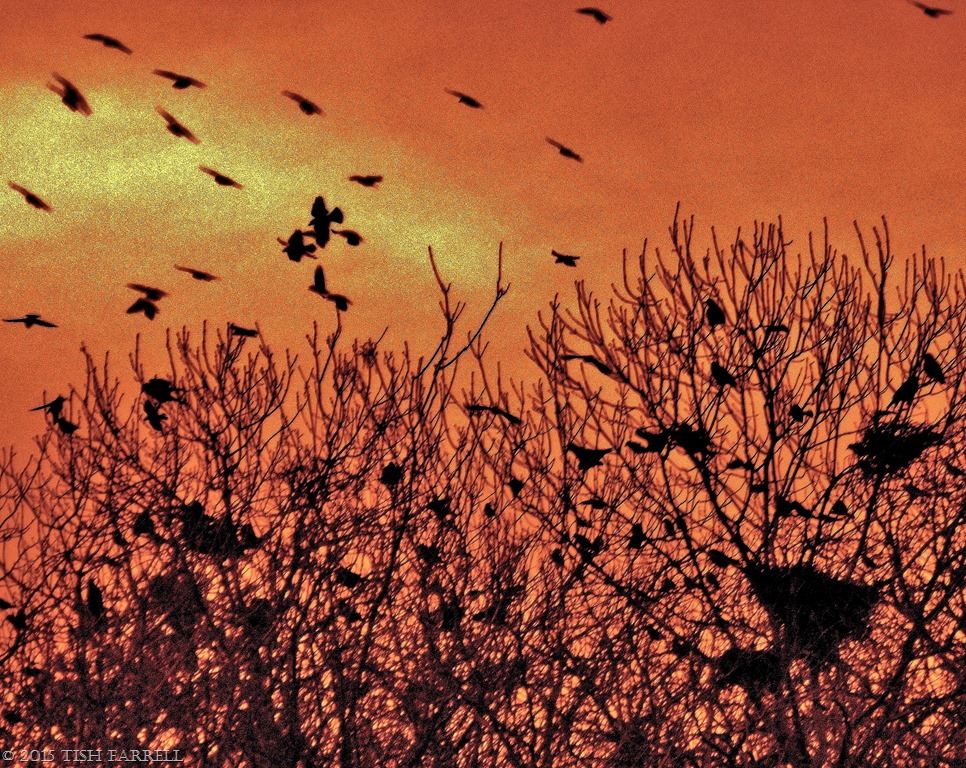
With sunset there is a general homecoming behind our house: hundreds of rooks and accompanying jackdaws return to the rookery in Limekiln Wood. The corvid air fleets head in from all points, returning from the day’s foraging grounds around the town. There are the strident greeting calls – a caw-cophony if you like – of passwords given and passwords received, as the early-bird returnees acknowledge the arrival of others. Sometimes, it seems, an incoming squadron ends up in the wrong tree, and then there is an avian explosion, black silhouettes shot into the sky. Much rook-shouting and abuse ensues.

They sort themselves out, and the wood soon echoes to sounds of companionable muttering.

As the year progresses we will be treated to elaborate twilight fly-pasts and synchronised acrobatics that resemble the murmuration of starlings. And, as the weather warms and we sleep with open windows, so the night will be sound-tracked by the chuntering of rooks. I know from the sleepless small hours that they talk all night. ALL NIGHT. Sometimes I want to tell them to settle down in their nests, and SHUT UP.

The collective term for rooks, of course, is ‘a parliament’, and anyone who has listened to the proceedings of Britain’s House of Lords or Commons on the BBC will have a rough idea of how a rookery sounds. Some might say the corvids are the more intelligent. I could not possibly say.

The rookery wood thus gives us much pleasure, but there are strains of melancholy too in the resonant kaah-kaahing, and the tchaka-tchak counterpoint of jackdaws. It evokes the kind of nostalgia that is so very English, the longing for a lost and perfect England that never existed; a feeling that A E Housman conjures so well in stanza XL of  A Shropshire Lad:

Into my heart an air that kills

From yon far country blows:

What are those blue remembered hills,

What spires, what farms are those?

That is the land of lost content,

I see it shining plain,

The happy highways where I went

And cannot come again.

*

Post inspired by Jennifer Nichole Wells’ One Word Photo Challenge: Bittersweet, a colour that is roughly the colour of the sky in the photo.

copyright 2015 Tish Farrell

A Shropshire Lad by A E Housman – you can read the full work HERE courtesy of Gutenberg Press

To see/hear rook acrobatics click on the link below to my brief video …OF ROOK DANCING 

Thinking of Zanzibar

Scan-130429-0049

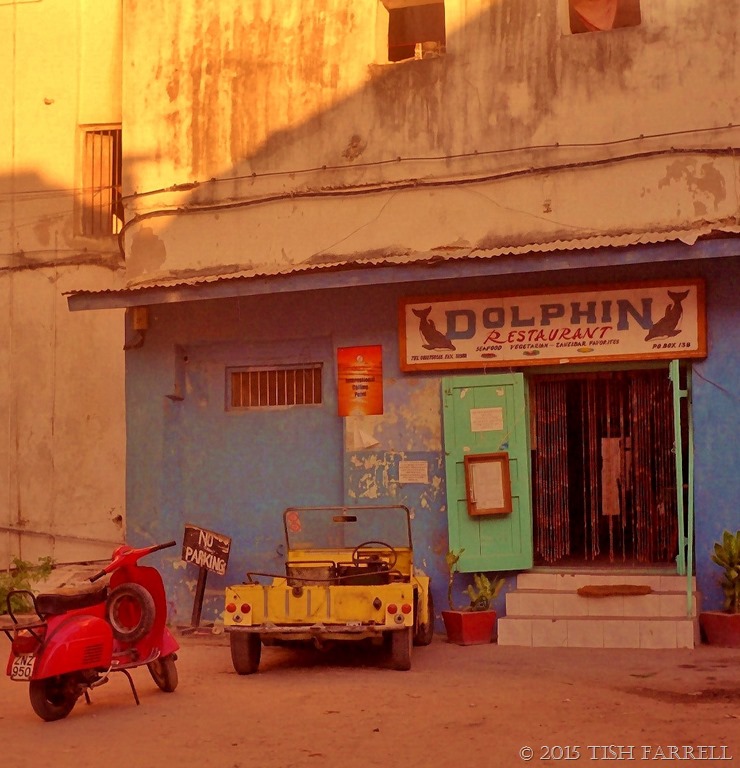
Zanzibar is of course famous as a spice island. The Omani Sultans once made fortunes from their clove plantations there. And while saffron, I am sure, is not one of the local commodities, Stone Town at sunset seems bathed in a saffron light. It is the kind of light that makes you wonder if you are awake or dreaming.

Scan-130429-0129

Scan-130429-0125


I have written more about the island HERE and Swahili Culture HERE


*

Jennifer Nichole Wells One Word Photo Challenge: Saffron

One Word Photo Challenge: Seafoam

Scan-130428-0024

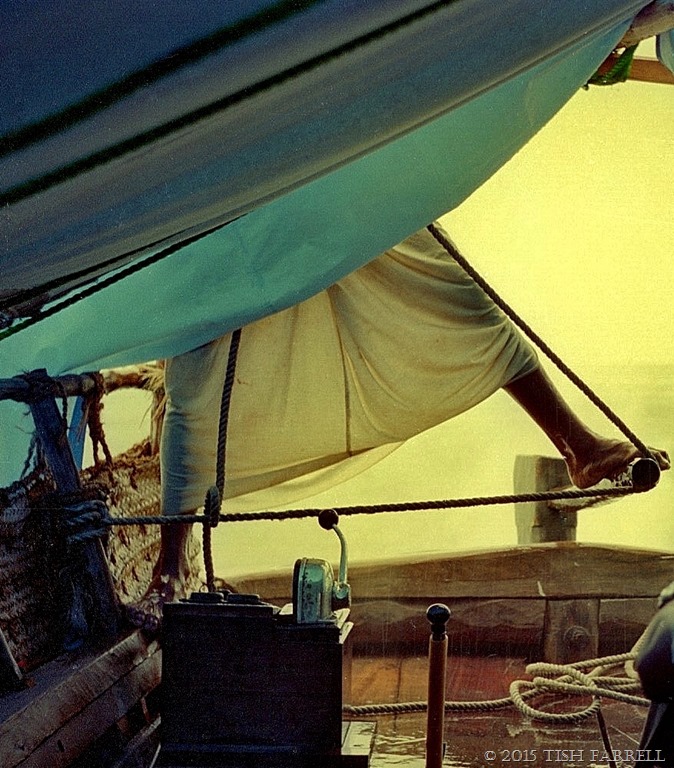
Here are some more Lamu photos (see previous post). Some of you will have seen the top one before, but it is one of my favourites, and I thought the colour of awning fits with Jennifer Nichole Wells’ one word seafoam challenge. It is a colour that I anyway associate with the Indian Ocean. This shot was taken on a dhow taxi in the middle of a tropical downpour. It was December, the monsoon season, and we had just flown in to the little local airport on Manda Island. The strait between the two islands looked suddenly grey and forbidding. It seemed strangely cold too in the midst of the hot season, and not the best start to our four-day Christmas break from Nairobi.

195

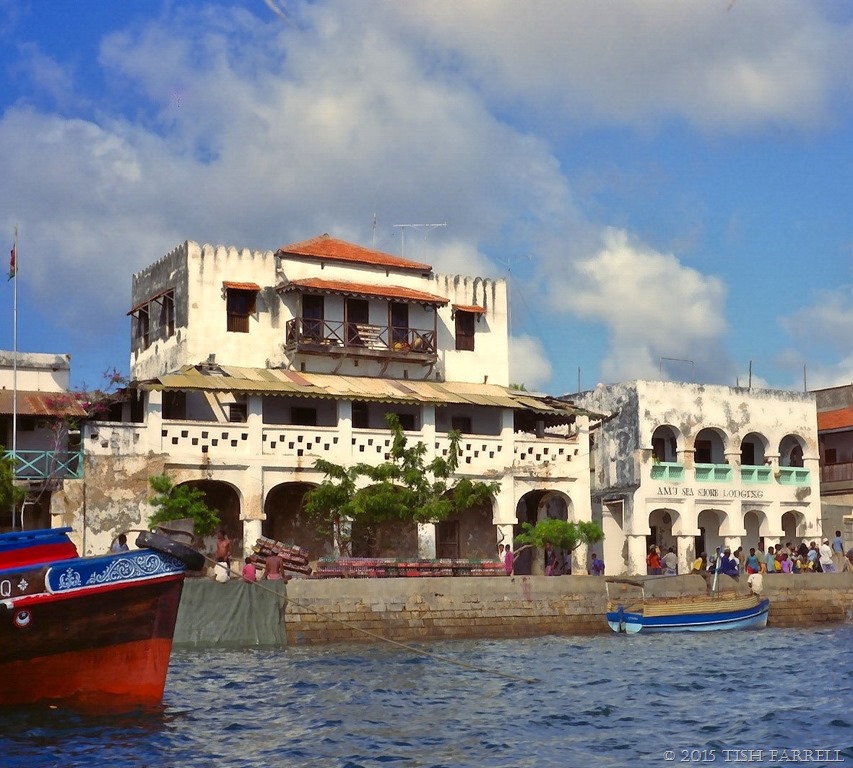
But then the rain passed. This is the waterfront of Lamu stone town, one of the best surviving Swahili settlements on the Indian Ocean seaboard, and a world heritage site. You will have to look harder here for the gentle shade of seafoam.

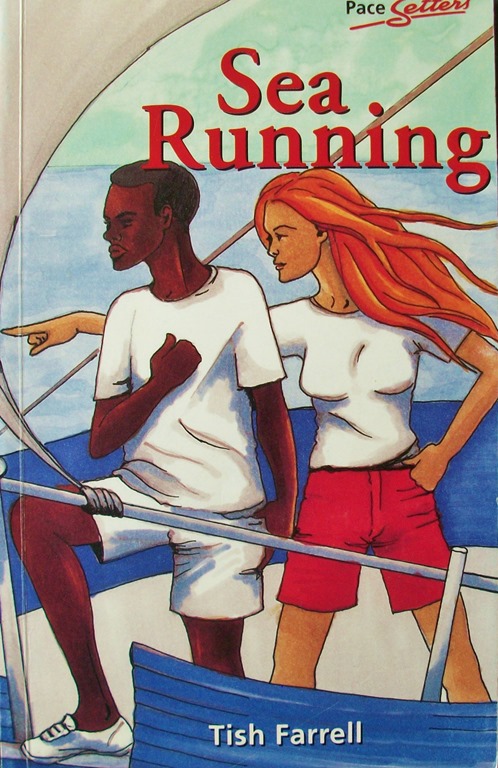
Lamu is a captivating place. I was so impressed by our four days there that I wrote a teen novel, Sea Running,  published by Macmillan Pacesetters for the African children’s literature market. It’s a good yarn about drug runners and first love. It also has a splash of seafoam on the cover.

100_3649 - Copy

For more posts on Lamu:

Dhow-dreaming

The Swahili

Christmas on Lamu

One Word Photo Challenge: Strawberry

100_4110

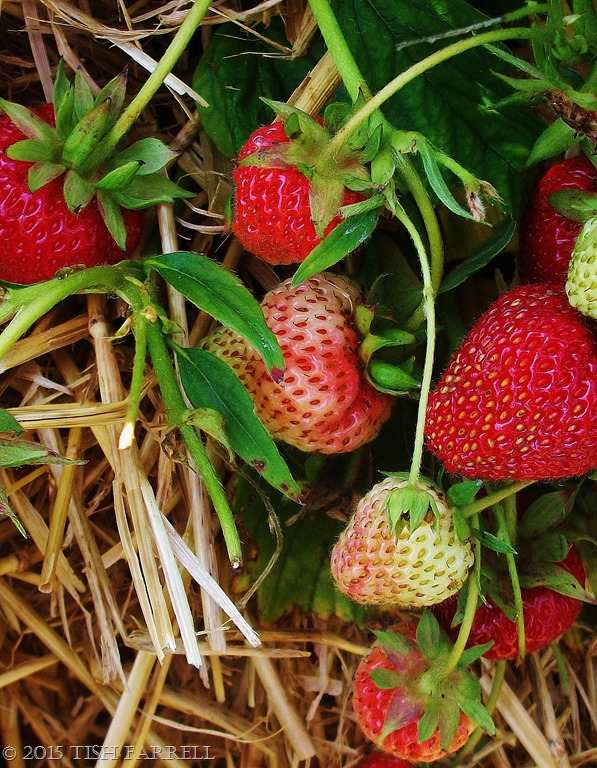
I’m being utterly literal in my response to Jennifer Nichole Wells’ latest challenge.  Well, what better example of the colour strawberry than an actual strawberry, and ones that were growing so happily last year on my allotment ? Also they look so juicy, and remind my cold toes that summer will happen, if not quite yet. I’m also thinking – looking again at Jennifer’s colour swatch – than I can also use a shot of my raspberries to illustrate ‘strawberry’, or is that being too perverse?

100_4193

Anyway, it’s clear where my thought are heading. February is the month when things can be started off in my polytunnel – this in preparation for the spring planting. There are potatoes to chit, broad beans and peas to sow, and excitement is building like rising sap. So much to look forward to.


One Word Photo Challenge: Scarlet

100_3415

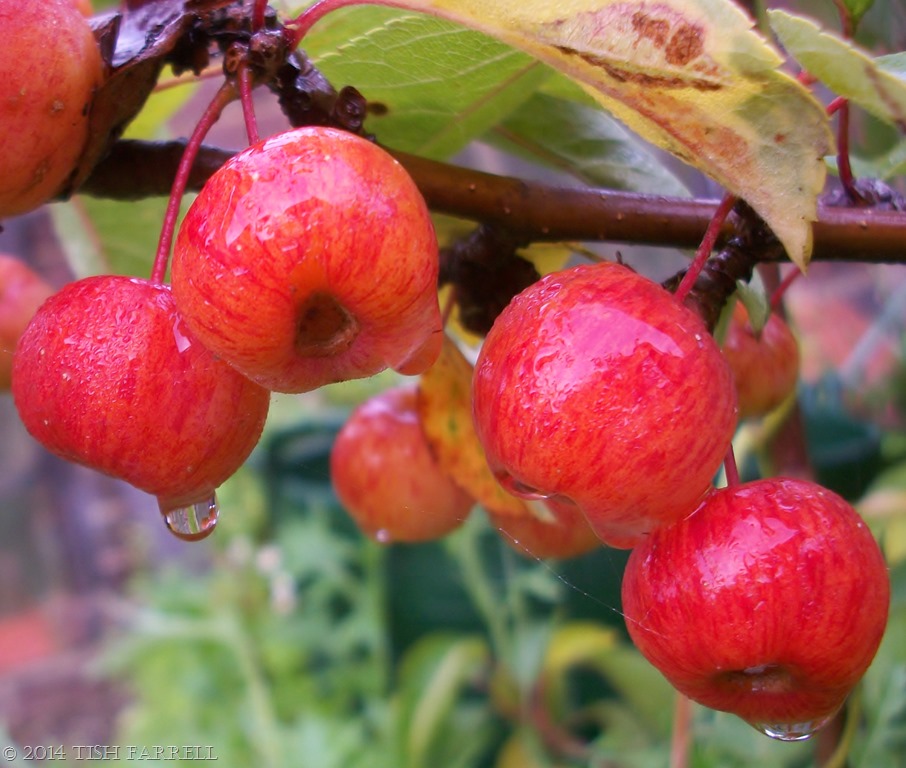
We planted the Japanese crab apple tree in the garden in 2006, not long after we moved into Sheinton Street.  Now is its season of fiery scarlet glory. Each fruit glows like a miniature lantern, brightening the gloomiest autumn day. And today is just such a day in Much Wenlock, my usual sky-view over Wenlock Edge, a blanket of grey mist. Even so, the apples glisten. I know, too, as we head into winter, we will have the pleasure of watching the blackbirds come to feed on the fruit, grey days then enlivened by their darting silhouettes foraging among the branches. Few of these tiny apples will be wasted. And then before you know it, the tree will be bursting with purple-pink buds that open in showers of pale blossom. Spring. Splendid how one thing leads to another.

copyright 2014 Tish Farrell

For more studies in scarlet, visit Jennifer at One Word Photo Challenge: Scarlet