I’m not sure that we’ll ever quite get over leaving Kenya, though it was never our homeland and, by 2000, when we left, our business there was done. But we had lived in Nairobi for seven years, seen many changes as Kenya moved uneasily from one-party rule towards multi-partyism: one externally imposed and alien structure to be replaced by another alien structure, this for a nation of many diverse communities that for centuries had each their own forms of traditional law and order, far closer, I might argue, to any form of democracy that the nations of the technocratic North might think they have invented or progressed towards.
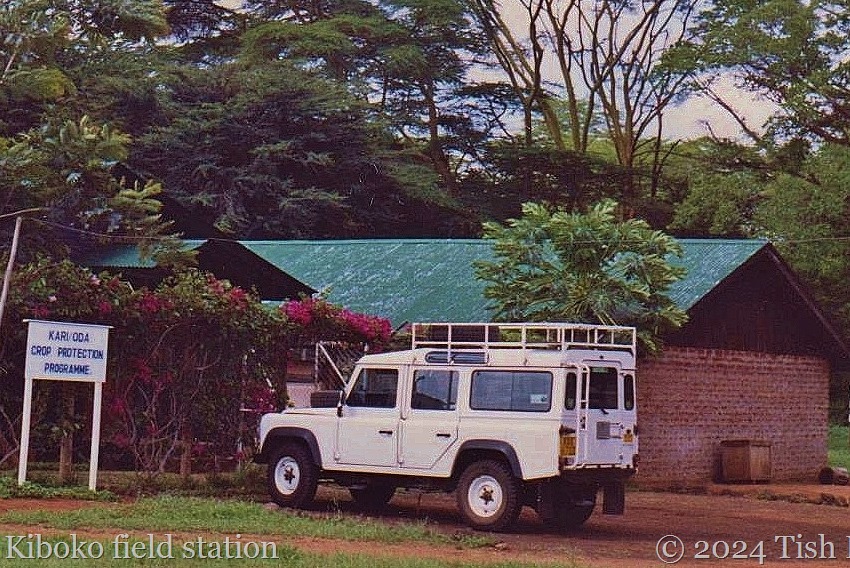
And the reason we were there at all was because Graham (as plant pathologist and food storage specialist) was working on a British Government funded crop protection project, working alongside Kenyan scientists and subsistence farmers in a bid to build in-the-field resilience against crop pests and diseases.
The project base was at the Kenya Agricultural Research Institute (KARI) in Nairobi, but in the early days we did much travelling on the Mombasa highway, going back and forth between the capital and KARI’s Kiboko field station in Ukambani. Sometimes we drove the full 300 odd miles to Mombasa, sometimes less far to the Taita Hills. Mostly, though, it was the hundred mile trip that took us from the Nairobi plains at nearly 6,000 feet, down to the semi-arid lowland just north of Makindu and the Tsavo National Parks.
*
Ukambani, homeland of Akamba farmers and cattle keepers, is red earth, thorn-scrub country. You start to see mighty baobabs growing here too. They rise up in a natural parkland setting that you feel you must have imagined. Giant hornbills stalk around the verges. The farther vistas, heat-hazy towards the Yatta Plateau, may be dotted red from the shukas of Maasai as they fan out with their herds across the sparse grassland. You may also spot antelope and giraffe here too. For in Kenya it is said there is more wild game outside the huge national parks than inside them. Sometimes the great trucks that plied the highway back then would collide with a giraffe, thereby providing an unexpected meat meal for nearby farming families.
Mombasa highway at Kiboko looking north – Nairobi-bound
*
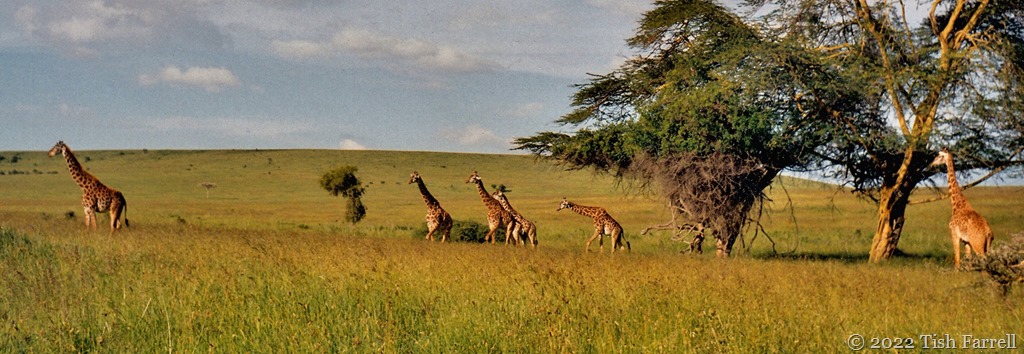
The giraffe in the header photo were spotted on the Kapiti Plains, south of Nairobi. We used to see ostrich, impala and gazelle on the roadside here too. But the sight of several giraffe moving across the plains, the peculiar gait that has them stepping in some shared slow rhythm all their own stopped the heart.
We were so very lucky to see such sights. Even now there’s a catch in my breath.
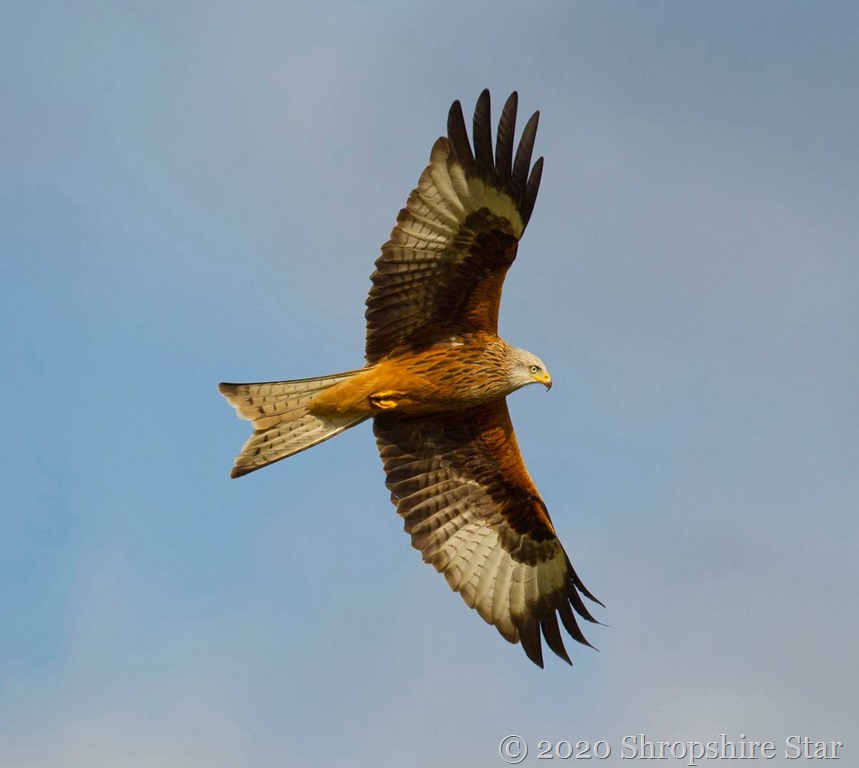
Now that we’ve moved our dining table to its winter position – i.e. from the conservatory at the back of the house to the front sitting room window – we can eat breakfast while watching a red kite scanning the town. It comes most days, drifting over the High Street, circling high above nearby gardens. With a wing span of around six feet (180 cm) it is one of Britain’s largest birds of prey (i.e. bigger than a buzzard and easily distinguished from that particular raptor by the forked tail.)
A few years ago the species was believed to be near extinction. In the early 20th century the birds were targeted by gamekeepers who thought they were eating their pheasants. Not so, it seems. The birds’ main menu comprises carrion and worms and sometimes small mammals. In fact, back in Tudor times, kites also frequented towns in large numbers, filling an essential function as street refuse cleaners.
When we lived in Kenya, their cousins, the black kites, performed similar duties. Less welcome, we discovered there, was the cousins’ tendency to ‘gate-crash’ Nairobi’s ambassadorial garden parties. They had learned to spot the distracted guest, one with wine glass and plate politely poised and as they hung on the words of some ministerial bigwig. In the birds swooped, snatching up the undefended sailfish canape or piri piri chicken wing. Whoosh and away.
That scene jogs another black kite memory. An indelible brain cell recording. One used to roost in our front garden on Mbabane Road. It would perch in the jacaranda tree and mew all night long. A mournful cry.
But back to the red kite. Here in Shropshire and Wales, and some illegal shooting incidents apart, they are mostly thriving. This thanks to a re-introduction programme late last century which helped boost remnant populations. And while of course we are more than happy to see them, we can only hope they do not recover the habits of their distant ancestors.
The Wildlife Trusts website explains (also see a nice video clip of a kite in flight):
Red kites were common in Shakespearean London, where they fed on scraps in the streets and collected rags or stole hung-out washing for nest-building materials. Shakespeare even referred to this habit in ‘The Winter’s Tale’ when he wrote: ‘When the kite builds, look to lesser linen’. The nest of a red kite is an untidy affair, often built on top of an old crow’s nest. It is lined with sheep’s wool and decorated with all kinds of objects like paper, plastic and cloth.
I will let you know how my washing fares when drying weather resumes.
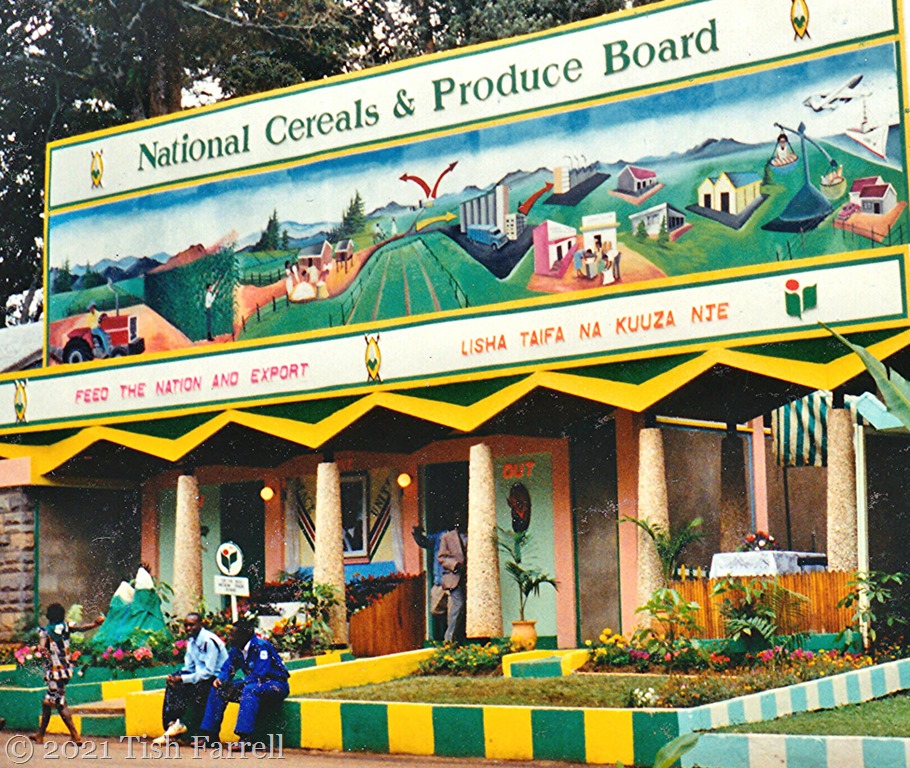
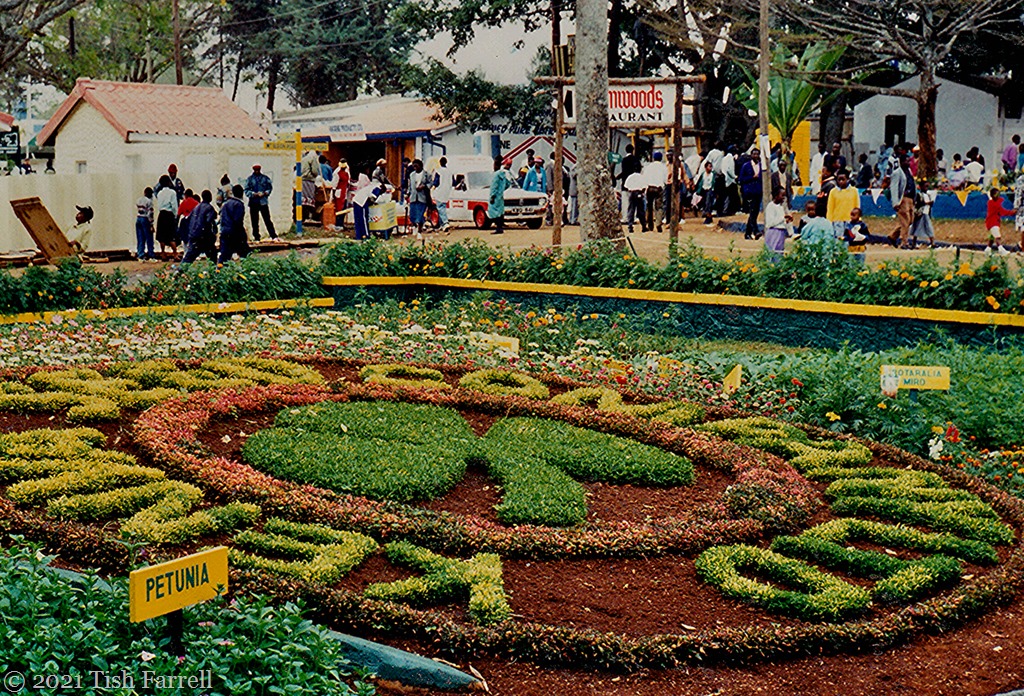
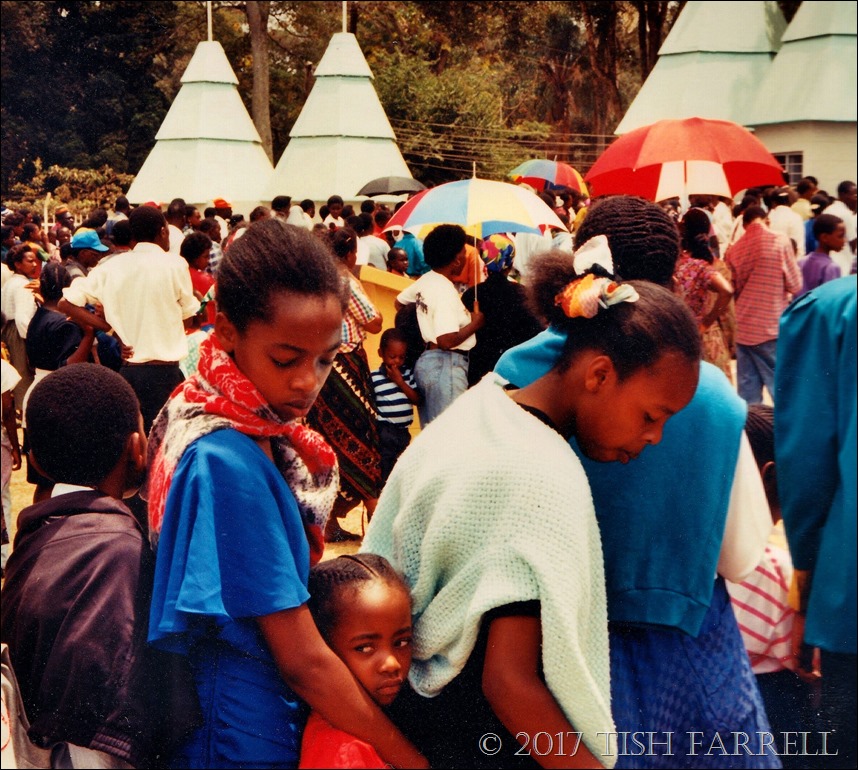
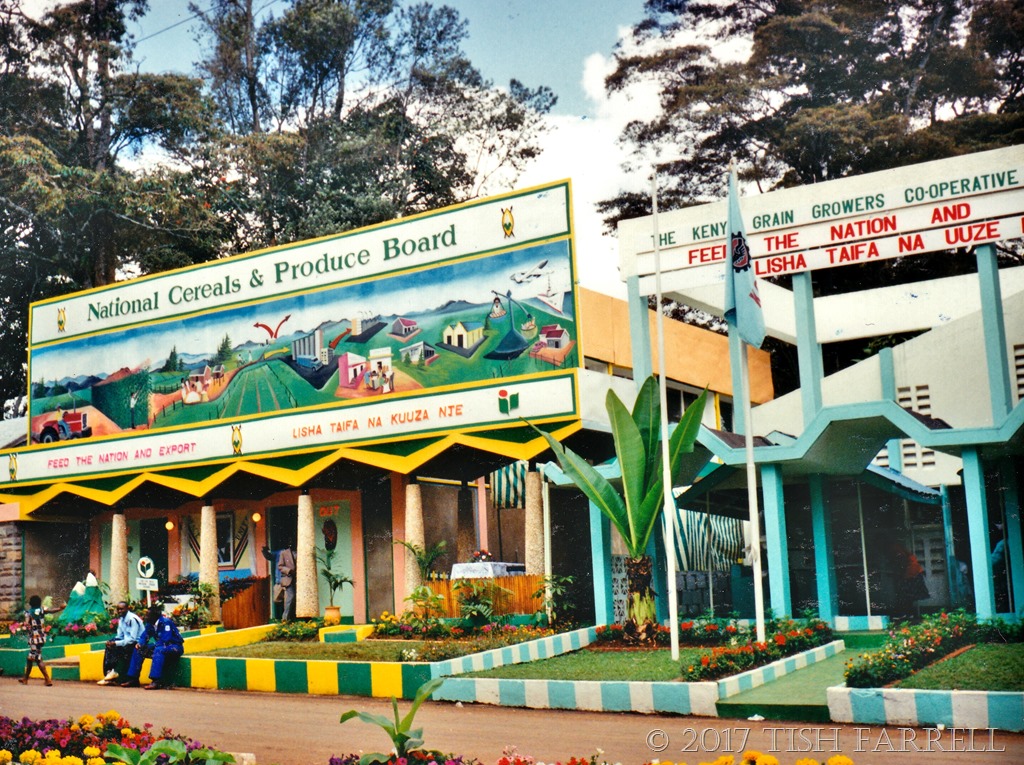
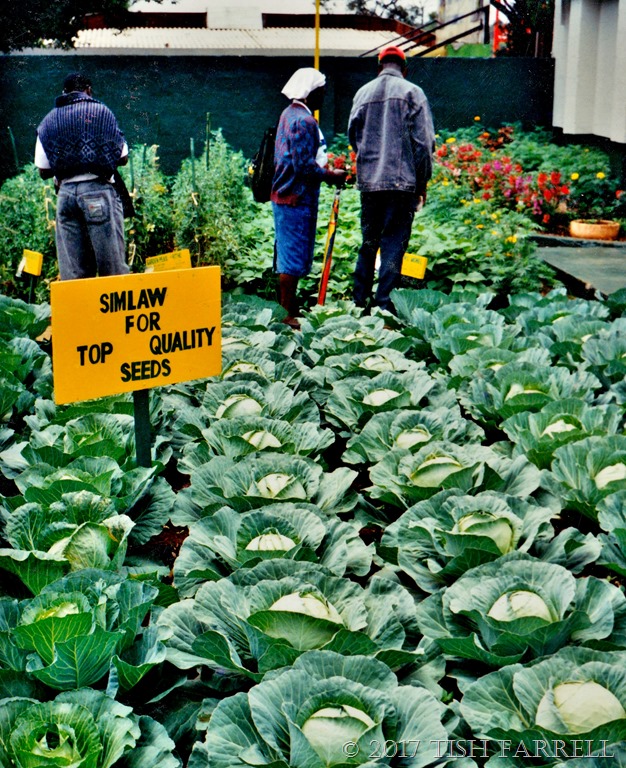
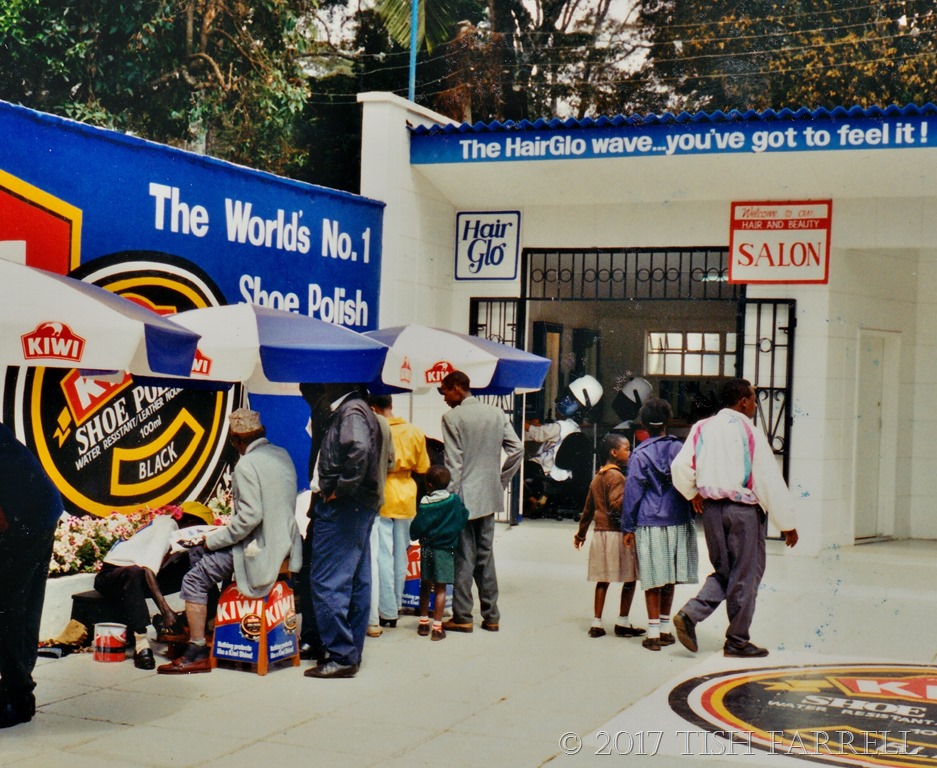
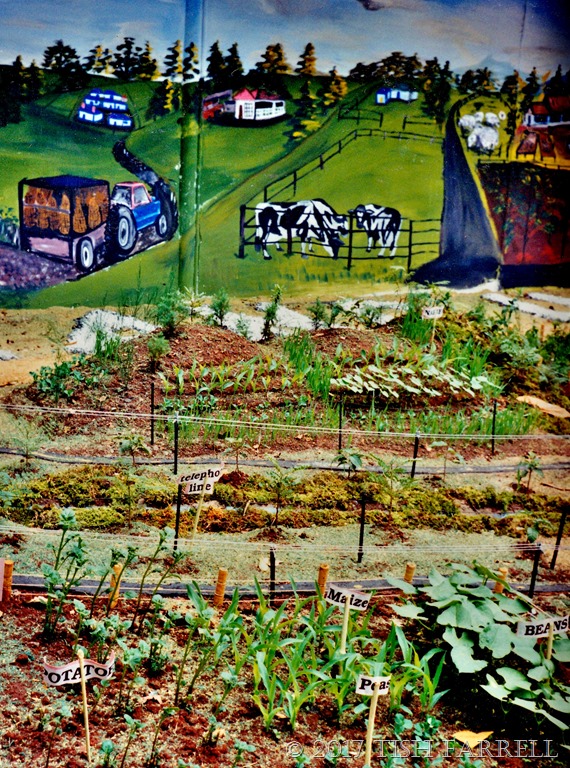
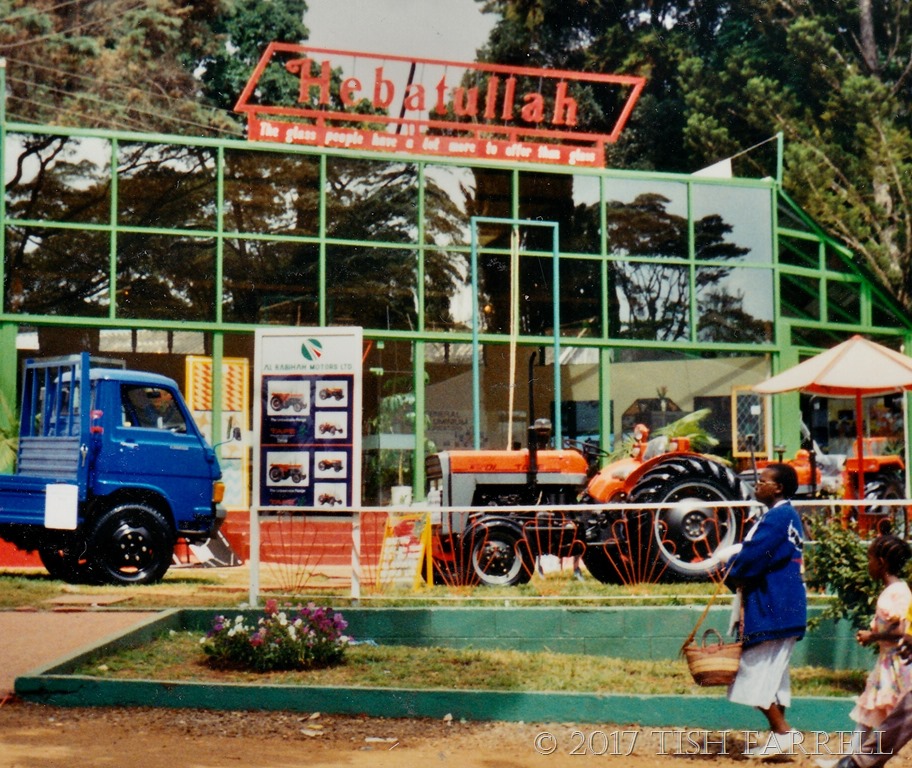
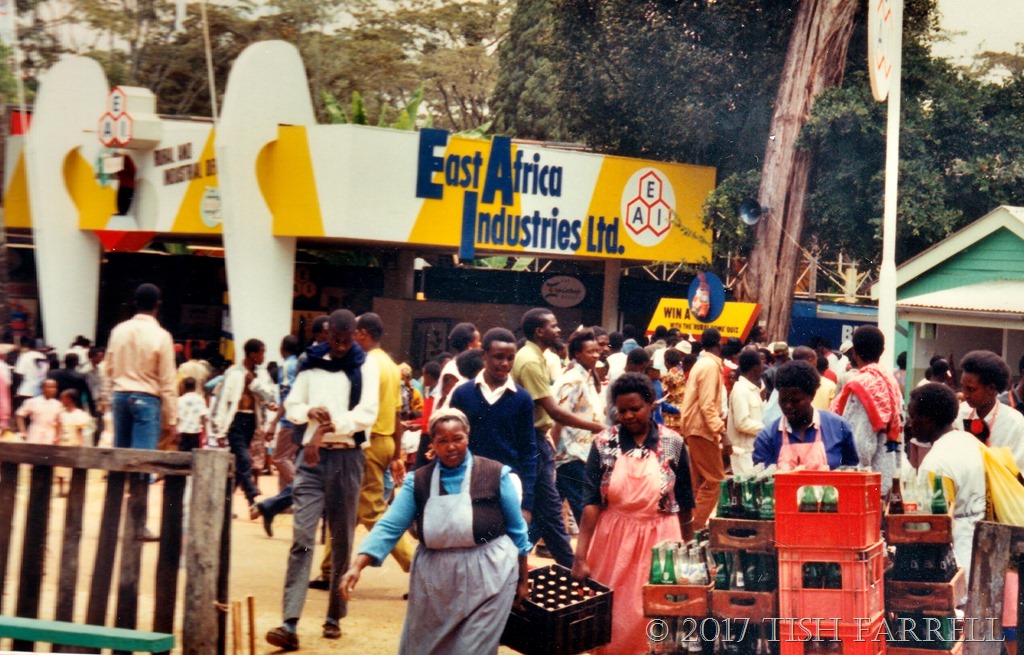
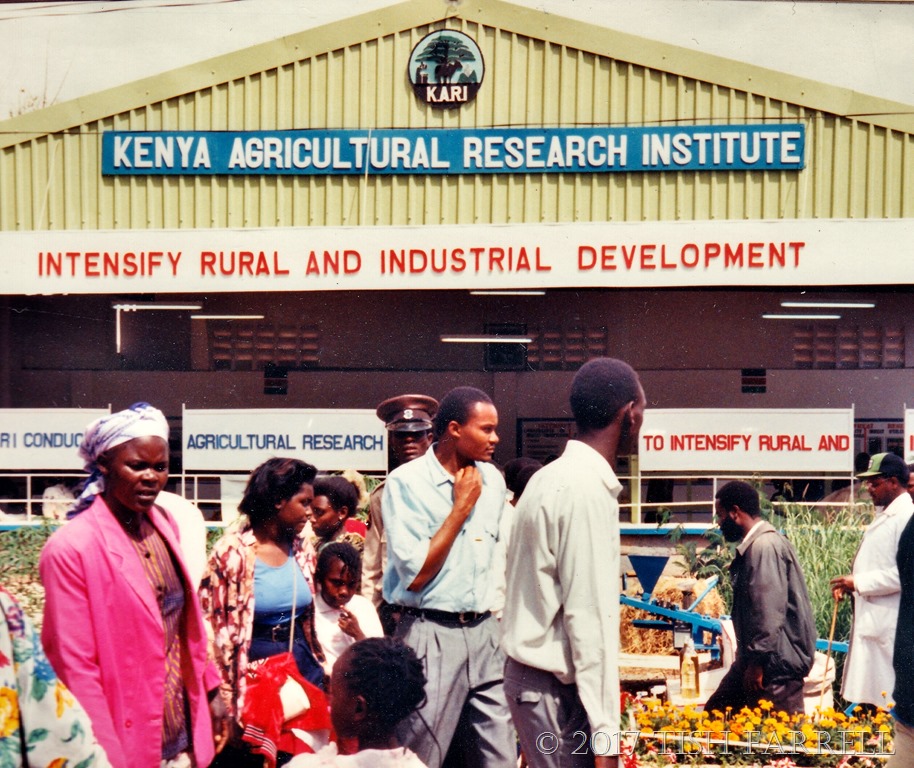
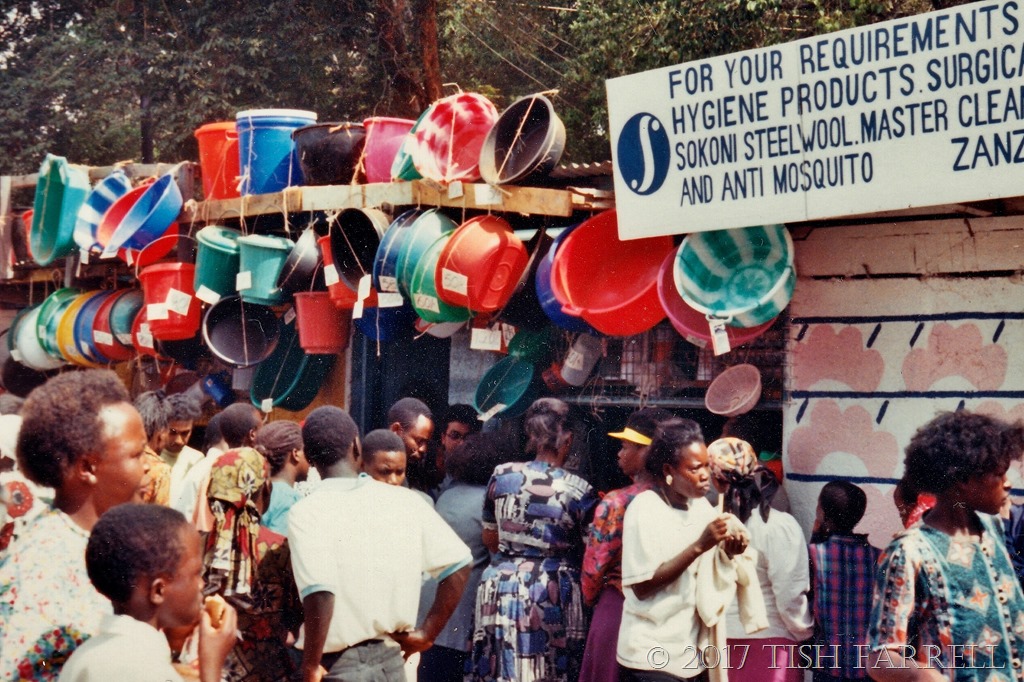
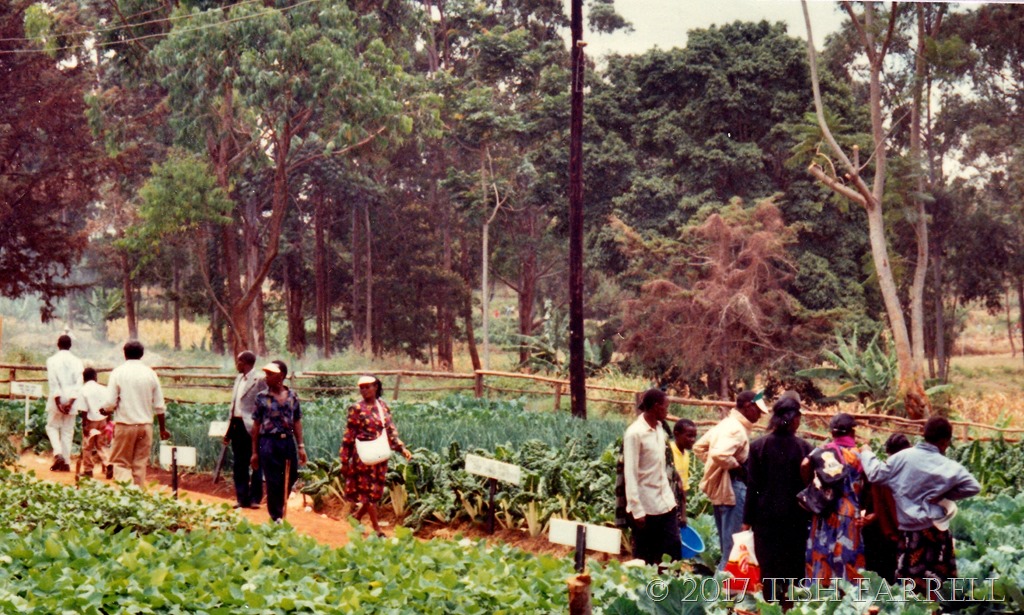
The agricultural show can most probably be counted as one of the more useful left-overs from the colonial occupation of African nations. Back in 1995 when these photos were taken I remember being struck by a rural farmer’s glowing comment in a newspaper interview. He said he had to travel a great distance to attend the Nairobi show every year, but it was worth it. The exhibition stands were his university, he said.
I could believe it. The amount of expert advice available at every turn was indeed impressive, and I speak as someone brought up on agricultural shows: my father was a grain merchant for a farmers’ cooperative and my memories of the various company stands were weighted rather more towards alcohol delivery than education.
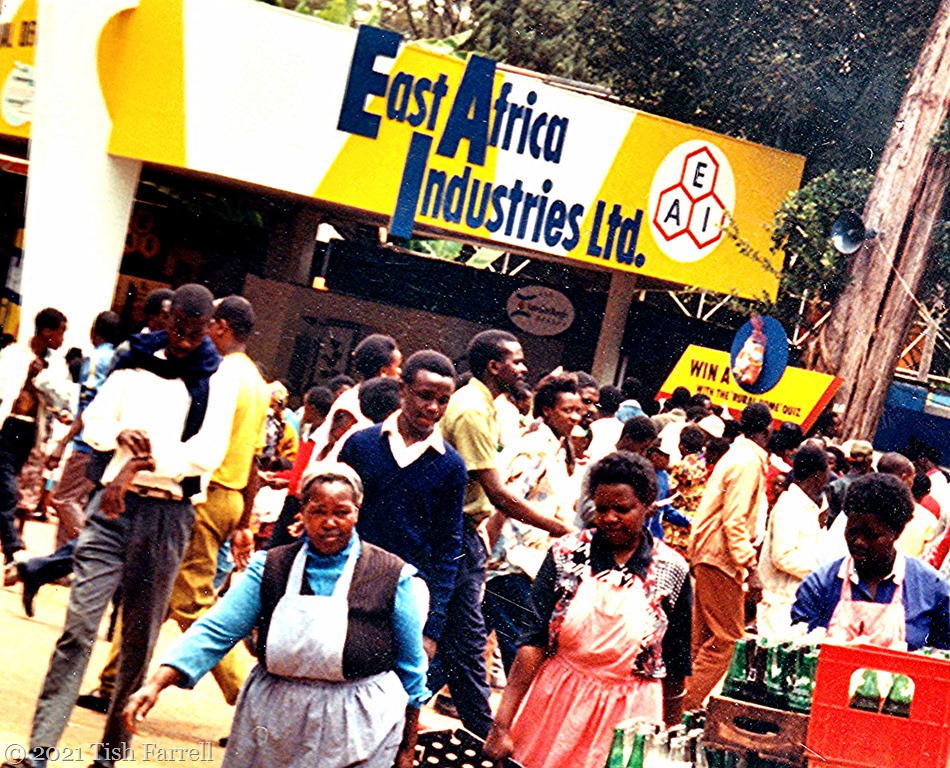
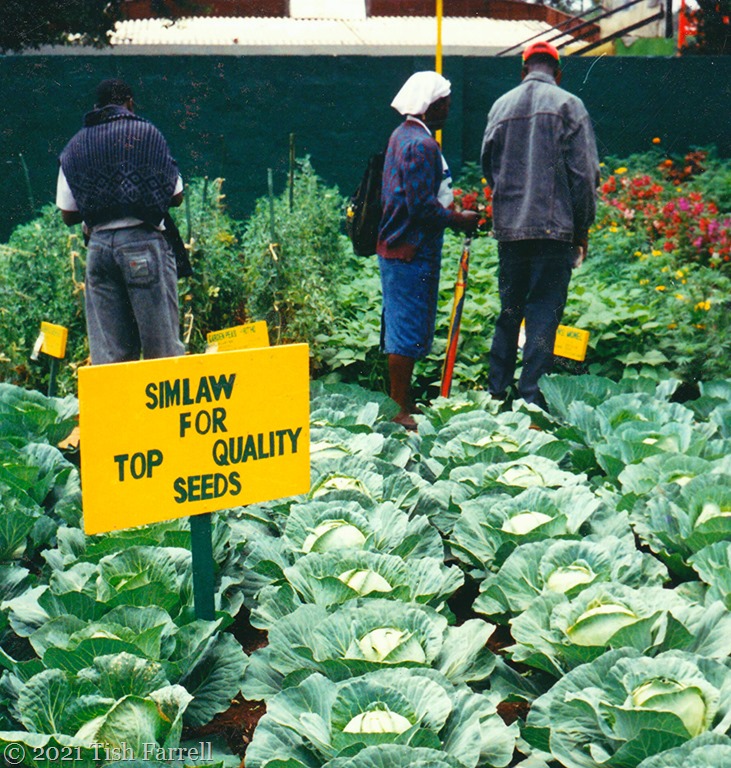
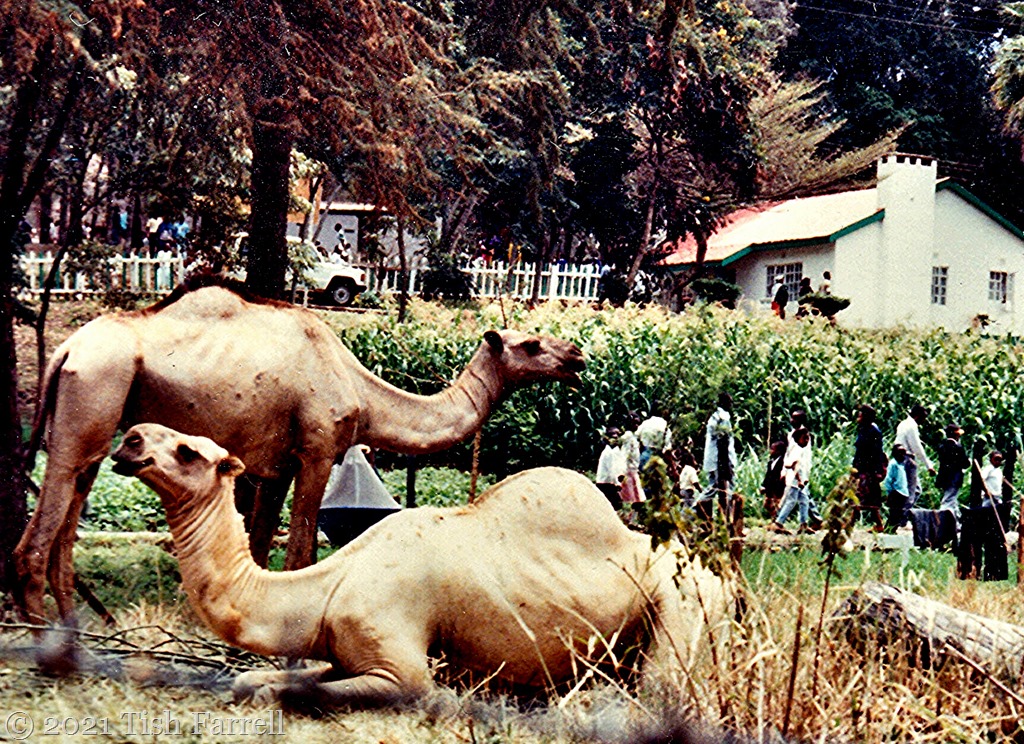
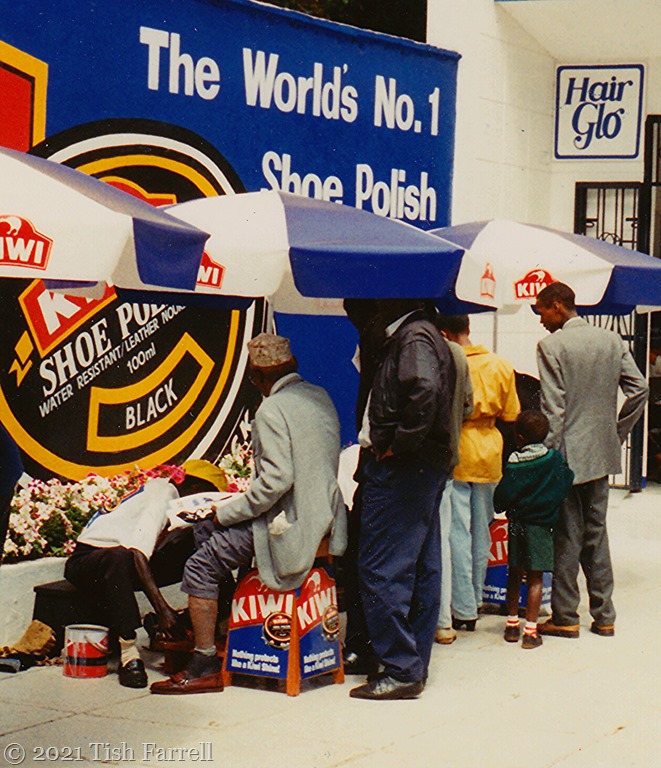
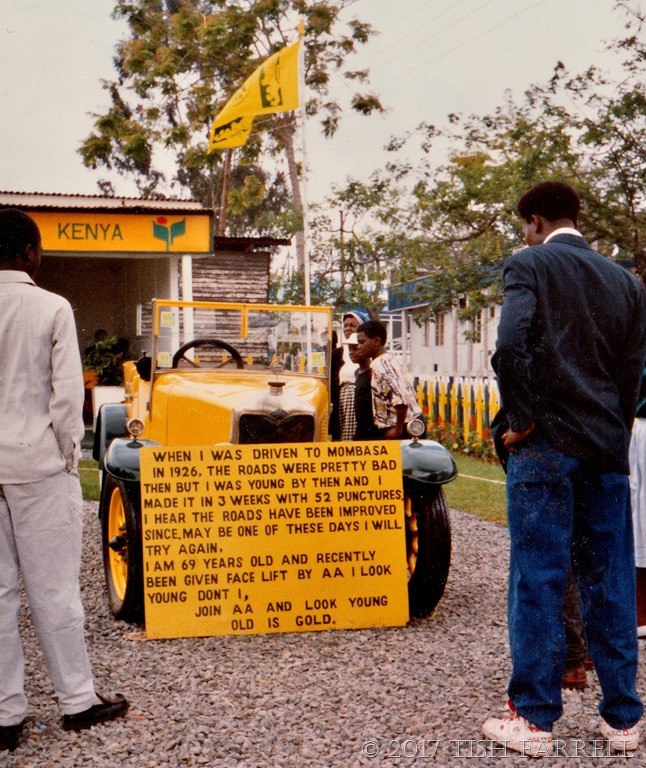
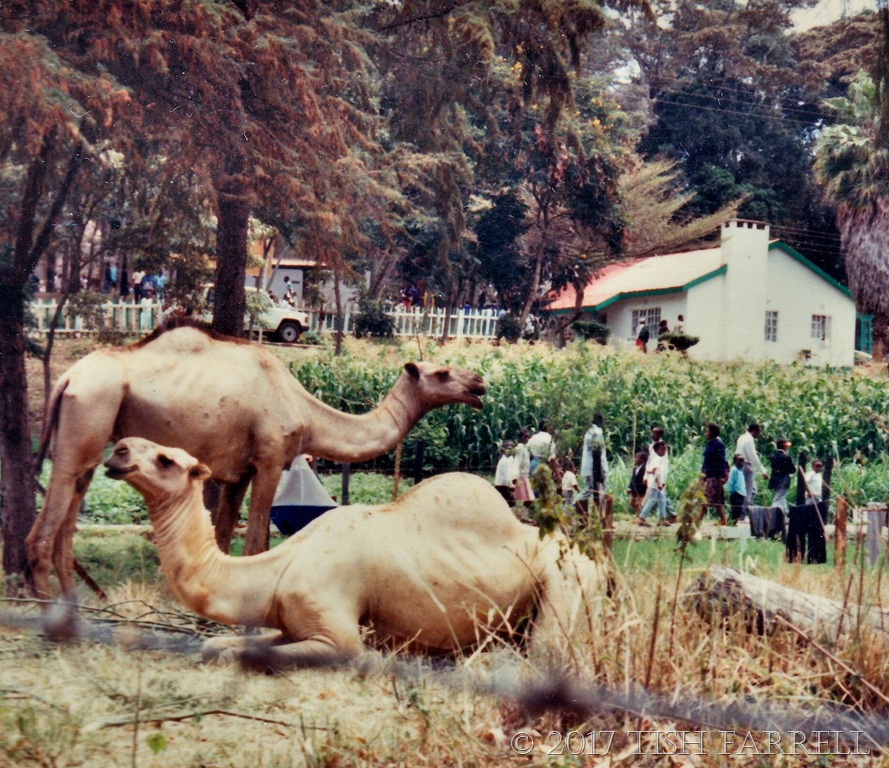
Of course the Nairobi show is also about selling and public relations, but I remember being particularly diverted by the National Archives stand which was showing 1950s newsreel footage of Land and Army so-called Mau Mau uprising; also by the Kenya Automobile Association’s novel pitch to drum up membership; and by the glorious conformity of the cabbage display put on by a seed company. And of course there was all manner of entertainment to be had: shopping, snacks, a helter skelter, close encounters with camels, ripping performance from the military band: all the fun of the fair in fact. And you could get your shoes cleaned with the ‘world’s no.1 shoe polish’, then have a swish new hair do in the next-door salon.
Life in Colour: Yellow This month Jude at Travel Words is asking us to think about yellow. Please pay her a visit.
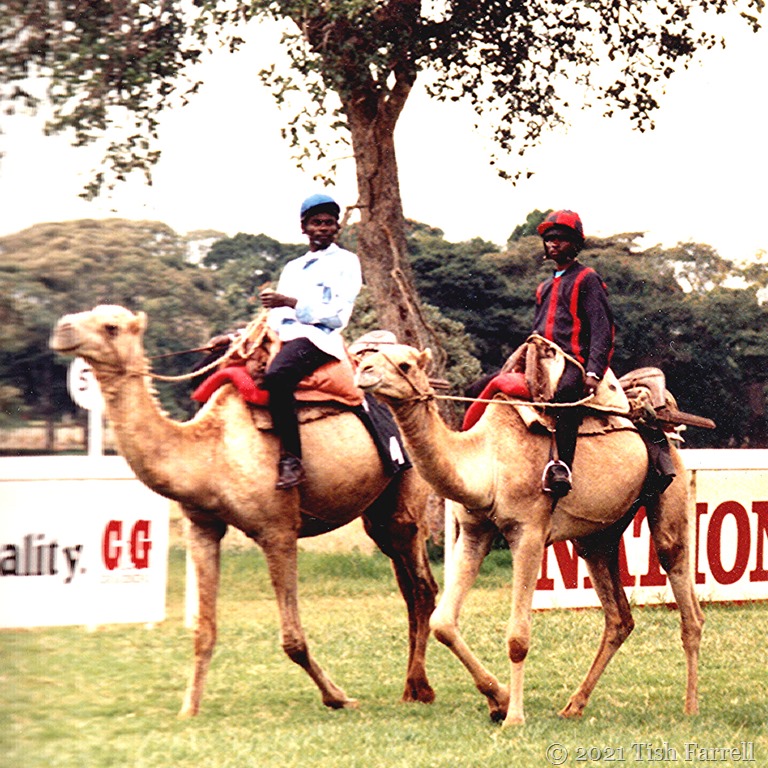
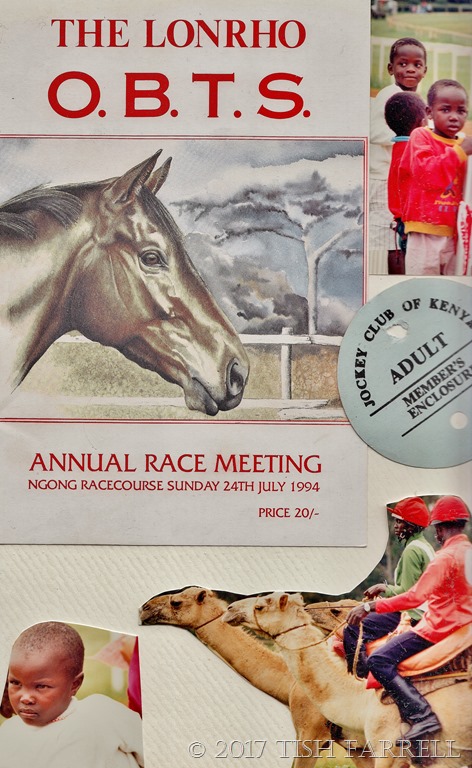
It was meant to be a diverting event between the horse racing at Nairobi’s Ngong Racecourse. Officers from Kenya’s Police Anti-Stock Theft Unit were demonstrating their mounted expertise by racing their camels. The camel units usually operate far away in the arid zones of the Northern District, patrolling the border with Somalia, so perhaps the genteel and leafy ambiance of the Jockey Club enclave did not enthuse the camels.They certainly took much urging to leave the starting line and then, having started, there was little inclination to finish. An underwhelming contest then, though it added to the many and varied goings on of a Nairobi racing weekend.
The Ngong races are a hangover (pun retrospectively intended) from British colonial settler days when, for a week around Christmas, farmers left their lonely farms and ranches and gathered in town to let their hair down. For many it was a drunken spree, at least if you are to believe Evelyn Waugh’s 1931 account in Remote People. I’ve quoted from it before but it’s worth a second go:
I found myself involved in a luncheon party. We went on together to the Races. Someone gave me a cardboard disc to wear in my button-hole; someone else, called Raymond, introduced me to a bookie and told me which horses to back. None of them won…
Someone took me to a marquee where we drank champagne. When I wanted to pay for a round the barman gave me a little piece of paper to sign and a cigar.
We went back to Muthaiga and drank champagne out of a silver cup which someone had won.
Someone said, ‘You mustn’t think Kenya is always like this.
*
I see from the internet there has been plenty of racing at the Ngong Racecourse during January. These days it is a well ordered multi-cultural affair. I’ve also just had a quick trawl through the Kenya Jockey Club’s Facebook photos but found no sign of camels. Obviously lacking in appropriate competitive attitude.
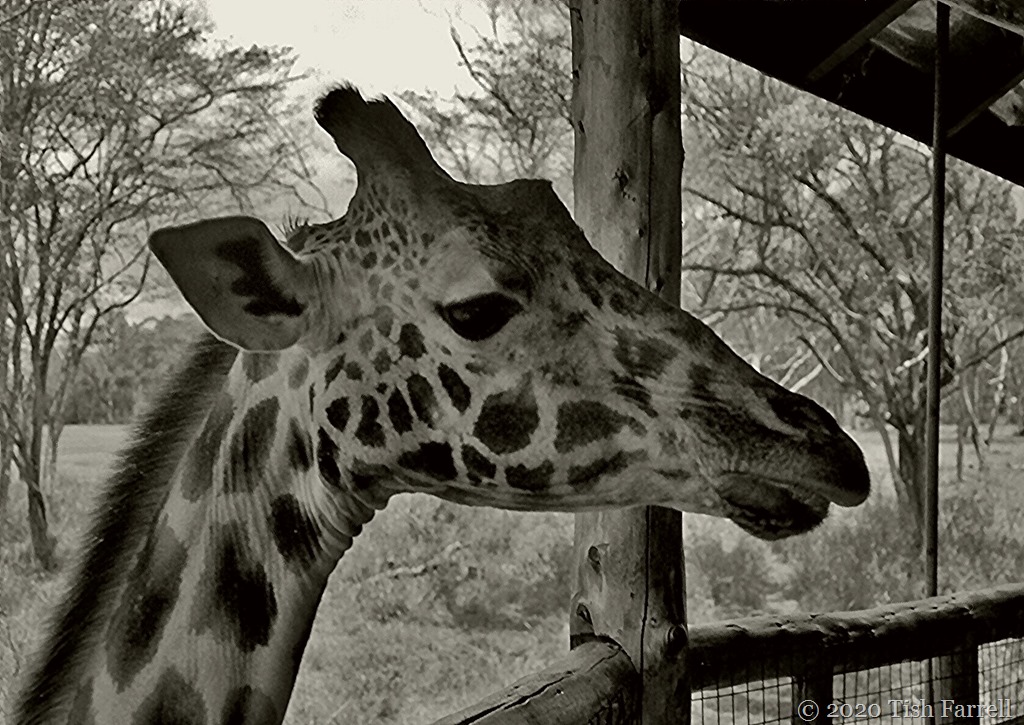
When we lived in Nairobi the Giraffe Centre on the edge of the city’s national park was a favourite place to visit. It was set up in 1979 both as an educational resource for city school children (50,000 visits a year) and as a conservation project to protect Kenya’s endangered race of Rothschild giraffes. The centre runs a breeding programme and over the years some 40 young giraffes have been settled in safe game reserves across the country. Now in 2020 the initiative can proudly claim to have helped restore Kenya’s wild population from 130 to a little over 700, and that has to be good news.
As you can see, the centre provides for head to head contact. The resident giraffes are much addicted to the ‘giraffe nuts’ which visitors hand out to them, though I have to say, from the donor perspective, a slurp from a long giraffe tongue is not the best of experiences.
One of the truly useful institutions we Brits left behind in the African countries we invaded is the Annual Agricultural Show. We went to both Kenyan and Zambian versions, and found them hugely popular events, still held on their original dedicated show grounds. Nor are they simply about entertainment, shopping and crop and stock competitions, although there is plenty of all of these to be had. I remember one Kenyan smallholder being quoted in the national press. He had travelled many miles to attend the Nairobi show, and at some expense. ‘But,’ he said, ‘this show is my university. This is where I come to learn how to improve my farming skills.’
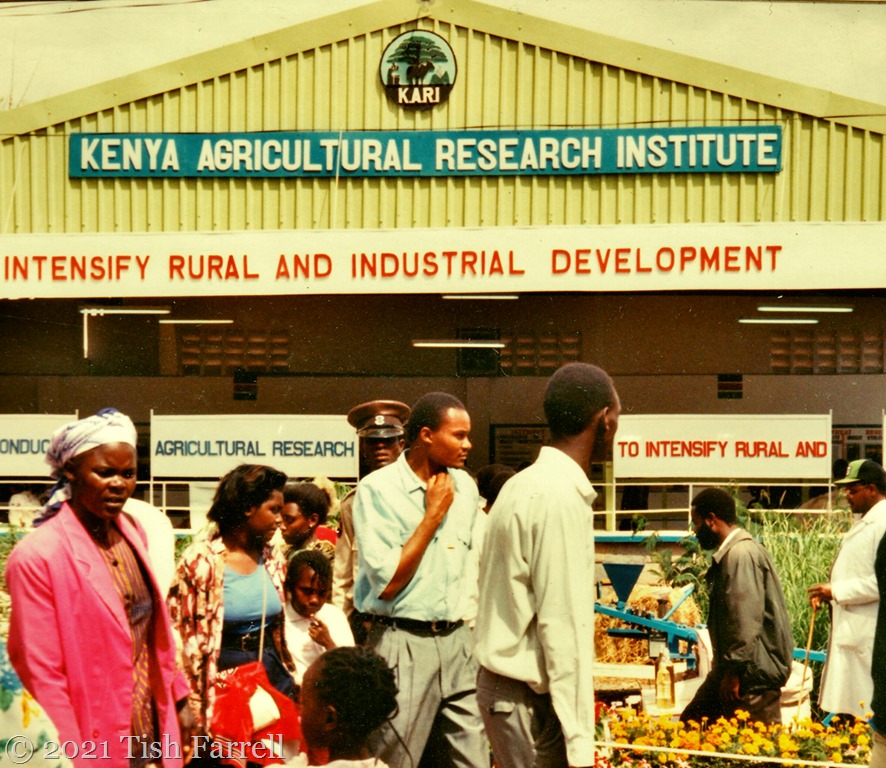
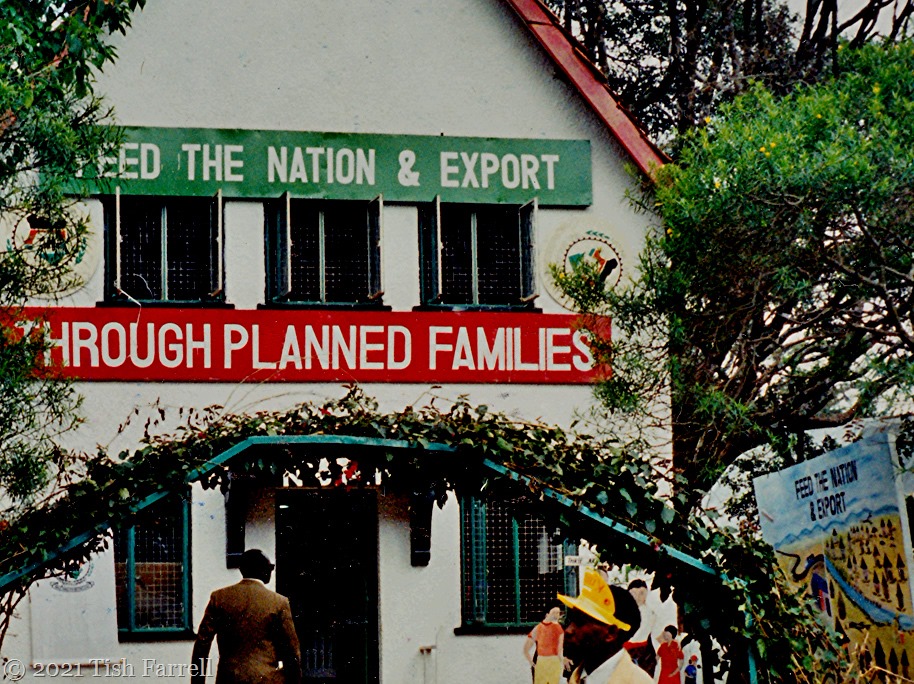
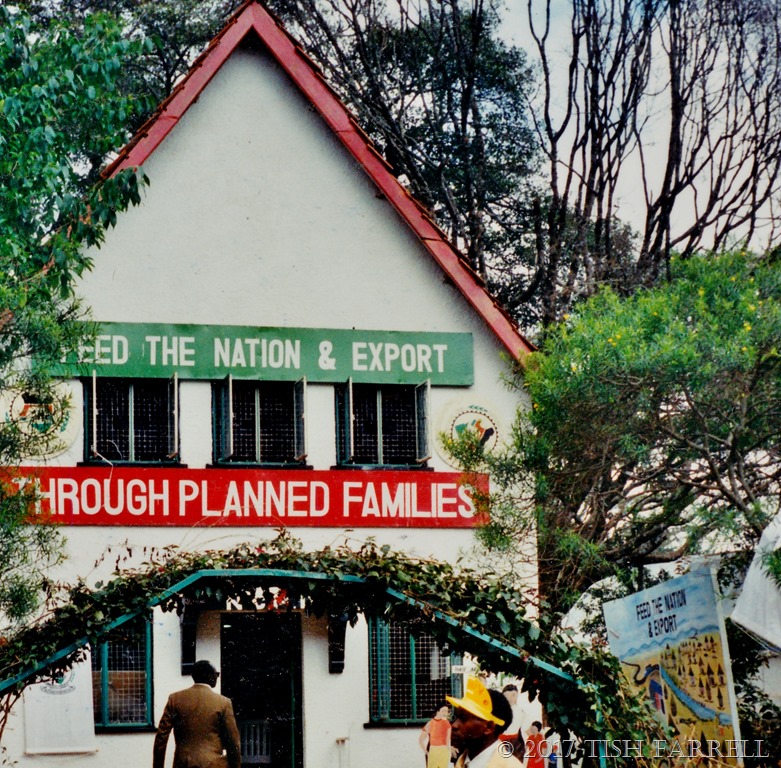
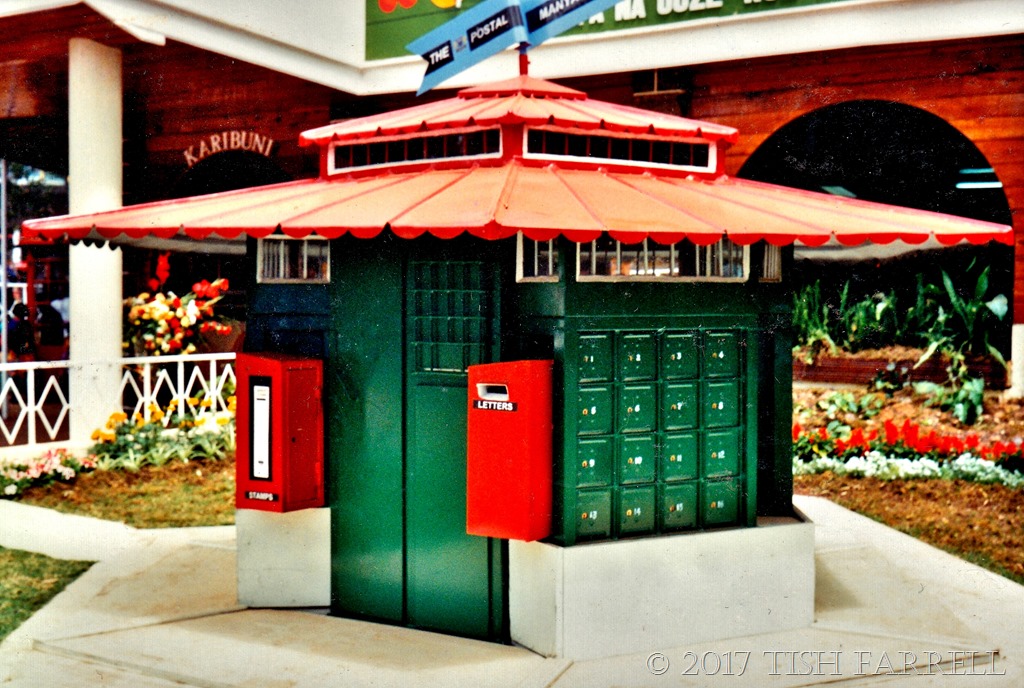
And as we wandered round we certainly found plenty of advice to hand, much of it rendered in model farm lay-outs. There was also that year’s exhortatory slogan to spur all to action: “Feed The Nation And Export”. And there were promotional exhibits for small-scale battery chicken rearing, camel raising, the Post Office and family planning. Even the National Archives had a small pavilion in which they were showing 1950s film footage from the Land Freedom uprising aka Mau Mau. The Young Farmers were showing off their crop growing and the Kenya Agricultural Research Institute (the place where Graham had his office) also had a big stand with plenty of experts to provide farmer guidance.
After I had posted the Kenya diary excerpt yesterday (see previous post), I found I could do passable scans from one of our old albums. So here are the photos of ‘A Day At The Nairobi Races’ – two 6WordSaturday titles for one then.
Members of the Police Anti-Stock Theft Unit from Kenya’s Northern District – completing the race that never was.
*
The real racing begins which reminds of an even more historical account of the Nairobi races.
In 1931 Evelyn Waugh arrived in Kenya during Race Week which was by then a colonial institution. I gather it took place between Christmas and New Year when the smart-set settlers left their upcountry farms and headed for town. Every night was party night at the Muthaiga Club. Here are some excerpts from Waugh’s day out at the races from Remote People:
I found myself involved in a luncheon party. We went on together to the Races. Someone gave me a cardboard disc to wear in my button-hole; someone else, called Raymond, introduced me to a bookie and told me which horses to back. None of them won…
Someone took me to a marquee where we drank champagne. When I wanted to pay for a round the barman gave me a little piece of paper to sign and a cigar.
We went back to Muthaiga and drank champagne out of a silver cup which someone had won.
Someone said, ‘You mustn’t think Kenya is always like this.’
And some sixty years on to 1994 when these photos were taken…
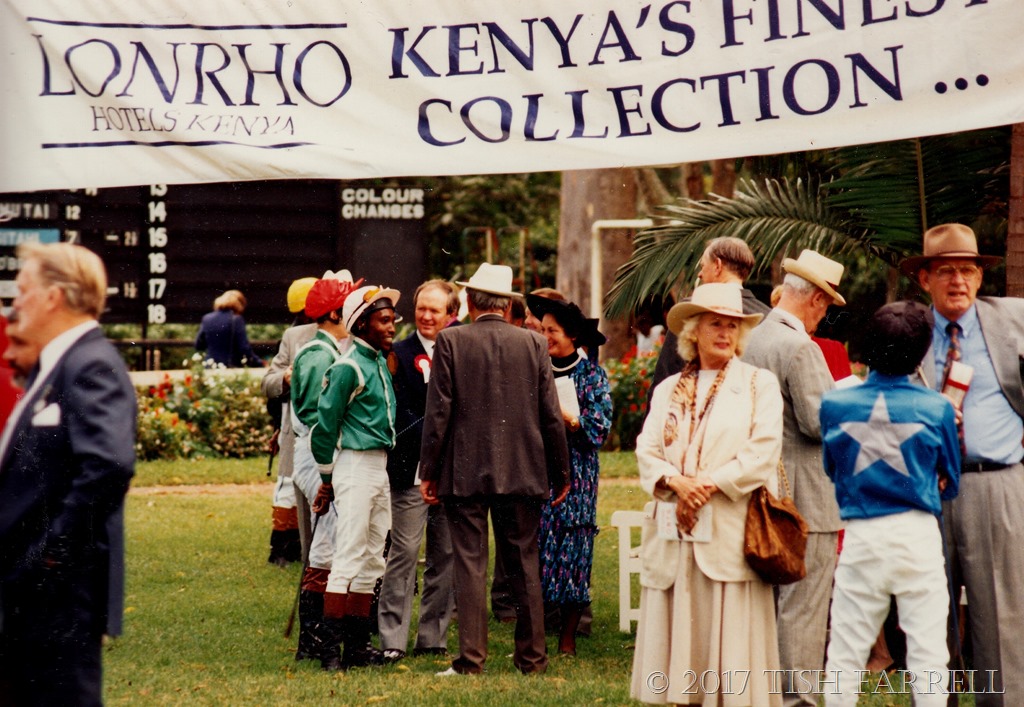
The Steward’s Enclosure. The colours of the day were red and white, and the lady in the red and white hat won ‘best outfit’.
The Chief Steward
*
*
But when it comes to the old colonial residue, one key thing has obviously changed. In 1963 Kenya won independence from Britain. But here’s the catch. As colonial private interest dwindled, so came the invasion of the multi-nationals. The American corporation Del Monte was one of the first. They took over Kenya Canners and the Thika pineapple plant. Another big investor was the Anglo-African giant Lonrho, here sponsoring the races. This entity started out in 1909 as the London and Rhodesian Mining Company. During the ‘60s Lonrho bought up British firms throughout Kenya including the Standard newspaper, farms, distributors, wattle estates, and a large vehicle importer*. During the ‘90s Lonrho also owned some of the country’s most prestigious tourist hotels including The Ark, the Norfolk Hotel and the Mount Kenya Safari Club. There’s a postscript to this later.
Now back to the album:
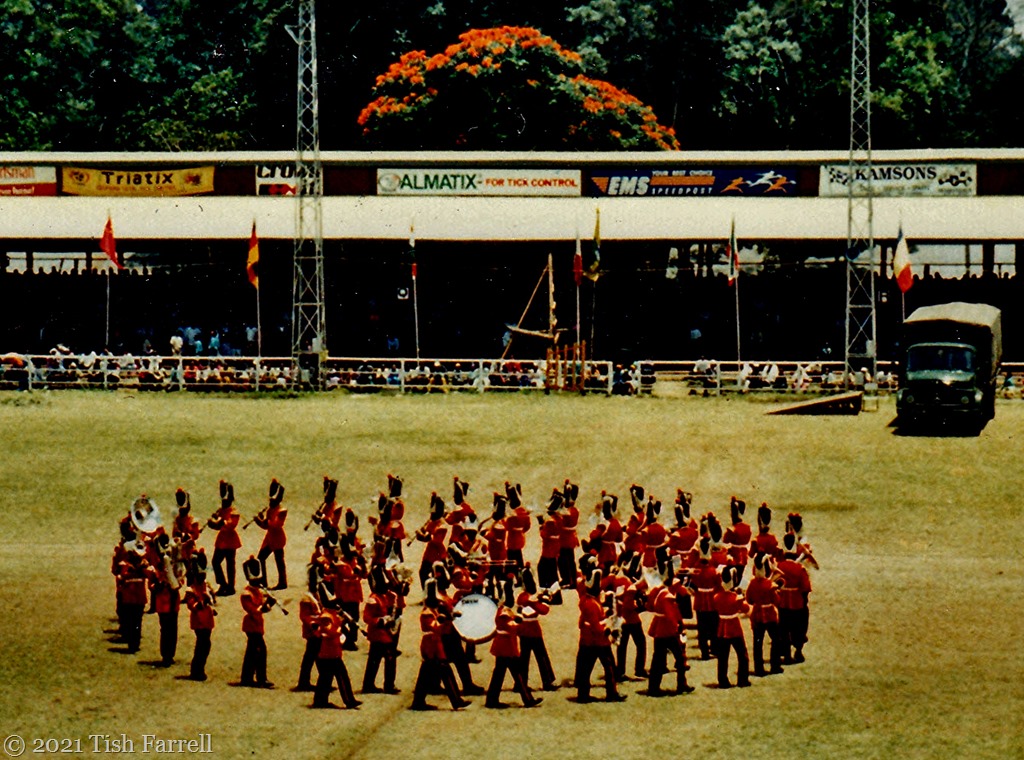
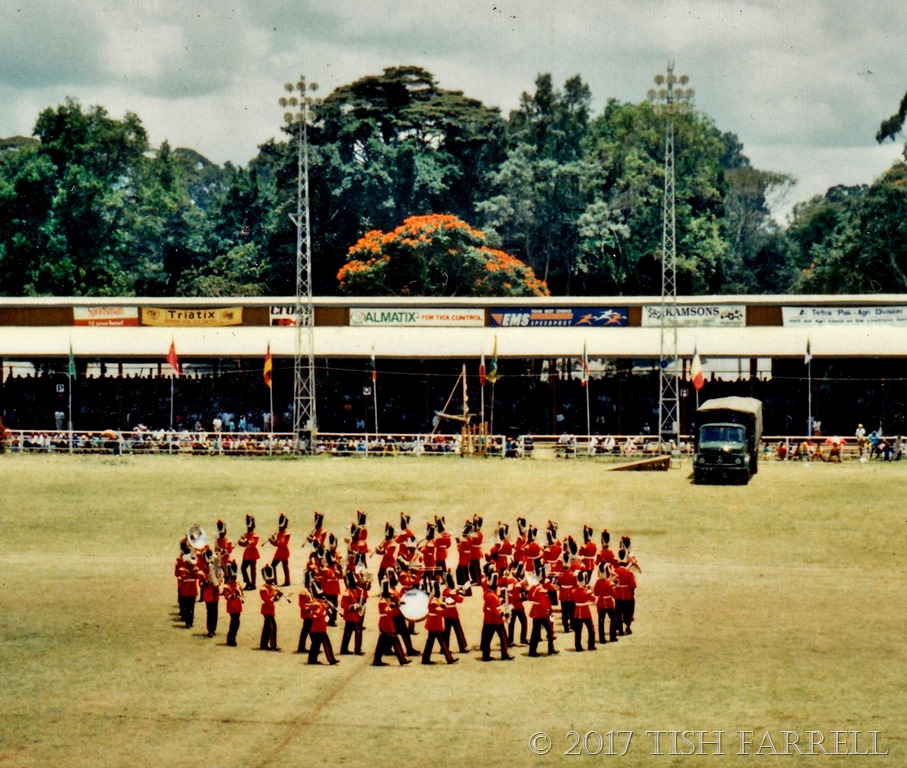
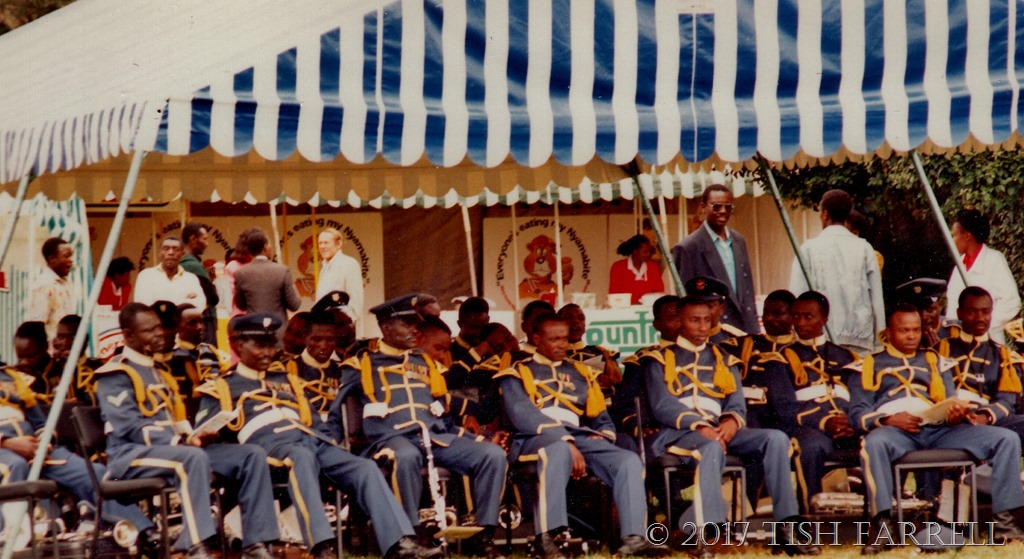
The Kenya Air Force Band waiting for their next stint between the races
*
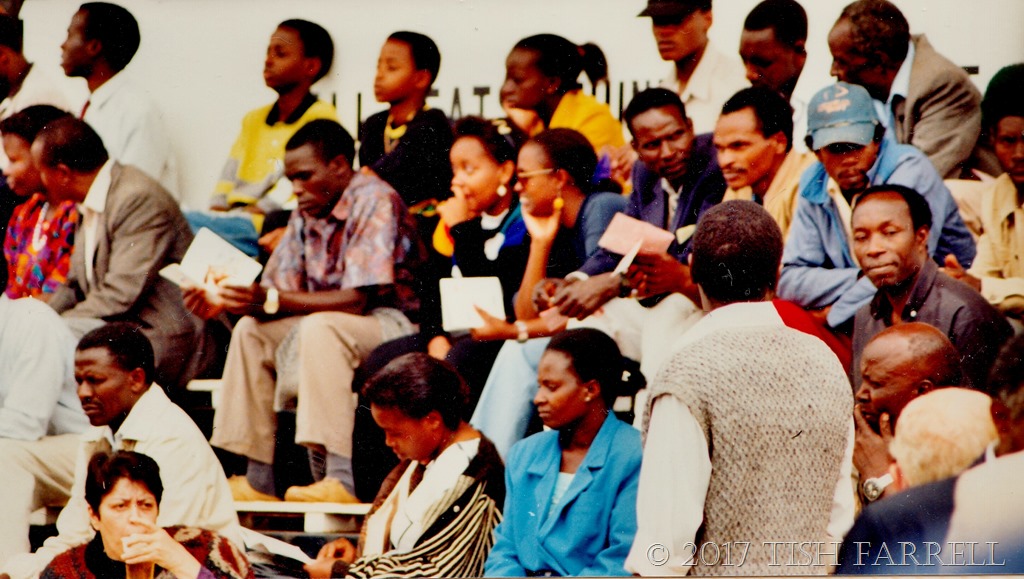
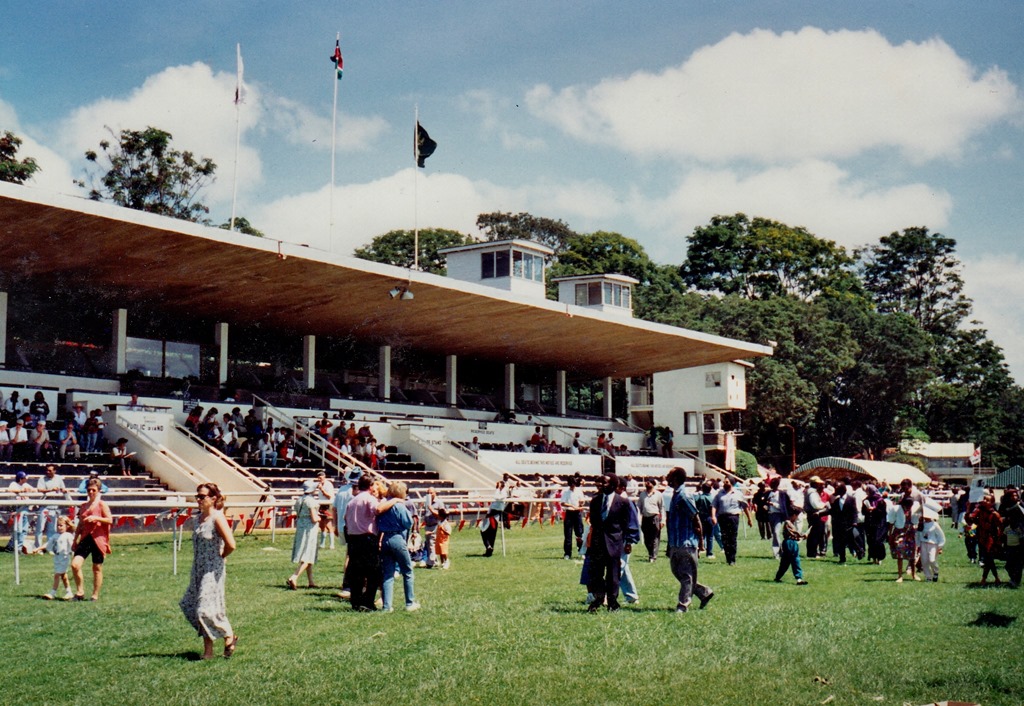
The main grandstand
*
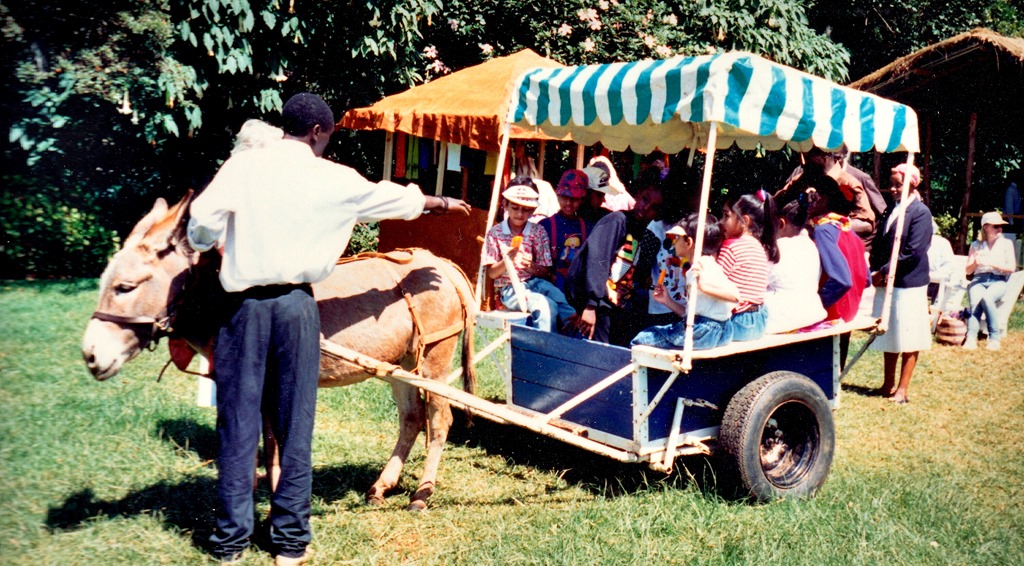
And for the children – donkey cart rides, face painting and Mr. Magic
Postscript: from the Standard newspaper 15 May 2005
John Kamau reports:
Nairobi — The once politically-connected Lonrho Plc has finally called it a day in Kenya after selling its last five prime properties to Saudi-billionaire, Prince Alwaleed bin Talal.
In what may be one of the largest take-overs in Kenya in recent history, Kingdom Hotel Investments, owned by Alwaleed, on Wednesday took over the historic Norfolk Hotel, Mount Kenya Safari Club, Aberdare Country Club, The Ark and Mara Safari Club. Alwaleed also owns the famous London Savoy.
All of which prompts me to ask who actually does own Kenya these days?
copyright 2017 Tish Farrell
Six Word Saturday Please pop over to Debbie’s at Travel With Intent. She has posted some fabulous shots of the Forth Bridge – another example of how historical constructs can long endure, some far more useful than others.
*Charles Hornsby 2013 Kenya: A History Since Independence
Greater love hath no man than he who spent hours and days, and more hours and days transcribing this writer’s Kenya journal. Prior to transcription, and due to various computer glitches, it existed only on reams of faded, flimsy print-out paper. It was just about scannable, which was tiresome enough to complete, but the end result then required hours of copy editing. So thank you Graham.
And for those who don’t know the background to this, from January 1992 to January 2000, Graham aka the Farrell Team Leader, was working out in Africa on various British aid agricultural projects. The first year we were largely itinerant, travelling up and down the Mombasa highway between Nairobi, Kiboko, Taita and Mombasa.
Graham was working on a project to control Larger Grain Borer, a voracious grain-decimating beetle introduced to Africa in a consignment of US food aid. The actual home of this pest is Central America, and Graham had spent some time studying its behaviour in Mexico. He was then employed on a short-term consultancy project by the Natural Resources Institute in Kent, and thence despatched to Kenya.
His main base was the Kenya Agricultural Research Institute in Nairobi, but there was also a field station a hundred miles south at Kiboko, where the Kenyan project staff worked. When Graham had to make a visit, we stayed at Hunter’s Lodge, once the home of big white hunter, John Hunter, and later (in the ‘60s) developed into a small tourist hotel. The place had its heyday around this time, or until the horrendous dirt road to Mombasa was tarred, and coast- or city-bound travellers no longer broke their journeys at Hunter’s Lodge.
In our day it was unusual to find any other overnight guests there, although there were plenty of staff, the waiters always smartly turned out in black trousers, white shirts and red bow ties, and ever in attendance in case anyone turned up.
Much of 1993 was then spent in Lusaka, Zambia. Graham was attached to the European Union Delegation, contracted there to organise the distribution of food aid during a period of prolonged drought. But at the end of that year we returned to Nairobi, in the first instance, to close down the Larger Grain Borer project at Kiboko, but later to run a crop protection project which involved British and Kenyan scientists working in partnership with smallholder farmers to overcome various crop and livestock problems. And here we stayed until the start of 2000 when the British Government closed the project down.
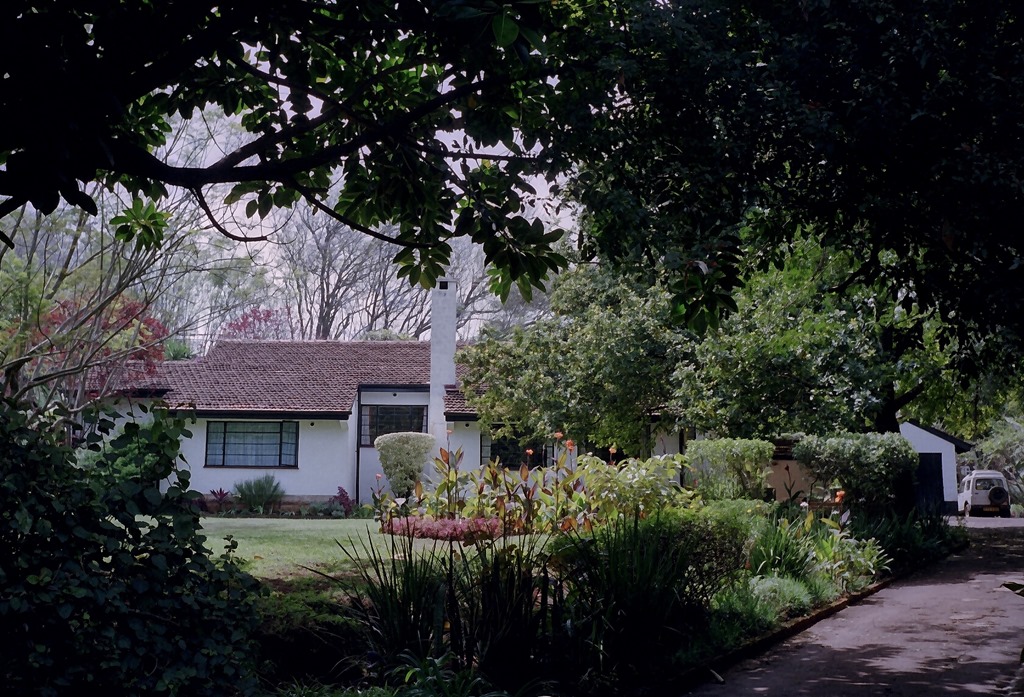
While we lived in Nairobi we were housed in a British High Commission house, which also came with Sam, our house steward. He lived with his family in a cottage at the bottom of the garden, but as we never had enough for him to do, he only worked mornings. His actual home was in Western Kenya where he owned three very small smallholdings in different places. Then there was Patrick, our day guard, also provided by the BHC. He never had much guarding to do either, so Graham paid him to look after the garden which he did with impeccable diligence. His home was also in Western Kenya, where his wife and children lived on his own smallholding. Sam told me Patrick had deployed his earnings from guarding and gardening on the building of a good stone house for his parents and was currently building one for himself. He was also paying for his children’s education. While he was working in Nairobi, which was 11 months of the year, he rented a room in one of Nairobi’s slums.
The following extract gives a few glimpses of expatriate Nairobi life and those cultural events that owe more than a little to the country’s British colonial past.
*
29 August 1994
Months have passed and no journal entries. In June we went home to England for three weeks. It was cold and windy and time was gobbled up visiting family and storming the shops. Then came the weeks of adjusting again to Nairobi living. It seemed very strange that, after all our days and miles of travelling, the only news Sam had when we got back was that the avocado tree had finished fruiting. Otherwise, everything was as we had left it.
And to root myself in once more, I took to gardening. Another effort to get the better of the over-shaded vegetable plot; flower beds cleared for tomatoes and herbs; a new plot excavated under my office window; seeds sown and the ever vigilant Patrick following up with the watering can at dawn and at dusk.
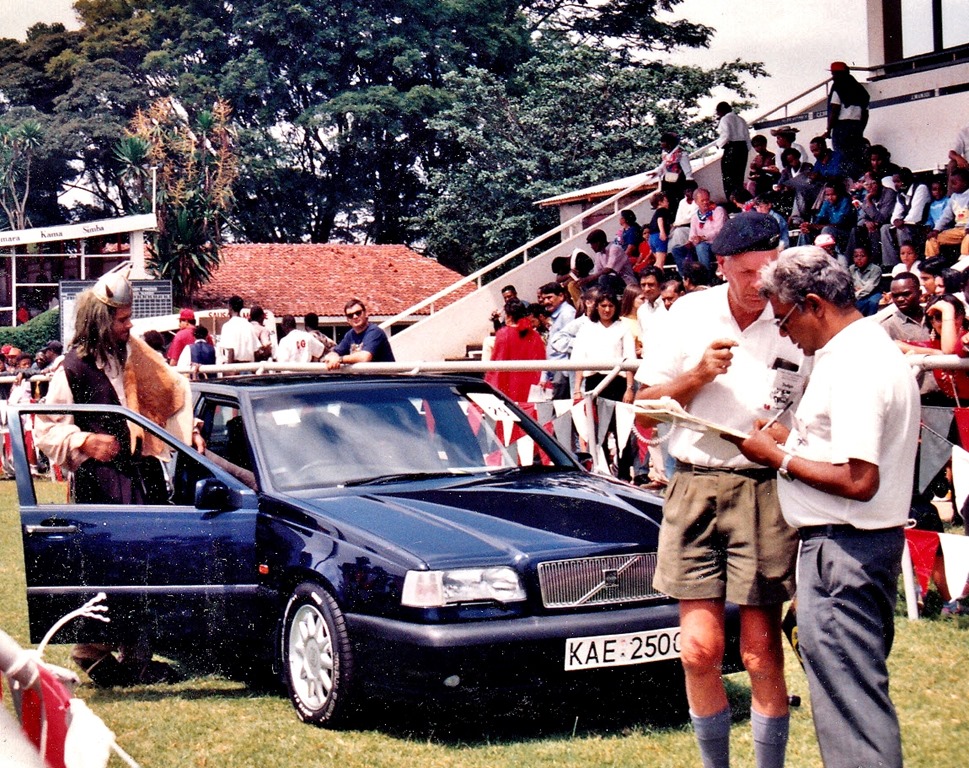
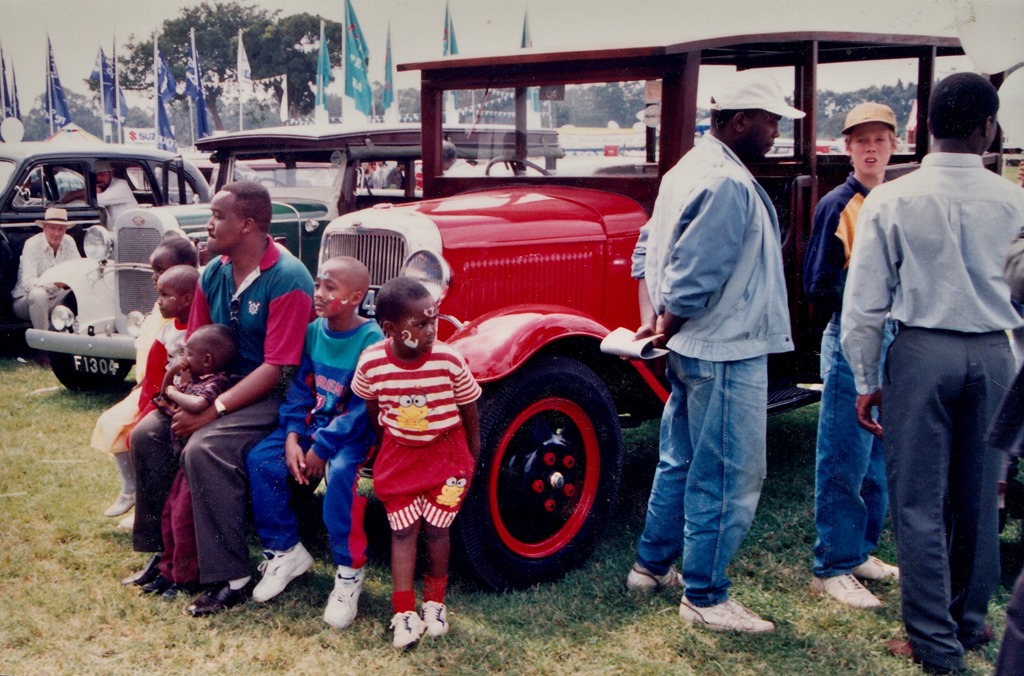
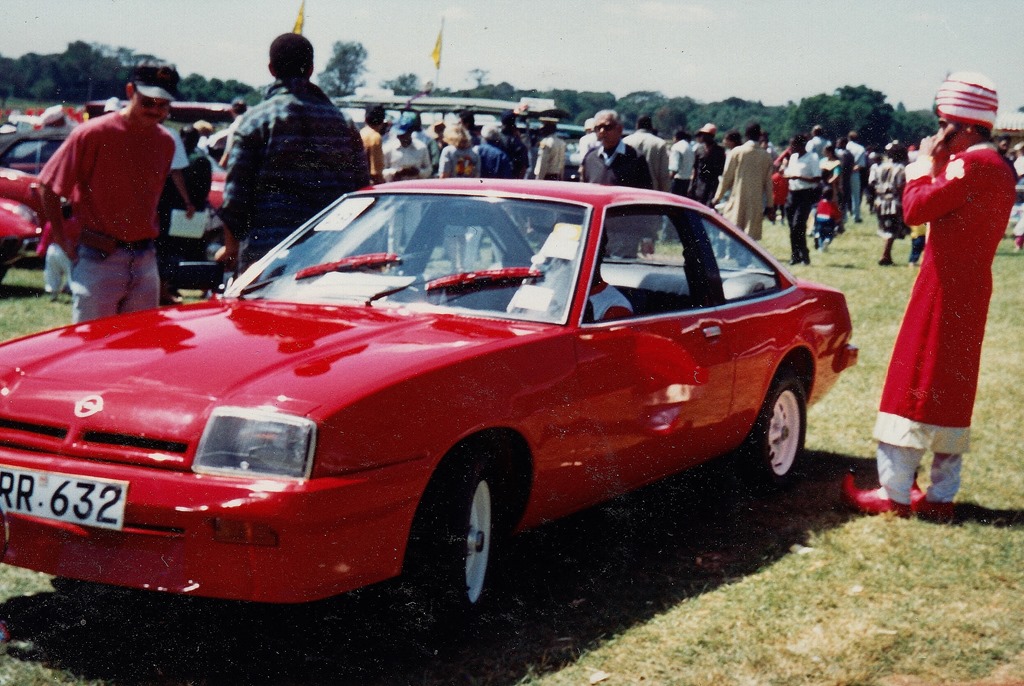
In July we went to the Ngong Racecourse for the Concourse d’ Elegance, one of Nairobi’s annual multicultural events. It is a specialist car rally wherein owners show off their vintage vehicles including aged safari trucks (one of which had ‘starred ‘in Out of Africa), wartime jeeps, a venerable Mini, period Peugeots, Alfa Romeos, Mercedes, Volvos and a red E-type Jaguar.
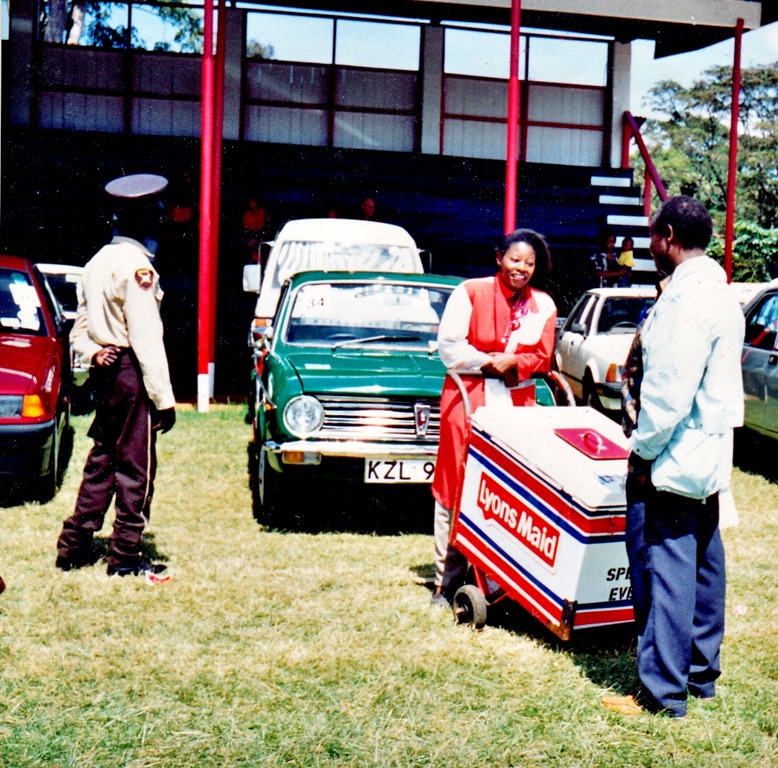
Car owners from the Asian community were dressed up as maharajahs and Arabian Nights grand viziers, the Europeans in more peculiar costumes – a woman dressed as a large black spider, one chap in full Viking gear. There was an overall atmosphere of the English Village Fete. The Kenya Society for the Protection of Animals laid on donkey cart rides around the race course grounds; Mr Magic was doing tricks for the children; the East African Ladies group had a charity cake stall. There were welly-wanging contests, face painting, remote control model car races, hotdog stands and Lyons ice-cream carts.
The racecourse itself is a picturesque colonial relic. Stands of gum trees, the tiered main grandstand creeper-covered and housing a shady restaurant, and nearby the race steward’s offices, the Jockey Club members’ precincts, the collecting ring sheltered by mature trees.
We thought we’d like to see what the place was like on race day, so a week or so later we turned up for the Lonrho races. Kenyans take their racing seriously and the whole ground was humming with activity. The ‘old colonial’ set were very high profile, chaps in their grey plaid racing suits, members’ tickets dangling from lapels, their ‘good ladies’ in Ascot frocks and hats to match. In fact the woman who won the best outfit contest truly looked as if she was anticipating entry to the Royal Enclosure. At such times you can only blink: the British abroad – what are they thinking?
The first race was something of a novelty event being a camel race. The beasts and riders came from the anti-stock-theft police patrol in the remote north. There were four contestants, the riders in bright racing colours. But the camels weren’t too lively and it took some time to cajole them to the starting line. And even after the gong had been rung, it was hard to tell if the race had started. Every spectator head was craned, gazing across the course for signs of activity. Time passed. It was thus the biggest excitement when the first camel hove into view. He finally jogged fast enough to reach the finish line, his rider waving not only arms but also legs to celebrate their mutual victory. It was hard to imagine that these camels ever caught up with any cattle-thieving bandits.
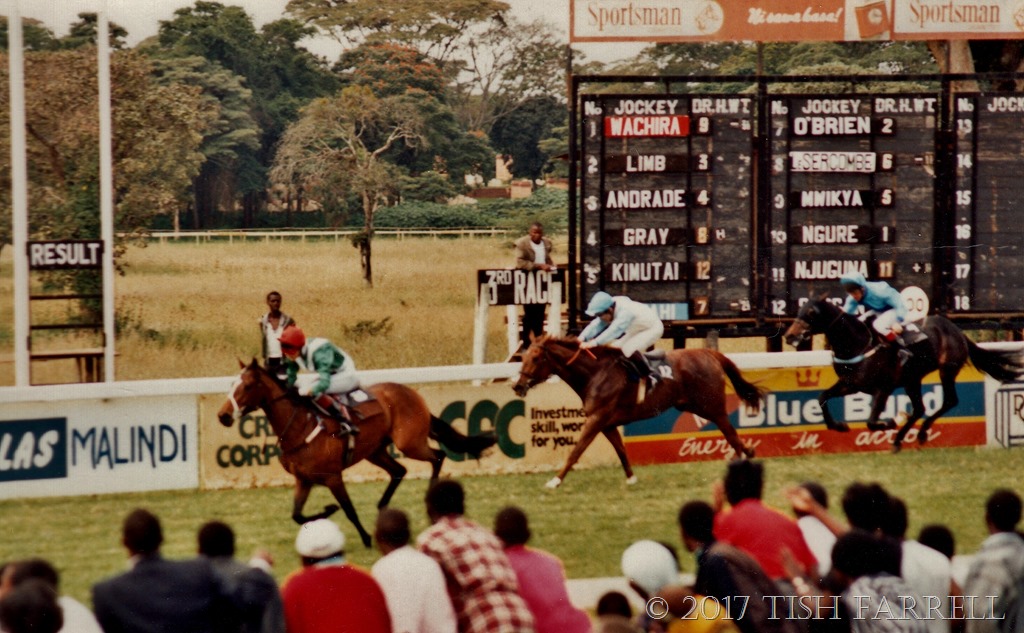
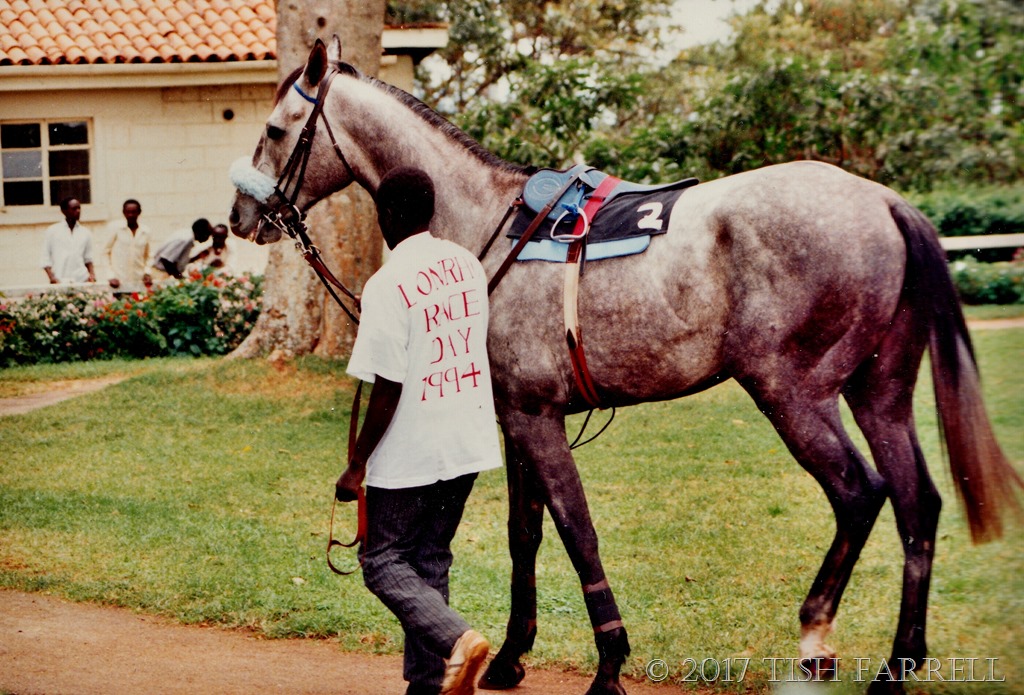
Then the serious racing began, most of the horses from wazungu stud farms up in the Rift Valley, and their riders so slender-limbed and tiny, I wondered if the race horse owners employed their jockeys from the Okiek community, the last of Kenya’s original indigenous inhabitants of slight-statured hunters. We sat in the grandstand for a while, watched the Kenyan Air Force band marching on the course between races, listened to the commentator who sounded to be the very same man who serves at every English agricultural show and sporting event wherever it is on the globe, looked at the Kenyan mamas in their elaborate kitenge costumes, had our ears blasted as two Air Force buglers dashed up into the grandstand to trumpet the start of the race, admired the fine looking Kenyan rider, whose task it is to lead the mounted jockeys to the starting gate, he sporting his English hunting pink jacket and tight white breeches – yet another of Nairobi’s cross-cultural phenomena that challenge perceptions at every turn. It was all so absorbing that we didn’t even get round to placing any bets.
Our next trip to the racecourse was in early August, to another extraordinary multicultural event. This time to the Royal Ballet performing their specially created programme in aid of Kenyan conservation, Dances for Elephants. The week’s performances were aimed at raising funds for various Kenyan wildlife projects – rhino surveillance, Grevy’s zebra surveys, elephant monitoring, conservation education in Maasailand. It was the brainchild Royal Ballet Mistress, Rosalind Eyre and Oria Douglas-Hamilton, wife of Dr Ian Douglas-Hamilton, Kenya’s resident elephant expert.
Performances were laid on at several venues: at the racecourse, at the Lake Naivasha home of the Douglas-Hamiltons (complete with picnic hampers), at the Windsor Country Club and at the residence of the British High Commissioner, Sir Kieran Prendergast. Local businesses sponsored tickets so cohorts of Nairobi school children could go to the racecourse matinee and have their first ballet experience. A congratulatory telegram also arrived from HRH The Prince of Wales, wherein he praised the sixteen dancers’ efforts and generosity in giving up their time. He also said he wished he could be with us, which we could not fail to doubt as we had recently read newspaper reports of another “Diana” scandal looming back in the UK.
We arrived in the racecourse at sundown, and again found the place was thronging. It was a clear evening and I wondered if anyone had warned the dancers how chilly Nairobi was in August.
The audience was well catered for though. There was a tent serving hot drinks and hotdogs as well as a bar. We had come prepared with our own flask of cocoa, cushions and wraps. The grandstand was mostly filled with members of the diplomatic community and Kenyan professionals from the companies that had sponsored the event, but we could sit where we wanted among the concrete benches of the grandstand. The Jockey Club members’ padded seats comprised “The Circle” for which people had paid 3,000 shillings a ticket instead of our 700 bob. We settled down on Vitafoam sponge mats on the front row.
The stage was ingenious – two flatbed trucks parked tail to tail. Cranes rearing up behind each cab supported the roof and stage light tracking. Either side were the enormous speakers of the sound system that had been donated to the cause by Lufthansa. The racecourse and its stands of gum trees lay to their back and, as the sun disappeared behind them, black kites wheeled overhead, mewing and on the lookout for abandoned hotdogs.
At dusk the dancing began – excerpts from the whimsical ballet ‘Still Life at the Penguin Cafe’, opening with the zebra dance, “White Mischief”. It could not have been more surreal, of itself and also because there was the stage backdrop of the African plains with the real African sky behind it, and real African ‘sound effects’ of cricket and frog call.
*
Here is a version of what we saw out on the Ngong Racecourse on a chilly Kenyan night (best viewed full screen):
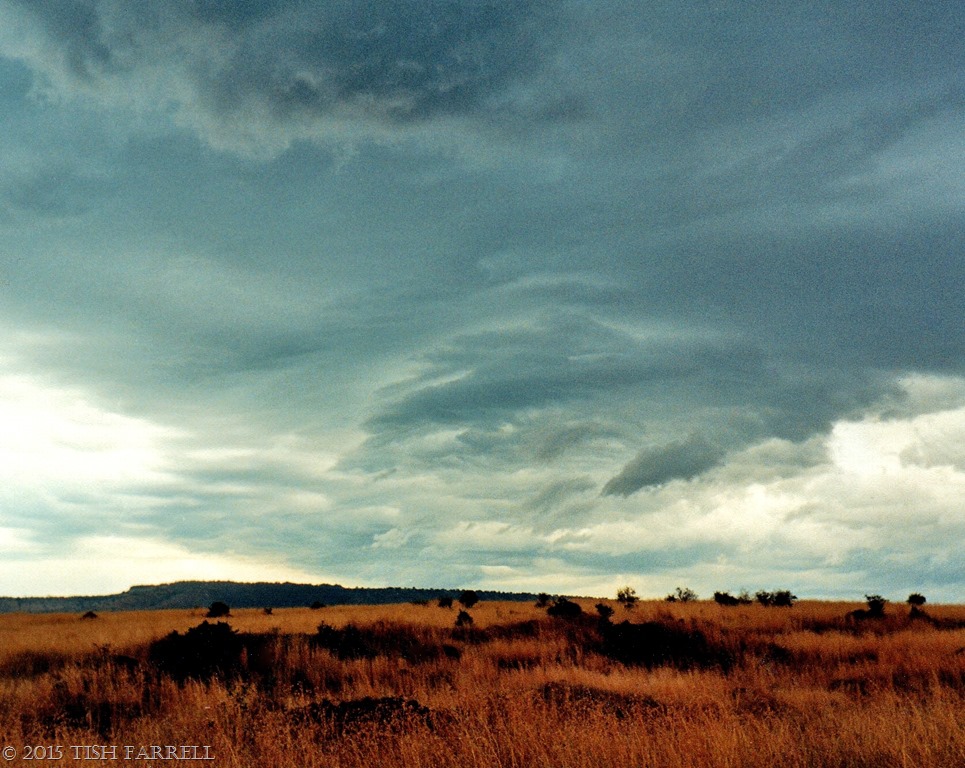
This probably is not the kind of scene most people associate with Africa. It looks more like a stretch of bleak English moorland in December. Anyway Kenya it is, and it was taken one August in a Maasai group ranch conservancy, bordering the Maasai Mara National Park.
May to September is East Africa’s winter, and the skies are often overcast and leaden. The nights, and even the days can be chilly. Kenya, anyway, covers many of the world’s climatic zones either horizontally or vertically – from the hot and arid Northern District, bordering Ethiopia and Somalia, to the alpine heights of Mount Kenya with its glacial peaks. There are also the airy, and rarely too hot, highland plains around Nairobi, and the steamy humidity of the Mombasa coastal strip to the south.
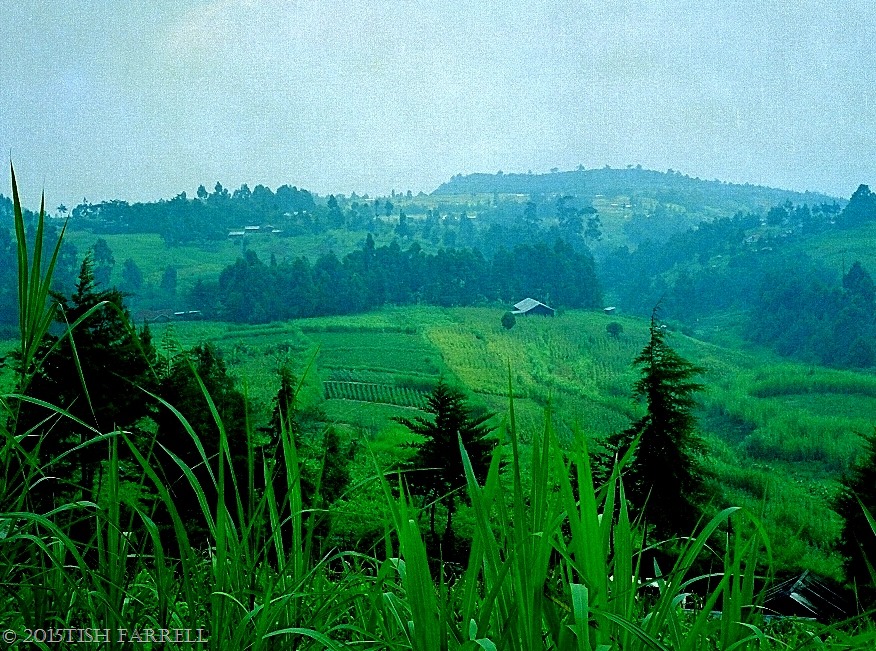
Much of the nation’s weather is determined by the cycle of Indian Ocean monsoon winds. These, unless disrupted by El Nino effects, bring two seasons of rain – the long rains in March to May, and the short rains in November-December. In between, many areas receive little or no rain. Western Kenya, however, receives more regular rainfall courtesy of Lake Victoria Nyanza which makes its own weather. Meanwhile in the fertile Central Highlands above Nairobi, altitude and forest combine to make June and July the season of heavy mists. It’s all a bit dreary, but the mist does have its uses – for instance, ripening the maize crops for the August harvest.
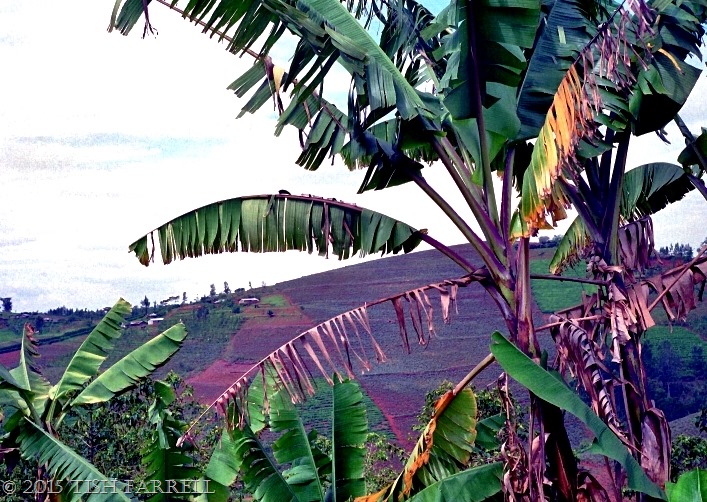
Smallholder farms and July mists in the Kikuyu highlands, north of Nairobi
*
In the late 1990s Team Farrell was often out and about in the Kikuyu highlands, visiting smallholder farms. And the reason we were doing this in the fog season was because the Team Leader, aka Graham, was – besides running an agricultural crop protection project on behalf of Her Majesty’s Government – gathering data for his doctoral thesis on smut. If you want to know more about our smut forays (of the plant variety that is) your can find out more HERE.
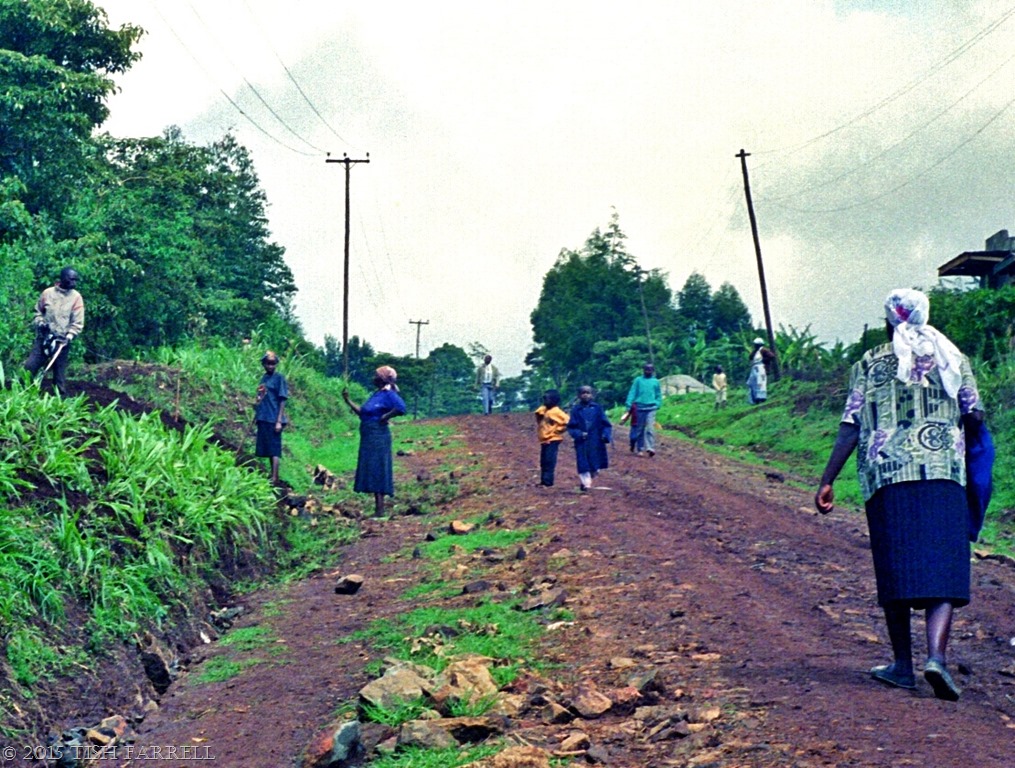
Rural road after an unseasonal July downpour. Poor communications embed poverty, making it hard for farmers to get produce to market before it spoils.
*
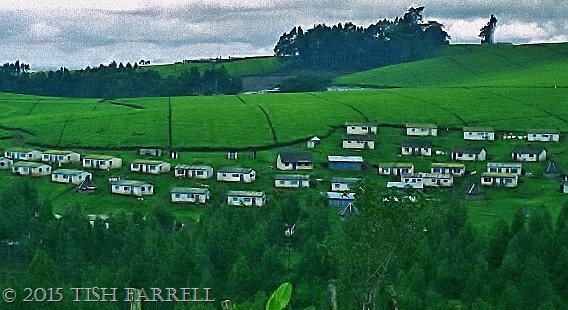
Lowering skies over Limuru’s tea gardens with tea pickers’ housing.
*
Kikuyu farmhouse.
*
Wintery fields in Muranga where the Del Monte pineapples grow.
*
And just sometimes, even on the gloomiest Kenyan winter’s day, the sun breaks through the clouds:
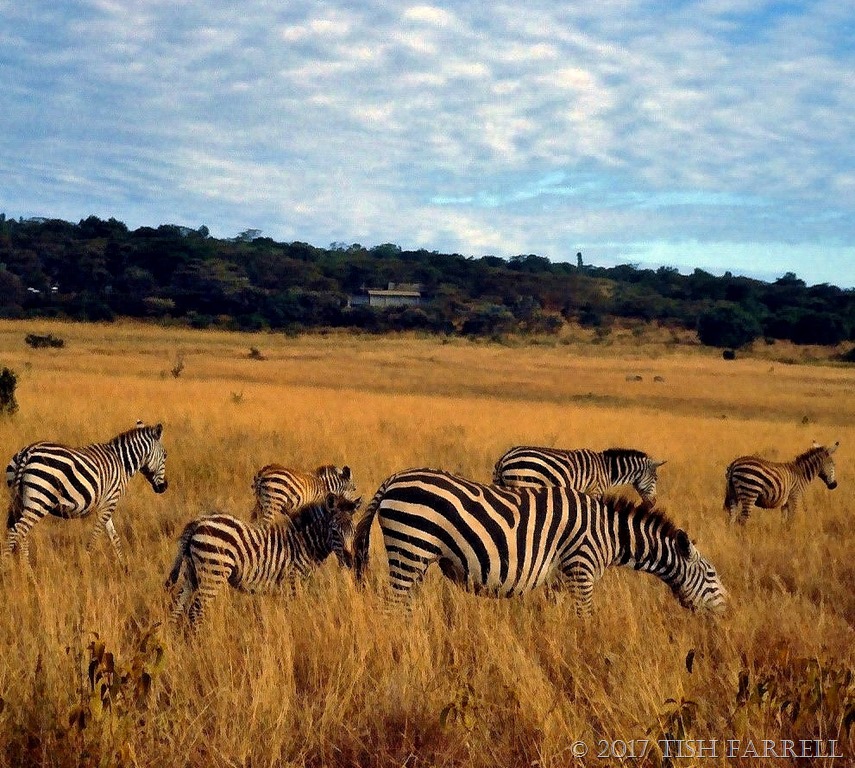
You could say that Nairobi’s game park begins where the city stops. It is the only city in the world with a natural, unenclosed wildlife reserve on its peripheries: wilderness and urban sprawl side by side. There is of course an electric fence along the urban perimeter to divide man from beast, but the city is always pressing against the boundary. To the south the park is open to the Athi and Kapiti Plains to allow migrating herbivores such as wildebeest (there are a couple in the background) to come and go. These grasslands are important feeding grounds in the wet season, and so it is essential for the health and wildlife diversity of the park that the southern corridor remains open. When we left Nairobi in 2000 there were fears that it would soon be closed by encroaching farmers, and community initiatives were being devised to avoid this.
By African game park standards the park is very small, 117 square kilometres, but it supports a breath-taking array of animals – lions, cheetahs, leopards, rhino, all the antelopes, and a host of small game. Only elephants are absent. The birdlife is equally diverse with over 500 species. And despite the proximity of the city, there still are wild places where the high rises cannot be seen on the skyline.
There is also another kind of diversity in this photo: the zebra’s stripes. Every individual has its own livery. Once when we were on a game drive on a private ranch in Zambia, our very tipsy guide was insistent that we grasp this fact. “Every zebra’s butticles have different markings,” he declaimed, “so their offspring know how to recognise their mamas.” I have been grateful ever since for that gift of the word ‘butticle’.