Once On Mombasa Beach

img059sq

Our first stint in Kenya was meant to be for three months. It stretched to nine, a long time to be away from home when none of it had been planned. On our return to the UK in September ‘92 we weren’t sure what would happen next. But come November we were flying off to Lusaka, Zambia, on another short-term contract.

This time Graham was seconded to the EU Delegation to take charge of the Commission’s food aid distribution. Zambia had been suffering a prolonged drought, but as it happened, and fortunately too, our arrival coincided with a return of good planting rains; food aid was only needed to bridge the gap until harvest time. And so once again, like strange migrating birds, we left Africa in September. And once again, two months later, we were heading back again, to Kenya on yet another short-term contract, this time to close down the Larger Grain Borer project based at the Kiboko research station. This was the project Graham had been attached to as a consultant in 1992. (See previous post).

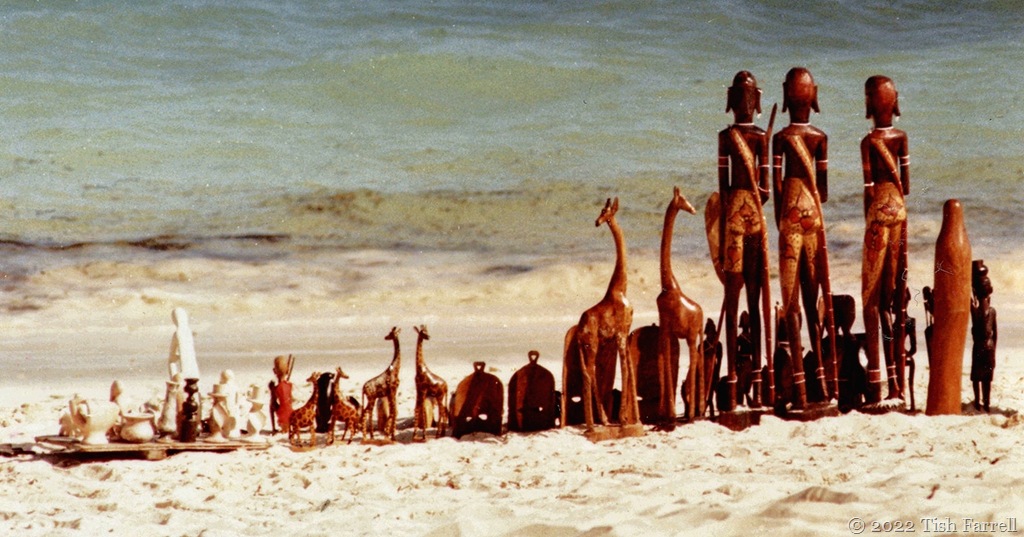
A year later, we were still in Kenya, one contract having evolved into another. In December ‘94 Graham, as head of the UK crop protection project, had to chair a three-day agriculture conference in Mombasa. I went too and, as I had the use of a rather good camera,  I spent my days sitting under a palm tree in the hotel garden, looking out on a slice of Indian Ocean, sometimes taking photos of the passing beach traffic.

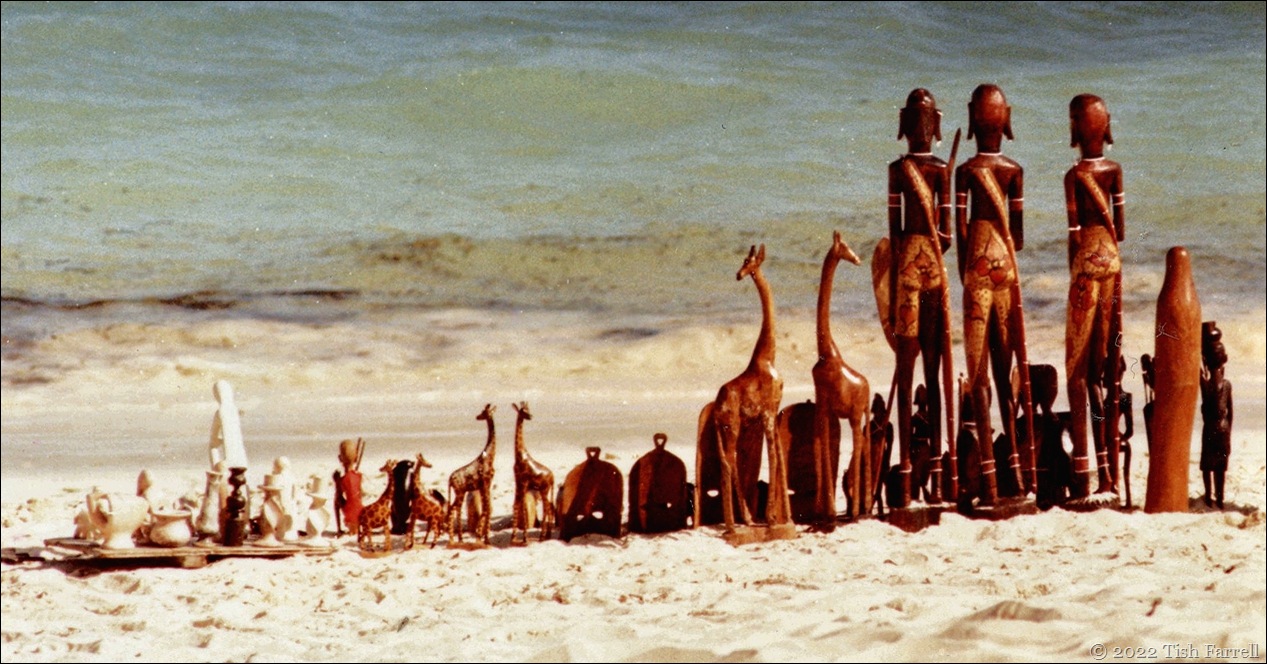
Hotel beachfronts around the world are places where business is done. Mombasa beach is no different and young Kenyan traders are smart, quick to cater to all tourist wants. The Akamba wood carvings and makeshift stalls of kanga wraps are among the more innocent lines of merchandise, although often the means of making contact and enabling further transactions.

Needless to say the deemed exoticism of Maasai morani (young men of the warrior age set) can hold a particular appeal to visiting women of a certain age. So much so, enterprising lads of other upcountry communities might don the gear and pass themselves off as Maasai, or so a Kenyan friend told me.

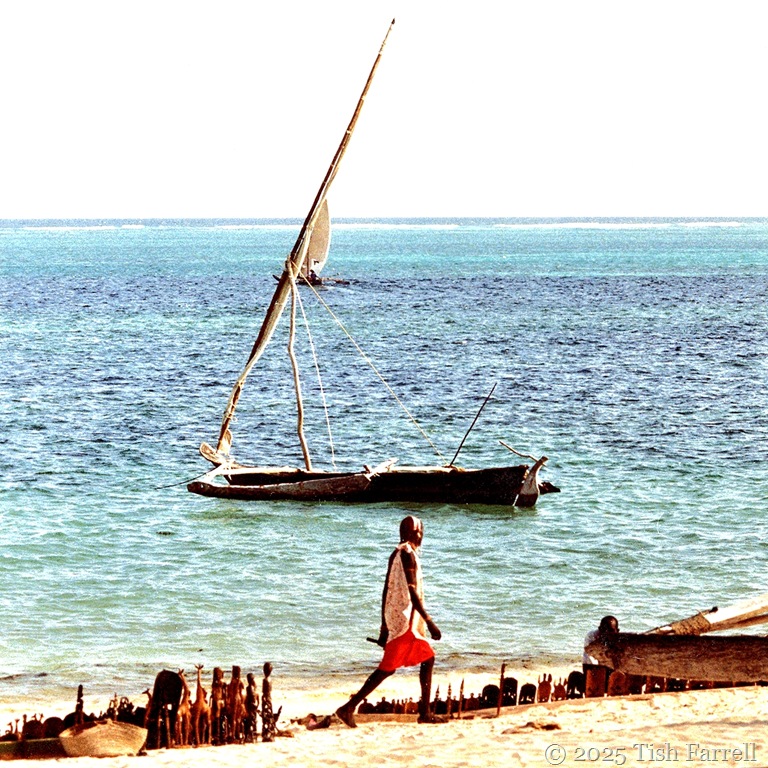
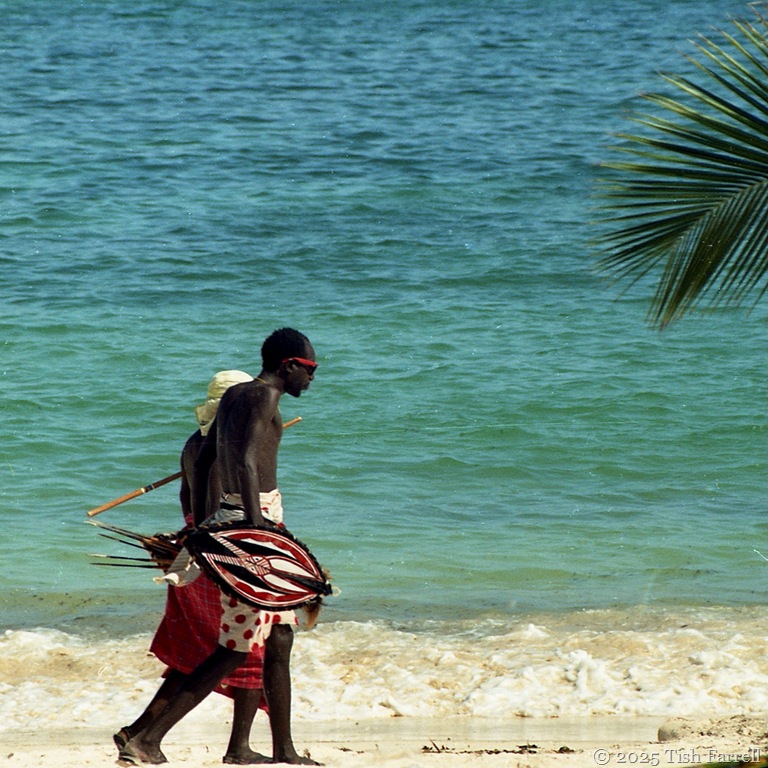
That said, I’d bet that the young man in the header is Maasai, that lilting stride and spare frame. He could be a member of one of the traditional dance troupes employed by the big hotels. These next guys, though, look more like beach-wise traders with their made-for-tourists weaponry. Very cool sunspecs and matching kanga wrap though:

Mombasa beach traders

img049 header


#SimplyRed Day 16


Letters From Lusaka #3: Of Security, Kabulonga Howling And News Of A Coup

ed

In 1992-1993, during the first years of Zambia’s multi-party democracy, we were posted to Lusaka, Zambia’s capital. Graham was charged with organising the distribution of European Union food aid to drought-stricken Zambians. (Part 1 is HERE and part 2 HERE)

*

Sable Road - compound pool and neighbours' house

We soon discover that our household security provision falls short of official standards. European Union and British High Commission employees are advised to have internal security gates installed, external security lights, roof siren, alarm buttons, window bars, a pack of Dobermans and ridgebacks, a two-way radio and armed twenty-four-hour guards. The fortification of a property may cost around £5,000.

Somehow we survive without most of these devices, although the top of our garden wall, which also forms the rear boundary of the compound, is quite high and is further cemented with shards of broken glass.

The nights, though, can be nerve-wracking. Rounds of automatic gunfire are common after dark. Some European locals, we are told, have made a ritual of standing on their front lawn at 9 pm every night and shooting off their sporting rifles – just to let “the thieving bastards” know what’s what. These are the same people who will tell you that, when they are not trying to relieve you of your worldly goods, the Africans are really very charming.

But gunfire aside, it is anyway hard to sleep in the perpetual gloaming of the security lights dotted around our compound. The insects, too, grow louder as the night draws on, and then the dogs wake us.

I call it the Kabulonga Howling. For reasons unknown, it begins with a single canine, a lone keening which then swells from compound to compound in a relayed dog lament until finally a monstrous crescendo resounds across the suburbs. But once howling pitch is reached, it quickly subsides, and instead we are left with the beat of Zambian dance music, thrumming away beyond our perimeter wall.

Sable Road compound

*

We have no idea who lives beyond our glass-spiked rampart. I have tried standing on the brick barbeque in the back yard, but I still cannot see over the wall. Instead, I often hear a Zambian boy badgering his little sister whose name is Lorna. Lorna is always being ordered to do something or other. There is meek compliance in her little voice. It is the lot of many Zambian women to defer to men. Already I feel sorry for her.

One day I find an arrow in the back garden – a stiff plant stem tipped with a bent Mosi beer bottle cap. For a moment, as I examine this makeshift missile, I think of Robinson Crusoe finding unsettling signs of life on his confining island shore.

*

By day, Graham leaves early for the EU Delegation. It is only a five minutes’ drive away. I begin to tend the back garden, sowing beans, courgettes, carrots. Things quickly sprout, but the land snails are as big as my fist. I write and read, although finding books is a challenge. We can find no bookshops in Zambia since the nation can no longer support a publishing industry. Once a week we drive down to the British Council on Cairo Road to borrow books from their library. We do this, ignoring white Zambians’ warnings that our Suburu will be car-jacked if we park anywhere downtown. Whenever we go to the library, most of Zambia’s students seem to be there, studying hard. Every seat is taken. It is hard to gain qualifications in a land without books.

British Council

One of the parking boys who minds our car whenever we visit the British Council library. In ten months of parking on Cairo Road neither the car nor any of its parts go missing.

*

And not only is there a lack of books,  but newsprint, too, is hard to come by. Newspapers sell out quickly each day and I have to rely on Graham bringing the Delegation copy home at lunch-time for quick scan through. Soon we hear that four Zambian Daily Mail accountants have been arrested for ripping off their own company’s limited newsprint stock and selling it to a rival newspaper.

Then there is the challenge of household shopping. Our local shop is Kabulonga supermarket where I frequently search the shelves to strains of  Michael Bolton’s The Lady in Red. A beautiful girl in cobalt blue chitenge and matching head-cloth tied with great flourishes, is often on the till. She has the poise of a princess.

It’s basically a matter of buying whatever is there and then thinking of something to do with it. Treats include cartons of delicious Ceres grape juice, and jars of sweet pickled beetroot imported from South Africa. The local yogurt comes in big tubs, plain or strawberry. Other staples include corned beef and South African wine. On the other hand, there is never a shortage of cleaning products, all heavily perfumed. At Christmas we see them parcelled up into apparently enticing gift packs along with small bales of second hand clothing.

Kamwala-roadside-furniture-market-ed[1]

We bought our bed from traders in  Kamwala Market

*

There are of course shopping opportunities everywhere along Lusaka’s streets – cigarette and used clothes stalls, a man selling bread, another with his scrawny hens, fish from a freezer connected to nothing, caterpillars dried or roasted, large woodland mushrooms the colour of cygnet down, little pyramids of tomatoes. If I buy two piles of tomatoes from the young woman in the photo, she gives me an extra tomato as a “special gift”, and then wraps the lot in computer print-out. It’s one of those frequent incongruity moments.

001

*

I also walk down to the Maluwa Co-operative in the hopes of something more interesting than beetroot and corned beef. Again, I never know what I will find there: perhaps, if I’m lucky, a good mission-reared chicken in the cold cabinet, or button mushrooms, some Gouda cheese, broccoli, new potatoes, French beans, bunches of roses. If he catches me walking, an elderly white Zambian in a pick-up, (his ‘boys’ in the back), always insists on giving me a lift. He means well, and it is easier to comply with his desire to save me from imagined predations of Zambians than to argue.

Maluwa Co-op

Maluwa Cooperative Store

*

But I like it out on the road. There is so much life outside the high walled, razor-wired residences of the elite. People greet me. One day a taxi driver, trying to mend his broken-down car, stops struggling with things mechanical and offers me a lift. For a second I’m rooted to the spot. I note the rear tyre lodged on the back seat. Does he think if I say yes the car will conveniently right itself. He looks a touch sheepish when I smile and say no thanks. I like his style though: never miss the chance to cut a deal. As I step out again on the dirt road that has lost its asphalt, my footprints join the countless prints of others in the red dust.

*

Graham spends his days rushing round to meetings with aid agencies. There are fears that donations of free maize will dissuade farmers from planting their own crops, despite the good rains. Too much free maize is also likely to depress the economy, and this must be avoided. Much is given out as payment for working on public enterprises such as road building or making bricks for the building of clinics. Unemployed women, in particular, are keen to do such work. Receiving a sack of mealie meal, sugar, beans and cooking oil in return for their labour gives them independence from menfolk who might otherwise take any cash earnings. Graham also has to travel down south to Choma and Kalomo to oversee the distribution of EU maize by the Red Cross. There are more trips out east and to the Copper Belt.

011

Villagers coming to collect cooking oil and maize meal from the Red Cross.

*

012

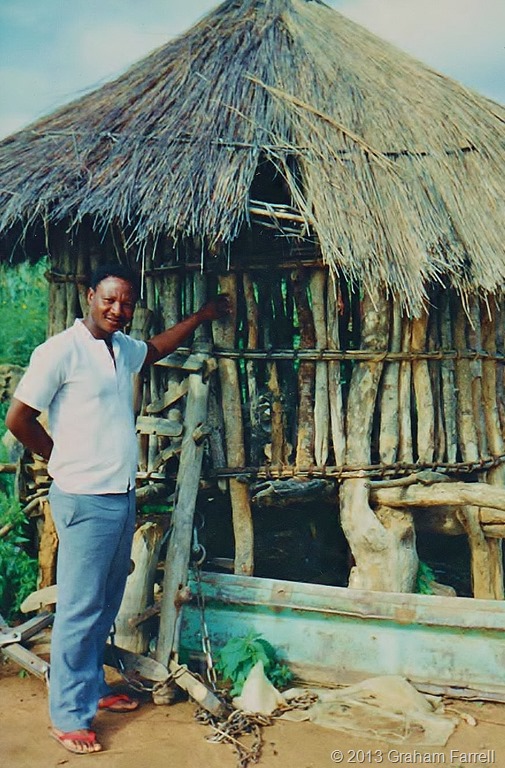
A farmer shows Graham his empty granary.

*

In March Graham comes home saying there is a bit of flap on. Brussels has phoned the E.U. Delegation saying that the BBC has reported a coup in Zambia: is everything all right there, they ask. The diplomats scratch their heads. No coup has been observed out in the suburbs. But then a few days later it is clear that something has happened. Major Rezi Kaunda, son of the long-serving and recently supplanted, ex-president, Kenneth Kaunda, has been arrested. He is reported as being under armed guard. Further details explain, somewhat bizarrely, that he is sitting in the yard of Woodlands police station with his flask of tea and a radio. Fourteen plotters in all have been arrested both in Lusaka and the Copper Belt. These include the editor-in-chief of the Zambia Times.

Later we hear that an incriminating document, The Zero Option, has been seized. It gives detailed plans of how members of the UNIP opposition old guard, led by Rezi, intend to make Zambia ungovernable by fuelling a crime wave, infiltrating the unions and government departments. It is mooted that this campaign of destabilisation has already been instigated and is responsible for the alarming crime wave.

President Chiluba has only been in office for a little over a year. His Movement for Multi-Party Democracy defeated Kenneth Kaunda in the first democratically held elections since Independence in 1964. Kaunda Senior had been in power all that time, but on defeat, chose to bow out gracefully. Meanwhile Frederick Chiluba claims that he is on a clean-up mission of this potentially rich, but now run-down state. He declares a limited State of Emergency while order is restored.

We all breathe a sigh of relief. No need for the emergency evacuation that the High Commission is so unlikely to provide for us. Besides, Graham still has much work to do, and there’s so much I still want to discover. One thing I am itching to know is how this copper-rich nation, with its deposits of sapphires and amethysts and airy upland mopane forests is one of the poorest on earth. Why are its impoverished, beleaguered but hard-working peoples being so ruthlessly ‘structurally adjusted’ by the World Bank? I am beginning to suspect that the spirit of Cecil Rhodes is restless and abroad once more, but that, as they say is another story.

*

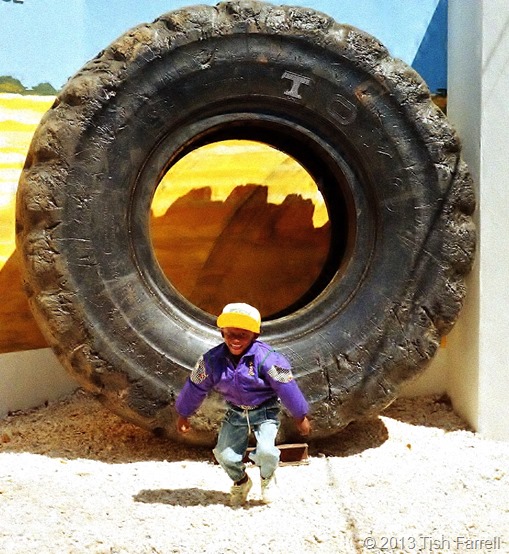
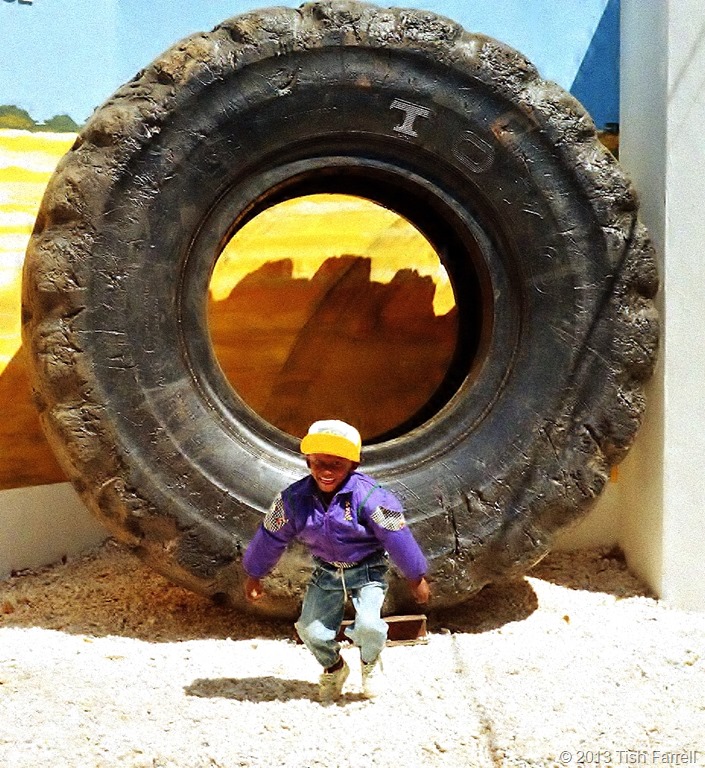
Lusaka agricultural show - Boy and copper belt truck tyre

A view of one of the stands at the Annual Lusaka Agricultural Show. The 1993 show slogan is ‘Produce to Prosper’. Better, if less catchy, would be ‘Produce and get fair pay from multi-nationals.’

Eastern Province heaader

To be continued…

copyright 2024 Tish Farrell

Letters From Lusaka: notes from an aid nomad’s life #1

Cairo Road Header

This is an edited re-run of an old post – and a much longer read than usual…

*

October 1992 and I’m expecting to start a new life in Medway, Kent, but instead I find we are off to Lusaka. It is hard to take in. I am barely back in England after nine months in Kenya where we lived out of a Land Rover, plying the Mombasa Highway. My heart is still in the Ngong Hills, the knuckle-shaped peaks that were my last view of East Africa before the plane rose through the clouds and headed for London via Bahrain. In that moment I find myself weeping for the loss of the Ngongs, recognising, with a twinge of shame, I would never weep like this for my homeland. 

Due to ticket problems I have to travel back to the UK alone. G will follow the day after. When we say goodbye at Nairobi airport there is no inkling of another overseas contract. Yet two days later when we meet up in England, the first thing G says is: how would you like to go to Zambia?

Zambia, I echo blankly. How would I know if I want to go there? But with barely a pause, I say yes; I’m up for it. I’ll find out later if I’m going to like the place. Besides, whatever happens, it’s bound to be interesting.

When we tell friends and family where we are going, they also look blank. Zambia, they say. What did it used to be? It is only months afterwards that I see how loaded is this seemingly simple question, how unfathomable the answer. What indeed did Zambia used to be – before it was Northern Rhodesia – before David Livingstone passed through it in search of lost souls and the Nile’s source, and claimed the falls known as Mosi oa Tunya (The Smoke that Thunders) for Queen Victoria; before the south’s Zulu Wars that pushed many displaced communities across the Zambezi?

We’re expected to leave within the month, but due to various administrative foul-ups, this stretches to two. It gives us time to unpack our Kenya life, catch up on dental work, have the jabs we have not already had, say hello and goodbye to relatives, and to get married. This last event takes place briefly before a handful of guests in a Bridgnorth building society office where the registrar has occasional premises. Our little marriage party finds itself queuing for attention alongside Friday morning withdrawers and depositors. It all seems fittingly bizarre for a life that no longer fits the norm.

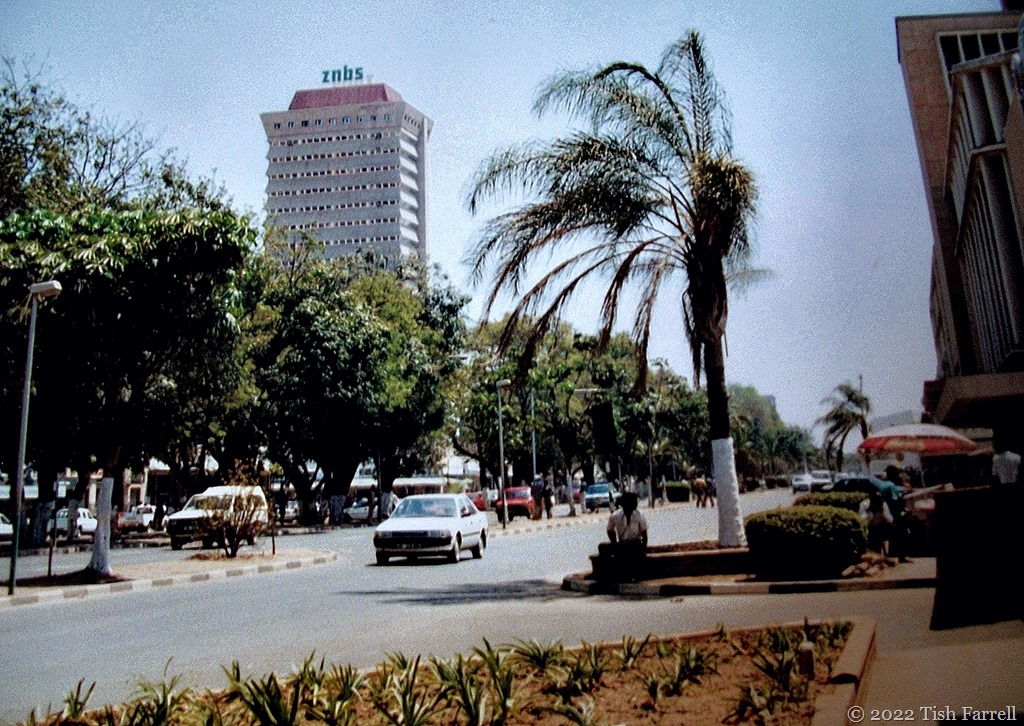
Cairo Road looking south

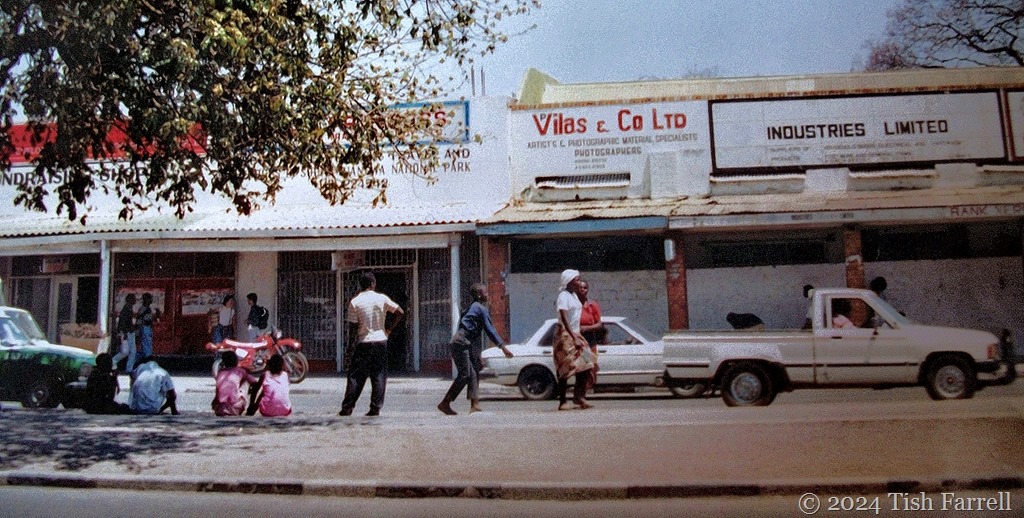
Lusaka’s main street, Cairo Road, looking south

*

At this point I am still no wiser about our destination. In these pre-Google days there is little time for research. To my annoyance, too, I find there are no handy books on Zambia, not in the public library, nor in the bookshops. By the time we come to leave, we have only the sparse Foreign Office briefing notes to go on. They speak of the climate and the kind of clothing we will need, and of the possibility of having to take a driving test if we want to drive in Zambia.

No clear picture of the country emerges. I am becoming increasingly irritated at the lack of information, as well as at my own ignorance. How can I, an English woman, not know a thing about a land that Britain ruled and exploited for over sixty years, a land we only quitted in 1964 while I was in still at school? Why wasn’t it on the curriculum along with Cicero and Chekhov? How can the existence of a former protectorate pass so swiftly from the protecting nation’s consciousness? How can it become so very unimportant?

Then suddenly it’s too late for righteous indignation; it’s all down to family farewells, and wondering if the right things have been packed, when there is no way of knowing what the right things should be. Of necessity, it becomes a matter of travelling hopefully and telling ourselves that the contract is for ten months only. And ten months isn’t long, is it?

*

So, November 1992 and we fly into Lusaka with the rains. It seems like a good omen – to arrive with rain. There has been severe drought over southern Africa for at least a year. Crops have blown to dust, rivers run to sand, and the granaries lie empty. In remote districts, we later learn, villagers have been surviving on a diet of wild mangoes. To add to their misery, the wildlife is hungry too. In one district villagers have been barricading themselves into their homes. The local lions have developed a taste for canine flesh and are breaking down house doors at night in order to snatch the dogs from the midst of their terrified human families.

And of course, this is why we are going to Zambia; famine is taking us there. G has been seconded from the Natural Resources Institute in Kent to the E. U. Delegation in Lusaka to supervise the distribution of European Union food aid to starving Zambians. The country’s then new President, Frederick Chiluba, tells the Head of Delegation that he does not trust his ministers to do the job. The consignments of maize meal and cooking oil must therefore be distributed through church missions and the Red Cross. Zambia is a big country, the size of France and the Low Countries combined. G will be in charge of logistics: checking the contents of grain stores, getting trucks on the road and ensuring that loads reach their intended destination. His boss at NRI is sure he is fitted for the task, although he has never done anything like it before.

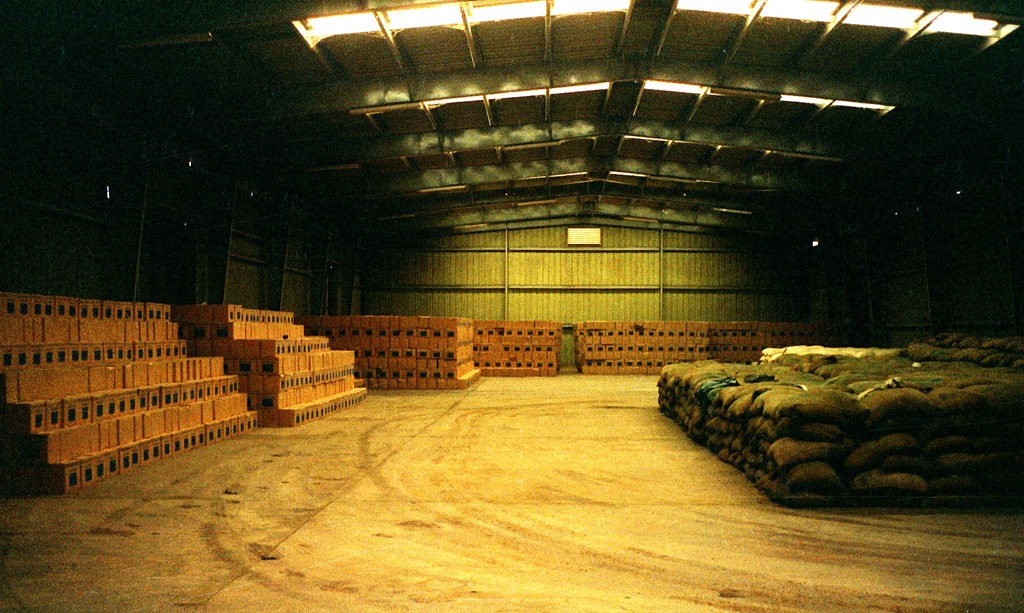
Food aid consignment 4

Food aid awaiting distribution in a Zambian warehouse.

*

In Kenya, as a crop storage specialist, he had been dealing with another kind of food crisis – the spread of a voracious pest that gobbles up maize – the Larger Grain Borer. This beetle is a native of South and Central America, and (ironically) came to Africa in the 1980s in a food aid consignment from the United States. It has no natural predators in its new homeland and, across a continent where maize is many peoples’ staple crop, it also has all the food it can eat. If a grain store is infested you can hear the jaws of these tiny creatures gnawing the cobs to dust.

In Zambia we find the beetles are already there too, spreading out into villages along the line of the Tazara Railway that links land-locked Zambia to the port of Dar es Salaam. The Chinese built the line in the 1970s to provide Zambia with an external trade route through Tanzania after Ian Smith’s Unilateral Declaration of Independence in Southern Rhodesia cut the country off from all points south. Now the Tanzam is a handy vector for crop pests and thus, through such unintended consequences, is the frequent folly of donor good intention compounded. It is the sort of thing that happens in African countries all the time. It makes us question then (as we will do many times over the next few years) the ethics of our presence on the continent.

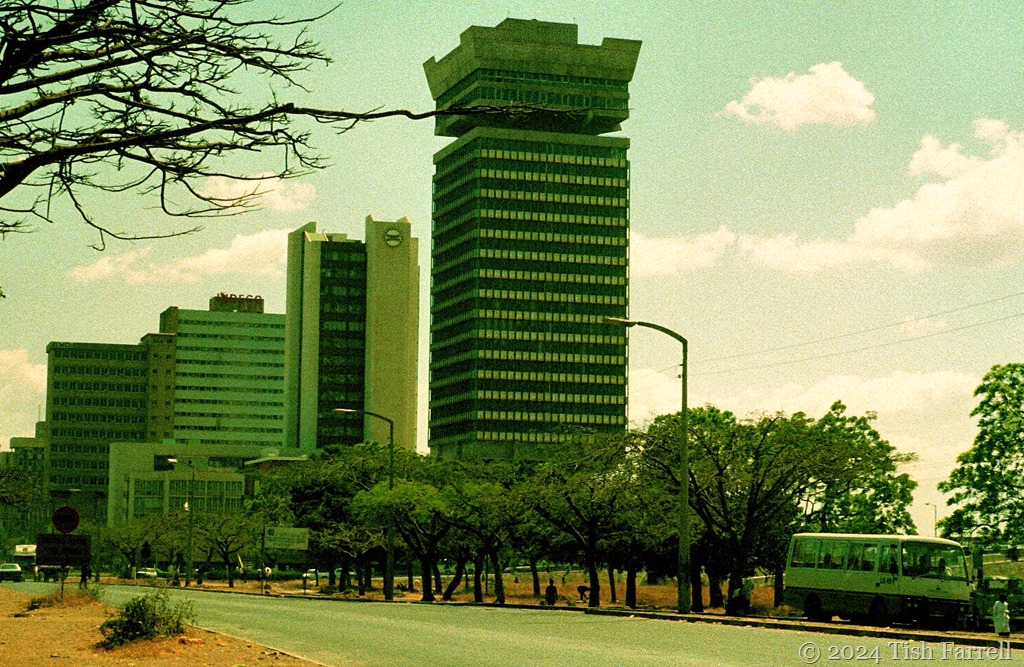
Cairo Road - looking north ed

Cairo Road looking north

*

That November morning, then, as we make our descent through grey skies into Lusaka International Airport, I note only how flat and tamed the landscape looks: large square fields of European-owned ranches (Lonrho, for one, is a big player here); service roads and farm buildings laid out in orderly grid patterns. It is also very green and looks more like France than the Africa I have come to know. I suppose I feel a little disappointed. It is bush country that I have fallen in love with, the smell of it triggering some ancient genetic memory that tells me that such landscapes mean home.

Once down on the tarmac, and as a matter of courtesy so we will not get wet in this welcome downpour, a bus arrives to ferry us the short distance to the low white terminal building. Our fellow travellers are European businessmen, each shouldering his laptop bag. By contrast, a tall African in a well-cut suit emerges from the First Class cabin wielding only a shiny new golf club. It seems utterly incongruous, as if he has just stepped out of a London taxi after visiting a golfing shop rather than flying half way across the world. It crosses my mind that I like his style.

By now I am both jet-lagged and deeply anxious about the forthcoming immigration process. Still fresh in my mind is the stony-faced inscrutability of Kenyan officialdom when I twice visited the notorious Nyayo House immigration department to extend my three-month travel visa; I recall the hours left in limbo, sitting amongst distressed Somalis and Ethiopians, all trying to secure sanctuary away from troubled homelands. But suddenly I see it’s not going to be like this. The officers, as they take their seats at the immigration desks are all smart young women. They are laughing and chatting and, when we hand them our passports and paperwork, they are still smiling, and at us.

Next we have our first, but fleeting taste of the diplomatic life, as G’s new boss steps up and introduces himself. His name is Bernard. He is French, frenetic and instantly engaging. He whisks away our paperwork and deals with it in minutes. There is then a worrying delay before we can claim our bags. Bernard tells us that British Airways on this route are well known for leaving cases behind in London. Finally, though, we have our luggage and are propelled into Bernard’s Peugeot, Bernard talking non-stop. He apologises for his poor English, saying that this is his first posting to an English-speaking country. Mauretania and Madagascar were his previous postings. Worryingly, he adds that he hopes we will speak some French. Beside me, looking wan, G winces; he does not fly well. He can barely speak. When he does, it is to utter a customary response in KiSwahili. I’m beginning to feel hysterical.

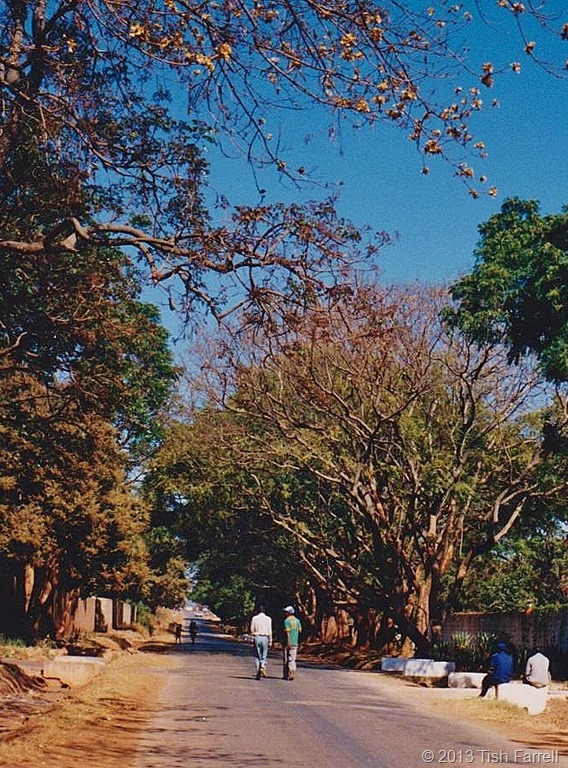
Soon, though, all smooths out as we cruise along the Great East Road into Lusaka. There is little traffic (not like Nairobi), and the place has a small-town provincial air – wide streets lined with jacarandas shedding mauve petals and acacias with russet coloured flowers, red-roofed villas. We pass the turn to the University of Zambia, the entrance to Lusaka’s agricultural show ground. The side walks are filled with people walking – young men in loose shirts and smart front-pleated pants striding out, country women in ankle-length chitenge wraps, city girls in high heels and sleekly cut frocks, and who seem to flow along the street. There are roadside stalls selling garden surplus – mangoes, tomatoes, okra, spinach.

E C Delegation

EU Delegation, Lusaka

*

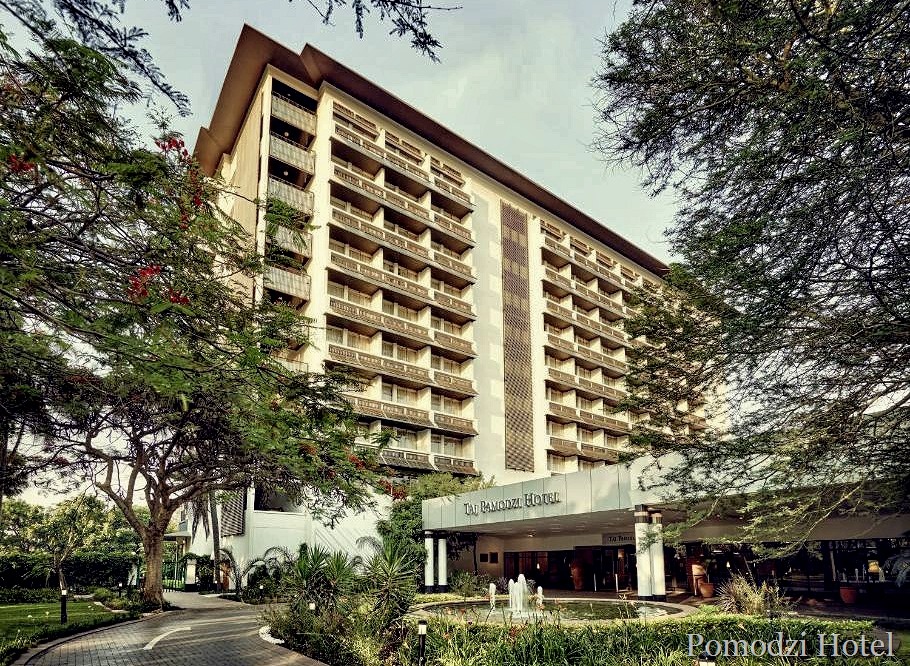
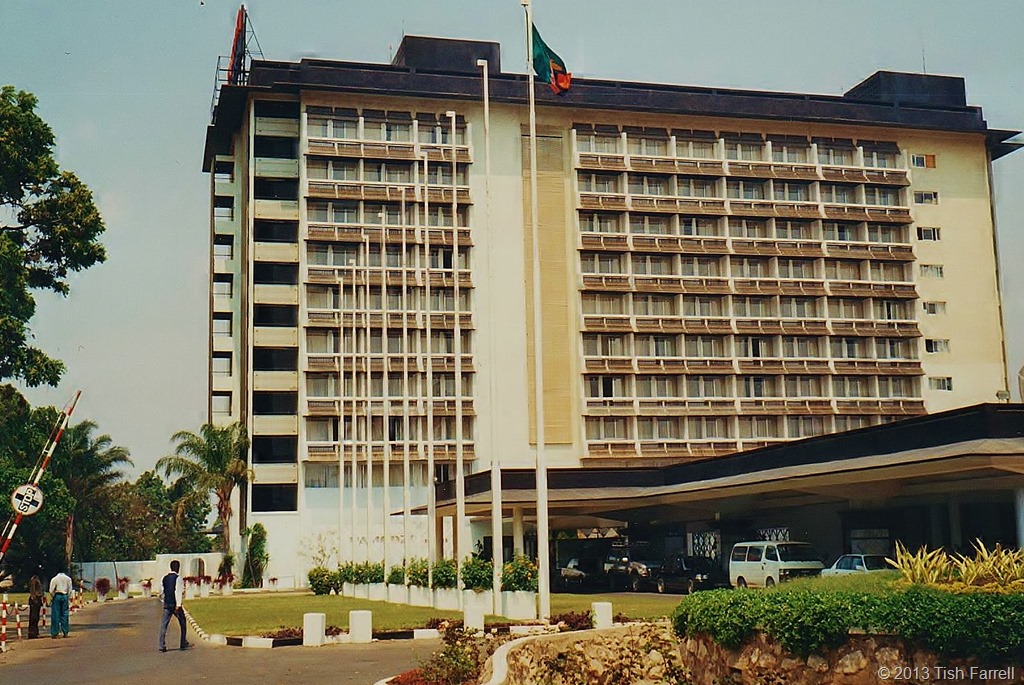
And I am just thinking that I can cope with this when we swing into the grounds of the five-star Pomodzi Hotel, and Bernard’s car is instantly lassoed in chains whose ends the hotel porter quickly padlocks to an adjacent post. I have never seen nor imagined anything like this. Bernard explains that this is a necessary procedure even though it will only take a few minutes to escort us to reception. I see that other guests’ cars are similarly chained. It is then that my one sure piece of Zambia information surfaces.

Pomodzi Hotel

*

All along we have been ignoring it, that in that year of 1992 the country has a big security problem. Some months later the reasons for this become clear, but for now I am struggling to absorb this apparent evidence of an expected car-jacking – in broad daylight, and in such orderly and upmarket surroundings. I gaze, bemused, at the tail-coated porter who is now ushering us into the hotel foyer. After the humid warmth of outside, the hotel is frigid with air conditioning. The reception area is cavernous, all grey-white marble. A trolley appears and our cases are stacked upon it. They look shamefully shabby in these austerely smart surroundings. The porter politely motions me towards a comfortable armchair while G registers. This always takes ages, and by now it is lunchtime and I am hungry and yet too tired to want to eat. Then suddenly there are Englishmen everywhere. They seem to issue as one from the lift.

“Hello. I’m David…Peter…Tim…Paul…Alan. We’ve not been introduced but…”

As welcoming committees go, it is well meant but too much, and I wonder if I’m responding sensibly. They turn out to be G’s fellow consultants from the Natural Resources Institute in Chatham, Kent, out on short-term missions relating to crop storage and food security. They include G’s head of section, the man who seconded him to the E.U. Delegation. He’s just off to Zimbabwe, and hardly have we reached our room than the phone rings, and G is summoned to an impromptu meeting and a trip round a Lusaka grain store that has flooded, none of which has anything to do with his present posting. He goes off looking terrible while I collapse on the bed, trying to come to terms with my new surroundings.

Here we are back in Africa, back in the so-called developing world, here to help deal with a food crisis. Yet now I find myself in a room that has more of comfort and opulence than I’m used to in England. There is a huge colour television that shows American and British world service programmes. There is a telephone by the bed and another beside the lavatory. The ivory tiled bathroom has abundant hot, clean water and piles of soft white towels. The flask of drinking water is chilled. We have our own veranda. The room service menu offers club sandwiches, burgers and steaks. A polite notice on the writing desk requests guests not to tempt the staff by leaving their valuables unattended.

This is a hotel designed not so much for travellers and tourists, but to cater for the expectations of international entrepreneurs. Its luxury is hard to reconcile with the hardship that G has been brought here to relieve. This is only the first of the multiple contradictions that we will encounter over the next ten months. We learn not to dwell on them, and so become part of the contradictions.

*

Now in Lusaka, we find ourselves dropped into a diplomatic no-man’s-land. Although G works for a British government institution and has been deployed by them on official business, neither the EU nor the British High Commission want to altogether acknowledge our presence in the country. We gather that the BHC has some bee in its bonnet about the cost of air-lifting us back to the UK in the event of some great ill befalling us. This is a puzzling response when all G asks for is some anti-malarial pills. They are not keen to give us any, since this establishes responsibility.

There is also a problem about finding us somewhere to live, this despite the fact that both missions have their own staff accommodation. We have been sent out with a stash of travellers’ cheques to pay for ten months’ rent and to buy a car, but house rents in Lusaka are twice the allowance we have been given. A Delegation secretary, a white Zambian, takes pity on us and directs us to a small company compound of eight houses where local Zambian Europeans and Asians live.

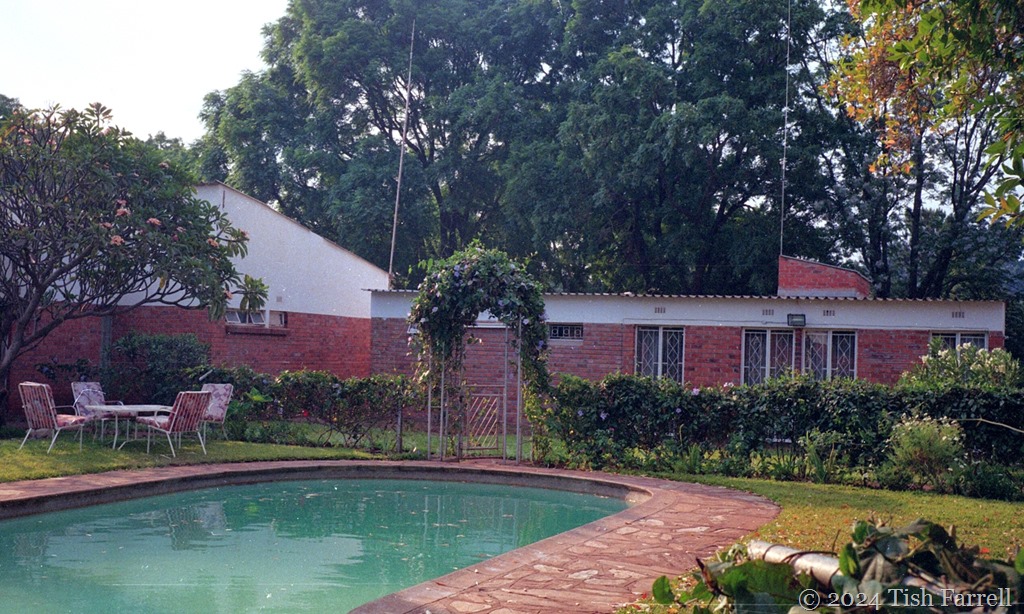
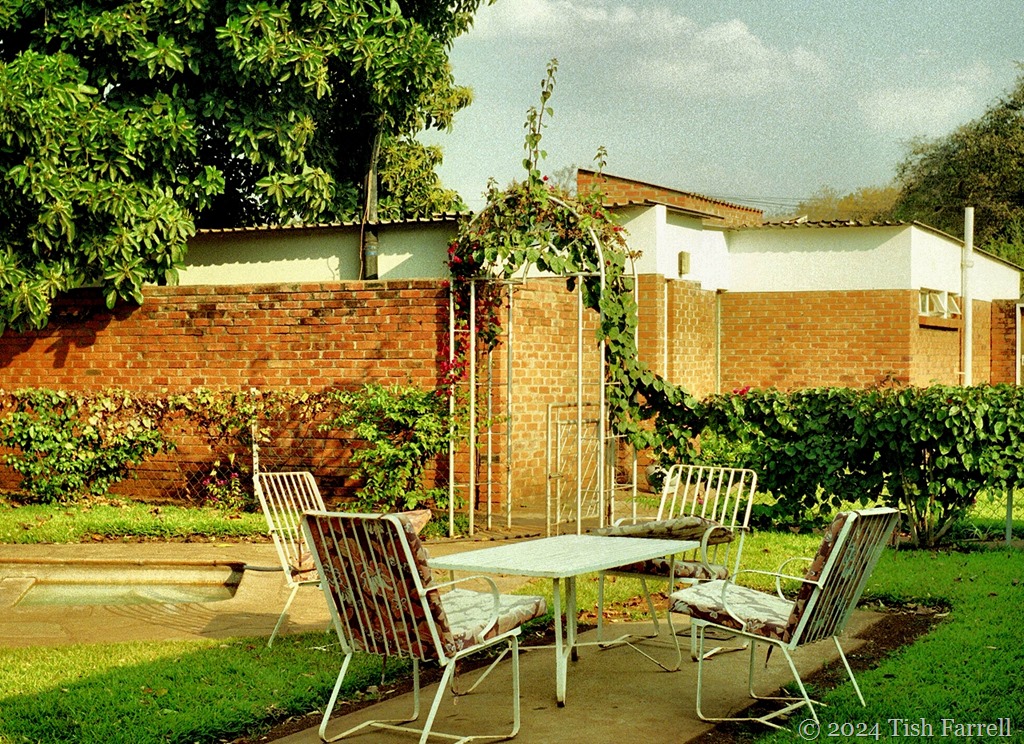
There is one house vacant, and we can just about afford it. The accommodation is very lowly by diplomatic standards, and full of dog-haired furniture, but we still manage to upset BHC consular etiquette because the compound has a swimming pool. Only officials of the higher orders may be allocated houses with pools. BHC staff kindly let us know of our gaff at social functions, although we wonder what it has to do with them since they were so unwilling to acknowledge our existence. Clearly the swimming pool has got under somebody’s skin.

Sable Road compound our house by the pool 3

Our house on the Sable Road compound and a glimpse of the undiplomatic pool

*

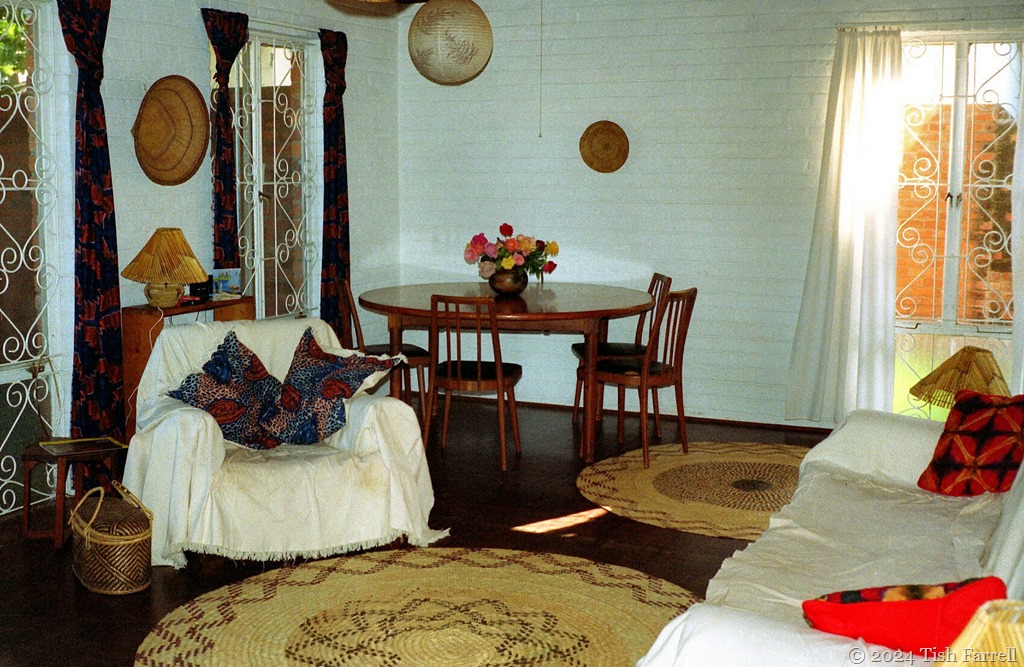
Sable Road our sitting room

Home for ten months.

*

Then, when we are among EU Delegation officials and their white Zambian staff, we are constantly regaled with tales of car-jackings, house break-ins, muggings and murder. At his house, Bernard has been newly issued with a gun and a short-wave radio to summon security in case of attacks by the locals. We presume that we are not important enough to warrant this scale of protection. When, after some weeks, I return to Zambian Immigration to renew my passport, and once more am treated with only good hearted African courtesy, I consider switching my nationality to Zambian.

To be continued…


Copyright 2024 Tish Farrell

Vintage Zimbabwe

Hwange - waterhole and elephants 4sq

Late 1992-3 and we were living in Lusaka, Zambia, Graham on secondment from the Natural Resources Institute in Kent to the European Union Delegation – his job to manage the logistics of food aid deliveries to drought-stricken parts of Zambia.

These were exciting times. As we arrived, long-term presidential incumbent, Kenneth Kaunda (he who had led Northern Rhodesia to independence in 1964) had recently ceded to Frederick Chiluba, the first elected president after the return to multi-party democracy. Which sounds positive, but it also involved the International Monetary Fund structurally adjusting the nation, causing hikes in staple food prices, and stopping free schooling and medical care for the poor so they could become even more hard done by.

Then there were the international corporations who continued not to pay taxes on their exploitation of Zambia’s copper mines. Then Kenneth Kaunda’s army officer son, Rezi, had thoughts of starting a coup and was said to behind much of the criminal activity in the capital, and then over in the neighbouring Congo (or so the story went) President Mobutu had neglected to pay his army thus causing them to come on regular night-raiding missions to the diplomatic quarters of Lusaka.

One could have become very anxious, but actually, none of this was my experience of Lusaka. It always seemed rather sleepy under the wide blue skies of breezy white clouds, the locals ever quick to smile and share a joke.

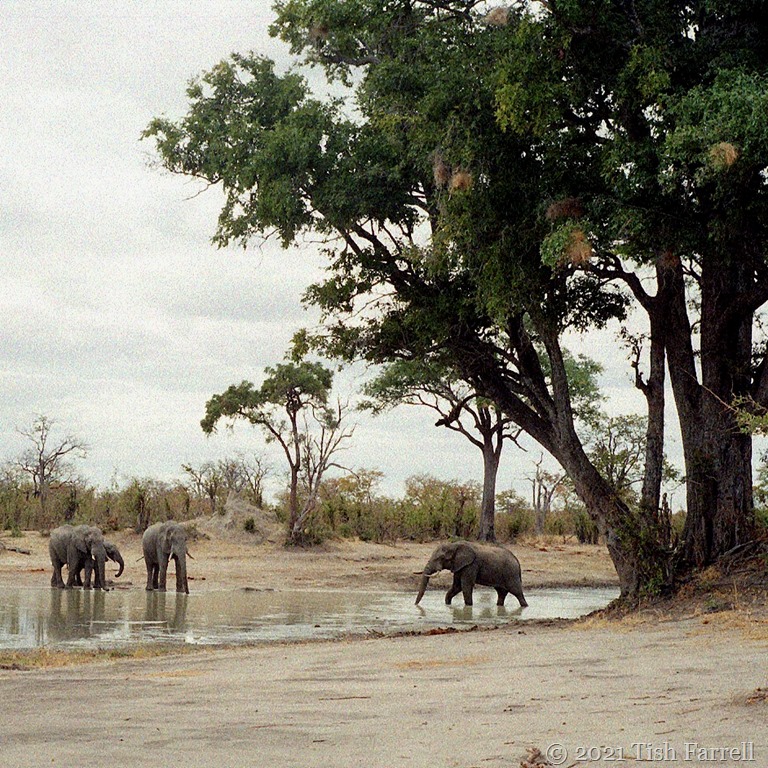
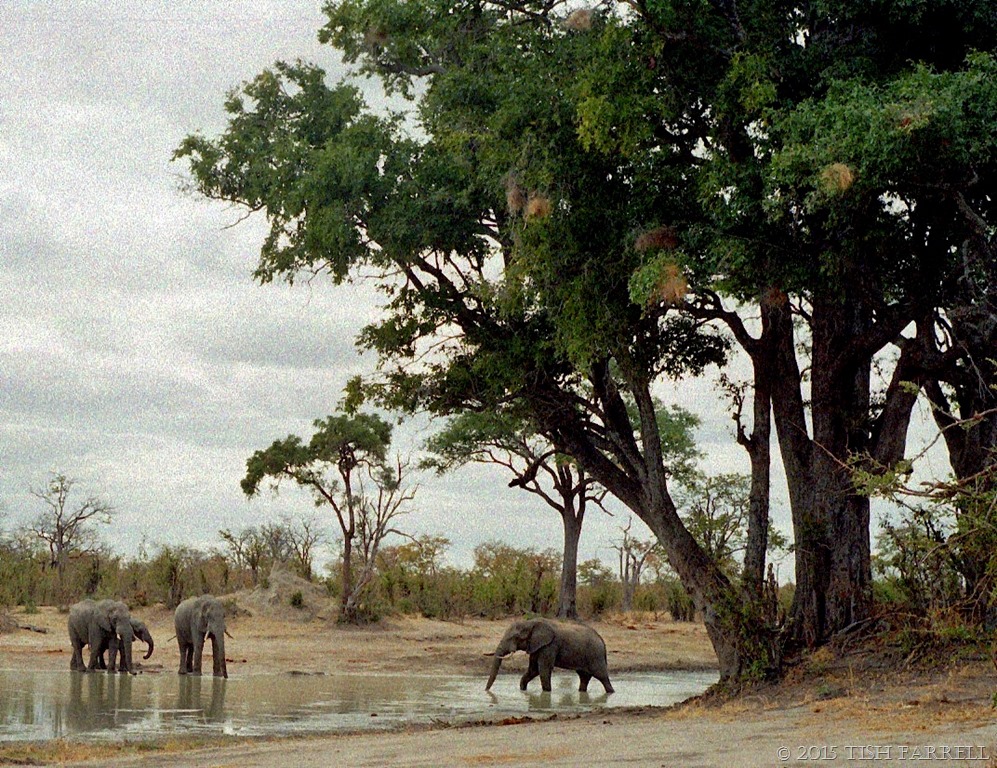
Anyway by July ‘93, winter in southern Africa, we thought we needed a holiday, and headed south for the then peaceably prosperous neighbour-state of Zimbabwe. We drove on near empty roads all the way to Harare. Back then that city  seemed like a wonderland, the epitome of sophistication compared to Lusaka where the downtown stores had empty shelves and all seemed stuck in a 1950s time-warp.  And after Harare we set off across Zimbabwe – nothing booked ahead – empty roads. The only downside was a gloomy day or two when we were in Hwange National Park and my little camera could not cope with low light levels. Still, it just about managed to capture the elephants under this very large acacia. They turned up while we were eating our picnic lunch.

Photo: Hwange National Park, Zimbabwe.

Tree Square #29

Dreaming Upstream Zambezi

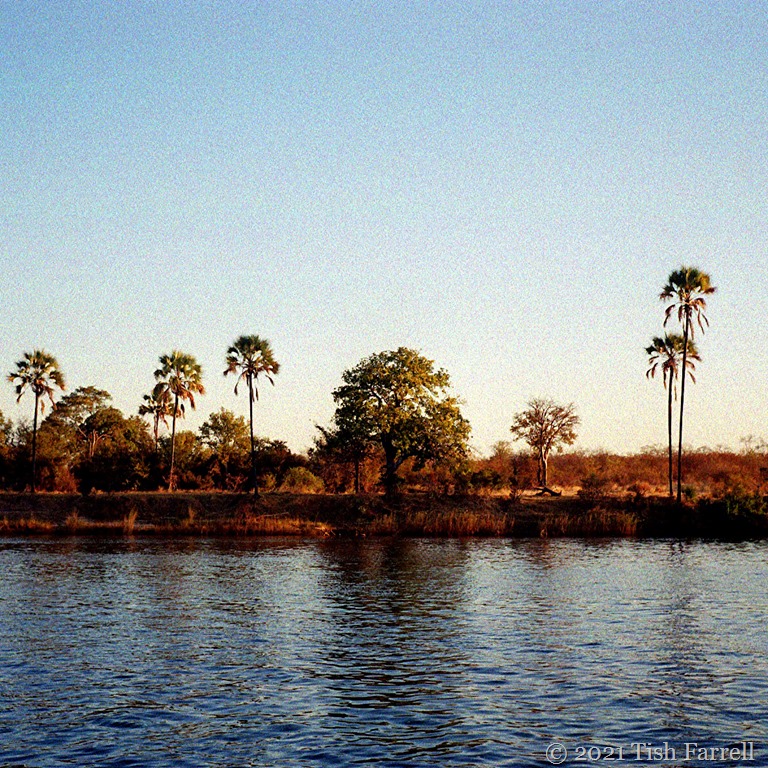
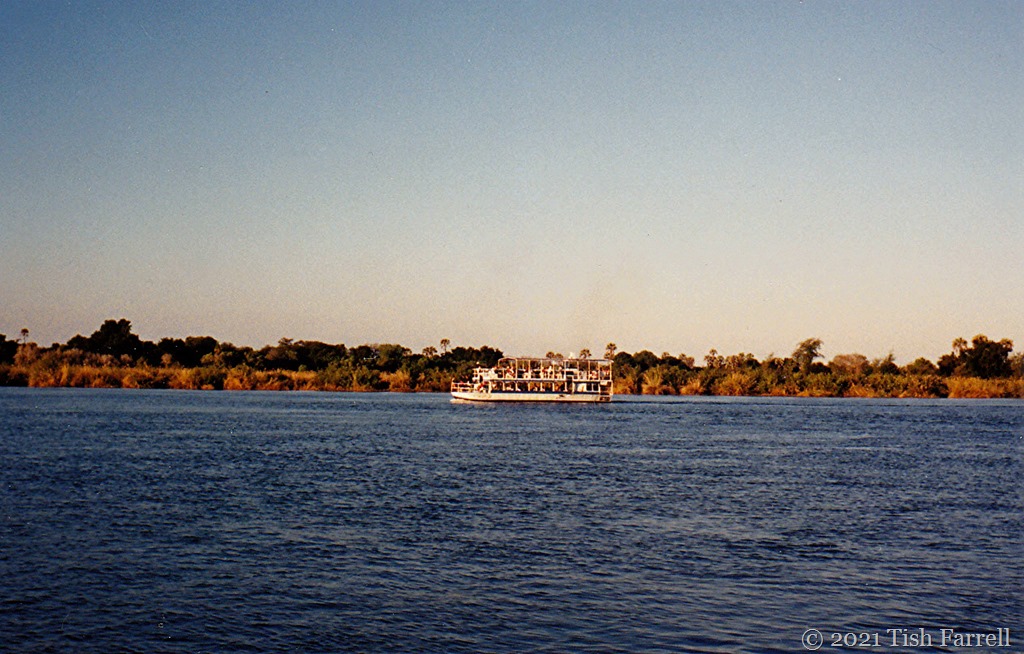
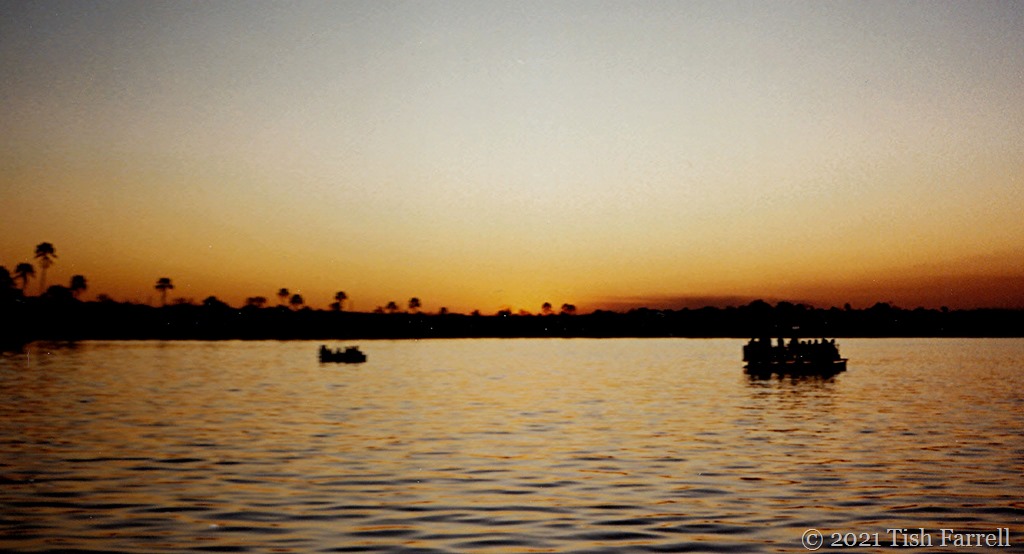
Zambezi sundowner trip

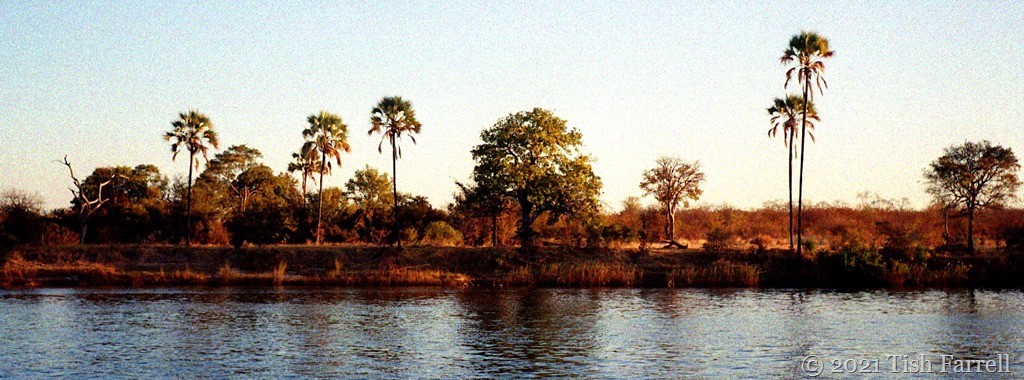
There were many things we saw and did while living in Zambia and Kenya that were hard to process – even head on; even when fully present. It was as if the actuality dial in one’s brain kept sliding out of tune, sparking dissonance: am I here or am I simply observing myself here, courtesy of an imagined translocation from the pages of some hyper-real travelogue. I mean to say, how could I possibly be taking a sundowner boat ride up the Zambezi. How had I come to this place where I never expected to be?

We were living in Lusaka, Zambia, at the time. That posting had been unexpected too, notice given only on the day we exited Kenya after ten months there. Suddenly Graham was on another short-term attachment, this time to the EU Delegation, managing the distribution of food aid to drought-stricken villages. Then one day an old school friend, en route from the UK to New Zealand, wrote suggesting he and partner make a visit, but he could only get incoming flights to Harare. OK said G. We’ll drive down and pick you up.

And so began a fantastic make-shift safari – out of Zambia into Zimbabwe – crossing the border (and downstream Zambezi) at Chirundu then heading south for Harare. Then on further south through Masvingo to Great Zimbabwe. After that a loop west and north through Bulawayo, the Matopos and Hwange National Parks and back to the Zambezi and the Zambian border at Victoria Falls. And so one evening we found ourselves on a sundowner cruise, ambling upstream between Zimbabwe and Zambia. But then again perhaps that wasn’t really me.

IMG_0004_NEW

IMG_0003_NEW_0001

*

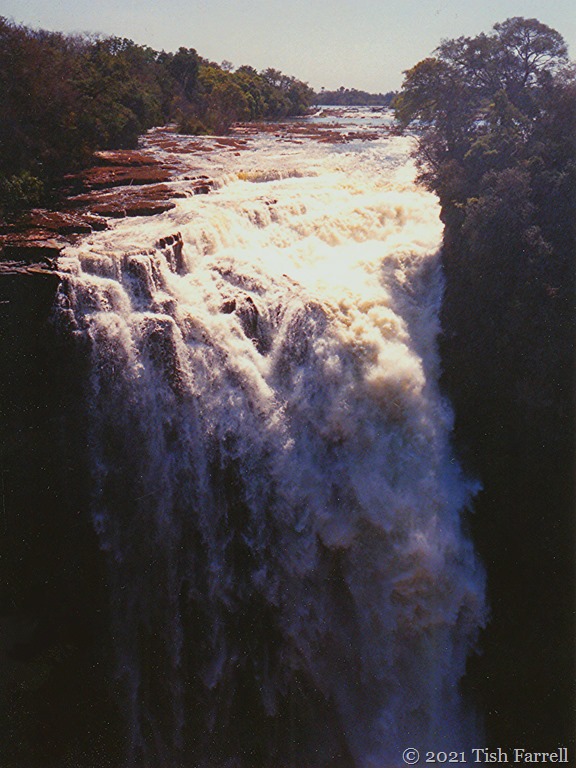
I couldn’t end this final ‘up’ post in Becky’s inspiring month-long challenge without a downstream view too. Look out! Here we go – up and over the knife edge – Victoria Falls – Mosi-oa-Tunya – The Smoke That Thunders. Way-haaaaay…

IMG_0001vic falls

zambezi header


Square Up #31  A big big thank you to Becky for helping to keep our spirits up all through January

Back To The Old Africa Album ~ All Manner Of Waiting In All Sorts Of Places

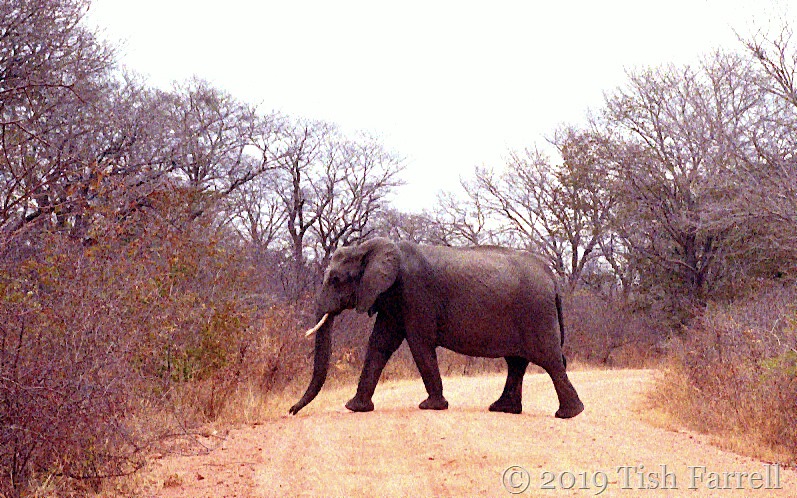
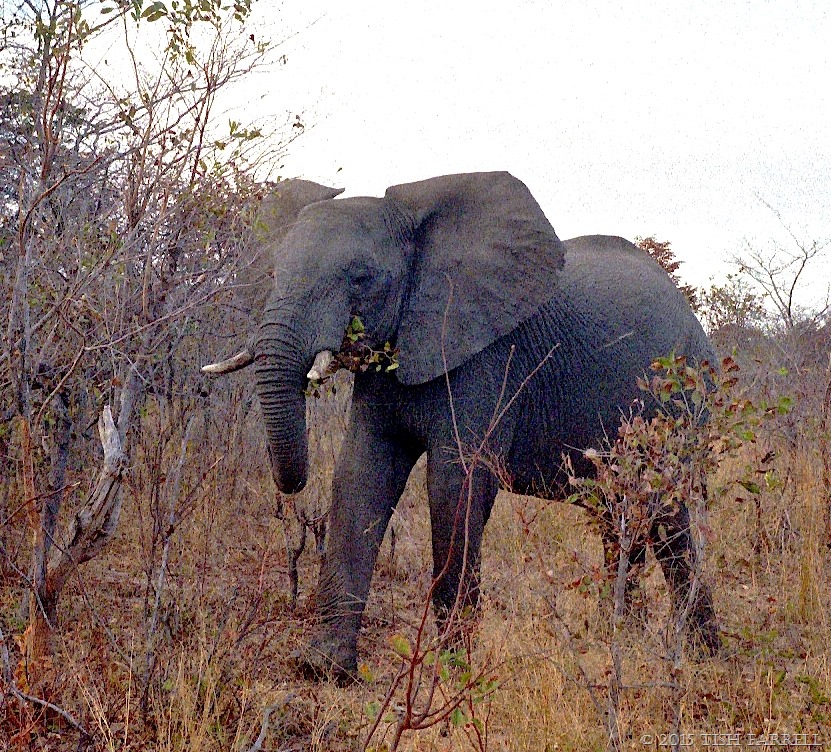
Hwange National Park - elephant crossing our path

It’s always best to wait when an elephant decides to cross your path. This particular elephant crossing episode happened in Hwange National Park, Zimbabwe. The photo was taken in July, southern Africa’s winter. The bush country was tinder dry and the skies overcast, and the nights chilly. We were living in Zambia at the time and had driven down for a couple of weeks meandering. Zimbabwe is a very fine country for a spot of meandering.

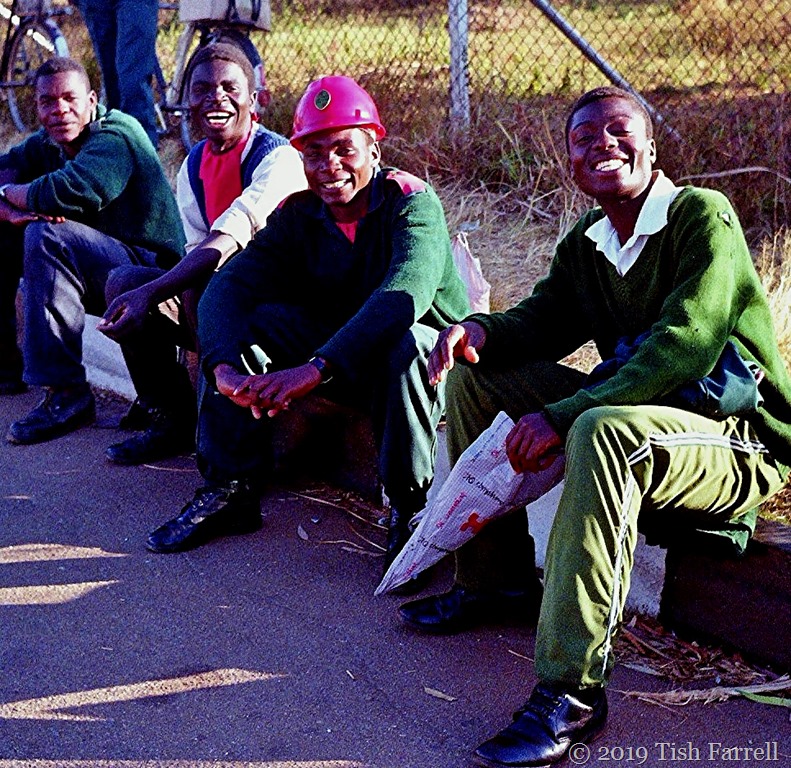
Harare night guards waiting to go on duty

This photo was a piece of pure happenstance. I’d just walked out of the post office somewhere in down-town Harare. These security guards were waiting to start the 6 o’ clock night shift. I was invited to take their picture. A treasured shot.

*

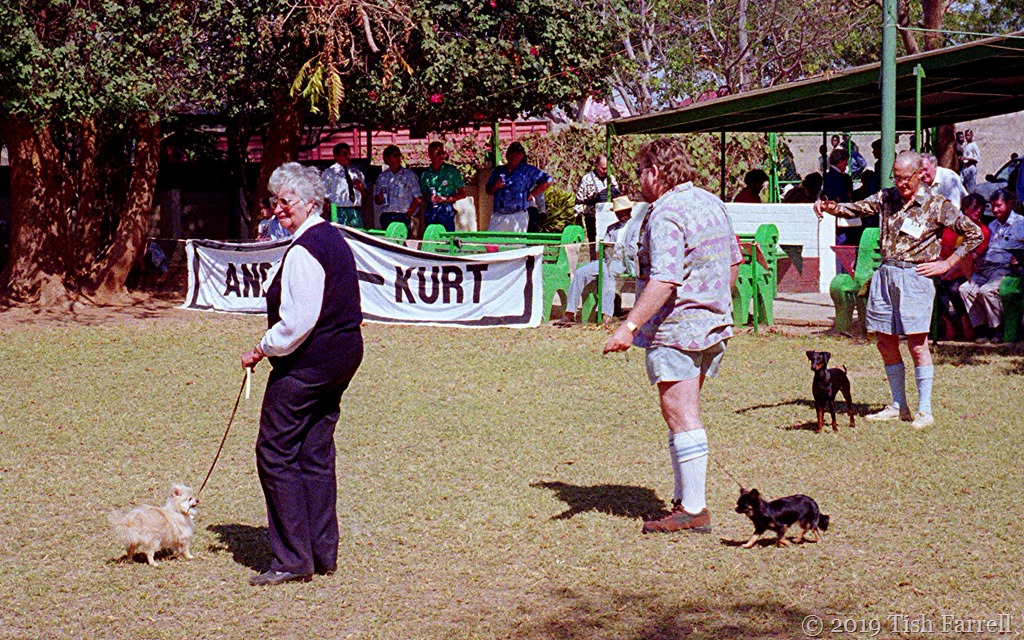
Lusaka agricultural show - Dog Show

We’re in Lusaka, Zambia for this dotty photo. One of the institutions that the colonial British left behind in the African territories they invaded is the annual agricultural show. These days it is a big family day out for Zambians and but oddly also includes (mostly for members of the European and Asian communities) a dog show. Here we see entrants in the terrier class waiting for the all important judging moment. I seem to remember it was the Manchester terrier (far right) that got the first prize rosette.

*

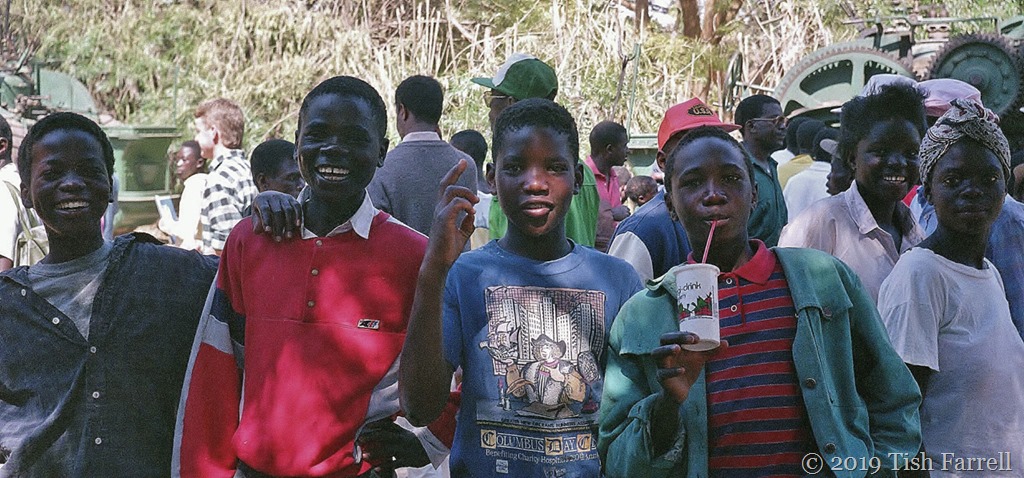
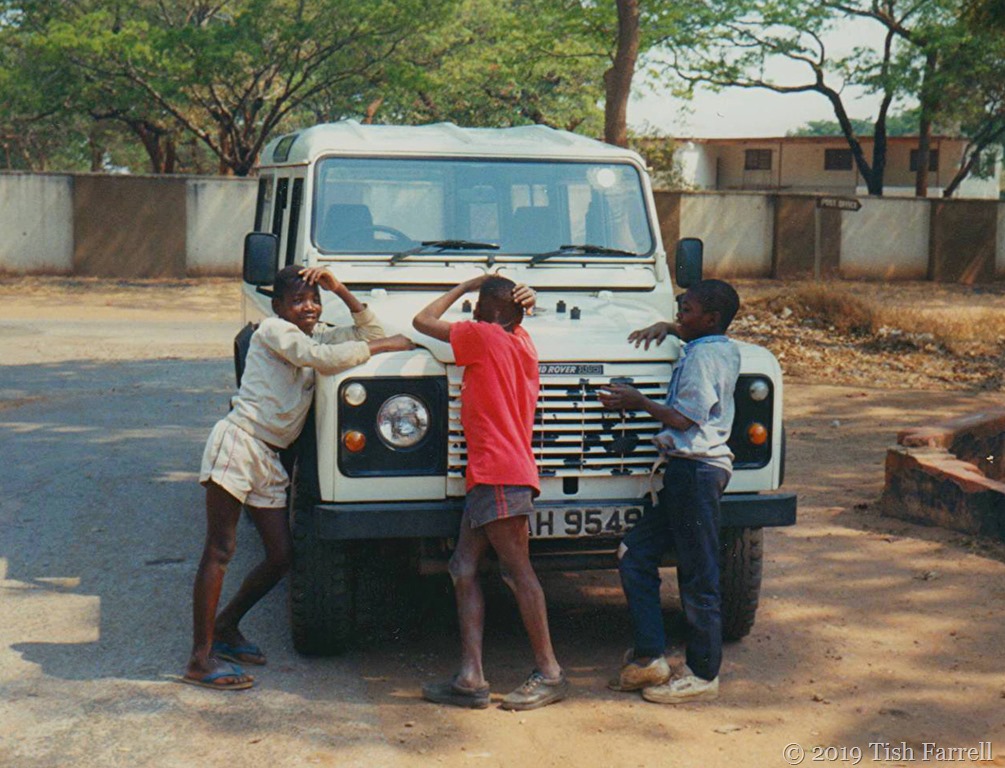
Lusaka agricultural show - kids

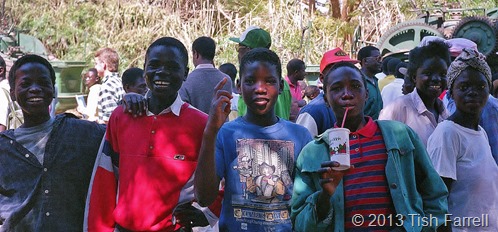
Kids doing what kids do everywhere – hanging out in hopes something interesting might happen.

*

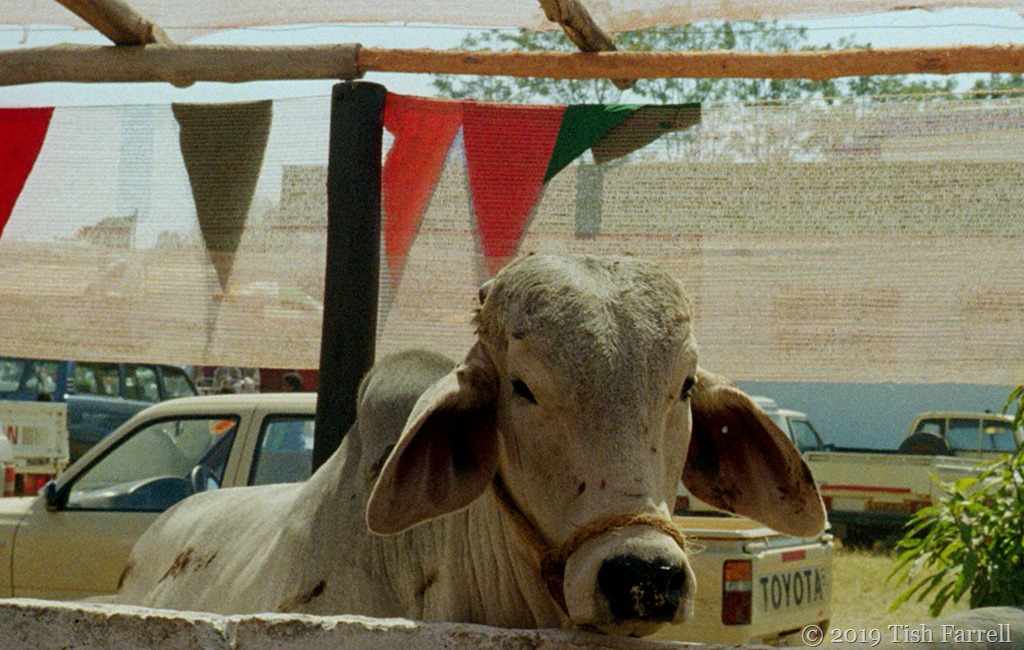
Lusaka agricultural show - African cow

A patient zebu bull waiting for his moment in the judging ring.

*

004

Woodside shopping centre, Lusaka. Parking boys waiting for their guarding fee from the car owner. All over the continent, where millions of young people are unemployed, this is how some lads make a living.

*

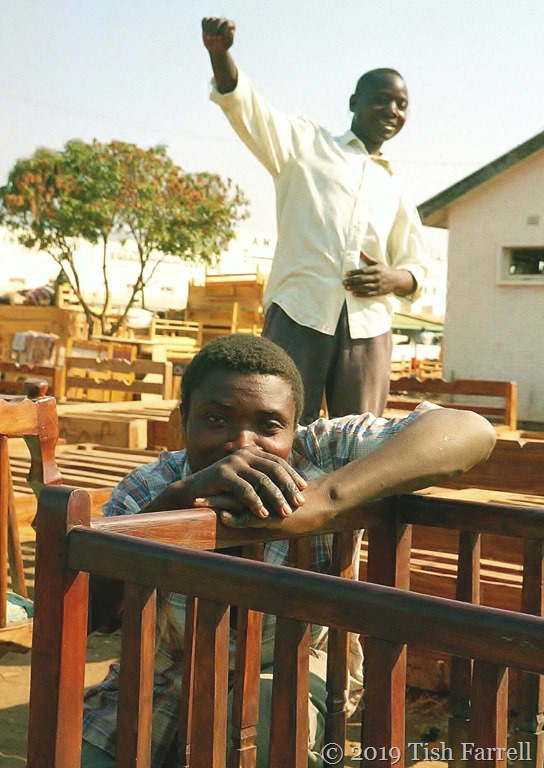
Kamwala roadside furniture market

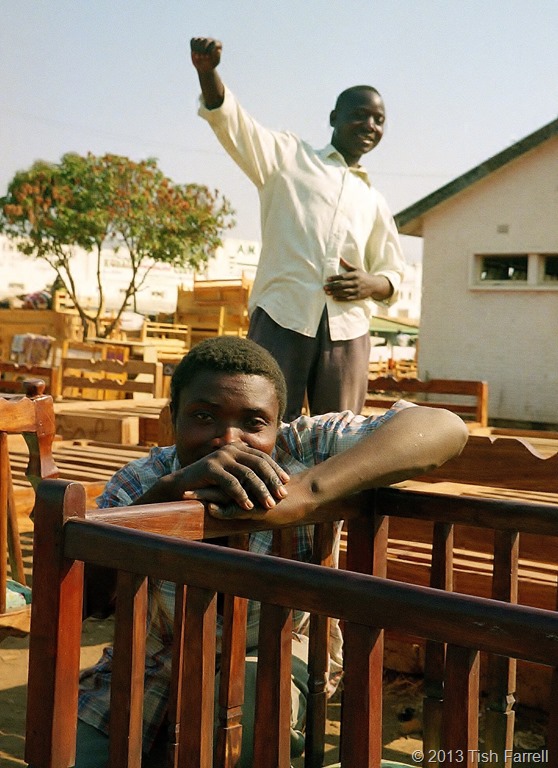
Waiting to make a sale: Kamwala furniture market, Lusaka. We bought most of our big household items, beds, chairs etc,  from roadside craftsmen. They made good stuff, a lot of it from recycled shipping crates, or by simply repurposing reeds and timber from the highway verges. I miss this way of life. It’s how we should be living: local produce, locally sold by the people who made it, and no need to drive to the out-of-town shopping mall; and none of it shrink-wrapped in sheaves of plastic.

*

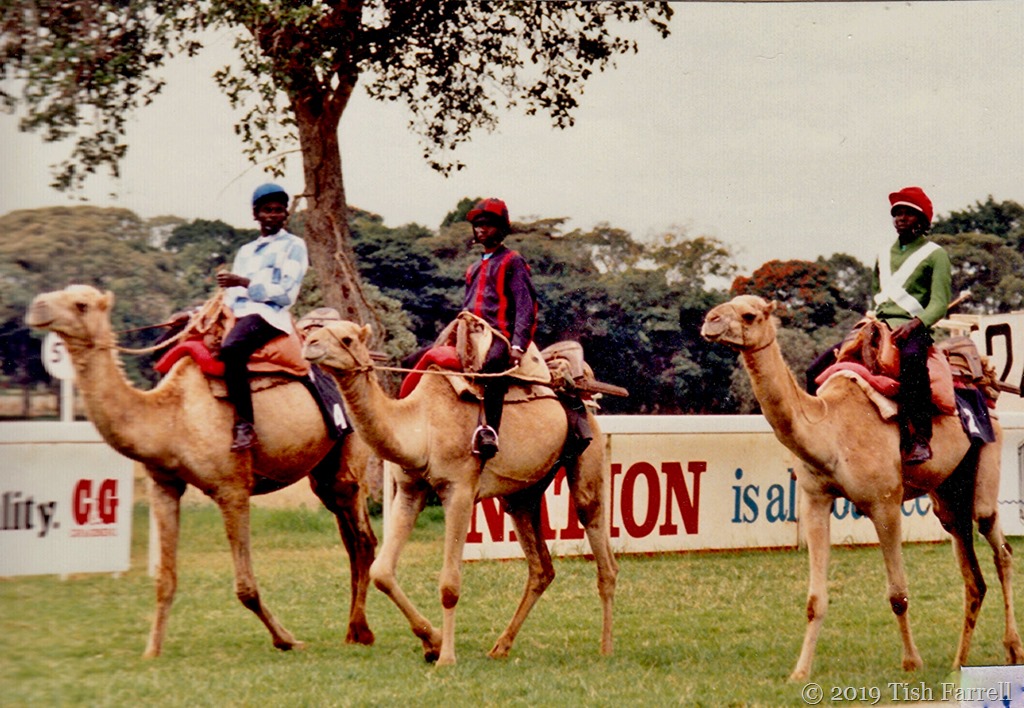
races_0004 - Copy

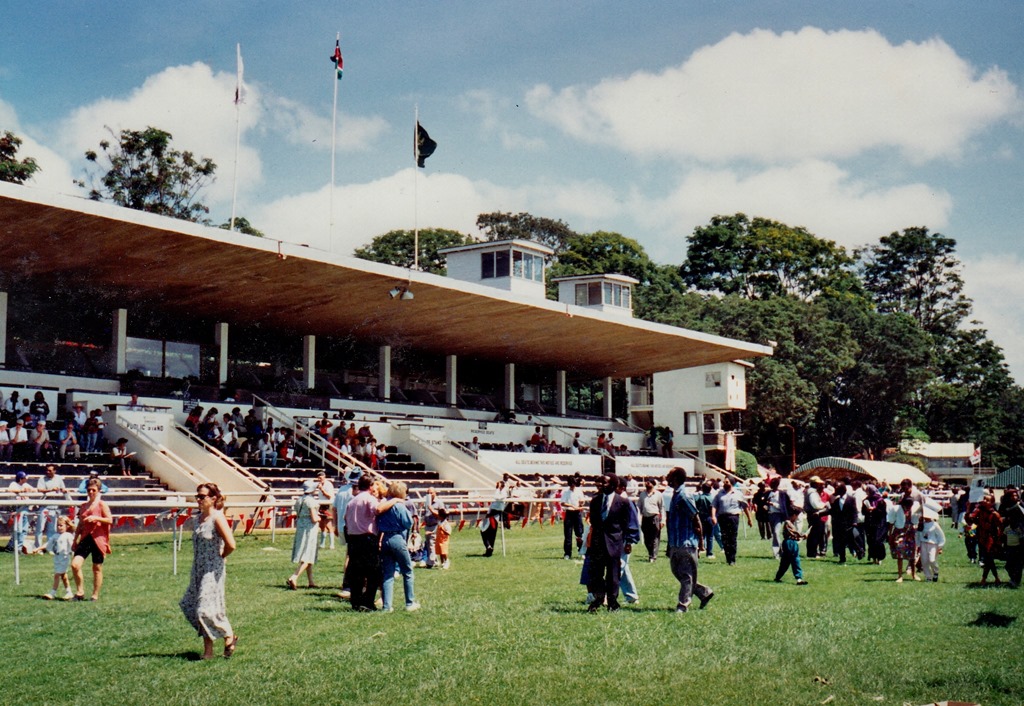
We’re in Nairobi now, at the Ngong Racecourse. These are members of the Kenya Police Anti-Stock Theft Unit who operate in the arid northern district. This was supposed to be a race, but the camels couldn’t summon the enthusiasm – either to start or to finish. So here we are waiting for them to pass the finish post.

The Ngong Races are another hangover from  colonial times, wherein the institution of ‘Race Week’ was laid on over the Christmas period to provide white settlers with the excuse to come to town, get totally blotto and so escape the lonely toil on their isolated farms. These days the races are popular with Nairobians from all walks of life, though a glimpse of the members’ enclosure and of the memsahibs in their big hats might make you think you’d landed at an English county race meeting.

races

Waiting for the next race.

*

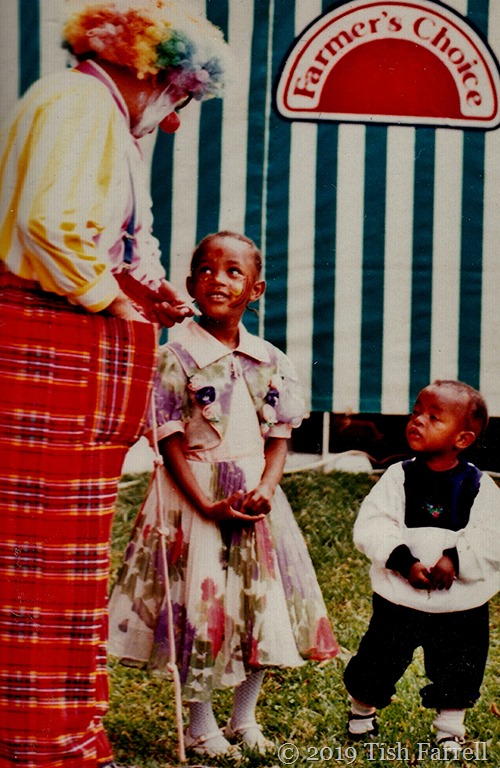
Race Day is also very much a family event, so there is lots to keep the children amused: face painting, donkey rides, ice creams and Mr. Magik doing tricks.

races_0004 - Copy (3)This little boy does not seem too impressed: waiting for magic to happen perhaps.

Lens-Artists: Waiting Amy set this week’s challenge. Go and see how she has interpreted ‘waiting’.

The Way We Were ~ More From The Kenya Diary

Greater love hath no man than he who spent hours and days, and more hours and days transcribing this writer’s Kenya journal. Prior to transcription, and due to various computer glitches, it existed only on reams of faded, flimsy print-out paper. It was just about scannable, which was tiresome enough to complete, but the end result then required hours of copy editing. So thank you Graham.

And for those who don’t know the background to this, from January 1992 to January 2000, Graham aka the Farrell Team Leader, was working out in Africa on various British aid agricultural projects. The first year we were largely itinerant, travelling up and down the Mombasa highway between Nairobi, Kiboko, Taita and Mombasa.

Graham was working on a project to control Larger Grain Borer, a voracious grain-decimating beetle introduced to Africa in a consignment of US food aid. The actual home of this pest is Central America, and Graham had spent some time studying its behaviour in Mexico. He was then employed on a short-term consultancy project by the Natural Resources Institute in Kent, and thence despatched to Kenya.

His main base was the Kenya Agricultural Research Institute in Nairobi, but there was also a field station a hundred miles south at Kiboko, where the Kenyan project staff worked. When Graham had to make a visit, we stayed at Hunter’s Lodge, once the home of big white hunter, John Hunter, and later (in the ‘60s) developed into a small tourist hotel. The place had its heyday around this time, or until the horrendous dirt road to Mombasa was tarred, and coast- or city-bound travellers no longer broke their journeys at Hunter’s Lodge.

sundowner

In our day it was unusual to find any other overnight guests there, although there were plenty of staff, the waiters always smartly turned out in black trousers, white shirts and red bow ties, and ever in attendance in case anyone turned up.

Much of 1993 was then spent in Lusaka, Zambia. Graham was attached to the European Union Delegation, contracted there to organise the distribution of food aid during a period of prolonged drought. But at the end of that year we returned to Nairobi, in the first instance, to close down the Larger Grain Borer project at Kiboko, but later to run a crop protection project which involved British and Kenyan scientists working in partnership with smallholder farmers to overcome various crop and livestock problems. And here we stayed until the start of 2000 when the British Government closed the project down.

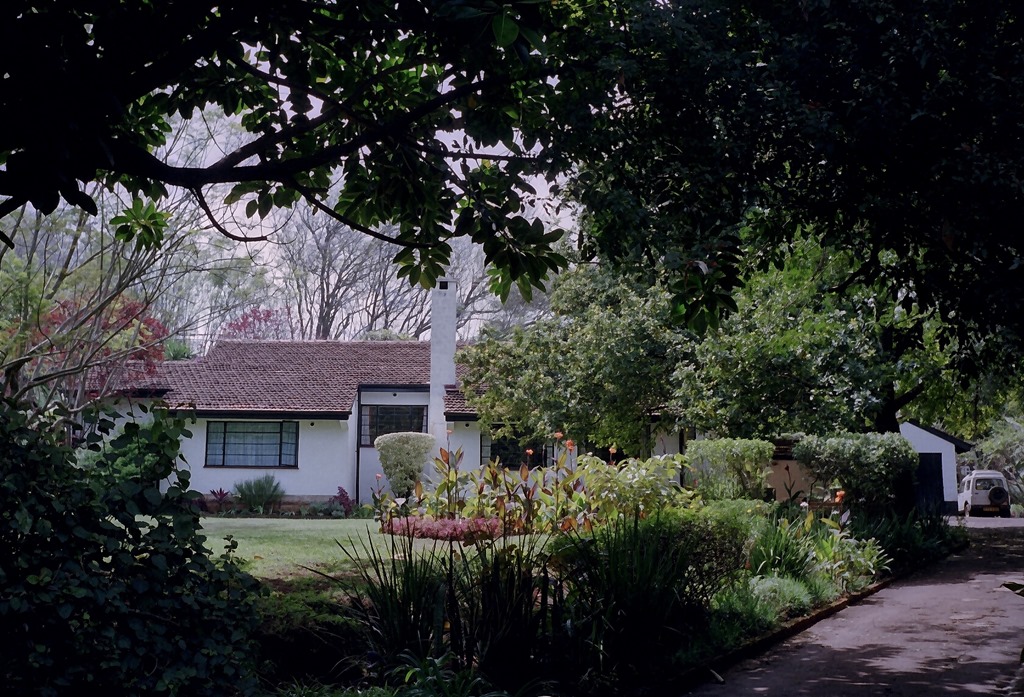
While we lived in Nairobi we were housed in a British High Commission house, which also came with Sam, our house steward. He lived with his family in a cottage at the bottom of the garden, but as we never had enough for him to do, he only worked mornings. His actual home was in Western Kenya where he owned three very small smallholdings in different places. Then there was Patrick, our day guard, also provided by the BHC. He never had much guarding to do either, so Graham paid him to look after the garden which he did with impeccable diligence. His home was also in Western Kenya, where his wife and children lived on his own smallholding. Sam told me Patrick had deployed his earnings from guarding and gardening on the building of a good stone house for his parents and was currently building one for himself. He was also paying for his children’s education. While he was working in Nairobi, which was 11 months of the year, he rented a room in one of Nairobi’s slums.

Scan-140809-0043

The following extract gives a few glimpses of expatriate Nairobi life and those cultural events that owe more than a little to the country’s British colonial past.

*

29 August 1994

Months have passed and no journal entries. In June we went home to England for three weeks. It was cold and windy and time was gobbled up visiting family and storming the shops. Then came the weeks of adjusting again to Nairobi living. It seemed very strange that, after all our days and miles of travelling, the only news Sam had when we got back was that the avocado tree had finished fruiting. Otherwise, everything was as we had left it.

And to root myself in once more, I took to gardening. Another effort to get the better of the over-shaded vegetable plot; flower beds cleared for tomatoes and herbs; a new plot excavated under my office window; seeds sown and the ever vigilant Patrick following up with the watering can at dawn and at dusk.

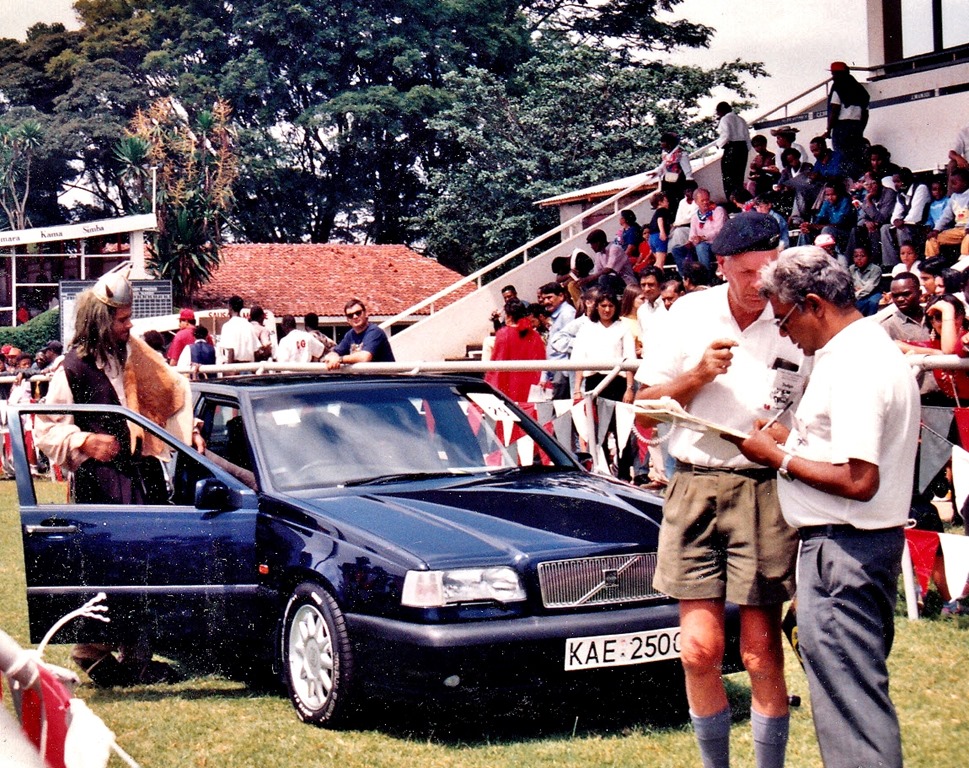
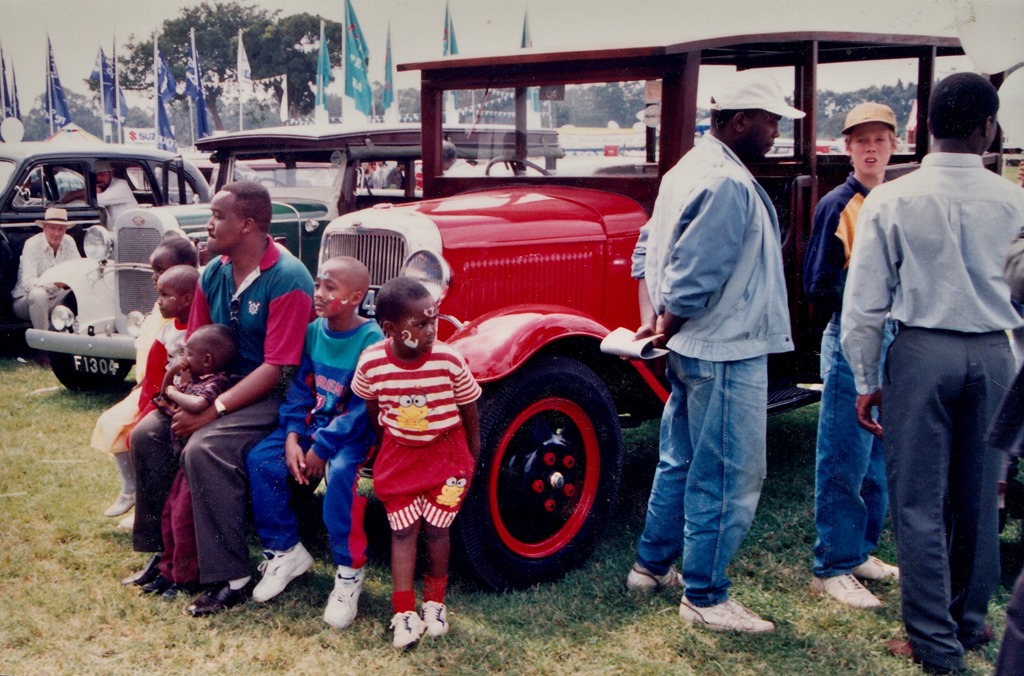
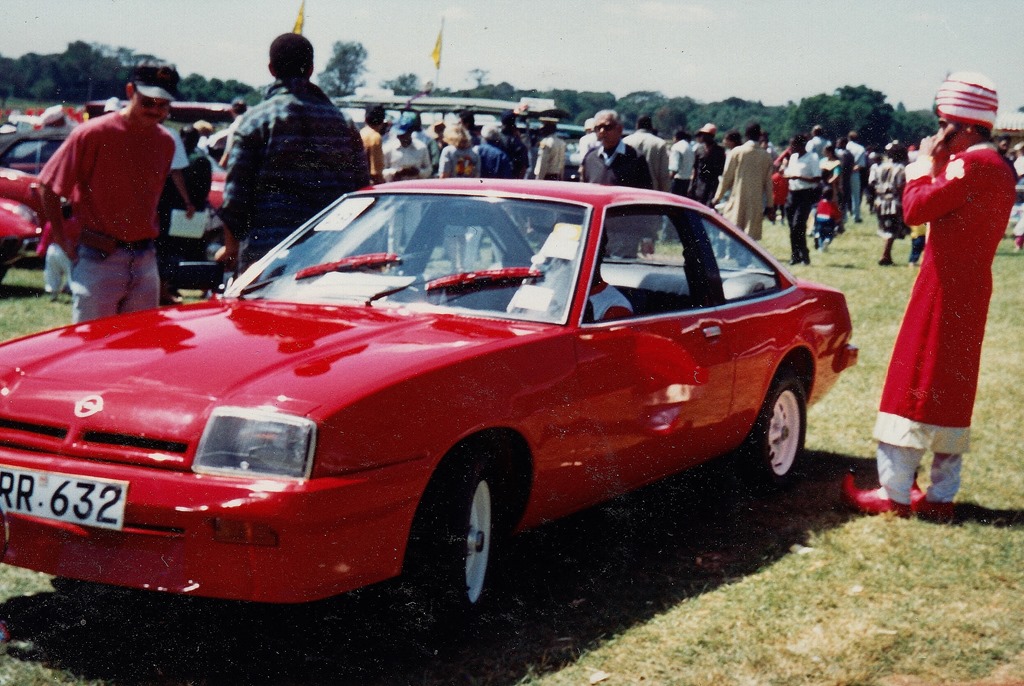
In July we went to the Ngong Racecourse for the Concourse d’ Elegance,  one of Nairobi’s annual multicultural events. It is a specialist car rally wherein owners show off their vintage vehicles including aged safari trucks (one of which had ‘starred ‘in  Out of Africa), wartime jeeps, a venerable Mini, period Peugeots, Alfa Romeos, Mercedes, Volvos and a red E-type Jaguar.

Nairobi car rally 4_0001

Nairobi car rally 3

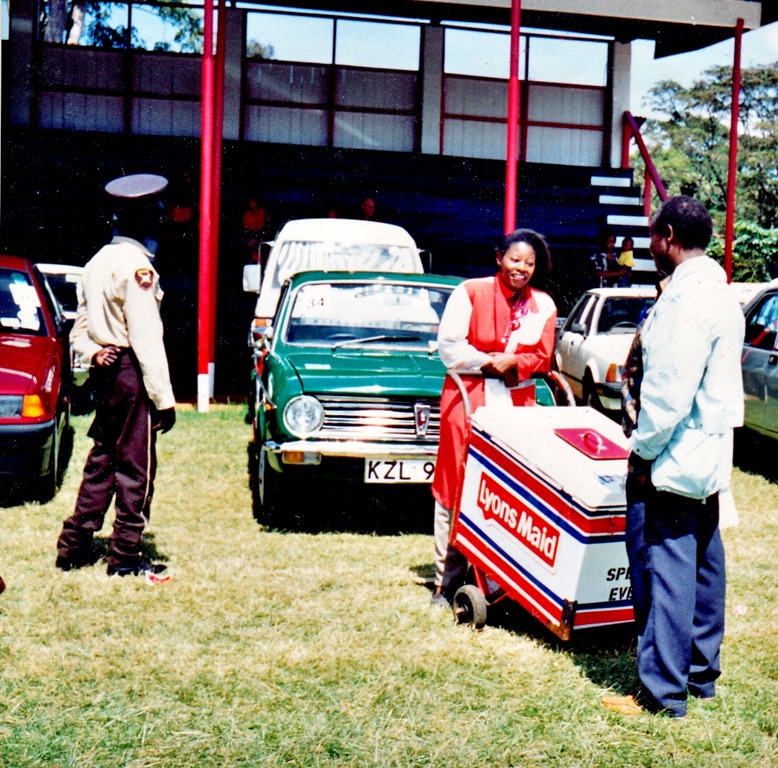
Car owners from the Asian community were dressed up as maharajahs and Arabian Nights grand viziers, the Europeans in more peculiar costumes – a woman dressed as a large black spider, one chap in full Viking gear. There was an overall atmosphere of the English Village Fete. The Kenya Society for the Protection of Animals laid on donkey cart rides around the race course grounds; Mr Magic was doing tricks for the children; the East African Ladies group had a charity cake stall. There were welly-wanging contests, face painting, remote control model car races, hotdog stands and Lyons ice-cream carts.

Nairobi car rally 2

Nairobi car rally 4

Nairobi car rally 4_0002

The racecourse itself is a picturesque colonial relic. Stands of gum trees, the tiered main grandstand creeper-covered and housing a shady restaurant, and nearby the race steward’s offices, the Jockey Club members’ precincts, the collecting ring sheltered by mature trees.

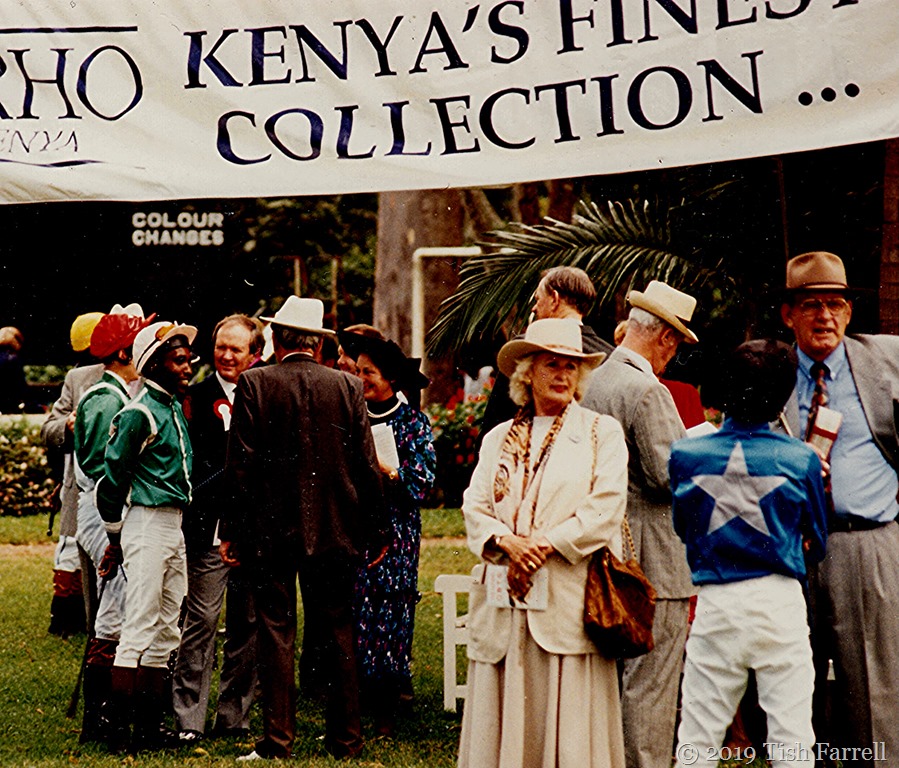
We thought we’d like to see what the place was like on race day, so a week  or so later we turned up for the Lonrho races. Kenyans take their racing seriously and the whole ground was humming with activity. The ‘old colonial’ set were very high profile, chaps in their grey plaid racing suits, members’ tickets dangling from lapels, their ‘good ladies’ in Ascot frocks and hats to match. In fact the woman who won the best outfit contest truly looked as if she was anticipating entry to the Royal Enclosure. At such times you can only blink: the British abroad – what are they thinking?

The first race was something of a novelty event being a camel race. The beasts and riders came from the anti-stock-theft police patrol in the remote north. There were four contestants, the riders in  bright racing colours. But the camels weren’t too lively and it took some time to cajole them to the starting line. And even after the gong  had been rung, it was hard to tell if the race had started. Every spectator head was craned, gazing across the course for signs of activity. Time passed. It was thus the biggest excitement when the first camel hove into view. He finally jogged  fast enough to reach the finish line, his rider waving not only arms but also legs to celebrate their mutual victory. It was hard to imagine that these camels ever caught up with any cattle-thieving bandits.

Then the serious racing began, most of the horses from wazungu stud farms up in the Rift Valley, and their riders so slender-limbed and tiny, I wondered if  the race horse owners employed their jockeys from the Okiek community,  the last of Kenya’s original indigenous inhabitants of slight-statured hunters. We sat in the grandstand for a while, watched the Kenyan Air Force band marching on the course between races, listened to the commentator who sounded to be the very same man who serves at every English agricultural show and sporting event wherever it is on the globe, looked at the Kenyan mamas in their elaborate kitenge costumes, had our ears blasted as two Air Force buglers dashed up into the grandstand to trumpet the start of the race,  admired the fine looking Kenyan rider, whose task it is to lead the mounted jockeys to the starting gate,  he sporting his  English hunting pink jacket and tight white breeches – yet another of Nairobi’s cross-cultural phenomena that challenge perceptions at every turn. It was all so absorbing that we didn’t even get round to placing any bets.

Our next trip to the racecourse was in early August, to another extraordinary multicultural event. This time to the Royal Ballet performing their specially created programme in aid of Kenyan conservation, Dances for Elephants. The week’s performances were aimed at raising funds for various Kenyan wildlife projects – rhino surveillance, Grevy’s zebra surveys, elephant monitoring, conservation education in Maasailand. It was the brainchild Royal Ballet Mistress, Rosalind Eyre and Oria Douglas-Hamilton, wife of Dr Ian Douglas-Hamilton, Kenya’s resident elephant expert.

Performances were laid on at several venues: at the racecourse, at the Lake Naivasha home of the Douglas-Hamiltons (complete with picnic hampers), at the Windsor Country Club and at the residence of the British High Commissioner, Sir Kieran Prendergast. Local businesses sponsored tickets so cohorts of Nairobi school children could go to the racecourse matinee and have their first ballet experience.  A congratulatory telegram also arrived from HRH The Prince of Wales, wherein he praised the sixteen dancers’ efforts and generosity in giving up their time. He also said he wished he could be with us, which we could not fail to doubt as we had recently read newspaper reports of another “Diana” scandal looming back in the UK.

We arrived in the racecourse at sundown, and again found the place was thronging.  It was a clear evening and I wondered if anyone had warned the dancers how chilly Nairobi was in August.

The audience was well catered for though. There was a tent serving hot drinks and hotdogs as well as a bar. We had come prepared with our own flask of cocoa, cushions and wraps. The grandstand was mostly filled with members of the diplomatic community and Kenyan professionals from the companies that had sponsored the event, but we could sit where we wanted among the concrete benches of the grandstand. The Jockey Club members’ padded seats comprised “The Circle” for which people had paid 3,000 shillings a ticket instead of our 700  bob. We settled down on Vitafoam sponge mats on the front row.

The stage was ingenious – two flatbed trucks parked tail to tail. Cranes rearing up behind each cab supported the roof and stage light tracking. Either side were the enormous speakers of the sound system that had been donated to the cause by Lufthansa. The racecourse and its stands of gum trees lay to their back and, as the sun disappeared behind them, black kites wheeled overhead,  mewing and on the lookout for abandoned hotdogs.

At dusk the dancing began – excerpts from the whimsical ballet ‘Still Life at the Penguin Cafe’, opening with the zebra dance, “White Mischief”. It could not have been more surreal, of itself and also because there was the stage backdrop of the African plains with the real African sky behind it, and real African ‘sound effects’  of cricket and frog call.

*

Here is a version of what we saw out on the Ngong Racecourse on a chilly Kenyan night (best viewed full screen):

https://www.youtube.com/watch?v=Jh0TPvus7r4

Interesting The Things Your Stats Tell You

Tish Great Zimbabwe (2)

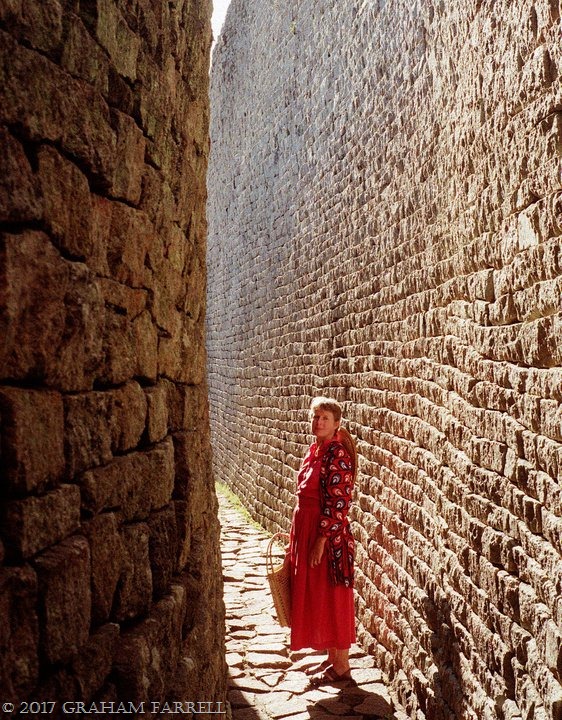
Actually this is probably just an excuse to post yet again this very old photo of me at Great Zimbabwe. We were living in Lusaka, Zambia at the time, Graham on a year’s attachment to the European Delegation, in charge of food aid distribution. You can read that story at the link.

Towards the end of this posting we drove down to Zimbabwe, and spent a couple of weeks touring around. Back in the 1990s it was a fabulous country to visit. We simply followed our noses, and drove on near empty, but well-kept roads, one of which brought us at last to Great Zimbabwe. We pretty much had the place to ourselves too. It was astonishing.

Anyway my stats of the last few days suggest to me that somewhere in the U.S. a bunch of students has been given a Great Zimbabwe assignment. I know this because they’re all opening a post I wrote 3 years and 2 blog themes ago: Abandoned: Great Zimbabwe. This happens periodically, although sometimes it’s Zimbabwean students searching for material on why the place was abandoned. It’s one of my perennial posts – not so much viral as chronic. Every year the traffic has doubled. Last year 1,311 people dropped in there.

But nothing gets as much traffic as my post on Karen Blixen and Denys Finch Hatton. Caught Inside A Kikuyu Garden. This was also written three years ago, and so far has clocked up 12,715 views. Of course I have no way of knowing if all these people have actually read the piece, but I find it intriguing. I also sometimes wonder what would happen if I had a ‘Karen and Denys’ blog, and didn’t bother to post anything else. Funny old activity – blogging.

Many Shades of Grey in Africa

Hwange - waterhole and elephants 3

Grey days in Africa can be incredibly dull. It is a strange effect: as if the light has been sucked out, but without it actually turning dark. This photo was taken around noon on a July day – Southern Africa’s winter. The sky weighed down in a way that was almost palpable; like walking through a Welsh sea mist, except it was dry; or as if you were looking at the world through gauze.

We had driven down from Lusaka in Zambia to spend a couple of weeks exploring Zimbabwe. The objective was to meet up with two Kiwi friends who were flying into Harare, and take them sightseeing before heading with them (via Victoria Falls) back to our house in Lusaka. The day this photo was taken we had just spent the night in one of the guest bungalows in Hwange National Park, and assembled a picnic of sorts in the Park shop.

Hwange Park has metalled roads which detracts somewhat from the notion of wild Africa, and so whenever a dirt track presented itself we took it.  Even so, we saw very little game apart from some kudu. It was mostly dry bush, and more dry bush, which soon grew rather boring. In the end we pulled up by the dwindling waterhole in the photo, and ate our lunch.

The waterhole had been empty when we arrived, and then quite suddenly, as is usually the way with elephants, this small family group appeared. The photo looks like a water colour, or a colour plate in a vintage travel book. I only had my little Olympus Trip, and I often had it on the wrong setting. But the other thing about elephants (and I think this image captures it) is that even when you are there, and can see them with your own two eyes, and are close enough to catch a whiff of their musky hides, it is still hard to believe in them. They come and go like mirages, walking always on the tiptoes, their heels supported by fatty pads that deaden the sound of their footfalls. It is thus very easy to be sneaked up on by an elephant.

Of course if they’ve decided to do a little tree felling, since they like to clear land to encourage their favourite grass to grow, or are seeing off some deemed intruder, then you hear them alright. Indeed, there is nothing quite so alarming as a trumpeting matriarch, clearing a waterhole of potential threats to the family’s infants. On this day, though, all was dreamy peacefulness, and concluded surreally enough in the Game Reserve Hotel at Dete where we were the only guests, and the only food on the menu were pieces of very tough meat  that took an hour to chew.

Hwange National Park - elephant in the bush 6

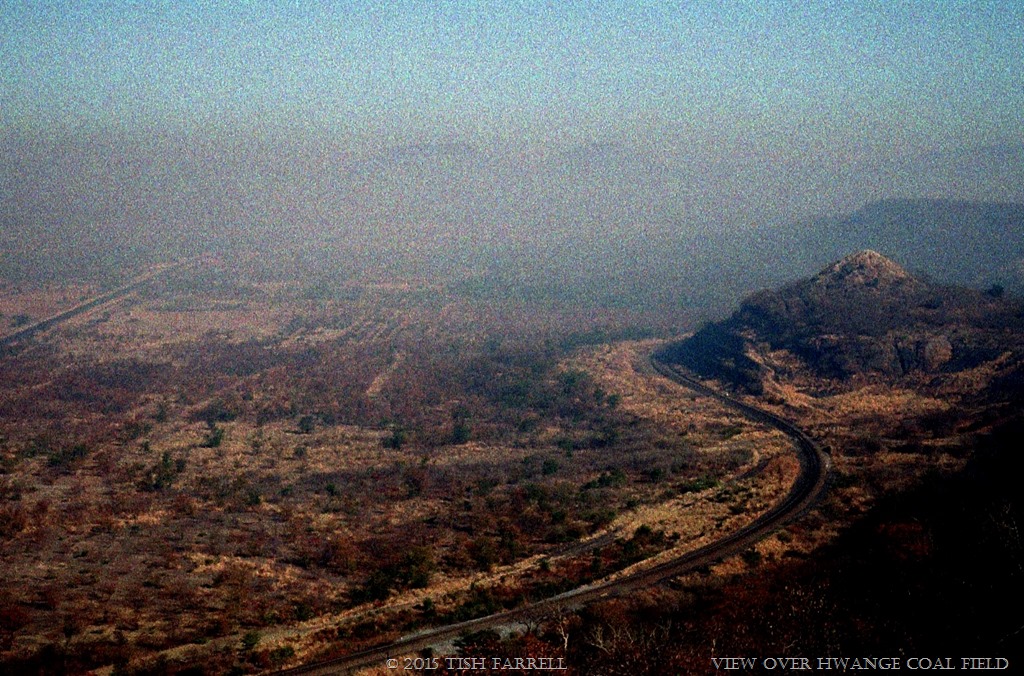
The next day, though, we woke to a new kind of dream – golden sun through a mist of coal dust that hangs like a heat haze over the vast Hwange Coal Field. And so we quickly turned our noses from the industrial smog and headed for the border and Victoria Falls.

Hwange - smog over the coalfields

copyright 2015 Tish Farrell

For more shades of grey please visit Ailsa at Where’s My Backpack

Letters from Lusaka: Part II

100_4437

In 1992-1993, during the first years of Zambia’s multi-party democracy, we were posted to Lusaka, Zambia’s capital.  The Team Leader was charged with distributing European Union food aid to drought-stricken Zambians. (Part I is HERE). For the first couple of weeks, and the irony was not lost on us, we lived in the 4-star Pomodzi Hotel, in air-conditioned luxury.

*

Notes from an aid nomad’s life in Zambia

While we are still at the Pomodzi I do the unthinkable as far as white locals are concerned. I walk out of the hotel grounds and down a couple of avenues to the Ridgeway Hotel. One of the visiting NRI chaps has told me that it has a good gift shop, and there may be the possibility of finding some local books.

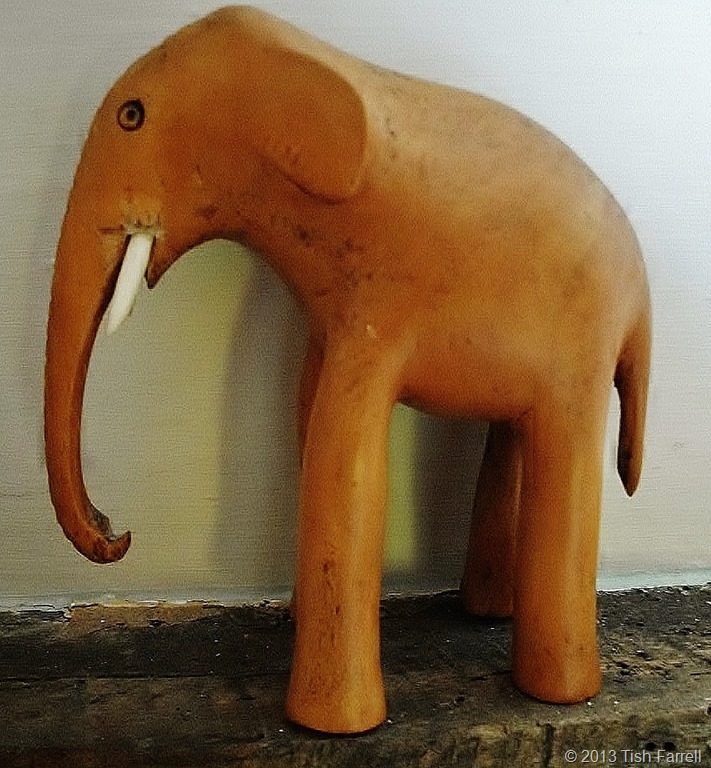
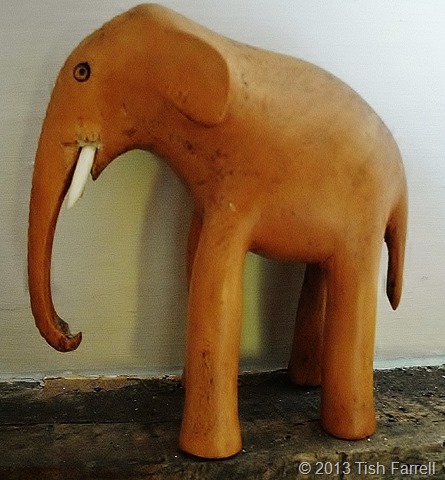
I set off on the basis that as I am not travelling by car, I will not be car-jacked. I am not. I buy a wonderful Tonga basket and a small olive-wood elephant for luck, but there are no books. I do find a map though – Lusaka one side, Zambia on the other. I study the country’s boundaries, trying to make sense of colonial cobbling that created a nation whose North Province lies to the east of its Central Province.

The country nestles in the heart of southern Africa between eight countries. In outline it resembles a foetal chick curled on its back within a protecting shell. In reality, though, I soon learn that Zambia has no such protection. It simply has too many borders and not enough military personnel. There are only some 300, 000 taxpayers in a population of eight million, which is not enough to pay for more soldiers. The north-west border with Zaire is lethally porous. Members of President Mobutu’s own unpaid armed forces regularly drive into Zambia’s Copper Belt and conduct armed pillaging campaigns against innocent drivers and householders. Sometimes they come as far south as Lusaka.

*
002

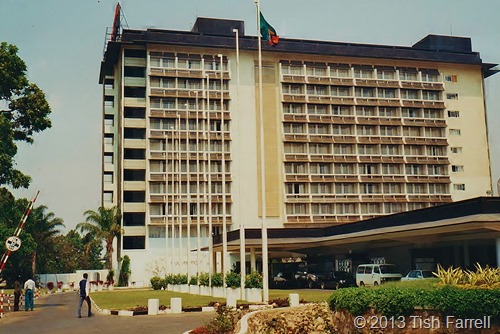
Pomodizi Hotel

*

We are told that when driving at night we must never stop at red traffic lights (locally known as robots), since this is the moment that car-jackers will choose to pounce. Over in Eastern Province the threat comes from the conflict in Mozambique as RENAMO guerrillas cross the border to shoot up Zambian buses and steal food. In Western Province UNITA fighters from Angola’s war terrorize Zambian villagers. Famine, then, is only one cause of death; there are many others, and the mineral resources that Cecil Rhodes sought so hard to control through his dark-hearted dealings with local chiefs are high on the list.
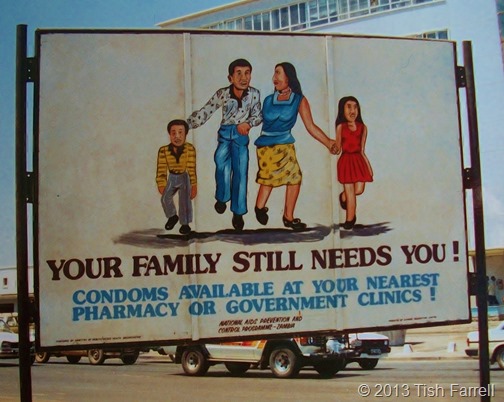
100_2135

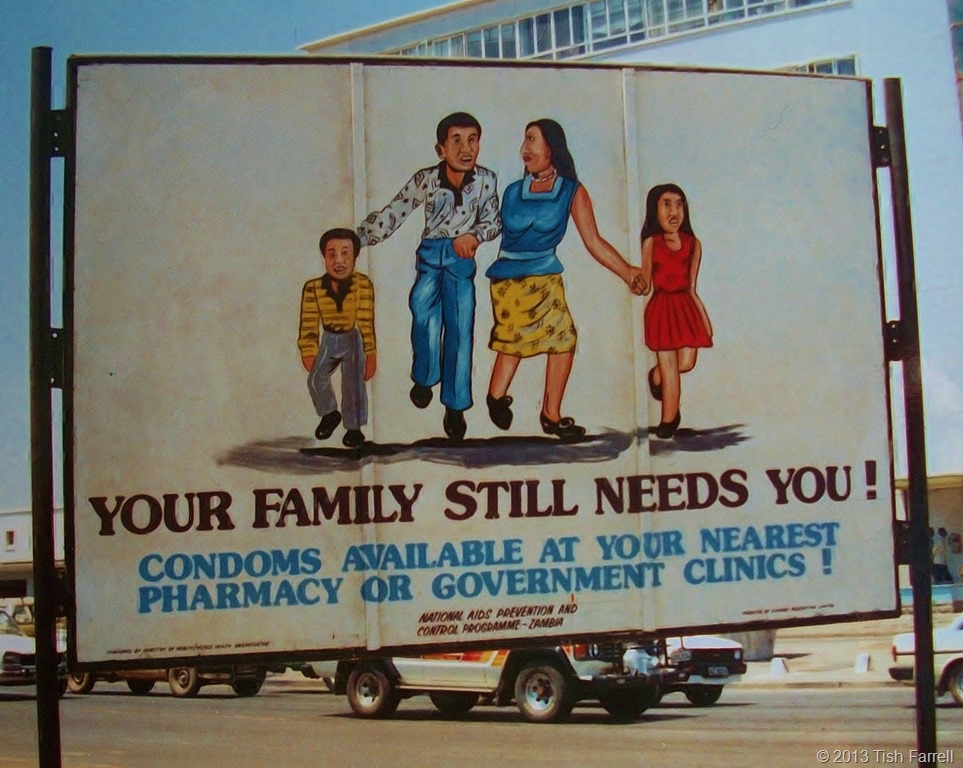
AIDS awareness down on Cairo Road.

*

Then there is malaria and tuberculosis, and as the rains bucket down through December, the cholera season begins. Overflowing septic tanks and pit latrines are polluting the city’s boreholes. At first, oblivious of such dangers, we eat out at downtown restaurants. We are down in Livingstone, near the Zimbabwe border, G checking out the contents of grain stores, when I am stricken with amoebic dysentery. Again it is the Delegation secretary who comes to the rescue and directs us to the mining companies’ private clinic, downtown on Cairo Road. The diagnostic facilities there are impressive, the British-born doctor patronizing. But after a three-day course of very large pills, I recover. I am lucky. Of course I am.

*
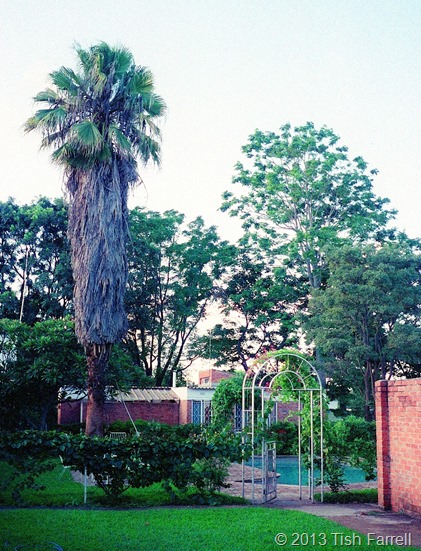
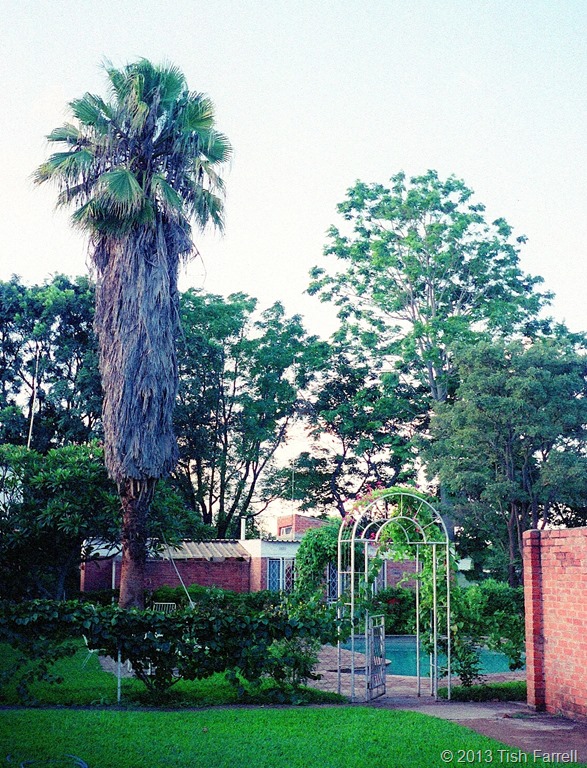
Sable Road - compound pool

Six or so houses share the gardens, including a very small pool.

*

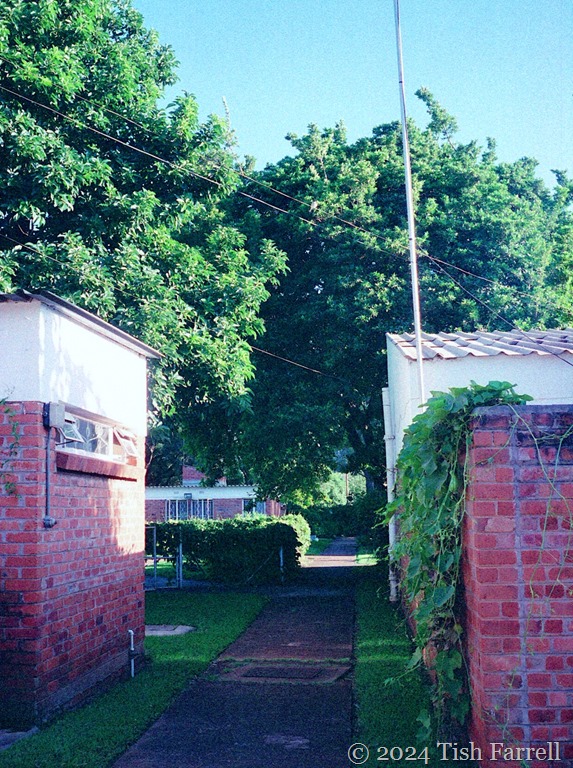
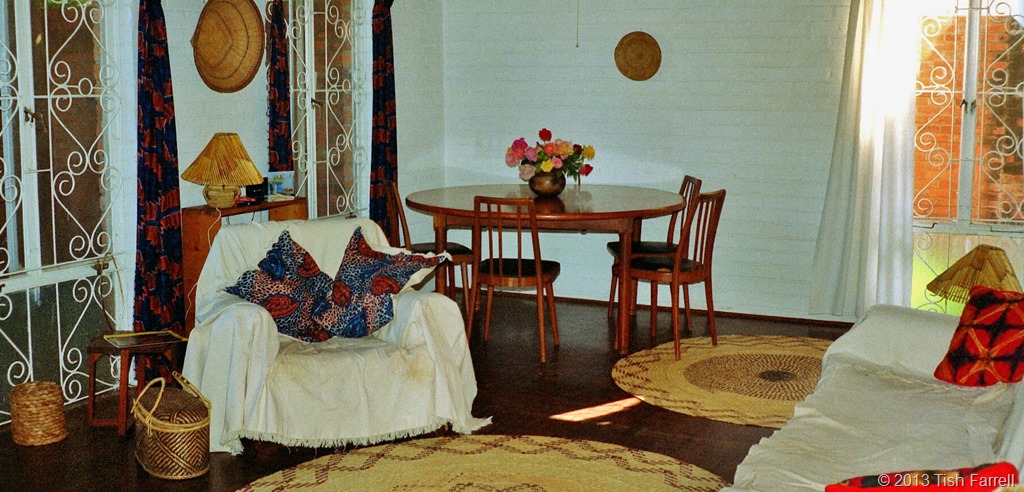
We like our little house. It is red brick, single storey with a sheet iron roof that, during the rains, resounds as if someone is firing bullets into a host of upturned buckets. The living room has French doors opening onto a tiny high-walled garden. There is a big avocado tree in the corner where African sparrows come twittering in to roost in late afternoon. Above the wall, when it is not raining, arcs the blue Zambian sky. To the rear, a small kitchen gives onto a walled back yard and a patch of grass. There are two bedrooms, a tiny study and a bathroom. Outside the front door is a communal garden and terrace – garden seats set by a small swimming pool, a tall palm that rustles endlessly in the high plateau breezes, a sweet scented frangipani tree. No house overlooks any other and there are shady walk ways in between each property.
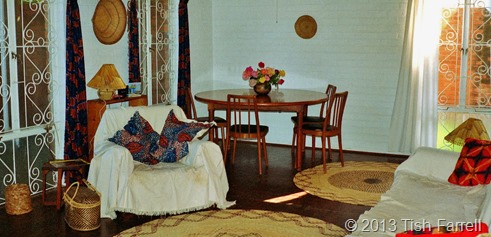
Sable Road our sitting room

Home in Sable Road

*

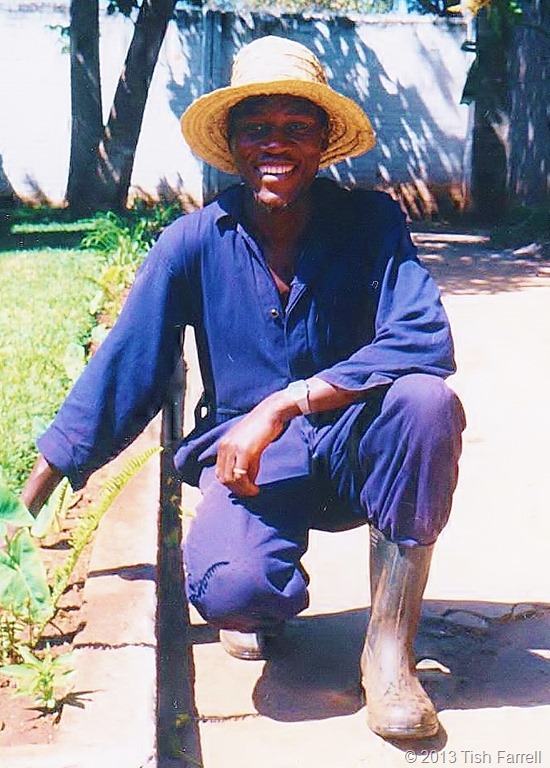
The gardens are tended by a gentle young man called Stephen Nyangu. His name suggests erstwhile connections with the Nyanja royal clan. But Stephen’s situation is a far cry from tribal pre-eminence. He sweeps, mows, weeds, plants, prunes and waters six days a week, from seven in the morning to five in the afternoon. Then he cycles the couple of miles to his compound home in Leopard’s Hill Road where he lives with his wife and four children. The gardens he cares for bloom strangely under sub-tropical skies with tea roses, violets, pansies, Sweet William and Madonna lilies. He also washes all the cars and hefts all the dustbins to the big compound gate to be emptied once a week. For this he earns twelve thousand kwacha a month, about eighteen pounds. He has no leave beyond national holidays, and after work he runs a cigarette stall.
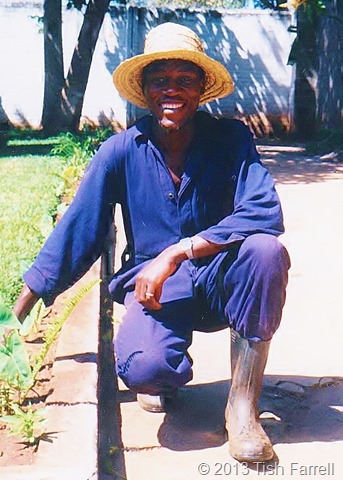
014

Stephen Nyangu works day and night to keep his family.

*

On my first day in our new home, it is Stephen who knocks on my door. “Good morning, madam. My name is Stephen. If there is anything you want me to do, I am just out there.” He gestures in the general vicinity of the pool. “Call me.” He is the only person on the compound who bothers to introduce himself. In ten months we scarcely see any of the other tenants beyond the Sikh couple who live next door. They nod to us. They have two much pampered, miniature Pomeranians and a maid called Isa. Isa looks a good-hearted soul and she works in several of the other households on the compound once she has done her daily tasks for the Sikhs. These include much furious chopping at seven a.m. Perhaps she is chopping for the Pomeranians. When she is left in charge of them for three months while their owners go on leave, she grows so fed up with their insistent yapping that one day she yells SHUT UP. And so shocked are the indulged little canines, that they do just that. I want to hug Isa.

I further decide that my house is scarcely big enough to justify even a once-a-week cleaner, this despite the constant slick of red dust that blows in every day. I thus do my own housework.

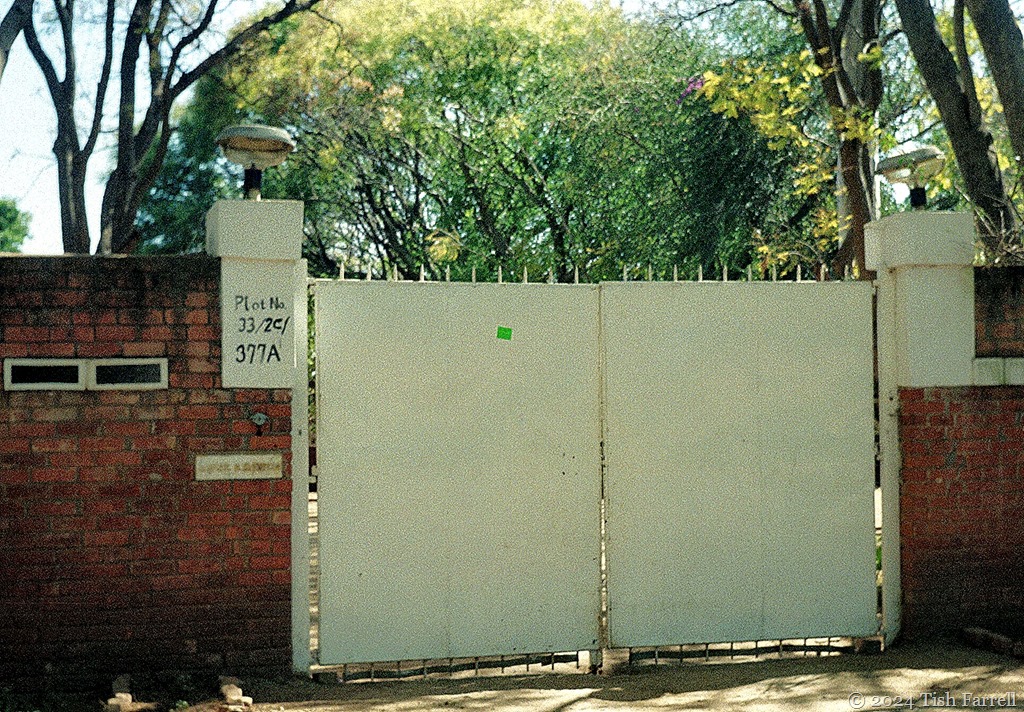
Our compound is on Sable Road in Kabulonga, the heart of the diplomatic quarter. Our next door neighbour is the Egyptian Embassy. At night the guards fire off rifles. We never do know what is going on there, and sometimes it sounds like a siege. Our compound is one of the least fortified on the road. The iron gate has open railings instead of sheet metal armour plating, and our day guard, Sammy, always leaves it unlocked  anyway during the day, while he plays draughts with a neighbouring house-guard. He’s a bit  nonplussed by my habit of going out on foot, and at first dashes from his game to open the gate as if I were a passing vehicle. We soon come to a silent arrangement whereby we greet each other, I open the gate for myself and he keeps on with his game. 

We soon discover that our household security provision falls short of official standards. European Union and British High Commission employees are advised to have internal security gates installed, external security lights, roof siren, alarm buttons, window bars, a pack of Dobermans and ridgebacks, a two-way radio and armed twenty-four-hour guards. The fortification of a property may cost around £5,000. Somehow we survive without most of these devices, although the top of our garden wall, which also forms the rear of the compound, is quite high and is further cemented with shards of broken glass.
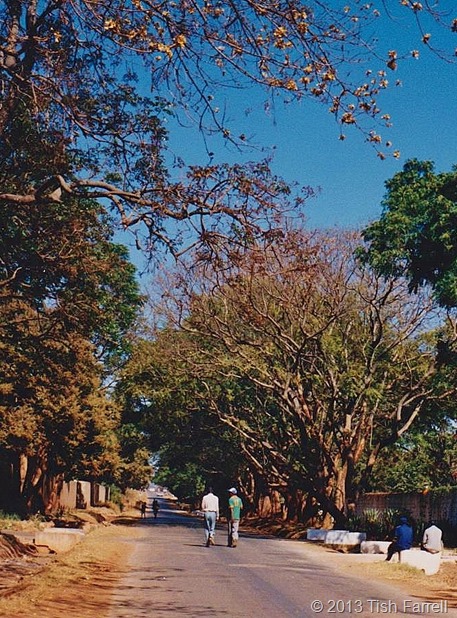
015

Sable Road in the dry season.

*

The nights, though, can be nerve-wracking. Rounds of automatic gunfire are common after dark. Some European locals, we hear, have made a ritual of standing on their front lawn at 9 pm every night and shooting off their sporting rifles – just to let “the thieving bastards” know what’s what. These are the same people who will tell you that, when they are not trying to relieve you of all your worldly goods, the Africans are really very charming. But gunfire aside, it is anyway hard to sleep in the perpetual gloaming of the security lights dotted around our compound. The insects, too, grow louder as the night draws on, and then the dogs wake us.
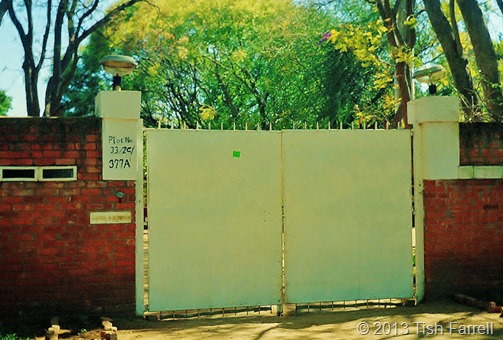
Elite suburban living

Expatriate living: guard house and armoured gates.

*

I call it the Kabulonga Howling. It begins with a solitary keening which swells into a relayed dog lament that spreads from compound to compound until a monstrous crescendo resounds across the suburbs. Once reached, it quickly subsides, to be replaced by the insistent beat of Zambian disco music, thrumming away beyond our perimeter wall. We have no idea who lives behind our glass-spiked rampart. I have tried standing on the brick barbeque in the back yard, but I still cannot see over the wall. Instead, I often hear a Zambian boy badgering his little sister whose name is Lorna. Lorna is always being ordered to do something or other. There is meek compliance in her little voice. It is the lot of many Zambian women to defer to men, and my heart aches for her. One day I find an arrow in the back garden – a stiff plant stem tipped with a bent Mosi beer bottle cap. For a moment I examine it like Robinson Crusoe finding unsettling signs of life on his confining island shore.

By day G. drives off early to the EU Delegation. It is only five minutes’ drive away. I begin to tend the back garden, sowing beans, courgettes, carrots. Things quickly sprout, but the land snails are as big as my fist. I write and read, although finding books is a challenge. We can find no bookshops in Zambia since the nation can no longer support a publishing industry. Once a week we drive down to the British Council on Cairo Road to borrow books from their library. We do this, ignoring white Zambians’ warnings that our Suburu will be car-jacked if we park anywhere downtown. Whenever we go to the library, most of Zambia’s students seem to be studying hard, filling every seat. It is hard to gain qualifications in a land without books.

Newsprint , too, is hard to come by. Newspapers sell out quickly each day and I have to rely on G. bringing the Delegation copy home at lunch-time for quick scan through. Soon we hear that four Zambian Daily Mail accountants have been arrested for ripping off their own company’s limited newsprint stock and selling it to a rival newspaper.

Then there is the challenge of household shopping. Our local shop is Kabulonga supermarket where I frequently search the shelves to the strains of  Michael Bolton’s The Lady in Red. A beautiful girl in cobalt blue chitenge and matching head-cloth that is  tied with great flourishes, is often on the till. She has the poise of a princess.

When it comes to shopping, it is a matter of buying whatever is in stock and then thinking of something to do with it. Treats include cartons of delicious and imported Ceres grape juice, and jars of sweet pickled beetroot. The local yoghourt comes in big tubs, plain or strawberry. Other staples include corned beef and South African wine. The supermarket smells of countless forms of perfumed cleaning products that at Christmas time are parcelled up into gift packs to make the ideal gift, along with small bales of second hand clothing.
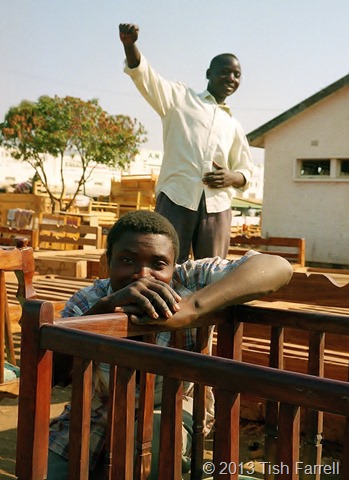
Kamwala roadside furniture market

There are plenty of roadside artisans. We bought our bed from traders in  Kamwala Market

*

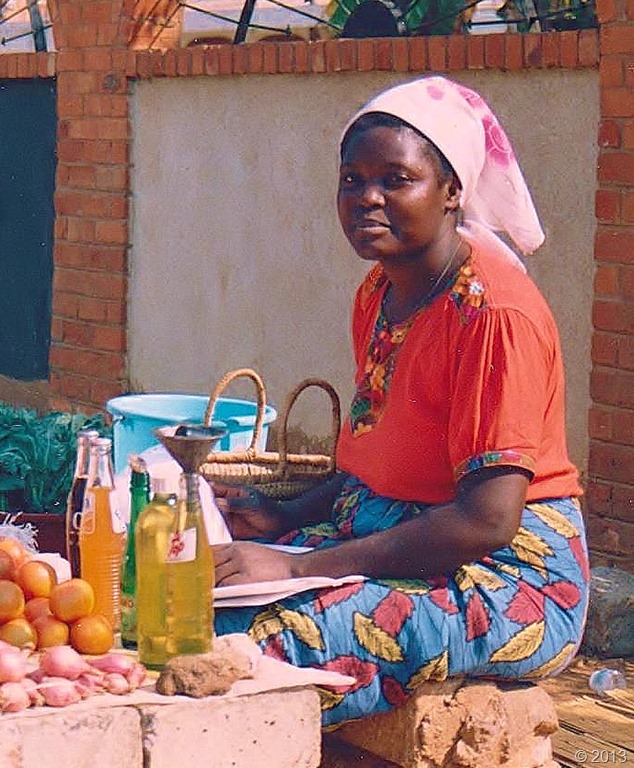
There are of course shopping opportunities everywhere along Lusaka’s streets – cigarette and second hand clothes stalls, a man selling bread, another with his scrawny hens, fish from a freezer connected to nothing, caterpillars dried or roasted, large woodland mushrooms the colour of cygnet down, little pyramids of tomatoes. If I buy two piles of tomatoes from the young woman in the photo, she gives me an extra tomato as a “special gift”, and then wraps the lot in computer print-out.
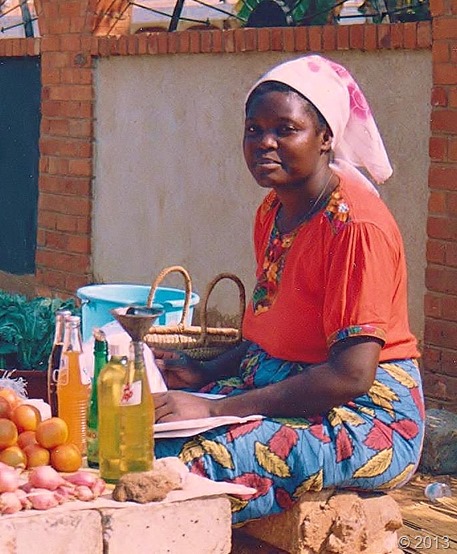
001

I also walk down to the Maluwa Cooperative in the hopes of something more interesting than beetroot and corned beef. Again I never know what I will find there: perhaps, if I’m lucky, a good mission-reared chicken in the cold cabinet, or button mushrooms, some Gouda cheese, broccoli, new potatoes, French beans, bunches of roses. If he catches me walking, an elderly white Zambian in a pick-up, (his ‘boys’ in the back), always insists on giving me a lift. He means well, and it is easier to comply with his desire to save me from imagined predations of Zambians than to argue.

But I like it out on the road. There is so much life there outside the high walled, razor-wired residences of the elite. People greet me. A taxi driver trying to mend his broken-down car offers me a lift, presumably in hopes that if I agree, his vehicle will conveniently right itself. I grin and say no thanks. I like his style though. As I step out again on the dirt road that has lost its asphalt, my footprints are impressed in the dust among the countless prints of others.

*

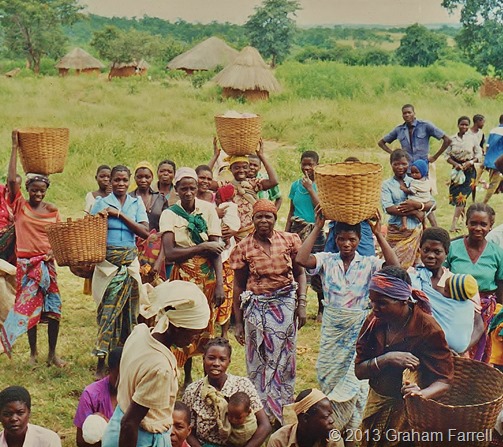
G. spends his days rushing round to meetings with aid agencies. There are fears that donations of free maize will dissuade farmers from planting their own crops, despite the good rains. Too much free maize is also likely to depress the economy, and this must be avoided. Much is given out as payment for working on public enterprises such as road building or making bricks for the building of clinics. Unemployed women, in particular, are keen to do such work. Receiving a sack of mealie meal, sugar, beans and cooking oil in return for their labour gives them independence from menfolk who might otherwise take any cash earnings. G. also has to travel down south to Choma and Kalomo to oversee the distribution of EU maize by the Red Cross. There are more trips out east and to the Copper Belt.
011

Villagers coming to collect cooking oil and maize meal from Red Cross food aid distributers.

*
012

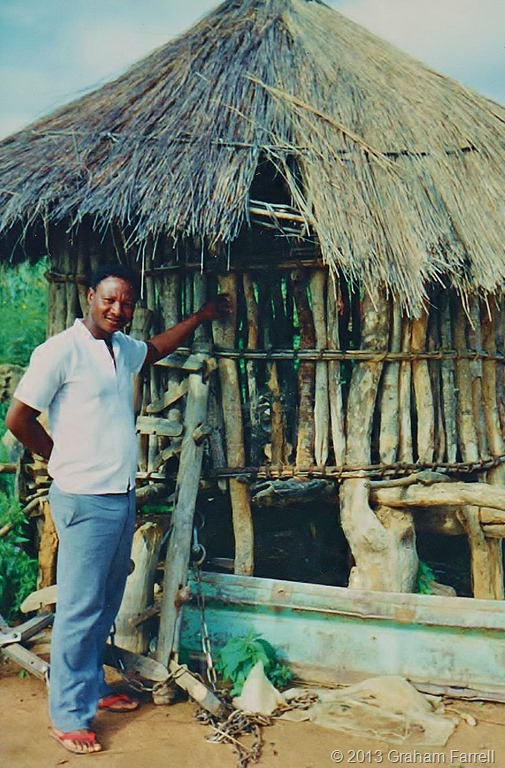
A farmer shows Graham his empty granary.

*

In March G. comes home saying there is a bit of flap on. Brussels has phoned the E.U. Delegation saying that the BBC has reported a coup in Zambia: is everything all right there, they ask. The diplomats scratch their heads. No coup has been observed, but a few days later it is clear that something has happened. Major Rezi Kaunda, son of the long-serving and recently supplanted, ex-president, Kenneth Kaunda, has been arrested. He is reported as being under armed guard. Further details explain, somewhat bizarrely, that he is sitting in the yard of Woodlands police station with his flask of tea and a radio. Fourteen plotters in all have been arrested both in Lusaka and the Copper Best. These include the editor-in-chief of the Zambia Times.

Later we hear that an incriminating document, The Zero Option, has been seized. It gives detailed plans of how members of the UNIP opposition old guard, led by Rezi, intend to make Zambia ungovernable by fuelling a crime wave, infiltrating the unions and government departments. It is mooted that this campaign of destabilisation has already been instigated and is responsible for the alarming crime wave.

President Chiluba has only been in office for a little over a year. His Movement for Multi-Party Democracy defeated Kenneth Kaunda in the first democratically held elections since Independence in 1964. Kaunda Senior had been in power all that time, but on defeat, chose to bow out gracefully. Meanwhile Frederick Chiluba claims that he is on a clean-up mission of this potentially rich, but now run-down state. He declares a limited State of Emergency while order is restored.

We all breathe a sigh of relief. No need for the emergency evacuation that the High Commission is so unlikely to provide for us. Besides, G. still has much work to do, and there’s so much I still want to discover. One thing I am itching to know is how this copper-rich nation, with its deposits of sapphires and amethysts and airy upland mopane forests is one of the poorest on earth. Why are its impoverished, beleaguered but hard-working peoples being so ruthlessly structurally adjusted by the World Bank? I am beginning to suspect that the spirit of Cecil Rhodes is restless and abroad once more, but that, as they say is another story.
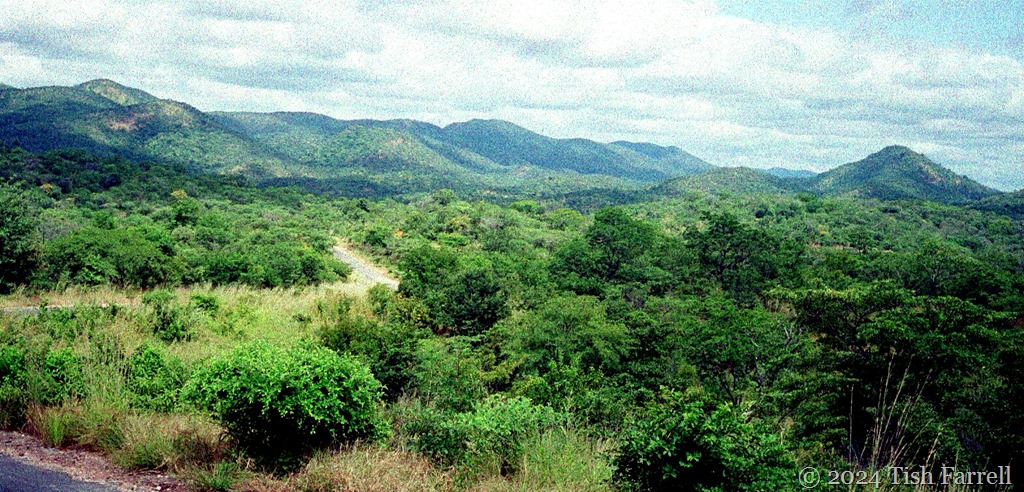
Eastern Province

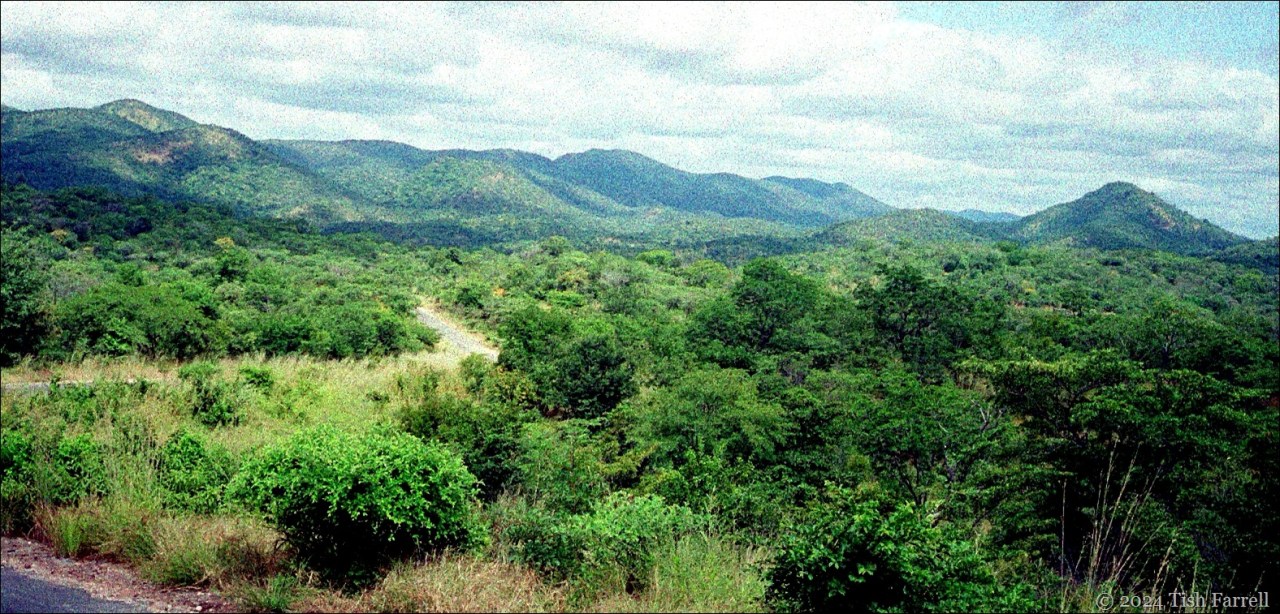
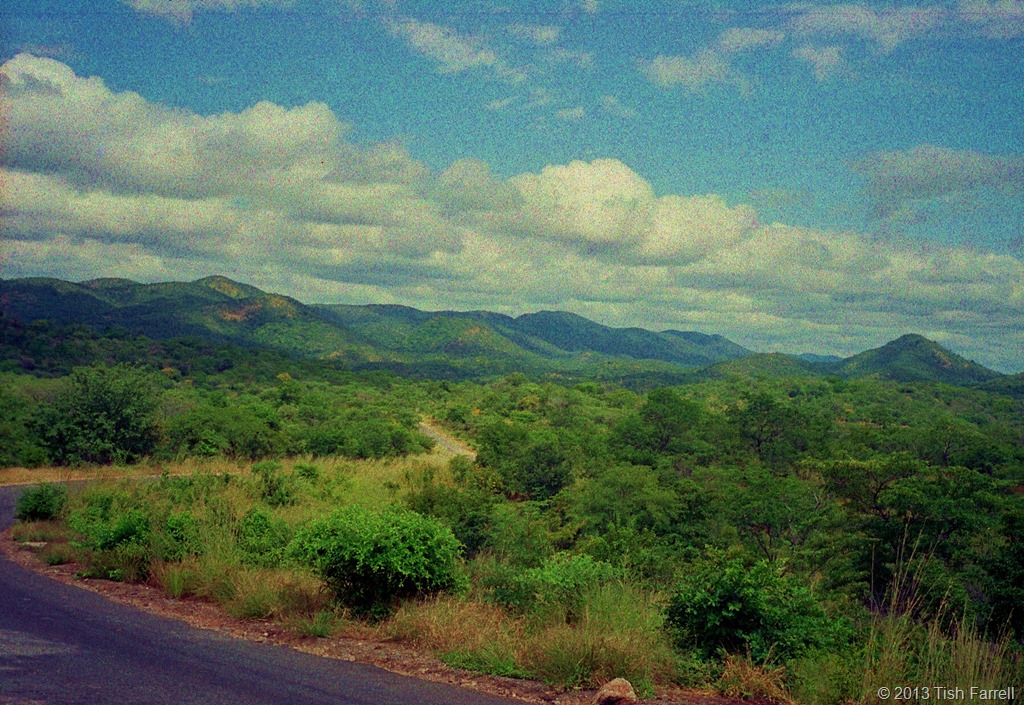
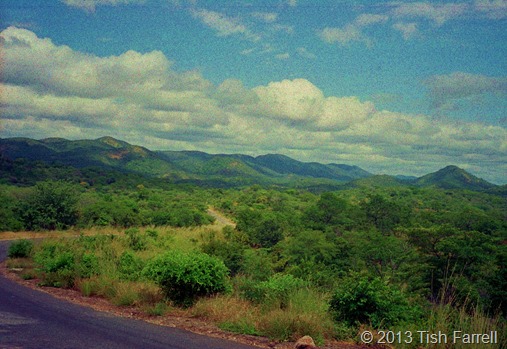
Zambia is often called ‘the air-conditioned state’. It comprises an upthrust, tilted plateau some 5,000 feet above seal level. The natural vegetation is mopane woodland. This view was taken along the Great East Road.
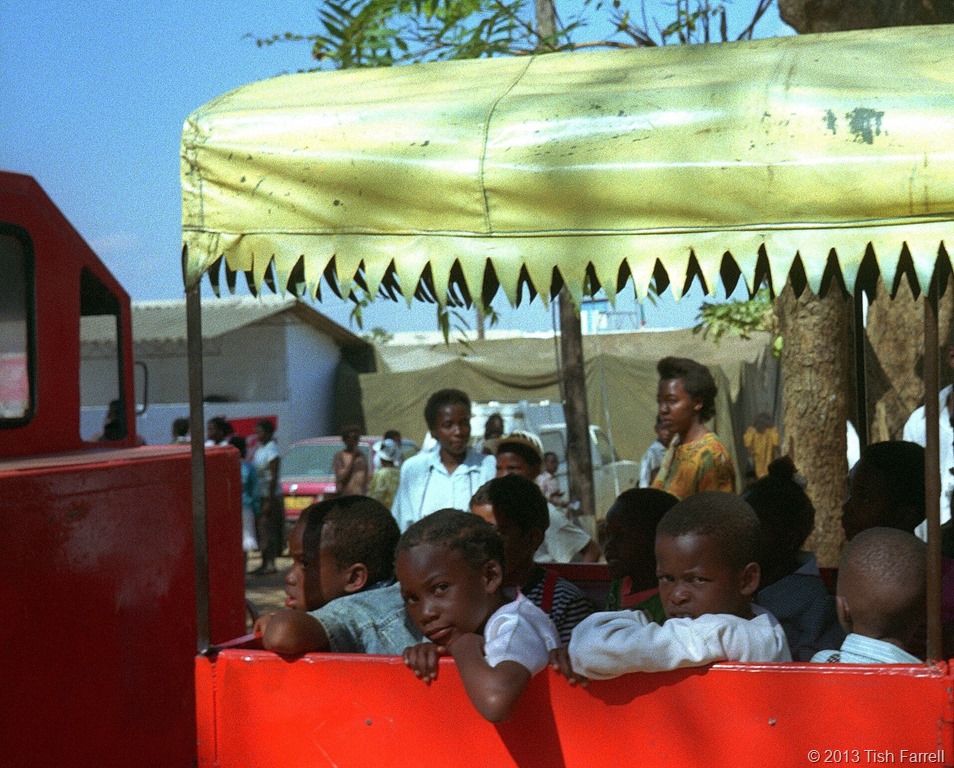
Lusaka agricultural show - miniature railway

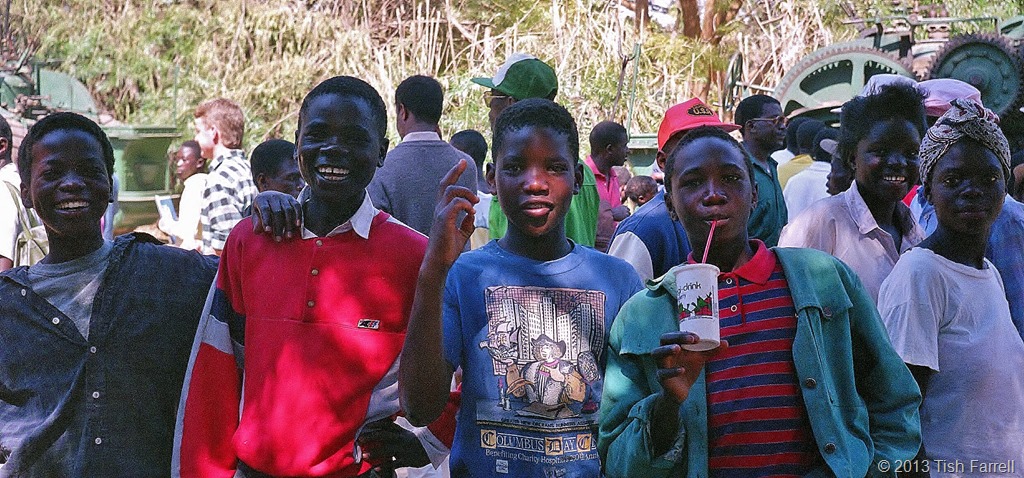
Lusaka agricultural show - kids

Lusaka agricultural show - Boy and copper belt truck tyre

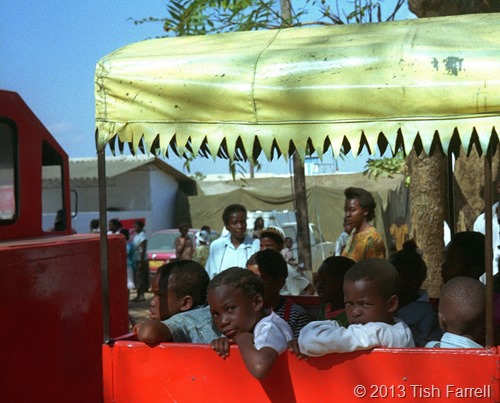
Kids at the Annual Lusaka Agricultural Show. 1993’s slogan is ‘Produce to Prosper’. Produce and get a fair price  from multi-nationals would be my preferred slogan.

*

© 2013 Tish Farrell