Scavenging The Old Africa Album

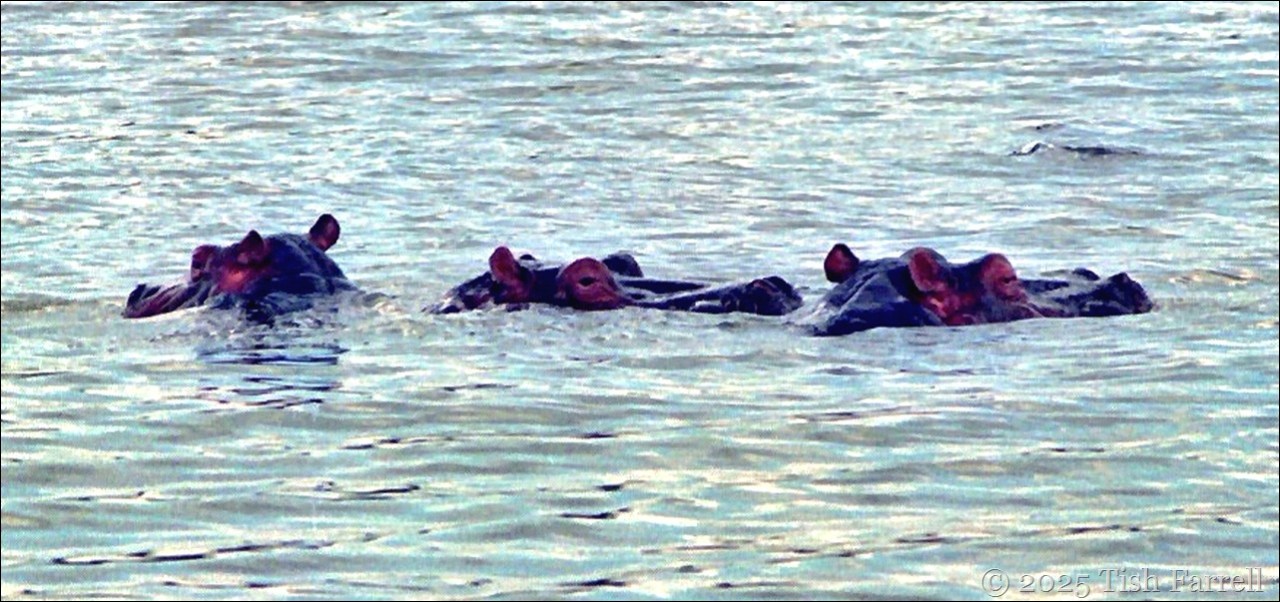
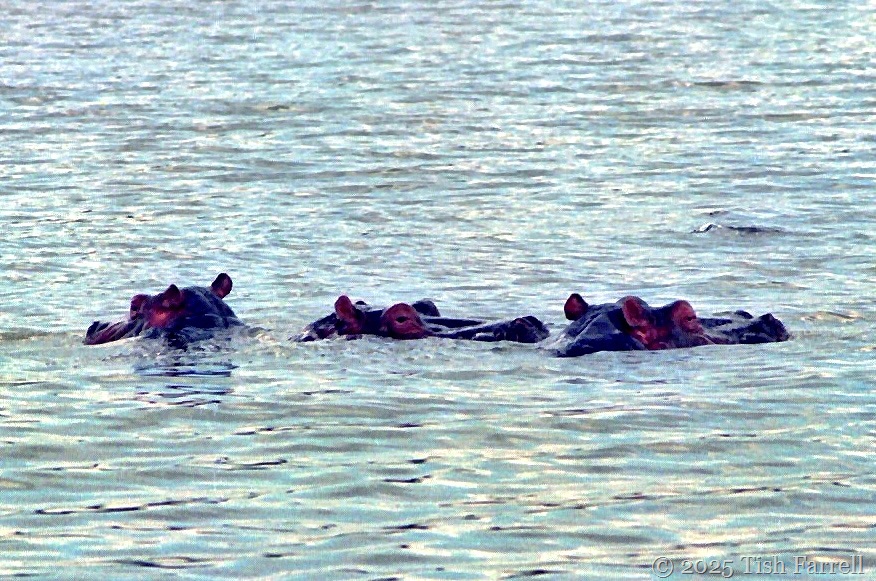
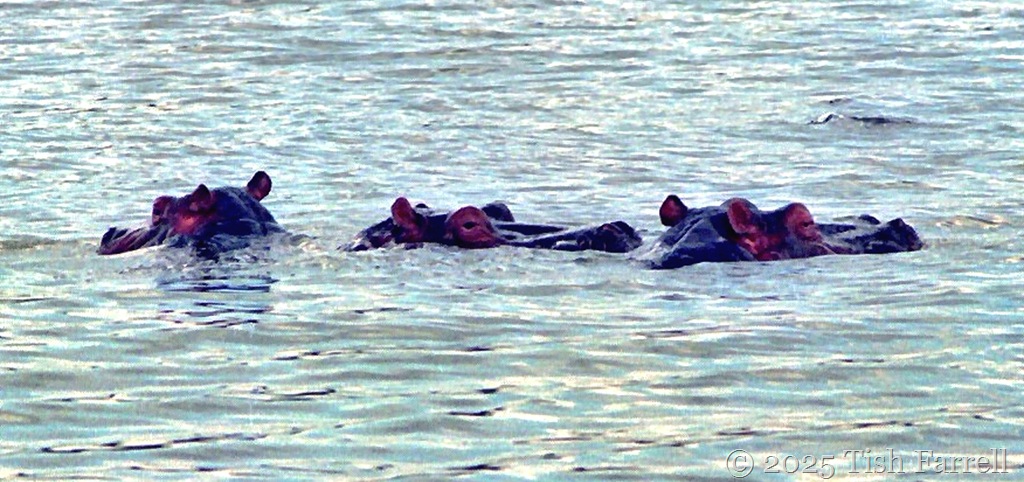
Hippos Naivasha

This week at Lens-Artists, Anne from Slow Shutter Speed sends us on a virtual scavenger hunt. I haven’t been in the old Africa album for a while, so I thought I’d have a rumage there. A virtual mini safari as well then.

‘Wavy lines’ tops the list. The header thus features a wavy profile of hippo ears, eyes and noses in a wavy Lake Naivasha in the Kenya Rift Valley.

*

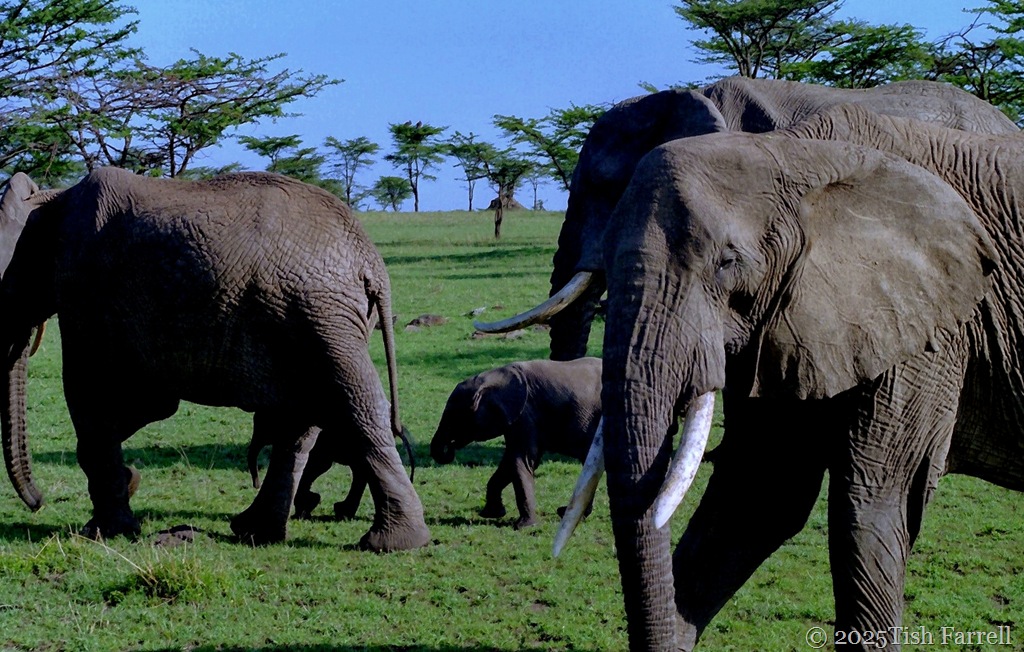
Maasai Mara elephants

This herd of Maasai Mara elephants was in a very peaceable mood. They walked around us as we were parked up eating a picnic breakfast. I’m thinking elephant hide would feel pretty ‘bumpy’ should one ever dare to try it, especially the trunks.

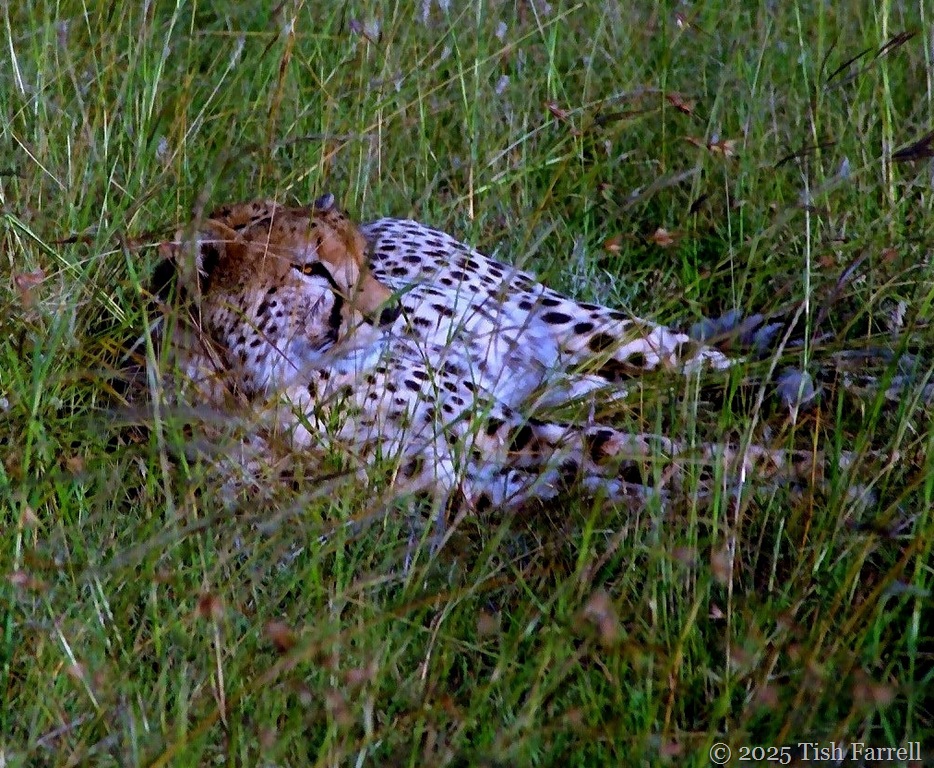
Whereas cheetahs must be wonderfully ‘soft’. They also wear nice ‘circular’ spots. This female was having an afternoon siesta when we pulled up beside her in a safari truck. She didn’t look at us, but simply posed like a professional, well used to having her photo taken.

cheetah

*

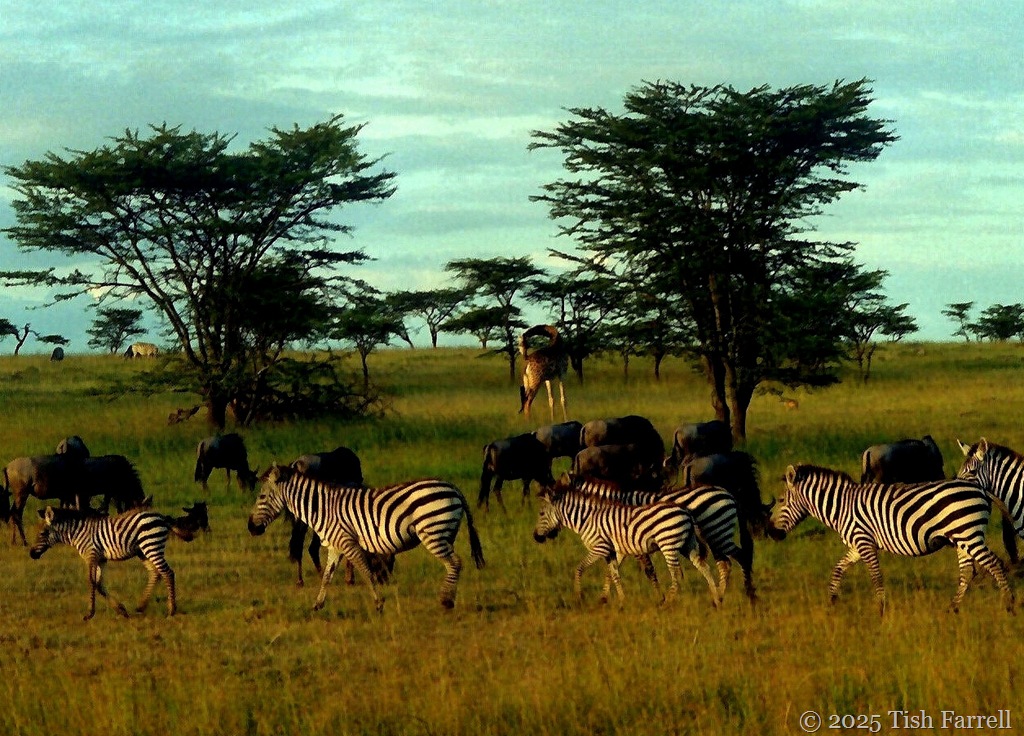
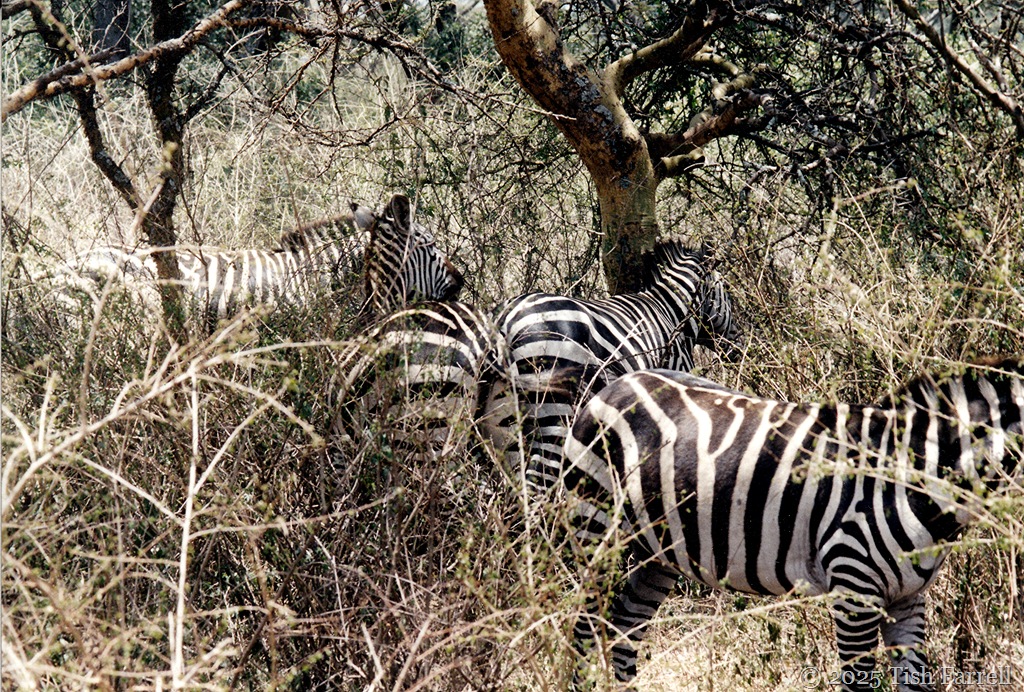
And more ‘patterns’. This time stripes. Zebras come with wavy ones:

Zebra sunset Maasai Mara

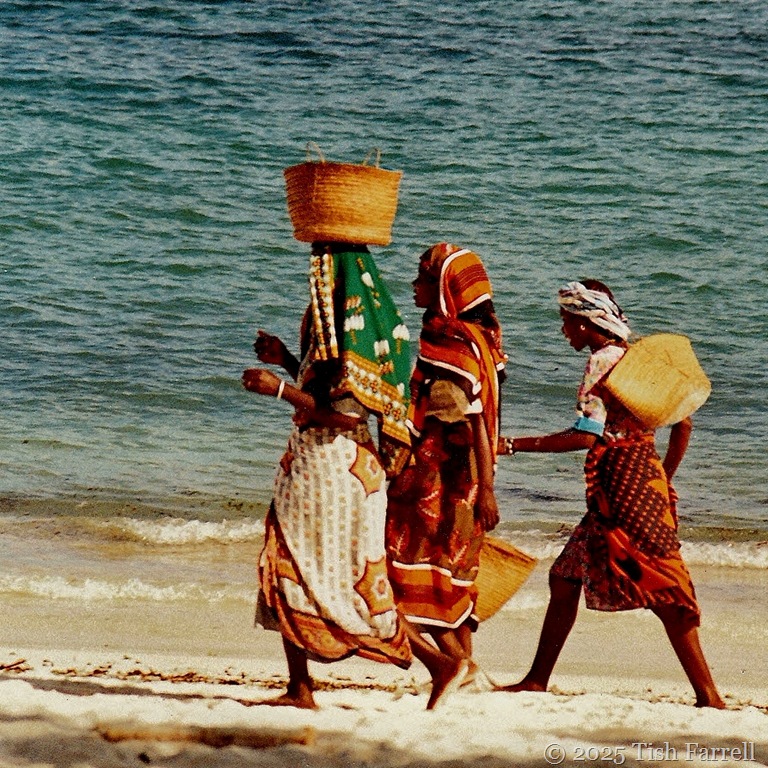
And then there’s another Kenyan speciality, patterns-wise:

Digo girls in kanga wraps

Cotton kanga wraps come in pairs with vivid designs and snappy Swahili slogans on the hems, here worn by Digo girls on Mombasa Beach.

*

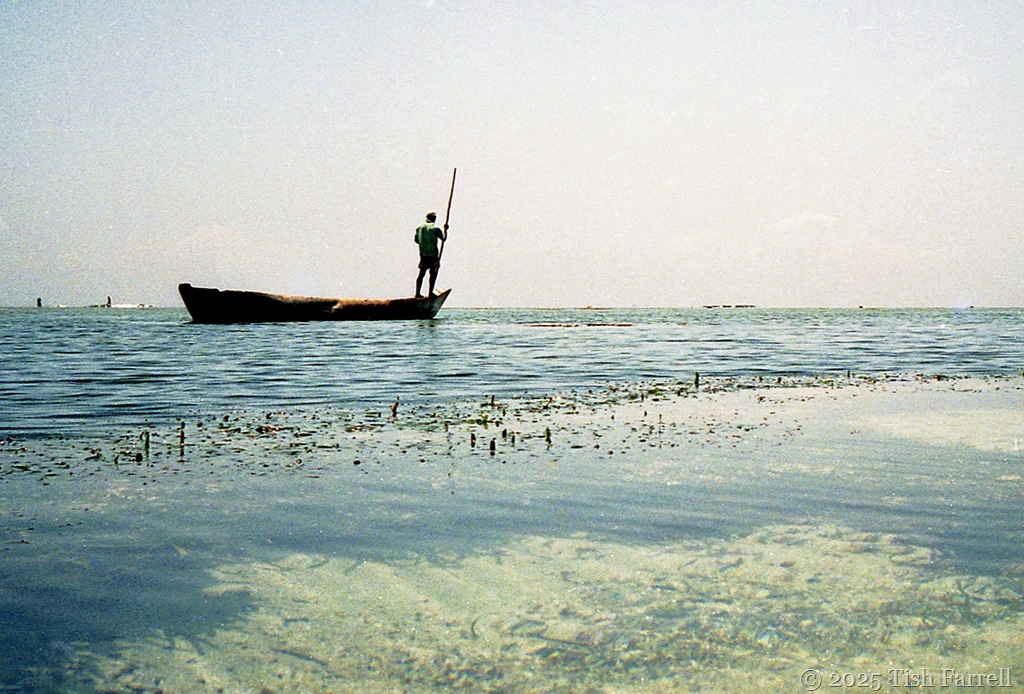
Tiwi fisherman

Now for ‘smooth’ water and a smooth dug-out canoe on Tiwi lagoon. A Digo fisherman under the midday sun. I’m guessing he’s looking for reef lobster.

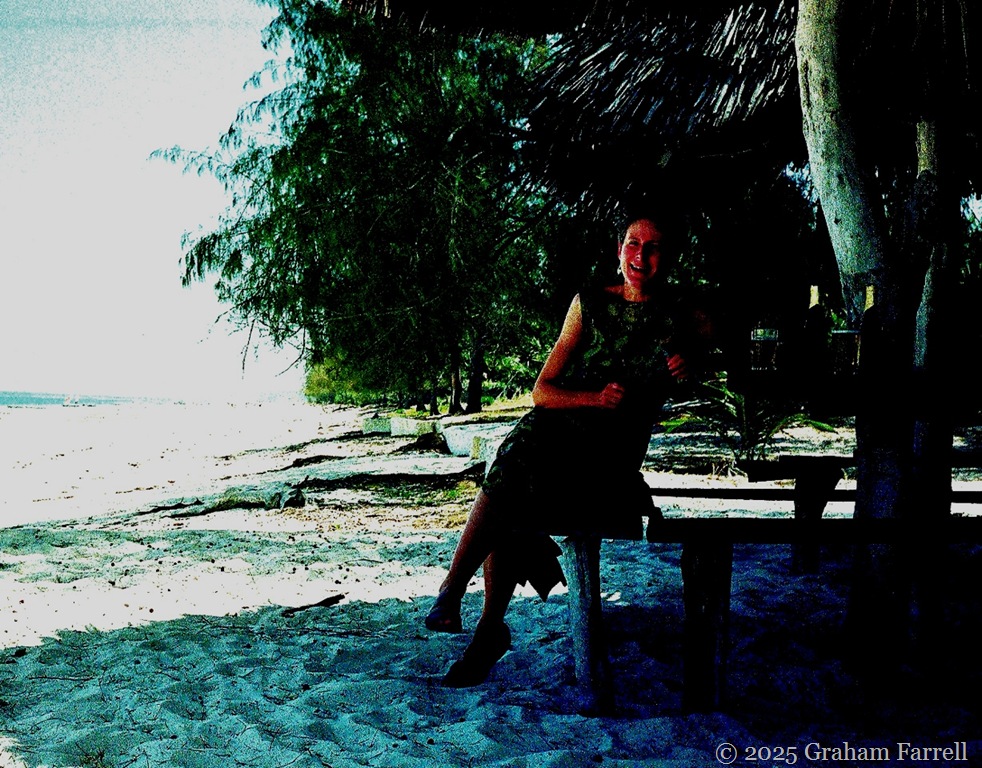
And as for ‘cool shadows’,  here’s me escaping to some at a Tiwi beach bar. Not so much too hot, as too bright to see out on the white coral sand. Aaah! Those were the days.

Cooling shadows

*

Lens-Artists: Virtual Scavenger Hunt  This week Anne at Slow Shutter Speed sends us on a photo quest, five to ten of the following: wavy lines, bumpy or soft texture, patterns, things circular, rectangular, smooth, made of glass, something with water in it, with green eyes, a wheel, a camera, cool shadows or jewellery…

Hippos Naivasha header

Red In Tooth And Claw?

Taita lions sq

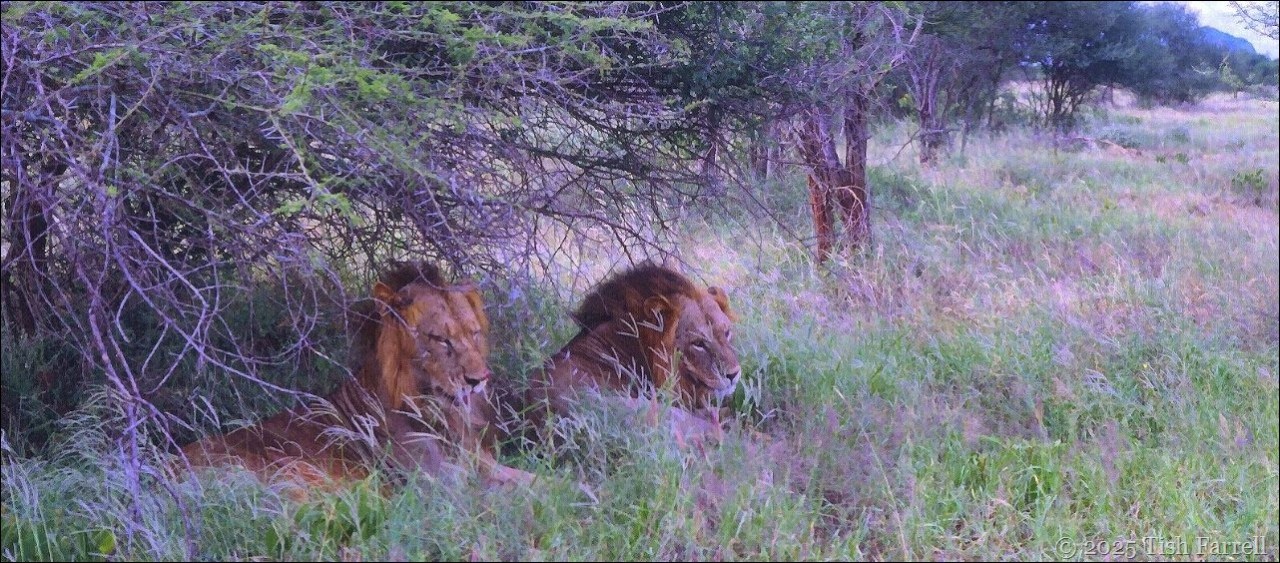
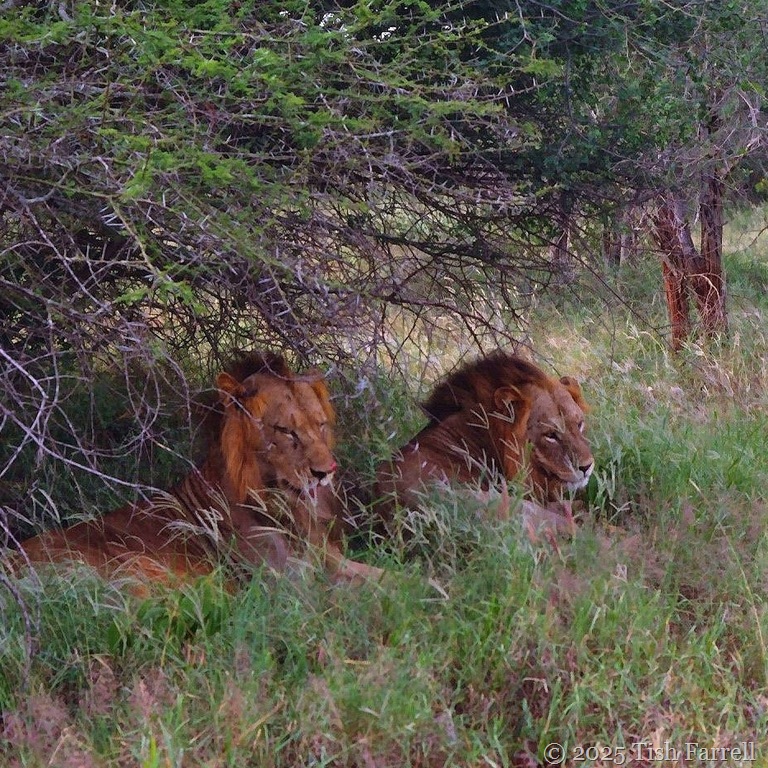
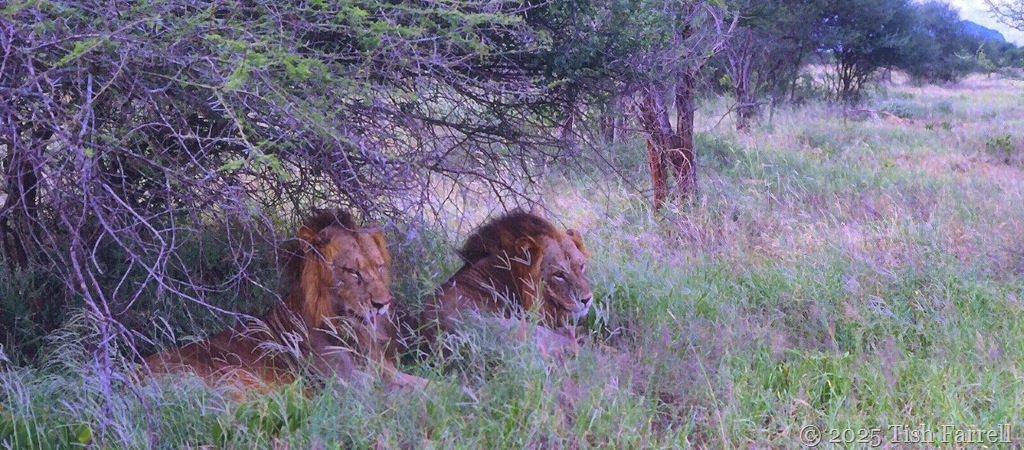
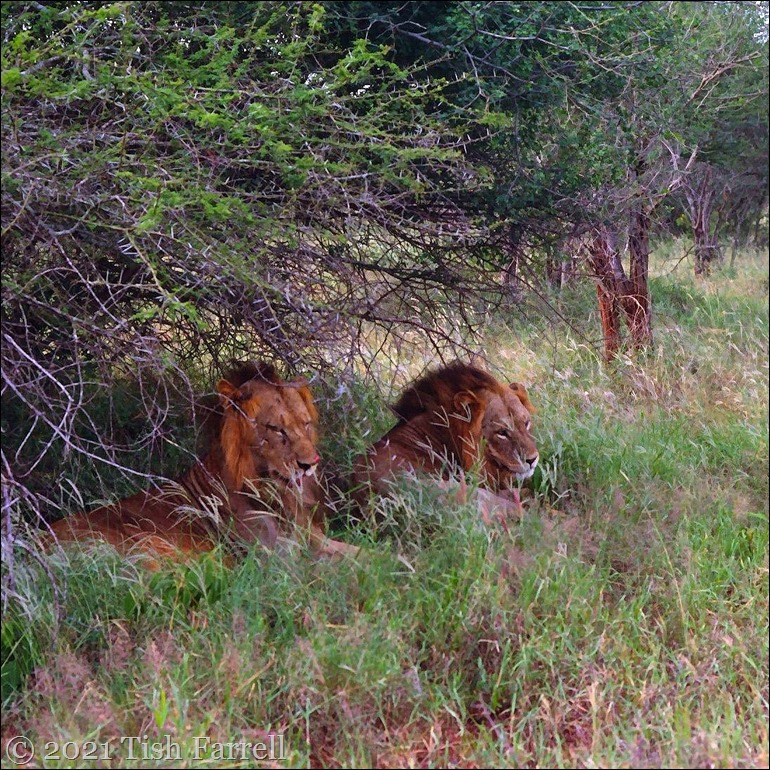
Well, it had to be done, didn’t it – that particular ‘red’ title for Becky’s month of #SimplyRed squares, and this despite the apparent lack of ‘red’ in the photo. But then, if you look very carefully, the dozing lion does appear to have a bloody nose.

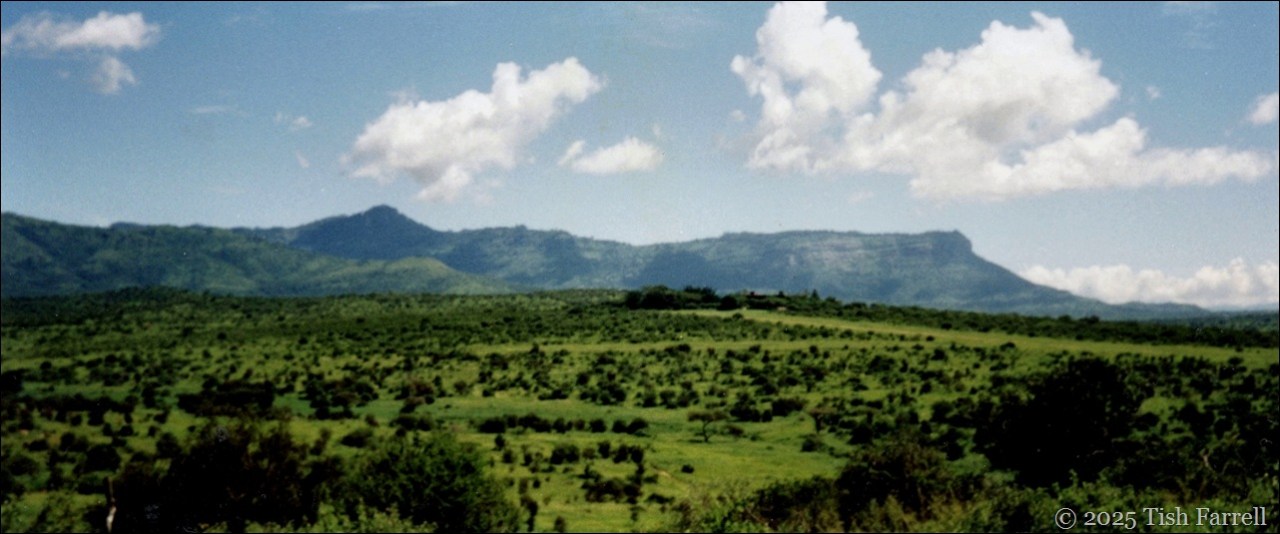
Of course I’ve posted this photo a few times before. It’s probably one of my best ‘caught moments’ from the old Africa album. We were staying at the Taita Hilton in May 1992. Our other bolt-hole, when Graham was working in the Taita Hills, was the very basic Danish Guesthouse in upland Wundanyi, but on this occasion a room wasn’t available. Oh dear. That meant five days of wall to wall luxury down in the bush country, although that said, I loved the simplicity of the guesthouse too. The Taita hill country is anyway very beautiful.

And the reason we were there at all, Graham was supervising the release of predator beetle Teretriosoma nigrescens (TN for short) at sixteen highland farms. There were high hopes that it would begin to control the spread of larger grain borer (LGB), locally known as dumuzi, which had been introduced to the continent around the 1980s in cargoes of food aid maize sourced in LGB’s native South America. (For those who want the scientific details there’s a short abstract here of a related project in  West Africa. It gives the gist of the experiment.)

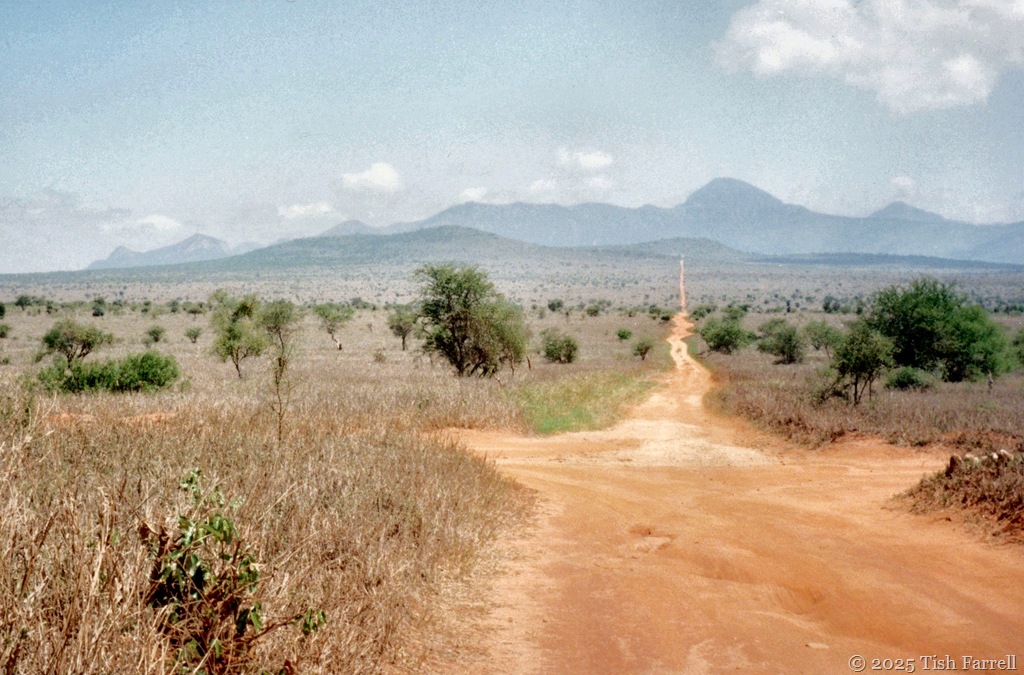
Our stay coincided with a weekend, so on Sunday afternoon we thought we’d take a drive around the hotel’s small game reserve. It was the start of the dry season and a time in Kenya when skies are often overcast, the light lacklustre. We bounced along the dirt tracks scanning every tussock of brown grass for big cats. That day at the hotel there had been talk of lion sightings. We felt hopeful, but instead, we spotted zebra, hartebeest and waterbuck, all grazing peacefully.

IMG_0013

We were giving up on the quest when a park truck pulled up in front of our land rover. I thought the ranger wanted to check our tickets, but he only wanted a chat. When he discovered that we hadn’t seen the lions, he told us to follow him, and zoomed off track and into the bush. We trundled behind. Soon he had us lined up by a thorn bush. There, beside my car door was a slumbering lioness. She opened her eyes to check me out and then went back to sleep. (Lions sleep around 23 hours a day). The ranger then pressed on to the next bush, and there were the two males. I leaned out of the car window and simply took the photograph – just like that. It’s still hard to believe. I think I was there.

Taita Hills reserve

copyright 2025 Tish Farrell


#SimplyRed Day 23

Taita lions header

Taita Continued ~ Of Red-Billed Hornbills

img055 red billed hornbillsq

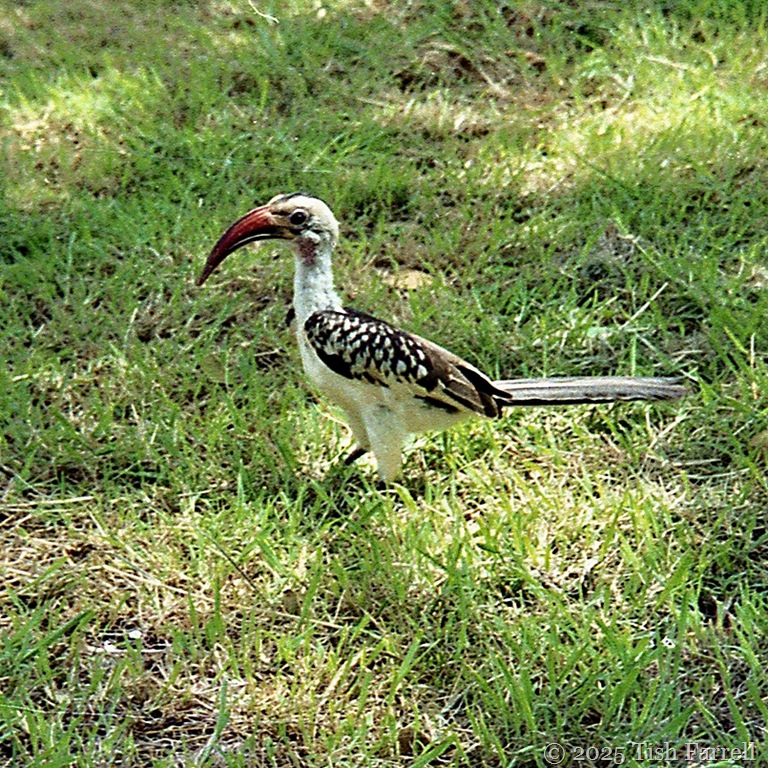
The hornbill in the photo is not the one I’m going to talk about – for reasons that will shortly become clear.

*

It was a quiet afternoon at the Taita Hills Hilton. The lunch-time safari vans had come and gone. I’d been writing letters, sitting in the shade by the teardrop pool (see previous post). Its heavenly blue, the shimmer of it, was mesmerizing, as were Robert’s passes with the pool net. The lack of guests meant he could take his time sifting out the tiny acacia leaves and assorted bugs. He moved quietly and with ease. My attention drifted.

And then Robert was at my side. Would madam like to see something very interesting. I must have looked doubtful because he assured me I did not need to go far. I then noticed he was holding a moth between thumb and forefinger. It looked dead. But this wasn’t it. He led me to the largest of the poolside flame trees, had me stand directly in front of the trunk. Look, he said, holding the moth towards the tree. In a trice it was gone. Something had moved, but I could not see what.

Robert pointed to a slit in the bark. I leaned forward and saw that behind the slit was a hollow. A very dark hollow. Except for two bright, beady eyes looking straight back at me. It was a very odd experience – to be watched from inside a tree. It was then I noticed how close my nose was to a shadowy scimitar bill. I stepped back.

Robert found another bug and held it near the slit. Another twitch of the air. And that’s when he told me about the remarkable nesting habits of the hornbill family. The mating pair find a suitably hollow tree, he said. The female then allows herself to be imprisoned, the male building up a mud and dung walled nest around her. A small opening is left so he can deliver food. And there the female stays until the eggs are laid and hatched. When all becomes too crowded in the nest, the female breaks out, and the parents then rebuild the mud wall and continue to feed the chicks through the slit until they are ready to fledge.

Well!

Robert then alerted me to the fact that the male was hovering nearby, waiting with the food delivery. We quietly withdrew. And then my new wildlife guide wanted to know what I was doing in Kenya. I told him how Graham was working on a project to control the Larger Grain Borer (LGB), an imported pest of grain stores, and that there were plans to introduce a predator beetle to reduce its numbers. Robert then said he hoped the predator would not cause harm to Taita’s butterflies. I assured him that it had been meticulously screened to have no impact on anything but LGB.

It was some eighteen months later when I talked to him again. In the interim Graham and I had been in Zambia, and when we returned to Taita Hills I found that the hornbill tree had been felled,  was nothing but a stump. I was so surprised I remarked on it to the pool attendant, at which point we recognised each other. Robert then recounted all I had told him about the LGB project in the Taita Hills. I was very touched. It was as if he had thought often about our one previous conversation, as day in and day out he gracefully sieved bugs and leaves from the teardrop pool that shimmered like a mirage.

*

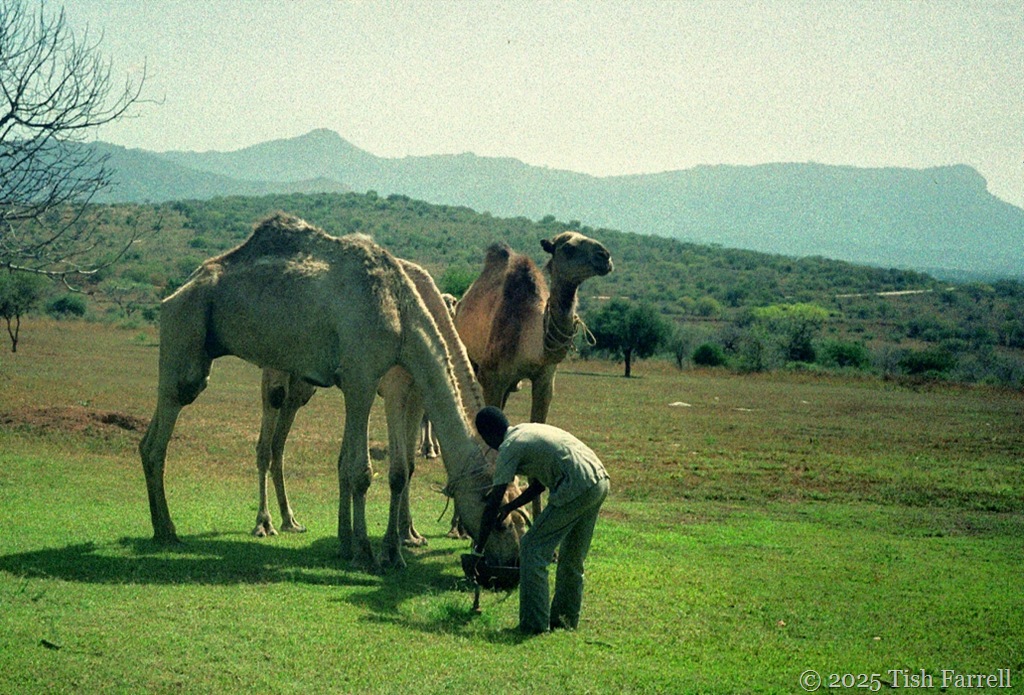
Taita Hilton - camels in the garden ed

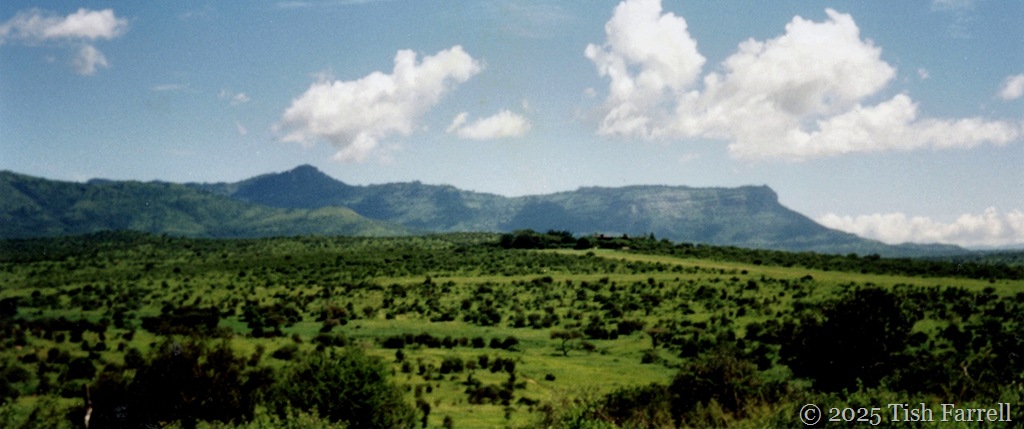
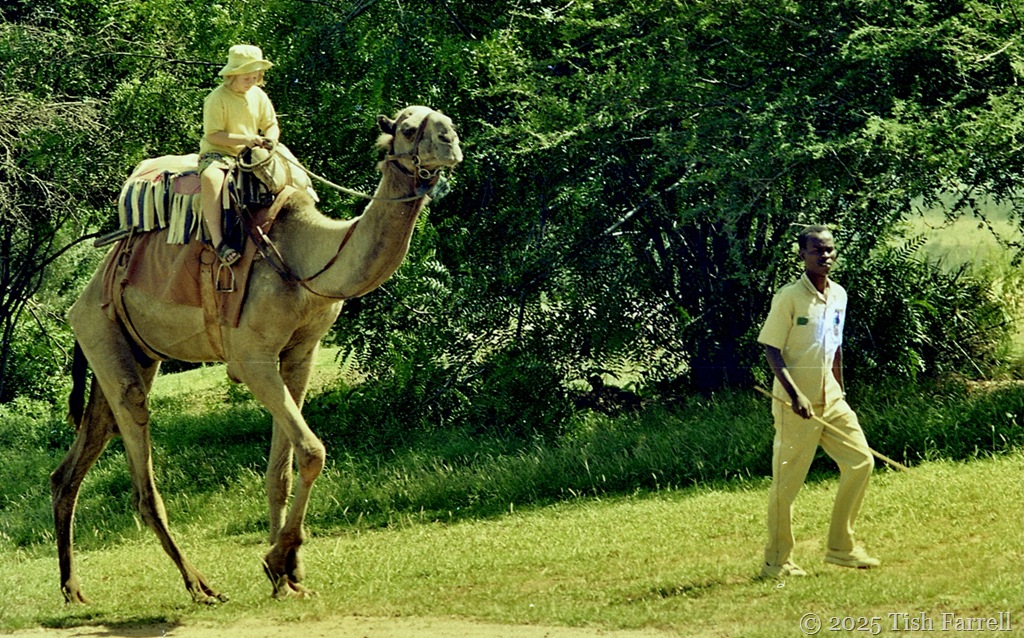
P.S. On later visits we found Robert had been promoted to camel handler; at least one assumes it was a promotion. The camels in question were ever surly creatures. Here he is in the hotel garden; the Taita Hills during the short rains.

*


Birds of the Week

#SeeingRed Day 22

Taita after rain header

On The Road To Taveta ~ The Taita Hilton*

Taita Hilton sq

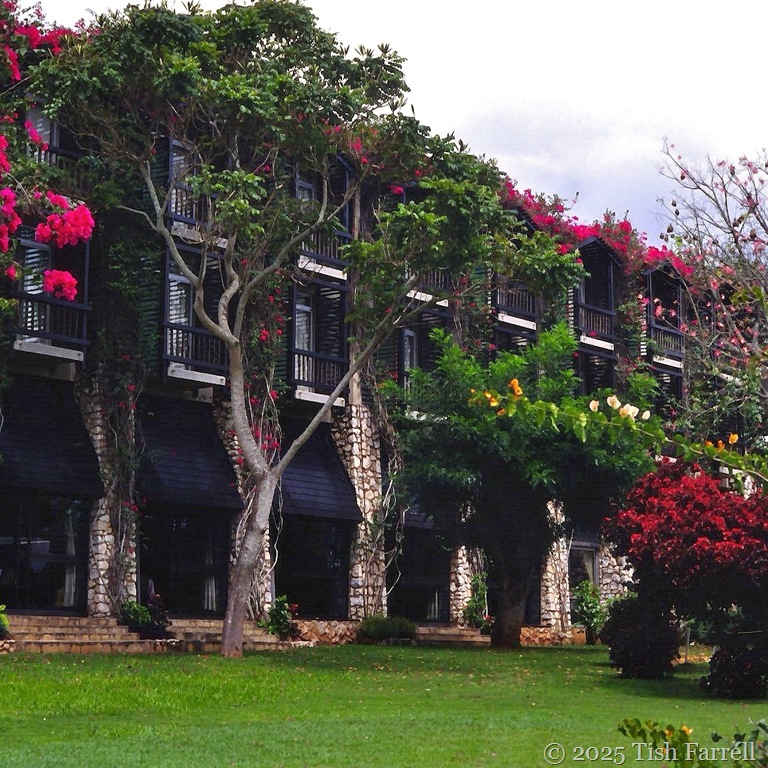
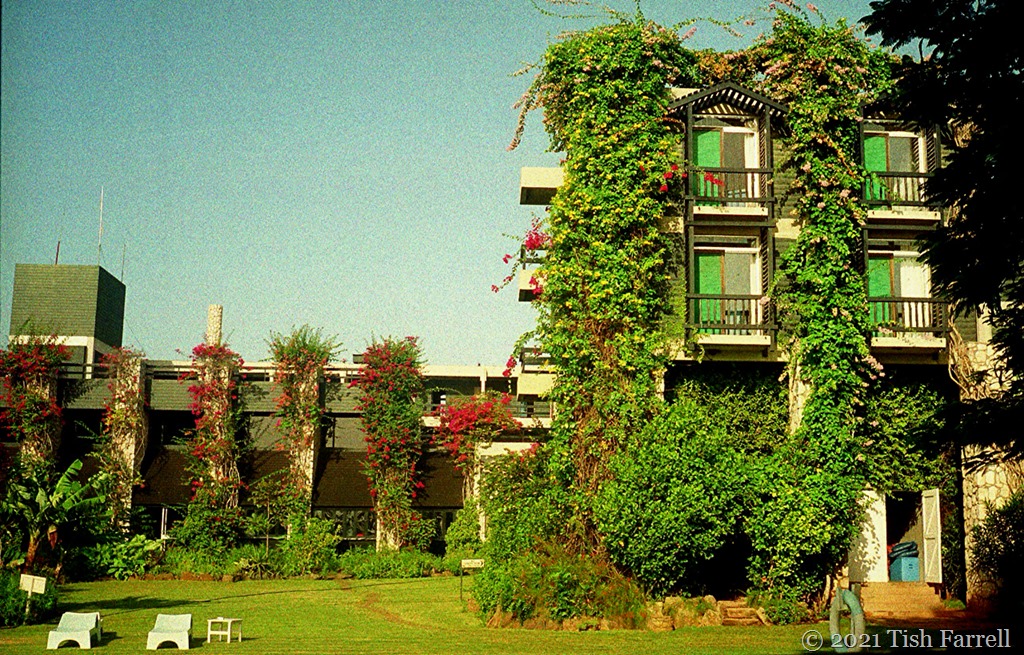
Caught in some dreamworld – it was often how it seemed that first year in Kenya. And nowhere verged more on the surreal than the Taita Hills Hilton*. A 5-star hotel in the bush. There it lies beside the road and rail to Taveta and the Tanzanian border. It is the territory of William Boyd’s  First World War novel An Ice-Cream War, of a failing sisal plantation and border skirmishes between German Count Von Lettow Vorbeck’s Tanganyikan askaris and Kenyan British forces backed by coerced young Africans of the Carrier Corps.

And it is the place we often stayed when Graham was overseeing field work experiments up in the Taita Hills. After breakfast he would drive up the mountain to Mgange to speak with farmers and check on the Larger Grain Borer’s voracious appetite for stored maize…

230_thumb[6]

*

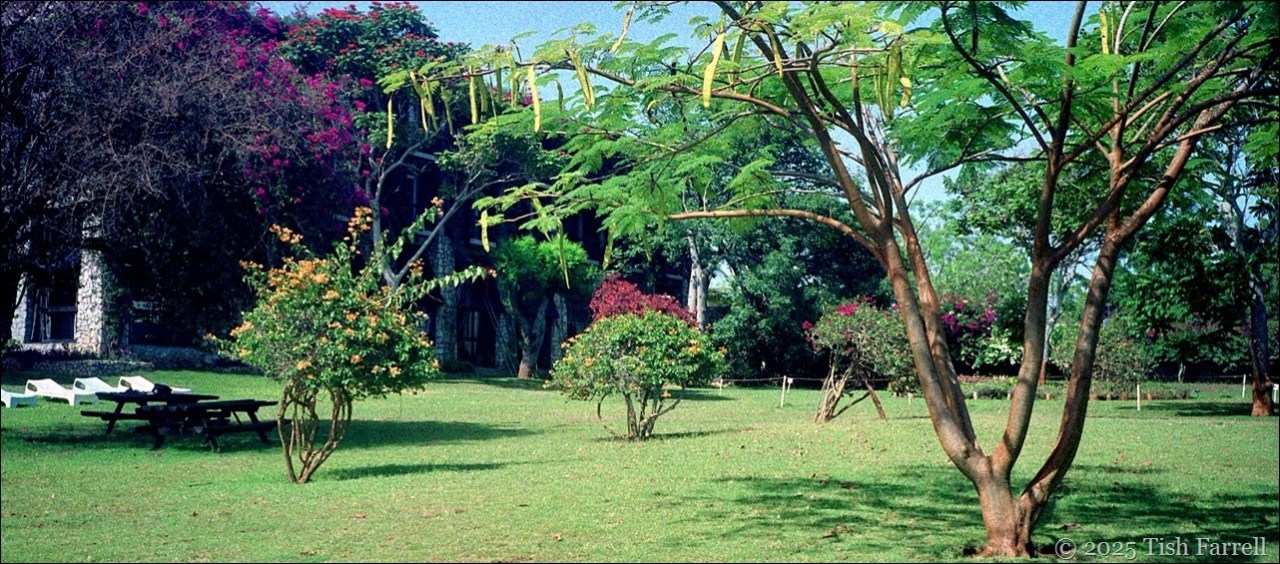
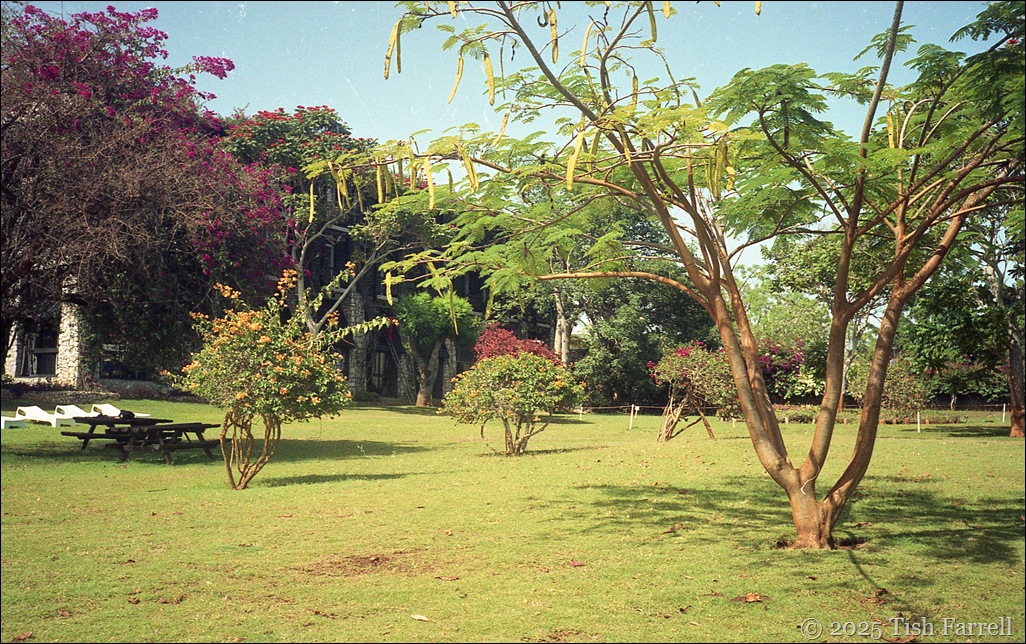
…and I would start my day, reading or writing beside the hotel pool. The pool was shaped like a teardrop, shaded on its southerly edge by flame trees. A thick hedge protected the garden from the adjacent wildlife reserve, the land there a failed sisal plantation run back to wilderness.

I’d look out there for hours, watching impala or zebra, sometimes giraffe nibbling the thorn trees, their slow passage through the brush; the soundscape a fizz of insects, swelling ever louder as the day warmed, the non-stop call of ring-necked doves, both strains somehow fusing into the heat haze that shimmered over the bush country. You can see how it might drive you mad. Meanwhile, inside the garden, a hosepipe hissed and swished, watering the lawn, where clouds of black butterflies with azure flashes came to sip.
img005

*

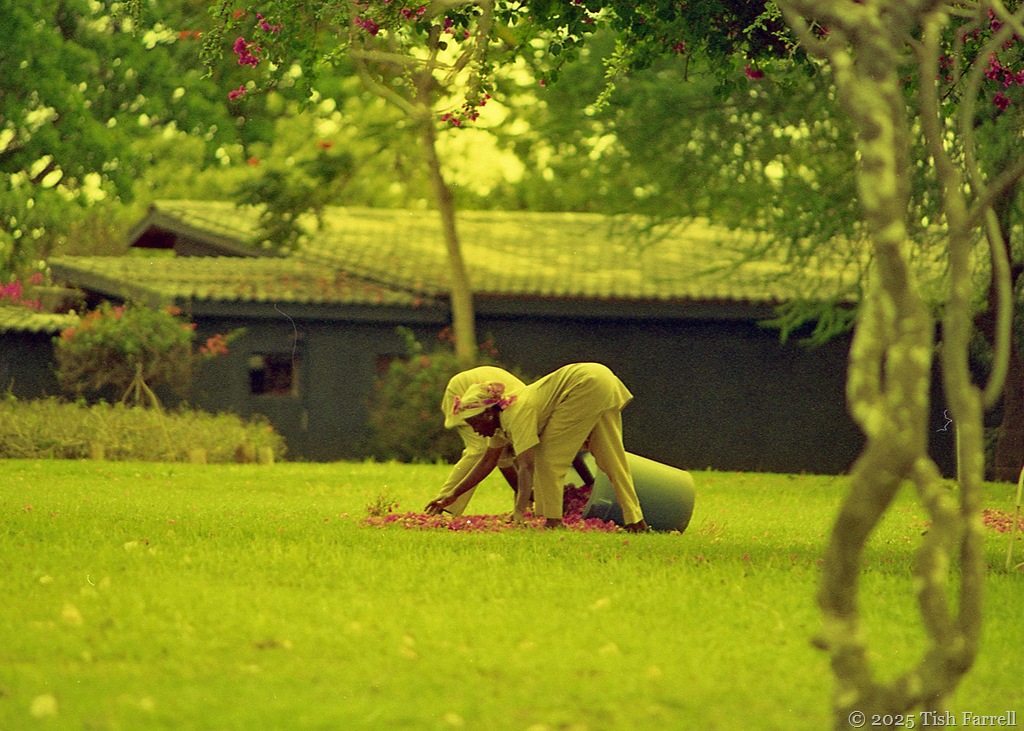
The hotel was usually very quiet in the mornings. The staff went about their daily chores, tidying, sweeping, making ready for the next arrivals. I often saw them in the garden quietly picking hibiscus flowers to put in the rooms or to decorate the dining tables.
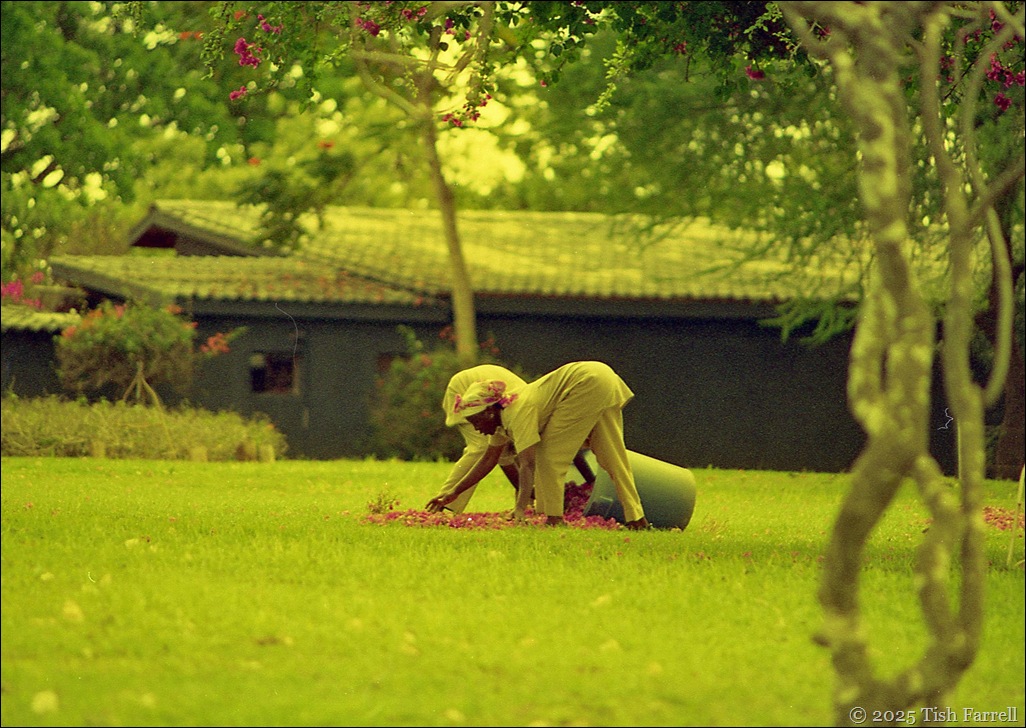
gardening non-stop

Garden tidying – a never ending job

*
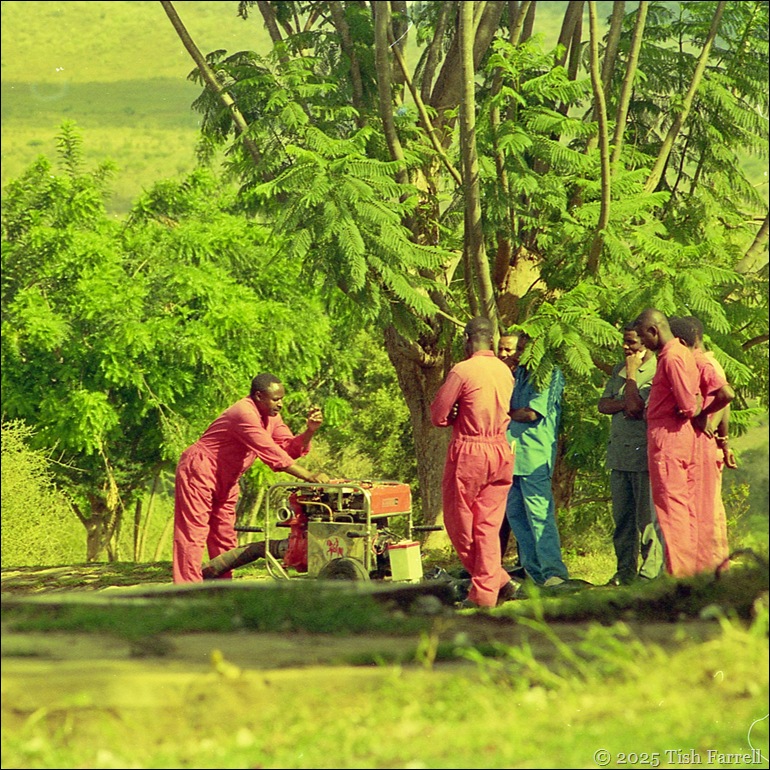
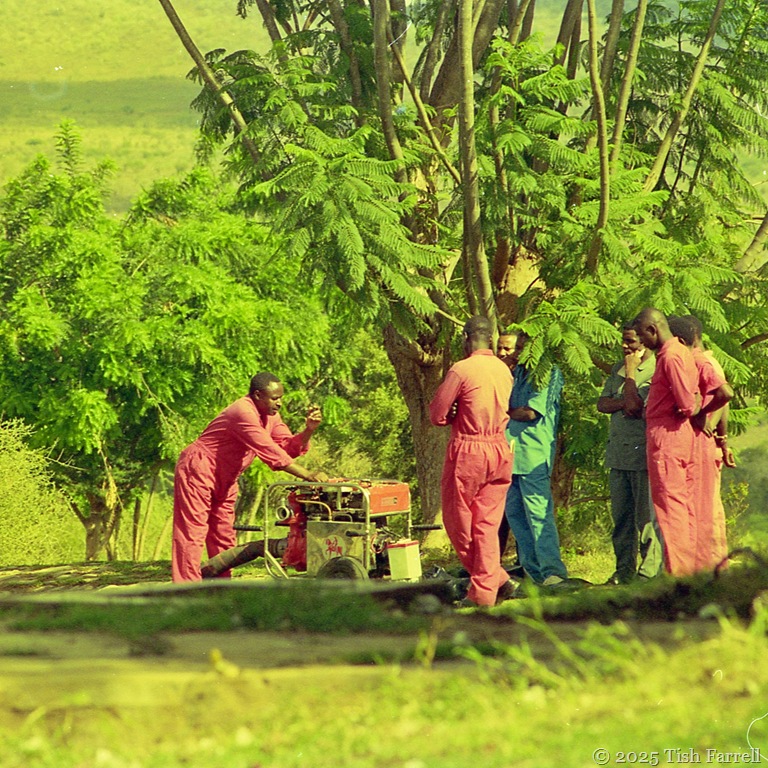
Taita Hills men in red

The maintenance men

*

Around noon, fleets of safari vans, up from Mombasa, or down from Amboseli, would start arriving, their occupants spilling out, mostly young folk clothed in skimpy beach wear. They would be welcomed into the great hall with gentle decorum, glasses of chilled fruit juice set out on flower decked trays, but the tide of newcomers could never be quite contained – the rush to the bar, the scramble to join the lunch queue in the baronial dining room. Those tourists who did check in, usually only stayed one night and were off after breakfast. And so we became the centre of enthusiastic attention from the hotel staff. We stayed longer; five days on one occasion. ‘That’s almost a week,’ one waiter told us approvingly; we were doing them and the place proud.

Taita Hilton - safari vans come and go_thumb[5]

*

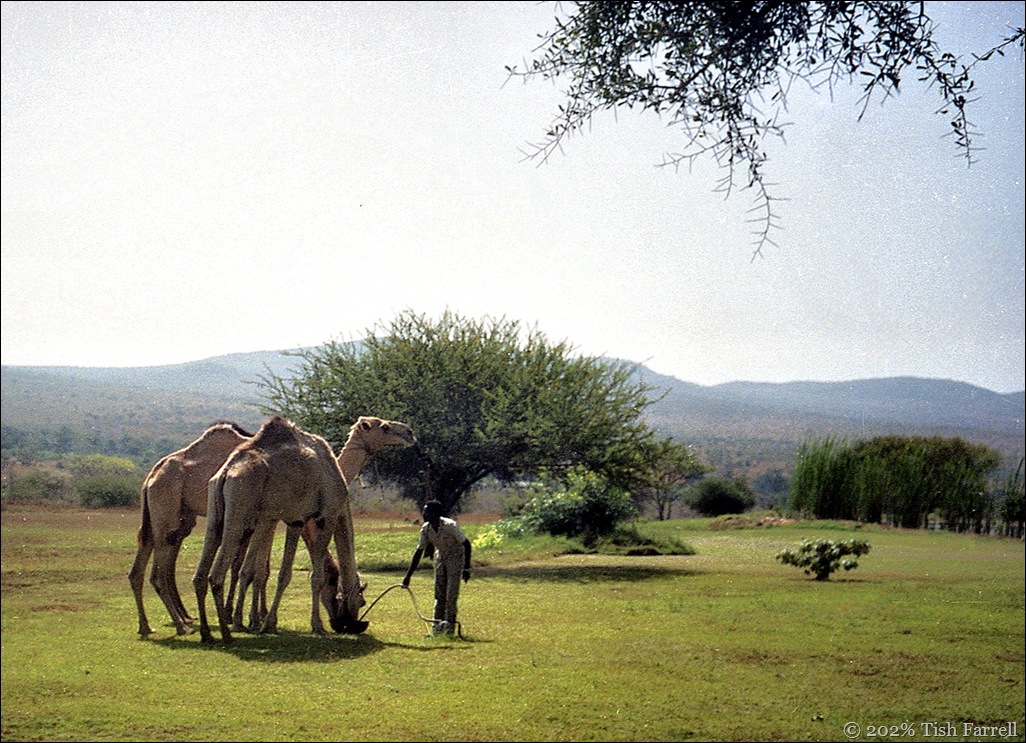
In the garden, somewhat oddly, were a trio of camels, kept for those moments when a tourist might have a burning ambition to ride one. They didn’t go far, just to the end of garden and along the edge of the reserve. Once on a family visit, our seven year old niece, Sarah, surprised us all by being very sure that she wanted a ride. Such savoir faire on the dromedary front. Here she is with Robert the camel fundi. Ah, how time passes. She’s now a chemical engineer working in fusion technology.
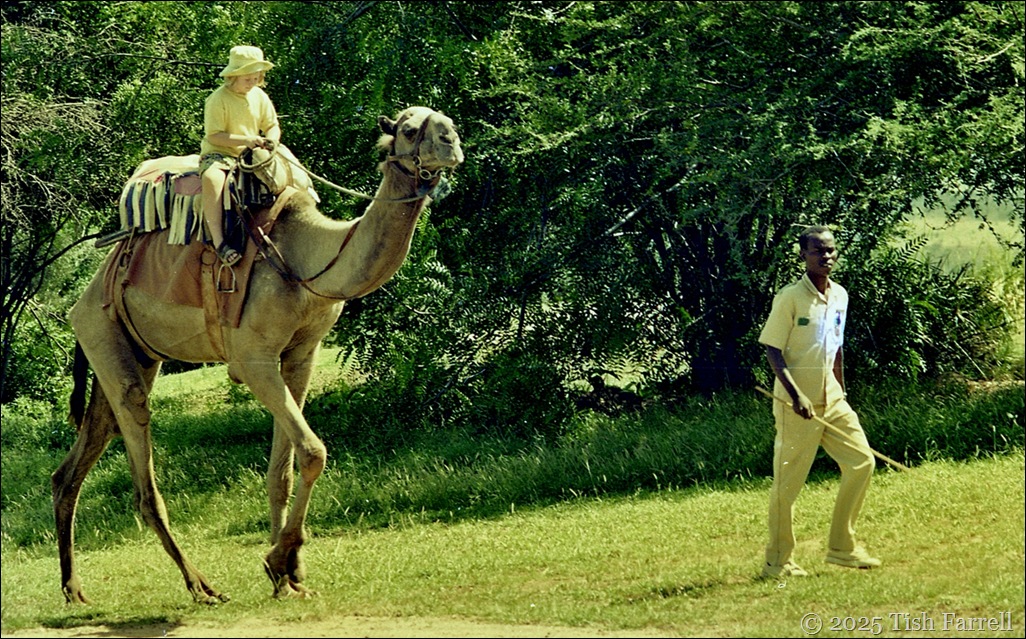
Robert and Sarah

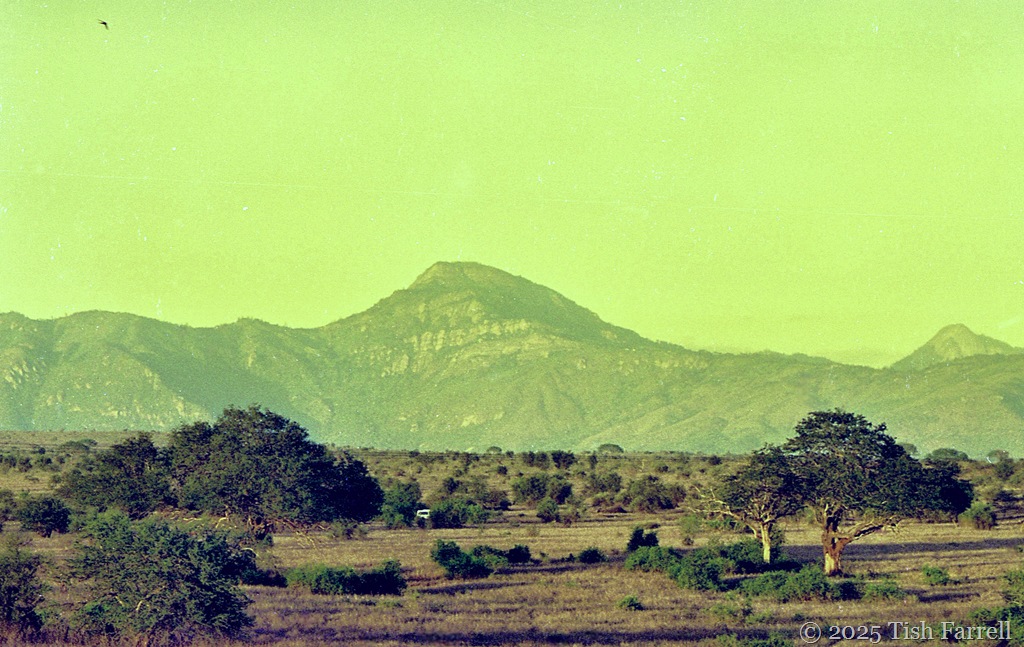
camels and bush country

Taita Hills garden and the reserve beyond

*

In my wanderings about the place, I discovered I could climb up to the hotel roof. Sometimes, towards sundown, if Graham hadn’t returned from the mountain, I’d go up there and lean on the parapet, looking out for the Land Rover on the Taveta road. All around swifts and swallows swooped and swirled and, briefly, I’d think of the Shropshire home I’d left, and that soon these small birds would be leaving for their English summer.

And once when I was up there at twilight, the day fading fast, and no sign of headlights on the road, I saw shadow elephants crossing the railway line. At that moment Africa felt very very large. Unfathomable. Another dreaming interlude.
Rooftop view

*now the Taita Hills Sarfari Resort & Spa

#SimplyRed Day 20


Taita Hilton - header _thumb[5]

Caught Red-Handed

Kiboko ed vervet raid

Whenever Graham had work to do at the Kiboko research station we stayed at Hunter’s Lodge. It was just next door, and the hotel manager allowed Graham a key to the back garden gate so he could come and go on foot rather than driving the long way round. The Lodge had been built around the late 1950s for the big game hunter, John Hunter. It was sited near his favourite waterhole, beside the Nairobi – Mombasa highway, just north of Makindu, and this was the place he chose for his retirement after a long career as safari guide and game controller.

Scan-140828-0013jpeg

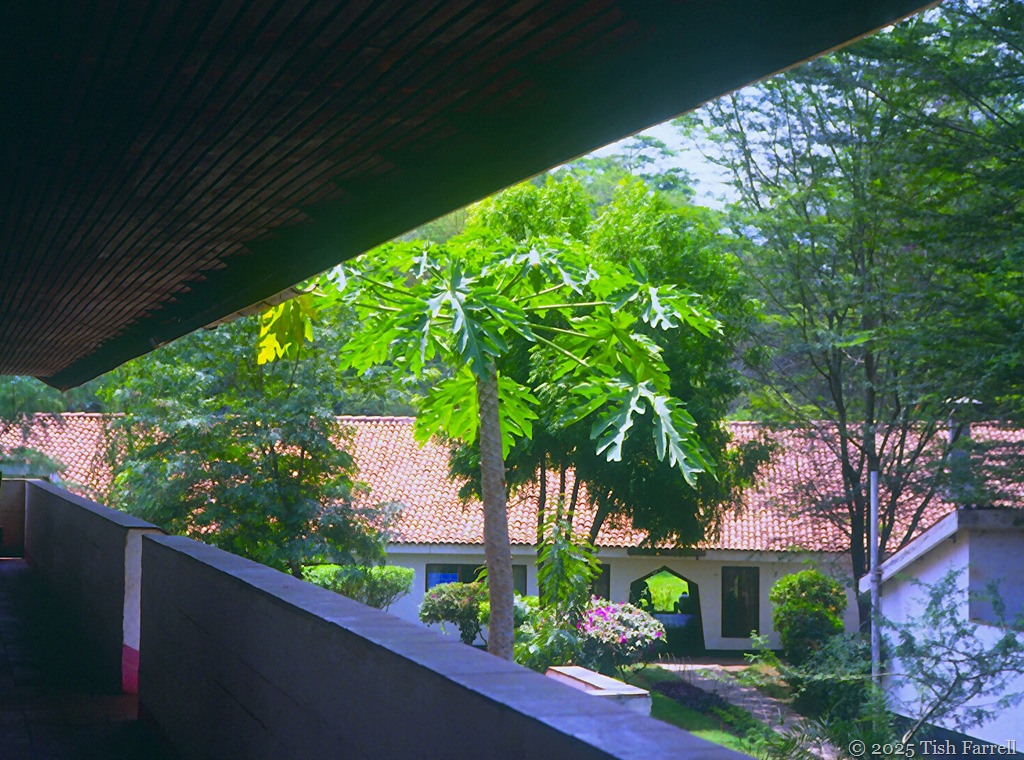
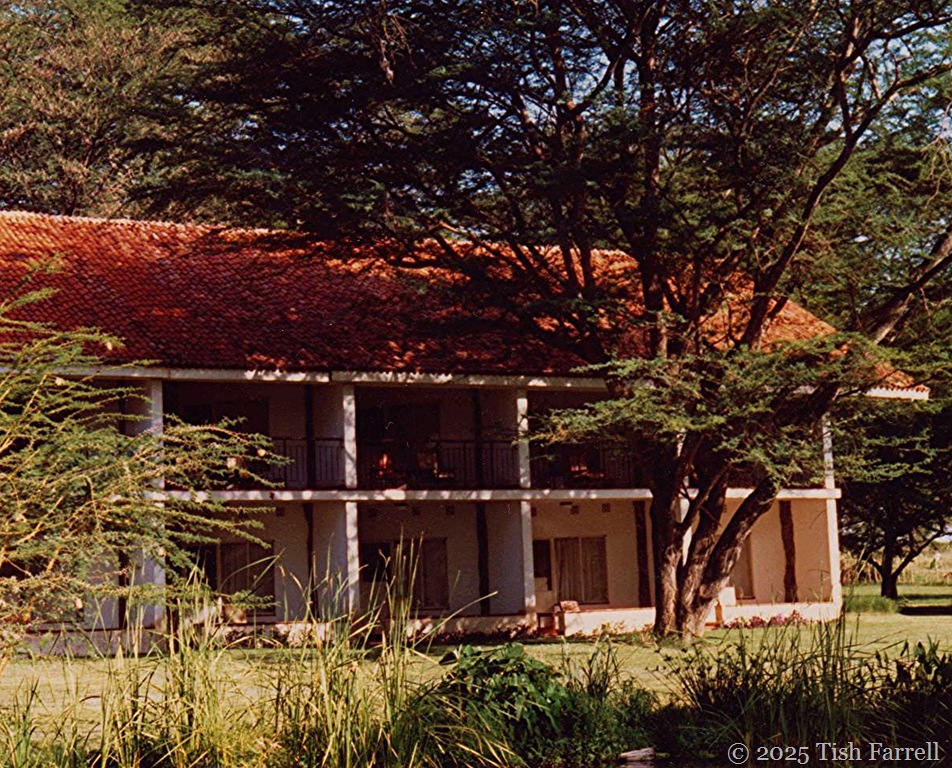
At some time in the sixties the site was expanded into a motel with a small block of architect designed guest rooms overlooking the pool. (In his day, Hunter had dammed the Kiboko River that fed the waterhole and so created a garden lake). For a time the place had a heyday, being the weekend spot for British expatriates, or the main overnight stopover for anyone driving to or from Mombasa. Then the highway was improved with a layer of tarmac, and the clientele drove on by.

008

*

When we stayed there in the ‘90s it was unusual to find any other guests. The Lodge staff anyway had their own regime that ticked over nicely irrespective of visitors. Now and then some Kenyan government agency might hold a seminar there or an overland truck might be allowed to park up and its occupants to camp on the lawn. Once I met an Israeli water engineer who was consulting on a nearby project. Otherwise, my main companions by day were Joyce the chambermaid and an astonishment of birdlife.

007

*

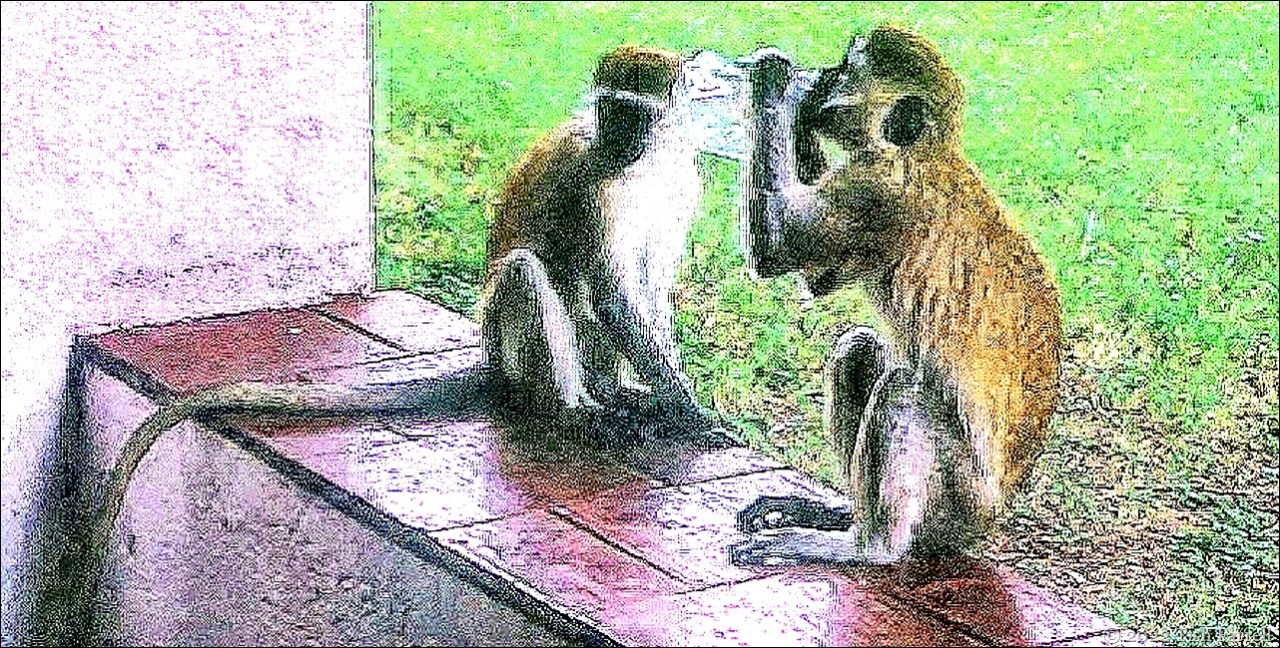
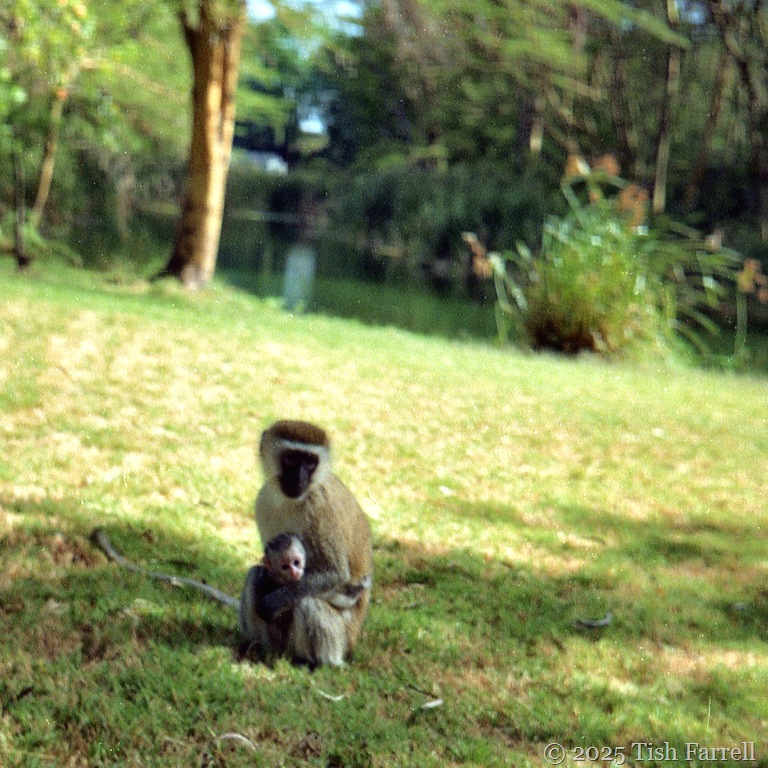
And vervet monkeys.

vervet and child ed

*

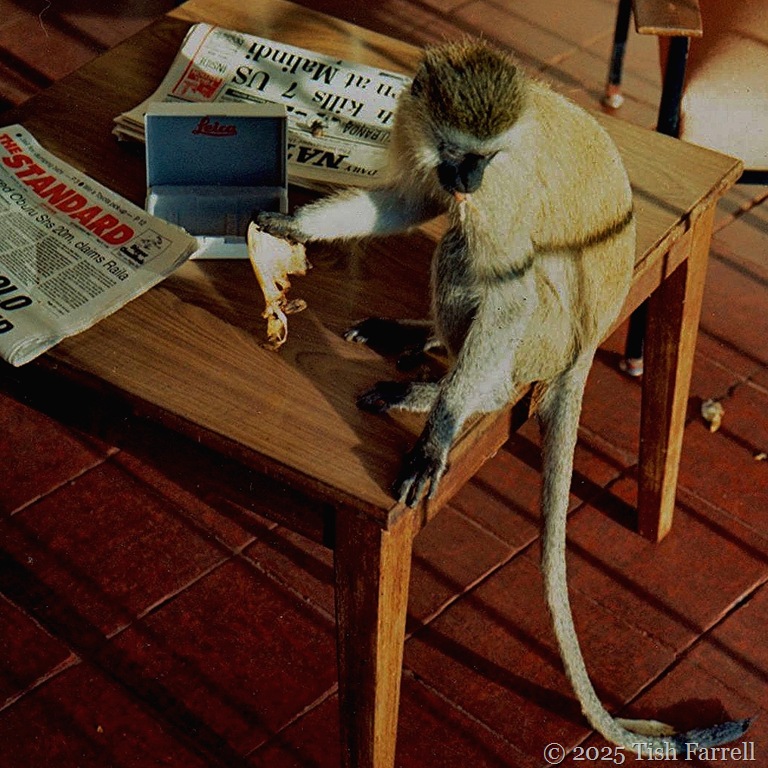
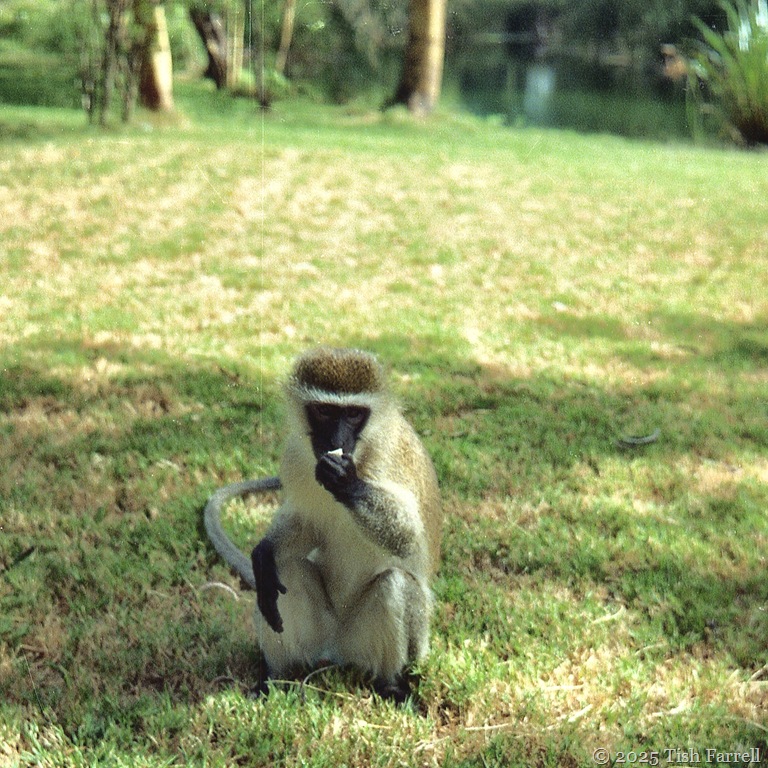
The vervets kept a keen eye on us. They soon learned we had supplies in our room – especially highly desirable bananas, and packs of raisins and nuts. We brought these to make up for the limited Lodge menu of cheese sandwiches, omelettes and steak and chips. But any unguarded moment and there would be a raid. I once came out of the bathroom to find three monkey faces peering up at me from under the bed.

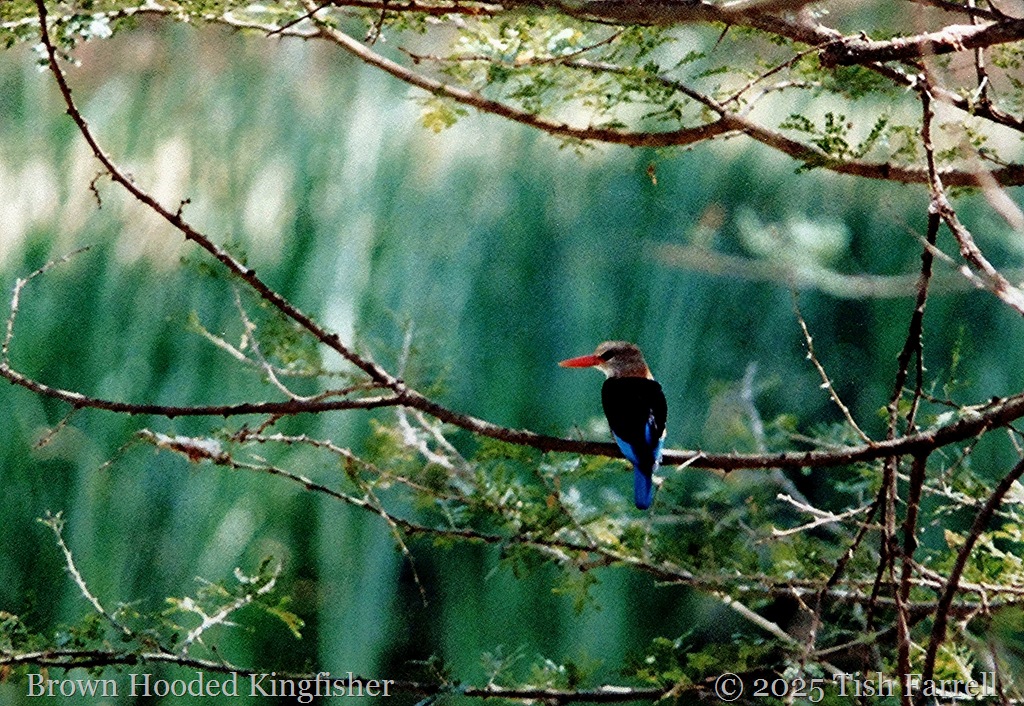
The vervet in the header had clearly pounced while I was distracted with some bird watching out on the lawn (viz. empty binoculars case). And with over 200 local species, the distractions were many – from tiny malachite kingfishers to the giants whose diving technique seemed set to empty the pool. There were also pied and brown hooded kingfishers, ibis, storks, herons and weaver birds, and once, a lone pelican that dropped in from who knows where.

brown hooded kingfisher

*

Days at Hunter’s Lodge were like a waking dream, soundtrack the high-tension whine of insects, muffled rumble of trucks along the highway, clatter of stork bills up in the fever trees and sometimes the chime of a bell calling the gardeners and chamber-maids to their tea breaks.

vervet


#SimplyRed Day 13

Cooling Off In Kiboko

Kiboko ed sundowner rain 2

Every time there was that gasp of relief, as if we’d not been breathing for the last hundred miles. Ahead, through the heat haze, appeared the stand of fig and fever trees, rising tall and green above the dry bush country. After two hours of truck fumes, heat and dust and no shred of shade since leaving home in Nairobi, it seemed like an oasis.

It could be a mirage of course. But no. Next the scene would solidify and we’d see the Akamba wood carvers’ stalls set out under the trees. And then, thanks be, we’d be turning off the Mombasa highway, bumping along the dirt track, that was scarcely more bumpy than the road, and into the cool sanctuary of Hunter’s Lodge.

Kiboko ed 3

*

Kiboko ed header Mombasa highway north of Kiboko

And this is what we had left behind – the highway looking north towards Nairobi, caught here in a rare truck-free moment. There is currently talk of this route being replaced by a 300-mile multi-lane, super highway-toll road to be built under the auspices of the US government. Some Kenyans are sceptical of its ever happening.

*

The trip to Kiboko and Hunter’s Lodge was one we made every other week during our first year in Kenya. Graham had been seconded to the Kenya Agricultural Research Institute to work on the eradication of the Larger Grain Borer, a voracious pest of stored grain, introduced to the continent on consignments of food aid. The project had its base at Kiboko field station, which, most conveniently, was behind the garden at Hunter’s Lodge.

There’s more back story here: Once in Africa: everyday moments at Hunter’s Lodge…until the crocodile

Kiboko ed sundowner

The Lodge was built in the 1960s as the retirement home of big game hunter, the blunt-speaking, no-nonsense Scotsman, John Hunter. He belongs to the era of grand shooting safaris for maharajas and European nobility. (Out of Africa Bror Blixen and Denys Finch Hatton were colleagues and friends). He also spent much of his shooting career working for the colonial game department, tracking down ivory poachers while ridding the lowland bush country around Kiboko of ‘troublesome’ rhino and elephants. The former were terrorising the Akamba farmers, the latter destroying the sisal and orange farms of British settlers. He chose this spot for his home because he remembered it as an elephants’ waterhole, where he had enjoyed much time simply watching them. He seemingly saw no irony in the fact that he’d helped eradicate the local population.

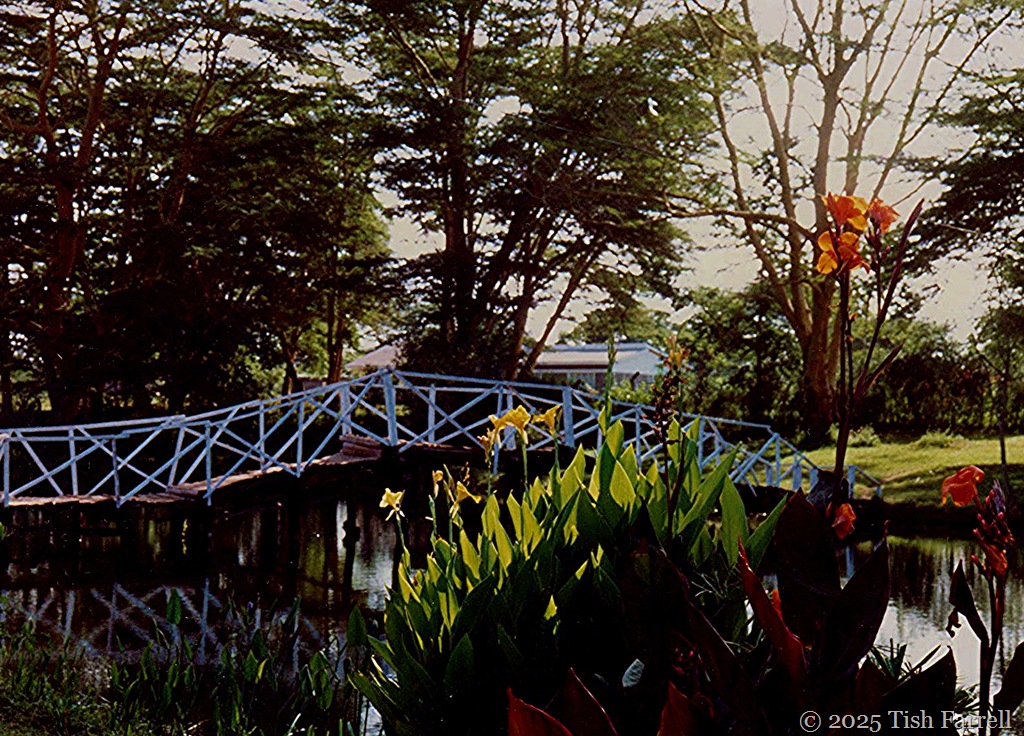
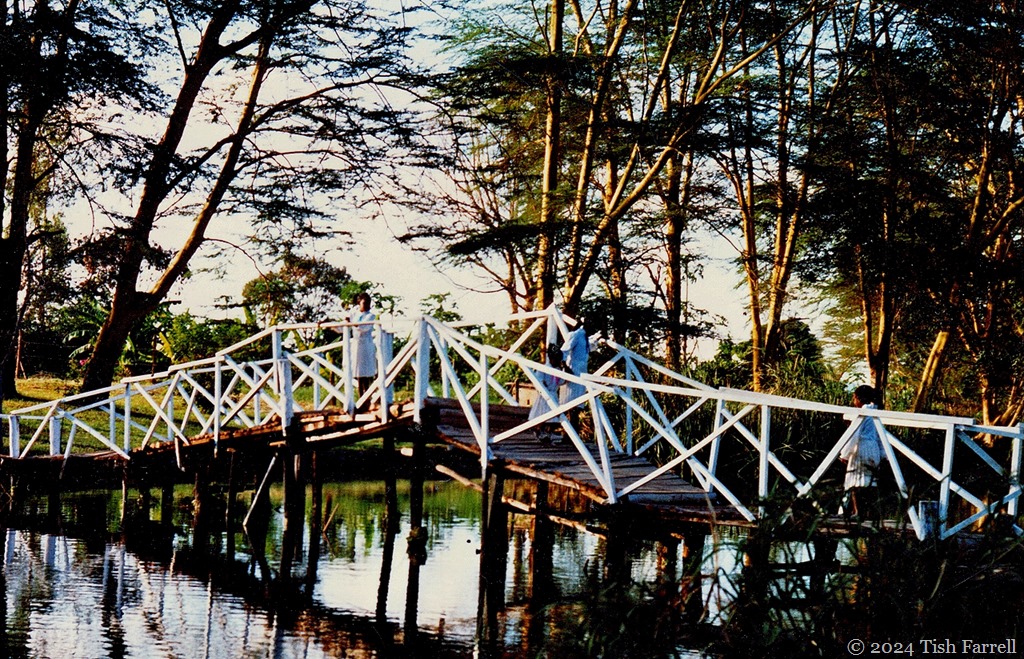
The waterhole, which was fed by a rare local water source, the Kiboko River, was remodelled into a garden lake, and traversed (in our day at least) by an extraordinary bridge that led to the vegetable shamba.

Kiboko ed pool

Kiboko ed garden bridge

There was said to a leopard living at the top of the lake, though I never saw or heard it. We did hear bush babies screaming at night, and also watched the nightly firefly show over the water. It was also a fabulous place for birds: over two hundred species including many varieties of kingfishers, weaver birds, herons and storks.  Sadly, I had only my small Olympus – trip camera, so there are few bird photos. The very distant marabou storks in the next photo’s tree tops are actually huge in real life.

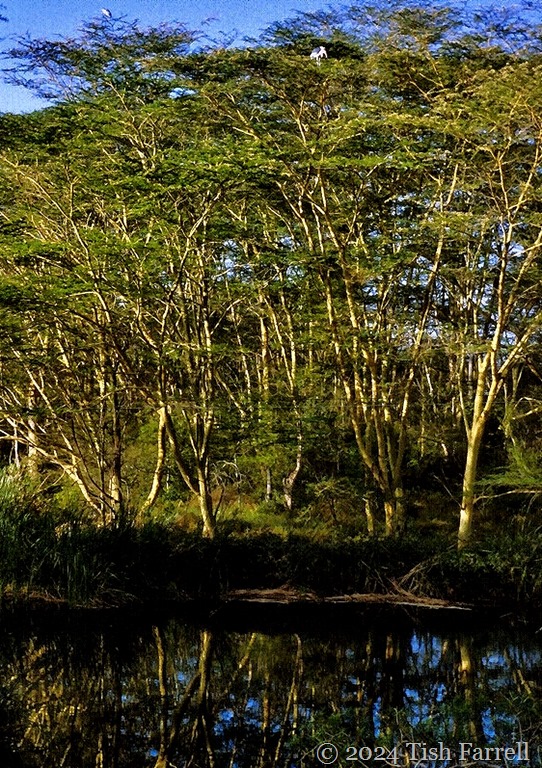
Kiboko ed fever trees

Kiboko ed dining room

kenya_map best

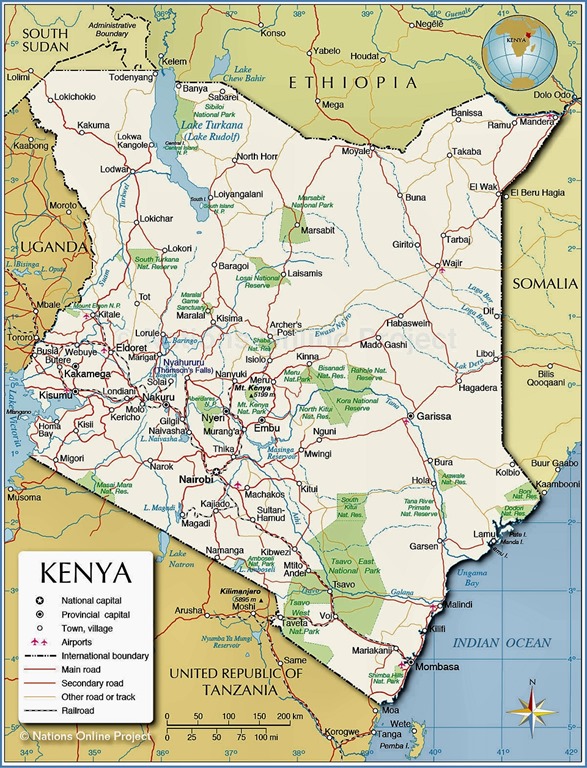
Kiboko isn’t marked on the map. It’s a centimetre above the border with Tanzania, due north of Kilimanjaro, roughly midway between Sultan Hamud and Kibwezi. The area east of the highway north of Tsavo East Park is Ukambani, traditional territory of Akamba farmers and herders. To the west is Maasai land, though you will of course see Maasai herders along the road, at the trading centres, and spot the red flash of their shukas as they drive their herds across the bush country north-east of Kiboko.

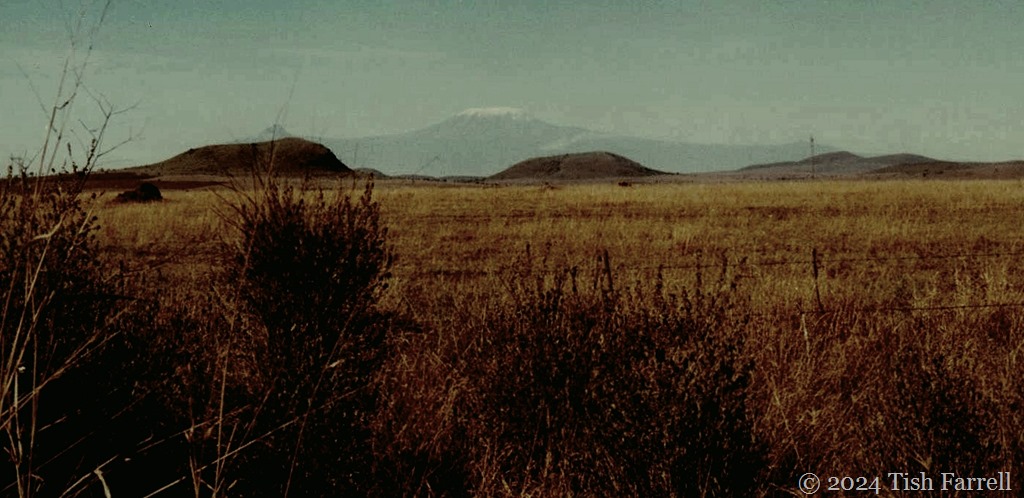
Sometimes along the road you may also catch a glimpse of Kilimanjaro, on those odd occasions when the mountain chooses to show itself. As you can see, lowland Ukambani is a sear land of thorn scrub and savannah. It hardly rained at all in the times we visited. The header photo was one of those rare moments.

Kiboko ed Kilimanjaro header

*

Lens-Artists: Cool Colours  John at Journeys with Johnbo sets this week’s theme and says he is open to any or all interpretations.

Trio Of Photo-Favourites From ‘The Old Africa Album’

Mzee Lali

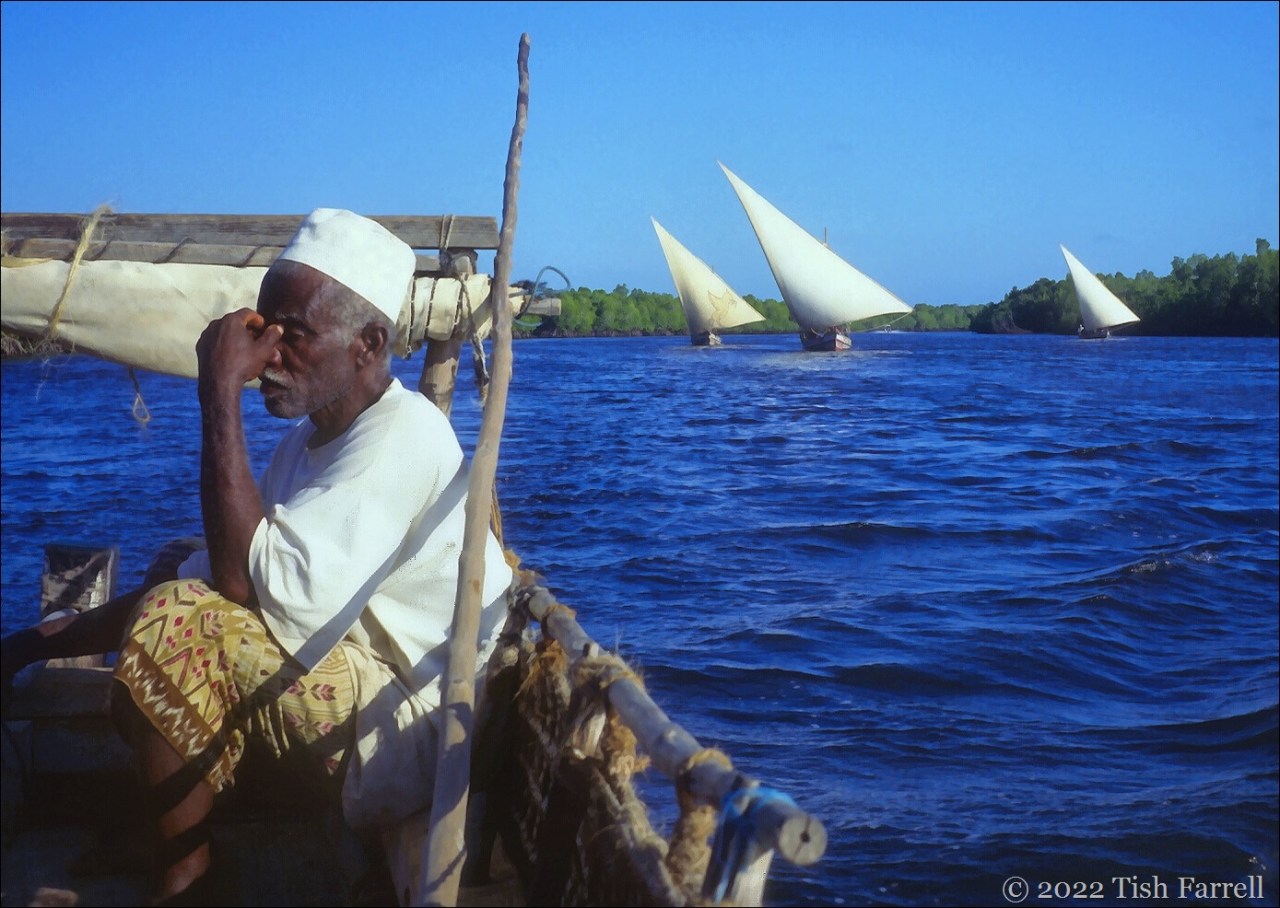
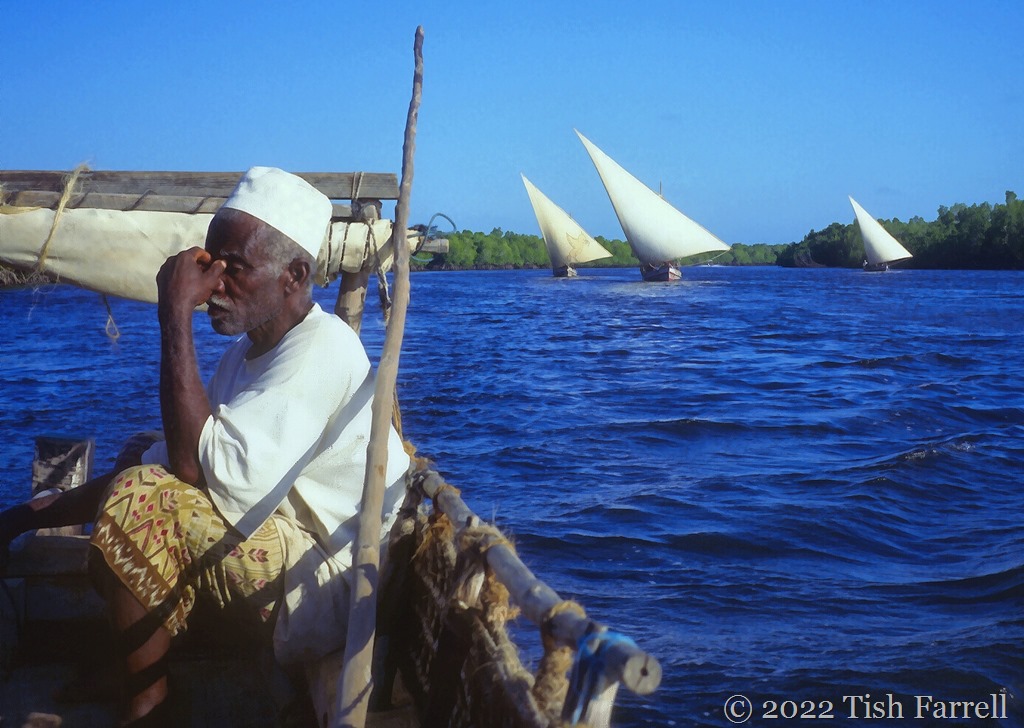
This first photo of Mzee Lali having a nap, with three full-sail Lamu dhows  in our wake  has to be my absolute favourite photograph. It was sheer chance that a) the scene composed itself so beautifully, b) I was alert enough to snap it and c) my Olympus-trip was not on the wrong setting.

It was Boxing Day and we had been out cruising the Manda Strait for several hours. In the morning some of our small party went in for a spot of snorkelling out on the reef. Next, using baited lines, we caught a few little fish which Lali and his nephew Athman scaled and cleaned. At noon when we were moored off Manda Island, Lali waded ashore and knelt down on the beach to pray. Then lunch was prepared, the fish grilled on a portable charcoal (jiko) stove and served up with freshly chopped coleslaw. Delicious.

In the afternoon we meandered back along the strait between the mangrove forests, waiting for the wind to pick up. We passed a large dhow taxi, utterly becalmed, engine stalled. It was brimful with laughing, chattering passengers, all hopeful  that some time or other they would finally reach Lamu mainland to visit their relations.

*

Robert Omondi ed

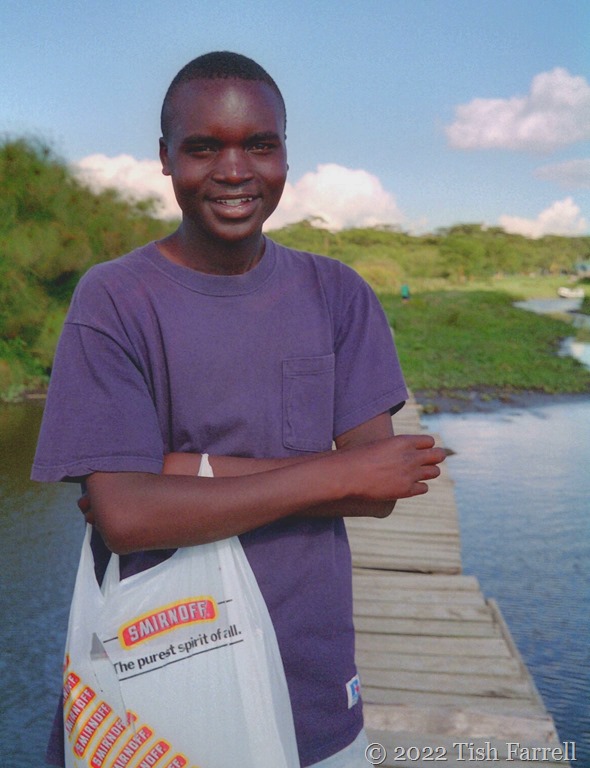
This photo was taken a few years later. It’s a favourite because it was a chance meeting that pretty much sums up all that is so powerfully positive about young Kenyans. We were staying at Safariland Lodge on  the shores of Lake Naivasha. Graham was hosting a conference of international crop pest scientists, and I was spending the days wandering around the place, bird watching. One afternoon I met Robert Omondi on the hotel mooring. He sold me one of the hand written booklets he had made, its topic the ecology of Lake Naivasha and the water sources that fed into it. He was visiting all the hotels and lodges along the lake, selling copies where he could, and so raising funds for his next term’s school fees.

*

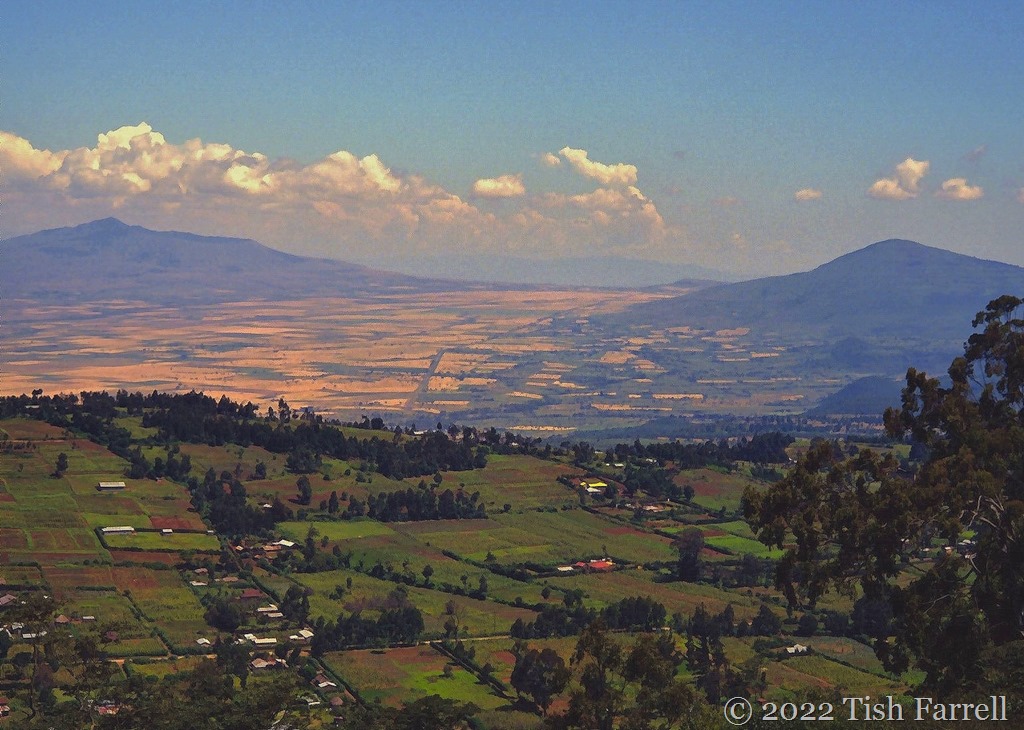
And finally a photo to prove to myself I was actually there, although even at the time I took it, it was hard to believe. Besides which, the Great Rift Valley is almost impossible to photograph and give any true sense of scale or depth. If there isn’t a heat haze, there is often a fog. I was standing somewhere north of Nairobi, on the east escarpment highway which runs up to 9,000 feet above sea level. Below, in the foreground, is Escarpment location, a community of smallholder farmers. The bright green of the plots suggests it must be the main growing season after good rains. In the Rift bottom are the wheat and barley fields of larger-scale farmers, the crater of defunct volcano, Longonot on the left. The low road to Lake Naivasha runs north beneath it along the valley floor.

Escarpment

Lens-Artists: picking favourites This week Sarah at Travel With Me  invites us to choose three favourite photos (not necessarily absolute favourites). Please go and see her three stunning choices.

A Very Big Baobab

023

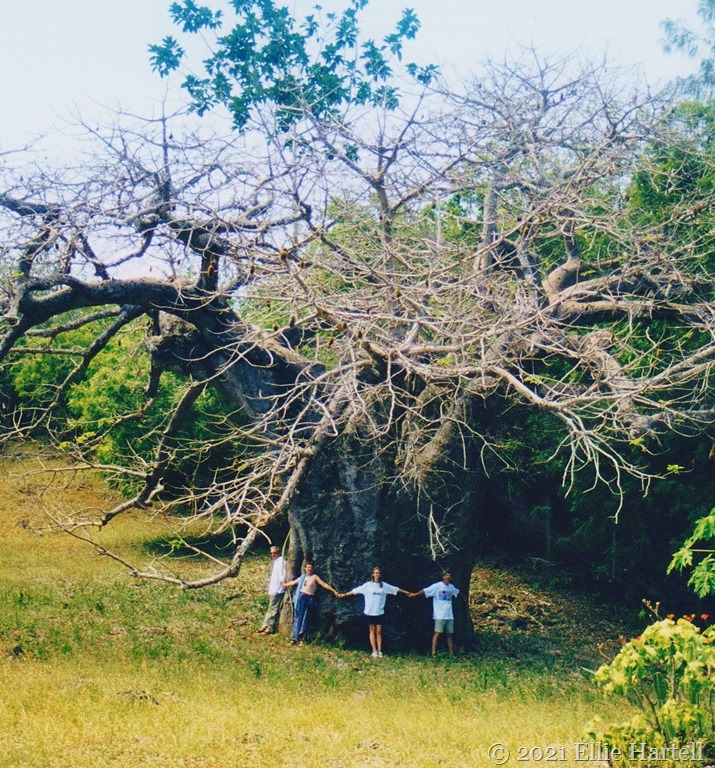
A Christmas holiday with chums down on the South Mombasa coast, and one very sturdy baobab, Adansonia digitata. It’s a tree with many surprising properties: a drought tolerant soft wood that is also fire resistant. It may also live for up to 3,000 years and grow an astonishing 25 metres in girth. The fibrous bark stores water and provides emergency dry season fodder for elephants and elands. Humans also work the fibre to make ropes, twine for basket making and cloth.

Baobabs are leafless for most of the year, which doubtless gave rise to the many traditional tales of an upside-down tree with its roots in the air (planted by creator, or the devil, or hyenas who are always getting things badly wrong). When they do happen, the leaves are large and finger-like and villagers harvest them as vegetables. In the flowering season the branches hang in fleshy cream flowers that only open at night, smell somewhat foetid and are pollinated by bats and bushbabies. The resulting fruits – large woody capsules – contain seeds that are eaten by wild and domestic grazers alike, while the white, cream of tartar like pulp that surrounds them is a good source of vitamin C and used in juices and beer-making.

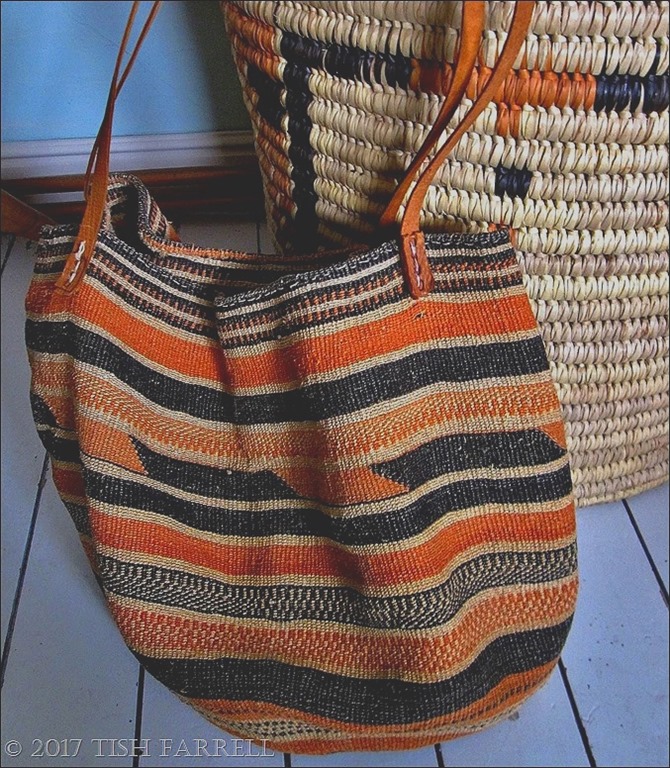
One of my best African treasures is a Kenyan kiondo  bag made in the traditional way from baobab fibre. These days the baskets are more commonly woven from sisal cord. Either way you can see how they are made at an earlier post HERE.

img_3923_thumb

Tree Square #20

Lions Resting Up

201sq

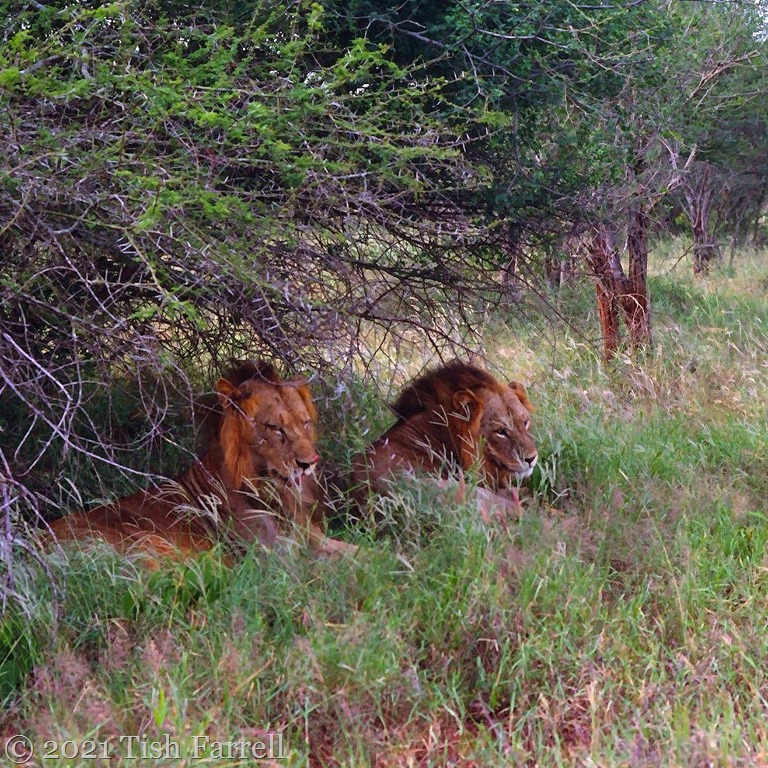
This photo records my first close encounter with lion-kind. I still find it hard to believe I was there.  I’d not long arrived in Kenya, not so much tourist as camp-follower to Graham who was out there on a short-term consultancy. He had recently returned from Mexico where he’d been studying the habits of the Larger Grain Borer (LGB), a tiny maize-devouring beetle which had been imported into Africa from the Americas in a cargo of food aid. The alien beastie had by the 1990s spread across the continent along the lines of rail and road and was busy infesting grain stores in Taita near the Tanzanian border and also in Ukambani in southern Kenya.

Graham was there to provide technical support to a British funded project that was planning to introduce a predator-specific beetle to control the LGB spread. For several months we had no home base. Instead there was an endless back and forth along the Mombasa highway between Nairobi and the coast, Graham spending two or three days at a time at research sites in Kiboko, Taita Hills and Mombasa. I went along for the ride.

At the coast we stayed in beach cottages. At Taita there was a rest house in the hills, but when it was booked up, we stayed at the extraordinary Taita Hills Hilton, a four-star safari lodge in the middle of nowhere. It came with its own private small game reserve, a former colonial sisal plantation run back to bush. (For anyone who’s read William Boyd’s An Ice cream War  this was the territory – between the Mombasa railway and the Taveta border).

Taita Hilton pool terrace

And so, one Saturday afternoon when Graham had finished working, we took ourselves for a game viewing drive around the Taita reserve. Left to our own devices we would not have seen the lions. But some rangers on patrol stopped us. ‘Have you seen the lions,’ they said. No? ‘Come. Follow us.’ They hived off into the bush in their sturdy truck. We followed (carefully) in the works’ Peugeot 307 saloon (!) And there they were, two lions under a thorn bush. Who’d have thought it!

Square Up #17

Gave Up Flying, Took Up Running

ostrich sq

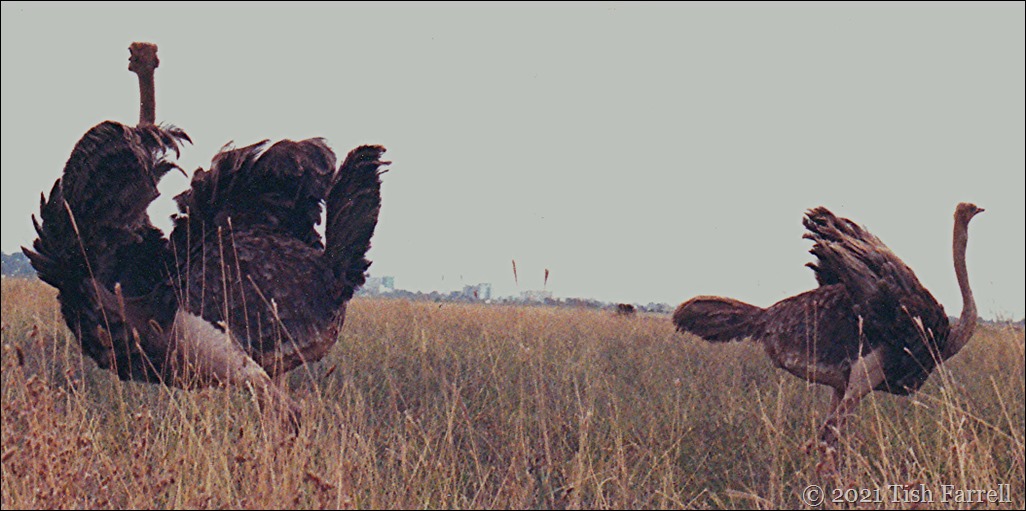
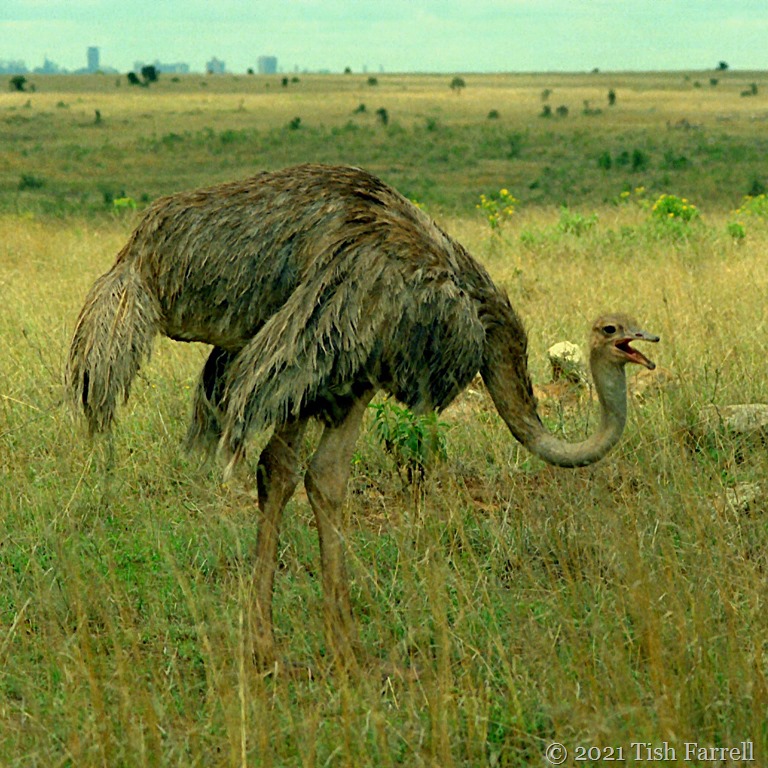
You can see the city high rises in the top left behind the hen ostrich. She is standing in Nairobi National Park (some 40 square miles) which nudges up against the perimeter of Kenya’s capital, including the industrial zone and the main airport highway. In our time, the park still had an open wildlife corridor to the south, though even then there were problems of settlement encroachment. These days too, there is another kind of incursion – in the form of a super-duper elevated Chinese railway that cuts across the park on tall concrete pillars. This line replaces the old Uganda railway built right across Kenya by the British administration between 1895-1901, also known in its day as the Lunatic Line.

The colonial railway cost British taxpayers a lot of money, and was built entirely to satisfy UK strategic interests (i.e. not at all for the benefit of local populations). In order to recoup the cost, settlement by British gentlemen and especially members the ‘officer class’ was actively encouraged. It was envisaged they would engage in large-scale ranching and planting along the line of rail and produce valuable cash crops for export.

In the early 1900s the chaps who came out to British East Africa all had notions of making big fortunes. One of those notions involved ostrich farming, or rather ostrich feather farming, since those airy plumes were just then in high demand for ladies’ hats. These same chaps also knew that some other chaps down in South Africa had made it rich from feather production.

Unfortunately the  ostriches of British East did not prove especially accommodating within what turned out to be a very small window of opportunity. One way to set up business was to collect eggs from the wild (a single nest might have twenty or more eggs) and then incubate and rear the chicks. But then robbing a nest could be hazardous; ostrich parents are fierce guardians, taking it in turns to protect their offspring. (N.B. a kick from an ostrich can break a man-leg).

Early settler Lord Delamere thought to speed up operations by recruiting a cohort of mounted Somalis to organise an ostrich drive across the open plains of his Rift Valley estate, thereby separating flocks of part-reared chicks from the hens and driving them towards the farm dairy where farmhands, stationed behind thorn trees, had been charged to grab any passing chick and imprison them. It did not go well. Even ostrich chicks can wrestle.

And then the captured adult cock bird proved most unbiddable, even with a sock over his head (an approach that was supposed to calm him down). He was last seen sprinting across the plains, still be-socked, having broken from his pen. And by the time all this had been gone through, the bottom had dropped out of the hat feather market because some idiot had invented the motor car wherein ladies’ plumed headgear proved most unsuitable and was apt to blow clean away.

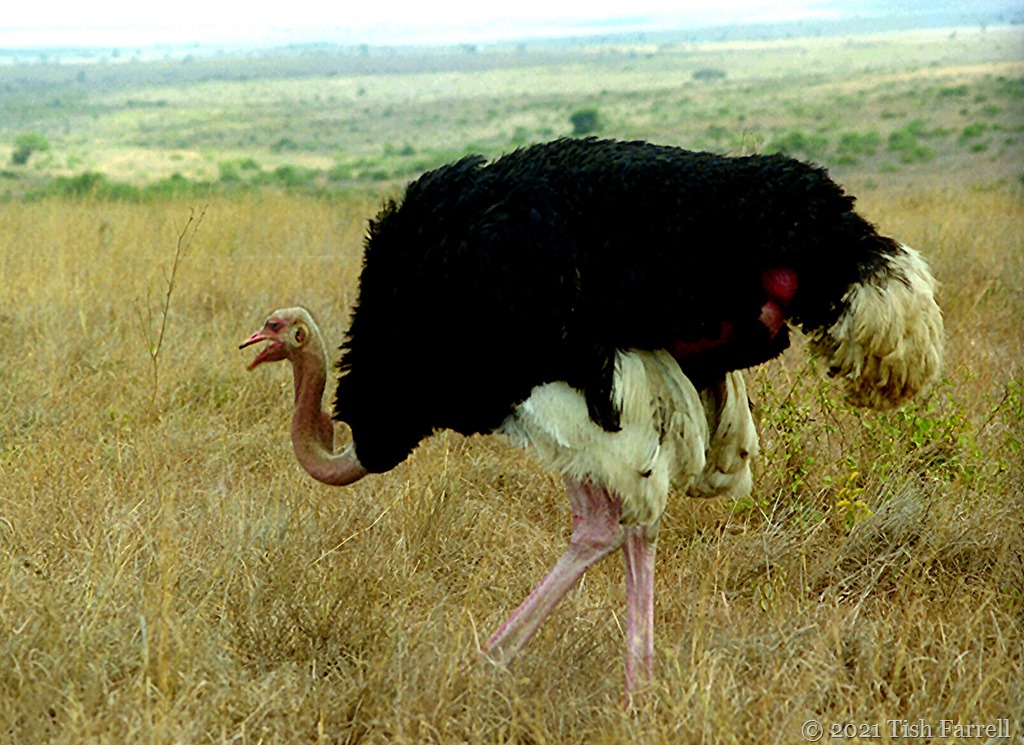
All of which is a bit of a deviation from the point I intended to make. Ostriches may not fly, but they can certainly run: over 40 mph (70kph). The fastest birds on the planet. Just look at those legs in the next photo. They also come with huge, clawed feet attached.

park 21


Square Up #13