Garden Treasures: The Salvaged And The Self-Seeded

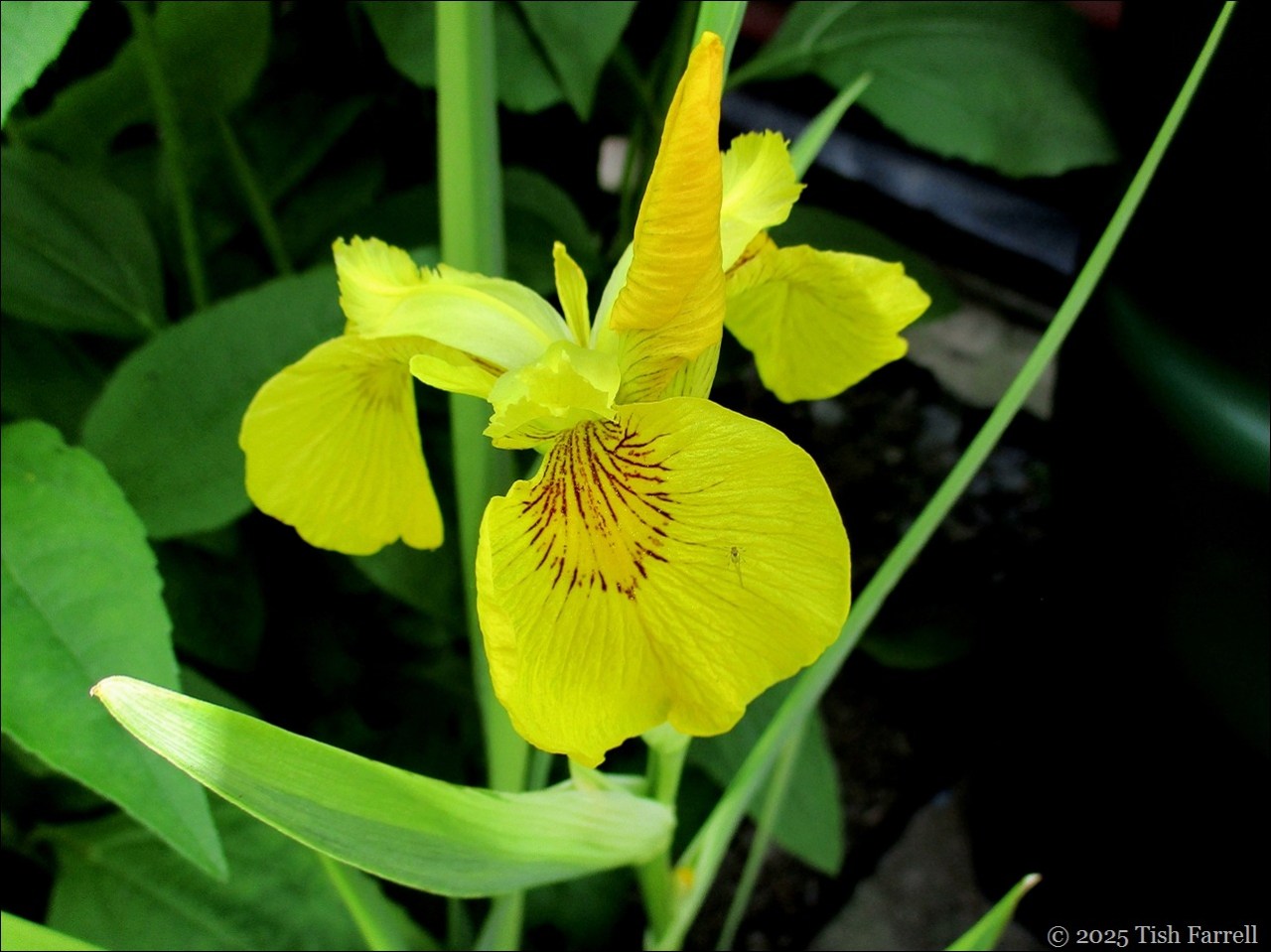
IMG_7726 variegated yellow flag

Well, this was a big surprise last week, and a very lovely one too. It is the unexpected outcome of a little rescue job performed over a year ago, not long after we’d moved into The Gables. Back then, in the August of 2023, I was making a start on de-jungling various flower beds and found some rhizome fragments swamped by phygelius and euonymus and assorted weedy thugs. They had small spikes of green and white leaves and I thought they might be Japanese iris so I replanted them in a cleared corner and pretty much forgot about them. They certainly didn’t do anything last summer, and when I looked at them early this spring I decided that they weren’t likely to either.

So it just goes to show what can happen when you’re not paying attention.
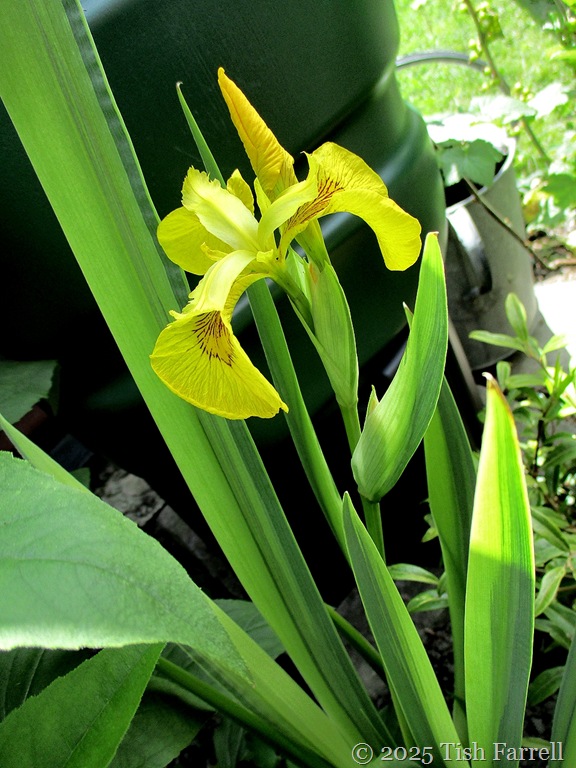
IMG_7720 variegated iris 2

The spot where they’re growing is fairly sheltered, between Graham’s shed, a blackcurrant bush, the path and the hot composting bin. They are also being encroached on by some super-charged perennial helianthus ‘Lemon Queen’ (more of which in a moment). And here’s the puzzle.

When I first spotted the opening iris I couldn’t quite believe my eyes. It looked exactly like the wild yellow flag that grows in and near ponds and marshes. The only difference appeared to be the green stripy leaves. Some internet sleuthing was thus required, and this soon revealed that the iris was indeed a variegated cultivar of the wild form. But how come? There is no standing water in its vicinity. Until last week we’ve been many weeks without rain, and on sunny days, out of the wind, it’s been quite hot, leaving other herbaceous plants in parched beds.

Then I considered the size of the neighbouring helianthus clump. The first shoots are waist high already and the leaves huge. I then began to wonder if the hot compost bin has been having a hand in things. It does make a quantity of liquid gloop which, if I haven’t drained it, dribbles onto the path and onto the flower bed (?). Also the soil there is largely unimproved and thus dark and heavy; slow to dry out where the shed shades it.

Hm. Who knows? I’m just hoping that the iris will decide to stay. There are signs that the plant with the flowering stem is beginning to clump up. The smaller cuttings, in amongst a spreading geranium and rudbeckia,  are also beginning to look promising. And now we’ve installed a nearby water butt, I’ve no excuse not monitor watering requirements.

All the same, all the gardening sites do call the variegated yellow flag a wetland plant, and also warn that it, too, can develop thuggish tendencies. A watching brief then.

*
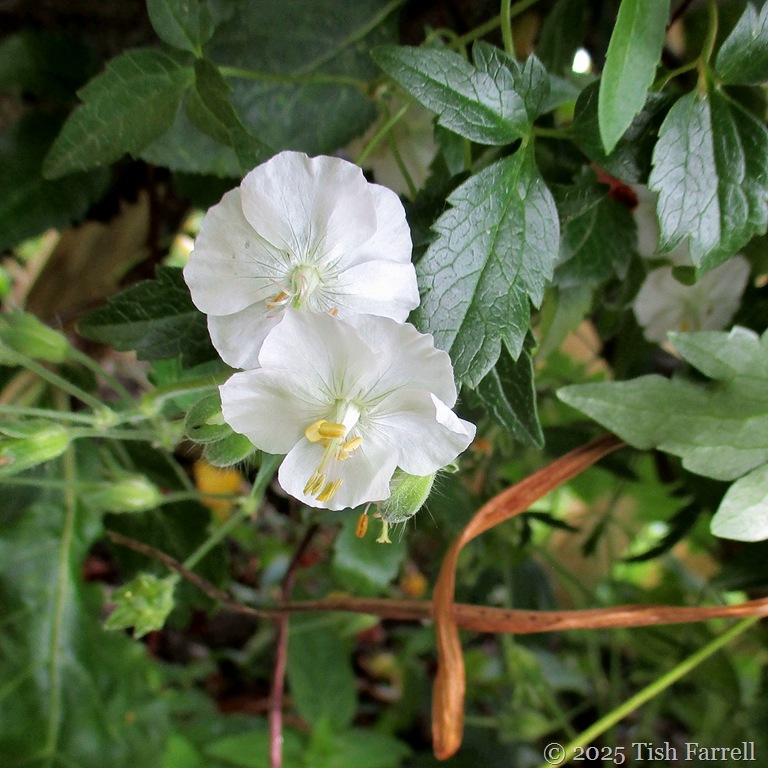
IMG_7776 geranium phaeum alba

I rescued this geranium phaeum album early last summer. I discovered it behind the compost bin, lurking mostly under the fence with next door’s garden. It’s now growing under the apple tree at the bottom of the garden, though it’s a spot prone to drying out. It’s doing better in an open sunny border along with geranium Anne Thomson. Damp shadiness is supposed to suit it best.

*

The recent downpours have bruised many of the geranium faces, but the rescued clumps of Johnson’s Blue (I think that’s what they are) have been putting on a good show and pleasing the bees.
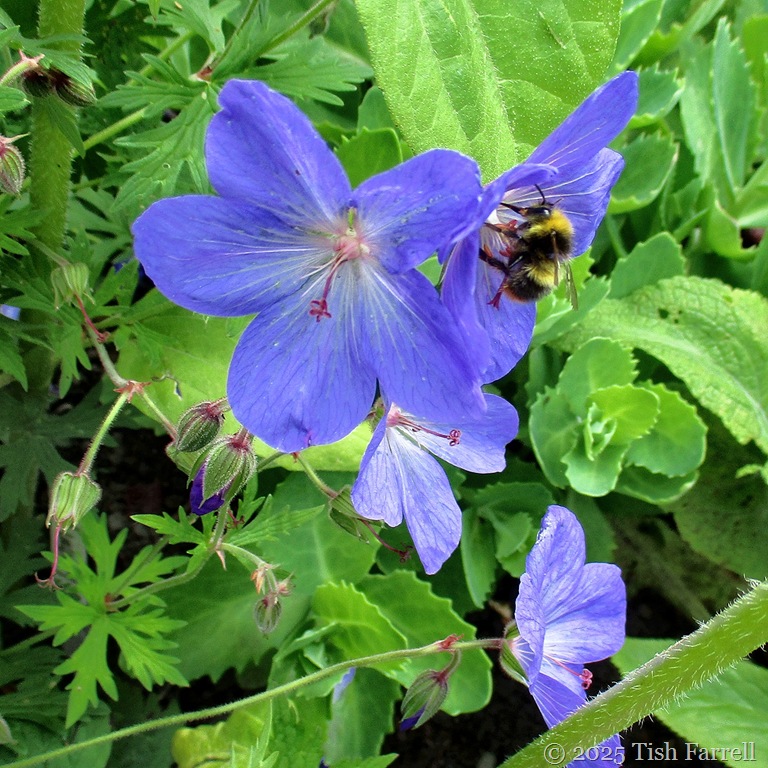
IMG_7765 blue geranium and bee

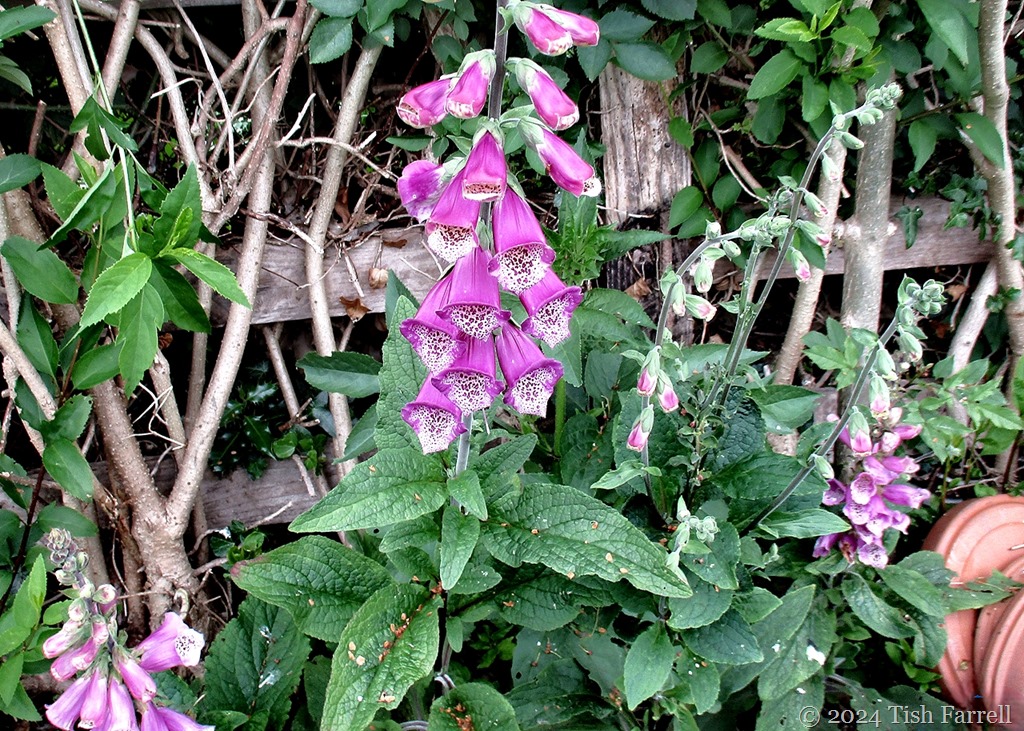
Here they are with this year’s number one self-seeders: white foxgloves. They are everywhere about the garden, although there was no sign of white ones over the last two summers. I love their cool and stately demeanour.
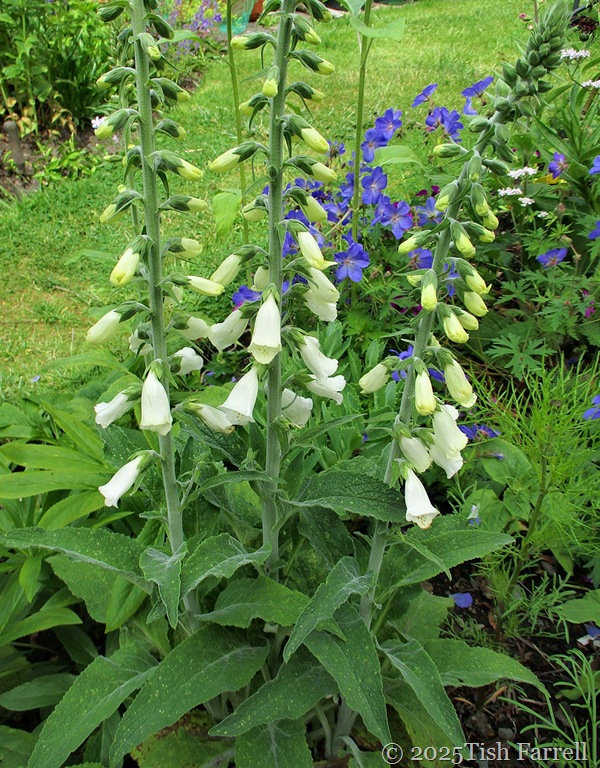
IMG_7764 white foxgloves

*

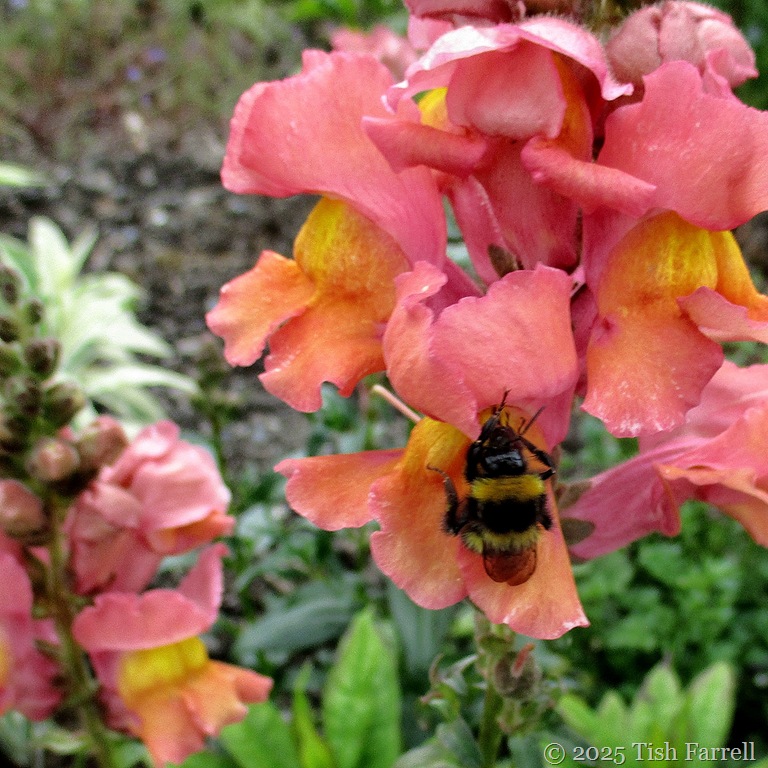
And at the hotter end of the colour palette, in the front garden we have a row of snapdragons, self-seeded along the wall in a remarkably orderly fashion. Anyone would think I’d put them there.
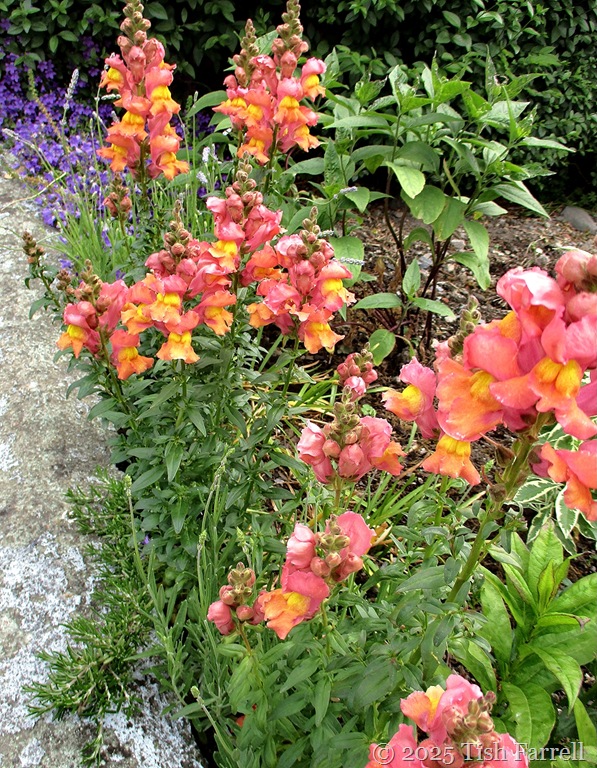
IMG_7758 snapdragon 3

IMG_7756 snapdragon and bee

They glow in late afternoon sunshine.

*

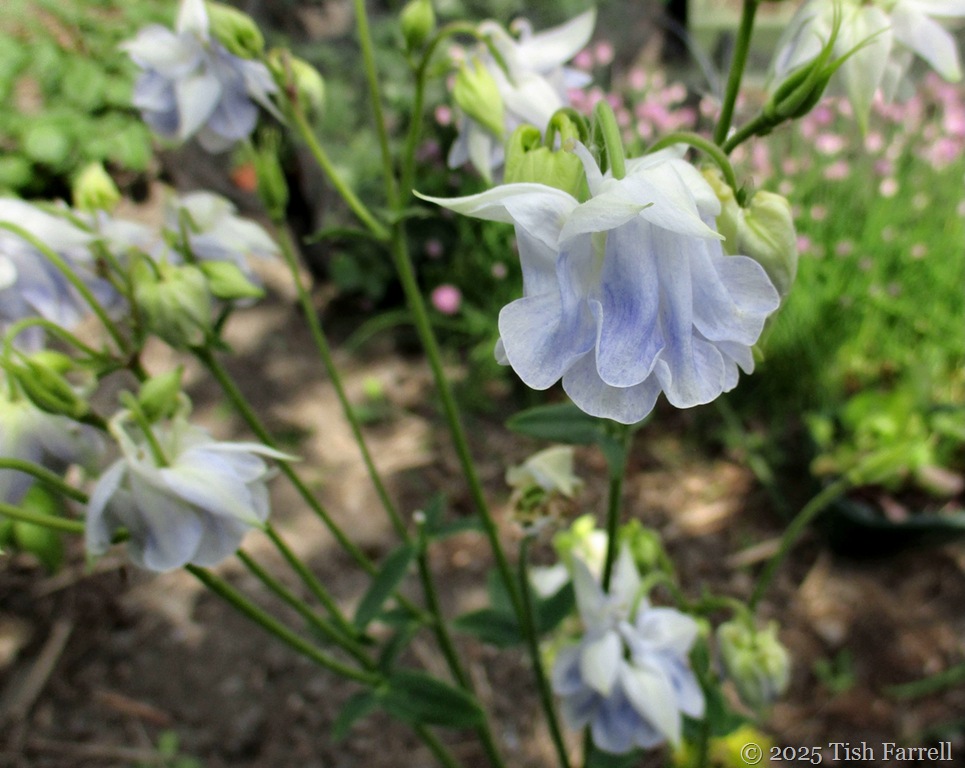
Throughout May we had profusions of columbines, mostly pink and dark mauve. They are actually too much of good thing on the self-seeding front, and I spend much time rooting seedlings out of the vegetable beds. But then amongst them were two plants of delicate lavender, each with a different ‘frock’, one by the green house, and another in the far corner behind an apple tree.  They are over now. But I know where they are.
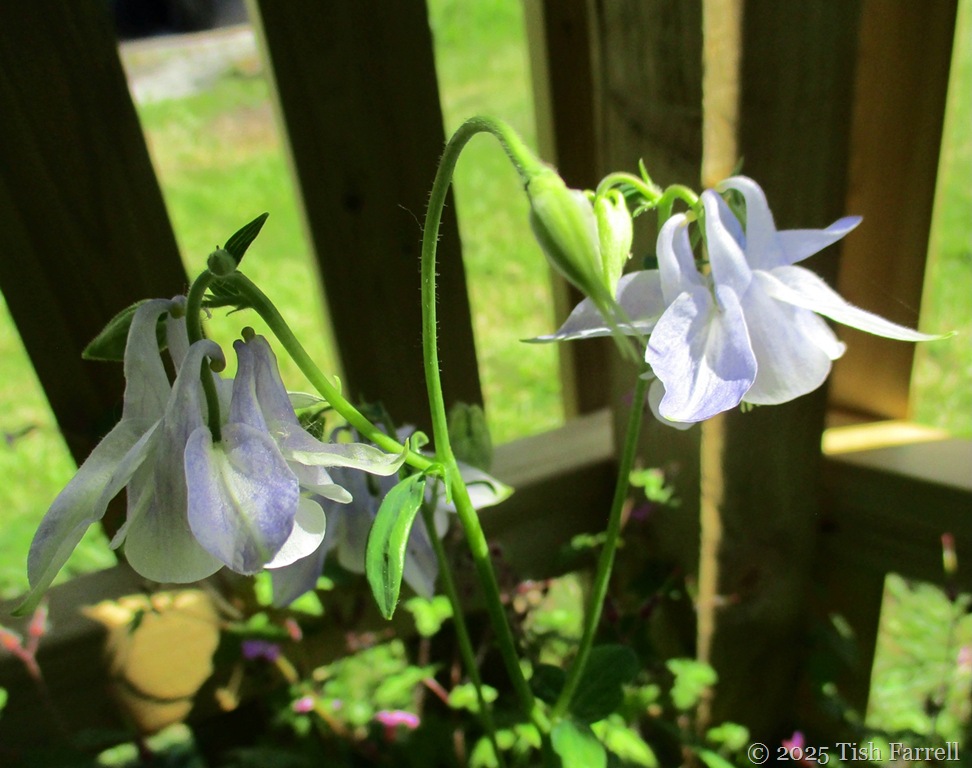
IMG_7562 columbine lavender

IMG_7554 columbine lavender 2

*

Six On Saturday  Please visit host Jim’s lovely garden – so many treats to be found there.
Catching The Light And Finding Home

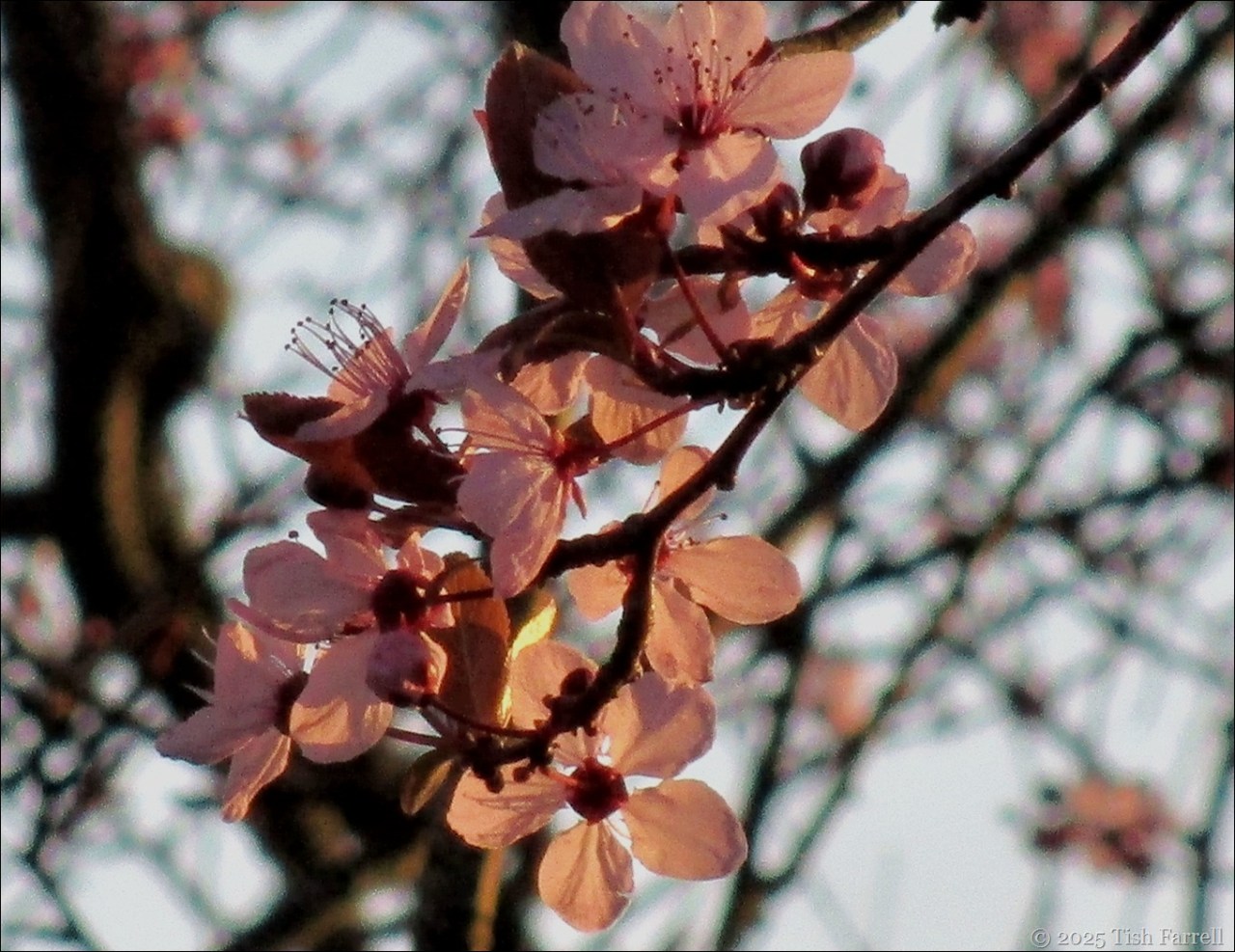
IMG_6923 cherry plum sunset

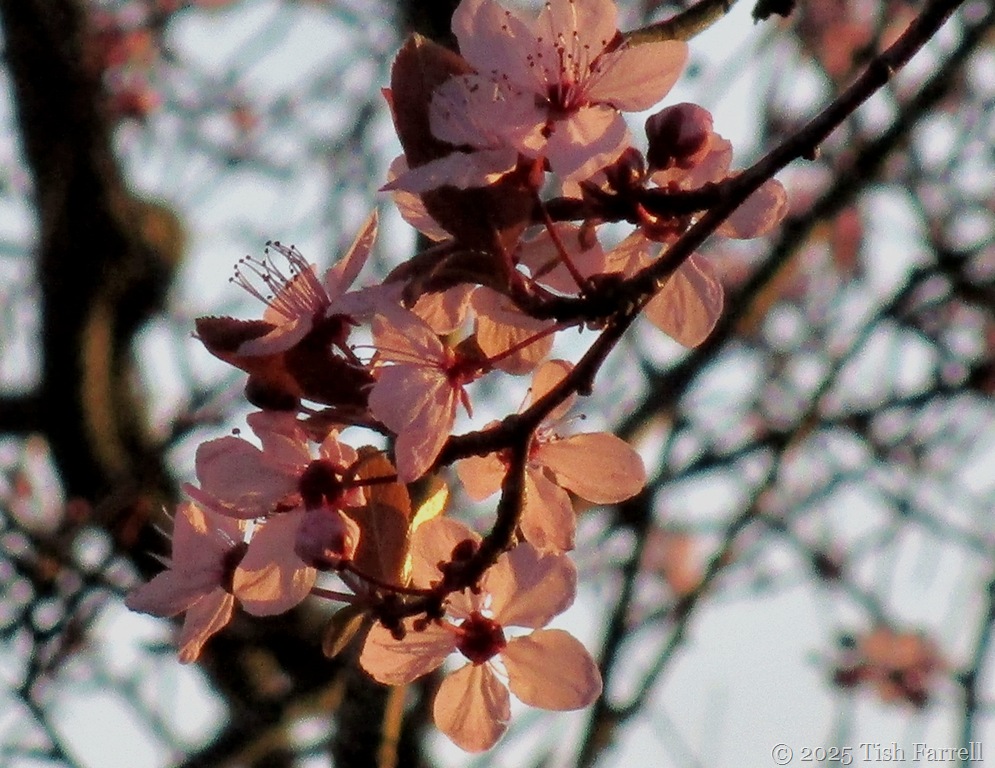
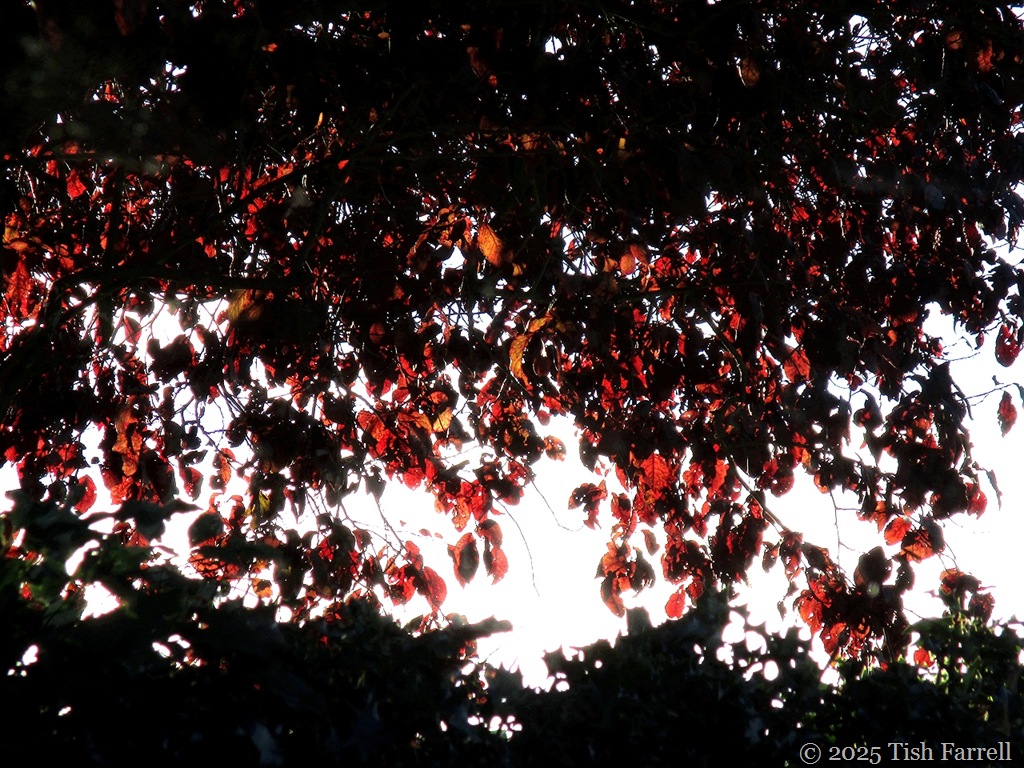
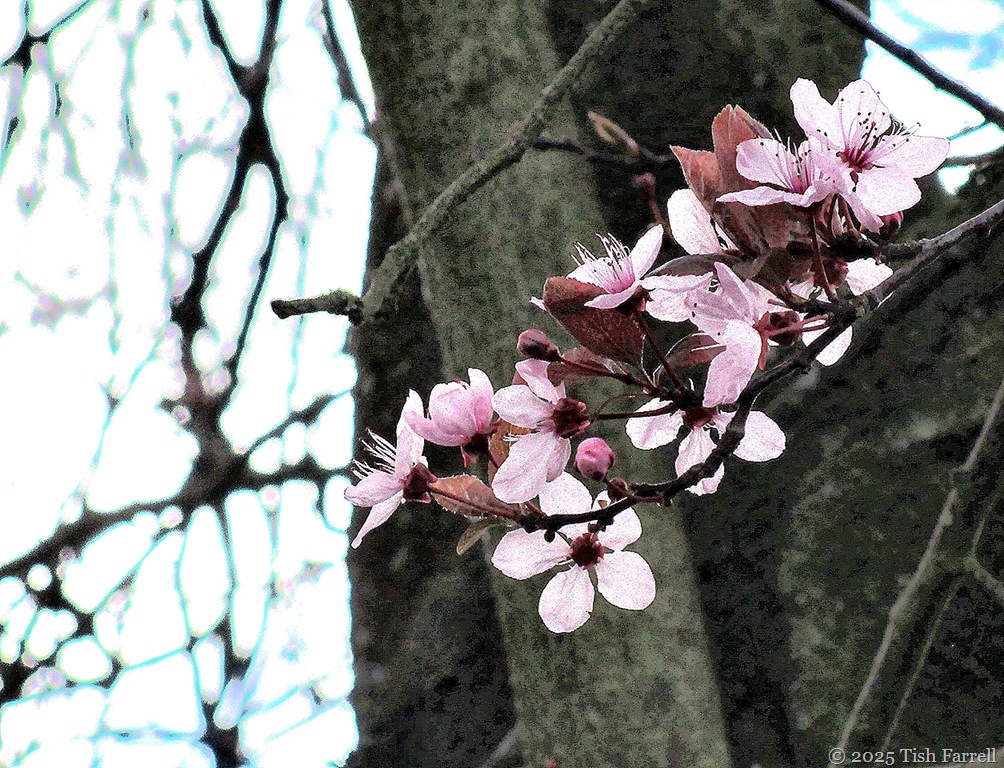
I took the header photo on March 11th, the last rays of sun over Shropshire-out-of-Wales, lighting up the first sprigs of cherry plum blossom. I have only recently identified this tree: Prunus cerasifera nigra – a native species that lives just over the hedge outside our kitchen window. Every day now, and especially when we sit down to eat, we are watching it with special attention. For it seems this tree, which I had started off disliking (for reasons explained below) has become a household treasure, albeit one ‘borrowed’ from the roadside verge next door.

When we planned the kitchen extension (to replace an ageing conservatory attached to our newly bought old house) we did not think too much about the view. The site was tight, constrained by planning regulations, conservation area considerations and an overgrown hedge (although it has been cut back), and so we assumed our new big window would mostly look out on sprawling holly and hawthorn.

But now we find we also have a tree-view. And though I’m not so keen on pink, I cannot deny its loveliness, and especially at sunset. For this was another unplanned aspect: the only possible position for the window meant it faces due west.

IMG_6907ed

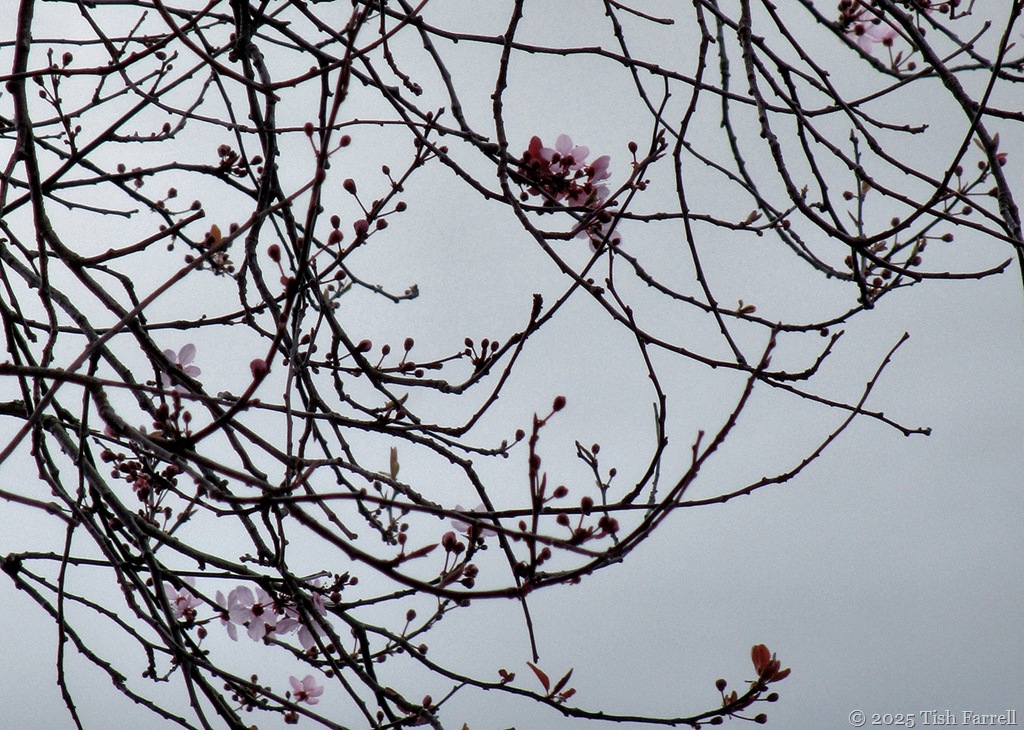
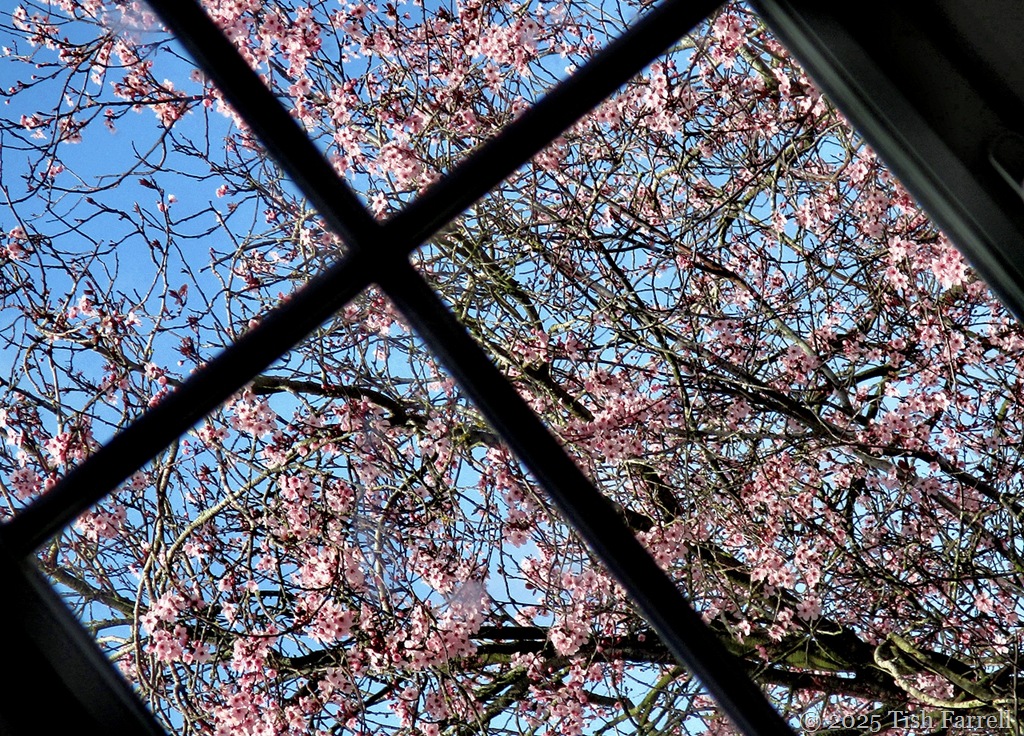
Two weeks ago the branches were still black and bare, a skeleton mesh against wintery skies. One week ago, with the sudden sunny spell, if we looked hard, we could spot tiny slivers of pink on breaking buds. This week we have the first blossom, a good two weeks later than last year, when our February 24th view through the landing window looked like this:

IMG_4676

So much for all the talk of this spring being sooner and warmer etc etc than other springs. Not so in Bishop’s Castle. After the week of warmish weather, the polar vortex is now rolling out cold, cold air day after day, and the cherry plum’s impulse to flower feels arrested somehow. But then that’s alright. A slow flowering will be just fine.

*

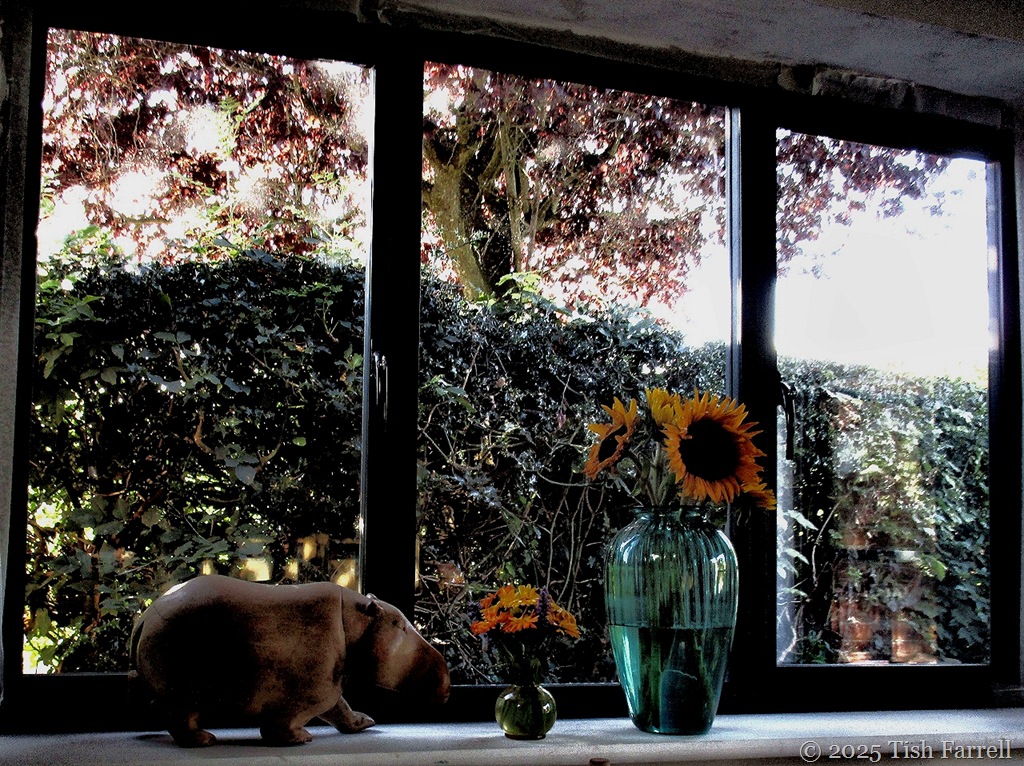
Last spring, as the building work progressed we watched the blossom cloud give way to foliage production. Next we had a dense, dark, rustling canopy, the leaves almost black at first sight, and not very pleasing. When viewed from outside, the tree cast a pool of deep gloom over the garden steps which  I found depressing. But then come August and the kitchen all but done, we found ourselves sitting down to supper with an unexpected light show.

IMG_6006

kitchen window

*

Two months on – and another unexpected view – a November snowfall and an abstract work that made me think of Jackson Pollock’s  Autumn Rhythm, which I think we once encountered in the New York Met, where we’d gone to escape an unanticipated May heatwave.

IMG_6474ed

And so in our new home, with passing moments, hours, days, and months, (two years in August), we are coming to know our closest neighbour, the cherry plum. Its fruits are said to be edible and good for jam. I managed to discover a single one last year. It was deep red and round, bigger than a cherry, with a firm skin that seemed to scrunch when I bit into it. It had a sweet-and-sour taste that made me think of Chinese plum sauce. Back then I did not know about its eating potential, and anyway I think the tree has grown too tall for elder scrumping  forays.

But never mind. It has anyway inspired me to think more kindly about our horrid hedge, and how to deal with some ugly gaps just beyond the window. I’ve discovered cherry plums are good for hedging so I’ve recently planted three white flowered saplings, hoping that (in the not too distant future?) the blossom will cheer both us and passing neighbours. And maybe there’ll be fruit too – for us and the birds.

There are other bonuses of course. When I was out on the far side of the hedge preparing the ground for planting, there was much chatting with locals who wanted to know what I was up to. And indeed, why I’d come to live in Bishop’s Castle, and where was I before. All good questions and a good start too to feeling, after a few unsettled years, that we’ve at last come home.

IMG_6902ed

Lens-Artists: Life’s Changes This week Anne sets us a theme rich in possibility. Interpret it as you may, but first see her post for an inspiring tale of personal development.

Spring!

IMG_6806ed

Or is it?

February in Britain often teases, bringing us a sudden mild and sunny day, as it did last Saturday, followed by bone biting winds (today). Countryman poet, John Clare 1793-1864, wrote a poem about February fickleness. I probably mentioned this time last year. It’s worth a read.

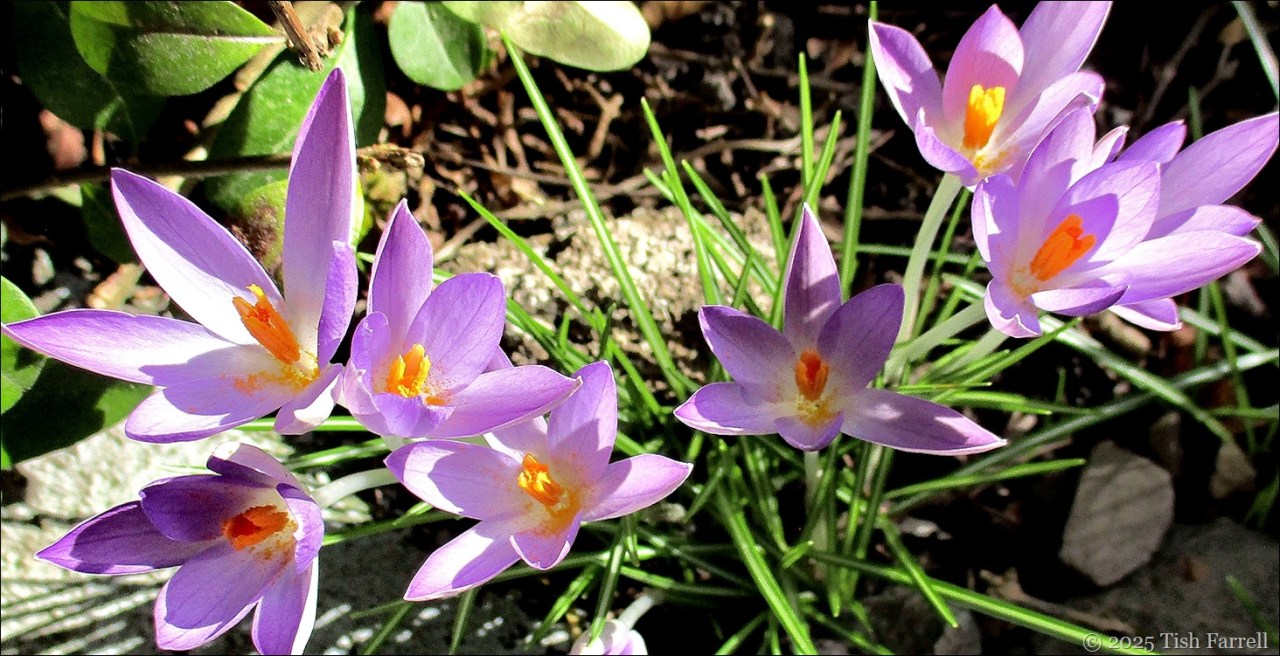
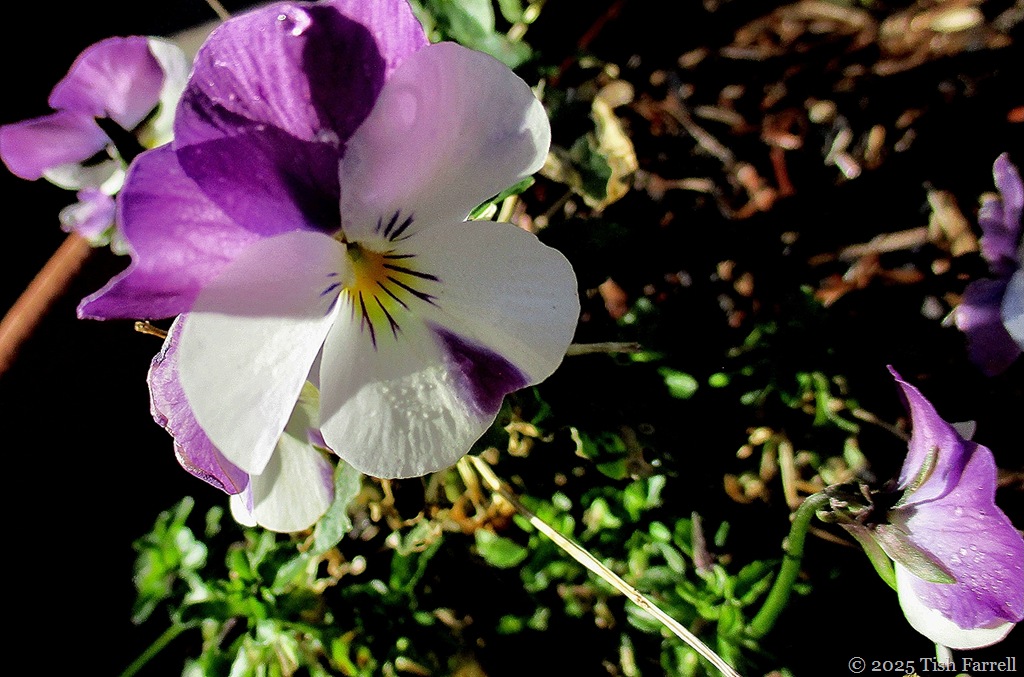
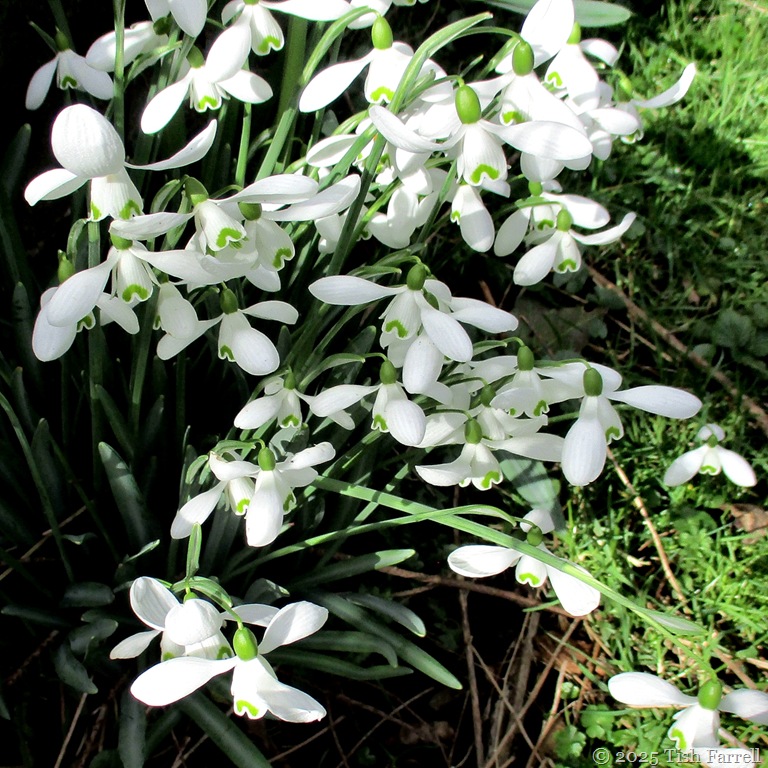
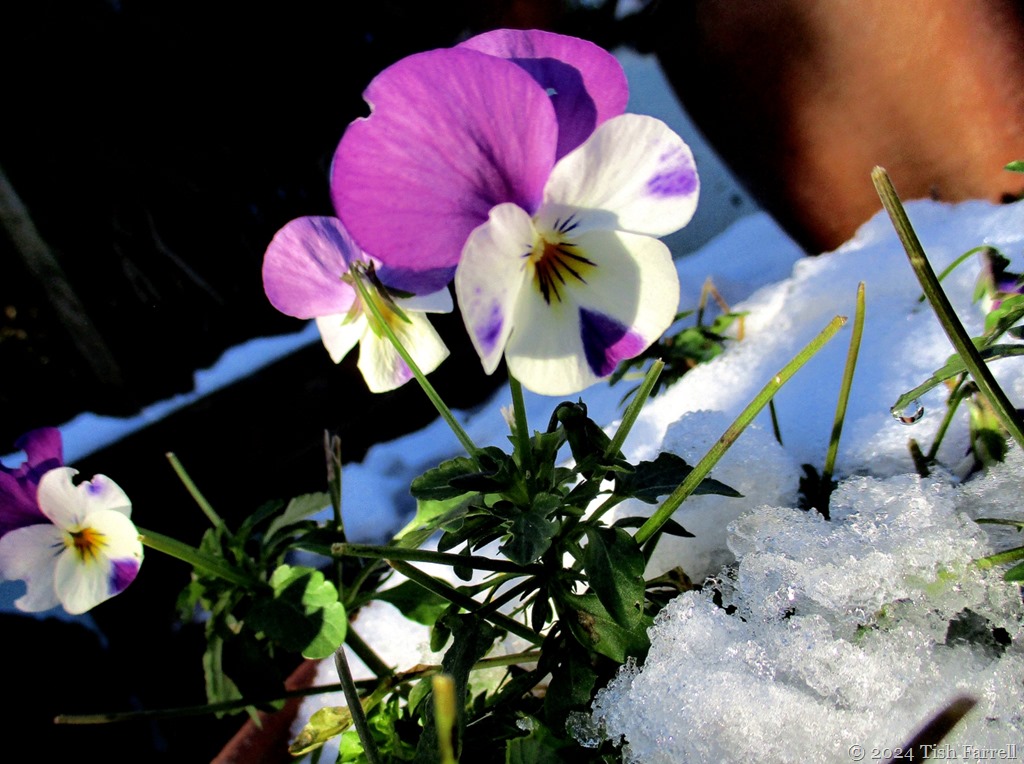
So: we have crocus and snowdrops, and the odd daffodil. Also hellebores, both waning and waxing. On the garden steps the winter pansies still thrive, although all but blustered out of their pot.

IMG_6787ed

IMG_6795

We have only a small scatter of snowdrops in the Farrell domain, but everywhere else about the town, in gardens, under lane-side walls and hedges there are drifts and drifts. Reinforcements, then, needed at The Gables for next year.

IMG_6822ed

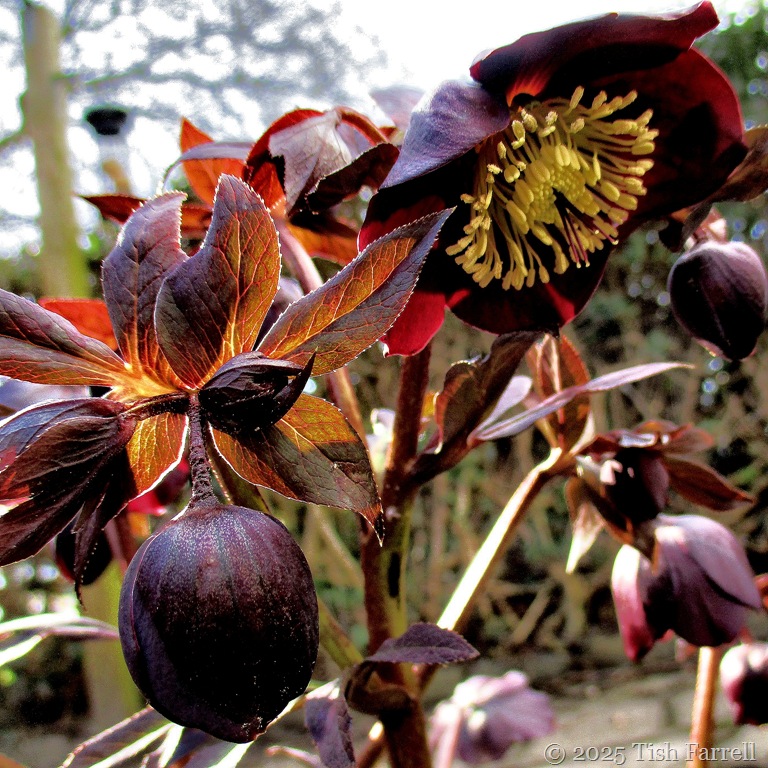
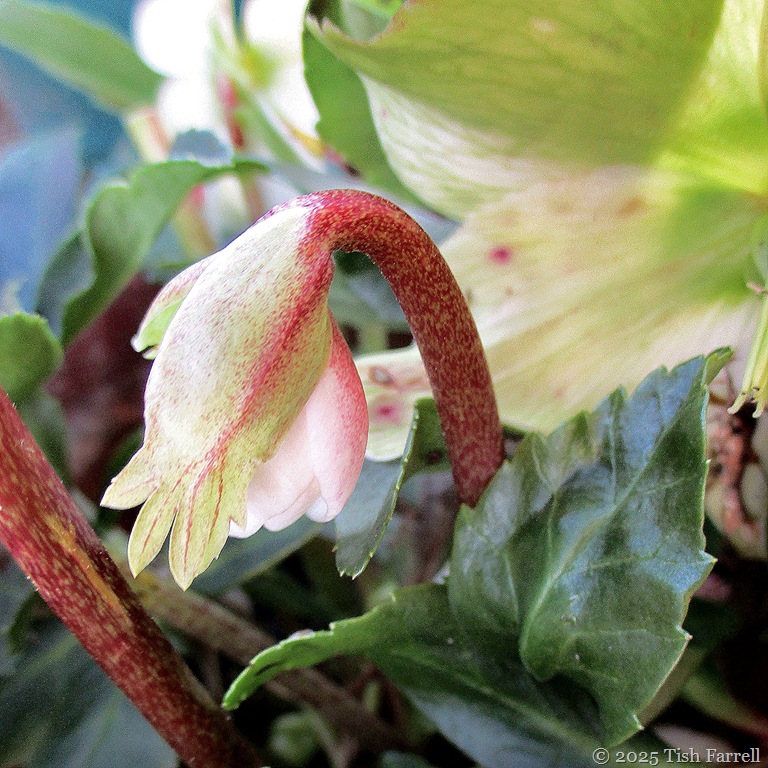
At the top of the garden steps the dark hellebore has just begun to flower. Very striking when the sun catches it. Meanwhile, in the pot below, Hellebore Christmas Carol is winding down after a three month performance. Although having said that, this morning I noticed there are new buds forming beneath the gone-to-seed blooms.

IMG_6832

*

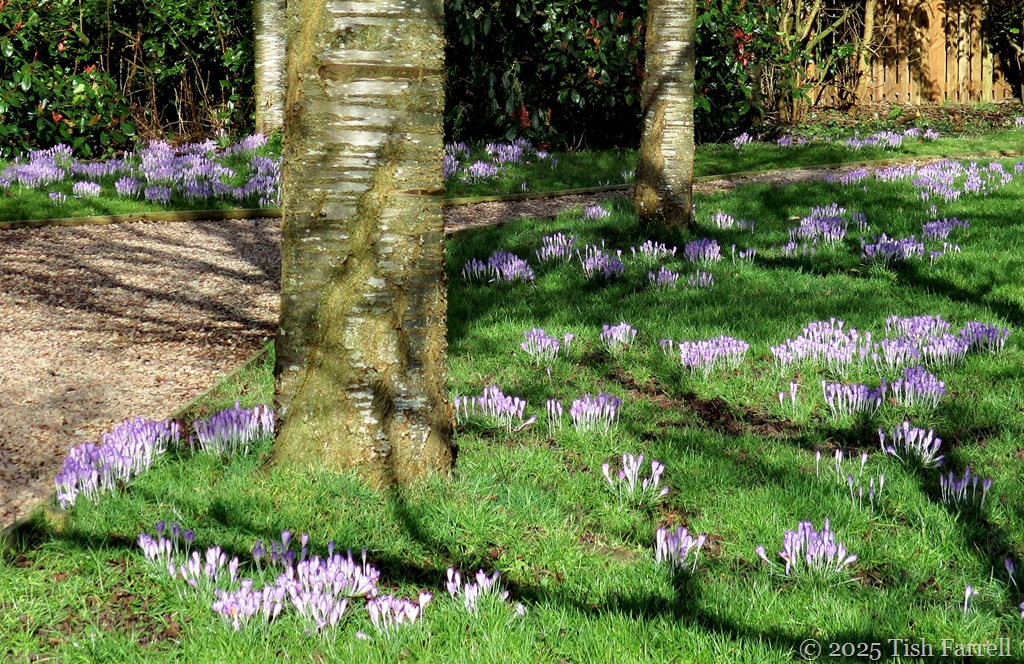
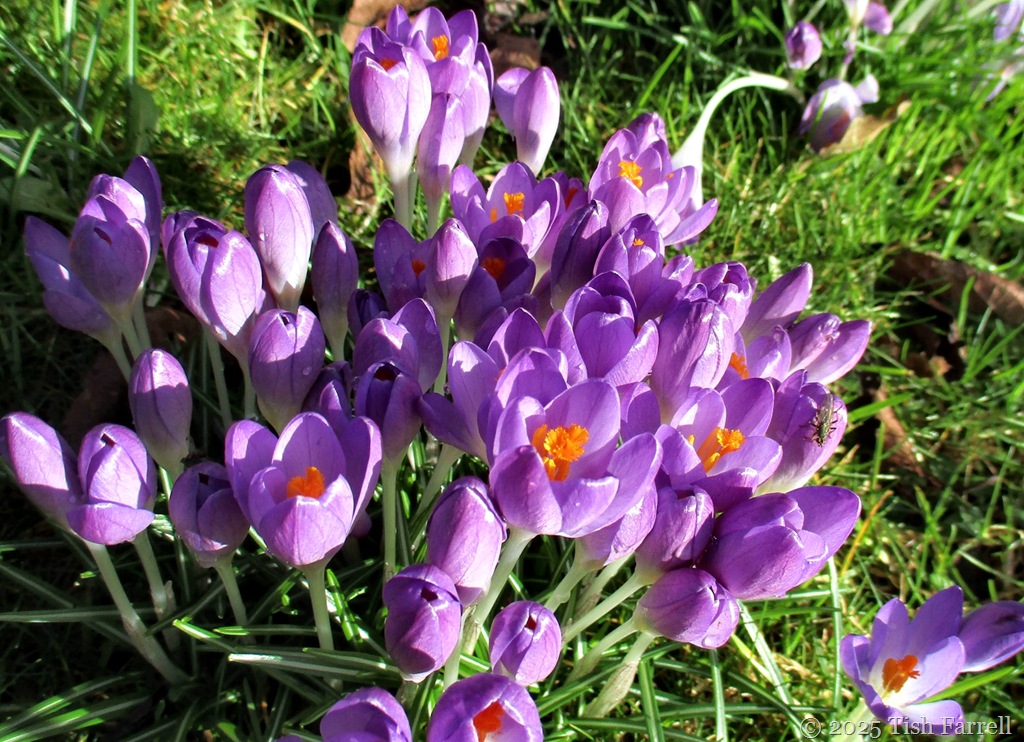
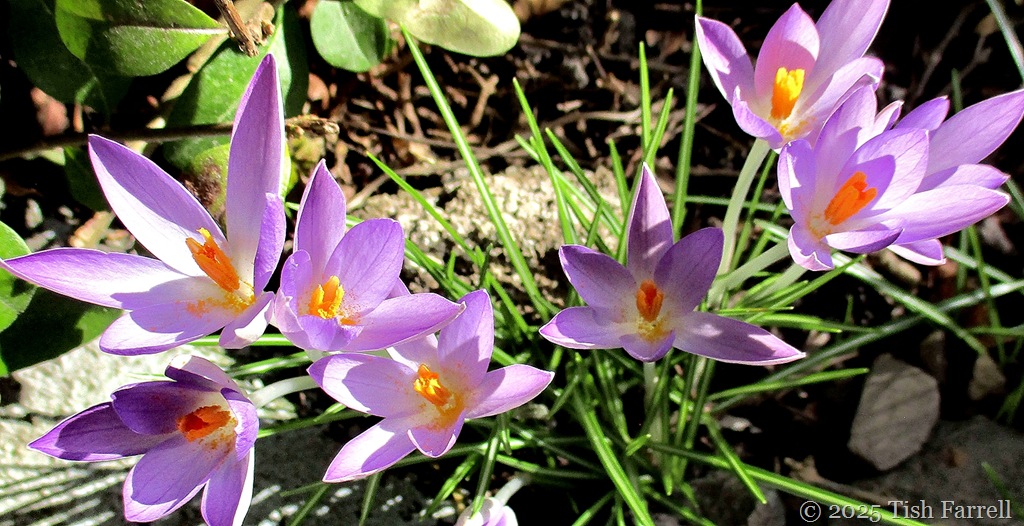
The clump of tiny crocus at the top of this post popped up this week by the front gate. Most welcoming of them. This particular variety also seems to be growing in every Bishop’s Castle garden. And of course there are the chunkier sorts too, a whole host in fact spotted in the grounds of the Wintles eco-houses:

IMG_6796

IMG_6801ed

*

Outside the kitchen window (on the far side of our horrid hedge) the ornamental cherry tree is now displaying the faintest haze of plum coloured buds. They will be candy floss pink when they open. Not a favourite colour, but still a sight to look forward to against a blue spring sky.

IMG_6808

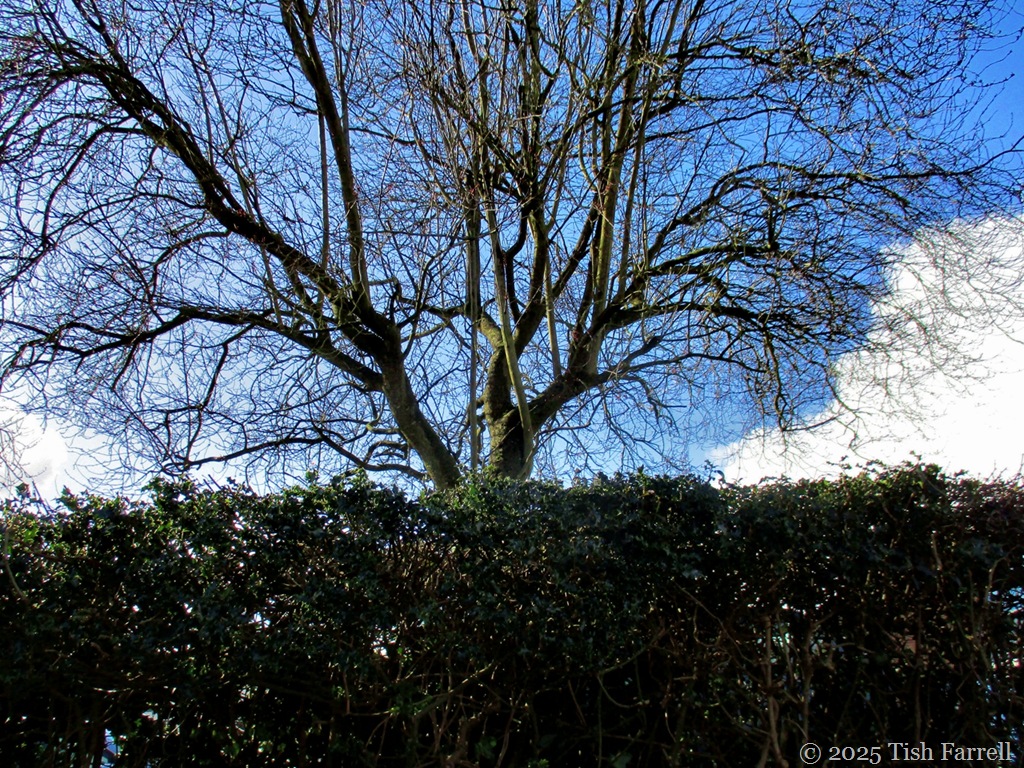
And talking of the horrid hedge, those of you who follow my gardening pursuits will know that last year I was doing battle with it: untangling swathes of ivy, pulling out decayed hawthorn branches, unpicking very prickly vegetation that had knitted itself into a chicken wire fence running the length of the back garden, whingeing about the forest of saplings – ash, sycamore and elder that had grown amongst the holly, privet, weigela and hawthorn, all of which meaning you pretty much need a chainsaw to keep it in check.

In an ideal world I would have it dug out and replanted with wildlife-human friendly species. In fact, looking at 1990s photos of it, I don’t think it was ever deliberately planted as a hedge: more a case of boundary holly trees and shrubs suckering up together with arboreal interlopers and encasing a very rotten field fence.

But then a few weeks ago I had a notion. I discovered I could buy individual wild hedging plants and so fill in gaps between existing thickets. We have now popped in bird cherry, field maple and briar rose whips. We also have a more substantial hornbeam still to plant on the sunny side of the biggest gap created by our recent building work.

My hope is that, as the new plants become established (well trained of course), we can then cut back the main stems of the ash, sycamore and overgrown weigela, encouraging them to sprout more usefully (and manageably) from the base. That’s the plan anyway. One for the long term, methinks.

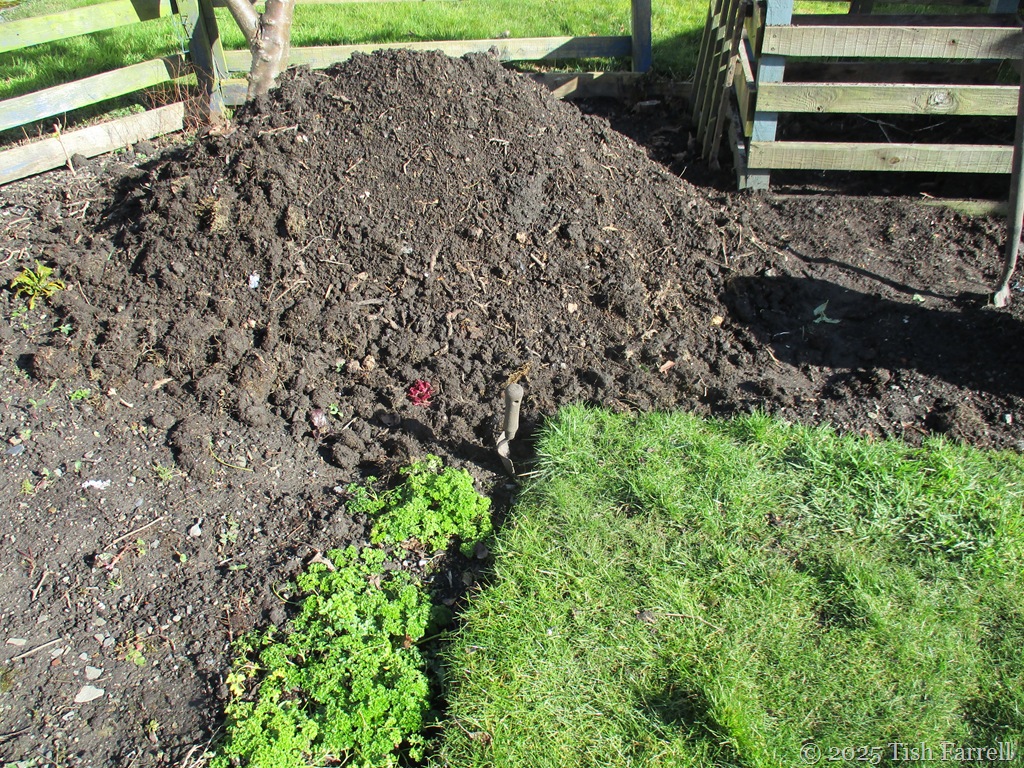
And apart from this, and in rare dry spells, my other betwixt-winter-spring gardening pursuit has involved digging out the compost bin. Last year I’d filled it with dug up lawn. And oh, what lovely stuff it’s become. I can’t tell you how happy it makes me – a lovely big pile of crumbly dirt. Perhaps enough for two raised beds.

Time to start some seed sowing then…

IMG_6809

copyright 2025 Tish Farrell

*

IMG_6807header

The Grateful Gardener

IMG_6486ed

We have snow here in the Castle. We woke up to it early yesterday. What a shock. Snow in November. It’s much too soon. I’d seen the weather forecast of course, but was expecting only a spot of sleet that would soon melt away with the global boiling, not several inches of real snow, the sort perfect for snowballs.

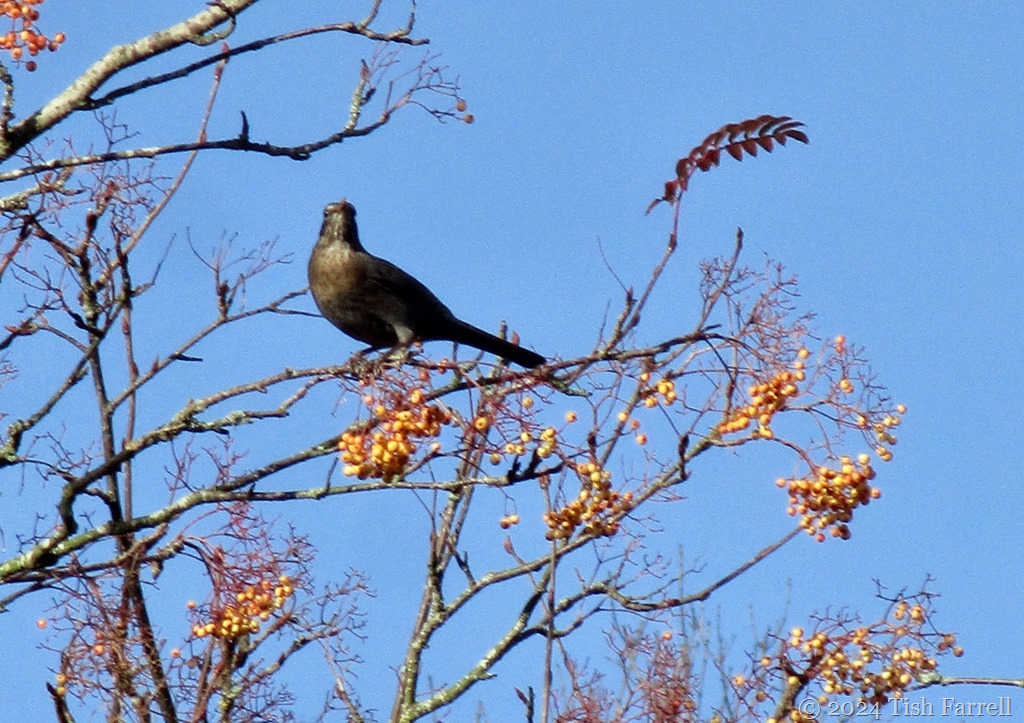
Anyway, it’s not the snow I’m grateful for, but I do love the brilliant blue sky it’s brought with it. And also this golden Rowan tree in its white cocoon. It stands just outside our garden, and provides us with some borrowed treescape. And it, in turn, has recently been much loved by the birds, especially the blackbirds. Before the snow came they were busily stripping the stems.

IMG_6457

*

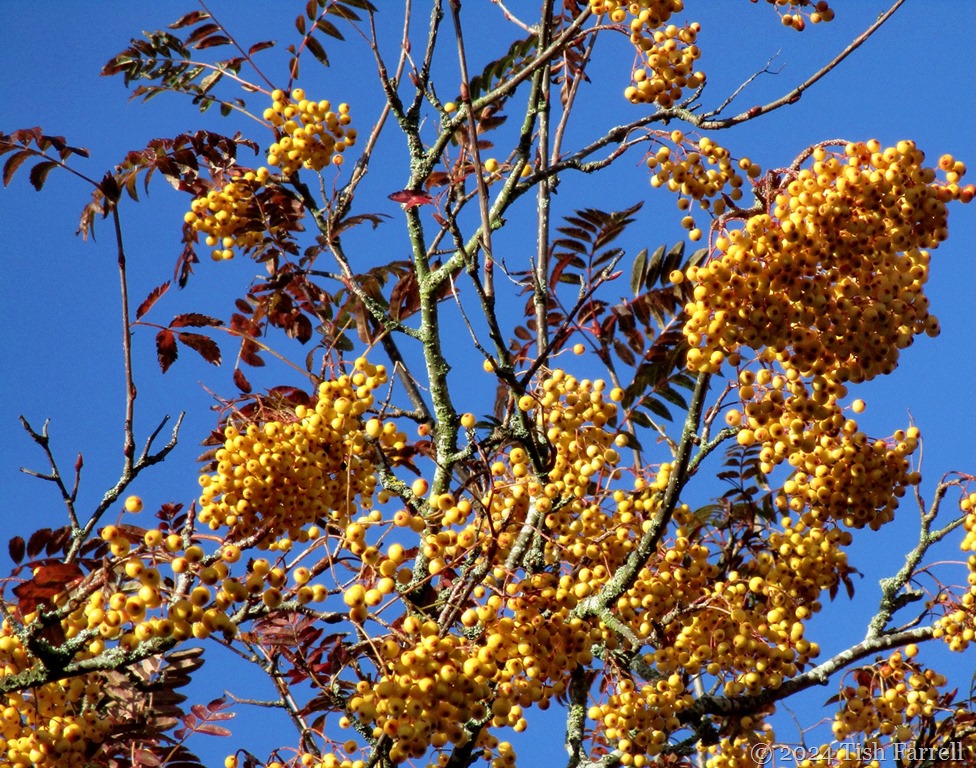
I’ll miss the berries when they’ve gone. On bright autumn days they light up like jewels. This is how they looked in early October. A tree full of joy. Thank you, Rowan.

IMG_6424ed

*

The snow fall also focused my eye on the latest garden addition: a Jelly King crab apple tree. Yesterday morning while sitting at the kitchen table eating my porridge, I could see its clutch of red apples glowing like little beacons at the bottom of the garden. Time for a photo then, and to say how very pleased I am with this Halloween birthday gift from my other half. Thank you, Graham.

IMG_6489ed

It came a few days before my birthday, delivered in a tall box to the front doorstep, whither I was directed to investigate the new arrival. Once I’d broken through the cardboard, I was surprised to find the little tree had come with eight tiny apples still firmly attached. There were also a dozen loose ones in the bottom of the box, sadly not quite enough to make crab apple jelly, but filling me with high hopes. I decided to keep them as a spur to locating a wild tree. I thought I knew where there was one. And so it proved. Last week I found a fine crop of fallen apples in a patch of woodland on the way to the builders’ merchants. We now have crab apple jelly. No need to wait for the little tree to do its stuff then.

*

And speaking of stuff – we still have some of the salad variety growing outdoors and in the greenhouse.

IMG_6466

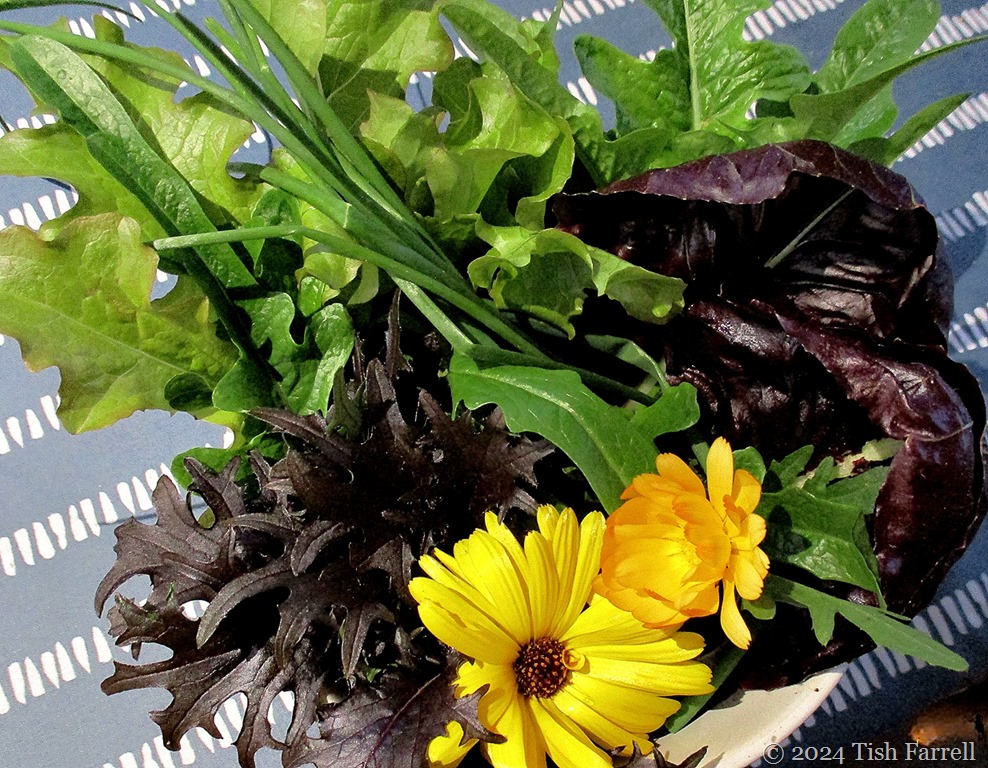
This year I’ve grown Red Radicchio endive. For the past few weeks it’s been growing fatter by the day, and as temperatures lower, the more red it becomes. I’ve been plucking the outer leaves with hopefully plenty more to come. In the greenhouse I have tubs of red Chinese mustard, Moroccan Cress which grows like a cut and come again lettuce and a few oakleaf lettuces. Also some lettuces out in the garden, though they may have succumbed to the snow. Likewise the marigolds. But it makes me very happy to find a bowl full of fresh salad leaves in late November. Thank you, garden.

And one little plant that is standing up to the snow, once I’d dug it out it earlier today:

IMG_6508

These sweet little hearts ease type pansies have been flowering for weeks and weeks in a pot on the garden steps. And they’re still going strong. They were a gift from my sister. Thank you, Jo.

Lens-Artists: Gratitude  This week Tina sets the theme, both timely and thoughtful. Please visit her ever lovely blog.

Six On Saturday: Of Flying Saucers, Scorpionweed And An End To The Great Gobbling

IMG_6143

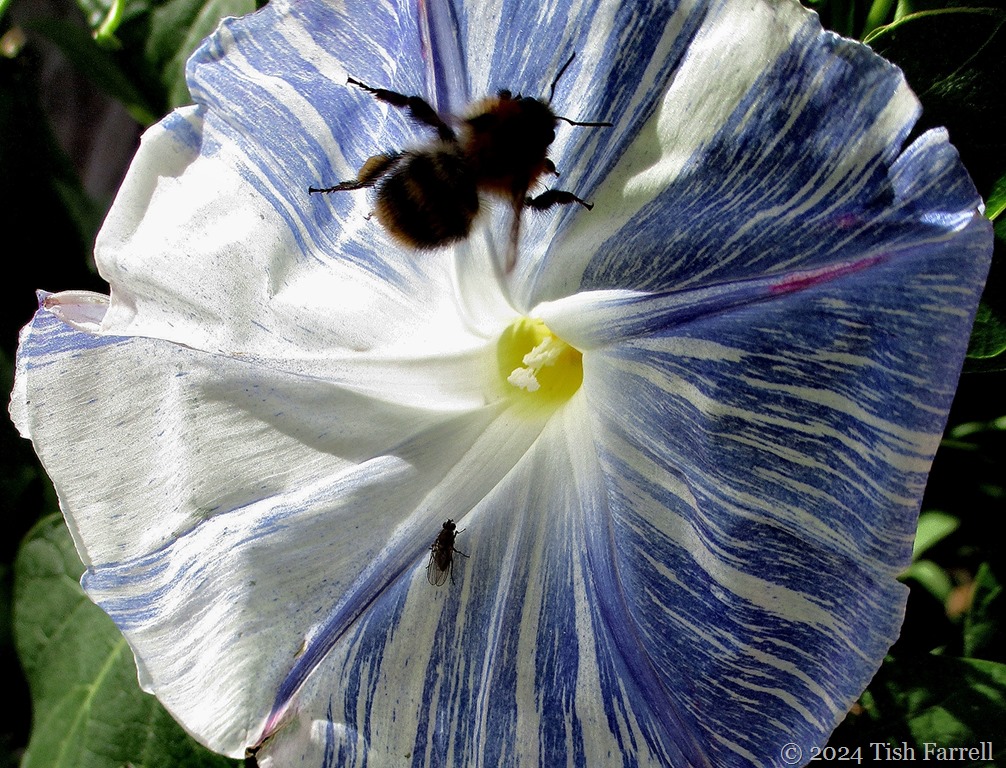
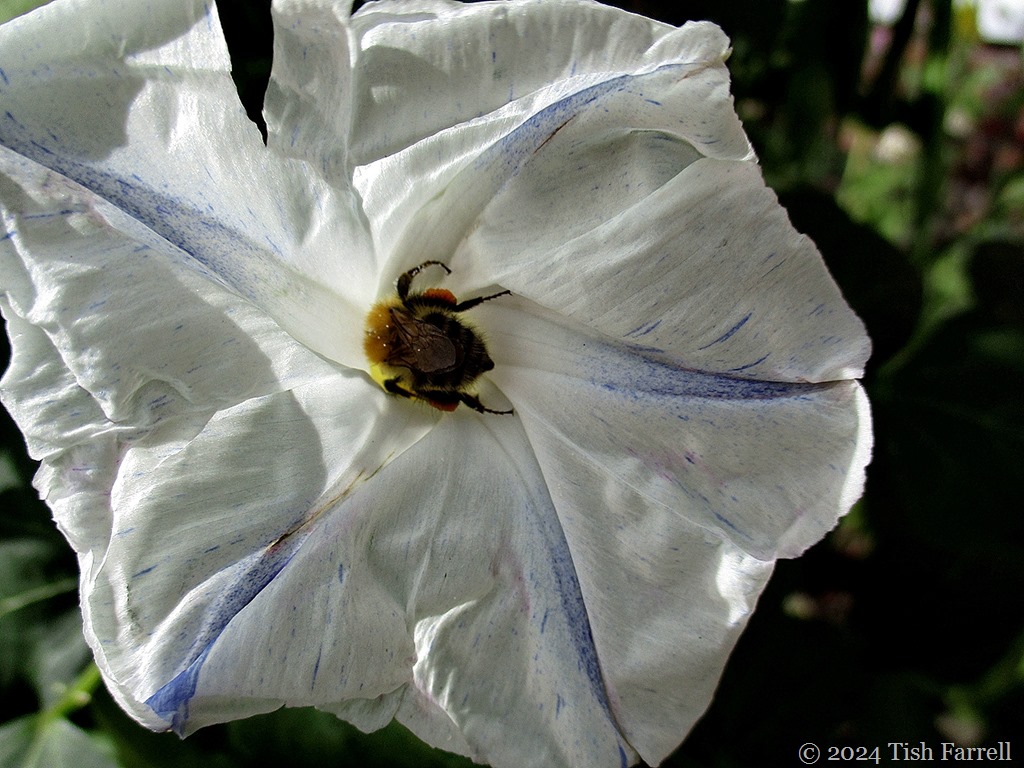
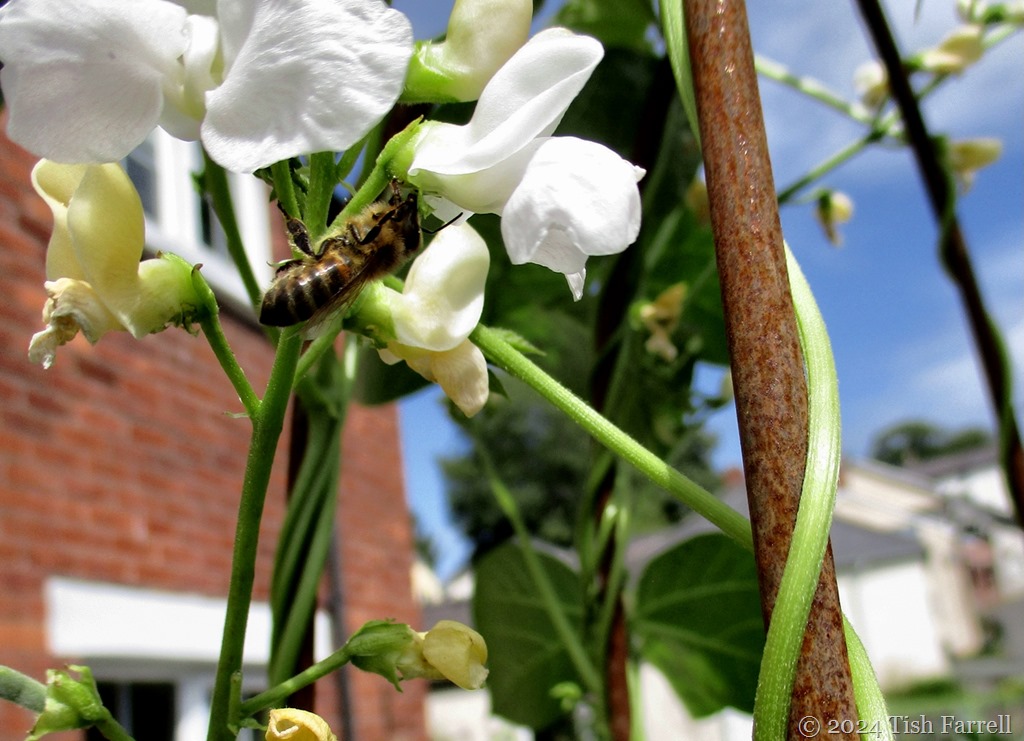
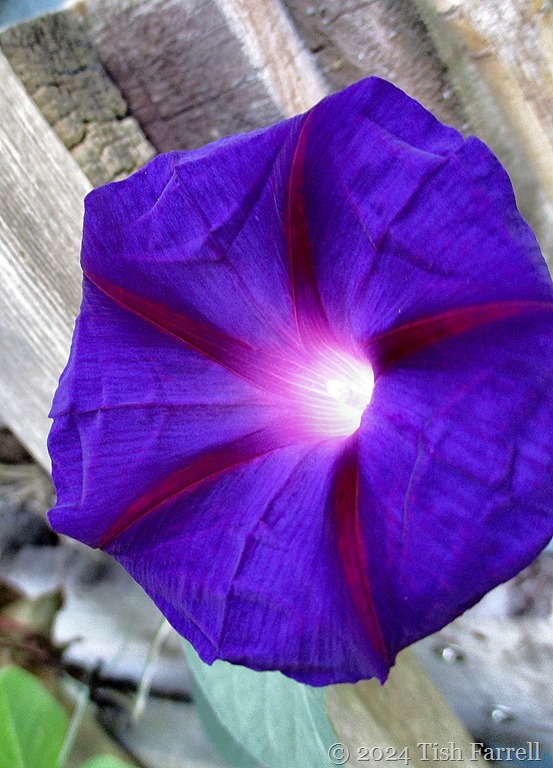
And no, we have no extra-terrestrial sightings here in Bishop’s Castle, at least not over The Gables, but I do have a few Flying Saucer Morning Glories. They are late on parade, growing up my obelisk of butter beans in the front garden.  I wasn’t really expecting them: the seed was several years old. Yet here they are, busy luring insectkind.

IMG_6145

*

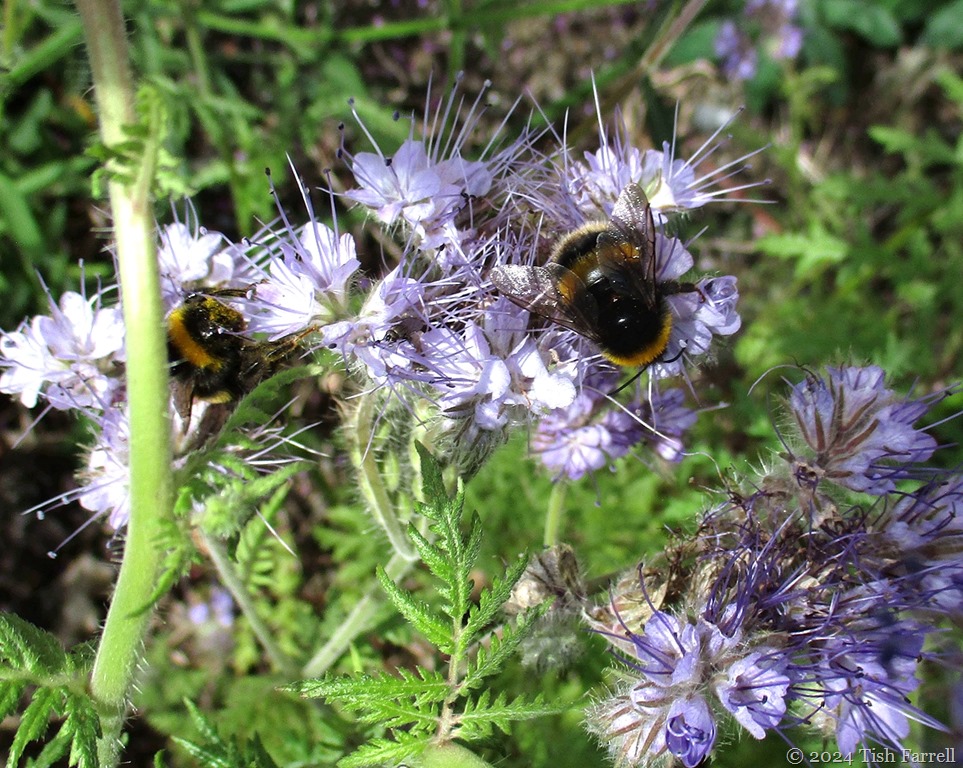
Also in the front garden, in the opposite bed, the phacelia has been flourishing for the past few weeks, every day alive with bee hum.

IMG_6172ed

IMG_6166ed

This borage family member hails from North and Central America where it also goes by the name of Scorpionweed, which sounds hair-raising. So far there has been no sign of cohabiting scorpions (no doubt a huge comfort to other half who was bitten on the foot by one while overlanding in the Sahara.)

I sowed the seeds quite late, probably around the beginning of July. As with the Flying Saucers, I was prepared for them not to germinate. The packet was left over from Wenlock allotment days. I grew it back then either as green manure or a cover crop. But then on a trip out in late June I’d spotted fields of it around Ludlow. I’d never seen it growing on an agricultural scale before. It was in full bloom and the fields seem to float in a mauve haze. More than a good enough reason to try it.

These days there is much farmer emphasis on improving soils and attracting insects on land taken out of food production (food security no longer seems to be a priority in government policy for British agriculture). Hairy crops like phacelia, vetch, linseed have been found to improve worm populations, this even in light and sandy soils.

I decided to try it on the ground where we had lifted paving slabs and left behind a layer of old mortar which had mostly been broken up into the soil. It looked very unpromising territory, and I wanted to see if anything would grow there. And it did. The seeds sprouted in a few days.
Usually if you’re growing phacelia to provide green manure, it should be dug in before it flowers to stop self seeding. But I thought never mind about that. The flowers are so pretty, their scent so subtle and, while they last, their kindness to insects immeasurable. The first frost will doubtless fell the plants, and I’ll probably leave them to dig in before spring.

*

IMG_6271ed

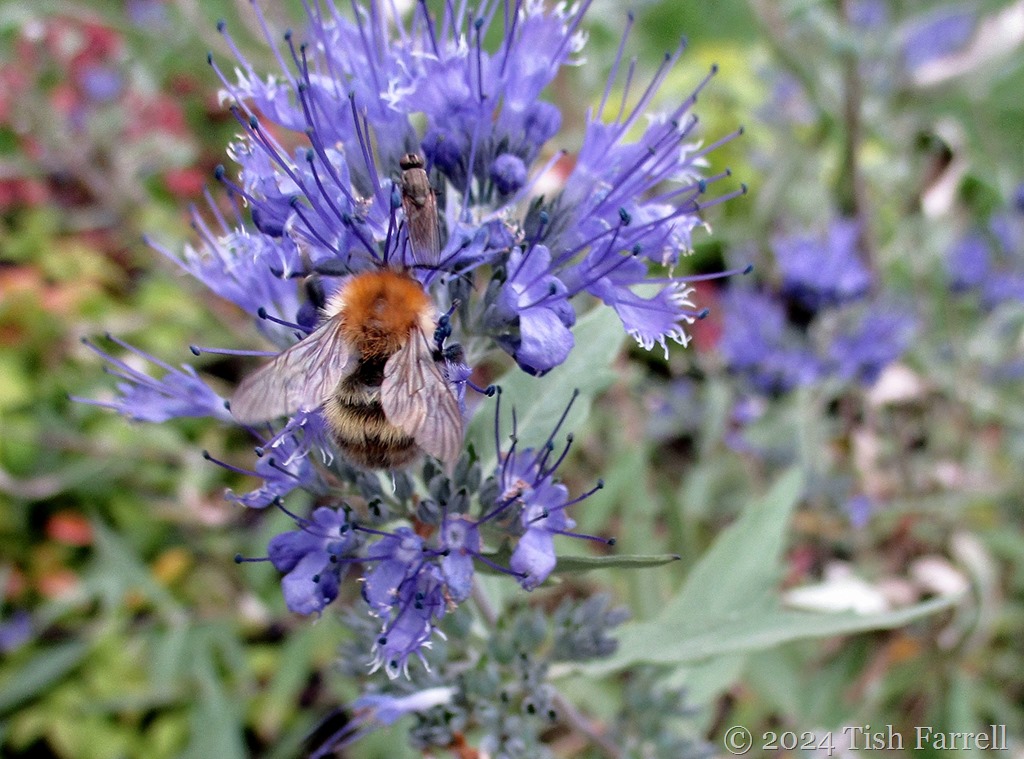
And here’s another insect friendly plant, doing its end of season feeding duty while looking lovely too: Caryopteris ‘Heavenly Blue’, a fairly compact hardy shrub bought back in the spring. It clearly loves our garden and has opened its branches so generously. The flowers are scented too, and it’s taken over catering duties from the neighbouring purple agastache, which is now a mass of dusky seed heads and no longer of interest to the bees.

Much of the rest of garden has a look of late-summer weariness. We had a couple of real summer days earlier this week, but there’s a real sense of autumn in the offing. My runner beans simply stopped producing at the end of August, for no reason that I can fathom. Although I did notice yesterday that a single plant has decided to grow a couple of strands worth. Perhaps one last small meal then.

Meanwhile, the Flying Saucers’ hosts, the butter beans are still flowering like mad up the front garden obelisk. There are many pods but they are being very slow to fatten, doubtless down to the lacklustre summer and cold-spring start. I’m now hoping for an amiable October that might give the beans the chance to finish off. And for now, the blossom is still performing essential services.

IMG_5976

*

The good news, though, is that the horrendous brassica gobbling has ceased, this after the cabbage white caterpillars ate every kale plant down to the stalks. It did not matter that I’d covered crops with so-called butterfly netting and fine grade enviromesh. Somehow the butterflies sneaked in to lay their eggs. Patrolling the plants even twice a day proved a losing battle. They made inroads in the pointy cabbages too, but I’ve managed to save some of those.

Ever hopeful, I’ve replanted Russian and Tuscan kale plantlets under extra-fine mesh. The butterflies are still about, but not in the flocks we experienced earlier in the summer. Fingers crossed.

IMG_6282

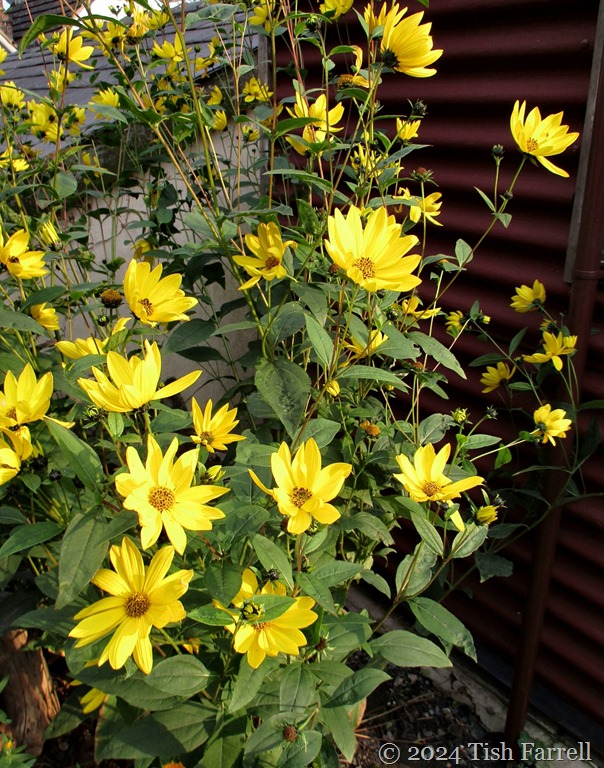
There are other bright corners in the garden, and especially this towering clump of helianthus, a perennial sunflower. Back in the spring when I planted it out, it was three single small stems with only a few roots between them. The cuttings came from my sister’s Little Stretton garden, descendants from plants that grew in our Aunt Miriam’s Devon garden. I’m so pleased to have it. I did not have a chance to grab a segment or two of my Wenlock helianthus before we moved. It used to be the star of the late summer guerrilla garden there. It’s growing even more vigorously in Bishop’s Castle.
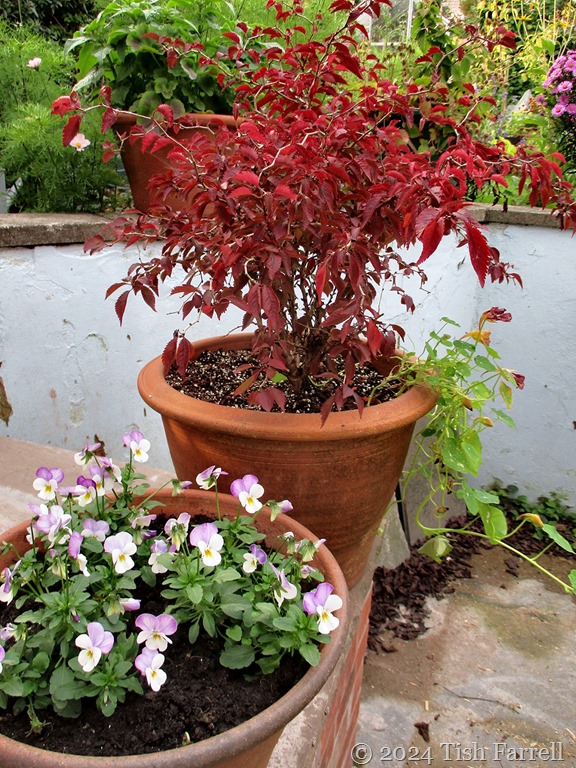
And last but not least, but definitely with an eye to autumn in its new russet foliage, this is a newcomer to the Farrell garden, Japanese cherry kojo-no-mai. (Posing here with some very sweet violas).

IMG_6254

It will eventually grow into a small tree, but for now seems happy in this pot.

*

Six on Saturday  Please visit Jim at Garden Ruminations. He needs some get-well wishes.

What’s In A Garden ~ Or Tales Of The Not Quite Planned

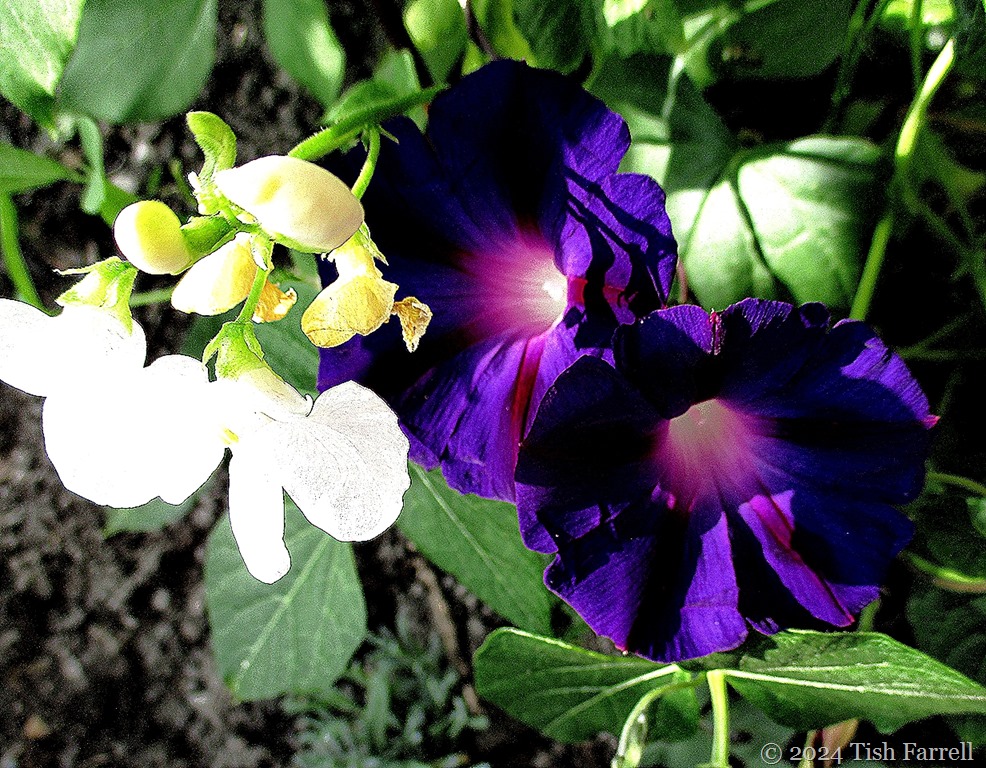
butter bean blossom and morning glory

The thing about making a garden is you never really know what will happen there. Not really really. You do of course ‘set the stage’ for growing to happen – from planting up a few doorstep pots to toiling over ground work and designing and filling borders.
And then when you sow seeds, as I did here for Gigantes butter beans, and Black Knight morning glory – you could well envision how they might be if they were planted out together and set to grow up the front garden obelisk. (Header photo)

But you can’t necessarily predict the actual ‘show’, which of course is what’s wonderful about gardening. In many ways it’s ever an experiment. The pleasure comes when you walk outside and notice something  special, the something whose actual disposition you had no control over.

IMG_6023

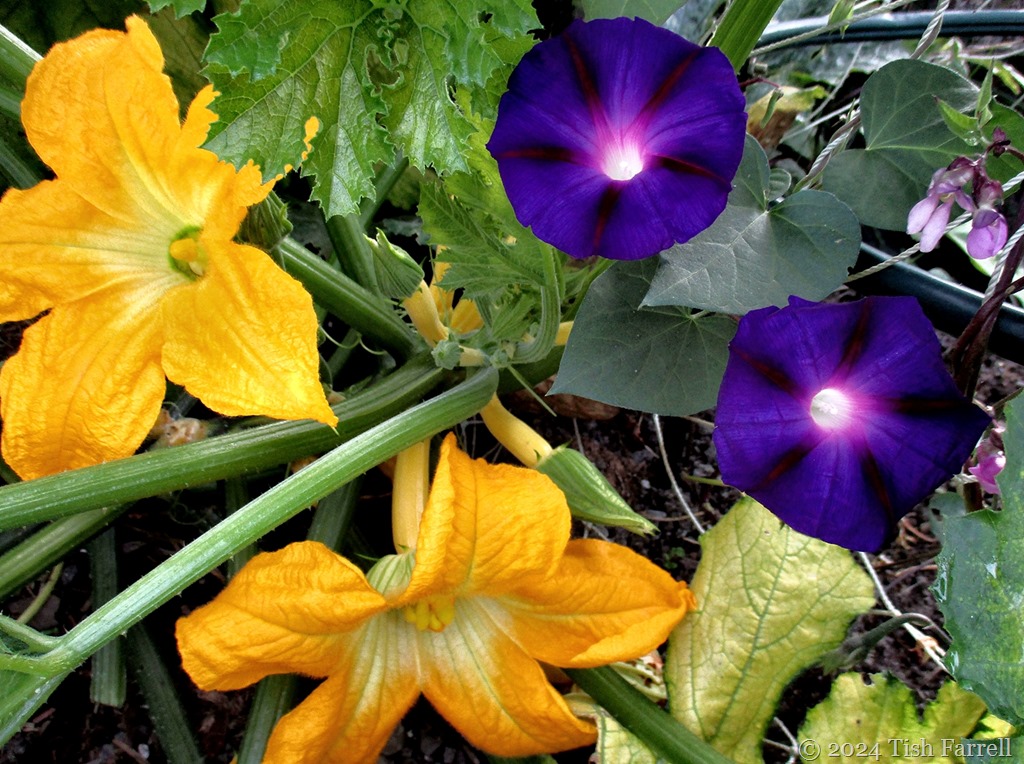
In the back garden I planted out some more Black Knights with purple climbing French beans Violette. But at the moment they seem more keen to keep company with the courgettes. The flowers have an unearthly look about them. I could swear they radiate light from their recesses.

IMG_6035

*

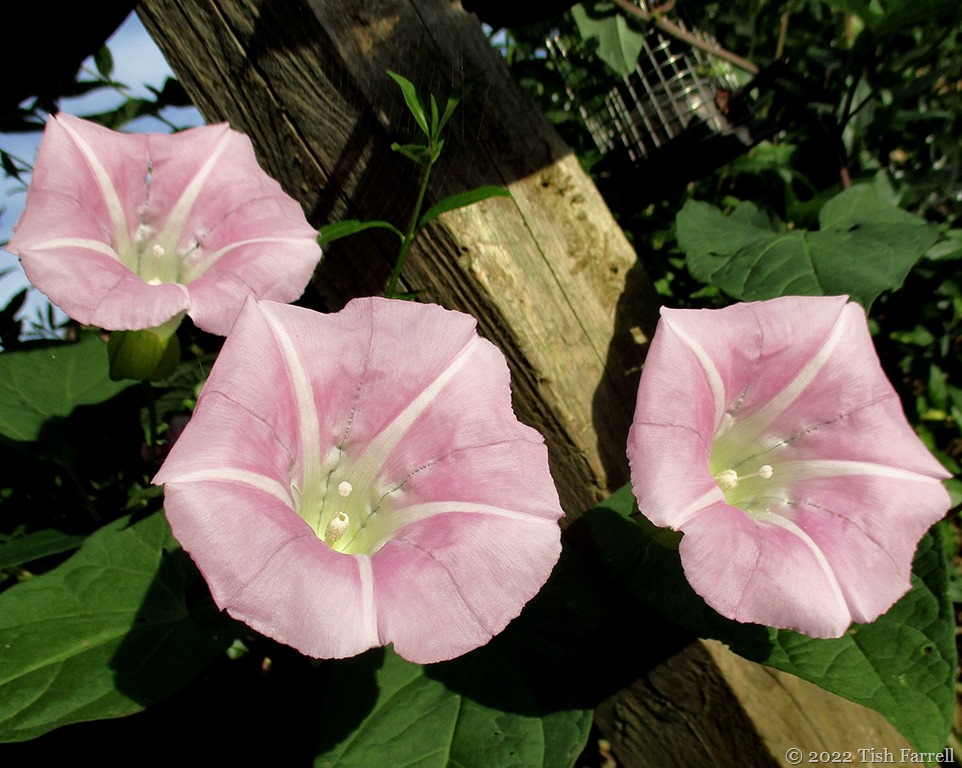
Then there are the wild and feral plants that invite themselves into the garden. Sometimes they are not too welcome. But sometimes they make one’s heart leap with delight. Here, entwined in our otherwise horrid hedge we have this glorious pink convolvulus (bindweed). The flowers are much bigger than the wild white version of themselves and they out-trumpet their morning glory cousins too.

IMG_6010

*

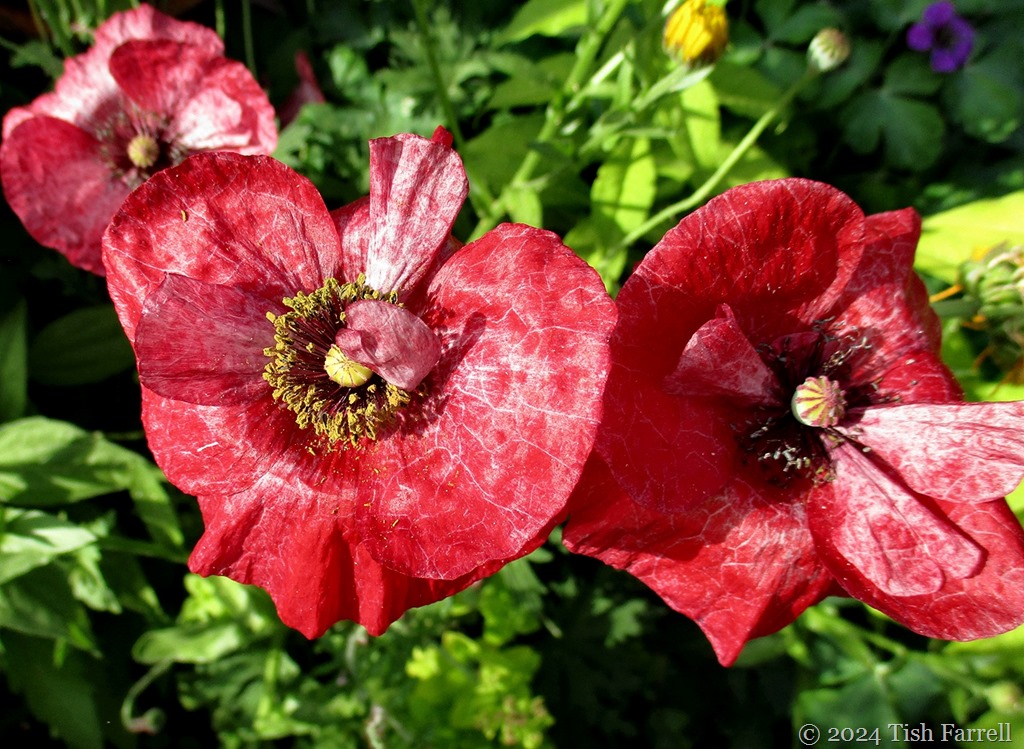
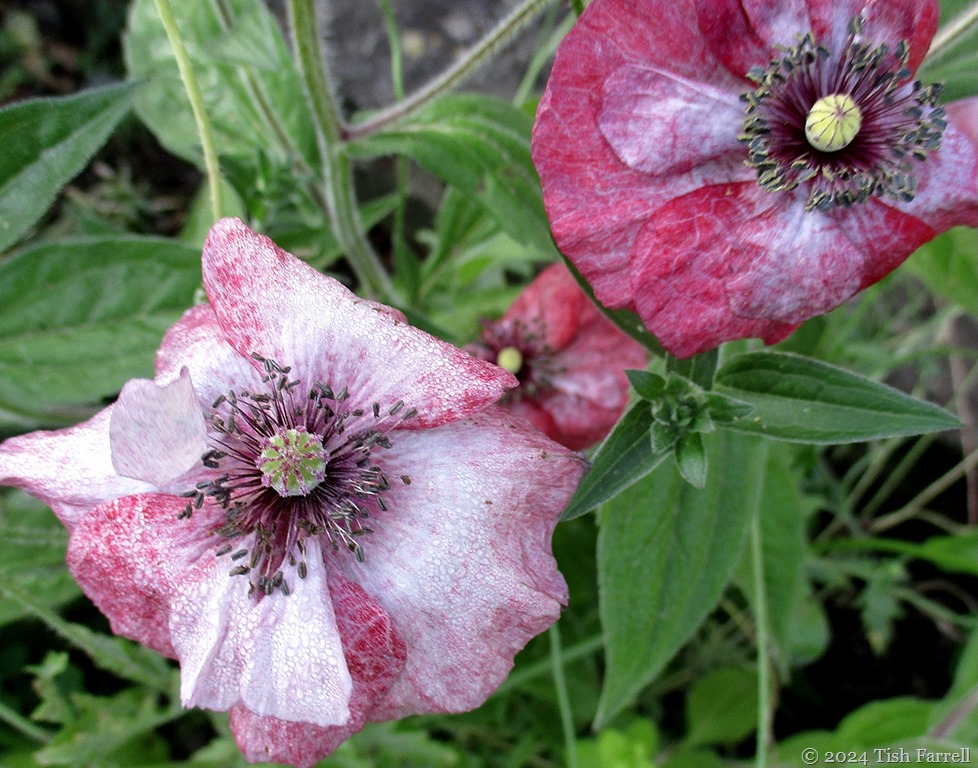
And then there are the garden invaders that invite more curiosity than delight. These delicate crimson-grey poppies are presently flowering above the terrace wall and, as far as I can tell, is a single plant with many branching stems. As the flowers fade, the more ashy they become.I’m not sure what to feel about them.

IMG_5878

IMG_6036

*

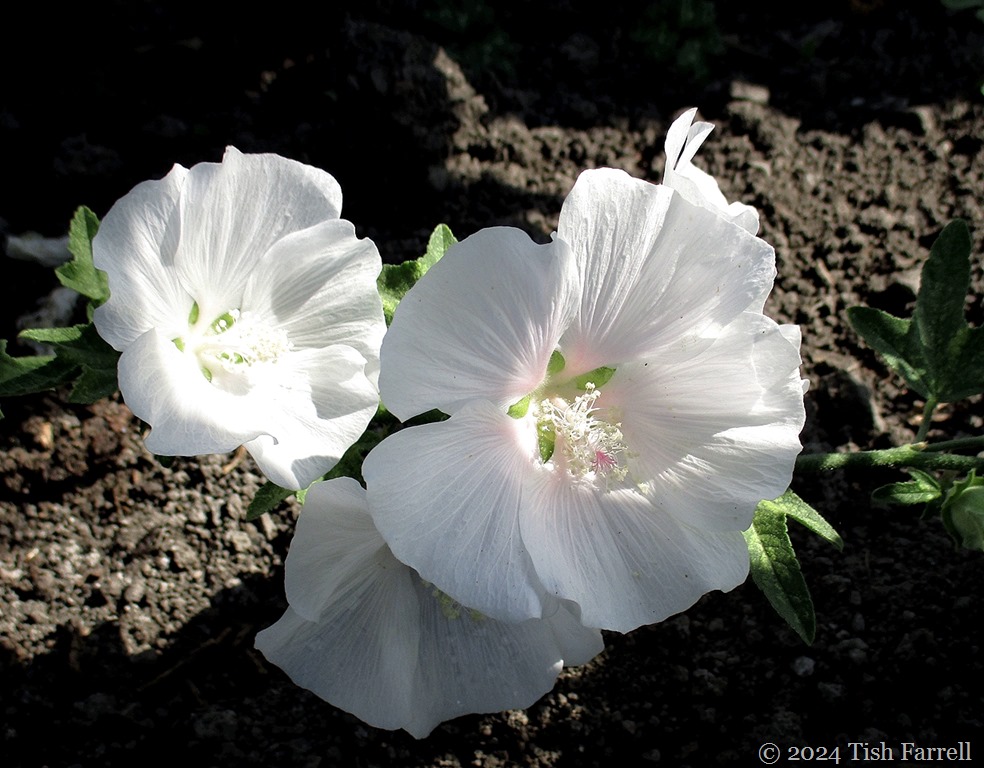
But I know I love this white marsh mallow, a shrub I bought recently to grow on and fill a gap along the back garden fence. A perfect moment – catching the early morning sun on its face:mallow

*

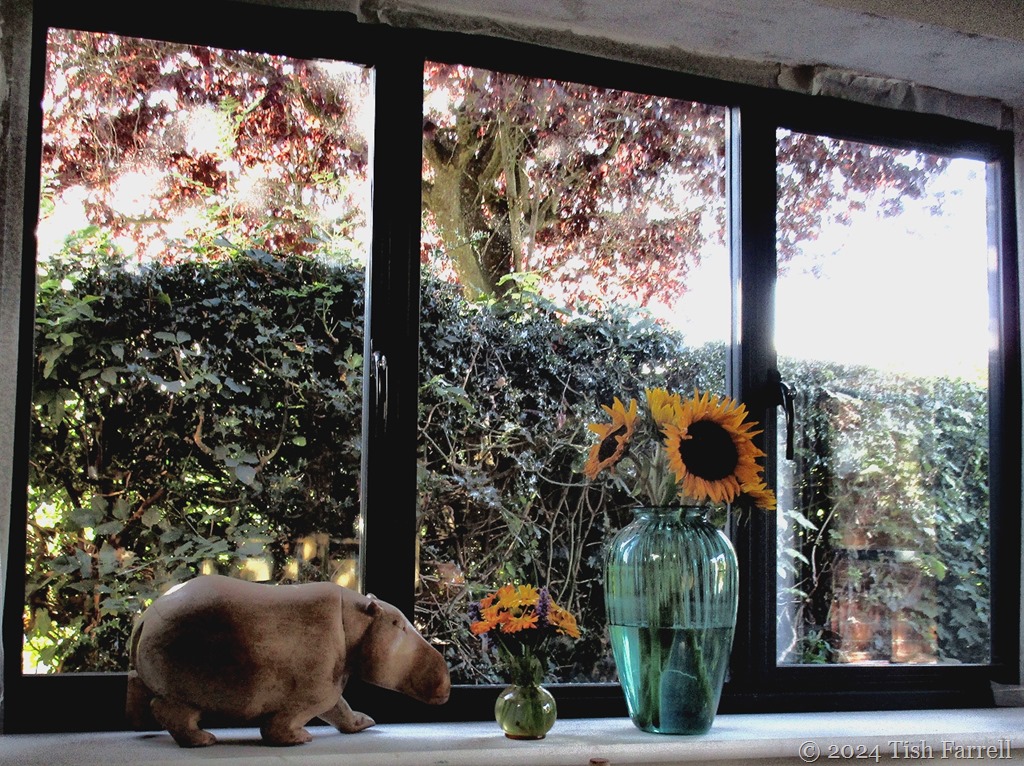
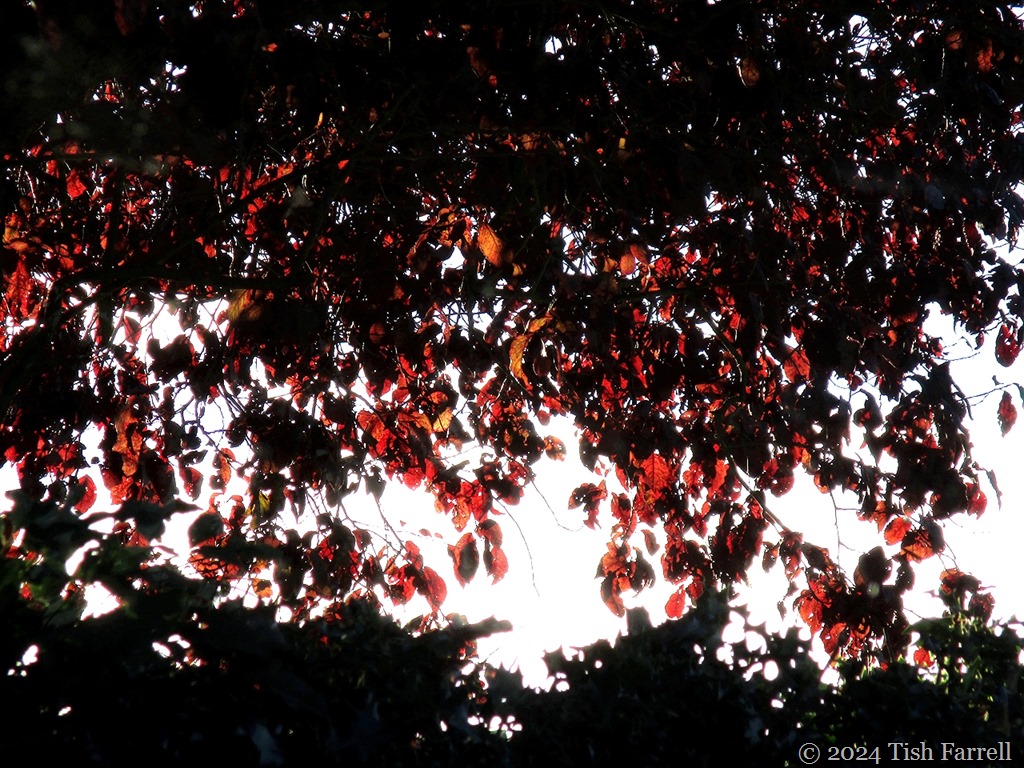
And then there are things that add to a garden that aren’t quite in the garden. Just over the hedge, on the roadside verge, is an ornamental cherry tree with deep burgundy foliage. At sunset, as we eat supper, we have a glimmering light show at our new kitchen window; not at all what we were expecting.

kitchen window

IMG_6006

P.S. For followers of the house renovations: the kitchen’s not finished yet. Last lap stuff still to do.

Lens-Artists: What’s In A Garden  Ann-Christine at Leya shows us some stunning gardens

Six On Saturday: On Random Gardening

IMG_5631

Starting a new garden is always exciting; daunting too. And our particular garden, being a hundred years old, had traces of many a planting disaster venture. More recently, though, all had been overgrown, and invaded by rampant phygelius (Cape fuchsia), ground elder, vagrant raspberries, bindweed and Spanish bluebells. The two front garden beds (south-east facing) were covered with concrete slabs and Spanish bluebells.

Most of it had to go.

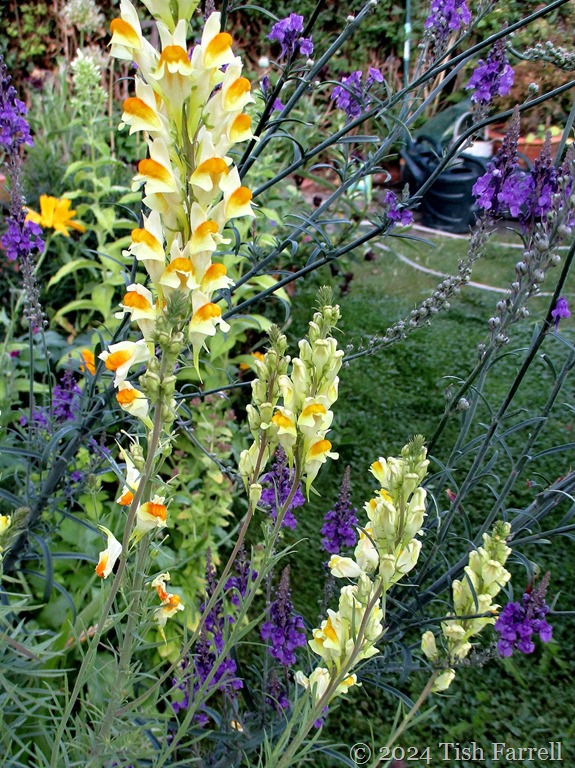
1: Because we’d had to rent between selling one house and buying another, I’d brought only a handful of plants from our Much Wenlock garden. Among them was yellow toadflax (Linaria vulgaris), a favourite flower since childhood when I’d first seen it lighting up the verges of the Shropshire Hills. I’d grown it from seed, bought on-line from Jekka’s Herbs. Now, by some pleasing accident, it seems to have grown up with some purple toadflax.

IMG_5791ed

*

When we moved into The Gables, just under a year ago, my most pressing concern was vegetable growing. I knew we would miss the produce from my allotment plots of 16 years (if not the heavy labour), so tackling the most weed-infested areas to make beds for food crops was my first priority. My thinking here was that these beds would be cleared every year, so repeat ground elder and bluebells wouldn’t be quite the same bother they would be in shrub or herbaceous borders.

I made a start last summer, but then the following months were mostly too wet and cold for gardening. And then in spring the house roof had to be taken off and rebuilt. And then the building work on the rear extension began, all of which saw parts of my territory invaded, first by a mountain of broken roof tiles and battens and then by piles of construction materials. There were times, too, when I couldn’t reach the projected vegetable plots in the back garden, it being uphill from the house, other than by climbing a ladder. All of which means that bed making efforts were piecemeal and, in the end, things (vegetables, herbaceous perennials, herbs, developing shrubs) were planted out wherever there was a space at the time.

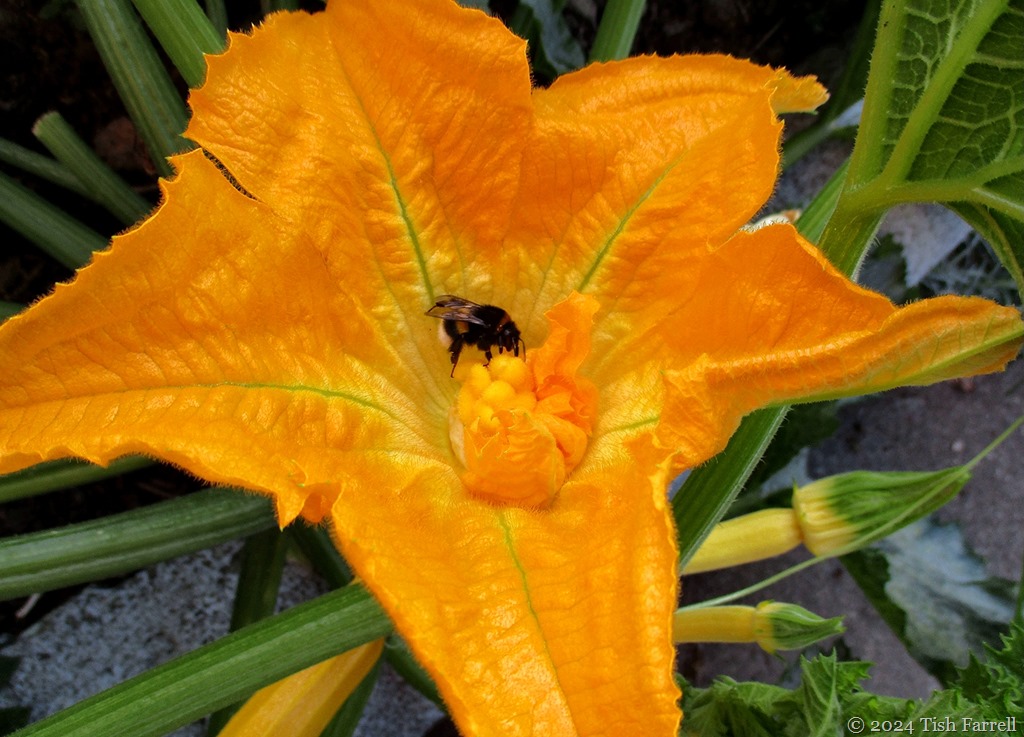
2: But it’s all alright. Everything is growing all over the place. I have yellow courgettes at the front door, which is actually quite handy…

IMG_5826ed

*

3: The front garden bed is also yielding some very nice Charlotte potatoes (despite going in very late). The building debris and old mortar from the lifted slabs seem to have provided some good drainage in our heavy-ish soil:

IMG_5679

*

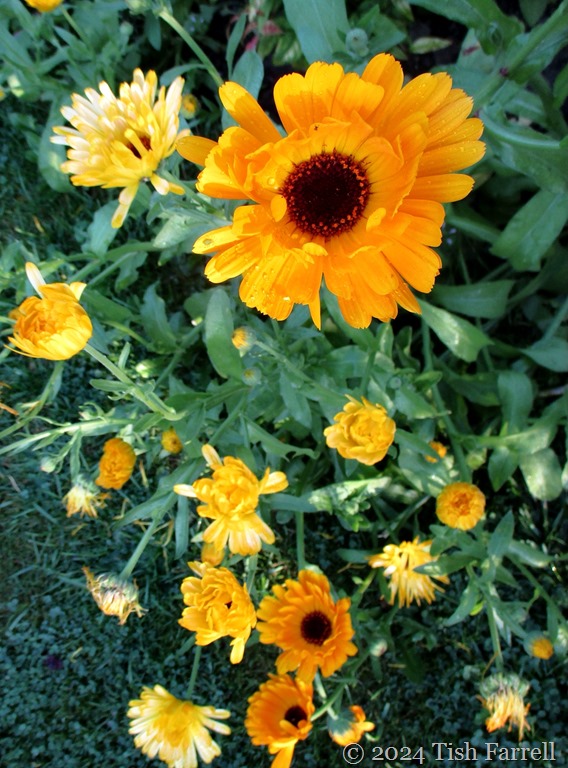
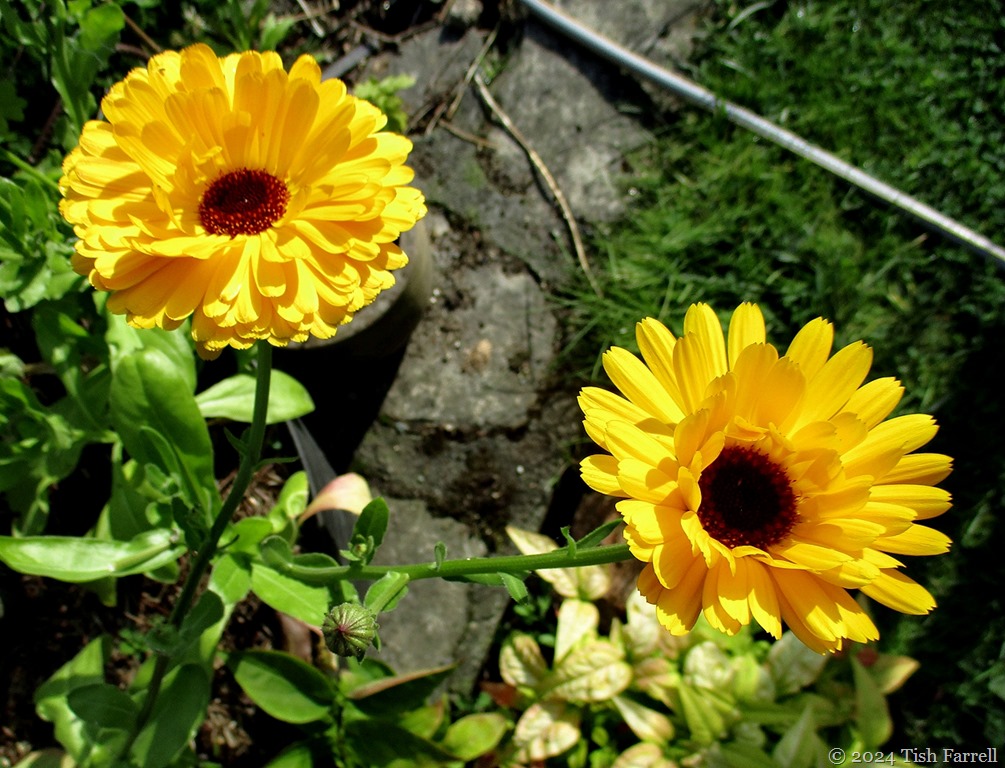
4: In the spring I’d sown some marigold (calendula) seeds, obtained from the Bishop’s Castle seed bank (local growers’ donations) and they’d germinated prolifically. So I planted them out all over the garden, front and back, because you can’t beat marigolds for their spirit-lifting qualities. And now we have masses of golden heads, which of course are edible too:

IMG_5817

IMG_5808ed

*

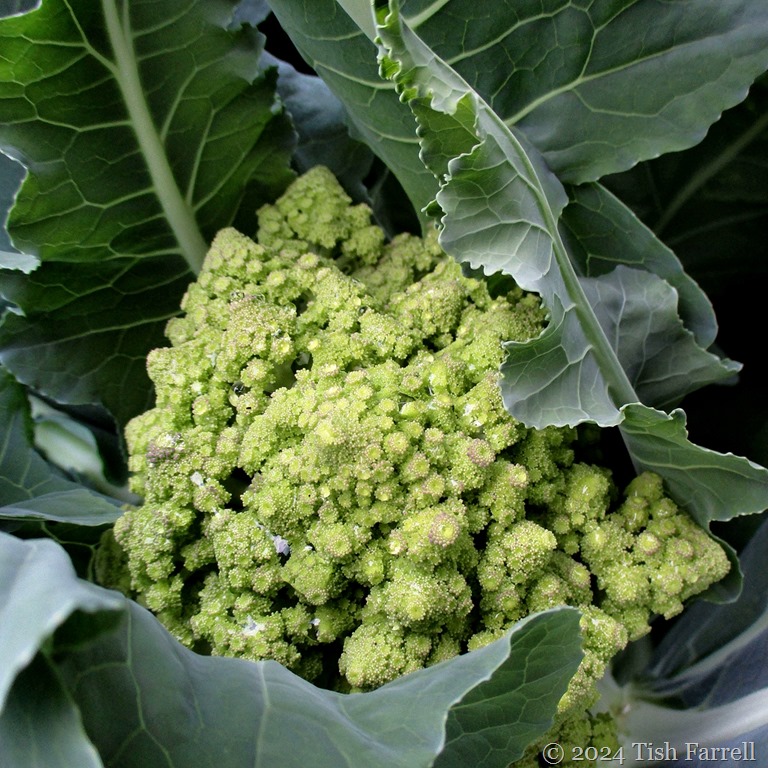
5: And on the eating front, since spring we’ve done rather well with all manner of greens, but most particularly the Romanesco cauliflowers, which I haven’t grown before. They are much sweeter than white caulis, and if you cut them and leave the stalk, they sometimes produce more sprouts. They don’t need much cooking either.IMG_5574

*

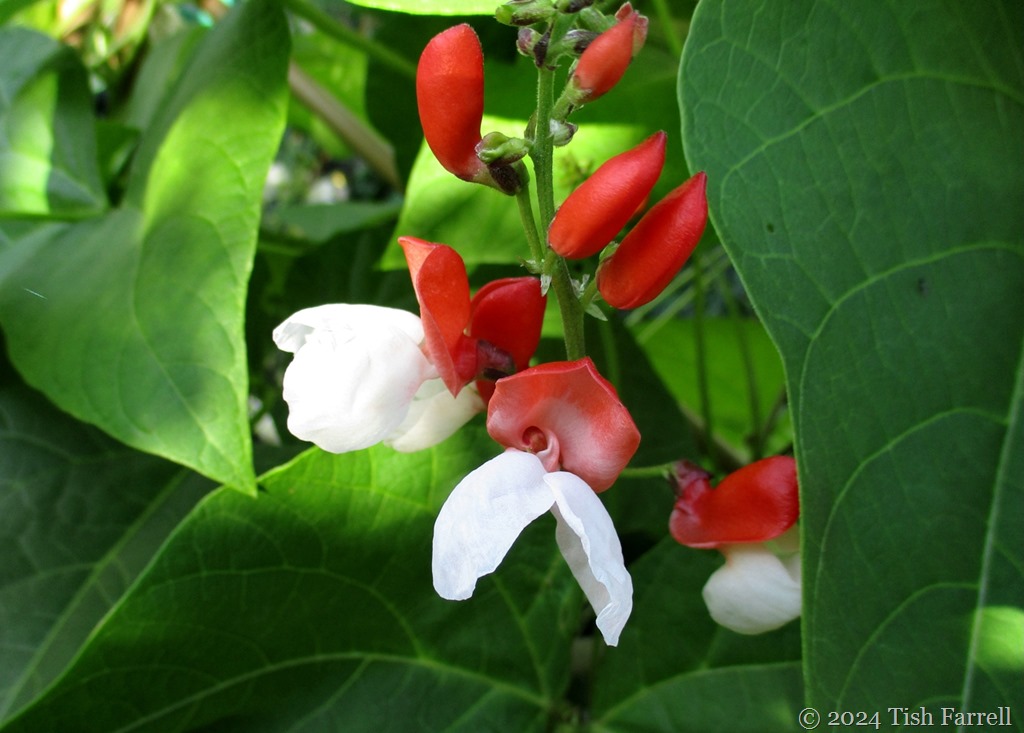
6: But best of all, are signs that the runner beans are thriving. I have three varieties growing together: Emergo (white flowers), Painted Lady (red and white as in featured photo), and St. George (red):

IMG_5800

IMG_5774ed

*

I mean to say, what could be lovelier than this Painted Lady bean flower. And then to think: there will be beans!

*

Six on Saturday  Jim at Garden Ruminations is the host. Please pay him and his splendid garden a visit.

A Spot Of Garden Flamenco?

IMG_5746

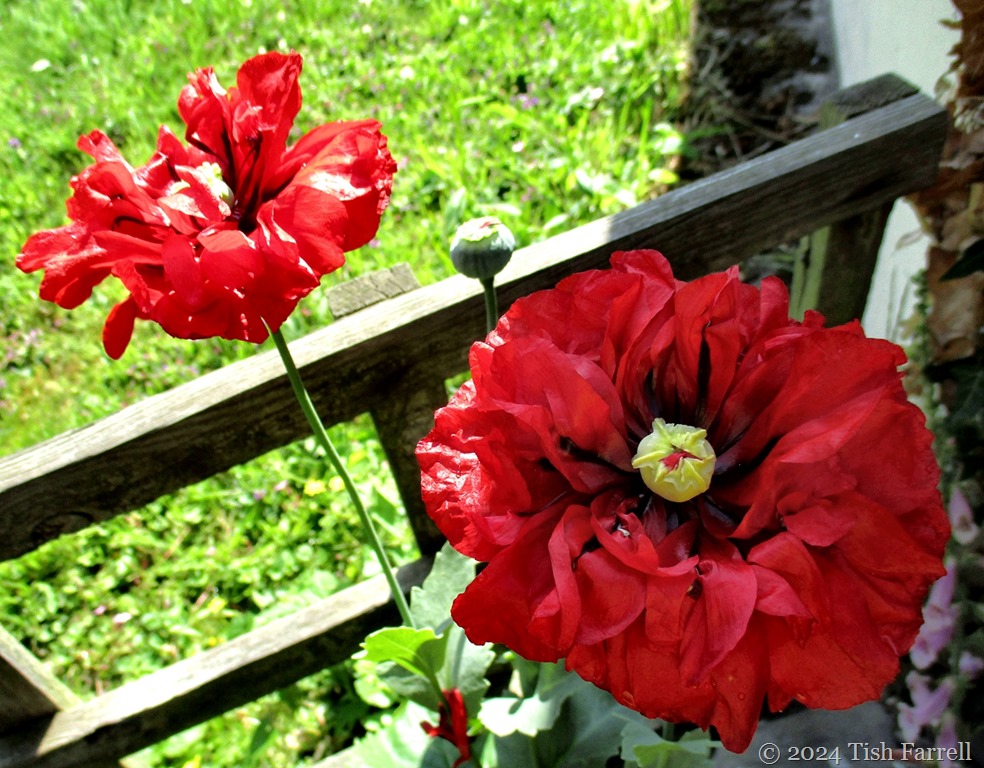
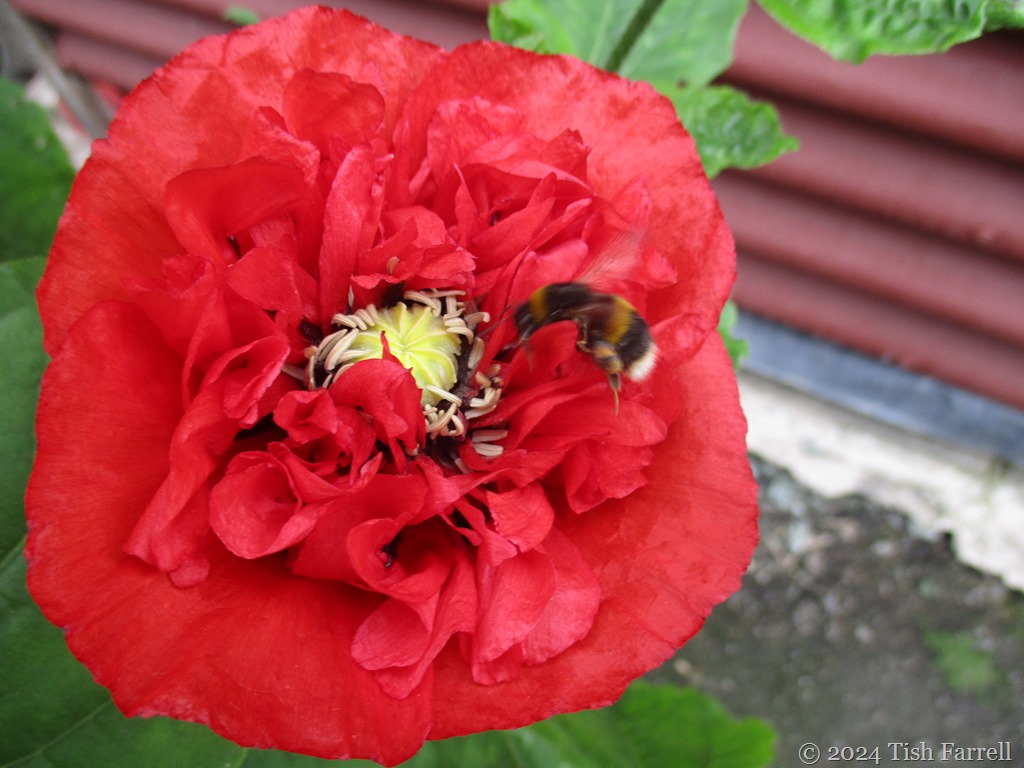
We have visitors, blown in from who knows where. All over the garden too. And what a show they’re giving us with their fiery frills and flounces. Papaver somniferum, the sleep-inducing opium poppy.
The bumble bees have been mightily excited by the poppies’ presence; their behaviour far from somnolent. In fact I witnessed much unseemly rummaging through floral petticoats as they hoovered round the creamy anthers.

IMG_5671

IMG_5672ed

*

Elsewhere in the garden there are more hot colours, this time courtesy of the Bishop’s Castle seed bank. This is a wonderful community venture whereby local gardeners donate flower and vegetable seeds. You can help yourself to the contents of the tray which lives upstairs in the Town Hall council chamber, and leave a donation to the seed bank.

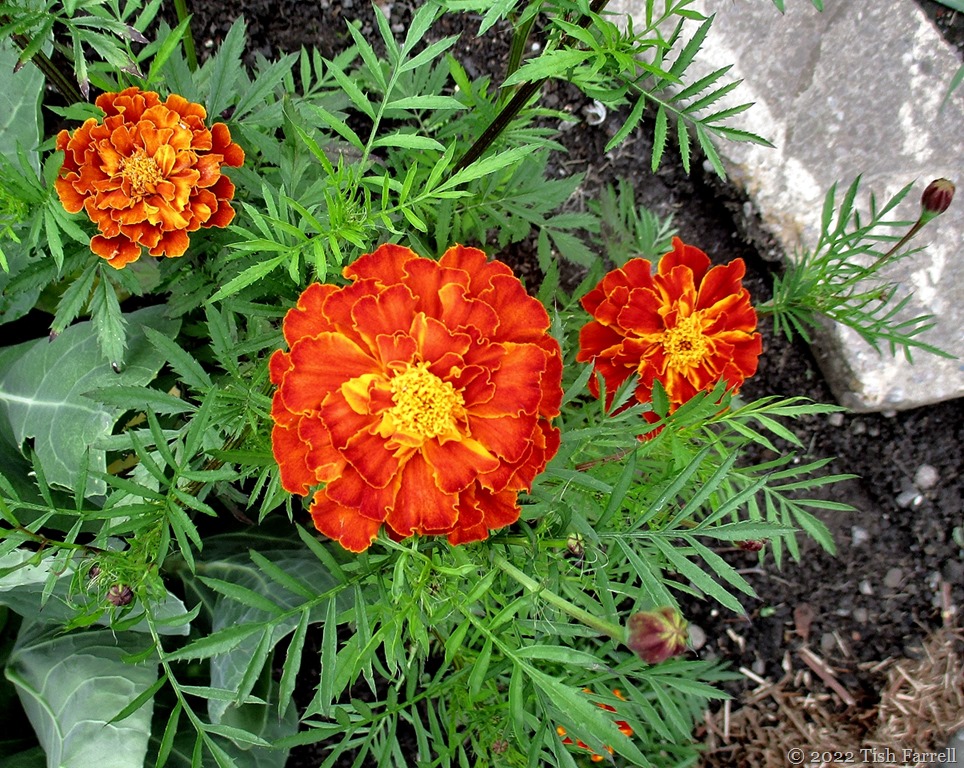
These French Marigolds were grown to protect the carrots. Their minty-lemony scent camouflages the carroty smell so fooling carrot flies that like to lay their eggs in the developing roots. But by some failure of organisation they ended up by the cabbages where they do nothing to dissuade the egg-laying proclivities of cabbage white butterflies.

IMG_5637

*

And then there are the seed bank pot marigolds. I’ve planted them out everywhere because I use the petals in salads. They have many beneficial medicinal qualities including a high lutein content which is good for protecting eyesight. Simply to gaze on them might suggest this particular property.

IMG_5735ed

IMG_5708

IMG_5701

Marigold with purple toadflax petals

*

But back to the flamenco. I don’t know about you, but this wild display makes me want to lift up my skirts and dance…

IMG_5747

Of Acrow Props And Potatoes: June Update

IMG_5385ed

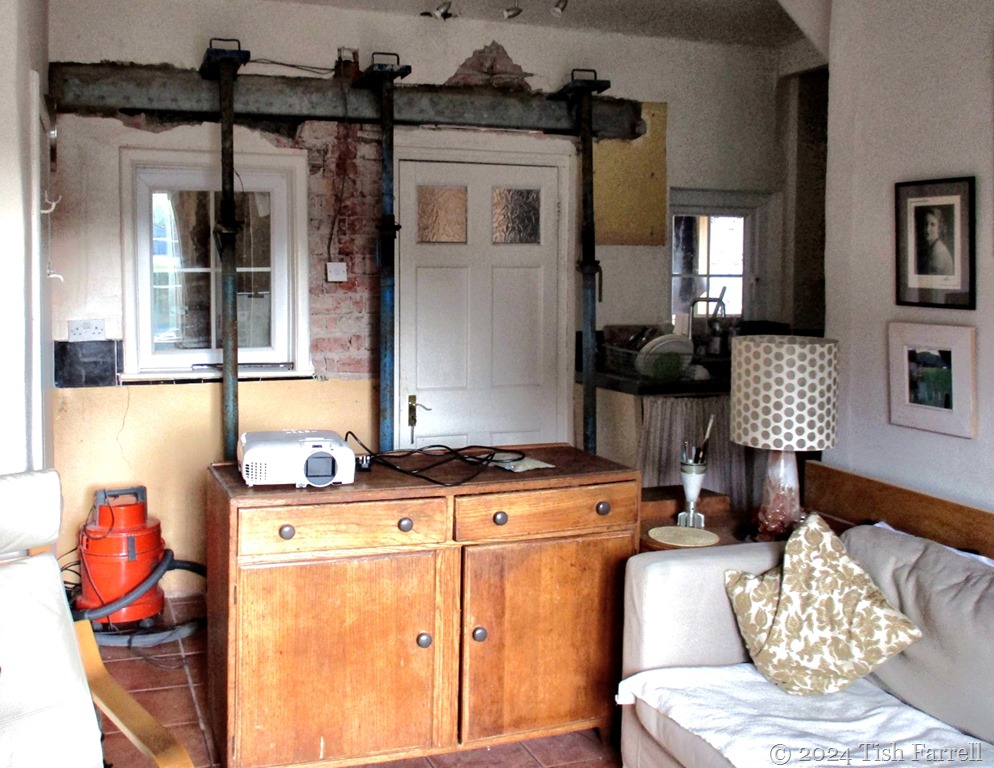
I hadn’t actually asked the question, as in how many stages are involved when it comes to demolishing a section of load-bearing house wall. I suppose I had wondered how the two steel beams (inside and out) would be inserted in the sitting-room-kitchen wall. And logically I would have assessed that this must be done before the actual wall, window and door were knocked out.

I also knew that this would not happen until the new kitchen extension was nearing completion (several weeks away). In other words I had not prepared myself for a double dust-storm event, mostly because the chaps, as in other half and builder Alan, had given me only scant (evening before) warning of the beam insertion process.

But the dust!

It was all I could say when I learned what was planned. Alan raised his eyebrows – part apology, part goes-with-the-territory. Plastic sheeting was duly taped, floor to ceiling, across the back of the sitting-room and across  the ‘L’ of the kitchen. More sheets were thrown over all the furniture, doors that could be shut were shut, and then the hammering began – first the plaster, then the wall whose bricks, as bricks go, are strangely adamantine. It’s likely they were made just down the road, in the days when Bishops Castle had a  brickworks.
And so here we are, a week on, still dusting; an activity that will doubtless segue into demolition phase II sometime in August.

But at least the acrow props have gone now and the furniture is back where it was, also a critical factor in a small house where we presently have more stuff than rooms to put it.

IMG_5378ed

*

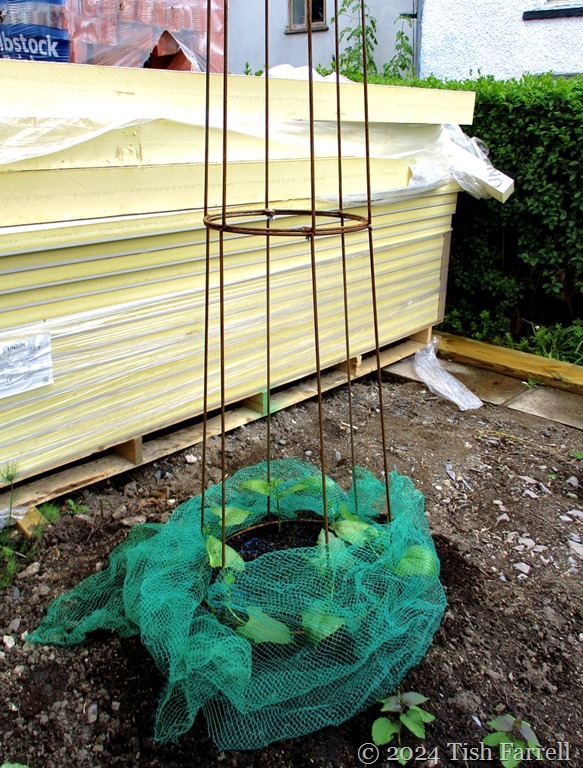
We’ve also been receiving deliveries  – the front garden now looking like a builders’ yard.

IMG_5395ed1

*

One half has been commandeered for supplies, it being the most accessible space for unloading. But I’ve hung onto a small corner and put in some Gigantes butter beans and two yellow courgette plants, tucked in between the insulation boards and the front door. Well, can’t miss the planting season, can I. And that border is particularly sunny. I popped in some Korean mint (Agastache) too.

IMG_5403ed

IMG_5405ed

*

As to the bed on the other side of the front path, I staked a claim back in April, so the roofers wouldn’t bury it in waste tiles. I’ve put in three small rows of potatoes – Rocket and Charlotte, which have sprouted well. There’s also the beginning of a herbaceous border under the sitting-room window: a lone delphinium accompanying some young alcalthaea plants (a cross between mallow and hollyhock), knautia and verbascum, blue geraniums and achillea, a purple toadflax with has turned out to be pale pink.

IMG_5401ed

*

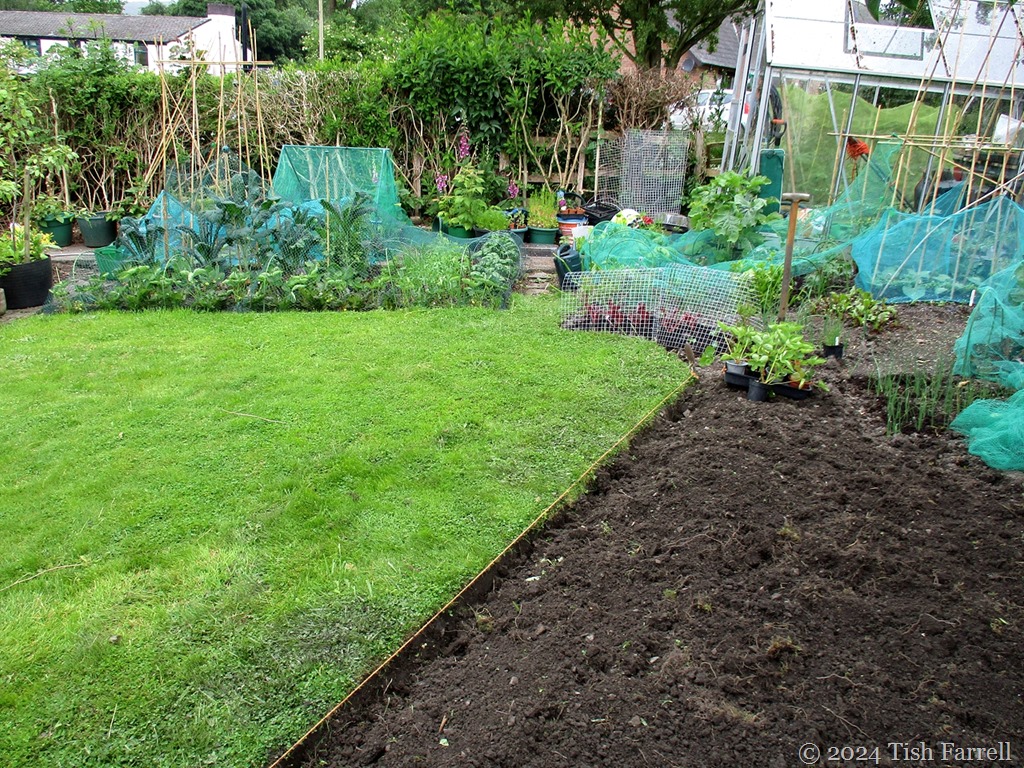
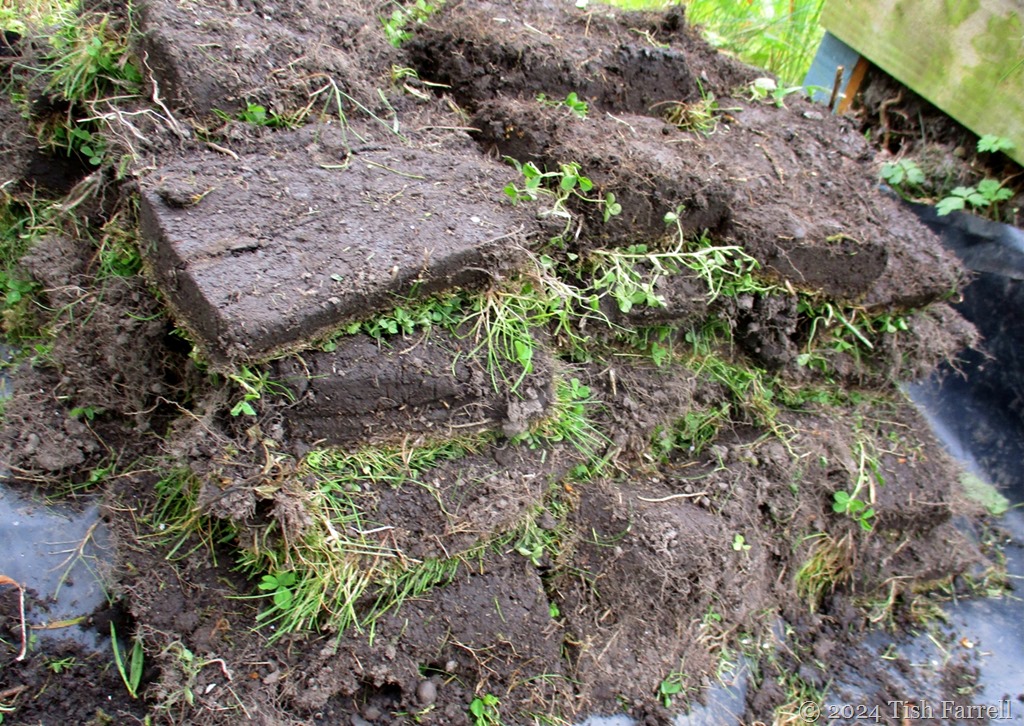
Meanwhile out in the back garden, the lawn has been continuing to disappear. Most of the turves are in the compost bin which is now full. I’m now stacking the rest, leaving them to rot down.

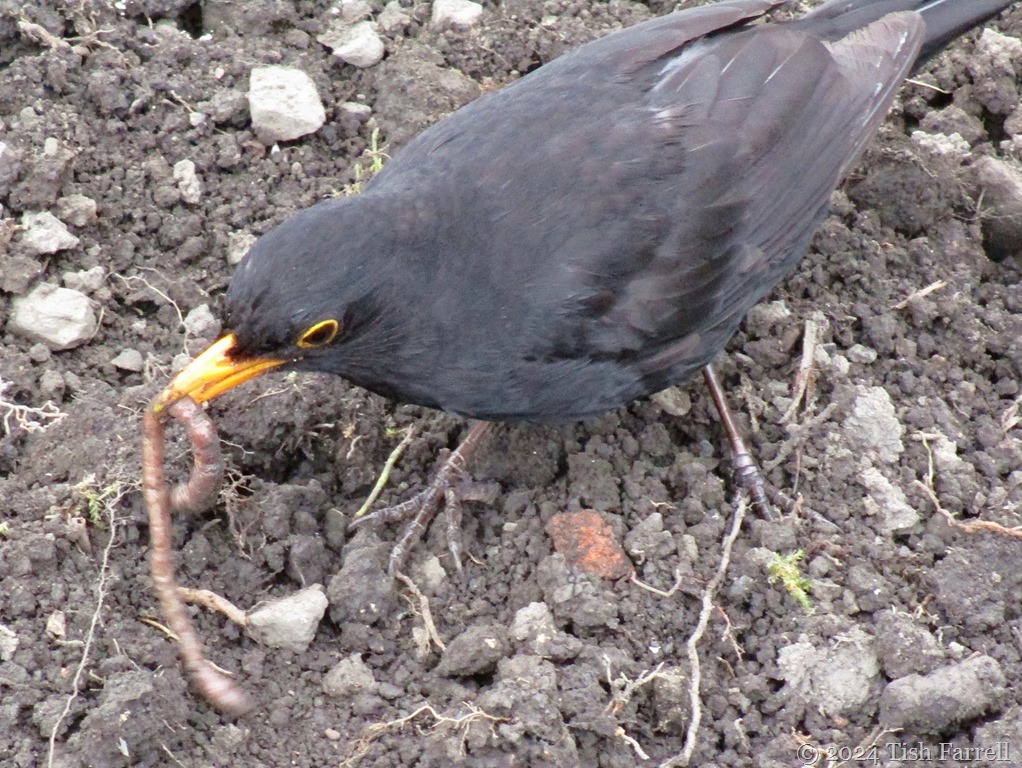
The more I dig, the bolder the blackbirds become, nipping in around my feet. I watched one carefully gather a stash of worms on the lawn whence they could not easily escape. When the bird had a good beak full, off it went, doubtless to feed a fresh brood of nestlings.

IMG_5408ed

IMG_5419ed

IMG_5427
*
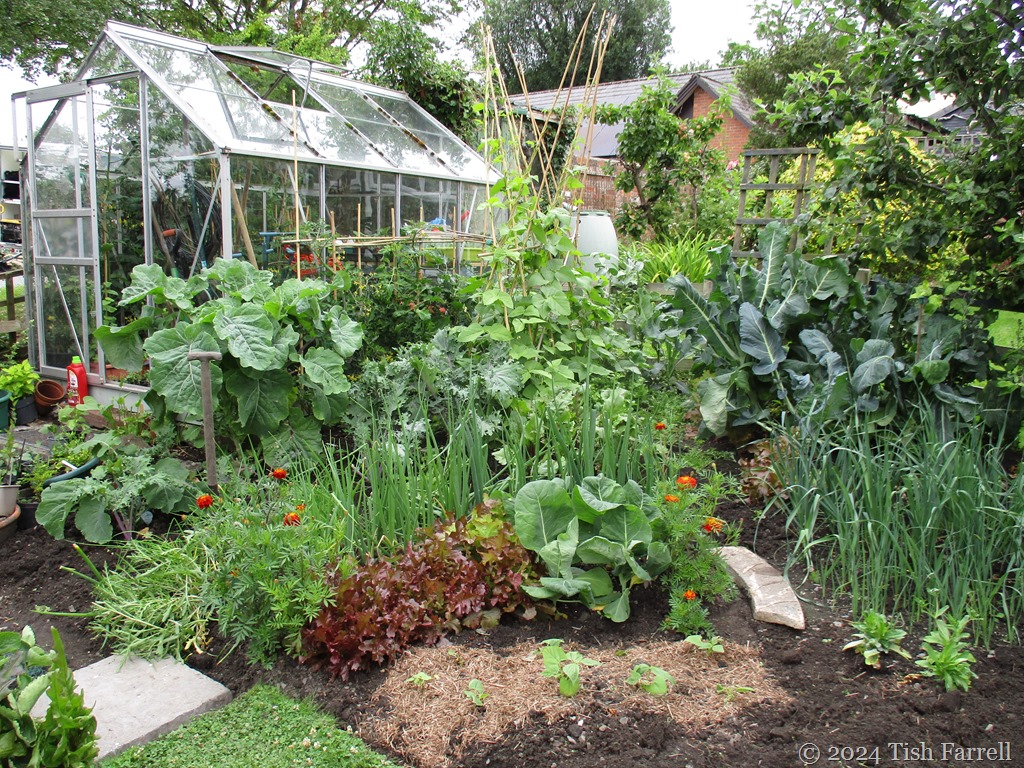
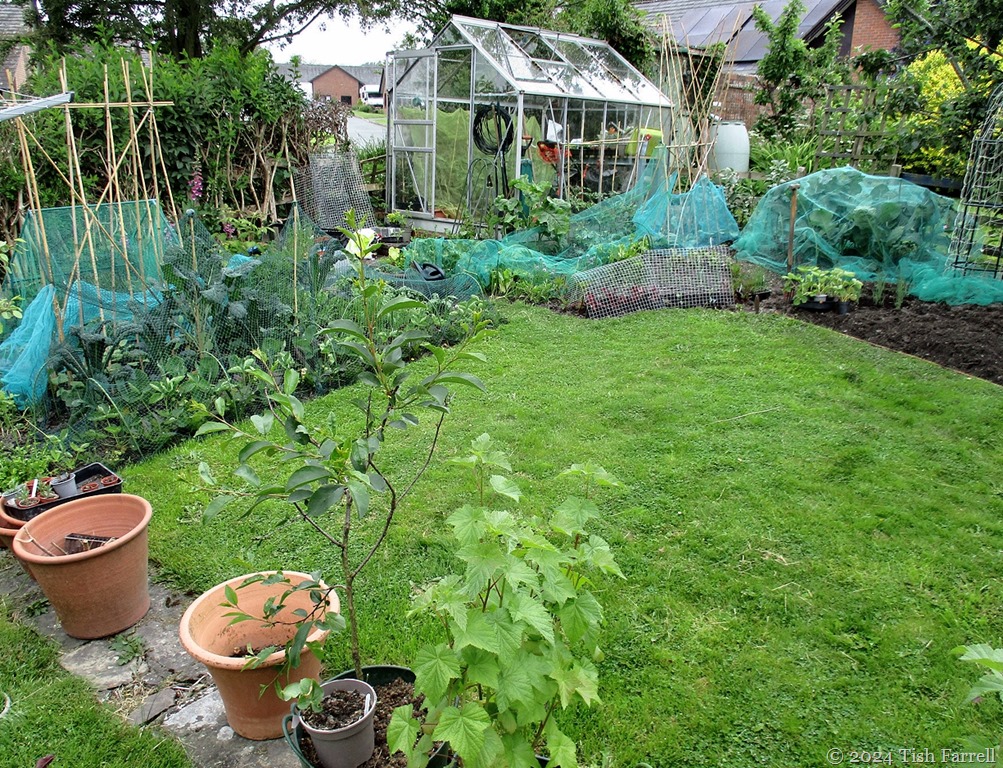
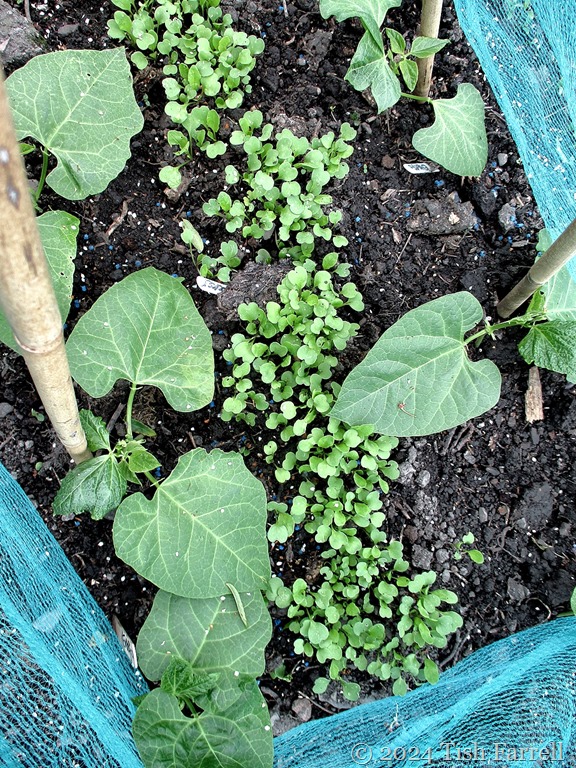
Much like the house, the garden is chaotic. Somewhere there’s a plan. For now, I’m simply pleased to have all kinds of kale, spinach and lettuce busily thriving. We’ve even had a handful of early purple sprouting. There are field beans forming at the top of the garden where the Romanesco caulis are growing ever more gigantic leaves, though no sign of flowers. There are tomato plants inside and outside the greenhouse. Strawberries are plumping up alongside cabbages, spring onions and Moroccan Cress, and the Emergo runner beans are looking pleasingly robust, though not yet climbing their sticks. In the interim, I have some rocket (arugula) growing mid-row. It needs thinning out.
IMG_5409ed
IMG_5412ed
IMG_5416
IMG_5410ed
The horrid hedge still needs much work. I now see it’s full of sycamore and ash trees, some quite substantial, while the actual original hedge of holly, hawthorn, weigela and privet has been much mutilated by years of being squashed behind chicken wire and under great boughs of ivy. But that’s a job for autumn. I anyway think we’ll need a man with a chainsaw to cut it down to size so the lower quarters can regenerate. I’ve planted foxgloves to brighten up the bare patches.
*
So here we are in June with thoughts of summer, thoughts being the operative word. For although the gardens around the town say it is summer, the weather says otherwise. All this week builder Alan has been complaining of the cold, resorting to his winter windproof jacket. We’ve been going around  wrapped up in sweaters, lighting the wood burner each evening. And for sure we’ve had some sunshine, but the wind has an icy edge, and it’s hard to escape it. Still, the spuds are looking good, and apart from the dust, there is much to be happy about.
IMG_5401 header

Roots Of The Matter ~ As In Too Much Burgeoning

IMG_5344

I may have mentioned once or several times that we’ve inherited a garden full of promiscuous weedy invaders. Top of the list is ground elder, closely followed by Spanish bluebells, but topping the top is Phygelius (kindly identified by Jude who described it as a thug that had to be dug up and contained in a pot). It is a semi-evergreen shrubby entity from South Africa, also known as Cape Figwort and Cape Fuchsia. And yes, it does look pretty when it’s cascading in bright red tubular flowers.

But just see where its roots are off to. These are growing under and in what was lawn.They extend at least two metres from the mother plant at the top of the garden. And the thing you most need to know about this vigorous pesky plant is that the smallest broken fragment of root has the capacity to make a new plant and root system in the blink of an eye.

The ground in the photo had been covered by a sheet of black plastic for around three months. This killed the grass, but only encouraged the Phygelius to sprout potential plants at regular intervals along the length of its root system. The good news is I can now see it and so unravel it (carefully) with a fork, and also extract any intertwining ground elder.

A tedious job, but then I do have company.

IMG_5338

This male blackbird spent all of Monday with me, scoffing worms and growing ever bolder. By the time I’m done, he will be one very fat bird, because the garden is also blessed with masses of worms.

And then this week there was another happy find, this time under a fallen roof slate…

IMG_5314

…one large toad. What a gift. Perhaps he/she is the reason why I’ve seen so few slugs. (So far anyway).

And finally, a pleasing plant discovery, rescued from behind the compost bin where it was being nibbled by snails:

IMG_5269

Cranesbill: Geranium Phaeum ‘Album’

*

And so the garden moves forward – renewed, reconstructed and (in several quarters), burgeoning.

*

#SquaresRenew     Becky’s May photo squares each day feature moving forward, reconstruction, renewal and burgeoning. Still time to join in.

header