Scavenging The Old Africa Album

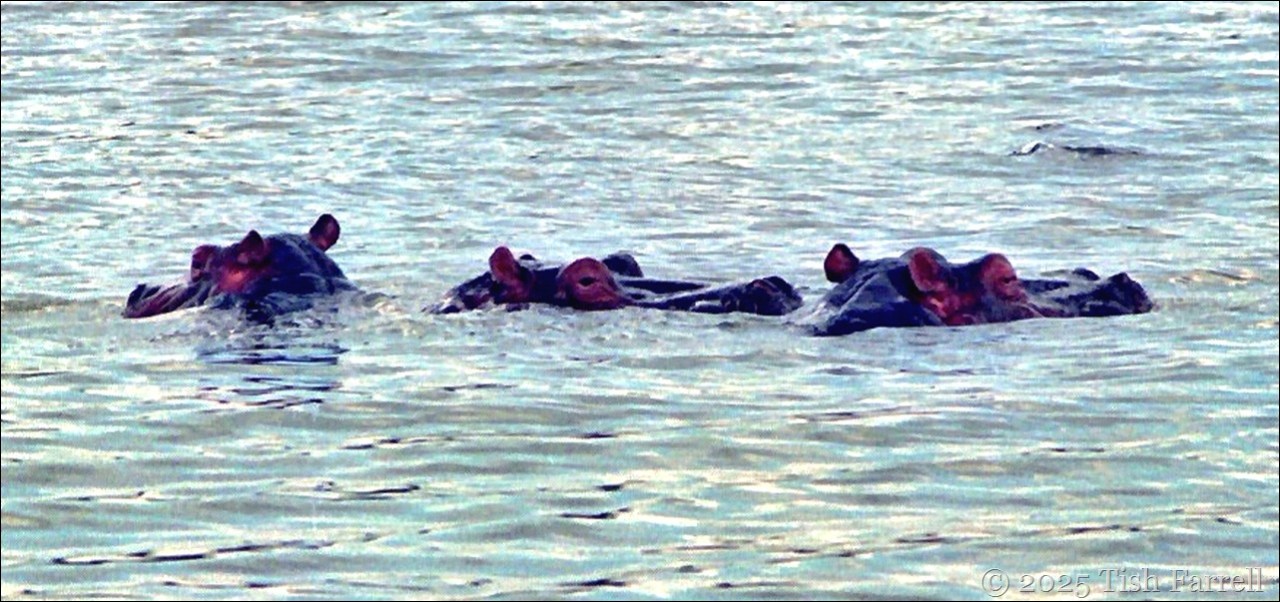
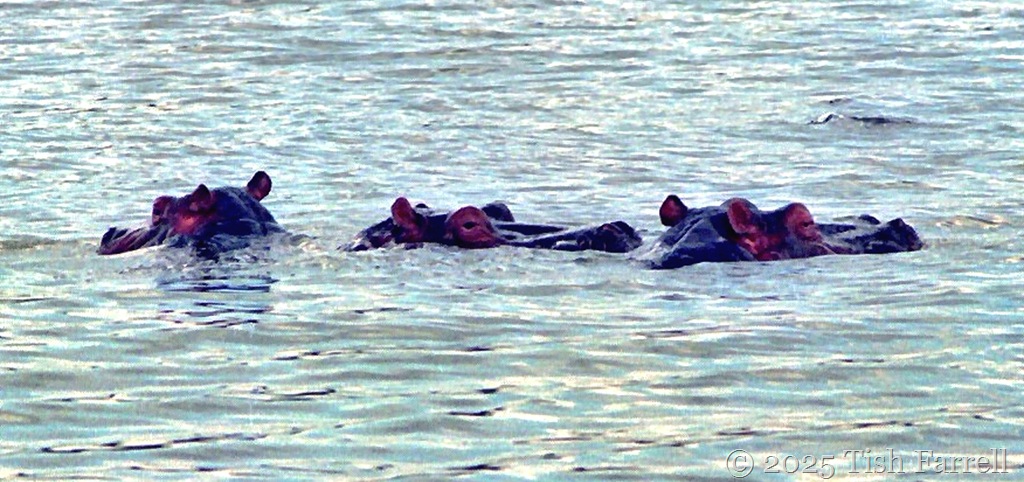
Hippos Naivasha

This week at Lens-Artists, Anne from Slow Shutter Speed sends us on a virtual scavenger hunt. I haven’t been in the old Africa album for a while, so I thought I’d have a rumage there. A virtual mini safari as well then.

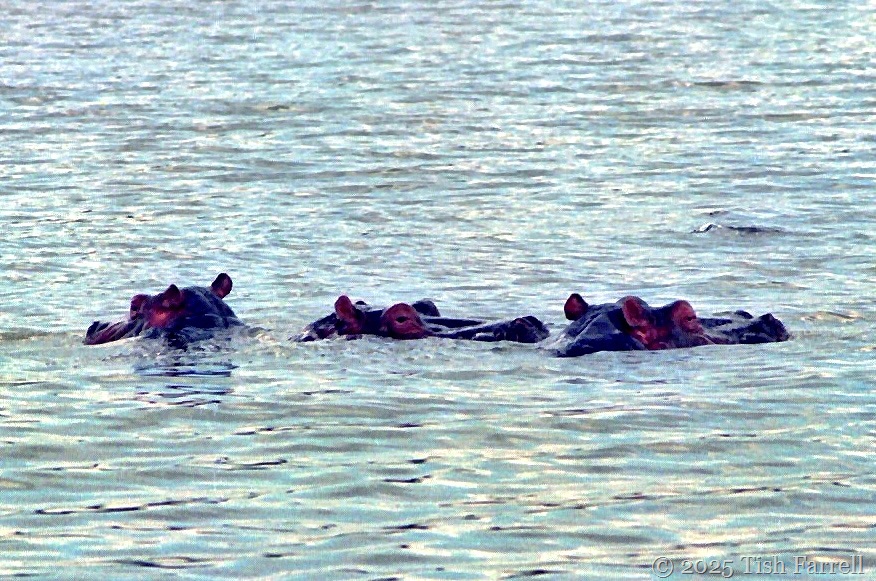
‘Wavy lines’ tops the list. The header thus features a wavy profile of hippo ears, eyes and noses in a wavy Lake Naivasha in the Kenya Rift Valley.

*

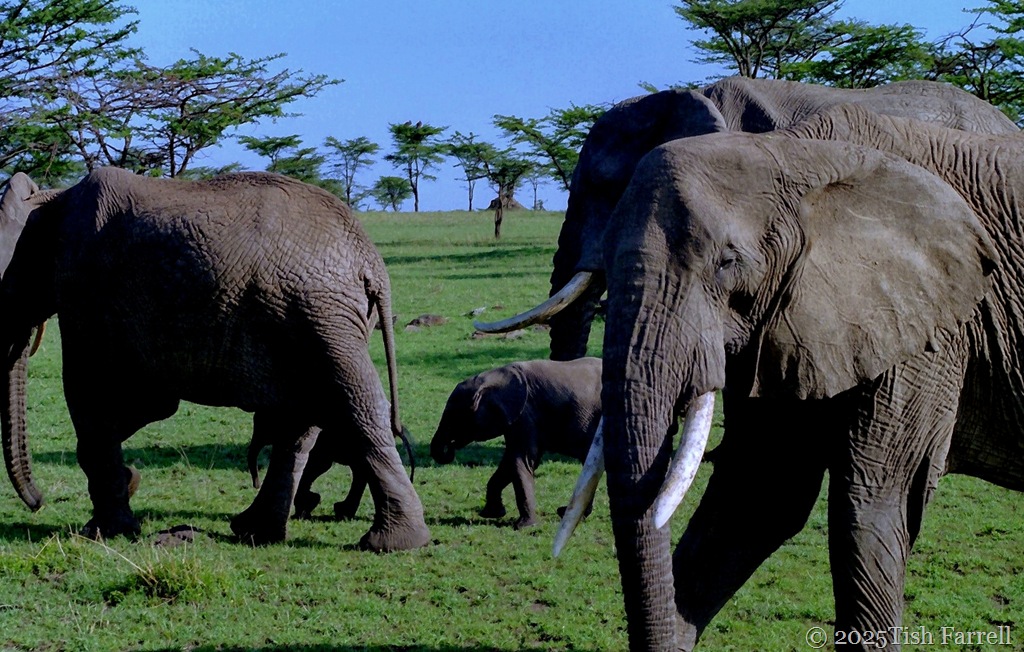
Maasai Mara elephants

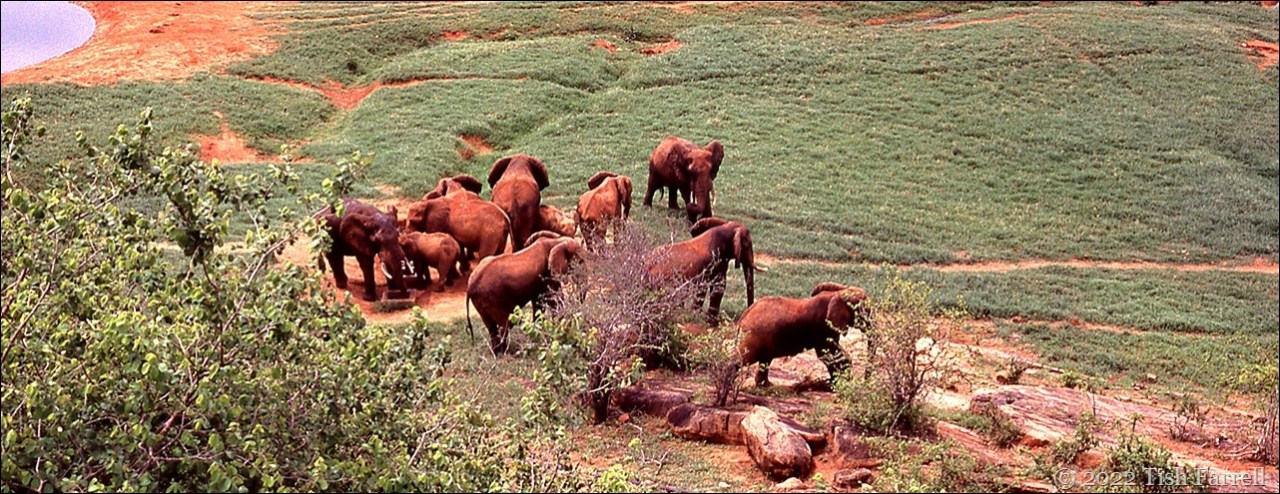
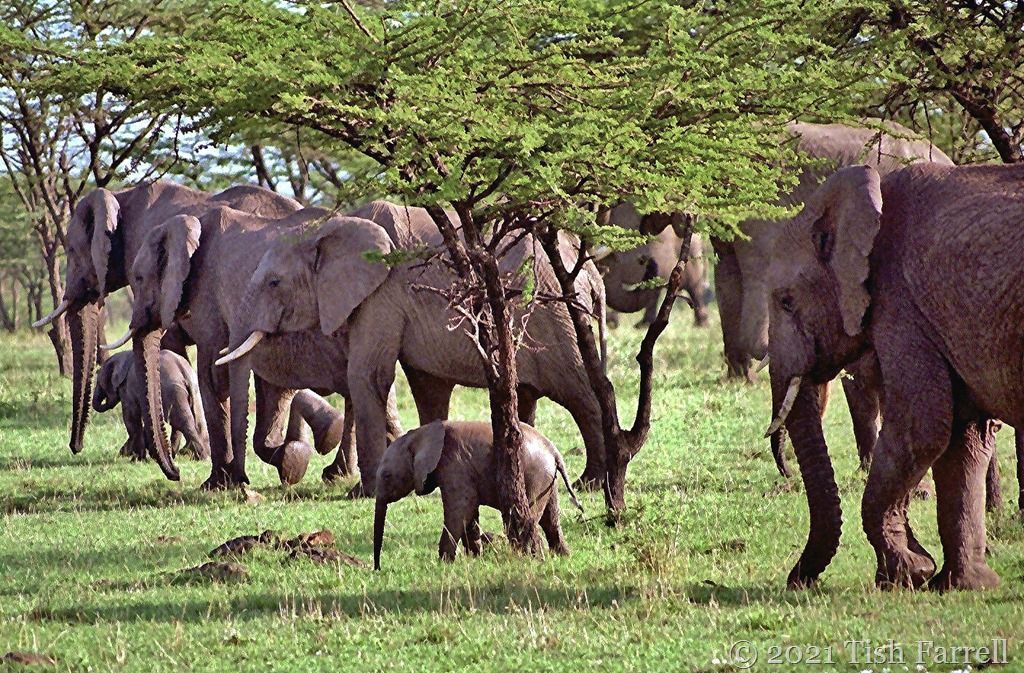
This herd of Maasai Mara elephants was in a very peaceable mood. They walked around us as we were parked up eating a picnic breakfast. I’m thinking elephant hide would feel pretty ‘bumpy’ should one ever dare to try it, especially the trunks.

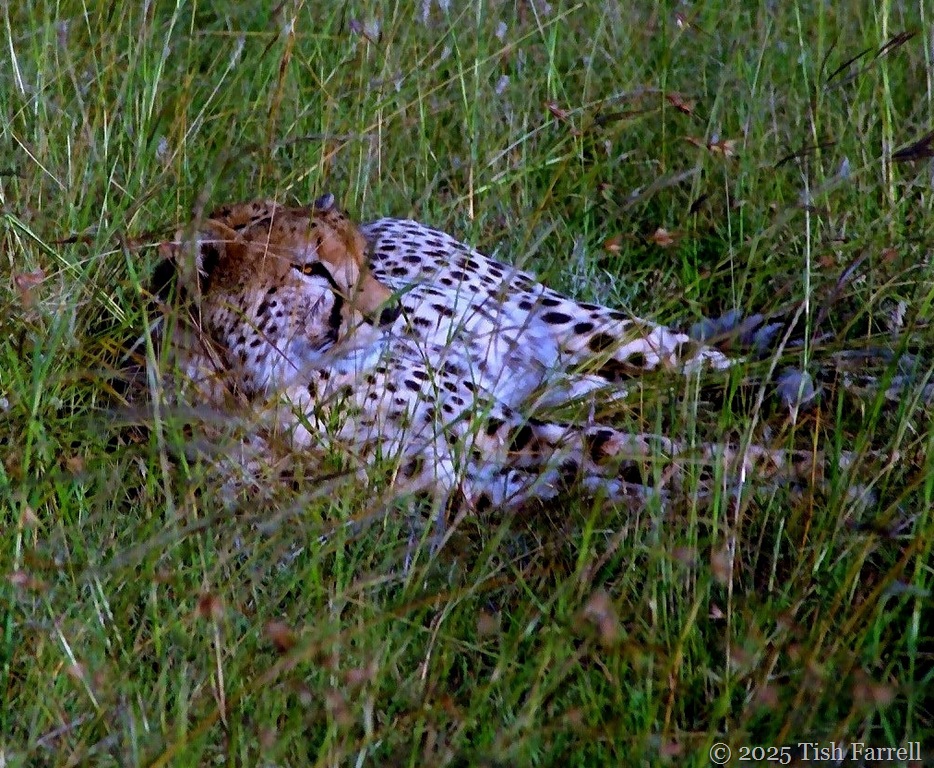
Whereas cheetahs must be wonderfully ‘soft’. They also wear nice ‘circular’ spots. This female was having an afternoon siesta when we pulled up beside her in a safari truck. She didn’t look at us, but simply posed like a professional, well used to having her photo taken.

cheetah

*

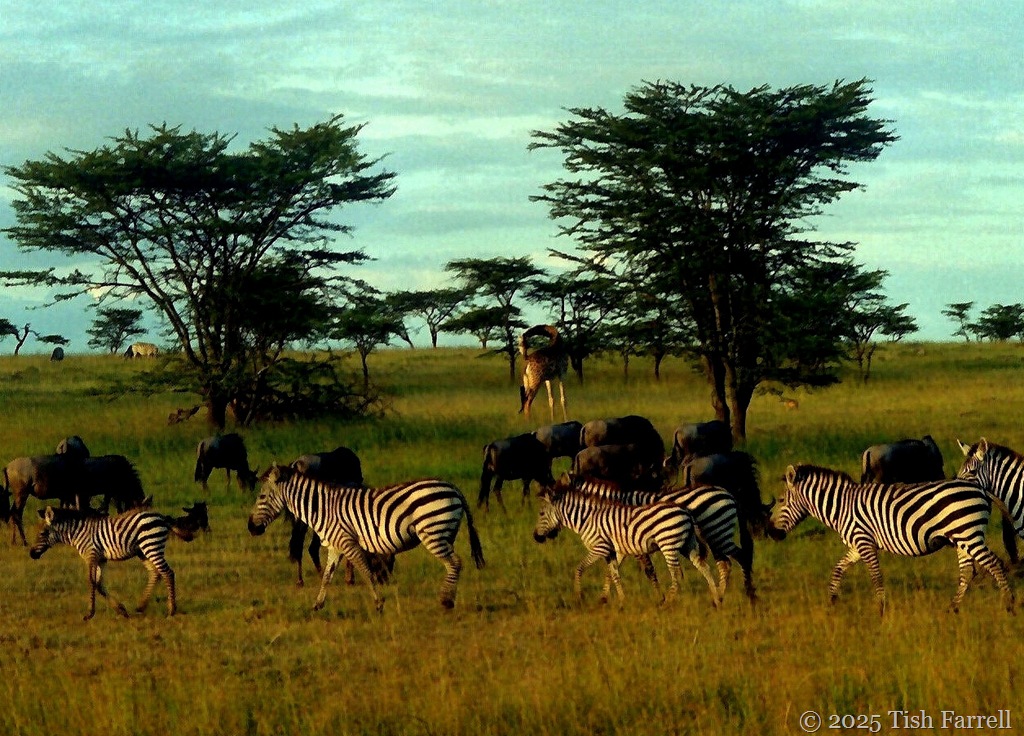
And more ‘patterns’. This time stripes. Zebras come with wavy ones:

Zebra sunset Maasai Mara

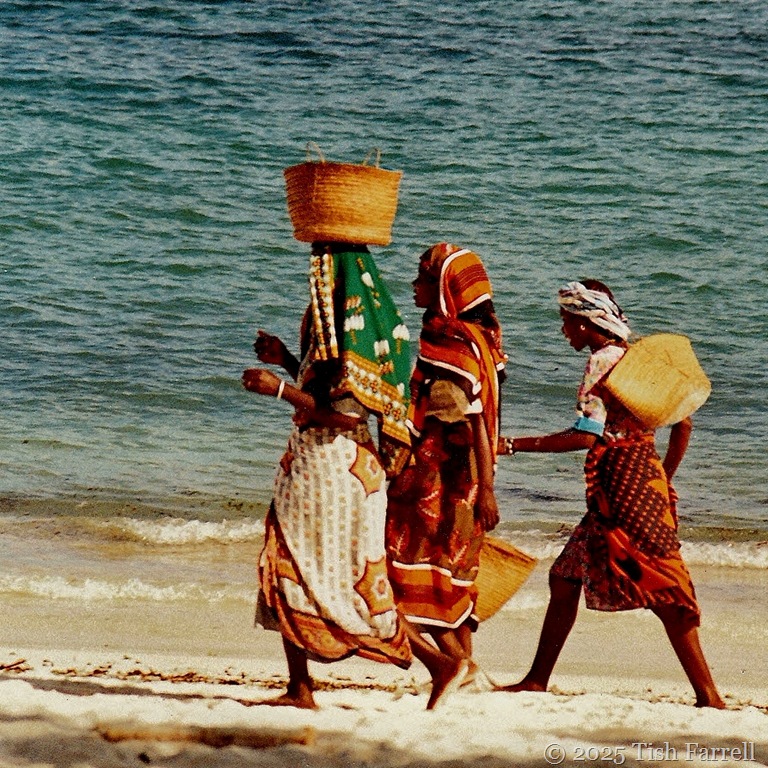
And then there’s another Kenyan speciality, patterns-wise:

Digo girls in kanga wraps

Cotton kanga wraps come in pairs with vivid designs and snappy Swahili slogans on the hems, here worn by Digo girls on Mombasa Beach.

*

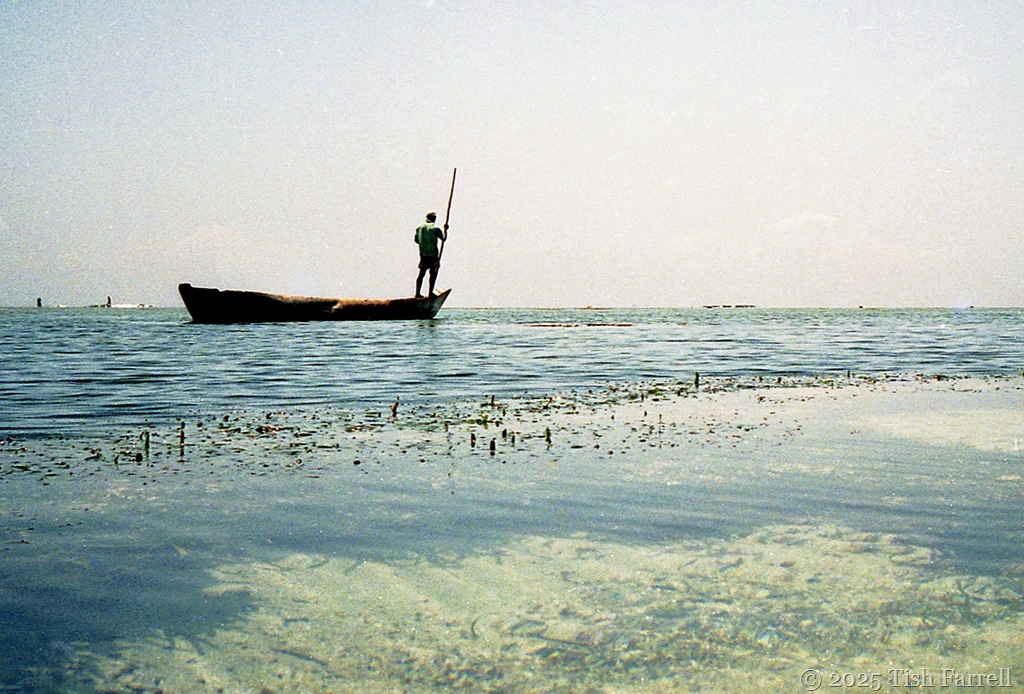
Tiwi fisherman

Now for ‘smooth’ water and a smooth dug-out canoe on Tiwi lagoon. A Digo fisherman under the midday sun. I’m guessing he’s looking for reef lobster.

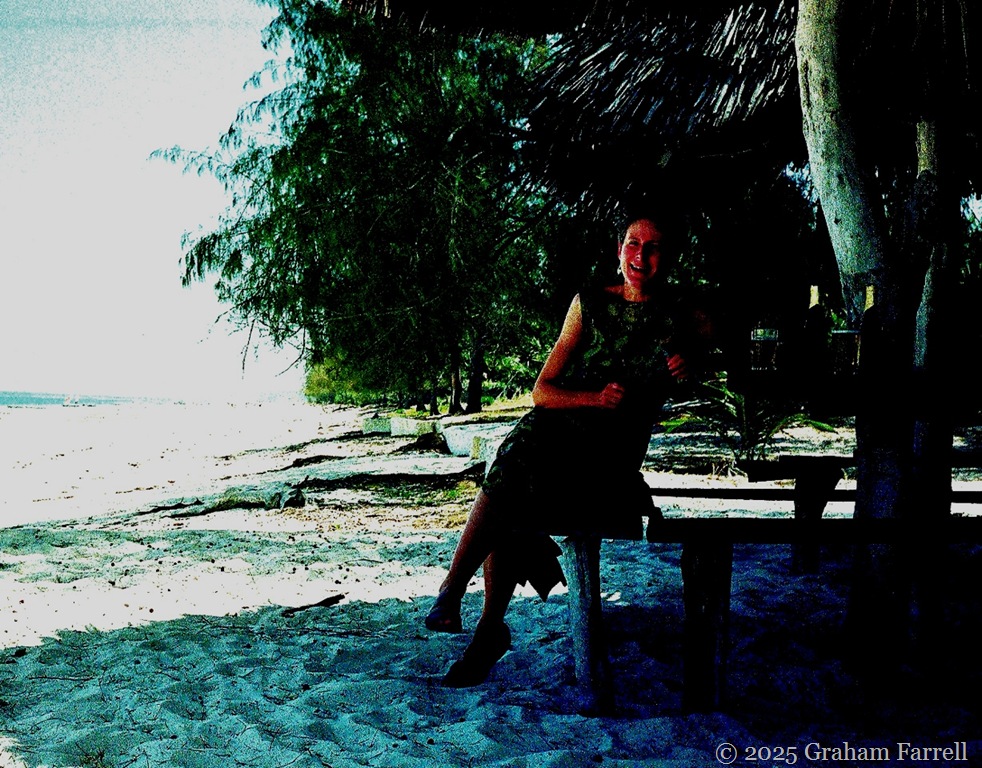
And as for ‘cool shadows’,  here’s me escaping to some at a Tiwi beach bar. Not so much too hot, as too bright to see out on the white coral sand. Aaah! Those were the days.

Cooling shadows

*

Lens-Artists: Virtual Scavenger Hunt  This week Anne at Slow Shutter Speed sends us on a photo quest, five to ten of the following: wavy lines, bumpy or soft texture, patterns, things circular, rectangular, smooth, made of glass, something with water in it, with green eyes, a wheel, a camera, cool shadows or jewellery…

Hippos Naivasha header

As We Walked Out One August Evening

IMG_8622ed

So why don’t we have supper with the elephant? says I. We can take a picnic.

It was Sunday evening, and he-who-builds-sheds had been toiling all day on a new construction. (We call it ‘the car port’, but it’s not for the car.) The response was not altogether encouraging. I knew he was thinking of the hill climb in the heat. I thought of it too, but the notional destination outweighed resistance. I packed a couple of small cool bags with spicy cooked chicken, bulgar wheat salad, apples and some elderflower kombucha.

We set off a little after six. The sun beamed hotly. (What a summer we’ve had).

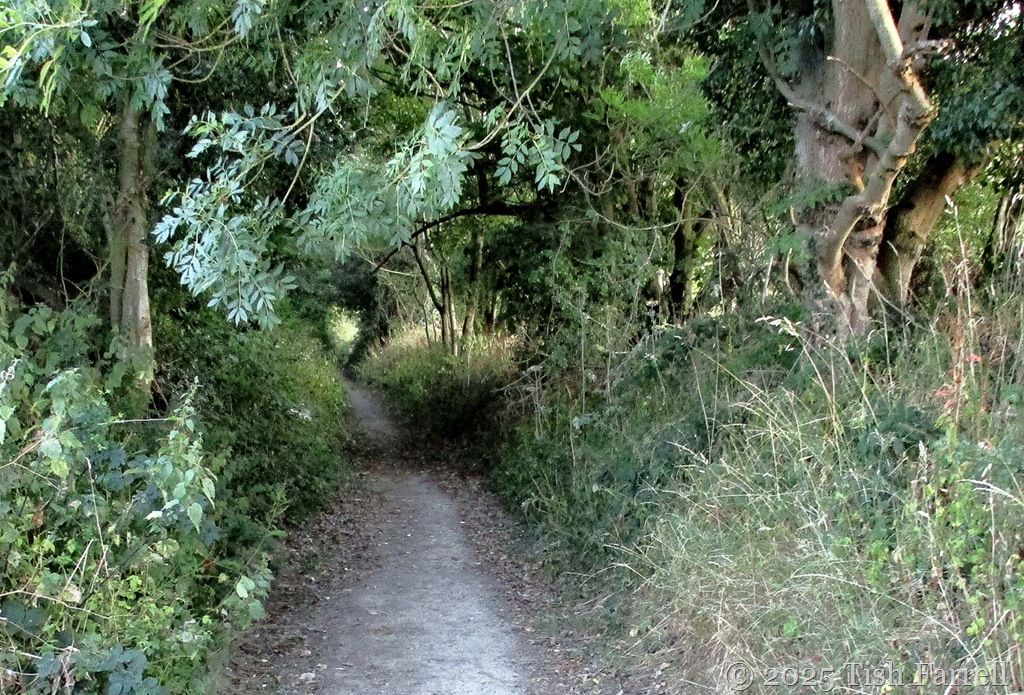
The walk I had in mind is a climb of two parts, the first being the short sharp yomp up our street to the top of the town. This haul can be alleviated half way up from our house by deviating into Laburnum Alley, a shady ginnel of ancient walls and overhanging greenery, that wends more gently around garden perimeters, and brings you, breathing easily, into Welsh Street.

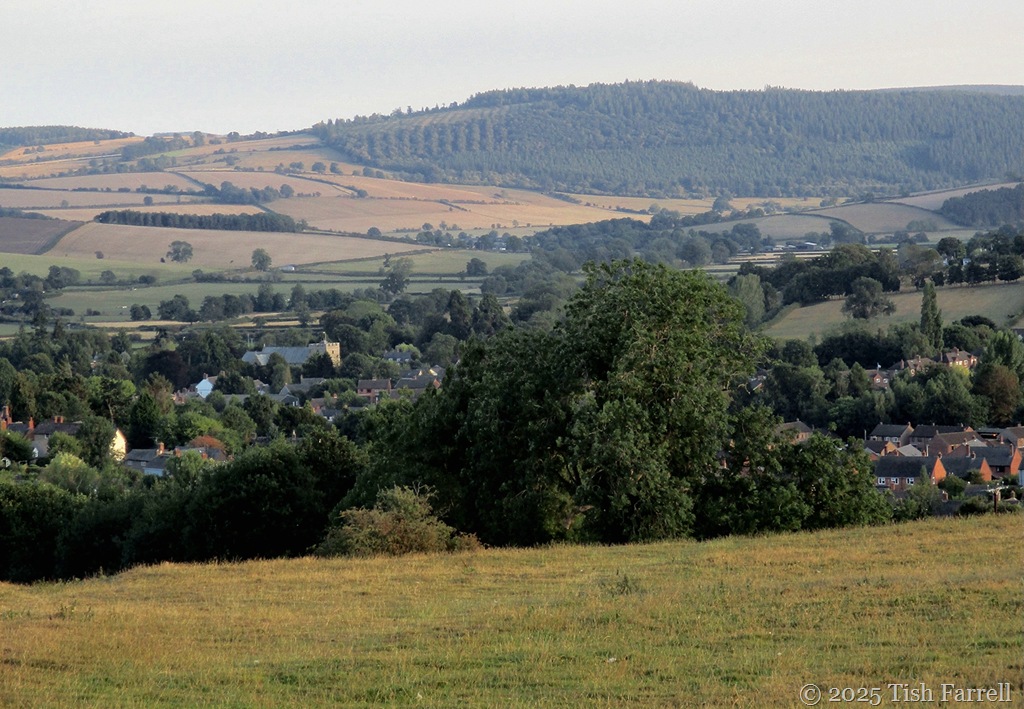
Next there’s an even stretch along the road around the Wintles mini eco-village before we head into the shade of this settlement’s privately owned (but freely accessible) woodland enclave of vineyard, allotments, and bosky meanderings. The Shropshire Way also bisects it. We pass through the gate into the field behind the gardens, and start the main climb. We’re headed towards Wales now, the Long Mynd our right.

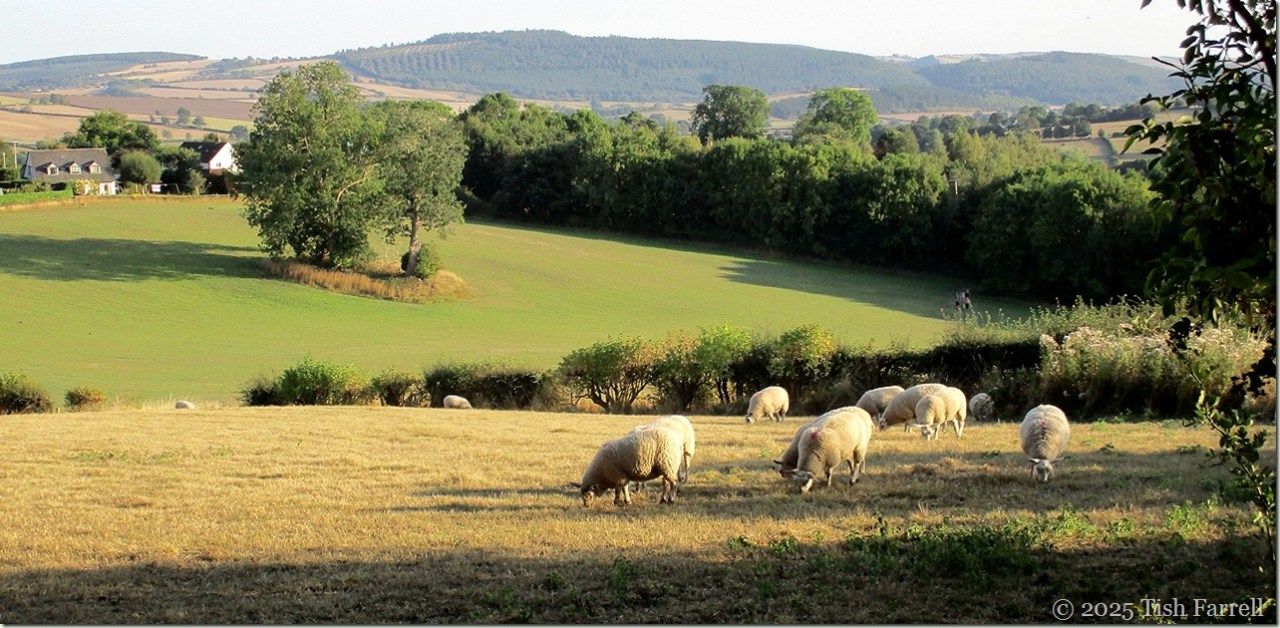
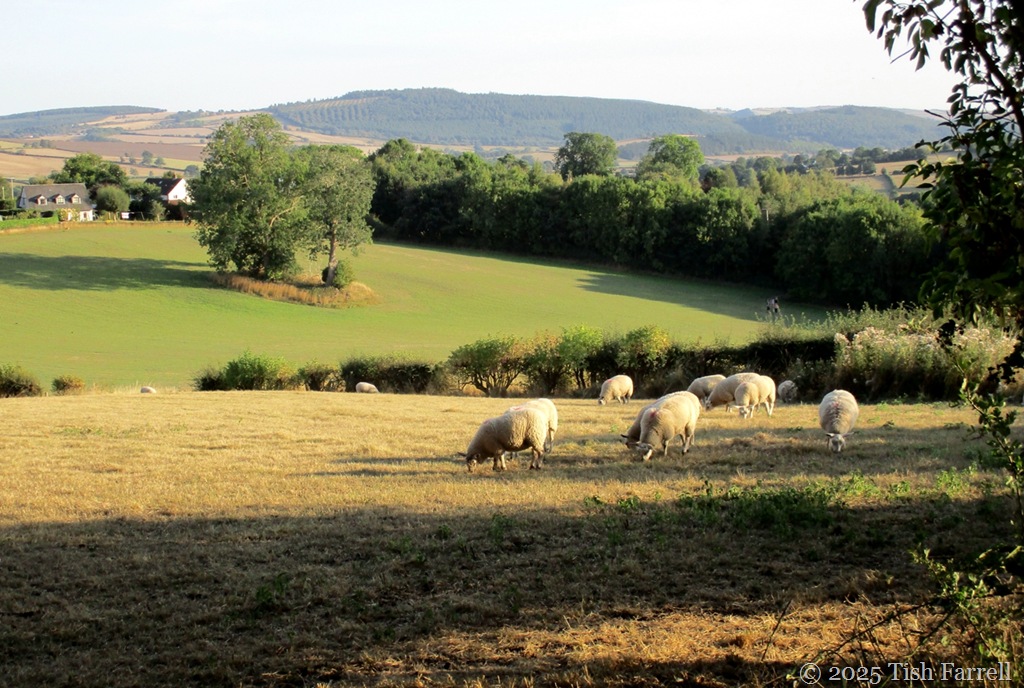
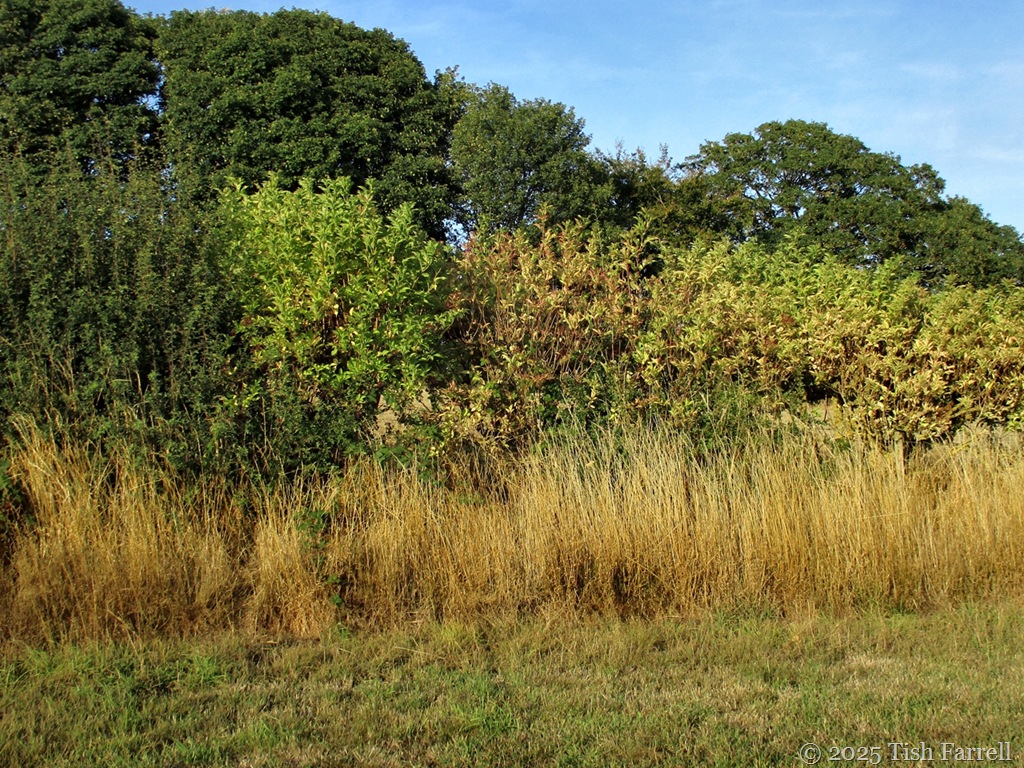
The field behind the Wintles woodland still looks remarkably green, this despite the months of drought. But above us, the fields are pale ochre, shorn of pasture or wheat, the hedgerows tousled, fringed with dead grasses and thistles bursting with down.

IMG_8613 ed

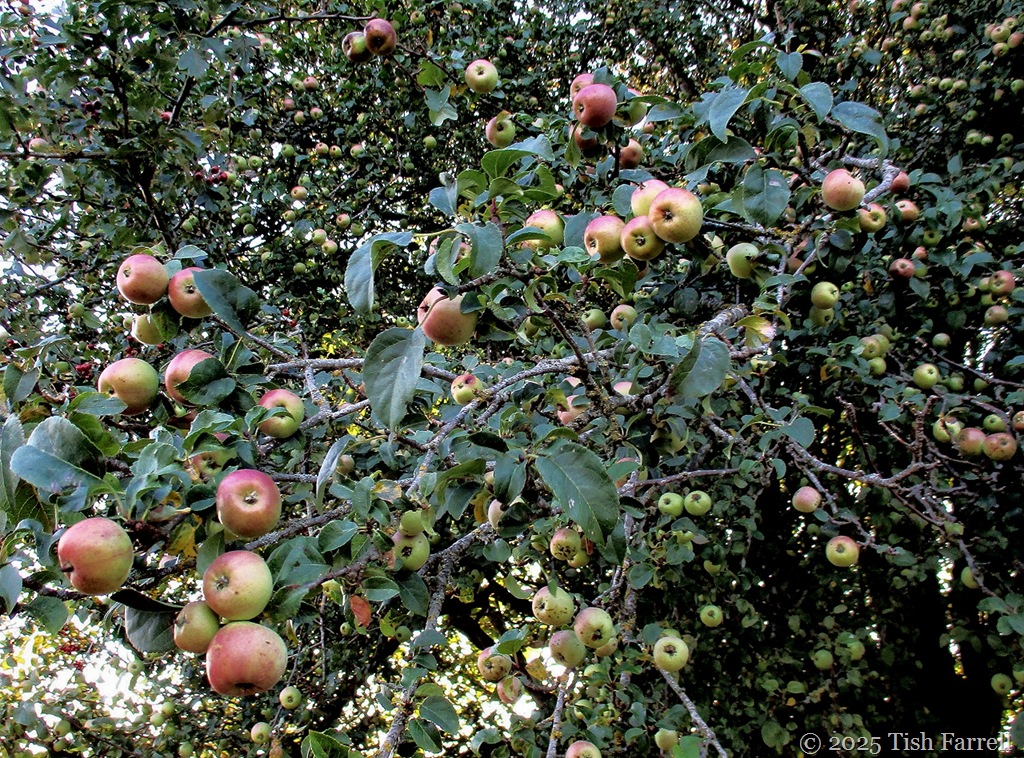
The few sheep we pass seem happy enough, and we begin to see that not everything has suffered from the lack of rain. The red clouds of the berry-laden hawthorns are astonishing, so copious is this year’s crop. The elders, too, are weighed down with ripe black berries, and later we see bushes of fat blue sloes (think passingly of making sloe gin), and then come upon a crab apple tree so crammed with fruit it is almost too good to be true. Excitement mounts. Crab apple jelly will definitely happen – if not yet, then very soon, and feasibly in quantities for all of Bishop’s Castle.

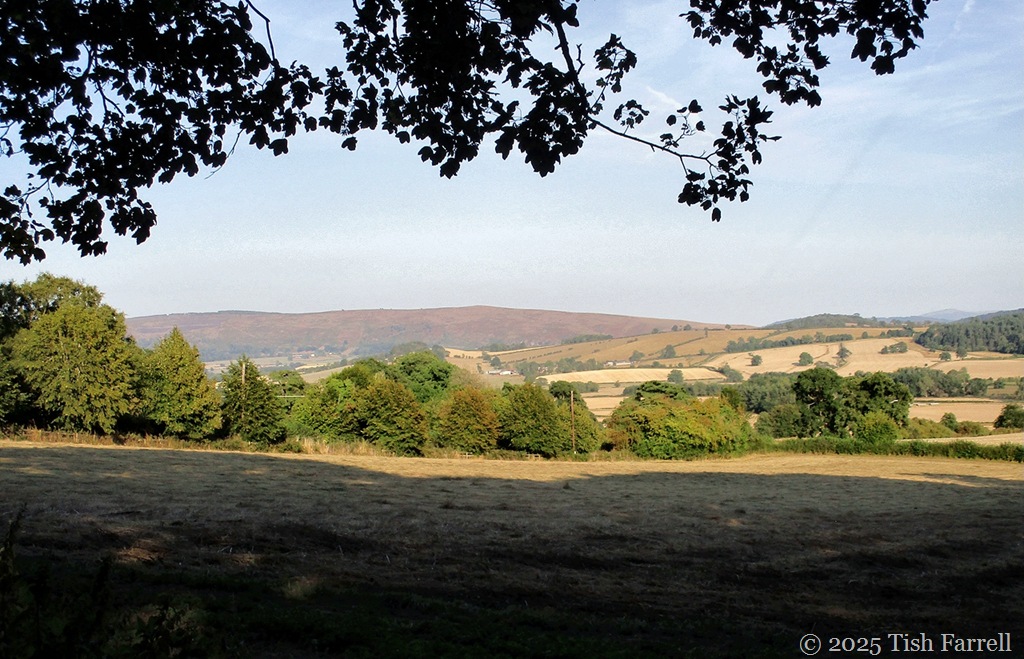
But first the picnic. We follow the footpath markers through two gates and into the trees below Foxholes Campsite. There’s a good view of the Longmynd now…

Longmynd

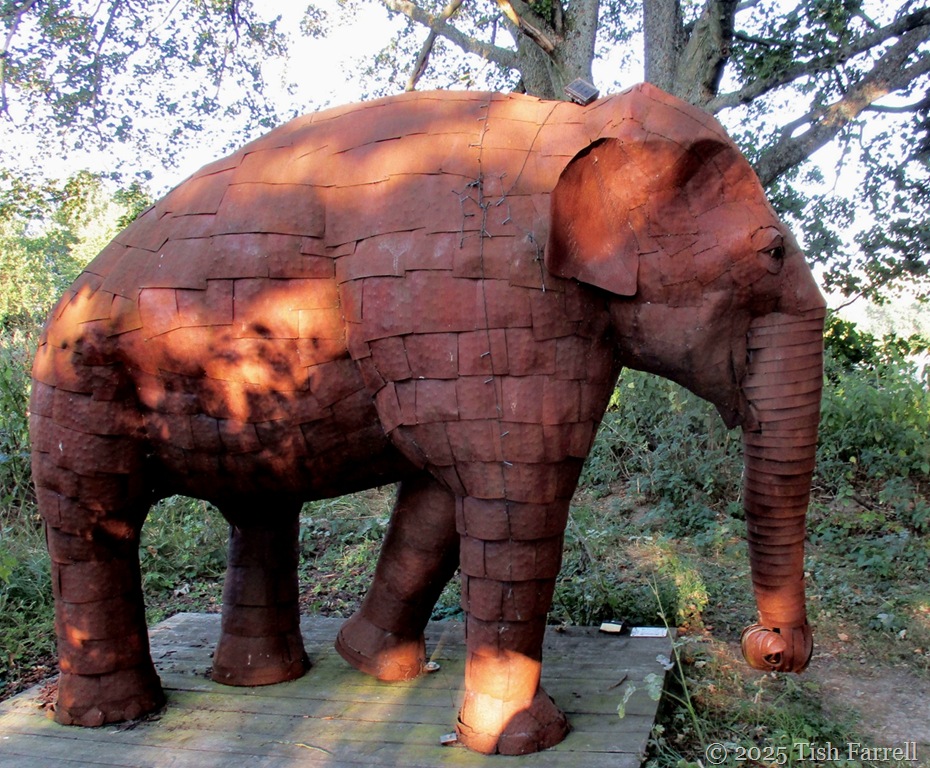
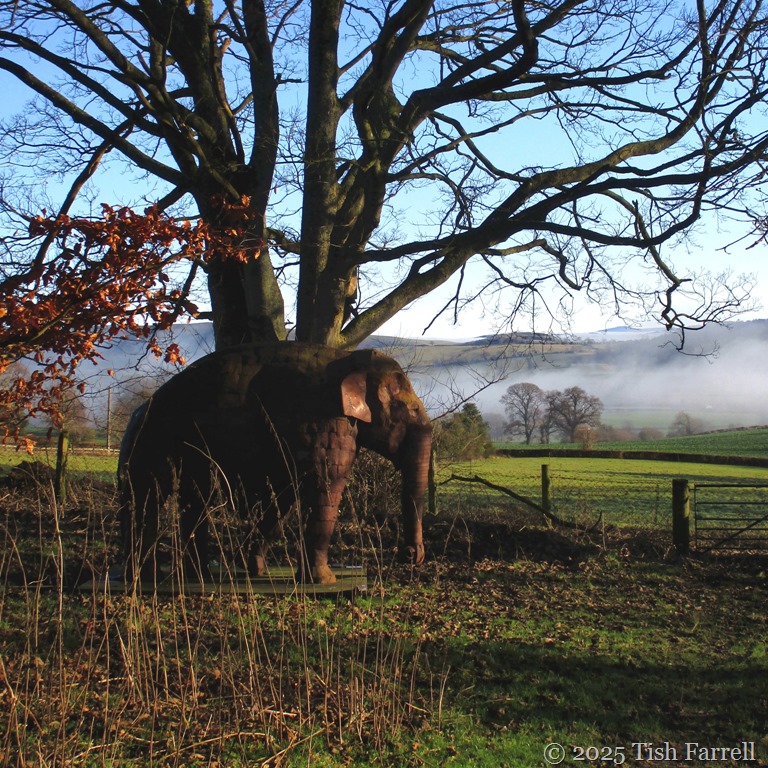
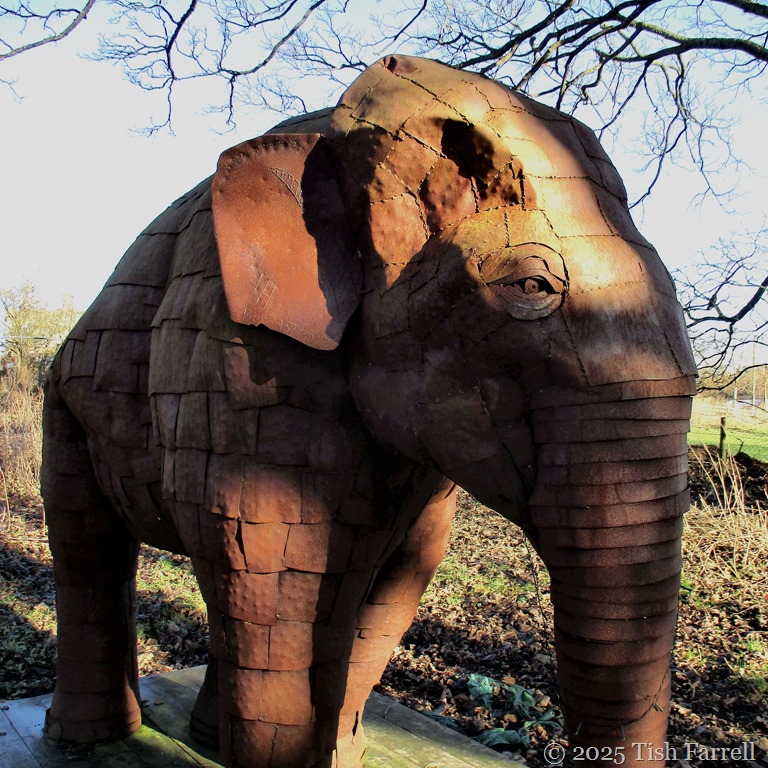
…and there is also an elephant…an Asian elephant…

elephant 2

*

Some of you will have seen this before, and I’m sorry to say that I’ve still not tracked down who made her or why she is here in this particular spot.

*

IMG_8627ed

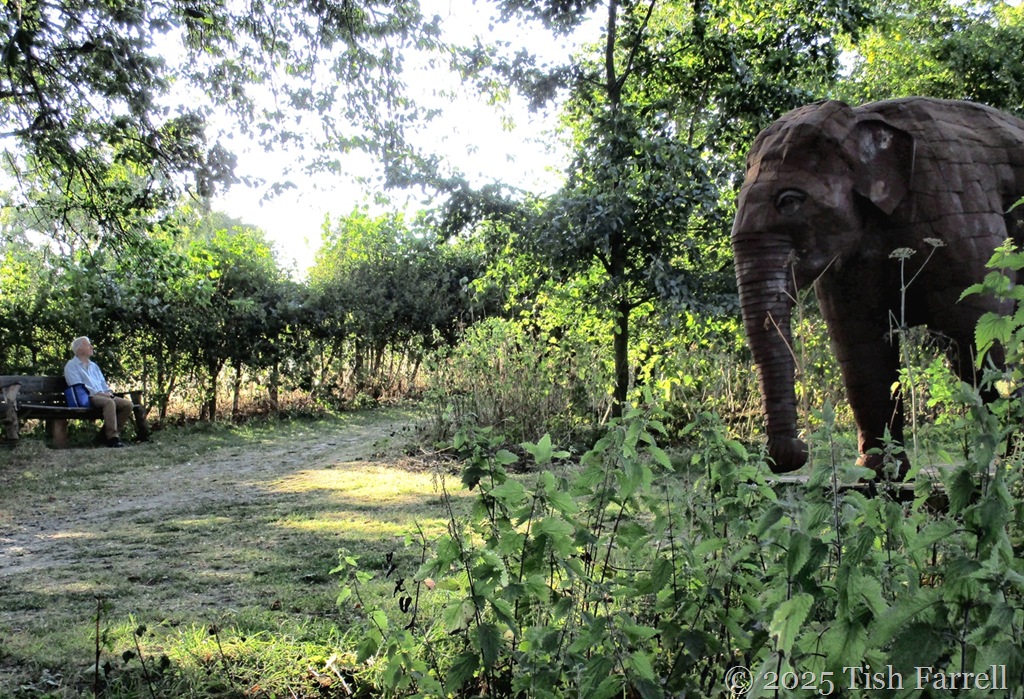
But here, then, was the envisioned picnic spot.

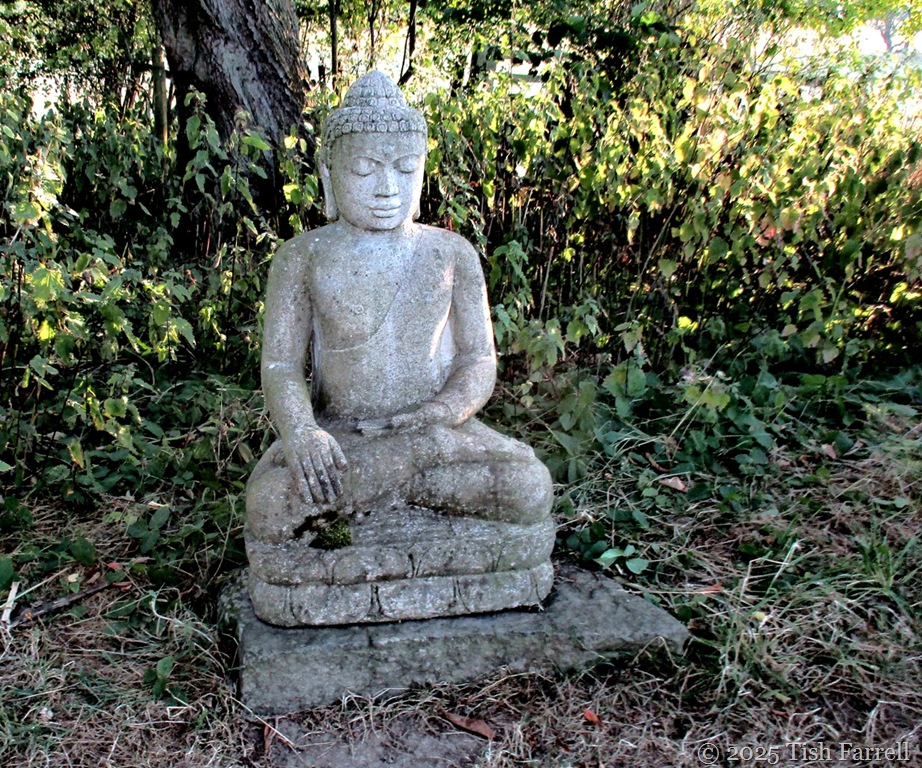
We ate our supper, sitting on a fine seat commemorating a lost love, greeting camping folk as they passed by, listening to the breeze in the trees. The elephant did not have much to say. Nor did Buddha who was sitting near us:

Buddha

Just some quiet communing.

Once we’d eaten, I thought I could risk suggesting a little more climbing. This time to the top of the hill to see the views towards Montgomery.

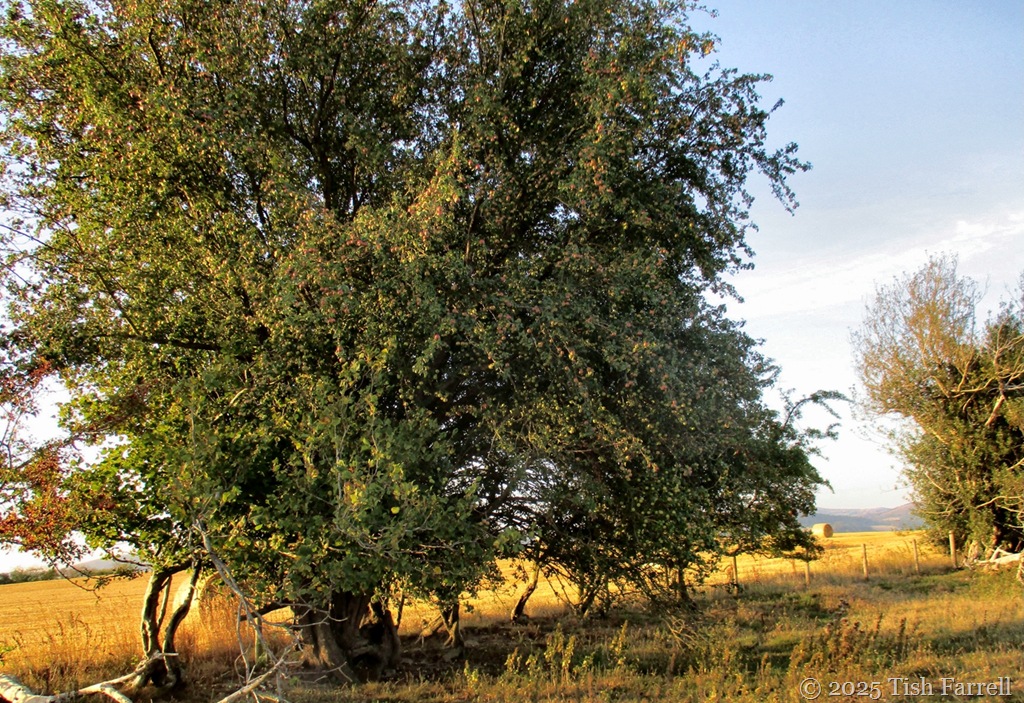
It was here we found the crab apple tree.

crab apple and haw accessories

crab apple tree

*

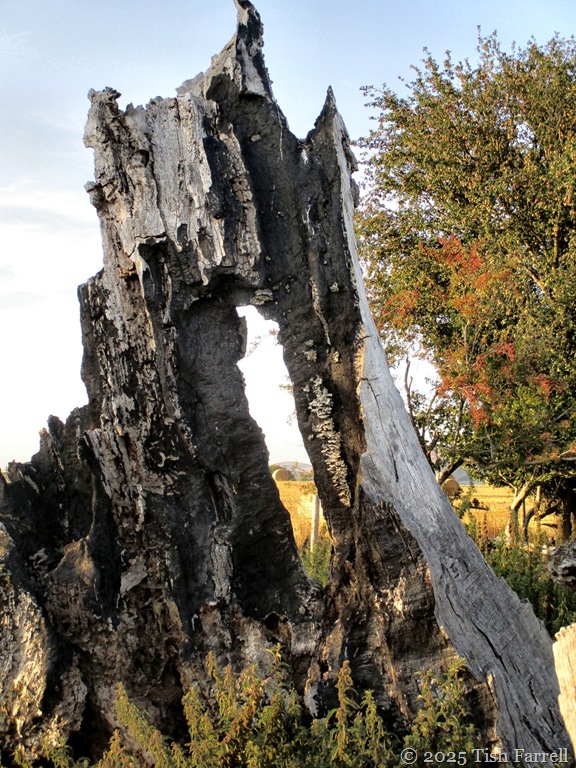
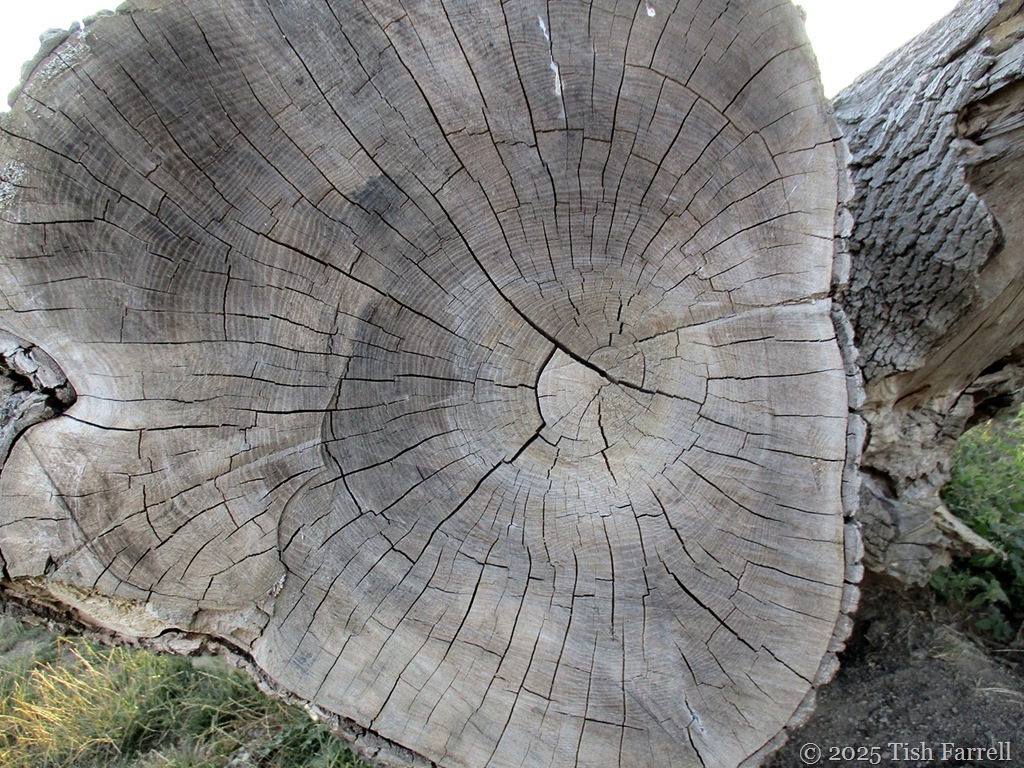
And next to it a fallen giant with its own elephantine qualities. It looks to have been struck by lightning many moons ago:

tree window

tree rings

*

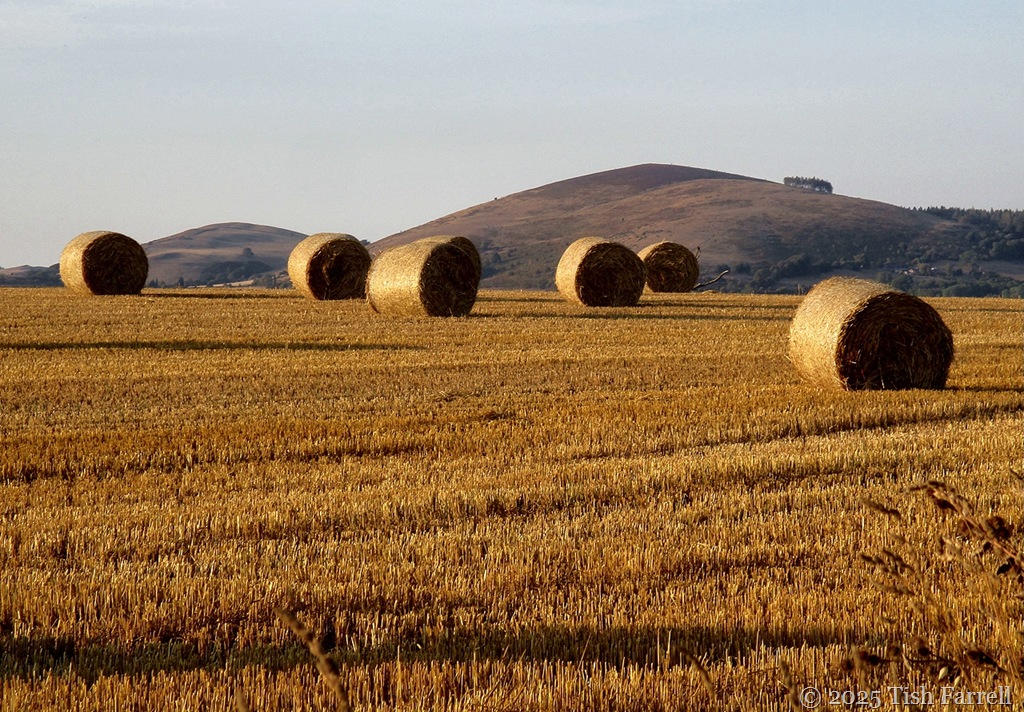
And beyond it the wheat field, the crop harvested and the straw bound in roundels, which for some reason are always appealing:

stubble

*

Then it was time to turn for home, slithering down the hill on sun baked ground…IMG_8666ed

*

…and on down the hollow way, back to the Wintles.

hollow way

*

We should do this more often, we said when we arrived back at the Gables.

copyright 2025 Tish Farrell

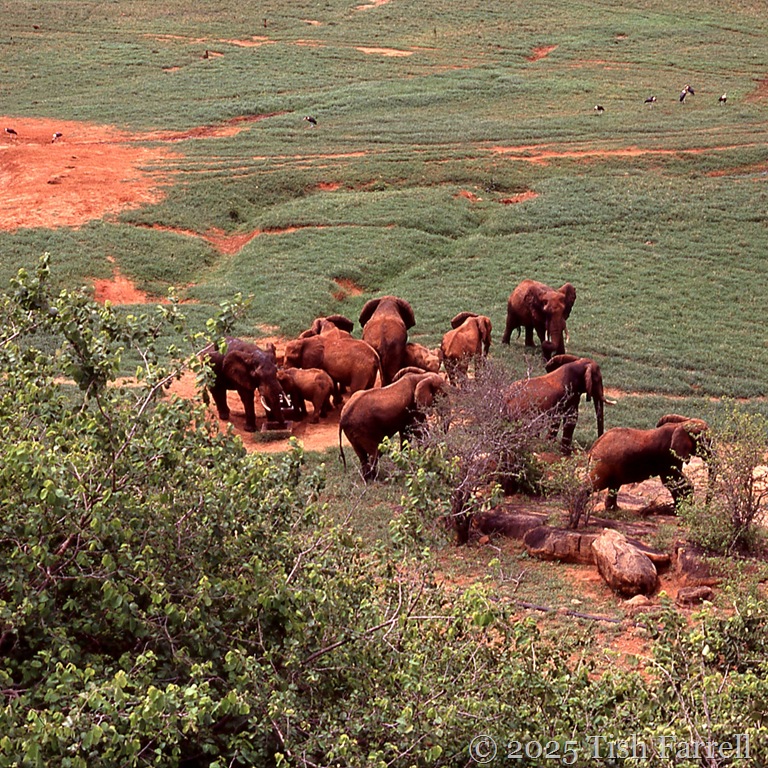
“The Red Elephants Of Tsavo East”…

img519sq

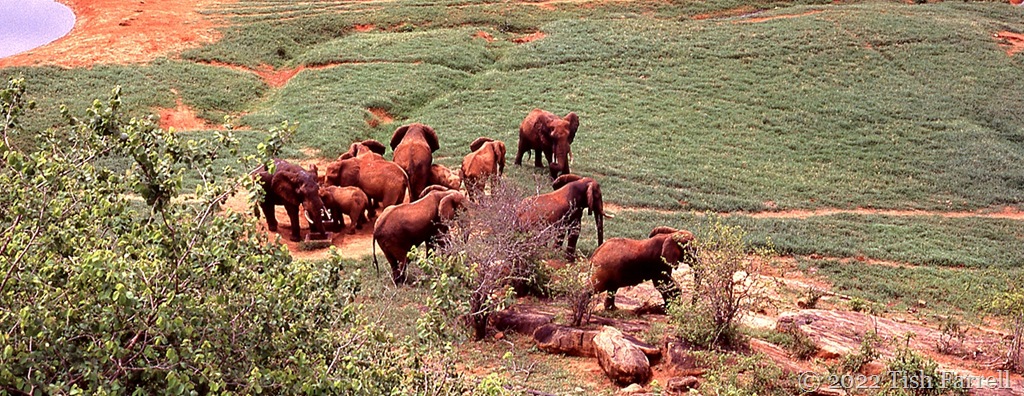
… so called because of their habit of dousing themselves with Tsavo’s iron-rich soil.

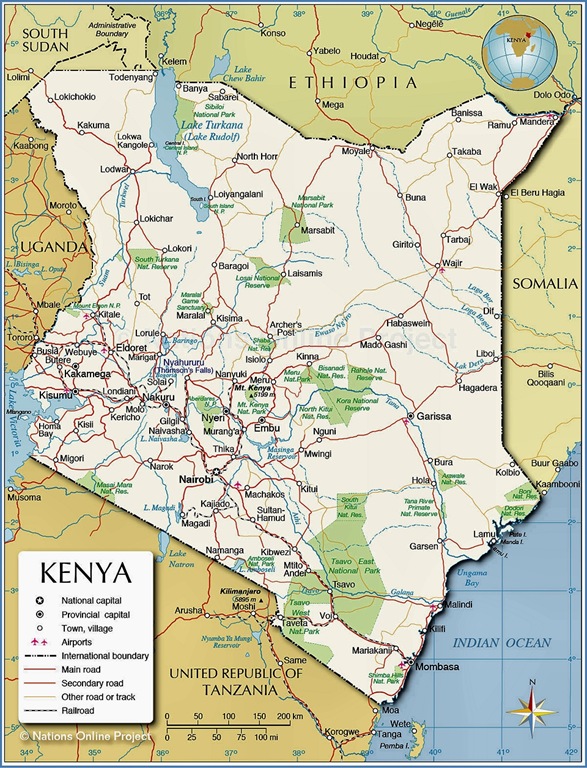
Tsavo East is one the largest parks in the world, covering 5,000 square miles. Together with its neighbour, Tsavo West, on the other side of the Nairobi-Mombasa highway, this adds up to nearly 9,000 square miles of designated wildlife reserve.

The map gives little clue of Tsavo East’s vast wilderness. The solid drawn lines of the designated parks suggest containment, but this is not the case. While areas near human settlement maybe fenced, elsewhere the boundaries are largely permeable. In 1994 the then director of Kenya Wildlife Service, Dr. David Western, famously stated that there was more wildlife outside the parks than in them. He also believed in protecting the free movement of animals, and especially in the one small park whose access was increasingly under threat from human settlement, i.e. Nairobi’s city park. This is still an ongoing issue, the one-time corridor from the southerly plains all but closed.

kenya_map best

The business of maintaining wildlife areas is fraught with problems. Elephants may invade farms and destroy a season’s food crops in a few moments. In times of drought, starving farmers may resort to age-old habits of hunting game for food. It is also a fact that elephants can kill people if they feel threatened. Lions and buffalo and crocodiles kill people too. Then there is ivory poaching, small-scale and big-crime funded. The latter comes with highly armed gangs with automatic weapons. So it’s hats off to wildlife rangers who try to do their best by all concerned, and may risk their own lives in the process.

I don’t seem to have many photos from our stay in Tsavo East. I remember the weather was mostly gloomy and driving along dirt tracks for hours without seeing a thing. But the photos at this site are well worth a look.

img519header 2


#SimplyRed Day 17

Elephantine Geometry: The Things One Sees In Bishop’s Castle

IMG_6641sq

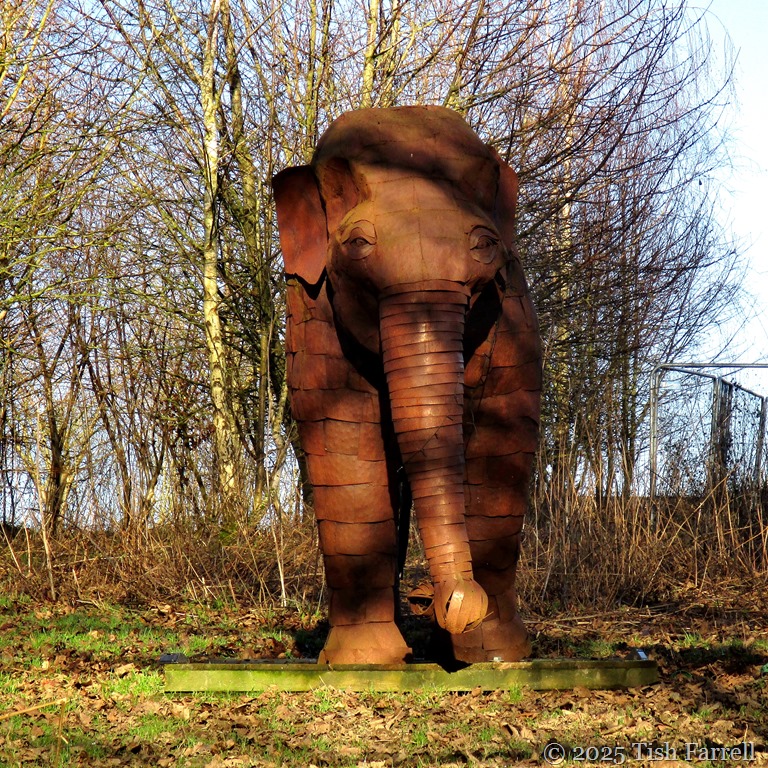
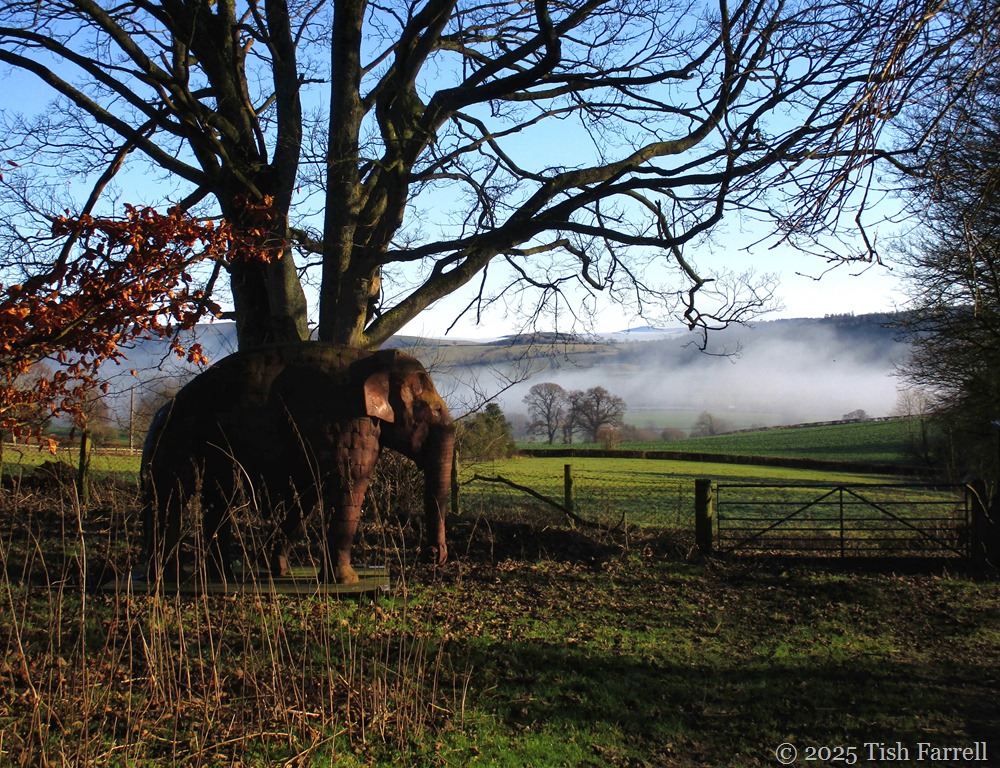
Well, at first sight, glimpsed through a December hedgerow, it truly did look like an actual elephant. Good heavens! What was it doing here in the Shropshire Hills?

We discovered it last week, by chance, as we explored the hillside paths above the town. There it was, beside the Shropshire Way, at Foxholes campsite, and with company too. The Buddha no less.

IMG_6638 sq

*

Closer inspection of course revealed that it was cunningly constructed of metal plates, now richly rusted.

IMG_6646 sq

IMG_6637 sq

*

We then realised that it was doubtless one of the exhibits in the Bishop’s Castle town trail, The March of Elephants. You can see the other artworks at that link. This particular work was created by local artist Ben Ashton, but I couldn’t find anything further about him.

By now you could well be wondering why there is an elephant art trail in a Shropshire market town wherein the trade in sheep and cattle has for centuries been the major enterprise.

There are two connections.

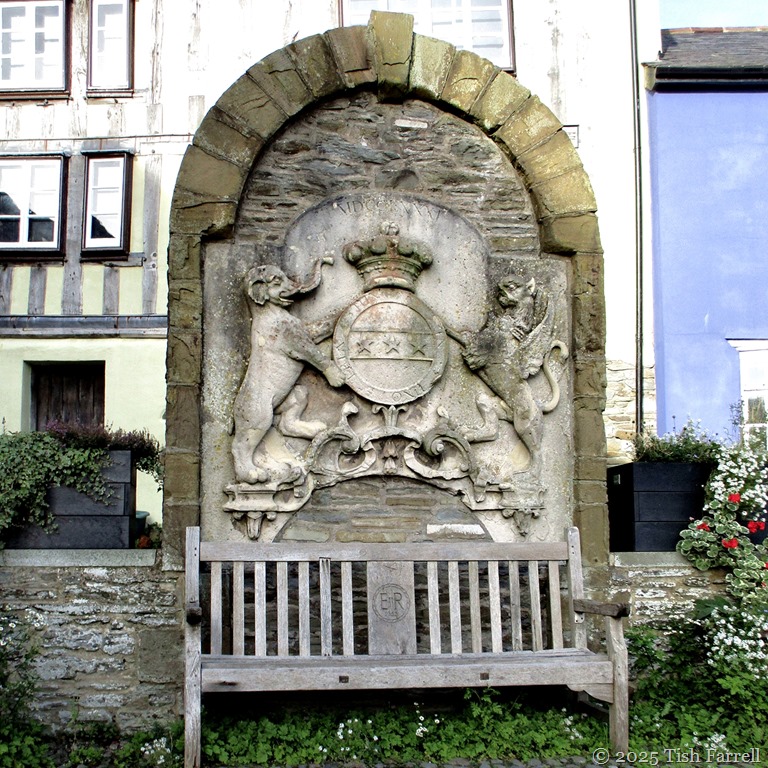
First there is Robert Clive aka Clive of India (1725-1774). After he had finished plundering Bengal (he had started out as a clerk of the East India Company), he returned to his native Shropshire with an eye-wateringly colossal fortune and lived at Walcot Hall just outside Bishop’s Castle. He was further rewarded for his India efforts with a seat in Parliament (MP for Shrewsbury) and an Irish peerage. His newly wrought family crest featured an Indian elephant, of which a carved stone version still survives in the town’s Market Square. It had once been prominently sited on the main window of the Market Hall (since demolished) built by Clive’s son Edward.

IMG_3973 sq

*

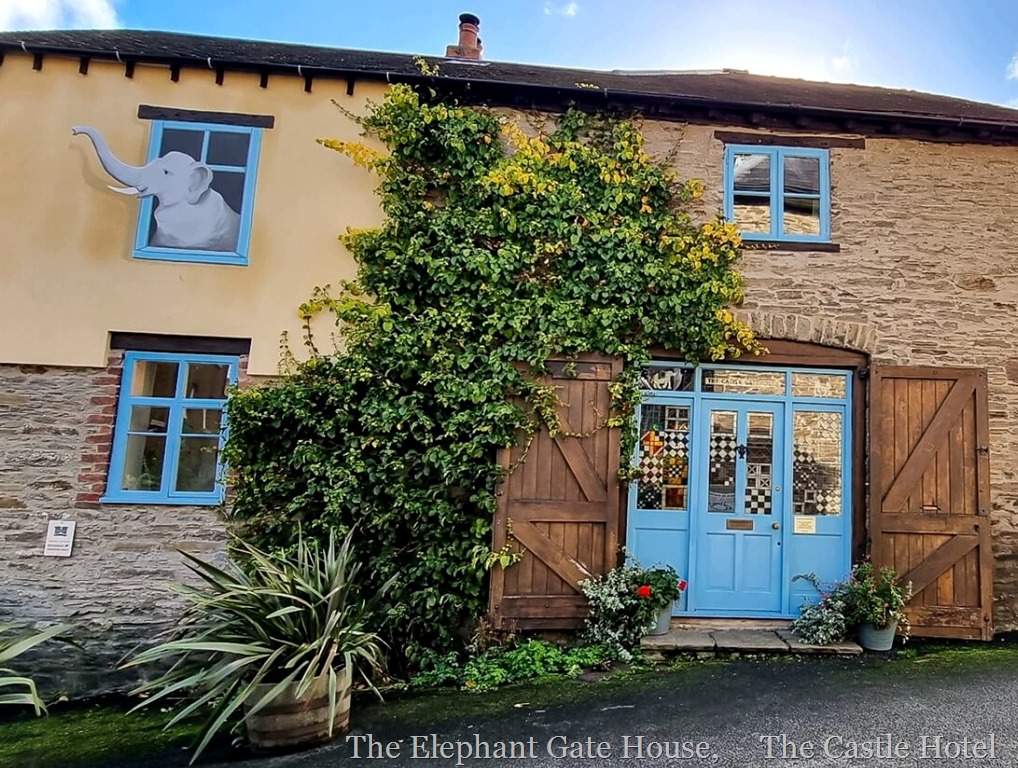
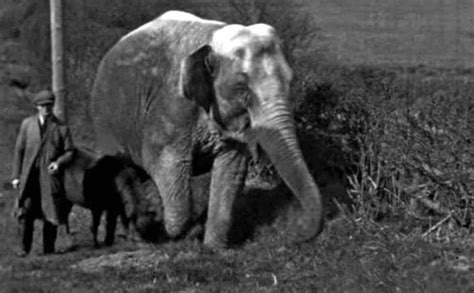
A rather more pleasing elephant association is the fact that during World War 2, one or more circus elephants were kept in Bishop’s Castle for safety’s sake. They lived in the stables of The Castle Hotel at the top of the town. At least one was to be seen exercising along the lanes. There’s a brief film clip of it here: https://www.youtube.com/watch?v=AnMu3l3Q0rE

Bishops Castle elephant

*

So there you are. Seeing elephants in Bishop’s Castle is not so outlandish after all.

 IMG_6641

*

P.S. The war-time elephants’ quarters have been given a plush makeover and you can now stay in The Elephant Gate House.

Elephant Gate House

#GeometricJanuary Day 4   This month Becky is hosting square photos with a geometrical theme.

Letters From Lusaka #6: Of South Luangwa, Elephant Gardeners, A Charging Hippo

img20240926_17260578ed

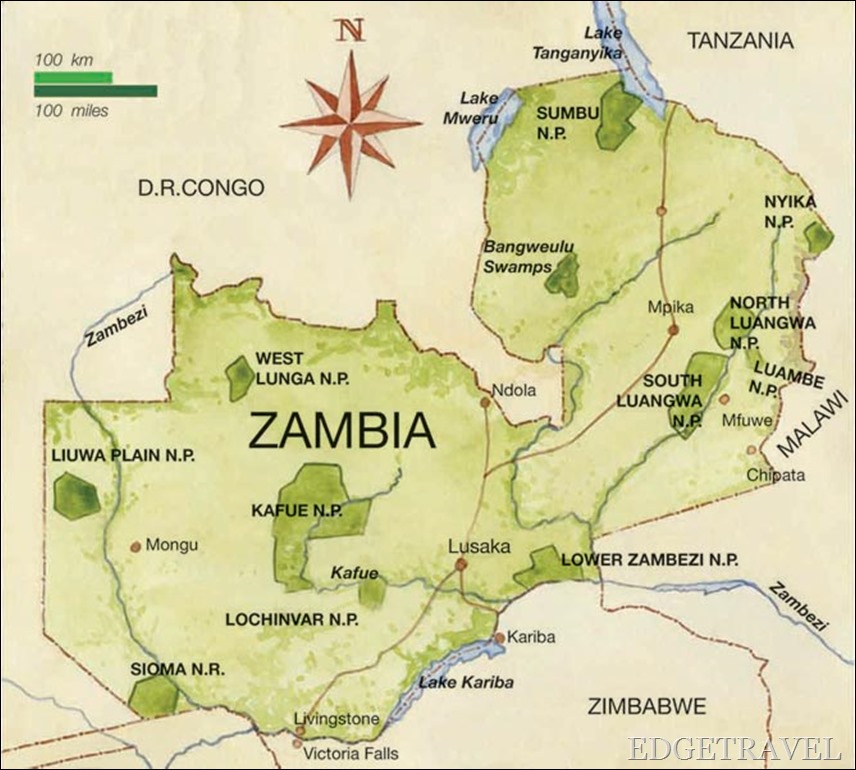
In 1992-1993, during the first years of Zambia’s multi-party democracy, we were posted to Lusaka, Zambia’s capital. Graham was charged with organising the distribution of European Union food aid to drought-stricken Zambians. (Part 1 is HERE, part 2 HERE, part 3 HERE, part 4 HERE and part 5 HERE)

*
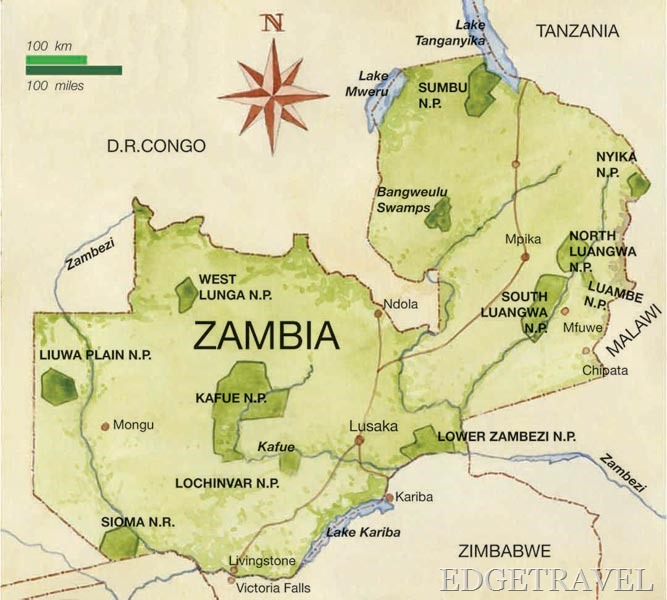
Zambia map

*

July 9th 1993

At 19,000 feet we look down on a red-brown world of low escarpments, ridges and valleys. The brown is the tree cover, the scattered miombo and mopane woodland loosing its leaves; the red, the earth exposed between parched grasses. From  the cabin window the wilderness looks to run forever. Abstract the gaze and it could be copper sheeting, crumpled, etched and pecked: a visual metaphor for a land long plundered of this valuable mineral.

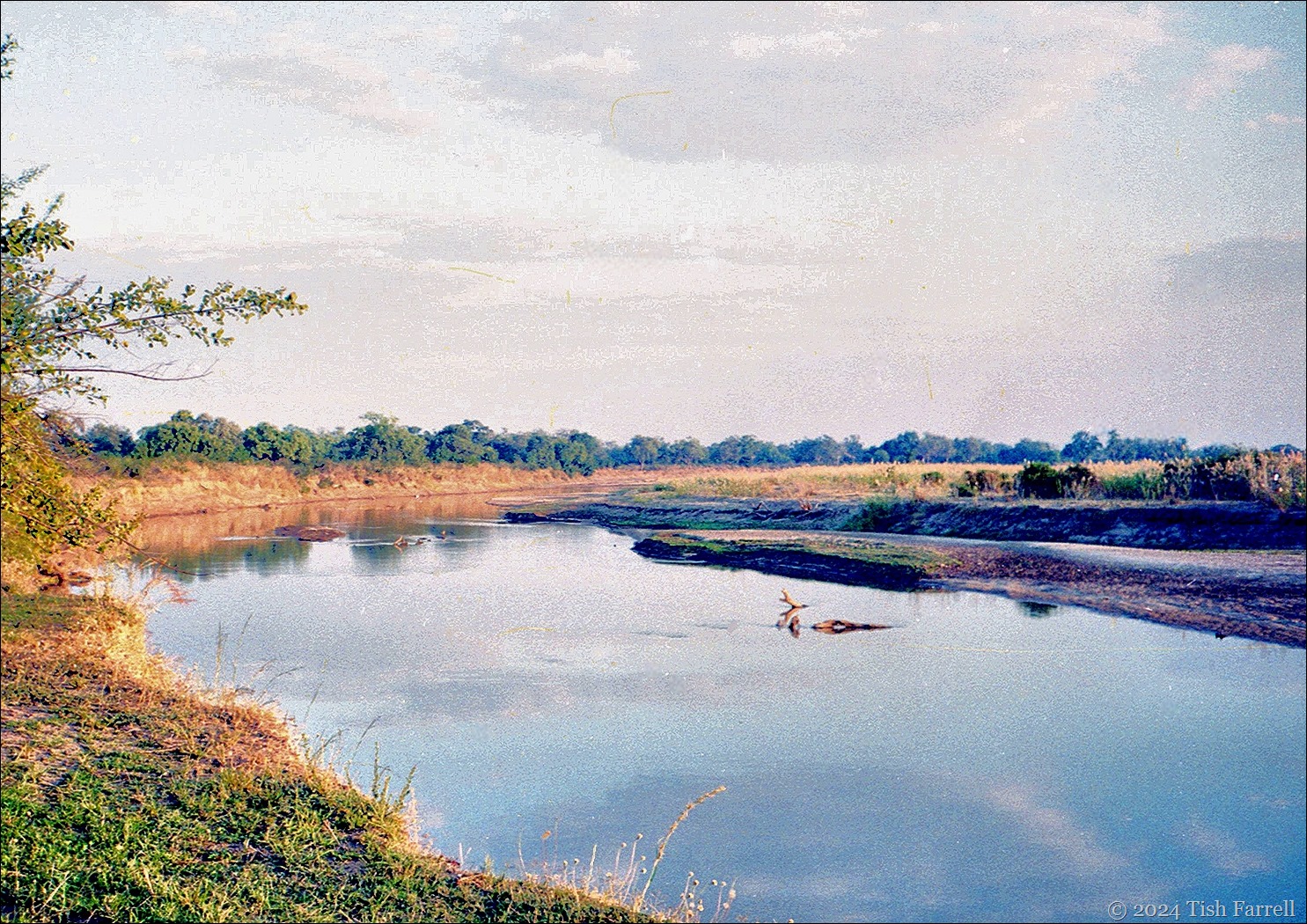
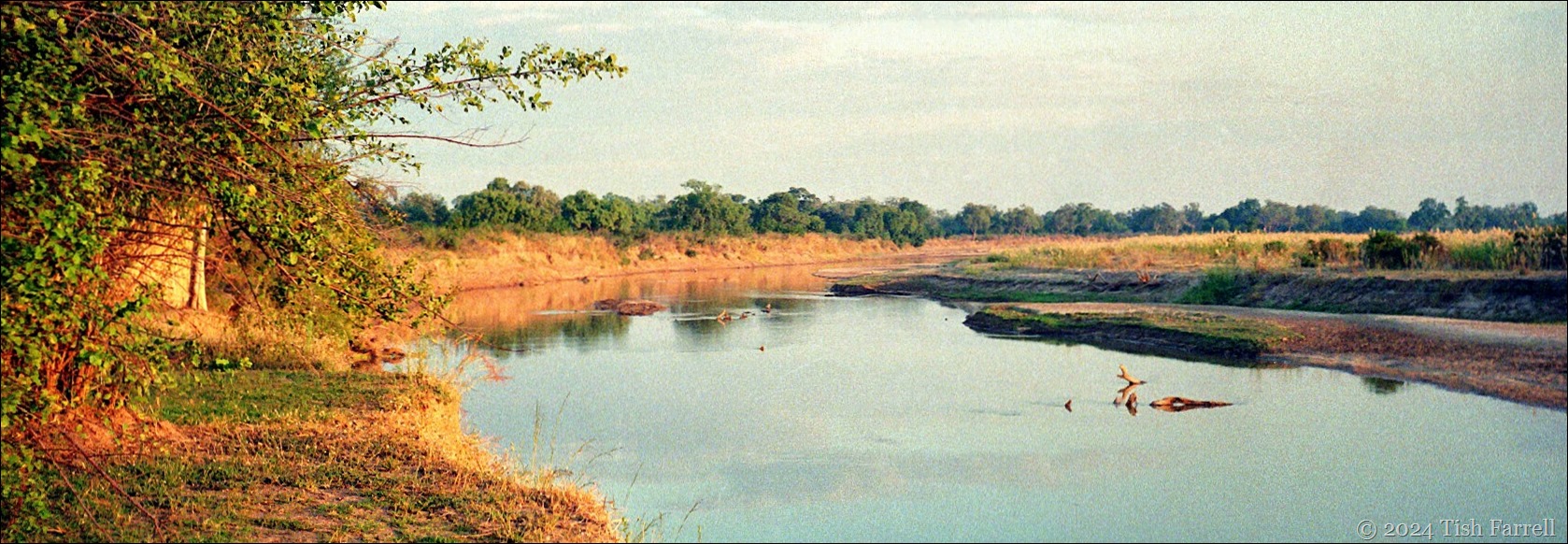
It is winter in Southern Africa, the dry season. Now and then ribbons of smoke drift up to us. Charcoal burners. The afternoon sun turns remnant streams to silver filaments. And then the plane banks and we’re over Luangwa. Sky blue shot with gold, the main channel looping between wide, pale beaches and exposed sand bars.

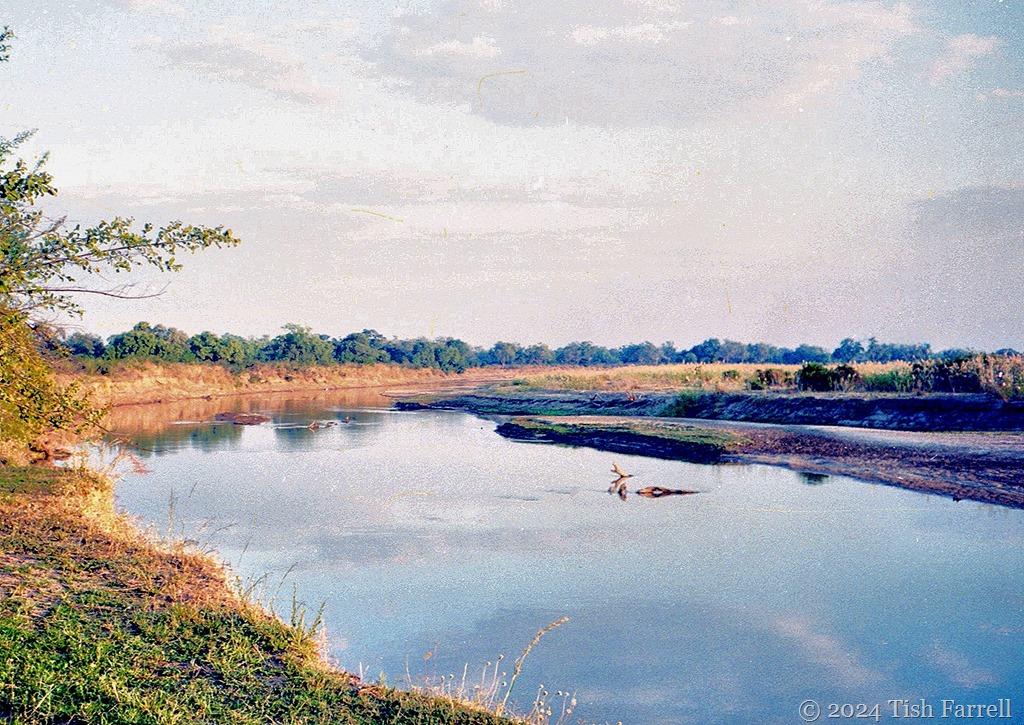
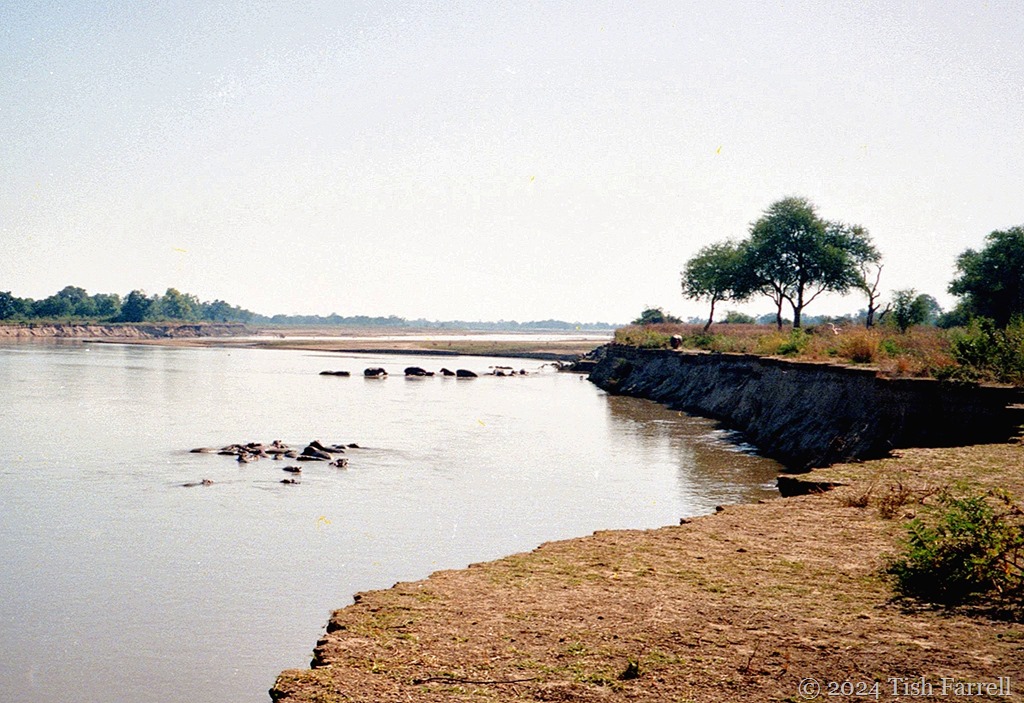
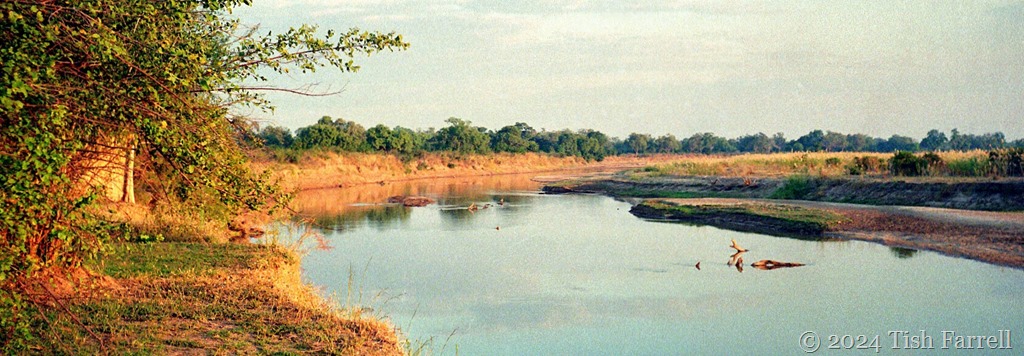
It is quite a sight. Even shrunk to its dry season flow, this river impresses. I wonder at the scale of it in rainy season spate. From above you see how it endlessly remakes itself, carving out new ox-bow meanders, stranding the old as stagnant lagoons that later, we learn, are called Dead Luangwa, Luangwa wafa, yet are important wildlife refuges at this time of year.
img20240926_15462570ed

*

We are on the afternoon flight from Lusaka to Mfuwe – destination Tena Tena Camp, in South Luangwa National Park in Eastern Province. The park lies along the river valley, itself part of the Great Rift system,  and covers 9,050 square kilometres. The southern park and its North Luangwa counterpart are renowned for their wealth of wildlife, not least 450 bird species as well the big game.

The camp is run by Robin and Jo Pope, he a Zambian zoologist, and specialist in walking safaris in Malawi, Zambia and Zimbabwe; she a British expatriate and zoology graduate. The full scale walking safaris last a week and more and we can afford only a long weekend, 2 nights at Tena Tena, and one night at Nkwali, the sister camp outside the National Park.

Our plane is a 50-seater. We are welcomed with slices of Madeira cake and shortbread, iced Fanta or Cola. Later, coffee is brought round in a big jug. Somehow it feels more like a train ride than a flight. Touch down, we are told, is in one hour fifteen minutes.

Mfuwe turns out to be a tiny airport, there to serve National Parks’ visitors. Sammy, a young African, Tena Tena’s trainee manager, ushers us, along with a Dutch couple, into the open sided Land Cruiser. Our driver is the camp cook, a South African girl. We’re told it’s an hour’s drive. The Dutch couple are repeat visitors and they are very excited. There is much loud chatter. It’s somehow blurring the landscape.

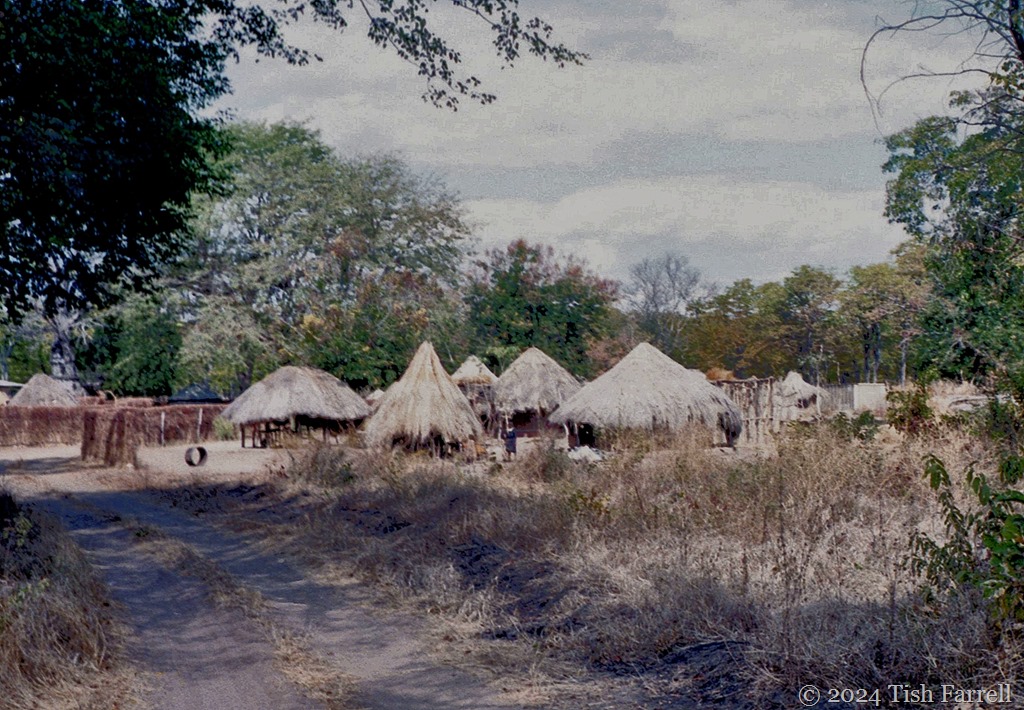
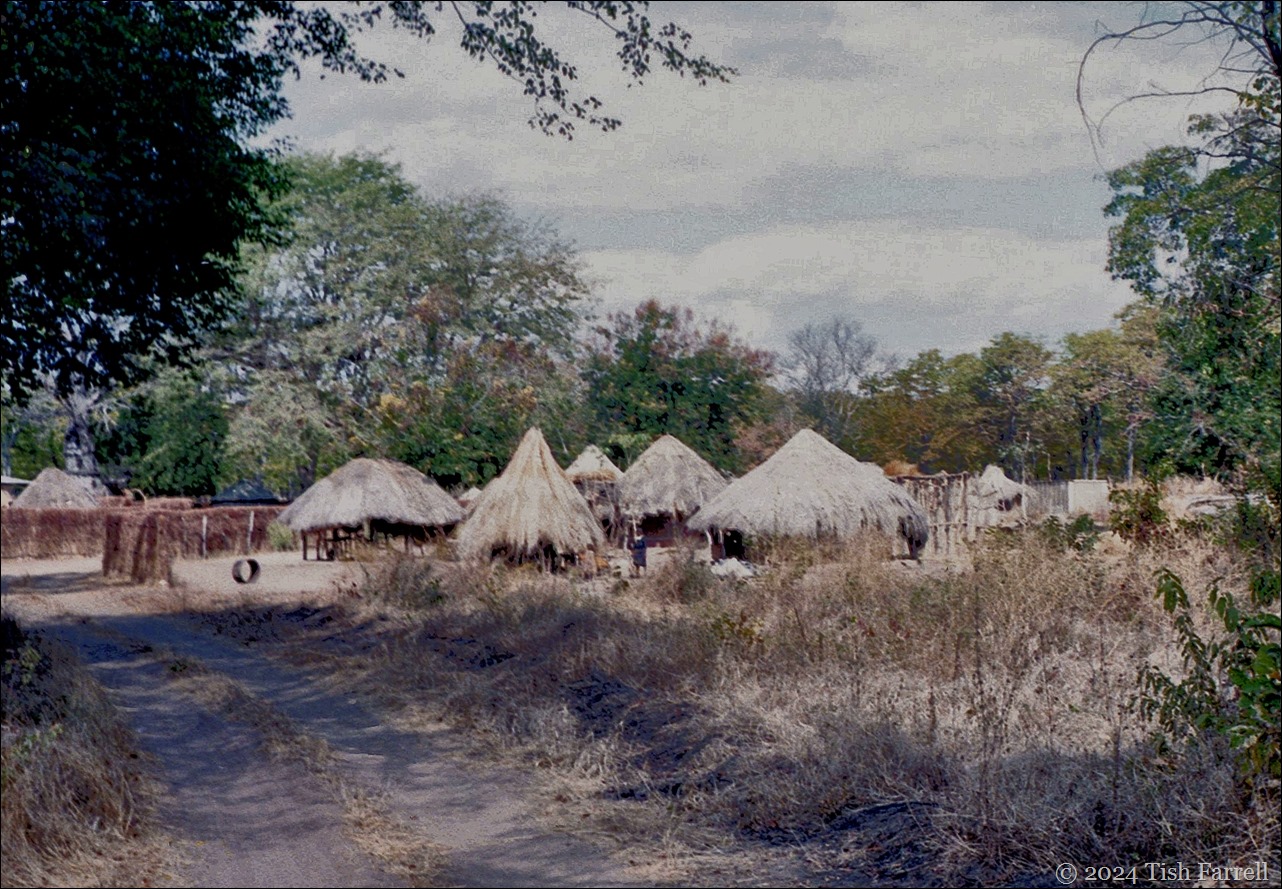
Soon we are leaving the tarmac for dirt roads, passing by homesteads of thatched houses. The roofs, made of thickly laid grass bundles, overhang red and white painted walls and are supported on tree posts. All around are well swept compounds. I also notice the refurbished granaries. After the previous years’ drought, this year’s rains have yielded good maize crops. There will be no further need of Graham’s services when his contract ends in September.
img20240926_16283638 village

But then comes a dose of reality. As we lurch across a dried up stream, I see a village girl digging into the sandy bed, waiting for a cupful of murky water to well up. A new strand braids-abrades in my consciousness. Why does it take such sights to teach me my good fortune?

I distract myself from inconvenient discomfort with the beauty of the mopane woodland. The trees are graceful and grow widely spaced, as if orchard-planted. The afternoon sun filters through, and I’m oddly reminded of an English beech wood; the suffused russet light on a late October day.

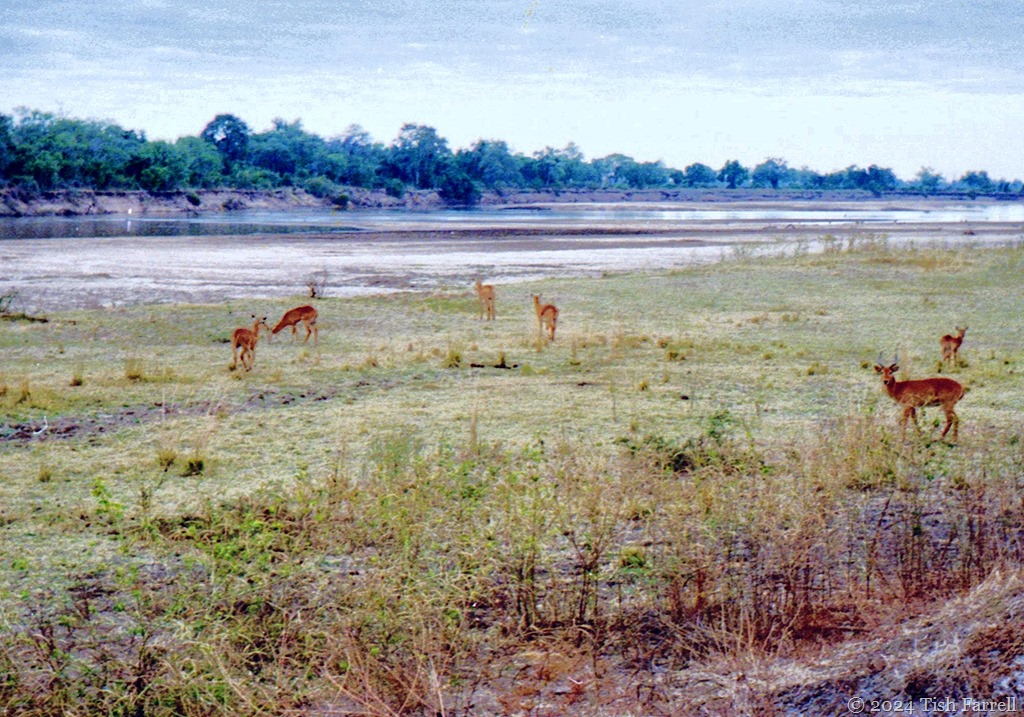
We are in the park now, and park is somehow the right word. There are green swards along the river’s flood plains where puku antelope graze. The disposition of trees in their winter tints suggests an overgrown country estate somewhere in my home county of Shropshire. Except the trees here are winter thorn acacias, lead woods, ebonies, mahoganies, sausage trees and baobabs.
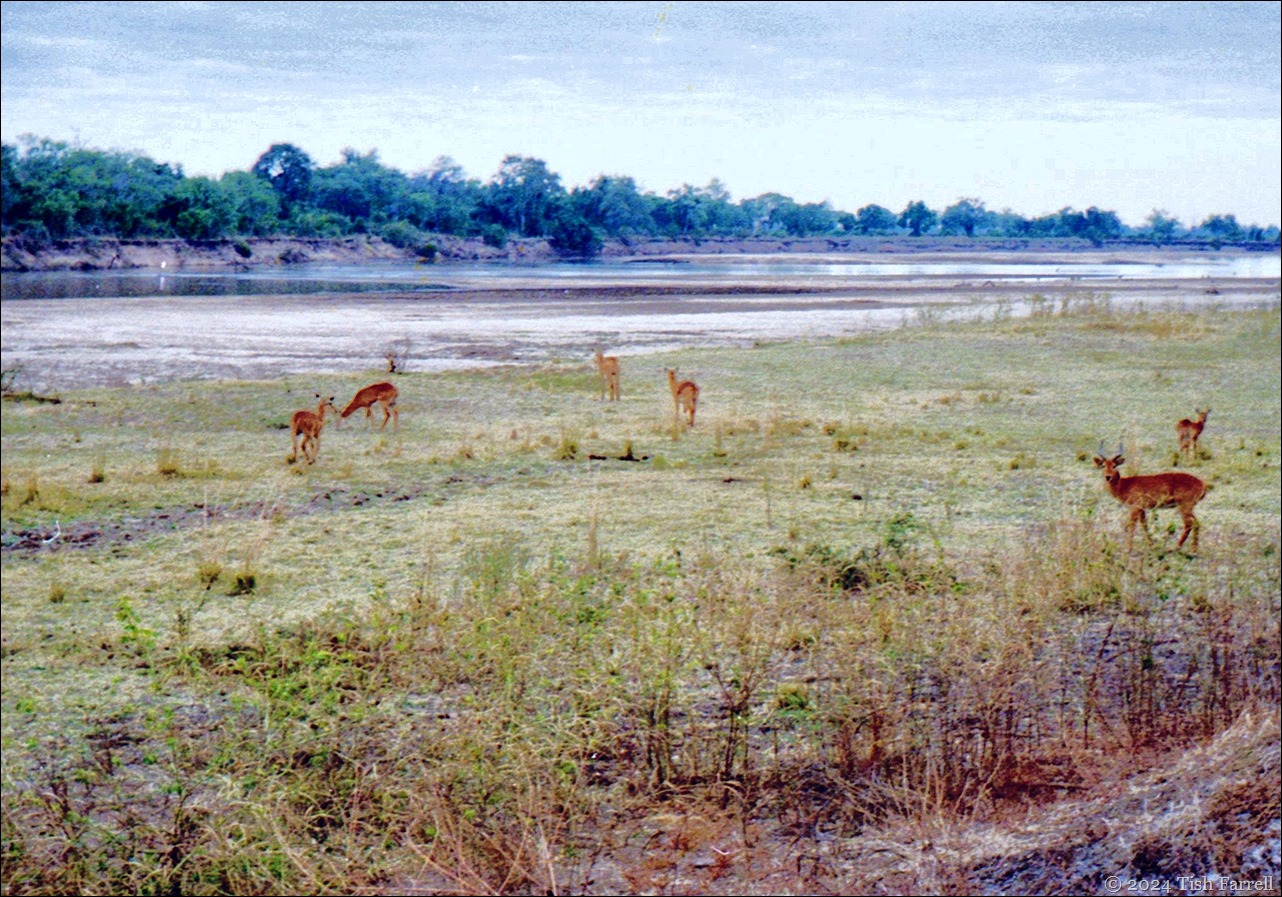
img20240926_15414181ed puku

*

Tena Tena sits on a high bank above the Luangwa, its six thatched roof tents sheltered by trees. The name means temporary home in Nyanja, and we soon learn that, according to park regulations, the  camp may only be used in the dry season; no permanent structures allowed. So the whole enterprise (including the tents’ showers and loos) must be packed away before the rains.
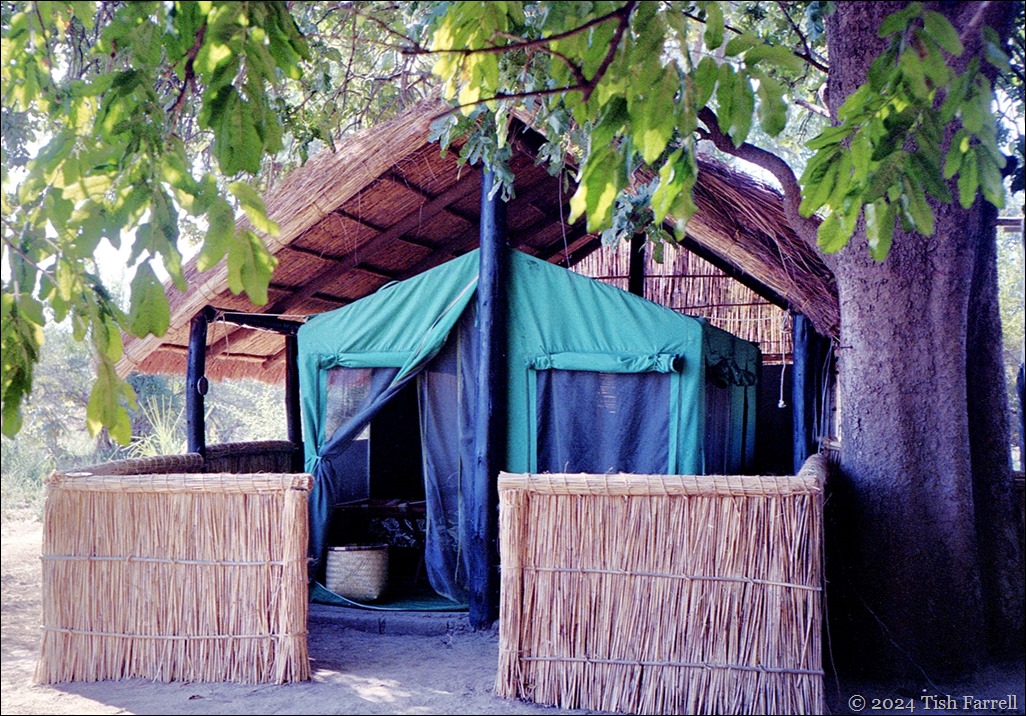
img20240926_16210951Tena tena camp

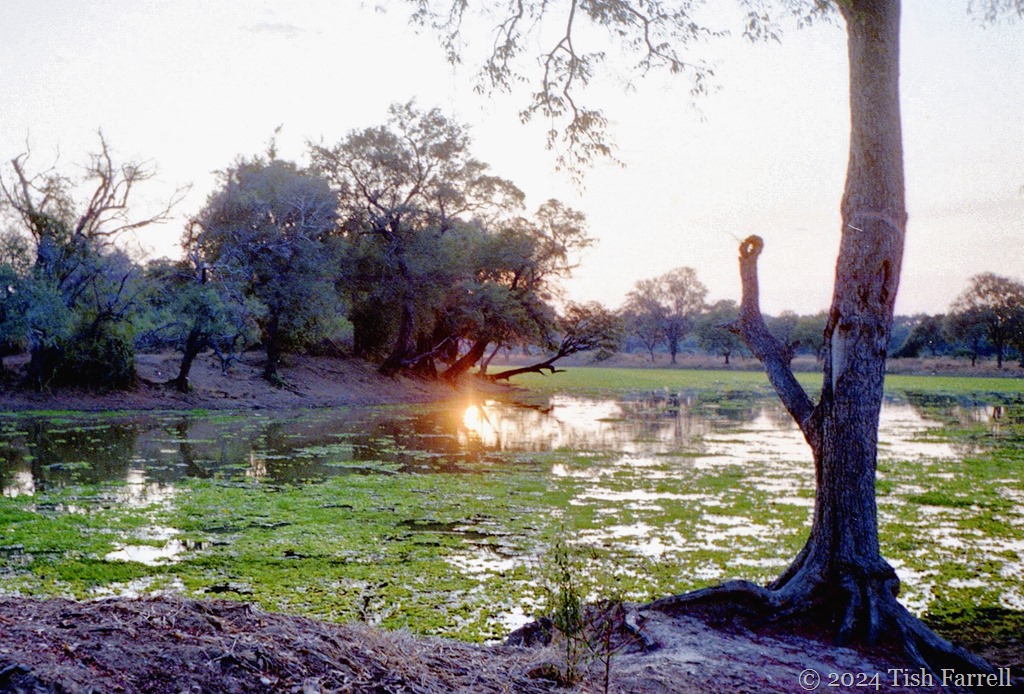
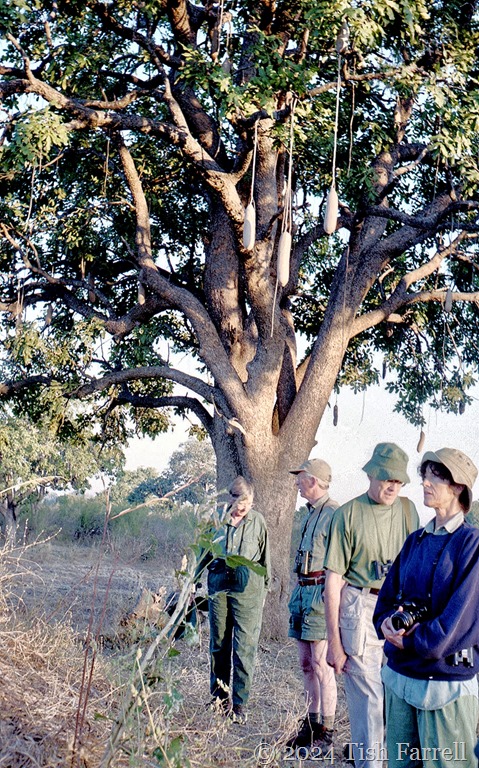
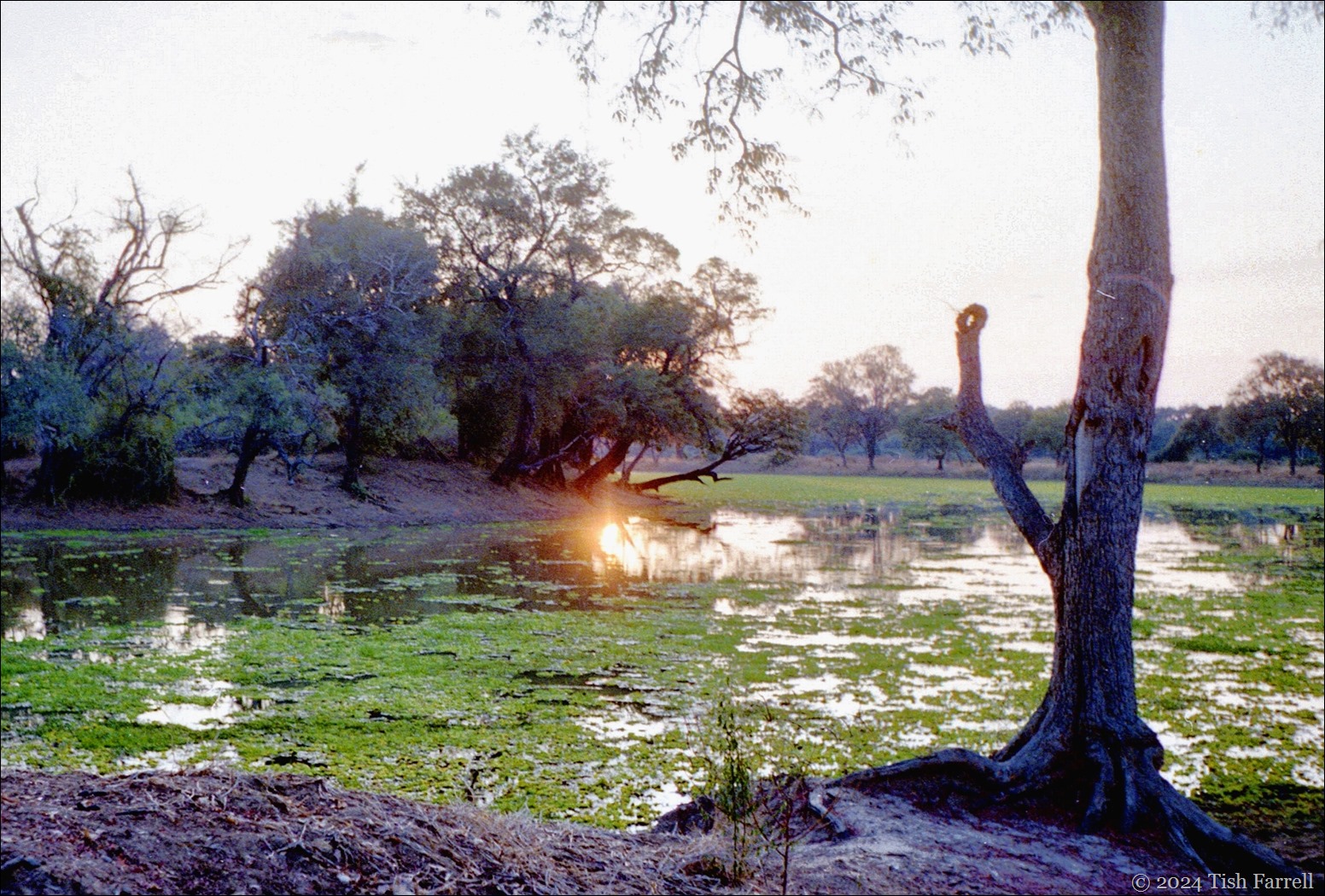
The Farrell tent is under a Sausage Tree (Kigelia africana), a stone’s throw from the shelving river bank and within close hearing of much hippo grunting. We’re served tea and cake and told to take a siesta until late afternoon. At sunset we’re back in the truck, and being driven to one of the lagoons, where we stop for sundowner drinks and to watch for any wildlife. Our fellow guests, along with Dutch couple, are Jo Pope’s parents. The foursome are old friends. It feels like a family party, and again there is much noisy chatter. But then the light in lagoons is so breath-taking, it’s hard to be too irritable. Instead, as I watch a flight of Sacred Ibis on a tangerine sky, I long for a camera with rather more range than my little Olympus-trip.
img20240926_16243268ed

img20240926_16230700ed

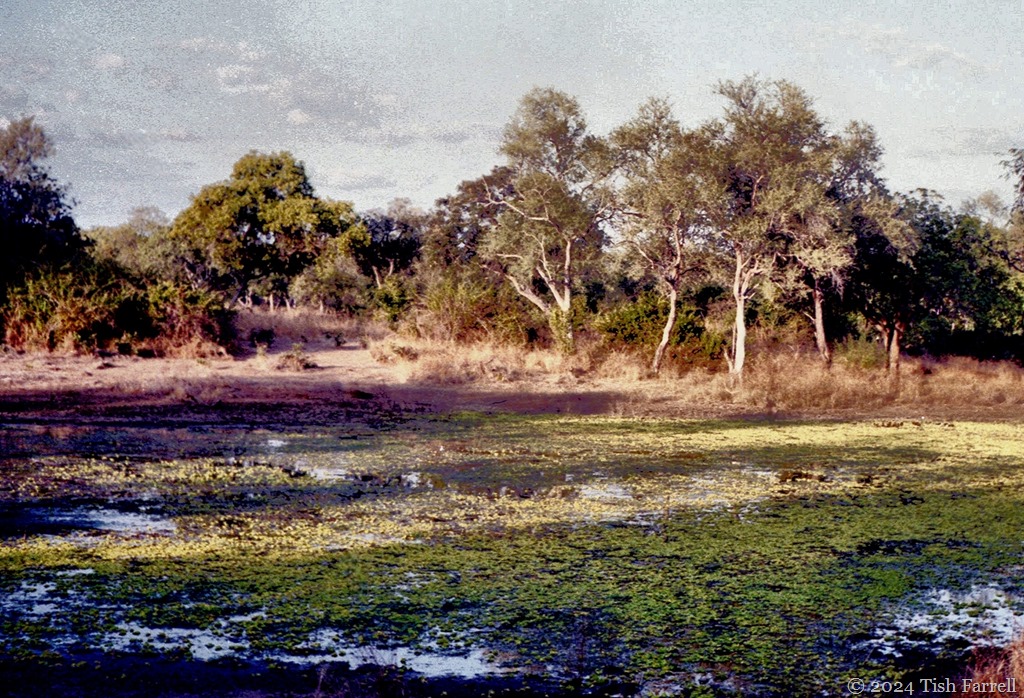
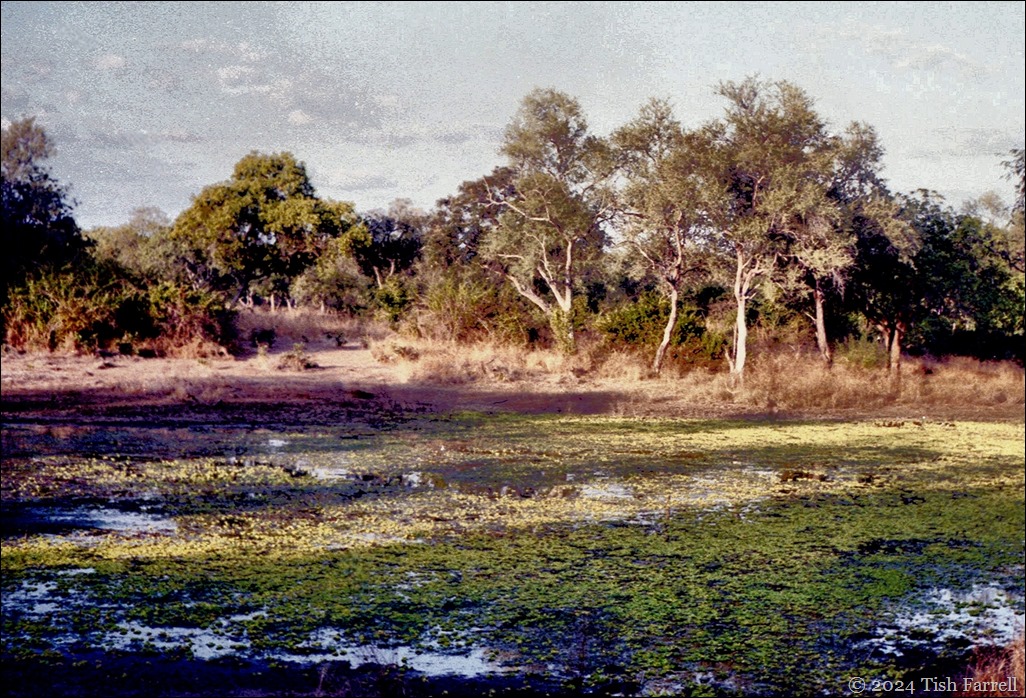
The lagoons, Luangwa wafa or ‘dead’ Luangwa

*
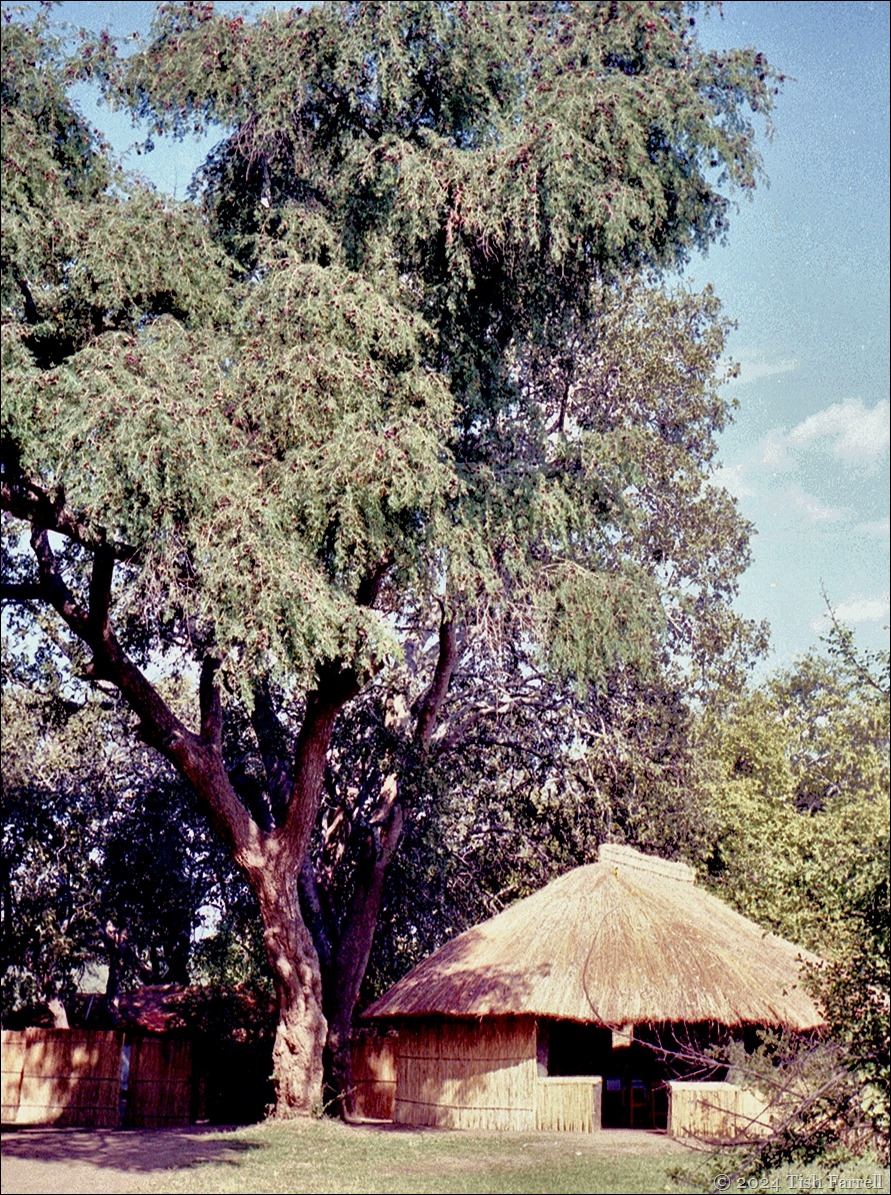
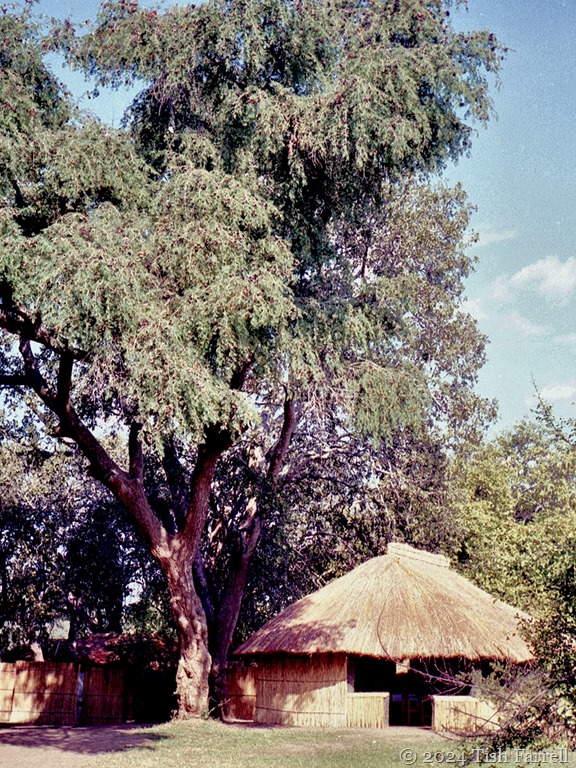
img20240926_16214688 tena tena dining room

Tena Tena dining room sheltered by a winter thorn

*

When darkness falls we set off across the park. Overhead a million stars. The universe. I find the Southern Cross and, not for the first time that day, wonder if I’m really there, seeing it. The truck is open sided with raised seats. But it’s chilly and dank by the river. I’ve put on all the clothes I have with me but, even with a thoughtfully provided rug, it’s not quite enough. Jo Pope stands beside the driver, wielding the spot light as we rumble into the night. When we brush by clumps of Vick’s bushes, their camphor scent sifts through the night air.

Out on the flood plains, the spotlight picks up hosts of wary eyes – herbivores – puku, impala, a pair of hippos lumbering out for their night-time grazing. We visit a hyena den. A young male cub comes out to look at us. On his second visit he whoops pitifully, a sound that makes the spine quiver.

As we head down riverside tracks, nightjars flutter up from the ground at wheel-height, plumage translucent when caught in the spot light. They look like giant moths. And while we’re focused on smaller things we also look down on elephant shrews going about the nocturnal business of bug hunting.

*

That night in our tent the hippo snorting is ceaseless. I believe I have scarcely slept when hot water is brought to the washstand outside our tent and the 5.30 wake-up drum sounds. Fifteen minutes later there’s a second drum call. The sky is steely grey with the first cracks of dawn. Breakfast is help-yourself tea, toast and cereals from a table by the river. There’s a camp fire to warm us up. As I stare down at the shadowy river, munching toast, I’m suddenly aware of the hippo just below me. It is on the bank, probably too close for comfort, but it’s too soon in the day to believe in such encounters.

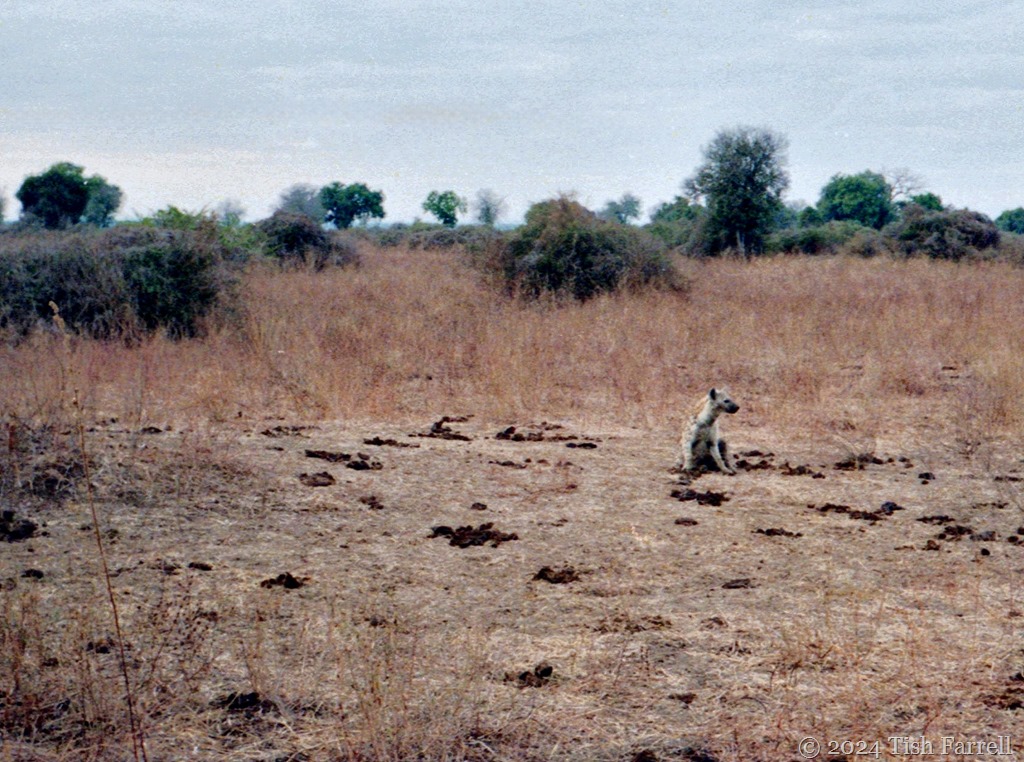
By 6.15 we are again in the truck, bouncing on bone-jarring tracks. The light is gauzy so it’s hard to know if I’m  truly awake when two hyenas approach through the scrub. They are so gorged on the night’s pickings they can barely move. They slump in the open while we watch.
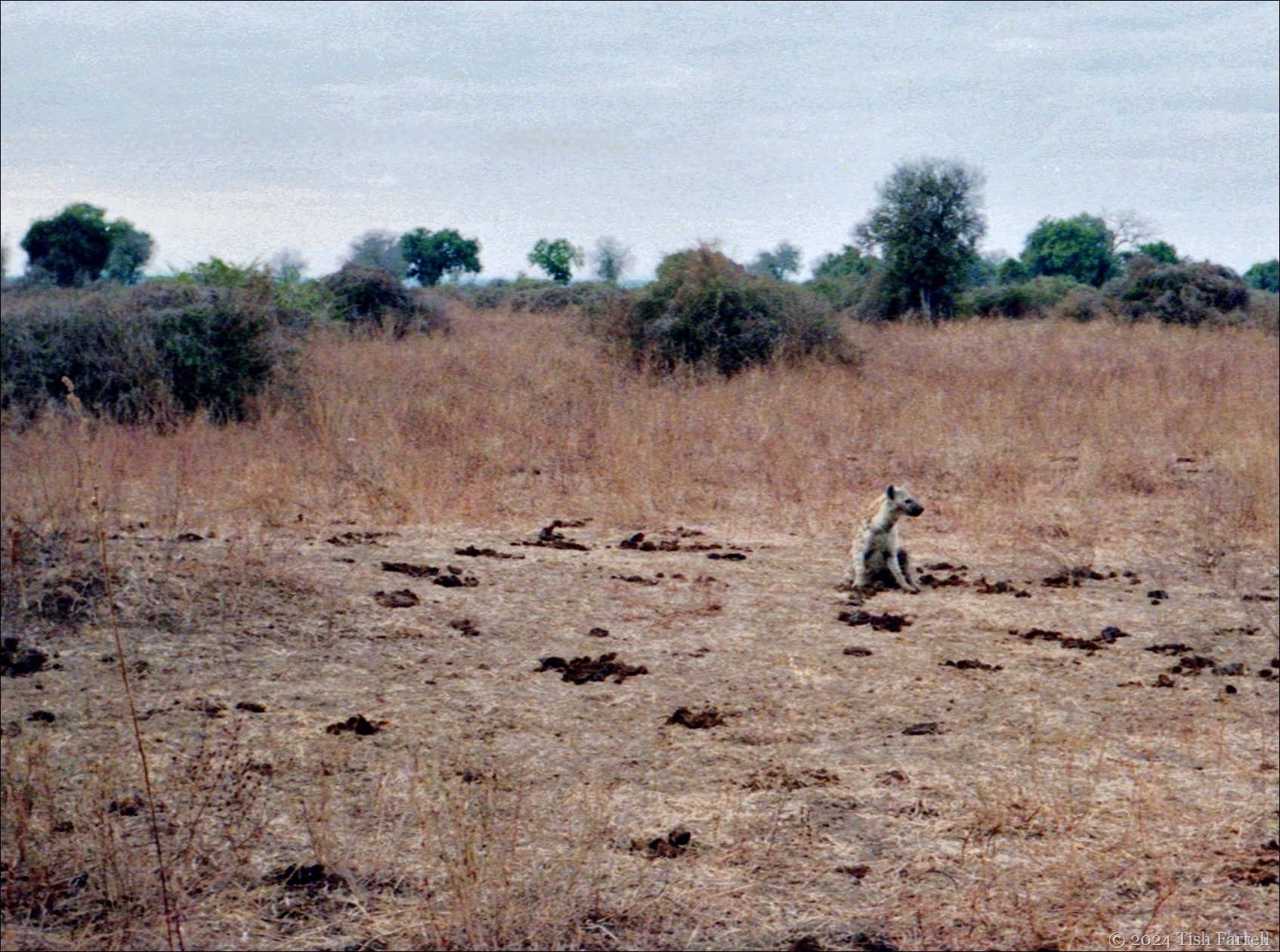
img20240926_15442838 hyena

*

This morning there are many birds to see, pretty Fischer’s lovebirds (bright green with flame coloured heads, yellow bibs), saddle bill storks, eagles, a hammerkop. Then comes a huge herd of buffalo. For a full ten seconds we see it, and then it melts into the bush as if it had never been there. Another mirage then? Later, we have more certain views of warthog, baboon, eland, wildebeest, Burchell’s zebra.

After an 8.30 tea break by a lagoon we head out onto an open plain. It’s an eerie place in the wintery light. A forest of wrecked trees spreads out before us, nothing but burned out trunks, white-grey spikes, strangely luminous. Our guide, Guy, says this landscaping is down to elephants and their driving ambition to have more grassland. They ring-bark the mopane trees which slowly die and then when a bush fire comes through, it finishes them off.

We drive to the salt pan, another strange locale, where salt water gushes forth at near boiling point. As we arrive, a flock of crowned cranes take flight with mournful mu-um cries. We inspect the spring and, it ‘s as we drive away, that we see the lions.
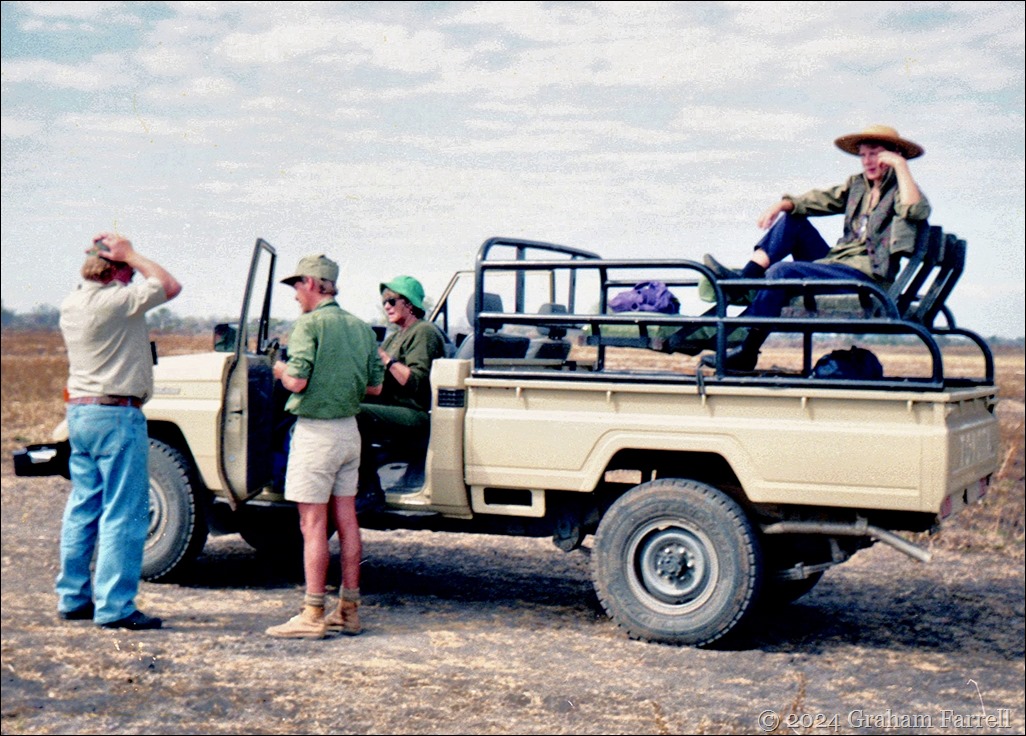
img20240926_15430429ed

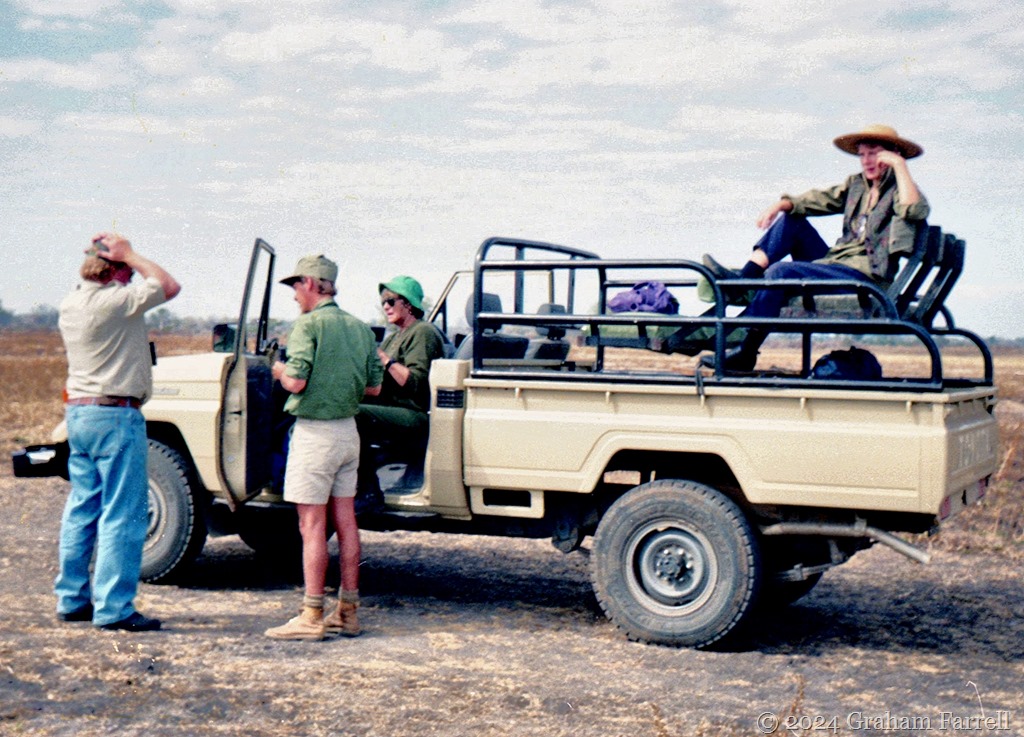
At the salt pans. That’s me in the back of the truck

*

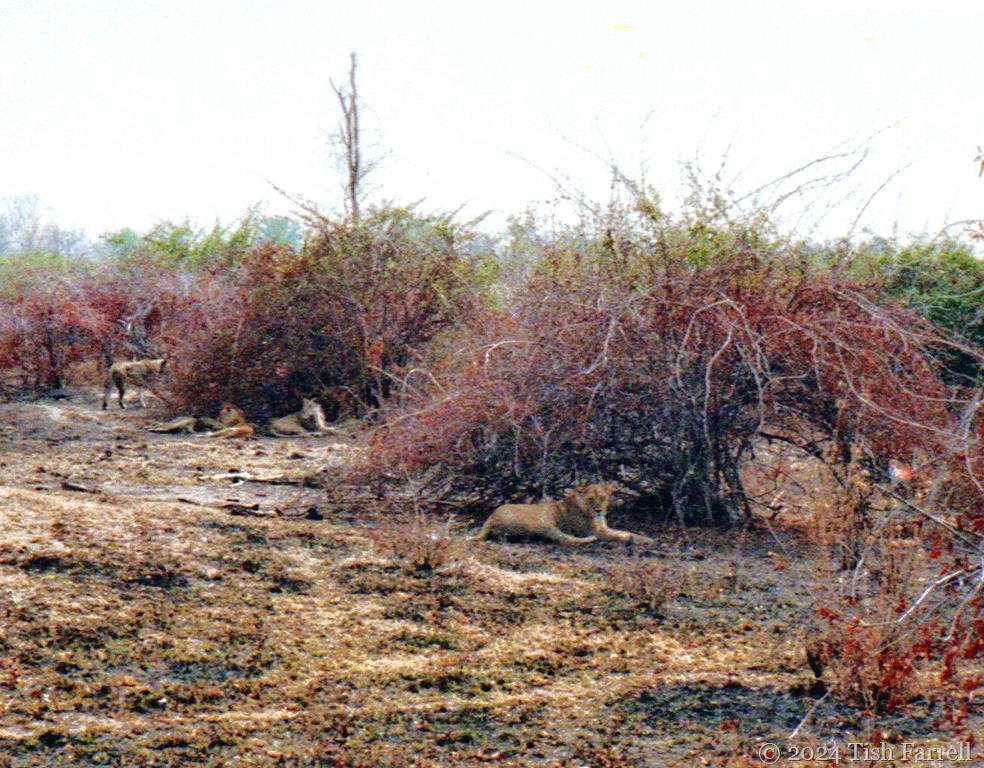
They are lying in heaps under brown bushes, possibly seven in all. Guy says we will take a closer look, but we must keep quiet and stay seated within the profile of the truck. That way the lions will see only the truck, which presents no threat to them.

And so it proves. The lions could not care less. Sleeping time amounts to some twenty hours a day. There are many more hours to get through. We leave them in peace.
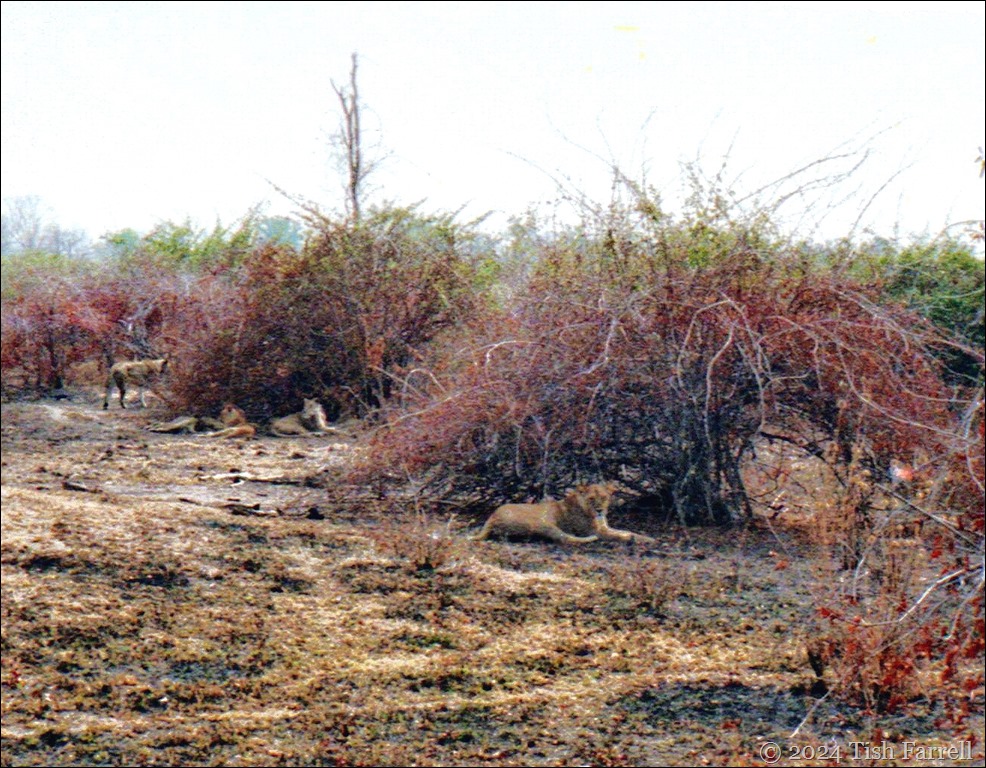
img20240926_15434749ed

*

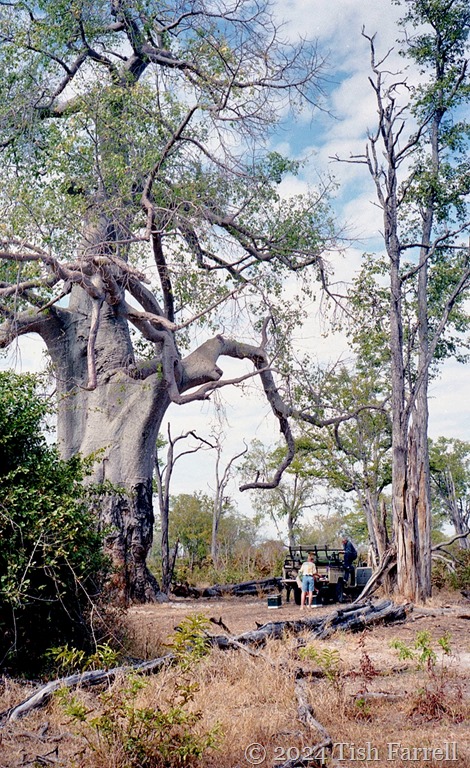
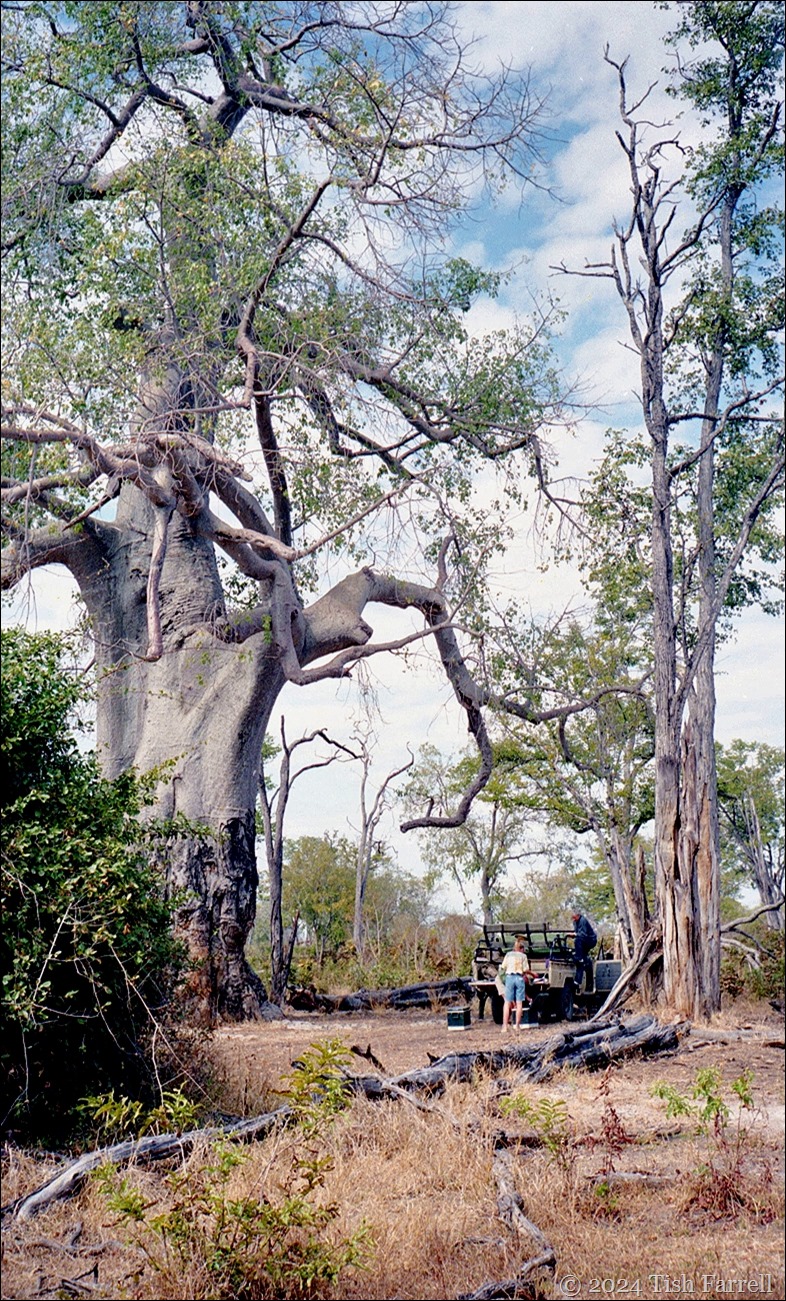
By now the sun has broken through the cloud, the day growing hot. Lunch is served under a massive baobab, perhaps a thousand years old, Guy says. While we eat coronation chicken and rice, he points out the old wounds on the baobab’s trunk. They were made by elephant poachers hammering in footholds so they could use the tree for a look-out post.
img20240926_16263110baobab

This baobab was once an elephant poacher’s look-out tree

*

That night on the drive we see a great eagle owl, two honey badgers, a genet and six porcupines. The porcupines seem to whiffle along, spines shimmying under the spotlight. Then there’s a moment when I look down from the truck into the dull yellow eyes of a crocodile. It is right alongside. There are two of them, each a metre or so in length, and they are shunting along a shallow channel.

It’s a surreal moment – looking in the eyes of a crocodile. Whatever is being registered there, you surely don’t wish to know. And then in the darkness, we find ourselves snarled up with elephants. They are crossing the track at a point where there are dense bushes either side. But they are moving slowly, since they are also browsing as they go, and there’s no knowing how many there are. But we see their huge shadows, and spot some smaller shadows, and then there’s always that odour. Musky. Earthy. Like nothing else. We quietly reverse and make a wide detour.

*

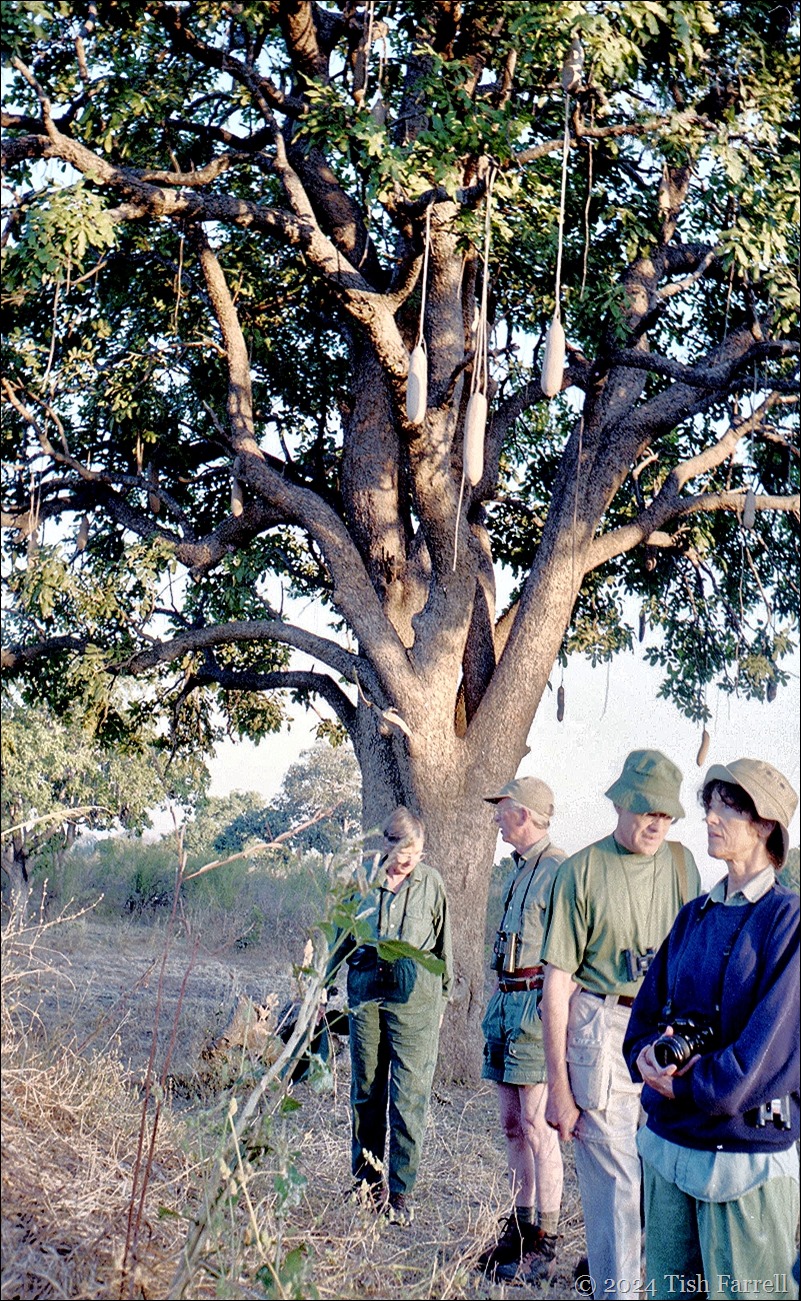
On Sunday morning we eat breakfast beneath a half moon and the morning star. At 6.30 we set out on a five hour walk. Sean, the South African zoologist is our guide. We also have with us a tracker with the tea things, and White, a national park ranger who carries a rifle. We set off across a dried up lagoon where the previous early evening we had glimpsed two leopard. It is a golden morning as we walk among sausage trees and lead woods whose leaves, we are told, are a cure for asthma. As we go, a grey headed bush shrike calls its mournful one-note call. It is a strange sensation to be walking rather than driving. For one thing, it’s hard to see very far ahead.
img20240926_18134026ed

The sausage tree is considered sacred by local people

*

Sean is following buffalo spore, this with a view to establishing the exact location of the herd we had glimpsed the previous day. But instead of buffalo we come on a big bull elephant, standing alone in a woodland glade. He is rheumy eyed and elderly. Sean speaks softly and says the elephant is wary: he can make out our shapes but can’t tell what we are. We see his head held high, trying to catch our scent. The trunk lifts and twists, the tip moving like a periscope. We only need worry, Sean adds, if his ears fan out and his trunk swings sideways.

We are all right then. It seems he is not thinking of charging. Then a herd of impala appears behind us and starts barking the alarm. ‘I hope he doesn’t think we’re lion,’ says someone. We retreat quietly.

Now it’s the vegetation that holds our attentions. We walk through tall grass savannah. There are potato bushes, daisies with mauve flowers and salt bushes that we are told are crushed like sugar cane to produce salt. And then, against the distant tree line, we see the huge buffalo herd that had done the vanishing trick yesterday. And  at the same moment the nosey impala herd backtracks to have another look at us.

Sean says if they bark again the buffalo may run. We step back among the trees just in time to see eight elephants, including a calf, moving quietly across the grassland, eating as they go. It’s like watching a silent film. We cannot hear them, and so then we are told that elephants effectively walk on tip-toe, the front foot supported by a bed of gristle much like a padded high-heeled shoe. We watch them go.

Sean kicks the dust to check the wind. He’s had it mind to show us some lion. Where there are buffalo, he says, lion are not far behind. But with all the detours, he gives it up and says we’ll have a tea break at a fisherman’s camp outside the park.
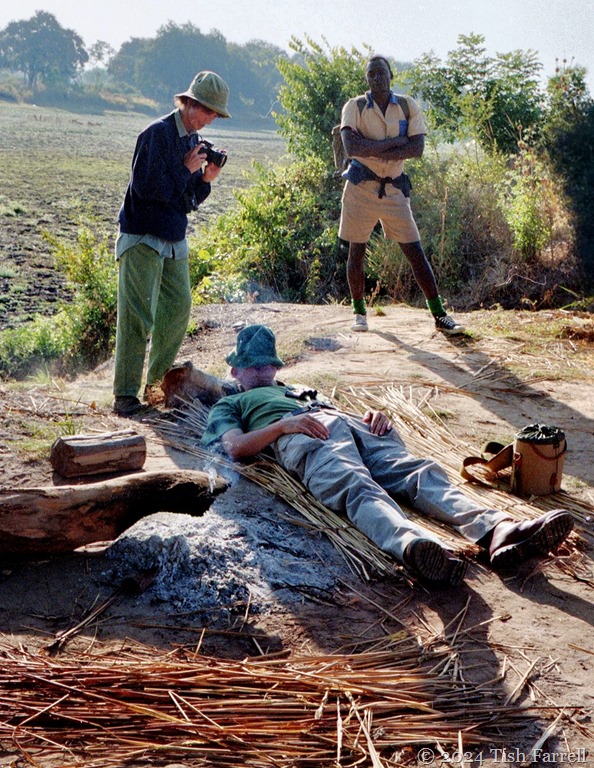
img20240926_17292984ed

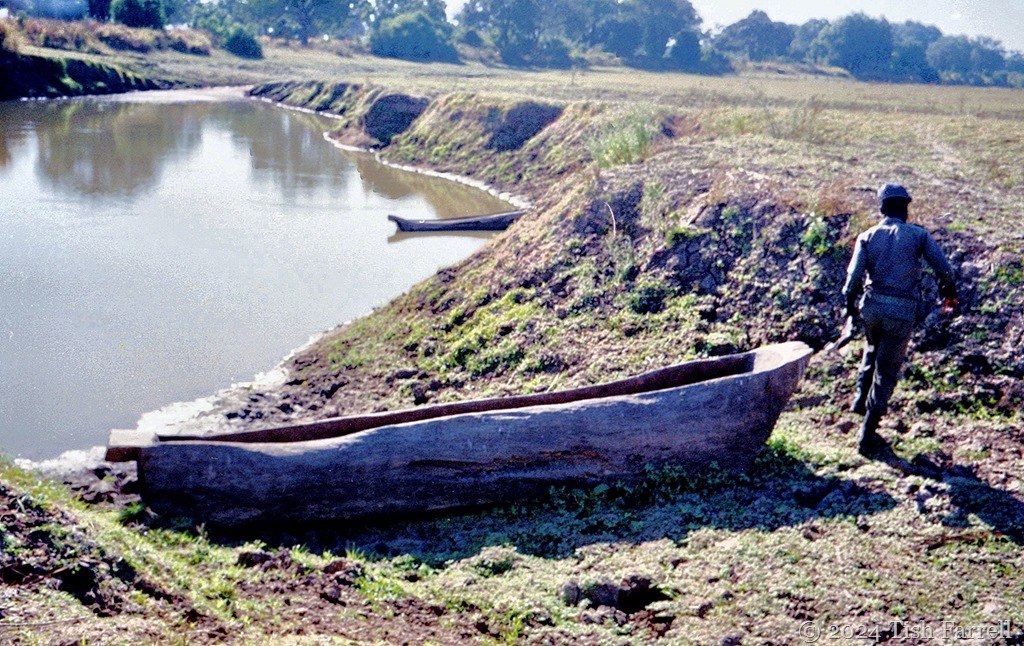
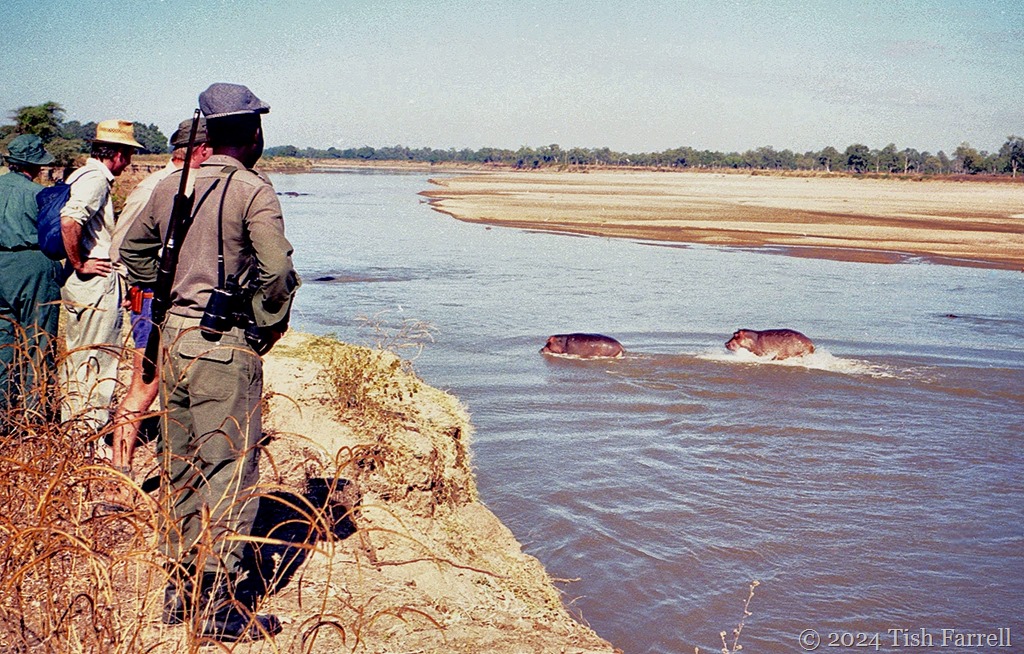
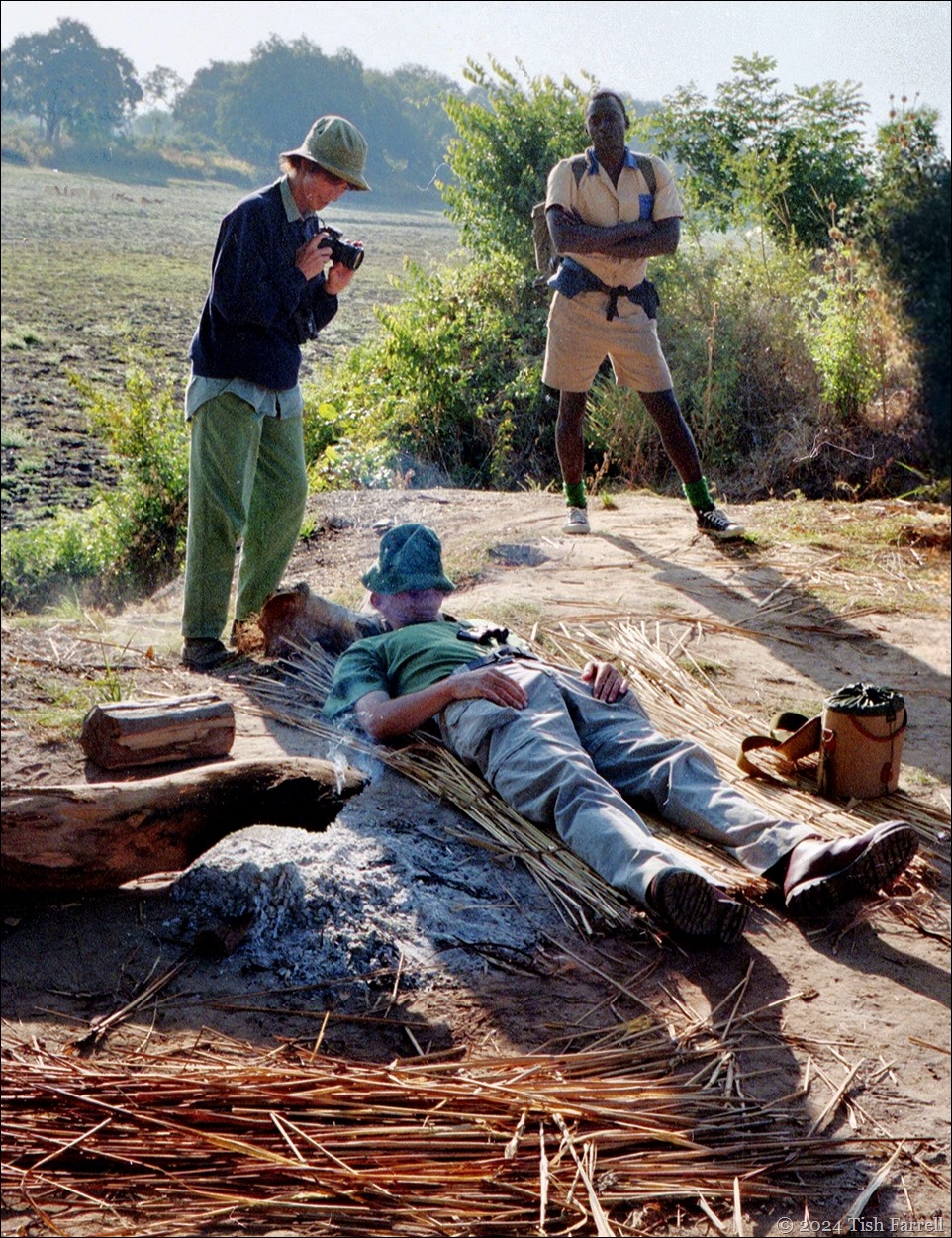
The camp is on the bank of a dried up lagoon. The fishermen who spent the night here are long gone, but their fire smoulders on, and one of our party tries out the bamboo sleeping mat. There’s a hippo skull for a neck support. There are also bamboo sheds with racks for drying the fish. Sean says some of the lagoons still hold bream, which are caught using dug out canoes and conical bamboo fish traps. In passing, he says it can be dangerous work; a few days earlier a fisherman was killed by a hippo.

We could take this last remark as a warning. Except we don’t.

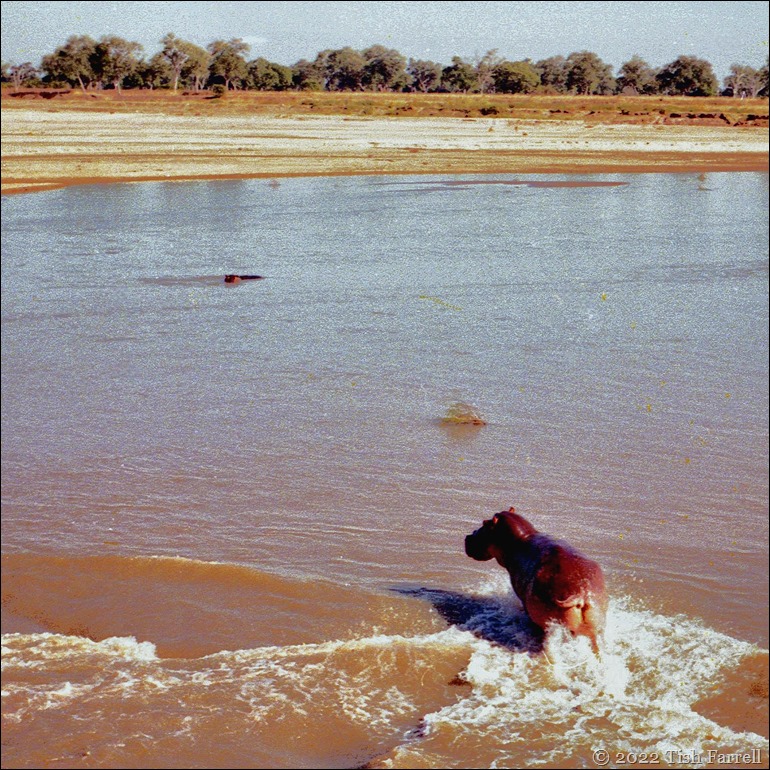
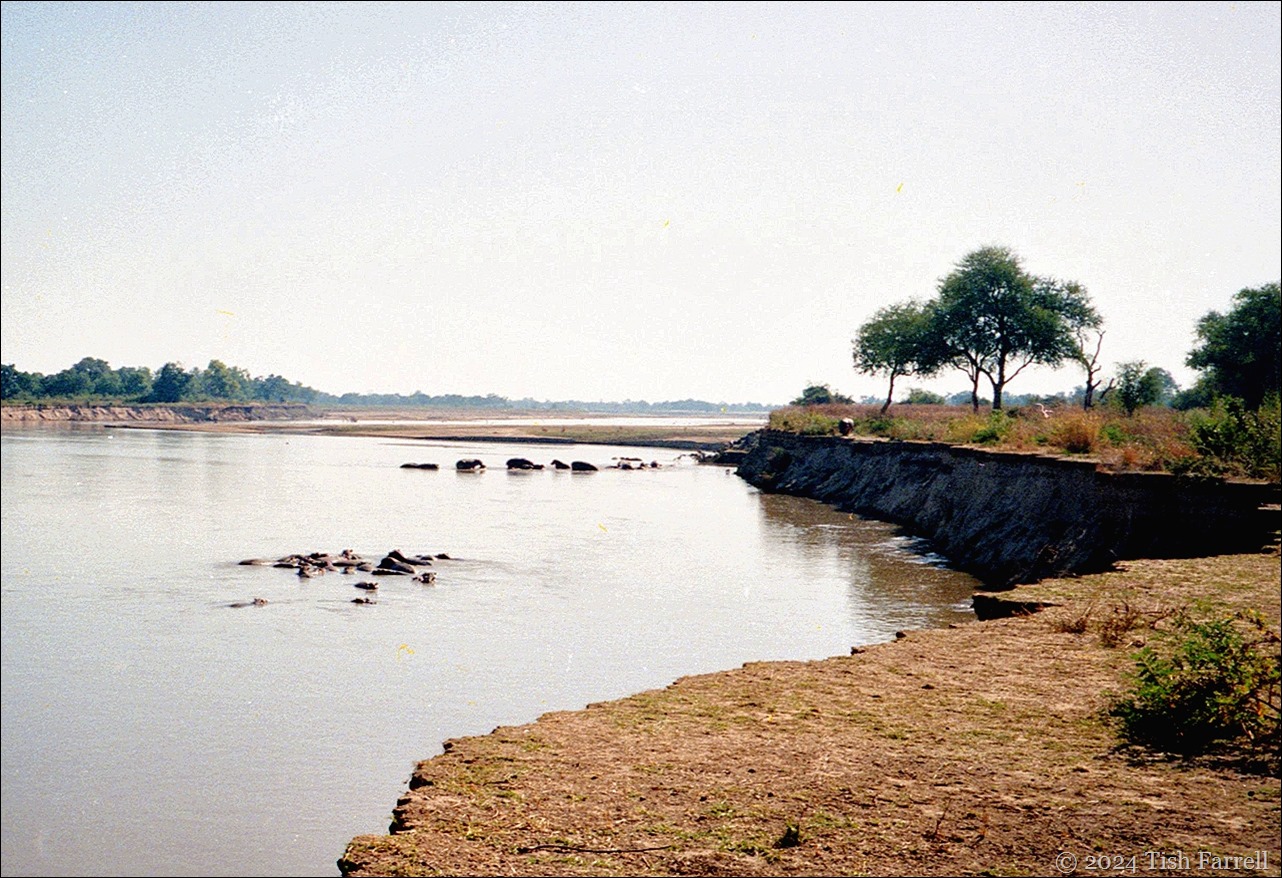
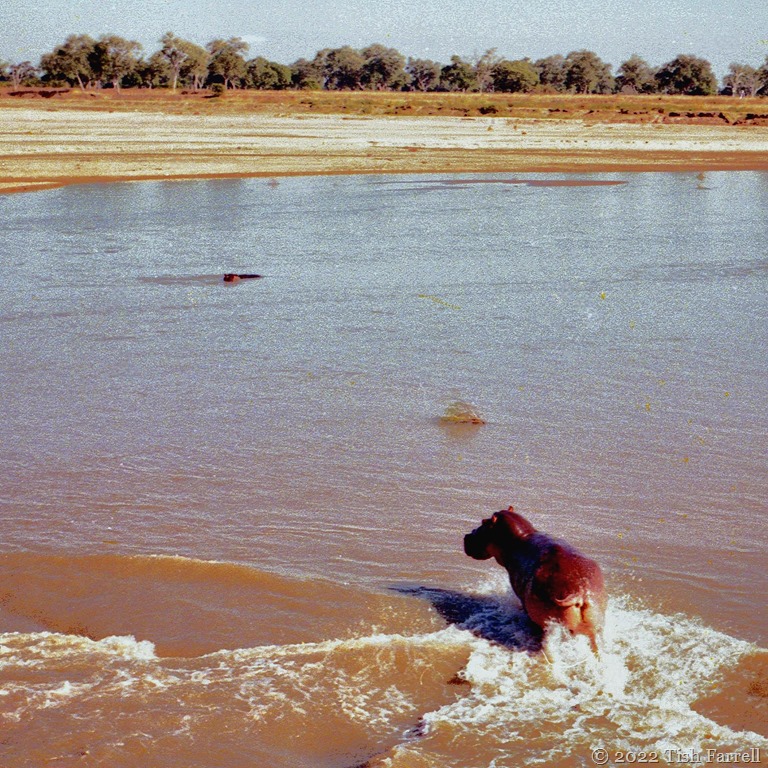
By the time we leave the camp and head back to main river, the sun is hot. From some distance away we spot a bull hippo trying to return to the water. He’s left it late after a night out grazing, and has come back to the river where the bank is high and steep. Being out in the sun risks serious burning and he is growing increasingly distressed with every failed attempt to descend.

We think ourselves well out of range as we watch his antics. Sean says he is probably a young bull expelled from his group, unable to win a herd of cows for himself. Someone laughs at another botched descent. And he hears.  And then he turns.
img20240926_17284698hippo charge

The bull hippo that charges us is on the bank under the small tree

*

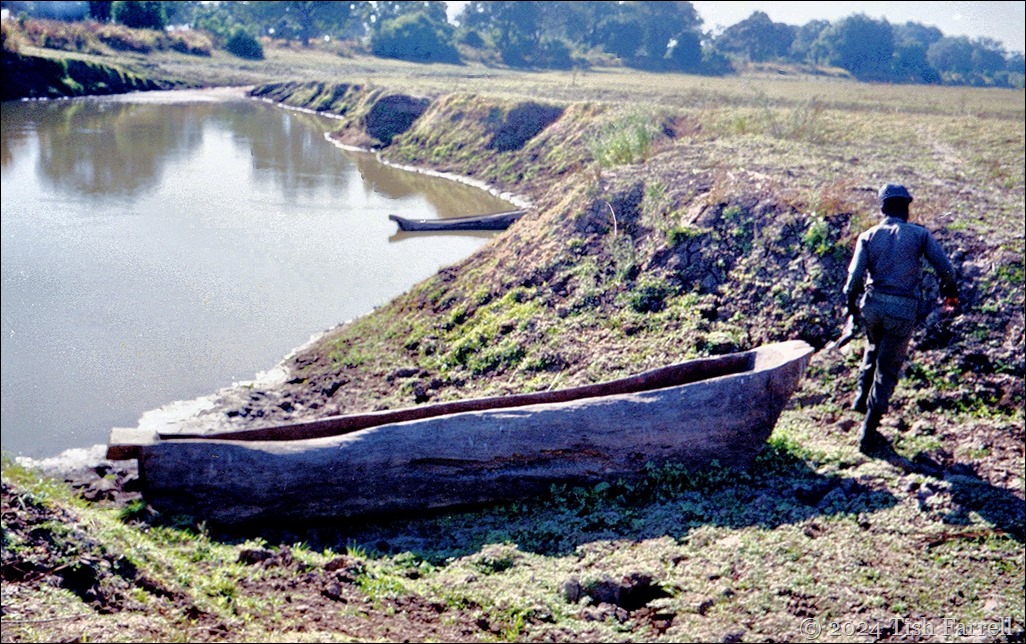
Sean and White react at once. They move forward clapping their hands, but when the hippo keeps coming, White ushers us back towards the fisherman’s camp, telling us to take refuge behind a beached dug-out. Meanwhile Sean is still clapping. White joins him, rifle at the ready.
img20240926_17272601

White guides us to a suitable refuge, then returns to the river to deal with the charging hippo

*

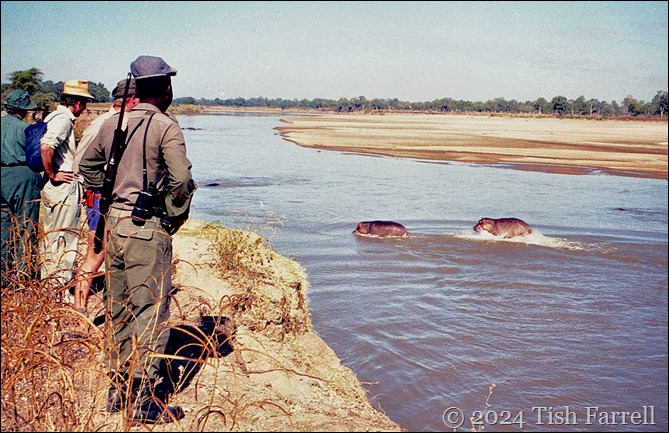
It is a nerve-wracking few minutes. But then after the initial rush, the hippo runs out of steam and veers off into the bush. We regroup and Sean says White was indeed prepared to shoot the hippo if he had not backed down. It’s a disturbing thought – that our safari-goer carelessness might have warranted the bull’s despatch.

But then we see the problem is not resolved. We are near the camp, yet now there is an angry hippo somewhere in the scrub between us and it. We have to do a massive detour. It’s approaching midday by now, and I’m starting to know how the hippo felt in his overheated state. I’m hungry too, and only briefly diverted by the sight of fish eagles and African skimmers. And besides, too, I have already seen enough of hippos for one day.
img20240926_17252587hippo walk

*

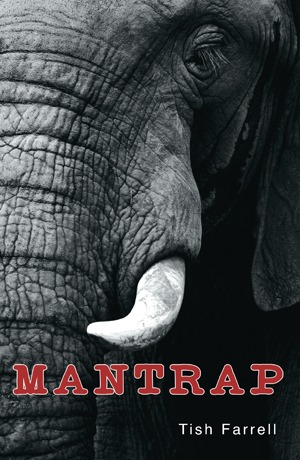
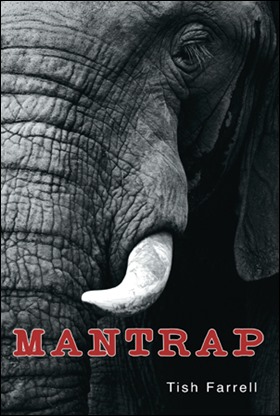
On Sunday afternoon we transfer to Nkwali. It’s outside the national park near Kopani, a good hour’s drive and we’re lucky to have Robin Pope as our personal chauffeur-guide.  He tells us so much, but by now it’s becoming hard to process. Later, though, I find the things I learn that afternoon inform a short story, Mantrap, published first in the US children’s magazine, Cricket, in 2003, and then in later teen quick-read chapter versions for Evans and Ransom Publishers.
Shades covers for REPRO Batch 2_Layout 1

*

That night, in our new temporary home by the Luangwa, it is not hippos that keep us awake…

To be continued.
South Luangwa - Luangwa River header

copyright 2024 Tish Farrell

#SevenForSeptember

 

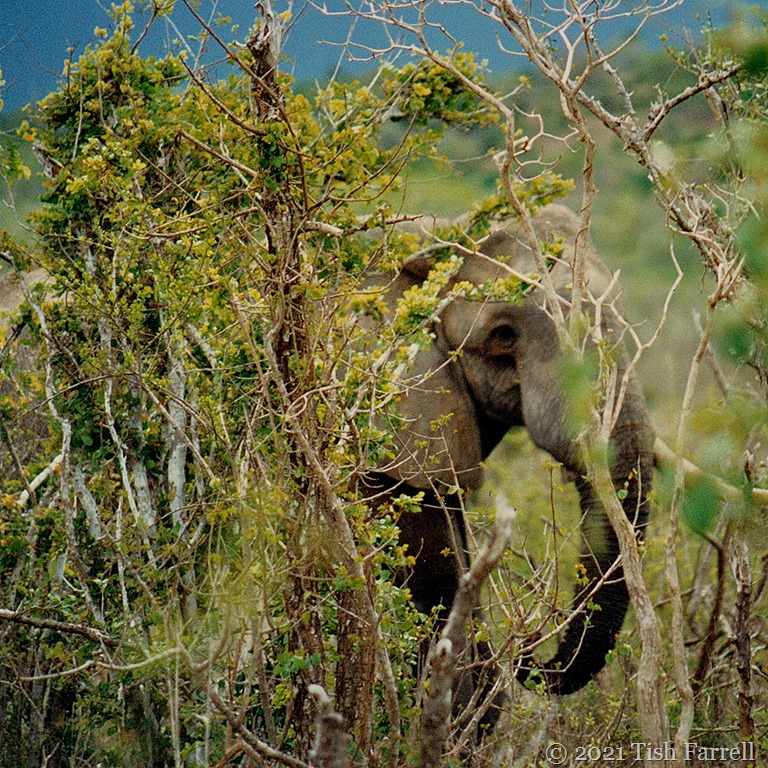
How Elephants Hide In Bushes

Mwalunganji 6

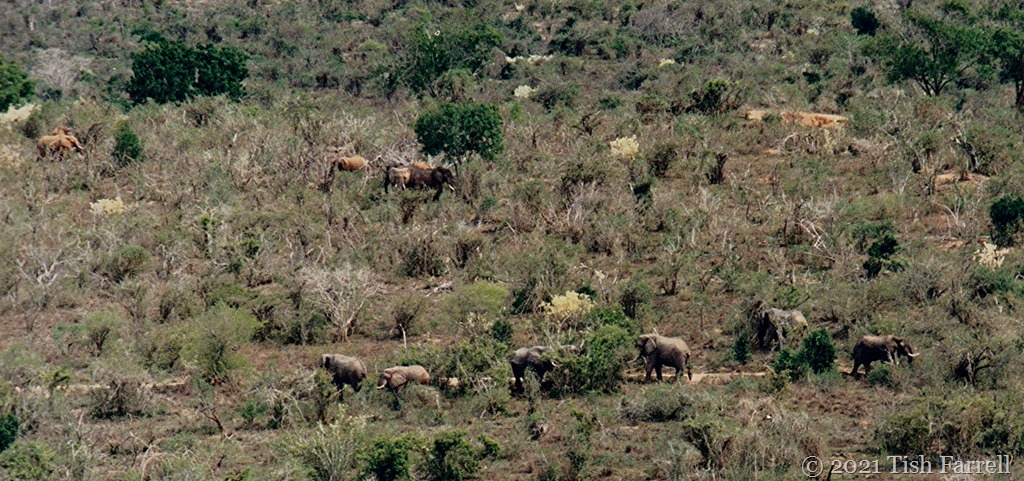
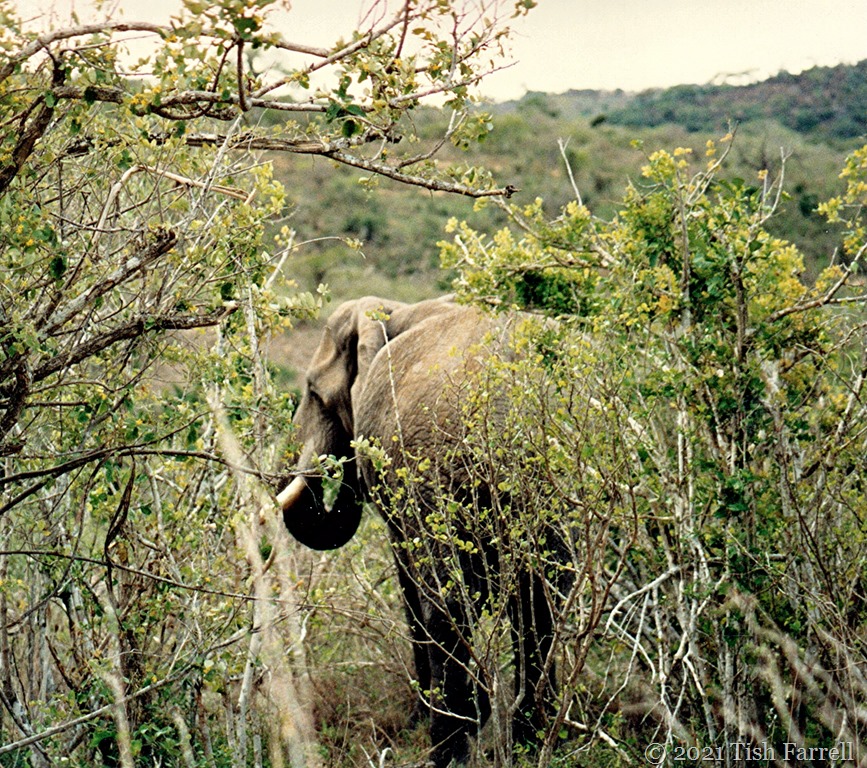
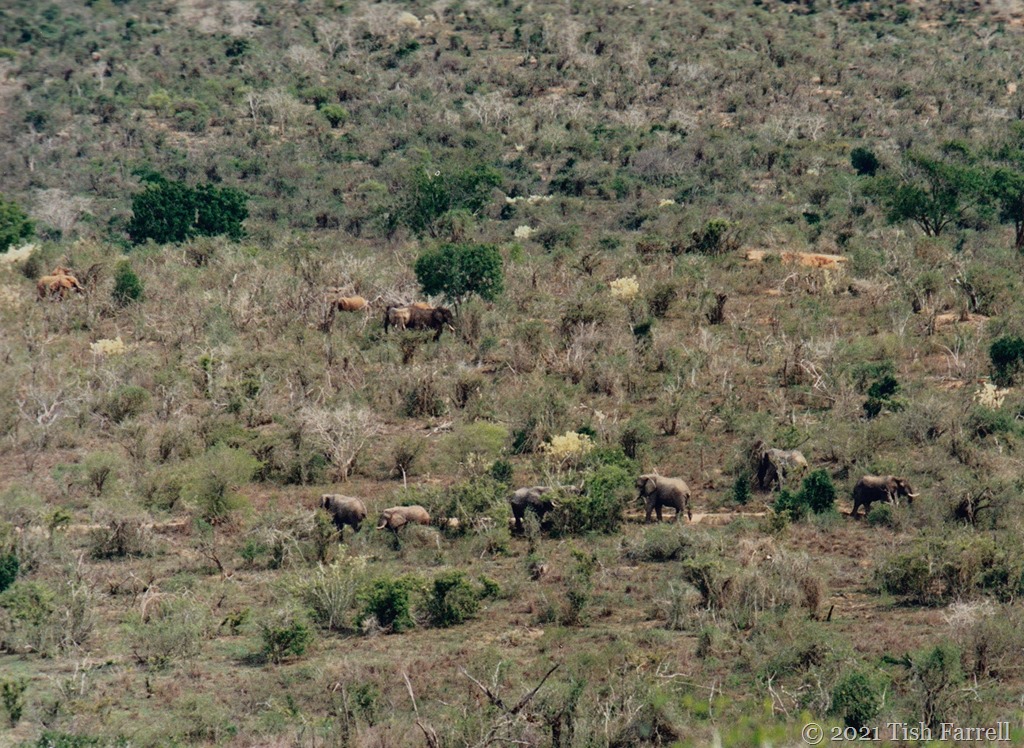
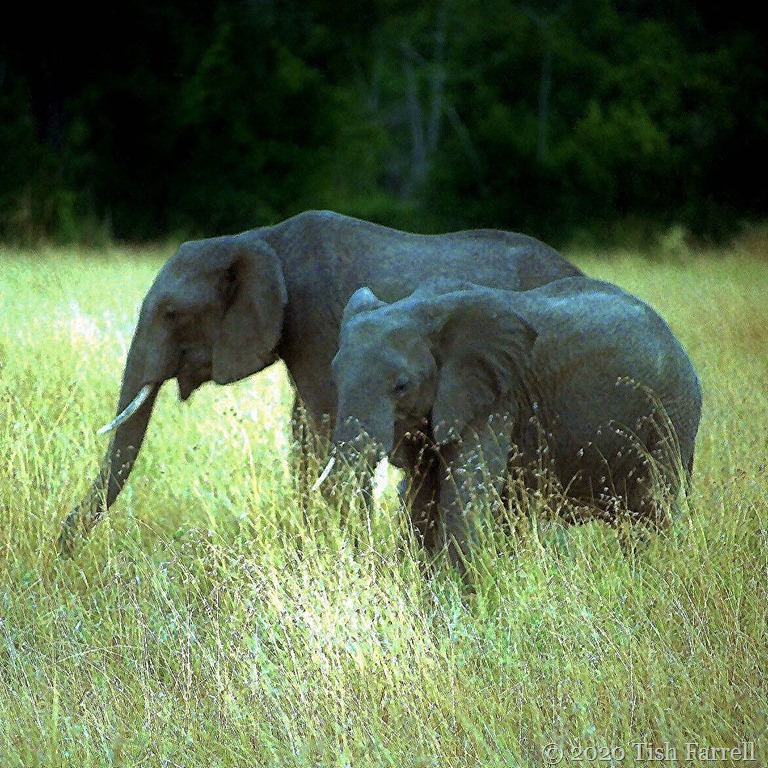
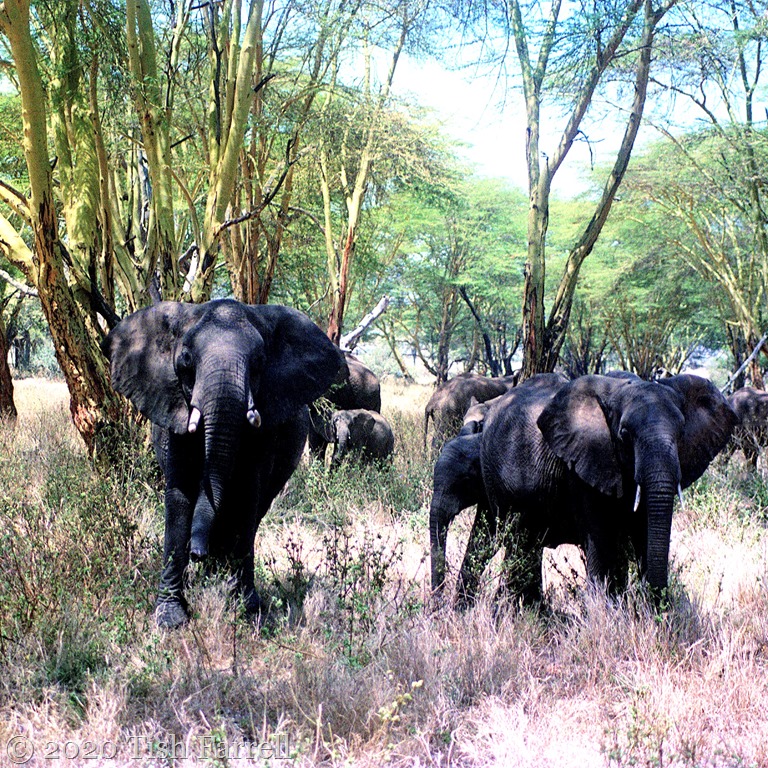
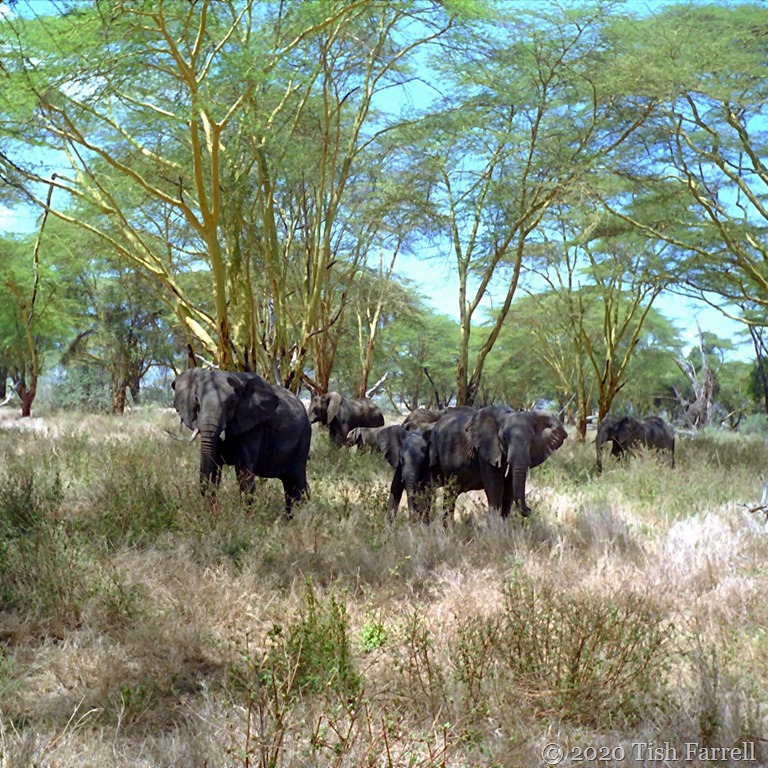
These elephant photos were taken in the very special community sanctuary of Mwalunganje near the South Kenya coast. It was set up in the 1990s to ensure the future of an important migration route from the Shimba Hills to Tsavo East National Park AND as means to provide compensation to 300 smallholder farmers whose crops were being destroyed by the herds. The farmers retained ownership of the land in the form of shares, and many of them took up posts running the sanctuary as a tourist attraction. The project continues to be run (or at least it was still going last year) with the support of the Kenya Forest and Wildlife Services and the Sheldrick Wildlife Trust. (More photos at this link).

The Mwalunganje sanctuary is extraordinary terrain, a remnant Jurassic Forest survivor that still supports many cycads. They look like small palm trees and, as living survivors from a 200 million year old forest, are a seriously endangered species.

Mwalunganji elephants 2

Mwalunganje Hill is also a sacred place for the local Duruma people. Here there is kaya, a palisaded space where traditional rites are performed by the elders. On the day when we went to look for it there was a tree blocking the trail – frustrating for a nosy mzungu, but then I thought, ‘quite right too. You have not been invited there.’

There’s more about the sanctuary HERE

Mwalunganji elephants 3

A pair of bright sparks

P1080014

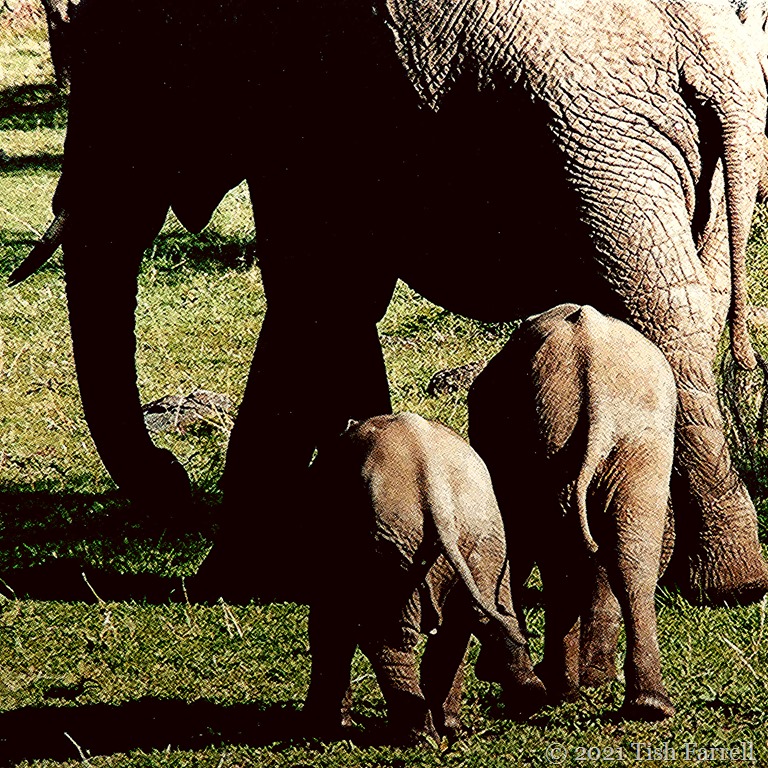
No apologies for showing this yet again. But the biting April wind here in Shropshire has driven back to the ‘old Africa album’ for a bit of warmth. And anyway, what can be more brightening than the sight of elephant babes. This photo was taken early one morning, on our last trip to the Maasai Mara. Happy times. Eight years in Africa gone in a flash.

Bright Square #22

Elephant Totos Playing Up

001 (2) sq

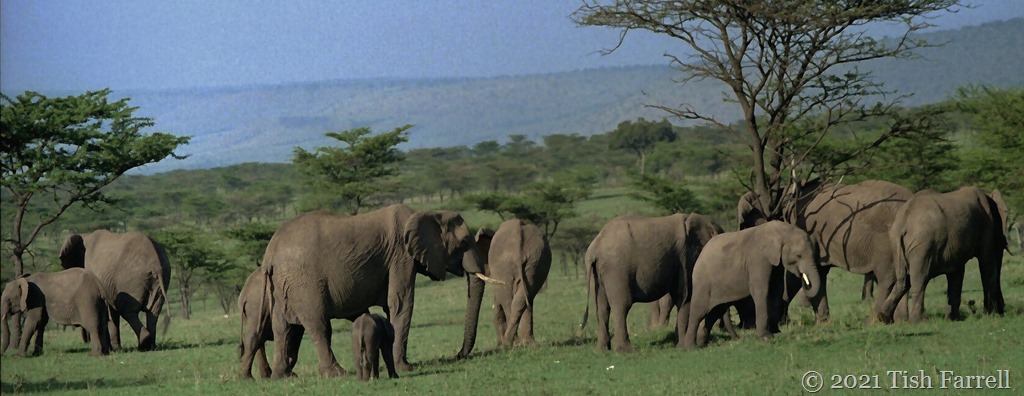
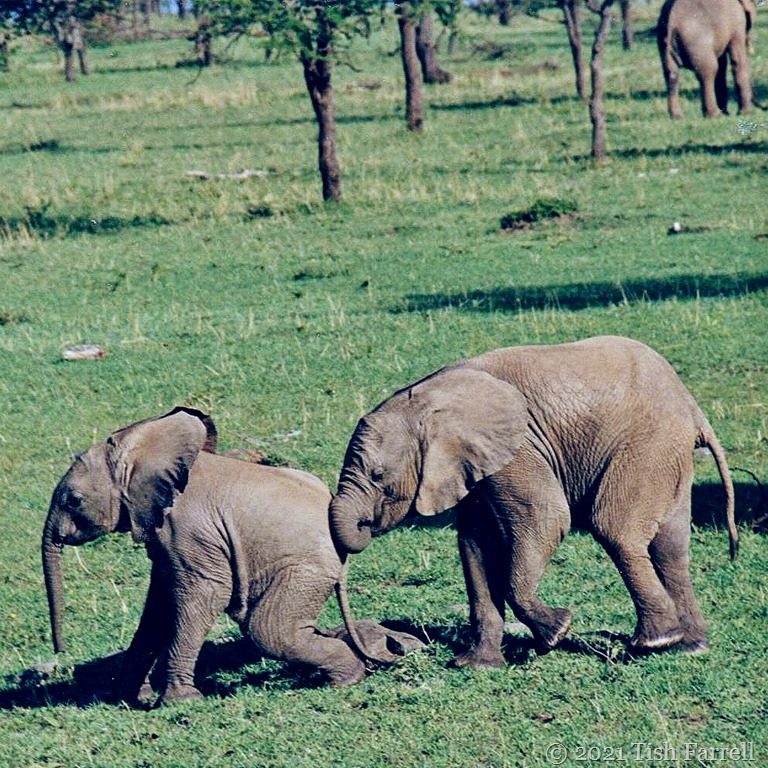
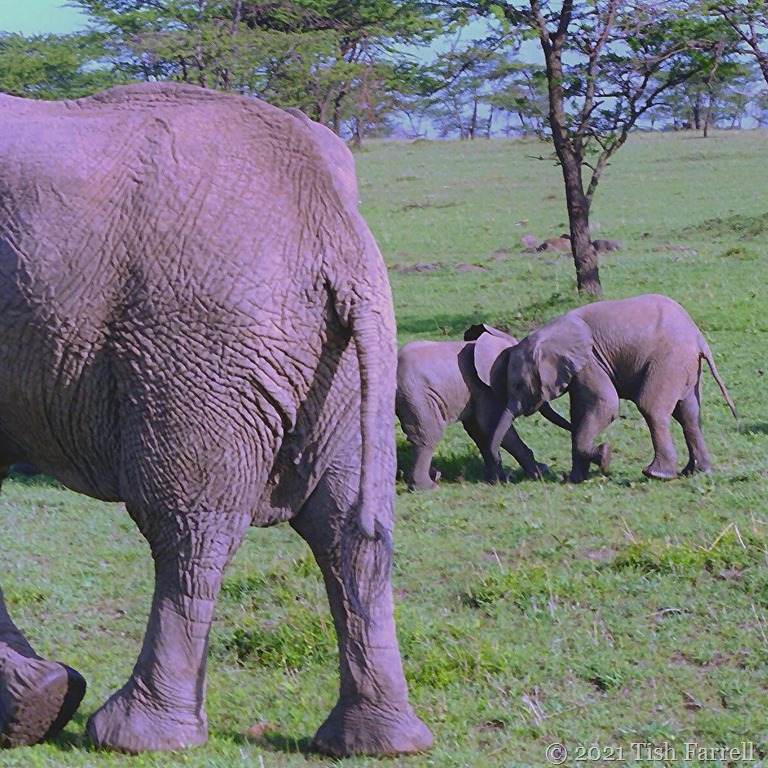
These photos are from our last trip to the Maasai Mara before we left Kenya – this after nearly eight years as ‘displaced persons’. It was late December and our family from the UK had come out to join us in millennium celebrations. Everywhere there was talk of the ‘dreaded bug’ – mass panic of how on the stroke of midnight New Year’s Eve 1999 all world intercommunications and computer functions would be scuppered. At such times one definitely knew there was more common sense to found among animal kind than with humanity.
We had left camp on an early morning game drive. Dan our driver-guide had brought a picnic breakfast of mammoth proportions and it was he who decided to stop the truck and break into the hard boiled eggs and pastries just as a large herd of elephants was passing by.  They came so softly, footfalls ever muffled by the large cushions of fat that elephants have in their heels. You could smell them though – the musky, muddy smell that is like nothing else. The adults seemed to be moving as one, a measured ambling pace with no deviation. Only the children weren’t quite coming to heel.
sq

For most of the year female elephants and young live in small matriarchal groups while the adult males pursue a separate existence in their own loose-knit herds. But come the rainy season, all these small groups may gather into a single large herd as they set out looking for fresh vegetation.

They couldn’t have cared less about us; gave not one sign that they had even registered our presence. Later, as it was going dark and we were returning to camp, we met the herd again. Dan stopped the truck and the herd moved around us, close enough to touch. They moved like shadow-ships through the Mara twilight. At such moments you tend to find that you’ve forgotten to breathe.

Scan-130510-0019


Square Up #14

Top Tembo Mama ~ Among Lewa’s Elephants And Other Animals

Scan-130608-0001 - Copy

The elephant on the left is the matriarch of this little family group of six adult females and three infants. She is giving us the once over before concluding we are no threat to her charges. In elephant world, the matriarch rules; she is the keeper of the family knowledge; the guide and decision maker. She will also kill any creature that is deemed a threat.

Following on from yesterday’s post on Lewa Downs Conservancy, here are some notes from that trip. We’re out on a morning drive with Kevin our expert guide:

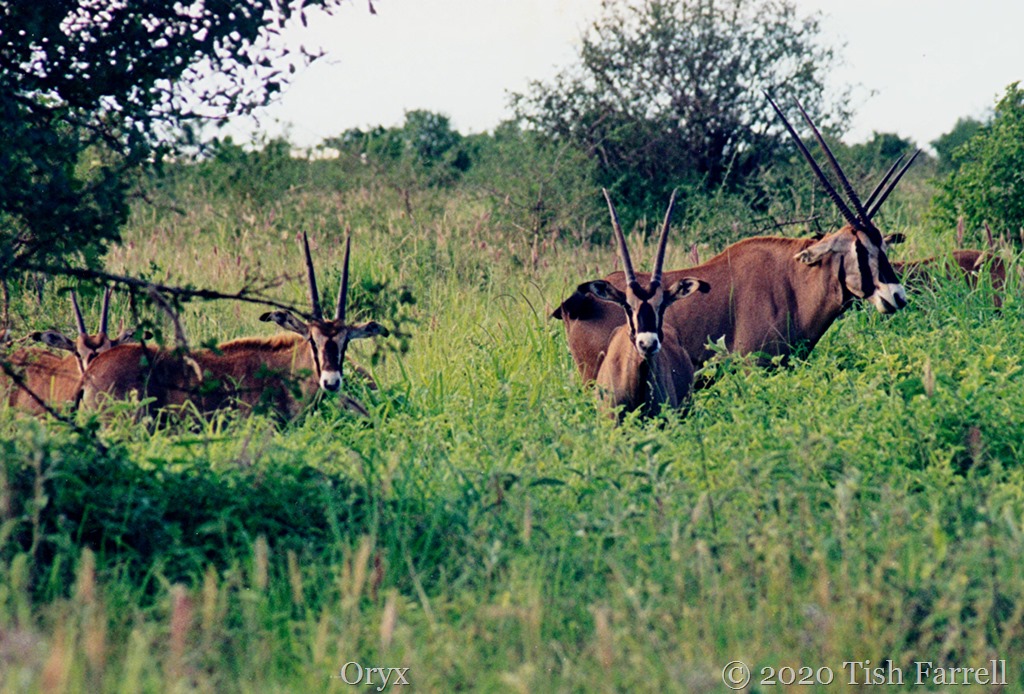
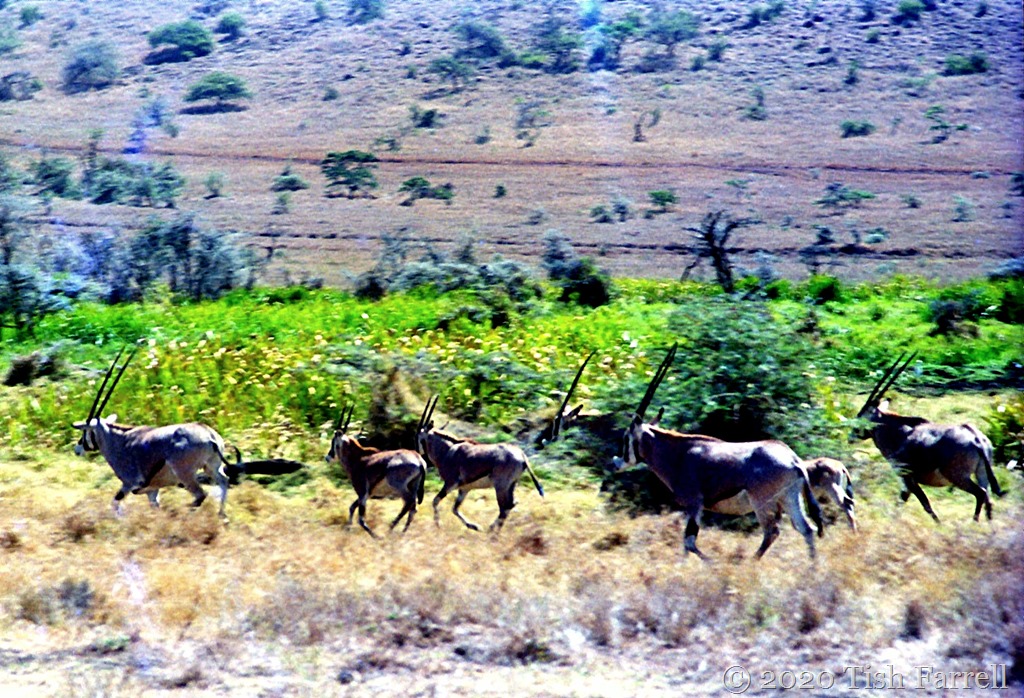
By now it’s late morning and we’re down by the swamp. The waterbuck stare out at us, and as we follow the track that skirts the reed bed we come upon a herd of oryx. They’re very shy though and won’t stay.

oryx

Scan-130608-0047

Kevin drives on towards a clump of fever trees, now following elephant prints along the track, and as we reach the acacias there is a lone old bull, large as life and very close.  Too close? When it comes to elephants the warning signs to look out  for are ears spread and trunk up and to the side. But we’re not bothering him. He views us serenely through long lashes, shakes his battle torn ears, ambles alongside the truck for a while then wanders off.

Scan-130608-0045

Graham meanwhile spots a group of elephant across the swamp and Kevin sets off for a better view. For a while we park on the track, torn between watching brilliant carmine bee eaters in one direction and the little herd in the other. The elephants are about fifty yards away in the fever trees, and I think that’s close enough, but no, Kevin is eyeing up the lie of the land, picking out a line of solid ground. Soon we are parked with swamp on our right and elephants on our left.

At first the matriarch adopts an intimidating stance, but then changes her mind. Our presence in no way interrupts tree browsing and bottom scratching, and no attempt is made to shield the youngest calf from our view. We watch for ten minutes or so, listening to the taptapping of a nearby woodpecker, the call of hadada ibis, spot a vervet monkey watching us watching the elephants. Then Kevin decides it’s time to leave them in peace. As we pull away over the rough ground we’re left with the musky, goaty, muddy smell of elephant in our nostrils.

Scan-130608-0004

Scan-131109-0001

Square Tops #21