
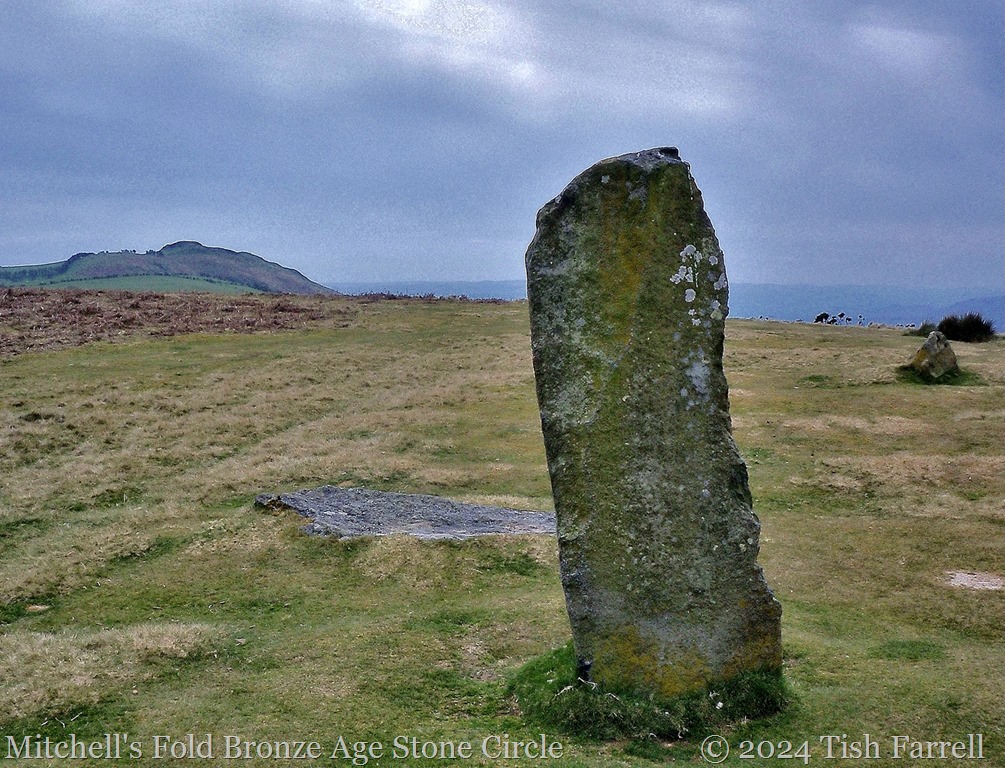
It’s an old passion, the love of old stones, already set in before my first decade on planet earth. My memory tells me it had something to do with Saturday afternoon drives along Cheshire lanes and mother announcing that the unusual row of cairns along one such lane were the ancient Celtic graves of sacrificed virgins. Sometimes she could be most unsuitable. The story wasn’t true anyway, but it sparked a yen for things prehistoric.

Mitchell’s Fold Bronze Age Stone Circle, Shropshire
*
My second decade thus found me sitting in the basement lecture rooms of Sheffield University Arts Tower, looking at slide shows of standing stones, cairns, cists and chambered tombs, the subjects frequently screened upside down. The lecturers in the small Prehistory Department, couldn’t seem to fathom the loading of the slide carousel (it became a standing joke). And then they didn’t seem to think it mattered which way up we looked at things.
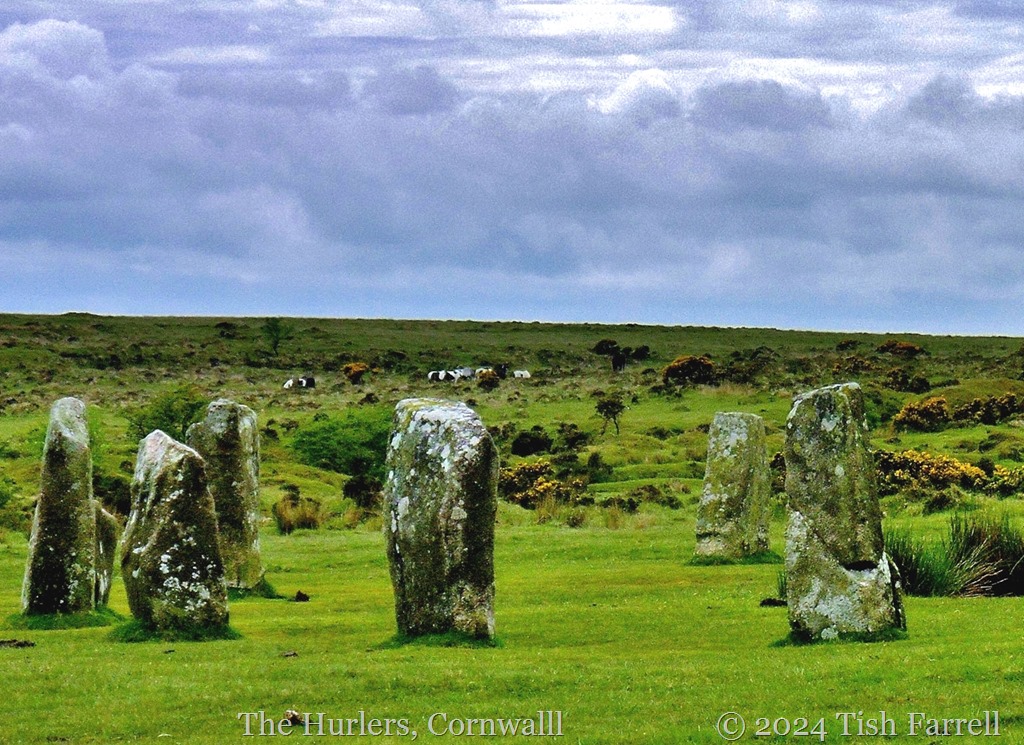
They were probably right. After all, there is very little one can say about these ancient structures and configurations. We might be able to hazard a date for their construction from some excavated artefact found nearby. And we know that tombs were tombs from the human remains found within them.
We also know that these sites must have been hugely important to the people who constructed them. (Think physical effort needed to heft the stones; antler picks and stone axes the only available technology). And then there is the siting of the monuments which, in nearly all cases, strongly suggests pre-literate humanity’s elemental connection with landscape. Place had MEANING; all of it doubtless sacred in ways we no longer grasp.
But when it comes to knowing who the people were, and how they lived and what they believed – the rituals and customs honoured over generations – then the stones remain stonily silent.
And I think that’s what I like about them. They are mysterious. Utterly mysterious.
Here’s another photo of The Hurlers stone circles on Bodmin Moor, Cornwall. (The obvious mystery here being who or what is that seeming pendant figure on the horizon?) The Hurlers are said to date from the late Neolithic, early Bronze Age (so around 2,500 BCE) and they are unique in that the site comprises three perfect circles set in a row. (Impossible to photograph without a drone). But that’s not all. 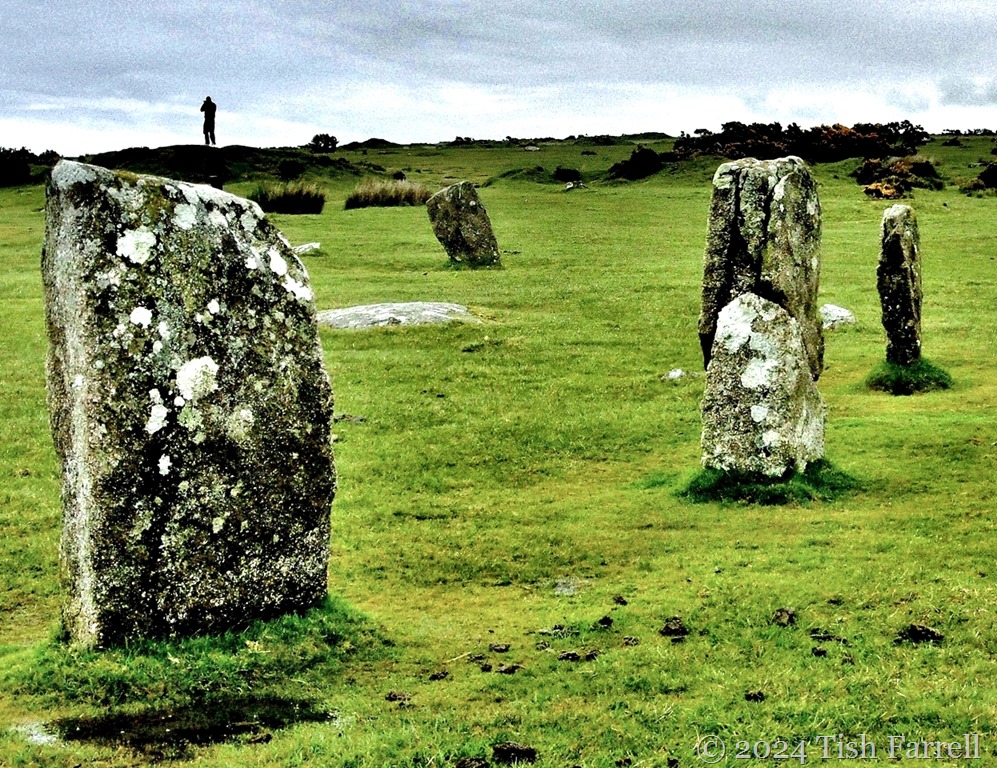
*
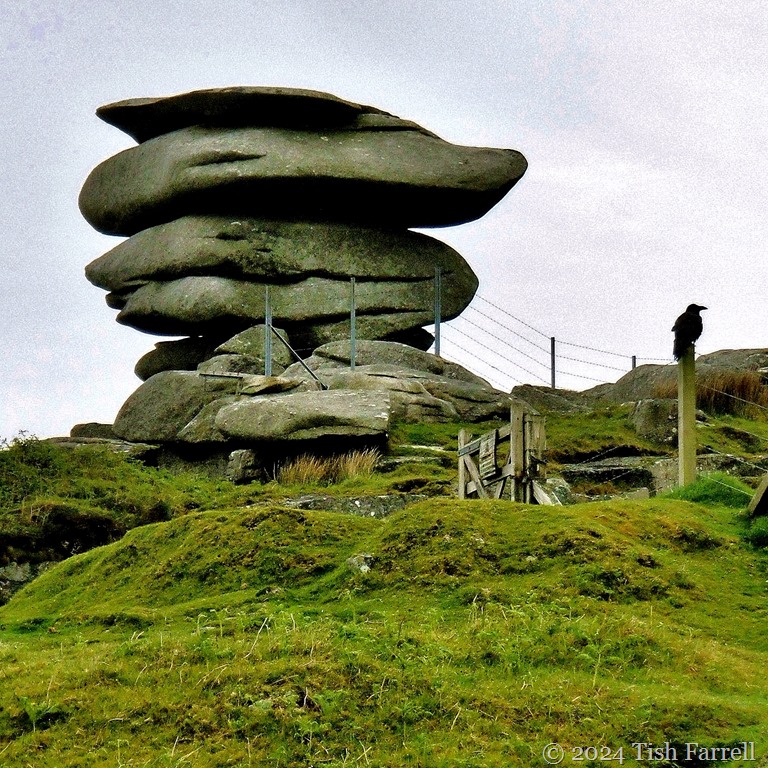
The circles line up with a striking natural feature – the Cheesewring granite tor (Keuswask in Cornish), which of course makes one wonder if it somehow featured in the circle ceremonies, if only as a beacon site to gather in communities from across the moor.
*
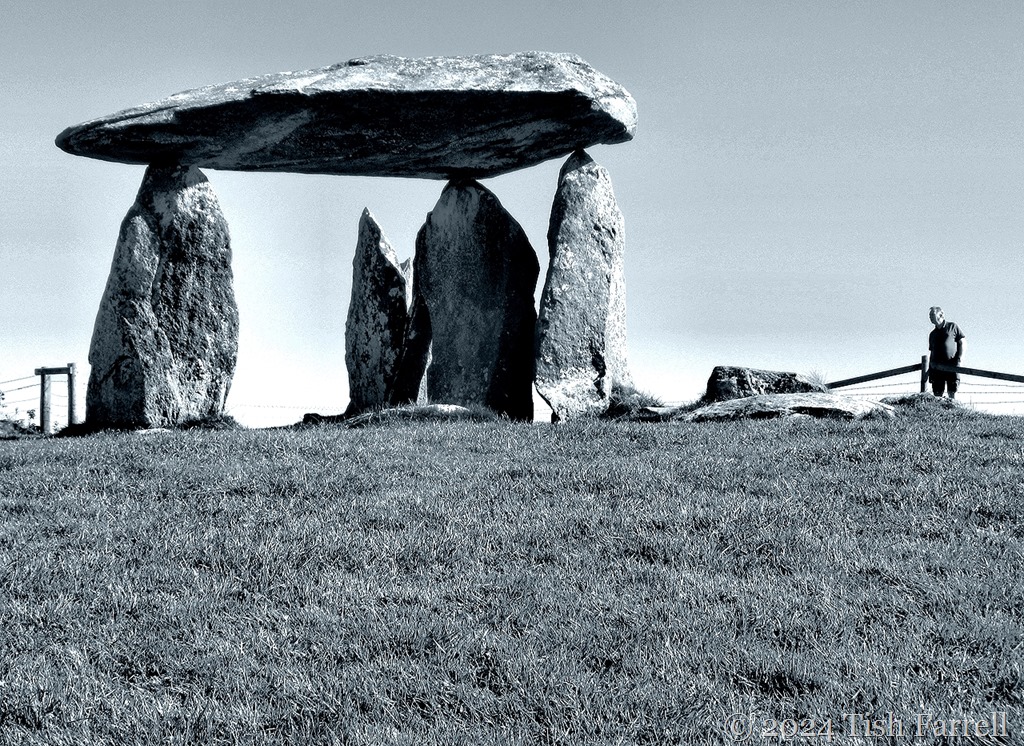
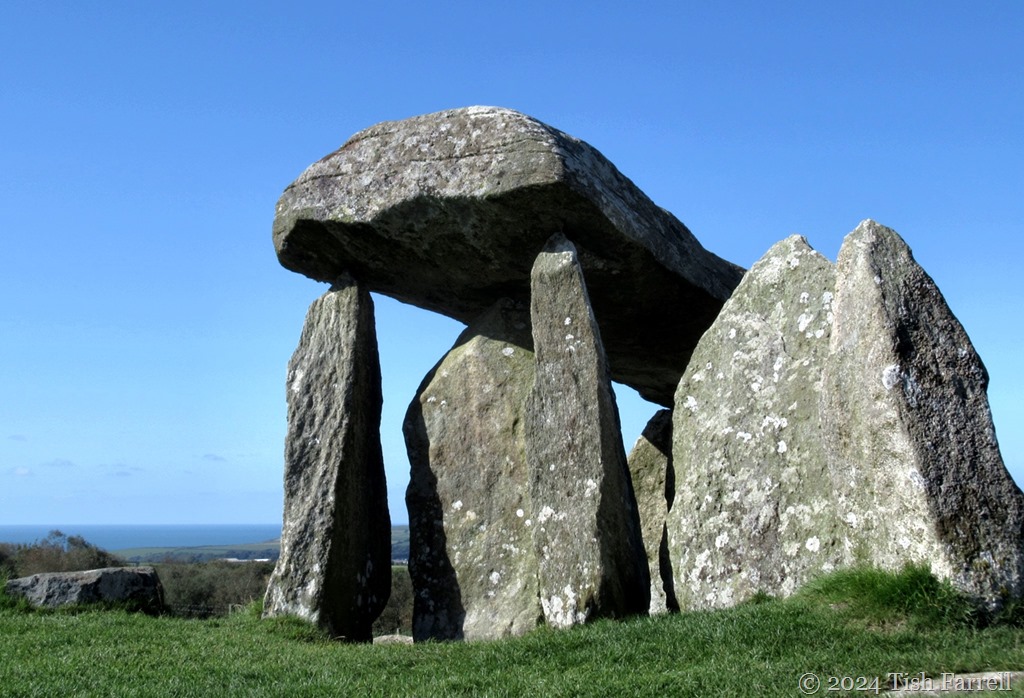
In Pembrokeshire, West Wales, there are numerous megalithic sites. One of the most striking is Pentre Ifan chambered (dolmen) tomb c. 3,500 BCE. The capstone is seventeen feet long and thought to weigh around 16 tons.
*
The finished tomb would have been covered with a huge mound of stone and earth, and the whole constructed in sight of the sea and Mynydd Carningli (Mount of Angels).

You can read more about Pentre Ifan in a previous post HERE.
Lens-Artists: Rock Your World This week Donna sets the theme with photos of some fabulous rocky subjects. Go see!
