The Writer’s Season: A Pursuit Of Active Dormancy

P1000347

NOTE TO SELF:

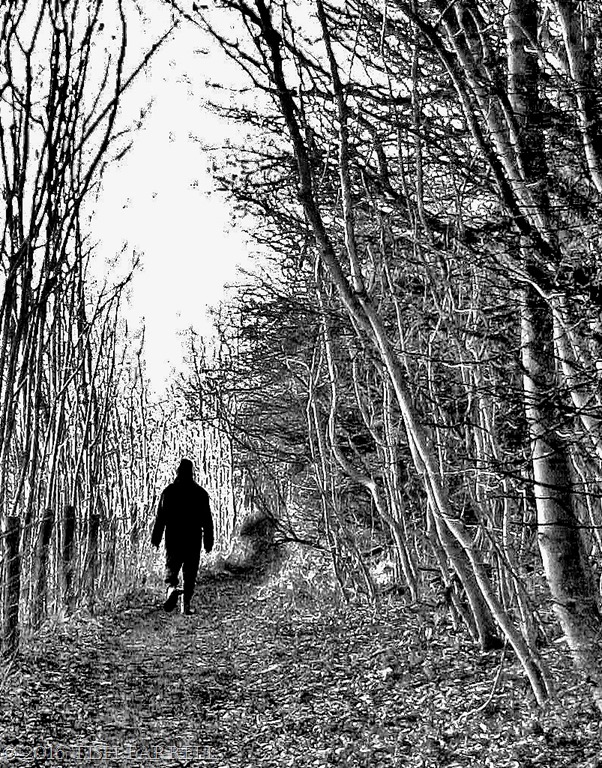
There is a time when it is all right for writers not to write. I’ll say this again so I’ll remember. There is a time when it is all right for writers not to write. It is time of preparation, and very much like putting over-cropped ground down to grass so the soil can regenerate. A time of fallowness then, but not of time wasting.

Before the real work can begin, there must be input, a drawing down of resources (like a tree in winter) – reading, researching and general planning.  And when I say ‘not writing’ I don’t mean give up on the writing practice – the brainstorming-stream-of-consciousness splurge, the morning pages, verbal doodling, keeping diaries. In fact do more. These are the equivalent of a musician practicing scales, or a dancer taking the exercise classes before working on a performance. This kind of practice strengthens fluency and, if you’re lucky, opens pathways to your subconscious thinking. It is all part of making ready for creating new work. None of this is for public consumption.

Yet doing sufficient groundwork is probably what most of us balk at. We have been fed with the notion that the best creation only comes in a white-hot blast of inspirational outpouring. We wait for it to happen. And it may never happen. More likely as not, such an approach will become a self-fulfilling blockage prophecy.

Then we may we tell ourselves the lie that if we are not busy producing words for the work in progress, then we cannot call ourselves writers. This may prompt us to start a work too soon simply to convince ourselves that we are being productive. Too often this will also end in confusion, blockage and despondency.

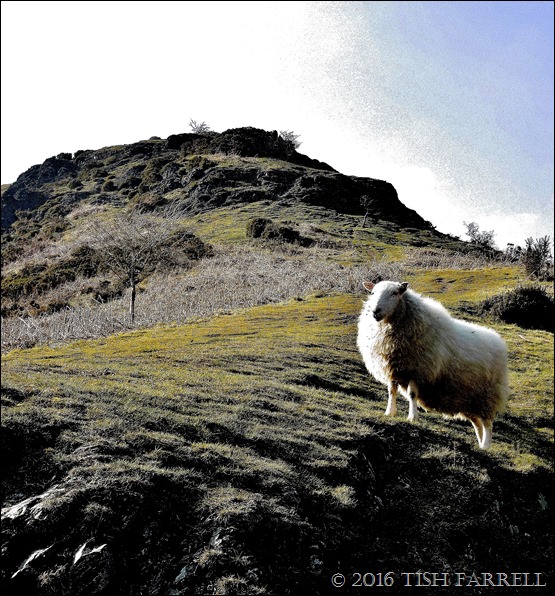
Only when we know our subject in our hidden depths, down in our roots and under the bark, can we best deploy our conveyances (our words) to bring it to the outer world. And I don’t mean ‘know’ in every last detail. Or not exactly. I have in mind Michael Morpurgo’s way. This well known English children’s writer is also a farmer. When he is thinking about a new book, he tells himself the story over and over until he dreams about it. Then he goes out in the early morning among his sheep and tells them the story. Only when he feels it is going down well with the ovine audience does he begin the act of serious writing. In this way he has proposed, explored, processed and internalized a narrative before he has written a word.

What emerges is more likely to be a  work that has intrinsic authenticity and consistency, as opposed to a narrative that has been imposed by the writer from outside, and often feels weak and poorly rooted.

So what do we need? Preparation, preparation, preparation.

But not too much either. I’m suddenly thinking of Edward Casaubon in George Eliot’s Middlemarch, he who ended up so obsessed with his researches that he left no time to write the book.  So a balance in all things. The knack, of course, is to recognize tipping point.

copyright 2016 Tish Farrell

Seasons


Let There Be Light!

P1000558

I have to say I’m rather pleased with this offering for Paula’s Black & White Sunday. The theme is ‘light’, and there are several interpretations of it here. The photograph was taken up at the allotment in a break from clearing winter weeds. This electricity pole stands slap in the middle of the back boundary fence, and for some reason I find it rather fascinating.

Please visit Paula at Lost in Translation to see her intriguing lamp-lit composition along with inspirational soundtrack from Keith Jarrett – a real Sunday treat.

Wenlock: “A Rip Van Winkle Kind Of Place”

P1010148


P1010704


P1010744 - Copy - Copy


P1010699 - Copy (2)

A Rip Van Winkle kind of place – that’s how Shropshire writer Mary Webb described Much Wenlock around a century ago. It was the home town of her teenage years, and the place where I now live and indeed have known for much of my life. Even when we lived in Africa we would visit Wenlock whenever we were on ‘home leave’. We had friends who drew us, and finally led us to settle here on our return to England.

And once we had arrived, we soon found that many of our neighbours, pitched up from far-flung places themselves, had also lived and worked all over Africa. I was therefore only briefly surprised to find that Henry Morton Stanley had once been in Wenlock, staying as a house guest of the Milnes Gaskells, the local gentry who once lived in the old Prior’s House and owned the ruins of Wenlock Priory from which the town had grown up throughout the Middle Ages.

Stanley is not a man I admire, although his brute tenacity is certainly impressive. We also have him to thank for selling the idea of the Congo to another brute of a man, King Leopold II of Belgium, a circumstance from which that Central African state has probably yet to recover.

Still, I won’t go into that now, but I do have a mind’s eye image of Stanley sitting up on Wenlock Edge (the Milnes Gaskells took all their guests there), and picture him scanning the Shropshire plains below as he contemplated the writing of In Darkest Africa.

The landscape that spread before him, with its distant ranges of Welsh hills, could well have reminded  him of that continent. I have seen such vistas in East Africa. But he was a man who ever took his darkness with him. And this makes me wonder. What might our grim legacy have been, in PR terms that is, if he had written of ‘darkest Shropshire’; would the tainted words still be sticking to us today?

It’s a rhetorical question obviously. And I mention all these dark tones and undercurrents only as counterpoint to the  quaint, quiet images above. Much Wenlock definitely has ‘chocolate box image’ tendencies in its now gentrified, ancient streets. I find it good to remember, once in a while, that all is not necessarily what it seems.

*

This post was inspired by Paula’s Black & White Sunday Challenge: ‘surreptitious photography’. It is a fascinating theme. The role of surreptitious photographer is something I rather relish, but rarely put into practice. I have a feeling that in this Rip Van Winkle place it risks becoming an obsessive pursuit and, as a writer, I already have enough of those.

But please visit Paula at the link above and be inspired by her photographs. There’s still time to take part. Also check in HERE to see her gallery of  slide shows of all participating photographers’ work. It’s a real treat.

copyright 2016 Tish Farrell

Never Mind Warhol’s Banana…

100_4197

…just look at my spuds!


This is my take on the Daily Post’s ‘life imitates art’ photo challenge – a posterized  still-life of last summer’s allotment harvest. I suppose you could also call it a potato print. Anyway, it is my nod to Andy Warhol’s poster art:

image

Andy Warhol’s Banana

Of course, as a gardener, I regard anything I grow as a work of art. Coming up next are borlotti beans, corn, zinnias and dill – rendered on the kitchen table after the Flemish still-life school:

100_4927

Looking ahead to this year’s garden produce art works, I’m  just hoping that my asparagus beds might do something wonderful, then I could come up with something like this. I have the red currants:

A11591.jpg

Dutch, active 1683 – 1707
Still Life with Asparagus and Red Currants
1696
Life Imitates Art

Still Life At The Mall?

100_8967

This image sums up how I feel whenever I go into a big shopping mall – soul sucked out, life signs shutting down, a sense of being processed, objectified in the drive to SHOP and SHOP and SHOP. On the other hand, when I came upon this scene through the strangely translucent shutters of a closed-down men’s clothing store I couldn’t have been more delighted. I didn’t have to arrange anything. It was all set out for me. I simply had to pull out my camera. Still life in the mall indeed, although sometimes you have to look hard for it.


Paula’s Black & White Sunday Challenge at Lost in Translation is Still Life. She has come up with a very intriguing take on the theme. Go see.

February: In The Monochrome Garden

P1030162 - Copy (3)Petasites fragrans   winter heliotrope

These are the leaves of winter heliotrope, a November to February flowering evergreen that originated in North Africa, and is now considered a wayside weed here in the UK. It has a great tendency to spread and form carpets. On the other hand it does flower when other plants are busy hibernating.  Also the flowers – a fleshy, purple pink – smell of vanilla, and track the sun’s course during the day. And all I can say to that is, this year winter heliotrope must have really had its work cut out. Sun. What sun?

Sometimes the plants make no flowers at all. There were certainly none to be seen on this clump, but then it was growing in deep shadow. The other fascinating thing is that the male and female characteristics appear on entirely separate plants, and it is usually the male flowering variety that we see in the UK.

I must also confess that I’ve learned all this just now. When I took the photograph yesterday in the gardens of Benthall Hall, I thought it was butterbur, a plant that grows in like fashion and has many other similarities of leaf and flower.  It was only when I was editing the shot, that I noticed the leaves looked too smoothly rounded and heart-shaped for butterbur. Next came a quick check on Google, which in turn led to realizing that this was an entirely new plant for me. So thank you, Jude, for setting this particular challenge – and the proposition of using both monochrome and looking for patterns in our chosen garden subject. It was the heart-shaped leaves that attracted my attention. I thought they would make a good design for Valentine’s Day.

For more about this challenge, please go over to Jude’s garden photography blog:

February: Monochrome

And now here is a shot of Benthall Hall, caught before a squall sent us scurrying to the car. P1030167

This sixteenth century home of the Benthall family is just a mile or two up the road from my house in Wenlock. The land on which it stands was once part of Wenlock Priory’s extensive domain, but now the house and grounds belong to the National Trust.

I hadn’t visited the house for years, and this weekend was its first opening of the year. For me, one of the property’s  most fascinating stories is the fact that in the late nineteenth century, the plant hunter, botanist and co-founder of Maw & Co, the world famous decorative tile works, George Maw was a tenant. He planted the gardens with his botanical treasures, and in particular crocus of both the spring and autumn varieties. Botanical images of course inspired many of the Maw’s tile designs that graced public buildings across the world during the Victorian era. Today part of that heritage, including original design catalogues, is on show not far away at the Jackfield Tile Museum in the Ironbridge Gorge. It is well worth a visit if ever you are in Shropshire. But one thing is certain, we will be back to explore George Maw’s garden as the year progresses. Please expect further reports.

copyright 2016  Tish Farrell

A Case Of Extreme Planet Abuse? The Silent Forest

100_6486

Humans have been cutting down trees since the end of the last Ice Age. Even by the Neolithic period, i.e from around 6-8,000 years ago, whole scale clearance of forests was taking place across Europe. Some of this was a bi-product of domesticated stock grazing; some was direct harvesting for building materials and fuel; most was probably due to felling and burning to make farm fields. For thousands of years, then, we have been destroying the planet’s life-nurturing tree cover.

But now look what nightmare plans are afoot for our surviving trees – genetically engineered fuel- and paper-making-friendly trees that grow in sterile, silent forests. In the video geneticist David Suzuki gives clear explanations of what is involved in genetic engineering and flags up the potential consequences of the bio-tech industry’s objectives for tree-life on the planet. It is all very disturbing, but I think we need to know what’s going on in our world, and with official sanction. See what you think. This is followed by a documentary film, in which Dr. Suzuki is also the narrator.


<p><a href=”https://vimeo.com/51040243″>A Silent Forest</a> from <a href=”https://vimeo.com/user11341138″>Raindancer Media</a> on <a href=”https://vimeo.com”>Vimeo</a&gt;.</p>

On reflection: can there be too much of it?

P1030051

Writers are past masters of diversionary tactics. This particular writer spends a considerable amount of avoiding the work in progress. She is not sure why. But staring out of the window is definitely a popular pastime. On the other hand, who wouldn’t want to stare at a sky like this, the sun going down behind Wenlock Edge.

Then I discovered something really neat as I was trying to snap it. My office has a cabin bed in the corner under the roof light. So I clambered on the bed, and opened the window to the horizontal to give myself a makeshift ‘tripod’. I then set the Lumix to sunset mode and rested it on the back of the window. And this is what happened.

Who’d’ve thought avoiding writing could be this much fun. But there’s a lesson here too. Sometimes we overthink the pieces we are working on. Sometimes we need to loosen up and play. And ask questions. Definitely ask questions. E.g. What would happen if I let my characters think for themselves, and stopped trying to control them? What if I let them go play? What might they not come with? Something magical, diverting, extraordinary? Do I have the nerve to let them go?

copyright 2016 Tish Farrell

The Bees’ Knees In Vibrancy

100_3915

This is one my favourite photos. If you look hard you can even see the bees’ wings vibrating. And yes, for those who come here often, I know I’ve posted it a few times before. But isn’t it joyous – hot red, buzzing bees, sunshine.

And how about bees in the sneeze weeds (aka Heleniums)

100_6719

Or the bee on this sunflower that was growing last summer in a pot by the shed:

100_7053

All of which is to say we need to keep thinking about bees. We cannot do without them. They pollinate many of the plants that provide us with essential foods.  In the northern hemisphere new seeds are coming into the shops, so we can all think about sowing some bee-friendly flowers. You don’t need a garden. A pot of oregano will please them, and make you happy too when you’re making spaghetti sauce.

P1010778

And then sedums will provide a valuable late summer nectar boost for honey bees. There are many varieties of this plant – large and small. They don’t need much attention and will grow in containers too:

100_7435

If you want to find out which plants are bee friendly, there are many bee sites on the web. But for local first-hand information ask your local beekeepers society. There will be one. Meanwhile the Royal Horticultural Society provides some useful guidance if you want to give your life and bee-life lots more buzz.

IN 2016 THINK BEES

Happy Wednesday Wherever You Are

Vibrant

Winter Garden From My Window

P1030045

It’s the final week of Jude’s Winter Gardens challenge over at The Earth Laughs In Flowers. This, then, is the view of my garden captured on Saturday afternoon. It’s as much as I’m prepared to show you at the moment, so dreary is it after weeks  of rain. Also there was a definite lack of gardener-input in the autumn. Things just kept on growing and it was hard to know when to chop them back.

So they didn’t get chopped, and the place now has the look of a garden version of Miss Haversham’s attic. But you may just spot (in the bottom right hand pane) a small clump of tete a tete daffodils. Even they  aren’t planted, but are sitting on top of the soil. They were tipped out of a pot bought last spring, at which point I had every intention of re-planting them. Oh well. Neglect hasn’t stopped them thriving. They started flowering at the end of December.

I have to confess that I’m a fair-weather gardener, at least where dampness is concerned. And it really is too cosy indoors. Also unlike the garden, the house is now clean and tidy, which was the real reason I took the first two photos – to document that tidiness is possible. And I’m sharing the proof with the world in an attempt to stem backsliding tendencies.

P1030043

But housework and fair-weather gardening aside, I am getting twinges of planters’ itch. My first delivery of vegetable seeds arrived earlier last week – all those crisp packets of pent-up potential, and now it is February. Hurray! Time to sow the peas and leeks in the allotment polytunnel, and start off the aubergines and sweet peppers at home.

And talking of sweet things, my first sowing of sweet peas on the kitchen window sill is already sprouting. So apologies to Jude for not quite sticking to the winter garden plot. I’m  finishing  this post with thoughts of summer, and deliciously scented blooms to come. And I know she won’t mind because she knows very well that it’s forward-dreaming that keeps gardeners going through the long winter season.

100_7878

copyright 2016 Tish Farrell