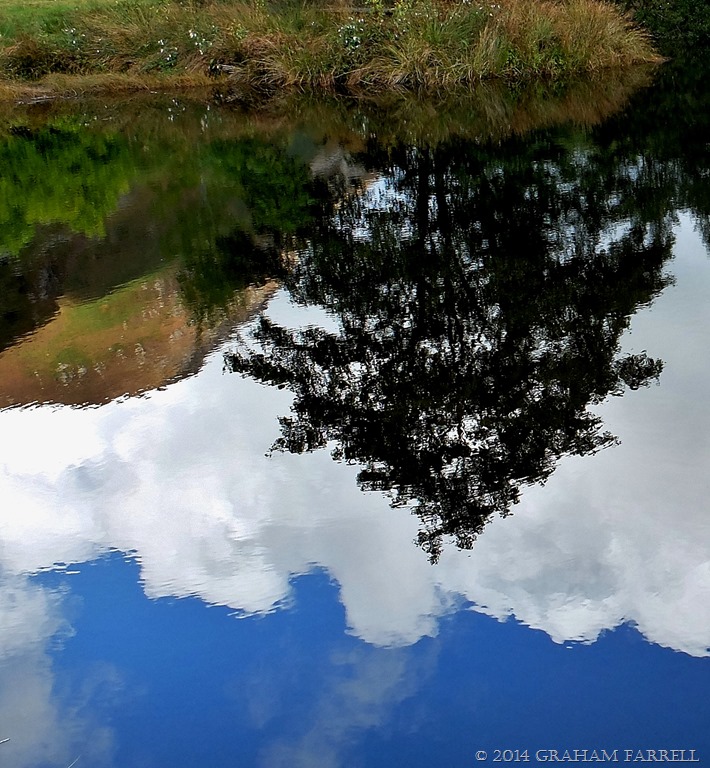
Refracted, reflected beneath Cadair Idris

Dolgellau 110

This photo was taken on a recent trip to Wales. On a sleepy October afternoon we took a stroll beneath Cadair Idris, one of Snowdonia’s most spectacular mountains. I wrote about the walk in an earlier post. You can follow in our footsteps here: Now that summer’s done, we take the Dol Idris Path…

http://www.visitwales.com/working-with-us

@visitwales

DP Photo Challenge

Night-time Plea in Nice: Come Rescue Me…?

by day there was a green parrot in the cage

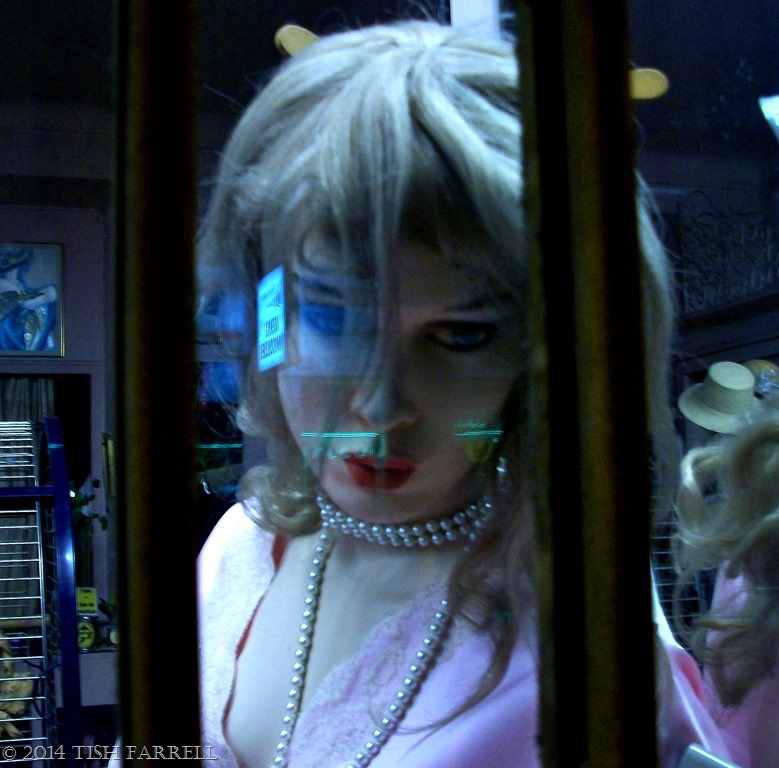
There are so many enticing shop windows to gaze at in Nice – everything from brightly coloured marzipan sweets to exquisite oriental teapots. This window, however, was most disturbing. The more so, since it was just across the street from our hotel.

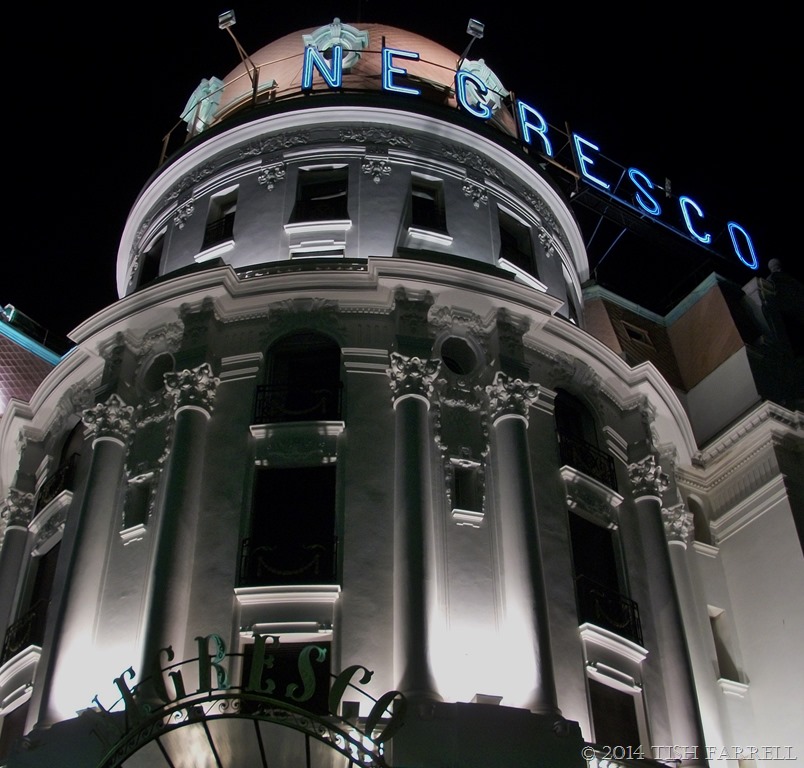
I think of this as my ‘David Lynch photo’. It seems to have about it more than a hint of that director’s very weird but somehow compelling TV series Twin Peaks. By day,  the window on Nice’s Rue de Rivoli (just up from the swish Negresco Hotel where we weren’t staying) was scarcely noticeable. Only at night, when dimly lit from within and without, did it take on ‘a reality’ (though I hesitate to explore this further) and you could see more clearly what was inside. It seemed to be a dry cleaners, but there was also a lonely parrot in a large cage, and an assortment of wedding  gear arrayed on a wigless bride, and many large-brimmed sun hats. This girl, though, was surely yearning for rescue. Perhaps she is still. Any heroes out there?

copyright 2014 Tish Farrell

Ailsa’s Travel Theme: Inviting

DP photo challenge: nighttime


Endurance in Central African Republic

Scan-140829-0058jpeg - Copy

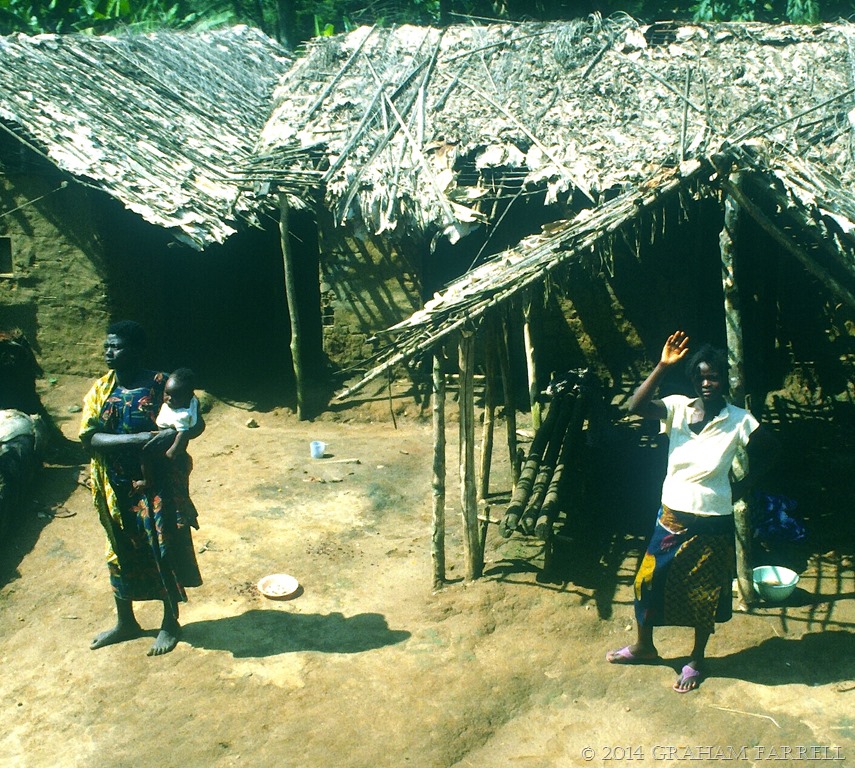
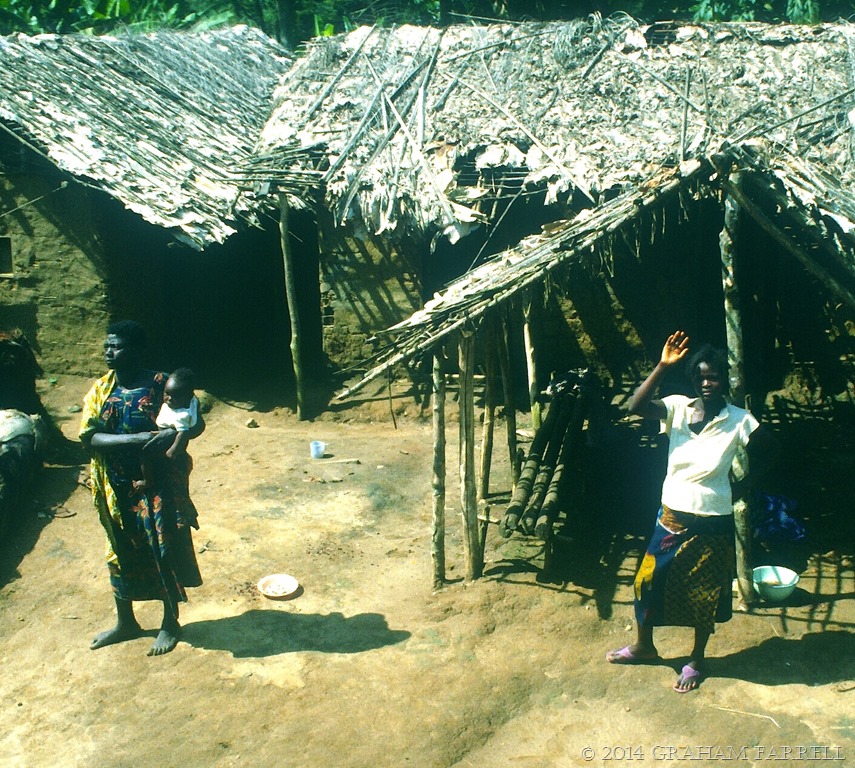
There’s a story here. You have to look carefully though. This is very much a happenstance shot, taken by Graham from a moving overland truck many years ago. In the truck, alongside him, were a bunch of young Australians and New Zealanders. You may picture a row of enquiring, youthful, fair-skinned faces looking out on this scene. It is hard to imagine what the locals made of this passing vision of alien hobo humanity. The Central African Republic (CAR) has never been a common tourist destination. It certainly is not these days.

In  the late nineteenth century occupying French colonisers apparently tried to turn the country into a cotton plantation. It did not work. Ever since independence in 1960, all has been shaky. For the past decade the people of CAR have been caught up in bloody bush wars, these apparently ethnic based and factional: Christian versus Muslim. Neighbouring Chad to the north is implicated. As in the Democratic Republic of Congo, CAR’s neighbour to the south, this is a beautiful land stuffed with riches: uranium, crude oil, gold, diamonds, and valuable hardwoods. There is also good farm land and hydro-power potential. Yet its people are also among the world’s poorest. As in DRC, it is necessary to ask the question ‘Who benefits?’ to find out exactly why this state of things persists in the 21st century.


…forest either side the red dirt road, rolling hills, coffee bushes, pawpaw tees, kapok trees, bananas, innumerable  mangoes and desolate villages…people waving  and smiling, but also some half-heartedly thrown stones and raised fists from the kids…

from G’s Overland Diary

*

You can make a guess that a good part of the answer will involve a chain of traded commodities that reaches us in the industrialized nations, for we are the end-users and buyers. By some means or other, arms will be going the other way. For this is the nature of the rich world’s (largely unseen) relationship with African territories. In the past it was the cropping of humans for slaves, and the cropping of elephants for tusks to make drawing-room piano keys, and balls for the billiard table games of civilized gentlemen. Today, it is the minerals that are craved, and at any cost. The trade keeps unscrupulous African potentates in power. They pillage resources from neighbouring countries to sell to the so-called developed world (is this us?). And so we have the carnage.

Until 1997 France maintained a military force in CAR; senior French politicians are said to have acquired diamond and gold interests in the country during the ‘80s and ‘90s. Thereafter, fearing a power vacuum, Paris funded French-speaking African nations to provide a peacekeeping force there (BBC news page). Today, French forces are back as part of the UN peacekeeping mission. Their fellow peacekeepers are Rwandans, and these two forces do not see eye to eye either (The New Republic). However you look at it, the country is a bloody  mess. Once the Pandora’s Box of vested interest by multiple players has been opened, it is hard work to restore any vestige of order. We see this in the Middle East too.

Scan-140829-0058jpeg - Copy

And so back to this photograph. The girl’s wave is wistful as she looks directly at us. Frozen in the moment is her wondering about life elsewhere. The mother, though, knows better. She looks steadfastly away, eyes focused on some other reality. Her stance suggests proud forbearance, feet planted firmly on the earth, her piece of earth, weight evenly distributed. The arms that encircle the baby are sure, composed, protecting, not clinging. She is doing what women do in Africa – endure. Perhaps she is enduring still. Most likely not.

copyright 2014 Tish Farrell

DP photo challenge: endurance

For more about conflict resources

Sounds of Portland Head

IMG_0258_thumb[2]

It stills the mind, listening to the sea. The chattering monkey mind shuts up. Gives in. Surrenders to the inward rush of waves, the rhythmic retreat. But add in the doleful wail of a lighthouse foghorn, and something else happens. A door in the imagination swings wide: images of storm-lashed fishing boats, a ship off course, the warning blast resounding on fog-laden seas,  the tremors of anxiety as seafarers hear that sound and know of invisible danger ahead. Shoals, sandbanks, submerged rocks?

*

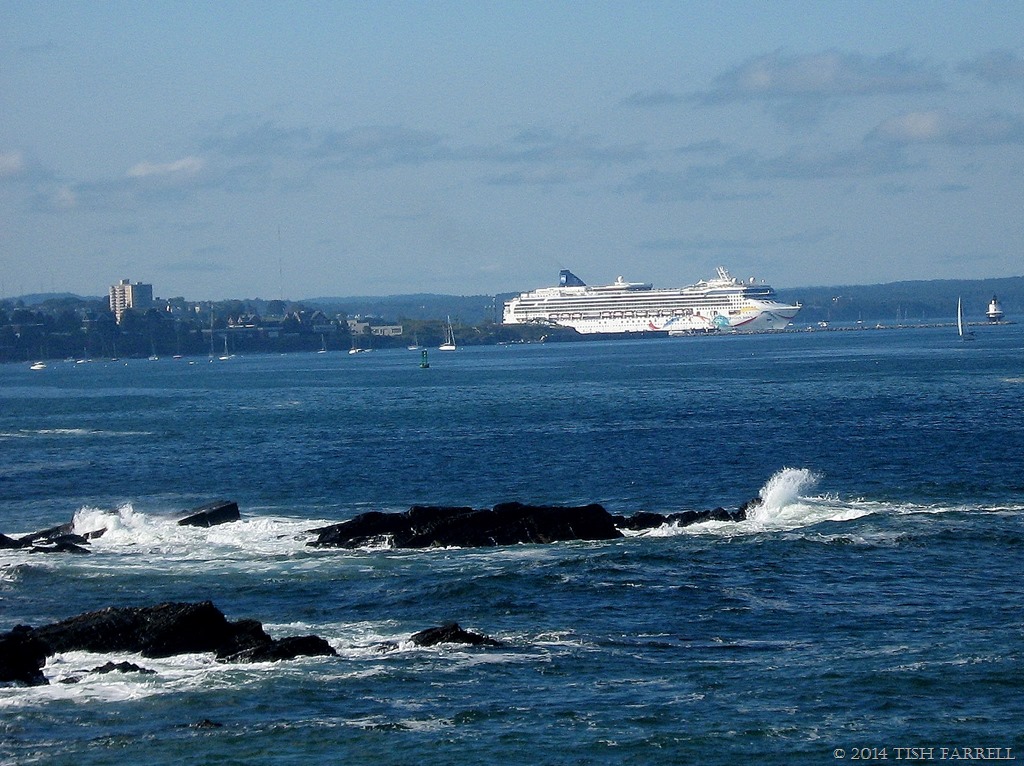
There was none of this kind of drama on the day we went to Portland Head Light. The morning’s sea mist had dispersed to dreamy afternoon sunshine. We watched a huge cruise ship sail out of Portland. People milled about the gift shop and ate ice creams. September in Maine – what could be nicer?

The Portland Head Light is the state’s oldest lighthouse, built at the behest of President George Washington between 1787 and 1791. Apparently government funds at the time were very tight and the story goes that the President ordered the masons, Jonathan Bryant and John Nichols of  Portland, to use materials taken from the fields and shore and haul them to the site by oxen.

The original plan was for a 58-foot tower (17 metres), but when it was done it was realized that the light would not be visible beyond the headlands to the south. A further 14 feet (4 metres) was required, at which point Mr. Bryant quit, leaving Nichols to finish the job and build the small house beside it. The Light was dedicated by the Marquis de Lafayette and first lit on January 10 1791 using 16 lamps fuelled by whale oil.

The first keeper was Captain Joseph Greenleaf, an American Revolution veteran. For his pains of manning the Portland Head Light, Greenleaf was allowed to live in the keeper’s house and fish and farm nearby. He received no pay. By June the following year he had had enough. He wrote to the authorities telling them of his travails. For one thing in the winter the ice would form so thickly on the lantern glass it obscured the light, and he would have to go up there and melt it off. It is hard to imagine what kind of effort this would have involved, and in alarming conditions too. In 1793, until his death two years later, he received an annual salary of $160, which by today’s values would be around $4-5,000.  Not exactly riches for saving life and property from treacherous seas.

Portland Headlight

IMG_0255

Ailsa’s travel challenge: noise

copyright 2014 Tish Farrell

on a knife edge at victoria falls

Zambia's Victoria Falls looking along knife-edge to Zimbabwe's falls

Hang-gliding over the hundred metre precipice at Victoria Falls is not to be recommended. Nor had I intended to take the plunge, my ‘sail’ being nothing more than a wet kanga-wrap, held up to fend off a tropical deluge. Somehow, though, circumstances (and a lack of sensible forward planning) had led us to the Falls’ knife-edge just as Zambia’s 18-month drought was ending, and the rains beginning. Even without  the hang-gliding it was a heart-stopping moment.

The prolonged drought across Southern Africa was of course the reason for Team Farrell’s presence in Zambia in late 1992. The Team Leader, Graham, had been seconded to the European Union Delegation to manage maize flour and cooking oil distribution to foodless villages across the nation. We had only been in the country a couple of weeks when G was directed to go down to Livingstone on the southern border to inspect a newly arrived consignment of maize. His boss suggested he should drive down on a Saturday and take me too. Naturally Nosy Writer (that’s me) was only too pleased to head off on a several hundred mile safari.

Looking back, the diplomat’s suggestion that I should go was possibly a kindness in disguise. Nothing was spelled out, since we were newly arrived, and Bernard (aka the boss) did not wish to scare us before we had found our bearings. But security in the capital Lusaka was not good. President Chiluba, the newly democratically elected leader, had been in office for barely a year, this after ousting the incumbent of decades, Kenneth Kaunda.

Later it transpired that Kaunda’s army officer son, Rezi, had been intent on destabilizing the country, and was apparently behind the city’s upsurge in violent crime. On top of that, in neighbouring Zaire (now DR Congo) President Mobutu had not been paying the army, and so gangs of gun-toting soldiers would drive down to Lusaka for a spot of night-time car-jacking and house-breaking. In a nation of impoverished people, the diplomatic quarter was the obvious target. Better, then,  that I should not be left alone. Not that I knew this then. Nor had G’s company thought to mention any of this before offering his services to the EU. As they say, ignorance is bliss.
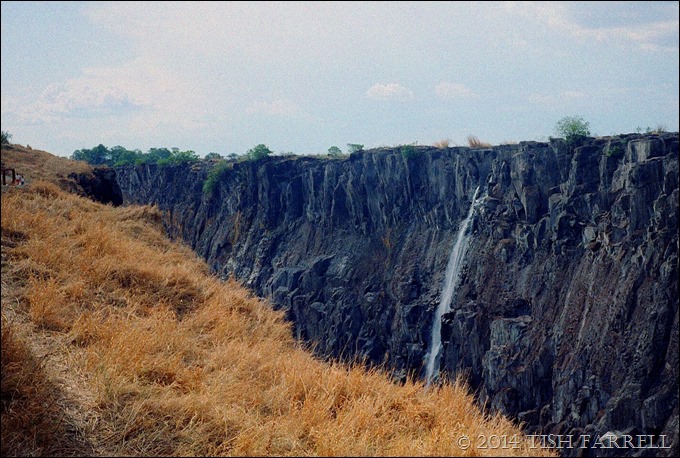
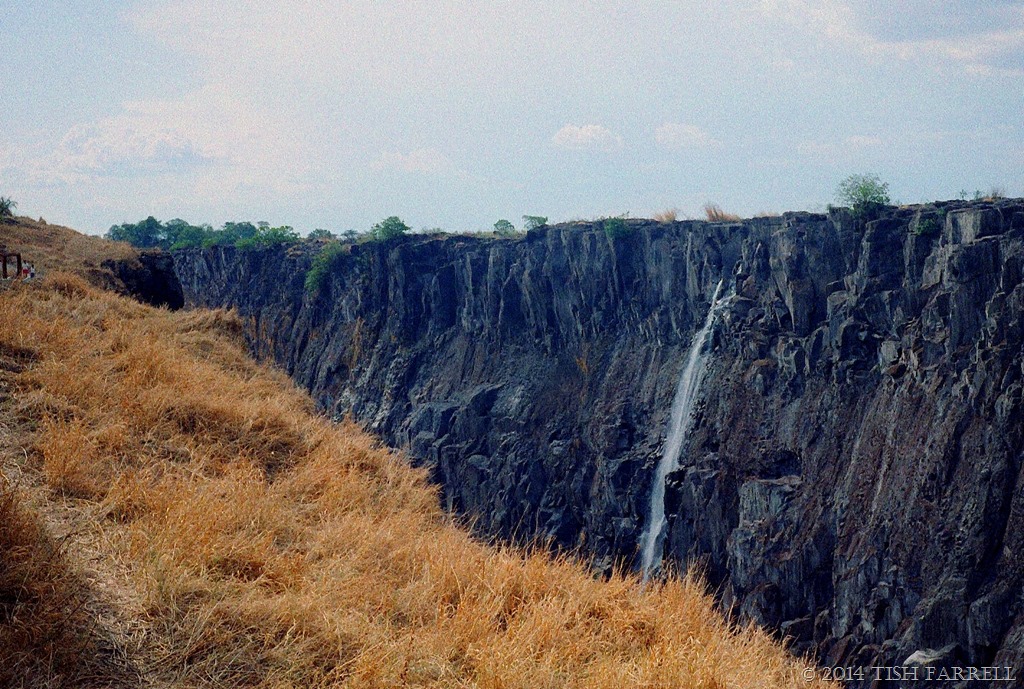
Zambia's Victoria Falls in the dry season

And so one Saturday morning under a wide blue, and seemingly ever rainless sky we set off south. The road, once clear of the city, ran on mile after mile after mile with hardly another vehicle in sight. We passed through landscapes of rolling woodland, the tall-tree miombo which, at first glance seemed more like Europe than Africa. After nine months in Kenya the vistas, too, seemed curiously lacking in drama –until, that is, we reached Livingstone.

Our hotel stood beside the Zambezi, and after tea on the lawn in the English manner it was off to the nearby Falls. The photo above was my first view of them. I wasn’t sure whether to laugh, cry or simply stare open-mouthed. Where was the water?

The drought had much to do with it of course. But the other reason was that Zambia abstracts large volumes of water to run its hydroelectric plant.
004 (2)

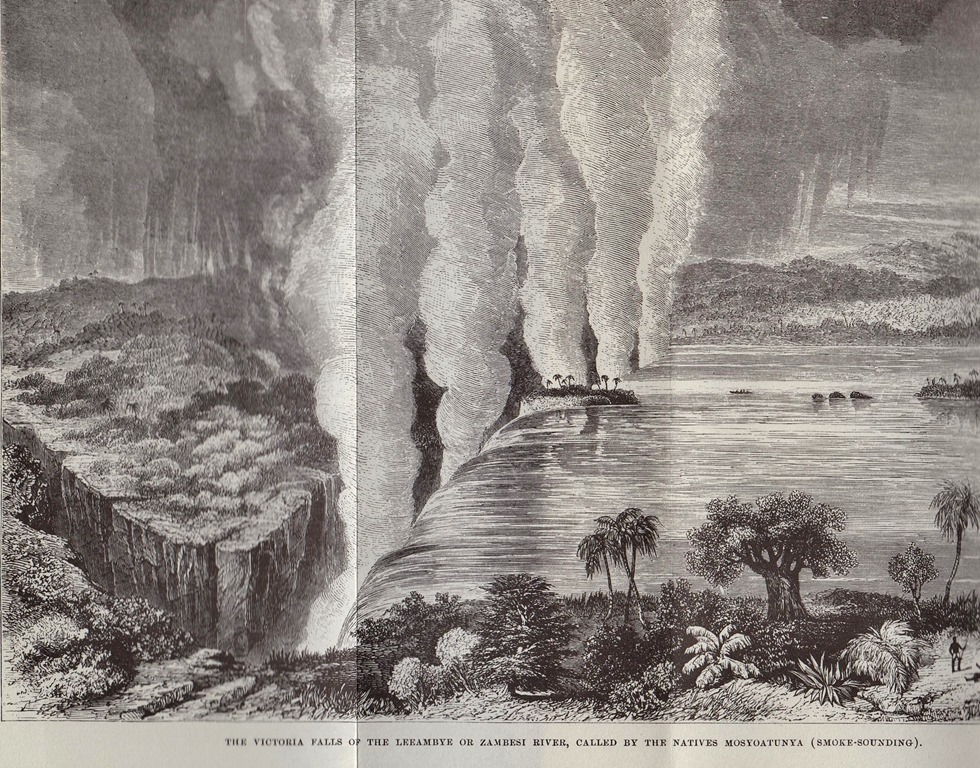
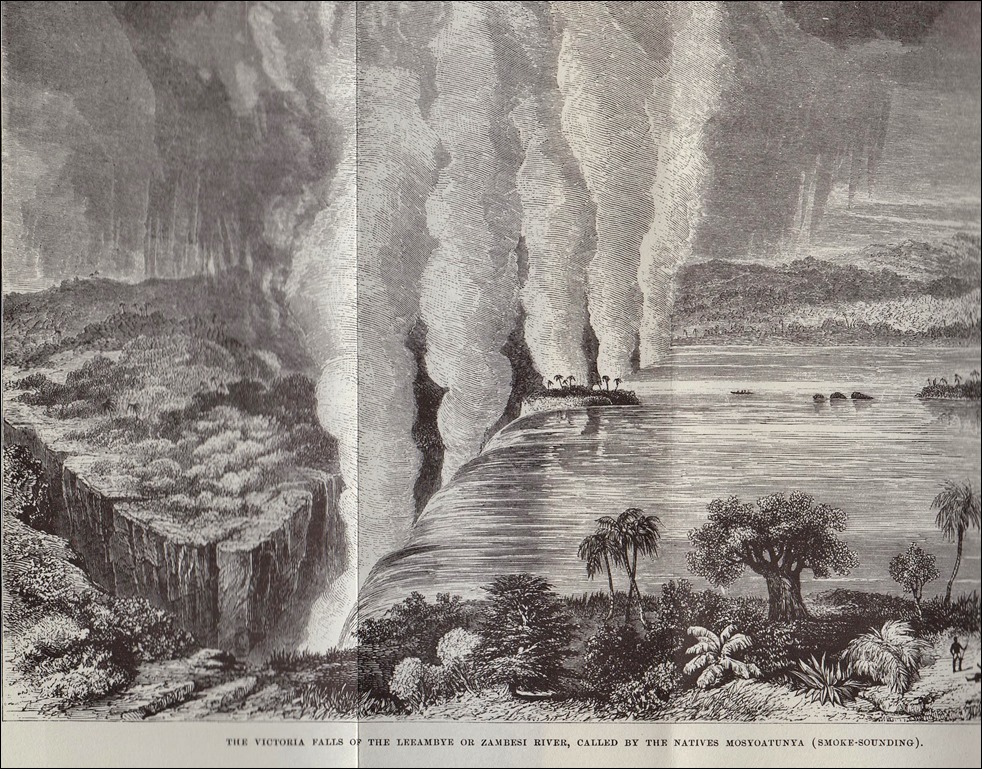
The Falls as seen (and ‘discovered’) by  David Livingstone.

Engraving from Missionary Travels and Researches in South Africa 1857

*

G told me the best view of the falls was across the border in Zimbabwe, and that if we had remembered to bring my passport we could have walked across. Most frustrating.

Instead, we walked along the path beside Zambia’s waterless gorge.  But trailing through dead vegetation while staring at the stark basalt cliff face felt more and more oppressive. It made me think of Tolkein’s Mordor. We gave it up and went back to the hotel.

Our room theoretically had a river view. In reality all we could see was its empty bed, with huge boulders and clumps of palms here and there. But on Sunday afternoon I noticed that people walking across it. “Let’s go,” I said.

The sun was shining when we set off, and soon we were joined by a boy who appeared from nowhere and offered to guide us to the best Falls’ viewpoint. We duly followed, picking our way round oily looking rock-pools, mammoth sized boulders, and piles of fresh elephant dung.

We must have scrambled on for nearly a kilometre when the sky started to turn grey. I began to feel nervous, glancing upstream and expecting a wall of water to come rolling down. Or to walk round a boulder and into an elephant.

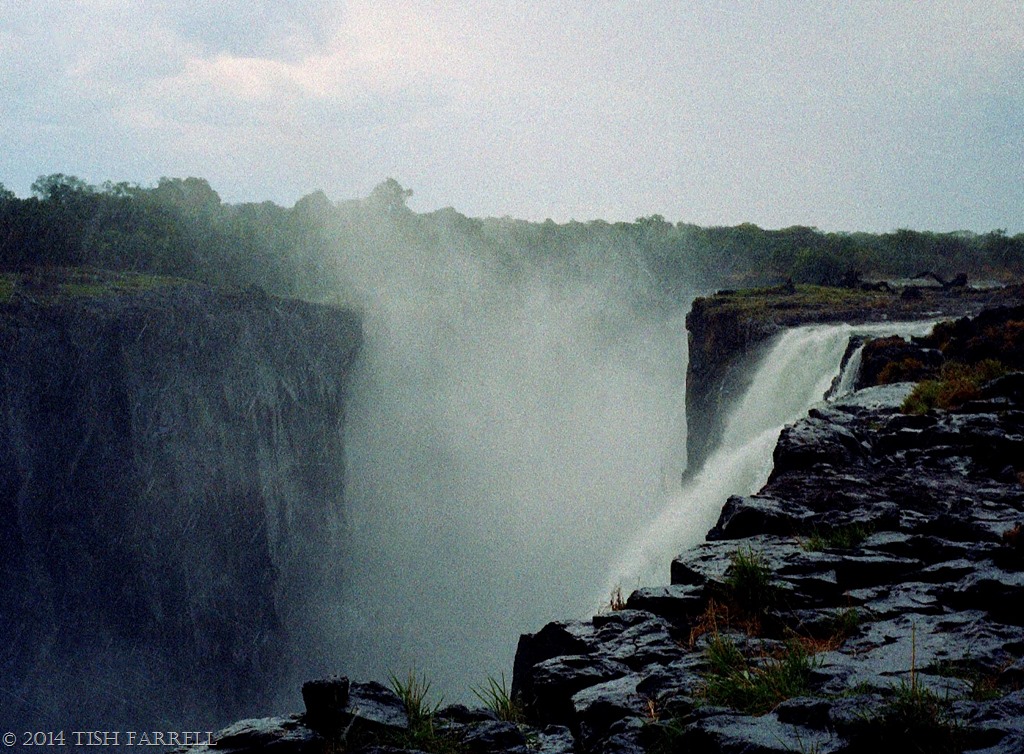
And then the rain came down. Fat freezing drops. We made a dash for cover, which happened to be some trees on Livingstone Island, the very spot from where the explorer had first viewed the Falls in 1855. We crouched for ages under dripping trees until at last, thoroughly soaked, G asked the boy if the ‘good view’ was much further. On discovering that it wasn’t we made a final dash. And here it is. The view:
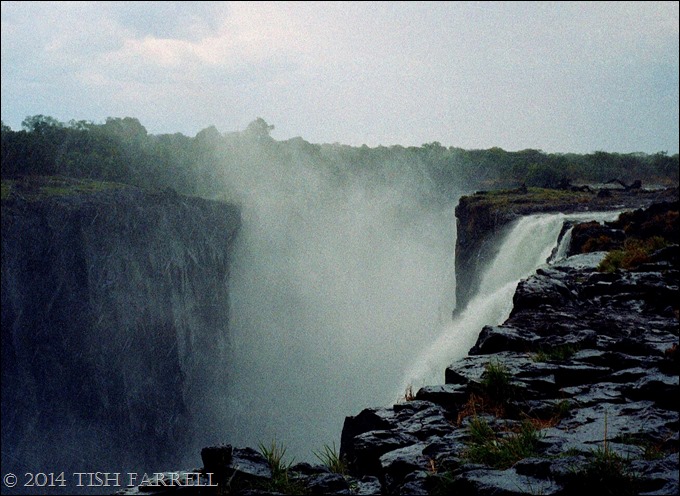
Victoria Falls, looking over the knife edge in a rainstorm

Not much to be seen for the spray coming up, and rain coming down. I took this quick snap, and then held up the sodden cotton wrap that I had been wearing earlier to fend off the sun. As I stood on the knife-edge the sudden gust of wind that filled the wrap was enough to lift me towards the abyss. I stepped back in shock. I’d had more than enough of Mosi-oa-Tunya (the smoke that thunders). So had the boy.  Soon he was sprinting away without even waiting for a tip, and that really had me worried. What did he know that we didn’t? We slipped and slid, back the way we had come. More phantom elephants. More imaginary flash floods. More getting lost in outcrops of giant boulders. It seemed a long, long way back to the hotel.

It was not until several months later that we finally got to see the Falls, this time from the Zimbabwe side. On this occasion we only got drenched from the spray, while I took yet another wet and misty photograph, but thankfully avoided all inclination to hang-glide.
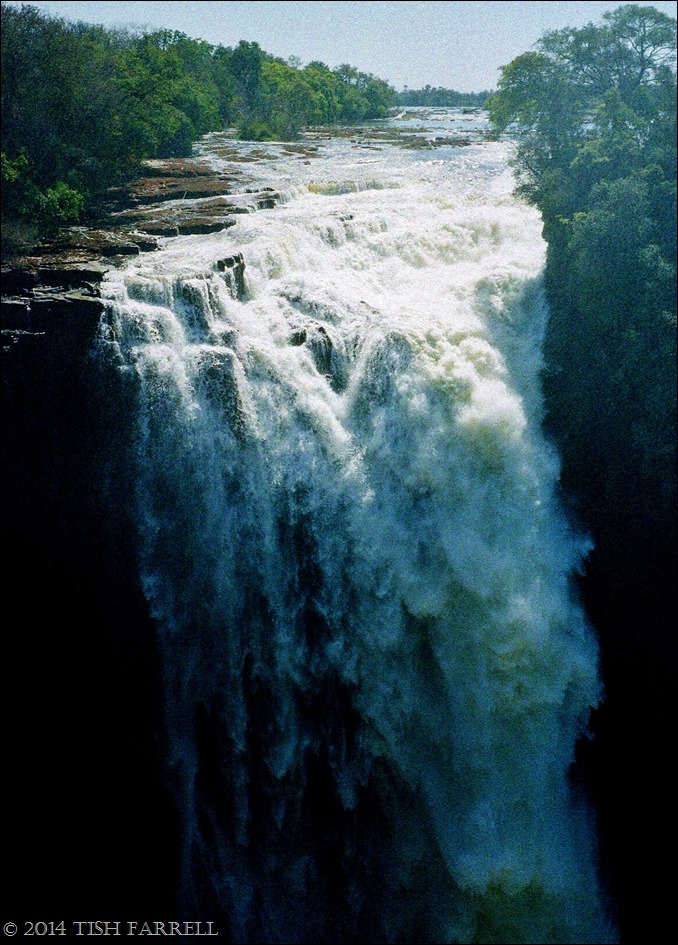
Victoria Falls and Zambezi

copyright 2014 Tish Farrell


Related:

The Smoke that Thunders

Letters from Lusaka I

Letters from Lusaka II

Once in Zambia – in memoriam


Daily Post Photo Challenge: adventure for more bloggers’ photo-adventures

Sundown in the Maasai Mara

Scan-140726-0025


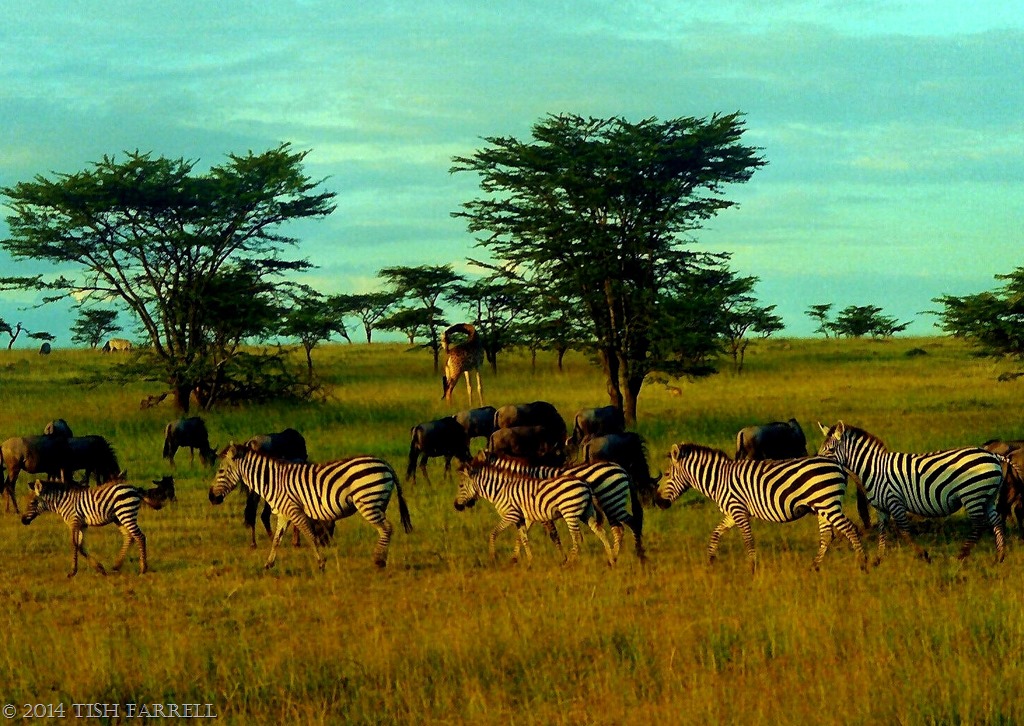
Night comes swiftly at the equator, usually at 6 to 6.30 pm. But around 5 pm there is that perfect moment when the light is like molten honey.  This shot was only a quick snap, taken after a game drive, and as we were heading back to camp on the Mara River. Our driver-guide was intent on one last go at spotting a leopard. For our part, we were simply entranced by this scene. Even at the time it seemed as if we had stepped into an oil painting. Besides, this was the most game we’d seen in one place all afternoon. Because that is something that wild life films tend not to show you: that you can drive for hours across the African bush and not see a single animal.


There is also more going on in this scene than is immediately obvious. Behind the zebra are some wildebeest; then the giraffe between the thorns. I’m not sure what the pale animal is on the top left horizon, but from its size I’d say  it is probably an eland. Then if you look carefully  just below the right hand bough of the right hand thorn tree, you might make out a brown dog-like shape. Hyena. There will doubtless be others in the grass. Once it was thought they were only scavengers, moving in on big cats’ kills. But now they are known to be hunters too. They prey on gazelles and larger antelope. Even a lone hyena can bring down a full-grown wildebeest, and pack away 15 kilos of meat at one sitting. They have jaws like industrial meat grinders, and believe me, to come upon one at close quarters, is not recommended.


Sunday Stills: Crowd Work

copyright 2014 Tish Farrell