Here In The Marches, March Comes In Like A Lion

IMG_4681sq

*

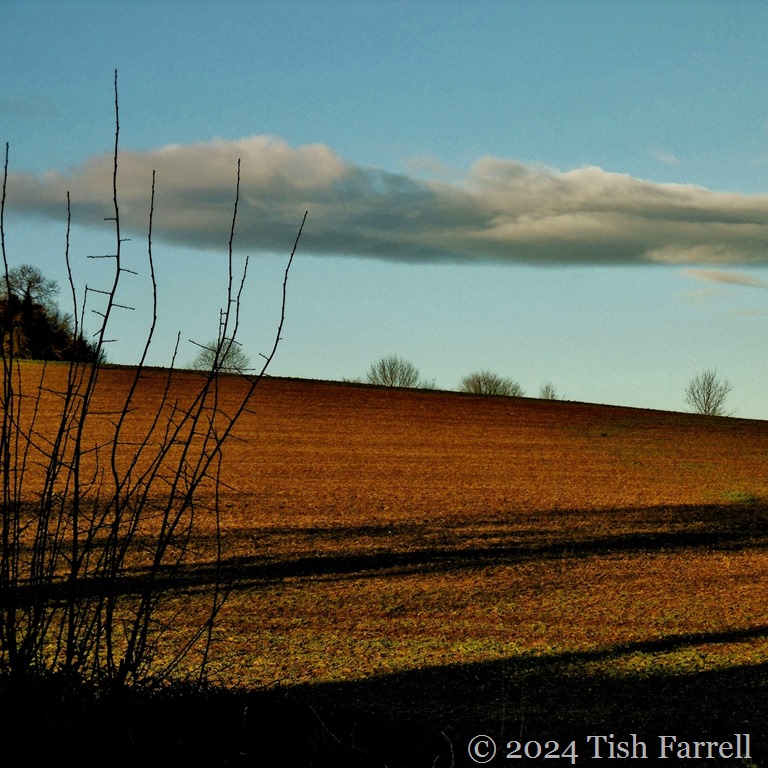
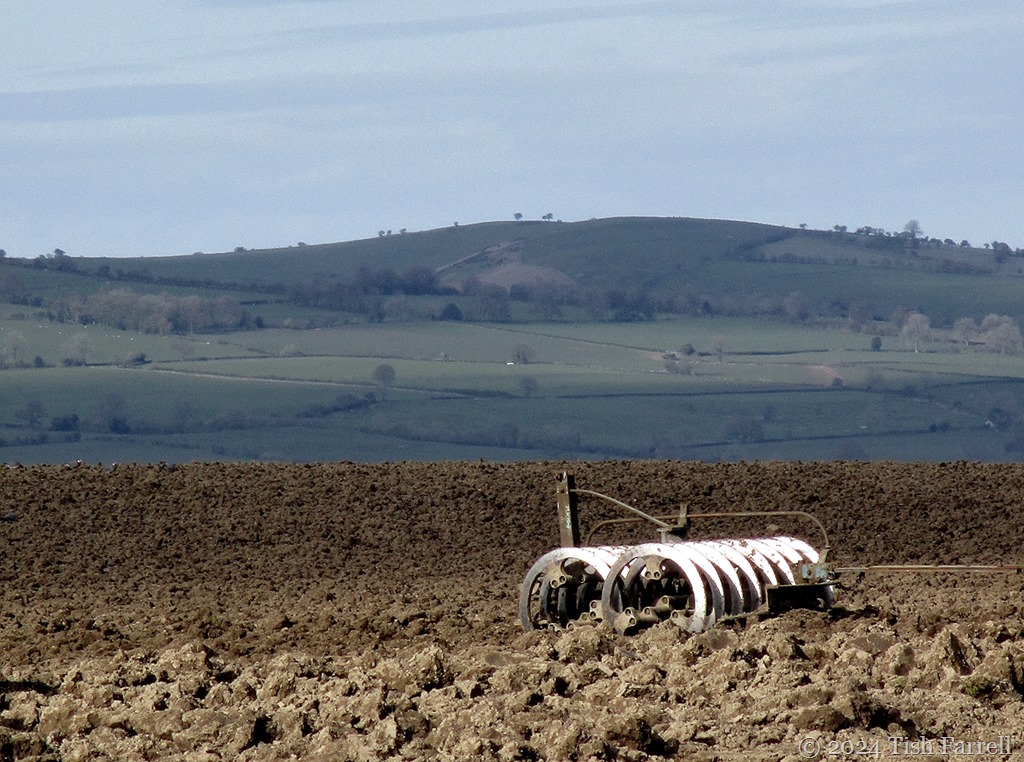
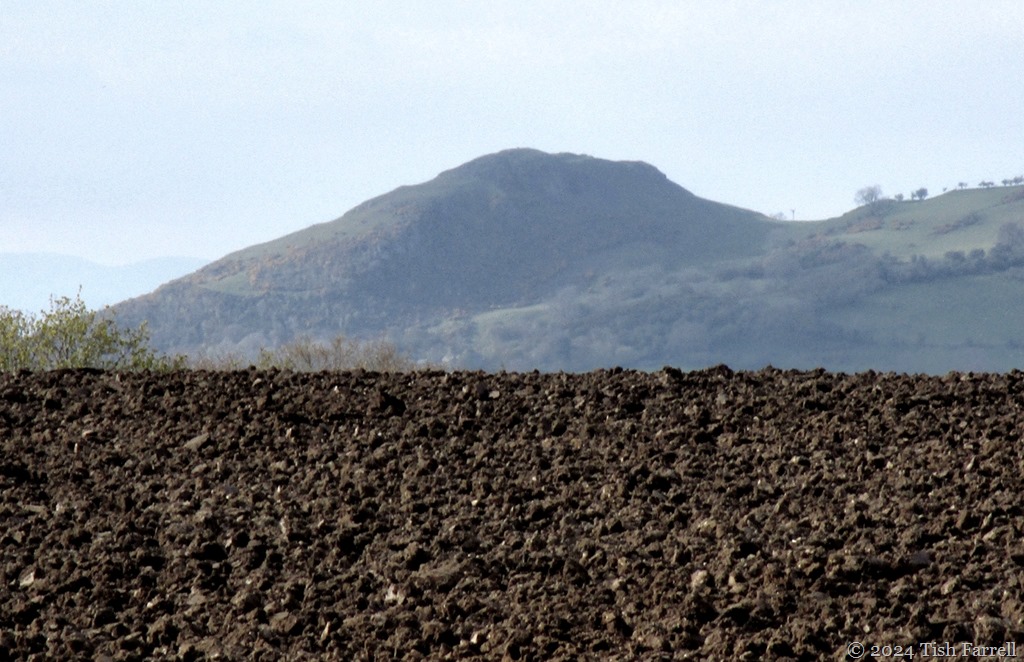
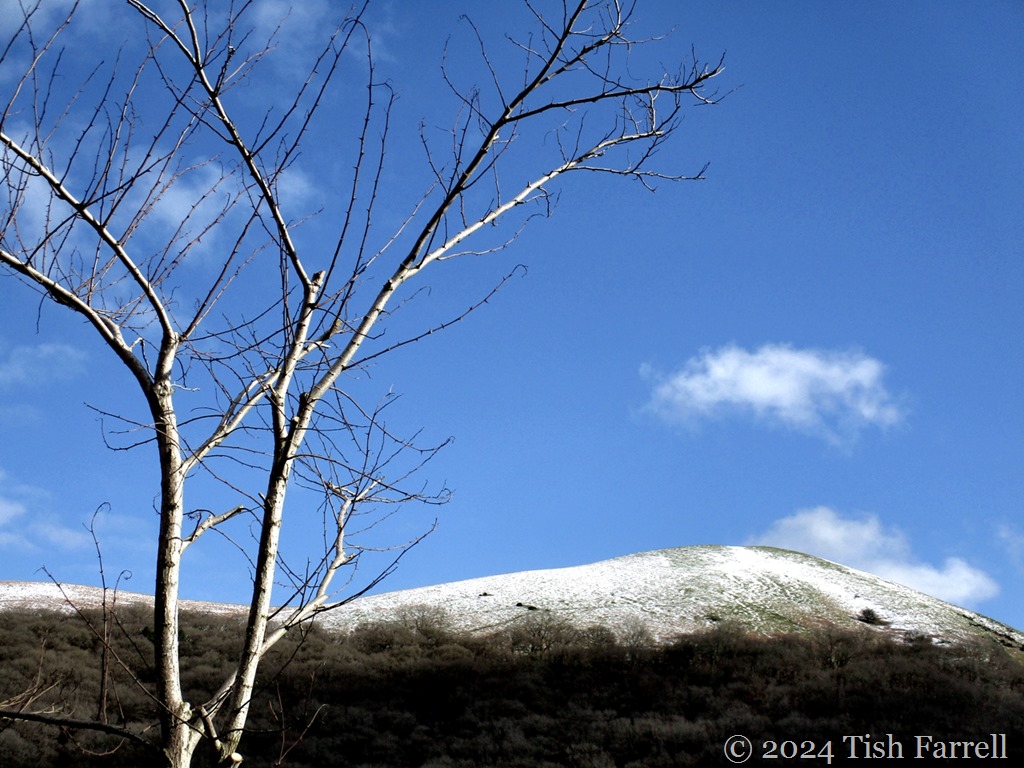
And we can only hope that old country lore comes up to snuff when it says that March coming in like a lion, goes out like a lamb. It can’t be too soon for some lamb-weather either. At least yesterday, after I’d taken this first photo of Ragleth Hill, the sun came out and melted the snow. But it was a one day wonder. Today, after more overnight frost, the wind is roaring round the house and down the chimneys and it’s wet, wet, wet. Downcast daffodils all round.

So, Weather Gods, more skies like this, please. (You can hold on the snow).

IMG_4686ed

Ragleth Hill, Church Stretton

The Weather In The Garden

IMG_4585

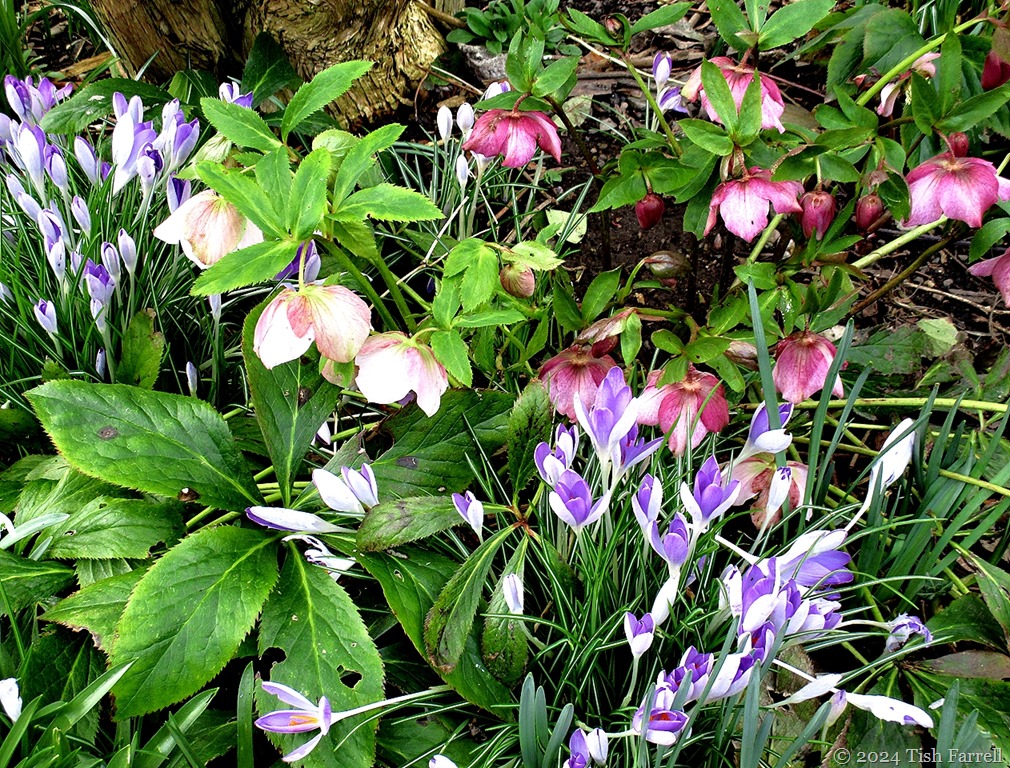
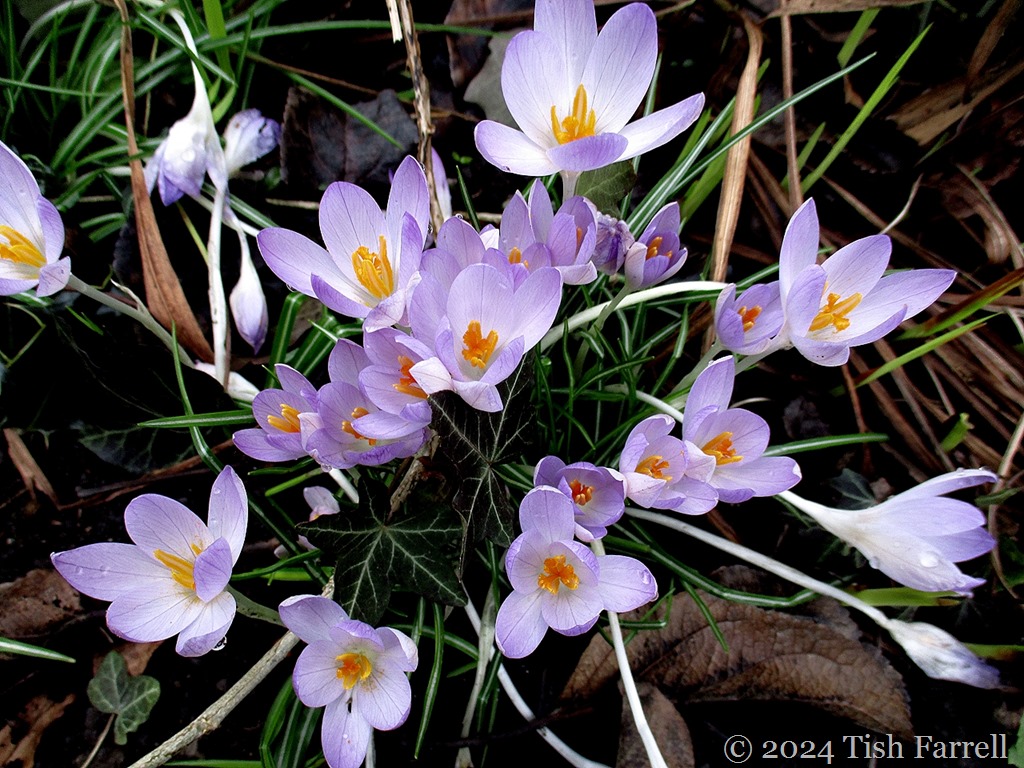
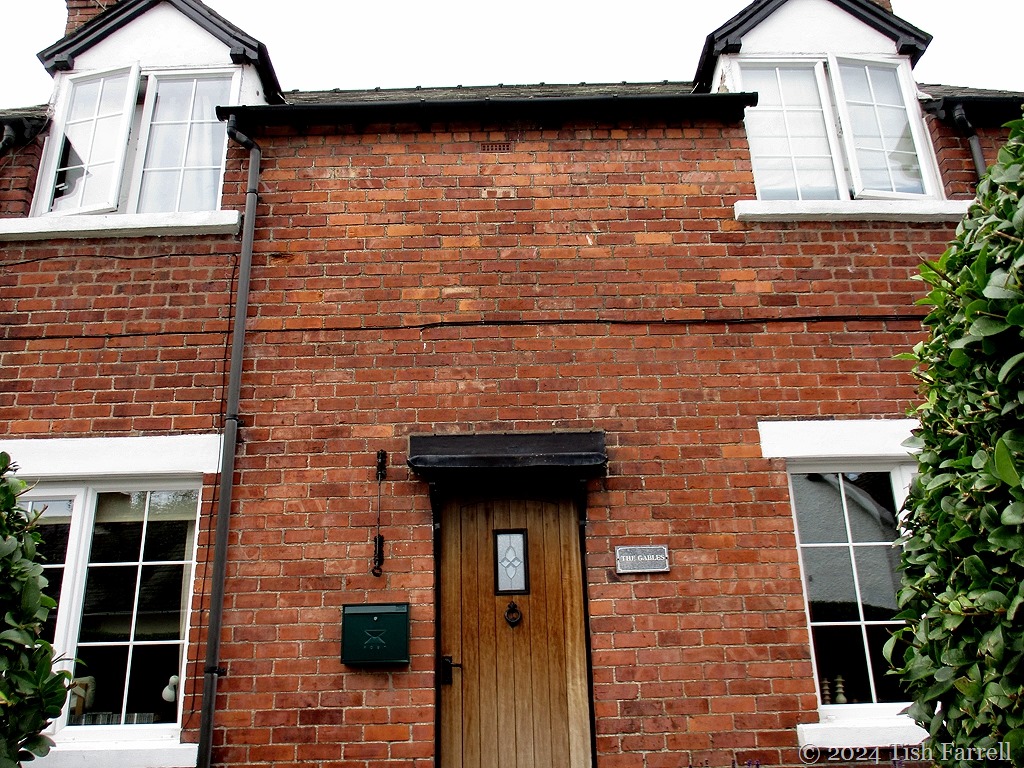
So far this week at The Gables we’ve had frost, biting wind, and yesterday an all-day deluge with wall to wall gloom. But today, St. Valentine’s, the rain has held off. In fact it’s been almost warm, with a glimmering of sunshine, and up in the top garden this clump of seedling crocus was in full fanfare.

IMG_4590

*

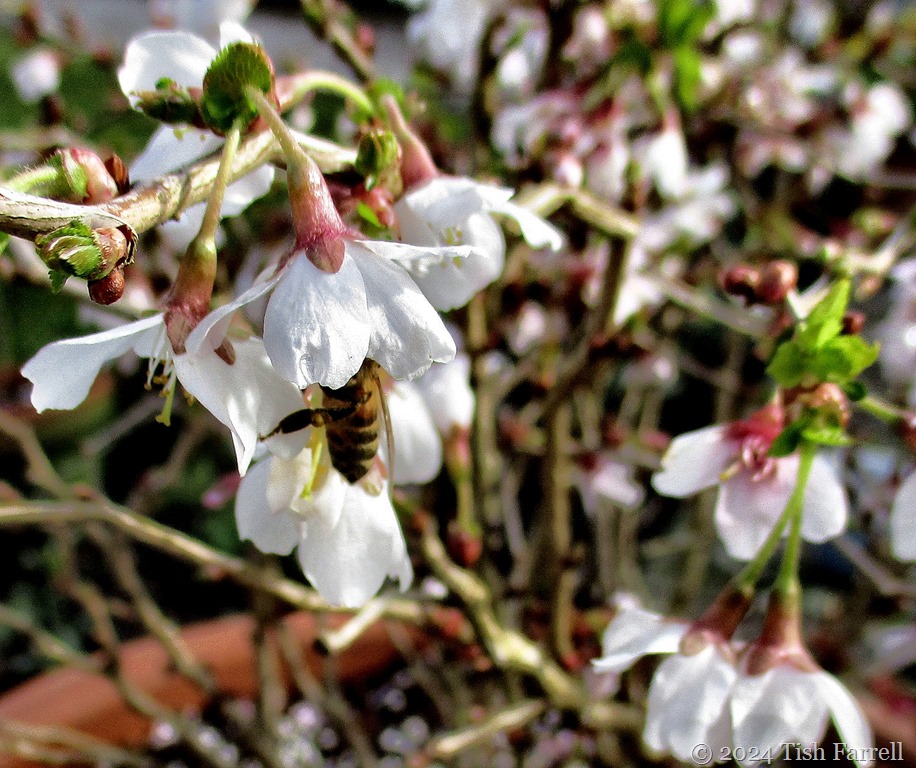
And not only that,  Mr. Whippy, the ice-cream man, was back in town. Jangling rendition of O Sole Mio up and down streets. And then while I was snapping the crocus, along buzzed a honey bee, the first I’ve seen and heard this year.

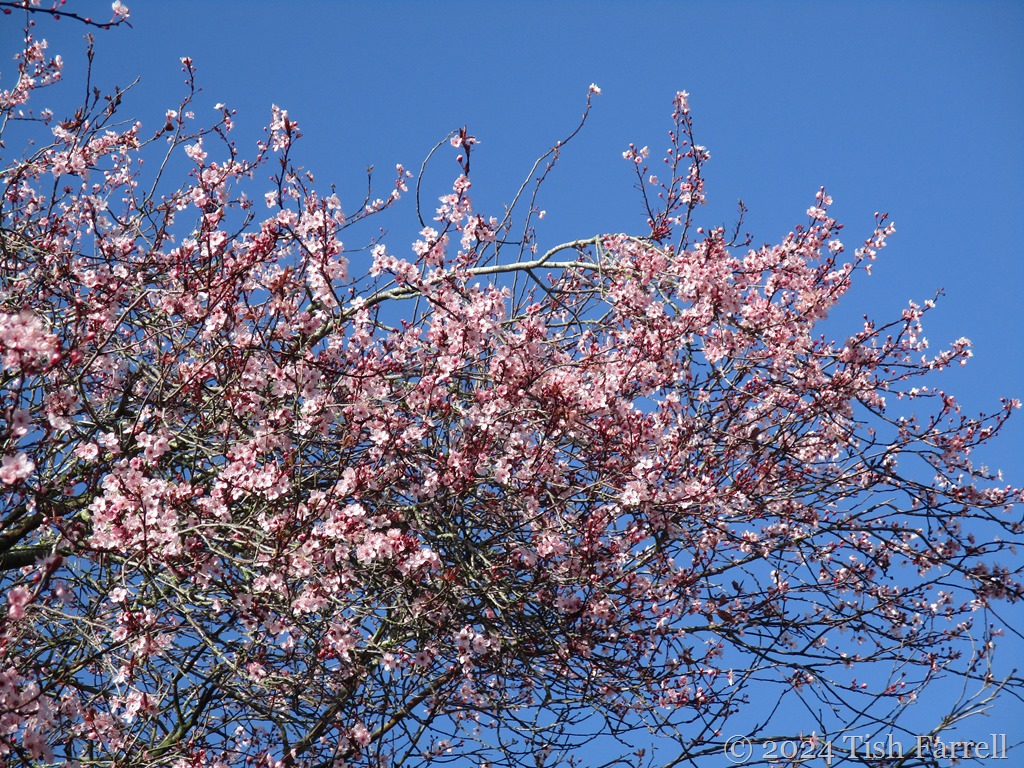
Anyone would think it was spring.

But then February can be a tricksy month in England, ambushing us with a day of sudden warmth, only to whip up more icy blasts just when we’ve been daft enough to cast off our thickest winter woolly.

So: best not to count one’s spring chickens too soon.

This bee, though, is definitely seizing the moment, making the most of fine weather, and a rich pollen harvest. (Note the gathering sac on the rear leg; full pollen facial thrown in). What’s not to love.

IMG_4624ed

IMG_4605ed2

IMG_4622ed

Happy Valentine’s Day!

Lens-Artists: Weather This week Anne at Slow Shutter Speed  has us weather watching. Plenty to inspire us in her lively photo essay.

A Spot Of Kite-Flying In Bishops Castle

red kite

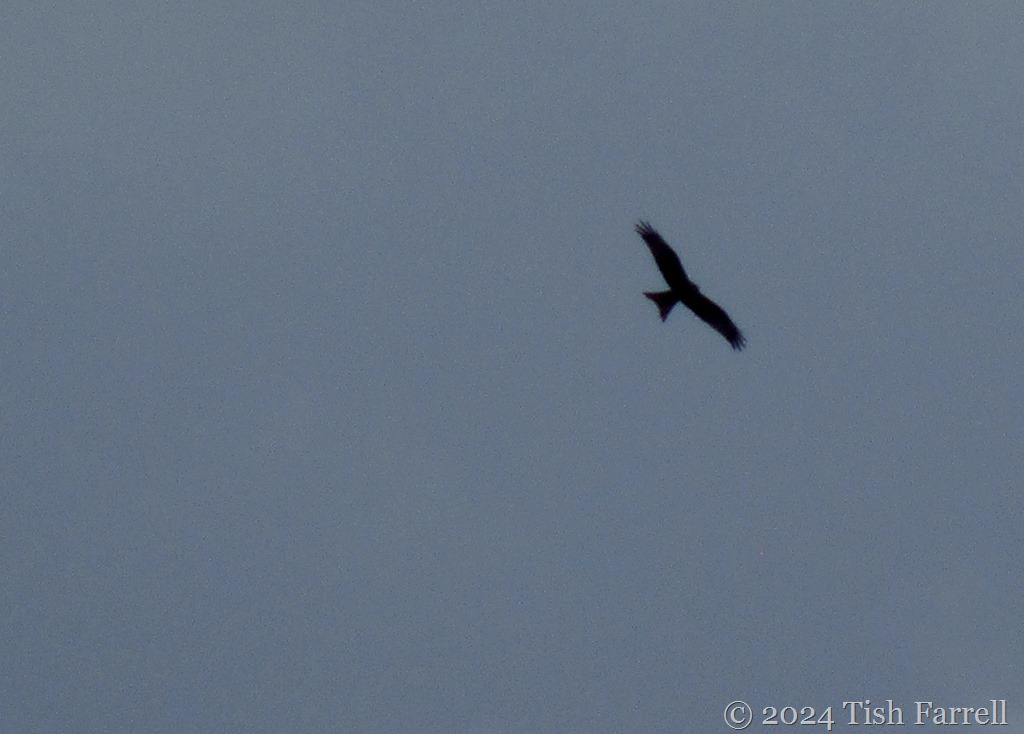
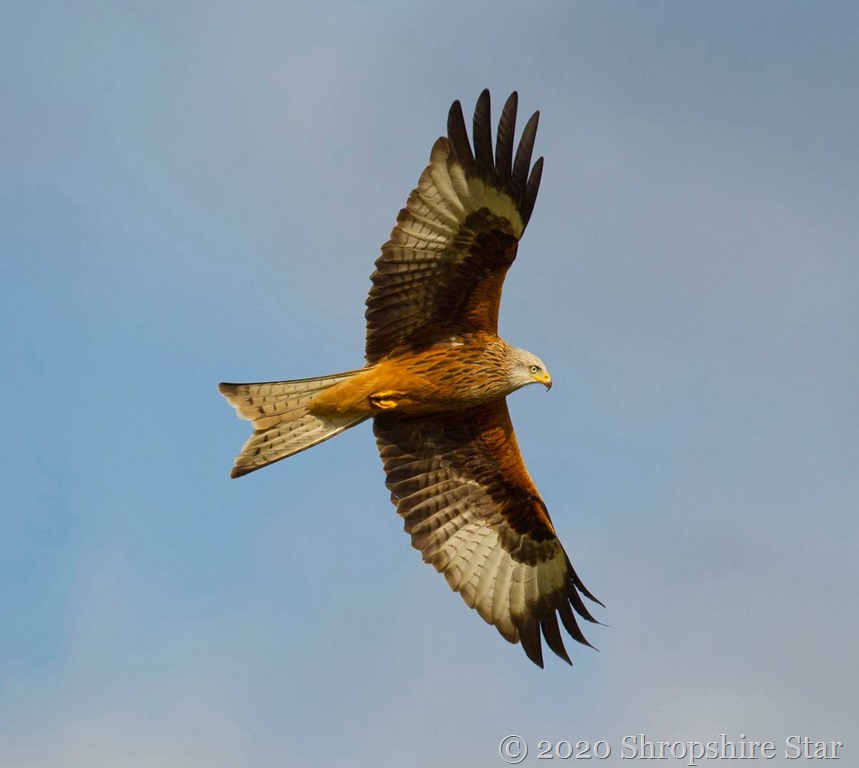
Now that we’ve moved our dining table to its winter position – i.e. from the conservatory at the back of the house to the front sitting room window – we can eat breakfast while watching a red kite scanning the town. It comes most days, drifting over the High Street, circling high above nearby gardens.  With a wing span of around six feet (180 cm) it is one of Britain’s largest birds of prey (i.e. bigger than a buzzard and easily distinguished from that particular raptor by the forked tail.)

A few years ago the species was believed to be near extinction. In the early 20th century the birds were targeted by gamekeepers who thought they were eating their pheasants. Not so, it seems. The birds’ main menu comprises carrion and worms and sometimes small mammals. In fact, back in Tudor times, kites also frequented towns in large numbers, filling an essential function as street refuse cleaners.

When we lived in Kenya, their cousins, the black kites, performed similar duties. Less welcome, we discovered there, was the cousins’ tendency to ‘gate-crash’ Nairobi’s ambassadorial garden parties. They had learned to spot the distracted guest, one with wine glass and plate politely poised and as they hung on the words of some ministerial bigwig. In the birds swooped, snatching up the undefended sailfish canape or piri piri chicken wing. Whoosh and away.

That scene jogs another black kite memory. An indelible brain cell recording. One used to roost in our front garden on Mbabane Road. It would perch in the jacaranda tree and mew all night long. A mournful cry.

red kite

But back to the red kite. Here in Shropshire and Wales, and some illegal shooting incidents apart, they are mostly thriving. This thanks to a re-introduction programme late last century which helped boost remnant populations. And while of course we are more than happy to see them, we can only hope they do not recover the habits of their distant ancestors.

The Wildlife Trusts website explains (also see a nice video clip of a kite in flight):

Red kites were common in Shakespearean London, where they fed on scraps in the streets and collected rags or stole hung-out washing for nest-building materials. Shakespeare even referred to this habit in ‘The Winter’s Tale’ when he wrote: ‘When the kite builds, look to lesser linen’. The nest of a red kite is an untidy affair, often built on top of an old crow’s nest. It is lined with sheep’s wool and decorated with all kinds of objects like paper, plastic and cloth.

I will let you know how my washing fares when drying weather resumes.

2023 Began Beside The Sea

IMG_2372ed

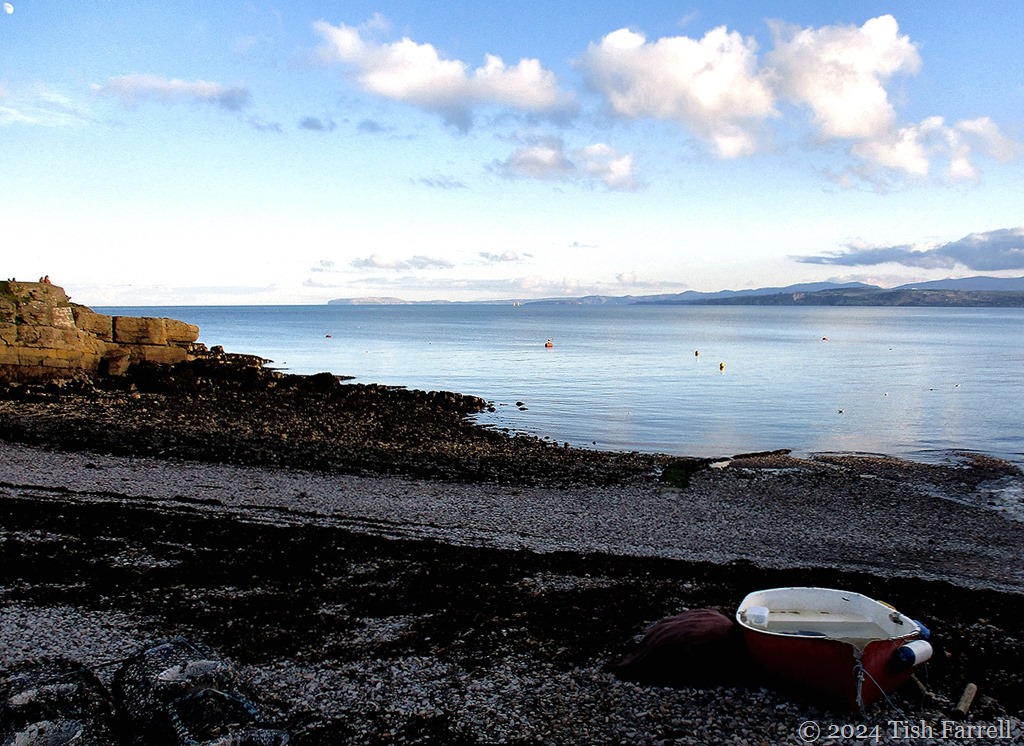
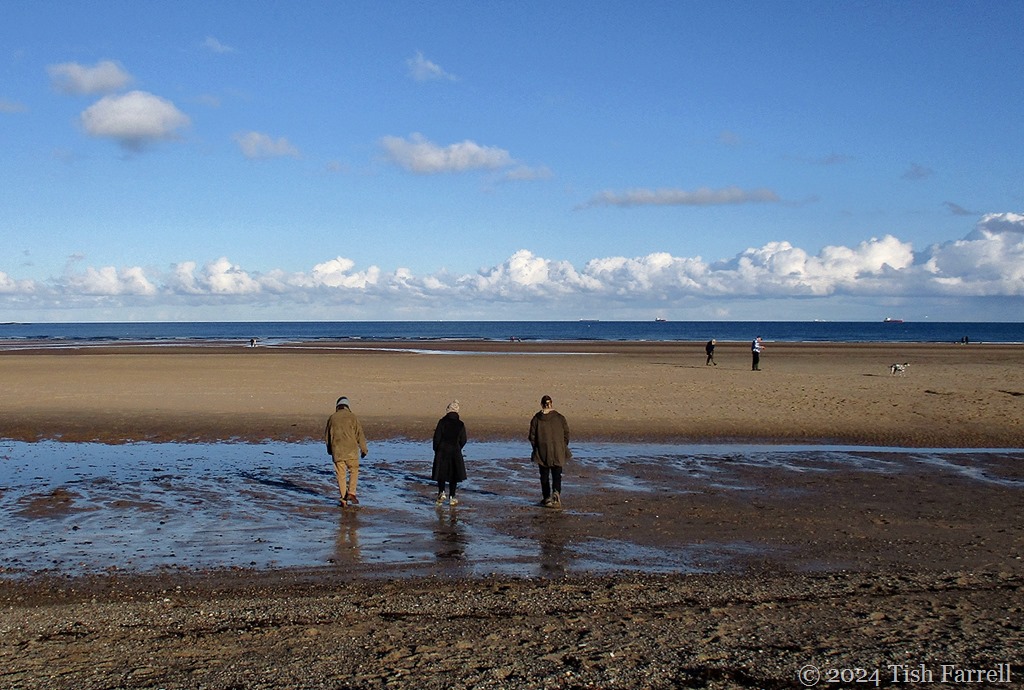
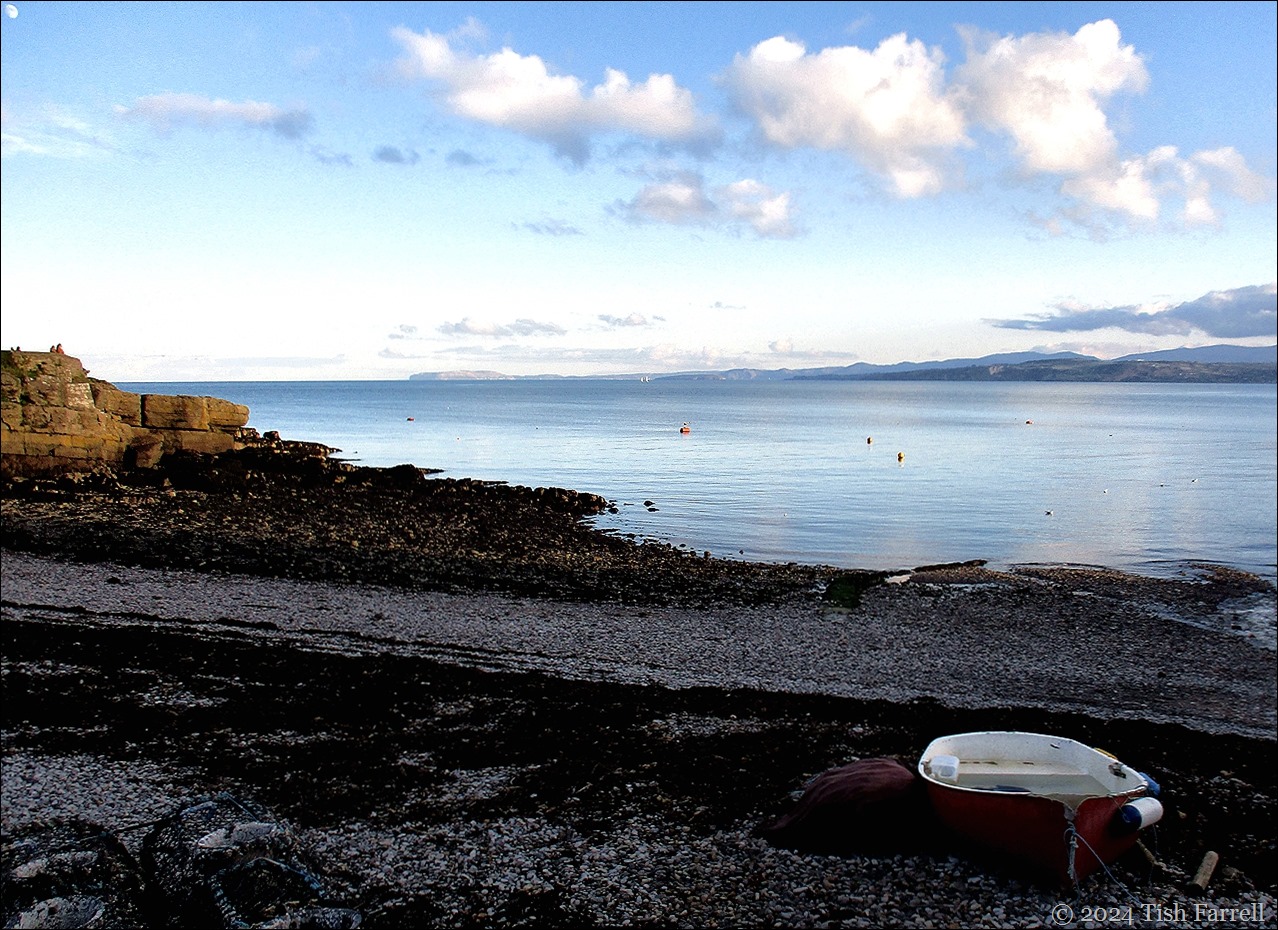
When last year began we were on the island of Anglesey in North Wales – gathering with family for a belated Christmas celebration. It was good to soak up some blue tranquillity. At the time, we were fretting over the sale of our cottage, plus trying to find a bolt-hole to rent while we looked for a new home to buy. All unnerving in all sorts of ways; nothing straight forward.

winter beach

*

Finding a house to rent proved almost as hair-raising as selling the cottage (Huge demand, few available properties). Only by the skin of our teeth did we secure a place in time for moving day in early March. And then it snowed – for two days, an unexpected blanketing that closed most of the roads. Snow – of all things. The Farrells had not factored that in. Still, a day later than planned, and by devious routes, the removal lads came through. We were re-homed.

Then more unforeseen happenings.

IMG_2716ed

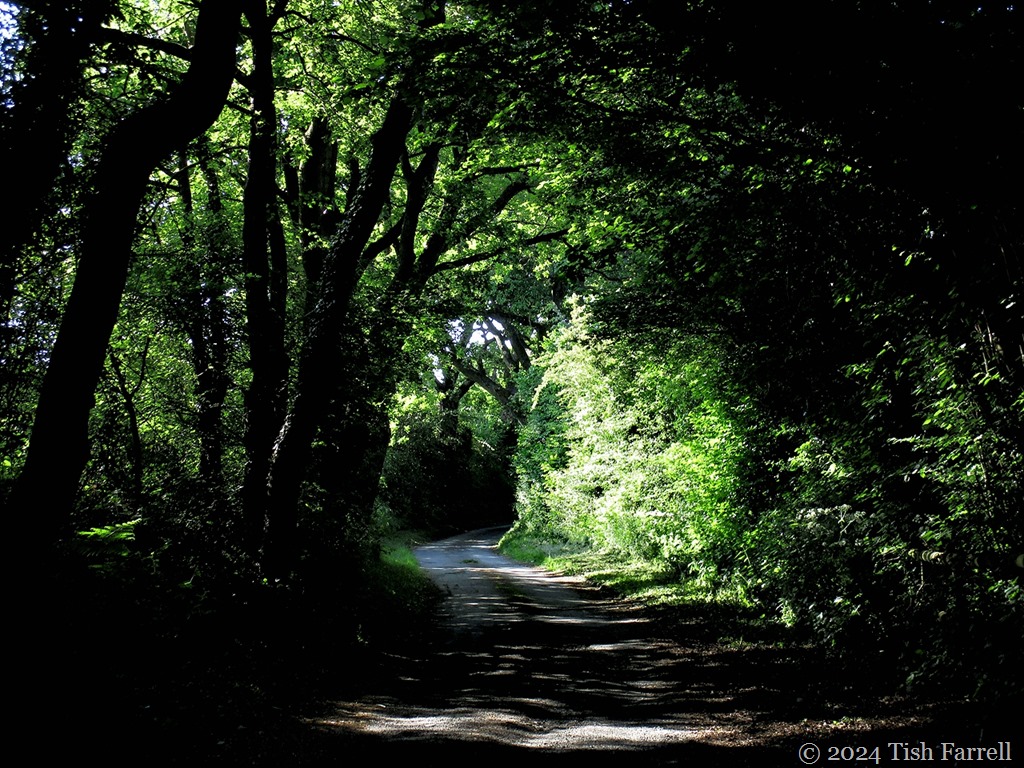
View from one of Broseley’s many country paths: bright and cold in March

*

By the time we moved to Broseley (East Shropshire), we had already set our house-buying sights on Bishops Castle or points well south-west of the county. For one thing, we wanted to be nearer to my sister, and I’d anyway dismissed Broseley as a final destination. I’d known it from an earlier chapter in my life and always thought it a plain and unalluring town.

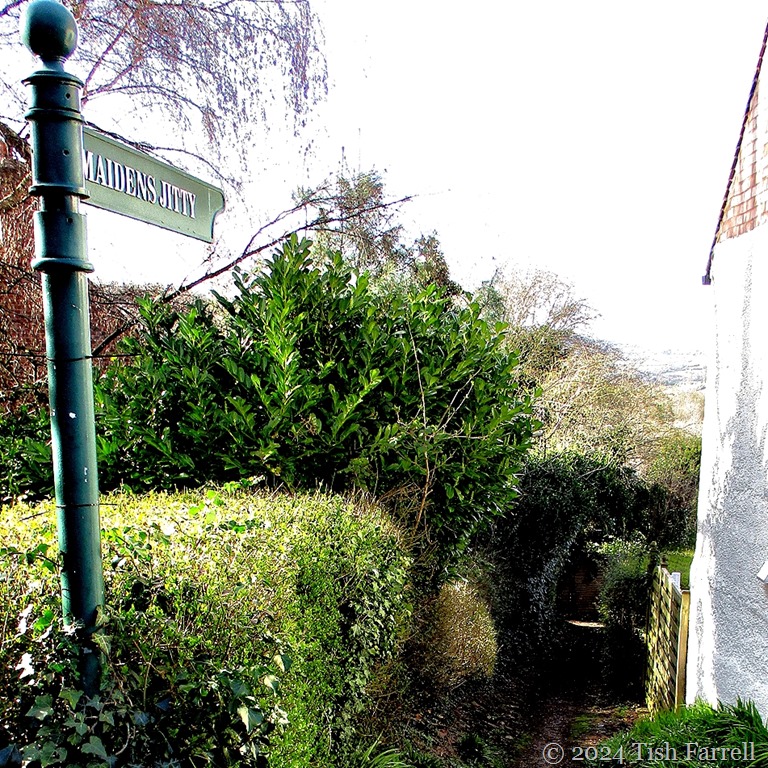
Just shows what I know. I didn’t expect to fall in love with the place. It began with finding a maypole at the end of our street; and from it a sweepingly magnificent view above the Ironbridge Gorge. And it began with finding beguiling footpaths that meandered in and out of town and took us to some wild, wild places that seemed slipped out of time. And most of all it began when I discovered the network of thoroughfares and alleyways that belonged to Broseley’s ancient industrial past, the wonderfully named jitties, that to my mind suggested jetties, or things that jutted like prows of ships. Exploring them on our cool summer days felt like voyaging – through time, space, the imagination.

Go HERE for the jitties posts.

IMG_3105

Here is one of many favourite finds: some historic re-purposing of discarded artefacts in an old wall on Gough’s Jitty. It’s been built from saggars. These earthenware boxes were once used for the packing of clay pipes, then stacked in a bottle kiln for firing. There were several factories in the town from the 17th century onwards. They exported their wares around the world. In fact clay pipes were often referred to as ‘Broseleys’.

*

IMG_2703ed

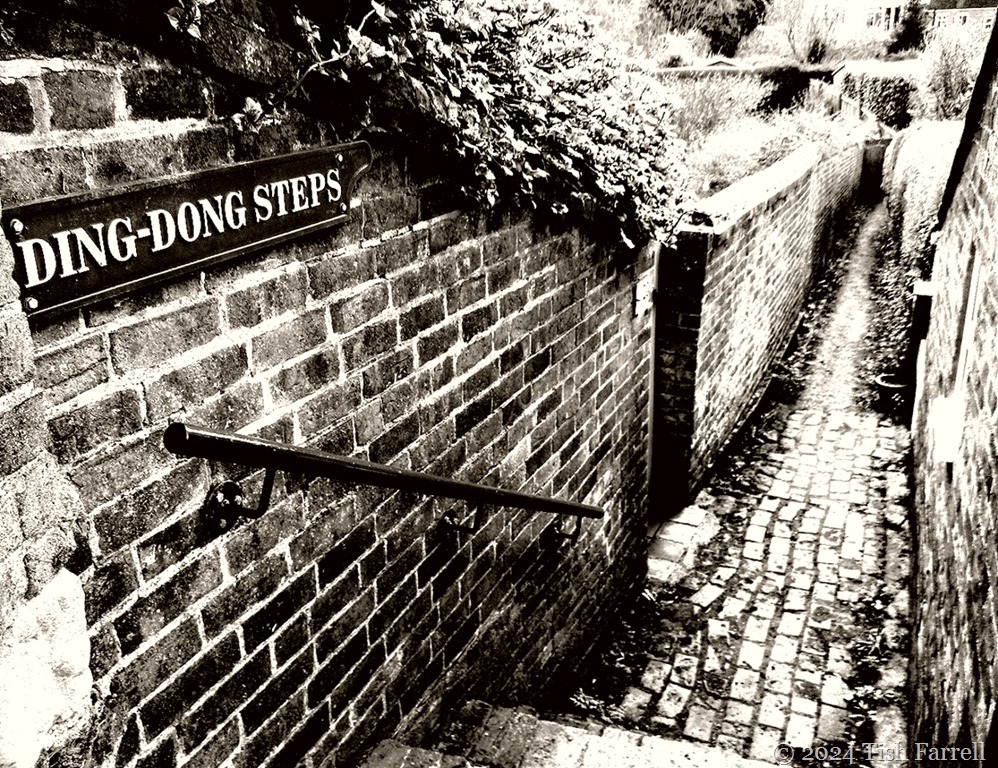
Ding Dong steps 2

Apparently the spot for some illicit fist-fighting back in the day.

*

IMG_3415

Lodge Lane became a favourite walk. Once there would have been the heavy rumble of trucks hauling coal from Broseley’s mines, an area still called the Fiery Fields due to the old coal pits’ erstwhile tendency for spontaneous combustion.

*
IMG_3314

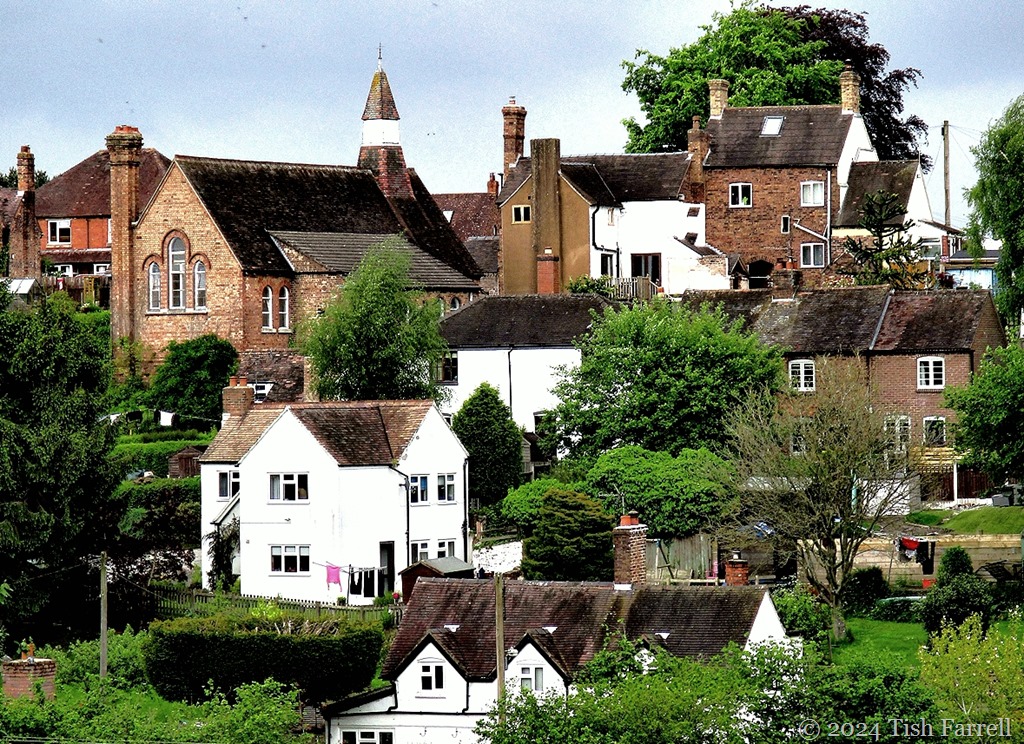
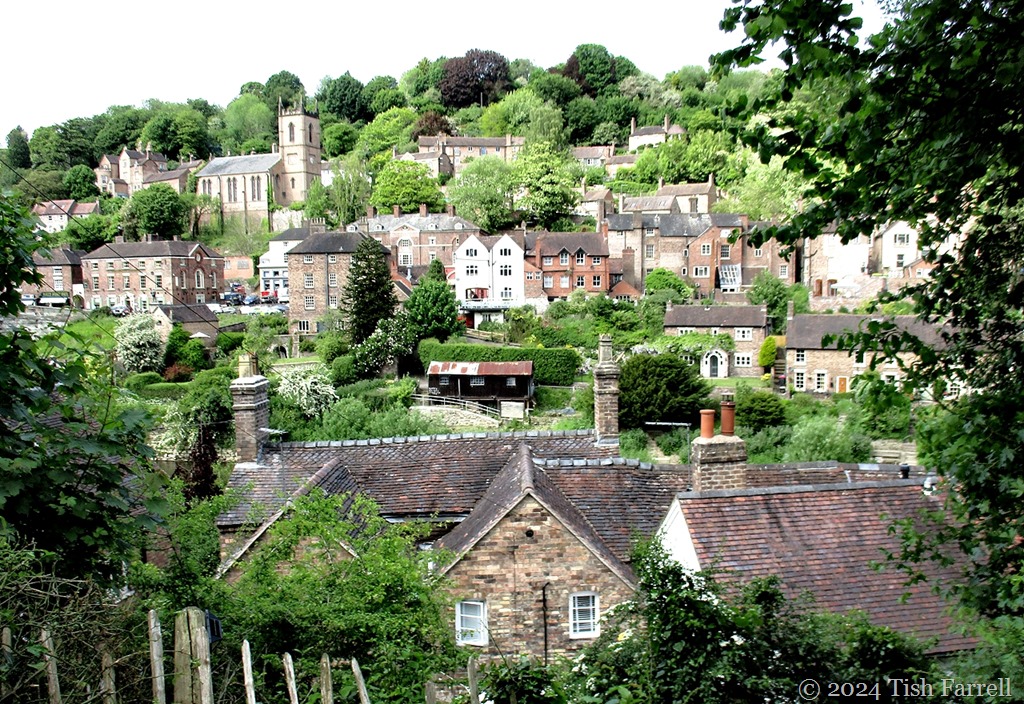
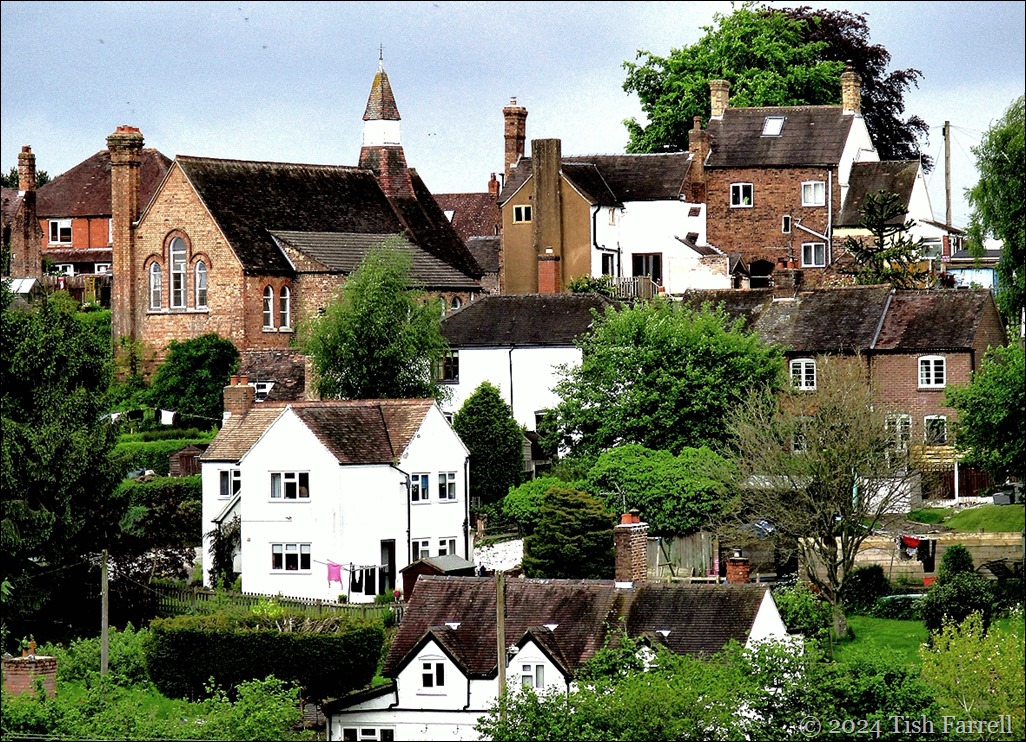
Broseley sits above the Severn Gorge, directly across the river from Ironbridge and Coalbrookdale, so-called birthplace of the Industrial Revolution. The town evolved from an early 17th century squatter community of immigrant miners. Coal, clay, ironstone and limestone were plentiful. There was timber for construction and for the making of charcoal for fuelling furnaces and forges. And there was the river for transport down to Bristol. The wealth of local resources attracted the likes of ironmaster-pioneer, John ‘Iron Mad’ Wilkinson, who lived here from 1757 in a very fine mansion opposite the parish church.

I loved these views of multi-period, multi-layered habitation.

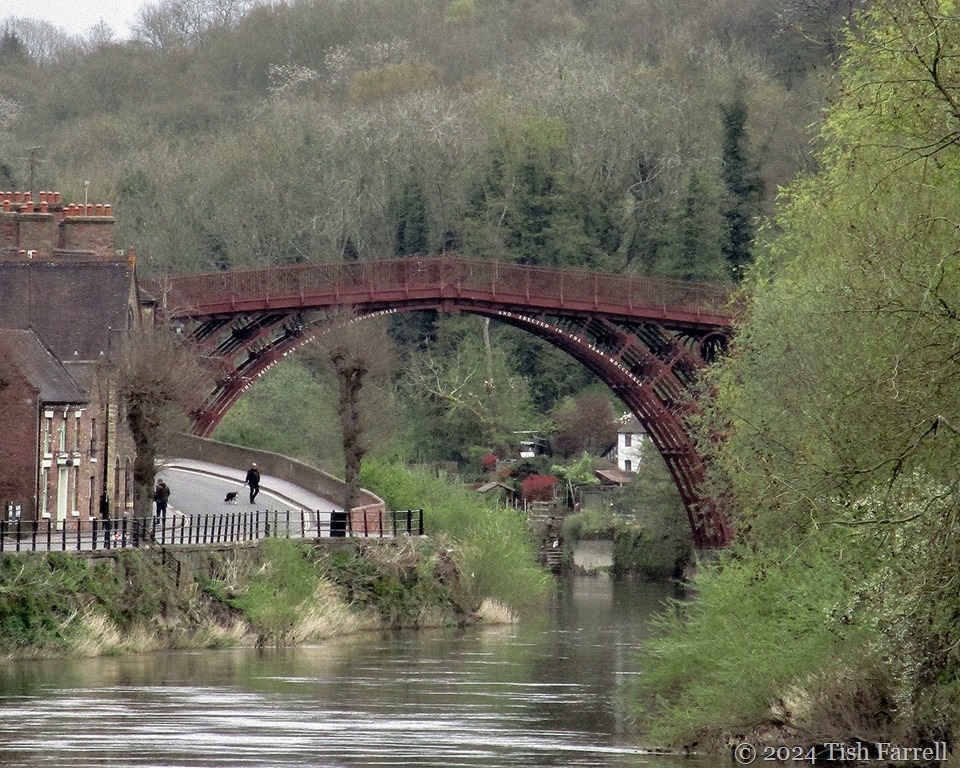
And likewise across the River Severn on the opposite side of the Gorge:

IMG_3333

Broseley’s neighbours – Ironbridge and the Iron Bridge (1779)

IMG_3015ed

*

I suppose if the little house in Bishops Castle hadn’t cropped up, we might well have stayed in Broseley. The folks were so friendly there.  As it is, it’s good to think of our brief sojourn, even with the little pang of loss. Strange, how things turn out.

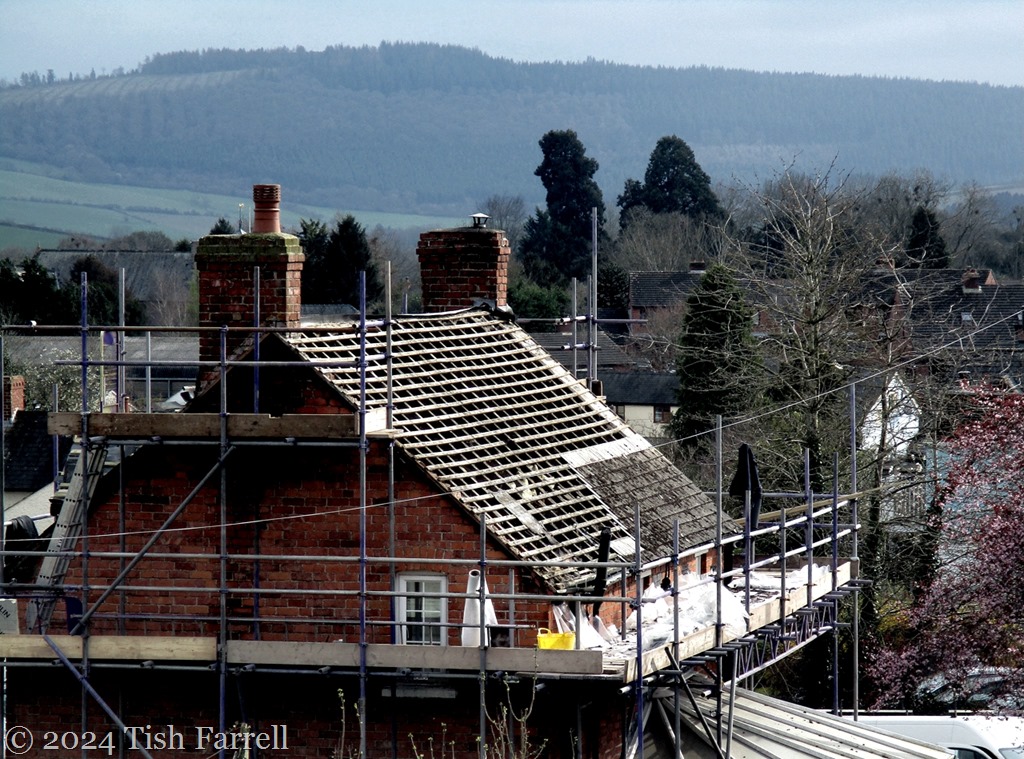
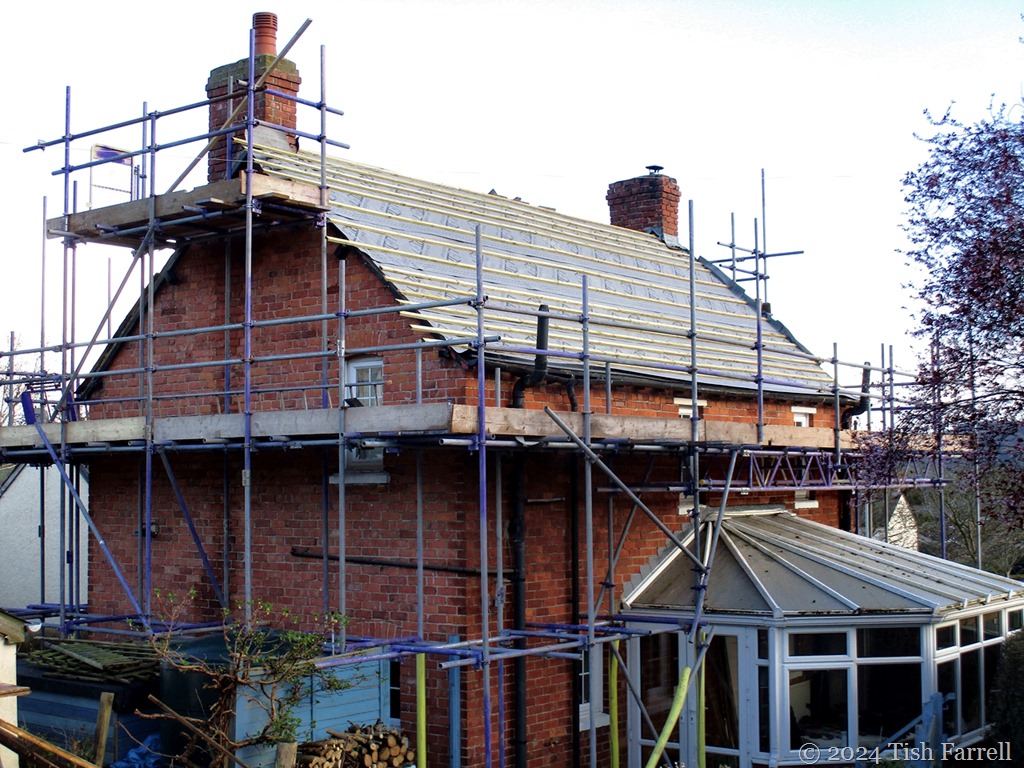
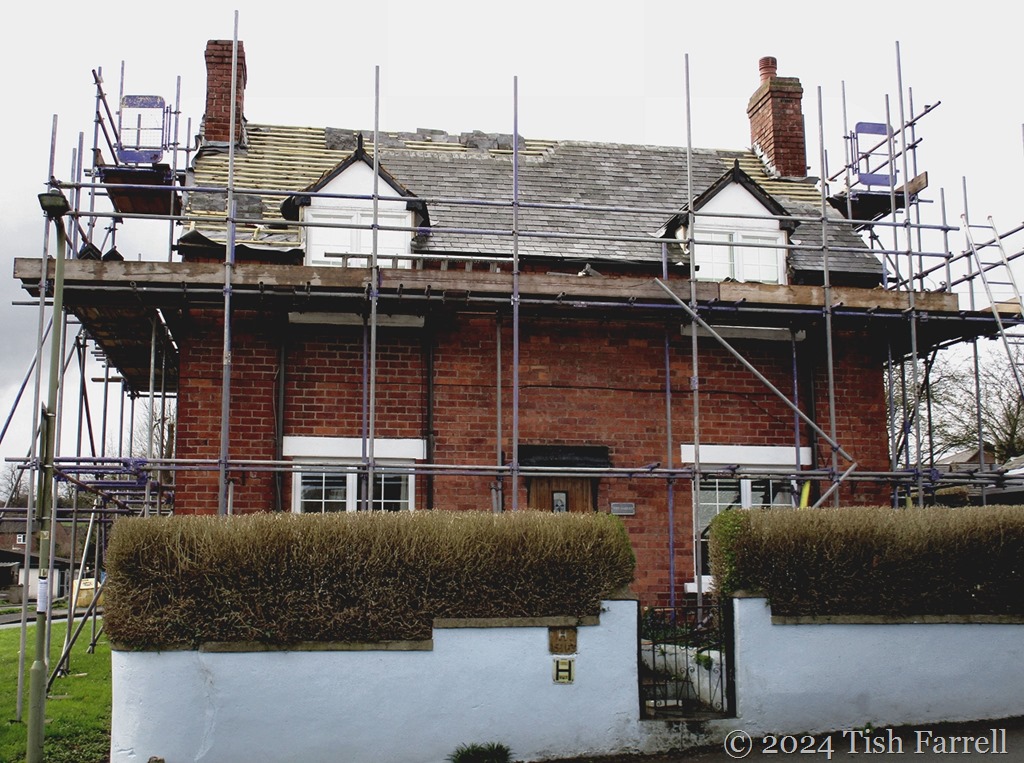
But now we’re here in an ancient agricultural town, where the folks are also very friendly. Clearly there’s many a tale to unravel here, or will be, once we’ve sorted out the house. This may take a while. For one thing, come spring there’s a new extension in the offing: this to remove an old conservatory and transform the space into a bright new kitchen with doors onto the garden. Apart from this, every room needs some serious attention, plus two chimneys to rebuild, and maybe the roof to replace. And then there’s the garden…

So all is in flux and not a little confused. But even so, with the turn in the year, it’s beginning to feel like home.

IMG_3641

IMG_3693cr

Lens-Artists: Favourite photos of 2023

“Clunton and Clunbury,Clungunford and Clun…

IMG_4257ed

*

…are the quietest places under the sun.”    A E Housman  A Shropshire Lad

*

Except there was no sun on Tuesday when we went to Clun, only rain clouds, bloated, iron grey, hanging in shrouds across the hills and pine woods; the lanes streaming with run-off from two days’ deluge; field hedges newly farmer-sheared to thorny starkness, the herbaceous version of a convict cut.

It did not matter. We were on an outing after several days indoors.

IMG_4260

Clun is the next large village along the A488 between Bishop’s Castle and Knighton on the Welsh border. These days it is home to around 700 souls, and with or without sun, it is always quiet there, except perhaps during the Green Man Festival in May when I gather things may become a touch excitable. Once, though, it was a nexus, standing on the ancient drovers’ route out of Wales. You can picture it now, can’t you, the herds of  cattle and sheep being driven on well worn paths to faraway markets in the Midlands and London; passing through many a town, the taverns en route places where news and other goods were exchanged.  This then is essentially a Saxon landscape, later knocked somewhat into shape by the invading Normans, but all rooted in five millennia of farming life going back to the Neolithic period.

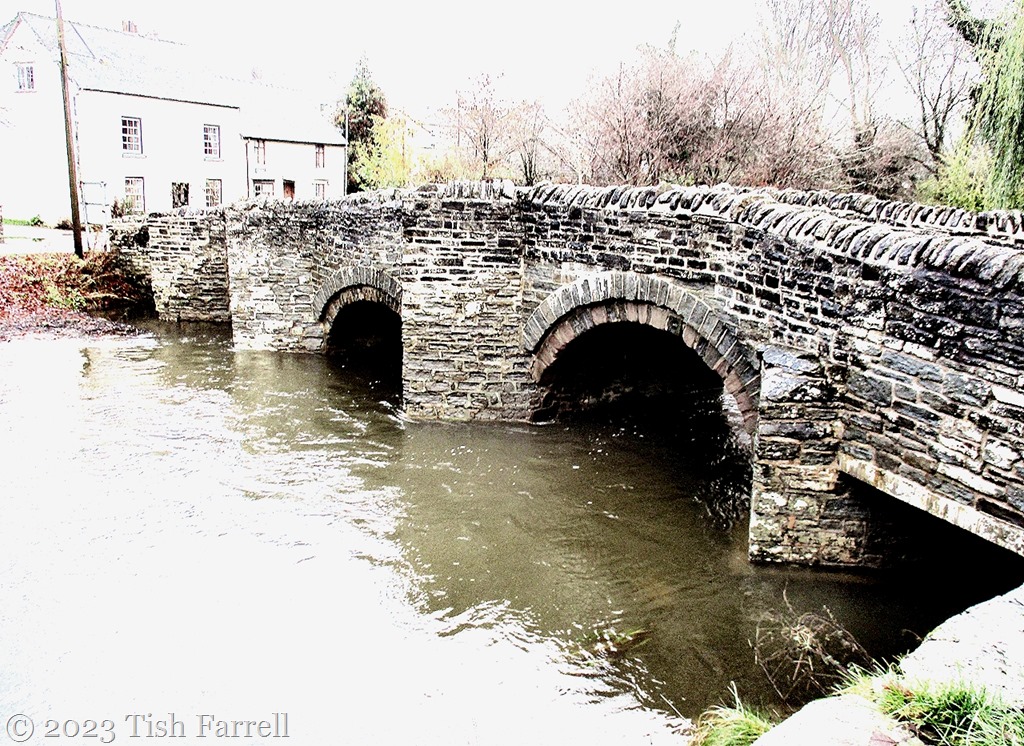
The packhorse bridge in the header photo is not that old however. It dates from the 1300s, leaving us with only 8 centuries of passing traffic to contemplate. But you do have to keep your wits about you when you cross, dodging the occasional speedy van-man, making sure you’re tucked into a niche before standing and gazing at the River Clun. In fact there is a local saying that could be said to confirm the necessity for alertness: “whoever crosses Clun Bridge comes back sharper than he went”.  On the other hand, it may refer to long ago times when the crossing formed the link between Saxon Clun on one side of the valley, and the newfangled Clun of Norman interlopers on the other.

IMG_4259

*

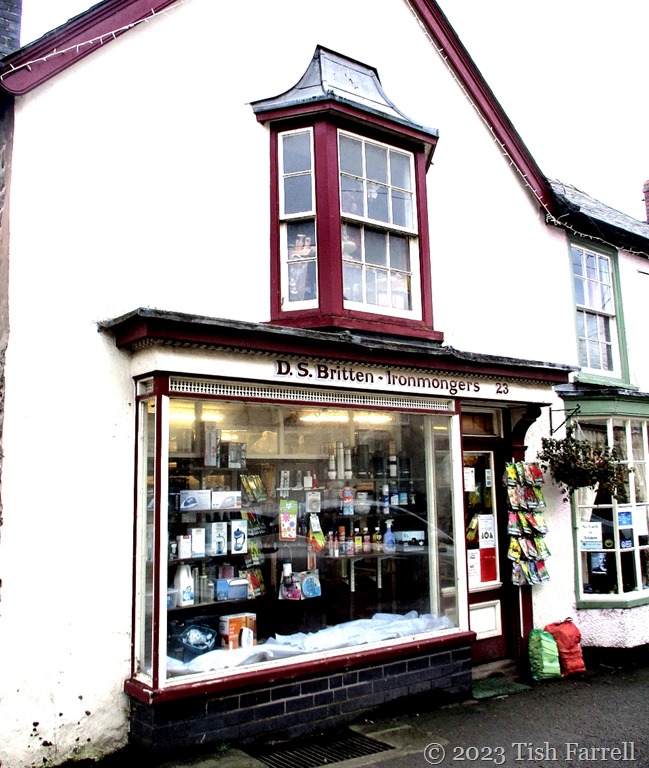
There was a purpose to our visit on such a gloomy day. I recalled there was an ironmongers there – an all but disappeared facility on Britain’s high streets. Brasso was needed – a good old fashioned metal polish, and also dubbin for keeping the rain out of our boots.

IMG_4271ed

And we found them both immediately when we opened the door and stepped back in time in Mr. Britten’s magic emporium. It proved to be the hardware enthusiast’s equivalent of Willy Wonka’s chocolate factory, including the glimpse of snug ‘Dickensian’ office beside the counter.

There might be no sun outside, but there was everything under it inside. On top of that, Mr. Britten proved the most engaging proprietor, a true gentleman. He told us he was happy to sell us two screws if that’s all we needed. We didn’t, but we appreciated the gesture, and said we’d be back when we did.

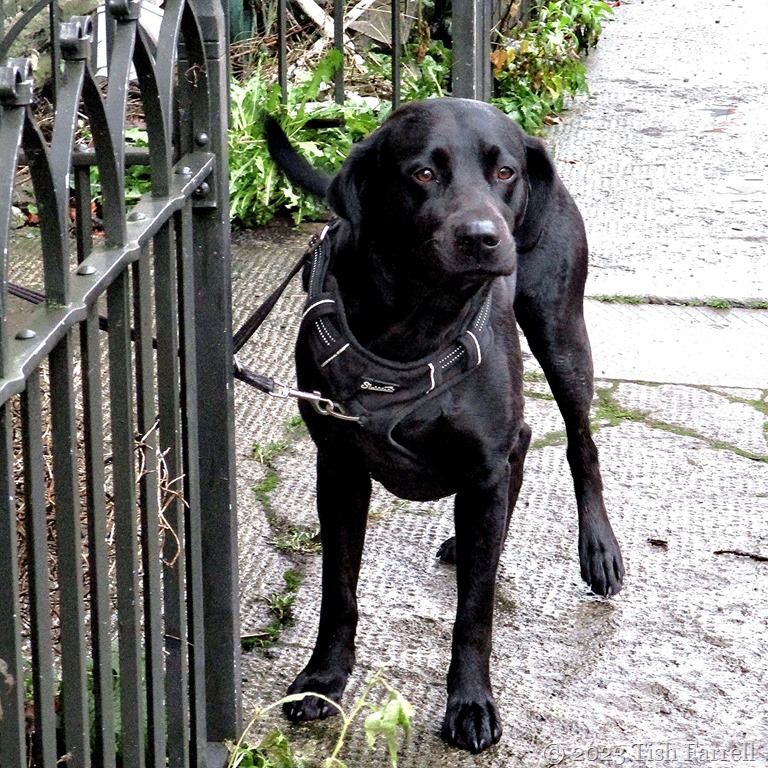
After that we mooched about on the High Street, were greeted as we went by passing locals, and also some nice dogs, found a good bottle of wine and sticky pastries in the Spar supermarket plus more welcoming encounters. And then headed for home. By midday it was almost twilight.

IMG_4267

*

So no, it really did not matter that it was such a dank and gloomy day. Human and canine warmth sufficed; another grand trip out and only a few miles from home.

IMG_4282

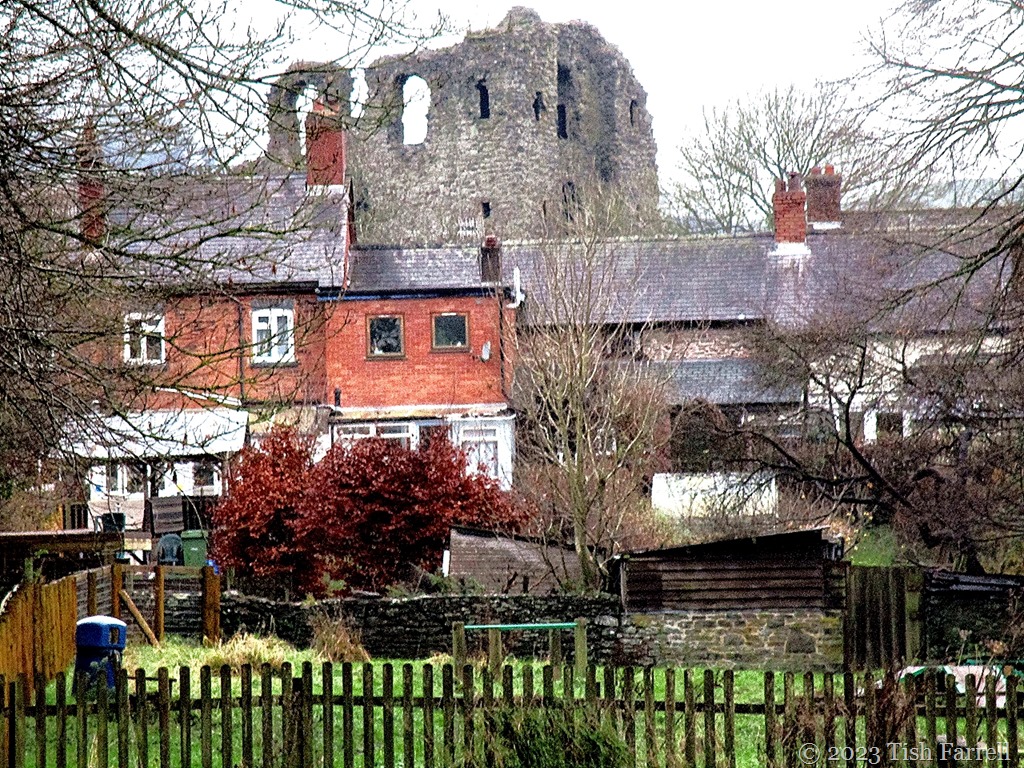
The ruined keep of the Norman castle looking especially lugubrious. We will return for a sunnier exploration.

November Gold At Our Iron Age Hillfort

IMG_4250ed

Yesterday we woke to the first hard frost of the year. When I looked out of the bathroom window to the top of the town, there was a cascade of white cottage roofs instead of the usual grey slate. And all glistening too…

Because best of all, there was also sun. SUN by god – and the weather people’s promise it would stay all day. What a gift. After weeks of rain between gloom and deluge, plus a stint of accompanying coughs and sneezes, I knew we should go out and make the most of it in one of Shropshire’s most majestic spots.

To Bury Ditches, says I. We can take a packed lunch. And so we did.

It’s only a five minute drive from our house, but up a very steep hill. For us unseasoned walkers, it’s too far to go on foot. The hillfort lies in Forestry Commission land, which means there is a car park, but the path to it rises further still above ‘monolithic’ stands of conifer, lit up here and there by the odd bright oak, or the orange haze of wintering larch.

IMG_4202ed

*

The morning sun had melted much of the frost, though it lingered in the verge shadows and in the valley bottoms. The air was absolutely still. So still, and so utterly silent, it seemed the world had stopped. It was a fine moment to come upon an ancestor, albeit one, turned to wood. What kind of magic was this?

IMG_4204ed

*

When we reached the hillfort, I tried to capture some idea of how it looks on the landscape, the scale of the ramparts – huge but nonetheless much diminished after 2,000 years of weathering. But it’s always impossible – the light not right, the site too overgrown, the earthworks ill-defined. And then there is the problem of  the enclosed ground: all quite featureless; a great expanse of rough pasture, with nothing to fix on, or frame.

Here’s an artist’s reconstruction of the site, then a couple of my rampart shots.

IMG_4210

IMG_4208

IMG_4215ed

*

For some better hillfort views than I could manage, please have a look at Virtual Shropshire’s page on Bury Ditches.

And so what are we left with? A sense of place, of space, the commanding views, the resonating mystery of who exactly built these monumental structures over 2 millennia ago. They are found across the uplands of Great Britain and yet we know so little about them. Some of course have been excavated and yield signs of village settlement inside (Castell Henllys). Some also revealed evidence of siege (e.g. Maiden Castle). Others seemed to have been simply places of refuge in times of war. Or perhaps also gathering places for festivals and markets. But the big disadvantage of hilltop refuges is they usually lack easy access to fresh water.

One thing we can say: these places were hugely important to the ruling hierarchies of the Iron Age people who built them. Imagine the man and woman hours involved, digging into bedrock with bone and antler picks and mattocks (for at this time iron, a scarce and valuable commodity, was reserved for the making of prestige weaponry not tools), heaving loads of earth in precipitous locations where horses and carts could scarcely serve the purpose. Yet…And yet…when freshly excavated in limestone country, or better still on chalk, the ramparts of these forts would have looked marvellous, glistening white on the skyline; visible for miles.

So if I couldn’t quite bring you a hillfort, here are the vistas we enjoyed, looking out, this after perching in a heather clump to eat our packed lunch. Herewith  Shropshire and the Welsh borderland:

IMG_4211ed

IMG_4213

IMG_4232ed

*

By 2 o’clock the sun’s warmth was gone, the remnant frost creeping back, fingering parts not properly wrapped up. We were glad to stride back to the car. A five minute drive home and we were by the log fire with a cup of tea. Such a little journey and yet we had been transported to another world and time. Passports not needed. Only willing hearts and minds and a small car.

IMG_4240ed

IMG_4243ed

Bunting, Banners, A Zip-Up House…?

IMG_3860ed1

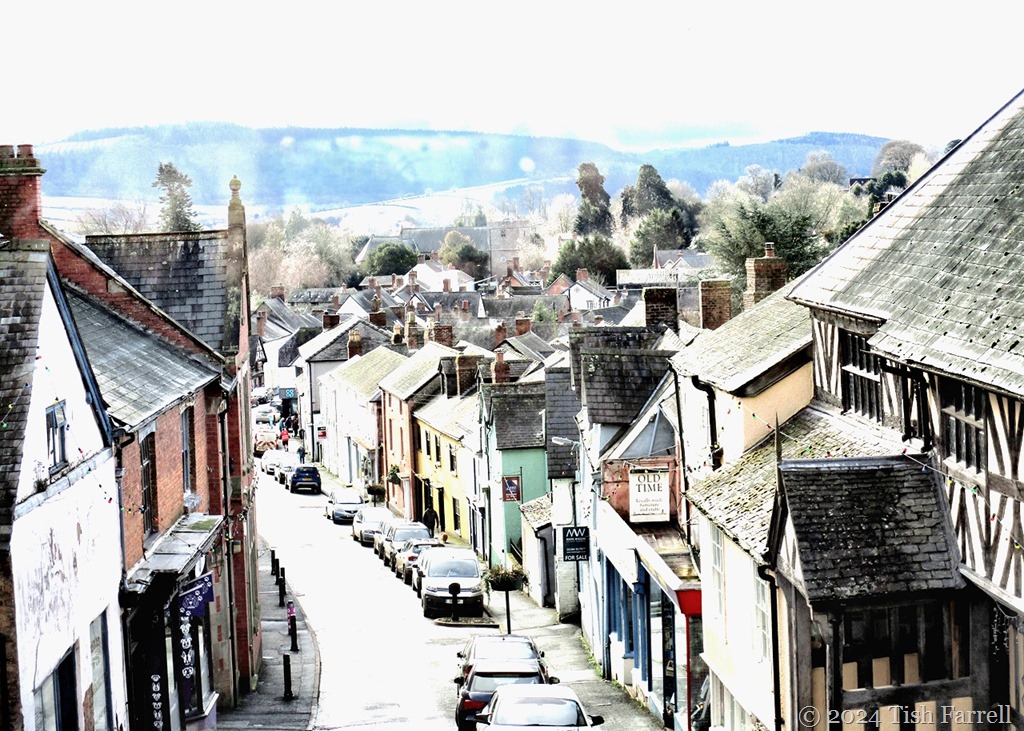
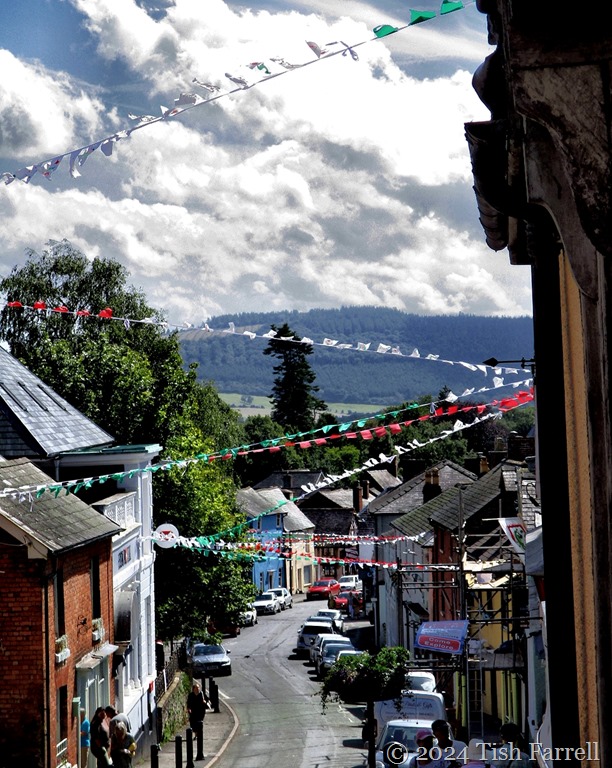
Display is this week’s theme from Ann-Christine at Lens-Artists, so I thought I’d show you a few more views of Bishop’s Castle. It seems like a town that wants to party, or it might do, if it could stop feeling so sleepy. But then somnalent or not, it puts on a bright face.

IMG_3841ed

And yes, the Six Bells inn truly is that vibrant shade of coral. It’s the first building you see as you enter the town.

IMG_3842ed

*

There’s also a welcoming sign on the wall to any passing elephant who might fancy a pint of this hostelry’s best brew:

IMG_3907ed

*

Across the street the houses cut quite a dash, colour-wise. This pair comes joined at the zip, so to speak:

IMG_3910ed

*

And then next door is a bit of a puzzle:

IMG_3839

*

IMG_3642

Back up the hill into town there’s another coral-fronted tavern…

And three doors up, opposite the Town Hall, is Bishop’s Castle’s very own Poetry Pharmacy, an independent bookshop emporium wherein a carefully curated selection of poetry and fine prose works are on sale to heal whatever ails. It has a cafe too, and a physic garden with a writing cabin that may be reserved at no cost. The poetry pharmacist also offers personal consultations, with suitable verses prescribed. I’m sure I’ll be writing more about this nourishing alternative health service.

IMG_3644

*

And one last image: this from a cottage at the bottom of our street. I’ve posted it before, but it gives me a lift whenever I pass it. Up, up and away…

IMG_3670

Lens-Artists: On display  Please go and view Ann-Christine’s lovely images for this challenge. They’re a real treat.

The Man From Africa ~ I.D. Unknown

IMG_3848ed

Last week I went to pay my respects to I.D. He is one of Bishop’s Castle’s mysteries – the man from Africa, who was laid to rest in the parish churchyard of St John the Baptist on the 9th September 1801. Origins and life story unknown.

IMG_3846ed

Here lieth the Body of I.D.

A Native of Africa who died in this Town Sept 9th 1801

God hath made of one Blood all nations of Men  Acts 17 verse 26

*

I’ve written about him before, but the mystery continues to niggle, and especially now that I’ve come to live in the town. Who was this man? Where did he come from, and how had he arrived in the isolated small farming town of Bishop’s Castle? What led to his death? Was he slave, originally from West Africa or the Congo, and a possession of some Shropshire plantation-owning grandee. Or was he a free man; or employed as a servant?

The headstone, if sparse in details, is a fine one; it suggests a certain status; someone must have paid for it. There’s also a presumption that the deceased was a baptised Christian since the grave is sited in a prominent spot beside a well used path.

If the man had been a well regarded servant, then one might expect more personal details; a name at least; the years of his service and the name of his employer. (Slaves were usually given their owner’s names.) If he were merely a passing traveller who happened to die in the town, then who took it upon themselves to give him a decent burial? The parish records throw no light on the matter, and only repeat the text on the stone.

But there is a clue in the biblical quotation: God hath made of one blood all nations of men. This was a trademark text used by campaigners for the abolition of slavery.

At the time, Shropshire had its own fierce anti-slavery movement, driven by the dogged determination of one Archdeacon Joseph Plymley who lived not far away at Longnor. From 1791 until abolition in 1807 he worked tirelessly, alongside his sister, Katherine Plymley, travelling the county, raising petitions, urging Salopians to boycott sugar. So perhaps a local abolitionist sympathiser paid for the funeral. And perhaps, too, that well-wisher had the sensibility not to bury the man with his full slave name, but not knowing his birth name, chose to identify him solely by the initials I.D.

So many questions about a man, identity unknown, cut off from family, culture and community, lying in this quiet, but alien burial ground at the foot of the town, late summer cyclamen under the trees, the drift of cool air in from the hills and fields. Africa far far away.

IMG_3843ed

September Harvest

IMG_3868ed

Warm winds this afternoon, and a flurry of Red Admiral butterflies about the garden. Also out on the lawn, the alcoholic waft of gently fermenting apples – windfalls from our gnarly trees. The trees are in need of serious remedial work – if reclaiming them is even possible. Most of the fruit is spoiled before it falls – lots of pests and diseases, and some very spotty articles. But that said, there’s been enough good fruit to make a few pots of cinnamon and honey poached apple. And more to come.

As for this Red Admiral, it was spending a lot of time supping from a very rotten apple. I wonder if butterflies get squiffy. It might account for all the whirling about that was going on as I hacked away on project-liberation-greenhouse. It’s almost free from the overbearing hedge, but a lot of broken panes where hawthorn and ivy branches have leaned too heavily. For now, though, it’s good enough to shelter two bucket-planted tomato plants brought from Broseley. They’re still fruiting, if sporadically.

Our other tomatoes are an outdoor container variety, Tumbling Tom. They ripened very nicely on the terrace wall during our week of hot September weather. Here they are doing just what it says on the packet: cascading from their pots in profusion – out of summer and into fall.

IMG_3702ed

Enter The Dragon

IMG_3813ed

We’ve been ‘moving in’ to our new Bishops Castle home for a month now; more an ongoing state of flux than a settling in. There’s a lot to do and for months ahead, including work on roof and chimneys.  And so not a little frazzled, it was a relief to abandon the house and head for the streets.

Yesterday was Michaelmas Fair day. Time to find out what kind of a town we’d moved to. Time to mingle with our new community and connect. After all, it’s what humans most need beyond basic sustenance – connection. And when we think we don’t (because there’s just too much to do), it’s probably when we need it most.

Proceedings kicked off at noon with street stalls and roaming performers, bands on the Town Hall stage; classic cars lined up on the High Street – primped and prepped; fleet of steam traction engines huffing coaly steam in the cattle market, waiting on the 3 o’ clock grand parade.

IMG_3777ed

IMG_3768ed

IMG_3759ed

But as you can see, it was a dull old day – autumnal mist and drizzle plus intermittent showers, so we dipped in and out of the afternoon’s programme, met some new neighbours, reprised earlier introductions (yes, I do remember your name), bought a very fine rudbeckia, caught the Shropshire Bedlams Morris Dancers, but then listened to Jane the town’s singing florist (much amplified) while installing the new plant in the front garden. It was the evening’s events we wanted to go to.

The Lantern Procession began at 7.45. We stood at the top of the town to welcome it, wondering why the street was so sparse in humanity. (Was everyone in the pub? It surely looked like it. The nearby Vaults inn was full to bursting). And then down the hill the drumming began. Then out of the gloaming, the sinuous twists and twirls of the Hung Gar Light Dragon. And strung out behind him, the town’s lantern-bearing children and all their friends and relations.

IMG_3789ed

IMG_3791ed

IMG_3794ed

Now we understood. Most of Bishops Castle had been busy making lanterns in the Church Barn. They were all in the procession. What a throng.

And so as the dragon and Chinese drummers climbed the hill, so the Broseley Beats Samba Band struck up at the top. (I wish we’d discovered them when were living Broseley). A drumming play off then, the beats ripping from toe to crown. No choice. The body says, DANCE!

Then just when we thought the show over, the dragon came whiffling back round the Town Hall, heading off down the hill. Followed by the samba band. Followed by us and everyone else, the descent choreographed by the drummers, stopping at intervals to give a bravado performance.

IMG_3820ed

IMG_3832ed

*

When we reached the King’s Head at the bottom of the town, we (somewhat astonished) came on a line-up of several steaming traction engines outside the pub door. What a hoot, and literally too. One owner was a tad whistle-happy. I trust he wasn’t driving home.

IMG_3827ed

*

So there you have it, a fine finale to the Michaelmas Fair. All good spirits restored. And a taste of good things to come? I should think so.

Lens-Artists: recharge    This week Egidio sets the theme as he hikes Colorado’s fabulous trails.