Mischief in the Mara

Scan-131109-0008

001 (2)

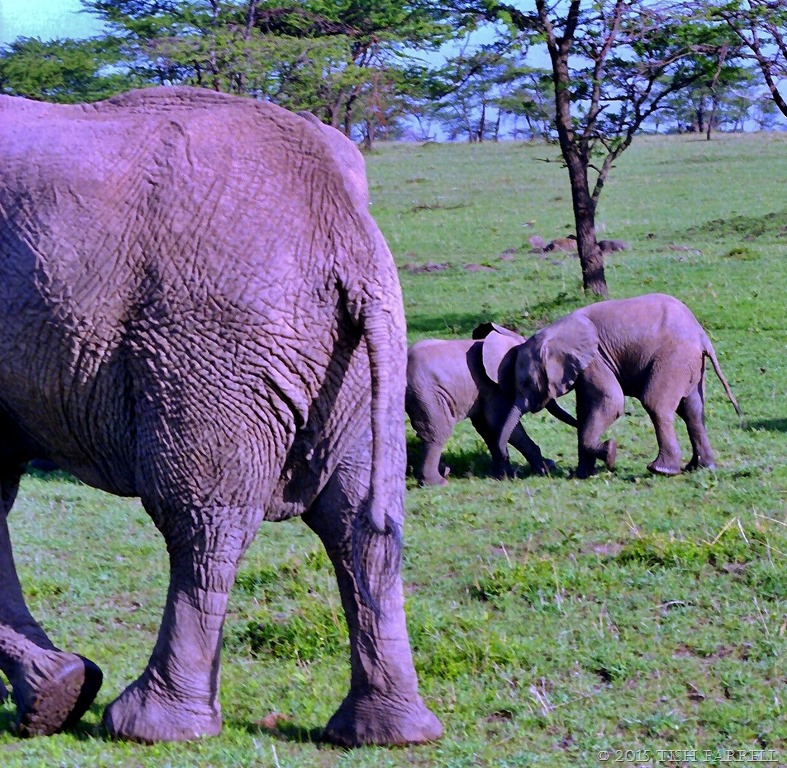
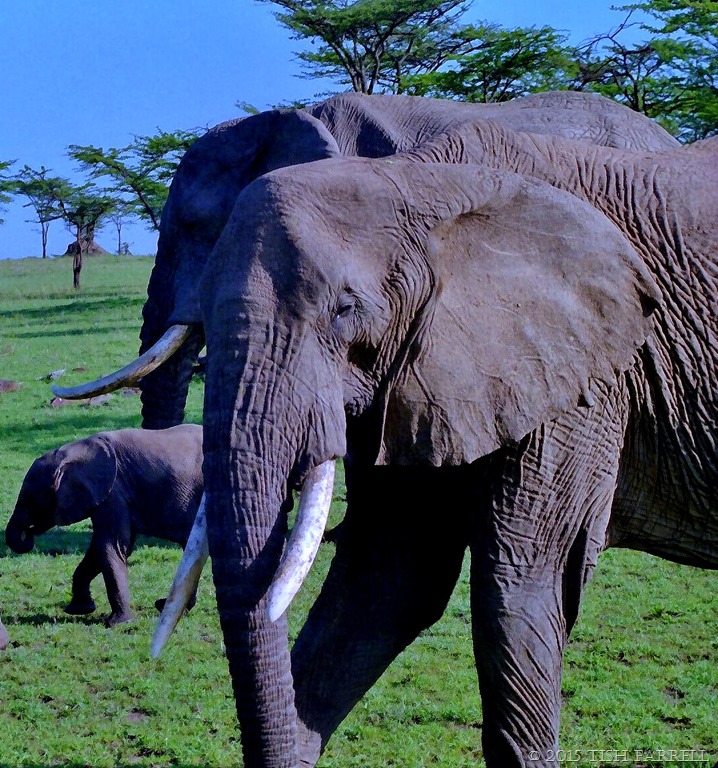
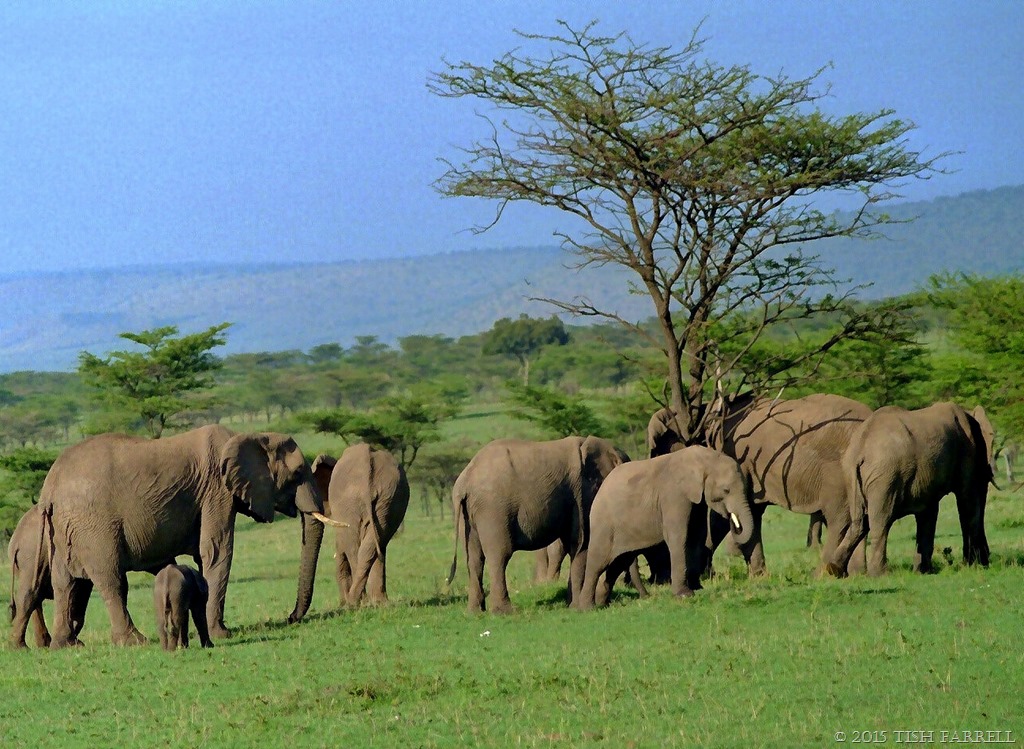
These photos were taken in the Maasai Mara during a game drive. For more scenes of mischief visit Ailsa’s travel challenge at Where’s My Backpack

And now for a treat, and even more mischievous behaviour: a short film about Daphne Sheldrick’s Elephant Orphanage in Nairobi, Kenya. The baby elephants you will see in the film have all been orphaned, mostly due to ivory poaching or drought. Sheldrick discovered that orphaned infants will only survive if given 24 hours a day emotional support. At the orphanage each infant has a keeper who becomes its surrogate mother. The ultimate objective of the Sheldrick project is to restore these elephants to wild herds in Tsavo East National Park. This approach has had many successes, and in fact just before Christmas it was reported in the British press that one of Sheldrick’s former orphans had just given birth, back in the wilds with her own herd.

https://www.youtube.com/watch?v=FvA52oAvcZ0


Elephants at Dawn

Scan-131109-0004

Scan-131109-0032

There is nothing more imposingly serene than a large herd of unruffled elephants on the move. We humans, on the other hand, may become thoroughly over-excited by such an encounter. The elephants are not impressed though. They note our existence, weighing us up with scant regard. We are quickly aware of being mentally ‘put in our place’. And as we watch, and watch the herd’s slow and steady progress through the Mara thorn trees, we find ourselves succumbing to the collective elephant will. There is the urge to follow, to step out, placing each foot with quiet intention on the surface of the earth, moving at one within ourselves instead of forever rushing about, seeking fresh excitement. As they disappear from view, we are left with a sense that something has changed. Have we been changed? In any event, it seems there is much to be learned from an early morning meeting with elephants.

Later that day, as dusk is descending, we meet the herd again. They are crossing the trail that leads back to our camp. The guide stops the truck, and we stand up, leaning out of the roof hatches as the herd moves all around us. It is breath-taking. This time they are close enough to touch. We can smell their musky hides. They move around the truck as if it is not there, then fade into the darkness as quiet as ghosts.

© 2015 Tish Farrell

Daily Post Weekly Photo Challenge: Serenity


*


image

Secrets, conspiracies, tragedy,

dark comedy – a fast-paced

novella of interwoven tales set

somewhere in East Africa

Available on ePud Bud 

5* Amazon Kindle Review


Serenity

Thursday’s Special: Dusk on Wenlock Edge

IMG_1147

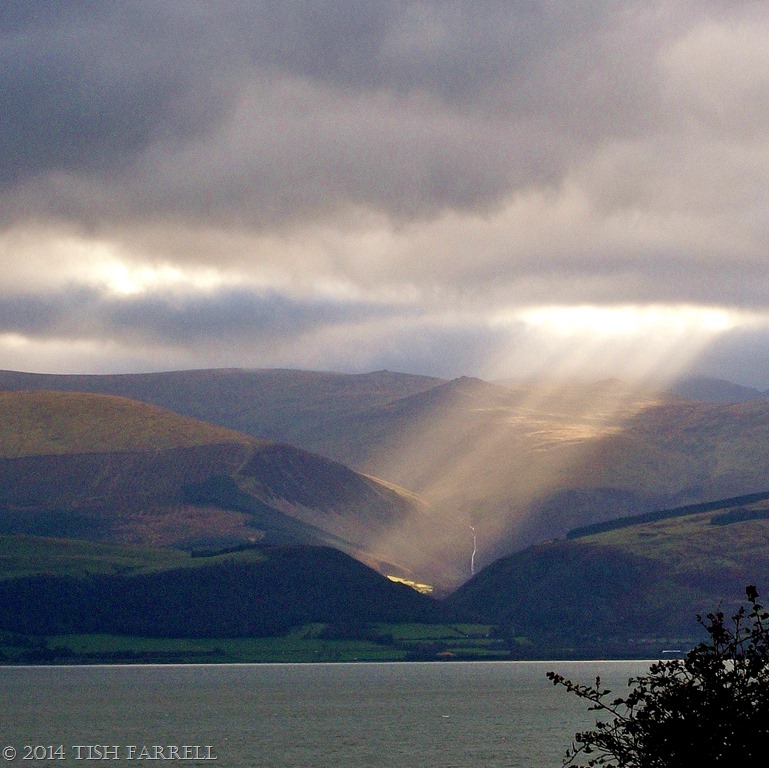
I may have mentioned once or three times that I spend a lot of time watching the sky from our house below Wenlock Edge. Silhouetted in this photo are the wooded slopes of Wilmore Hill which lies between us and the Edge. The land then dips, then rises again until it reaches the scarp, at which point the ground simply falls away alarmingly through a hanging woodland of giant beech, oaks and ash. Far below the trees stretch the farm fields of Shropshire. And so from our vantage point the Edge gives us a false horizon, providing a stage for much interesting weather-watching. Hours can slip away…days. There’s a real danger of finding oneself turned into Rip Van Winkle. Maybe it’s already  happened…

*

For more evocative dusky scenes, or to post your own please go to Paula’s Thursday’s Special and be inspired.

*

image

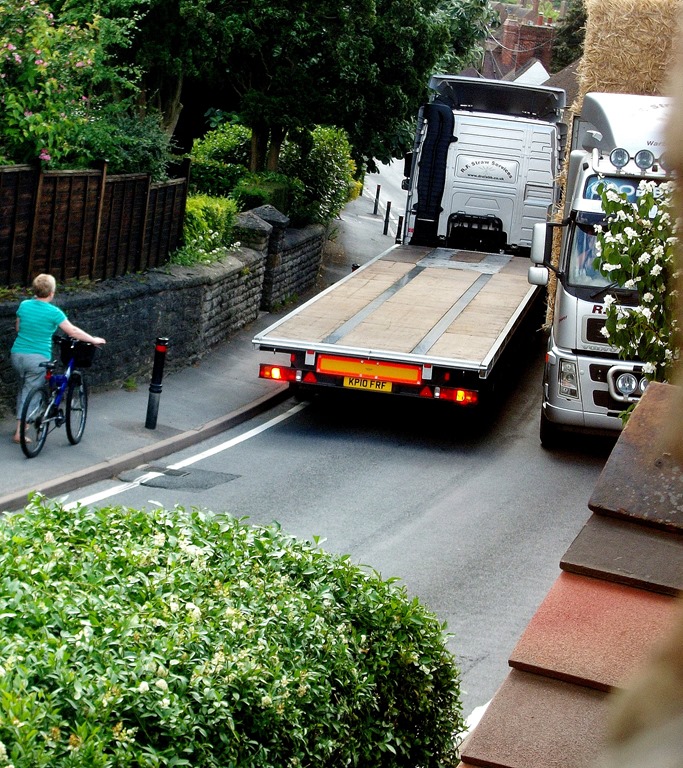
From My Window in Wenlock: Trucks…

100_6404 (2)

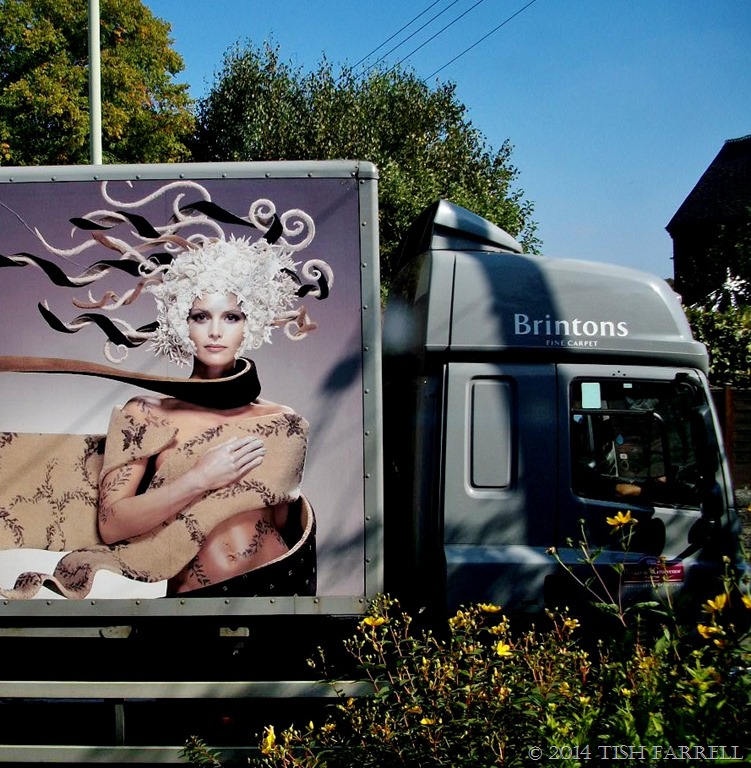
The other day I was astonished to look out of my kitchen window and behold this perplexing vision on the side of a carpet truck. It was a bit like spotting a unicorn. Well, what do you think this image is saying carpet-wise? Hey, come unravel me? Anyway, it made me laugh. And some days you do need a sense of humour to live where we live.

Trucks are a daily feature of Sheinton Street, a town lane that somehow in the 1980s was upgraded to an ‘A’ road. This means it is designated as a “through road”, and that there should thus be nothing on it to impede the flow of traffic.

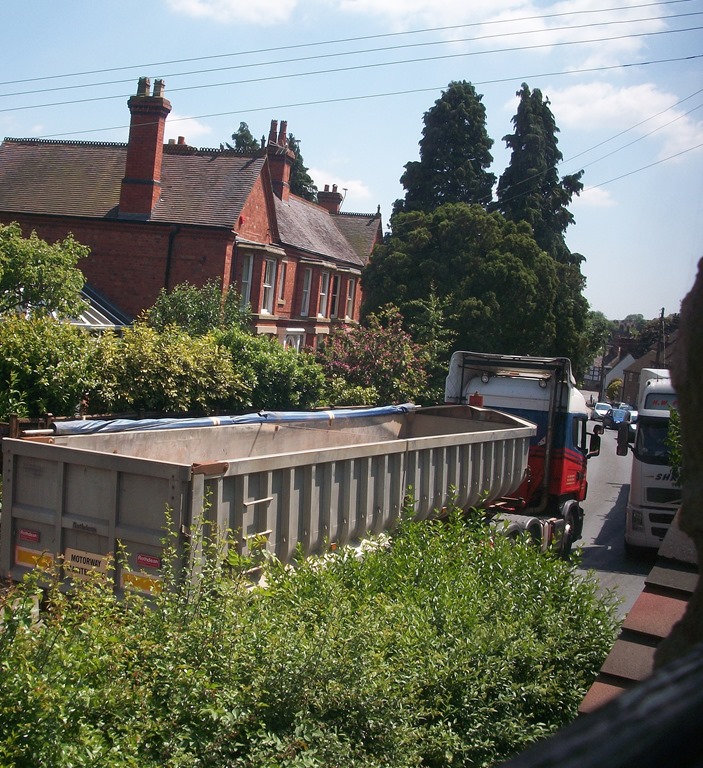
Anyone who has read my previous post (By the Silurian Sea) will know that while the back of our cottage mostly overlooks farm fields and woods, the front is very close to this road. Along it come all manner of large vehicles – many so big that they get jammed together trying to pass one another. This includes school buses, and combine harvesters, garden fencing lorries and clay trucks. Sometimes they block the road completely. Not good news if you are trying to get to hospital in an ambulance. There truly is no other way to go without a huge detour.

Over the years I have captured a few of these HGV encounters. I call the phenomenon Truck Stuckage. Most of the photos are taken from my upstairs office window. See what I get up to when I’m supposed to be writing. (I know: it’s hard to say what is more oddball – the photos or the person who took them). And not only do I snap stills, I also from time to time put short video clips on You Tube so I can forward the links to Shropshire Council’s chief highways engineer. She’s called Alice. I think we are on first name terms. She doesn’t know what to do about this road, but a team of consultants has recently been employed to think about what might be done. Or not.

In the meantime, if the trucks get any larger, we will need the local fire brigade on permanent standby to unravel the stuckage. They will have to do this before they can answer any emergency calls north of Sheinton Street. One can see where the “through road” designation begins to fall down somewhat:

100_1908

Cee’s Odd Ball Photo Challenge

Today is My Birthday ~ We went to Ludlow

DSCF0084

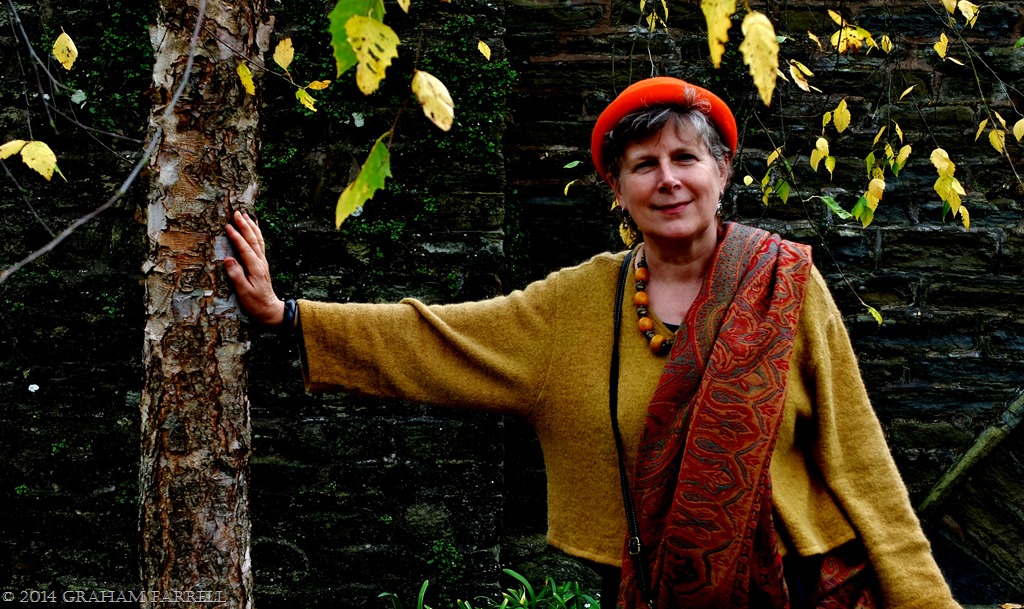
I was born on Halloween, so here I am today – not too scary I hope, wearing my autumn colours. The Team Leader snapped me by the bridge over the River Teme, in the ancient town of Ludlow, Shropshire. We went there for my birthday lunch.

100_6703

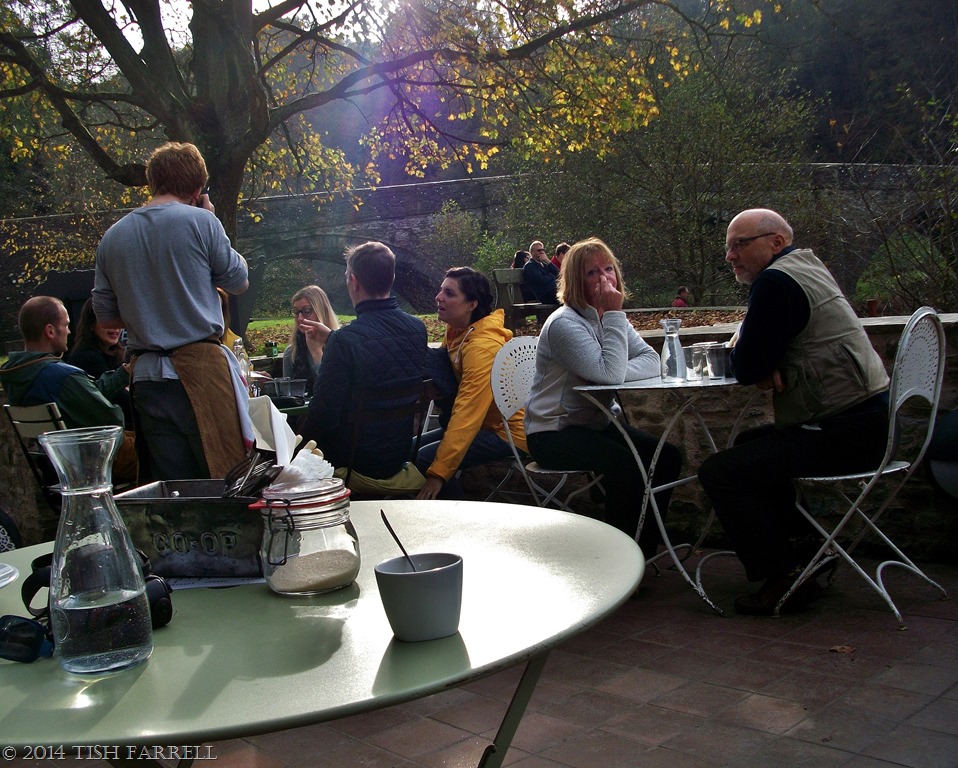
It was warm enough to eat outside at The Green Cafe, a wonderful little restaurant that sits on the riverbank between the bridge and the weir. It serves divine food in rather cramped quarters, because it is simply so popular (voted third best in Ludlow, which is quite something in the foodie capital of Shropshire).

100_6696

*

After lunch we wandered around ancient streets that were full of autumn sunshine.

100_6716

100_6718

100_6741


Happy All Hallows Everyone


Ailsa’s Travel Theme: Autumn

One Word Photo Challenge: Scarlet

100_3415

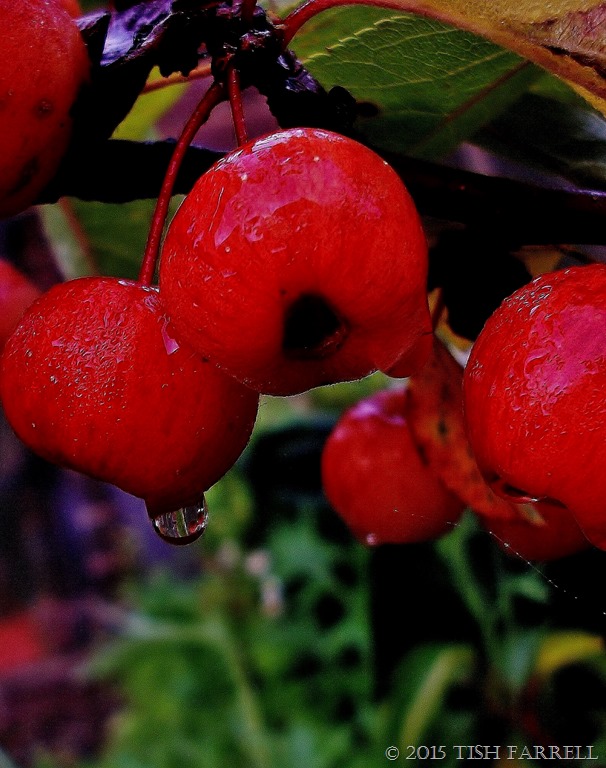
We planted the Japanese crab apple tree in the garden in 2006, not long after we moved into Sheinton Street.  Now is its season of fiery scarlet glory. Each fruit glows like a miniature lantern, brightening the gloomiest autumn day. And today is just such a day in Much Wenlock, my usual sky-view over Wenlock Edge, a blanket of grey mist. Even so, the apples glisten. I know, too, as we head into winter, we will have the pleasure of watching the blackbirds come to feed on the fruit, grey days then enlivened by their darting silhouettes foraging among the branches. Few of these tiny apples will be wasted. And then before you know it, the tree will be bursting with purple-pink buds that open in showers of pale blossom. Spring. Splendid how one thing leads to another.

copyright 2014 Tish Farrell

For more studies in scarlet, visit Jennifer at One Word Photo Challenge: Scarlet 


Night-time Plea in Nice: Come Rescue Me…?

by day there was a green parrot in the cage

There are so many enticing shop windows to gaze at in Nice – everything from brightly coloured marzipan sweets to exquisite oriental teapots. This window, however, was most disturbing. The more so, since it was just across the street from our hotel.

I think of this as my ‘David Lynch photo’. It seems to have about it more than a hint of that director’s very weird but somehow compelling TV series Twin Peaks. By day,  the window on Nice’s Rue de Rivoli (just up from the swish Negresco Hotel where we weren’t staying) was scarcely noticeable. Only at night, when dimly lit from within and without, did it take on ‘a reality’ (though I hesitate to explore this further) and you could see more clearly what was inside. It seemed to be a dry cleaners, but there was also a lonely parrot in a large cage, and an assortment of wedding  gear arrayed on a wigless bride, and many large-brimmed sun hats. This girl, though, was surely yearning for rescue. Perhaps she is still. Any heroes out there?

copyright 2014 Tish Farrell

Ailsa’s Travel Theme: Inviting

DP photo challenge: nighttime


Endurance in Central African Republic

Scan-140829-0058jpeg - Copy

There’s a story here. You have to look carefully though. This is very much a happenstance shot, taken by Graham from a moving overland truck many years ago. In the truck, alongside him, were a bunch of young Australians and New Zealanders. You may picture a row of enquiring, youthful, fair-skinned faces looking out on this scene. It is hard to imagine what the locals made of this passing vision of alien hobo humanity. The Central African Republic (CAR) has never been a common tourist destination. It certainly is not these days.

In  the late nineteenth century occupying French colonisers apparently tried to turn the country into a cotton plantation. It did not work. Ever since independence in 1960, all has been shaky. For the past decade the people of CAR have been caught up in bloody bush wars, these apparently ethnic based and factional: Christian versus Muslim. Neighbouring Chad to the north is implicated. As in the Democratic Republic of Congo, CAR’s neighbour to the south, this is a beautiful land stuffed with riches: uranium, crude oil, gold, diamonds, and valuable hardwoods. There is also good farm land and hydro-power potential. Yet its people are also among the world’s poorest. As in DRC, it is necessary to ask the question ‘Who benefits?’ to find out exactly why this state of things persists in the 21st century.


…forest either side the red dirt road, rolling hills, coffee bushes, pawpaw tees, kapok trees, bananas, innumerable  mangoes and desolate villages…people waving  and smiling, but also some half-heartedly thrown stones and raised fists from the kids…

from G’s Overland Diary

*

You can make a guess that a good part of the answer will involve a chain of traded commodities that reaches us in the industrialized nations, for we are the end-users and buyers. By some means or other, arms will be going the other way. For this is the nature of the rich world’s (largely unseen) relationship with African territories. In the past it was the cropping of humans for slaves, and the cropping of elephants for tusks to make drawing-room piano keys, and balls for the billiard table games of civilized gentlemen. Today, it is the minerals that are craved, and at any cost. The trade keeps unscrupulous African potentates in power. They pillage resources from neighbouring countries to sell to the so-called developed world (is this us?). And so we have the carnage.

Until 1997 France maintained a military force in CAR; senior French politicians are said to have acquired diamond and gold interests in the country during the ‘80s and ‘90s. Thereafter, fearing a power vacuum, Paris funded French-speaking African nations to provide a peacekeeping force there (BBC news page). Today, French forces are back as part of the UN peacekeeping mission. Their fellow peacekeepers are Rwandans, and these two forces do not see eye to eye either (The New Republic). However you look at it, the country is a bloody  mess. Once the Pandora’s Box of vested interest by multiple players has been opened, it is hard work to restore any vestige of order. We see this in the Middle East too.

Scan-140829-0058jpeg - Copy

And so back to this photograph. The girl’s wave is wistful as she looks directly at us. Frozen in the moment is her wondering about life elsewhere. The mother, though, knows better. She looks steadfastly away, eyes focused on some other reality. Her stance suggests proud forbearance, feet planted firmly on the earth, her piece of earth, weight evenly distributed. The arms that encircle the baby are sure, composed, protecting, not clinging. She is doing what women do in Africa – endure. Perhaps she is enduring still. Most likely not.

copyright 2014 Tish Farrell

DP photo challenge: endurance

For more about conflict resources