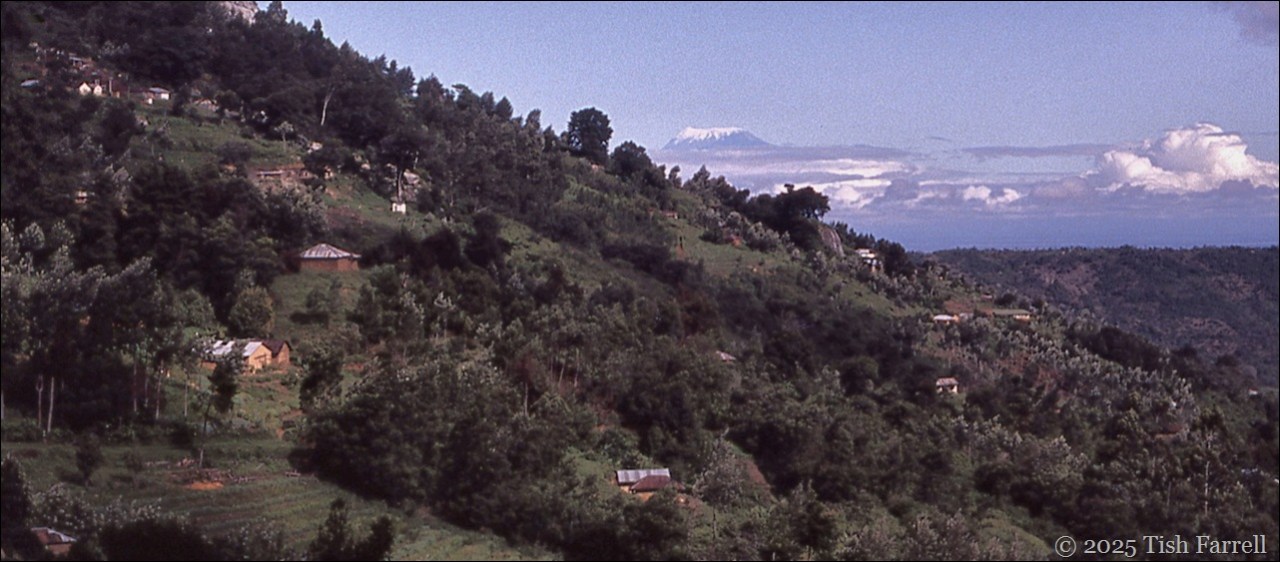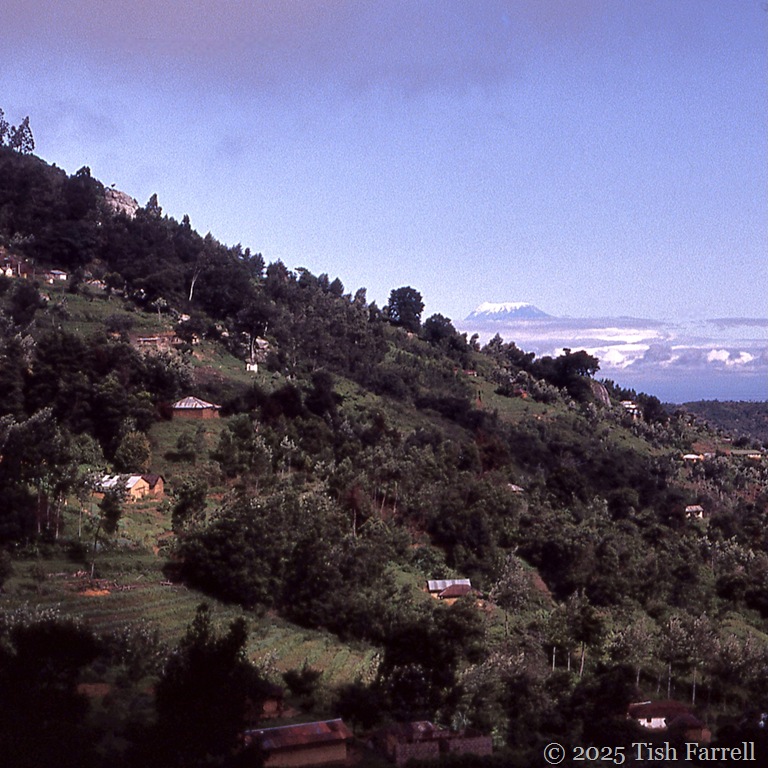
A Red Letter Day ~ Glimpsing Kilimanjaro

kilimanjaro sq

We were up in the Taita Hills. It was the final phase of the Larger Grain Borer (LGB)project (see previous post). Graham was checking on the on-farm release of predator beetles,  Teretriosoma nigrescens  (TN). There were high hopes that TN would be a viable control for LGB, a voracious (and imported) pest in grain stores. (In the project’s trial stores you could actually hear the gathered tiny entities grinding through maize cobs, one of Kenya’s essential food crops being turned to dust).

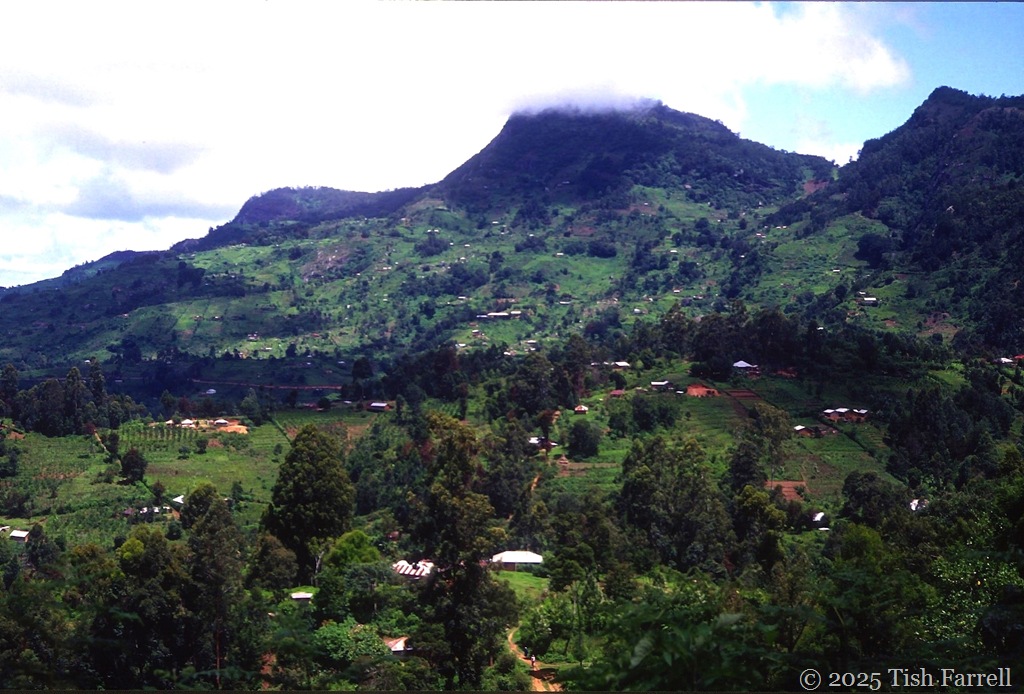
I was along for the ride. And what a ride it was up from the hot plains: hairpin bends and a rapid climb through 1500 metres, verges bursting with wild flowers – black-eyed Susan, wild hibiscus, morning glory, goats grazing, hillside farms steeply terraced, the scattered plots of maize and banana, the cooling presence of cypress forest. Everywhere along the road people walking, transporting something; jerrycans of cooking oil, sacks of maize flour, women hauling firewood, bundles of sugar cane, mamas with infants.

Scan-130520-0003 - Copy

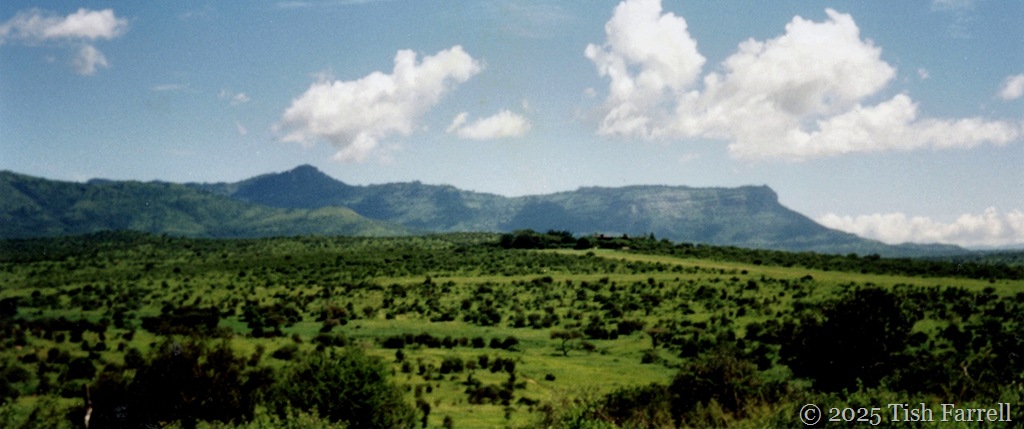
The Taita Hills comprise three massifs formed during the Precambrian era – i.e. between 650 and 500 million years ago. The peaks range from 700 m to 2,208 meters above sea level, and are covered with remnant cloud forest, which also has very ancient origins. The land is mineral rich and highly fertile. The flora and fauna include species endemic only to these hills, butterflies and orchids among them.

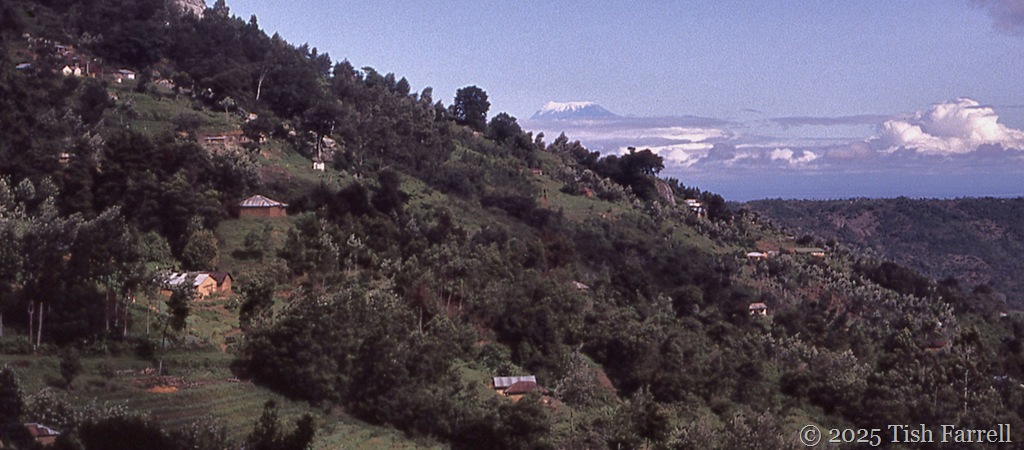
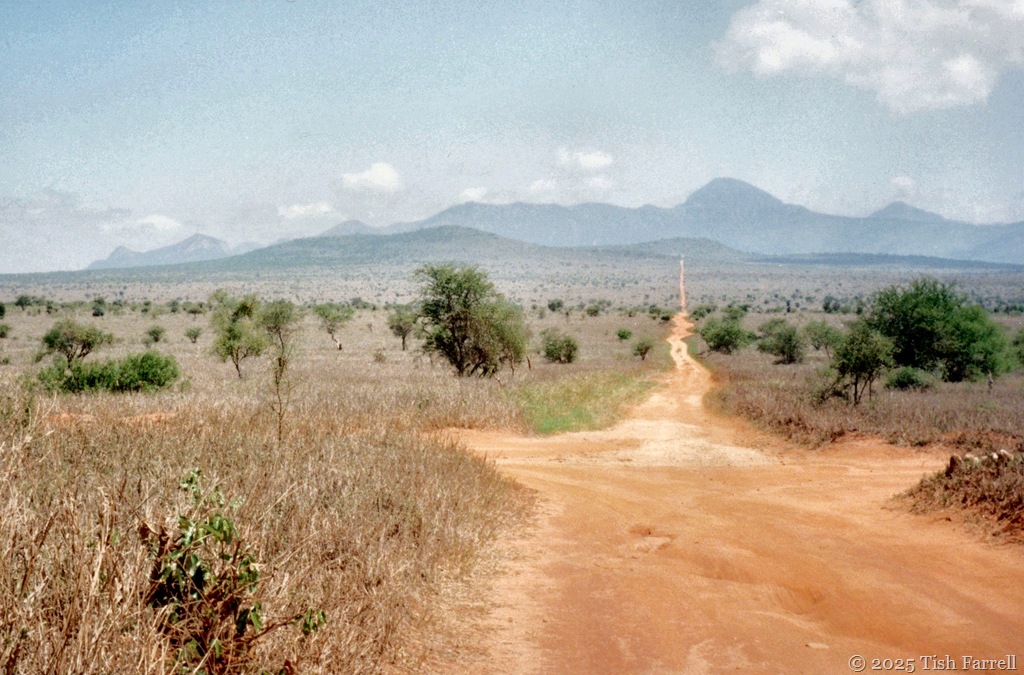
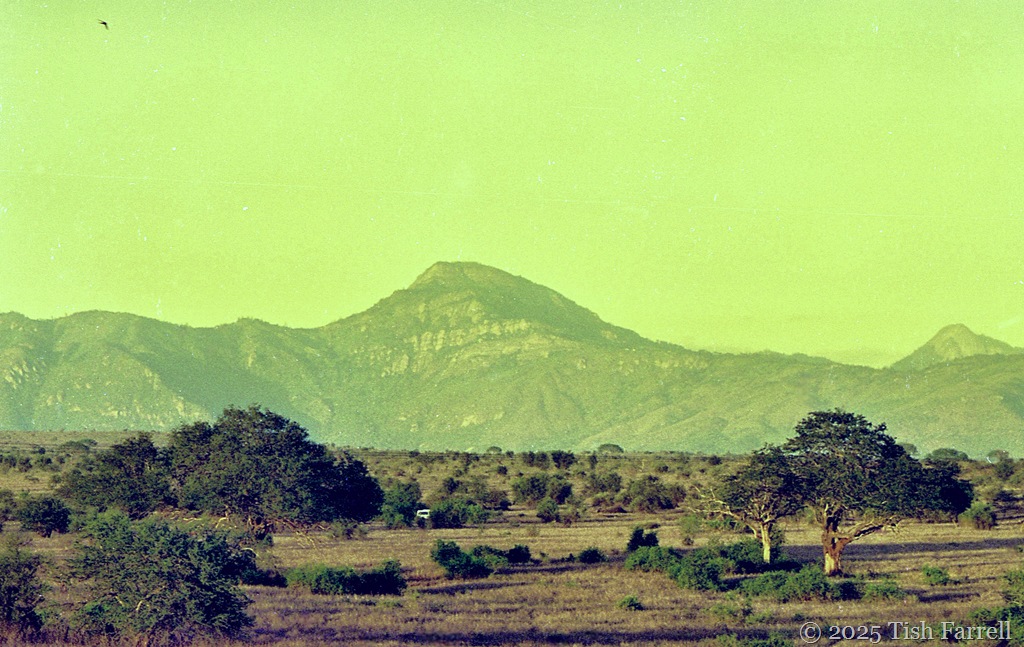
It is a landscape that scarcely fits the usual visions people may have of Kenya. And on top of that, if you choose your spot, there can be moments there when Kilimanjaro (just over the border in Tanzania) deigns to show itself. It is a capricious mountain, coming and going in a matter of seconds, dissolving impossibly into a blue and cloudless sky. It changes size too. Some days it can appear huge, shimmering in the sky with all the substance of a giant soap bubble; other times, as in the photo, it is more discreet. But however one sees it, it changes the day. The nervous system fizzes from head to toe: we’ve seen the mountain! We have!

Kilimanjaro header

#SimplyRed Day 26

Red In Tooth And Claw?

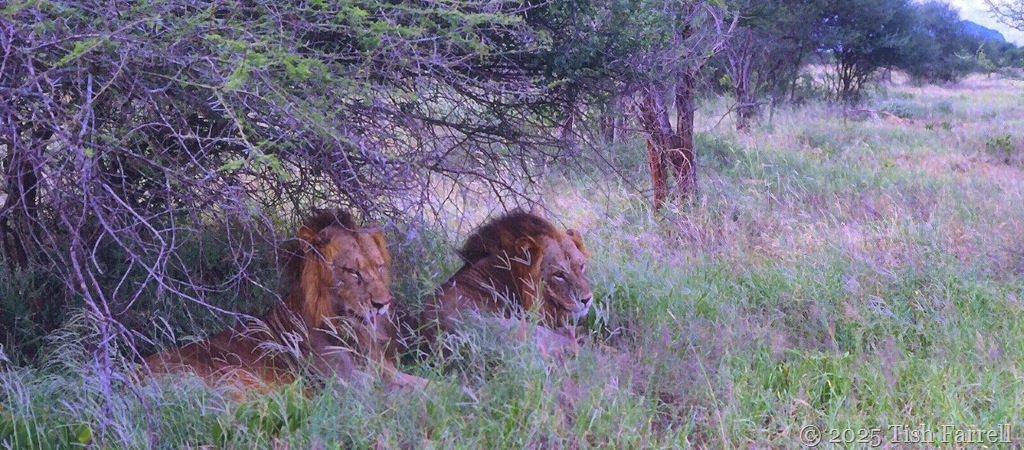
Taita lions sq

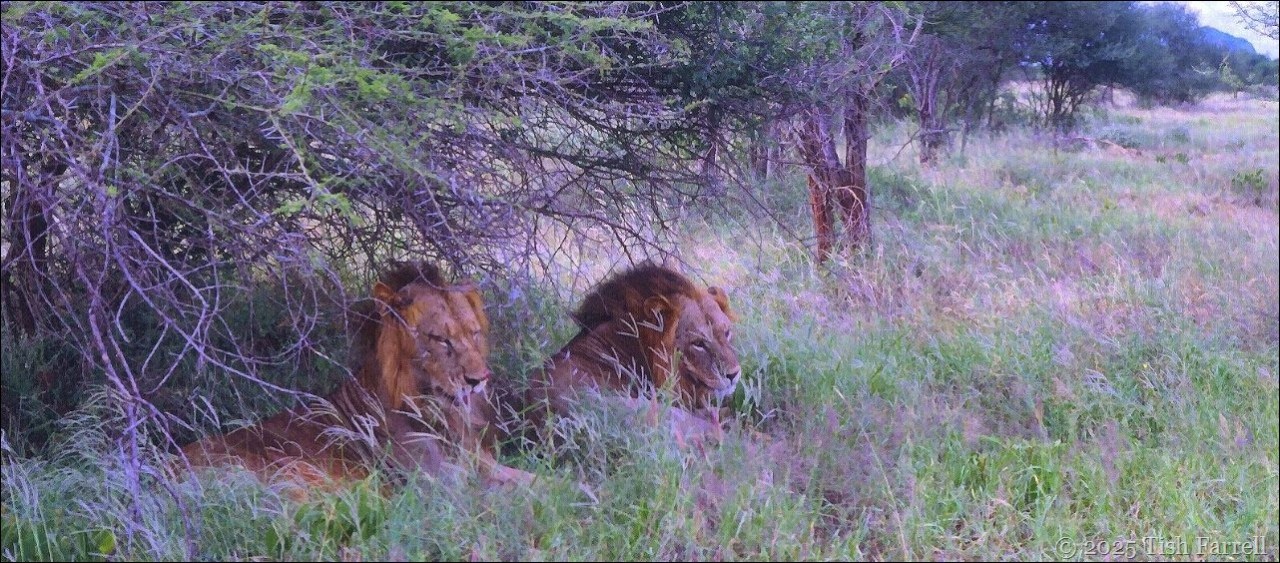
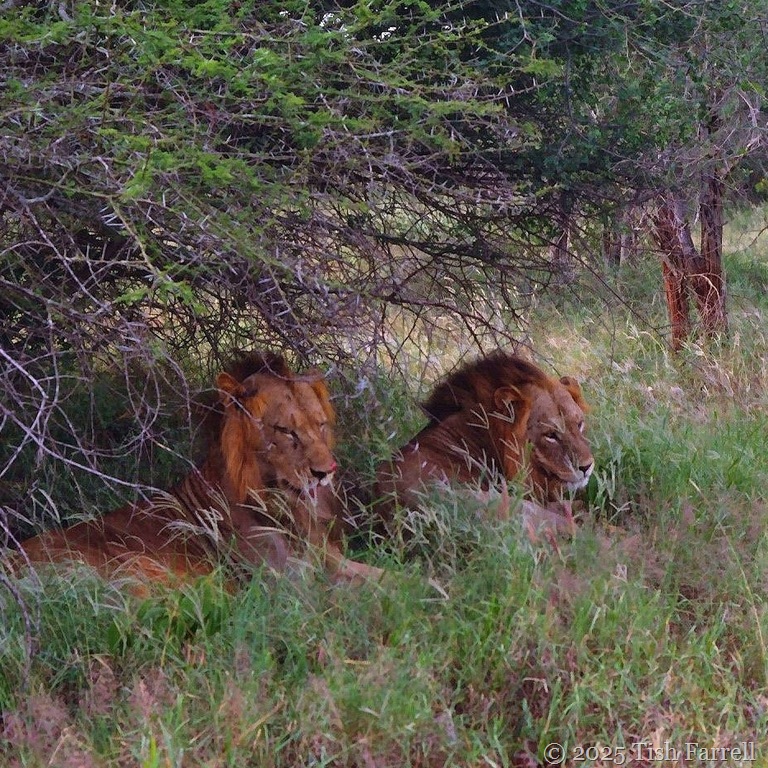
Well, it had to be done, didn’t it – that particular ‘red’ title for Becky’s month of #SimplyRed squares, and this despite the apparent lack of ‘red’ in the photo. But then, if you look very carefully, the dozing lion does appear to have a bloody nose.

Of course I’ve posted this photo a few times before. It’s probably one of my best ‘caught moments’ from the old Africa album. We were staying at the Taita Hilton in May 1992. Our other bolt-hole, when Graham was working in the Taita Hills, was the very basic Danish Guesthouse in upland Wundanyi, but on this occasion a room wasn’t available. Oh dear. That meant five days of wall to wall luxury down in the bush country, although that said, I loved the simplicity of the guesthouse too. The Taita hill country is anyway very beautiful.

And the reason we were there at all, Graham was supervising the release of predator beetle Teretriosoma nigrescens (TN for short) at sixteen highland farms. There were high hopes that it would begin to control the spread of larger grain borer (LGB), locally known as dumuzi, which had been introduced to the continent around the 1980s in cargoes of food aid maize sourced in LGB’s native South America. (For those who want the scientific details there’s a short abstract here of a related project in  West Africa. It gives the gist of the experiment.)

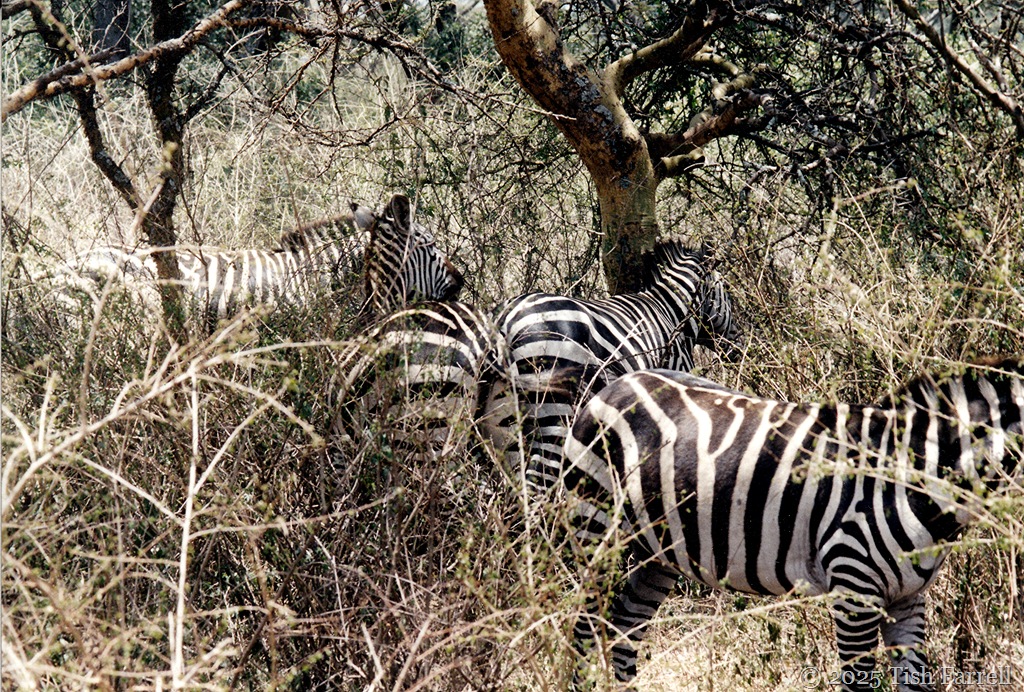
Our stay coincided with a weekend, so on Sunday afternoon we thought we’d take a drive around the hotel’s small game reserve. It was the start of the dry season and a time in Kenya when skies are often overcast, the light lacklustre. We bounced along the dirt tracks scanning every tussock of brown grass for big cats. That day at the hotel there had been talk of lion sightings. We felt hopeful, but instead, we spotted zebra, hartebeest and waterbuck, all grazing peacefully.

IMG_0013

We were giving up on the quest when a park truck pulled up in front of our land rover. I thought the ranger wanted to check our tickets, but he only wanted a chat. When he discovered that we hadn’t seen the lions, he told us to follow him, and zoomed off track and into the bush. We trundled behind. Soon he had us lined up by a thorn bush. There, beside my car door was a slumbering lioness. She opened her eyes to check me out and then went back to sleep. (Lions sleep around 23 hours a day). The ranger then pressed on to the next bush, and there were the two males. I leaned out of the car window and simply took the photograph – just like that. It’s still hard to believe. I think I was there.

Taita Hills reserve

copyright 2025 Tish Farrell


#SimplyRed Day 23

Taita lions header

Taita Continued ~ Of Red-Billed Hornbills

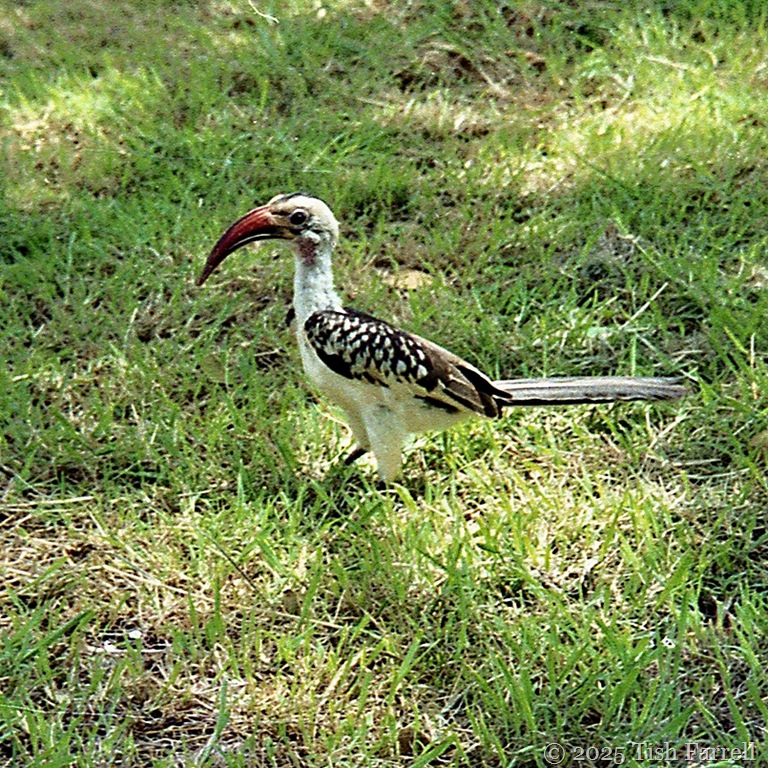
img055 red billed hornbillsq

The hornbill in the photo is not the one I’m going to talk about – for reasons that will shortly become clear.

*

It was a quiet afternoon at the Taita Hills Hilton. The lunch-time safari vans had come and gone. I’d been writing letters, sitting in the shade by the teardrop pool (see previous post). Its heavenly blue, the shimmer of it, was mesmerizing, as were Robert’s passes with the pool net. The lack of guests meant he could take his time sifting out the tiny acacia leaves and assorted bugs. He moved quietly and with ease. My attention drifted.

And then Robert was at my side. Would madam like to see something very interesting. I must have looked doubtful because he assured me I did not need to go far. I then noticed he was holding a moth between thumb and forefinger. It looked dead. But this wasn’t it. He led me to the largest of the poolside flame trees, had me stand directly in front of the trunk. Look, he said, holding the moth towards the tree. In a trice it was gone. Something had moved, but I could not see what.

Robert pointed to a slit in the bark. I leaned forward and saw that behind the slit was a hollow. A very dark hollow. Except for two bright, beady eyes looking straight back at me. It was a very odd experience – to be watched from inside a tree. It was then I noticed how close my nose was to a shadowy scimitar bill. I stepped back.

Robert found another bug and held it near the slit. Another twitch of the air. And that’s when he told me about the remarkable nesting habits of the hornbill family. The mating pair find a suitably hollow tree, he said. The female then allows herself to be imprisoned, the male building up a mud and dung walled nest around her. A small opening is left so he can deliver food. And there the female stays until the eggs are laid and hatched. When all becomes too crowded in the nest, the female breaks out, and the parents then rebuild the mud wall and continue to feed the chicks through the slit until they are ready to fledge.

Well!

Robert then alerted me to the fact that the male was hovering nearby, waiting with the food delivery. We quietly withdrew. And then my new wildlife guide wanted to know what I was doing in Kenya. I told him how Graham was working on a project to control the Larger Grain Borer (LGB), an imported pest of grain stores, and that there were plans to introduce a predator beetle to reduce its numbers. Robert then said he hoped the predator would not cause harm to Taita’s butterflies. I assured him that it had been meticulously screened to have no impact on anything but LGB.

It was some eighteen months later when I talked to him again. In the interim Graham and I had been in Zambia, and when we returned to Taita Hills I found that the hornbill tree had been felled,  was nothing but a stump. I was so surprised I remarked on it to the pool attendant, at which point we recognised each other. Robert then recounted all I had told him about the LGB project in the Taita Hills. I was very touched. It was as if he had thought often about our one previous conversation, as day in and day out he gracefully sieved bugs and leaves from the teardrop pool that shimmered like a mirage.

*

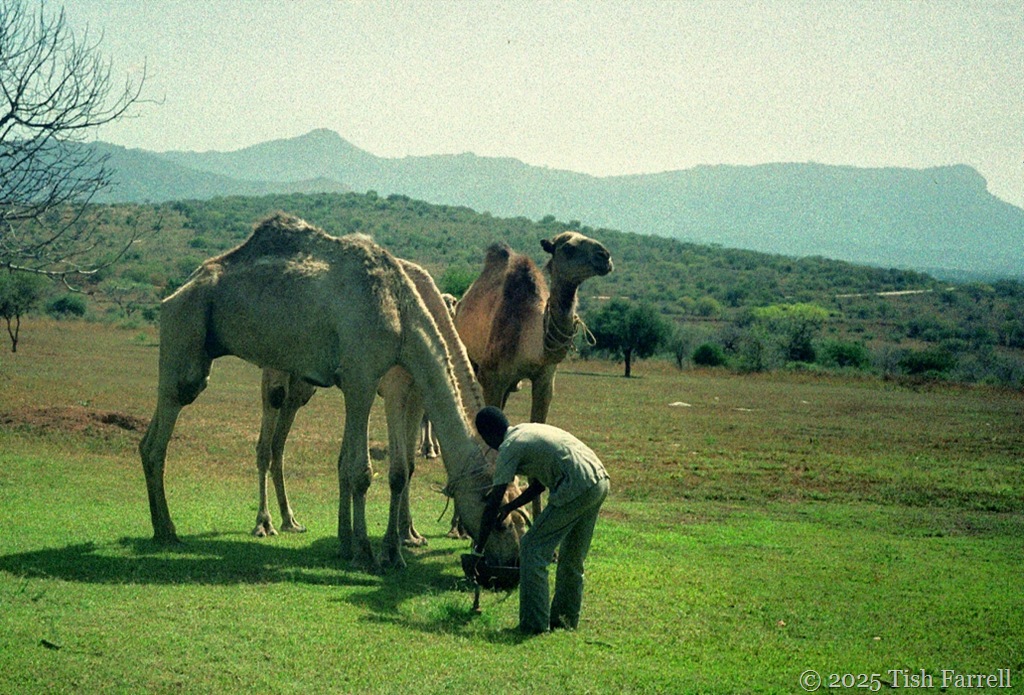
Taita Hilton - camels in the garden ed

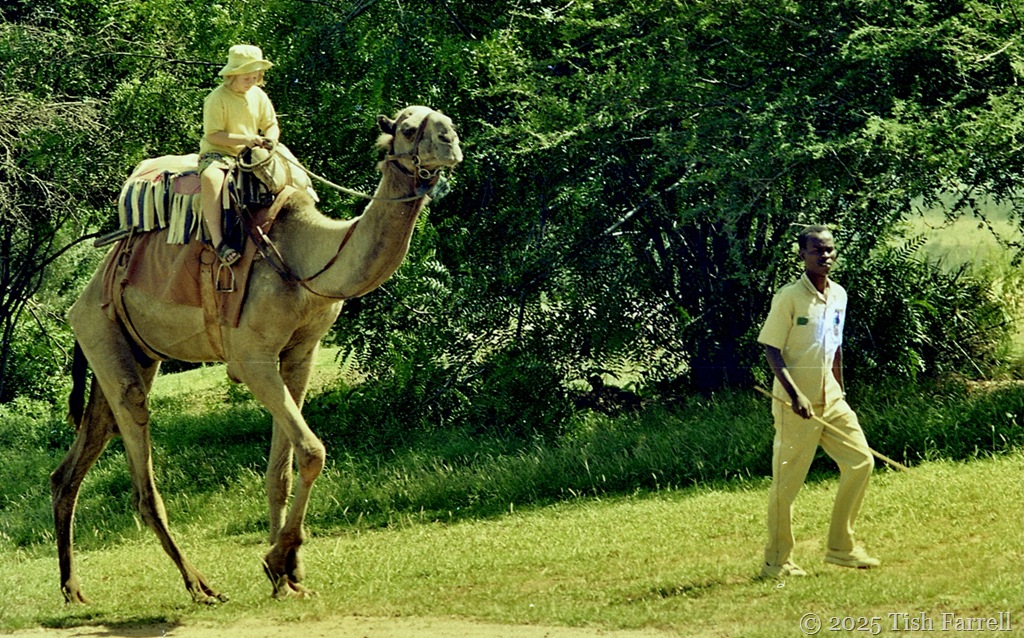
P.S. On later visits we found Robert had been promoted to camel handler; at least one assumes it was a promotion. The camels in question were ever surly creatures. Here he is in the hotel garden; the Taita Hills during the short rains.

*


Birds of the Week

#SeeingRed Day 22

Taita after rain header

On The Road To Taveta ~ The Taita Hilton*

Taita Hilton sq

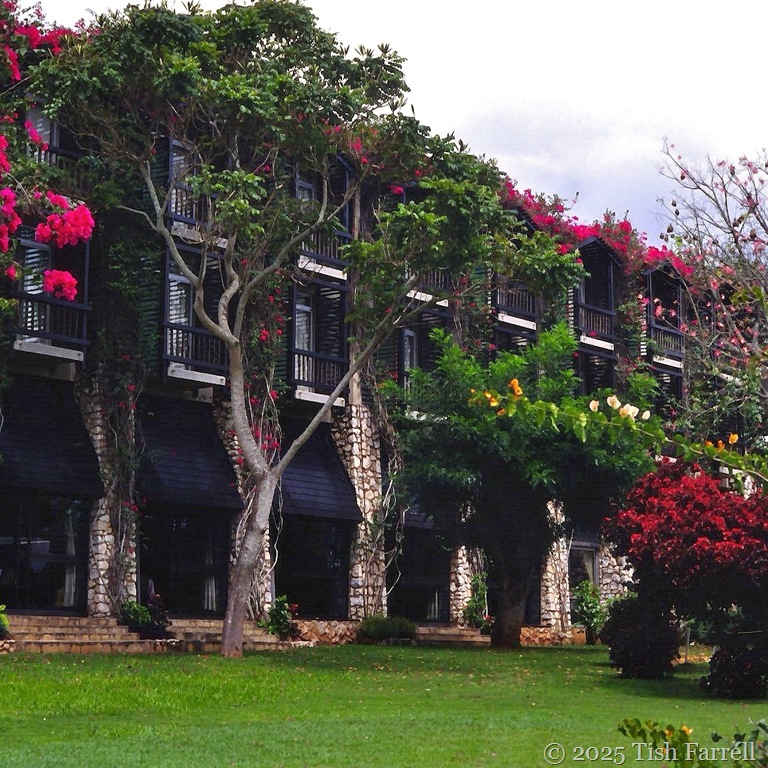
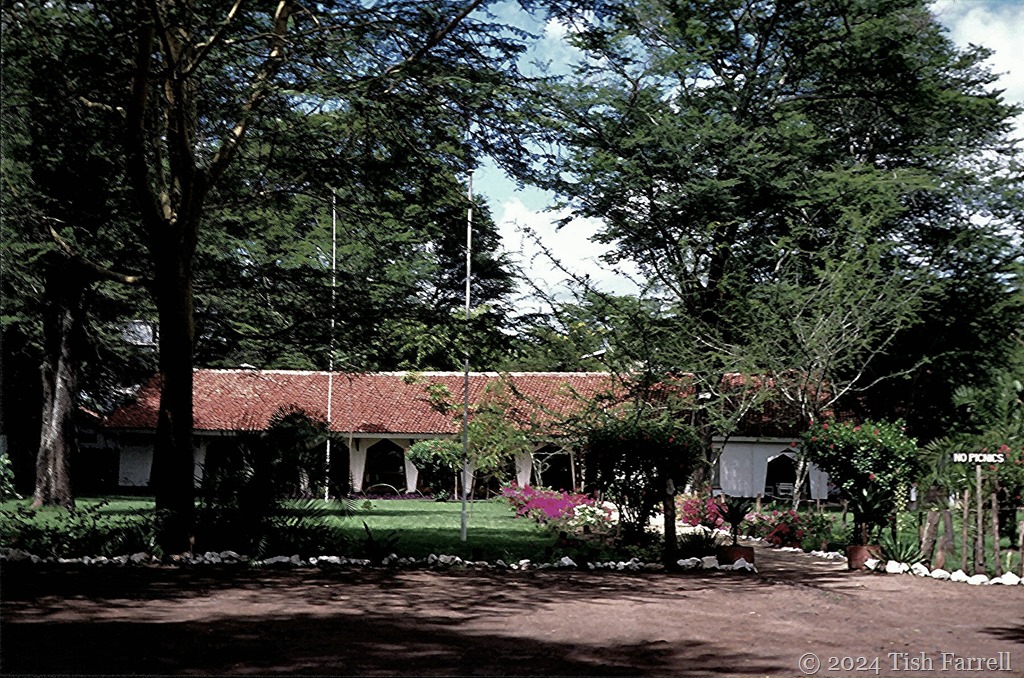
Caught in some dreamworld – it was often how it seemed that first year in Kenya. And nowhere verged more on the surreal than the Taita Hills Hilton*. A 5-star hotel in the bush. There it lies beside the road and rail to Taveta and the Tanzanian border. It is the territory of William Boyd’s  First World War novel An Ice-Cream War, of a failing sisal plantation and border skirmishes between German Count Von Lettow Vorbeck’s Tanganyikan askaris and Kenyan British forces backed by coerced young Africans of the Carrier Corps.

And it is the place we often stayed when Graham was overseeing field work experiments up in the Taita Hills. After breakfast he would drive up the mountain to Mgange to speak with farmers and check on the Larger Grain Borer’s voracious appetite for stored maize…

230_thumb[6]

*

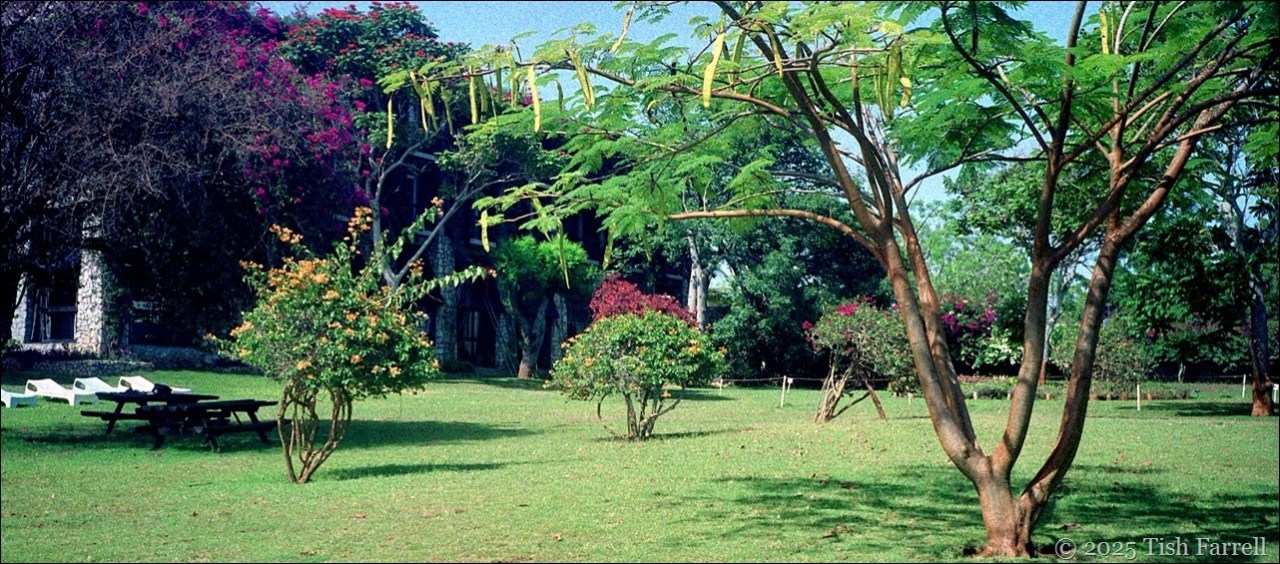
…and I would start my day, reading or writing beside the hotel pool. The pool was shaped like a teardrop, shaded on its southerly edge by flame trees. A thick hedge protected the garden from the adjacent wildlife reserve, the land there a failed sisal plantation run back to wilderness.

I’d look out there for hours, watching impala or zebra, sometimes giraffe nibbling the thorn trees, their slow passage through the brush; the soundscape a fizz of insects, swelling ever louder as the day warmed, the non-stop call of ring-necked doves, both strains somehow fusing into the heat haze that shimmered over the bush country. You can see how it might drive you mad. Meanwhile, inside the garden, a hosepipe hissed and swished, watering the lawn, where clouds of black butterflies with azure flashes came to sip.

img005

*

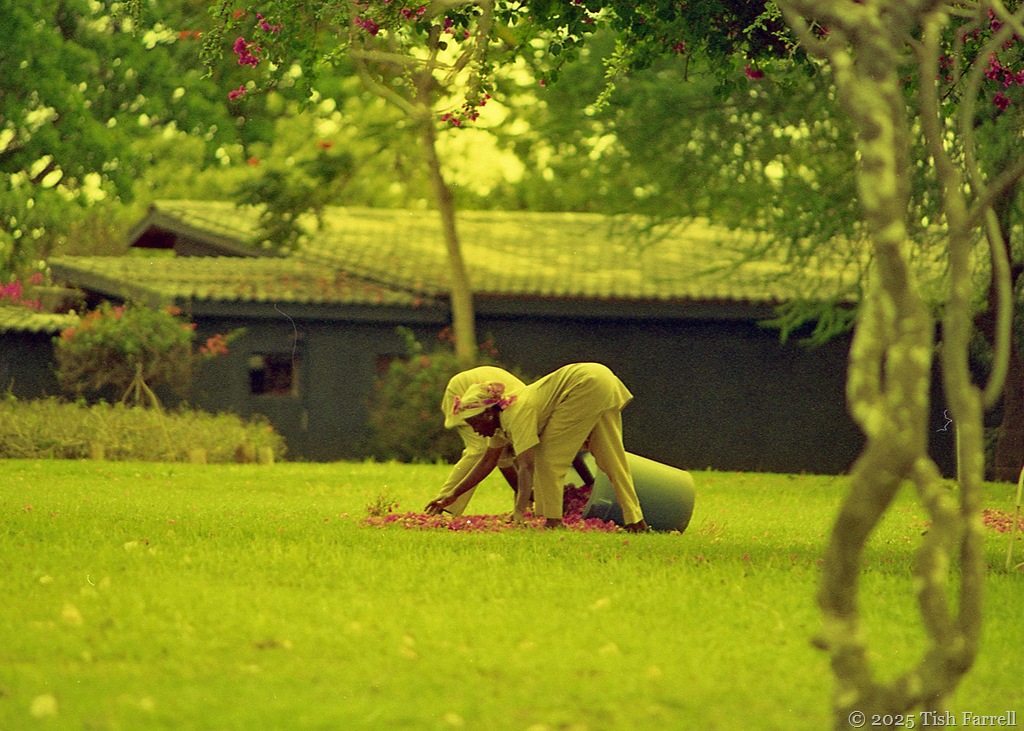
The hotel was usually very quiet in the mornings. The staff went about their daily chores, tidying, sweeping, making ready for the next arrivals. I often saw them in the garden quietly picking hibiscus flowers to put in the rooms or to decorate the dining tables.

gardening non-stop

Garden tidying – a never ending job

*

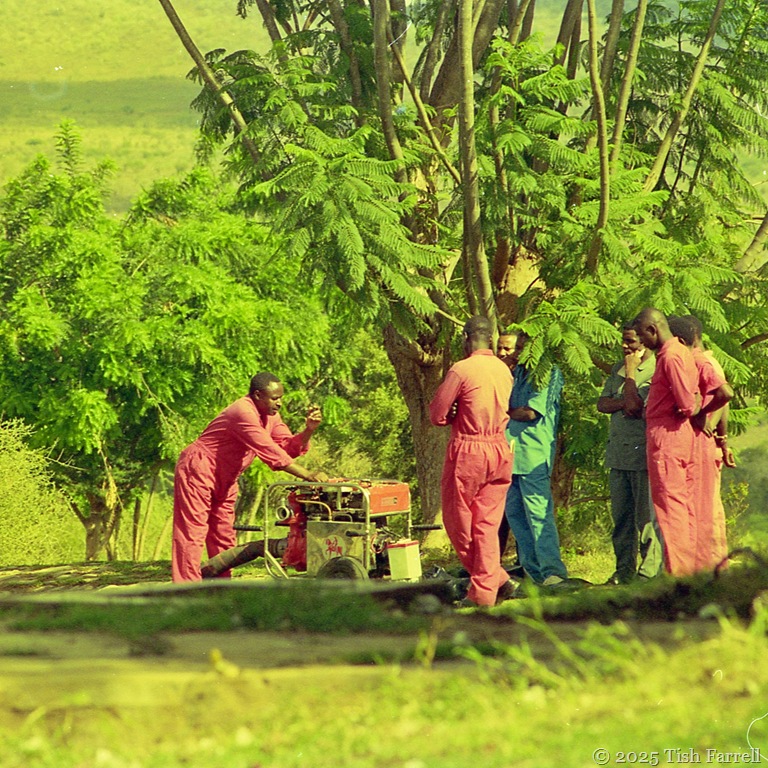
Taita Hills men in red

The maintenance men

*

Around noon, fleets of safari vans, up from Mombasa, or down from Amboseli, would start arriving, their occupants spilling out, mostly young folk clothed in skimpy beach wear. They would be welcomed into the great hall with gentle decorum, glasses of chilled fruit juice set out on flower decked trays, but the tide of newcomers could never be quite contained – the rush to the bar, the scramble to join the lunch queue in the baronial dining room. Those tourists who did check in, usually only stayed one night and were off after breakfast. And so we became the centre of enthusiastic attention from the hotel staff. We stayed longer; five days on one occasion. ‘That’s almost a week,’ one waiter told us approvingly; we were doing them and the place proud.

Taita Hilton - safari vans come and go_thumb[5]

*

In the garden, somewhat oddly, were a trio of camels, kept for those moments when a tourist might have a burning ambition to ride one. They didn’t go far, just to the end of garden and along the edge of the reserve. Once on a family visit, our seven year old niece, Sarah, surprised us all by being very sure that she wanted a ride. Such savoir faire on the dromedary front. Here she is with Robert the camel fundi. Ah, how time passes. She’s now a chemical engineer working in fusion technology.

Robert and Sarah

camels and bush country

Taita Hills garden and the reserve beyond

*

In my wanderings about the place, I discovered I could climb up to the hotel roof. Sometimes, towards sundown, if Graham hadn’t returned from the mountain, I’d go up there and lean on the parapet, looking out for the Land Rover on the Taveta road. All around swifts and swallows swooped and swirled and, briefly, I’d think of the Shropshire home I’d left, and that soon these small birds would be leaving for their English summer.

And once when I was up there at twilight, the day fading fast, and no sign of headlights on the road, I saw shadow elephants crossing the railway line. At that moment Africa felt very very large. Unfathomable. Another dreaming interlude.

Rooftop view

*now the Taita Hills Sarfari Resort & Spa

#SimplyRed Day 20


Taita Hilton - header _thumb[5]

Once On Mombasa Beach

img059sq

Our first stint in Kenya was meant to be for three months. It stretched to nine, a long time to be away from home when none of it had been planned. On our return to the UK in September ‘92 we weren’t sure what would happen next. But come November we were flying off to Lusaka, Zambia, on another short-term contract.

This time Graham was seconded to the EU Delegation to take charge of the Commission’s food aid distribution. Zambia had been suffering a prolonged drought, but as it happened, and fortunately too, our arrival coincided with a return of good planting rains; food aid was only needed to bridge the gap until harvest time. And so once again, like strange migrating birds, we left Africa in September. And once again, two months later, we were heading back again, to Kenya on yet another short-term contract, this time to close down the Larger Grain Borer project based at the Kiboko research station. This was the project Graham had been attached to as a consultant in 1992. (See previous post).

A year later, we were still in Kenya, one contract having evolved into another. In December ‘94 Graham, as head of the UK crop protection project, had to chair a three-day agriculture conference in Mombasa. I went too and, as I had the use of a rather good camera,  I spent my days sitting under a palm tree in the hotel garden, looking out on a slice of Indian Ocean, sometimes taking photos of the passing beach traffic.

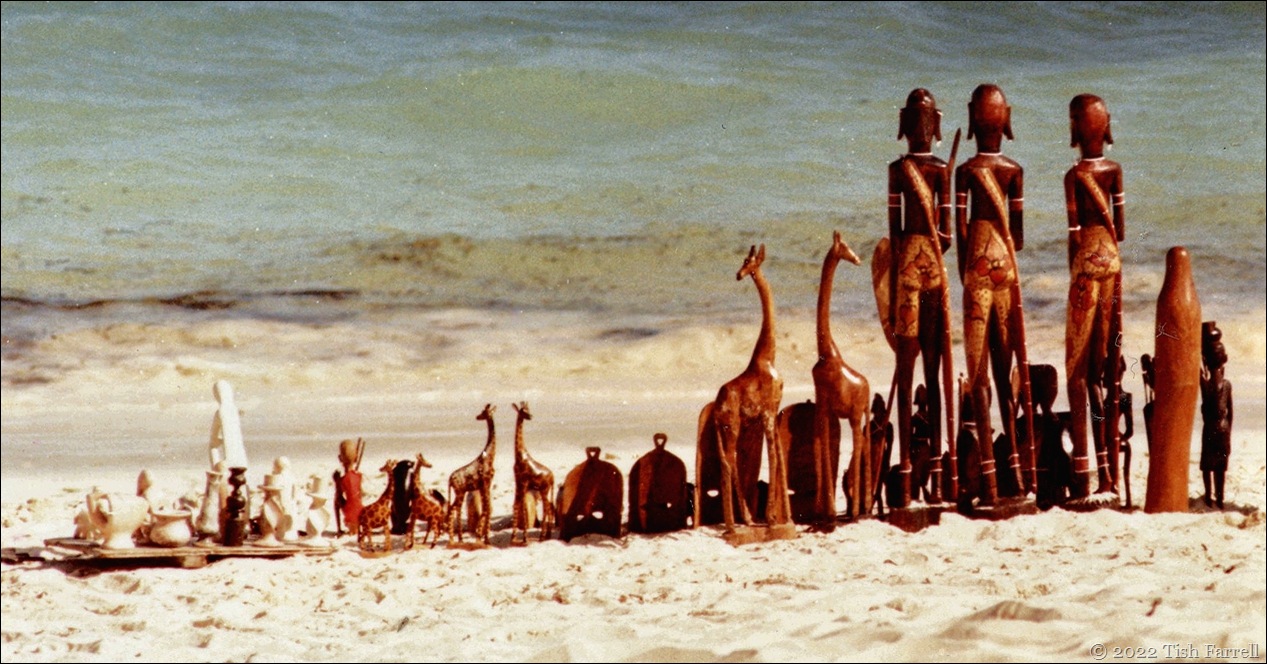
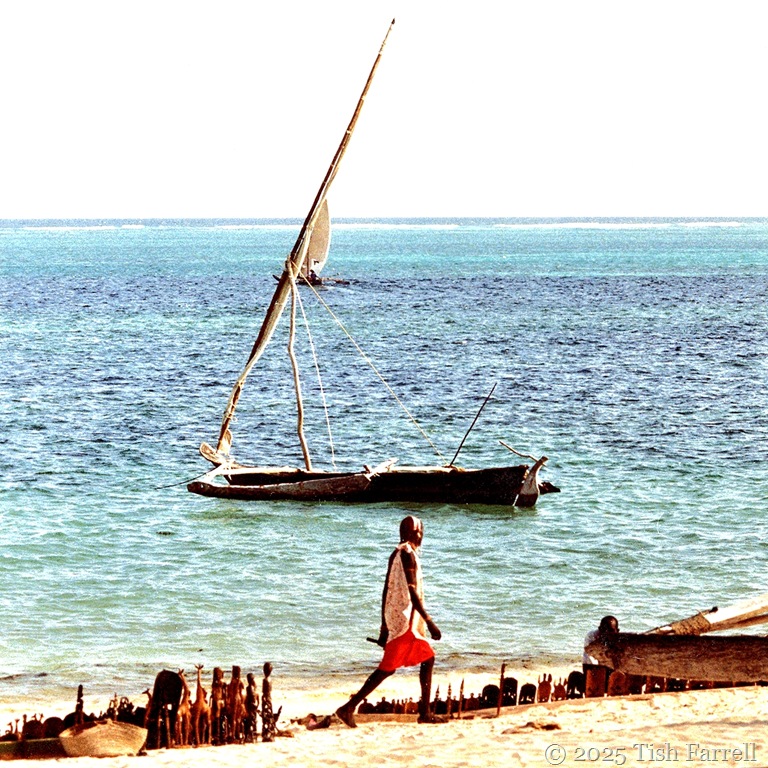
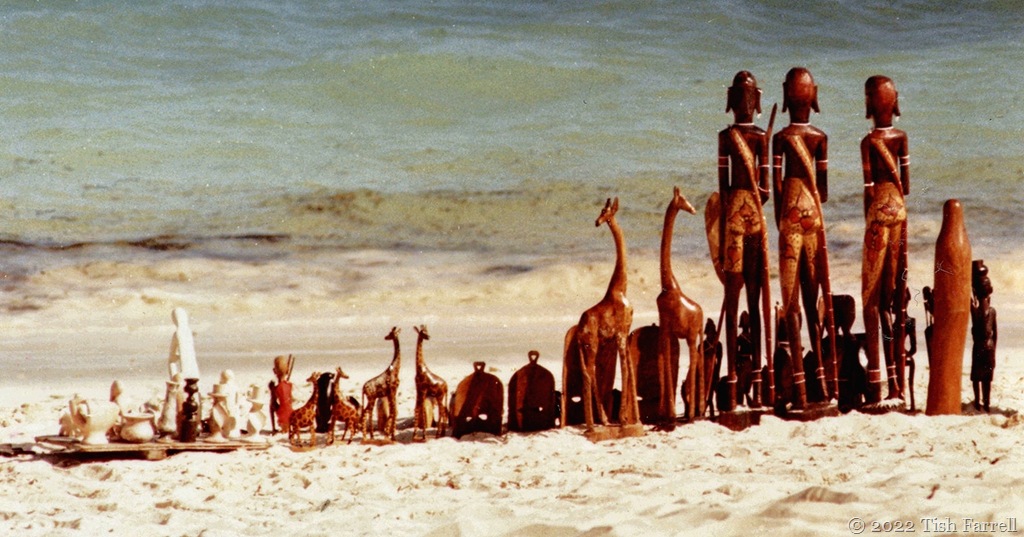
Hotel beachfronts around the world are places where business is done. Mombasa beach is no different and young Kenyan traders are smart, quick to cater to all tourist wants. The Akamba wood carvings and makeshift stalls of kanga wraps are among the more innocent lines of merchandise, although often the means of making contact and enabling further transactions.

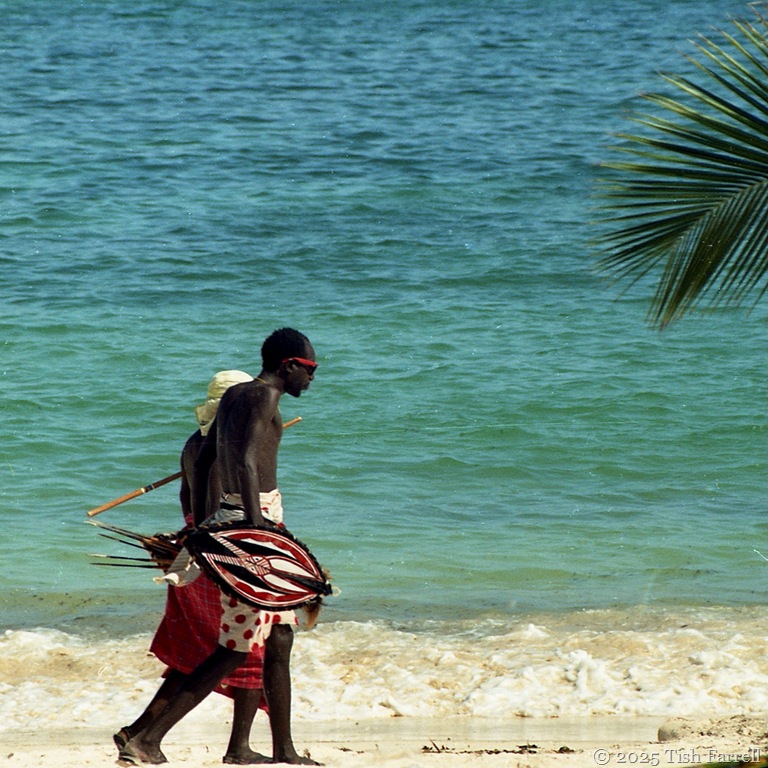
Needless to say the deemed exoticism of Maasai morani (young men of the warrior age set) can hold a particular appeal to visiting women of a certain age. So much so, enterprising lads of other upcountry communities might don the gear and pass themselves off as Maasai, or so a Kenyan friend told me.

That said, I’d bet that the young man in the header is Maasai, that lilting stride and spare frame. He could be a member of one of the traditional dance troupes employed by the big hotels. These next guys, though, look more like beach-wise traders with their made-for-tourists weaponry. Very cool sunspecs and matching kanga wrap though:

Mombasa beach traders

img049 header


#SimplyRed Day 16


Caught Red-Handed

Kiboko ed vervet raid

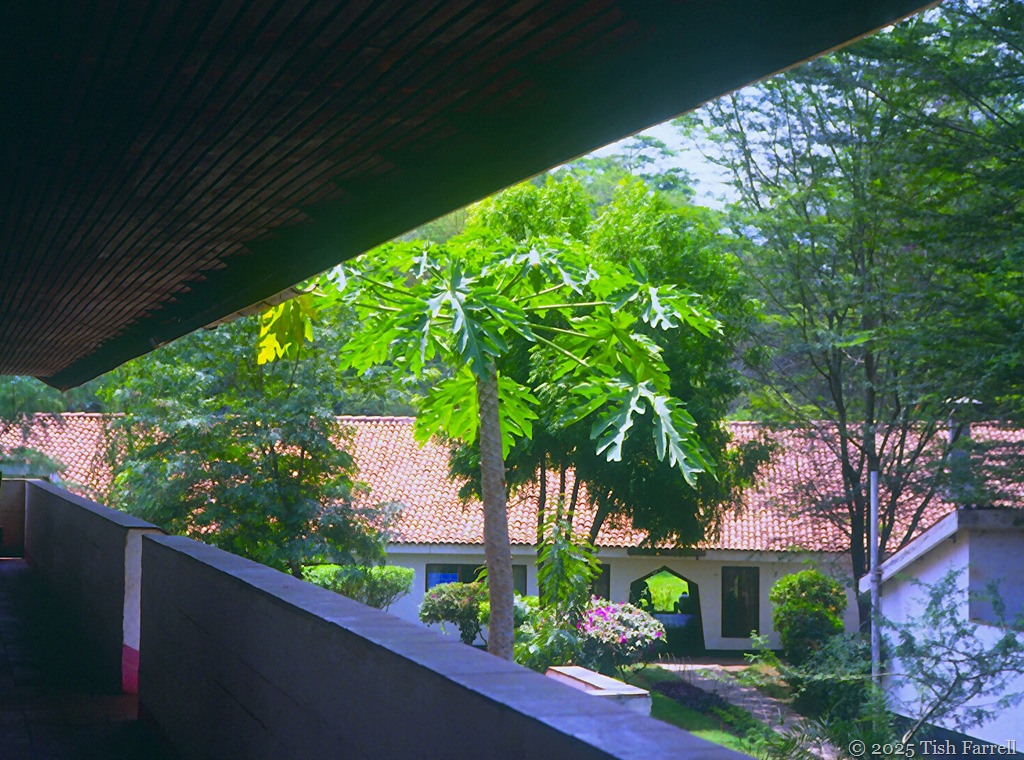
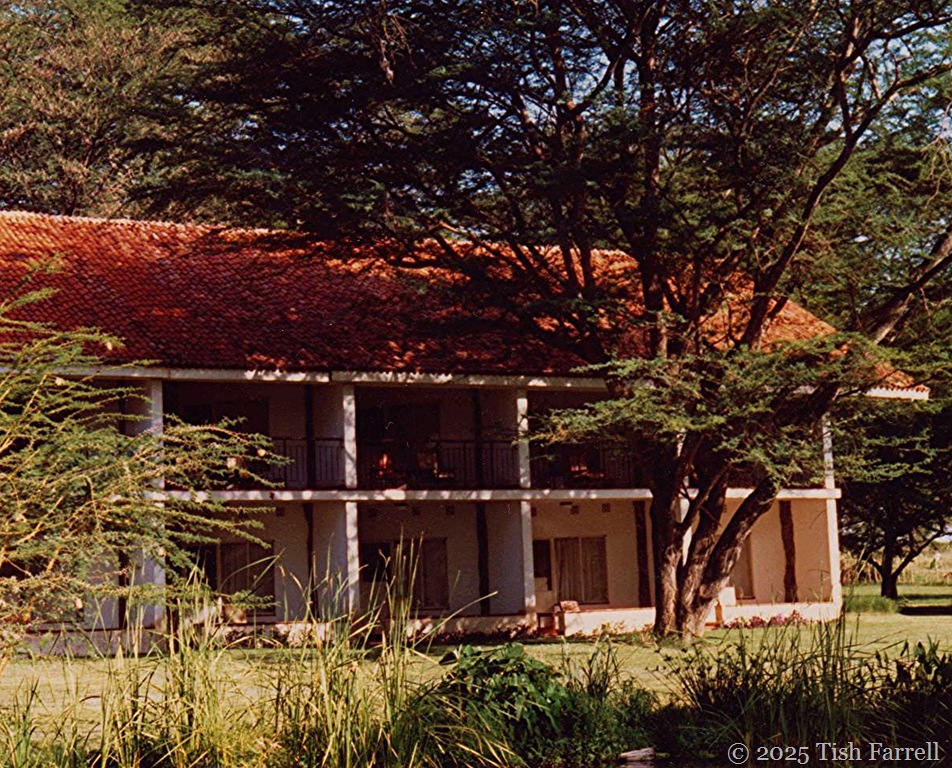
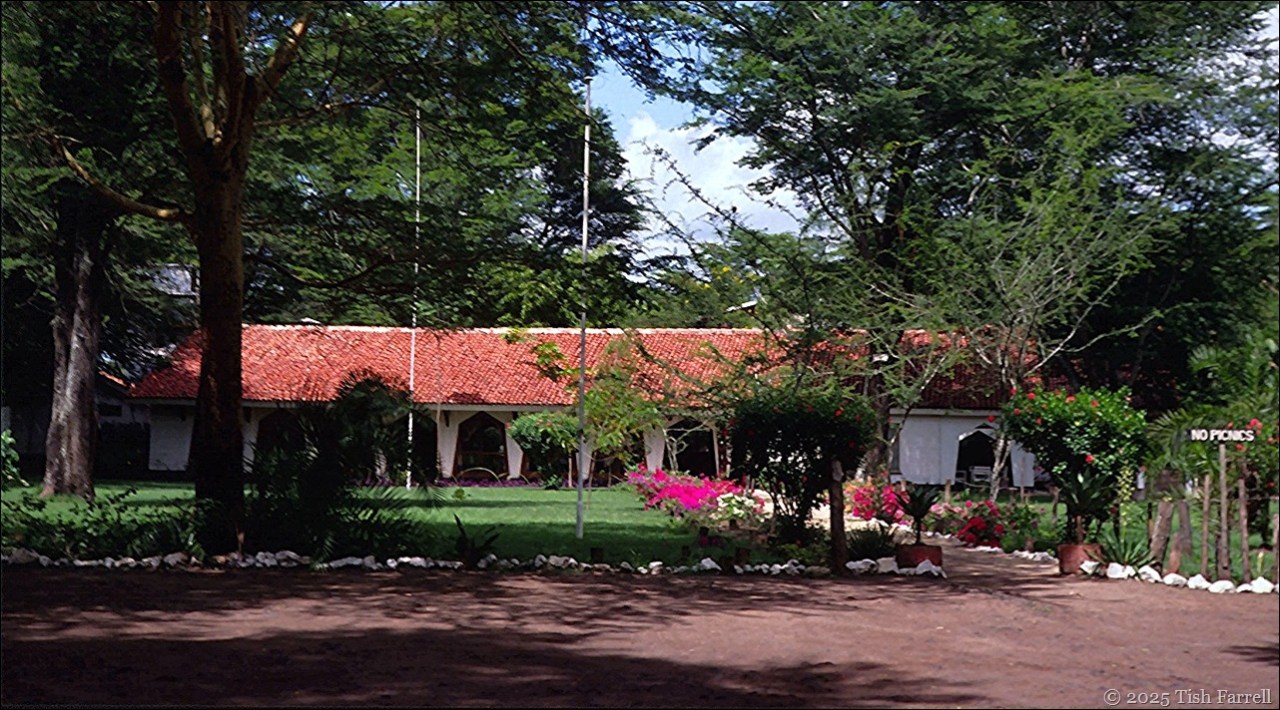
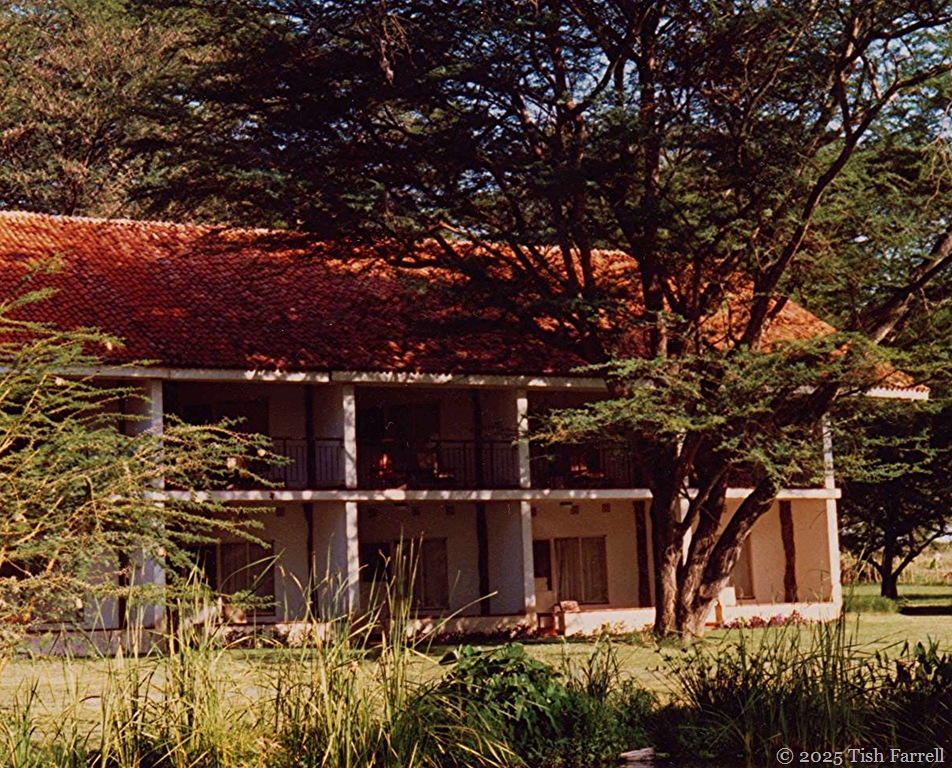
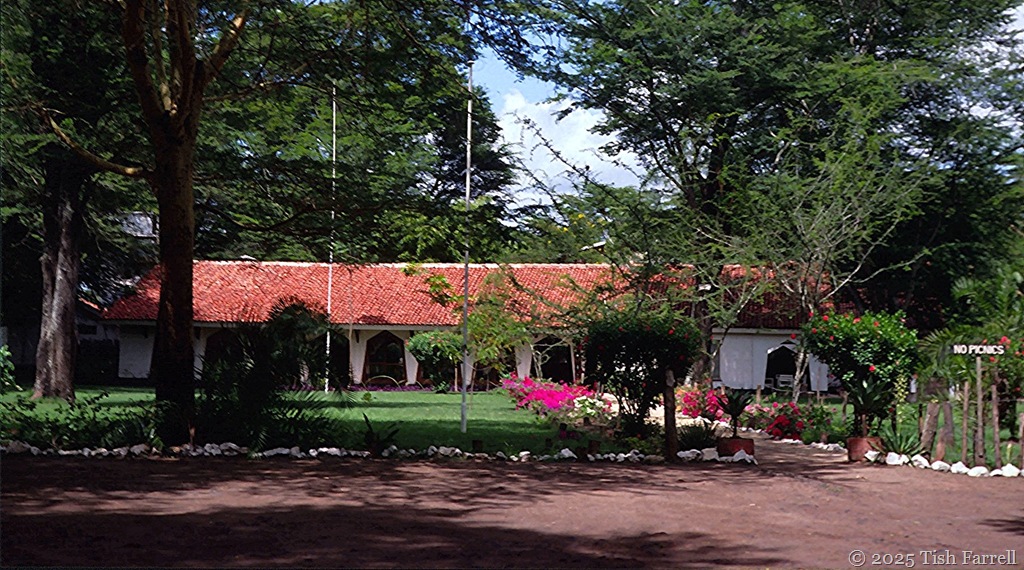
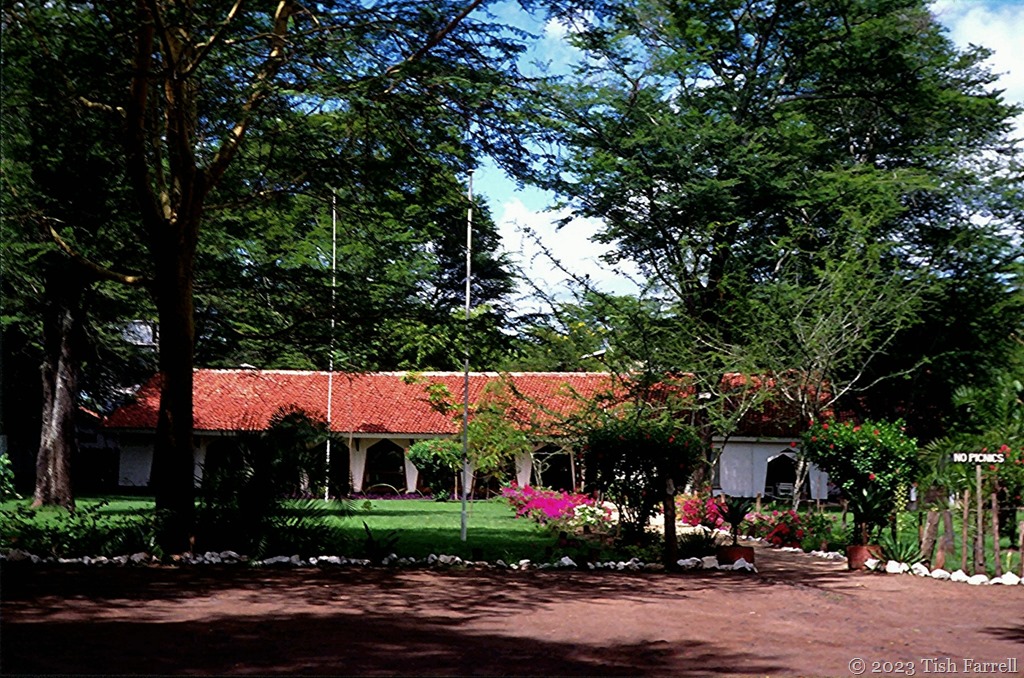
Whenever Graham had work to do at the Kiboko research station we stayed at Hunter’s Lodge. It was just next door, and the hotel manager allowed Graham a key to the back garden gate so he could come and go on foot rather than driving the long way round. The Lodge had been built around the late 1950s for the big game hunter, John Hunter. It was sited near his favourite waterhole, beside the Nairobi – Mombasa highway, just north of Makindu, and this was the place he chose for his retirement after a long career as safari guide and game controller.

Scan-140828-0013jpeg

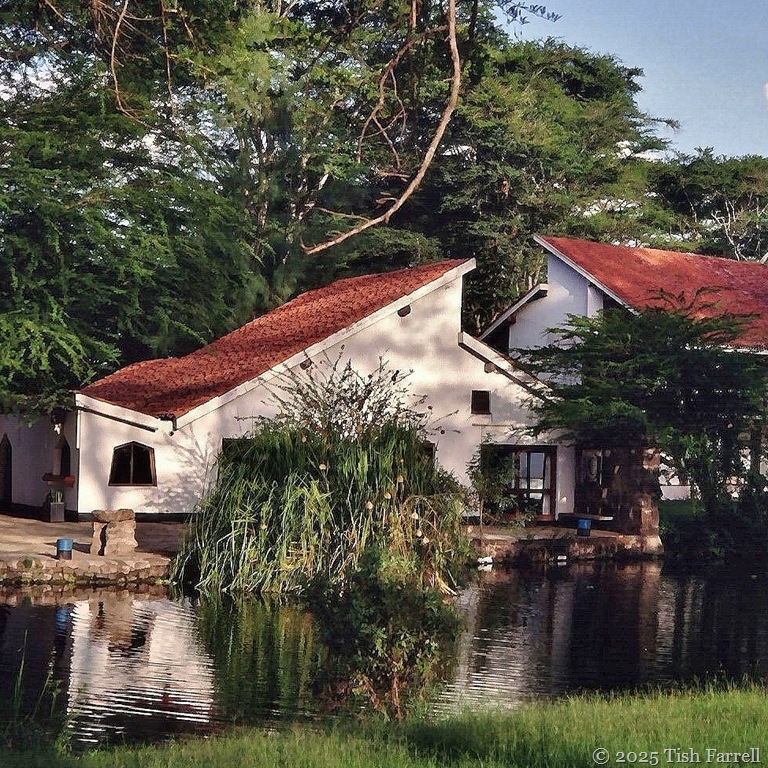
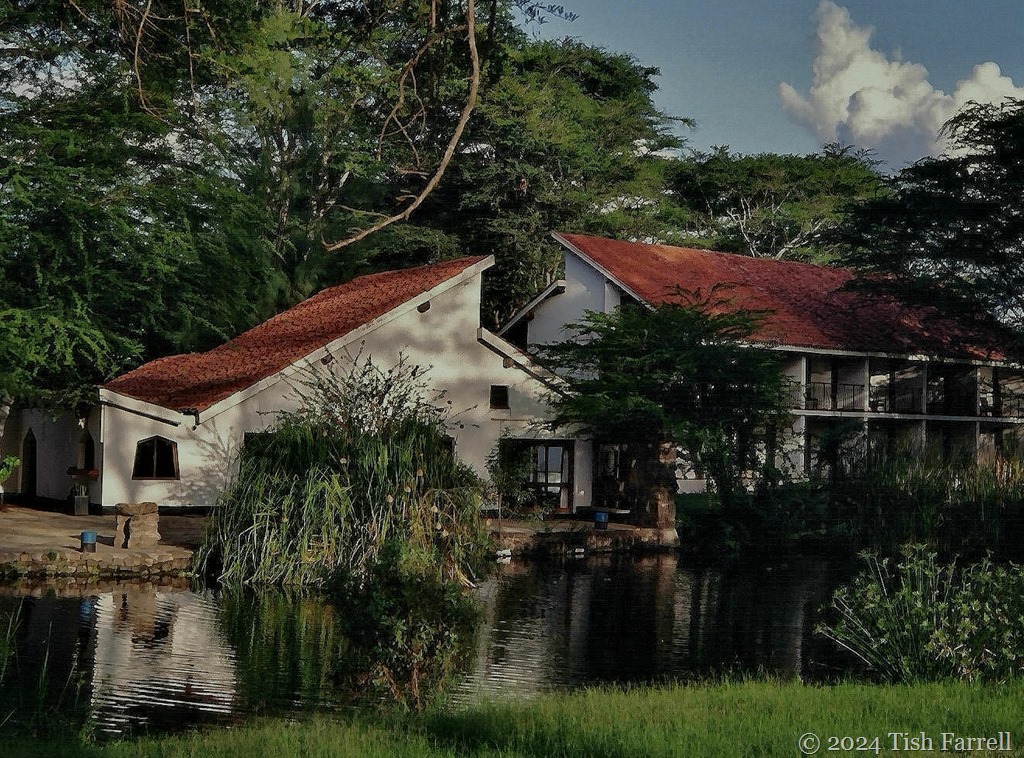
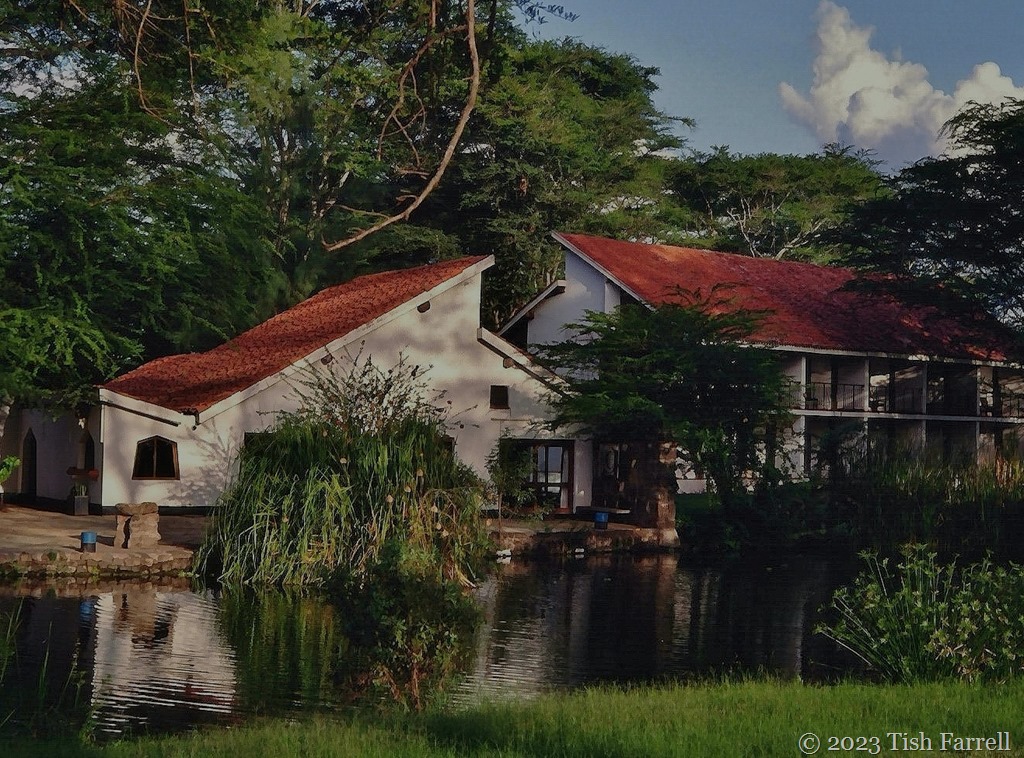
At some time in the sixties the site was expanded into a motel with a small block of architect designed guest rooms overlooking the pool. (In his day, Hunter had dammed the Kiboko River that fed the waterhole and so created a garden lake). For a time the place had a heyday, being the weekend spot for British expatriates, or the main overnight stopover for anyone driving to or from Mombasa. Then the highway was improved with a layer of tarmac, and the clientele drove on by.

008

*

When we stayed there in the ‘90s it was unusual to find any other guests. The Lodge staff anyway had their own regime that ticked over nicely irrespective of visitors. Now and then some Kenyan government agency might hold a seminar there or an overland truck might be allowed to park up and its occupants to camp on the lawn. Once I met an Israeli water engineer who was consulting on a nearby project. Otherwise, my main companions by day were Joyce the chambermaid and an astonishment of birdlife.

007

*

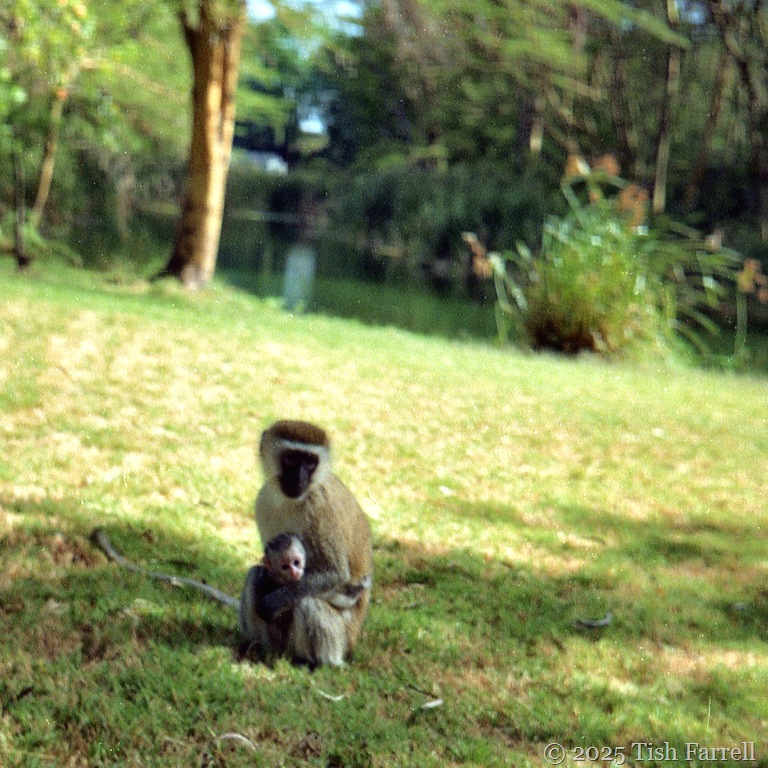
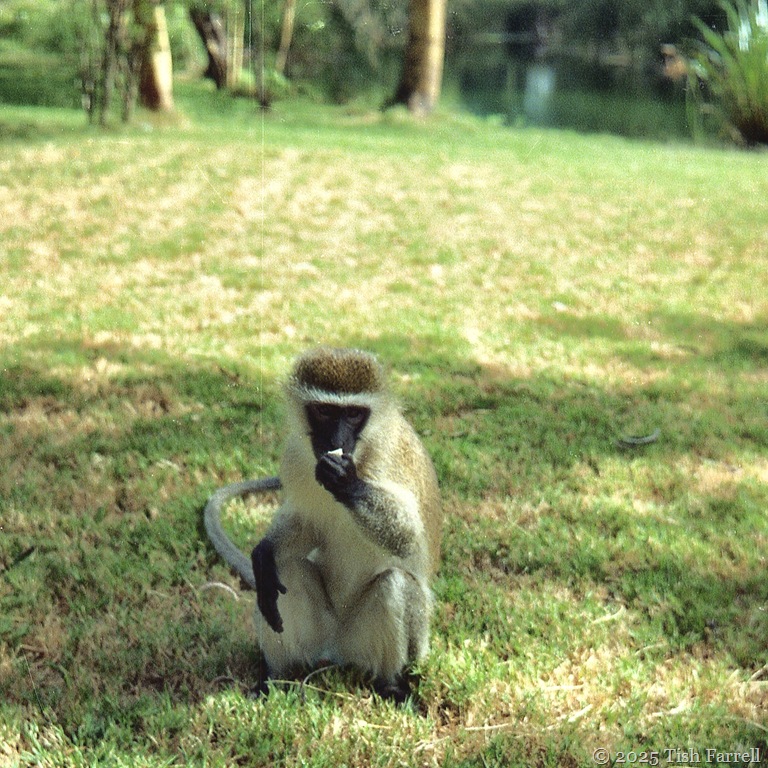
And vervet monkeys.

vervet and child ed

*

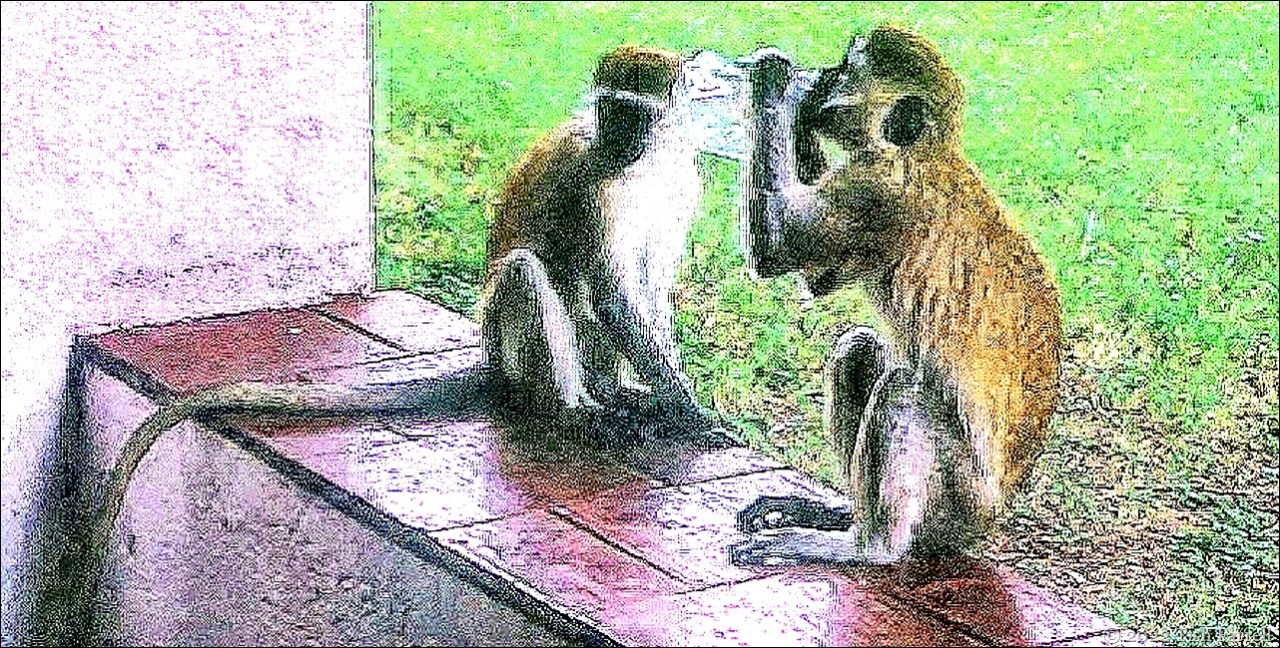
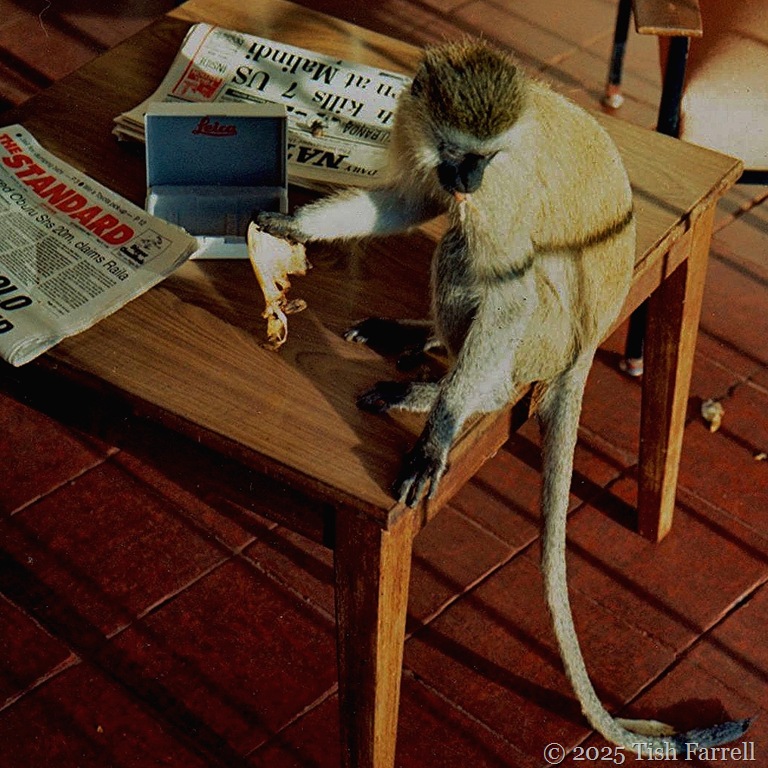
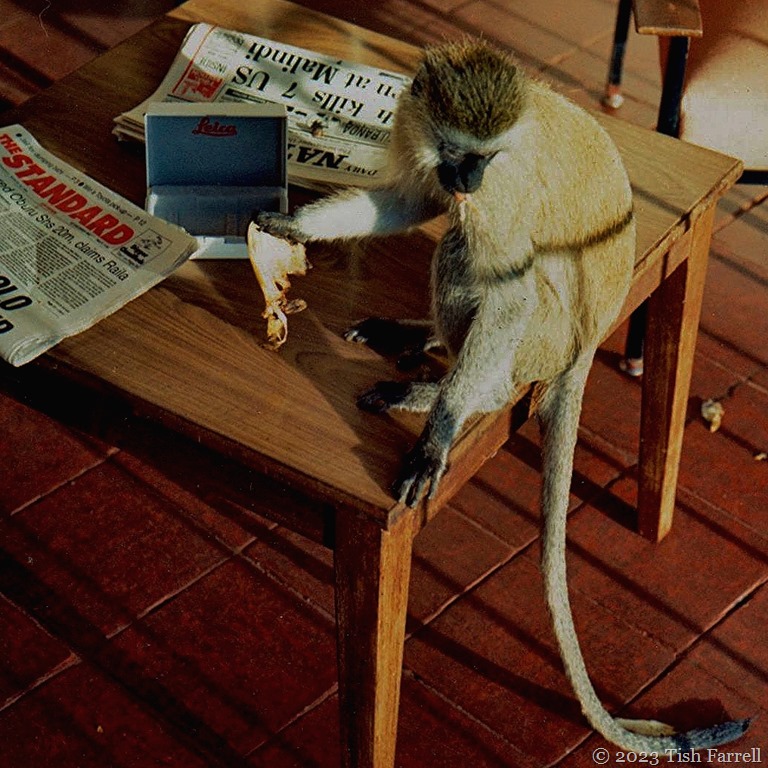
The vervets kept a keen eye on us. They soon learned we had supplies in our room – especially highly desirable bananas, and packs of raisins and nuts. We brought these to make up for the limited Lodge menu of cheese sandwiches, omelettes and steak and chips. But any unguarded moment and there would be a raid. I once came out of the bathroom to find three monkey faces peering up at me from under the bed.

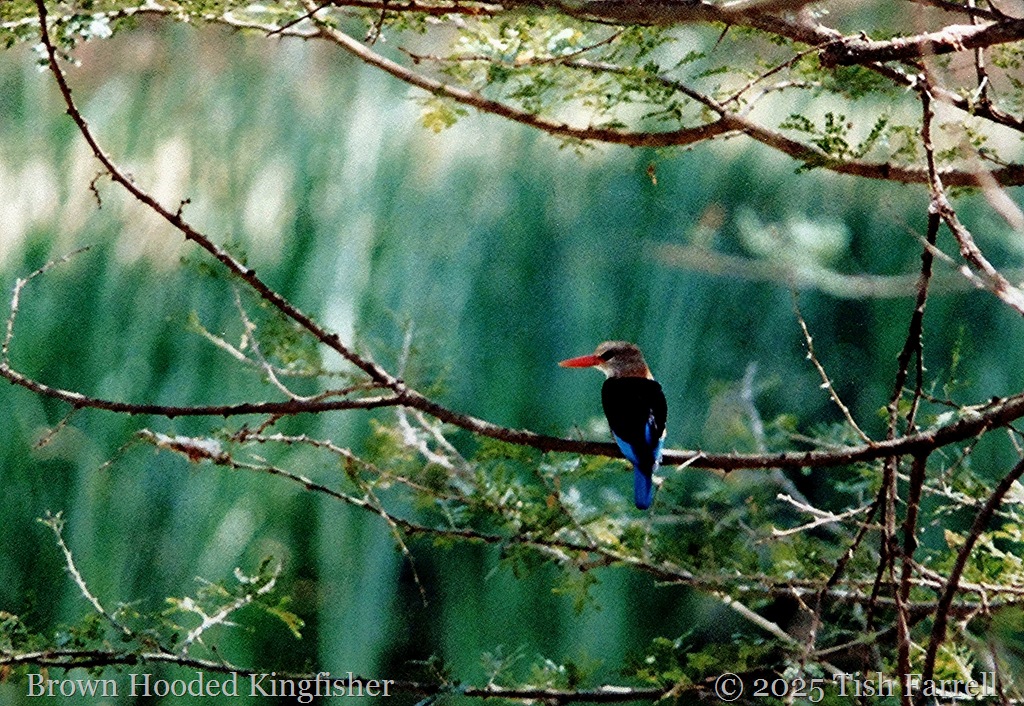
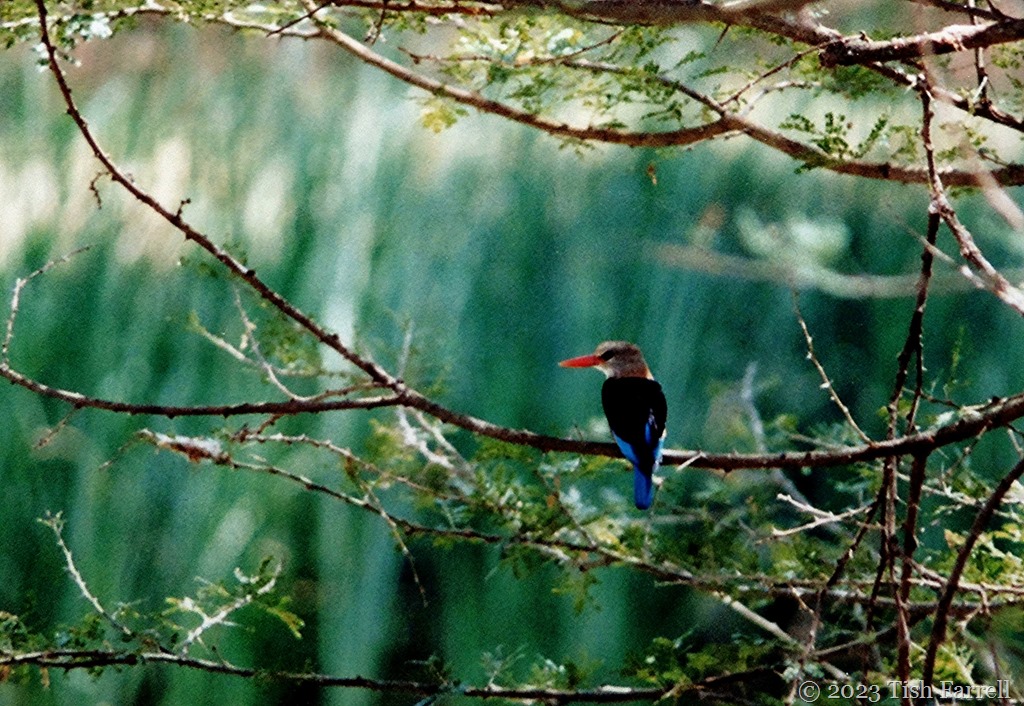
The vervet in the header had clearly pounced while I was distracted with some bird watching out on the lawn (viz. empty binoculars case). And with over 200 local species, the distractions were many – from tiny malachite kingfishers to the giants whose diving technique seemed set to empty the pool. There were also pied and brown hooded kingfishers, ibis, storks, herons and weaver birds, and once, a lone pelican that dropped in from who knows where.

brown hooded kingfisher

*

Days at Hunter’s Lodge were like a waking dream, soundtrack the high-tension whine of insects, muffled rumble of trucks along the highway, clatter of stork bills up in the fever trees and sometimes the chime of a bell calling the gardeners and chamber-maids to their tea breaks.

vervet


#SimplyRed Day 13

Red Earth, Red Roofs…

227 sq

In my last post I mentioned my sense of shrinking horizons now we no longer live in far-flung places. Those who come here often were quick to see I didn’t mean this in a negative sense. It’s more about feeling satisfied in the place and space we occupy. I don’t need to go anywhere else –  though that said, a little trip to the nearest seaside before summer ends might be welcome. But paddling prospects aside, these days I am happy to look out on the hills and farmland around the town, and inwardly at the motley fabric of this ancient border settlement, a place which locals call the Castle.

008

But then on these warm July days, I can’t help slipping back to Kenya, to Hunter’s Lodge, an oasis of a place that was pretty much ‘home’ in our first nomadic days in Africa. The research station where Graham was carrying out experiments on an imported crop pest, larger grain borer, was up a track behind the lodge garden. While he toiled, I sat under a thorn tree and dreamed. Did I really see Maasai women in their full red regalia delivering the hotel milk from gourds slung on a donkey…or a kingfisher the size of a crow strike the pool like some avian pile-driver…

tropical red roofs


More of this story in several places including: No way back from Africa – the road to Hunter’s Lodge

Also Once in Africa, Kenya Diary Continued and In an equatorial light


229 header

#SimplyRed Day 11

Tales From The Lake Shore ~ Of Hot Springs, Cold El Nino Rains And A Leopard

img20241001_19513812ed

Elmenteita December 1997

*

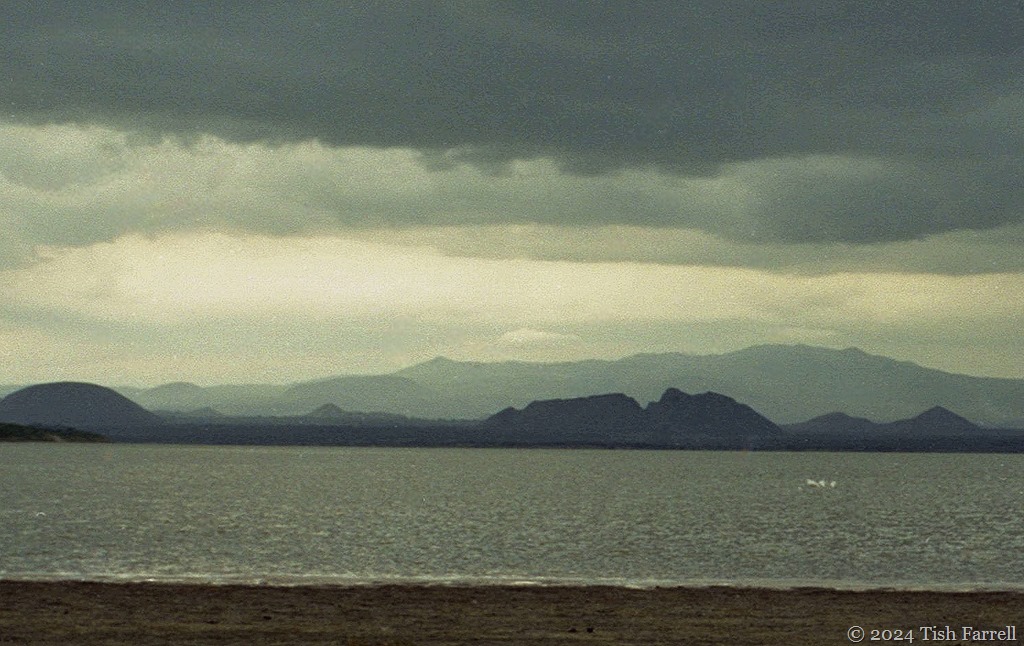
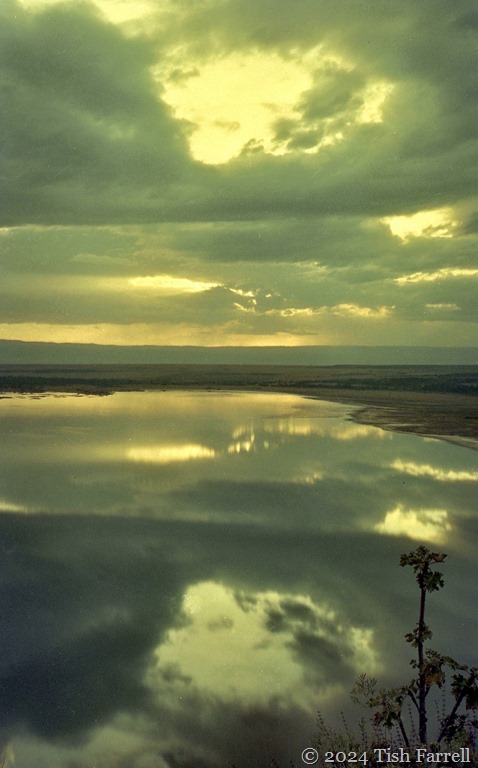
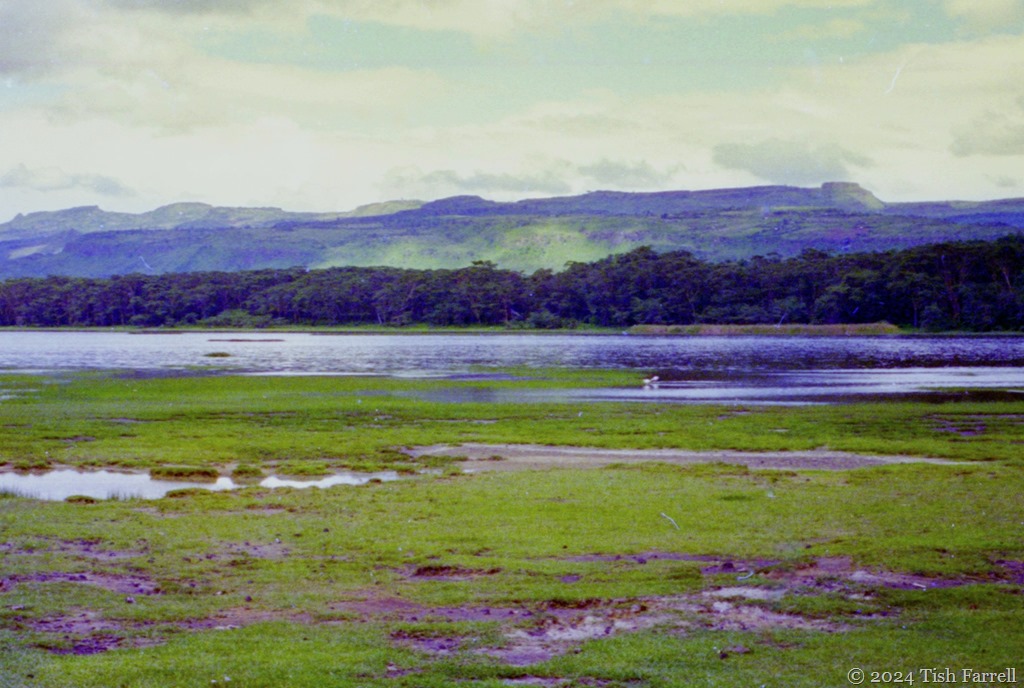
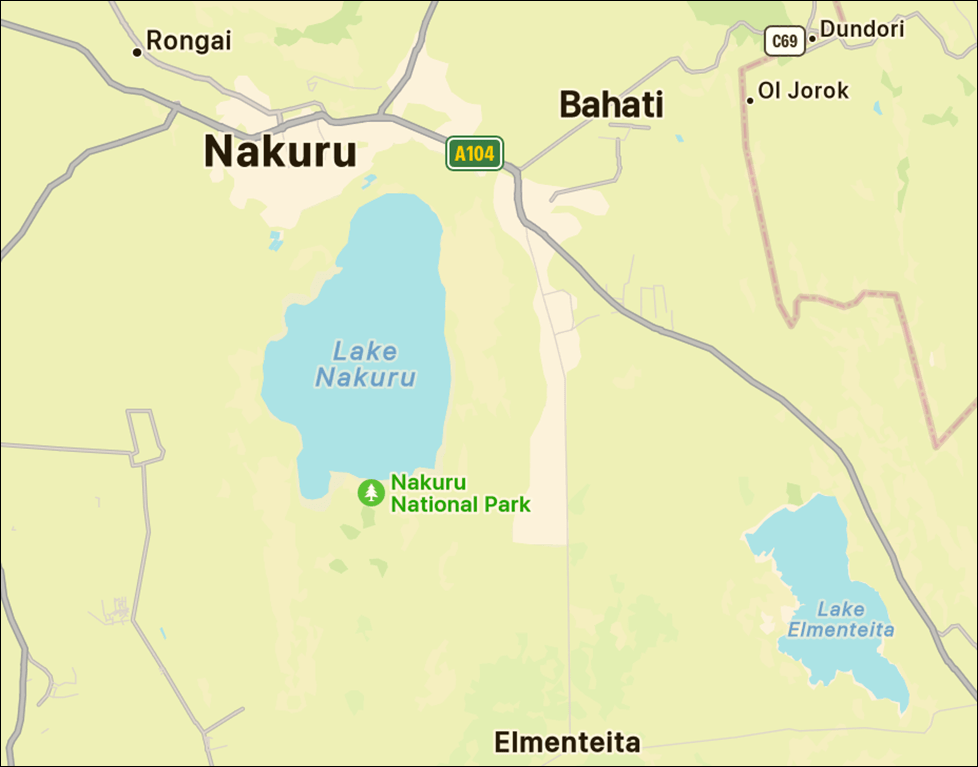
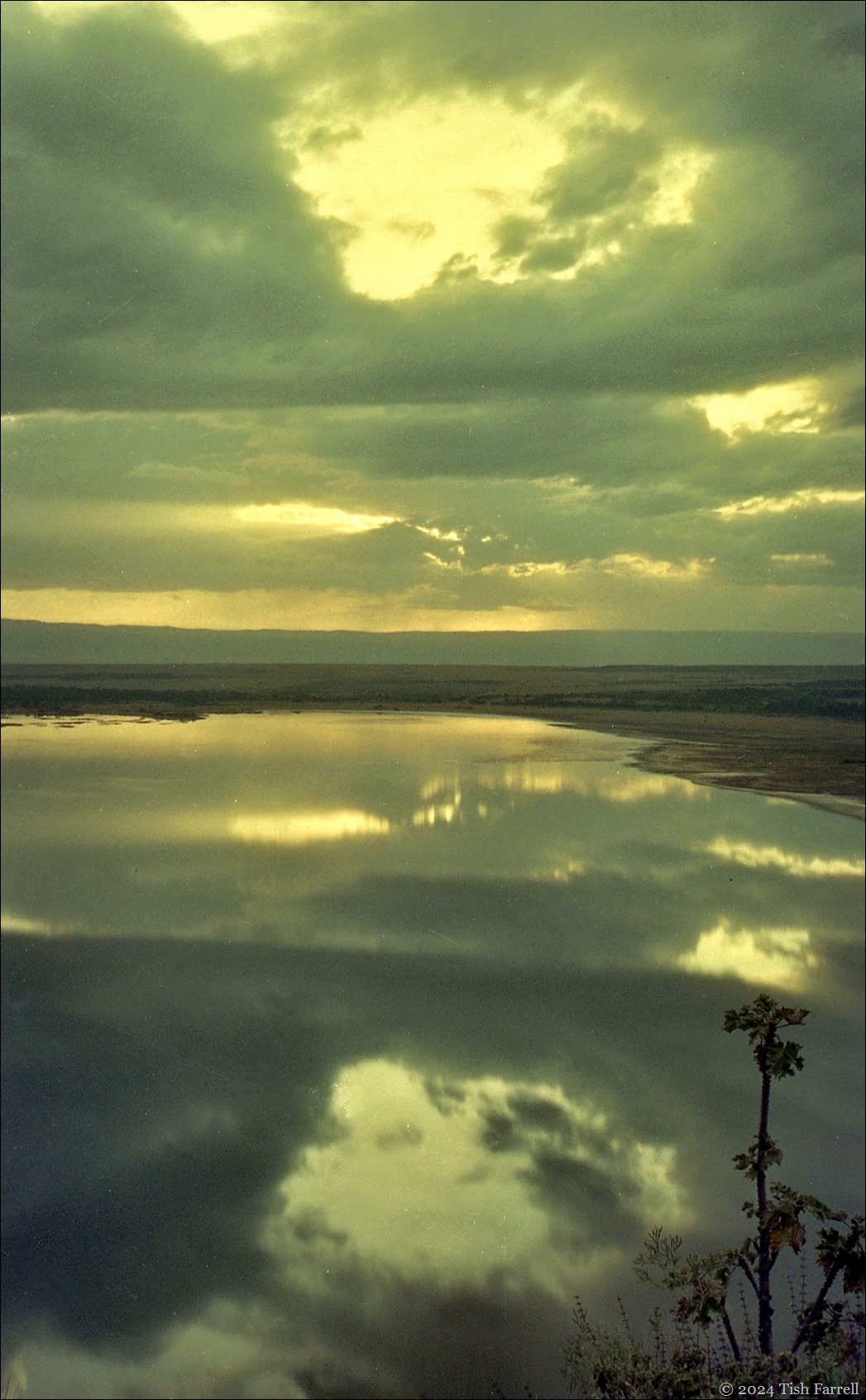
I’m having camera problems when I take this first photo, but in its way, it speaks of the times. It is early December 1997, our sixth year in Africa. There have been recent months of crazy weather with Kenya awash from El Niño floods and devastating downpours. When the rain rolls into the Great Rift, a lugubrious twilight descends, lowering in all senses. It feels cold too, and especially for a month that is usually hot; the equatorial summer in fact. Normally, too, October to December is the time of the short rains, the season for seed sowing. But instead of hopeful cultivation, there are reports of whole hillsides, entire farmsteads, being swept clean away.

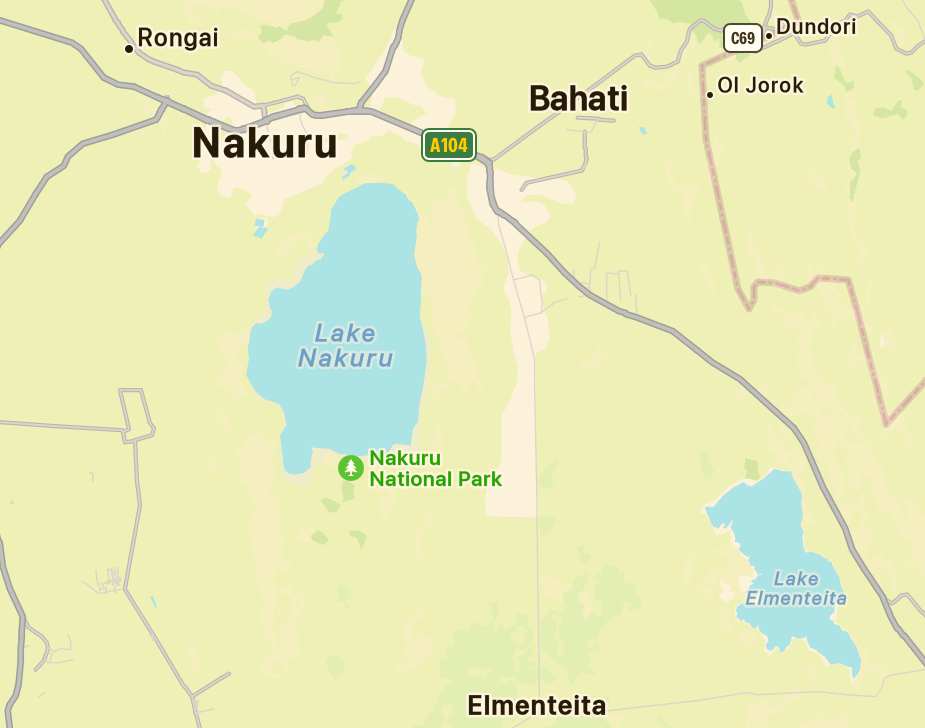
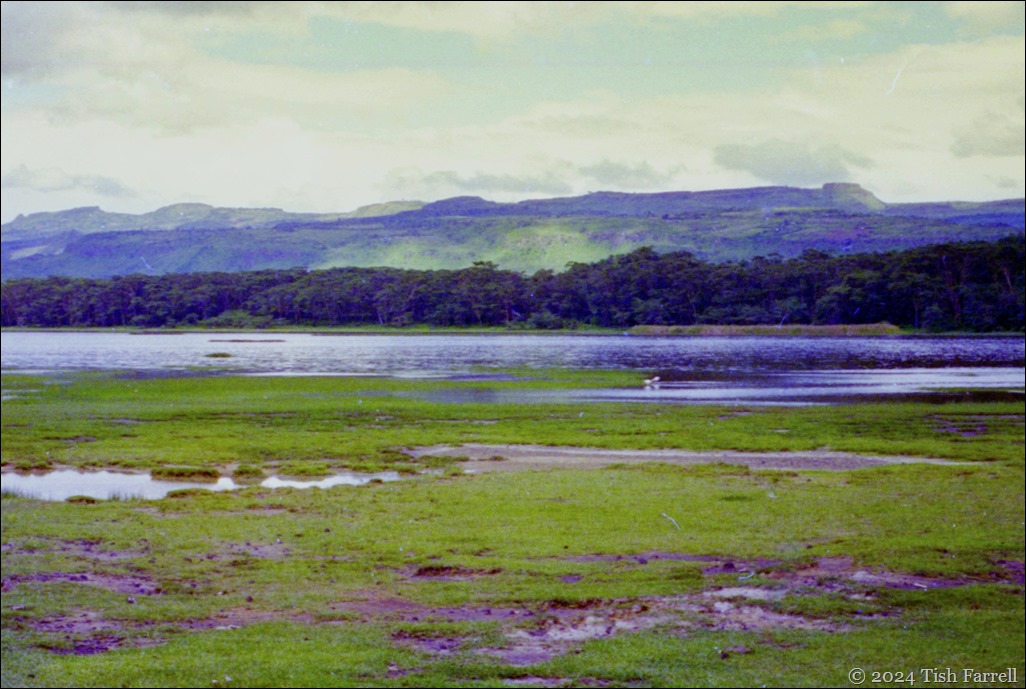
The day I take this photo I’m with a Kenyan ecologist, Michael, a quietly spoken young man whose community belongs to the Central Province highlands. He has driven me out from Delamere Camp for a day’s excursion across the westerly reaches of Lake Elmenteita. We don’t have rain, but the light is poor and the landscape, at times, looks as dreary as an English November. We are heading south to an area of the lake known for its hot springs. But that story comes later.

*map
*

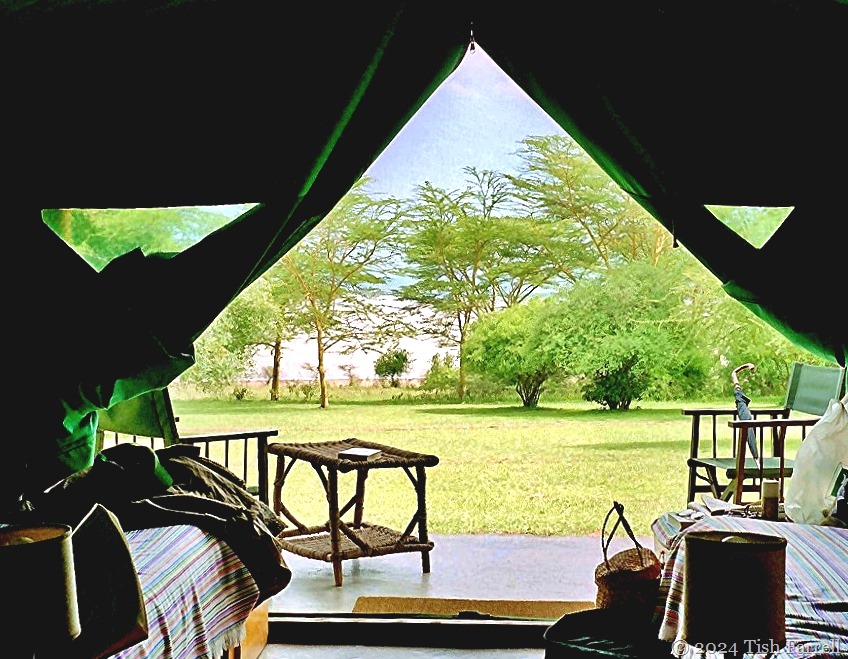
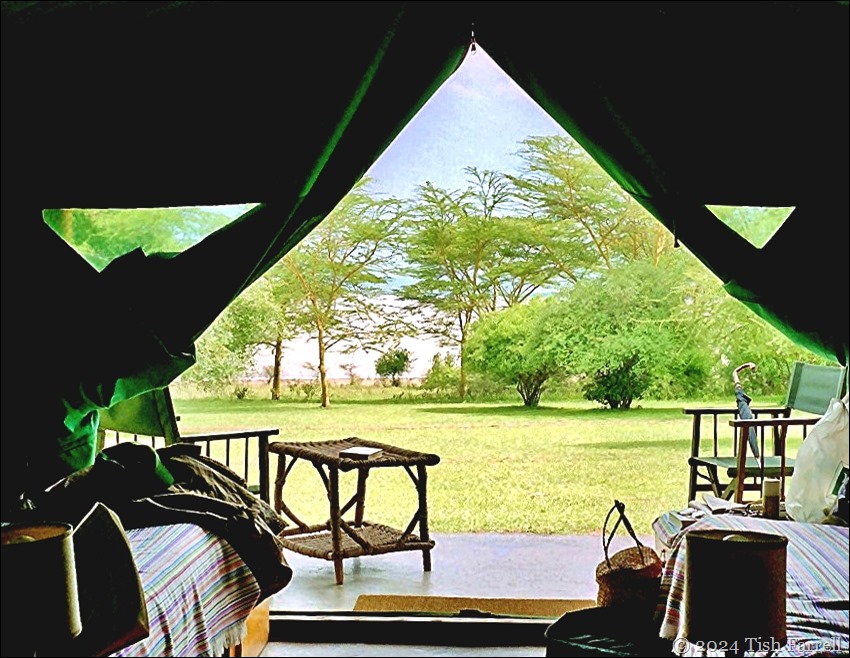
And the reason this trip is happening is because my other half is some twenty miles further north up the Rift Valley, attending a three-day Crop Protection workshop at Lake Nakuru. And since he must drive past Elmenteita to get there, he’d had the kind thought to book me into the Soysambu Delamere Camp; once the workshop was done he would join me there for a couple more nights.
scan-140502-0013

*

When I am dropped off on a Sunday afternoon, I find the camp sorely lacking in visitors. The bad weather, plus political tensions in the run up to the general election, including riots and a killing spree down at the coast back in August, are keeping tourists away. The only other guests are an English couple who have won the Kenya trip in a charity raffle. They are well-heeled, with connections in publishing and arms dealing, but know nothing of Kenya’s current political unrest. Having flown to the tropics out of a wintery England, they are put out to find they should have packed sweaters, raincoats and sturdier shoes.
img20241004_11430944ed

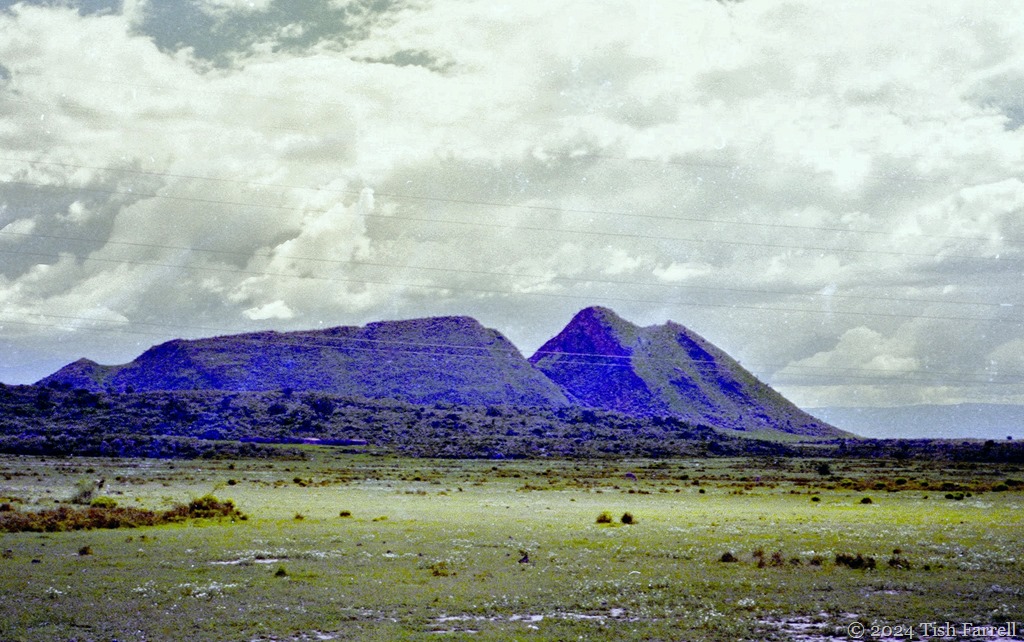
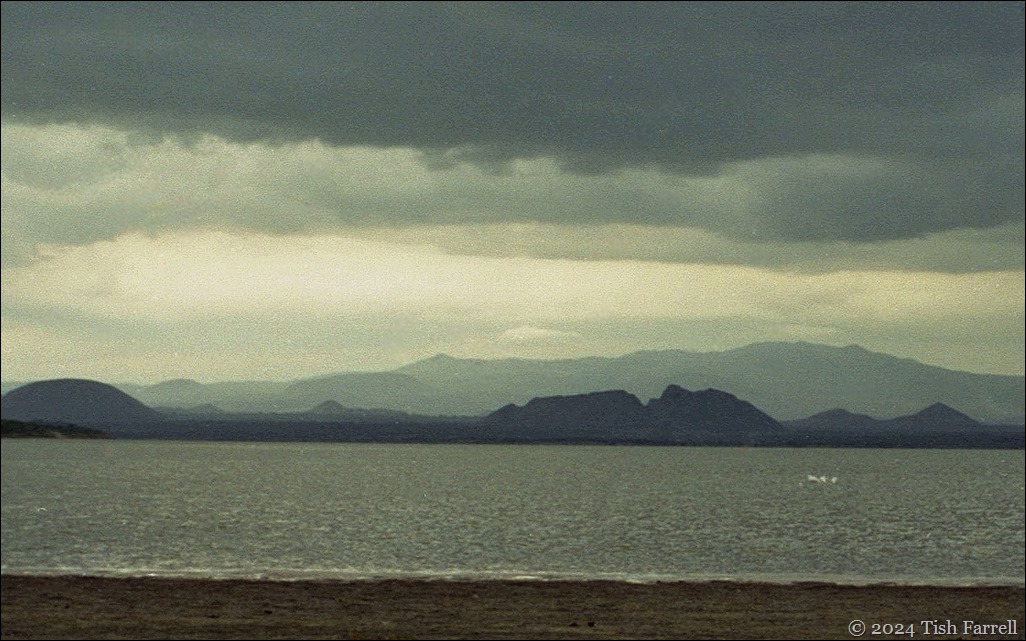
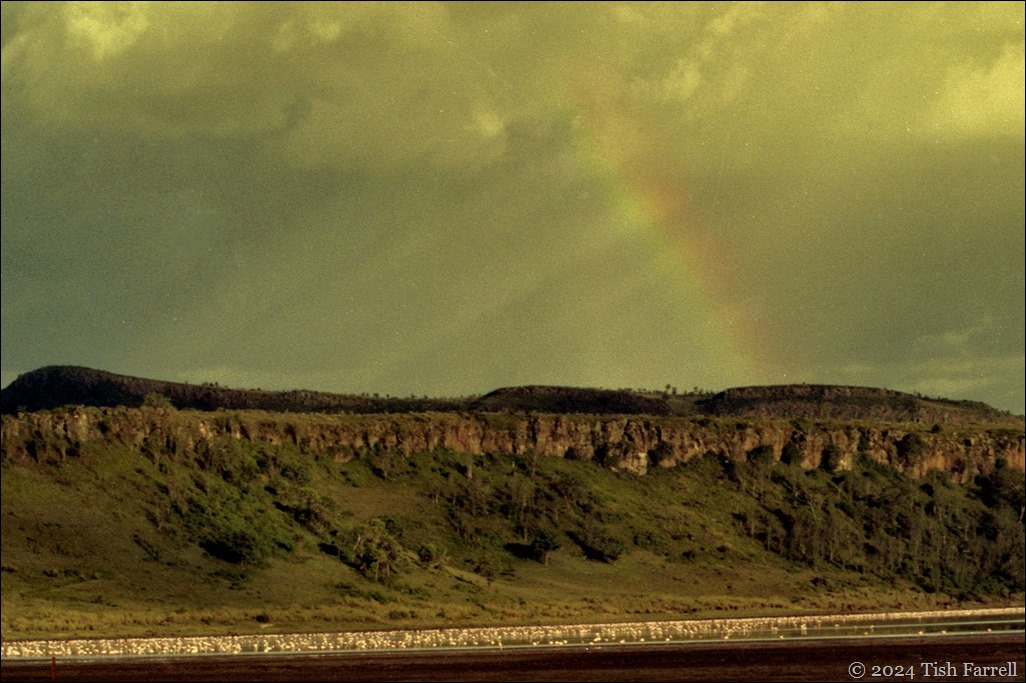
View from Soysambu Delamere Camp: rain in the Rift and the Sleeping Warrior, a volcanic plug also known as Lord Delamere’s Nose.

*
img185 Godfrey Mwirigi

*

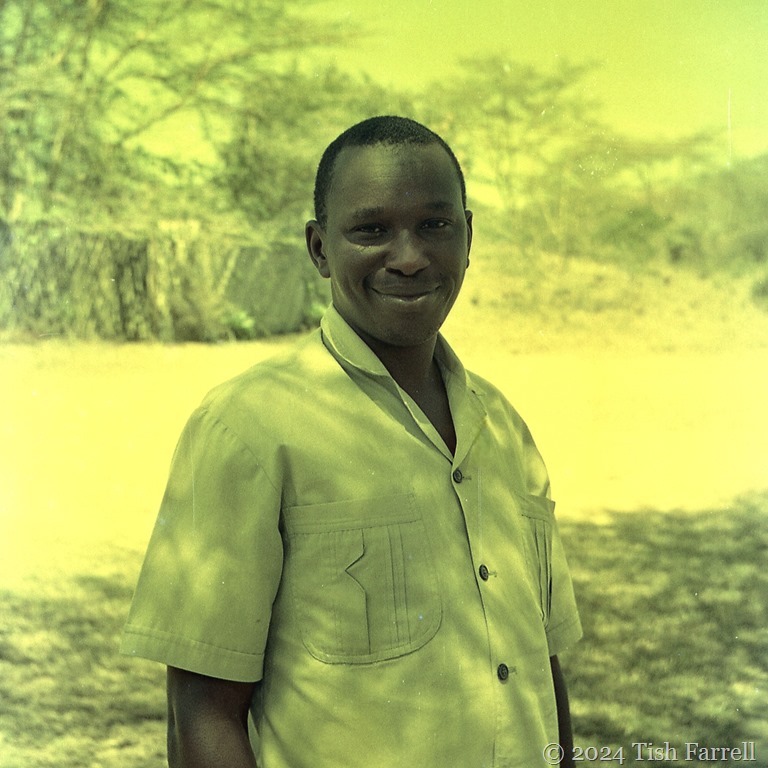
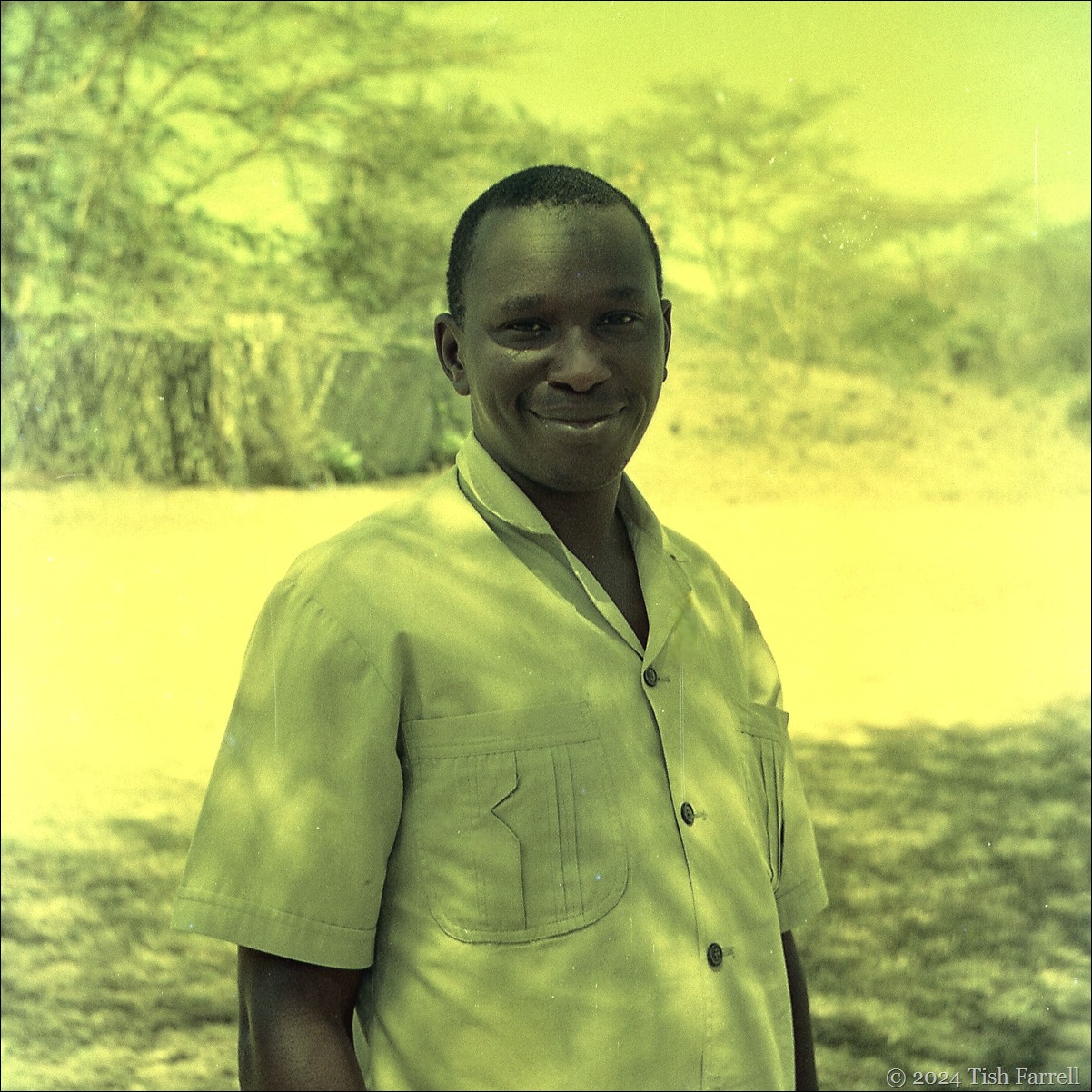
I find myself in the care of Godfrey Mwirigi, the camp manager.  He quietly ensures I do not eat alone, and joins me at every meal. Like the best party host he also presides over the clifftop sun-downer that happens each day at around 5.30. It is part of the camp ritual, guests are driven up through the sage scented leleshwa scrub to a high terrace above the lake. There they are met by the catering team presiding over a full bar and trays of tasty hot canapes. There is no stinting even though there are only three of us to please.

It is more than a touch surreal, both of itself and the Great Rift setting. Below us, the Sleeping Warrior sinks into blackness, while the lake slips through many shades of washed out pink and grey, and the day drops swiftly behind the Mau Escarpment. It is both beautiful and unsettling, one of those many times in Africa when I ask myself: where am I exactly?
img343 sundowner ed

*

Come nightfall and it’s time for a game drive around the reserve. The truck is roofed but open sided. We’re given blankets to fend off the chill. The air is dank, and the lakeside tracks perilous even with 4 wheel-drive. Now and then, disagreeable swarms of tiny hard-cased beetles fly in our faces. But then discomfort dissolves as the night theatre begins. While Michael drives, Dominic, another expert guide, rakes the trackside vegetation with the spotlight.

Eyes glow in the dark: eland, Africa’s largest antelope that can leap its own height over farm fences; buffalo, the most vengeful of all the big game; impala; waterbuck and, then among the fever trees and sheltered by underbrush, a shy steinbok. Out on the flood plains, spring hares, curious jumping rodents, bounce in every direction, creating their own mad light show before our spot-lamp. We come upon a genet cat and an African wildcat out on their night prowl. Then mongooses, a zorilla, porcupine parents with tiny porcupine twins in their new quill coats. And then Michael stops the truck and slowly reverses as Dominic scans along a grassy ridge.

The damp vegetation glistens, and in the halo of light a face looks back at us. A large leopard face. We’ve clearly disturbed him, lying in the grass, the intrusion prompting him to lift his head to check us out. For several moments he simply regards us. I’ve no idea if he can make us out behind the spotlight, but I have a sense of amber eyes looking deep inside my head: a non-consensual injection of leopardness; it does change me.

Finally, he blinks and lies back in the grass. The audience is over.

*
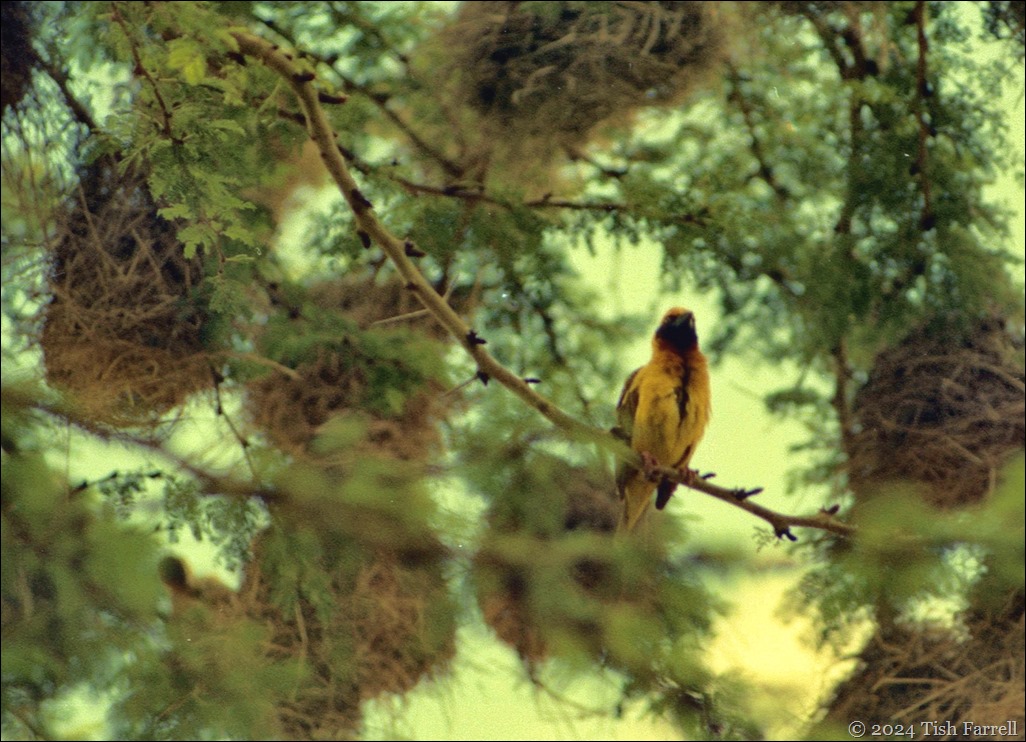
img20241003_19453803 weaver birds and nests

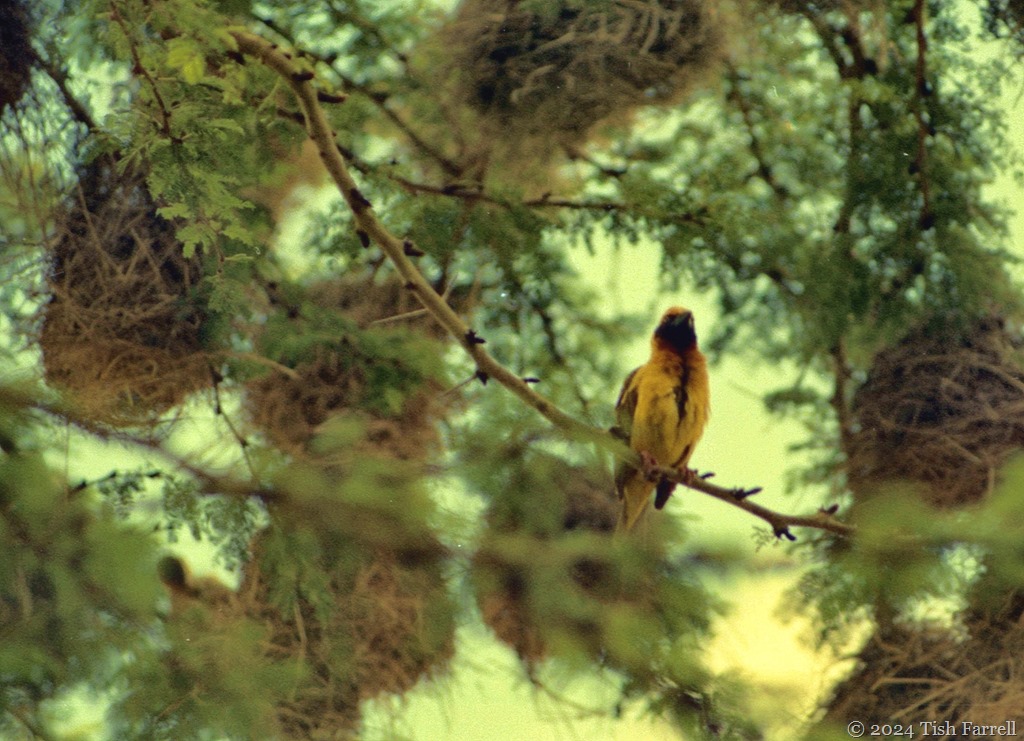
Masked weaver and nests

*

By day, the camp runs other activities. If you opt for the early morning bird walk, a tray of tea and biscuits is brought to your tent at 5.30. At six you set off with Dominic or Michael for an hour or two’s ramble around the camp perimeter. You can find yourself walking among impala and waterbuck while your guide runs off the names of all the birds that may be heard calling from trees and bushes.

If a bird reveals itself, you are told where to look for it, and the characteristics that define it. A morning walk thus can yield grey back fiscal shrikes, rattling cisticolas, Ruppell’s starlings (in brilliant violet and turquoise), the shy tchagra, a scarlet chested sunbird, and blue-naped mousebirds. You might also spot fish eagles or hear a golden oriel call or the song of an olive thrush or a robin chat whose repertoire makes me think of an English blackbird. There are 400 species to choose from here.

Later, after breakfast, there is usually a two-hour game drive, but on my third morning there is only me to be entertained. Godfrey says he has arranged for Michael to take me on a longer drive to the hot springs. We can take a picnic lunch.

*

As we set off along the estate’s perimeter road, Michael gives me the background on the Delamere Estate. He tells me there are 10,000 beef cattle on the Soysambu ranch, which adjoins the reserve. The name Soysambu is a Maasai word meaning mottled rock. He tells me, too, that the reserve was set up  by Lord Delamere in 1990 as a means of protecting the lake shore from developers.

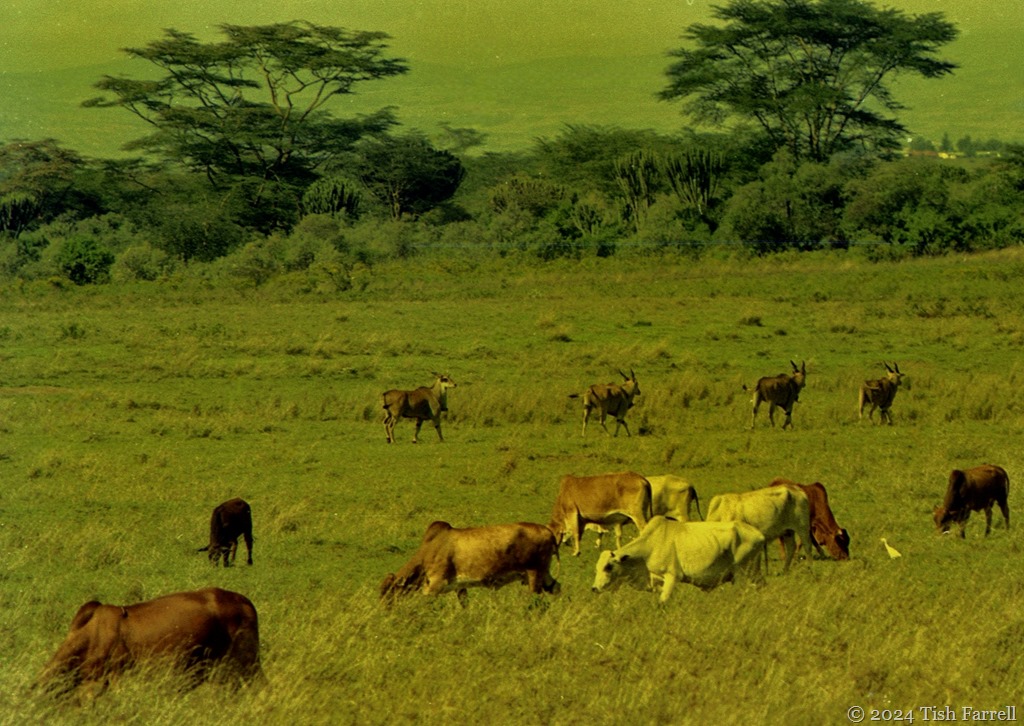
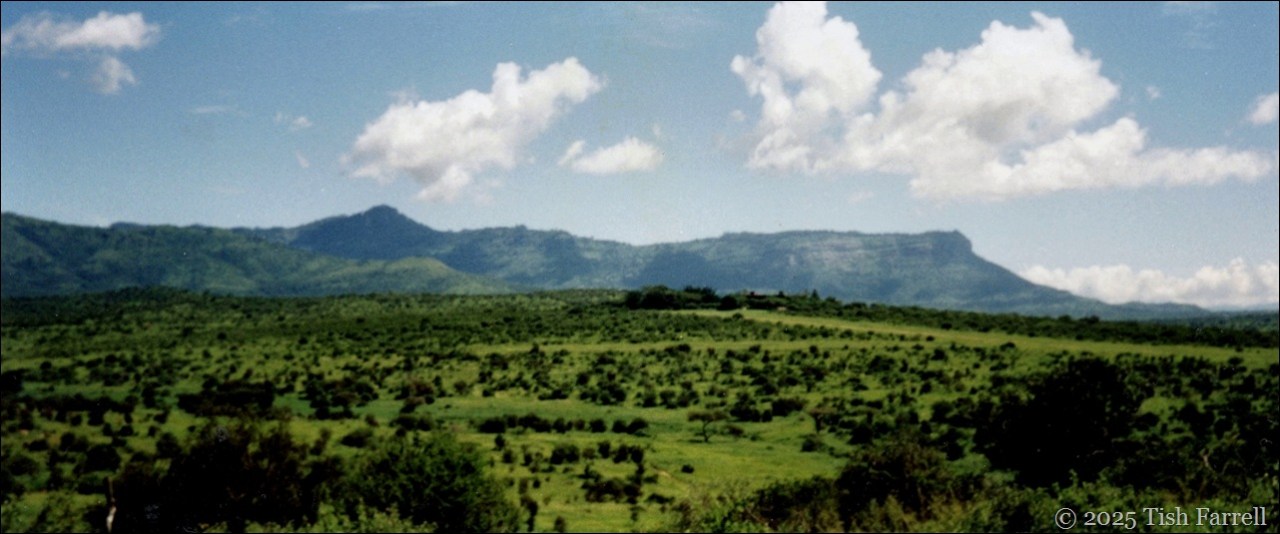
The estate had also included land on the East Rift escarpment behind the camp, but this had been sold off cheaply, and was now settled by some 15,000 people, each family farming 5 acre plots. Most of Delamere’s 200 employees have smallholdings there. But this has caused problems. Game that once lived in the former wilderness has now moved onto the ranch. And so his lordship’s cross-bred cattle also share their pasture with 600 eland, 300 buffalo and 200 zebra. It is literally a bone of contention among big landowners, that they are not allowed to cull the game for food.
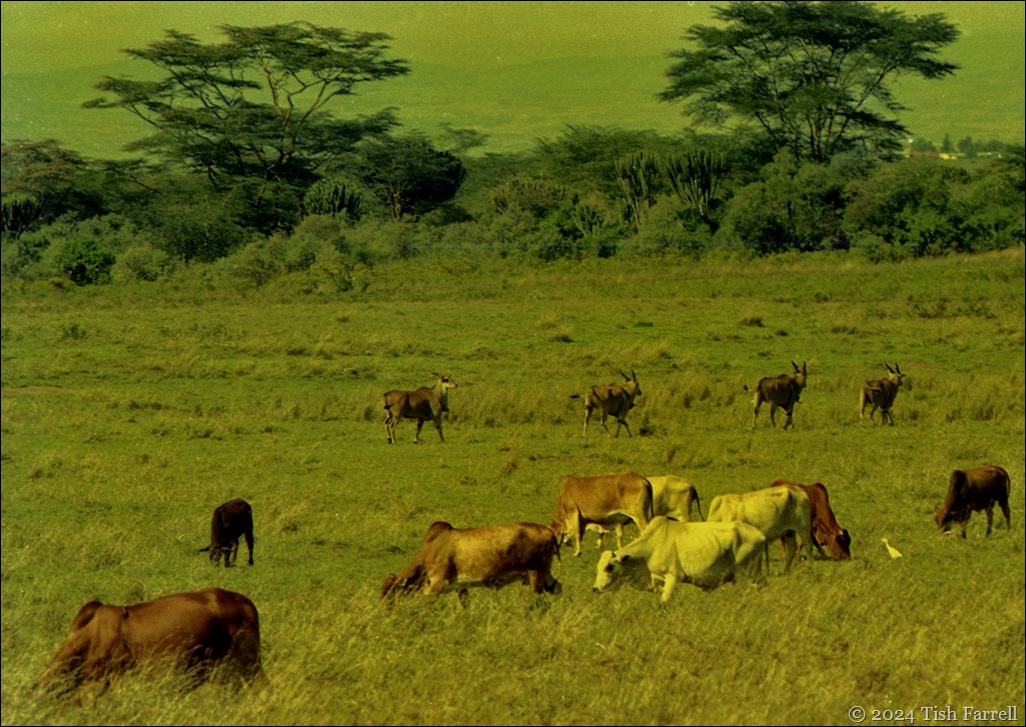
img20241008_12180805 eland and cattle 2

Eland graze with Lord Delamere’s cattle

*

Michael also spots wildlife as he drives: a secretary bird, an augur buzzard, hoopoe, wheatear, Grant’s and Thomson’s gazelle, open-billed storks. There are zebra, giraffe and ostriches. The pink haze of flamingos across the water.

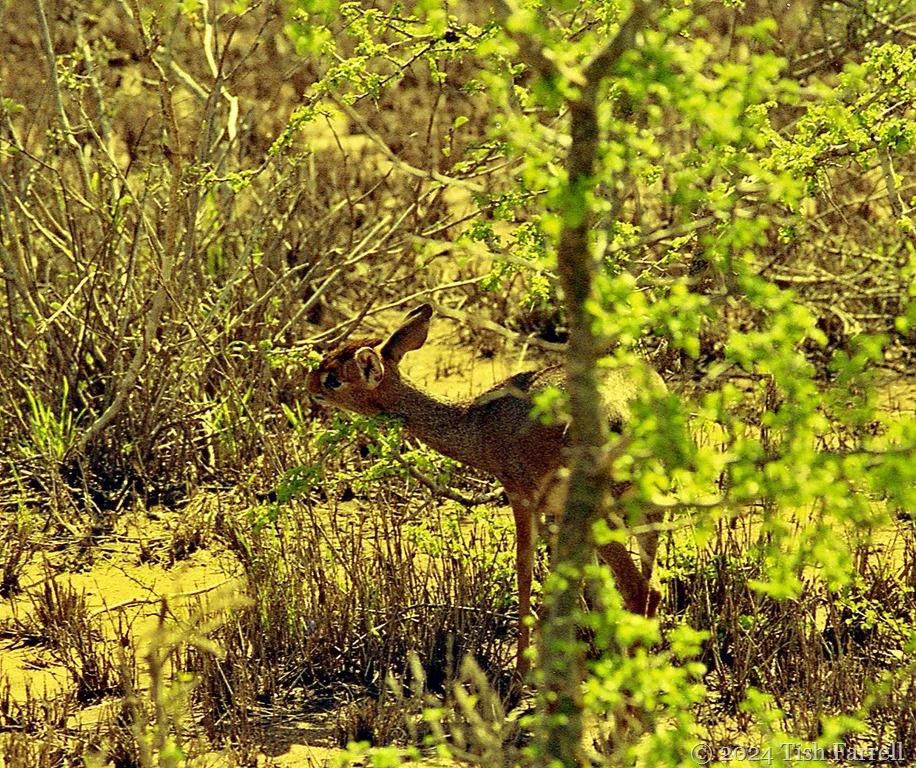
As we head out behind the lake, it looks as if we’ll be lucky with the weather. No rain, but very overcast. In a moment of brightness, as we rattle through thorn scrub, Michael spots a Kirk’s dikdik and I remember he has told me on an early morning walk how these tiny antelopes are fiercely territorial. They create middens where they go to defecate and urinate. While visiting, they scratch up the dung heap so their hooves can deposit their scent and reinforce the boundaries of their domain. It sounds a touch grubby for a creature so daintily pretty, but then that’s my problem.

img014dikdik

Kirk’s dikdik – not much bigger than a hare

*

We drive past the Sleeping Warrior. The skeins of power lines running by take me by surprise. Electricity is often in short supply. That year there are daily three hour cuts in Nairobi, and most rural areas anyway have little or no access to the grid. Michael tells me the lines import electricity from Uganda.
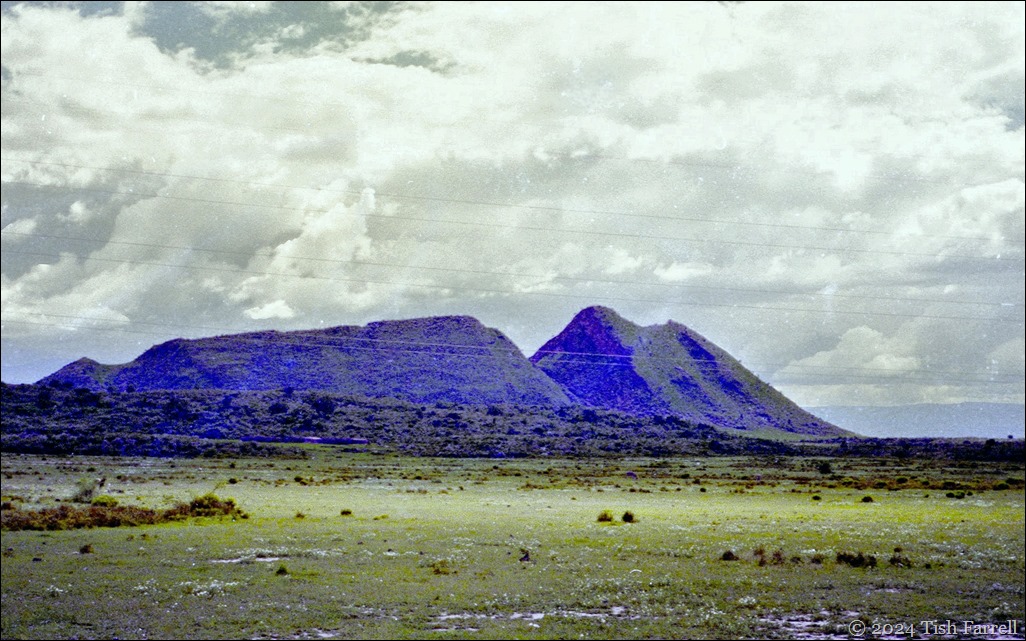
img20241001_19534122 lord delamere's nose 97

*

Then suddenly, as if fallen in a time slip, we are among the Maasai. I have noticed a settlement, an ‘enkang with its mud domed dwellings. Now an elder in red kilt and blanket passes by us with a herd of goats. There is no obvious exchange. I see the dark bare legs, ebony hewn; not a pinch of flesh.

When we roll up at the hot springs on the southern lake edge, Maasai women are finishing up their washing in the hot water. Children, fully clad, are whooping and wallowing in the shallows. All soon retreat as if they have never been. When I look back I see the elder standing on a ridge with his goats, the red shuka against a stormy sky. I do not attempt to photograph any of this.  This is not my place.
img20241001_19542210ed

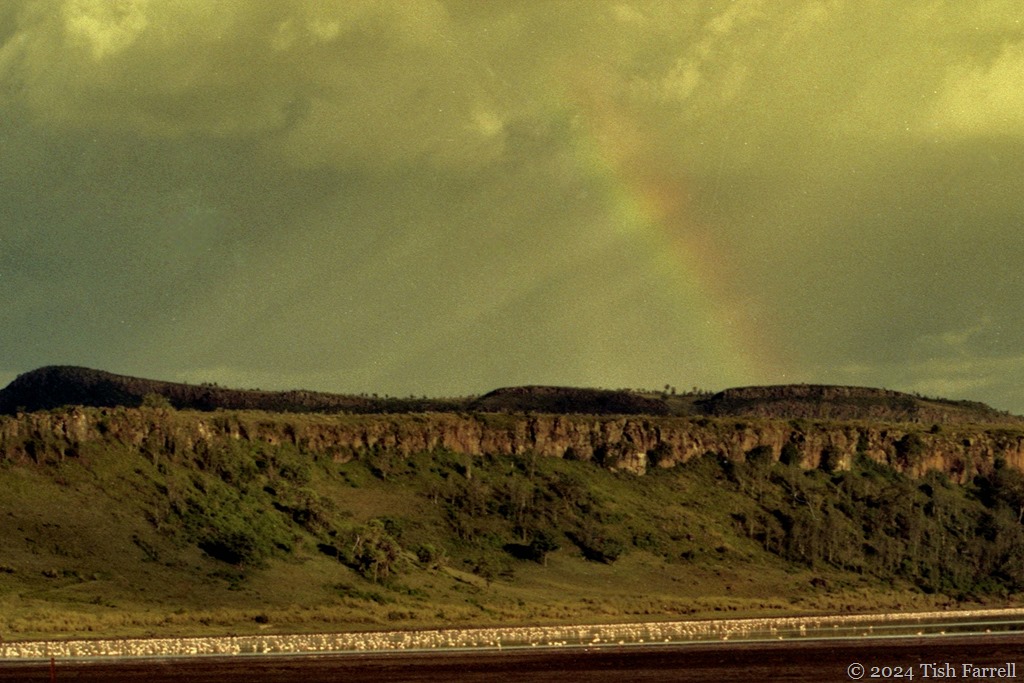
The Eastern Rift from the hot springs in Lake Elmenteita

*

We sit under thorn trees and chat over the packed lunch. At some point the subject of Princess Diana’s death back in August crops up. I say am touched at how sorrowful Kenyans were, how they queued to sign the condolence book at the British High Commission, and how Graham’s colleagues at the research institute came to his office to offer their condolences. Michael tells me that his wife’s prized possession was a  video of the royal wedding, although the only place they could play it was at the pub in their home village. You can guess the name of our daughter, he says.

I ask him where he worked before joined the team at Delamere Camp. He tells me that soon after he graduated with a degree in wildlife management, he was posted, as deputy wildlife district officer, to the remote quarter of mainland Lamu, in north-east Kenya. Somali cross-border bandit country, in other words. There, his job was to coordinate anti-elephant poaching operations, using local police or military, whoever he could rope in, sometimes using helicopters. He said that whenever he went into the bush, he never knew if he was coming back. The gangs were often 20-30 men strong, and with an official policy of shoot to kill, the stakes were high.

I am shocked as I listen to this account, told with such detachment: that an ecologist should be expected to do this kind of work. But Michael simply says he is finding Elmenteita much more to his liking, and especially as his wife and family are not far away. In the quiet understatement, I sense a man who has seen too much.

I feel uncomfortable too – some people don’t know they are born, do they, with all their sheltered good fortune. That would be me of course. Though I am learning. Kenya’s gracious people never stop teaching me. They teach me even now as I retrace my steps down the years.

*
img20241004_11051850 east escarpment near camp

copyright 2024 Tish Farrell
Cooling Off In Kiboko

Kiboko ed sundowner rain 2

Every time there was that gasp of relief, as if we’d not been breathing for the last hundred miles. Ahead, through the heat haze, appeared the stand of fig and fever trees, rising tall and green above the dry bush country. After two hours of truck fumes, heat and dust and no shred of shade since leaving home in Nairobi, it seemed like an oasis.

It could be a mirage of course. But no. Next the scene would solidify and we’d see the Akamba wood carvers’ stalls set out under the trees. And then, thanks be, we’d be turning off the Mombasa highway, bumping along the dirt track, that was scarcely more bumpy than the road, and into the cool sanctuary of Hunter’s Lodge.

Kiboko ed 3

*

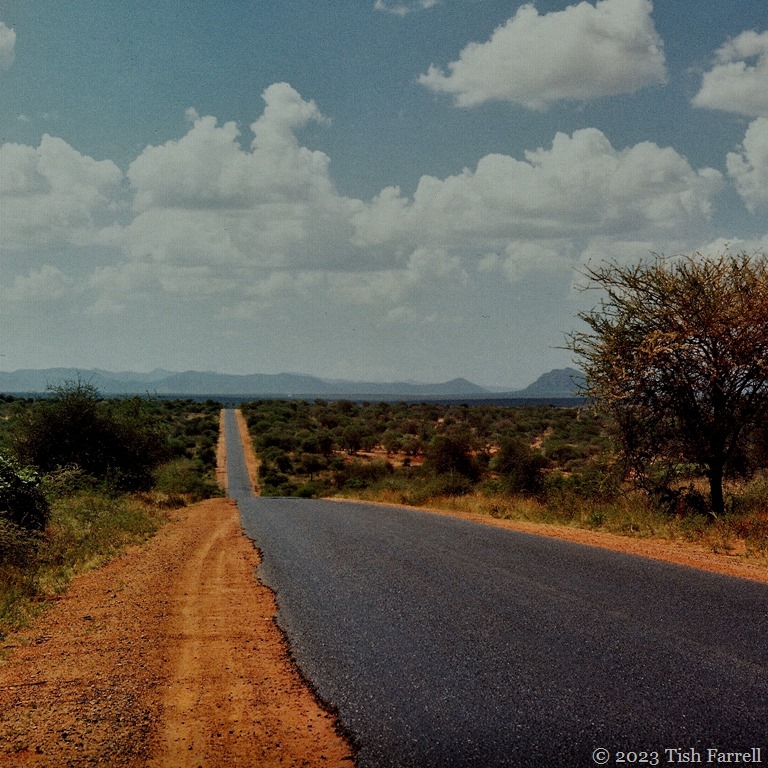
Kiboko ed header Mombasa highway north of Kiboko

And this is what we had left behind – the highway looking north towards Nairobi, caught here in a rare truck-free moment. There is currently talk of this route being replaced by a 300-mile multi-lane, super highway-toll road to be built under the auspices of the US government. Some Kenyans are sceptical of its ever happening.

*

The trip to Kiboko and Hunter’s Lodge was one we made every other week during our first year in Kenya. Graham had been seconded to the Kenya Agricultural Research Institute to work on the eradication of the Larger Grain Borer, a voracious pest of stored grain, introduced to the continent on consignments of food aid. The project had its base at Kiboko field station, which, most conveniently, was behind the garden at Hunter’s Lodge.

There’s more back story here: Once in Africa: everyday moments at Hunter’s Lodge…until the crocodile

Kiboko ed sundowner

The Lodge was built in the 1960s as the retirement home of big game hunter, the blunt-speaking, no-nonsense Scotsman, John Hunter. He belongs to the era of grand shooting safaris for maharajas and European nobility. (Out of Africa Bror Blixen and Denys Finch Hatton were colleagues and friends). He also spent much of his shooting career working for the colonial game department, tracking down ivory poachers while ridding the lowland bush country around Kiboko of ‘troublesome’ rhino and elephants. The former were terrorising the Akamba farmers, the latter destroying the sisal and orange farms of British settlers. He chose this spot for his home because he remembered it as an elephants’ waterhole, where he had enjoyed much time simply watching them. He seemingly saw no irony in the fact that he’d helped eradicate the local population.

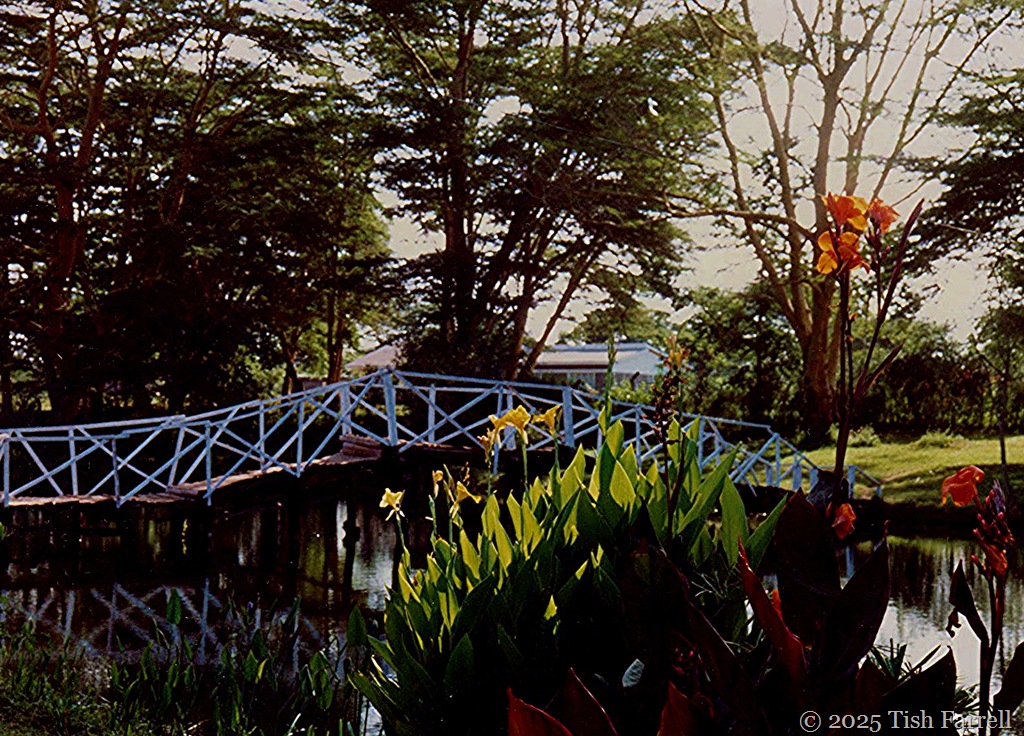
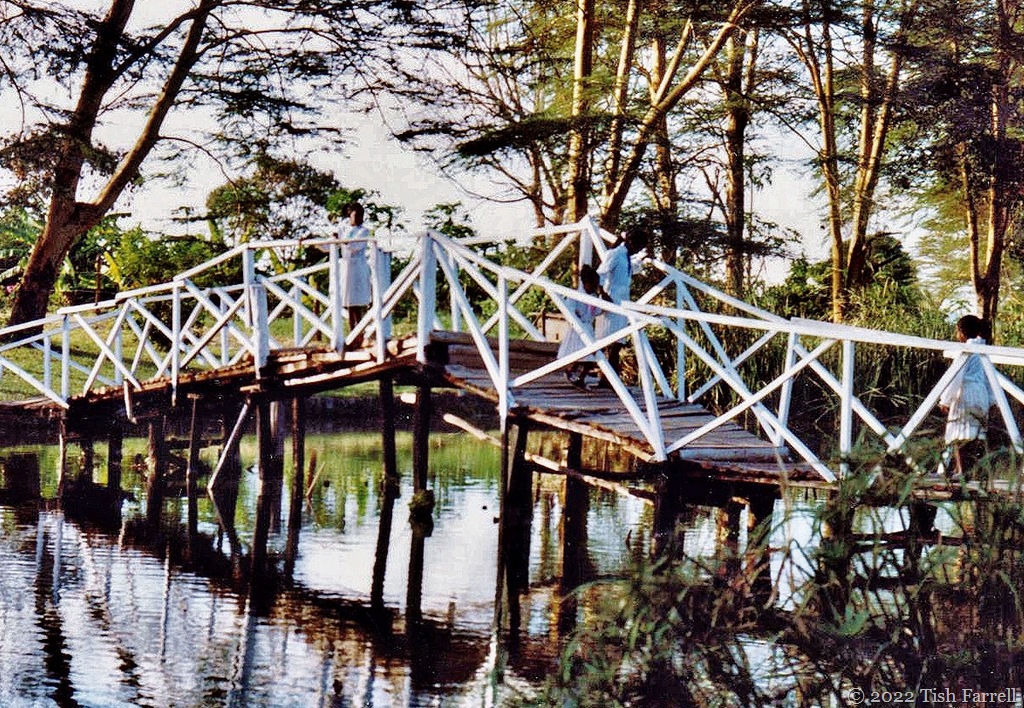
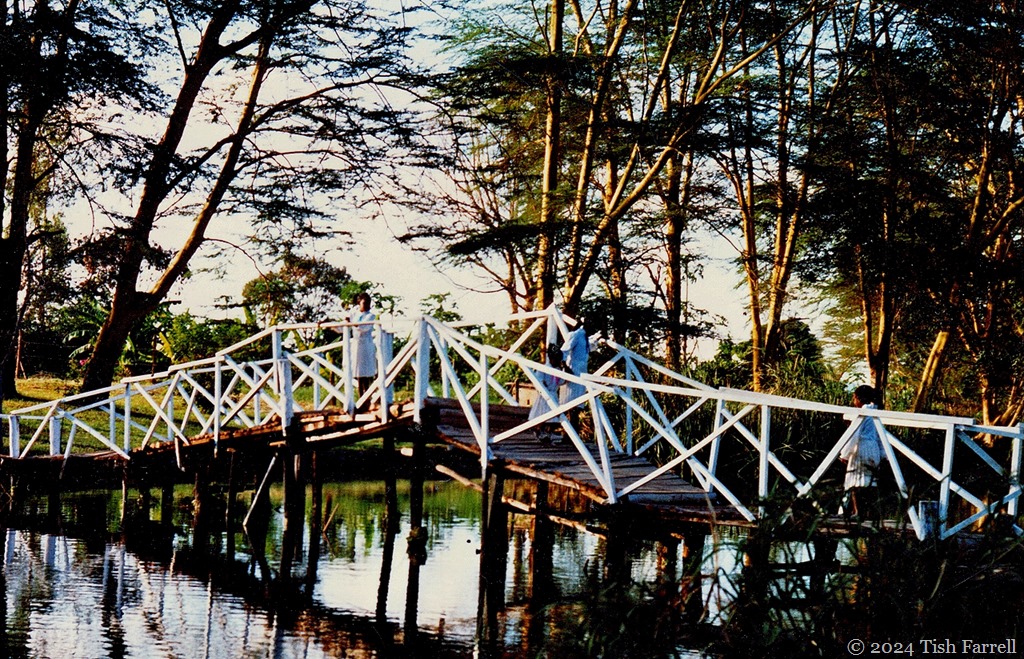
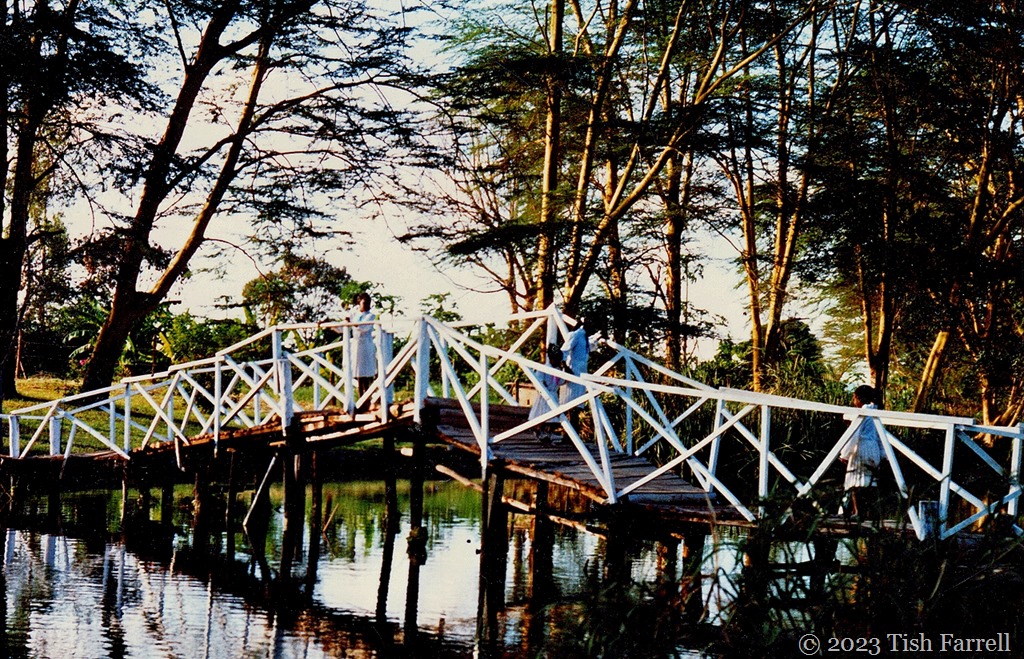
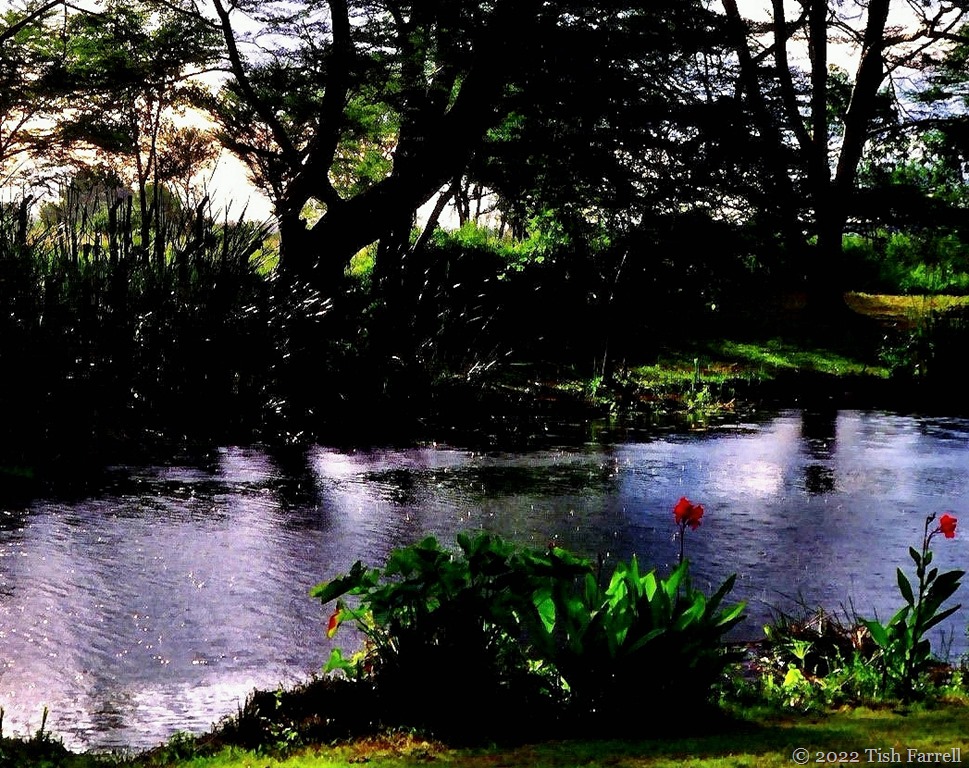
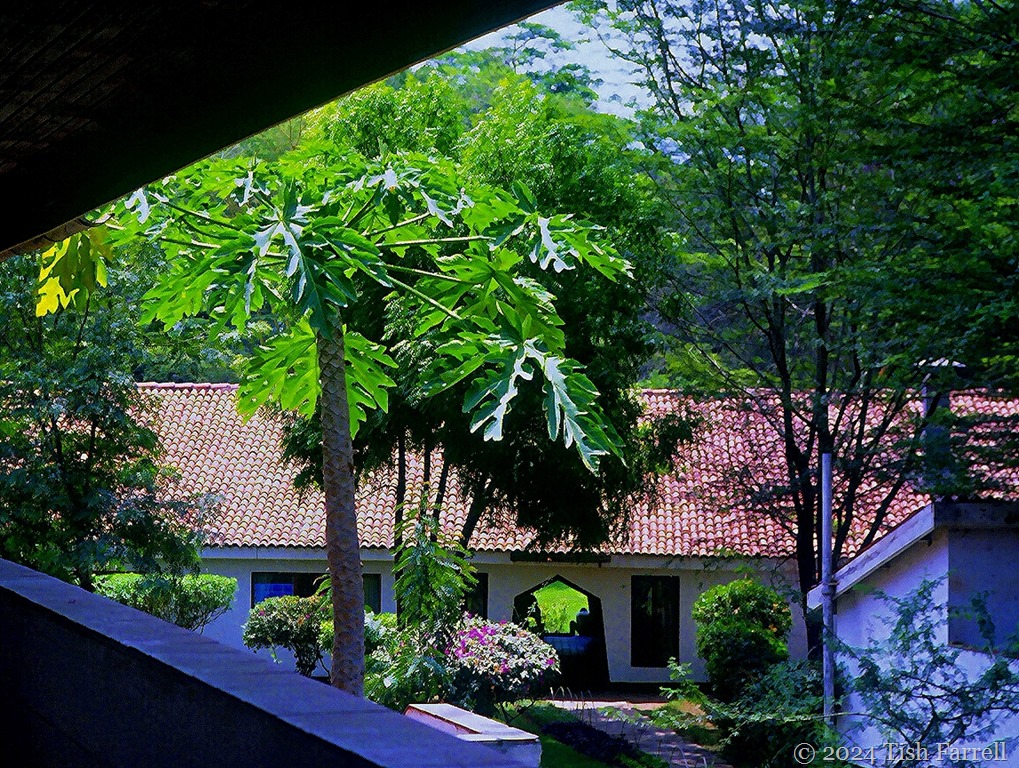
The waterhole, which was fed by a rare local water source, the Kiboko River, was remodelled into a garden lake, and traversed (in our day at least) by an extraordinary bridge that led to the vegetable shamba.
Kiboko ed pool

Kiboko ed garden bridge

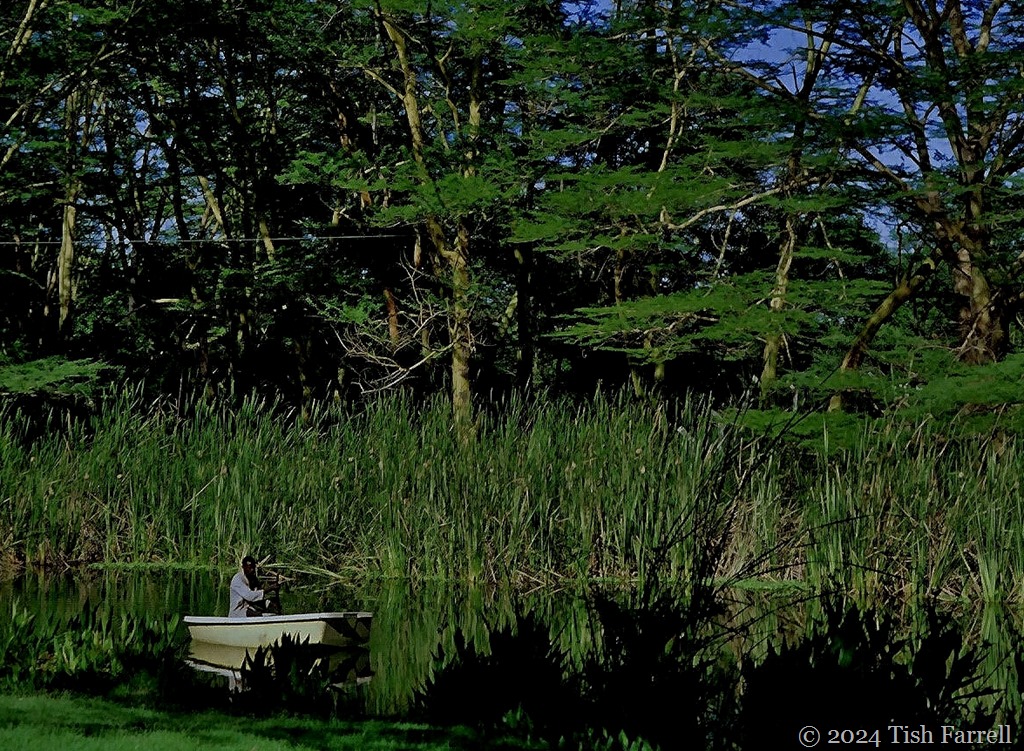
There was said to a leopard living at the top of the lake, though I never saw or heard it. We did hear bush babies screaming at night, and also watched the nightly firefly show over the water. It was also a fabulous place for birds: over two hundred species including many varieties of kingfishers, weaver birds, herons and storks.  Sadly, I had only my small Olympus – trip camera, so there are few bird photos. The very distant marabou storks in the next photo’s tree tops are actually huge in real life.

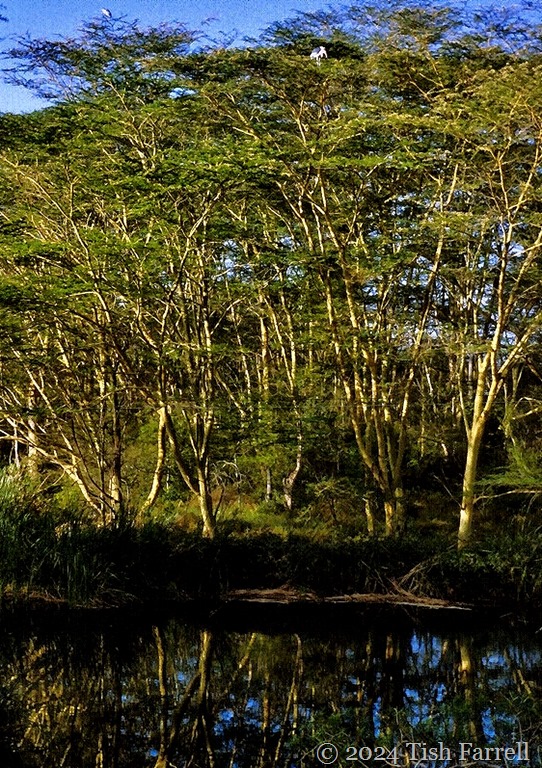
Kiboko ed fever trees

Kiboko ed dining room

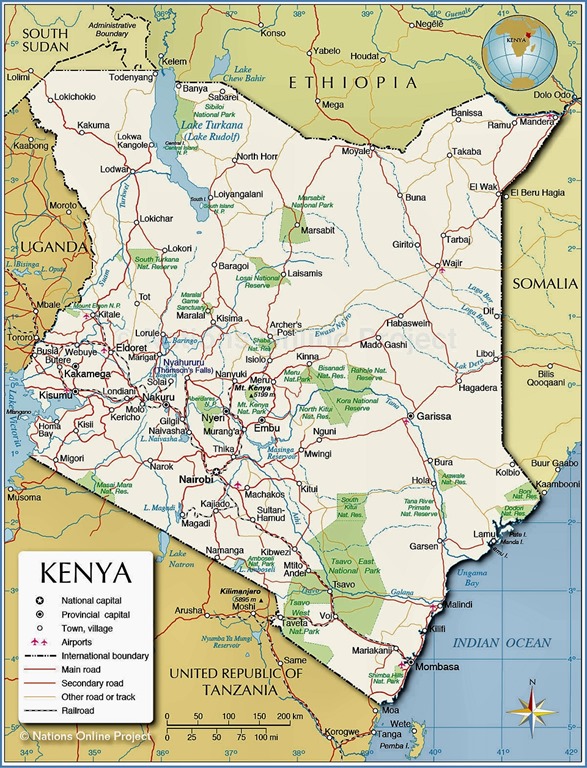
kenya_map best

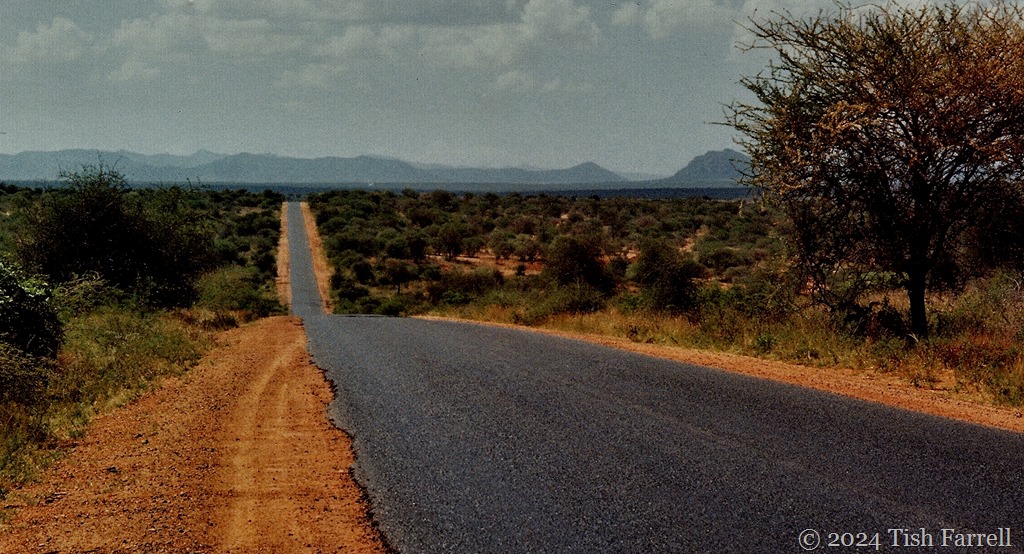
Kiboko isn’t marked on the map. It’s a centimetre above the border with Tanzania, due north of Kilimanjaro, roughly midway between Sultan Hamud and Kibwezi. The area east of the highway north of Tsavo East Park is Ukambani, traditional territory of Akamba farmers and herders. To the west is Maasai land, though you will of course see Maasai herders along the road, at the trading centres, and spot the red flash of their shukas as they drive their herds across the bush country north-east of Kiboko.

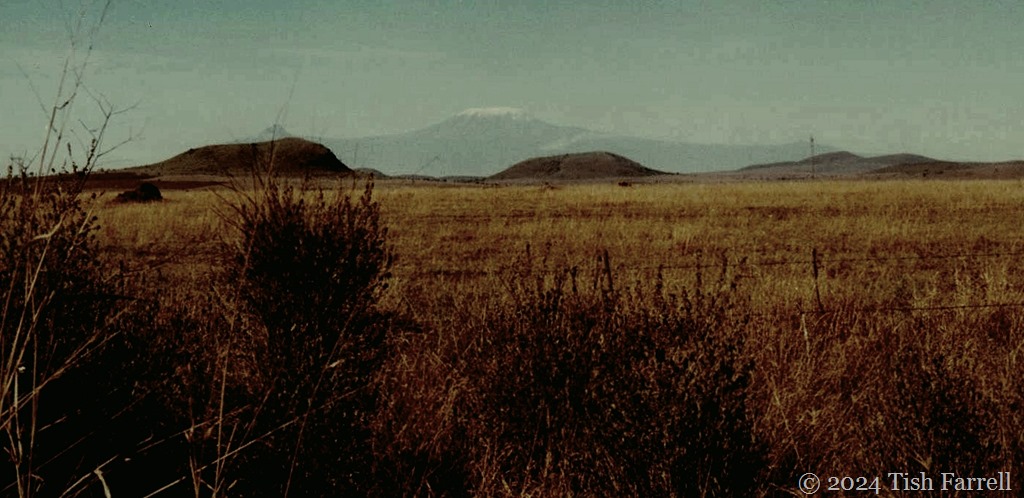
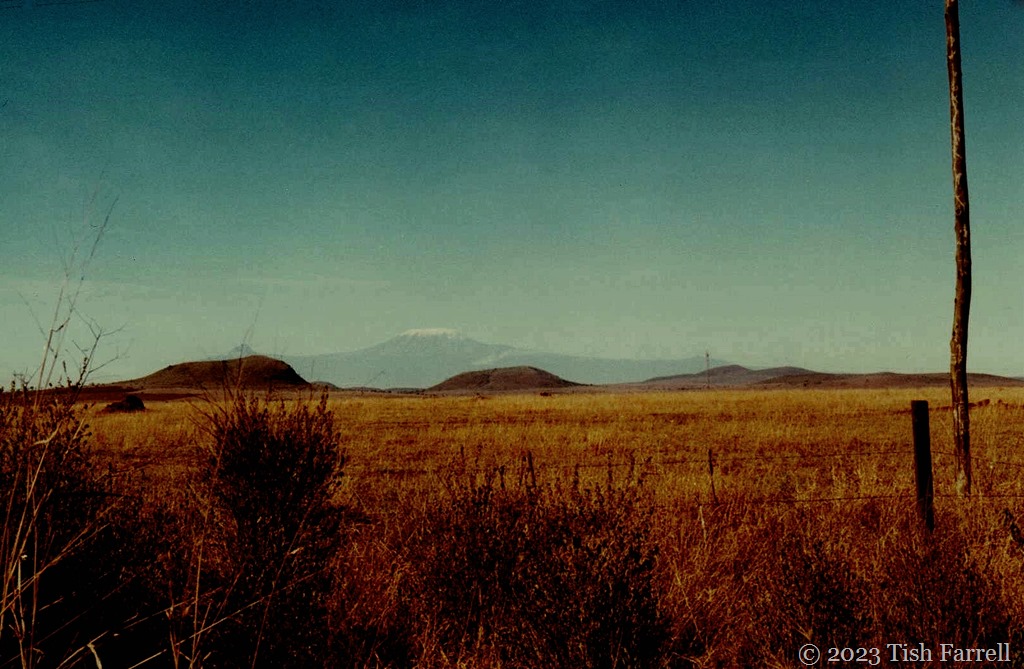
Sometimes along the road you may also catch a glimpse of Kilimanjaro, on those odd occasions when the mountain chooses to show itself. As you can see, lowland Ukambani is a sear land of thorn scrub and savannah. It hardly rained at all in the times we visited. The header photo was one of those rare moments.

Kiboko ed Kilimanjaro header

*

Lens-Artists: Cool Colours  John at Journeys with Johnbo sets this week’s theme and says he is open to any or all interpretations.

In An Equatorial Light

Kiboko ed sundowner

In another life-time I ran away to Africa and fell in love with light. I must have noticed light before, but I do not remember this kind of rapture. There’s the land too: the visceral, eviscerating redness of the earth. It strikes the eye, fires every neuron in the cerebral cortex, then jabs you in the solar plexus. The hue of life and death then; no wonder traditional peoples make so much use of this pigment. There were times when I felt I could eat it.

The place I ran from is very near the town of Broseley where we have recently come to live. There’s an odd sense of ‘full circle’ and a musing of: should I be worried about this unexpected retracing of steps; is there a reason I’m back here; some unfinished business to be dealt with now that I’m ‘older and wiser’? Etc. etc. I decide this line of thinking is a distraction, although it has me looking back through thirty years.

The place I ran (or rather flew) to was Nairobi, Kenya and so to a nine month stint of roaming up and down the Mombasa highway, accompanying a plant pathologist who worked both at the Kenya Agricultural Research Institute (KARI) in the city and at the Kiboko field station, a KARI outpost, a hundred miles south in Ukambani, homeland of the Akamba people.

Kiboko ed Mombasa highway north of Kiboko

Mombasa highway, looking north from Kiboko

*

Said plant pathologist, aka Graham, was working on a British government funded project to eradicate a maize-gobbling beetle known as LGB, the larger grain borer. (Everything you need to know about the science is at this link).

The pest had no known predators in Africa, having been introduced from South/Central America in consignments of US food aid in 1980s. And so finding itself free to infest the granaries of people who subsisted on grains, and on maize in particular, it quickly established itself across the southern and eastern continent, then in West Africa, travelling along major railway routes.

The aim of the project was to breed up stocks of a (safely) introduced predator beetle as a biological control and then release it in LGB infected areas. Meanwhile, the habits and destructive capacity of LGB were being monitored in various store experiments at Kiboko and at the coast near Mombasa.

Kiboko ed 3a

On days when Graham was working at Kiboko, we stayed at Hunter’s Lodge. In our time it was an eccentric hostelry that seemed to survive for the benefit of its staff; there were rarely other guests there. Once it had been the home of John Hunter, Great White Hunter and doyen of the colonial grand safari era, friend of Baron Bror Blixen and Denys Finch Hatton, guide to sultans and European princes.

He had chosen the spot to build the house near the Kiboko River, at a place where elephant once came to drink at sundown. He also made a pool by diverting the river, and so created a marvellous haven for birdlife (some 3-400 species recorded there). I spent hours watching night herons, grey herons, weavers, pied, giant, brown headed kingfishers, ibis, white eyes, and storks. I took few photos: it was beyond my Olympus Trip’s capacity.

There are no elephant photos here either. They no longer came, nor would be welcome. Anyway, Hunter did a thorough job of official game clearance in Ukambani, where the colonial authorities deemed elephants a nuisance to settler farmers’ plantations. The nearest herds these days are an hour’s drive south in the vast national parks, Tsavo East and Tsavo West.

Kiboko ed pool

Kiboko ed kingfisher

Kiboko ed garden bridge

The bridge led to the hotel’s fruit and vegetable shamba

*

Kiboko ed sundowner rain 2

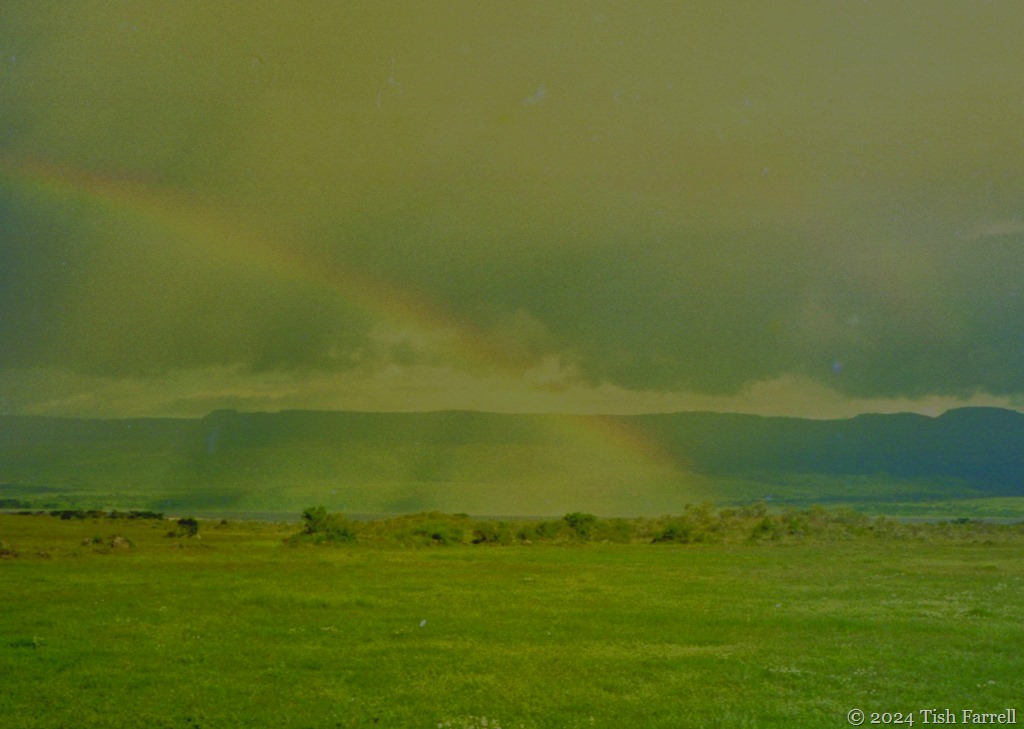
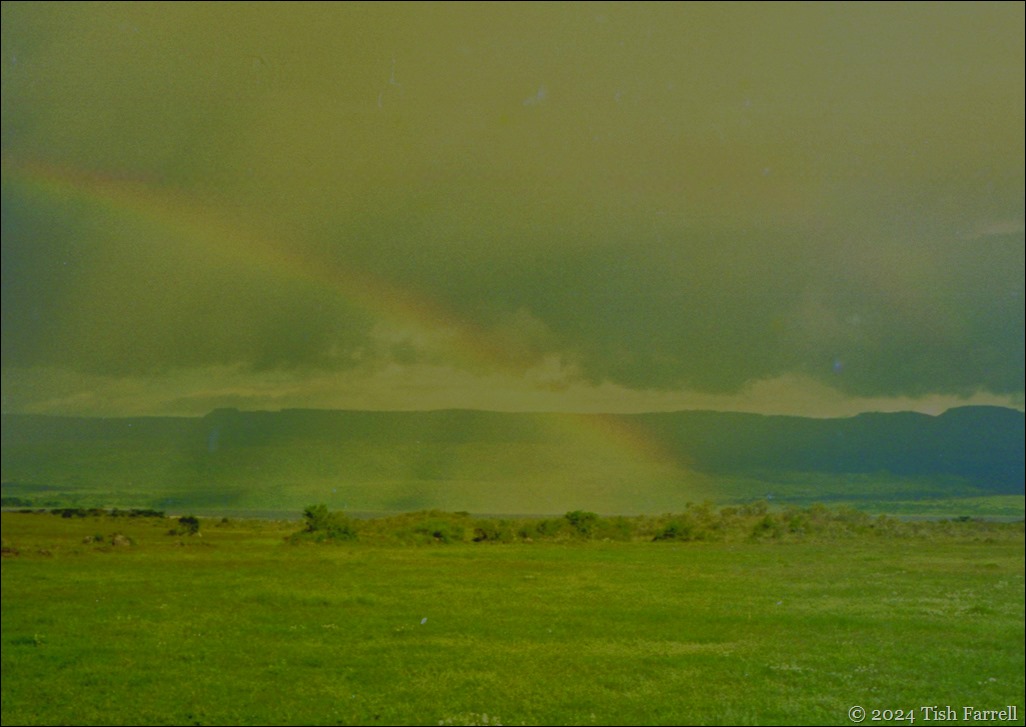
Rain and sunshine together: ‘a monkey’s wedding’

*

And speaking of monkeys, the garden was home to a troop of vervets, who soon learned we had a stash of food in our room. They were quick to relieve us of anything they could grab:

Kiboko ed vervet raid

*

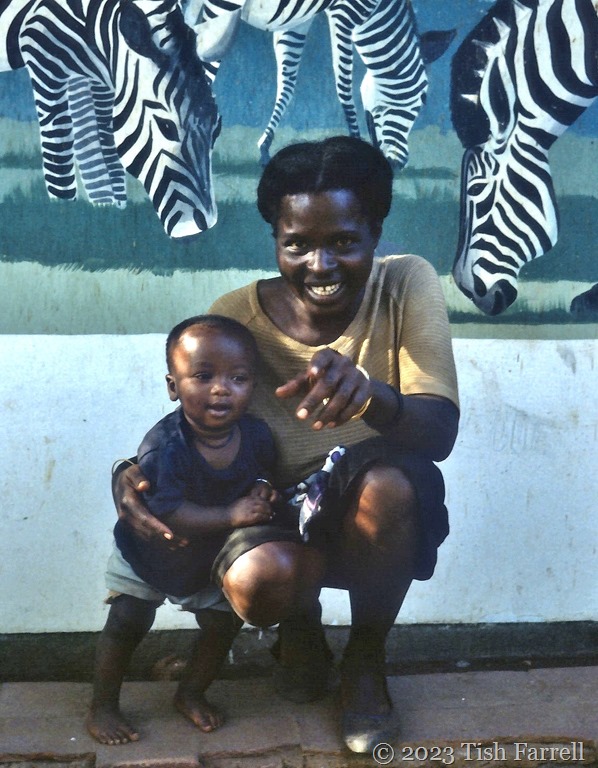
While I was staying at Hunter’s Lodge I met Esther, a young Akamba woman who had a stall selling wood carvings out on the highway. She also dealt in second-hand clothes and, an astute business woman, soon had me exchanging some of mine for her carvings. I think she had the best of the deal. I was useless at bargaining. She also had a notion that I would like to take a photo of her with young son Thomas. She knew exactly where she would pose, and took me along to the nearby petrol station where there was a cafe with a zebra mural. So please meet Esther and Thomas:

Kiboko ed Esther and Thomas

*

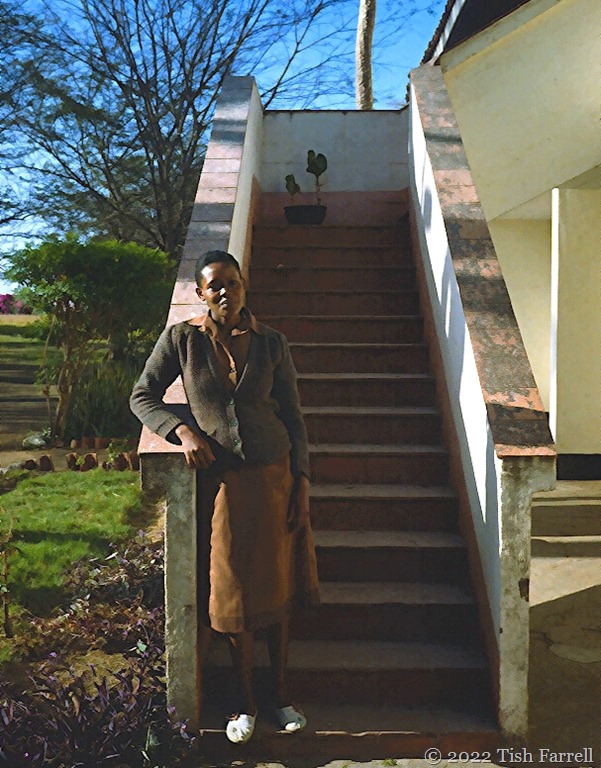
And here’s lovely Joyce who, on our return to Kenya a year later, used to keep our room tidy:

Kiboko ed Joyce

*

There were times, usually in the early morning, when we were leaving Kiboko that we’d catch sight of Kilimanjaro. There it rose on the horizon like a mirage. In seconds it would be gone, like a snuffed flame but without the tell-tale drift of smoke.  You’d be left wondering if you dreamed it.

Kiboko ed Kilimanjaro

*

Kiboko ed fever trees

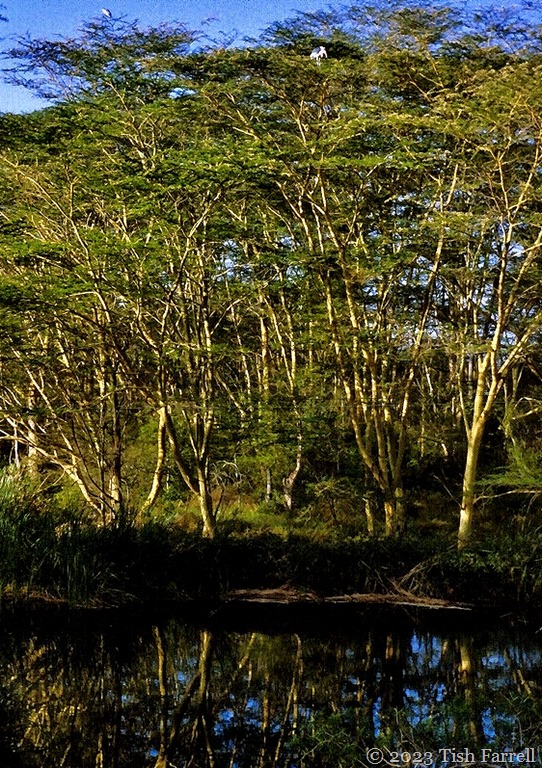
I fell in love with fever trees too, the graceful acacias that, incidentally, have no disease-bearing capacity, although the watery places where they live may well do so. The bark and foliage has a warm spicy scent that is unforgettable, and as for their looks in sundowner light, well, what is there to say…

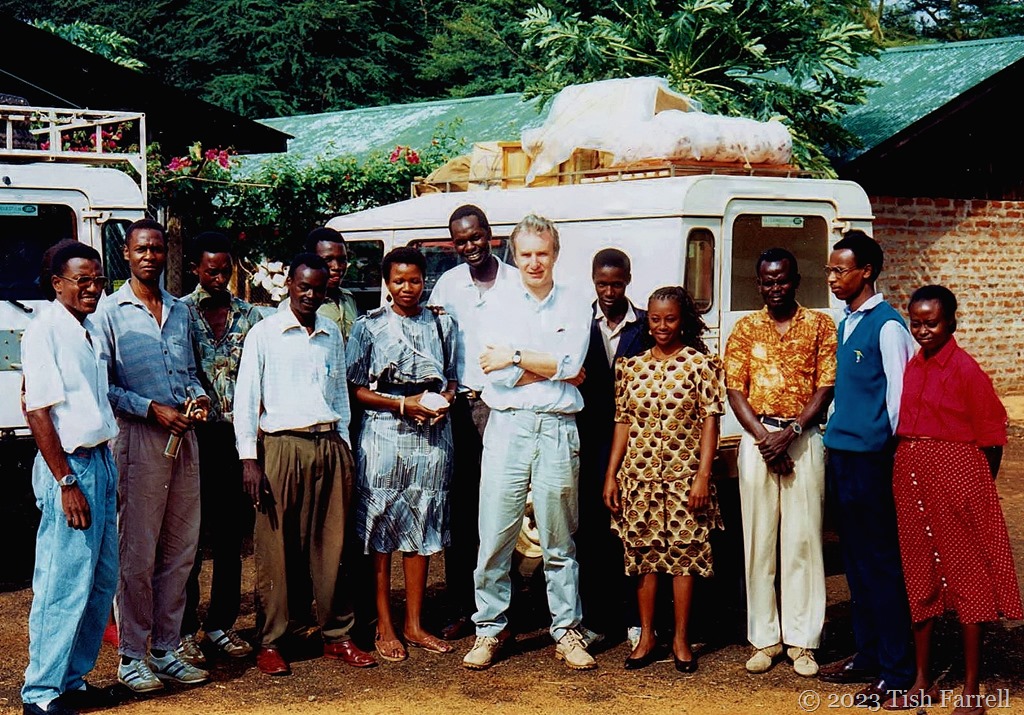
When, at the end of our nomadic nine months, we went to live in Zambia (a very fresh-airy state) I truly missed the scent of fever trees. I couldn’t believe our luck when Graham was posted back to Kenya. It was then he had the rather dismal job of winding up the LGB project at the Kiboko field station. He threw a long, loud party for the lab staff at Hunter’s Lodge, and the next day everyone lined up to have their photo taken.

Kiboko ed last day of project

Most had other jobs to go to and were heading back to Nairobi and beyond. Only Paddy, then a young researcher, remained to carry on monitoring LGB movements and checking the insect traps on the nearby Range Station. He lived on the station in a remote staff house, up a long, long dirt road. These days he is Doctor of Agricultural Entomology at a research institute in Nairobi:

015

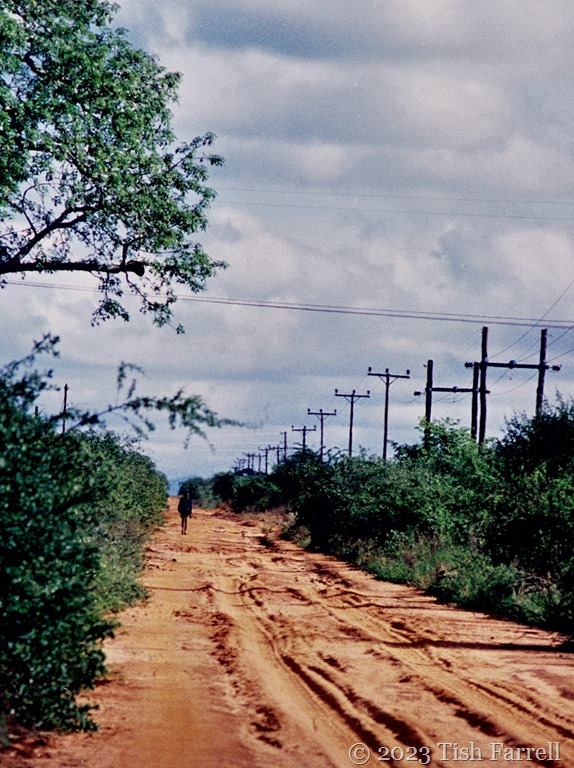
Kiboko ed 4 range station road

The road to the Range Station. I think this land was once a colonial (failed) sisal plantation. We heard that the thorny wilderness it had later become was the haunt of buffalo, an animal you definitely do not want to meet at close quarters.

*

After our return to Kenya in late 1993, we stayed on a further six years. This time Graham was involved with on-farm crop protection experiments, engaging the smallholder farmers in the process. As for LGB eradication, it seems attempts to use a biological control  have not been especially successful, although the predator has naturalized and does have some limited effect on LGB numbers. Scrupulous cleaning of granaries between harvests plus chemical applications, e.g. dusting the stored crop with a pyrethroid insecticide does work, but otherwise it can be a sorry tale for subsistence farmers, who may not be able to afford the stuff. In the worst infestations up to 40% of stored grain can be lost, and up to 80% of dried cassava, a staple crop in West Africa.

So: some dark clouds on these horizons. It’s a lot to mull over. All these years on, I’m still trying to process it.

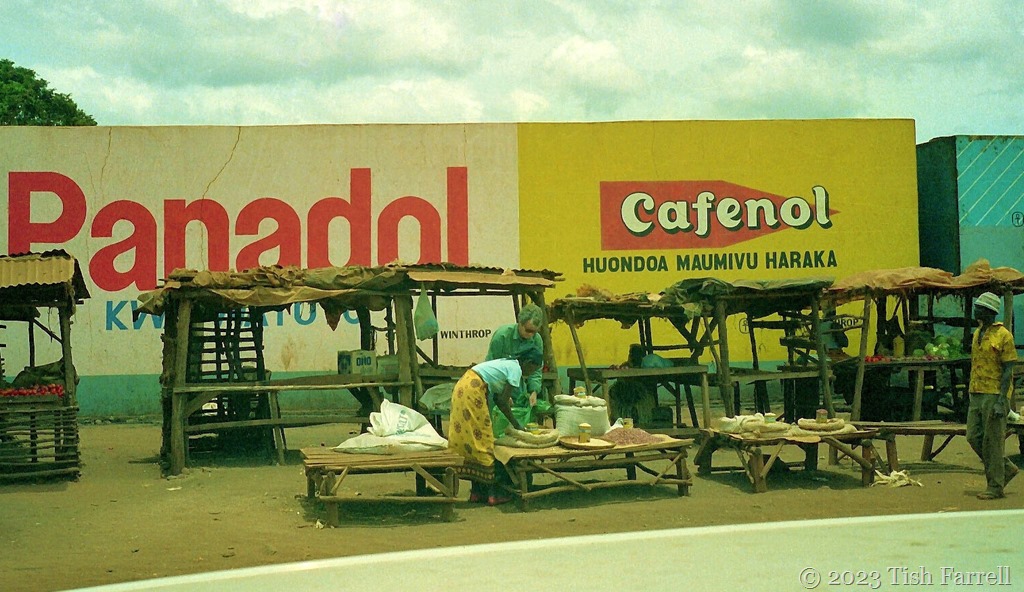
Kiboko ed Emali market

Graham at Emali market, buying maize for the Kiboko grain store experiments.

*

Lens-Artists: Glowing moments  Siobhan at Bend Branches blog asks us to show her our best moments.