November Gold At Our Iron Age Hillfort

IMG_4250ed

Yesterday we woke to the first hard frost of the year. When I looked out of the bathroom window to the top of the town, there was a cascade of white cottage roofs instead of the usual grey slate. And all glistening too…

Because best of all, there was also sun. SUN by god – and the weather people’s promise it would stay all day. What a gift. After weeks of rain between gloom and deluge, plus a stint of accompanying coughs and sneezes, I knew we should go out and make the most of it in one of Shropshire’s most majestic spots.

To Bury Ditches, says I. We can take a packed lunch. And so we did.

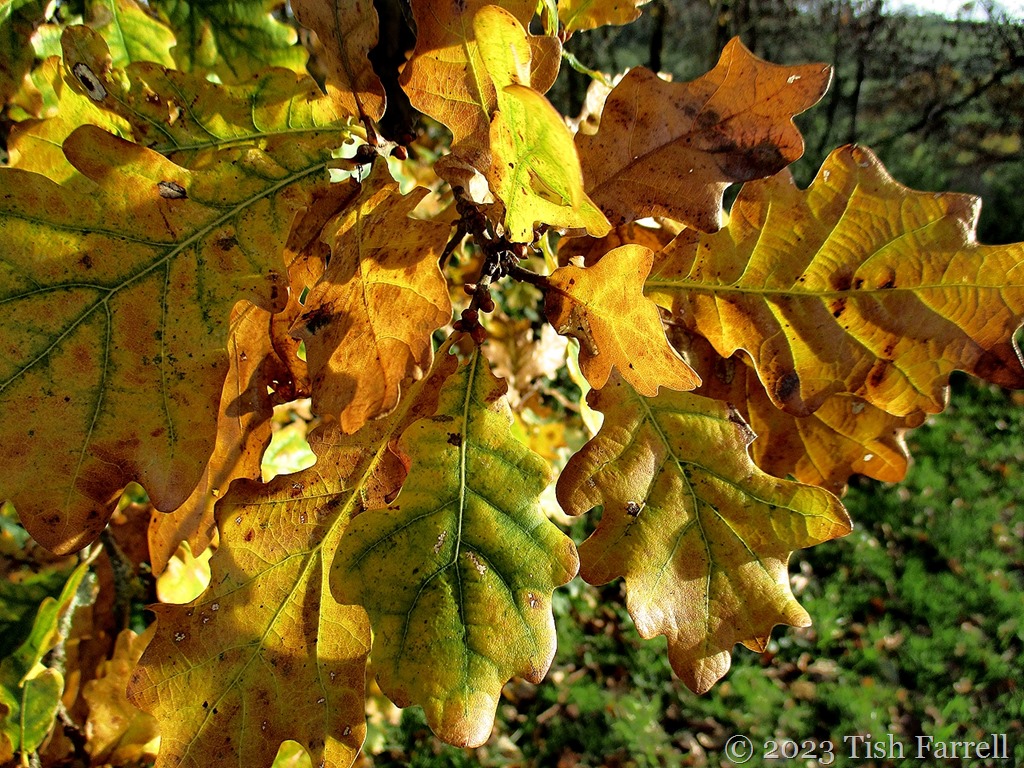
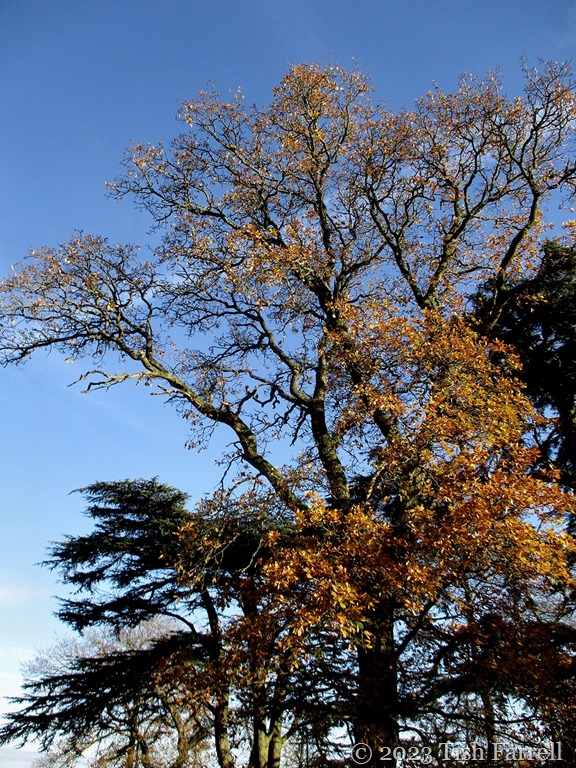
It’s only a five minute drive from our house, but up a very steep hill. For us unseasoned walkers, it’s too far to go on foot. The hillfort lies in Forestry Commission land, which means there is a car park, but the path to it rises further still above ‘monolithic’ stands of conifer, lit up here and there by the odd bright oak, or the orange haze of wintering larch.

IMG_4202ed

*

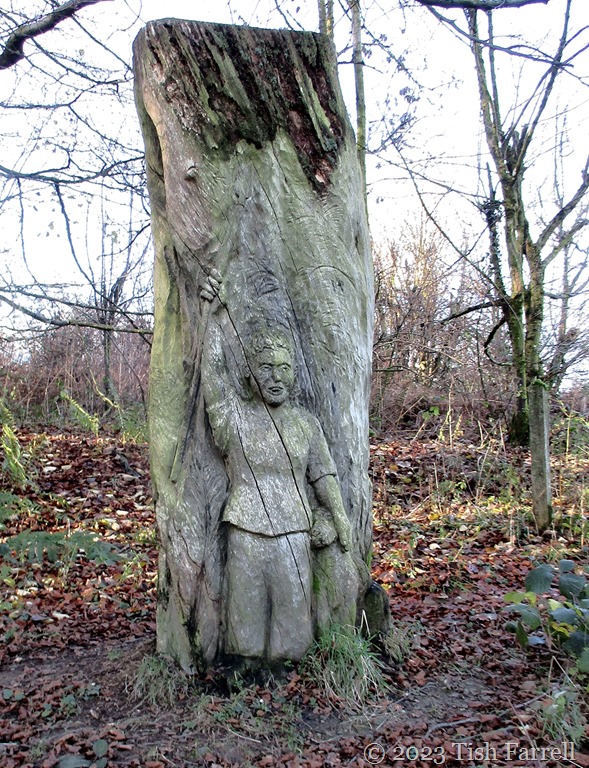
The morning sun had melted much of the frost, though it lingered in the verge shadows and in the valley bottoms. The air was absolutely still. So still, and so utterly silent, it seemed the world had stopped. It was a fine moment to come upon an ancestor, albeit one, turned to wood. What kind of magic was this?

IMG_4204ed

*

When we reached the hillfort, I tried to capture some idea of how it looks on the landscape, the scale of the ramparts – huge but nonetheless much diminished after 2,000 years of weathering. But it’s always impossible – the light not right, the site too overgrown, the earthworks ill-defined. And then there is the problem of  the enclosed ground: all quite featureless; a great expanse of rough pasture, with nothing to fix on, or frame.

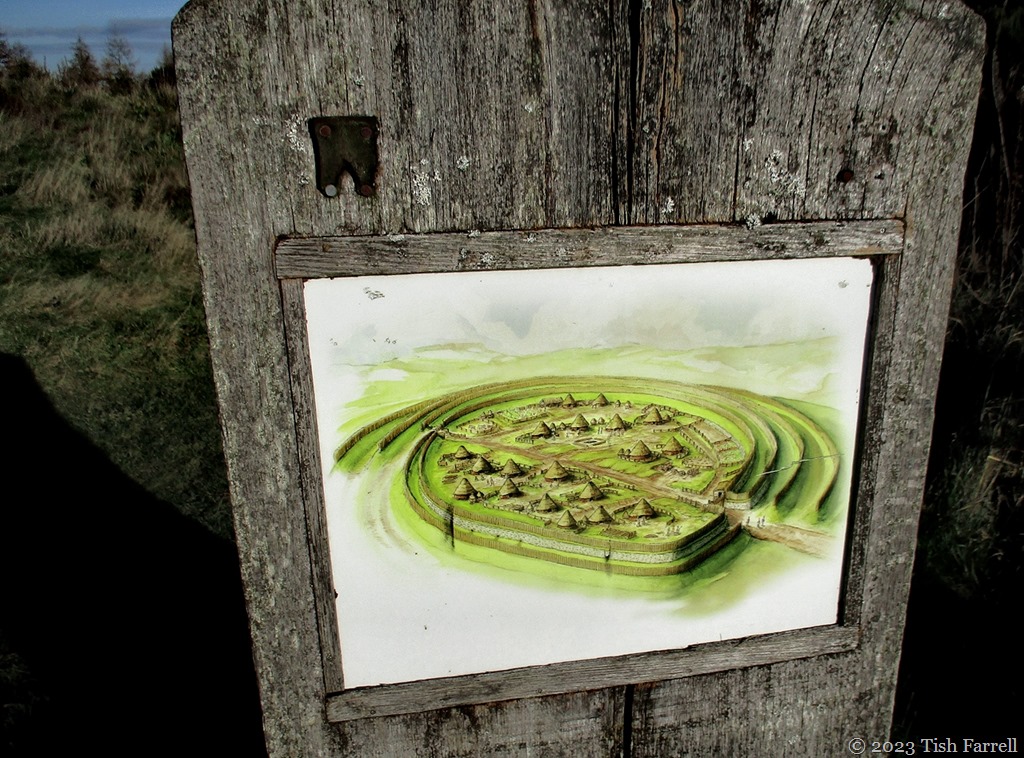
Here’s an artist’s reconstruction of the site, then a couple of my rampart shots.

IMG_4210

IMG_4208

IMG_4215ed

*

For some better hillfort views than I could manage, please have a look at Virtual Shropshire’s page on Bury Ditches.

And so what are we left with? A sense of place, of space, the commanding views, the resonating mystery of who exactly built these monumental structures over 2 millennia ago. They are found across the uplands of Great Britain and yet we know so little about them. Some of course have been excavated and yield signs of village settlement inside (Castell Henllys). Some also revealed evidence of siege (e.g. Maiden Castle). Others seemed to have been simply places of refuge in times of war. Or perhaps also gathering places for festivals and markets. But the big disadvantage of hilltop refuges is they usually lack easy access to fresh water.

One thing we can say: these places were hugely important to the ruling hierarchies of the Iron Age people who built them. Imagine the man and woman hours involved, digging into bedrock with bone and antler picks and mattocks (for at this time iron, a scarce and valuable commodity, was reserved for the making of prestige weaponry not tools), heaving loads of earth in precipitous locations where horses and carts could scarcely serve the purpose. Yet…And yet…when freshly excavated in limestone country, or better still on chalk, the ramparts of these forts would have looked marvellous, glistening white on the skyline; visible for miles.

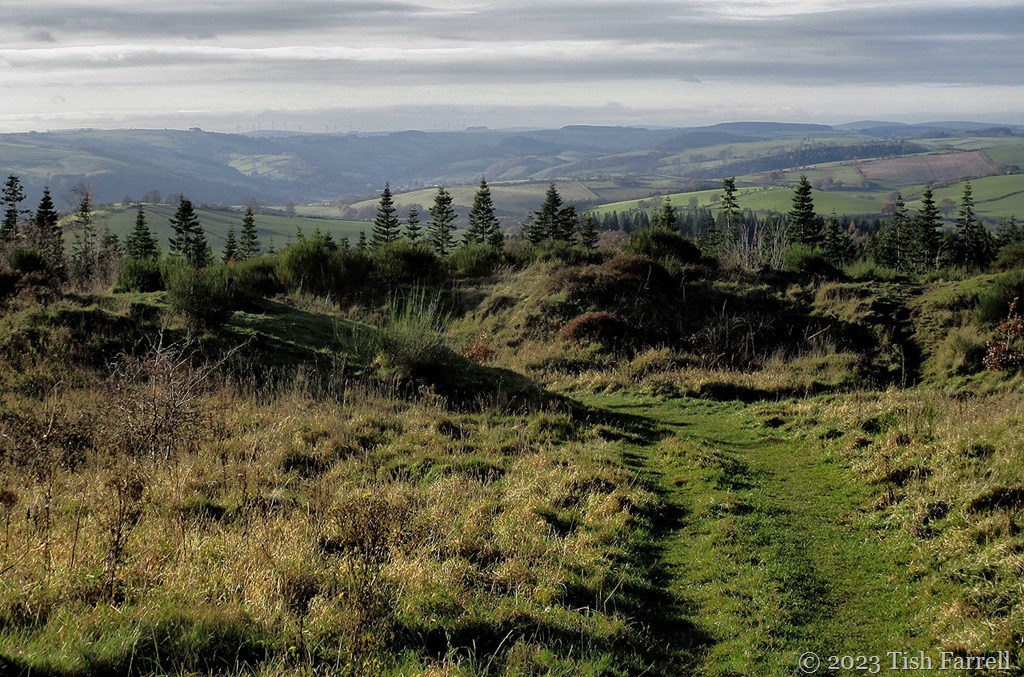
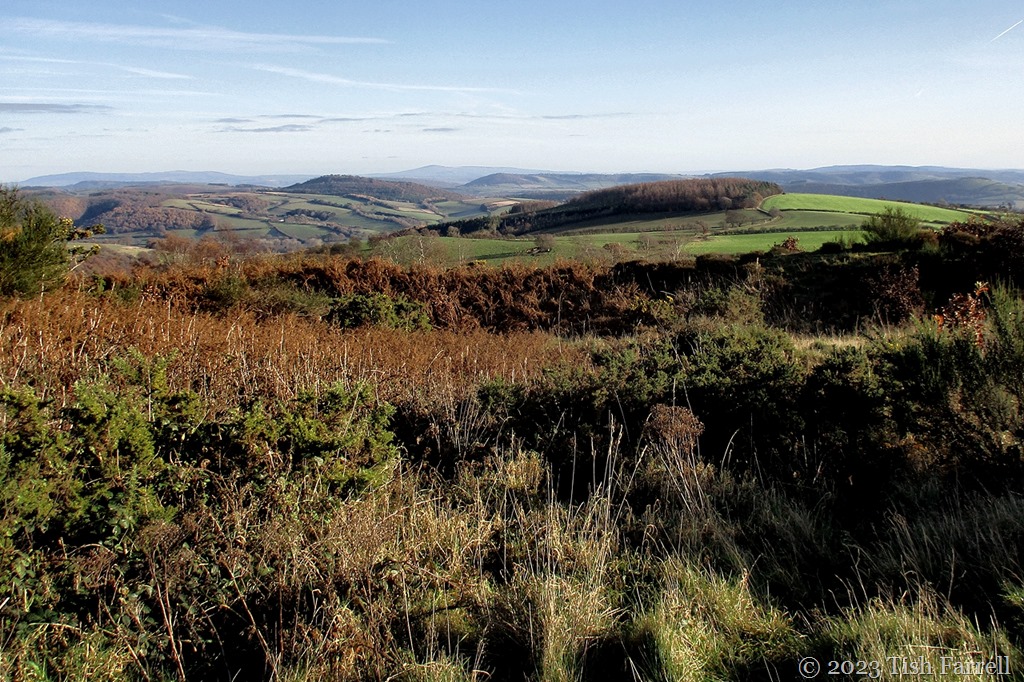
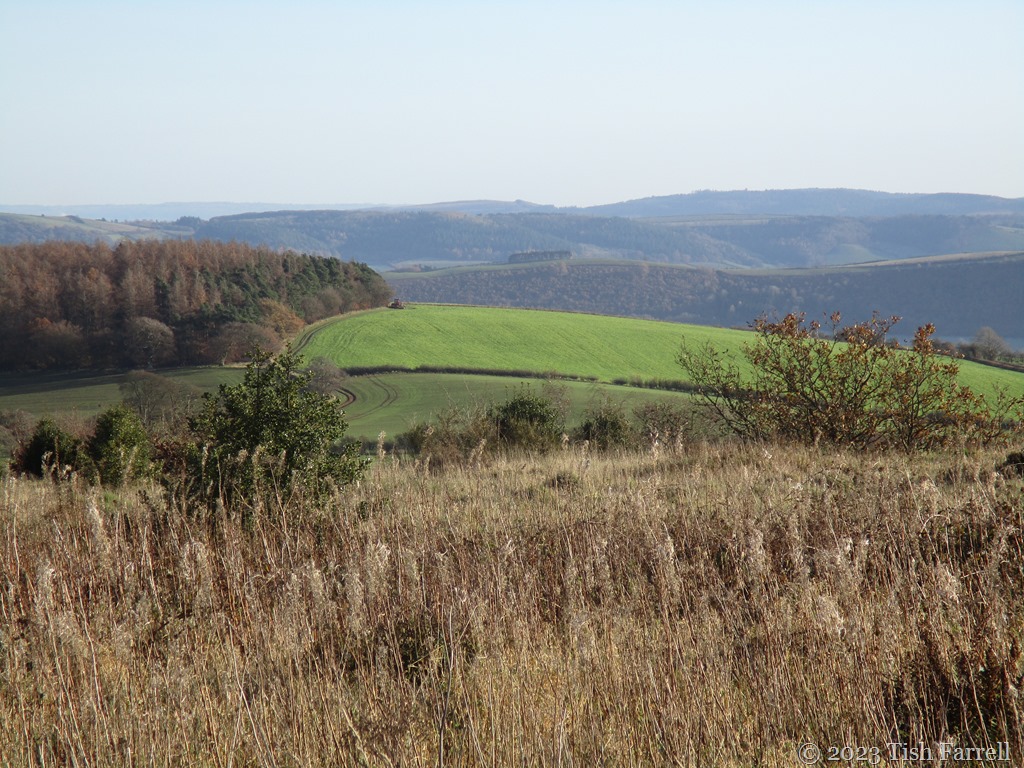
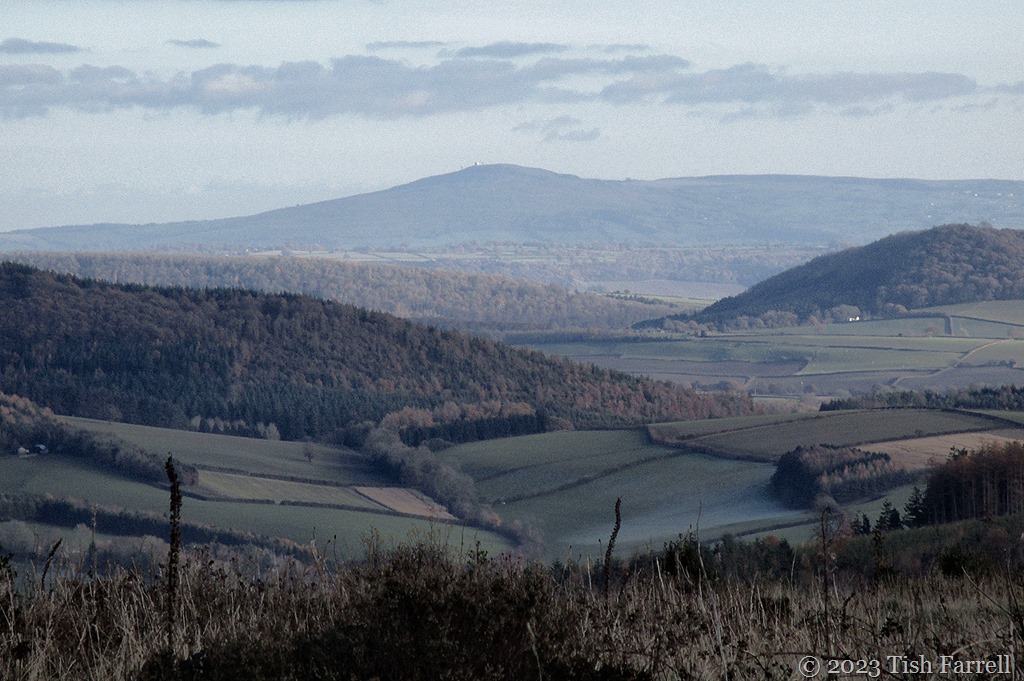
So if I couldn’t quite bring you a hillfort, here are the vistas we enjoyed, looking out, this after perching in a heather clump to eat our packed lunch. Herewith  Shropshire and the Welsh borderland:

IMG_4211ed

IMG_4213

IMG_4232ed

*

By 2 o’clock the sun’s warmth was gone, the remnant frost creeping back, fingering parts not properly wrapped up. We were glad to stride back to the car. A five minute drive home and we were by the log fire with a cup of tea. Such a little journey and yet we had been transported to another world and time. Passports not needed. Only willing hearts and minds and a small car.

IMG_4240ed

IMG_4243ed

So Where Is The Castle In Bishop’s Castle?

IMG_4090ed

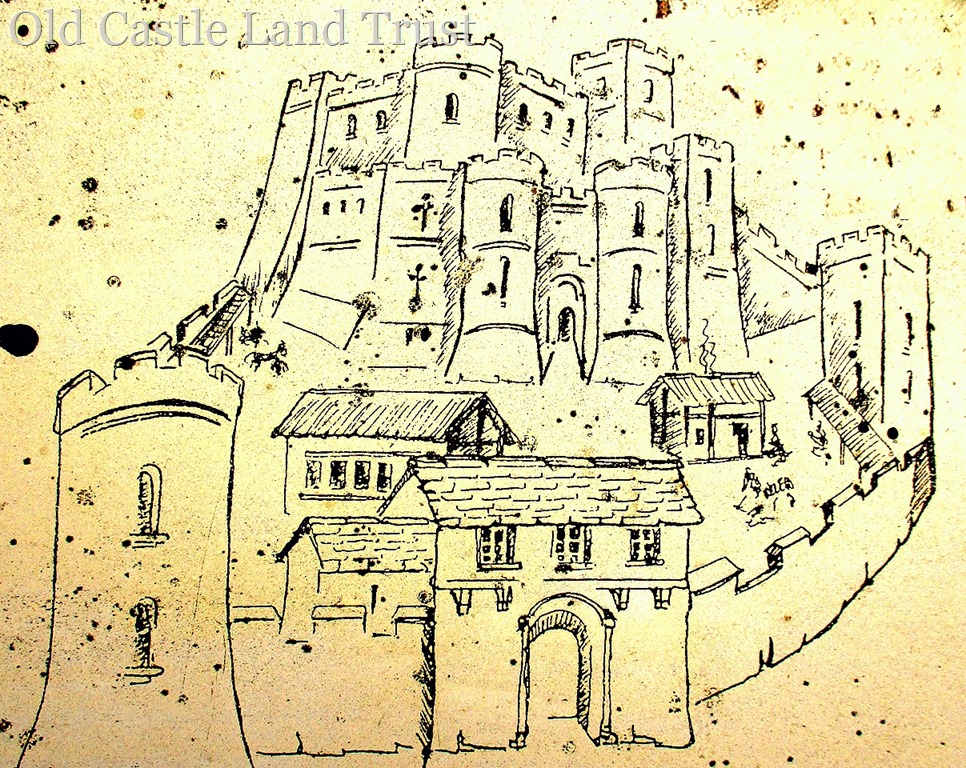
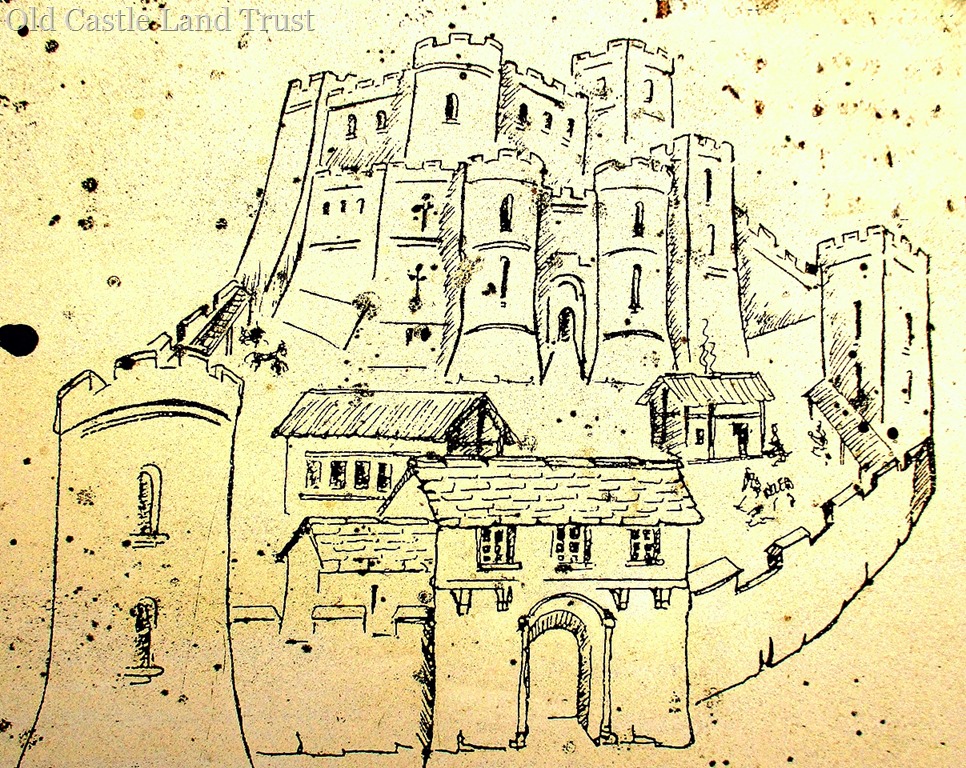
This is a very good question. Where indeed is Bishop’s Castle’s castle? In its last years (during the early 1600s) the stone towers of keep and bailey would have loomed high above the town. Given the steepness of the hillside approach, it could not be a more dramatic setting. It must have looked very much like our vision of a fairy tale castle from a children’s picture book.

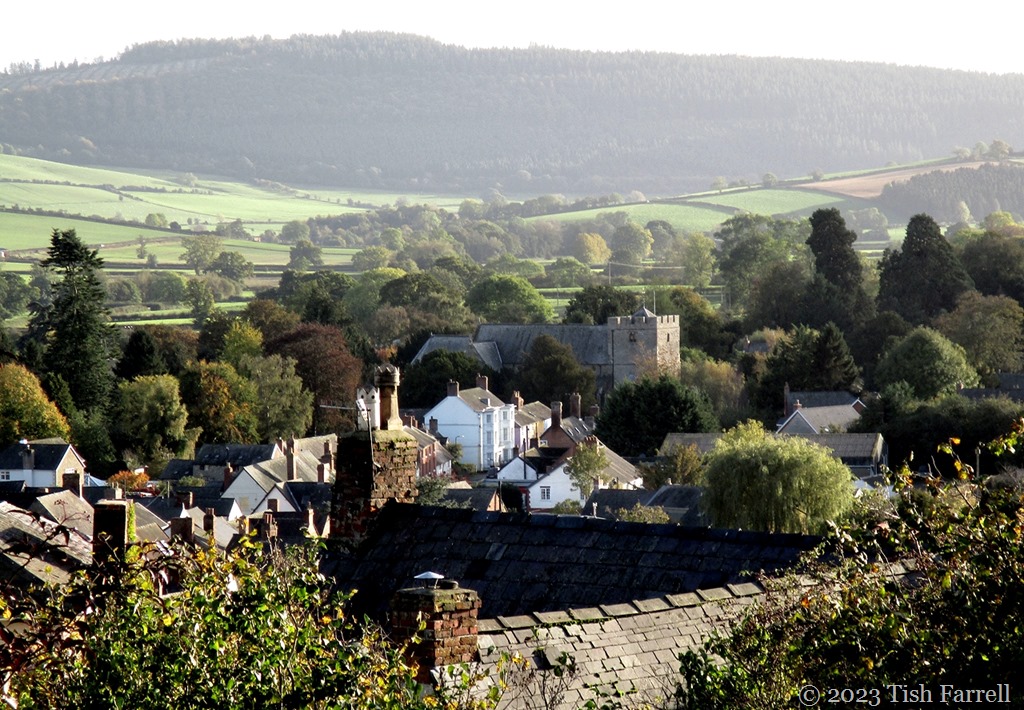
The outer bailey walls extended to the top of today’sHigh Street. See the next photo. If you home in on the on-coming red car below the brown building facing downhill, you’ll be in roughly the right spot.
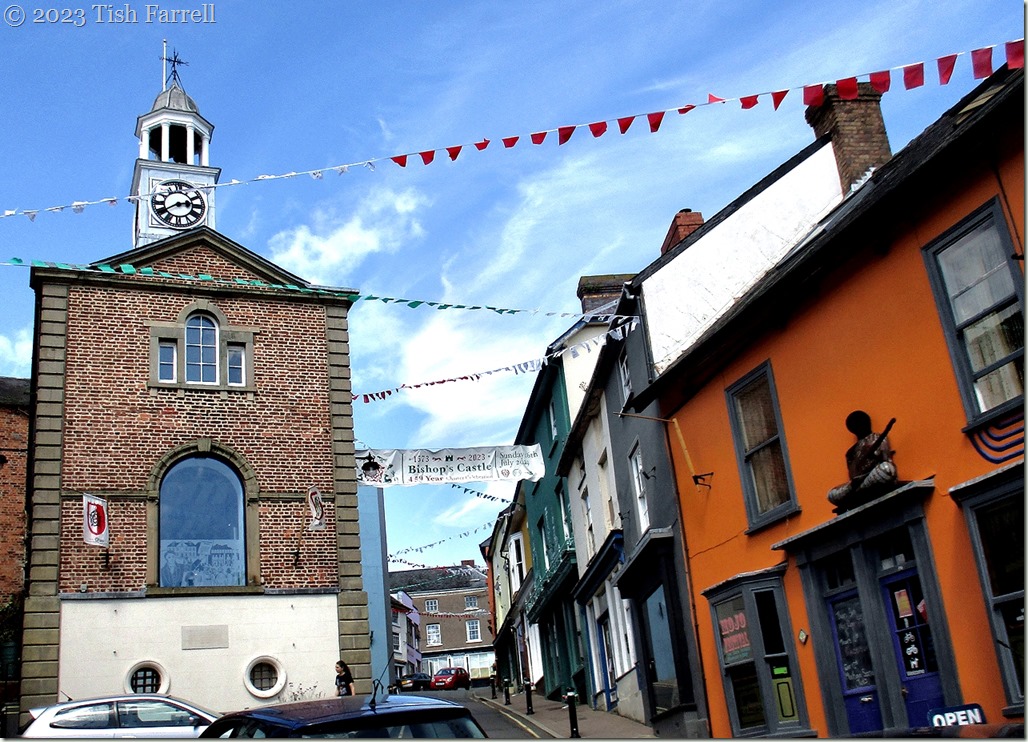
IMG_3642

*

Of the actual castle, there is little left to see. The Old Castle Land Trust has secured a portion ground that lay outside the inner bailey, and here you can see a surviving portion of bailey wall. It’s also a pleasing place to sit and stare at the top of the town.

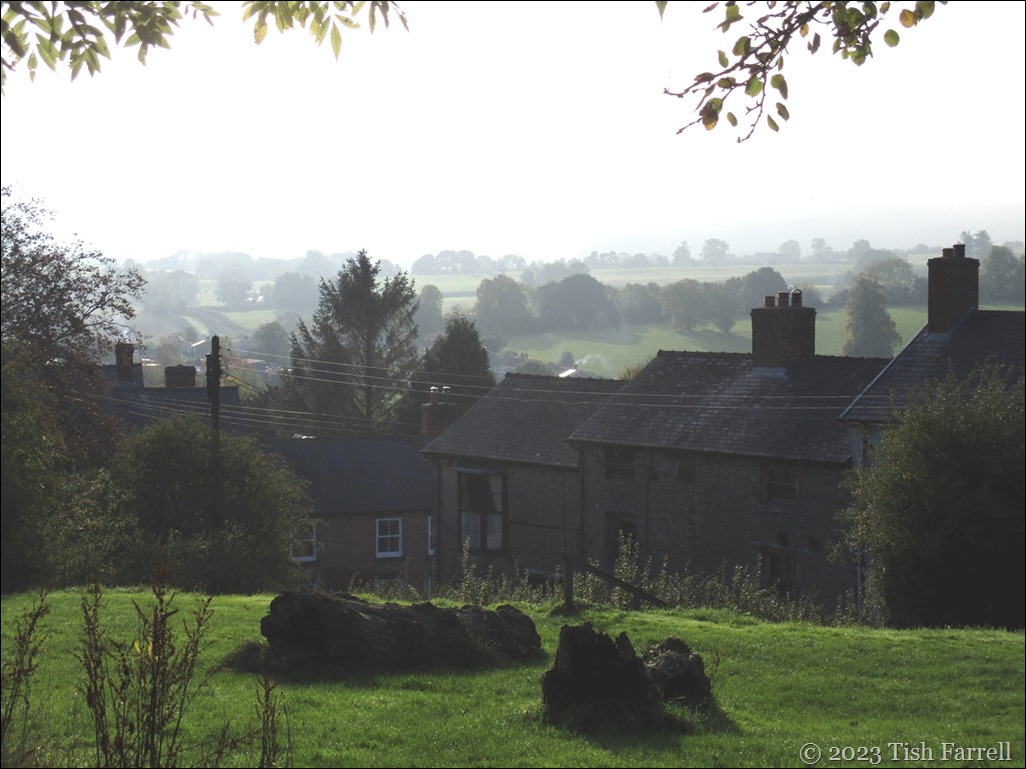
IMG_4017ed

IMG_4021ed

*

The original castle keep would have been much further back and up, on the hill’s summit in fact. The site is now occupied by the town’s bowling green which was created over the keep’s footprint some time in the 18th century. A pleasing feature here is the octagonal pavilion, presumably built when the green was constructed. It is oak framed and, during restoration, the centre post was found to be octagonal in section. No expense spared then.

IMG_4028

*

So why was there a castle here at all?

The answer is law enforcement and taxes.

The earliest version was constructed not long after the Norman Conquest, put up between 1085 and 1154, at the behest of the Bishops of Hereford, they who ruled the local roost – spiritual and temporal. As with most early Norman castles, it would have comprised an earth mound or motte, topped by a wood framed keep, and the surrounding inner and outer baileys defended by timber palisades. The lower flanks were then surrounded by a defensive ditch or moat, complete with drawbridge.
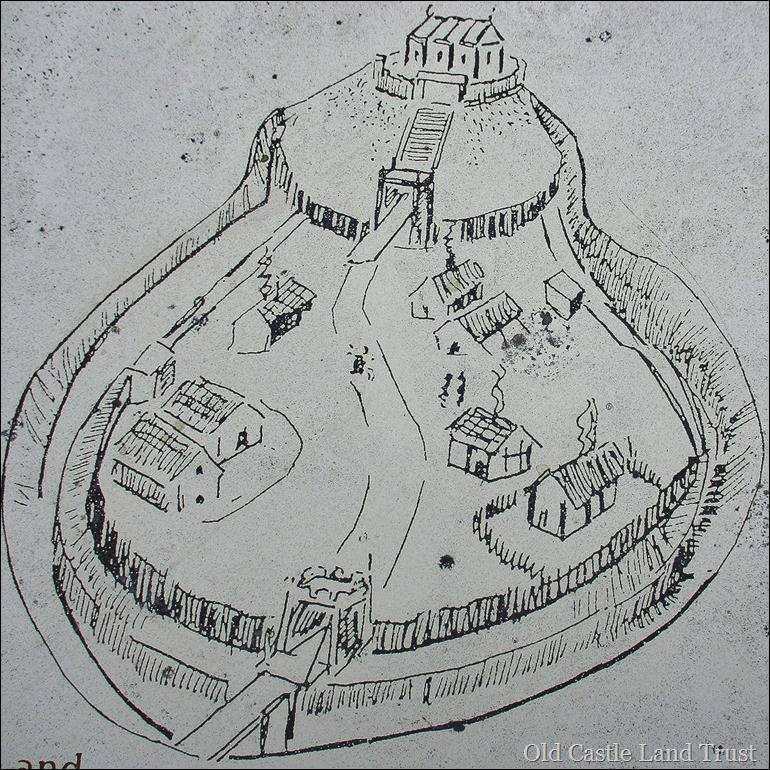
IMG_4093

*

The stone-built phase began around 1167 – including stone keep, curtain walls with towers and gatehouses to both bailey perimeters. Further fortifications and likely refurbishment of living quarters took place around a century later, following on the brutal attack by a bellicose neighbour, the Earl of Arundel, Lord of Clun in 1281.

The castle premises at this time were equipped to provide accommodation for the visiting Bishops of Hereford plus their retinues of some 30 horses and men. The outer bailey would have included stables, stores, smithy and brewhouse.

The bishop came at regular intervals to hold court, impose fines on wrong doers and infringers of local laws and regulations, and to exact taxes from the local populace. By this time, there was a well-established town on the hillside between castle at the top and parish church at the bottom.

The bishops’ authority was finally overruled by Elizabeth 1, who simply took Bishop’s Castle for the Crown and then in 1573 issued a royal charter  (see earlier post HERE) that handed executive control of the town’s affairs to an elected bailiff and 15 burgesses.

From this time on it seems the castle was left to its own devices, apparently ruinous by the 1600s. And so it is obvious what happened next: there was a general repurposing of the castle fabric as the market town grew in scale and prosperity.

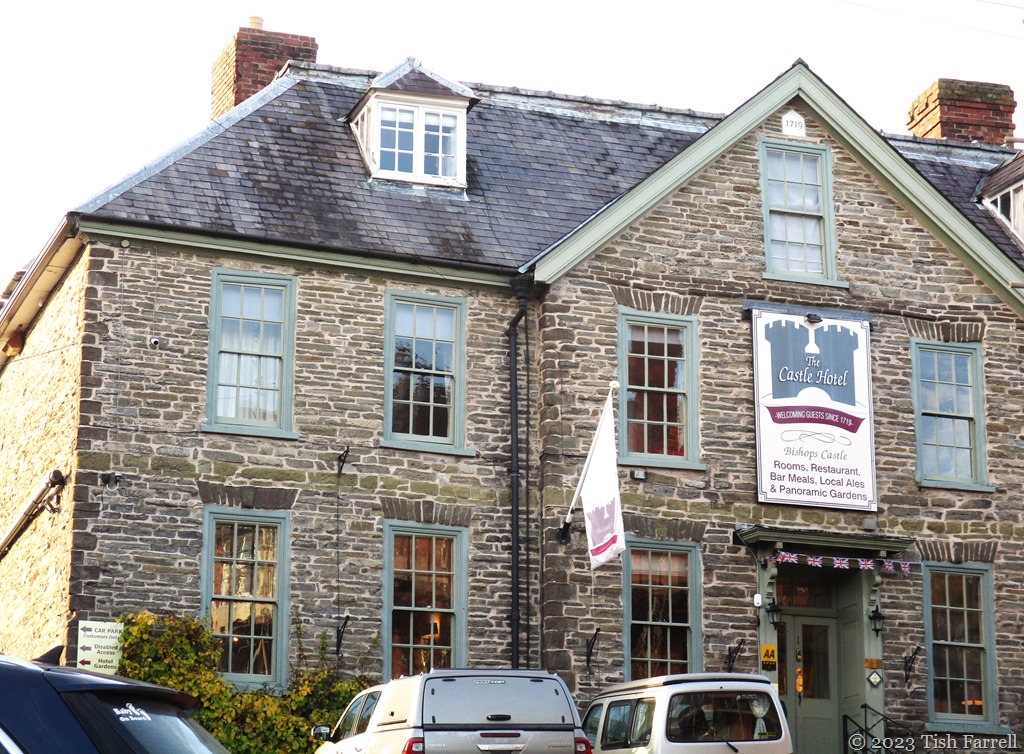
One beneficiary was the Castle Hotel, built in the 18th century inside the former outer bailey:
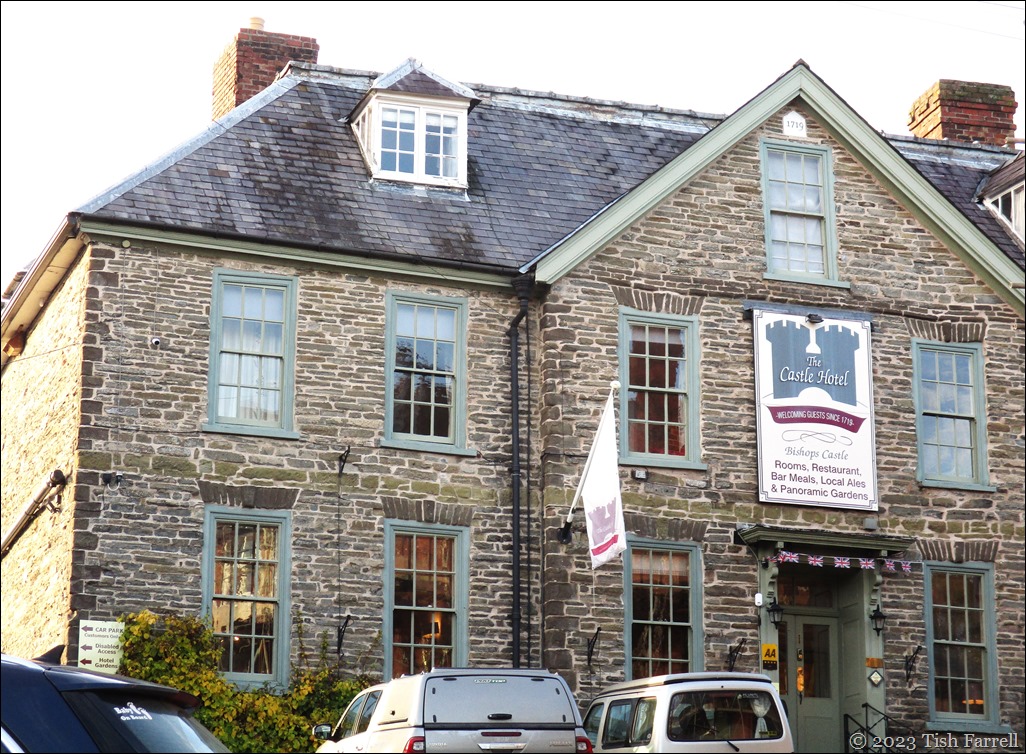
IMG_4035

*

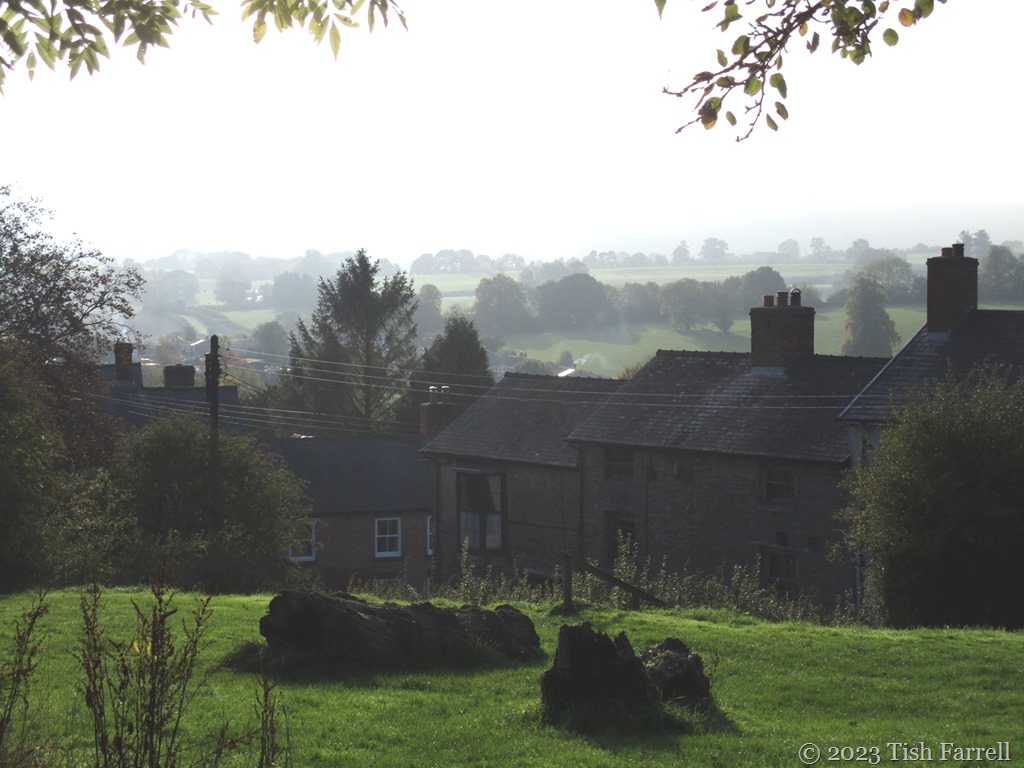
If you stand in the hotel gardens, as I did in sunny interval this week, you are treated to the kind of sweeping vista that castle-dwellers-past might have enjoyed from their bastions, though I’m guessing there would have been rather more forest than the wide-open fields of this next photo.

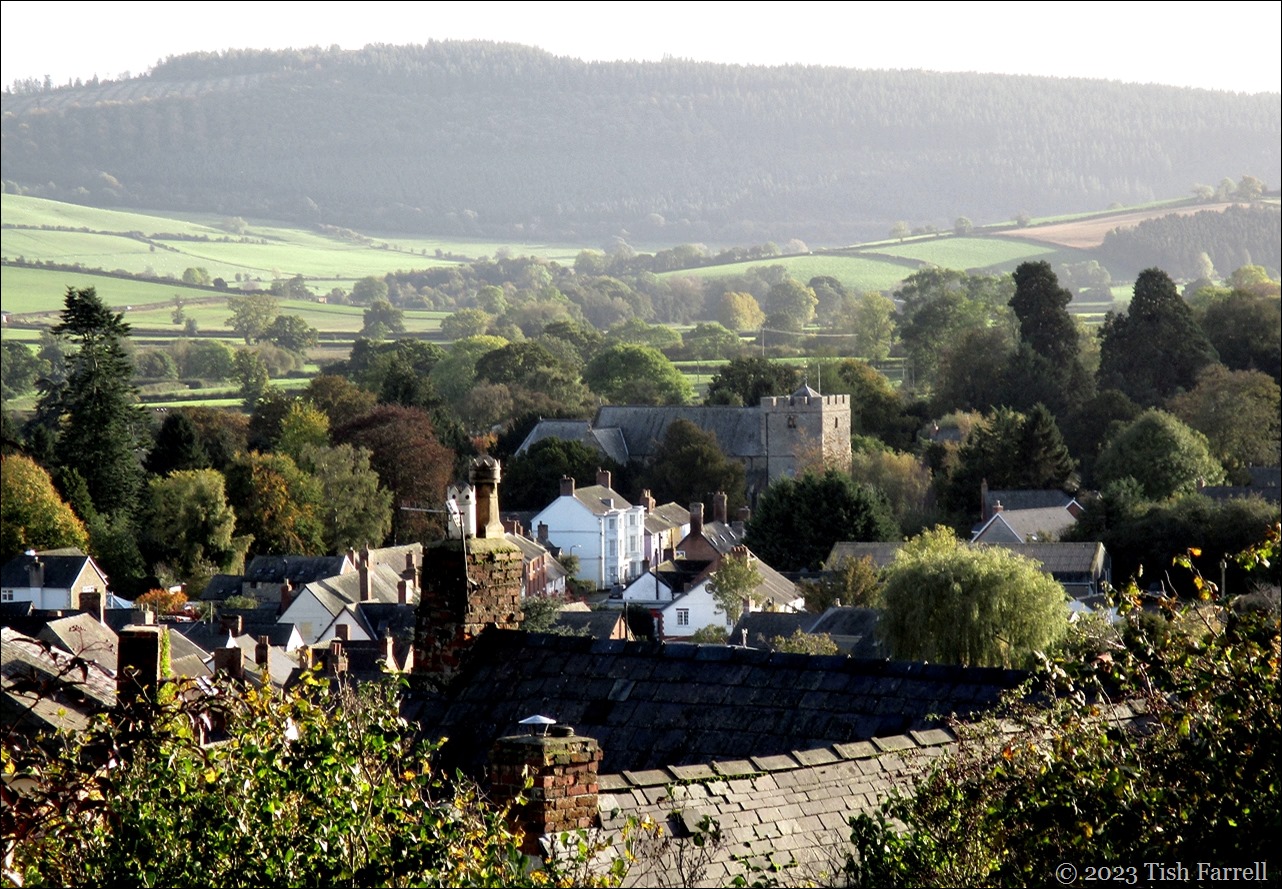
IMG_4067ed

IMG_4066ed

*

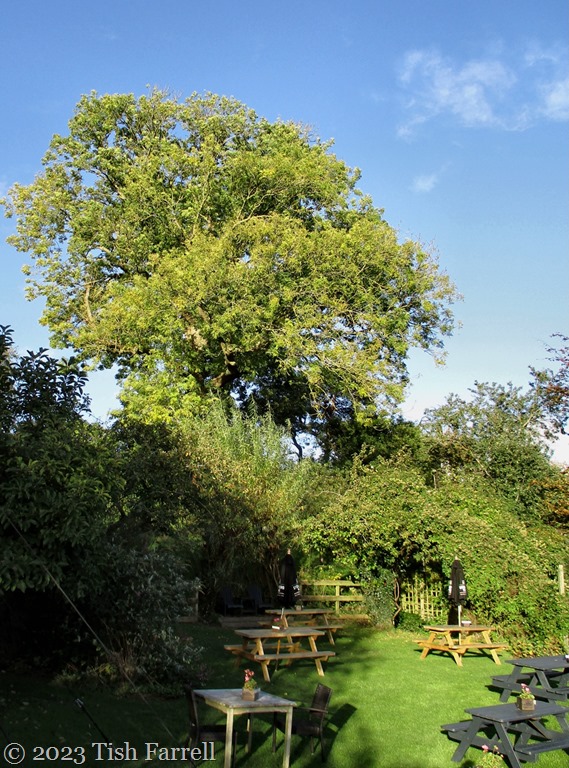
If you then turn through 180 degrees and look up the garden, you are now facing the spot where the inner bailey gatehouse would have stood. I’m thinking the huge ash tree makes a handy simulacrum for a castle tower:IMG_4070ed

*

The bowling green is just beyond the tree. It used to belong to the hotel, and there’s a path through the garden to reach it. (Closed now for the winter season).

The late 17th and 18th centuries were a time when many townscapes had their ancient timber-framed houses clad and/or replaced in stone or brick. This certainly happened in Bishop’s Castle. Many of the 1700s and 1800s stone and rendered frontages will contain remnants of earlier wattle and daub dwellings. It was all part of growing urban show and gentrification.
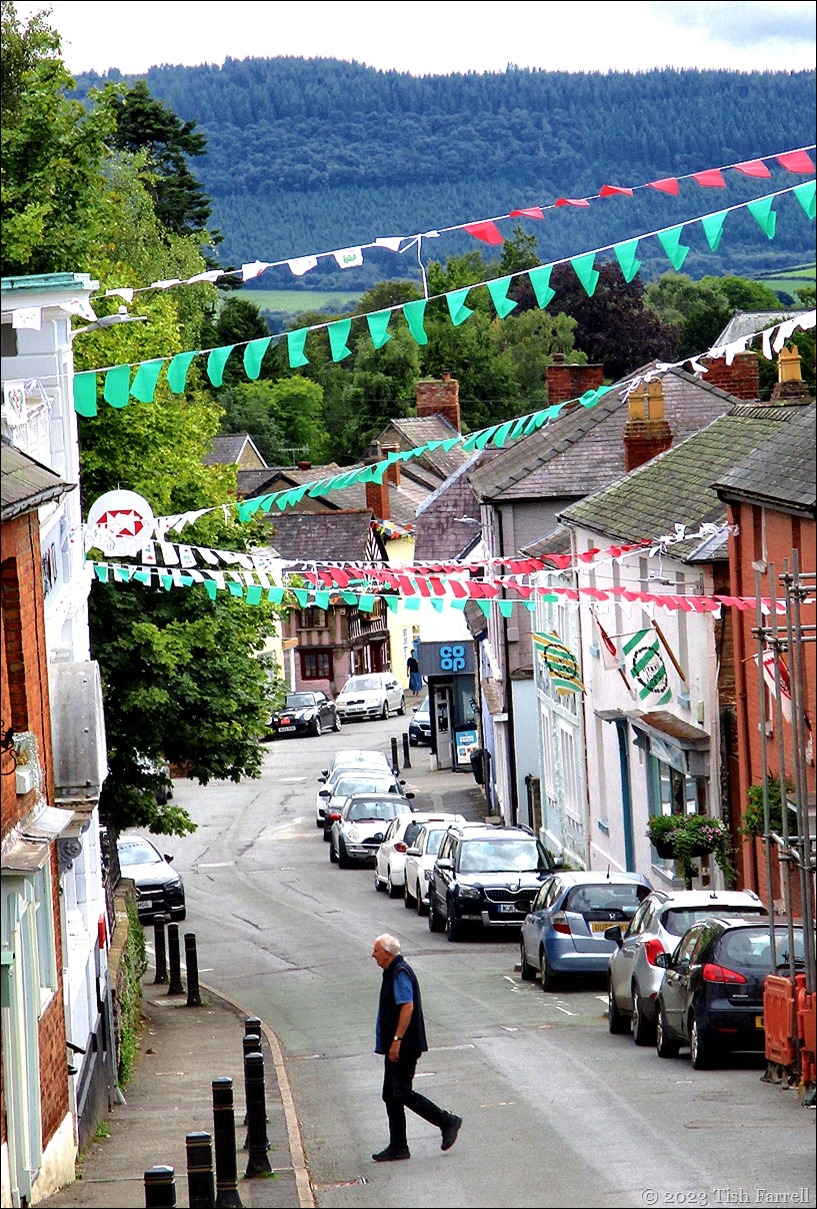
IMG_3649

*

And so the castle fabric has doubtless found its way into many a house and garden wall.  The Moat House on Welsh Street seems a particularly obvious candidate, both by name and siting on the original castle defences.
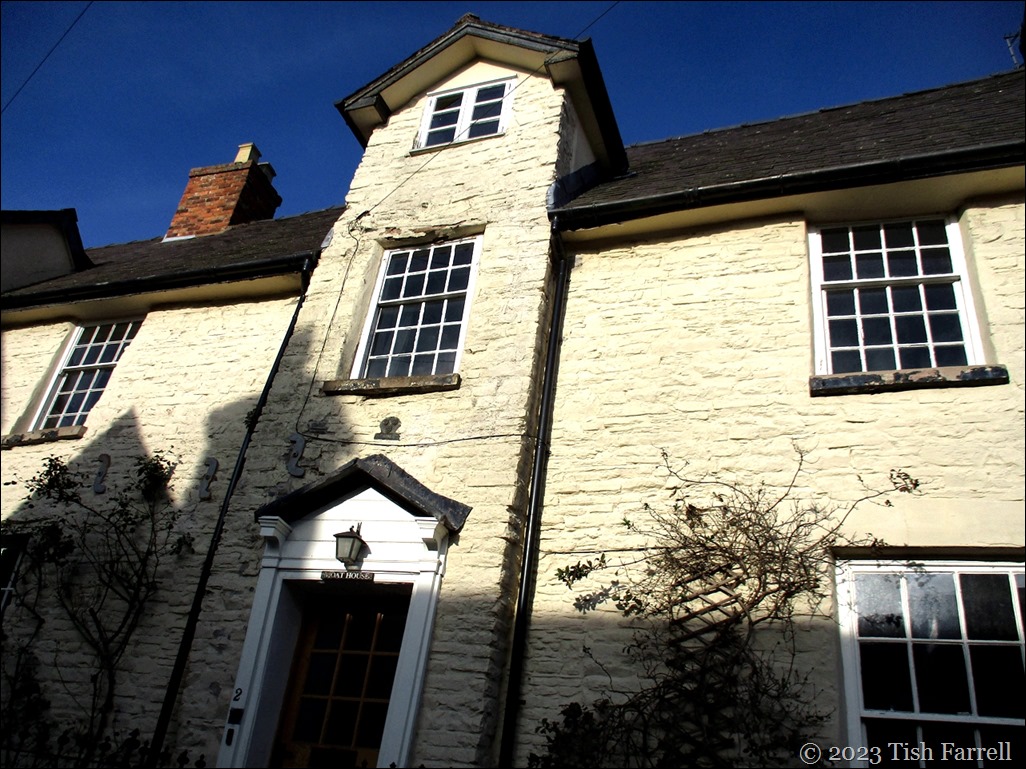
IMG_4008

A plaque on the wall also names it as no.41 of Bishop’s Castle’s town trail of lost inns, having been known variously as The George or The White Swan from around 1700. (Surprising to note that the town has hosted some 46 public houses over the last 400 years, but that’s a story for another day.)

I do know for certain that our house wasn’t built from castle remains. It’s all red brick, locally made, I think, and put up around 1922 by local builder George Nicholas. It stands in a corner of land formerly owned by the smithy and then by the Hit or Miss public house, which is three doors up from us. What a great name for a tavern. Now a private house, its plaque lists it as no. 38 in the lost pub trail, 1832-1915. These days it’s rather nicely ‘draped’ in laburnum fronds since it stands next to Laburnum Alley, one of the town’s intriguing shuts and pathways. Again, more of these in a future post.

IMG_4056

For now, a view of our street and the former Hit or Miss  public house. (You can just glimpse our red brick side elevation and chimneys furthest left).

And another view from the Castle Hotel garden, this time looking up motte, across the inner bailey, to where the castle keep would have once dominated the entire background. Interesting how things change:

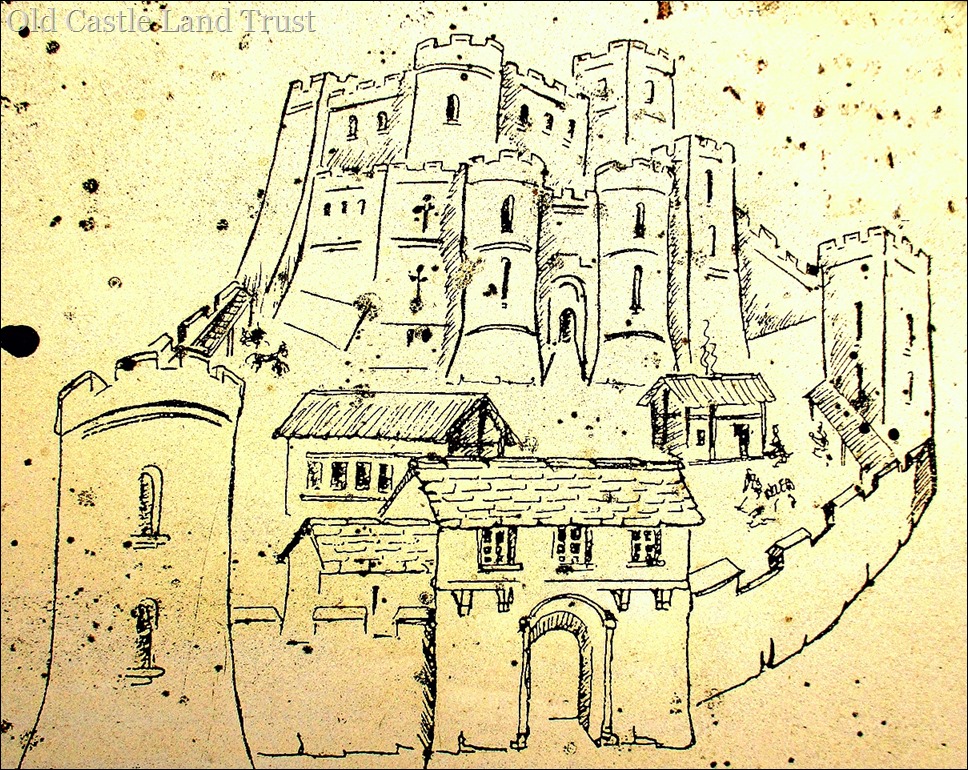
IMG_4062

IMG_4090ed

The Man From Africa ~ I.D. Unknown

IMG_3848ed

Last week I went to pay my respects to I.D. He is one of Bishop’s Castle’s mysteries – the man from Africa, who was laid to rest in the parish churchyard of St John the Baptist on the 9th September 1801. Origins and life story unknown.

IMG_3846ed

Here lieth the Body of I.D.

A Native of Africa who died in this Town Sept 9th 1801

God hath made of one Blood all nations of Men  Acts 17 verse 26

*

I’ve written about him before, but the mystery continues to niggle, and especially now that I’ve come to live in the town. Who was this man? Where did he come from, and how had he arrived in the isolated small farming town of Bishop’s Castle? What led to his death? Was he slave, originally from West Africa or the Congo, and a possession of some Shropshire plantation-owning grandee. Or was he a free man; or employed as a servant?

The headstone, if sparse in details, is a fine one; it suggests a certain status; someone must have paid for it. There’s also a presumption that the deceased was a baptised Christian since the grave is sited in a prominent spot beside a well used path.

If the man had been a well regarded servant, then one might expect more personal details; a name at least; the years of his service and the name of his employer. (Slaves were usually given their owner’s names.) If he were merely a passing traveller who happened to die in the town, then who took it upon themselves to give him a decent burial? The parish records throw no light on the matter, and only repeat the text on the stone.

But there is a clue in the biblical quotation: God hath made of one blood all nations of men. This was a trademark text used by campaigners for the abolition of slavery.

At the time, Shropshire had its own fierce anti-slavery movement, driven by the dogged determination of one Archdeacon Joseph Plymley who lived not far away at Longnor. From 1791 until abolition in 1807 he worked tirelessly, alongside his sister, Katherine Plymley, travelling the county, raising petitions, urging Salopians to boycott sugar. So perhaps a local abolitionist sympathiser paid for the funeral. And perhaps, too, that well-wisher had the sensibility not to bury the man with his full slave name, but not knowing his birth name, chose to identify him solely by the initials I.D.

So many questions about a man, identity unknown, cut off from family, culture and community, lying in this quiet, but alien burial ground at the foot of the town, late summer cyclamen under the trees, the drift of cool air in from the hills and fields. Africa far far away.

IMG_3843ed

When Creator Comes Visiting…

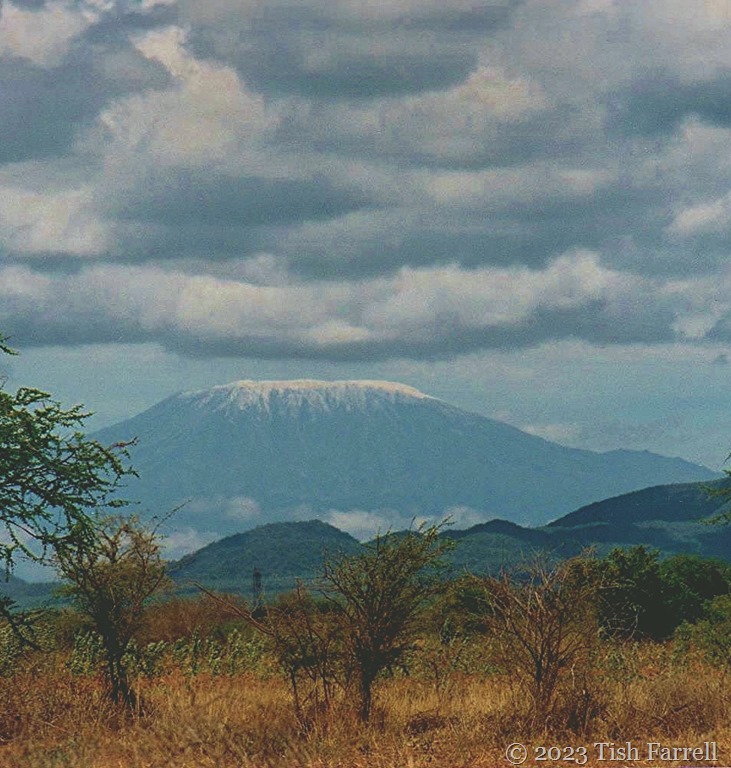
Mt Kenya

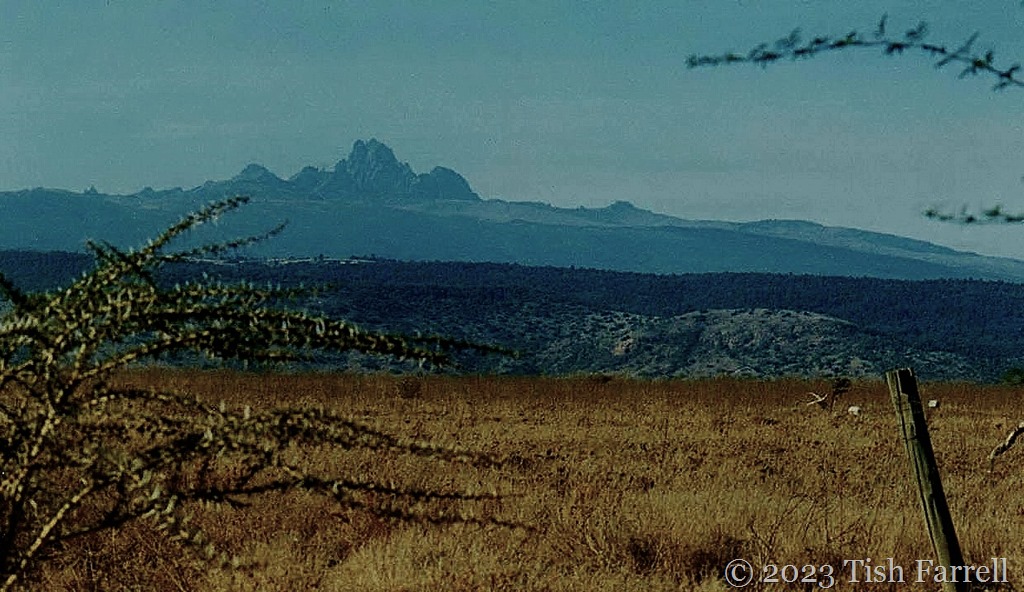
…this is one of his domains – the craggy summit of Kere-Nyaga, Mountain of Brightness, better known outside East Africa as Mount Kenya.

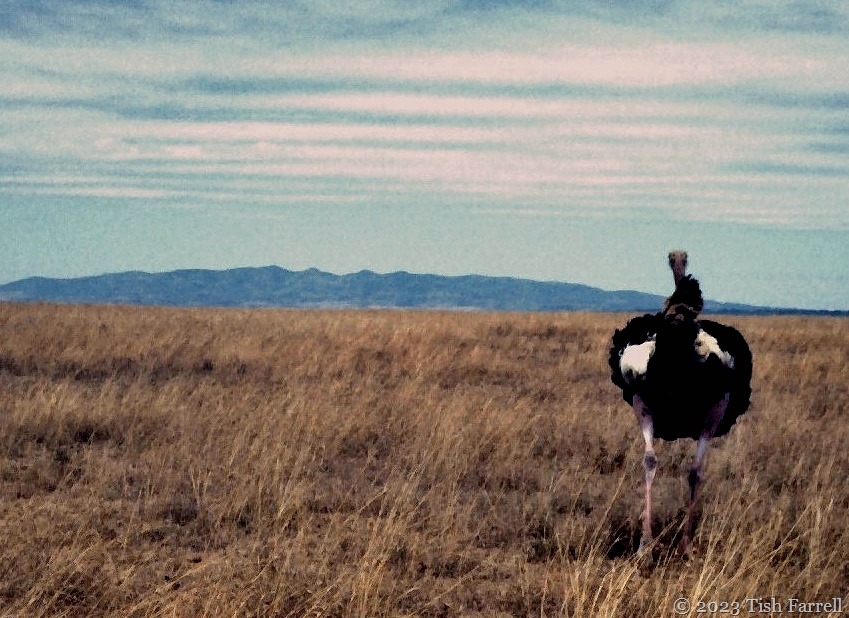
And the supreme being concerned is Ngai, maker of earth, the cosmos and everything. And it was to Ngai that the Kikuyu farmers of Mount Kenya’s southerly foothills once offered their sacrifices and prayers. Although they only did this in times of great crisis, since it was generally held that Creator was a remote figure, little concerned with human affairs. When his help was sought, he was addressed as Mwene-Nyaga, possessor of brightness (Jomo Kenyatta, Facing Mount Kenya 1938). Nyaga also has figurative connotations, meaning ostrich, but in this context suggestive of the white plumes of the male ostrich, a visual analogy for the glaciated zones among the dark mountain peaks.

You’ll see the thinking in this next photo:

ostrich and Ngong hills best

This shot of a retreating male ostrich also captures a distant view of the Ngong Hills, another landmark of spiritual significance, not least in recent times to Out of Africa  writer Karen Blixen and her lover Denys Finch Hatton whose burial place it is. For that story see Caught inside a Kikuyu garden.

I’m sorry I don’t have more and better photos of Mount Kenya. The ones I do have are a little odd, as if the mountain meant to tease by showing off parts of itself at times and in places where it was not expected to be. I remember spotting it early one morning as I stood in the garden of the Outspan Hotel in Nyeri, the jagged summit floating gauzily above the horizon.

For several moments I was fixed to the spot. By the time I thought of taking a photograph it was gone – only empty sky in the place where it was, and a visceral sense of loss. Kilimanjaro just over the border in Tanzania, plays the same trick. Both mountains spend much of their time being mysteriously invisible. Yet there are travellers’ tales that claim occasions when, looking north and south, both mountains appeared simultaneously. Just imagine!

002 (2) ed

*

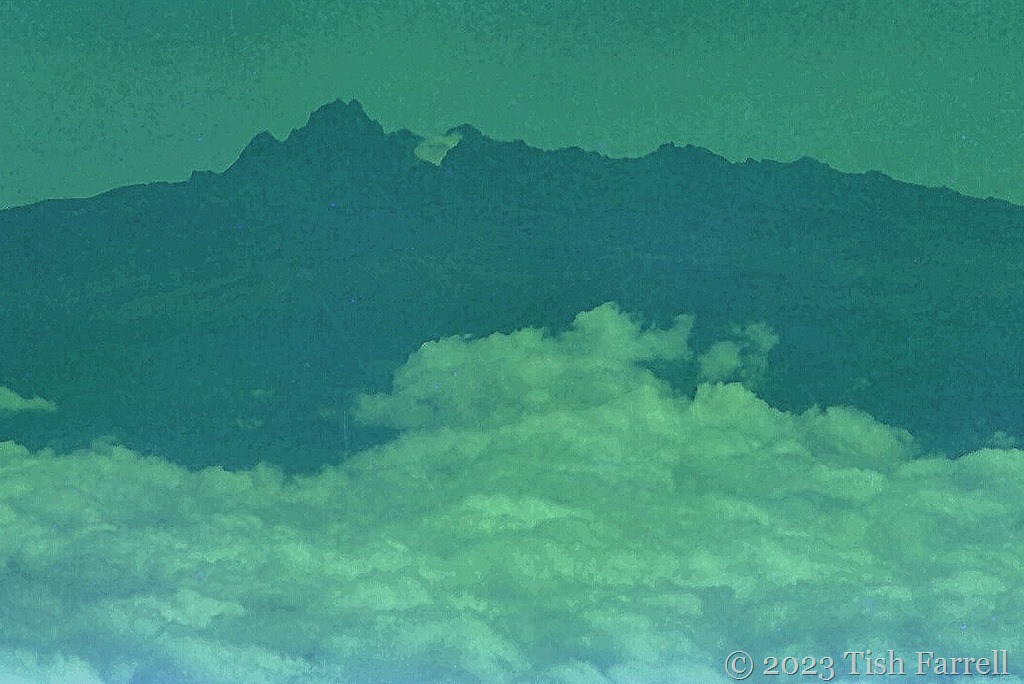
And now for the Mount Kenya photos I do have. The first one was taken from a small plane on our way to Lewa Downs:

Mt Kenya from plane

Grevy's Zebra and Mt Kenya

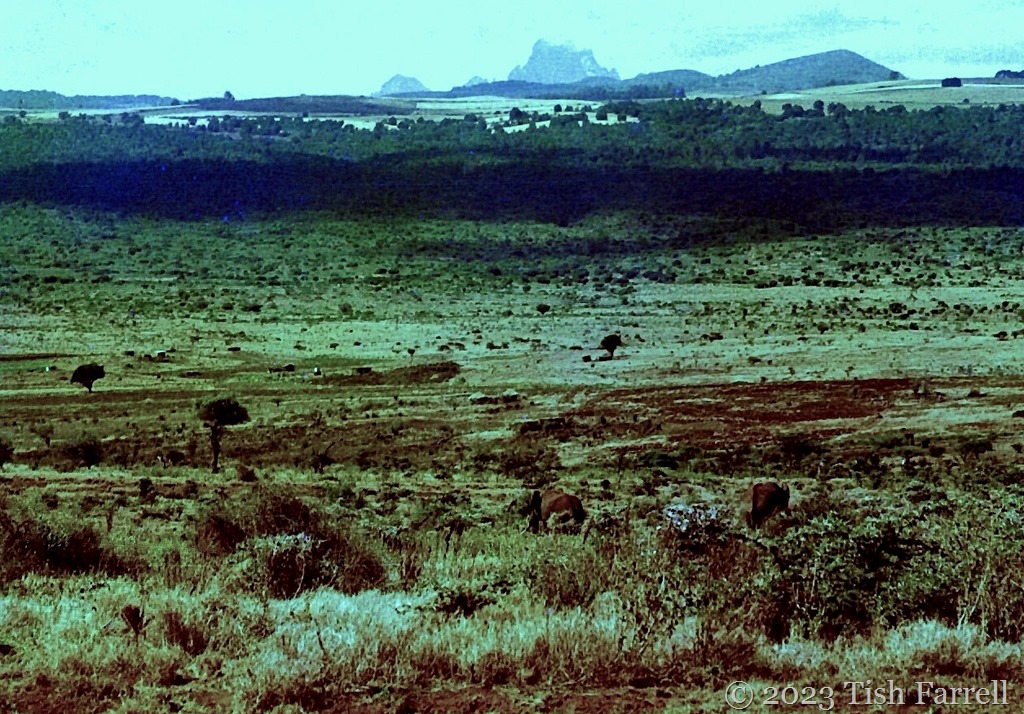
Mount Kenya and elephants

This photo was taken beside the Lewa Downs air strip. At the time, it was the two elephants, just visible in the foreground, that caught my eye. It was only when I was scanning the image that I noticed the odd geographical juxtaposition of Mount Kenya’s summit. What are its lofty peaks doing just there, and so sneakily? They are over 17,000 feet high.

*

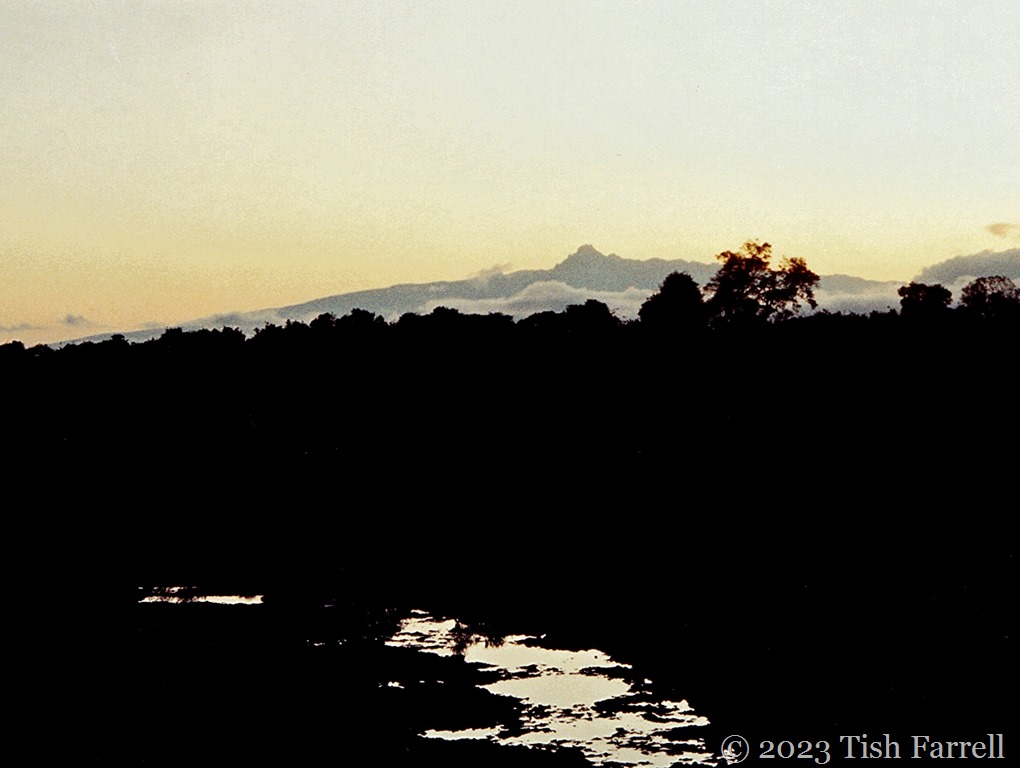
Kenya Aberdares

And finally a sunset view of Mount Kenya from the neighbouring Aberdares National Park. The Aberdare Range is also one of Creator’s dwelling places when he is checking out earthly doings. Its Kikuyu name is Nyandarua, which I believe means place of the crumpled hide – another interesting metaphor. Here’s an aerial view:

Scan-130608-0051

These vivid names for spiritual landscapes remind me that in traditional pre-literate societies, the natural world provided humans with unlimited scope for pondering, creating and observing. Its diverse parts were sources of inspiration and expression, things to think by, a resource for metaphor, analogy, riddles, song, dance and story telling as means for making sense of existence.

Particular mountains, trees, rocks, lakes, chosen as places to make sacrifices or pray to Creator, are gateways to congress with the divine, and so may be taken as sacred in the same way a church is sacred space for a Christian. More broadly, though, all land may be seen as sacred since it was made and given to humans by Creator.

And in this sense, then, there is no divide between spiritual and physical; all states exist in the same plane, which is interesting, if somewhat difficult for some of us to think about. We might call it respect. We might even call it love.

*

Lens-Artists: Spiritual Sites   Tina sets this week’s fascinating theme. Please take a look at her inspriting post.

Ups And Downs On The Broseley Jitties

Ding Dong steps 2

The Broseley Jitties are quiet these days. On our early evening rambles we meet only a now-and-then walker with their dog. And then perhaps a stray chicken. Or a watchful cat in a cottage gateway. The atmosphere is somnolent; a sense of falling back through time. There’s the subtle scent of cow parsley along the verges,  of garden flowers wafting over the walls and hedges.

Yet a hundred/two hundred years ago there would have been no quietness (or cleanly odours) here. Only the shouts and chatter of working men, women and children; rattle of clogs as the folk of Broseley Wood went about their day – to the mines and quarries, to the pot and pipe factories, to the taverns, to the chapels, to the wells.

Ding Dong Steps

*

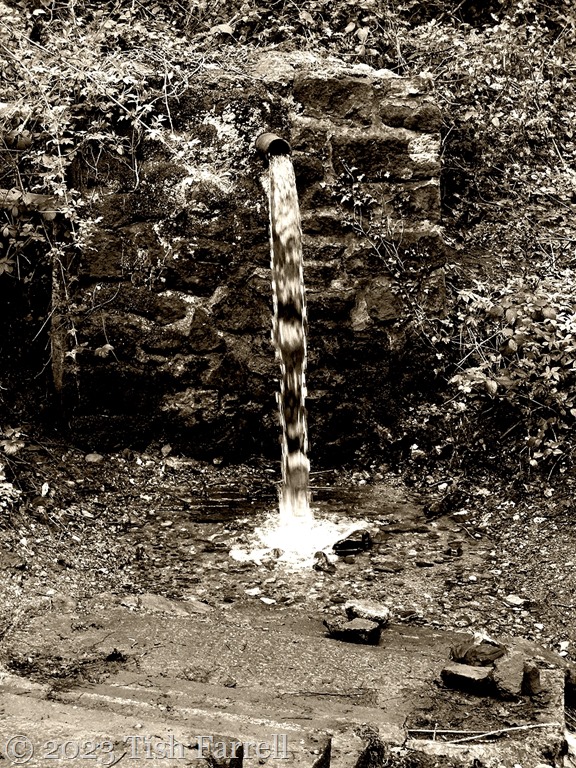
Botswell Lane Jitty down and up – and as the name denotes, a main route for fetching water from the well in the valley bottom. Hard work fetching washing and cooking water, especially in the winter.

Botswell Lane

Botswell Lane up

*

Another water source was the spring on Spout Lane, not far from the bottom of Jews Jitty where the Wolfson family lived and ran their pottery factory.  The daughters of the house apparently carried out the ritual bathing rite of mikvah at this spring – a somewhat public spot.

spout lane spring

*

Jews Jitty up…

Jews Jitty up

*

And Jews Jitty down …

Jews Jitty sepia

*

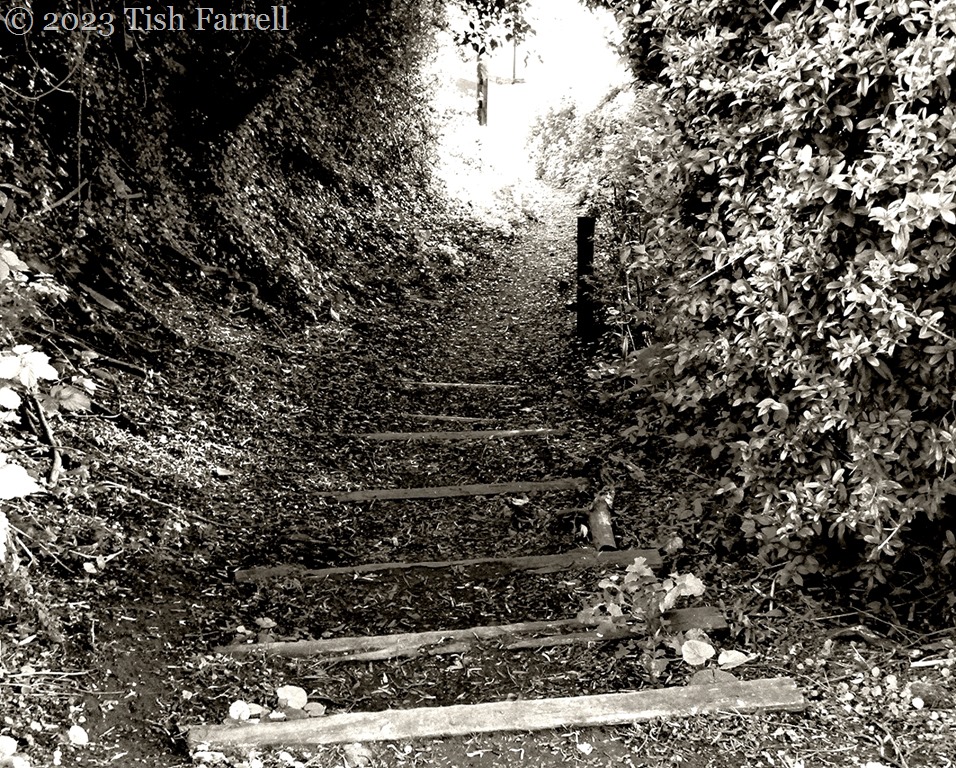
And a final up on Gittings Jitty yesterday evening, the cow parsley in full flourish…

Gittings Jitty

Cee’s Black & White Photo Challenge: steps or ladders

A Fountain Fit For A Tsar…?

P1080754 ed1

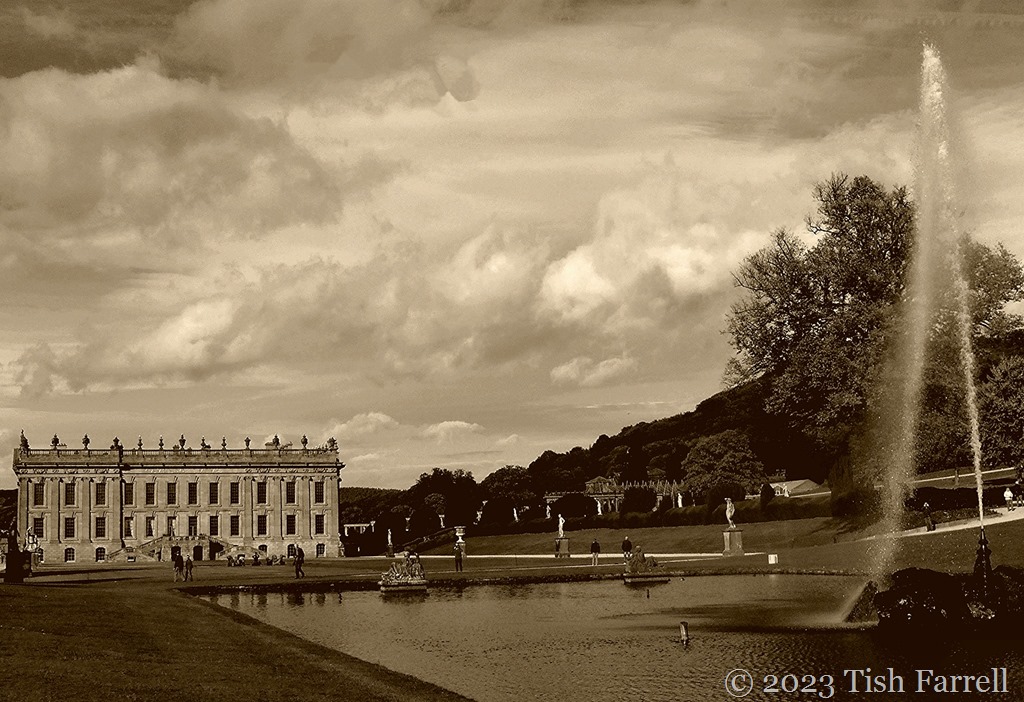
It might have been a protocol blunder of imperial proportions, but then it tells you much about the man almost responsible for it. And so it was that when the high-spending William Cavendish, 6th Duke of Devonshire, thought Tsar Nicholas would  visit his Chatsworth domain in 1844, he commissioned Joseph Paxton to build the world’s tallest fountain; this to outdo both Chatsworth’s existing Great Fountain (then the tallest in Britain) and the Tsar’s own grandest fountain at his Peterhof Palace in St. Petersburg. So: a back-handed sort of honouring, and I wonder how the Tsar would have taken this spectacle of extravagant one-upmanship: smiling through gritted teeth perhaps?

He anyway did not come, although the fountain was named ‘the Emperor’ to mark the non-occasion. The jet has been known to reach nearly 300 feet, although it was ‘turned down’ on the day I took this photo due to high wind.

For more about Chatsworth and a small family connection see my earlier post To Chatsworth and how Mary Ann went to the ball

Cee’s Black & White Photo Challenge: fountains and sprinklers
April In The Ironbridge Gorge

IMG_3015ed

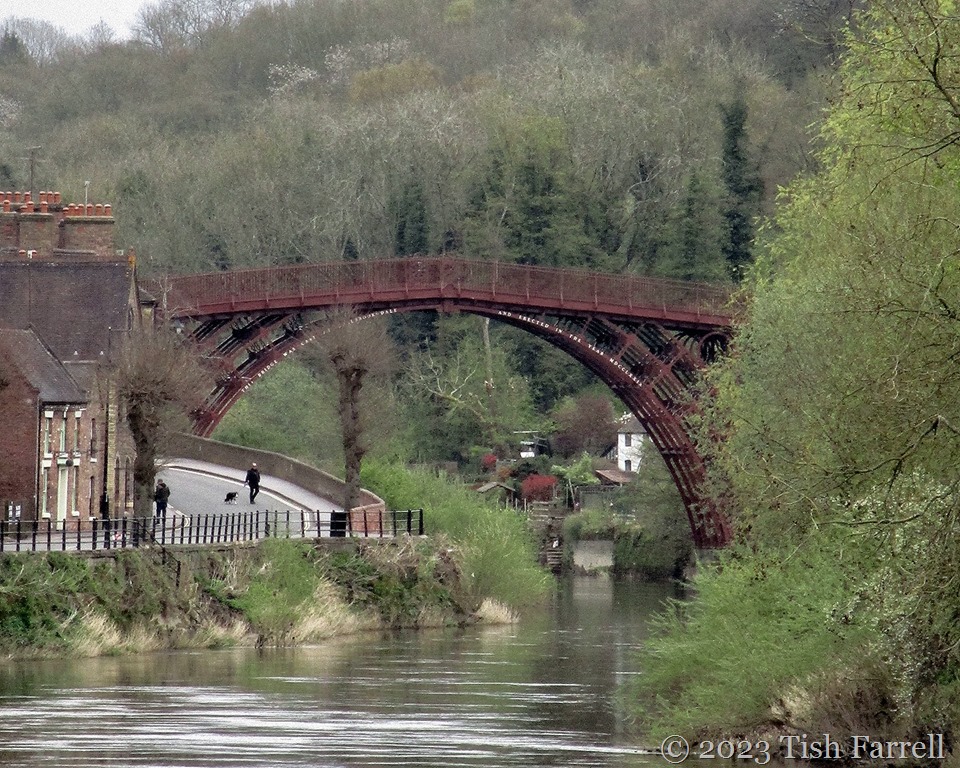
For the past weeks it’s been more  ‘blow blow thou winter wind…’ than balmy spring breezes. Still, on Monday the gustiness subsided long enough  to enjoy an afternoon stroll along the Wharfage to Dale End Park in Ironbridge.

As you can see, there wasn’t much sun, but it was good to see the River Severn safely back in its bed after its March uprising – the almost-deluge after rapid snow-melt upstream.

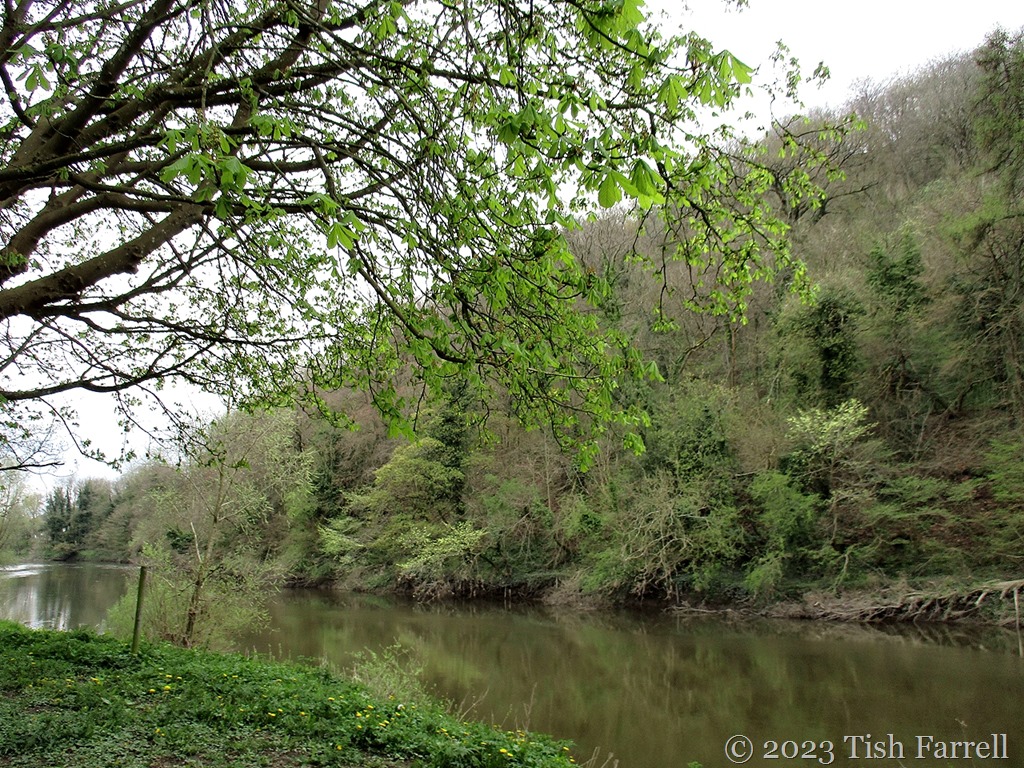
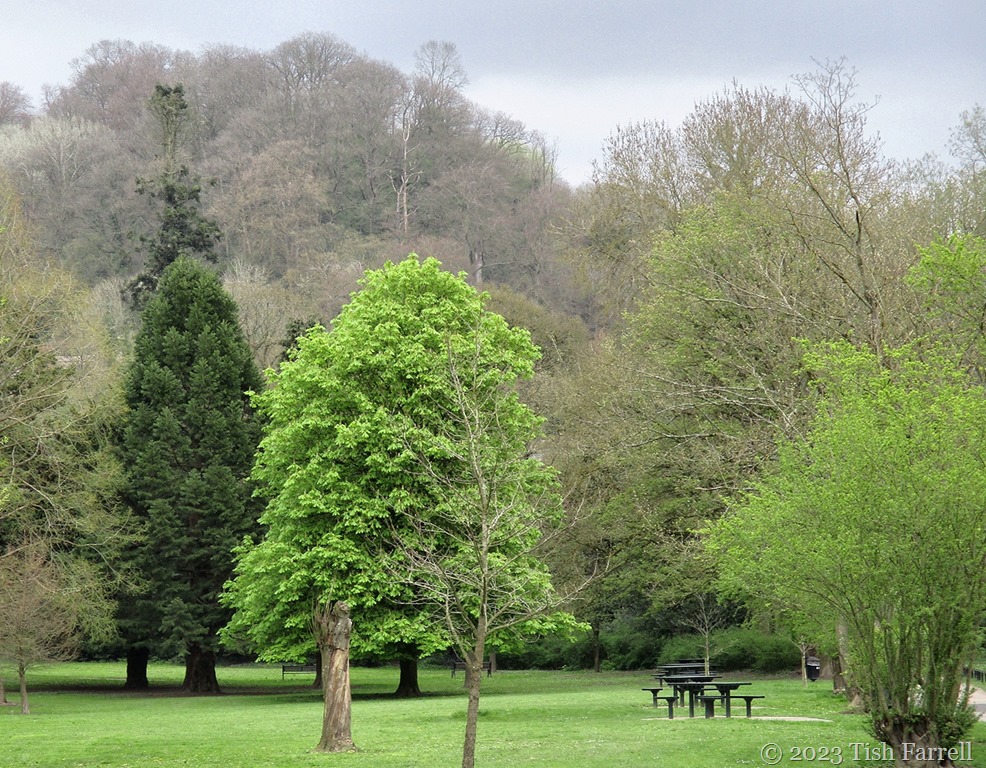
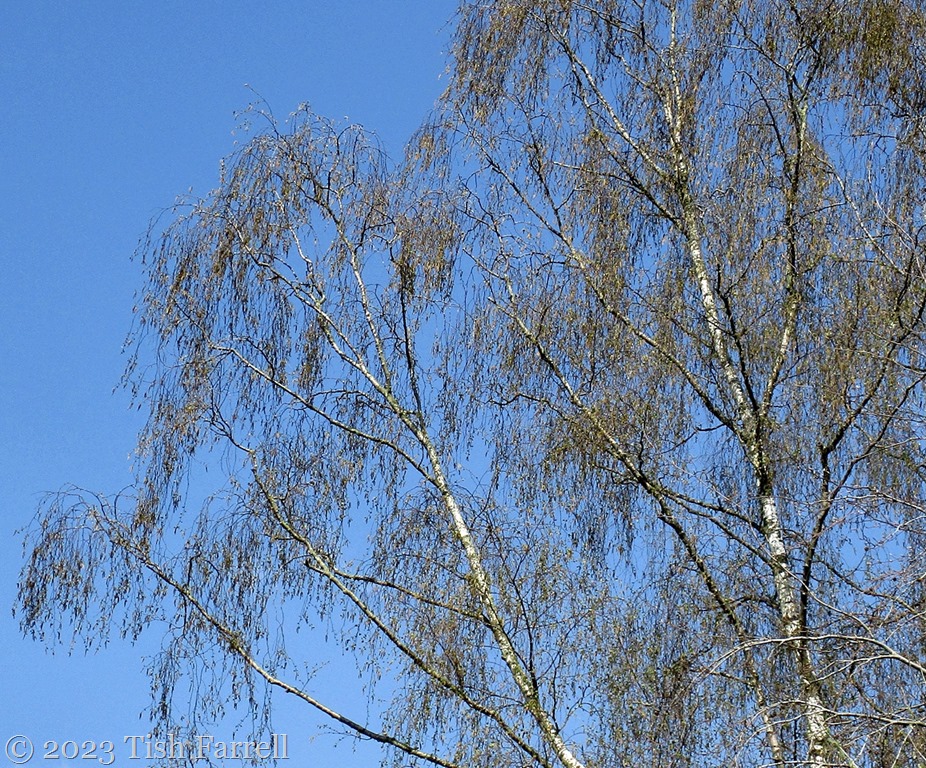
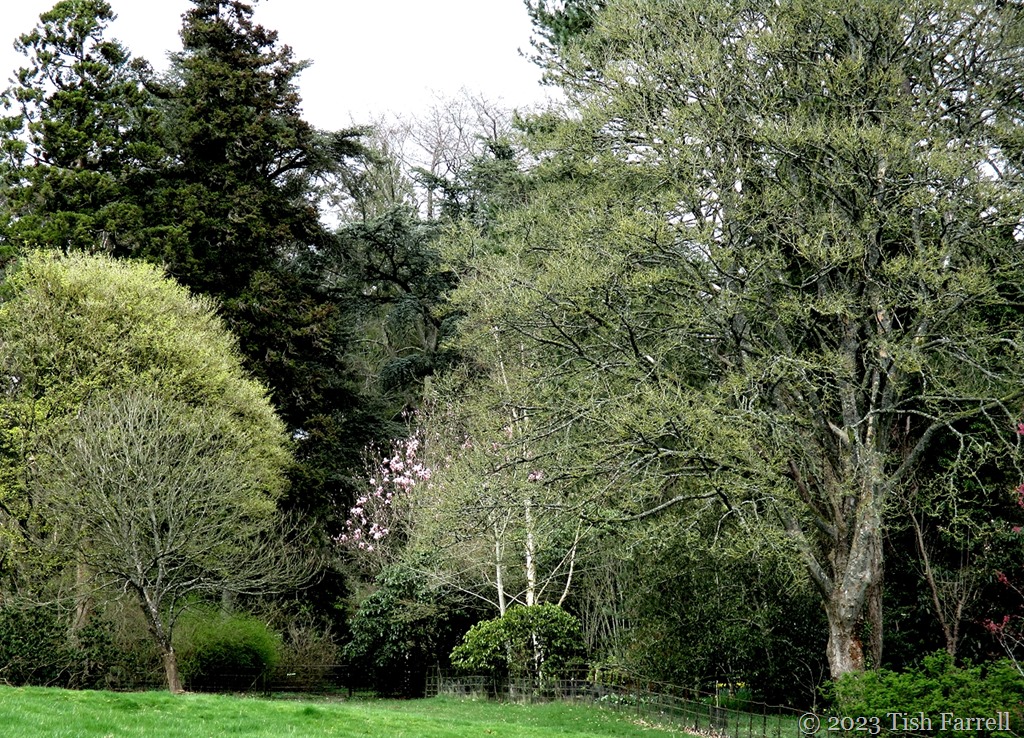
And it was good, too, to see tree-life greening, slowly-slowly – willow and ash, birch and hazel, larch, sycamore, hawthorn, horse chestnut:

IMG_3022ed

*

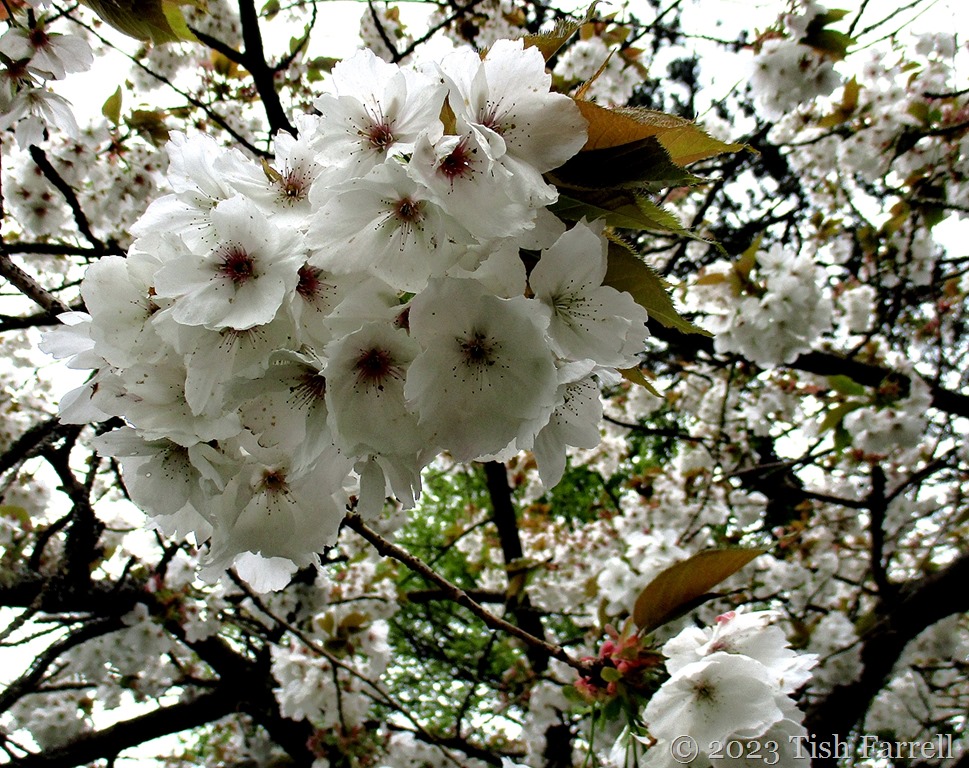
And then the park cherry trees were at full flourish ~ tarrah!

IMG_3018ed

*

And this horse chestnut tree (centre) was all set to light  up its creamy ‘candles’:

IMG_3028

*

Many of the trees were in full flower too. My computer issued a high pollen warning this morning.

IMG_3040ed

IMG_3039ed

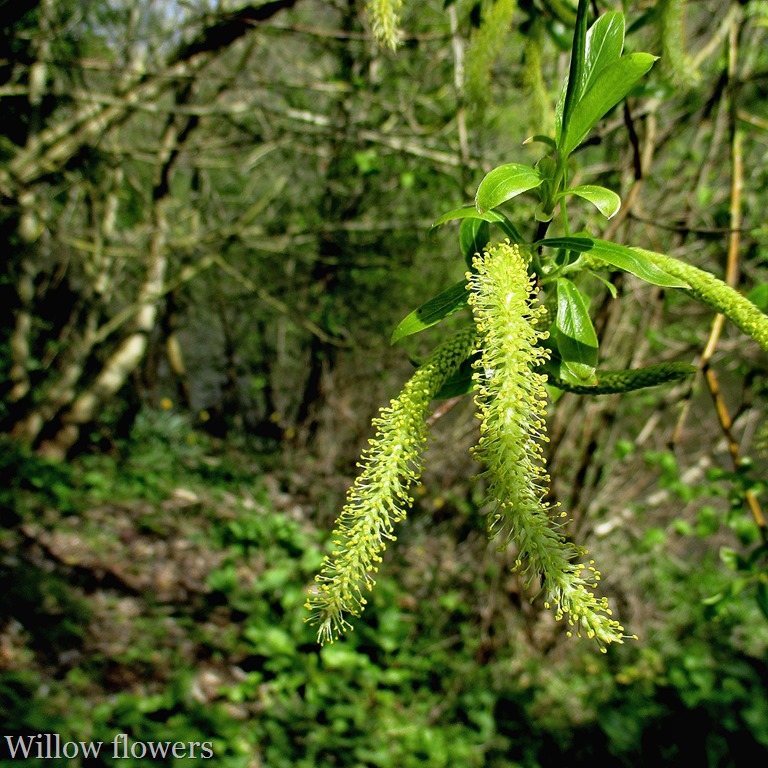
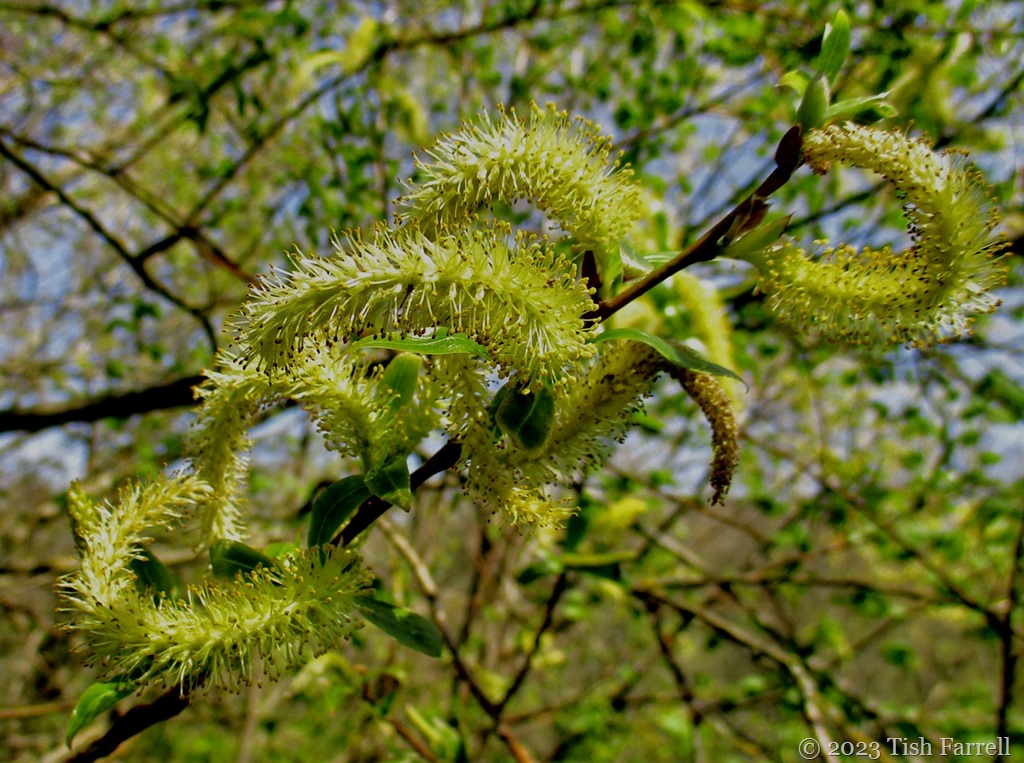
These willow flowers were spotted the following day at Jackfield, a couple of miles downstream of Ironbridge, caught here in a brief sunny interlude.

*

IMG_3053

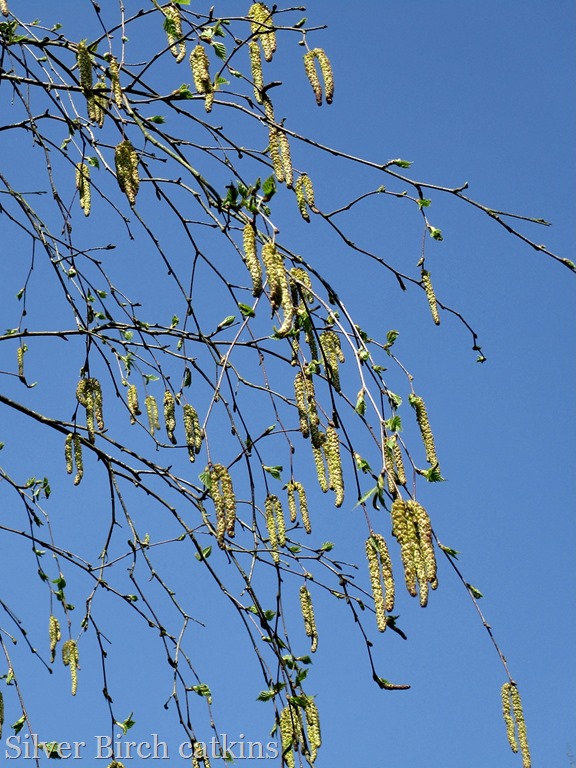
And silver birch catkins caught on the breeze: catkin cascades. All we need now is a little warmth, and less bluster.
IMG_3052ed

Spring Comes Softly at Hergest Croft

IMG_2899ed

The second day of April, and the last day of our Presteigne cottage holiday, we set off to nearby Hergest Croft Gardens. The 70 acre gardens, part of the Hergest Estate, lie on the England-Wales border in Herefordshire, not far from Kington. From the first moment you set foot in the place you know it will be a gardener’s treat at every turn. And how could it not be? Not only does it hold the national collections of maple and birch trees, it is also six gardens in one, created from the late 19th century, and home to over 5,000 rare trees and shrubs; every specimen  mindfully placed and nurtured over the years by members of the Banks family, a dynasty of local lawyers-bankers-plants-men-and-women.

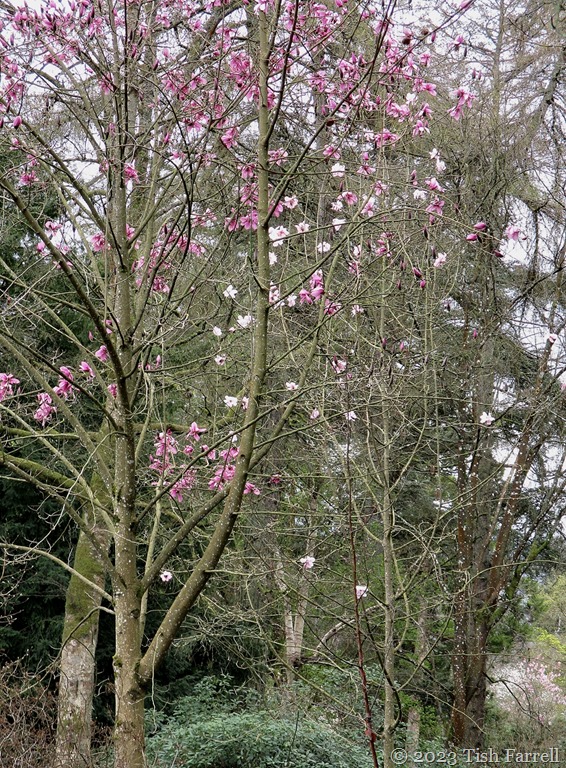
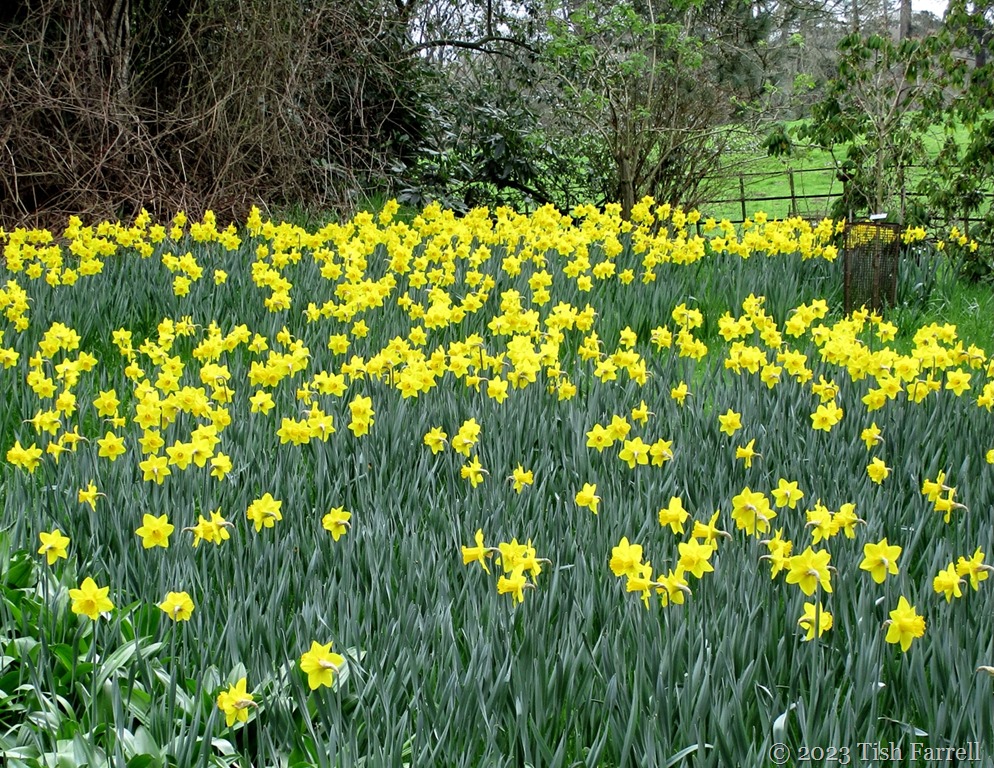
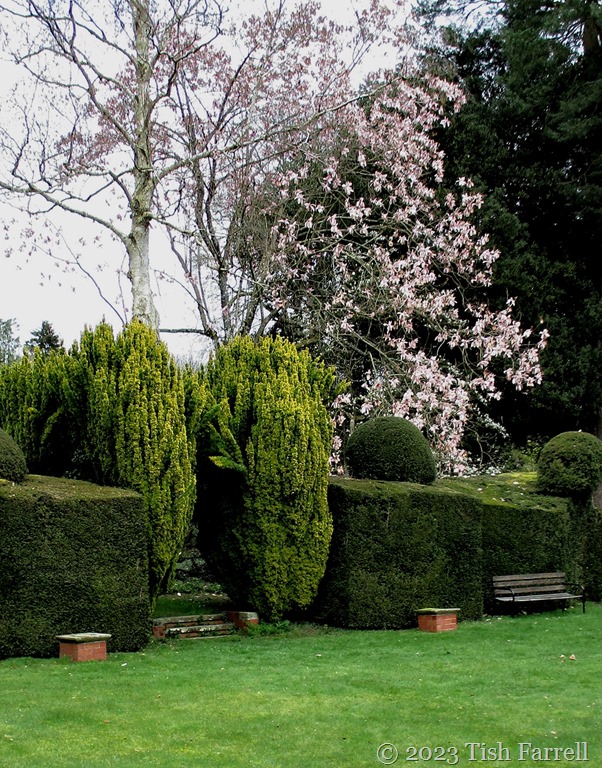
We’d hoped for sunshine, but the weather forecast lied. The day of our visit was overcast and, while the profusion of daffodils and magnolia cascades through the trees said ‘spring’, to this human it felt more like winter, the Arctic edge to the breeze lingering on and on, fingering into every exposed cranny. I was glad of my quilt-lined waterproof and woolly hat.

IMG_2876

IMG_2879

IMG_2880

*

Here and there were signs of winter hanging on. In fact most of the deciduous shrubs and trees seemed to think so too; there was a general air of arboreal slumber, their hint-of-green looks (on closer inspection) often down to profuse colonies of lichens, which tells you something about the quality of the clear, fresh air up on Hergest Ridge.

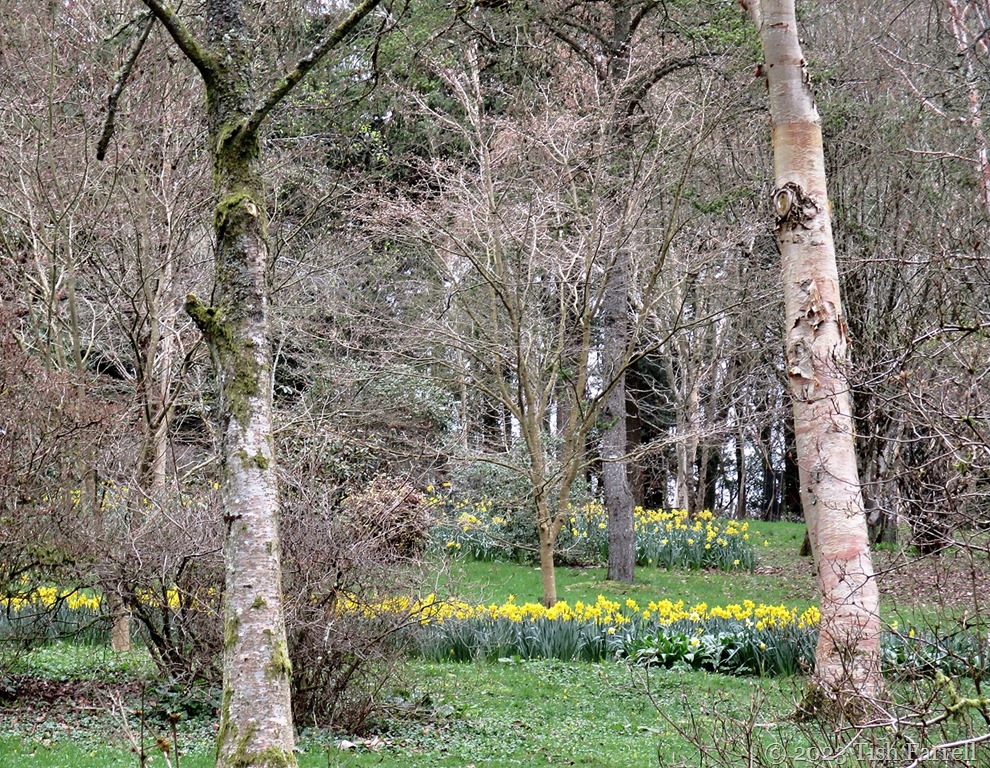
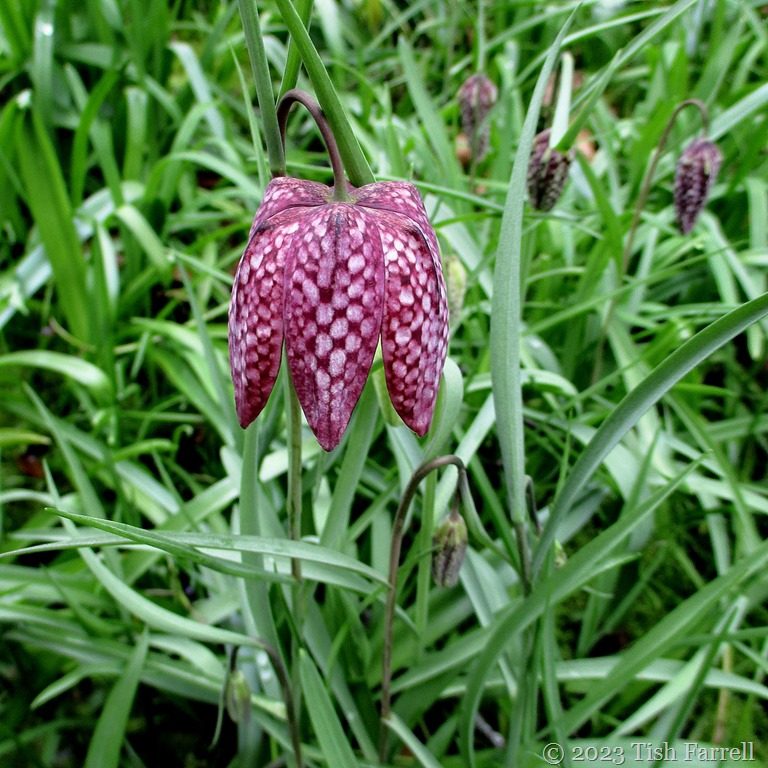
In the end it didn’t matter if spring was slow to happen. The gardens were beautiful, and it somehow added to the pleasure of small finds: a clump of violets, some snake’s fritillaries, primroses, more daffodil and magnolia vistas, a maple just unfurling:

IMG_2883ed

IMG_2869

IMG_2894

IMG_2890

IMG_2898

IMG_2897

*

Of course all such visits to English gardens must include a tea room, and Hergest Croft has a very fine one with a suitably gracious terrace overlooking the lawns and parkland. The cakes were so delicious I forgot to take their photo (apologies cake lovers). I was anyway distracted by a burst of sunshine. That didn’t last long either.

IMG_2901

IMG_2913

*

But by four o’clock even pots of tea and slabs of coffee and lemon cakes could not fend off the gathering chill, and there was one final spot to visit before heading back to the car and the warmth of our Presteigne cottage.

The kitchen garden.

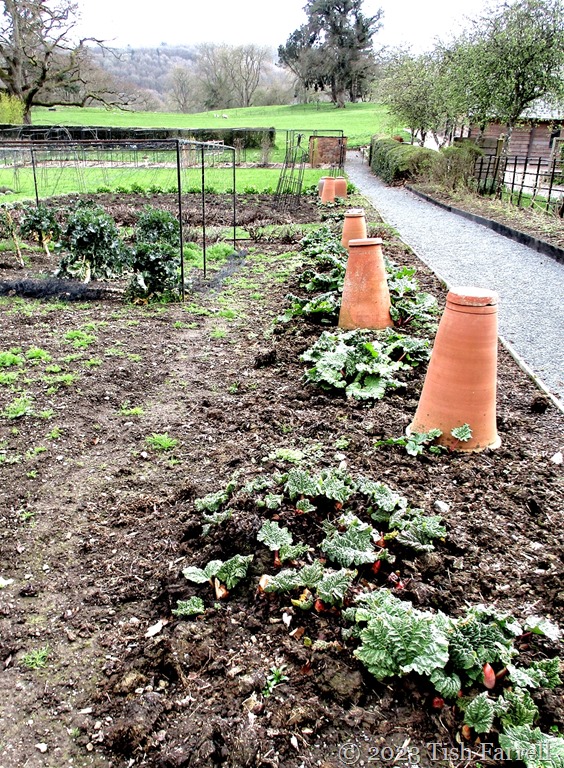
At first sight it was definitely still in winter mode, although the rhubarb was putting on a good spurt, the terracotta covers set out  for forcing.

IMG_2922

*

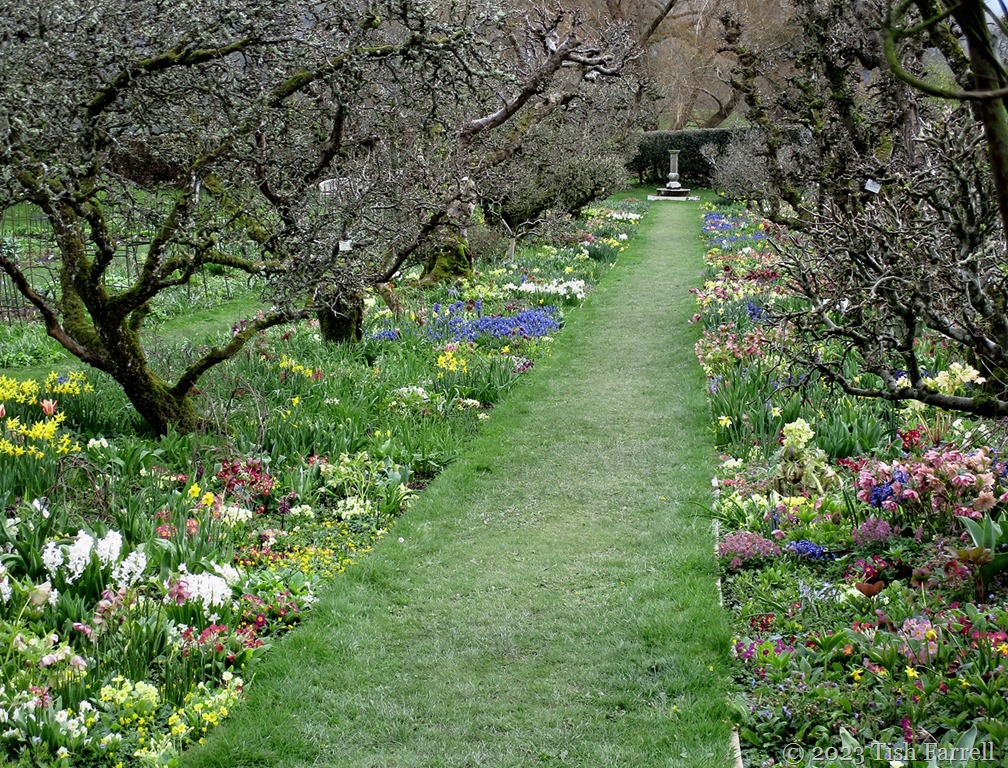
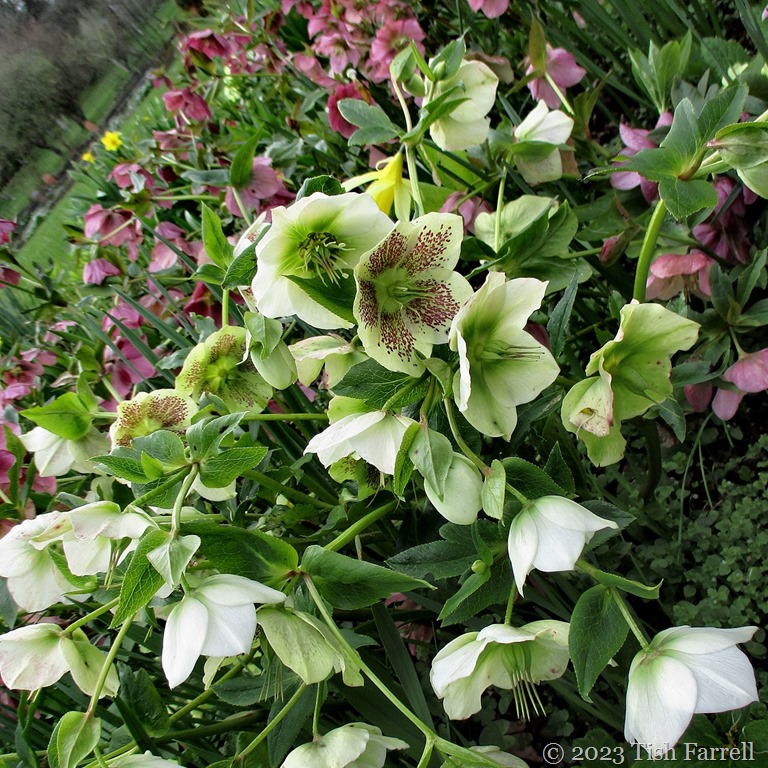
Then we found the orchard, an avenue of ancient apple trees, and beneath them an exuberant (if slightly mad) planting of bulbs and hellebores. I forgot about shivering and laughed. We’d been looking in the wrong place. Who said it wasn’t spring yet?

IMG_2924

IMG_2927

Spanning The Straits: Thomas Telford’s Magnificent Menai Suspension Bridge

IMG_2388ed

“…some of the horses are unsettled by the drop…”

Thomas Telford 1826

I’m not one for heroes, but I make an exception for Thomas Telford (1757-1843), the son of a Dumfriesshire shepherd who became one of Britain’s most outstanding engineers, the first President of the Institute of Civil Engineers and the man who left us with many astonishing structures still in daily use. Not the least of his many achievements are Scotland’s 60-mile Caledonian Canal and the magnificent Pontcysyllte Aqueduct whose still working canal crosses the River Dee near Llangollen in Wales.

And then there is the Menai Bridge that bridges the strait between mainland Wales and the island of Anglesey, with arches tall enough to allow ships to pass without lowering their sails. With a span of 580 feet it was, in its day, the longest suspension bridge ever constructed. Work began in 1819 and the bridge was opened to coach traffic in 1826. The project was part of Telford’s major improvements of the road from the Anglesey port Holyhead to London, otherwise known as the A5. One object was to ensure the swift, safe transport of Irish Members of Parliament to Westminster. Before the bridge, they had to risk a perilous ferry crossing between Anglesey and Bangor.

Telford was not only a man of vision in construction terms, but he always looked to the bigger picture, building roads that, though expensive to construct, were well drained and low maintenance, always looking to create integrated transport systems that would bring local and national prosperity. He was fastidious, too, in his project planning, and astute when it came to political lobbying and fund raising. He was also a man who made fast friendships and was a diligent letter writer, and he did much to encourage the young engineers who would succeed him.

In fact he never stopped working. Only death at the age of 77 concluded his prodigious career. There was never time to marry  either (though there were near misses) and only in his late years did he bother to buy his London house. Even then he still kept travelling, racketing around in a coach from project to project, the length and breadth of the British Isles. He was certainly a man who knew his own worth, but he was modest too. Here’s a letter he wrote to one of his Menai Bridge contractors, Nye Vaughn, owner of the Castle Iron Works which provided the iron chains.

My Dear Vaughn,

You will be pleased to learn that the bridge at Menai is finished and opened to mail coaches last month. I confess the admiralty demand to hang the road a hundred feet above the sea to allow sailing ships to pass was a daunting requirement. However the bridge is built and, I must say, I am proud of it. It seems I am to be known as the ‘Colossus of Roads’ ** . An odd name don’t you think? Your iron chains were a devil to hang across the straits but they are firm and there is little movement when the coaches pass across although some of the horses are unsettled by the drop. Thank your son for his suggestion to coat the chains in linseed oil to protect them from corrosion. His idea has proved better than the lead paint we planned to use. To be doubly sure we have done both. When he proposed linseed oil I believed he was repaying me for teasing you in the sealing of Pontcysyllte Aqueduct. I hope you forgive my jest. Please accept my compliments and thank your foundry men. Tell them we found no flaws in the links we tested. When I am next in need of heavy castings I will call on you.

My very best regards,

Telford

** It was Telford’s close friend and poet Robert Southey who coined this term Colossus of Roads

When we were on Anglesey back in January the bridge had been closed for three months. It was quite an emergency. Some structural upgrading carried out during the war years 1938 and 1941 showed serious signs of failing. Brittle hanging sockets were the problem and “analysis showed there was a credible risk of an unzipping failure of the bridge deck.”

An unzipping suspension bridge of Menai’s scale sounds horrendous. It’s good to know the bridge is now back in business. It opened again at the start of February. All the same, I wonder what Thomas Telford and Nye Vaughn would have had to say about brittle hanging sockets.

IMG_6517ed


Cee’s Black & White Photo Challenge: Arches, domes and half circles

Passing On The Saxon Past: Some Mystifying Fragments

Wirksworth Saxon carvings

Here’s a fine thing: Saxon carvings some 1,300 years old, but recycled in the 13th century when Wirksworth’s ancient church was being rebuilt. The curious fragments have been popped into one of the main inside walls, a cobbled assemblage of ram’s head, a wolf (or boar?), a leopard-like creature, a horse, and in their midst, a royal couple (?).

It is thought the carvings came from an early Christian building or Saxon cross. Wirksworth, in Derbyshire’s Peak District (England’s East Midlands) was once part of the great Saxon kingdom of Mercia, whose kings and sub-kings held sway over much of England from CE 600 to 900.

Christianity was established there in the mid 7th century as a condition of a peace treaty between pagan Mercia and neighbouring Christian Northumbria. Northumbrian Princess Elchfrida travelled south into Mercia to marry Peada, son of Penda, the last great pagan king of Mercia. She brought with her an entourage of missionary priests, one of whom, Betti, founded the church at Wirksworth in CE 653.

So could the couple be Elchfrida and Peada? We’ll never know. Though we do know from Bede that the real-life Elchfrida later betrayed Paeda, which led to his death and the reassertion of Mercian supremacy under his brother, King Wulfhere.

*

Wirksworth coffin lid

*

The church has another mysterious Saxon treasure, known as The Wirksworth Stone. It is a coffin lid dating to around CE 800, found a thousand years later during building work. The lid covered a large skeleton whose burial position under the floor close to the altar suggests a person of high religious status, an abbot perhaps.

Wirksworth Saxon coffin lid

But looking now at these curious works, and pondering, too, on my likely Anglo-Saxon origins, I can’t help but think of the opening line from L.P. Hartley’s novel The Go-Between:

The past is a foreign country; they do things differently there.

Wirksworth St Mary's

St. Mary’s, Wirksworth

Cee’s Black & White Photo Challenge: statues, sculptures and carvings