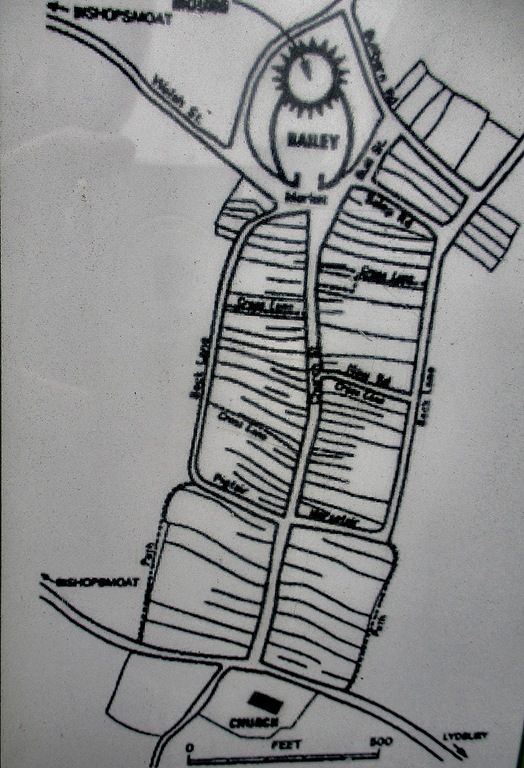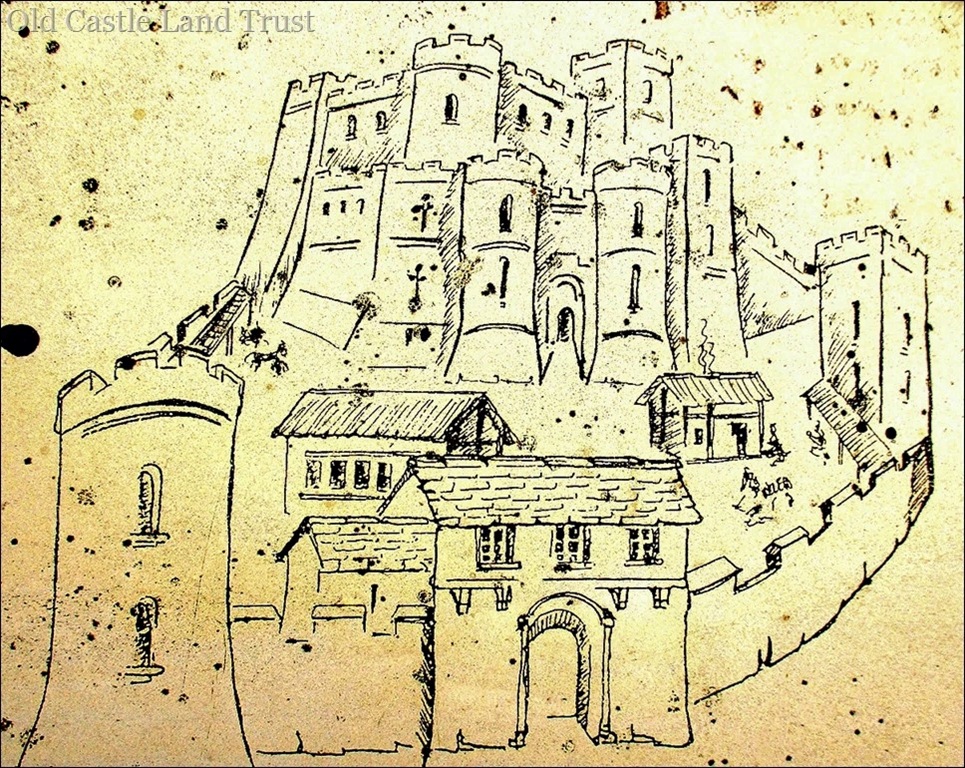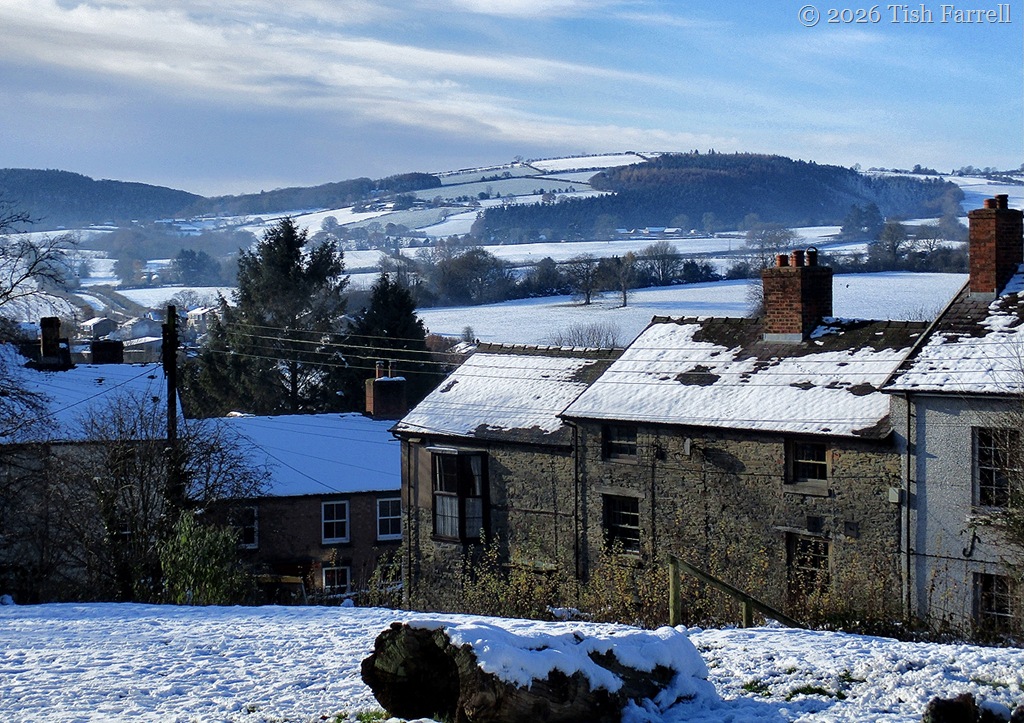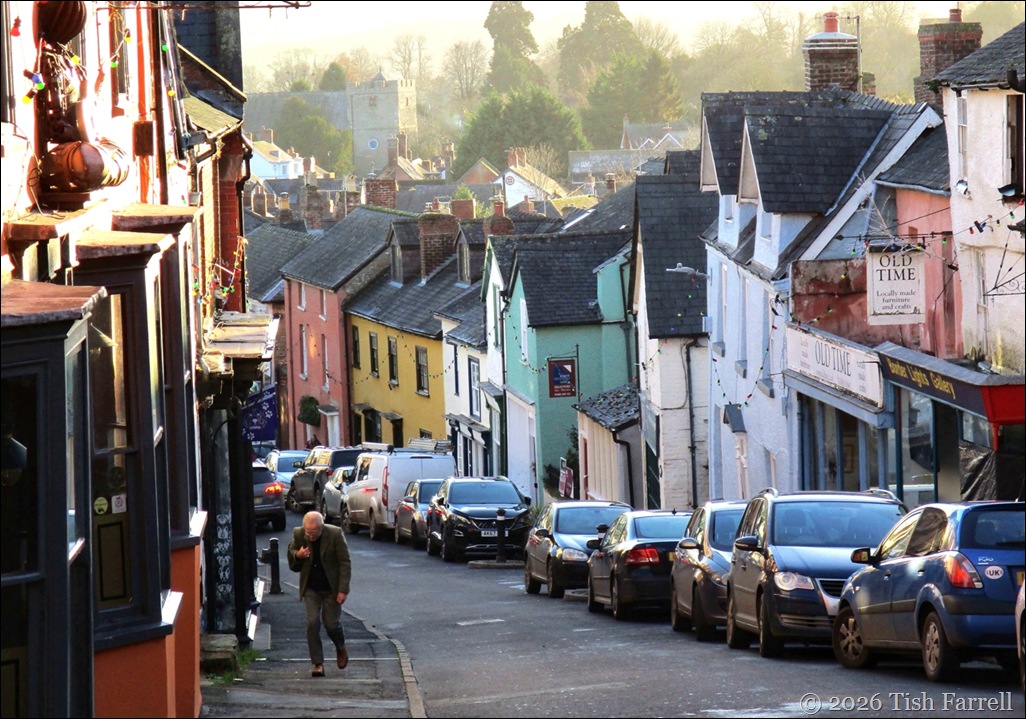
Last Posting For Lens Artists: The Dew Pond Walk

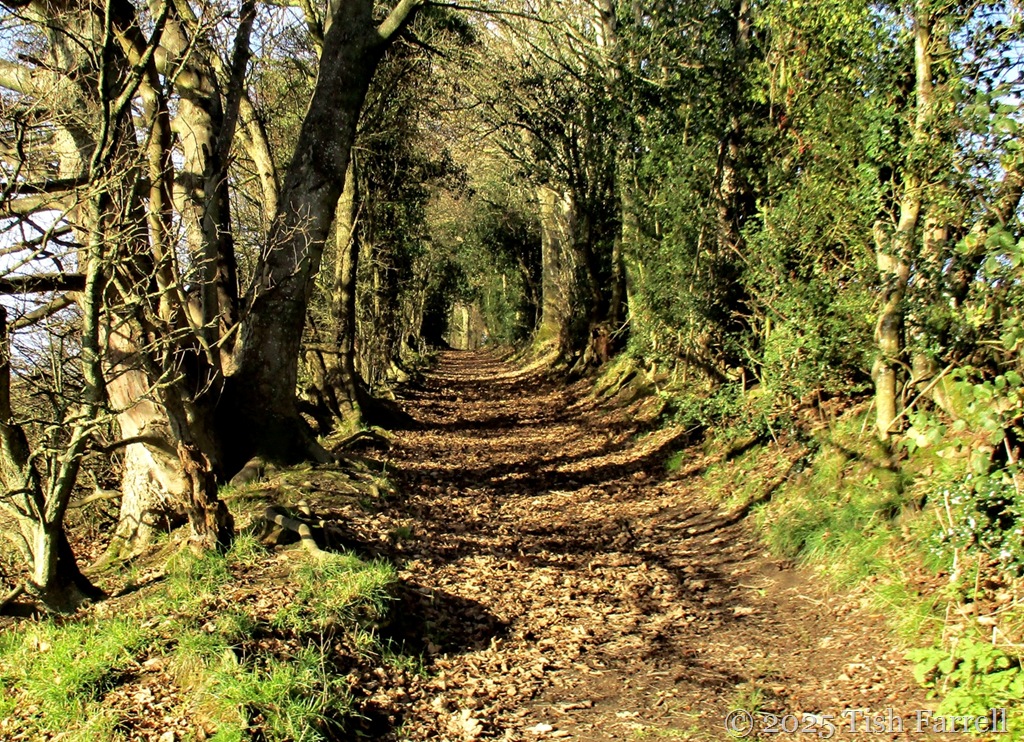
Hollow Way 4

Green lane, hollow way, sunken road: there’s a hint of mystery in these byways, not only in the names, but in the sense of times past, centuries of footfall embedded in the earth between ancient hedges; the passing of cottage folk, farmers, drovers with their herds and flocks; times when most people only had their feet to rely on if they needed to go anywhere.

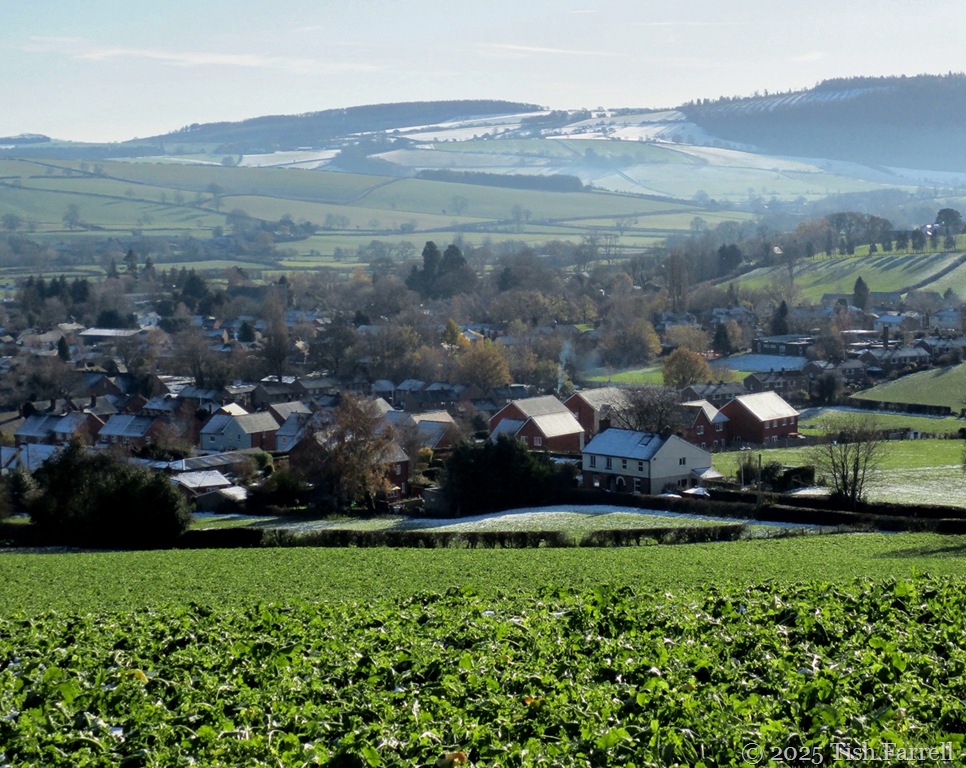
This particular green lane is one of my favourite spots in Bishop’s Castle. The following photos are ones I forgot to post, taken on a late November walk. It was a brilliant day too, following a brief snow fall and several days of hard frost.

The frozen grass and leaves were crunchy under foot, gripping boots and making the walking easy as we climbed up Wintles Hill. We were heading to the dew ponds.

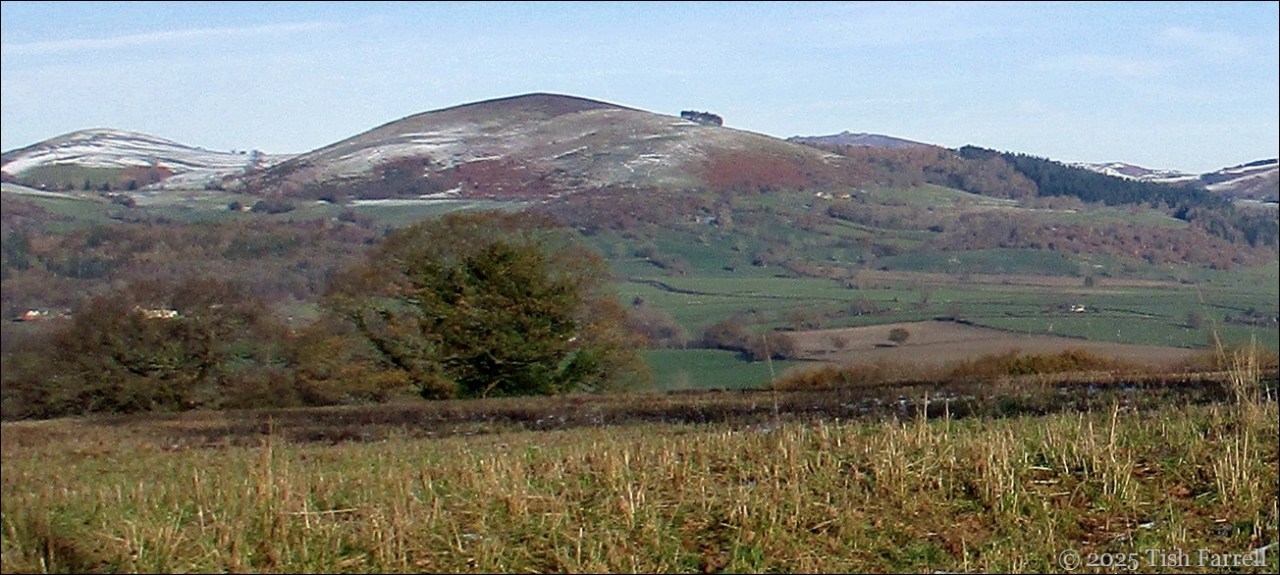
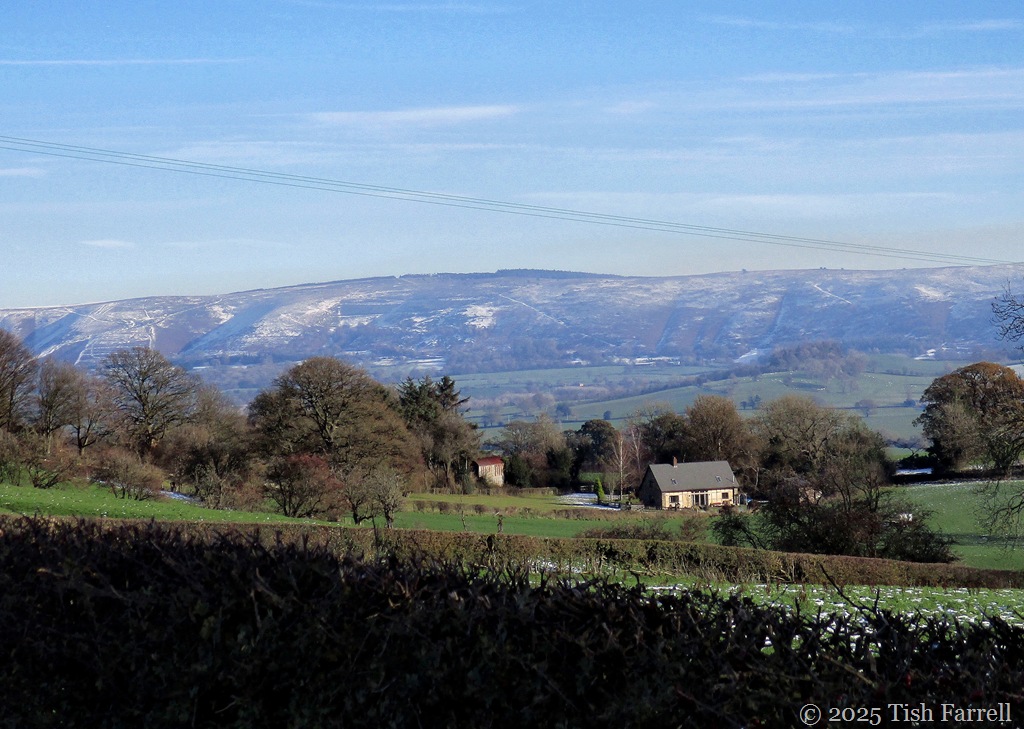
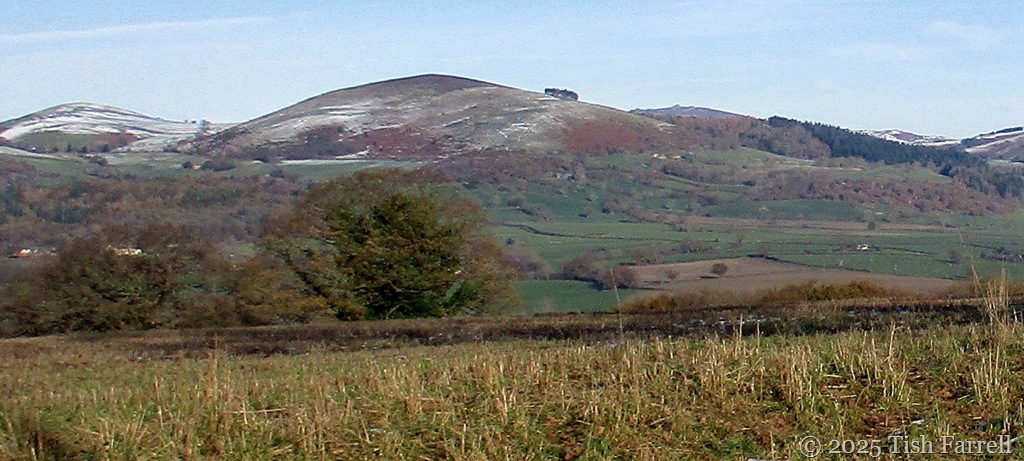
There are essential landmarks en route of course: a hoar-frosty Long Mynd…

Longmynd

*

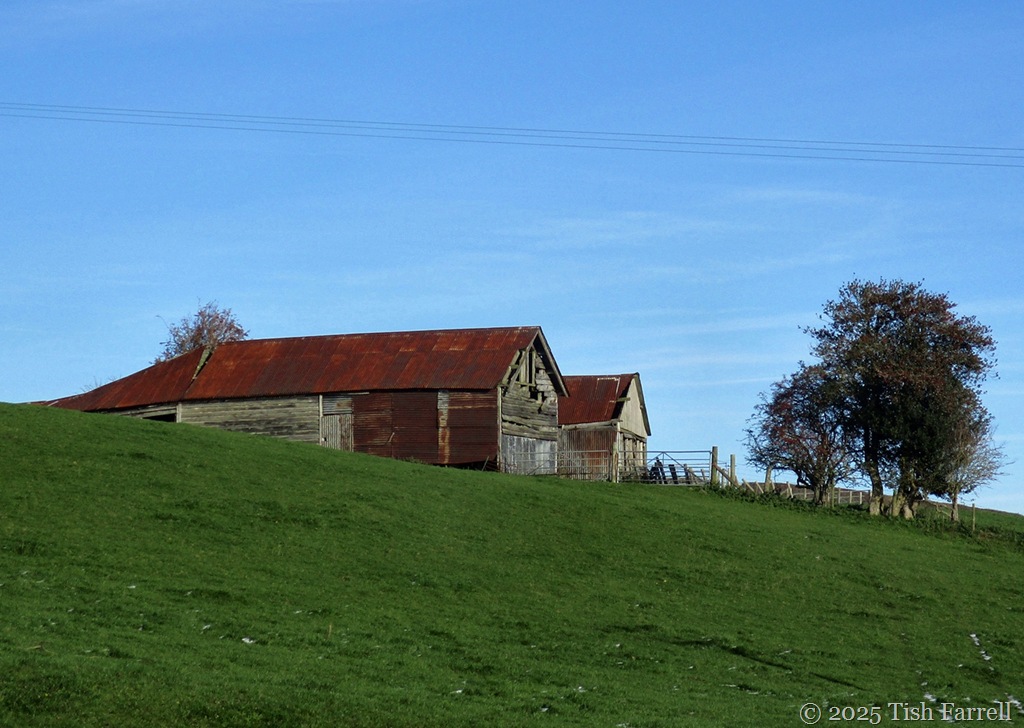
The barns with their rusty roofs that always insist on having their photo taken…

barns

*

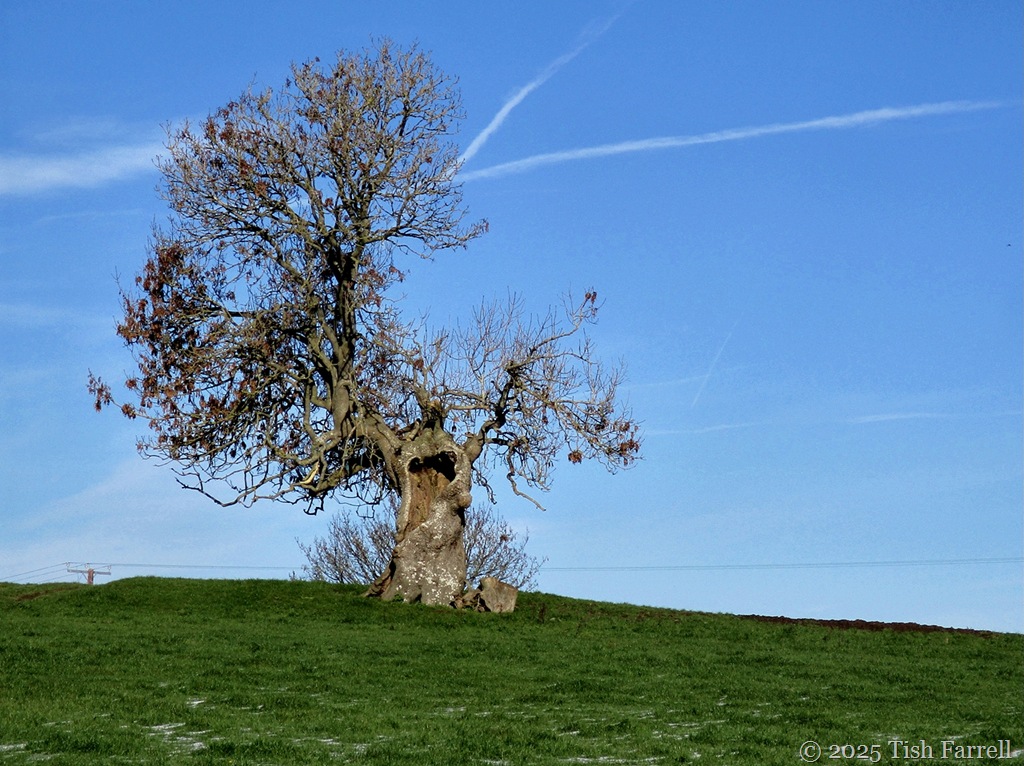
The skyline ash tree that looks like an arboreal version of Munch’s ‘The Scream’…

Wintles hill ash

*

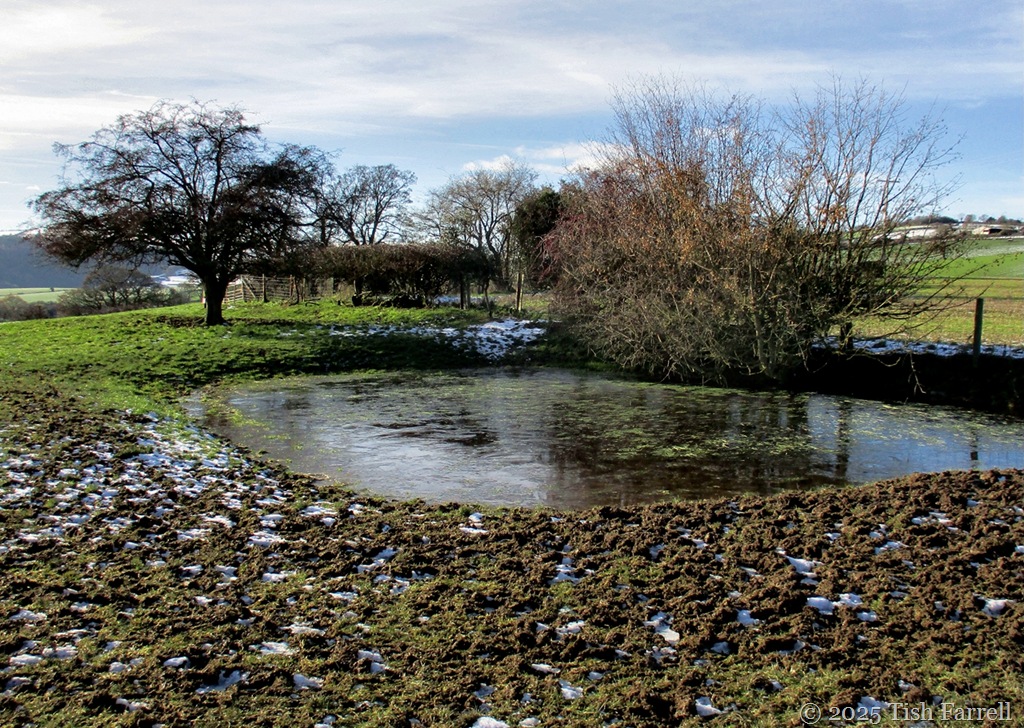
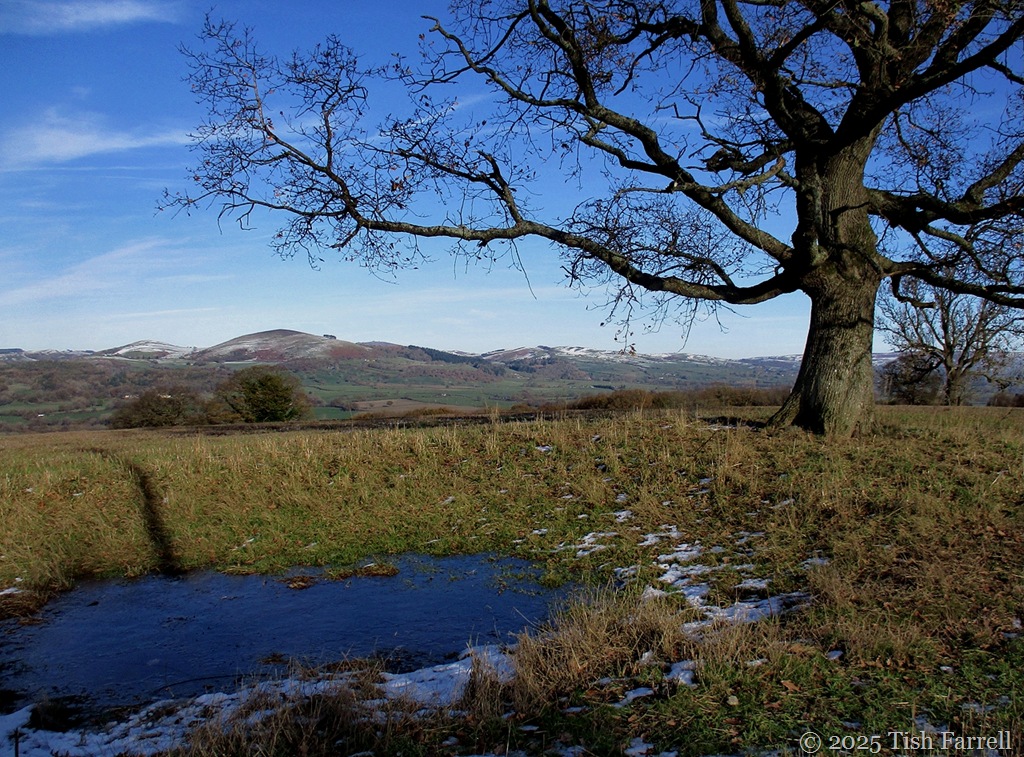
As for the dew ponds, there are three on the hilltop, one very much in use, as you can see from the well-pocked mud around it…

dewpond3

*

One dwindling in the next door arable field and so only used by wildlife…

dew pond 3

*

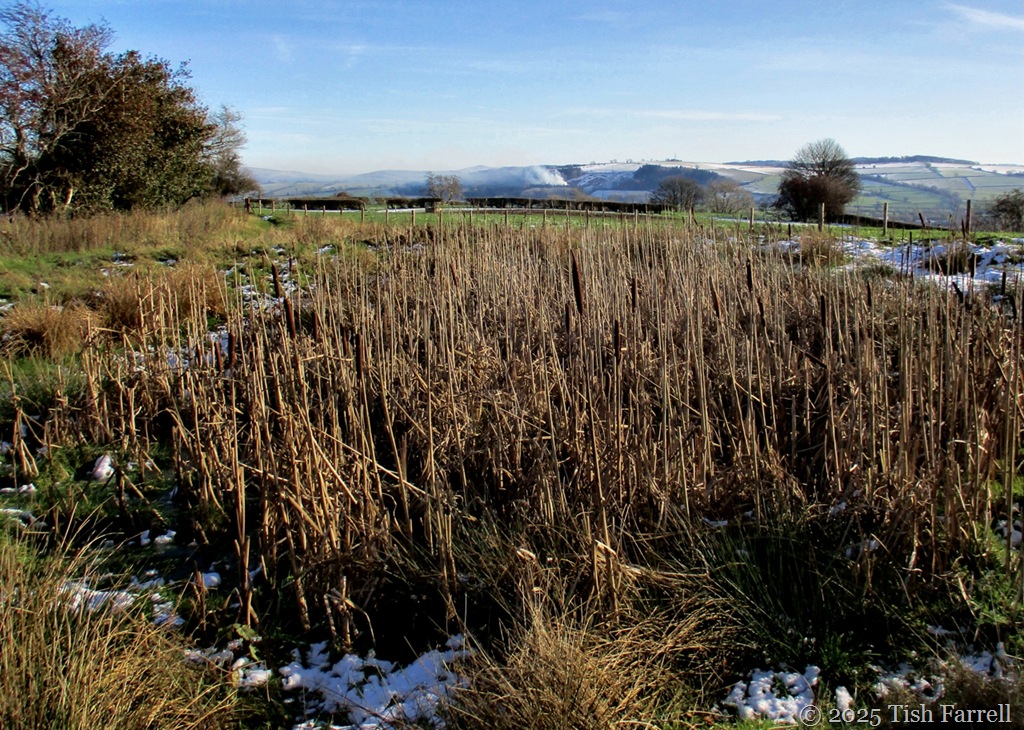
And the largest in a now enclosed enclave where it is producing a fine crop of bullrushes…

dewpond 4

I don’t know why this corner of the field has been hived off, access provided by two stout kissing gates either side of it, but the Shropshire Way footpath passes through it.

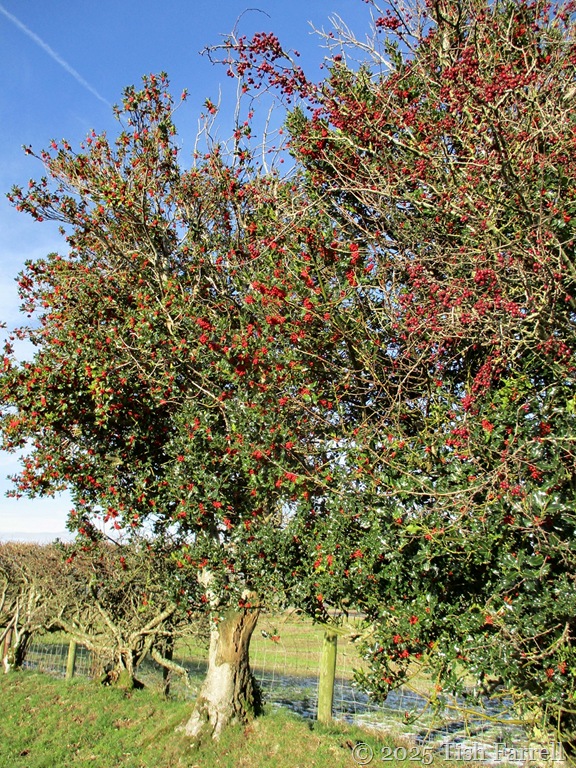
It’s a good spot for holly trees, which reminds me. Holly was once grown in farm hedges both to shelter stock and as a valuable winter fodder for sheep (and sometimes cattle) when hay was in short supply. And yes, it does seem an unlikely foodstuff with all those prickles, but apparently the leaves become less barbed as the tree grows taller. And so it was the upper branches that were lopped off for the animals to feed on, the holly trees doubtless thriving on the pollarding (if our brute of a garden holly hedge is anything to go by).

holly trees

*

Water was the other essential in hill country where streams were lacking. Dew ponds have been used at least since Neolithic times. They were also much used in mediaeval times and in the 18th-19th centuries, both periods reflecting a vibrant market for sheep wool.

Pond construction required skill and heavy labour. First a saucer shaped depression was excavated, about 3 feet (1 metre) deep. The diameter varied between 10 feet (3 metres) to 45 feet (15 metres). The whole surface was then covered with straw followed by a layer of mud which had to be puddled to seal the surface. (Canal beds were sealed in the same way, the puddling usually done by labourers in bare feet). Once sealed, rain and field run-off duly collected in the ponds.

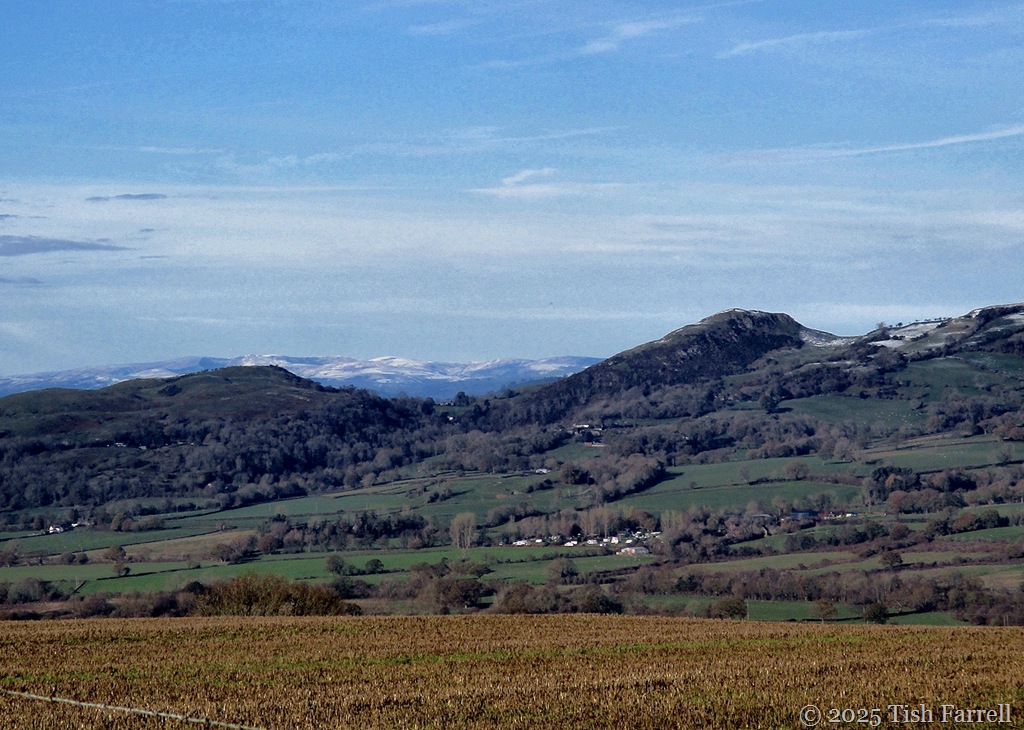
In the past, Welsh drovers would have driven their stock through Bishop’s Castle, and on to the town and city markets of the Midlands. This next photo shows the country they would have trekked through – not so tamed and tidy in the eighteenth century. (Wales ahead, dewponds behind me). Perhaps the flocks and herds were gathered and watered at points like these before the drovers broached the town.

hillview 6

*

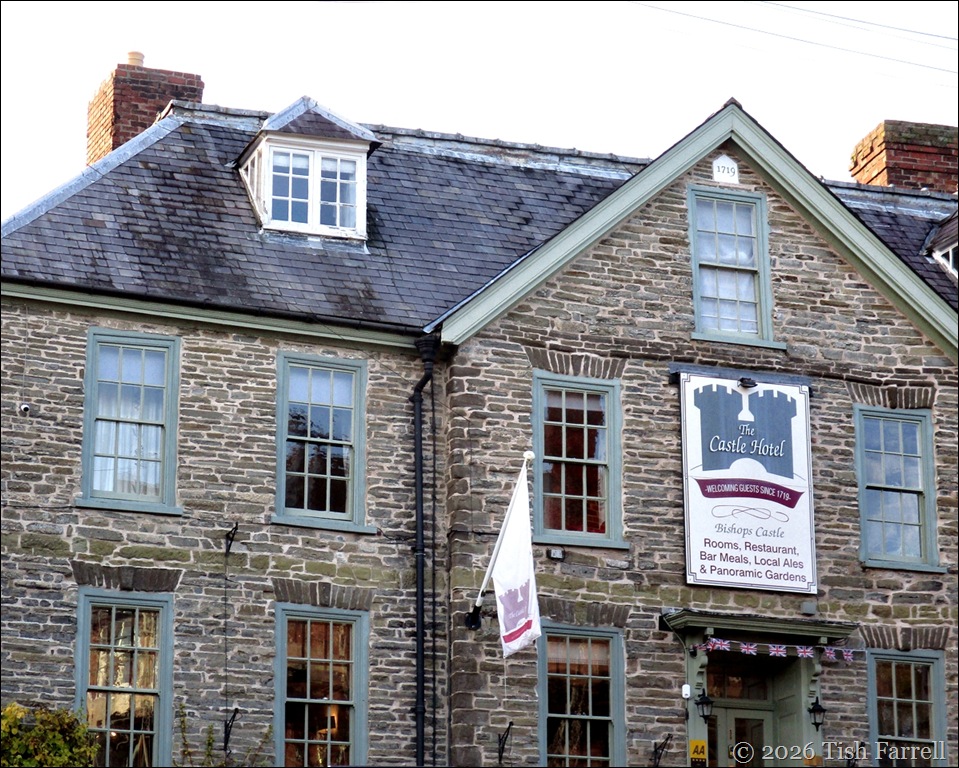
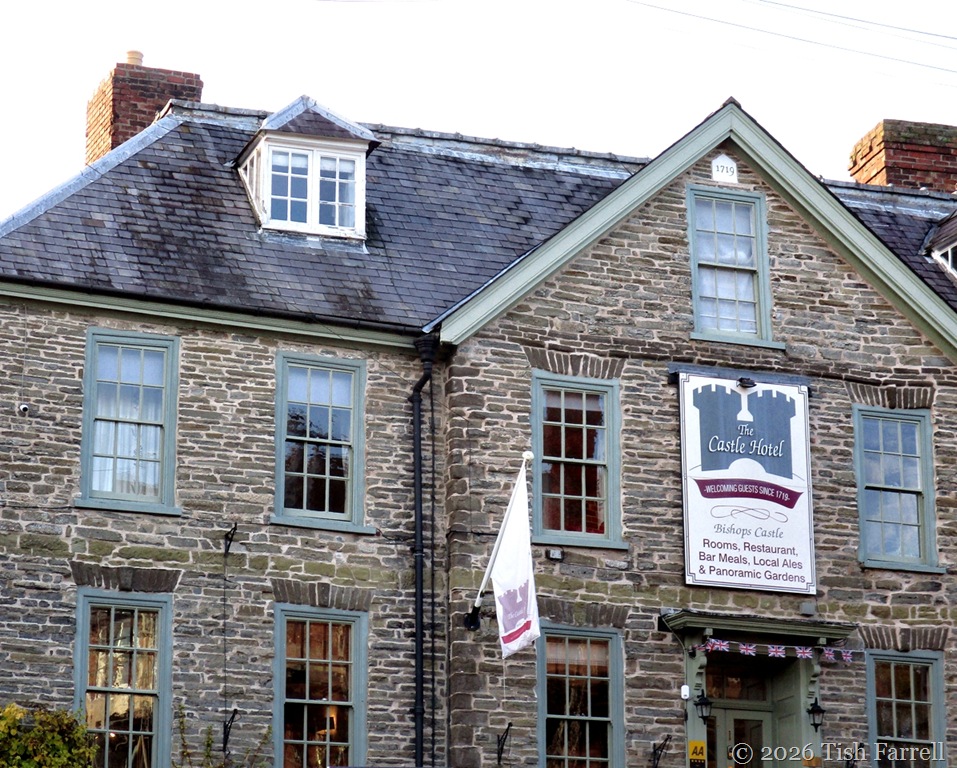
And it was at this moment that thoughts of watering holes had us turning on our heels and  heading downhill to town. Toasted sandwiches at The Castle Hotel suddenly beckoned, plus a glass of delicious Clun pale ale.

Cheers and happy festive season to all the Lens-Artists (and their followers).

Many thanks for setting us so many diverting challenges through 2025.

IMG_9497ed

*

Lens-Artists: Last chance for 2025   This week Patti sets the theme: last chance to post photos that missed previous posting opportunities.

dew pond 3 header

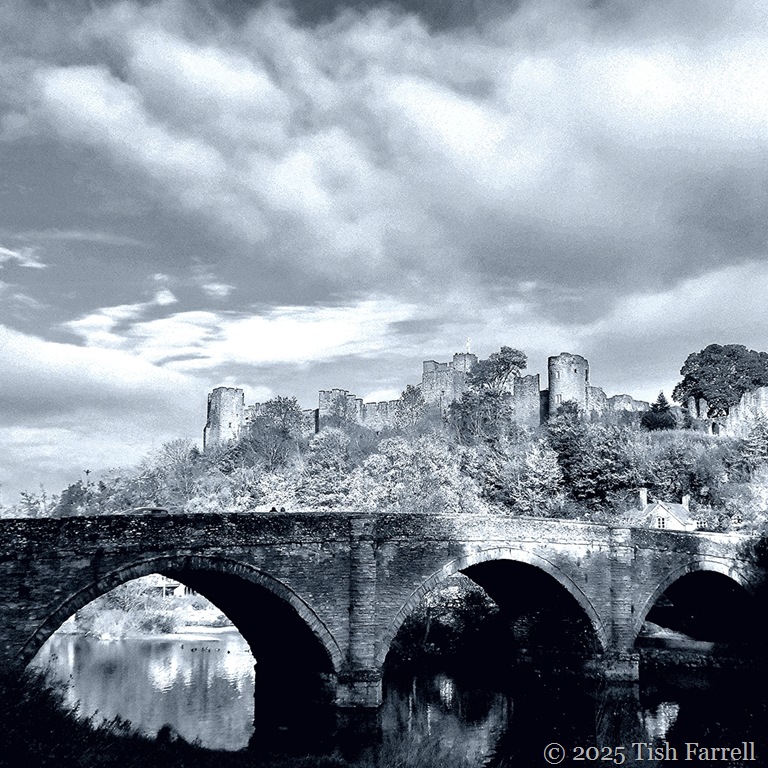
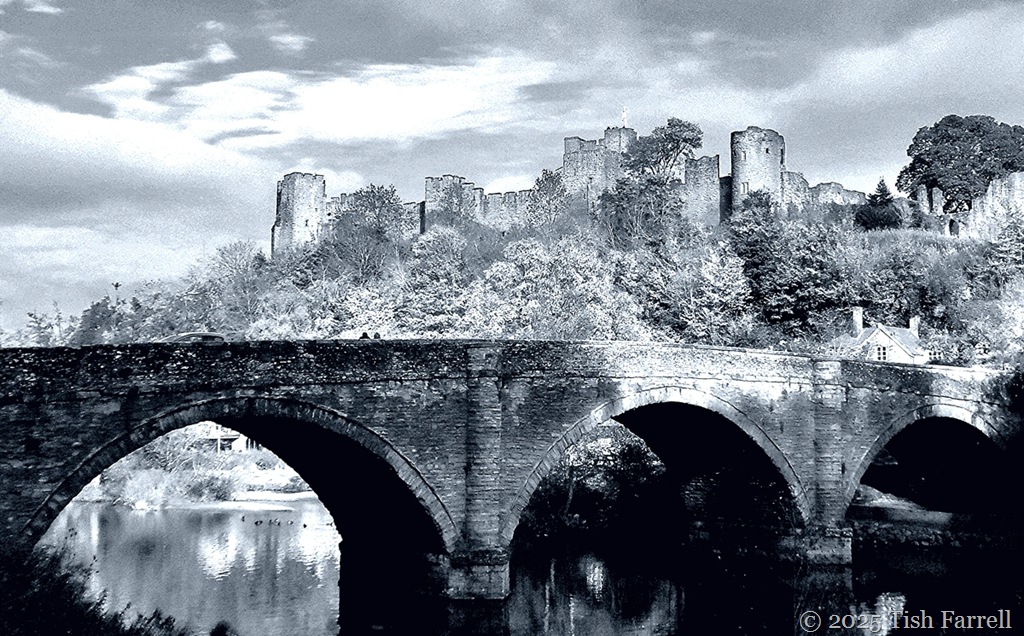
Antique Shadows at Dinham Bridge

bridge 2

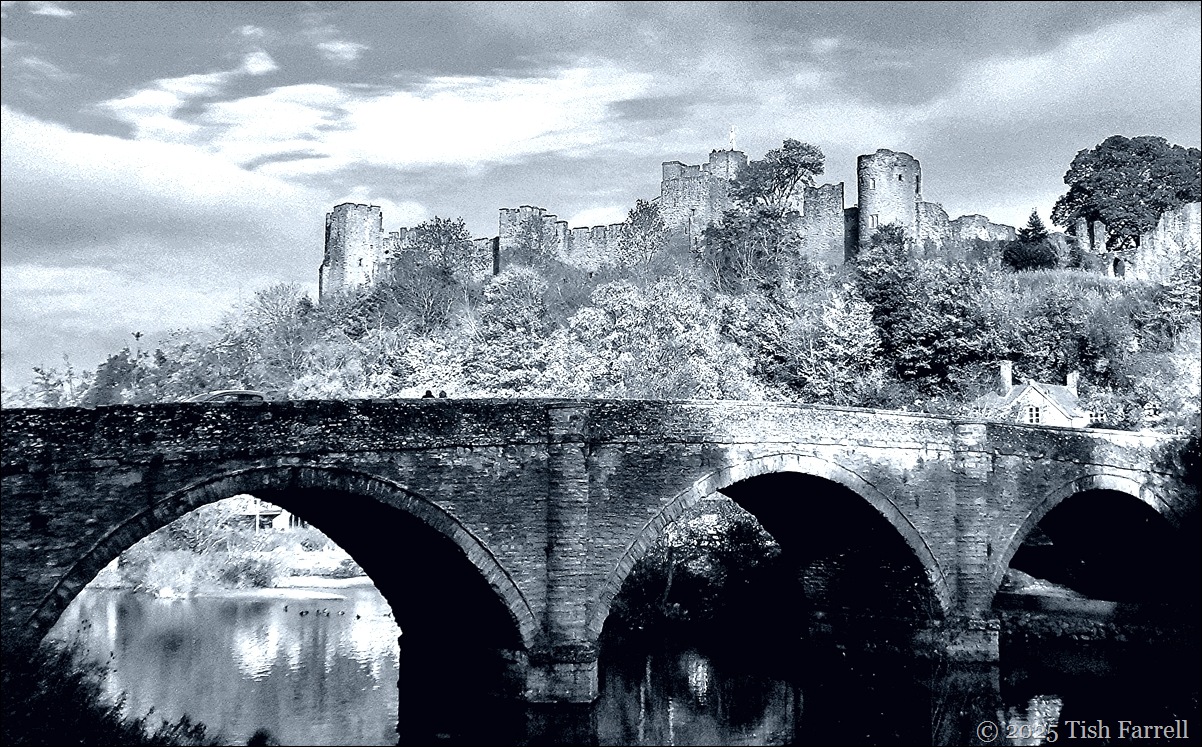
A bridge for Cee who loved bridges and featured them in some fabulous monochrome shots. Like so many others, I loved taking part in her regular Black & White photo challenge.

*

Dinham Bridge over the River Teme in the Shropshire market town of Ludlow was built in the early 1800s. The castle above it had its origins nearly 800 years earlier, soon after the Norman invasion of 1066. It was one of the first stone-built castles under the new regime, sited there to keep the Welsh at bay. Over succeeding centuries it was expanded to the fortress scale whose remains we see today. As with all castles, there were doubtless many shadowy doings, conspiracies and counter-conspiracies within its walls; but its towers caught here in autumn sunshine almost have fairytale looks; so many stories those stones could tell.

*

November Shadows #7 Today Becky pays tribute to Cee who meant so much to so many. There are further blogger tributes at links below.

Remembering Cee 7th November  Marsha Ingrao at Always Write and Dan Antion at No Facilities are hosting a day to remember Cee; Cee who inspired us with her weekly photo challenges, and was so generous with her knowledge. She embraced so many of us and is sorely missed in the blogging community she so steadfastly embraced and encouraged.

bridge 2 header

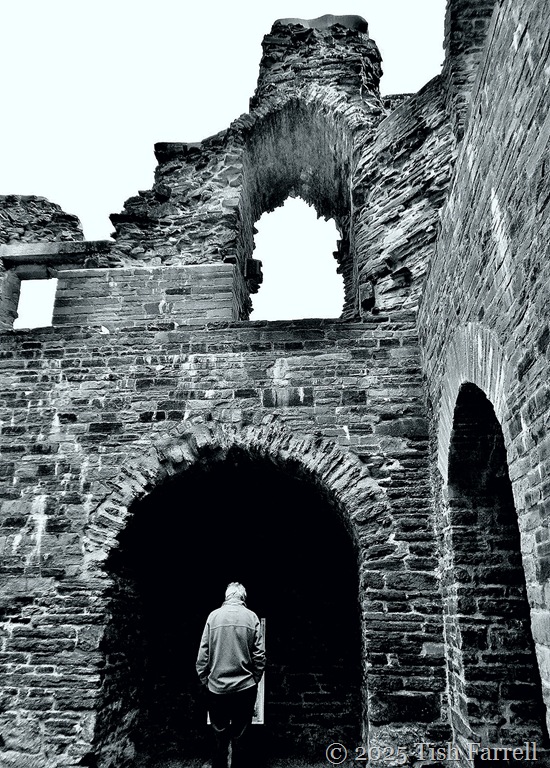
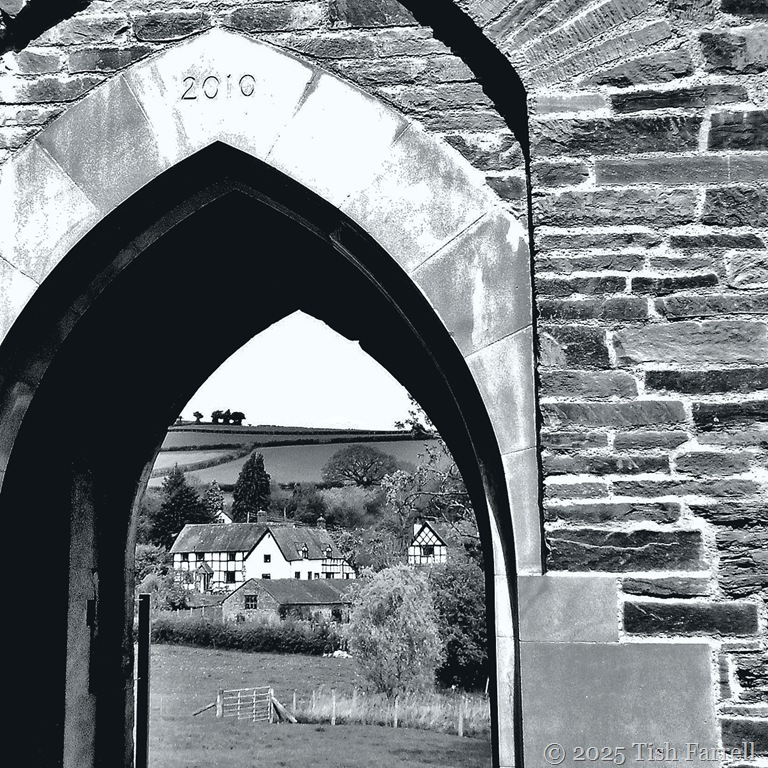
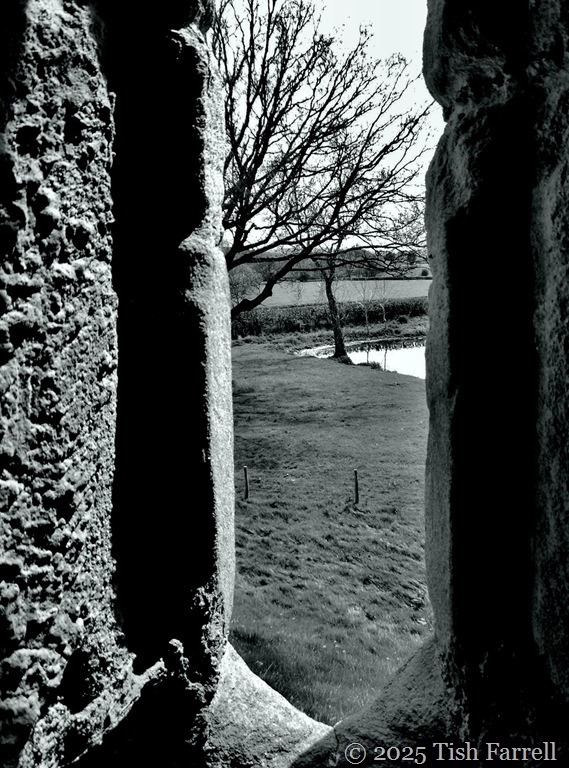
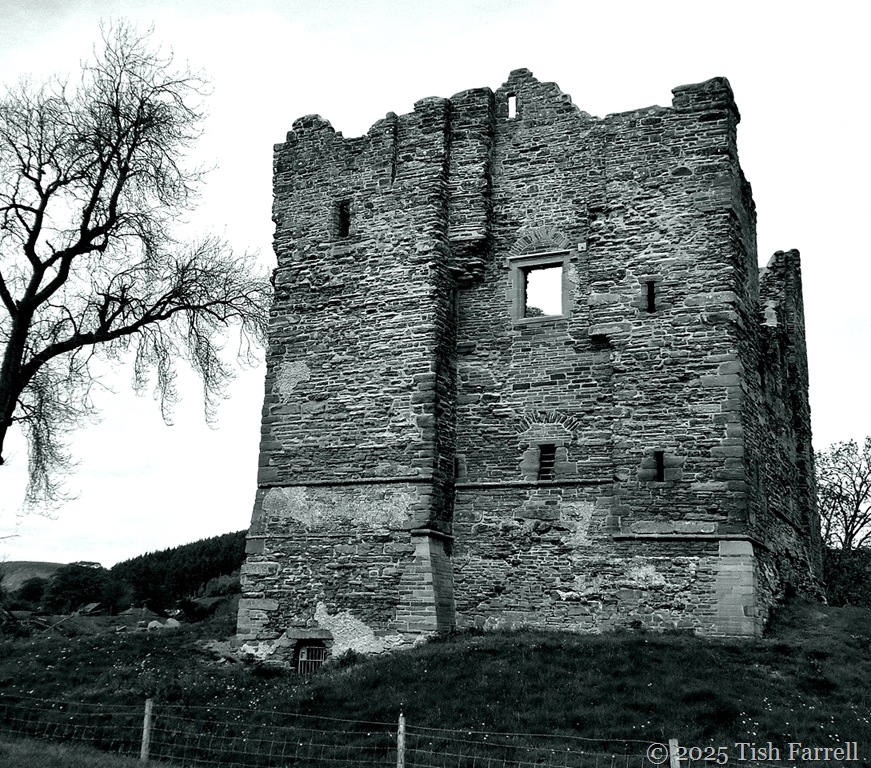
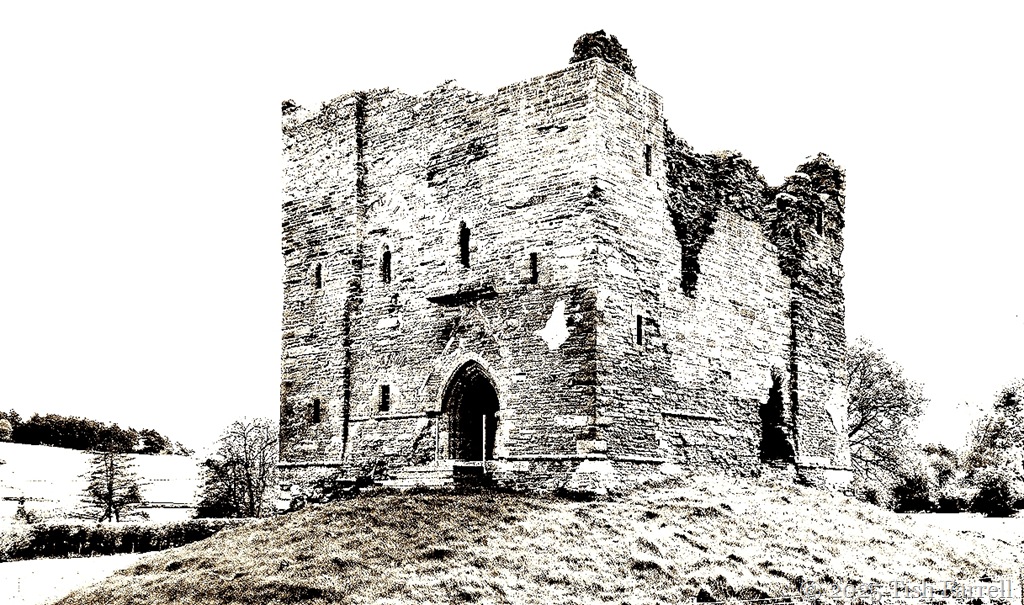
Hopton Castle, Shropshire

Hopton Castle

I’m quoting some text from an earlier post:

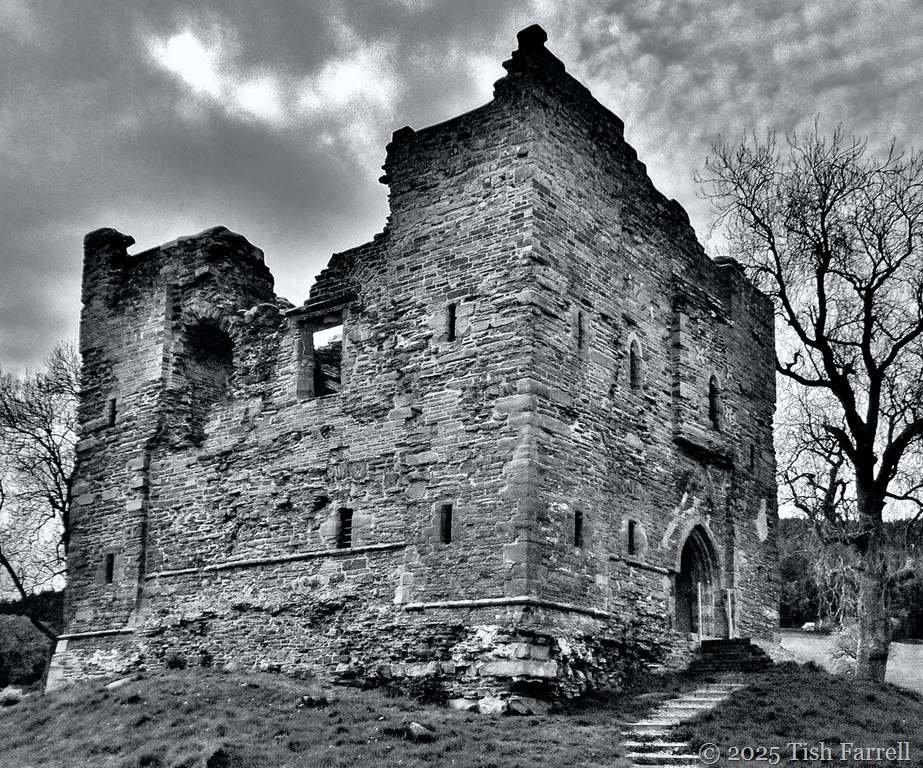
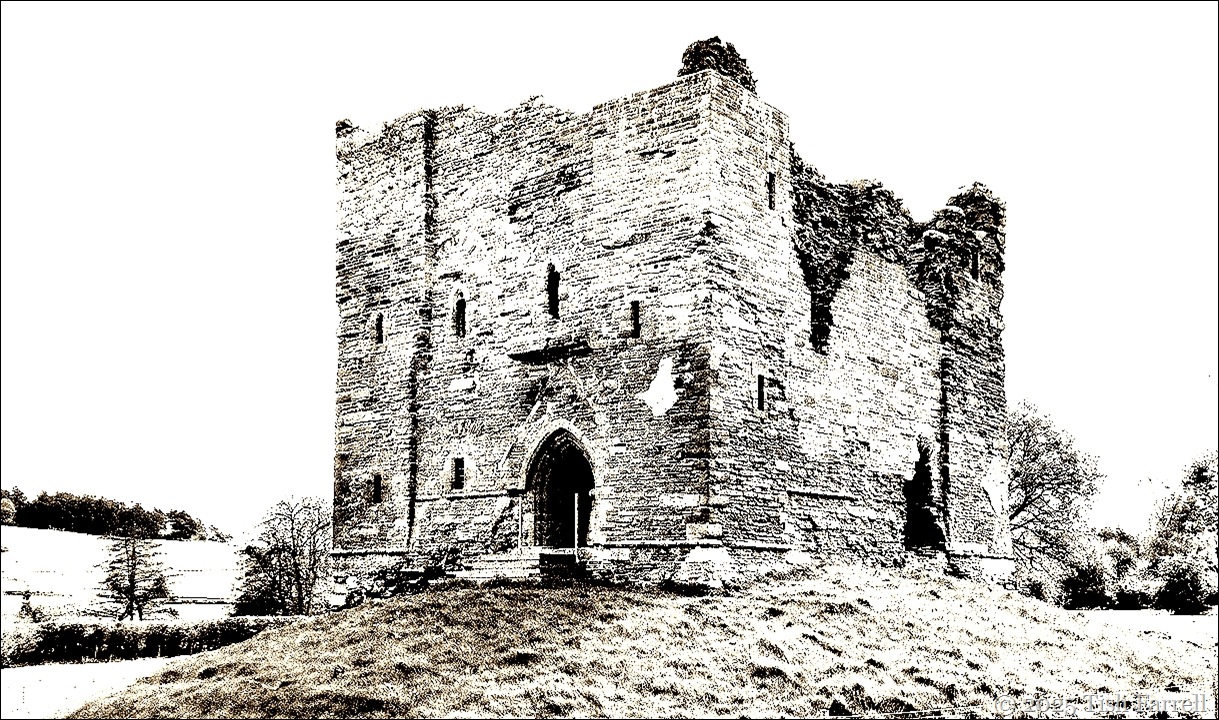
“Here we have the remains of Hopton Castle, an enigmatic ruin in the Shropshire borderland, eleven miles northwest of of Ludlow. It is called a castle, but it might be better described as an upscale medieval tower-house. That it survives at all, in this accessible state, is down to the creative efforts of the Hopton Castle Preservation Trust whose members toiled for 11 years to raise funds to consolidate the main structure, and then spent a further five years overseeing the work.

Hopton interior

The ruin is full of puzzles. The preservation work revealed hints of 11th, 12th, 13th, and 14th century construction, but with no clear evidence for the date of the main surviving structure. It’s been suggested that the Hopton family, who owned it between the 11th and 15th centuries, at some stage deliberately set out to create a faux antique country residence much as the Victorians did with their  mock Tudor ‘cottages’. In other words, the Hoptons went in for some creative intervention of their own.

One theory is that it was a hunting lodge. The interior work of all  three floors appears to have been very grand, and definitely of ‘lordly’ quality.

Hopton village

Restored entrance

*

Hopton interior 2

Also, the tower was clearly not intended as a defensive structure. As you can see from the first photo, any besieger could simply walk up to the front door. Yet the building it replaced, the first ‘castle’ on the mound was indeed a functioning fortification – a motte and bailey castle typical of the Normans’ early conquest of Britain after 1066. Made of timber, they could be constructed swiftly, and as the need arose, later re-built and expanded into domineering stone fortresses.

But this did not happen at Hopton. The stone walls that replaced the 11th century motte and bailey appear to have been built of poor quality stone, unsuited to withstanding a siege. Meanwhile, the interior fittings and design suggest considerable expense.

So it’s a pretend castle then?”

Hopton 3

You can read more about this (pictorial reconstruction included) at my earlier post: Creative Intervention Rescues A Ruin

*

This week at Leanne Cole’s Monochrome Madness the guest host is Sarah from Travel With Me. Sarah’s theme is RUINS.

Hopton Header

A Bronze Age Circle And Some Mystic Brume

Mitchells Fold and brume

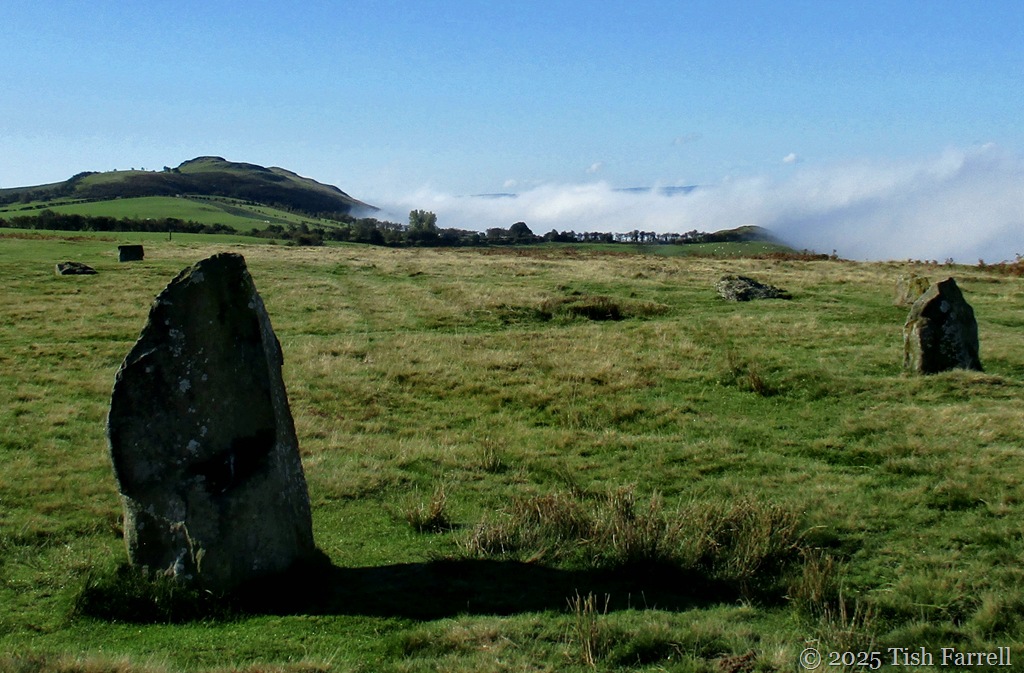
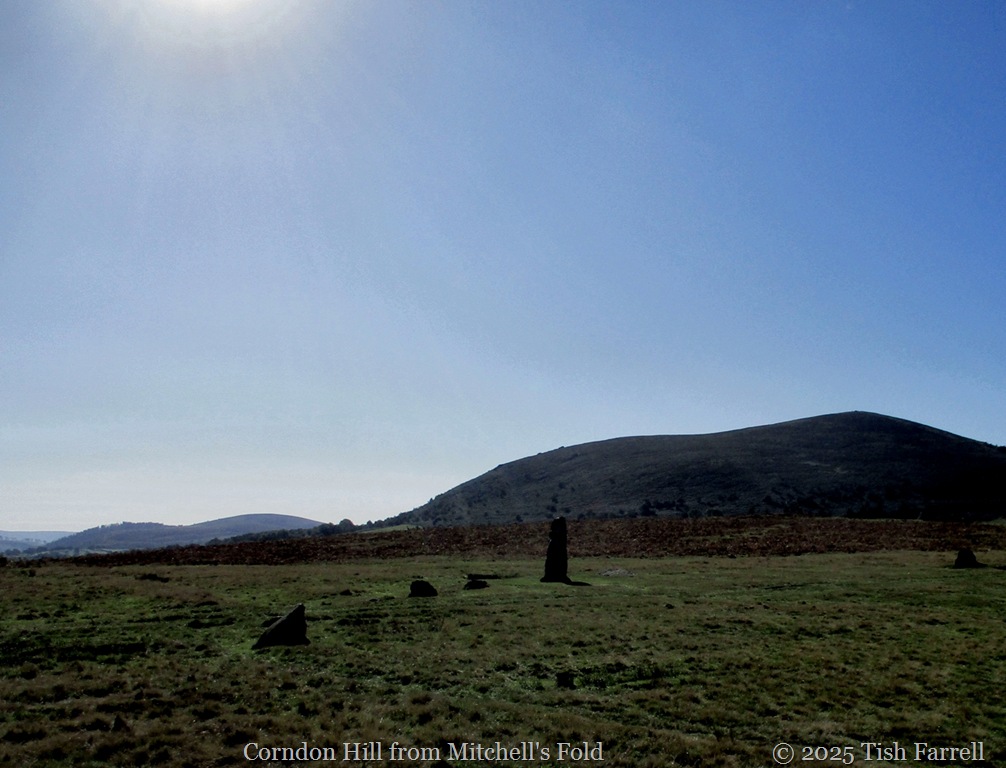
It’s a year or so since we last visited Mitchell’s Fold stone circle. I’m not sure why it’s taken so long to go back there. It’s only six miles from home and such a fine spot, sitting high on Stapeley Hill, with the Stiperstones to the east, Corndon Hill to the south and Wales rolling out in the west. Somehow we had let the summer go by when a sundowner visit would have been perfect for capturing light, communing with ancestors and gazing out on those wide Welsh vistas.

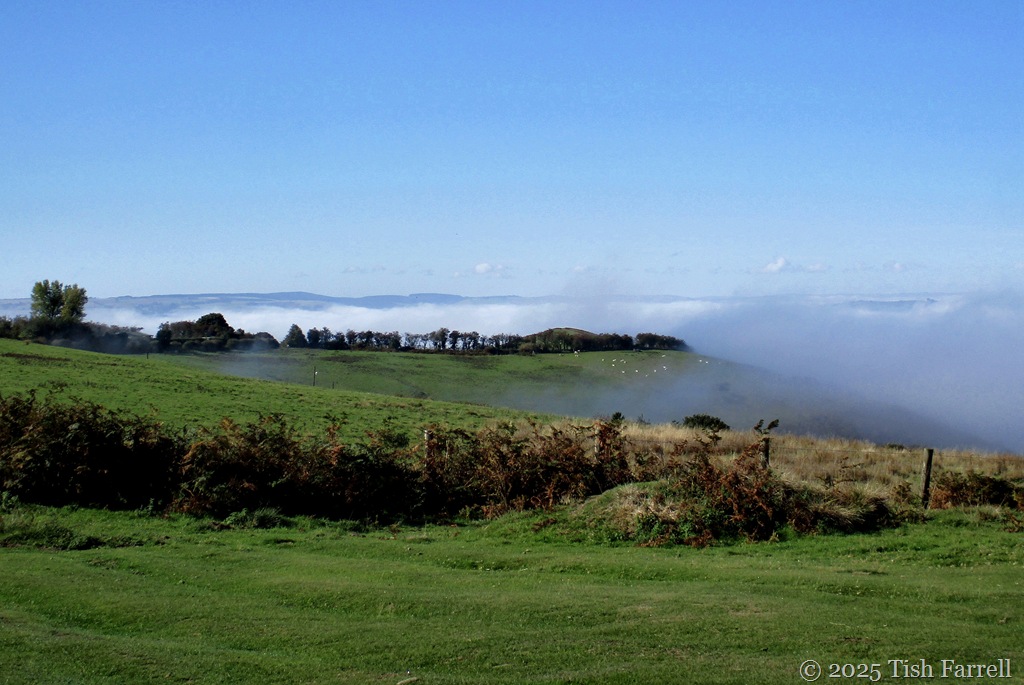
As it was, we waited until late September. And so last Friday, and well before coffee time, in hopes of some good light, we set off. The sky was clear, the sun brilliant and the air autumnally crisp. As we drove out of Bishop’s Castle, I conjured the landscape photos I would take up on the hill; those views into Wales…

path to Mitchells Fold

Except when we set off on foot up the Stapeley Hill track I soon saw I wouldn’t. Westerly vistas were off.

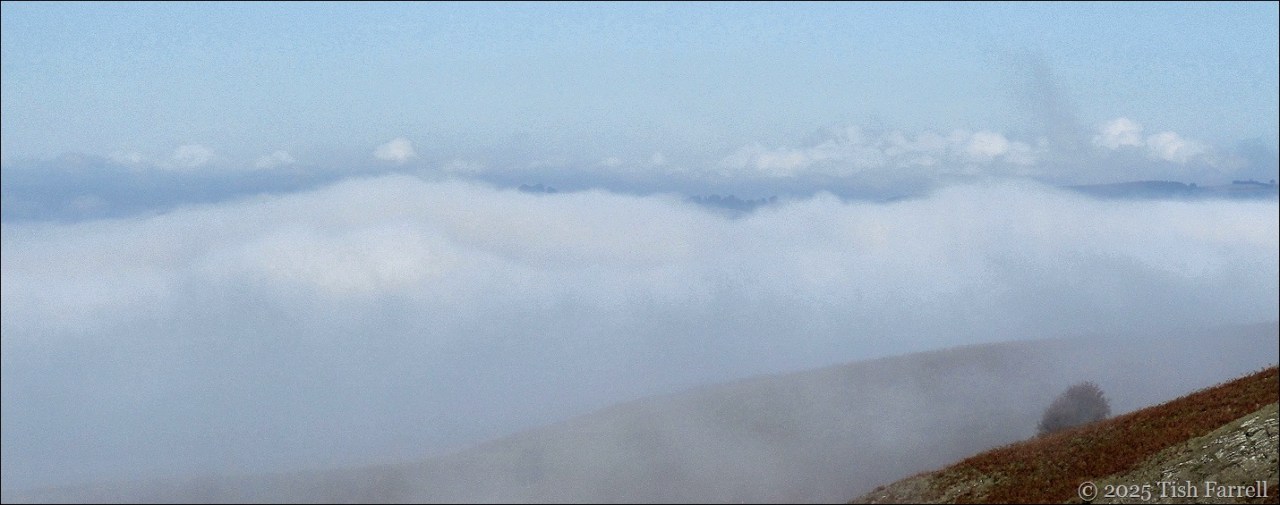
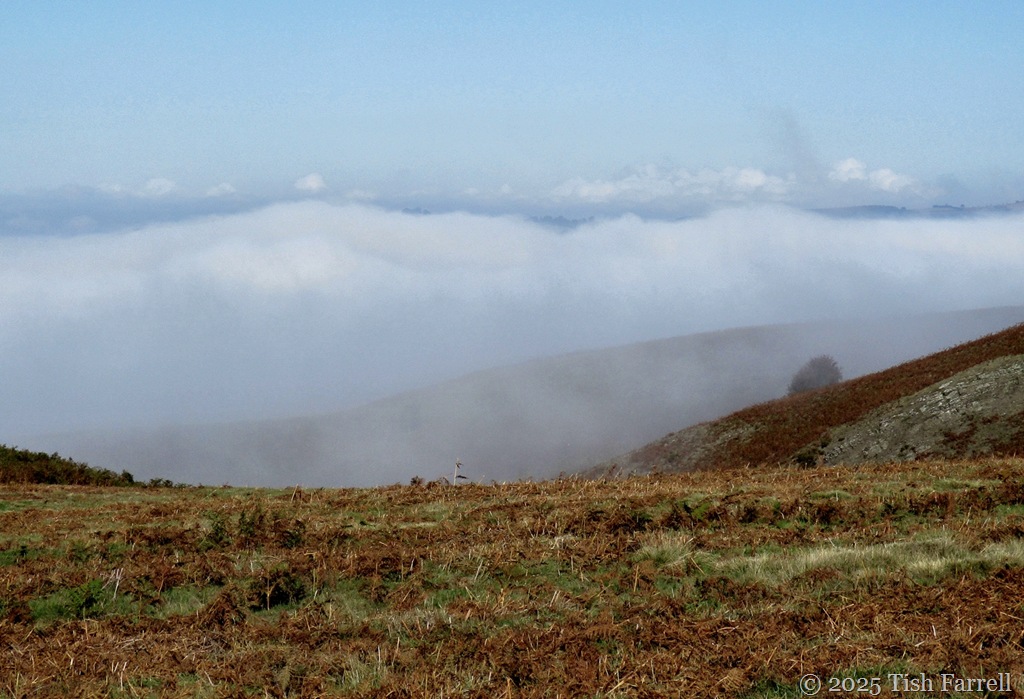
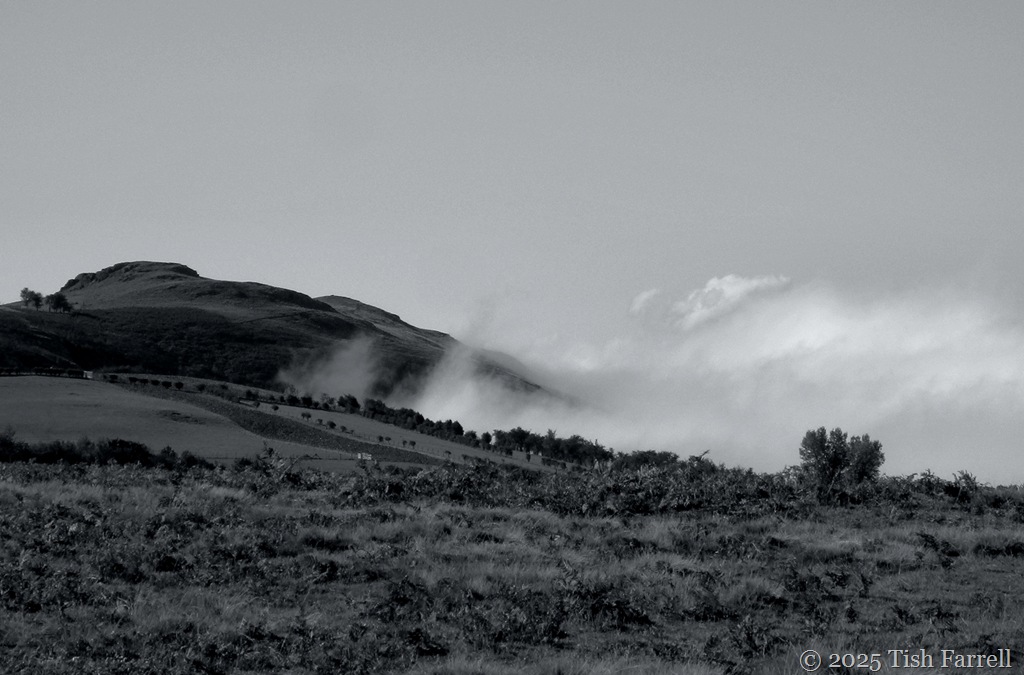
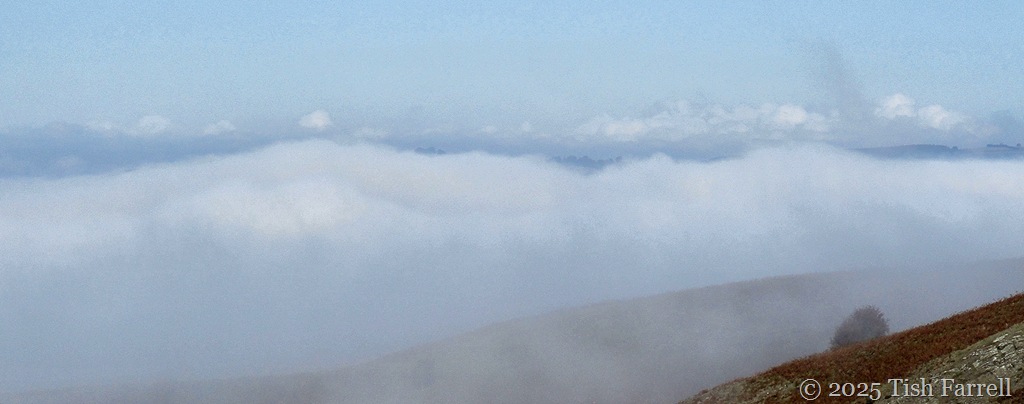
The uplands might be bathed in sunshine, but the low lying reaches had been invaded by rivers of mist, also known in literary circles as brume. We watched as this mysterious atmospheric phenomenon flowed by, whiffling up hillside clefts and gullies, some of its manifestations distinctly pink. At closer quarters you could see through it as if looking through gauze.

Brume

*

Seen in monochrome setting, there’s almost the sense of spray, as in breakers crashing against a rocky cliff-face…

Brume monochrome

Of course this all added a frisson to the mystery of ancient stones.

I’ve written about them several times, including in a much older post Witch-catching in the Shropshire Wilds which mentions the myth associated with the place. But very little is known of them other than there were once 30 or so standing (now only 15 and some of them are recumbent.) And that they were sourced locally and hauled in place over 3,000 years ago. We can guess, too, that this was a place of great significance to local people (temple or gathering place?) for we know, too, that nearby hills (Corndon, the Stiperstones) have on their flanks many remains of Bronze Age burial cairns. There is also a lone standing stone and a supposed robbed burial cairn not far from the circle.

A landscape, then, of many meanings; the kind of meanings where sacred and profane coalesce, the subtleties of whose interconnectedness we offspring of industrial culture often fail to grasp, confusing the sacred with dogma. 

Brume 2

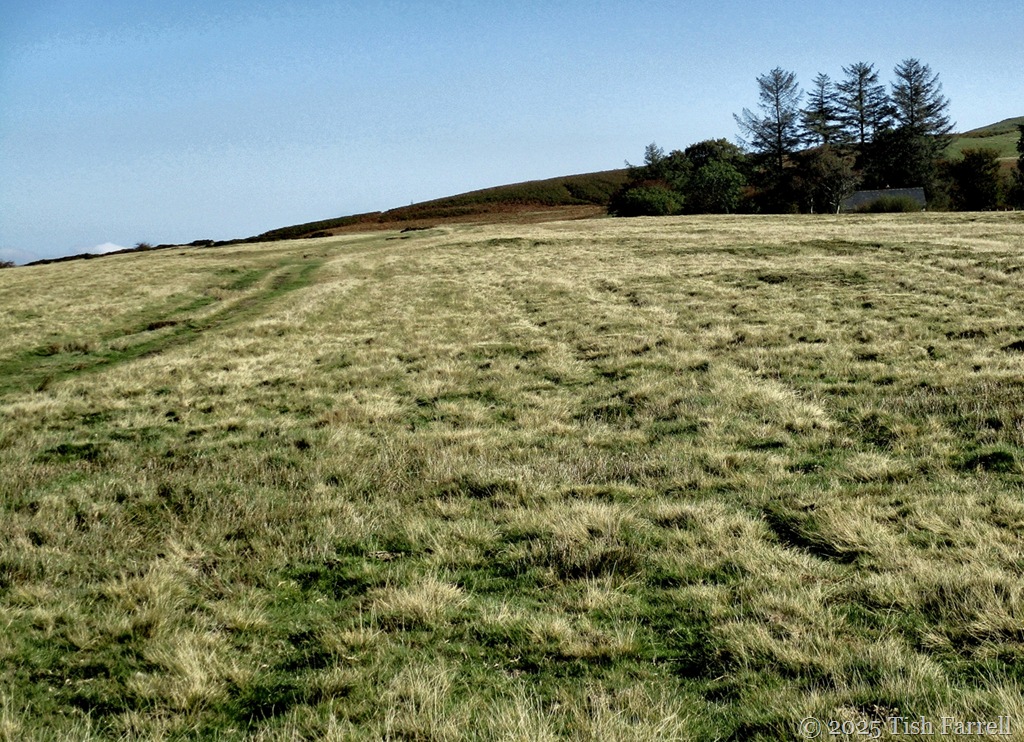
Around the stones, there are traces of more recent human doings. You can see them in the photos: the remnant ridges and furrows of a mediaeval field system. And also running through the middle of the circle, the ruts made by carts and, in particular, the stage coaches that are said to have run this way between our county town of Shrewsbury and Aberystwyth in mid-Wales. Can you imagine?

In a way, I find this last historical glimpse more exciting than the stones. Just think how it would be, racketing around in a draughty coach, being hauled over this bleak hill on a grey winter’s day, some real fog closing in and looking out on these standing stones…it could be a scene from Jane Eyre.

Mitchells Fold coach route

Mitchells Fold coach road

*

For now I’ll leave you with some more non-wintery views:

Mitchells Fold and Corndon Hill

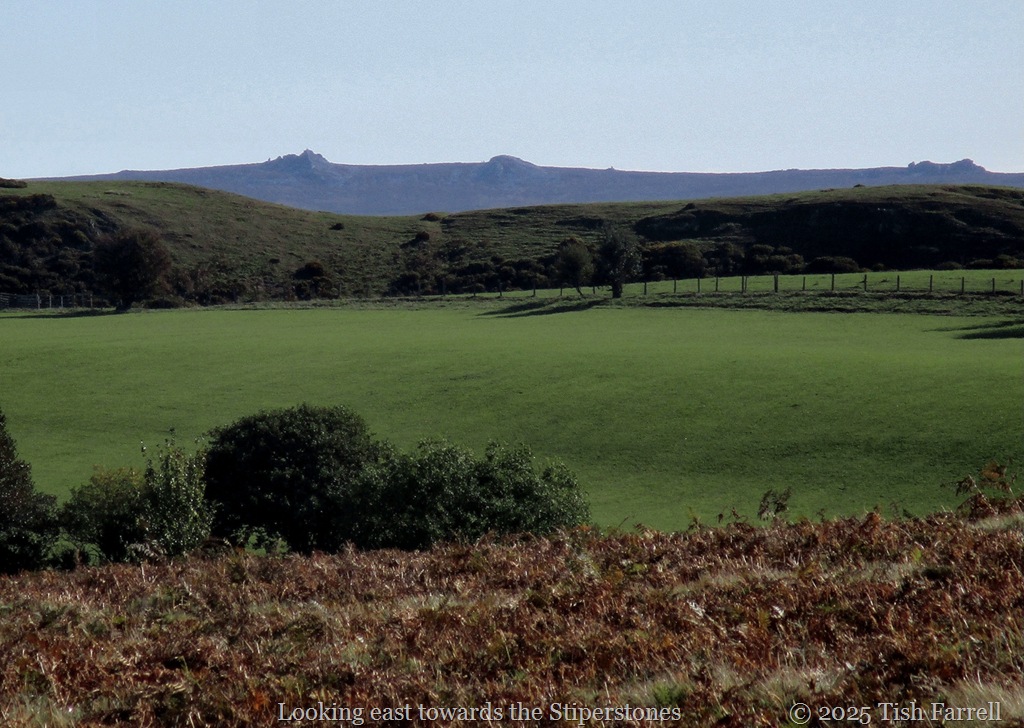
Stiperstones

towards Bishop's Castle

*

Copyright 2025 Tish Farrell
Brume header


Cinematically Cornish

P1080012cheesewring Bodmin

This week at Lens-Artists Sofia calls for a cinematic approach to our photography.

This is what she says:

“There are a few things that give a photo that cinematic feel: camera angles, bold and high-contrast colours, light, locations, just to name a few. The main objective is to take a shot that is part of a story, there’s mood and a sense of location; our image is but a snapshot of a much wider situation.”

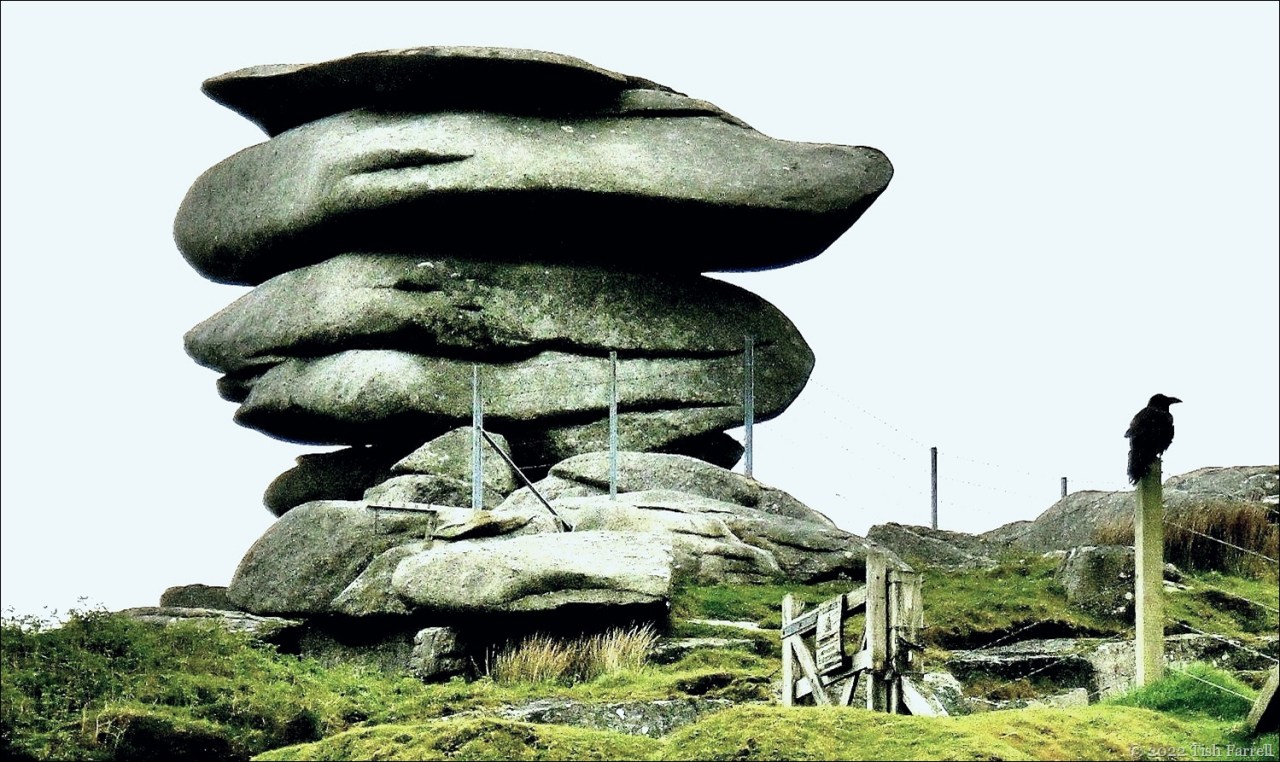
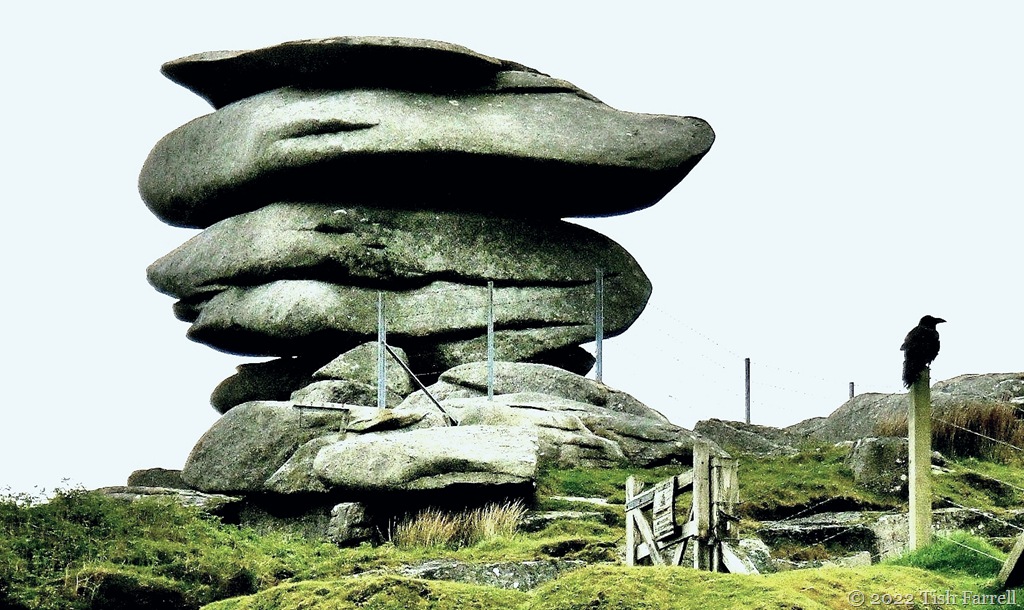
The first four photos here were taken one bleak spring day on the edge of Bodmin Moor near Minions in Cornwall. This, Great Britain’s most south-westerly county is a land of dramatic vistas: of high moors and rugged shore-lines. There are stories everywhere, layered through time like the ‘pillows’ of this granite tor, known locally as the Cheesewring.

The tor has its own stories of course. The first is one of weathering over millions of years, wind and rain driving into its crevices. Then there is the Dark Ages tale, from the post-Roman times when Christian missionaries  were beginning to make their presence felt. The proponents of new faith were not always welcomed, and so the formation of the Cheesewring is explained as the result a quoit-throwing contest between Uther the giant and a saintly missionary named Tue. If Uther won, then the Christian must go. Th giant lost of course.

The Cheesewring name itself has different derivations – either a straining device for making cheese, or else relating to cider brewing wherein the press of apples to a pulp is referred to as cheese.

There also some mystical notions, for it’s said that if you come to the Cheesewring as day dawns you will see the top ring turn three times. Which makes me wonder if that crow might have something to say on the matter.

*

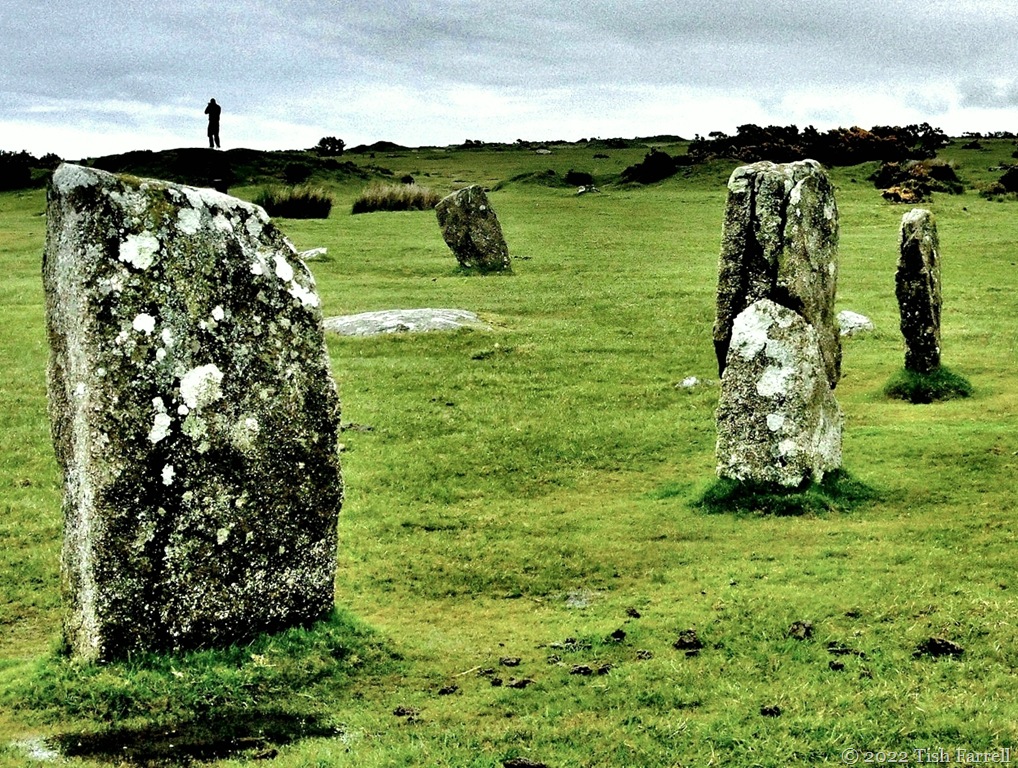
Below the Cheesewring we step back into the remnants of a prehistoric landscape: three Neolithic stone circles called the Hurlers. But as to that figure apparently hovering on the horizon – who knows what time stratum he belongs to.

P1070982ed

P1080022ed

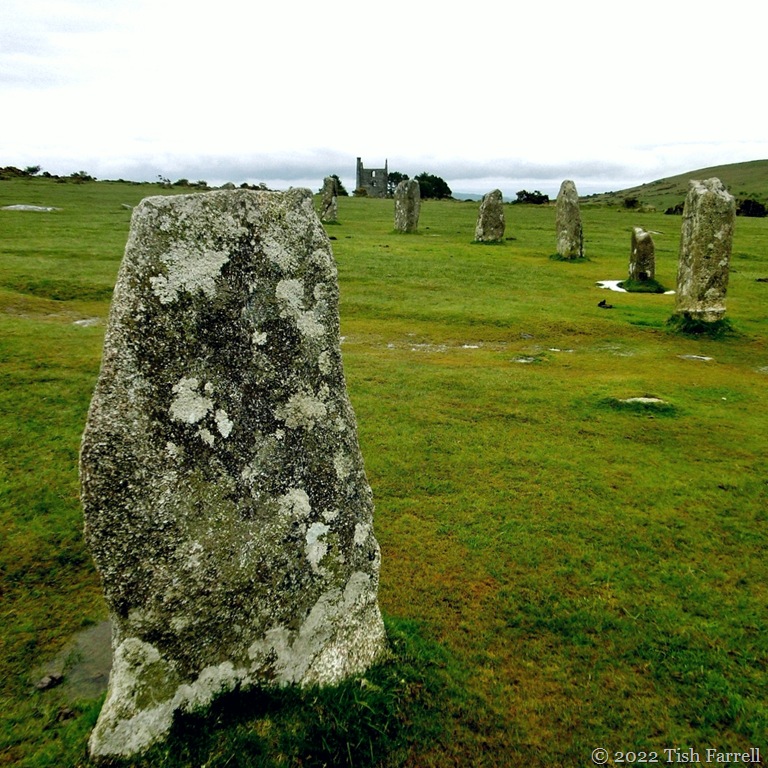
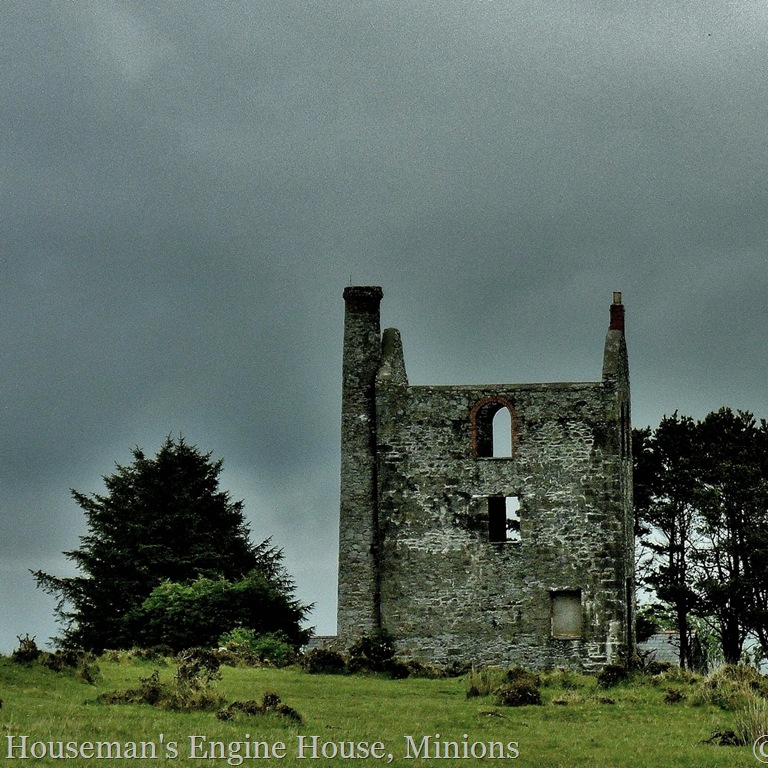
Looking through the Neolithic circle we come to another narrative: one belonging to the 1850s – 1890s when the South Phoenix Mine was churning out train loads of copper, a time when over 3,000 people were employed here – women and children included.

P1070983ed

There is more about these stories at an earlier post: ‘Hurlers and Miners: 6,000 years of heritage on Bodmin Moor’ HERE.

*

Cornwall does have its own cinematic history. Several Cornish based novels by Daphne du Maurier have made it to the big screen, some in duplicate versions – Rebecca, Frenchman’s Creek, Jamaica Inn, My Cousin Rachel. Her deeply disturbing short story,The Birds, is also set in Cornwall, although Hitchcock chose to transpose it to San Francisco. Du Maurier’s works are usually classed as romances, but they also have dark undercurrents, sometimes touching on the paranormal, their settings the wilds of Bodmin Moor, brooding mansions, sheer-drop sea cliffs, rocky coves and crashing surf.

So here are some more Cornish photos, taken one gloomy December, and with a little nod to Daphne du Maurier’s sensibilities.

P1020701ed

*

P1020927 ed

*

P1020611ed

Lens-Artists: Cinematic This week Sofia at Photographias sets the theme.

Geometrically Inventive: The World’s First Cast Iron Bridge 1779

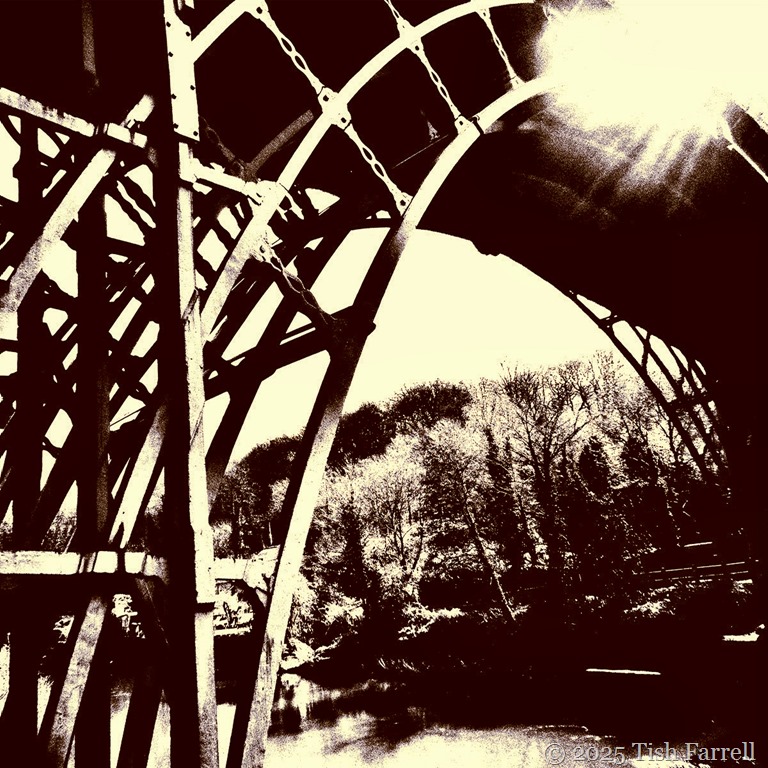
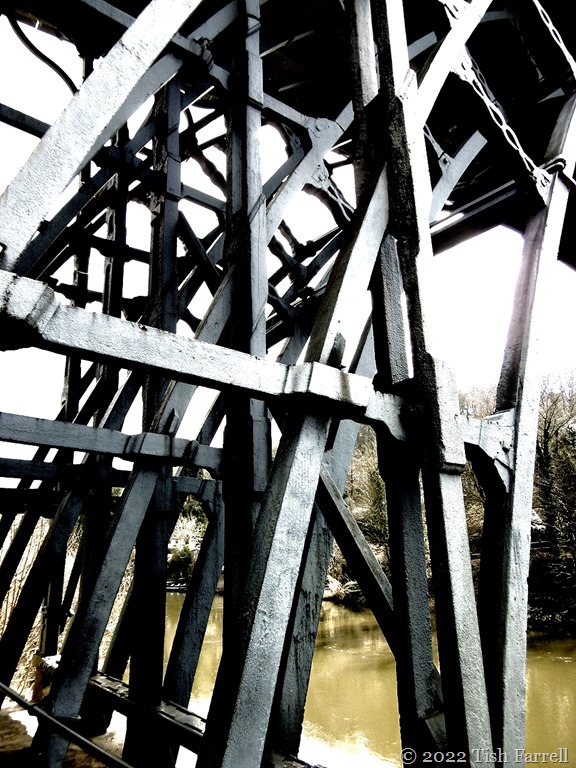
Iron Bridge 4

*

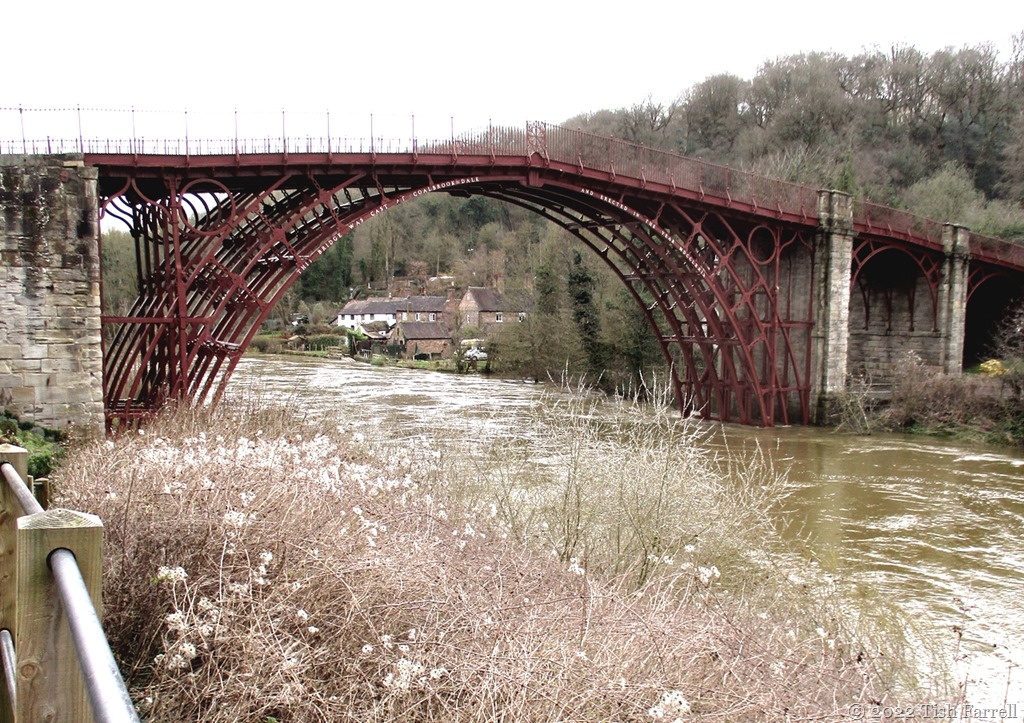
I rather miss having the Iron Bridge on our doorstep. It’s now a good hour’s drive across the county from our house in Bishop’s Castle.  We used to like wandering along the Wharfage beyond the bridge, gazing up at the hanging woodland along Benthall Edge. It’s a great place for promenading, or at least it is when the River Severn is safely in its bed.

IMG_2614ed

River Severn on the rise

*

The Iron Bridge, though, has withstood the most tremendous deluges, including the great flood of 1795 that took out most of the old stone bridges from Shrewsbury to Worcester. It was a show of resilience that proved to anyone who had doubted the capacities of large cast iron structures, that its builder, Abraham Darby III, had been right all along: cast iron was the material of choice for the industrial age.

Nor did its adoption take long. Soon it would be used to build the frames of factories; seen as a boon for the owners of textile mills whose combustible raw materials made them prone to ruinous conflagration. The several-storeyed iron-framed buildings that ensued were forerunners for the skyscrapers of the modern age.

P1000842ed

On closer inspection, though, Abraham Darby’s ‘world wonder’ innovation came with more than a hint of sticking to the tried and trusted. After all, the man was an ironmaster, from a dynasty of ironmasters, and thus a pragmatist, and while the use of cast iron for so big a project was breaking new ground, the hundred foot span was achieved by the jointing of over 1,700 castings, some weighing over 5 tons, and using centuries’ old woodworking techniques of dovetail, mortise and tenon joints.

Besides, there was something else he was wanting to prove: that a bridge with a single arch could be made to span a waterway, busy with large sailing barges. To achieve this meant another significant breakthrough: the Severn trows could pass beneath without the nuisance of lowering their masts.  It was all good for publicity.

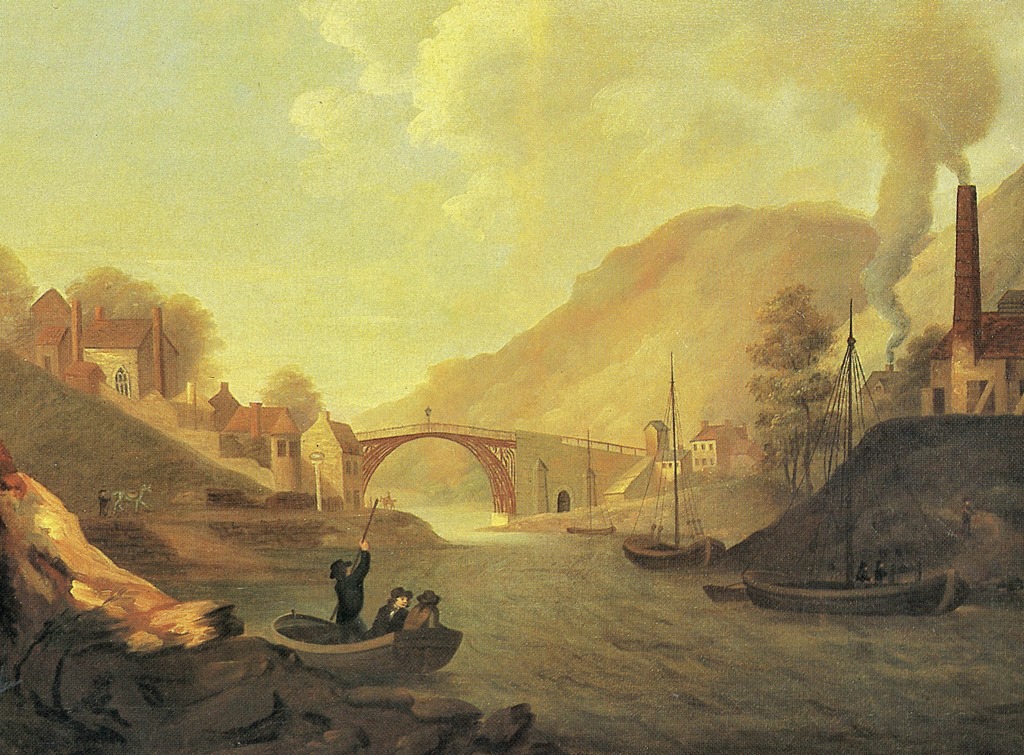
Iron Bridge The cast iron bridge near Coalbrookdale View of William Williams 1780

‘The Cast Iron Bridge near Coalbrookdale’  by William Williams 1780

*

The bridge and the foundries, furnaces and forges of Coalbrookdale became the tourist venue of the age. Engineers, ironmasters, industrial spies and scores of artists flocked to wonder at what many likened to a vision of hell. The William Williams image above was painted a year before the official opening of the bridge to the general public. You can see three trows moored along the right hand river bank.

*

IMG_3492ed

And of course, as a World Heritage site, the Iron Bridge is still a huge tourist attraction, seen here spanning a quiet and sluggish summer river.

GeometricJanuary Day 11

Fruitily Geometrical: The Pink Pineapple Pavilion

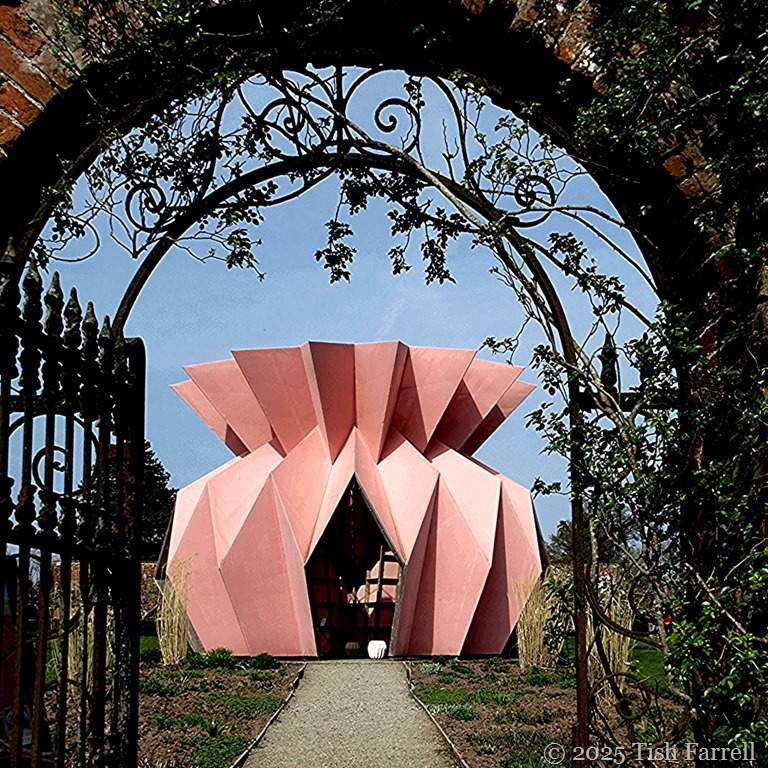
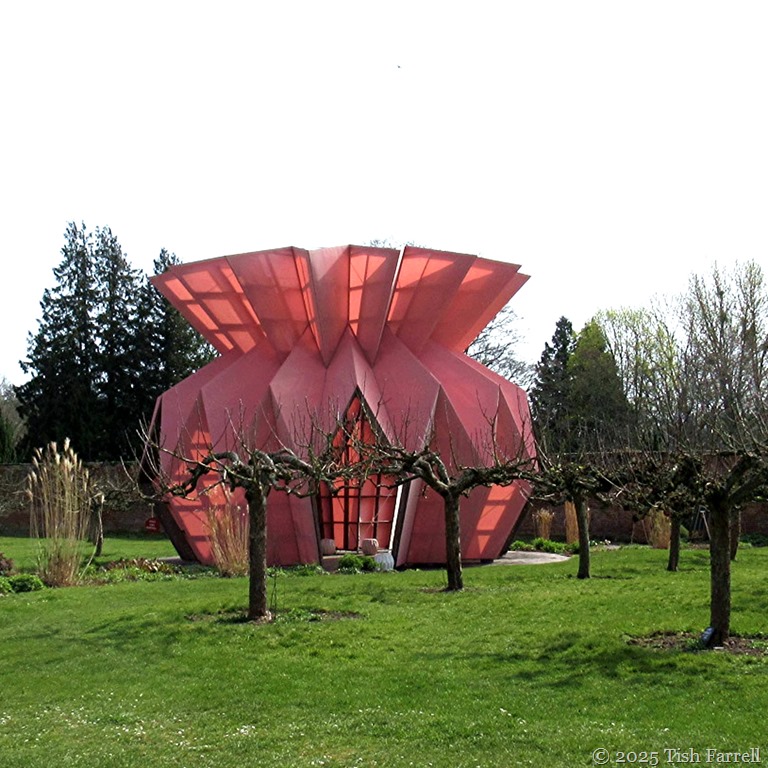
IMG_1328ed pineapple 2

Some of you will have seen this before, but I thought it deserved another outing; ideal for Becky’s #GeometricJanuary.

We came upon it a few years ago when visiting National Trust stately home, Berrington Hall, in Herefordshire. It is the work of installation artists Heather and Ivan Morison; their interpretation of the Georgian garden pleasure principle, which included all manner of temporary structures for dining, conducting assignations, or communing with the great outdoors. It’s called Look, Look, Look!

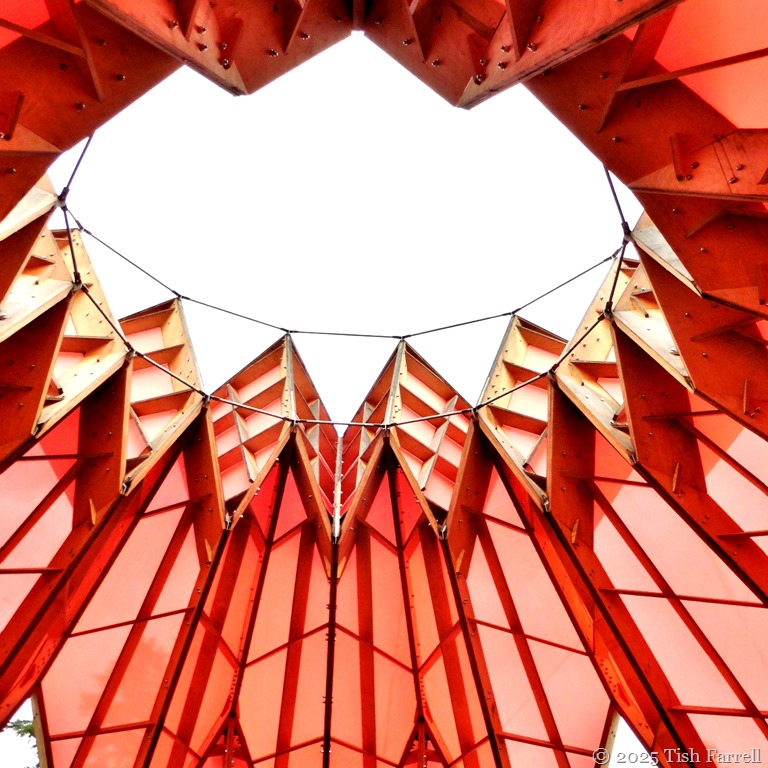
P1030075 sq pineapple 4

In the 18th century, Britain’s landed rich expended their often questionably-gotten gains in the creation of pleasure parks around their grand houses. These were places for promenading, a little sporting activity (fishing, sailing, archery), for re-enactments of famous naval battles (if you had your own lake); there were ‘eye-catcher’ summer houses, grottos, fake ruins, and classical temples. It was also the era of wholesale removal of villages from the sight-lines of the gentry in the ‘big house’. Garden tunnels were also dug so the horticultural workforce could go about their labours largely unseen. Above all, these gardens were ‘show off’ places, and if you wanted the best, you employed the likes of Lancelot ‘Capability’ Brown to design it.

IMG_1312 pineapple 3

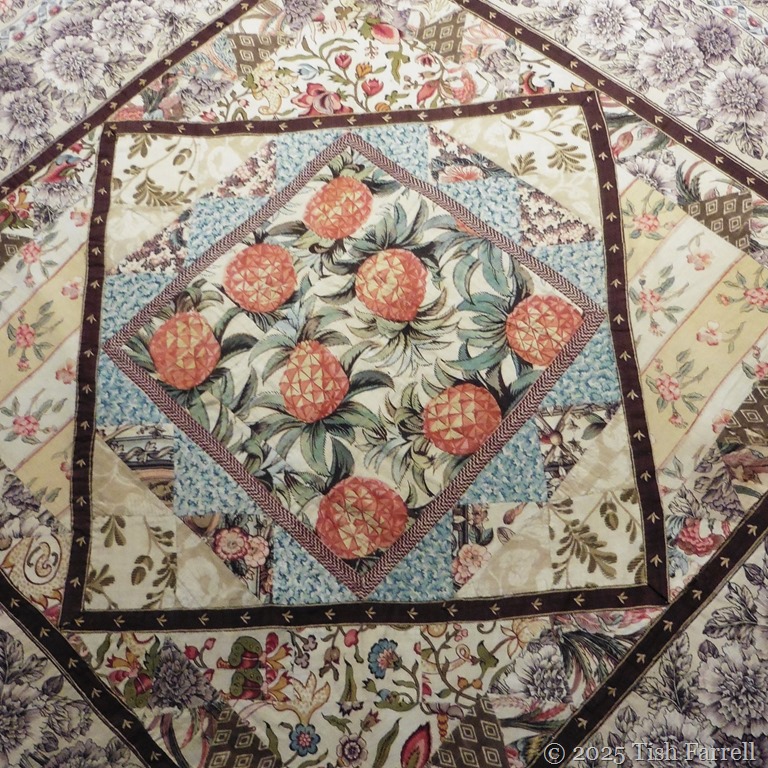
Another show-off item was exotic fruit, especially the pineapple whose possession, in the flesh, produced in your own very expensive-to-run hot house, or as architectural motifs about the house, demonstrated your wealth and prestige. At Berrington Hall there are both pineapple allusions, and  the surviving landscape contrivances of Capability Brown. The park is magnificent, and Brown’s last endeavour as a garden designer. There is currently an extensive garden restoration project which aims to recover his original groundworks.

pineapple quite

Inspired by the pineapple, detail from a Berrington Hall bed quilt

*

N.B. You can find full details of the Pink Pineapple’s construction, with architectural plans HERE.

#GeometricJanuary Day 5

Blue Waves ~ Geometrically Commemorative

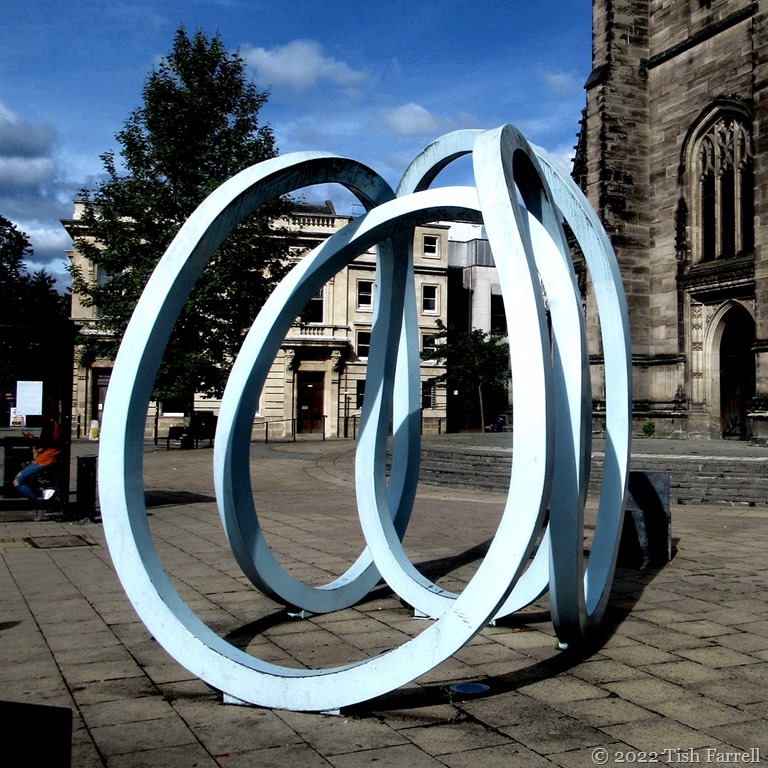
IMG_1942 blue waves

I’m all for public art enlivening urban spaces. But what does this sculpture say to you? Despite the blueness, I can’t help thinking of spaghetti, or maybe unravelled knitting, which doesn’t mean I don’t like it, though I’m thinking it might be better served in parkland surroundings.

The setting, however, is key. Bath Street (originally Bath Lane) is the place, and Blue Waves marks the source of Royal Leamington Spa’s claim to fame as a once fashionable place ‘to take the waters’.

Until 1800, the town, in its original format of Leamington Priors, was a very small village. The saline springs around the parish church had been known of for centuries, and in 1586 one Robert Camden had declared them healthful. But it was not until 1784, and the discovery of the Bath Street spring, that local worthies Messrs Abbott and Satchwell decided to exploit the resource and open the first bathhouse.
And so the village, spurred on by speculators, grew into an elegant resort with fine rows of classical town houses, parks with promenading avenues and ornate bandstands, and grand public buildings, including the Royal Pump Room And Baths and the Assembly Rooms.

All to cater for the great and the good. In fact the place was grand enough in 1838 to attract the likes of a young Queen Victoria, whose visit naturally conferred royal status on the enterprise. One wonders what was ailing her so early in her reign. The waters were said to ease stiff joints and tendons, and give relief to sufferers of rheumatism and gout. But perhaps it was the all round social whirl of the spa town that attracted her. She came again twenty years later.
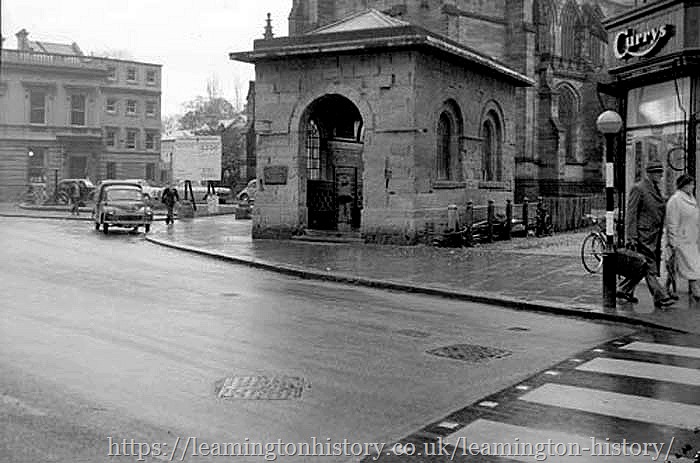
The local people, though, were not forgotten. The spot where Blue Waves is sited seems to roughly match the footprint of the first public well-house which was opened, also in classical style, in 1803, and known as Aylesford’s Well. Here’s a photo of it in the 1950s from Leamington Spa’s History Society website:

https://leamingtonhistory.co.uk/leamington-history/

aylesford-well, Leamington Spa

#GeometricJanuary 

Join Becky for a month of squares. Geometry is the theme and the header photo  must be square in format.

Of Right Royal Geometry

IMG_2129ed

*

So begins Becky’s month of square format photos – of things geometrical. So here goes.

There’s almost too much geometry in this shot: triangles, rectangles, circles, semi-circles, octagons. It is was taken at Kenilworth Castle in Warwickshire, a medieval fortress transformed in the 1570s into a grand Tudor palace, wrought at huge expense by Robert Dudley, Earl of Leicester, and with the sole purpose of entertaining his queen (and rumoured lover)  Elizabeth I.

More of that story here: Greater love had no man…

The photo shows a slice of the pleasure garden and ornamental aviary constructed in 1575, specifically for Elizabeth’s visit. This is how she would have first glimpsed it, descending from the royal apartments to a loggia terrace, whence she could view the whole extravagant horticultural confection. For this particular visit, it is said Elizabeth arrived with thirty-one barons and four hundred staff.

And they  stayed nineteen days. (Just imagine!)

Robert Dudley pretty much bankrupted himself to keep them all amused, not only with lavish banquets, but also with hunting, pageants, plays, bear baiting and fireworks.

And after all this, Elizabeth still could not be persuaded to marry him.

As to the garden, it was lost for nearly 400 years. English Heritage have reconstructed it using an eye-witness account of the visit by one Robert Langham plus archaeological and historical investigation.

You can read Langham’s account HERE. He speaks of ‘fair alleys…green by grass…and some (for a change) with sand…pleasant to walk on, as a sea-shore when the water is availed.’ He mentions too (and not an inconsequential attribute in those times) ‘the sweetness of savour on all sides, made so respirant from the redolent plants and fragrant herbs and flowers, in form, colour, and quantity so deliciously variant’.

*

IMG_2086

IMG_2084ed

*

And the ruins of the erstwhile royal apartments:

IMG_2065sq

*

Wishing everyone an all round happy New Year

*

#GeometricJanuary  You can join Becky’s square posting every day this month. The only rule is the photo must be in square format. How you interpret ‘geometry’ is up to you.

Stepping Over The Past On Dover’s Hill

Dover's Hill

Of course in Britain we’re always doing it – traversing the surface of a many-layered past; below our feet decades, centuries, even millennia of stratified remains of human endeavour. A city like London, for instance, rears magnificently from Roman foundations that lie metres below the present living surface.

Mostly, though, we don’t consider what we may be walking over; not unless it’s very obvious. And the very obvious here is the rig and furrow of an ancient field system, discovered on a December walk on Dover’s Hill, near Chipping Campden in the Cotswolds.

The tell-tale ridges and furrows of this form of cultivation could date from as early as the post-Roman period, but were particularly a feature of early medieval open field systems – the feudal days of incomer Norman landlords, their serfs and villeins working long, unbounded strips of land using teams of oxen to pull a plough.

And it was the manner of ploughing that created the corrugated mounds and ditches. The plough-share was right-sided. It only went one way, and the ox team stretched way ahead of the plough. At the end of the field-strip was a headland on which the team was turned so it could plough down the further side of the ridge.

It probably worked very well for growing. The mounded strip was well turned; the ever increasing depth of soil drained well too, ideal for cereal crops, while the furrows could be used to grow moisture-loving plants such as peas. And of course this was in times before there were field fences or hedges, the land open to the entire community with access to communal pasture. But by Tudor times, this began to change in earnest, as land owners sought better returns by rearing wool sheep, thus enclosing former fields, and increasingly denying their tenant villagers age-old rights of access to commons and wastes on which the family economy depended.

It makes me ponder. The stories the landscape can tell us, if we stop and look.

There’s more about Cotswold rig and furrow HERE.