Fruitily Geometrical: The Pink Pineapple Pavilion

IMG_1328ed pineapple 2

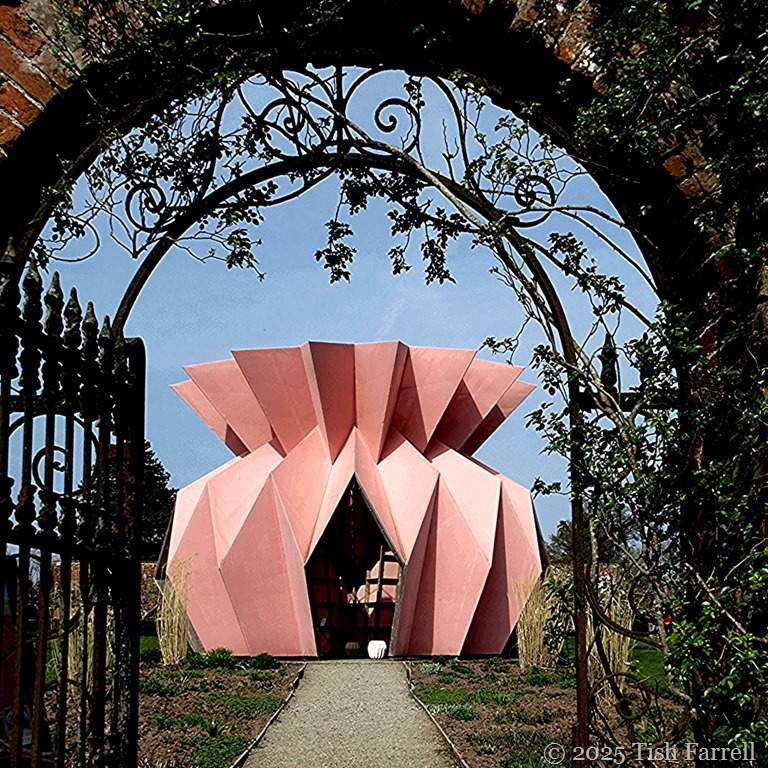
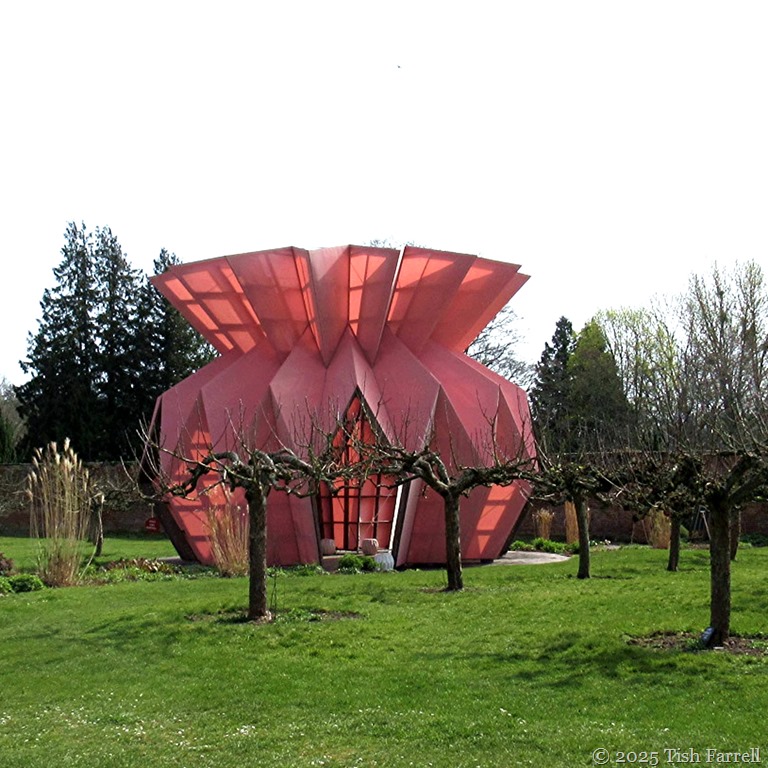
Some of you will have seen this before, but I thought it deserved another outing; ideal for Becky’s #GeometricJanuary.

We came upon it a few years ago when visiting National Trust stately home, Berrington Hall, in Herefordshire. It is the work of installation artists Heather and Ivan Morison; their interpretation of the Georgian garden pleasure principle, which included all manner of temporary structures for dining, conducting assignations, or communing with the great outdoors. It’s called Look, Look, Look!

P1030075 sq pineapple 4

In the 18th century, Britain’s landed rich expended their often questionably-gotten gains in the creation of pleasure parks around their grand houses. These were places for promenading, a little sporting activity (fishing, sailing, archery), for re-enactments of famous naval battles (if you had your own lake); there were ‘eye-catcher’ summer houses, grottos, fake ruins, and classical temples. It was also the era of wholesale removal of villages from the sight-lines of the gentry in the ‘big house’. Garden tunnels were also dug so the horticultural workforce could go about their labours largely unseen. Above all, these gardens were ‘show off’ places, and if you wanted the best, you employed the likes of Lancelot ‘Capability’ Brown to design it.

IMG_1312 pineapple 3

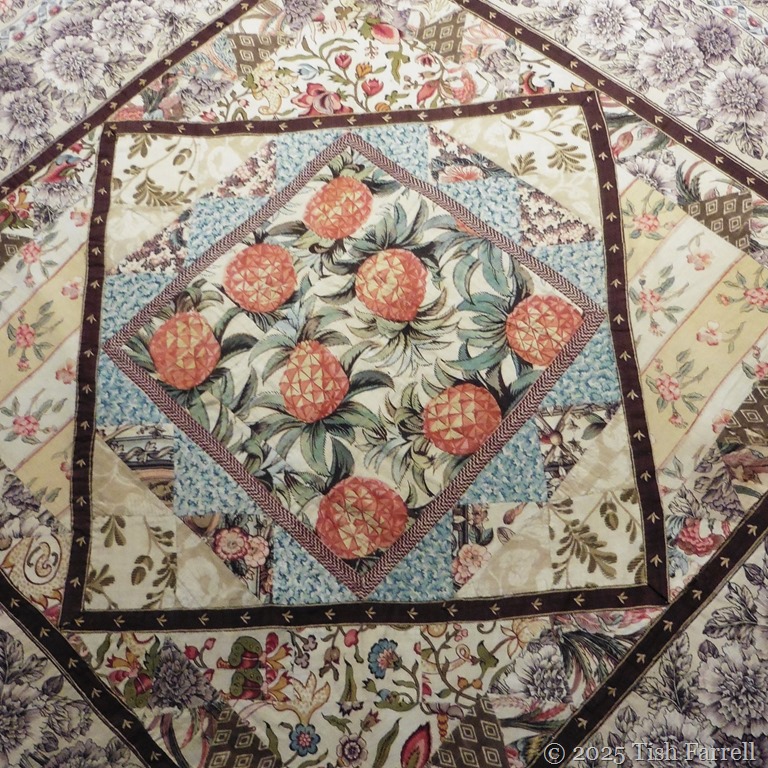
Another show-off item was exotic fruit, especially the pineapple whose possession, in the flesh, produced in your own very expensive-to-run hot house, or as architectural motifs about the house, demonstrated your wealth and prestige. At Berrington Hall there are both pineapple allusions, and  the surviving landscape contrivances of Capability Brown. The park is magnificent, and Brown’s last endeavour as a garden designer. There is currently an extensive garden restoration project which aims to recover his original groundworks.

pineapple quite

Inspired by the pineapple, detail from a Berrington Hall bed quilt

*

N.B. You can find full details of the Pink Pineapple’s construction, with architectural plans HERE.

#GeometricJanuary Day 5

Of Right Royal Geometry

IMG_2129ed

*

So begins Becky’s month of square format photos – of things geometrical. So here goes.

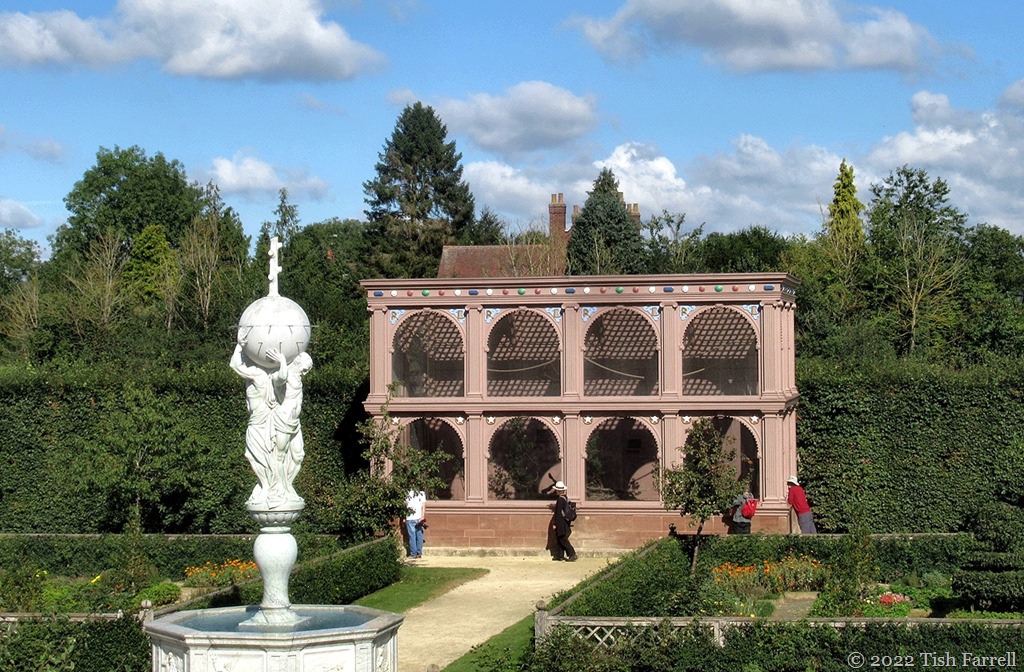
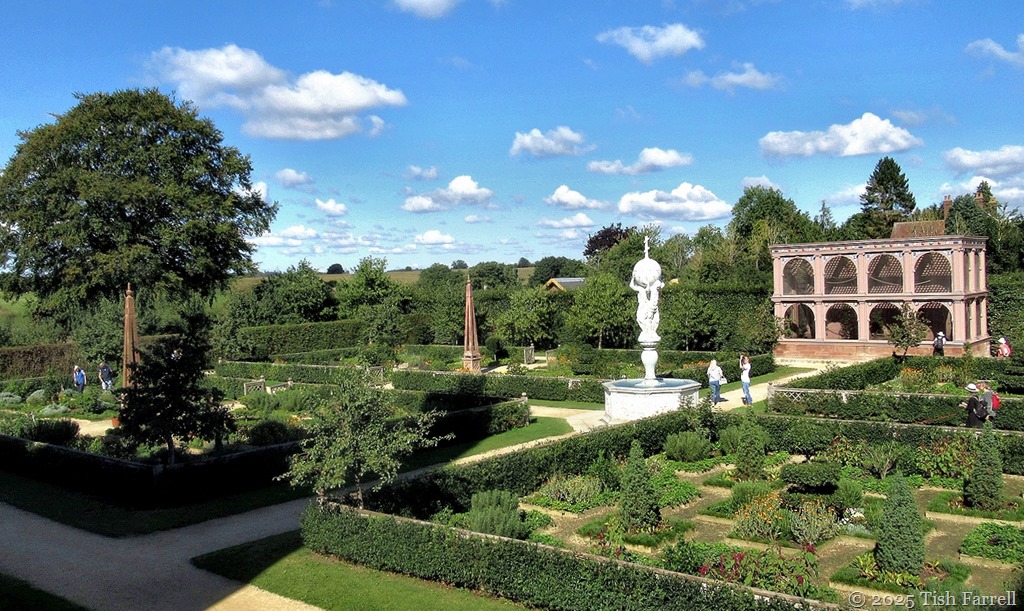
There’s almost too much geometry in this shot: triangles, rectangles, circles, semi-circles, octagons. It is was taken at Kenilworth Castle in Warwickshire, a medieval fortress transformed in the 1570s into a grand Tudor palace, wrought at huge expense by Robert Dudley, Earl of Leicester, and with the sole purpose of entertaining his queen (and rumoured lover)  Elizabeth I.

More of that story here: Greater love had no man…

The photo shows a slice of the pleasure garden and ornamental aviary constructed in 1575, specifically for Elizabeth’s visit. This is how she would have first glimpsed it, descending from the royal apartments to a loggia terrace, whence she could view the whole extravagant horticultural confection. For this particular visit, it is said Elizabeth arrived with thirty-one barons and four hundred staff.

And they  stayed nineteen days. (Just imagine!)

Robert Dudley pretty much bankrupted himself to keep them all amused, not only with lavish banquets, but also with hunting, pageants, plays, bear baiting and fireworks.

And after all this, Elizabeth still could not be persuaded to marry him.

As to the garden, it was lost for nearly 400 years. English Heritage have reconstructed it using an eye-witness account of the visit by one Robert Langham plus archaeological and historical investigation.

You can read Langham’s account HERE. He speaks of ‘fair alleys…green by grass…and some (for a change) with sand…pleasant to walk on, as a sea-shore when the water is availed.’ He mentions too (and not an inconsequential attribute in those times) ‘the sweetness of savour on all sides, made so respirant from the redolent plants and fragrant herbs and flowers, in form, colour, and quantity so deliciously variant’.

*

IMG_2086

IMG_2084ed

*

And the ruins of the erstwhile royal apartments:

IMG_2065sq

*

Wishing everyone an all round happy New Year

*

#GeometricJanuary  You can join Becky’s square posting every day this month. The only rule is the photo must be in square format. How you interpret ‘geometry’ is up to you.

The Grateful Gardener

IMG_6486ed

We have snow here in the Castle. We woke up to it early yesterday. What a shock. Snow in November. It’s much too soon. I’d seen the weather forecast of course, but was expecting only a spot of sleet that would soon melt away with the global boiling, not several inches of real snow, the sort perfect for snowballs.

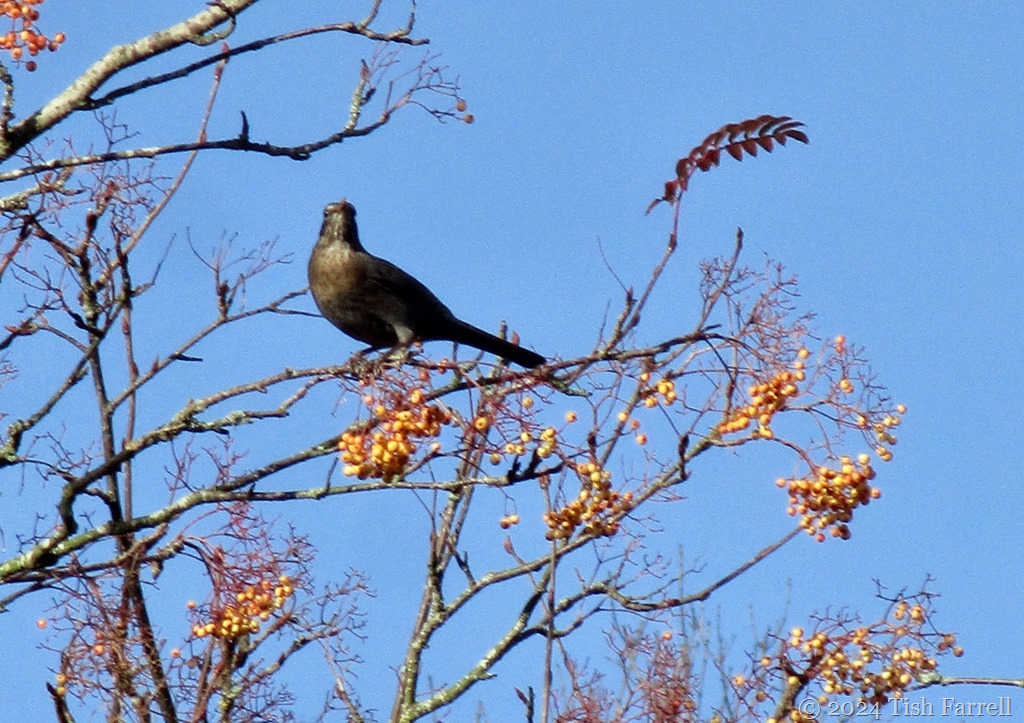
Anyway, it’s not the snow I’m grateful for, but I do love the brilliant blue sky it’s brought with it. And also this golden Rowan tree in its white cocoon. It stands just outside our garden, and provides us with some borrowed treescape. And it, in turn, has recently been much loved by the birds, especially the blackbirds. Before the snow came they were busily stripping the stems.

IMG_6457

*

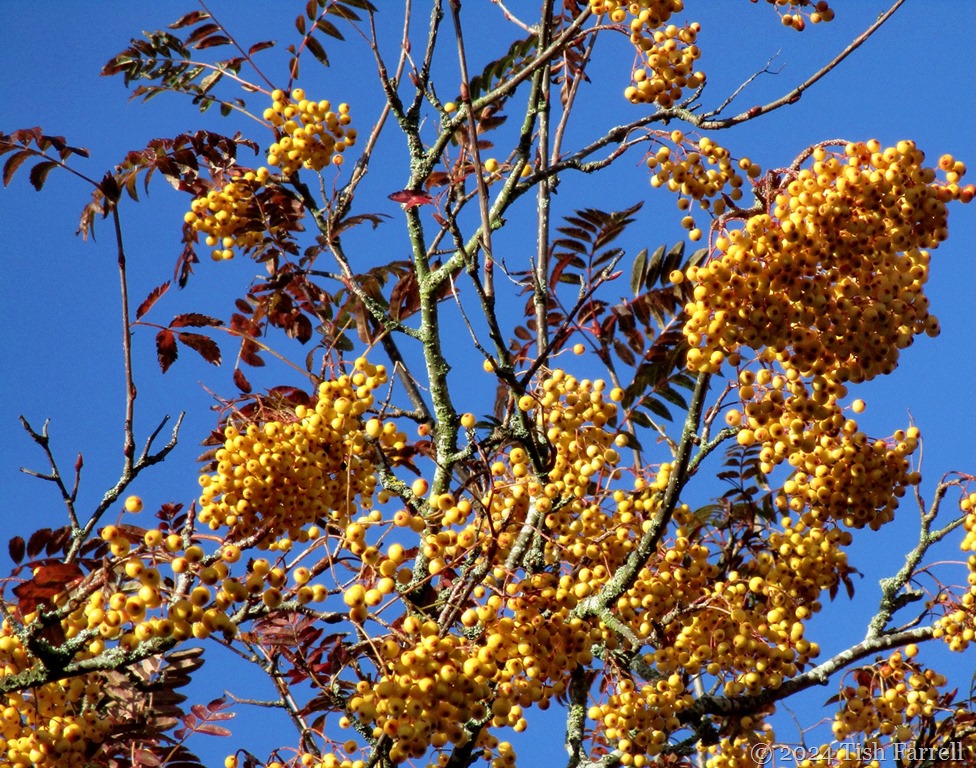
I’ll miss the berries when they’ve gone. On bright autumn days they light up like jewels. This is how they looked in early October. A tree full of joy. Thank you, Rowan.

IMG_6424ed

*

The snow fall also focused my eye on the latest garden addition: a Jelly King crab apple tree. Yesterday morning while sitting at the kitchen table eating my porridge, I could see its clutch of red apples glowing like little beacons at the bottom of the garden. Time for a photo then, and to say how very pleased I am with this Halloween birthday gift from my other half. Thank you, Graham.

IMG_6489ed

It came a few days before my birthday, delivered in a tall box to the front doorstep, whither I was directed to investigate the new arrival. Once I’d broken through the cardboard, I was surprised to find the little tree had come with eight tiny apples still firmly attached. There were also a dozen loose ones in the bottom of the box, sadly not quite enough to make crab apple jelly, but filling me with high hopes. I decided to keep them as a spur to locating a wild tree. I thought I knew where there was one. And so it proved. Last week I found a fine crop of fallen apples in a patch of woodland on the way to the builders’ merchants. We now have crab apple jelly. No need to wait for the little tree to do its stuff then.

*

And speaking of stuff – we still have some of the salad variety growing outdoors and in the greenhouse.

IMG_6466

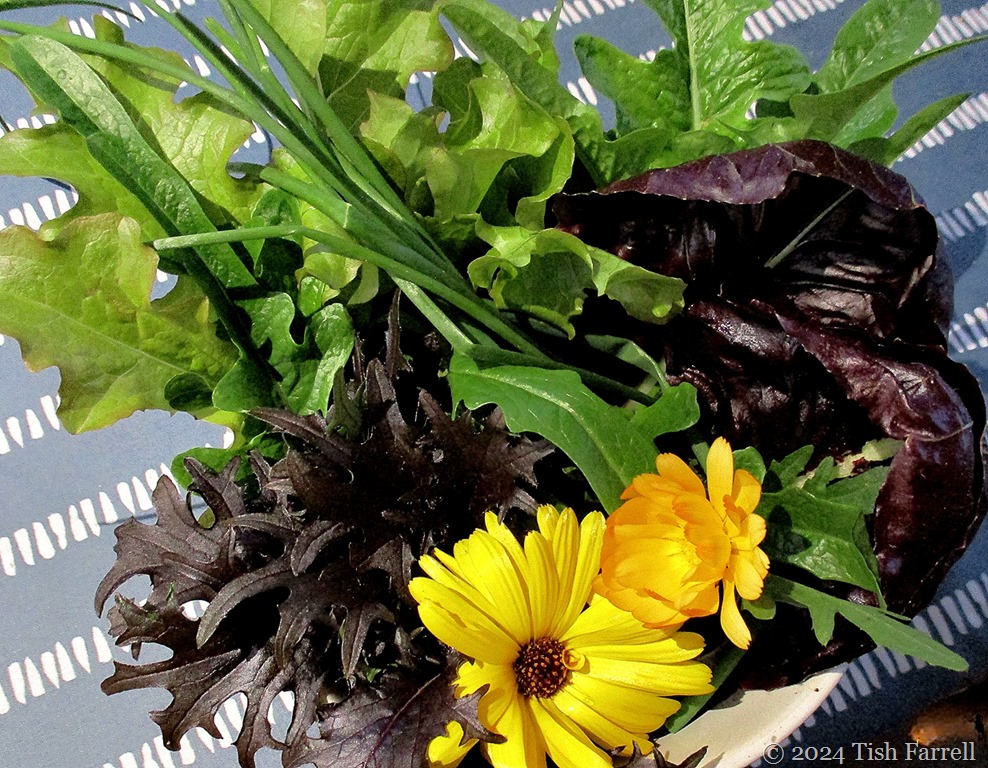
This year I’ve grown Red Radicchio endive. For the past few weeks it’s been growing fatter by the day, and as temperatures lower, the more red it becomes. I’ve been plucking the outer leaves with hopefully plenty more to come. In the greenhouse I have tubs of red Chinese mustard, Moroccan Cress which grows like a cut and come again lettuce and a few oakleaf lettuces. Also some lettuces out in the garden, though they may have succumbed to the snow. Likewise the marigolds. But it makes me very happy to find a bowl full of fresh salad leaves in late November. Thank you, garden.

And one little plant that is standing up to the snow, once I’d dug it out it earlier today:

IMG_6508

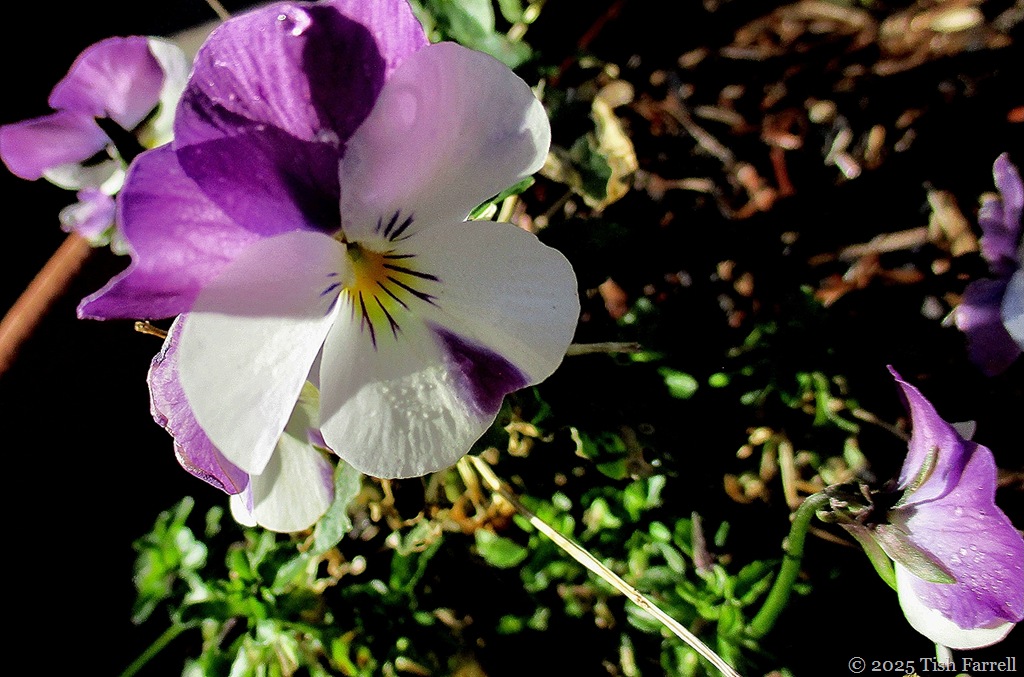
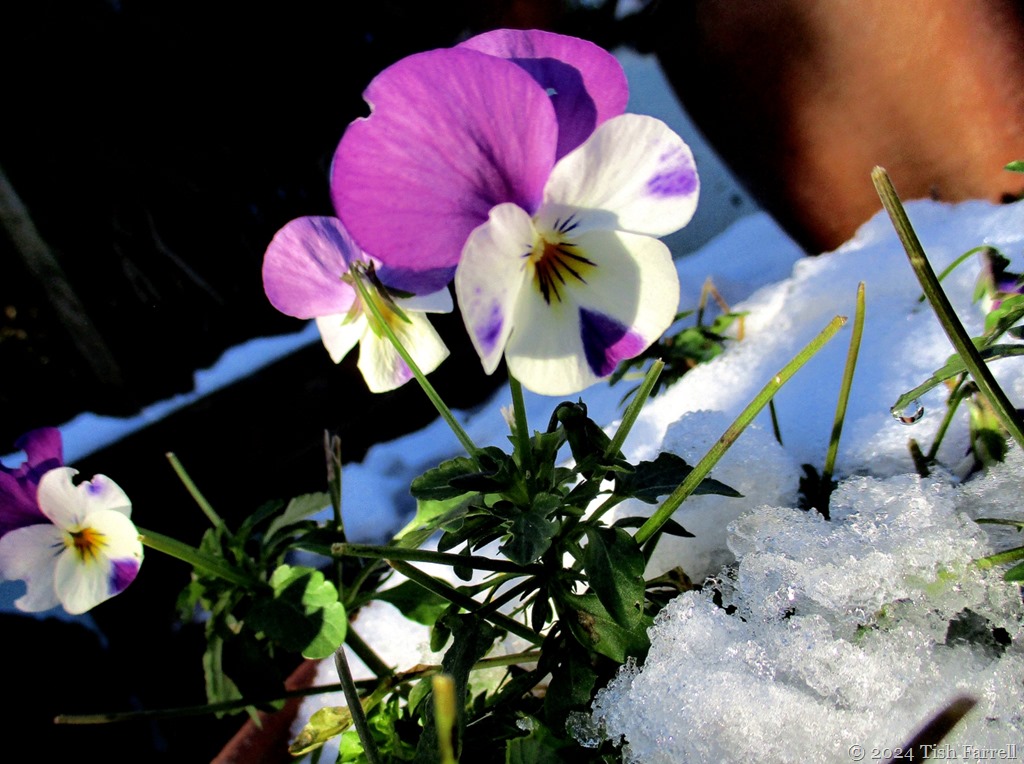
These sweet little hearts ease type pansies have been flowering for weeks and weeks in a pot on the garden steps. And they’re still going strong. They were a gift from my sister. Thank you, Jo.

Lens-Artists: Gratitude  This week Tina sets the theme, both timely and thoughtful. Please visit her ever lovely blog.

Six On Saturday: Of Flying Saucers, Scorpionweed And An End To The Great Gobbling

IMG_6143

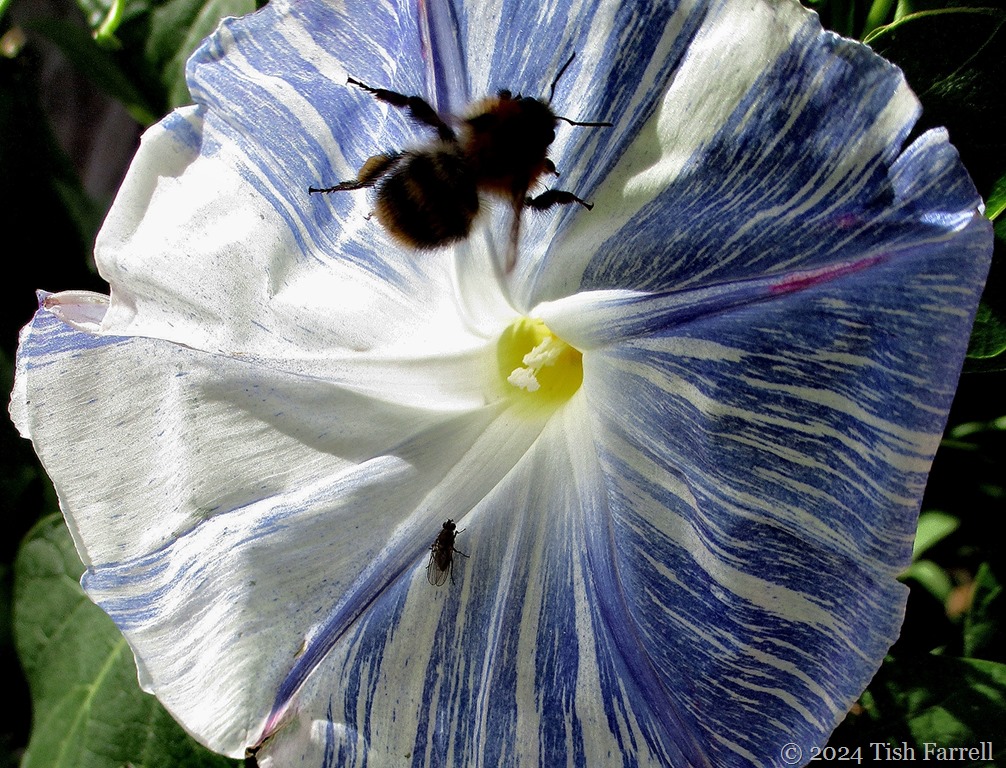
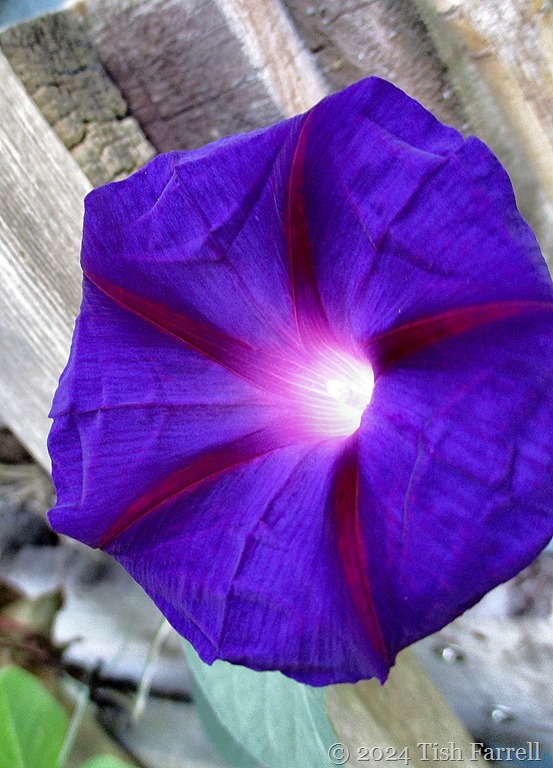
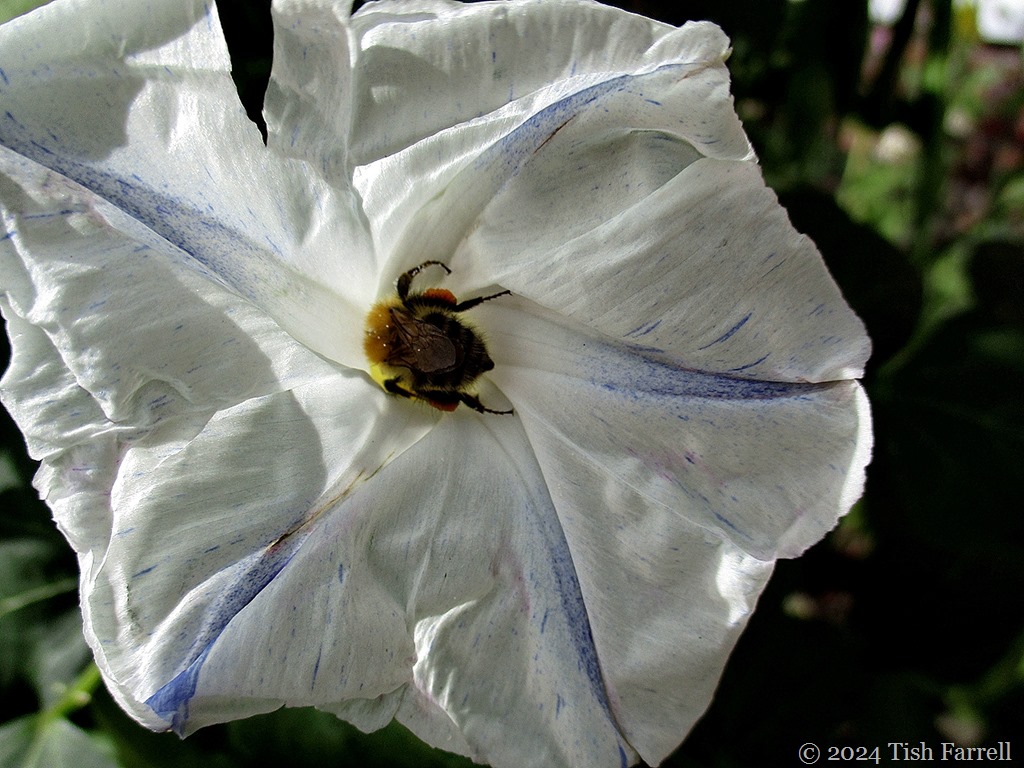
And no, we have no extra-terrestrial sightings here in Bishop’s Castle, at least not over The Gables, but I do have a few Flying Saucer Morning Glories. They are late on parade, growing up my obelisk of butter beans in the front garden.  I wasn’t really expecting them: the seed was several years old. Yet here they are, busy luring insectkind.

IMG_6145

*

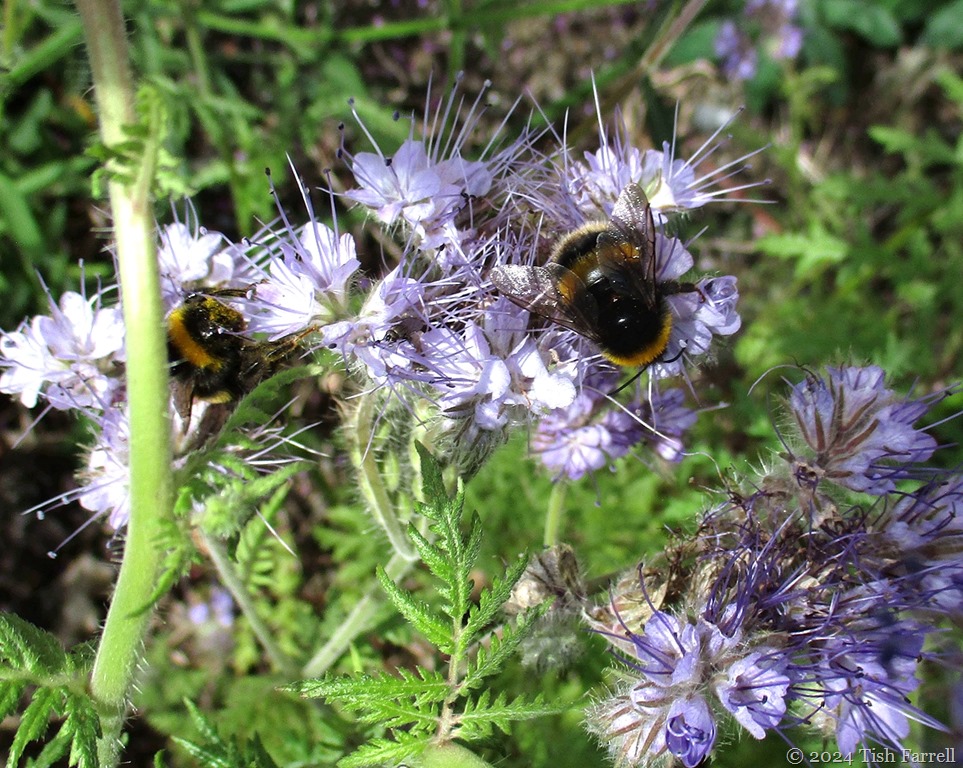
Also in the front garden, in the opposite bed, the phacelia has been flourishing for the past few weeks, every day alive with bee hum.

IMG_6172ed

IMG_6166ed

This borage family member hails from North and Central America where it also goes by the name of Scorpionweed, which sounds hair-raising. So far there has been no sign of cohabiting scorpions (no doubt a huge comfort to other half who was bitten on the foot by one while overlanding in the Sahara.)

I sowed the seeds quite late, probably around the beginning of July. As with the Flying Saucers, I was prepared for them not to germinate. The packet was left over from Wenlock allotment days. I grew it back then either as green manure or a cover crop. But then on a trip out in late June I’d spotted fields of it around Ludlow. I’d never seen it growing on an agricultural scale before. It was in full bloom and the fields seem to float in a mauve haze. More than a good enough reason to try it.

These days there is much farmer emphasis on improving soils and attracting insects on land taken out of food production (food security no longer seems to be a priority in government policy for British agriculture). Hairy crops like phacelia, vetch, linseed have been found to improve worm populations, this even in light and sandy soils.

I decided to try it on the ground where we had lifted paving slabs and left behind a layer of old mortar which had mostly been broken up into the soil. It looked very unpromising territory, and I wanted to see if anything would grow there. And it did. The seeds sprouted in a few days.

Usually if you’re growing phacelia to provide green manure, it should be dug in before it flowers to stop self seeding. But I thought never mind about that. The flowers are so pretty, their scent so subtle and, while they last, their kindness to insects immeasurable. The first frost will doubtless fell the plants, and I’ll probably leave them to dig in before spring.

*

IMG_6271ed

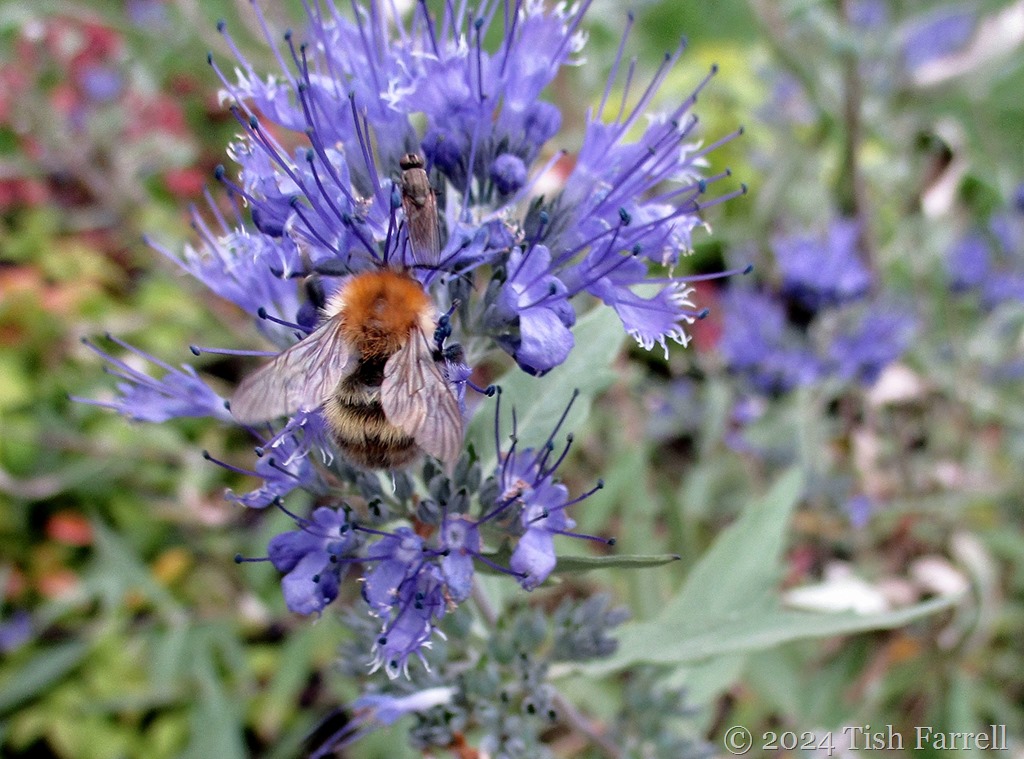
And here’s another insect friendly plant, doing its end of season feeding duty while looking lovely too: Caryopteris ‘Heavenly Blue’, a fairly compact hardy shrub bought back in the spring. It clearly loves our garden and has opened its branches so generously. The flowers are scented too, and it’s taken over catering duties from the neighbouring purple agastache, which is now a mass of dusky seed heads and no longer of interest to the bees.

Much of the rest of garden has a look of late-summer weariness. We had a couple of real summer days earlier this week, but there’s a real sense of autumn in the offing. My runner beans simply stopped producing at the end of August, for no reason that I can fathom. Although I did notice yesterday that a single plant has decided to grow a couple of strands worth. Perhaps one last small meal then.

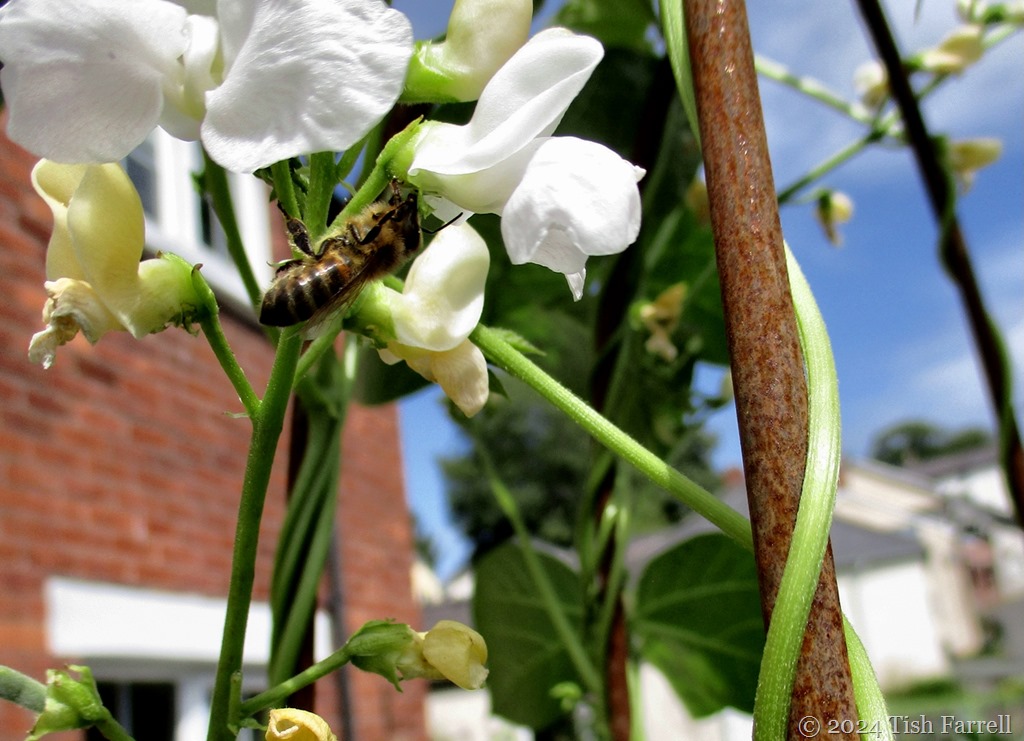
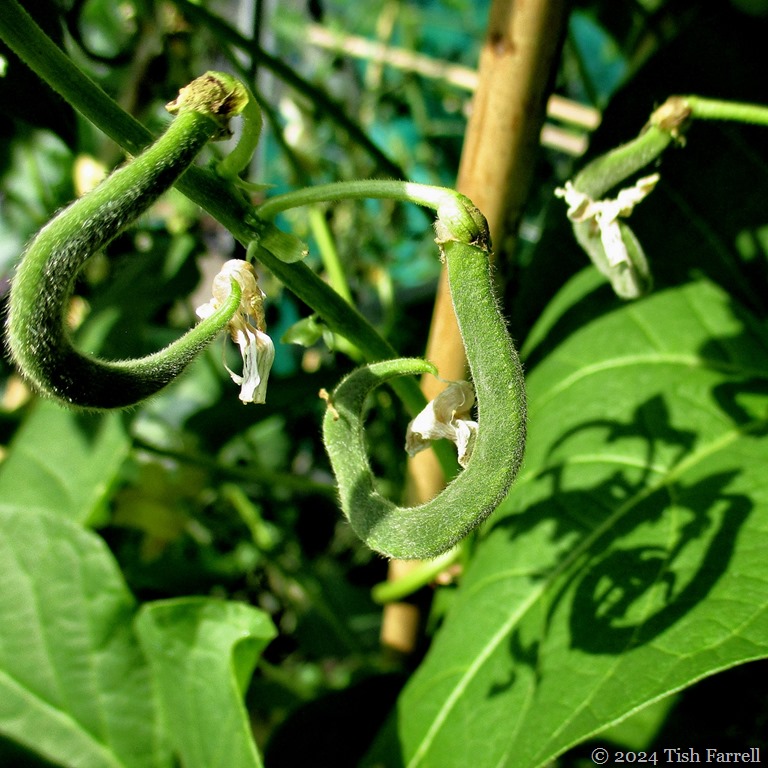
Meanwhile, the Flying Saucers’ hosts, the butter beans are still flowering like mad up the front garden obelisk. There are many pods but they are being very slow to fatten, doubtless down to the lacklustre summer and cold-spring start. I’m now hoping for an amiable October that might give the beans the chance to finish off. And for now, the blossom is still performing essential services.

IMG_5976

*

The good news, though, is that the horrendous brassica gobbling has ceased, this after the cabbage white caterpillars ate every kale plant down to the stalks. It did not matter that I’d covered crops with so-called butterfly netting and fine grade enviromesh. Somehow the butterflies sneaked in to lay their eggs. Patrolling the plants even twice a day proved a losing battle. They made inroads in the pointy cabbages too, but I’ve managed to save some of those.

Ever hopeful, I’ve replanted Russian and Tuscan kale plantlets under extra-fine mesh. The butterflies are still about, but not in the flocks we experienced earlier in the summer. Fingers crossed.

IMG_6282

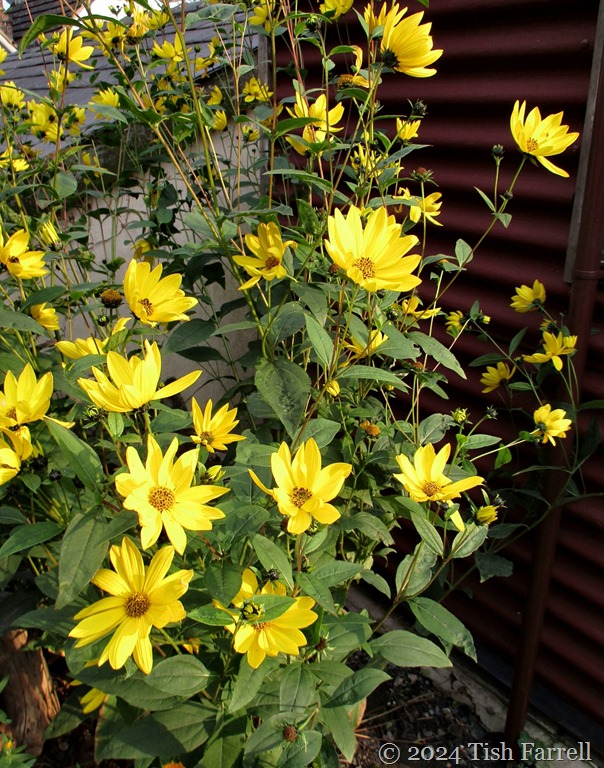
There are other bright corners in the garden, and especially this towering clump of helianthus, a perennial sunflower. Back in the spring when I planted it out, it was three single small stems with only a few roots between them. The cuttings came from my sister’s Little Stretton garden, descendants from plants that grew in our Aunt Miriam’s Devon garden. I’m so pleased to have it. I did not have a chance to grab a segment or two of my Wenlock helianthus before we moved. It used to be the star of the late summer guerrilla garden there. It’s growing even more vigorously in Bishop’s Castle.

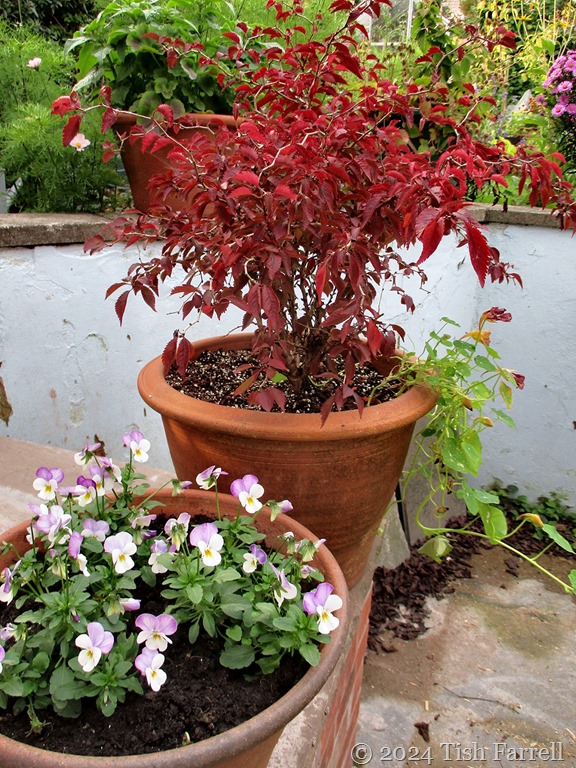
And last but not least, but definitely with an eye to autumn in its new russet foliage, this is a newcomer to the Farrell garden, Japanese cherry kojo-no-mai. (Posing here with some very sweet violas).

IMG_6254

It will eventually grow into a small tree, but for now seems happy in this pot.

*

Six on Saturday  Please visit Jim at Garden Ruminations. He needs some get-well wishes.

What’s In A Garden ~ Or Tales Of The Not Quite Planned

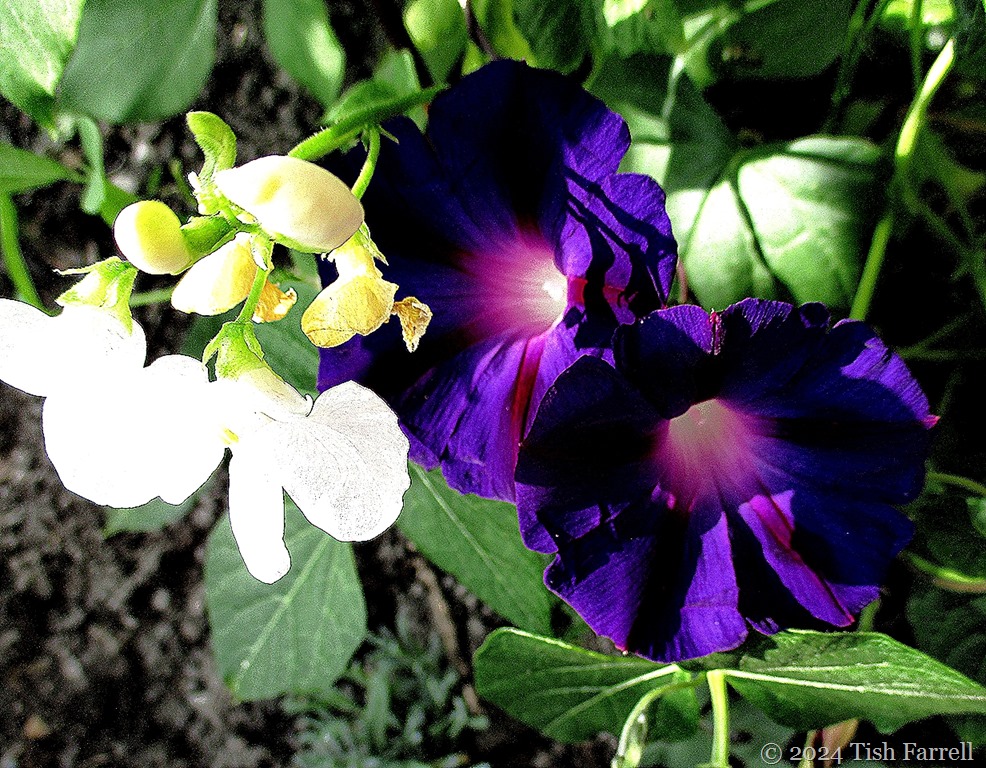
butter bean blossom and morning glory

The thing about making a garden is you never really know what will happen there. Not really really. You do of course ‘set the stage’ for growing to happen – from planting up a few doorstep pots to toiling over ground work and designing and filling borders.

And then when you sow seeds, as I did here for Gigantes butter beans, and Black Knight morning glory – you could well envision how they might be if they were planted out together and set to grow up the front garden obelisk. (Header photo)

But you can’t necessarily predict the actual ‘show’, which of course is what’s wonderful about gardening. In many ways it’s ever an experiment. The pleasure comes when you walk outside and notice something  special, the something whose actual disposition you had no control over.

IMG_6023

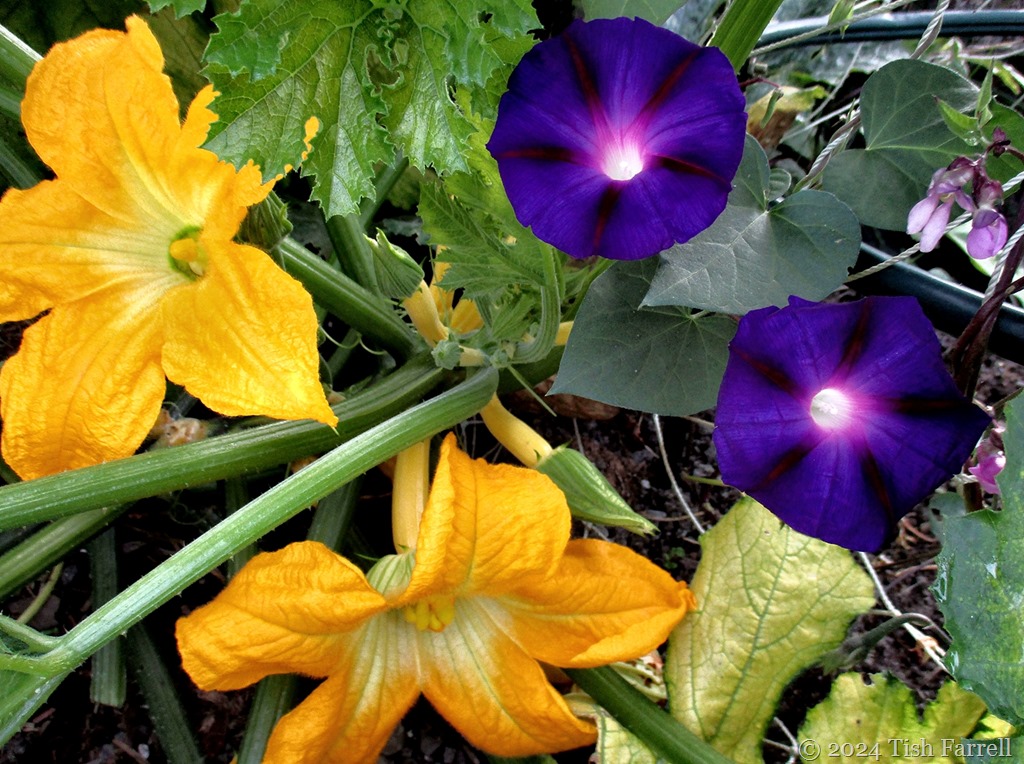
In the back garden I planted out some more Black Knights with purple climbing French beans Violette. But at the moment they seem more keen to keep company with the courgettes. The flowers have an unearthly look about them. I could swear they radiate light from their recesses.

IMG_6035

*

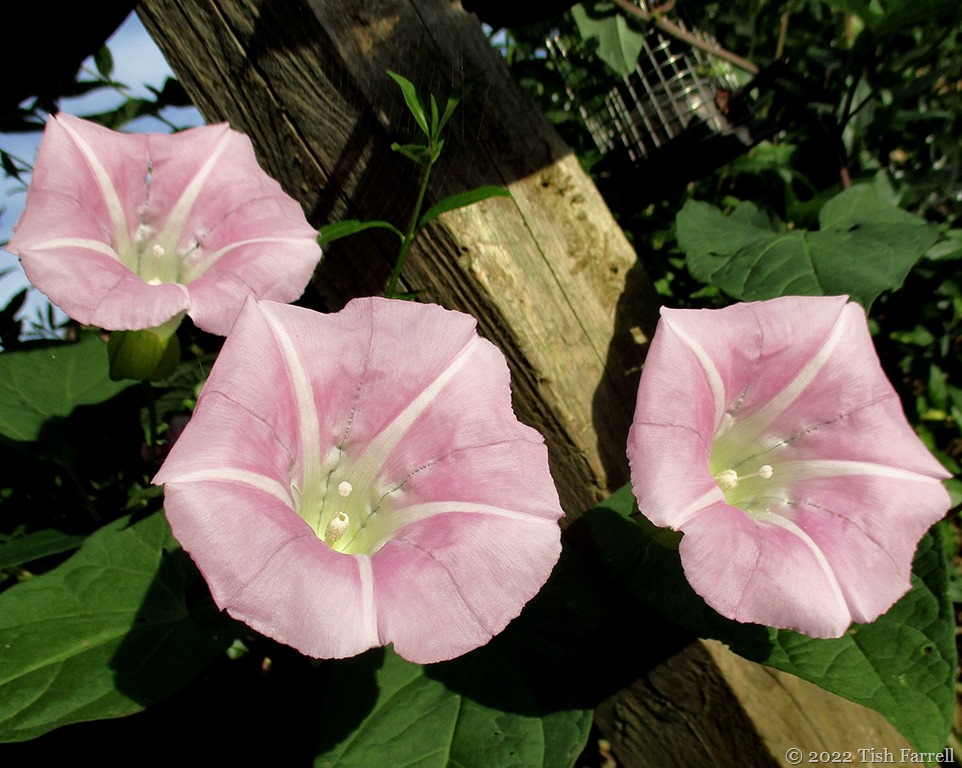
Then there are the wild and feral plants that invite themselves into the garden. Sometimes they are not too welcome. But sometimes they make one’s heart leap with delight. Here, entwined in our otherwise horrid hedge we have this glorious pink convolvulus (bindweed). The flowers are much bigger than the wild white version of themselves and they out-trumpet their morning glory cousins too.

IMG_6010

*

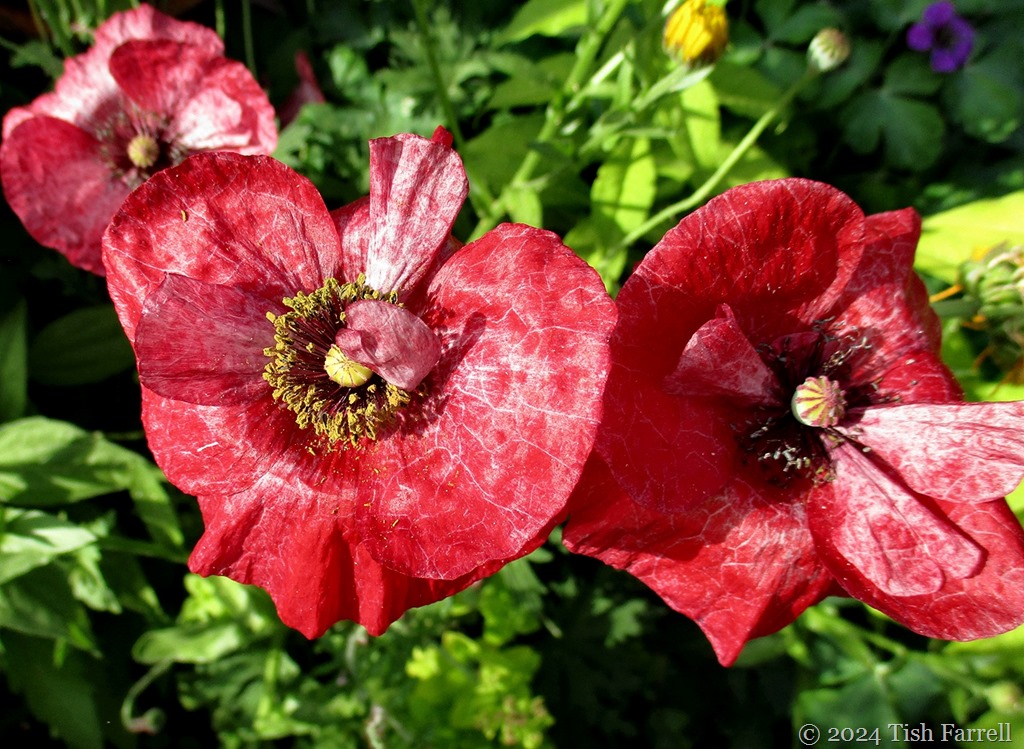
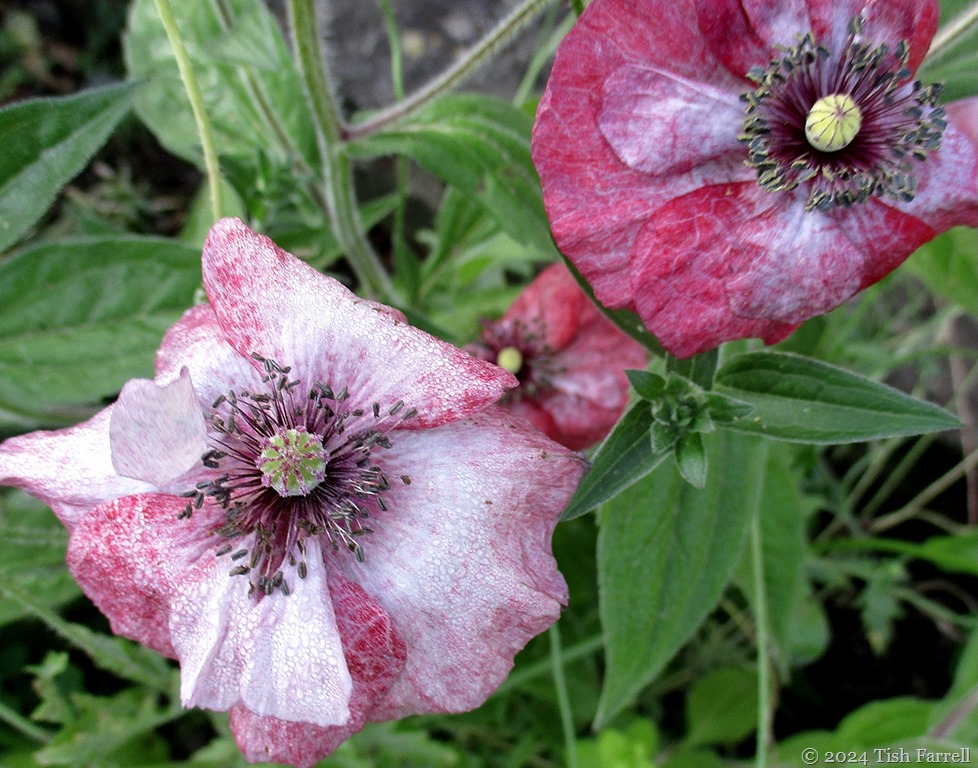
And then there are the garden invaders that invite more curiosity than delight. These delicate crimson-grey poppies are presently flowering above the terrace wall and, as far as I can tell, is a single plant with many branching stems. As the flowers fade, the more ashy they become.I’m not sure what to feel about them.

IMG_5878

IMG_6036

*

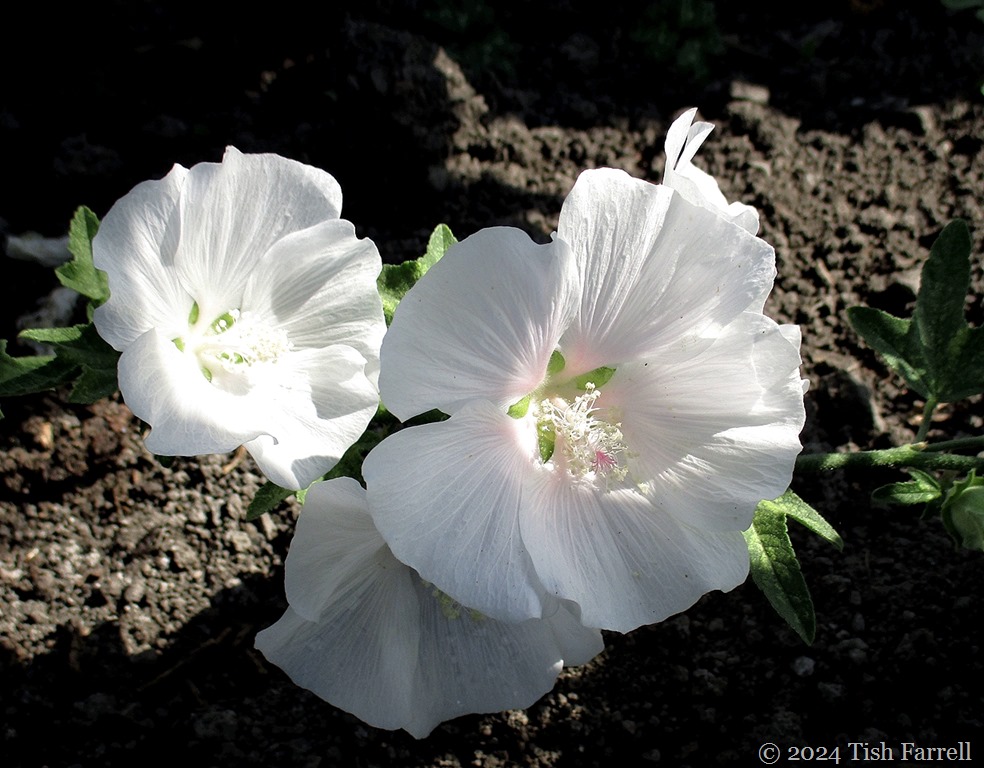
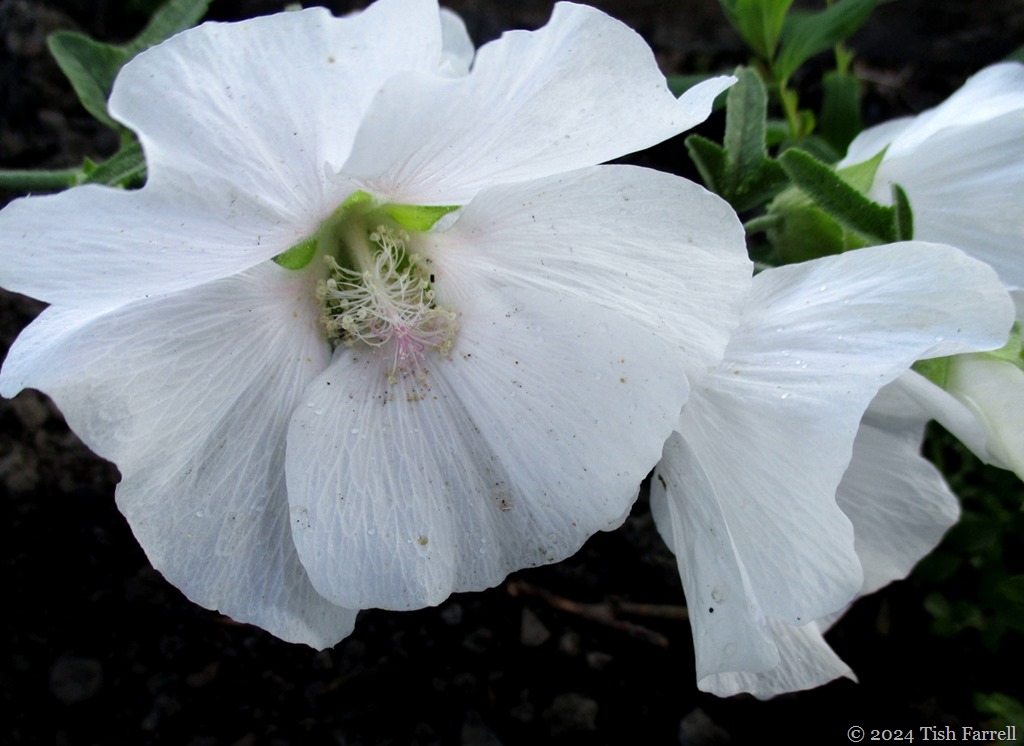
But I know I love this white marsh mallow, a shrub I bought recently to grow on and fill a gap along the back garden fence. A perfect moment – catching the early morning sun on its face:mallow

*

And then there are things that add to a garden that aren’t quite in the garden. Just over the hedge, on the roadside verge, is an ornamental cherry tree with deep burgundy foliage. At sunset, as we eat supper, we have a glimmering light show at our new kitchen window; not at all what we were expecting.

kitchen window

IMG_6006

P.S. For followers of the house renovations: the kitchen’s not finished yet. Last lap stuff still to do.

Lens-Artists: What’s In A Garden  Ann-Christine at Leya shows us some stunning gardens

Six on Saturday ~ More From The Random Garden

IMG_5634

As I said in my last Six on Saturday post we have a new garden. I also said that for various reasons – rampant weeds to clear and too much wet weather from winter to spring – I was all behind come growing time; things got sown or planted out wherever there was space at that particular moment.
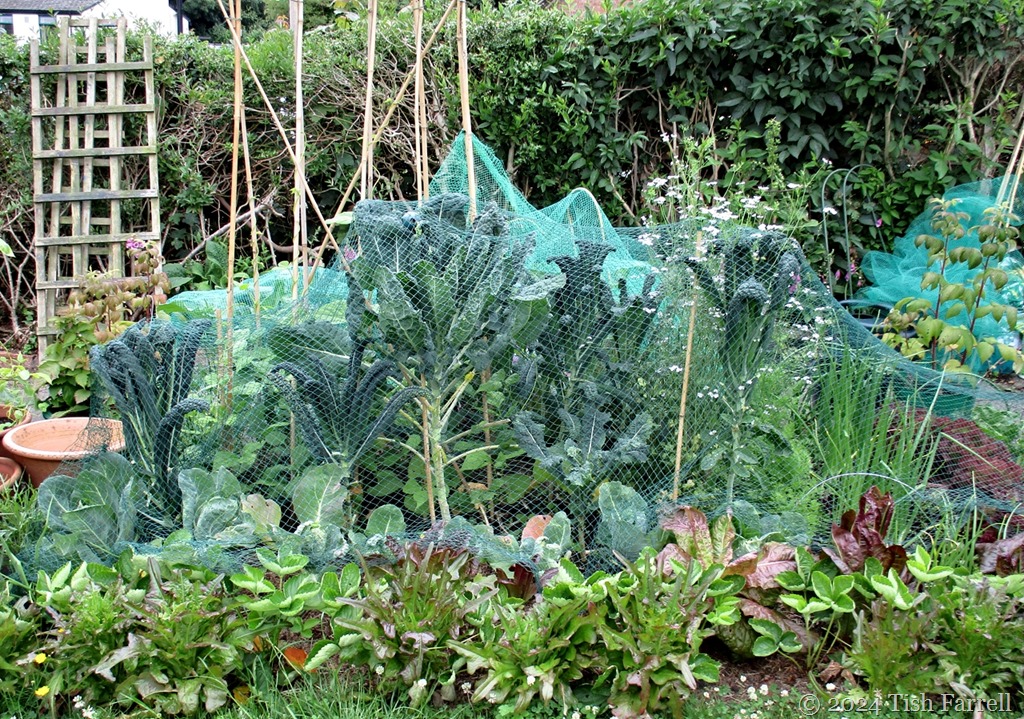
This has since made protecting cabbages, purple sprouting, kale and cauliflowers, first from pigeons, and more recently from hoards of cabbage white butterflies intent on laying their eggs, somewhat problematical, not to say given rise to a mishmash of netting and other protective devices rather too reminiscent of my former allotment contrivances.

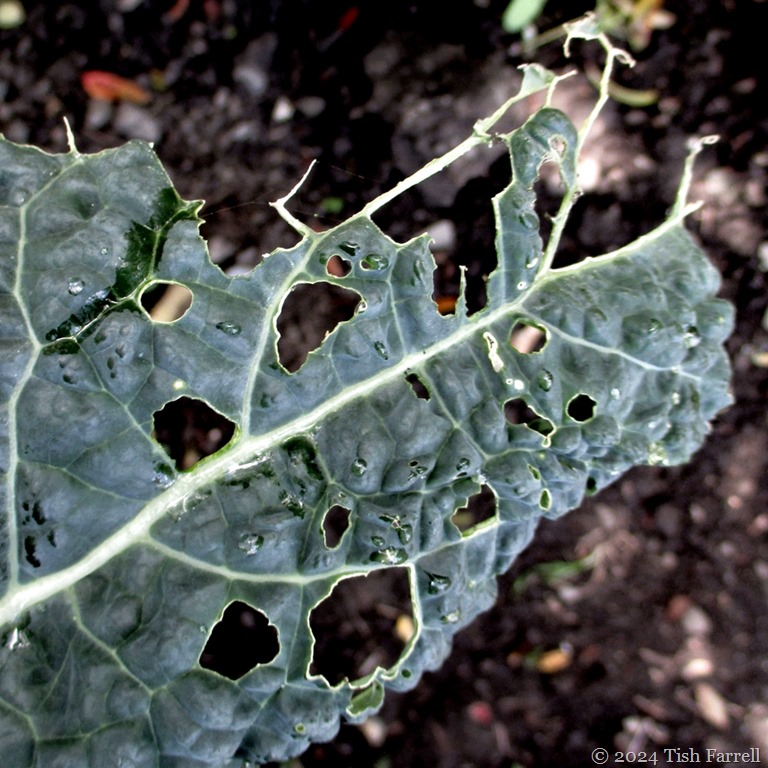
So number 1, since it is preying on both my mind and on my brassicas: CABBAGE WHITE BUTTERFLIES…

IMG_5954

Caterpillar damage on Tuscan kale

*

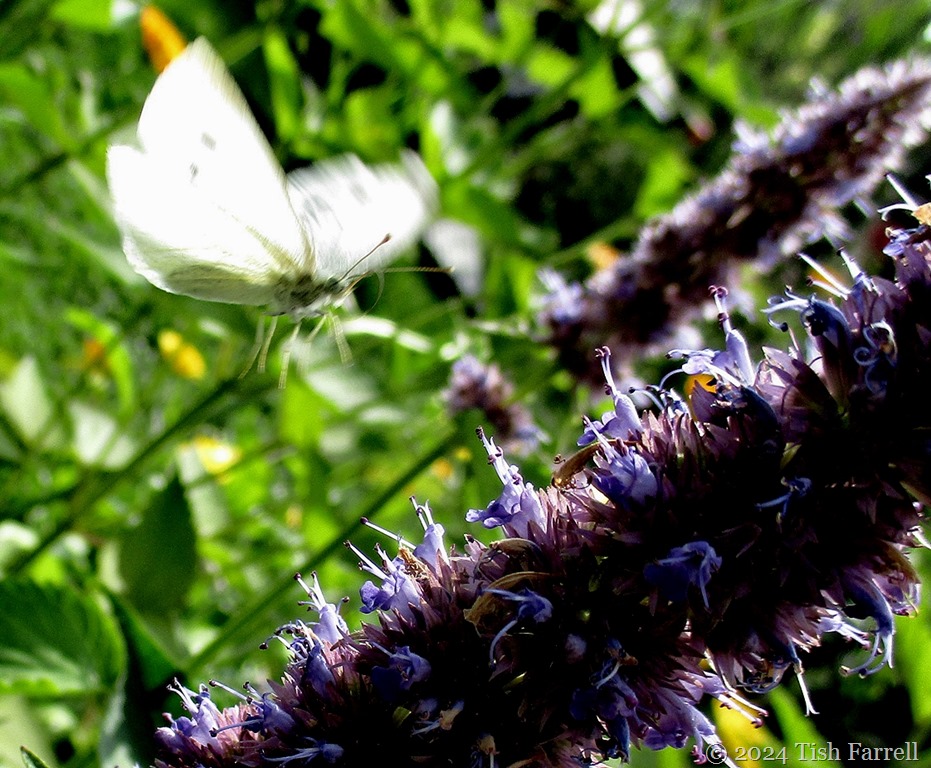
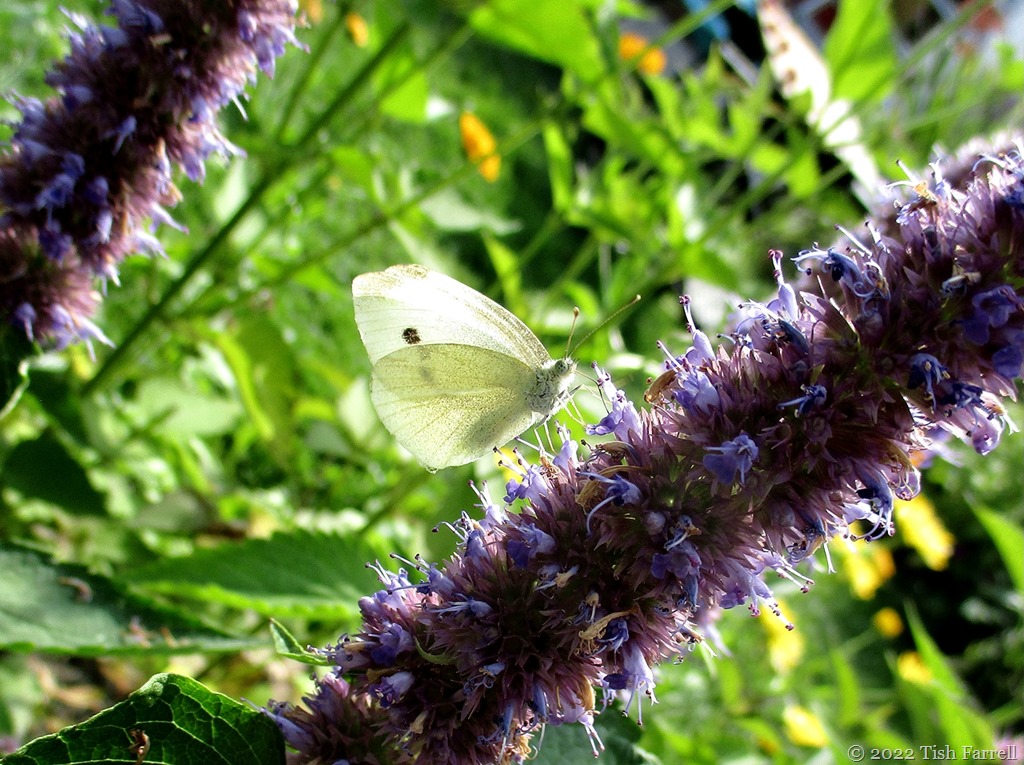
cabbage white

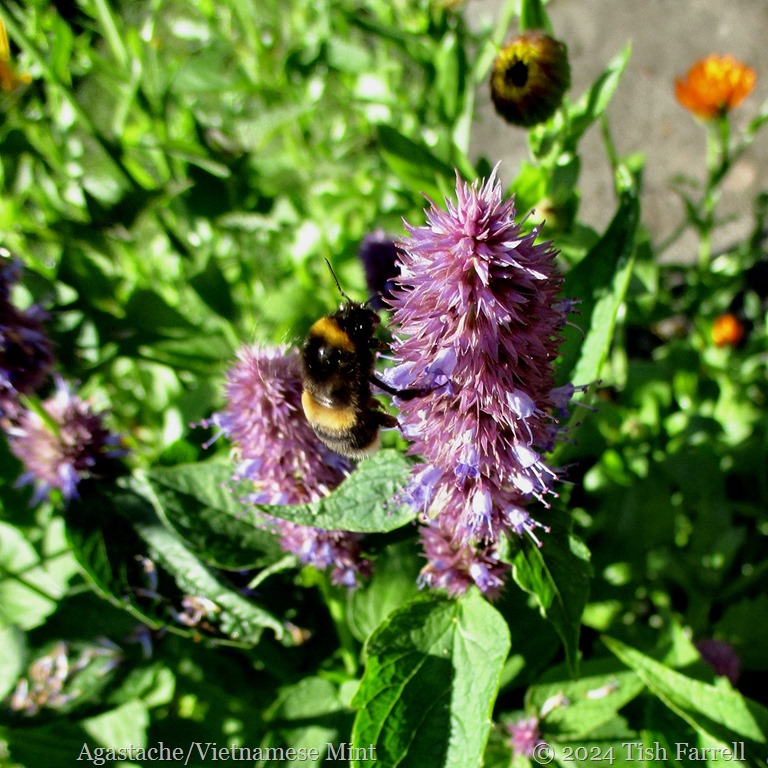
I actually quite like this photo. The more so as the target of interest is my SoS 2: agastache or Vietnamese Mint. The butterfly is calling in for an energy fix, which I suppose I should mind. (Enough procreation, thank you!)

IMG_5898

*

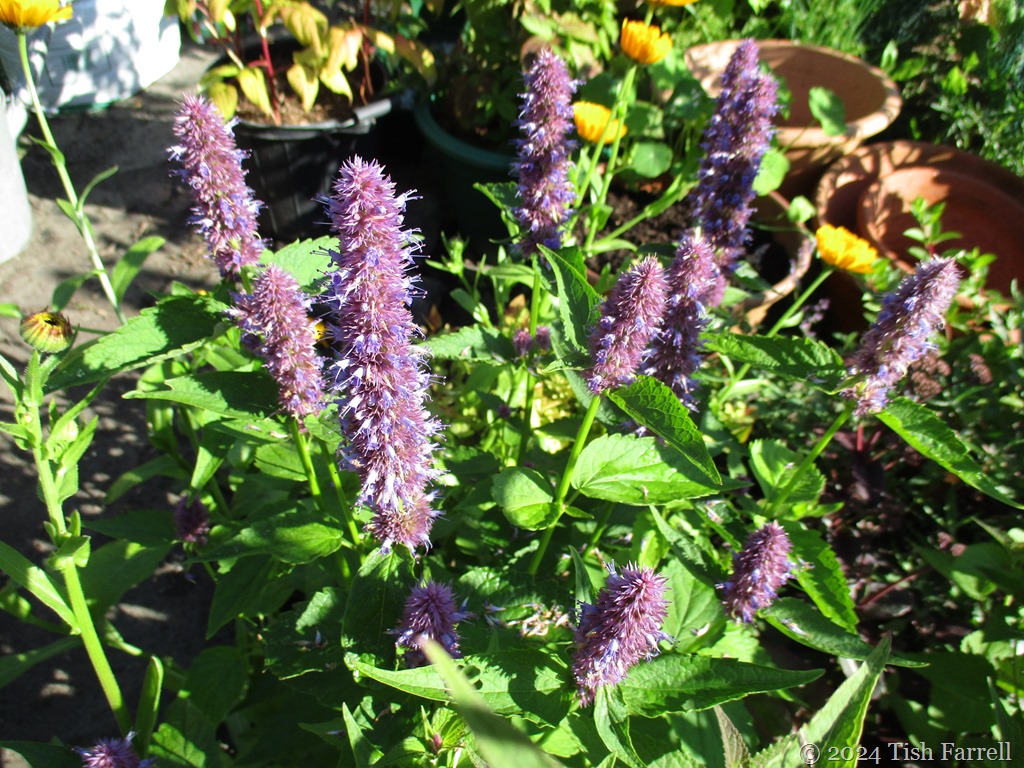
I love the agastache. It smells of aniseed and its leaves are edible. It’s a perennial (I grew lots of it from seed this spring), though I’m not sure how hardy it will prove in a Bishop’s Castle winter. Anyway, it is a very tidy plant, growing beautifully upwards with lots of purple-mauve spires – not easy to photograph well.

IMG_5844

*

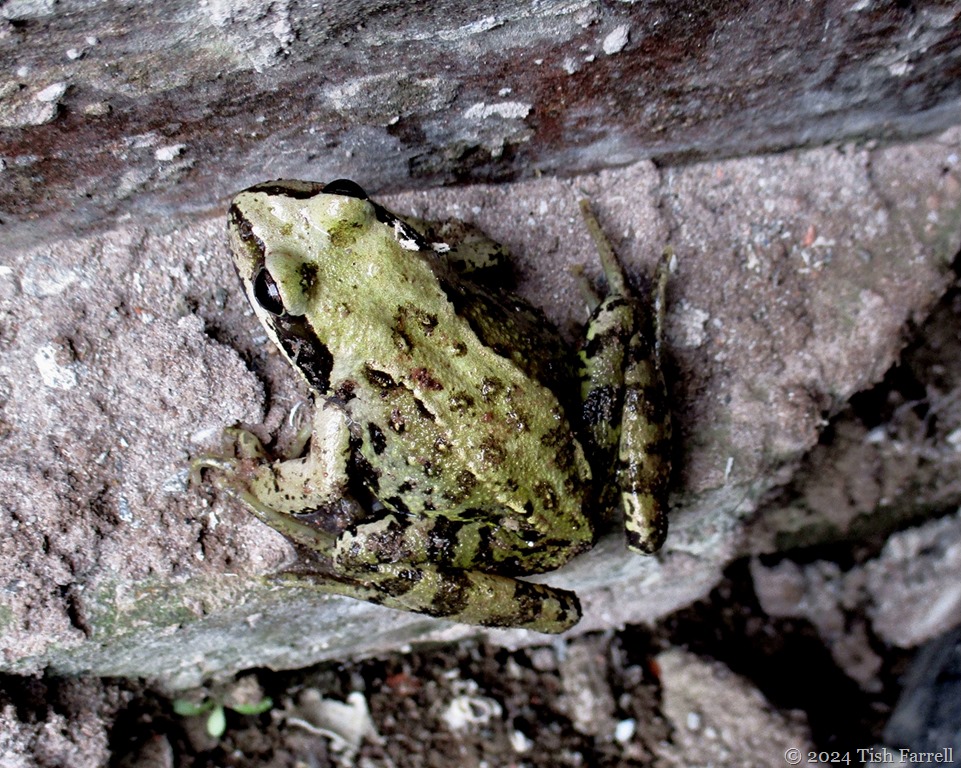
SoS 3 is one of this week’s very pleasing finds: a nice young toad lurking by the outside tap.

a young toad

We’d already found a much bigger toad hiding under an old tile by Graham’s new garden shed creation. I’m wondering if there may be more, because so far there has been very little slug damage along the vegetable rows – so little in fact, I can’t quite believe it. (Lull before storm?)  We were besieged with molluscs in Much Wenlock. We do have the odd big snail however.
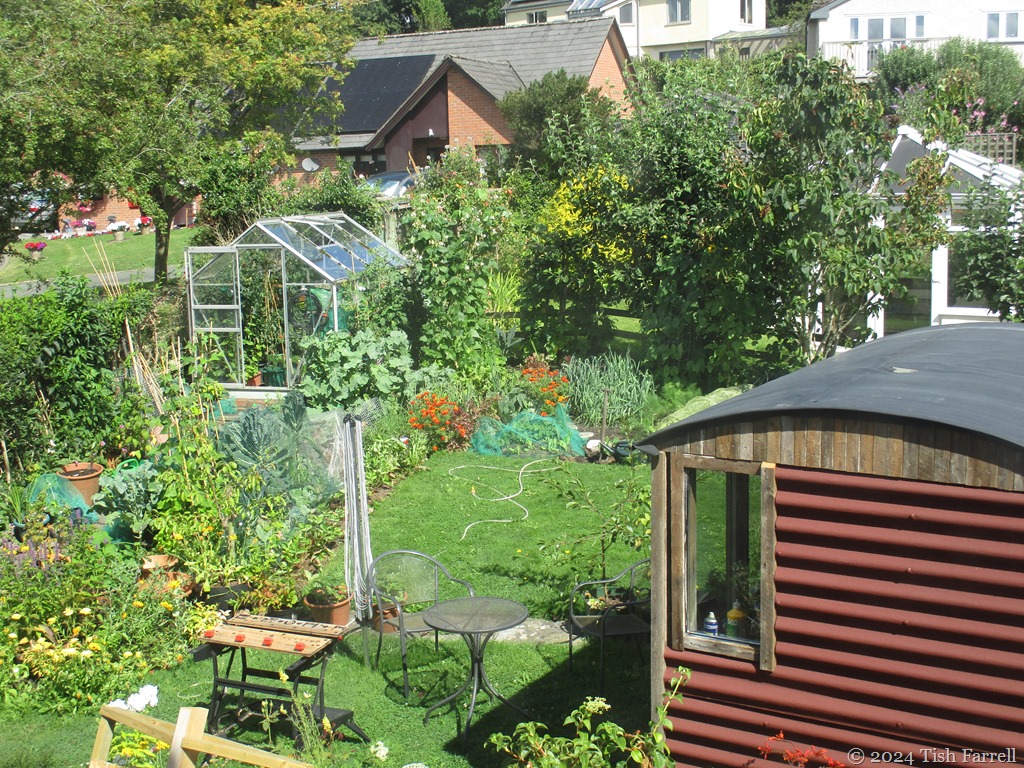
Talking of the new garden shed, this is number 4. I’ve mentioned elsewhere that it’s being built from scratch, incorporating recycled parts from our April roof makeover and other assorted materials, the whole inspired by a Great Western Railway goods wagon. I’ve had to sacrifice what might otherwise have been a large and useful garden border, but never mind. I’m liking the shed. It’s presently having its rubber roof applied.

IMG_5883

IMG_5942*

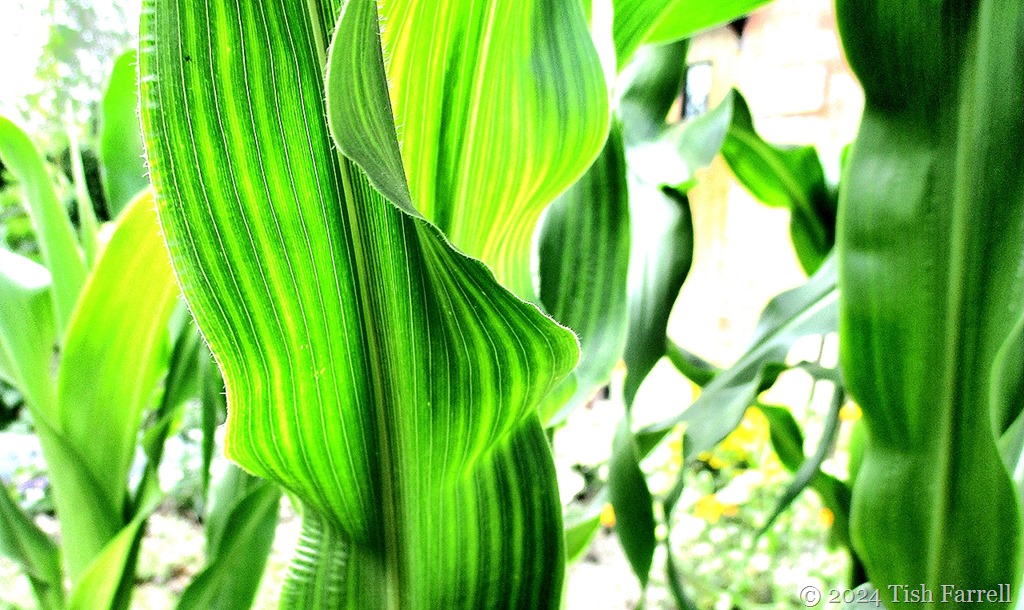
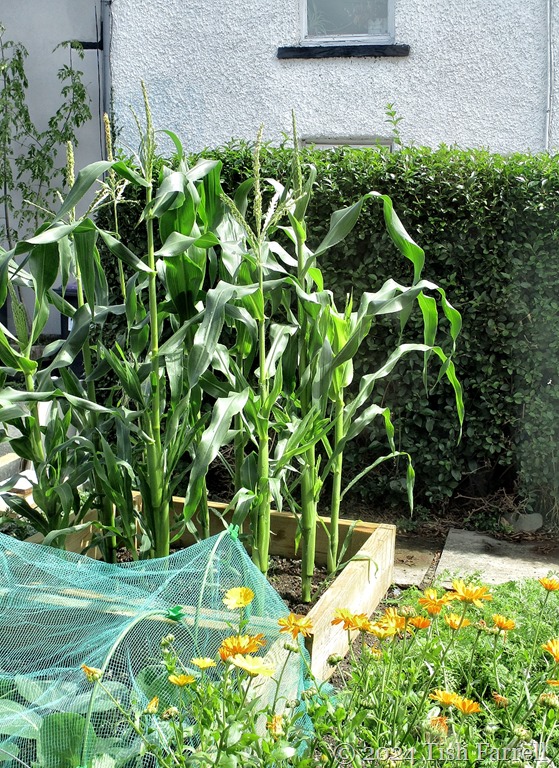
SoS 5 is the front garden sweet corn. It’s growing tall and starting to tassel. Possibly planted rather tightly, but so far the plants don’t seem to mind.

 IMG_5947

*

As seen a couple of weeks ago:

IMG_5912

I also have a neighbouring raised bed with cabbages and spring onions. On the farther side of the front garden there is now a row of purple sprouting growing where the potatoes were, netted of course.

The two raised beds seen here were made from building work off-cuts, and I’m hoping for more to be made when the shed is done, and eventually I’ll move these to the back garden.

Or maybe not. The front garden does seem a good growing spot.

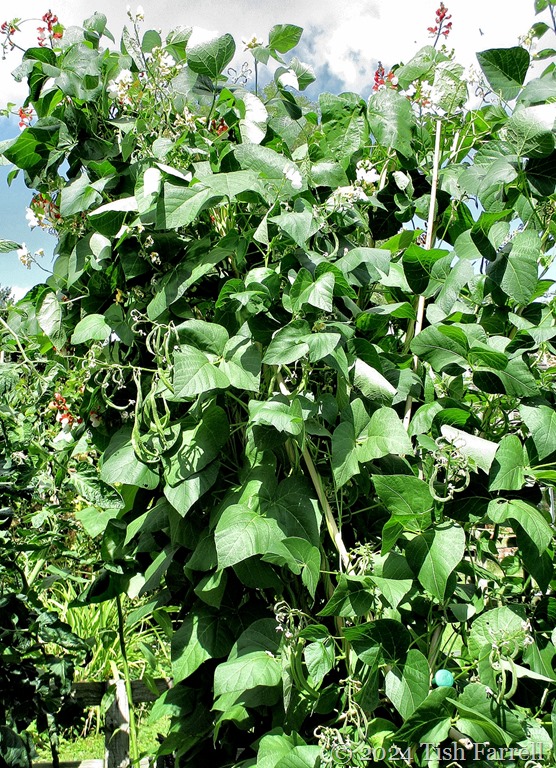
There’s also some good growing going on at the bottom of garden. I’m pleased that back in the winter I managed to make a good compost filled trench for the runner beans. It brings me to no. 6 – last night’s first meal of the season. Always a gardening landmark in Farrell household.

IMG_5944

IMG_5948

The trench of garden waste and hot bin compost certainly seems to be working  well for runner beans Emergo and Painted Lady

*

IMG_5958

Up, up and away…

*

Six on Saturday

Please visit Jim’s lovely garden at Garden Ruminations


header sweet corn

The Changing Seasons ~ This Was July ‘24

IMG_5817ed

Here in Bishop’s Castle, as in many parts of Great Britain, much of July was cool and overcast – more autumn than summer. The garden, however, carried on oblivious, although there was an obvious shortage of bees, hover flies, butterflies and other insects.

But then just on the last lap, summer happened. And not heat waves either; simply days of pleasing warmth  which certainly brought out the bees. And then whole flocks of cabbage white butterflies flew  in, wafting round the garden, dozens at a time, homing in on cabbages and nasturtiums to lay their eggs. I’ve given up chasing them away.

They also like to feed on the agastache (Vietnamese Mint), a perennial I’ve grown from seed this spring. The bees love it too. So I’m glad I planted out all the many seedlings that germinated, as well as giving some away. It’s a stately plant with purple-mauve plumes and leaves that smell of aniseed.

cabbage white 2

*

The switch to warm days has made all the lettuce bolt, but we’re still eating some of them. As ever, I have failed to organise a seasonal flow, so there will be a gap in salad content for a time. Instead, I’m picking the young leaves of Swiss Chard, a second crop which I’ve managed this time to protect from nibbling pigeons. There are also herbs – dill, basil, and lots of coriander and chives, and wild rocket (about to bolt) and masses of developing leeks which are good in salads.

But best of all, the runner beans are beginning to set, so I must keep an eye on them. They often fool me by producing the first crop near the ground inside the canes, where they can’t be seen.

IMG_5893

IMG_5854ed

IMG_5841

IMG_5847ed

IMG_5761ed

IMG_5639

*

And then this lovely mallow has started to flower…

IMG_5795ed

*

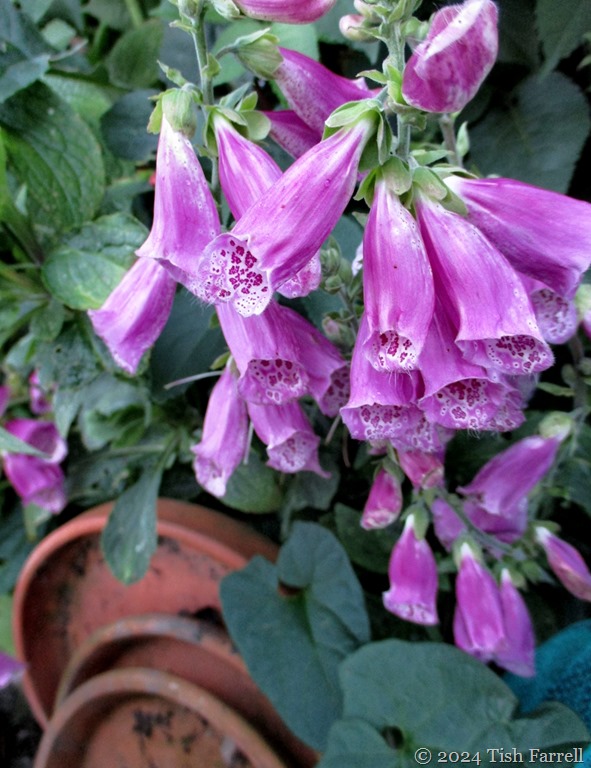
And there’s been a second flush of foxgloves…

IMG_5801ed

*

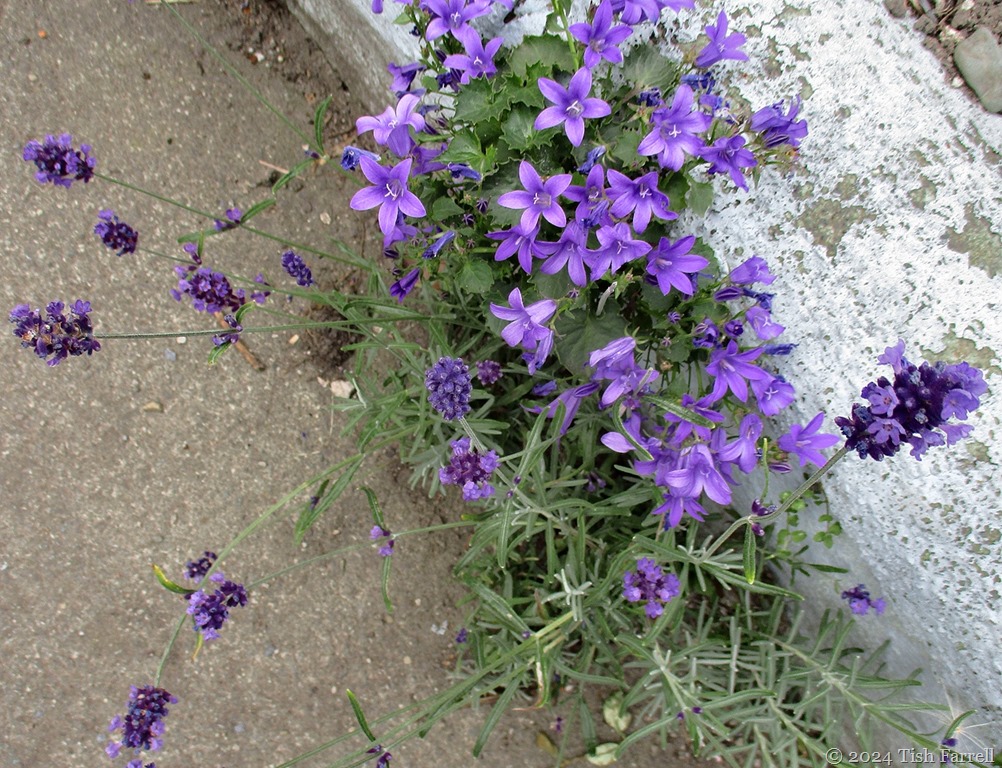
And then I noticed a happy partnership (growing out of the concrete on the front path) campanula and lavender perfectly arranged…

IMG_5859ed

*

And finally, in amongst the ongoing building work and general domestic confusion…

IMG_5867

*

…we take note that it is was a year last July when we exchanged contracts on The Gables and began planning our move to Bishop’s Castle…

IMG_5577

And in case you’re wondering about the big beer barrel, the town is famous for its historic pub and brewery The Three Tuns Inn, serving folk since 1642. Just one of many good reasons to settle here. The beer is delicious. Cheers!

IMG_5817header

The Changing Seasons: July 2024  Hosted by Ju Lyn and by Brian at Bushboys World

Six On Saturday: On Random Gardening

IMG_5631

Starting a new garden is always exciting; daunting too. And our particular garden, being a hundred years old, had traces of many a planting disaster venture. More recently, though, all had been overgrown, and invaded by rampant phygelius (Cape fuchsia), ground elder, vagrant raspberries, bindweed and Spanish bluebells. The two front garden beds (south-east facing) were covered with concrete slabs and Spanish bluebells.

Most of it had to go.

1: Because we’d had to rent between selling one house and buying another, I’d brought only a handful of plants from our Much Wenlock garden. Among them was yellow toadflax (Linaria vulgaris), a favourite flower since childhood when I’d first seen it lighting up the verges of the Shropshire Hills. I’d grown it from seed, bought on-line from Jekka’s Herbs. Now, by some pleasing accident, it seems to have grown up with some purple toadflax.

IMG_5791ed

*

When we moved into The Gables, just under a year ago, my most pressing concern was vegetable growing. I knew we would miss the produce from my allotment plots of 16 years (if not the heavy labour), so tackling the most weed-infested areas to make beds for food crops was my first priority. My thinking here was that these beds would be cleared every year, so repeat ground elder and bluebells wouldn’t be quite the same bother they would be in shrub or herbaceous borders.

I made a start last summer, but then the following months were mostly too wet and cold for gardening. And then in spring the house roof had to be taken off and rebuilt. And then the building work on the rear extension began, all of which saw parts of my territory invaded, first by a mountain of broken roof tiles and battens and then by piles of construction materials. There were times, too, when I couldn’t reach the projected vegetable plots in the back garden, it being uphill from the house, other than by climbing a ladder. All of which means that bed making efforts were piecemeal and, in the end, things (vegetables, herbaceous perennials, herbs, developing shrubs) were planted out wherever there was a space at the time.

2: But it’s all alright. Everything is growing all over the place. I have yellow courgettes at the front door, which is actually quite handy…

IMG_5826ed

*

3: The front garden bed is also yielding some very nice Charlotte potatoes (despite going in very late). The building debris and old mortar from the lifted slabs seem to have provided some good drainage in our heavy-ish soil:

IMG_5679

*

4: In the spring I’d sown some marigold (calendula) seeds, obtained from the Bishop’s Castle seed bank (local growers’ donations) and they’d germinated prolifically. So I planted them out all over the garden, front and back, because you can’t beat marigolds for their spirit-lifting qualities. And now we have masses of golden heads, which of course are edible too:

IMG_5817

IMG_5808ed

*

5: And on the eating front, since spring we’ve done rather well with all manner of greens, but most particularly the Romanesco cauliflowers, which I haven’t grown before. They are much sweeter than white caulis, and if you cut them and leave the stalk, they sometimes produce more sprouts. They don’t need much cooking either.IMG_5574

*

6: But best of all, are signs that the runner beans are thriving. I have three varieties growing together: Emergo (white flowers), Painted Lady (red and white as in featured photo), and St. George (red):

IMG_5800

IMG_5774ed

*

I mean to say, what could be lovelier than this Painted Lady bean flower. And then to think: there will be beans!

*

Six on Saturday  Jim at Garden Ruminations is the host. Please pay him and his splendid garden a visit.

A Spot Of Garden Flamenco?

IMG_5746

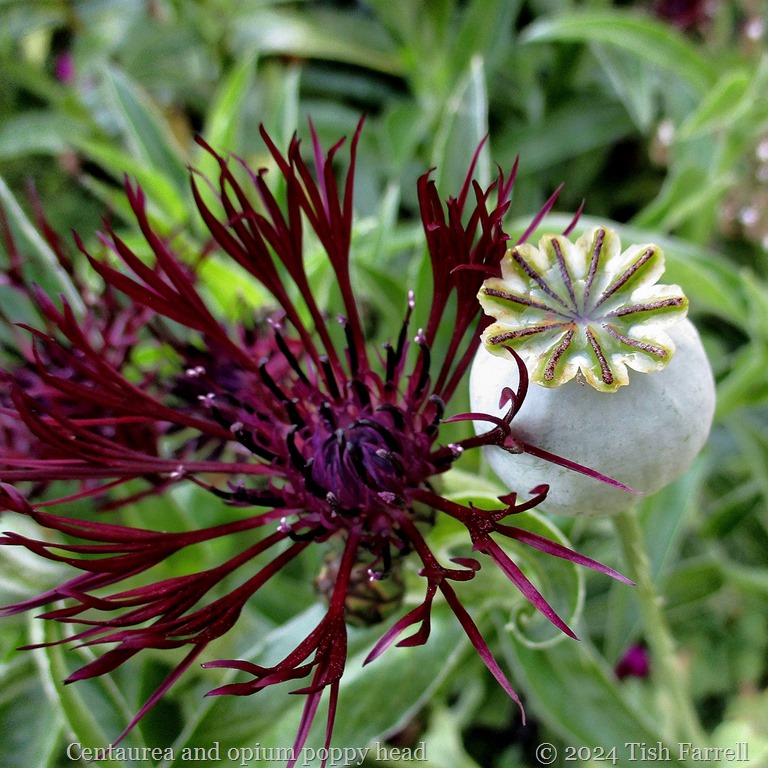
We have visitors, blown in from who knows where. All over the garden too. And what a show they’re giving us with their fiery frills and flounces. Papaver somniferum, the sleep-inducing opium poppy.

The bumble bees have been mightily excited by the poppies’ presence; their behaviour far from somnolent. In fact I witnessed much unseemly rummaging through floral petticoats as they hoovered round the creamy anthers.

IMG_5671

IMG_5672ed

*

Elsewhere in the garden there are more hot colours, this time courtesy of the Bishop’s Castle seed bank. This is a wonderful community venture whereby local gardeners donate flower and vegetable seeds. You can help yourself to the contents of the tray which lives upstairs in the Town Hall council chamber, and leave a donation to the seed bank.

These French Marigolds were grown to protect the carrots. Their minty-lemony scent camouflages the carroty smell so fooling carrot flies that like to lay their eggs in the developing roots. But by some failure of organisation they ended up by the cabbages where they do nothing to dissuade the egg-laying proclivities of cabbage white butterflies.

IMG_5637

*

And then there are the seed bank pot marigolds. I’ve planted them out everywhere because I use the petals in salads. They have many beneficial medicinal qualities including a high lutein content which is good for protecting eyesight. Simply to gaze on them might suggest this particular property.

IMG_5735ed

IMG_5708

IMG_5701

Marigold with purple toadflax petals

*

But back to the flamenco. I don’t know about you, but this wild display makes me want to lift up my skirts and dance…

IMG_5747

Of Acrow Props And Potatoes: June Update

IMG_5385ed

I hadn’t actually asked the question, as in how many stages are involved when it comes to demolishing a section of load-bearing house wall. I suppose I had wondered how the two steel beams (inside and out) would be inserted in the sitting-room-kitchen wall. And logically I would have assessed that this must be done before the actual wall, window and door were knocked out.

I also knew that this would not happen until the new kitchen extension was nearing completion (several weeks away). In other words I had not prepared myself for a double dust-storm event, mostly because the chaps, as in other half and builder Alan, had given me only scant (evening before) warning of the beam insertion process.

But the dust!

It was all I could say when I learned what was planned. Alan raised his eyebrows – part apology, part goes-with-the-territory. Plastic sheeting was duly taped, floor to ceiling, across the back of the sitting-room and across  the ‘L’ of the kitchen. More sheets were thrown over all the furniture, doors that could be shut were shut, and then the hammering began – first the plaster, then the wall whose bricks, as bricks go, are strangely adamantine. It’s likely they were made just down the road, in the days when Bishops Castle had a  brickworks.

And so here we are, a week on, still dusting; an activity that will doubtless segue into demolition phase II sometime in August.

But at least the acrow props have gone now and the furniture is back where it was, also a critical factor in a small house where we presently have more stuff than rooms to put it.

IMG_5378ed

*

We’ve also been receiving deliveries  – the front garden now looking like a builders’ yard.

IMG_5395ed1

*

One half has been commandeered for supplies, it being the most accessible space for unloading. But I’ve hung onto a small corner and put in some Gigantes butter beans and two yellow courgette plants, tucked in between the insulation boards and the front door. Well, can’t miss the planting season, can I. And that border is particularly sunny. I popped in some Korean mint (Agastache) too.

IMG_5403ed

IMG_5405ed

*

As to the bed on the other side of the front path, I staked a claim back in April, so the roofers wouldn’t bury it in waste tiles. I’ve put in three small rows of potatoes – Rocket and Charlotte, which have sprouted well. There’s also the beginning of a herbaceous border under the sitting-room window: a lone delphinium accompanying some young alcalthaea plants (a cross between mallow and hollyhock), knautia and verbascum, blue geraniums and achillea, a purple toadflax with has turned out to be pale pink.

IMG_5401ed

*

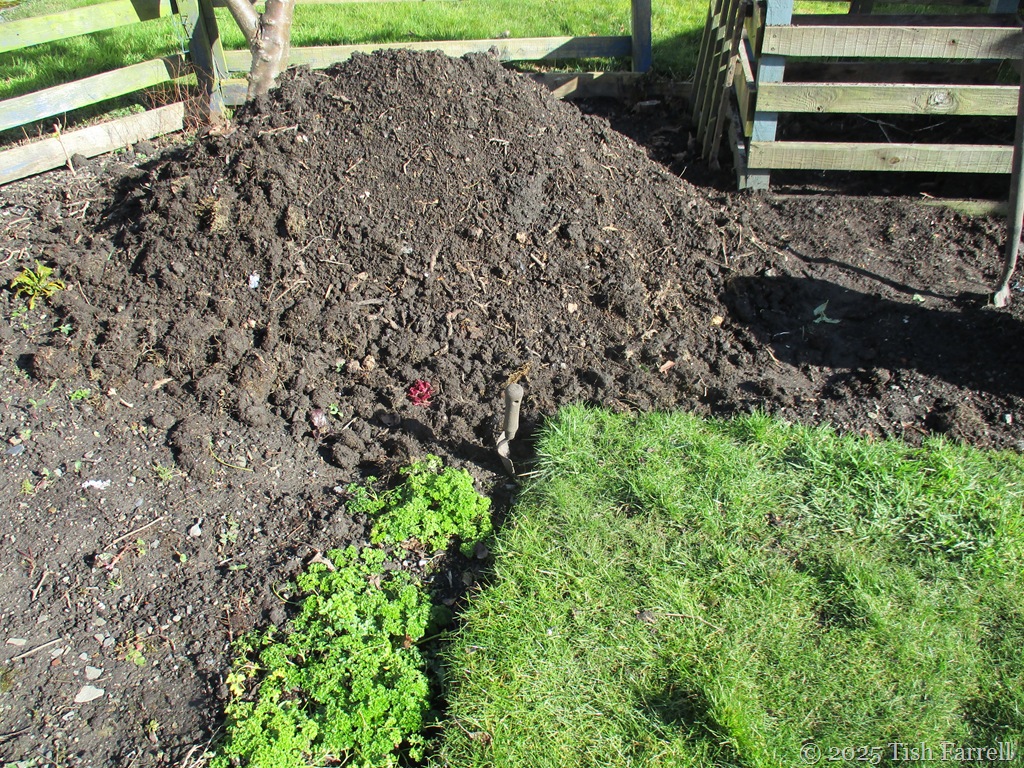
Meanwhile out in the back garden, the lawn has been continuing to disappear. Most of the turves are in the compost bin which is now full. I’m now stacking the rest, leaving them to rot down.

The more I dig, the bolder the blackbirds become, nipping in around my feet. I watched one carefully gather a stash of worms on the lawn whence they could not easily escape. When the bird had a good beak full, off it went, doubtless to feed a fresh brood of nestlings.

IMG_5408ed

IMG_5419ed

IMG_5427
*
Much like the house, the garden is chaotic. Somewhere there’s a plan. For now, I’m simply pleased to have all kinds of kale, spinach and lettuce busily thriving. We’ve even had a handful of early purple sprouting. There are field beans forming at the top of the garden where the Romanesco caulis are growing ever more gigantic leaves, though no sign of flowers. There are tomato plants inside and outside the greenhouse. Strawberries are plumping up alongside cabbages, spring onions and Moroccan Cress, and the Emergo runner beans are looking pleasingly robust, though not yet climbing their sticks. In the interim, I have some rocket (arugula) growing mid-row. It needs thinning out.
IMG_5409ed
IMG_5412ed
IMG_5416
IMG_5410ed
The horrid hedge still needs much work. I now see it’s full of sycamore and ash trees, some quite substantial, while the actual original hedge of holly, hawthorn, weigela and privet has been much mutilated by years of being squashed behind chicken wire and under great boughs of ivy. But that’s a job for autumn. I anyway think we’ll need a man with a chainsaw to cut it down to size so the lower quarters can regenerate. I’ve planted foxgloves to brighten up the bare patches.
*
So here we are in June with thoughts of summer, thoughts being the operative word. For although the gardens around the town say it is summer, the weather says otherwise. All this week builder Alan has been complaining of the cold, resorting to his winter windproof jacket. We’ve been going around  wrapped up in sweaters, lighting the wood burner each evening. And for sure we’ve had some sunshine, but the wind has an icy edge, and it’s hard to escape it. Still, the spuds are looking good, and apart from the dust, there is much to be happy about.
IMG_5401 header