Bee In My Bean Blossom

100_5619

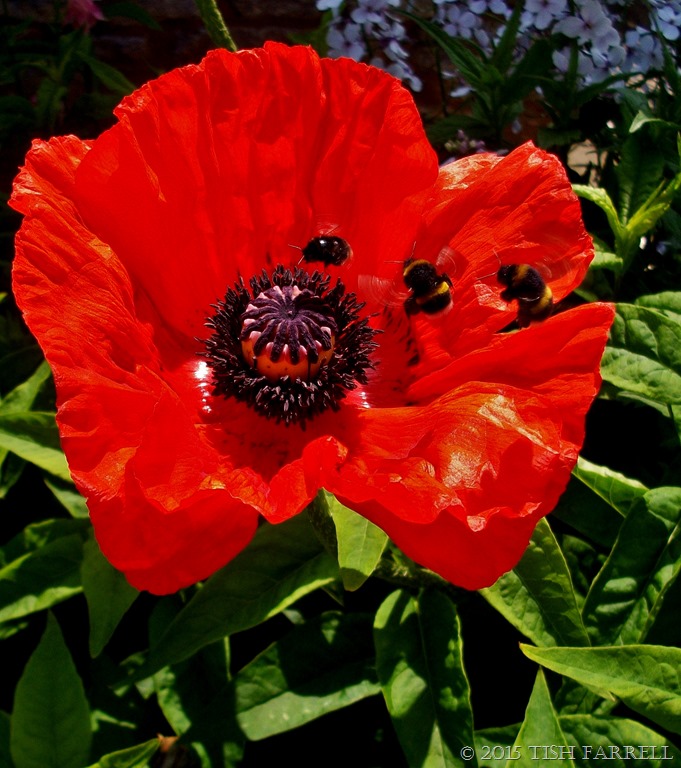
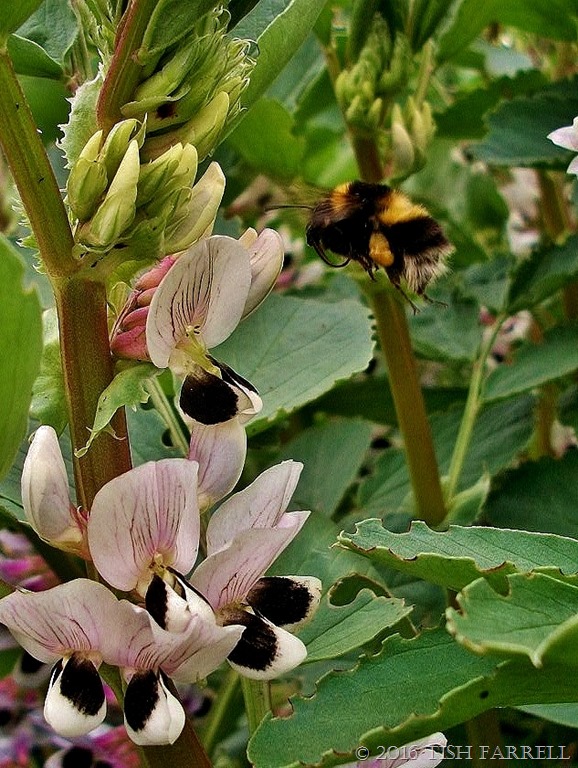
In April at The Earth Laughs In Flowers, Jude wants to see our garden macros. This is also the Day 5 of the 7-day nature photo challenge. So here we have a bumble bee heading for my field bean flowers. I don’t blame it. They smell divine on a still, spring day.

This photo was taken up on my allotment, probably last year. At the moment the current crop of field beans, sown in September-October and overwintered, is only a hand’s width tall, but they’re looking quite healthy. Once they get going, they will grow as tall as I am, and need some support. The photo also shows bean weevil damage on the leaves. This is one of the drawbacks of allotment gardening. Pests like this become endemic. On the whole, though, the beans seem to carry on regardless.

Field beans are related to the broad bean (aka fava or faba) and they look much the same, but are less than half the size. Mostly they are grown in the UK as a green manure, the plants dug in before flowering. I grow them to eat. They make great re-fried beans, soup and a bean version of guacamole, which is astonishingly good.

My crop was so productive last year, I was able to eat and freeze them, and save masses of seed to dry and sow for this year’s crop. It’s the first time I’ve done this, so it will be interesting to see how they turn out.  In consequence, I probably have grown too many. But once I see how the plants are faring, I shall sacrifice some of them. I mean to chop them down and leave them to rot on the soil surface, rather than digging them in. This will let the worms do the work, and keep the soil covered until I want to cultivate it.

I am beginning to see that digging is a very bad thing to do the earth. It wrecks the surface soil structure every time you do it, and so compromises fertility. Instead, the No Dig method relies on covering the soil surface with organic matter/compost every year, and then planting through it. The only problem is you need masses of compost. It also helps if you do your planting in raised beds. This way you do not walk on the soil, and can keep building up the fertility. Raised beds are easier to manage, and mulching the plants should massively cut down on the weeding, and the need to feed, or to water during dry spells.

Since last autumn I have been doing heavy labour on the new allotment plot that came with my polytunnel. (I hadn’t taken this into account when I got all excited about inheriting the tunnel from allotmenteers who were off to new territory.) The ground all round was heaving with dandelions and buttercups. And since this was before I discovered the no dig approach, I admit to using the quick and dirty method (though NOT weed killer) and slicing off the top layer of weeds, and dumping it in compost bins to rot down for a few years. The ground zero method of gardening.

I then commissioned He Who Does Not  Garden But Lives In My House to construct and install on my plot several raised beds made out of recycled builders’ yard pallets. A couple went into action straight away, and were planted up in October with over-wintering onion sets. The others I have been filling up over the past few weeks. So far the onions are looking healthy and a few weeks ago I sprinkled organic hen manure pellets over their beds, an alternative to sulphate of ammonia, which I didn’t have to hand.

By now you will be beginning to grasp the lengths that this writer will go to in order not to sit in front of her computer and cultivate the master work. So far I have shifted around 30 barrow-loads of an old garden rubbish heap that has apparently been in the corner of the allotment for the last forty years, and until recently was covered in brambles and nettles. Strangely too, it was my idea to recycle it.

Off course when I say heap, I really mean small mountain. It’s full of bonfires past, rodent nests, and decomposed leaves from the nearby ash tree, as well as nearly half a century of weeds and waste. There’s also broken glass, bits of plastic fertilizer bags, and all sorts of unidentifiable metal items that gardeners of yore thought could be disposed of in such a manner. As I sift through the heap, I think how good it is that I’m putting the field practice of my long ago archaeology degree course to some sort of use.

In fact I have been keeping an eye out for old coins, remembering that a few years ago I uncovered a 1725 halfpenny right outside my shed door. It helps to keep me amused during the boring process of extracting unwanted detritus and plant roots.
100_6630

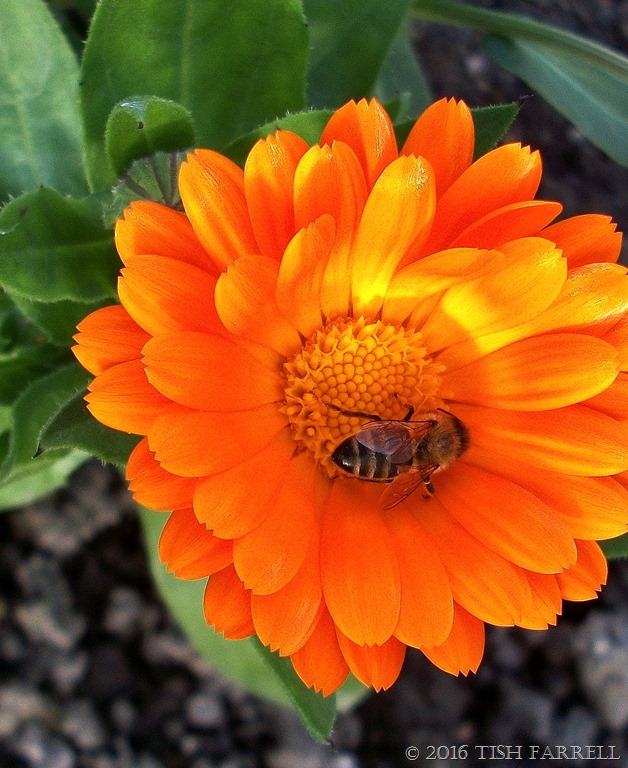
I’ve also filled myself with a big enthusiasm infusion by deciding to dedicate one of the raised beds to growing flowering annuals to attract more bees. I shall also use it to grow on perennials (verbascum, heleniums, echinops) and biennial foxgloves that I’ve just germinated on the kitchen window sill. The thought of a raised bed bursting with summer flowers is so heartening. Doubtless you will see the results as time goes on.

But for now that’s enough talk about gardening. The sun is shining, and the weather forecast tells us we have a brief window of opportunity before the rain returns, so I’m off to the allotment with my pea and beetroot seedlings. I  may even sow some parsnips. Happy Sunday one and all.


#7-daynaturephotochallenge
We can see you…

100_6855

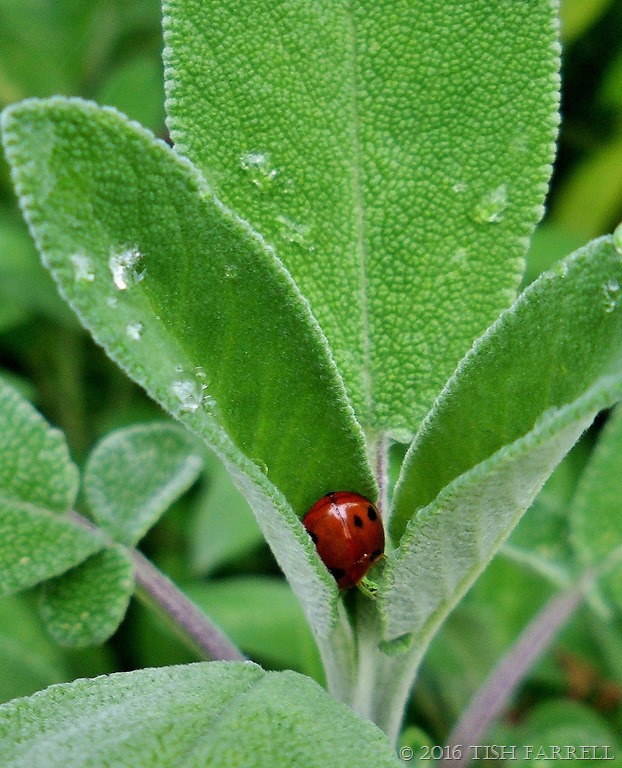
Ladybirds, as gardeners know, are good bugs to have amongst the fruit and veg. They eat aphids. Yay!

And they need to get gobbling now. For despite my recent whingeing about cold wind and lack of spring weather, the greenfly are already with us. And there’s a reason – our warmer winters.

We may have had endless rain, bad floods and storms this year in the UK, but we have not had the hard ground frosts that help to check slug and aphid populations; nor have had for several years. Back in early February when I was pruning the autumn raspberry bed up at the allotment, I was also finding ladybirds out and about.  They are supposed to be hibernating (overwintering) between October and March, so hopefully they were finding something to eat and hadn’t simply been fooled into waking up too soon by the unusually warm February temperatures.

The ladybird in the photo is nestling in my garden sage bed, spotted last summer. And for those of you who wish to find out more about ladybirds (Coccinellidae) there is a brilliant website at UK Ladybird Survey. And if you live in the UK, they want to have details of sightings.


#7-daynaturephotochallenge  #day 2

With thanks to Anna at Una Vista Di San Fermo who nominated me.


Related:  Warning: Reptile Alert #day 1

Not Something You Often Think Of ~ Self-Renewing Onions


P1010497

Here are my allotment  Welsh Onions as seen late last summer. They are simply bursting to make lots of little onions. The flowers are white, a good  2-3 centimeters across, and the stems are around half a meter tall.  And so yes, they do look like giant chives, but with more vigour and verve. I anyway like their style (admittedly a little Triffid-like) as they try to outdo their globe artichoke neighbours.

The artichokes are also intent on self-renewal, and it’s often a toss up between eating them and wanting to enjoy their wonderful mauve flowers. But then this is what I love most about my allotment – the endless cycle of regeneration. It’s the same for the gardener too, in spirit, if not in body, though I often wonder if I might not respond well to a good dosing with liquid seaweed fertilizer – just about now I should think, with spring at last upon us.

*

This week’s guest challenge at Paula’s  Lost in Translation is Renewal. Please follow the link to see some inspirational shots from Michelle Lunato.

The Monochrome Garden: Dandelion Delight?

100_5540

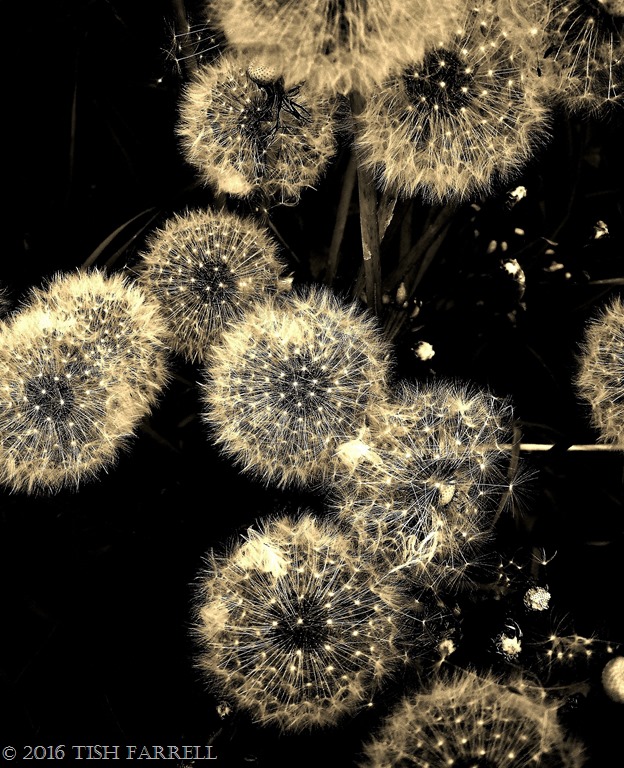
I know most of us gardeners curse dandelions, but don’t they look lovely in sepia? Little constellations. Firework bursts. Spreading those all too viable seed parachutes here, there and everywhere. You can’t keep a good weed down.

But these plants do have their uses too. Young leaves are excellent in salads. Dandelion leaf tea has long been used by herbalists to cleanse the kidneys and lower blood pressure, while the root is mainly a liver remedy, helping to boost the immune system. I do quite like dandelion coffee, perverse as this may sound, although it has to be the real roasted roots, and not the instant stuff, and it’s definitely improved with a sprinkle of raw cacao powder, and a pinch of cinnamon.

The plants of course can develop prodigious root systems. The main tap root drills down into the depths of poor soil, and so helps bring up trapped nutrients. This is one of the reasons why they are so darned difficult to dig up – they are so very busy nourishing the ground. Well that’s their story anyway. I have tried roasting the roots to make my own coffee. Very fiddly. A lot of scrubbing. And then I ate the crunchy roasted bits and didn’t have any left to make coffee. They tasted like root vegetable crisps – weird but vaguely compelling.

And I suppose I have to say  too (somewhat grudgingly) that the flowers’ bright yellow faces are very cheering, although I was a bit cross to find them already grinning at me up at the allotment. In February, for goodness sake? Please give us a break, dandelions. How about a September blooming instead?

Anyway this is my entry for the last week of Jude’s monochrome garden photo challenge. With this particular composition, I’m also thinking a little of Sue Judd’s negative space challenge over at  Paula’s. But please drop in at Jude’s The Earth Laughs In Flowers to see what she and others have been doing with their monochrome compositions. Next Sunday there will be a new  theme: garden wild life, and a chance to show off visiting my reptiles. Yay!

World Soil Day & December at the allotment

100_8168

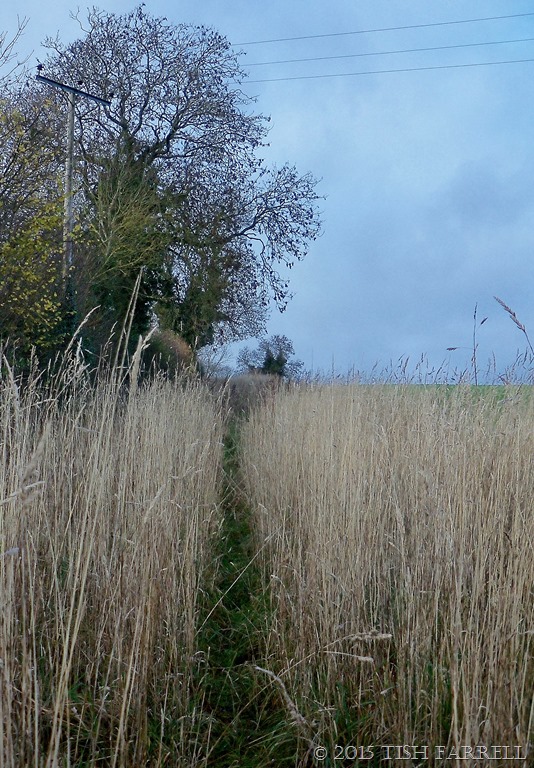
Here is my path to the allotment. I’m a bit fixated on it, and have been snapping it at different seasons. I like the way colour has leached from the grasses.

The allotment looks bleak at this time of year, not improved by the fact that many of us are untidy allotmenteers. There’s all sorts of unsightly takataka lying about – things that might come in handy for something, sometime. I’m guilty of it myself, and of course when you take on a plot, you inherit your predecessor’s junk. I’m gradually whittling mine down.

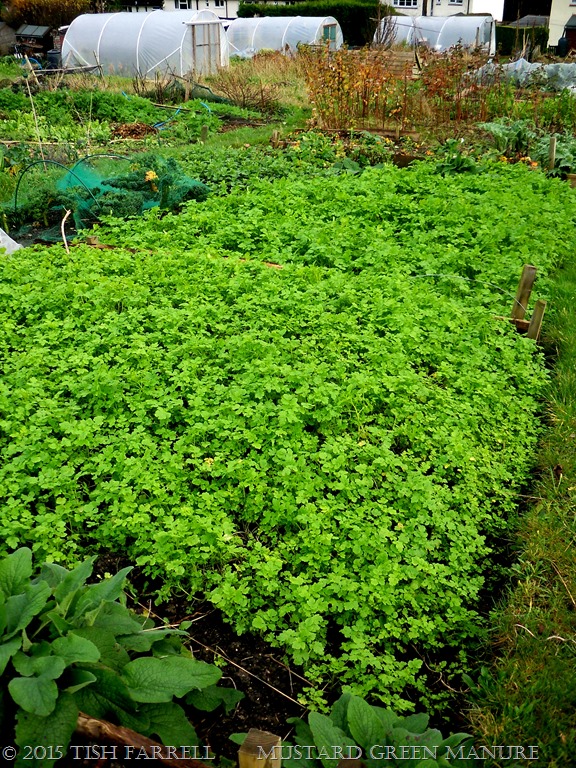
There are also jobs I haven’t done – edging the beds, giving the paths a final mow while I had the chance. But I did sow my mustard at just the right time and now have an impressive crop.

100_8136

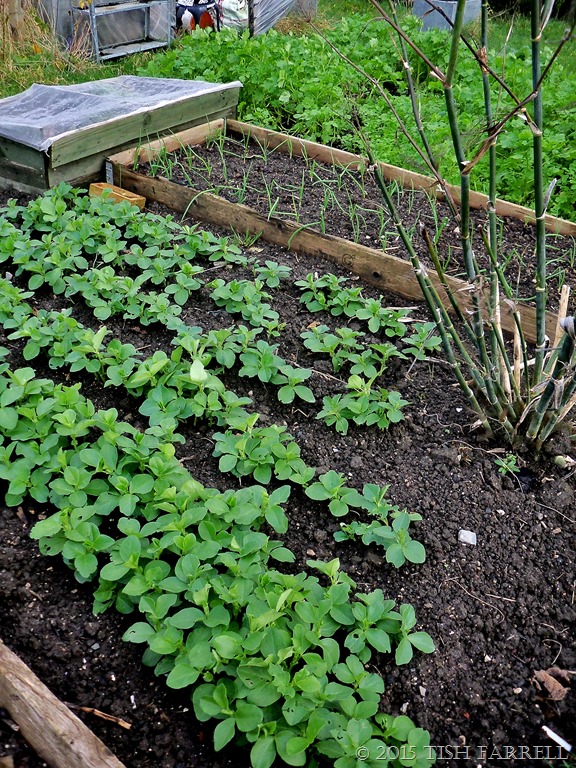
I’m growing it both as a cover crop and a green manure. If we have a hard winter it will probably be frosted and die down by itself. For now it’s still growing, and if it survives till spring I’ll cut it down and probably just let it rot on the  soil surface. With green manures it is usual to dig them in before they flower. But I’m beginning to have second thoughts about digging, much as I enjoy wielding my grandfather’s sharp bladed spade.

For years I’ve known (vaguely) about No Dig Organic Gardening, just as I’ve long known that mulching crops produces sturdier, tastier produce that needs little watering. But it has taken a while for the penny to completely drop.

No dig cultivation is not simply about saving labour. It’s about protecting and nourishing the soil. And since today is World Soil Day, there can be no better moment to think about this totally essential, life protecting, life enhancing substance. If our soil is degraded and low in nutrients, then our food is not giving us the nutrition we need to stay strong and healthy. M.S. Swaminathan, India’s ‘Father of Green Revolution’ calls this ‘hidden hunger’.  Paradoxically, we suffer from it even in rich countries where we eat all day, and it contributes to (and some would say lies at the root of) much chronic disease.

Soil anaemia also breeds human anaemia. Micronutrient deficiency in the soil results in micronutrient malnutrition in people, since crops grown on such soils tend to be deficient in the nutrients needed to fight hidden hunger…Managing our soil and water resources in a sustainable and equitable manner needs a new political vision.

M.S. Swaminathan

100_7997

All my gardening life I have tended towards the traditional notion that digging the soil well, weeding, and adding plentiful compost is a ‘good thing’. Yet after 8 years of digging, weeding and forking in compost on my allotment plot, I’m seeing only marginal improvements in the soil: i.e. it’s a little better than it was.

In dry weather the soil surface still turns brick-hard,  which in turn constricts plant growth, (and in some cases  ‘bonsais’ the plants) making then weak and susceptible to pests. I then have to do a massive amount of watering which is not ideal either; it discourages the plants from rooting deeply.

Also every time you slice through the soil with a spade you disturb the complex community of bacteria, fungi, protozoa, and nematodes that support vibrant plant growth.

Better, then, to thickly pile shredded garden waste over the entire soil surface, and allow a microenvironment to establish underneath. The mulch gradually breaks down as all the matter is digested and re-digested, creating a nutrient rich, moisture retaining medium.

I now realize I need to cultivate a cohort of  jobbing domestic gardeners who will let me have their shredded garden waste rather than taking it to the recycling centre. In the meantime I decided on a little experiment.

Lacking the necessary quantities of gardeners and their shreddings, I spent three hours hours yesterday digging out my partially rotted compost bin, and spreading it several inches deep over four square metres of exposed soil. It was a messy process after days of downpours. But it’s amazing what lengths this writer will go to to avoid writing the novel.

The trouble is, rooting around in one’s compost heaps, turning stuff over, redistributing it, tends to be rather more satisfying than staring at the computer screen and straining one’s brain to dig out the right words.

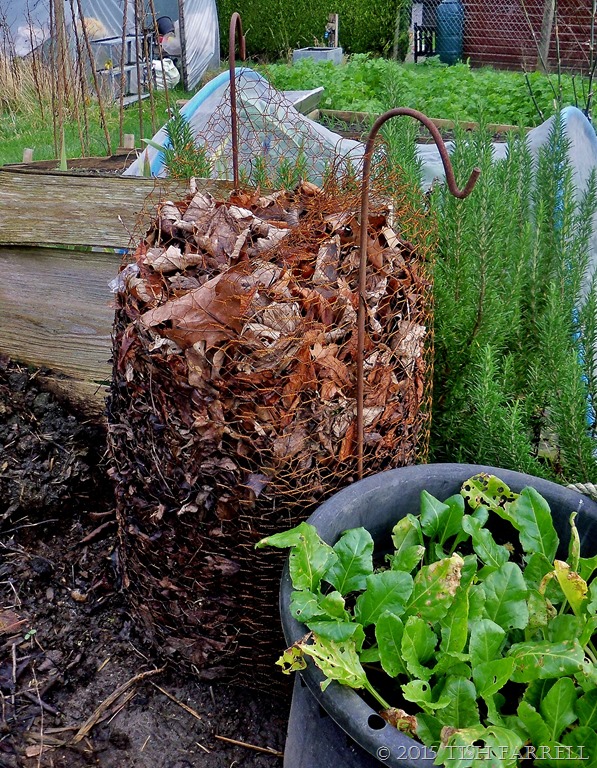
I’ve also been making simple ‘silos’ out of chicken wire, to collect the leaves and so make leaf mould. This will take a year or two, but I might try and speed the process up next year by adding in some grass mowings. The resulting dark compost is just the stuff for seed sowing, so hopefully there will be some in  spring 2017.

100_8138

And I’ve been busy in the polytunnel. The summer’s ludicrous tomato forest is long gone and the last of the fruit turned into soup, sauce and chilli tomato jam. Now all has been raked over and planted with winter salad stuff – Chinese mustard, chard, pak choi, purslane, perennial rocket, lamb’s lettuce, Russian kale. I also have some parsley in there, onions, garlic, leeks and a bucket each of carrots and Florence fennel. The fennel probably won’t grow much, but we can eat the feathery leaves.

And just in case we do have the promised hard winter, I already have the fleece ready to lay over the young plants. Last year was pretty mild, and I found that once I put fleece over everything, the plants continued to grow, if only a little. I also have two small water butts filled to the brim and stationed inside. Their presence is supposed to provide a slight increase in temperature within the polytunnel. They are also handy when the allotment water supply is switched off for the winter.

Meanwhile, out on the plot, there are still lots of crops to harvest – carrots, leeks, kale, small amounts of  perennial spinach, and cauliflowers. The Brussels sprouts, cabbages, purple sprouting and Romanesco broccoli are all coming along. The field beans have sprouted, likewise the overwintering Radar onions.

100_8139

I know I am very lucky to have my allotment. But everyone can do some gardening, even if you only have a bucket. In fact a bucket is great for growing carrots. Lack of space need not be an obstacle. A single raised bed of one square metre, topped with layers of mulch can be intensively cultivated with leafy crops. And remember, there’s no need to dig it. Also mucking around close to soil is good for lifting the spirits. Scientists have discovered it gives off some kind of anti-depressant molecules.

All of which is to say:

SOIL – WE CAN’T LIVE WITHOUT IT. HEAL IT, AND WE HEAL OURSELVES AND THE GENERATIONS TO COME.

HAPPY WORLD SOIL DAY!


copyright 2015 Tish Farrell

Our first autumn cauliflower

100_7997

Isn’t nature marvellous. I can’t believe that I grew this bee-eautiful purple-flowered cauli from one very tiny seed.  It looks a bit misty here, because it’s covered in fog. They weather has definitely turned here in Shropshire.

I was so excited when I first spotted it a couple of days ago. I’ve been nurturing the cauliflowers for a long time, feeding them liquid seaweed feed among other things. The seeds were sown in spring, then planted out in early summer in my new plot behind the polytunnel.

It was hard going too, clearing the ground for them. It had not been cultivated for several seasons and was choked with dandelions of epic proportions, and masses of creeping buttercups. The soil was heavy and claggy too. It seemed most unpromising, although I know that brassicas are fairly tolerant of these kind of conditions. For one thing, they like to be solidly rooted. In fact I’ve learned that caulis won’t flower properly if they are not well anchored from the start.

Once I’d planted out the young plants, (along with a handful each of Carbon Gold fertilzer, and worm casts, and an encircling of lime),  I had to make sure they were well defended with a covering of  mesh. This to stem the pigeon decimation that generally goes on at the allotment. The rotters line up on the overhead electricity cables and watch what we humans are up to, and plan their raids for when we’re not there.

Anyhow, they didn’t get this cauli, and we did. I steamed it, and then made a quick sauce with creme fraiche.  Here’s what I did.


Really Amazingly Quick Cauliflower Cheese

  • Break the cauliflower into florets and steam for a few minutes.
  • Drain, reserving a cup of the steaming water in case you might need it.
  • Melt a small piece of butter in the now empty pan.
  • Add some chopped garlic and/or sliced onion. Cook until soft and translucent.
  • On a moderate heat, stir in a small tub of creme fraiche. Stir it until it warms through. If it seems too thick, add a little of the reserved vegetable water, say a tablespoon at a time.
  • Season, and add any fresh chopped herbs of choice.
  • Stir in a couple of handfuls of grated hard cheese. I use pandano.
  • Then toss the cauliflower in the sauce and serve.
  • Any other quickly steamed vegetables can be included in this – peas, carrot sticks, chopped kale, chard, leeks, celery. Whatever appeals. Good served with a jacket potato, or Italian black rice.


So here you have MY flower of the day, as inspired by Cee’s Flower of the Day. I thought maybe we should give vegetables a look-in on the floral display front. Mind you, I don’t know what Cee will think. Aw, she’ll love it.

copyright 2015 Tish Farrell

Climate change before my eyes? Sweet Peas on 28 October

100_7878

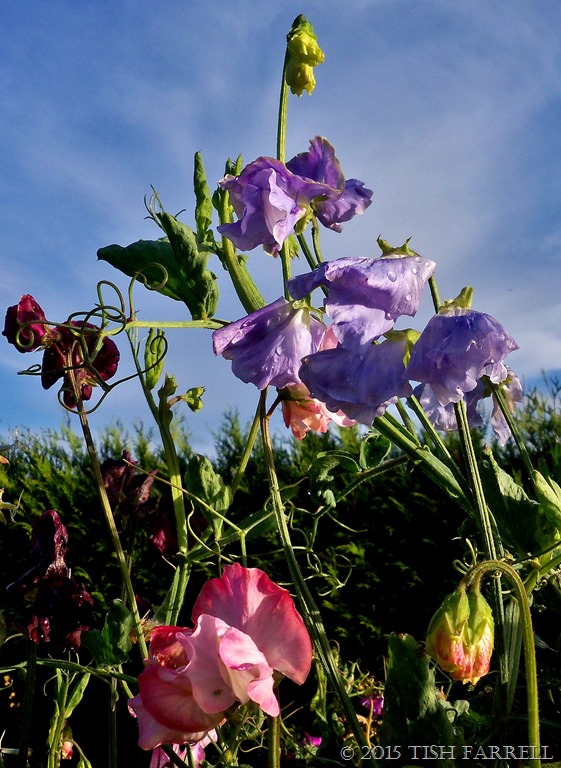
Up at the allotment my teepee of sweet peas has been flowering since June. Twice I have thought they were over, and thought of pulling them up. But here they are (photographed yesterday) still budding and blooming, and it’s nearly November. The sky is pretty impressive too.

100_7871

In fact there’s a lot going on on my plot. My cabbages and Brussels sprouts have grown another six inches in the last few days, and are fighting their way out of their protective enviromesh. The leeks are fat and juicy, and the courgettes are still (just) producing a few fruits. The new strawberry bed is finished, the asparagus mulched, and the over-wintering onions and field beans are in, and sprouting. And, most exciting – to me at least – I have created two huge new compost heaps. Next up, is leaf collection to make leaf mould. It’s a slow process, but worth doing for seed compost. This week on BBC Gardeners World, Monty Don, told me to gather every single leaf because they are so precious. So I shall.

Because if ever I heard a mega-tactic to avoid writing, then this is it. Sorry, can’t write the novel. Must pick up leaves – one at a time.

Actually, I have been writing, though not the novel. Two short stories completed in the last few weeks. In fact today it’s far too wet to go out leaf collecting. So maybe, just maybe, I’ll take a leaf from the sweet peas’ book, and go and grow the masterwork.

copyright 2015 Tish Farrell

#Cee’sFlowerOfTheDay

Storm Poppies

100_6118

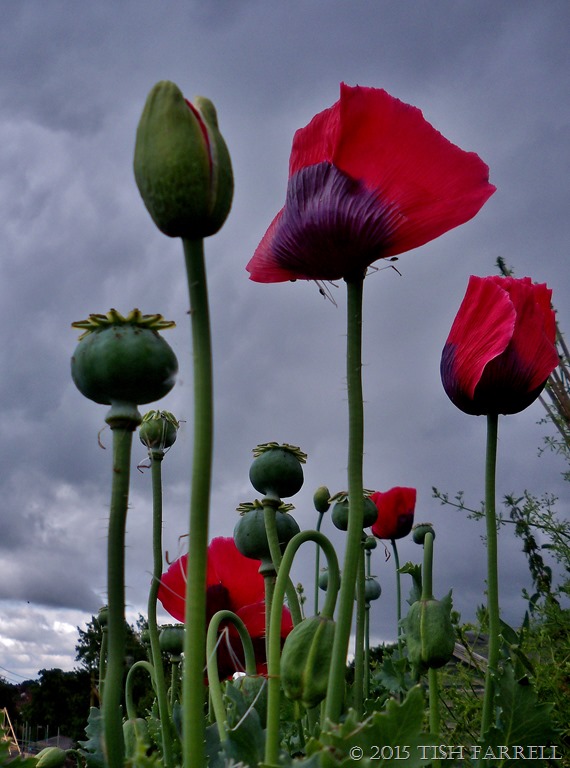
Last Saturday I somehow lost track of five whole hours. There is so much to do up at the allotment – weeding, picking peas, strawberries and raspberries, digging up the new potatoes, tying up the tomatoes in the polytunnel, watering, feeding, turning the compost heap, sowing more peas, constructing pigeon defence systems, wandering about neighbours’ plots, taking a few snaps.

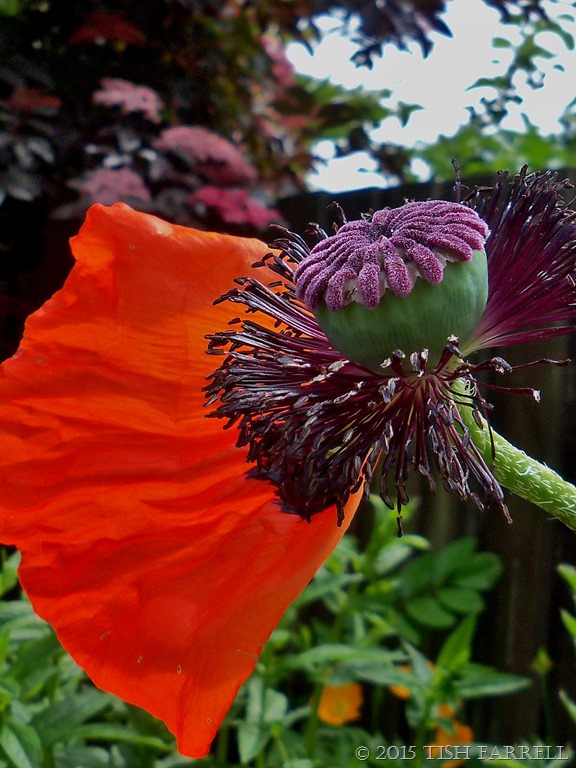
But one of the nice things about having the polytunnel is that when a storm strikes, I can potter around in there until the downpour  passes.  As you can see from the sky, we were in for a deluge, and I caught these poppies just as it was arriving. There was something malignant, I thought, about their stance. Something a little predatory about those seed capsules. Perhaps I’ve been spending too much time in the garden.

copyright 2015 Tish Farrell

Obsessive Compulsive Compost Disorder and why you should have it, or at least help someone who does (and that would be me)

100_4954

I truly cannot help it. I gather anything and everything that will go into my allotment compost bins. This includes not only our vegetable waste, but other people’s. My neighbours along Sheinton Street may indeed wonder how it is that the garden mowings and clippings that they throw over their back hedges can disappear so fast. I don’t really want to go round to their front doors and discuss it with them on the basis that my perceived eccentricity quotient in the town is already quite high enough. But they clearly don’t want the stuff, and they leave it in such handy piles beside the field path. I simply scoop them up on my way to the vegetable plot.

Compost foraging, however, does have its small hazards. It can, for instance, involve a close encounter with a slow worm – a copper and black snakish looking reptile that is actually a limbless lizard. They are quite harmless, but I still leap back in alarm when I touch one unexpectedly. I ought to know by now. They love warm piles of things to bask in during the day. They are to be treasured too, since they eat slugs. And yes I know that in the cycle of things slugs have their good points, and probably are useful in compost heaps, but I am utterly prejudiced against them, and admire anything that disposes of them. Toads are thus also heroes, though sadly in rather short supply.

P1010390

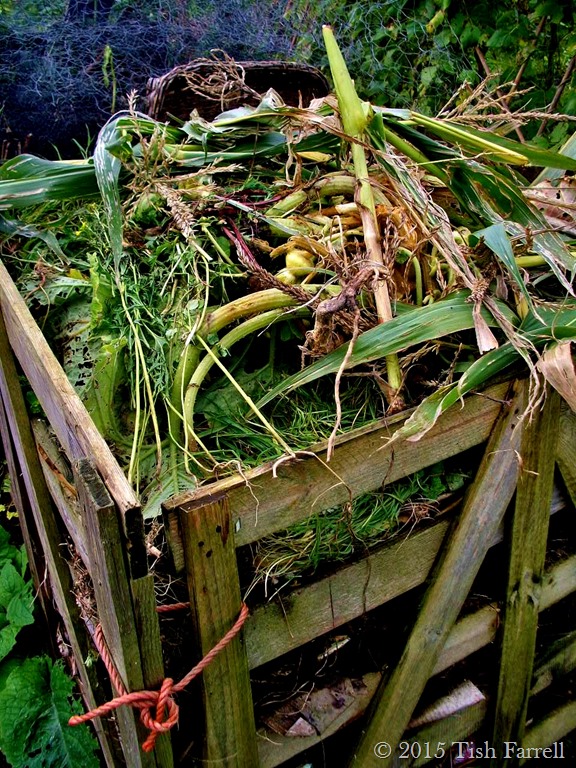
The manner of composting as formerly done by me, and displayed in the first photo is not to be emulated. A dedicated composter, and I am now trying to do this, chops big stems and stalks into short lengths to speed up the rotting down process.  It is also good have mixed layers e.g. brown, dry matter such as scrunched up pieces of brown corrugated cardboard, paper, wood shavings, leaves and small twigs. The aim is about 50:50 brown to green matter. This allows air into the mix, and so prevents a sour and smelly squidge.

Grass  mowings and animal manure will heat things up, and also aid decomposition. The heat kills any weed seedlings.  Other additives in my compost include tea bags, egg shells, vegetable parings, allotment weeds, turves from ground clearing, wood ash, hoover contents, and brown paper carriers. Every now and then I also add a layer of comfrey since it also a good compost activator.

*

IMG_1138

Comfrey is a good compost activator. It also makes an excellent plant food, keeps the bees happy, and helps mend human bones and inflamed tissues. The leaves can be made into tea or added to soup. The flowering tops contain vitamin B12 (source: Herbal Therapy for Women by Elisabeth Brooke MNIMH). Can you spot the bumble bee in the top photo? (Just testing).

100_5359

*

Ideally, the contents of the compost bin should be turned over during the growing season to aerate them, but if this is too daunting a task, and if there’s space, then three or four bins are the answer. The rotting down process will be slower, but when full, the first one is  simply left for a couple of years while the others are being filled. It’s also common practice to put a piece of old carpet over the top to help things along. My largest bin is made of four wooden pallets tied together.  It is easy to open once full, and the contents can be tipped out and turned over.

And why am I so keen on compost? Well, apart from the obvious that it feeds and improves the soil, it is also useful as a mulch, and MULCHING is my current theory on how to deal with  our increasingly ERRATIC WEATHER systems. The only problem is you need masses of it.

But applying a good deep layer around plants and between rows of crops, not only nurtures the plants, it gives them some protection in heavy rain, and stops the soil drying out in times of drought. To retain moisture it should thus be applied after watering/rain, and it will then reduce the amount of watering needed in the future. Strong, healthy, UNSTRESSED plants mean less pests and diseases. A sturdy cabbage will even withstand some slug damage.  For added protection, cover the lot with enviromesh.

My objectives for composting, however, are small potatoes compared with the goals of The Global Compost Project. Scientists involved with this brilliant initiative believe composting can mend the mess we’ve made of the planet, AND help reduce climate change. Here’s what they have to say:

“It also turns out that one easy, natural human invention is very important to boosting photosynthesis and cleaning up the mess we created.  It is Composting!

Fertilizer feeds plants nitrogen and compost feeds soil carbon.

According to Lawrence Berkeley National Laboratory and Marin Carbon Project, by spreading just 1/2 inch (1 cm) of compost on grazed rangelands, soil naturally starts to sequester more carbon out of the air via renewed photosynthesis at the rate of 1 ton per acre per year for up to 30 years.  This study was performed jointly by both organizations over a 7-year period, which clearly demonstrated proof of concept.

The results are delighting water conservationists, microbiologists, and climate change scientists around the world.  Compost replenishes the soil carbon  to balanced levels.  It is as if the eco-systems are rebooted, and within one year native grasses and wildlife rebound.  The carbon intake,  forage capacity, and water retention all fall into normal rhythms.”

For more about The Global Compost Project go HERE. And HERE for info on domestic composting from the Royal Horticultural Society.

*

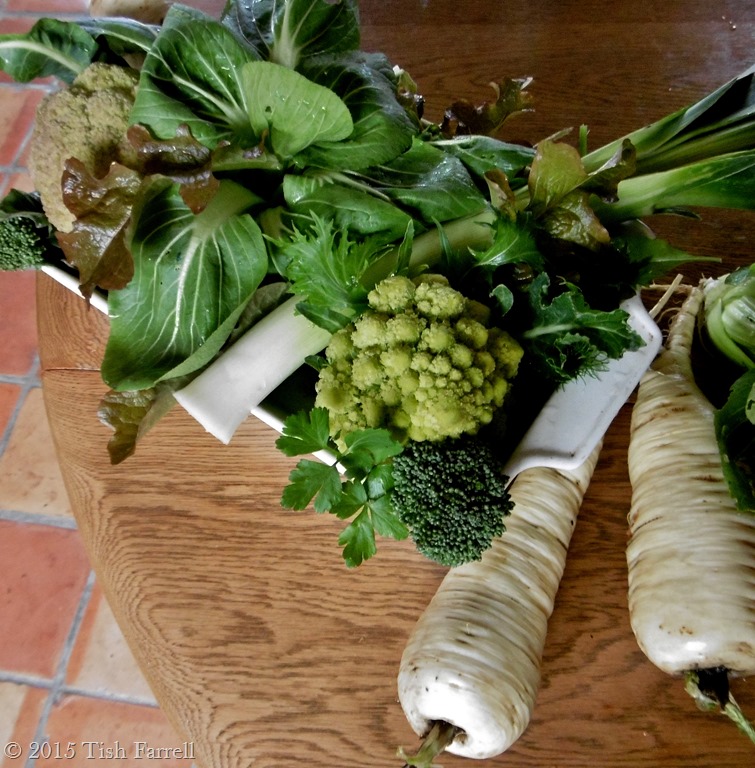
And now excuse me while I go off to do some more compost foraging. Perhaps, after all, I should be enlisting my neighbours’ help. They might chuck me more stuff over their hedges instead of putting it in their recycling bins. But either way, recycling is good. So: Obsessive Compulsive Composting anyone? Just to encourage you, and to show off, here’s some of my last year’s summer and winter produce:

100_4197

P1000281

copyright 2015 Tish Farrell