The Changing Seasons ~ This Was July ‘24

IMG_5817ed

Here in Bishop’s Castle, as in many parts of Great Britain, much of July was cool and overcast – more autumn than summer. The garden, however, carried on oblivious, although there was an obvious shortage of bees, hover flies, butterflies and other insects.

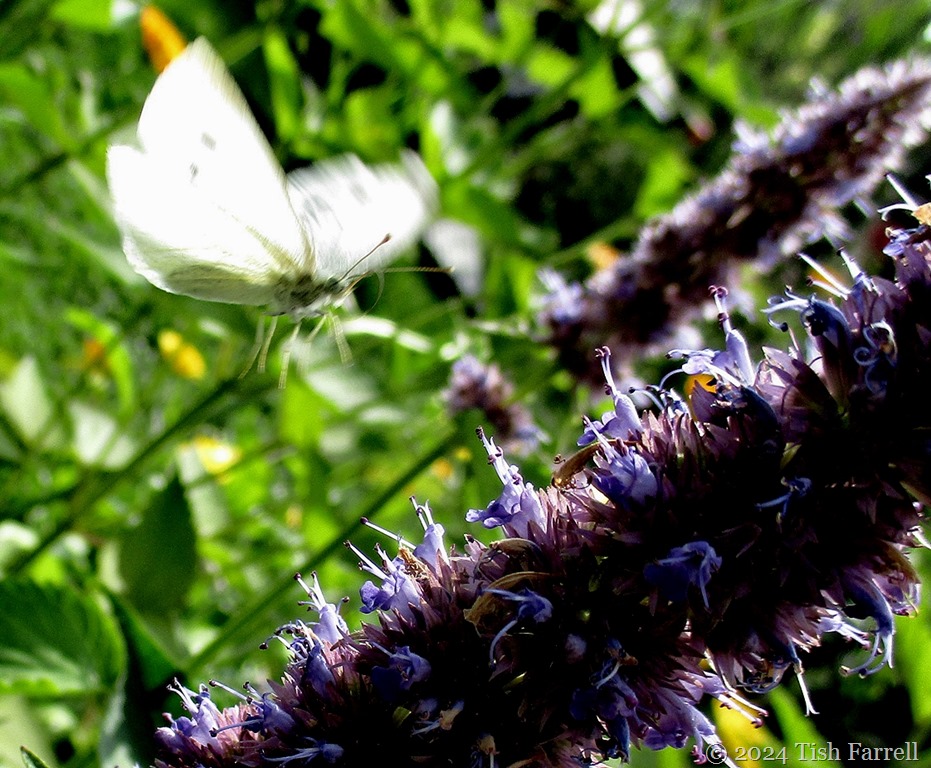
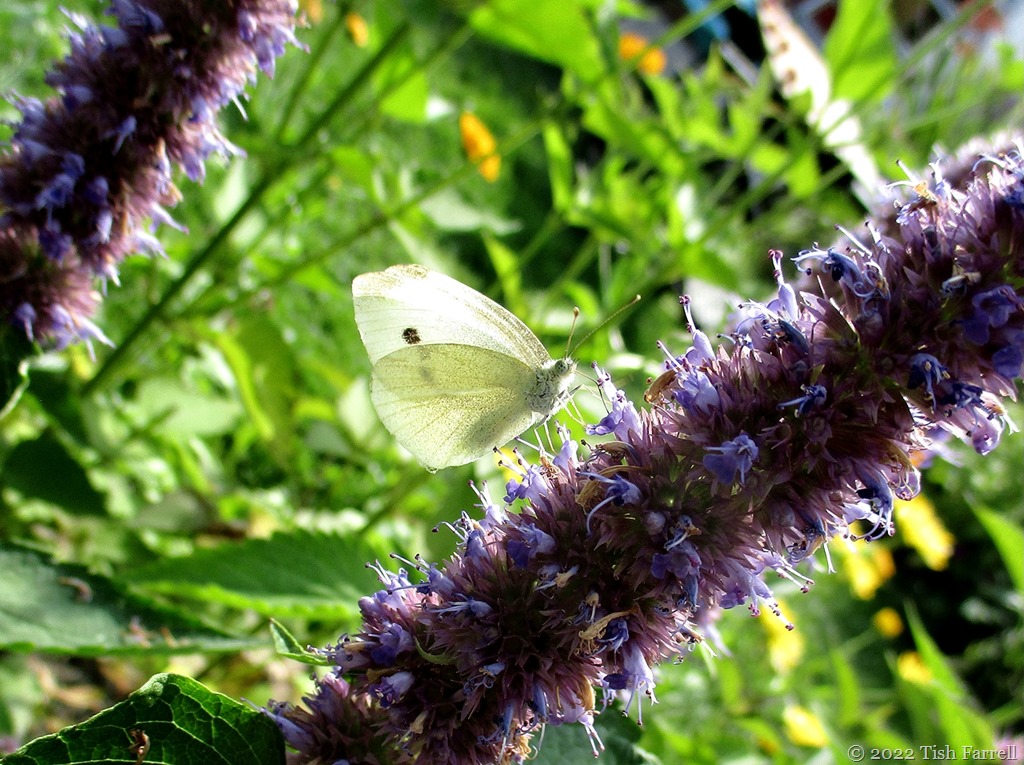
But then just on the last lap, summer happened. And not heat waves either; simply days of pleasing warmth  which certainly brought out the bees. And then whole flocks of cabbage white butterflies flew  in, wafting round the garden, dozens at a time, homing in on cabbages and nasturtiums to lay their eggs. I’ve given up chasing them away.

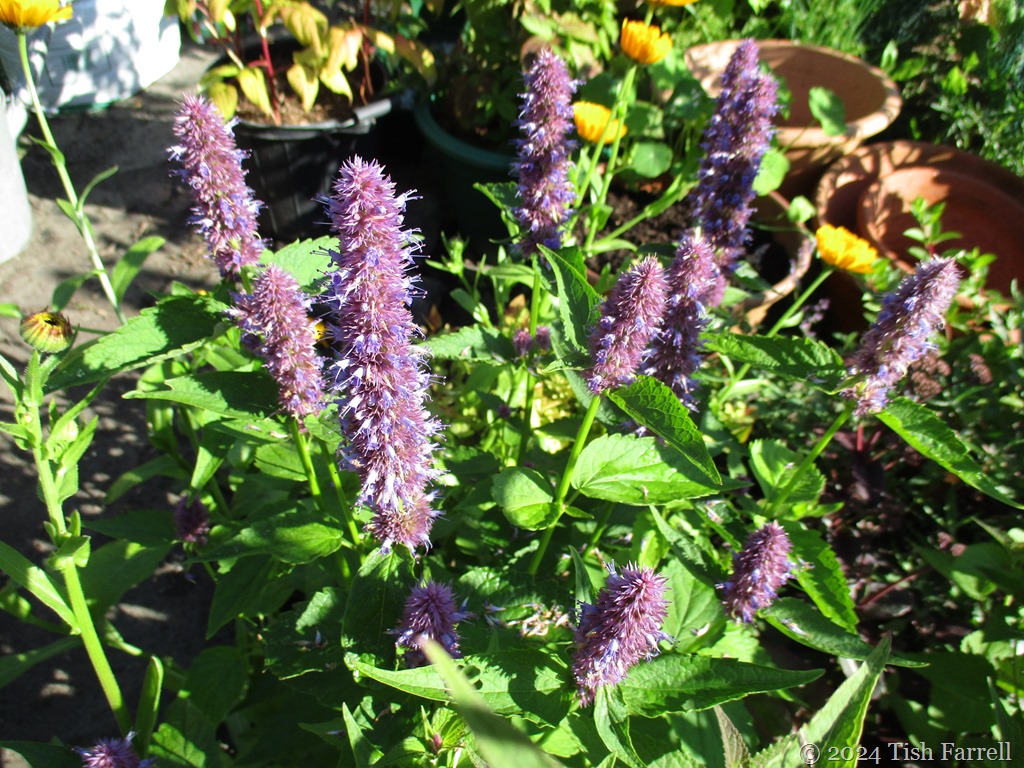
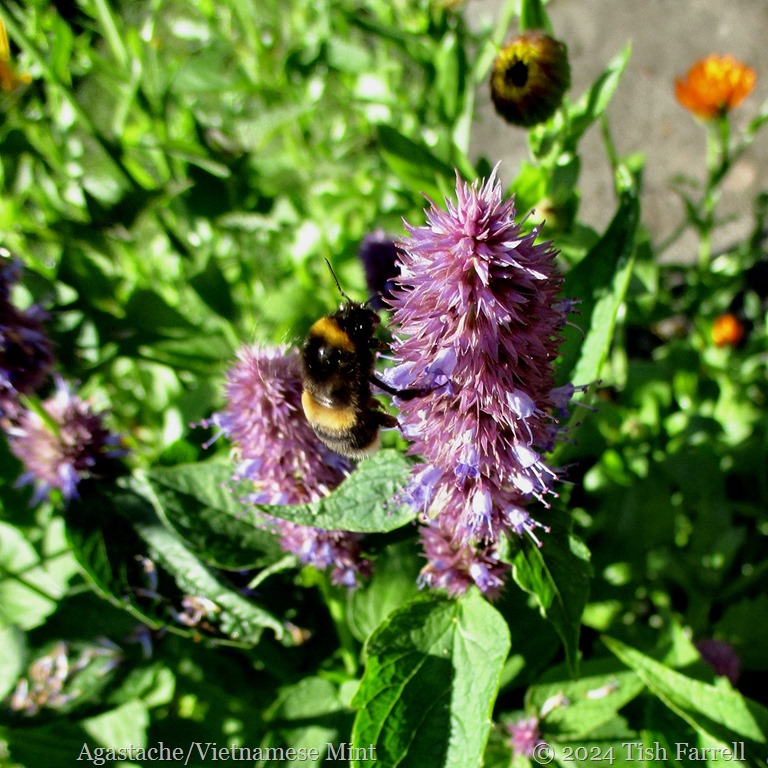
They also like to feed on the agastache (Vietnamese Mint), a perennial I’ve grown from seed this spring. The bees love it too. So I’m glad I planted out all the many seedlings that germinated, as well as giving some away. It’s a stately plant with purple-mauve plumes and leaves that smell of aniseed.

cabbage white 2

*

The switch to warm days has made all the lettuce bolt, but we’re still eating some of them. As ever, I have failed to organise a seasonal flow, so there will be a gap in salad content for a time. Instead, I’m picking the young leaves of Swiss Chard, a second crop which I’ve managed this time to protect from nibbling pigeons. There are also herbs – dill, basil, and lots of coriander and chives, and wild rocket (about to bolt) and masses of developing leeks which are good in salads.

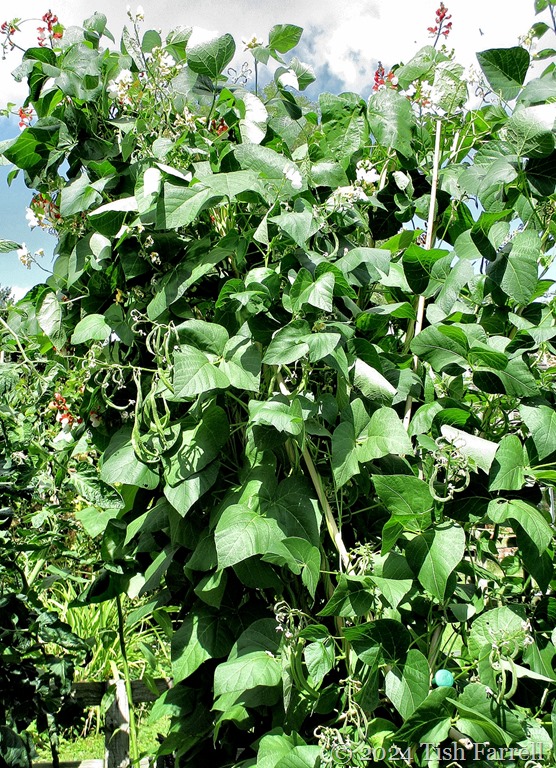
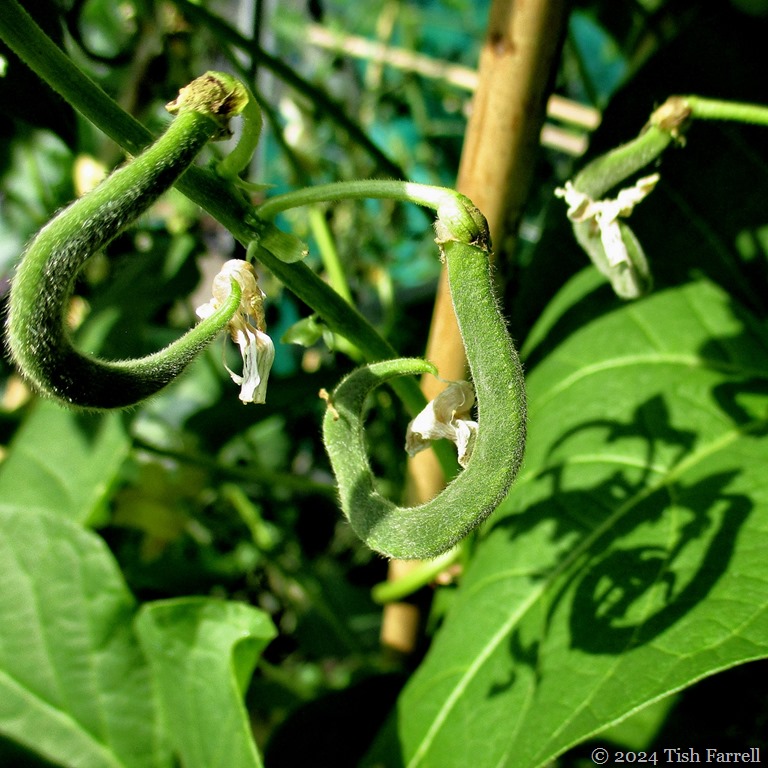
But best of all, the runner beans are beginning to set, so I must keep an eye on them. They often fool me by producing the first crop near the ground inside the canes, where they can’t be seen.

IMG_5893

IMG_5854ed

IMG_5841

IMG_5847ed

IMG_5761ed

IMG_5639

*

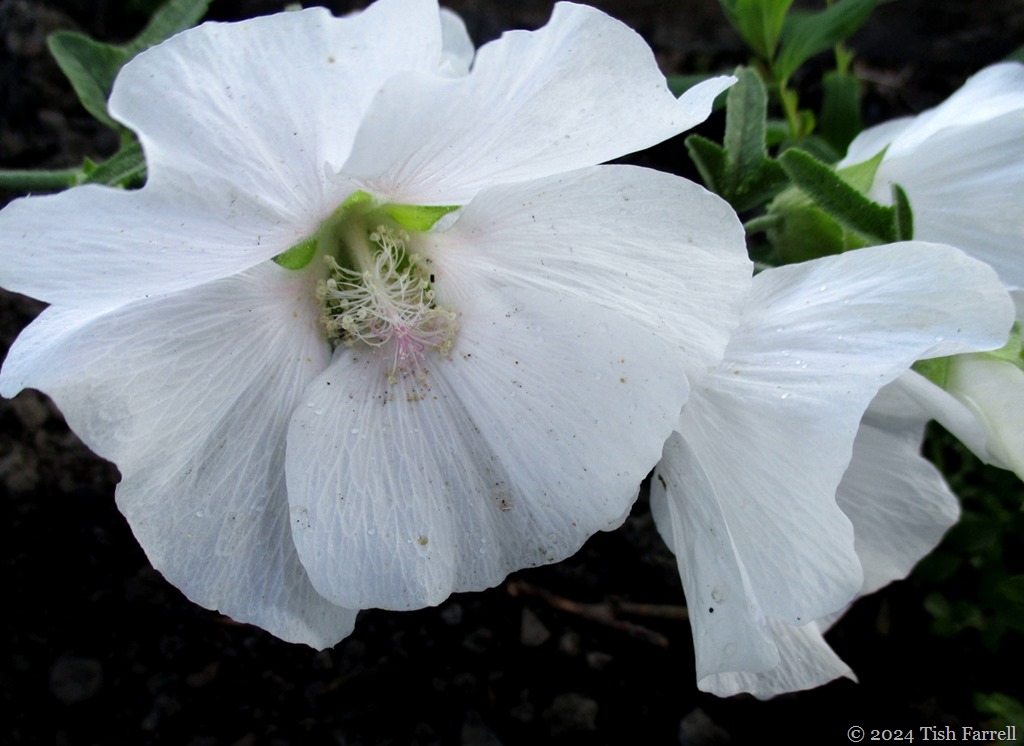
And then this lovely mallow has started to flower…

IMG_5795ed

*

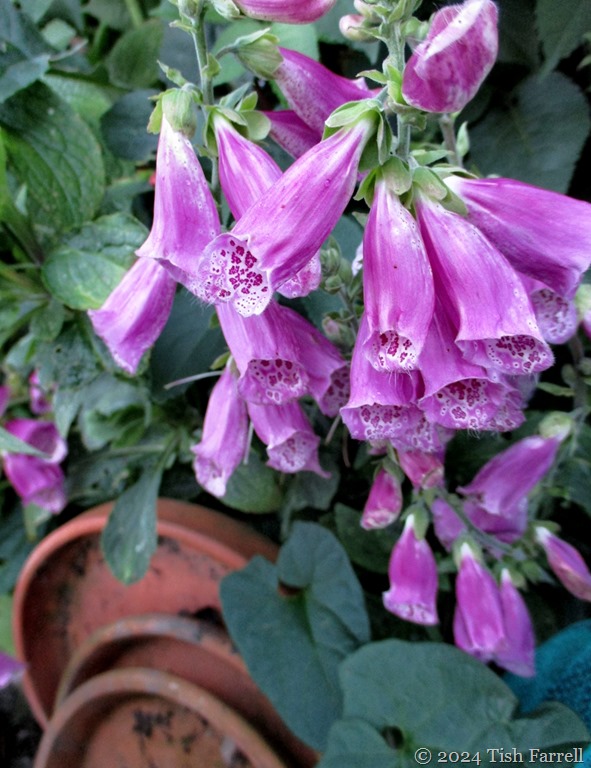
And there’s been a second flush of foxgloves…

IMG_5801ed

*

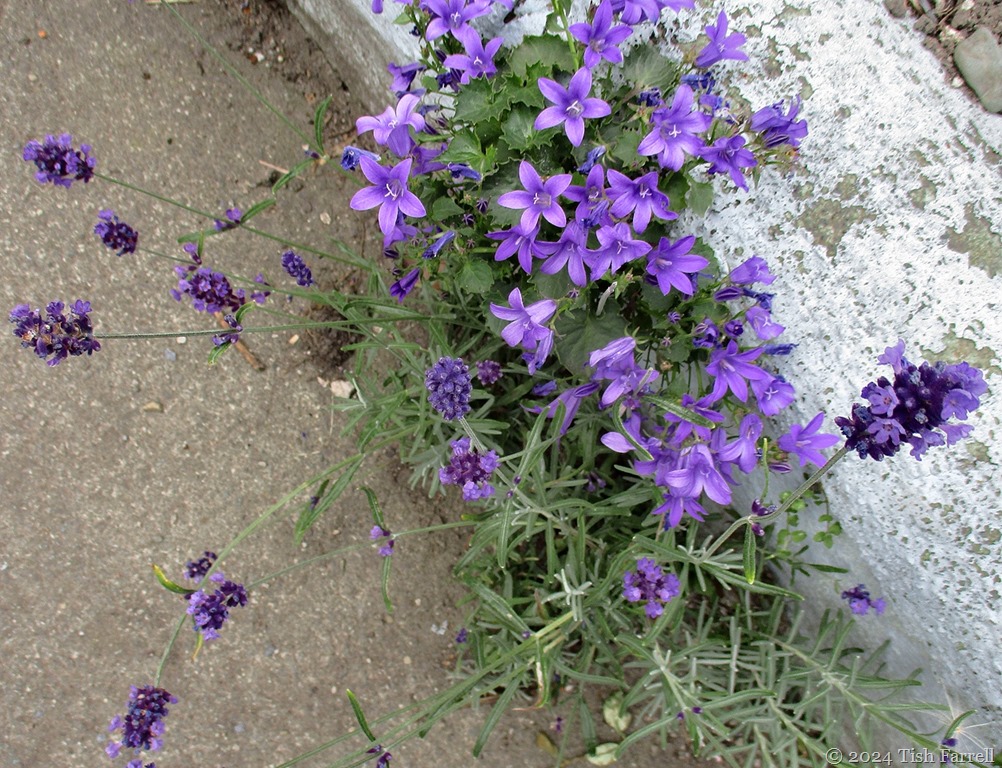
And then I noticed a happy partnership (growing out of the concrete on the front path) campanula and lavender perfectly arranged…

IMG_5859ed

*

And finally, in amongst the ongoing building work and general domestic confusion…

IMG_5867

*

…we take note that it is was a year last July when we exchanged contracts on The Gables and began planning our move to Bishop’s Castle…

IMG_5577

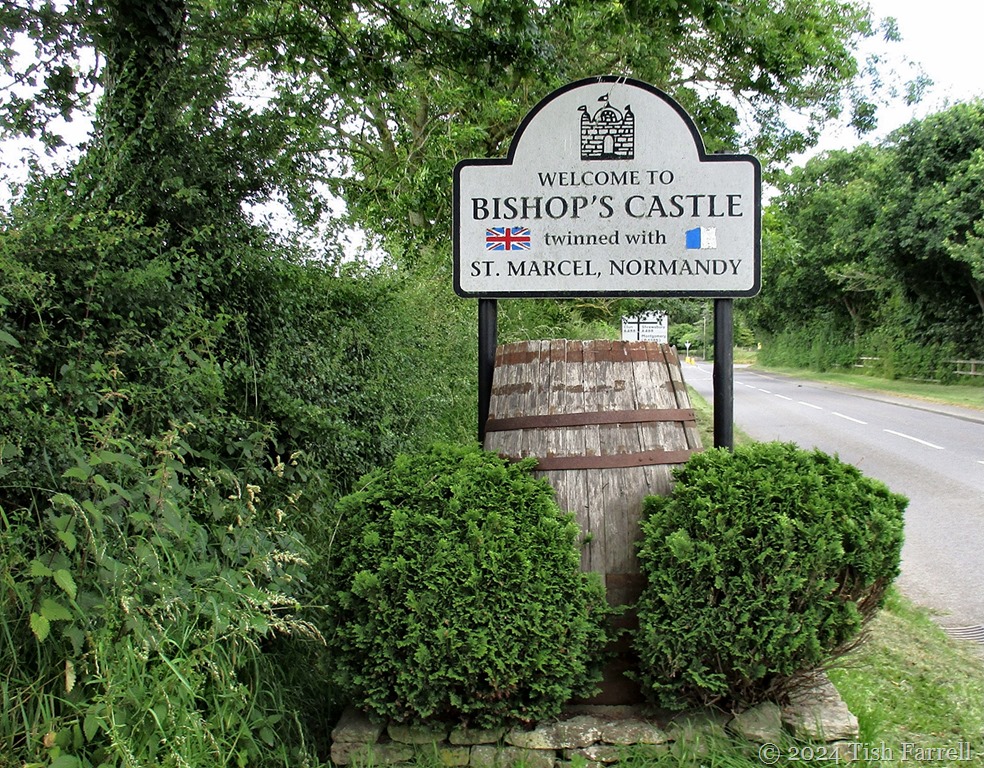
And in case you’re wondering about the big beer barrel, the town is famous for its historic pub and brewery The Three Tuns Inn, serving folk since 1642. Just one of many good reasons to settle here. The beer is delicious. Cheers!

IMG_5817header

The Changing Seasons: July 2024  Hosted by Ju Lyn and by Brian at Bushboys World

Six On Saturday: On Random Gardening

IMG_5631

Starting a new garden is always exciting; daunting too. And our particular garden, being a hundred years old, had traces of many a planting disaster venture. More recently, though, all had been overgrown, and invaded by rampant phygelius (Cape fuchsia), ground elder, vagrant raspberries, bindweed and Spanish bluebells. The two front garden beds (south-east facing) were covered with concrete slabs and Spanish bluebells.

Most of it had to go.

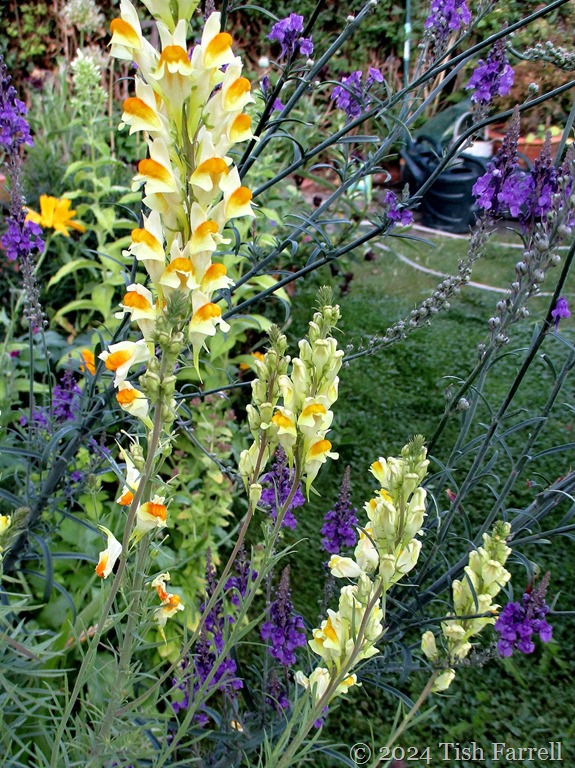
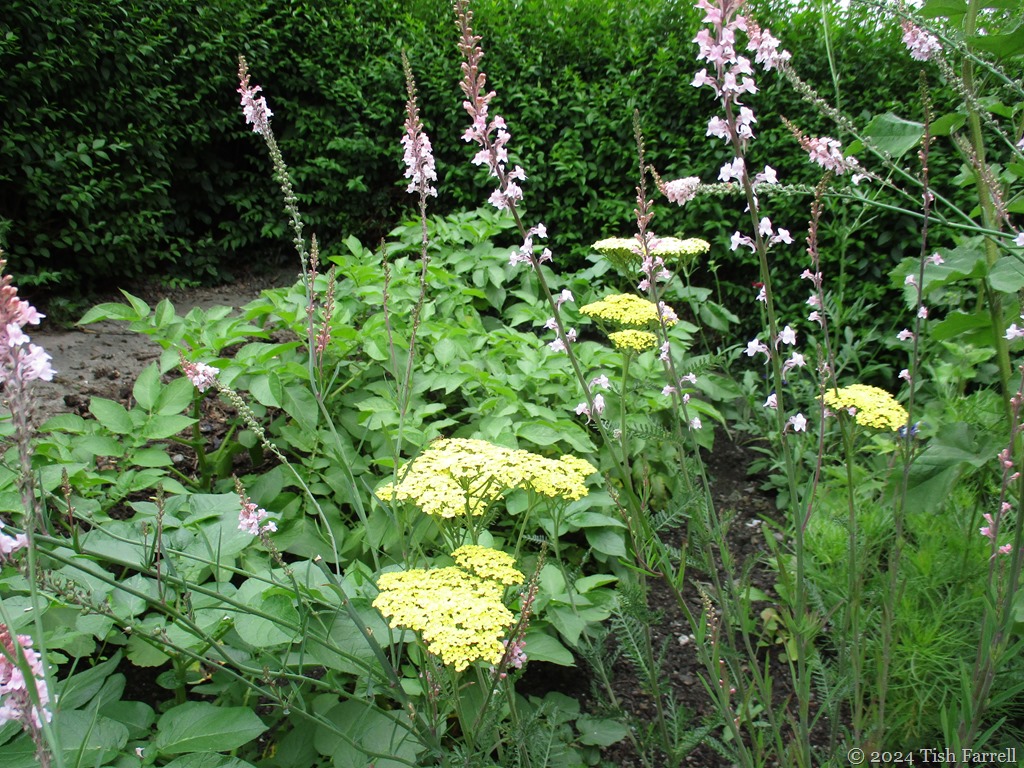
1: Because we’d had to rent between selling one house and buying another, I’d brought only a handful of plants from our Much Wenlock garden. Among them was yellow toadflax (Linaria vulgaris), a favourite flower since childhood when I’d first seen it lighting up the verges of the Shropshire Hills. I’d grown it from seed, bought on-line from Jekka’s Herbs. Now, by some pleasing accident, it seems to have grown up with some purple toadflax.

IMG_5791ed

*

When we moved into The Gables, just under a year ago, my most pressing concern was vegetable growing. I knew we would miss the produce from my allotment plots of 16 years (if not the heavy labour), so tackling the most weed-infested areas to make beds for food crops was my first priority. My thinking here was that these beds would be cleared every year, so repeat ground elder and bluebells wouldn’t be quite the same bother they would be in shrub or herbaceous borders.

I made a start last summer, but then the following months were mostly too wet and cold for gardening. And then in spring the house roof had to be taken off and rebuilt. And then the building work on the rear extension began, all of which saw parts of my territory invaded, first by a mountain of broken roof tiles and battens and then by piles of construction materials. There were times, too, when I couldn’t reach the projected vegetable plots in the back garden, it being uphill from the house, other than by climbing a ladder. All of which means that bed making efforts were piecemeal and, in the end, things (vegetables, herbaceous perennials, herbs, developing shrubs) were planted out wherever there was a space at the time.

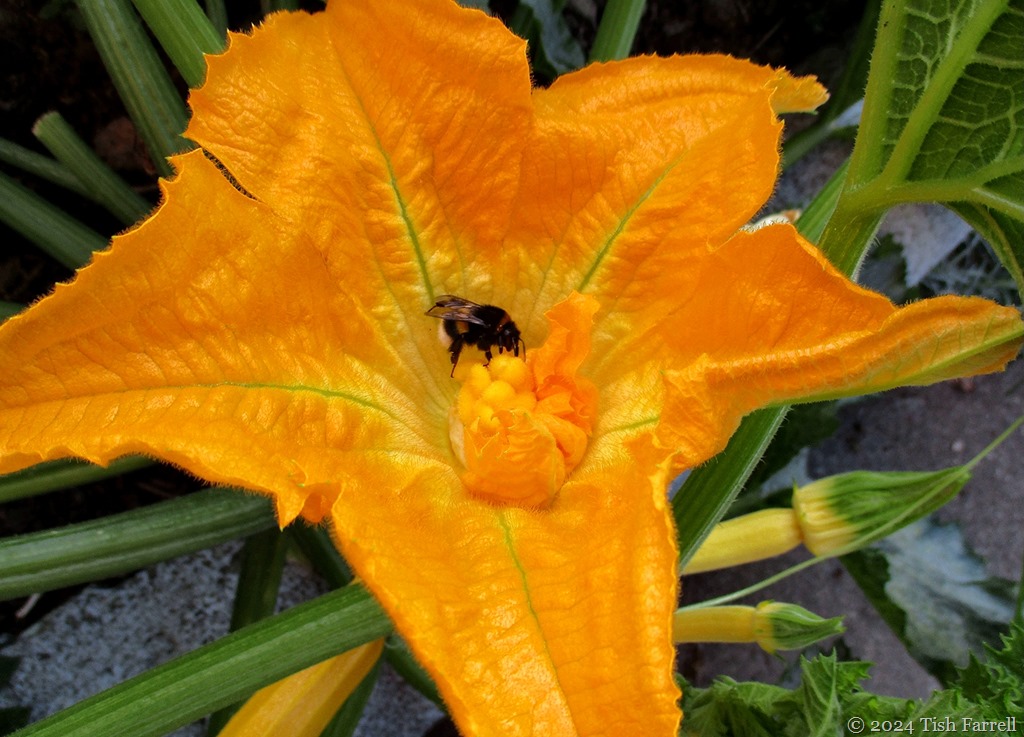
2: But it’s all alright. Everything is growing all over the place. I have yellow courgettes at the front door, which is actually quite handy…

IMG_5826ed

*

3: The front garden bed is also yielding some very nice Charlotte potatoes (despite going in very late). The building debris and old mortar from the lifted slabs seem to have provided some good drainage in our heavy-ish soil:

IMG_5679

*

4: In the spring I’d sown some marigold (calendula) seeds, obtained from the Bishop’s Castle seed bank (local growers’ donations) and they’d germinated prolifically. So I planted them out all over the garden, front and back, because you can’t beat marigolds for their spirit-lifting qualities. And now we have masses of golden heads, which of course are edible too:

IMG_5817

IMG_5808ed

*

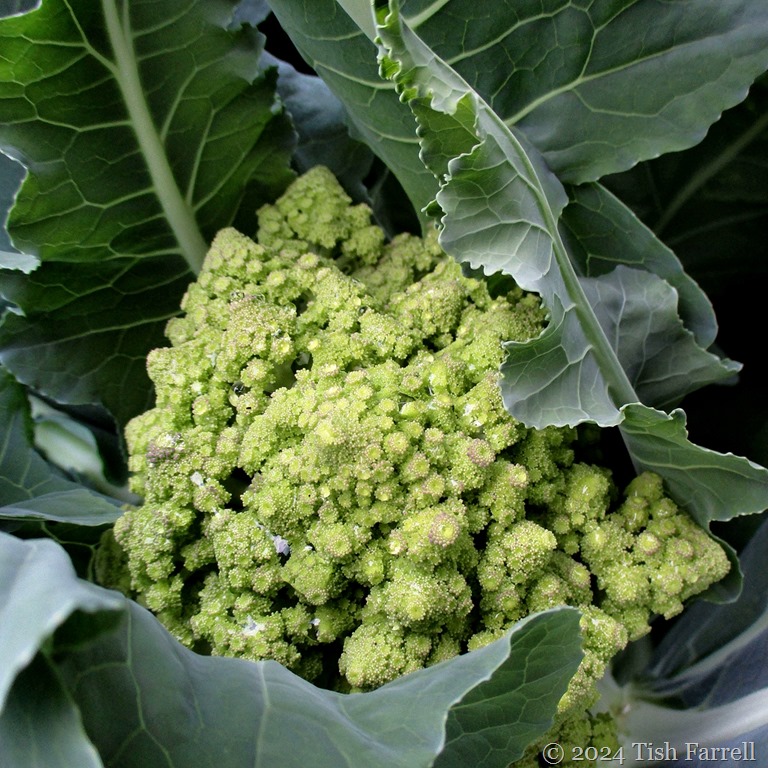
5: And on the eating front, since spring we’ve done rather well with all manner of greens, but most particularly the Romanesco cauliflowers, which I haven’t grown before. They are much sweeter than white caulis, and if you cut them and leave the stalk, they sometimes produce more sprouts. They don’t need much cooking either.IMG_5574

*

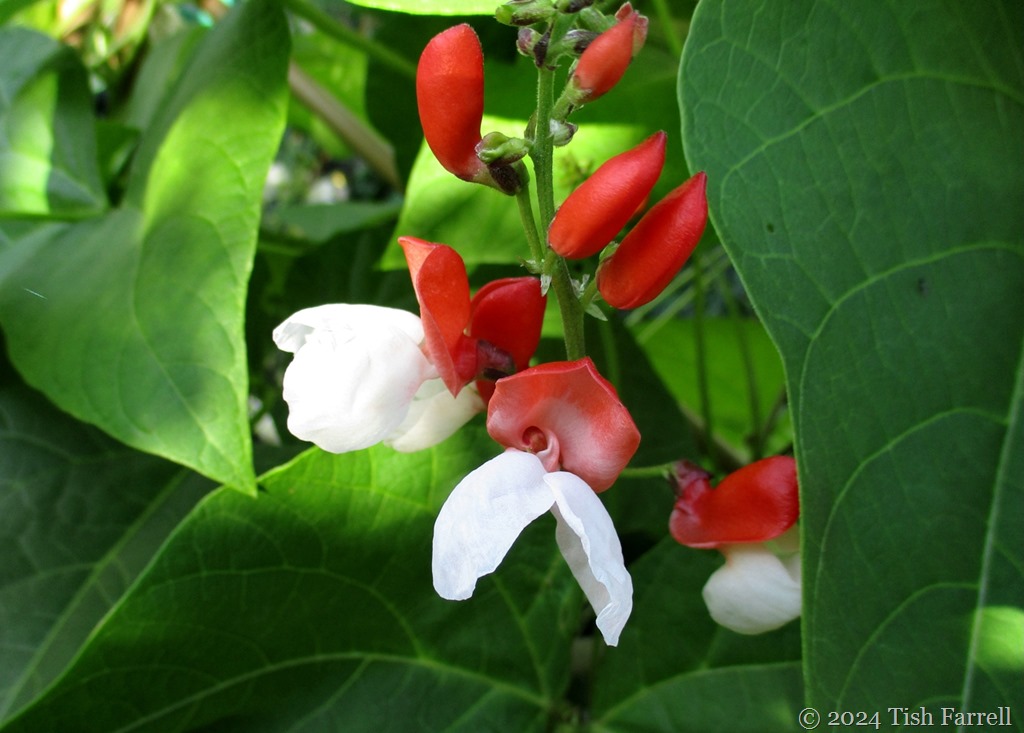
6: But best of all, are signs that the runner beans are thriving. I have three varieties growing together: Emergo (white flowers), Painted Lady (red and white as in featured photo), and St. George (red):

IMG_5800

IMG_5774ed

*

I mean to say, what could be lovelier than this Painted Lady bean flower. And then to think: there will be beans!

*

Six on Saturday  Jim at Garden Ruminations is the host. Please pay him and his splendid garden a visit.

A Spot Of Garden Flamenco?

IMG_5746

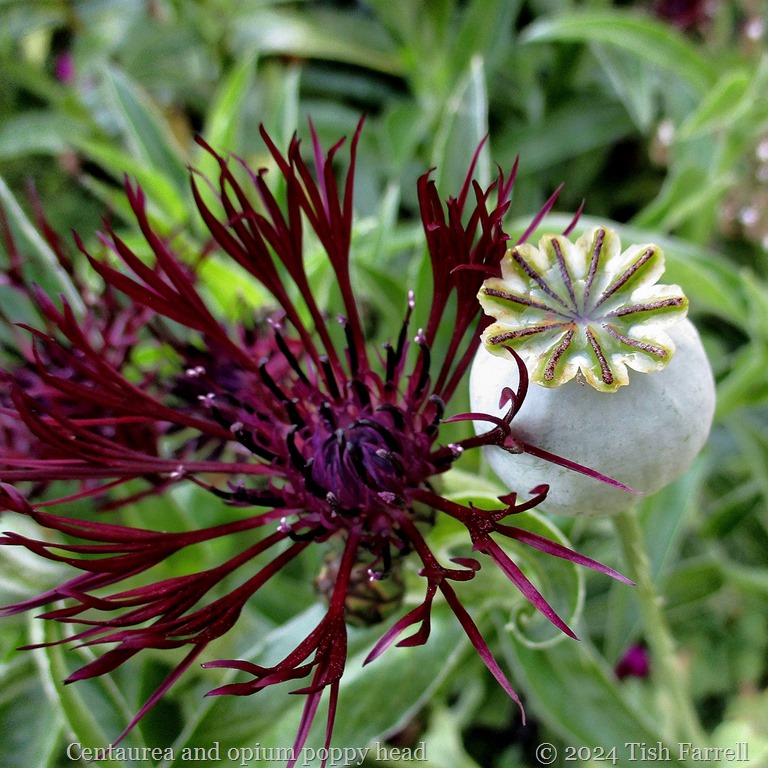
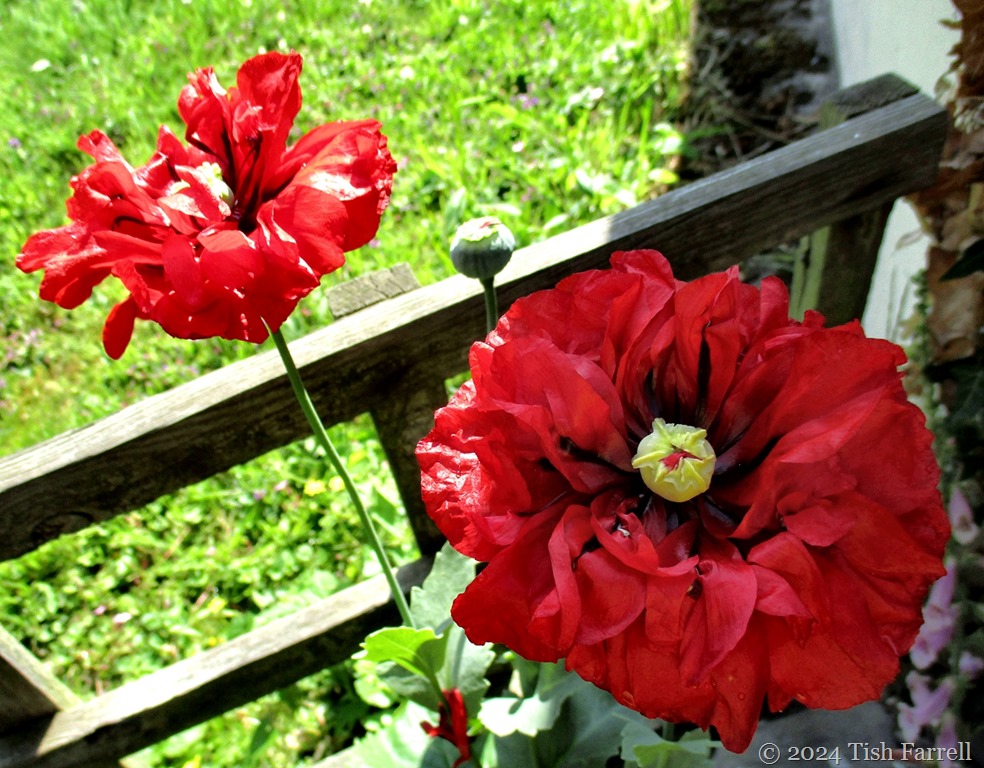
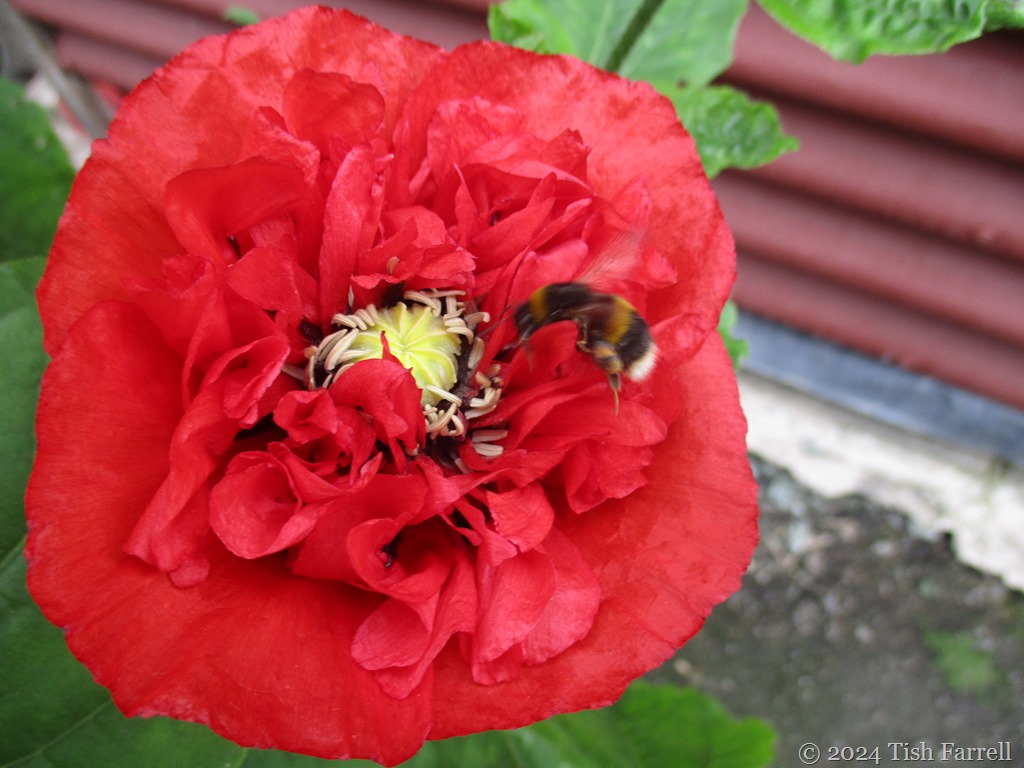
We have visitors, blown in from who knows where. All over the garden too. And what a show they’re giving us with their fiery frills and flounces. Papaver somniferum, the sleep-inducing opium poppy.

The bumble bees have been mightily excited by the poppies’ presence; their behaviour far from somnolent. In fact I witnessed much unseemly rummaging through floral petticoats as they hoovered round the creamy anthers.

IMG_5671

IMG_5672ed

*

Elsewhere in the garden there are more hot colours, this time courtesy of the Bishop’s Castle seed bank. This is a wonderful community venture whereby local gardeners donate flower and vegetable seeds. You can help yourself to the contents of the tray which lives upstairs in the Town Hall council chamber, and leave a donation to the seed bank.

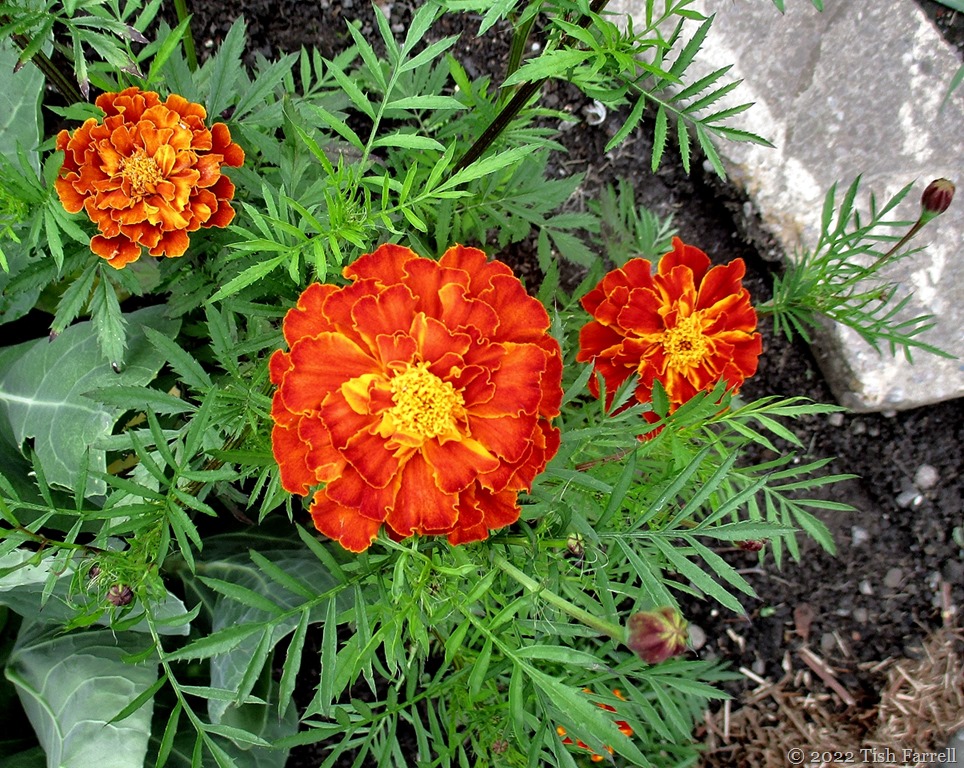
These French Marigolds were grown to protect the carrots. Their minty-lemony scent camouflages the carroty smell so fooling carrot flies that like to lay their eggs in the developing roots. But by some failure of organisation they ended up by the cabbages where they do nothing to dissuade the egg-laying proclivities of cabbage white butterflies.

IMG_5637

*

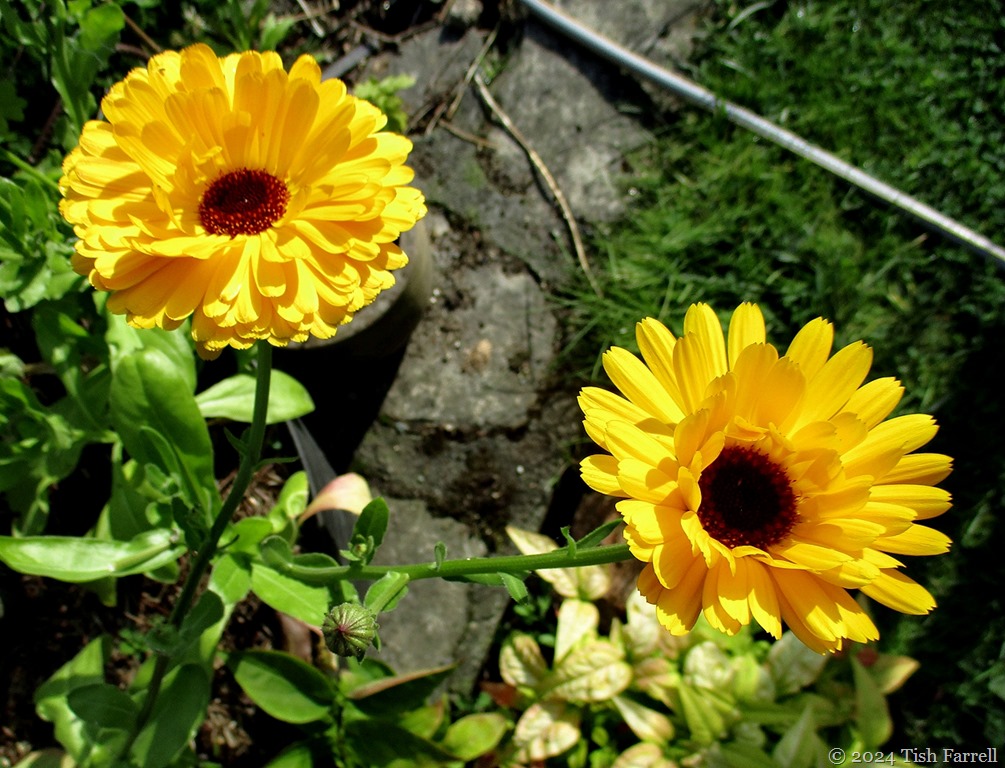
And then there are the seed bank pot marigolds. I’ve planted them out everywhere because I use the petals in salads. They have many beneficial medicinal qualities including a high lutein content which is good for protecting eyesight. Simply to gaze on them might suggest this particular property.

IMG_5735ed

IMG_5708

IMG_5701

Marigold with purple toadflax petals

*

But back to the flamenco. I don’t know about you, but this wild display makes me want to lift up my skirts and dance…

IMG_5747

When The Wall Came Down

IMG_5384

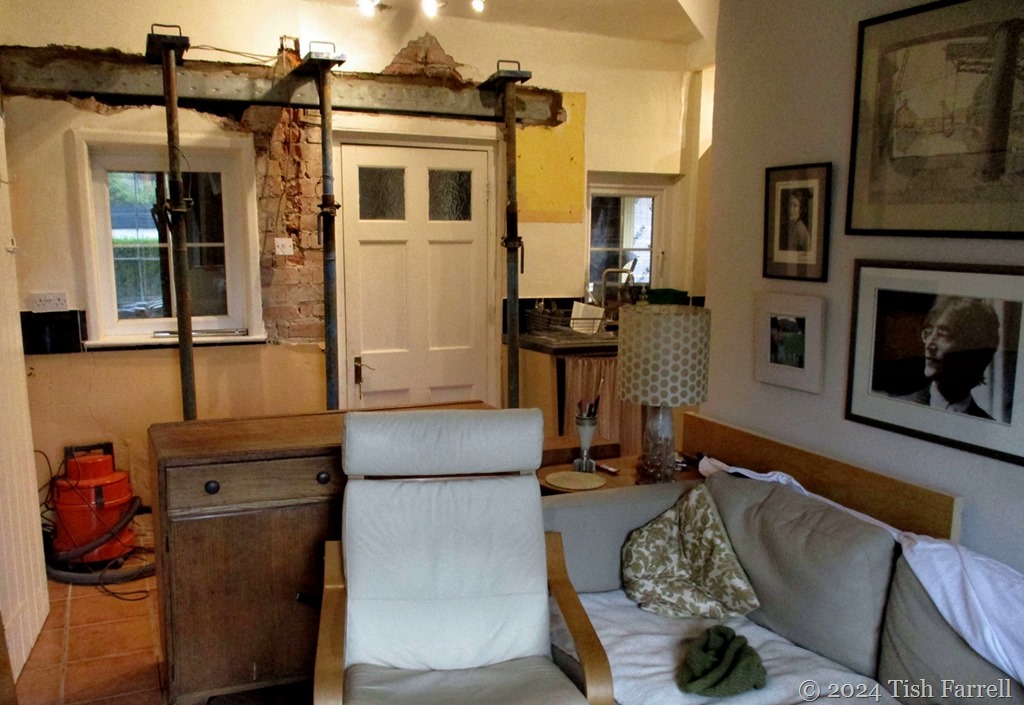
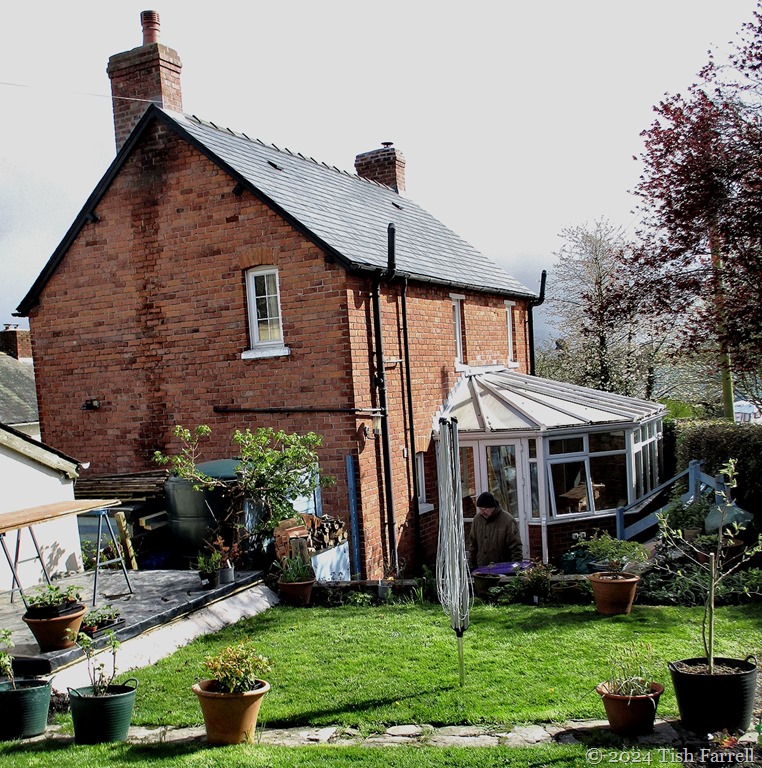
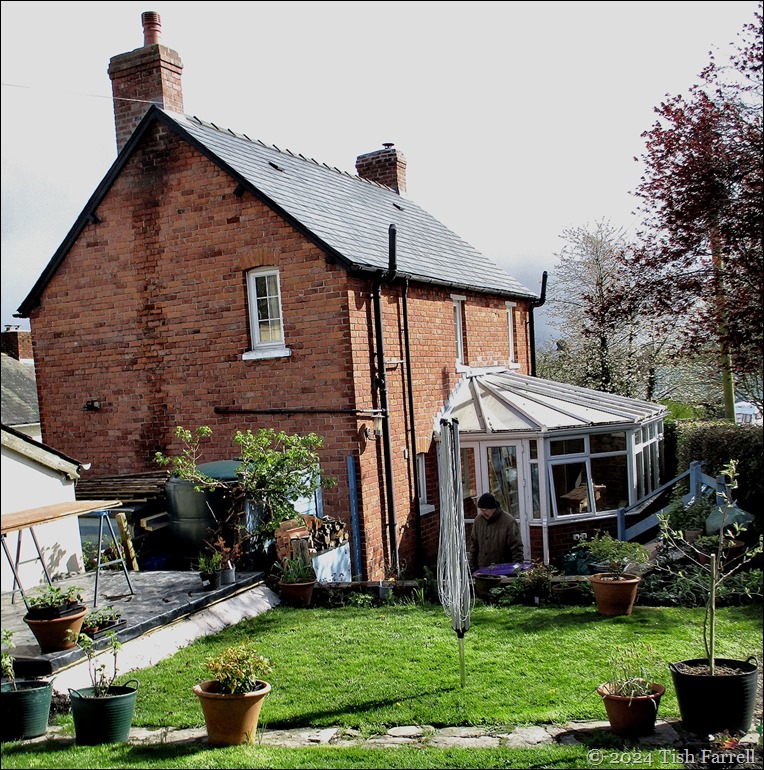
I think this is where I left off with the building work updates: acrow props holding up a third of the rear house wall while two steel beams were put in place. The door you can see was the original back door. When we moved into The Gables almost a year ago it opened onto a large uPVC conservatory, which at 20 years old was a little weary, as ageing plastic structures tend to be.
demolition 2

The conservatory that is no more

*

We knew at once it had to be turned into a properly insulated room, ideally a new kitchen-dining-room. And so began the process of having a designer draw up plans and submit them to the local authority for planning permission. That took a few months.

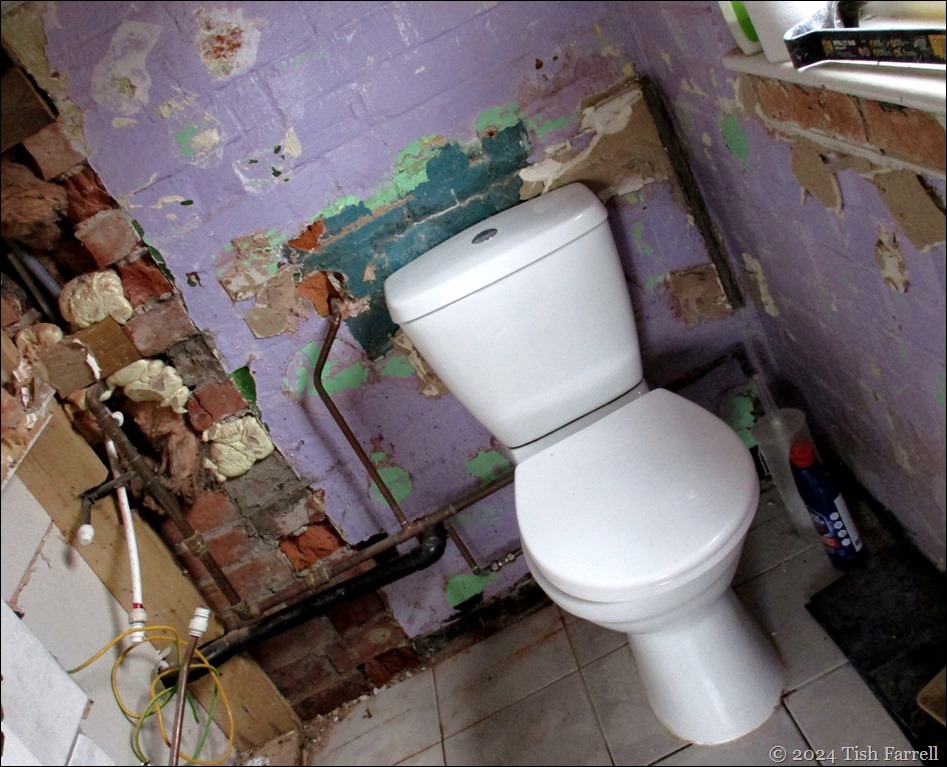
But now the photos. The acrow prop view shows our main sitting-room, looking from front to back of house. (There’s a second smaller sitting-room across the front hallway). Originally, when the house was built in 1922, there was internal wall running behind cupboard, presumably with a door through to a run of two or three narrow rooms. We’re guessing scullery, pantry, W.C. and also boiler room for doing laundry. This last possibility we discovered only two days ago when builder Alan was investigating the plumbing in the downstairs loo of many surprising colours. In the corner (left) he found signs of a small flue that had been re-used for the pipework when the upstairs bathroom was installed. (Tell-tale soot in the cavity).
IMG_5397

*

Anyway, at some point, in more recent times, the big sitting room was extended into the rear rooms to make an ‘L’ shape with a galley kitchen (running off to the right). The far end access to the W.C. was walled up in order to put in a big range cooker, and a new doorway to ablutions installed in the back corner of the smaller front sitting-room (not ideal!)

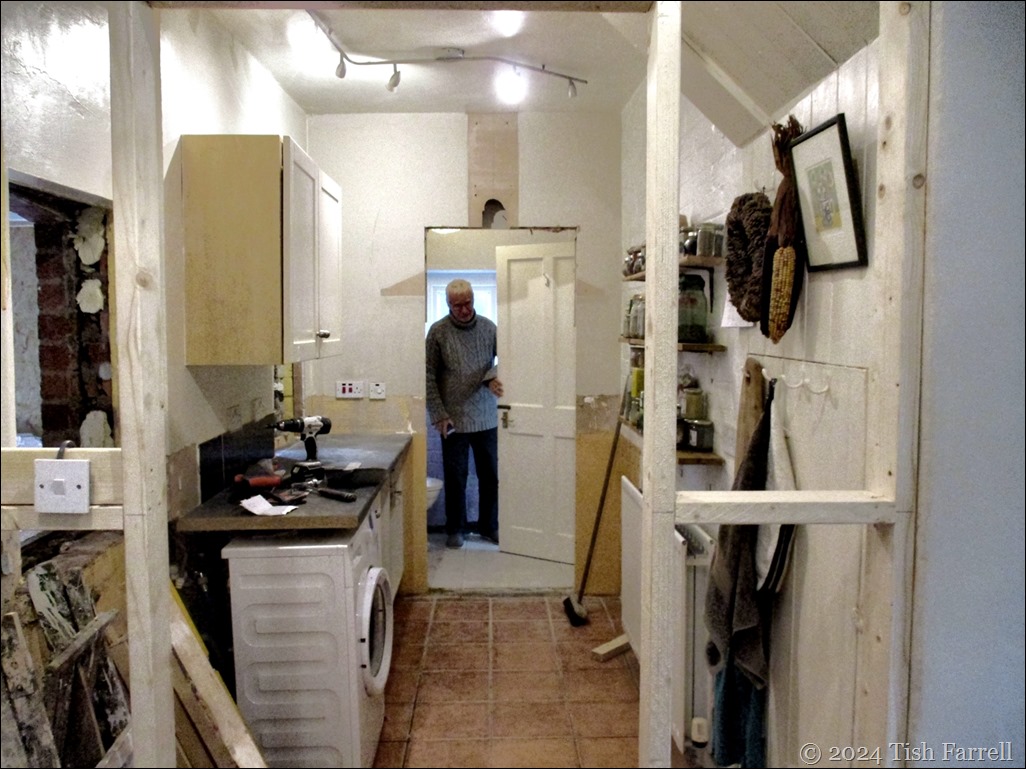
So: we’re knocking out part of the rear wall into the new kitchen extension, and reinstating a wall on the inside right to turn the (until last week) old kitchen into a utility room, and also restoring the door to the cloakroom and blocking up the sitting room access.

IMG_5606

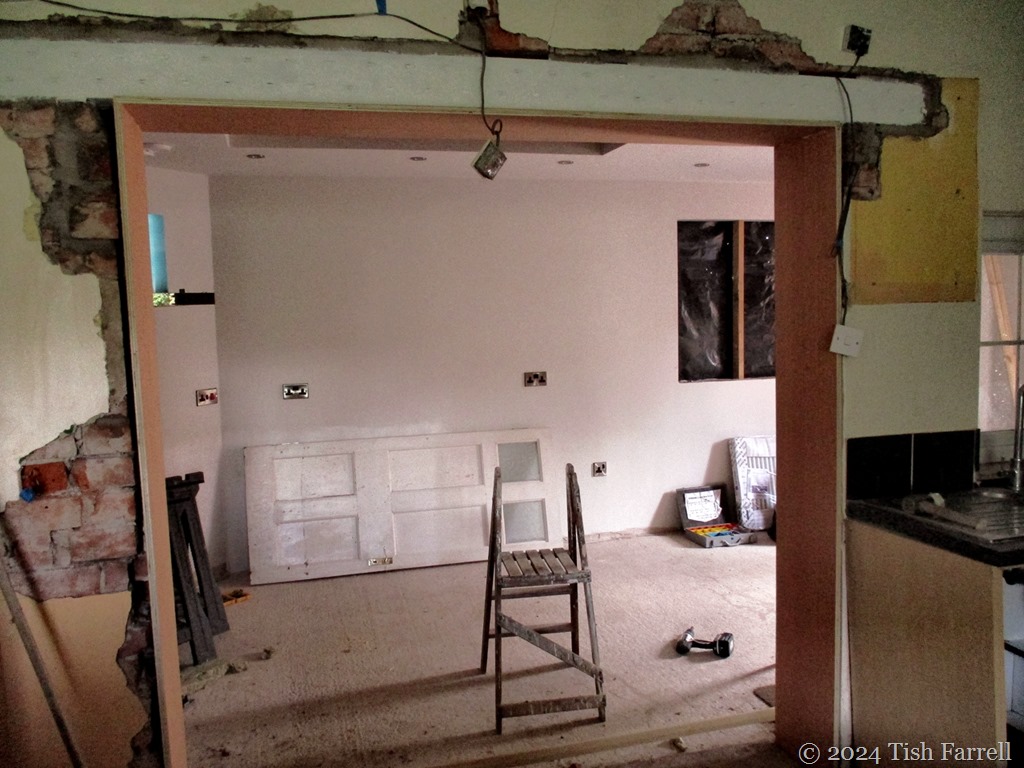
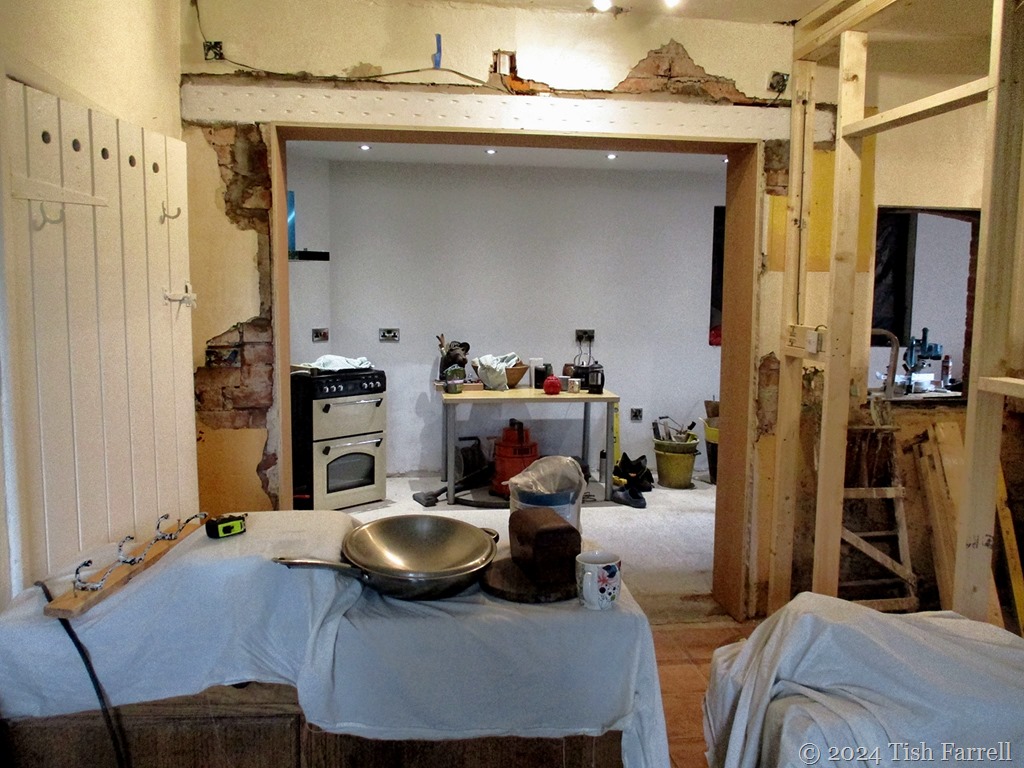
The big knock-through

*

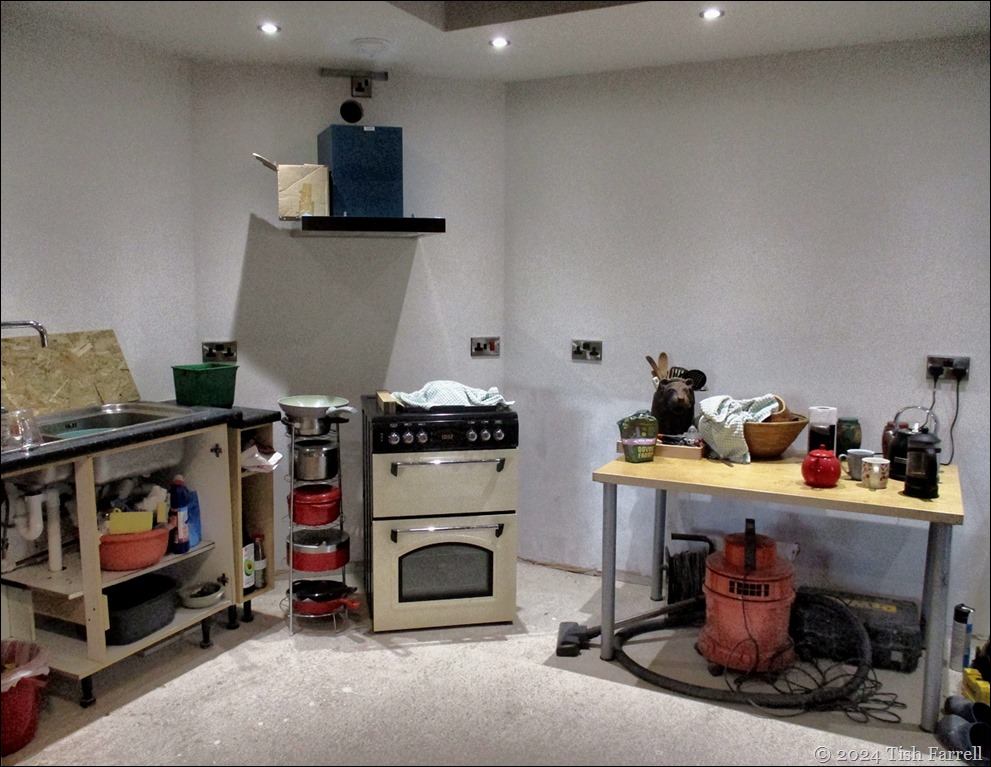
In the meantime, while the internal wall goes up for the utility room, I have makeshift arrangements in the new kitchen. This is currently only a shell awaiting its lantern roof-light, window, French doors, oak floor and kitchen units which are being made by Shepherd Hills, a Mennonite community of craftsmen who have their workshop in the next village.

IMG_5610

*

IMG_5623

*

IMG_5621

*

IMG_5619

Utility room and downstairs cloakroom with restored doorway

*

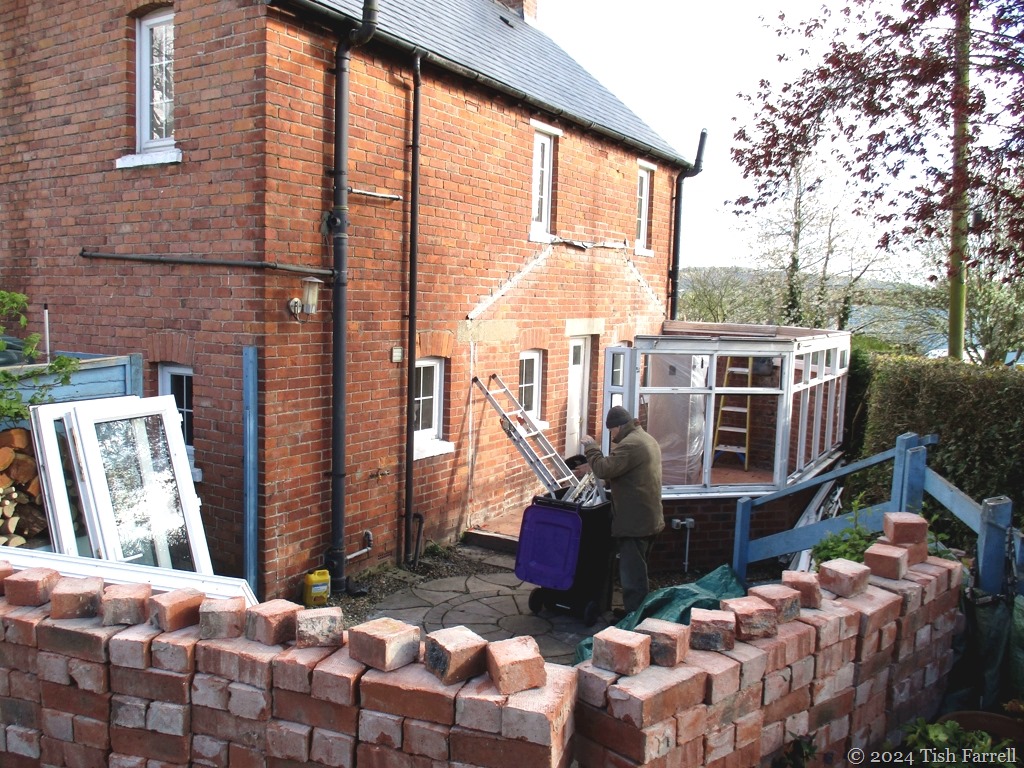
As for the outside, the brickwork is done, but I’m not revealing all until the windows and doors go in. There are always drawbacks with flat-roof extensions, not least the look of them, hence the addition of a lantern roof-light to offset the plainness of the rectangle. It is a difficult space to make the most of, in reality not very big. Nor was there much room to manoeuvre due to the position of the upstairs windows. Most of all, we didn’t want to add anything too fussy to this modest little house.

Looking back to the winter, some of you may remember the wall of bricks, saved by builder Alan from the conservatory demolition. They are now incorporated in the new build.

IMG_4922

*

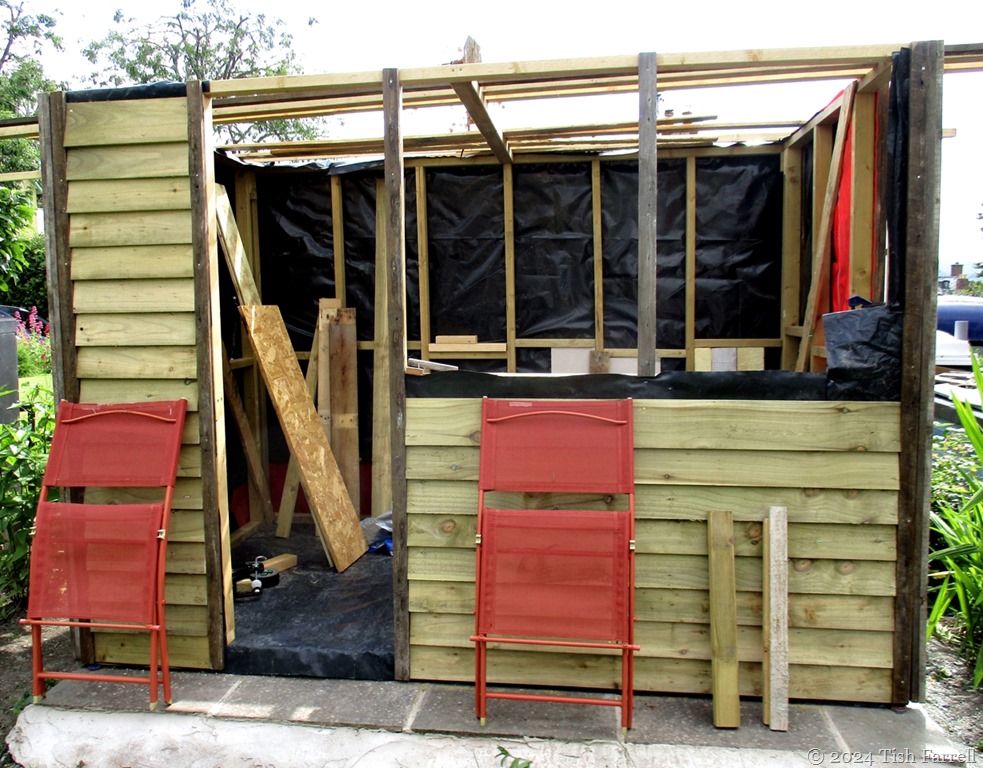
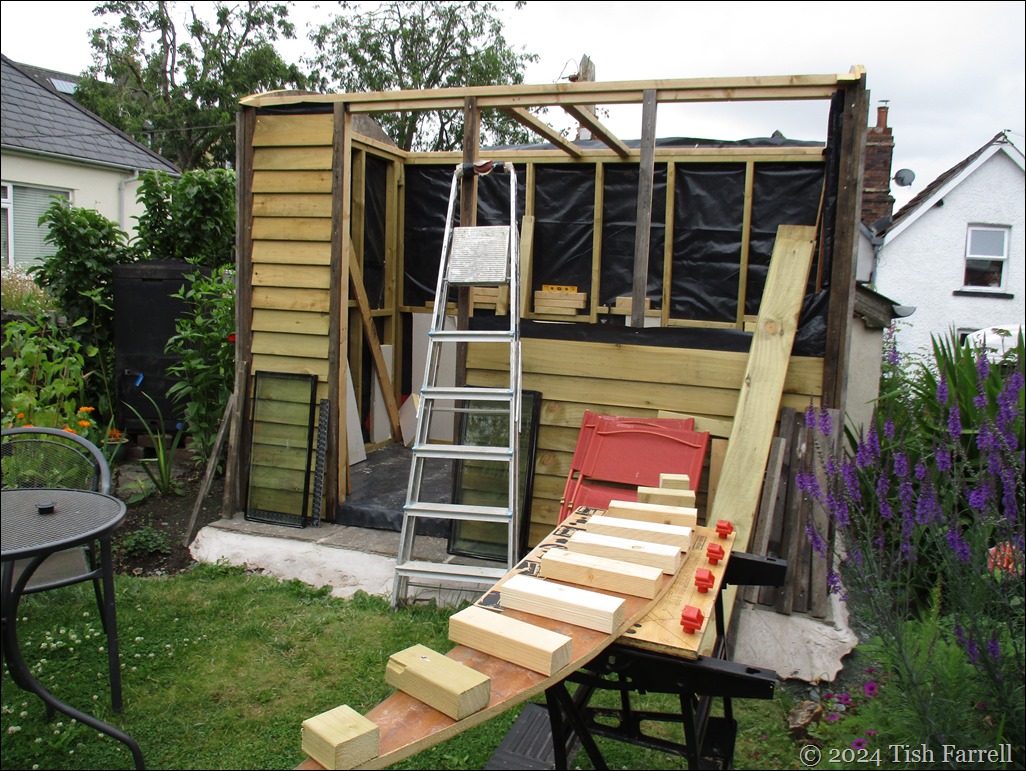
I can also show you our other structure in progress, as in Graham’s shed. He’s building it from scratch, inspired, he tells me, by a Great Western Railway goods waggon. It will thus have a curved roof, and as he’s forgotten how he built the Sheinton Street shed which also had a curved roof, the process is involving much pondering, followed by phases of making and unmaking. You may notice that some of  the hundred year old battens from the rebuilding of the house roof are being repurposed. Also four panes from the old conservatory are going into the window slots.

IMG_5533

IMG_5628

*

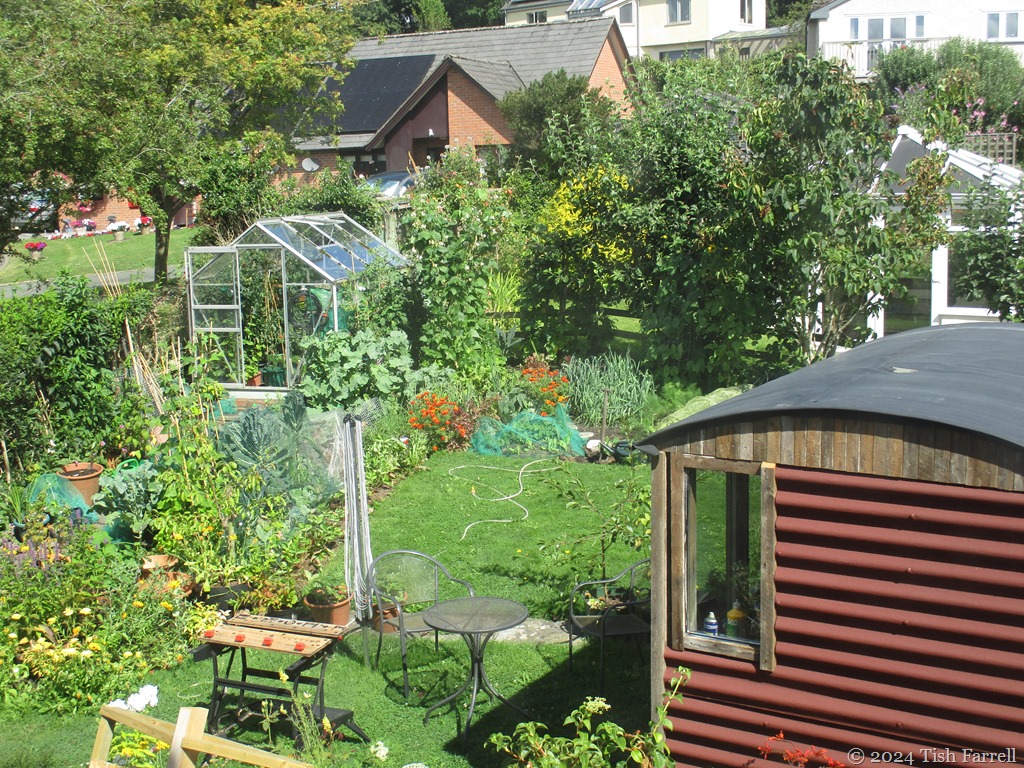
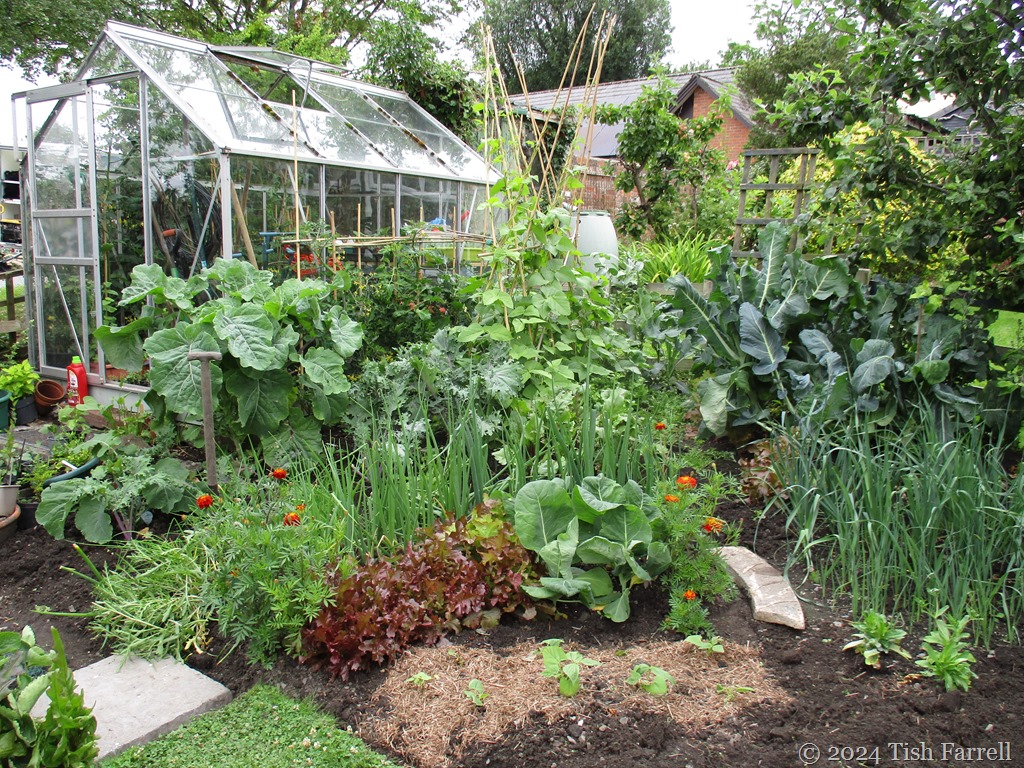
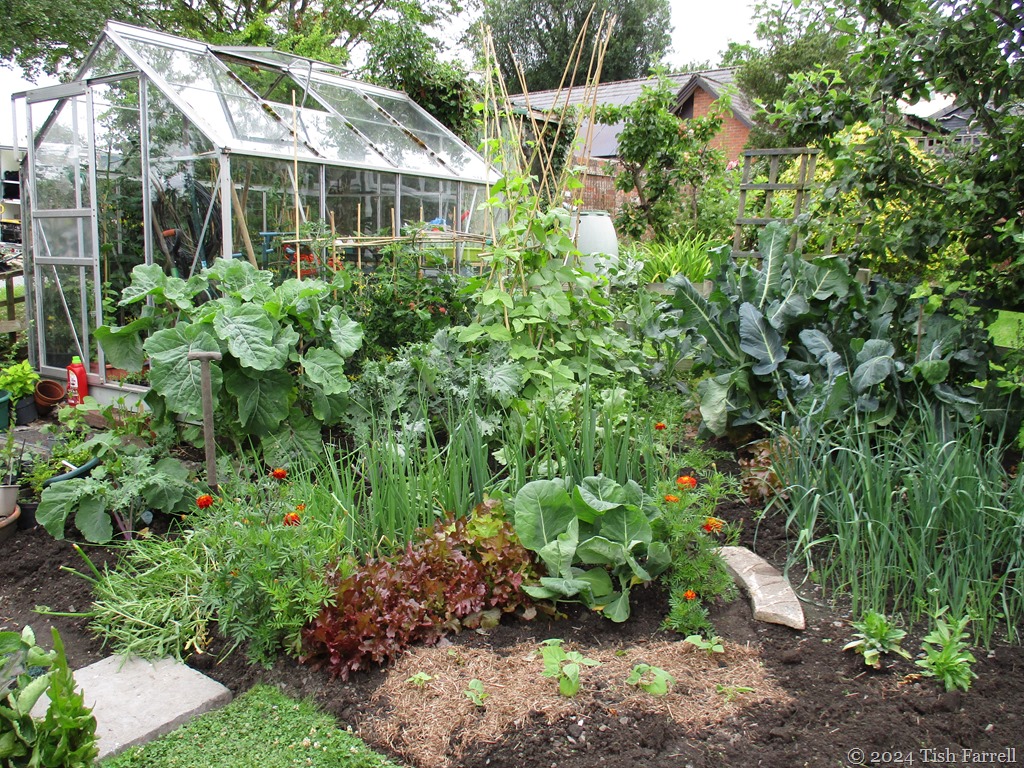
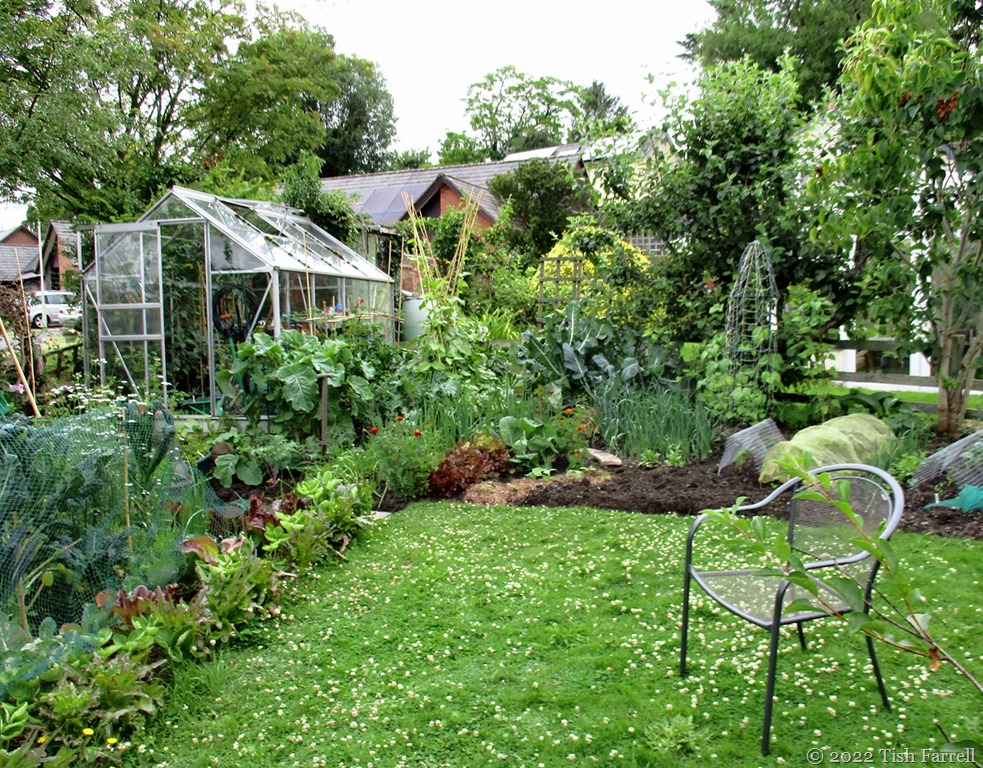
And as for the garden, well, after all the rain, it’s coming along rather vigorously in this interim phase of development (i.e. until the autumn when I might make more of plan that will involve finding homes for all the stuff presently in pots. At the moment I’m more interested in growing food. (On the plot: assorted tomatoes inside and outside the greenhouse, runner beans, Russian kale, perennial kale, onions, leeks, a few beetroot, Romanesco cauliflowers, cabbages and oak leaf lettuce).

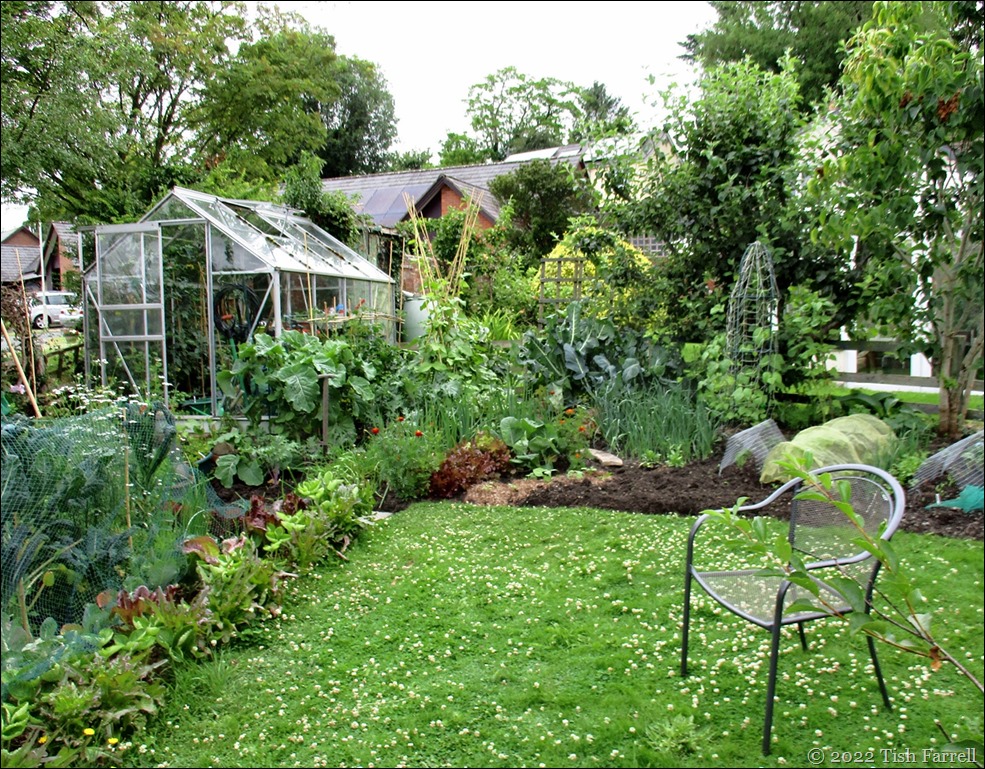
IMG_5631

IMG_5675

*

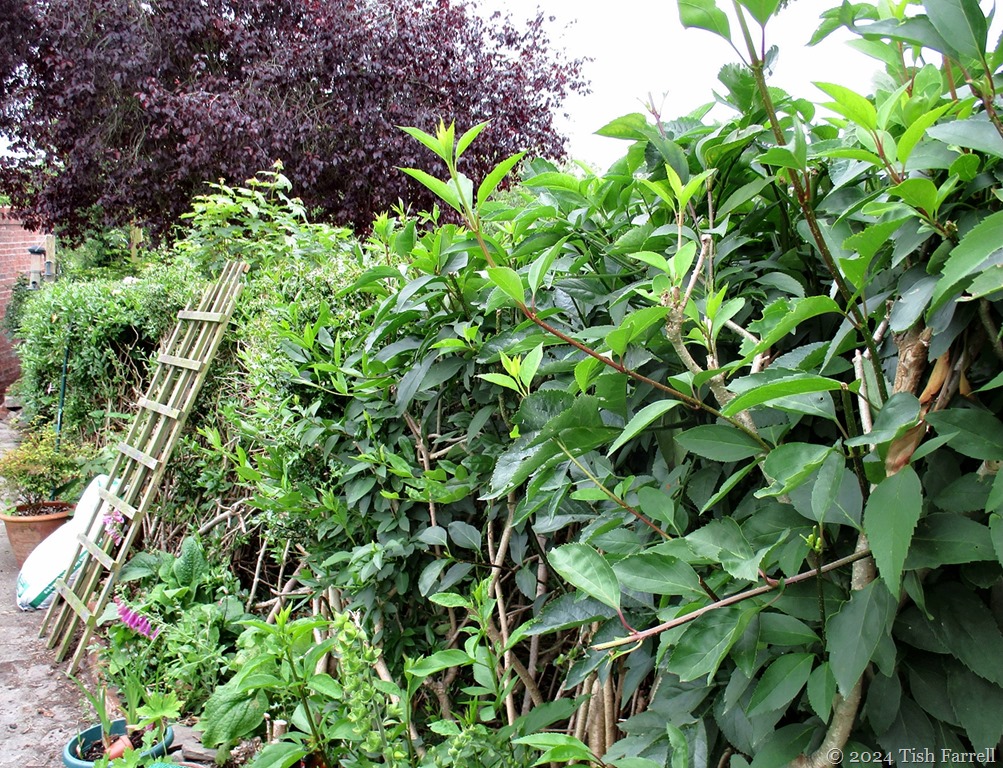
I think I’ve finished digging up the lawn, but there’s still the Hedge of Horrors to sort out, with more chicken wire extraction required, plus the unravelling of weigela, privet, elder, sycamore, ash, holly, hawthorn, ivy and some devilishly prickly berberis.

IMG_5641

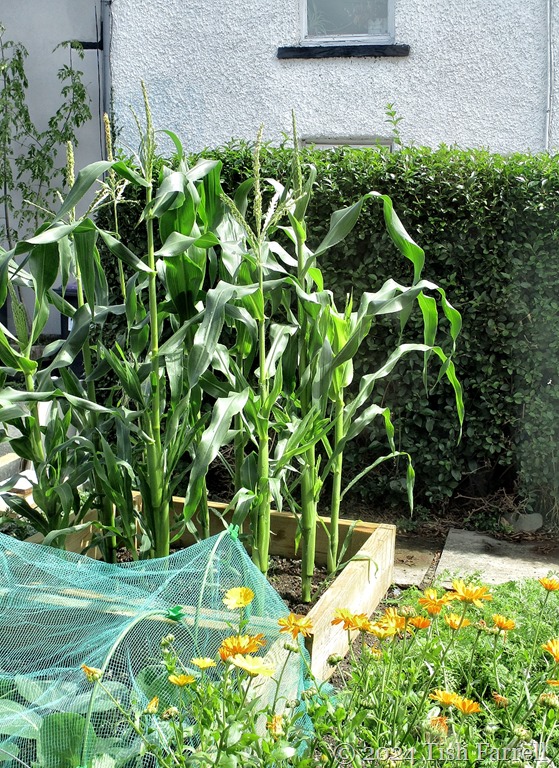
But on the plus side, the sweet corn is growing purposefully in the front garden, as are the Charlotte potatoes amongst the  toadflax and achillea.

IMG_5626

IMG_5625

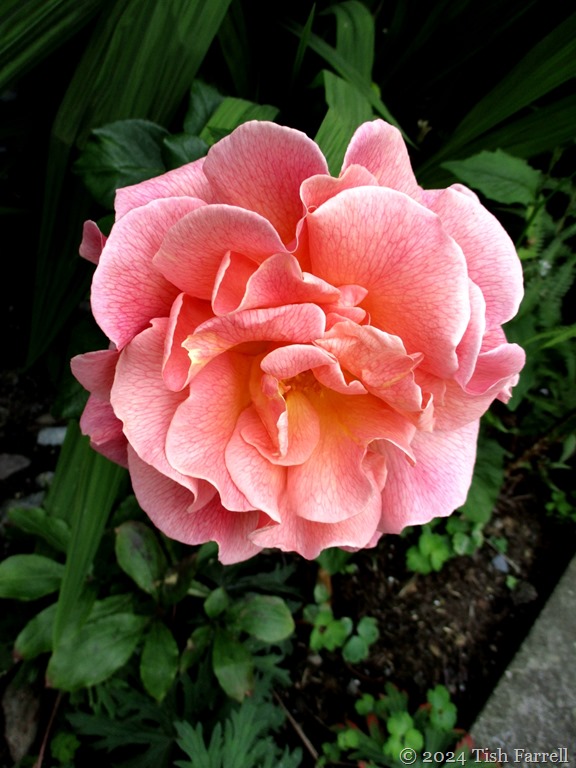
And that’s it for now chez Farrell. I’m leaving you with a single very lovely rose that snook out of the crocosmia thicket this week. It’s scent is delicious and growing by Graham’s shed.

Happy days amid dust and debris.

IMG_5646

header3

Roots Of The Matter ~ As In Too Much Burgeoning

IMG_5344

I may have mentioned once or several times that we’ve inherited a garden full of promiscuous weedy invaders. Top of the list is ground elder, closely followed by Spanish bluebells, but topping the top is Phygelius (kindly identified by Jude who described it as a thug that had to be dug up and contained in a pot). It is a semi-evergreen shrubby entity from South Africa, also known as Cape Figwort and Cape Fuchsia. And yes, it does look pretty when it’s cascading in bright red tubular flowers.

But just see where its roots are off to. These are growing under and in what was lawn.They extend at least two metres from the mother plant at the top of the garden. And the thing you most need to know about this vigorous pesky plant is that the smallest broken fragment of root has the capacity to make a new plant and root system in the blink of an eye.

The ground in the photo had been covered by a sheet of black plastic for around three months. This killed the grass, but only encouraged the Phygelius to sprout potential plants at regular intervals along the length of its root system. The good news is I can now see it and so unravel it (carefully) with a fork, and also extract any intertwining ground elder.

A tedious job, but then I do have company.

IMG_5338

This male blackbird spent all of Monday with me, scoffing worms and growing ever bolder. By the time I’m done, he will be one very fat bird, because the garden is also blessed with masses of worms.

And then this week there was another happy find, this time under a fallen roof slate…

IMG_5314

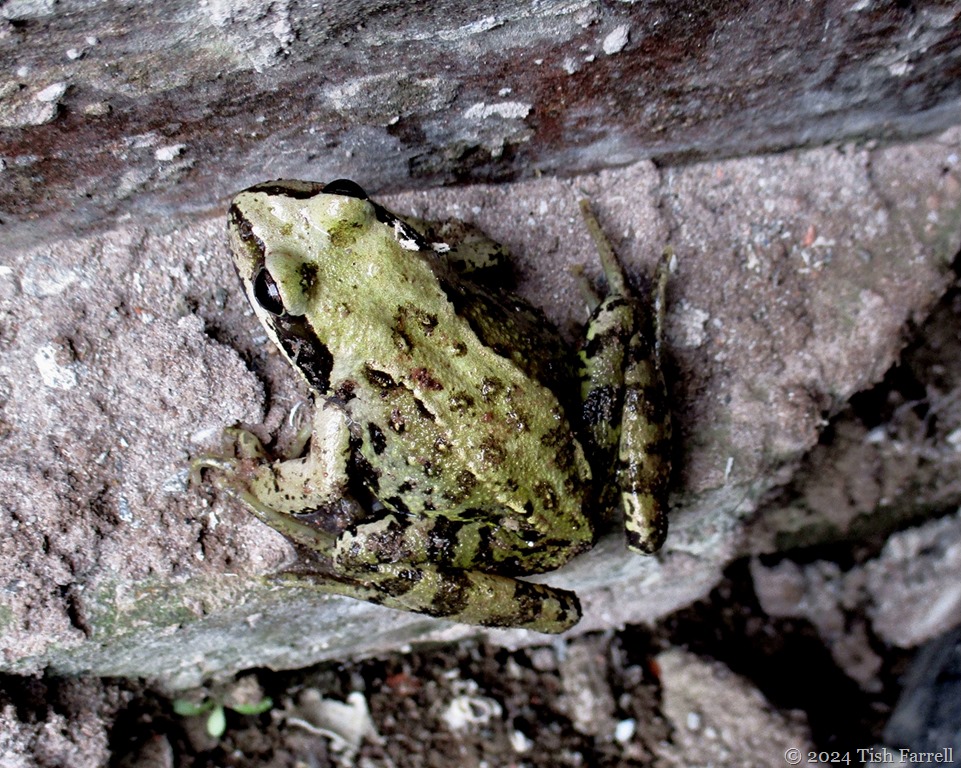
…one large toad. What a gift. Perhaps he/she is the reason why I’ve seen so few slugs. (So far anyway).

And finally, a pleasing plant discovery, rescued from behind the compost bin where it was being nibbled by snails:

IMG_5269

Cranesbill: Geranium Phaeum ‘Album’

*

And so the garden moves forward – renewed, reconstructed and (in several quarters), burgeoning.

*

#SquaresRenew     Becky’s May photo squares each day feature moving forward, reconstruction, renewal and burgeoning. Still time to join in.

header

Leading You Up The Garden Path

IMG_5211ed

Each day For the month of May Becky is hosting a square format photo featuring one or more of the following themes: move forward, burgeoning, reconstruct, renew. And so here, on all those fronts, is the kitchen-window-to-be with a view on another ‘work in progress’ – the garden. The hawthorn tree over the hedge is doing the burgeoning.

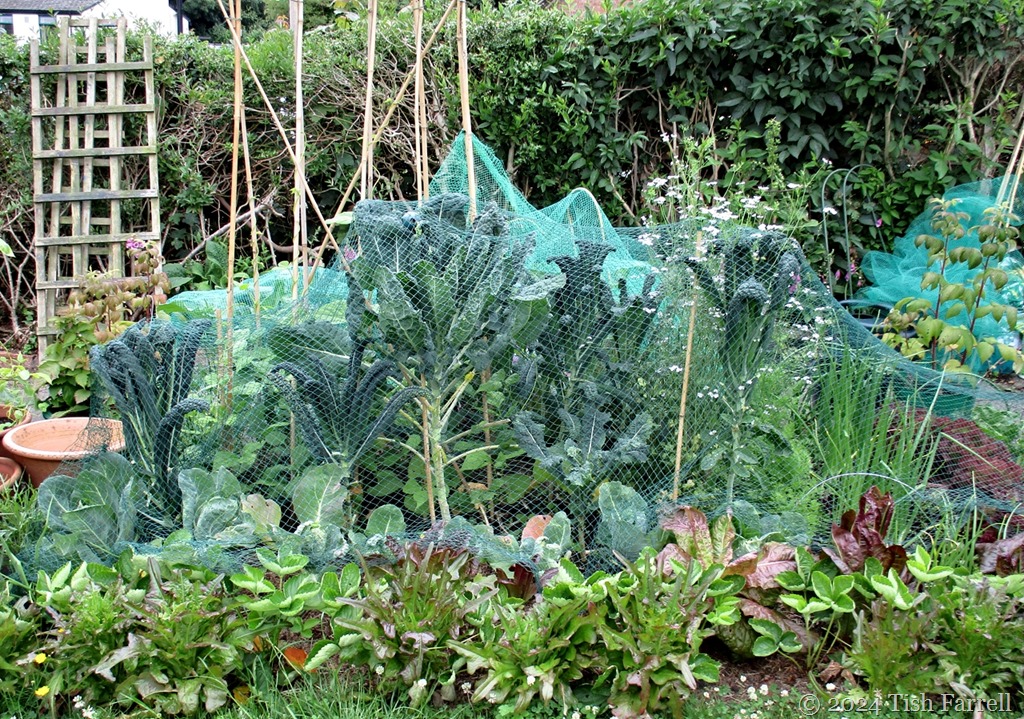
The house extension has been forging ahead too, and while super-builder Alan has been putting up the inner timber frame, I have been digging up the lawn. I started doing this last summer, soon after we’d moved into The Gables, but got no further than two beds along the garden path. Even so, they are already looking promising, bursting with spinach, Swiss chard, coriander, various kales and cauliflowers. (Everything has to be netted against pigeon plunder).

But then came the wet and frigid winter, and so the digging mostly had to stop until March.

IMG_5216

Our garden ends at the fence behind the greenhouse, and I’m now expanding an existing narrow bed along the entire fence-line. First on my list has been rooting out the ground elder and phygelius seedlings, followed by making a well composted trench for runner and butter beans. The trench is done and the bean row will run parallel to the greenhouse, but with space enough for some outdoor tomatoes beside the greenhouse.

Against the back fence are a few field bean plants (mini broad beans), now busy flowering, and next to them is a small plot of sprouting broccoli and green Romanesco cauliflowers for late summer cropping.

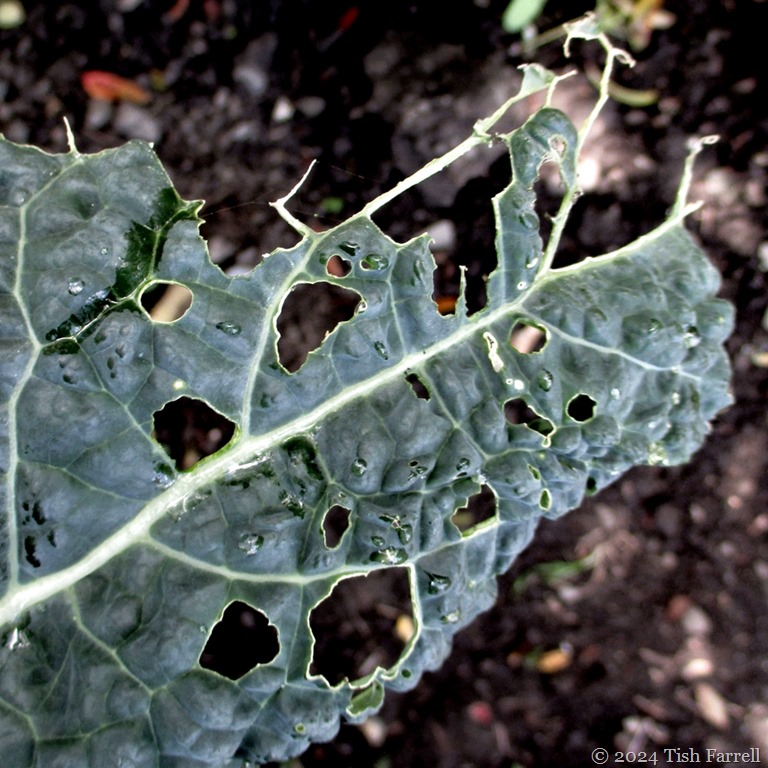
It’s a pity everything has to be netted, but the pigeons are remorseless foragers, including testing things they don’t really like and leaving lots of shredded leaves – the rotters.

Meanwhile the kitchen is looking like this:

IMG_5213

A brick-skin with parapet is next on the agenda. There will then be double doors filling the open space, and a roof lantern illuminating the cooking department. The further half of the back house wall will then be knocked through to the main sitting room to create an open L-shaped living space on a roughly east-west axis.

But for now it’s all blue-sky thinking, and not least some serious musings on how the new roof lantern will affect the interior light. Hmmm:

IMG_5210

*

#SquaresRenew

hawthorn header

Operation House Renewal: Moving Forward

gables2

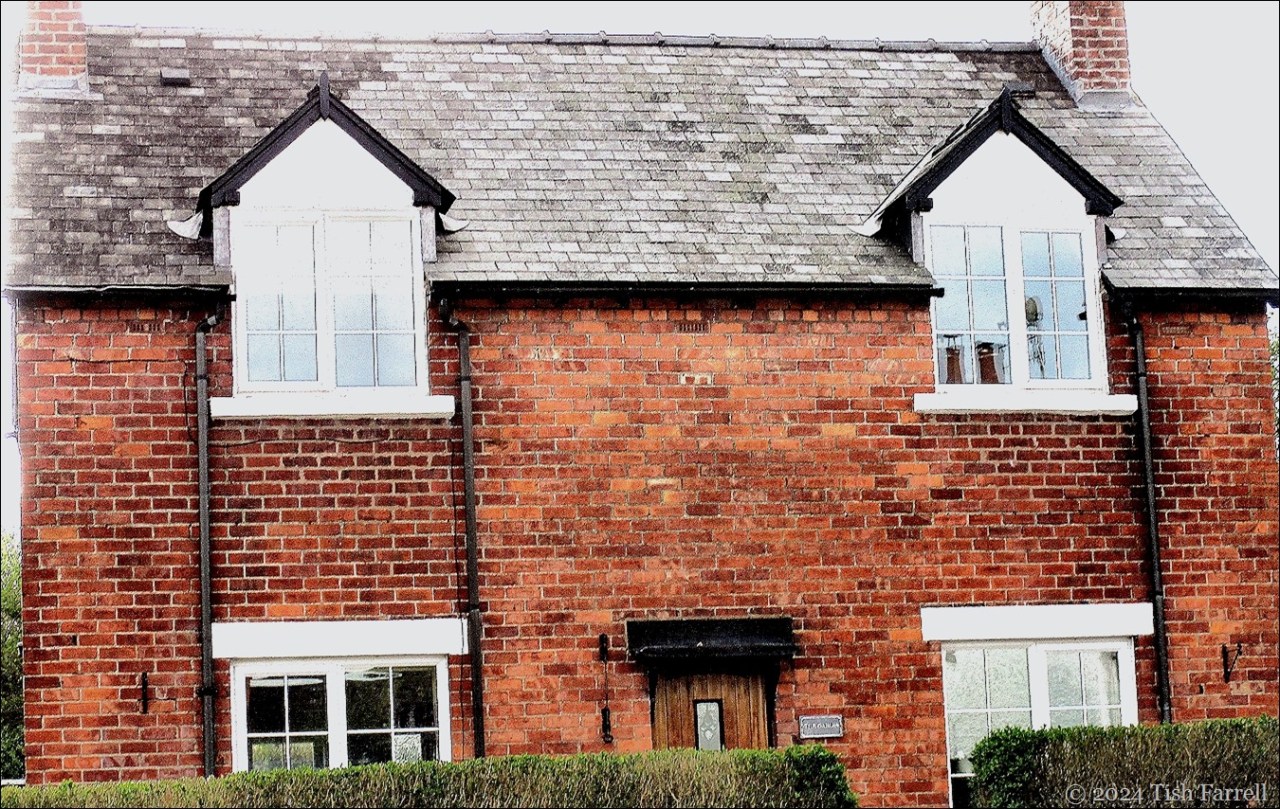
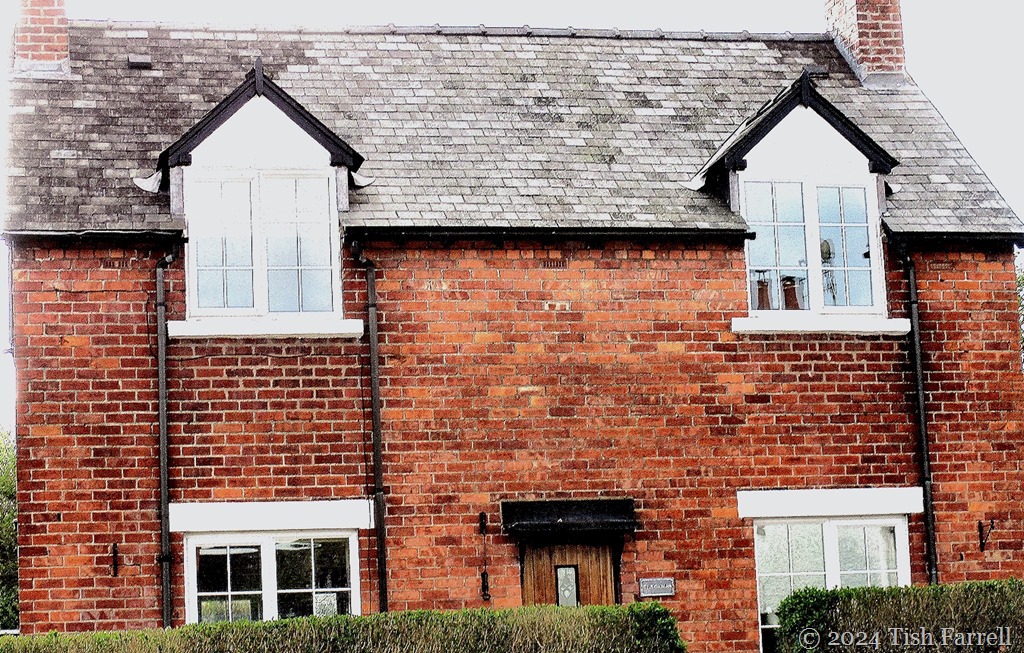
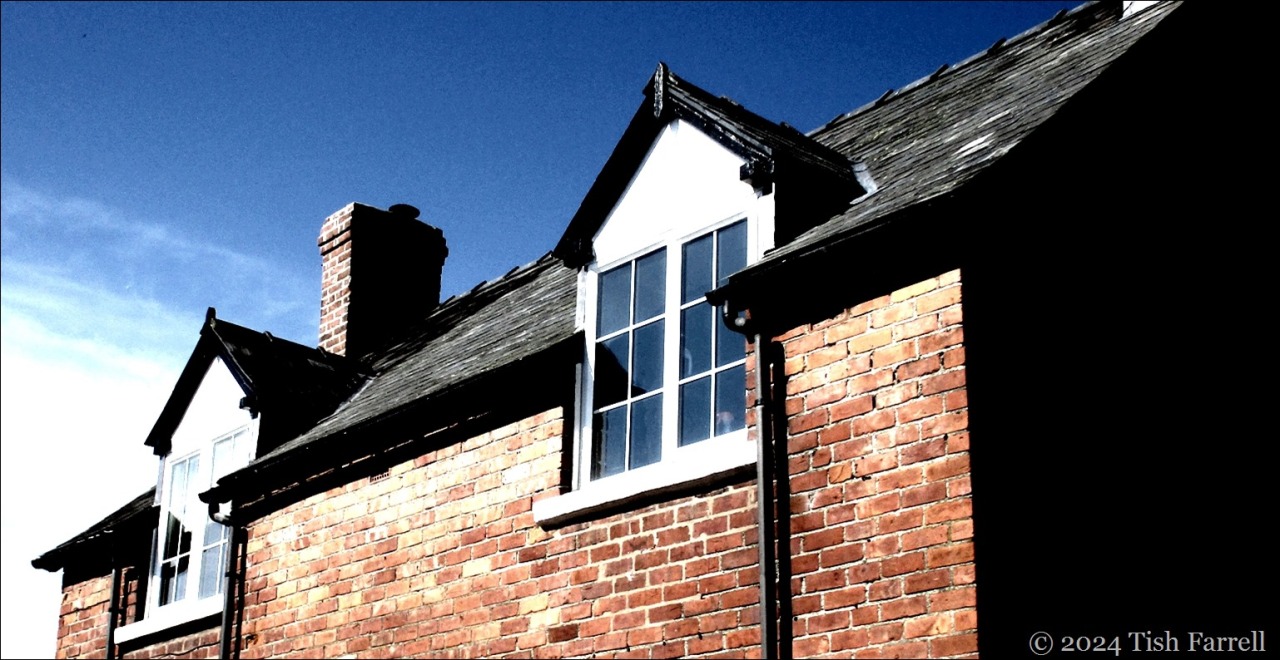
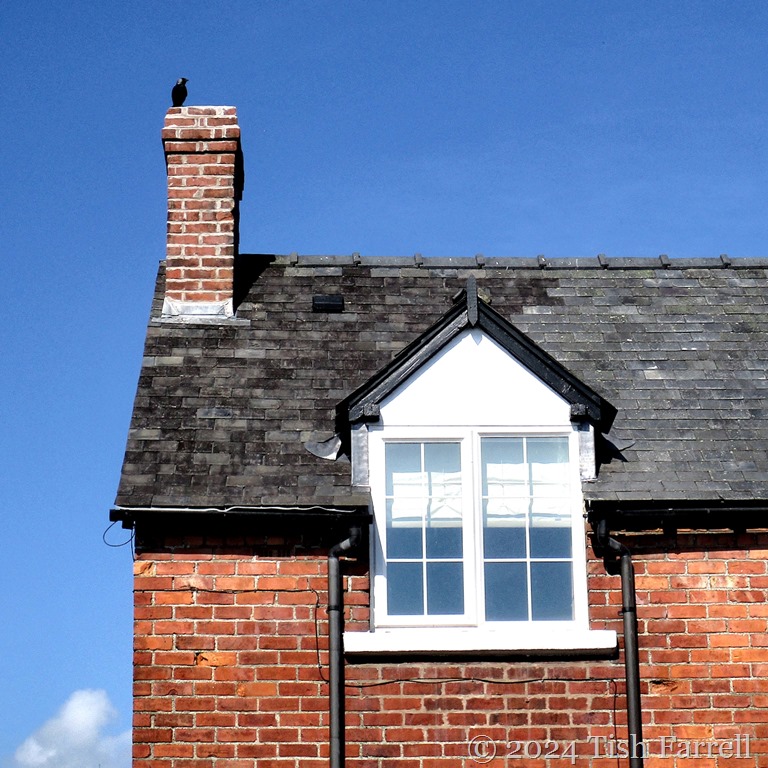
I’ve not said much about the house renovations. For one obvious reason, it’s been a touch stress-inducing. But the roof has been restored (re-battened, felted and insulated), the chimneys re-pointed and leaking elements fixed, the bedroom gables made secure, and the rear conservatory demolished and removed, and so we’re on the upward trajectory. Or so Graham assures me.
We’re pleased with the roof. On the house front the original Welsh slates have been re-used wherever possible, with reclaimed vintage ones making up the shortfall. The back-of-the-house tiles were all asbestos and had to be removed by a specialist company. They’ve been replaced with Spanish slate, new Welsh slate now being too expensive to contemplate, which is a great pity. But then back in 1922 when local builder George Nicholas was roofing the house, he likewise thought Welsh slate was too expensive to use on the rear elevation. The house then backed onto fields, with only cows to know the difference.

With the roof done, super-builder Alan Morris has been forging ahead, even as he shivered in biting winds and rainstorms re-pointing the chimneys. On top of that, it’s not an easy site: street access is problematic (narrow road), and the new rear kitchen extension, mostly on the footprint of a conservatory, is hemmed in by house, hedge boundary and a terrace wall.

demolition 2

New tiled roof and old conservatory

*

Demolition begins:

demolition 3

demolition 4

Bricks from the inner skin of the conservatory to be re-used on new exterior walls.

*

demolition

Shifting the debris and digging out new foundations

*

demolition 5

We filled three skips which required some nifty delivery and retrieval. Large vehicles can only reverse into the street. There’s not enough road width to exit at the top of the hill.

*

IMG_5119

Builder Alan explaining some finer points of construction to Graham

*

IMG_5126

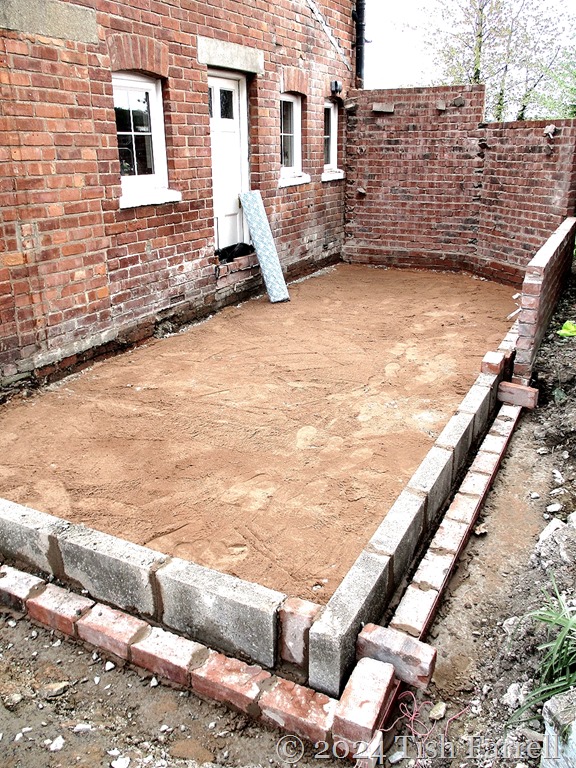
And this is where we are now: waiting for the floor to be insulated and the concrete laid (Tuesday)

*

Gables

*

#squares-renew

For the month of May, Becky is hosting the daily posting of a square format header photo. The themes are renewal, burgeoning, moving forward, reconstruction. I’m thinking our renovation works are pretty much covering the lot. And finally, most importantly, we have a moving forward with the weather: sunshine and some warmth. I think we can now say (fingers crossed) it is actually spring here in Shropshire.

Welcome To My World ~ A Late-Day Walk Above Bishop’s Castle

IMG_4567a

On Sunday I did a lot of complaining about the cold and lack of sunshine. Perhaps the weather gods took pity. At five o’ clock the clouds lifted and the sun came out, and although it was still chilly, we thought a walk was called for. There was a path I had my eye on back in the winter when it was too muddy underfoot to attempt it. But after a couple of downpour-free days and lots of drying wind, I thought it should be passable.

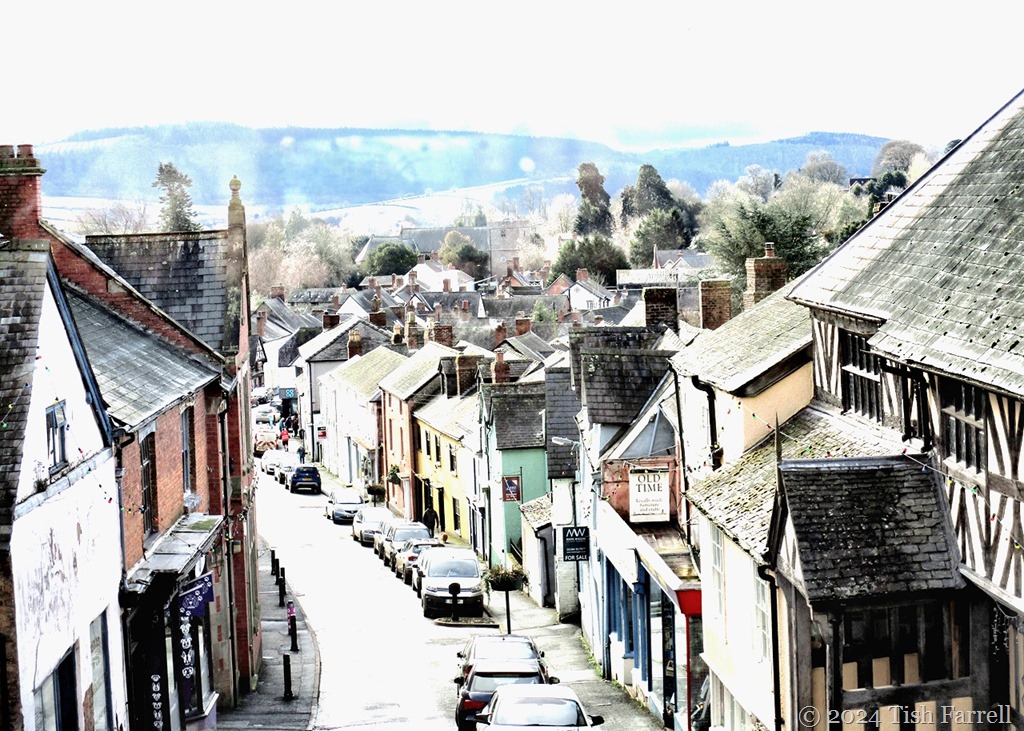
First, though, a spot of orientation by way of some archive photos. Above is Bishop’s Castle High Street as viewed from the Town Hall window. Our street runs parallel to it, behind the ancient timber-framed house in the right hand foreground (the Porch House).

Next is an autumnal view of said street, named Union Street after the Clun Union Workhouse that once occupied the site next door to us, now a care home with a community hospital behind.

IMG_3995

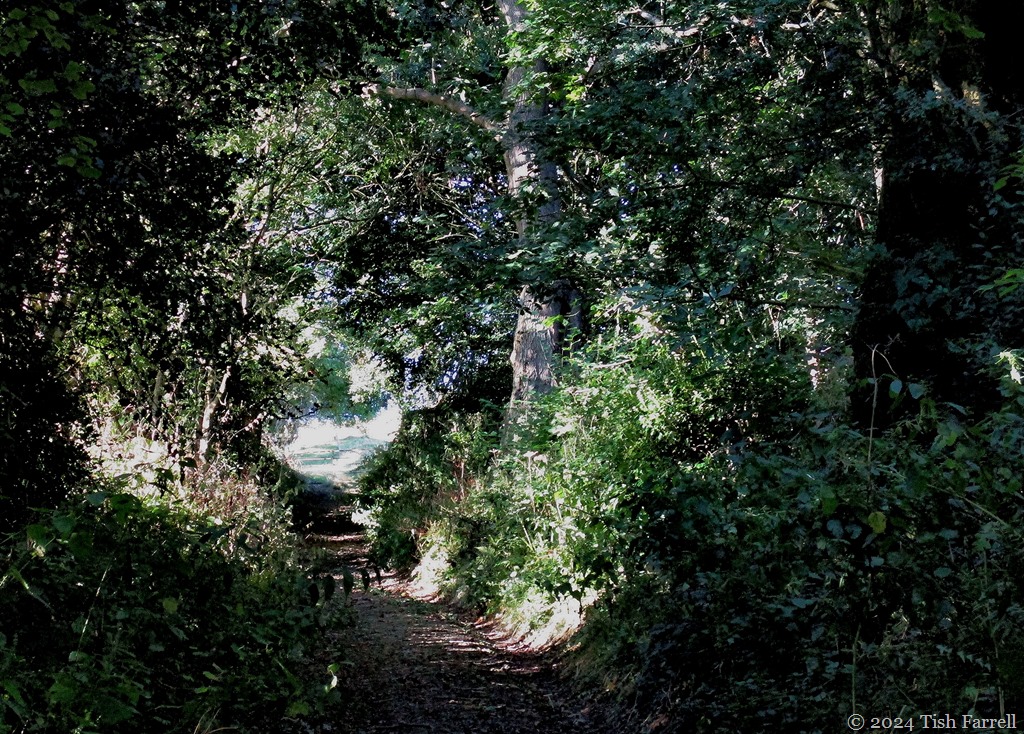
Our walk took us uphill, and left between cottages into Laburnum Alley, a shadowy path that runs between old stone walls and gardens. I imagine much of the stonework along this ginnel came from the demolished castle.

IMG_4077

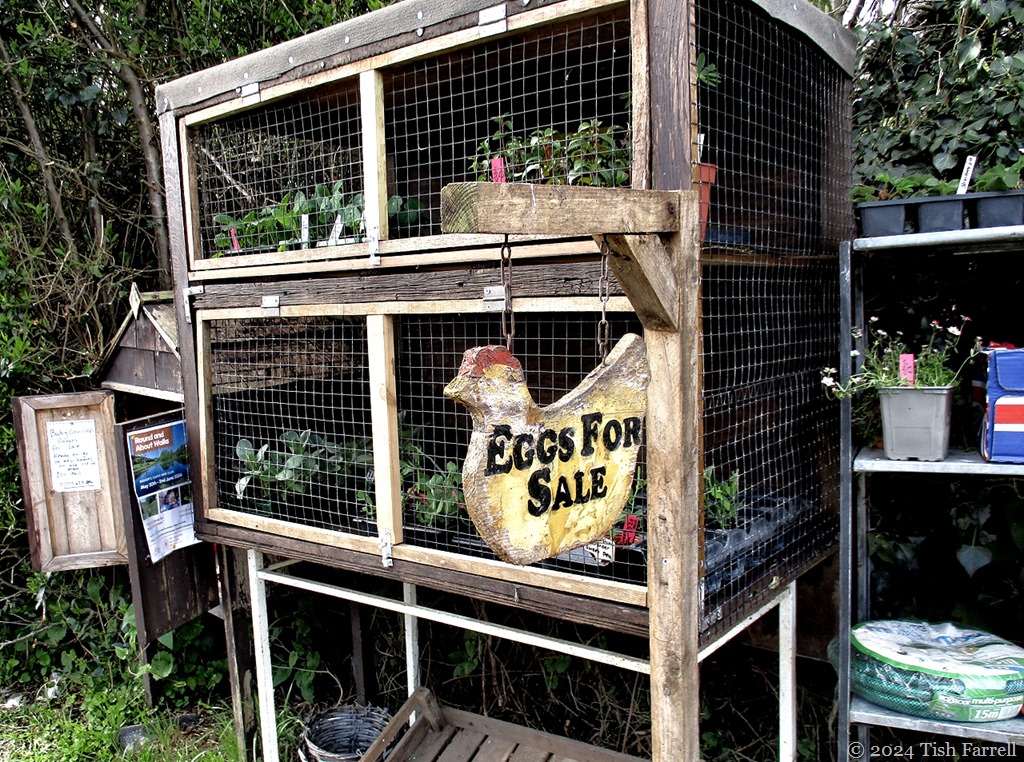
The path exits onto Welsh Street near the top of the town. There’s a handy kiosk here selling eggs and garden plants and sundry items that need a good home. I noted the tray of chunky broad bean seedlings, and pots of strawberry plants. There was also a notice advertising baby rabbits for sale.

IMG_5031

Just beyond the kiosk are a couple of striking looking  barns – a case of scenic dilapidation…

IMG_5033

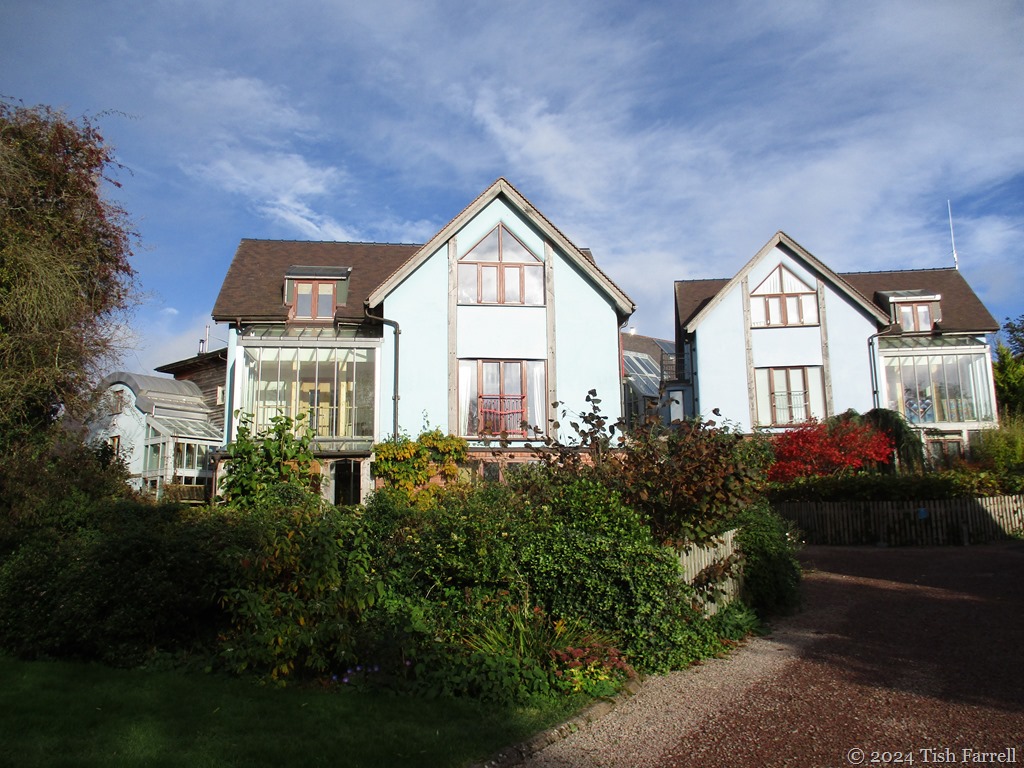
And across the road is The Wintles, an upmarket community of eco-homes, built in the days before eco-homes were quite invented:

IMG_4154

*

We’re on the edge of town now, and this is the green lane path that had caught my eye. It borders The Wintles’ communal ground of allotment and vineyard.

IMG_5045a

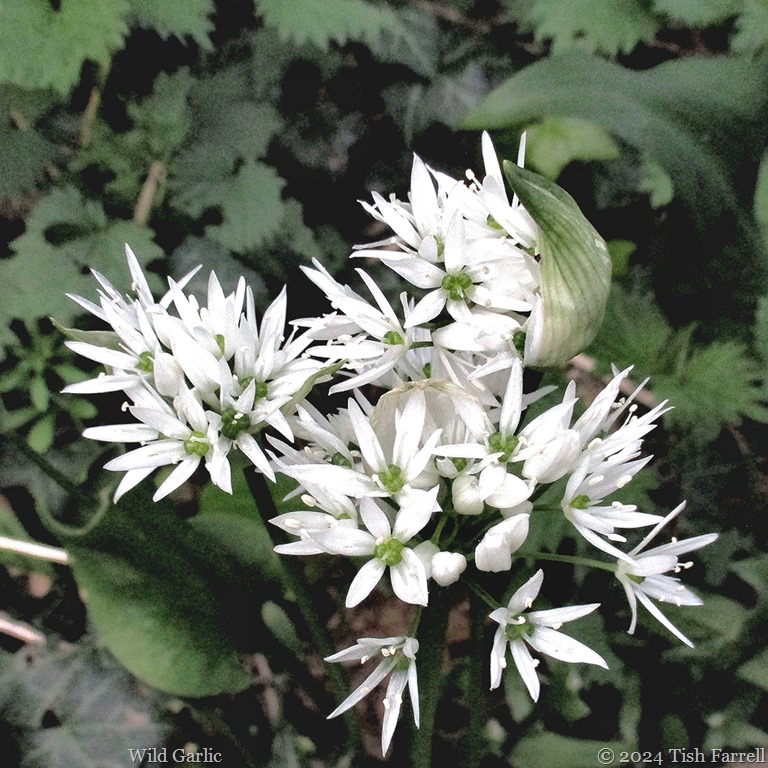
The verges were bright with stitchwort, wild garlic flowers, cuckoo pint, violets, cranesbill, unfurling ferns and cow parsley just opening, Jack by the Hedge aka Garlic Mustard. The lane was sheltered, but even so, I wished I’d put a hat on. It was easy, then, to promise Graham that this was not a major expedition; simply a brief foray to see where the path led.

IMG_5090

IMG_5042

IMG_5044

*

It led us to a gate and wobbly stile into a sheep field. We struggled over. Ahead the pasture rose steeply, and I could tell G’s enthusiasm was waning. Just as far as the horizon, I said, in winning tones.

IMG_5082a

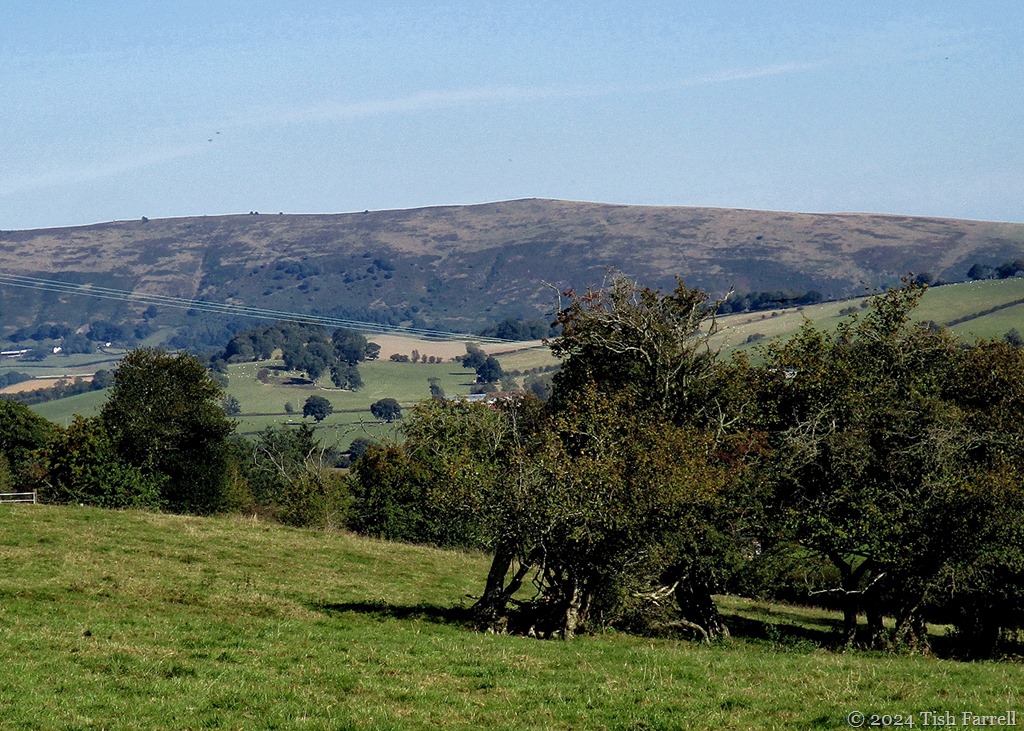
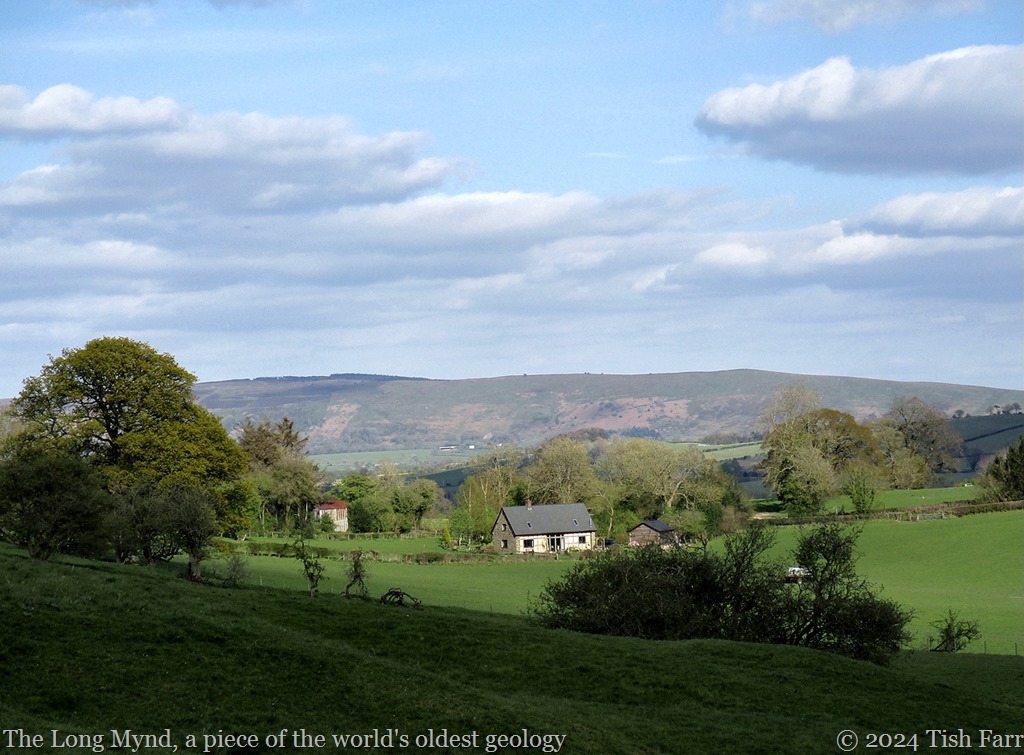
But once we were in the field, we found ourselves looking at marvellous hill country. On our right stretched the Long Mynd, its westerly flanks bathed in sunshine…

IMG_5052a

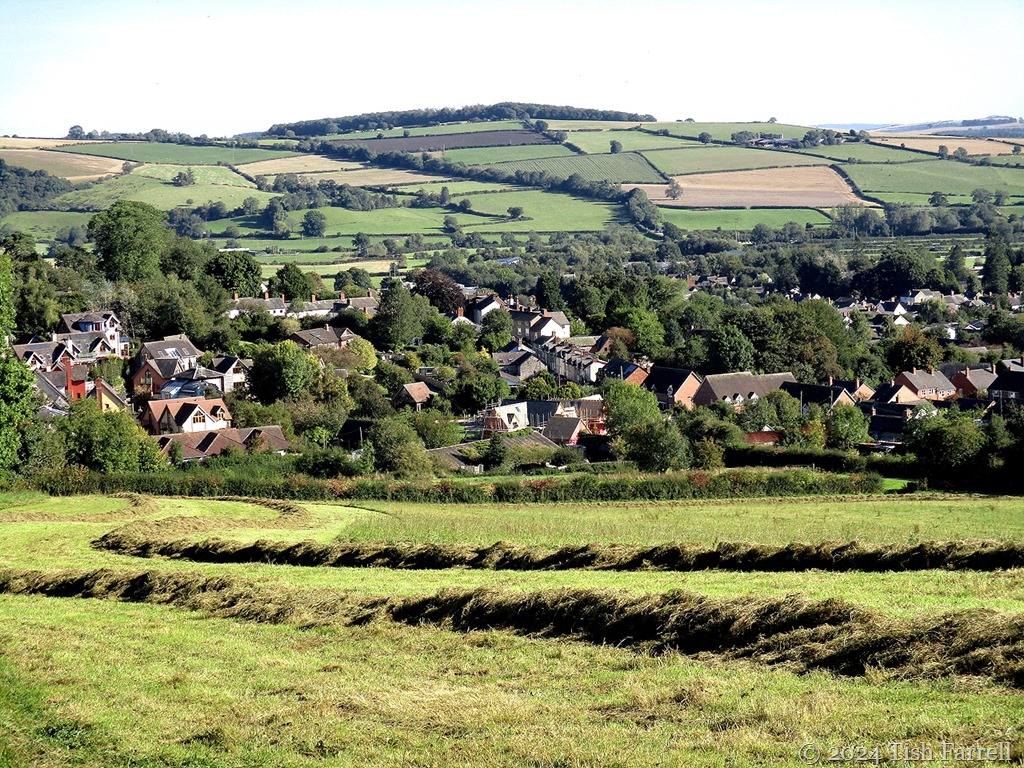
The sight of the hills all around had us striding on and up, now and then stopping to look back on the town. You can see the parish church of St. John the Baptist, dating from the late 1200s, in the second photo. It stands at the foot of the town.

IMG_5054a

IMG_5055a

*

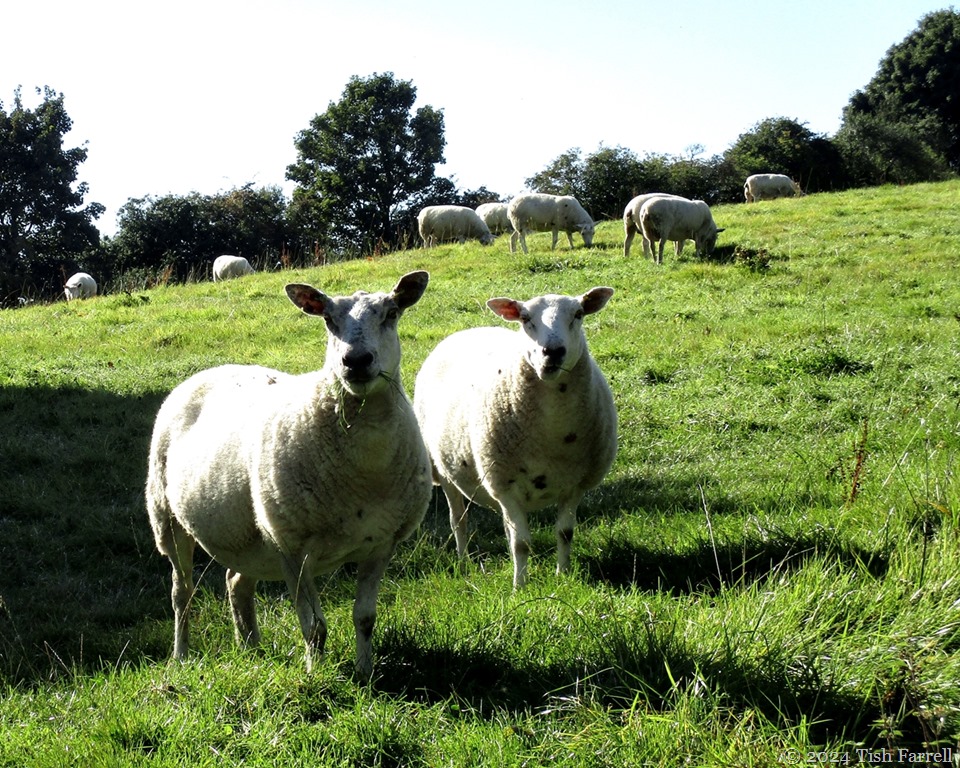
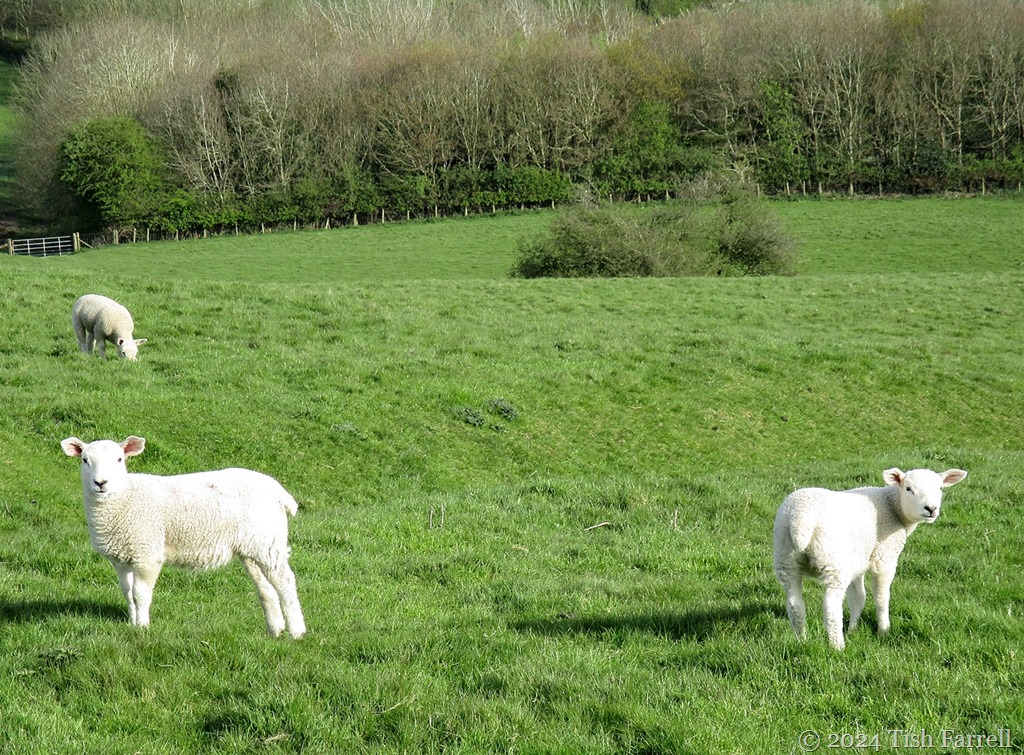
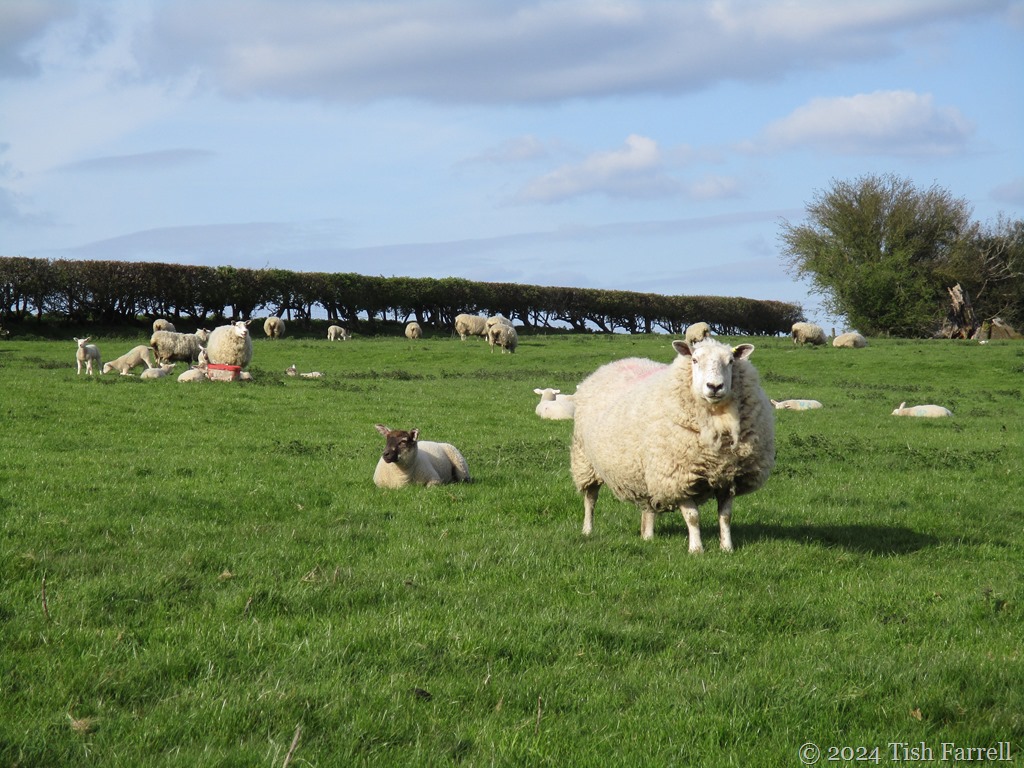
We were watched of course…

IMG_5078a

IMG_5056

*

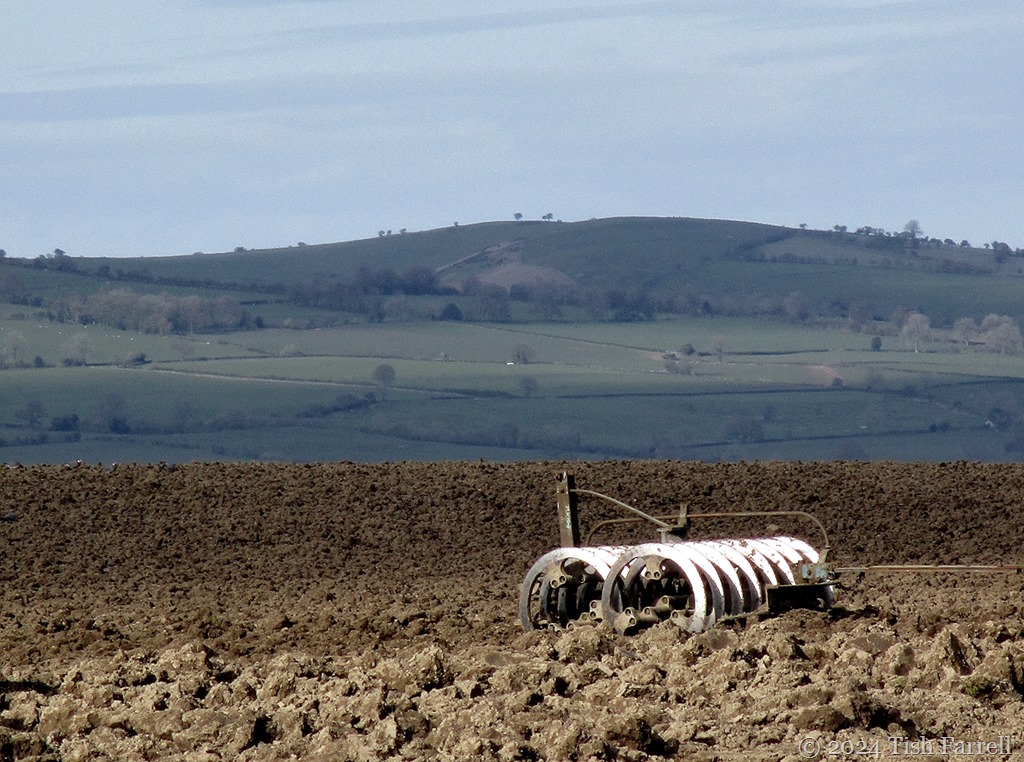
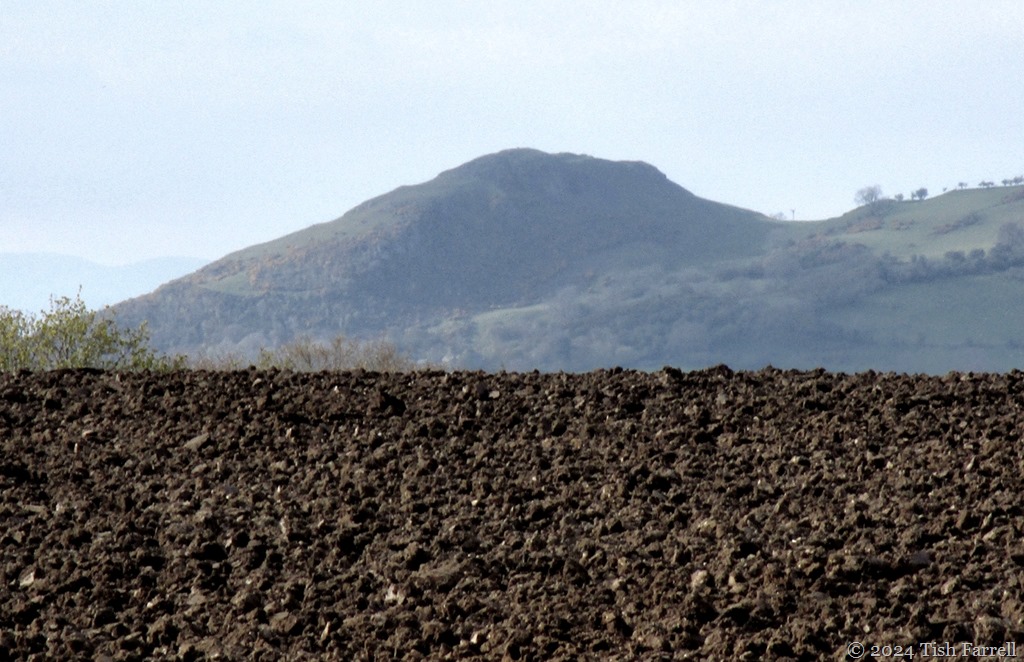
At the top of the sheep pasture there was another stile and beyond it an increasingly uncommon sight – a ploughed field (no-till farming becoming the norm these days).

But beyond the plough, what a fabulous scene, the hills of the Shropshire-Wales borderland. A hint of The Lost Continent somehow miraculously manifested on our almost doorstep? It was too exciting. And anyway it was at this point we lost sight of where the path actually went. The way marker arrow suggested straight ahead, but tramping on wind-dried plough is v. bad for the ankles.

IMG_5068a

IMG_5069a

IMG_5072a

A retreat was declared. But we’ll be back to discover more.

*

IMG_5087

IMG_5106

Heading for home down Union Street.

*

IMG_5073header

Jo’s Monday Walk Go here for some stunning Portuguese walking.

So Where Is The Castle In Bishop’s Castle?

IMG_4090ed

This is a very good question. Where indeed is Bishop’s Castle’s castle? In its last years (during the early 1600s) the stone towers of keep and bailey would have loomed high above the town. Given the steepness of the hillside approach, it could not be a more dramatic setting. It must have looked very much like our vision of a fairy tale castle from a children’s picture book.

The outer bailey walls extended to the top of today’sHigh Street. See the next photo. If you home in on the on-coming red car below the brown building facing downhill, you’ll be in roughly the right spot.

IMG_3642

*

Of the actual castle, there is little left to see. The Old Castle Land Trust has secured a portion ground that lay outside the inner bailey, and here you can see a surviving portion of bailey wall. It’s also a pleasing place to sit and stare at the top of the town.

IMG_4017ed

IMG_4021ed

*

The original castle keep would have been much further back and up, on the hill’s summit in fact. The site is now occupied by the town’s bowling green which was created over the keep’s footprint some time in the 18th century. A pleasing feature here is the octagonal pavilion, presumably built when the green was constructed. It is oak framed and, during restoration, the centre post was found to be octagonal in section. No expense spared then.

IMG_4028

*

So why was there a castle here at all?

The answer is law enforcement and taxes.

The earliest version was constructed not long after the Norman Conquest, put up between 1085 and 1154, at the behest of the Bishops of Hereford, they who ruled the local roost – spiritual and temporal. As with most early Norman castles, it would have comprised an earth mound or motte, topped by a wood framed keep, and the surrounding inner and outer baileys defended by timber palisades. The lower flanks were then surrounded by a defensive ditch or moat, complete with drawbridge.

IMG_4093

*

The stone-built phase began around 1167 – including stone keep, curtain walls with towers and gatehouses to both bailey perimeters. Further fortifications and likely refurbishment of living quarters took place around a century later, following on the brutal attack by a bellicose neighbour, the Earl of Arundel, Lord of Clun in 1281.

The castle premises at this time were equipped to provide accommodation for the visiting Bishops of Hereford plus their retinues of some 30 horses and men. The outer bailey would have included stables, stores, smithy and brewhouse.

The bishop came at regular intervals to hold court, impose fines on wrong doers and infringers of local laws and regulations, and to exact taxes from the local populace. By this time, there was a well-established town on the hillside between castle at the top and parish church at the bottom.

The bishops’ authority was finally overruled by Elizabeth 1, who simply took Bishop’s Castle for the Crown and then in 1573 issued a royal charter  (see earlier post HERE) that handed executive control of the town’s affairs to an elected bailiff and 15 burgesses.

From this time on it seems the castle was left to its own devices, apparently ruinous by the 1600s. And so it is obvious what happened next: there was a general repurposing of the castle fabric as the market town grew in scale and prosperity.

One beneficiary was the Castle Hotel, built in the 18th century inside the former outer bailey:

IMG_4035

*

If you stand in the hotel gardens, as I did in sunny interval this week, you are treated to the kind of sweeping vista that castle-dwellers-past might have enjoyed from their bastions, though I’m guessing there would have been rather more forest than the wide-open fields of this next photo.

IMG_4067ed

IMG_4066ed

*

If you then turn through 180 degrees and look up the garden, you are now facing the spot where the inner bailey gatehouse would have stood. I’m thinking the huge ash tree makes a handy simulacrum for a castle tower:IMG_4070ed

*

The bowling green is just beyond the tree. It used to belong to the hotel, and there’s a path through the garden to reach it. (Closed now for the winter season).

The late 17th and 18th centuries were a time when many townscapes had their ancient timber-framed houses clad and/or replaced in stone or brick. This certainly happened in Bishop’s Castle. Many of the 1700s and 1800s stone and rendered frontages will contain remnants of earlier wattle and daub dwellings. It was all part of growing urban show and gentrification.

IMG_3649

*

And so the castle fabric has doubtless found its way into many a house and garden wall.  The Moat House on Welsh Street seems a particularly obvious candidate, both by name and siting on the original castle defences.

IMG_4008

A plaque on the wall also names it as no.41 of Bishop’s Castle’s town trail of lost inns, having been known variously as The George or The White Swan from around 1700. (Surprising to note that the town has hosted some 46 public houses over the last 400 years, but that’s a story for another day.)

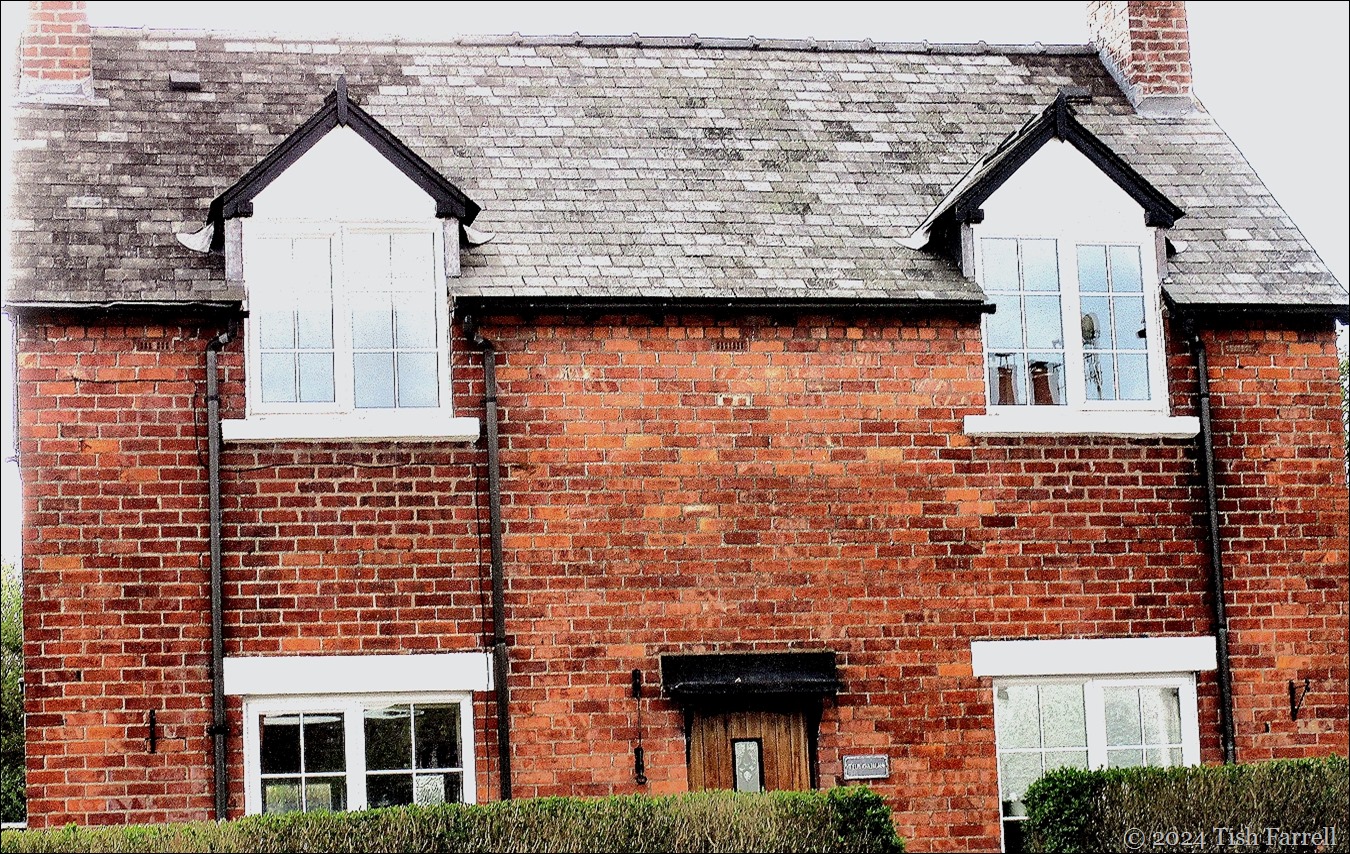
I do know for certain that our house wasn’t built from castle remains. It’s all red brick, locally made, I think, and put up around 1922 by local builder George Nicholas. It stands in a corner of land formerly owned by the smithy and then by the Hit or Miss public house, which is three doors up from us. What a great name for a tavern. Now a private house, its plaque lists it as no. 38 in the lost pub trail, 1832-1915. These days it’s rather nicely ‘draped’ in laburnum fronds since it stands next to Laburnum Alley, one of the town’s intriguing shuts and pathways. Again, more of these in a future post.

IMG_4056

For now, a view of our street and the former Hit or Miss  public house. (You can just glimpse our red brick side elevation and chimneys furthest left).

And another view from the Castle Hotel garden, this time looking up motte, across the inner bailey, to where the castle keep would have once dominated the entire background. Interesting how things change:

IMG_4062

IMG_4090ed

From The Grave Of The Good Burgess ~ Speaking Truth To Power

IMG_3897cr

My last post featured a recent visit to Bishop’s Castle’s parish churchyard and the mystery surrounding the grave of an unnamed African who died in the town in September 1801. This week I returned to the visit another intriguing grave. It stands in sight of the great Norman tower of 1291, and marks a death that occurred in May 1802, a few months after I.D.’s burial, and also the year of a general election.

And what an epitaph it is. What a swingeing ticking off of the town’s ‘worthies’; very much in the vein of ‘you know who you are’.  (And doubtless everyone else in the town knew too).

Here’s what the headstone says:

To the memory of Matthew Marston. He departed this life May 29th 1802 aged 81, the oldest Burgess of the Borough.

His steady and uncorrupt conduct presents an examples to his brother Burgesses for perpetual imitation and a useful lesson to the Parliamentary Representatives of the Borough that Opulence and Power cannot alone secure universal suffrage.

*

IMG_3903ed

*

And to what particular corrupt practice is the Marston stone referring?

Bribes for votes, that’s what, and the fact the town’s burgesses controlled the electoral roll. Only they could vote in elections, and only they had the power to admit new burgesses to the roll. And these were the men who managed all aspects of the town’s affairs, from market trading to judicial and coroner’s courts.

In 1802, when there were around 170 burgesses on the roll, the going rate for a vote was 25 guineas – well over a thousand pounds by today’s values, and enough then to buy 2 horses or 5 cows or employ a skilled tradesman for 173 days (National Archives currency converter).

For a small rural town, Bishop’s Castle seems to have earned itself a big reputation for shady political dealings: a ‘rotten borough’ from 1690-1763, and a ‘pocket borough’ from 1763 – 1832. During these years the town returned two parliamentary representatives, all members of the landowning class, or in the case of the pocket borough, all relatives or favoured associates of Robert Clive. (He had returned from India, where he had risen from lowly agent in the East India Company to Governor of the Bengal Presidency, amassing a fortune equivalent to 48 million pounds). Only with the Reform Act of 1832, did the parliamentary borough of Bishop’s Castle meet its end. We now have 5 regional county representatives.

During the rotten and pocket eras, parliamentary representatives were obviously intent only on furthering their own and sponsors’ interests and causes. This situation was compounded by the fact that several times the entire manor of Bishop’s Castle changed hands with the new owners seeking to secure a seat for their own man. In 1683 it featured in a marriage settlement between one Anne Mason and the Earl of Macclesfield. It was Anne’s ne’er-do-well cousin Richard Mason, seemingly the Earl’s ‘placeman’, who then bribed and bullied his way to Parliament, standing as M.P. for 30 years.

In 1718 the new Bishop’s Castle owners, the Harleys, appalled that their own candidate had failed to win a seat, roundly condemned the town’s burgesses (‘profligate wretches’) for their ‘villainous roguery’ and ‘perfidy’ in voting for Mason. They sold the manor on to the Earl of Carnarvon (Duke of Chandos)  who then, after considerable expense, secured his own placeman at the next by-election. His purposes doubtless served, he then sold the manor to his nephew, local landowner, John Walcot of Walcot Hall, who then found the means to further his interests through favoured candidates.  And so it went on. On and on.

But what of Bishop‘s Castle’s ordinary folk? Over all these centuries of political vested-interest, one might well wonder how did life go for the ploughman, dairymaid, tavern keeper, clerk, cowhand and stonemason, or for the cooper, brewer, carpenter, apothecary, farmwife, cook, curate and chamber maid? How indeed?

You can well see that the Marston family had a point when they erected this headstone to their kinsman, the good burgess: a lone voice of integrity?

IMG_3900ed

previous post The Man from Africa: I.D. unknown

source: The Story of Bishop’s Castle eds David Preshous, George Baugh, John Leonard, Gavin Watson, Andrew Wigley  2018 Logaston Press