Letters from Lusaka: Part II

100_4437

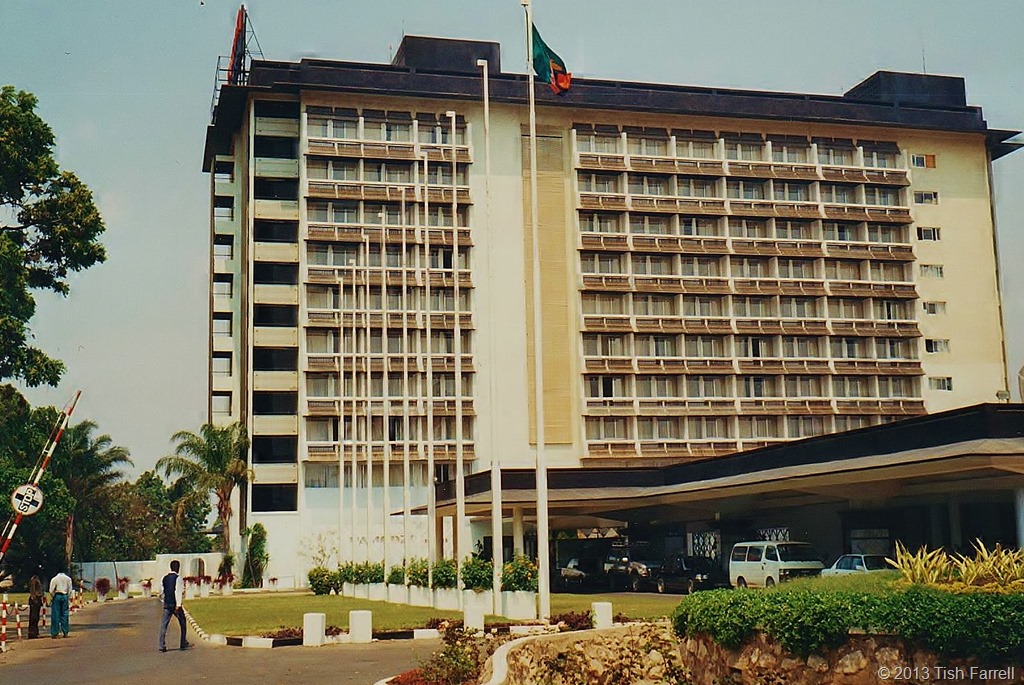
In 1992-1993, during the first years of Zambia’s multi-party democracy, we were posted to Lusaka, Zambia’s capital.  The Team Leader was charged with distributing European Union food aid to drought-stricken Zambians. (Part I is HERE). For the first couple of weeks, and the irony was not lost on us, we lived in the 4-star Pomodzi Hotel, in air-conditioned luxury.

*

Notes from an aid nomad’s life in Zambia

While we are still at the Pomodzi I do the unthinkable as far as white locals are concerned. I walk out of the hotel grounds and down a couple of avenues to the Ridgeway Hotel. One of the visiting NRI chaps has told me that it has a good gift shop, and there may be the possibility of finding some local books.

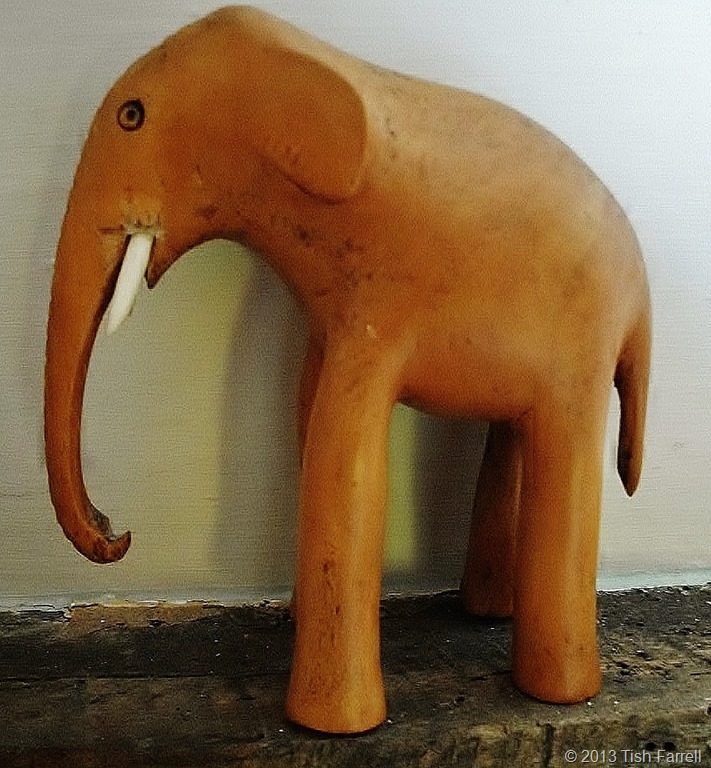
I set off on the basis that as I am not travelling by car, I will not be car-jacked. I am not. I buy a wonderful Tonga basket and a small olive-wood elephant for luck, but there are no books. I do find a map though – Lusaka one side, Zambia on the other. I study the country’s boundaries, trying to make sense of colonial cobbling that created a nation whose North Province lies to the east of its Central Province.

The country nestles in the heart of southern Africa between eight countries. In outline it resembles a foetal chick curled on its back within a protecting shell. In reality, though, I soon learn that Zambia has no such protection. It simply has too many borders and not enough military personnel. There are only some 300, 000 taxpayers in a population of eight million, which is not enough to pay for more soldiers. The north-west border with Zaire is lethally porous. Members of President Mobutu’s own unpaid armed forces regularly drive into Zambia’s Copper Belt and conduct armed pillaging campaigns against innocent drivers and householders. Sometimes they come as far south as Lusaka.

*
002

Pomodizi Hotel

*

We are told that when driving at night we must never stop at red traffic lights (locally known as robots), since this is the moment that car-jackers will choose to pounce. Over in Eastern Province the threat comes from the conflict in Mozambique as RENAMO guerrillas cross the border to shoot up Zambian buses and steal food. In Western Province UNITA fighters from Angola’s war terrorize Zambian villagers. Famine, then, is only one cause of death; there are many others, and the mineral resources that Cecil Rhodes sought so hard to control through his dark-hearted dealings with local chiefs are high on the list.
100_2135

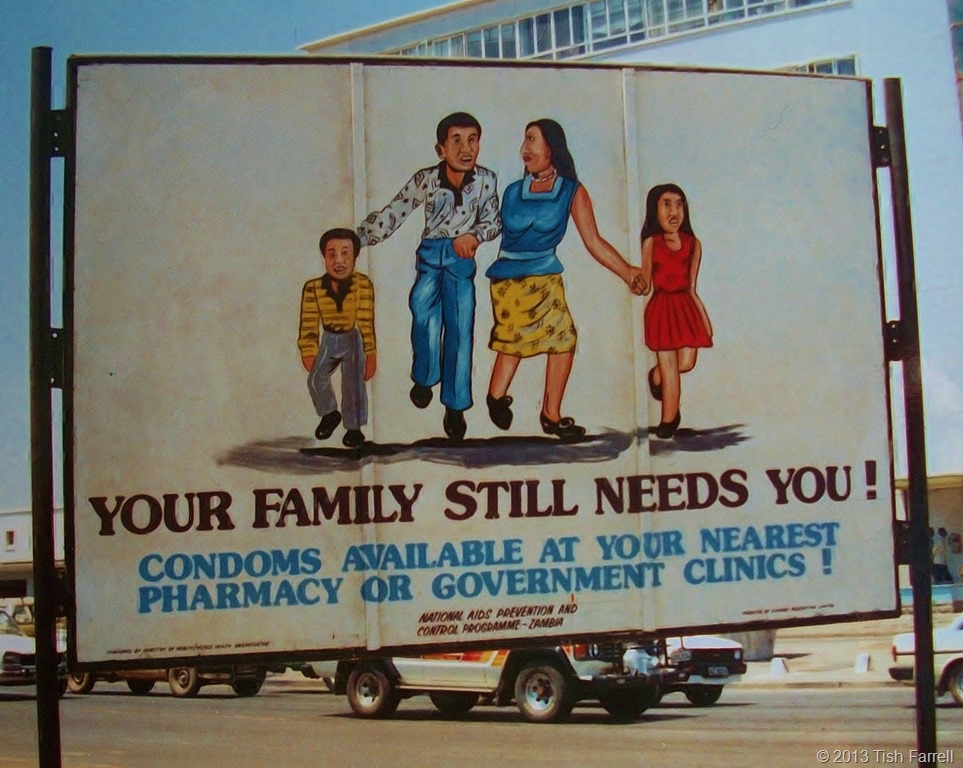
AIDS awareness down on Cairo Road.

*

Then there is malaria and tuberculosis, and as the rains bucket down through December, the cholera season begins. Overflowing septic tanks and pit latrines are polluting the city’s boreholes. At first, oblivious of such dangers, we eat out at downtown restaurants. We are down in Livingstone, near the Zimbabwe border, G checking out the contents of grain stores, when I am stricken with amoebic dysentery. Again it is the Delegation secretary who comes to the rescue and directs us to the mining companies’ private clinic, downtown on Cairo Road. The diagnostic facilities there are impressive, the British-born doctor patronizing. But after a three-day course of very large pills, I recover. I am lucky. Of course I am.

*
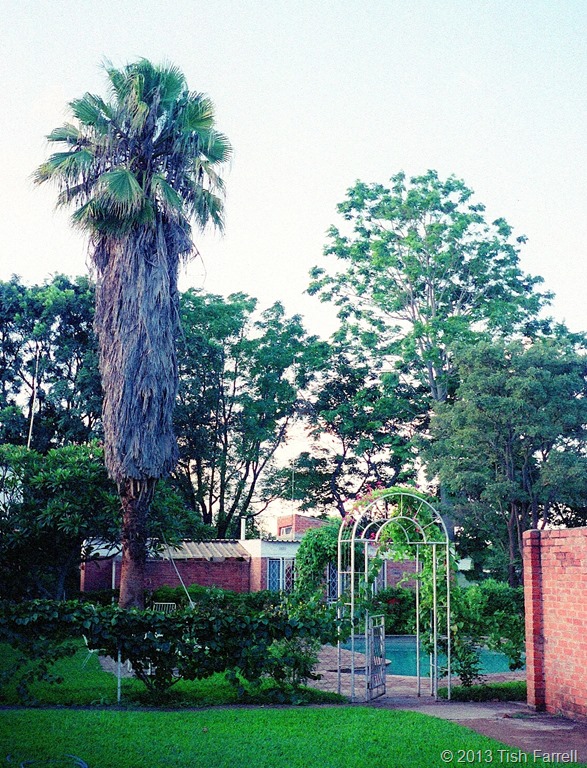
Sable Road - compound pool

Six or so houses share the gardens, including a very small pool.

*

We like our little house. It is red brick, single storey with a sheet iron roof that, during the rains, resounds as if someone is firing bullets into a host of upturned buckets. The living room has French doors opening onto a tiny high-walled garden. There is a big avocado tree in the corner where African sparrows come twittering in to roost in late afternoon. Above the wall, when it is not raining, arcs the blue Zambian sky. To the rear, a small kitchen gives onto a walled back yard and a patch of grass. There are two bedrooms, a tiny study and a bathroom. Outside the front door is a communal garden and terrace – garden seats set by a small swimming pool, a tall palm that rustles endlessly in the high plateau breezes, a sweet scented frangipani tree. No house overlooks any other and there are shady walk ways in between each property.
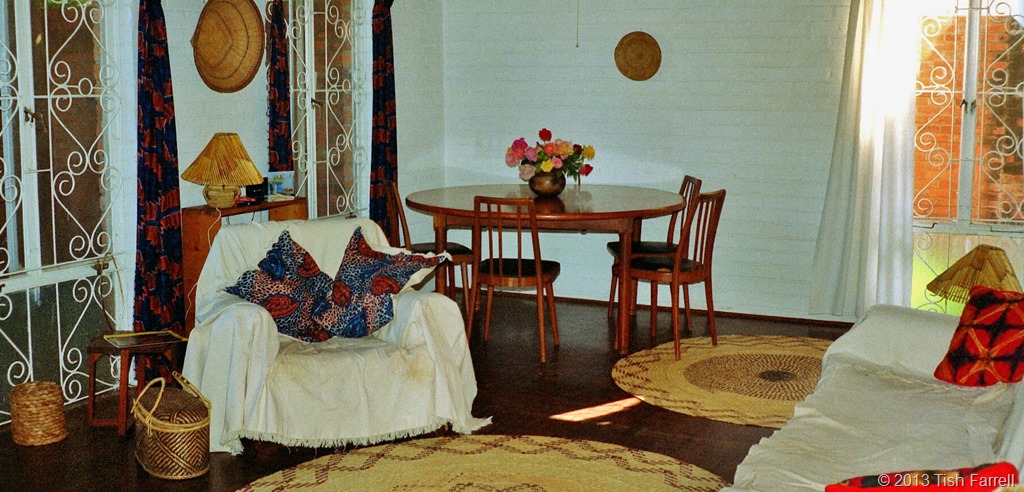
Sable Road our sitting room

Home in Sable Road

*

The gardens are tended by a gentle young man called Stephen Nyangu. His name suggests erstwhile connections with the Nyanja royal clan. But Stephen’s situation is a far cry from tribal pre-eminence. He sweeps, mows, weeds, plants, prunes and waters six days a week, from seven in the morning to five in the afternoon. Then he cycles the couple of miles to his compound home in Leopard’s Hill Road where he lives with his wife and four children. The gardens he cares for bloom strangely under sub-tropical skies with tea roses, violets, pansies, Sweet William and Madonna lilies. He also washes all the cars and hefts all the dustbins to the big compound gate to be emptied once a week. For this he earns twelve thousand kwacha a month, about eighteen pounds. He has no leave beyond national holidays, and after work he runs a cigarette stall.
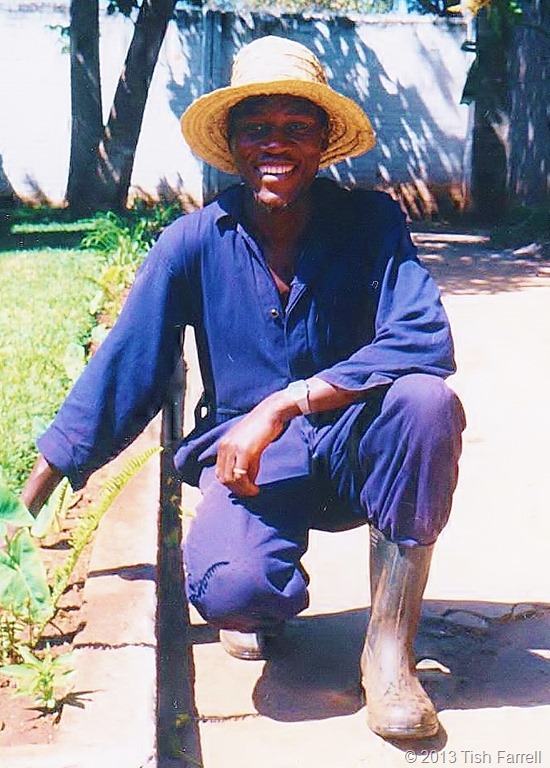
014

Stephen Nyangu works day and night to keep his family.

*

On my first day in our new home, it is Stephen who knocks on my door. “Good morning, madam. My name is Stephen. If there is anything you want me to do, I am just out there.” He gestures in the general vicinity of the pool. “Call me.” He is the only person on the compound who bothers to introduce himself. In ten months we scarcely see any of the other tenants beyond the Sikh couple who live next door. They nod to us. They have two much pampered, miniature Pomeranians and a maid called Isa. Isa looks a good-hearted soul and she works in several of the other households on the compound once she has done her daily tasks for the Sikhs. These include much furious chopping at seven a.m. Perhaps she is chopping for the Pomeranians. When she is left in charge of them for three months while their owners go on leave, she grows so fed up with their insistent yapping that one day she yells SHUT UP. And so shocked are the indulged little canines, that they do just that. I want to hug Isa.

I further decide that my house is scarcely big enough to justify even a once-a-week cleaner, this despite the constant slick of red dust that blows in every day. I thus do my own housework.

Our compound is on Sable Road in Kabulonga, the heart of the diplomatic quarter. Our next door neighbour is the Egyptian Embassy. At night the guards fire off rifles. We never do know what is going on there, and sometimes it sounds like a siege. Our compound is one of the least fortified on the road. The iron gate has open railings instead of sheet metal armour plating, and our day guard, Sammy, always leaves it unlocked  anyway during the day, while he plays draughts with a neighbouring house-guard. He’s a bit  nonplussed by my habit of going out on foot, and at first dashes from his game to open the gate as if I were a passing vehicle. We soon come to a silent arrangement whereby we greet each other, I open the gate for myself and he keeps on with his game. 

We soon discover that our household security provision falls short of official standards. European Union and British High Commission employees are advised to have internal security gates installed, external security lights, roof siren, alarm buttons, window bars, a pack of Dobermans and ridgebacks, a two-way radio and armed twenty-four-hour guards. The fortification of a property may cost around £5,000. Somehow we survive without most of these devices, although the top of our garden wall, which also forms the rear of the compound, is quite high and is further cemented with shards of broken glass.
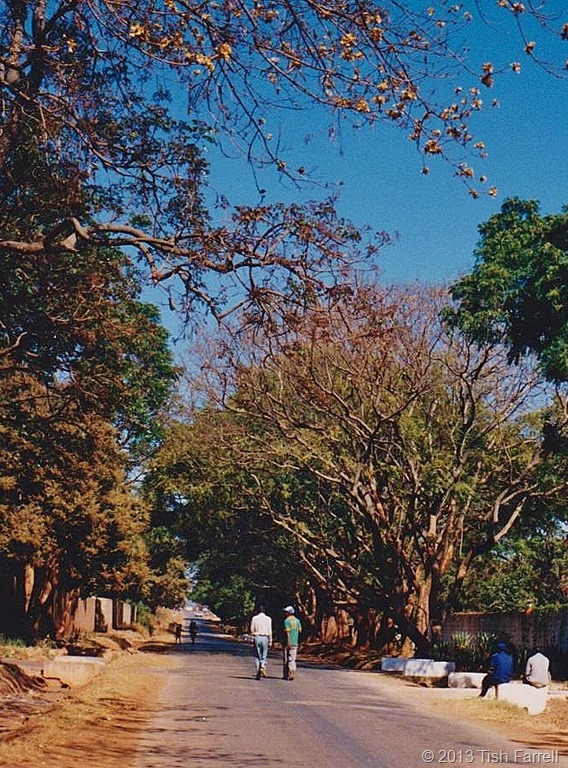
015

Sable Road in the dry season.

*

The nights, though, can be nerve-wracking. Rounds of automatic gunfire are common after dark. Some European locals, we hear, have made a ritual of standing on their front lawn at 9 pm every night and shooting off their sporting rifles – just to let “the thieving bastards” know what’s what. These are the same people who will tell you that, when they are not trying to relieve you of all your worldly goods, the Africans are really very charming. But gunfire aside, it is anyway hard to sleep in the perpetual gloaming of the security lights dotted around our compound. The insects, too, grow louder as the night draws on, and then the dogs wake us.
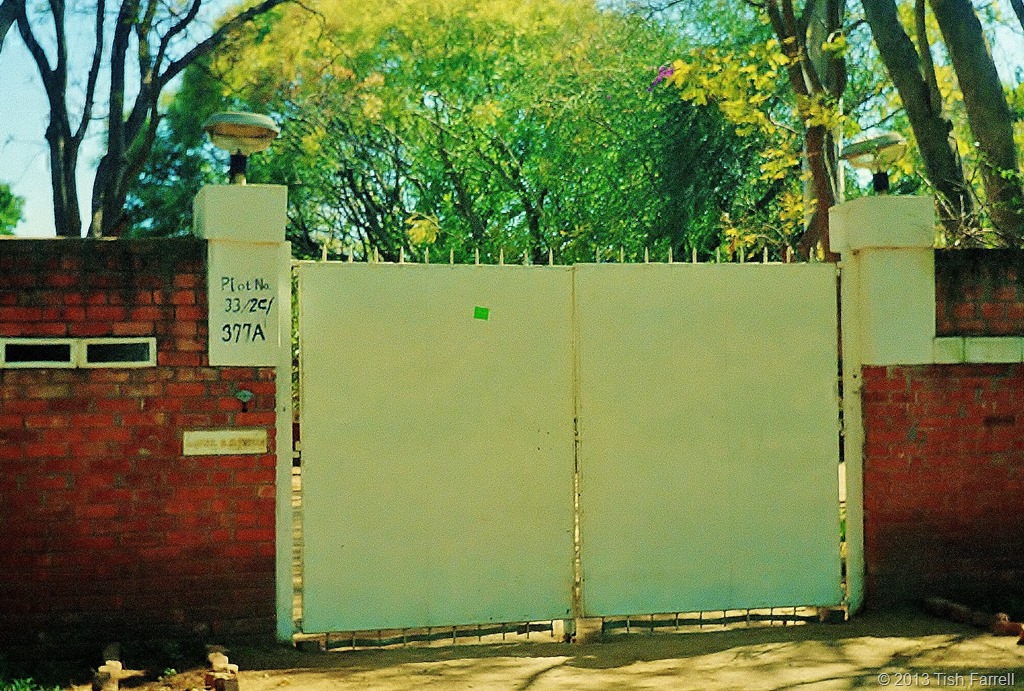
Elite suburban living

Expatriate living: guard house and armoured gates.

*

I call it the Kabulonga Howling. It begins with a solitary keening which swells into a relayed dog lament that spreads from compound to compound until a monstrous crescendo resounds across the suburbs. Once reached, it quickly subsides, to be replaced by the insistent beat of Zambian disco music, thrumming away beyond our perimeter wall. We have no idea who lives behind our glass-spiked rampart. I have tried standing on the brick barbeque in the back yard, but I still cannot see over the wall. Instead, I often hear a Zambian boy badgering his little sister whose name is Lorna. Lorna is always being ordered to do something or other. There is meek compliance in her little voice. It is the lot of many Zambian women to defer to men, and my heart aches for her. One day I find an arrow in the back garden – a stiff plant stem tipped with a bent Mosi beer bottle cap. For a moment I examine it like Robinson Crusoe finding unsettling signs of life on his confining island shore.

By day G. drives off early to the EU Delegation. It is only five minutes’ drive away. I begin to tend the back garden, sowing beans, courgettes, carrots. Things quickly sprout, but the land snails are as big as my fist. I write and read, although finding books is a challenge. We can find no bookshops in Zambia since the nation can no longer support a publishing industry. Once a week we drive down to the British Council on Cairo Road to borrow books from their library. We do this, ignoring white Zambians’ warnings that our Suburu will be car-jacked if we park anywhere downtown. Whenever we go to the library, most of Zambia’s students seem to be studying hard, filling every seat. It is hard to gain qualifications in a land without books.

Newsprint , too, is hard to come by. Newspapers sell out quickly each day and I have to rely on G. bringing the Delegation copy home at lunch-time for quick scan through. Soon we hear that four Zambian Daily Mail accountants have been arrested for ripping off their own company’s limited newsprint stock and selling it to a rival newspaper.

Then there is the challenge of household shopping. Our local shop is Kabulonga supermarket where I frequently search the shelves to the strains of  Michael Bolton’s The Lady in Red. A beautiful girl in cobalt blue chitenge and matching head-cloth that is  tied with great flourishes, is often on the till. She has the poise of a princess.

When it comes to shopping, it is a matter of buying whatever is in stock and then thinking of something to do with it. Treats include cartons of delicious and imported Ceres grape juice, and jars of sweet pickled beetroot. The local yoghourt comes in big tubs, plain or strawberry. Other staples include corned beef and South African wine. The supermarket smells of countless forms of perfumed cleaning products that at Christmas time are parcelled up into gift packs to make the ideal gift, along with small bales of second hand clothing.
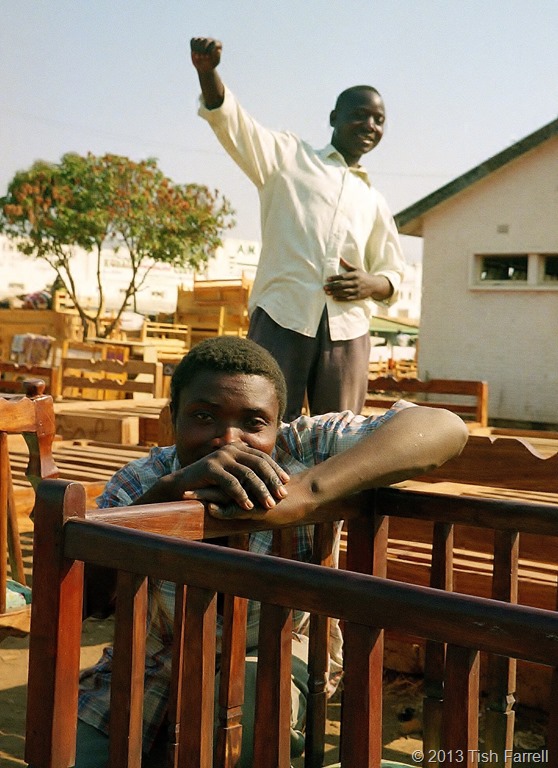
Kamwala roadside furniture market

There are plenty of roadside artisans. We bought our bed from traders in  Kamwala Market

*

There are of course shopping opportunities everywhere along Lusaka’s streets – cigarette and second hand clothes stalls, a man selling bread, another with his scrawny hens, fish from a freezer connected to nothing, caterpillars dried or roasted, large woodland mushrooms the colour of cygnet down, little pyramids of tomatoes. If I buy two piles of tomatoes from the young woman in the photo, she gives me an extra tomato as a “special gift”, and then wraps the lot in computer print-out.
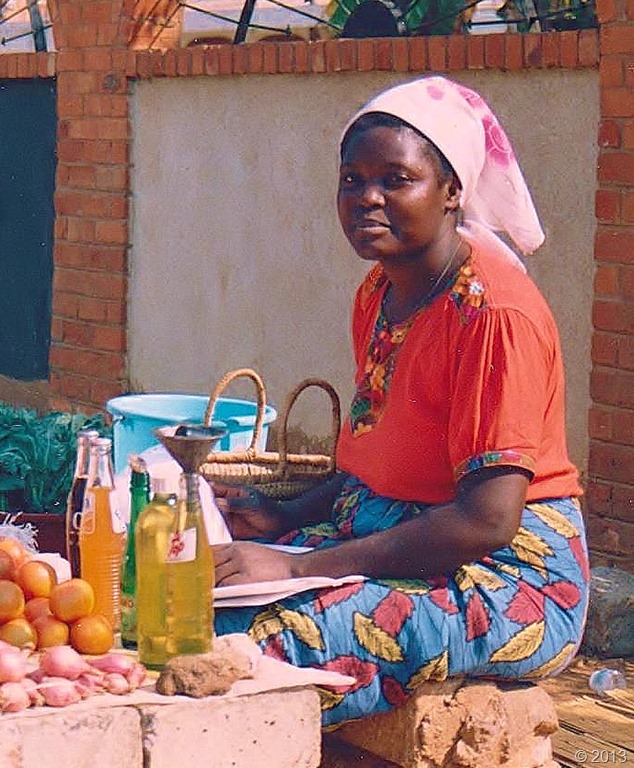
001

I also walk down to the Maluwa Cooperative in the hopes of something more interesting than beetroot and corned beef. Again I never know what I will find there: perhaps, if I’m lucky, a good mission-reared chicken in the cold cabinet, or button mushrooms, some Gouda cheese, broccoli, new potatoes, French beans, bunches of roses. If he catches me walking, an elderly white Zambian in a pick-up, (his ‘boys’ in the back), always insists on giving me a lift. He means well, and it is easier to comply with his desire to save me from imagined predations of Zambians than to argue.

But I like it out on the road. There is so much life there outside the high walled, razor-wired residences of the elite. People greet me. A taxi driver trying to mend his broken-down car offers me a lift, presumably in hopes that if I agree, his vehicle will conveniently right itself. I grin and say no thanks. I like his style though. As I step out again on the dirt road that has lost its asphalt, my footprints are impressed in the dust among the countless prints of others.

*

G. spends his days rushing round to meetings with aid agencies. There are fears that donations of free maize will dissuade farmers from planting their own crops, despite the good rains. Too much free maize is also likely to depress the economy, and this must be avoided. Much is given out as payment for working on public enterprises such as road building or making bricks for the building of clinics. Unemployed women, in particular, are keen to do such work. Receiving a sack of mealie meal, sugar, beans and cooking oil in return for their labour gives them independence from menfolk who might otherwise take any cash earnings. G. also has to travel down south to Choma and Kalomo to oversee the distribution of EU maize by the Red Cross. There are more trips out east and to the Copper Belt.

011

Villagers coming to collect cooking oil and maize meal from Red Cross food aid distributers.

*
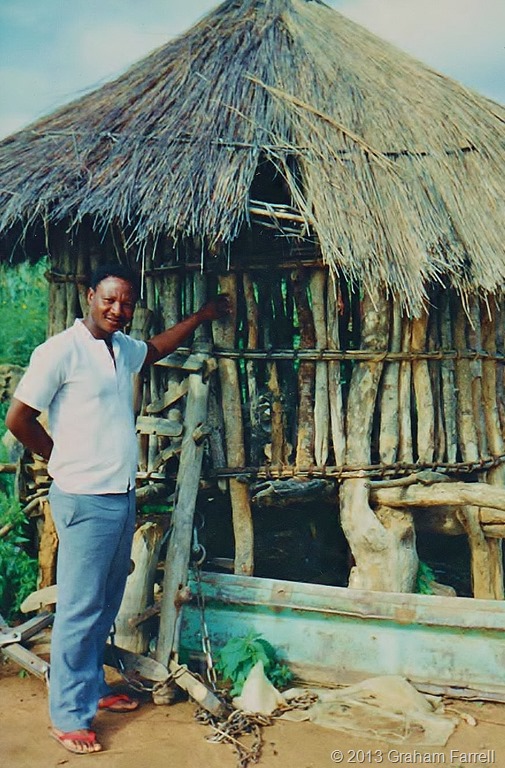
012

A farmer shows Graham his empty granary.

*

In March G. comes home saying there is a bit of flap on. Brussels has phoned the E.U. Delegation saying that the BBC has reported a coup in Zambia: is everything all right there, they ask. The diplomats scratch their heads. No coup has been observed, but a few days later it is clear that something has happened. Major Rezi Kaunda, son of the long-serving and recently supplanted, ex-president, Kenneth Kaunda, has been arrested. He is reported as being under armed guard. Further details explain, somewhat bizarrely, that he is sitting in the yard of Woodlands police station with his flask of tea and a radio. Fourteen plotters in all have been arrested both in Lusaka and the Copper Best. These include the editor-in-chief of the Zambia Times.

Later we hear that an incriminating document, The Zero Option, has been seized. It gives detailed plans of how members of the UNIP opposition old guard, led by Rezi, intend to make Zambia ungovernable by fuelling a crime wave, infiltrating the unions and government departments. It is mooted that this campaign of destabilisation has already been instigated and is responsible for the alarming crime wave.

President Chiluba has only been in office for a little over a year. His Movement for Multi-Party Democracy defeated Kenneth Kaunda in the first democratically held elections since Independence in 1964. Kaunda Senior had been in power all that time, but on defeat, chose to bow out gracefully. Meanwhile Frederick Chiluba claims that he is on a clean-up mission of this potentially rich, but now run-down state. He declares a limited State of Emergency while order is restored.

We all breathe a sigh of relief. No need for the emergency evacuation that the High Commission is so unlikely to provide for us. Besides, G. still has much work to do, and there’s so much I still want to discover. One thing I am itching to know is how this copper-rich nation, with its deposits of sapphires and amethysts and airy upland mopane forests is one of the poorest on earth. Why are its impoverished, beleaguered but hard-working peoples being so ruthlessly structurally adjusted by the World Bank? I am beginning to suspect that the spirit of Cecil Rhodes is restless and abroad once more, but that, as they say is another story.
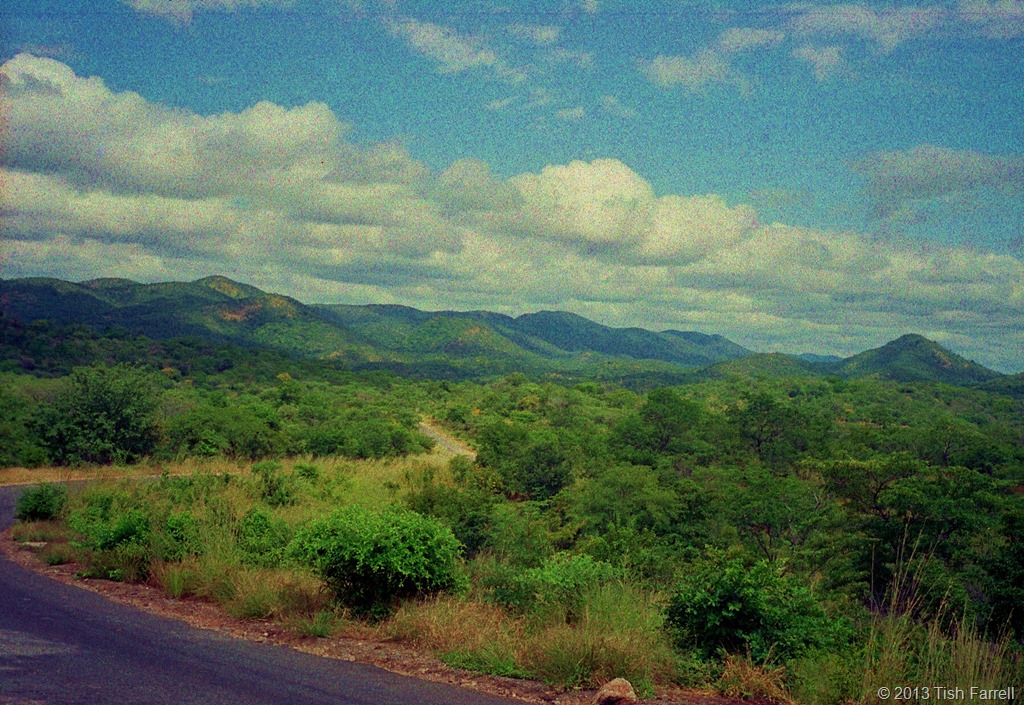
Eastern Province

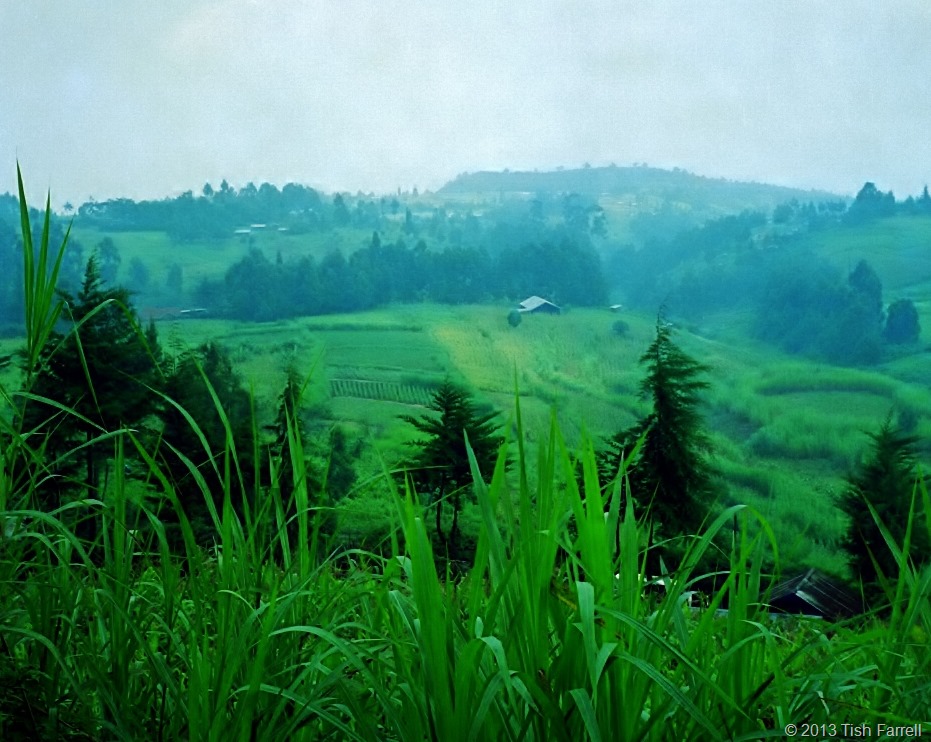
Zambia is often called ‘the air-conditioned state’. It comprises an upthrust, tilted plateau some 5,000 feet above seal level. The natural vegetation is mopane woodland. This view was taken along the Great East Road.
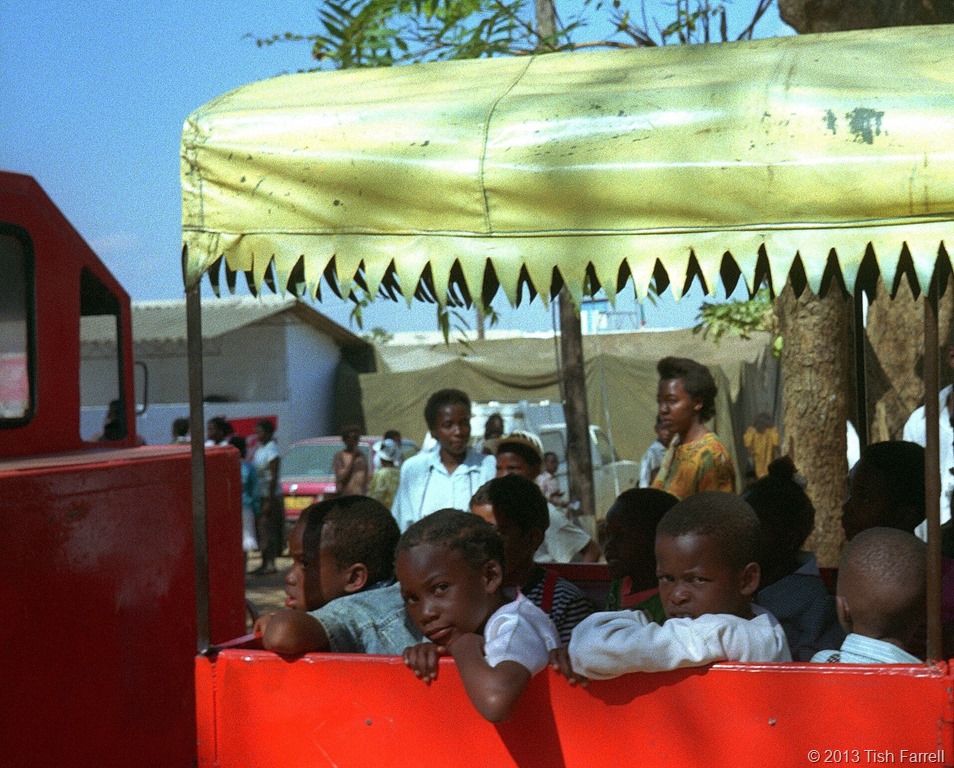
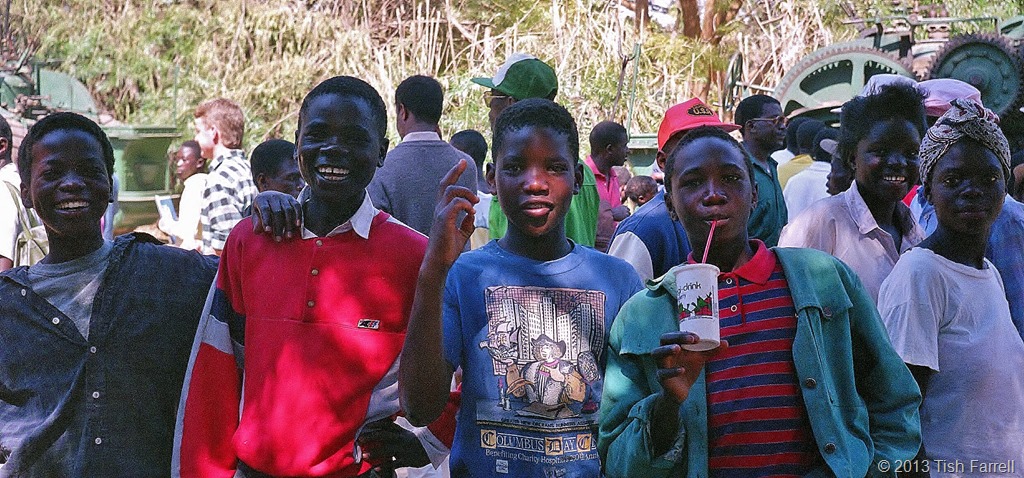
Lusaka agricultural show - miniature railway

Lusaka agricultural show - kids

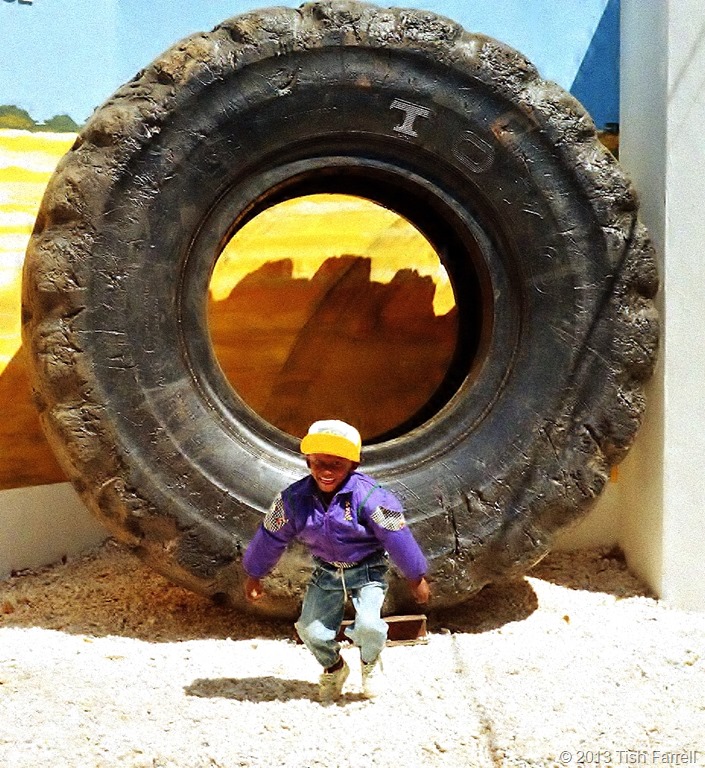
Lusaka agricultural show - Boy and copper belt truck tyre

Kids at the Annual Lusaka Agricultural Show. 1993’s slogan is ‘Produce to Prosper’. Produce and get a fair price  from multi-nationals would be my preferred slogan.

*

© 2013 Tish Farrell
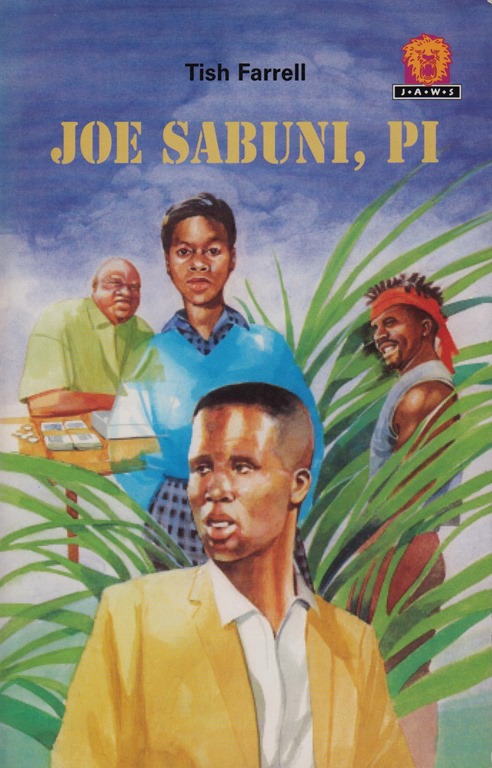
Meet Joe Sabuni P.I. aka Joe Soap

001

Perhaps it is Jonas Kilimani’s choice of alias that makes things go so badly wrong in Mbogo sub-location. Or maybe he’s just not cut out to be a sleuth. Or it could even be his bad choice in suits. But whatever the cause, everyone is running rings round ‘Joe Sabuni’, and it all starts when his Uncle Micah sends him upcountry to track down a man who owes him money. It’s not much of a job, but Jonas is desperate to impress. He has college loans to pay back, and rich girlfriend, Keziah, to keep happy. And if he pleases Uncle Micah, maybe the man will give him a real job, as he’d long ago promised…

Cover artwork: Bob Harvey

*

Okay, I am taking advantage of Frizztext’s JJJ-challenge for another piece of self-publicity. Also I think Jonas Kilimani deserves to be better known. He’s a really nice guy, and I’m glad I created him. He actually began life as a tiny notion while I was out on Kenya’s farms surveying smut-infected grass with the Team Leader. (For  more about smut see earlier post HERE). It’s amazing how one thing leads to another, and all apparently unrelated. There is no smut in Joe Sabuni by the way. Or maybe just a smidgeon – involving the dreadful Keziah of course.

I began writing stories for the African children’s literature market while we were living in Kenya in the 1990s. I think it was fury that started me off. There had been an article in the local press about children’s books, and the lack of locally written ones. It included a quote from a school girl saying she did not know there were stories with African heroes and heroines.

My first reaction was bewilderment. (The fury came later.) I began to look along the shelves of Nairobi’s bookshops. I could see that the girl had a point. Most of the locally produced fiction comprised folk tales, which I, as an outsider, had until then been more than happy to see and buy.

Now I began to regard them with fresh eyes. If I were six or nine or thirteen years old what would I think about such books? The design was often minimal, the paper quality poor, the stories wholly unrelated to modern day living, since the texts had mostly remained frozen in some colonial time when an avid ethnographer had recorded them. And so by comparison with these dry looking tales, would not the imported British and American paperbacks seem infinitely more glamorous and slick?

And yes, for sure, there would be no African kids featured in the rows of Enid Blytons or the Nancy Drew and Hardy Boys mysteries, or in the Ladybird versions of Snow White and Sleeping Beauty. For these, I discovered, were at that time the mainstay of the children’s section. Even the school curriculum  English literature texts were books like Gogol’s Government Inspector or Dickens.

In fact, given the era when all these books were written, there would be no dark faces in them at all. That the stories were written in times long past would not necessarily be apparent to young Kenyan readers. I remember a ten-year old girl telling me that her dream was to ride her bicycle on country lanes and go wherever she pleased just as the Famous Five did. It was hard to know what to say to this. It seemed such a lovely dream.

Anyway, all this started me wondering what it might be like to only read books about children who were nothing like me AT ALL. How would that make me feel about myself: that I wasn’t cut out for hero-dom?

Of course the reason for all the imported revamped  titles was because they were far cheaper than mainstream market books, and parents were more likely to be able to afford them. There is anyway a resistance to buying fiction, since stories are considered an unnecessary luxury when parents have to spend so much on school textbooks every year.

And so we start getting to the heart of the problem. Kenyan publishers, like many others across the continent, struggle along producing textbooks, often in collaboration with British publishers like Oxford University Press, Macmillan and Longman. They can’t afford to produce much fiction, and that means there are not many local fiction writers. Classic authors like Ngugi Wa Thiong’o and Meja Mwangi are few and far between, and Ngugi has anyway long lived abroad in America. The best Kenyan writing, then, is mostly to be found in the country’s excellent newspapers, and they are aimed at adults not children.

As a writer, though, I learned a lot from the late Wahome Mutahi and his hilarious Whispers column, and also from the trenchant political analysis of John Githongo. The end result was Joe Sabuni P.I., a humorous teen short novel set in the fictitious city of Greenvale, somewhere in East Africa. It is published in the Heinemann Junior African Writers Series, now a Pearson imprint.

One of my best moments came a few years ago when I learned that the book was also to be used in Zambian schools, and not only in English, but translated into 6 Zambian languages. This I gather was funded by the World Bank. Someone had the surprising idea that people learn to read best in their own language. I wonder how they came to think such a breath-taking thought.

Because that’s another thing, most African children who go to school do not learn in their vernacular, but in the language of whichever colonial power once ruled them. In Kenya the curriculum is conducted in English and the East African lingua franca, Ki-Swahili, although the vernacular may appear in the study of arcane oral literature texts.

I think this is what Ngugi wa Thiong’o means by ‘colonization of the mind.’

Of course you could say what on earth is an English woman doing writing for African kids in their second or third language? It’s a good question. As I said it was fury that drove me. I wanted to tell contemporary stories that showed Kenyan kids their own wonderful selves, and in situations they might recognize. That these stories have also proved popular in other English-speaking countries such as Zambia and Zimbabwe is a bonus. A couple have won prizes of which I am inordinately proud.

You can read a sample of Joe Sabuni P.I. on Google HERE. Please forgive the fact that Google copywriters can’t spell the word ‘rotten’. And nor can Amazon.

© 2013 Tish Farrell


In the Rift: in and out of focus

WP Photo Challenge: Focus

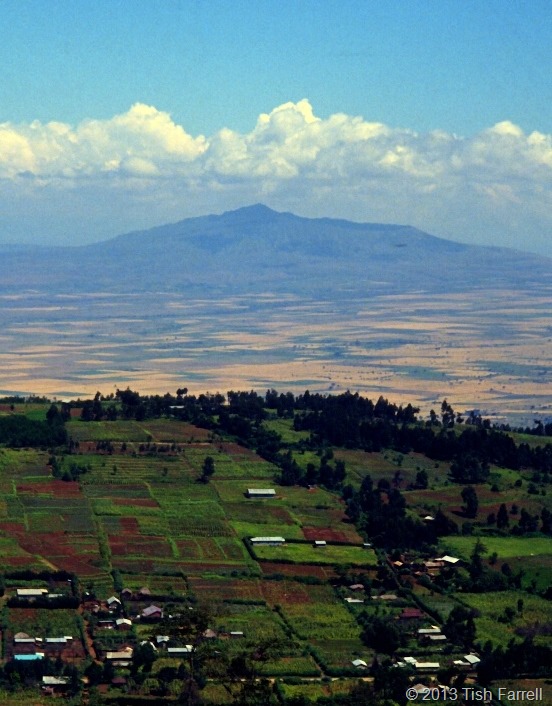
Rift Valley from Escarpment

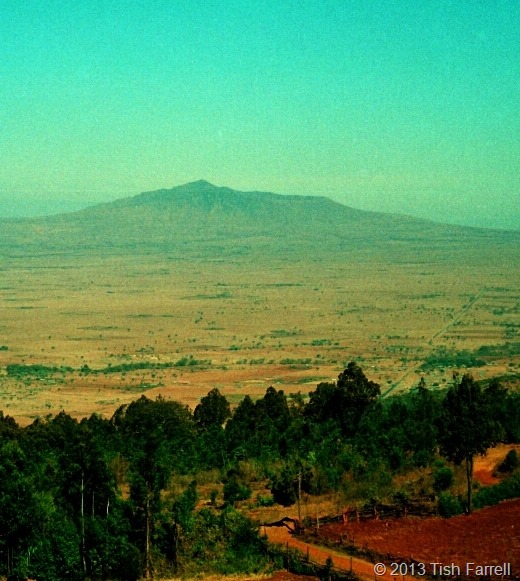
You may have seen a version of this photo in an earlier post, but it’s worth another look for various reasons – all of them to do with FOCUS. This shot was probably taken late morning. The farmsteads of Escarpment are shadowed by the Eastern Rift behind. Out under the sun, the old volcano Longonot flattens and drifts into mistiness. Your brain tells you that your are witnessing a mirage.

You can climb up Longonot if you want to, and walk around the rim. (We never did.) Inside the crater, Rider Haggard-style, there is a wonderful hidden forest filled with wildlife. In the middle distance, but not quite visible, runs the old road from Nairobi to Naivasha, built by Italian prisoners of war in WW2.

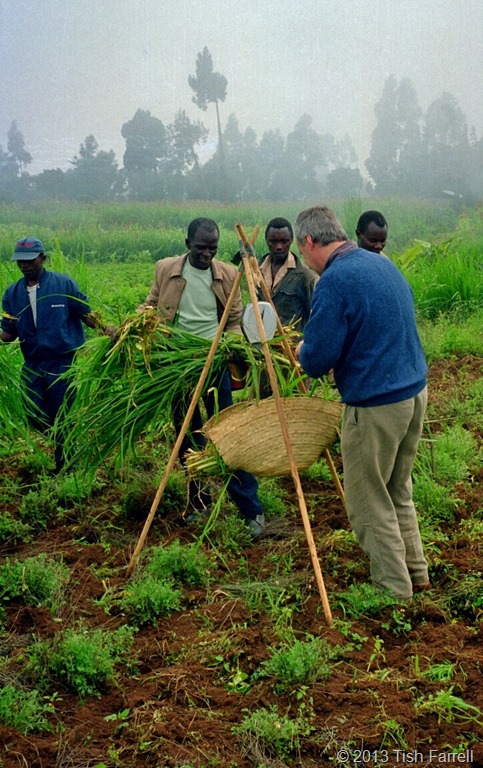
But to come back to the foreground, and the largely Kikuyu community of Escarpment, this is one of the places where, in 1997-8, Team Leader and Nosy Writer carried out some of the Team Leader’s doctoral fieldwork on SMUT. Smut is a fungal disease that attacks Napier Grass, an important animal fodder crop. If you didn’t read the smutting post, coming up is a photo of the smut team in action, complete with some Rift Valley fog which usually happens during Kenya’s cold season in June and July.  Here it provides  the soft-focus-background-look without need of any technical jiggery-pokery.

napier grass sampling 3

Team Leaders Njonjo and Graham weighing clumps of Napier Grass. The object to establish a disease assessment scale for estimating the food loss of a smut-infected field.

*

Actually, the real leader in Operation Smut was Njonjo. He’s the one holding the bundle of Napier Grass. His family’s land is in Escarpment, much sub-divided between himself and his brothers. When we visited his home he told us that his own holding was about a quarter of an acre. This was one reason why he worked as a driver for the Kenya Agricultural Research Institute and was not as a full-time farmer. He had children to educate, and his land alone could not support them all.

*

napier grass on the Rift

Napier Grass in the foreground with Escarpment farms beyond. This important crop is grown on road verges and field terrace boundaries to feed ‘zero-grazed’ stock. The small size of most farms  (some less than an acre) means there is insufficient ground for both pasture and cultivation.

napier grass and farms

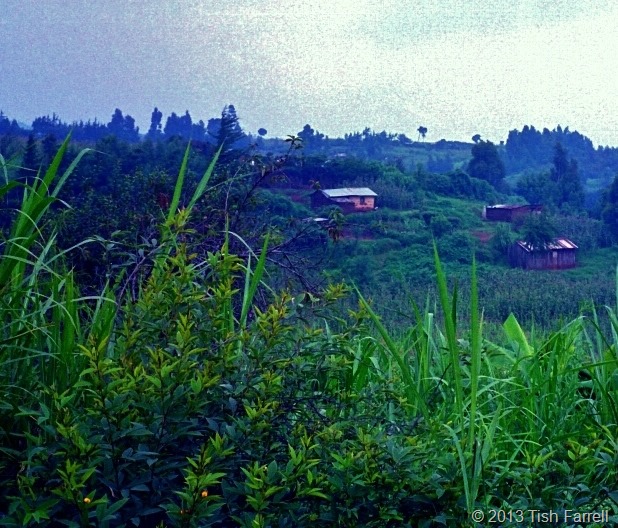
Kikuyu farmstead on a drizzly El Nino day.

*

And if you are wondering why Kenyan farms are so very small (several acres in the fertile Central Highlands would be considered quite large for many families) then that’s old colonial constructs for you. Kenya may have been an independent nation state for fifty odd years, but the colonial concept of land management and ownership, along with many other inappropriate British institutions, is alive and well.

Because that’s the thing about British institutions – they are sneakily feudal and thus very hard to unpick. Even in Britain, most of the population is generally unaware that most of the nation’s land is owned by a small number of people who are fully committed to keeping it that way. Ownership in the form of title deeds coupled with an elitist sense of superiority and personal entitlement based on heredity fortify their position. Increased urbanisation is in their interest; it keeps hoi polloi out of the deer parks and off the grouse moors (unless of course they are paying high fees to be there.)

In Kenya much of the population still occupies plots that were part of the designated Native Reserves back in the 1900s.  Since those days the population has increased many-fold, and family farms have been subdivided to point where they cannot easily support one family. This situation underpins much of the creeping poverty that you will see in Kenya today. It is the reason why at least 75% of the nation’s food is grown by women smallholders.

*

Wundanyi market 2

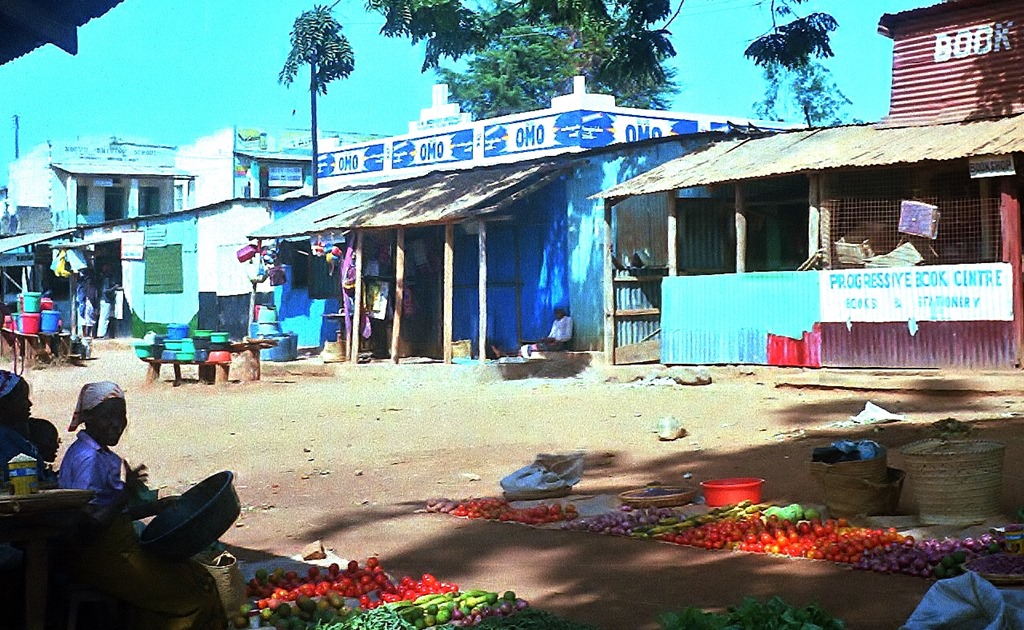
Women selling their excess garden produce at Wundanyi market, Taita Hills.

*

These essential growers are the rural wives who stay on what remains of family land to grow what they can, while their husbands  migrate to the towns to work in shops, hotels, and as drivers,security guards and house servants. These men will return home maybe once or twice a year when they have their annual leave. At such times they will help with the harvest and undertake house repairs. This is also the reason why most parents struggle so hard to educate at least some of their children – so they do not have to live this way.

*

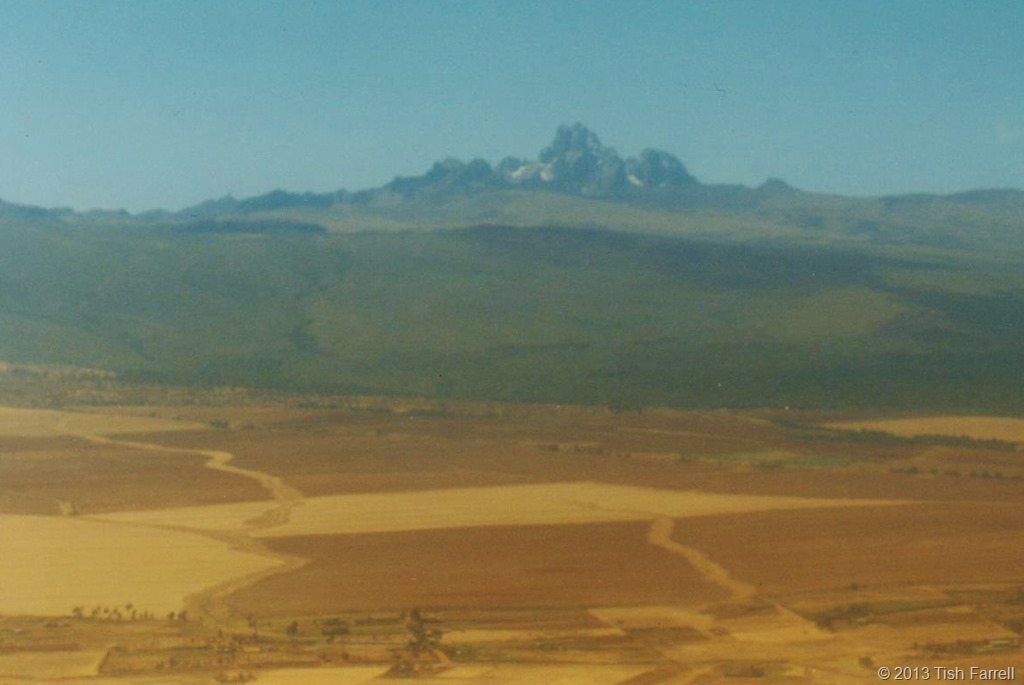
When the British occupied British East Africa at the end of the 19th century, they treated the territory in much the way a British landowner would manage his inherited estates. There was the presumption of absolute ownership. All indigenous people who hunted for a living were labelled poachers and treated accordingly. Land was divided into Native Reserves and Forest Reserves and latterly there were also Game Reserves. All the land that had not been alienated for European settlement was Crown Land unless it was Native Reserve land. By 1914, five million acres had been allotted for European settlement. The Maasai had also been removed from their fertile grazing lands on the Laikipia Plateau and relegated to the poor land that is now known as the Maasai Mara.

001

European owned wheat fields, Laikipia, below Mount Kenya. Taken from a plane window hence the haze.

*

Under colonial rule, Africans could not leave their Reserves unless it was to work for Europeans. Hut and poll taxes were imposed to force them to do so. When overgrazing and land erosion became evident in overcrowded Reserves, well-meaning British Agriculture Officers informed the locals that they were doing everything wrong. Farmers were urged to plant in a European way, to grow strains and varieties of crops to suit British markets. In particular, the growing of nutrient-, water-guzzling maize over traditional, more nourishing crops such as millet was promoted. There was the enforced terracing of land and the confiscation of stock animals without compensation if deemed to be in excess.

Meanwhile, large blocks of the best settlement land were taken  up by British settlers, including a number of British aristocrats whose descendants still live on large estates in Kenya. After the 1st and 2nd World War, British veterans of the officer class were actively encouraged to settle the so-called ‘White Highlands’ around the Rift and grow cash crops. When many sold up at Independence, their tea and coffee estates were taken over by European corporations. Other settlers who wished to leave at that time were bought out by the British Government who then apparently handed over the bill to the new Kenyan government. The new nation state thus started out in debt, having paid to get its own land back. It was not a good beginning.

Scan-130601-0006.jpg

A beautiful corner of Lord Delamere’s estate of Soysambu at Elmenteita in the Rift Valley. The pink dots on the soda lake are flamingos.

*

the-castle2.jpg

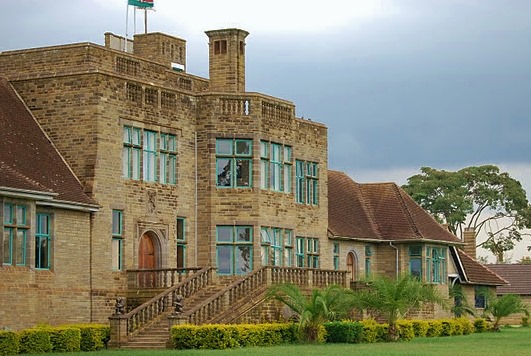
Egerton Castle, built in Njoro in the Rift Valley between 1930-40. Its owner was the Fourth Baron Egerton of Tatton, Cheshire. It is now part of Egerton University and used as a wedding venue.

*

However you look at it,then, the land situation in Kenya does not present a pretty picture, and this is only a brief, soft-focus version. After the British left in 1963, Kenyans might have been able to leave their Reserves without passes, and walk on whichever side of the street they chose, but the Crown Lands concept of absolute possession has dogged the country ever since. Crown Land became state owned land; colonial institutions became state institutions. And as I said, such constructs are hard to unpick. Nor would the Kenyan elite wish to unpick them, any more than the British nobility would wish to surrender their hereditary land rights to the masses. As the fourth President, Uhuru Kenyatta (and son of the first President Jomo Kenyatta) takes office, so the thorny issues of land grabbing and wrangles over title deeds continue.

tea fields and workers' houses_thumb[140]_thumb

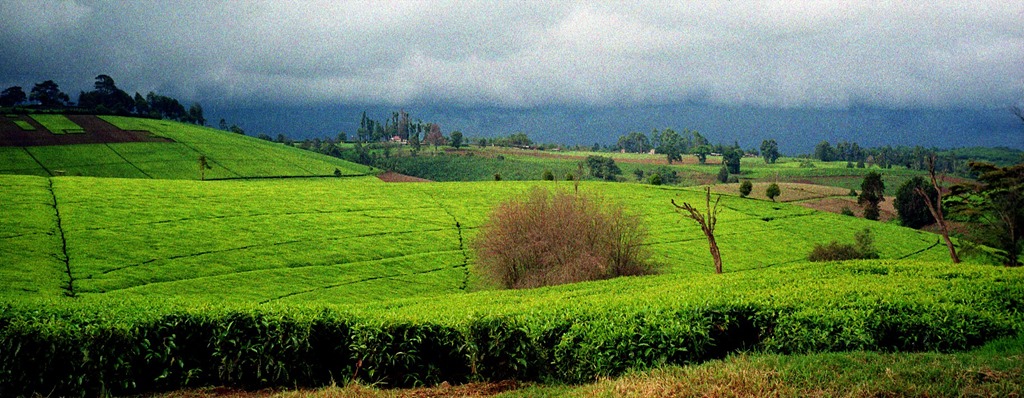
A  tea estate with workers’ quarters near Nairobi.

Limuru tea fields in the long rains

*

Today, ordinary land-poor Kenyans must look out on the large farms and estates still owned by the descendants of European settlers, or the ranches and flower factories of the Kenyan elite, or at the plantations of the multinationals whose profits go to foreign shareholders, or even at the great wildernesses set aside exclusively for wildlife, and wonder what Independence has brought them. Under colonialism most people were excluded from the wealth creating process except to provide manual labour. Today it seems that not much has changed.

*

Rift Valley and Longonot from Escarpment (2)

http://flickrcomments.wordpress.com/2013/08/27/iii-challenge/

© 2013 Tish Farrell

Carnations, crooks and colobus at Lake Naivasha

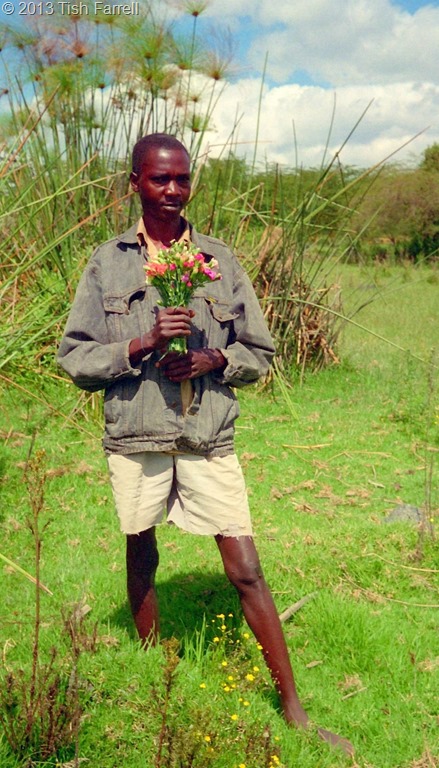
Even locals told us that  anything could happen in Kenya.  And  so one Lake Naivasha morning, when I thought I was  alone in the grounds of an old safari lodge, I was both surprised and unsuprised when a young man suddenly stepped out from the papyrus swamp clutching two bunches of carnations. Fifty bob, madame, he said after the customary greeting. He seemed nonplussed  when I started to laugh.

“Do you always keep your carnations in the papyrus,” I asked.

“Yes,” he said.

“What, waiting for people like me?”

“Yes,” he said.

Scan-130602-0001

This exchange seemed to seal the deal. I didn’t even bother to haggle. And although I have no idea why I would have 50 bob on me in such a place, I bought a bunch. Given the general lack of wazungu humanity in that particular location, I also wondered  how long he had been waiting for the likes of me to come along; or how long he would have been prepared to wait for a customer. Or if I was just the unexpected thing that happened to him, rather than he to me. (You could tie yourself in knots second guessing). The rest of the lodge guests, I knew, were male entomologists, engaged all day in seminars and workshops; only I was free to wander about the hotel’s straggling  grounds buying flowers for which I had no particular need.

*

Scan-130716-0012 (3)

*

We had driven up the Rift from Nairobi the day before. Team Leader Graham was to attend a four-day international conference on the Larger Grain Borer. Along with his Kenyan colleagues there were some forty delegates from such places as Honduras, Mozambique, Italy, UK, Benin, Zimbabwe.  Anyone who has read my post, Letters from Lusaka Part 1,will know that this small maize-grinding beetle, aka LGB, was introduced into Africa in a consignment of US food aid in the 1980s. Its natural habitat is in South and Middle America where it also has natural predators to keep it in check. In Africa it has no natural enemies and can thus eat itself silly while villagers, deprived of their staple crop, starve.  Seventeen years on from this conference, it is still a problem.

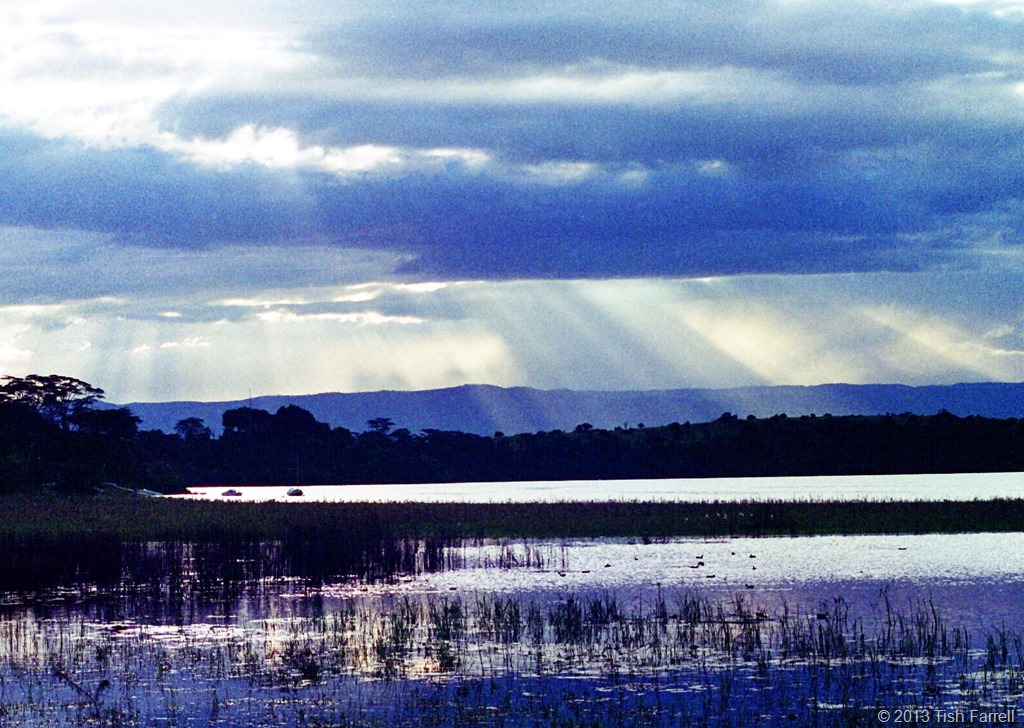
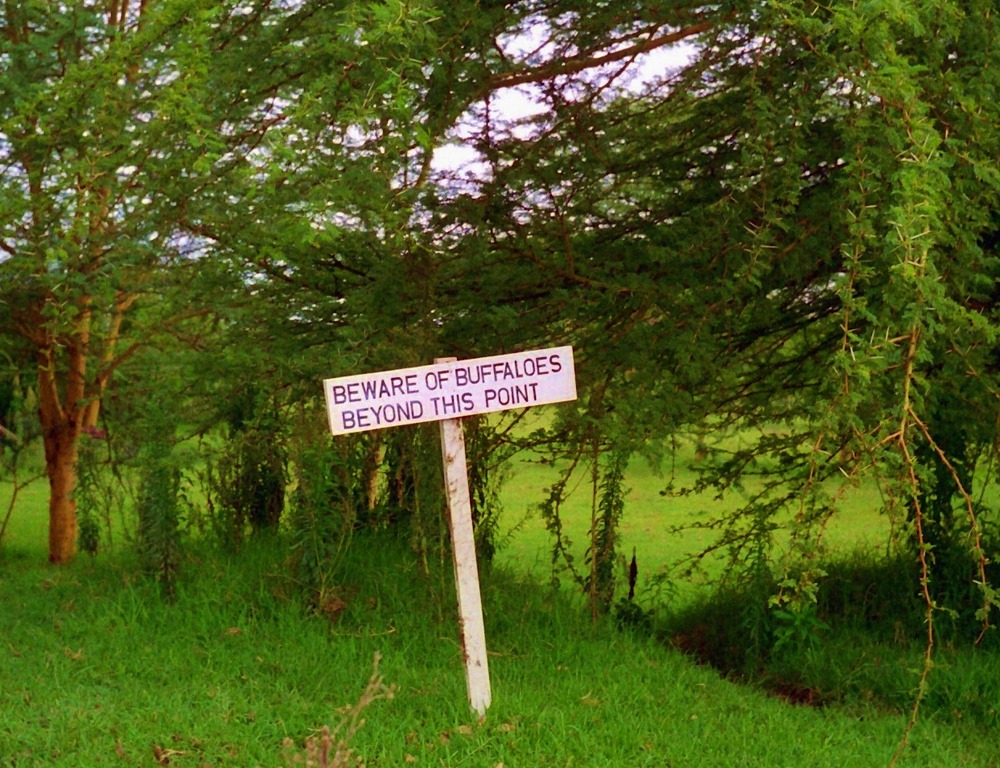
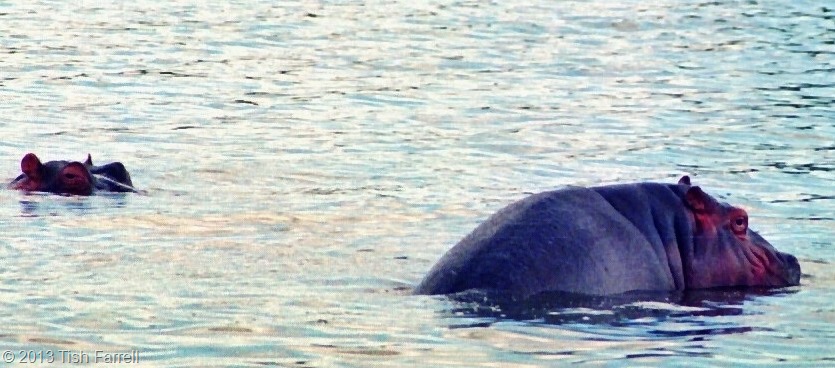
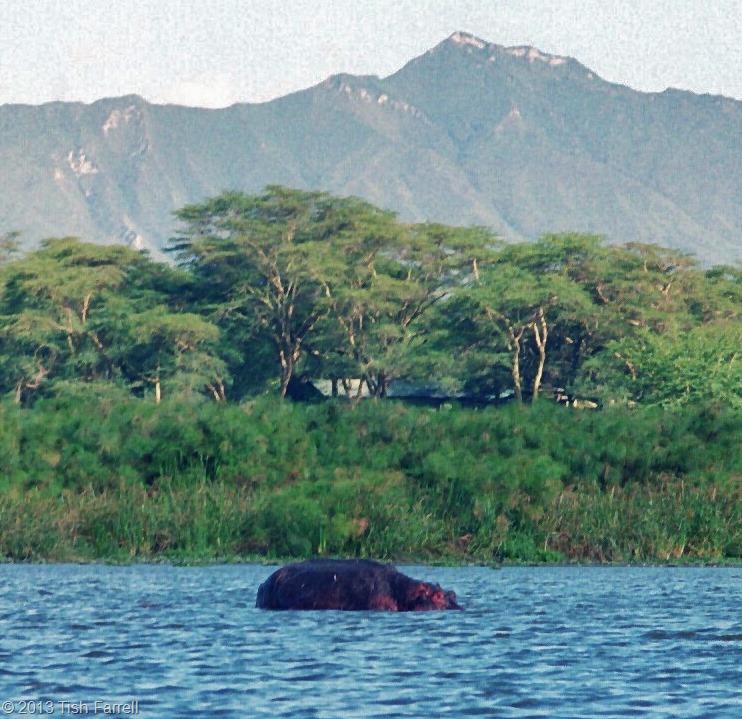
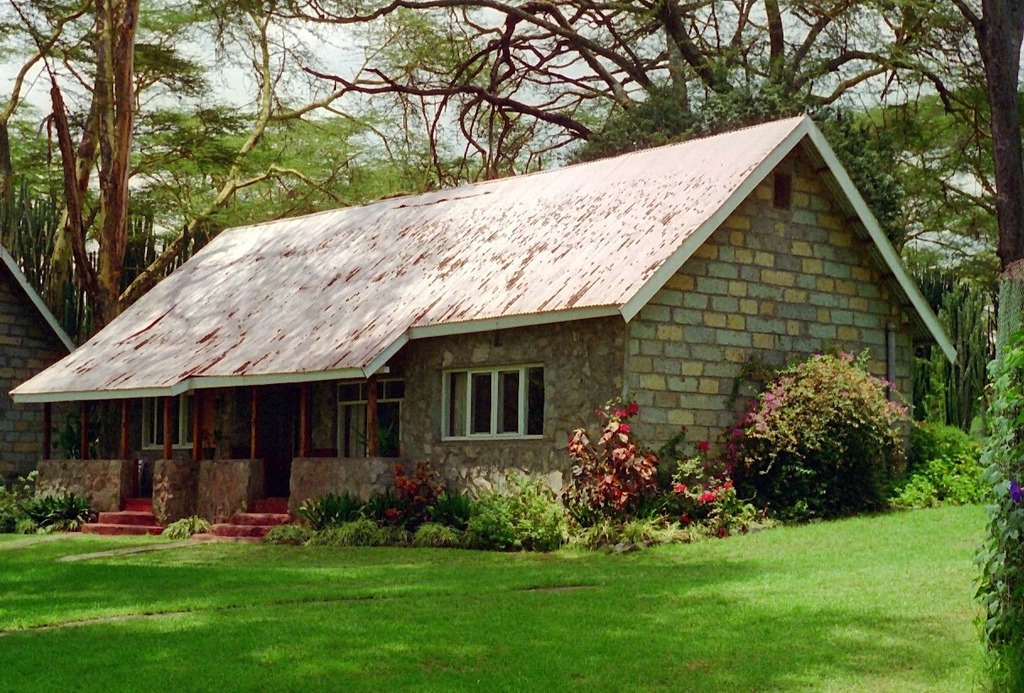
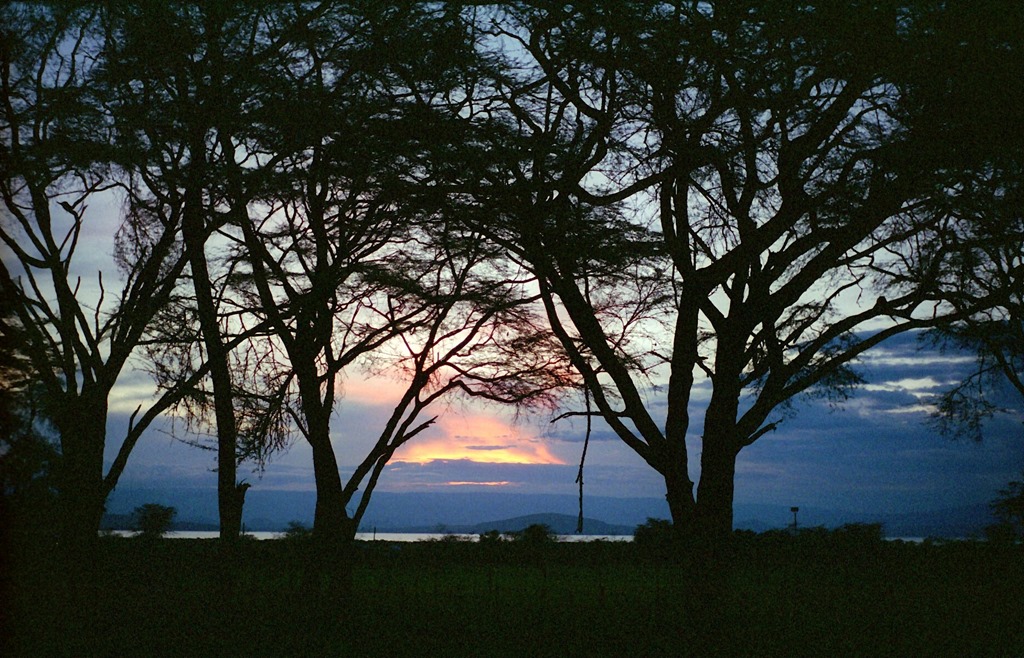
So: while delegates debated what might be done about the ravages of this particular storage pest, Nosy Writer, like some latter-day colonial ‘mem’, dilly-dallied about the lake shore and its hinterland. At the time I was recovering from some strange digestive malady, so wandering and bird watching were all I could cope with. When the young man popped out of the papyrus I was still weighing up whether or not I should be deterred by the sign I had just read amongst the fever trees.  I could anyway hear the hippo grunting, and having once been charged by a big angry bull in Zambia was already a little wary. The appearance of a boy with a bouquet, then, seemed like a piece of magic.

Scan-130602-0003

When I asked him where he got the flowers, he told me there was a flower factory ‘next door’. (Many international growers have their flower factories around the lake. There are strawberry and asparagus growers there too). At the factory (think acres of pink poly-tunnels under the tropical sun) he gathered the discarded side stems and inferior blooms from the refuse heap and made them up into bunches. Later, when I told this to Graham’s Kenyan boss, Gilbert, he told me that export stems had to be between 70-100 cm long, which meant there were probably plenty of rejects.

He also told me that the factory ‘next door’ was reputed to be owned by one of Kenya’s top crooks, a notorious Kenyan-Asian wheeler-dealer. Gilbert then added that he also owned the safari lodge where we were all staying. I could only blink in response. It seemed like another of those ‘anything can happen in Kenya’ moments; another of the endless moral conflicts. Here were a bunch of diligent, respectable scientists all funded by international development money patronizing the establishment of a member of the criminal elite who, from behind a front of untouchable respectability, was bleeding the nation on breathtakingly colossal proportions.

It’s the moment when you say, oh, bloody hell, I can’t cope with this, and go back to reading a book or bird watching, or listening to the plaintive call of a pair of fish eagles resounding off the water, or to the companionable  grunting of hippos.

Scan-130716-0012.jpg

Scan-130716-0010-2.jpg

I also tried to distract myself from thoughts of the flower factories around the lake. There was talk of them abstracting too much water, and polluting the only freshwater lake in Kenya’s Rift with pesticide residue  – all so the citizens of London, Paris, Amsterdam can buy the perfect, but scentless, long-stemmed rose, or metre-long carnations. Of course these places provide work for scores of labourers, and increasingly there are well qualified Africans in managerial positions.

The companies probably provide clinics and primary schools too, but the bulk of the profits from these huge concerns go to Europe and to their shareholders, not to Kenya whose human and natural resources are being exploited in the meantime. Then there’s the row about multi-nationals not paying local taxes. It’s the same old story – colonialism in a new form – the need for cheap labour to justify the cost of the daily absurdity of flying fresh-cut flowers out of Africa.

How do you begin to unpick all this. I can’t. It is easier to bird watch, and there are hundreds of species around the lake to look out for.

Scan-130716-0013

Scan-130716-0008.jpg

Scan-130716-0014-2.jpg

Scan-130716-0011 (11)

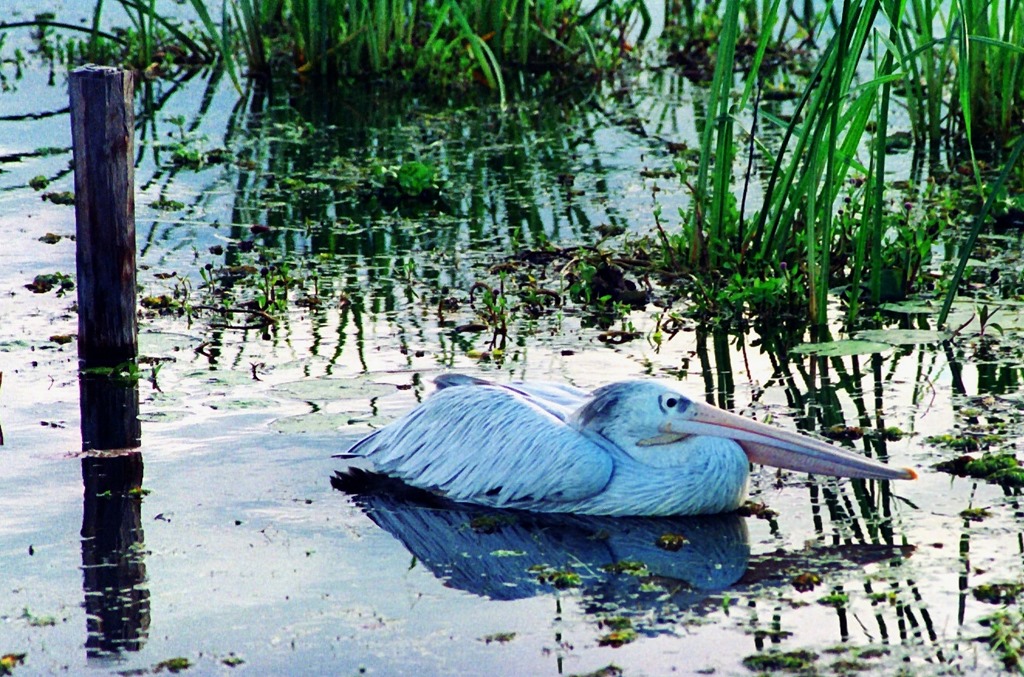
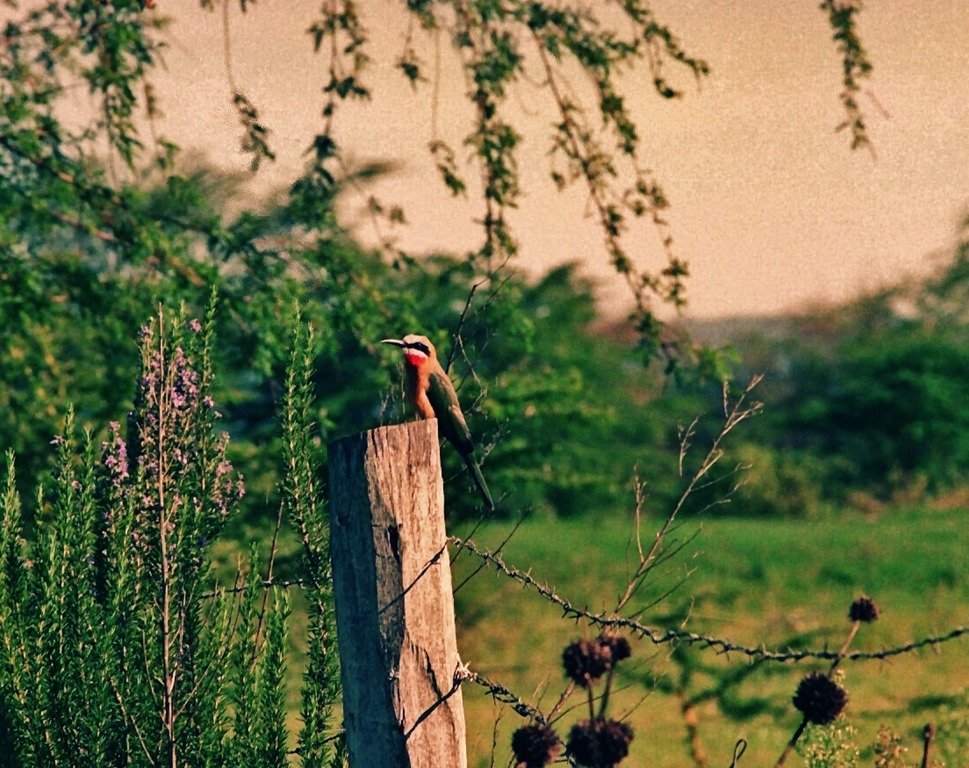
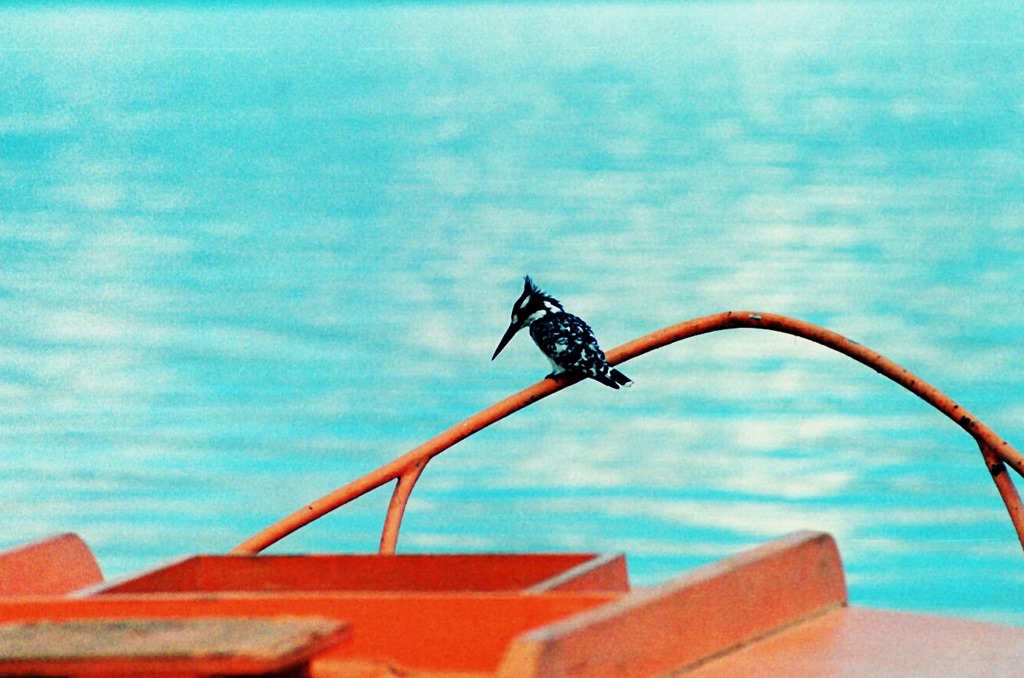
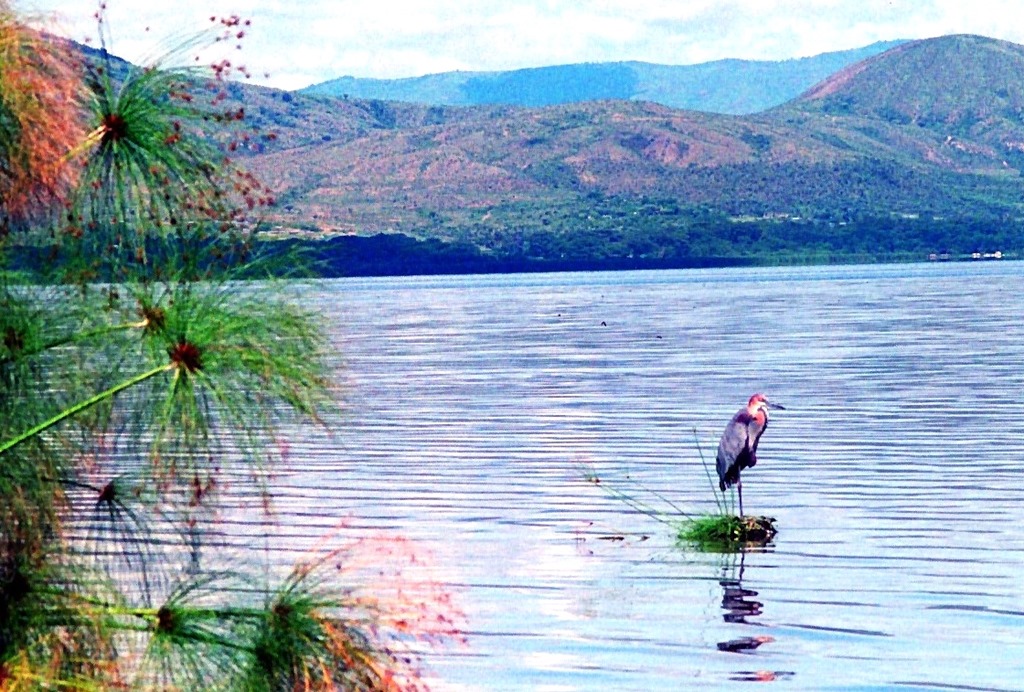
From the top down: pelican, bee eater, pied kingfisher, goliath heron – just a few of the 400 bird species around the lake.

*

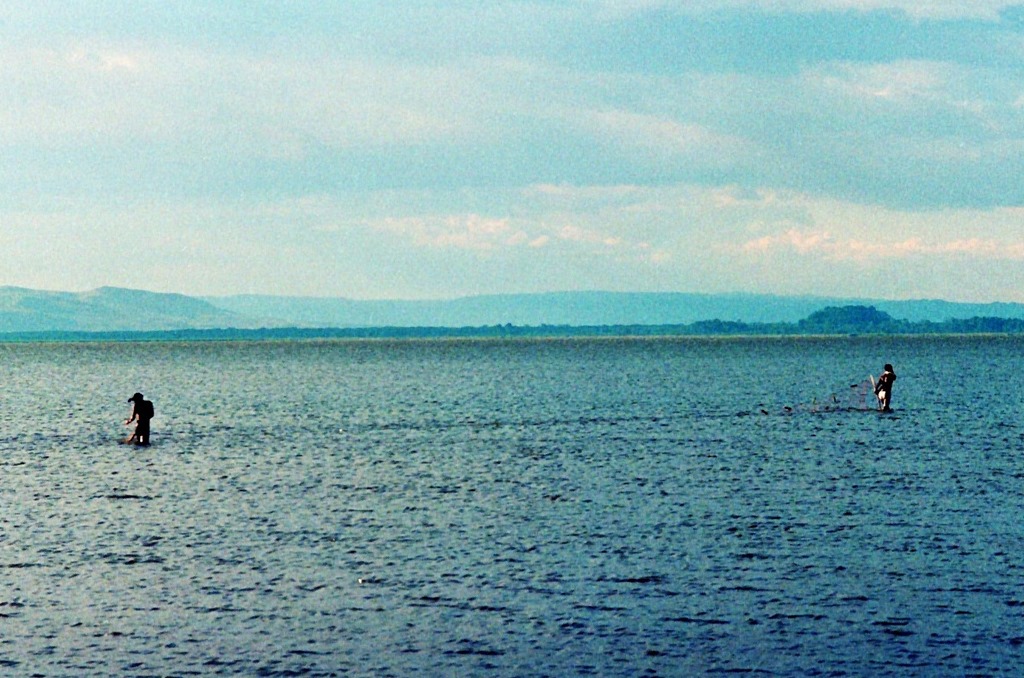
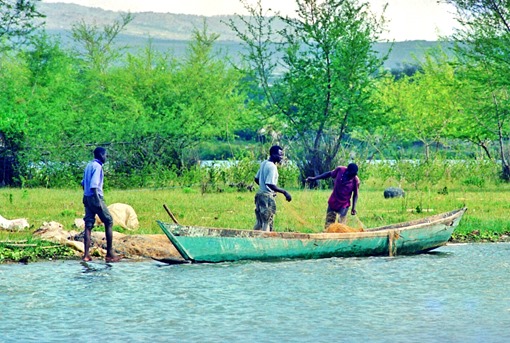
There are the fishermen too, seine netting and scooping up buckets of freshwater crayfish, although accidentally introduced carp is now the dominant fish species.

Scan-130716-0011.jpg

Scan-130716-0011-6_thumb.jpg

*

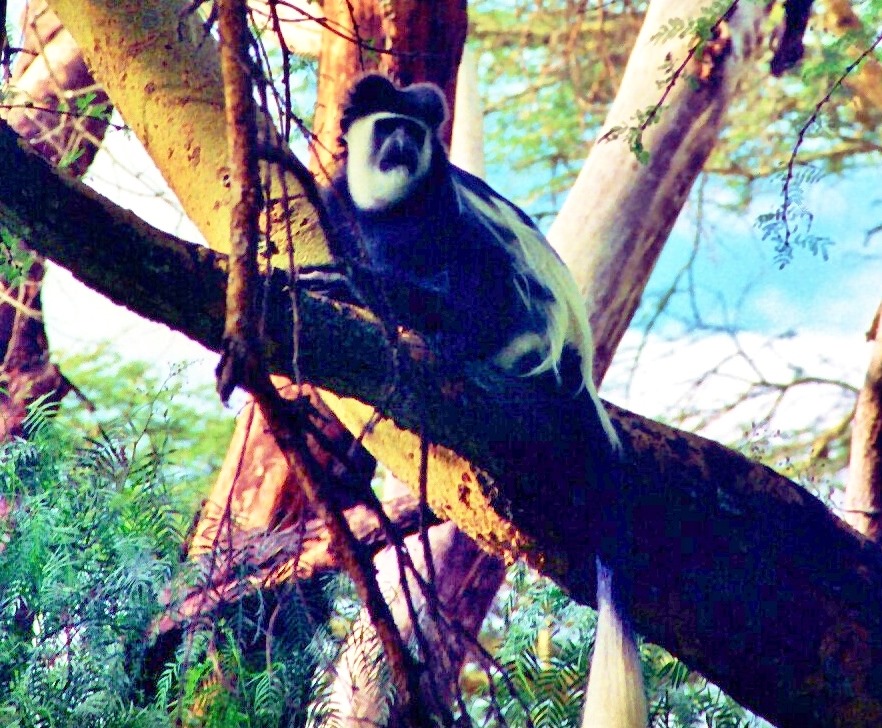
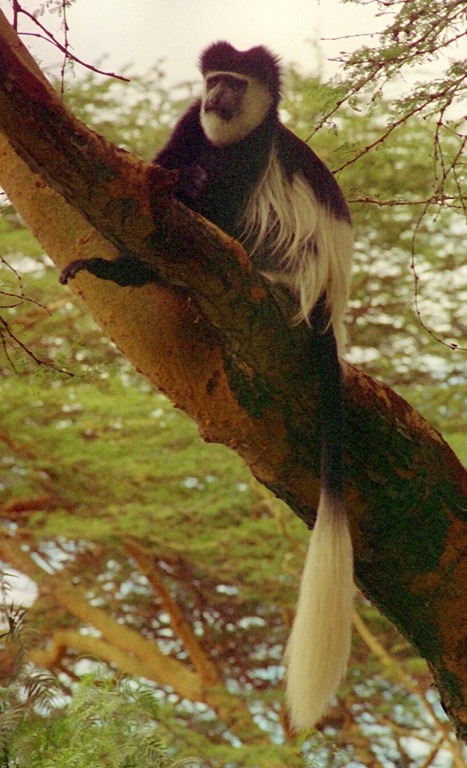
And finally every afternoon around four, a family of colobus monkeys come to the lodge garden and play on the guest cottage roofs. It’s easy to tell yourself that this is paradise.

Scan-130716-0012 (2)Scan-130601-0007.jpg

Refs:

Urban society and the fishery of Lake Naivasha, Kenya – Balancing ecosystem and stakeholder demands by Phil Hickley, Mucai Muchiri & Ros Boar

Kenya Birds Lake Naivasha

Flower power keeps Kenya’s Lake Naivasha blossoming – video Guardian 2012

Kenyan flower industry’s taxing question Guardian 2011

P.S. I took the carnations home to Nairobi where they lasted a further ten days. Excellent rejects.

© 2013 Tish FarrellScan-130602-0002Scan-130602-0004

The Golden Hour on the Rift Plains

  1. http://dailypost.wordpress.com/2013/07/12/the-golden-hour/

First off, before the best bits, I should say that there’s a bug in the Word Press system, so dear followers and followees, please check your SPAM for any comments from me or other afflicted bloggers and (only if you want to of course) upspam them. Otherwise, on most blogs, my comments are currently going straight to SPAM. It’s a cunning way to stop us from talking to each other. Curses on the joyless little bug that is doing this.

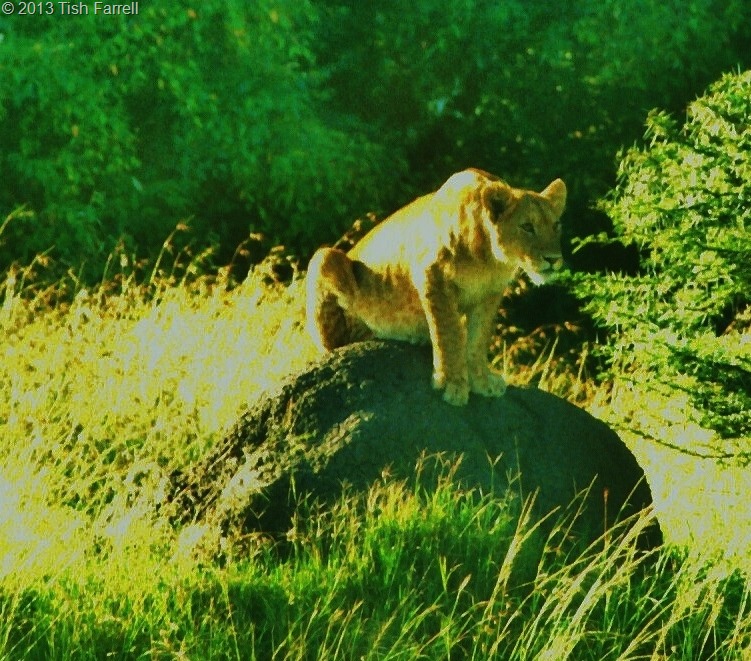
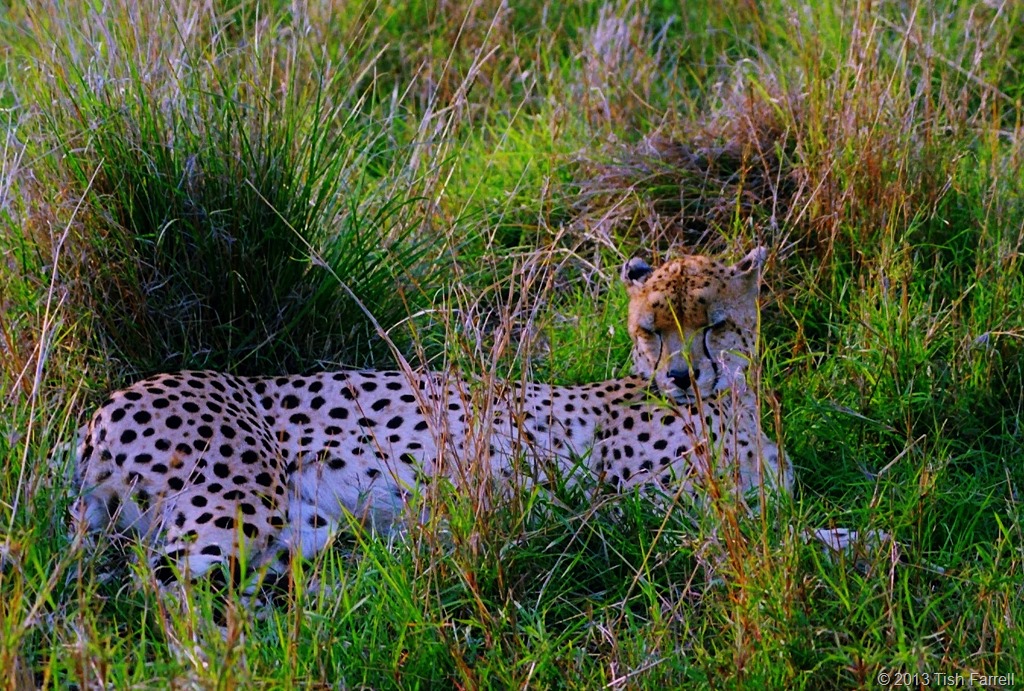
Now for some late afternoon views of big cats and other animals in the Maasai Mara.  This photo shows just how easily lion conceal themselves in quite short grass. Here, as sunset approaches they are becoming watchful, although they could scarcely care less about us watching them. Soon it will be time to go hunting.

Scan-130520-0011

*

Mara lioness 2

Just to the right of the lioness is another lion. It makes you appreciate how intrepid are the Maasai who daily have to graze their herds, and also fetch firewood and water out on these plains. (For more about this you can read my short story ‘Flight’ HERE. It was one of the Bath Short Story Award winners and tells the story of a Maasai girl’s life in this extraordinary land.) Doubtless the herders keep an eye on where particular prides are spending their sleeping hours, but even so, walking into a laid-out lion seems a distinct and chilling possibility.

*

Scan-130520-0017

Scan-130520-0018

Scan-130520-0021

Mara at dawn 2

Mara grassland 4 (2)

Which Way in Africa: It’s Often Hard to Know

http://www.ceephotography.com/2013/07/10/cees-which-way-challenge-week-1/

More views from our time living in Africa. For more of the stories behind the photos, you can follow the links.

*

Scan-130429-0003

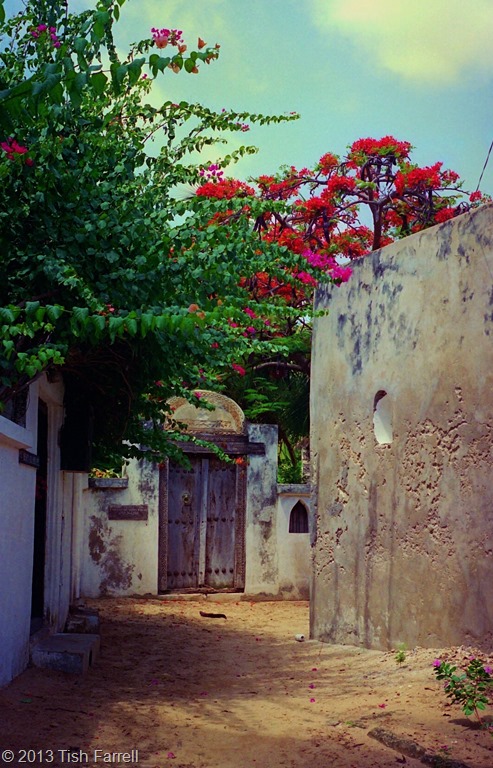
Village path, Shela, Lamu Island, Kenya

*

Scan-130429-0102

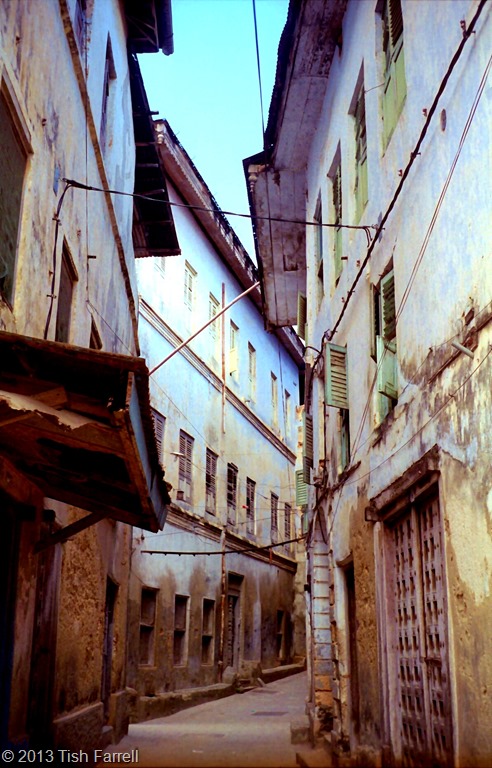
It is easy to get totally lost in the by-ways of Stone Town, Zanzibar

*

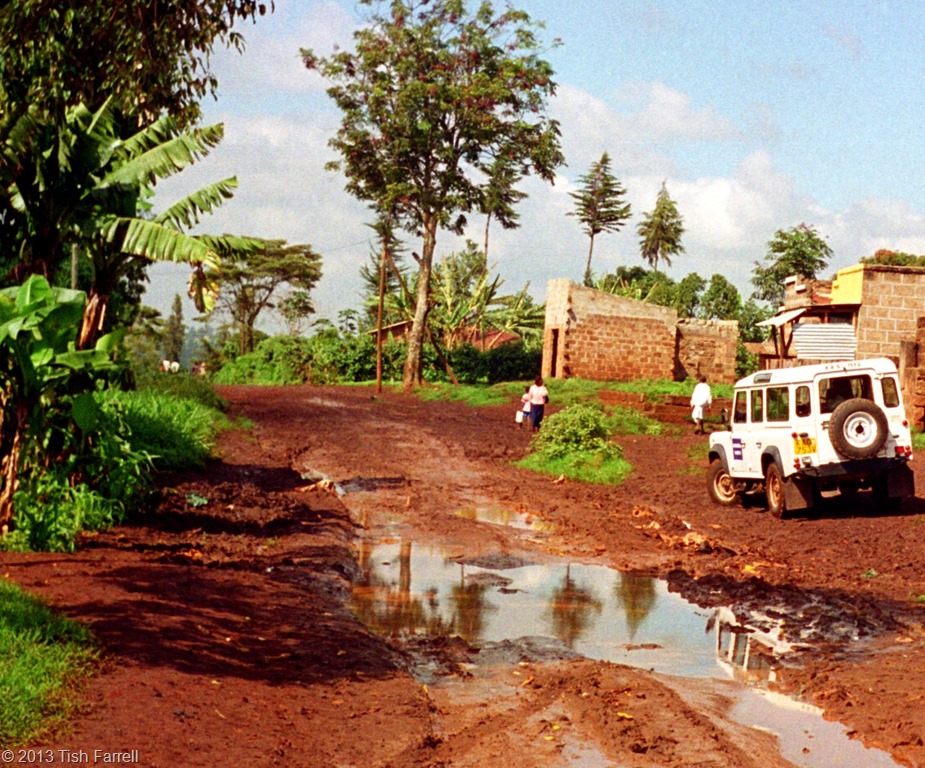
trading centre after El Nino rains

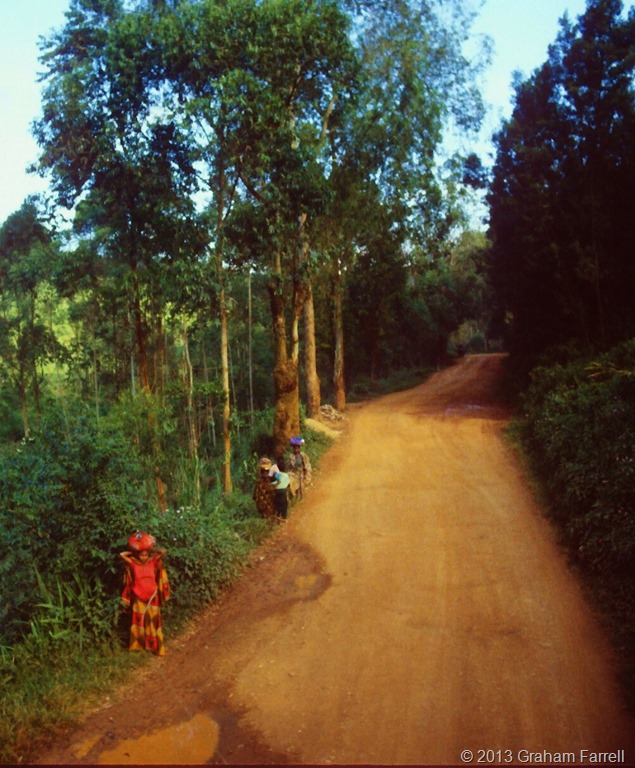
Or totally bogged down during the rains. This road is in Kenya’s highlands in Central Province, taken when we were out on the farms surveying crops for smut fungus.

*

Scan-130603-0061

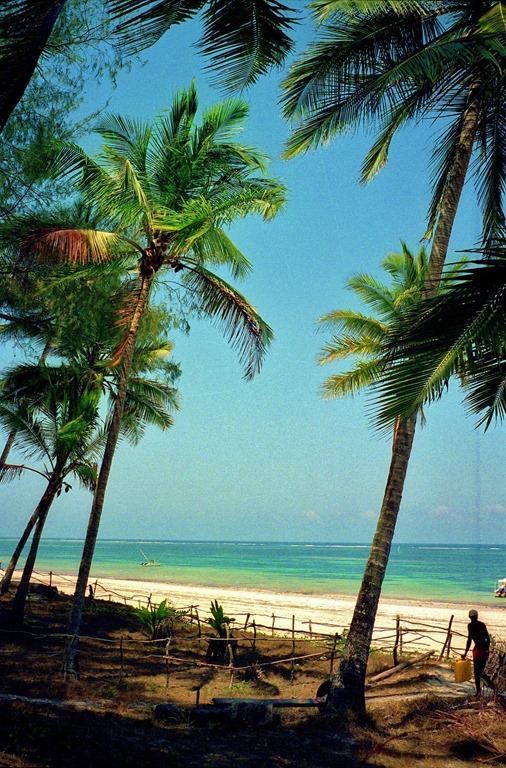
Village path down to Tiwi Beach, Mombasa, Kenya

*

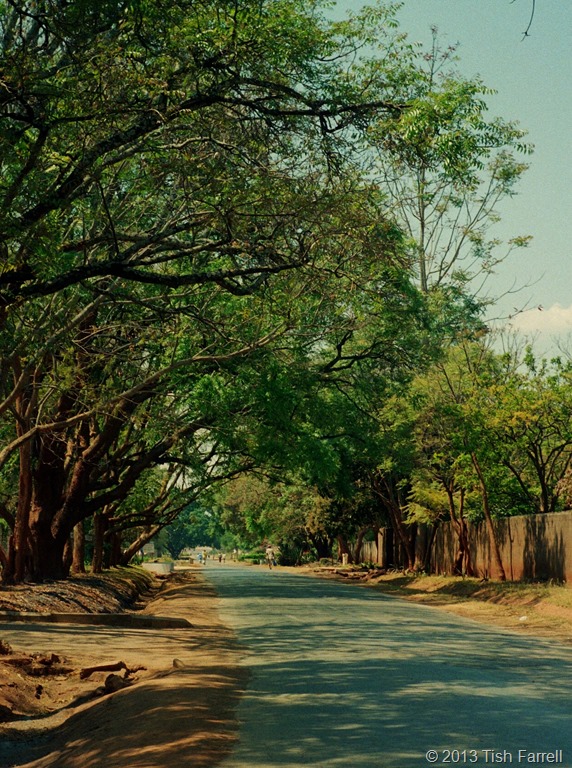
Sable Road in the dry season 2

Sable Road, Lusaka, Zambia, where we lived in 1992-3. This was taken in the dry season.

*

Scan-130703-0009

Heading for Uganda from DR Congo. Or maybe not…

http://www.ceephotography.com/2013/07/10/cees-which-way-challenge-week-1/

Weekly Photo Challenge: Change

Rift Valley from Escarpment


Change, what change? All seems so still in this shot of Kenya’s Great Rift Valley. The day is fine. The short rains have brought on the maize and pyrethrum crops on the small escarpment farms. The distant volcano, Longonot, appears dormant and suggests no kind of threat. It is hard to imagine, then, that this peaceful scene is a site of great seismic upheaval, and has been for the last 30 million years. Likewise it is hard to accept that even as I took the photo, the tectonic plates beneath the Rift floor were v-e-r-y slowly pulling apart. In another million or so years you might stand in the spot where I stood and look out on the Indian Ocean; the ground beneath your feet will be a brand new island, and the low Rift terrace where Kikuyu farm wives presently toil, lost under the sea.

The thought is unnerving. For it’s an interesting paradox: while we accept and embrace increasingly rapid changes in the man-made environment, we’re not too keen to confront the reality of a planet that transforms itself beneath our feet and in ways we cannot control. It is interesting then to think, as scientists have been doing, that our very origins as humankind, could well derive from the creation of the Rift Valley.

The argument runs like this. The Rift has long been referred to as “The Cradle of Mankind”. The earliest remains of human ancestors have so far been found along its length (in Ethiopia, Kenya and Tanzania), but the time when we see the big leap in hominid development coincides with the time of maximum uplift in the Rift. This happened around 7 million years ago when the so-called Wall of Africa was created and Africa’s climate thereafter began to change. The rain shadow created by the upthrust highlands caused the forests, the preferred habitat of our primate predecessors, to give way to the more arid savannah we see today.

Without trees for cover and look-out posts our ancestors became vulnerable; food would have become less easy to find, and so in order to hunt and not to be hunted they had to stand up on two feet in order to see over the tall plains grasses. Thus began the long march to cell phone, app and PC that much of humanity apparently cannot now live without. It’s interesting to think how things end up.

As to what created the 3,700 mile-long Rift, then that comes down to plumes of hot semi-molten rock surging up beneath the earth’s crust. In Kenya this surging has also left behind chains of dead and dormant volcanos, including Mount Kenya which, at 17,000 snow-capped feet, is only a vestige of its former unexploded vastness. The pulling apart of the Rift plates has also created the famous soda lakes of Magadi, Nakuru and Baringo, and the deep freshwater Lake Victoria.

Personally, though, I prefer the old Kenyan story that says the Rift was created by termites. It goes like this. Once there was a marauding giant abroad. He preyed on all the animals and none of them was strong enough to finish him off. In the end it took the cunning of many tiny insects to burrow away under the ground and create a well hidden ambush. The next time the giant came rampaging by, the ground gave way beneath his feet and he plummeted into the great trench that the termites had created and so was killed. It was doubtless a fitting end for a troublesome giant, while the hitherto disregarded insects could look forward to greater respect from their fellow creatures.

©2013 Tish Farrell

International Women’s Day 8 March

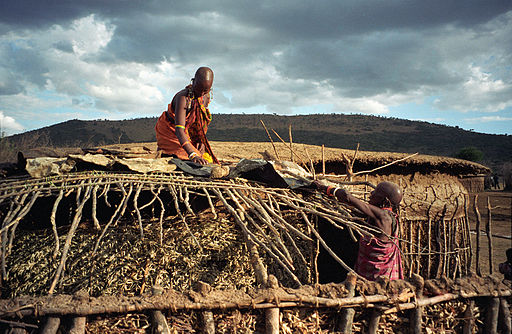
House BuildingCreative Commons photo: Jerzy Strzelecki

House Building
Creative Commons photo: Jerzy Strzelecki

I’m thinking of women whose life is immeasurably harder than mine. Could I, for instance, walk the Maasai woman’s barefoot daily trek across wild bush country, searching for firewood, fetching water, taking produce to market? Could I have reared children in the dung and wattle hut that I had built myself? Could I live obeying a husband’s commands even when I thought them wrong? What kind of bravery, tenacity and inner strength would I need to live this way, and to still live well? These days, things are slowly changing for Maasai women, not least because campaigners from their own communities are pressing for girls’ education, the end of genital mutilation and forced teen marriages. But for outsiders visiting the Mara it is all too easy to see only the grinding poverty and the reconstituted, fit-for-tourist shreds of former warrior glamour. But before jumping to too many conclusions about what is really going on, here is my version of a Maasai traditional story that sheds some light (literally) on their own views of the man-woman relationship.

And the moon still shines

Long ago Sun wanted a wife
so he married Moon and they made a pact,
to ply the sky in endless round,
Sun ahead, Moon behind.
And each month, tiring of the trek,
Sun carried Moon-Wife on his back.

But then one day they came to blows.
Moon crossed Sun and Sun lashed out,
beating his Moon-Wife black and blue.
Moon struck back. She slashed Sun’s brow.
He gouged her cheek, plucked out an eye.

Later Sun fumed: I’ll shine so hard
that none will ever see my scars.
While Moon tossed her head:
Why hide my wounds?
I still light up the night sky.

Creative CommonsPhoto: William Warby (flickr.com)

Creative Commons
Photo: William Warby (flickr.com)

Text: Copyright 2013 Tish Farrell