Thursdays Special ~ A Commanding Presence

IMG_0026

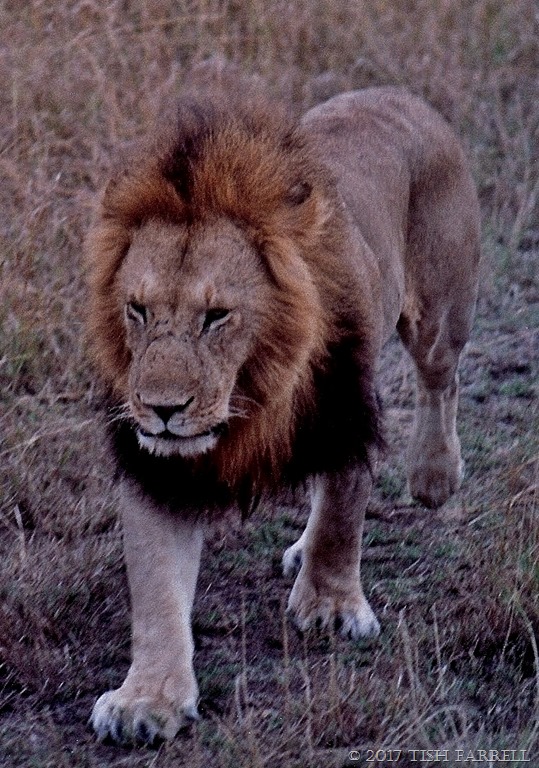
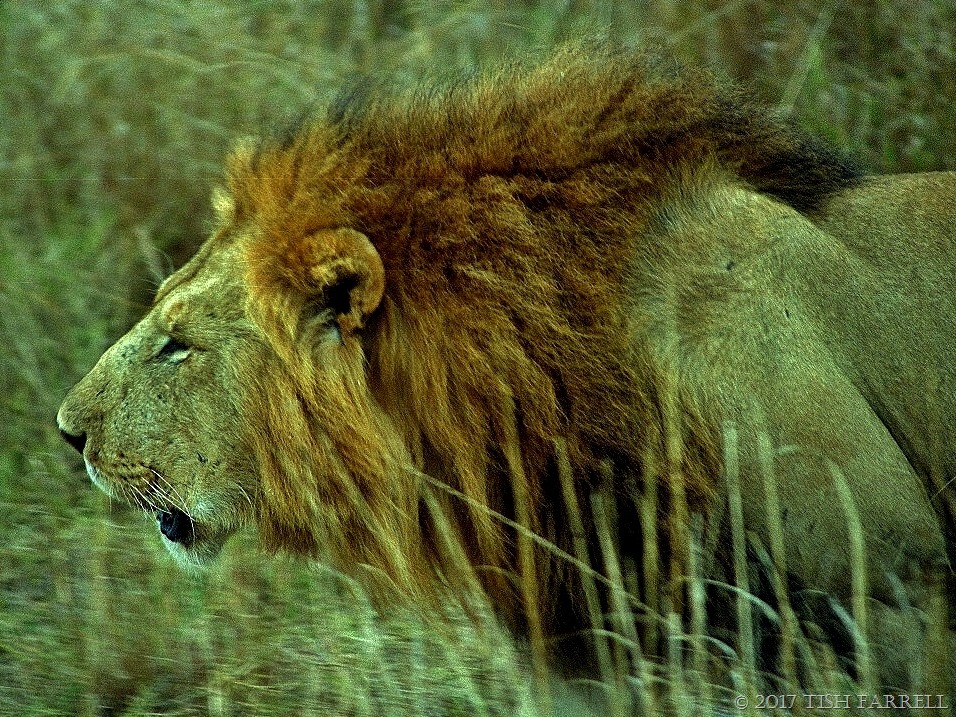
It’s not easy taking a photo of a moving lion, and for all sorts of reasons – not least, the excitement. This is another shot of one of the members of the Maasai Mara’s celebrity Marsh Pride. I think that confident stride definitely says ‘I’m in charge here’. And just look at the size of those front paws! Scarily impressive even in this somewhat aged photo.

We visited the Maasai Mara only three times while we were living in Kenya, but every trip there delivered many breath-taking moments. We were lucky too. Kenyan wildlife guides are among the world’s best – so generous in the sharing of their knowledge – whether of grasses and dung beetles or leopards and rock pythons.

Scan-140726-0004

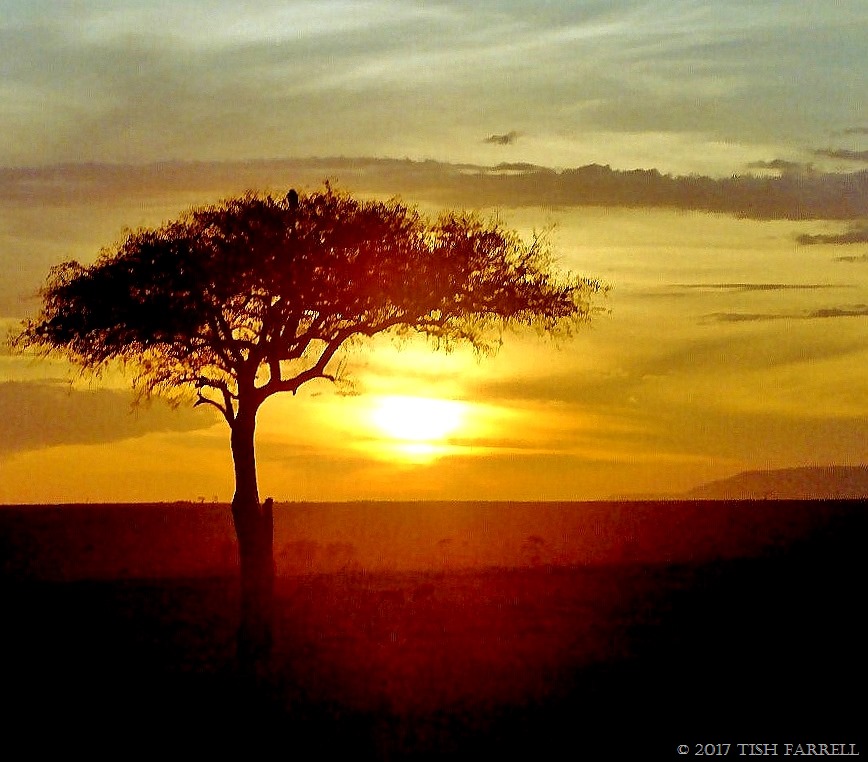
Desert Date  and the Oloololo Escarpment ~ indelible memory Mara-style

*

This week at Lost in Translation, Paula’s  March Pick A Word includes five word prompts: commanding, coarse, gibbous, incremental, indelible. Please see her interpretations and be inspired.

Interesting The Things Your Stats Tell You

Tish Great Zimbabwe (2)

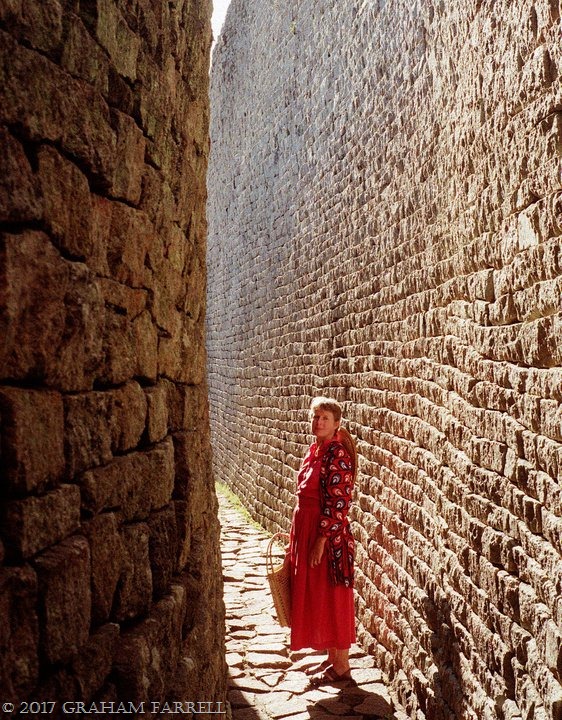
Actually this is probably just an excuse to post yet again this very old photo of me at Great Zimbabwe. We were living in Lusaka, Zambia at the time, Graham on a year’s attachment to the European Delegation, in charge of food aid distribution. You can read that story at the link.

Towards the end of this posting we drove down to Zimbabwe, and spent a couple of weeks touring around. Back in the 1990s it was a fabulous country to visit. We simply followed our noses, and drove on near empty, but well-kept roads, one of which brought us at last to Great Zimbabwe. We pretty much had the place to ourselves too. It was astonishing.

Anyway my stats of the last few days suggest to me that somewhere in the U.S. a bunch of students has been given a Great Zimbabwe assignment. I know this because they’re all opening a post I wrote 3 years and 2 blog themes ago: Abandoned: Great Zimbabwe. This happens periodically, although sometimes it’s Zimbabwean students searching for material on why the place was abandoned. It’s one of my perennial posts – not so much viral as chronic. Every year the traffic has doubled. Last year 1,311 people dropped in there.

But nothing gets as much traffic as my post on Karen Blixen and Denys Finch Hatton. Caught Inside A Kikuyu Garden. This was also written three years ago, and so far has clocked up 12,715 views. Of course I have no way of knowing if all these people have actually read the piece, but I find it intriguing. I also sometimes wonder what would happen if I had a ‘Karen and Denys’ blog, and didn’t bother to post anything else. Funny old activity – blogging.

Thursdays Special ~ Profile Of The Leonine Kind

Marsh Pride male 1

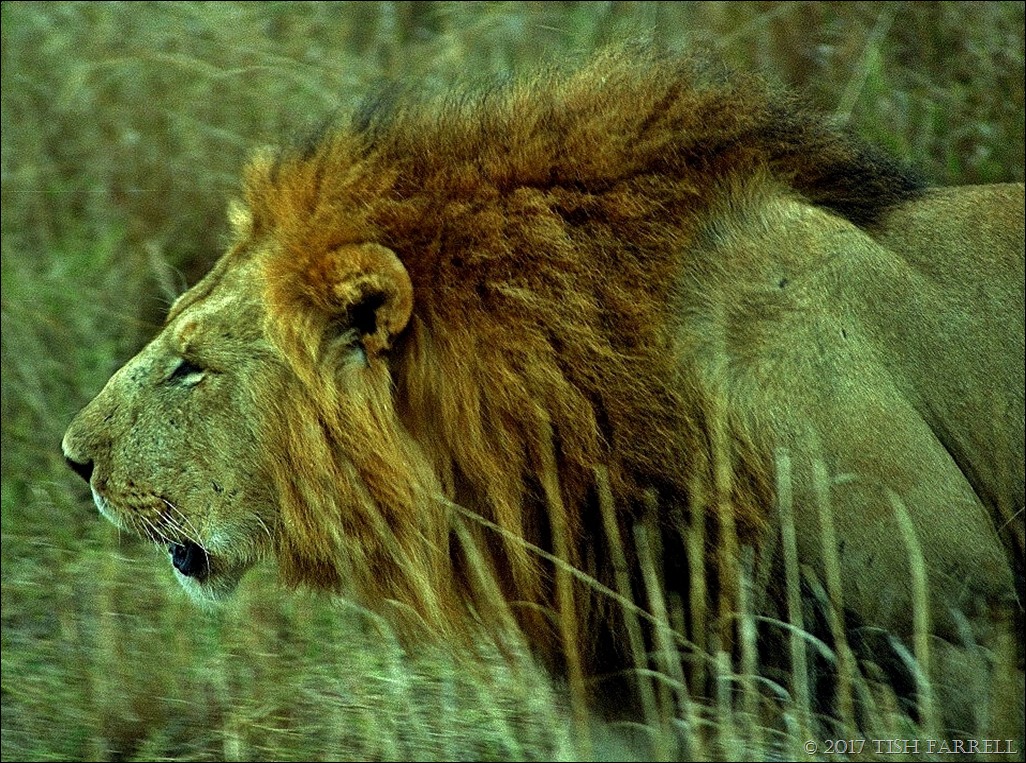
We came upon the Maasai Mara’s famous Marsh Pride on a morning game drive out from Mara River Camp. It was August – as close to winter as Kenya gets – the skies leaden, the plains parched and dusty, the whole place waiting for the short rains that will not be happening for another two months; and perhaps not at all. In fact this trip had started out from Nairobi in thick fog, and descending the Great Rift escarpment was even more hair-raising exciting than usual.

But to get back to the lions. The pride was resting up in home territory, most of its members – mothers and cubs – scarcely visible in the grass. For one thing they were the same colour as the vegetation. For another, it is what lions do – disappear in twelve inches of grass.

As we drove nearer we spotted this male. He was pacing through the grass, roaring. This was answered by another male some distance away. It seemed they were busy marking out their patch. They ignored us anyway, which was comforting, though I have to say that lion-roars, especially ones at close quarters, make your spine resonate, and not in a good way.

Another hair-raising exciting moment then.

We watched them for a while from the safety of the safari truck, then left them to it, the roars following us down the track. By which time  we were  wondering if we were really there at all. Out in the African wilds it mostly feels like dreaming.


Profile:     Panthera Leo

                    Simba in KiSwahili

Weight:    Males 420-500 lb/110-135 kg

Length:     Males 5-7 ft/2.5-2 m

Lifespan:  Males 12 years


Thursdays Special: Profile

Please visit Paula to see her fantabulous shot of a snowy owl.

The Solitude Within

Scan-140801-0001 - Copy (2)

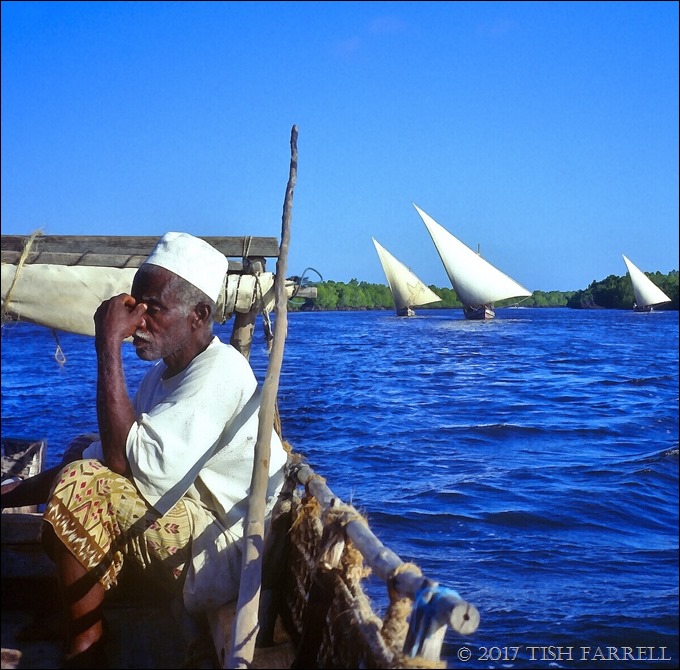
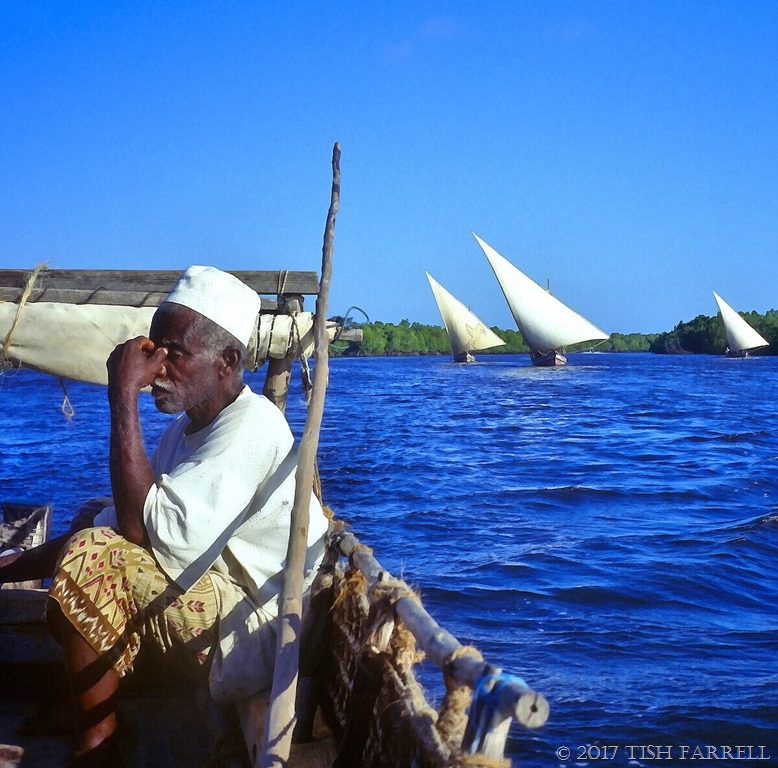
As in the previous post, this is a Christmas photo, but one taken long ago when we were visiting Lamu off the Kenya coast. I’ve posted it before, but make no excuse for showing it again. It is one of my favourite photos, and one caught in a split second with my Olympus Trip. I think the gods of photography were smiling on me.

The gentleman so absorbed is Mzee Lali, the owner of the sailing dhow. He spoke no English, nor said a word to us that I recall on our day trip out to the reef. The conversation was dominated by his nephew, Athman, who, as a speaker of English, Kenya’s official language, could hold a captain’s licence, and so take tourists out on sailing trips.

He told us that Lali was born on Pate, one of the more remote large islands in the Lamu archipelago. He knew everything there was to know about sailing, Athman said. But because he spoke no English he could not take the necessary two and half year captain’s course, and so obtain a licence.

Somehow this photo echoes the dilemma of island elders. They belong to another world in another time.

copyright 2017 Tish Farrell


Weekly Photo Challenge:Solitude

To The Day Ahead ~ Mombasa Beach Safari

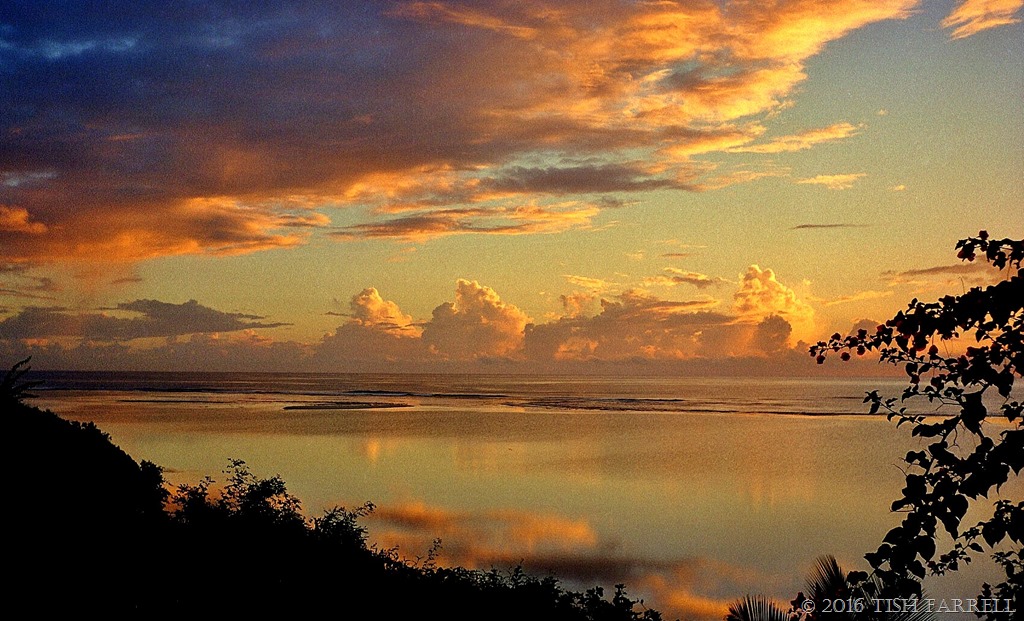
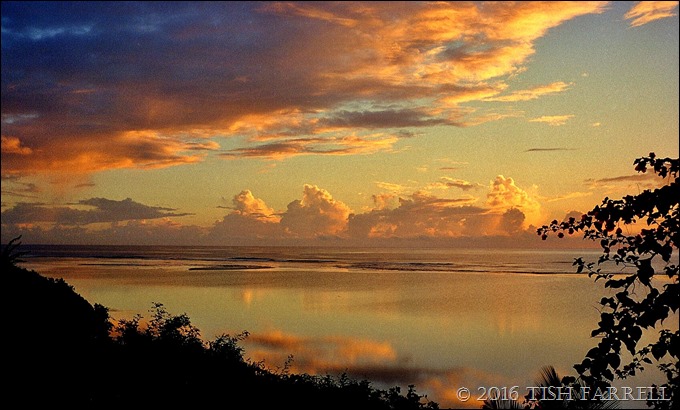
sunrise on the reef

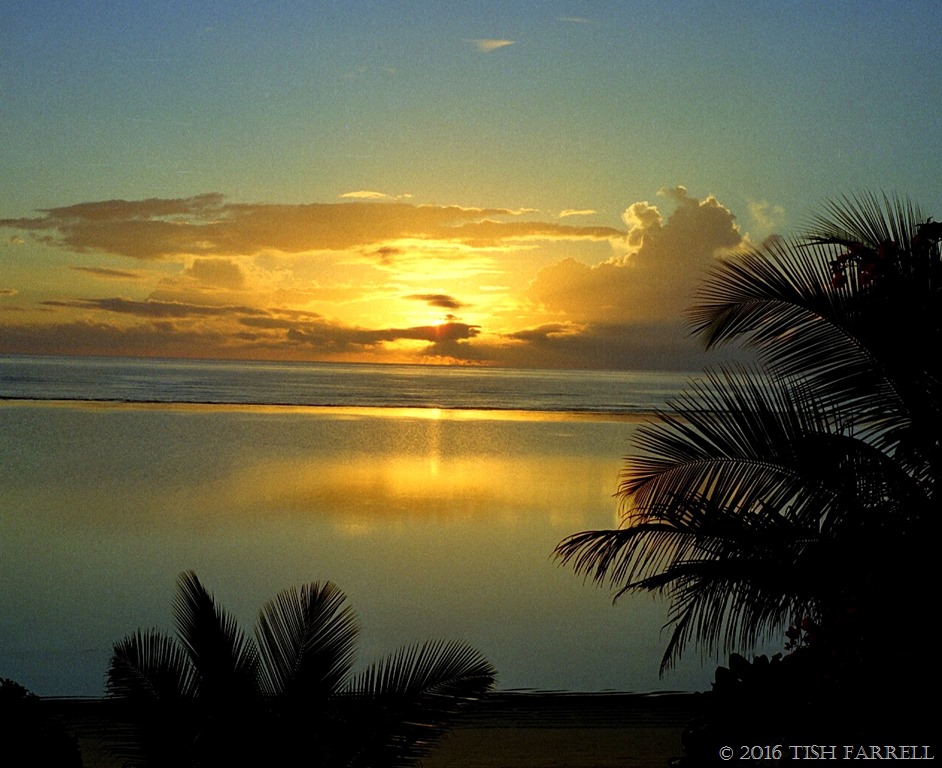
When we lived in Kenya during the 1990s we used to spend Christmas in a beach cottage on the south Mombasa coast. Much of the anticipation (not to say anxiety) surrounding this annual safari usually revolved around wondering if we would get there at all.

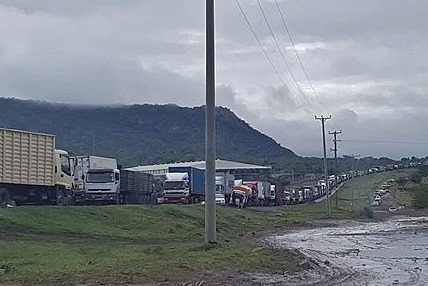
Mombasa is a good 300 miles from Nairobi and, in our day, the existence of the Nairobi – Mombasa highway was not to be taken for granted. December is the rainy season, and there were times when sections of the road were washed out. On one occasion when we were heading south, mudslides had created a huge traffic jam not far from Nairobi. Trucks, buses, tour vans and cars were double parked for tens of miles all across Ukambani’s rain-soaked bush country.

Villagers along the route thought all their market days had come at once – so many captive customers to be plied with cups of tea and fresh picked mangos from their shambas. All opportunities for making a few bob were quickly grabbed, and wherever you looked, gangs of of grinning lads were hard at work, pushing grounded vehicles out of the mudslides. Meanwhile the line of vehicles stretched on and on, out across the plains.

And it was then that our Land Rover Defender came into its own. You forgot that it generally leaked, juddered, clanged and banged while rearranging your spinal column and internal organs into ever new and painful configurations. This beast could walk on water. Well almost. Anyway, who needed a road? Not Team Leader Graham (aka My Man In Africa). He simply engaged equatorial swamp-drive, and took to the bush, picking his own route alongside the blocked highway.  Being English, I quailed before the thought that we were committing some major traffic offence. This, after all, was ‘undertaking’ of epic proportions, outdoing the maddest of matatu drivers. And just to give you an idea of Mombasa highway jams here’s a Kenyan press photo from April this year – a twelve-hour hold-up:

Mombasa Highway Nation Newspaper

http://nairobinews.nation.co.ke/news/caused-monster-traffic-jam-mombasa-road/

*

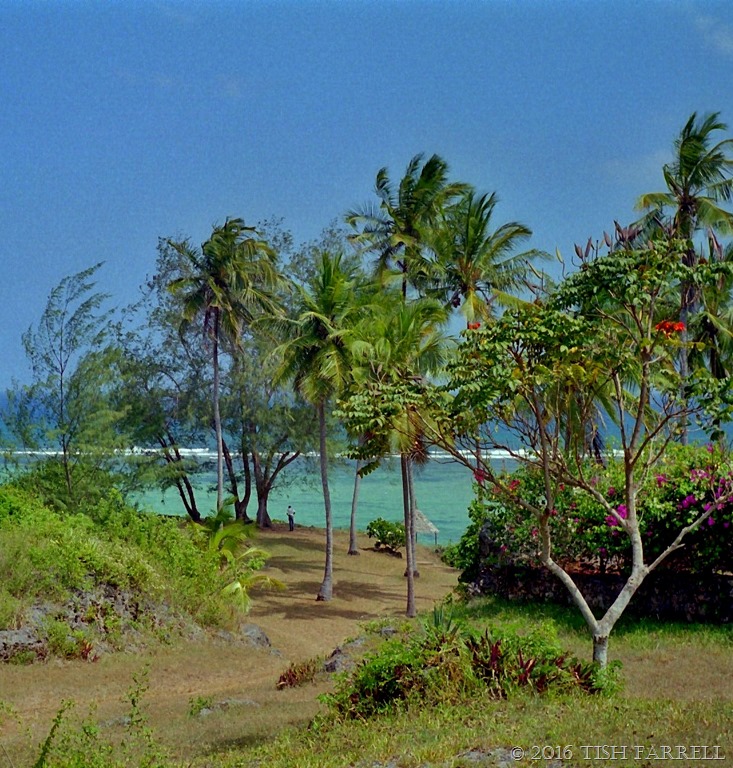
And so what with events like this, and the other usual highway hazards of broken-down trucks, police road blocks, jay-walking buffalo and the inevitable Likoni Ferry hold up, it was always a huge relief to finally find ourselves trundling along the cliff top track to Maweni Cove. Soon there would be paddling in warm lagoon waters, white coral sands sparsely populated, a cooling sea breeze on the headland, and the sound of the Indian Ocean roaring on the reef edge. Eggs and vegetables would be delivered to our door by a sweet Digo man on a bicycle. The fishermen would call by daily with fresh-caught lobster and parrot fish, and if you gave them a knife and chopping board, they would clean the fish for you. All of which meant that even when we were actually there,  it always seemed like a dream.

Scan-130603-0010Scan-130603-0001

Anticipation

Shore, Reef, Ocean, Sky: Edge On Edge

dawn over Tiwi lagoon more contrast - Copy

Some of you will have already read the essay below. It won first prize in a Quartos Magazine competition years ago. The magazine is no more, but I’m posting the piece again for those of you in need of  a long, soothing wallow beside an African beach. Enjoy!

 Going to the Dogs on Mombasa’s Southern Shore

It’s a dog’s life on Tiwi Beach, the white strand where ocean roars on coral and trade winds waft the coconut palms; and where, best of all, as far as the local canines are concerned, there are quiet coves sparse in holidaymakers. It means they may do as they please. After all, it is their own resort, and every morning they set off there from the beach villages along the headland, nose up, ears blown back in the breeze, ready for the day’s adventures.

But the dogs are not churlish. They can take or leave the odd pale human wrestling to right his windsurfer on the still lagoon; ignore the sentinel heron that marks the reef edge beyond; pay no heed to the etched black figures of the Digo fishermen who search the shallows for prawns, parrot fish, or perhaps a mottled lobster or two.

But in this last respect at least, the dogs are smug. For the fishermen come down to the beach only to make a living. And when they are done hunting, they must toil along the headland from beach village to beach village, then haggle over the price of their catch with the rich wazungu who come there to lotus eat. Hard work in the dogs’ opinion.

The dogs know better of course; know it in every hair and pore. And each morning after breakfast, when they take the sandy track down to the beach, they begin with a toss of the head, a sniff of the salt air, a gentle ruffling of the ear feathers in soft finger breezes. Only then do they begin the day’s immersion, the sybaritic sea savouring: first the leather pads, sandpaper dry from pounding coral beaches, then the hot underbelly. Bliss. The water is warm. Still. Azure. And there can be nothing better in the world than to wade here, hour on hour, alongside a like‑minded fellow.

There’s not much to it; sometimes a gentle prancing. But more likely the long absorbing watch, nose just above the water, ears pricked, gaze fixed on the dazzling glass. And if you should come by and ask what they think they’re at, they will scan you blankly, the earlier joy drained away like swell off a pitching dhow. And, after a moment’s condescending consideration, they will return again to the sea search, every fibre assuming once more that sense of delighted expectation which you so crassly interrupted. You are dismissed.

For what else should they be doing but dog dreaming, ocean gazing, coursing the ripples of sunlight across the lagoon and more than these, glimpsing the electric blue of a darting minnow? And do they try to catch it? Of course they don’t. And when the day’s watch is done, there is the happy retreat to shore ‑ the roll roll roll in hot sand, working the grains into every hair root.

And if as a stranger you think these beach dogs a disreputable looking crew, the undesirable issue of lax couplings between colonial thoroughbreds gone native: dobermanns and rough‑haired pointers, vizslas and ridge‑backs, labradors and terriers, then think again. For just because they have no time for idle chit-chat, this doesn’t make them bad fellows: it’s merely that when they are on the beach, they’re on their own time. But later, after sunset, well that’s a different matter. Then they have responsibilities: they become guardians of the your designer swimwear, keepers of your M & S beach towel, enticing items that you have carelessly left out on your cottage veranda.

By night they patrol the ill‑lit byways of your beach village, dogging the heels of a human guard who has his bow and arrow always at the ready. And when in the black hours the banshee cry of a bush baby all but stops your heart, you may be forgiven for supposing that this bristling team has got its man, impaled a hapless thief to the compound baobab. It is an unnerving thought. You keep your head down. Try to go with the flow, as all good travellers should.

But with the day the disturbing image fades. There is no bloody corpse to sully paradise, only the bulbuls calling from a flame tree, the heady scent of frangipani, delicious with its sifting of brine. You cannot help yourself now. It’s time to take a leaf out of the dogs’ book, go for a day of all‑embracing sensation ‑ cast off in an azure pool.

And in the late afternoon when the sun slips red behind the tall palms and the tide comes boiling up the beach, the dogs take to the gathering shade of the hinterland and lie about in companionable couples. Now and then they cast a benign eye on you humankind, for at last you are utterly abandoned, surrendering with whoops and yells to the sun‑baked spume. They seem to register the smallest flicker of approval: you seem to be getting the hang of things.

copyright 2016 Tish Farrell

Edge

As High As An Elephant’s Eye

Scan-131109-0004

And it’s a wise eye. A knowing eye. And it’s a privilege to have been allowed to sit and watch a great herd move by us and around us. So quietly. Measured footfalls. Moving across the Mara thornland. Infants. Adolescents. Mothers. Aunties. The big bulls. All moving as one. To their own rhythm.

*

Thursday’s Special: Eye contact

Elephant Partners

001 (2)

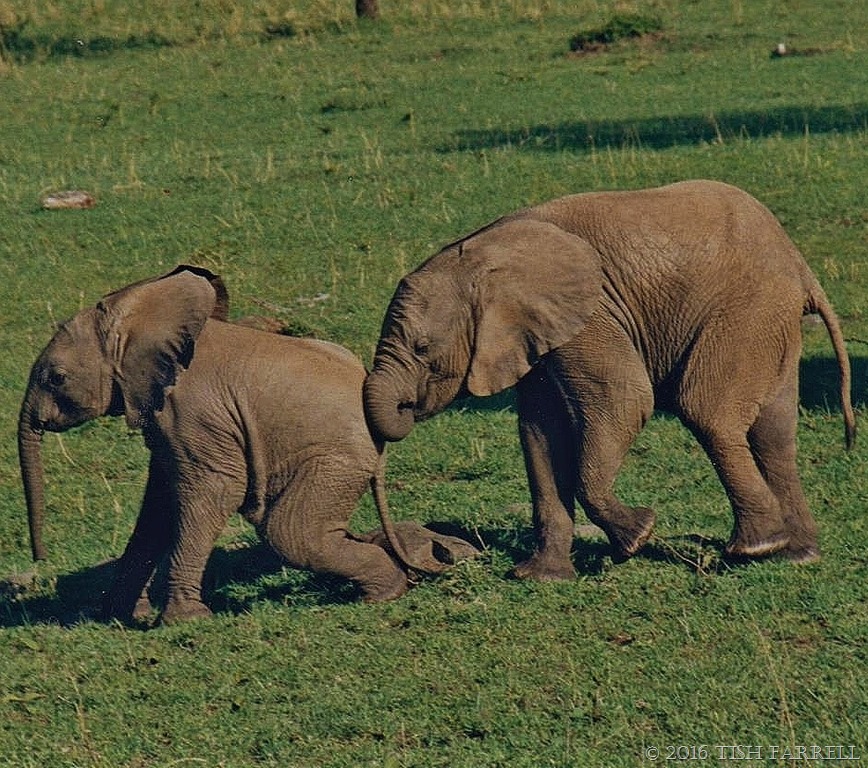
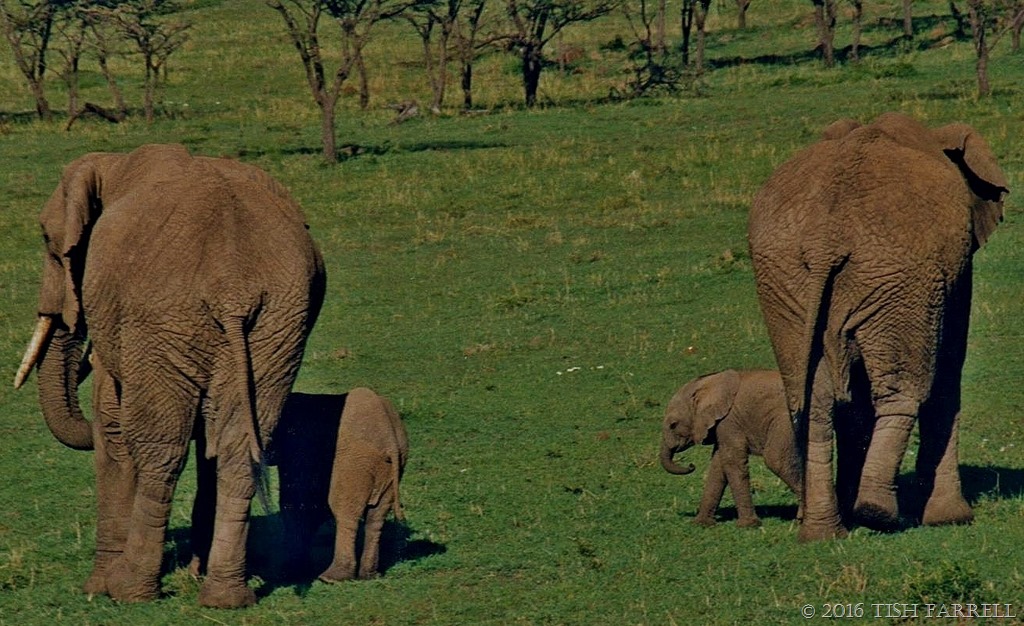
Elephant females and young spend most of their time in small family groups of ten to fifteen related individuals, ruled and guided by a matriarch. She is the equivalent of the institutional memory, and her role is to keep the family safe. These small groups gather into larger herds during the rainy season as they search for fresh vegetation.  Adult elephants consume up to 400 pounds/180 kilos of vegetation a day.  The two youngsters in the picture, however, will still be suckling  – when they’re not busy playing that is.

003 (2)


Partners

Kenya’s Prolific Green Highlands ~ Thursday’s Special

napier grass on the Rift

Prolific

Nothing could have prepared me for my first glimpse of Kenya’s fertile uplands all  those years ago when I ran away to Africa. I’d flown out from Paris on the overnight Air France flight to Nairobi. It was my first long-haul flight, a good eight hours, and I did not sleep a wink despite being served a very delicious small-hours’ supper, and having a whole row of seats to myself.

I was pent up with the prospect of meeting up with Graham, whom I had not seen for some weeks, rather than wondering about my destination. Quite ridiculous I know. I was flying blind, having done not a scrap of  research on Kenya. In fact I had set out armed with only my brother-in-law’s comment: you’ll either love it or hate it; there’s no in between.

And so early one February morning as the great jumbo jet slid down the valleys of Central Province towards Nairobi, I could scarcely believe my eyes. Volcanic hillsides unfolded beneath us – every scrap of earth burgeoning green to their summits, the patchwork plots of Kenya’s smallholder farmers. Before we set down at Jomo Kenyatta International I was already in love. I did not know then that this was the start of an eight year affair with a land that could not be more different from my Shropshire homeland. I am still infected.

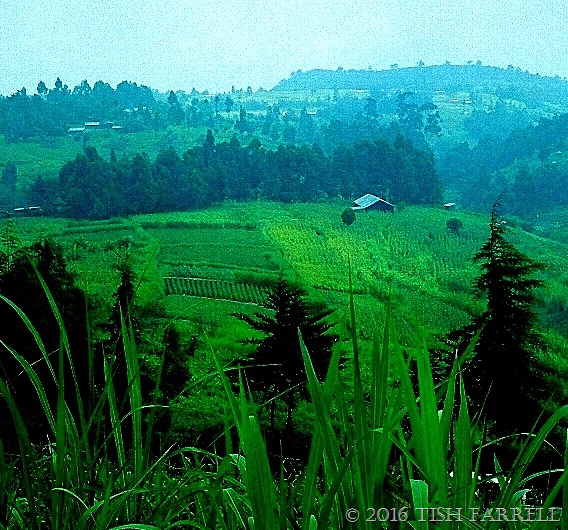
Some years after this arrival, when Graham was combining his project work at Kenya Agriculture Research Institute with some field work for his doctorate, I had the chance to visit many of those highland farms and meet the farmers and see at first hand the kind of crops that they were growing so prolifically – maize, tea, bananas, fodder grass, squash, beans, potatoes, plums, apples, cabbages and kale. This photo was taken on one of these expeditions, and like me it has aged somewhat. But it was the first image I thought of when I read through Paula’s list of word prompts as this week’s Thursday’s Special. Do drop in there to join in the ‘pick a word’ challenge.

For more of my Kenya story see also:

Valentine Day’s Runaway

Looking for smut on Kenya’s Highland Farms

Too Long Out Of Africa

Scan-140726-0020 (2)

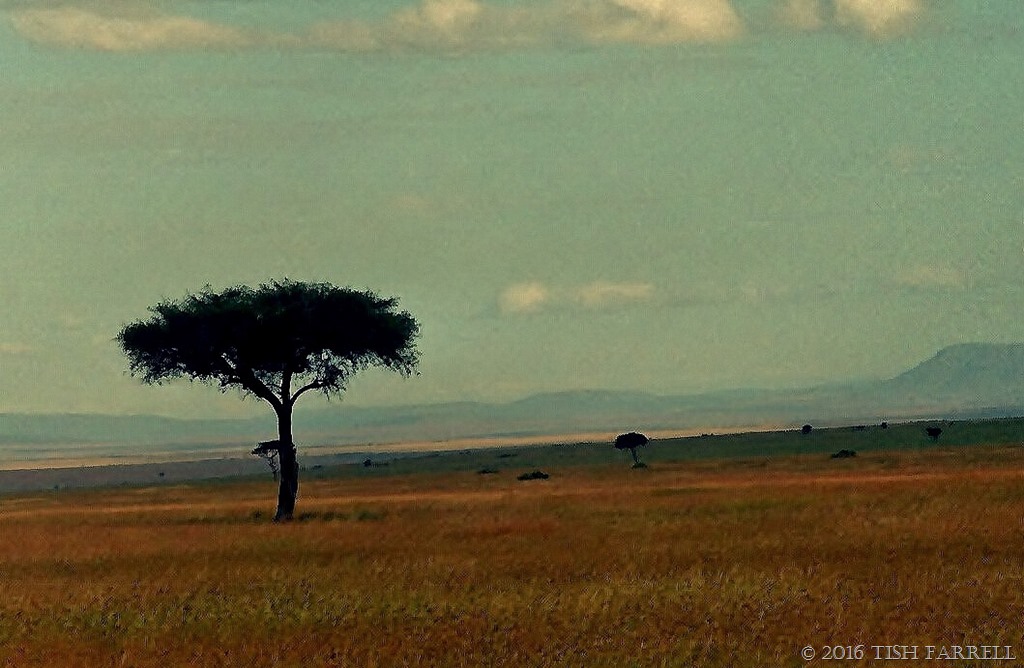
I had been wondering to myself whether I would post some of my Africa pix for the nature photo challenge, and thought I probably wouldn’t. Then the ‘Landscape’ challenge cropped up, and so here  I am, killing two birds with one shot. Or it might be two. Also, for whatever reason that has nothing much to do with me, post editing or anything, this view of the Maasai Mara (edge of the Ololo Escarpment to the right, desert date tree to the left) has acquired the look of a painted landscape. I think it was probably taken at dawn, out on game drive from the Mara River Camp, one of the last places we stayed before ending our eight-year life in Kenya and Zambia.

The desert date (Balanites aegyptica), much like the baobab, is one of Africa’s treasure trees, and has multiple uses. It grows in the driest places across the Sahel and savannah regions of the continent, and fruits in the driest of years. It is thus highly valued by nomadic herders since both fruit and foliage provide useful forage for camels and goats during times of drought.

Also a nourishing and restoring skin oil can be made by milling the fruit, its cosmetic and therapeutic qualities long known of by the Ancient Egyptians. (Samples have apparently been discovered amongst pyramid grave goods). And you can buy it now. Fair trade producers in Senegal, West Africa are producing the oil commercially.

Other traditional uses include making fish poison from the bark, and using the termite resistant wood to fashion farm tools. Better still, an emulsion can be produced from the fruit – harmless to humans and warm-blooded mammals (Trees of Kenya  Tim Noad & Ann Birnie: 27) and used to clean up drinking water supplies. It kills the freshwater snails that carry bilharzia, and the water fleas that carry guinea worm, both causes of distressing and debilitating diseases in many parts of Africa.

The continued existence of this tree is also related to the continued existence of elephants. In the wild they are the main conduits by which seed is processed and made ready to plant. Having passed through the elephant’s digestive tract, it is then conveniently deposited in its own dollop of manure. Another example of how all in the natural world is intimately connected, and we kill off bits of it (stupidly thinking they don’t matter) at our peril.

Scan-140726-0019

Elephants at high noon beside the Mara airstrip. You can see the green tops of desert date trees above a gully in the distant heat haze.

*

Anna at Una Vista di San Fermo invited me to join the 7-day Nature Photo Challenge. This is my Day 4. Please also go and see Laura’s magnificent dragonfly at Eljaygee, and Sue Judd’s elegant study of daffodil decay at WordsVisual, and Gilly’s absolutely mega termite mound at Lucid Gypsy.

Landscape