After The Flood ~ The Primrose Path

IMG_7132

After our sunny blue-sky Monday, Tuesday was back to dank and gloom. Undaunted, though, we decided on another local jaunt, this time to the nearby River Severn and the historic settlement of Jackfield, a couple of miles downstream of Ironbridge. This old industrial enclave was once the centre of the 19th century decorative tile manufacture – two vast factories, Maw & Co and Craven Dunnill that once shipped their products down river and thence around the world to grace the walls of palaces and grand public edifices.

These days the remains of the Craven Dunnill works are given over to the Jackfield Tile Museum, part of the Ironbridge Gorge Museum Trust, while the remnant buildings of Maw & Co house craft workshops and apartments and the very pleasing Tile Press Cafe which was where had lunch – halloumi toasties with lots of salad.

IMG_7135

Part of the former Maw & Co decorative tile factory now used for workshops and small businesses.

*

February had seen some massive flooding along the Severn Gorge, and we were glad to see the river was pretty much back in its bed, though still flowing fast and furious and above usual levels. Turbid was the word that came to mind as I took this muddy shot.

IMG_7121

One of the worst and serial casualties of Severn flooding is the traditional old pub,  The Boat Inn.  It stands in a hollow below the footbridge to Coalport, and its front door records nearly a century of flooding. This year’s deluge was one of the worst, making third place under the 19 feet 5 inches of February 1946, and just above the 1947 flood of 19 feet 1 inch. In fact the 1940s saw 4 really bad floods, with the next worst in 1966, so this extreme excess of water is by no means a new event.

IMG_7125

IMG_7123

*

And here’s what it looked like last month, photo courtesy of The Shropshire Star on-line:

Boat Inn February 2020
It’s hard to contemplate the horror of being on the receiving end of so much water. The inn sits at the lowest point of the settlement and apparently floods from behind as well as to the front. The flood inside then holds the front doors shut against the outside flood! We felt so sorry for the licensees. There was not much sign of life when we walked by. Hopefully it will be back in action soon.

IMG_7128

IMG_7124

The inn sign gives a big clue as to the business of the past. This is one of the big trading barges (Severn trows) that used to ply the River Severn. Until the railway arrived, trows provided ideal means of transport for the Ironbridge Gorge ceramics industries, including porcelain from the Coalport China Works just across the river – much smoother by boat than by 19th century roads.

For some fascinating old photos and more history from Jackfield please visit From Shropshire And My Shins Are Sharp blog.

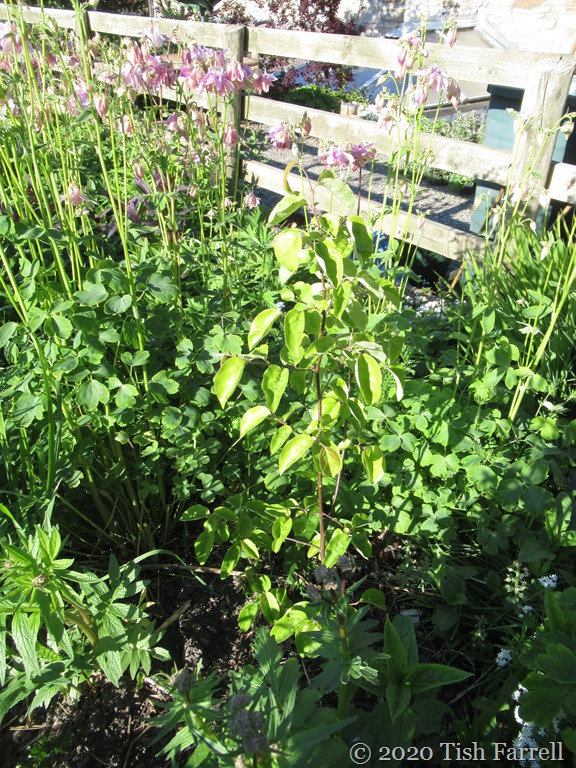
Wandering back to the car past The Boat Inn’s neighbouring cottages we didn’t see much obvious sign of flood damage there, only the clump of celandines and primroses by a cottage gatepost which seemed like a sign of hopefulness and recovery. Here they are again.

IMG_7132

Yesterday Was A Blue Sky Day

IMG_7110

It seems the hyperactive Polar Jet Stream has been responsible for the last few months excessive weather events in the northern hemisphere. This particular ‘river in the sky’ (there are others) apparently rips across the globe between the Arctic and the sub-tropical zone at the height of a trans-Atlantic plane. It can be up to 3 miles thick and between 1,000-3,000 miles long. And at this time of year it travels between 300 and 400 miles per hour. You can find out all about it at The Jet Stream.

Anyway last week the weather person promised us a break from its more obvious machinations, and said we were in for some bright, cold weather starting Monday.

And so it happened. Yesterday we woke to wall to wall blue sky, sunshine, fluffy clouds and coolly crisp air. And no rain! So to boost any signs of flagging spirits and counteract the effluent spewed daily by our mass media we set off for the wide open loveliness of Attingham Park for a big dose of fresh air and some brisk exercise.

IMG_7010

When we arrived there we found several hundred other people had had the same idea.  Hoards of mothers-and-toddlers, multitudes of dog owners with multiple canines, and a whole bunch of ‘at risk’ age-group folks like us. The several car parks were almost full to bursting.

IMG_7111

The National Trust staff, mostly volunteers, were their usual welcoming selves, and soon all the visitors were well dispersed across the parkland. In places around the deer park, where there are several gates to deal with, I noticed that everyone we met was opening them with their elbows and in like manner holding them open for others. At which point I decided it truly was impossible to get a complete grip on how one should react to this current Covid-19 drama.

IMG_7105

As I’m writing this I can hear the rumble of the farmer’s tractor in the field behind the house, monster arms of the spraying gear outstretched, giving the emerging crop a food boost. At the front of the house the traffic is still dashing by to Telford. Earlier I spotted Mr and Mrs vicar passing by on their daily dog walk. They stopped to chat with other walkers. The postman delivered the post.  People (some exceedingly aged since that’s a significant feature of Wenlock’s demographic) have been walking by into town to do their shopping…

IMG_7001

So yes. I was glad we went out yesterday. There was still quite a lot of flood water standing in the park, but the hawthorns and willows were bursting green. The daffodils were out. I found a crop of violets complete with butterfly. We saw a pair of ravens, making their cronk-cronking calls and doing a spot of aerial somersaulting. Jackdaws were cavorting; blue tits twittering, and the fallow deer looking frisky. And then of course we also saw the 650-year-old Repton Oak (see previous post). So much to be pleased about. Lots to be thankful for and wonder at.

IMG_7045

copyright 2020 Tish Farrell

#EarthMagic

Still Going At 650 Years Old

IMG_7088

Today we paid our respects to this very elderly oak tree. It has been growing in Attingham Park in Shropshire since the 1370 where it is now under the care of the National Trust and fondly known as the Repton Oak since it was already a veteran in 1797 when garden designer, Humphrey Repton landscaped the parkland for the Barons Berwick.

But just think of the span of human history it has lived through. When it popped shoot and radicle from its acorn Edward III was still on the throne, and the Hundred Years War between England and France was only half done. By the time it had grown to a sturdy sapling Geoffrey Chaucer was thinking of writing The Canterbury Tales and the peasants were in revolt against the draconian levels of taxation (raised to fight the war that did not end until 1453 and was actually the 116 years war).

The oak tree is still a great presence in the landscape though sadly its innards are decaying. But this is not all bad news since it provides an important haven for the rare Lesser Stag Beetle whose larvae feed on the rotting wood at the centre of such ancient trees.

A national treasure of a tree then: arboreal emblem of stalwart resilience. We must remember to pay another visit when it’s in leaf.

IMG_7084


#EarthMagic

Organized Chaos In Rookery Wood

IMG_0632

As with cloud-watching over Wenlock Edge, so with keeping an eye on things at the rookery behind the house. It’s endlessly fascinating: a visual meditation if you like. One thing that happens after the rooks return each twilight after the day’s foraging in the fields, is that there’s a general settling in the treetops. The roost is also shared with a large number of jackdaws. For a time after the general homecoming all seems peaceful, just some low-level muttering between fellows.

And then for no obvious reason (at least not to me) there’s a mass explosion from the wood, followed by a great whirling and swirling, which then may, as spring approaches, evolve into a full-on balletic extravaganza.

IMG_0630

Cohorts of rooks and jackdaws divide and swoop, re-gather, execute a Mexican wave, divide and swoop on and on. The show may last for several minutes. If you happen to be walking over the field when it happens, as I was last night returning from the allotment, it can be almost elevating; the sense of avian energy lifting your heels from the earth. Wheeee-eeeesh!  Let me join in.

P1050780

*

But then, just as suddenly, it all stops. The birds alight in the wood, and all is quietness again. Perhaps it never happened.

IMG_0658

*

IMG_0676

A small helping of earth magic for challenging times.


Lens-Artists: Chaos

Daffodils!

IMG_6963

Today I’m thinking we need to find joy in the small things around us. So here are some of my garden daffodils, still spritely despite onslaughts of wind and downpours.

It’s all too easy to be laid low by the news headlines. The mass media is having an field-day of fear-mongering and finger-pointing. They should be ashamed of themselves. Fear disempowers. It is highly contagious. It makes situations many times worse than need be. Vigilance and common sense are our best protection AND sources of straight forward information. The World Health Organization provides daily worldwide updates along with full details of Coronavirus as they are learned.

Spirits up, everyone!

Reflections From The Edge

P1060987

Twilight over Wenlock Edge and in my office roof-light; captured by opening the window to the horizontal and placing my little digital camera on the back of the frame. Click and there you have it – the Edge between two sky-worlds; cat’s-eye watchers looking on?


Lens-Artists: Reflections Thanks to Miriam at The Showers of Blessings for this week’s theme.


Windmill Hill From Many Angles

P1050007 resized

‘A good photograph is knowing where to stand ‘   Ansel Adams

This week Patti at Lens-Artists wants us to think about changing our perspective as we compose our shots. She prefaces her post with this very helpful quote from the great Ansel Adams. It’s certainly a tip worth chalking up in VERY BIG letters on the memory blackboard.

Of course there can be other options –  lying down for instance, which is what I was doing to take the header photo. Then there’s the matter of choosing the time of day, which will then affect where you stand (or lie). Different seasons may well provide new angles. And also the setting of your chosen subject. So with these notions in mind I thought I’d post a gathering of my Windmill Hill photos, taken over the last few years.

Of itself, the windmill is a rather underwhelming subject, and I have ended up taking masses of very flat looking photos. I have discovered that it helps to get beneath it somewhat, whether lying down or finding a good spot further down the hill. I’ve also found that late afternoon light can produce a bit more interest – even mystery. This next photo is my Wenlock version of Daphne Du Maurier’s thriller tale Don’t Look Now. Who is that swiftly retreating little figure in the gloaming?

P1030046resized

*

Here’s one of the more ‘obvious’ shots. The cloudscape and perhaps also the sun/shadow on the stonework add the main interest:

P1040246

Another thought is that even when you’ve fixed on a particular subject, it’s always good to scout around it, to see what else might catch your eye/have some bearing on the composition. E.g. one of the important things about Windmill Hill, besides the windmill, is the fact its hill is an ancient limestone meadow – a rare escapee from the effects of industrial agriculture. So come early summer I’m often lying down, in the next photo among the pyramid orchids, soapwort, white clover and yellow ladies bedstraw. There’s an added benefit too – the close quarters inhalation of bedstraw fragrance. Aaaah! No wonder it was used in mattresses for women brought to bed during childbirth.

IMG_2154

IMG_2167

*

And in late summer my eye is on the knapweed and the great array seeding grasses:

IMG_2113

P1010975

Midsummer sundown

*

And then there are the autumn shots. A few years ago a bunch of small horses used to be brought in at summer’s end to graze the meadow. Then sadly their owner could no longer keep them and they had to be sold. For the past two years the Windmill Trust has had the hill mown and harrowed instead. This new approach has created a massive increase in orchids:

P1010942

P1010943

100_7835

100_7821

*

Winter:

P1040237

P1030665

P1040019

*

And then there are the views from Windmill Hill:

P1000684resizede

P1020259

Bunking off games? The William Brookes School is at the foot of the hill.

*

Windmill Hill can be a very sociable place. It’s a favourite spot for Wenlock’s dog walkers. There are other gatherings too: windmill open days, summer orchid counting; and in the next photo we are gathered during a solar eclipse when the world turned very still and cold and ethereal:

P1000747

P1000782

Last but not least, here are some long-distance views from Townsend Meadow behind our house. The final photo also shows the oil seed rape in full bloom and a corner of the William Brookes School:

100_6749

P1050568

Lens-Artists: Change Your Perspective


This slideshow requires JavaScript.

Background Patterns ~ Lily Between Leaves

P1080229

Month by month Jude at Travel Words is challenging us to join her in a mission to improve her and our photography. February’s topic has been about ‘patterns’, and the final assignment (I’m on the last lap here) has been to use pattern as a background for a more substantial subject. She says it isn’t easy, and she’s right! Anyway, here’s my best shot at it, though I’m thinking my background is too much in my foreground. Further pondering required.

Background Patterns

The Changing Seasons: February

IMG_6748

There’s been little chance to take photos this month. We have had altogether too much bad weather: two storms and one on the way; rain that has been raining since the end of September; wind, sleet and hail; and for poor people who live near the River Severn, horrendous floods. Nearby Ironbridge has been deluged, the water breaching the flood barriers. Our county town, Shrewsbury, has been returned to the bad old winter flood days of the 1960s, this despite its modern flood defences. (You can go here to see the BBC coverage.)  In Much Wenlock ten homes on the High Street were treated to a slurry of liquid mud and gravel courtesy of run-off from surrounding hillsides delivered by road into their living rooms and parked cars.

There is much that could have been done since our region’s last big floods in 2007-8. No one seems to drain fields properly, or maintain lane and roadside ditches as they did in my childhood, interventions that would at least help to slow the flow. In fact our verge-side ditches seem to have mostly disappeared, presumably filled in and sacrificed to road widening. And so in times of heavy rains when highway drains may become quickly blocked, our roads serve as highly efficient flash flood delivery systems.

We need to start thinking about better water catchment management, and especially on our denuded uplands where our rivers rise.

Australian farmer initiatives show how all our water catchment areas could be managed better with the addition of ‘leaky weirs’ set at intervals down water courses: rocks, tree trunks judiciously placed to create a series of delta effects. No need for hugely expensive hi-techery. Such simple methods not only hold back flood water and sediment, but hydrate surrounding land and foster regrowth of bank-side vegetation that in turn restores biodiversity, providing resilience too in times of drought. AND, most importantly of all, reducing soil erosion.

BECAUSE apart from the absolute misery caused by flooded homes, the impact on life, health and livelihoods, the biggest long-term loss to us ALL, is the fertile soil that floods carry away. Once it is gone, it is gone. Many of our soils are already mineral depleted. This will ultimately have an impact on the quality of food produced and on human health. The way we treat the land, always clearing, forever taking out with an eye to greater efficiency and higher productivity, but without ever replenishing adn rebuilding, is a good way to degrade local and regional weather systems.  In fact creating land resilience and restoring the natural environment are probably the most useful things we could be doing now this minute to mitigate future extreme weather events.

And before too much blame is laid at farmers’ doors for industrial farming practices, the UK and Australia, it seems, have various laws that forbid landowner interference with water courses on their land. They must seek official approval to do anything that impacts on water flow. In the UK, riparian owners have some very serious responsibilities which include ensuring the clear movement of water through their properties.

Here’s an interesting video showing how leaky weirs work, and showcasing the pioneering efforts of farmers and the Mulloon Institute in New South Wales:

*

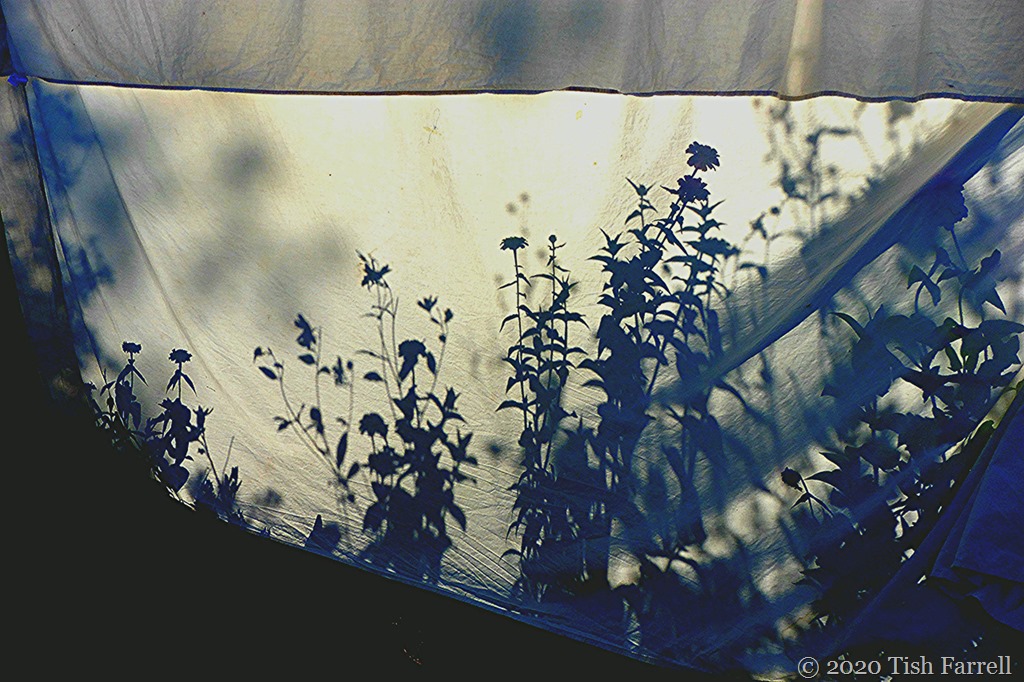
And back on the home front and to fend off sensations of all round rising damp, here’s a photo of my drying washing, taken on the one day this month when it was worth hanging it out in the garden. Nothing like filling one’s sheets with wind and sunshine; always makes for the best sort of sleep, I always think.

IMG_6811


The Changing Seasons: February 2020

Sue has a very lovely gallery of photos this month. Please go and see.