Bright Moth

IMG_3103

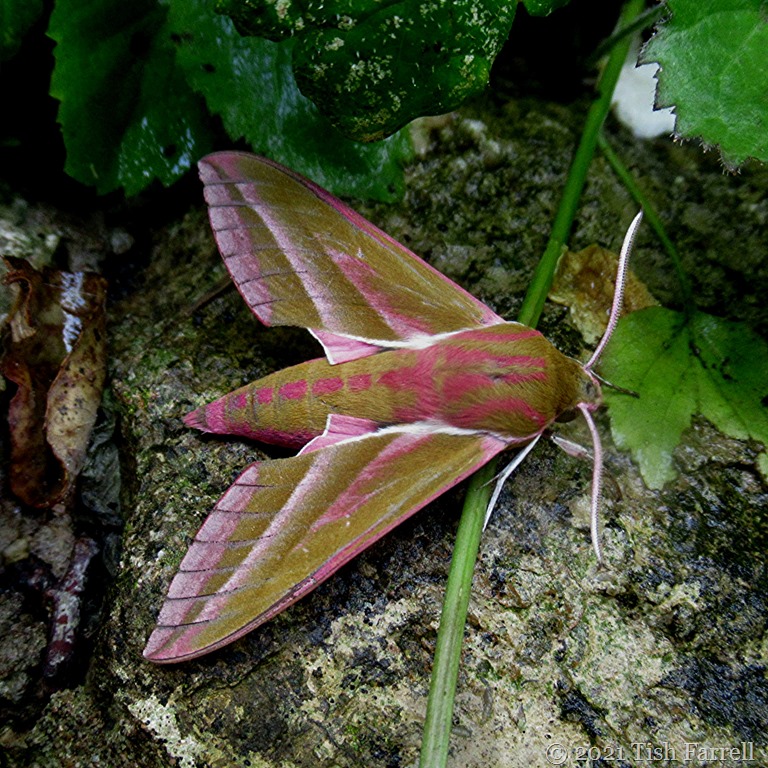
I thought my photo of an Elephant hawk-moth, Deilephila elpenor, deserved another viewing, being both unusually pink (as for Jude’s Life in Colour this week) and bright lipstick pink and so good for a Becky-bright-square. The moth itself  was a surprise arrival on the garden wall a couple of summers ago. In fact I think it was asleep when I found it. In real life it was about 6 centimetres across (2 and a half inches); a big moth, in other words. And in its caterpillar form it is even bigger, though at that stage it is mostly a dull sludgy colour with pink eye spots and a strange little horn on its tail end.

Hawk moths are nectar feeders and come equipped with especially long tongues to probe their favourite flowers. They are also speedy, precision fliers, so the colour scheme, gaudy when stationary,  blends well among drifts of rose-pink rosebay willow herb where, in high summer, they best like to feed. The caterpillar, on the other hand, has very different eating habits. If they find themselves in a domestic garden they will eat fuchsias. The best response is to pop them in a container and find them a wild patch of rosebay willow herb, Himalayan balsam or bedstraw.

Bright Square #19

Life in Colour: pink

What A Bright Sight!

IMG_2979

*

Ladybird, ladybird fly away home,
Your house is on fire and your children are gone,
All except one, and her name is Ann,
And she hid under the baking pan.


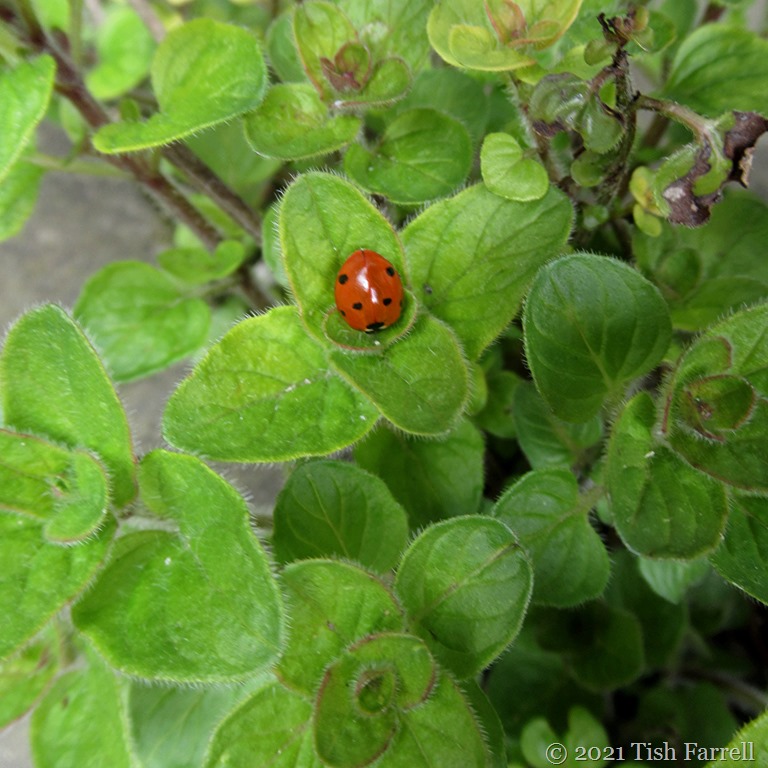
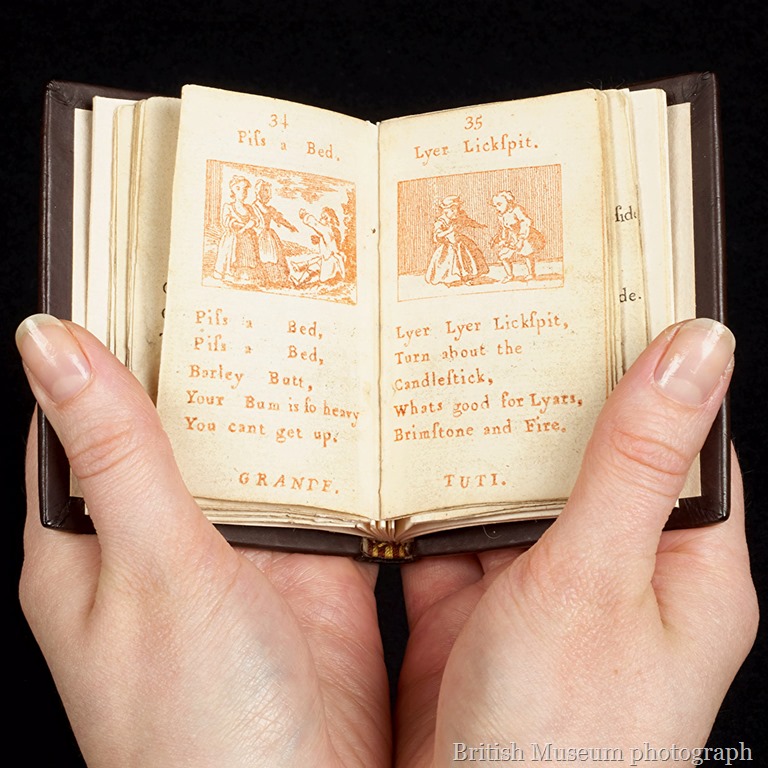
The rhyme comes from Tommy Thumb’s Pretty Song Book, published in London in 1744. Just like the ladybird, spotted this week inside a whorl of freshly sprouting oregano, the book is very tiny. Here are some images from the British Museum which owns one of two surviving copies. You can see more images and find out more about the little book of rhymes that some us once knew (well perhaps not all of them) HERE.

Tommy-Thumbs-Pretty-Song-c_59_a_20_hand_8

Tommy-Thumbs-Pretty-Song-c_59_a_20_005

Bright Square #17

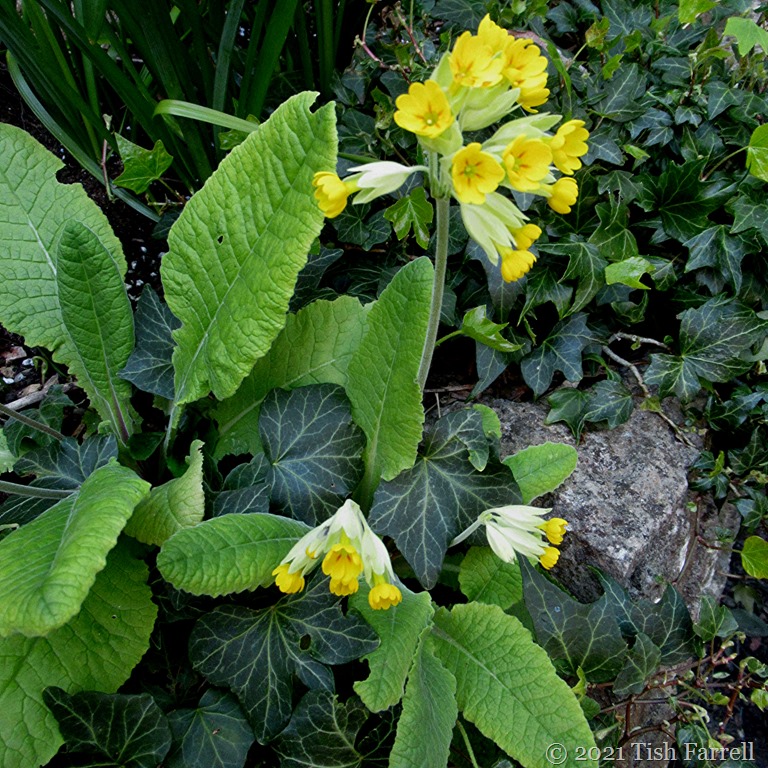
“In a cowslip’s bell I lie…”

IMG_3000

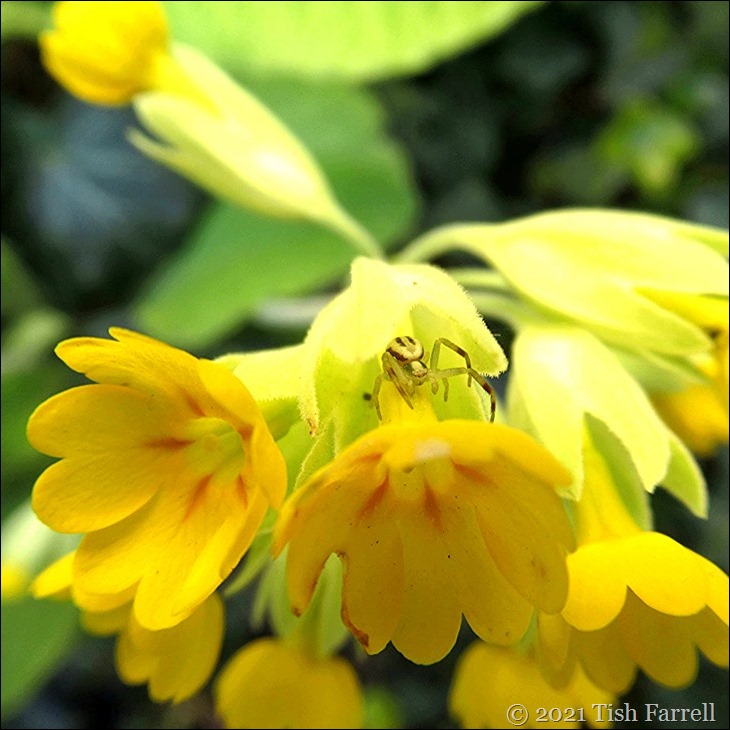
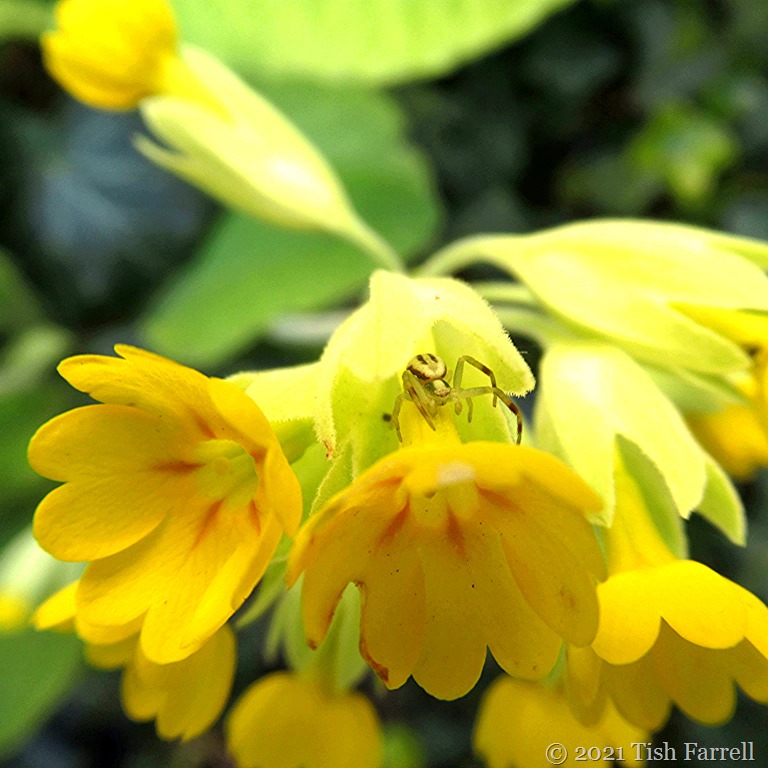
This tiny crab spider has been zoomed to giant size in the photo. I guess, in real time, it was about 3 millimetres across, less than a quarter of an inch. And still it waved its little front legs at me (most crab-like in posture) when I tried to take its portrait. Next it went into hiding under the flower, and when I pursued it down the stem it flung itself at me and then disappeared into the flower bed. It was most unnerving to find oneself having ‘a relationship’ (albeit a fractious one) with such a teeny-weeny little arachnid; the suggestion of ‘intelligence’ even.

IMG_3002

*

As you can see in the next photo, the flowers of this cultivated cowslip are anyway quite small. Feisty little critter, the crab spider.

IMG_3004

The quotation comes from Shakespeare’s play The Tempest, Aerial’s song, a jolly little air:

Where the bee sucks, there suck I,
In a cowslip’s bell I lie;
There I couch when owls do cry;
On the bat’s back I do fly
After summer merrily.
Merrily, merrily shall I live now
Under the blossom that hangs on the bough.

Bright Square #16

April evening bright, cold and clear

IMG_2944

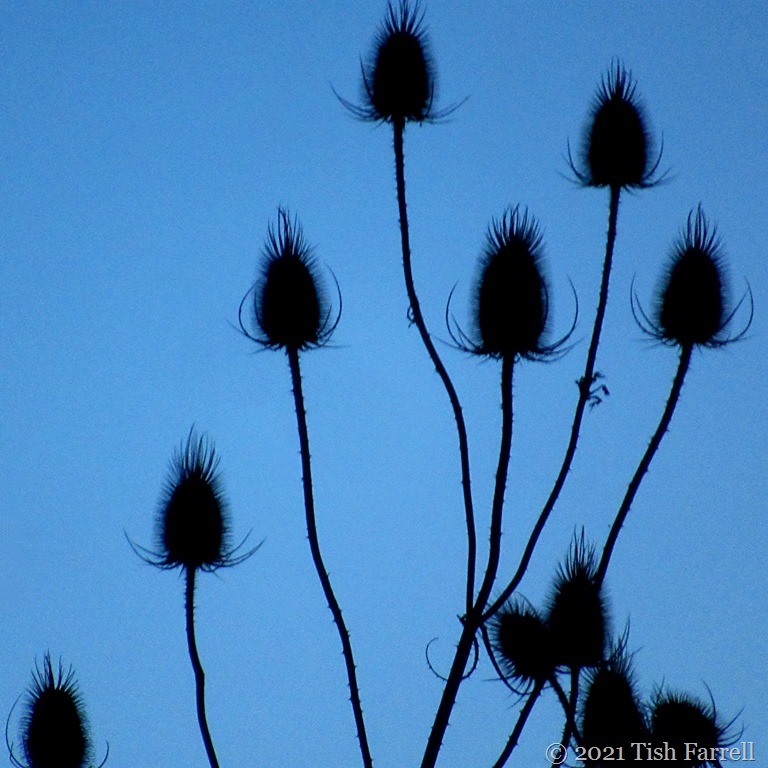
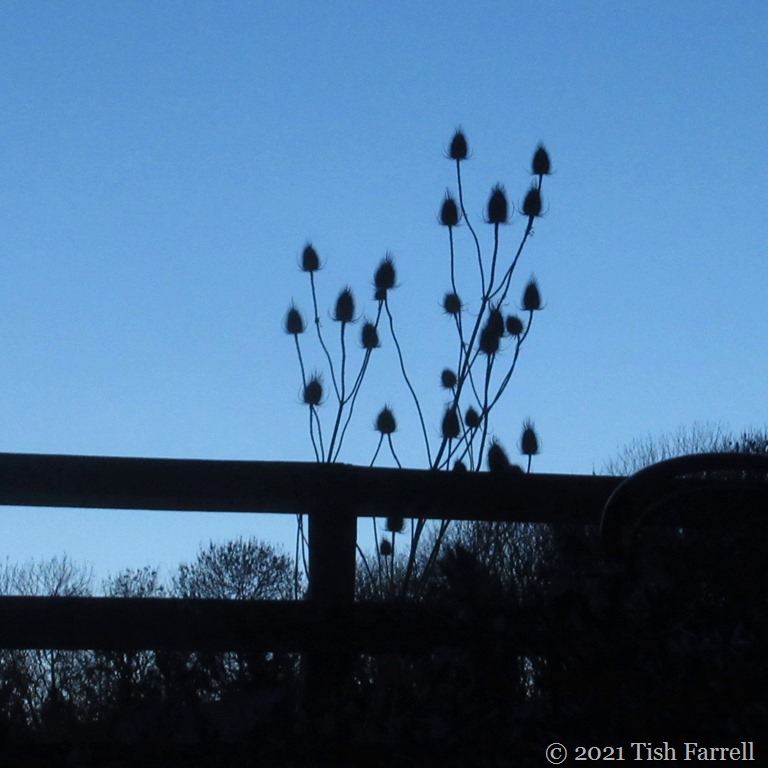
Gosh, but the April air is chilly here in Wenlock, even when the sun shines and distracts us. I gather it’s all the fault of the North Atlantic Oscillation which has dropped into negative zones and is drawing cold air from an unusually frigid Arctic. The weather people say there’s more cold air to come so it looks like spring, here in the northern hemisphere, might be late this year.

I took these photos from the kitchen door the other evening. As ever, the teasels up in the guerrilla garden continue to catch my eye, and I’m putting off cutting them down. At this time of year the garden-over-the-fence does not look promising. Very flat and wintered. But then it’s also just the moment to discourage some of the more tenacious weeds which are popping up there – couch grass and ground elder in particular. Except now the allotment plot is calling and that’s where all my effort is being deployed. So many compost heaps to turn over, and bins to turn out in hopes finding enough of something useful to spread on the raised beds.

Climbing peas and broad beans have been started off in pots, the onions and the first early Swift potatoes are in the ground, and it’s time to start clearing the polytunnel of winter greens to make space for the tomato and cucumber plants which are presently in the conservatory at home, along with trays of cabbage and cauli and perennial flower seedlings. They will all need hardening off, but not yet.

And there we have a problem. He-who-binds-books-in-winter-and-lives-in-my-house is now set on the outdoor pursuit of dismantling said conservatory (which though presently useful to this gardener, we both agree is hateful) and erecting in its place against our other back door, a lean-to greenhouse whose parts are presently lying in boxes in our sitting room.

It’s one of those projects that will be wonderful when done, but the getting there is fraught with many acts of plant juggling, issues of meteorological conflict and potential domestic unrest between gardener and demolition man. Prickly times ahead. I will  keep you informed.

IMG_2950

Bright Square #15

Jackdaw Jack With An Eye For The Bright

IMG_2697sq

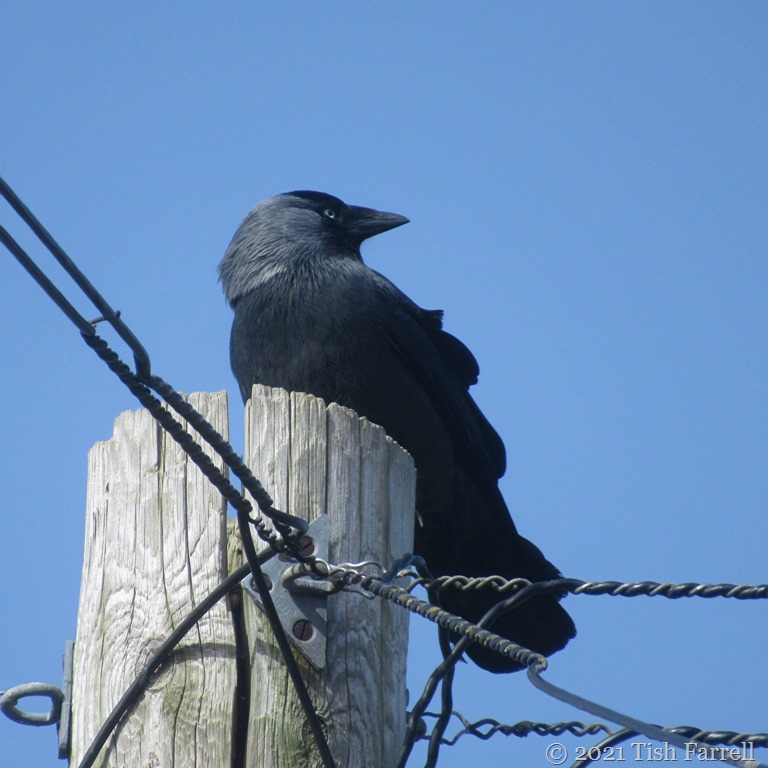
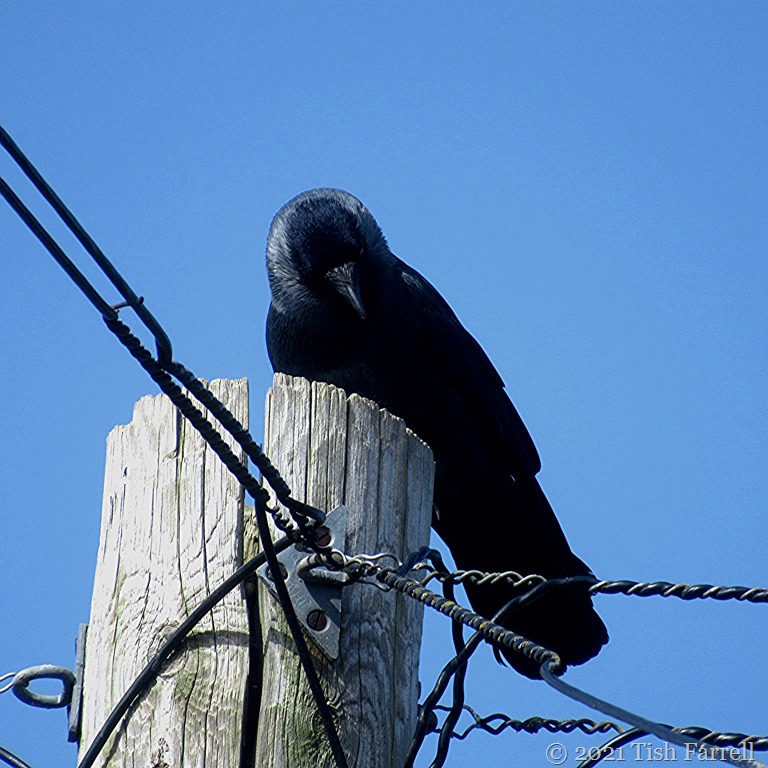
The telegraph pole over our garden wall provides a handy look-out for jackdaw-kind. These, the smallest of Britain’s crow family, are renowned, like magpies, for their thieving ways and proclivities for bling. But they are companionable birds. They mate for life, and form large flocks. They also gather with rooks and starlings, joining in their aerial sundowner displays.

The common name derives from their call: tchak-tchak, but they have many other apt descriptors including ‘chimney-sweep bird’. Anyone who has ever had to remove a jackdaws’ nest in their chimney will never forget the astounding deluge of soot and sticks and bird detritus. So if you have an unguarded chimney be warned. They do like the pots to nest in; also holes in trees and nooks in castle ruins.

I’m wondering what this one is thinking about. It looks like a bird with a plan.

IMG_2698sq

Bird Weekly #42  Lisa at Our Eyes Open wants to see what we’ve seen bird-wise in the past fortnight

Bright Square #13

This is not an osprey…

IMG_2543

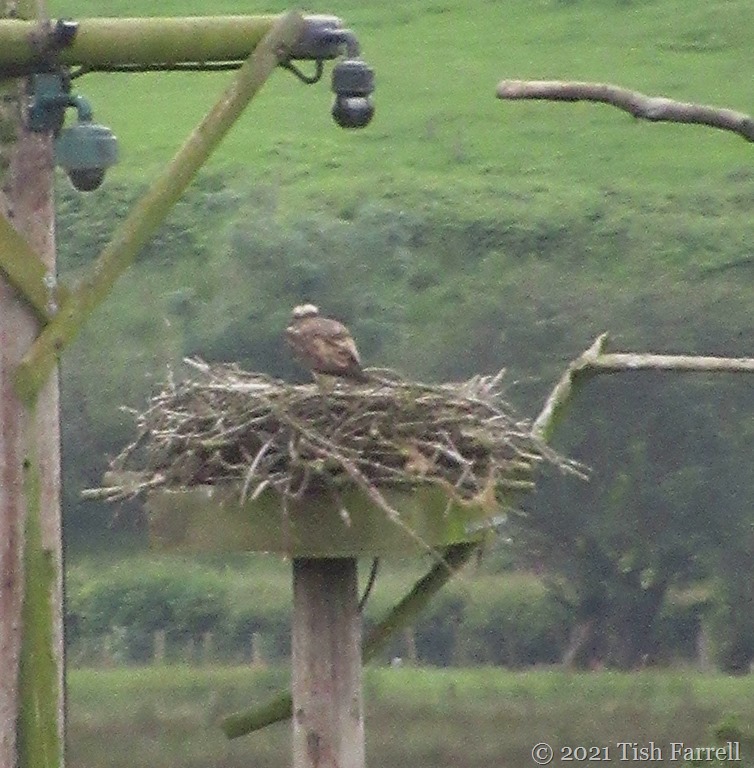
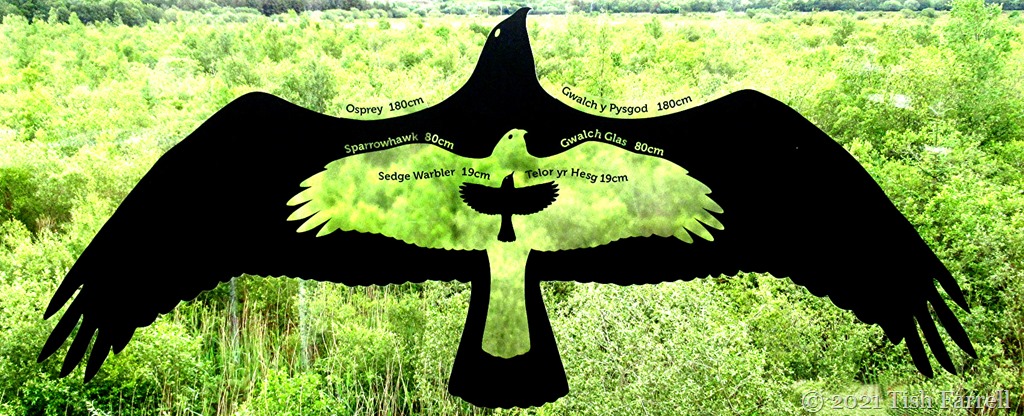
…it’s a reed bunting, but it’s the only good bird photo I managed to take when we visited the marvellous Dyfy Osprey Centre  a summer or so ago. The osprey nest was too far away for my little zoom lens to cope with and the light was poor.

IMG_2554

IMG_2561

But the good news is the ospreys are back to breed in the Dyfy estuary, and an egg is expected any day now. Since last year the project has upped its game on the live streaming and camera quality. You can tune in here and check on progress:

Dyfi Osprey Project: 2021 Live Stream – YouTube

Bright Square #11

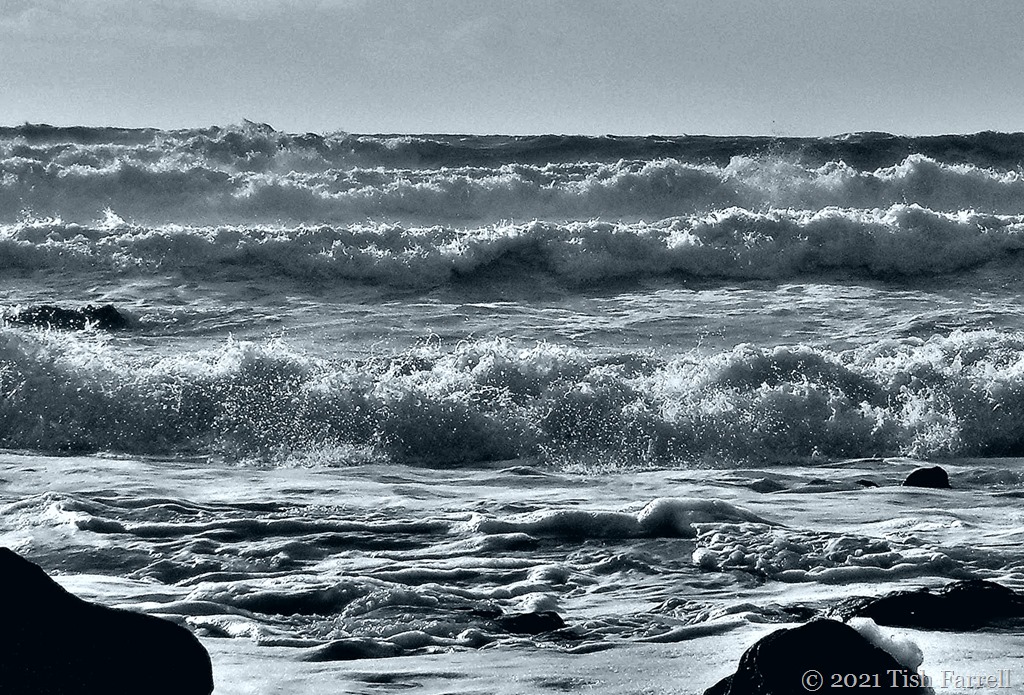
Bright Water, Wild Breakers

sea 8

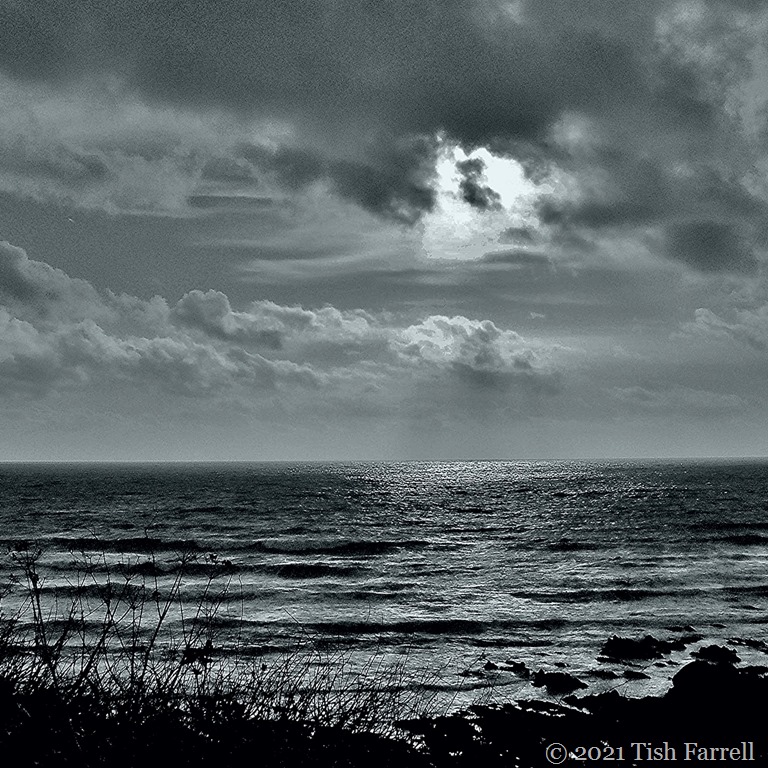
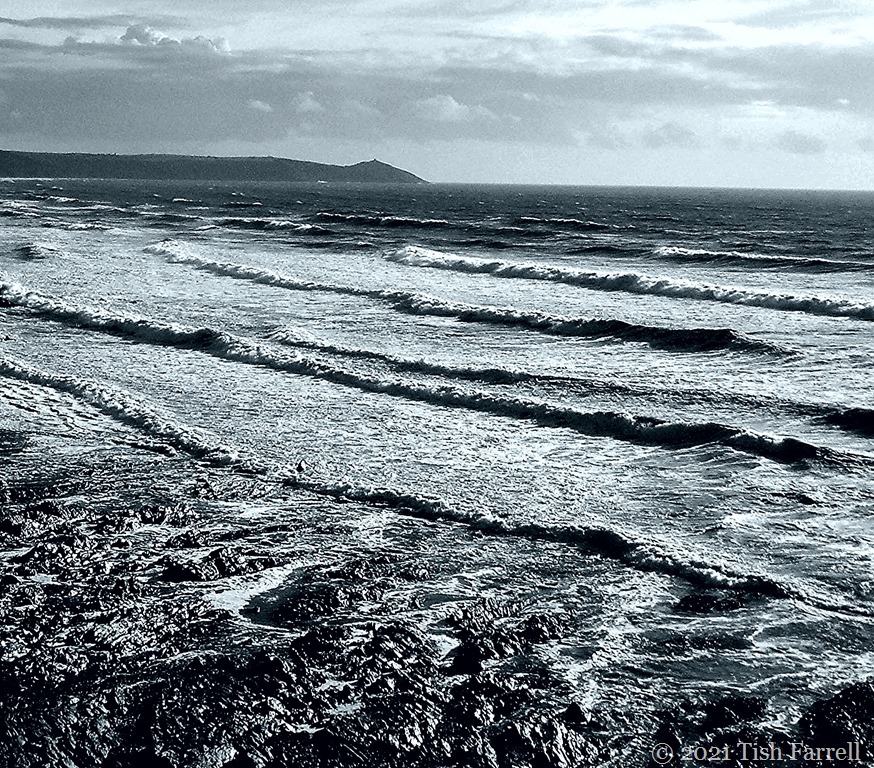
The coast in winter is a special place. When we came to Port Wrinkle beach on a late December morning we found the seascape lived up to its name. From the clifftop at least the incoming tide looked scenically ‘wrinkled’.

sea 9

But down on the shore it was another story. Those ‘wrinkles’ reared and unravelled with such force they left you breathless. This was Cornwall where for centuries past communities had depended on the sea, and not only for fish, but for smuggling and the harvesting of washed up cargos from wrecked ships. Soon you were wondering how it would be if life and livelihood meant the daily taking on of such seas. Would you have the heart for it?

You know you wouldn’t. But never mind. We were only there to look. And spectators can afford to be thrilled. And so thrilled we were. Bring on the white horses!

sea 4

sea 3

copyright 2021 Tish Farrell

Cee’s Black & White Photo Challenge: words beginning with B and W

Bright Square #9