Last Posting For Lens Artists: The Dew Pond Walk

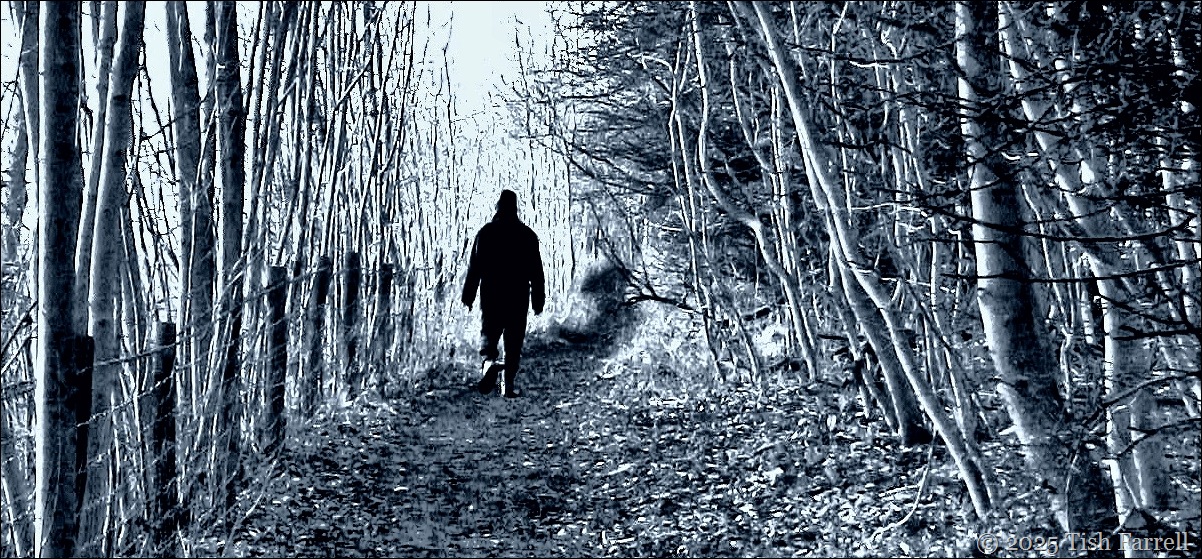
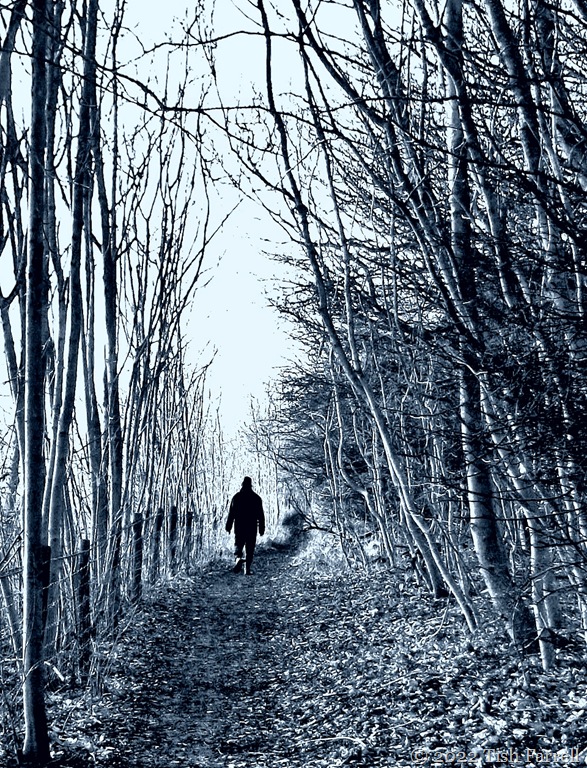
Hollow Way 4

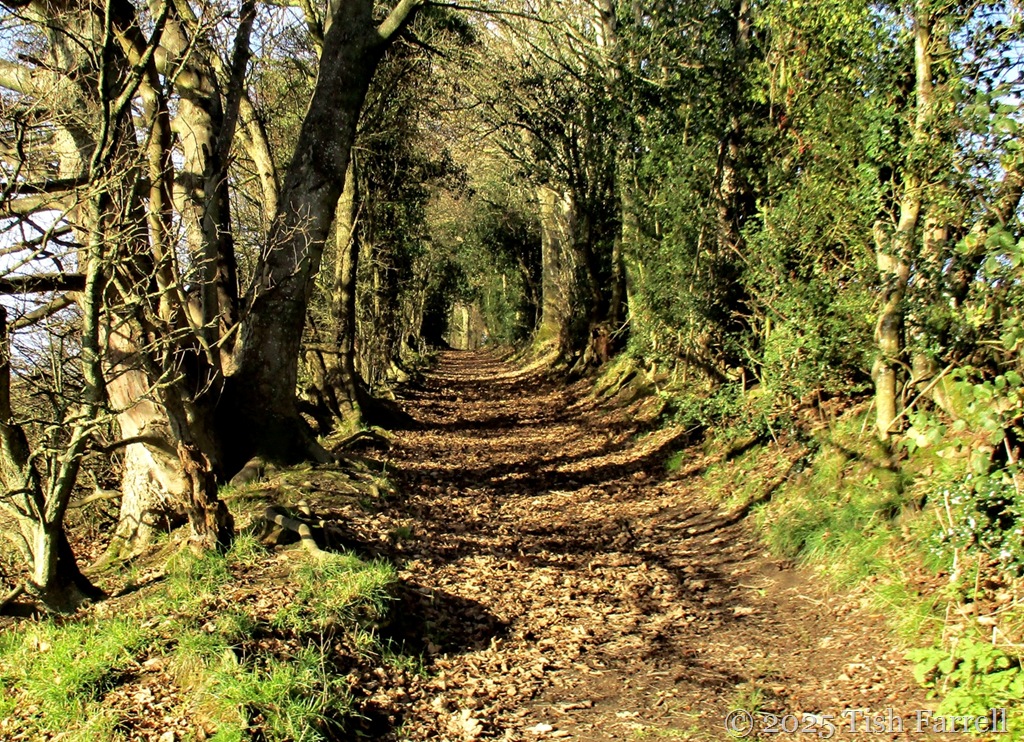
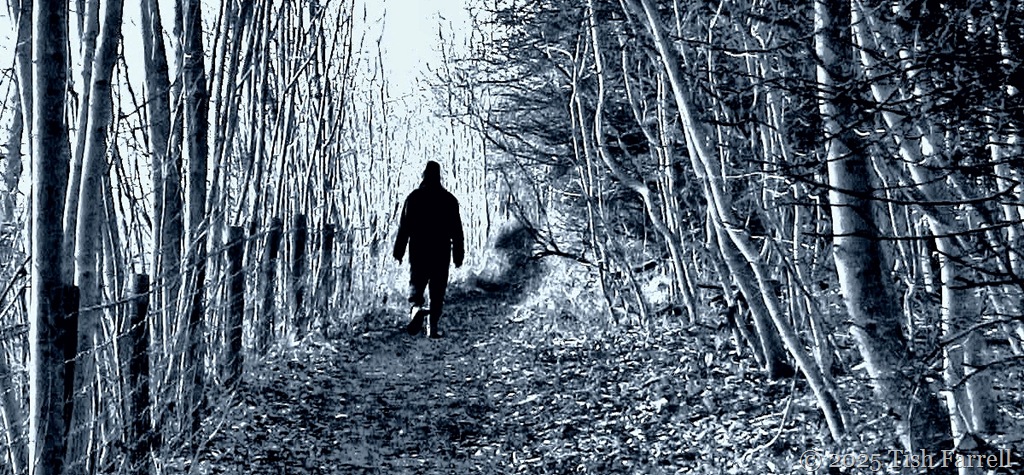
Green lane, hollow way, sunken road: there’s a hint of mystery in these byways, not only in the names, but in the sense of times past, centuries of footfall embedded in the earth between ancient hedges; the passing of cottage folk, farmers, drovers with their herds and flocks; times when most people only had their feet to rely on if they needed to go anywhere.

This particular green lane is one of my favourite spots in Bishop’s Castle. The following photos are ones I forgot to post, taken on a late November walk. It was a brilliant day too, following a brief snow fall and several days of hard frost.

The frozen grass and leaves were crunchy under foot, gripping boots and making the walking easy as we climbed up Wintles Hill. We were heading to the dew ponds.

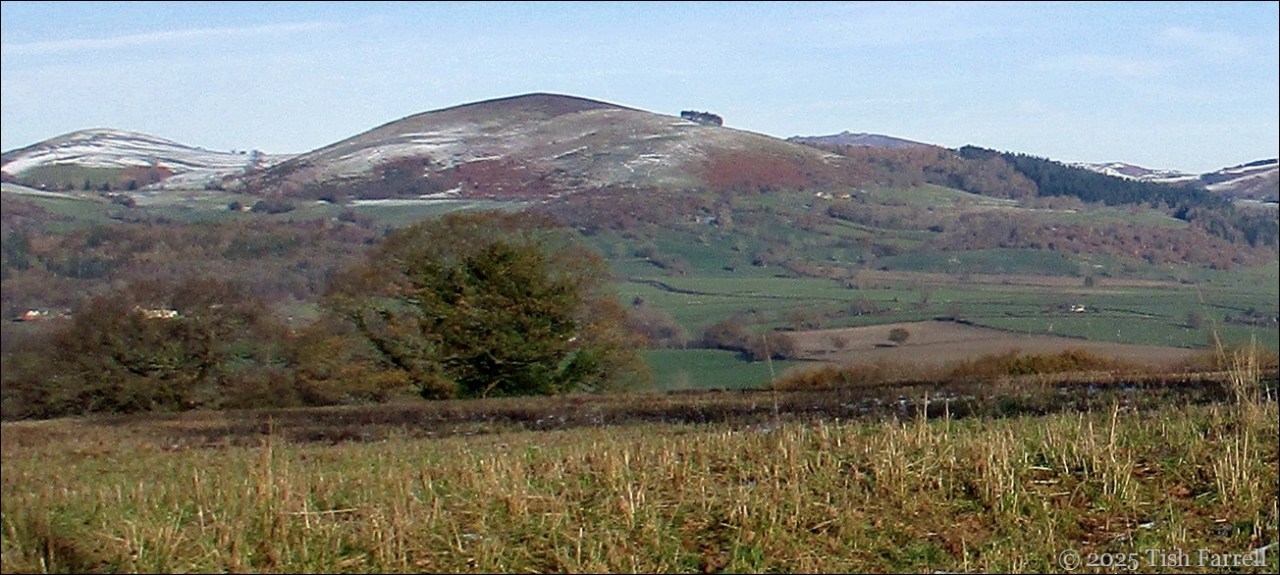
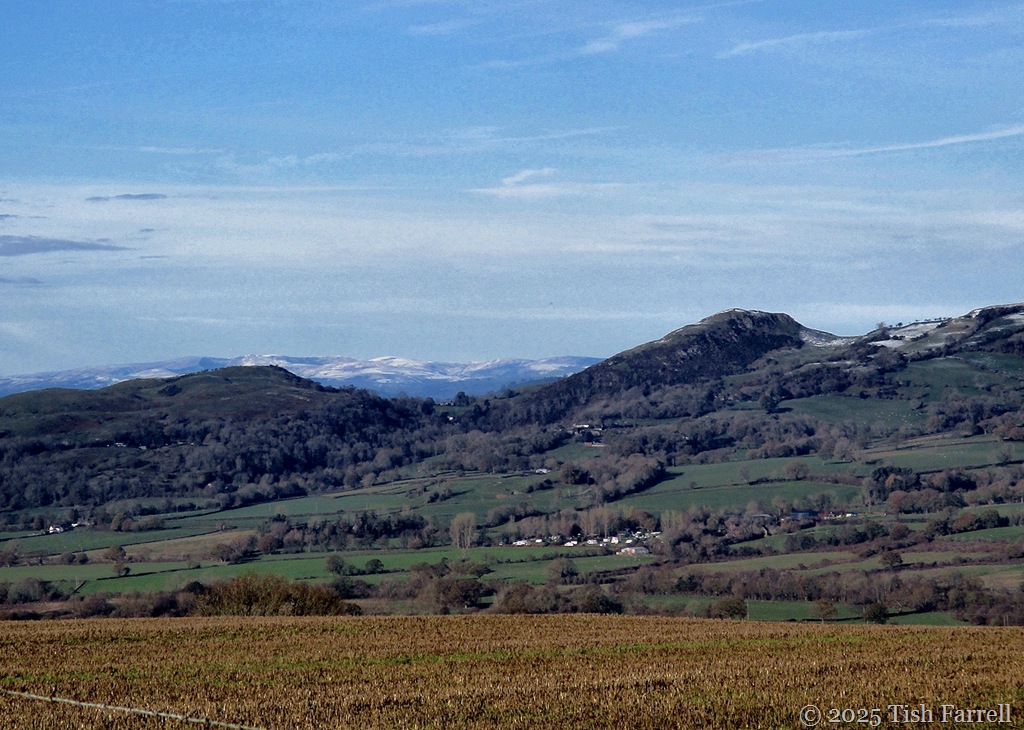
There are essential landmarks en route of course: a hoar-frosty Long Mynd…

Longmynd

*

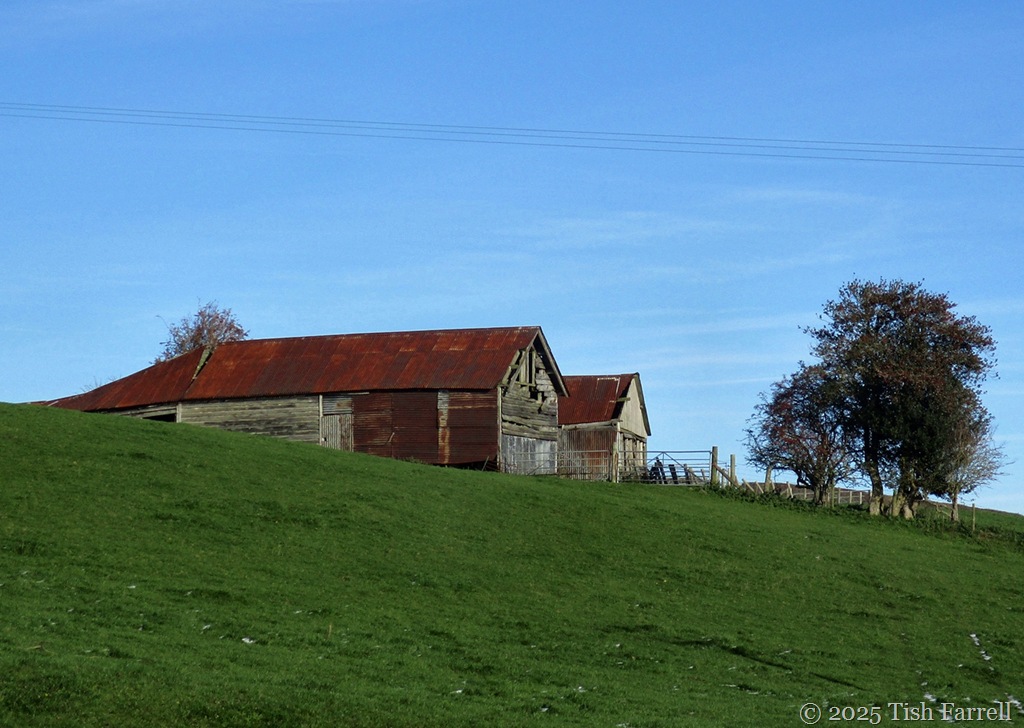
The barns with their rusty roofs that always insist on having their photo taken…

barns

*

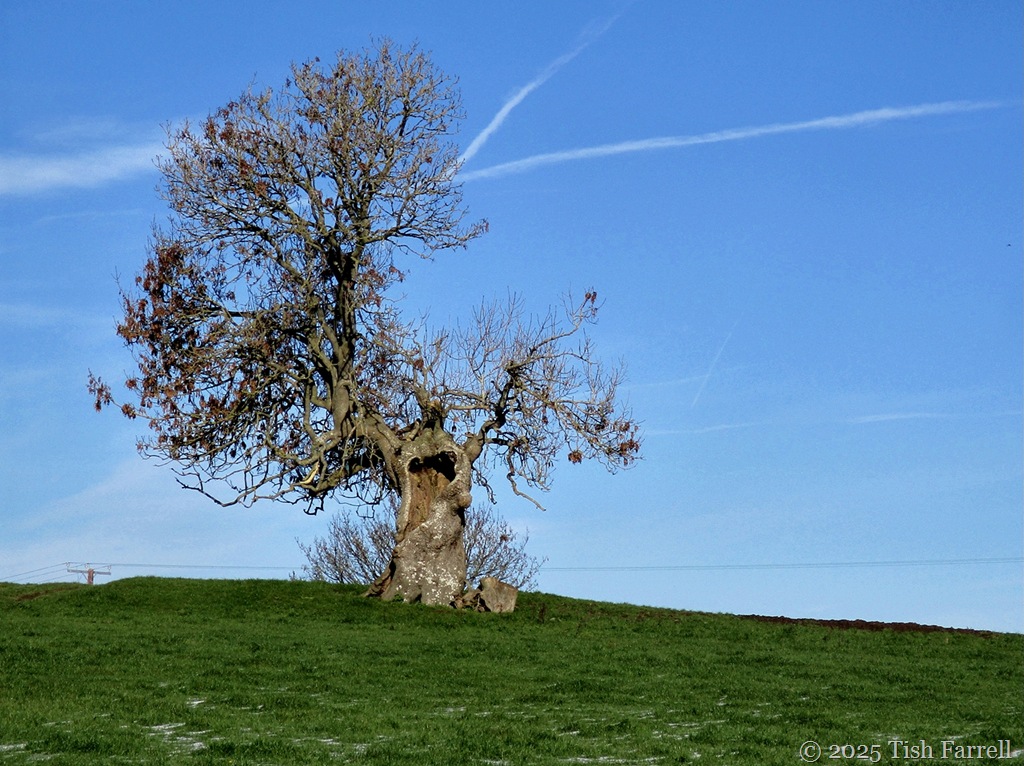
The skyline ash tree that looks like an arboreal version of Munch’s ‘The Scream’…

Wintles hill ash

*

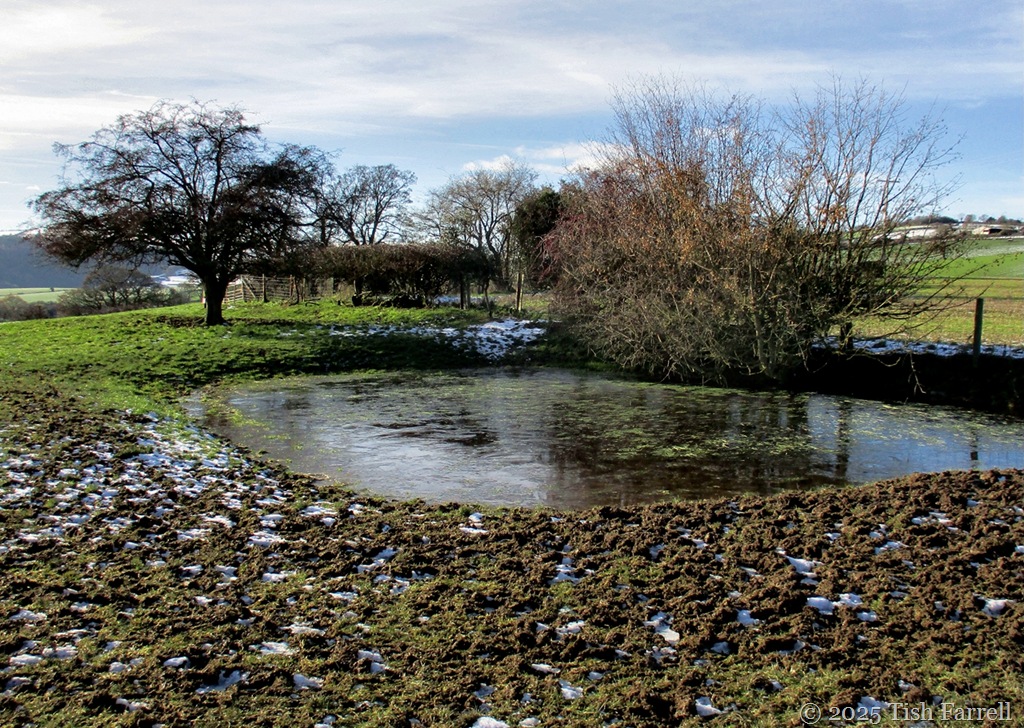
As for the dew ponds, there are three on the hilltop, one very much in use, as you can see from the well-pocked mud around it…

dewpond3

*

One dwindling in the next door arable field and so only used by wildlife…

dew pond 3

*

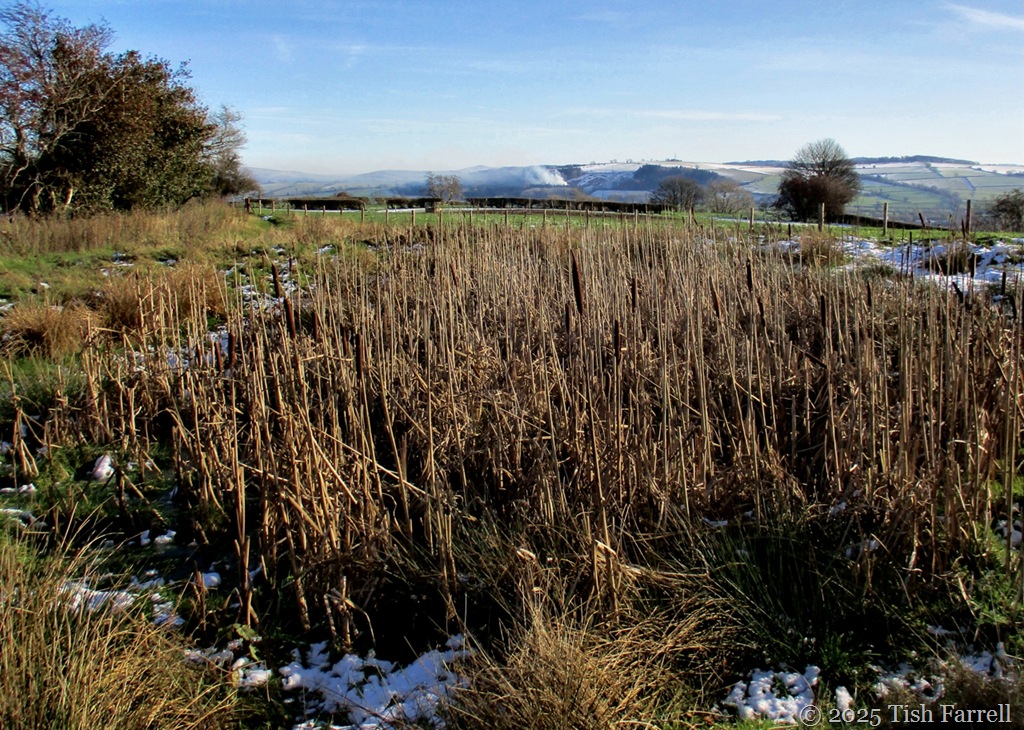
And the largest in a now enclosed enclave where it is producing a fine crop of bullrushes…

dewpond 4

I don’t know why this corner of the field has been hived off, access provided by two stout kissing gates either side of it, but the Shropshire Way footpath passes through it.

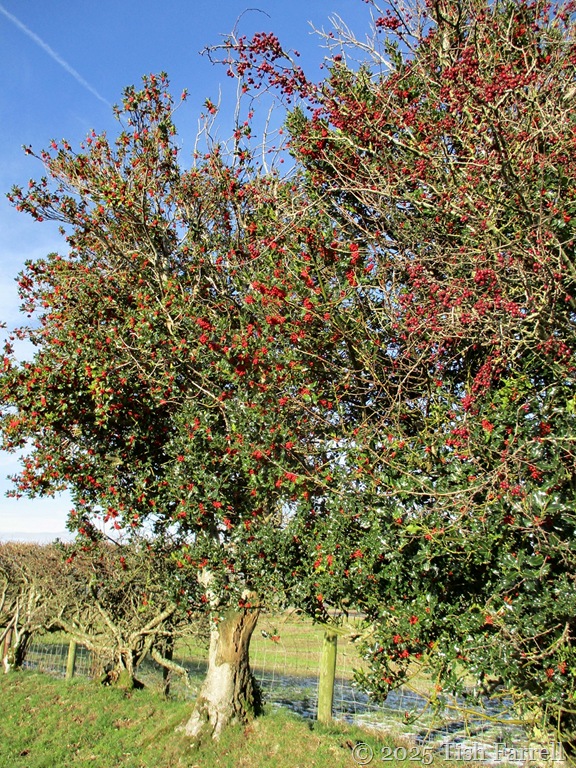
It’s a good spot for holly trees, which reminds me. Holly was once grown in farm hedges both to shelter stock and as a valuable winter fodder for sheep (and sometimes cattle) when hay was in short supply. And yes, it does seem an unlikely foodstuff with all those prickles, but apparently the leaves become less barbed as the tree grows taller. And so it was the upper branches that were lopped off for the animals to feed on, the holly trees doubtless thriving on the pollarding (if our brute of a garden holly hedge is anything to go by).

holly trees

*

Water was the other essential in hill country where streams were lacking. Dew ponds have been used at least since Neolithic times. They were also much used in mediaeval times and in the 18th-19th centuries, both periods reflecting a vibrant market for sheep wool.

Pond construction required skill and heavy labour. First a saucer shaped depression was excavated, about 3 feet (1 metre) deep. The diameter varied between 10 feet (3 metres) to 45 feet (15 metres). The whole surface was then covered with straw followed by a layer of mud which had to be puddled to seal the surface. (Canal beds were sealed in the same way, the puddling usually done by labourers in bare feet). Once sealed, rain and field run-off duly collected in the ponds.

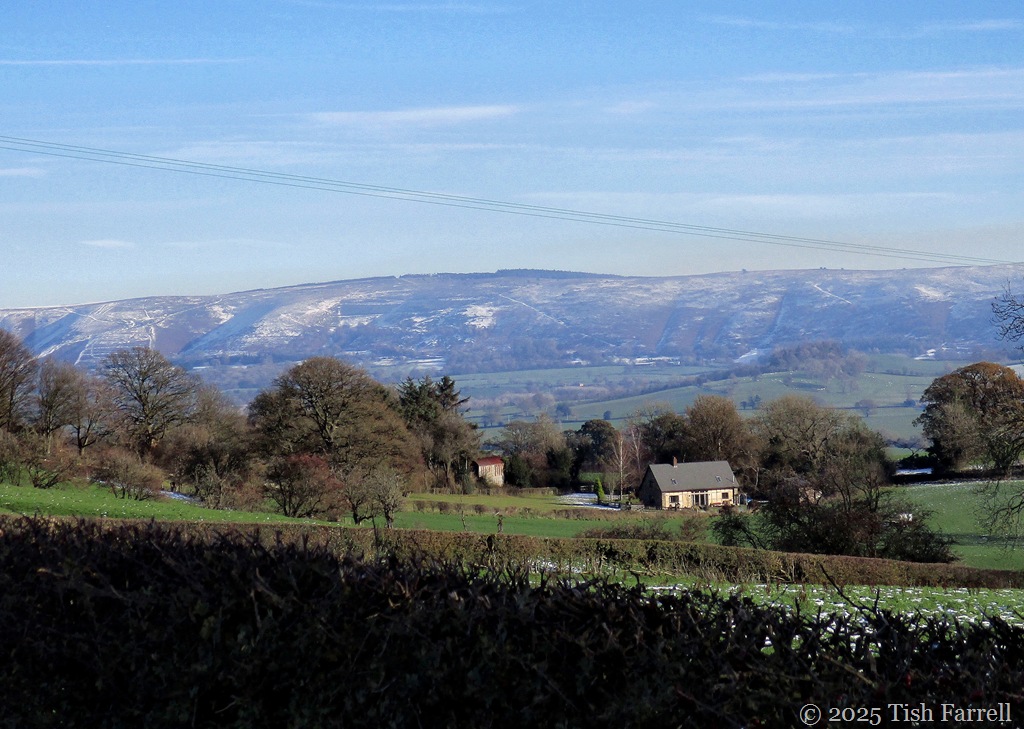
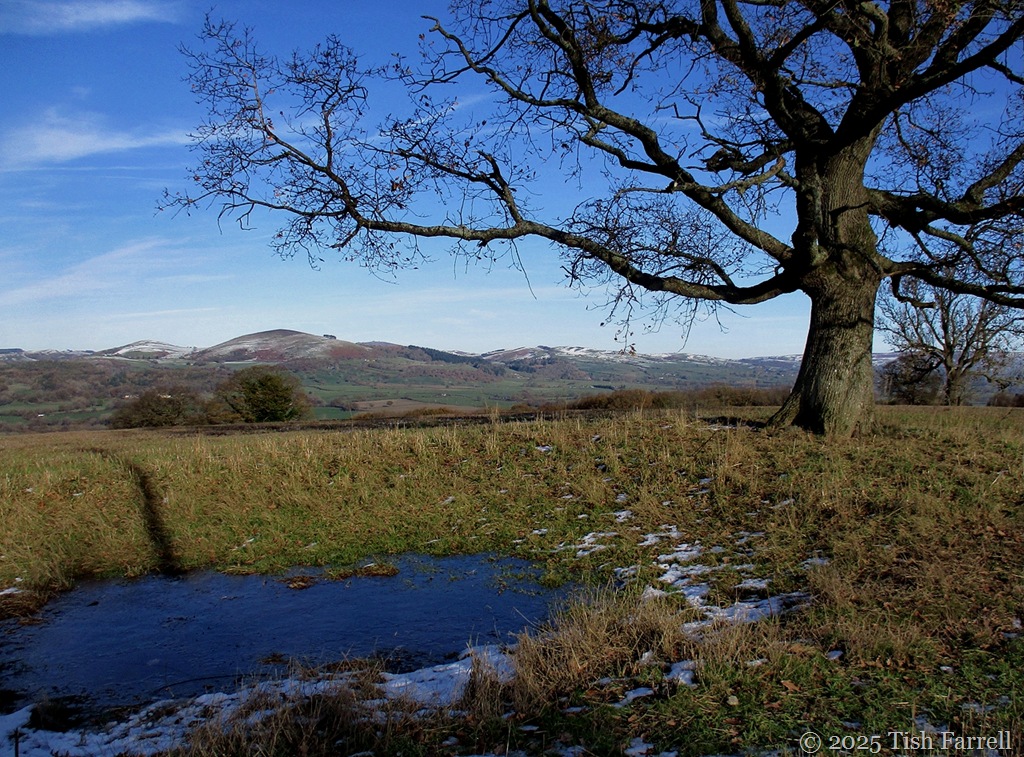
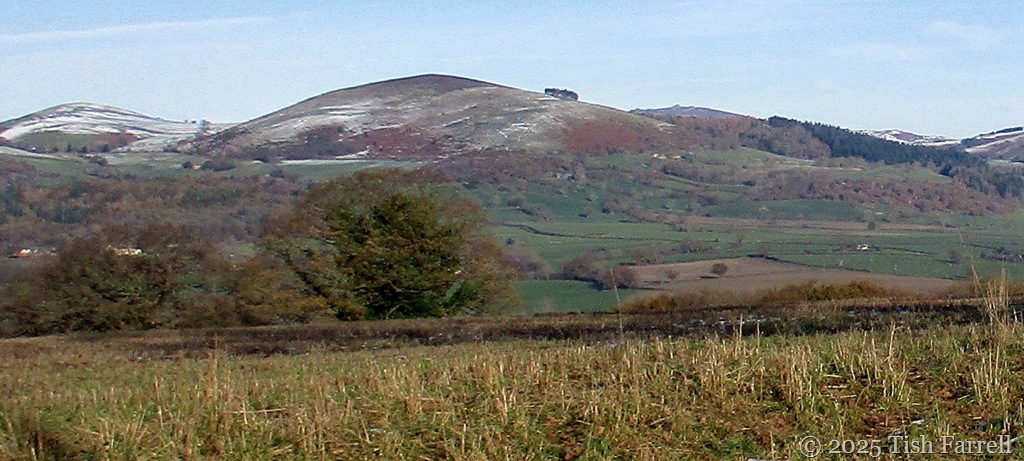
In the past, Welsh drovers would have driven their stock through Bishop’s Castle, and on to the town and city markets of the Midlands. This next photo shows the country they would have trekked through – not so tamed and tidy in the eighteenth century. (Wales ahead, dewponds behind me). Perhaps the flocks and herds were gathered and watered at points like these before the drovers broached the town.

hillview 6

*

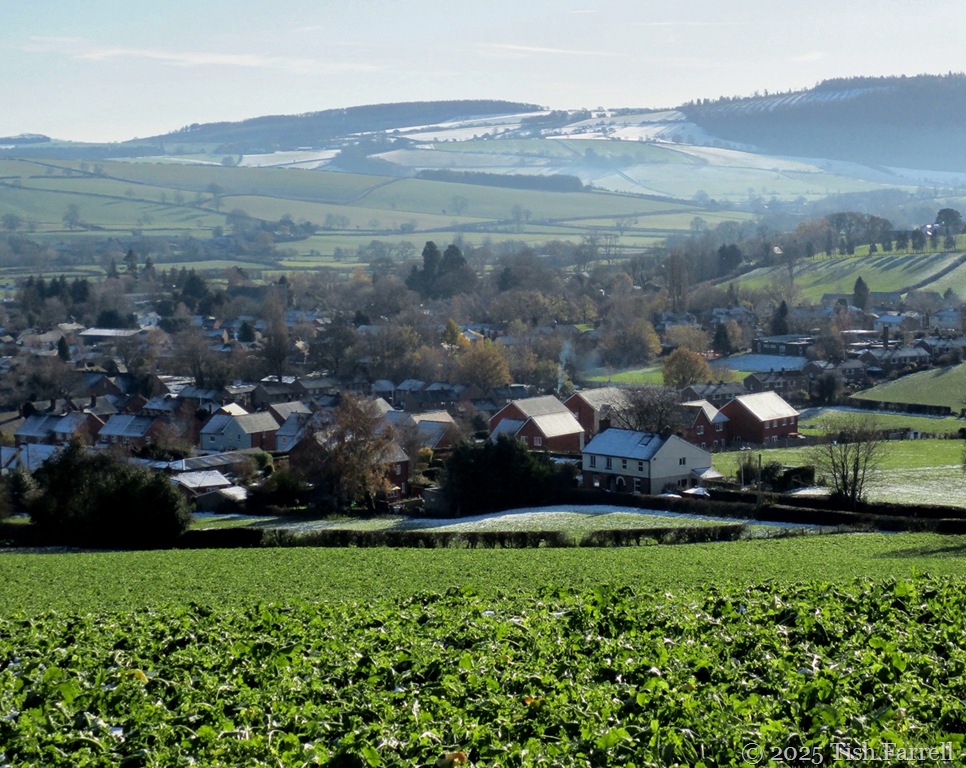
And it was at this moment that thoughts of watering holes had us turning on our heels and  heading downhill to town. Toasted sandwiches at The Castle Hotel suddenly beckoned, plus a glass of delicious Clun pale ale.

Cheers and happy festive season to all the Lens-Artists (and their followers).

Many thanks for setting us so many diverting challenges through 2025.

IMG_9497ed

*

Lens-Artists: Last chance for 2025   This week Patti sets the theme: last chance to post photos that missed previous posting opportunities.

dew pond 3 header

Winging It ~ Chance Encounters With Aerial Kind

townsend meadow resized

In the old tales birds are often messengers, bearers of foreknowledge – for good or ill. They overhear things that humans don’t, come unbidden to help the hero in their quest, although their warnings are not always understood or welcomed.

In Kenya (and other parts of Africa) the Red-Chested Cuckoo is the bearer of good news. Its three note call says the rains are coming – ‘time to dig’, ‘time to dig’. On the other hand, in some interpretive versions, much depends on the geo-location of the call. If you are setting out on a journey and the call comes on the right of the path, then it signifies that all will be well. But if it comes from the left, then there’s danger ahead; better go home and wait for a more propitious day.

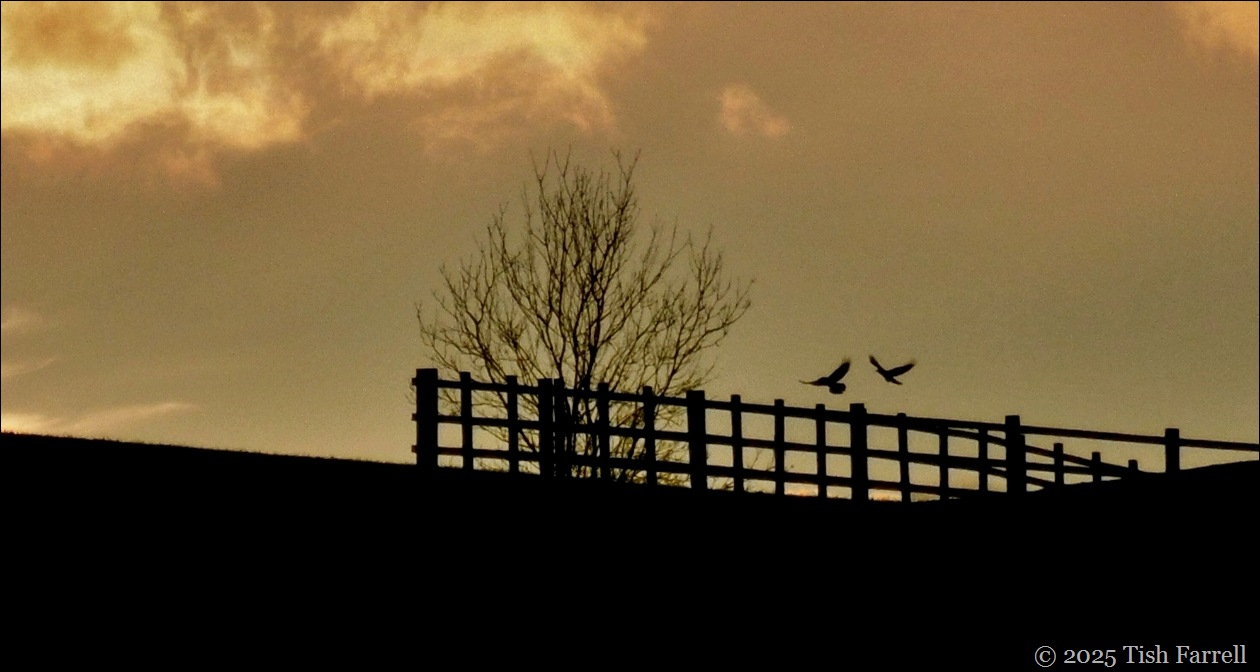
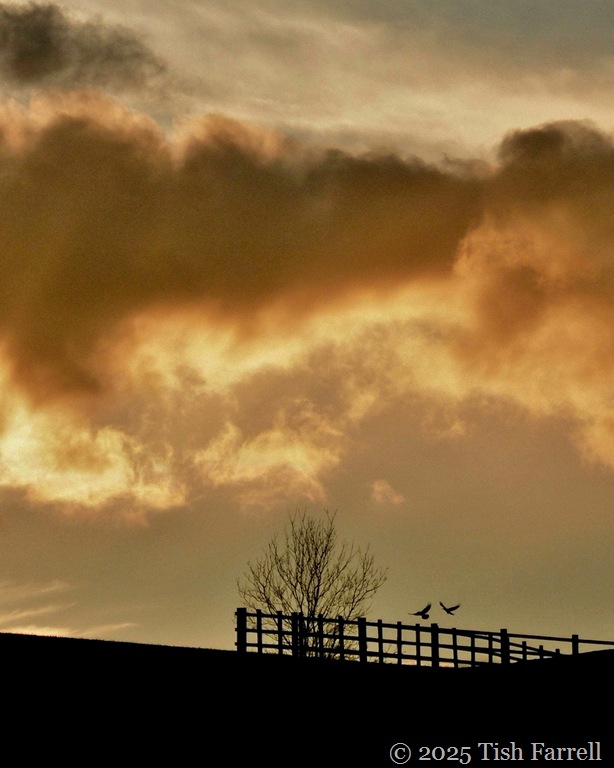
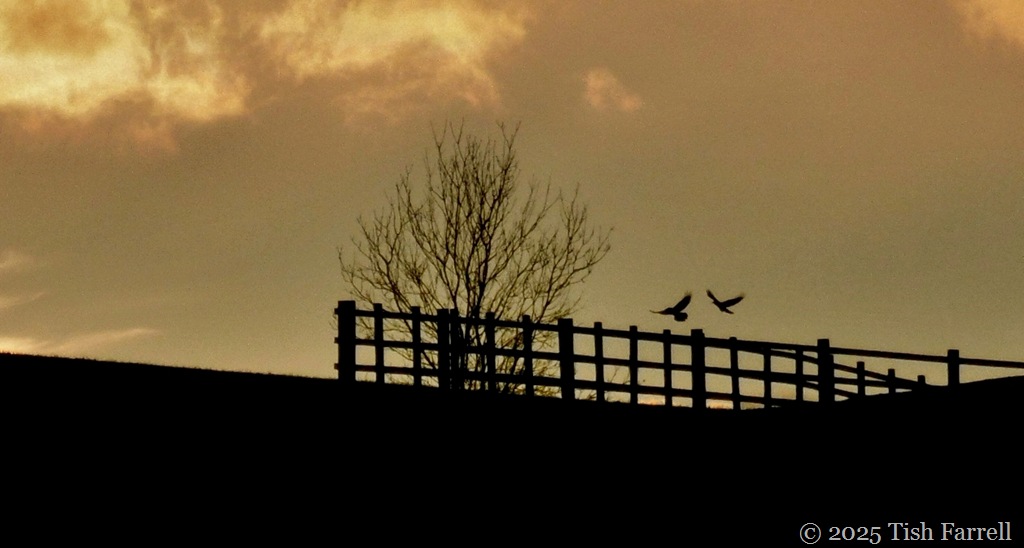
I think the two birds in the first photo are rooks. All members of the corvid family (rooks, crows, ravens, choughs, magpies, jays) tend to have a poor reputation on the bad omen front, but since I have a twosome here, I’m choosing to see them as beneficent. I’m also reminded of the magpie sighting rhyme: one for sorrow, two for joy.

***

common blue

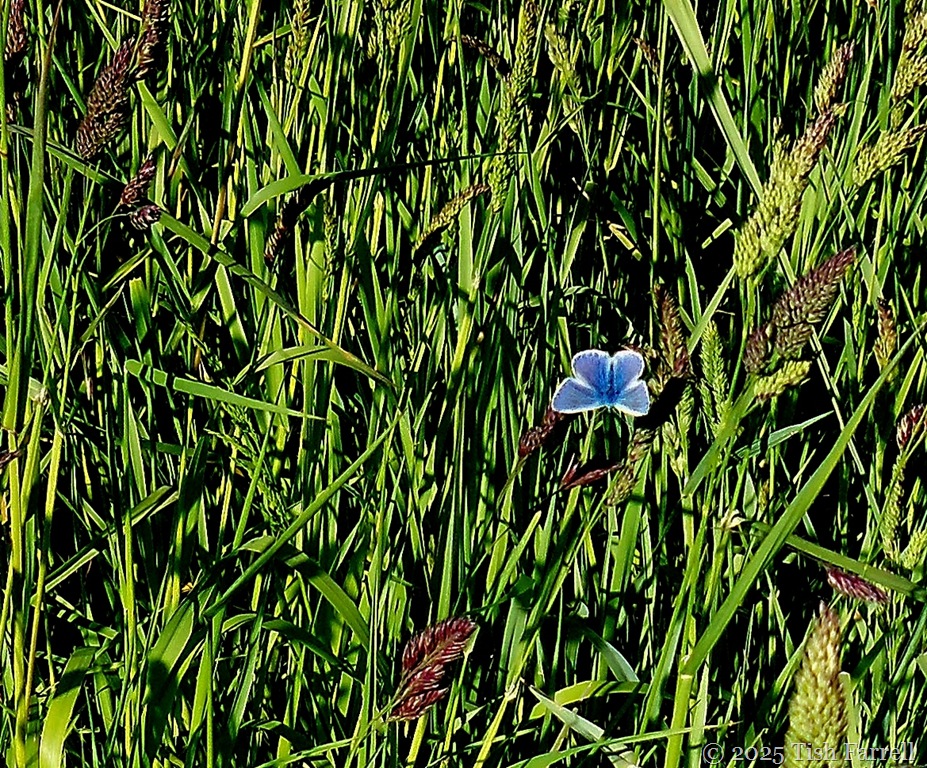
Butterflies also have spirit world connotations. In cultures across the globe they represent transformation and rebirth, joy and happiness. A butterfly may also be seen as the embodiment of a human soul, although a crowd of them might be thought an evil portent. I’m happy, then, to come upon this single tiny Common Blue butterfly, sipping at grasses on a summer’s evening.

***

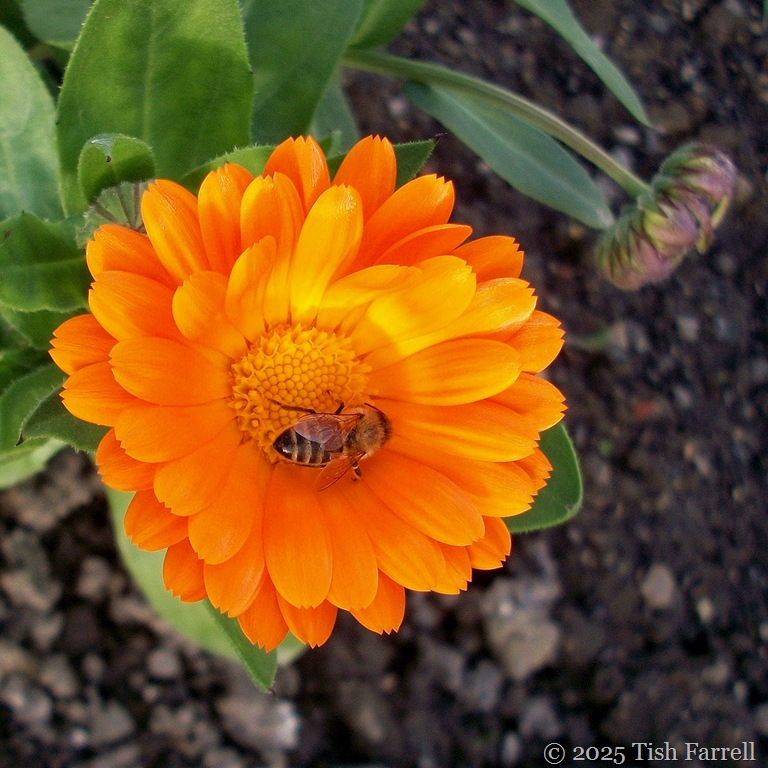
bee and marigold

And as for the bees, most of us know that, as pollinators alone, they are absolutely indispensable. The value of their produce too is inestimable. They are admired for their busyness and sound work ethic; the therapeutic hum in spring orchards.

It’s not surprising, then, that in many ancient cultures they were revered. They conferred blessings even on the gods. For instance, Apollo’s gift of prophecy was bestowed on him by three bee maidens, or in older pre-Hellenic versions of the tale by a trio of bee goddesses. Other texts see the bee’s origin as dramatically supernatural. One Ancient Egyptian version has it that they arose from Sun God Ra’s tears as they fell on desert sand. What an image. I think I believe it.

***

Lens-Artists: Wings  This week Beth at Wandering Dawgs gives us a fabulous theme to work with.

header